Tag Archives: Clinton Global Initiative

At Passing of Shimon Peres, Reflecting on Passed Over Opportunity for Israel-Palestine Peace

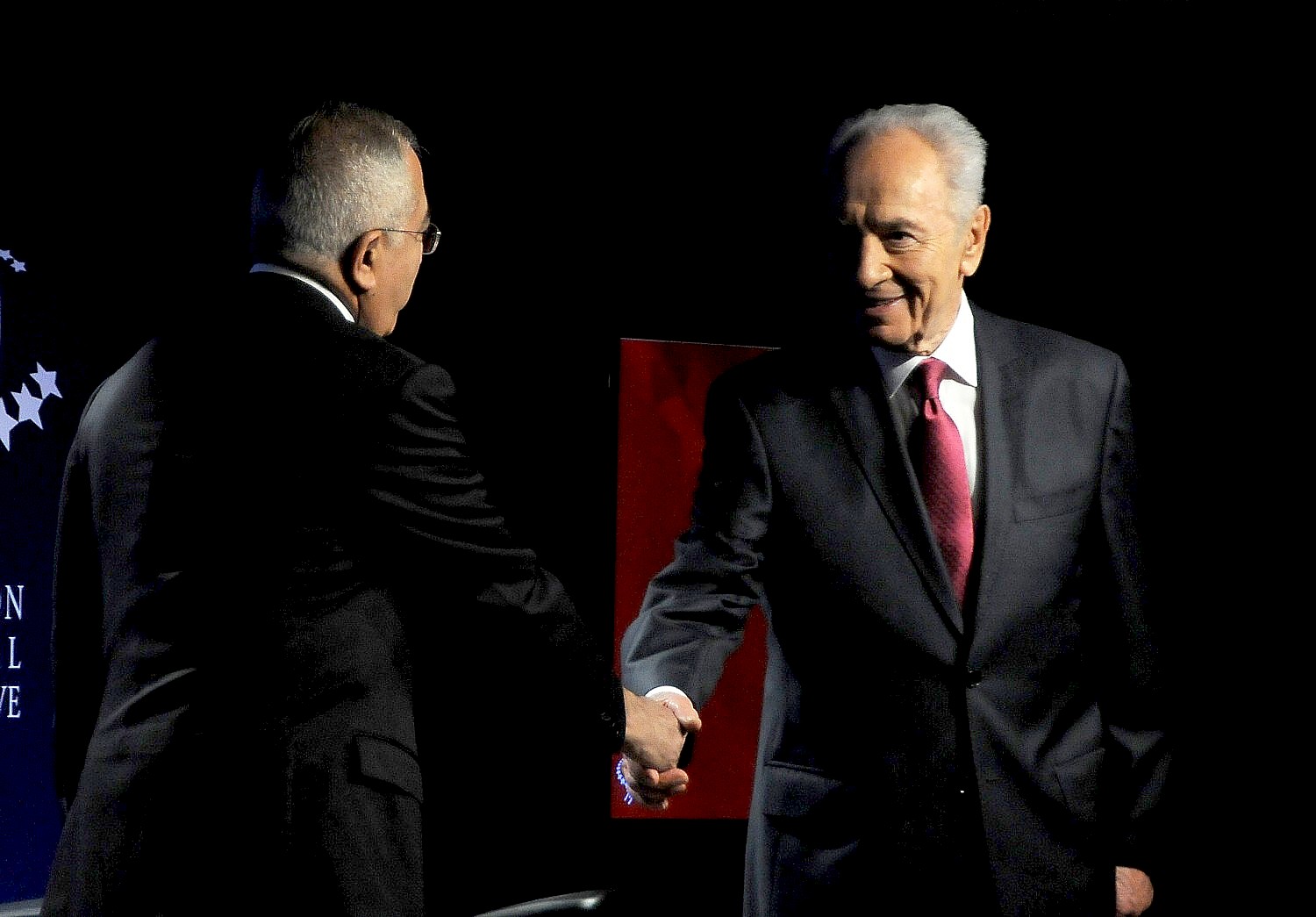
Israel President Shimon Peres greets Palestine National Authority Prime Minister Salam Fayyad at 2010 Clinton Global Initiative. © 2016 Karen Rubin/news-photos-features.com

By Karen Rubin, News & Photo Features

 As we mark the passing of Shimon Peres, the former President of Israel, who New York Times in its obituary called  A Pillar of Israel, From Its Founding to the Oslo Accords, I reflect back on what was very possibly the closest Israel and Palestine ever came to forging a true peace, and it came during the 2010 Clinton Global Initiative, when Peres sat next to Salam Fayyad, Prime Minister of the Palestinian National Authority, on a panel with President Bill Clinton and Bahrain’s Crown Prince and Deputy Supreme Commander Salman bin Hamad Al-Khalifa and provided a roadmap to cooperation. Here’s my column from that panel, on September 21, 2010:

 Israel, Palestine Leaders Offer Vision of Peace – and It Looks Real

Prayers for peace in the Middle East are a ritual in Great Neck, and for one hour last week at the Clinton Global Initiative, a vision for peace seemed less than a perennial dream, and took the shape of a real prospect.

During a special session at the Clinton Global Initiative, which brings together world leaders, business moguls, philanthropists and do-gooders who labor at nongovernmental organizations, the President of Israel and the Prime Minister of the Palestinian National Authority painted their vision of what peace would look like: a vast economic region with joint projects including a water pipeline crossing the Red Sea to the Dead Sea, modern irrigation techniques that could make the Palestinian desert bloom as it does in Israel, even a regional electric grid, and an economic boom that could snuff out the anger that fuels terrorism. There would even be equality for women.
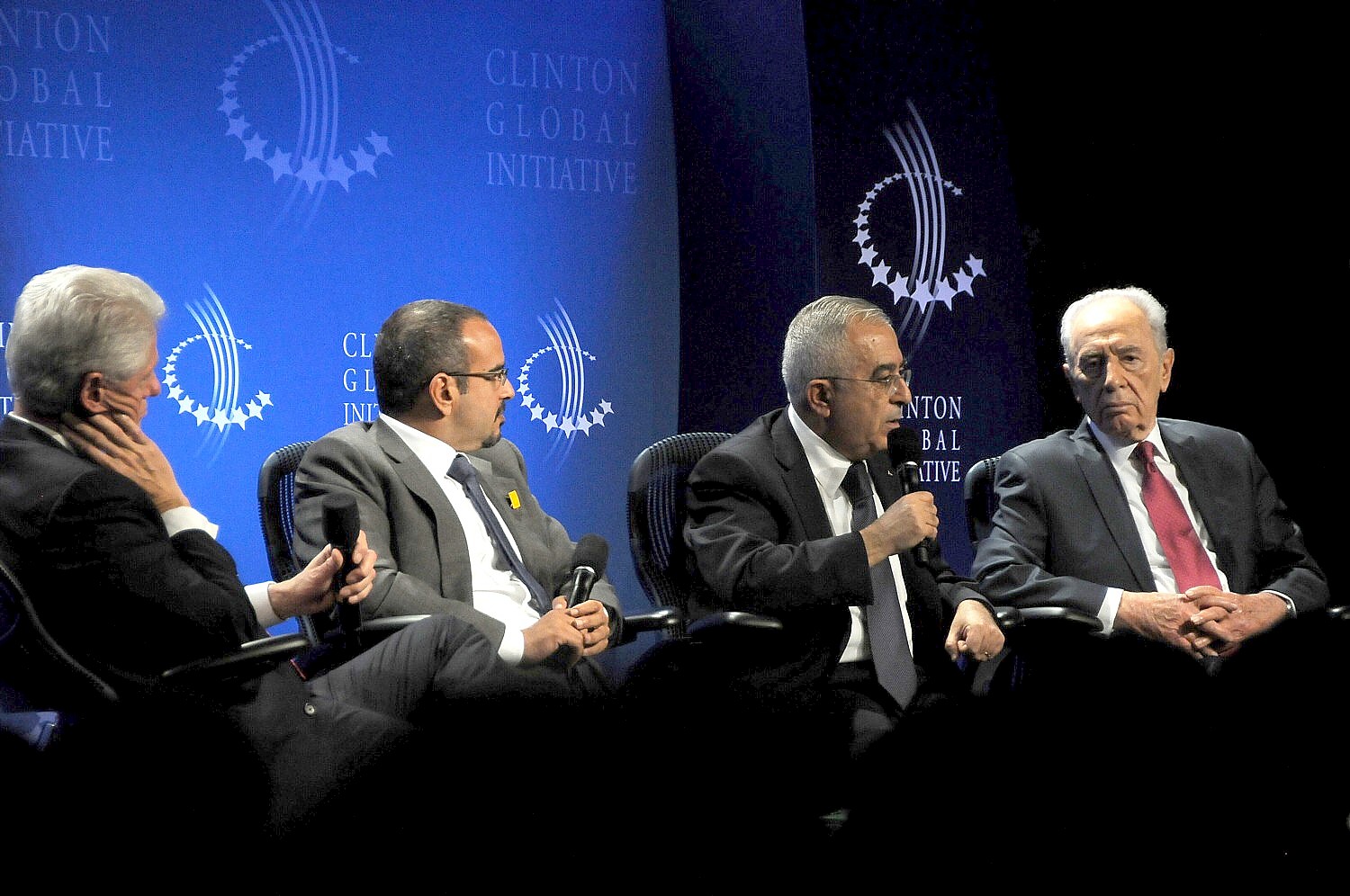
President Bill Clinton, Bahrain Crown Prince Salman bin Hamad Al-Khalifa, Palestine National Authority Prime Minister Salam Fayyad, and Israel President Shimon Peres give vision of peace at 2010 Clinton Global Initiative. © 2016 Karen Rubin/news-photos-features.com

And for that hour, it all seemed within grasp, with the Bahrainian Crown Prince giving his imprimatur to how the whole region would benefit from a peace “dividend.”

But just days after, the expiration of Israel’s 10-month moratorium on settlement building in the disputed territory of the West Bank which brought out jubilant and triumphant settlers who released white-and-blue balloons, has burst that bubble of optimism over whether the Palestinian Authority will follow through on its threat to pull out of this latest effort at peace negotiations.

Still, the Palestinians seemed to hang in there as the Obama Administration – Sec. Hillary Clinton and special envoy George Mitchell – were frantically trying to keep things together.

Here’s why this time might be different: the leaders were able to specify the economic and social benefits.

What is more, the body language looked good.

Salam Fayyad, Prime Minister of the Palestinian National Authority and Shimon Peres, President of the State of Israel shook hands, genuinely, then took seats next to each other, rather than bookending President Bill Clinton and HRH Prince Salman bin Hamad Al-Khalifa, Crown Prince and Deputy Supreme Commander of the Kingdom of Bahrain. Seated elbow to elbow, Fayad and Peres looked straight into each other’s faces when the other was speaking. Mostly.

President Clinton posed the question to the Prime Minister first: “Assume that the parties come together, and don’t want to wait another decade, what would peace look like?”

Fayyad, offered his vision of what peace would look like in the state of Palestine, but when I heard him say “Jerusalem as its capital” I thought the session would end as quickly as it began, or veer off. But Peres never addressed the remark; his body language did not change.

But Fayyad continued: “What the region might look like minus the conflict? The vast economic potential – the region looks like a single economic space. ..vast growth potential, that can be exploited by dealing with elements that impeded commerce across state lines…That’s the kind of region that I believe can emerge after so many decades of conflict, with obvious benefits – for Arabs, Israelis and the rest of the Arab world.

“Amongst the possibilities: infrastructure improvements that cut across borders. Several have been on the drawing board – one is [close to] the heart of Shimon Peres – a project intended to link the Red Sea to the Dead Sea, to deal with ever shrinking [water supplies] that threatens to make it even more dead than it is. That’s one project that could happen..even before the conflict over. Something that could prepare for a better future. There are a lot of projects of direct benefit, cutting across boundaries in the region – in the area of energy, electricity, regional power grid….

“We could devote more energy, time and resources to bring about development –economic, socially, culturally. [Peace] would remove all the obstacles to interact with the rest of humanity on the basis of shared values, equal opportunity, no discrimination against women… ”

Women’s rights, Fayyad said “is something that unfortunately has caused us a lot of problems in region and around the world. The problem has to be addressed not only because of vast potential if women are afforded opportunity, but because it’s the right thing to do… ”

Then to Peres, Clinton said, “Suppose peace was made 3 or 4 days ago. What does Israel want out of it, what can Israel do to make sure it takes hold In order to make sustainable peace? [Particularly in the area of food production]… Today you can produce food not by size or land but science and technology. There is almost no water, yet [Israel’s] agriculture produces eight times more from same acre than 50 years ago.”

Technology has unleashed economic development throughout the developing world, and can do its magic in the Middle East, as well. Sharing Israel’s innovations with the Palestinian state would be a key benefit of the peace dividend, Peres offered.
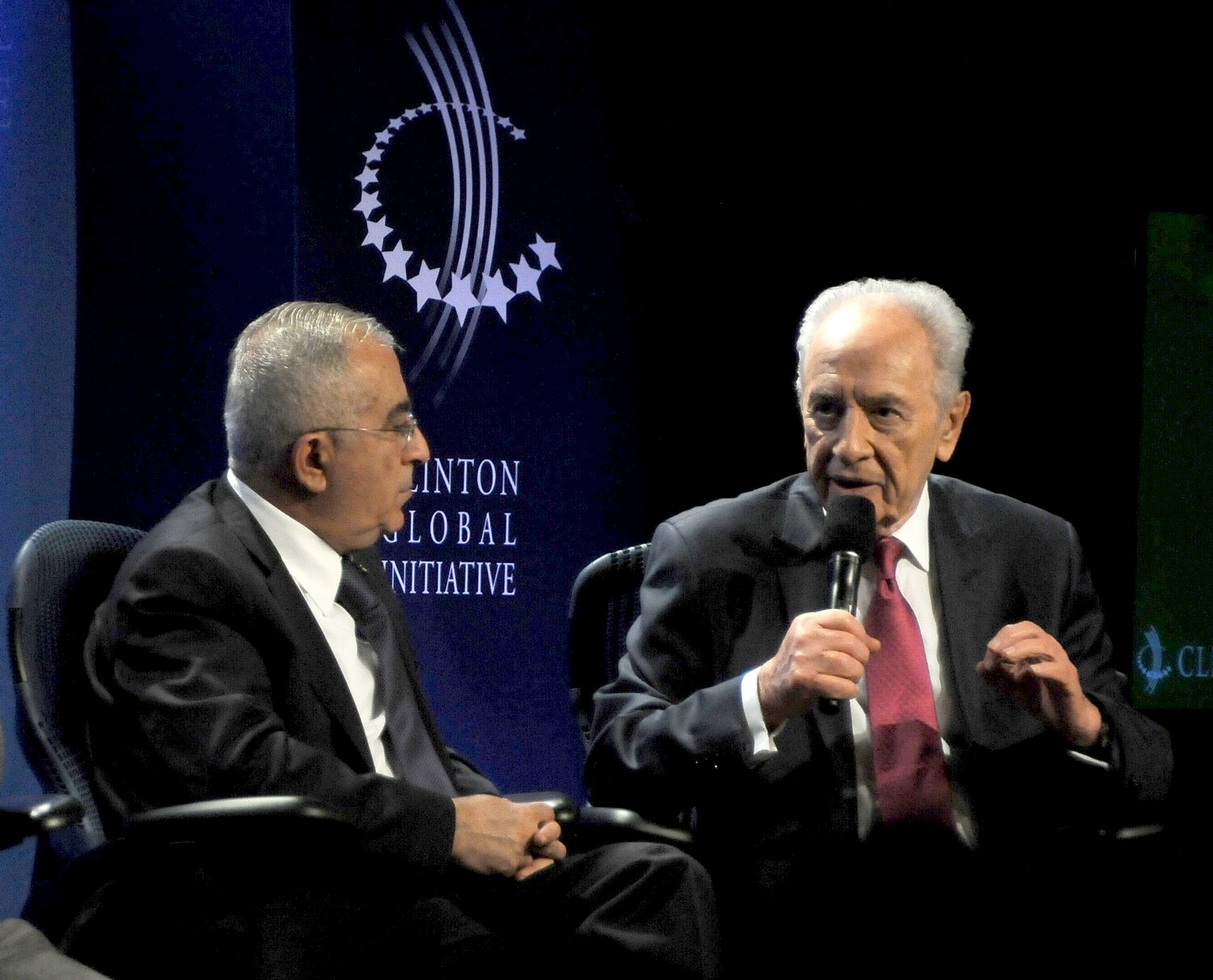
"One thing both of us agree –  not just governmental intervention but private initiative…we all are ready to accept high tech in their countries- that has nothing to do with territory… it's global," Israel President Shimon Peres tells Palestine National Authority Prime Minister Salam Fayyad at 2010 Clinton Global Initiative. "We are ready in Israel to share what we have.” © 2016 Karen Rubin/news-photos-features.com
“One thing both of us agree – not just governmental intervention but private initiative…we all are ready to accept high tech in their countries- that has nothing to do with territory… it’s global,” Israel President Shimon Peres tells Palestine National Authority Prime Minister Salam Fayyad at 2010 Clinton Global Initiative. “We are ready in Israel to share what we have.” © 2016 Karen Rubin/news-photos-features.com

“One thing both of us agree –  not just governmental intervention but private initiative…we all are ready to accept high tech in their countries- that has nothing to do with territory… it’s global,” Peres said. “The two young boys that created Google didn’t hurt anyone…[technology] can build an economy, and I think that should be the first…. We are ready in Israel to share what we have. Our high tech started with agriculture. You can have it the next morning, and provide food to the children. That’s number one, after peace. Number two is health. ..There is no hospital in Israel where you don’t have Arab doctors and Arab patients….   If we can live in peace in hospital, why can’t we live in peace out of hospital?

“Next: Education. The moment we have peace is the moment we can provide for education.

“Other things: Tourism. Tourism accounts for 17% of world economy, and we have everything to attract the largest amount of tourists but peace.  If we shall make peace – with the Palestinians and the Jordanians, have enough points of attraction to promote ..

“Water. We are saving half of the water that is being used elsewhere. By irrigation, by recycling, by introducing vegetation that don’t drink so much water, using electronic controls. All of this is available.

“Now when it comes to electricity – the choice is that everyone will build a nuclear reactor for electricity… The greatest nuclear reactor in the world is the sun. The sun is democratic, open to everyone. We know already how to produce solar energy, but not to produce it in a competitive way. We believe by [marshalling] solar energy…. it  would enable us to be natural, would be cheaper…and  give the people water and electricity..

“We introduced ‘drip irrigation,’ now we have ‘drip electricity’ – we can move electricity from one place to another without physical connection.” [Israeli companies have developed a technology that transmits electricity the same way, over the same architecture, as wireless voice communications.]

“We can send electricity 2-4 miles away, and it can reach the target. It is quite revolutionary,” he said.

“I believe that the future, that the most sensational 10 years in human life will occur because of the level of computerization.”

President Clinton noted that even in this economic downturn, Israel has done well, “and  most certainly will be the first to have 100,000 electric cars on the road.”

Israel and Palestine have a lot to gain from a peace dividend, but how might countries in the region like Bahrain benefit? Will there be a regional economy, and what does that mean for you? President Clinton posed to Prince Salman.

“Our region is caught between the rule of the gun and the rule of Koran, captive market and capitalist markets, pluralism and plutocrats,” Prince Salman said. “The region has been held back by the negative. In every choice, people have singled out their fear, mistrust, disappointment, in the ability of governments to achieve the dignity they [deserve]. We must achieve this peace – because the future is very bright.”

He said that the region represents a $1 trillion market, and by 2020 will be a $2 trillion market…”It grew at 70% in the last 8 years, 40% [of exports] go to the region, so you can start to see that regional economic cooperation is a reality… and if we can build on what President Peres said about science… that the world in 15-20 years will be fundamentally different, then the future will be bright, whether agriculture, medicine, productivity. I am very optimistic…. the ease by which we can communicate, the productivity we have gained… in the development of human history, this is a flash, a spike.

“We will be cooperating, the dislocations that shake us, to our core, will be absent. ….It is a future I see very much in a positive way…. That I will dedicate myself to, to come true, and one in which all of us have a role to play.

“The private sector in US., government in Middle East. We must all believe in this process, make the hard choices that need to be made, and when the process looks shaky, that we are there to support it. Thank you Mr. President, for getting us here today, and even though I am on the periphery and not a direct negotiator, my life, my children’s lives will be immeasurably better.”

Giving a vision of hope, Peres suggested it might finally be time. “In Europe, if someone would have stood up in 1943 that in 30-40 years, Europe would be united, people would laugh. It took generations for French, Germans, British to come together. The young people, anyway, live in a different world. They are connected personally. The world is more connected, and the younger you are, the more connected.

“Today the greatest choice before the Middle East is either to be a Middle East of independent states or fall under the spell of Iranians,” Peres said. “This is the greatest danger. Under the spell of Iranians is also terror. We have a common menace, if not a common enemy, so we have a common purpose.

But Clinton noted, “If the vision [for peace and regional cooperation] you are sketching out takes hold, the Iranians would have a very different choice than they do today. It would maximize that the current fears we have can be resolved in a peaceful way, and maximize the risk if they choose not to do that.”
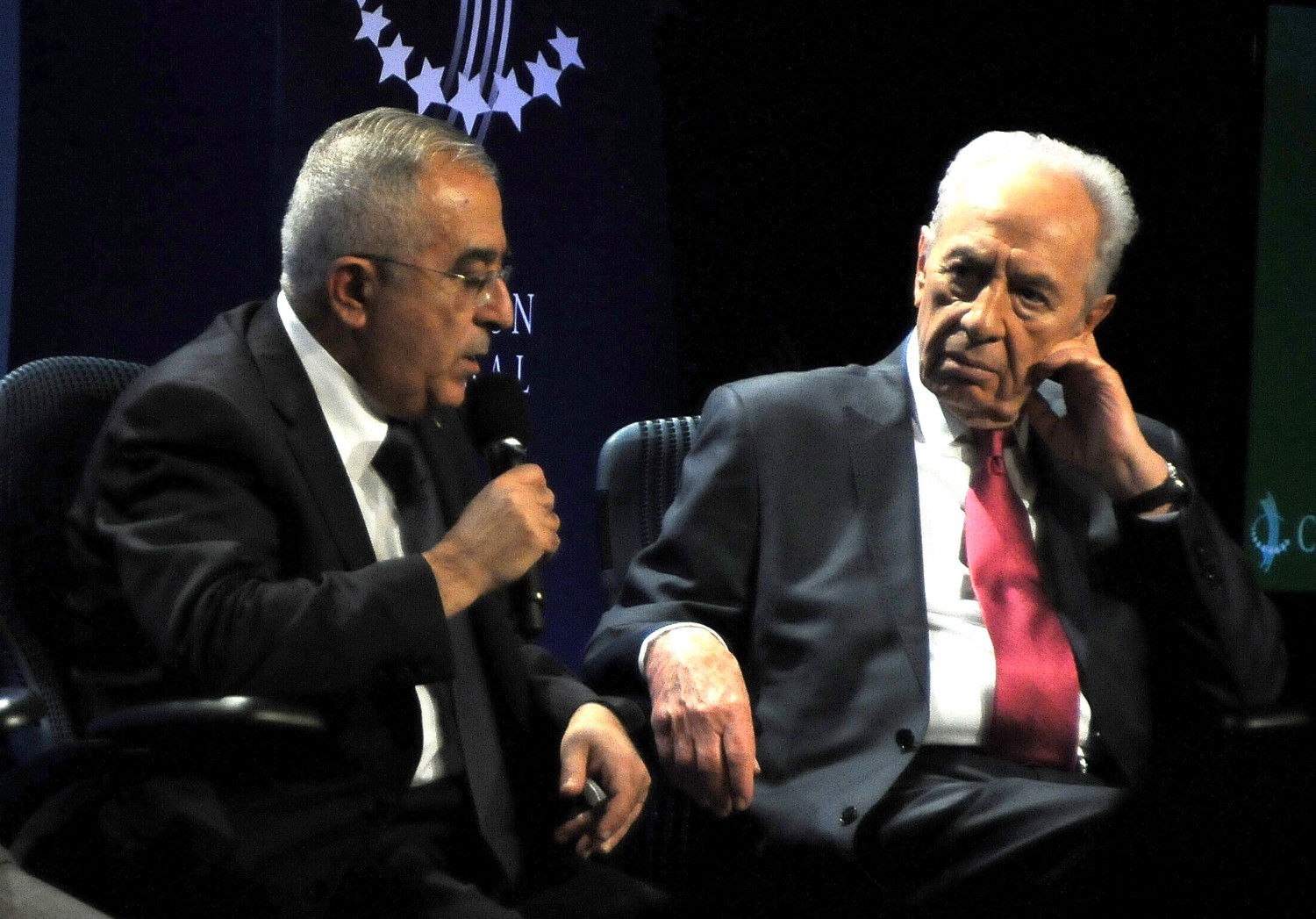
"I think peace would be better for everyone," Palestine National Authority Prime Minister Salam Fayyad tells Israel President Shimon Peres at the 2010 Clinton Global Initiative. "People throughout the region could interact more freely – in peace, security.” © 2016 Karen Rubin/news-photos-features.com
“I think peace would be better for everyone,” Palestine National Authority Prime Minister Salam Fayyad tells Israel President Shimon Peres at the 2010 Clinton Global Initiative. “People throughout the region could interact more freely – in peace, security.” © 2016 Karen Rubin/news-photos-features.com

“I think [peace] would be better for everyone,” said Fayyad. “People throughout the region could interact more freely – in peace, security. We could focus on doing things better, governing better, providing services more effectively. Our economy is only 4% the size of the Israeli economy – that alone, even if you don’t factor in what this means in regional cooperation, and better access to rest of region — simply by virtue of sitting alongside such a huge economy, that is Israel. When you begin to factor in other benefits – tranquility, civility in the region, you can see how the benefits would begin to spread. That would happen on the strength of having some serious partnerships here.”

Halevay  (It should only happen).

–Karen Rubin, Columnist

________________________________

© 2016 News & Photo Features Syndicate, a division of Workstyles, Inc. All rights reserved. For editorial feature and photo information, go to www.news-photos-features.com, email editor@news-photos-features.com. Blogging at www.dailykos.com/blogs/NewsPhotosFeatures.  ‘Like’ us on facebook.com/NewsPhotoFeatures, Tweet @KarenBRubin
Five are Honored with Global Citizen Awards at Final Clinton Global Initiative

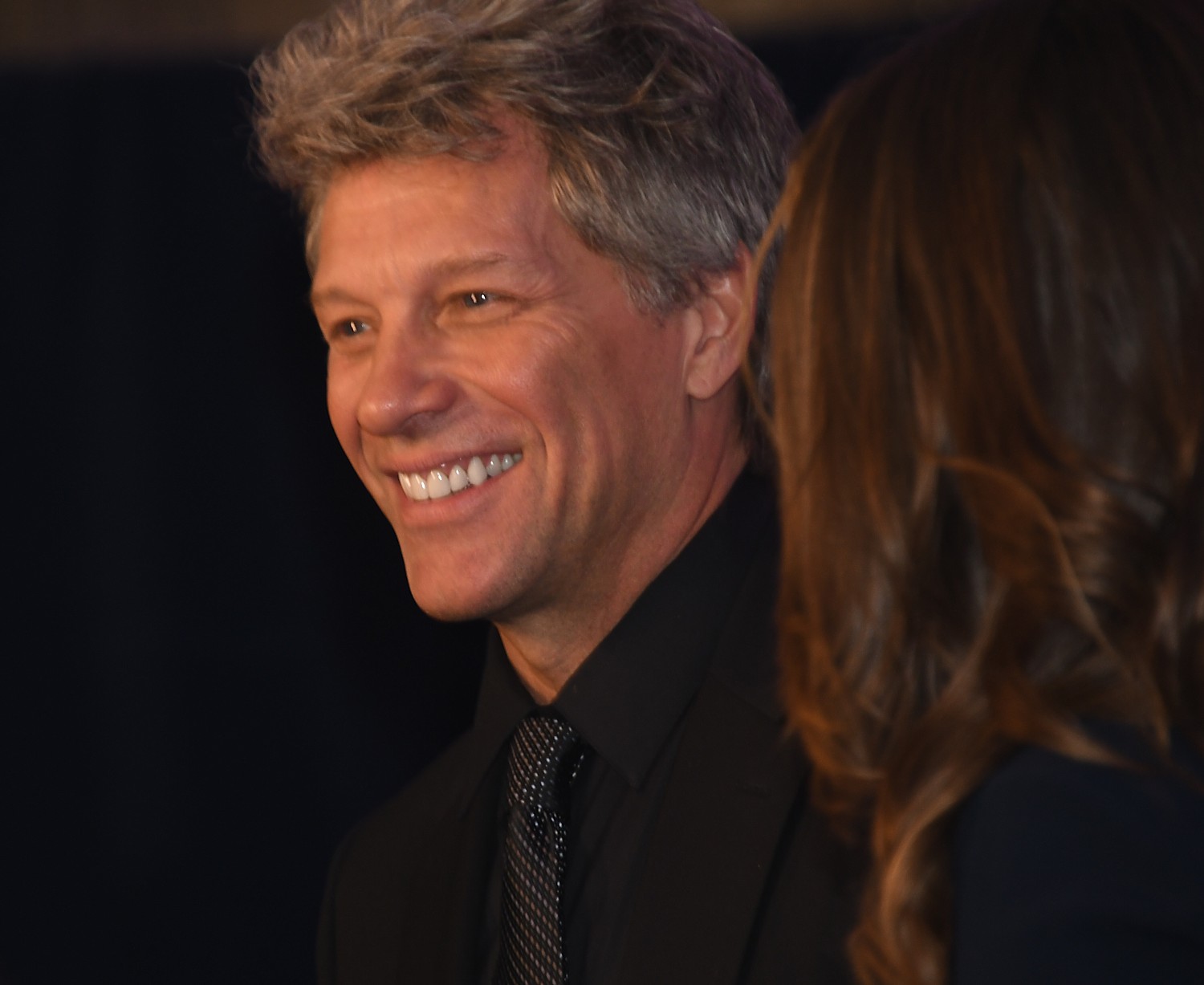
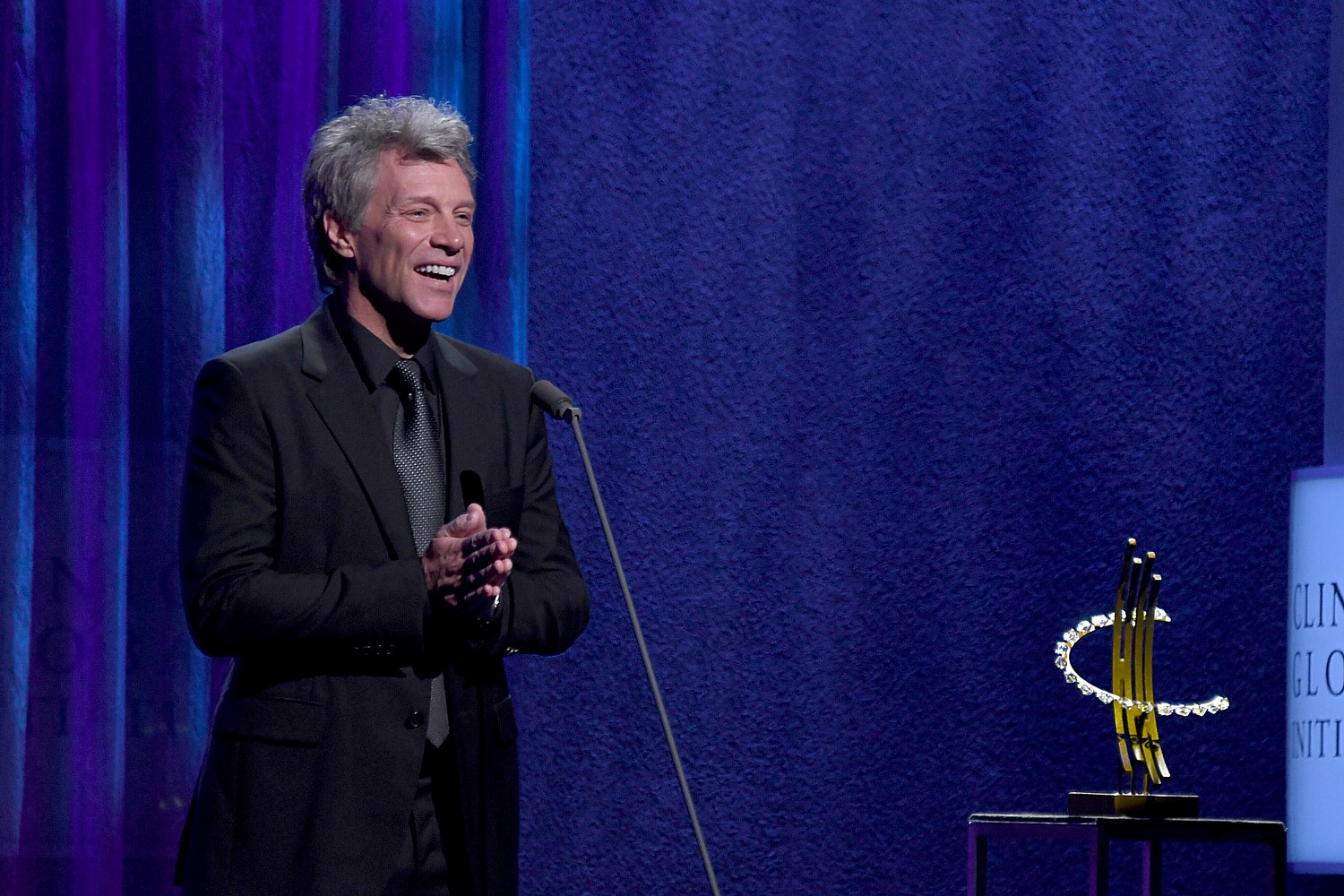
Jon Bon Jovi received the Clinton Global Citizen Award for Leadership in Philanthropy, honoring him for establishing Jon Bon Jovi Soul Foundation, a non-profit organization dedicated to bringing about positive change and helping the lives of those in need, “one SOUL at a time.” © 2016 Karen Rubin/news-photos-features.com

By Karen Rubin, News & Photo Features

The 10th Annual Clinton Global Citizen Awards, held during a special ceremony during the 12th and last Clinton Global Initiative to honor outstanding individuals for their exemplary leadership and groundbreaking work which has effected positive social change.

This year’s ceremony honored Jon Bon Jovi in recognition of the 10-year anniversary of the Jon Bon Jovi Soul Foundation which focuses on the issues of affordable housing and hunger in the U.S. through community development initiatives. Bon Jovi also entertained.

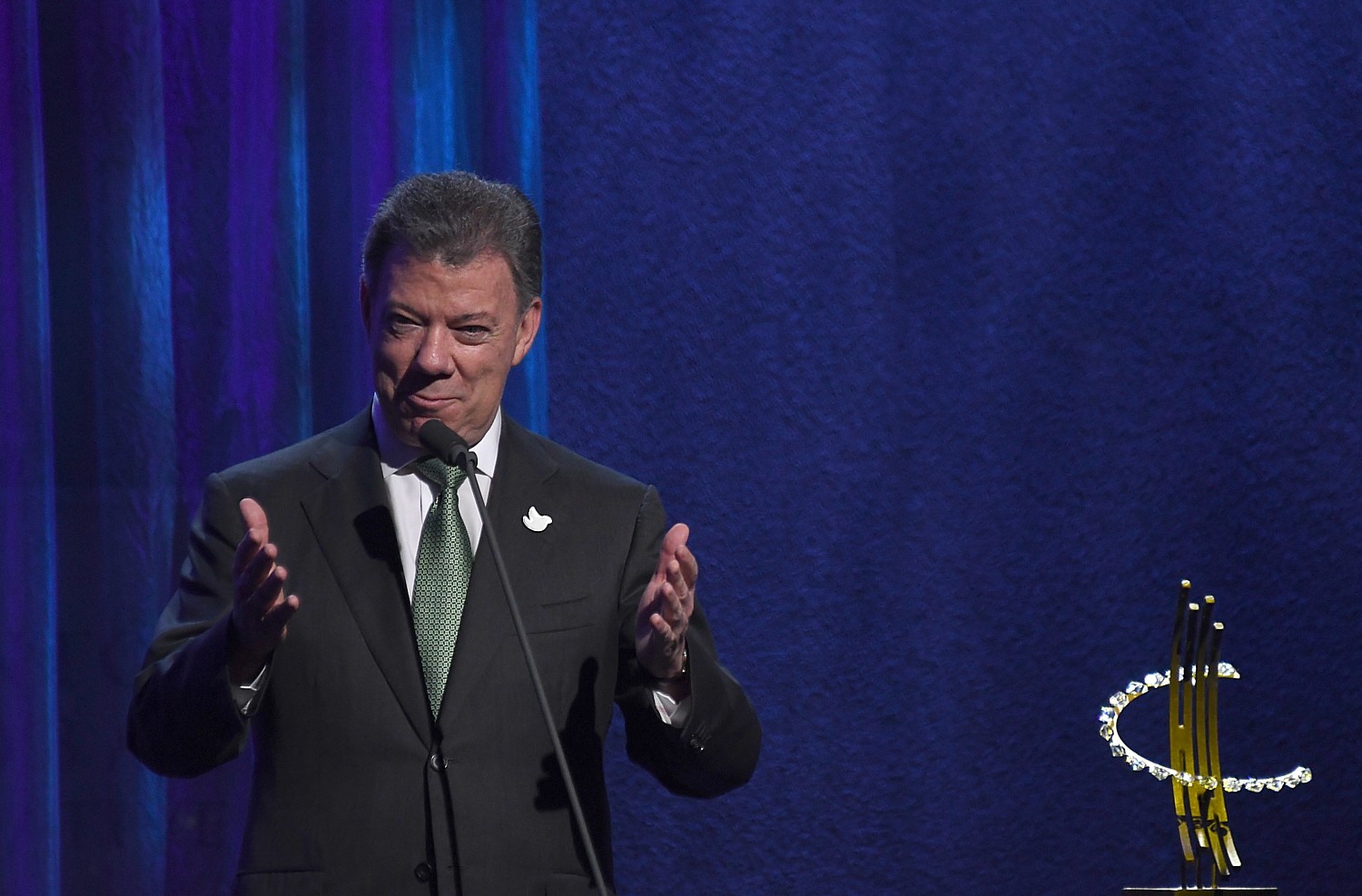
Additional honorees include President Juan Manuel Santos of Colombia for his commitment to establish peace in Colombia following a 50 year civil war; Dr. Hawa Abdi for her work to provide refuge, quality healthcare, education and entrepreneurship opportunities to all Somalis; Adi Godrej for transforming his family’s multinational company into a leader of social and environmental value creation; and Nadia Mura, a Yazidi woman captured and enslaved by ISIS, for the courage to tell her story and be a voice for the thousands of women and children who have been trafficked in situations of conflict.

Andrea Bocelli performed at the 10th Annual Clinton Global Citizen Awards with the Voices of Haiti Choir © 2016 Karen Rubin/news-photos-features.com

In addition to Bon Jovi’s performance, there was a special appearance of Andrea Bocelli who performed with the Voices of Haiti Choir.

Presenters were themselves noteworthy humanitarians and activists: Sister Mary Scullion, executive director of Project HOME in Philadelphia, who presented the award to Jon Bon Jovi; Iman who presented the award to Dr. Doqo Mohamed who accepted on behalf of her mother, Dr. Hawa Abdi; Luis A. Moreno, President of the Inter-American Development Bank, who presented the award to President Santos; Advija Ibrahimovic, a survivor of the Srebrenica massacre in Bosnia in 1992, presented the award to Nadia Murad, and Hikmet Ersek President & CEO of The Western Union Company, presented the award to Adi Godrej.

Jon Bon Jovi, Leadership in Philanthropy 

Sister Mary Scullion, who heads Project HOME, focused on breaking the cycle of homelessness and poverty, presented the Global Citizen Award for Leadership in Philanthropy to  Jon Bon Jovi, saying, “He refused to let his fame and fortune shield him from the pain and suffering in society.

Jon Bon Jovi was honored at the Clinton Global Citizen Awards 2016

Ten years ago, he established the Jon Bon Jovi Soul Foundation, a non-profit organization dedicated to bringing about positive change and helping the lives of those in need, “one SOUL at a time.” The Soul Foundation funds partnerships that address the issues of hunger and shelter, benefiting temporary shelters, transitional housing for teens, permanent supportive housing—including housing for veterans and special needs populations—as well as providing home ownership opportunities. In October 2011, the foundation opened the first JBJ Soul Kitchen in Red Bank, New Jersey to address issues of food insecurity. Staying true to Bon Jovi’s roots, the foundation aided in local recovery efforts in the days following Hurricane Sandy in 2012. The following year, Bon Jovi donated $1 million to the Hurricane Sandy New Jersey Relief Fund.

Over the past 10 years, it has served over 1000 families, veterans and youth; served 55,000 meals at the Soul Kitchen in Red Bank, where millionaires sit at tables with homeless, paying what they can or if they don’t have the cash, volunteering their time. A second restaurant has opened in Toms River.

“It is testament to the fundamental dignity of every person, what our world can and should be: a place where everyone is served with dignity, given an opportunity to work, and create more just and welcoming society.”

Jon Bon Jovi performs at the Clinton Global Citizen Awards 2016

Bon Jovi, who said he was inspired by Clinton, reflected, “In 2005, I saw a homeless person sleeping on a grate in front of City Hall. I realized homelessness could affect any one. Most people are just one catastrophe away from financial ruin.

“In 2008, I saw food insecurity. In the most powerful country in the world, 1 in 7 don’t have enough food, one in five children are food insecure. It’s a matter of access and opportunity, so when we started the restaurant, we had a pay-it-forward concept.

“This is the 10th anniversary of our foundation. I humbly accept this recognition on behalf of our staff, volunteers, and 55,000 supporters who have dined with us.”

“President Clinton is fond of saying, ‘There is nothing wrong with America that can’t be cured by what is right with America’.”

Nadia Murad, Leadership in Civil Society 

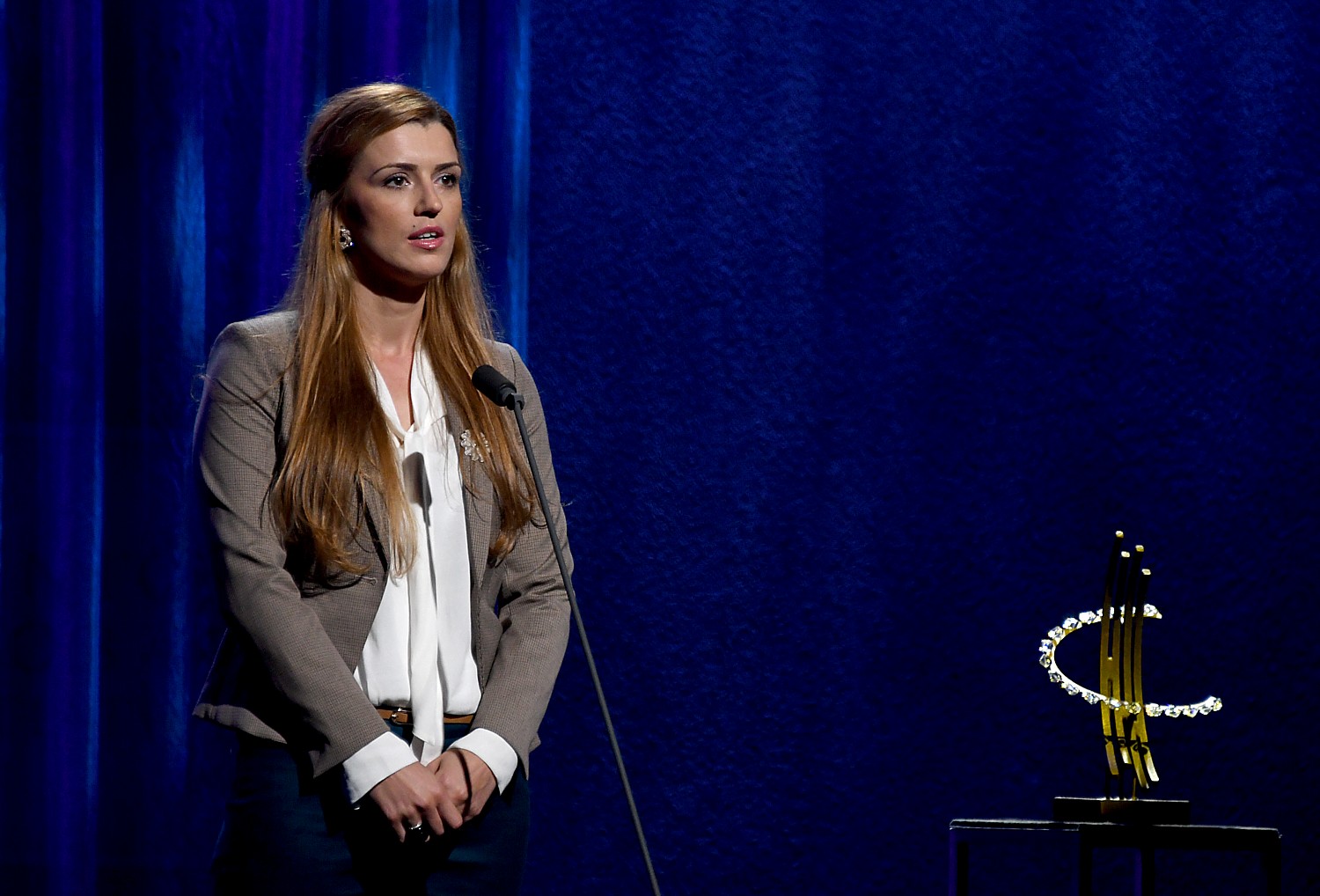
Advija Ibrahimovic, who presented the Global Citizen award to Nadia Murad, was herself a survivor of genocidal atrocity, orphaned when she was just 11 in the Srebrenica massacre in Bosnia in 1992.

Advija Ibrahimovic, orphaned when she was 11 in the Srebrenica massacre in Bosnia in 1992: “Everything can be taken from a person except freedom to decide what you will do with your heart and mind.” © 2016 Karen Rubin/news-photos-features.com

“I was 11 when I lost both my parents  in the Bosnian genocide. Like Nadia, I experienced violence and deep loss. Everything can be taken from a person except freedom to decide what you will do with your heart and mind. She dedicated herself to raising awareness of these women.”

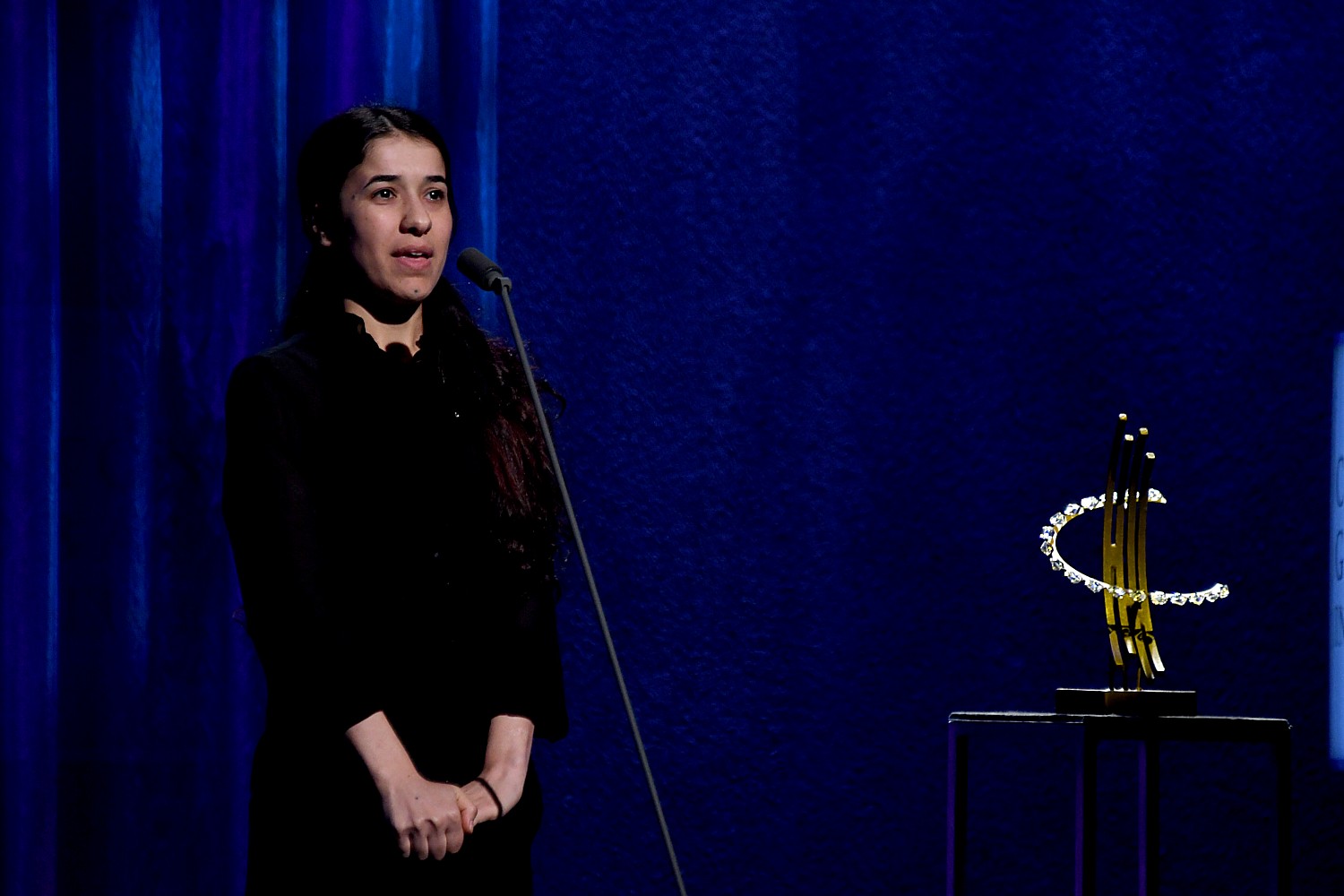
She shared the story of Nadia Murad, who was born and raised in the quiet agricultural village of Kocho, Iraq. A member of the Yazidi community, Nadia and her family lived a peaceful, happy life. On August 3, 2014 her village was attacked by ISIS, marking the beginning of its savage genocidal campaign against the Yazidi people. Six of her nine brothers were executed on the spot. In all, she lost 18 family members that day; in all, 1000 Yazidi men were massacred.

Nadia Murad, a survivor of ISIS terror, has dedicated herself to rescue the thousands of women and girls who have been trafficked in situations of conflict. Honored with a Clinton Global Citizen Award, she also has been named a UN Goodwill Ambassador. © 2016 Karen Rubin/news-photos-features.com

Murad, along with her two sisters and thousands of other men, women, and children were taken captive and subjected to unspeakable crimes. Murad was initially held hostage in a building with thousands of families. She witnessed young children given to ISIS soldiers as sexual “gifts.” She was raped and tortured on a daily basis. But after facing unimaginable brutality, she was able to escape.

Murad immigrated to Germany where she received medical attention and was reunited with other survivors. In total, she lost 18 family members. With the assistance of Yazda, a non-profit organization dedicated to helping Yazidi survivors and defending the rights of marginalized ethnic and religious minorities, Murad has been able to tell her story on the world stage, forcing world leaders to listen to the horrors of the ongoing genocide, war crimes, and crimes against humanity. 

Just 23 years old now, Murad, a human rights activist, was named a UN Goodwill Ambassador on Friday and has been nominated for the Nobel Peace Prize. 

Dr. Hawa Abdi,  Leadership in Civil Society

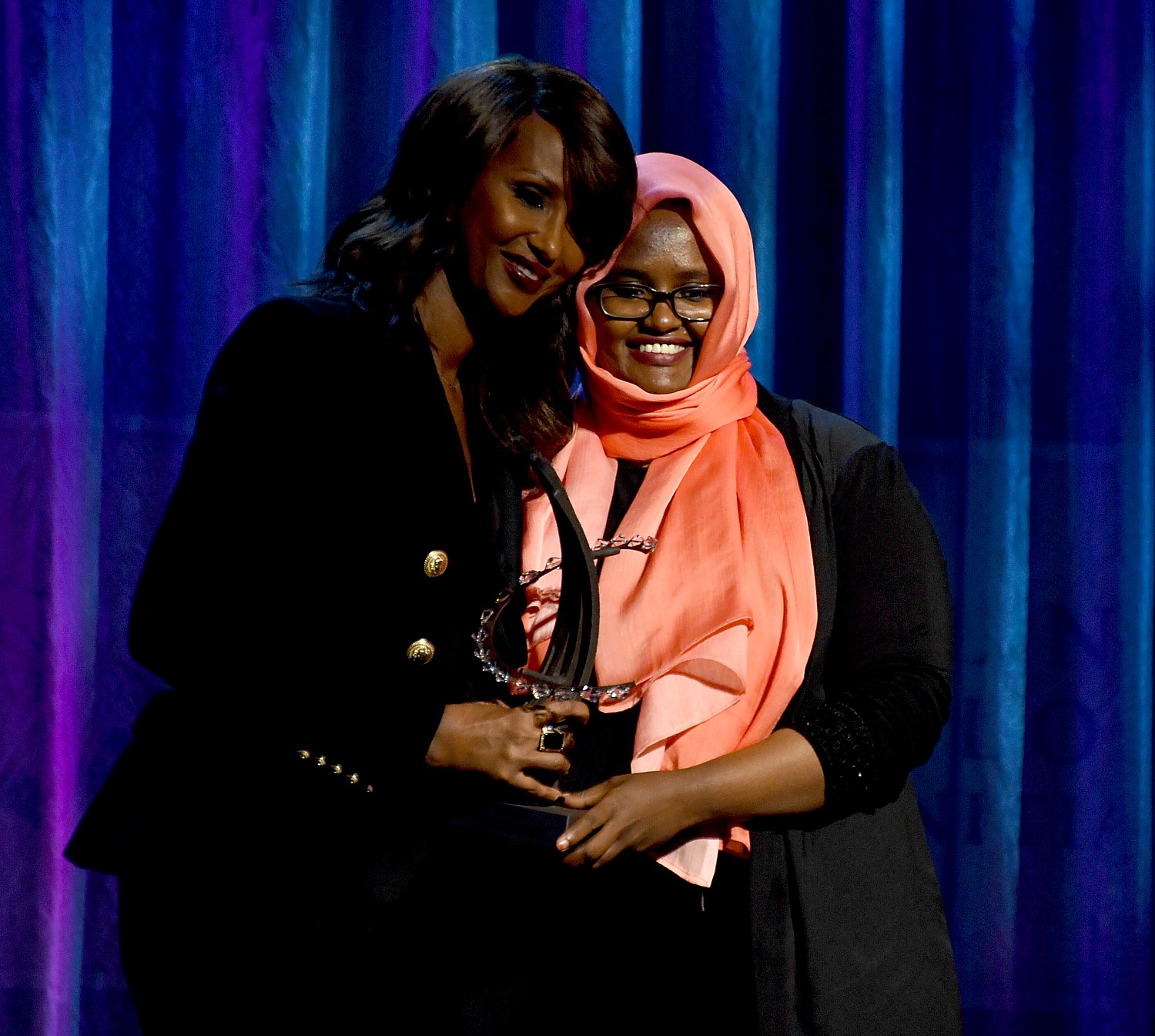
Iman presented the Global Citizen Award for Leadership in Civil Society to Dr. Hawa Abdi,  known as the Mother Theresa of Somalia, because of her life-saving work on behalf of Somalis displaced by war.

“She became a doctor, Somalia’s first female gynecologist, and opened a rural health clinic, organized on ancestral land. During the civil war, the government collapsed, famine was widespread, and she opened her land to refugees. By 2012, she was providing sanctuary for  90,000 displaced people.

She opened a 400 bed hospital, a school, organized a fishing and farming program and her land is the only source of fresh water in region.

Iman presents Dr. Deqo Mohamed with the Clinton Global Citizen Award for her mother, Dr. Hawa Abdi, the “Mother Theresa of Somalia”. © 2016 Karen Rubin/news-photos-features.com

“Today, Abdi continues to fight for the women, children, and elderly people of the Hawa Abdi Village. With the help of her daughters, Deqo and Amina, both of whom are doctors, Abdi continues to keep a candle of light lit for the people of the Afgooye Corridor.” Abdi has won numerous distinctions and awards, including the John Jay Justice Award, Vital Voices’ Women of the Year Award, and a nomination for the Nobel Peace Prize in 2012.” 

President Juan Manuel Santos of Colombia, Leadership in Public Service 

“After 50 years of war, most people had never lived with peace – 6 million fled homes,” said Luis A. Moreno, current President of the Inter-American Development Bank, introducing President Juan Manuel Santos of Colombia. “Today, we are on the threshold of concluding a historic agreement to bring a permanent end to the conflict.”

He said the seeds were sown when Moreno was serving as Colombia’s Ambassador to US when President Bill Clinton was in the White House, and credited Clinton’s “visionary aid program that allowed my country to achieve stability, attract investment, and set the conditions for peace. President Clinton made peace in Colombia his priority and brought Republicans and Democrats together.”

Clinton’s successors, George W. Bush and Barack Obama “followed Clinton’s example and supported” his policy.

Meanwhile, the Colombian President Santos put his presidency on the line during difficult negotiations with the FARC that dragged on for four long years.

“There were many setbacks but on August 24, the hope of millions was fulfilled when FARC and the government announced a final settlement. It is now up to the people, who will vote in plebiscite on Oct. 22.

“President Santos wanted a fully democratic process – a plebecite marks the beginning of a new, more complex chapter in our history. Every day, every Colombian will need to make personal decision – for lasting peace won’t be easy. Remembering is easy for those who have memory. Forgetting is hard for those who have heart.”

Convinced Colombia can be reunited together, write new chapter in history of beloved nation.

President Juan Manuel Santos of Colombia received the Clinton Global Citizen Award for his courage ending a 50-year war © 2016 Karen Rubin/news-photos-features.com

Accepting the award for Leadership in Public Service, President Santos said, “Peace is a right. It is in the constitution. To be a normal country, we had to stop war. I approached negotiations in a different way: Victims should be placed at the center of a solution – a human rights perspective was the key to success.

“One week from today, we will sign an agreement with FARC – 297 pages long, no detail was left out – and we will start to build a new history.

“War lasted three generations. It robbed us of compassion, the ability to feel suffering of others.

“I thank you in the name of 8 million victims of war over 50 years. The victims were most generous, willing to forgive – they don’t want others to suffer what we have.”

Juan Manuel Santos has been the president of the Republic of Colombia since 2010. Previously, President Santos was minister of defense, minister of finance, minister of foreign trade, designate to the presidency, and chief of the Colombian delegation before the International Coffee Organization. He created the Good Government Foundation (Fundación Buen Gobierno) and founded Colombia’s largest political party, Partido de la U. President Santos was awarded the King of Spain Prize and was president of the Freedom of Expression Commission for the Inter American Press Association. He has published several books, including “The Third Way,” co-written with former British Prime Minister Tony Blair, and “Check on Terror” (Jaque al Terror). President Santos is a graduate of the London School of Economics, Harvard University, and the Fletcher School of Law and Diplomacy. 

Adi Godrej, Leadership in the Private Sector 

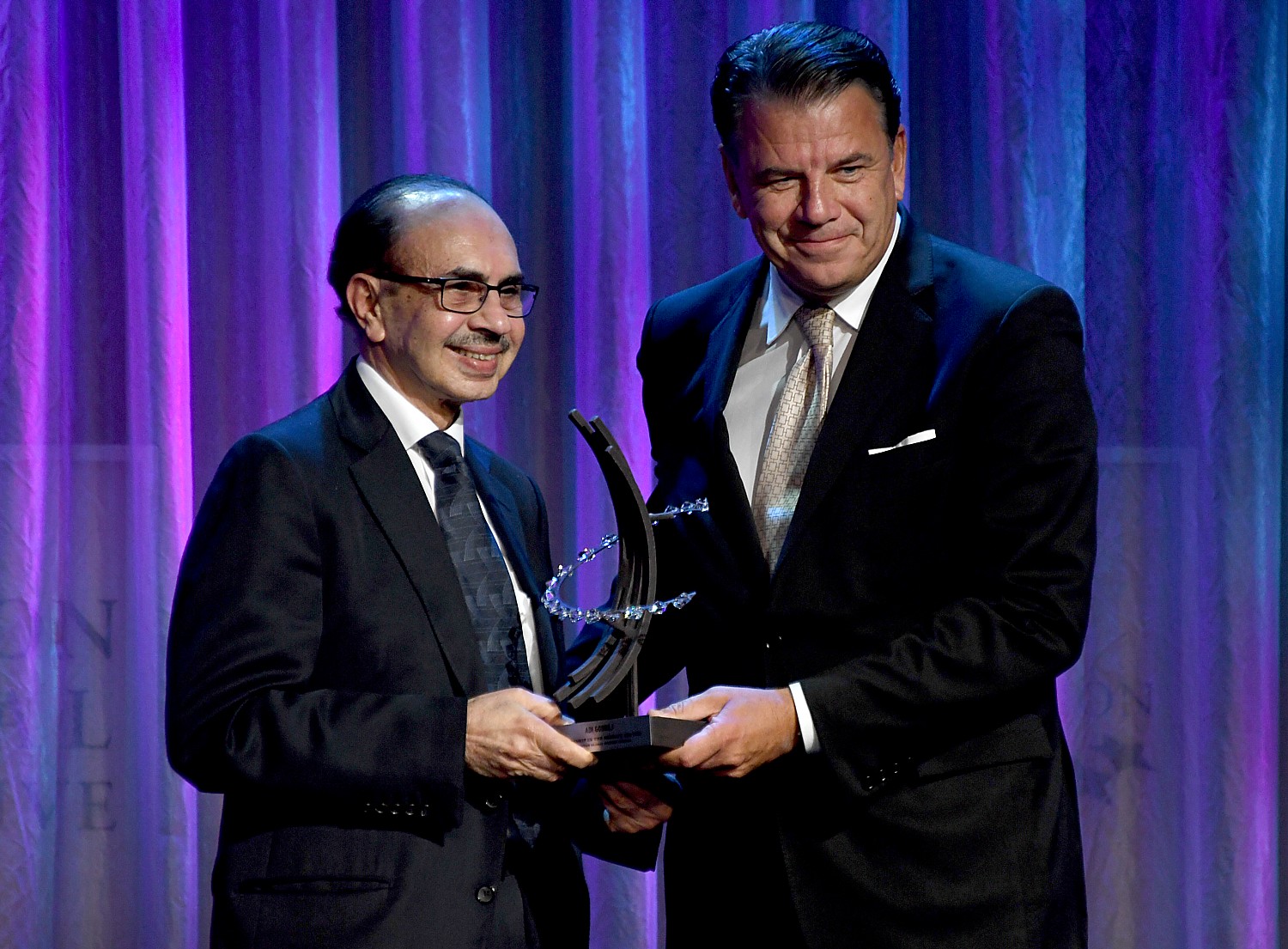
Adi Godrej, Chairman of Godrej Group, Godrej Industries Limited, was presented with the Global Citizen Award for Leadership in the Private Sector by Hikmet Ersek President & CEO of The Western Union Company.

Adi Godrej, chairman of Godrej Group is his presented with the Global Citizen Award for Leadership in the Private Sector from Hikmet Ersek President & CEO of The Western Union Company © 2016 Karen Rubin/news-photos-features.com

Godrej is the vanguard of green development, committed to alleviating poverty, preserving natural resources, and holding 24% of its revenues in a trust for philanthropic purpose, and a motto that “The business of business is goodness. Let’s make Goodness.”

“It’s important to remain a good company,” he said. “We have always actively supported social responsibility. 24% of the corporate funds is in trust that invests in environment and education.”

He said that the company has set three goals for 2020 – train 1 million youth in skills to enhance earnings, build a greener India, generate one-third of potential revenue in products that are environmentally sustainable.

Adi Godrej is chairman of the Godrej Group, a more than 100-year-old family conglomerate, with operations in India and several other countries. Godrej is chairman of the board of the Indian School of Business and former president of the Confederation of Indian Industry. He has been a member of the Dean’s Advisory Council of the Massachusetts Institute of Technology (MIT) Sloan School of Management and a member of the Wharton Asian Executive Board. Godrej is the recipient of several awards and recognitions, including the Rajiv Gandhi Award (2002), the American India Foundation Leadership in Philanthropy Award (2010), The Entrepreneur of the Year for the Asia Pacific Entrepreneurship Awards (2010), Chemexcil’s Lifetime Achievement Award (2010), AIMA-JRD Tata Corporate Leadership Award (2010), Ernst & Young Entrepreneur of the Year (2012), Padma Bhushan (2012), and All India Management Association-Business Leader of the Year (2015). Godrej holds a bachelor’s degree and a master’s degree from MIT.

________________________________

© 2016 News & Photo Features Syndicate, a division of Workstyles, Inc. All rights reserved. For editorial feature and photo information, go to www.news-photos-features.com, email editor@news-photos-features.com. Blogging at www.dailykos.com/blogs/NewsPhotosFeatures.  ‘Like’ us on facebook.com/NewsPhotoFeatures, Tweet @KarenBRubin

 

Clinton Global Initiative Has Been Catalyst to Solving World’s Most Intractable Problems

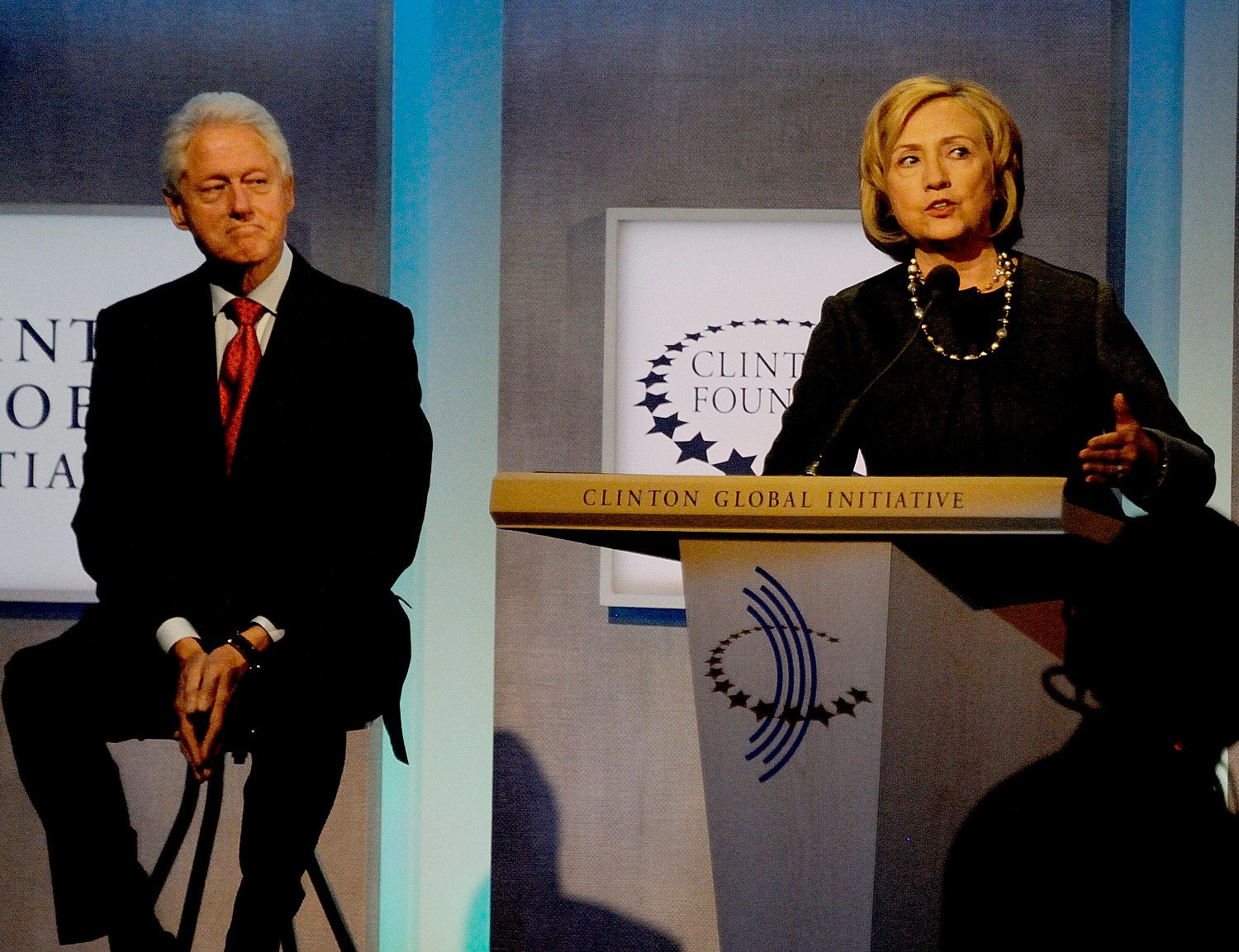
Hillary Clinton addressing the Clinton Global Initiative in 2014, as President Bill Clinton looks on © 2016 Karen Rubin/news-photos-features.com

By Karen Rubin, News & Photo Features

For a few precious days each year for the past 10 years, I have had the privilege of stepping into what felt as an alternate universe – a place of possibility and progress, where the intractable challenges of all time, like health care, religious wars, systemic poverty, racism and sexism, global warming, had solutions, not just pie-in-the-sky ideas, that were being implemented. Year after year, we could see the faces of people whose lives were saved or improved – many even attended the annual meeting to talk personally – and we could measure the progress.

This was the Clinton Global Initiative, an extraordinary gathering of Movers and Shakers of the world – senior ministers of government, CEOs of multinational corporations and financial institutions, wealthy philanthropists, along with the NGOs (nongovernmental organization) worker bees who are the ones who actually labor to improve lives in their local communities. They included among them Nobel laureates like Mohammed Yunus of Bangladesh, who transformed his society using microfinance. They had the scions of billionaires like Warren Buffet’s son, Peter Buffet, Co-chair, NoVo Foundation, which committed $30 million over five years to help rebuild the education systems and address violence against women and girls in post-conflict West Africa; the Nike Foundation that financed programs empowering girls (“The Girl Effect”), Sophie Gasperment, CEO of BodyShop who sponsored a new approach to stop child sex trafficking.

This was not charity. This was a nonprofit institution that figured out how to create sustainable development. The model has since been used by the Obama Administration, in the design of Strong Cities, Strong Communities program which forged public-private partnerships to spur economic development in cities like Detroit, for example, in programs forging public-private partnerships to cultivate adoption of clean, renewable energy, and in Michelle Obama’s “Let Girls Learn” initiative and the “Joining Forces” program to incentivize companies to hire veterans returned from war.

At the first Clinton Global Initiative, Condoleezza Rice shared the stage with Al Gore. Over the years, other prominent Republicans – including Republican candidates for president (John McCain, Mitt Romney), made appearances if not in person, by videolink. But that pretty much stopped after Florida Governor Charlie Crist was photographed hugging President Clinton at a session on climate change; the photo was blasted on page 1 all over Florida, and he was drummed out of the Republican Party and Florida politics.

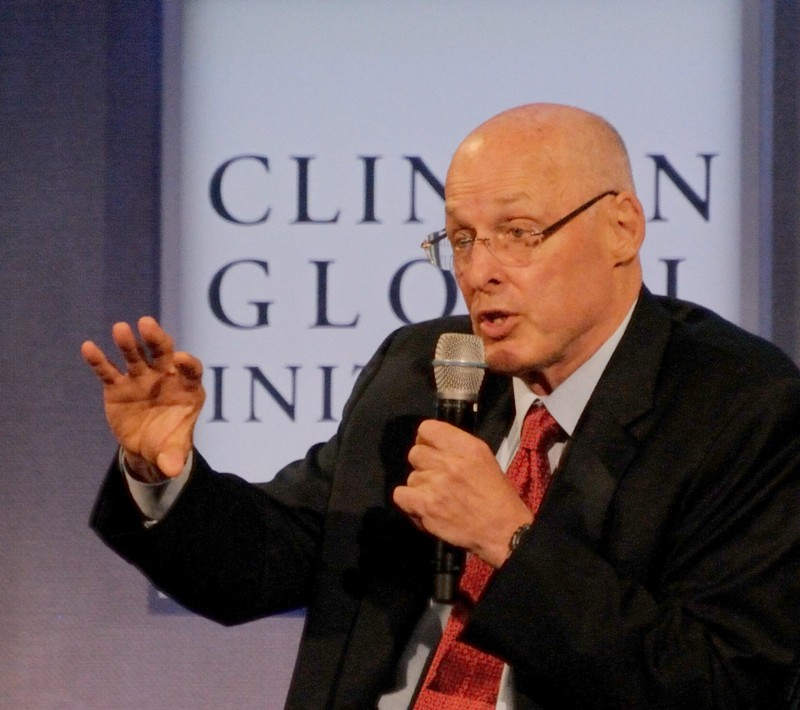
Former Bush Treasury Secretary Henry Paulson at 2014 CGI speaks of need for carbon tax © 2016 Karen Rubin/news-photos-features.com

Sure I gagged when I heard Lloyd Blankfein of Goldman Sachs say “We are doing God’s work,” but there was former Bush Treasury Secretary Henry Paulson calling for a tax on carbon. “We need a national policy to unleash the markets, unleash innovation, that will lead to new technologies and change behavior – business and consumer behavior.”

“We started CGI to create a new kind of community built around the new realities of our modern world, where problem-solving requires the active partnership of government, business, and civil society,” President Bill Clinton stated when he announced changes to the Clinton Foundation and that this year’s Clinton Global Initiative would be the last. “We’ve brought together leaders from across sectors and around the world both to talk about our challenges, and to commit publicly to actually do something about them.  It was something different, but our bet paid off: there was a hunger for the chance to make an impact that brought together people and organizations with the resources to make a difference with people who have the knowledge and experience to turn good ideas into action.  Corporations, governments, and non-governmental organizations began combining their strengths and finding entirely new approaches to old problems.  CGI quickly became an embodiment of what works best in the 21st-century world, and what has been behind all of the Clinton Foundation’s work since the very beginning: networks of cooperation.

“This partnership model, which may seem self-evident today, was simply not how philanthropy and corporate responsibility worked over a decade ago.  Today, members of the Clinton Global Initiative have made more than 3,500 commitments that are already improving over 430 million lives in more than 180 countries.  These projects will continue to make an impact around the world and in the U.S.  The idea that working together beats going it alone has caught on well beyond our CGI community.”

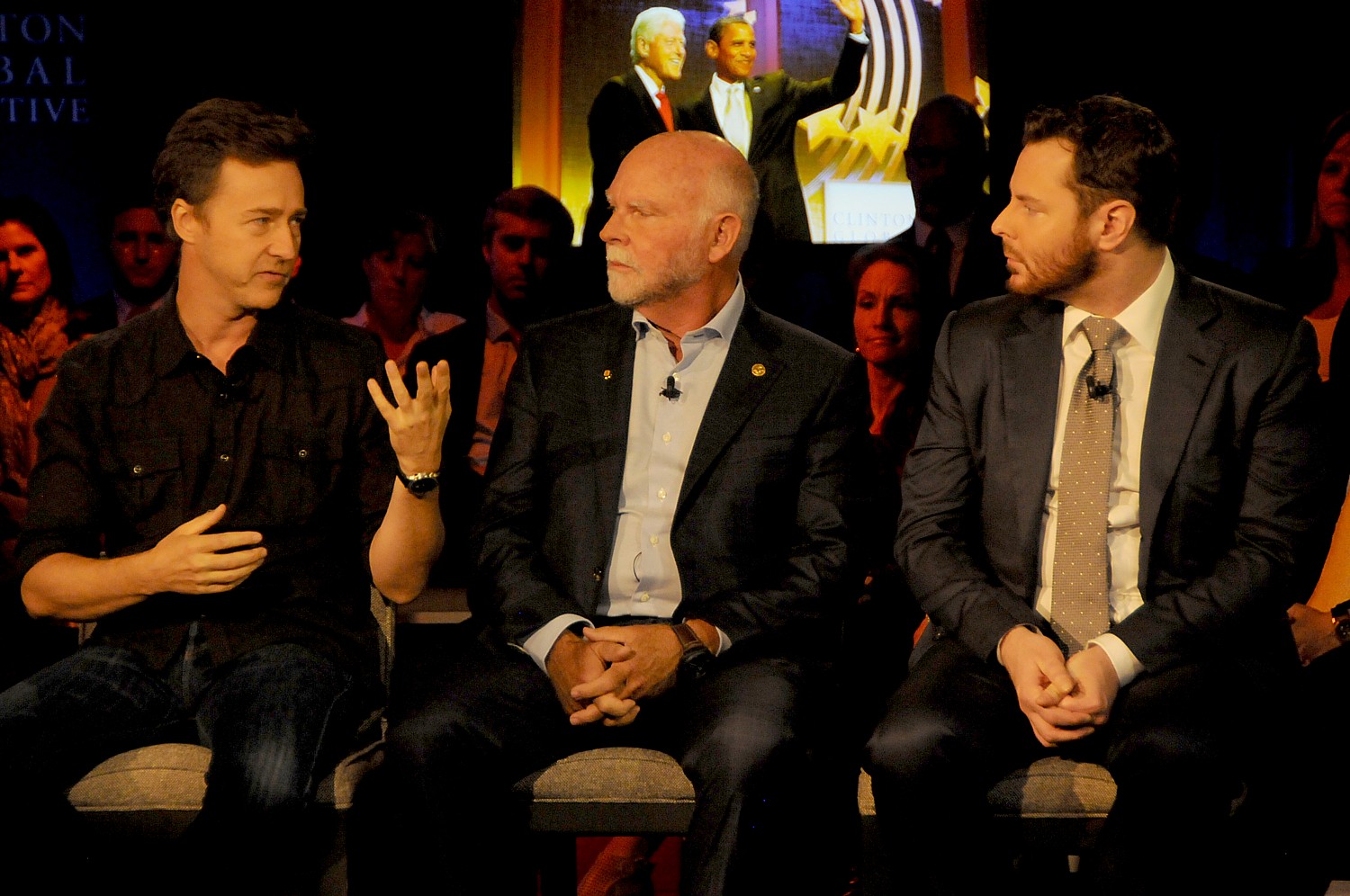
Edward Norton, Actor, Activist, Co-Founder, CrowdRise; Sean Parker, Chairman, The Parker Foundation; and J. Craig Venter, Co-Founder, CEO, and Chairman, Human Longevity, Inc. discuss promising solutions that aim to achieve shared prosperity and opportunity over the next decade at the 2015 CGI © 2016 Karen Rubin/news-photos-features.com

The Clinton Foundation and the Clinton Global Initiative have been the greatest force for good in a very disturbed, unsettled, increasingly dark world – it makes Jimmy Carter’s Habitat for Humanity look like the Cub Scouts.

And because Clinton Global Initiative has been such a gamechanger in actually making progress against the most intractable challenges facing the planet today, the Republicans have been trying to kill it forever. That’s because the Republicans realize that their power and control depends upon persistent income inequality, suffering and despair, and an underclass of voiceless, unrepresented people. They don’t want real solutions to anything. They want to be able to throw a few dollars at a problem for their own sense of redemption, while actually committing pay-for-play in accommodating their donors, like Dirty Fuels and the NRA.

Now Donald Trump, desperate to turn the tide on his disgraceful, despicable campaign, has been searching for something, anything, to distract. So far, that has been Clinton’s emails and Benghazi. But even that could only go so far. So now it is Clinton Foundation and his trumped up scandal of pay-for-play without a single instance of actual wrongdoing. He has accused Hillary Clinton of “selling her office” to the detriment of national security.

Trump’s wet dream is that a special prosecutor, a la Ken Starr, would be appointed, with likely the same tactics as Starr used – locking up people until they gave the evidence he wanted. And when nothing was found to show the Clintons did anything illegal in the Whitewater land deal, Starr (the guy who had to resign his post at Baylor over ignoring sexual assault on campus) simply shifted gears to go after Clinton’s adultery. (Clearly, this is another case of projection by Donald Trump, who attacks opponents for the impropriety that he commits, including pay for play, which he has boasted of mastering, as when he got New Jersey Governor Chris Christie to reduce a $30 million tax bill on his failed Atlantic City casinos to a mere $5 million.)

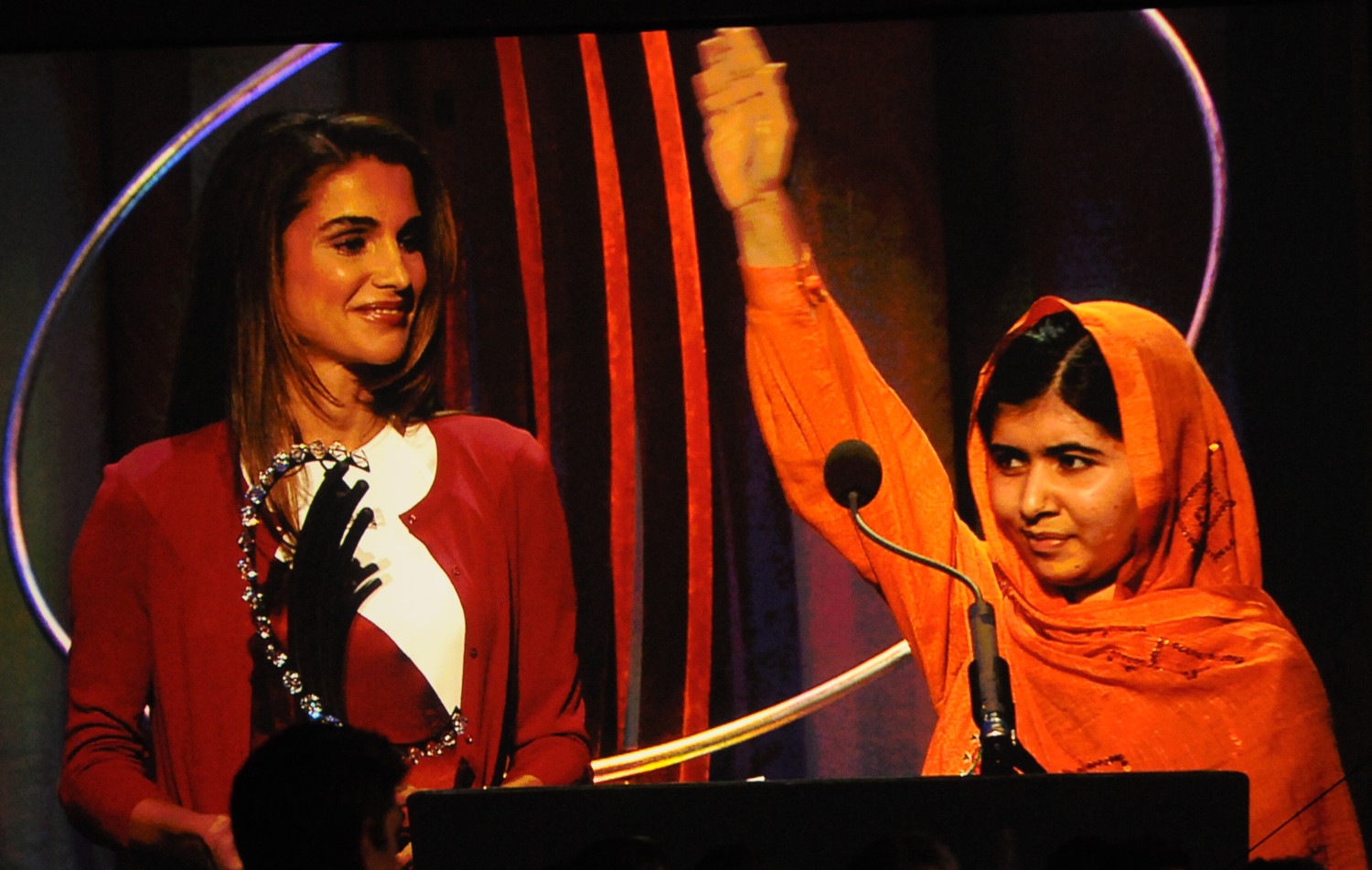
Malala Yousafzai, Nobel Peace Prize Winner, with Queen Rania of Jordan, after being awarded the Clinton Global Citizen award in 2013 © 2016 Karen Rubin/news-photos-features.com

CGI was so successful precisely because it brought on board leaders in government, industry, finance and philanthropy, together with NGOs and entrepreneurs. So why should it be a surprise that these same people – the Crown Prince of Bahrain, Bill and Melinda Gates – would also meet with the Secretary of State? Cause and effect are mixed up. These weren’t unknown money people who only after making a donation to the Clinton Foundation, not only got a meeting with Secretary of State they wouldn’t otherwise have had, but also some action that somehow was counter to the interests of the United States.

The Clinton Global Initiative has had stunning success in creating new programs to bring clean water, seeds, medicine, health care including training midwives (delivering birth was the most dangerous thing a woman could do), solar energy, education. Their projects have saved millions of children from death from disease and hunger, addressing issues such as child brides, human trafficking, drought, famine. And we haven’t even started on global warming, protecting the ocean, education, entrepreneurship, conflict resolution.

The programs have not just fostered new insights and new partnerships that could produce solutions to problems, but have changed cultures of countries and corporations and societies. Walmart – the company progressives love to hate – introduced sustainability throughout its delivery chain, resulting in tens of thousands of fewer trucks on the road spewing carbon emissions contributing to global warming, Goldman Sachs devised a new sort of bond to help fund repair of coral reefs. A company found investors for a process to turn algae production into fuel to power US Naval ships instead of diesel.

It is remarkable to hear Queen Rania of Jordan, a regular at CGI, speak about the need to improve access to education and jobs for women, and for young people generally, and (in 2010). I recall one panel discussion with HRH Prince Salman bin Hamad Al-Khalifa, Crown Prince and Deputy Supreme Commander of the Kingdom of Bahrain, President Bill Clinton, Salam Fayyad, Prime Minister of the Palestinian National Authority together with Shimon Peres, President of the State of Israel, talking about peace in the Middle East that was probably the closest the two intransigents had ever been to actual agreement. Or hear Bill Gates talk about having cut the number of child deaths in half, with a goal of reducing the number even further – to a mere 3 million a year, “where child in low income country can survive as well as a child in middle income country.”

It literally restores faith in a way that praying in church can’t possibly.

CGI has paved the way for a generational change in outlook through its CGI University, bringing college-age people together to channel their vision, their entrepreneurism, their talents and energies on these problems of health, education, global warming, poverty.

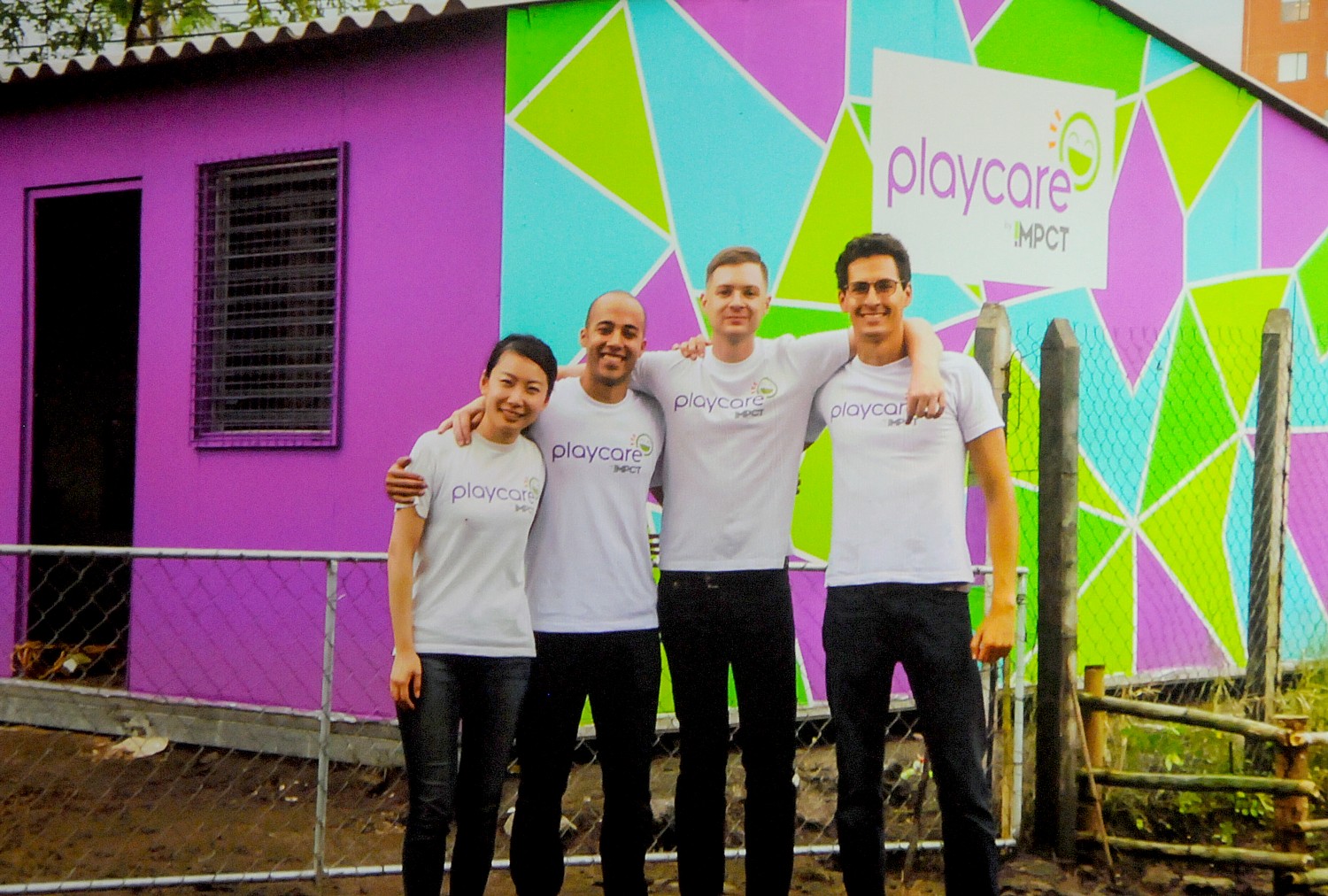
Hult Prize Winners of $1 million in start-up capital, IMPCT, for Playcares child care franchise model for Brazilian neighborhoods © 2016 Karen Rubin/news-photos-features.com

Last year’s Hult Prize at CGI– a competition for young entrepreneurs to solve a problem around a particular theme or problem (the winner gets $1 million in start-up capital), went to IMPCT for a project to create small play-based daycare franchises, owned and operated by a local entrepreneur to serve 20 nearby families with affordable early education, right in Brazilian slum neighborhoods, enabling mothers to work, children to have a decent place to learn, and create new pathways to entrepreneurship for women.

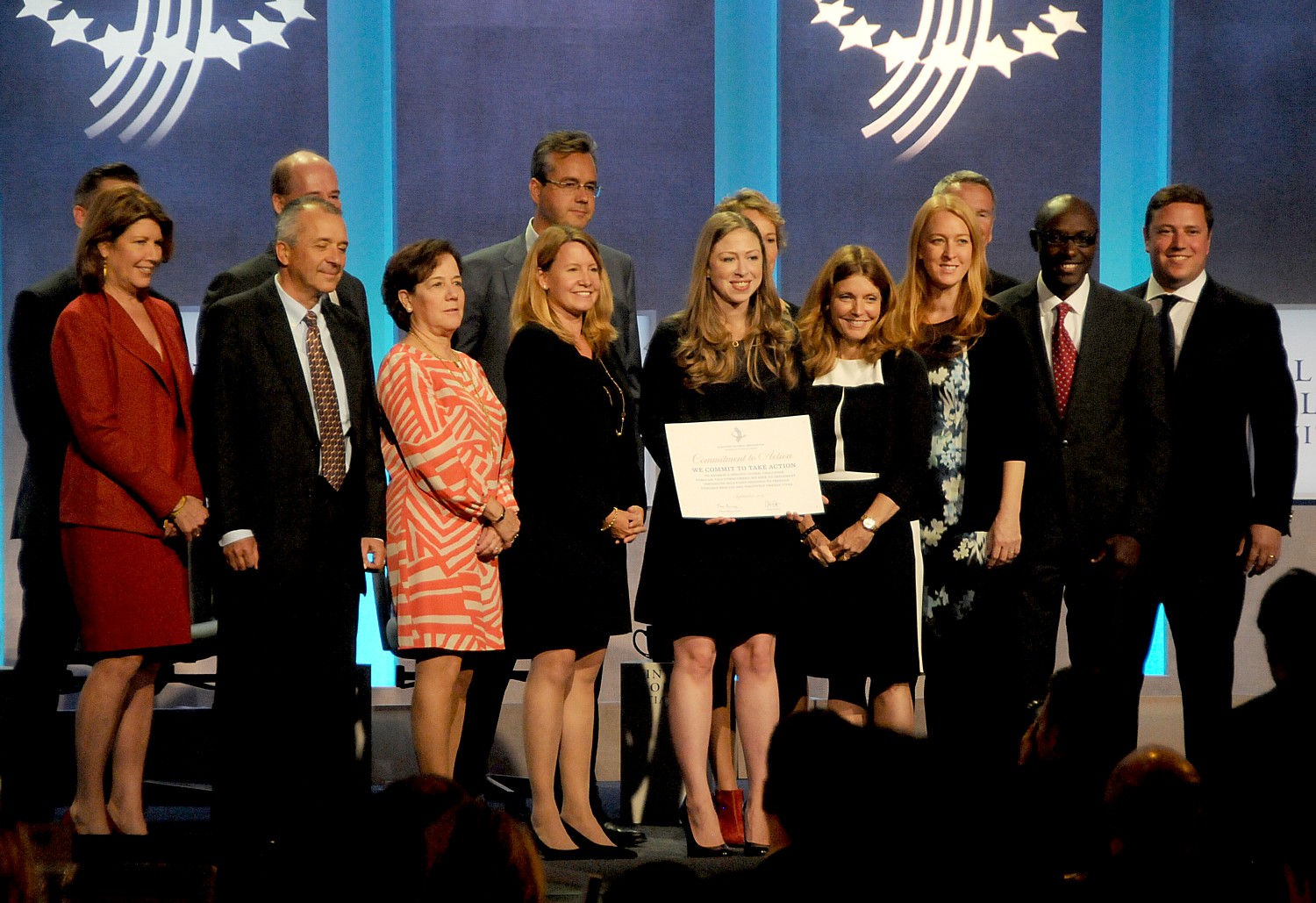
Chelsea Clinton announces a collaboration for commitment to action during the 2015 CGI © 2016 Karen Rubin/news-photos-features.com

The unique aspect of Clinton Global Initiative is that every participant must make a commitment, and that commitment is monitored for implementation and measured for success. (You can’t even trace Donald Trump’s so-called “charitable contributions” or what went purely to get a tax deduction, or in the case of his recent adoration for veterans groups, to buy votes.)

The CGI provided a unique forum, a unique space, for these various entities to meet, even serendipitously, and partner together on “commitments.” I heard this same thing over and over. The conference offers a showcase for the “idea” people to pitch to the people who can fund and implement – so you see extraordinary collaborations.

So far, besides a couple of requests for meetings (which Clinton’s aide Huma Abedin said needed to go through official channels), a request for help with a visa (denied), or introduction to an ambassador by a Lebanese Nigerian who wanted to convey some information about an upcoming election in Lebanon, there has been no evidence of inappropriate action on Secretary Clinton’s part – that is, something that went counter to US interests, or specifically benefited the Clinton Foundation or them personally.

The billions of dollars that have been funneled into these projects went into the projects, not into the Clintons’ pockets.

Ah, but the appearance, the perception, we are told.

Trump is trumping this whole thing up because he is absolutely desperate, and this (thanks to Bernie Sanders and Jill Stein, whose entire attack hinged on Hillary’s connections with corporations and special interests), is his last straw (well, along with the conspiracy that Hillary is sick).

As a result, we aren’t hearing anything about Hillary Clinton’s proposal for a rapid response to pandemics and bolster health infrastructure – issues that have been tackled at CGIs – or how she would promote small businesses in minority communities, which she announced last week. Or any of her specific plans to create jobs, fight ISIS, make communities safer and more successful.

And yet, Donald Trump has run his campaign as an infomercial, has clearly directed campaign spending directly to his own companies, family members and friends, has as  his “advisers” his biggest donors (Carl Icahn, Robert Mercer), has refused to be transparent about what he owns and what he owes (like the millions he is in hock to with banks owned by the Chinese government), has clearly bought favors and would very likely bring these practices directly into the Oval Office, making or breaking deals through the prism of what benefits his own personal business interests.

Trump said years ago that he thought it would be possible for a presidential campaign to actually earn money, and that is exactly what he is doing. And there is no indication whatsoever that he wouldn’t do the same if he actually was in the Oval Office.

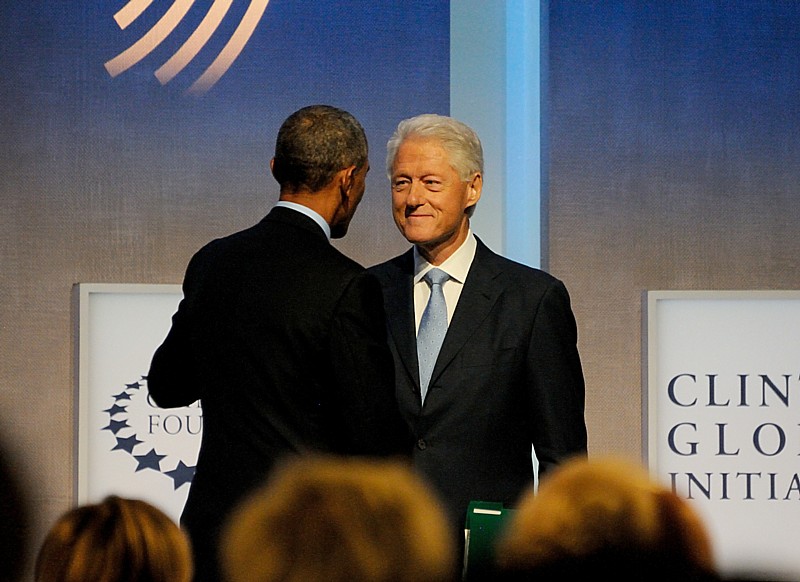
President Bill Clinton greeting President Barack Obama, at the 2014 CGI © 2016 Karen Rubin/news-photos-features.com

No one has been so scrutinized, analyzed, dissected as much as Hillary Clinton. If the same level of analysis was applied to anyone else (like Donald Trump, Jill Stein), I doubt they would pass muster. We actually don’t know anything about Donald Trump’s real income or supposed success as a businessman, whether he contributes to charity or whether he uses his “contributions” to buy politicians. He has said himself that no one knows the system better than he does. And these attacks on the Clinton Foundation and the Clintons is yet the latest example of “projection” – attacking the opponent for the very thing that you are doing. Trump has admitted to being a master at rigging the system.

And the real tragedy is that the Clintons are planning to shut down Clinton Global Initiative altogether and dramatically curtail the Clinton Foundation. Instead, they should do what any other president would do – resign as members of the Board and have a “blind trust” while Hillary Clinton is president.

Some Examples of Clinton Global Initiative Commitments 

Here are some examples of the more than 3,000 CGI commitments:

Reaching 1 New Person with Clean Water Every 10 Seconds, Commitment by: World Vision, Partners: Procter & Gamble, Sesame Workshop, Coca-Cola, Grundfos, United Solar Initiative, University of North Carolina Water Institute, Denver Mattress, Kohler, Water Now, Water4, Well Spring for the World, Drexel University, Design Outreach, Desert Research Institute, Messiah College. In 2015, World Vision and partners committed to reaching one new person every ten seconds with clean water and sanitation on or before 2020, directly impacting 13 million people in 36 countries in Africa, Latin America, the Middle East and Asia. To do so, World Vision will form committees in each of the communities in which they work which are responsible for managing the community’s water points, which may include traditional boreholes with a hand pump, mechanized boreholes with solar power, protected springs, and rainwater harvesting. As girls and women bear the burden of collecting water globally, World Vision will specifically engage women in leadership positions within the committees. This commitment scales upon World Vision’s 2011 commitment to provide water, sanitation and hygiene solutions in 10 African countries.

Books For All: A Digital Library for 5 Million People: Commitment by: Worldreader; Partners: United Nations High Commissioner for Refugees, Bill & Melinda Gates Foundation, Penguin Random House, Inc., Longhorn Publishers, Pratham, Microsoft, Rosetta Books, Cisco Foundation, Vodafone Group Foundation, Hesperian Books. In 2014, Worldreader committed to provide 5 million people with increased access to digital books in the next three years. The organization will quadruple the size of its digital library by 20,000 book titles, adding titles in English and local languages, with a particular focus on STEM and health content, as well as increase the number of distribution channels available by creating Android-based and web browser mobile reading applications. Worldreader announced today that as of March 2015, 4,230 books have been added to its global library, with a focus on reading materials that are about girls’ empowerment and STEM. Worldreader has reached 489,725 more readers since the CGI commitment was realized.

African Rhino Protection Program, Commitment by: United Postcode Lotteries, Partners: Peace Parks Foundation, World Wildlife Fund, South African National Parks, Ezemvelo KwaZulu-Natal Wildlife, Government of South Africa

Partnership to Map Air Pollution Across California Cities, Commitment by: Aclima, Partner: Google

Healthy Honey Bees: Linking Food Security & the Environment, Commitment by: Monsanto Company, Partners: National Alfalfa & Forage Alliance, Western Growers, American Honey Producers Association, American Beekeeping Federation, Eastern Kentucky University, National Cotton Council of America, Project Apis m., The Keystone Alliance, U.S. Department of Agriculture, Field to Market

And there are more than 3000 more.

_______________

© 2016 News & Photo Features Syndicate, a division of Workstyles, Inc. All rights reserved. For editorial feature and photo information, go to www.news-photos-features.com, email editor@news-photos-features.com. Blogging at www.dailykos.com/blogs/NewsPhotosFeatures.  ‘Like’ us on facebook.com/NewsPhotoFeatures, Tweet @KarenBRubin