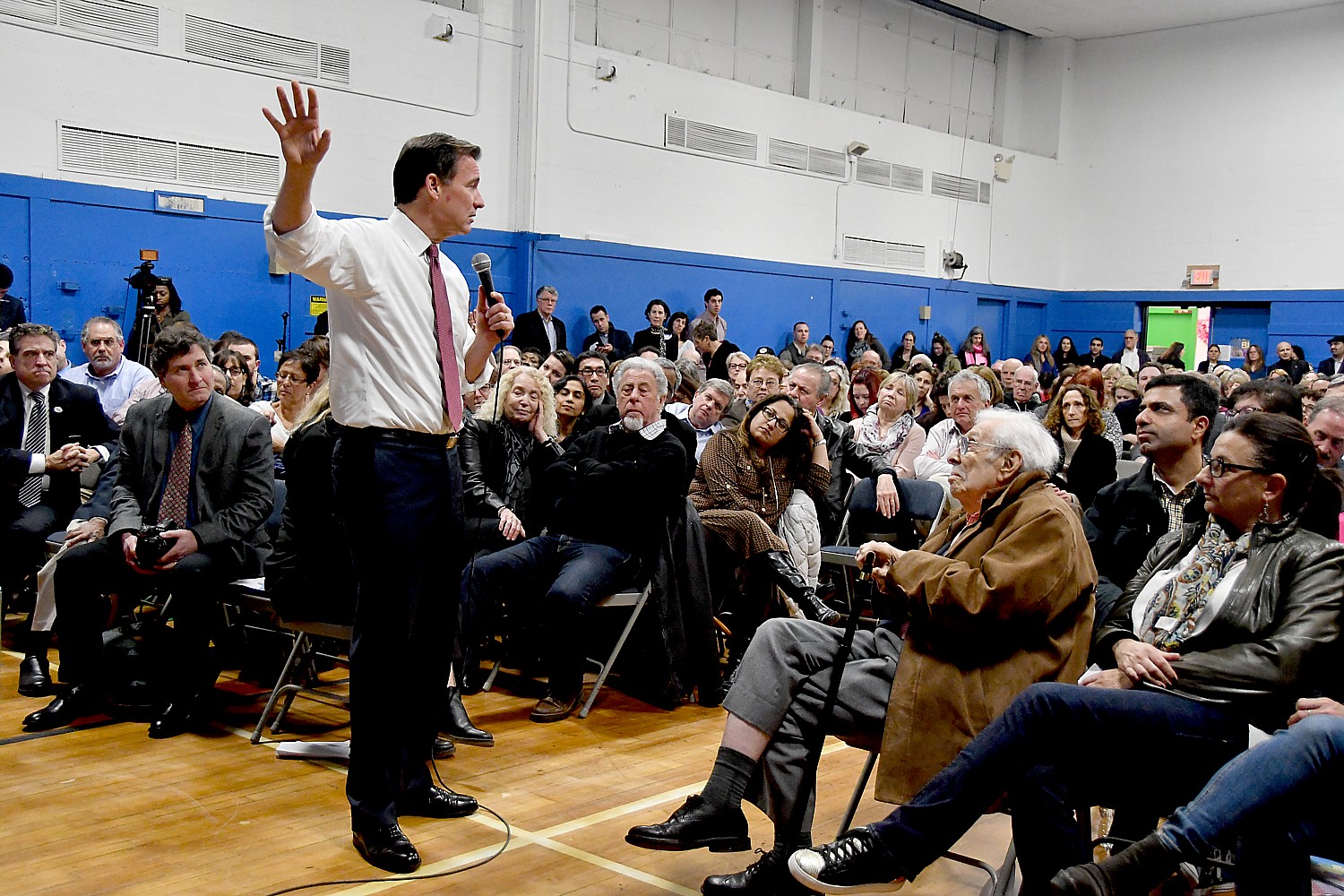
A Jewish Community Center in Plainview where only last week Congressman Tom Suozzi had held a SRO town hall, was among several in New York State terrorized by a new wave of bomb threats on Feb. 27 sweeping the country.
Bomb threats were also phoned into JCCs in Tarrytown, Staten Island and New Rochelle. In all, there were 29 bomb threats made across 18 states – 89 in 30 states and Canada since January.
That same day, the Mount Carmel Jewish cemetery in Philadelphia was vandalized, with 100 tombstones damaged. It was the second such incident in a week, following a desecration of more than 100 tombstones in a 123-year old Jewish cemetery in St. Louis.
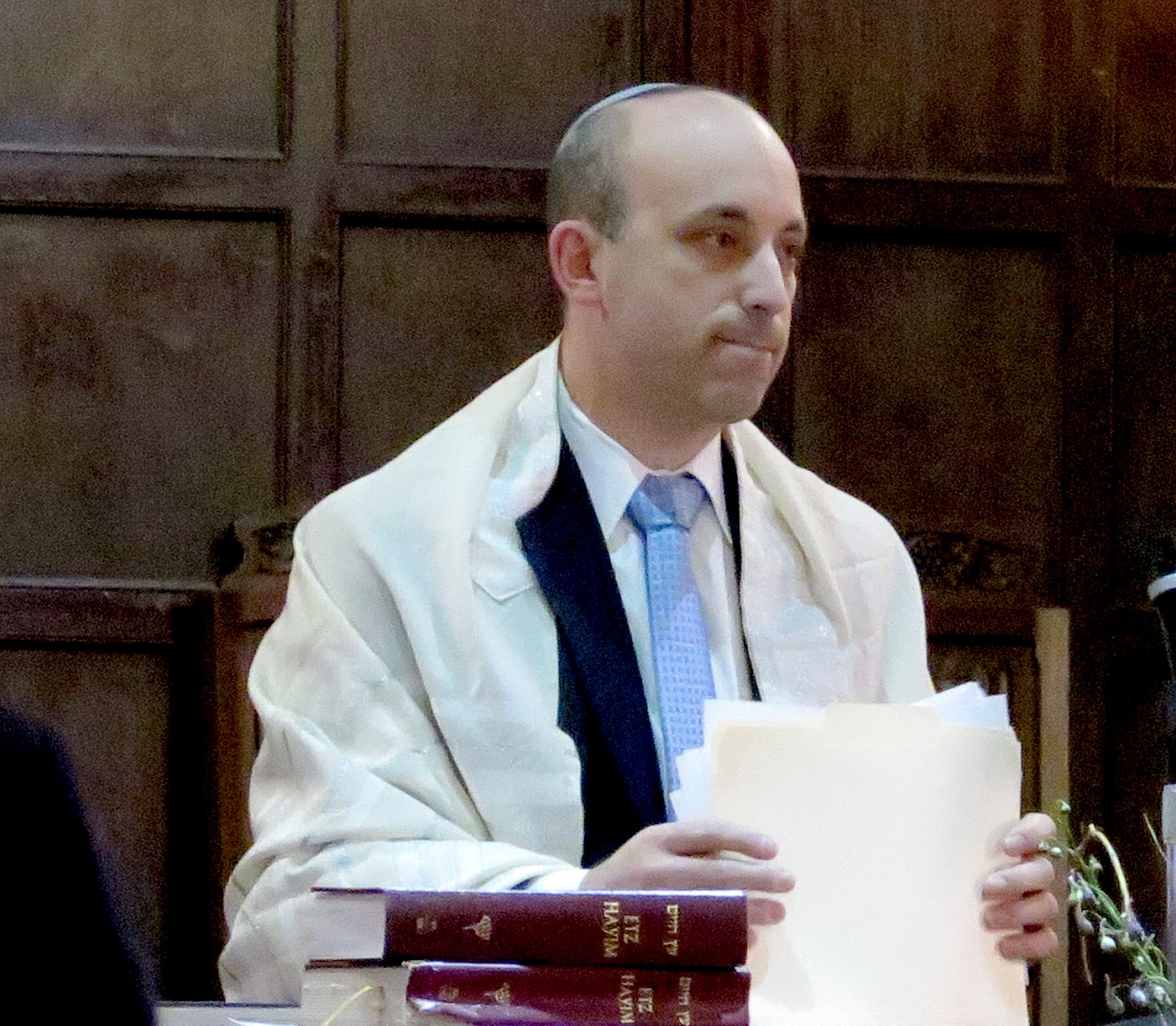
Last week, an anonymous bomb threat was phoned in to the headquarters of the Anti-Defamation League – its CEO and national director, Jonathan Greenblatt, had only days before addressed a Long Island synagogue on the rise of anti-Semitism and the fact Donald Trump had taken no action, nor even come out with a statement denouncing such acts.
But Governor Andrew Cuomo, who responded swiftly last week with a hotline (888-392-3644) to the State division of Human Rights, and instructed the New York State Police to coordinate with federal and local law enforcement to fully investigate and hold perpetrators accountable. He also introduced a $25 million grant program to boost safety and security at New York’s schools and day care centers “at risk of hate crimes or attacks because of their ideology, beliefs or mission.”
“Make no mistake: these reprehensible and cowardly attacks are not limited to the Jewish community. They are assaults on all New Yorkers and I vow that we will do everything in our power to catch those responsible for this wave of hate crimes,” Governor Cuomo stated.
“I share the pain and the outrage of so many New Yorkers who are affected directly and those who are sickened by watching these attacks unfold. We will not allow anyone to intimidate or strike fear in the state of New York. The full force of government will be brought to bear in these efforts and these perpetrators will be punished.”
After the attack on the ADL headquarters in Manhattan, Cuomo called it “unacceptable, un-American and – disturbingly – increasingly common. This despicable act of anti-Semitism completely contradicts the values we hold dear as New Yorkers. This is now a national crisis as a troubling pattern of recent anti-Semitic threats have been directed at Jewish Community Centers on a regular basis, including Buffalo, New York City, Albany, and Syracuse.
“We are treating these incidents for what they are – as crimes – and we will not allow them to go unpunished. Today I have directed the New York State Police to coordinate with federal and local law enforcement to launch a full investigation into this latest incident. Make no mistake, we will find these perpetrators and hold them fully accountable for their actions….
“We as New Yorkers stand with the Anti-Defamation League, an organization for over a century whose mission has been to stand up for the Jewish people and fight back the ugly divisive forces of bigotry and defamation. We stand with all Jewish people here in New York and across the country to say loud and clear – enough is enough.”
Meanwhile, there has been nothing of any consequence from Donald Trump, who otherwise doesn’t hesitate expressing his outrage in 140 characters at any perceived personal slight. Instead, he shut down questions about the rise of anti-Semitic incidents from an Israeli reporter at his press conference with Israel PM Benjamin Netanyahu, and the next day, told an Orthodox man who was careful to say he was not accusing Trump of being anti-Semitic, in fact, calling him Zaide, the term for a Jewish grandfather, to just shut up and sit down, proclaiming himself the least anti-Semitic person anyone would meet.
But he has not called for Attorney General Jeff Sessions (who also has been extraordinarily silent) to have his Department of Justice investigate and prosecute hate crimes, or done anything of any consequence.
Trump, who has already completely undone America’s value system to combat terrorism from abroad, doesn’t see or care about domestic terrorism. Indeed, he no longer classifies domestic terrorism as terrorism.
This emboldens acts against Jews, minorities of every stripe, immigrants, foreigners. It gives permission to regard “others” as nonpersons, not deserving of civil or indeed human rights, the same strategy employed in Nazi Germany, laying the foundation for the Holocaust.
Indeed, Trump made no statement after a Kansas man shot two Indian engineers who worked for Garmin and another man who tried to come to their aid, killing the 32 year old Indian man. “Get out of my country,” the man reportedly shouted just before opening fire.
My country.
Immediately after the St. Louis Jewish cemetery was vandalized, Hillary Clinton tweeted, “JCC threats, cemetery desecration & online attacks are so troubling & they need to be stopped,” she wrote on Twitter. “Everyone must speak out, starting w/ @POTUS.”
Finally, ambushed during his photo-op at the National Museum of African-American History and Culture in Washington DC on Presidents Day, he meekly replied. “Anti-Semitism is horrible. And it’s gonna stop and it has to stop…I think it’s terrible. I think it’s horrible. Whether it’s anti-Semitism or racism or any — anything you wanna think about having to do with the divide. Anti-Semitism is, likewise, it’s just terrible.”
“The issue of anti-Semitism is not partisan,” Greenblatt told Temple Beth-El just a few days before the ADL received a bomb threat. “It is potentially lethal. Nor is it an arcane policy matter that demands debate. This is a simple social problem that demands moral leadership – with the president’s leadership it can get better and with neglect or instigation it will get worse. The president’s repeated failure to address it is empowering, emboldening bigots.”
Trump should take a cue from Governor Cuomo.
“Anti-Semitism of this nature should not and must not be allowed to endure in our communities,” David Posner, the director of strategic performance at the JCC Association of America, said in a statement reported in the Jerusalem Post. “The Justice Department, Homeland Security, the FBI, and the White House, alongside Congress and local officials, must speak out – and speak out forcefully – against this scourge of anti-Semitism impacting communities across the country. Actions speak louder than words.”
It’s already begun. The unraveling of eight years of progress under Obama. Contrast their first actions: Obama signed the Lily Ledbetter Act so women can have a legal remedy for pay equity. Trump signed an executive orders to dismantle Obamacare and to withhold funding from any NGO anywhere that funds abortions.
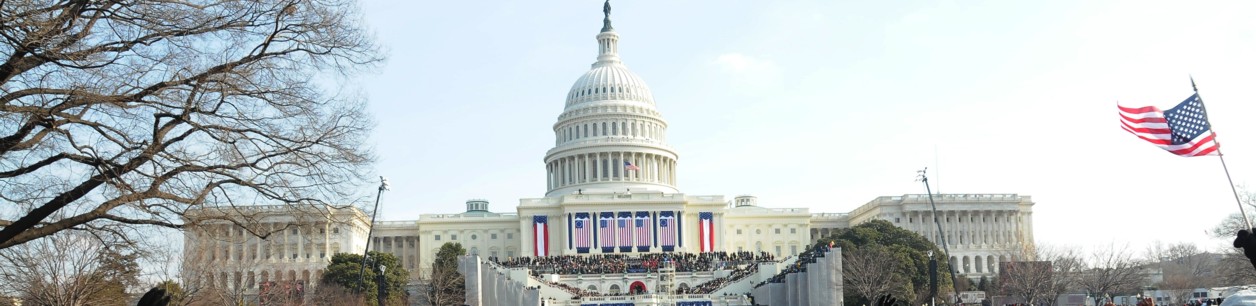
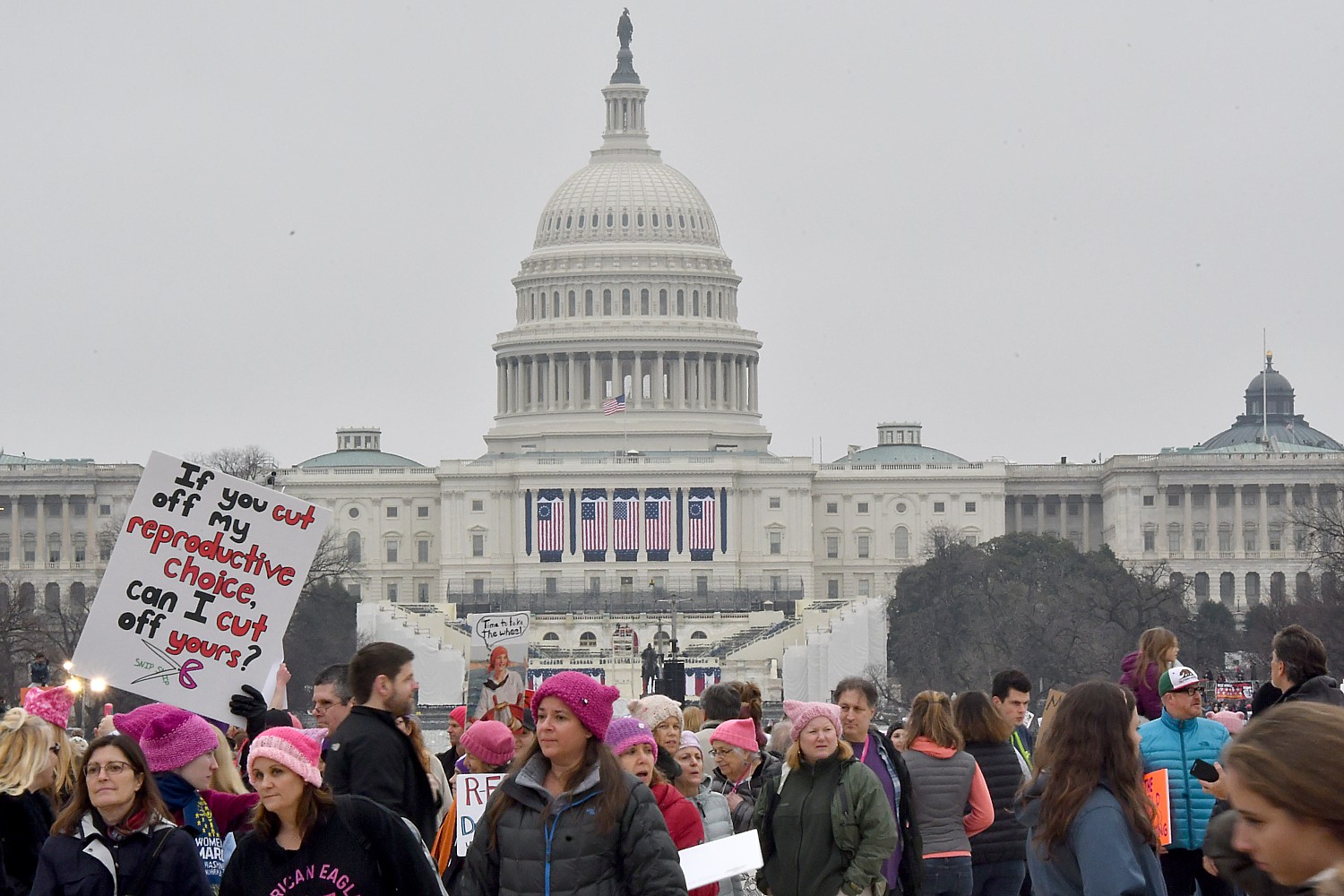
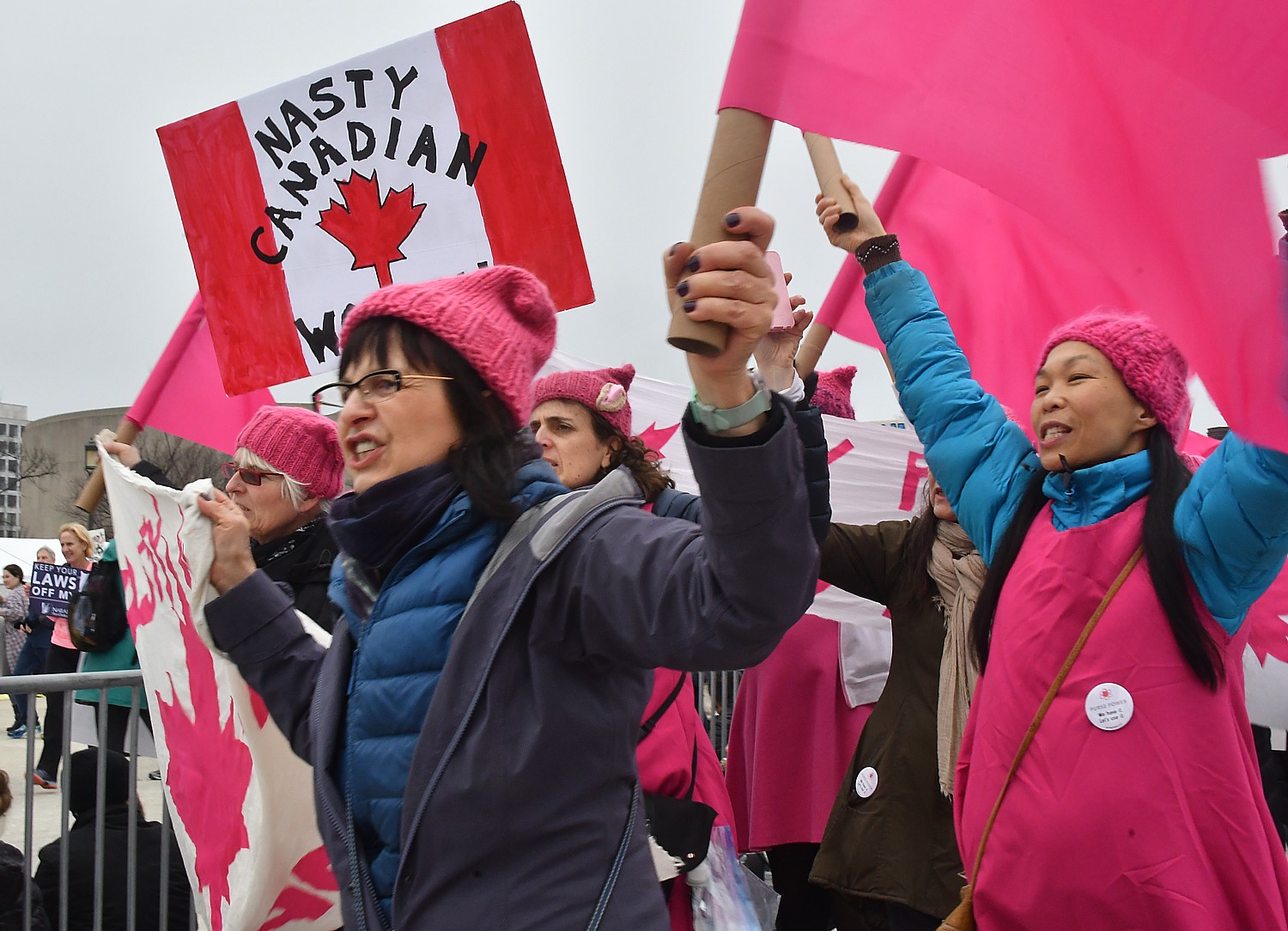
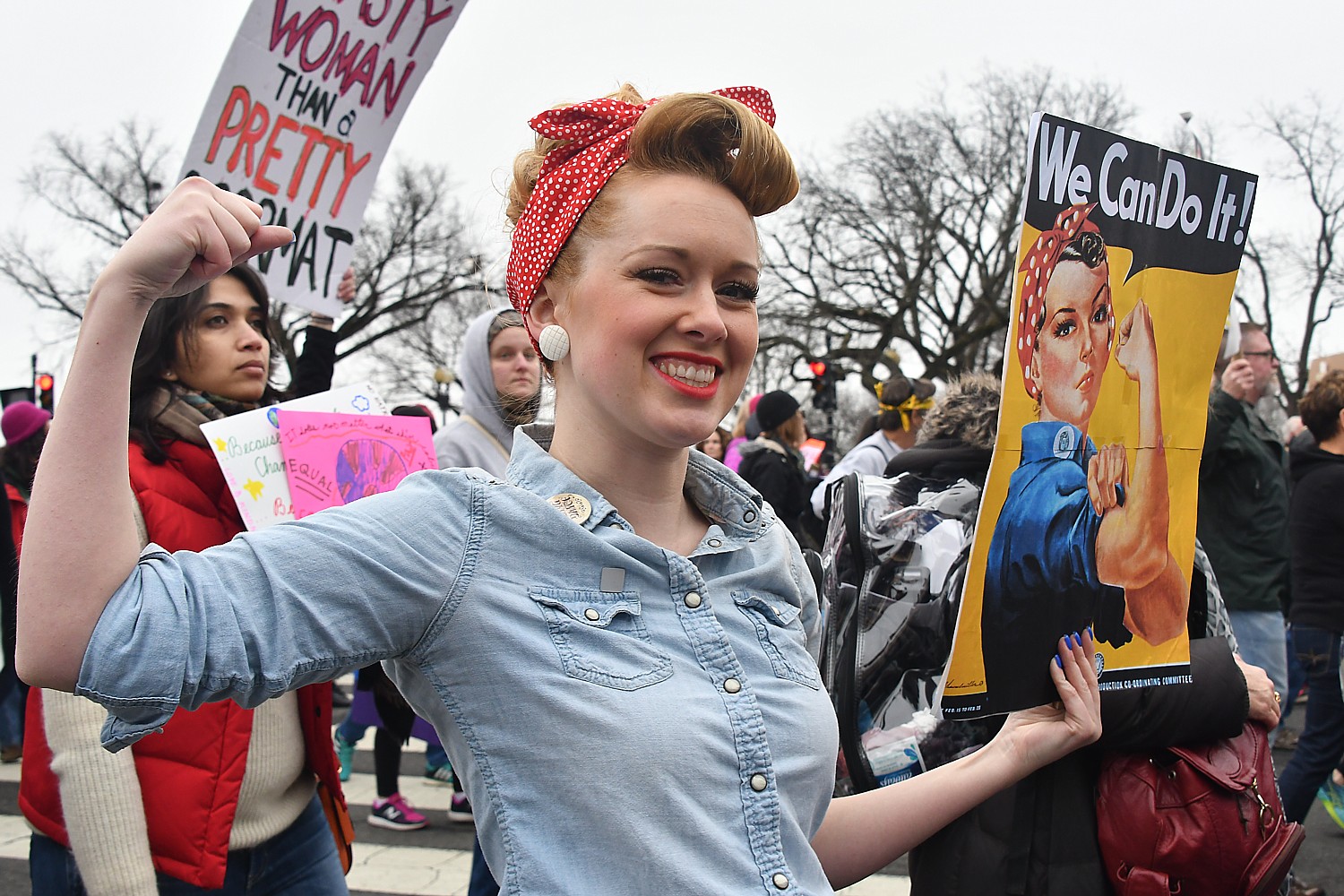
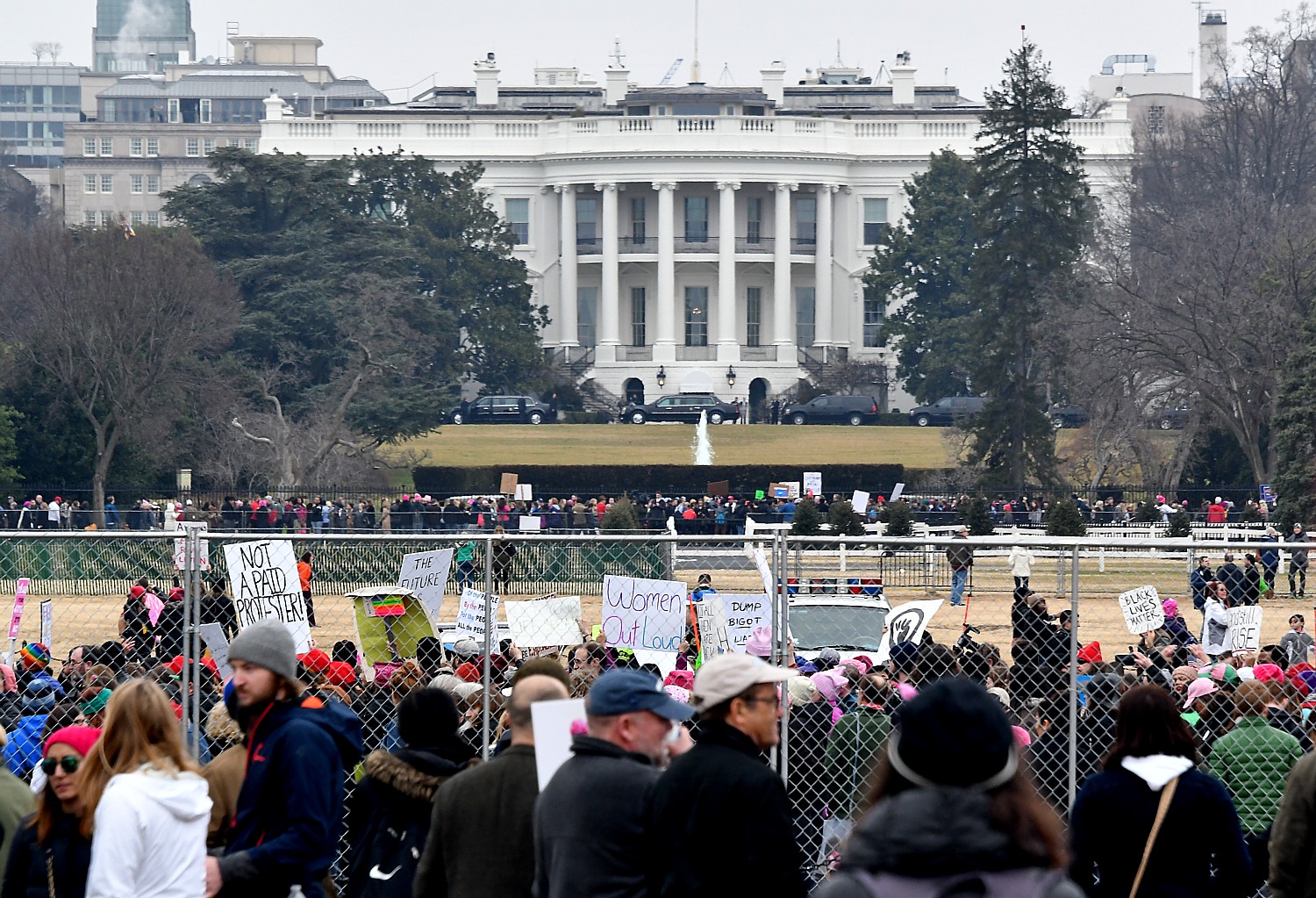
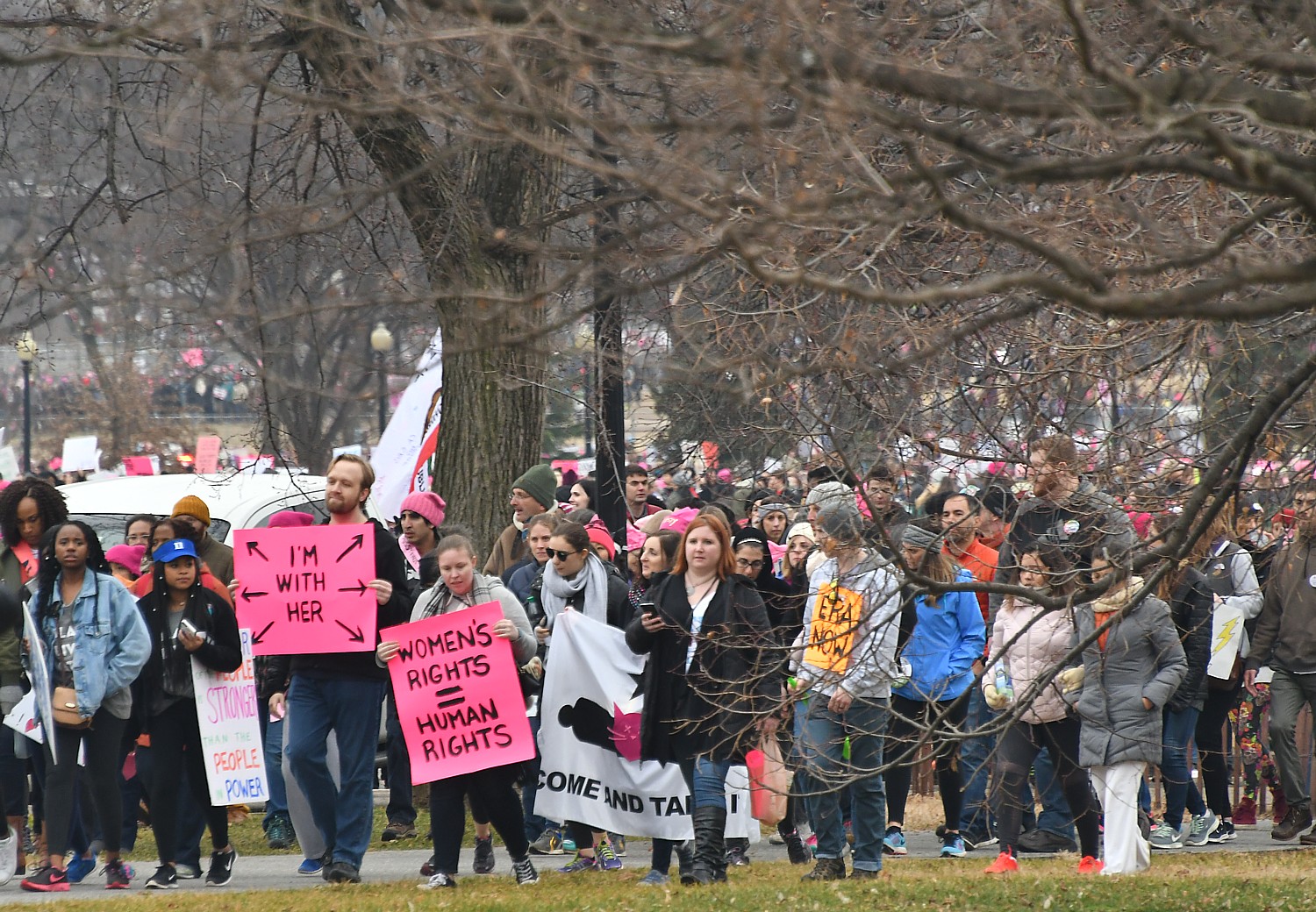
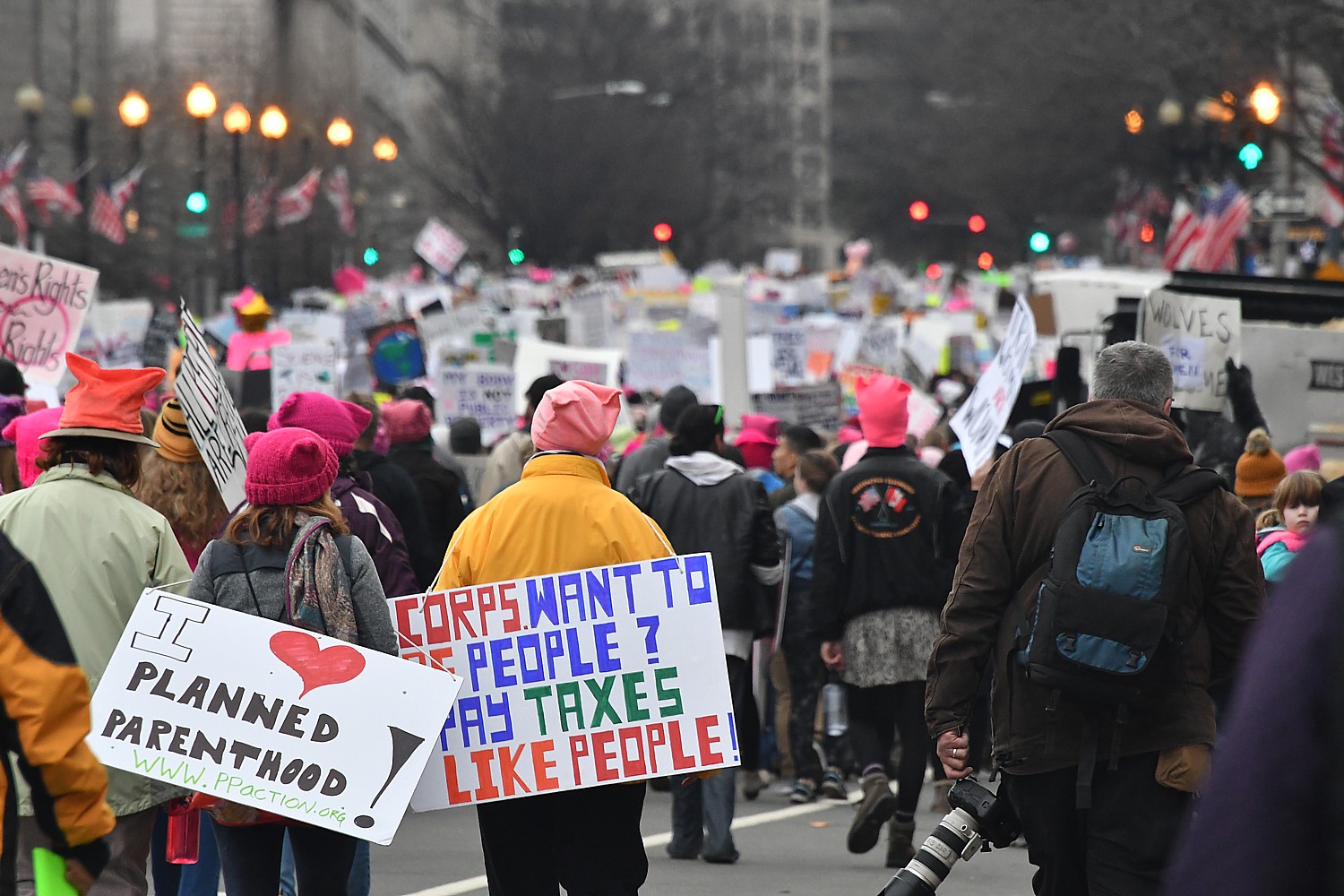
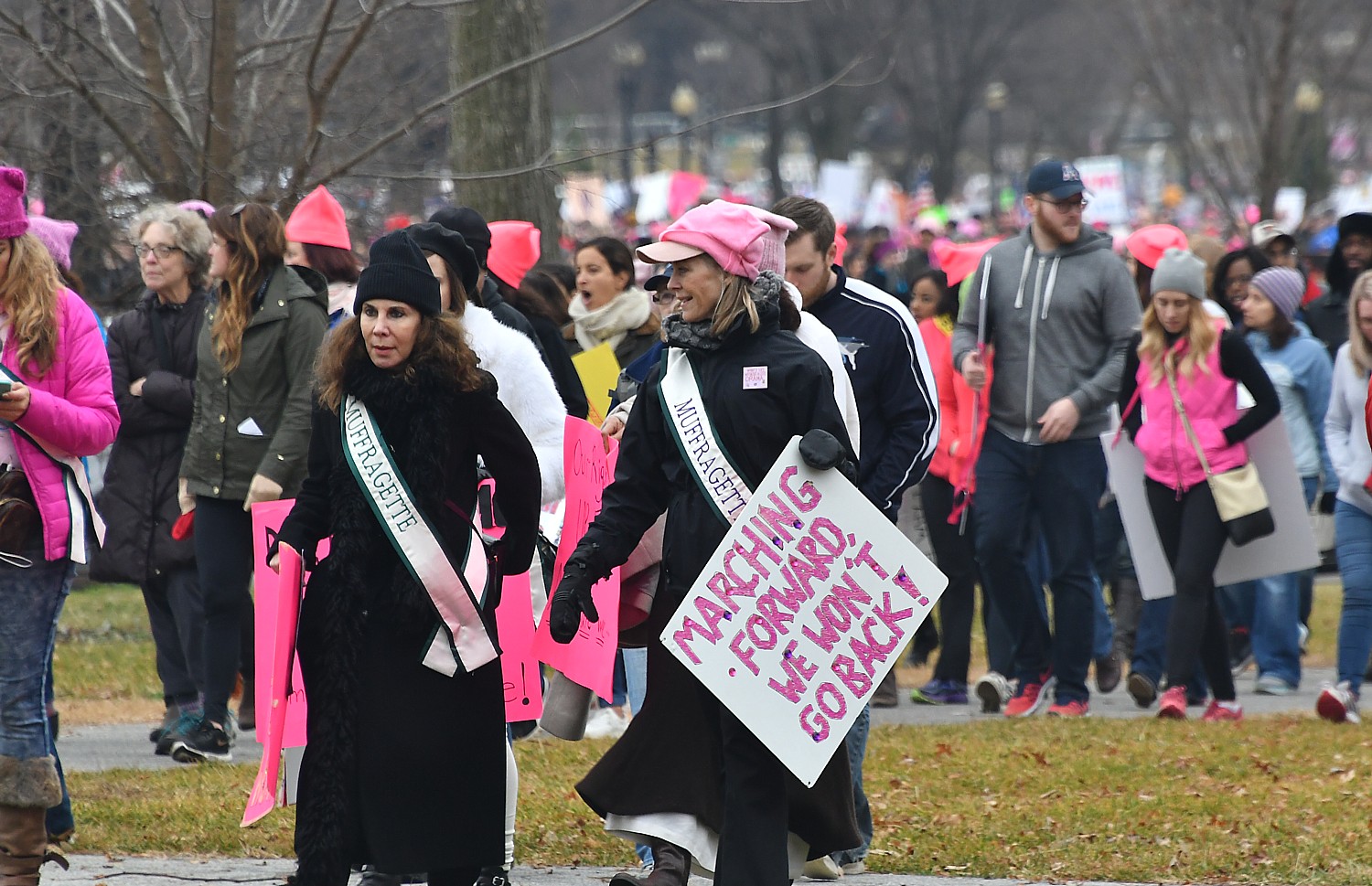
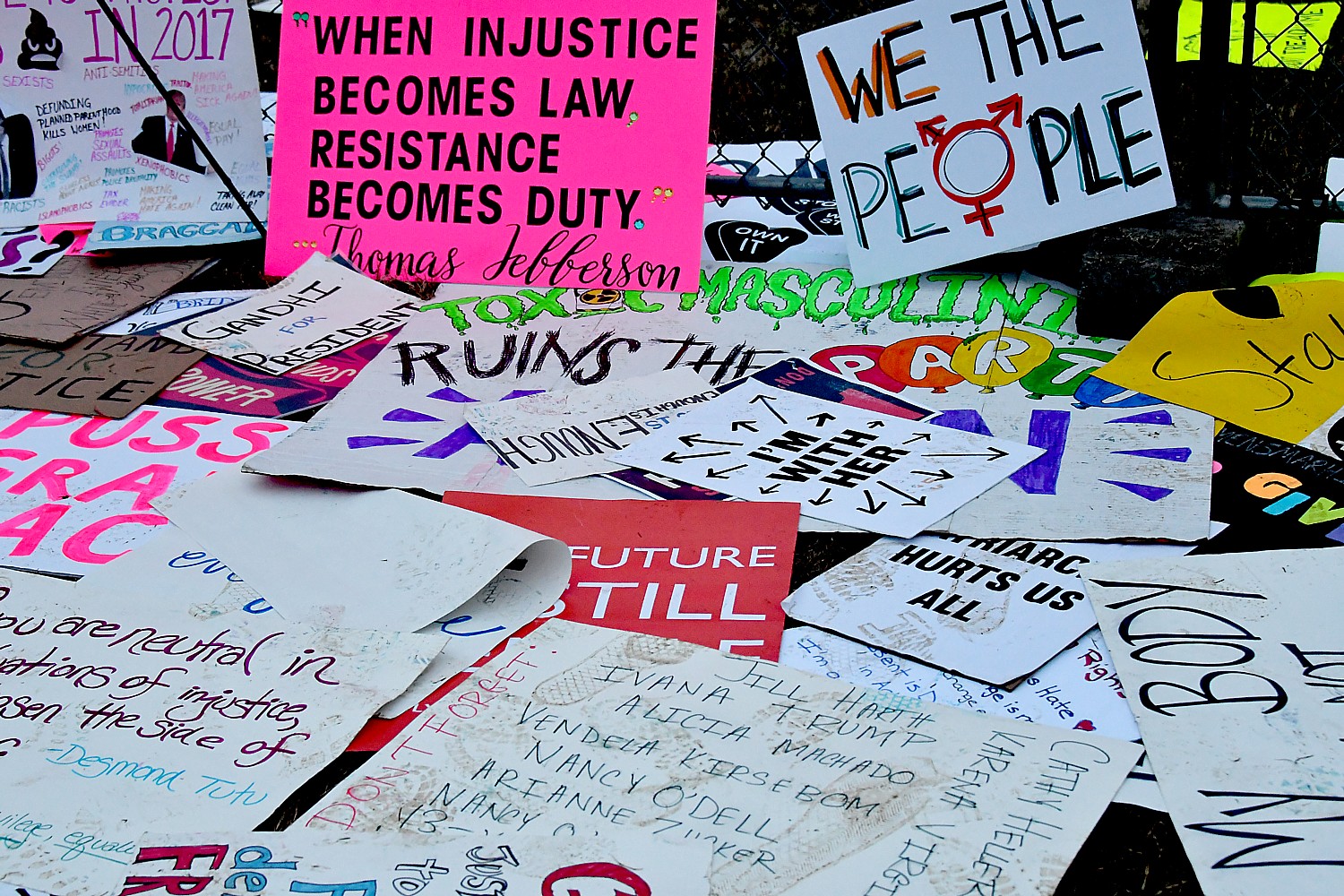
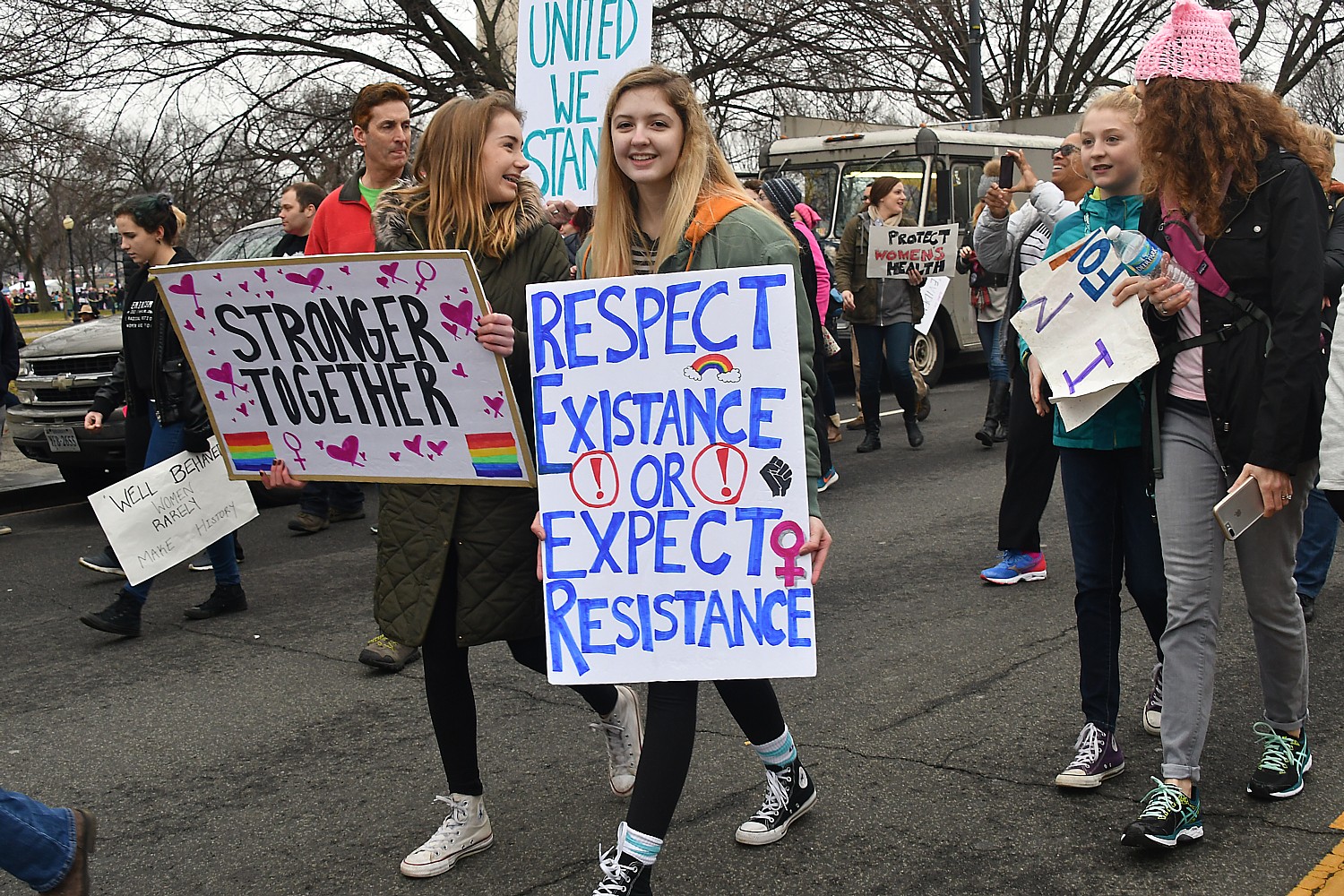
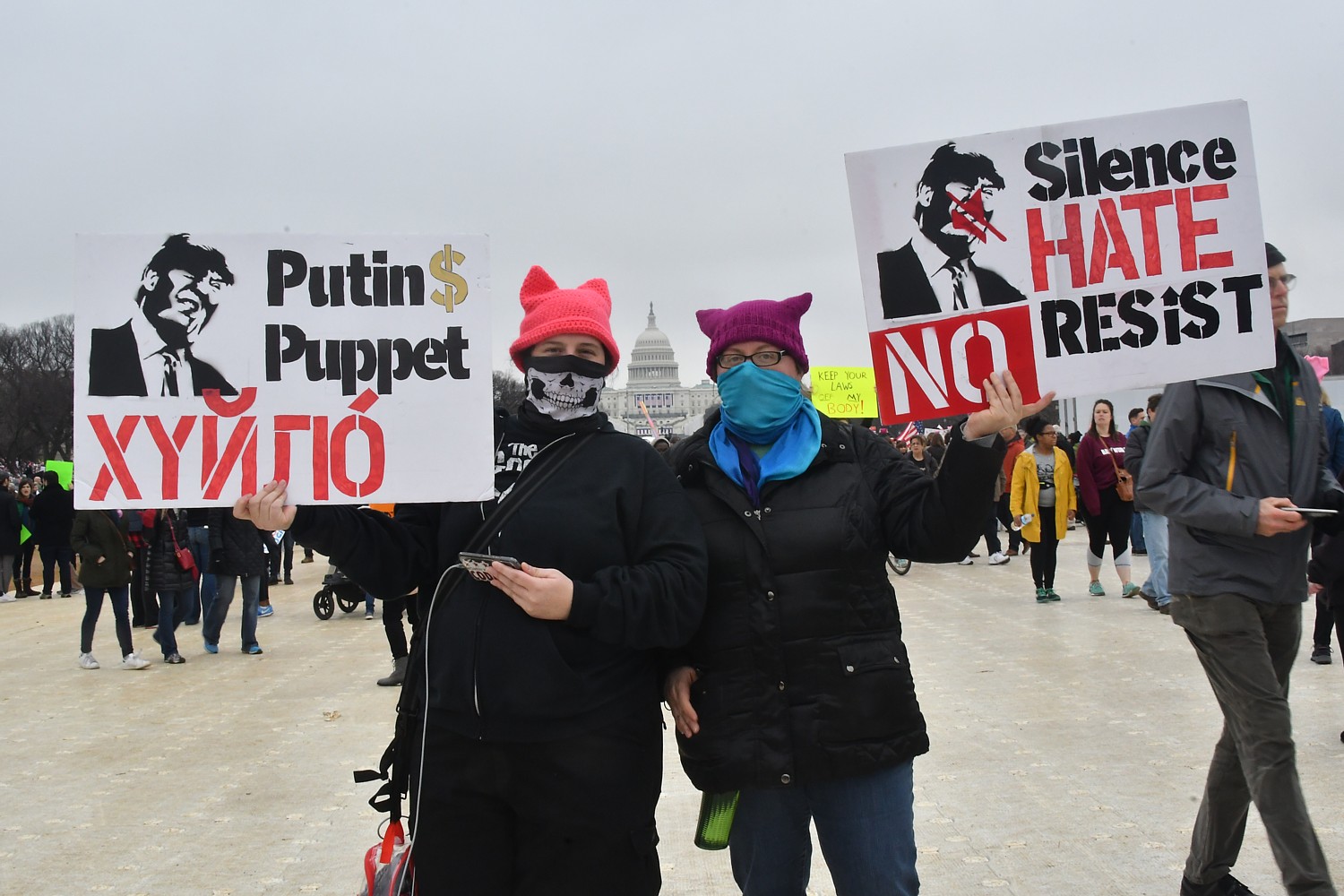
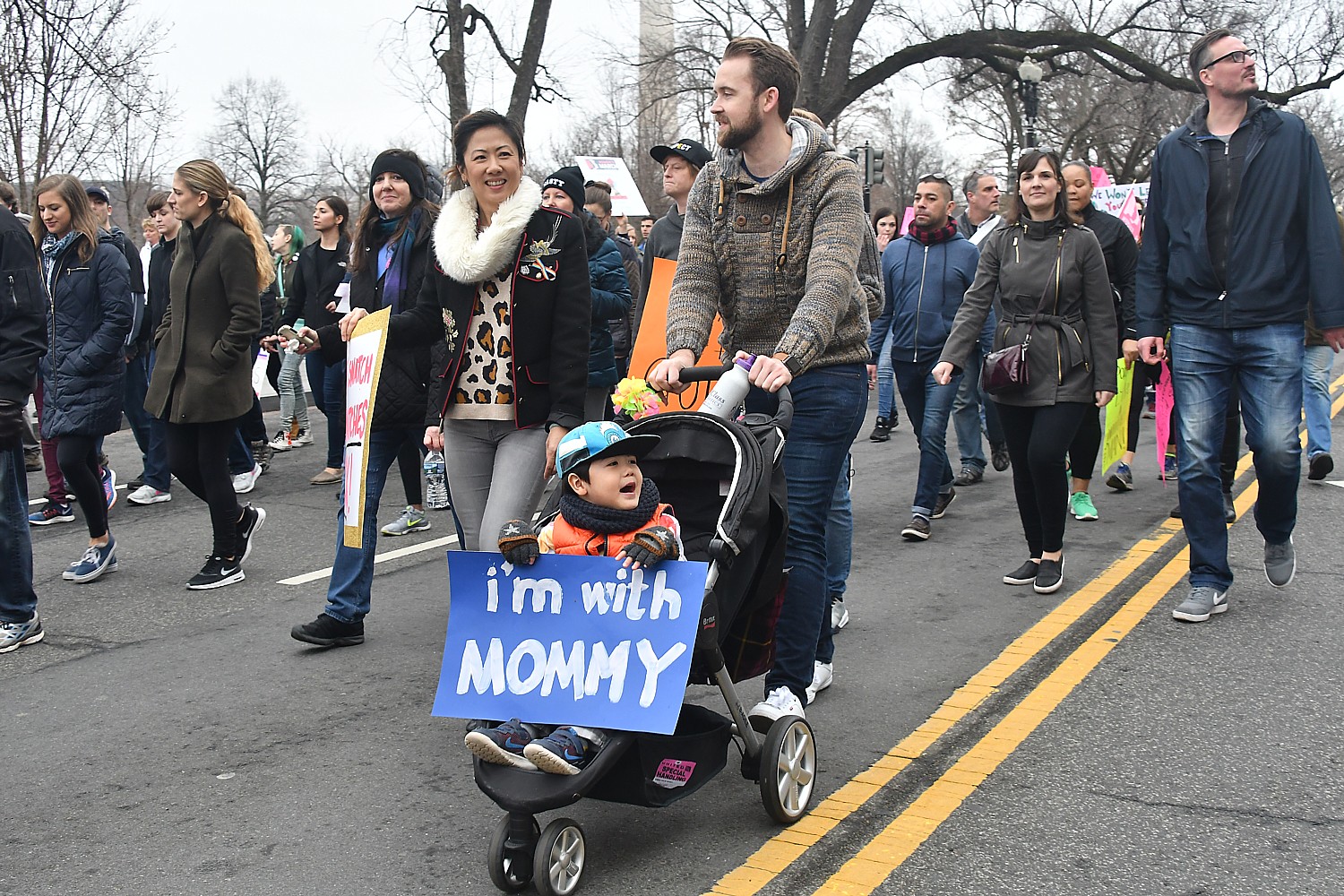
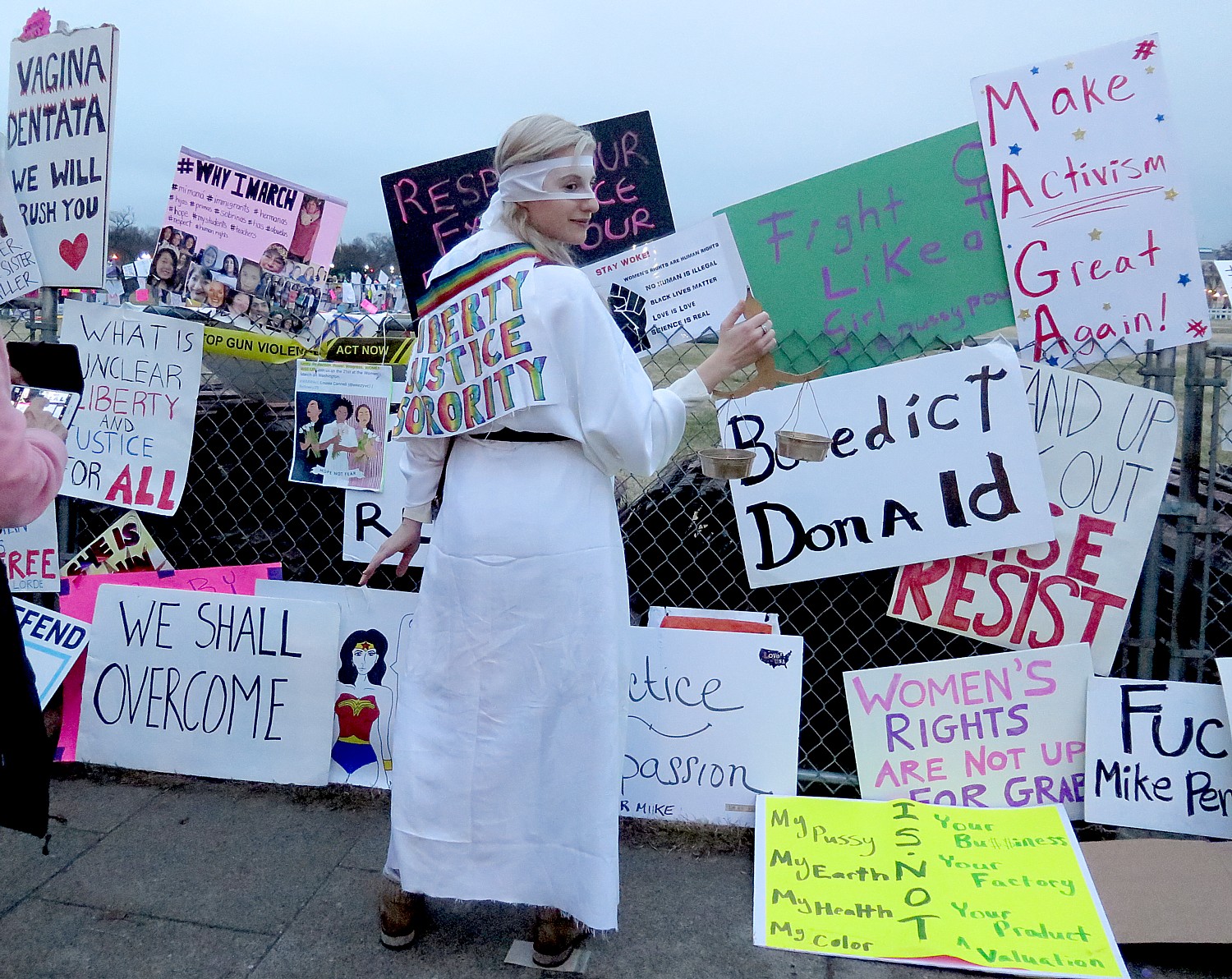
Donald Trump doesn’t care that more than twice as many people came out to protest his illegitimately gained presidency, his morals and his agenda than came out to support his inauguration (I was at both. I saw despite the lies that Trump is spewing.) His warped ego will probably take it as a matter of pride that more than 500,000 people descended on Washington from all over the country while millions more filled out gargantuan protests in NYC (400,000), Los Angeles (750,000), Chicago, Atlanta, St. Louis – indeed, all across the US – plus cities in 50 countries including Paris, London, Sydney.
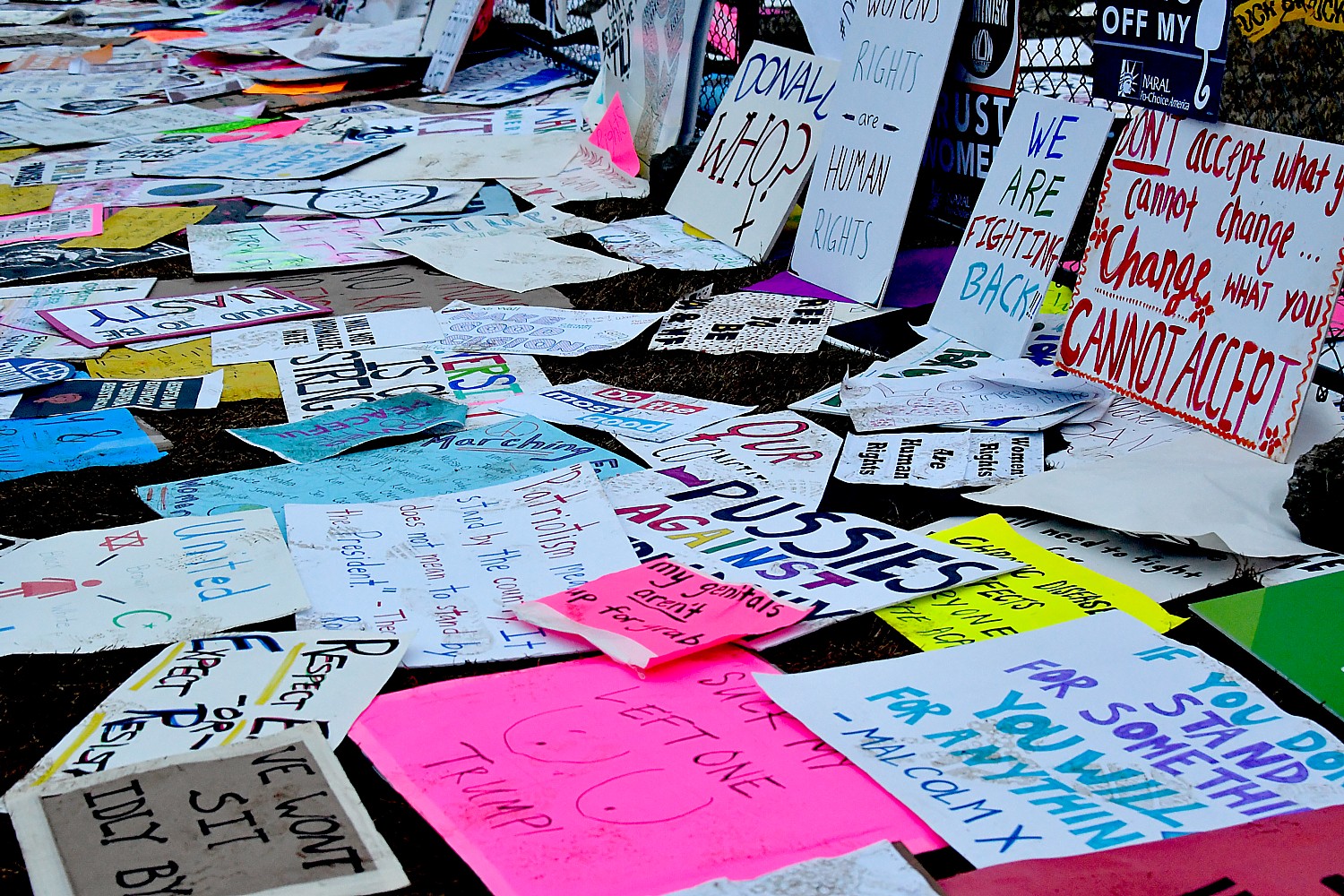
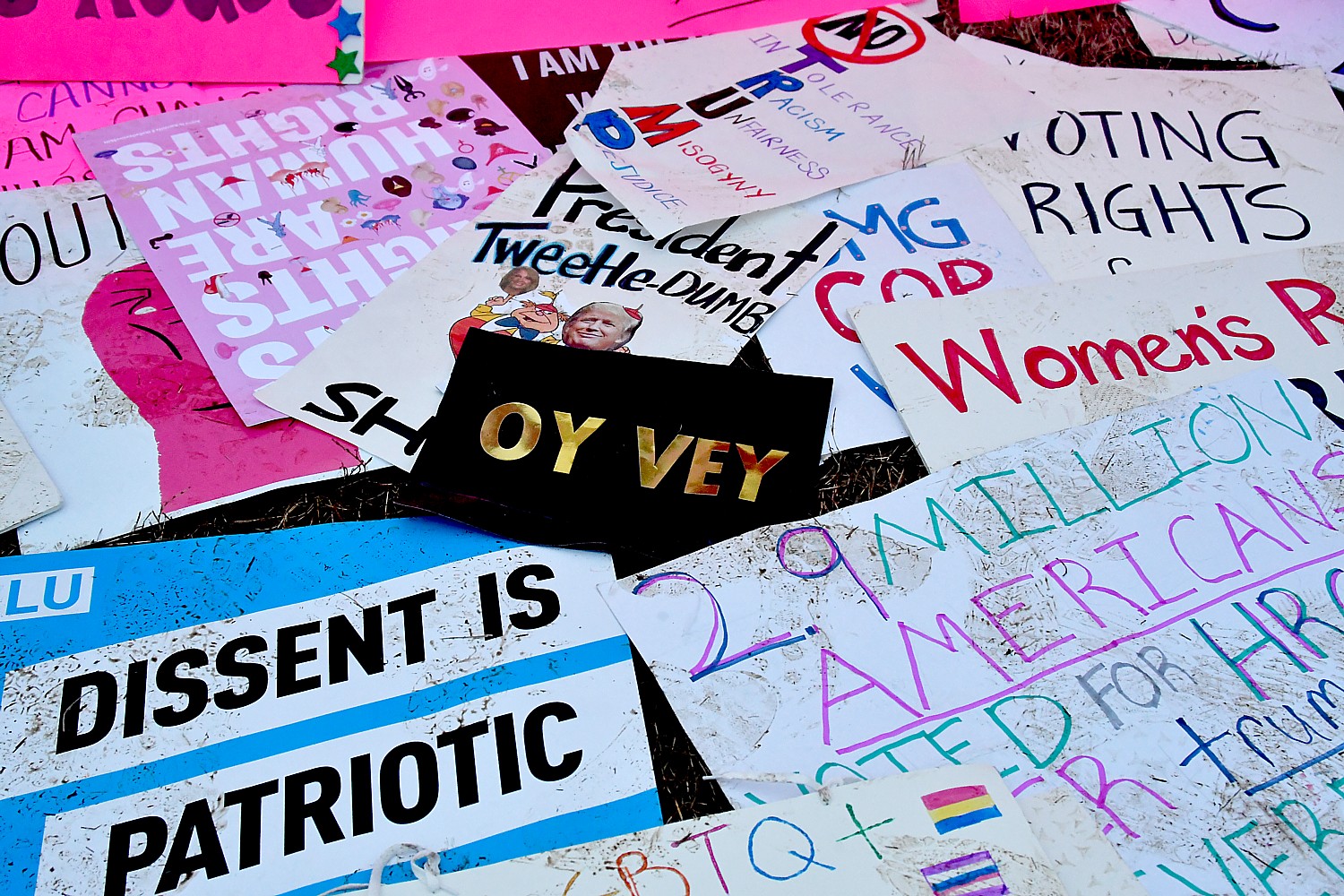
They came out to declare: Women’s Rights are Human Rights, women are not chattel, a mere vessel (vassal) to harbor an embryo. And so women and their men and children were standing up for reproductive rights, access to health care, gun safety, climate action, immigration reform, criminal justice, pay equity, public education, voting rights, campaign finance – all those things that together constitute “women’s issues”. Economic justice, climate justice, criminal justice, social justice, political justice, national security and peace in the world are all “women’s issues.”
“From the shores of Sydney, Australia to the tundra of Kodiak, Alaska we marched. Signs held high, our voices carried across Little Rock, Arkansas and Nashville, Tennessee, Phoenix, Arizona and Lansing, Michigan. Pink knit hats stretched as far as the eye could see in London, England, New York City, Los Angeles, California and Washington DC,” writes Heidi L. Sieck, Co-Founder/CEO, #VOTEPROCHOICE.
In fact, this was the single largest political demonstration day of protest in US history and most certainly the largest outpouring of opposition at the opening of a new administration. Trump, who lost the popular vote by 2.6 million and carried only 42% of The Women’s Vote, comes into the White House with the lowest favorability rating probably since Lincoln, and 20 points lower than the outgoing president, Barack Obama.
And if Trump would actually have listened to his own nonsensical, dystopian, bizarre inaugural speech, he would realize that the women, men and children who protested rightfully have the political power that Trump said no longer resided in Washington.
“January 20th 2017, will be remembered as the day the people became the rulers of this nation again,” Trump intoned. “The forgotten men and women of our country will be forgotten no longer. Everyone is listening to you now…. At the center of this movement is a crucial conviction: that a nation exists to serve its citizens.”
And yet, Trump managed to turn a deaf ear to the roars from the Women’s March that literally shook buildings with its force (yet he had to see them because his motorcade drove through twice on his way to the CIA).
In his first 100 days, what Trump vows to do would undo the progress of 100 years, violating the will of the vast majority of Americans.
But here it is: Trump managed to resurrect a militant feminism that, frankly, was dormant during the election campaign when Hillary Clinton could have, should have (in fact did, were it not for the Electoral College), break that ultimate glass ceiling to run the White House. Women of all ages, all races and creeds, and men and children, marching together in solidarity. A man carried a sign saying “I can’t believe we’re still fighting for this”.
Now what will those who marched do? What will happen? Will that energy and activism be sustained against the forces of disillusionment, frustration, paralyzing despair and self-preserving apathy? Or will they return home feeling vindicated and affirmed that their fears and concerns are real and they are not to be silenced? I think they will return empowered, invigorated with a mission, with a voice, a language to articulate grievances and a clarity of purpose. Indeed, the Women’s March organizers are posting 10 action items for the first 100 Days at womensmarch.com.
Also, there are ways and avenues and organizations to channel that rage and turn it into strategic, well articulated constructive action, in order to fight against the despair that will come when we aren’t able to immediately stop the steamroll of anti-democratic, regressive initiatives that come from the Trump/Republican camarilla.
Donald Trump may not care about the protests, feeling somehow above and immune in his bubble of sycophants. In a creepy way, he probably drew orgasmic delight that 4 million people around the world focused their attention on him, no matter that he was the target of their contempt, disdain and hatred.
But Congressmen know. Senators know. State legislators know. And they should be quaking in the reverberation of the marchers. And that’s where the focus has to be. This is Day 1 of the 2017 campaign to take back state offices. This is Day One to take back the House and/or the Senate in 2018. Because taking just one house would cut Trump’s Presidency to 2 years instead of an excruciating 4.
That is, if he isn’t impeached first for his corrupt business practices and likely collusion with Russia (not likely with a Republican Congress that clearly doesn’t care about actual illegalities like blatant violations of emoluments clause of Constitution and conflicts of interest that go against the national interest). He is more likely to be removed by a military coup when he orders bombing civilians, repopulating Guantanamo with prisoners snatched up with bounties, reopening black sites in order to torture, or, as he told the CIA, getting a second chance at taking Iraq’s oil because, you know, he learned as a boy “to the victor belong the spoils.”
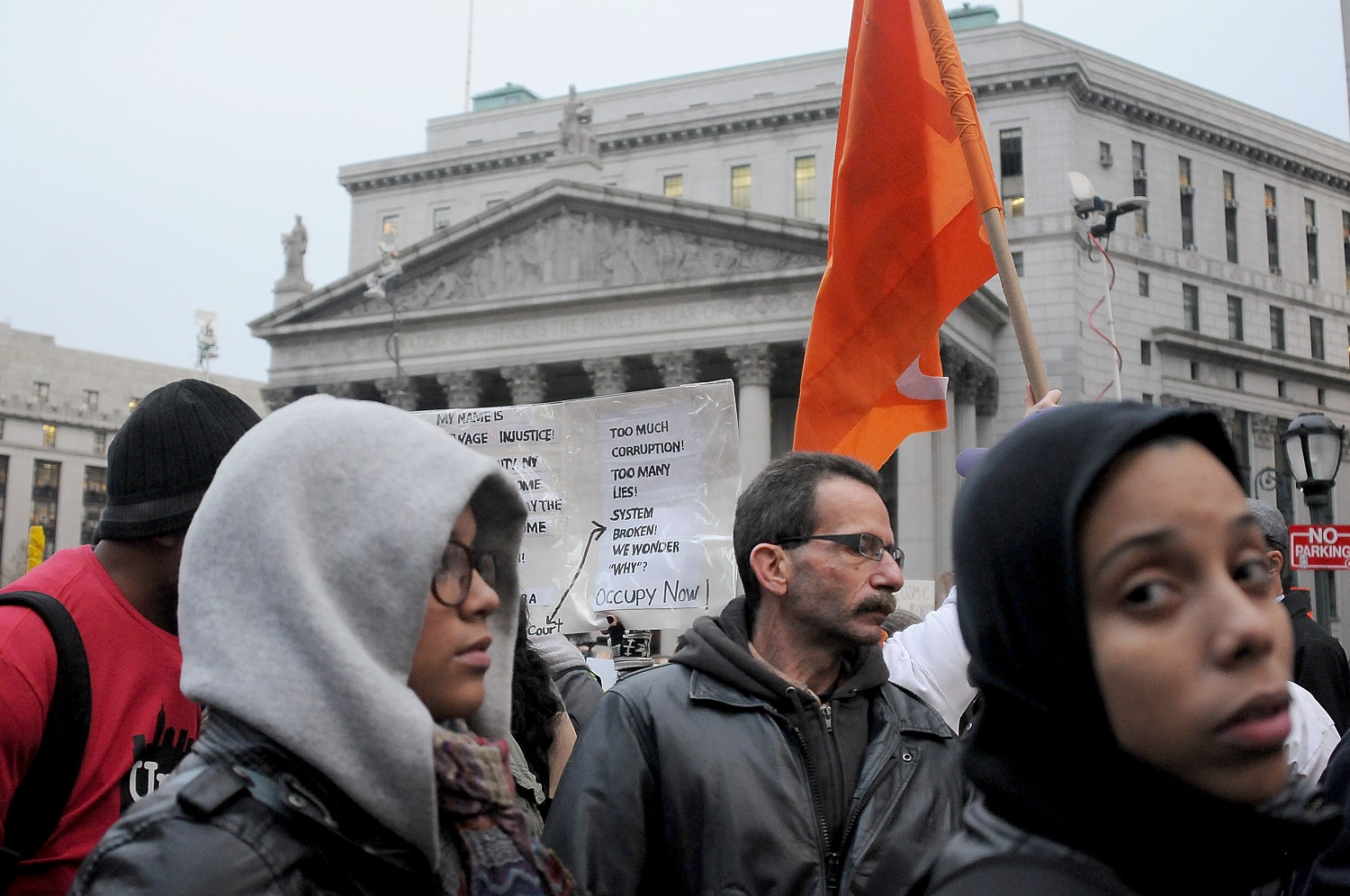
Individually, we feel powerless, but collectively we have power. And it starts with pressing our village and city mayors, town and county supervisors, state representatives, governors and Congressmen need to be bold – like the San Francisco and New York mayors vowing to repulse Trump’s attack on sanctuary cities, governors like Cuomo in New York State standing up for a climate action agenda and protecting women’s reproductive rights; generals vowing to reject an order to bomb civilians or torture terror suspects. It’s newspapers being willing to lose privileged “access” and risking lawsuits to publish investigations. It’s government workers with the courage to be whistleblowers.
By these measures, the simple act of voting would seem an easy way to counter Trumpism, yet a disgraceful number don’t even do this; people need to start early to get registered to vote and vote in every election, especially local and state elections and not just the presidential.
But all of this requires us to stay active. We have to resist being immobilized by despair (that’s their strategy) and take action. If it seems too overwhelming with everything being thrown at us, just pick one or two issues to stay on top.
Conflicts of Interest: Support Sen. Elizabeth Warren’s legislation that would require Trump to disclose his business holdings and require him to disclose his tax forms. Investigate – after all, what is Government Oversight Committee for, beyond investigating Benghazi and Clinton’s emails? Sue for violations of the emoluments clause, for Trump Hotel in Washington violating the law that prevents an elected official from leasing property from the federal government. Impeach Trump and any of his lackeys for their self-serving, self-dealing conflicts of interest. Boycott Trump’s business holdings and the corporations that enable him, including Trump Hotels and golf courses, “Celebrity Apprentice,” and Fox News.
Cabinet appointments: Democrats will be unable to stop Trump’s appointments, thanks to the hypocritical Republican lapdogs. But Senate Democrats have a duty to expose their self-interest conflicts, their ineptitude, their extraordinary lack of qualifications so that they will be put on notice that their actions will be scrutinized.
“Through cutting-edge reports, social media, newspapers, radio and TV, and much more, we’re going to highlight this rogues’ gallery’s history of law-breaking, how their corporate ties will corrupt policymaking, and how their reactionary views will harm everyday Americans.” says Robert Weissman, President of Public Citizen (citizen.org).
What should Senate, House Democrats do? Oppose with every tool and tactic they can the anti-Democratic principles, including using the Republican tactics against them like the filibuster, holds on nominations, lawsuits, articles of impeachment (though McConnell and Ryan will likely take away the very tools they used to unprecedented degree). That isn’t the same thing as opposing for opposing sake, to make the president fail, as Republicans did even as Obama was trying to keep the country from economic collapse. But Democrats are obligated to fight back where the agenda destroys progress. What Democrats should not do? Try to appeal to the pseudo-populism and the mythical “poor” “underserved” “voiceless” white working class, as if they are the only “real Americans” who matter. And yes, they should sue the Trump Administration just as the Republicans sued Obama over DACA and Obamacare. If Republicans don’t offer any means to compromise or impact policy, Democrats should go nuclear.
Support the Fourth Estate – the journalists who fulfill their function of investigating and being a watchdog on government and powerful interests. Be vigilant in calling out falsehoods, fake news and propaganda. That means that when the economy goes down, unemployment goes up, tens of thousands die without access to health care and Trump and the Republicans blame Obama and the Democrats, that The Media hold them to account. Write letters to the editor, comments online. Alert news media to issues. Defend journalists who are doing their job. Cultivate social media networks to counter the right-wing propaganda machine. The success of the Women’s March to rally support solely through social media shows these networks have taken root.
Fight the rabidly regressive agenda that Trump/Republicans will steamroll through in the first 100 days. The more that Republicans refuse to accept compromise or allow Democrats to participate in forming policy, the more militant the opposition has to become. Boycott, strike, protest, rally. Use your body, your voice, your pen.
Sue. Sue. Sue. “Presidents do not rule by fiat,” declared Mitch Bernard, Chief Operating Officer, for the Natural Resources Defense Council (NRDC). “Donald Trump may not simply undo international agreements, overrule enacted laws, or violate environmental regulations on his own say so. If — when — he ignores environmental laws, NRDC will meet him in court. And we’re gearing up to give him the fight of his life.”
The Trump/Republican strategy (copied from Karl Rove and the Bush/Cheney debacle) is to have so many outrages coming so fast, deflecting attention and paralyzing any action, and more significantly to normalize the destructive actions simply by being equivalent or (imagine) not as bad as the previous outrage.
“In the face of Trump’s parade of horribles,” says Robert Reich of MoveOn.org, “it would be easy (and understandable) for people to get numb, hunker down, and pray that they’ll make it through the next four years. But human history teaches us of the perils of complacency and fear in response to political extremism and violence.”
If it is too paralyzing because of all the issues that are infuriating to your core, pick one, two or a few to focus on – keep active and aware of what Trump and his collaborators in the Congress and the Cabinet are doing. Write, call, visit, rally at representatives’ offices. Speak up to family, friends and neighbors. Go to town halls and civic meetings. You cannot be a Silent Majority.
Support key organizations – give what you can – because they will need money to lobby, sue, organize protests and petition campaigns, can offer language for legislation and expose facts about the impacts of overturning regulations allowing corporations to pollute the air and water; repealing the Affordable Care Act, (losing 3 million jobs, adding billions to the budget deficit, depriving 18 million newly insured people of access to health care, instead of saving 87,000 lives, seeing 36,000 die needlessly for lack of health care); of the public health, environmental, economic, international repercussions of rolling back climate action. (Caveat: Organizations can’t just seize on the latest outrage to fundraise without actually doing something.)
“Together, we must resist the Trump Dynasty with everything we’ve got — starting with marches all over the country today,” declared Robert Weissman of Public Citizen. “It won’t be easy. We can be honest about that. The fights that matter most rarely are. But with all of our vigilance, all of our acumen, all of our strength, we can — we will — prevail over greed and hatred and corruption.”
In light of the likelihood of the incoming Donald Trump Administration to erase all the progress of the Obama Administration, especially in reversing women’s rights – to health care, reproductive freedom, voting, pay equity, health security – it is important to keep track of what Obama accomplished during his term, not only for history, but also, because his actions could provide a template for a future Administration to put the nation back on track toward a “more perfect union”. – Karen Rubin, News & Photo Features
WASHINGTON, DC – On Dec. 16, the White House Council on Women and Girls released a report and hosted a forum on the Administration’s work to advance equity for women and girls of color and highlight the innovative solutions and exciting place-based work that is happening throughout the country. The forum brought together a range of stakeholders from the academic, private, government and philanthropic sectors to discuss ways that we can break down barriers to success and create more ladders of opportunity for all Americans, including women and girls of color. The event was live streamed at www.whitehouse.gov/live and the full report is available HERE.
The Council on Women and Girls, since its inception, has focused on the needs and challenges of all women and girls. In 2014, as part of the effort to take into account the distinctive concerns of women and girls, the Council on Women and Girls launched a specific work stream called “Advancing Equity” to ensure that policies and programs across the federal government take into account the unique obstacles faced by women and girls, including women and girls of color and women and girls from marginalized communities.
In November 2014, the Council on Women and Girls released a report titled “Women and Girls of Color: Addressing Challenges and Expanding Opportunities” to identify barriers and disparities facing women and girls of color. This report addressed work done over the first six years of the Administration to improve the lives of women and girls of color. It discussed important issues, such as educational attainment, economic security, health and safety, violence against women, and criminal and juvenile justice. It also included a call to action for the establishment of a federal interagency working group to develop opportunities for advancement, which commenced in March of 2015.
One year later, in November 2015, the Council released a new report “Advancing Equity for Women and Girls of Color” to highlight some of the additional steps taken by the Administration on issues faced by women and girls of color from 2014 through 2015.[i] In that report, the Council on Women and Girls identified five data-driven issue areas where interventions can promote opportunities for success at school, work, and in the community for women and girls of color. The five issues included:
Fostering school success and reducing unnecessary exclusionary school discipline by implementing supportive school discipline strategies and policies, including through public awareness of the impact on girls of color;
Meeting the needs of vulnerable and striving youth by recognizing and responding appropriately to the finding that many girls enter intervening public systems through a route that begins with sexual abuse and trauma;
Increasing access to inclusive STEM education to meet 21st century workforce demands and reducing opportunity gaps that affect women broadly in science, technology, engineering and math education and fields, but often affect women and girls of color the most;
Sustaining reduced rates of teen pregnancy and building on success through expanded access to knowledge about birth control and preventive health services;
Expanding pathways to economic prosperity through opportunities for job mobility and investments in fair, equitable workplace policies.
This updated report serves as a follow-up to the 2014 and 2015 reports, and as the culmination of the Advancing Equity work stream of this Administration. The Obama Administration has taken important steps forward in elevating, and addressing, key issues that cause disparities for women and girls of color, and women and girls from marginalized and under-served populations. Moreover, the call to action around this work has inspired philanthropic leaders, academic institutions, and non-profit organizations to continue efforts that sustain and build upon the successes achieved in improved life outcomes for women and girls of color and their peers.
In the waning days of his administration, and in face of what is shaping up to be the most regressive administration intent on reversing the gains hard-fought over a century toward social, political, environmental justice, President Barack Obama is working feverishly to continue to make advances in criminal justice system. Donald Trump has pledged to repeal each and every one of Obama’s executive actions.
The White House issued this Fact Sheet on November 30, 2016:
FACT SHEET: White House Announces New Commitments to the Fair Chance Business Pledge and Actions to Improve the Criminal Justice System
Since the President took office, this Administration has been committed to reforming America’s criminal justice system and highlighting the importance of reducing barriers facing justice-involved individuals trying to put their lives back on track.Over 2.2 million men and women are incarcerated in American prisons, and over 11 million spend time in our jails, and the vast majority of them will return to their communities. Improving education and job opportunities for these individuals has a recognized effect of reducing crime, and will make our communities safer.
Today, the White House is hosting a convening on criminal justice reform to discuss the progress and advancements that have been made over the past eight years and the opportunities that remain to tackle persistent problems. This event is part of the Administration’s continued efforts to bring together Americans who are working to improve the criminal justice system, from activists engaging in communities around the nation to law enforcement and elected officials working to lower the crime and incarceration rates, to formerly incarcerated people who are earning their second chance.
In conjunction with this event, the White House is announcing a round of new signatories to the Fair Chance Business Pledge and a series of Administration actions to enhance the fairness and effectiveness of the criminal justice system including:
Final Office of Personnel Management “Ban the Box” Rule
Federal Bureau of Prison Reforms
White House Legal Aid Interagency Roundtable Report
These announcements build on the Administration’s longstanding commitment to reforming the criminal justice system, improving reentry outcomes, and removing unnecessary obstacles facing formerly incarcerated individuals.
Fair Chance Business Pledge
In April, the White House launched the Fair Chance Business Pledge encouraging companies to take action to ensure that all Americans have the opportunity to succeed, including individuals who have had contact with the criminal justice system. The pledge represents a call-to-action for all members of the private sector to improve their communities and expand their talent pools by eliminating unnecessary hiring barriers facing those with a criminal record.
Today’s signatories to the Fair Chance Business Pledge bring the total number of pledged employers to over 300. The companies and organizations that have signed the pledge collectively employ over 5 million Americans. The new commitments come from a diverse range of employers including: Ben & Jerry’s, Clif Bar, CVS Health, Gap, Intel, Kroger, LinkedIn, Monsanto, Perdue Farms, Shinola, Target, Tyson Foods, Union Square Hospitality Group, and WeWork.
Additionally, Glassdoor created a Fair Chance Pledge badge that companies can add to their profile on the website to proudly demonstrate their commitment to maintaining hiring and training programs for individuals with criminal records.
The Department of Justice recently funded the Council of State Governments Justice Center (CSGJC) to assist Second Chance grantees and the field at-large through the National Reentry Resource Center. The award includes funding to provide employer-focused outreach and education to promote fair chance hiring practices.A coalition of Fair Chance Business Pledge Signatories has committed to working together with CSGJC and other external partners to share their successes in adopting fair chance hiring practices and encourage other businesses to follow suit.
Today’s announcement is further evidence of the private sector’s support for a more fair justice system, and the Pledge is one of many initiatives where the White House has successfully partnered with the private sector to increase opportunity for all Americans.
By signing the Fair Chance Business Pledge, these companies are:
Voicing strong support for economic opportunity for all, including the approximately 70 million Americans who have some form of a criminal record.
Demonstrating an ongoing commitment to take action to reduce barriers to a fair shot at a second chance, including practices like “banning the box” by delaying criminal history questions until later in the hiring process; ensuring that information regarding an applicant’s criminal record is considered in proper context; and engaging in hiring practices that do not unnecessarily place jobs out of reach for those with criminal records.
THE FAIR CHANCE BUSINESS PLEDGE
We applaud the growing number of public and private sector organizations nationwide who are taking action to ensure that all Americans have the opportunity to succeed, including individuals who have had contact with the criminal justice system. When around 70 million Americans – nearly one in three adults – have a criminal record, it is important to remove unnecessary barriers that may prevent these individuals from gaining access to employment, training, education and other basic tools required for success in life. We are committed to providing individuals with criminal records, including formerly incarcerated individuals, a fair chance to participate in the American economy.
Companies and organizations interested in joining the Fair Chance Business Pledge can do so by signing up HERE.
Today’s signatories include:
Al Abbas Cookies
Alley Taco
American Eagle Sealcoating and Asphalt LLC
Amity Foundation
Andrews Funeral Home
Avalon Breads
Berry Much Yogurt
Brooklyn Chamber of Commerce
Brooks Lumber
Butterball Farms, Inc.
Byblos
C.W. Morris – J.W. Henry Funeral Home
Capital Area ReEntry Coalition
Capitol City Contracting, Inc.
Carpenter’s Shelter
Cava Grill
Center for Living and Learning
Clif Bar
Colorado Mountain College
Court Programs, Inc.
CPG Partnership Strategies LLC
CSI Saddlepads LLC
CVS Health
D.C. Central Kitchen
Dillard & Associates
DRP Systems
Ecolibrium3
Edwins Leadership & Restaurant Institute
Executives’ Alliance for Boys and Men of Color
Fair Chance Workforce Interface LLC
FoodCorps, Inc.
Friends Outside
Gap
GeoFi
Get Ready Driving Academy
Glassdoor
Golden State Foods Corp.
Grandy’s Coney Island
Green Dot Stables
HopCat Detroit
InService Enterprise, LLC
Intel Corporation
Isidore Electronics Recycling
IT Total Care, Inc.
JAX Chamber
Jeff’s 40 Minute Cleaners
JSJ Staffing, LLC
Kansas City Community Source, Inc.
Konsultera
The Kroger Company
Lawson Screen & Digital Products, Inc.
Life Restoration CEDA
Linden Resources
LinkedIn
Los Angeles Black Worker Center
Los Angeles Conservation Corps
Lou’s Deli
Makin’ Movez LLC
Maria’s Italian Kitchen
Mark O’s Bar & Grill
MI United
MOD Pizza
Moe Appliance
Monsanto
National Dry Goods Company
Newton Brown Urban Design
Nexus Services, Inc.
NXIS Enterprises, LLC
Olive Branch Village Project
O’Neill Construction Group
Oscar’s Coney Island
Pass Job Connection
Perdue Farms, Inc.
Pet Supplies Plus
Phyllis Wheatley Community Center
Portland Bottling Company
Q Stride Inc.
RECAP, Inc.
Restoration Law Center
Roman Labor Services Corp.
Root & Rebound
Saucy By Nature
Shinola Detroit, LLC
Skill Source Group
St. Louis Wing Company LLC
Stratford University
SunHarvest Solar
Super Tek Group
TakeAction Minnesota
Taqueria El Nacimiento
Target
TBS Facility Services Group
The CPAI Group, Inc.
The Grey Door Boutique
The Lancaster Food Company
The Last Mile
The National Incarceration Association
The Pate House
The Phax Group, LLC
The Water Station
Transmedia Capital
TransNation Holdings, LLC
Trinosophes
Tyson Foods
Union Square Hospitality Group
Vaughan’s Public House
Virginia Employment Commission
WeWork
Work in Progress
Year Up
Yuca’s
Zaraxo
Federal “Ban the Box” Rule
Today the Office of Personnel Management is finalizing a rule to ensure that applicants with a criminal history have a fair shot to compete for Federal jobs. The rule effectively “bans the box” for a significant number of positions in the Federal Government by delaying the point in the hiring process when agencies can inquire about an applicant’s criminal history until a conditional offer is made. This change prevents candidates from being eliminated before they have a chance to demonstrate their qualifications.
As the nation’s largest employer, the Federal Government should lead the way and serve as a model for all employers – both public and private. Banning the box for Federal hiring is an important step. It sends a clear signal to applicants, agencies, and employers across the country that the Federal Government is committed to making it easier for those who have paid their debts to society to successfully return to their communities, while staying true to the merit system principles that govern our civil service by promoting fair competition between applicants from all segments of society.
Federal Bureau of Prison Reforms
As part of the Justice Department’s deep commitment to a fair, effective criminal justice system, the Department announced today a series of reforms at the Federal Bureau of Prisons (BOP) designed to reduce recidivism and increase the likelihood of inmates’ safe and successful return to the community. Today the department released a memo from Deputy Attorney General Sally Q. Yates on reforms to residential reentry centers including covering the cost of obtaining state-issued IDs for inmates prior to their release from custody. Additionally, BOP is creating a semi-autonomous school district within the federal prison system and providing additional services for female inmates when the BOP facility in Danbury, Connecticut, resumes housing female inmates later this month. The Danbury facility will also house BOP’s first-ever integrated treatment facility for female inmates.
Last year, with the Department’s support, BOP retained outside consultants to review the agency’s operations and recommend changes designed to reduce the likelihood of inmates re-offending after their release from prison. As part of today’s announcement, BOP is launching a new website, justice.gov/prison-reform, that compiles current and ongoing reforms at BOP, and includes the final reports from the outside consultants.
White House Legal Aid Interagency Roundtable Report
Today the White House Legal Aid Interagency Roundtable (WH-LAIR) is issuing its first annual report to President Obama, “Expanding Access to Justice, Strengthening Federal Programs.” This report documents the significant steps that the 22 federal agency members of WH-LAIR have taken to integrate civil legal aid into programs designed to serve low-income and vulnerable people where doing so can both improve their effectiveness and increase access to justice.
Co-chaired by Attorney General Loretta Lynch and Director of the Domestic Policy Council Cecilia Muñoz, and staffed by the DOJ Office for Access to Justice, WH-LAIR was established to help provide legal assistance to Americans in need to further our shared goals of breaking the cycle of domestic violence and elder abuse epidemic, ending homelessness among veterans, and helping to remove obstacles to employment for jobseekers. Recognizing the power of legal aid to both increase the availability of meaningful access to justice and improve outcomes in many federal programs, WH-LAIR agencies have been working together since 2012 to integrate legal aid into their programs, policies and initiatives.
The report addresses key federal priorities where civil legal aid improves program outcomes, and also describes agencies’ efforts to partner with legal aid organizations to meet the needs of special populations, including veterans and servicemembers, tribes and tribal members, people with disabilities, people with criminal records, crime victims and disaster survivors.
President Barack Obama today traveled to the Islamic Society of Baltimore, his first visit to an American mosque as president, to deliver a remarkable speech affirming America’s religious tolerance. “We can’t be bystanders to bigotry. And together, we’ve got to show that America truly protects all faiths.”
He spoke frankly as much to non-Muslims as Muslims about the need for non-Muslims to better know and appreciate how Muslims have been part of the American fabric since colonial times, and for Muslims to speak out for tolerance and be a force to counter those who would incite terrorism.
“We’re one American family. And when any part of our family starts to feel separate or second-class or targeted, it tears at the very fabric of our nation…
“And so if we’re serious about freedom of religion — and I’m speaking now to my fellow Christians who remain the majority in this country — we have to understand an attack on one faith is an attack on all our faiths. (Applause.) And when any religious group is targeted, we all have a responsibility to speak up. And we have to reject a politics that seeks to manipulate prejudice or bias, and targets people because of religion.
“We’ve got to make sure that hate crimes are punished, and that the civil rights of all Americans are upheld.(Applause.) And just as faith leaders, including Muslims, must speak out when Christians are persecuted around the world — (applause) — or when anti-Semitism is on the rise — because the fact is, is that there are Christians who are targeted now in the Middle East, despite having been there for centuries, and there are Jews who’ve lived in places like France for centuries who now feel obliged to leave because they feel themselves under assault –sometimes by Muslims. We have to be consistent in condemning hateful rhetoric and violence against everyone. (Applause.) And that includes against Muslims here in the United States of America. (Applause.) …
“…the best way for us to fight terrorism is to deny these organizations legitimacy and to show that here in the United States of America, we do not suppress Islam; we celebrate and lift up the success of Muslim Americans. That’s how we show the lie that they’re trying to propagate. (Applause.) We shouldn’t play into terrorist propaganda. And we can’t suggest that Islam itself is at the root of the problem. That betrays our values. It alienates Muslim Americans. It’s hurtful to those kids who are trying to go to school and are members of the Boy Scouts, and are thinking about joining our military.
“That kind of mindset helps our enemies. It helps our enemies recruit. It makes us all less safe. …
“…just as all Americans have a responsibility to reject discrimination — I’ve said this before — Muslims around the world have a responsibility to reject extremist ideologies that are trying to penetrate within Muslim communities. ..
“Our values must guide us in this work. Engagement with Muslim American communities must never be a cover for surveillance. (Applause.) We can’t give in to profiling entire groups of people. There’s no one single profile of terrorists. We can’t securitize our entire relationship with Muslim Americans. We can’t deal with you solely through the prism of law enforcement. We’ve got to build trust and mutual respect. That’s how we’ll keep our communities strong and our communities united.
“We are blessed to live in a nation where even if we sometimes stumble, even if we sometimes fall short, we never stop striving for our ideals. We keep moving closer to that more perfect union. We’re a country where, if you work hard and if you play by the rules, you can ultimately make it, no matter who you are or how you pray. It may not always start off even in the race, but here, more than any place else, there’s the opportunity to run that race.
“We are one American family. We will rise and fall together. It won’t always be easy. There will be times where our worst impulses are given voice. But I believe that ultimately, our best voices will win out. And that gives me confidence and faith in the future. (Applause.)
“After more than 200 years, our blended heritage, the patchwork quilt which is America, that is not a weakness, that is one of our greatest strengths. It’s what makes us a beacon to the world. It’s what led that mother who wrote to me — the one who worries about her young daughter — it led her to end her letter with hope, despite her fears. She said, ‘I still believe in one nation, under God, indivisible, with liberty and justice for all’.” (Applause.)
Here is the speech, highlighted:
This mosque, like so many in our country, is an all-American story. You’ve been part of this city for nearly half a century. You serve thousands of families — some who’ve lived here for decades as well as immigrants from many countries who’ve worked to become proud American citizens.
Now, a lot of Americans have never visited a mosque. To the folks watching this today who haven’t — think of your own church, or synagogue, or temple, and a mosque like this will be very familiar. This is where families come to worship and express their love for God and each other. There’s a school where teachers open young minds. Kids play baseball and football and basketball — boys and girls — I hear they’re pretty good. (Laughter.) Cub Scouts, Girl Scouts meet, recite the Pledge of Allegiance here.
With interfaith dialogue, you build bridges of understanding with other faith communities — Christians and Jews. There’s a health clinic that serves the needy, regardless of their faith. And members of this community are out in the broader community, working for social justice and urban development. As voters, you come here to meet candidates. As one of your members said, “just look at the way we live…we are true Americans.”
So the first thing I want to say is two words that Muslim Americans don’t hear often enough — and that is, thank you. Thank you for serving your community. Thank you for lifting up the lives of your neighbors, and for helping keep us strong and united as one American family. We are grateful for that. (Applause.)
Now, this brings me to the other reason I wanted to come here today. I know that in Muslim communities across our country, this is a time of concern and, frankly, a time of some fear. Like all Americans, you’re worried about the threat of terrorism. But on top of that, as Muslim Americans, you also have another concern — and that is your entire community so often is targeted or blamed for the violent acts of the very few.
The Muslim American community remains relatively small –several million people in this country. And as a result, most Americans don’t necessarily know — or at least don’t know that they know — a Muslim personally. And as a result, many only hear about Muslims and Islam from the news after an act of terrorism, or in distorted media portrayals in TV or film, all of which gives this hugely distorted impression.
And since 9/11, but more recently, since the attacks in Paris and San Bernardino, you’ve seen too often people conflating the horrific acts of terrorism with the beliefs of an entire faith. And of course, recently, we’ve heard inexcusable political rhetoric against Muslim Americans that has no place in our country.
No surprise, then, that threats and harassment of Muslim Americans have surged. Here at this mosque, twice last year, threats were made against your children. Around the country, women wearing the hijab — just like Sabah — have been targeted. We’ve seen children bullied. We’ve seen mosques vandalized. Sikh Americans and others who are perceived to be Muslims have been targeted, as well.
I just had a chance to meet with some extraordinary Muslim Americans from across the country who are doing all sorts of work. Some of them are doctors; some of them are community leaders; religious leaders. All of them were doing extraordinary work not just in the Muslim community but in the American community. And they’re proud of their work in business and education, and on behalf of social justice and the environment and education. I should point out they were all much younger than me — (laughter) — which is happening more frequently these days. And you couldn’t help but be inspired, hearing about the extraordinary work that they’re doing. But you also could not help but be heartbroken to hear their worries and their anxieties.
Some of them are parents, and they talked about how their children were asking, are we going to be forced out of the country, or, are we going to be rounded up? Why do people treat us like that? Conversations that you shouldn’t have to have with children — not in this country. Not at this moment.
And that’s an anxiety echoed in letters I get from Muslim Americans around the country. I’ve had people write to me and say, I feel like I’m a second-class citizen. I’ve had mothers write and say, “my heart cries every night,” thinking about how her daughter might be treated at school. A girl from Ohio, 13 years old, told me, “I’m scared.” A girl from Texas signed her letter “a confused 14-year-old trying to find her place in the world.”
These are children just like mine. And the notion that they would be filled with doubt and questioning their places in this great country of ours at a time when they’ve got enough to worry about — it’s hard being a teenager already — that’s not who we are.
We’re one American family. And when any part of our family starts to feel separate or second-class or targeted, it tears at the very fabric of our nation. (Applause.)
It’s a challenge to our values — and that means we have much work to do. We’ve got to tackle this head on. We have to be honest and clear about it. And we have to speak out. This is a moment when, as Americans, we have to truly listen to each other and learn from each other. And I believe it has to begin with a common understanding of some basic facts. And I express these facts, although they’d be obvious to many of the people in this place, because, unfortunately, it’s not facts that are communicated on a regular basis through our media.
So let’s start with this fact: For more than a thousand years, people have been drawn to Islam’s message of peace. And the very word itself, Islam, comes from salam — peace. The standard greeting is as-salamu alaykum — peace be upon you. And like so many faiths, Islam is rooted in a commitment to compassion and mercy and justice and charity. Whoever wants to enter paradise, the Prophet Muhammad taught, “let him treat people the way he would love to be treated.” (Applause.) For Christians like myself, I’m assuming that sounds familiar. (Laughter.)
The world’s 1.6 billion Muslims are as diverse as humanity itself. They are Arabs and Africans. They’re from Latin America to Southeast Asia; Brazilians, Nigerians, Bangladeshis, Indonesians. They are white and brown and black. There’s a large African American Muslim community. That diversity is represented here today. A 14-year-old boy in Texas who’s Muslim spoke for many when he wrote to me and said, “We just want to live in peace.”
Here’s another fact: Islam has always been part of America. Starting in colonial times, many of the slaves brought here from Africa were Muslim. And even in their bondage, some kept their faith alive. A few even won their freedom and became known to many Americans. And when enshrining the freedom of religion in our Constitution and our Bill of Rights, our Founders meant what they said when they said it applied to all religions.
Back then, Muslims were often called Mahometans. And Thomas Jefferson explained that the Virginia Statute for Religious Freedom he wrote was designed to protect all faiths — and I’m quoting Thomas Jefferson now — “the Jew and the Gentile, the Christian and the Mahometan.” (Applause.)
Jefferson and John Adams had their own copies of the Koran. Benjamin Franklin wrote that “even if the Mufti of Constantinople were to send a missionary to preach to us, he would find a pulpit at his service.” (Applause.) So this is not a new thing.
Generations of Muslim Americans helped to build our nation. They were part of the flow of immigrants who became farmers and merchants. They built America’s first mosque, surprisingly enough, in North Dakota. (Laughter.) America’s oldest surviving mosque is in Iowa. The first Islamic center in New York City was built in the 1890s. Muslim Americans worked on Henry Ford’s assembly line, cranking out cars. A Muslim American designed the skyscrapers of Chicago.
In 1957, when dedicating the Islamic center in Washington, D.C., President Eisenhower said, “I should like to assure you, my Islamic friends, that under the American Constitution … and in American hearts…this place of worship, is just as welcome…as any other religion.” (Applause.)
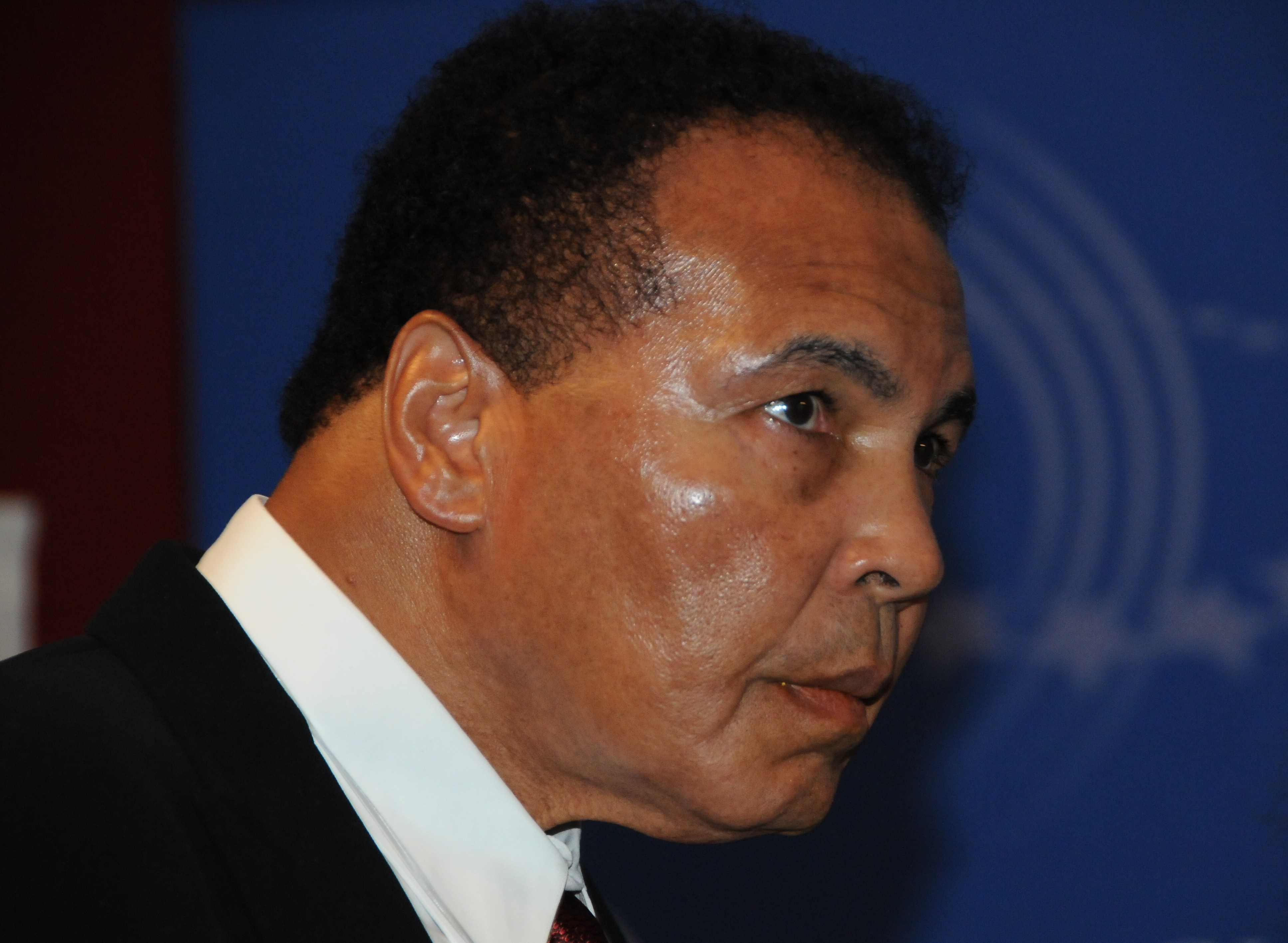
And perhaps the most pertinent fact, Muslim Americans enrich our lives today in every way. They’re our neighbors, the teachers who inspire our children, the doctors who trust us with our health — future doctors like Sabah. They’re scientists who win Nobel Prizes, young entrepreneurs who are creating new technologies that we use all the time. They’re the sports heroes we cheer for -— like Muhammad Ali and Kareem Abdul-Jabbar, Hakeem Olajuwon. And by the way, when Team USA marches into the next Olympics, one of the Americans waving the red, white and blue — (applause) — will a fencing champion, wearing her hijab, Ibtihaj Muhammad, who is here today. Stand up. (Applause.) I told her to bring home the gold. (Laughter.) Not to put any pressure on you. (Laughter.)
Muslim Americans keep us safe. They’re our police and our firefighters. They’re in homeland security, in our intelligence community. They serve honorably in our armed forces — meaning they fight and bleed and die for our freedom. Some rest in Arlington National Cemetery. (Applause.)
So Muslim Americans are some of the most resilient and patriotic Americans you’ll ever meet. We’re honored to have some of our proud Muslim American servicemembers here today. Please stand if you’re here, so we can thank you for your service. (Applause.)
So part of the reason I want to lay out these facts is because, in the discussions that I was having with these incredibly accomplished young people, they were pointing that so often they felt invisible. And part of what we have to do is to lift up the contributions of the Muslim American community not when there’s a problem, but all the time.
Our television shows should have some Muslim characters that are unrelated to national security — (applause) — because — it’s not that hard to do. There was a time when there were no black people on television. And you can tell good stories while still representing the reality of our communities.
Now, we do have another fact that we have to acknowledge.Even as the overwhelming majority — and I repeat, the overwhelming majority — of the world’s Muslims embrace Islam as a source of peace, it is undeniable that a small fraction of Muslims propagate a perverted interpretation of Islam. This is the truth.
Groups like al Qaeda and ISIL, they’re not the first extremists in history to misuse God’s name. We’ve seen it before, across faiths. But right now, there is a organized extremist element that draws selectively from Islamic texts, twists them in an attempt to justify their killing and their terror. They combine it with false claims that America and the West are at war with Islam. And this warped thinking that has found adherents around the world — including, as we saw, tragically, in Boston and Chattanooga and San Bernardino — is real. It’s there. And it creates tensions and pressure that disproportionately burden the overwhelming majority of law-abiding Muslim citizens.
And the question then is, how do we move forward together? How do we keep our country strong and united? How do we defend ourselves against organizations that are bent on killing innocents? And it can’t be the work of any one faith alone. It can’t be just a burden on the Muslim community — although theMuslim community has to play a role. We all have responsibilities. So with the time I have left, I just want to suggest a few principles that I believe can guide us.
First, at a time when others are trying to divide us along lines of religion or sect, we have to reaffirm that most fundamental of truths: We are all God’s children. We’re all born equal, with inherent dignity.
And so often, we focus on our outward differences and we forget how much we share. Christians, Jews, Muslims — we’re all, under our faiths, descendants of Abraham. So mere tolerance of different religions is not enough. Our faiths summon us to embrace our common humanity. “O mankind,” the Koran teaches, we have “made you peoples and tribes that you may know one another.” (Applause.) So all of us have the task of expressing our religious faith in a way that seeks to build bridges rather than to divide.
Second, as Americans, we have to stay true to our core values, and that includes freedom of religion for all faiths. I already mentioned our Founders, like Jefferson, knew that religious liberty is essential not only to protect religion but because religion helps strengthen our nation — if it is free, if it is not an extension of the state. Part of what’s happened in the Middle East and North Africa and other places where we see sectarian violence is religion being a tool for another agenda — for power, for control. Freedom of religion helps prevent that, both ways — protects religious faiths, protects the state from — or those who want to take over the state from using religious animosity as a tool for their own ends.
That doesn’t mean that those of us with religious faith should not be involved. We have to be active citizenry. But we have to respect the fact that we have freedom of religion.
Remember, many preachers and pastors fought to abolish the evil of slavery. People of faith advocated to improve conditions for workers and ban child labor. Dr. King was joined by people of many faiths, challenging us to live up to our ideals. And that civil activism, that civic participation that’s the essence of our democracy, it is enhanced by freedom of religion.
Now, we have to acknowledge that there have been times where we have fallen short of our ideals. By the way, Thomas Jefferson’s opponents tried to stir things up by suggesting he was a Muslim — so I was not the first –– (applause.) No, it’s true, it’s true. Look it up. (Laughter.) I’m in good company. (Laughter.)
But it hasn’t just been attacks of that sort that have been used. Mormon communities have been attacked throughout our history. Catholics, including, most prominently, JFK — John F. Kennedy — when he ran for President, was accused of being disloyal. There was a suggestion that he would be taking orders from the Pope as opposed to upholding his constitutional duties. Anti-Semitism in this country has a sad and long history, and Jews were exclude routinely from colleges and professions and from public office.
And so if we’re serious about freedom of religion — and I’m speaking now to my fellow Christians who remain the majority in this country — we have to understand an attack on one faith is an attack on all our faiths. (Applause.) And when any religious group is targeted, we all have a responsibility to speak up. And we have to reject a politics that seeks to manipulate prejudice or bias, and targets people because of religion.
We’ve got to make sure that hate crimes are punished, and that the civil rights of all Americans are upheld. (Applause.) And just as faith leaders, including Muslims, must speak out when Christians are persecuted around the world — (applause) — or when anti-Semitism is on the rise — because the fact is, is that there are Christians who are targeted now in the Middle East, despite having been there for centuries, and there are Jews who’ve lived in places like France for centuries who now feel obliged to leave because they feel themselves under assault –sometimes by Muslims. We have to be consistent in condemning hateful rhetoric and violence against everyone. (Applause.) And that includes against Muslims here in the United States of America. (Applause.)
So none of us can be silent. We can’t be bystanders to bigotry. And together, we’ve got to show that America truly protects all faiths.
Which brings me to my next point: As we protect our country from terrorism, we should not reinforce the ideas and the rhetoric of the terrorists themselves. I often hear it said that we need moral clarity in this fight. And the suggestion is somehow that if I would simply say, these are all Islamic terrorists, then we would actually have solved the problem by now, apparently. (Laughter.) Well, I agree, we actually do need moral clarity. Let’s have some moral clarity. (Applause.)
Groups like ISIL are desperate for legitimacy. They try to portray themselves as religious leaders and holy warriors who speak for Islam. I refuse to give them legitimacy. We must never give them that legitimacy. (Applause.) They’re not defending Islam. They’re not defending Muslims. The vast majority of the people they kill are innocent Muslim men, women and children. (Applause.)
And, by the way, the notion that America is at war with Islam ignores the fact that the world’s religions are a part of who we are. We can’t be at war with any other religion because the world’s religions are a part of the very fabric of the United States, our national character. (Applause.)
So the best way for us to fight terrorism is to deny these organizations legitimacy and to show that here in the United States of America, we do not suppress Islam; we celebrate and lift up the success of Muslim Americans. That’s how we show the lie that they’re trying to propagate. (Applause.) We shouldn’t play into terrorist propaganda. And we can’t suggest that Islam itself is at the root of the problem. That betrays our values. It alienates Muslim Americans. It’s hurtful to those kids who are trying to go to school and are members of the Boy Scouts, and are thinking about joining our military.
That kind of mindset helps our enemies. It helps our enemies recruit. It makes us all less safe. So let’s be clear about that.
Now, finally, just as all Americans have a responsibility to reject discrimination — I’ve said this before — Muslims around the world have a responsibility to reject extremist ideologies that are trying to penetrate within Muslim communities.
Here at this mosque, and across our country and around the world, Muslim leaders are roundly and repeatedly and consistently condemning terrorism. And around the globe, Muslims who’ve dared to speak out have often been targeted and even killed. So those voices are there; we just have to amplify them more. (Applause.)
And it was interesting, in the discussion I had before I came out, some people said, why is there always a burden on us? When a young man in Charleston shoots African Americans in a church, there’s not an expectation that every white person in America suddenly is explaining that they’re not racist. They can Everybody is assumed to be horrified by that act. And I recognize that sometimes that doesn’t feel fair.
But part of the answer is to make sure that the Muslim community in all of its variety, in all the good works that it’s doing, in all the talent that’s on display, that it’s out there visible on a consistent basis — not just at a certain moment. (Applause.)
But what is also true is, is that there is a battle of hearts and minds that takes place — that is taking place right now, and American Muslims are better positioned than anybody to show that it is possible to be faithful to Islam and to be part of a pluralistic society, and to be on the cutting-edge of science, and to believe in democracy. (Applause.)
And so I would urge all of you not to see this as a burden, but as a great opportunity and a great privilege to show who you are. To use a little Christian expression — let your light shine. Because when you do you’ll make clear that this is not a clash of civilizations between the West and Islam. This is a struggle between the peace-loving, overwhelming majority of Muslims around the world and a radical, tiny minority. And ultimately, I’m confident that the overwhelming majority will win that battle. (Applause.) Muslims will decide the future of your faith. And I’m confident in the direction that it will go.
But across the Islamic world, influential voices should consistently speak out with an affirmative vision of their faith. And it’s happening. These are the voices of Muslim clerics who teach that Islam prohibits terrorism, for the Koran says whoever kills an innocent, it is as if he has killed all mankind. (Applause.) These are the voices of Muslim scholars, some of whom join us today, who know Islam has a tradition of respect for other faiths; and Muslim teachers who point out that the first word revealed in the Koran — igra — means “read” — to seek knowledge, to question assumptions. (Applause.)
Muslim political leaders have to push back on the lie that the West oppresses Muslims, and against conspiracy theories that says America is the cause of every ill in the Middle East. Now, that doesn’t mean that Muslim Americans aren’t free to criticize American — U.S. foreign policy. That’s part of being an American. I promise you, as the President of the United States, I’m mindful that that is a healthy tradition that is alive and well in America. (Laughter.) But like leaders everywhere, these leaders have been offering, and need to continue to offer, a positive vision for progress, and that includes political and economic progress.
And we have to acknowledge that much of the violence in places like the Middle East is now turning into fights between sects — Shia, Sunni and others — where differences are often exploited to serve political agendas, as I said earlier. And this bloodshed is destroying Muslim families and communities, and there has to be global pressure to have the vision and the courage to end this kind of thinking and this approach to organizing political power.
It’s not historically unique. It’s happened in every part of the world — from Northern Ireland to Africa, to Asia, to right here in the United States — in the past. But it is something that we have to fight against.
And we know it’s possible. Across the history of Islam, different sects traditionally have lived and thrived together peacefully. And in many parts of the world they do today, including here in the United States.
Like people of all religions, Muslims living their faith in a modern, pluralistic world are called upon to uphold human rights, to make sure that everyone has opportunity. That includes the aspirations of women and youth and all people. If we expect our own dignity to be respected, so must we respect the dignity of others. (Applause.)
So let me conclude by saying that as Muslim communities stand up for the future that you believe in, that you exhibit in your daily lives, as you teach your children, America will be your partner. We will — I will — do everything I can to lift up the multiplicity of Muslim voices that promote pluralism and peace. (Applause.) We will continue to reach out to young Muslims around the world, empowering them with science and technology and entrepreneurship, so they can pursue their God-given potential, and help build up their communities and provide opportunity. It’s why we will continue to partner with Muslim American communities — not just to help you protect against extremist threats, but to expand health care and education and opportunity — (applause) — because that’s the best way to build strong, resilient communities.
Our values must guide us in this work. Engagement with Muslim American communities must never be a cover for surveillance. (Applause.) We can’t give in to profiling entire groups of people. There’s no one single profile of terrorists. We can’t securitize our entire relationship with Muslim Americans. We can’t deal with you solely through the prism of law enforcement. We’ve got to build trust and mutual respect. That’s how we’ll keep our communities strong and our communities united.
As I was in discussion with the young people before I came in here, I said this will be a process. Law enforcement has a tough job. Some of these groups are specifically trying to target Muslim youth. We’re going to have to be partners in this process. There will be times where the relationship is clumsy or mishandled. But I want you to know that from the President to the FBI Director, to everybody in law enforcement, my directive and their understanding is, is that this is something we have to do together. And if we don’t do it well, then we’re actually not making ourselves safer; we’re making ourselves less safe.
And here, I want to speak directly to the young people who may be listening. In our lives, we all have many identities. We are sons and daughters, and brothers and sisters. We’re classmates; Cub Scout troop members. We’re followers of our faith. We’re citizens of our country. And today, there are voices in this world, particularly over the Internet, who are constantly claiming that you have to choose between your identities — as a Muslim, for example, or an American. Do not believe them. If you’re ever wondering whether you fit in here, let me say it as clearly as I can, as President of the United States: You fit in here — right here. (Applause.) You’re right where you belong. You’re part of America, too. (Applause.) You’re not Muslim or American. You’re Muslim and American. (Applause.)
Don’t grow cynical. Don’t respond to ignorance by embracing a world view that suggests you must choose between your faith and your patriotism. Don’t believe that you have to choose between your best impulses and somehow embrace a world view that pits us against each other — or, even worse, glorifies violence. Understand your power to bring about change. Stay engaged in your community. Help move our country forward — your country forward. (Applause.)
We are blessed to live in a nation where even if we sometimes stumble, even if we sometimes fall short, we never stop striving for our ideals. We keep moving closer to that more perfect union. We’re a country where, if you work hard and if you play by the rules, you can ultimately make it, no matter who you are or how you pray. It may not always start off even in the race, but here, more than any place else, there’s the opportunity to run that race.
And as we go forward, I want every Muslim American to remember you are not alone. Your fellow Americans stand with you — just as Sabah described her friends after she decided that she was going to start wearing a hijab. That’s not unusual. Because just as so often we only hear about Muslims after a terrorist attack, so often we only hear about Americans’ response to Muslims after a hate crime has happened, we don’t always hear about the extraordinary respect and love and community that so many Americans feel.
I’m thinking about the seven-year-old boy in Texas who emptied his piggy bank to help a mosque that had been vandalized. (Applause.) Or all the faith communities that rallied around Muslim Americans after the tragedy in Chapel Hill. The churches and the synagogues standing shoulder-to-shoulder with their local mosques, including the woman carrying a sign saying “We love our Muslim neighbors.” Think of our men and women in uniform who, when they heard that a little girl was afraid because she’s a Muslim, sent her a message — “I Will Protect You.” (Applause.)
I want every American to remember how Muslim communities are standing up for others, as well. Because right now, as we speak, there are Muslims in Kenya who saved Christians from terrorists, and Muslims who just met in Morocco to protect religious minorities, including Christians and Jews. (Applause.) The good people of this mosque helped this city move forward after the turmoil of last year. Muslim Americans across the country helped African American churches rebuild after arson.
Remember the Muslim Americans in Boston who reached out to victims of the Marathon bombing; the Muslim Americans across the country who raised money for the families of San Bernardino; the Muslim Americans in Chattanooga who honored our fallen servicemembers, one of them saying, “in the name of God, the God of Abraham, Moses, Jesus, and Muhammad, God bless our fallen heroes.” (Applause.)
We are one American family. We will rise and fall together. It won’t always be easy. There will be times where our worst impulses are given voice. But I believe that ultimately, our best voices will win out. And that gives me confidence and faith in the future. (Applause.)
After more than 200 years, our blended heritage, the patchwork quilt which is America, that is not a weakness, that is one of our greatest strengths. It’s what makes us a beacon to the world. It’s what led that mother who wrote to me — the one who worries about her young daughter — it led her to end her letter with hope, despite her fears. She said, “I still believe in one nation, under God, indivisible, with liberty and justice for all.” (Applause.)
May God’s peace be upon you. May God bless the United States of America.
_____________________________
News & Photo Features Syndicate, a division of Workstyles, Inc. For editorial feature and photo information, go towww.news-photos-features.com,