Category Archives: Homeland Security

Obama Administration Details New Cybersecurity National Action Plan

Indian Point Nuclear Plant: cyber attacks on utilities, power plants, nuclear facilities can be more lethal and disrupting than an invading army. The White House has just issued a fact sheet detailing its Cybersecurity National Action Plan © 2016 Karen Rubin/news-photos-features.com

FACT SHEET: Cybersecurity National Action Plan

Taking bold actions to protect Americans in today’s digital world

The next War to End All Wars will likely be fought in cyberspace, rather than by invading armies. Cybersecurity is critical line of defense, but also raises issues of privacy – from government as well as criminals. The Obama Administration has just issued a Cybersecurity National Action Plan which, among other things, creates a Commission on Enhancing National Cybersecurity as well as a permanent Federal Privacy Council.  It includes expanding upon the President’s 2014 BuySecure Initiative to strengthen the security of consumer data. Here is a fact sheet from the White House detailing the Cybersecurity National Action Plan:

From the beginning of his Administration, the President has made it clear that cybersecurity is one of the most important challenges we face as a Nation, and for more than seven years he has acted comprehensively to confront that challenge.  Working together with Congress, we took another step forward in this effort in December with the passage of the Cybersecurity Act of 2015, which provides important tools necessary to strengthen the Nation’s cybersecurity, particularly by making it easier for private companies to share cyber threat information with each other and the Government.

But the President believes that more must be done – so that citizens have the tools they need to protect themselves, companies can defend their operations and information, and the Government does its part to protect the American people and the information they entrust to us.  That is why, today, the President is directing his Administration to implement a Cybersecurity National Action Plan (CNAP) that takes near-term actions and puts in place a long-term strategy to enhance cybersecurity awareness and protections, protect privacy, maintain public safety as well as economic and national security, and empower Americans to take better control of their digital security.

The Challenge

From buying products to running businesses to finding directions to communicating with the people we love, an online world has fundamentally reshaped our daily lives.  But just as the continually evolving digital age presents boundless opportunities for our economy, our businesses, and our people, it also presents a new generation of threats that we must adapt to meet.  Criminals, terrorists, and countries who wish to do us harm have all realized that attacking us online is often easier than attacking us in person.  As more and more sensitive data is stored online, the consequences of those attacks grow more significant each year.  Identity theft is now the fastest growing crime in America.  Our innovators and entrepreneurs have reinforced our global leadership and grown our economy, but with each new story of a high-profile company hacked or a neighbor defrauded, more Americans are left to wonder whether technology’s benefits could risk being outpaced by its costs.

The President believes that meeting these new threats is necessary and within our grasp.  But it requires a bold reassessment of the way we approach security in the digital age.  If we’re going to be connected, we need to be protected.  We need to join together—Government, businesses, and individuals—to sustain the spirit that has always made America great.  

Our Approach

That is why, today, the Administration is announcing a series of near-term actions to enhance cybersecurity capabilities within the Federal Government and across the country.  But given the complexity and seriousness of the issue, the President is also asking some of our Nation’s top strategic, business, and technical thinkers from outside of government to study and report on what more we can do to enhance cybersecurity awareness and protections, protect privacy, maintain public safety as well as economic and national security, and empower Americans to take better control of their digital security.  Bold action is required to secure our digital society and keep America competitive in the global digital economy.

The President’s Cybersecurity National Action Plan (CNAP) is the capstone of more than seven years of determined effort by this Administration, building upon lessons learned from cybersecurity trends, threats, and intrusions.  This plan directs the Federal Government to take new action now and fosters the conditions required for long-term improvements in our approach to cybersecurity across the Federal Government, the private sector, and our personal lives.  Highlights of the CNAP include actions to:

  • Establish the “Commission on Enhancing National Cybersecurity.” This Commission will be comprised of top strategic, business, and technical thinkers from outside of Government – including members to be designated by the bi-partisan Congressional leadership.  The Commission will make recommendations on actions that can be taken over the next decade to strengthen cybersecurity in both the public and private sectors while protecting privacy; maintaining public safety and economic and national security; fostering discovery and development of new technical solutions; and bolstering partnerships between Federal, State, and local government and the private sector in the development, promotion and use of cybersecurity technologies, policies, and best practices.
  • Modernize Government IT and transform how the Government manages cybersecurity through the proposal of a $3.1 billion Information Technology Modernization Fund, which will enable the retirement, replacement, and modernization of legacy IT that is difficult to secure and expensive to maintain, as well as the formation of a new position – the Federal Chief Information Security Officer – to drive these changes across the Government.
  • Empower Americans to secure their online accounts by moving beyond just passwords and adding an extra layer of security.  By judiciously combining a strong password with additional factors, such as a fingerprint or a single use code delivered in a text message, Americans can make their accounts even more secure.  This focus on multi-factor authentication will be central to a newNational Cybersecurity Awareness Campaign launched by theNational Cyber Security Alliance designed to arm consumers with simple and actionable information to protect themselves in an increasingly digital world.  The National Cyber Security Alliance will partner with leading technology firms like Google, Facebook, DropBox, and Microsoft to make it easier for millions of users to secure their online accounts, and financial services companies such as MasterCard, Visa, PayPal, and Venmo thatare making transactions more secure.  In addition, the Federal Government will take steps to safeguard personal data in online transactions between citizens and the government, including through a new action plan to drive the Federal Government’s adoption and use of effective identity proofing and strong multi-factor authentication methods and a systematic review of where the Federal Government can reduce reliance on Social Security Numbers as an identifier of citizens.
  • Invest over $19 billion for cybersecurity as part of the President’s Fiscal Year (FY) 2017 Budget.  This represents a more than 35 percent increase from FY 2016 in overall Federal resources for cybersecurity, a necessary investment to secure our Nation in the future.

Through these actions, additional new steps outlined below, and other policy efforts spread across the Federal Government, the Administration has charted a course to enhance our long-term security and reinforce American leadership in developing the technologies that power the digital world.  

Commission on Enhancing National Cybersecurity

For over four decades, computer technology and the Internet have provided a strategic advantage to the United States, its citizens, and its allies.  But if fundamental cybersecurity and identity issues are not addressed, America’s reliance on digital infrastructure risks becoming a source of strategic liability.  To address these issues, we must diagnose and address the causes of cyber-vulnerabilities, and not just treat the symptoms.  Meeting this challenge will require a long-term, national commitment.

To conduct this review, the President is establishing the Commission on Enhancing National Cybersecurity, comprised of top strategic, business, and technical thinkers from outside of Government – including members to be designated by the bi-partisan Congressional leadership.  The Commission is tasked with making detailed recommendations on actions that can be taken over the next decade to enhance cybersecurity awareness and protections throughout the private sector and at all levels of Government, to protect privacy, to maintain public safety and economic and national security, and to empower Americans to take better control of their digital security.  The National Institute of Standards and Technology will provide the Commission with support to allow it to carry out its mission.  The Commission will report to the President with its specific findings and recommendations before the end of 2016, providing the country a roadmap for future actions that will build on the CNAP and protect our long-term security online. 

Raise the Level of Cybersecurity across the Country

While the Commission conducts this forward looking review, we will continue to raise the level of cybersecurity across the Nation.

Strengthen Federal Cybersecurity

The Federal Government has made significant progress in improving its cybersecurity capabilities, but more work remains.  To expand on that progress and address the longstanding, systemic challenges in Federal cybersecurity, we must re-examine our Government’s legacy approach to cybersecurity and information technology, which requires each agency to build and defend its own networks.  These actions build upon the foundation laid by the Cybersecurity Cross-Agency Priority Goalsand the 2015 Cybersecurity Strategy and Implementation Plan.

Ø  The President’s 2017 Budget proposes a $3.1 billion Information Technology Modernization Fund, as a down payment on the comprehensive overhaul that must be undertaken in the coming years.  This revolving fund will enable agencies to invest money up front and realize the return over time by retiring, replacing, or modernizing antiquated IT infrastructure, networks, and systems that are expensive to maintain, provide poor functionality, and are difficult to secure.

Ø  The Administration has created the position of Federal Chief Information Security Officer to drive cybersecurity policy, planning, and implementation across the Federal Government.  This is the first time that there will be a dedicated senior official who is solely focused on developing, managing, and coordinating cybersecurity strategy, policy, and operations across the entire Federal domain.

Ø  The Administration is requiring agencies to identify and prioritize their highest value and most at-risk IT assets and then take additional concrete steps to improve their security.

Ø  The Department of Homeland Security, the General Services Administration, and other Federal agencies will increase the availability of government-wide shared services for IT and cybersecurity, with the goal of taking each individual agency out of the business of building, owning, and operating their own IT when more efficient, effective, and secure options are available, as well as ensuring that individual agencies are not left on their own to defend themselves against the most sophisticated threats.

Ø  The Department of Homeland Security is enhancing Federal cybersecurity by expanding the EINSTEIN and Continuous Diagnostics and Mitigation programs.  The President’s 2017 Budget supports all Federal civilian agencies adopting these capabilities.

Ø  The Department of Homeland Security is dramatically increasing the number of Federal civilian cyber defense teams to a total of 48, by recruiting the best cybersecurity talent from across the Federal Government and private sector.  These standing teams will protect networks, systems, and data across the entire Federal Civilian Government by conducting penetration testing and proactively hunting for intruders, as well as providing incident response and security engineering expertise.

Ø  The Federal Government, through efforts such as the National Initiative for Cybersecurity Education, will enhance cybersecurity education and training nationwide and hire more cybersecurity experts to secure Federal agencies.  As part of the CNAP, the President’s Budget invests $62 million in cybersecurity personnel to:

o   Expand the Scholarship for Service program by establishing a CyberCorps Reserve program, which will offer scholarships for Americans who wish to obtain cybersecurity education and serve their country in the civilian Federal government;

o   Develop a Cybersecurity Core Curriculum that will ensure cybersecurity graduates who wish to join the Federal Government have the requisite knowledge and skills; and,

o   Strengthen the National Centers for Academic Excellence in Cybersecurity Program to increase the number of participating academic institutions and students, better support those institutions currently participating, increase the number of students studying cybersecurity at those institutions, and enhance student knowledge through program and curriculum evolution.

Ø  The President’s Budget takes additional steps to expand the cybersecurity workforce by:

o   Enhancing student loan forgiveness programs for cybersecurity experts joining the Federal workforce;

o   Catalyzing investment in cybersecurity education as part of a robust computer science curriculum through the President’s Computer Science for All Initiative.

Empower Individuals

The privacy and security of all Americans online in their daily lives is increasingly integral to our national security and our economy. The following new actions build on the President’s 2014 BuySecure Initiative to strengthen the security of consumer data.

Ø  The President is calling on Americans to move beyond just the password to leverage multiple factors of authentication when logging-in to online accounts.  Private companies, non-profits, and the Federal Government are working together to help more Americans stay safe online through a new public awareness campaign that focuses on broad adoption of multi-factor authentication.  Building off the Stop.Think.Connect. campaign and efforts stemming from the National Strategy for Trusted Identities in Cyberspace, the National Cyber Security Alliance will partner with leading technology companies and civil society to promote this effort and make it easier for millions of users to secure their accounts online.  This will support a broader effort to increase public awareness of the individual’s role in cybersecurity.

Ø  The Federal Government is accelerating adoption of strong multi-factor authentication and identity proofing for citizen-facing Federal Government digital services.  The General Services Administration will establish a new program that will better protect and secure the data and personal information of Americans as they interact with Federal Government services, including tax data and benefit information.

Ø  The Administration is conducting a systematic review of where the Federal Government can reduce its use of Social Security Numbers as an identifier of citizens. 

Ø  The Federal Trade Commission recently relaunchedIdentityTheft.Gov, to serve as a one-stop resource for victims to report identity theft, create a personal recovery plan, and print pre-filled letters and forms to send to credit bureaus, businesses, and debt collectors.

Ø  The Small Business Administration (SBA), partnering with the Federal Trade Commission, the National Institute of Standards and Technology (NIST), and the Department of Energy, will offercybersecurity training to reach over 1.4 million small businesses and small business stakeholders through 68 SBA District Offices, 9 NIST Manufacturing Extension Partnership Centers, and other regional networks across the country. 

Ø  The Administration is announcing new milestones in the President’s BuySecure Initiative to secure financial transactions.  As of today the Federal Government has supplied over 2.5 million more secure Chip-and-PIN payment cards, and transitioned to this new technology the entire fleet of card readers managed by the Department of the Treasury.  Through government and private-sector leadership, more secure chip cards have been issued in the United States than any other country in the world. 

Enhance Critical Infrastructure Security and Resilience

The national and economic security of the United States depends on the reliable functioning of the Nation’s critical infrastructure.  A continued partnership with the owners and operators of critical infrastructure will improve cybersecurity and enhance the Nation’s resiliency.  This work builds off the President’s previous cybersecurity focused Executive Orders on Critical Infrastructure (2013) and Information Sharing (2015).

Ø  The Department of Homeland Security, the Department of Commerce, and the Department of Energy are contributing resources and capabilities to establish a National Center for Cybersecurity Resilience where companies and sector-wide organizations can test the security of systems in a contained environment, such as by subjecting a replica electric grid to cyber-attack.

Ø  The Department of Homeland Security will double the number of cybersecurity advisors available to assist private sector organizations with in-person, customized cybersecurity assessments and implementation of best practices.

Ø  The Department of Homeland Security is collaborating with UL and other industry partners to develop a Cybersecurity Assurance Program to test and certify networked devices within the “Internet of Things,” whether they be refrigerators or medical infusion pumps, so that when you buy a new product, you can be sure that it has been certified to meet security standards.

Ø  The National Institute of Standards and Technology is soliciting feedback in order to inform further development of itsCybersecurity Framework for improving critical infrastructure cybersecurity.  This follows two years of adoption by organizations across the country and around the world.

Ø   Commerce Secretary Pritzker cut the ribbon on the new National Cybersecurity Center of Excellence, a public-private research and development partnership that will allow industry and government to work together to develop and deploy technical solutions for high-priority cybersecurity challenges and share those findings for the benefit of the broader community.

Ø  The Administration is calling on major health insurers and healthcare stakeholders to help them take new and significant steps to enhance their data stewardship practices and ensure that consumers can trust that their sensitive health data will be safe, secure, and available to guide clinical decision-making.

Secure Technology

Even as we work to improve our defenses today, we know the Nation must aggressively invest in the science, technology, tools, and infrastructure of the future to ensure that they are engineered with sustainable security in mind.

Ø  Today the Administration is releasing its 2016 Federal Cybersecurity Research and Development Strategic Plan.  This plan, which was called for in the 2014 Cybersecurity Enhancement Act, lays out strategic research and development goals for the Nation to advance cybersecurity technologies driven by the scientific evidence of efficacy and efficiency.

Ø  In addition, the Government will work with organizations such as the Linux Foundation’s Core Infrastructure Initiative to fund and secure commonly used internet “utilities” such as open-source software, protocols, and standards.  Just as our roads and bridges need regular repair and upkeep, so do the technical linkages that allow the information superhighway to flow.

Deter, Discourage, and Disrupt Malicious Activity in Cyberspace

Better securing our own digital infrastructure is only part of the solution.  We must lead the international effort in adopting principles of responsible state behavior, even while we take steps to deter and disrupt malicious activity.  We cannot pursue these goals alone – we must pursue them in concert with our allies and partners around the world.

Ø  In 2015, members of the G20 joined with the United States in affirming important norms, including the applicability of international law to cyberspace, the idea that states should not conduct the cyber-enabled theft of intellectual property for commercial gain, and in welcoming the report of a United Nations Group of Governmental Experts, which included a number of additional norms to promote international cooperation, prevent attacks on civilian critical infrastructure, and support computer emergency response teams providing reconstitution and mitigation services.  The Administration intends to institutionalize and implement these norms through further bilateral and multilateral commitments and confidence building measures.

Ø  The Department of Justice, including the Federal Bureau of Investigation, is increasing funding for cybersecurity-related activities by more than 23 percent to improve their capabilities to identify, disrupt, and apprehend malicious cyber actors.

Ø  U.S. Cyber Command is building a Cyber Mission Force of 133 teams assembled from 6,200 military, civilian, and contractor support personnel from across the military departments and defense components.  The Cyber Mission Force, which will be fully operational in 2018, is already employing capabilities in support of U.S. Government objectives across the spectrum of cyber operations.

Improve Cyber Incident Response

Even as we focus on preventing and deterring malicious cyber activity, we must also maintain resilience as events occur.  Over the past year, the country faced a wide array of intrusions, ranging from criminal activity to cyber espionage.  By applying lessons learned from past incidents we can improve management of future cyber incidents and enhance the country’s cyber-resilience.

Ø  By this spring, the Administration will publically release a policy for national cyber incident coordination and an accompanyingseverity methodology for evaluating cyber incidents so that government agencies and the private sector can communicate effectively and provide an appropriate and consistent level of response.

Protect the Privacy of Individuals

In coordination with the information technology and cybersecurity efforts above, the Administration has launched a groundbreaking effort to enhance how agencies across the Federal Government protect the privacy of individuals and their information.  Privacy has been core to our Nation from its inception, and in today’s digital age safeguarding privacy is more critical than ever. 

Ø  Today, the President signed an Executive Order that created a permanent Federal Privacy Council, which will bring together the privacy officials from across the Government to help ensure the implementation of more strategic and comprehensive Federal privacy guidelines.  Like cyber security, privacy must be effectively and continuously addressed as our nation embraces new technologies, promotes innovation, reaps the benefits of big data and defends against evolving threats.

Fund Cybersecurity

In order to implement these sweeping changes, the Federal Government will need to invest additional resources in its cybersecurity.  That is why the 2017 Budget allocates more than $19 billion for cybersecurity – a more than 35 percent increase over the 2016 enacted level.  These resources will enable agencies to raise their level of cybersecurity, help private sector organizations and individuals better protect themselves, disrupt and deter adversary activity, and respond more effectively to incidents.

White House Issues Fact Sheet on Administration’s Efforts to Respond to Zika Virus

The White House has issued a Fact Sheet:  Preparing for and Responding to the Zika Virus at Home and Abroad:


Since late last year, the Administration has been aggressively working to combat Zika, a virus primarily spread by mosquitoes that has recently been linked to birth defects and other concerning health outcomes.  The Federal Government has been monitoring the Zika virus and working with our domestic and international public health partners to alert healthcare providers and the public about Zika; provide public health laboratories with diagnostic tests; and detect and report cases both domestically and internationally. 


The Administration is taking every appropriate measure to protect the American people, and today announced that it is asking Congress for more than $1.8 billion in emergency funding to enhance our ongoing efforts to prepare for and respond to the Zika virus, both domestically and internationally.  The Administration will submit a formal request to Congress shortly.


The Pan American Health Organization reports 26 countries and territories in the Americas with local Zika transmission.  While we have not yet seen transmission of the Zika virus by mosquitoes within the continental United States, Puerto Rico and other U.S. territories in warmer areas with Aedes aegpyti mosquito populations are already seeing active transmission. In addition, some Americans have returned to the continental U.S. from affected countries in South America, Central America, the Caribbean and the Pacific Islands with Zika infections.  The Centers for Disease Control and Prevention reports 50 laboratory-confirmed cases among U.S. travelers from December 2015- February 5, 2016.   As spring and summer approach, bringing with them larger and more active mosquito populations, we must be fully prepared to mitigate and quickly address local transmission within the continental U.S., particularly in the Southern United States.


The requested resources will build on our ongoing preparedness efforts and will support essential strategies to combat this virus, such as rapidly expanding mosquito control programs; accelerating vaccine research and diagnostic development; enabling the testing and procurement of vaccines and diagnostics; educating health care providers, pregnant women and their partners; improving epidemiology and expanding laboratory and diagnostic testing capacity; improving health services and supports for low-income pregnant women, and enhancing the ability of Zika-affected countries to better combat mosquitoes and control transmission. 


There is much that we do not yet know about Zika and its relationship to the poor health outcomes that are being reported in Zika-affected areas. We must work aggressively to investigate these outbreaks, and mitigate, to the best extent possible, the spread of the virus. Congressional action on the Administration’s request will accelerate our ability to prevent, detect and respond to the Zika virus and bolster our ability to reduce the potential for future infectious disease outbreaks.


Department of Health and Human Services – $1.48 billion

Centers for Disease Control and Prevention – $828 million.  The request includes funding to support prevention and response strategies through the following activities:

·         Support Zika virus readiness and response capacity in States and territories with mosquito populations that are known to transmit Zika virus, with a priority focus on areas with ongoing Zika transmission;

·         Enhance mosquito control programs through enhanced laboratory, epidemiology and surveillance capacity in at-risk areas to reduce the opportunities for Zika transmission;

·         Establish rapid response teams to limit potential clusters of Zika virus in the United States;

·         Improve laboratory capacity and infrastructure to test for Zika virus and other infectious diseases;

·         Implement surveillance efforts to track Zika virus in communities and in mosquitoes;

·         Deploy targeted prevention and education strategies with key populations, including pregnant women, their partners, and health care professionals;

·         Expand the CDC Pregnancy Risk Assessment Monitoring System, improve Guillain Barré syndrome tracking, and ensure the ability of birth defect registries across the country to detect risks related to Zika;

·         Increase research into the link between Zika virus infections and the birth defect microcephaly and measure changes in incidence rates over time;

·         Enhance international capacity for virus surveillance, expand the Field Epidemiology Training program, laboratory testing, health care provider training, and vector surveillance and control in countries at highest risk of Zika virus outbreaks; and

·         Improve diagnostics for Zika virus, including advanced methods to refine tests, and support advanced developments for vector control.


Centers for Medicare and Medicaid Services – $250 million. The request seeks a temporary one-year increase in Puerto Rico’s Medicaid Federal Medical Assistance Percentage (FMAP) to provide an estimated $250 million in additional Federal assistance to support health services for pregnant women at risk of infection or diagnosed with Zika virus and for children with microcephaly, and other health care costs.  This request does not make any changes to Puerto Rico’s underlying Medicaid program, and the additional funding will not be counted towards Puerto Rico’s current Medicaid allotment. Puerto Rico is experiencing ongoing active transmission of Zika. Unlike States, Puerto Rico’s Medicaid funding is capped, which has limited capacity to respond to these emergent and growing health needs.


Vaccine Research and Diagnostic Development & Procurement – $200 million. The request includes $200 million for research, rapid advanced development and commercialization of new vaccines and diagnostic tests for Zika virus. It includes funding for the National Institutes of Health to build upon existing resources and work to develop a vaccine for Zika virus and the chikungunya virus, which is spread by the same type of mosquito.  Funding will accelerate this work and improve scientific understanding of the disease to inform the development of additional tools to combat it. The request also includes resources for the Food and Drug Administration to support Zika virus medical product development including the next generation diagnostic devices.


Other HHS Response Activities – $210 million.  The request includes funding to establish a new Urgent and Emerging Threat Fund to address Zika virus and other outbreaks.  This funding would be available to support emerging needs related to Zika, including additional support to States for emerging public health response needs should mosquito populations known to be potential Zika carriers migrate to additional States.


In addition, the request includes funding to support Puerto Rico’s community health centers in preventing, screening, and treating the Zika virus, expand home visiting services targeting low-income pregnant women at risk of Zika virus, and provide targeted maternal and child health.


U.S. Agency for International Development  $335 million

The request includes investments to support affected countries’ ability to control mosquitoes and the transmission of the virus; support maternal health; expand public education on prevention and response; and create new incentives for the development of vaccines and diagnostics.  The request would also provide flexibility in the use of remaining USAID Ebola funds.  Activities would focus particularly on South America, Central America, the Caribbean, and would:

·         Implement integrated vector management activities in countries at-risk of Zika virus;

·         Stimulate private sector research and development of vaccines, diagnostics, and vector control innovations through public private partnerships and mechanisms to provide incentives such as advance market commitments or volume guarantees;

·         Support training of health care workers in affected countries, including providing information about best practices for supporting children with microcephaly;

·         Support for pregnant women’s health, including helping them access repellant to protect against mosquitos.

·         Establish education campaigns to empower communities in affected countries to take actions to protect themselves from Zika Virus as well as other mosquito-borne diseases; and

·         Issue a Global Health Security Grand Challenge calling for groundbreaking innovations in diagnostics, vector control, personal protection, community engagement and surveillance for Zika and other infectious diseases.


U.S. Department of State – $41 million

The funding request includes support for U.S. citizens in affected countries, medical support for State Department employees in affected countries, public diplomacy, communications, and other operations activities.  State would also support the World Health Organization and its regional arm, the Pan American Health Organization (PAHO), to minimize the Zika threat in affected countries while reducing the risk of further spreading the virus.  These resources will support critical public health actions underway, including preparedness, surveillance, data collection, and risk communication.  Activities would also include support for UNICEF’s Zika response efforts in Brazil; activities to bolster diagnostic capabilities through deployment of equipment and specialized training.


For more information on the Zika virus and CDC guidance about how Americans can protect themselves, visit http://www.cdc.gov/zika/.

In contrast to GOP Opponents, Hillary Clinton Presents ‘360 Degree Strategy to Keep America Safe’

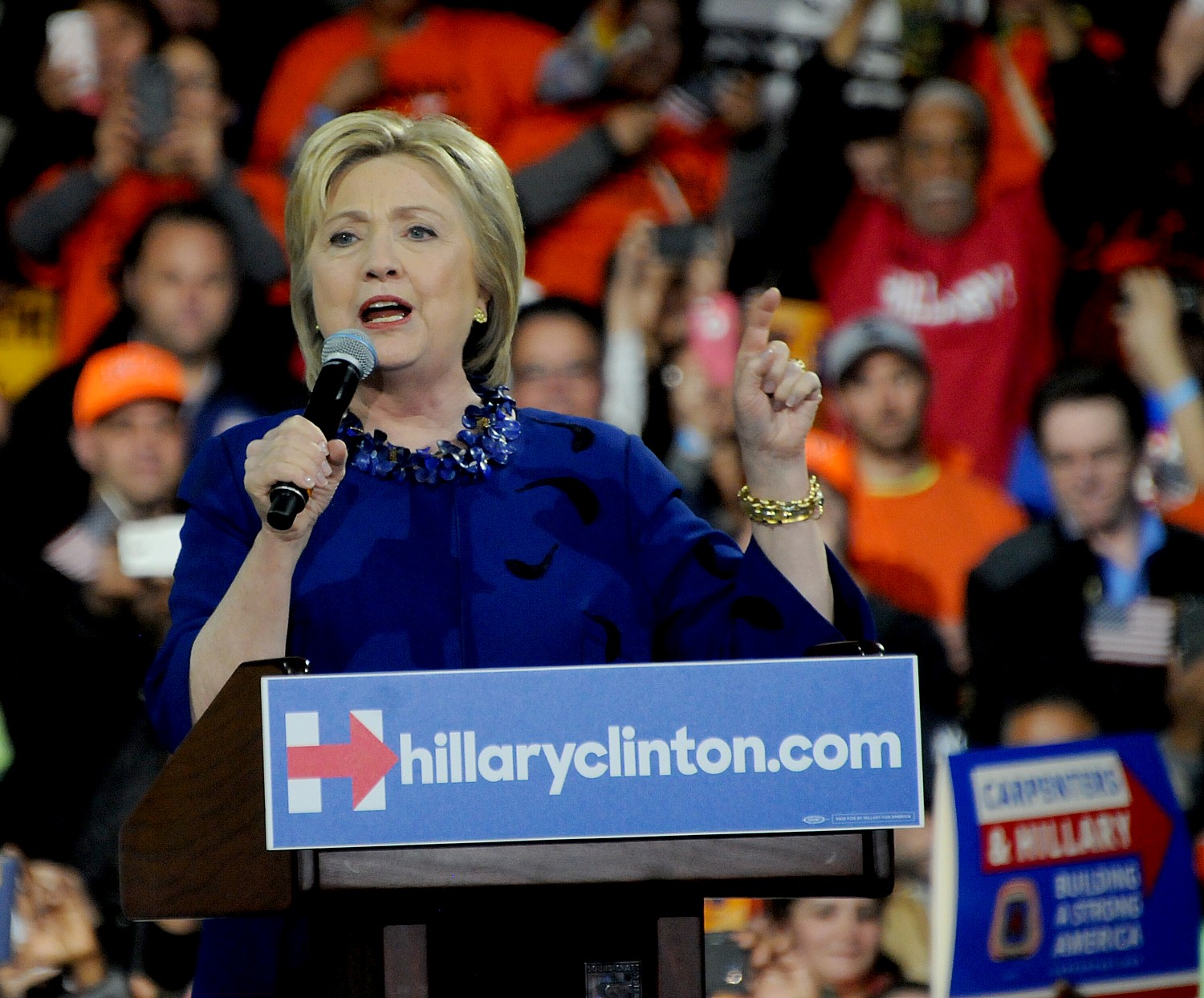
Hillary Clinton, Democratic candidate for president, detailing a "360 degree strategy to keep America safe," said that shallow slogans don’t add up to a strategy, and bluster and bigotry are not credentials for becoming commander-in-chief © 2015 Karen Rubin/news-photos-features.com
Hillary Clinton, Democratic candidate for president, detailing a “360 degree strategy to keep America safe,” said that shallow slogans don’t add up to a strategy, and bluster and bigotry are not credentials for becoming commander-in-chief © 2015 Karen Rubin/news-photos-features.com

We’ve heard a whole lot from the Republican presidential hopefuls, one more absurd than another, of what they would do to “keep our nation safe” – devoting an entire 2 hour debate to the subject. Donald Trump would bring back waterboarding and torture, would kill family members of suspected terrorists. Ted Cruz would “carpet bomb” cities held by ISIS, even if there are tens of thousands of civilians being occupied by the terrorists. Chris Christie, staring into a camera to “intimidate” Vladimir Putin, says he would create a no-fly zone and shoot down any Russian plane that penetrates it (“That’s great if you want a candidate to start World War III,” was Rand Paul’s response.) Carly Fiorina would rehire generals who have resigned or retired.

And yet, Republicans in Congress refuse to do some of the most basic things to actually keep us safe. Senate Republicans have blocked the confirmation – and gone home for the holidays – of Adam Szubin as the Treasury Department’s undersecretary for terrorism and financial crimes, the post in charge of tracking down and stopping the funds going to terrorist organizations. And Republicans in both houses have blocked legislation which would keep guns out of the hands of suspected terrorists on the no-fly list (if there is a problem with the list, they should fix it by giving the individual recourse to defend themselves, and that would be sufficient in fact to uncover actual terrorists).  But there is no common sense. It makes you wonder whether Republicans like an atmosphere of terror because they think that fear whips up votes in their favor.

The Republicans also have been stingy in funding the very services they are faulting for being inadequate – visa services, State Department security (Benghazi, Benghazi).

But in a speech on the same day as the Republican debate, December 15, Hillary Clinton,  Democratic candidate, gave a thoughtful speech outlining her previously stated overall anti-terrorism strategy, and a more intensively focused “360-degree strategy to keep America safe.” The speech received virtually no coverage, but she repeated the strategy in an op-ed published December 18.

Hillary for America released a new web video comparing Hillary Clinton’s recent remarks in Minnesota with Republican candidates, who were exposed as unfit and ill-prepared during this week’s Republican debate. In the remarks, Clinton said that shallow slogans don’t add up to a strategy, and bluster and bigotry are not credentials for becoming commander-in-chief. Republican candidates, on the other hand, have offered fear instead of facts. (Here are some other reviews of the Republicans’ performance this week HERE)

Here are highlights from Hillary Clinton’s speech in Minneapolis:

“I want to begin by saying, we cannot give in to fear.  We can’t let it stop us from doing what is right and necessary to make us safe, and doing it in way that is consistent with our values.

We cannot let fear push us into reckless actions that end up making us less safe.  Americans are going to have to act with both courage and clarity…..


The threat we face is daunting.  But America has overcome big challenges many times before.  Throughout our history, we’ve stared into the face of evil and refused to blink.  We beat Fascism, won the Cold War, brought Osama bin Laden to justice.

So no one should ever underestimate the determination of the American people.  And I am confident we will once again choose resolve over fear.  And we will defeat these new enemies, just as we’ve defeated those who’ve threatened us in the past.

Because it is not enough to contain ISIS, we must defeat ISIS, break its momentum and then its back.  And not just ISIS, but the broader radical jihadist movement that also includes al Qaeda and offshoots like al Shabaab in Somalia.

Now, waging and winning this fight will require serious leadership.  But unfortunately, our political debate has been anything but serious.

We can’t afford another major ground war in the Middle East.  That’s exactly what ISIS wants from us.  Shallow slogans don’t add up to a strategy.  Promising to carpet bomb until the desert glows doesn’t make you sound strong, it makes you sound like you’re in over your head.  Bluster and bigotry are not credentials for becoming Commander-in-Chief.

And it is hard to take seriously senators who talk tough but then hold up key national security nominations, including the top official at the Treasury Department responsible for disrupting terrorist financing.

Every day that’s wasted on partisan gridlock could put Americans in danger.  So, yes, we need a serious discussion.  And that’s why in a speech last month before the Council on Foreign Relations I laid out a three-part plan to defeat ISIS and the broader extremist movement.

One, defeat ISIS in the Middle East by smashing its stronghold, hitting its fighters, leaders, and infrastructure from the air, and intensifying support for local forces who can pursue them on the ground.

Second, defeat them around the world by dismantling the global network of terror that supplies radical jihadists with money, arms, propaganda, and fighters.

And third, defeat them here at home by foiling plots, disrupting radicalization, and hardening our defenses.

Now, these three lines of effort reinforce one another.  So we need to pursue all of them at once, using every pillar of American power.

It will require skillful diplomacy to continue Secretary Kerry’s efforts to encourage political reconciliation in Iraq and political transition in Syria, enabling more Sunni Arabs and Kurdish fighters to take on ISIS on both sides of the border, and to get our Arab and Turkish partners to actually step up and do their part.

It will require more U.S. and allied airpower, and a broader target set for strikes by planes and drones, with proper safeguards.

It will require Special Operations units to advise and train local forces and conduct key counterterrorism missions.

What it will not require is tens of thousands of American combat troops.  That is not the right action for us to take in this situation.

So there is a lot to do, and today, I want to focus on the third part of my plan, how we defend our country and prevent radicalization here at home.

We need a comprehensive strategy to counter each step in the process that can lead to an attack like the one in San Bernardino.

First, we have to shut down ISIS recruitment in the United States, especially online.

Second, stop would-be jihadists from getting training overseas, and stop foreign terrorists from coming here.

Third, discover and disrupt plots before they can be carried out.

Fourth, support law enforcement officers who risk their lives to prevent and respond to attacks.

And fifth, empower our Muslim-American communities, who are on the front-lines of the fight against radicalization.

This is a 360-degree strategy to keep America safe, and I want to walk through each of the elements, from recruitment to training to planning to execution.

First, shutting down recruitment.  We have to stop jihadists from radicalizing new recruits in-person and through social media, chat rooms, and what’s called the “Dark Web.”

To do that, we need stronger relationships between Washington, Silicon Valley, and all of our great tech companies and entrepreneurs.  American innovation is a powerful force, and we have to put it to work defeating ISIS.

That starts with understanding where and how recruitment happens.  Our security professionals need to more effectively track and analyze ISIS’s social media posts and map jihadist networks, and they need help from the tech community.

Companies should redouble their efforts to maintain and enforce their own service agreements and other necessary policies to police their networks, identifying extremist content and removing it.

Now, many are already doing this, and sharing those best practices more widely is important.

At the State Department, I started an interagency center to combat violent jihadist messages, to have a better way to communicate on behalf of our values, and to give young people drawn to those messages an alternative narrative.

We recruited specialists fluent in Arabic, Urdu, and Somali to wave online battles with extremists to counter their propaganda.

Now, those efforts have not kept pace with the threat, so we need to step up our game, in partnership with the private sector and credible moderate voices outside government.

But that’s just some of what we have to do.  Experts from the FBI, the intelligence community, Homeland Security, DOD, the State Department, and the technology industry should work together to develop a unified national strategy to defeat ISIS in cyberspace, using all of our capabilities to deny jihadists virtual territory, just as we work to deny them actual territory.

And at the same time, we also have to do more to address the challenge of radicalization, whatever form it takes.

It’s imperative that the Saudis, the Qataris, the Kuwaitis and others stop their citizens from supporting radical schools, madrassas and mosques around the world, once and for all, and that should be the top priority in all of our discussions with these countries.

Now, second, we have to prevent ISIS recruits from training abroad, and prevent foreign jihadists from coming here.

Most urgent is stemming the flow of fighters from Europe and America to Iraq and Syria, and then back home again.

The United States and our allies need to know the identities of every fighter who makes that trip, and then share information with each other in real time.

Right now, European nations don’t always alert each other when they turn away a suspected extremist at the border or when a passport is stolen.  They have to dramatically improve intelligence sharing and counterterrorism cooperation.  And we’re ready to help them do that.

We also need to take down the network of enablers who help jihadists finance and facilitate their travel, forge documents, and evade detection.  And the United States and our allies should commit to revoke the passports and visas of jihadists who have gone to join ISIS or other groups, and bring the full force of law against them.

As I’ve said before, the United States has to take a close look at our visa programs.  And I am glad the administration and Congress are stepping up scrutiny in the wake of San Bernardino.  And that should include scrutinizing applicants’ social media postings.  We also should dispatch more Homeland Security agents to high-risk countries to better investigate visa applicants.

For many years, America has waived visa requirements for travelers from countries with reliable security procedures, including key allies in Europe and Asia.  That makes sense.  But we also have to be smart.  Except for limited exceptions like diplomats and aid workers, anyone who has traveled in the past five years to a country facing serious problems with terrorism and foreign fighters should have to go through a full visa investigation, no matter where they’re from.

We also have to be vigilant in screening and vetting refugees from Syria, guided by the best judgment of our security and diplomatic professionals.  Rigorous vetting already takes place while these refugees are still overseas, and it’s a process that historically takes 18 to 24 months.

But Congress needs to provide enough resources to ensure we have sufficient personnel deployed to run the most thorough possible process.

And just as important, we cannot allow terrorists to intimidate us into abandoning our values and our humanitarian obligations.

Turning away orphans, applying a religious test that discriminates against Muslims, slamming the door on every single Syrian refugee; that is not who we are.  We are better than that.

It would be a cruel irony indeed if ISIS can force families from their homes and then also prevent them from finding new ones.  So after rigorous screening, we should welcome families fleeing Syria just as the Twin Cities and this state have welcomed previous generations of refugees, exiles, and immigrants.

Of course, the key is to prevent terrorists also from exploiting our compassion and endangering our security.  But we can do this.  And I think we must.

Third, we have to discover and disrupt jihadist plots before they can be carried out.  This is going to take better intelligence collection, analysis, and sharing.  I’ve proposed an “intelligence surge” against ISIS that includes more operations officers and linguists, enhancing our technical surveillance of overseas targets, intercepting terrorist communications, flying more reconnaissance missions to track terrorists’ movements, and developing even closer partnerships with other intelligence services.

President Obama recently signed the USA Freedom Act, which was passed by a bipartisan majority in Congress.  It protects civil liberties while maintaining capabilities that our intelligence and law enforcement agencies need to keep us safe.  However, the new law is now under attack from presidential candidates on the left and right.  Some would strip away crucial counterterrorism tools, even with appropriate judicial and congressional oversight.  Others seem eager to go back to discredited practices of the past.

I don’t think we can afford to let either view prevail.  Now, encryption of mobile devices and communications does present a particularly tough problem with important implications for security and civil liberties.  Law enforcement and counterterrorism professionals warn that impenetrable encryption may make it harder for them to investigate plots and prevent future attacks.  On the other hand, there are very legitimate worries about privacy, network security, and creating new vulnerabilities that bad actors can exploit.

I know there’s no magic fix to this dilemma that will satisfy all these concerns.  But we can’t just throw up our hands.  The tech community and the government have to stop seeing each other as adversaries and start working together to keep us safe from terrorists.   And even as we make sure law enforcement officials get the tools they need to prevent attacks, it’s essential that we also make sure jihadists don’t get the tools they need to carry out attacks.

It defies common sense that Republicans in Congress refuse to make it harder for potential terrorists to buy guns.  If you’re too dangerous to fly, you’re too dangerous to buy a gun, period.   And we should insist on comprehensive background checks and close loopholes that allow potential terrorists to buy weapons online or at gun shows.  And I think it’s time to restore the ban on assault weapons and high capacity magazines.

I know this will drive some of our Republican friends a little crazy.  You’ll probably hear it tonight.  They will say that guns are a totally separate issue, nothing to do with terrorism.  Well, I have news for them, terrorists use guns to kill Americans.  And I think we should make it a lot harder for them from to do that ever again.

And there’s a question, a question they should be asked:  Why don’t the Republican candidates want to do that?   You see, I have this old fashioned idea that we elect a President in part, in large part, to keep us safe, from terrorists, from gun violence, from whatever threatens our families and communities.  And I’m not going to let the gun lobby or anyone else tell me that’s not the right path for us to go down.

Now, the fourth element in my strategy is supporting law enforcement officers who risk their lives to prevent and respond to terrorist attacks.

In San Bernardino, city, county, state, and federal authorities acted with speed and courage to prevent even more loss of life.  Like Detective Jorge Lozano, a 15-year police veteran, who assured terrified civilians, “I’ll take a bullet before you do.”  There is no limit to the gratitude we owe to law enforcement professionals like that Detective Lozano who run toward danger to try to save lives.  And not just in the immediate wake of an attack.  Our police, firefighters, and emergency responders will keep putting their lives on the line long after the cameras move on.

It’s disgraceful that Congress has thus far failed to keep faith with first responders suffering from the lasting health effects of 9/11.  Many of them were men and women I was so proud to represent as a Senator from New York.  The Zadroga 9/11 Health Act never should have been allowed to lapse.  It looks like Majority Leader Mitch McConnell may have finally dropped his opposition.  And I hope the American people will hold him to that.  And we will continue to honor the service and sacrifice of those who responded to the worst terrorist attack in our history.

We have to make sure that local law enforcement has the resources and training they need to keep us safe.  And they should be more closely synced up with national counterterrorism experts, including with better use of “fusion centers” that serve as clearinghouses for intelligence and coordination.

And we need to strengthen our defenses and our resilience wherever we’re vulnerable, whether it’s “soft targets” like shopping malls or higher-profile targets like airports, railways, or power plants.  We have to build on the progress of the Obama Administration in locking down loose nuclear materials, and other WMD, so they never fall into the hands of terrorists who seek them actively around the world.

So we should be providing the Department of Homeland Security with the resources it needs to stay one step ahead, not trying to privatize key functions, like TSA, as some Republicans have proposed.

And it’s important for us to recognize that when we talk about law enforcement, we have made progress in being sure that our federal authorities share information with our state and local authorities, but that was an issue I tackled after 9/11, and we have to stay really vigilant so that information is in the hands where it needs to be.

Finally, the fifth element in the strategy is empowering Muslim-American communities who are on the front-lines of the fight against radicalization.  There are millions of peace-loving Muslims living, working, raising families, and paying taxes in our country.  These Americans may be our first, last, and best defense against home grown radicalization and terrorism.  They are the most likely to recognize the insidious effects of radicalization before it’s too late, intervene to help set a young person straight.  They are the best positioned to block anything going forward.

That’s why law enforcement has worked so hard since 9/11 to build up trust and strong relationships within Muslim-American communities.  Here in the Twin Cities, you have an innovative partnership that brings together parents, teachers, imams, and others in the Somali-American community with law enforcement, non-profits, local businesses, mental health professionals and others to intervene with young people who are at risk.

It’s called the Building Community Resilience Pilot Program, and it deserves increased support.  It has not gotten the financial resources that it needs to do everything the people involved in it know they can do.  And we’ve got to do a better job of supporting it.

Now I know that like many places across the country, there’s more work to do to increase trust between communities and law enforcement.  Just last month, I know here a young African American man was fatally shot by a police officer.  And I understand an investigation is underway.  Whatever the outcome, tragedies like this raise hard questions about racial justice in America and put at risk efforts to build the community relationships that help keep us safe from crime and from terrorism.

When people see that respect and trust are two-way streets, they’re more likely to work hand-in-hand with law enforcement.  One of the mothers of the 10 men recently charged with conspiring with terrorists said, “We have to stop the denial,” she told other parents that.  “We have to talk to our kids and work with the FBI.”  That’s a message we need to hear from leaders within Muslim-American communities across our country.

But we also want to highlight the successes in Muslim American communities, and there are so many of them.  I just met with the first Somali-American council member of the City Council here.  And he was proudly telling me how much change Somali immigrants, now Muslim-Americans have made in parts of the city and neighborhoods that had been pretty much hollowed out.  Let’s look at the successes.

If we’re going to full integrate everyone into America, then we need to be seeing all their contributions, too.  And that is one of the many reasons why we must all stand up against offensive, inflammatory, hateful, anti-Muslim rhetoric.  You know, not only do these comments cut against everything we stand for as Americans, they are also dangerous.

As the Director of the FBI told Congress recently, anything that erodes trust with Muslim-Americans makes the job of law enforcement more difficult.  We need every community invested in this fight, not alienated and sitting on the sidelines.

One of the community leaders I met with told me that a lot of the children in the community are now afraid to go to school.  They’re not only afraid of being perceived as a threat, they are afraid of being threatened because of who they are.  This is such a open-hearted and generous community, I hope there will be even more efforts perhaps under the aegis of the university and certainly Governor Dayton and others, to bring people together to reassure members of the community, particularly children and teenagers that they are welcome, invited and valued here in this city and state.

Now Donald Trump’s proposal to ban all Muslims from entering the United States has rightly sparked outrage across our country and around the world.  Even some of the other Republican candidates are saying he’s gone too far.  But the truth is, many of those same candidates have also said disgraceful things about Muslims.  And this kind of divisive rhetoric actually plays into the hands of terrorists.  It alienates partners and undermines moderates we need around the world in the fight against ISIS.

You know, you hear a lot of talk from some of the other candidates about coalitions.  Everyone seems to want one.  But there’s not nearly as much talk about what it actually takes to build a coalition and make it work.  I know how hard this is because I’ve done it.  And I can tell you, insulting potential allies doesn’t make it any easier.

And demonizing Muslims also feeds a narrative that jihadists use to recruit new followers around the world, that the United States is at war with Islam.  As both the Pentagon and the FBI have said in the past week, we cannot in any way lend credence to that twisted idea.  This is not a clash of civilizations.  It’s a clash between civilization and barbarism and that’s how it must be seen and fought.

Some will tell you that our open society is a vulnerability in the struggle against terrorism.  I disagree.  I believe our tolerance and diversity are at the core of our strength.  At a Naturalization ceremony for new citizens today in Washington, President Obama noted the tension throughout our history between welcoming or rejecting the stranger.  It is, he said, about the meaning of America, what kind of country do we want to be?  And it’s about the capacity of each generation to honor the creed as old as our founding, E Pluribus Unum.  Out of many we are one.

President Obama is right, and it matters.  It’s no coincidence that American Muslims have long been better integrated and less susceptible to radicalization than Muslims in less welcoming countries.  We can’t give in to demagogues who play on our basest instincts.  We must instead rely on the principles written into our American DNA.  Freedom.  Equality.  Opportunity.

America is strongest when all our people believe they have a stake in our country and our future, no matter where they’re from, what they look like, how they worship, or who they love.  Our country was founded by people fleeing religious persecution.  As George Washington put it, the United States gives “to bigotry no sanction, to persecution no assistance.”  So to all our Muslim-American brothers and sisters, this is your country too.  And I am proud to be your fellow American.

And I want to remind us, particularly our Republican friends, that George W. Bush was right.  Six days after 9/11 he went to a Muslim community center and here’s what he said, those who feel like they can intimidate our fellow citizens to take their anger don’t represent the best of America, they represent the worst of human kind, and they should be ashamed of that kind of behavior….

“We are Americans.”  We are the greatest nation on earth not in spite of the challenges we’ve faced, but because of them.  Americans will not buckle or break.  We will not turn on each other or turn on our principles.  We will pursue our enemies with unyielding power and purpose.  We will crush their would-be caliphate and counter radical jihadism wherever it takes root.  We’re in it for the long haul.  And we’ll stand taller and stronger than they can possibly imagine.

That’s what we do here.  It’s who we are.  That’s how we’ll win, by looking at one another with respect, with concern, with commitment.  That’s the America that I know makes us all so proud to be a part of.”

NYS Invites You to Download New ‘See Something, Send Something’ Anti-Terrorism Mobile App

New York State is increasing the number of police officers at important transit centers such as Grand Central Station. Additionally, the state has implemented a new "See Something, Send Something" mobile app © 2015 Karen Rubin/news-photos-features.com
New York State is increasing the number of police officers at important transit centers such as Grand Central Station. Additionally, the state has implemented a new “See Something, Send Something” mobile app © 2015 Karen Rubin/news-photos-features.com

A  new “See Something, Send Something” campaign by New York State encourages New Yorkers to report suspicious activity through a simple mobile app on their smart phone. The app is available for download here.

It is one of two new  State efforts to enhance its ability to fight terrorism.

Additionally, the Metropolitan Transportation Authority will hire 46 more Police Officers to increase counterterrorism capabilities at Grand Central Terminal, Penn Station and throughout the Metro-North Railroad, Long Island Rail Road and Staten Island Railway systems.

“These new efforts are essential pieces in our fight against terrorism,” Governor Andrew Cuomo said. “We have stepped up our preparedness in the aftermath of the Paris attacks, and we continue to remain vigilant against those who seek to spread fear and violence. Despite the tremendous pain and loss that terrorist attacks around the world have caused the people of this state, the family of New York stands stronger than ever before.”

“See Something, Send Something” allows anyone to capture suspicious activity as a photo or written note and send the information to the New York State Intelligence Center. From there, the tip will be reviewed and if relevant, sent to the appropriate law enforcement agency. Public service announcements promoting the campaign (view here and here) will be played at DMV offices and service areas along state highways.

By using the app, which can be downloaded for free for iPhone and Android phone users, there is no worry about who to send the tip to or what phone number to call—users can simply send a photo of the suspicious activity using their device’s camera, by choosing a photo from its library, or sending a written note. It also includes information on what to look for and when to report suspicious activity. The service is already available in Colorado, Louisiana, Ohio, Pennsylvania and Virginia.

In order to keep the app focused on safety, users should report only suspicious behavior and situations (e.g., an unattended backpack or briefcase in a public place) rather than beliefs, thoughts, ideas, expressions, associations, or speech unrelated to terrorism or other criminal activity. The app does not replace 911 and should not to be used for someone needing immediate police action or to report an emergency. In the case of an immediate threat or emergency, call 9-1-1 immediately.

New York State Police Superintendent Joseph A. D’Amico said, “The crime-solving, tip-sharing process is evolving and so are the New York State Police. This app works just like a traditional telephone crime tip line or hotline, except it is available with the touch of a finger on a handheld device. If you see something that may be linked to terrorism, send something. Your tip could provide valuable information that could prevent a tragedy.”

“It is important to remember that all New Yorkers have a role in keeping our state safe. Citizens have an obligation to report suspicious activity if they see something out of the ordinary or something that may have the potential to harm others,” John P. Melville, Division of Homeland Security and Emergency Services Commissioner, said. “The new app gives individuals an additional way to alert authorities about possible threats.”

The 46 new MTA Police Officers will staff counterterrorism surge assignments at Grand Central and Penn Station, as well as other deployments to ensure the traveling public is protected in the MTA network. The Officers are included in the MTA’s 2016 Final Proposed Budget and will have an impact of approximately $3 million. The budget is scheduled for consideration by the MTA Board in December.

All members of the MTA Police Department have been trained in techniques to counter active shooters, such as those who have been implicated in recent terrorist attacks elsewhere in the world. Rather than wait for heavily-armed Emergency Service Unit teams to arrive, officers are taught to immediately engage, pin down and neutralize any potential threat in order to minimize casualties.

In addition, more than 90 percent of frontline personnel in all MTA operating agencies have been trained in how to protect their customers and themselves from an active shooter. Workers on New York City Transit subways and buses, the Staten Island Railway, the LIRR and Metro-North have learned how to evaluate locations where they can safely flee or hide if gunfire occurs.

MTA Chairman Tom Prendergast said, “The MTA Police Department is a robust force of more than 700 officers dedicated to protecting our region’s rail transportation, and these dozens of new officers will bolster our regular counterterrorism patrols of high-visibility terminals. Our officers are well aware that they are protecting a vital public service, and their presence in major train stations serves as a visible deterrent as well as a decisive factor in quickly countering any threat.”

The Division of Homeland Security and Emergency Services has provided information on how to prevent terrorism and spot suspicious activity here.

Those tips include:

  • Know the normal routines of where you live and work.
    · Be aware of what is going on around you, including suspicious or out of place individuals, vehicles, mail, packages; or luggage abandoned in a crowded place, such as an airport of shopping mall.
  • Be suspicious of individuals recording, watching or unusually photographing or monitoring activities, especially near critical infrastructure.


Obama Administration Initiates Security Enhancements to Visa Waiver Program Used by 20 Million Foreign Visitors to US

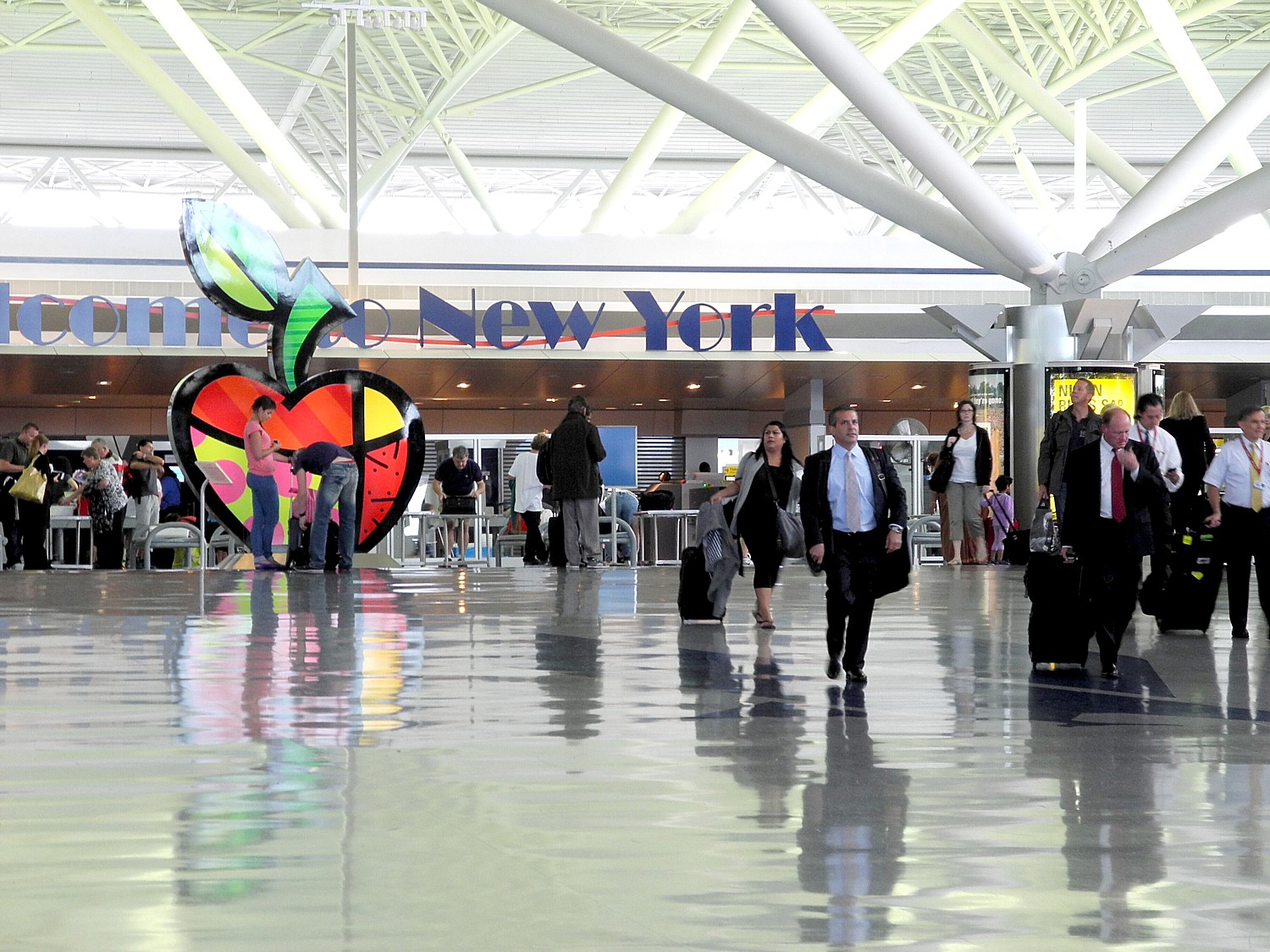
Arriving at JF Kennedy International Airport, New York. The Obama Administration is enhancing security measures for the visa waiver program under which 20 million foreign visitors enter the US © 2015 Karen Rubin/news-photos-features.com

The uproar over the possibility of the United States accepting Syrian refugees has called attention to the rigorous 18-24 month vetting process that refugees have to go through with fewer than 2,000 Syrian refugees having come through already, in contrast to the 20 million foreign visitors who come in each year under the visa-waiver program. 

The Obama Administration has announced new enhancements to the visa-waiver program to increase security, including modifying its Electronic System for Travel Authorization (ESTA) applications to capture information from VWP travelers regarding any past travel to countries constituting a terrorist safe haven. 

FACT SHEET: Visa Waiver Program Enhancements

The Visa Waiver Program (VWP) permits visa free travel for 20 million visitors per year to the United States for citizens of 38 program partner countries around the world. VWP utilizes a layered system of security to detect and prevent terrorists, serious criminals, and other potentially dangerous individuals from traveling to the United States.  These layers of security include comprehensive screening of VWP travelers prior to departure for the United States, at various points throughout the traveler’s journey, and upon arrival at U.S. ports of entry.

Over the past year, the Administration has taken a series of steps to enhance the significant security measures in the VWP. In the wake of the attacks in Paris, the administration is announcing additional actions today that will further enhance and accelerate these changes. Additionally, the Administration is working closely with Congress to provide statutory authority for many of these security enhancements, which will further improve our ability to implement and enforce the changes.

How Does the Visa Waiver Program Work?

  • Every prospective VWP traveler undergoes counterterrorism screening and must receive approval through DHS’ Electronic System for Travel Authorization (ESTA). Through ESTA, DHS evaluates whether individuals are eligible to travel to the United States under the VWP before they are allowed to board a carrier bound for the United States.
  • The counterterrorism screening draws on information from U.S. law enforcement and intelligence agencies. DHS uses this information to decide if the travel poses any law enforcement or security risks.  Without DHS approval through ESTA, VWP travelers cannot travel to the United States and must appear in person for a visa interview before they can be authorized to travel to the United States.
  • This process has been enhanced repeatedly to improve security and more effectively identify individuals who might pose a threat to the United States.
  • Travelers must be a citizen of a VWP country to use the program.  Residence in a VWP country, or the possession of refugee travel documents issued by a VWP member state, does not qualify an individual for VWP travel.

Recently Enhanced Security Measures 

DHS, in consultation with the Department of State, continuously adapts the VWP to address current threats. Over the last year, the Department of Homeland Security and the Department of State, in coordination with several other federal agencies, have made a number of significant enhancements to the VWP to ensure our security apparatus continues to adapt in the face of evolving threats.

  • DHS introduced additional data fields to the ESTA application in November 2014 that already have produced security benefits.
  • DHS introduced new traveler screening and information sharing requirements for VWP countries in August 2015 specifically to address the threat posed by foreign terrorist fighters.
  • DHS and the Department of State are working with VWP partners to implement the new VWP requirements, which will strengthen U.S. security and the security of our partners.
  • These security enhancements are part of our continuing assessments of U.S. security in the face of evolving threats and challenges, and our determination to stay one step ahead of those threats and challenges.

New Changes Announced Today

Given the terrorist attacks in Paris and the ongoing threat posed by foreign terrorist fighters, the United States is aggressively strengthening its Visa Waiver Program and bolstering our relationships with VWP partners by immediately moving forward on the following administrative actions:

  • DHS will immediately take steps to modify its Electronic System for Travel Authorization (ESTA) applications to capture information from VWP travelers regarding any past travel to countries constituting a terrorist safe haven.  The Director of National Intelligence, in coordination with the Secretary of Homeland Security, will identify and regularly review these countries so that traveler risk assessments can be made on the most up-to-date information.
  • The Department of Homeland Security, in consultation with the Secretary of State and other appropriate agencies will accelerate its review process for VWP partner countries and within 60 days, will provide a full report to the President:

o   Identifying possible pilot programs designed to assess the collection and use of biometrics (fingerprints and/or photographs) in the VWP to effectively increase security; and

o   Identifying any countries that are deficient in key areas of cooperation, along with recommended options to engender compliance using a range of penalties and incentives available under his current authority including the more frequent submission of ESTAs and/or the suspension of ESTA issuances (new and/or renewals) for citizens of countries that fail to meet key metrics.

  • The Director of the Federal Bureau of Investigation will evaluate the terrorism information sharing that occurs between the United States and VWP countries, in consultation with the Director of National Intelligence and the Secretaries of State and Homeland Security, and provide a report to the President of the United States within 60 days identifying options to mitigate any deficiencies.
  • DHS will offer assistance to countries to better facilitate terrorism information sharing, specifically to include biometric pilots.  For example, DHS and the Terrorist Screening Center will assist all interested VWP countries in screening refugees or asylum seekers, including through the application of extensive terrorism information already provided to VWP members and through piloting capability for conducting near real time biometric checks.
  • The Secretaries of DHS, State, and Commerce will promote the Global Entry program among VWP partners to further expand this trusted traveler program, which includes biometrics.
  • The Secretary of Homeland Security will work with Congress to seek authority to increase Advance Passenger Information System (APIS) fines from $5,000 to $50,000 for air carriers that fail to verify a traveler’s passport data.
  • The Departments of Homeland Security and State, the Federal Bureau of Investigation, and U.S. intelligence community elements will deploy Foreign Fighter Surge Teams to work with countries to counter terrorist travel.
  • The Departments of Homeland Security and State will encourage and provide assistance as needed to enhance border security and legislation related to FTFs of our partner countries, and encourage more robust information sharing, better use of shared information, and more effective and efficient coordination between our partners.

Working with Congress to Enhance the Visa Waiver Program

The Administration is working with Congress to provide statutory authority for many of the key security enhancements to VWP, including:

  • Improving our ability to identify individuals who may have traveled to conflict zones to train or fight with terrorist organizations or other adversaries and increasing information sharing between our VWP partners and INTERPOL;
  • Maximizing the use of international agencies like INTERPOL to track lost and stolen travel documents, and to prevent their usage for illicit travel;
  • Encouraging VWP partner countries to share information and to use that information in their own border screening activities;
  • Accelerating the requirement for 100% of VWP travelers to use e-passports (i.e., passports with embedded security chips);
  • Exploring how biometrics could be effectively added to the VWP process; and
  • Expanding the use of the DHS’ Customs and Border Protection (CBP) Preclearance program, through which CBP law enforcement officers inspect passengers and their baggage – to include collecting and screening biometrics where appropriate – at foreign airports prior to departing for the United States

o   Through the current round of expansion, CBP is in negotiations with airports in seven VWP participant countries (Belgium, Japan, Norway, Netherlands, Spain, Sweden, and the United Kingdom). Support for Preclearance expansion will greatly increase border and aviation security in the United States and abroad.