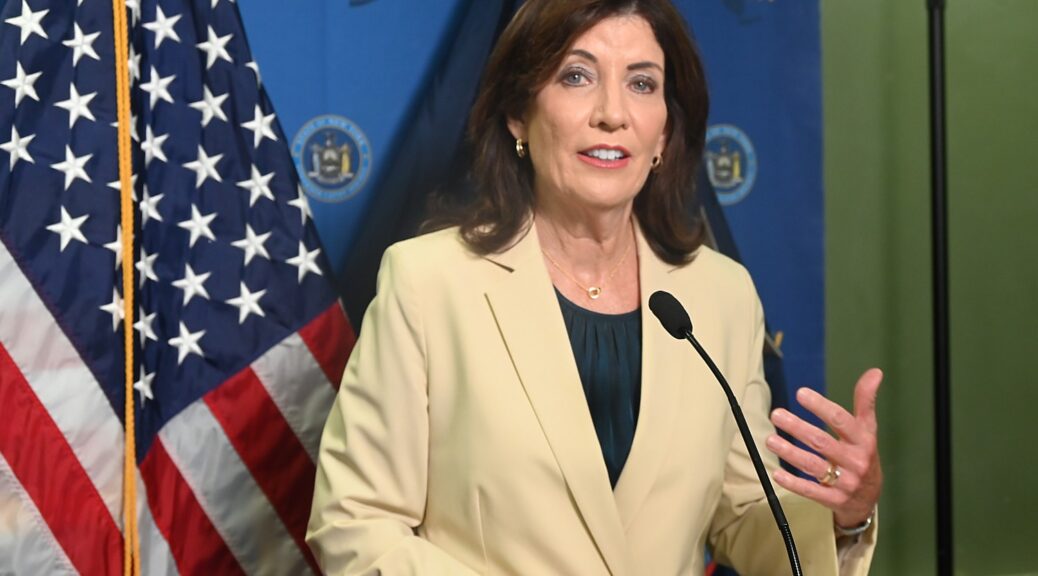
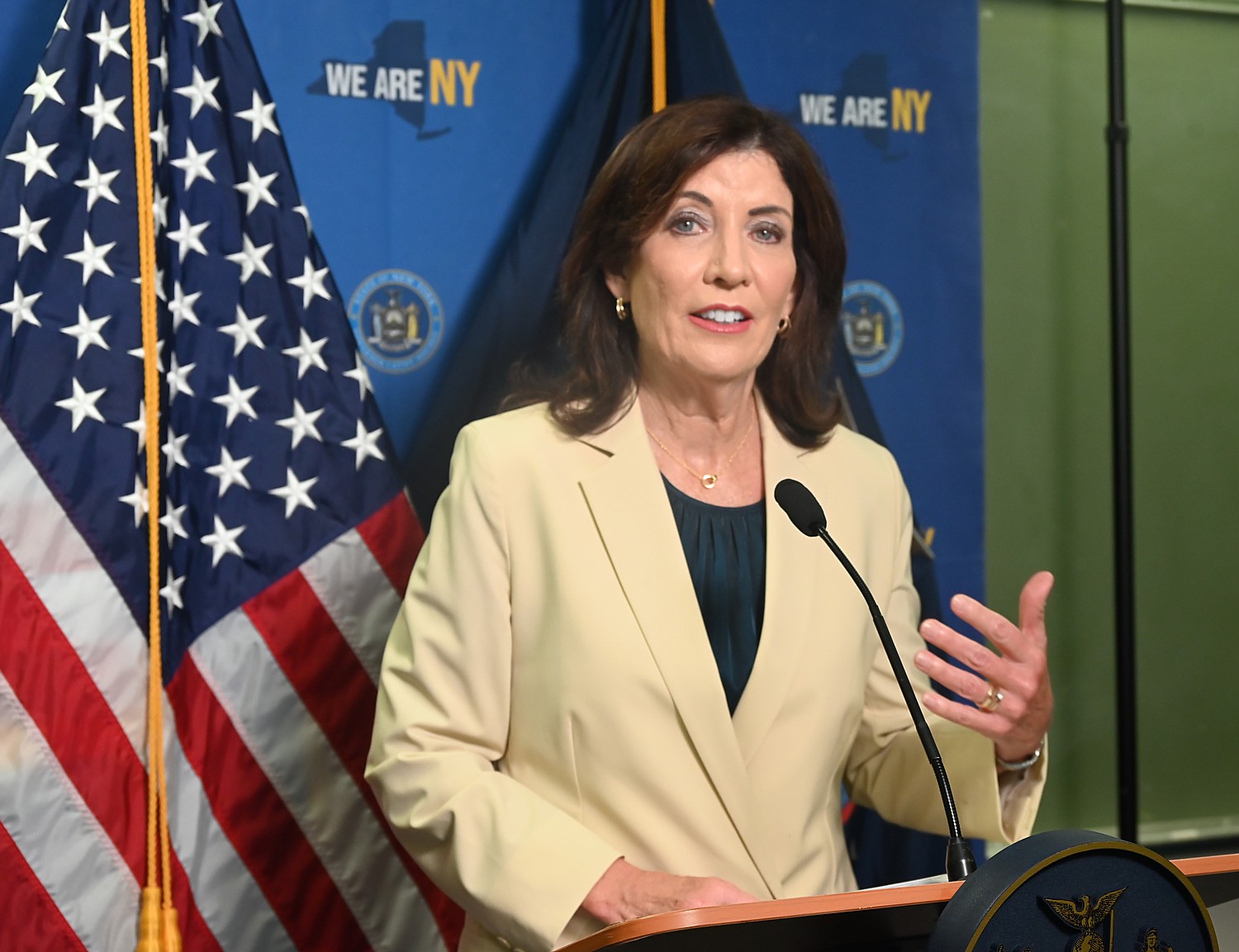
Governor Kathy Hochul announced that the New York Power Authority (NYPA) approved $13 million in funding to support clean energy workforce development across New York State. The funding, approved by the NYPA Board of Trustees, includes $3 million to be directed to six workforce development programs that will equip more than 450 New Yorkers with the training, job placement resources and technical skills needed for careers in New York’s growing clean energy economy. The awards also include $10 million will support the New York State Department of Labor’s (NYSDOL) expanded training and retraining initiatives to prepare workers for employment in clean energy careers.
“Our clean energy future depends on the people who will build it, and we’re committed to preparing them for the good‑paying careers of tomorrow,” Governor Hochul said. “This $13 million investment will open doors for New Yorkers, expanding access to valuable training, strengthening workforce pathways and helping communities across the state benefit from the momentum fueling our clean energy economy.”
New York is leading the nation in developing a green economy, with nearly 185,000 clean energy jobs already created. Building further on that statewide progress, the NYPA Board of Trustees approved funding awards to the following organizations and institutions:
Energy Infrastructure Partners (EIP) – $520,000: EIP designs and delivers energy efficiency and clean energy programs for utilities and public agencies. The funding will support building operations and energy efficiency training for staff members of the Settlement House, a NYC based nonprofit.
Laborers’ International Union of North America (LiUNA) Local 17 – $500,000: LiUNA Local 17 in the Hudson Valley will use the funding to strengthen pre-apprenticeship pathways in the construction trades, offering foundational training and support services to prepare participants for union careers.
Laborers’ International Union of North America (LiUNA) Local 210 – $540,000: LiUNA Local 17 in Buffalo will use the funding to support a pre‑apprenticeship program that provides certification‑based training for participants.
Both LiUNA programs build on proven models to expand access to skilled labor opportunities.
Last year, NYPA allocated more than $1 million in funding support to LiUNA’s existing workforce training initiative, stimulating the expansion of its pre-apprenticeship program, which prepares members of disadvantaged communities for careers as union construction craft laborers in Buffalo, the Hudson Valley and the Capital Region.
Northland Workforce Training Center – $500,000: Northland Workforce Training Center provides workforce training and career pathways for Western New Yorkers pursuing jobs in advanced manufacturing and energy. The funding will support training for participants in HVAC and building maintenance certificate programs at the Center’s new Clean Tech Lab, along with wraparound services including career coaching, transportation assistance and job placement support.
NYPA has supported Northland since its inception, initially providing $15 million in funding to support its development in 2016. In 2023, NYPA awarded Northland more than $1.1 million to support the development of the center’s state-of-the-art auto tech lab, and donated a 2017 Chevy Volt, an electric vehicle (EV) charger and a mix of associated EV shop tools to Northland for use in its clean energy center.
Renaissance Technical Institute (RTI) – $500,000: RTI, a New York City-based nonprofit dedicated to empowering underserved communities through free vocational education and training, will train participants in energy‑efficient systems and electrification. NYPA, in collaboration with NYSDOL, previously allocated $500,000 in funding to RTI in East Harlem to support workforce programming and career development for young adults from under-resourced communities.
State University of New York (SUNY) Canton – $440,000: SUNY Canton will train students through credit‑bearing micro‑credentials in heat pumps, drone operations, and mapping and logistics. The initiative expands access to industry‑aligned clean‑energy training for Northern New York and disadvantaged communities, preparing graduates for high‑quality career opportunities in the clean‑energy sector.
Of the $10 million in funding awarded to NYSDOL approved by the NYPA Board of Trustees, $8 million will support the expansion and development of the Growing the Clean Energy Workforce Training Initiative, which provides grants to organizations for the development or expansion of training programs. The remaining $2 million will be allocated to the NYSDOL Renewable Energy Training Initiative (RETI) program, which supports inclusive clean‑energy workforce development by funding upskilling and reskilling for workers transitioning into clean‑energy roles and by providing essential wraparound services.
New York Power Authority Chairman John R. Koelmel said, “By supporting organizations that provide apprenticeships and technical training, NYPA is strengthening New York’s talent pipeline and expanding opportunities for workers in communities across the state to gain the skills needed for high‑demand jobs in the growing clean energy economy.”
New York Power Authority President and CEO Justin E. Driscoll said, “The $13 million in workforce investments will help ensure New Yorkers have the skills required to maintain and expand the state’s clean‑energy infrastructure. NYPA is doing more than simply providing funding; it is delivering real opportunities for New Yorkers by opening vital career pathways in the state’s rapidly growing energy sector.”
Connecting New Yorkers to Opportunities in Clean Energy
The Power Authority’s support for clean energy workforce training stems from a commitment of up to $25 million annually, as outlined in the 2023-24 Enacted State Budget, and largely supports the efforts of the New York State Department of Labor to connect workers to job opportunities in the clean energy economy. Many of the upskilling and training initiatives have a focus on serving those who are traditionally underrepresented, especially within disadvantaged communities.
NYPA actively engages with each community training organization to ensure skills training is matched with in-demand positions and participant success through supportive wraparound services. Additionally, the Power Authority advises on the classroom and hands-on technology curriculum.
Including this round of awards, NYPA has obligated more than $63 million for clean energy training programs, supporting thousands of trainees and more than 45 workforce training organizations statewide.
Separately, as part of Governor Hochul’s NextGen Nuclear New York Initiative, NYPA recently issued a Request for Application, targeting technical schools, colleges, unions and manufacturers, among other groups, to access $40 million in NYPA nuclear workforce development funding. The investment aims to build a skilled workforce ready to support the deployment and operation of new advanced nuclear energy in Upstate New York.
More information on the Power Authority’s support for clean energy training can be found on its workforce development webpage.
New York State Commissioner of Labor Roberta Reardon said, “Creating clean energy infrastructure is both necessary and an economic opportunity for our state, creating thousands of jobs and strengthening local economies. I applaud Governor Hochul’s commitment to New York’s clean energy future. The New York State Department of Labor stands ready to provide the training and resources necessary to ensure our workforce is prepared to support the state’s clean energy development.”
State Senator April N.M Baskin said, “When we invest in people, we strengthen our economy. These awards will help LiUNA Local 210 and the Northland Workforce Training Center prepare more Western New Yorkers for careers in the growing clean energy economy, opening the door to good-paying jobs while building the skilled workforce our region needs. I thank Governor Hochul and NYPA for continuing to invest in our workforce.”
The New York Power Authority is the largest state public power organization in the nation, operating 17 generating facilities and more than 1,550 circuit-miles of transmission lines. More than 80 percent of the electricity NYPA produces is clean renewable hydropower. NYPA finances its operations through the sale of bonds and revenues earned in large part through sales of electricity. For more information visit www.nypa.gov and follow us on LinkedIn, Twitter, Facebook, Instagram and Substack.

