Category Archives: home ownership

NYS Governor Hochul Launches $215 Million Housing Acceleration Fund to Build Up to 1,800 New Homes Statewide

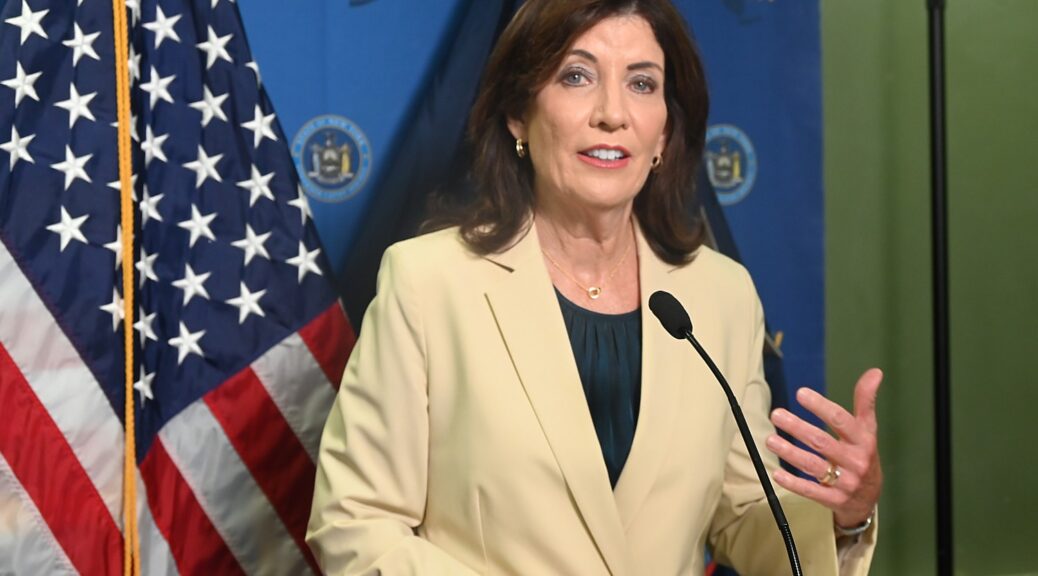
Governor Kathy Hochul announced the launch of the Housing Acceleration Fund, a $215 million first-of-its kind program to speed up construction of shovel-ready mixed-income residential projects across New York State. The program, part of Hochul’s commitment to attack the housing crisis,  is expected to generate $1 billion in housing investment and  incentivize construction of 1,800 new homes statewide © Karen Rubin/news-photos-features.com

Governor Kathy Hochul announced the launch of the Housing Acceleration Fund, a $215 million first-of-its kind program to speed up construction of shovel-ready mixed-income residential projects across New York State. One of the Governor’s key housing proposals from her 2025 State of the State, the Housing Acceleration Fund is part of her all-of-the-above approach to increasing housing supply to address acute housing needs, and accommodate job growth statewide. Too often, communities do not have tools to create mixed income rental housing, leaving many developments permit-ready, but unable to secure financing. New York’s Housing Acceleration Fund will help address this vital need and spur the development of new housing statewide. The fund is catalyzed by the Governor’s $100 million investment secured in the FY26 Enacted Budget and matched with $115 million from awarded participating lenders.

“To combat the housing crisis in New York, we’re leaving no stone unturned,” Governor Hochul said. “This new, innovative loan program is a powerful new tool to help jumpstart the construction of mixed-income housing in communities across the state. These new resources are just one more way for us to help build more housing opportunities for our families, seniors and young adults.”

The Housing Acceleration Fund awards announced today are expected to result in approximately 1,800 new homes statewide. The awardees are:

  • Community Preservation Corporation: $45.5 million
    • Merchants Bank: $42 million
    • Enterprise Community Partners: $7.5 million
    • Local Initiatives Support Corporation: $5 million

Half of the State’s $100 million investment is appropriated for projects within New York City and half is allocated to projects throughout the rest of the state. Awardees will provide $115 million in additional capital, bringing the total amount of funding for projects within New York City to $100 million and the amount for projects throughout the rest of the state to $115 million.

The Housing Acceleration Fund, administered by New York State Homes and Community Renewal (HCR), will provide low-cost, construction loans to fill financing gaps in the construction of mixed-income housing developments. The Fund is designed to utilize public capital to leverage private capital investment in mixed-income multifamily rental production. The Fund is estimated to generate upwards of $1 billion in new housing investment throughout New York State.

The revolving loan fund model complements other HCR programs to enhance housing production and will speed up production of new rental housing beyond reliance upon limited resources dedicated to the creation of 100 percent affordable housing such as tax-exempt bonds and low-income housing tax credits. The program is designed to self-sustain over time through loan repayments once projects convert to permanent financing once the project is complete. To learn more about the New York State Housing Acceleration Fund program, visit the HCR website.

New York State Homes and Community Renewal Commissioner RuthAnne Visnauskas said, “By partnering with these four lending institutions, we are injecting more than $200 million towards the creation of 1,800 new apartments for residents across the state. Other states have shown this innovative, self-sustaining loan model can fill funding gaps that may be the difference between new housing being built or never getting off the ground, and we’re thrilled to bring this important tool to New York. We once again applaud Governor Hochul for her efforts to boost the supply of housing across the state, and we thank our partners for sharing our commitment to creating affordable, modern housing in all our communities.”

“I applaud Governor Hochul and Commissioner Visnauskas for continuing to advance an ambitious housing agenda that puts the needs of New York’s communities at the forefront,” The Community Preservation Corporation CEO Rafael E. Cestero said. “At a time when cities large and small are facing challenges of housing affordability and supply, this Administration has given us a tool that drives critical investment in housing and will speed the development of new projects across the state. My thanks to the Governor and her team at HCR for their continued partnership. We stand ready to put this funding to work alongside our capital to get shovels in the ground and provide new housing opportunities to all New Yorkers.”

Merchants Capital Vice Chairman of Agency Lending Mathew Wambua said,“Merchants Capital is honored to be selected to participate in the HCR Housing Acceleration Fund Program and thrilled to deepen our partnership with HCR and our clients in this important initiative. This program represents a powerful opportunity to accelerate the development of shovel-ready affordable housing projects across New York City and New York State. By leveraging these low-cost loans, we can help bring much-needed housing to communities throughout the region—ensuring more New Yorkers have access to safe, stable and affordable homes.”

“Enterprise Community Partners is honored to partner with New York State’s Homes and Community Renewal through its Housing Acceleration Fund.,” Enterprise’s Capital Division President Lori Chatman said. “This innovative program reflects our shared vision of making home and community places of pride, power, and belonging. By combining public resources with mission-driven capital, we can move shovel-ready, mixed-income housing projects forward faster — closing critical financing gaps and delivering the affordable homes New Yorkers urgently need.”

LISC NY Senior Executive Director Valerie White said, “We thank Governor Kathy Hochul and New York State Homes and Community Renewal for their leadership and partnership in creating the Housing Acceleration Fund and moving swiftly to bring it to fruition. LISC NY is proud to work with the State to deliver critical resources that help communities develop mixed-income housing and move more projects from vision to reality. This $5 million investment from HCR, alongside LISC NY’s own $25 million commitment, will empower affordable housing developers to overcome predevelopment barriers, strengthen housing pipelines, and deliver the quality, affordable homes New Yorkers urgently need.”

State Senator Rachel May said, “The Housing Acceleration Fund is a smart, targeted investment in New York’s future. Communities across the state want to build more housing, but too often good projects are held back by gaps in financing. This program helps get good projects off the ground, including mixed-income housing that supports the workforce and strengthens neighborhoods. In Syracuse and across Central New York, the need for new, affordable, and energy-efficient housing is especially acute, and the State’s investment will help meet that demand while creating more vibrant, inclusive communities.”

Assemblymember Linda B. Rosenthal said, “The Housing Acceleration Fund is a welcome tool to help ease the housing crisis facing New York State. Communities around the state are grappling with rising construction costs and would welcome new rental housing, but lack the financing to get the job done. With Governor Hochul’s welcome announcement of a $215 million investment from the state, we can jumpstart construction on these projects and continue our work toward ensuring that every New Yorker has a safe, affordable place to call home.”

Assemblymember Micah Lasher said, “It is outstanding that Governor Hochul and HCR are announcing a major public revolving loan fund for affordable housing. I was proud to introduce legislation at the beginning of the year with Senator May to create this kind of fund, and Governor Hochul and her team have done it even bigger and better. By leveraging public dollars to unlock private investment, this fund will create thousands of new homes and generate over a billion dollars in housing development across the State. When we think creatively to solve our housing crisis, we can deliver real results for New Yorkers.”

Governor Hochul’s Housing Agenda

Governor Hochul is dedicated to addressing New York’s housing crisis and making the State more affordable and more livable for all New Yorkers. As part of the FY25 Enacted Budget, the Governor secured a landmark agreement to increase New York’s housing supply through new tax incentives, capital funding, and new protections for renters and homeowners. Building on this commitment, the FY26 Enacted Budget includes more than $1.5 billion in new State funding for housing, a Housing Access Voucher pilot program, and new policies to improve affordability for tenants and homebuyers. These measures complement the Governor’s five-year, $25 billion Housing Plan, included in the FY23 Enacted Budget, to create or preserve 100,000 affordable homes statewide, including 10,000 with support services for vulnerable populations, plus the electrification of an additional 50,000 homes. More than 68,000 homes have been created or preserved to date.

The FY25 and FY26 Enacted Budgets also strengthened the Governor’s Pro-Housing Community Program — which allows certified localities exclusive access to up to $750 million in discretionary State funding. Currently, more than 370 communities have received Pro-Housing certification.

FACT SHEET: Biden-Harris Administration Takes Action to Cut Energy Bills, Housing Costs and Climate Pollution

Administration invests over $100 million to renovate homes with zero energy and climate resilient technology

Announcement will help advance goal of cutting the cost of decarbonizing housing in half within a decade while lowering energy bills and increasing affordable housing supply


The Biden Administration announced awards of more than $100 million from the Department of Housing and Urban Development (HUD) through the Inflation Reduction Act – the largest investment in clean energy and climate action ever – to help renovate the homes of more than 1,500 low-income families to be zero energy and climate resilient. © Karen Rubin/news-photos-features.com

This fact sheet about Biden-Harris administration actions to cut energy bills, housing costs and climate pollution is provided by the White House:

Since Day One, the Biden-Harris Administration has advanced the most ambitious climate agenda in history, leading a whole-of-government approach to reduce emissions across every sector of the economy, including the buildings sector, and expand affordable clean energy to every American. Last week, the Biden-Harris Administration set a bold target to reduce the cost to decarbonize new and existing housing by 50% within a decade, while delivering energy bill savings for Americans and curbing greenhouse gas emissions that come from operating, constructing, and renovating buildings.
 
In the United States, more than a third of greenhouse gas emissions comes from the buildings sector – with 20 percent from heating, cooling, and operating our homes. By investing in solutions to cut pollution from homes, the U.S. will help curb 37% of greenhouse gas emissions that come from operating, constructing and renovating our buildings, while protecting people’s health and lowering energy and housing costs for hardworking families, a key pillar of Bidenomics.
 
That’s why today, the Administration announced awards of more than $100 million from the Department of Housing and Urban Development (HUD) through the Inflation Reduction Act – the largest investment in clean energy and climate action ever – to help renovate the homes of more than 1,500 low-income families to be zero energy and climate resilient. These energy-saving renovations will demonstrate the potential to preserve quality, affordable housing in our communities by cutting energy waste down to zero, increasing resiliency to extreme weather events worsened by climate change, and lowering costs for families. All the investments will be made in affordable housing communities serving low-income families in alignment with President Biden’s Justice40 Initiative and the Biden-Harris Administration’s commitment to environmental justice. These investments will also preserve the long-term viability and affordability of our nation’s existing stock of affordable housing and advance fair housing by increasing housing options for communities.
 
In addition, the Department of the Treasury and the Department of Energy today opened applications for the Low-Income Communities Bonus Credit program, which will spur up to 1.8 gigawatts of clean energy investments annually in underserved communities. The program, also created by the Inflation Reduction Act, provides a bonus credit amount on top of the Investment Tax Credit for building clean energy projects, which is up to 30% of qualifying investments. The Low-Income Communities Bonus provides up to a 10 or 20- percentage point tax credit boost for small solar and wind projects placed in service in low- income or Tribal communities.
 
Today’s announcements build on key actions taken by the Administration to boost climate resilience in buildings and deliver lower home energy costs for families across the country, while increasing investments in housing supply and safer, healthier housing.
 

Lowering Energy and Housing Costs for Families and Achieving a Zero Emissions Building Sector

  • Last week, the Department of Energy launched its eighth Energy Earthshot – the “Affordable Home Energy Shot” – which sets a bold target to reduce the cost to decarbonize new and existing housing by 50%, save Americans money on their energy bills, and help address the persistent burdens faced by low-income households and communities of color. The initiative will advance the Biden-Harris Administration’s environmental justice and equity goals, including the President’s Justice40 Initiative, by lowering the cost of energy-efficient retrofits while reducing overall energy costs and carbon intensity of homes across the country. Reducing the cost of building will also contribute to the Administration’s efforts to increase the nation’s affordable housing supply through the President’s Housing Supply Action Plan by expanding the production of affordable housing and ensuring the long-term viability of existing units.
     
  • The Biden-Harris Administration recently announced a goal of making zero emissions, resilient new construction and retrofits common practice by 2030. To achieve its goal, the Administration is developing a standard national definition for zero emissions buildings that will help establish a consistent, verifiable and measurable path to a zero-emissions building sector. With over 130 million existing buildings, which collectively cost over $400 billion a year to heat, cool, light and power, and 10 million new homes to be constructed by 2030, establishing a consistent uniform target will accelerate climate progress by driving investments into homes and buildings of the future.
     
  • The Department of the Treasury recently issued guidance on the Inflation Reduction Act’s amendments to the 45L new energy efficient homes tax credit that now offers up to $5,000 per home to eligible contractors who construct, reconstruct, or rehabilitate energy efficient homes.
     
  • Last week, the Department of Energy announced more than $30 million in awards through the Energy Efficiency and Conservation Block Grant (EECBG) Program, providing clean energy funding to eight states, 19 local governments and one Tribe. The EECBG Program is designed to assist states, local governments, and Tribes in implementing strategies to reduce energy use, to reduce fossil fuel emissions, and to improve energy efficiency. DOE also awarded more than $22 million in cash prizes and technical assistance through the Buildings Upgrade Prize (Buildings UP) to teams across America with winning ideas to accelerate widespread, equitable energy efficiency and building electrification upgrades for homes and communities.
     
  • In addition, last month, the Department of Energy opened applications for $400 million through the Inflation Reduction Act for states and territories to adopt and implement the latest building energy codes or zero building energy codes in order to reduce utility bills, increase efficiency, lower greenhouse gas emissions that fuel the climate crisis, and make buildings more resilient to climate disaster.
     
  • FEMA last week announced the availability of $1.8 billion for two resilience grant programs designed to increase climate resilience nationwide and prepare communities for more frequent and severe extreme weather events. The Building Resilient Infrastructure and Communities (BRIC) annual grant program is making an additional $1 billion available to fund projects that protect people and infrastructure from natural hazards and the effects of climate change. The Flood Mitigation Assistance (FMA) program will provide a further $800 million to fund projects that mitigate flood risks facing homes and communities across the nation.
  • Today Department of Housing and Urban Development released a Climate Resources for Housing Supply Framework that describes key funding opportunities for a climate-focused housing supply strategy. This follows the launch of HUD’s Funding Navigator, a user-friendly searchable database of Inflation Reduction Act and Bipartisan Infrastructure Law incentives and other resources from across federal agencies to support efforts to enhance climate resiliency, energy efficiency, renewable energy integration, healthy housing, workforce development and environmental justice.
     
  • Recently, HUD announced its Funding Navigator, an interactive tool that allows users to browse and sort funding opportunities for billions of dollars in funding available under the Inflation Reduction Act (IRA), Bipartisan Infrastructure Law (BIL).
     
  • Earlier this month, EPA closed its application window for the Greenhouse Gas Reduction FundFor two of the competitions—the $14 billion National Clean Investment Fund and the $6 billion Clean Communities Investment Accelerator—EPA identified net-zero emissions buildings, including multi-family housing, as a priority project category.

Together, these actions further the Administration’s commitment to reducing energy burdens, increasing housing supply and advancing fair housing, cutting climate pollution, boosting climate resilience, lowering household energy costs, and preserving the viability and affordability of America’s housing stock.

White House Announces New Actions to Expand Access to Homeownership, Make Homeownership More Affordable

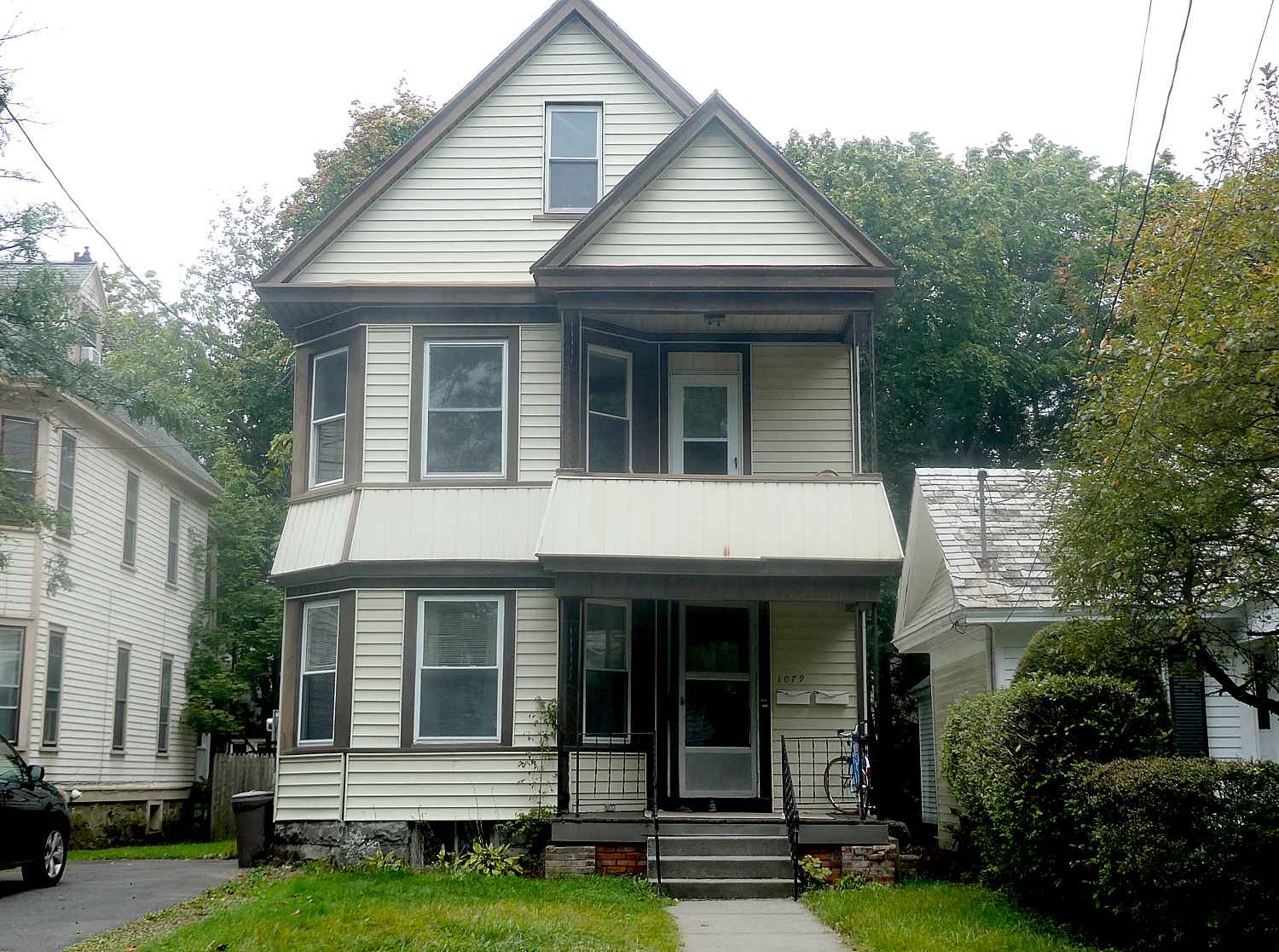
To expand access to homeownership, President Biden has proposed $16 billion for the Neighborhood Homes Tax Credit, which would result in more than 400,000 homes built or rehabilitated, creating a pathway for more families to buy a home and start building wealth.  The President has also proposed a $10 billion down payment assistance program that would ensure first-time homebuyers whose parents do not own a home can access homeownership alongside a $100 million down payment assistance pilot to expand homeownership opportunities for first-generation and/or low wealth first-time homebuyers. © Karen Rubin/news-photos-features.com

This fact sheet was provided by the White House to detail new actions to expand access to homeownership and ensure homeowners can afford to stay in their homes so that the wealth-building potential of homeownership works for everyone:

For millions of Americans homeownership is a foundation for so many parts of their lives, and for many it is also their primary source of wealth. The Biden-Harris Administration is committed to expanding access to homeownership, ensuring homeowners can afford to stay in their homes and make the repairs they need, and that the wealth building potential of homeownership works equally for everyone.

Todaythe Biden-Harris Administration is releasing new data showing major federal investment in homeownership, and announcing key new actions to accelerate progress. These actions make important strides, but given the lack of homes on the market and current interest rates, to truly ensure homeownership is accessible to all households, we need Congress to act. That is why President Biden proposed $16 billion for the Neighborhood Homes Tax Credit, which would result in more than 400,000 homes built or rehabilitated, creating a pathway for more families to buy a home and start building wealth.  The President has also proposed a $10 billion down payment assistance program that would ensure first-time homebuyers whose parents do not own a home can access homeownership alongside a $100 million down payment assistance pilot to expand homeownership opportunities for first-generation and/or low wealth first-time homebuyers.

New Data Shows Strong Investment in Homeownership

The Treasury Department released data demonstrating how President Biden’s Investing in America agenda is supporting existing homeowners and helping more Americans access affordable homeownership through over $12 billion in support. The American Rescue Plan’s Homeowner Assistance Fund (HAF) has assisted nearly 400,000 homeowners at risk of foreclosure. Through Q2 2023, the state, territorial, and Tribal recipients of HAF have expended over $5.5 billion to assist homeowners, a 32% increase from Q1 2023. In addition, through the State and Local Fiscal Recovery Funds program local, state, territorial, and Tribal governments are also supporting home ownership, in part by dedicating more than $6.6 billion to support over 17,000 units of affordable housing, through June 30, 2023.

Federal agencies are also releasing data showing record support for low-, middle-income, and first-time homebuyers:

  • The U.S. Department of Housing and Urban Development (HUD) is announcing that the Federal Housing Administration’s (FHA) first-time homebuyer rate under the Biden-Harris Administration is the highest it has been since at least 2000. Since the start of the Administration, FHA has supported nearly 1.8 million homeowners with purchase mortgages, and 83.6 percent or 1.5 million of whom are first-time homebuyers.  
  • The U.S. Department of Agriculture (USDA) is announcing that in this past fiscal year it provided more than 7,100 direct housing loans, which subsidizes loan rates down to 1 percent for certain borrowers. This is the highest number of loans since 2010, serving homebuyers with an average income of $42,918. Roughly 55 percent of these borrowers were female-headed households and 22 percent identify as Black or African American.
  • The Department of Veterans Affairs (VA) is announcing that in 2023 it helped 145,480 Veterans retain homeownership and/or avoid foreclosure.

New Actions to Support Homeownership
 
We know that despite these milestones and actions, homeownership is still out of reach for too many, which is why the Administration is committed to aggressively increasing homeownership opportunities, which includes:

  • Allow homebuyers to leverage income from accessory dwelling units: Today, HUD, through FHA, published new policy allowing prospective borrowers to use a portion of the actual or prospective rental income from an Accessory Dwelling Unit (ADU) to be added to the borrower’s effective income for purposes of qualifying for an FHA-insured mortgage. FHA’s new policies will increase the ability of homebuyers across the nation to obtain access to affordable mortgage credit when seeking to purchase properties with ADUs, add ADUs to existing structures, or construct new homes with ADUs. The flexibilities will help more first-time homebuyers, seniors, and inter-generational families leverage ADUs to build generational wealth through homeownership while creating new affordable housing in their communities.
     
  • Increase mortgage opportunities for Tribes: USDA is awarding $9 million in loans to nine Native American Community Development Institutions as a part of its efforts to increase access to homeownership for Native Americans on Tribal Lands through a relending demonstration program. The program provides capital to Native Community Development Financial Institutions (NCDFIs) to be relent to low- and very low-income people who live on tribal lands and are in need of affordable single-family homes.
     
  • Ensure innovative homeownership models can work: Before the end of the year USDA will launch a pilot to test alternative eligibility criteria related to community representation for Community Land Trust Organizations through its Section 502 Direct Home Loan Program. Through this pilot, USDA will evaluate whether expanding eligibility criteria in this way increases access to affordable homeownership opportunities.
     
  • Make home repairs easier to finance: HUD, through FHA, is continuing its work to update the 203(k) Rehabilitation Mortgage Insurance Program to help homebuyers and homeowners finance the purchase or refinance of homes in need of improvement. FHA is considering potential policy changes that could increase the funds available to borrowers to make renovations and repairs.  Other policies under review would permit more time for completion of those improvements. These and other program changes will increase the use of FHA-insured mortgages to finance renovations that will improve existing homes and restore them to viable use, adding to the supply of housing in communities across the country.
     
  • Help homeowners know their rights and remain in their homes: The Consumer Financial Protection Bureau, an independent agency, is working on reforms to existing rules to help homeowners when they have trouble making their mortgage payments. The reforms build on observations during the COVID-19 pandemic about places where the rules could be streamlined and simplified. The reforms will ensure homeowners can get the help they need without unnecessary delays or hurdles and are better able to not fall into foreclosure.
     
  • Assist homeowners behind on their mortgages: In fiscal year 2024, VA will deploy a new home retention option that provides a long-term solution to address our most severely impacted Veteran borrowers. The VA Servicing Purchase (VASP) program will help Veteran borrowers who are behind on their mortgage loan who do not qualify for traditional home retention options.

The announcement builds on prior work across the Administration, including a policy announced earlier this year that reduced the mortgage insurance fees for borrowers receiving FHA loans, saving them on average $800 per year on housing costs. HUD has also made it easier for first-time homebuyers to qualify for FHA-insured mortgage financing by permitting lenders to use positive rental history as a factor in evaluating an applicant’s creditworthiness and by providing more access to affordable single-family FHA-insured mortgage financing for creditworthy individuals with student loan debt. Ginnie Mae is enhancing its security disclosures so that, for the first time, investors can measure their social impact in driving first time homeownership. This policy can expand access to capital for first time homebuyers.  And this work builds on efforts by the Administration’s Interagency Task Force on Property Appraisal and Valuation Equity (PAVE), which is making critical progress toward ensuring there is equity in the home appraisal process. However, the White House calls on Congress to pass the President’s proposals so that we can ensure homeownership is a possibility for all Americans.

FACT SHEET: Biden-Harris Administration Tackles Racial and Ethnic Bias in Home Valuations

Critical Progress Made at One-Year Anniversary of the PAVE Action Plan

The Biden-Harris Administration highlighted progress made to ensure that every American who buys a home has the same opportunities to build generational wealth through homeownership. © Karen Rubin/news-photos-features.com


The Biden-Harris Administration highlighted progress made to ensure that every American who buys a home has the same opportunities to build generational wealth through homeownership.
 
One year ago, the Biden-Harris Administration’s Interagency Task Force on Property Appraisal and Valuation Equity (PAVE) – led by U.S. Department of Housing and Urban Development (HUD) Secretary Marcia L. Fudge and White House Domestic Policy Advisor Ambassador Susan Rice – released the PAVE Action Plan, the most wide-ranging set of actions ever announced to advance equity in the home appraisal process. Bias in home valuations limits the ability of Black and brown families to enjoy the financial returns associated with homeownership, thereby contributing to the already sprawling racial wealth gap.
 
In just 12 months, the PAVE Task Force has made critical progress towards fully implementing the Action Plan, including by empowering consumers with new tools and greater awareness of appraisal bias; leveraging data to identify trends and crack down on offenders of appraisal bias; and supporting a well-trained and dynamic appraiser profession.
 
The Action Plan addresses a real harm. For example: at the White House’s release of the Action Plan last year, homeowner Tenisha Tate-Austin spoke about her experience with misvaluation. Her family’s home was appraised at roughly $500,000 more than its initial appraised value after having a white friend stand in for them. Earlier this month, the Tate-Austins settled a housing discrimination lawsuit. The U.S. Department of Justice had filed a statement of interest in their case early last year.
 
Over the last year, the Biden-Harris Administration has executed on the PAVE Action Plan by:

  • Empowering consumers to take action against appraisal bias. Consumers who seek to finance or re-finance a home are often unaware of their options when they receive a lower-than-expected valuation. In January 2023, HUD published draft guidance to make it easier and quicker for prospective borrowers applying for Federal Housing Administration (FHA)-insured loans to request a Reconsideration of Value (ROV) on a property if the initial valuation is lower because of suspected illegal bias. This week, HUD awarded $54 million to 182 fair housing organizations across the country. Eligible activities for the funding included testing for appraisal bias, enforcement activities and educating local communities on the issue. Further, earlier this year the federal Appraisal Subcommittee held its first-ever hearing, dedicated to the topic of appraisal bias. The hearing brought together federal agencies and industry experts to define the problem and discuss potential solutions.
     
  • Increasing transparency and leveraging federal data to inform policy and improve enforcement against appraisal bias.  In October 2022, the Federal Housing Finance Agency (FHFA) published the first-ever publicly available datasets of aggregate statistics on appraisal records, providing the public with access to the data and trends found in appraisal reports. Using these new data, academic researchers have already published new analyses illustrating stark differences in home valuations across racial and ethnic groups.  FHFA, along with HUD, USDA and VA, are working to build a Federal database to share appraisal data across the Federal government; the database could allow agencies to share enhanced oversight and enforcement actions, and could facilitate new research related to property valuation.
     
  • Cultivating an appraiser profession that is well-trained and looks like the communities it serves.  As outlined in the PAVE Action Plan, the Biden-Harris Administration is taking steps to remove unnecessary educational and experience requirements that make it difficult for underrepresented groups to access the profession and to strengthen anti-bias, fair housing, and fair lending training of existing appraisers. In January 2023, the Department of Veterans Affairs (VA) released new guidance to its appraiser workforce. Among other steps, the guidance enhances oversight procedures to detect potential discriminatory bias in appraisal reports filed by VA fee panel appraisers, and calls upon all VA fee panel appraisers and lender-approved staff to participate in appraisal bias, fair housing, and fair lending training. In addition, last year, the federal Appraisal Subcommittee awarded a grant to the state of Mississippi to create an innovative pathway to appraiser licensure, including for appraisers from underrepresented groups, and with a particular focus on underserved communities within the State where there is a shortage of appraisers. Mississippi’s success has inspired several other states to express interest in replicating the program.

In conjunction with the release of the PAVE Action Plan, last year the Biden-Harris Administration launched pave.hud.gov/gethelp. Consumers who suspect misvaluations due to racial bias may use this portal to learn about their rights and steps they can take to file a discrimination complaint.