
Tag Archives: housing crisis

NYS Governor Hochul Launches $215 Million Housing Acceleration Fund to Build Up to 1,800 New Homes Statewide

Governor Kathy Hochul announced the launch of the Housing Acceleration Fund, a $215 million first-of-its kind program to speed up construction of shovel-ready mixed-income residential projects across New York State. The program, part of Hochul’s commitment to attack the housing crisis,  is expected to generate $1 billion in housing investment and  incentivize construction of 1,800 new homes statewide © Karen Rubin/news-photos-features.com

Governor Kathy Hochul announced the launch of the Housing Acceleration Fund, a $215 million first-of-its kind program to speed up construction of shovel-ready mixed-income residential projects across New York State. One of the Governor’s key housing proposals from her 2025 State of the State, the Housing Acceleration Fund is part of her all-of-the-above approach to increasing housing supply to address acute housing needs, and accommodate job growth statewide. Too often, communities do not have tools to create mixed income rental housing, leaving many developments permit-ready, but unable to secure financing. New York’s Housing Acceleration Fund will help address this vital need and spur the development of new housing statewide. The fund is catalyzed by the Governor’s $100 million investment secured in the FY26 Enacted Budget and matched with $115 million from awarded participating lenders.

“To combat the housing crisis in New York, we’re leaving no stone unturned,” Governor Hochul said. “This new, innovative loan program is a powerful new tool to help jumpstart the construction of mixed-income housing in communities across the state. These new resources are just one more way for us to help build more housing opportunities for our families, seniors and young adults.”

The Housing Acceleration Fund awards announced today are expected to result in approximately 1,800 new homes statewide. The awardees are:

  • Community Preservation Corporation: $45.5 million
    • Merchants Bank: $42 million
    • Enterprise Community Partners: $7.5 million
    • Local Initiatives Support Corporation: $5 million

Half of the State’s $100 million investment is appropriated for projects within New York City and half is allocated to projects throughout the rest of the state. Awardees will provide $115 million in additional capital, bringing the total amount of funding for projects within New York City to $100 million and the amount for projects throughout the rest of the state to $115 million.

The Housing Acceleration Fund, administered by New York State Homes and Community Renewal (HCR), will provide low-cost, construction loans to fill financing gaps in the construction of mixed-income housing developments. The Fund is designed to utilize public capital to leverage private capital investment in mixed-income multifamily rental production. The Fund is estimated to generate upwards of $1 billion in new housing investment throughout New York State.

The revolving loan fund model complements other HCR programs to enhance housing production and will speed up production of new rental housing beyond reliance upon limited resources dedicated to the creation of 100 percent affordable housing such as tax-exempt bonds and low-income housing tax credits. The program is designed to self-sustain over time through loan repayments once projects convert to permanent financing once the project is complete. To learn more about the New York State Housing Acceleration Fund program, visit the HCR website.

New York State Homes and Community Renewal Commissioner RuthAnne Visnauskas said, “By partnering with these four lending institutions, we are injecting more than $200 million towards the creation of 1,800 new apartments for residents across the state. Other states have shown this innovative, self-sustaining loan model can fill funding gaps that may be the difference between new housing being built or never getting off the ground, and we’re thrilled to bring this important tool to New York. We once again applaud Governor Hochul for her efforts to boost the supply of housing across the state, and we thank our partners for sharing our commitment to creating affordable, modern housing in all our communities.”

“I applaud Governor Hochul and Commissioner Visnauskas for continuing to advance an ambitious housing agenda that puts the needs of New York’s communities at the forefront,” The Community Preservation Corporation CEO Rafael E. Cestero said. “At a time when cities large and small are facing challenges of housing affordability and supply, this Administration has given us a tool that drives critical investment in housing and will speed the development of new projects across the state. My thanks to the Governor and her team at HCR for their continued partnership. We stand ready to put this funding to work alongside our capital to get shovels in the ground and provide new housing opportunities to all New Yorkers.”

Merchants Capital Vice Chairman of Agency Lending Mathew Wambua said,“Merchants Capital is honored to be selected to participate in the HCR Housing Acceleration Fund Program and thrilled to deepen our partnership with HCR and our clients in this important initiative. This program represents a powerful opportunity to accelerate the development of shovel-ready affordable housing projects across New York City and New York State. By leveraging these low-cost loans, we can help bring much-needed housing to communities throughout the region—ensuring more New Yorkers have access to safe, stable and affordable homes.”

“Enterprise Community Partners is honored to partner with New York State’s Homes and Community Renewal through its Housing Acceleration Fund.,” Enterprise’s Capital Division President Lori Chatman said. “This innovative program reflects our shared vision of making home and community places of pride, power, and belonging. By combining public resources with mission-driven capital, we can move shovel-ready, mixed-income housing projects forward faster — closing critical financing gaps and delivering the affordable homes New Yorkers urgently need.”

LISC NY Senior Executive Director Valerie White said, “We thank Governor Kathy Hochul and New York State Homes and Community Renewal for their leadership and partnership in creating the Housing Acceleration Fund and moving swiftly to bring it to fruition. LISC NY is proud to work with the State to deliver critical resources that help communities develop mixed-income housing and move more projects from vision to reality. This $5 million investment from HCR, alongside LISC NY’s own $25 million commitment, will empower affordable housing developers to overcome predevelopment barriers, strengthen housing pipelines, and deliver the quality, affordable homes New Yorkers urgently need.”

State Senator Rachel May said, “The Housing Acceleration Fund is a smart, targeted investment in New York’s future. Communities across the state want to build more housing, but too often good projects are held back by gaps in financing. This program helps get good projects off the ground, including mixed-income housing that supports the workforce and strengthens neighborhoods. In Syracuse and across Central New York, the need for new, affordable, and energy-efficient housing is especially acute, and the State’s investment will help meet that demand while creating more vibrant, inclusive communities.”

Assemblymember Linda B. Rosenthal said, “The Housing Acceleration Fund is a welcome tool to help ease the housing crisis facing New York State. Communities around the state are grappling with rising construction costs and would welcome new rental housing, but lack the financing to get the job done. With Governor Hochul’s welcome announcement of a $215 million investment from the state, we can jumpstart construction on these projects and continue our work toward ensuring that every New Yorker has a safe, affordable place to call home.”

Assemblymember Micah Lasher said, “It is outstanding that Governor Hochul and HCR are announcing a major public revolving loan fund for affordable housing. I was proud to introduce legislation at the beginning of the year with Senator May to create this kind of fund, and Governor Hochul and her team have done it even bigger and better. By leveraging public dollars to unlock private investment, this fund will create thousands of new homes and generate over a billion dollars in housing development across the State. When we think creatively to solve our housing crisis, we can deliver real results for New Yorkers.”

Governor Hochul’s Housing Agenda

Governor Hochul is dedicated to addressing New York’s housing crisis and making the State more affordable and more livable for all New Yorkers. As part of the FY25 Enacted Budget, the Governor secured a landmark agreement to increase New York’s housing supply through new tax incentives, capital funding, and new protections for renters and homeowners. Building on this commitment, the FY26 Enacted Budget includes more than $1.5 billion in new State funding for housing, a Housing Access Voucher pilot program, and new policies to improve affordability for tenants and homebuyers. These measures complement the Governor’s five-year, $25 billion Housing Plan, included in the FY23 Enacted Budget, to create or preserve 100,000 affordable homes statewide, including 10,000 with support services for vulnerable populations, plus the electrification of an additional 50,000 homes. More than 68,000 homes have been created or preserved to date.

The FY25 and FY26 Enacted Budgets also strengthened the Governor’s Pro-Housing Community Program — which allows certified localities exclusive access to up to $750 million in discretionary State funding. Currently, more than 370 communities have received Pro-Housing certification.
FACT SHEET: Biden-Harris Administration Takes New Actions to Lower Housing Costs by Cutting Red Tape to Build More Housing

Actions include reforms to save developers time and money on federal projects and funds to encourage state and local governments to reduce barriers to affordable housing

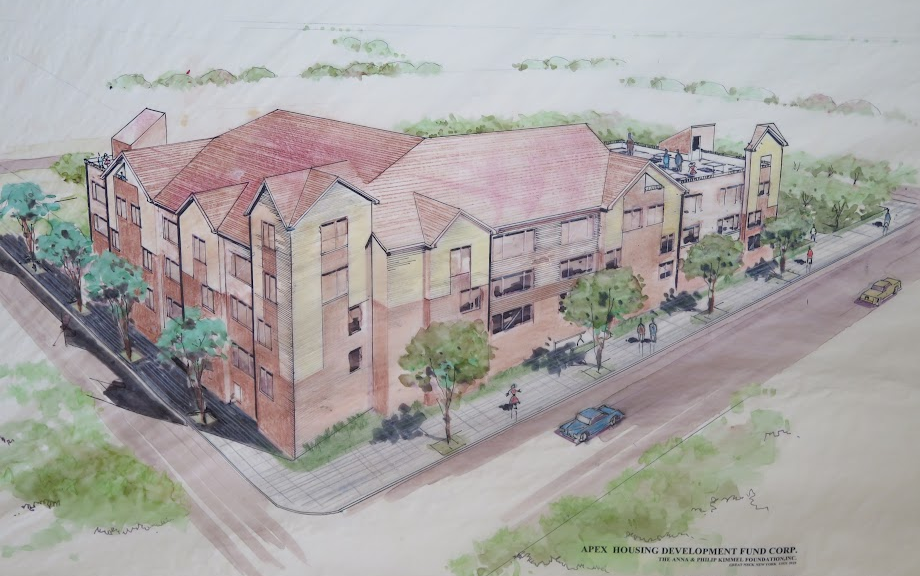
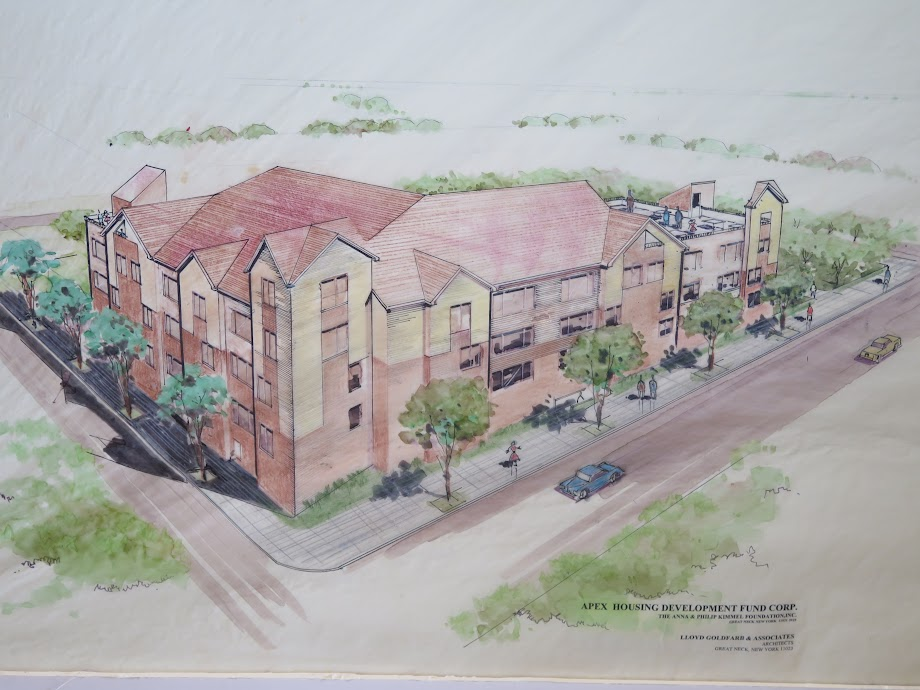
Drawings for innovative affordable senior housing in Long Island based on shared-units. The Biden-Harris Administration is implementing reforms to save developers time and money on federal projects and funds to encourage state and local governments to reduce barriers to affordable housing © Karen Rubin/news-photos-features.com

The Biden-Harris Administration is announcing major new actions to build on progress in addressing the affordable housing crisis and further implement its Housing Supply Action Plan. Actions include reforms to save developers time and money on federal projects and funds to encourage state and local governments to reduce barriers to affordable housing. This fact sheet is provided by the White House:

Since launching its all-of-government Housing Supply Action Plan, the Biden-Harris Administration has been committed to using every available tool to build more housing and lower costs. President Biden and Vice President Harris have put building more homes at the center of their economic agenda because rents are lower and homes are more affordable when we build more housing. After decades of under-investment in housing, we are finally seeing progress under President Biden and Vice President Harris: more units are under construction than at any time in over 50 years, and the rate of new housing starts is up 17 percent compared to the last Administration. The Biden-Harris Housing Plan would build over 2 million new homes to further increase supply and lower housing costs for Americans.

Building rental units and homes faster means lower costs for consumers: not only will more units get to the market faster, but increasing the speed of construction lowers building costs. The President and Vice President have been laser-focused on lowering housing costs for renters and homeowners alike.

Today, the Biden-Harris Administration is announcing major new actions to build on that progress and further implement its Housing Supply Action Plan:

Making funding available to help communities break down barriers to housing. The Department of Housing and Urban Development (HUD) is announcing the availability of $100 million through its landmark Pathways to Removing Obstacles to Housing (PRO Housing) program, which provides grants to communities to identify and remove barriers to affordable housing production and preservation. Grantees may use awards to further develop, evaluate, and implement housing policy plans, improve housing strategies, and facilitate affordable housing production and preservation. In June, Vice President Harris announced the first-ever grantees of the program, which provided $85 million to more than 20 cities and states with funding to identify and overcome barriers to building more affordable housing.

Providing interest rate predictability to spur housing development. The Department of the Treasury and HUD are announcing a major improvement to the Federal Financing Bank (FFB) Multifamily Risk Sharing Program that would provide greater interest rate predictability for state and local housing finance agencies that finance housing projects through the FFB. This program already dramatically reduces costs for state and local housing finance agencies by allowing them to borrow funds at just above the rate at which the US government borrows. This new action will expand the reach of the Risk Sharing program, especially for new construction projects, by providing housing finance agencies with greater certainty about the interest rate that they will face after the construction period ends, making more housing developments financially viable. Treasury and HUD indefinitely extended the Risk Sharing Program earlier this year, after the previous Administration allowed it to lapse. The program has already supported more than 16,000 units since restarting in 2021 and is expected to help create or preserve tens-of-thousands of units over the next decade.

Streamlining requirements for transit-oriented development projects. The U.S. Department of Transportation (DOT) is announcing new guidance to streamline and clarify requirements for closing DOT loans for residential development near transit, including commercial-to-residential conversions. New guidance FAQs , issued by the Build America Bureau, clarify that Transportation Infrastructure Finance and Innovation Act (TIFIA) and Railroad Rehabilitation and Improvement Financing (RRIF) loans used for conversion projects may be eligible for a categorical exclusion under the National Environmental Policy Act (NEPA) that would exempt applicable projects from more detailed environmental analysis and save time and money, as long as those projects do not expand the footprint of the building being converted or modify other facilities. The guidance further clarifies that TIFIA loans can be used to refinance existing debt as part of building conversion or expansion projects, and clarifies that TIFIA and RRIF loans can serve as permanent, take-out financing for construction loans consistent with statutory requirements, as long as federal requirements are met. When DOT first announced these loan programs could be used to finance housing near transit, the estimated time between final Letter of Interest and the loan close was up to 18 months. With these changes, that time can now be under a year as long as all other statutory requirements are met. The FAQs also feature additional information on federal requirements, borrower eligibility, market studies, and the Bureau’s underwriting process, including typical terms and conditions for TIFIA and RRIF loans. On August 27, the Bureau will host an introductory webinar on the credit review process for TOD loans. These efforts build on federal actions to make commercial to residential projects financially viable. Last fall, the White House released a Commercial to Residential Federal Resources Guidebook with over 20 federal programs across six federal agencies that can be used to support zero emissions climate-resilient conversions.

Accelerating historic preservation reviews for federal housing projects. The Advisory Council on Historic Preservation (ACHP) proposed a new tool that would accelerate historic preservation reviews for millions of federally-funded, licensed, or owned housing units across the country. Section 106 of the National Historic Preservation Act requires that federal agencies take into account how any proposed actions will affect historic properties and seek ways to avoid, minimize, or mitigate any adverse effects as a result of the project. If finalized, the tool would exempt several activities, including interior repairs and most installation of rooftop solar panels, from further Section 106 review, and significantly reduce the review process for applicable projects, which would lower development costs and more efficiently deliver affordable, accessible, energy-efficient, and hazard-free housing to people who need it. In the same program comment, ACHP will also be accelerating historic preservation reviews for activities related to climate-friendly transportation and climate-smart buildings, creating accessible, climate-resilient, and connected communities.

Challenging communities to use Section 108 to build housing. HUD is launching a Legacy Challenge — encouraging communities that directly receive Community Development Block Grants to leverage low-cost, low interest loans for transformative housing investments. Up to $250 million in loan financing will be made available through the Section 108 Loan Guarantee Program for adaptive reuse, commercial-to-residential conversions, rehabilitation of existing housing, housing enabling infrastructure such as water and sewer line installation or upgrades, and revolving loan pools to support local development. For communities that express interest by November 1, 2024, HUD will offer additional flexibilities for these loans including certain repayment flexibilities and waivers to streamline program requirements. HUD will invite applicants to participate in a technical assistance cohort and provide tools to support application development.

Enabling more housing types to be built under the HUD Code. HUD anticipates finalizing a rule to update its Manufactured Home Construction and Safety Standards. Manufactured housing provides an essential path to increasing overall housing supply and offers significant savings over site-built housing. The HUD Code creates economies of scale for manufacturers, resulting in significantly lower costs for buyers. In addition to making changes that will increase the quality, energy efficiency, and resilience of manufactured homes, the new rule, if finalized, would enable duplexes, triplexes, and fourplexes to be built under the HUD Code for the first time, extending the cost-saving benefits of manufactured housing to denser urban and suburban infill contexts.

Expediting housing permitting. The Council of Economic Advisers analyzed the importance of state and local government actions to permit and approve new developments more quickly, including examples from HUD’s PRO Housing grants. Permitting requirements contribute to the nationwide housing shortage, leading many would-be deals to not be financially viable or be scaled down, and driving up the cost of housing. Reforms to streamline permitting processes can lead to more housing being built more quickly, which will lower housing costs.

Today’s actions build on dozens of executive actions taken by the Biden-Harris Administration to improve the federal programs to support the construction and preservation of affordable housing. As part of the Housing Supply Action Plan, the Administration simplified the process to use American Rescue Plan State and Local Fiscal Recovery Funds for housing, facilitating nearly $20 billion committed for housing projects, including over $7.5 billion to construct, preserve, or stabilize tens of thousands of units; improved signature federal supply programs like the Low Income Housing Tax Credit and HOME Investment Partnerships program; made it easier to repurpose suitable federal land for affordable housing, while calling on state and local governments to do the same with land they own; launched a new effort to promote the conversion of underutilized commercial property into housing, including housing near transit; and made hundreds of billions of dollars available through the Inflation Reduction Act to cut energy costs and emissions in housing through energy efficiency, electrification, clean energy and climate resiliency.

See also:

INFLATION CAUSING GRIEF? HERE’S WHAT THE BIDEN-HARRIS ADMINISTRATION IS DOING TO SAVE YOU MONEY ON EVERYDAY COSTS FROM HOUSING TO HEALTHCARE TO CHILDCARE, UTILITIES TO GROCERIES