Tag Archives: extreme weather

Governor Hochul Updates New Yorkers on How State is Prepared for Extreme Weather

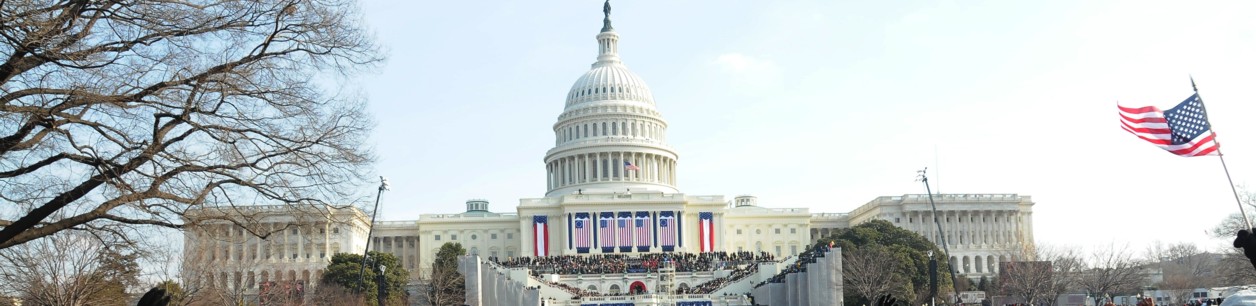
It can happen here! Remembering the devastation on Long Island caused by Superstorm Sandy, New York State has mounted a Climate Action agenda to transition to a clean energy economy that creates family-sustaining jobs, promotes economic growth through green investments, while also taking action to mitigate against climate disasters and increase preparedness. Governor Kathy Hochul reviewed the state’s preparations in wake of renewed concern after the tragedies caused by Texas floods. © Karen Rubin/news-photos-features.com

Extreme Weather Continues To Grow in Frequency and Intensity — Dozens of Temperature and Snowfall Records Broken in Recent Years, Along With Numerous Significant Rainfalls and Wildfires

Governor Launched Innovative State Weather Risk Communication Center at UAlbany; Invested More Than $25 Million to Expand Regional Presence of State Emergency Management Staff and Response Assets

New Yorkers Encouraged To Prepare Themselves Through Citizen Preparedness Corps

New Yorkers Can Text Their County or Borough to 333111 To Receive Real Time Emergency and Weather Alert Texts Directly to Their Phones

In contrast to the malicious negligence of climate-denying Trump, HHS Secretary Kristi Noem, Republican governors including Texas Governor Greg Abbott, New York State Governor Kathy Hochul has worked for years stepping up the state’s mitigation and protection against the worsening severity and likelihood of climate disasters. After the tragic results of the Republican administration in Texas failure to spend money from its $30 billion “rainy day fund” on emergency warning system that could have prevented the loss of life of Camp Mystic and throughout the flash-flood prone region, and the extraordinary negligence of Kristi Noem who failed to send out rescue teams for 72 hours, Governor Hochul sought to alleviate New Yorkers’ concerns by focusing on how the state prepares for extreme weather and taking actions to mitigate for climate change as the state transitions to a clean-energy economy.- Karen Rubin/news-photos-features.com

Governor Kathy Hochul updated New Yorkers on the state’s preparedness and response capabilities as extreme weather continues to grow in frequency and intensity each year. In the face of this growing threat, as well as looming cuts in critical federal funding, Governor Hochul has made it a top priority to invest in the State’s capabilities to prepare for, and respond to, all types of extreme weather.

“New York State is no stranger to extreme weather, and New Yorkers must be prepared for the myriad of severe weather events that come our way,” Governor Hochul said. “Keeping our state safe and protected is my top priority, and my administration is committed to ensuring accessible emergency weather preparedness and an all-hands-on-deck approach to response and recovery operations as severe weather threats increase.”

New York has one of the nation’s most diverse threat landscapes, especially when it comes to the threat of extreme weather. Since taking office in 2021, weather-related natural disasters have resulted in eight Major Disaster Declarations, five Emergency Declarations and one Fire Management Assistance Grant Declaration from the federal government, as well as the declaration of at least 19 State Disaster Emergencies by Governor Hochul herself.

The diversity of natural threats has been wide ranging too. In 2024 and 2025 alone, New York has:

  • Broken 49 High Temperature Records
  • Broken 10 Low Temperature Records
  • Broken 19 Snowfall Records
  • Experienced 38 Tornadoes
  • Experienced 20 significant brush and wildfires, including the largest wildfire in NYS in 30+ years
  • Experienced at least 20 significant rainfall events; and
  • Experienced impacts from two tropical systems (Beryl and Debby)

New York State Division of Homeland Security and Emergency Services Commissioner Jackie Bray said, “Extreme weather events are now the norm, so being prepared is our best defense. We are fortunate to have a Governor that not only understands this, but actively does something about it.  The significant investments Governor Hochul has made in training, equipment, planning and staffing have prepared us to support our local partners and all New Yorkers when a severe weather emergency strikes.”

“New York is leading the nation in building a strong connection between weather experts, emergency managers and the public— which is critical as our state faces increasingly frequent and extreme weather,: New York State Weather Risk Communication Center Director Nick Bassill said. “From hurricanes to lake effect snow and everything in between, the State Weather Risk Communication Center at UAlbany is working daily to help state and local emergency managers better prepare for and respond to severe weather events. I’d like to thank Governor Hochul and Commissioner Bray for their continued support and remain committed to making our communities safer and more resilient.”

Strengthening Preparedness and Response, While Building Resiliency

Under the leadership of Governor Hochul, New York has invested heavily in not only preparedness and response capabilities, but in building a more resilient state. Some of those efforts have included:

  • In December 2023, Governor Hochul announced the creation of New York’s State Weather Risk Communication Center (SWRCC) at the State University of New York at Albany. The Center is a first-of-its kind operational collaboration between university researchers and state emergency managers and serves as a clearinghouse for critical weather information. It also works to develop tools to help emergency managers make informed decisions to help protect communities and examines how communicating extreme weather risks to the public can be improved.
  • Governor Hochul secured $15 million in the FY25 Enacted Budget to enable the Division of Homeland Security and Emergency Services to supply county partners with critical emergency response assets such as generators, high-flow pumps and flood barrier technology.
  • Governor Hochul secured an additional $10.4 million in the FY25 Enacted Budget to further strengthen the regional presence of State Emergency Management Staff, which will add to the volume and availability of on-the-ground support, planning, trainings, exercises, as well as build out our analytic and geospatial capabilities.
  • Governor Hochul secured a total of $90 million in the past two years to launch the Resilient & Ready, an initiative administered by New York Homes and Community Renewal (HCR) consisting of two programs that support resiliency and home repair efforts for low-and-moderate income homeowners. The Resilient Retrofits program provides assistance to eligible homeowners for making proactive flood mitigation and resiliency improvements. The Rapid Response program helps assist eligible households that experience home damage to make necessary repairs in the aftermath of certain major storms.
  • In January 2024, the Governor announced a comprehensive resiliency plan to protect people, communities, infrastructure and homes. 
  • Following the devastating tornado in Rome, Governor Hochul provided $11 million in Emergency Assistance, including up to $5 million for homeowners and $4 million for demolition in Oneida County after the event did not qualify for federal assistance. Another in May 2025 provided $3.5 million to rehab two buildings destroyed by the tornadoes as well. 

State Preparedness, Response and Recovery Operations

The New York State Division of Homeland Security and Emergency Services’ Office of Emergency Management (OEM) is New York’s primary conduit for emergency preparedness and response operations for all emergencies, both natural and human made. During emergencies, OEM not only coordinates with local emergency responders to support local operations but helps coordinate the deployment of thousands of State personnel and pieces of equipment from numerous State agencies. 

OEM is also home to the State Watch Center which is staffed 24/7/365 to monitor hazardous activity throughout the State and ensure situational awareness for state leaders. Additionally, OEM maintain nine stockpiles located throughout the State which are able to provide emergency response assets and supplies as needed.

Along with Emergency Management, training first responders from all disciplines is a core mission for the Division.  Whether online, or in-person, over 54,000 firefighters, emergency managers, officers and other first responders received some form of training from the Division, including the 4,778 students who received training at the state’s Academy of Fire Science in Montour Falls. Separately, nearly 10,000 state and local first responders received training at the State Preparedness Training Center in Oriskany — one of the nation’s premier first responder training facilities.

The Division is also home to the Office of Disaster Recovery Programs which is responsible for the legwork necessary for obtaining federal disaster declarations and administering the federal recovery dollars that flow to communities as a result. Since 2021, the Division has issued payments totaling $12.36 billion in federal Public Assistance recovery funding and $410.6 million in Hazard Mitigation Assistance funding.

Individual Preparedness

In any emergency situation, individual preparedness is one of the most critical components of an effective response and the state offers New Yorkers a number of different ways to not only stay prepared, but stay informed as well. 

The New York State Citizen Preparedness Corps (CPC), administered by the Division and the New York National Guard, was established in 2014 to train New Yorkers how to prepare for emergencies and disasters, respond immediately and recover as quickly as possible to pre-disaster conditions. Nearly 433,000 New Yorkers have taken CPC training in community settings throughout the State.

CPC trainings are free and held in-person throughout the State. New Yorkers can find a local training and enroll online at the DHSES website. For those unable to attend in person, courses are also available online in English and with subtitles in 12 additional languages, including Arabic, Bengali, Chinese, English, French, Haitian Creole, Italian, Korean, Polish, Russian, Spanish, Urdu and Yiddish.

Additionally, Governor Hochul announced a new real-time emergency and weather alert system earlier this year as part of the State’s Hurricane Preparedness Week recognition efforts. Managed by the Division, this text option allows New Yorkers to text the name of their county or borough to 333111 to receive real time emergency and weather alerts and updates directly to their phones. New Yorkers should also remember to follow their local forecasts and visit the DHSES Facebook page, follow @NYSDHSES on X, or visit dhses.ny.gov for important safety information.

Heat waves and other extreme heat events are likely to happen again this summer and New York State agencies are working to implement initiatives recommended by the State’s Extreme Heat Action Plan to help New Yorkers prepare for heat’s negative health and environmental impacts. In June, New York State marked significant progress on the first year of implementation of the Extreme Heat Action Plan (EHAP) with the first readiness update now available. The EHAP, led by DEC and NYSERDA along with DHSES and DOH under the direction of Governor Hochul, includes nearly 50 actions by State agencies to address extreme heat impacts across four tracks (local planning and capacity building, community preparedness and workers’ safety, resilient buildings and access to cooling, and advancing ecosystem-based adaptations). The full update on implementation progress is available here.

The State Department of Environmental Conservation (DEC) closely monitors air quality conditions statewide and works with the State Department of Health to issue timely public health advisories that millions of New Yorkers depend on each year. Visit DEC’s website for updated forecasts and information about air quality index levels, and the Department of Health website for information on health risks and precautions related to air quality.  

New York State’s climate agenda calls for an affordable and just transition to a clean energy economy that creates family-sustaining jobs, promotes economic growth through green investments, and directs a minimum of 35 percent of the benefits to disadvantaged communities. New York is advancing a suite of efforts to achieve an emissions-free economy by 2050, including in the energy, buildings, transportation, and waste sectors.
Biden Administration Invests $1 Billion To Protect Communities, Families, and Businesses Before Climate Disaster Strikes

Funding Builds on Efforts to Enhance Climate Change Resilience as Biden Visits FEMA Ahead of Hurricane, Wildfire Season

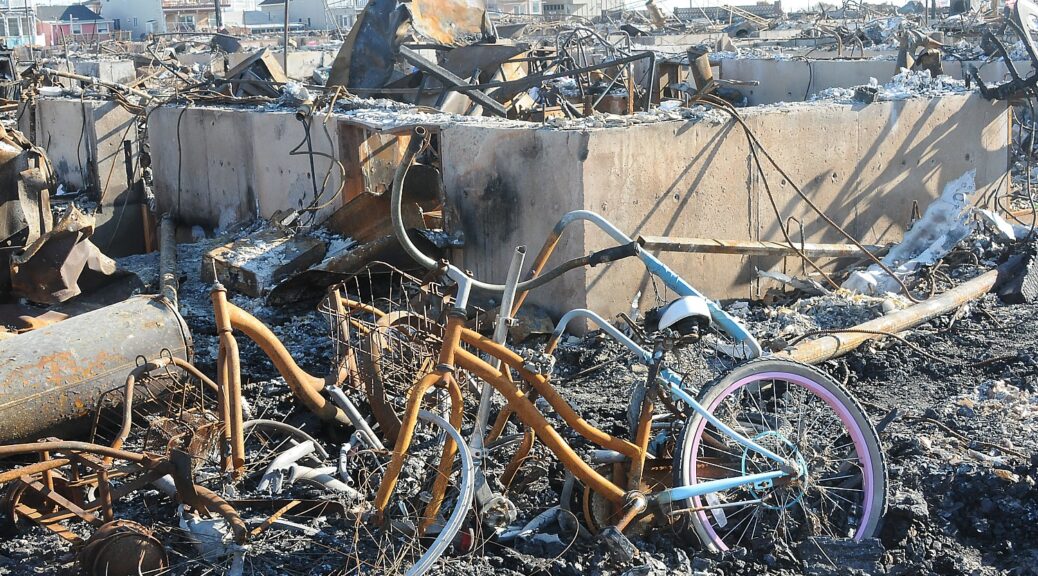
Superstorm Sandy decimates the community of Breezy Point, on the south shore of Long Island. President Biden is taking a whole-of-government approach to climate resilience, to mitigate the worst impacts. Resilience is a key focus of the Biden’s National Climate Task Force as they drive a number of actions to strengthen the resilience of our infrastructure, forests, coastal areas, oceans, range lands, and farm lands to drought, wildfire, heatwaves and other climate impacts. © Karen Rubin/news-photos-features.com

Earlier this week, President Biden met with members of his homeland security and climate teams at the Federal Emergency Management Agency’s (FEMA) National Response Coordination Center in Washington, D.C. to receive an update on preparations for the 2021 hurricane season. In advance of the President’s visit, the Administration announced it will direct $1 billion for communities, states, and Tribal governments into pre-disaster mitigation resources to prepare for extreme weather events and other disasters. The Administration also announced the development of next generation climate data systems at NASA to help understand and track how climate change is impacting communities. This fact sheet was provided by the White House:
 
In 2020, the United States experienced a record year for extreme weather, including an unprecedented 30 named storms in the Atlantic Basin. The National Oceanic and Atmospheric Administration (NOAA) is anticipating another above-normal hurricane season this year.
 
The costs of extreme weather events, in lives and economic damage, have been staggering. Last year alone, communities across the United States suffered through 22 separate weather and climate-related disasters with loses exceeding $1 billion each, shattering previous records, at a cumulative price tag of nearly $100 billion. This year has already wrought devastation, as unusual winter storms crossed Texas and the south.
 
On May 20th, NOAA released its 2021 Atlantic hurricane season outlook. Forecasters predict a 60% chance of an above-normal season, a 30% chance of a near-normal season, and a 10% chance of a below-normal season. Additionally, forecasters expect a likely range of 13 to 20 named storms, of which six to 10 could became hurricanes.
 
As climate change threatens to bring more extreme events like increased floods, sea level rise, and intensifying droughts and wildfires, it is our responsibility to better prepare and support communities, families, and businesses before disaster – not just after. This includes investing in climate research to improve our understanding of these extreme weather events and our decision making on climate resilience, adaptation, and mitigation. It also means ensuring that communities have the resources they need to build resilience prior to these crises.
 
President Biden has elevated the importance of climate resilience on the global stage and prioritized resilience in his investment agenda, including in the American Jobs Plan and the FY22 discretionary request.
 
NEW STEPS TO ENHANCE CLIMATE RESILIENCE
 
President Biden continued to act through a whole-of-government approach in support of climate resilience goals. The Administration is directing $1 billion in pre-disaster mitigation resources to communities, and it is announcing next generation climate data systems that will help us understand and track how climate change impacts communities.

The Administration announced it will:

  • Provide $1 billion for communities through FEMA’s Pre-Disaster Building Resilient Infrastructure and Communities program. FEMA will provide $1 billion in 2021 for the Building Resilient Infrastructure and Communities (BRIC) program, a portion of which will be targeted to disadvantaged communities. BRIC supports states, local communities, tribes, and territories in undertaking pre-disaster hazard mitigation projects, reducing the risks they face from disasters and natural hazards. This level of funding level is double the amount provided last year. The program seeks to categorically shift the federal focus from reactive disaster spending and toward research-supported, proactive investment in community resilience so that when the next hurricane, flood, or wildfire comes, communities are better prepared.
     
  • Develop and launch a new NASA mission concept for an Earth System Observatory. As the number of extreme weather events increases due to climate change, the ability to forecast and monitor natural disasters is integral for the nation’s preparation, mitigation, and resilience. NASA’s Earth System Observatory will be a new architecture of advanced spaceborne Earth observation systems, providing the world with an unprecedented understanding of the critical interactions between Earth’s atmosphere, land, ocean, and ice processes. These processes determine how the changing climate will play out at regional and local levels, on near and long-term time scales.

 
CONTINUE A WHOLE-OF-GOVERNMENT APPROACH TO CLIMATE RESILIENCE
 
The action builds on the whole-of-government approach President Biden is taking to climate resilience. Resilience is a key focus area of the National Climate Task Force as they drive a number of actions to strengthen the resilience of our infrastructure, forests, coastal areas, oceans, range lands, and farm lands to drought, wildfire, heatwaves, and other climate impacts.
 
Examples of actions to date across the federal government include:

  • Issuing an Executive Order on Climate-Related Financial Risk. Last week, President Biden issued an Executive Order on Climate-Related Financial Risk that will help the American people better understand how climate change can impact their financial security. It will strengthen the U.S. financial system and it will inform concrete decisions that the federal government can take to mitigate the risks of climate change. With so much at stake, this Executive Order ensures that the right rules are in place to properly analyze and mitigate these risks. That includes disclosing these risks to the public, and empowering the American people to make informed financial decisions.
     
  • Developing agency climate adaptation and resilience plans. The Administration has taken significant steps to revitalize Federal climate adaptation and resilience by initiating the development of Agency Climate Action Plans as required by Executive Order 14008. The Plans, which are being developed by 36 agencies, broadened the scope of relevant climate adaptation and resilience experts to include acquisitions and finance professionals and focus on integrating climate information in the management of procurement, real property, public lands and water, and financial programs for climate informed decisions.
     
  • Setting a responsible flood risk standard for the federal government. Through his Executive Order on Climate-Related Financial Risk, President Biden reinstated the Federal Flood Risk Management Standard to improve the resilience of American communities and federal assets against the impacts of flood damage, which is predicted to increase over time due to the effects of climate change. The Standard requires federal agencies to consider current and future flood risk when taxpayer dollars are used to build or rebuild in floodplains. Implementing guidelines offer a toolkit of flexible and practical options to implement these protections.
     
  • Investing in resilience through the American Jobs Plan and the FY22 budget. Resilience and adaptation are critical priorities for President Biden and his administration. Americans around the country have been feeling the effect of climate change and underinvestment in resilience. Investments to make our infrastructure more resilient are a key piece of the American Jobs Plan and the President’s FY 2022 Discretionary Request. In addition to supporting the goal that every dollar spent on rebuilding our infrastructure during the Biden administration will be used to prevent, reduce and withstand the impacts of the climate crisis – the American Jobs Plan calls for $50 billion in dedicated resilience investments. The President’s FY22 Discretionary Request also includes significant budget increases to enable incorporation of climate impacts into disaster planning and projects to ensure that the Nation is rebuilding smarter and safer for the future.
     
  • Integrating resilience into the White House Environmental Justice Advisory Council. The White House Environmental Justice Advisory Council (WHEJAC) was established by President Biden’s Executive Order on Tackling the Climate Crisis at Home and Abroad to fulfill his and Vice President Harris’s commitment to confronting longstanding environmental injustices and ensure that historically marginalized and polluted, overburdened communities have greater input on federal policies and decisions. The WHEJAC members are to provide advice and recommendations to the Environmental Justice Interagency Council and the Chair of CEQ on a whole-of-government approach to environmental justice, including, but not limited to, climate change mitigation, resilience, and disaster management.
     
  • Establishing an Interagency Working Group to better prepare and respond to drought. The National Climate Task Force, as part of its whole-of-government consideration of climate issues, established an Interagency Working Group to address worsening drought conditions in the West and to support farmers, ranchers, Tribes, and communities impacted by ongoing water shortages. The Working Group is co-chaired by the Departments of the Interior and Agriculture and will build upon existing resources to help coordinate across the federal government, working in partnership with state, local, and Tribal governments to address the needs of communities suffering from drought-related impacts. DOI and USDA have already announced more than $25 million to assist farmers, ranchers and communities in the Klamath Basin to help them in the face of a severe drought.
     
  • Increasing investments in forest restoration to reduce the threat of catastrophic wildfire. Climate change is increasing the severity and frequency of wildfire seasons, which are transforming our Nation’s forests at an unprecedented rate, and destroying homes and businesses. The Biden-Harris Administration’s discretionary budget request provides nearly $1.7 billion for high-priority hazardous fuels and forest resilience projects at a scope and scale to meet the challenge we face, an increase of $476 million over the 2021 enacted level. This funding supports the Administration’s science-based approach to vegetation management at the Forest Service and DOI to protect watersheds, wildlife habitat, and the wildland-urban interface.
     
  • Launching a resilience focused task force at the Department of the Interior. Department of the Interior (DOI) Secretary Deb Haaland announced a new Climate Task Force at DOI that will develop a strategy to reduce climate pollution; improve and increase adaptation and resilience to the impacts of climate change; address current and historic environmental injustice; protect public health; and conserve DOI managed lands. Its mission will include supporting the development and use of the best available science to evaluate the greenhouse gas emissions and associated climate change impacts of Federal land uses as well as opportunities to increase carbon sequestration; to predict the effects of climate change on public lands and land uses; and to assess and adopt measures to increase the resilience and adaptive capacity of public lands. 
     
  • Launching a new approach to climate change adaptation and resilience at the Department of Homeland Security. Homeland Security Secretary Alejandro Mayorkas announced the launch of the DHS Climate Change Action Group, a coordinating body comprised of the Department’s senior leadership that will drive urgent action to address the climate crisis and will report directly to the Secretary. DHS also recently published a public Request for Information on how FEMA can ensure its programs advance equity and increase resilience for all – especially among those who are disproportionately at risk from the impacts of climate change.
     
  • Utilizing a Climate Assessment Tool to Analyze Climate Vulnerabilities at the Department of Defense. Climate change has been identified by the Department of Defense (DoD) as a critical national security threat and threat multiplier. As a result, DoD has undertaken assessments of the impacts that the climate crisis has on American military instillations. The DoD announced a plan to complete climate exposure assessments on all major U.S. installations within 12 months and all major installations outside the continental U.S. within 24 months using the Defense Climate Assessment Tool (DCAT). The DCAT helps identify the climate hazards to which DoD installations are most exposed, which is the first step in addressing the potential physical harm, security impacts, and degradation in readiness resulting from global climate change.
     
  • Tracking the indicators of climate change at the U.S. Environmental Protection Agency. For the first time in four years, the U.S. Environmental Protection Agency (EPA) has updated and relaunched its Climate Change Indicators. This comprehensive resource presents compelling and clear evidence of changes to our climate reflected in rising temperatures, increased ocean acidity, sea level rise, and changing river flooding, droughts, heat waves, and wildfires, among other indicators. The long-overdue update to this crucial scientific resource shows that climate change has become even more evident, stronger, and extreme, and underscores the urgency for action on the climate crisis.
     
  • Releasing new U.S. Climate Normals at the NOAA. NOAA recently released the U.S. Climate Normals, a large suite of data products that provide information about typical climate conditions for thousands of locations across the United States. Normals act both as a ruler to compare today’s weather and tomorrow’s forecast, and as a predictor of conditions in the near future. These data products assist agencies and State, local, Tribal, and territorial governments, communities, and businesses in preparing for and adapting to the impacts of climate change.
     
  • Investing in grid and community resilience at the Department of Energy. The Department of Energy is investing in grid resilience and energy resilience, including microgrid strategies, through research under the Grid Modernization Initiative. In partnership with the National Laboratories, the Department is developing a set of comprehensive energy resilience metrics and modeling capabilities to mitigate climate impacts to our energy infrastructure. The Department is also investing in projects that improve community resilience by deploying energy storage and microgrid technologies. In addition, for communities across the West, the Department is working with the Western Area Power Administration and Bonneville Power Administration to aggressively forecast, model and mitigate the potential impacts of severe climate-change-related droughts and fires on electricity systems.
     
  • Building climate and resilience considerations into transportation discretionary grants at the U.S. Department of Transportation. The U.S. Department of Transportation is incorporating climate and resilience criteria into over $2 billion in discretionary grant programs, including the RAISE, INFRA, and Port Infrastructure Development grant programs. This will promote transportation investments that are future-proofed against extreme weather events. In addition, the Federal Highway Administration (FHWA) has also issued new guidance for planning and design for highways in coastal areas.