
Final Rules Outline How Social Media Companies Should Confirm Users’ Age to Stop Addictive Feeds and Nighttime Notifications for Children
Furthers Governor’s Nation-Leading Work To Restrict Addictive Feeds, Create Safeguards Against Harmful AI Companions, Ban Smartphones in Schools, Enact Social Media Warning Labels, and Protect Kids from Predatory Behavior Online
New York is Ranked First in the Nation for Technology Laws Keeping Kids Safe Online
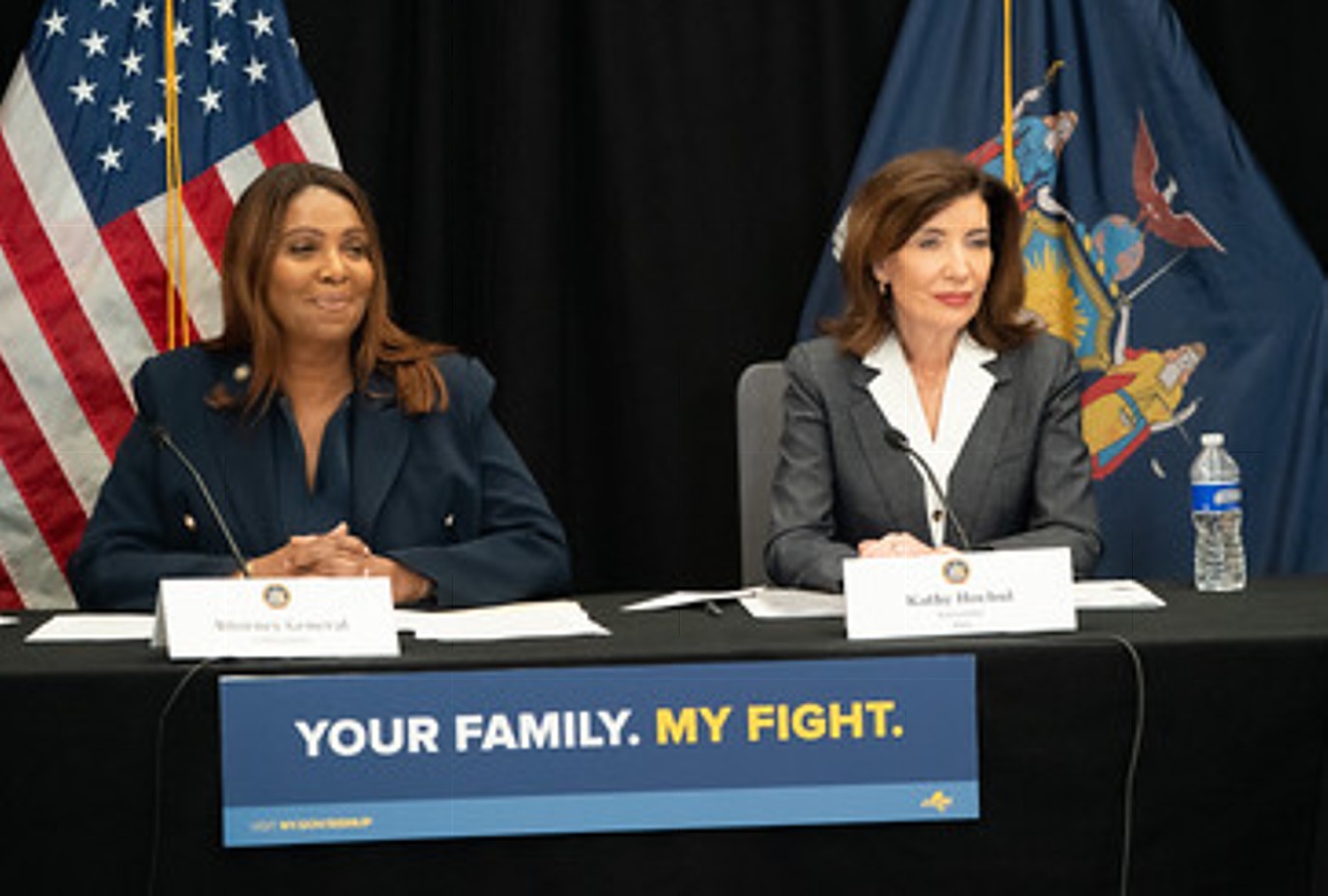
Governor Kathy Hochul and Attorney General Letitia James announced the release of final rules on how social media companies must restrict addictive features on their platforms to comply with the Stop Addictive Feeds Exploitation (SAFE) for Kids Act and protect children’s mental health. New York’s pioneering SAFE for Kids Act requires social media companies to restrict algorithmically personalized feeds and nighttime notifications for users under the age of 18 unless they obtain parental consent.
Algorithmic feeds and nighttime notifications are tied to depression, anxiety, eating and sleep disorders, and other mental health issues among children and teenagers. The rules released today establish criteria to clarify which platforms are subject to the SAFE for Kids requirements and outline standards to determine users’ age and obtain parental consent. This announcement furthers Governor Hochul’s nation-leading work to restrict addictive feeds, create safeguards against harmful AI companions, ban smartphones in schools, enact social media warning labels, and protect kids from predatory behavior online.
“When I came into office, our children were in the throes of a full-blown mental health crisis, and as New York’s first mom Governor, I felt a moral imperative to act,” Governor Hochul said. “Today, we’re sending a clear message: our kids’ mental health isn’t for sale. We promised action and the SAFE for Kids Act is delivering by ensuring that any platform that targets our children with addictive feeds will face legal consequences. Instead of clicking and scrolling, our kids will be learning and growing.”
Attorney General Letitia James said, “The SAFE for Kids Act leads the nation in keeping our children safe online and protecting youth from the devastating effects of unchecked social media. These rules set standards for age verification and parental control to ensure tech companies are doing their part to keep kids safe on their platforms. Young people are particularly vulnerable to addictive social media features, and my office is committed to protecting all New Yorkers from potentially harmful technologies and companies that try to take advantage of them.”
Algorithmically personalized feeds, or addictive feeds, recommend or personalize content for users in an endless stream based on data that the platform gathers about the user. They are designed to encourage a user to continue to use and return to a platform. Content displayed in addictive feeds is often from accounts that a user has not selected, does not follow, and is often displayed out of chronological order.
Addictive feeds are known to drive unhealthy levels of social media use in minors that can affect their mental health. Research shows that children as young as 10 to 14 years old experience addictive use of social media, and the more time children spend on social media, the more likely they are to experience negative mental health outcomes such as depression, anxiety, and eating and sleep disorders.
The SAFE for Kids Act addresses these mental health concerns for children by requiring social media companies to restrict addictive feeds for users under 18. Instead of the default algorithmically personalized feeds designed to keep young people on the platform, users under 18 will only be shown content from other accounts they follow or otherwise select in a set sequence, such as chronological order, unless they get parental consent for an addictive feed. Users cannot be cut off from the platform simply because they either do not want or do not have parental consent for an addictive feed. Instead, all users will still be able to access all the same content they can access now. The law also prohibits social media platforms from sending notifications to users under 18 from 12 a.m. to 6 a.m. without parental consent.
Signed into law by Governor Hochul in June 2024, the SAFE for Kids Act authorized the Office of the Attorney General (OAG) to promulgate rules on how companies should comply with the law before the statute goes into effect, including rules that set industry standards for determining a user’s age and securing parental consent. The OAG issued an advanced notice of proposed rulemaking on August 1, 2024, and provided the public with a 60-day period to submit comments. The proposed rules were made public for review on September 15, 2025. The OAG incorporated public input, industry research, and its significant experience to inform the proposed and final rules.
Age Assurance
- Under the law and regulations, social media companies must determine that a given user is an adult before providing them with algorithmic feeds and/or nighttime notifications. Companies may confirm a user’s age using any methods that meet accuracy benchmarks and protect users’ data as set forth in the regulations. Companies can use options such as:
- Requesting an uploaded image or video; or
- Verifying a user’s email address or phone number to cross-check other information that reflects a user’s age.
- Social media companies must offer at least one alternative method for age assurance besides providing a government-issued ID.
- Any information used to determine age or obtain parental consent must not be used for any other purpose and must be deleted or de-identified immediately after its intended use. Social media companies must use only the minimum amount of data necessary to confirm a user’s age.
- Minor users must have an option to update their age status on the platform when they turn 18.
- Social media companies must choose an age assurance method with a high accuracy rate, conduct annual testing, and retain the results of the testing for a minimum of 5 years.
Parental Consent
- Minors must affirmatively seek access to prohibited features and must consent to their parent being notified. Any parent who wants to grant consent must go through age assurance.
- The platform may not block a minor user from generally accessing the platform or its content through, for example, searches, simply because they or their parent has refused to consent.
- Parents and minors must also have the option to withdraw their consent at any time.
The SAFE for Kids Act and rules apply to “Addictive Online Platforms,” defined as platforms that display user-generated content and have users who spend at least 20 percent of their time on the platform’s addictive feeds measured over a six-month period.
The full final rules can be found on OAG’s website.The final rules will be published in the State Register on July 29, 2026. The SAFE for Kids Act goes into effect 180 days later, on January 25, 2027.
For companies that violate the SAFE for Kids Act, the law authorizes OAG to bring an action to stop violations as well as to seek civil penalties of up to $5,000 per violation, among other remedies.
State Senator Andrew Gounardes said, “I passed this law for a simple reason: kids’ safety should come before Big Tech’s profits. The SAFE For Kids Act protects children from addictive algorithms that force-feed them content they don’t want and put their mental health at risk. These new regulations bring the law to life by keeping young people safe while protecting New Yorkers’ online privacy and holding social media corporations accountable. Thanks to Attorney General James for her crucial work to get this done. Together, we’re building a safer, better internet for all New Yorkers.”
Assemblymember Nily Rozic said, “As a mother and legislator, keeping our kids safe is one of my highest priorities. The final SAFE for Kids rules are a major step toward holding social media platforms accountable and protecting children from harmful and addictive features. I’m grateful to Governor Hochul and Attorney General James for their leadership and for ensuring that New York continues to lead the way in putting families first.”
Common Sense Media Founder and CEO James P. Steyer said, “We applaud Attorney General Letitia James and her team for the tremendous work that went into developing the final regulations to implement the SAFE for Kids Act. The SAFE for Kids Act, and these new final rules to implement and enforce it, has the potential to be a transformative step forward in protecting children from the addictive design features of social media. We are deeply grateful for the leadership of Governor Kathy Hochul, Attorney General James, and the state lawmakers who championed this landmark law. New York is setting a national standard for protecting kids online by focusing on curbing addictive social media feeds and limiting late-night notifications that disrupt children’s sleep and well-being. There is more work to do to protect kids from the risks of AI and social media, but this law and its final rules are groundbreaking.”
Mothers Against Media Addiction (MAMA) Founder and Executive Director Julie Scelfo said, “New York’s SAFE for Kids Act is the nation’s strongest legislation to protect children online by ensuring they are not exposed to the addictive algorithms running rampant on social media platforms. These new rules are an important and essential step in the enforcement of this landmark legislation and provide a pathway for other states to follow. MAMA is grateful to Attorney General James and her team for their careful and trailblazing efforts. By tackling addictive and harmful feeds head-on, New York is prioritizing the safety and well-being of our children over Big Tech’s bottom line.”
This announcement builds on Governor Hochul’s ongoing efforts to address the youth mental health crisis statewide and help keep kids safe online. This work has established New York as a global leader in securing a safer online world for children, and as of this year New York is ranked number one in the U.S. for laws that keep kids safe online. In addition to the SAFE for Kids Act, initiatives include:
- The Child Data Protection Act that prevents online operators from collecting and monetizing children’s data without informed consent.
- AI Companion legislation which set first-in-the-nation safeguards, diverting user conversations about self-harm to mental health resources and interrupting unhealthy addictive behaviors.
- The Governor also outlawed AI-Generated Child Sexual Abuse Material.
- The Unplug and Play Agenda which helps encourage the healthy socialization and child development by funding social infrastructure, physical sites like playgrounds, community centers, and pools, and expanded youth programming.
- New York’s Distraction Free Learning Policy, requiring statewide, bell-to-bell restrictions on smartphones in K-12 schools, which is already resulting in greater academic achievement, improved student wellbeing, and safer school environments for students.
- The Social Media Warning Labels bill that will require social media companies to post warnings about the platform’s potential impact on mental health.
- The Safe by Design Act, which protects kids from predatory behavior online and defaults them to the highest privacy settings.
- Teen Mental Health First Aid training that equips youth with skills to recognize common signs and symptoms of mental health and substance use challenges and know how to ask for help.
- Youth Safe Spaces, where trusted community organizations provide supportive, non-judgmental environments where young people can access mental wellness resources, foster positive peer relationships, and engage in non-clinical activities.
- The Power Down, Speak Up public awareness campaign launched by the NYS Office for the Prevention of Domestic Violence (OPDV) that helps to empower young people statewide to recognize and respond to online abuse while equipping parents, educators, and law enforcement with tools to help keep youth safe online.
- OPDV’s Technology-Facilitated Gender-Based Violence (TFGBV) Training, which has already trained more than 4,000 youth, parents, educators, and law enforcement professionals on preventing and responding to online abuse.