New York, NY – The Clinton Foundation marks 25 years since President Clinton opened the Foundation’s doors in Harlem. In the two and a half decades since opening, the Foundation has built a pathbreaking record of impact around the world:
More than 500 million people reached across 180 countries through Clinton Global Initiative (CGI) programs and partnerships;
30 million patients reached with lifesaving medications through the Clinton Health Access Initiative;
31 million children supported through the Alliance for a Healthier Generation;
1 million cumulative doses of naloxone distributed through the Overdose Response Network; and
525,000 students engaged through the Clinton Presidential Center.
The Foundation’s work in Harlem over the years includes the Clinton Economic Opportunity Initiative that helped small businesses in the neighborhood expand; CGI Commitments to Action that gave residents better access to microfinance and food assistance, and distributing thousands of books and improving nutrition and physical activity in Harlem schools through Too Small to Fail and the Alliance for a Healthier Generation.
“Through the Clinton Foundation, the Clinton Global Initiative (CGI) and other activities — including donating millions of dollars of his own money — Clinton has compiled a record of philanthropic impact since leaving office in 2000 that is unmatched by any former president and far more extensive than most people realize.”
“At the center of that impressive record is the Clinton Health Access Initiative (CHAI), which has helped millions of people gain access to antiretroviral drugs, especially in sub-Saharan Africa, since its founding in 2002. This work has likely saved hundreds of thousands of lives…”
“Clinton’s philanthropic footprint has extended well beyond global health, reflecting his famously broad interests and deep curiosity. Both on his own and with both former Bush presidents, Clinton has helped raise hundreds of millions of dollars for humanitarian disasters — most notably, the devastating 2004 tsunami in Asia, Hurricane Katrina and the 2010 earthquake in Haiti. His foundation and CGI have also worked on climate change, domestic poverty, education, gender equity, and more.”
The piece also cites the Clinton Global Initiative as a “groundbreaking model for social impact”: “Nothing like CGI existed before its creation in 2005, and it’s hard to think of anything quite like it that’s emerged since then … it remains one of the more innovative and potent philanthropic efforts of our time.”
In 2026 and beyond, this work is continuing and expanding:
This September, President Clinton, Secretary Clinton, and Dr. Chelsea Clinton will host global leaders from around the world at the Clinton Global Initiative 2026 Annual Meeting, advancing commitments that are tackling our most urgent crises. Learn more.
This month, the Foundation launched the Clinton Policy Institute – the first new initiative in more than a decade, dedicated to improving the lives of children and families by developing, accelerating, and scaling common-sense policy solutions, especially at the state and local levels. Learn more.
The Clinton Health Access Initiative is part of a landmark partnership making the revolutionary HIV prevention tool lenacapavir available at a cost of $40 a year in 120 countries starting in 2027, more than a decade ahead of schedule. Learn more.
The Alliance for a Healthier Generation continues to work with thousands of schools to strengthen healthy school environments, bridge school and public health systems, and advance solutions that improve health outcomes for young people across the country. Learn more.
The Clinton Presidential Center engages people across generations and ideologies through nonpartisan leadership programs, educational and cultural experiences, and forums for courageous and collaborative conversations; since opening in 2004, it has welcomed more than 5.4 million visitors and contributed significantly to the local economy, which has expanded by $4.9 billion.
The Foundation’s various programs are continuing their life-changing work, including Too Small to Fail reaching parents and caregivers with critical early childhood development skills and tools, and the Overdose Response Network expanding access to lifesaving naloxone.
The Clinton Policy Institute is mobilizing public and private leaders to advance policies that strengthen democratic resilience and improve the lives of children and families
For more information on the Clinton Policy Institute, visit clintonpolicy.org
New York, NY — The Clinton Foundation today announced the launch of the Clinton Policy Institute (CPI), dedicated to improving the lives of children and families by developing, accelerating, and scaling common-sense policy solutions, especially at the state and local levels. At a time when rising costs, economic uncertainty, rapid technological change, and growing threats to democratic institutions are making it harder for families to get ahead, CPI offers a different path: bringing together leaders across the lines that divide us, to find practical, effective solutions that improve everyday life for millions of Americans.
CPI’s work draws on Secretary Hillary Rodham Clinton’s decades-long commitment to children and families, Dr. Chelsea Clinton’s deep expertise in public health policy and health systems, and an unmatched global network of world leaders, U.S. government officials, and advocates. This gives CPI a unique ability to reach the people who matter, and to forge the durable consensus that turns good ideas into lasting policy.
Grounded in the belief that it takes a village to give every child a fair shot, CPI’s work focuses on issues that are foundational to whether our children and families can flourish:
Children’s wellbeing – ensuring all children have equitable opportunities to grow, learn, and thrive.
Family economic security – helping families build financial stability, lower costs, and create pathways to opportunity.
Women and children’s health – protecting and expanding access to care that women, children, and families need, when they need it.
Democracy and civic resilience – strengthening the democratic institutions and civic infrastructure that families depend on to make government work for them.
The Clinton Policy Institute will be led by Chief Executive Officer Zayn Siddique, a policy leader with deep experience turning ambitious ideas for children and families into real results. As Principal Deputy Director of the Domestic Policy Council, Siddique led the development of the most comprehensive executive order to make child care and family care more affordable and accessible. He also led White House efforts to reform the student loan system, protect access to SNAP benefits, and develop the first-ever White House Blueprint for a Renters Bill of Rights. Jennifer Klein, former Assistant to the President and the Director of the White House Gender Policy Council, will serve as the Chair of the Clinton Policy Institute, building on her long history advancing women’s human rights, safety and security, health, and economic opportunity to guide CPI.
“Too many families are struggling with challenges that government should be helping to solve — and too many leaders have good ideas but lack the support to make them real,” said Siddique. “That’s the gap CPI exists to close. We’re already working with states on policies that are making a concrete difference: keeping phones out of classrooms so kids can learn, protecting children from the harms of social media and AI, protecting access to vaccines and improving health outcomes for mothers and babies, helping workers build wealth through employee ownership, and ensuring that the institutions families depend on still work for them. These aren’t partisan issues — they’re the things families actually need. And there are leaders across the country ready to act on them.”
This new initiative builds on President Clinton’s lifetime of work in public service to forge consensus and improve people’s lives, Secretary Clinton’s decades of work on children and families, and Dr. Clinton’s public health expertise. CPI’s work is focused on:
Identifying gaps in the policy landscape and elevating the ideas best positioned to fill them;
Developing original research, practical playbooks, and implementation guides that leaders can put to work;
Convening leaders across government, civil society, and the private sector to forge durable coalitions around the most promising solutions and build relationships over time;
Mobilizing trusted voices and providing technical assistance to state and local leaders ready to act;
Scaling state-level innovation into future federal policy solutions; and
Imagining a future that provides opportunity for all of America’s children and families.
CPI is the Foundation’s first new initiative in over a decade, and the first specifically dedicated to advancing domestic public policy. While expanding the Foundation’s work into a new arena, CPI represents a natural evolution of its mission: fostering collaboration, advancing practical solutions, and building partnerships that improve lives.
CPI joins other pathbreaking programs at the Clinton Foundation including the Clinton Global Initiative, which convenes global leaders to take action on the world’s most pressing challenges; the Clinton Presidential Center, which advances opportunity, civic engagement, and leadership; Too Small to Fail, which provides families with early language and learning opportunities; and the Overdose Response Network, which equips communities with evidence-based tools to prevent overdoses and save lives. The Foundation has also served as an incubator for global and national development organizations, including the Clinton Health Access Initiative, which has expanded access to lifesaving medicines for more than 21 million people worldwide; and the Alliance for a Healthier Generation, which has helped more than 31 million children lead healthier lives.
“I’ve been proud to work alongside Secretary Hillary Rodham Clinton over the years, and I’ve seen firsthand her unwavering commitment to improving the lives of children and families,” said Governor Kathy Hochul. “Every family should be able to raise healthy, safe, and successful children, and the government has a responsibility to help create conditions for them to thrive in. It excites me to know that Secretary Clinton is bringing that lifelong commitment to the Clinton Policy Institute, which is helping leaders share practical, proven solutions that strengthen communities and give every child the opportunity to succeed.”
“The Clinton Policy Institute was founded with a simple yet urgent mission: help public leaders turn proven ideas into better outcomes for the people they serve,” said Governor JB Pritzker. “CPI will play a vital role in helping public servants of all regions, parties, and levels of government learn from one another, scale what works, and build the partnerships they need to put good policy into practice.”
“The Clinton Policy Institute’s commitment to restoring confidence in vaccines and evidence-based public health policies will help protect children, strengthen communities, and reinforce public trust in science,” said Dr. Anthony Fauci. “Vaccines remain one of the most effective public health tools ever developed inpreventing disease, saving lives, and protecting communities. Ensuring that families have access to accurate scientific information and routine immunizations requires the sustained leadership, trusted partnerships, and sound public policy that CPI is building.”
“Secretary Clinton has long made the case that strong families – and a strong economy – depend on accessible and affordable care,” said Ai-jen Poo. “The Clinton Policy Institute is bringing leaders together across sectors to develop and implement effective policies to ensure that families, workers, and the caregivers they depend on have the support they need to not only survive, but also thrive.”
“Economic security begins with practical policies that address rising costs and help families build financial stability and prepare for the future,” said Lael Brainard. “Many of the most effective ideas are emerging from states and local communities, where leaders are responding directly to the challenges families face every day. By helping identify what works, fostering collaboration, and equipping policymakers with practical tools, the Clinton Policy Institute is helping to bolster economic opportunities and improve outcomes for families across the country.”
“I’ve had the privilege of working with Secretary Hillary Rodham Clinton over the years because we share a belief that every child deserves the opportunity to grow up healthy, safe, and able to reach their full potential,” said Dr. Nadine Burke Harris. “A child’s health and future are shaped long before they enter a doctor’s office or a classroom. The policies we choose today can reduce the effects of early adversity, support families, and create healthier communities for generations to come. The Clinton Policy Institute is bringing together leaders across healthcare, education, and government to translate evidence into practical policies that help every child thrive.”
“Strong economies and strong democracies depend on institutions willing to tackle our biggest challenges with both ambition and pragmatism,” said Lynn Forester de Rothschild, the Founder and Chair of the Council for Inclusive Capitalism. “The Clinton Policy Institute represents an important investment in the future of American policymaking, bringing together leaders from government, business, and civil society to advance solutions that expand opportunity, broaden prosperity, and strengthen the social contract between business and society. We are honored to partner with CPI as it helps shape the next generation of policy innovation, through our support for the permanent ‘Sir Evelyn de Rothschild Fellowship for Inclusive Capitalism’ at CPI.”
The Clinton Foundation works to create economic opportunity, improve public health, inspire civic engagement and service, and help communities address the effects of climate change. Since 2001, the Foundation has brought together businesses, governments, nongovernmental organizations, and individuals to improve lives around the world through collaboration and partnership.
Each year for the past 20, there has been a respite, an oasis of hope, positivity, possibility and promise: the Clinton Global Initiative (CGI). The invention of the Clinton Foundation, CGI devised a platform and mechanisms to actually solve the most intractable problems confronting the world, that politicians love to talk about but are too hamstrung to.
Each year there were challenges to overcome, but this year, there was an unusual pall over the gathering as the reality of backsliding on all the progress that has been made in health care, clean air and water (which 3 billion people lack), democracy, free press, conflict resolution, education, poverty, women’s rights and empowerment, gender rights, climate change, global migration. In many ways, there were the same topics of 20 years ago, but instead of focusing on the crisis in democracy, free press, disease and health care in developing countries across oceans, there was equal focus on the USA.
In the past, there have been American administrations which did not further the aims of a more just, equitable future in which each could fulfill their potential, but never in the past was an administration using the might and wealth its predecessors built to actively undermine and reverse the progress of 150 years.
They are up against huge forces – the US with just 5% of the world’s population, has amassed 35% of global wealth and generates 14% of the carbon emissions (down from 20% thanks to Obama and Biden) that so endanger public health, food and water supply, and created the disasters that forced millions to flee their homes, creating the migrant crisis that has destabilized liberal democratic governments.
The conference convened just a day after Donald Trump, who has made good on his fantasy to tear up the Constitution and become a “dictator on day 1”, who effectively made illegal DEI (Diversity, Equity, Inclusion – foundational principles of CGI) and who clawed back billions in foreign aid and humanitarian aid, and withdrawn from agencies including the World Health Organization, addressed the United Nations (a “failed” organization). Trump told the General Assembly that climate change was a “hoax” and a “green scam” and that as nations, they should do what the US has done: evict migrants and shut their borders to refugees in order to preserve their “heritage” and nationhood or else, “your countries are going to hell.”
In the final CGI panel discussion, “We’re Next,” Tedros Adhanom Ghebreyesus, Director-General of the World Health Organization (WHO), recalled where he was on the day he heard (was not informed by Trump) that the USA, its largest donor, was withdrawing and taking with it its funding, immediately – not in six months to give the WHO time to reorganize. He noted that where he was when he heard was in Sana’a, capital of Yemen, when Israel bombed it, killing someone close to him and wounding others. It triggered memory as a child of war in his native country of Ethiopia –“the smell, image, even the sound” – when close relatives were killed, and reignited the PTSD.
“In 2020, with the first US withdrawal, the first round of cuts came, and war in my country and Covid. it was difficult situation. but if there is one thing that But I try to see what is beyond my control and focus on what I can do. It encourages me encourages me to do more as an individual.” And so he will figure out a way for the World Health Organization to continue to function.
Another child of war, President Vjosa Osmani of Kosovo told President Bill Clinton, that it is peace and democracy that brings economic prosperity and progress (not tariffs and authoritarianism). “When you never take your freedom, your freedoms for granted, when you focus on the rule of law, democracy, human rights, then economic empowerment and prosperity comes. What you stand for in the most difficult times matters.”
But in inimitable fashion, the Clintons set a tone of positivity and everyone set out with renewed resolve, determination and resilience to figure “workarounds” to the unprecedented challenge.
CGI, offered panels themed “A Critical Moment for Humanitarian Response,” “Protecting Progress, Prevention and Management of Infections and NonCommunicable Diseases,” “A New Blueprint for Global Health,” “New Approaches to Climate Finance,” “Bold Solutions for Effective Philanthropy,” “Protecting Truth and Information in a Fractured World,” “Putting People First,” all asking the question, “What’s Next,” and, finally, “We’re Next.” It went back to an earlier framework to focus on “working groups” – small groups focused around a particular issue to bring together NGOs, business entities, philanthropists, activists and experts who could form partnerships to fulfill innovative commitments.
Matt Damon, the acclaimed actor, relayed how Clinton Global Initiative 17 years ago helped him realize his goal of bringing safe water and sanitation to the millions upon millions of people who lacked such basic necessities. CGI introduced him to Gary White, an engineer, who also had no idea how to achieve that goal, and together they formed Water.org.
“It was like a first date – nervousness, awkwardness. But we realized that together could do a lot more than on own and really scale.” The first year’s CGI commitment was to build systems to serve 100,000. “Innovation-led, partners would follow. We got bigger and the numbers ran up. We hoped to reach 1 million a year. Today, we reach 1 million every six weeks.
“Our current commitment is already underway. In 2022, we pledged to help 100 million in Africa, Asia, and Latin America gain access to water, sanitation. We have already reached more than 30 million people who no longer have to take long walk for water.
“For Gary and me, CGI was the start. We thank President Clinton for introducing us, inspiring us to think better and doing all he can to help us reach those goals. There is more distance to go, with more than 2 billion people who lack access to safe water; 3 billion to sanitation.”
It was an invitation for others to join the partnership, or form their own, which is the essence of CGI.
We saw it in real time when Hawaii Governor Josh Green, on the “Investing in Community Resilience” panel with Jennifer Pryce, CEO of Calvert Impact Capital, learned about new ways to multiply the benefit of Hawaii’s newly imposed climate fee on visitors through community development bond instruments such as issued by Calvert Impact. Hawaii hopes to use the fee (about $3 on a $400/night hotel stay) to bond out $2 billion which will go to sustainability, environmental protection, prevention, resiliency (helps with insurance costs), and to sustain tourism, replenish coral reefs and beaches.
4,200 Commitments, 500 Million People, 180 Countries, 10,000 Partners
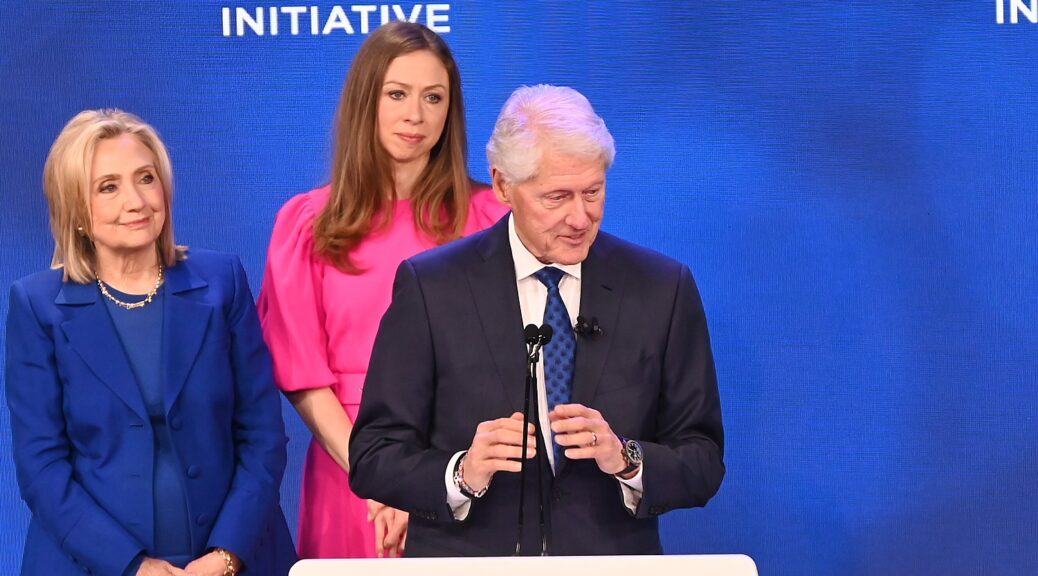
This year President Bill Clinton, Secretary Hillary Rodham Clinton, and Foundation Vice Chair Dr. Chelsea Clinton concluded the Clinton Global Initiative (CGI) 2025 Annual Meeting with the launch of 106 new Commitments to Action.
Since President Clinton founded CGI in 2005, the convening has asked attendees to come with Commitments to Action — specific, measurable partnerships and projects that address an urgent global challenge (there are regular reports issued).
Over the last 20 years, members of the CGI community across business, philanthropy, and government – more than 10,000 organizations and individuals – have partnered to launch more than 4,200 commitments that have improved the lives of more than 500 million people in over 180 countries. As a result of these partnerships:
Nearly 78 million people have improved access to financial services or capital.
More than $1.6 billion has been invested or loaned to small- and medium-sized enterprises.
Nearly 2.7 billion metric tons of CO2 were cut or abated.
More than 402 million acres of forest have been protected or restored.
Nearly 4 million clean jobs have been created.
More than 130 million people can more easily access maternal and child health and survival programs.
Nearly 38 million people can more easily access safe drinking water and sanitation.
More than 36 million people have received treatment for neglected tropical diseases.
More than $362 million in research and development funds has been spent on new vaccines, medicines, and diagnostics.
A bold opening address by President Clinton, condemning political violence, defending free speech, the free press and democracy, and how to bring the divided country together.
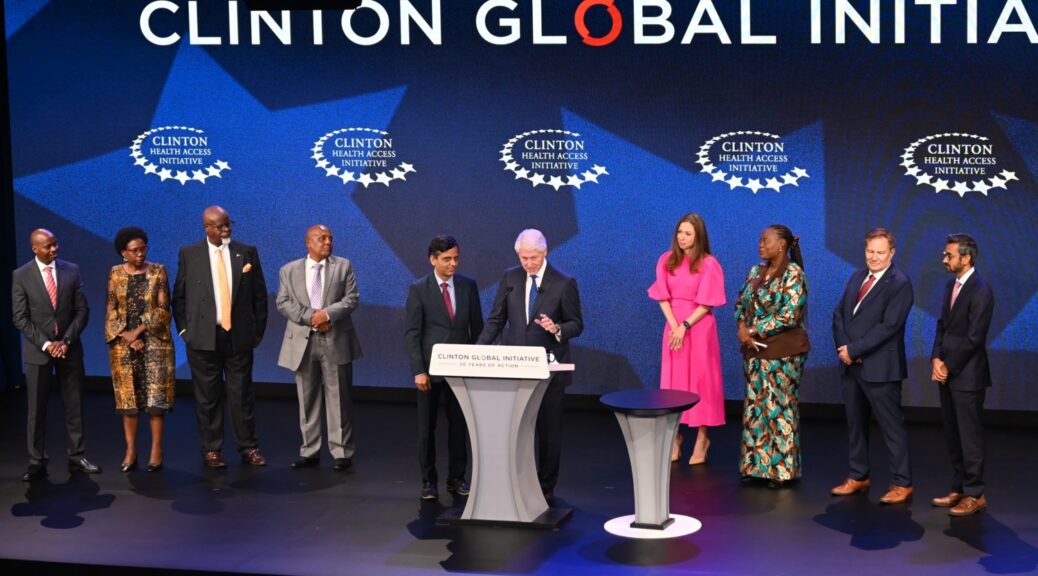
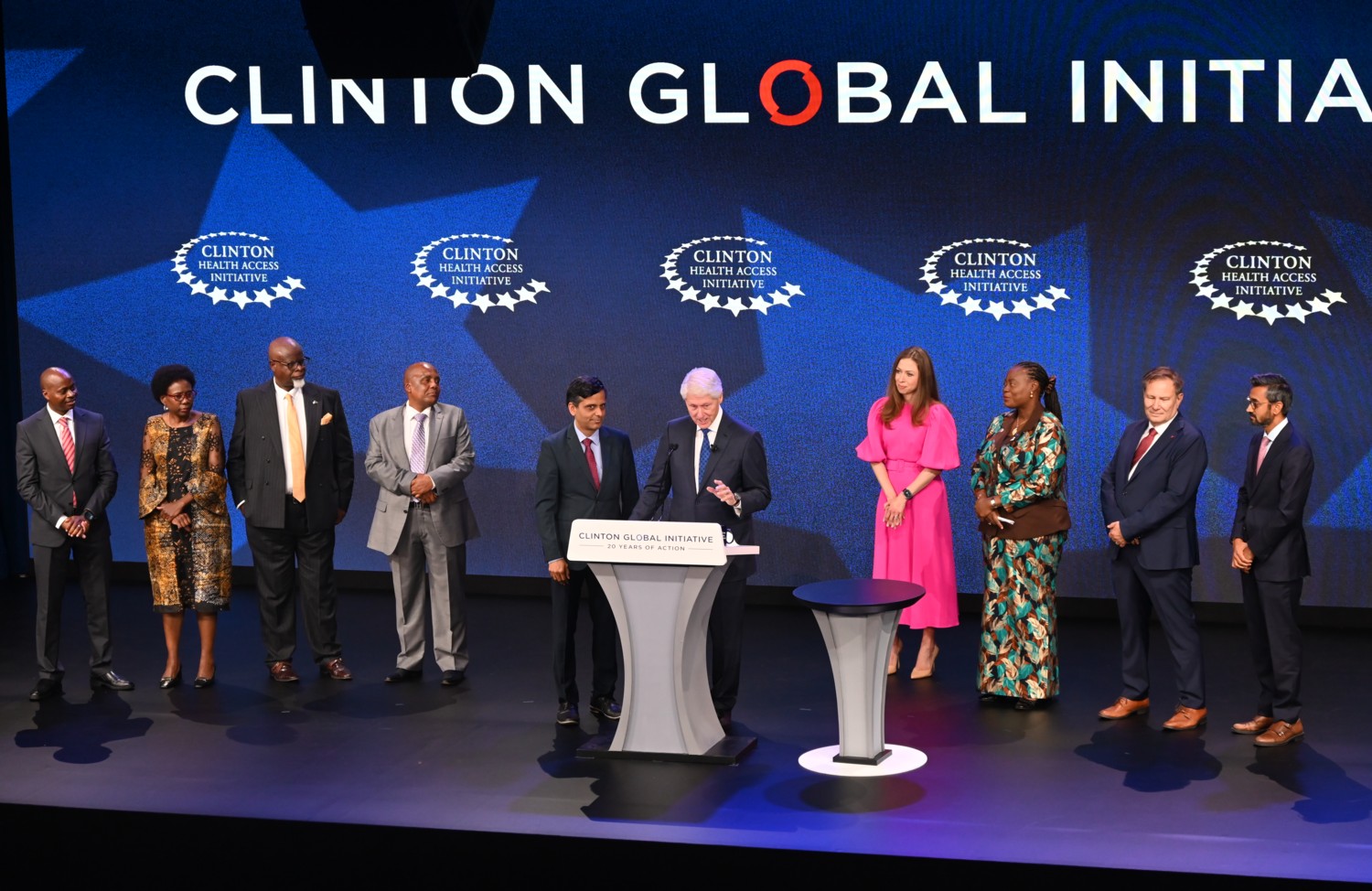
The Clinton Health Access Initiative (CHAI), along with Unitaid, Wits RHI, and Dr. Reddy’s Laboratories, announced a groundbreaking agreement on HIV prevention to dramatically open access to lenacapavir, a revolutionary medicine that effectively prevents HIV transmission with two injections a year. Under the CHAI-negotiated deal, this will be affordable and available for just $40 per year in 120 low- and middle-income countries by 2027.
Secretary Clinton marked the 30th anniversary of her remarks at the UN World Conference on Women, and announced a new Commitment to Action – a landmark report by the Women’s Initiative at Columbia SIPA’s Institute of Global Politics (IGP) and GWL Voices: Beijing+30: A Roadmap for Women’s Rights for the Next Thirty Years. The report outlines policy priorities critical to advancing the full and equal participation of women and girls in the twenty-first century, including in the areas of democracy and human rights, technology, economic participation, and conflict and climate.
Dr. Chelsea Clinton spoke with Audrey Tang, the cyber Ambassador of Taiwan, about overcoming polarization, how the public views democracy, and the importance of media literacy.
The Clinton Presidential Center, along with the City of Little Rock and ENFRA, announced a partnership to build the Clinton Sustainable Energy District (CSED) to offset carbon emissions and reduce utility costs through a new district energy system and a 5-megawatt solar array.
This year’s CGI Annual Meeting was reimagined to promote collaboration through Working Groups – facilitated, action-focused sessions where leaders will collaborate with mission-aligned organizations to drive real solutions in the areas that matter most and are under the greatest threat. Secretary Clinton announced progress from these Working Groups that CGI will build action on in the coming years and months:
Out of the Innovative Finance Working Group, Kiva Microfunds will launch a new social enterprise fund of at least $10 million in 2026, in partnership with corporate foundations.
The Health Working Group focused on using AI to overcome systemic gaps in chronic care; one project that came out of this group will expand maternal telehealth in Zimbabwe.
In the Education Working Group, the Clinton Foundation’s Too Small to Fail initiative and UNIDOS US led a conversation about expanding access to early learning. The group is exploring a pilot program in three U.S. cities in 2026 to provide immigrant families with early education resources.
The Human Rights and Democracy Working Group focused on issues including accelerating women’s democratic participation and defending LGBTQ+ rights, and developed ideas from civic education programs for at-risk youth in Northern Ireland to anti-authoritarian initiatives worldwide.
Members of the Climate Working Group dug into the tough realities of climate change and mapped out bold plans, including creating a water fund to unlock economic opportunities for millions; building climate adaptation hubs across the tropical belt, starting at COP30 in November; and opening new markets to support regenerative farmers.
The Economy Working Group focused on challenges like the care economy and access to capital. Out of that discussion came a commitment to launch a Global Network for National Service that will strengthen, expand, and scale national service programs around the world.
The Truth and Information Working Group discussed ways to cut through misinformation and focus on building community. In the next year, a top priority will be advocating for state and local leaders to enact responsible regulations on tech platforms and give users more ownership over their data.
The Humanitarian Response Working Group emphasized the need for innovation, preparedness, and localized responses to humanitarian crises around the world; with action items including a shared information system among responding NGOs, new funding opportunities, and innovative research-based tools.
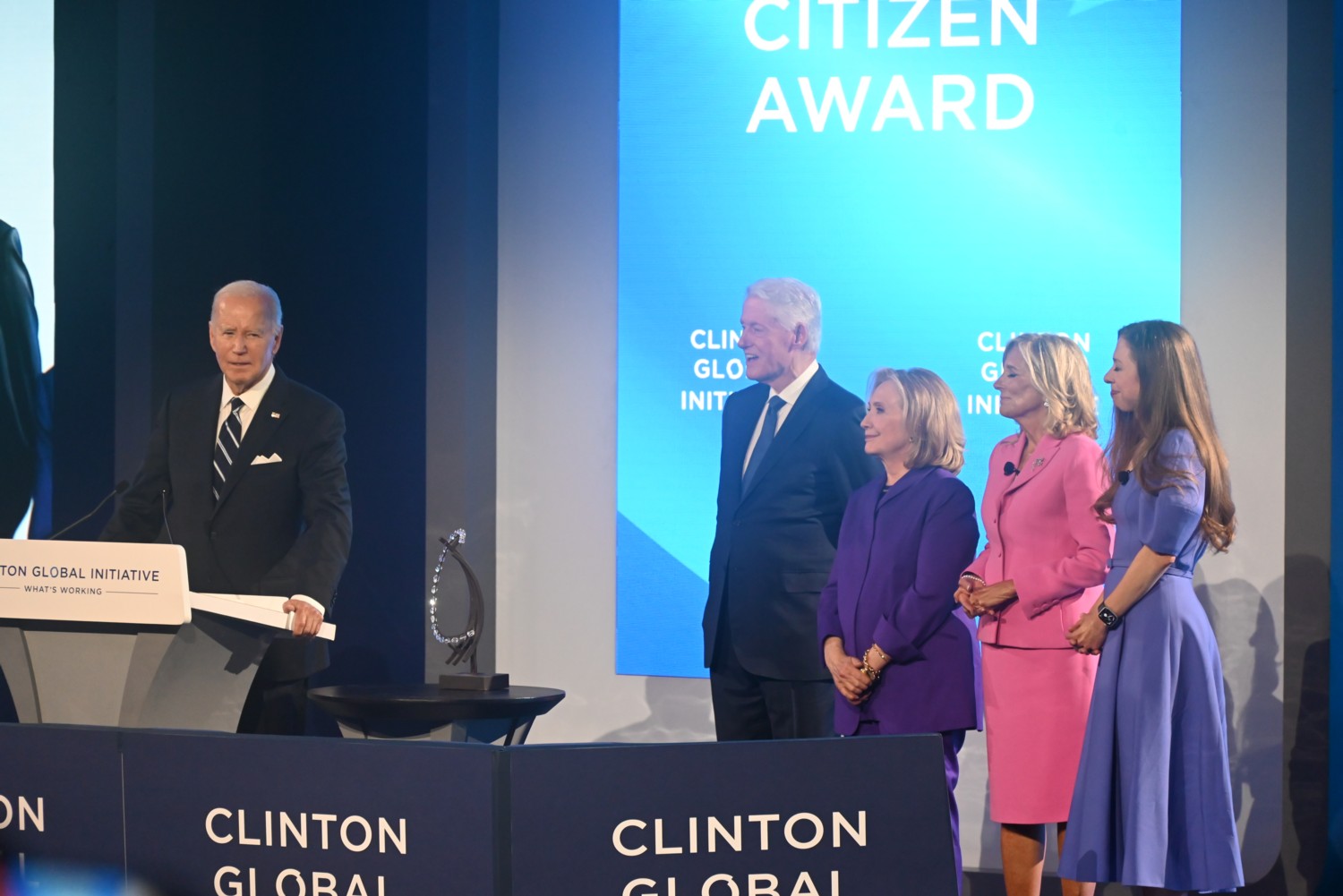
President Bill Clinton, Secretary Hillary Clinton and Dr. Chelsea Clinton award the Clinton Global Citizen Award to entrepreneur and philanthropist B. Thomas Golisano for his transformative philanthropic work, including contributing $900 million to disability services, education, animal welfare, healthcare and numerous other community focused non-profits. Golisano was also an early supporter of the Clinton Global Initiative.
President Clinton also awarded the Clinton Global Citizen Award to entrepreneur and philanthropist B. Thomas Golisano for his transformative philanthropic work. As Founder of Paychex, a human resources software and service provider for small to medium sized businesses, Golisano has invested in endeavors that advance entrepreneurship and drive the success of numerous businesses and start-ups; he has also made more than $900 million in philanthropic contributions to disability services, education, animal welfare, healthcare — including four children’s hospitals that bear his name; Rochester, Syracuse, Ft. Myers and Buffalo — and numerous other community focused non-profits. Past recipients of the Clinton Global Citizen Award include President Joseph R. Biden, Jr., First Lady of Ukraine Olena Zelenska, Nadia Murad, and Dr. Muhammad Yunus.
Find information on all 106Commitments to Action announced at CGI 2025 at clintonglobal.org.
Across the globe, the lives of 500 million people in more than 190 countries have benefited from the more than 4,100 projects and partnerships made through the Clinton Global Initiative’s programs and initiatives since 2001. This is just one of the impacts reported in its annual Impact Report. The report details a continued legacy that brings diverse and unlikely partners together to take action. In 2024, the Foundation focused on what worked around the world and how to keep moving forward in unprecedented times.
Some of the other key milestones reached in 2024 include:
891,000 doses of lifesaving Naloxone distributed to recovery residences, high schools, universities, and community organizations in 20 states through the Overdose Response Network.
517,000 students and educators have participated in enriching educational and cultural programming free-of-charge at the Clinton Presidential Center.
21 million people worldwide have access to lifesaving HIV/ AIDS, tuberculosis, and malaria medications through the Clinton Health Access Initiative, an independent, associated organization.
1.4 million children’s books donated and provided to families in communities that are under-resourced through Too Small to Fail, the Foundation’s early childhood initiative.
31 million U.S. children leading healthier lives through the Alliance for a Healthier Generation, an initiative jointly founded by the Foundation and the American Heart Association.
In a joint letter to the Foundation’s community, President Bill Clinton, Secretary Hillary Rodham Clinton, and Vice Chair Chelsea Clinton wrote, “For more than two decades, the Clinton Foundation has aspired to build a world where everyone has the opportunity to create better tomorrows for themselves, their families, and their communities. As we share in this report, in 2024 we saw how bringing together diverse and often unlikely partners from business, government, and civil society can be a practical strategy for delivering outsized impact across the United States and around the world.”
“The gaps between what the public sector can provide and what the private sector can produce seem to be growing bigger each and every day. The work we do here will continue to help fill those gaps. Whether we’re launching targeted initiatives that test new solutions or expanding proven programs that have transformed millions of lives, we must work together to keep putting people first and building a better future,” the family shared.
Some of the key moments that inspired action in 2024:
Using Media to Educate on Early Childhood: Too Small to Fail partnered with the FrameWorks Institute and Rockefeller Foundation to create a playbook for storytellers on how to frame the impact of climate change on children’s health. Secretary Clinton and Chelsea expanded on this work by hosting “Media that Motivates,” encouraging popular media to share stories that explore this topic
Protecting Children from Social Media: At the CGI 2024 Annual Meeting, Prince Harry, The Duke of Sussex, launched a new CGI Commitment to Action through The Archewell Foundation’s Parents’ Network to help protect children from the harmful effects of social media.
A Critical NATO Milestone: President Clinton traveled to Prague to mark the 25th anniversary of the Czech Republic, Poland, and Hungary joining NATO, which helped create a more peaceful, democratic Europe. In his keynote, he reflected upon his early support for NATO’s expansion at the time, as well as the continued importance of NATO and maintaining our global alliances.
Profiling Moments in American History: The Clinton Center’s permanent exhibitions chronicle American history and culture at the turn of the 21st century. Visitors experience full-scale replicas of the Oval Office and Cabinet Room and original works of art, such as the Crystal Tree of Light crafted by American artist Dale Chihuly. This dazzling glass sculpture was created for the Millennium Celebration and is part of the permanent collection at the Clinton Presidential Center.
Reflecting on Decades of Impact: In November, President Clinton released his memoir, “CITIZEN: My Life After the White House,” providing a detailed and moving account of his post-presidential years, including stories of the Clinton Foundation’s impact, the origin of the Clinton Global Initiative, key events of the 21st century, and the people who’ve inspired him to keep going
A Moment of Unity: At the CGI 2024 Annual Meeting, Yael Admi, co-founder of Women Wage Peace, and Reem Hajajreh, founder of Women of the Sun, discussed the historic partnership between their movements to promote a nonviolent resolution to conflict across the Middle East.
Marking Two Decades of Work in Little Rock: Former colleagues and friends from the Clinton Administration and Foundation community reunited at the Clinton Center’s 20th anniversary celebration. Administration alumni joined “The West Wing” stars Dulé Hill, Richard Schiff, and Melissa Fitzgerald for a conversation about Hollywood moments and the real-world leadership that inspired the iconic show.
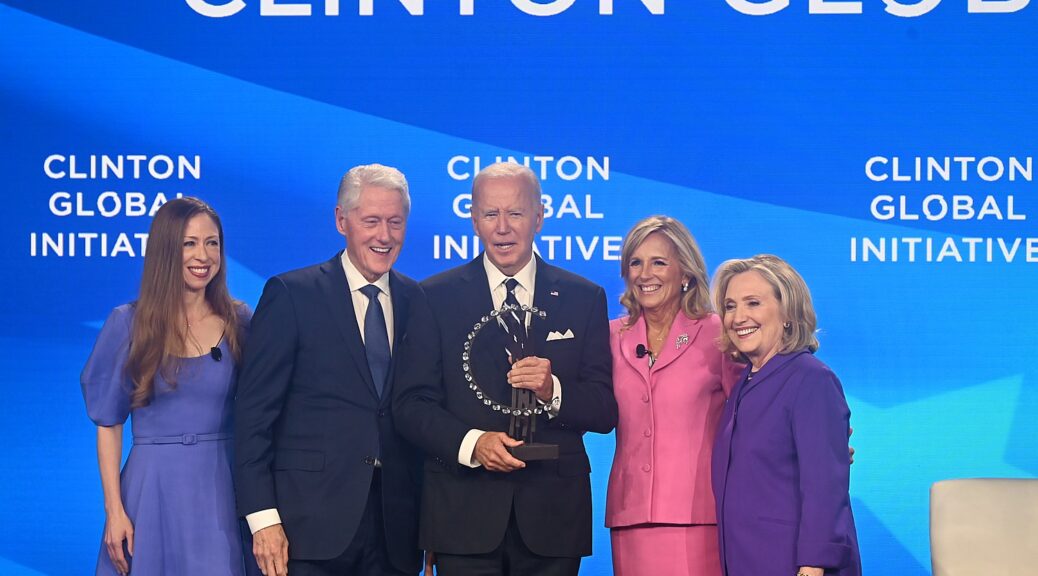
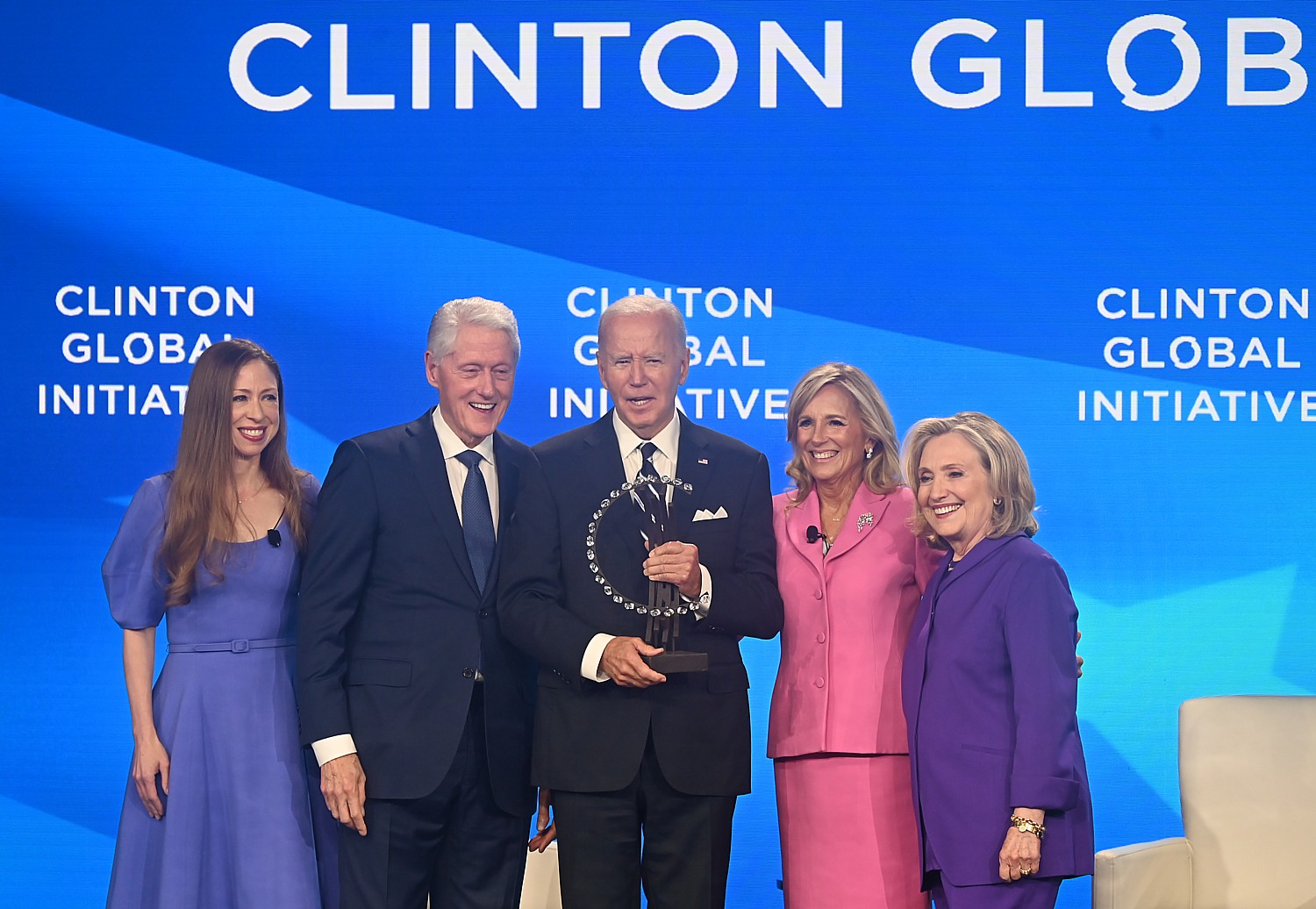
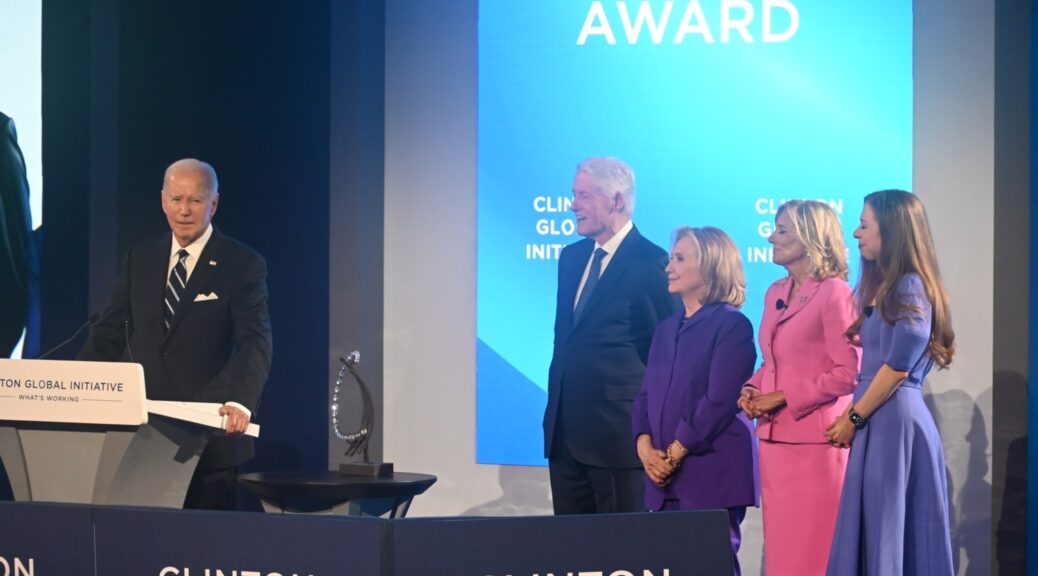
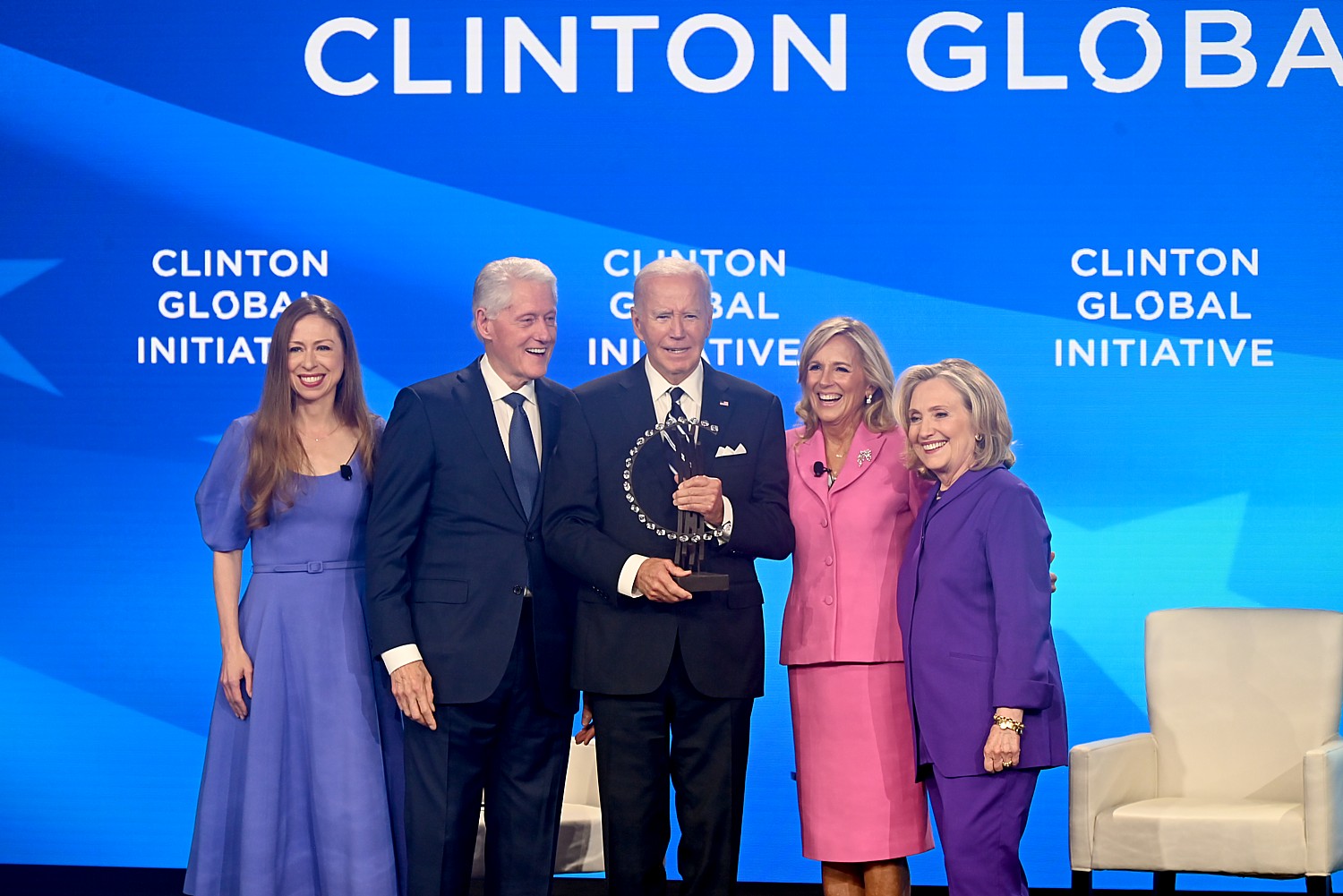
Honoring a Lifetime of Leadership: At the CGI 2024 Annual Meeting, President Joe Biden received the Clinton Global Citizen Award for his “uncommon decency and goodness.” Chosen by President Clinton, Secretary Clinton, and Chelsea, the award recognizes individuals who embody global citizenship through their vision and leadership.
Founded by President Bill Clinton in 2005, the Clinton Global Initiative is a community of doers representing a broad cross section of society and dedicated to the idea that we can accomplish more together than we can apart. Through CGI’s unique model, more than 10,000 organizations have launched more than 4,000 Commitments to Action — new, specific, and measurable projects and programs – that are making a difference in the lives of more than 500 million people in 180 countries.
Read the full annual Impact Report – including highlights from Foundation programs and initiatives around the world – at clintonfoundation.org/2024impactreport.
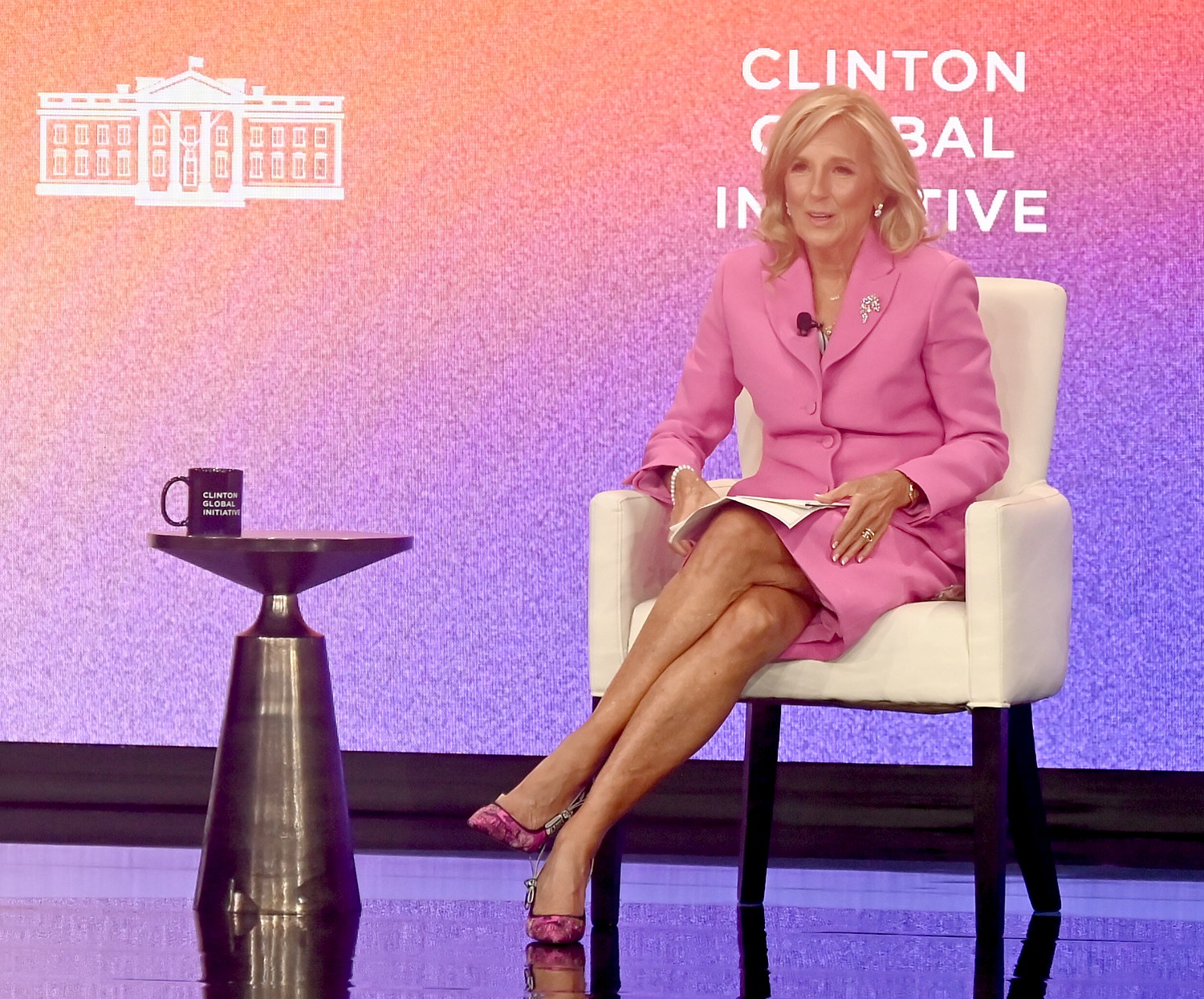
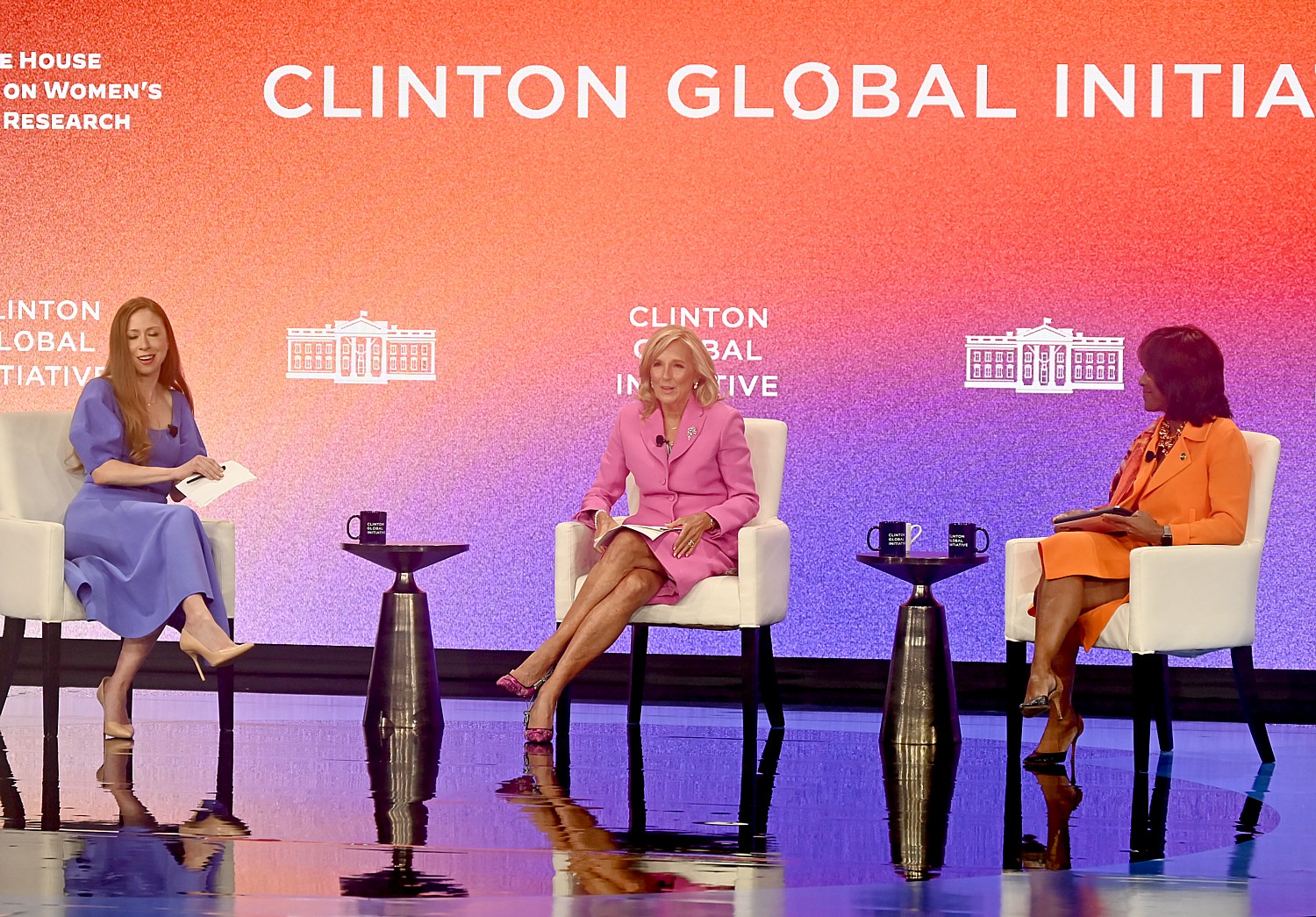
First Lady Jill Biden at the 2024 Clinton Global Initiative announced the Department of Defense’s new commitment to spend $500 million on vital women’s health research. With this new investment, the Department will fund research on conditions that affect women uniquely, disproportionately, or differently—such as ovarian cancer, rheumatoid arthritis, and musculoskeletal injuries. This commitment is consistent with President Biden’s Executive Order on Advancing Women’s Health Research and Innovation as well as the Department of Defense’s broader efforts to support the health of the women it serves and the medical readiness of the force.
The First Lady, joined by Chelsea Clinton, vice chair of the Clinton Foundation, and Dr. Valerie Montgomery Rice, president of Morehouse Medical School and an infertility specialist and researcher, also discussed the rapid progress being made by the White House Initiative on Women’s Health Research, which was launched less than a year ago with the goal of fundamentally changing how we fund and approach women’s health research, that included $100 million for transformative research and development in women’s health.
“Women are living longer, which means they are living longer with chronic pain,” Dr. Biden said to emphasize the need to determine why women are more likely to become afflicted by Alzheimer’s, MS, and auto immune diseases and no one knows why. Up until now, research on medications, therapies and treatments have only been developed with men as subjects. There has been virtually no study of ovarian health – arthritis, migraines – and why women getting these conditions.
President Biden was determined to do something about it, so allocated $100 million to ARPA-H – the mega-research agency of the government which Biden created to do health research in the same way ARPA researches and develops technology; then the National Institutes of Health allocated $200 million to study how menopause affects the brain, heart, and bone health. Now, the Department of Defense has allocated $500 million to study military women’s health, which will yield insights for all women.
Dr. Rice, a ground-breaking OB/GYN, said more study has to be done on how nutritional balance influences the cycle, how estrogen levels fluctuate throughout the cycle, and about lifestyle changes. “The only way we can understand how to introduce interventions is to include women in the studies early.” She added that social determinants must be considered in order to engender trust so women will volunteer to participate in clinical trials. “It starts with trial design.”
Monday’s CGI event followed the First Lady joining the top of the President’s Cabinet meeting last week, where she expressed gratitude to the agencies for their continued progress and momentum towards that goal. This was the first time the First Lady joined a Cabinet meeting and is a testament to how personally important this effort to advance women’s health research is for both the President and the First Lady.
Since launching the initiative last November, the First Lady has visited research centers and universities, and spoken with doctors and scientists across the country to understand the research questions we need to ask – and the answers they could find if we invest in women’s health.
“Since launching the White House Initiative on Women’s Health Research last November, the First Lady has put the spotlight on the urgent need to close the gap in how we fund and approach women’s health research,” FLOTUS Press Secretary Vanessa Valdivi stated.”The Biden-Harris Administration has quickly mobilized to make progress in less than year, and in the months ahead the First Lady will continue to push the work of this initiative forward, and build on the incredible momentum and enthusiasm we’ve seen across the public and private sectors.”
The White House Initiative on Women’s Health Research
The White House Initiative on Women’s Health Research is ensuring that research on women’s health is a priority and galvanizing new research on a wide range of topics. In his State of the Union address, President Biden called on Congress to make a bold, transformative investment of $12 billion in new funding for women’s health research. The President also signed an Executive Order on Advancing Women’s Health Research and Innovation that directed the most comprehensive set of executive actions ever taken to expand and improve research on women’s health.
The Initiative—led by the Office of the First Lady and the White House Gender Policy Council and Chaired by Dr. Carolyn M. Mazure —consists of executive departments and agencies across the federal government, such as the U.S. Departments of Health and Human Services, Defense, and Veterans Affairs, and White House offices, such as the Office of Management and Budget and the Office of Science and Technology Policy. Members of the White House Initiative on Women’s Health Research have already taken action to advance women’s health research, including:
The President’s Advanced Research Projects Agency for Health (ARPA-H) committed $100 million for transformative research and development in women’s health for its first-ever Sprint for Women’s Health. ARPA-H received an unprecedented response to its call for proposals, receiving submissions from a mix of scientific visionaries from across the globe and sectors.
The National Institutes of Health (NIH) launched a new agency-wide effort to invest $200 million for new, interdisciplinary women’s health research—a first step towards the transformative central Fund on Women’s Health that the President called on Congress to invest in. This cross-cutting effort will allow NIH to fund ambitious, multi-faceted research projects such as research on the impact of perimenopause and menopause on heart health, brain health and bone health.
The Department of Health and Human Services announced $12.5 million in new funding to address the unique mental health and substance use treatment needs of women. The new Women’s Behavioral Health Technical Assistance Center will help fill vital gaps in health care providers’ knowledge and ability to treat the mental health and substance use conditions of women across the nation.
The NIH launched a new challenge to accelerate the development of innovative technologies for the diagnosis of endometriosis, a debilitating condition that affects about 1 in 10 women and often takes years to be diagnosed. NIH will award $3 million in prizes to innovators who develop new technologies that make it easier and quicker to diagnose endometriosis.
The National Science Foundation (NSF) issued its first-ever call for novel and transformative science and engineering research focused entirely on women’s health. NSF has also convened experts in the fields of engineering, biomedical research, and advanced computing to identify ways to improve women’s health research—including how artificial intelligence and machine learning can revolutionize our understanding of menopause.
DoD and the Department of Veterans Affairs launched a new Joint Collaborative to Improve Women’s Health Research for Servicemembers and Veterans to further promote joint efforts to advance women’s health research and improve evidence-based care for women Servicemembers and veterans.
The First Lady joined Chelsea Clinton and Dr. Valerie Montgomery Rice at the Clinton Global Initiative to discuss women’s health research as part of the mainstage session, titled “Look Around,” where leaders from across the social impact spectrum highlighted the ways in which they break down barriers between peer institutions, cultivate partnerships and community, and align values and programs to create new, specific, and measurable ways to support one another.
As vice chair of the Clinton Foundation, Chelsea Clinton works alongside the Foundation’s leadership and partners to improve lives and inspire emerging leaders across the United States and around the world. This includes the Foundation’s early child initiative Too Small to Fail, which supports families with the resources they need to promote early brain and language development; and the Clinton Global Initiative University (CGI U), a global program that empowers student leaders to turn their ideas into action. A longtime public health advocate, Chelsea also serves as vice chair of the Clinton Health Access Initiative and uses her platform to increase awareness around issues such as vaccine hesitancy, childhood obesity, and health equity.
Dr. Valerie Montgomery Rice, president of Morehouse School of Medicine (MSM) and the first woman to lead the freestanding medical institution, is a renowned infertility specialist and researcher. She most recently served as dean and executive vice president of MSM, where she has served since 2011. Prior to joining MSM, Dr. Montgomery Rice held faculty positions and leadership roles at various health centers, including academic health centers. Most notably, she was the founding director of the Center for Women’s Health Research at Meharry Medical College—an HBCU in Nashville, Tennessee—one of the nation’s first research centers devoted to studying diseases that disproportionately impact women of color.
Dr. Montgomery Rice joined the President and First Lady for the Women’s Health Research Executive Order signing at the White House in March and participated in two White House Initiative on Women’s Health Research events with Dr. Biden in Atlanta, GA in February.
President Joe Biden Receives 2024 Clinton Global Citizen Award
Immediately after the panel discussion, president Joe Biden came onto the stage to surprise the CGI attendees, and perhaps be surprised himself by being awarded 2024 Clinton Global Citizen Award.
The award acknowledged Biden’s transformational presidency in taking the United States out of deadly COVID pandemic and double-digit unemployment, to the strongest recovery, the strongest economy, while transitioning the economy and society for economic, climate and civil justice, reestablishing the United States’ global leadership and standing up for democracy, peace and prosperity around the world, and standing up for country over personal interest.
As President Biden told the United Nations General Assembly just hours before, “I’ve made the preservation of democracy the central cause of my presidency. This summer, I faced a decision whether to seek a second term as president. It was a difficult decision. Being president has been the honor of my life. There is so much more I want to get done. But as much as I love the job, I love my country more. I decided, after 50 years of public service, it’s time for a new generation of leadership to take my nation forward.”
To the Clinton Global Initiative he said, “I am congenitally optimistic about this country. I really am… We’re good people. We really are. We just have to live up to what we expect of others,” in humbly accepting the award.
Previous Clinton Global Citizen Award winners have included First Lady of Ukraine Olena Zelenska (2023); Dolores Huerta (2022) for her advocacy of human rights of women, children and working class people worldwide; Nadia Mura (2016), a Yazidi woman who survived her capture and enslavement by ISIS and has become a voice for women and children trafficked in conflict; and Malala Yousafzai (2014) who survived an attack by the Taliban, targeted for going to school, and has gone on to be a strong advocate for girls’ education.