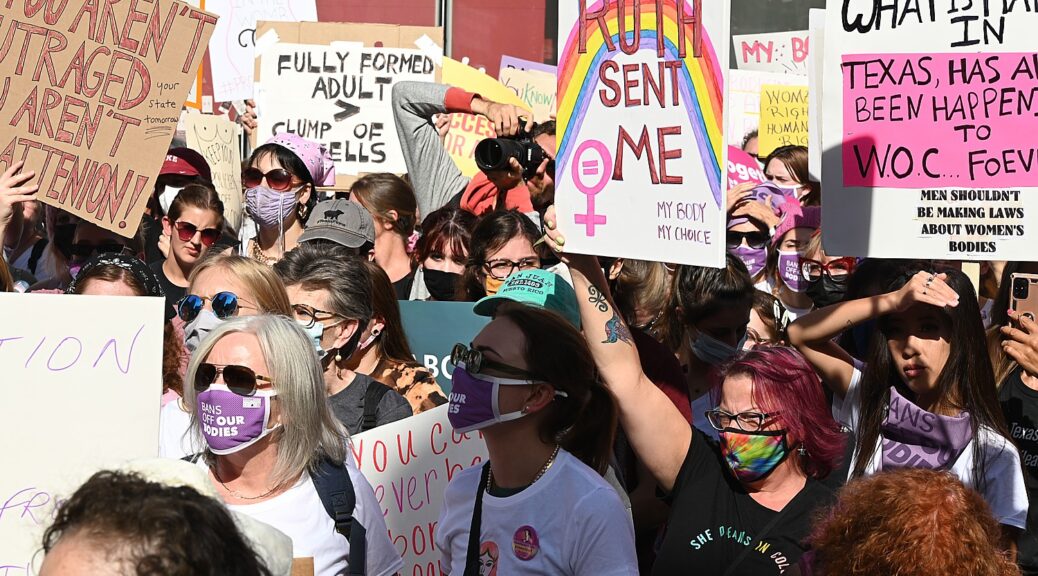
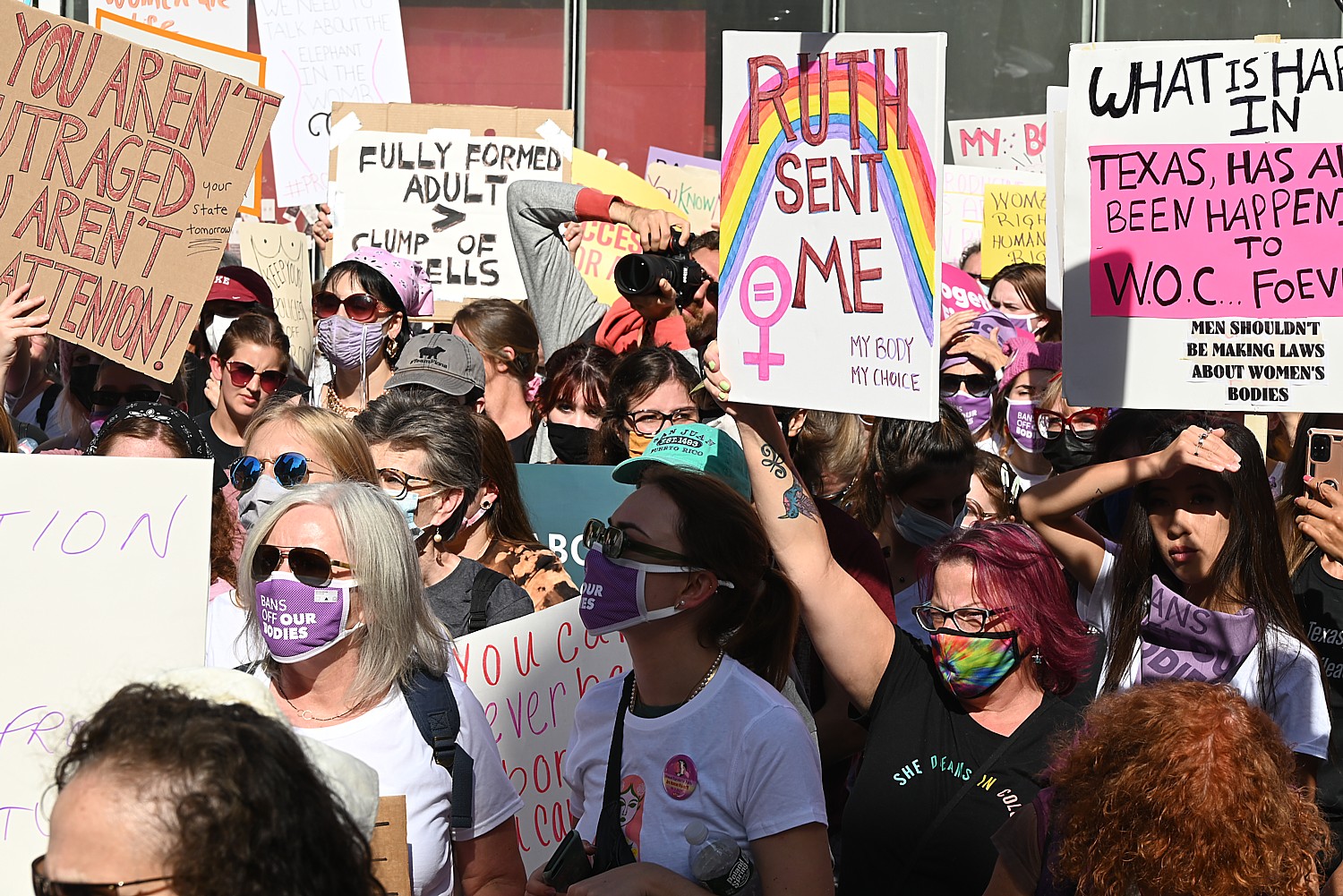
Note: in his Senate confirmation hearings as Attorney General, Todd Blanche assured Texas Senator Ted Cruz he would go after women’s right to obtain the abortion medication mifepristone through the mail, applying the Comstock Act’s prohibition of mailing “obscene materials” (guns okay to send through mail, mail-in ballots not okay) and opening the door to a national abortion ban. With this reward to a convicted anti-abortion extremist, the trump administration is also opening the door to intimidation and violence against women and healthcare practitioners, much as they have given blessing to January 6 insurrectionists. Meanwhile, Trump is still pushing for his $1.776 BILLION fund to pay January 6 insurrectionists 7-figure “settlements”. – Karen Rubin, editor@news-photos-features.com
Washington, D.C. — The trump administration is handing a seven-figure, taxpayer-funded settlement to a convicted anti-abortion extremist who prevented patients from accessing reproductive healthcare. Paul Vaughn was convicted of violating the Freedom of Access to Clinic Entrances (FACE) Act after helping blockade a Tennessee clinic. This hefty payout is an alarming escalation after President Trump pardoned Vaughn and 22 other anti-abortion extremists convicted under the FACE Act just days into his second term.
This news comes as acting Attorney General Todd Blanche, a staunch opponent of the FACE Act, awaits Senate confirmation to become the Attorney General permanently. Under Blanche, the DOJ fired the career attorneys responsible for enforcing clinic protections, dismissed pending FACE Act cases, and released a sham report attacking FACE Act enforcement. Blanche’s leadership of the DOJ threatens to effectively greenlight the terrorization of people seeking basic healthcare and shield extremists from accountability.
“While everyday families are struggling to pay for essentials, Trump and his administration are using taxpayer money to hand out massive payments to anti-abortion extremists,” Reproductive Freedom for All President and CEO Mini Timmaraju said in a statement. “Trump and Blanche have remade the DOJ into an institution that rewards violent criminals instead of holding them accountable—putting providers and patients at risk. They have once again flipped justice on its head. Voters won’t forget Republicans’ staggering corruption and warped priorities this November.”
The Trump administration’s attacks on the FACE Act threaten to erode the law’s protections and embolden anti-abortion extremists to escalate harassment, intimidation, and clinic blockades. Reproductive Freedom for All will continue fighting to defend the FACE Act, hold the Trump administration accountable for politicizing the Justice Department, and protect every person’s ability to access reproductive healthcare safely and without fear.
For over 55 years, Reproductive Freedom for All (formerly NARAL Pro-Choice America) has fought to protect and advance reproductive freedom at the federal and state levels—including access to abortion care, birth control, pregnancy and post-partum care, and paid family leave—for everybody. Reproductive Freedom for All is powered by its more than 4.5 million members from every state and congressional district in the country, representing the 8 in 10 Americans who support legal abortion.
Reproductive Freedom For All, National Latina Institute for Reproductive Justice, and other partners hosted a press call on Thursday morning to highlight immigration detention as an urgent and immediate reproductive justice issue. (Access a recording from today’s call here.)
Reproductive freedom and justice advocates called for oversight and accountability for the human rights violations and the medical neglect and mistreatment of pregnant, postpartum, and/or nursing people in detention across the country. Overwhelmingly, speakers agreed that the Trump administration is choosing to enforce its extreme agenda rather than the safety of pregnant people.
Experts convened to speak on the crisis at hand, share the consequences for pregnant individuals and their children in detention, bring to light real-life examples, and discuss future actions from organizations, including legal actions to hold this administration accountable.
“For months now, we’ve seen reports of pregnant people in ICE custody experiencing medical neglect and abuse,” stated Yvonne Gutierrez, Reproductive Freedom for All Executive Director. “This is state-sanctioned violence. Trump’s anti-abortion and anti-immigrant attacks are part of the same agenda, aimed at controlling people’s bodies, denying care, and targeting communities they deem less deserving of freedom and dignity. This is dangerous, and it’s escalating. We will keep fighting for a world where everyone has the freedom to make decisions about their bodies and their futures, and where families are protected by their government, not targeted.”
“We’ve had enough of these attacks on immigrant communities, designed to instill fear and confusion and deter people from accessing healthcare and essential services,” declared Lupe M. Rodríguez, Executive Director, National Latina Institute for Reproductive Justice. “We know that actions to separate families and make it harder for people to make their own decisions about their bodies and lives violate our reproductive rights and bodily autonomy. Immigrant justice IS reproductive justice. Everyone, no matter who they are or where they come from, should be able to get the health care they need; live safe, healthy lives; and raise their families with dignity.”
“Unaccompanied immigrant youth must be able to access the full range of reproductive health care, including abortion, under the current law,” Brigitte Amiri, Deputy Director, American Civil Liberties Union, Reproductive Freedom Project, stated. “Any attempts to restrict abortion access for youth in immigration shelters will be devastating. If any youth in ORR custody is denied access to reproductive health care, they should contact us at 212-549-2633.”
“Our pregnant clients tell us they don’t know when or if they will be able to go to the OBGYN, and when they do go, they aren’t told when their next appointment will be,” said Jesus Gonzalez, Managing Social Worker, Florence Immigrant & Refugee Rights Project, Arizona. “We currently have a client who is in her third trimester and has no information on what the plan would be if she were to give birth while detained. Unfortunately, it is extremely difficult to secure release from detention for anyone right now, including people who are pregnant or suffering from serious illnesses. While our clients have reported poor conditions in detention for many years, what we’re seeing now is a choice on behalf of ICE and the federal government to detain everyone that they can, regardless of their medical history and regardless of whether they can obtain the medical care they need in ICE custody. We are sounding the alarm on the real harms of detaining pregnant people and the danger that this poses to their health and the health of their babies. We call on ICE to immediately release all pregnant people from detention and stop this harmful practice of detaining pregnant people.”
“Healthcare access is not a nice-to-have, it’s lifesaving. And reproductive health care should never be seen as optional — it’s a dignity that all women deserve,” said Rochelle Garza, President of the Texas Civil Rights Project. “Texans know this fight deeply. Those of us living on the border have experienced this cruelty for years. And it’s no coincidence that many of these immigration detention centers, whether they are run by ICE or ORR, are located in Texas. Or that the enforcement methods here have spread across the country. It’s past time to shut down these facilities and end detention of families and any medically vulnerable individuals.”
“The story of my mom– a woman who crossed the border pregnant with me– reminds me that migration and reproductive healthcare are inextricably tied. Despite people traveling miles in the hope of a better life, immigration status, financial conditions, and dehumanizing treatment create significant barriers to care,” said Congresswoman Delia C Ramirez (D-IL), lead sponsor of the Melt ICE Act. “Reproductive justice is a human right and immigrant justice demands the dismantling of systems that criminalize migration, tear apart families, and deny immigrants access to health care and full personhood.”
Trump’s HHS Targets 13 States Where Abortion Coverage is Protected With New Investigation
In other developments, The Guardian recently reported that Trump’s Department of Health and Human Services has launched investigations into 13 states that currently require health insurance plans to cover abortion care, claiming that these protections violate the Weldon Amendment.
Reproductive Freedom for All-endorsed New Jersey Governor Mikie Sherrill criticized the investigationsin a statement last Thursday as “nothing but a fishing expedition wasting taxpayers’ money.”
“I will fight tooth and nail to defend and protect New Jerseyans’ abortion rights against attacks from Donald Trump, or anyone else,’ she said. ‘New Jersey requires health insurance plans to follow all applicable laws, including protecting women’s reproductive freedom.”
The Weldon Amendment has long been used to let politicians and health care entities impose their personal beliefs on patients—allowing hospitals, insurance companies, and individual health care professionals to deny care, coverage, or referrals for abortion care.
This isn’t the first time the Trump administration has sought to weaponize the Weldon Amendment to attack states that have passed laws to safeguard abortion access. In 2020, the Trump Administration announced it would withhold $200 million in federal Medicaid funds quarterly from California by claiming that the state’s requirement for abortion coverage in health care plans violates the Weldon Amendment.
“Trump and his allies have lied time and again by saying that they’re leaving abortion access up to the states—and this latest move from Trump’s HHS reaffirms that this was never going to be the case. This is part of a broader strategy to chip away at abortion access nationwide, including in states where it is legally protected, and the Trump administration won’t stop pressuring providers, restricting medication abortion, and challenging health care coverage until they reach that goal,” Reproductive Freedom for All stated.
For over 50 years, Reproductive Freedom for All (formerly NARAL Pro-Choice America) has fought to protect and advance reproductive freedom at the federal and state levels—including access to abortion care, birth control, pregnancy and post-partum care, and paid family leave—for everybody. Reproductive Freedom for All is powered by its more than 4 million members from every state and congressional district in the country, representing the 8 in 10 Americans who support legal abortion.
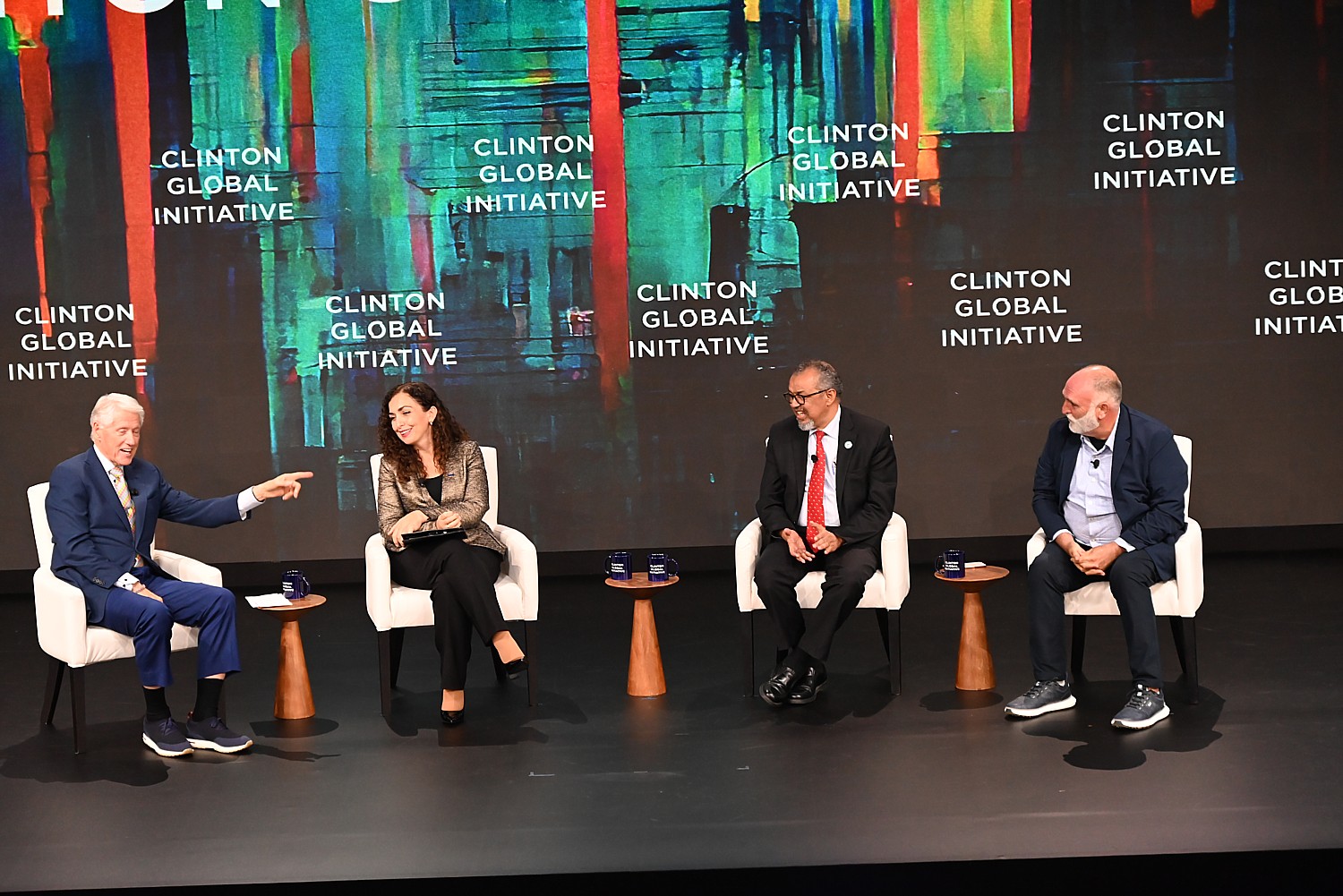
Each year since 2005, the Clinton Global Initiative’s gathering in New York City has been like an alternative universe – one of possibility, progress, inclusivity, equity. The positivity and possibility so starkly contrasted with what was happening outside: intractable problems of poverty, illiteracy, abuse, climate crisis, disease and hardship, homelessness, eternal war and crimes against humanity, with those with the power and influence to make changes simply throwing up their hands, ignoring their responsibility. But here, for the two days of the conference, there are real solutions, ones that were making actual progress until Trump came into the most powerful office in the world – the first time, halting progress, the second time reversing progress, and actively putting up cruel obstacles. As only one example, literally making investment in clean renewable energy illegal, canceling ongoing projects, ordering the recommissioning of old coal plants and declaring proudly that no windmill will be constructed during his term.
But we still gather together, hearing what has succeeded, what does work, trying to work around what is hoped to be a blip in the onward course of civilization. While the conference brings together the philanthropists, civil society, government leaders, the powerful and the experts, ordinary people can listen in and learn and become armed with the information to make their own communities more successful, and know what to demand of those they elect – Karen Rubin, editor@news-photos-features.com
This year’s CGI will once again bring together public, private, and philanthropic leaders to take action on democracy, economic and energy security, climate, health, affordability, humanitarian aid, freedom of the press, women’s equality.
NEW YORK — The Clinton Global Initiative (CGI), a signature program of the Clinton Foundation that unites global leaders to take action on the world’s most pressing challenges, announced that the 2026 Annual Meeting will take place September 22–23, 2026 in New York City.
2026 marks the 25th anniversary of the Clinton Foundation opening its doors in Harlem. Last week, Inside Philanthropy ran an in-depth assessment of President Clinton’s philanthropic legacy, concluding “Clinton has compiled a record of philanthropic impact since leaving office in 2001 that is unmatched by any former president and far more extensive than most people realize… CGI remains one of the more innovative and potent philanthropic efforts of our time.”
CGI’s Annual Meeting brings together heads of state, business leaders, philanthropists, social entrepreneurs, and representatives from civil society to forge new partnerships, develop solutions to urgent global challenges, and drive measurable progress. Since its founding in 2005 by President Bill Clinton, members of the CGI community have mademore than 4,300 Commitments to Action in partnership withover 13,000 organizations across the public, private, and nonprofit sectors that have touched the lives of more than 500 million people in more than 180 countries.
The 2025 CGI Annual Meeting marked a key moment for the community of doers, concluding with more than 100 new Commitments to Action.
Highlights from last year’s program included:
A groundbreaking global health agreement on HIV prevention led by the Clinton Health Access Initiative (CHAI) with partners to expand access to a new HIV-preventive medicine in 120 countries by 2027.
A landmark policy roadmap to advance women’s rights into the next decade, announced by Secretary Hillary Rodham Clinton in celebration of the 30th anniversary of her historic UN speech on women’s equality.
Strategic discussions on democracy, media literacy, and AI’s role in public life, featuring experts such as Dr. Chelsea Clinton and Audrey Tang, Taiwan’s cyber ambassador.
A focus on Working Groups – new, carefully curated, intensive sessions designed to develop collaborative solutions in finance, health, education, human rights, climate, and humanitarian response.
Building on a lifetime of public service, President Clinton established the Clinton Foundation on the simple belief that everyone deserves a chance to succeed, everyone has a responsibility to act, and we all do better when we work together. For two decades, those values have energized the work of the Foundation in overcoming complex challenges and improving the lives of people across the United States and around the world.
The Clinton Foundation works on issues directly or with strategic partners from the business, government, and nonprofit sectors to create economic opportunity, improve public health, and inspire civic engagement and service. Our programs are designed to make a real difference today while serving as proven models for tomorrow. The goal of every effort is to use available resources to get better results faster – at the lowest possible cost.
“We firmly believe that when diverse groups of people bring resources together in the spirit of true cooperation, transformative ideas will emerge to drive life-changing action.”
The repeal of Roe v. Wade by the ultra-right majority Supreme Court’s Dobbs decision in 2022 not only overturned women’s ability to control their own body, decide their own future, even save their own life, but the next phase, endowing a fertilized egg, embryo or fetus with personhood, essentially strips women of their personhood, altogether.
Women are not just second-class citizens, without the right to self-determination as a man is entitled to, women are mere brood mares, a slave of to the state, not much different than a beast of burden, without any rights at all – not the right to life, due process, equal protection, privacy, cruel and unusual punishment.
And the SAVE Act will make it difficult for women to regain their rights, their personhood by putting up discriminatory barriers to voting.
“Didn’t we already fight these battles?” one asked at a recent ReachOut America-Long Island meeting hosting Lynn M. Paltrow, the founder and former executive director of National Advocates for Pregnant Women (now Pregnancy Justice), now a leader of The Beacon for Democracy, who has been fighting these same battles since the 1960s.
In 13 states with absolute abortion bans, women no longer have the same protection under Health Insurance Portability and Accountability Act (HIPAA) of 1996 to keep their sensitive health information private from vigilantes, bounty hunters, spurned partners or prosecutors who are arresting women for using abortion medication and even women who have suffered a miscarriage.
Women who are on the brink of death, suffering in pain, or losing their ability to ever have a baby, no longer have the same right to Emergency Medical Treatment and Active Labor Act (EMTALA), mandating care, or for that matter, the same protection against cruel and unusual punishment as a mass murderer awaiting capital punishment.
And to make sure a woman has no ability to obtain reproductive health care, they are prosecuting doctors, nurses, healthcare workers – even those out of state where abortion care is legal.
The result is to create “maternity deserts” – places that no longer have doctors, healthworkers, too afraid of prosecution for providing care – and a rise in maternal and infant mortality. So much for “pro-life.”
Even when abortion was theoretically protected under the Constitution, states built barriers to access – requiring abortion clinics to meet unnecessary standards, allowing protesters to intimidate patients and healthworkers, even forcing pregnant women to undergo invasive probes and to look at the image of the fetus in their womb to shame her into abandoning her intention to abort. You would think that would violate the 4th amendment’s protections against unreasonable searches.
Or how about banning doctors from giving factual information about reproductive health – a violation of their First Amendment right to free speech?
Texas and Alabama are among the states that are trying to ban pregnant women from traveling out of state to places like New York State, even prosecuting family members who might provide aid. It doesn’t matter, as the Justice Department is now arguing, that the Constitution protects the right to travel across state lines and engage in conduct that is lawful where it is performed and that states cannot prevent third parties from assisting others in exercising that right. Florida was monitoring girl athletes’ menstrual cycles.
There’s a Pregnant Workers Fairness Act that went into effect in 2023 (thanks Biden-Harris) that requires employers to give reasonable accommodation to pregnant women, but Texas has decided it can ignore it.
And none of these have anything to do with “protecting life” (if that were true, these same people wouldn’t be blocking gun control even preventing doctors from inquiring whether parents store their gun safely, despite the fact gun violence is the greatest killer of children). Rather, it is about controlling, disenfranchising, disempowering and dehumanizing women.
“Abortion laws were a way of controlling women without seeming to. But abortion is about a medical procedure and ending pregnancy,” said Lynn M. Paltrow, an attorney and activist on behalf of reproductive justice, who has been fighting for reproductive justice since the 1960s/before Roe.
Indeed, while the anti-abortionists like to portray women seeing reproductive care are Jezebels, wanton or promiscuous women (no mention of those who are raped or victims of incest), six in 10 are already mothers and half have two or more children. As Paltrow noted, women seek abortion care for many different, personal reasons including not being able to afford more children or having health issues that would be compromised by pregnancy. Also, one in four pregnancies result in miscarriage, which requires a procedure, dilation and curettage (D&C), that falls under the same definition (and ban) as “abortion,” while 80 percent of pregnancy deaths are preventable, according to the CDC.
The United States, already with the highest rate of maternal and infant mortality of any high-income country due to the lack of universal health care, is seeing these rates surge in states that have total or near total bans on abortion. And yet, the number of abortions is not going down – only access to prenatal care and to legal, safe abortions.
Right wingers use abortion to rally the Christian Right, waving the banner of “pro-life.” Reproductive Rights activists made a mistake by framing the issue as the right to abortion rather than a woman’s human rights, Paltrow maintained – an echo of Hillary Clinton’s famous speech in Beijing 30 years ago, “Women’s rights are human rights,” the First Lady declared.
“The movement tends to narrow everything down to abortion rights but the issue is not defending particular medical procedure, it’s about defending the people who sometimes need to have the procedure as a full, whole person…Abortion laws were a way of controlling women without seeming to. But abortion is about a medical procedure and ending pregnancy,” said Paltrow.
But the most serious an assault on women’s rights, freedom, liberty and self-determination is the Religious Right’s crusade to establish the personhood of an embryo, fetus – essentially giving this entity, that cannot exist on its own, more rights than the mother whose own “personhood” becomes irrelevant.
Since the embryo or fetus cannot speak for itself, this gives the state authority and power over the woman – making her nothing more than a breeder cow or literally a slave of the state. (You would think this would violate 13th amendment, “Neither slavery nor involuntary servitude, except as a punishment for crime whereof the party shall have been duly convicted, shall exist within the United States.”)
She notes that personhood – or citizenship – according to the Constitution’s post-Civil War amendments, applies to “all persons born or naturalized in the United States…No State shall make or enforce any law which shall abridge the privileges or immunities of citizens of the United States; nor shall any State deprive any person of life, liberty, or property, without due process of law; nor deny to any person within its jurisdiction the equal protection of the laws.”
You would think that equal protection and due process would apply to the mother (and should have been used to establish Roe v. Wade, instead of the right to privacy), but if an embryo or fetus has “personhood rights”, the woman does not.
A Catholic judge ruled that the expectant mother “has placed herself in a special class of persons who are bringing another person into existence. I submit a woman who carries a child to viability is in fact a member of a unique category of persons.”
What does “a unique category of persons” mean in practical terms? Fewer rights, no bodily autonomy.
Persons in this “unique category,” Paltrow said, lose their right to life, liberty, freedom of religion, due process of law (procedural), bodily integrity (medical decision making), privacy in medical information, privacy in reproductive decision making, being free of unreasonable searches and seizures and being free of cruel and unusual punishment, their right to reasonable bail, counsel, right to parent, right to equal protection of the law (race and sex), right to freedom of speech and conscience, as well as human rights more broadly.
In other words, a slave of the state.
What does that mean? It gives the state, the authorities, some nasty neighbor the ability to prosecute a woman for her behavior during pregnancy – if she has a glass of wine, uses marijuana, smokes a cigarette, goes skiing, even drives a car or falls down the stairs – while women are forced by the state to come to the brink of death or lose their future futility without receiving health care.
Between 1973 (the year Roe v. Wade was decided), up to 2005 (32 years), there were 413 arrests of women who miscarried. Between 2006 and 2022 (17 years), there were 1387 arrests – that is three times the incidents in less than twice the time interval. But in just the two years since 2024, the year Dobbs overturned Roe, there have already been 412 arrests of women who miscarried – a number equal to the 32 years.
Among those prosecuted: a woman who fell down steps while pregnant, went to the hospital for treatment, was reported and arrested on her way home to her two other children, for attempted feticide.
Paltrow provided some horrifying examples from cases she fought:
Pamela Rae Steward Monson had a baby that died shortly after birth. She was arrested for medical neglect – not getting to the hospital quickly enough on the day of delivery, not getting prenatal care early enough. And when she did go to the doctor, everything the doctor told her became a weapon against her. Ultimately, she was found to be at fault because “she subjected herself to the rigors of sexual intercourse.”
Though Paltrow won the case (it was featured on “Nightline,”) “it launched hundreds of cases because prosecutors saw arresting a woman for something she did or did not do during pregnancy as a way of getting on TV.”
Another case involved Angela Carter, who had survived childhood bone cancer but had lost a leg. But after she was pregnant, she found a tumor the size of a football. “She wanted to live, so wanted to have the chemo or surgery that would save her life, even if it posed a risk to the fetus” Paltrow related. Instead, her desires were ignored and a judge – who never met her – appointed a lawyer to represent the interests of the fetus and ruled that she would have to undergo a Caesarean section to remove the 25-week old fetus – which in those days, had little chance of survival – even though the operation could kill Angela. Though she refused the C-section, the judge ordered it anyway. The baby lived two hours then died; Angela lived two days, then died.
In 2008, Jennifer Jorgensen, a Long Islander, was pregnant when she was involved in an automobile crash that killed two others. She was arrested and charged with driving while intoxicated and manslaughter, and though the baby was born alive, the prosecutor couldn’t convict her for anything but her behavior while pregnant that caused the accident. “They couldn’t convict her for the two who died, but violating her special obligation to unborn child.”
But this is New York State. Patrow’s group, National Advocates for Pregnant Women and Pregnancy Justice, filed an amicus brief in state Supreme Court arguing that there is no state law that says a woman can be held criminally liable for something she did or didn’t do while pregnant.
In a 2011 case (Dray v. Staten Island University Hospital), a Northwell Hospital had a secret policy allowing a doctor to overrule a mother’s decision if the doctor felt the fetus was at risk. That led to a woman being given a c-section against her will.
Since then, New York has passed an Equal Rights Amendment to the state constitution, outlawing discrimination on the basis of sex, pregnancy, or pregnancy outcome. “Abortion can’t be banned in New York State and women cannot be held criminally liable for doing something in pregnancy that somebody else doesn’t like.”
In contrast, 80% of arrests and prosecution of pregnant women that NAPW documented come from states that have passed abortion bans, like Mississippi and Texas.
“Blaming women is particularly cruel because, thanks largely to the abortion bans, there are now ‘maternity care deserts’. Since August 2023, more than 5.6 million women live in counties with no or limited access to maternity care services.
“They have nowhere to go because doctors don’t want to be in a state where they can be prosecuted for addressing a woman’s pregnancy crisis.”
Not surprisingly, the United States has the highest rate of maternal mortality of any high-income nation, and the rates of maternal and infant mortality are highest in states with abortion bans.
“Over 80 percent of those deaths are preventable. MAGA wants to lock up women as murderers – South Carolina, Georgia, Kentucky and Oklahoma are proposing to make homicide laws applicable to women who have abortions.”
A Nebraska teenager who had a medicinal abortion was sentenced to 90 days in jail. A Texas woman, Mallori Patrice Strait, 33, was arrested (the charge was abuse of a corpse) and spent nearly five months in jail after a December 19, 2024, incident where she experienced a miscarriage in a Whataburger bathroom in Converse, Texas. (The charge was later overturned for lack of evidence, but still.)
“If fetuses are declared children, they will be covered under criminal law,” she notes, citing a case where a woman who had a cocaine addiction, gave birth, and was convicted of delivery of drugs to a minor through her umbilical cord.
There is also renewed effort to extend abortion bans to banning contraception as murder.
If the “pre-born” have personhood and a right to life, “we lose our right to life.”
“The push to have fetus as person – fetal rights – is an argument based on fantasy that fertilized egg, embryo, fetus inside woman’s body are really outside” and have more constitutional rights than any person (including mother).
Instead, “make [reproductive justice] a conversation about our personhood, our experience, someone who needs to be treated with a right to healthcare.”
Feeling empowered to deny a woman’s personhood, though, goes back to the fact this country was founded on the notion that one could own and control people (slavery). After being shipped to America, slave women were raped – forced reproduction was a primary way slaveholders made money – producing more slaves to sell, she said.
“We need to change the conversation [from abortion] to personhood… We win when we make argument that this isn’t just about abortion, it is about women being recognized as people.”
The nearly 50 years of legal abortion made a huge difference for women – their lives were better, maternal and infant mortality went down.
Before even before 1973 when abortion was illegal, as many as 12 million were having illegal abortions – “a form of mass civil disobedience.”
Before Roe, she said, 20-25 percent of pregnancies ended in abortion.
Today, post Dobbs, despite the bans, the number of abortions has actually increased – because there is safe, effective medication and groups organized to get it – a post-Roe abortion “underground railroad”. (Actually, more than 50 percent of abortions are through medication and not that gruesome surgical procedure the anti-abortionists love to display.)
“Research shows restricting reproductive freedoms does not lead to fewer abortions- abortion bans only make abortion dangerous as people turn to unregulated back alley procedures. Maternal, infant mortality rise especially in marginalized communities.”
How ironic that other countries have seen a green wave of abortion rights. Over the past 30 years, more than 60 countries and territories – many Catholic conservative countries like Ireland – liberalized their abortion laws.
(After Dobbs, France amended its Constitution to make sure women would have their reproductive rights. “The rights of women are reversible — you are never sure to have really won,” said Geneviève Fraisse, a French feminist philosopher. “The proof is in the United States.”)
Meanwhile, Sen. Josh Hawley (R-MO) just this month (Women’s History Month) introduced legislation in the Senate that would revoke FDA approval of mifepristone and make it illegal to distribute nationwide. The bill builds on legislation Hawley introduced last year that targeted mifepristone access through the mail.
The Mississippi House and Senate voted to advance House Bill 1613 that creates criminal penalties for anyone who manufactures, sells, distributes, dispenses, or prescribes medication abortion, including mifepristone and misoprostol. House Bill 1613 takes Mississippi’s already extreme abortion ban a step further by seeking to criminalize any manufacturer or provider of abortion medication, punishing any violation of this law with up to 10 years in prison, and empowering the state’s attorney general to sue people for violating the law and to recover monetary damages. (Wouldn’t you love this kind of penalty for manufacturers of assault weapons that are used in mass murder?)
Last year, Texas initiated legal action against New York doctor Maggie Carpenter for mailing mifepristone to a Texas resident, marking a major legal test of state abortion bans vs. shield laws. New York officials refused to enforce the $100,000 judgment due to state shield laws. (So just imagine if a Republican, like Bruce Blakeman, defeats Kathy Hochul for governor.)
So, with 60 percent of Americans saying abortion should be legal in all or most cases (38% say it should be legal) and 55 percent supporting medication abortion, to succeed in nationalizing abortion bans and dehumanizing women, they have to strip or suppress voting rights – fundamental to protecting every other right – especially by women, a majority of whom consistently vote Democrat.
The SAVE Act would require every American citizen to show a passport or birth certificate and government ID with the same name to vote. While 146 MILLION Americans do not have a passport (which is expensive, and is akin to charging a poll tax in the Jim Crow days; also passports take weeks to get, Trump has shut down thousands of places that issued them, are valid for 10 years during which a person could get married/divorced/remarried), 69 MILLION women do not have a valid birth certificate due to surname changes -a clear violation of 19th Amendment, “The right of citizens of the United States to vote shall not be denied or abridged by the United States or by any State on account of sex.”
Under the SAVE Act, with exception of NY, WA, VT, Mi, MN, your RealID driver’s license would not be acceptable proof of US citizenship; the birth certificate will not be proof of citizenship if the name does not match; a marriage license will not be acceptable proof of the change of name from the birth certificate and RealID, a woman would have to have her name legally changed. And while already registered women might feel secure, the act would allow purges of voters without notification and time to correct any error.
And just as there is more control over a woman’s uterus than an assault weapon, the same party that blocks universal background checks or any regulation of gun ownership when “gun” or “firearm” is NEVER used in the Constitution (“arms”, which in 1781 meant any weapon worn on the body, is used once), but “vote” and “voting” is used 37 times in the Constitution, in order to set up a government “by the People, for the People,” it will be easier to buy an assault weapon than to vote.
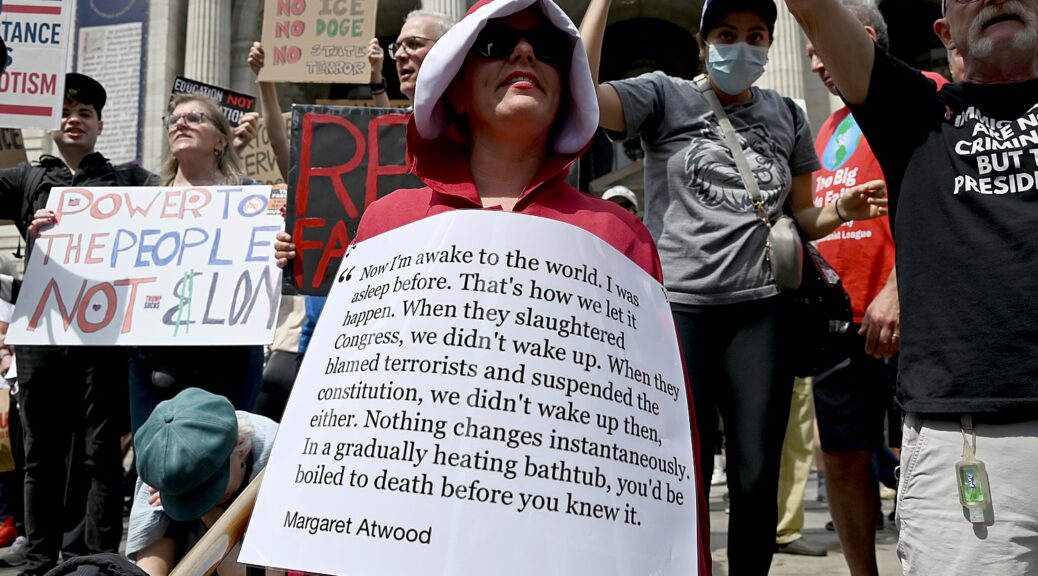
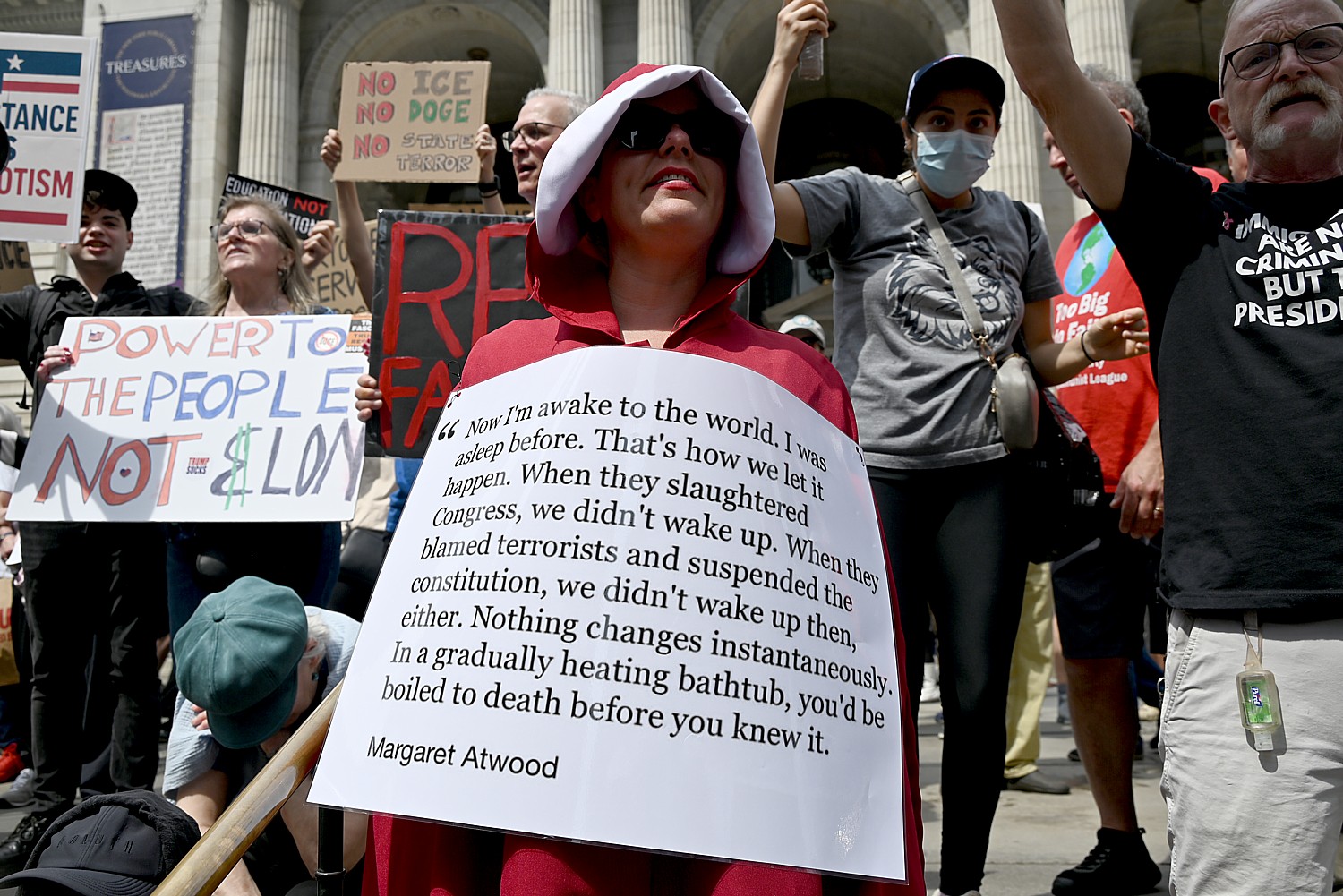
Come out March 28 for the third No Kings protests.
This would be the third No Kings protest – each one bigger than the last, with ever more grievances to protest (ICE/deportations, military in the streets, launching wars without Congress, suppressing free press, public education, free speech, voting rights, environment and climate destruction).
But what is disturbing is that Women’s Rights have kind of receded into a background (it was more prevalent at the earlier Hands Off! Protests).
On March 28, bring Women’s Rights back to the forefront.
Go to www.nokings.org to find a protest to join. So far, close to 3,000 protests are planned.
In 2026, we’ll see a backlash against over-optimization and the bold return of pleasure and joy; women finally getting their own lanes in longevity and sports; longevity expanding into real estate and beauty; and wellness tackling major crises: disaster preparedness, microplastics and nervous system exhaustion
The Global Wellness Summit (GWS) released its annual Future of Wellness report, the longest-running, most detailed (150-page) forecast of the big ideas that will transform health and wellness in the coming year.
There have been more shakeups in the wellness market in the last couple of years than in the last 20. The market has been rewritten by high-tech, medical, hyper-optimizing approaches—from the boom in longevity clinics to the avalanche of diagnostics and wearables. At the same time, powerful new desires for a no-tech, deeply human, social and emotional wellness are raging. These polarities, which now define the wellness market, resonate across the new report.
2026 will be another year of shakeups. A year of corrections and backlashes, a crucial year for women, one where longevity moves in new directions, and where major environmental and human crises are tackled.
Four Themes for 2026:
1)An Over-Optimization Backlash: The Revenge of the Human
The backlash against stressful, high-tech wellness will reach activist levels. Wellness experiences will embrace what humans actually are: imperfect, emotional, relational and sensory—and hardwired to seek pleasure and joy. Offerings will pivot to meaning over measurement, catharsis over clinical data, self-expression over self-surveillance. “The Over-Optimization Backlash” serves as the framing trend, detailing the many ways we’ll move beyond performance to sensation, emotional repair and embodied care. “The Festivalization of Wellness” explores a rising wave of healthy, cathartic wellness raves and gatherings, where music, dance and creative expression mean wild, collective and emotional release. If fragrance has long been about status, celebrity and corporate sameness, the “Fragrance Layering” trend predicts that the ancient art of combining scents will get a modern reimagining: fragrance as a creative, cultural and deeply personal language.
2)The Year of Women
Major gender inequities in multibillion-dollar markets will get corrected. If the booming longevity market was built for men, “Women Get Their Own Lane in Longevity” goes in depth on how the future is female. Because women age very differently, with the ovary acting as “command central” of women’s health, longevity will pivot to women’s healthspan, requiring a whole new longevity paradigm and diagnostics and interventions targeted for every life stage. If men have owned sports, “Women & Sports: The Revolution Continues” details how the women’s sports economy is at its long-awaited tipping point, with a boom in new leagues and female fandom, female athletes as marketing powerhouses, and women globally turning from lonely fitness to empowering sports.
3)Longevity Expands in New Directions
Longevity will move in other bold directions. “Longevity Residences” investigates how it’s moving out of clinics and resorts and into the home, with a new wellness real estate category that supports longer, healthier lives through preventive medicine and diagnostics, biohacking, AI-enabled health tracking and more. “Skin Longevity Redefines Beauty” argues that the traditional focus on anti-aging is shifting. Innovations in skin longevity and regeneration will introduce a new era of beauty that merges cutting-edge biotech, AI, skin diagnostics and new active ingredients.
4) Wellness Tackles Major Environmental and Human Crises
In our age of multiple crises, from terrifying climate events to brains barraged by bad news, crisis management becomes a pillar of wellness. “Ready Is the New Well” predicts that if wellness always promised prevention, the next wellness wave is about survival itself, where having a disaster plan becomes as essential as having a fitness plan. “Tackling Microplastics as a Human Health Issue” provides a deep scientific overview of how microplastics are present throughout the human body and increasingly linked to serious health issues. If we’ve had decades of false wellness “detox” rhetoric, the microplastics threat looks to be real, and in 2026, public health and the wellness market will move from awareness to action. With modern, digital life keeping our nervous systems in a state of fight-or-flight, “The Rise of Neurowellness” explores how regulating the nervous system is wellness’ next frontier, deploying everything from new consumer neurotech to somatic practices to calm our nervous systems before breakdown occurs.
This is the only wellness trends report based on insights from hundreds of health and wellness experts that gather each year at the Global Wellness Summit. Each trend is packed with new ideas, sub-trends and examples of the companies blazing these new trails.
“Each year, The Future of Wellness report delivers essential insights into the forces reshaping the global wellness landscape,” said Amway chief marketing officer Melodie Nakhle. “As the exclusive sponsor, we remain committed to advancing credible, science-driven innovation that helps people lead healthier, more vibrant lives. This research strengthens our ability to deliver meaningful solutions for communities around the world.”
Amway is the exclusive sponsor of this report. A health and wellbeing company founded in 1959, Amway has a presence in more than 100 countries and territories around the world.
Probing deeper, these are the Top 10 Wellness Trends:
Top 10 Wellness Trends
Women Get Their Own Lane in Longevity Men have dominated the longevity market, but the future is female
The booming longevity market—like medicine before it—is tacitly male: women’s path to health is extrapolated from men’s data and protocols designed for men. That era is ending. Research mounts that women age fundamentally differently, with the ovary functioning as “command central” for women’s health, and its decline (aka menopause) dramatically accelerating systemic aging in women. This leads to a cascade of conditions women suffer far more and longer: from immune disorders to dementia to osteoporosis. Men suffer no such “gonadal death” and stark “before” and “after” health decline.
Slowing/stopping ovarian decline will be the next big biotech breakthrough, and women scientists are busy working on it, from ovarian stem cell therapies to tackling ovarian fibrosis. And with the new framework that “ovary-span” is the lynchpin to women’s healthspan, the wellness market will now move beyond managing menopause symptoms to tackling ovarian aging and its specific health fallouts. This requires a new longevity paradigm: interventions tailored to women across every decade (from their 20s to 90s), ovarian aging tests becoming the new vital sign, hormone replacement therapy boomeranging back as longevity medicine, lifestyle interventions that best preserve ovarian reserve—with strength training reframed as a non-negotiable for women’s longevity. The trend details how basically every wellness market is now pivoting from treating menopause to more serious whole-life, medical-wellness longevity programs for women: wellness resorts, longevity clinics, big telehealth and women’s platforms, gyms, diagnostics and wearables. And as women finally shape longevity, its “bro” culture will change, too: less ultrahuman optimization; more human approaches.
The Over-Optimization Backlash Pushing back on peak wellness
We’re living through a modern wellbeing paradox: never before has health been so measurable—and never before has it felt so psychologically demanding. Sleep is scored, glucose is graphed, aging is tracked, and wellbeing has shifted from something we feel to something we perform correctly. Therapists warn that data-driven wellness can tip from motivation into fixation, turning insight into pressure. As health data multiplies, many experience analysis paralysis rather than clarity, overwhelmed by constant self-tracking and fear of “getting it wrong.” While longevity research, diagnostics and health technology have undeniably expanded human potential, optimization without integration is proving costly. The over-optimization backlash marks a decisive cultural pivot away from peak wellness and toward something far more human. In response, the fastest-growing spaces in wellness are prioritizing nervous-system safety, emotional repair and pleasure over metrics: social saunas are growing around the world as ritual, not endurance; brands like On and Nike are ditching performance language for campaigns about softness, presence and joy; clinics are reframing aesthetics as psychological care rather than correction; and new technologies are quietly regulating the body in the background, without dashboards or demands. From scream circles and somatic release classes going viral on TikTok, to pleasure-forward food, low-stimulation retreats and regulation-focused wearables, the trend is evident: wellness is no longer about optimizing harder—it’s about feeling safer, more connected and more alive.
The Rise of Neurowellness Regulating the nervous system is the next frontier of human health
Neurowellness is moving from niche to mainstream as people realize one of their biggest health bottlenecks isn’t willpower, it’s nervous system overload. Sleep has become the on-ramp. Wearables turned a private struggle into a daily metric: “What’s your sleep score?” When scores stay low, the message is clear: the autonomic nervous system is stuck in low-grade fight-or-flight, showing up as fragmented sleep, anxiety, inflammation, brain fog, hormonal disruption and burnout. That visibility is driving a wave of interventions that go beyond supplements and mindset. “Hard-care” neurowellness is arriving through consumer-friendly neurotech: vagus nerve stimulation devices like Pulsetto, EEG-guided sleep tools like Elemind and neurofeedback platforms like Myndlift that bring nervous system training into therapists’ offices, not just homes. Flow’s recent FDA approval for an at-home neuromodulation device adds clinical momentum, signaling a path to reimbursement and wider adoption. At the same time, long-standing “soft-care” wellness anchors are being re-framed as nervous-system medicine: breathwork, touch therapy, yoga and Feldenkrais are increasingly recognized for their measurable effects on regulation, making them more mainstream, more repeatable and, in some settings, even prescribed. Next, expect brain–body research, including Stanford’s focus on whole-system connections, to push neurowellness into everyday spaces: mental health care, local fitness studios, hospitality, real estate and next-gen destination spas and clinics—making regulation a quietly built-in feature of modern life.
Fragrance Layering The new art of combining scents to create unique personalized identities
Fragrance layering—the art of combining scents to create a personalized olfactory signature—is changing the way we express ourselves, shape our moods and interact with others. Once associated mainly with luxury and seduction, fragrance is re-emerging as a cultural and emotional language, echoing ancient traditions from Egypt, Arabia and India, where scent signified ritual, status and meaning. Today, Gen Z and Millennials are reviving this heritage through experimentation, fueled by TikTok, indie fragrance communities and brands like Kayali and Rare Beauty that encourage mixing, mood-shifting and the creation of “fragrance wardrobes.” This rise of “smellmaxxing” coincides with experimental cocktailing, social-coded scents and layering workshops, which transform fragrance into a participatory, skill-based hobby. Layering is extending beyond personal fragrance into spaces and experiences, with environments crafted to carry evolving aromas that shape mood and ritual. Technology is amplifying this, as smart fragrance systems and AI tools allow scents to shift dynamically throughout the day, responding to activity, context or emotional state. In an era of homogenous beauty products, fragrance layering offers both creative freedom and social currency—a way to express identity, foster connection and reclaim individuality through scent.
Ready Is the New Well Preparing for climate disaster is the new preventative wellness
Wellness has always promised protection—from disease, from burnout, from the slow erosion of mental health. But the next wave of wellness will promise something different: survival itself. Just as preventive medicine once transformed healthcare, disaster readiness is becoming the next evolution of everyday resilience, where having a disaster plan is as essential as having a fitness plan. This shift connects mental health, physical readiness and community interdependence into one continuum of care. The implications for the global wellness economy are vast. Gyms and fitness studios will double as emergency shelters; wellness retreats will teach readiness; and demand for disaster-proof architecture will surge. But perhaps the greatest opportunity lies in the industry’s ability to hold both sides of the psychological spectrum at once—supporting people who live in chronic fear of what might happen, while also caring for those navigating the emotional fallout of what already has. As disasters become inescapable, the most forward-thinking companies will prioritize practical, proven solutions that put people’s minds at ease.
Skin Longevity Redefines Beauty Move over anti-aging: innovations in skin regeneration usher in a new era
A transformation is sweeping the beauty and wellness industries as “anti-aging” is rapidly being replaced by the concept of skin longevity. This emerging vertical merges cutting-edge biotech, proactive skincare and holistic wellness, reframing the conversation from reversing the unwanted effects of time to optimizing the skin’s health and function over the long term. Skin longevity honors skin as the body’s largest organ and a key marker of overall health. It’s driven by demographic realities—people are living longer and seeking solutions to maintain long term health and vitality—and by a philosophical shift, treating skin as a diagnostic tool and reflection of overall health. The movement is gaining significant momentum, backed by major investments and deep scientific research. Advances include sophisticated skin diagnostics, such as L’Oréal’s Cell BioPrint, and the development of new active ingredients and regenerative treatments. These innovations are creating a new age of personalized, preventative care. The trend extends beyond the face to encompass “hair longevity,” with a focus on scalp health and regenerative therapies for hair. Industry experts concur that skin longevity is a defining turning point in beauty and wellness, where the cross-pollination of science, biology and technology is unlocking unprecedented horizons for personalized, visible results and long-term health optimization.
The Festivalization of Wellness A new wave of healthy, wild, cathartic wellness raves and gatherings
A new wave of group wellness events is reshaping the global wellness landscape, marking the rise of the “festivalization of wellness.” These gatherings respond to widespread economic stress, social fragmentation and digital overload by prioritizing human connection, collective energy and emotional release. Inspired by festival and rave culture, wellness raves, sober morning dance events and multi-day immersions are reframing wellbeing as experiential, social and identity-driven rather than prescriptive or perfection-oriented. Spanning movement, music, sauna culture, learning and creative expression, they emphasize participation over performance and lower barriers to entry by creating judgment-free spaces where people explore what intuitively feels good. Around the world, sober morning raves, grief raves and headphone-led somatic dance experiences like Sanctum are turning dancefloors into spaces for emotional release, connection and catharsis. At the same time, mass-participation fitness festivals such as Hyrox attract hundreds of thousands of athletes and spectators to sweat, celebrate and heal together. Luxury resorts from Six Senses and Soneva to SHA Wellness are now hosting immersive multi-day wellness festivals, while mainstream music events like Wilderness, Lost Village and Envision are embedding breathwork, rituals and recovery zones into their lineups. The result is a global shift where wellness becomes social, expressive and identity-shaping—built on joy, belonging and shared experience rather than discipline and optimization. By making wellness playful, inclusive and culturally relevant, the festivalization of wellness is redefining health as belonging, connection and sustainable joy.
Women and Sports: The Revolution Continues More women become empowered as athletes as the women’s sports economy booms
This trend captures a long-overdue cultural and economic reckoning as women’s athletics moves from the margins to the mainstream—reshaping fitness, media, fashion, fandom and business along the way. Around the world, new leagues like the Professional Women’s Hockey League, League One Volleyball and the upcoming Women’s Professional Baseball League are launching alongside bold, culture-forward events such as Athlos in New York City, which turned women’s track and field into a Times Square spectacle complete with instant prize payouts and a Ciara concert. Female fandom is exploding too, visible in the rapid rise of women’s sports bars like The Sports Bra (now franchising nationwide), record-breaking attendance at the 2025 Women’s Rugby World Cup and massive global viewership for women’s cricket in India. At the same time, female athletes are becoming cultural and commercial powerhouses: Coco Gauff co-creating fashion lines, Ilona Maher and Sloane Stephens launching beauty brands, Allyson Felix building a motherhood-centered footwear company, and media platforms like Togethxr rewriting who gets visibility and voice. On the ground, this momentum is changing bodies and behaviors—women are lifting heavier, joining grassroots leagues, filling women-only gyms from Dubai to Shanghai, and embracing strength over thinness as both a physical and political act. Together, these shifts signal a structural change, not a moment: women’s sports are no longer asking for permission, but actively redefining what power, performance and possibility look like—on the field, in culture and across the global wellness economy.
Tackling Microplastics as a Human Health Issue We’ve grasped the severity of the microplastics crisis; this year is about action
Microplastics have crossed a critical threshold—from an environmental problem to a direct human health concern. Once associated mainly with oceans and wildlife, these microscopic particles are now being detected in human blood, lungs, placentas and even the brain. Each year, an estimated 130 million metric tons of plastic enter the environment, breaking down into particles we ingest through bottled water and packaged food, inhale from synthetic clothing fibers in household dust, and absorb through everyday consumer products. Early research links this exposure to inflammation, hormonal disruption, cardiovascular disease and potential cognitive effects. As concern grows, the wellness and medical sectors are moving from observation to intervention. In London, private clinics are already offering costly treatments claiming to reduce microplastic loads in the body, while consumer-facing innovations such as plastic-free underwear are also emerging. Looking ahead, microplastics may become a routinely measured health marker—tracked alongside cholesterol or inflammation—and plastic exposure a factor shaping architecture, fashion, food systems and healthcare. The challenge now is not awareness, but whether society acts quickly enough to reduce exposure at the source, before the smallest pollutants create the largest health legacy.
Longevity Residences Healthspan finally comes home
A new category of “longevity residences” is emerging within wellness real estate, designed to support longer, healthier lives. This trend signals a major shift in how—and where—longevity is delivered, as real estate becomes an active participant in extending healthy life rather than a passive backdrop. Around the world, a new generation of longevity-focused communities is embedding preventive medicine, advanced diagnostics, biohacking and AI-driven personalization directly into daily living. The Estate is building a global network of residences where architecture, circadian lighting, diagnostics and concierge medicine operate as a continuous longevity system; Australia’s Elysium Fields has plans to pair luxury living with on-site MRIs, brain scans and anti-ageing clinics; Velvaere in Utah will integrate Fountain Life’s early-detection diagnostics into its ski-in, ski-out community; and Tri Vananda in Thailand is blending medical longevity science with holistic design, biophilia and multigenerational living. Unlike traditional wellness real estate, these residences go deeper—tracking biomarkers, personalizing care over decades and removing friction from proactive health behaviors. Fueled by an aging global population, soaring investment in longevity tech and the rise of concierge medicine, longevity residences reflect a growing realization that true healthspan gains happen at home, not during one-off clinic stays. For culture and capital alike, the message is clear: longevity is no longer a service you visit—it’s a lifestyle you live in, and the home is becoming the most powerful longevity tool of all.
The Global Wellness Summit brings together leaders and visionaries to shape the future of the $6.8 trillion global wellness economy which is forecast to reach $9.8 trillion by 2029, according to the Global Wellness Institute’s 2025 Global Wellness Economy Monitor.
The non-profit Global Wellness Institute (GWI) released its annual “Country Rankings” report, packed with data on the wellness markets of 145 countries. The new research identifies the countries and regions with the fastest growth rates, and reveals the amount of money spent annually on wellness in each nation.
The five largest wellness markets are: the US ($2.1 trillion), China ($950 billion), Germany ($281 billion), Japan ($262 billion) and the UK ($261 billion). Together these five nations represent a whopping 58% of the total wellness economy.
Among the largest wellness markets, the standout five-year growth leaders are the UAE, Saudi Arabia, India, Mexico, Poland, the UK, the Netherlands, Canada, the US and Australia. For smaller markets, the growth stars include Croatia, Cuba, Romania, Costa Rica and Kazakhstan.
The new research is a story of global growth for wellness: Each of the top 25 largest markets have surpassed their pre-pandemic (2019) sizes, most by sizable margins, despite economic challenges for many of the nations. The growth shows that, as GWI partner economist Thierry Malleret put it, the wellness industry is not only resilient—it resists shocks—but is “anti-fragile”: it actually improves under stress and shocks.
The US, which accounts for a staggering one-third (32%) of the total global wellness economy, is a striking example of that. If a record number of Americans report high stress and a healthcare system in crisis, its wellness market remains unstoppable. It grew by over $130 billion just between 2023 and 2024—a gain roughly the size of Italy and Australia’s entire wellness markets.
In addition to an annual conference, held at a different location around the globe, GWS also hosts annual in-person events such as the Wellness Real Estate & Communities Symposium and the Beauty & the Brain Symposium, along with virtual gatherings, including Wellness Master Classes and Wellness Sector Spotlights. The 20th annual Global Wellness Summit will be held in Phuket, Thailand, November 10-13, 2026.
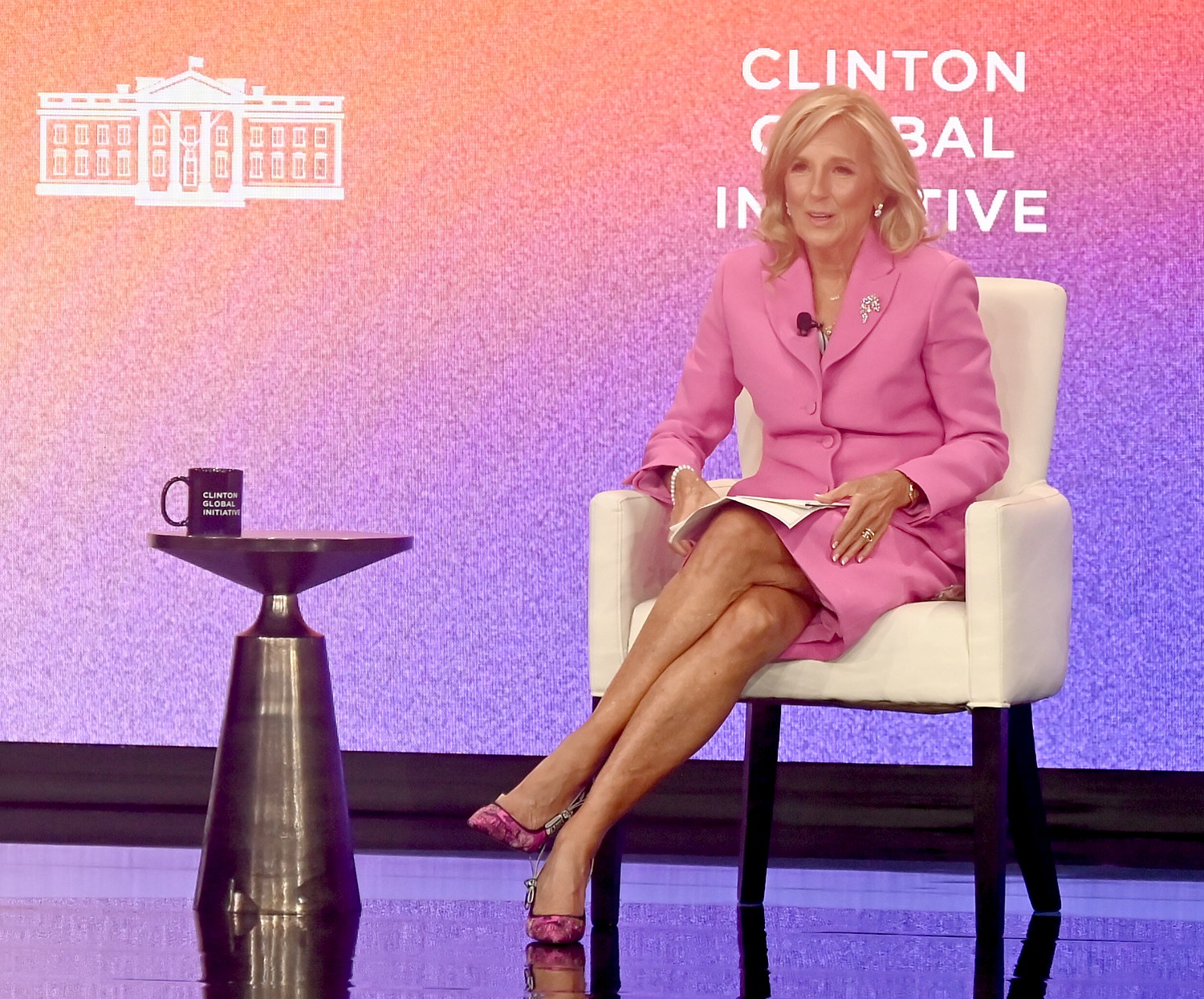
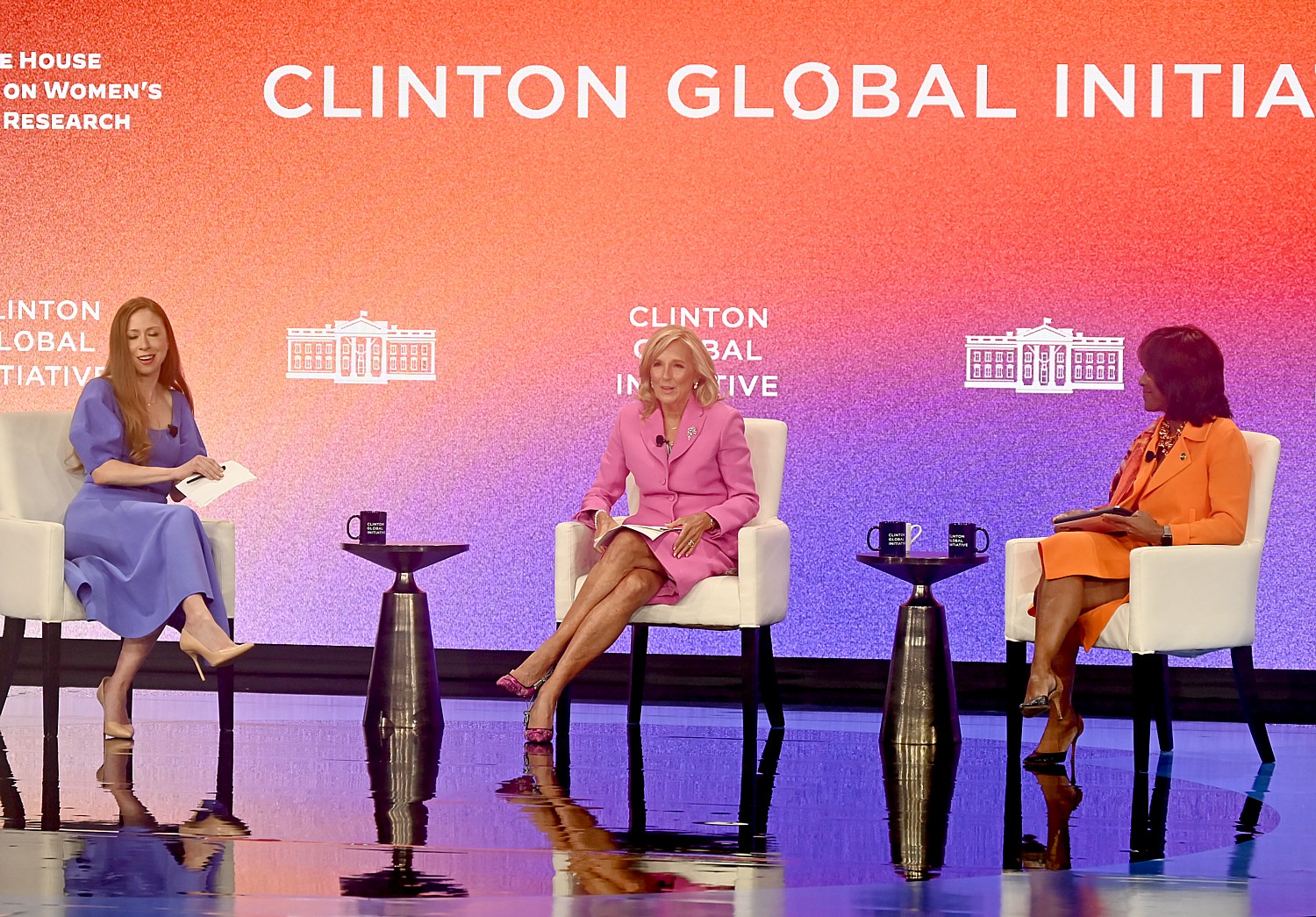
First Lady Jill Biden at the 2024 Clinton Global Initiative announced the Department of Defense’s new commitment to spend $500 million on vital women’s health research. With this new investment, the Department will fund research on conditions that affect women uniquely, disproportionately, or differently—such as ovarian cancer, rheumatoid arthritis, and musculoskeletal injuries. This commitment is consistent with President Biden’s Executive Order on Advancing Women’s Health Research and Innovation as well as the Department of Defense’s broader efforts to support the health of the women it serves and the medical readiness of the force.
The First Lady, joined by Chelsea Clinton, vice chair of the Clinton Foundation, and Dr. Valerie Montgomery Rice, president of Morehouse Medical School and an infertility specialist and researcher, also discussed the rapid progress being made by the White House Initiative on Women’s Health Research, which was launched less than a year ago with the goal of fundamentally changing how we fund and approach women’s health research, that included $100 million for transformative research and development in women’s health.
“Women are living longer, which means they are living longer with chronic pain,” Dr. Biden said to emphasize the need to determine why women are more likely to become afflicted by Alzheimer’s, MS, and auto immune diseases and no one knows why. Up until now, research on medications, therapies and treatments have only been developed with men as subjects. There has been virtually no study of ovarian health – arthritis, migraines – and why women getting these conditions.
President Biden was determined to do something about it, so allocated $100 million to ARPA-H – the mega-research agency of the government which Biden created to do health research in the same way ARPA researches and develops technology; then the National Institutes of Health allocated $200 million to study how menopause affects the brain, heart, and bone health. Now, the Department of Defense has allocated $500 million to study military women’s health, which will yield insights for all women.
Dr. Rice, a ground-breaking OB/GYN, said more study has to be done on how nutritional balance influences the cycle, how estrogen levels fluctuate throughout the cycle, and about lifestyle changes. “The only way we can understand how to introduce interventions is to include women in the studies early.” She added that social determinants must be considered in order to engender trust so women will volunteer to participate in clinical trials. “It starts with trial design.”
Monday’s CGI event followed the First Lady joining the top of the President’s Cabinet meeting last week, where she expressed gratitude to the agencies for their continued progress and momentum towards that goal. This was the first time the First Lady joined a Cabinet meeting and is a testament to how personally important this effort to advance women’s health research is for both the President and the First Lady.
Since launching the initiative last November, the First Lady has visited research centers and universities, and spoken with doctors and scientists across the country to understand the research questions we need to ask – and the answers they could find if we invest in women’s health.
“Since launching the White House Initiative on Women’s Health Research last November, the First Lady has put the spotlight on the urgent need to close the gap in how we fund and approach women’s health research,” FLOTUS Press Secretary Vanessa Valdivi stated.”The Biden-Harris Administration has quickly mobilized to make progress in less than year, and in the months ahead the First Lady will continue to push the work of this initiative forward, and build on the incredible momentum and enthusiasm we’ve seen across the public and private sectors.”
The White House Initiative on Women’s Health Research
The White House Initiative on Women’s Health Research is ensuring that research on women’s health is a priority and galvanizing new research on a wide range of topics. In his State of the Union address, President Biden called on Congress to make a bold, transformative investment of $12 billion in new funding for women’s health research. The President also signed an Executive Order on Advancing Women’s Health Research and Innovation that directed the most comprehensive set of executive actions ever taken to expand and improve research on women’s health.
The Initiative—led by the Office of the First Lady and the White House Gender Policy Council and Chaired by Dr. Carolyn M. Mazure —consists of executive departments and agencies across the federal government, such as the U.S. Departments of Health and Human Services, Defense, and Veterans Affairs, and White House offices, such as the Office of Management and Budget and the Office of Science and Technology Policy. Members of the White House Initiative on Women’s Health Research have already taken action to advance women’s health research, including:
The President’s Advanced Research Projects Agency for Health (ARPA-H) committed $100 million for transformative research and development in women’s health for its first-ever Sprint for Women’s Health. ARPA-H received an unprecedented response to its call for proposals, receiving submissions from a mix of scientific visionaries from across the globe and sectors.
The National Institutes of Health (NIH) launched a new agency-wide effort to invest $200 million for new, interdisciplinary women’s health research—a first step towards the transformative central Fund on Women’s Health that the President called on Congress to invest in. This cross-cutting effort will allow NIH to fund ambitious, multi-faceted research projects such as research on the impact of perimenopause and menopause on heart health, brain health and bone health.
The Department of Health and Human Services announced $12.5 million in new funding to address the unique mental health and substance use treatment needs of women. The new Women’s Behavioral Health Technical Assistance Center will help fill vital gaps in health care providers’ knowledge and ability to treat the mental health and substance use conditions of women across the nation.
The NIH launched a new challenge to accelerate the development of innovative technologies for the diagnosis of endometriosis, a debilitating condition that affects about 1 in 10 women and often takes years to be diagnosed. NIH will award $3 million in prizes to innovators who develop new technologies that make it easier and quicker to diagnose endometriosis.
The National Science Foundation (NSF) issued its first-ever call for novel and transformative science and engineering research focused entirely on women’s health. NSF has also convened experts in the fields of engineering, biomedical research, and advanced computing to identify ways to improve women’s health research—including how artificial intelligence and machine learning can revolutionize our understanding of menopause.
DoD and the Department of Veterans Affairs launched a new Joint Collaborative to Improve Women’s Health Research for Servicemembers and Veterans to further promote joint efforts to advance women’s health research and improve evidence-based care for women Servicemembers and veterans.
The First Lady joined Chelsea Clinton and Dr. Valerie Montgomery Rice at the Clinton Global Initiative to discuss women’s health research as part of the mainstage session, titled “Look Around,” where leaders from across the social impact spectrum highlighted the ways in which they break down barriers between peer institutions, cultivate partnerships and community, and align values and programs to create new, specific, and measurable ways to support one another.
As vice chair of the Clinton Foundation, Chelsea Clinton works alongside the Foundation’s leadership and partners to improve lives and inspire emerging leaders across the United States and around the world. This includes the Foundation’s early child initiative Too Small to Fail, which supports families with the resources they need to promote early brain and language development; and the Clinton Global Initiative University (CGI U), a global program that empowers student leaders to turn their ideas into action. A longtime public health advocate, Chelsea also serves as vice chair of the Clinton Health Access Initiative and uses her platform to increase awareness around issues such as vaccine hesitancy, childhood obesity, and health equity.
Dr. Valerie Montgomery Rice, president of Morehouse School of Medicine (MSM) and the first woman to lead the freestanding medical institution, is a renowned infertility specialist and researcher. She most recently served as dean and executive vice president of MSM, where she has served since 2011. Prior to joining MSM, Dr. Montgomery Rice held faculty positions and leadership roles at various health centers, including academic health centers. Most notably, she was the founding director of the Center for Women’s Health Research at Meharry Medical College—an HBCU in Nashville, Tennessee—one of the nation’s first research centers devoted to studying diseases that disproportionately impact women of color.
Dr. Montgomery Rice joined the President and First Lady for the Women’s Health Research Executive Order signing at the White House in March and participated in two White House Initiative on Women’s Health Research events with Dr. Biden in Atlanta, GA in February.
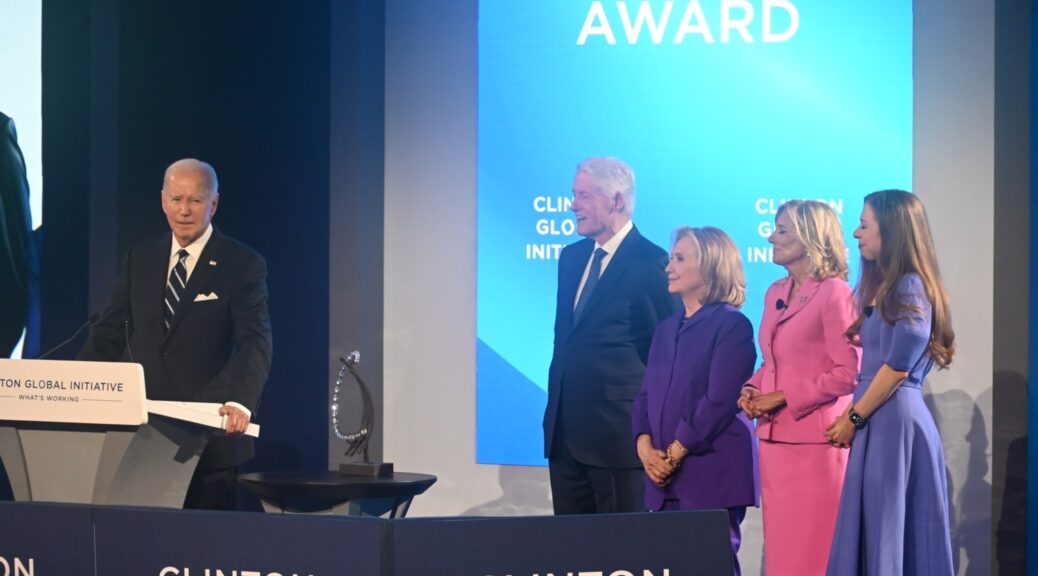
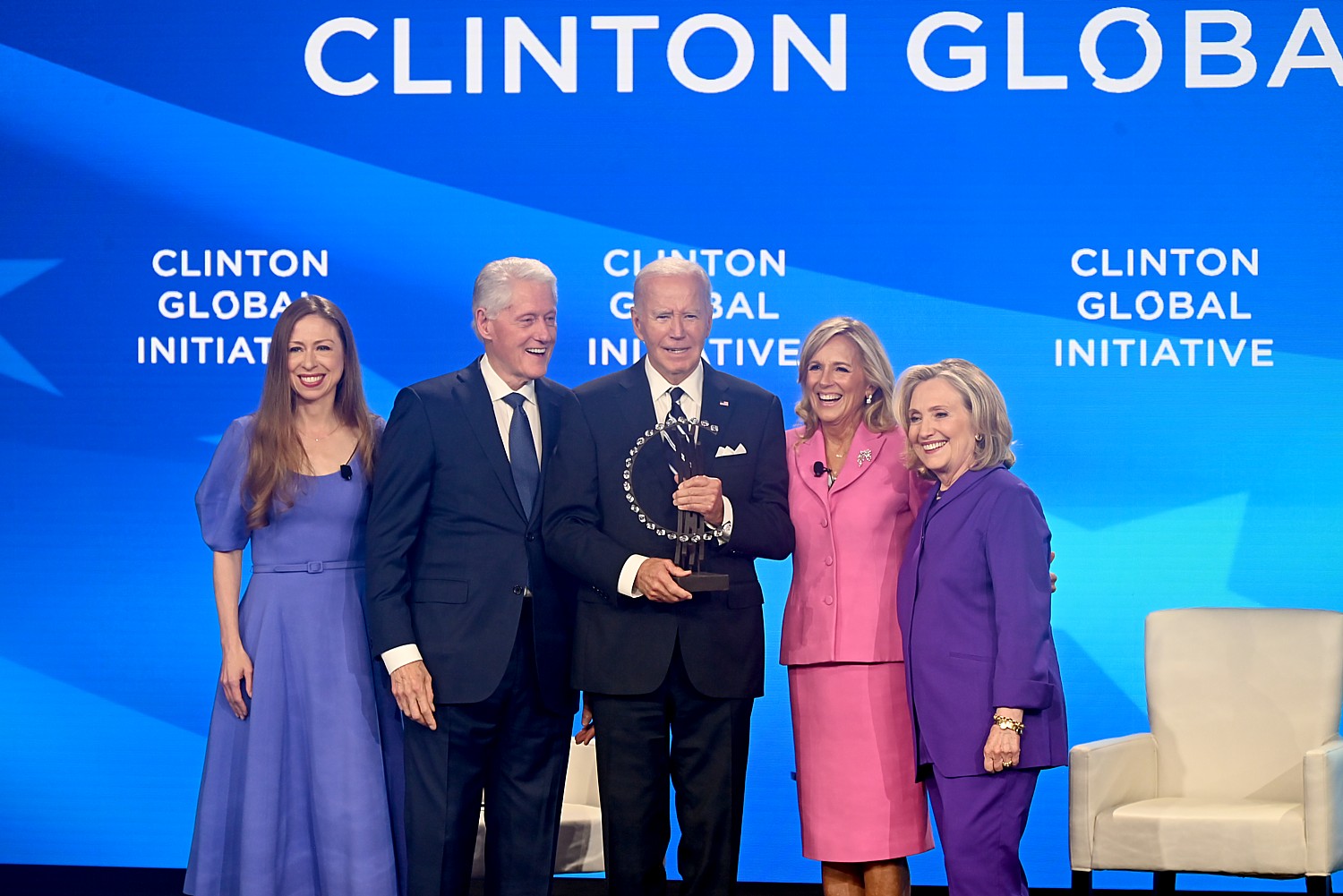
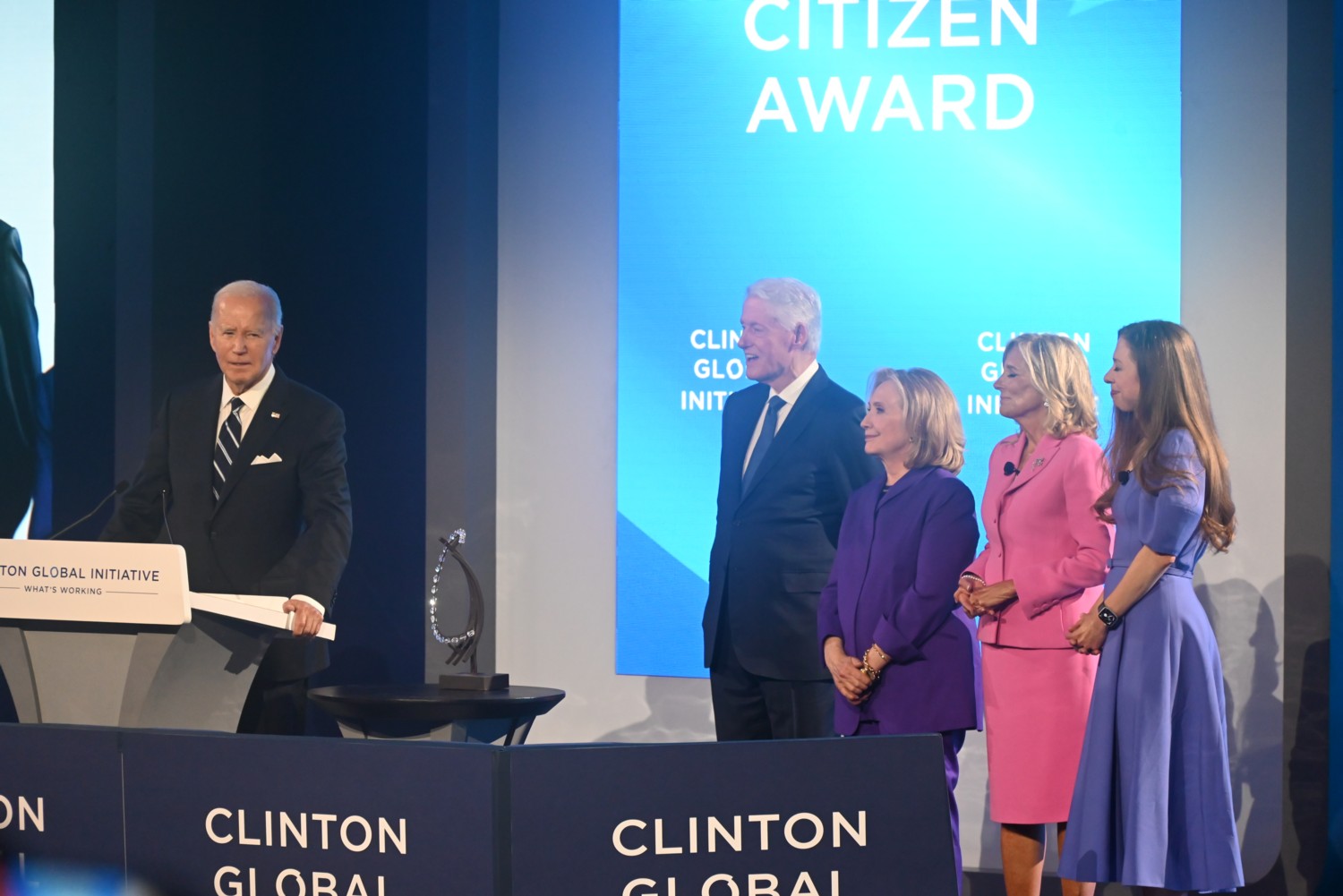
President Joe Biden Receives 2024 Clinton Global Citizen Award
Immediately after the panel discussion, president Joe Biden came onto the stage to surprise the CGI attendees, and perhaps be surprised himself by being awarded 2024 Clinton Global Citizen Award.
The award acknowledged Biden’s transformational presidency in taking the United States out of deadly COVID pandemic and double-digit unemployment, to the strongest recovery, the strongest economy, while transitioning the economy and society for economic, climate and civil justice, reestablishing the United States’ global leadership and standing up for democracy, peace and prosperity around the world, and standing up for country over personal interest.
As President Biden told the United Nations General Assembly just hours before, “I’ve made the preservation of democracy the central cause of my presidency. This summer, I faced a decision whether to seek a second term as president. It was a difficult decision. Being president has been the honor of my life. There is so much more I want to get done. But as much as I love the job, I love my country more. I decided, after 50 years of public service, it’s time for a new generation of leadership to take my nation forward.”
To the Clinton Global Initiative he said, “I am congenitally optimistic about this country. I really am… We’re good people. We really are. We just have to live up to what we expect of others,” in humbly accepting the award.
Previous Clinton Global Citizen Award winners have included First Lady of Ukraine Olena Zelenska (2023); Dolores Huerta (2022) for her advocacy of human rights of women, children and working class people worldwide; Nadia Mura (2016), a Yazidi woman who survived her capture and enslavement by ISIS and has become a voice for women and children trafficked in conflict; and Malala Yousafzai (2014) who survived an attack by the Taliban, targeted for going to school, and has gone on to be a strong advocate for girls’ education.