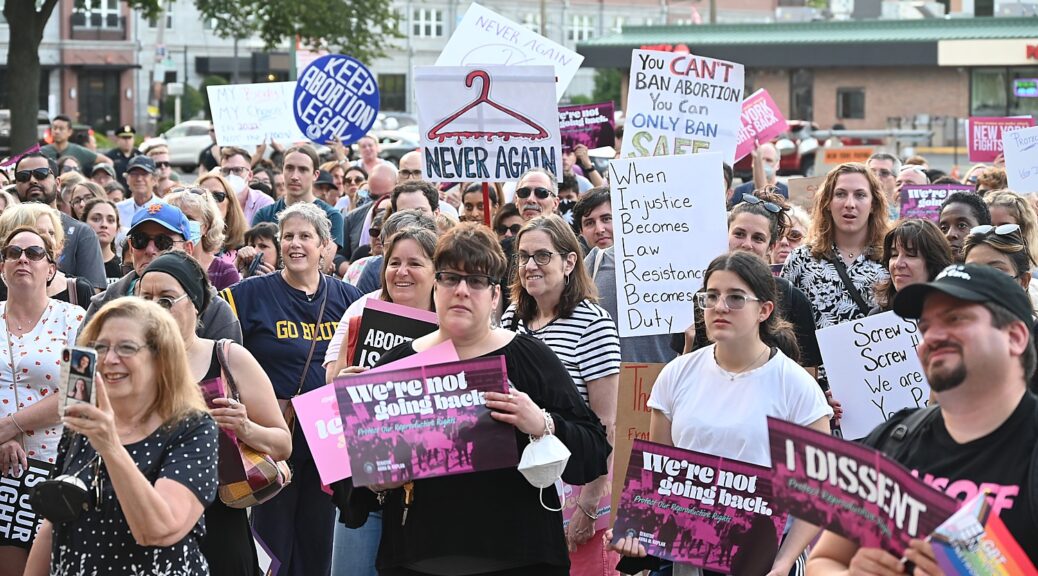
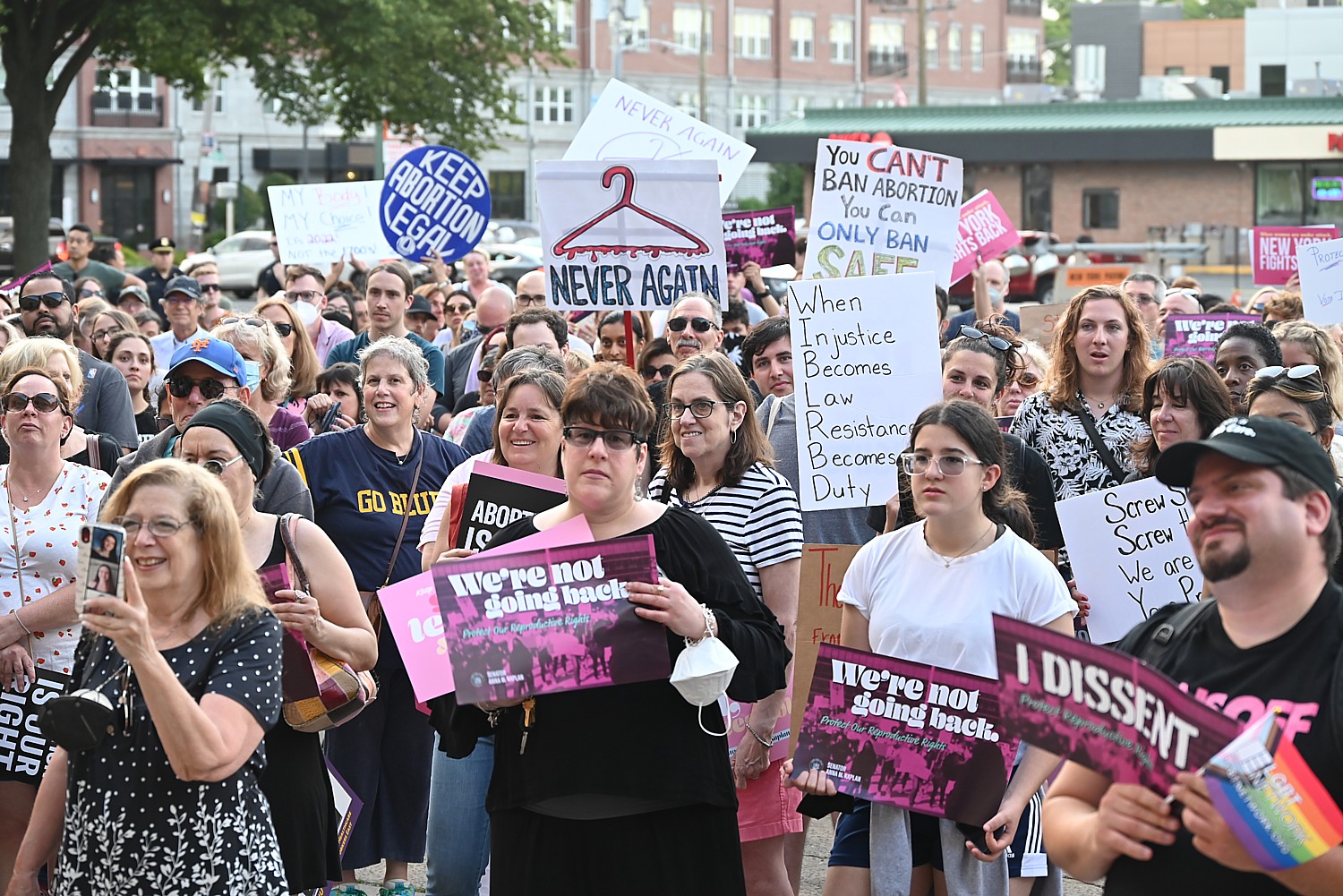
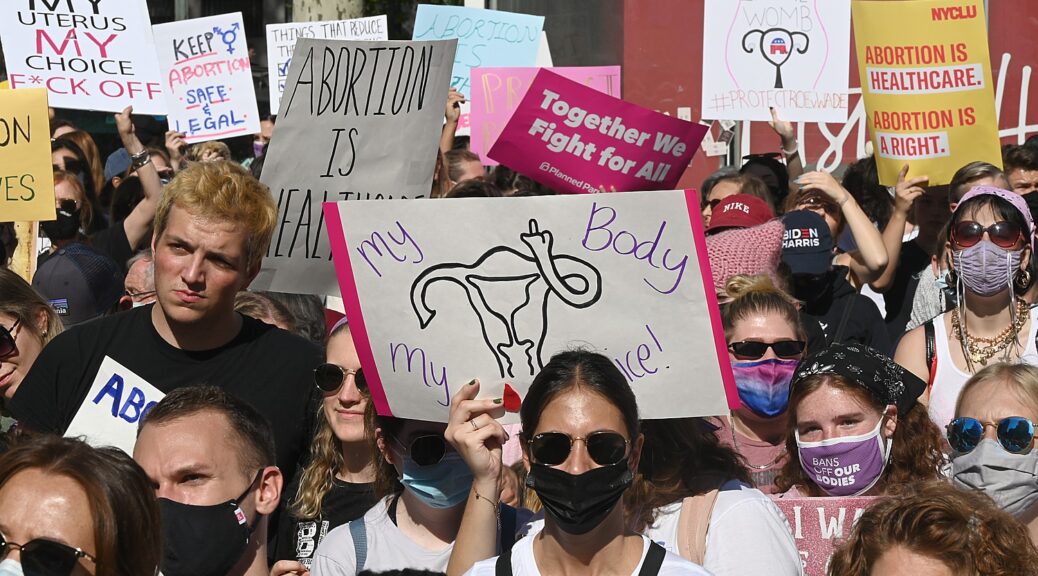
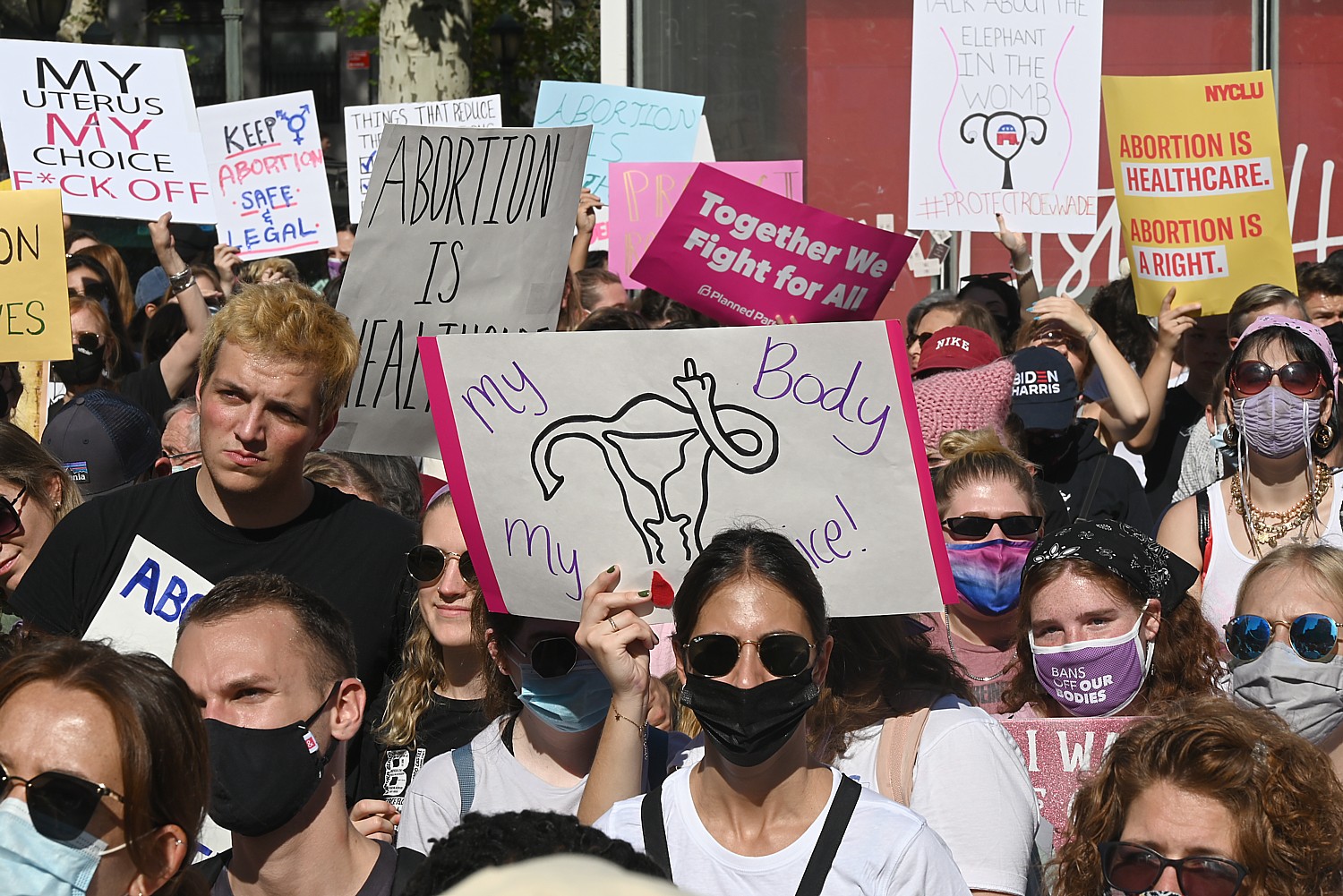
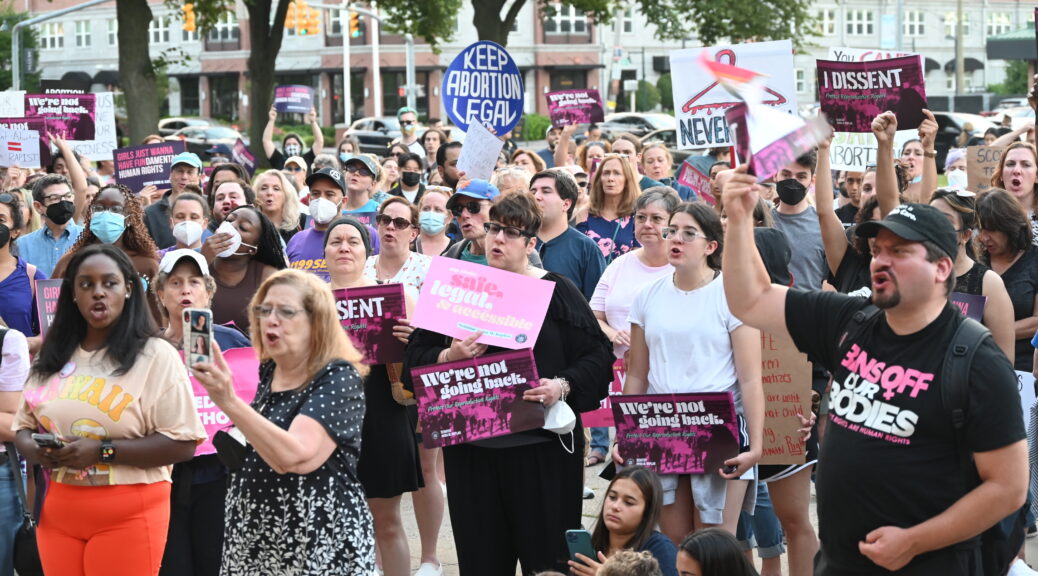
Washington, DC — Damning new reporting just dropped that reveals Acting Attorney General Todd Blanche is making promises to anti-abortion extremists behind the scenes. On a private call hosted by the White House Faith Office, he pledged that the Department of Justice would work with federal agencies and the White House to make the Dobbs decision “permanent in every single state”—essentially promising to enact a national abortion ban. Trump lied to voters when he campaigned on leaving abortion to the states—a backdoor ban has been Republicans’ goal all along.
During the call, Blanche told these extremists the administration is “putting practices and policies in place” to stop shipments of abortion medication into states with bans. He also singled out the shield laws in states that protect abortion access and allow providers to mail mifepristone to patients living in states with bans, promising “victory will be soon, and…it will be permanent.” These promises to extremists go much further than his public testimony to senators at his confirmation hearing last month and should alarm anyone concerned with the future of abortion access and reproductive freedom.
Todd Blanche’s anti-abortion extremism took center stage during today’s Senate Judiciary Committee meeting, where senators voted along party lines to advance Blanche’s nomination out of committee and to the full Senate. In light of this new reporting, Senator Blumenthal called Blanche a “zealot” who “wants to strip Americans of their right to choose and states of their right to govern.”
“Todd Blanche is making dangerous promises behind closed doors to weaponize the Justice Department to enact a national abortion ban,” stated Reproductive Freedom for All President and CEO Mini Timmaraju. “We must believe Blanche when he says he will come for our rights. Republicans are using every lever of government to attack reproductive freedom, and voters will make their voices heard this November to take our Congress back from these extremists.”
As the Acting Attorney General, Blanche has gutted the Department of Justice’s enforcement of the Freedom of Access to Clinic Entrances (FACE) Act, the federal law protecting patients and providers from threats, intimidation, violence, and obstruction at reproductive health clinics. Blanche’s DOJ also fired the career attorneys responsible for enforcing clinic protections and dismissed pending FACE Act cases. Just last week, the DOJ, under Blanche’s leadership, cut a 7-figure taxpayer-funded settlement to a convicted FACE Act violator.
Condemnation of Erica Schwartz Confirmation to Lead CDC
Reproductive Freedom for All also condemned the Senate’s confirmation of Erica Schwartz to lead the Centers for Disease Control and Prevention (CDC), despite her dangerous commitment to undermine abortion access and patients’ data privacy. During her confirmation hearing, Schwartz said abortion surveillance is “absolutely a critical component” of the CDC’s work and signaled the federal government could explore collecting more sensitive abortion data. The push to expand abortion surveillance is part of anti-abortion extremists’ broader strategy to monitor, restrict, and ultimately criminalize abortion access.
Schwartz’s testimony also sounded alarm bells around further criminalization of patients and providers following her pledge to ensure states are not “conflating” emergency services with abortion care and “hiding abortions” in emergency case definitions. In states with abortion bans, the distinction between abortion and emergency care has already been used to stoke fear, and delays in care have resulted in preventable suffering and deaths.
Schwartz also admitted she did not know the Trump administration had made reporting of cyclospora optional—a disturbing revelation as the parasite has infected thousands, with infections growing each day. As the new head of the nation’s top public health agency, Schwartz’s confirmation marks a troubling, continued departure from science and patient safety at the CDC.
“Erica Schwartz is the latest in a long line of extremists stacked in this administration to undermine abortion access and patients’ privacy,” stated Reproductive Freedom for All President and CEO Mini Timmaraju. Her confirmation cements an anti-abortion agenda at the center of the CDC’s work, rather than containing outbreaks and keeping the public safe. Every senator who voted to confirm her will have to answer to their constituents for handing anti-abortion opponents another ally in the Trump administration.”
Schwartz will report to HHS Secretary Robert F. Kennedy Jr., who has faced growing scrutiny over his efforts to politicize the nation’s public health agencies. In August 2025, Kennedy ousted CDC Director Susan Monarez less than a month into the job, after she refused to rubber-stamp the anti-vaccine recommendations coming out of the CDC’s vaccine advisory committee, which Kennedy purged and restacked with vaccine skeptics. Under Kennedy, the country has since endured its largest measles outbreak in more than three decades, and the agency has gone without a permanent director while facing political interference, budget cuts, and staff reductions amid multiple outbreaks.
For over 55 years, Reproductive Freedom for All (formerly NARAL Pro-Choice America) has fought to protect and advance reproductive freedom at the federal and state levels—including access to abortion care, birth control, pregnancy and post-partum care, and paid family leave—for everybody. Reproductive Freedom for All is powered by its more than 4.5 million members from every state and congressional district in the country, representing the 8 in 10 Americans who support legal abortion.
The repeal of Roe v. Wade by the ultra-right majority Supreme Court’s Dobbs decision in 2022 not only overturned women’s ability to control their own body, decide their own future, even save their own life, but the next phase, endowing a fertilized egg, embryo or fetus with personhood, essentially strips women of their personhood, altogether.
Women are not just second-class citizens, without the right to self-determination as a man is entitled to, women are mere brood mares, a slave of to the state, not much different than a beast of burden, without any rights at all – not the right to life, due process, equal protection, privacy, cruel and unusual punishment.
And the SAVE Act will make it difficult for women to regain their rights, their personhood by putting up discriminatory barriers to voting.
“Didn’t we already fight these battles?” one asked at a recent ReachOut America-Long Island meeting hosting Lynn M. Paltrow, the founder and former executive director of National Advocates for Pregnant Women (now Pregnancy Justice), now a leader of The Beacon for Democracy, who has been fighting these same battles since the 1960s.
In 13 states with absolute abortion bans, women no longer have the same protection under Health Insurance Portability and Accountability Act (HIPAA) of 1996 to keep their sensitive health information private from vigilantes, bounty hunters, spurned partners or prosecutors who are arresting women for using abortion medication and even women who have suffered a miscarriage.
Women who are on the brink of death, suffering in pain, or losing their ability to ever have a baby, no longer have the same right to Emergency Medical Treatment and Active Labor Act (EMTALA), mandating care, or for that matter, the same protection against cruel and unusual punishment as a mass murderer awaiting capital punishment.
And to make sure a woman has no ability to obtain reproductive health care, they are prosecuting doctors, nurses, healthcare workers – even those out of state where abortion care is legal.
The result is to create “maternity deserts” – places that no longer have doctors, healthworkers, too afraid of prosecution for providing care – and a rise in maternal and infant mortality. So much for “pro-life.”
Even when abortion was theoretically protected under the Constitution, states built barriers to access – requiring abortion clinics to meet unnecessary standards, allowing protesters to intimidate patients and healthworkers, even forcing pregnant women to undergo invasive probes and to look at the image of the fetus in their womb to shame her into abandoning her intention to abort. You would think that would violate the 4th amendment’s protections against unreasonable searches.
Or how about banning doctors from giving factual information about reproductive health – a violation of their First Amendment right to free speech?
Texas and Alabama are among the states that are trying to ban pregnant women from traveling out of state to places like New York State, even prosecuting family members who might provide aid. It doesn’t matter, as the Justice Department is now arguing, that the Constitution protects the right to travel across state lines and engage in conduct that is lawful where it is performed and that states cannot prevent third parties from assisting others in exercising that right. Florida was monitoring girl athletes’ menstrual cycles.
There’s a Pregnant Workers Fairness Act that went into effect in 2023 (thanks Biden-Harris) that requires employers to give reasonable accommodation to pregnant women, but Texas has decided it can ignore it.
And none of these have anything to do with “protecting life” (if that were true, these same people wouldn’t be blocking gun control even preventing doctors from inquiring whether parents store their gun safely, despite the fact gun violence is the greatest killer of children). Rather, it is about controlling, disenfranchising, disempowering and dehumanizing women.
“Abortion laws were a way of controlling women without seeming to. But abortion is about a medical procedure and ending pregnancy,” said Lynn M. Paltrow, an attorney and activist on behalf of reproductive justice, who has been fighting for reproductive justice since the 1960s/before Roe.
Indeed, while the anti-abortionists like to portray women seeing reproductive care are Jezebels, wanton or promiscuous women (no mention of those who are raped or victims of incest), six in 10 are already mothers and half have two or more children. As Paltrow noted, women seek abortion care for many different, personal reasons including not being able to afford more children or having health issues that would be compromised by pregnancy. Also, one in four pregnancies result in miscarriage, which requires a procedure, dilation and curettage (D&C), that falls under the same definition (and ban) as “abortion,” while 80 percent of pregnancy deaths are preventable, according to the CDC.
The United States, already with the highest rate of maternal and infant mortality of any high-income country due to the lack of universal health care, is seeing these rates surge in states that have total or near total bans on abortion. And yet, the number of abortions is not going down – only access to prenatal care and to legal, safe abortions.
Right wingers use abortion to rally the Christian Right, waving the banner of “pro-life.” Reproductive Rights activists made a mistake by framing the issue as the right to abortion rather than a woman’s human rights, Paltrow maintained – an echo of Hillary Clinton’s famous speech in Beijing 30 years ago, “Women’s rights are human rights,” the First Lady declared.
“The movement tends to narrow everything down to abortion rights but the issue is not defending particular medical procedure, it’s about defending the people who sometimes need to have the procedure as a full, whole person…Abortion laws were a way of controlling women without seeming to. But abortion is about a medical procedure and ending pregnancy,” said Paltrow.
But the most serious an assault on women’s rights, freedom, liberty and self-determination is the Religious Right’s crusade to establish the personhood of an embryo, fetus – essentially giving this entity, that cannot exist on its own, more rights than the mother whose own “personhood” becomes irrelevant.
Since the embryo or fetus cannot speak for itself, this gives the state authority and power over the woman – making her nothing more than a breeder cow or literally a slave of the state. (You would think this would violate 13th amendment, “Neither slavery nor involuntary servitude, except as a punishment for crime whereof the party shall have been duly convicted, shall exist within the United States.”)
She notes that personhood – or citizenship – according to the Constitution’s post-Civil War amendments, applies to “all persons born or naturalized in the United States…No State shall make or enforce any law which shall abridge the privileges or immunities of citizens of the United States; nor shall any State deprive any person of life, liberty, or property, without due process of law; nor deny to any person within its jurisdiction the equal protection of the laws.”
You would think that equal protection and due process would apply to the mother (and should have been used to establish Roe v. Wade, instead of the right to privacy), but if an embryo or fetus has “personhood rights”, the woman does not.
A Catholic judge ruled that the expectant mother “has placed herself in a special class of persons who are bringing another person into existence. I submit a woman who carries a child to viability is in fact a member of a unique category of persons.”
What does “a unique category of persons” mean in practical terms? Fewer rights, no bodily autonomy.
Persons in this “unique category,” Paltrow said, lose their right to life, liberty, freedom of religion, due process of law (procedural), bodily integrity (medical decision making), privacy in medical information, privacy in reproductive decision making, being free of unreasonable searches and seizures and being free of cruel and unusual punishment, their right to reasonable bail, counsel, right to parent, right to equal protection of the law (race and sex), right to freedom of speech and conscience, as well as human rights more broadly.
In other words, a slave of the state.
What does that mean? It gives the state, the authorities, some nasty neighbor the ability to prosecute a woman for her behavior during pregnancy – if she has a glass of wine, uses marijuana, smokes a cigarette, goes skiing, even drives a car or falls down the stairs – while women are forced by the state to come to the brink of death or lose their future futility without receiving health care.
Between 1973 (the year Roe v. Wade was decided), up to 2005 (32 years), there were 413 arrests of women who miscarried. Between 2006 and 2022 (17 years), there were 1387 arrests – that is three times the incidents in less than twice the time interval. But in just the two years since 2024, the year Dobbs overturned Roe, there have already been 412 arrests of women who miscarried – a number equal to the 32 years.
Among those prosecuted: a woman who fell down steps while pregnant, went to the hospital for treatment, was reported and arrested on her way home to her two other children, for attempted feticide.
Paltrow provided some horrifying examples from cases she fought:
Pamela Rae Steward Monson had a baby that died shortly after birth. She was arrested for medical neglect – not getting to the hospital quickly enough on the day of delivery, not getting prenatal care early enough. And when she did go to the doctor, everything the doctor told her became a weapon against her. Ultimately, she was found to be at fault because “she subjected herself to the rigors of sexual intercourse.”
Though Paltrow won the case (it was featured on “Nightline,”) “it launched hundreds of cases because prosecutors saw arresting a woman for something she did or did not do during pregnancy as a way of getting on TV.”
Another case involved Angela Carter, who had survived childhood bone cancer but had lost a leg. But after she was pregnant, she found a tumor the size of a football. “She wanted to live, so wanted to have the chemo or surgery that would save her life, even if it posed a risk to the fetus” Paltrow related. Instead, her desires were ignored and a judge – who never met her – appointed a lawyer to represent the interests of the fetus and ruled that she would have to undergo a Caesarean section to remove the 25-week old fetus – which in those days, had little chance of survival – even though the operation could kill Angela. Though she refused the C-section, the judge ordered it anyway. The baby lived two hours then died; Angela lived two days, then died.
In 2008, Jennifer Jorgensen, a Long Islander, was pregnant when she was involved in an automobile crash that killed two others. She was arrested and charged with driving while intoxicated and manslaughter, and though the baby was born alive, the prosecutor couldn’t convict her for anything but her behavior while pregnant that caused the accident. “They couldn’t convict her for the two who died, but violating her special obligation to unborn child.”
But this is New York State. Patrow’s group, National Advocates for Pregnant Women and Pregnancy Justice, filed an amicus brief in state Supreme Court arguing that there is no state law that says a woman can be held criminally liable for something she did or didn’t do while pregnant.
In a 2011 case (Dray v. Staten Island University Hospital), a Northwell Hospital had a secret policy allowing a doctor to overrule a mother’s decision if the doctor felt the fetus was at risk. That led to a woman being given a c-section against her will.
Since then, New York has passed an Equal Rights Amendment to the state constitution, outlawing discrimination on the basis of sex, pregnancy, or pregnancy outcome. “Abortion can’t be banned in New York State and women cannot be held criminally liable for doing something in pregnancy that somebody else doesn’t like.”
In contrast, 80% of arrests and prosecution of pregnant women that NAPW documented come from states that have passed abortion bans, like Mississippi and Texas.
“Blaming women is particularly cruel because, thanks largely to the abortion bans, there are now ‘maternity care deserts’. Since August 2023, more than 5.6 million women live in counties with no or limited access to maternity care services.
“They have nowhere to go because doctors don’t want to be in a state where they can be prosecuted for addressing a woman’s pregnancy crisis.”
Not surprisingly, the United States has the highest rate of maternal mortality of any high-income nation, and the rates of maternal and infant mortality are highest in states with abortion bans.
“Over 80 percent of those deaths are preventable. MAGA wants to lock up women as murderers – South Carolina, Georgia, Kentucky and Oklahoma are proposing to make homicide laws applicable to women who have abortions.”
A Nebraska teenager who had a medicinal abortion was sentenced to 90 days in jail. A Texas woman, Mallori Patrice Strait, 33, was arrested (the charge was abuse of a corpse) and spent nearly five months in jail after a December 19, 2024, incident where she experienced a miscarriage in a Whataburger bathroom in Converse, Texas. (The charge was later overturned for lack of evidence, but still.)
“If fetuses are declared children, they will be covered under criminal law,” she notes, citing a case where a woman who had a cocaine addiction, gave birth, and was convicted of delivery of drugs to a minor through her umbilical cord.
There is also renewed effort to extend abortion bans to banning contraception as murder.
If the “pre-born” have personhood and a right to life, “we lose our right to life.”
“The push to have fetus as person – fetal rights – is an argument based on fantasy that fertilized egg, embryo, fetus inside woman’s body are really outside” and have more constitutional rights than any person (including mother).
Instead, “make [reproductive justice] a conversation about our personhood, our experience, someone who needs to be treated with a right to healthcare.”
Feeling empowered to deny a woman’s personhood, though, goes back to the fact this country was founded on the notion that one could own and control people (slavery). After being shipped to America, slave women were raped – forced reproduction was a primary way slaveholders made money – producing more slaves to sell, she said.
“We need to change the conversation [from abortion] to personhood… We win when we make argument that this isn’t just about abortion, it is about women being recognized as people.”
The nearly 50 years of legal abortion made a huge difference for women – their lives were better, maternal and infant mortality went down.
Before even before 1973 when abortion was illegal, as many as 12 million were having illegal abortions – “a form of mass civil disobedience.”
Before Roe, she said, 20-25 percent of pregnancies ended in abortion.
Today, post Dobbs, despite the bans, the number of abortions has actually increased – because there is safe, effective medication and groups organized to get it – a post-Roe abortion “underground railroad”. (Actually, more than 50 percent of abortions are through medication and not that gruesome surgical procedure the anti-abortionists love to display.)
“Research shows restricting reproductive freedoms does not lead to fewer abortions- abortion bans only make abortion dangerous as people turn to unregulated back alley procedures. Maternal, infant mortality rise especially in marginalized communities.”
How ironic that other countries have seen a green wave of abortion rights. Over the past 30 years, more than 60 countries and territories – many Catholic conservative countries like Ireland – liberalized their abortion laws.
(After Dobbs, France amended its Constitution to make sure women would have their reproductive rights. “The rights of women are reversible — you are never sure to have really won,” said Geneviève Fraisse, a French feminist philosopher. “The proof is in the United States.”)
Meanwhile, Sen. Josh Hawley (R-MO) just this month (Women’s History Month) introduced legislation in the Senate that would revoke FDA approval of mifepristone and make it illegal to distribute nationwide. The bill builds on legislation Hawley introduced last year that targeted mifepristone access through the mail.
The Mississippi House and Senate voted to advance House Bill 1613 that creates criminal penalties for anyone who manufactures, sells, distributes, dispenses, or prescribes medication abortion, including mifepristone and misoprostol. House Bill 1613 takes Mississippi’s already extreme abortion ban a step further by seeking to criminalize any manufacturer or provider of abortion medication, punishing any violation of this law with up to 10 years in prison, and empowering the state’s attorney general to sue people for violating the law and to recover monetary damages. (Wouldn’t you love this kind of penalty for manufacturers of assault weapons that are used in mass murder?)
Last year, Texas initiated legal action against New York doctor Maggie Carpenter for mailing mifepristone to a Texas resident, marking a major legal test of state abortion bans vs. shield laws. New York officials refused to enforce the $100,000 judgment due to state shield laws. (So just imagine if a Republican, like Bruce Blakeman, defeats Kathy Hochul for governor.)
So, with 60 percent of Americans saying abortion should be legal in all or most cases (38% say it should be legal) and 55 percent supporting medication abortion, to succeed in nationalizing abortion bans and dehumanizing women, they have to strip or suppress voting rights – fundamental to protecting every other right – especially by women, a majority of whom consistently vote Democrat.
The SAVE Act would require every American citizen to show a passport or birth certificate and government ID with the same name to vote. While 146 MILLION Americans do not have a passport (which is expensive, and is akin to charging a poll tax in the Jim Crow days; also passports take weeks to get, Trump has shut down thousands of places that issued them, are valid for 10 years during which a person could get married/divorced/remarried), 69 MILLION women do not have a valid birth certificate due to surname changes -a clear violation of 19th Amendment, “The right of citizens of the United States to vote shall not be denied or abridged by the United States or by any State on account of sex.”
Under the SAVE Act, with exception of NY, WA, VT, Mi, MN, your RealID driver’s license would not be acceptable proof of US citizenship; the birth certificate will not be proof of citizenship if the name does not match; a marriage license will not be acceptable proof of the change of name from the birth certificate and RealID, a woman would have to have her name legally changed. And while already registered women might feel secure, the act would allow purges of voters without notification and time to correct any error.
And just as there is more control over a woman’s uterus than an assault weapon, the same party that blocks universal background checks or any regulation of gun ownership when “gun” or “firearm” is NEVER used in the Constitution (“arms”, which in 1781 meant any weapon worn on the body, is used once), but “vote” and “voting” is used 37 times in the Constitution, in order to set up a government “by the People, for the People,” it will be easier to buy an assault weapon than to vote.
Come out March 28 for the third No Kings protests.
This would be the third No Kings protest – each one bigger than the last, with ever more grievances to protest (ICE/deportations, military in the streets, launching wars without Congress, suppressing free press, public education, free speech, voting rights, environment and climate destruction).
But what is disturbing is that Women’s Rights have kind of receded into a background (it was more prevalent at the earlier Hands Off! Protests).
On March 28, bring Women’s Rights back to the forefront.
Go to www.nokings.org to find a protest to join. So far, close to 3,000 protests are planned.
A new report by Gender Equity Policy Institute (GEPI) released a new report, Maternal Mortality in the United States After Abortion Bans, which analyzes trends in maternal mortality, reveals that women living in states with abortion bans are twice as likely to die during pregnancy, childbirth, or shortly after giving birth, compared to those in states where abortion is legal and accessible. Currently, 62.7 million women and girls live in states with abortion bans.
Key Findings:
Mothers living in states that banned abortion are nearly 2x as likely to die during pregnancy, childbirth, or soon after giving birth, compared to mothers living in supportive states where abortion was legal and accessible.
Maternal mortality fell 21% in supportive states post Dobbs
Maternal mortality rose 56% in Texas in the first full year of the state’s abortion ban; up 95% among White women
Black mothers living in banned states were 3.3x as likely to die as White mothers in those states.
Women’s risk of maternal death in Texas was 155% higher than in California
Latina mothers in Texas faced nearly triple the risk of maternal mortality as those in California.
A stark example of the disparity between banned and supportive states is Texas, where mothers face significantly higher risks of maternal mortality compared to those in supportive states. In Texas, mothers are 1.7 times as likely to experience maternal mortality, with Latina and White mothers facing double the risk compared to their counterparts in states that provide abortion access. Additionally, Black women in Texas were 2.5 times as likely as White women in the state to suffer maternal death.
“Abortion bans are putting the lives of women—particularly Black and Latina mothers—at serious risk,” said Dr. Nancy L. Cohen, President of Gender Equity Policy Institute. “This data is a wake-up call: maternal mortality is preventable, yet we are failing to protect those most vulnerable. If we don’t change course, I fear more and more women could die.”
This report is the fourth publication in Gender Equity Policy Institute’s series on Reproductive Health in the United States, and presents GEPI’s analysis of 2019-2023 Centers for Disease Control and Prevention (CDC) data on maternal mortality to compare maternal health outcomes in the banned states, the supportive states, and the U.S. overall.
Meanwhile, Women’s March is sounding the alarm that” the Trump administration is floating a plan to reward women with cash and medals for having more children. Nazi Germany awarded the ‘Motherhood Cross’ to women who birthed for the regime. Mussolini paid women to have six or more kids—while banning abortion and birth control. This was never about supporting parents. It’s about controlling our bodies and turning us into tools of the state. “
Seems ironic since these same WhiteChristoFascists “reformed” welfare to force new mothers to immediately return to the workforce in order to get welfare, without the benefit of available, affordable childcare.
But if you think those two things contradict each other – sitting back as women die while forcing women to give birth – this how it all fits: the birthrate is falling, and despite having an actual worker shortage, they are deporting every immigrant they can get their hands on. So they will need more workers, but they want an overflow of cheap, ignorant labor for the new factories and mines and drilling rigs – people who will be too much under The Man’s thumb to complain about working conditions, just like in that Gilded Age that Trump loves so much.
So they will force women to give birth – even making contraception illegal – without having adequate health care, child care or whatever care, without providing vaccinations. Because at this point, people are mere cogs, expendable. They don’t want the sickly, the disabled, the special needs children or their mothers to survive. If they die – along with the elderly who will die waiting to get their Social Security and Medicare benefits and for lack of vaccinations for diseases that were largely eradicated – that’s okay – less burden on the nation’s tits (treasury); and they don’t vote. It’s survival of the fittest, baby.
The White House provided this fact sheet updating efforts by the Biden-Harris Administration to protect women’s reproductive freedom in the face of the ongoing assault from states and courts dominated by the religious right. The devastating impacts on the lives of women and families has been clear – most recently in Alabama’s use of “personhood” to elevate the “rights” of a frozen embryo over the mother and inject government control over her life and future. And Biden’s forceful whole-of-government approach is in contrast to the presumed Republican nominee, Trump’s, promise of instituting a national abortion ban of 15 or 16 weeks, Trump is not sure yet which number sounds better, and prosecuting women who try to assert their reproductive freedom.—Karen Rubin, editor@news-photos-features.com
Nearly two years after the Supreme Court overturned Roe v. Wade and the constitutional right to choose, millions of Americans are living under extreme state abortion bans. These dangerous laws are putting women’s health and lives at risk and threatening doctors with jail time, including life in prison, for providing the health care they have been trained to provide. And Republicans’ extreme out-of-touch agenda has put access to fertility treatments at risk for families who are desperately trying to get pregnant.
Tonight, Kate Cox and Latorya Beasley will join the First Lady as her guests at the State of the Union. Kate, a mother of two from Texas, has experienced the devastating consequences of state abortion bans and courageously spoke out about her experience seeking the care she needed to preserve her health—becoming one of the first women in 50 years to have to turn to the courts to ask permission to receive the abortion that her doctor recommended. She, like too many other women across the country, was ultimately forced to travel out of state for care that she would have been able to receive if Roe v. Wade were still the law of the land.
After a ruling from the Alabama Supreme Court put access to in vitro fertilization (IVF) on pause in much of the state, Latorya and her husband, who had been preparing for another round of IVF, learned that their embryo transfer was abruptly canceled. This heartbreaking setback in her and her husband’s journey to have their second child through IVF is yet another example of how the overturning of Roe v. Wade has disrupted access to reproductive health care for women and families across the country.
President Biden and Vice President Harris believe that stories like Kate’s and Latorya’s should never happen in America. But Republican elected officials want to impose this reality on women nationwide. They are doubling down on their assault on fundamental freedoms by proposing ever-more extreme bans in states and three national abortion bans in Congress. And, just last week, Senate Republicans blocked a vote to safeguard nationwide access to IVF. Their ongoing disregard for women’s ability to make these decisions for themselves and their families is outrageous and unacceptable.
In his State of the Union Address, President Biden will again call on Congress to restore the protections of Roe v. Wade in federal law so women in every state have the freedom to make deeply personal health care decisions. And the Biden-Harris Administration will continue to take executive action to protect access to reproductive health care, including through ongoing implementation of the President’s three Executive Orders and a Presidential Memorandum issued since the Court overturned Roe v. Wade. To date, the Administration has taken action to:
Protect access to abortion, including FDA-approved medication abortion;
Defend access to emergency medical care;
Support the ability to travel for reproductive health care;
Strengthen access to high-quality, affordable contraception;
Safeguard the privacy of patients and health care providers; and
Ensure access to accurate information and legal resources.
Protect Access to Abortion, Including FDA-Approved Medication Abortion
The Administration will continue fighting to protect a woman’s ability to access abortion care, including by defending access to FDA-approved, safe and effective medication abortion. The Administration will continue to:
Protect Access to Safe and Legal Medication Abortion. On what would have been the 50th anniversary of Roe v. Wade, President Biden issued a Presidential Memorandum directing agencies to consider further efforts to support patients, providers, and pharmacies who wish to legally access, prescribe, or provide medication abortion. This Presidential Memorandum followed independent, evidence-based action taken by the Food and Drug Administration (FDA) to allow mifepristone to be prescribed by telehealth and sent by mail as well as to enable interested pharmacies to become certified to dispense the medication. As a result of the new pathway established by FDA, many pharmacies across the country—including major retail pharmacy chains—are now certified to dispense medication abortion. This new option gives many women the option to pick up their prescription for medication abortion at a local, certified pharmacy just as they would for any other medication.
Defend FDA Approval of Medication Abortion in Court. FDA and the Department of Justice (DOJ) are defending access to mifepristone—a safe and effective drug used in medication abortion that FDA first approved more than twenty years ago—and FDA’s independent, expert judgment in court, including in a lawsuit before the Supreme Court that attempts to curtail access nationwide. The Administration will continue to stand by FDA’s decades-old approval and regulation of the medication as well as FDA’s ability to review, approve, and regulate a wide range of prescription medications. Efforts to impose outdated restrictions on mifepristone would limit access to this critical medication in every state in the country.
Partner with State Leaders on the Frontlines of Abortion Access. The White House continues to partner with leaders on the frontlines of protecting access to abortion—both those fighting extreme state legislation and those advancing proactive policies to protect access to reproductive health care, including for patients who are forced to travel out of state for care. The Vice President has led these efforts, traveling to 20 states and meeting with more than 250 state legislators, health care providers, and advocates in the past year. And, on what would have been the 51st anniversary of Roe, the Vice President launched her nationwide Fight for Reproductive Freedoms tour to continue fighting back against extreme attacks throughout America.
Provide Access to Reproductive Health Care for Veterans. The Department of Veterans Affairs (VA) issued a final rule to allow VA to provide abortion counseling and, in certain circumstances, abortion care to veterans and VA beneficiaries. Under this rule, VA provides abortion services when the health or life of the patient would be endangered if the pregnancy were carried to term or when the pregnancy is a result of rape or incest. When working within the scope of their federal employment, VA employees may provide abortion services as authorized by federal law regardless of state restrictions.
Support Access to Care for Service Members. The Department of Defense (DoD) has taken action to ensure that Service members and their families can access reproductive health care and that DoD health care providers can operate effectively. DoD released policies to support Service members and their families’ ability to travel for lawful reproductive health care, including abortion care and assisted reproductive technology services, and to bolster Service members’ privacy and afford them the time and space needed to make personal health care decisions.
Defend Access to Emergency Medical Care
All patients, including women experiencing pregnancy loss and other pregnancy-related emergencies, must be able to access the emergency medical care required by federal law. The Administration will continue to:
Defend Access to Emergency Abortion Care. Republican elected officials have put women’s lives at risk by banning abortion even when a doctor determines that an abortion is necessary to prevent serious health consequences. The Administration is committed to ensuring that women who are experiencing pregnancy loss and other pregnancy-related emergencies have access to the full rights and protections for emergency medical care afforded under the Emergency Medical Treatment and Labor Act (EMTALA)—including abortion care when that is the stabilizing treatment required. The Department of Health and Human Services (HHS) issued guidance and Secretary Becerra sentletters to providers affirming the Administration’s view that EMTALA preempts conflicting state law restricting access to abortion in emergency situations. The DOJ has taken action defend and enforce that interpretation before the Supreme Court, which is expected to rule by June.
Educate Patients and Health Care Providers on Their Rights and Obligations for Emergency Medical Care. To increase awareness of EMTALA and improve the procedures for ensuring that patients facing all types of medical emergencies receive the care to which they are entitled, HHS issued a comprehensive plan to educate all patients about their rights and to help ensure hospitals meet their obligations under federal law. This effort included the launch of new accessible and understandable resources about rights and protections for patients under EMTALA and the process for submitting a complaint. HHS will also disseminate training materials for health care providers and establish a dedicated team of experts who will increase the Department’s capacity to support hospitals and providers across the country in complying with federal requirements—to help ensure that every patient receives the emergency medical care required under federal law.
Support the Ability to Travel for Reproductive Health Care
Women must be able to cross state lines to access legal reproductive health care. In the face of threats to the constitutional right to travel, the Administration will continue to:
Defend the Right to Travel. On the day the Supreme Court overturned Roe v. Wade, President Biden reaffirmed the Attorney General’s statement that women must remain free to travel safely to another state to seek the care they need. In November 2023, DOJ filed a statement of interest in two lawsuits challenging the Alabama Attorney General’s threat to prosecute people who provide assistance to women seeking lawful out-of-state abortions. DOJ explained that the threatened Alabama prosecutions infringe the constitutional right to travel and made clear that states may not punish third parties for assisting women in exercising that right. DOJ continues to monitor states’ efforts to restrict the constitutional right to travel across state lines to receive lawful health care.
Support Patients Traveling Out of State for Medical Care. HHS issued a letter to U.S. governors inviting them to apply for Section 1115 waivers to expand access to care under the Medicaid program for women traveling from a state where reproductive rights are under attack and women may be denied medical care. HHS continues to review pending waiver applications and encourage state leaders to develop new waiver proposals that would support access to reproductive health care services.
Strengthen Access to High-Quality, Affordable Contraception
Contraception is an essential component of reproductive health care and has only become more important in the wake of the overturning of Roe v. Wade. In addition to FDA’s approval of the first daily oral contraceptive for over-the-counter use, the Administration will continue to:
Strengthen Access to Affordable, High-Quality Contraception. Ahead of the one-year anniversary of the Supreme Court’s decision to overturn Roe v. Wade, the President issued an Executive Order directing agencies to consider actions to improve access and affordability for women with private health insurance; bolster access across Federal health programs; promote access to over-the-counter contraception; and further support access for Service members, veterans, Federal employees, and college students. Recent actions taken to implement this Executive Order include:
The Departments of the Treasury, Labor, and HHS issued new guidance to clarify standards and support expanded coverage of a broader range of FDA-approved contraceptives at no cost under the Affordable Care Act. This action builds on guidance issued in July 2022 to clarify protections for contraceptive coverage under the Affordable Care Act.
The Office of Personnel Management strengthened access to contraception for federal workers, retirees, and family members by issuing guidance to insurers participating in the Federal Employee Health Benefits Program that incorporates the Departments’ guidance. OPM has also newly required insurers that participate in the Federal Employee Health Benefits Program to take additional steps to educate enrollees about their contraception benefits.
The Secretary of HHS issued a letter to private health insurers, state Medicaid programs and state Children’s Health Insurance Programs, and Medicare plans about their obligations to cover contraception for those they serve. The letter targets a wide range of payers to advance compliance with existing standards and underscore the Administration’s commitment to ensuring that women across the country can access affordable contraception.
The Departments of the Treasury, Labor, and HHS issued a Request for Information to solicit public input on how to best ensure coverage and access to over-the-counter preventive services, including contraception, at no cost and without a prescription from a health care provider.
Vice President Harris and the Department of Education convened representatives from 68 college and university leaders in 32 states to hear promising strategies from leaders of postsecondary institutions for protecting and expanding access to contraception for their students and on campus.
The Gender Policy Council, Domestic Policy Council, and leaders from the Departments of the Treasury, Labor, and HHS called on private sector leaders to take robust additional actions to further expand access to contraception.
The Gender Policy Council and the Department of Health and Human Services joined a convening focused on strategies to expand the role of pharmacies and pharmacists in promoting access to contraception and breaking down barriers for consumers.
Expand Access to More Women Under the Affordable Care Act. The Departments of the Treasury, Labor, and HHS proposed a rule to help ensure that all women with private health coverage who need and want contraception can obtain it without cost sharing as guaranteed under the Affordable Care Act. Millions of women have already benefited from this coverage, which has helped them save billions of dollars on contraception.
Support Access to Family Planning Services Through Title X Clinics. HHS has strengthened access to care through Title X clinics, which have played a critical role in ensuring access to a broad range of high-quality family planning and preventive health services for more than 50 years. HHS provided funds to help these safety net clinics deliver equitable, affordable, client-centered, and high-quality family planning services and provide training and technical assistance for Title X clinics. Last year, HHS provided $263 million to over 4,000 Title X clinics across the country to provide a wide range of voluntary, client-centered family planning and related preventive services. The Title X Family Planning Program remains a critical part of the nation’s safety net, providing free or low-cost services for 2.6 million clients in 2022.
Promote Access to Contraception for Service Members and Their Families and Certain Dependents of Veterans. To improve access to contraception at military hospitals and clinics, DoD expanded walk-in contraceptive care services for active-duty Service members and other Military Health System beneficiaries, and eliminated TRICARE copays for certain contraceptive services. And VA proposed a rule to eliminate out-of-pocket costs for certain types of contraception through the Civilian Health and Medical Program of the Department of Veterans Affairs.
Safeguard the Privacy of Patients and Health Care Providers
The Administration is committed to safeguarding sensitive health information and strengthening privacy protections for women and health care providers. The Administration will continue to:
Strengthen Reproductive Health Privacy under HIPAA. HHS issued a proposed rule to strengthen privacy protections under the Health Insurance Portability and Accountability Act (HIPAA). As proposed, this rule would prevent an individual’s information from being disclosed to investigate, sue, or prosecute an individual, a health care provider, or a loved one simply because that person sought, obtained, provided, or facilitated legal reproductive health care, including abortion. By safeguarding sensitive information related to reproductive health care, the rule will strengthen patient-provider confidentiality and help health care providers give complete and accurate information to patients. Prior to the proposed rule, HHS issued guidance reaffirming HIPAA’s existing protections for the privacy of individuals’ protected health information.
Take Action Against Illegal Use and Sharing of Sensitive Health Information. The Federal Trade Commission (FTC) has committed to enforcing the law against illegal use and sharing of highly sensitive data, including information related to reproductive health care. Consistent with this commitment, the FTC has taken several enforcement actions against companies for disclosing consumers’ personal health information, including highly sensitive reproductive health data, without permission.
Help Consumers Protect Their Personal Data. The Federal Communications Commission (FCC) launched a guide for consumers on best practices for protecting their personal data, including geolocation data, on mobile phones. The guide follows a proposed rule that would strengthen data breach rules to provide greater protections to personal data. Separately, HHS issued a how-to guide for consumers on steps they can take to better protect their data on personal cell phones or tablets and when using mobile health apps, like period trackers, which are generally not protected by HIPAA.
Protect Students’ Health Information. The Department of Education (ED) issued guidance to over 20,000 school officials to remind them of their obligations to protect student privacy under the Family Educational Rights and Privacy Act. The guidance helps ensure that school officials—at federally funded school districts, colleges, and universities—know that, with certain exceptions, they must obtain written consent from eligible students or parents before disclosing personally identifiable information from students’ educational records, which may include student health information. The guidance encourages school officials to consider the importance of student privacy, including health privacy, with respect to disclosing student records. ED also issued a know-your-rights resource to help students understand their privacy rights for health records at school.
Safeguard Patients’ Electronic Health Information. HHS issued guidance and a final rule affirming that doctors and other medical providers can take steps to protect patients’ electronic health information, including their information related to reproductive health care. HHS makes clear that patients have the right to ask that their electronic health information generally not be disclosed by a physician, hospital, or other health care provider. The guidance also reminds health care providers that HIPAA’s privacy protections apply to patients’ electronic health information.
Ensure Access to Accurate Information and Legal Resources
The Supreme Court’s decision to overturn Roe v. Wade has led to chaos and confusion. To help ensure that Americans have access to accurate information about their rights, the Administration will continue to:
Ensure Easy Access to Reliable Information. HHS launched and maintains ReproductiveRights.gov, which provides timely and accurate information on people’s right to access reproductive health care, including contraception, abortion services, and health insurance coverage, as well as how to file a patient privacy or nondiscrimination complaint. DOJ also launched justice.gov/reproductive-rights, a webpage that provides a centralized online resource on the Department’s ongoing work to protect access to reproductive health care services under federal law.
Hosted a Convening of Lawyers in Defense of Reproductive Rights. DOJ and the Office of White House Counsel convened more than 200 lawyers and advocates from private firms, bar associations, legal aid organizations, reproductive rights groups, and law schools across the country for a convening of pro-bono attorneys, as directed in the first Executive Order. Following this convening, reproductive rights organizations launched the Abortion Defense Network to offer abortion-related legal defense services, including legal advice and representation.
On the one-year anniversary since the radical rightwing majority on the Supreme Court overturned women’s constitutional rights to reproductive freedom under Roe v. Wade, President Biden issued an Executive Order on Strengthening Access to Affordable, High-Quality Contraception and Family Planning Services. This was the third Executive Order on reproductive health care access that the President has signed since the Supreme Court’s decision in Dobbs v. Jackson Women’s Health Organization, and the first focused specifically on protecting and expanding access to contraception. “Contraception is an essential component of reproductive health care that has only become more important in the wake of Dobbs and the ensuing crisis in women’s access to health care,” the White House stated in a fact sheet detailing the Executive Order.
There is concern that just as the anti-reproductive freedom groups have gone after medication abortion, they may also go after contraception, something that Justice Clarence Thomas suggested he was amenable to do in declaring prior decisions open to “reconsideration.”
Meanwhile, the Federal Drug Administration gave approval for the first over-the-counter sale of a contraceptive pill without a doctor’s prescription. – Karen Rubin/news-photos-features.com
Through today’s Executive Order, the President announced actions to:
Improve Contraception Access and Affordability for Women with Private Health Insurance. The Executive Order directs the Secretaries of the Treasury, Labor, and Health and Human Services (HHS) to consider new guidance to ensure that private health insurance under the Affordable Care Act covers all Food and Drug Administration-approved, -granted, or -cleared contraceptives without cost sharing and to streamline the process for obtaining care women need and want. This action will build on the progress already made under the Affordable Care Act by further reducing barriers that women face in accessing contraception prescribed by their provider.
Promote Increased Access to Over-the-Counter Contraception. The Executive Order directs the Secretaries of the Treasury, Labor, and HHS to consider new actions to improve access to affordable over-the-counter contraception, including emergency contraception. These actions could include convening pharmacies, employers, and insurers to discuss opportunities to expand access to affordable over-the-counter-contraception; identifying promising practices regarding the coverage of over-the-counter contraception at no cost to patients; and providing guidance to support seamless coverage of over-the-counter contraception.
Support Family Planning Services and Supplies through the Medicaid Program. The Executive Order directs the Secretary of HHS to consider new actions that expand access to affordable family planning services and supplies across the Medicaid program—such as sharing best practices for State Medicaid programs on providing high-quality family planning services and supplies, including through Medicaid managed care.
Improve the Coverage of Contraception through the Medicare Program. To improve coverage and payment for contraceptives for Medicare beneficiaries, the Executive Order directs the Secretary of HHS to consider new actions to strengthen the coverage of contraception through Medicare Advantage and Medicare Part D plans. This action will help ensure that Medicare beneficiaries, especially women of reproductive age with disabilities, can access contraception without unnecessary barriers.
Support Access to Contraception for Service Members, Veterans, and Federal Employees. The Executive Order directs the Secretary of Defense, the Secretary of Veterans Affairs, and the Director of the Office of Personnel Management to consider new actions to ensure robust coverage of contraception for Service members, veterans, and Federal employees and ensure that they and their families understand how to access these benefits. These actions will build on the steps that these agencies have already taken to bolster access to contraception for those they serve.
Bolster Contraception Access Across Federally-Supported Health Care Programs. The Executive Order directs the Secretary of HHS to consider encouraging Federally-supported health care and human services entities—such as Title X family planning clinics, community health centers, and the Indian Health Service—to expand the availability and quality of contraception access for those they serve. Actions could include issuing new guidance, technical assistance, and training resources so that providers in these programs understand their obligations under Federal law, including to provide culturally and linguistically appropriate family planning services.
Support Access to Affordable Contraception for Employees and College Students. The Executive Order directs the Secretary of Labor to identify and share best practices for employers and insurers in making affordable, high-quality contraception available to employees. To help bolster access for college and university students, the Executive Order directs the Secretary of Education to convene institutions of higher education to share best practices and ways to make sure that students understand their options for accessing contraception.
Promote Research and Data Analysis on Contraception Access. To document the gaps and disparities in contraception access as well as the benefits of comprehensive coverage, the Executive Order directs the Secretary of HHS to support research, data collection, and data analysis on contraception access and family planning services.
The announcements build on actions that the Biden-Harris Administration has already taken to protect access to contraception, including in response to two prior Executive Orders directing actions to safeguard access to reproductive health care services. The Administration has taken action to:
Clarify Protections for Women with Private Health Insurance. Under the Affordable Care Act, most private health plans must provide contraception and family planning counseling with no out-of-pocket costs. The Departments of the Treasury, Labor, and HHS convened a meeting with health insurers and employee benefit plans. These agencies called on the industry to meet their obligations to cover contraception as required under the law. Following this conversation, these agencies issued guidance to clarify protections for contraceptive coverage under the Affordable Care Act.
Expand Access Under the Affordable Care Act. The Departments of the Treasury, Labor, and HHS proposed a rule to strengthen access to contraception under the Affordable Care Act so all women who need and want contraception can obtain it. Millions of women have already benefited from this coverage, which has helped them save billions of dollars on contraception.
Support Title X Clinics. HHS provided resources to bolster quality family planning services through the Title X Family Planning Program. HHS provided funds to help clinics deliver equitable, affordable, client-centered, and high-quality family planning services and provide training and technical assistance for Title X clinics through the Reproductive Health National Training Center and the Clinical Training Center for Sexual and Reproductive Health. In addition, recognizing the important role that Title X clinics play in supporting access to contraception, the President’s Fiscal Year 2024 Budget Request includes $512 million for the Title X Family Planning Program, a 76 percent increase above the 2023 enacted level.
Enhance Access Through a New Public-Private Partnership. HHS announced a new public-private partnership to expand access to contraception with Upstream, a national nonprofit organization that provides health centers with free patient-centered, evidence-based training and technical assistance to eliminate provider-level barriers to offering the full range of contraceptive options. This partnership will leverage Upstream’s $90 million in resources and build on Upstream’s work with over 100 health care organizations across 18 states and accelerate their national expansion to transform contraceptive care in more than 700 health centers by 2030, reaching 5 million women of reproductive age every year.
Promote Access to Contraception for Service Members and Their Families and Certain Dependents of Veterans. To improve access to contraception at military hospitals and clinics, the Department of Defense expanded walk-in contraceptive care services for active-duty Service members and other Military Health System beneficiaries. And the Department of Veterans Affairs proposed a rule to eliminate out-of-pocket costs for certain types of contraception through the Civilian Health and Medical Program of the Department of Veterans Affairs.
Ensure Access to Family Planning Services at Health Centers. The Health Resources and Services Administration provided updated guidance to community health centers on their obligation to offer family planning services to their patients. The guidance included evidence-based recommendations and resources to support health centers in providing high-quality family planning services.
Include Family Planning Providers in Health Plan Networks. HHS strengthened the standard for inclusion of family planning providers in Marketplace plans’ provider networks under the Affordable Care Act. This policy, which goes into effect for plan year 2024, will help increase consumers’ choice of high-quality providers and improve access to care for low-income and medically underserved consumers.
On the one-year anniversary since the radical religious ideologues on the Supreme Court overturned Roe v. Wade and women’s constitutional right to self-determination and bodily autonomy, the White House issued this fact sheet highlighting the actions the Biden Administration has taken to protect access to reproductive health care, and its ongoing commitment to defending reproductive rights.
In a statement, President Joe Biden declared,
“One year ago today, the Supreme Court took away a constitutional right from the American people, denying women across the nation the right to choose. Overturning Roe v. Wade, which had been the law of the land for nearly half a century, has already had devastating consequences.
“States have imposed extreme and dangerous abortion bans that put the health and lives of women in jeopardy, force women to travel hundreds of miles for care, and threaten to criminalize doctors for providing the health care that their patients need and that they are trained to provide.
“Yet, state bans are just the beginning. Congressional Republicans want to ban abortion nationwide, but go beyond that, by taking FDA-approved medication for terminating a pregnancy, off the market, and make it harder to obtain contraception. Their agenda is extreme, dangerous, and out-of-step with the vast majority of Americans.
“My Administration will continue to protect access to reproductive health care and call on Congress to restore the protections of Roe v. Wade in federal law once and for all.”
– Karen Rubin/news-photos-features.com
One year ago, the Supreme Court eliminated a constitutional right that it had previously recognized, overturning nearly 50 years of precedent. Today, more than 23 million women of reproductive age—one in three—live in one of the 18 states with an abortion ban currently in effect. In the last year, women have been denied essential medical care to preserve their health and even save their lives. They have been turned away from emergency rooms, forced to delay care, and made to travel hundreds of miles and across state lines for needed medical care. Despite this devastating impact on women’s health, Republican elected officials continue to advance these bans at both the state and national level.
President Biden and Vice President Harris stand with the majority of Americans who believe the right to choose is fundamental—and who have made their voices heard at every opportunity since the Supreme Court’s decision in Dobbs v. Jackson Women’s Health Organization. As the President has made clear since the day of the Dobbs decision, the only way to ensure women in every state have access to abortion is for Congress to pass a law restoring the protections of Roe v. Wade.
While we continue to call on Congress to restore these protections, the Administration has taken executive action to protect access across the full spectrum of reproductive health care. In the wake of Dobbs, the President issued two Executive Orders directing a comprehensive slate of actions to protect access to reproductive health care services, including abortion. And today, the President is issuing a third Executive Order focused on strengthening access to affordable, high-quality contraception, a critical aspect of reproductive health care. The Administration remains fully committed to implementing these Executive Orders and advancing access to reproductive health care through the leadership of the interagency Task Force on Reproductive Healthcare Access, co-chaired by the White House Gender Policy Council and the Department of Health and Human Services (HHS).
Today, the Biden-Harris Administration is providing an update on the work of the Task Force on Reproductive Healthcare Access and the Administration’s ongoing efforts to defend reproductive rights.
Protecting Access to Abortion, including Medication Abortion
Ensure Access to Emergency Medical Care. The Administration is committed to ensuring all patients, including women who are experiencing pregnancy loss, have access to the full rights and protections for emergency medical care afforded under federal law—including abortion care when that is the stabilizing treatment required. HHS issued guidance affirming requirements under the Emergency Medical Treatment and Labor Act (EMTALA) and Secretary Becerra sentletters to providers making clear that federal law preempts state law restricting access to abortion in emergency situations. The U.S. District Court of Idaho issued a preliminary injunction blocking the enforcement of Idaho’s abortion ban as applied to medical care required by EMTALA after the Department of Justice (DOJ) filed a lawsuit seeking to enjoin Idaho’s ban to the extent it makes abortion a crime even when necessary to prevent serious risks to the health of pregnant patients.
Defend FDA Approval of Medication Abortion in Court. The Food and Drug Administration (FDA) and DOJ are defending access to mifepristone, a safe and effective drug used in medication abortion that FDA first approved more than twenty years ago, and FDA’s independent, expert judgment in court—including in a lawsuit in Texas that attempts to eliminate access nationwide. The Administration will continue to stand by FDA’s decades-old approval of the medication and by FDA’s ability to review, approve, and regulate a wide range of prescription medications.
Protect Access to Safe and Legal Medication Abortion. On what would have been the 50th anniversary of Roe v. Wade on January 22, President Biden issued a Presidential Memorandum directing further efforts to protect access to medication abortion, including to support patients, providers, and pharmacies who wish to legally access, prescribe, or provide mifepristone—and to safeguard their safety and security, including at pharmacies. This Presidential Memorandum was issued in the face of attacks by state officials to prevent women from accessing mifepristone and discourage pharmacies from becoming certified to dispense the medication. These attacks followed independent, evidence-based action taken by FDA to allow mifepristone to continue to be prescribed by telehealth and sent by mail as well as to enable interested pharmacies to become certified.
Partner with State Leaders on the Frontlines of Abortion Access. Today, the White House is releasing a new report on the battle for abortion access at the state level and the Administration’s engagement with state leaders over the past year. The report underscores the Administration’s ongoing commitment to partnering with leaders on the frontlines of protecting access to abortion—both those fighting extreme state legislation and those advancing proactive policies to protect access to reproductive health care, including for patients who are forced to travel out of state for care. The Vice President has led these efforts, traveling to 18 states and meeting with more than 250 state legislators, health care providers, and advocates in the past year. And last week, the White House hosted over 80 state legislators from 41 states to discuss efforts to protect access to reproductive health care.
Provide Access to Reproductive Health Care for Veterans. The Department of Veterans Affairs (VA) issued an interim final rule to allow VA to provide abortion counseling and, in certain circumstances, abortion care to Veterans and VA beneficiaries. VA provides abortion services when the health or life of the patient would be endangered if the pregnancy were carried to term or when the pregnancy is a result of rape or incest. When working within the scope of their federal employment, VA employees may provide authorized services regardless of state restrictions. DOJ will defend any VA providers whom states attempt to prosecute for violations of state abortion laws.
Support Access to Care for Service Members. The Department of Defense (DoD) has taken action to ensure that Service members and their families can access reproductive health care and that DoD health care providers can operate effectively. DoD has released policies to support Service members and their families’ ability to travel for lawful non-covered reproductive health care and to bolster Service members’ privacy and afford them the time and space needed to make personal health care decisions.
Defend Reproductive Rights in Court. DOJ created a Reproductive Rights Task Force, which monitors and evaluates state and local actions that threaten to infringe on federal protections relating to the provision or pursuit of reproductive health care, impair women’s ability to seek abortion care where it is legal, impair individuals’ ability to inform and counsel each other about the care that is available in other states, ban medication abortion, or impose criminal or civil liability on federal employees who provide legal reproductive health services in a manner authorized by Federal law.
Supporting Women’s Ability to Travel for Medical Care
Defend the Right to Travel. On the day of the Dobbs decisions, President Biden reaffirmed the Attorney General’s statement that women must remain free to travel safely to another state to seek the care they need. President Biden committed his administration to defending “that bedrock right,” and DOJ continues to monitor attempts to restrict a woman’s right to travel to receive lawful health care.
Support Patients Traveling Out of State for Medical Care. HHS Secretary Becerra and CMS Administrator Chiquita Brooks-LaSure issued a letter to U.S. governors inviting them to work with CMS and apply for Medicaid 1115 waivers to provide increased access to care for women from states where reproductive rights are under attack and women may be denied medical care. HHS continues to encourage state leaders to consider and develop new waiver proposals that would support access to reproductive health care services.
Safeguarding Access to Contraception
Strengthen Access to Affordable, High-Quality Contraception. Today, the President issued an Executive Order directing agencies to: improve access and affordability for women with private health insurance; promote increased access to over-the-counter contraception; support access to affordable contraception through Medicaid and Medicare; ensure Service members, veterans, and Federal employees are able to access contraception; bolster contraception access across Federal health programs; and support access for college students and employees. The Task Force on Reproductive Healthcare Access will oversee the swift and robust implementation of this Executive Order in the coming months.
Clarify Protections for Women with Private Health Insurance. Under the Affordable Care Act, most private health plans must provide contraception and family planning counseling with no out-of-pocket costs. The Departments of the Treasury, Labor, and HHS convened a meeting with health insurers and employee benefit plans. These agencies called on the industry to meet their obligations to cover contraception as required under the law. Following this conversation, these agencies issued guidance to clarify protections for contraceptive coverage under the Affordable Care Act.
Expand Access Under the Affordable Care Act. The Departments of the Treasury, Labor, and HHS proposed a rule to strengthen access to contraception under the Affordable Care Act so all women who need and want contraception can obtain it. Millions of women have already benefited from this coverage, which has helped them save billions of dollars on contraception.
Support Title X Clinics. HHS provided resources to bolster quality family planning services through the Title X Family Planning Program, including funding to help clinics deliver equitable, affordable, client-centered, and high-quality family planning services and provide training and technical assistance for Title X clinics. In addition, recognizing the important role that Title X clinics play in supporting access to contraception, the President’s Fiscal Year 2024 Budget Request includes $512 million for the Title X Family Planning Program, a 76 percent increase above the 2023 enacted level.
Promote Access to Contraception for Service Members and Their Families and Certain Dependents of Veterans. To improve access to contraception at military hospitals and clinics, DoD expanded walk-in contraceptive care services for active-duty Service members and other Military Health System beneficiaries, and eliminated TRICARE copays for medical contraceptive services. And VA proposed a rule to eliminate out-of-pocket costs for certain types of contraception through the Civilian Health and Medical Program of the Department of Veterans Affairs.
Reinforcing Nondiscrimination Protections under Federal Law
Issue Guidance to Retail Pharmacies. HHS issued guidance to roughly 60,000 U.S. retail pharmacies to remind them of their obligations under federal civil rights laws to ensure access to comprehensive reproductive health care services. The guidance makes clear that as recipients of federal financial assistance, pharmacies are prohibited under law from discriminating on the basis of race, color, national origin, sex, age, and disability in their programs and activities. This guidance is especially important in the wake of reports that women of reproductive age have been denied prescription medication at pharmacies—including medication that is used to treat stomach ulcers, lupus, arthritis, and cancer—due to concerns that these medications could be used to terminate a pregnancy.
Protect Students from Discrimination Based on Pregnancy. The Department of Education (ED) released a resource for universities outlining their responsibilities not to discriminate on the basis of pregnancy or pregnancy-related conditions, including termination of pregnancy. This guidance reminds schools of their existing and long-standing obligations under Title IX.
Strengthen Nondiscrimination in Healthcare. HHS announced a proposed rule to strengthen nondiscrimination in health care. The proposed rule implements Section 1557 of the Affordable Care Act and affirms protections consistent with President Biden’s executive orders on nondiscrimination based on sexual orientation and gender identity.
Promoting Safety and Security of Patients, Providers, and Clinics
Promote Safety and Security of Patients, Providers and Clinics. DOJ continues to robustly enforce the Freedom of Access to Clinic Entrances Act, which protects the right to access and provide reproductive health services.
Safeguarding Privacy and Sensitive Health Information
Strengthen Reproductive Health Privacy under HIPAA. HHS issued a proposed rule to strengthen privacy protections under the Health Insurance Portability and Accountability Act (HIPAA). This rule would prevent an individual’s information from being disclosed to investigate, sue, or prosecute an individual, a health care provider, or a loved one simply because that person sought, obtained, provided, or facilitated legal reproductive health care, including abortion. By safeguarding sensitive information related to reproductive health care, the rule will strengthen patient-provider confidentiality and help health care providers give complete and accurate information to patients. Prior to the proposed rule and immediately after Dobbs, HHS issued guidance reaffirming HIPAA’s existing protections for the privacy of individuals’ protected health information.
Take Action Against Illegal Use and Sharing of Sensitive Health Information. The Federal Trade Commission (FTC) has committed to enforcing the law against illegal use and sharing of highly sensitive data, including information related to reproductive health care. Consistent with this commitment, the FTC has taken first-of-its-kind enforcement actions against companies for disclosing consumers’ personal health information, including highly sensitive reproductive health data, without permission.
Help Consumers Protect Their Personal Data. The Federal Communications Commission (FCC) launched a new guide for consumers on best practices for protecting their personal data, including geolocation data, on mobile phones. The guide follows a recent Notice of Proposed Rulemaking issued by FCC that would strengthen data breach rules to provide greater protections to personal data. In addition, separately, HHS issued a how-to guide for consumers on steps they can take to better protect their data on personal cell phones or tablets and when using mobile health apps, like period trackers, which are generally not protected by HIPAA.
Protect Students’ Health Information. ED issued guidance to over 20,000 school officials to remind them of their obligations to protect student privacy under the Family Educational Rights and Privacy Act (FERPA). The guidance helps ensure that school officials—including those at federally funded school districts, colleges, and universities—know that, with certain exceptions, they must obtain written consent from eligible students or parents before disclosing personally identifiable information from students’ educational records, which may include student health information. The guidance encourages school officials to consider the importance of student privacy, including health privacy, with respect to disclosing student records. ED also issued a know-your-rights resource to help students understand their privacy rights for health records at school.
Safeguard Patients’ Electronic Health Information. HHS issued guidance affirming that doctors and other medical providers can take steps to protect patients’ electronic health information, including their information related to reproductive health care. HHS makes clear that patients have the right to ask that their electronic health information generally not be disclosed by a physician, hospital, or other health care provider. The guidance also reminds health care providers that HIPAA’s privacy protections apply to patients’ electronic health information.
Providing Access to Accurate Information and Legal Resources
Ensure Easy Access to Reliable Information. HHS launched and maintains ReproductiveRights.gov, which provides timely and accurate information on people’s right to access reproductive health care, including contraception, abortion services, and health insurance coverage, as well as how to file a patient privacy or nondiscrimination complaint. DOJ also launched justice.gov/reproductive-rights, a webpage that provides a centralized online resource of the Department’s work to protect access to reproductive health care services under federal law.
Hosted a Convening of Lawyers in Defense of Reproductive Rights. The Department of Justice and the Office of White House Counsel convened more than 200 lawyers and advocates from private firms, bar associations, legal aid organizations, reproductive rights groups, and law schools across the country for the first convening of pro-bono attorneys, as directed in the first Executive Order. Following this convening, reproductive rights organizations launched the Abortion Defense Network to offer abortion-related legal defense services, including legal advice and representation.
Launch a National Hotline to Enable Access to Accurate Information. HHS issued a Notice of Funding Opportunity to establish a safe and secure national hotline to provide referral services to women in need of accurate information about their legal reproductive health care options. The nondirective hotline will provide information to patients served by the Title X family planning program who request information related to prenatal care and delivery; infant care, foster care, or adoption; or pregnancy termination.
Promote Research and Data Collection
Use Data to Track Impacts on Access to Care. HHS will convene leading experts to discuss the state of existing reproductive health research and what the data tells us about the impact of the Dobbs decision, as well as the future of research on reproductive health care access. These convenings will help identify research gaps, opportunities for collaboration, and ways to bolster research efforts for both Federal agencies and external partners.
Leverage Maternal Health Data to Address Disparities. FCC has committed to the swift implementation of the Data Mapping to Save Moms’ Lives Act, which directs FCC, in coordination with the Centers for Disease Control and Prevention, to incorporate publicly available data on maternal mortality and morbidity into its Mapping Broadband Health in America platform. This innovation will support women’s health by informing efforts to expand broadband access—including access to telehealth—in areas with poor maternal health outcomes. FCC will continue to explore opportunities to improve research, data collection, data analysis, and interpretation in the context of reproductive health care and maternal health outcomes.
The White House provided this fact sheet of actions the Biden-Harris Administration is taking to protect patient privacy in the wake of the assault on women’s access to reproductive health care:
Today, the Biden-Harris Administration will announce new actions to safeguard patient privacy at the third meeting of the Task Force on Reproductive Healthcare Access with Vice President Harris. These announcements build on actions that the Administration has taken to protect privacy and access to accurate information in the wake of the Supreme Court’s decision in Dobbs v. Jackson Women’s Health Organization, as the President directed in his first Executive Order to protect access to reproductive health care, including abortion. Efforts to protect sensitive health information, including related to reproductive health care, have taken on renewed importance, as states seek to penalize and criminalize health care providers and interfere in deeply personal medical decisions.
At the meeting, the Cabinet will discuss their ongoing efforts to defend reproductive rights and support access to reproductive health care more broadly. The Task Force will also discuss updates on the Administration’s response to Alliance for Hippocratic Medicine v. FDA, as well as efforts to implement the Presidential Memorandum on ensuring safe access to medication abortion, which has been approved by the Food and Drug Administration as safe and effective for over two decades.
Today, the Administration announced actions to:
Strengthen Reproductive Health Privacy under HIPAA. The Department of Health and Human Services (HHS) is issuing a Notice of Proposed Rulemaking to strengthen privacy protections under the Health Insurance Portability and Accountability Act (HIPAA). This rule would prohibit doctors, other health care providers, and health plans from disclosing individuals’ protected health information, including information related to reproductive health care, under certain circumstances. Specifically, the rule would prevent an individual’s information from being disclosed to investigate, sue, or prosecute an individual, a health care provider, or a loved one simply because that person sought, obtained, provided, or facilitated legal reproductive health care, including abortion. By safeguarding sensitive information related to reproductive health care, the rule will strengthen patient-provider confidentiality and help health care providers give complete and accurate information to patients.
Protect Students’ Health Information. The Department of Education (ED) is issuing guidance to over 20,000 school officials to remind them of their obligations to protect student privacy under the Family Educational Rights and Privacy Act (FERPA). The guidance helps ensure that school officials—including those at federally funded school districts, colleges, and universities—know that, with certain exceptions, they must obtain written consent from eligible students or parents before disclosing personally identifiable information from students’ educational records, which may include student health information. The guidance encourages school officials to consider the importance of student privacy, including health privacy, with respect to disclosing student records. ED is also issuing a know-your-rights resource to help students understand their privacy rights for health records at school.
Support Consumer Privacy. The Federal Communications Commission (FCC) is launching a new guide for consumers on best practices for protecting their personal data on mobile phones. The guide also explains how existing FCC requirements protect against the disclosure of consumers’ sensitive information, including geolocation data, which can be especially important in the context of accessing reproductive health care. The guide follows a recent Notice of Proposed Rulemaking issued by FCC that is aimed at updating and strengthening data breach rules to provide greater protections to personal data.
Safeguard Patients’ Electronic Health Information. HHS is issuing guidance affirming that doctors and other medical providers can take steps to protect patients’ electronic health information, including their information related to reproductive health care. HHS will make clear that patients have the right to ask that their electronic health information generally not be disclosed by their physician, hospital, or other health care provider—including to other health care providers. The guidance also reminds health care providers that HIPAA’s privacy protections continue to apply to patients’ electronic health information.
The Administration also announced related efforts to provide access to accurate information and bolster data related to women’s health more broadly:
Leverage Maternal Health Data to Address Disparities. FCC is committing to the swift implementation of the Data Mapping to Save Moms’ Lives Act, which directs FCC, in coordination with the Centers for Disease Control and Prevention, to incorporate publicly available data on maternal mortality and morbidity into its Mapping Broadband Health in America platform. This innovation will support women’s health by informing efforts to expand broadband access—including access to telehealth—in areas with poor maternal health outcomes. This builds on the Administration’s work to improve maternal health and address long-standing disparities, including those spotlighted this Black Maternal Health Week. FCC will continue to explore opportunities to improve research, data collection, data analysis, and interpretation in the context of reproductive health care and maternal health outcomes.
Promote Accurate Information About Reproductive Care. HHS is announcing that it will issue a new Notice of Funding Opportunity to establish a safe and secure national hotline to provide referral services to women in need of accurate information about their legal reproductive health care options. The nondirective hotline would provide information to patients served by the Title X family planning program who request information related to prenatal care and delivery; infant care, foster care, or adoption; or pregnancy termination.
Today’s announcements build on previous actions to protect patient privacy and access to accurate information. The Administration has taken action to:
Prevent Illegal Use and Sharing of Sensitive Health Information. The Federal Trade Commission (FTC) has committed to enforcing the law against illegal use and sharing of highly sensitive data, including information related to reproductive health care. Consistent with this commitment, the FTC recently took first-of-its-kind enforcement action against companies for disclosing consumers’ personal health information without permission to Facebook, Google, and others. The FTC has also urged companies to consider that sensitive data is protected by numerous state and federal laws and that claims that data is “anonymous” are often deceptive.
Reinforce Existing Protections under the HIPAA Privacy Rule. Immediately after Dobbs, HHS issued guidance to help ensure doctors and other health care providers and health plans know that, with limited exceptions, they are not required—and in many cases, are not permitted—to disclose individuals’ health information, including to law enforcement. This guidance, which helps protect individuals seeking or receiving reproductive health care, remains in effect while today’s rulemaking is underway. The Notice of Proposed Rulemaking noted above would further strengthen privacy protections under the HIPAA Privacy Rule.
Protect Individuals’ Health Information Online. HHS issued a bulletin to affirm that HIPAA’s privacy protections extend to the use of online tools offered by or on behalf of covered entities that collect protected health information through websites and mobile apps. These tools, such as “cookies” on a website, can be used to track online activity and information about website and app users, sometimes in ways that collect or reveal protected health information. This can include information about reproductive health care, such as the location of where an individual sought medical treatment. The bulletin makes clear that health care providers and health plans—as well as many of the entities that these organizations do business with—cannot use online tracking tools or share patient information with third parties in a way that violates HIPAA.
Help Consumers Protect Their Personal Data. HHS issued a how-to guide for consumers on steps they can take to make sure they are protecting their personal data on personal cell phones or tablets. HHS also provided tips for protecting individuals’ privacy when using mobile health apps, like period trackers. This resource helps ensure that consumers have the information they need to better protect their health information when it is accessed or stored on their personal cell phones or tablets, which are generally not protected under HIPAA.
Promote the Privacy of Service Members. The Department of Defense issued an updated policy to provide Service members with time and flexibility to make private health care decisions while accounting for the responsibility placed on commanders to meet operational requirements and protect the health and safety of those in their care. This policy standardized the timeframe for Service members to inform their commanders about a pregnancy, generally allowing Service members until up to 20 weeks of pregnancy to notify their commanders of their pregnancy status, with limited exceptions to account for specific military duties, occupational health hazards, and medical conditions.
Provide Access to Accurate Information and Legal Resources. On the day of the Supreme Court’s Dobbs decision, HHS launched ReproductiveRights.gov, which provides timely and accurate information about reproductive rights and access to reproductive health care. This includes know-your-rights information for patients and providers and promotes awareness of and access to family planning services, as well as guidance for how to file a patient privacy or nondiscrimination complaint with its Office for Civil Rights. DOJ also launched justice.gov/reproductive-rights, a webpage that provides a centralized online resource of the Department’s work to protect reproductive freedom under federal law.
The Biden Administration reacted to the Texas judge’s decision siding with anti-abortion extremists to remove approval for a key drug, mifepristone, used in most abortions that has been used safely by over 5 million women over the past 23 years, and declared it would challenge the decision in court. Meanwhile, another federal court found in favor of Democratic Attorney Generals that the drug must be made more readily available. The contradicting decisions means that the cases will likely go before the Supreme Court, which has already overturned Roe v Wade based on a legal reasoning that states, not the federal government, should determine whether women have reproductive rights.—Karen Rubin/news-photos-features.com
Statement from President Joe Biden on Decision in Alliance for Hippocratic Medicine v. FDA
Today a single federal district judge in Texas ruled that a prescription medication that has been available for more than 22 years, approved by the FDA and used safely and effectively by millions of women here and around the world, should no longer be approved in the United States. The Court in this case has substituted its judgment for FDA, the expert agency that approves drugs. If this ruling were to stand, then there will be virtually no prescription, approved by the FDA, that would be safe from these kinds of political, ideological attacks.
The prescription medication in question in this case is used for medication abortion, and medication abortion accounts for over half the abortions in America. The lawsuit, and this ruling, is another unprecedented step in taking away basic freedoms from women and putting their health at risk. This does not just affect women in Texas – if it stands, it would prevent women in every state from accessing the medication, regardless of whether abortion is legal in a state. It is the next big step toward the national ban on abortion that Republican elected officials have vowed to make law in America.
My Administration will fight this ruling. The Department of Justice has already filed an appeal and will seek an immediate stay of the decision. But let’s be clear – the only way to stop those who are committed to taking away women’s rights and freedoms in every state is to elect a Congress who will pass a law restoring Roe versus Wade. Vice President Harris and I will continue to lead the fight to protect a woman’s right to an abortion, and to make her own decisions about her own health. That is our commitment.
Vice President Kamala Harris:
Today’s unprecedented decision threatens the rights of women nationwide to make decisions about their health care and the ability to access medication prescribed to them by their doctors. Simply put: this decision undermines the FDA’s ability to approve safe and effective medications—from chemotherapy drugs, to asthma medicine, to blood pressure pills, to insulin—based on science, not politics. This decision threatens the rights of Americans across the country, who can look in their medicine cabinets and find medication prescribed by a doctor because the FDA engaged in a process to determine the efficacy and safety of that medication.
At the same time as the court in Texas issued the decision to try to restrict access to FDA-approved medication, a court in Washington state reached a different conclusion.
Each person in our nation should have the right to access safe and effective medication which has been approved by the FDA. In the face of attacks on a woman’s right to access an abortion, our Administration will continue to fight to protect reproductive freedom and the ability of all Americans to make health care decisions with their doctors free from political interference.
Attorney General Merrick B. Garland:
The Justice Department tonight issued the following statement from Attorney General Merrick B. Garland following the district court decisions in Alliance for Hippocratic Medicine v. FDA and Washington et al. v. FDA:
The Justice Department strongly disagrees with the decision of the District Court for the Northern District of Texas in Alliance for Hippocratic Medicine v. FDA and will be appealing the court’s decision and seeking a stay pending appeal. Today’s decision overturns the FDA’s expert judgment, rendered over two decades ago, that mifepristone is safe and effective. The Department will continue to defend the FDA’s decision.
Separately, the Justice Department is reviewing the decision of the District Court for the Eastern District of Washington in Washington et al. v. FDA.
The Department is committed to protecting Americans’ access to legal reproductive care.
HHS Secretary Xavier Becerra:
This is a regressive ruling issued by a single court in a single state that will have a disastrous impact on women and families across America if not overturned. Mifepristone was approved by the FDA as safe and effective to manage abortion decades ago and has been approved by drug regulators around the globe. Today’s decision jeopardizes the health of women across the country. It undermines our nation’s entire system of drug approval. It opens the door for courts to overturn FDA’s evidence-based decisions for purely political or ideological reasons.
Today’s ruling affects more than just access to abortion care. Some physicians use mifepristone for miscarriage management, which can be one of the most difficult times in a woman’s life.
We will vigorously fight this unprecedented decision in court. We have appealed the decision and will seek a stay. The Texas district court’s ruling does not take effect for seven days, so mifepristone remains approved and available for the time being while we pursue our appeal. Separately, another temporary order issued today in Washington State seeks to maintain access to mifepristone by directing the FDA not to take action to alter the status quo as it relates to the availability of mifepristone under the REMS in certain states. We are reviewing that decision.
The Justice Department today filed a lawsuit to protect the rights of patients to access emergency medical care guaranteed by federal law. The suit challenges Idaho Code § 18-622 (§ 18-622), which is set to go into effect on Aug. 25 and imposes a near-total ban on abortion.
The complaint seeks a declaratory judgment that § 18-622 conflicts with, and is preempted by, the Emergency Medical Treatment and Labor Act (EMTALA) in situations where an abortion is necessary stabilizing treatment for an emergency medical condition. The United States also seeks an order permanently enjoining the Idaho law to the extent it conflicts with EMTALA.
“On the day Roe and Casey were overturned, we promised that the Justice Department would work tirelessly to protect and advance reproductive freedom,” said Attorney General Merrick B. Garland. “That is what we are doing, and that is what we will continue to do. We will use every tool at our disposal to ensure that pregnant women get the emergency medical treatment to which they are entitled under federal law. And we will closely scrutinize state abortion laws to ensure that they comply with federal law.”
“Federal law is clear: patients have the right to stabilizing hospital emergency room care no matter where they live,” said Department of Health and Human Services Secretary Xavier Becerra. “Women should not have to be near death to get care. The Department of Health and Human Services will continue its work with the Department of Justice to enforce federal law protecting access to health care, including abortions.”
“One critical focus of the Reproductive Rights Task Force has been assessing the fast-changing landscape of state laws and evaluating potential legal responses to infringements on federal protections,” said Associate Attorney General Vanita Gupta. “Today’s lawsuit against the State of Idaho for its near-absolute abortion ban is the first public example of this work in action. We know that these are frightening and uncertain times for pregnant women and their providers, and the Justice Department, through the Task Force’s work, is committed to doing everything we can to ensure continued lawful access to reproductive services.”
EMTALA requires hospitals that receive federal Medicare funds to provide necessary stabilizing treatment to patients who arrive at their emergency departments while experiencing a medical emergency. When a physician reasonably determines that the necessary stabilizing treatment is an abortion, state law cannot prohibit the provision of that care. The statute defines necessary stabilizing treatment to include all treatment needed to ensure that a patient will not have her health placed in serious jeopardy, have her bodily functions seriously impaired, or suffer serious dysfunction of any bodily organ or part.
As explained in the complaint, once § 18-622 enters into effect in Idaho, a prosecutor can indict, arrest and prosecute a physician merely by showing that an abortion has been performed, without regard to the circumstances. A physician who provides an abortion in Idaho can ultimately avoid criminal liability only by establishing as an affirmative defense that “the abortion was necessary to prevent the death of the pregnant woman” or that, before performing the abortion, the pregnant patient (or, in some circumstances, their parent or guardian) reported an “act of rape or incest” against the patient to a specified agency and provided a copy of the report to the physician. The law provides no defense for an abortion necessary to protect the health of the pregnant patient.
Idaho’s criminal prohibition of all abortions, subject only to the statute’s two limited affirmative defenses, directly conflicts with EMTALA and stands as an obstacle to the accomplishment of EMTALA’s federal objectives of providing stabilizing care and treatment to anyone who needs it. The Justice Department is committed to protecting access to reproductive services. Following the Supreme Court’s decision in Dobbs, the Justice Department established the Reproductive Rights Task Force, chaired by Associate Attorney General Gupta. The Task Force is charged with protecting access to reproductive freedom under federal law. For additional information on the work of the Task Force visit www.justice.gov/reproductive-rights.
Justice Department Announces Reproductive Rights Task Force
The Task Force Formalizes the Department’s Ongoing Work to Protect Reproductive Freedom Under Federal Law
The Justice Department announced today the establishment of the Reproductive Rights Task Force. The Task Force formalizes an existing working group and efforts by the Department over the last several months to identify ways to protect access to reproductive health care in anticipation of the possibility of the Supreme Court overturning Roe v. Wade and Planned Parenthood v. Casey. Associate Attorney General Vanita Gupta will chair the Task Force, which will consist of representatives from the Department’s Civil Division, Civil Rights Division, U.S. Attorney community, Office of the Solicitor General, Office for Access to Justice, Office of Legal Counsel, Office of Legal Policy, Office of Legislative Affairs, Office of the Associate Attorney General, Office of the Deputy Attorney General and Office of the Attorney General and will be supported by dedicated staff.
“As Attorney General Garland has said, the Supreme Court’s Dobbs decision is a devastating blow to reproductive freedom in the United States,” said Associate Attorney General Gupta. “The Court abandoned 50 years of precedent and took away the constitutional right to abortion, preventing women all over the country from being able to make critical decisions about our bodies, our health, and our futures. The Justice Department is committed to protecting access to reproductive services.”
The Task Force will monitor and evaluate all state and local legislation and enforcement actions that threaten to:
Infringe on federal legal protections relating to the provision or pursuit of reproductive care;
Impair women’s ability to seek reproductive care in states where it is legal;
Impair individuals’ ability to inform and counsel each other about the reproductive care that is available in other states;
Ban Mifepristone based on disagreement with the FDA’s expert judgment about its safety and efficacy; or
Impose criminal or civil liability on federal employees who provide reproductive health services in a manner authorized by federal law.
The Task Force will identify such actions and coordinate appropriate federal government responses, including proactive and defensive legal action where appropriate. The Task Force will work with agencies across the federal government to support their work on issues relating to reproductive rights and access to reproductive healthcare.
The Justice Department is working with external stakeholders such as reproductive services providers, advocates and state attorneys general. The Task Force will continue this important effort. It will also work with the Office of Counsel to the President to convene a meeting of private pro bono attorneys, bar associations and public interest organizations in order to encourage lawyers to represent and assist patients, providers and third parties lawfully seeking reproductive health services throughout the country. In order to assist attorneys working to protect access to comprehensive reproductive health services, the Task Force will centralize online legal resources, such as filed Justice Department legal briefs and information about the Freedom of Access to Clinic Entrances Act.
Recognizing that the best way to protect reproductive freedom is through congressional action, the Task Force will also coordinate providing technical assistance to Congress in connection with federal legislation to codify reproductive rights and ensure access to comprehensive reproductive services. It will also coordinate the provision of technical assistance concerning Federal constitutional protections to states seeking to afford legal protection to out-of-state patients and providers who offer legal reproductive healthcare.
HHS Issues Guidance to the Nation’s Retail Pharmacies Clarifying Their Obligations to Ensure Access to Comprehensive Reproductive Health Care Services
Today, following President Biden’s Executive Order on ensuring access to reproductive health care, the U.S. Department of Health and Human Services (HHS) is issuing guidance to roughly 60,000 U.S. retail pharmacies, reminding them of their obligations under federal civil rights laws. The guidance makes clear that as recipients of federal financial assistance, including Medicare and Medicaid payments, pharmacies are prohibited under law from discriminating based on race, color, national origin, sex, age, and disability in their programs and activities. This includes supplying prescribed medications; making determinations regarding the suitability of prescribed medications for a patient; and advising a patient about prescribed medications and how to take them. The action is the latest step in the HHS’ response to protect reproductive health care.
“We are committed to ensuring that everyone can access health care, free of discrimination,” said Secretary Becerra. “This includes access to prescription medications for reproductive health and other types of care.”
Under Section 1557 of the Affordable Care Act (Section 1557), 42 U.S.C. 18116, recipients of federal financial assistance cannot exclude an individual from participation in, denying them the benefits of, or otherwise subjecting them to discrimination based on sex and other bases (i.e., race, color, national origin, age, and disability) in their programs and activities. Under federal civil rights law, pregnancy discrimination includes discrimination based on current pregnancy, past pregnancy, potential or intended pregnancy, and medical conditions related to pregnancy or childbirth.
HHS is committed to ensuring that people can access reproductive health care, free from discrimination. If you believe that your or another person’s civil rights have been violated, you can file a complaint with HHS at: https://www.hhs.gov/ocr/complaints/index.html.
Below are a list of actions HHS has taken in the days following the Supreme Court’s ruling to ensure access to reproductive health care:
Convened a meeting with health insurers, and sent them a letter, calling on the industry to commit to meeting their obligations to provide coverage for contraceptive services at no cost as required by the Affordable Care Act;
Issued guidance to patients and providers that addresses the extent to which federal law and regulations protect individuals’ private medical information when it comes to seeking abortion and other forms of reproductive health care, as well as when it comes to using health information apps on smartphones;
Announced nearly $3 million in new funding to bolster training and technical assistance for the nationwide network of Title X family planning providers;
Met with Michigan Governor Gretchen Whitmer, Oregon Governor Kate Brown, and Maine Governor Janet Mills and state attorneys general to discuss state-specific concerns;
Issued guidance on the Emergency Medical Treatment and Active Labor Act (EMTALA) reaffirming that it protects providers when offering legally-mandated, life- or health-saving abortion services in emergency situations.