Category Archives: Women’s Rights,

Reproductive Freedom for All: Six Storylines to Watch in 2026

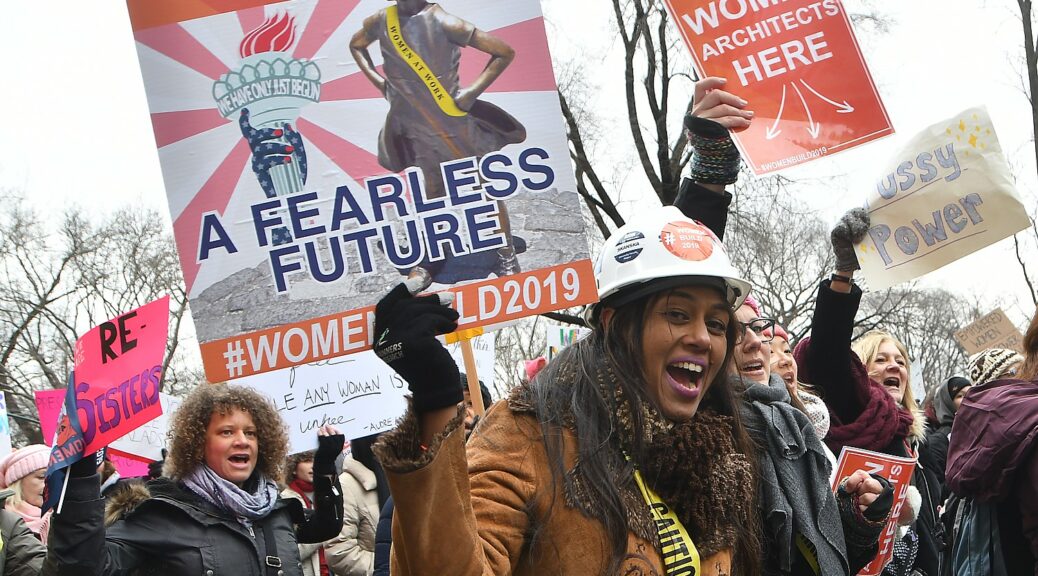
Reproductive Freedom for All: “2025 affirmed critical truths that will be at the forefront of our fight in 2026—voters continue to reject abortion bans and support reproductive freedom champions at the ballot box; anti-abortion actors are escalating, not retreating, despite their proven unpopularity; and the human cost of abortion bans is mounting while the full damage is still untold.” © Karen Rubin/news-photos-features.com

This fact sheet was provided by Reproductive Freedom for All (formerly NARAL Pro-Choice America) which for 55 years has fought to protect and advance reproductive freedom at the federal and state levels—including access to abortion care, birth control, pregnancy and post-partum care, and paid family leave—for everybody. Reproductive Freedom for All is powered by its more than 4 million members from every state and congressional district in the country, standing up to protect the rights of the 8 in 10 Americans who support legal abortion:

2025 affirmed critical truths that will be at the forefront of our fight in 2026—voters continue to reject abortion bans and support reproductive freedom champions at the ballot box; anti-abortion actors are escalating, not retreating, despite their proven unpopularity; and the human cost of abortion bans is mounting while the full damage is still untold.

Here are the topics that shaped 2025—and how we’re expecting them to play out in 2026:

1: GOP Attacks on Medication Abortion as Proxy for a National Ban

Trump and his allies spent this year mounting coordinated attacks on mifepristone, making clear that restricting medication abortion is the most immediate path to a national abortion ban. By targeting mifepristone through courts, federal agencies, and obscure laws, anti-abortion extremists are attempting to override state protections, medical consensus, and public opinion—and we expect them to double down in 2026. But the reality remains: Medication abortion is safe, effective, and widely used. While abortion bans have devastated access in many states, care persists thanks to telehealth and shield laws, and medication abortion is on the rise. 

Key Moments in 2025:

●       This year marked 25 years since the FDA approved mifepristone, which has been rigorously studied and used by more than 7.5 million people.

●       Trump and his MAGA allies are using every branch and levelof government, including the courts, Congress, and administrative agencies like the Food and Drug Administration (FDA) and the Department of Health and Human Services (HHS), to block access to mifepristone.

●       Sen. Josh Hawley (R-MO) introduced a bill in the Senate to ban the mailing of mifepristone, and House Republicans have introduced similar legislation.

What We’re Watching in 2026:

●       The FDA’s baseless, politically motivated “review” of mifepristone—now delayed until after the 2026 midterms. (Coincidental timing, we’re sure.)

●       Renewed litigation as states like FloridaTexas, and Missouri aim to further restrict mifepristone.

●       Movement in Missouri v. FDAGOP-led states’ attempt to revive a dismissed challenge and restrict mifepristone access. This comes after federal district Judge Matthew Kacsmaryk (in Texas) transferred the case to the Eastern District of Missouri, which is conveniently stacked with Trump-appointed, anti-abortion judges.

●       Continued reliance on junk science as anti-abortion groups ramp up their outlandish, unscientific claims to stigmatize and surveil medication abortion.

●       Quiet groundwork by the Trump administration to misuse the Comstock Act to ban the mailing of mifepristone.

2: “Leave It Up to the States”: Shield Laws vs. Criminalizing Abortion Care

2025 revealed a direct and growing clash between states protecting abortion care and states attempting to criminalize care within and beyond their borders. Shield laws protected patients and providers from extraterritorial legal actions by states that have banned abortion. This prompted aggressive backlash from anti-abortion extremists who have made it crystal clear that they never actually intended to leave abortion access up to individual states.

Key Moments in 2025:

●       Sixteen Republican attorneys general urged Congress to override state shield laws.

●       Texas enacted HB 7, yet another bounty-hunter abortion ban that encourages private individuals to sue manufacturers, distributors, and providers of medication abortion to receive a minimum of $100,000 in damages.

●       States like Texas and Louisiana attempted to bypass other states’ shield laws, while CaliforniaNew YorkVermont and other blue states strengthened and expanded protections for abortion providers and patients.

●       New data from the Society of Family Planning showed an increase in telehealth-provided medication abortion care in the first half of 2025, including from legal shield-state providers.

What We’re Watching in 2026: 

●       Escalating interstate legal conflicts and congressional efforts to preempt shield laws as the GOP continues to pursue a national abortion ban.

●       Copy-cat legislation as anti-abortion lawmakers in state legislatures across the country  seek to replicate Texas’s HB 7, the new bounty-hunter ban targeting manufacturers, distributors, and providers of medication abortion. Some states will go even further and attempt to target people who help others access medication abortion care.

3: The GOP-Manufactured Health Care Crisis

Republicans used 2025 to advance a broader assault on health care access—gutting coverage, defunding providers, and driving up costs to push care even further out of reach. As we head into 2026, the Affordable Care Act (ACA) enhanced premium tax credits are set to expire, threatening coverage for more than 22 million people, and more health care clinics and rural hospitals across the country are at risk of closing.

Key Moments in 2025: 

●       In July, Trump and his allies in Congress passed a deeply unpopular budget bill that defunds Planned Parenthood, decimates Medicaid, and ultimately strips health coverage from 15 million people.

●       In September, Congressional Republicans shut down the federal government for 43 days—the longest in history. While ignoring calls for a bipartisan spending bill to mitigate their manufactured health care crisis, they did find plenty of time to keep attacking abortion.

●       Anti-abortion Republicans slashed funding for Title X, the nation’s only federal funding program dedicated to family planning.

 What We’re Watching in 2026:

●       An expected January vote on House Democrats’ clean three-year extension of the ACA enhanced premium tax credits. As the ACA fight continues, expect Republicans to keep pushing anti-abortion misinformation to distract from skyrocketing health care costs and their refusal to extend the tax credits.

●       The Supreme Court potentially taking up Planned Parenthood Federation of America v. Kennedy—yet another case that threatens Medicaid funding for Planned Parenthood and other providers that offer abortion care.

●       Intensifying scrutiny of increased public funding for anti-abortion centers, especially as legitimate medical providers lose critical resources. 

●       More empty health care proposals from anti-abortion lawmakers that contain harmful abortion provisions.

4: So-Called “Personhood” and Expanding Attacks Beyond Abortion

Republicans accelerated efforts to codify harmful “personhood” ideology—granting legal rights to zygotes, embryos, or fetuses—confirming what reproductive freedom advocates have long warned: Anti-abortion extremists were never going to stop at abortion. “Personhood” ideology lays the groundwork to restrict in vitro fertilization (IVF), contraception, stem cell research, and pregnancy management. Trump and his allies want these threats to fly under the radar because they know just how extreme and unpopular they are. While these laws are often framed as technical changes or isolated incidents, the policies are part of an insidious strategy to launder these unpopular and unworkable ideas, assert even more control over our bodies, and redefine reproductive health care out of existence.

 Key Moments in 2025: 

●       Trump signed an executive order that targeted trans people and defined life as beginning at conception, inserting “personhood” ideology into official administrative policy.

●       The self-proclaimed “father of IVF,” Trump confirmed he does not plan to require health insurers to provide coverage for IVF—after campaigning on making these services free.

●       House Speaker Mike Johnson quietly worked to successfully remove IVF coverage for active duty military members from the National Defense Authorization Act (NDAA).

●       At least 38 bills attempting to codify “personhood” ideology were introduced across 24 states—a sharp increase from last year.

●       Nevada Governor Joe Lombardo vetoed SB 217, which would have expanded access to fertility care by lowering costs and protecting access amid GOP efforts to ban IVF.

●       The South Carolina Legislature seriously considered SB 323, a total abortion ban that would have treated abortion as homicide and set the foundation to restrict birth control, IVF, and emergency contraception.

●       The Trump administration destroyed $10 million worth of contraceptives, justifying it by falsely categorizing birth control as an “abortifacient.”

What We’re Watching in 2026:

●       Renewed domestic gag rule threats (Trump already revived the global gag rule from his first term) that extend anti-abortion ideology into broader domestic health systems.

●       The federal government’s continued attacks on birth control, including threats to falsely conflate IUDs and other forms of contraception as abortion care.

●       Expanded criminalization efforts as states use laws based on “personhood” ideology to prosecute miscarriage and other pregnancy outcomes.

●       Anti-abortion groups’ increased reliance on junk science to vilify IVF and providers who offer a full range of fertility care as part of their broader efforts to sow distrust in legitimate medical institutions and providers while pushing people toward the anti-abortion centers they fund. 

5. Rigging the System from the Courts to the Ballot Box

Knowing 8 in 10 Americans support the legal right to abortion care, anti-abortion extremists have doubled down on consolidating power—stacking courts, rewriting rules, and manipulating democratic systems—to impose an unpopular agenda voters repeatedly reject. This strategy targets reproductive freedom alongside voting rights and democracy itself, even as voters continue to push back and are poised to do so again in 2026.

 Key Moments in 2025:
 

●       Abortion was a galvanizing issue that drove turnout and victories from coast to coast during the 2025 elections.

●       After retaking office, Trump moved quickly to completely overhaul the federal government—stacking every level and branch with extremists ready to advance Project 2025’s priorities.

●       The Trump administration also confirmed dozens of judicial nominees to the federal bench—including 13 that have extreme anti-abortion records. These confirmations have set the stage for judges to rubber-stamp Trump’s anti-abortion agenda in the courts.

●       Californians overwhelmingly passed Prop 50 to push back against Trump’s redistricting in Texas and other attacks on democracy.

●       In response to successful state abortion ballot measures, including in his home state of Missouri, Sen. Josh Hawley and his wife, Erin Hawley—an attorney and key figure in overturning Roe v. Wadelaunched a dark money group to promote anti-abortion ballot measures across the country. The move reportedly sparked backlash even within the White House, underscoring just how politically toxic these efforts are.

●       Anti-abortion lawmakers in Missouri passed legislation that puts a constitutional amendment on the ballot that, if approved by voters, would remove the abortion protections Missouri voters approved last year. Anti-abortion extremists in Arizona tried to do the same thing, but after advocacy led by Reproductive Freedom for All, this bill was defeated.

What We’re Watching in 2026:

●       The 2026 midterms as a referendum on abortion bans and government overreach.

●       Nevada’s Question 6, which aims to protect abortion rights in the state constitution, returning to the ballot for final voter approval after a decisive victory in 2024.

●       Massive spending by anti-abortion group Susan B. Anthony Pro-Life America, which pledged millions to buy the Georgia and Michigan Senate seats.

●       High-stakes redistricting and voting rights cases, including Louisiana v. Callais before the Supreme Court, with major implications for representation and democracy.

6:  Maternal Mortality and the Human Cost of Abortion Bans

The consequences of abortion bans became even more visible in 2025 as investigative reporting documented more heartbreaking and preventable deaths of pregnant people denied care. Maternal mortality rates are on the rise in states with abortion bans, yet those same states are making it harder to investigate by obfuscating and suppressing data.

 Key Moments in 2025: 

●       Adriana Smith, a 30-year-old Black mother and nurse from Atlanta, was kept on life support for more than 90 days—against her family’s wishes, and long after being declared brain dead—because of Georgia’s extreme abortion ban and so-called fetal personhood ideology.

●       Tierra Walker, a 37-year-old Black mother from San Antonio, died from preeclampsia after being denied an abortion during a high-risk pregnancy—despite repeatedly asking for care—under Texas’ extreme abortion ban.

●       After Georgia dismissed all members of its Maternal Mortality Commission last year, the state is now keeping the new members secret.

●       The Trump administration rescinded the 2022 Biden-era guidance that affirmed federal law protects emergency abortion care—putting lives at risk and creating confusion for providers who still have a legal obligation to provide this care.

What we’re watching in 2026:

●       Continued erosion of emergency care protections.

●       Ongoing suppression of maternal mortality data by anti-abortion extremists.

●       More dangerous miscarriage and pregnancy outcomes in ban states, where emergency interventions and complications are rising.

The storylines that unfolded in 2025 have set the stage for 2026, and the stakes are clear: An extremist minority is escalating authoritarian efforts through every level of power—and our rights and freedoms are at risk. This next year will test whether democracy and science prevail over coordinated and escalating attacks, with control of Congress and the future of reproductive freedom on the line.

International Women’s Day: For Better Gender-Balanced World, Workplaces Need to Offer Maternity Leave, Flexible Work

To achieve true gender parity in the economy and society, employers need to provide paid parental leave and flexible work solutions © Karen Rubin/news-photos-features.com

With studies concluding almost as many women with children (74.1%) participated in the labor force as women without, in 2014, women who are juggling careers and motherhood benefit from flexibility at work the most.  


With women accounting for 40% or more of the total labor force in several countries, flexible working hours, extended maternal leave, breastfeeding rooms, free education and free healthcare are just a few of the ways that countries have adopted to build the best working environments for mothers.

To celebrate International Women’s Day, calling for a better gender-balanced world in the workplace, Instant Offices, a workspace innovation company, looked countries with the most progressive approaches into maternity, and general parental leave around the world, including additional benefits encouraging mothers to be comfortable and engaged at work before, during and after pregnancy. The results: European countries are some of the most progressive for maternity leave and benefits for working mothers.

Countries with the Most Maternity Leave

COUNTRY DAYS WAGES PAID
SWEDEN 480 80%
NORWAY 400+ 80-100%
CROATIA 365+ 100%
UK 365 90%
SERBIA 365 100%

Sweden – Provides 480 days of maternity leave

Sweden offers one of the most progressive working environments for parents, which exceeds international standards. Parents are entitled to up to 80% of their regular pay for 390 of the 480 days of maternity leave provided, while mothers in jobs that require heavy lifting, or more risky work are also entitled to take time off earlier during their pregnancy.

Each parent

  • Receives 240 of 480 days of paid parental leave
  • Is entitled to 90 days exclusively for him or her
  • Has the right to shorten their work hours by up to 25% until the child turns eight (although only being paid for the time worked)

Norway – Offers 49 weeks with 100% pay or 59 weeks with 80% pay

Mastering the art of the work-life balance, the Norwegian Parliament decided to increase the quota of paternity and maternity leave for new parents in 2018. Parents now reive 49 weeks of leave at 100% pay or 59 weeks at 80%

Croatia – Offers a year of paid maternity leave with 100% pay

In addition to a year of being able to bond with your new-born, full paid parental leave is available for 120 days in Croatia.

The country’s protective attitude towards mother’s at work has ensured there are laws in place to ensure:

  • Workers who are expecting are provided with free ante and post-natal medical care
  • Mothers have breastfeeding breaks of over an hour until the child is a year old
  • Workers are protected from dismissals during pregnancy and maternity leave

The UK – Required to offer one year of leave to new mothers

Receiving 90% of their original pay new mothers are legally allowed up to 52 weeks of maternity leave:

  • Ordinary Maternity Leave – first 26 weeks
  • Additional Maternity Leave – last 26 weeks
  • You may be entitled to take some of your leave as shared parental leave, although this must be taken within the first year after your child is born

Serbia

Mothers in Serbia are entitled to 20 weeks of leave at full pay after giving birth, with an additional year after that, however lowering over time:

  • For the first 26 weeks – 100% pay
  • Weeks 27 – 39 – 60% pay
  • Weeks 40 – 52 – 30% pay

On the other end of the scale, some of the countries with the shortest maternity leave/least benefits include:

Philippines – Previously only six weeks, the Philippines has recently extended the law for paid maternity leave to 105 days.

Australia – Although mothers can receive up to 18 weeks of leave, it is paid at the national minimum wage.

United States – The law most women rely on is the Family and Medical Leave Act (FMLA) which protects women’s jobs for up to 12 weeks after childbirth or adoption, however it doesn’t guarantee pay for the time off.

Maternity Leave and the Gender Pay Gap

Research by the National Bureau of Economic Research reveals a sharp drop in women’s earning after maternity leave, with no decrease in salary for men. The study also showed, from the birth of their first child, women end up making 20% less than men throughout their career.

In Denmark, childbearing accounts for 80% of the gender wage gap, as women move to more flexible hours with fewer hours and lower wages once they’ve had children; versus men whose careers go mostly unchanged. 

With many European countries moving towards better equality around parental leave, men are more encouraged to take time off after the birth of their child, and policies which bring more equity to the workforce are growing as a trend.

The Instant Group: Flexible Workspace Specialists

Founded in 1999, The Instant Group is a workspace innovation company that rethinks workspace on behalf of its clients injecting flexibility, reducing cost and driving enterprise performance. Instant places more than 7,000 companies a year in flexible workspace such as serviced, managed or co-working offices including Sky, Network Rail, Capita, Serco, Teleperformance, Worldpay making it the market leader in flexible workspace.

Its listings’ platform Instant Offices hosts more than 12,000 flexible workspace centres across the world and is the only site of its kind to represent the global market, providing a service to FTSE 100, Fortune 500, and SME clients.  With offices in London, Newcastle, Berlin, Haifa, Dallas, New York, Miami, San Francisco, Hong Kong, Sydney, Singapore, and Kuala Lumpur, The Instant Group employs 230 experts and has clients in more than 150 countries. It has recently been included in the 2018 Sunday Times’ HSBC International Track 200.