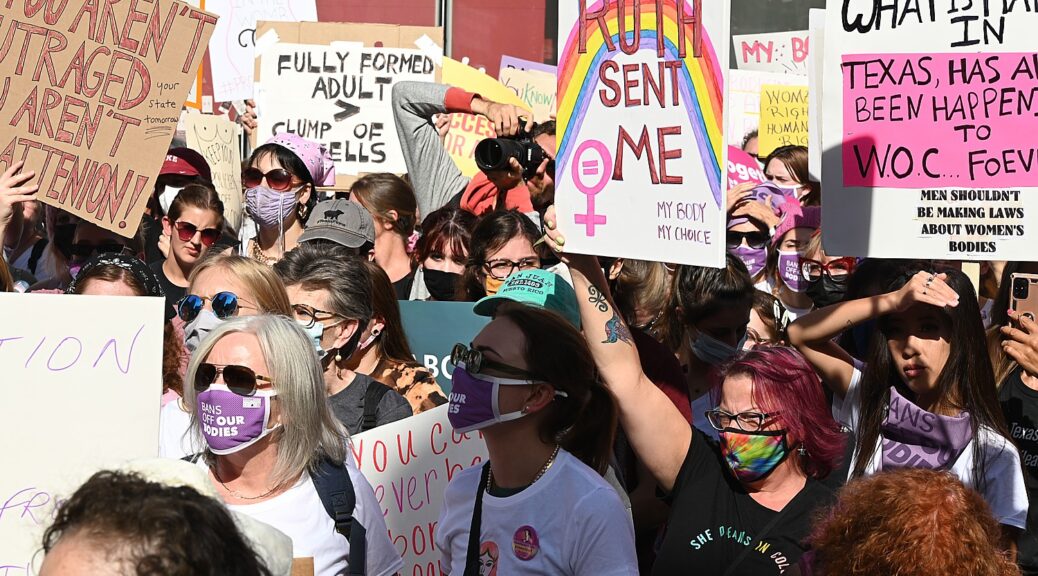
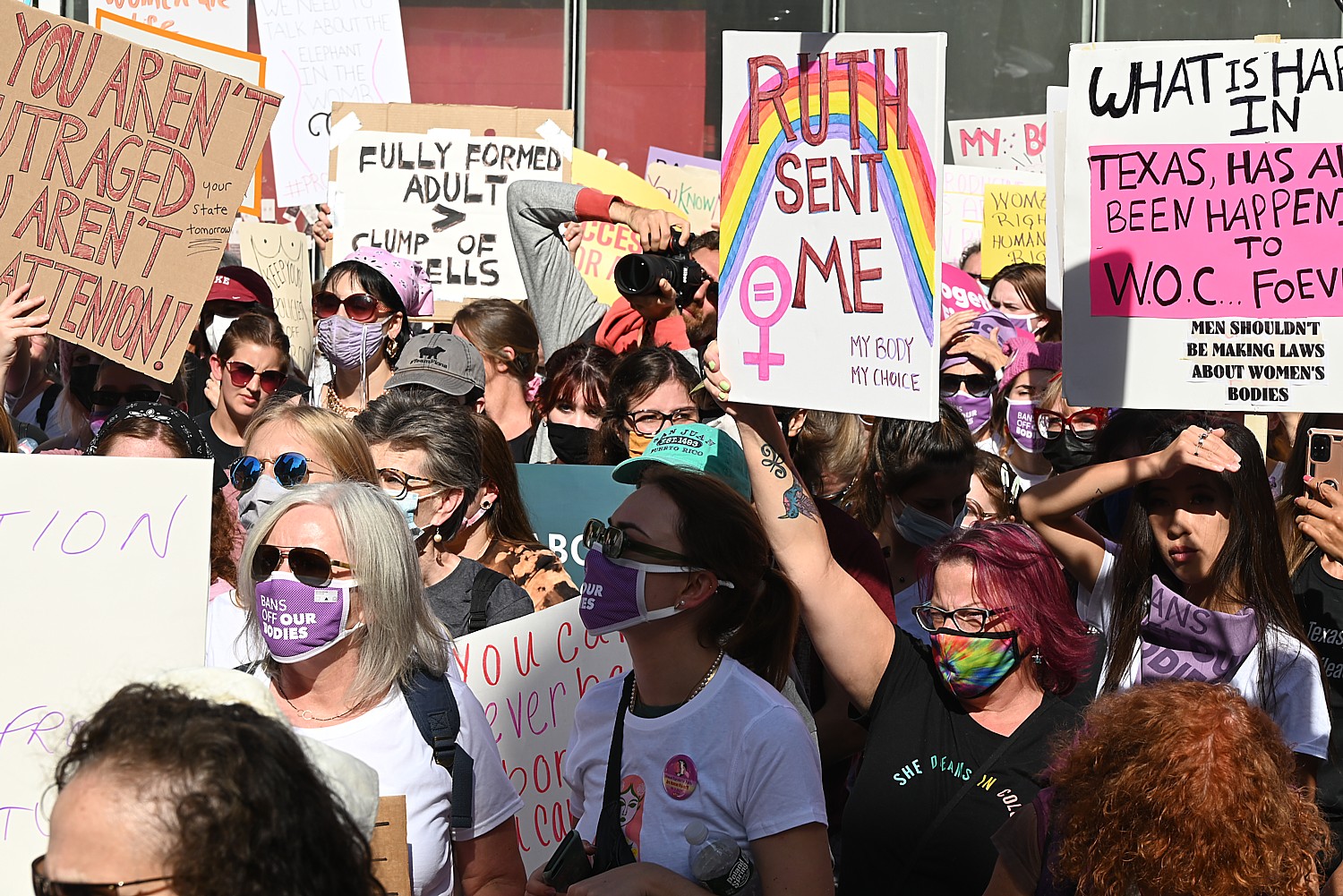
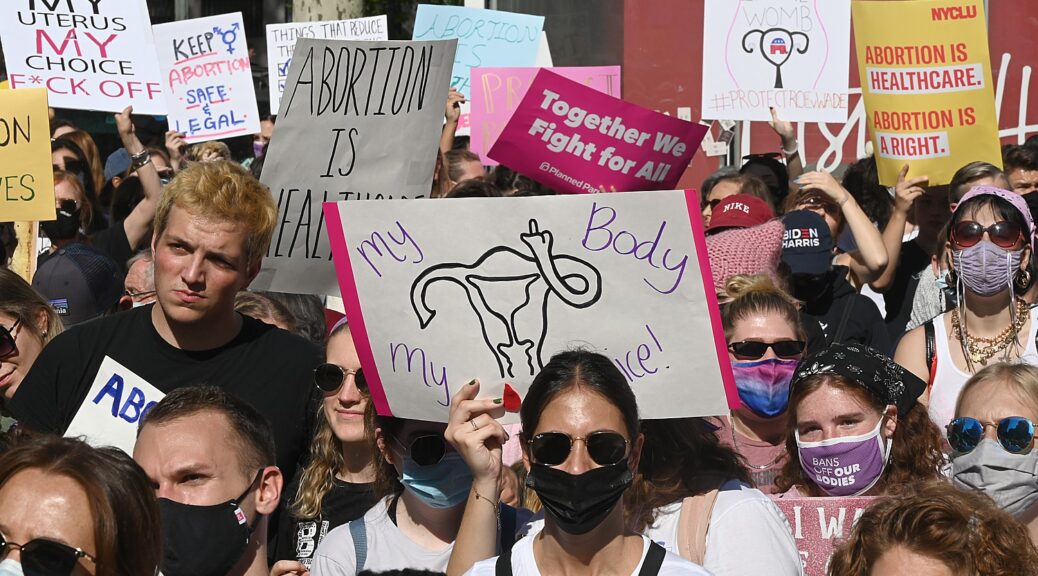
Note: in his Senate confirmation hearings as Attorney General, Todd Blanche assured Texas Senator Ted Cruz he would go after women’s right to obtain the abortion medication mifepristone through the mail, applying the Comstock Act’s prohibition of mailing “obscene materials” (guns okay to send through mail, mail-in ballots not okay) and opening the door to a national abortion ban. With this reward to a convicted anti-abortion extremist, the trump administration is also opening the door to intimidation and violence against women and healthcare practitioners, much as they have given blessing to January 6 insurrectionists. Meanwhile, Trump is still pushing for his $1.776 BILLION fund to pay January 6 insurrectionists 7-figure “settlements”. – Karen Rubin, editor@news-photos-features.com
Washington, D.C. — The trump administration is handing a seven-figure, taxpayer-funded settlement to a convicted anti-abortion extremist who prevented patients from accessing reproductive healthcare. Paul Vaughn was convicted of violating the Freedom of Access to Clinic Entrances (FACE) Act after helping blockade a Tennessee clinic. This hefty payout is an alarming escalation after President Trump pardoned Vaughn and 22 other anti-abortion extremists convicted under the FACE Act just days into his second term.
This news comes as acting Attorney General Todd Blanche, a staunch opponent of the FACE Act, awaits Senate confirmation to become the Attorney General permanently. Under Blanche, the DOJ fired the career attorneys responsible for enforcing clinic protections, dismissed pending FACE Act cases, and released a sham report attacking FACE Act enforcement. Blanche’s leadership of the DOJ threatens to effectively greenlight the terrorization of people seeking basic healthcare and shield extremists from accountability.
“While everyday families are struggling to pay for essentials, Trump and his administration are using taxpayer money to hand out massive payments to anti-abortion extremists,” Reproductive Freedom for All President and CEO Mini Timmaraju said in a statement. “Trump and Blanche have remade the DOJ into an institution that rewards violent criminals instead of holding them accountable—putting providers and patients at risk. They have once again flipped justice on its head. Voters won’t forget Republicans’ staggering corruption and warped priorities this November.”
The Trump administration’s attacks on the FACE Act threaten to erode the law’s protections and embolden anti-abortion extremists to escalate harassment, intimidation, and clinic blockades. Reproductive Freedom for All will continue fighting to defend the FACE Act, hold the Trump administration accountable for politicizing the Justice Department, and protect every person’s ability to access reproductive healthcare safely and without fear.
For over 55 years, Reproductive Freedom for All (formerly NARAL Pro-Choice America) has fought to protect and advance reproductive freedom at the federal and state levels—including access to abortion care, birth control, pregnancy and post-partum care, and paid family leave—for everybody. Reproductive Freedom for All is powered by its more than 4.5 million members from every state and congressional district in the country, representing the 8 in 10 Americans who support legal abortion.
Today, on the anniversary of the Supreme Court’s decision in ‘Dobbs v. Jackson Women’s Health Organization’, which sharply restricted access to abortion nationwide, Governor Kathy Hochul and Mayor Zohran Kwame Mamdani announced that the New York State Department of Health and the NYC Department of Health and Mental Hygiene are investing $495,000 to expand theNew York City Abortion Access Hub’s referral network. The expansion will allow the Hub to connect callers with a broader network of abortion providers and support organizations outside the five boroughs, helping more people access reproductive health care regardless of where they live.
“As we commemorate four years since the Supreme Court’s disastrous Dobbs decision, New York is sending a clear message to the rest of the country: We’re not going to let Washington Republicans take us backwards,” Governor Hochul said.“Thanks to our support, we are expanding the reach of this vital resource so more people have access to safe reproductive health care.”
New York City Mayor Zohran Kwame Mamdani said,“Four years ago, the disastrous Dobbs decision stripped away a fundamental right and put reproductive health care out of reach for millions of Americans across this country. Since then, New York has led the fight to protect abortion care. On this anniversary, we are expanding the successful Abortion Access Hub so that anyone seeking care can more easily find it. Together with New York State, we are strengthening a lifeline that connects people to abortion care, medication, transportation, lodging and support. Because abortion is health care. And health care is a human right.”
New York State Health Commissioner Dr. James McDonald said,“New York State will continue to fight to protect access to abortion care and reproductive healthcare for anyone in need of these vital services, despite ongoing politically motivated efforts to remove these hard-fought rights. Our partnership with New York City and the expansion of the Abortion Access Hub enables New York State to further protect these fundamental rights and remain a safe harbor for anyone seeking care.”
Deputy Mayor for Health and Human Services Dr. Helen Arteaga said,”The importance of safe, accessible abortion care cannot be overstated, especially as states across the country continue to attack reproductive freedom. The people most harmed by these restrictions are often those already facing the greatest barriers to care — including low-income communities and communities of color. This expansion will help ensure that thousands more people can access the services they need with dignity and support.”
New York City Health Commissioner Dr. Alister Martin said,“Reproductive healthcare remains under attack across the country, but New York City and State are unwavering in our commitment to protecting and uplifting access to care for anyone in need. Despite robust protections, too many people still face barriers to care. On the anniversary of the Supreme Court’s disastrous Dobbs decision, I’m proud to work with our partners across the state to reduce the burden for more New Yorkers.”
New York State’s annual investment of $250,000 will support the Hub’s coordination with abortion providers outside New York City and organizations that assist patients with travel, financial support and lodging associated with obtaining care.
Under Governor Hochul’s leadership, New York State has authorized millions of dollars to protect and expand access to reproductive health care. Through the Supplemental Abortion Provider Support Program and the Reproductive Freedom and Equity Grant Program, the state has provided funding to clinics and providers offering abortion and reproductive health services across New York.
NYC Abortion Access Hub
The NYC Abortion Access Hub is a confidential hotline that connects callers to abortion care and related services, including financial assistance, insurance enrollment, transportation and lodging. The Hub was launched in response to the Dobbs decision.
Since its launch, the Hub has answered more than 10,400 calls and nearly 5,000 live chat messages. More than half of callers seek medication abortion services, while one-quarter of calls come from outside New York state. Among out-of-state callers, the largest shares come from Florida (35 percent), Texas (27 percent) and Georgia (15 percent), where abortion access is heavily restricted.
Most callers are younger than 30 years old (60 percent). Nearly half identify as Latino (47 percent), nearly one-quarter identify as Black (24 percent), and most report annual household incomes below $25,000 (59 percent).
NYC Sexual Health Clinics
In addition to direct referrals to independent providers, the Hub connects callers toNYC Sexual Health Clinics, which offer no-cost medication abortion, contraception and on-site pregnancy testing at four sites. More than 60 percent of clinic patients receive same-day care, and services are provided regardless of immigration status or ability to pay. Additional services offered by the clinics include birth control, emergency contraception, pap smears, and onsite iron level tests for potential medication abortion patients.
The new partnership between State and City health departments will allow the Hub to engage a broader network of providers and expand referral options statewide.
This fact sheet was provided by Reproductive Freedom for All(formerly NARAL Pro-Choice America) which for 55 years has fought to protect and advance reproductive freedom at the federal and state levels—including access to abortion care, birth control, pregnancy and post-partum care, and paid family leave—for everybody. Reproductive Freedom for All is powered by its more than 4 million members from every state and congressional district in the country, standing up to protect the rights of the 8 in 10 Americans who support legal abortion:
2025 affirmed critical truths that will be at the forefront of our fight in 2026—voters continue to reject abortion bans and support reproductive freedom champions at the ballot box; anti-abortion actors are escalating, not retreating, despite their proven unpopularity; and the human cost of abortion bans is mounting while the full damage is still untold.
Here are the topics that shaped 2025—and how we’re expecting them to play out in 2026:
1: GOP Attacks on Medication Abortion as Proxy for a National Ban
Trump and his allies spent this year mounting coordinated attacks on mifepristone, making clear that restricting medication abortion is the most immediate path to a national abortion ban. By targeting mifepristone through courts, federal agencies, and obscure laws, anti-abortion extremists are attempting to override state protections, medical consensus, and public opinion—and we expect them to double down in 2026. But the reality remains: Medication abortion is safe, effective, and widely used. While abortion bans have devastated access in many states, care persists thanks to telehealth and shield laws, and medication abortion is on the rise.
Key Moments in 2025:
● This year marked 25 years since the FDA approved mifepristone, which has been rigorously studied and used by more than 7.5 million people.
● Renewed litigation as states like Florida, Texas, and Missouri aim to further restrict mifepristone.
● Movement in Missouri v. FDA—GOP-led states’ attempt to revive a dismissed challenge and restrict mifepristone access. This comes after federal district Judge Matthew Kacsmaryk (in Texas) transferred the case to the Eastern District of Missouri, which is conveniently stacked with Trump-appointed, anti-abortion judges.
● Continued reliance on junk science as anti-abortion groups ramp up their outlandish, unscientific claims to stigmatize and surveil medication abortion.
● Quiet groundwork by the Trump administration to misuse the Comstock Act to ban the mailing of mifepristone.
2: “Leave It Up to the States”: Shield Laws vs. Criminalizing Abortion Care
2025 revealed a direct and growing clash between states protecting abortion care and states attempting to criminalize care within and beyond their borders. Shield laws protected patients and providers from extraterritorial legal actions by states that have banned abortion. This prompted aggressive backlash from anti-abortion extremists who have made it crystal clear that they never actually intended to leave abortion access up to individual states.
Key Moments in 2025:
● Sixteen Republican attorneys general urged Congress to override state shield laws.
● Texas enacted HB 7, yet another bounty-hunter abortion ban that encourages private individuals to sue manufacturers, distributors, and providers of medication abortion to receive a minimum of $100,000 in damages.
● States like Texas and Louisiana attempted to bypass other states’ shield laws, while California, New York, Vermont and other blue states strengthened and expanded protections for abortion providers and patients.
● New data from the Society of Family Planning showed an increase in telehealth-provided medication abortion care in the first half of 2025, including from legal shield-state providers.
What We’re Watching in 2026:
● Escalating interstate legal conflicts and congressional efforts to preempt shield laws as the GOP continues to pursue a national abortion ban.
● Copy-cat legislation as anti-abortion lawmakers in state legislatures across the country seek to replicate Texas’s HB 7, the new bounty-hunter ban targeting manufacturers, distributors, and providers of medication abortion. Some states will go even further and attempt to target people who help others access medication abortion care.
3: The GOP-Manufactured Health Care Crisis
Republicans used 2025 to advance a broader assault on health care access—gutting coverage, defunding providers, and driving up costs to push care even further out of reach. As we head into 2026, the Affordable Care Act (ACA) enhanced premium tax credits are set to expire, threatening coverage for more than 22 million people, and more health care clinics and rural hospitals across the country are at risk of closing.
Key Moments in 2025:
● In July, Trump and his allies in Congress passed a deeply unpopular budget bill that defunds Planned Parenthood, decimates Medicaid, and ultimately strips health coverage from 15 million people.
● In September, Congressional Republicans shut down the federal government for 43 days—the longest in history. While ignoring calls for a bipartisan spending bill to mitigate their manufactured health care crisis, they did find plenty of time to keep attacking abortion.
● Anti-abortion Republicans slashed funding for Title X, the nation’s only federal funding program dedicated to family planning.
What We’re Watching in 2026:
● An expected January vote on House Democrats’ clean three-year extension of the ACA enhanced premium tax credits. As the ACA fight continues, expect Republicans to keep pushing anti-abortion misinformation to distract from skyrocketing health care costs and their refusal to extend the tax credits.
● The Supreme Court potentially taking up Planned Parenthood Federation of America v. Kennedy—yet another case that threatens Medicaid funding for Planned Parenthood and other providers that offer abortion care.
● Intensifying scrutiny of increased public funding for anti-abortion centers, especially as legitimate medical providers lose critical resources.
4: So-Called “Personhood” and Expanding Attacks Beyond Abortion
Republicans accelerated efforts to codify harmful “personhood” ideology—granting legal rights to zygotes, embryos, or fetuses—confirming what reproductive freedom advocates have long warned: Anti-abortion extremists were never going to stop at abortion. “Personhood” ideology lays the groundwork to restrict in vitro fertilization (IVF), contraception, stem cell research, and pregnancy management. Trump and his allies want these threats to fly under the radar because they know just how extreme and unpopular they are. While these laws are often framed as technical changes or isolated incidents, the policies are part of an insidious strategy to launder these unpopular and unworkable ideas, assert even more control over our bodies, and redefine reproductive health care out of existence.
Key Moments in 2025:
● Trump signed an executive order that targeted trans people and defined life as beginning at conception, inserting “personhood” ideology into official administrative policy.
● The self-proclaimed “father of IVF,” Trump confirmed he does not plan to require health insurers to provide coverage for IVF—after campaigning on making these services free.
● House Speaker Mike Johnson quietly worked to successfully remove IVF coverage for active duty military members from the National Defense Authorization Act (NDAA).
● Nevada Governor Joe Lombardo vetoed SB 217, which would have expanded access to fertility care by lowering costs and protecting access amid GOP efforts to ban IVF.
● The South Carolina Legislature seriously considered SB 323, a total abortion ban that would have treated abortion as homicide and set the foundation to restrict birth control, IVF, and emergency contraception.
● The Trump administration destroyed $10 million worth of contraceptives, justifying it by falsely categorizing birth control as an “abortifacient.”
What We’re Watching in 2026:
● Renewed domestic gag rule threats (Trump already revived the global gag rule from his first term) that extend anti-abortion ideology into broader domestic health systems.
● The federal government’s continued attacks on birth control, including threats to falsely conflate IUDs and other forms of contraception as abortion care.
● Expanded criminalization efforts as states use laws based on “personhood” ideology to prosecute miscarriage and other pregnancy outcomes.
● Anti-abortion groups’ increased reliance on junk science to vilify IVF and providers who offer a full range of fertility care as part of their broader efforts to sow distrust in legitimate medical institutions and providers while pushing people toward the anti-abortion centers they fund.
5. Rigging the System from the Courts to the Ballot Box
Knowing 8 in 10 Americans support the legal right to abortion care, anti-abortion extremists have doubled down on consolidating power—stacking courts, rewriting rules, and manipulating democratic systems—to impose an unpopular agenda voters repeatedly reject. This strategy targets reproductive freedom alongside voting rights and democracy itself, even as voters continue to push back and are poised to do so again in 2026.
Key Moments in 2025:
● Abortion was a galvanizing issue that drove turnout and victories from coast to coast during the 2025 elections.
● After retaking office, Trump moved quickly to completely overhaul the federal government—stacking every level and branch with extremists ready to advance Project 2025’s priorities.
● The Trump administration also confirmed dozens of judicial nominees to the federal bench—including 13 that have extreme anti-abortion records. These confirmations have set the stage for judges to rubber-stamp Trump’s anti-abortion agenda in the courts.
● Californians overwhelmingly passed Prop 50 to push back against Trump’s redistricting in Texas and other attacks on democracy.
● In response to successful state abortion ballot measures, including in his home state of Missouri, Sen. Josh Hawley and his wife, Erin Hawley—an attorney and key figure in overturning Roe v. Wade—launched a dark money group to promote anti-abortion ballot measures across the country. The move reportedly sparked backlash even within the White House, underscoring just how politically toxic these efforts are.
● Anti-abortion lawmakers in Missouri passed legislation that puts a constitutional amendment on the ballot that, if approved by voters, would remove the abortion protections Missouri voters approved last year. Anti-abortion extremists in Arizona tried to do the same thing, but after advocacy led by Reproductive Freedom for All, this bill was defeated.
What We’re Watching in 2026:
● The 2026 midterms as a referendum on abortion bans and government overreach.
● Nevada’s Question 6, which aims to protect abortion rights in the state constitution, returning to the ballot for final voter approval after a decisive victory in 2024.
● Massive spending by anti-abortion group Susan B. Anthony Pro-Life America, which pledged millions to buy the Georgia and Michigan Senate seats.
● High-stakes redistricting and voting rights cases, including Louisiana v. Callaisbefore the Supreme Court, with major implications for representation and democracy.
6: Maternal Mortality and the Human Cost of Abortion Bans
The consequences of abortion bans became even more visible in 2025 as investigative reporting documented more heartbreaking and preventable deaths of pregnant people denied care. Maternal mortality rates are on the rise in states with abortion bans, yet those same states are making it harder to investigate by obfuscating and suppressing data.
Key Moments in 2025:
● Adriana Smith, a 30-year-old Black mother and nurse from Atlanta, was kept on life support for more than 90 days—against her family’s wishes, and long after being declared brain dead—because of Georgia’s extreme abortion ban and so-called fetal personhood ideology.
● Tierra Walker, a 37-year-old Black mother from San Antonio, died from preeclampsia after being denied an abortion during a high-risk pregnancy—despite repeatedly asking for care—under Texas’ extreme abortion ban.
● After Georgia dismissed all members of its Maternal Mortality Commission last year, the state is now keeping the new members secret.
● The Trump administration rescinded the 2022 Biden-era guidance that affirmed federal law protects emergency abortion care—putting lives at risk and creating confusion for providers who still have a legal obligation to provide this care.
What we’re watching in 2026:
● Continued erosion of emergency care protections.
● Ongoing suppression of maternal mortality data by anti-abortion extremists.
● More dangerous miscarriage and pregnancy outcomes in ban states, where emergency interventions and complications are rising.
The storylines that unfolded in 2025 have set the stage for 2026, and the stakes are clear: An extremist minority is escalating authoritarian efforts through every level of power—and our rights and freedoms are at risk. This next year will test whether democracy and science prevail over coordinated and escalating attacks, with control of Congress and the future of reproductive freedom on the line.
Secretary to the Governor Melissa DeRosa has issued a report to Governor Cuomo outlining the COVID-19 Domestic Violence Task Force’s initial recommendations to reimagine New York’s approach to services for domestic violence survivors. Governor Cuomo has accepted these recommendations in full and is directing the Office for the Prevention of Domestic Violence, along with other sister agencies of the Office of Children and Family Services, the Office of Temporary and Disability Assistance, the Office of Victim Services, the Division of Criminal Justice Services and the Department of Health, to use these recommendations to update and improve domestic violence services in New York State.
The recommendations identified by the Task Force recognize that the needs of domestic violence survivors vary greatly and there are different tools needed to allow each survivor maximum control over their situation including: mobile advocacy, flexible funding and housing choice. The recommendations offered by the Task Force are ready to be quickly implemented, cutting red tape and prioritizing cultural competency to better meet survivors where they are, give them what they need and set a foundation for continued innovation. The Task Force’s full report is available here.
“The COVID-19 pandemic has led to a drastic increase in the number of reported domestic violence cases in the state, leaving many survivors trapped at home with their abusers without access to help or resources,” Governor Cuomo said. “New York has been working to modernize our systems and the way we deliver services to survivors, and the recommendations made by the task force will help address this alarming spike in domestic violence incidents while building our systems and processes back better than they were before. I thank all the task force members for their work on this issue and for their dedication to ending domestic and gender based violence.”
“Domestic violence has been a pervasive problem in our society, and the COVID-19 pandemic has only exacerbated the situation and exposed the limitations of our traditional systems and methods,” Melissa DeRosa, Secretary to the Governor and Chair of the New York State Council on Women and Girls, said.”Since the uptick in domestic violence incidents during the pandemic, New York has taken aggressive actions to find new and innovative solutions to safely reach domestic violence survivors and provide critical, life-saving services. These recommendations build on our efforts and will help to transform and reimagine the way we provide services by giving survivors of domestic violence choice in their future and control of their decisions.”
Recommendation One: Using New Technologies to Reach More Survivors
The Task Force recommends that the Governor direct the Office for the Prevention of Domestic Violence to partner with national technical assistance providers to enhance knowledge around the use of technology to reach more survivors, including those in traditionally underserved populations and young people who may be impacted by intimate partner violence.
The Task Force also recommends that state agencies support programs in purchasing mobile devices and supporting technological infrastructure with federal funding related to the pandemic.
The Task Force also recommends that OPDV permanently incorporate a chat and text component into the functionality of the NYS Domestic and Sexual Violence Hotline.
Recommendation Two: Providing Flexible Funding to Meet the Diverse Needs of Survivors
The Task Force recommends that state agencies provide funding for local programs that can be used to support survivors’ safety, housing stability, transportation or other needs. In tandem with the mobile advocacy strategy, the state should allow programs to use funds to conduct community-based mobile advocacy, with an emphasis on housing stability, economic empowerment, and safety planning, to enable survivors to remain safe and stably housed in the community, if possible. Support provided by local programs should have more flexible parameters, should meet survivors’ needs as quickly as possible and should be available until the survivor feels safe. Further, the state should continue its commitment to partnering with the philanthropic and advocacy community, collaborating to leverage support, fill in the gaps where existing funds fall short and foster further innovation.
Recommendation Three: Providing More Housing Navigation Services
The Task Force recommends that state agencies connect providers to diverse housing-related funding streams to support a housing navigator system. Navigators will work with survivors to help them access available resources and support for housing beyond shelter and work with domestic violence advocates to help them better understand and assist with their clients’ needs around housing.
Additionally, domestic violence programs should designate a portion of one staff member’s salary to be used for housing navigation services, and community-based resources should incorporate this information into their resource database in order to fully support those victims. The role of the housing navigator would be to “bridge the gap” between domestic violence services and housing providers in order to ensure that the housing needs of domestic violence survivors are met.
Recommendation Four: Removing the Requirement that Domestic Violence Victims File a Police Report in Order to Access Victims of Crime Act Funding
The Task Force recommends that the Governor issue an executive order to remove the requirement that domestic violence victims file a police report in order to access the Victims of Crime Act funding. Many domestic violence survivors may be unable or unwilling to file a police report against their abuser, and expanding access to this funding while the state of emergency remains in effect will allow survivors to navigate the COVID-19 crisis with crucial financial support to seek safety.
Recommendation Five: Addressing the Needs of Black, Indigenous and People of Color Survivors of Gender-Based Violence
The Task Force recommends that the Council on Women and Girls establish a standing committee to prioritize and coordinate the creation of culturally competent service delivery designed to address the needs of Black, Indigenous and People of Color (BIPOC) survivors of gender-based violence. The committee will operate under a shared understanding of the impact of systemic racism on BIPOC survivors, and apply an intersectional lens to also consider sexuality, gender identity, age, disability, immigration status, and other identities and experiences in its work. The committee should meet bi-monthly to create an action plan for implementing these elements of service delivery across agencies, including comprehensive prevention strategies, improved language access and culturally competent outreach.
The Task Force also recommends that the state launch a paid and earned media campaign to promote prevention in a culturally competent way and reach specific populations across New York State.
Recommendation Six: Normalizing Domestic Violence Screening During Tele-Health Visits
The Task Force recommends that the Governor direct OPDV and the Department of Health to create guidelines for best practices in identifying and responding to intimate partner violence via tele-health. DOH and the Department of Financial Services should explore the rapid deployment of Medicaid (and commercial) payment mechanisms for intimate partner violence screening and response through telehealth, and OPDV should develop and provide training, technical assistance and appropriate literature to healthcare providers to encourage safe screening for domestic violence and appropriate responses when domestic violence is suspected or identified during tele-health visits.
Recommendation Seven: Coordinating a Program to Promote the Need for Representation of Immigrant Victims
The Task Force recommends that the Governor direct OPDV to coordinate a program with the New York State Bar Association and other bar associations and legal services providers to facilitate training and promote the need for representation of immigrant victims by large law firms through their pro bono programs.
Recommendation Eight: Launching a Public Awareness Campaign to Highlight Financial Abuse
The Task Force recommends that OPDV expands the functions of its existing text and chat line to serve as a conduit to address the various forms of financial abuse experienced by domestic violence survivors.
The Task Force also recommends the establishment of a pilot project with local domestic service providers to identify victims whose credit has been ruined as a result of their abuse and work to repair and rebuild their financial standing.
Recommendation Nine: Launching a New Prevention Initiative Specifically Directed at Educating Men About Domestic Violence
The Task Force recommends that OPDV exercises its oversight authority for abusive partner interventions programs in New York State and directs it to launch a new prevention initiative specifically directed at men, emphasizing the connection between domestic violence and harm to children.
Recommendation Ten: Setting the Stage for Future Progress
The recommendations offered in this report represent just a small fraction of the many ideas and best practices offered by the members of the Task Force over the course of their work. Among the long-term strategies to be further explored are policies around court innovation, ways to address the connection between child abuse and domestic violence, robust prevention programs, and more comprehensive data collection practices. While the Task Force will no longer formally convene, its members have generously offered to continue serving as resources for the state as it develops these long-term plans.
About the New York State COVID-19 Domestic Violence Task Force
In the first few months of the COVID-19 pandemic, data reported by law enforcement and domestic violence service providers pointed to an increase in domestic violence, with the New York State Domestic & Sexual Violence Hotline recording a 33 percent increase in calls for April 2020 compared to April 2019, and shelter occupancy rates upstate rising to 78 percent in April 2020, versus 59 percent in April 2019.
Since the pandemic began and the NYS PAUSE order went into effect, the state’s Office for the Prevention of Domestic Violence and all relevant state agencies have been working diligently to reach domestic violence survivors and connect them with information about services and support. OPDV also implemented a new, confidential text line and chat program for survivors across the state. The creation of the Task Force built on that work, convening 27 experienced and knowledgeable advocates, service providers and thought leaders from across the country to meet virtually, share their expertise and create written proposals.
Members of the COVID-19 Domestic Violence Task Force include:
Scott Berkowitz – Founder and President, Rape, Abuse and Incest National Network (RAINN)
Alejandra Y. Castillo, Esq. – CEO, YWCA USA
Karma Cottman – Executive Director, Ujima, Inc: The National Center on Violence Against Women in the Black Community
Nathaniel M. Fields – President and CEO, Urban Resource Institute (URI)
Ruth M. Glenn – President and CEO, National Coalition Against Domestic Violence (NCADV)
Peg Hacskaylo – Founder and CEO, National Alliance for Safe Housing (NASH)
Jim Henderson – Probation and Domestic Violence Expert, Battered Women’s Justice Project
Grace Huang, JD – Policy Director, Asian Pacific Institute on Gender-Based Violence
Tandra R. LaGrone – Executive Director, In Our Own Voices
Cindi Leive – Senior Fellow, USC-Annenberg School of Journalism and Communications
Tonya Lovelace, MA – CEO, Women of Color Network Inc (WOCN)
David Mandel – Executive Director, Safe & Together Institute
Karol V. Mason – President, John Jay College of Criminal Justice
Joan S. Meier – Professor of Law, George Washington University Law School and Director, National Family Violence Law Center at GW
Connie Neal – Executive Director, New York State Coalition Against Domestic Violence (NYSCADV)
Ana L. Oliveira – President and CEO, The New York Women’s Foundation
Leslye Orloff – Director, National Immigrant Women’s Advocacy Project at American University Washington College of Law
Farzana Safiullah – CEO, National Resource Center on Domestic Violence (NRCDV)
Lynn Hecht Schafran, JD – Legal Director and Director, National Judicial Education Program at Legal Momentum, The Women’s Legal Defense and Education Fund
Lucy Rain Simpson – Executive Director, National Indigenous Women’s Resource Center (NIWRC)
Joe Torre – Co-Founder and Chairman, The Safe at Home Foundation and Special Advisor to Major League Baseball (MLB)
Patricia Tototzintle – CEO, Casa de Esperanza/National Latin@ Network for Healthy Families and Community
Deborah D. Tucker, MPA – President, National Center on Domestic & Sexual Violence (NCDSV)
Deborah J. Vagins – President and CEO, National Network to End Domestic Violence (NNEDV)
Troy Vincent – Executive Vice President of Football Operations, NFL and National Advocate to End Domestic Violence
Carole Warshaw, M.D. – Director, National Center on Domestic Violence, Trauma & Mental Health
Joanne Zannoni – Executive Director, New York State Coalition Against Sexual Assault (NYSCASA)