Washington, DC — Damning new reporting just dropped that reveals Acting Attorney General Todd Blanche is making promises to anti-abortion extremists behind the scenes. On a private call hosted by the White House Faith Office, he pledged that the Department of Justice would work with federal agencies and the White House to make the Dobbs decision “permanent in every single state”—essentially promising to enact a national abortion ban. Trump lied to voters when he campaigned on leaving abortion to the states—a backdoor ban has been Republicans’ goal all along.
During the call, Blanche told these extremists the administration is “putting practices and policies in place” to stop shipments of abortion medication into states with bans. He also singled out the shield laws in states that protect abortion access and allow providers to mail mifepristone to patients living in states with bans, promising “victory will be soon, and…it will be permanent.” These promises to extremists go much further than his public testimony to senators at his confirmation hearing last month and should alarm anyone concerned with the future of abortion access and reproductive freedom.
Todd Blanche’s anti-abortion extremism took center stage during today’s Senate Judiciary Committee meeting, where senators voted along party lines to advance Blanche’s nomination out of committee and to the full Senate. In light of this new reporting, Senator Blumenthal called Blanche a “zealot” who “wants to strip Americans of their right to choose and states of their right to govern.”
“Todd Blanche is making dangerous promises behind closed doors to weaponize the Justice Department to enact a national abortion ban,” stated Reproductive Freedom for All President and CEO Mini Timmaraju. “We must believe Blanche when he says he will come for our rights. Republicans are using every lever of government to attack reproductive freedom, and voters will make their voices heard this November to take our Congress back from these extremists.”
As the Acting Attorney General, Blanche has gutted the Department of Justice’s enforcement of the Freedom of Access to Clinic Entrances (FACE) Act, the federal law protecting patients and providers from threats, intimidation, violence, and obstruction at reproductive health clinics. Blanche’s DOJ also fired the career attorneys responsible for enforcing clinic protections and dismissed pending FACE Act cases. Just last week, the DOJ, under Blanche’s leadership, cut a 7-figure taxpayer-funded settlement to a convicted FACE Act violator.
Condemnation of Erica Schwartz Confirmation to Lead CDC
Reproductive Freedom for All also condemned the Senate’s confirmation of Erica Schwartz to lead the Centers for Disease Control and Prevention (CDC), despite her dangerous commitment to undermine abortion access and patients’ data privacy. During her confirmation hearing, Schwartz said abortion surveillance is “absolutely a critical component” of the CDC’s work and signaled the federal government could explore collecting more sensitive abortion data. The push to expand abortion surveillance is part of anti-abortion extremists’ broader strategy to monitor, restrict, and ultimately criminalize abortion access.
Schwartz’s testimony also sounded alarm bells around further criminalization of patients and providers following her pledge to ensure states are not “conflating” emergency services with abortion care and “hiding abortions” in emergency case definitions. In states with abortion bans, the distinction between abortion and emergency care has already been used to stoke fear, and delays in care have resulted in preventable suffering and deaths.
Schwartz also admitted she did not know the Trump administration had made reporting of cyclospora optional—a disturbing revelation as the parasite has infected thousands, with infections growing each day. As the new head of the nation’s top public health agency, Schwartz’s confirmation marks a troubling, continued departure from science and patient safety at the CDC.
“Erica Schwartz is the latest in a long line of extremists stacked in this administration to undermine abortion access and patients’ privacy,” stated Reproductive Freedom for All President and CEO Mini Timmaraju. Her confirmation cements an anti-abortion agenda at the center of the CDC’s work, rather than containing outbreaks and keeping the public safe. Every senator who voted to confirm her will have to answer to their constituents for handing anti-abortion opponents another ally in the Trump administration.”
Schwartz will report to HHS Secretary Robert F. Kennedy Jr., who has faced growing scrutiny over his efforts to politicize the nation’s public health agencies. In August 2025, Kennedy ousted CDC Director Susan Monarez less than a month into the job, after she refused to rubber-stamp the anti-vaccine recommendations coming out of the CDC’s vaccine advisory committee, which Kennedy purged and restacked with vaccine skeptics. Under Kennedy, the country has since endured its largest measles outbreak in more than three decades, and the agency has gone without a permanent director while facing political interference, budget cuts, and staff reductions amid multiple outbreaks.
For over 55 years, Reproductive Freedom for All (formerly NARAL Pro-Choice America) has fought to protect and advance reproductive freedom at the federal and state levels—including access to abortion care, birth control, pregnancy and post-partum care, and paid family leave—for everybody. Reproductive Freedom for All is powered by its more than 4.5 million members from every state and congressional district in the country, representing the 8 in 10 Americans who support legal abortion.
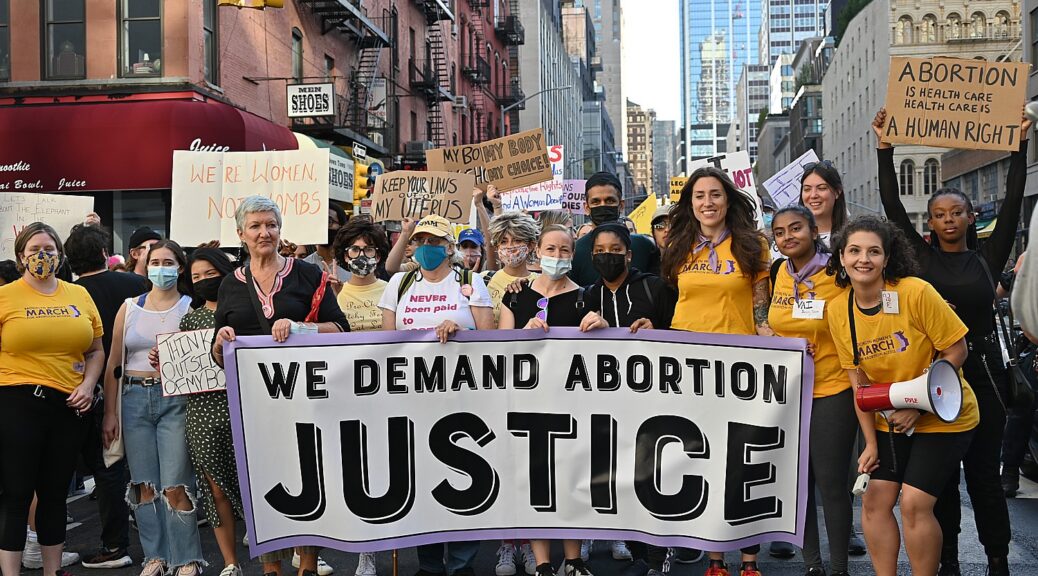
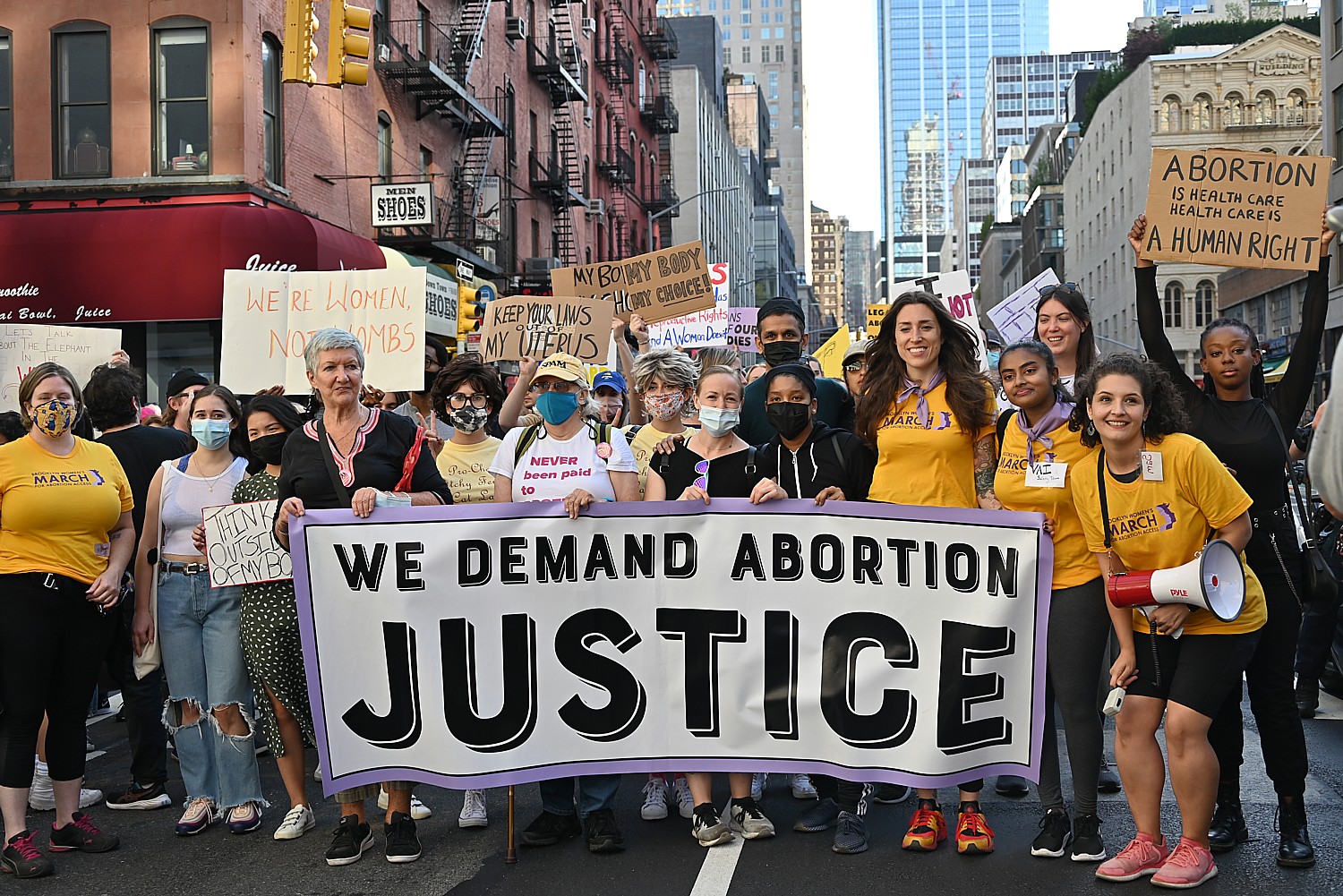
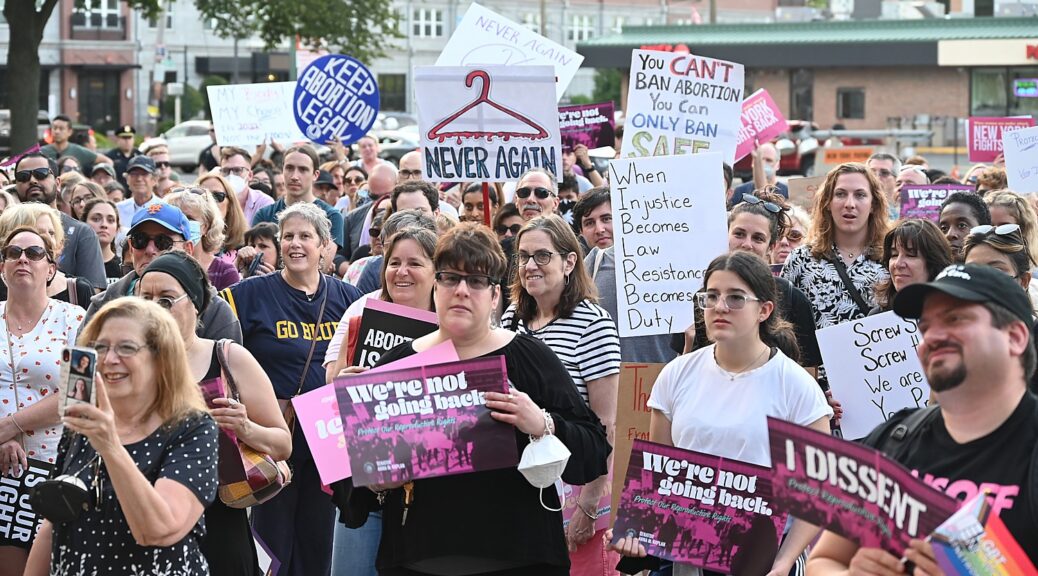
Washington, DC —On the four-year anniversary of the Supreme Court’s decision in Dobbs v. Jackson Women’s Health Organization, Reproductive Freedom for All announces the launch of My Body. My Ballot., a $23.5 million campaign to mobilize voters, hold anti-abortion politicians accountable, and elect reproductive freedom champions in key races across the country in order to restore women’s reproductive freedom and rights.
At the center of this campaign is a simple truth: support for abortion access is popular across party lines – more popular than any individual politician or political party. As many voters turn away from Trump and the MAGA movement because of their continued attacks on abortion access, Reproductive Freedom for All is seizing the opportunity to elect pro-abortion candidates up and down the ballot.
The campaign marks Reproductive Freedom for All’s largest-ever midterm electoral program and will focus on persuading and mobilizing voters – including independents, soft Republicans, and split-ticket voters – whose support for abortion access puts them at odds with Trump and his endorsed candidates. It will deploy a layered strategy that includes on-the-ground organizing, research, digital engagement, and political accountability. The program will include deep investments in direct voter contact, including coordinated canvassing programs designed in direct partnership with specific campaigns. It will also include relational organizing training with our members, with priority investments across Arizona, Michigan, Nevada, California, and Georgia. Top-tier targets will include AZ-06, MI-07, and NV-03 congressional districts, alongside critical statewide races and ballot initiatives. The campaign will also include a national communications and digital program designed to reach voters across legacy media, podcasts, creator platforms, and social media ecosystems where public opinion and cultural conversation are increasingly shaped.
Four years after Dobbs, reproductive freedom remains one of the most salient issues in American politics. Anti-abortion politicians and extremists have made clear they will not stop at overturning Roe. They are attacking medication abortion, undermining emergency abortion care, defunding Planned Parenthood, gutting Medicaid, and pushing policies that raise costs for families already struggling to make ends meet. My Body. My Ballot. seizes on a critical political moment as divisions deepen within the Republican Party. As anti-abortion groups pressure the Trump administration to go even further, Republicans are caught between a radical anti-abortion movement demanding a nationwide ban and the 8 in 10 voters who support legal abortion and overwhelmingly oppose political interference in personal medical decisions.
“Abortion is popular – more popular than any individual politician. What’s not popular is Trump and the MAGA movement, who continue to lose voter support with every new attack on abortion access. Instead of lowering costs or helping families plan their futures, MAGA Republicans have advanced policies that make it harder for people to decide whether, when, and how to grow their families,” stated Reproductive Freedom for All President and CEO Mini Timmaraju.
“My Body. My Ballot. is about making sure every voter understands how the issues they care most about are connected: our bodies, our families, our health care, our economic security, and our freedom. We have the members, the political power, and the organizing infrastructure to turn outrage into action.
“Four years after Dobbs, abortion bans have created a dangerous and chaotic patchwork where access to care depends on where someone lives, how much money they have, and whether they can travel. Anti-abortion politicians created this crisis, and this November, Americans will make sure they are held accountable.”
Impact of Losing Reproductive Freedom
According to data compiled by314 Action, a national organization working to recruit, train and elect Democratic scientists across all levels of government, the Supreme Court’s overturning of Roe four years ago has had significant impact on lives:
41 states have some form of an abortion ban in effect.
Miscarriage care is being directly impacted in hospitals. There’s been a 2.8% increase in miscarrying patients being sent home to ‘wait and see.’ There’s been a 2.2% decrease in medication management and a 13.8% increase in doctors only treating miscarriages with misoprostol, which isn’t the US standard of care and can cause longer, more painful miscarriages.
51 Planned Parenthoods were forced to close in 2025 alone (which impacts reproductive care beyond abortions).
There are more and morereports emerging about women dying due to lack of miscarriage care, because of doctors fearing prosecution for giving life-saving abortions. The exact number is obviously unknown due to HIPPA, fear of speaking out, and cross-state laws, but ProPublica has been doing an incredible investigative series.
OBGYNs are leaving states with abortion bans in mass exodus, which creates a gap in reproductive care for all—not just those who need an abortion.
Republicans are using the courts to try to make it illegal to ship safe medical abortion drugs like mifepristone.
“The full devastation and exact numbers of women harmed by this decision can’t fully be quantified for a range of reasons (including, as you mentioned, abusive relationships, lack of reporting from states with abortion bans, fear of speaking out, etc.)—but the damage that is documented show that women are at risk, no matter where they live. It’s why 314 Action is working to elect pro-choice doctors and scientists to office—to put healthcare back in the hands of the patients, not politicians,” the organization stated.
“Four years ago, the Supreme Court of the United States turned back time on one of the most fundamental rights in America—the freedom to choose. Today, in Donald Trump’s America, women are routinely denied access to reproductive healthcare for abortion, pregnancy complications or miscarriage. Post-Dobbs, women in every state are at risk because of this decision, even where abortion remains legal and protected.
“Reproductive healthcare isn’t a game, it’s life or death. Republicans are attacking reproductive healthcare at every level, which is why 314 Action is electing candidates at every level. This year, a record number of doctors and scientists have stepped up to run for office. In the face of these attacks, 314 Action’s mission remains crystal clear: elect pro-choice scientists and doctors to office who will place healthcare decisions back in the hands of patients.”
314 Action launched Guardians of Public Health in 2025 and is working to elect 100 new doctors, up and down the ballot and across the nation by 2030, raising and spending over $25 million in the effort.
Voters Support Reproductive Freedom
New polling by Reproductive Freedom for All (formerly known of NARAL Pro-Choice America, which has been advocating for women’s rights for 55 years), underscores the opportunity for its campaign. The research, conducted by Impact Research, surveyed likely voters in battleground U.S. House districts, including an oversample of voters who did not support Kamala Harris in 2024 but voted “yes” on abortion rights ballot measures statewide in Arizona, Michigan, and Nevada. The results show that voters overwhelmingly want lawmakers to protect reproductive health care—and that communicating clearly about politicians’ efforts to gut health care access, undermine medical privacy, and prioritize abortion restrictions over families’ needs can meaningfully move voters.
Eight in 10 voters surveyed said it is important for lawmakers to protect access to reproductive care, including 58% who said it is very important. Battleground voters also rejected additional abortion restrictions: Half said lawmakers should pass laws protecting abortion access nationwide.
Support for a nationwide abortion ban carries significant political consequences. More than 4 in 10 voters said a politician’s support for a nationwide abortion ban would be a total dealbreaker—placing it among the most disqualifying positions tested, alongside raising taxes on middle-class families and cutting Medicaid. After hearing messaging about attacks on health care access and privacy and politicians’ misplaced priorities, voters backed a generic Democratic congressional candidate by 12 points, 48% to 36%—a net five-point gain from the start of the poll (45% to 38%).
Reproductive Freedom for All’s National Week of Action
The campaign launch also kicks off Reproductive Freedom for All’s National Week of Action, running June 22–28, with events across the country designed to educate voters, train volunteers, elevate storytellers, and drive direct action in target states and districts. The week will feature 11 in-person events across our chapter states, alongside 12 national activations — including multiple phone banking actions and shifts, as well as a national text bank.
Key components of the campaign include:
● A national organizing program powered by members: Reproductive Freedom for All will activate its 4.5 million members nationwide to grow its volunteer leadership infrastructure and launch direct voter contact and visibility events in priority districts and regions. The campaign will span canvases across our chapter states — including cities like Phoenix, Tucson, Bakersfield, and Savannah — alongside Pride marches, rallies, community roundtables, and press conferences with elected leaders and stakeholders. It will also feature multi-day phone banks at both the in-person and virtual levels.
● Direct voter contact in priority states and districts: The program will include deep investments in direct voter contact, including coordinated canvassing programs designed in direct partnership with specific campaigns. It will persuade and mobilize voters – including independents, soft Republicans, and split-ticket voters – whose support for abortion access puts them at odds with Trump and his endorsed candidates. The program will also include relational organizing training with our members, with priority investments across Arizona, Michigan, Nevada, California, and Georgia. Top-tier targets will include AZ-06, MI-07, and NV-03 congressional districts, alongside critical statewide races and ballot initiatives.
● Research-backed messaging on freedom, care, and economic security: The campaign will use Reproductive Freedom for All’s latest research to connect abortion access to the economic pressures families are already facing, including the reality that deciding whether to have a child is one of the biggest economic decisions a person can make. Campaign messaging will also educate voters on threats to medication abortion, emergency care, health privacy, and access to reproductive health care nationwide.
● Candidate endorsements and accountability: Reproductive Freedom for All will endorse reproductive freedom champions and hold anti-abortion politicians accountable for their records, including those aligned with anti-abortion groups pushing the Trump administration to restrict access even further. The campaign will make clear who is working to protect abortion access—and who is working to push care further out of reach.
● State ballot measures. Reproductive Freedom for All will support ballot measure work in Virginia, Missouri, and Nevada, as part of a broader strategy to engage voters around reproductive freedom up and down the ballot. This work will connect ballot measure engagement to the campaign’s broader voter contact, persuasion, and turnout strategy.
● Digital and creator program to mobilize voters: Reproductive Freedom for All will run a comprehensive digital program across social media, podcast platforms, creator partnerships, paid digital, email, SMS, and rapid-response content. The creator strategy will go beyond paid amplification by partnering with trusted messengers, independent creators, storytellers, and issue-adjacent voices who can authentically reach persuadable audiences and encourage voter engagement.
The campaign builds on Reproductive Freedom for All’s latest research, which connects reproductive freedom to economic security and the freedom to decide whether, when, and how to grow a family. That research will inform the campaign’s ads, field scripts, digital content, volunteer trainings, and voter conversations—including outreach to independent and soft Republican voters who are frustrated by rising costs and alarmed by continued attacks on abortion access.
For over 55 years, Reproductive Freedom for All (formerly NARAL Pro-Choice America) has fought to protect and advance reproductive freedom at the federal and state levels—including access to abortion care, birth control, pregnancy and post-partum care, and paid family leave—for everybody. Reproductive Freedom for All is powered by its more than 4 million members from every state and congressional district in the country, representing the 8 in 10 Americans who support legal abortion.
This fact sheet was provided by Reproductive Freedom for All(formerly NARAL Pro-Choice America) which for 55 years has fought to protect and advance reproductive freedom at the federal and state levels—including access to abortion care, birth control, pregnancy and post-partum care, and paid family leave—for everybody. Reproductive Freedom for All is powered by its more than 4 million members from every state and congressional district in the country, standing up to protect the rights of the 8 in 10 Americans who support legal abortion:
2025 affirmed critical truths that will be at the forefront of our fight in 2026—voters continue to reject abortion bans and support reproductive freedom champions at the ballot box; anti-abortion actors are escalating, not retreating, despite their proven unpopularity; and the human cost of abortion bans is mounting while the full damage is still untold.
Here are the topics that shaped 2025—and how we’re expecting them to play out in 2026:
1: GOP Attacks on Medication Abortion as Proxy for a National Ban
Trump and his allies spent this year mounting coordinated attacks on mifepristone, making clear that restricting medication abortion is the most immediate path to a national abortion ban. By targeting mifepristone through courts, federal agencies, and obscure laws, anti-abortion extremists are attempting to override state protections, medical consensus, and public opinion—and we expect them to double down in 2026. But the reality remains: Medication abortion is safe, effective, and widely used. While abortion bans have devastated access in many states, care persists thanks to telehealth and shield laws, and medication abortion is on the rise.
Key Moments in 2025:
● This year marked 25 years since the FDA approved mifepristone, which has been rigorously studied and used by more than 7.5 million people.
● Renewed litigation as states like Florida, Texas, and Missouri aim to further restrict mifepristone.
● Movement in Missouri v. FDA—GOP-led states’ attempt to revive a dismissed challenge and restrict mifepristone access. This comes after federal district Judge Matthew Kacsmaryk (in Texas) transferred the case to the Eastern District of Missouri, which is conveniently stacked with Trump-appointed, anti-abortion judges.
● Continued reliance on junk science as anti-abortion groups ramp up their outlandish, unscientific claims to stigmatize and surveil medication abortion.
● Quiet groundwork by the Trump administration to misuse the Comstock Act to ban the mailing of mifepristone.
2: “Leave It Up to the States”: Shield Laws vs. Criminalizing Abortion Care
2025 revealed a direct and growing clash between states protecting abortion care and states attempting to criminalize care within and beyond their borders. Shield laws protected patients and providers from extraterritorial legal actions by states that have banned abortion. This prompted aggressive backlash from anti-abortion extremists who have made it crystal clear that they never actually intended to leave abortion access up to individual states.
Key Moments in 2025:
● Sixteen Republican attorneys general urged Congress to override state shield laws.
● Texas enacted HB 7, yet another bounty-hunter abortion ban that encourages private individuals to sue manufacturers, distributors, and providers of medication abortion to receive a minimum of $100,000 in damages.
● States like Texas and Louisiana attempted to bypass other states’ shield laws, while California, New York, Vermont and other blue states strengthened and expanded protections for abortion providers and patients.
● New data from the Society of Family Planning showed an increase in telehealth-provided medication abortion care in the first half of 2025, including from legal shield-state providers.
What We’re Watching in 2026:
● Escalating interstate legal conflicts and congressional efforts to preempt shield laws as the GOP continues to pursue a national abortion ban.
● Copy-cat legislation as anti-abortion lawmakers in state legislatures across the country seek to replicate Texas’s HB 7, the new bounty-hunter ban targeting manufacturers, distributors, and providers of medication abortion. Some states will go even further and attempt to target people who help others access medication abortion care.
3: The GOP-Manufactured Health Care Crisis
Republicans used 2025 to advance a broader assault on health care access—gutting coverage, defunding providers, and driving up costs to push care even further out of reach. As we head into 2026, the Affordable Care Act (ACA) enhanced premium tax credits are set to expire, threatening coverage for more than 22 million people, and more health care clinics and rural hospitals across the country are at risk of closing.
Key Moments in 2025:
● In July, Trump and his allies in Congress passed a deeply unpopular budget bill that defunds Planned Parenthood, decimates Medicaid, and ultimately strips health coverage from 15 million people.
● In September, Congressional Republicans shut down the federal government for 43 days—the longest in history. While ignoring calls for a bipartisan spending bill to mitigate their manufactured health care crisis, they did find plenty of time to keep attacking abortion.
● Anti-abortion Republicans slashed funding for Title X, the nation’s only federal funding program dedicated to family planning.
What We’re Watching in 2026:
● An expected January vote on House Democrats’ clean three-year extension of the ACA enhanced premium tax credits. As the ACA fight continues, expect Republicans to keep pushing anti-abortion misinformation to distract from skyrocketing health care costs and their refusal to extend the tax credits.
● The Supreme Court potentially taking up Planned Parenthood Federation of America v. Kennedy—yet another case that threatens Medicaid funding for Planned Parenthood and other providers that offer abortion care.
● Intensifying scrutiny of increased public funding for anti-abortion centers, especially as legitimate medical providers lose critical resources.
4: So-Called “Personhood” and Expanding Attacks Beyond Abortion
Republicans accelerated efforts to codify harmful “personhood” ideology—granting legal rights to zygotes, embryos, or fetuses—confirming what reproductive freedom advocates have long warned: Anti-abortion extremists were never going to stop at abortion. “Personhood” ideology lays the groundwork to restrict in vitro fertilization (IVF), contraception, stem cell research, and pregnancy management. Trump and his allies want these threats to fly under the radar because they know just how extreme and unpopular they are. While these laws are often framed as technical changes or isolated incidents, the policies are part of an insidious strategy to launder these unpopular and unworkable ideas, assert even more control over our bodies, and redefine reproductive health care out of existence.
Key Moments in 2025:
● Trump signed an executive order that targeted trans people and defined life as beginning at conception, inserting “personhood” ideology into official administrative policy.
● The self-proclaimed “father of IVF,” Trump confirmed he does not plan to require health insurers to provide coverage for IVF—after campaigning on making these services free.
● House Speaker Mike Johnson quietly worked to successfully remove IVF coverage for active duty military members from the National Defense Authorization Act (NDAA).
● Nevada Governor Joe Lombardo vetoed SB 217, which would have expanded access to fertility care by lowering costs and protecting access amid GOP efforts to ban IVF.
● The South Carolina Legislature seriously considered SB 323, a total abortion ban that would have treated abortion as homicide and set the foundation to restrict birth control, IVF, and emergency contraception.
● The Trump administration destroyed $10 million worth of contraceptives, justifying it by falsely categorizing birth control as an “abortifacient.”
What We’re Watching in 2026:
● Renewed domestic gag rule threats (Trump already revived the global gag rule from his first term) that extend anti-abortion ideology into broader domestic health systems.
● The federal government’s continued attacks on birth control, including threats to falsely conflate IUDs and other forms of contraception as abortion care.
● Expanded criminalization efforts as states use laws based on “personhood” ideology to prosecute miscarriage and other pregnancy outcomes.
● Anti-abortion groups’ increased reliance on junk science to vilify IVF and providers who offer a full range of fertility care as part of their broader efforts to sow distrust in legitimate medical institutions and providers while pushing people toward the anti-abortion centers they fund.
5. Rigging the System from the Courts to the Ballot Box
Knowing 8 in 10 Americans support the legal right to abortion care, anti-abortion extremists have doubled down on consolidating power—stacking courts, rewriting rules, and manipulating democratic systems—to impose an unpopular agenda voters repeatedly reject. This strategy targets reproductive freedom alongside voting rights and democracy itself, even as voters continue to push back and are poised to do so again in 2026.
Key Moments in 2025:
● Abortion was a galvanizing issue that drove turnout and victories from coast to coast during the 2025 elections.
● After retaking office, Trump moved quickly to completely overhaul the federal government—stacking every level and branch with extremists ready to advance Project 2025’s priorities.
● The Trump administration also confirmed dozens of judicial nominees to the federal bench—including 13 that have extreme anti-abortion records. These confirmations have set the stage for judges to rubber-stamp Trump’s anti-abortion agenda in the courts.
● Californians overwhelmingly passed Prop 50 to push back against Trump’s redistricting in Texas and other attacks on democracy.
● In response to successful state abortion ballot measures, including in his home state of Missouri, Sen. Josh Hawley and his wife, Erin Hawley—an attorney and key figure in overturning Roe v. Wade—launched a dark money group to promote anti-abortion ballot measures across the country. The move reportedly sparked backlash even within the White House, underscoring just how politically toxic these efforts are.
● Anti-abortion lawmakers in Missouri passed legislation that puts a constitutional amendment on the ballot that, if approved by voters, would remove the abortion protections Missouri voters approved last year. Anti-abortion extremists in Arizona tried to do the same thing, but after advocacy led by Reproductive Freedom for All, this bill was defeated.
What We’re Watching in 2026:
● The 2026 midterms as a referendum on abortion bans and government overreach.
● Nevada’s Question 6, which aims to protect abortion rights in the state constitution, returning to the ballot for final voter approval after a decisive victory in 2024.
● Massive spending by anti-abortion group Susan B. Anthony Pro-Life America, which pledged millions to buy the Georgia and Michigan Senate seats.
● High-stakes redistricting and voting rights cases, including Louisiana v. Callaisbefore the Supreme Court, with major implications for representation and democracy.
6: Maternal Mortality and the Human Cost of Abortion Bans
The consequences of abortion bans became even more visible in 2025 as investigative reporting documented more heartbreaking and preventable deaths of pregnant people denied care. Maternal mortality rates are on the rise in states with abortion bans, yet those same states are making it harder to investigate by obfuscating and suppressing data.
Key Moments in 2025:
● Adriana Smith, a 30-year-old Black mother and nurse from Atlanta, was kept on life support for more than 90 days—against her family’s wishes, and long after being declared brain dead—because of Georgia’s extreme abortion ban and so-called fetal personhood ideology.
● Tierra Walker, a 37-year-old Black mother from San Antonio, died from preeclampsia after being denied an abortion during a high-risk pregnancy—despite repeatedly asking for care—under Texas’ extreme abortion ban.
● After Georgia dismissed all members of its Maternal Mortality Commission last year, the state is now keeping the new members secret.
● The Trump administration rescinded the 2022 Biden-era guidance that affirmed federal law protects emergency abortion care—putting lives at risk and creating confusion for providers who still have a legal obligation to provide this care.
What we’re watching in 2026:
● Continued erosion of emergency care protections.
● Ongoing suppression of maternal mortality data by anti-abortion extremists.
● More dangerous miscarriage and pregnancy outcomes in ban states, where emergency interventions and complications are rising.
The storylines that unfolded in 2025 have set the stage for 2026, and the stakes are clear: An extremist minority is escalating authoritarian efforts through every level of power—and our rights and freedoms are at risk. This next year will test whether democracy and science prevail over coordinated and escalating attacks, with control of Congress and the future of reproductive freedom on the line.
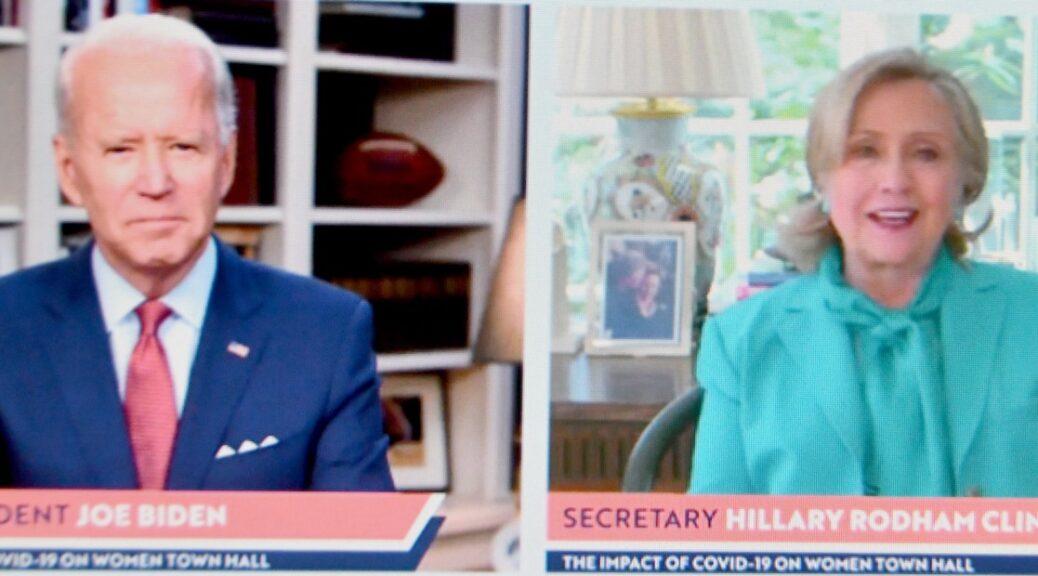
Former First Lady, US Senator and Secretary of State Hillary Rodham Clinton, the first woman to lead a major party’s ticket for President (winning 3 million more votes and the most votes of any white male candidate to run for president, who Biden introduced as “The woman who should be president now”), endorsed Vice President Joe Biden’s candidacy for president during a Women for Biden town hall, saying, “More than ever, these tumultuous times reveal how desperately we need level-headed, solutions-oriented leadership. We need someone who listens to scientists, who acts with kindness and compassion, and who recognizes that America can and must lead the world in responding to this pandemic.
“The world today looks very different than the one so many of us fought for in 2016. Like many of you, I’m concerned — not only about our current health crisis, but about the deep-seated problems in our democracy that it lays bare, from inequity in our health care system to the high-wire act demanded of too many working parents.
“When I think about who I want leading us through this challenging time, there is no question: Joe Biden has the bold ideas, the smart plans, and most of all, the character to tackle this crisis and any others that come our way.”
The two discussed many issues of particular concern to women, including women’s reproductive rights and access to affordable health care, pay parity, food security, protection from domestic violence at a time of enforced sheltering with an abuser, and most significantly, how women, who make up the vast majority of health workers, frontline workers and minimum wage earners, are the most in need of protection during this health and financial crisis posed by the coronavirus pandemic. And have been most derided and held in contempt by Trump and his administration.
“80% of all healthcare workers are women, one out of three jobs held by women has been classified as essential.” Clinton said. “This is an issue that affects all of us, young and old, every background, walk of life, but has disproportionate impact on women on frontlines, working, caring for others, holding down their home.”
Noting that there has been a rise in domestic abuse as women are forced to shelter with their abusers amid a time of increased stress, she noted that Biden championed the Violence Against Women Act during the Clinton administration.
“Violence against women, a huge problem, has been one of leading causes of my life,” Biden said. “ wrote the law, met thousands of abused, know the suffering they are experiencing, how much courage they have. Our support has to match the courage they show every day and let them know they are not alone.” He flashed the number for the national domestic hotline, 800-799-SAFE, but because women may be too afraid to call, they can also text Love to 22522, or chat online (thehotline.org).
“I add my voice to the many who have endorsed you to be president,” Clinton said. “What a difference it would make now if we had a president who not only listened to science, facts over fiction, but brought us together, showed us the kind of compassion, caring we need from our president, which Joe Biden has exemplified throughout his life. What it would mean if had real president, not someone who plays one on TV, but someone who wakes every morning, worried about people responsible for leading.”
Immediately after the town hall, the Biden campaign released a fact sheet highlighting Biden’s plans to support women during the COVID-19 crisis: – Karen Rubin, news-photos-features.com.
Highlights of Biden Plans to Support Women
Women in the United States are acutely impacted by this pandemic. Millions have lost their jobs or had their hours slashed and are worried about making ends meet. Others are doing essential work that has so often been unseen, underpaid, and undervalued. And, while this virus can hit anyone, anywhere, it doesn’t impact every community equally. It hits hardest those who are most vulnerable and who have the fewest resources, including women of color and low-income women.
We cannot unsee what this pandemic has highlighted about the way our society fails women and their families. As President, Joe Biden will act so that essential workers are safe. He will act so women don’t struggle as much financially through the pandemic. He will act so women can get the health care they need and domestic violence survivors have a safe place to call home. And, he will act so that when the United States begins to recover from COVID-19, women are not left out of the recovery.
Joe Biden has long been a champion for women — for their safety, their health care, their paychecks, and their families. He has released several plans that support women through a decisive response to the COVID-19 crisis at joebiden.com/covid19-leadership. Biden is calling for the following steps to be taken immediately to support women and families. As this crisis continues and evolves over the coming weeks and months, Biden will release additional plans and proposals to address the challenges facing women as a result of this crisis.
PROTECT WOMEN PROVIDING ESSENTIAL SERVICES
Women are working in essential jobs in overwhelming numbers — as health care providers, home health aides, child care workers, domestic violence and other social service workers, grocery store workers, and so many more. One in three jobs held by women are essential, and women of color are the most likely to have those jobs. These women are the best of America — running toward the danger, lifting people up when they are at their most vulnerable, and fighting to protect the health and safety of their neighbors. That’s always been true—but now there’s not a single person across this country who doesn’t see exactly what they are: heroes.
It’s unconscionable that the Trump Administration has failed to do everything in its power to protect the health, safety, and well-being of women working on the frontlines. If Biden was President today, he would:
Get our essential workers the protective equipment, testing, and support they need to reduce their risk of getting infected by the virus. All essential workers — health care workers, first responders, homecare workers, child care workers, domestic violence and other social service workers, pharmacy workers, government workers, postal workers, farmworkers, food packagers and processors, grocery store clerks, transportation workers, and many more — should have priority access to personal protective equipment (PPE) and COVID-19 testing based upon their risk of exposure to the virus. The Trump Administration should ramp up capacity to produce masks and other PPE for all essential workers by fully using the Defense Production Act. And, the Trump Administration should appoint and empower a Supply Commander to take control of the national supply chain for essential equipment and gear and to ensure equitable distribution so that at-risk communities and particularly vulnerable populations are fully taken care of.
Implement and enforce standards to keep all women safe on the frontlines and ensure that their civil rights are protected. Biden would direct his Occupational Safety and Health Administration to release and enforce an Emergency Temporary Standard to ensure employers provide safe workplaces, and his Administration would work closely with state occupational safety and health agencies and state and local governments, and the unions that represent their employees, to ensure comprehensive protections for frontline workers. He would also ensure the needs of vulnerable populations are considered in the enforcement of all federal workplace protections. This means funding robust enforcement of civil rights protections, including under the Americans with Disabilities Act and the Rehabilitation Act, and fighting to secure passage of the Pregnant Workers Fairness Act to better ensure pregnant workers receive reasonable accommodations in the workplace so they don’t have to choose between work and their health. Biden would also extend Equal Employment Opportunity Commission deadlines for women to file discrimination and harassment complaints during and after the pandemic.
Provide a boost in essential workers’ paychecks. There is no substitute for ensuring worker safety, but all frontline workers putting their lives on the line should receive premium pay for their work, in addition to a permanent $15 minimum wage and overtime protections. Women, who make up the vast majority of the low-wage workforce, should never have to worry about making ends meet for their families — and especially not while protecting our communities during a pandemic.
Ensure all essential workers qualify for child care assistance and other emergency support.
Provide every worker with emergency paid leave so workers don’t have to go to work because they’re worried about a paycheck. Biden would provide all workers – no exceptions – paid leave for 14 days or for the duration of their quarantine or isolation, while also ensuring that employers will not bear any additional costs for such additional leave in the midst of this crisis.
PROTECT WOMEN’S ECONOMIC SECURITY
Hospitality workers, service industry workers, and millions of other women have already lost their jobs through no fault of their own because of this pandemic. Women — many of whom were economically insecure even before the crisis — are worried about making rent, paying bills, and keeping food on the table while waiting for relief checks. If Biden was President today, he would:
Keep as many women on payroll as possible by transforming unemployment insurance into Employment Insurance for millions of workers. Biden would take steps to get all 50 states to adopt and dramatically scale up short-time compensation programs. Here’s how it works: A business keeps a worker on payroll, but at reduced hours – and the federal government makes up the difference in their wages. The worker gets the same pay – but the burden on the business is much less. The Obama-Biden administration championed this approach – so far more than half of states have created work-sharing programs. The Trump Administration should boost assistance to them, to save or restore millions of jobs.
Make women who lose their jobs financially whole by ensuring that they get their unemployment insurance on time and in full. Biden would create a “Banks Defense Production Act” to make sure the banks that work with states prioritize and deliver unemployment payments quickly and require the use of electronic payments and prepaid debit cards to deliver direct cash relief fast. Families shouldn’t have to wait for President Trump to sign a check. Biden would also work with Congress to extend the boosted unemployment benefits (the extra $600) for however long this crisis lasts.
Ensure that all small businesses – not just those with the right connections – can access relief quickly. On April 3, Biden asked the Trump Administration to “produce a weekly dashboard to show which small businesses are accessing loans – to make sure that the program isn’t leaving out communities, minority- and women-owned businesses, or the smallest businesses.” They have not done so. It is unacceptable to have a small business program that is leaving minority and women business owners out in the cold, and that firms with fewer than 20 employees have received only about 20% of the first allotment of funding disbursed from the Paycheck Protection Program – even though they make up about one third of payroll.
Ensure housing security, including by immediately freezing rent for qualifying individuals and halting foreclosures and evictions as people get back on their feet during this crisis.
Forgive at least $10,000 of student debt per person through the duration of the crisis, including for women, who hold two-thirds of all student debt in America.
Ensure food security by increasing SNAP benefits by 15% during the deepening recession, and temporarily provide low-income families with about $100 per month in extra nutritional support.
Boost Social Security payments to $200 per month to help older women with any additional expenses they may incur during the pandemic.
Provide additional funds to state, local and tribal governments that are going to get crushed under the weight of falling revenues combined with far higher emergency financial burdens. Biden would make sure the federal government helps communities with their public health response without forcing painful and damaging cuts to public services, education, and public safety. Biden would also expand assistance to schools facing extra costs – particularly Title I schools — including efforts to continue remote education or remote activities normally done after-school.
PROTECT CAREGIVERS AND ACCESS TO CHILD CARE AND LONG-TERM SERVICES AND SUPPORTS
In the United States, women overwhelmingly take on the burdens of caring for their families, and they make up the vast majority of the care workforce. Many women are taking care of children, as well as elderly parents. If they are lucky enough to have a job during this crisis, they may not be able to take paid time off to care for sick loved ones. Meanwhile, many care facilities, especially child care providers, have been forced to close their doors.
If businesses that provide care do not survive the pandemic, it will be harder for women to go back to work when we recover. It will be even more difficult for the women who make a living by providing care to get by. We must protect workers who are caring for others during the pandemic, and move aggressively to shore up our care infrastructure so it can better support families during the recovery.
Prioritize child care providers, home health care workers, direct support professionals, personal care attendants and other care workers for personal protective equipment and supplies, testing, and premium pay, depending on their risk of exposure. The nature of care work makes social distancing challenging, and we owe these caregivers the safety protections they need.
Help stabilize the child care industry, so child care providers can pay their employees, provide safe environments for the children of essential workers, keep paying fixed costs like rent, and be able to fully reopen when people start going back to work. Despite the high cost of care and low wages, most child care providers operate on very thin margins. They are not funded sufficiently to withstand smaller class sizes to help adhere to social distancing standards, and they already had a difficult time retaining their workforce, putting the industry on brink of collapse. Without a significant infusion of funding, many of the nearly 2 million workers – a majority of whom are women – who make up the child care workforce may not be able to return to their job and half of all child care slots could disappear, making it more challenging for parents to eventually return back to work.
Protect and Expand the Availability of Long-Term Services and Supports. The majority of family caregivers – those caring for a loved one with a disability or chronic condition – are women. Caregiving imposes significant costs – economic and health-related – on these women. At the same time, the risk of getting COVID-19 is even greater for older Americans and individuals with disabilities living in group homes and other care facilities, increasing the demand for care in a home and community-based setting. Biden would increase resources to enable more seniors and people with disabilities to remain in their own home and community.
PROTECT ACCESS TO HEALTH CARE, INCLUDING REPRODUCTIVE HEALTH
The pandemic has put additional stress on women’s ability to access the health care they need. Before the pandemic, roughly one in four women experienced financial barriers to accessing health care. As women are now laid off or face wage cuts, they may have even more trouble paying for health care. At the same time, several states have used the crisis as an excuse to restrict women’s access to reproductive health, including timely and essential abortion care. The Trump Administration and all states must ensure all women have access to all the health care they need. Building on Joe Biden’s plan to protect and build on Obamacare [read the full plan at: joebiden.com/healthcare], as President, Biden would:
Ensure access to health care by:
Ramping up testing and ensuring that not only testing, but also treatment and any eventual vaccine for COVID-19, is free for all individuals regardless of insurance or immigration status.
Collecting racial, gender and ethnic data on testing and treatment so we can identify and address disparities.
Helping women who have been laid-off keep their health insurance by picking up the full cost of COBRA premiums.
Opening a new Obamacare enrollment period, so women who so badly need insurance can get it, instead of fighting in the courts to gut that landmark law like the Trump Administration is doing.
Stop states from using the pandemic to curtail access to abortions. The American College of Obstetricians and Gynecologists and American Medical Association agree that states should not be using the pandemic as an excuse to delay abortions. In this case, health care delayed means health care denied. States should not be using a public health crisis to infringe on women’s constitutional rights. If Biden was President today, he would put science over fiction and ensure states treat abortion as the essential health service it is. This builds on his existing women’s health care agenda. His Justice Department will stop the rash of state laws that so blatantly violate Roe v. Wade. And, he will work to codify Roe, repeal the Hyde Amendment, restore federal funding for Planned Parenthood, including through Medicaid and Title X, and restore access to contraception coverage.
Reduce our unacceptably high maternal mortality rate, which especially impacts people of color. Before the pandemic, the U.S. already had one of the highest rates of deaths related to pregnancy and childbirth relative to other developed countries, especially among Black women, who were 2.5 times more likely to die from pregnancy complications than non-Hispanic white women. California came up with a strategy that halved the state’s maternal death rate. As President, Biden will take the California strategy nationwide. And, he will expand access to high quality health care for the populations that need it most, providing access to a public option and doubling America’s investment in community health centers.
SUPPORT SURVIVORS OF DOMESTIC AND SEXUAL VIOLENCE AND PROTECT CHILDREN AND YOUTH AT-RISK FOR ABUSE
The COVID-19 pandemic has increased the risk for domestic violence, sexual assault, and abuse for women and girls nationwide. For many women and children, home is not a safe place, and sheltering in place restrictions further isolate those at risk of domestic violence. At the same time, community-based supports like domestic violence shelters, sexual assault programs, and child advocacy centers have had to limit in-person services to keep staff and clients safe, while adapting to provide text, chat, and phone-based assistance. The economic fallout of the pandemic will likely increase financial insecurity for survivors, creating further obstacles for leaving an abusive relationship. Shelters and other service providers need support to adapt to the pandemic, and keep pace with the increased demand for assistance to survivors that is expected to only go up after the lockdowns have been lifted.
Survivors and the courageous frontline advocates working to ensure their safety need immediate support. While Biden would work with Congress to provide additional funding, women and vulnerable youth across the country cannot wait another day for the support they need. He would do everything in his power to immediately get funding to service providers and survivors, including by enlisting Federal Emergency Management Agency (FEMA), and he would encourage governors to recognize survivors of domestic violence, sexual assault and child abuse as vulnerable populations in need of state funding.
Provide survivors and their children with a safe place to live, and support shelter staff and residents to stay healthy. Not everyone has a safe place to call home. Shelters, which often have shared bathrooms and communal cooking spaces, need new avenues for providing survivors with a safe living space that adheres to social distancing requirements. Biden would:
Empower FEMA to work with states toimmediately increase shelter options, including contracting with hotels and motels and providing shelter modifications like sleeping and bathroom trailers.
Encourage states to ensure all shelters, not just the larger ones, receive funding. Smaller shelters serving communities of color, tribal programs, or shelters for immigrant and refugee survivors may have less capacity to access federal grant funding and need support.
Fund programs providing shelters and other housing options including the Family Violence Prevention and Services Act (FVPSA), VAWA transitional housing, Housing and Urban Development’s Continuum of Care Domestic Violence Bonus to provide housing for survivors experiencing homelessness, and VAWA emergency transfer tenant protection voucher assistance for rental assistance for survivors.
Provide personal protective equipment and cleaning supplies to victim services providers, including domestic violence and sexual assault programs, child welfare professionals, and other essential social services workers.
Expand the safety net for survivors – including by providing cash assistance, unemployment insurance flexible to their needs, and paid safe days and sick leave – as well as ensuring service providers who support them have adequate health coverage, paid sick leave, and overtime compensation.
Provideemergency cash assistance to survivors through grants to community-based organizations, and make longer-term investments in cash assistance, as Biden called for in November in his plan to End Violence Against Women. Biden would also direct FEMA to work with states to provide shelters with food, including prepared food.
Work to ensure that survivors who quit their job because they are unable to telework are able to access and obtain unemployment insurance from the newly created Pandemic Unemployment Assistance program.
Provide safe days and 12 weeks of paid safe leave for survivors of domestic violence, sexual assault, or stalking who need time to seek physical or mental care, seek counsel, find new housing, or take other action related to the violence they experienced.
Provideemergency funding to the Office on Violence Against Women for domestic violence and sexual assault programs, ensuring enhanced funding streams for tribes and culturally specific victim services, and provide funding for non-residential programs, in addition to shelters, under the Family Violence Prevention and Services Act (FVPSA).
Ensure survivors are able to access and service providers are able to provide remote victim advocacy through text, chat, phone, and other virtual services.
Provide funding to expand the reach of the National Domestic Violence Hotline’s texting and chat services, and create a texting service for the National Sexual Assault Hotline. The National Domestic Violence Hotline and National Sexual Assault Hotline are both available to those that need it. For those who cannot call their local shelter or the hotline because they are living in close proximity with the person harming them, the National Domestic Violence Hotline offers both online chat and texting services, the latter of which Biden premiered in 2011 by sending the first text ever for the service. The National Sexual Assault Hotline offers chat-based support; Biden would fund a texting service. He would also provide funding for both hotlines to hire more advocates.
Ensure service providers and survivors have all the tools they need to connect virtually and safely. Domestic violence and sexual violence programs, including rape crisis centers, offer tele-advocacy and crisis support through text, chat, video, and phone services. To do this, they need technology including computers, upgraded broadband, hotspots, teleconferencing licenses, and other software licenses. And although technology-based services have the benefit of reaching survivors where they are, they also introduce new risks for victim privacy, safety, and confidentiality and need support to mitigate those risks. As President, Biden would:
Get technology to service providers immediately. Biden would direct FEMA to consider technology that is eligible for emergency support and work with Congress to increase funding for domestic violence and sexual assault service programs, including for the Sexual Assault Services Program and the Family Violence Prevention and Services Act so they can boost their capacity to provide virtual services. And he would leverage private-public partnerships where possible.
Expand the Office on Violence Against Women’s training and technical assistance for domestic violence and sexual assault programs so that service providers can safely use technology-based services with survivors.
The Federal Communication Commission should reverse changes that reduced access to wireless service to people who need it most — including domestic violence survivors. The Lifeline program offers low-income adults subsidies for wireless services, but under the Trump Administration, the FCC scaled back help from this program. In November, Biden called for the FCC to reform its Lifeline program to increase the number of participating broadband providers, reduce fraud and abuse, and ultimately offer more low-income Americans the subsidies needed to access high-speed internet. And now, connection couldn’t be more important.
Ensure telehealth is widely accessible to victims of domestic violence and sexual assault, including through expanded funding for Sexual Assault Nurse Exams, and pediatric Sexual Assault Nurse Exams for child victims of sexual abuse.
Support the diverse needs of groups most vulnerable to abuse, including survivors from communities of color, Alaska Native and American Indian survivors, LGBTQ survivors, immigrant and refugee survivors, and older adults and persons with disabilities. These communities experience domestic and sexual violence at disproportionately high rates, and often face systemic barriers to accessing justice, safety, and health care, making them more at-risk during the pandemic. As President, Biden would:
Ensure that people who need it most and are often underserved are receiving funding.
Expand funding for culturally specific services. Since 2005, the Violence Against Women Act has funded domestic and sexual violence programs offering trauma-informed and culturally specific services for survivors from racial and ethnic minority communities. Given the pandemic’s disparate impact on communities of color, it is imperative these programs have all the funding they need.
Protect immigrant women. In addition to ensuring that testing and treatment for COVID-19 is readily available to everyone, regardless of immigration status or English-language ability, Biden would take proactive steps to protect immigrant women, who are often the most vulnerable and least able to access supportive resources. The Trump Administration should immediately halt the implementation of its un-American new Public Charge rules, which may discourage immigrant women from seeking vital food and housing support they need to remain safe and healthy. It should also automatically extend immigration statuses and work authorizations set to expire within one year of the declaration of a national emergency on March 13, 2020, and Congress should ensure that no immigrant who loses their status during this time, or during the 90 days after the national emergency declaration is ended, accrues unlawful presence that could impact their future immigration status. The Trump Administration should also follow the recommendation of public health officials and vastly reduce the number of people in the custody of Immigration and Customs Enforcement and the Border Patrol by releasing to their families or community-based care organizations those individuals in immigration detention who pose no risk to the community. Neither should Trump be wasting resources on ICE enforcement actions to terrorize immigrant families, especially during a pandemic. Sensitive locations should always be protected against ICE actions, and immigrant survivors who have applied for protection under the Violence Against Women Act and Trafficking Victims Protection Act should not be detained or deported while their applications are in process.
Ensure tribes receive sufficient resources in all funding streams, and reaffirm Tribal sovereignty to support victims and hold offenders accountable. The Obama-Biden Administration ensured tribal governments have the power to investigate, prosecute, convict and sentence non-Native Americans who assault indigenous women on tribal lands, through the 2013 Violence Against Women Act. This must be reaffirmed, and the federal government should provide emergency financial support to tribal governments and service providers so they can support Native women.
Make services accessible for older survivors and survivors with disabilities. Funding should be provided to ensure remote advocacy services are accessible to people who often cannot or do not wish to leave home, including for the National Deaf Domestic Violence Hotline and other adaptive and inclusive services for survivors who need accommodation.
Enhance protections for vulnerable children and youth at-risk for abuse. Before the pandemic, at-risk kids had protective support from teachers, coaches, and other caring adults who were most likely to report abuse. Now, families are homebound under increasingly stressful circumstances, adding to the risk of child abuse or neglect. The National Parent Helpline is available to support overwhelmed parents and caregivers. As President, Biden would work with Congress to fund the Helpline to add texting service, as well as increase funding for child advocacy centers, and other child welfare programs that prevent and respond to child abuse and neglect, including sexual abuse.
Establish an Emergency Anti-Violence Task Force that includes representatives of advocacy groups, community-based organizations, and state and local governments, along with legal, housing, and public health experts, to consult with stakeholders, track the unique problems happening now, identify best practices and guidance for responding to them, work with agencies and Congress to adapt to them, and eventually create a report with both an analysis of the problems faced during the pandemic and shortcomings of policy levers, as well as a roadmap for future emergencies. The Task Force would also immediately work on ways to help leverage the private sector to play a role in the response. As President, Biden would immediately task his Office on Violence Against Women with using this information to create a preparedness plan for future national emergency, which should include ways to make programs and funding streams sufficiently flexible, and to determine ways to leverage public-private partnerships, such as with hotel chains and technology and telecommunications companies.
Ensure an Equitable Recovery Women and people of color have historically been left out or left behind in times of recovery — and we can’t make that mistake again. To rebuild a stronger, more inclusive middle class that will make our economy more resilient in any future crisis, when it comes time for economic recovery we must:
Require jurisdictions that receive funding to develop and report on metrics for addressing potential racial and gender disparities, and the Small Business Administration and Treasury should similarly track Paycheck Protection Program and other SBA program lending to ensure that minority and women business owners – who have traditionally faced unequal access to credit and capital – are treated fairly.
Stop the exploitation of low-wage workers – most of whom are women – and who everyone now sees are essential and should be compensated as such. Biden will increase the minimum wage to $15 per hour, support the elimination of the tipped minimum wage, ensure overtime protections, and dismantle the barriers to higher-paying jobs for these workers.
Finish the Obama-Biden Administration’s work on ending unequal pay. The first bill signed into law during the Obama-Biden administration was the Lilly Ledbetter Fair Pay Act, which made it easier for women to fight back if they were unfairly paid less than their male coworkers. The Obama-Biden Administration also protected more workers against retaliation for discussing wages and required employers to collect and report wage gaps to the federal government. As President, Biden will build on this critical work by increasing pay transparency, making it easier for workers to join together in class action lawsuits, shifting the burden to employers to prove pay gaps exist for job-related reasons, and increasing penalties against companies that discriminate, as called for in Senator Patty Murray and Congresswoman Rosa DeLauro’s Paycheck Fairness Act.
Provide access to affordable, high quality child care. Biden will increase the child care tax credit to as much as $8,000 per family and expand access to quality, affordable child care through increased funding for grants to states to ensure low and moderate-income families can afford child care. And, he will expand funding for after-school programs, community centers, and national summer jobs programs, to keep kids active and learning after school hours. Biden also will provide high-quality, universal pre-kindergarten for all three- and four-year-olds.
Permanently provide family, medical, and safe leave as well as sick and safe days. As President, Biden will work to provide the type of comprehensive 12 weeks of paid family and medical leave envisioned in the FAMILY Act sponsored by Senator Kristen Gillibrand and Representative Rosa DeLauro. Biden will pay for this proposal by returning the estate tax to 2009 levels. Biden will also work to provide the type of coverage in the Healthy Families Act spearheaded by Congresswoman Rosa DeLauro and Senator Patty Murray, which will ensure workers receive seven days of paid sick leave for routine personal and family health needs, as well as time for survivors of domestic violence and sexual assault to seek services.
Ensure women have access to fair and flexible scheduling, in addition to providing permanent paid sick and safe leave, and 12 weeks of paid family and medical leave.
Transform our education system by tripling funding for disadvantaged schools, fully funding the Individuals with Disabilities Education Act, offering universal pre-K, providing 4 years of tuition at public colleges and under-resourced Minority Serving Institutions to families earning less than $125K per year, investing in community college and workforce training, and easing the burden of student debt.
Protect and build on Obamacare, ensuring all Americans have access to affordable, quality health insurance.
Provide retirement security. Biden will preserve and strengthen Social Security, including by providing a higher benefit for the oldest Americans, protecting widows and widowers from steep cuts in benefits, and eliminating penalties for teachers and other public-sector workers. And he’ll allow caregivers to make “catch-up” contributions to retirement accounts, even if they’re not earning income in the formal labor market.
Expand long overdue rights to domestic workers and farmworkers. More than a million women and 700,000 women farmworkers – many of whom are immigrants – care for our children, elderly, and people with disabilities, and pick our fruits and vegetables so we can put food on the table. Now more than ever the world sees just how essential they are. But they have far too long been left out of basic workplace protections. Biden will change that, starting by signing into law:
Senator Harris and Congresswoman Jayapal’s Domestic Workers’ Bill of Rights, which, among other things, establishes a federal wage and standard board to set fair wage levels and define working conditions for domestic workers across the United States;
Senator Kamala Harris’ Fairness for Farm Workers Act, to extend employment protections including overtime to farmworkers;
and Rep. Zoe Lofgren’s Farm Workforce Modernization Act, to help provide immigrant women who are feeding the nation a path to legal status, workplace protections, and much-needed housing support.
He will also protect the pay of migrant farmworkers, unlike the Trump Administration, which has considered cutting it during a pandemic.
Address International Impacts of the Pandemic
COVID-19 isn’t just a threat to women across the United States. This is a global health crisis that also disproportionately impacts women around the globe. Domestic violence is rising, both in the developed world and in the developing world. For example, in Bogotá, Colombia, violence against women reports have increased 225% during lockdowns, while in Afghanistan, domestic violence rates that were already as high as 50% are compounded by reports of women’s shelters shutting down to protect against the spread of the virus. Meanwhile, women constitute an estimated 70% of workers in the health and social sectors globally, putting them on the frontlines of fighting COVID-19 and increasing their risk of contracting the virus. The COVID-19 pandemic is also likely to mean dramatically increased caregiving responsibilities for women, extended unemployment, and lost business and income as well as greater income inequality. The Ebola epidemic in West Africa in 2014 provides insight into the impacts we can expect to see on adolescent girls, which include an increased vulnerability to physical and sexual abuse, an increase in domestic responsibilities, a loss of pathways to prevent child marriage or early childbearing, and a lower rate of return to school, limiting economic opportunity. And, among the more than 70 million displaced people around the world, women and girls are already among the most vulnerable. Now, in fragile states, displaced persons camps, or tightly populated migrant neighborhoods, they are among the least able to protect themselves against COVID-19. A Biden Administration will reassert global leadership and return a government-wide focus to championing the rights of women and girls at home and around the world, including by:
Elevating the voices of women in the response. As President, Biden will ensure the voices of women leaders help shape and spearhead efforts globally, leveraging their expertise, networks and skills to optimize the global response and recovery.
Prioritizing responses to gender-based violence internationally, human trafficking, and survivors’ lack of access to humanitarian assistance and employment opportunities. In addition, as President, Joe Biden will ensure that domestic violence victims once again have a pathway to claim asylum and will support the Safe from the Start Act, which calls for attention to preventing gender-based violence in humanitarian response.
Ensuring that global health and humanitarian aid prioritize women and remove barriers to accessing reproductive health services. As President, Biden will call on leaders globally to ensure that “essential services” — including sexual and reproductive health clinics, domestic violence shelters, and abortion service providers — remain available to serve women.
Calling for an expanded emphasis on education for girls and boys in refugee and displaced persons camps and supporting programs generally to help teachers, school staff, and communities implement inclusive learning methods for girls, reinforcing the message that girls and boys need equal access to opportunities. Already, research warns that girls in many countries will be less likely to go back to school once this pandemic ends. As President, Biden will build on the work of the Obama-Biden Administration to promote girls’ education, and ensure girls have the same opportunities as boys to reach their full potential.
Essential workers are providing life-saving medical care, cleaning our hospital rooms, delivering our food and other essential goods, stocking our grocery store shelves, getting us from place to place, keeping our cities’ lights on, and so much more. They have been on the frontlines of this pandemic.
Joe Biden has said since the beginning of this campaign that American workers are the heart and soul of this country— too often, though, we’ve taken these workers and the work they do for granted.
But the coronavirus pandemic has highlighted this critical truth: all across this nation, it’s often our lowest-paid workers who have stepped up during this crisis.
Donald Trump’s foot-dragging and delays have only made it more challenging for workers.
These workers are putting themselves on the line every day. They are essential to our society – in times of crisis and beyond, and deserve not just our thanks and respect, but our support.
Joe Biden has a bold agenda to give these workers the long-term support they deserve — raising wages, guaranteeing quality, affordable health care, providing free tuition for public higher education, and encouraging unionization and collective bargaining.
But these workers can’t wait. They need emergency help now. Today, Joe Biden is calling on President Trump’s Administration to take four immediate actions to protect and support our essential workers:
(1) Ensure all frontline workers, like grocery store employees, qualify for priority access to personnel protective equipment (PPE) and COVID-19 testing based upon their risk of exposure to the virus, as well as child care assistance, and other forms of emergency COVID-19 support.
(2) Expand access to effective personal protective equipment, including through use of the Defense Production Act.
The Trump Administration should ramp up capacity to produce masks for all frontline workers – from health care workers to grocery store workers – by fully using the Defense Production Act. And, the Trump Administration should fully empower a Supply Commander to coordinate the production and delivery of essential supplies and equipment, including masks, gloves, and other personal protective equipment. The Supply Commander would be tasked with ensuring equitable distribution so that at-risk communities and particularly vulnerable populations are fully taken care of.
(3) Establish and enforce health and safety standards for workplaces.
During the H1N1 epidemic, the Obama-Biden Administration tasked the Occupational Safety and Health Administration (OSHA) and the Center for Disease Control (CDC) with issuing detailed guidance for how employers should protect their workers. Then, OSHA enforced the law based on those guidelines. The Trump Administration has only started enforcement efforts this week and is still refusing to do everything it can and should to protect workers’ health and safety.
The Trump Administration should:
Immediately release and enforce an Emergency Temporary Standard (“ETS”) to give employers and frontline employees specific, enforceable guidance on what to do to reduce the spread of COVID.
Finalize a permanent infectious disease standard. After H1N1, the Obama-Biden Administration spent years preparing a new, permanent infectious disease standard, which would have required health facilities and certain other high exposure workplaces to permanently implement infection control programs to protect their workers. It handed it to the Trump Administration, but instead of moving it to rulemaking, it readily shelved it. They should immediately get to work bringing it to conclusion and expanding it to include all relevant workplaces.
Double the number of OSHA investigators to enforce the law and existing standards and guidelines. Under President Trump, OSHA currently has record low inspectors. Given the exigencies of this crisis, and the need for rigorous enforcement of workplace standards across the country, at least twice the number of inspectors are needed.
Work closely with state occupational safety and health agencies and state and local governments, and the unions that represent their employees, to ensure comprehensive protections for frontline workers.
(4) Enact premium pay for frontline workers putting themselves at risk.
There is no substitute for ensuring worker safety, but all frontline workers putting their lives on the line should receive premium pay for their work. The Trump Administration should immediately work with Congress to pass a bold premium pay initiative. Under the Senate Democrats’ “Heroes Fund” proposal, the federal government would step in and give essential workers a raise, with additional funding to attract workers to serve as health and home care workers and first responders. This premium pay should be in addition to paid sick leave and care-giving leave for every worker, which Joe Biden called for in his March 12 plan, and $15 minimum wage for all workers.