
Washington, DC —On the four-year anniversary of the Supreme Court’s decision in Dobbs v. Jackson Women’s Health Organization, Reproductive Freedom for All announces the launch of My Body. My Ballot., a $23.5 million campaign to mobilize voters, hold anti-abortion politicians accountable, and elect reproductive freedom champions in key races across the country in order to restore women’s reproductive freedom and rights.
At the center of this campaign is a simple truth: support for abortion access is popular across party lines – more popular than any individual politician or political party. As many voters turn away from Trump and the MAGA movement because of their continued attacks on abortion access, Reproductive Freedom for All is seizing the opportunity to elect pro-abortion candidates up and down the ballot.
The campaign marks Reproductive Freedom for All’s largest-ever midterm electoral program and will focus on persuading and mobilizing voters – including independents, soft Republicans, and split-ticket voters – whose support for abortion access puts them at odds with Trump and his endorsed candidates. It will deploy a layered strategy that includes on-the-ground organizing, research, digital engagement, and political accountability. The program will include deep investments in direct voter contact, including coordinated canvassing programs designed in direct partnership with specific campaigns. It will also include relational organizing training with our members, with priority investments across Arizona, Michigan, Nevada, California, and Georgia. Top-tier targets will include AZ-06, MI-07, and NV-03 congressional districts, alongside critical statewide races and ballot initiatives. The campaign will also include a national communications and digital program designed to reach voters across legacy media, podcasts, creator platforms, and social media ecosystems where public opinion and cultural conversation are increasingly shaped.
Four years after Dobbs, reproductive freedom remains one of the most salient issues in American politics. Anti-abortion politicians and extremists have made clear they will not stop at overturning Roe. They are attacking medication abortion, undermining emergency abortion care, defunding Planned Parenthood, gutting Medicaid, and pushing policies that raise costs for families already struggling to make ends meet. My Body. My Ballot. seizes on a critical political moment as divisions deepen within the Republican Party. As anti-abortion groups pressure the Trump administration to go even further, Republicans are caught between a radical anti-abortion movement demanding a nationwide ban and the 8 in 10 voters who support legal abortion and overwhelmingly oppose political interference in personal medical decisions.
“Abortion is popular – more popular than any individual politician. What’s not popular is Trump and the MAGA movement, who continue to lose voter support with every new attack on abortion access. Instead of lowering costs or helping families plan their futures, MAGA Republicans have advanced policies that make it harder for people to decide whether, when, and how to grow their families,” stated Reproductive Freedom for All President and CEO Mini Timmaraju.
“My Body. My Ballot. is about making sure every voter understands how the issues they care most about are connected: our bodies, our families, our health care, our economic security, and our freedom. We have the members, the political power, and the organizing infrastructure to turn outrage into action.
“Four years after Dobbs, abortion bans have created a dangerous and chaotic patchwork where access to care depends on where someone lives, how much money they have, and whether they can travel. Anti-abortion politicians created this crisis, and this November, Americans will make sure they are held accountable.”
Impact of Losing Reproductive Freedom
According to data compiled by314 Action, a national organization working to recruit, train and elect Democratic scientists across all levels of government, the Supreme Court’s overturning of Roe four years ago has had significant impact on lives:
- 13 states have total abortion bans.
- 41 states have some form of an abortion ban in effect.
- Miscarriage care is being directly impacted in hospitals. There’s been a 2.8% increase in miscarrying patients being sent home to ‘wait and see.’ There’s been a 2.2% decrease in medication management and a 13.8% increase in doctors only treating miscarriages with misoprostol, which isn’t the US standard of care and can cause longer, more painful miscarriages.
- 51 Planned Parenthoods were forced to close in 2025 alone (which impacts reproductive care beyond abortions).
- There are more and more reports emerging about women dying due to lack of miscarriage care, because of doctors fearing prosecution for giving life-saving abortions. The exact number is obviously unknown due to HIPPA, fear of speaking out, and cross-state laws, but ProPublica has been doing an incredible investigative series.
- OBGYNs are leaving states with abortion bans in mass exodus, which creates a gap in reproductive care for all—not just those who need an abortion.
- Republicans are using the courts to try to make it illegal to ship safe medical abortion drugs like mifepristone.
“The full devastation and exact numbers of women harmed by this decision can’t fully be quantified for a range of reasons (including, as you mentioned, abusive relationships, lack of reporting from states with abortion bans, fear of speaking out, etc.)—but the damage that is documented show that women are at risk, no matter where they live. It’s why 314 Action is working to elect pro-choice doctors and scientists to office—to put healthcare back in the hands of the patients, not politicians,” the organization stated.
“Four years ago, the Supreme Court of the United States turned back time on one of the most fundamental rights in America—the freedom to choose. Today, in Donald Trump’s America, women are routinely denied access to reproductive healthcare for abortion, pregnancy complications or miscarriage. Post-Dobbs, women in every state are at risk because of this decision, even where abortion remains legal and protected.
“We’ve seen their playbook and we know Republicans are continuing their assault on women’s bodies. The One Big Beautiful Bill Act, signed into law one year ago, cut $700 million in federal funding from abortion providers. 51 Planned Parenthood health centers closed in 2025, posing expansive logistical and financial barriers to women seeking care. Republicans across the nation are now using the courts to make telehealth efforts and safe medication abortion, like mifepristone, illegal. A dozen states now enforce restrictions, while six outright banned telehealth abortion.Doctors, under fear of prosecution, are denying women critical, lifesaving care.
“Reproductive healthcare isn’t a game, it’s life or death. Republicans are attacking reproductive healthcare at every level, which is why 314 Action is electing candidates at every level. This year, a record number of doctors and scientists have stepped up to run for office. In the face of these attacks, 314 Action’s mission remains crystal clear: elect pro-choice scientists and doctors to office who will place healthcare decisions back in the hands of patients.”
314 Action launched Guardians of Public Health in 2025 and is working to elect 100 new doctors, up and down the ballot and across the nation by 2030, raising and spending over $25 million in the effort.
Voters Support Reproductive Freedom
New polling by Reproductive Freedom for All (formerly known of NARAL Pro-Choice America, which has been advocating for women’s rights for 55 years), underscores the opportunity for its campaign. The research, conducted by Impact Research, surveyed likely voters in battleground U.S. House districts, including an oversample of voters who did not support Kamala Harris in 2024 but voted “yes” on abortion rights ballot measures statewide in Arizona, Michigan, and Nevada. The results show that voters overwhelmingly want lawmakers to protect reproductive health care—and that communicating clearly about politicians’ efforts to gut health care access, undermine medical privacy, and prioritize abortion restrictions over families’ needs can meaningfully move voters.
Eight in 10 voters surveyed said it is important for lawmakers to protect access to reproductive care, including 58% who said it is very important. Battleground voters also rejected additional abortion restrictions: Half said lawmakers should pass laws protecting abortion access nationwide.
Support for a nationwide abortion ban carries significant political consequences. More than 4 in 10 voters said a politician’s support for a nationwide abortion ban would be a total dealbreaker—placing it among the most disqualifying positions tested, alongside raising taxes on middle-class families and cutting Medicaid. After hearing messaging about attacks on health care access and privacy and politicians’ misplaced priorities, voters backed a generic Democratic congressional candidate by 12 points, 48% to 36%—a net five-point gain from the start of the poll (45% to 38%).
Reproductive Freedom for All’s National Week of Action
The campaign launch also kicks off Reproductive Freedom for All’s National Week of Action, running June 22–28, with events across the country designed to educate voters, train volunteers, elevate storytellers, and drive direct action in target states and districts. The week will feature 11 in-person events across our chapter states, alongside 12 national activations — including multiple phone banking actions and shifts, as well as a national text bank.
Key components of the campaign include:
● A national organizing program powered by members:
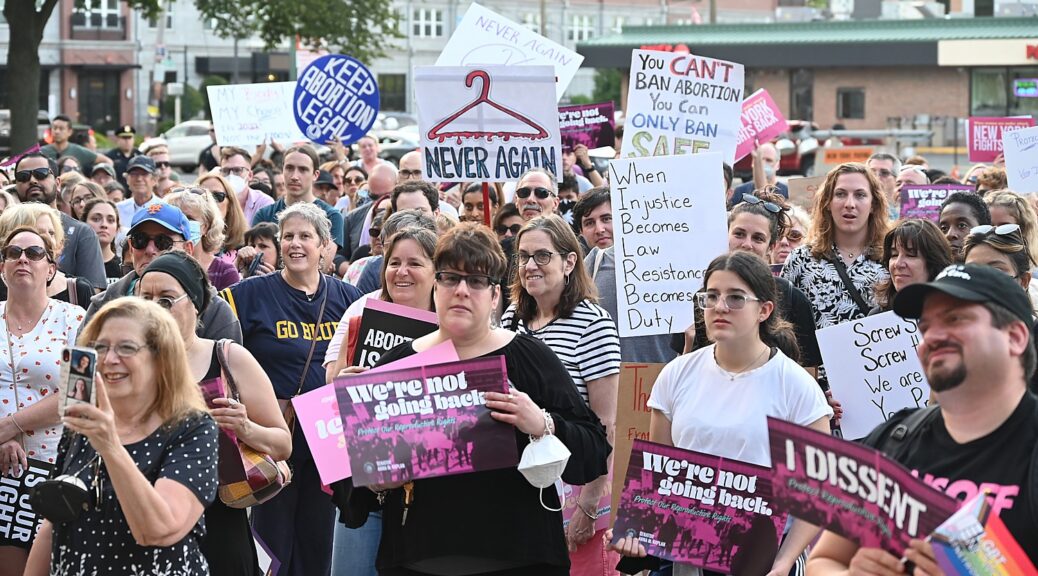
Reproductive Freedom for All will activate its 4.5 million members nationwide to grow its volunteer leadership infrastructure and launch direct voter contact and visibility events in priority districts and regions. The campaign will span canvases across our chapter states — including cities like Phoenix, Tucson, Bakersfield, and Savannah — alongside Pride marches, rallies, community roundtables, and press conferences with elected leaders and stakeholders. It will also feature multi-day phone banks at both the in-person and virtual levels.
● Direct voter contact in priority states and districts:
The program will include deep investments in direct voter contact, including coordinated canvassing programs designed in direct partnership with specific campaigns. It will persuade and mobilize voters – including independents, soft Republicans, and split-ticket voters – whose support for abortion access puts them at odds with Trump and his endorsed candidates. The program will also include relational organizing training with our members, with priority investments across Arizona, Michigan, Nevada, California, and Georgia. Top-tier targets will include AZ-06, MI-07, and NV-03 congressional districts, alongside critical statewide races and ballot initiatives.
● Research-backed messaging on freedom, care, and economic security:
The campaign will use Reproductive Freedom for All’s latest research to connect abortion access to the economic pressures families are already facing, including the reality that deciding whether to have a child is one of the biggest economic decisions a person can make. Campaign messaging will also educate voters on threats to medication abortion, emergency care, health privacy, and access to reproductive health care nationwide.
● Candidate endorsements and accountability:
Reproductive Freedom for All will endorse reproductive freedom champions and hold anti-abortion politicians accountable for their records, including those aligned with anti-abortion groups pushing the Trump administration to restrict access even further. The campaign will make clear who is working to protect abortion access—and who is working to push care further out of reach.
● State ballot measures. Reproductive Freedom for All will support ballot measure work in Virginia, Missouri, and Nevada, as part of a broader strategy to engage voters around reproductive freedom up and down the ballot. This work will connect ballot measure engagement to the campaign’s broader voter contact, persuasion, and turnout strategy.
● Digital and creator program to mobilize voters:
Reproductive Freedom for All will run a comprehensive digital program across social media, podcast platforms, creator partnerships, paid digital, email, SMS, and rapid-response content. The creator strategy will go beyond paid amplification by partnering with trusted messengers, independent creators, storytellers, and issue-adjacent voices who can authentically reach persuadable audiences and encourage voter engagement.
The campaign builds on Reproductive Freedom for All’s latest research, which connects reproductive freedom to economic security and the freedom to decide whether, when, and how to grow a family. That research will inform the campaign’s ads, field scripts, digital content, volunteer trainings, and voter conversations—including outreach to independent and soft Republican voters who are frustrated by rising costs and alarmed by continued attacks on abortion access.
For over 55 years, Reproductive Freedom for All (formerly NARAL Pro-Choice America) has fought to protect and advance reproductive freedom at the federal and state levels—including access to abortion care, birth control, pregnancy and post-partum care, and paid family leave—for everybody. Reproductive Freedom for All is powered by its more than 4 million members from every state and congressional district in the country, representing the 8 in 10 Americans who support legal abortion.