Lawsuit Seeks To Ensure Local, State and Federal Officers Comply with New State Laws, Including Requirement that Officers Remain Identifiable During Public Operations
Law Enforcement Officers, Immigration Advocates and Community Leaders Join Governor Hochul in Defending New York’s Commonsense Laws To Increase Transparency and Ensure Local Resources are Being Used for Local Crimes
Governor Kathy Hochul, together with Attorney General Letitia James and a coalition of law enforcement, immigration and community leaders, announced the state is suing the Trump Administration to protect newly passed state laws that establish critical accountability measures related to immigration and law enforcement operations in New York.
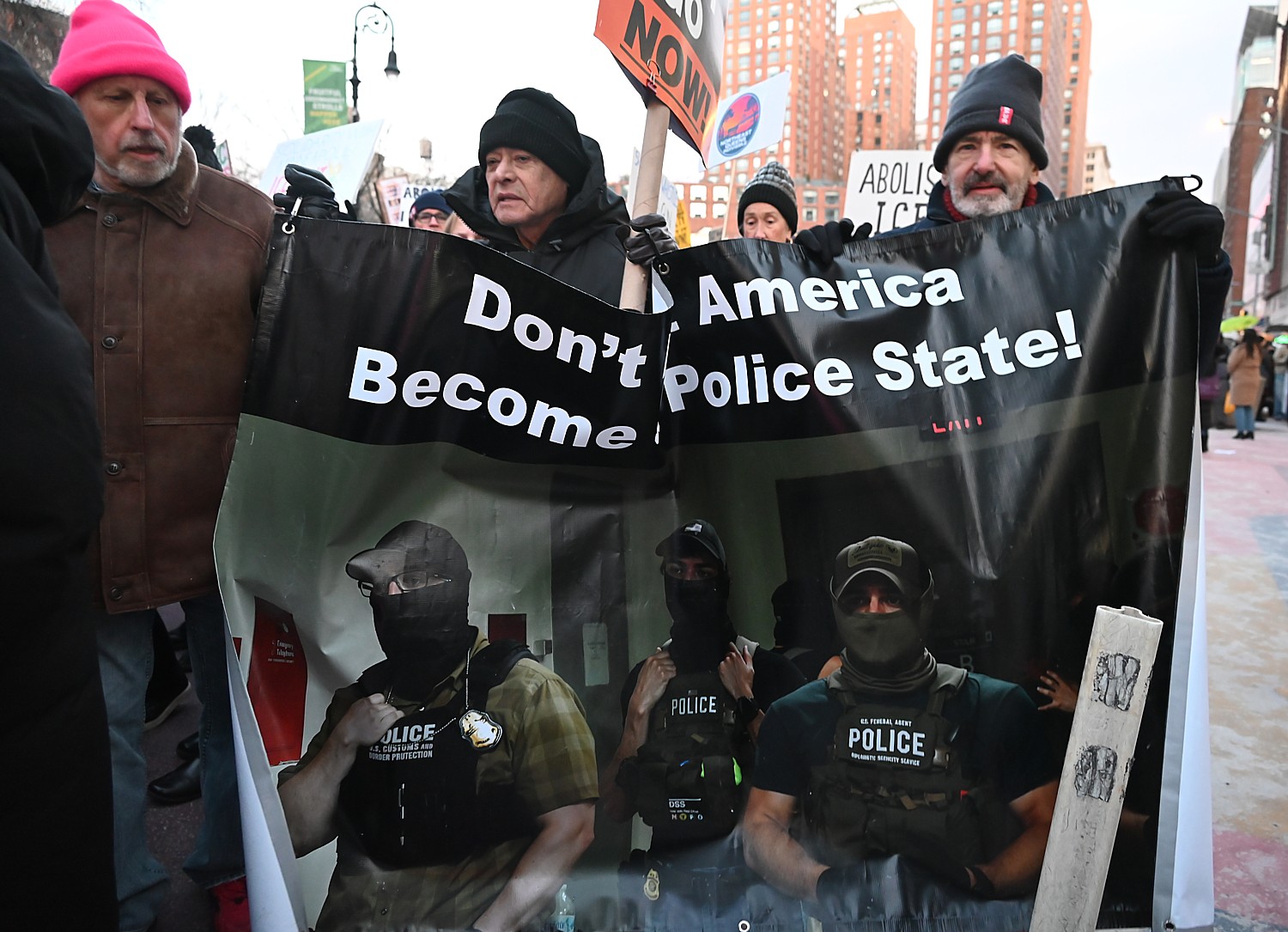
The lawsuit comes at the same time as the Trump Administration’s latest attack on the legislation that prohibits local, state and federal law enforcement officers from concealing their identities with masks while interacting with the public and ensures that local law enforcement can remain focused on community safety priorities. The complaint, filed by the Attorney General at the Governor’s request, asks the court to affirm the legality of these laws and prevent the Trump Administration from interfering with New York’s authority to protect public safety, promote transparency and govern the use of state and local resources.
(Meanwhile, the Trump Department of Justice announced it would withhold anti-terrorism funds from states that do not comply with Trump’s illegal voter suppression actions. The DOJ issued sweeping letters to election officials threatening criminal prosecution if noncitizens remain on voter rolls, the specific threat to withhold counterterrorism funds is primarily being enforced by the Federal Emergency Management Agency (FEMA).)
“In New York, we believe in public safety, accountability and trust between law enforcement and the communities they serve,” Governor Hochul said.“These commonsense policies ensure that law enforcement operating in New York carry out their duties openly and transparently without intimidation or concealed identities. New York stands firmly behind these laws — and we will defend them every step of the way.”
Masked federal immigration officers have flooded communities across the country as part of the federal government’s mass deportation agenda. These officers have often failed to clearly identify themselves to the public while carrying out enforcement operations, sowing fear, undermining public trust and increasing the risk that bad actors could impersonate law enforcement officers. Across the country, the use of masked and unidentified agents has made it harder for residents to know who is acting under color of law, report misconduct and seek accountability when officers abuse their authority.
New York enacted a comprehensive immigration protection package to address this growing threat and protect the rights of New Yorkers during federal immigration enforcement operations. One of the laws, set to take effect this Friday, prohibits local, state and federal law enforcement officers from concealing their identity with masks while interacting with the public and requires all officers to display clear identification. The Local Cops, Local Crimes Act, another measure in the package, prohibits local governments and law enforcement agencies from entering into 287(g) agreements or similar arrangements that use local resources to detain people for federal immigration violations. This provision ensures that New York’s local law enforcement resources are directed toward local public safety priorities, rather than the federal government’s mass deportation agenda.
On June 22, 2026, the Trump Administration sued New York State to prevent these laws from taking effect. New York has a sovereign right under the Tenth Amendment to enact laws that protect public safety, promote transparency and regulate conduct within its borders. Governor Hochul and Attorney General James assert that the new laws establish basic public safety and transparency requirements for law enforcement officers operating in New York and protect the state’s authority to decide how state and local resources are used.
Governor Hochul and Attorney General James are asking the court to declare that the Trump Administration’s efforts to prevent enforcement of the state’s new immigration protections violate the Tenth Amendment. They are also asking the court to block the administration from taking any action to prevent enforcement of the laws.
New York Attorney General Letitia James said, “New York has the sovereign right to pass laws that protect public safety and transparency for all New Yorkers. Law enforcement officers operating in our communities should be clearly identifiable, and local resources should be used to address local public safety needs. My office will defend these commonsense protections and New York’s authority to enforce them.”
New York Immigration Coalition President and CEO Murad Awawdeh said,“There is no New York without immigrant communities, and New York State took decisive steps to protect our communities from ICE terror and to defend our collective rights. The new State laws are particularly vital at a time when the Trump Administration is using violent and unlawful tactics in New York and across the country to create fear in our communities. The Tenth Amendment of the U.S. Constitution guarantees New York State’s self-determination, which cannot be undermined by the Trump administration’s bullying tactics or threats. It is imperative that the U.S. District Court for the Northern District of New York upholds the right of New York State to enact its own laws to govern New Yorkers, and sides with its lawful efforts to protect every single New Yorker who calls our state home.”
Queens District Attorney Melinda Katz said,“As District Attorney, I know that effective public safety depends on strong partnerships between law enforcement and the communities they serve. Local law enforcement must remain focused on addressing local public safety concerns and strengthening relationships within their communities, rather than serving as contractors for other agencies. When residents trust that law enforcement is acting fairly and with transparency, they are more likely to report crimes, cooperate with investigations and help keep their neighborhoods safe. Thank you to Governor Kathy Hochul and Attorney General Letitia James for their focus on maintaining that trust to help us effectuate public safety.”
State Senator Zellnor Myrie said,”With our civil rights under attack and our immigrant neighbors facing unprecedented threats from the Trump Administration, I’m proud that New York is stepping up with some of the strongest protections in the nation. State and local law enforcement are here to keep our communities safe — not to act as foot soldiers for Trump’s agenda. I’m grateful to our Attorney General and Governor for their defense of these laws and our entire immigration protection package that will keep our state safe, fair and welcoming to all.”
Long Island Hispanic Bar Association President Maribel Gomez said, “The Long Island Hispanic Bar Association recognizes that law enforcement officers often perform difficult and many times dangerous work. However, when a person’s liberty and constitutional rights are at stake, such as during a law enforcement interaction, the public has a right to know who is exercising authority over them. We thank Governor Hochul for standing with New York’s immigrant communities at a time when so many are living with uncertainty and fear as a result of sweeping immigration enforcement. Her efforts to protect transparency and accountability help ensure that all New Yorkers are treated fairly and with respect.”
Hispanic Federation President and CEO Frankie Miranda said, “For over a year and a half, we have seen the havoc that federal agents have caused on communities across the country — empty classrooms, small businesses permanently closed and parents torn away from their children. The slew of enacted immigration protections passed through the New York State budget was essential in preventing unconstitutional, harmful federal actions that hurt everyone, regardless of immigration status. The Hispanic Federation commends Governor Hochul and Attorney General James for continuing to stand up against this egregious federal overreach and working to keep New Yorkers safe.”
Trump Administration Set to Illegally Pay TotalEnergies $795 Million to Abandon Wind Lease off the Coast of New York and Invest in Fossil Fuels in Texas
Canceled Project Would Have Saved New Yorkers $10 Billion in Energy Bills and Brought More Than 1,700 Jobs to the State
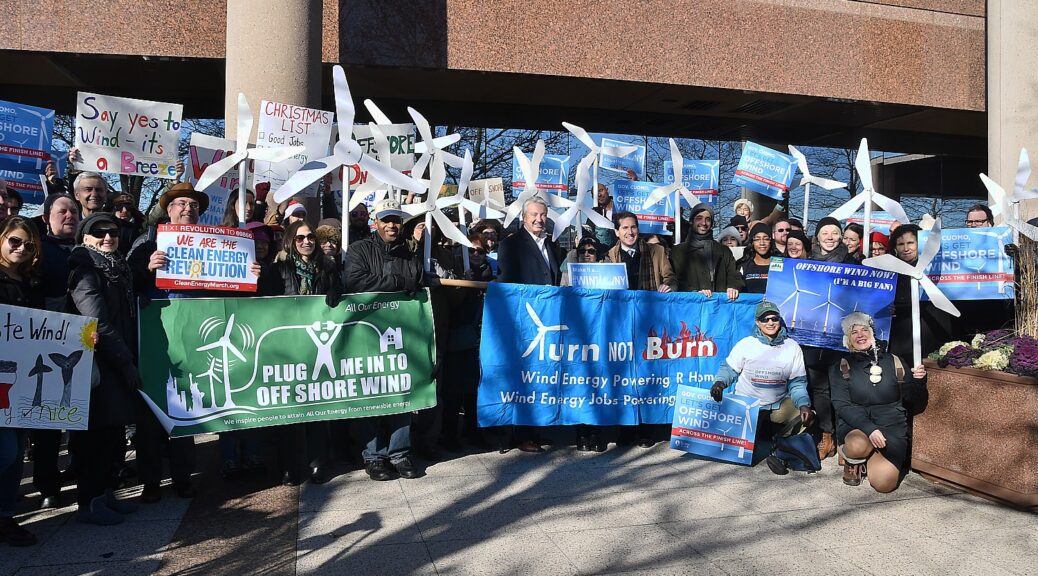
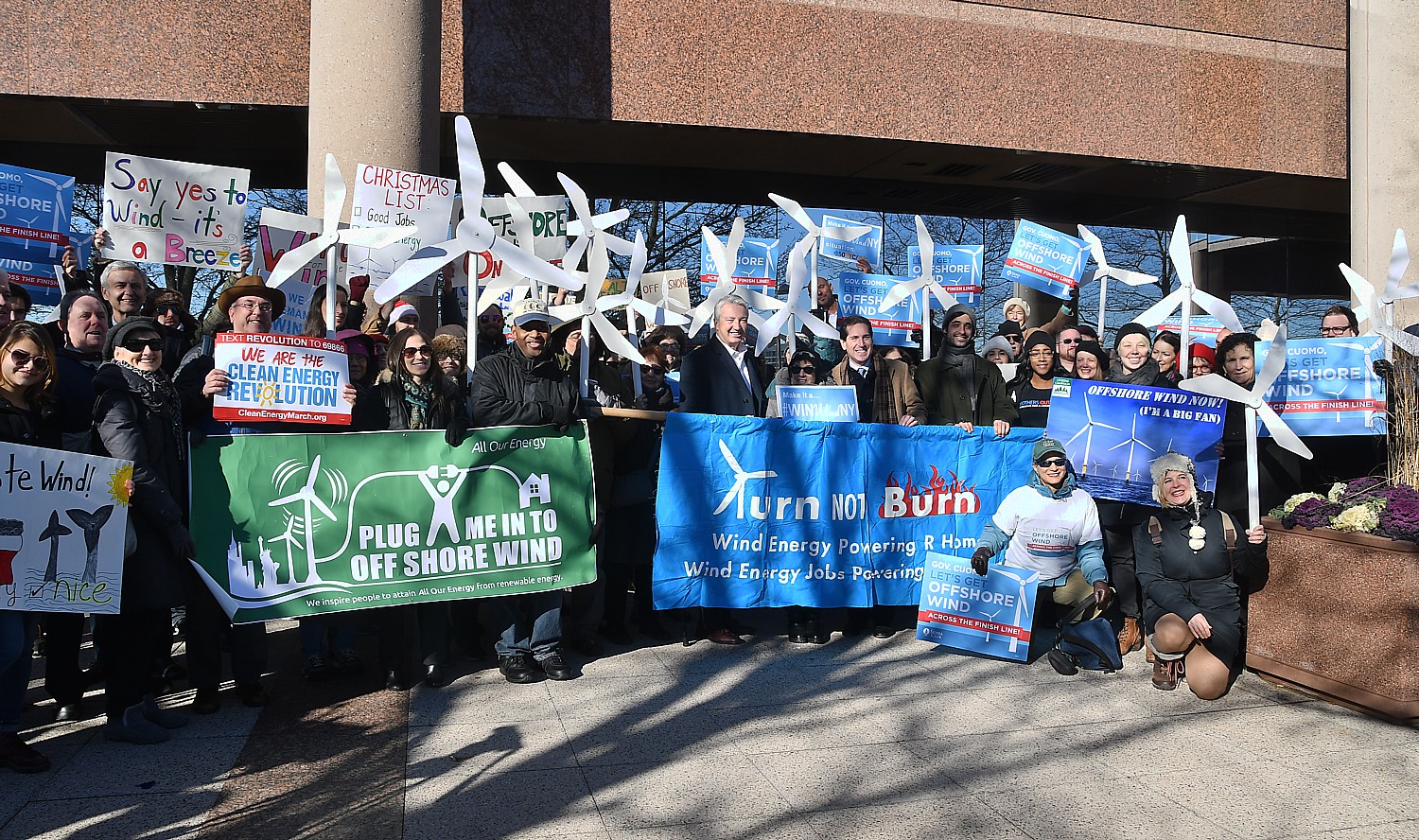
Governor Hochul and New York Attorney General Letitia James today announced that New York is leading a coalition of six other attorneys general in suing the Trump administration over its unlawful cancellation of a major offshore wind lease off the coast of New York.
In March 2026, after a string of court losses in its crusade against wind energy, the administration struck a deal with TotalEnergies, a French energy company, to cancel two offshore wind leases and pay the company nearly $1 billion in taxpayer dollars. In exchange, TotalEnergies agreed to walk away from offshore wind, invest hundreds of millions of dollars in oil and gas projects, and pledge not to develop any new offshore wind projects in the United States. TotalEnergies subsidiary Attentive Energy would have developed the New York lease, and the project was expected to deliver clean energy directly to New York City, power more than 700,000 New York homes, and generate billions of dollars in benefits for New Yorkers. Attorney General James and the coalition argue that the deal is blatantly unlawful and are asking the court to strike it down.
“This pay-not-to-play scheme pressuring a foreign company to forego planned offshore wind projects in America in favor of gas and oil drilling is an outrageous abuse of taxpayer dollars that hurts our ability to meet our energy needs, create good jobs, and help secure American energy independence while reducing emissions,” Governor Hochul said. “Attorney General James and I will continue to aggressively fight back against Donald Trump’s overt and never-ending hostility toward offshore wind, including his unlawful use of the most powerful office in the world to get private companies like TotalEnergies to bow to his will.”
New York Attorney General Letitia James said, “The Trump administration is once again trying to kill clean energy projects and destroy good-paying jobs for New Yorkers. After repeatedly losing in court, this administration cooked up a sham deal to pay a foreign energy company hundreds of millions of taxpayer dollars to abandon offshore wind and invest in oil and gas instead. We are fighting back to stop this illegal agreement that threatens to erase over a thousand union jobs and cheat millions of New Yorkers out of clean, affordable energy.”
NYSERDA President and CEO Doreen M. Harris said, “I thank Attorney General James for continuing to fight to protect our offshore wind industry in New York State. Governor Hochul has made it clear that offshore wind is a vital part of our state’s diverse energy portfolio and we remain committed to delivering reliable, affordable energy to all New Yorkers.”
In 2022, Attentive Energy paid $795 million to purchase an offshore wind lease approximately 47 miles off the coast of New York, as part of the highest-grossing competitive offshore energy lease sale in United States history. The lease area was expected to support two projects: Attentive Energy One, which would have delivered energy directly to New York City, and Attentive Energy Two, which would have served New Jersey. The Attentive Energy One project was estimated to deliver $25.6 billion in economic benefits to New York state over its 25-year life, including $10 billion in savings on New Yorkers’ energy bills. The project was also expected to create an estimated 1,716 new jobs in New York.
In March 2026, more than four years after the lease was awarded and with construction plans already under review, the U.S. Department of the Interior (DOI) suddenly announced that it had reached an agreement with TotalEnergies to cancel the Attentive Energy lease and a separate lease off the coast of North Carolina. DOI claimed that new national security concerns justified the cancellation, even though the federal government had already reviewed and approved the lease area after years of analysis and consultation. Under the agreement, TotalEnergies would invest approximately $795 million in fossil fuel projects, while the federal government would unlawfully “reimburse” the company with $795 million from the Judgment Fund, which may be used only to settle claims related to ongoing or imminent litigation. The administration also announced that TotalEnergies had pledged not to develop any new offshore wind projects in the United States.
The Trump administration’s deal with TotalEnergies followed a series of failed attempts to eliminate wind energy development. On his first day in office, the president halted federal approvals for all wind energy projects nationwide. Attorney General James led a coalition in a lawsuit and, in December 2025, secured a final judgment ending the illegal blockade. The administration later attempted to suspend construction on several offshore wind projects, including Empire Wind and Sunrise Wind in New York, on vague national security grounds. Again, Attorney General James sued, and federal courts blocked those suspensions as well.
Attorney General James and the coalition assert that the cancellation of the Attentive Energy projects will harm their states’ economies, energy grids, and climate goals. Offshore wind is a critical part of New York’s plan to meet growing electricity demand, especially in New York City, where Attentive Energy One was expected to deliver power directly. New York’s State Energy Plan projects that electricity demand will continue to rise significantly in coming years, and offshore wind is expected to play a major role in ensuring that the state has enough energy to meet that demand. Canceling the projects also threatens to deprive New York of more than a thousand new, good-paying jobs, infrastructure investment, and long-term economic development.
The attorneys general argue that the Trump administration’s deal violated the Outer Continental Shelf Lands Act, which limits DOI’s ability to cancel offshore wind leases. DOI must hold a hearing, specifically find that continuing the lease would likely cause serious harm to life, property, national security, or the environment, and determine that the benefits of cancellation outweigh the benefits of allowing the lease to continue. DOI did none of that before canceling the Attentive Energy lease. The coalition also argues that the deal violates the Judgment Fund Act because the $795 million payment was not a legitimate compromise settlement in an imminent lawsuit, but rather a contrived arrangement to satisfy the president’s personal opposition to wind energy.
Attorney General James and the coalition are asking the court to strike down the plainly unlawful agreement, vacate the lease cancellation, and stop the administration from taking further action to implement this illegal deal.
Joining Attorney General James in today’s lawsuit are the attorneys general of Connecticut, Maine, Massachusetts, New Jersey, Rhode Island, and Vermont.
The downturn in job creation is a direct result of the failed economic policies of the trump administration. He inherited a booming economy that was adding well over 100,000 jobs a month, salary increases outpacing inflation and wide opportunity to change jobs to advance in position and renumeration. Despite the Supreme Court’s declaration that his tariff regime is unconstitutional, he turned around and imposed 15 percent across-the board tariffs. Meanwhile, Americans are struggling with the surging cost of health insurance – many having to give it up – as well as food, utilities, housing, insurance, but his administration has fired hundreds of thousands of federal workers, caused migrants to go into hiding, and has caused consumer spending to plummet, which has been the engine for economic growth. Indeed, contradicting trump’s lie about a surging economy, a mere 181,000 jobs were created throughout his first year back in office, averaging 15,000 jobs per month, or the weakest year for job growth since 2020, the year the COVID-19 pandemic hit. This is despite having shut down legitimate data collection (taking over the Bureau of Labor Statistics), and having no external pressures on the economy (recession, pandemic), but only the policies he chose to inflict.
The impact of trump’s policies is most clearly seen in the decline in Leisure-Hospitality jobs, second biggest drop, -27,300, after retail, due to his tariffs, visa policies, bans on travel, antagonism to countries (especially Canada), his immigration roundups/deportations. A human-intensive industry and one of the nation’s biggest employers, travel and hospitality employs one in eight people.
Meanwhile, the future is bleak: between his war of choice against Iran which besides the loss of life, the cost ($1 billion/day), the threats to oil (prices up), his overturn of regulations and greenlight to predatory capitalists including tech companies (no protections on jobs from AI) and fraudsters (shut down investigations and shifted all the investigators to his campaign of retribution of opponents), is likely to lead to a Great Recession and spiking inflation. The report by Revlio Public Labor Statistics about a loss of 17,000 jobs in February comes at a time when the trump administration is not releasing such data. –Karen Rubin/news-photos-features.com
NEW YORK, March 5, 2026 /PRNewswire/ — Revelio Labs today released its January edition of Revelio Public Labor Statistics (RPLS), a monthly data release delivering transparent and reliable insights into the U.S. labor market. The latest data indicates a loss of 16,600 jobs in January, a steeper decline in comparison to last month’s loss of 13,000, and in line with expectations.
While the hiring rate continued to tick downward in February, attrition remained steady, leading to the decrease in net job creation. Further, labor demand continues to cool in the US, as the number of active job postings across the country ticked downwards again. Salaries from new job postings ticked down slightly in February, decreasing by 1.4% from January 2026.
The loss in employment was driven by Retail Trade and Leisure and Hospitality. Health Care, Professional and Business Services, and Financial Activities saw positive job growth. Within these sectors, the employers with the largest declines were Amazon after the large layoff announcement in January, as well as CVS in Retail, and Starbucks and McDonald’s in Leisure and Hospitality.
“The February data show a labor market that is starting to lose momentum. Employment declined modestly and hiring activity continues to slow, while job openings keep falling as employers are cautious about expanding their workforce,” said Chief Economist Lisa Simon.
RPLS is a freely available macroeconomic labor market set of statistics built from 100+ million U.S. profiles to provide a clear view of workforce dynamics. It follows a format similar to the U.S. Bureau of Labor Statistics (BLS), tracking employment levels, wages, and job transitions at a scale that traditional surveys cannot, offering a continuous picture of the labor market. RPLS intends to close the growing information gap and deliver unbiased data on the U.S. workforce for policymakers, businesses, and the public.
What data sources are used? Powered by a dataset representing close to the whole population of employed people in the United States, Revelio Public Labor Statistics (RPLS) draws from 100+ million U.S. profiles that mirror the national workforce and cover two-thirds of all employed individuals, compared to an estimated 27% from the BLS establishment survey and 0.03% from the BLS household survey.
Revelio Labs is an industry leader in workforce intelligence. Our team of Data Scientists, Economists, and Engineers have the unique expertise to deliver valuable workforce analytics that empower people to make actionable, data-driven decisions. By providing a clear source of workforce information, we see a world where the allocation of human capital is as efficient, transparent, and scientific as the allocation of financial capital, resulting in a more engaged and better-performing workforce for everyone. Learn more at www.reveliolabs.com.
Glen Cove, NY—Today, Congressman Tom Suozzi (D-Long Island, Queens) held a press conference to call out the Administration’s revocation of the ‘Endangerment Finding’ that greenhouse gases endanger public health and welfare—a move widely seen as a major setback to U.S. efforts to combat the climate crisis.
“We are here with a very simple message for the people of Long Island and New York: Wake up! Your insurance rates are going up, and Moody’s Investor Services reports that Long Island is the fourth most vulnerable place in the United States of America for the effects of climate change,” said Congressman Tom Suozzi. “This is affecting the quality of your life. We here on Long Island, right by the water right here, are subject to the effects of rising sea levels because the glaciers are melting. We are going to be affected when the permafrost in the arctic region starts to defrost, and all the methane gas comes out and causes more of these greenhouse gases. It affects our trees, it affects our wildlife, it affects nature, but it also affects us in real ways, like causing your insurance rates to go up, like damaging your properties, like making it so you are more subject to more floods and more storms.”
Congressman Suozzi was joined on the bank of a snowy, icy Hempstead Harbor by Executive Director of Citizens Campaign for the Environment Adrienne Esposito, Michelle Lapinel McAllister and Nino Luciano from the Coalition to Save Hempstead Harbor, Eric Swenson of the Hempstead Harbor Protection Committee, Matt Salton of the New York League of Conservation Voters, and Pete Budden of the Natural Resources Defense Council, who announced that the NRDC would be filing a lawsuit to challenge this decision the following day.
“Thank you to the Congressman for holding this event and for speaking out against the outrageous repeal of the ‘Endangerment Finding.’ By rolling it back, the Trump Administration is launching the single biggest attack in US history on the federal government’s efforts to tackle the climate crisis,” declared said Pete Budden, Senior Advocate at the Natural Resources Defense Council (NRDC). “It amounts to pure climate denial. Quite simply, this will make climate change worse, this will make air pollution worse, and it will raise costs for people across the country. It is stunning that once again this Administration is asking people not to believe what they see with their own eyes… The NRDC will not stand for it. It’s irresponsibly, it’s unscientific, and it is illegal. We will take this fight to the courtroom. We’re filing a lawsuit tomorrow, and we will win.”
On February 12, President Trump and EPA Administrator Lee Zeldin – the former Long Island Congressman – with a wink and a nod to the Fossil Fuel Industry which paid $1 billion to elect Trump in 2024, announced the repeal of the ‘Endangerment Finding,’ a 2009 policy that concludes that greenhouse gasses are a threat to public health. This ruling underpins federal action to curb planet-warming gases and is the legal bedrock of efforts to rein in harmful emissions.
“The ‘Endangerment Finding’ was found in 2009, based on sound, good science. The reason it was called the ‘Endangerment Finding’ is because it put in danger our health, our economy, and our future,” said Adrienne Esposito, Executive Director of the Citizens’ Campaign for the Environment. “Climate change is costing us billions. In 2004 alone, we had 27 different climate tragedies throughout America. Extreme climate events, each one cost us $1 billion per event, equating to over $30 billion.”
The “evil twin” of global warming, she noted, is acidification of the marine environment – killing shellfish, fish larvae and the plankton at the base of the food chain.
“We had made so much progress. People were buying electric cars – Nassau County was the #1 market, with 785,000 EVs on Long Island, because they make sense. Why is Trump killing the market for clean energy and EVs? It’s payback for the fossil fuel industry for the $1 billion they spent to elect him in 2024. But the next generation will be the victims.
“We are impacting our planet. We need to act. We need to fight. When Congressman Suozzi called me yesterday, I said, ‘I’m so glad that you’re going to speak up and speak out because the silence from others is deafening.’ And silence portrays that we accept or we agree. We do not accept this. We do not agree with this. And we will not,” Esposito said.
“The ‘Endangerment Finding’ is the legal foundation for regulating greenhouse gasses… repealing it would significantly weaken federal authority to address pollution from major sources and protect public health,” said Michelle Lapinel McAllister, Program Director of the Coalition to Save Hempstead Harbor. “The evidence is clear. Climate change is increasing risk to our communities, infrastructure, and economy. These impacts are measurable and growing, and sustained action at the federal level is necessary to reduce them. Maintaining the ‘Endangerment Finding’ ensures continued progress for clean air, environmental stability, and regulatory certainty. We have a responsibility to uphold science-based policy and protect the health and security of future generations.”
“The water body you see behind us and all the other water bodies on LI are part and parcel of the quality of life that we have here on LI. It’s the reason why people move here, it’s also very important to the economy of our land,” said Eric Swenson, Executive Director of the Hempstead Harbor Protection Committee. “ 31 years ago, the nine local governments that share this harbor formed the Hempstead Harbor Protection Committee to look out for its water quality. We made a lot of progress… We can do a lot, and we spent tens of millions of dollars to improve this harbor, and we’re enjoying the benefits of it.” Indeed, 2,500 acres were re-opened to shell fishing for the first time in years.
“We don’t want to see that go backwards, and we will if this continues the way it is with the ‘Endangerment Finding.’ We need EPA to stand up, to do its job it’s designed to do and it’s created to do, and we need them now. Science is real, we need to base our decisions on science, not politics, and we need to start now,” Swenson said.
“With the repeal of the ‘Endangerment Finding,’ President Trump and the EPA Administrator Lee Zeldin are accelerating their assault on our health, environment, and economic future. Clean air is not a partisan issue—it’s a human right,” Matt Salton, Federal Policy Manager of the New York League of Conservation Voters, declared. “With this decision, it rewards polluters, weakens competitiveness of the necessary car manufacturers, and leaves families bearing the unacceptable cost of dirtier air. We are proud to stand with Congressman Suozzi and our fellow advocates to defend clean air and protect the health and the future of every New Yorker.”
Seemingly the only thing that really resonates with voters is the cost of living – as opposed to livability or health or human rights – so Suozzi spelled out the impact of climate change on affordability and the economy – contradicting Trump’s constant lie that renewed dependency on fossil fuel will unleash new riches and a Golden Age of American Greatness.
Climate disasters are raising costs for Long Islanders on everything from home and car insurance to food prices, health care, utility costs. The extremes of heat and cold, the floods, drought, wildfires, sea level rise are causing food shortages and price hikes, heat stroke and disease, ocean acidification which is depleting sea life and the plankton that is at the base of the food chain. At the same time, cutting – even banning and canceling funding – for clean energy projects like Long Island’s offshore wind, solar and electric vehicles while promoting and incentivizing gas-guzzling cars and coal-powered utilities will only exacerbate the severity and frequency of these disasters.
Superstorm Sandy destroyed 100,000 homes and caused $65 billion in damage to Long Island.
Affordability is an issue, as well – because of fierce focus on energy conservation and clean energy, demand for electricity was flat for a decade, but for the first time in decades, energy demand is going up – largely because of the construction of these enormous data centers to power A.I., driving up utility costs for rate payers, Congressman Suozzi said.
“Why cut green energy projects that were increasing energy supply (at lower cost than fossil fuels), projects that were ready for investment with credits from the Biden Administration (nuclear, hydrogen, solar, wind)?”
“Long Island is the fourth most vulnerable place in the United States of America for any population center for the effects of climate change. Number one is San Francisco, number two is Cape Coral in Florida, number three is New York City (I also represent a piece of Queens) and number four is Long Island,” Congressman Suozzi said. “Over the past 50 years, Long Island has had more disaster locations than any other place in all of New York State. There have been dozens of dozens of disaster events. In the United States of America, in 2024, there were 27 severe weather events that caused over $1 billion in damages, $183 billion in total. In the year 2000, there were five. 27 in 2024, and five in 2000. So, this is real life.”
Congressman Suozzi noted that there are three ways to beat back the Trump Administration and restore the government’s role in environmental protection and climate action:
Legislation – which will require Democrats to retake the Majority in Congress, and ultimately, retake the White House.
Lawsuits – organizations including the National Resources Defense Council (NRDC), are mounting lawsuits, noting that the Trump administration is in violation of the Clean Air and Clean Water Acts, and that the issue of carbon emissions being a pollutant the federal government is obligated to regulate, was settled.
The third area is motivation – getting people more engaged by raising awareness of the impacts and consequences that derailing a clean, renewable energy agenda has on the economy, affordability, public health and quality of life.
“The reason we are out here today, in the cold, out on the water here, is because we want to get more people who care about the earth; who care about climate change; who care about the effects this is going to have on your wallet; to actually start speaking up and speaking out about this issue. There is so much noise every day as they flood the zone with things to get us agitated, but this is an existential threat to us here on Long Island that we need to stand up and get people motivated to speak out against,” concluded Congressman Suozzi.
“We are messing with the divine creation of the earth: a thing that’s been gifted to us. And it’s been very resilient over most of history. But now the effects of what we are doing as human beings are punching it every single day, and I can’t take it anymore. So we have to wake up,” Congressman Suozzi added.
With 24 states and Puerto Rico led by New York and California forming the U.S. Climate Alliance to take up the baton after the Trump Administration pulled out of the Paris Climate Accord (twice), it is critical who becomes Governor. (The 24 states, representing 55% of the population, commit to reducing greenhouse gas emissions by 26-28%.)
Governor Kathy Hochul has remained stalwart in support of New York State’s leading-edge climate agenda that calls for an affordable and just transition to a clean energy economy that creates family-sustaining jobs, promotes economic growth through green investments, and directs a minimum of 35 percent of the benefits to disadvantaged communities. New York is advancing a suite of efforts to achieve an emissions-free economy by 2050, including in the energy, buildings, transportation, and waste sectors.
In 2022, New Yorkers overwhelmingly approved the $4.2 billion Environmental Bond Act providing funding to state agencies, local governments, and partners to protect water quality, help communities adapt to climate change, improve resiliency and create green jobs. Bond Act funding will support new and expanded projects across the state to safeguard drinking water sources, reduce pollution, and protect communities and natural resources from climate change. A total of $1.9 billion is invested to date. Learn more at www.environmentalbondact.ny.gov.
Recently, the bond funded $265 million in grants for projects to protect drinking water, improve climate resilience, update aging water infrastructure, reduce contributors to harmful algal blooms, and secure access to clean water.
“Every New Yorker deserves clean water, which has been a top priority of mine since taking office,” Governor Hochul stated in announcing the grants. “These grants continue our critical investments to update aging water infrastructure across the state. They will also help our local governments enhance resiliency against flooding caused by severe weather, again demonstrating our commitment to a safe, affordable, and sustainable future for all New Yorkers.”
Hochul also successfully fought back against Trump’s attempt to cancel offshore wind projects, the Hudson Gateway Tunnel, and New York City congestion pricing.
In contrast, Nassau County Executive and Republican candidate for Governor Bruce Blakeman has promoted fossil fuels, wants to overturn the ban on fracking, and has done nothing to make the county resilient against climate change – including not applying for state grants.
Washington, DC – Yesterday, the Trump Administration, suddenly and without warning, notified several agencies across Long Island and throughout America of the immediate termination of grants. Several Long Island institutions quickly reported to Congressman Suozzi’s office that nearly $2 million in SAMHSA grants have been cut, and possibly more. Nationwide, 2000 organizations have been cut off from $2 billion in funding.
Congressman Suozzi reached out to the affected organizations. He joined more than 100 colleagues in the House of Representatives, both Democrats and Republicans, on the attached letter to Health and Human Services Secretary Kennedy to express bipartisan outrage at these sudden cuts.
“We strongly urge you to rescind all of the terminations immediately. Too many people across the country are suffering without the necessary resources. We must ensure that SAMHSA programs serve their congressionally intended purpose of getting lifesaving resources to our communities,” the letter reads.
That evening, the cuts were reversed.
“This pattern and practice of cutting programs without warning that not-for-profits are counting on, in the middle of the fiscal year, is unfair, unproductive, and maddening. While I’m relieved these cuts were reversed, we can’t keep doing this,” said Suozzi.
“Without warning, grants were terminated. It’s a reckless and awful move that undermines efforts to deliver drug treatment, alcohol counseling, and mental health care,” said Suozzi. “These programs are how we save lives and help our neighbors and loved ones escape the grip of opioids and other addictive drugs. Cutting off already-awarded grants throws organizations into chaos and puts patients at risk. Addiction and mental health crises do not stop mid-year, and neither should the support systems people depend on.”
Nearly $2 million in funding cuts would have impacted organizations in the 3rd Congressional District. CN Guidance has reported $1,250,000 in cuts to programs to address child trauma, drug addiction, and mental health first aid training. The Family and Children’s Association has reported $125,000 in cuts to mental health first aid training. The YES Community Counseling Center has reported $544,970 in cuts to its Bridge Program to curb addiction in young adults.
Suozzi’s office is in contact with local organizations and will ensure their funding cuts are reversed.
The bipartisan letter to Health and Human Services is here.
WASHINGTON, D.C. — U.S. Transportation Secretary Sean P. Duffy and Federal Aviation Administration (FAA) Administrator Bryan Bedford today outlined the proactive actions the FAA will take to maintain the highest standards of safety in the national airspace system. This includes achieving a temporary 10 percent reduction in flights at 40 high traffic airports across the country.
Since the beginning of the shutdown, controllers have been working without pay, and staffing triggers at air traffic facilities across the country have been increasing. This has resulted in increased reports of strain on the system from both pilots and air traffic controllers. This past weekend, there were 2,740 delays at various airports.
“My department has many responsibilities, but our number one job is safety. This isn’t about politics – it’s about assessing the data and alleviating building risk in the system as controllers continue to work without pay,” said U.S. Transportation Secretary Sean P. Duffy. “It’s safe to fly today, and it will continue to be safe to fly next week because of the proactive actions we are taking.”
“We are seeing signs of stress in the system, so we are proactively reducing the number of flights to make sure the American people continue to fly safely,” said Federal Aviation Administrator Bryan Bedford. “The FAA will continue to closely monitor operations, and we will not hesitate to take further action to make sure air travel remains safe.”
A 4 percent reduction in operations will take effect Friday, November 7, ramping up to 6 percent by November 11, 8 percent by November 13, and 10 percent by November 14.
The FAA will also:
Prohibit some visual flight rule approaches (VFR) at facilities with staffing triggers.
Limit commercial space launches to non-peak hours so they are prohibited between 11:01 a.m. and 2:59 p.m. UTC.
Prohibit parachute operations and photo missions near facilities with a staffing trigger.
These actions were directly informed by the FAA’s review of aviation safety data, including voluntary, confidential safety reports that pilots and air traffic controllers file. The data indicates increased stress on the system, which increases risk.
Additional Information:
Airlines will be required to issue full refunds. They will not be required to cover secondary costs. This is the normal procedure when a delay or cancellation is not at the fault of the carrier.
The order does not require a reduction in international flights. Carriers may use their own discretion to decide which flights are canceled to reach the order’s goal.
Decisions to increase or decrease these flight reductions will be informed by safety data.
The 40 affected high impact airports include:
ANC – Ted Stevens Anchorage International Airport ATL – Hartsfield-Jackson Atlanta International Airport BOS – Boston Logan International Airport BWI – Baltimore/Washington International Airport CLT – Charlotte Douglas International Airport CVG – Cincinnati/Northern Kentucky International Airport DAL – Dallas Love Field DCA – Ronald Reagan Washington National Airport DEN – Denver International Airport DFW – Dallas/Fort Worth International Airport DTW – Detroit Metropolitan Wayne County Airport EWR – Newark Liberty International Airport FLL – Fort Lauderdale/Hollywood International Airport HNL – Honolulu International Airport HOU – William P. Hobby Airport IAD – Washington Dulles International Airport IAH – George Bush Houston Intercontinental Airport IND – Indianapolis International Airport JFK – New York John F. Kennedy International Airport LAS – Las Vegas McCarran International Airport LAX – Los Angeles International Airport LGA – New York LaGuardia Airport MCO – Orlando International Airport MDW – Chicago Midway International Airport MEM – Memphis International Airport MIA – Miami International Airport MSP – Minneapolis–St. Paul International Airport OAK – Oakland International Airport ONT – Ontario International Airport ORD – Chicago O’Hare International Airport PDX – Portland International Airport PHL – Philadelphia International Airport PHX – Phoenix Sky Harbor International Airport SAN – San Diego International Airport SDF – Louisville International Airport SEA – Seattle–Tacoma International Airport SFO – San Francisco International Airport SLC – Salt Lake City International Airport TEB – Teterboro Airport TPA – Tampa International Airport
Governor Kathy Hochul today declared a state of emergency and announced new actions in response to the Trump administration stripping food assistance from 3 million New Yorkers come November 1. As the GOP federal government shutdown continues, the Trump administration has refused to release billions in statutorily approved federal contingency funding that would address this crisis in states across the nation. By refusing to release this contingency funding, the federal government is leaving millions of New Yorkers without critical assistance they rely on to feed themselves and their families.
While Washington Republicans refuse to act to avert this crisis, Governor Hochul is stepping up by committing an additional $65 million in new State funds for emergency food assistance that will reinforce New York’s network of vital food bank and pantry partners and provide about 40 million meals to hungry New Yorkers. The Governor is also deploying Empire State Service Corps and SUNY Corps Members to support local food banks during this emergency period of increased need, and continuing to explore food hubs at schools.
“The Trump Administration is cutting food assistance off for three million New Yorkers, leaving our state to face an unprecedented public health crisis and hurting our grocers, bodegas and farmers along the way,” Governor Hochul said. “Unlike Washington Republicans, I won’t sit idly by as families struggle to put food on the table. Today, I’m declaring a state of emergency and am committing additional state funds for emergency food assistance to ensure New Yorkers don’t go hungry. Donald Trump and Republicans in Congress have the power to stop this crisis — millions of families depend on it.”
Since the inception of the program, SNAP benefits have been federally funded. New York administers approximately $650 million per month in federally funded SNAP benefits to nearly 3 million New Yorkers. Given the scale of the program, Governor Hochul along with governors across the country have repeatedly emphasized that no state government can replace SNAP benefits or backfill the program.
Here’s a look at what today’s announcement means for New Yorkers:
$65M in new State funds for programs that support food banks, pantries, soup kitchens and more to provide emergency food assistance to New Yorkers
$40M in new funding for the Hunger Prevention and Nutrition Assistance Program, which provides emergency food relief and nutrition services to food-insecure populations. HPNAP works in partnership with a network of about 2,700 Emergency Food Providers (EFPs), including food pantries, soup kitchens, and shelters.
$25M in new funding for Nourish NY, which supplies surplus agricultural products (e.g., milk, apples, cheese, yogurt, cabbage, squash) to populations who need them through the State’s network of food relief organizations (i.e., regional food banks, food pantries, soup kitchens, and community-based organizations that provide food for free to persons experiencing food insecurity).
Deploying Empire State Service Corps and SUNY Corps Members to support food banks
Currently, hundreds of SUNY students serve as peer navigators, helping fellow students complete SNAP applications and assisting at campus and local food pantries.
The Empire State Service Corps will allow current members to expand their paid hours, enabling them to provide greater support at food pantries statewide. In addition, new short-term crisis response positions will be created to assist food pantries and food banks facing staffing shortages.
Today’s announcement comes as New York, along with 24 other states, sued the Trump administration on Tuesday to demand the release of emergency SNAP funds. The Governor also joined a letter alongside 20 other Governors to the President, calling for the Administration to reverse course and release emergency SNAP funds. Governor Hochul also fast-tracked $41 million in state funds for emergency food assistance earlier this week — today’s announcement brings the total of allocated state funds to $106 million.
New York State Health Commissioner Dr. James McDonald said, “The federal government’s refusal to release emergency food assistance will have devastating consequences for families already struggling to make ends meet. Access to nutritious food is a fundamental public health necessity — it affects everything from childhood development to chronic disease prevention. Under Governor Hochul’s leadership, the State Health Department is working closely with food banks, local health departments and community organizations to ensure no New Yorker goes hungry during this crisis. These actions reflect our shared commitment to protecting the health and well-being of all New Yorkers.”
New York State Education Commissioner Betty A. Rosa said, “No student should have to choose between focusing on their education and worrying about their next meal. In response to the recent cuts to SNAP benefits, our agencies are coming together to make sure no student is left behind. This is a team effort, working hand in hand with our partners in government, communities, and local organizations to build a safety net that ensures that hunger never stands in the way of learning and opportunity.”
New York State Office of Temporary and Disability Assistance Commissioner Barbara C. Guinn said, “SNAP recipients, most of whom are children, older adults or individuals with a disability, count on SNAP every month to feed their families. The federal government’s callous decision to cut off federal funding for SNAP recipients for the first time in the program’s history underscores this administration’s lack of understanding of the difficult economic realities facing nearly 3 million New Yorkers and millions more of our fellow Americans. Now is a pivotal moment for our federal government to honor its long-standing social safety-net obligations. We are grateful for Governor Hochul’s leadership and commitment to fighting on behalf of New Yorkers and demanding accountability from federal officials.”
New York State Agriculture Commissioner Richard A. Ball said, “I am grateful for our Governor’s swift response to the federal government’s senseless and reckless cuts that will put millions of New Yorkers in jeopardy of not having enough food to put on the table, stress the emergency food system, and impact our farmers in the process. By providing additional, critical funding to our feeding assistance programs, such as Nourish NY, we will be able to help our food banks and food pantries purchase and make available more local farm products to our communities in need. This is one more step in New York’s efforts to fight back and ensure we do everything we can to maintain support of our families and our farmers.”
House Democratic Leader Hakeem Jeffries said, “From day one, Donald Trump and rubber-stamp Republicans have waged an all-out assault on the health, safety and well-being of the American people. Their latest attempt to rip food out of the mouths of children, seniors and veterans who have served our country honorably is a disgusting dereliction of duty and makes clear that the cruelty is the point. Instead of finding money to pay off wannabe dictators in Argentina, Donald Trump should use the money that was appropriated by Congress to make sure that 42 million Americans do not go hungry and lose their SNAP benefits. I am grateful to Governor Hochul for her strong leadership and her principled commitment to making sure that every single New Yorker can put food on the table. It’s time for Republicans in Washington to do the same.”
State Senator Cordell Cleare said, “Over 3 million New Yorkers rely on SNAP including almost 1 million of our beloved Older New Yorkers. The program is a lifeline and provides a baseline of humanity and quality of life for those seeking just to simply provide for themselves and their family. It shocks the conscience that Trump and Congressional Republicans would hold families hostage like this, bulldozing the White House and plowing under the well-being of millions. I join the Governor in not only calling out the hypocrisy but in making certain that New York steps up to the plate and funds SNAP with state resources.”
State Senator Michelle Hinchey said, “Starting Saturday, the Trump administration will cut off SNAP benefits, leaving 3 million New Yorkers without enough to eat. SNAP is one of our country’s most effective anti-hunger programs, and taking it away is a cruel abdication of the federal government’s duty. We have to take every action to protect New Yorkers from the food insecurity created by the Trump administration, and I thank Governor Hochul for this new funding and support for food pantries, which will help us fight against this crisis.”
Assemblymember Rebecca A. Seawright said, “As Chair of the Assembly Committee on Aging, I applaud Governor Hochul for taking swift action to safeguard millions of New Yorkers from losing the food assistance they rely on. Older adults are among the most vulnerable to food insecurity, and the continued refusal of the federal government to release emergency SNAP funds is unconscionable. The Governor’s investment will strengthen our food banks and pantries, ensuring seniors and families can continue to access the nutrition they need to live with dignity. I stand with Governor Hochul in calling for the immediate release of federal contingency funding and for protecting the health and well-being of every New Yorker.”
New York Common Pantry Executive Director Stephen Grimaldi said, “The Government shutdown will have serious adverse effects for SNAP recipients on November 1st, impacting the working poor, elderly, children and the disabled. We’ve got to do better. The federal government must continue to provide SNAP funds to ensure people are fed or millions will flood food pantries and soup kitchens, overwhelming the emergency feeding network. We’ve just served the largest number of households coming for Pantry services in one day, in anticipation of the cuts.”
Food Bank For NYC CEO and President Leslie Gordon said, “Amid surging food insecurity rates, the Federal shutdown has created so much uncertainty and devastating long lasting impact for so many. We are incredibly grateful for the Governor’s leadership. Her support, along with that of the State government, allows us to continue to meet the growing need and serve every neighbor with dignity.”
Sharing Excess CEO Evan Ehlers said, “While we face a growing crisis of food access, the U.S. continues to waste nearly 40% of its food supply, throwing away ten times more food than we need to feed everyone. At Sharing Excess, we’re committed to redirecting that surplus to communities in need, and we’re thrilled to partner with Governor Kathy Hochul and r4 to make a meaningful difference for families across New York during a critical time of need.”
Governor Kathy Hochul today called out Washington Republicans for cutting critical safety and security funding for New York’s mass transit system. The Metropolitan Transportation Authority (MTA) had been slated to receive $34 million in federal Transit Security Grant Program funds, which support essential counter-terror and transit security functions. Last week, lawmakers were notified that the MTA was to be the only agency of 21 applicants nationwide to not receive federal security dollars via this program.
“Keeping New Yorkers safe, from our streets to our subways, is my highest priority,” Governor Hochul said. “Since 9/11, New York has relied on federal support to ensure that our transit system has the counterterrorism resources it needs to keep millions of riders safe every single day. The shocking actions of Washington Republicans to slash these funds and defund the police put New York City at risk. We will not tolerate these cuts; New York will take every action available to us — including the courts — to ensure the MTA gets this critical funding to keep millions of riders safe.”
The Transit Security Grant Program was started after 9/11. Administered by the Federal Emergency Management Agency (FEMA), these grants support critical functions to keep mass transit systems safe from security threats. The MTA carries a significant portion of the United States’ mass transit riders, with over 6 million daily trips taken on Metro-North, the Long Island Rail Road, and New York City Transit. In addition to approximately $12 million which would go to the NYPD, the MTA had planned to utilize this year’s grant funding to support the following public safety and counter-terror investments:
Two cybersecurity projects, extending cyber visibility into MTA’s key systems, and a cyber lab to develop protections and vet operational technology systems.
The procurement and deployment of approximately 330 tactical cellular cameras to replace & expand upon current unsecure offline devices in a cost-effective manner.
The expansion of MTA weapons of mass destruction chemical detection system across 9 subway lines and a commuter rail terminal.
The TSA mandated frontline security awareness training of 16,000 MTA employees.
374 deployments of MTAPD counterterrorism teams.
The procurement of 3 MTAPD counterterrorism coordination and response vehicles.
The installation of several hundred cameras, access control points, and laser intrusion detection systems at a major subway complex.
“What the federal government is doing to us is a stark moment of hypocrisy, literally threatening our ability to keep these operations safe, our ability to protect public transit riders compromised,” Governor Hochul said during a press conference. “Homeland Security Secretary Kristi Noem is trying her very best to slash $35 million in funds for security on subway system–a person who swore an oath, as we all did, to protect Americans.
“Clearly defunding police without justification has no rational other than to punish blue states like New York. Of the 20 regions that applied for security funding, New York is the only one that has been denied.”
Governor Hochul chided the seven Republican New York members of Congress who pretend to “back the blue” and be the party of “law and order” for not standing up against these cuts.
Just this week, Attorney General Pam Bondi, deflecting from questioning from Senate Democrats on the Oversight Committee, repeated the meme that Democrats want to defund police. But it is Trump, her Department of Justice and Department of Homeland Security that are defunding police and public safety in cities and states led by Democrats.
“We are the #1 terror target in America – not just 9/11, but countless cases have thwarted. We are safer because of the invested dollars from federal, city and state together. That’s what is in jeopardy – our safety compromised.”
NYPD Commissioner Jessica Tisch said, “The NYPD’s counterterrorism operations are essential to keeping people safe both above ground and below ground on our subways. Withholding these critical funds from the busiest transit system in the country is a profound mistake, and one that will make New York City’s subways meaningfully less safe. Counterterrorism operations – and public safety in general – cannot be politicized, and I thank Governor Hochul for her efforts to ensure the NYPD has the resources it needs to protect New Yorkers.”
Tisch said that eight terror plots against the New York City subway system have been foiled since 9/11.
Following initial reporting that the MTA would not receive Transit Security Grant Program funding, the Office of the New York Attorney General filed suit in the Southern District of New York, which issued a Temporary Restraining Order barring FEMA from executing the cuts. To date, FEMA has not formally notified the MTA that their funding has been restored.
New York State and the NYPD continue to make significant investments in subway safety. These investments, which support an ongoing surge of NYPD officers in the subway system — including overnight train patrols announced by Governor Hochul in her 2025 State of the State address — have succeeded in reducing transit crime to historic lows in 2025. In 2022, Governor Hochul directed the MTA to install cameras in all 6,000 of its subway cars, which it completed last year. To further enhance safety, this year, the MTA began installing brighter, safer LED lights in all 472 subway stations as well as platform edge barriers to improve customer safety at 100 stations throughout the system.
Subway crime in September was down 31 percent from September 2024, and year-to-date, crime is down 4.3 percent compared to 2024. This summer was the safest summer in the subway since 2009, with major crimes down nearly 10 percent from 2024. Felony assaults in the transit system were down in September, and were down every month this summer when compared with the same month last year.
“Under Governor Hochul’s leadership, MTA has made huge progress on every front – safety, reliability and ridership,” MTA Chair and CEO Janno Lieber said. “It’s truly strange that Washington keeps spinning stories about subway crime, but then defunds the NYPD and MTA cops who patrol the system.”
MTA Chief Security Officer Michael Kemper said, “I can’t overstate the importance of this grant funding in reinforcing and advancing our counterterrorism initiatives. It significantly enhances our operational capabilities, all with the goal of providing a safe and secure transit environment for our riders and workforce — a responsibility we take seriously every single day.”
Last week, Governor Hochul successfully fought to restore $187 million in critical counterterrorism and homeland security funding cuts which had been planned by the Department of Homeland Security. These unprecedented cuts would have had a direct impact on public safety agencies throughout the state.
Governor Kathy Hochul joined business leaders, transit advocates and elected officials in New York City to highlight ongoing progress of the newly implemented congestion pricing program,and stand defiant against the Trump administration demanding to dismantle the program that is popular among local and regional transit and climate activists.
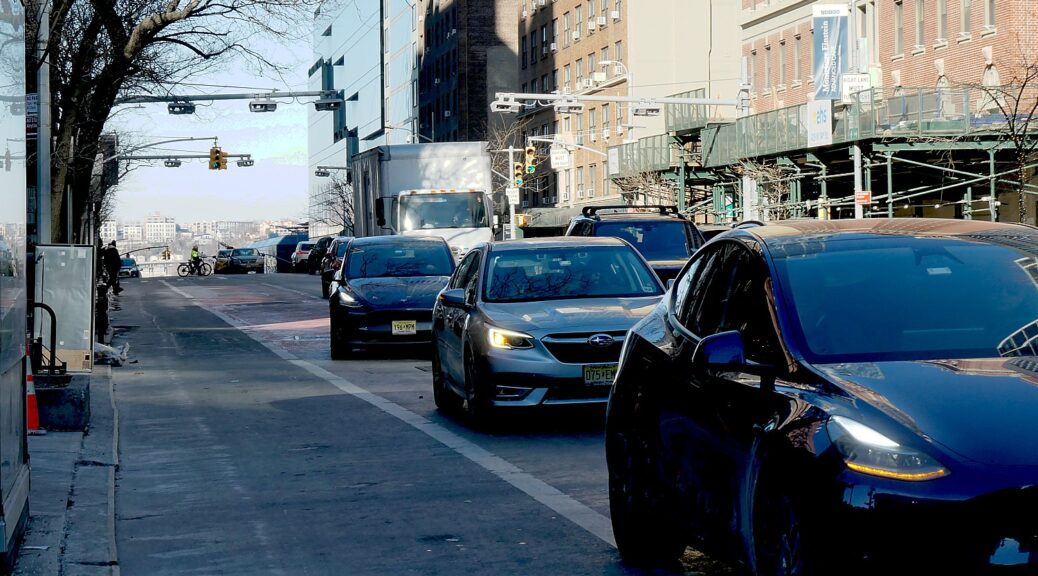
In the months since congestion pricing took effect, traffic is down and business is up — as the program delivers benefits for commuters from across the New York metro area and for businesses and offices in Manhattan’s Central Business District (CBD).
“Since congestion pricing took effect over two months ago, traffic is down and business is up – and that’s the kind of progress we’re going to keep delivering for New Yorkers,” Governor Hochul said. “Every day, more New Yorkers are seeing and hearing the benefits for our commutes, quality of life and economy – and we’re not going back.”
“The world has changed dramatically for this city and this region ever since congestion pricing went into effect in early January. Now to all the naysayers, hopefully you now are seeing that those who studied this and thought about it worked on this for years, if not decades – had a vision that is now being realized, that we can have a city that is not paralyzed by traffic and congestion, that our air is cleaner, that our businesses are more robust, more people are going to Broadway, our buses and subways are going faster and more supported – more people are taking them than ever before,” the Governor stated, after riding the M14 bus to the event.
“Not only is traffic is down and business is up, but also, subway ridership is up and crime is down.
“It’s been a long journey. We’re still on that journey. And the more people who get a chance to see the benefits – just walk around and talk to people, Ask if their lives are more enriched, whether they have more time with their families if they’re a commuter. Whether or not they’re finally realizing that we have the world class public transit system, but we need to keep it world class by raising the revenues to invest in it as well. That is essential.”
Governor Hochul just visited Trump in the White House and has invited Transportation Secretary Sean Duffy, who has made all sorts of threats against New York, to see for himself. Even Long islanders, whose Republican county executives and town supervisors have reflexively led the opposition against congestion pricing (Long Island commuters benefit the most by improvements to the Long Island Railroad and mass transit) and other initiatives like affordable housing, are benefiting.
“The cameras are staying on,” Governor Hochul asserted. “They sure as hell are. I want to recognize some leaders here who’ve done an extraordinary job in fighting for this. And again, this was not an easy journey. We have countless lawsuits. People going on television constantly berating this – saying it wouldn’t work. I want them to come here now and feel a very different New York City. That is very alive, and it’s vital. It is not jammed and stuck in traffic.
”We are moving once again. And we’re moving into a better future. A welcoming future. A place people can live safely. We’re going to build more housing. We’re going to bring more businesses. We’re going to make this to be the best place in the world to live. And we’re not done yet. More housing is right – don’t get me on that.”
“Congestion relief is working, cars and buses are moving faster, foot traffic is up and even noise complaints are down. That’s why in poll after poll more and more New Yorkers are saying they want those benefits to stay – and they will,” MTA CEO and Chair Janno Lieber said.
Since the congestion pricing program took effect on Jan. 5, it has delivered a wide array of benefits according to data from the MTA and other reports and studies from business groups and other data sources.
Traffic Is Down
Traffic is down 11 percent in the CBD in February compared to the same time last year.
Three million fewer vehicles entered the CBD in January and February compared to the same time last year.
Traffic is moving up to 30 percent faster on bridge and tunnel crossings in February compared to the same time last year.
Commuters saving up to 21 minutes per trip into the CBD.
Bus service is faster throughout the CBD, with up to 23 percent customer trips on express buses delayed 10 minutes or more.
Complaints about excessive car horn honking within the CBD were down by more than 70 percent in January and February compared to the same time last year.
Business Is Up
Broadway show attendance was up 19 percent in January and February compared to the same time last year.
Restaurant reservations in the CBD rose 5 percent from January to mid-March compared to the same time last year.
Retail sales in the CBD are on track to be $900 million higher in 2025 compared to last year.
Workers coming to the office in the CBD on an average weekday increased 6.6 percent in February compared to the same time last year.
Transit Ridership Increasing
Transit ridership in January and February 2025 has grown significantly compared to the same time last year.
Bus ridership is up 9 percent
Subway ridership is up 6 percent
Long Island Rail Road ridership is up 8 percent
Metro-North Railroad ridership up 4 percent
“Congestion relief is a local tool helping to solve a local problem. With this tool activated we are delivering access to efficient transportation to all New Yorkers and visitors including those who drive, and those who ride our subways, buses, and paratransit vehicles alike,” MTA Chief Accessibility Officer Quemuel Arroyo said. (His remark flips Trump’s statement justifying shutting down the Department of Education in order to “return power to the states.”)
State Senator Liz Krueger said,“Congestion pricing works, and it is already delivering for New Yorkers, the vast majority of whom rely on public transit every single day. Congestion Pricing is improving commutes, reducing congestion, and raising funds for public transit, all while businesses in the zone enjoy an increase in foot traffic and the program grows in popularity with those who are actually impacted by it. I am proud to stand with Governor Hochul and the MTA in defending Congestion Pricing, not just on behalf of the New Yorkers who directly benefit from it, but also for New York’s sovereignty and for the rule of law that is the keystone of our democracy.”
State Senator Brad Hoylman-Sigal said, “Since congestion pricing started travel times have improved by as much as 59 percent during peak afternoon hours. That means that drivers are saving on average 20 to 30 minutes driving into the Central Business District every single day. Take it from those of us who actually live and work in the Central Business District, congestion pricing is working. Since the program began, not only are commute times down, but foot traffic is up, businesses in midtown are booming, support for the toll has increased, and tens of millions of dollars have been generated to make essential upgrades to our subway system, which is used by over 3.5 million people every day. Any way you look at it the first few months of congestion pricing have clearly been a success and the program must continue. I am proud that Governor Hochul is standing up for New York’s sovereignty and keeping the congestion cameras on.”
“Congestion pricing is already delivering for New York — easing gridlock, cutting pollution, and powering critical funding for our transit system,” State Senator Robert Jackson said. “Our future depends on a transit system that moves all of us forward — not one stuck in gridlock. This is about fairness — ensuring working people, students, and seniors have reliable public transit while reducing traffic that clogs our city. At this pivotal moment, we must stay the course. Investing in mass transit isn’t just about infrastructure — it’s about investing in the people who make this city thrive. Let’s push forward toward a healthier, more sustainable New York.”
State Senator Cordell Cleare said, “I support Congestion Pricing as a way for the MTA to fund their capital plan, and bring benefits; including the much needed upgrading transport accessibility, and rebuilding and sustaining infrastructure in my 30th District and beyond.”
State Senator Kristen Gonzalez said, “Congestion pricing is working; we’re seeing less congestion, faster bus commutes, and an increase in transit ridership. New Yorkers deserve to continue to benefit from the implementation of this program– they deserve clean air, and clearer streets. This is the result of relentless advocates fighting for cleaner air and public transportation, as well as the Governor’s commitment to putting New Yorkers’ will above the orders of the Trump Administration.”
“A strong, reliable and accessible public transit system is the lifeblood of New York City and congestion pricing has proven itself to be the antidote to our crumbling infrastructure and incessant congestion,” Assemblymember Linda B. Rosenthal said. “Since the program’s implementation, traffic has flowed more freely, buses have been more reliable and our environment has benefited from fewer emissions. The Trump administration’s demand to shut down our congestion pricing program is nothing more than another futile political move in his ongoing obsession of punishing New York. Governor Hochul’s decision to keep the cameras on is the right one and will help the MTA to rebuild the public transportation system that our city deserves.”
Assemblymember Deborah Glick said,“I am heartened to see how successful congestion pricing has been so far—less traffic, less pollution, less noise—and I look forward to an improved transit system for all New Yorkers. New York has long led the nation in innovation and I am proud to stand with my colleagues in fighting the federal administration’s attempt to undermine this important program.”
Assemblymember Jessica González-Rojas said, “Congestion pricing works, and we cannot afford to turn back now. In just a few months, we’ve already seen improvements in commute times and have created a new revenue stream to accelerate the modernization of our public transportation system. We must not let the obstruction of the Trump administration get in the way of the progress New Yorkers need. This program is also vital for improving our environment by reducing traffic and lowering emissions, helping us achieve cleaner air and a healthier city. Our city is ready for improved bus and subway services, modernized infrastructure, and greater accessibility. Public transportation must be safe, reliable, affordable, and accessible for all. Let’s continue this momentum and focus on strengthening the MTA for the future. Onward!”
Assemblymember Tony Simone said,“Congestion pricing was developed as a crucial solution to multiple crises in our city, in the time since the cameras went live it has more than achieved its mission. Our subway is crumbling. Congestion pricing has unlocked $15 billion to fix it. Our city center had been brought to a standstill by an overwhelming number of cars. Congestion pricing has already significantly decreased congestion without spillover into surrounding areas. Our streets are cleaner and safer because of the traffic reduction. Spending in the CBD has not declined, transit ridership is up, and honking has decreased. Congestion pricing is finally here and it is exceeding expectations. I stand with the Governor, keep the cameras on!”
Manhattan Borough President Mark Levine said, “Congestion pricing has been a huge success. Gridlock is down, mass transit ridership is up, and we are raising badly needed funds for subway station elevators, the Second Ave Subway expansion, signal modernization, and more. I look forward to seeing all the ways congestion pricing continues to benefit New York City.”
Riders Alliance Senior Organizer Danna Dennis said, “We’re so grateful to stand with the Governor today to continue to defend congestion pricing and support public transit. The bottom line is that congestion pricing is working: Transit ridership is increasing, buses are moving faster, and millions of New Yorkers are benefiting. We need to keep this momentum going, and we can’t turn back the clock on this vital progress for transit riders and all New Yorkers.”
Permanent Citizens Advisory Committee to the MTA Executive Director Lisa Daglian said, “Congestion pricing works. It’s a fact! We’re seeing immediate benefits in and around the city and region, with less traffic, improved commute times, and faster speeds — good news for drivers, bus riders, emergency vehicles, and deliveries. Less congestion has also meant safer streets, less noise, and robust returns for Broadway, restaurants, commercial lease signings, and businesses small and large. Transit riders are also big beneficiaries, with more accessible stations, signal improvements and better buses coming our way. Thanks to Governor Hochul for standing strong and being a champion for riders and our economy!”
Hudson Square Business Improvement District President and CEO Samara Karasyk said, “Congestion pricing is a win for our city and I want to thank Governor Hochul for her continued advocacy. New Yorkers and New York City neighborhoods like Hudson Square benefit enormously from reduced congestion and more funding for mass transit. It improves our environment, creates safer streets, allows for more welcoming pedestrian spaces, and fosters vibrant central business districts. We have already seen a tangible decrease in traffic around the Holland Tunnel, which, along with our efforts these past 15 years to expand and green our streets and sidewalks, will help grow the local economy and enhance the vitality of our community.”
Meatpacking District Management Association Executive Director Jeffrey LeFrancois said, “Public transit is the lifeblood of New York City and improving the system is good for business, the Meatpacking District, and the region. Easing traffic flow makes streets quieter and more efficient. And if there’s one thing business loves most, its efficiency, because when the movement of people and goods are prioritized, we all succeed.”
“Union Square is experiencing a year-over-year upswing in foot traffic. Since the start of 2025, average weekday foot traffic in Union Square has reached its highest levels for this season in recent history, surpassing both pre-pandemic and recent-year benchmarks for January and February,’ Union Square Partnership Executive Director Julie Stein said. ‘We are hearing from our community that Union Square feels more peaceful and pedestrian-friendly and surface transportation commuting times into and out of the district have improved. While congestion pricing has been the subject of extensive debate, it is currently providing New York with crucial real-time data to understand the policy’s effects on traffic flow, the environment, and the experiences of New Yorkers. This invaluable information is critical to inform and shape our city’s transportation planning for years to come.”
Garment District Alliance President Barbara Blair said,“Congestion pricing plays an important role in helping us reduce traffic, improve air quality and strengthen our city. We need to move forward and continue addressing these critical issues — we can’t go backward and shirk our responsibility to ensure a better future for our communities.”
Make Queens Safer Founding Member Cristina Furlong said,“Twenty years of dedication and care for congestion pricing have blessed us with safer streets! Traffic is moving wonderfully and neighbors in all economic brackets have been pleasantly surprised by the success of this program. We look forward to reaping the benefits of better transit that every New Yorker deserves. This is especially important to us in Queens, as we see thousands on our platforms daily despite the crowded platforms and need for better accessibility, which will come sooner to more people with the funding from congestion pricing. We appreciate Governor Hochul’s steady leadership on congestion pricing and thank her and the MTA for its careful stewardship.”
Disability Justice Program at New York Lawyers for the Public Interest Managing Attorney Christopher Schuyler said,“Congestion Pricing has been a boon for New Yorkers from all walks of life, including people with disabilities, and we can’t allow federal overreach to stop the program just as we begin to reap its benefits. Congestion Pricing provides the MTA with $15 billion in revenue to fund much-needed subway construction projects, including essential and long overdue accessibility improvements for people with disabilities. Since the start of Congestion Pricing just over two months ago, we have also seen significant improvement in vehicle trip speeds within the tolling area, making it easier for those who rely on buses and Access-A-Ride paratransit services to reach their destinations quickly. People with disabilities, as well as every other New Yorker, deserve to travel faster and not waste time sitting in traffic. We cannot allow the federal government to bully New Yorkers and shut down such a successful program!”
Natural Resources Defense Council Senior Attorney Eric A. Goldstein said,“Congestion pricing is working! Less bumper-to-bumper traffic; fewer vehicle crashes; time-saved for those who must drive; less pollution with more people riding our subways; buses and rails; and the CBD as vibrant as ever. Governor Hochul and MTA Chair Lieber are exactly right to keep this successful program on track, in compliance with both state and federal law.”
New York League of Conservation Voters President Julie Tighe said, “With each passing day new evidence emerges showing congestion pricing is saving time and money for commuters and businesses, boosting MTA ridership and performance, and gaining in popularity across the region. The Trump Administration’s misguided attempt to end this program is a betrayal of the millions of working-class people who take the buses, subways and trains every day, and we applaud Governor Hochul and MTA Chair Janno Lieber for standing up for New Yorkers in the face of sham deadlines and shameless bullying. The cameras stay on.”
New York Public Interest Research Group Environmental Protection Organizer Cecilia Ellis said,“The students we work with are already enjoying faster commutes and safer streets, thanks to Congestion Pricing’s successes right out of the gate. We can’t wait to see more benefits, from elevators in more stations, to improved subway tracks, upgraded buses, and cleaner air as Congestion Pricing continues. We applaud Governor Hochul for keeping the cameras on and keeping NY moving!”
Regional Plan Association President and CEO Tom Wright said,“Congestion pricing is working to reduce traffic, improve transit, and support our regional economy. We applaud Governor Hochul as she stands firm against the USDOT’s actions to turn off congestion pricing – a program authorized by state law and approved by the federal government. Stopping congestion pricing would only hurt our region’s residents and businesses.”
“The numbers don’t lie: congestion pricing is delivering more revenue than expected, clearing our roads faster than anyone anticipated, and we’re not seeing the traffic spillover some predicted,” New York Building Congress President and CEO Carlo A. Scissura said. “We can’t afford to delay this program for even one day. This is a critical, dedicated, recurring revenue source that the MTA needs right now—to keep New York’s economy strong and our communities moving.”
The National Governors Association, chaired by New York State Governor Andrew M. Cuomo, today sent a list of questions to the Trump Administration seeking clarity on how to most effectively distribute and administer a COVID-19 vaccine. The distribution and implementation of the vaccine is a massive undertaking that cannot be managed without significant logistical coordination, planning and financial assistance between states and the federal government. The list of questions — which were submitted from Republican and Democratic governors from around the country — covers funding for the administration of a vaccine, allocation and supply chain, and communication and information requirements.
“The National Governors Association, which I chair, sent a letter to the president of the United States last week. We asked to meet with the president to discuss how this is supposed to work between the federal government and the states,” Governor Cuomo said. “We are now releasing a compilation of questions from governors all across the country, Democratic and Republican, saying to the White House: how is this going to work? We need to answer these questions before the vaccine is available so that we are ready to go and no one is caught flat-footed when the time comes to vaccinate people.”
In his press briefing on COVID-19 in the state, Cuomo commented, “The 36 questions from the Governors sent to the White House basically are asking, ‘How does this work. We understand the concept but how does it work?’ Some of the questions: How will the vaccine be allocated to states? What formula is used – in other words, are you going to allocate it by infection rate? Are you going to allocate it by number of cases of COVID? Are you going to allocate it by population? Who determines how many each state gets – what’s the basis that you using.
“Is there a national strategy on the prioritization – in other words, the federal government going to say, ‘I think nursing homes should get it first. I think nurses should get it first. I think doctors should get it first. I think anybody over 70 should get it first.’ Is the federal government going to do that prioritization? Can they tell us if they’re going to condition the release of vaccines, right? The vaccines are controlled by the federal government. Are they going to turn around and say, ‘Well we won’t give you the vaccines, New York State, California unless you do X Y Z.’ And can we know that now? Is there multi-state coordination? On our own, during COVID we coordinated with the Northeastern states to New Jersey, Connecticut, et cetera. Is there a multi-state coordination piece here, or is everybody on their own? Am I my responsible for all of New York and there’s no connection to New Jersey and there’s no connection to Connecticut, there’s no connection to Pennsylvania?
“And who is going to pay to do this? New York State is already $50 billion in debt between state and local governments. And they have not passed legislation on the state and local relief. If the state has a deficit and the local governments have a deficit, we can’t fund essential workers. That’s who gets cut when you cut state and local governments. And now you’re going want undertake this vaccination program, which frankly requires more essential workers, not less? And they’re talking about a vaccine possibly in December. We’re here in October – this is just a few weeks to plan in this massive undertaking. Let’s learn the lessons from the past seven months. Otherwise, we’re going to relive the nightmares that we have lived through, right? Let’s not repeat the mistakes of March, April, May….
“We can’t go through that same confusion again. It’s not a question of knowing what to do. It’s a question of knowing how to do it. We know what we need to do. We need to control the virus, we need to take more tests, now we need to do vaccines. We know what we need to do. How do you do it? How do you do it – the devil’s in the details. How do you administer 40 million vaccines in the State of New York. That’s the trick. Everybody agrees with the concept. “Yes, vaccinate everyone.” Got it. How? How?
“And that’s the art form of government by the way and that’s what separates words from action and rhetoric from results and talk from competence – how do you do it? And that’s what we have to focus on now and that’s what the governors are saying to the federal government. Why? Because the way the federal government has structured it, the states are in charge of the doing. This person got to the COVID situation, he said, ‘It’s up to the Governors. It’s up to the states’. I don’t even know how that works by the way. It’s a nationwide problem. 50 states have it. But it’s not a federal response? The federal response is, ‘It’s up to you. You take charge, Governor. But I’m right behind you -go get ’em, tiger.’ Yeah, thank you very much. So again, I’m sure what the federal government is talking about is we’ll approve the vaccines, we’ll appropriate the vaccine, we then deliver them to the state. You figure out how to do it. Who pays? Insurance companies? What happens for the uninsured people? How do I keep dosages cold, – 80-degrees? Well, those are details. No. That’s the difference between life and death in a situation like this. And that’s where we have to get.”
Cuomo added, “The State will have a statewide vaccination plan. We will do it in concert with the federal government. The federal government is in charge of producing the actual vaccines and distributing the vaccines so the State’s position is we have to wait for the federal government to provide us the vaccines, what is the schedule, how many, etcetera…
“We believe there’s going to be questions about the safety of the vaccine, so we put together a special New York task force team of experts. I’m going to ask them to review any vaccine before I recommend it to the people of the state. I think that will give people added surety in the vaccine. But, we are coming up with a plan on many presumptions. We don’t really know how many doses we’re going to get. We don’t know what vaccine we’re going to get. We don’t know when we’re going to get it. So this is all preliminary. But, we would prioritize the vaccinations. The prioritization would be based on risk and essential workers would have a priority and people at risk would be prioritized and we’d set up a matrix on that regards, by that regards, and there’d be several phases to the administration of the actual doses. We’re working with our health care partners all across the state. This is going to be a massive undertaking, hospitals, urgent care facilities , primary care facilities, pharmacies, local departments of health, mobile units, mass vaccination sites.”
Here is the list of questions NGA gathered from the nation’s governors:
Funding for Vaccine Administration
Will there be funding allocated to states to assist with distribution of the vaccine and other vaccine efforts?
Without additional state and local funding to implement COVID-19 vaccine plans, we will be hampered in what we can accomplish. When can we expect more definitive information about resources related to this response?
What are the plans for any federal contracts and/or additional funding to support “boots on the ground” to vaccinate in tiers 2 and beyond?
How will vaccine administration costs be covered for people who are uninsured?
Will the federal government be setting guidelines around allowable vaccine administration costs for those with health insurance (whether that is state insurance, Medicaid, Medicare, CHIP, or some other state funded health insurance)?
How will funding/reimbursement for vaccines be handled?
We understand that the vaccine will initially be provided at no cost, as was remdesivir. However, states now must pay for remdesivir on the commercial market. How long will the federal government commit to providing the vaccine to states cost-free?
Allocation and Supply Chain
How will the vaccine be allocated to states? What formula will be used?
How will the vaccine be distributed? What mechanism will the federal government use?
Can the administration provide more guidance on what prioritization requirements will be a condition of vaccine release and to what extent will states have latitude to guide these decisions?
Are any further PREP Act changes anticipated beyond authorizations for pharmacists and interns to administer vaccine?
How is CDC planning to manage vaccine distribution to Federal entities such as Federal Prisons, the VA and other Federal organizations? Will these entities receive a vaccine supply directly from the CDC or will states manage it?
Similarly, when can states expect guidance from the federal government on the states’ responsibility to vaccinate federal employees (e.g., who is vaccinating National Guard, USPS employees, FBI, etc.
How will tribal sovereignty be respected? The CDC sent a template asking how many vaccine doses need to be sent to each IHS/tribal health facility rather than asking states where each tribe wants their vaccine doses sent (which could be one of those facilities, a DOH public health office, a private provider that they’d like to contract with, etc.)
What will be the national strategy for vaccine prioritization when supply is short?
How will management of supplies (i.e. needles, syringes, alcohol pads, band aids, etc.) work?
Will there be further guidance documents on handling ultra-cold vaccine (i.e. thawing, storage after thawing, reconstitution, etc.?
We are aware of concerns that there is already a shortage of dry ice, which is being used to store the ultracold storage vaccines during the clinical trials.
If that is true, does that shortage impact plans for shipping of ultracold storage vaccine using dry ice and containers that could store the vaccine for up to a week?
If there is a shortage of dry ice, does this change the guidance to states to not purchase additional ultracold storage freezers?
We also need guidance on redistribution of ultracold storage vaccines. If they will come in 1,000 dose shipments as indicated by the federal government, we likely will need to distribute them further in our rural areas. What will the guidelines be to do that without compromising the vaccine?
How long will the product be viable outside of the original packaging that the 1,000 doses will be shipped in? Can/will smaller volume packaging be provided in the shipment as well?
What will the federal guidance be on sub-prioritization among the initial priority groups since there will not be enough vaccine at first for even healthcare workers as a group?
Communication and Information Requirements
There has been some indication that large pharmacy chains and possibly interstate healthcare systems will register directly with the federal government. We need the specific details since many of them are also reaching out to the states. This affects our targeted enrollment of these stakeholders to onboard as Covid-19 vaccine providers. When can we expect clarification on which stakeholders will contract directly with the federal government?
Will there be coordinated multi-state process for monitoring vaccination effects (adverse effects, lack of immunity responses, etc) to ensure early warning signs are identified as quickly as possible?
Will the federal government provide current/real time information about tribal nations enrolling with the CDC for direct shipments, versus enrolling through the state?
Can the administration provide more information around long term care facilities? Specifically, are they planning to mandate vaccines in nursing homes through CMS? For example, will the use of vaccines be connected to continued Medicaid funding? If so, when would such requirements take effect?
Is the federal government going to request that states report personally identifiable COVID vaccine data? We have concerns that this may create a lack of trust and discourage people from getting vaccinated.
What is the state’s role in safety monitoring after people have been vaccinated?
How many states are using VAMS as their Immunization Information System (IIS)?
Will states share their micro-prioritization within Phase 1b?
What communication/messaging materials have been developed?
How will complex scientific data be messaged and shared publicly? What type of educational material, and in what languages, will be developed?
What information will be shared publicly on each approved vaccine? How will transparency be ensured?
CDC is planning to require reporting to the IIS within 24 hours of administration of the vaccine. We know for flu vaccine there is a dramatic lag in data coming in – how will COVID-19 vaccine data reporting be any different?