Tag Archives: Republicans

Governor Hochul Declares State of Emergency, Initiates Actions in Response to Trump Administration Cutting Off Food Assistance to 8 Million New Yorkers

Announces $65 Million in New State Funds for Emergency Food Assistance, Providing 40 Million Meals to New Yorkers

Deploys SUNY Empire State Service Corps Members To Support Food Banks

State of Emergency Enables Governor To Take Additional Actions as Needed, as Trump Administration Refuses to Release Federal Contingency Funding

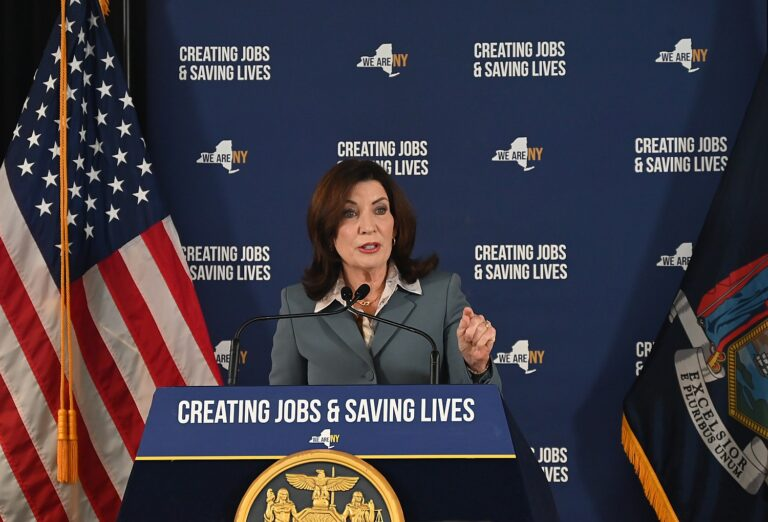
Governor Kathy Hochul today declared a state of emergency and announced new actions in response to the Trump administration stripping food assistance from 3 million New Yorkers come November 1. As the GOP federal government shutdown continues, the Trump administration has refused to release billions in statutorily approved federal contingency funding that would address this crisis in states across the nation. By refusing to release this contingency funding, the federal government is leaving millions of New Yorkers without critical assistance they rely on to feed themselves and their families. © Karen Rubin/news-photos-features.com

Governor Kathy Hochul today declared a state of emergency and announced new actions in response to the Trump administration stripping food assistance from 3 million New Yorkers come November 1. As the GOP federal government shutdown continues, the Trump administration has refused to release billions in statutorily approved federal contingency funding that would address this crisis in states across the nation. By refusing to release this contingency funding, the federal government is leaving millions of New Yorkers without critical assistance they rely on to feed themselves and their families.

While Washington Republicans refuse to act to avert this crisis, Governor Hochul is stepping up by committing an additional $65 million in new State funds for emergency food assistance that will reinforce New York’s network of vital food bank and pantry partners and provide about 40 million meals to hungry New Yorkers. The Governor is also deploying Empire State Service Corps and SUNY Corps Members to support local food banks during this emergency period of increased need, and continuing to explore food hubs at schools.

“The Trump Administration is cutting food assistance off for three million New Yorkers, leaving our state to face an unprecedented public health crisis and hurting our grocers, bodegas and farmers along the way,” Governor Hochul said. “Unlike Washington Republicans, I won’t sit idly by as families struggle to put food on the table. Today, I’m declaring a state of emergency and am committing additional state funds for emergency food assistance to ensure New Yorkers don’t go hungry. Donald Trump and Republicans in Congress have the power to stop this crisis — millions of families depend on it.”

Since the inception of the program, SNAP benefits have been federally funded. New York administers approximately $650 million per month in federally funded SNAP benefits to nearly 3 million New Yorkers. Given the scale of the program, Governor Hochul along with governors across the country have repeatedly emphasized that no state government can replace SNAP benefits or backfill the program.

Here’s a look at what today’s announcement means for New Yorkers:

$65M in new State funds for programs that support food banks, pantries, soup kitchens and more to provide emergency food assistance to New Yorkers

  • $40M in new funding for the Hunger Prevention and Nutrition Assistance Program, which provides emergency food relief and nutrition services to food-insecure populations. HPNAP works in partnership with a network of about 2,700 Emergency Food Providers (EFPs), including food pantries, soup kitchens, and shelters.
  • $25M in new funding for Nourish NY, which supplies surplus agricultural products (e.g., milk, apples, cheese, yogurt, cabbage, squash) to populations who need them through the State’s network of food relief organizations (i.e., regional food banks, food pantries, soup kitchens, and community-based organizations that provide food for free to persons experiencing food insecurity).

Deploying Empire State Service Corps and SUNY Corps Members to support food banks

  • Currently, hundreds of SUNY students serve as peer navigators, helping fellow students complete SNAP applications and assisting at campus and local food pantries.
  • The Empire State Service Corps will allow current members to expand their paid hours, enabling them to provide greater support at food pantries statewide. In addition, new short-term crisis response positions will be created to assist food pantries and food banks facing staffing shortages.

Today’s announcement comes as New York, along with 24 other states, sued the Trump administration on Tuesday to demand the release of emergency SNAP funds. The Governor also joined a letter alongside 20 other Governors to the President, calling for the Administration to reverse course and release emergency SNAP funds. Governor Hochul also fast-tracked $41 million in state funds for emergency food assistance earlier this week — today’s announcement brings the total of allocated state funds to $106 million.

New York State Health Commissioner Dr. James McDonald said, “The federal government’s refusal to release emergency food assistance will have devastating consequences for families already struggling to make ends meet. Access to nutritious food is a fundamental public health necessity — it affects everything from childhood development to chronic disease prevention. Under Governor Hochul’s leadership, the State Health Department is working closely with food banks, local health departments and community organizations to ensure no New Yorker goes hungry during this crisis. These actions reflect our shared commitment to protecting the health and well-being of all New Yorkers.”

New York State Education Commissioner Betty A. Rosa said, “No student should have to choose between focusing on their education and worrying about their next meal. In response to the recent cuts to SNAP benefits, our agencies are coming together to make sure no student is left behind. This is a team effort, working hand in hand with our partners in government, communities, and local organizations to build a safety net that ensures that hunger never stands in the way of learning and opportunity.”

New York State Office of Temporary and Disability Assistance Commissioner Barbara C. Guinn said, “SNAP recipients, most of whom are children, older adults or individuals with a disability, count on SNAP every month to feed their families. The federal government’s callous decision to cut off federal funding for SNAP recipients for the first time in the program’s history underscores this administration’s lack of understanding of the difficult economic realities facing nearly 3 million New Yorkers and millions more of our fellow Americans. Now is a pivotal moment for our federal government to honor its long-standing social safety-net obligations. We are grateful for Governor Hochul’s leadership and commitment to fighting on behalf of New Yorkers and demanding accountability from federal officials.”

New York State Agriculture Commissioner Richard A. Ball said, “I am grateful for our Governor’s swift response to the federal government’s senseless and reckless cuts that will put millions of New Yorkers in jeopardy of not having enough food to put on the table, stress the emergency food system, and impact our farmers in the process. By providing additional, critical funding to our feeding assistance programs, such as Nourish NY, we will be able to help our food banks and food pantries purchase and make available more local farm products to our communities in need. This is one more step in New York’s efforts to fight back and ensure we do everything we can to maintain support of our families and our farmers.”

House Democratic Leader Hakeem Jeffries said, “From day one, Donald Trump and rubber-stamp Republicans have waged an all-out assault on the health, safety and well-being of the American people. Their latest attempt to rip food out of the mouths of children, seniors and veterans who have served our country honorably is a disgusting dereliction of duty and makes clear that the cruelty is the point. Instead of finding money to pay off wannabe dictators in Argentina, Donald Trump should use the money that was appropriated by Congress to make sure that 42 million Americans do not go hungry and lose their SNAP benefits. I am grateful to Governor Hochul for her strong leadership and her principled commitment to making sure that every single New Yorker can put food on the table. It’s time for Republicans in Washington to do the same.”

State Senator Cordell Cleare said, “Over 3 million New Yorkers rely on SNAP including almost 1 million of our beloved Older New Yorkers. The program is a lifeline and provides a baseline of humanity and quality of life for those seeking just to simply provide for themselves and their family. It shocks the conscience that Trump and Congressional Republicans would hold families hostage like this, bulldozing the White House and plowing under the well-being of millions. I join the Governor in not only calling out the hypocrisy but in making certain that New York steps up to the plate and funds SNAP with state resources.”

State Senator Michelle Hinchey said, “Starting Saturday, the Trump administration will cut off SNAP benefits, leaving 3 million New Yorkers without enough to eat. SNAP is one of our country’s most effective anti-hunger programs, and taking it away is a cruel abdication of the federal government’s duty. We have to take every action to protect New Yorkers from the food insecurity created by the Trump administration, and I thank Governor Hochul for this new funding and support for food pantries, which will help us fight against this crisis.”

Assemblymember Rebecca A. Seawright said, “As Chair of the Assembly Committee on Aging, I applaud Governor Hochul for taking swift action to safeguard millions of New Yorkers from losing the food assistance they rely on. Older adults are among the most vulnerable to food insecurity, and the continued refusal of the federal government to release emergency SNAP funds is unconscionable. The Governor’s investment will strengthen our food banks and pantries, ensuring seniors and families can continue to access the nutrition they need to live with dignity. I stand with Governor Hochul in calling for the immediate release of federal contingency funding and for protecting the health and well-being of every New Yorker.”

New York Common Pantry Executive Director Stephen Grimaldi said, “The Government shutdown will have serious adverse effects for SNAP recipients on November 1st, impacting the working poor, elderly, children and the disabled. We’ve got to do better. The federal government must continue to provide SNAP funds to ensure people are fed or millions will flood food pantries and soup kitchens, overwhelming the emergency feeding network. We’ve just served the largest number of households coming for Pantry services in one day, in anticipation of the cuts.”

Food Bank For NYC CEO and President Leslie Gordon said, “Amid surging food insecurity rates, the Federal shutdown has created so much uncertainty and devastating long lasting impact for so many. We are incredibly grateful for the Governor’s leadership. Her support, along with that of the State government, allows us to continue to meet the growing need and serve every neighbor with dignity.”

Sharing Excess CEO Evan Ehlers said, “While we face a growing crisis of food access, the U.S. continues to waste nearly 40% of its food supply, throwing away ten times more food than we need to feed everyone. At Sharing Excess, we’re committed to redirecting that surplus to communities in need, and we’re thrilled to partner with Governor Kathy Hochul and r4 to make a meaningful difference for families across New York during a critical time of need.”

Legislator Decries Nassau County Executive Bruce Blakeman’s Partisanship Impeding Progress

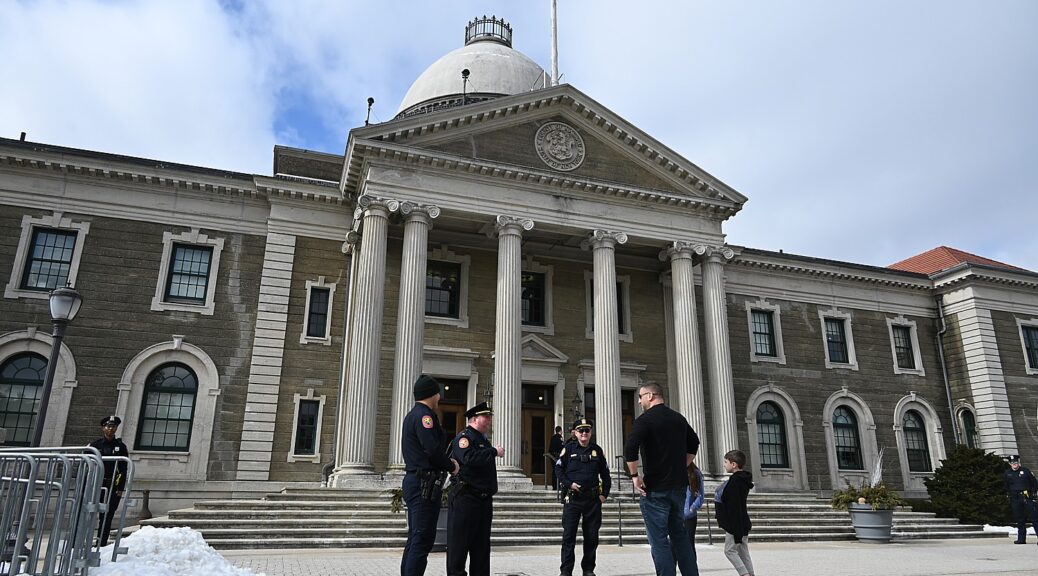
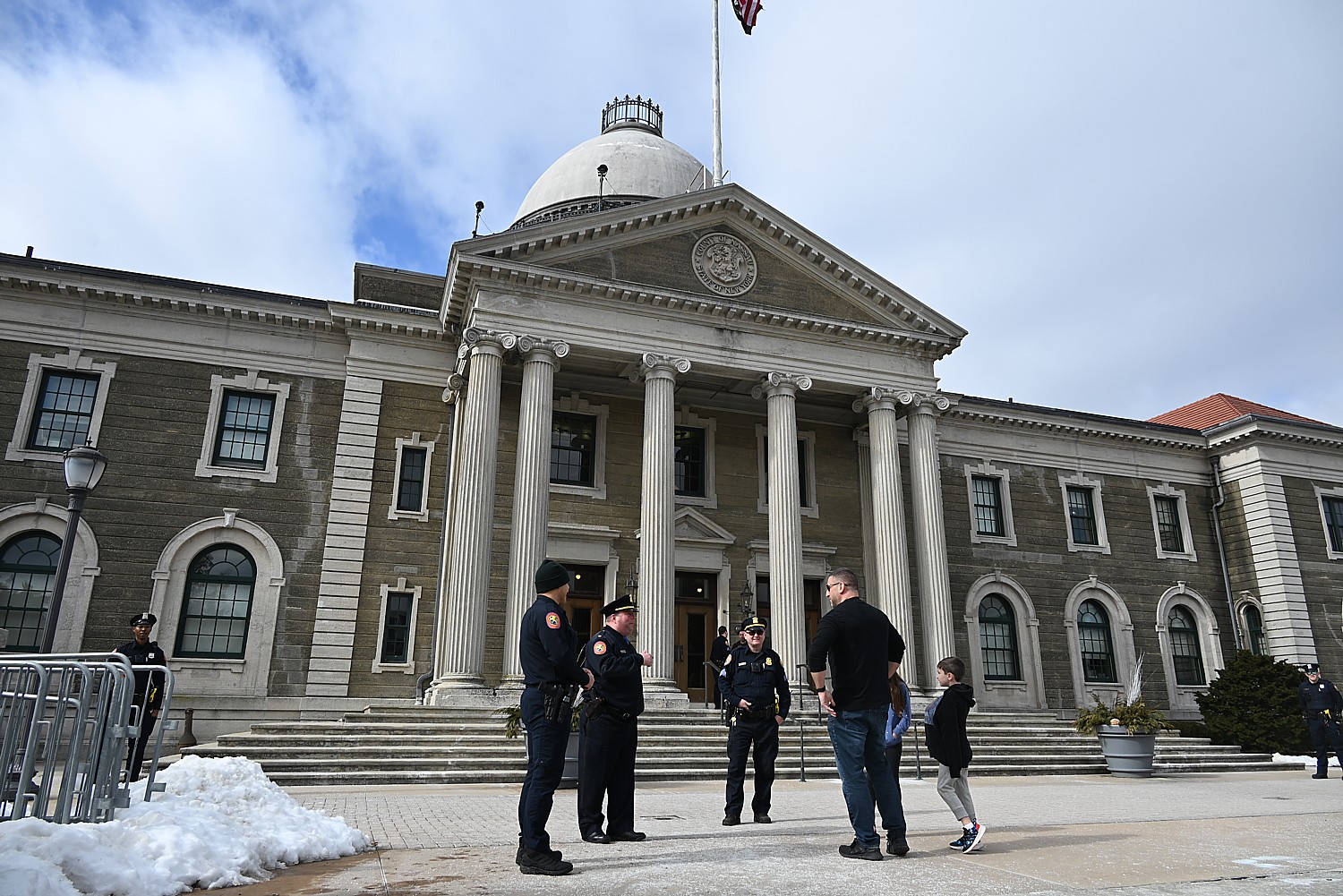
Community activists on the steps of the Nassau County Executive Building protest County Executive Bruce Blakeman’s Sands Casino project. Sands has since withdrawn its plan for a casino but still retains the rights to redevelop the valuable Nassau Coliseum property © Karen Rubin/news-photos-features.com

Nassau County, NY County Executive Bruce Blakeman has spent his entire time in office honing to the MAGA Trump Republican line in an attempt to curry favor – perhaps a position in the administration. He never fails to attack Democrats – cashless bail, affordable housing, gun safety – instead of working together with state and local leaders to improve lives, public health and safety of constituents. He is sitting on hundreds of millions of dollars of federal funding from the Biden administration, and blaming Biden for opioid addiction he attributes to “open borders”, rather than spend the funds from the opioid settlement on treatment. He has proved complicit with the Trump administration’s cruel and unconstitutional crackdown on undocumented migrants rather than address the real public safety threats, including historic levels of traffic fatalities and injuries and outsized incidents of violent crime, including gun and domestic violence, when the state and New York City are seeing significant drops. Instead, he has diverted funds to create a private militia and banned wearing mask in public (but not for the migrant capturers).

He actually refused to show up when Governor Kathy Hochul came to the county to announce hundreds of millions of dollars invested in a new state-of-the-art world-class gene therapy research lab, and had told the governor months before to “never set foot” in his county. He also left a ceremony announcing the completion of a $10 million Downtown Revitalization grant program before the Governor began her remarks.

Instead of seeking out state funding for climate action, infrastructure and economic development, or working collaboratively  to increase the supply of affordable housing, he diverted $10 million in tourism promotion funding from Discover Long Island, a professional tourism marketing organization, to a home-based branding person with no experience or contacts in tourism marketing, and used $5 million in television commercials to market himself in places like Oklahoma.

This op-ed penned by Nassau County Legislator Olena Nicks provides an inside view of what happens when elected officials only practice politics for the sake of political power rather than governing for the benefit of constituents – that is, all constituents, not just to appease their own voters. –Karen Rubin, editor@news-photos-features.com  

Olena Nicks, of Uniondale, was elected to the Nassau County Legislature in a February 2025 special election. She represents Nassau’s Second Legislative District.

By Olena Nicks

My first five months as a Nassau County Legislator have been an eye-opening lesson in the operations of government, and it has reinforced my belief in how necessary bipartisanship is for a strong government to function effectively and equitably. Unfortunately, as the old saying goes, absence makes the heart grow fonder.

Nassau County Executive Bruce A. Blakeman’s hyper-partisan approach to local government has erected unnecessary roadblocks, creating an indelible impression in my mind of the tremendous obstacles that are created by such an approach.

Since the start of this Legislative term, County Executive Blakeman has processed dozens of Community Revitalization Project (CRP) grants for districts served by Republicans, thereby allowing 50 of their requests to reach the Legislative calendar in regular order. Meanwhile, he has stonewalled every request for districts served by Democratic legislators, delaying funding for improvements to local parks, schools and libraries and impeding the delivery of resources for the firefighters, EMS, and local police that keep us all safe.

As a longtime Uniondale Fire Department member, it is mind-boggling that someone would prioritize funding for our first responders based upon political representation. Every first responder steps up to serve and protect the public without fear, favor, or consideration of the party registration of the person they’re helping.

Funding for these grants is allocated to each Legislative district through the County’s capital plan, so the money is already in place. While the County Executive’s role is strictly to process the applications onto the Legislative calendar, he has consistently refused.

This spring, I stood with my Democratic colleagues as we drew a line in the sand. We agreed that we would not release our votes for the Fiscal Year 2025 capital infrastructure plan, which requires a 13-vote supermajority to pass, until the County Executive funded first responders in all of our communities. By including guardrails such as this supermajority requirement for bonding, the drafters of the Nassau County Charter recognized the role of bipartisanship in healthy local government – and the importance of giving the Minority appropriate leverage with which to force an obstinate majority or executive branch to the negotiating table.

Limiting or politicking CRPs is just one example of how dysfunctional government becomes when even routine issues become a political showdown. Consider the following:

Nassau County is the only municipality in our region that does not recognize Juneteenth, which marks the end of slavery in America, as an official holiday. I recently filed legislation, which was introduced in 2021 by former Legislator and current Senator Siela Bynoe, to effectuate this change and require the County to begin good-faith negotiations with our unions. Democrats have filed this four times, and each time, the Republican-controlled Legislature has refused to advance it. A separate measure I co-sponsored to match Suffolk County in recognizing July 1 as Muslim American Appreciation Day has similarly not moved.

Democrats have introduced common-sense legislative proposals to put epi-pens in every police vehicle, equip every park and athletic facility with defibrillators and bundle fentanyl testing strips with every Narcan kit we distribute. The County Executive has blocked each of these with assistance from a Republican Majority that operates more as a rubber stamp than a coequal branch of government.

And, as we speak, the County is sitting on $98 million in proceeds from various settlements with opioid manufacturers, retailers and distributors. To date, County Executive Blakeman has gotten just 9 percent of those funds to agencies that provide prevention, treatment and recovery resources.

Which brings us back to where we are now – the County Executive is still refusing to process our CRPs in regular order. Now, we are fighting for the Blakeman administration to release long-stalled grant funds for local libraries, schools and parks – including $150,000 to modernize Hempstead Village’s Mirschel Park, and $162,150 for a Westbury Fire Department memorial to members who made the ultimate sacrifice while in the line of duty.

To be clear, bipartisanship does not entail sacrificing one’s core values. It calls upon us to seek areas in which we share common goals – supporting our first responders, making communities safer and stronger for our families, and ensuring effective, responsive government. Making one community more vibrant uplifts all of Nassau County, and it is essential for us to work together to achieve that outcome whenever we can.

Although these first several months have brought their share of frustrating moments, I remain optimistic and committed to doing my part to restore a spirit of collaboration to our county and our nation when it is needed the most.

Olena Nicks, of Uniondale, was elected to the Nassau County Legislature in a February 2025 special election. She represents Nassau’s Second Legislative District.

Hochul Documents Devastating Impacts on New York Healthcare Providers, Patients, Employees, Communities of Republican ‘Big Ugly Bill;’ Calls on NY GOP Congressmen to Oppose

“I’ve said it several times and I’ll say it again today — all New Yorkers deserve access to high-quality health care, it’s that simple,” Governor Kathy Hochul said. “Republicans in Washington, including seven representing New York, are trying to rip away this basic human right from New Yorkers and I will not stand by and watch it happen, I’m standing up for our hardworking hospitals and families who rely on this care to survive.” © Karen Rubin/news-photos-features.com

$14.4 Billion in Lost Hospital-Generated Economic Activity, Resulting From $8 Billion in Cuts Targeting New York Hospitals and Health Systems

65,000 Jobs Lost Due to Cuts to Hospitals and Community Health Centers Serving Low Income New Yorkers

1.5 Million New Yorkers Will Lose Health Care Coverage

As the Senate voted to pass the Trump Administration and Washington Republicans’ “Big Ugly Bill,” Governor Kathy Hochul today sounded the alarm about the potential devastating consequences of the Bill on New York hospitals, health systems and patients statewide. These reckless cuts to Medicaid and the Essential Plan will significantly impact health care providers across the State, endangering the health and finances of many New Yorkers who rely on these providers.

“I’ve said it several times and I’ll say it again today — all New Yorkers deserve access to high-quality health care, it’s that simple,” Governor Hochul said. “Republicans in Washington, including seven representing New York, are trying to rip away this basic human right from New Yorkers and I will not stand by and watch it happen, I’m standing up for our hardworking hospitals and families who rely on this care to survive.”

Hospitals and other health care providers across New York rely on Medicaid and Essential Plan funding to provide needed care to patients and maintain their operations. 

Analysis from the Greater New York Hospital Association (GNYHA) and the Healthcare Association of New York State (HANYS) estimates a total $8 billion in cuts to New York’s hospitals and health systems alone.

Hospitals and health systems play a vital role in driving local economies. They often serve as the largest employers in their communities, creating numerous other jobs and ranking among the top 10 private employers in every region of New York. When hospitals are stronger, their communities thrive. GNYHA and HANYS estimate that the hospital cuts will lead to 34,000 lost hospital jobs and an additional 29,000 lost related jobs, and create a cumulative $14.4 billion in lost hospital-generated economic activity, devastating communities across New York. 

Unfortunately, many New York hospitals are already financially distressed. The collective impact of the GOP reconciliation bill in Washington, D.C., could force hospitals to curtail critically needed services such as maternity care and psychiatric treatment, not to mention to downsize operations, and even close entirely. These impacts will be devastating across the State, and especially in rural communities. These consequences will not only affect Medicaid enrollees, but also harm everyone who requires hospital care, leading to longer wait times and less access to critical services.

In addition to hospitals, every kind of health care provider in New York State will be impacted. The Community Health Care Association of New York State estimates a direct loss of $300M for the State’s Community Health Centers, resulting in almost 2,000 layoffs. Community Health Centers are a vital lifeline that provide care to one in eight New Yorkers, regardless of their ability to pay.

In June, a letter signed by Yale and University of Pennsylvania scientists warned that more than 51,000 preventable deaths could occur annually if the provisions in the House-passed budget reconciliation bill are enacted. The letter, addressed to Senator Ron Wyden and Senator Bernie Sanders, estimates the potential nationwide death toll that would result from the bill’s provisions including restricting Medicaid and Affordable Care Act coverage, repealing nursing home staffing regulations, and allowing Enhanced Affordable Care Act Premium Tax Credits to expire. These estimates would make the GOP bill a top ten cause of death in the United States, on par with kidney disease and liver disease.

Estimated Impact of Hospital Cuts by New York Economic Region

MemberHospital employment lossesTotal employment lossesLost economic activity ($)
New York City17,55132,571(7,405,661,000)
Long Island3,5146,521(1,482,704,000)
Mid-Hudson3,6236,723(1,528,578,000)
Capital District1,0421,933(439,512,000)
North Country7591,409(320,385,000)
Mohawk Valley7741,437(326,619,000)
Southern Tier8561,588(360,983,000)
Central New York1,3552,515(571,928,000)
Finger Lakes2,4424,532(1,030,506,000)
Western New York2,1303,954(898,943,000)
Statewide total34,04763,183(14,365,818,000)

Estimated Impact of Hospital Cuts by Congressional District

DistrictMemberHospital employment lossesTotal employment lossesLost economic activity ($)
1Nick LaLota (R)9761,811(411,868,000)
2Andrew R. Garbarino (R)6051,122(255,206,000)
3Thomas R. Suozzi (D)1,9273,576(812,998,000)
4Laura Gillen (D)9331,731(393,628,000)
5Gregory W. Meeks (D)5631,045(237,515,000)
6Grace Meng (D)1,8763,481(791,359,000)
7Nydia M. Velázquez (D)8621,599(363,593,000)
8Hakeem S. Jeffries (D)7901,466(333,226,000)
9Yvette D. Clarke (D)1,1782,187(497,231,000)
10Daniel S. Goldman (D)1,4572,705(614,953,000)
11Nicole Malliotakis (R)6541,213(275,762,000)
12Jerrold Nadler (D)2,8035,201(1,182,612,000)
13Adriano Espaillat (D)2,5204,677(1,063,292,000)
14Alexandria Ocasio-Cortez (D)9801,819(413,640,000)
15Ritchie Torres (D)2,9425,460(1,241,482,000)
16George Latimer (D)1,2782,372(539,332,000)
17Michael Lawler (R)1,4622,713(616,822,000)
18Patrick Ryan (D)8101,503(341,631,000)
19Josh Riley (D)7971,479(336,292,000)
20Paul Tonko (D)1,0021,860(422,977,000)
21Elise M. Stefanik (R)8711,616(367,481,000)
22John W. Mannion (D)1,5362,850(648,033,000)
23Nicholas A. Langworthy (R)7591,409(320,347,000)
24Claudia Tenney (R)1,0091,873(425,748,000)
25Joseph D. Morelle (D)1,8993,524(801,274,000)
26Timothy M. Kennedy (D)1,5582,892(657,525,000)
Statewide total34,04763,183(14,365,818,000)

Greater New York Hospital Association President Kenneth E. Raske said, “This bill’s massive Medicaid cuts and health insurance eligibility restrictions will do enormous damage to New York State and its hospitals. The numbers are hard to comprehend—an estimated $8 billion cut to our hospitals, 34,000 lost hospital jobs and 1.5 million individuals losing their health insurance. Some financially fragile institutions will cease to exist. All patients will be impacted. There is no rationale for this. The bill is a clear example of ‘if you break it, you own it.’ I am grateful to Governor Hochul for defending New York’s hospitals and the patients we serve, and the entire hospital community is proud to stand with her in opposing this terrible bill.” 

Healthcare Association of New York State President Bea Grause, RN, JD. said, “The One Big Beautiful Bill Act is a reckless assault on our healthcare system and our local economies, as evidenced by these projections. Lost coverage, care, jobs – it is astonishing to me that there is such determination to put so many people’s health and financial security at risk. This bill will not only harm individual New Yorkers. Its impact will ripple out to their families and communities, leaving almost no one untouched in its wake.”

Community Health Care Association of New York State President & CEO Rose Duhan said, “New York’s Community Health Centers provide access to primary and preventive care that keep people healthy and save money.  Cutting Medicaid will put that care at risk for 2.4 million people across the State. Losing Medicaid will mean communities will lose CHCs that provide primary care, behavioral health, dental services, and more. Cuts of this magnitude will force impossible choices: reduce services, scale back hours, or turn patients away. Congress must protect Medicaid and the patients and health centers that depend on it.”

Speaker Carl E. Heastie stated: The administration in Washington can call this a “Big Beautiful Bill” all they want, but Americans know the truth. It is ugly and cruel and will be devastating for families across New York and across the country. They are taking an axe to Medicaid and cutting off access to healthcare for low income families, children and people with disabilities. They’re restricting access to the ACA for low- and middle-income Americans. It would make almost 12 million Americans lose their health insurance. All to make sure their billionaire donors get to keep their tax cuts. I’m disgusted and disappointed that they are willing to sell out their constituents like this. I am calling, once again, on New York’s seven Republican members of Congress to stand up for New Yorkers and for all Americans and vote against this travesty when it goes back to the House.

Governor Hochul: Data Shows Massive Increases in New Yorkers’ Health Insurance Premiums if GOP ‘Big Ugly’ Bill Becomes Law

NYS Governor Kathy Hochul describes plans for a $430 million New York BioGenesis Park, a Cell and Gene Therapy Innovation Hub, in Lake Success, Long Island. Trump has cut billions from medical research, and countering the state’s efforts to invest in health and wellness, the Republicans are pushing to take health insurance away from millions of Americans and cause health insurance premiums to rise.© Karen Rubin/news-photos-features.com

Governor Kathy Hochul is enacting an Affordability Agenda focused on making New York State affordable, especially in housing and higher minimum wages, and reducing out-of-pocket expenses. But New York Congressional Republicans are aiding and abetting the Trump/MAGA agenda that will undue all that effort, blowing a hole in the state’s budget by cutting billions in federal aid and support for programs, despite the fact New York State sends way more to the Treasury than DC sends back to the state.

The threat to health care is particularly acute from Trump’s “Big Ugly Bill”:

More than 240,000 New Yorkers would experience higher health insurance premiums as a result of eliminating  American Rescue Plan enhanced tax credits and Additional Changes

Average monthly costs could rise by more than $228 — an increase of 38% for a couple — due to elimination of Enhanced Tax Credits

Estimated 65,000 to 80,000 New Yorkers – approximately one-third of enrollees, could lose individual marketplace coverage

Governor Kathy Hochul today released new data showing the massive impact the GOP’s ‘Big Ugly’ Reconciliation Bill would have on New York families. The latest bill threatens to severely disrupt health coverage for millions of New Yorkers. In addition to increasing the number of uninsured by 1.5 million and stripping $13.5 billion in annual funding from New York’s healthcare system, the bill would trigger steep increases in private health insurance premiums for vulnerable New Yorkers and impose excessive burdens on consumers enrolling through NY State of Health, the State’s official health plan marketplace.

“The GOP’s Big Ugly bill would slash health care coverage for millions of New Yorkers and raise monthly costs by hundreds of dollars,” Governor Hochul said. “If New York’s Republican delegation won’t stand up for their own constituents, I will.”

Health care providers, insurers and state leaders across the country are sounding the alarm over the proposed legislation, which would slash billions in federal health care support. In addition to jeopardizing and in some cases entirely eliminating coverage for New York’s 1.6 million Essential Plan enrollees, the bill would trigger steep increases in costs for many New Yorkers who purchase private health insurance. The elimination of American Rescue Plan enhanced premium tax credits, alone, will increase net cost of coverage across the State by an average of 38 percent for 140,000 low-income individuals and families purchasing plans through the state’s marketplace. This equates to an increase in cost of $114 per month for an individual and $228 per month for a couple. 

See below for a summary of expected premium increases due to the elimination of American Rescue Plan enhanced premium tax credits across the State:

RegionAverage Monthly Cost Increase For a Couple ($)Average Monthly Cost Increase For a Couple (%)
New York City$21138%
Mid-Hudson$20631%
Long Island$21932%
Capital Region$23133%
Western New York$26738%
Central New York$25643%
Finger Lakes$24842%
Mohawk Valley$27049%
Southern Tier$26548%
North Country$25344%
Statewide$22838%

The combined impact of the elimination of enhanced premium tax credits and additional provisions of the proposed U.S. House Republican reconciliation bill will push more healthy consumers out of the insurance market, leaving behind a less healthy population and driving further rate increases. This cycle will result in spiraling insurance costs and lack of access to coverage for individuals and families.

New York State Health Commissioner Dr. James McDonald said, “The proposed cuts to federal health care support hurt everyone. These cuts take health insurance away from working New Yorkers. They undermine the progress we’ve made in providing affordable and accessible health insurance to New Yorkers. When people lose health insurance, they risk going without needed health care or suffering financial hardship.”

In addition to increasing premiums for low-income individuals and families who qualify for tax credits, it is estimated that the elimination of those tax credits will increase insurance rates for the more than 100,000 New Yorkers who purchase coverage in the individual commercial market but do not qualify for tax credits. Insurers have estimated that those consumers and families will face a 4.3 percent increase in their insurance rates next year solely due to the elimination of these credits.

Early estimates also indicate the proposed bill could result in 65,000 to 80,000 people — approximately one-third of enrollees in the individual market — losing their coverage. Many more consumers will experience significant new red tape that will make it harder to enroll in and renew coverage.

The proposed bill would also strip New York of its flexibility and autonomy in running its own marketplace and serving the needs of its residents, imposing onerous and costly new administrative burdens on the State. The State anticipates more than $10 million in new administrative costs to implement the changes required by the bill. 

NY State of Health Executive Director Danielle Holahan said,“We have tremendous concerns about the compounding effects of this bill especially when combined with the expiration of the premium tax credits. Reducing eligibility for the financial assistance that helps New Yorkers afford care means people end up paying more for doctor visits, medications, and mental health care. Already struggling providers, especially in rural parts of the state, might not be able to sustain operations under this proposal, further restricting New Yorkers’ access to care.”

New York has had tremendous success over the past 12 years in operating its marketplace — with 6.7 million individuals currently enrolled in coverage — and has achieved a statewide uninsured rate of less than 5 percent, the lowest rate amongst large states across the country. This bill would reverse decades of progress in expanding coverage and making health care more affordable and accessible in New York and jeopardize the health of consumers across the State.

Long Island Community Leaders Warn of Destructive Impacts of Trump’s ‘Big Beautiful Bill’

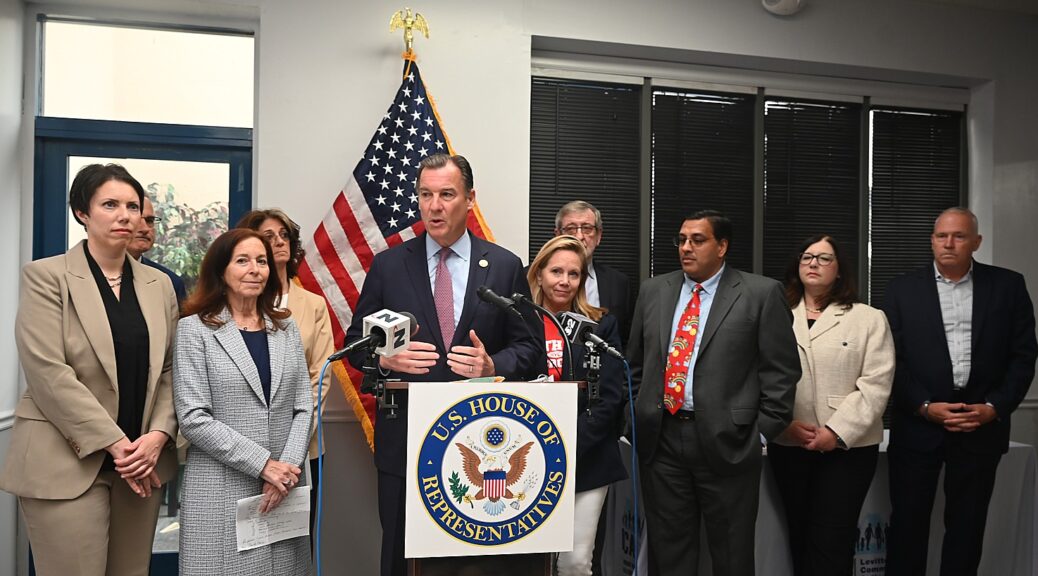
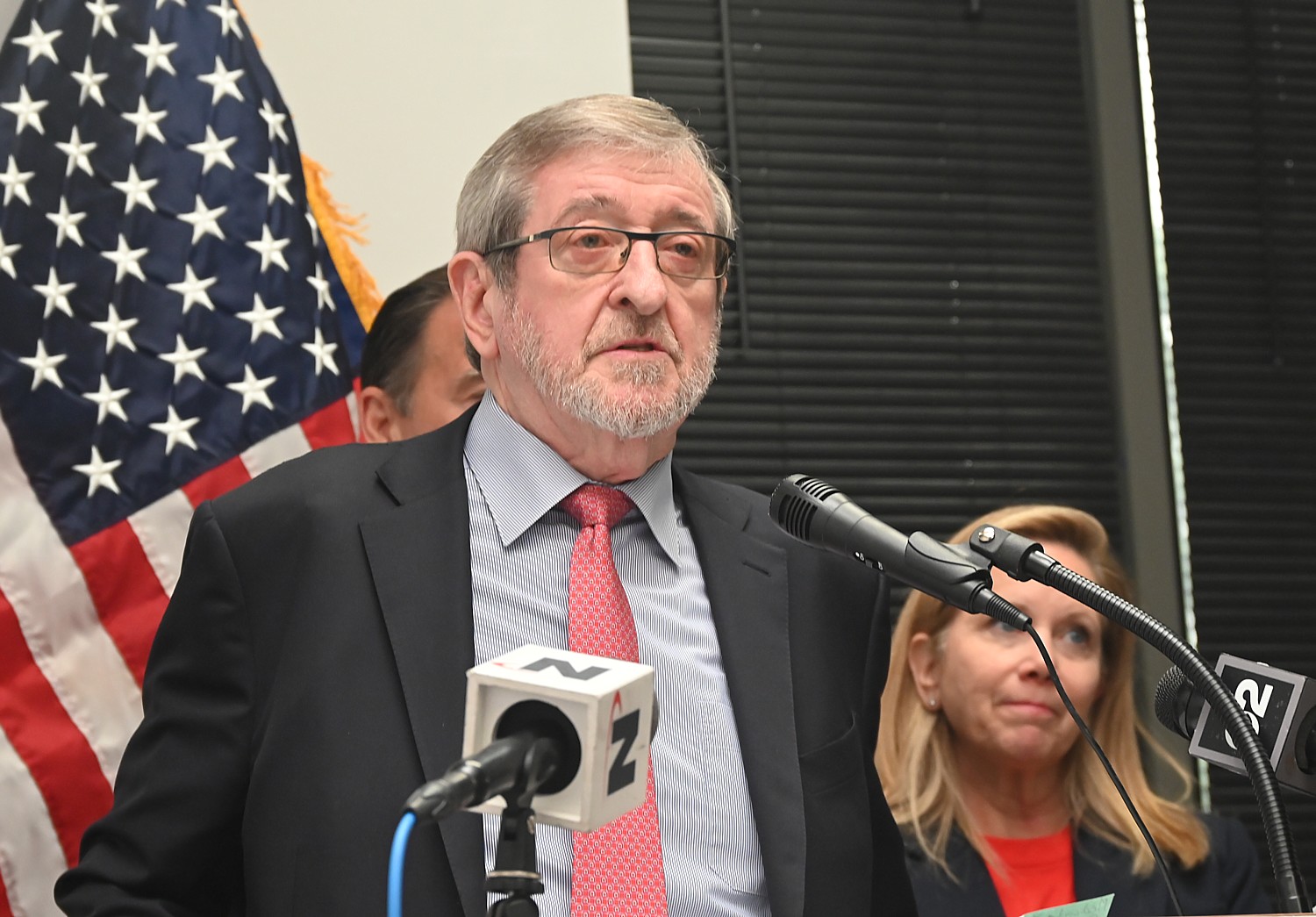
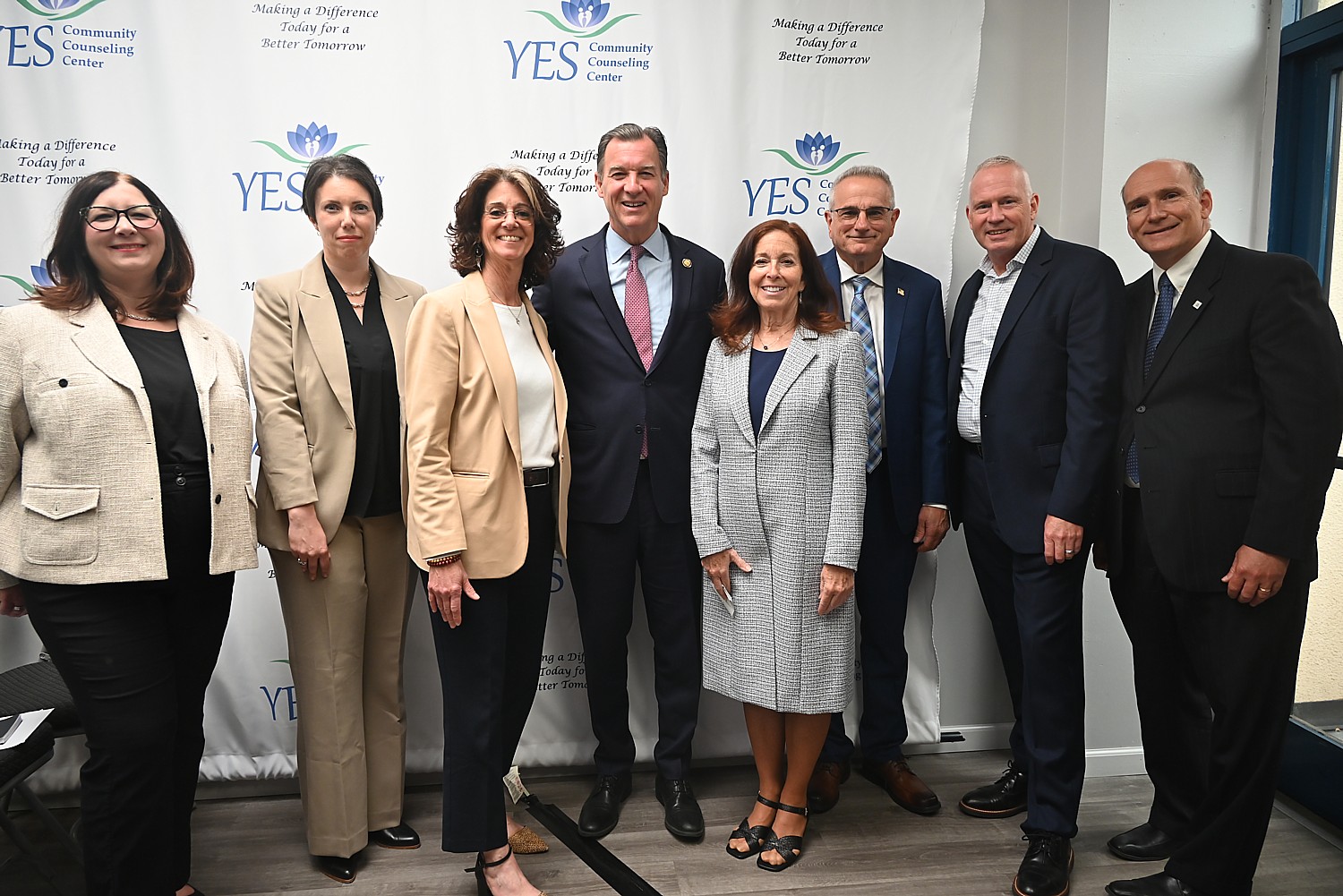
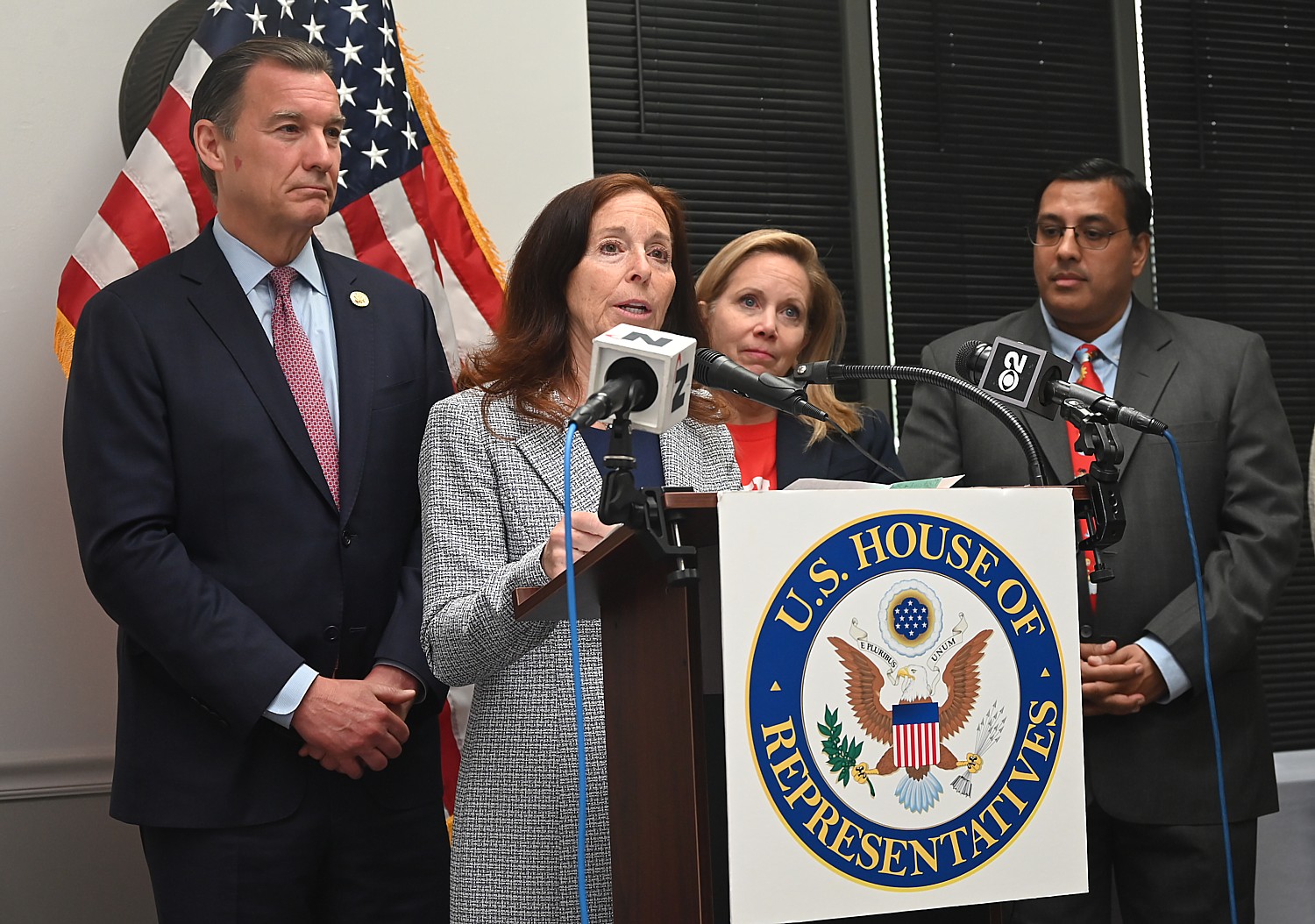
At the press conference held at the Levittown Community Action Coalition’s YES Community Center, Representatives Tom Suozzi and Laura Gillen were joined by community leaders including Michael Dowling, CEO of Northwell Health, Dr. Jeffrey Reynolds, President and CEO, Family and Children’s Association, Adrienne Esposito, Executive Director of Citizens Campaign for the Environment, Randi Shubin Dresner, President and CEO of Island Harvest, Nicole Zerillo, Director of Strategic Communications of AHRC, Larry Lamendola, Co-Chair of Levittown Community Action Coalition, Dr. Shetal Shah, Past President of American Academy of Pediatrics NY Chapter 2, and Wendy Darwell, President and CEO of Suburban Hospital Alliance of New York State. © Karen Rubin/news-photos-features.com

By Karen Rubin, editor@news-photos-features.comnews-photos-features.com

Leaders of Long Island’s health care, social service organizations and environmental groups warned of the damaging impacts to lives “of neighbors, family, community” as a result of the funding cuts in the Republican budget bill (known as Trump’s “Big Beautiful Bill”) that passed the House in the middle of the night by a single vote. The bill, while slashing Medicaid, SNAP, clean energy projects and raising costs, delivers the needless tax cuts to the wealthiest, and will explode the national debt by $3.3 trillion.

As the Democrats on the Ways and Means Committee reported, the “GOP Tax Scam” cuts nearly $1 trillion from the health care system – effectively chipping away if not repealing entirely the Affordable Care Act – eliminating health coverage for at least 13.7 million Americans including 1.5 million New Yorkers.

The largest cut to hospitals and healthcare providers in history, will raise costs for consumers, shift costs to states and cut payments to providers, and make it harder for people to get and keep affordable health coverage.. People who no longer have access to care early and in clinics, will be forced to go to emergency rooms when they are sicker, at much higher cost. Since New York and other states guarantee access to health care, that results in higher taxes and higher premiums on private insurance – so even if you thought that these historic cuts to Medicaid would not impact you, they will.

The bill cuts a historic $700 billion in Medicaid; $267 billion in SNAP benefits; triggers $490 billion in Medicare cuts; and would result in 10 million Americans losing health insurance, all to deliver an average tax break for the top 0.1 percent of $225,000, paid for by taking away the services from millions of the most vulnerable people who will suffer from the loss in services the most, while still resulting in exploding the national debt by $3.8 trillion.

The proposed healthcare cuts in the House-passed reconciliation package represent the largest cut to hospitals and healthcare providers in history. The bill eliminates health coverage for at least 13.7 million Americans, including 1.5 million New Yorkers. It raises costs for consumers, shifts costs to states and cuts payments to providers, and makes it harder for people to get and keep affordable health coverage.

Nearly 7 million New Yorkers benefit from Medicaid. New York State estimates these changes will cost New York $13.4B per year. NYS currently spends $35.5B per year in state dollars on Medicaid. 

Hospital losses in NYS will exceed $1.3B annually due to an increase in uncompensated care and reduced reimbursements. According to the Fiscal Policy Institute, Long Island will lose almost 30,000 jobs as a result.

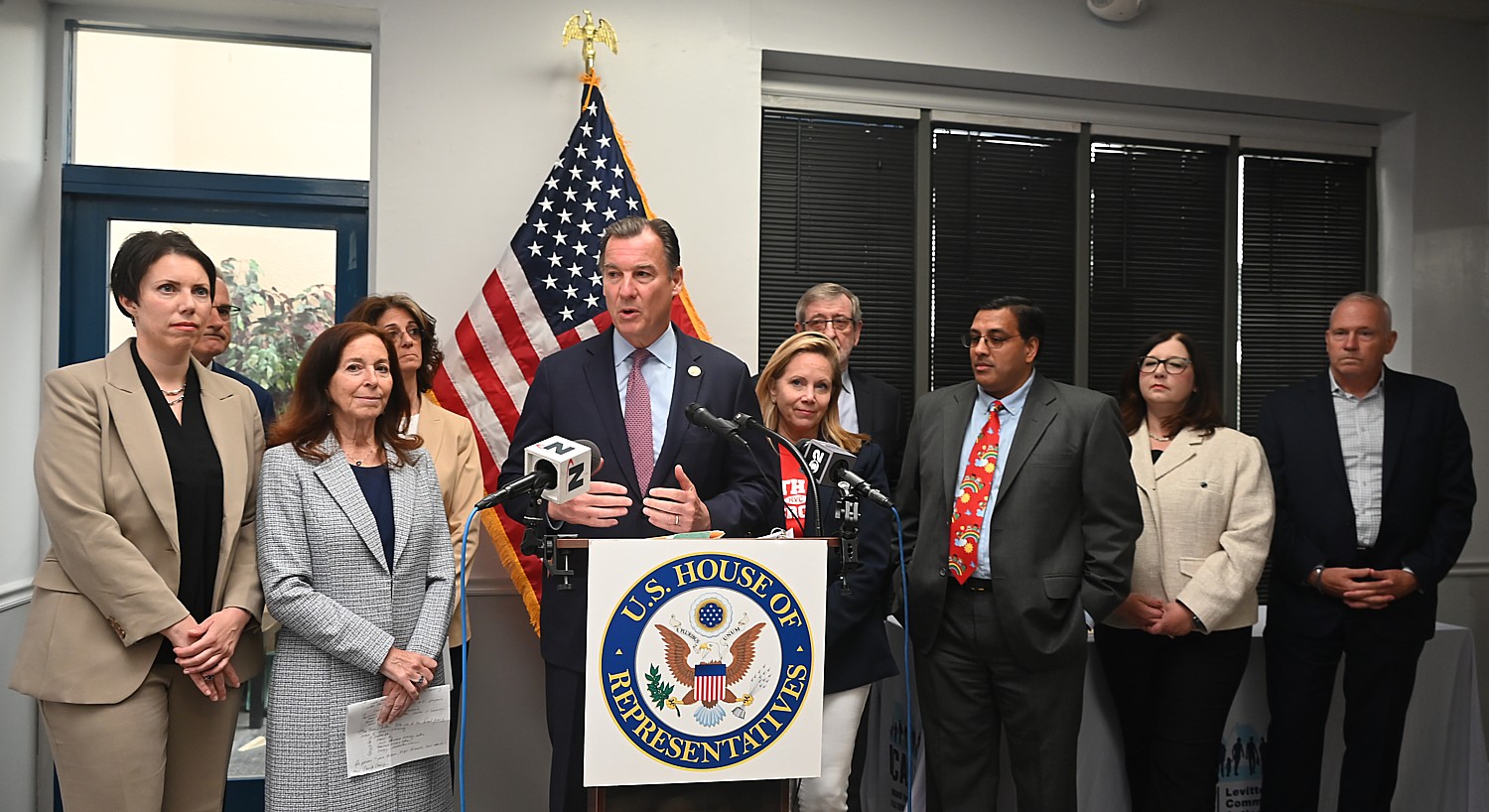
Congressmembers Tom Suozzi and Laura Gillen, Democrats of Nassau County, brought together community leaders at the YES Community Counseling Center in Levittown, Long Island, to address the impact of cuts to Medicaid, SNAP and other essential safety net programs.

“I have serious concerns about the reconciliation and budget plan for several reasons,” said Rep. Suozzi. “Most notably, the package includes callous cuts to Medicaid, SNAP, and other vital programs that support hospitals, nursing homes, and children’s care centers. These cuts will significantly undermine the delivery of healthcare services, putting access and quality of care at risk for everyone.”

“Additionally, the reconciliation package expands tax cuts for the wealthiest Americans—those who need them the least,” Suozzi continued. “While implementing these deep and harmful cuts, the budget plan also adds significantly to the national deficit.”

“I’m all for making people’s lives better with the SALT deduction, but we don’t need to cut taxes for wealthiest while taking away health insurance and food assistance from people who need it most,” Suozzi said.

People making more than $1 million per year would have an average tax cut of almost $90,000. The top 5% would receive almost half of the total tax cuts

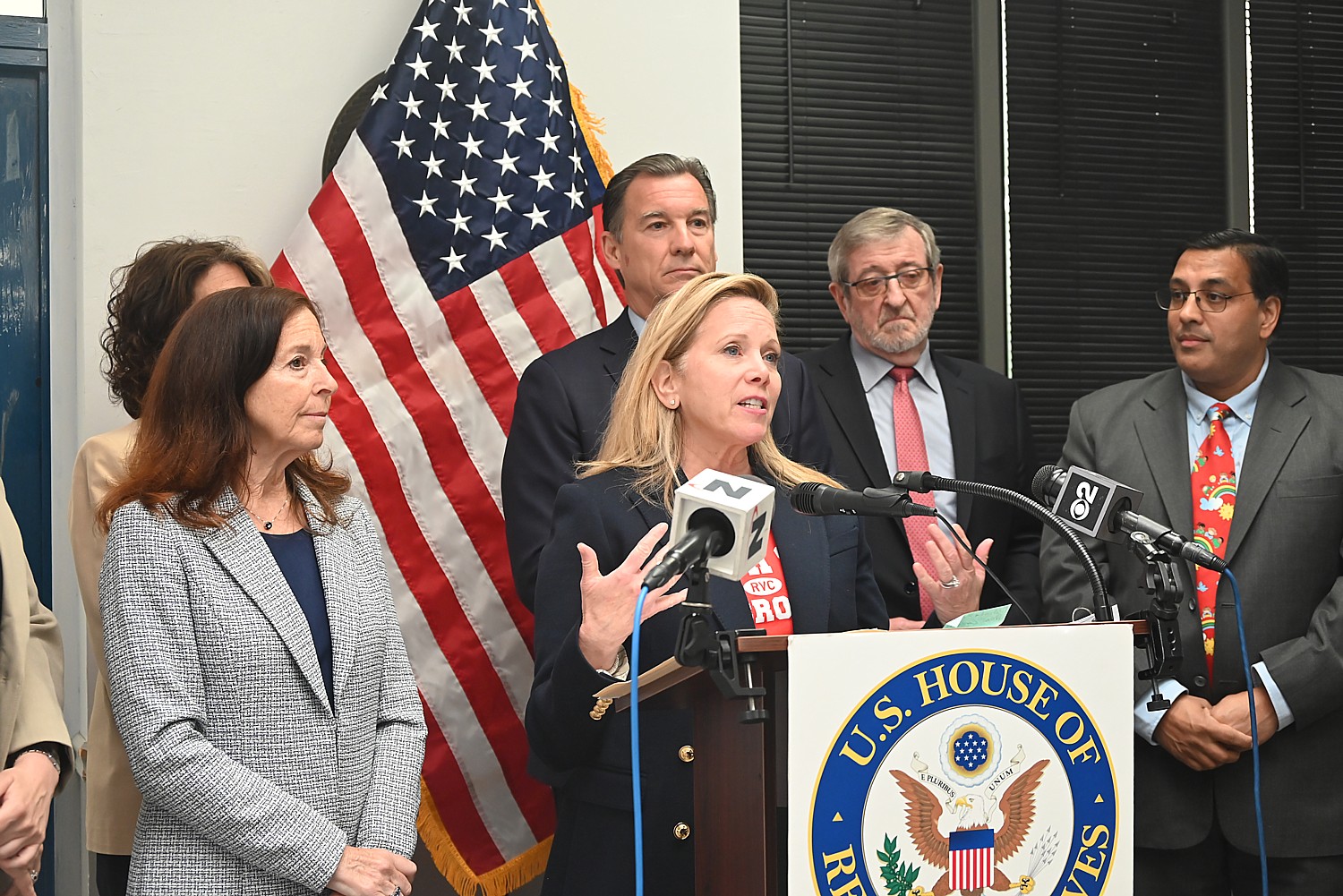
“If New York has to pick up the bill, our taxes will go up in one of most highly taxed places, because we [in New York] take care of our poor, our elderly,” said Congressmember Laura Gillen. “What kind of country do we want to be? One that cares about the vulnerable or only cares about those who pay to play?” © Karen Rubin/news-photos-features.com

Rep. Gillen said, “Being factual, not fear mongering, there are real life impacts these cuts will have on neighbors, friends, our own wallets. When Medicaid cuts go through, it will increase premiums on private insurance. Cuts to SNAP, to Island Harvest, will have devastating impact.  When health care costs go up, parents won’t eat to have money for child’s medication.

“Be honest: all this is cost shifting scheme to make it look like they are making cuts to be fiscally responsible, but they are increasing deficit, while shifting the burden to New York State to pick up bill for what federal government  will no longer be spending in New York to feed hungry. If New York has to pick up the bill, our taxes will go up in one of most highly taxed places, because we [in New York] take care of our poor, our elderly.

“What kind of country do we want to be? One that cares about the vulnerable or only cares about those who pay to play?

”There is no greater champion for eliminating waste fraud abuse [than me], but this is about putting up roadblock to those who need assistance to get ahead.” Gillen said.

“It’s about what we believe in – health, environment. This is the opposite,” said Michael Dowling, CEO of Northwell Health. “ We should be going forward, not backward – help people more, not taking away for which people fought so many years to get, and assume it doesn’t matter – it’s about a philosophy of government, about caring, it’s what you believe in. Up here, we believe America is better than this. We have got to make sure this is curtailed and can be reversed as the bill goes into the Senate.” © Karen Rubin/news-photos-features.com

This budget bill, Northwell Health CEO Michael Dowling declared, “is undermining our commitment to public health and health overall – not just hospitals and ambulatory clinics, but everything. It is a curtailment of protecting people against pollution, against commitment to dealing with gun violence, undermining major commitment to research and science across the board – 50% reduction in funding for National Institutes of Health – [engendering] the idea that science is bad, that science doesn’t work. We’re all healthier because of commitment to science of last 50 years. What is happening is undermining of trust in government, trust in organizations.

“We also see an assault on international partnerships and alliances – eliminating the alliance with the World Health Organization which provides us across the board information on what happening around world healthwise, alerting us to what might happen here.

“It is a devaluation of past successes we’ve all had. Taken all together, it sends the message we don’t care much about health, wellbeing, people’s livelihoods, especially those not at top echelon, that we can’t trust anything unless we tell you what we want you to trust,” Dowling declared.

Turning to the specifics of the budget bill, Dowling noted “the implications are larger than you think.” It will reduce revenue by $370 million; cut Medicaid by $200 million; curtailing eligibility for Medicaid will render 1.5 million people in New York ineligible for Medicaid. The bill also cuts millions from Northwell’s research. (Northwell is the largest employer in New York State.)

“It’s about what we believe in  – health, environment. This is the opposite. We should be going forward, not backward – help people more, not taking away for which people fought so many years to get, and assume it doesn’t matter – it’s about a philosophy of government, about caring, it’s what you believe in. Up here, we believe America is better than this. We have got to make sure this is curtailed and can be reversed as the bill goes into the Senate,” Dowling said.

Wendy Darwell, President and CEO of Suburban Hospital Alliance of New York State, noted, “The numbers here for health care are staggering – $1 trillion in health care cuts in all, means $13.5 billion in cuts to New York State; 1.5 million will lose insurance coverage;  $150 million cut a year to Nassau and Suffolk hospitals. It is not possible for New York State to absorb $13.5 billion hit without cutting benefits, eligibility, providers.


“The numbers are hard to relate to. You may think the cuts may hit somebody else, but they hit everybody. People who need care will continue regardless of insurance or not, so will come to the ER without insurance, get care in the most expensive way, probably when they are much sicker. Instead of spending a little money on coverage, we will spend a lot on emergencies, and most will get charity care. That destabilizes the healthcare infrastructure – health systems will have to respond. It will be hard to retain the level of service, the kind of access as now.

“If don’t think this applies to you, you will likely face longer wait times at the ER, less access to service in community, it will be harder to get appointments to see doctor. It cuts across the health care system.”

Most people do not realize how expansive the state’s health insurance coverage options are now because of the funding system, but could include the adult child who aged off insurance at 26 (thanks Obamacare!); a parent in nursing home. In absence of a better option, Medicaid is long term care insurance for New Yorkers.

Cuts will have impact on commercial insurance, because costs will have to be offset – if you have private insurance, you won’t be immune either. From a hospital perspective: the median operating margin in New York State  0%, so any cuts put that margin into negative.Cuts this staggering can’t be absorbed and will fundamentally destabilize the state’s healthcare system.”

Congressman Suozzi noted,”I’’m in a relatively wealthy district, yet 29% of children in my district [40% nationally] rely on Medicaid for health insurance; two out of three senior citizens in nursing homes in America are covered by Medicaid, one out of 10 of vets in America are covered by Medicaid. Think of the children, the elderly, the disabled that will be impacted by this.”

Dr. Shetal Shah, Past President of American Academy of Pediatrics NY Chapter 2 (Long Island) said, the House bill jeopardizes health of 37 million children across country at risk.

“Medicaid is foundational to children’s health in New York State – 49% of all newborns are covered by Medicaid; 44% depend upon Medicaid for life saving asthma medication…Medicaid is for all of us -not just for people more socially vulnerable.”  Even if you get insurance through your employer there are annual caps on coverage.  “if you are unlucky to have a newborn with congenital heart lesion, you will surpass the limits in a matter of weeks; few could afford the tens of thousands a day to care.” Medicaid can be the difference between selling a home to pay for medical debt. “It is a safety net for all of us – sad fact is most don’t think about it until we need it.”

Also, hospitals rely on each other to provide high level care across Long Island and state – children’s hospitals across Long Island are shared resources, specialized resources. Medicaid helps keep them open, but drastic cuts are a threat that hospitals will close. Then we all lose community resources – pediatric ER , specialized burn and rehabilitation, pediatric dialysis and intensive care centers.

“Make no mistake: these cuts will cause all of us to pay more; will detach children from primary care; simple problems that could be addressed in clinic become bigger problems in ER; and private insurance will raise premiums to offset costs.”

At the press conference held at the Levittown Community Action Coalition’s YES Community Center, Representatives Tom Suozzi and Laura Gillen were joined by community leaders including Michael Dowling, CEO of Northwell Health, Dr. Jeffrey Reynolds, President and CEO, Family and Children’s Association, Adrienne Esposito, Executive Director of Citizens Campaign for the Environment, Randi Shubin Dresner, President and CEO of Island Harvest, Nicole Zerillo, Director of Strategic Communications of AHRC, Larry Lamendola, Co-Chair of Levittown Community Action Coalition, Dr. Shetal Shah, Past President of American Academy of Pediatrics NY Chapter 2, and Wendy Darwell, President and CEO of Suburban Hospital Alliance of New York State. © Karen Rubin/news-photos-features.com

Mental health services are also jeopardized, at a time when the state and Long Island are still struggling under a mental health crisis, with overdoses and suicides.

Dr. Jeffrey Reynolds, President and CEO, Family and Children’s Association, said his agency serves 36,000 children facing drug addiction, mental health crises, and suicidal ideation.

“It’s no secret this country, this state, and Long Island struggled under mental health crisis since covid – number of overdoses – over time – more than 1 in 4 adults have demonstrated symptoms of anxiety and depression; one in six kids contemplated suicide. The single largest payer of children’s mental healthcare is Medicaid

“Things are starting to get better in attempted suicides, suicides, involuntary placements, school avoidance. It’s undeniable – one of the ways we’ve made any progress has been through Medicaid programs that support mental health, that support facilities to support kids considering taking own life. We could take a victory lap in drop in opioid overdoses – decrease in fatalities is cause to celebrate but not for too long – 30,000 didn’t die. But 80,000 Americans did die – nothing to celebrate.”

“Now is not the time to rip the  rug from out from under families, hospitals, communities, folks who spent 10 years looking for hope in midst of crisis – finally have glimmer of hope only for Washington to take away. Everyday average folks should understand that this could happen to any one’s family – make sure care and treatment available, speak up now.”

(Reminder: Republicans are constantly blaming the gun violence epidemic on mental health, rather than the unconscionable easy access to weapons of war, but do nothing to provide mental health services. Instead, as Suozzi pointed out, the budget bill repeals a $200 fee and requirement to register “unusual or dangerous firearm accessories like silencers that dates from 1934, and that brought $145 million in revenue on 710,000 silencers sold in the USA in 2024. “They gut the Affordable Care Act, but make it easier to buy silencer,” Suozzi said.]

The Republican “Big Beautiful Bill” cuts funding for Narcan that has saved thousands of people who would have died from overdoses, and for drug treatment. And Nassau County Executive Bruce Blakeman is sitting on $100 million in federal money to address opioid addiction, noted Larry Lamendola, Co-Chair of Levittown Community Action Coalition.

The House bill would also impact more than 7000 who depend on disability services – housing, employment services, transportation, day services, and direct support from meals to medication. In New York, medicaid funds 95% of services overseen by office of disability services to organizations like AHRC, said Nicole Zerillo, Director of Strategic Communications of AHRC.

Medicaid is a shared federal and state program. When the federal share shrinks, the state has to choose whether to reduce services, put people on wait list. More staff leave, smaller providers close and people with developmental disabilities lose the supports they need to live safely.

New York spends $850 million, “but continued investment relies on a sustainable federal match. We can’t afford to backslide. Forcing people to recertify Medicaid eligibility twice year won’t improve accuracy or root out fraud, it will just limit coverage,” she said.

“The Republican Budget bill “undoes 75 years of progress to help move from institutions to inclusion [note: that is the DEI that Trump has declared “illegal.”] 

“The bill risks cutting critical supports – and pushing people back to margin: protect Medicaid, right to live in community and protect the future spent generations building.”

Randi Shubin Dresner, President and CEO of Island Harvest, noted that 2.8 million New Yorkers – 14% of the population – depend on SNAP dollars. It’s not just about giving people who are vulnerable money so they can buy food. That money is spent in local supermarkets, delis, bodegas, with an $11.5 billion impact on local businesses in New York State.

The cuts in SNAP will take 9.5 billion means off the table every year, across the country. Every meal supports a person. 9.5 billion meals are at risk for our neighbors, relatives most in need.

Cuts have already impacted Island Harvest – $1.7 million in cuts has taken a million meals off the table.

“Many Long Islanders don’t qualify for SNAP benefits because the cost of living is so high on Long Island. So why in one of the richest communities, richest zipcodes, is Island Harvest helping over 200,000 people each year? Because it is one ecosystem- so if there are cuts in others – housing, mental health, Medicaid – it always means people have to make decisions about where to cut in family budget. The easiest is food budget – we eat 3 meals a day, countless parents are giving up 1 or 2 meals in order to fed children, pay med gills and transportation to doctor. If there are more cuts , they will cut more meals at home. Young mothers have to water down formula for their infant to make it through the day.”

Besides the direct impacts on health care, Trump’s “Big Beautiful Bill” slashes funding for clean energy and climate action, in order to force people back to relying on fossil fuels that impact health and contribute to pollution, global warming, climate change and climate disasters.

“This big ugly bill takes us back to 1960s energy policy,” declared Adrienne Esposito, Executive Director of Citizens Campaign for the Environment. “Today, we are implementing 21st century energy policy for the 21st century, tomorrow, we will be taken back to the 1960s. This bill derails the  clean energy sector, one of fastest growing job ;sectors in America.” © Karen Rubin/news-photos-features.com

“This big ugly bill takes us back to 1960s energy policy,” declared Adrienne Esposito, Executive Director of Citizens Campaign for the Environment. “Today, we are implementing 21st century energy policy for the 21st century, tomorrow, we will be taken back to the 1960s. This bill derails the  clean energy sector, one of fastest growing job ;sectors in America.”

Since Biden’s Inflation Reduction Act, over 2000 new industry, manufacturing companies have been created in the U.S.; $289 billion in private sector investment; 130,000 jobs in clean energy. This bill completely eliminates the tax credit for solar, for residential and commercial. Low income and working class Americans are using the tax credits, not to save the planet but  because of affordability and stability to home energy gills.

It eliminates all tax credits for electric vehicles – workign class and mid-income residents were using  to add affordability to their transportation, so they aren’t at the mercy of unpredictable and expensive gas prices.

It does away with all tax credits for energy efficiency – appliances, HVAC systems, changing windows that made homes warmer in winter, cooler in summer, and helped stretch dollars and save energy.

While removing incentives for clean energy, the bill promotes “Drill, baby, drill,” – going back to oil and natural gas that will increase air pollution – asthma, heart attacks, respiratory illness, premature deaths, water contamination, and increase and accelerate the impacts of climate change – which Long Island cares about. Overall, taking us back in energy policy is bad for health, It makes no sense, unless you are invested in the oil industry..

Suozzi and Gillen noted that House Democrats attempted to amend the budget bill – offering 500 different amendments over the marathon sessions in committees and on the floor – all of which were shot down by Republicans, who even shot down raising taxes on those earning $100 million a year.

_____________________________

© 2025 News & Photo Features Syndicate, a division of Workstyles,Inc. All rights reserved. For editorial feature and photo information, go to www.news-photos-features.com,email editor@news-photos-features.com.Blogging at www.dailykos.com/blogs/NewsPhotosFeatures

FACT SHEET: 80% of House Republicans Propose Defunding COPS as President Biden Insists on Funding the Police

President Biden’s investment in community policing and violence prevention has resulted in significant drop in violent crime from the surging rates during the Trump Administration but Republicans, who constantly falsely hype crime rates and pretend to support “The Blue” (certainly not during the January 6 insurrection) are seeking to withdraw funding in the 2025 budget they are proposing. This fact sheet was provided by the White House: –Karen Rubin/news-photos-features.com

Republicans including Nassau County’s Executive Bruce Blakeman love to rail against crime rates and pretend to “back the Blue”, but ignore the reality that President Biden’s investments in community policing and violence prevention have paid off with lower crime rates. Now Republicans, who make sure to surround themselves with police protection, are proposing to cut funding for law enforcement in the 2025 budget, while Biden is standing firm © Karen Rubin/news-photos-features.com

President Biden has stood with law enforcement his entire career, and worked to ensure law enforcement serves all communities his entire career. And he has the results to show for it.
 
The President inherited a violent crime rate that surged under the prior administration. After taking office, President Biden immediately took action and signed the American Rescue Plan – which led to the largest federal investment in public safety in history, giving state and local governments resources to reduce crime and prevent violence. Even though leaders on the ground sided with the President, the Plan passed without a single Republican vote. 
 
The President also signed one of the most significant gun violence prevention reforms in 30 years, the Bipartisan Safer Communities Act, which has helped keep guns out of the hands of individuals with felony convictions, and those who have a serious mental illness and are a danger to themselves or others.
 
These swift actions paid off. FBI 2023 data shows that the prior administration’s crime wave has turned around under President Biden, resulting in a record drop in crime.
 
In his State of the Union, President Biden described how cities across the country have used the American Rescue Plan to make historic investments in public safety and urged Congress to build on that progress, including by hiring over 100,000 new police officers accountable to the public, investing in mental health workers and community violence intervention programs across the country, and cracking down on gun crime.
 
But the Republican Study Committee – which speaks for 100% of House Republican leadership and 80% of its members – just released a dangerous plan that would defund law enforcement:
  

  • The Republican Study Committee is proposing defunding the Community Oriented Policing Services (COPS) program on top of other efforts to undermine law enforcement. President Biden voted to create COPS while a Senator, and the COPS Hiring Program is one of the primary ways the federal government supports local law enforcement. Each year, communities seek funding they need to hire officers to engage in community policing and crime prevention, and during this Administration, nearly 500 communities have received awards that put more than 3,700 officers on the beat.
     
  • The Republican Study Committee budget would also gut the Bipartisan Safer Communities Act and take steps that prioritize gun industry profits over the lives of the American people.
     
  • Numerous House Republicans also support abolishing the FBI and the Bureau of Alcohol, Tobacco, Firearms, and Explosives (ATF). Although the Border Patrol Union endorses President Biden’s tough bipartisan border security deal, congressional Republicans are blocking it, to the detriment of law enforcement and the benefit of fentanyl traffickers.

 
By contrast, President Biden backs law enforcement and supports programs that reduce crime:
 

  • Through President Biden’s American Rescue Plan, more than 1,000 communities across the country have invested over $15 billion to keep their communities safe and prevent crime. These include investments to avoid cuts to police budgets, hire more police officers for safe, effective, and accountable community policing, ensure first responders have the equipment they need to do their jobs, and expand community violence intervention and prevention programs.
     
  • President Biden’s budget includes $1.2 billion over five years to launch a new Violent Crime Reduction and Prevention Fund.
     
  • The President’s budget also funds his Safer American Plan, including providing for hiring 100,000 additional police officers for effective, accountable community policing.
     

President Biden wants to deploy $17.7 billion for DOJ law enforcement, including $2.0 billion, an increase of over 30 percent since 2021, for the ATF.

FACT SHEET: As President Biden Announces Historic Transportation Investments, Extreme House Republicans Try to Slash Infrastructure Funding

This fact sheet from the White House details Biden’s historic investments in transportation, while Congressional Republicans are using the threat of a government shutdown  to slash infrastructure funding.

President Biden wants to invest in America’s infrastructure, including passenger rail, but Republicans would cut funding that would impact making critical investments in improving the safety and efficiency of the Nation’s rail system and airspace, risking increased delays and cancellations due to outages and lost opportunities to improve safety, and undermine the Federal Aviation Administration’s ability to promote innovations that would lower noise and emissions, improve efficiency, and help the industry keep flight costs under control © Karen Rubin/news-photos-features.com

Thanks to President Biden’s leadership, the United States is making historic investments in infrastructure needs so people and goods can get where they need to be safely, quickly, and conveniently. Today, the President is announcing $16.4 billion for passenger rail projects from his Bipartisan Infrastructure Law, which makes the largest investment in passenger rail since the creation of Amtrak.
 
While the Biden-Harris Administration is trying to make travel faster, safer and more reliable, House Republicans are trying to make it slower, harder, and less safe.
 
House Republicans are turning their backs on their communities—both urban and rural—and undermining American infrastructure with an appropriations bill that guts funding for Amtrak and makes draconian cuts to transportation and infrastructure programs. As outlined in a Statement of Administration Policy, the President would veto this extreme bill that would slash support for infrastructure in communities across the country, while at the same time adding billions to the deficit with give-aways to wealthy tax cheats.
 
Extreme House Republicans’ bill to defund infrastructure is just the latest example of their brutal cuts that would hurt the American people—following failed attempts to cut investments in infrastructure in MarchMayJune, and September and to eliminate hundreds of border patrol officers and tens of thousands of Head Start slots for kids. Rather than putting forward these devastating cuts, House Republicans need to follow the lead of the Senate and get to work on a bipartisan funding agreement—and act immediately on the Administration’s supplemental funding requests for urgent national security and domestic needs.
 
Extreme House Republicans’ draconian infrastructure defunding bill would:

  • Severely reduce Amtrak service and undermine critical maintenance work by slashing Amtrak funding by $1 billion. This reduction in funding would require Amtrak to reduce most, if not all, long-distance services, reduce certain Northeast Corridor regional train frequencies, and reduce or defer nearly 400 capital projects across the country. The Northeast Corridor is the most heavily traveled rail corridor in the United States, supporting 800,000 trips per day in a region that represents 20 percent of U.S. Gross Domestic Product.
     
  • Cut transit programs across the country with an 85% cut to the Capital Investment Grant program. This critical program funds projects that provide transformative benefits for communities across the Nation by expanding convenient and accessible transportation options—while also reducing greenhouse gas emissions and improving air quality.
     
  • Fail to make critical investments in improving the safety and efficiency of the Nation’s airspace, including by funding National Airspace System technology $500 million below the President’s Budget request, risking increased delays and cancellations due to outages and lost opportunities to improve safety.
     
  • Cut aviation research funding by over 20 percent, which would undermine the Federal Aviation Administration’s ability to promote innovations that would lower noise and emissions, improve efficiency, and help the industry keep flight costs under control.

 
The same extreme bill includes deep cuts to housing programs, which would:

  • Result in 20,000 fewer affordable homes being constructed, rehabbed, or purchased in communities across the Nation due to a nearly 70% cut to the HOME Investment Partnerships Program at the Department of Housing and Urban Development.
     
  • Put 78,000 children at greater risk of lead exposure due a rescission of over $564 million for programs that mitigate housing-related risks of lead poisoning and other illnesses and hazards to lower income families, especially children.

White House: Impacts of House Republicans’ Extreme CR 8% Cuts

New York City public school. The extremist House Republicans’ extortion demand to cut spending by 8% – or else they will shut down the government – will cost up to 40,000 fewer teachers, aides, or other key staff across the country, affecting 26 million students in schools that teach low-income students and 7.5 million students with disabilities. © Karen Rubin/news-photos-features.com

From the White House:

With just a week before the end of the fiscal year, extreme House Republicans are playing partisan games with peoples’ lives and marching our country toward a government shutdown instead of working in a bipartisan manner to keep the government open and address emergency needs for the American people.

The continuing resolution the House Republicans introduced this week makes indiscriminate cuts to programs that millions of hardworking Americans count on—violating the agreement the Speaker negotiated with President Biden and rejecting the bipartisan approach of the Senate. House Republicans have made clear that these cuts are designed to force longer-term cuts, in-line with their extreme and damaging appropriations bills. So what would it mean for the American people if House Republicans’ proposed 8% cuts were extended for the entire year?

IMPACTS OF HOUSE REPUBLICANS’ EXTREME CR:

  • 800 fewer Customs and Border Protection (CBP) agents and officers
     
  • 50,000 pounds of cocaine, more than 300 pounds of fentanyl, more than 700 pounds of heroin, and more than 6,000 pounds of methamphetamine let into our country due to cuts to CBP
     
  • 110,000 children would lose access to Head Start slots
     
  • 65,000 children would lose access to childcare
     
  • 60,000 seniors would be robbed of nutrition services like Meals on Wheels
     
  • 2.1 million women, infants, and children would be waitlisted for the Special Supplemental Nutrition Program for Women, Infants, and Children (WIC)
     
  • Up to 40,000 fewer teachers, aides, or other key staff across the country, affecting 26 million students in schools that teach low-income students and 7.5 million students with disabilities
     
  • Nearly 70 fewer Alcohol, Tobacco, Firearms and Explosives (ATF) agents, who are often some of the first federal law enforcement on the scene of a mass shooting to help local law enforcement identify at-large shooters—and 13 furlough days for ATF’s entire workforce
     
  • 4,000 fewer rail safety inspection days next year alone, with nearly 11,000 fewer miles of track inspected annually—enough track to cross the United States more than 3 times
     
  • 145 fewer members of local law enforcement due to cuts at the Department of Justice
     
  • Nearly 300,000 households—including 20,000 veterans and 90,000 seniors—would lose housing choice vouchers, putting them at greater risk of homelessness
     
  • A roughly $500 reduction to the maximum Pell Grant for 6.6 million students
     
  • 4,000 fewer FBI personnel, including agents who investigate crimes
     
  • 250,000 American workers would be denied job training and employment services—resulting in 35,000 fewer workers gaining the opportunity of a Registered Apprenticeship
     
  • 50,000 workers would lose an average of $1,000 in back wages they are owed
     
  • People applying for disability benefits would have to wait months longer

STATE x STATE FACT SHEETS: MAGA House Republicans’ Default on America Act Would Have Devastating Impacts Across America

Air traffic control limitations are already forcing airline companies to reduce schedules ahead of the busy summer travel season. The House Republicans’ Default on America Act would shut down services at 375 federally-staffed and contract Air Traffic Control Towers across the country—undermining safety at two thirds of all U.S. airports—and increase wait times at TSA security check points by over 2 hours at large airports across the country.  © Karen Rubin/news-photos-features.com

The MAGA Republicans’ extreme bill would cut veterans’ health care, jeopardize public safety, and raise costs for families—even as House Republicans separately push for trillions in tax cuts skewed to the wealthy and big corporations. Essentially the Republicans are holding the economy, and millions of families hostage. It comes down to: “Pretty nice economy you got here. Terrible if something bad would happen to it.” This fact sheet is supplied by the White House: 

Congressional Republicans are holding the nation’s full faith and credit hostage in an effort to impose devastating cuts that would hurt veterans, raise costs for hardworking families, and hinder economic growth. The Default on America Act would cut veterans’ health care, education, Meals on Wheels, and public safety, take away health care from millions of Americans, and send manufacturing jobs overseas. Outside economists say that if enacted, the Default on America Act would “increase the likelihood” of a recession and result in 780,000 fewer jobs by the end of 2024. And House Republicans are demanding these cuts while separately advancing proposals to add over $3 trillion to deficits through tax cuts and giveaways skewed to the wealthy and big corporations.
 
The Default on America Act stands in sharp contrast with President Biden’s Budget, which invests in America, lowers costs for families, protects and strengthens Medicare and Social Security, and reduces the deficit by nearly $3 trillion over 10 years, while ensuring no one making less than $400,000 per year pays a penny more in new taxes.
 
Today, the White House released 51 fact sheets highlighting the devastating impacts of the Default on America Act on states and the District of Columbia. Nationally, the Default on America Act would have devastating impacts on the American people. It would:
 

Jeopardize Transportation Safety and Infrastructure

  • Cut Nearly 7,500 Rail Safety Inspections. At a time when train derailments are wreaking havoc on community safety, The Default on America Act would lead to nearly 7,500 fewer rail safety inspection days and over 30,000 fewer miles of track inspected annually—enough track to cross the United States nearly 10 times. Since the Norfolk Southern train derailment, bipartisan Senators have called for more rail inspections, not fewer.
     
  • Jeopardize Air Safety by Shutting Down at Least 375 Air Traffic Control Towers. The Default on America Act would shut down services at 375 federally-staffed and contract Air Traffic Control Towers across the country—undermining safety at two thirds of all U.S. airports—and increase wait times at TSA security check points by over 2 hours at large airports across the country.  
     
  • Withhold Vital Transportation Infrastructure Funding. Under the Default on America Act, the United States would stand to lose nearly $5.2 billion in funding for transit and highway infrastructure projects all across the country.
     

Raise Costs for Families

  • Eliminate Preschool and Child Care Slots. The Default on America Act would mean 200,000 children lose access to Head Start slots and 180,000 children lose access to child care—undermining our children’s education and making it more difficult for parents to join the workforce and contribute to our economy.
     
  • Strip Nutrition Assistance from Women and Children. The Default on America Act would also mean 1.7 million women, infants, and children would lose vital nutrition assistance through the Special Supplemental Nutrition Program for Women, Infants, and Children (WIC), increasing child poverty and hunger.
     
  • Raise Housing Costs for Americans. Under the Default on America Act, more than 600,000 families would lose access to rental assistance, including older adults, persons with disabilities, and families with children, who without rental assistance would be at risk of homelessness.

 
Harm Seniors, Older People, and Veterans

  • Threaten Medical Care for Veterans. The House Republicans’ Default on America Act would mean 30 million fewer veteran outpatient visits, and 81,000 jobs lost across the Veterans Health Administration, leaving veterans unable to get appointments for care including wellness visits, cancer screenings, mental health services, and substance use disorder treatment.
     
  • Worsen Social Security and Medicare Assistance Wait Times for Seniors. Under the House Republicans’ Default on America Act, people applying for disability benefits would have to wait at least two months longer for a decision. With fewer staff available, seniors would also be forced to endure longer wait times when they call for assistance for both Social Security and Medicare, and as many as 240 Social Security field offices could be forced to close or shorten the hours they are open to the public.
     
  • Jeopardize Food Assistance for Older Adults. House Republicans are threatening food assistance for up to 900,000 older adults with the Default on America Act’s harsh new eligibility restrictions in the Supplemental Nutrition Assistance Program (SNAP).
     

Jeopardize Health Coverage and Access to Care

  • Jeopardize Health Coverage and Access to Care for Americans. The Default on America Act would put health insurance coverage—and health—at risk for 21 million Americans. Only one state has ever fully implemented similar policies, and nearly 1 in 4 adults subject to the policy lost their health coverage—including working people and people with serious health conditions—with no evidence of increased employment.
     
  • Deny Americans Access to Treatment for Opioid Use Disorder. The Default on America Act would deny access to opioid use disorder treatment for more than 28,000 people through the State Opioid Response grant program—denying them a potentially life-saving path to recovery. 

 
Hurt Children and Students and Undermine Education and Job Training

  • Gut Funding for Low-Income Students. The Default on America Act would cut approximately $4 billion in funding for schools serving low-income children—equivalent to removing more than 60,000 teachers and specialized instructional support personnel from classrooms, impacting an estimated 26 million students.
     
  • Reduce Support for Students with Disabilities. Under the Default on America Act, as many as 7.5 million children with disabilities would face reduced supports—a cut equivalent to removing more than 48,000 teachers and related services providers from the classroom.
     
  • Slash Mental Health Support for Students. The Default on America Act would limit educators’ abilities to address student mental health issues and prevent suicide and drug use by cutting funding dedicated to creating healthy learning environments in schools by about $300 million.
     
  • Eliminate Student Debt Relief. The Default on America Act would eliminate the President’s one-time student debt relief plan, denying much needed emergency student loan relief of up to $20,000 for more than 40 million Americans recovering from the effects of the pandemic. It would also block the creation of new, more affordable student loan repayment plans such as the President’s proposal to cut undergraduate loans payments in half.
     
  • Make College More Expensive. The Default on America Act would reduce the maximum award for Pell Grants by nearly $1,000, likely eliminating it altogether for 80,000 students while making it harder for the remaining 6.6 million recipients to attend and afford college.
     
  • Cut Off Access to Workforce Development Services. The Default on America Act would result in nearly 700,000 fewer workers receiving job training and employment services provided through the Department of Labor’s workforce development funding. These harmful cuts would deprive businesses of the skilled workforce they need to thrive, and would cut off worker pathways to good jobs.

 
State Fact Sheets:

This analysis assumes an across-the-board reduction of roughly 22% compared to currently enacted FY 2023 levels for non-defense discretionary accounts. That aligns with Congressional Republicans’ Default on America Act, which would return discretionary spending to FY 2022 levels on an ongoing basis while exempting defense spending.

Dueling Economic Agendas: Biden, Democrats Blast Republicans

During the State of the Union address, President Joe Biden laid out a plan to continue to grow the economy in a stable, sustainable way, so that all Americans could benefit. Republicans, meanwhile, are intent on policies that would add $3 trillion to the national debt while hurting seniors, the middle class, working families. © Karen Rubin/news-photos-features.com via MSNBC.

Further evidence that President Joe Biden’s economic plan – essentially building the economy from the bottom up and the middle out, and creating longterm, sustainable, stable growth – is working. Despite the manufactured hysteria over inflation and impending recession, the data shows otherwise – in terms of record 12 million jobs created, lowest unemployment in 50 years, real increase in wages.

Biden is also able to show progress in slowing inflation – which has been much more crippling throughout the world – and has been able to demonstrate that while his economic policies will address the national debt (a record reduction in the budget deficit), Republicans’ agenda would worsen the national debt (largely caused by the Trump/GOP tax plan that reduced taxes on the wealthiest individuals and corporations, and which added $7.4 trillion, or 25% of the national debt, in the four-year term). The Republican plan would actually add $3 trillion MORE to the national debt.

President Biden, commenting on the January CPI Report, said:

“Inflation in America is continuing to come down, which is good news for families and businesses across the country. Today’s data confirm that annual inflation has fallen for seven straight months. Inflation for food at the grocery store came down again last month. Gas prices are down about $1.60 from their peak last year. And real wages for working Americans are up over the last seven months, delivering welcome breathing room for American families. We are seeing this progress even as unemployment remains at its lowest level since 1969 and job growth remains resilient.”  
 
“There is still more work to do as we make this transition to more steady, stable growth, and there could be setbacks along the way. That is why my unwavering focus is on continuing to lower costs for families, rebuild our supply chains, and invest in America. Right now, because of the Inflation Reduction Act we passed last year, we are lowering prescription drug costs, health care costs, and home energy costs for tens of millions of Americans all while lowering our deficits. My administration is eliminating junk fees which make it harder for American families to make ends meet at the end of the month. And we are creating manufacturing jobs all across the country, which will lower costs and rebuild our supply chains.”
 
“Unfortunately, many of my Republican friends in Congress seem intent on taking us in the opposite direction. They have proposed repealing the Inflation Reduction Act, which would make inflation worse, shower billions of dollars on Big Pharma, and increase the deficit. They are threatening to raise costs for seniors by threatening to cut Medicare and Social Security, and other critical programs that American seniors and families count on. And some are threatening to default on the full faith and credit of the U.S., which would raise costs and create economic chaos. I will stand firmly against any effort to make inflation worse and increase costs for families. Today’s data reinforces that we have made historic progress and are on the right track, and now we need to finish the job. “

The Congressional Republican Agenda to Increase the Debt by Over $3 Trillion

Congressional Republican leaders insist that the national debt is among our nation’s greatest challenges, and reducing it is among their highest priorities. In fact, they claim that reducing the debt is so urgent it warrants endangering the entire U.S. economy through debt limit brinksmanship. But their legislative agenda to date points in a very different direction—with proposals that would increase the debt by over $3 trillion.

  • The first bill passed by the new Republican House majority increased the debt by $114 billion by allowing wealthy people and corporations to continue to cheat on their taxes.
     
  • Congressional Republicans proposed repealing—and are even running ads attacking—reforms President Biden signed to lower prescription drug costs. Repealing these policies would increase the amount of money Medicare pays Big Pharma, raise costs for seniors, and add $159 billion to the debt.
     
  • House Republicans have advocated and proposed repealing tax increases on large corporations that President Biden has signed into law, adding $296 billion to the debt.
     
  • House Republican leaders have also committed to extend the expiring Trump tax cuts, a $2.7 trillion debt increase that would give the top 0.1% (with incomes over $4 million per year) a $175,000 annual tax cut, over 2.5 times a typical family’s annual income.

Grover Norquist, President of Americans for Tax Reform, exposed the political logic of Congressional Republicans’ fiscal hypocrisy. He told Republicans their focus should be “not the deficit” after all: it’s to shift public discussion to cutting spending, paving the way for more tax cuts for the wealthy.

That trickle-down economic theory has never worked. President Trump and President Bush’s tax cuts added trillions to the debt and failed to deliver their promised benefits for the economy or American workers. And taking revenues—and even savings from cutting corporate subsidies—off the table means Congressional Republicans consistently propose deep cuts to programs seniors and middle-class and working families count on.

That’s why the American people deserve to see Congressional Republicans’ full and detailed budget plan and compare it with the President’s Budget plan to invest in America, bring down costs for families, protect and strengthen Social Security and Medicare, and reduce the deficit, which he will release March 9.

Congressional Republicans’ Commitment to Debt Increases

The fiscal consequences of the debt increases Congressional Republicans have put at the top of their agenda are stark. After a decade, these policies, if enacted, would add over $3 trillion to the debt (accounting for debt service costs), increasing debt as a share of the economy by almost 10 percentage points.
Congressional Republicans’ debt increases include:

The Tax Cheats Protection Act: House Republicans’ first bill in the new Congress would add $114 billion to the Federal debt by repealing President Biden’s legislation that cracks down on wealthy tax cheats. While working people pay 99% of taxes on their income from wages and salaries, the top 1% hides about 20% of their income from tax, including by funneling it through offshore accounts and tax havens that do not report earnings. President Biden passed a law to make our tax system fairer by cracking down on wealthy tax cheats, while protecting middle-class taxpayers and small businesses and improving taxpayer service. But 221 House Republicans voted to enable tax fraud by wealthy Americans and large corporations.

Increase Spending With a Handout to Big Pharma: House Republicans have introduced a bill to repeal the entire Inflation Reduction Act (IRA), including the reforms President Biden signed into law to lower prescription drug costs. Congressional Republicans and Big Pharma have launched a concerted attack on the IRA’s prescription drug reforms, advocating to increase both Federal spending and seniors’ costs to increase Big Pharma’s profits. Thanks to the new prescription drug law, Medicare will finally be able to negotiate drug prices, and drug companies will pay rebates to Medicare if they try to hike their prices faster than the rate of inflation. Congressional Republicans want to repeal these policies, giving a $159 billion handout to Big Pharma, raising costs for seniors, and driving up the Federal debt.

Enrich Multi-Billion Dollar Corporations: In 2020, 55 of the largest, most profitable corporations paid $0 in taxes. The President signed into law legislation to level the playing field for companies and small businesses that are already paying their fair share in taxes. Under his corporate minimum tax, the largest, most profitable corporations—those with over $1 billion in profits—have to pay a 15% minimum tax on the profits they report to their shareholders. But House Republicans—through their Inflation Reduction Act repeal bill and other statements—have made clear that they want to enrich large corporations that don’t pay their fair share. That would add $222 billion to the debt.

Increase the Tax Subsidy for Stock Buybacks: President Biden signed into law a surcharge on corporate stock buybacks, which reduces the differential tax treatment between buybacks and dividends and encourages businesses to invest in their growth and productivity as opposed to paying out corporate executives or funneling tax-preferred profits to foreign shareholdersThe President in his State of the Union address proposed quadrupling the stock buybacks tax to 4% to address the continued tax advantage for buybacks and encourage long-term investment over giveaways to executives. House Republicans instead want to repeal the stock buybacks tax and let corporations continue to funnel tax-preferred profits to shareholders instead of investing in productivity and the broader economy. That would add $74 billion to the Federal debt.

Extend President Trump’s Unpaid-for Tax Giveaway to the Wealthy and Large Corporations: President Trump and Congressional Republicans deliberately sunset portions of their tax giveaway to the wealthy and large corporations. They did this to conceal how much their plan added to the debt as well as how large the tax breaks were for multi-millionaires and large corporations. Now, House Republican Leadership has made clear that extending President Trump’s tax giveaway to the wealthy and large corporations is one of their top priorities. An analysis by the Tax Policy Center found that doing so would mean an average tax cut of $175,000 for the top 0.1%—Americans making more than $4 million per year. That average tax cut is more than 2.5 times a typical family’s annual income. Meanwhile, extending the expiring Trump tax cuts would add $2.7 trillion to the Federal debt over 10 years.

The President supports a fiscally responsible approach to continuing current tax policies for people making less than $400,000 per year, and opposes any tax increase for this group. Meanwhile, Congressional Republicans—including the more than three quarters of them who are signatories to Grover Norquist’s tax pledge—have made clear they will oppose paying for middle-class tax cuts by raising taxes on the wealthy and large corporations.

Even Without a Budget, Congressional Republicans Are Already Showing Who Will Pay the Price

The proposals Congressional Republicans have put forward show that, even as they commit to massive tax cuts for the wealthy and large corporations, they are more than ready to raise taxes on middle-class and working families. The House Republican IRA repeal bill would cut premium tax credits that are helping an estimated 14.5 million people pay for health insurance. And the House Budget Committee last week doubled down on eliminating Affordable Care Act premium tax credits for middle-income people with high health insurance premiums: a tax increase of $7,600 per year for a typical 62-year old earning $55,000.

In addition, some Congressional Republicans continue to push a national retail sales tax bill that would repeal most existing taxes and impose a new 30% sales tax on American families. The legislation would increase debt by trillions—and cut taxes for a couple making a million dollars a year by more than $200,000—and at the same time would raise taxes by at least $7,000 for a retired couple with $60,000 in Social Security income and at least $6,000 for a single mom making $38,000, a recent analysis found.

The bottom line is: having committed to over $3 trillion in debt increases and also insisted they are committed to reducing the debt, Congressional Republicans owe the American public a complete and transparent accounting of who will foot the bill. Will it be middle-class and working families, seniors, students, or all of the above? 

House Republican agenda amounts to a death panel for Medicare and Social Security:

The contrast in agendas for America between President Joe Biden and the Democrats and the Congressional Republicans could not be more stark.

While President Biden, in his State of the Union address, described his plans for building on the historic job creation he has achieved, making more progress against inflation, reducing the deficit by making the wealthy and big corporations pay their fair share, and protecting Medicare and Social Security benefits from cuts, in contrast, House Republicans opened the week by announcing the latest in a long succession of attempts to undermine Medicare and Social Security.

Bloomberg reports that as part of a ransom demand for not triggering a financial meltdown, top House Republicans want an agreement that both earned benefits programs are put on track for cuts.

As The Washington Post reported in late January, House Republicans have continuously pressed for slashing Medicare and Social Security benefits in exchange for not actively harming the American economy with the first debt default in our history.  

House Republicans have repeatedly indicated they would do so in the new Congress, and on the campaign trail.

Republicans have also introduced legislation to repeal the Inflation Reduction Act, which would be one of the biggest Medicare benefit cuts in history, depriving seniors of lower insulin costs, the $2,000 cap on out of pocket expenses for prescription drugs, and Medicare’s new ability to negotiate lower drug costs.

Today’s news is even more confirmation that House Republicans are taking direct aim at programs that are critical to the middle class, even as they vote for tax giveaways to the rich that would manage to increase taxes on working families while raising the deficit at the same time, the White House stated.

“With the President poised to announce new plans to keep making our economy works from the bottom up and the middle out – not the top down – House Republicans are dead-set on the opposite,” said White House spokesperson Andrew Bates. “They’re opening the week unveiling their latest in a long line of ultimatums about how they’ll act to kill jobs, businesses, and retirement accounts if they can’t cut Medicare and Social Security benefits. Meanwhile, they’re voting to worsen the deficit with tax welfare for the rich and big corporations. Think about that: they’re targeting the Medicare and Social Security benefits that middle class families pay in to earn their whole lives, then turning around and giving tax handouts to big corporations. The American people want more jobs and lower costs, not a death panel for Medicare and Social Security.” 

“While President Biden shows the American people his plan to build on the unprecedented deficit reduction his leadership has already delivered, by having the richest taxpayers and big corporations pay their fair share and lowering prescription drug prices, House Republicans’ only plan is to make the deficit skyrocket by over $3 trillion with unaffordable tax giveaways to wealthy special interests,” stated White House spokesperson Andrew Bates. “They’ve even proposed raiding Medicare so that the ultra-rich can enjoy new tax welfare. Meanwhile, House Republicans are threatening to actively throw our economy into a tailspin with a default – which they have a non-negotiable, Constitutional duty to prevent – unless they can further cut Social Security, Medicare and Medicaid. It’s utterly backwards. The President is delivering on his commitment to build an economy that grows from the bottom up and the middle out – not from the top down. The House GOP seems determined to pull the American economy in the opposite direction, increasing taxes on working families while giving $3 trillion in new handouts for the rich.”

The chart below is based on the record:

Policy10-Year Deficit Increase
Republican House-passed bill to make it easier for billionaires to cheat on their taxes$114 billion
Republican Proposals to repeal Inflation Reduction Act’s prescription drug savings, which will raise costs for seniors and Medicare and increase federal spending$159 billion
Republican Proposals to repeal the Inflation Reduction Act’s 15% minimum tax on corporations with profits over $1 billion$222 billion
Republican Proposals to extend the Trump tax cuts: an average tax cut of $175,000 for the top 0.1%$2.7 trillion
Deficit increases from Republican proposals to dateOver $3 trillion

Congressional Republicans keep calling for earned benefits on the one hand, but more tax giveaways for the rich on the other

After President Biden put Republicans on the defensive over their long-public intentions to slash Medicare and Social Security benefits, a continuing list of congressional Republicans ranging from Ron Johnson last week to Senator Mike Rounds yesterday, keep proving his point.

Whether it’s a large number of House Republicans and Rick Scott pushing to repeal the Inflation Reduction Act in what would be one of the worst Medicare benefit cuts of all time, or the Republican Study Committee proposing benefit cuts and the privatization of Social Security of last year, the receipts are undeniable. For months, congressional Republicans have indicated they would even use the threat of a catastrophic default to cut Medicare and Social Security benefits.

Republicans in Congress justify these intentions under the guise of fiscal responsibility. However, at the same time, they are advocating for enormous tax giveaways to rich special interests that, combined, would add over $3 trillion to the debt. Those two positions are irreconcilable.

The first vote the Republican-controlled House took was to help wealthy individuals and multinational corporations worsen inflation by cheating on their taxes. They broadly support renewing the Trump tax giveaways for the rich. And in addition to being a Medicare benefit cut, repealing the Inflation Reduction Act would at the same time be more tax welfare for the rich and a giant windfall for Big Pharma. And that’s just the tip of the iceberg.  

“It’s irreconcilable to support Medicare and Social Security benefit cuts in the name of supposed ‘fiscal responsibility,’ while at the same time adding $3 trillion to the national debt with a seemingly endless gravy train for rich special interests,” said White House spokesperson Andrew Bates. “Prioritizing tax giveaways for the wealthy and specific handouts for Big Pharma over the Medicare and Social Security benefits that middle class families pay to earn throughout their lives is a recipe for making our economy work from the top-down. The last thing that Americans who’ve felt invisible want is cuts to lifeline programs in exchange for permanent trickle-down economics.”