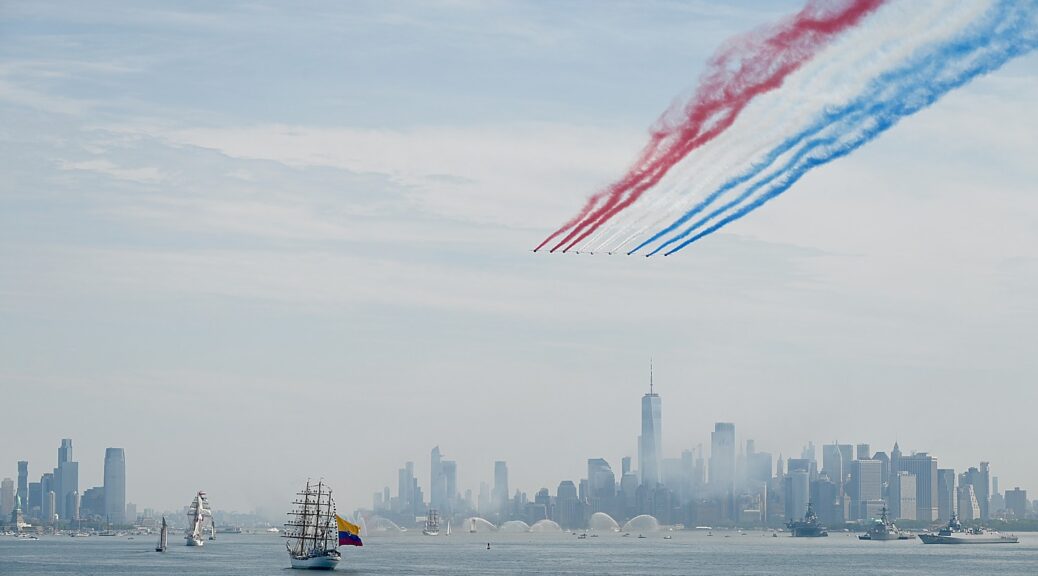
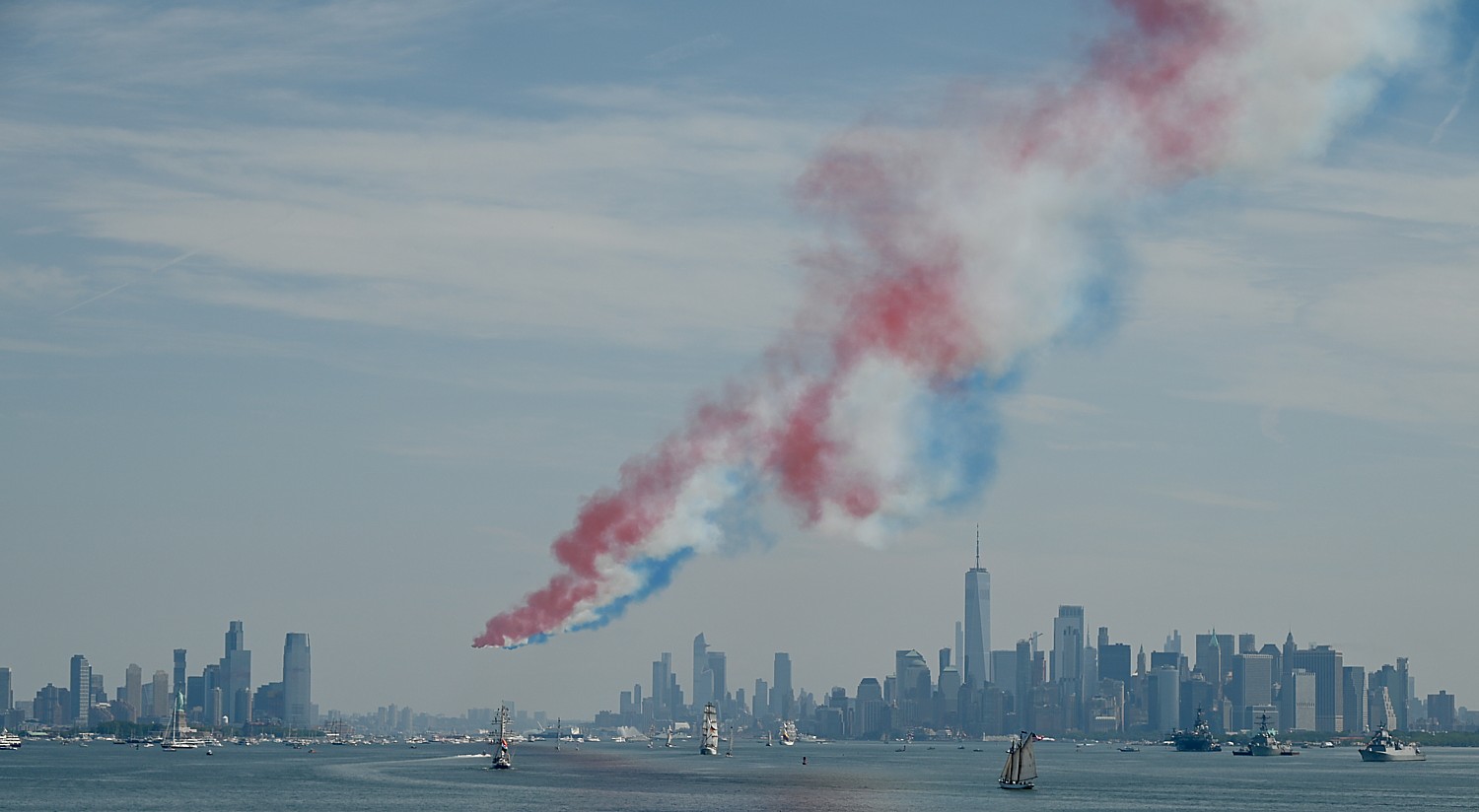
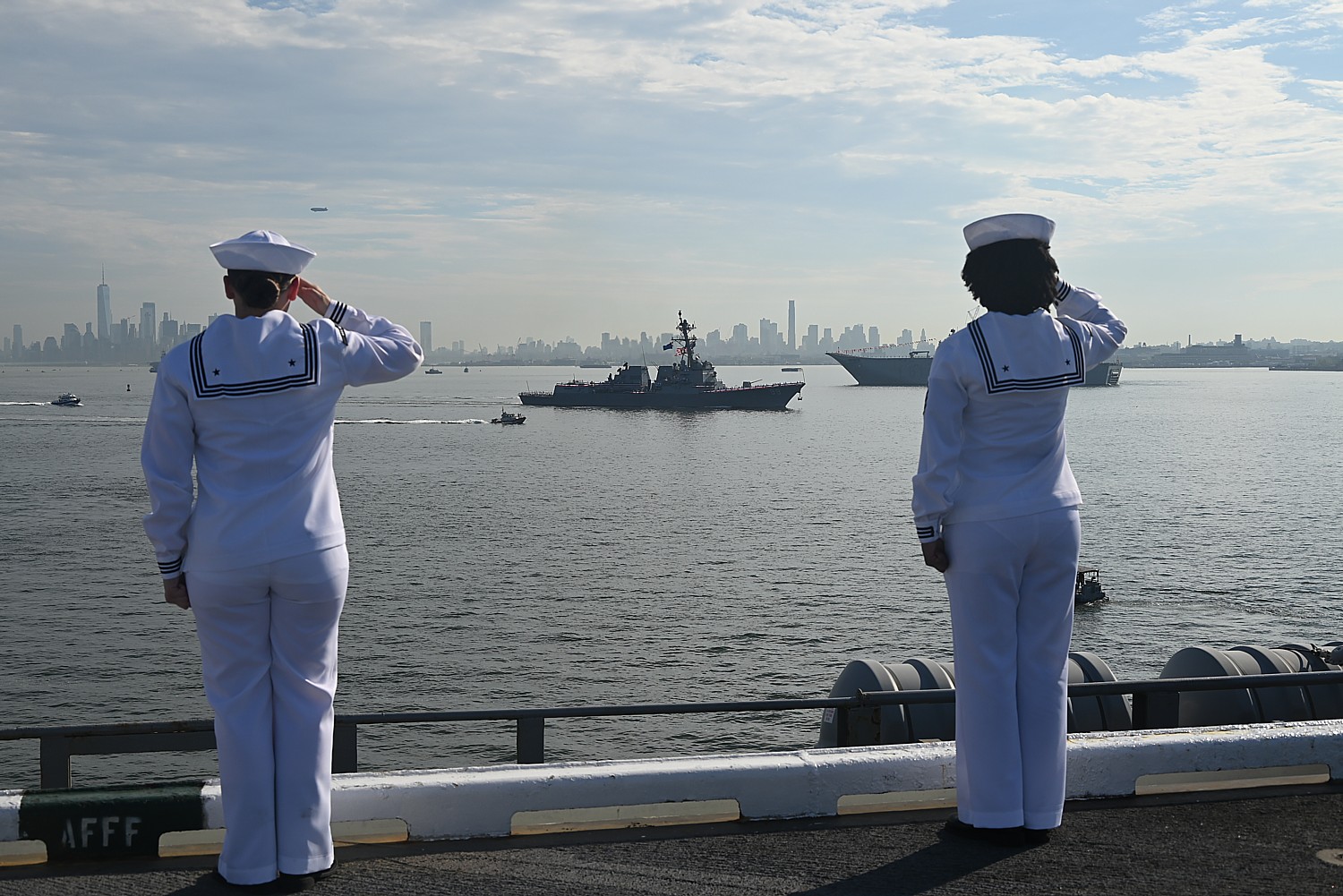
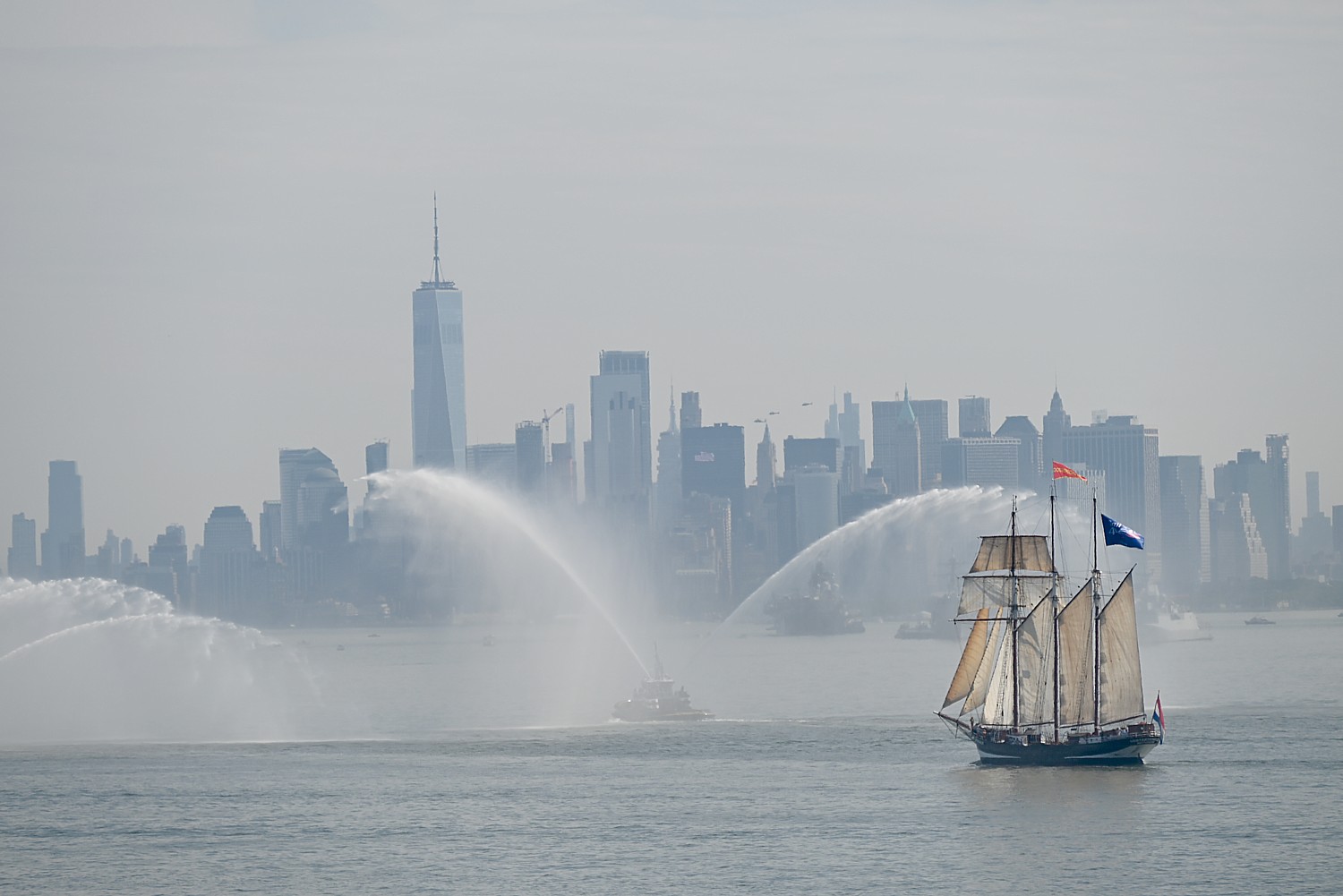
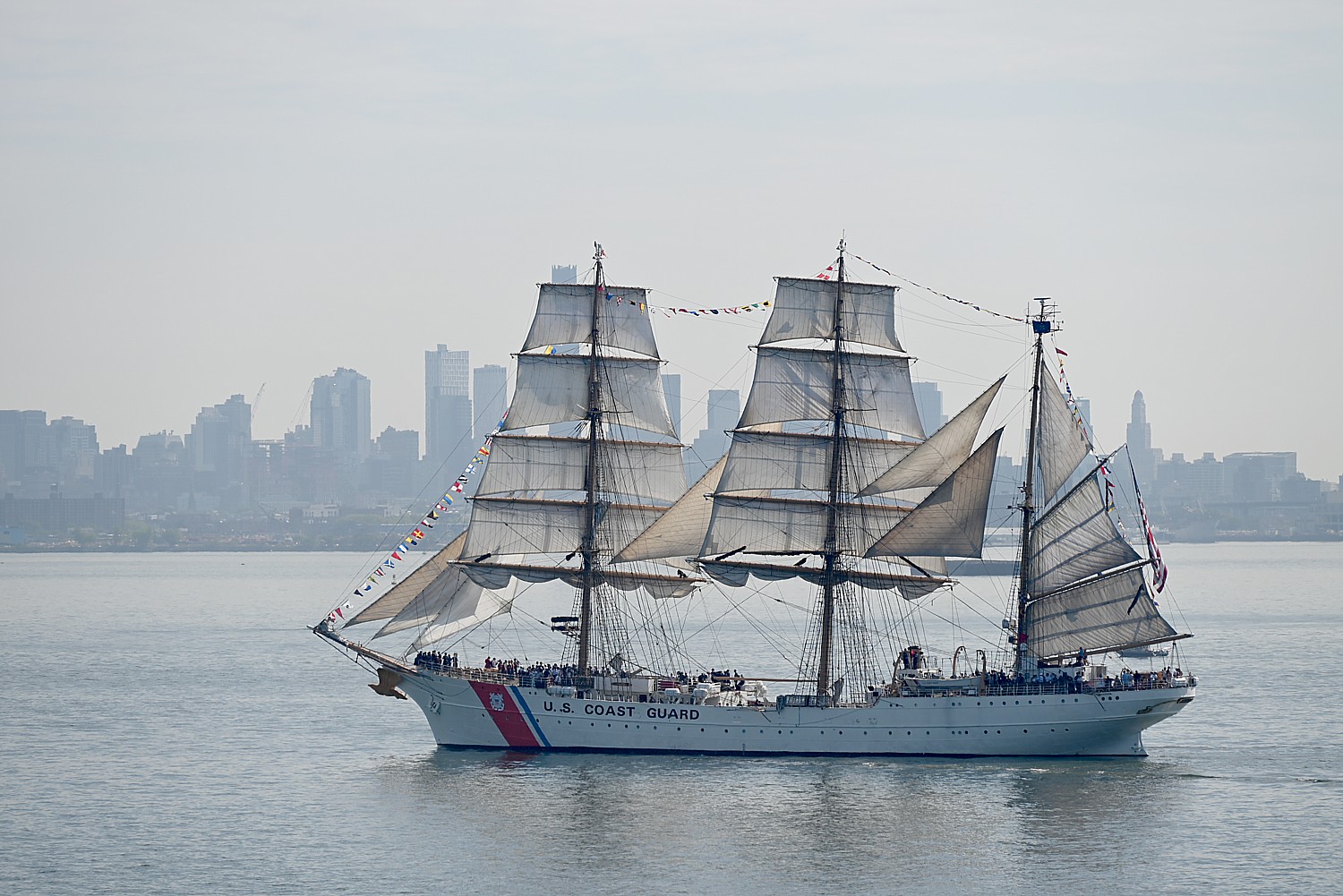
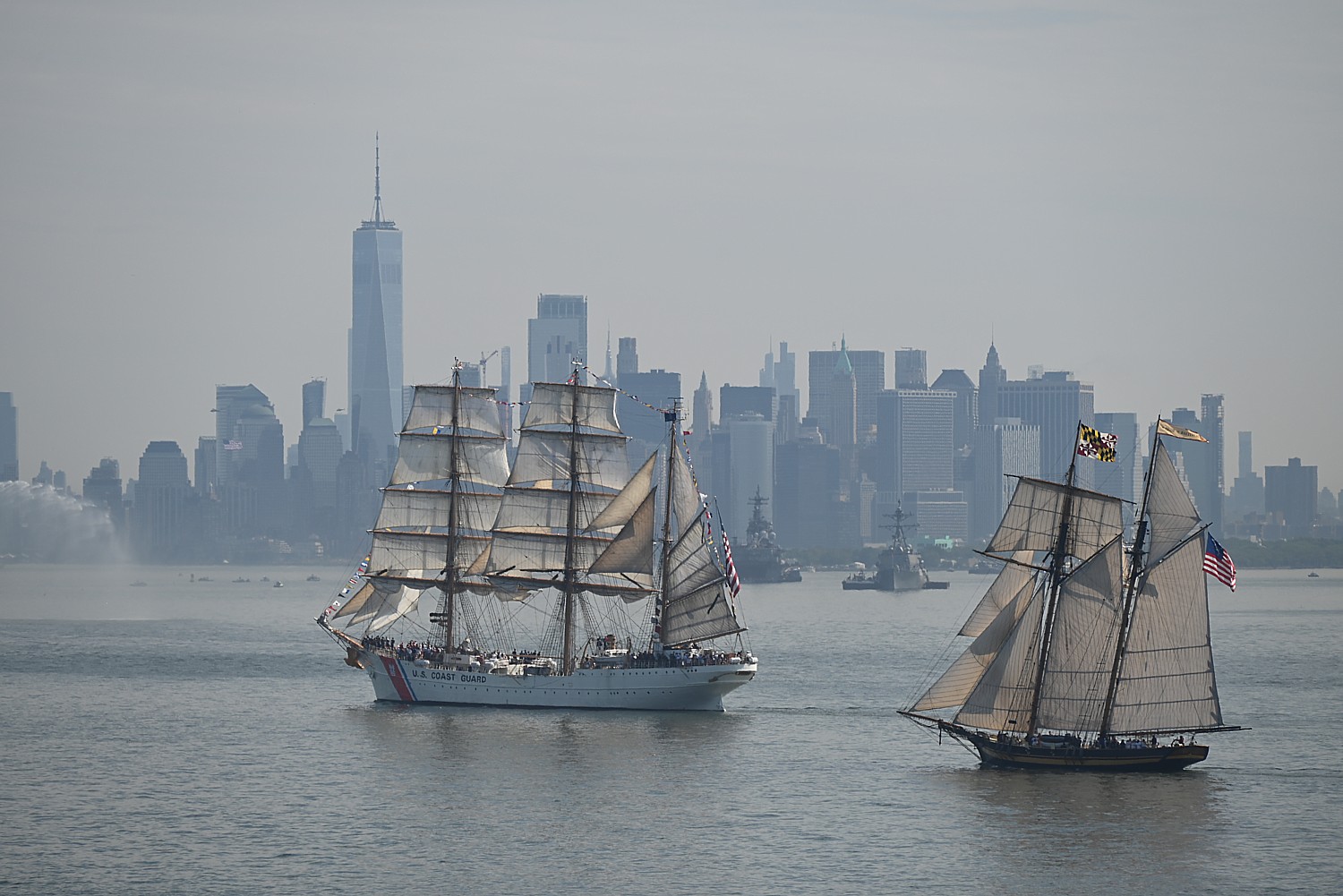
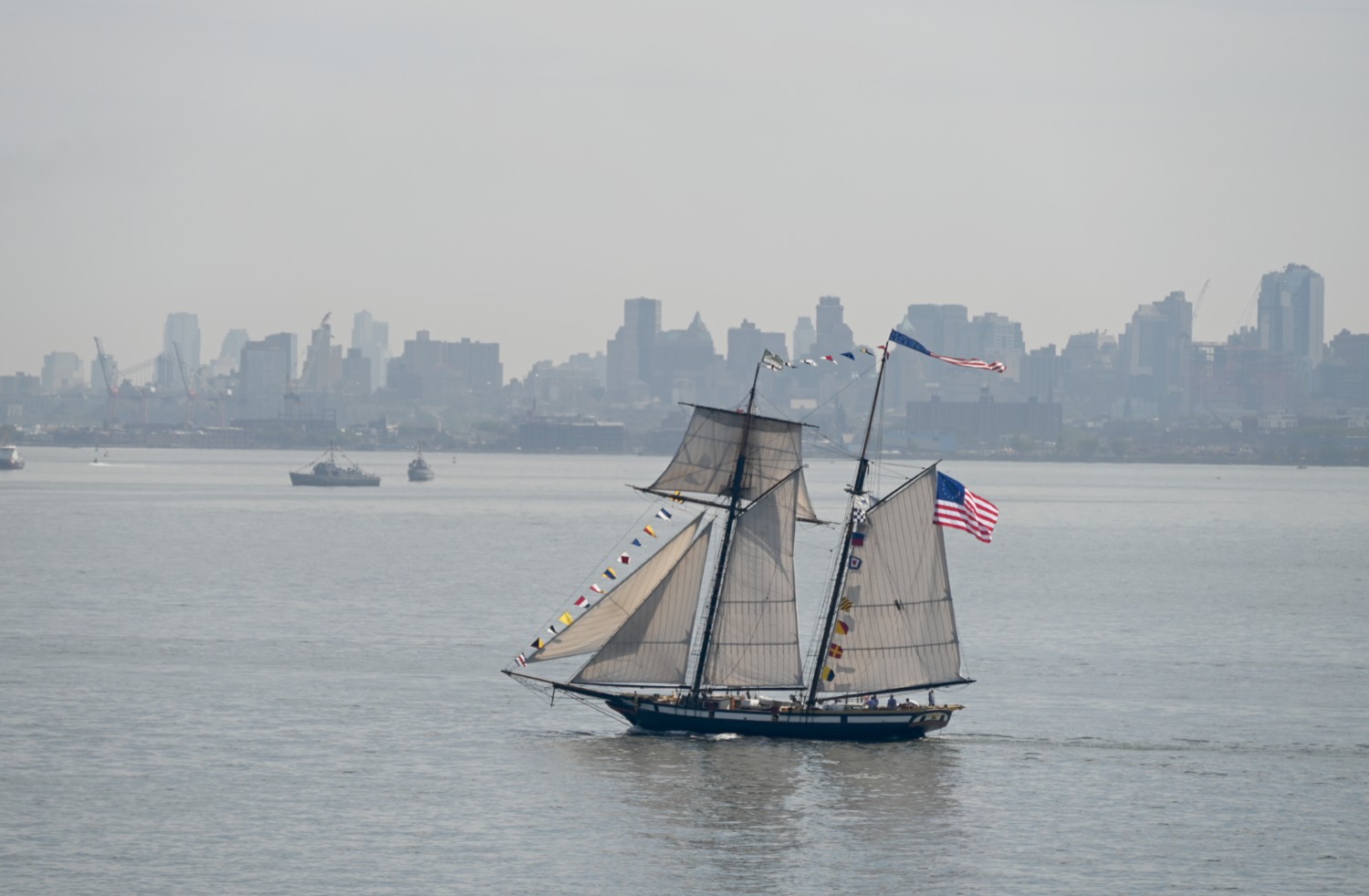
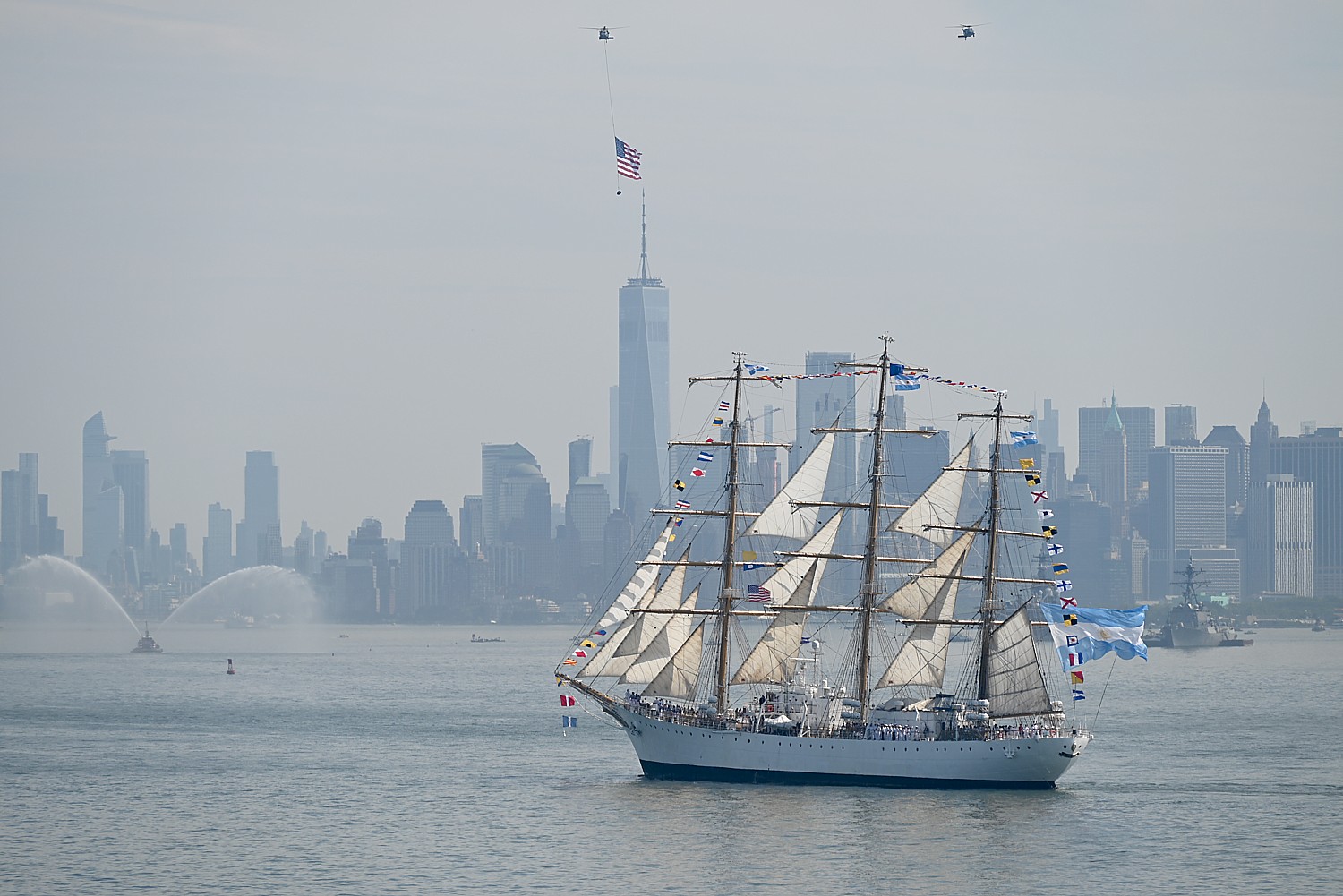
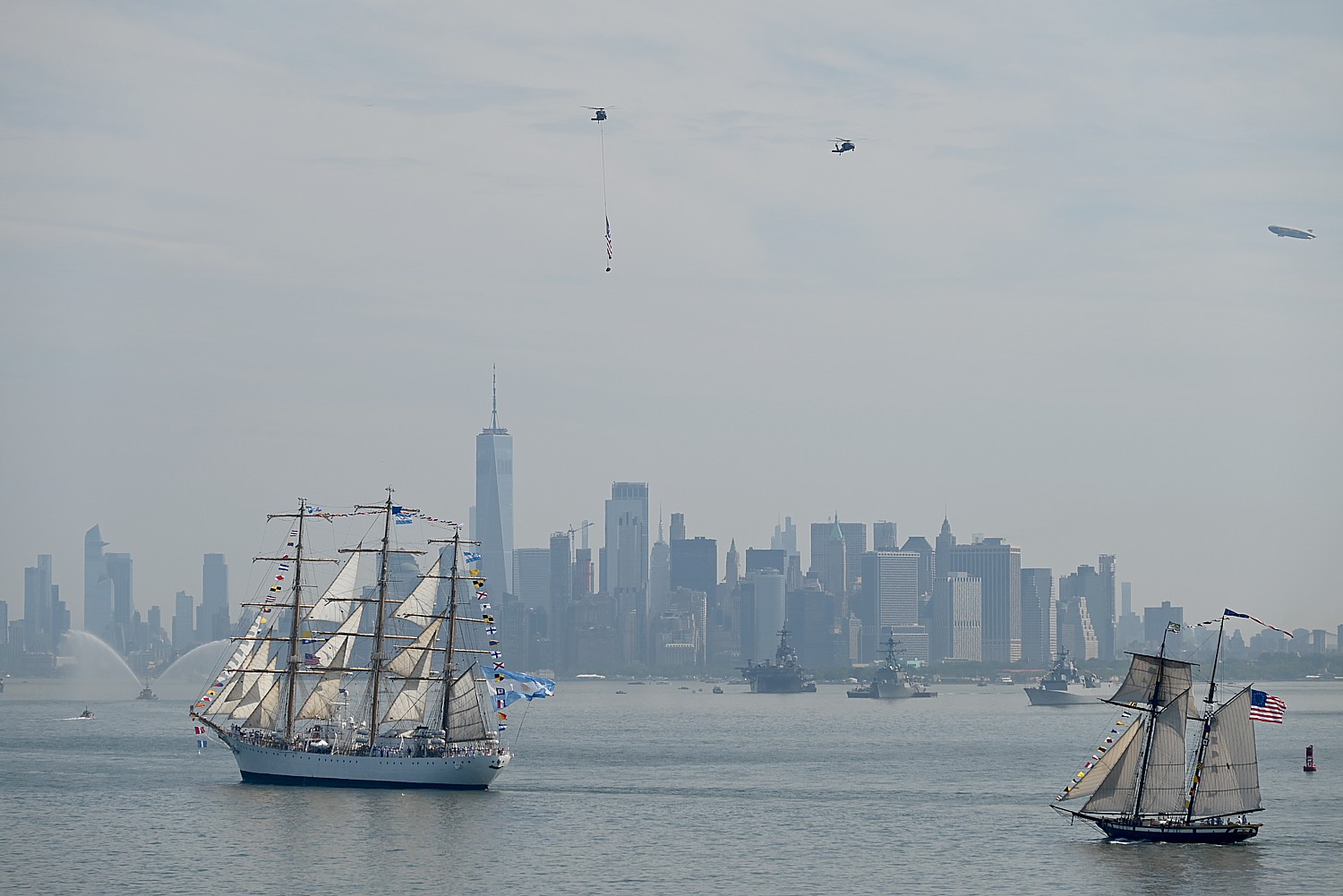
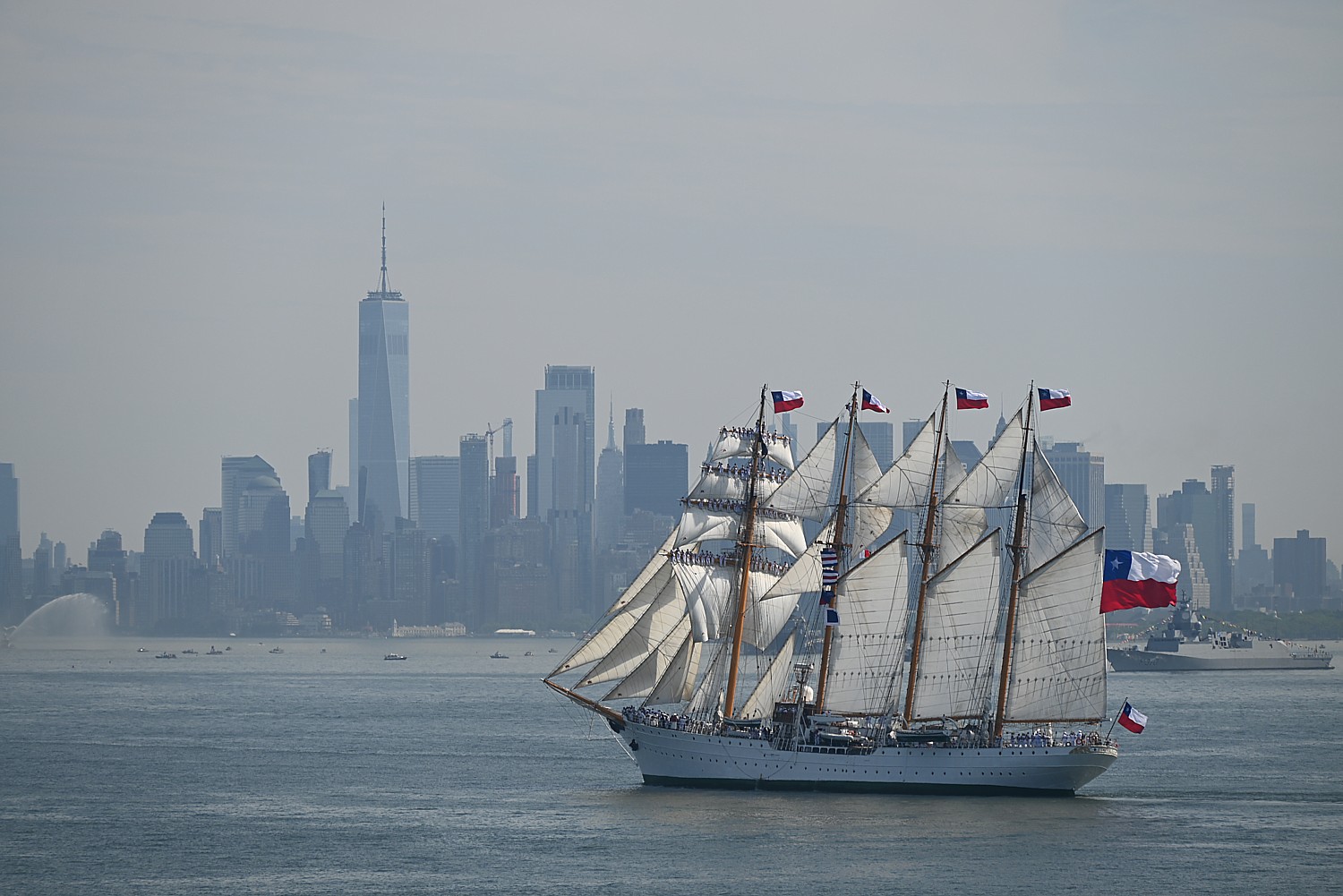
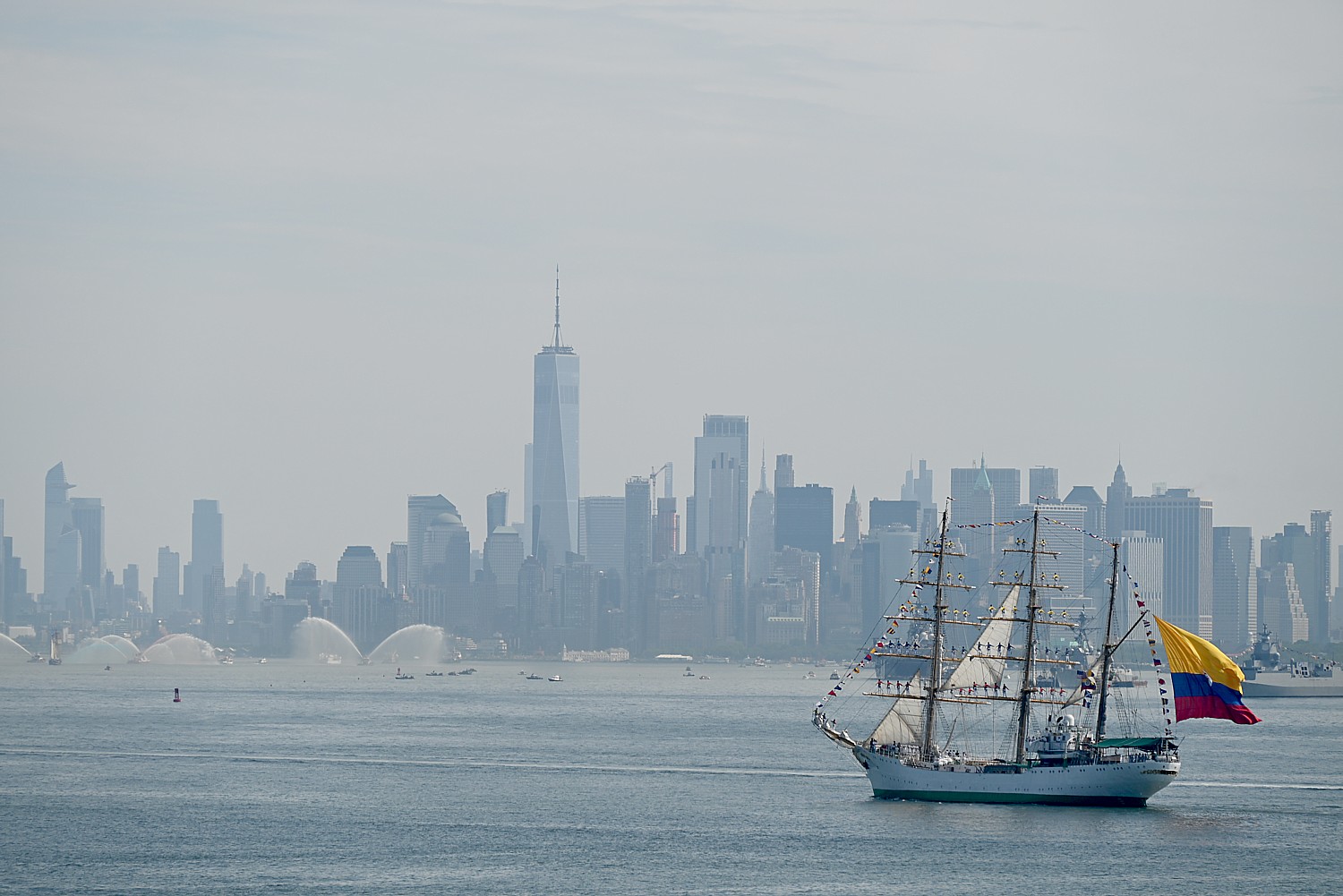
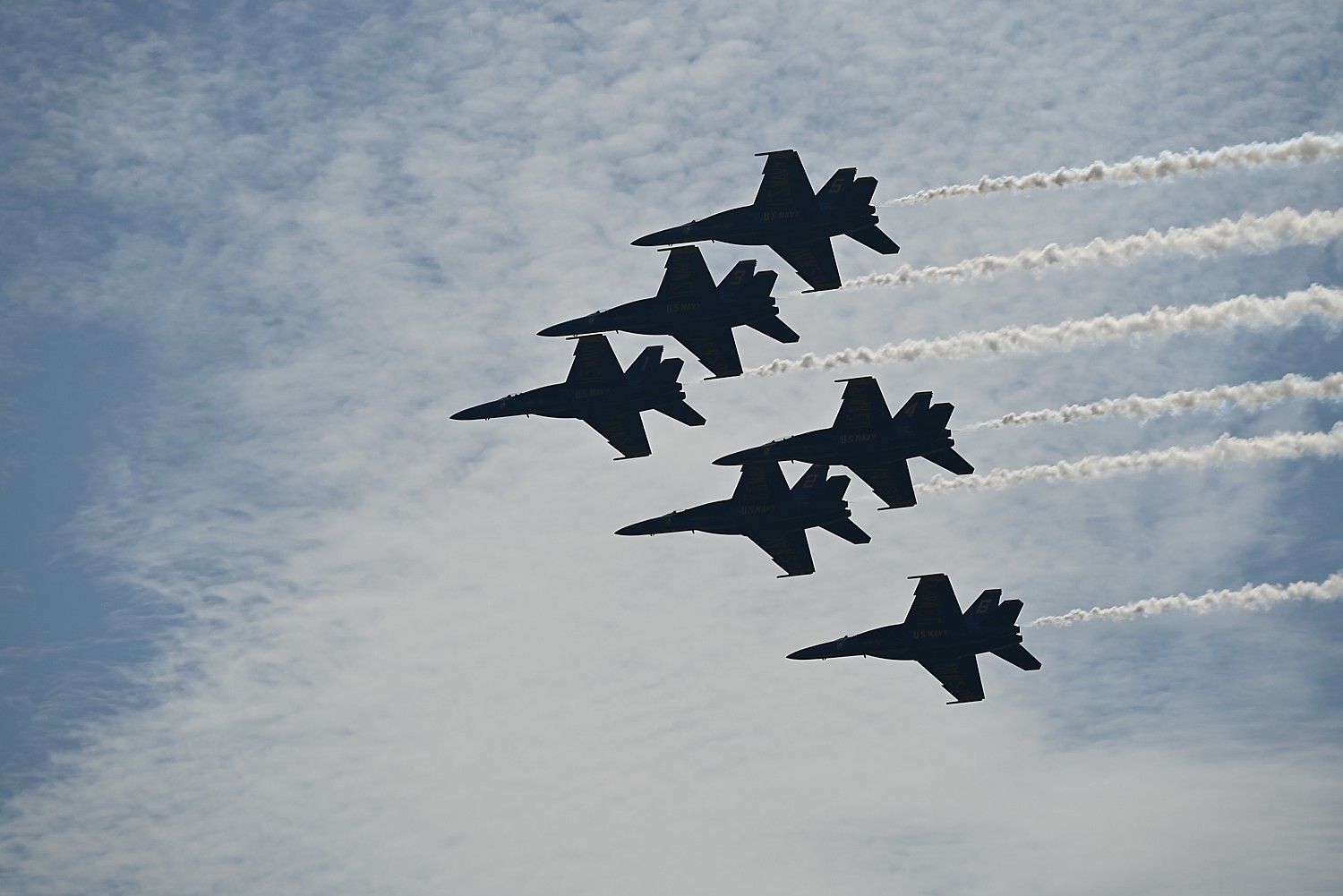
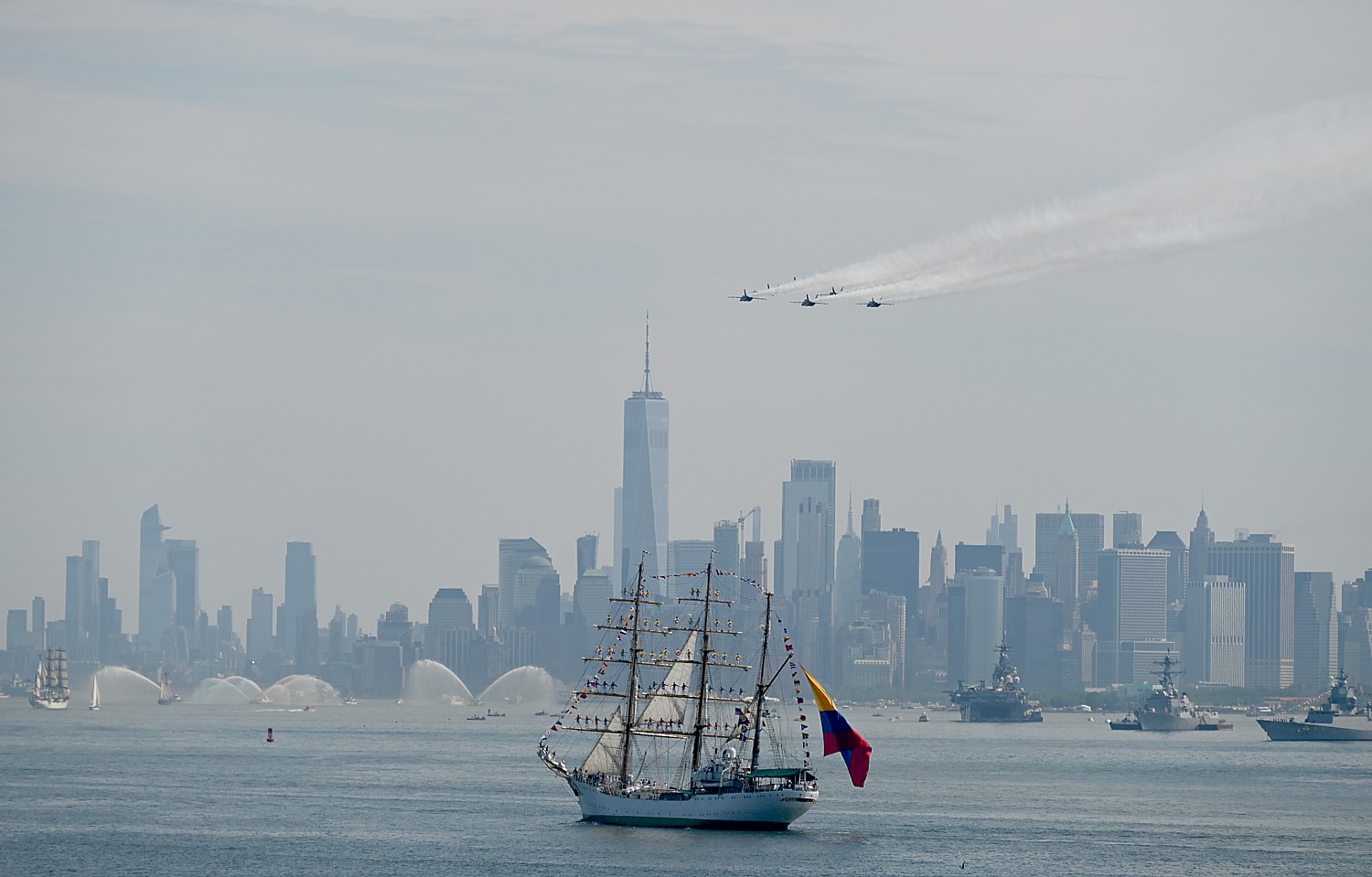
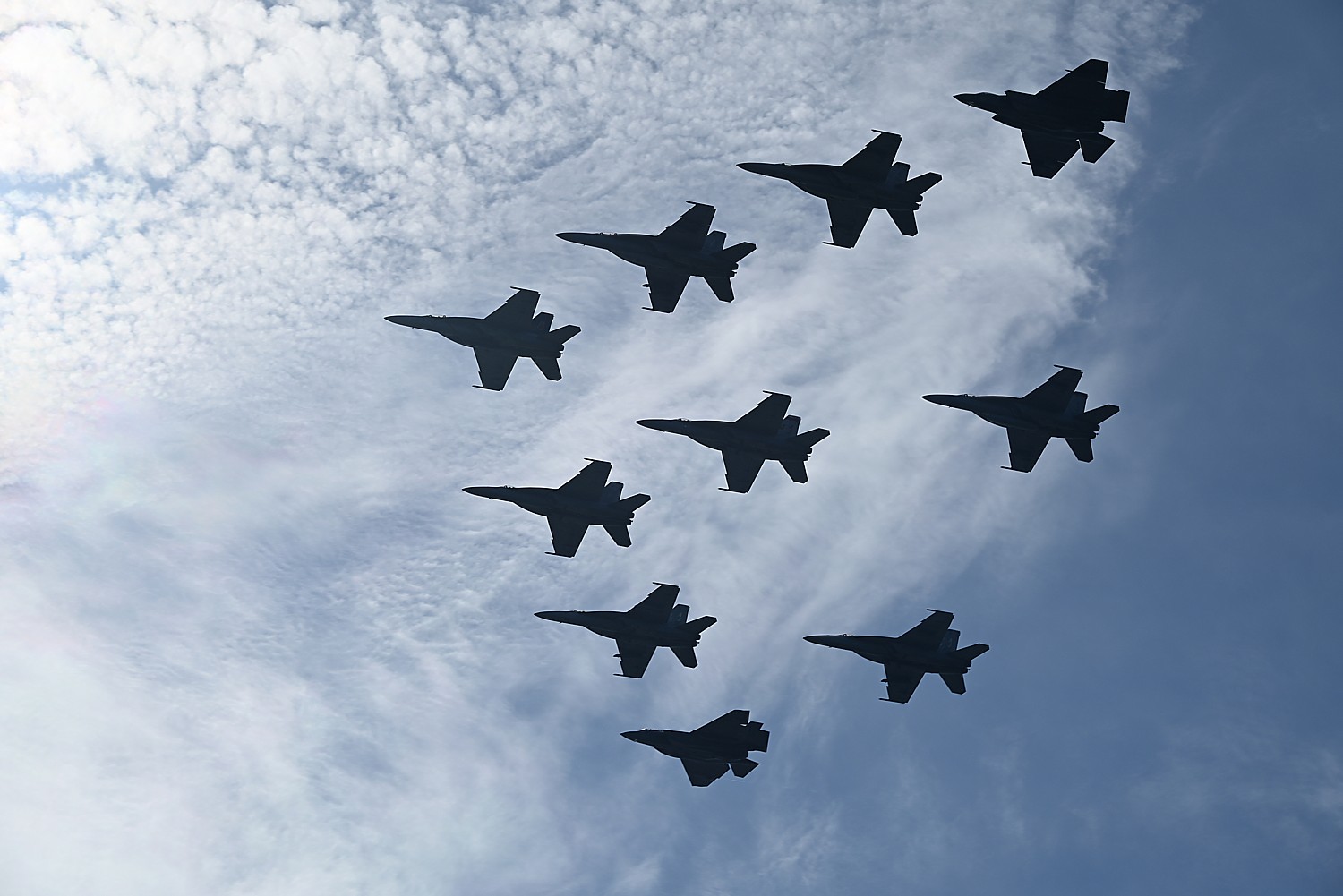
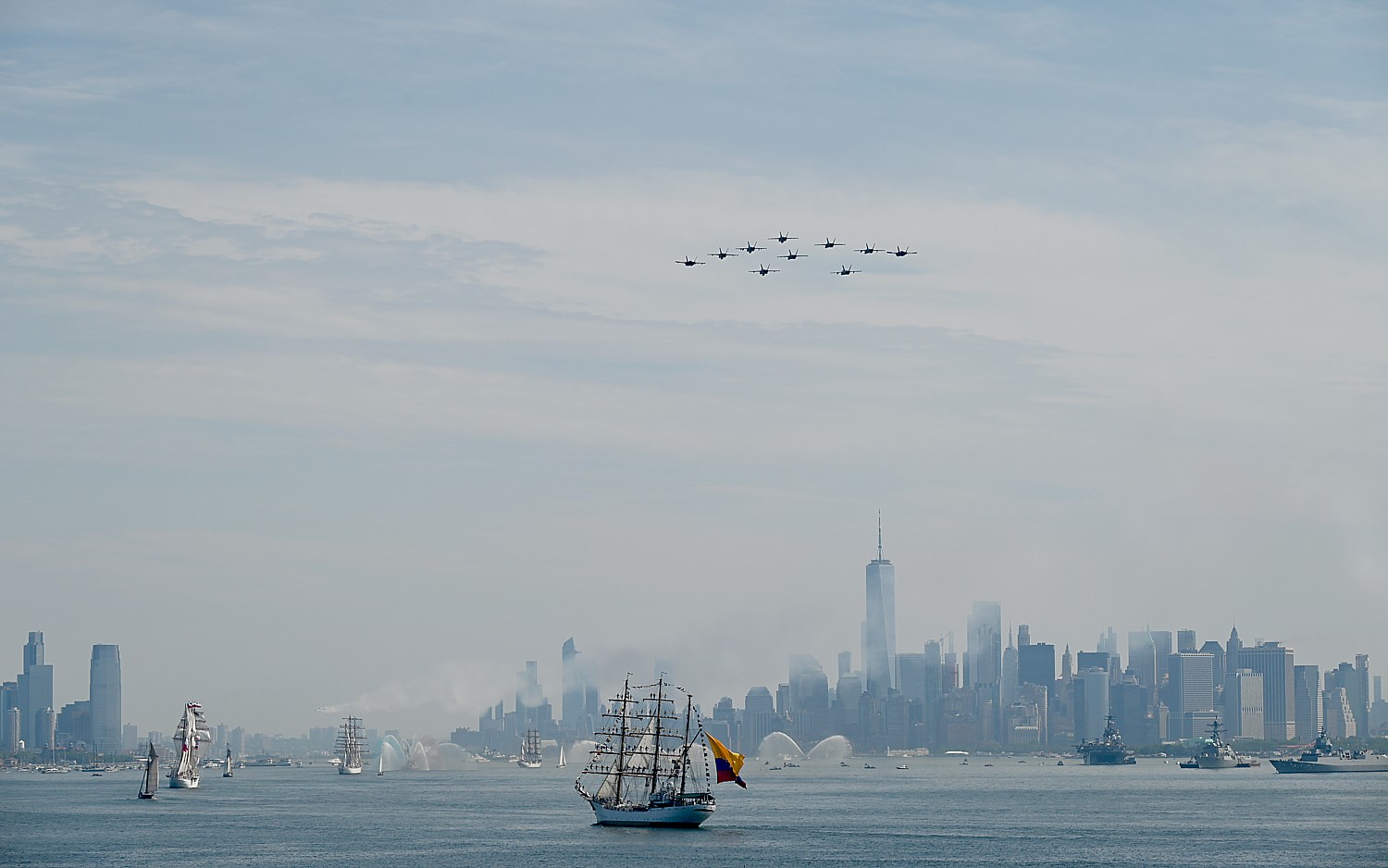
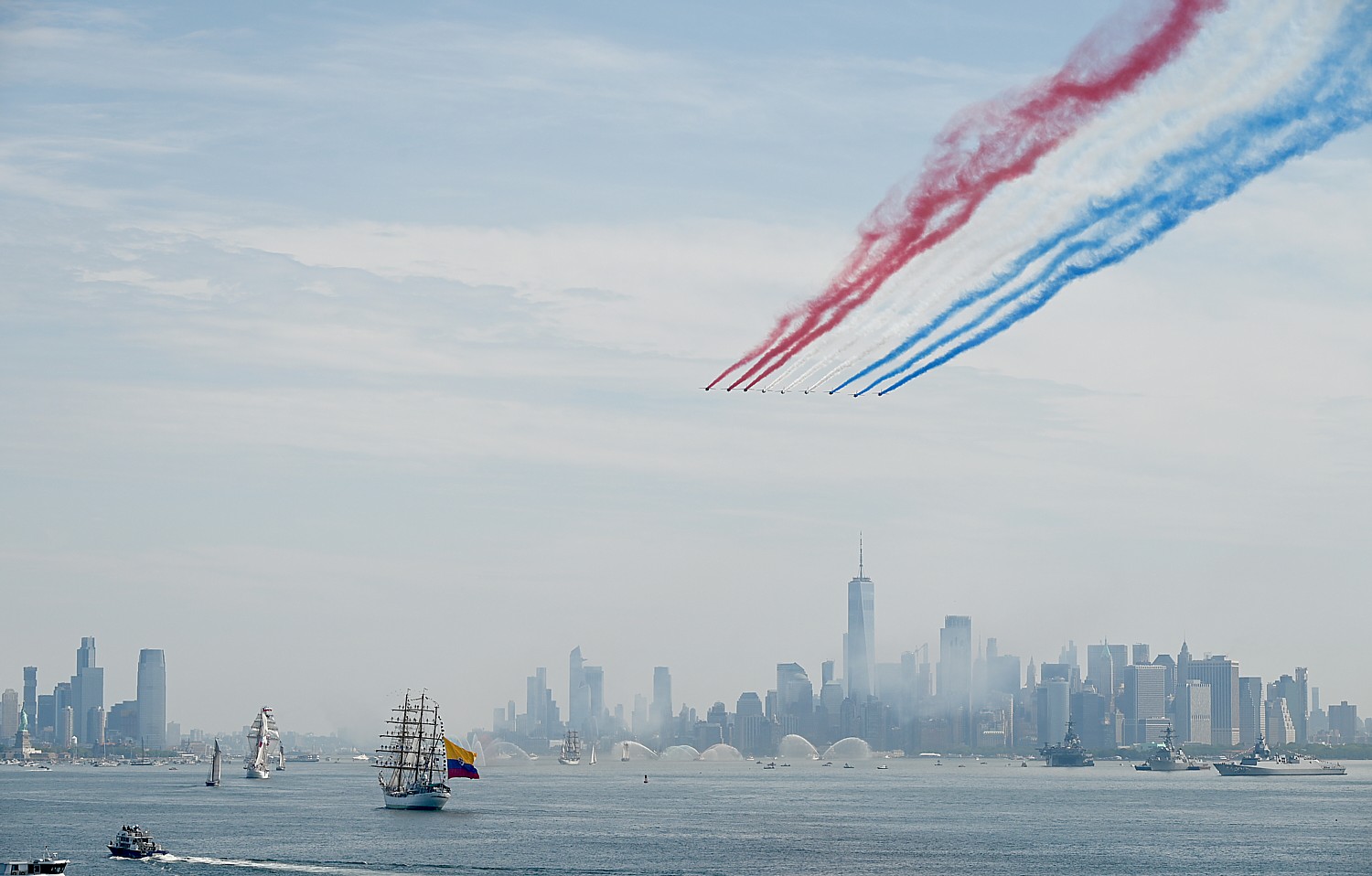
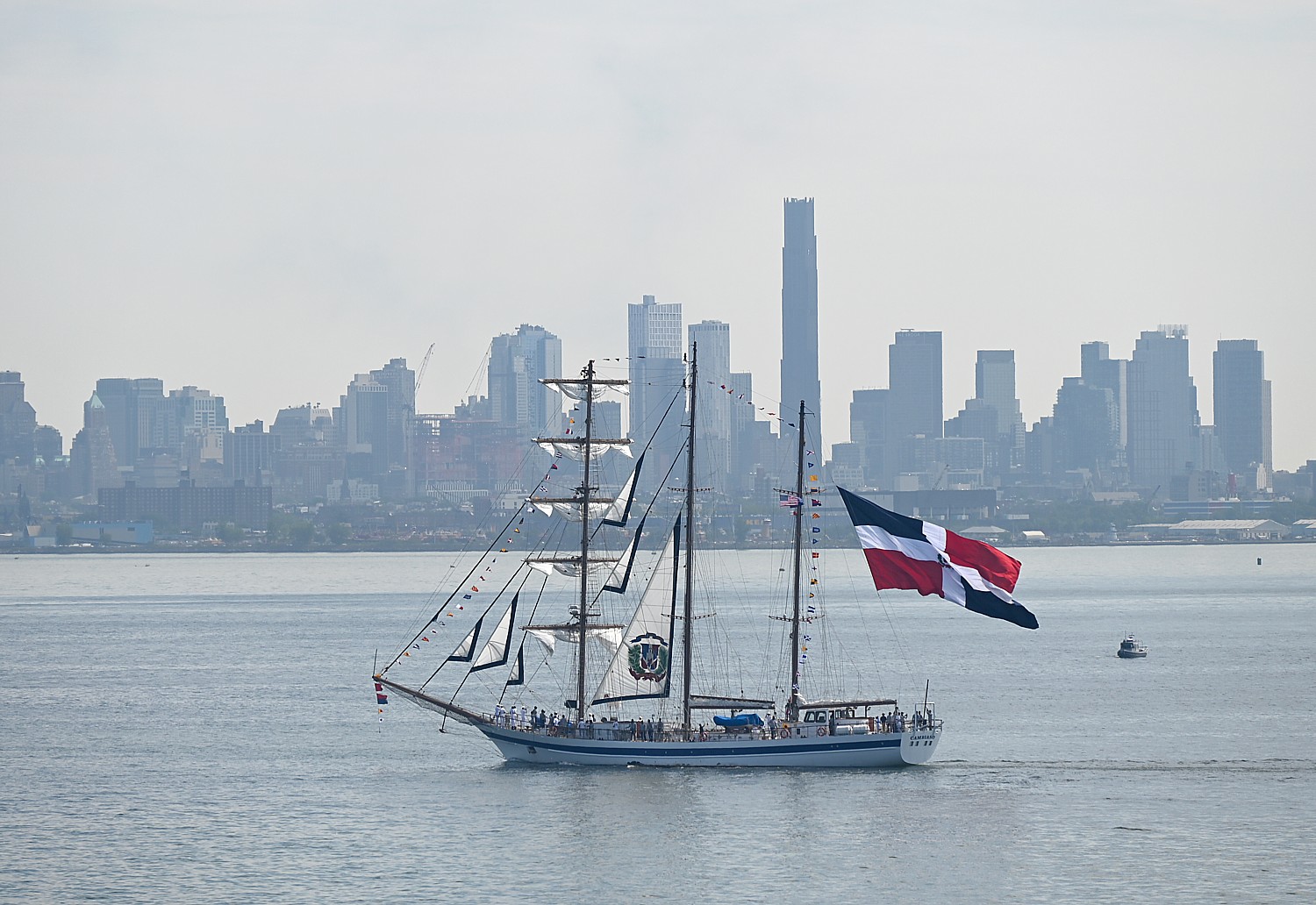
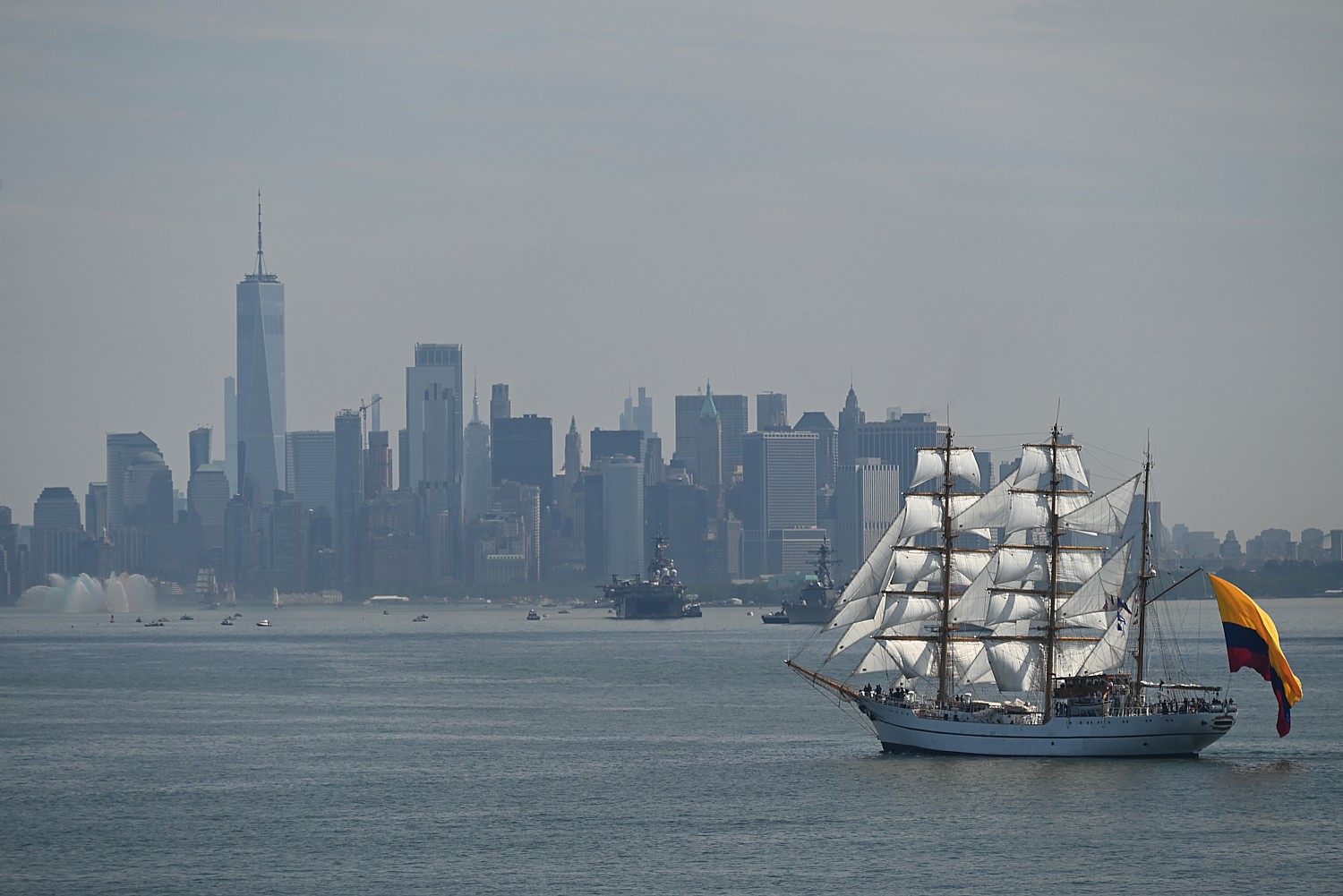
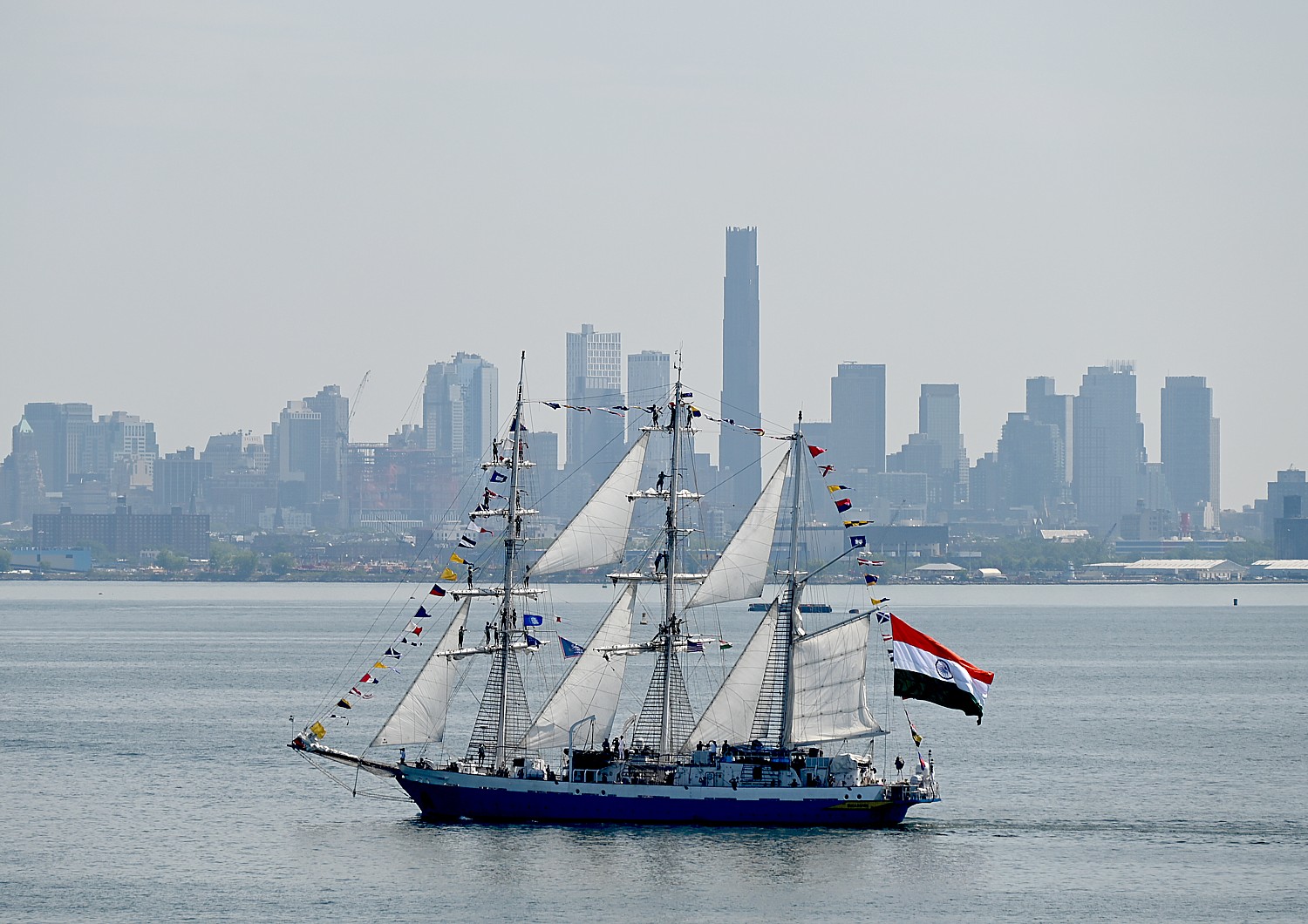
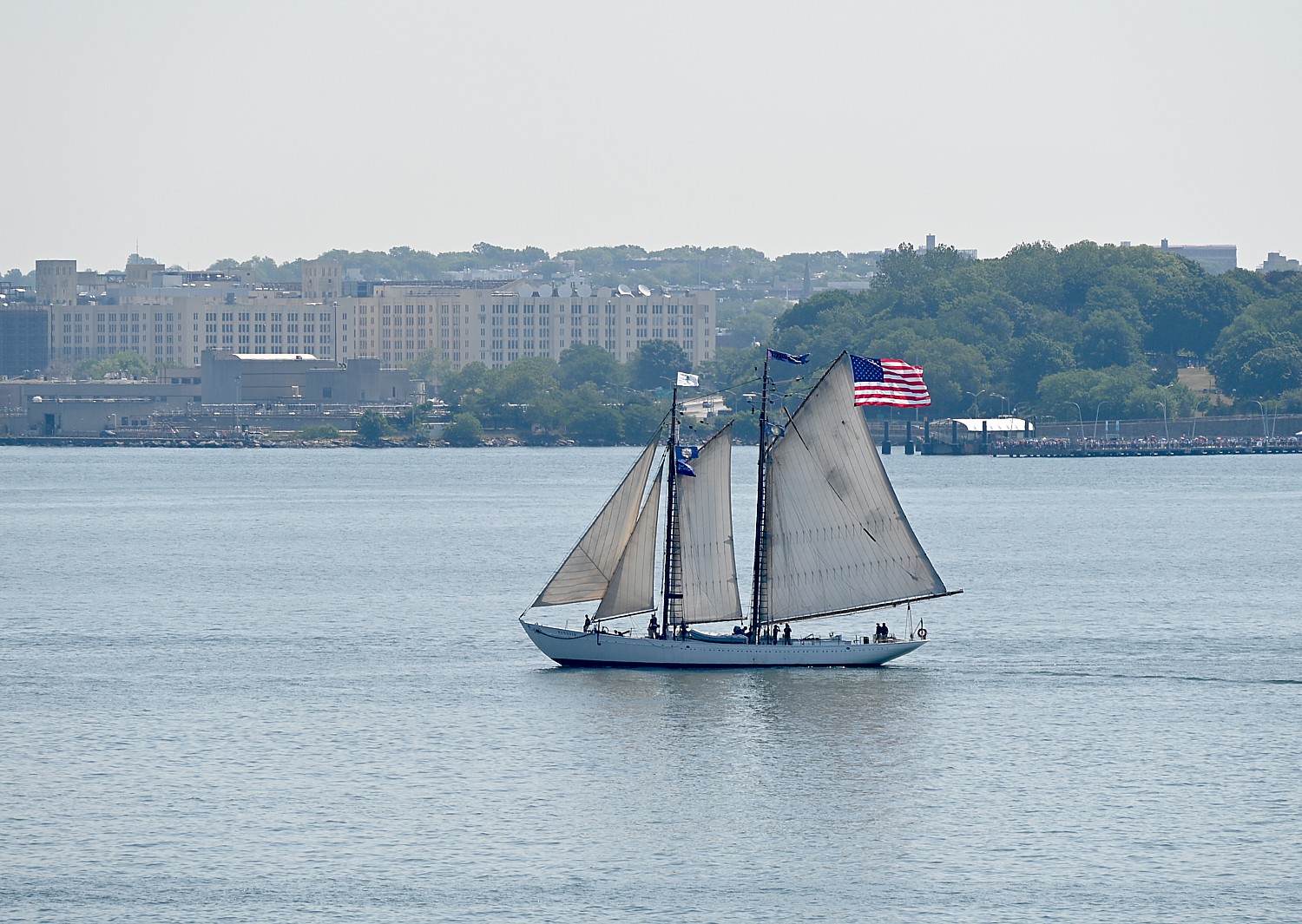
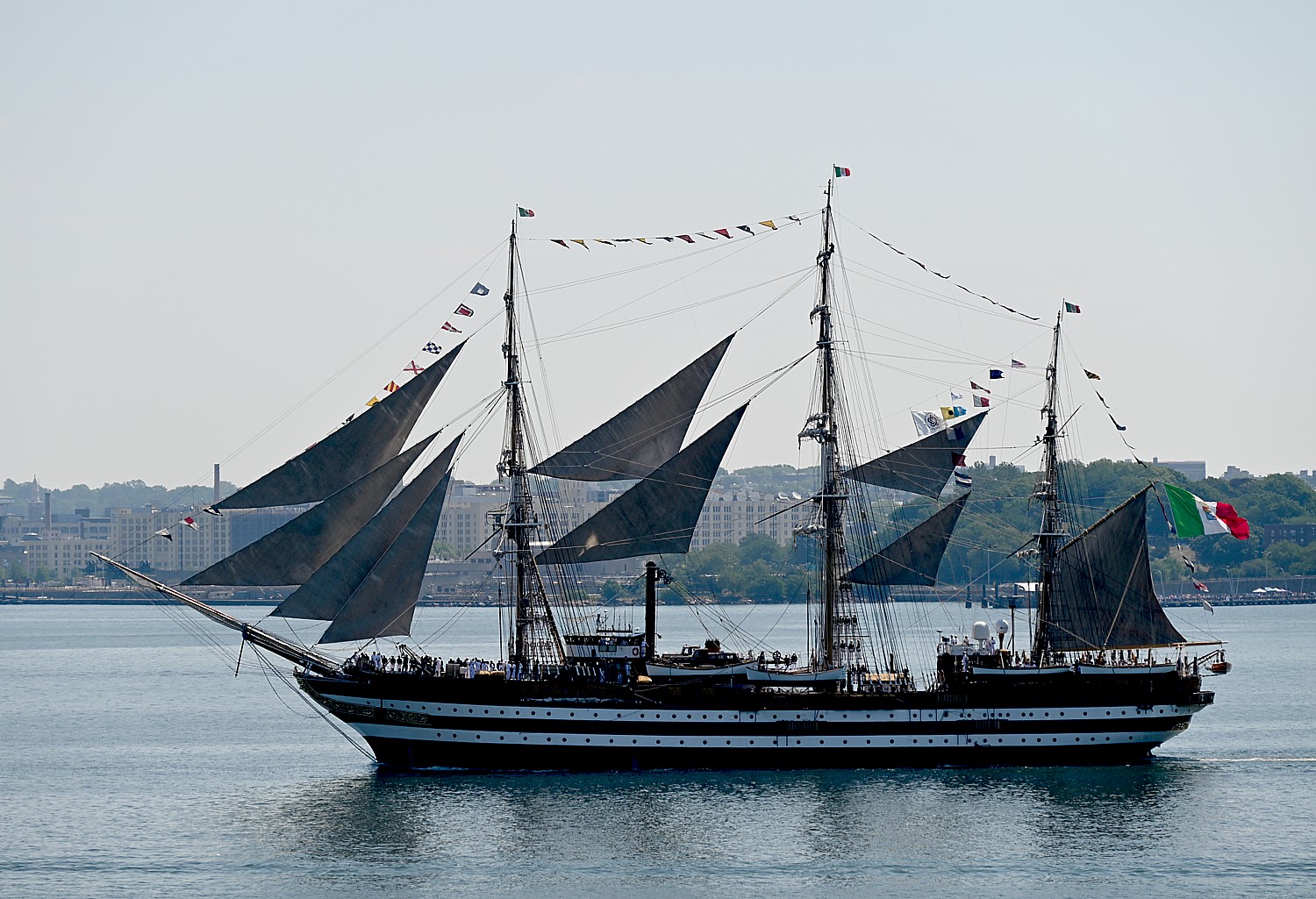
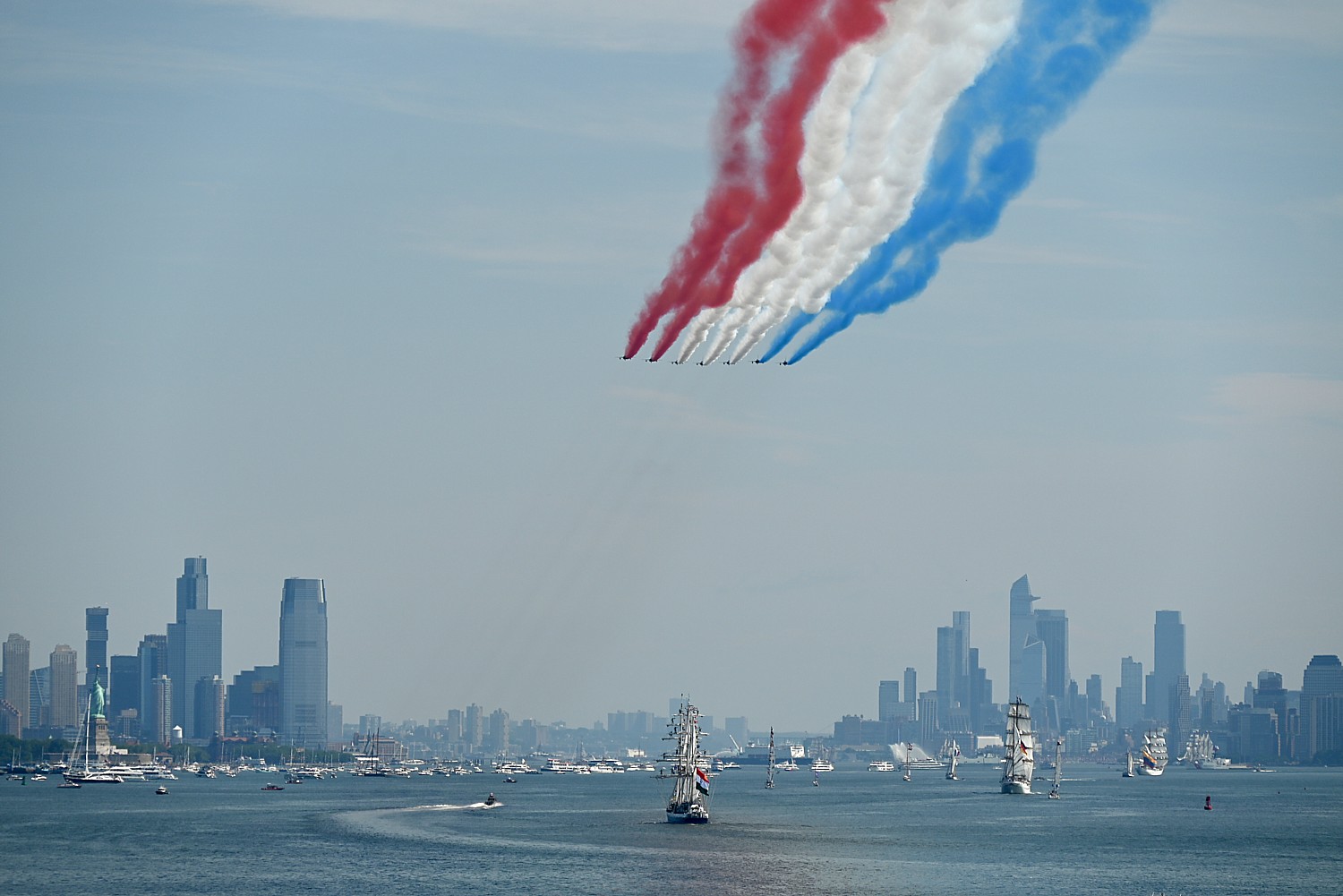
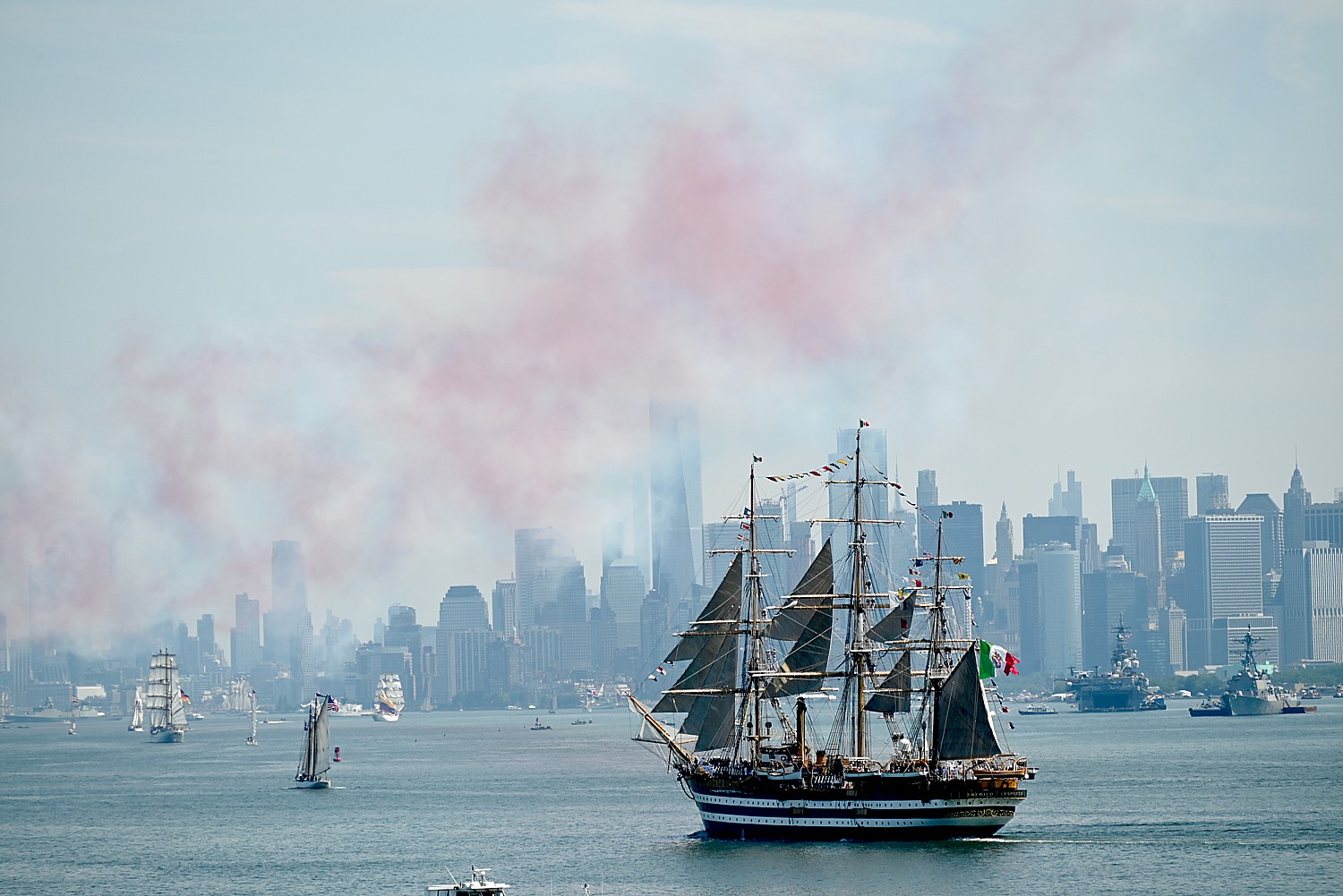
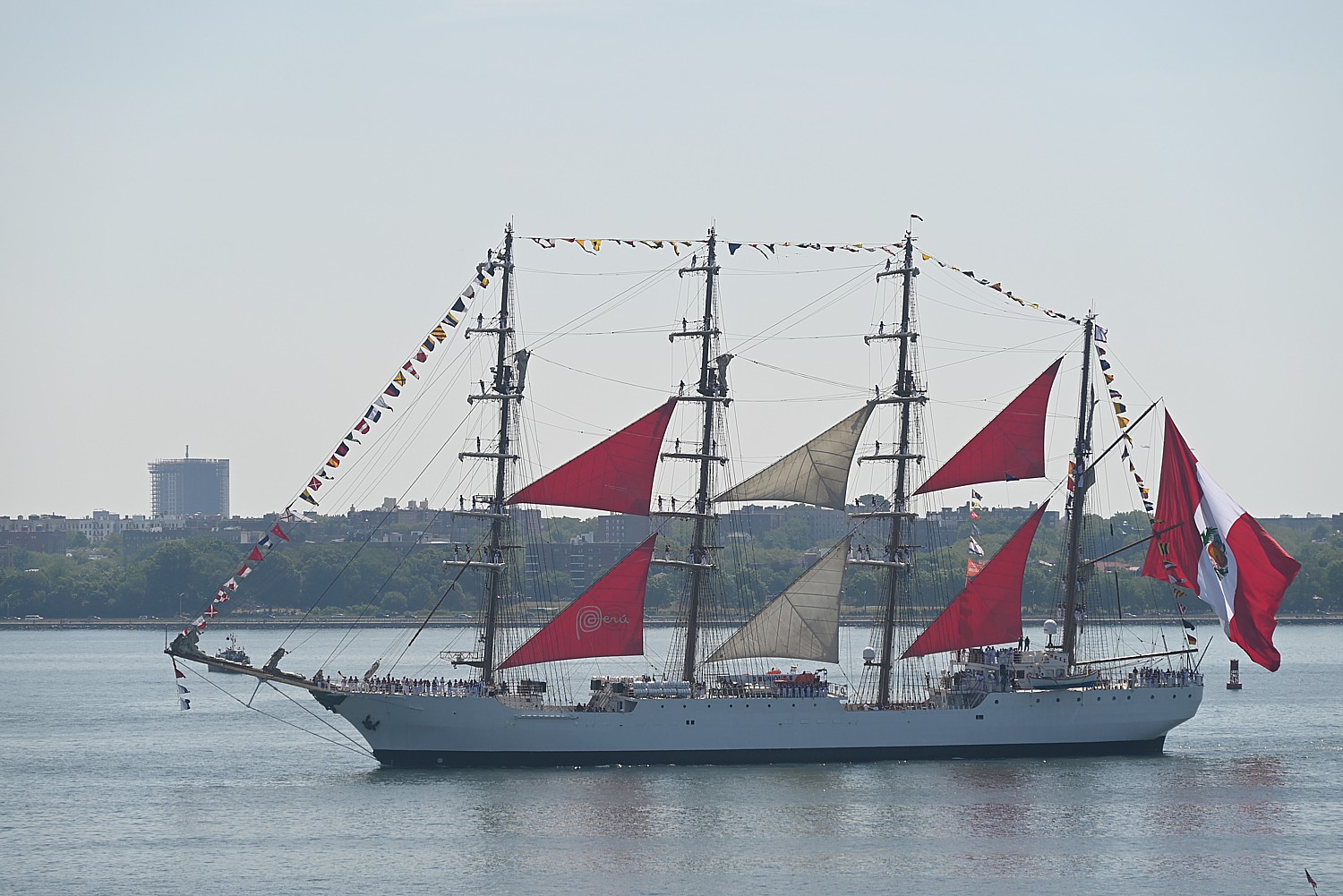
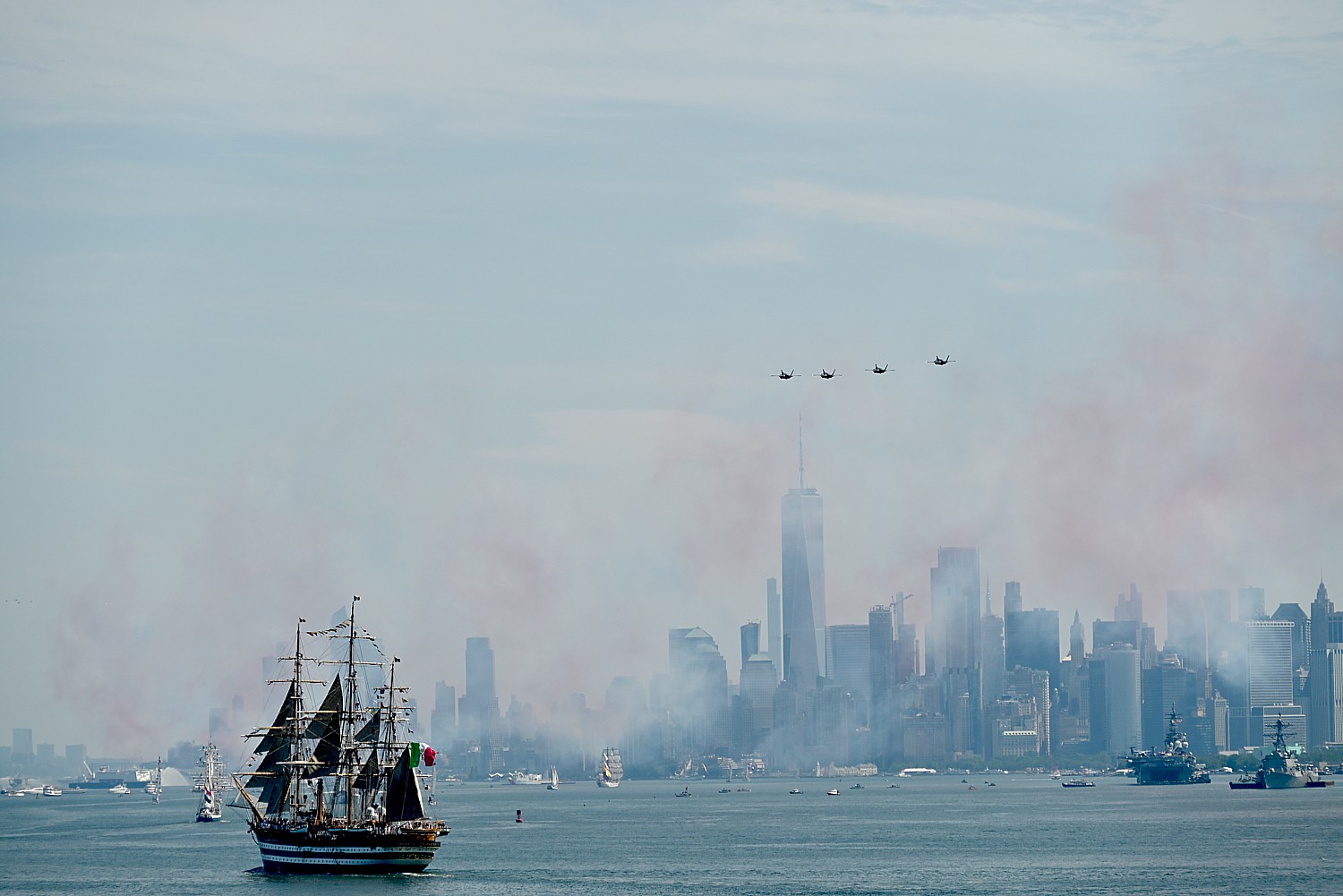
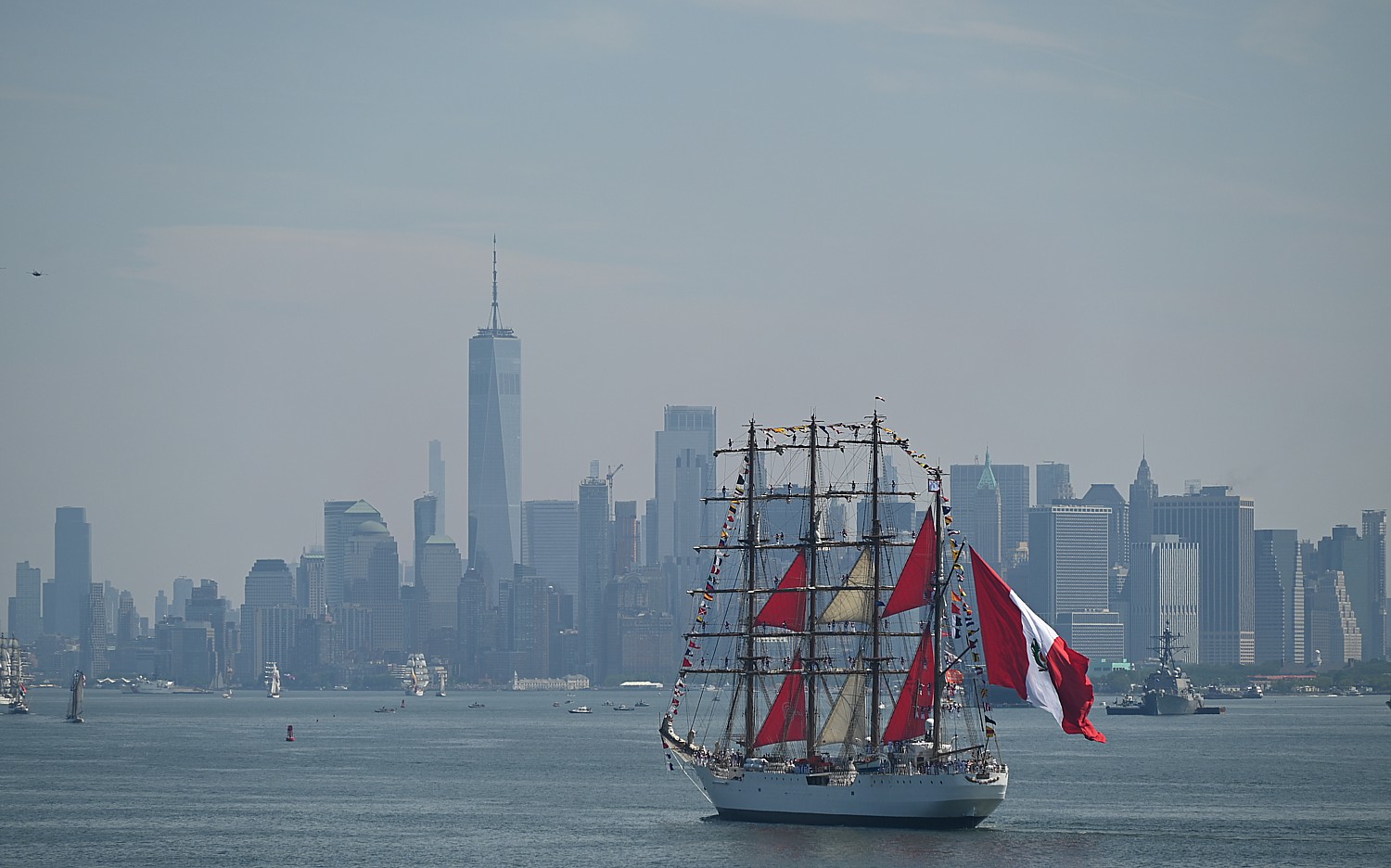
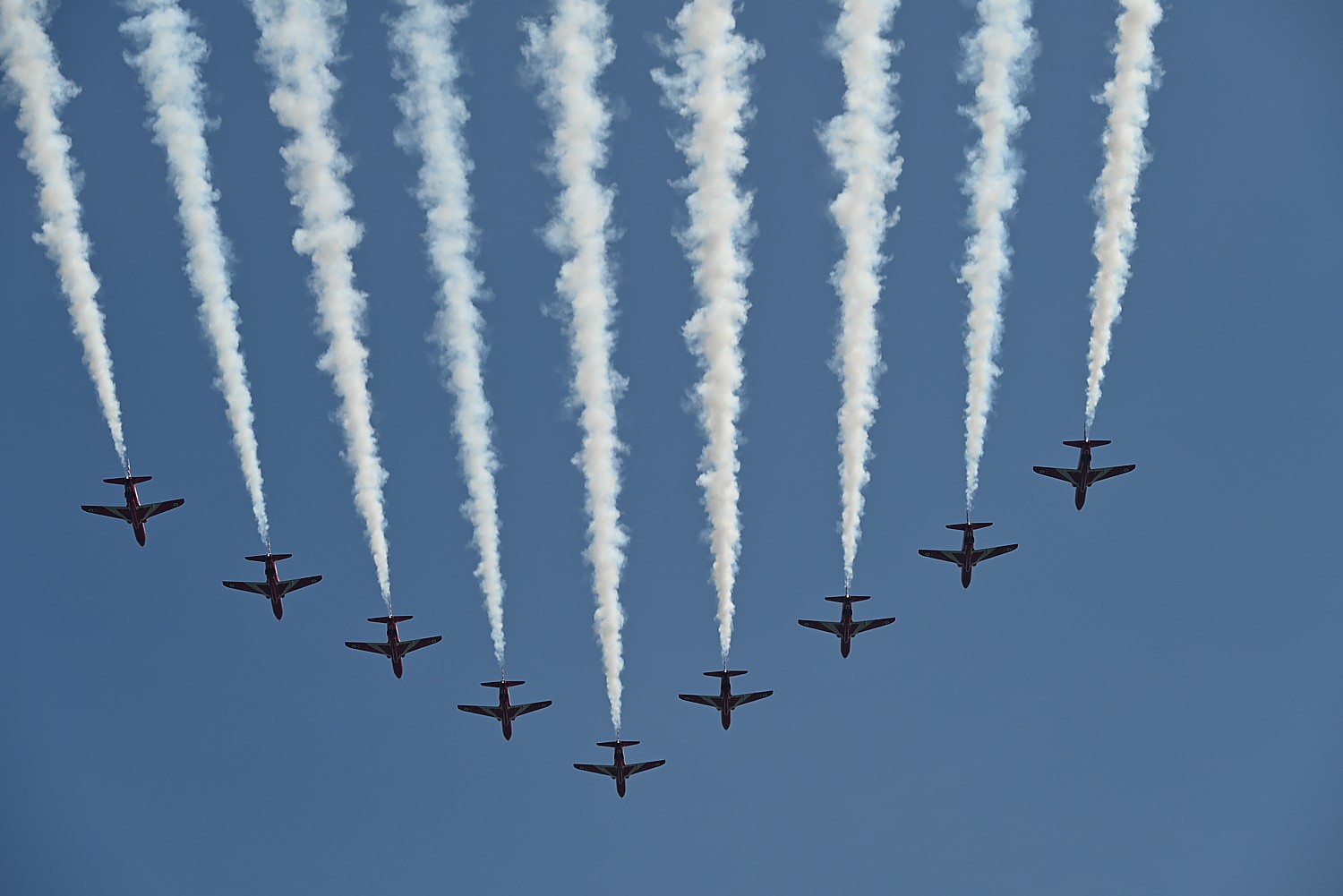
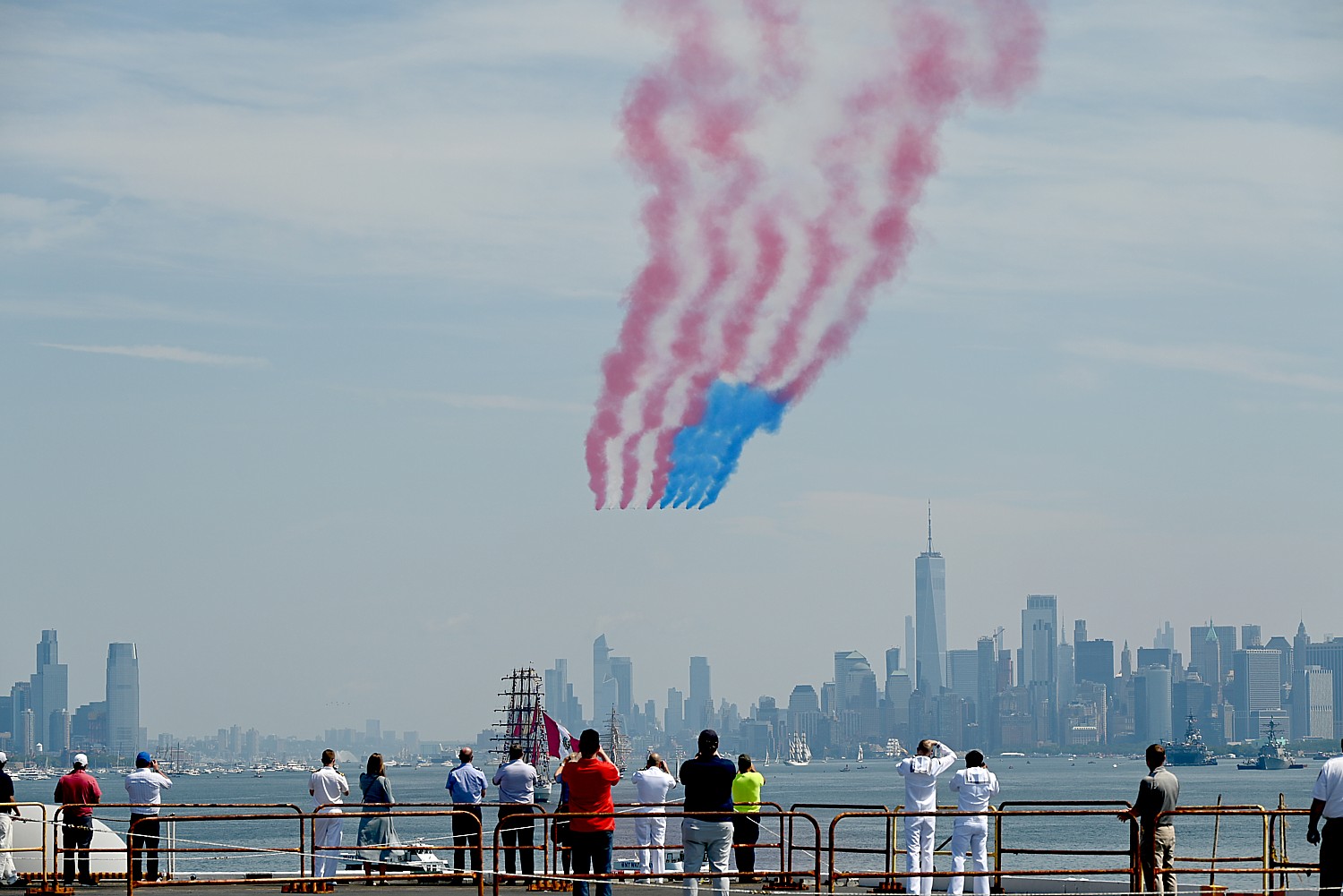
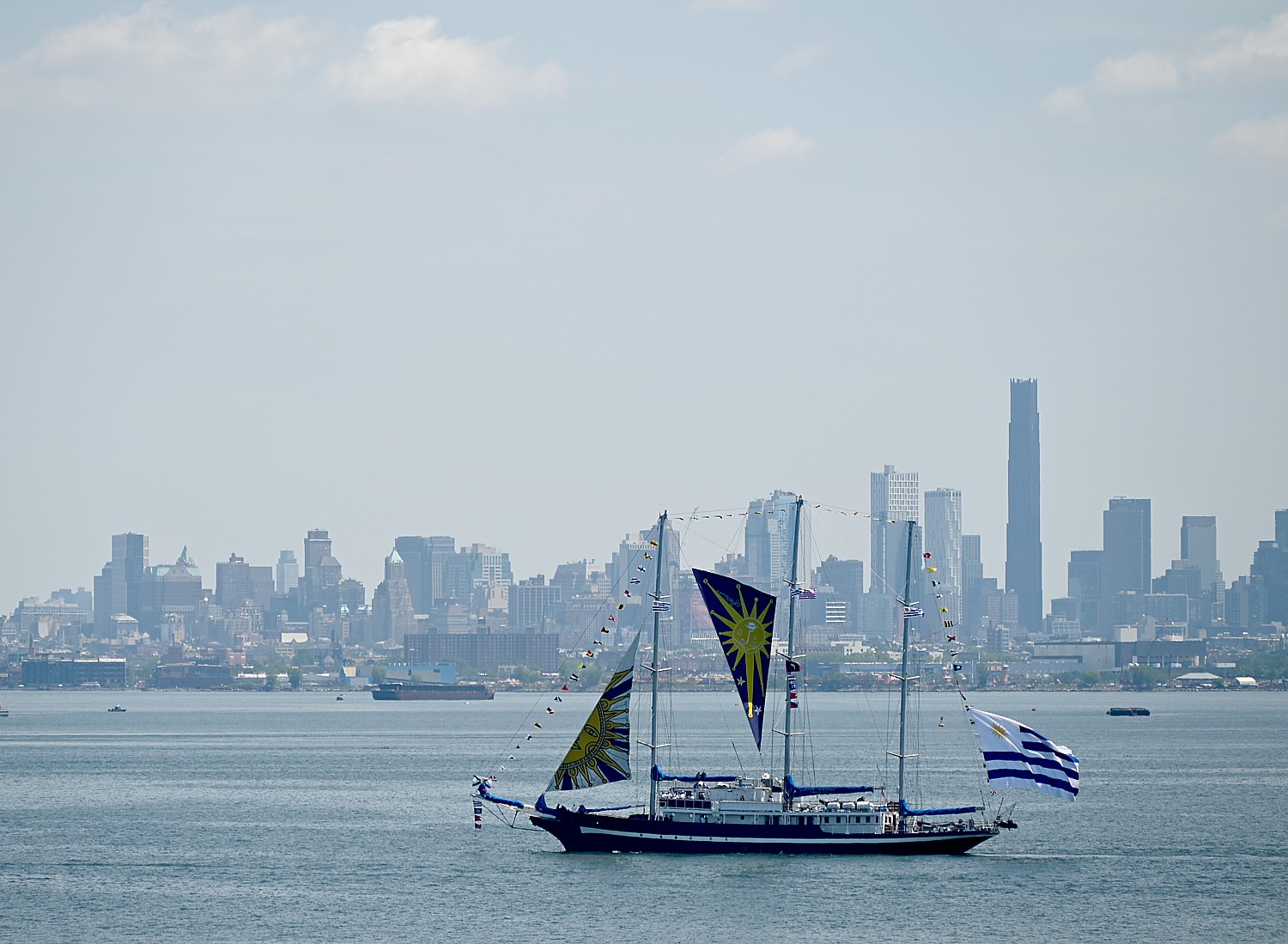
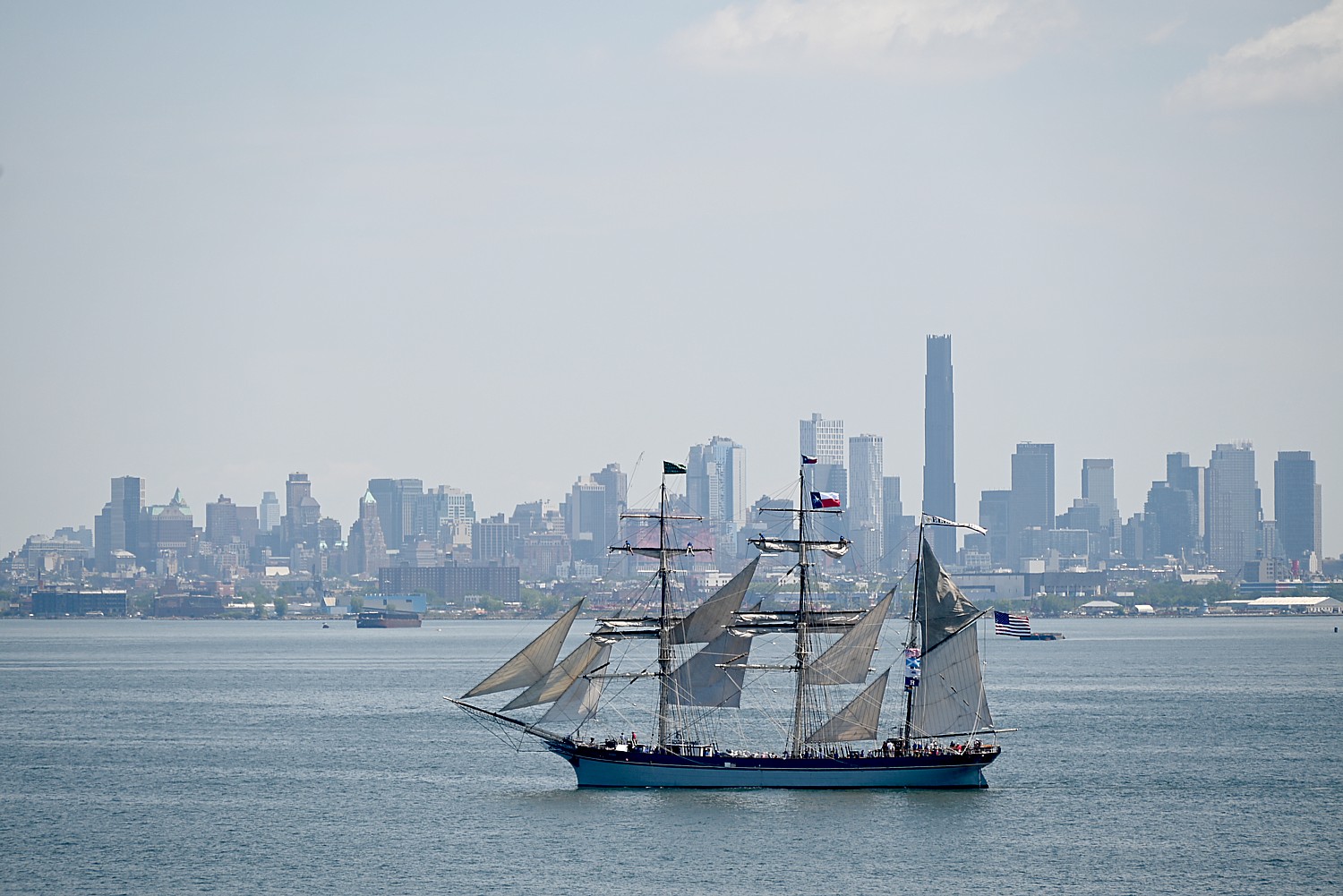
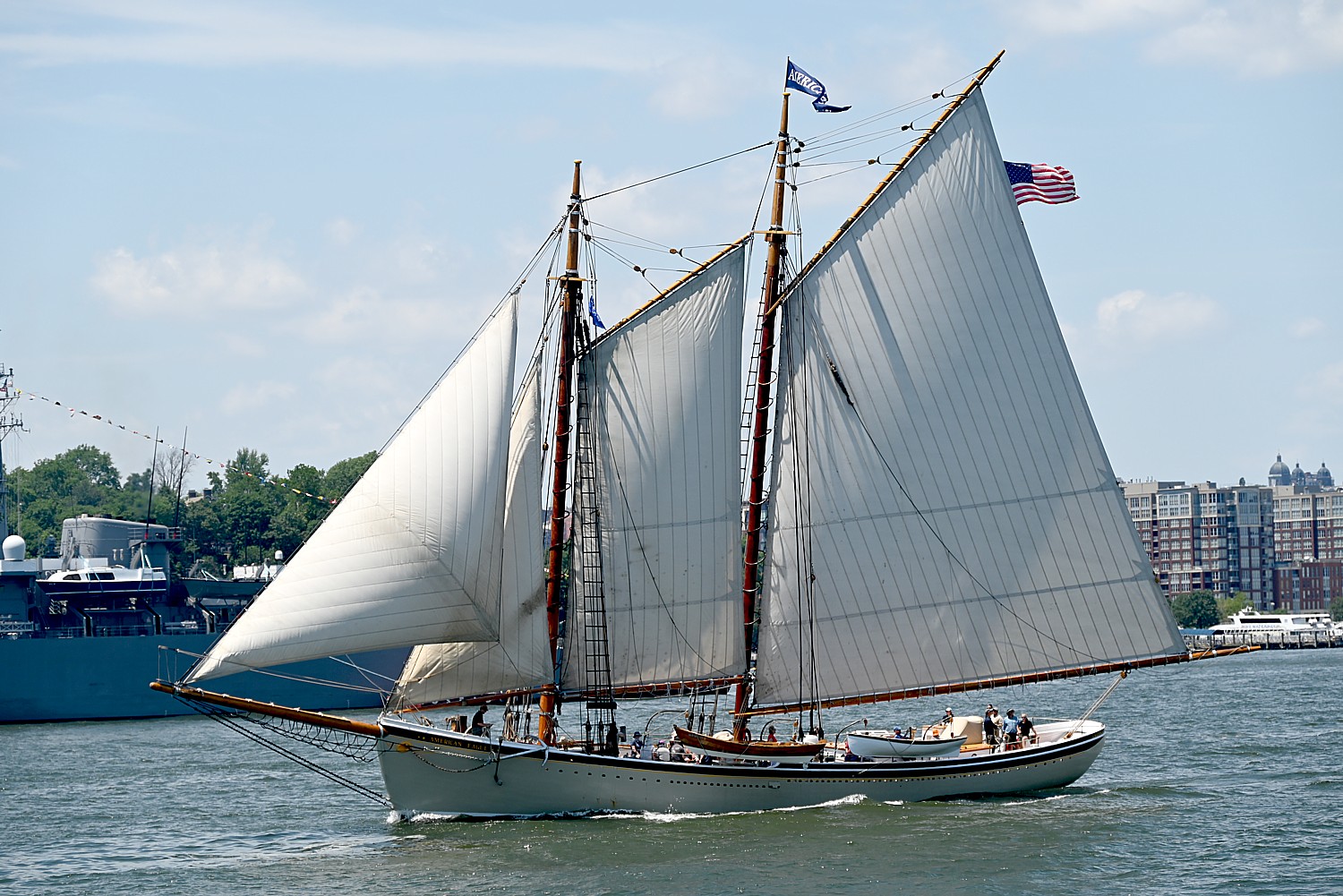
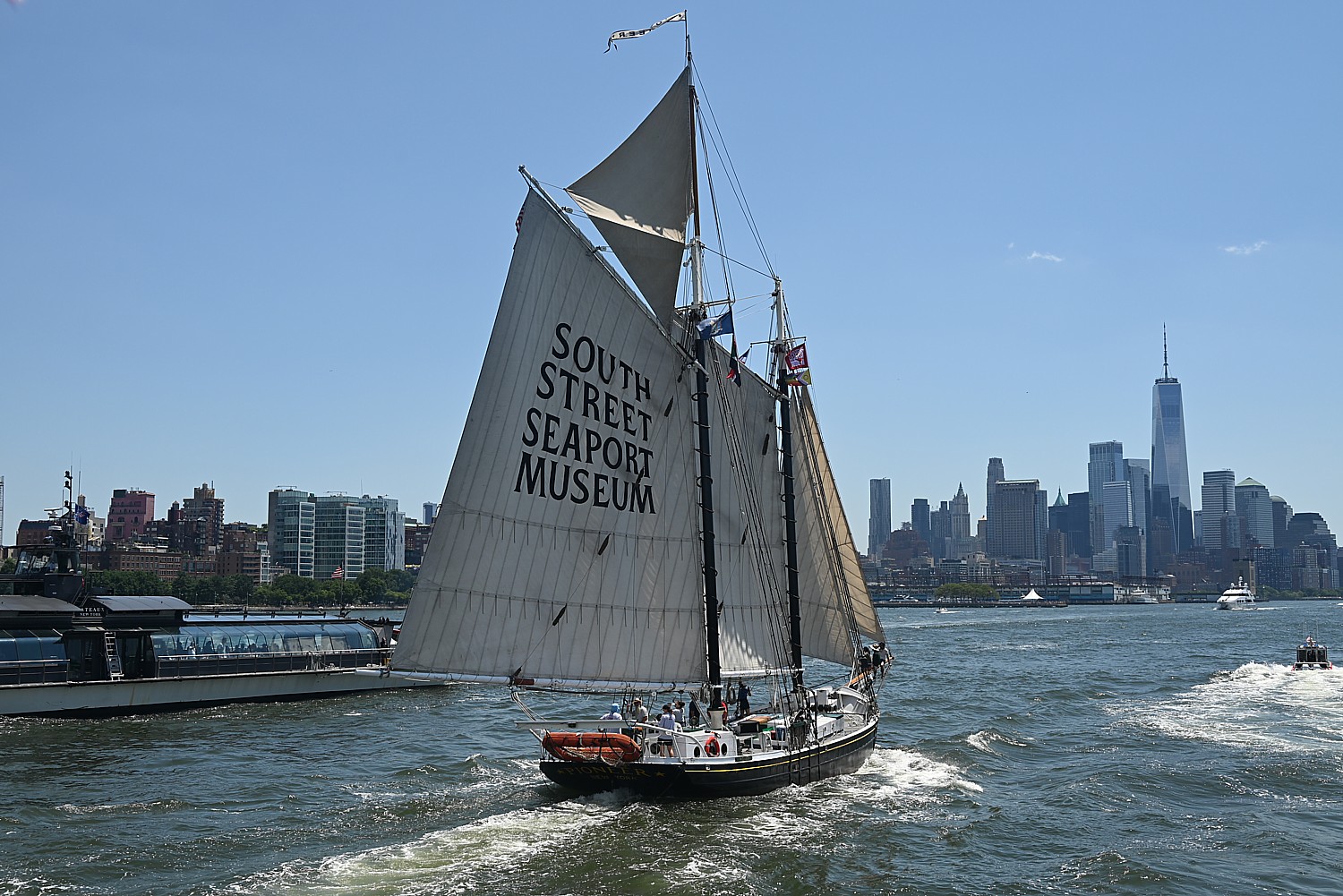
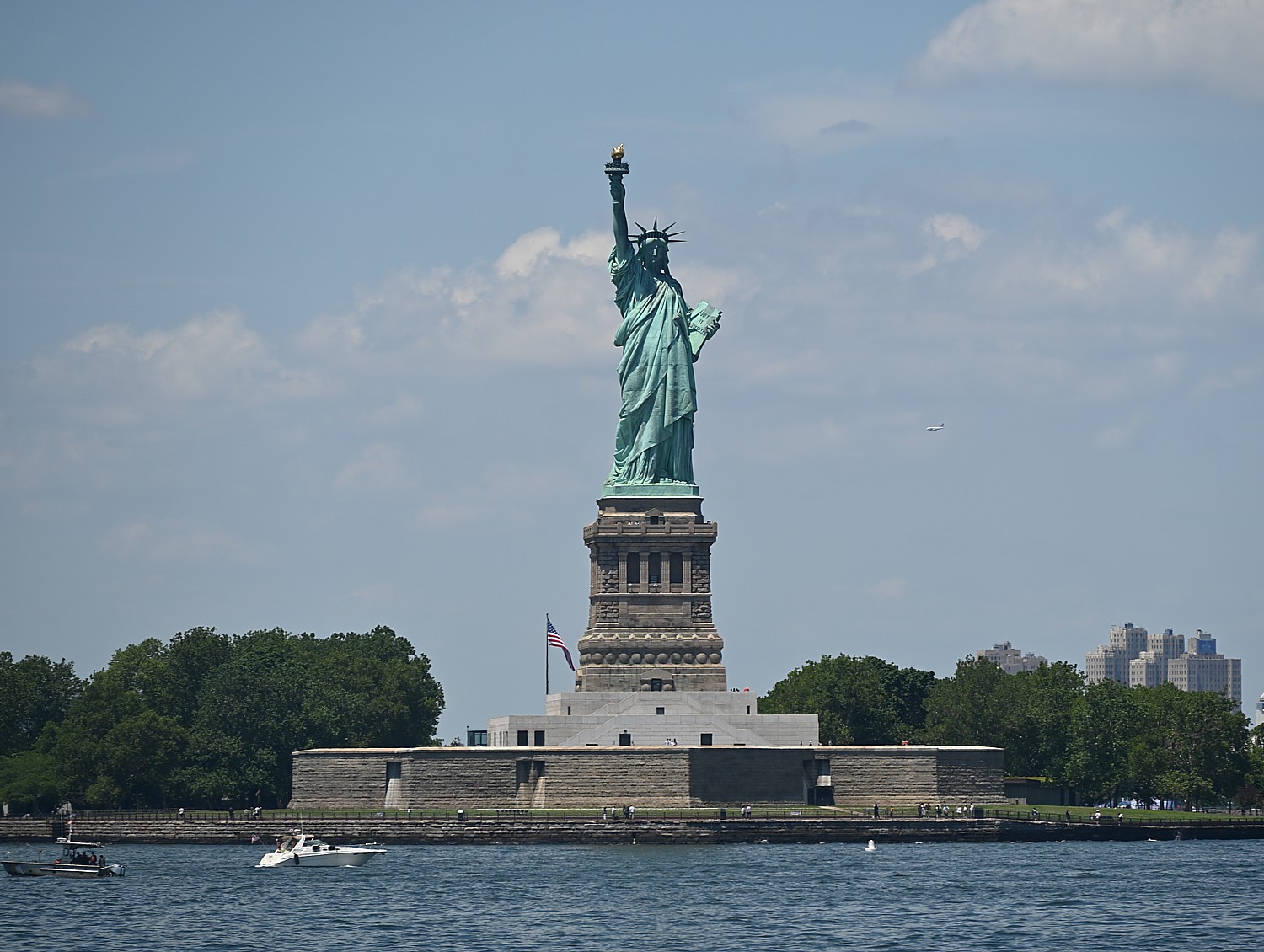
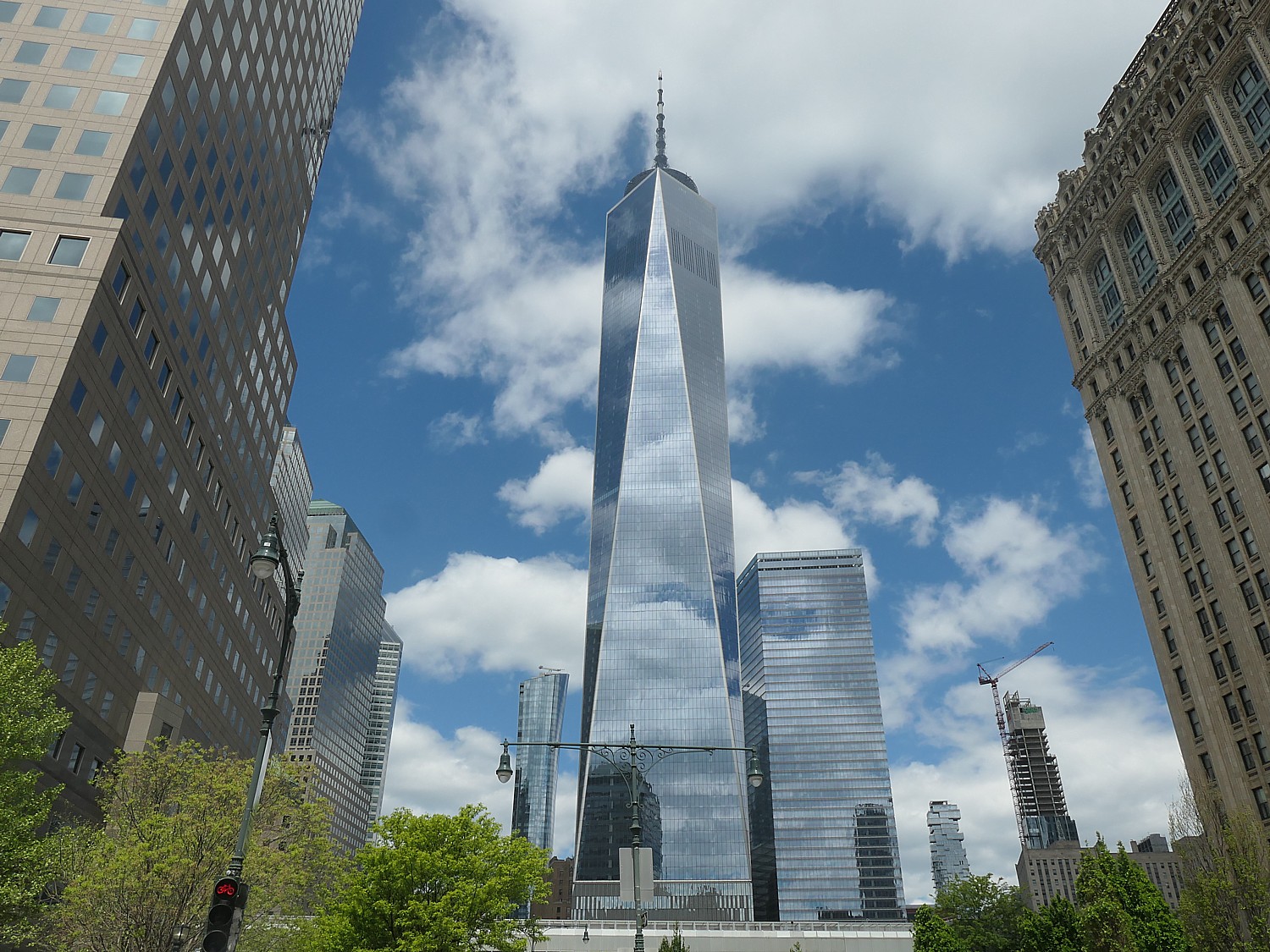
An estimated 6 million spectators lined 15 miles of waterfront to see the historic Parade of Sail in New York City on July 4, 2026, braving nearly 100-degree heat. They clearly could not resist the spectacular, once in an eon sight of more than 40 tall ships and 30 navy vessels from 20 countries, carrying 20,000 sailors, sailing into New York Harbor and up the Hudson River to commemorate America’s 250th anniversary of Independence, in what was billed “the largest-ever flotilla of tall ships”. Many made themselves available for public visits during the six-day festival, July 3-7.
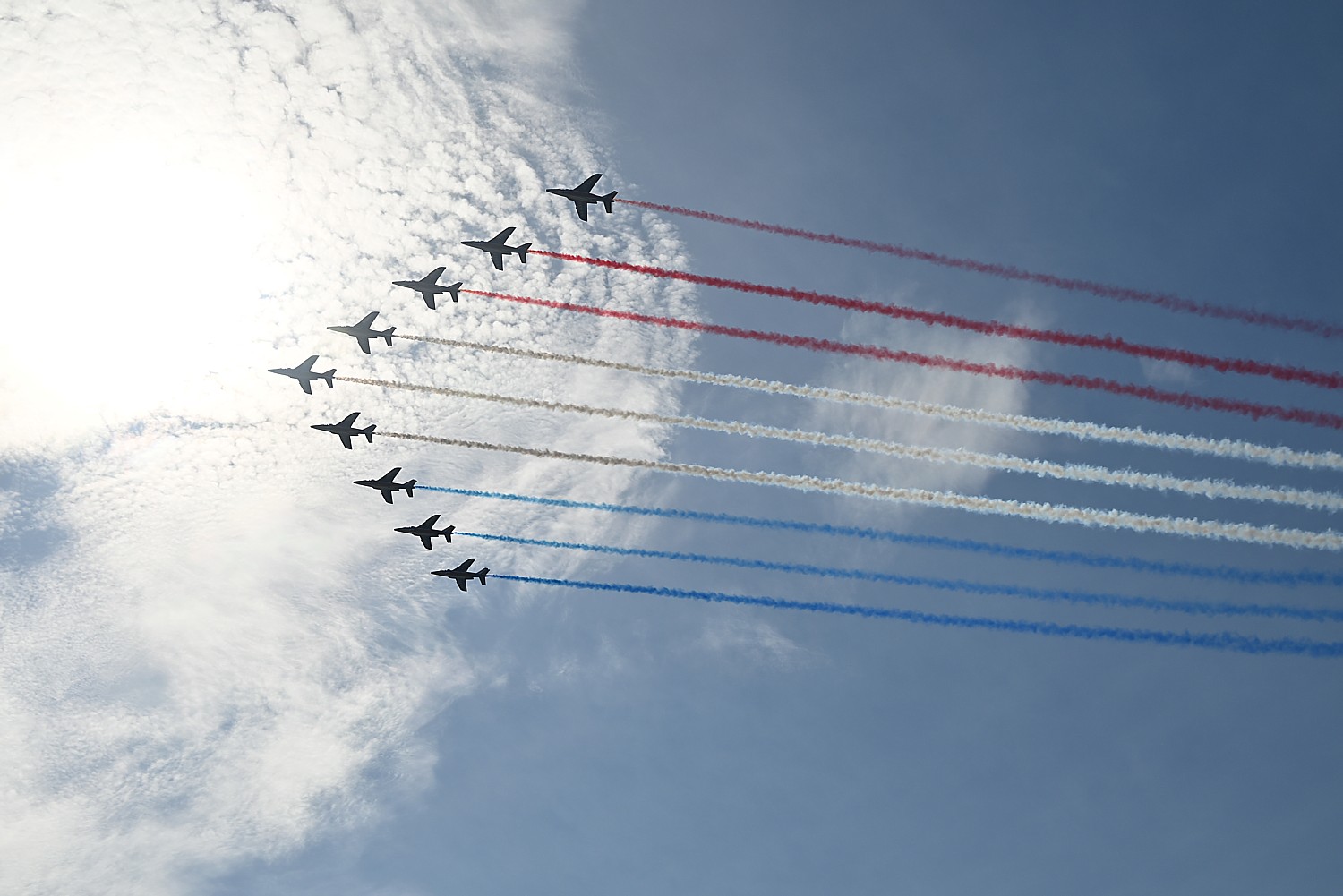
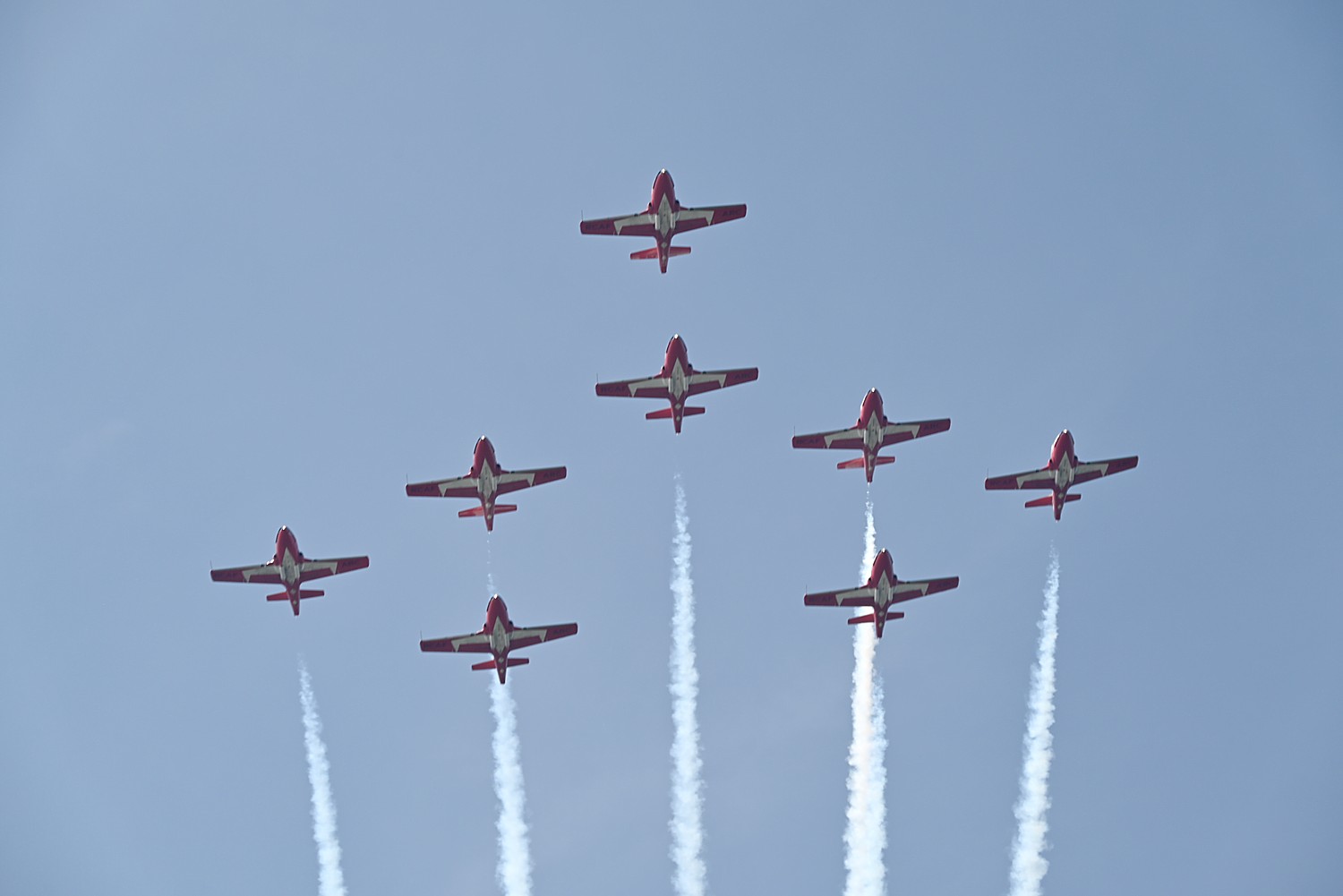
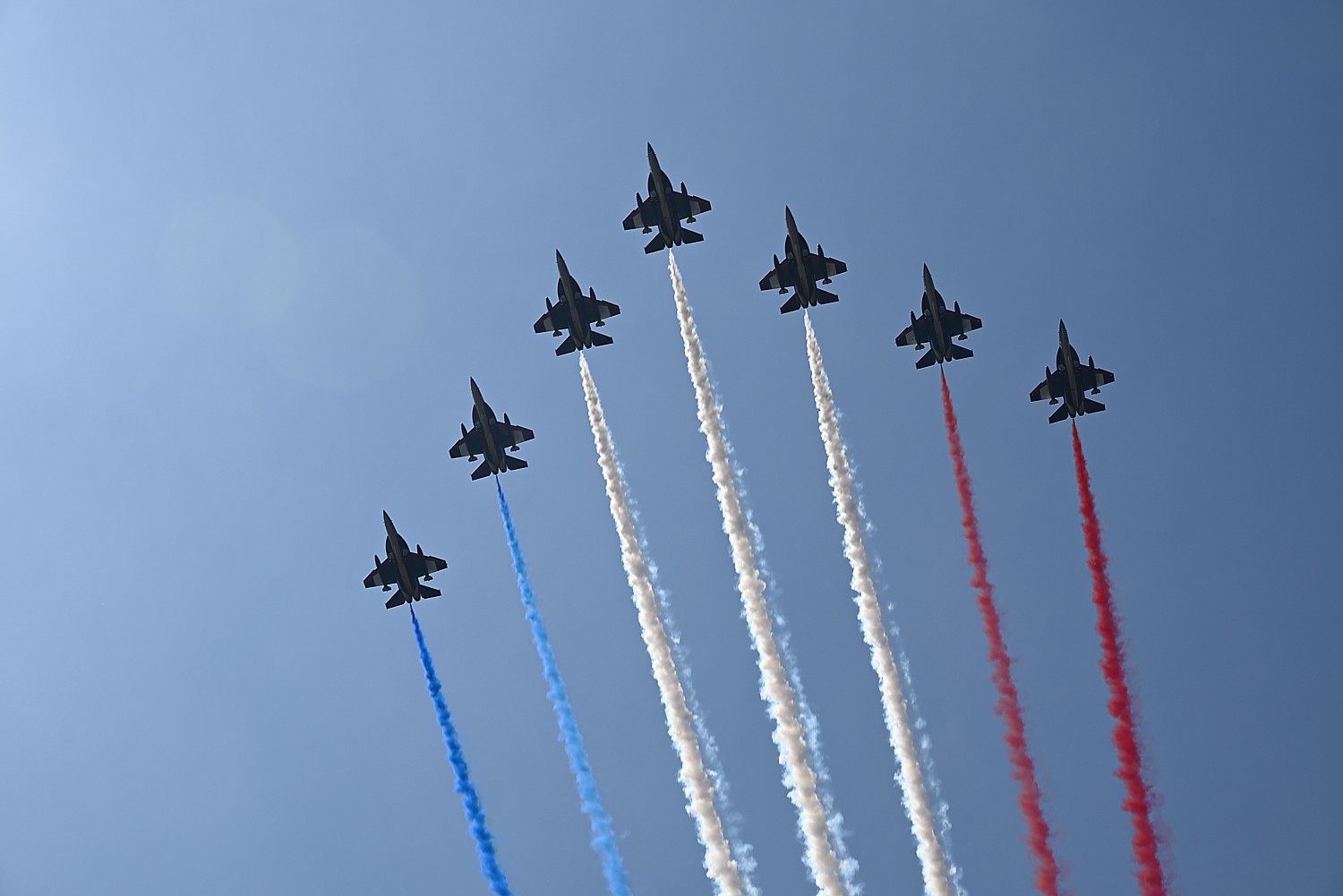
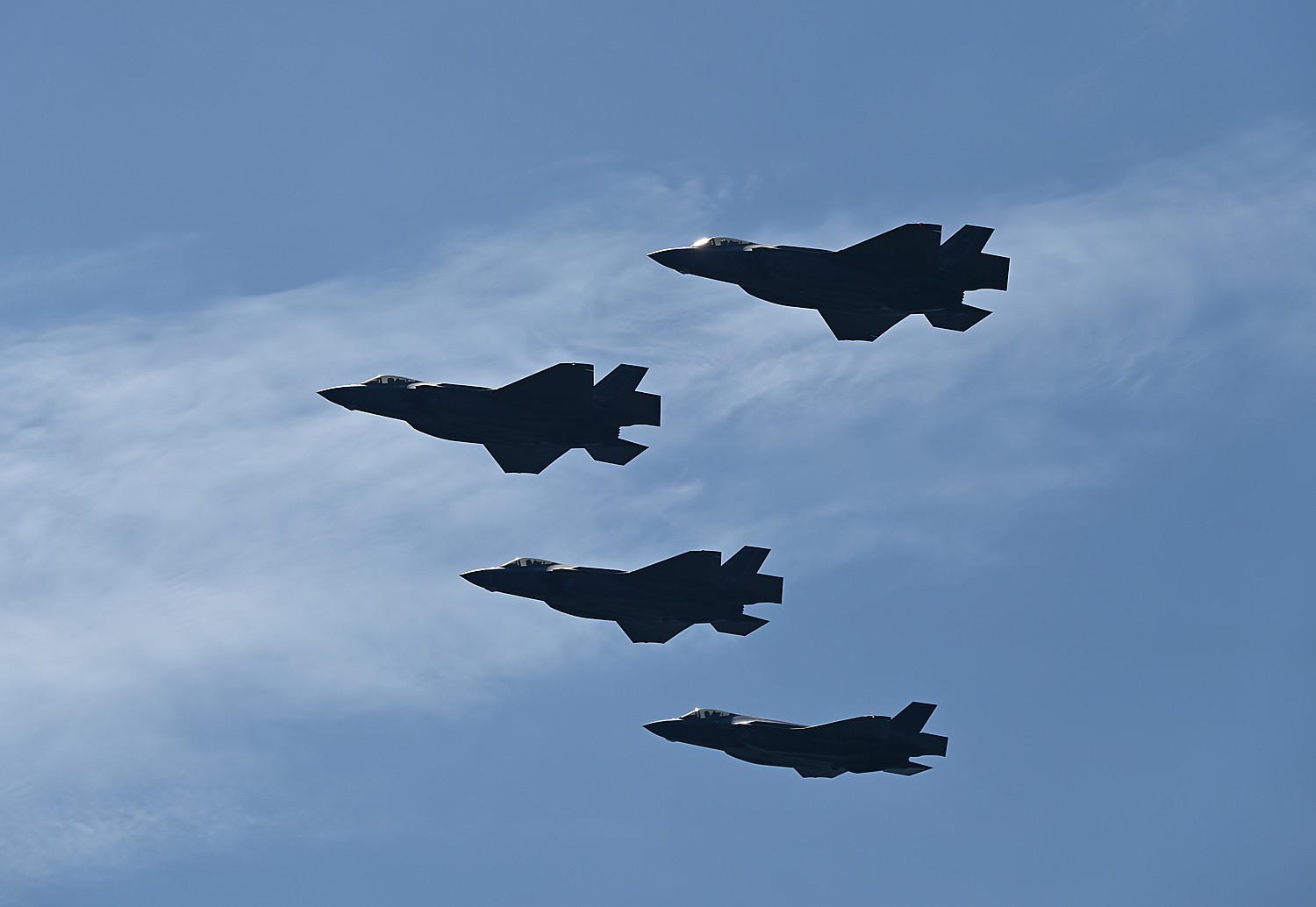
The Parade of Sail was accompanied by what was hailed as one of the longest fly-overs ever – nearly 200 aircraft – led by the U.S. Navy Blue Angels.
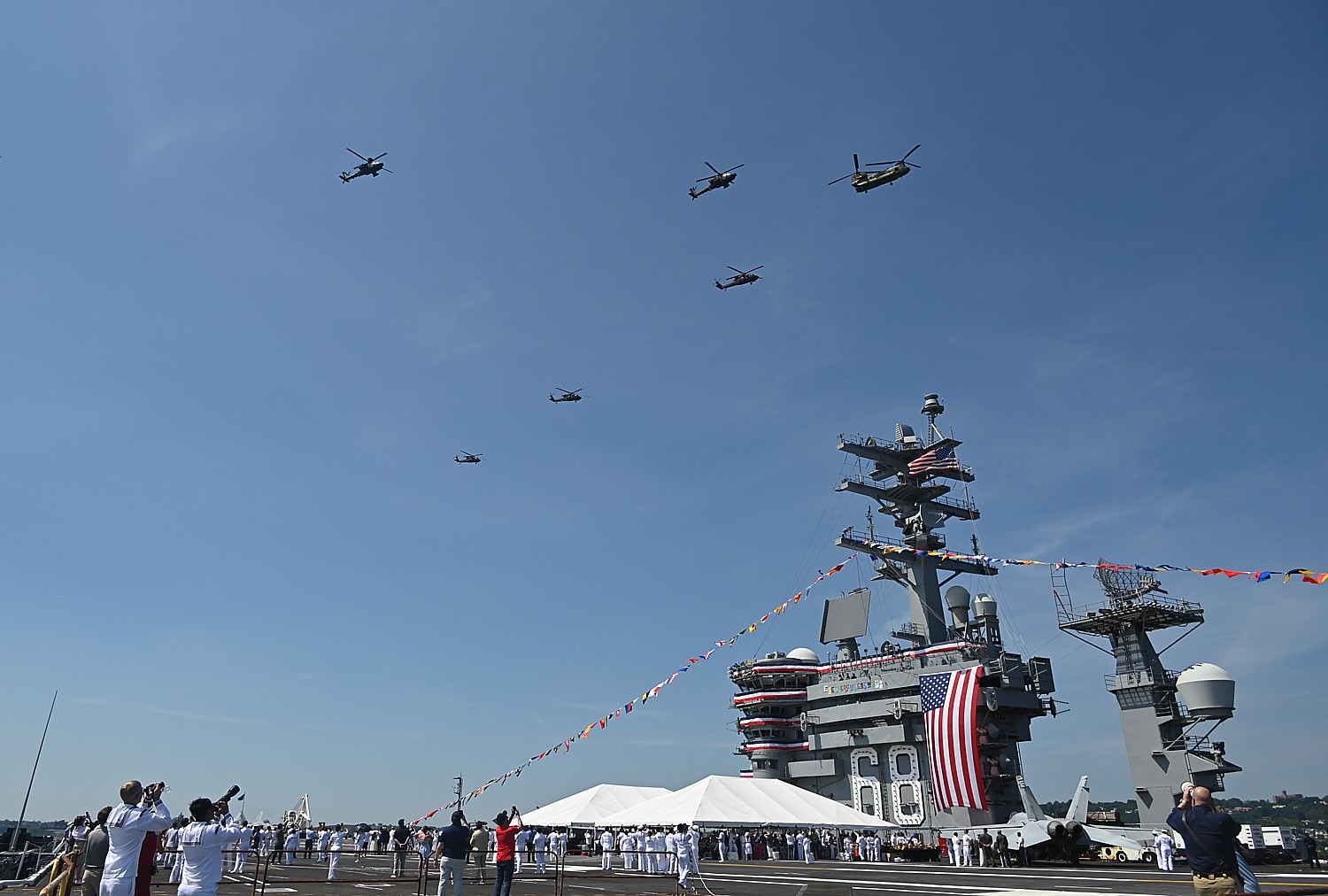
Just before the tall ship parade, the Acting Secretary of the Navy boarded the USS Farragut and proceeded slowly past about 30 U.S. and allied military vessels all at anchor on the west side of the Hudson River, with the aircraft carrier, the USS Nimitz, the lead in The International Naval Review. The International Naval Review (INR 250) has only occurred six times previously in U.S. history.
They began coming at 2 a.m, 3 a.m., the numbers continue to swell until by 10 a.m., there were well over 2 million people lining Broadway and cramming the streets leading to it, dozens thick, to see their heroes, the 2026 NBA Champions, the New York Knicks. It was a historic outpouring for a historic team and an historic occasion – the team’s first NBA Championship in 53 years, but also, how they did it. Yes, in a comfortable 5, losing only game 3, but each game, coming from behind, as much as an unheard of 29 points – to win four of five in the last minutes, last minute, last seconds, last second.
The throngs who came, swelled with joy and pride, did what New Yorkers do best – come together. You might consider the strain on getting to the parade on crammed subways, blocked sidewalks so crowded you couldn’t walk in any direction. But New Yorkers are kind, considerate, good humored and resilient – they somehow opened up space to get through, found a space or something to climb up and stand on.
More than two million lined the Canyon of Heroes, from Battery Park to City Hall, with thousands more cramming sidestreets to the point of b =eing impassable. They waited for hours before the parade even started, cheering, “Knicks in Five,” and finding ways to amuse themselves – playing with a balloon and when a squirrel somehow made its way through the crowd and dashed across Broadway, sent up giddy cheers.
It was as Mayor Zohran Mamdani said at the “keys to the city” ceremony that followed the parade: “Over these past weeks, our city has come together as one… So often when this city comes together it is because we are forced to by tragedy or adversity. What a gift to be brought together by pure, unfiltered. of joy.”
Mayor Zohran Mamdani rode the first float (shooting his own video with a broad smile) and other dignitaries like Governor Kathy Hochul and Public Advocate Jumaane Williams. Celebrities rode along like the Knicks #1 Fan, Spike Lee who rode on Jalen Brunson’s float. Fans also got to see Knicks Legends Knicks including Patrick Ewing, Walt “Clyde” Frazier, Carmelo Anthony, Bernard King, and John Starks.
The Knicks, themselves, were divided among several floats – or in Mitchell Robinson’s case, drove his own truck. Perhaps the biggest moment came when the undeniable MVP Jalen Brunson (he scored 45 of the Knicks’ 94 points in the series-clinching Game 5 in San Antonio), rode down next to his father, Rick Brunson, cradling his son’s MVP trophy. Rick Brunson was also a Knicks standout the last time New York reached the NBA Finals in 1999 before 2026 and became an assistant coach with the Knicks in 2022 the same year his son joined the team.
Just as the crowds waved signs, the people on the floats waved signs thanking fans for their support.
A mutual love fest. It was a celebration of community, with high school basketball champions, local school bands, the workers who make MSG run, and representatives of city departments participating.
People didn’t just hang out from windows in tall buildings, they stood out on ledges, threw what works as confetti and rolled out banners.
By Karen Rubin, editor@news-photos-features.com, news-photos-features.com
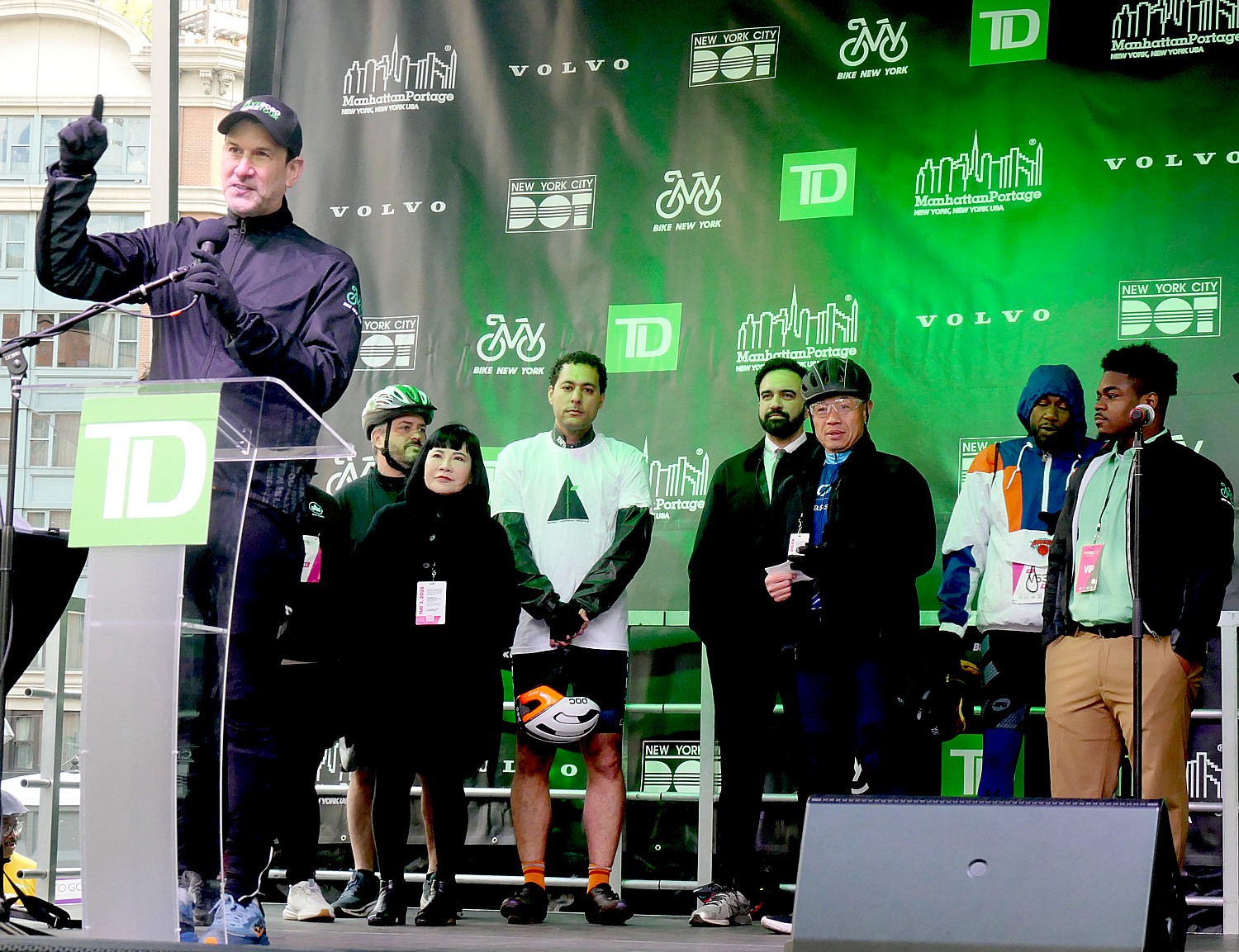
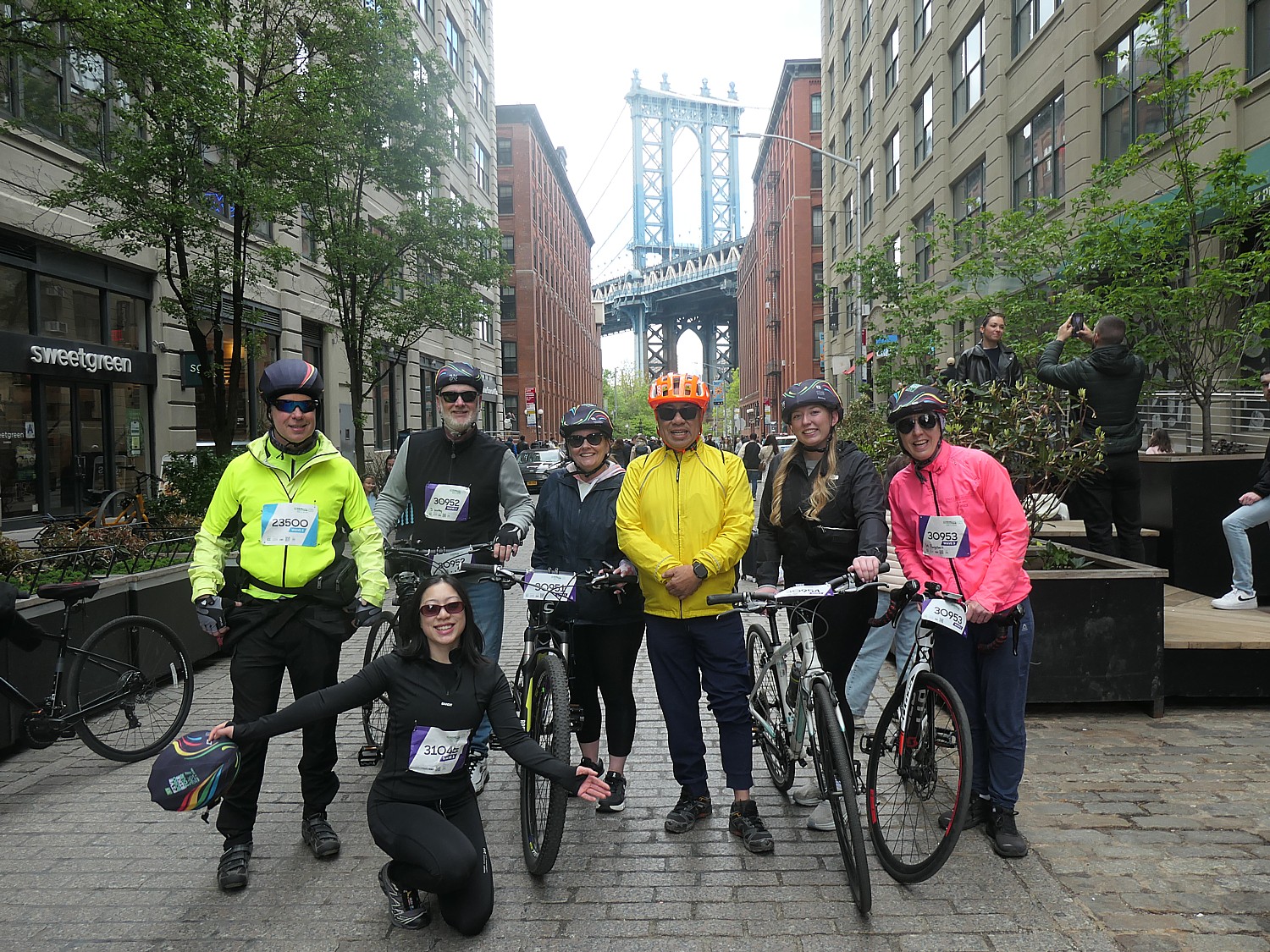
An Illinois woman who came to New York City expressly for the TD 5 Boro Bike Tour on Sunday, May 3, 2026, was gleeful, saying “you get to see New York in a way you never would otherwise.”
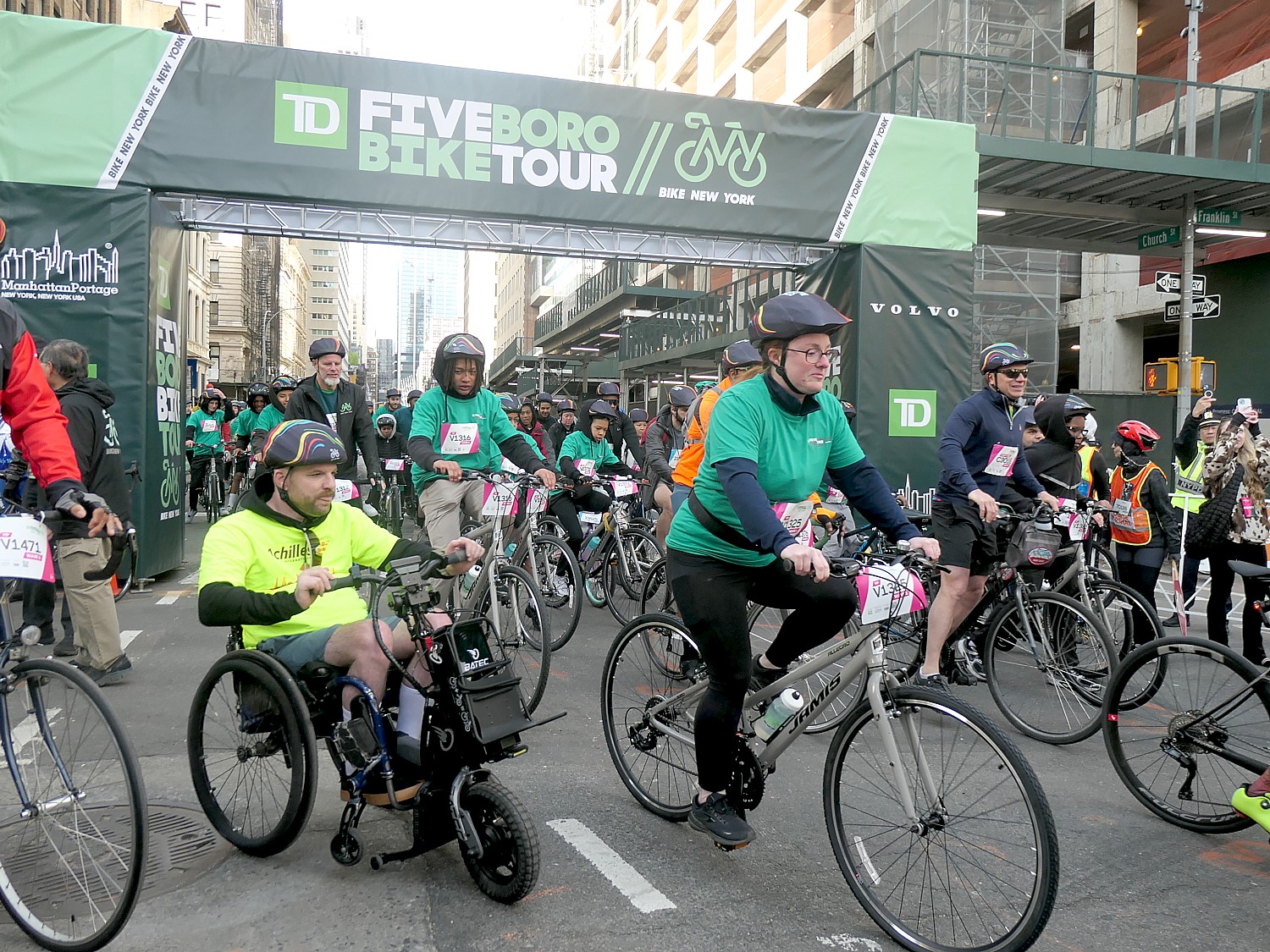
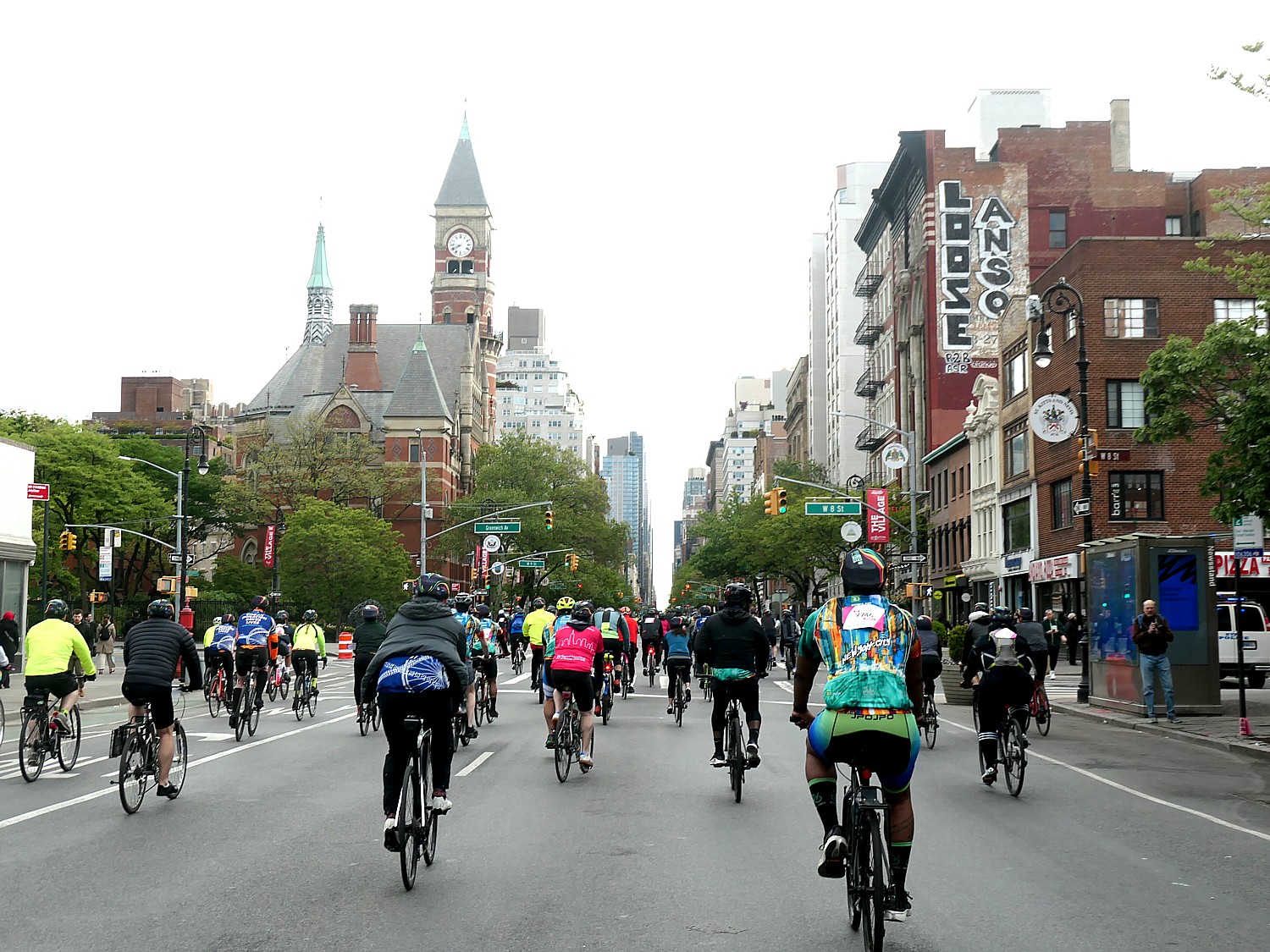
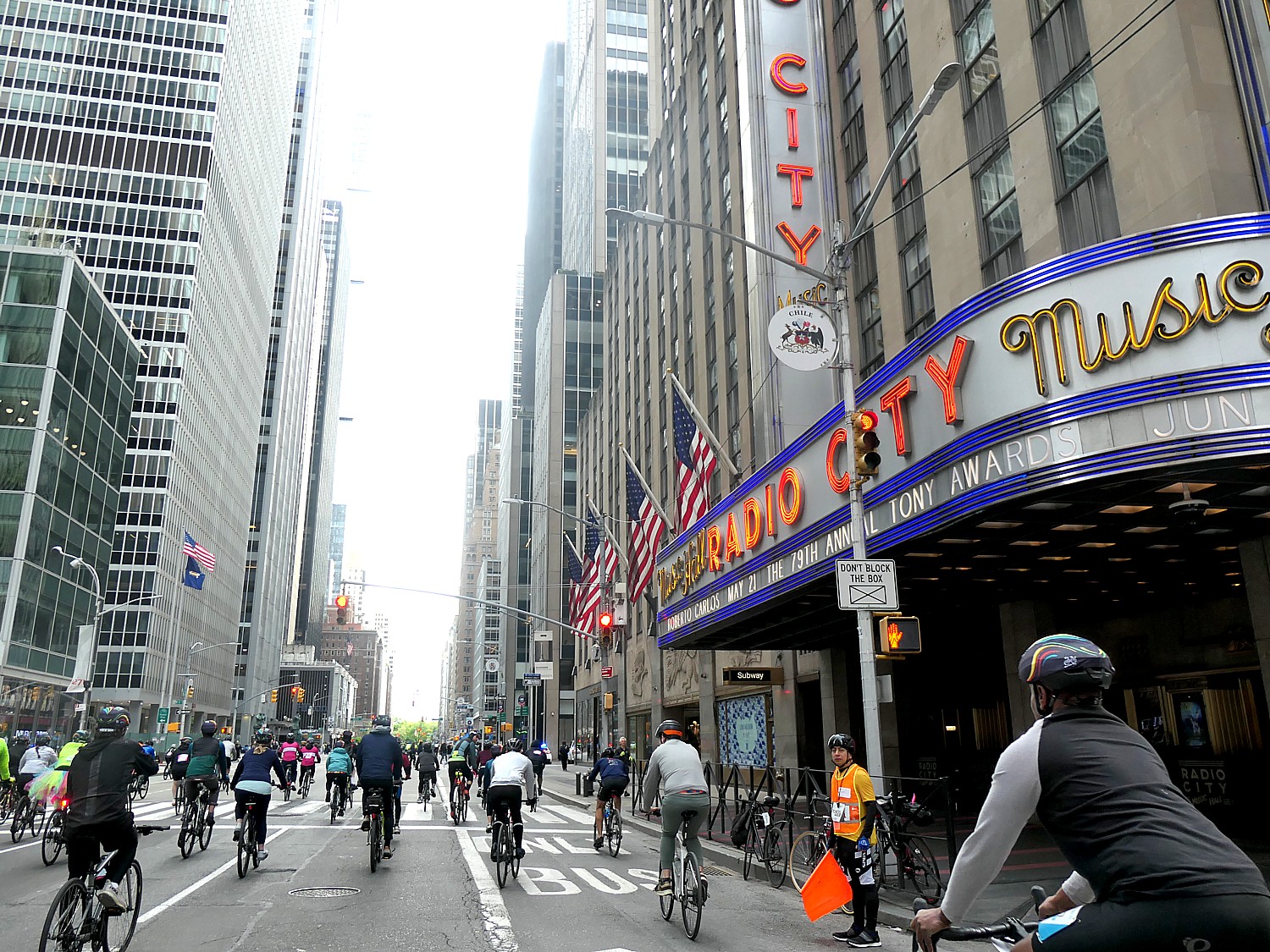
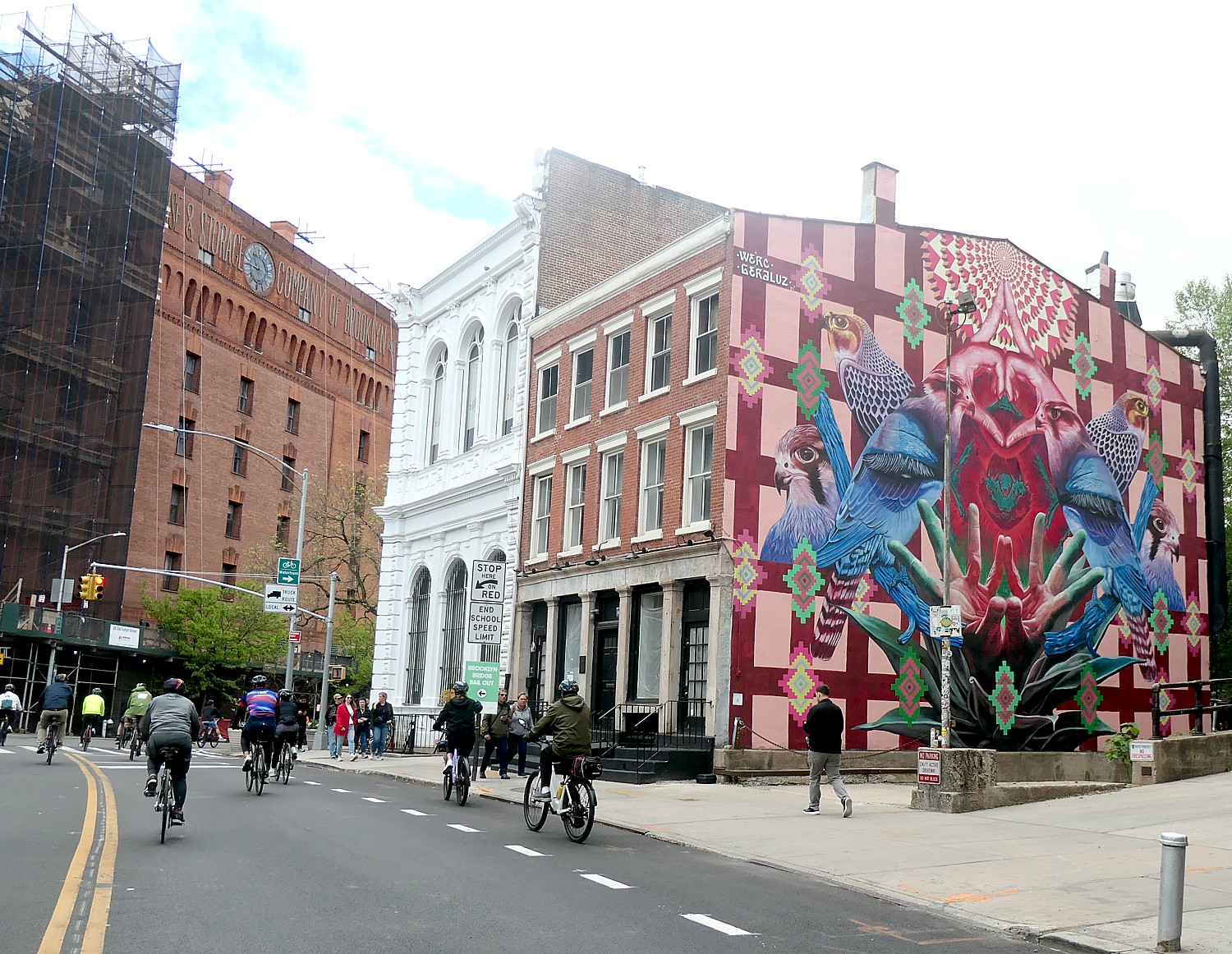
So true. That first burst through the arch, up 6th Avenue through Greenwich Village, up to Radio City Music Hall, then into Central Park, and through Harlem, with Cheerleaders and bands greeting you at each section, is so thrilling.
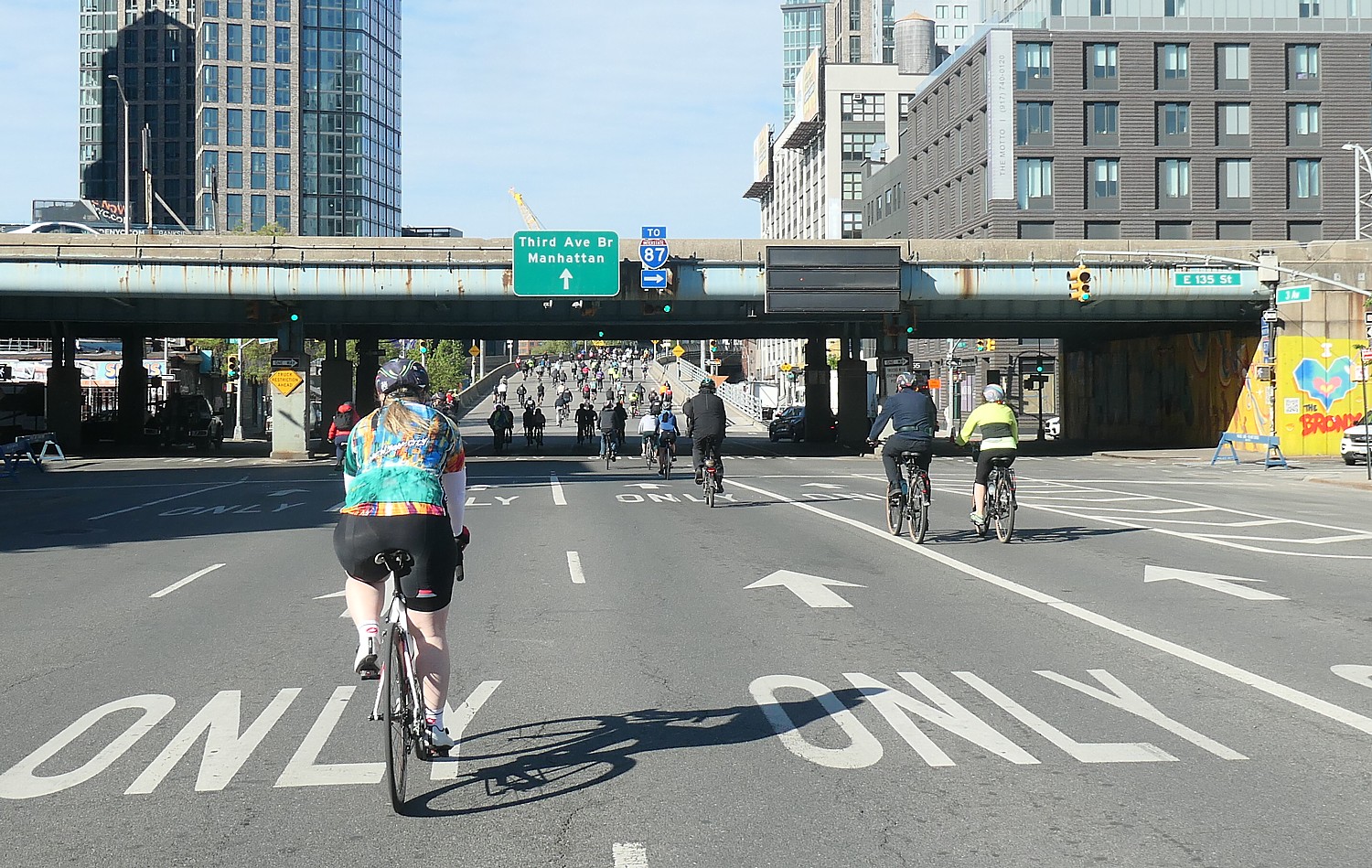
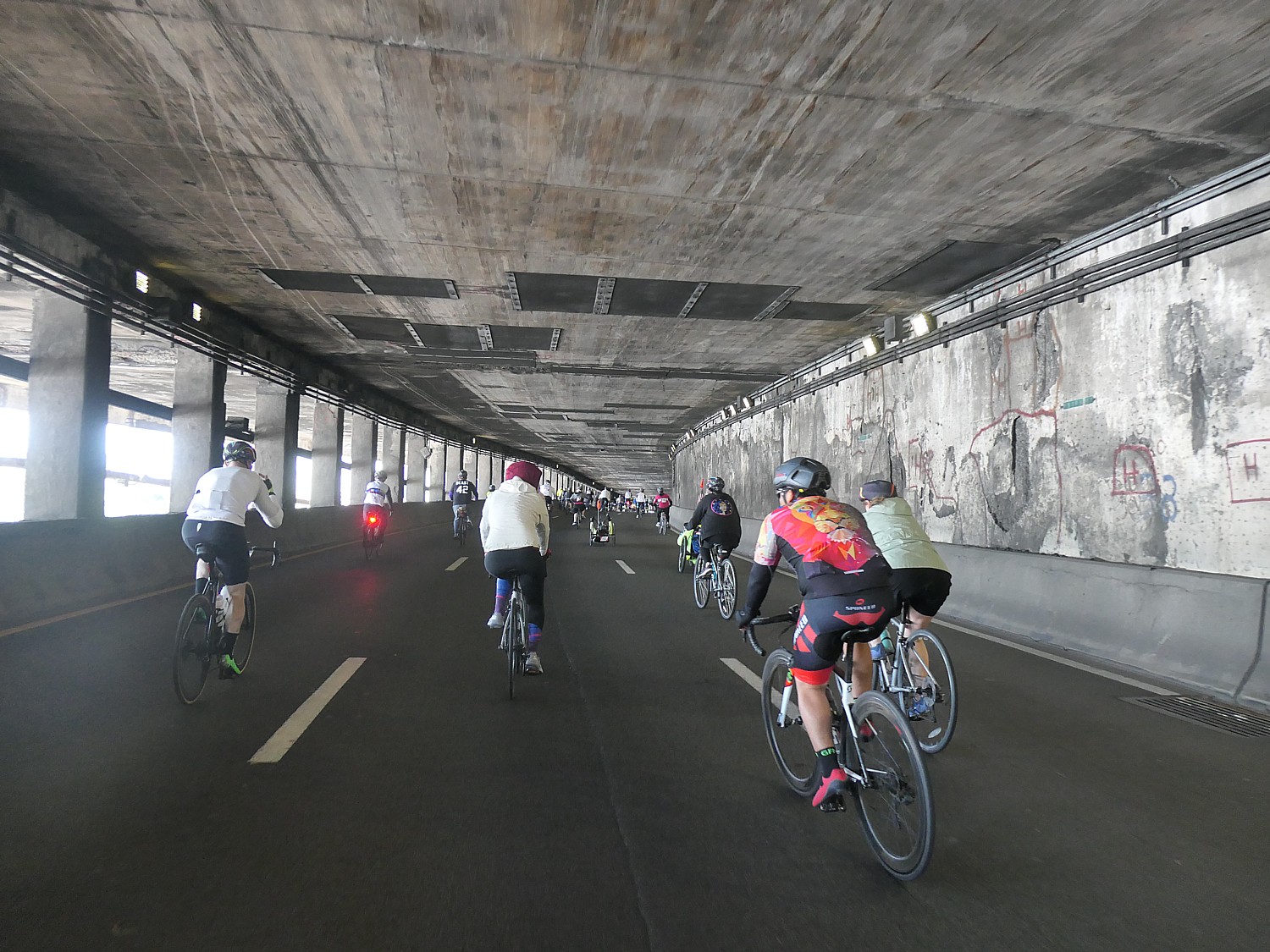
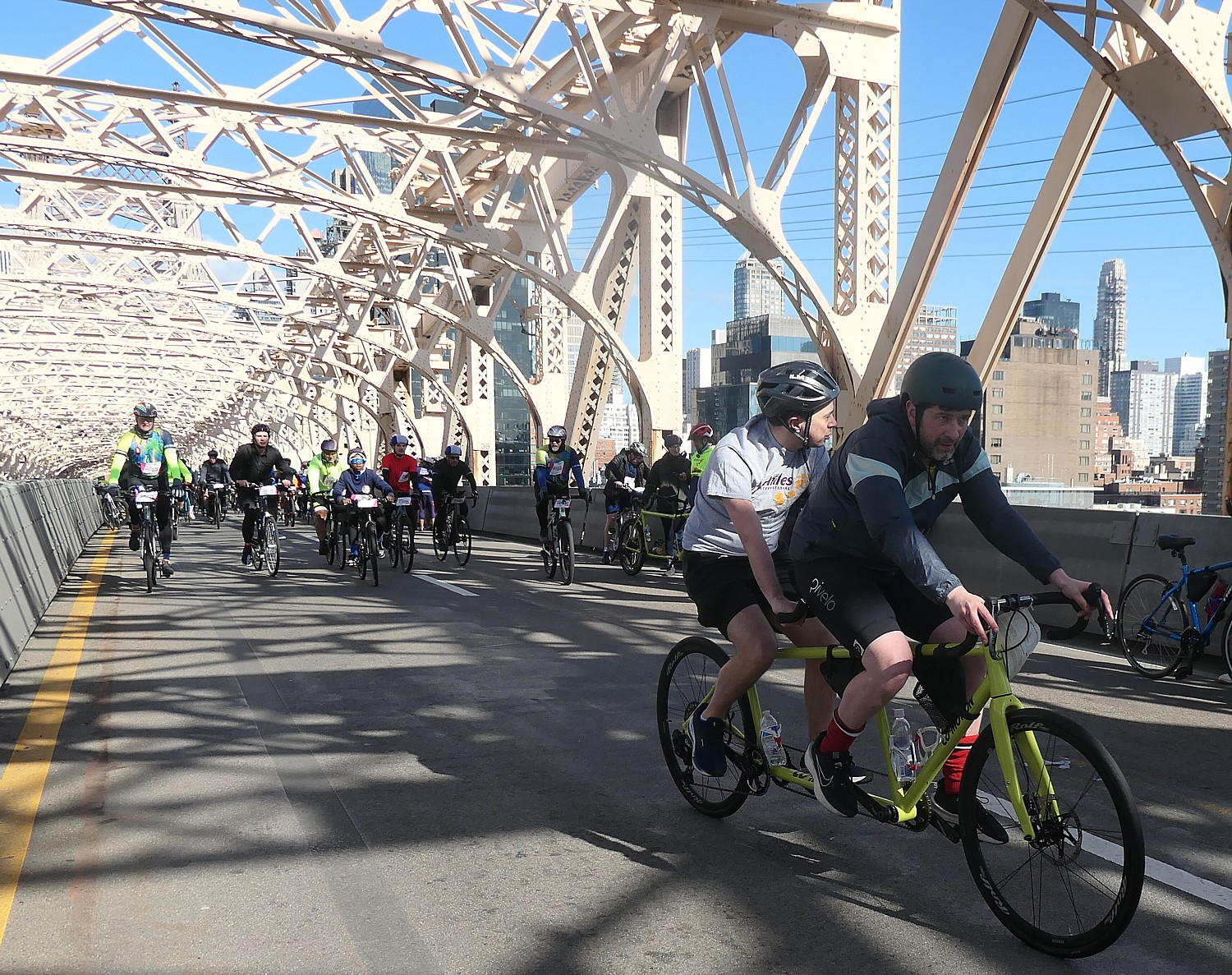
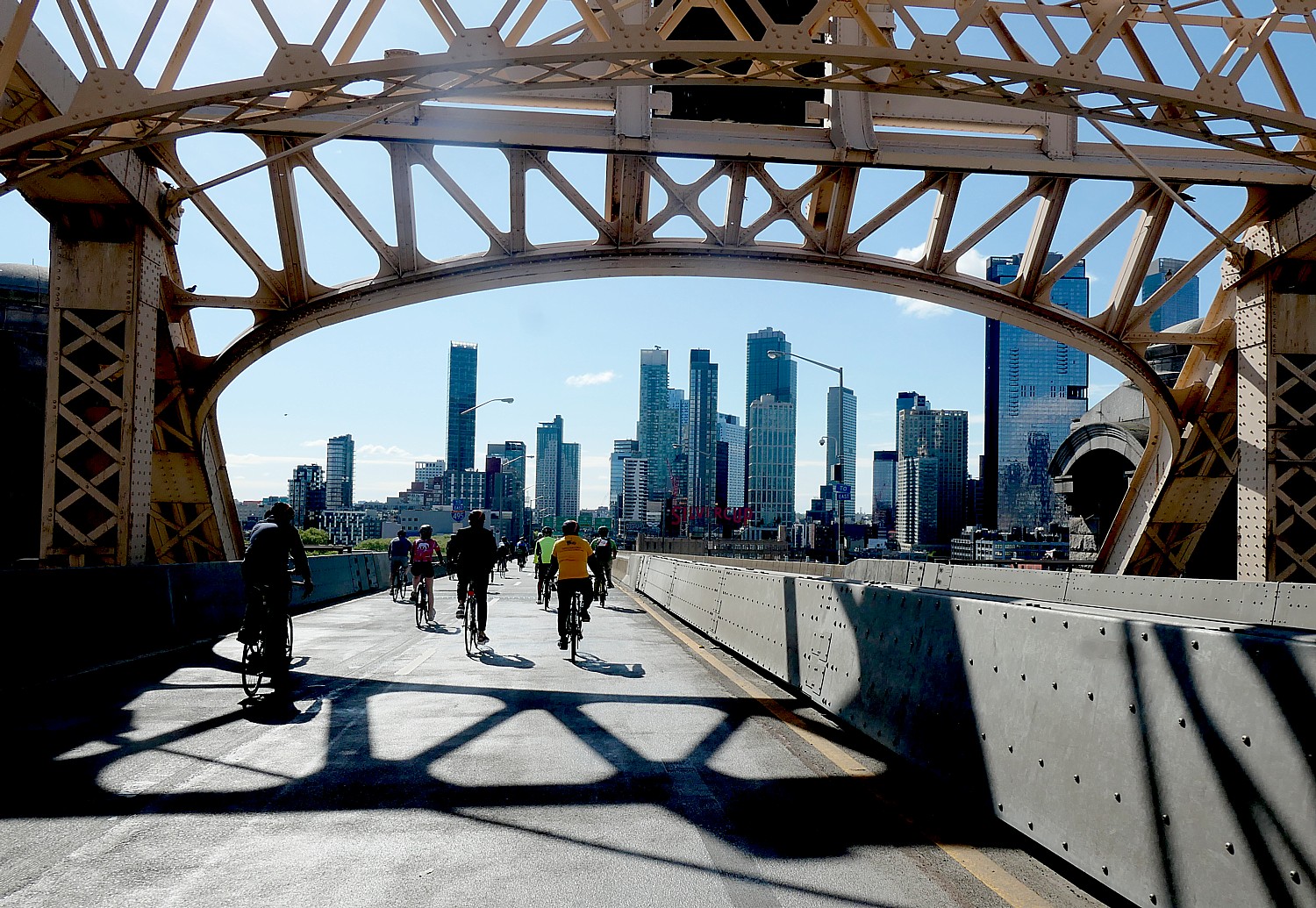
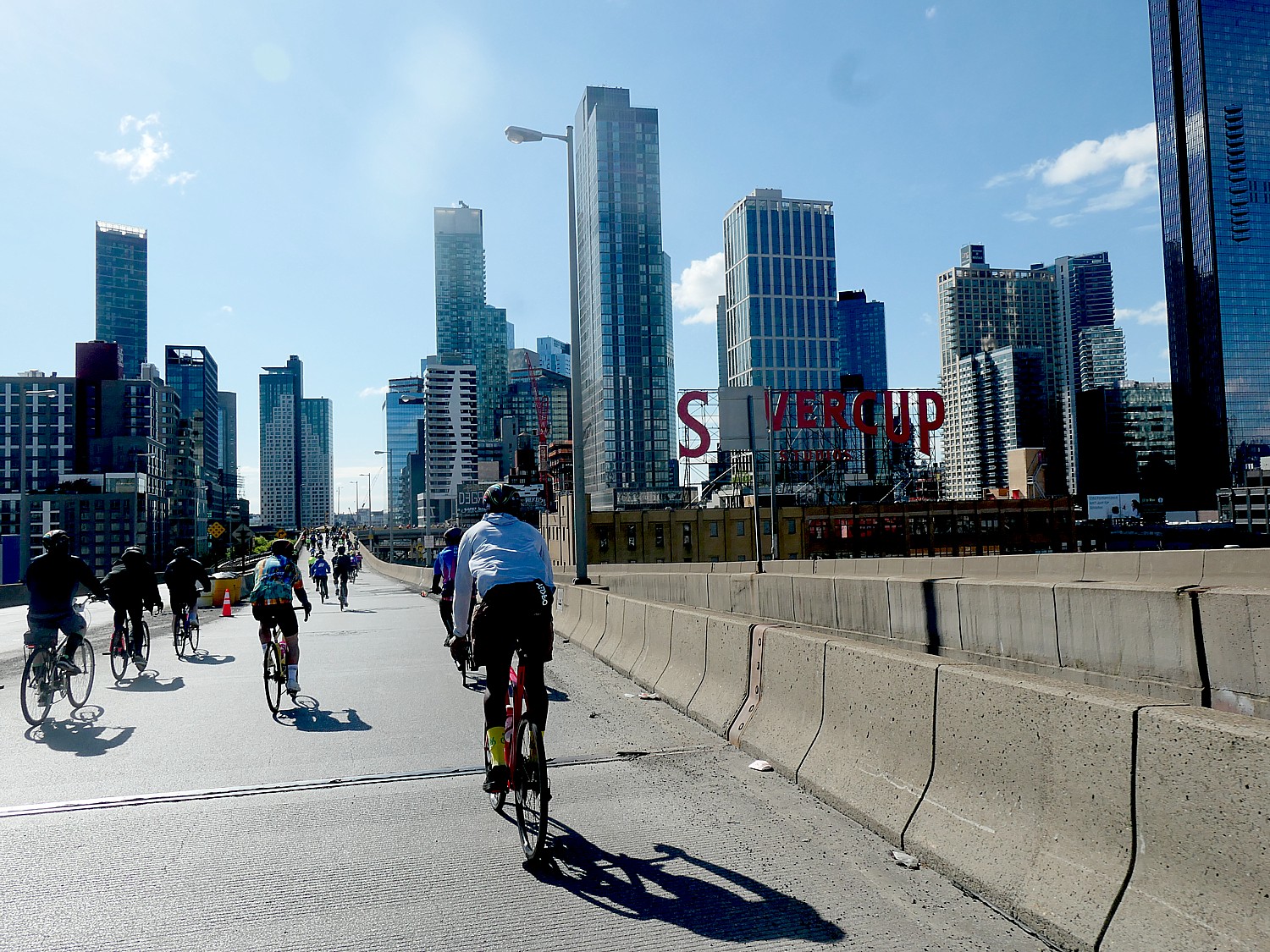
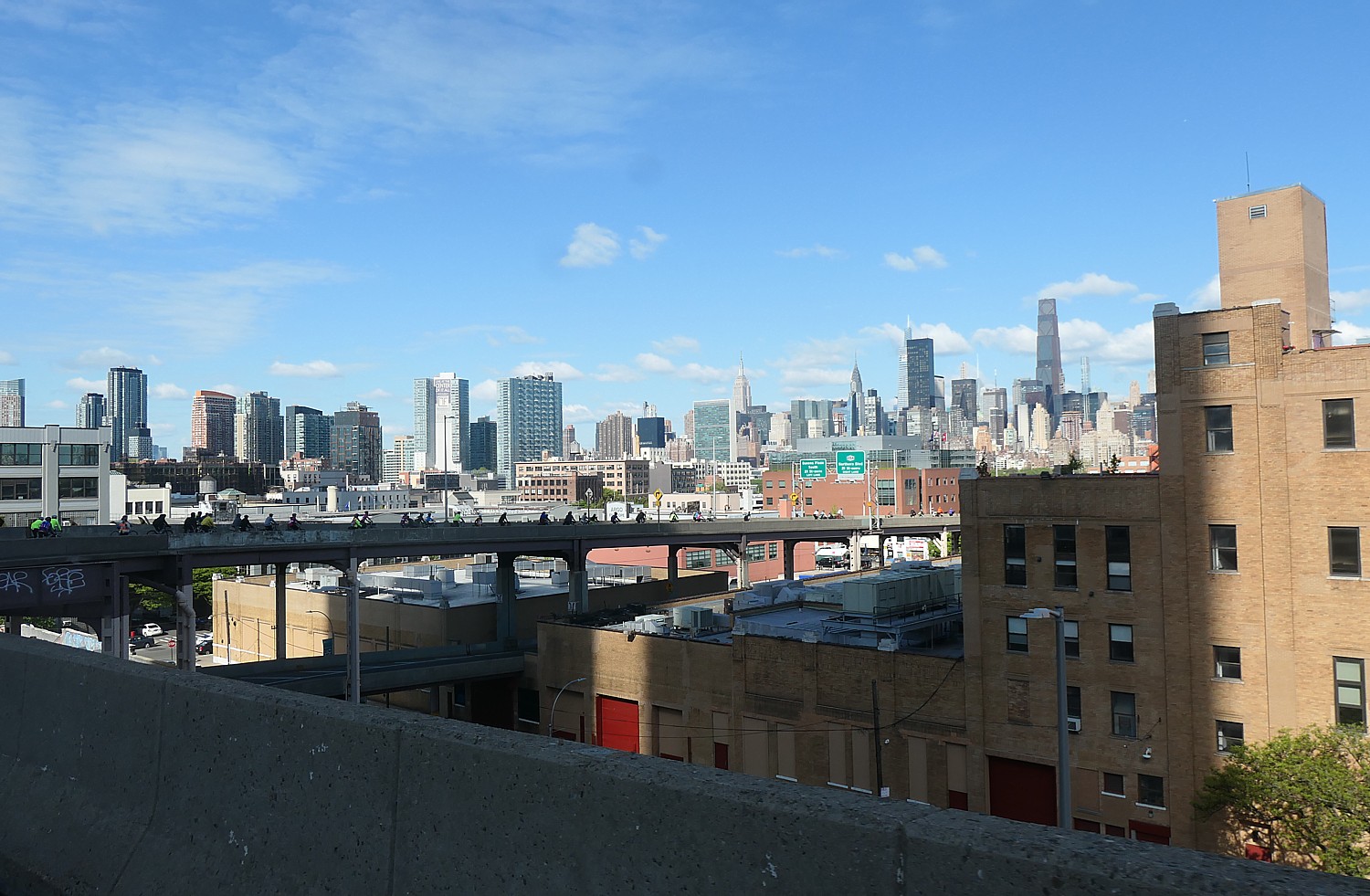
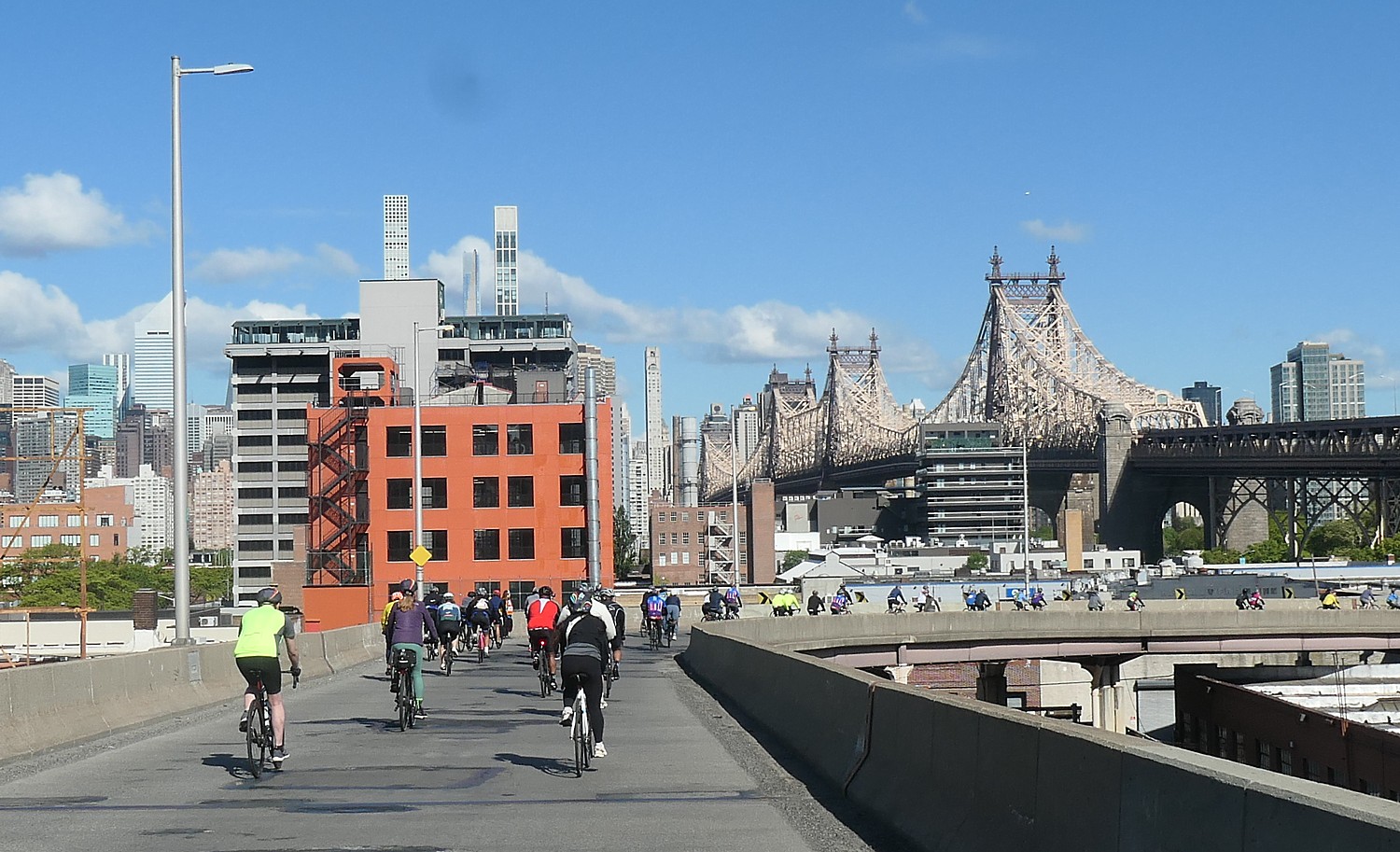
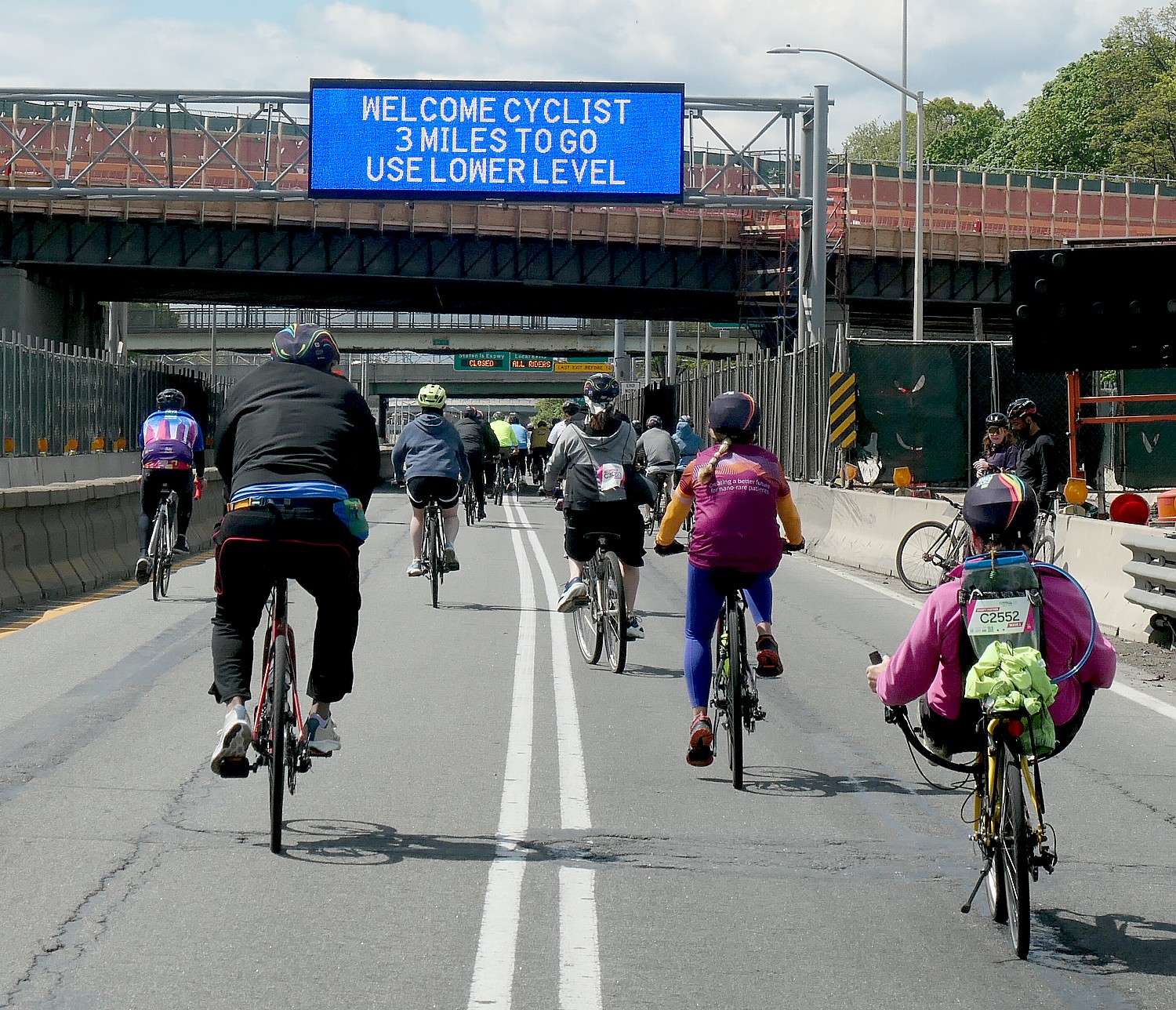
You would never get to ride down the FDR Highway, through tunnels (a surreal experience), over the Queensborough (59th Street) Bridge, seeing the famous Manhattan skyline on one side, and the iconic Silvercup Bakery sign on the other, then some of the most spectacular scenes of the ride as you ride the downward spiral from the bridge into Queens, and through neighborhoods in the Bronx, Queens, Brooklyn and Staten Island.
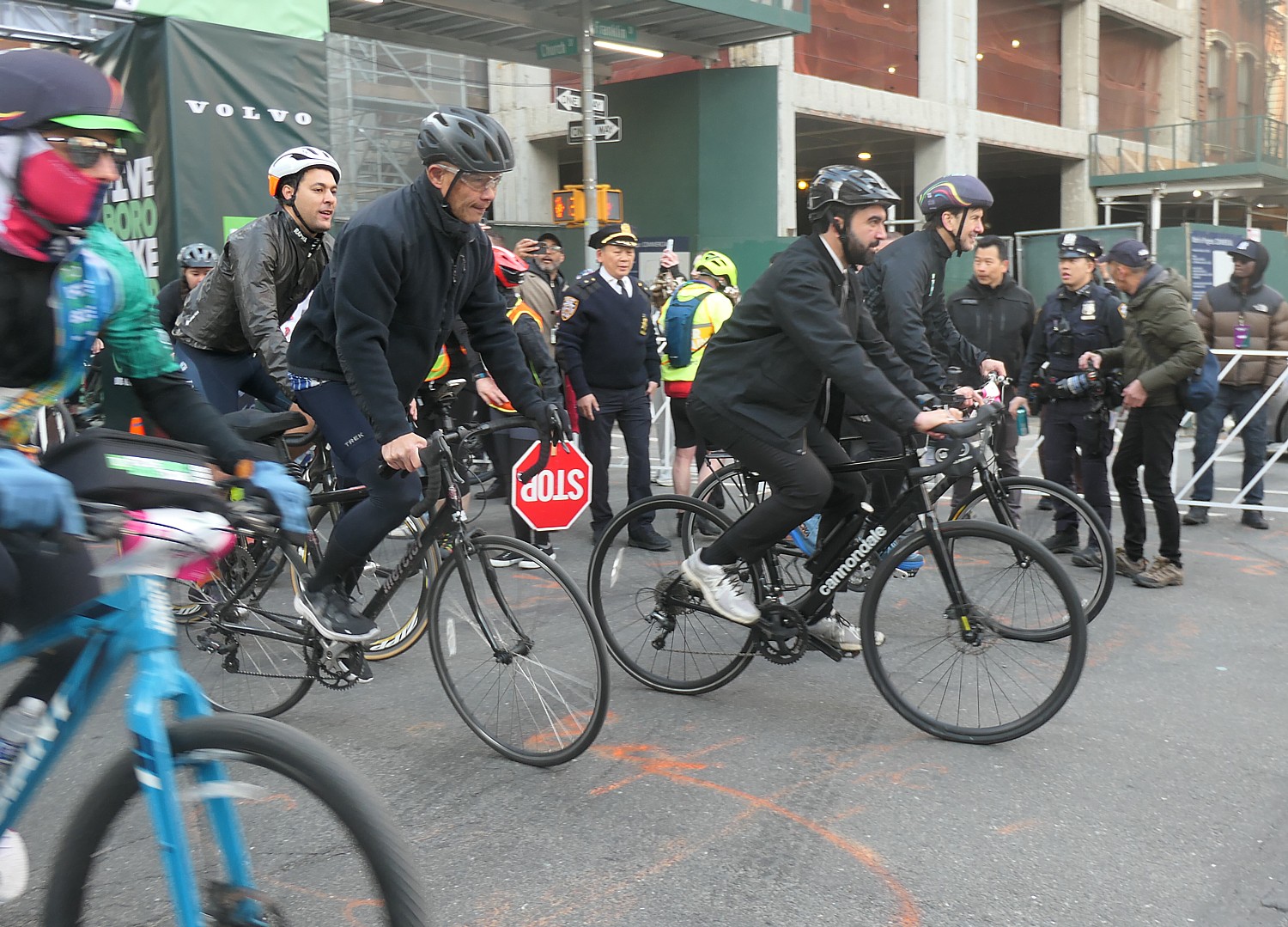
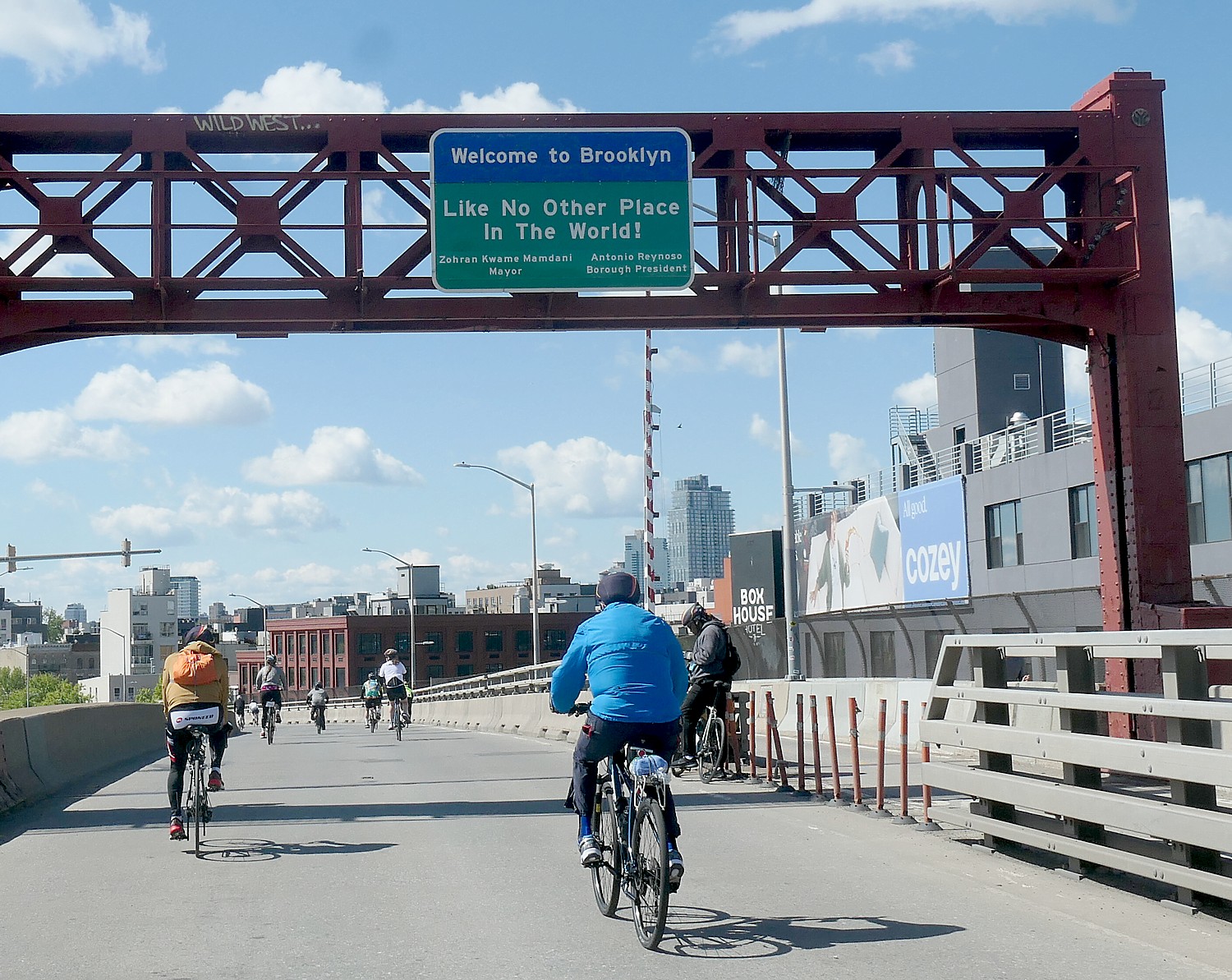
It is absolutely thrilling to have all the traffic rerouted for us, so we can ride 40 miles of New York City roads car-free – taking over the FDR, the Brooklyn-Queens Expressway, the Verrazano Bridge. You feel this awesome sense of power and importance (not to mention Mayor Zohran Mamdani made history as the first sitting mayor to ride the whole tour, but every year evokes such a sense of empowerment).
What you see is the spirit, the diversity, the vitality of New York City – especially the diversity – a brilliant tapestry. The artful, the whimsical, the humor, the compassion.
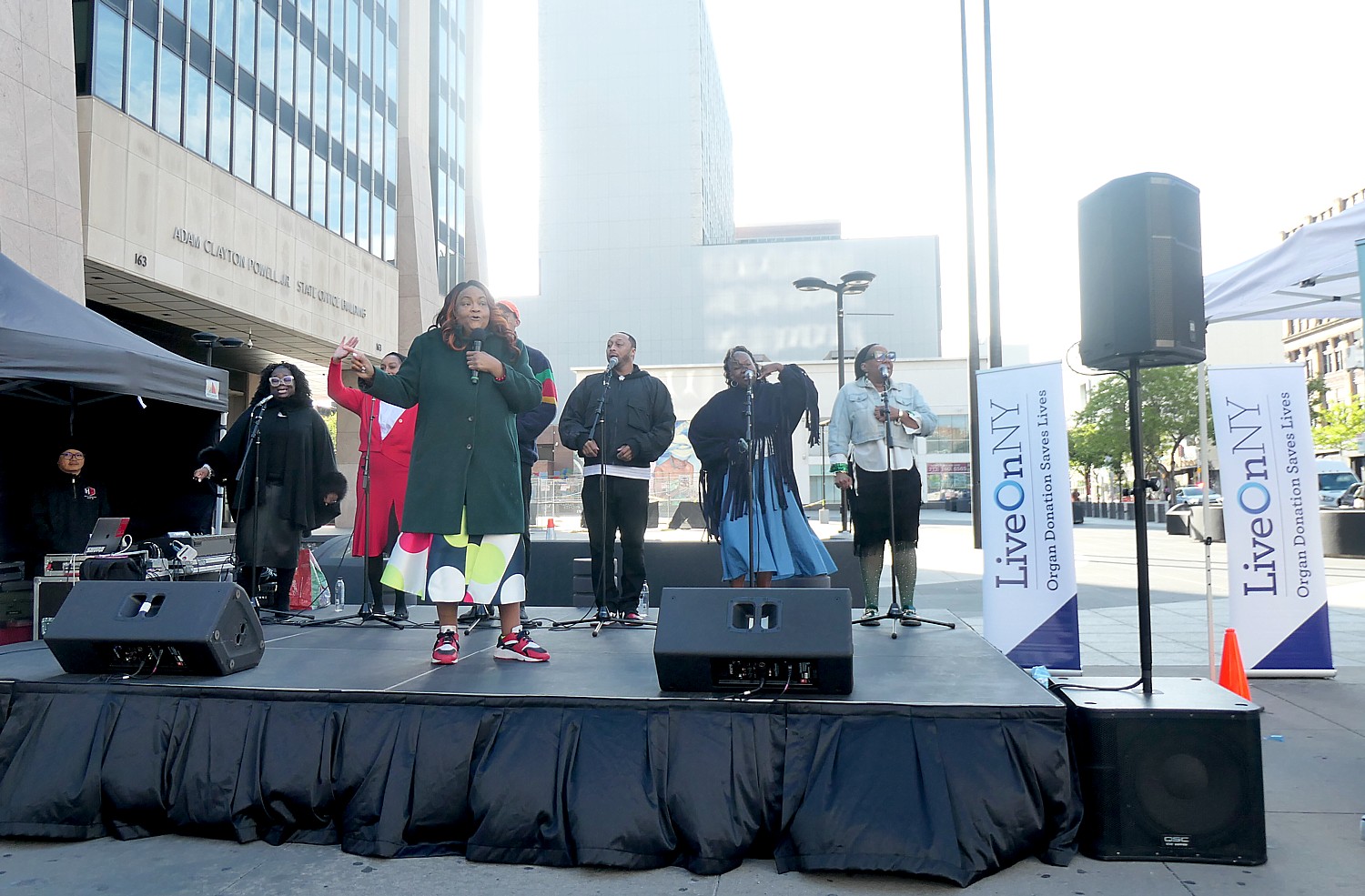
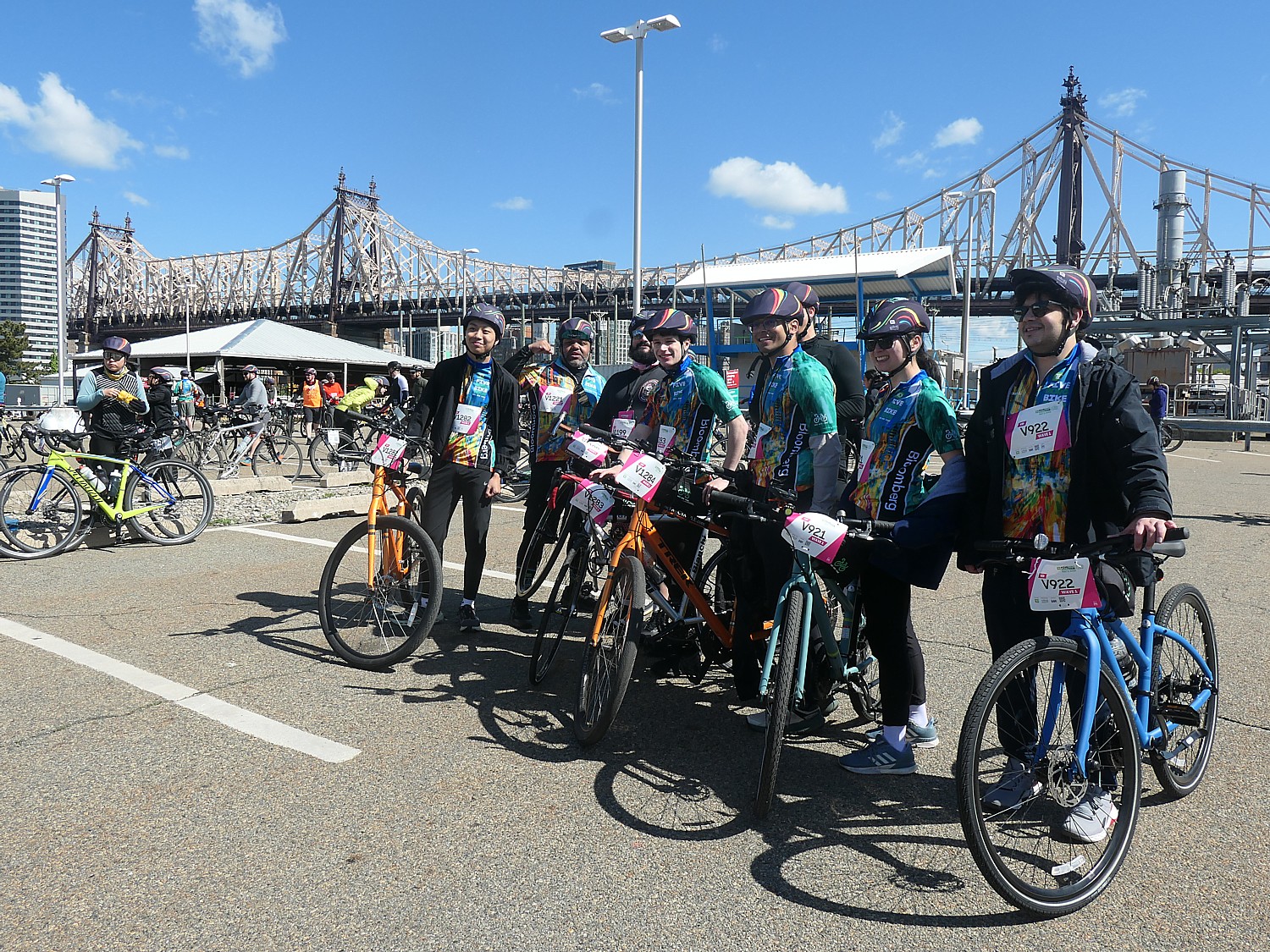
It is important to know, too, that hundreds and hundreds of these riders are riding to support a charity. NY State Senator John Liu, riding for Live on NY, which promotes organ donation, pointed to the number of charities supported by the ride. The TD 5 Boro Bike tour is the largest charity bike ride in the world.
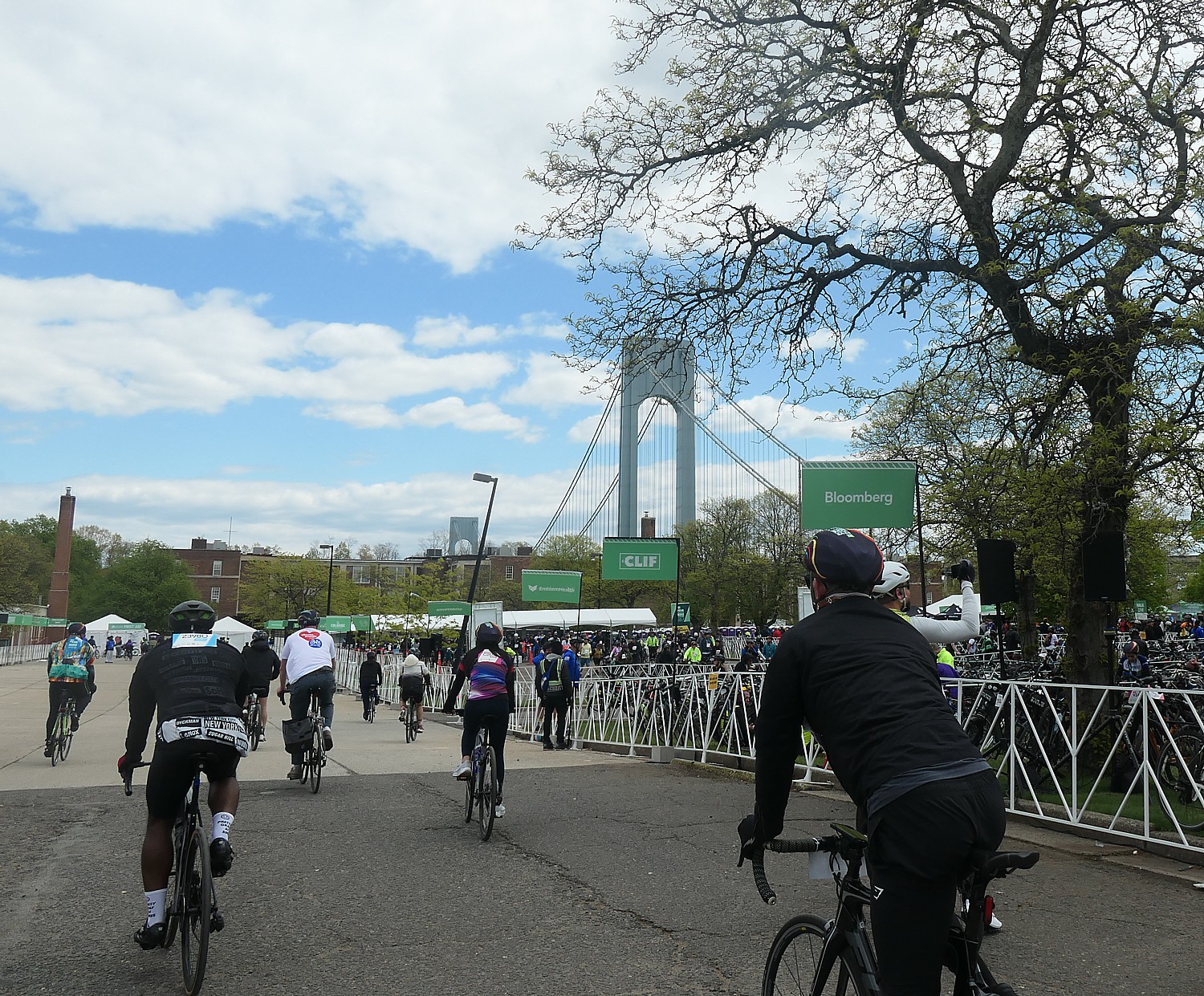
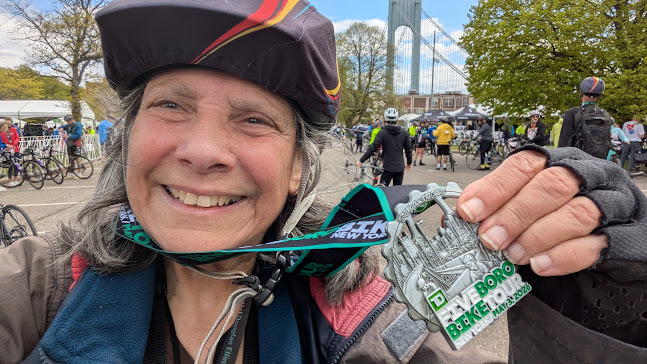
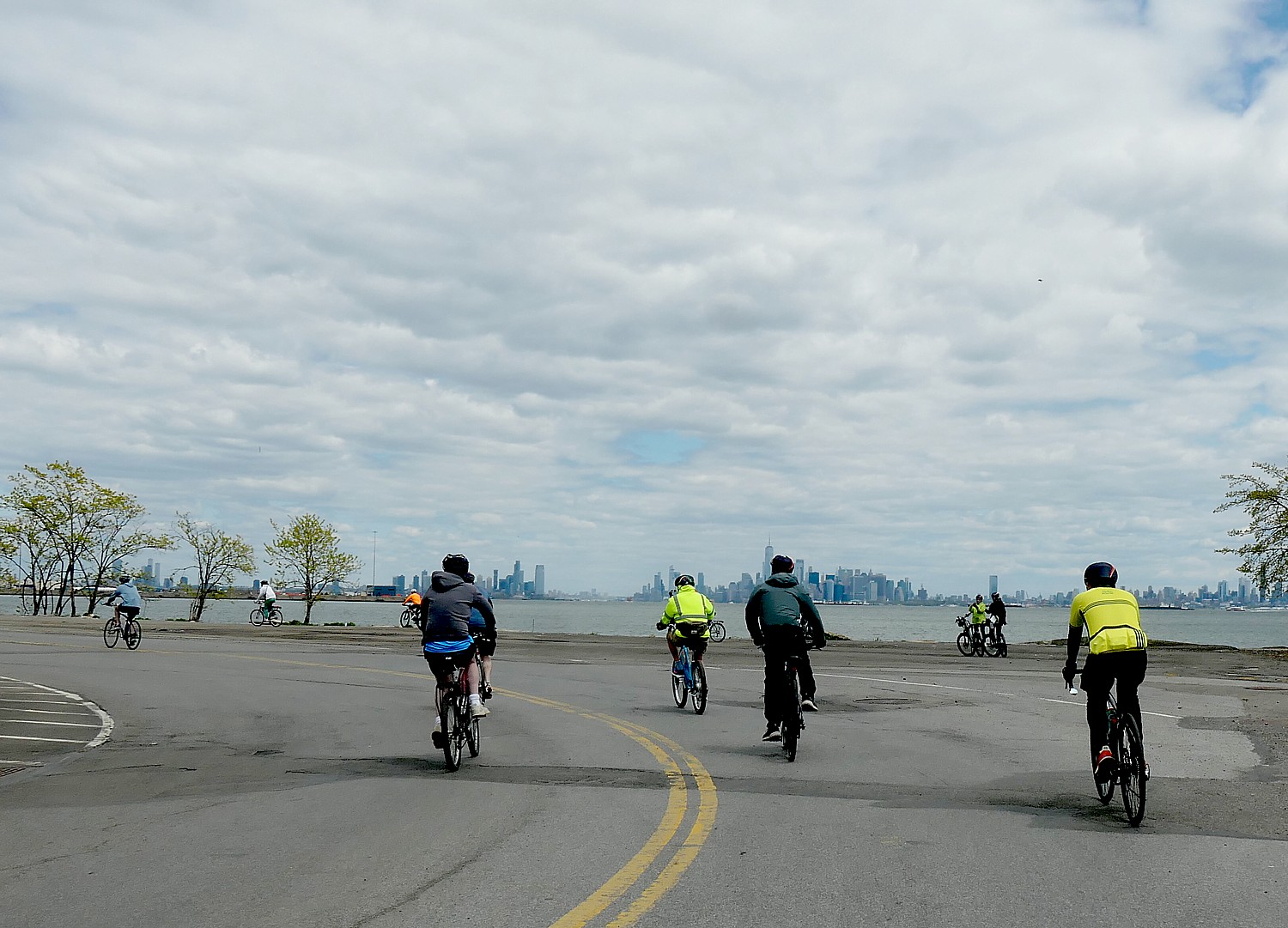
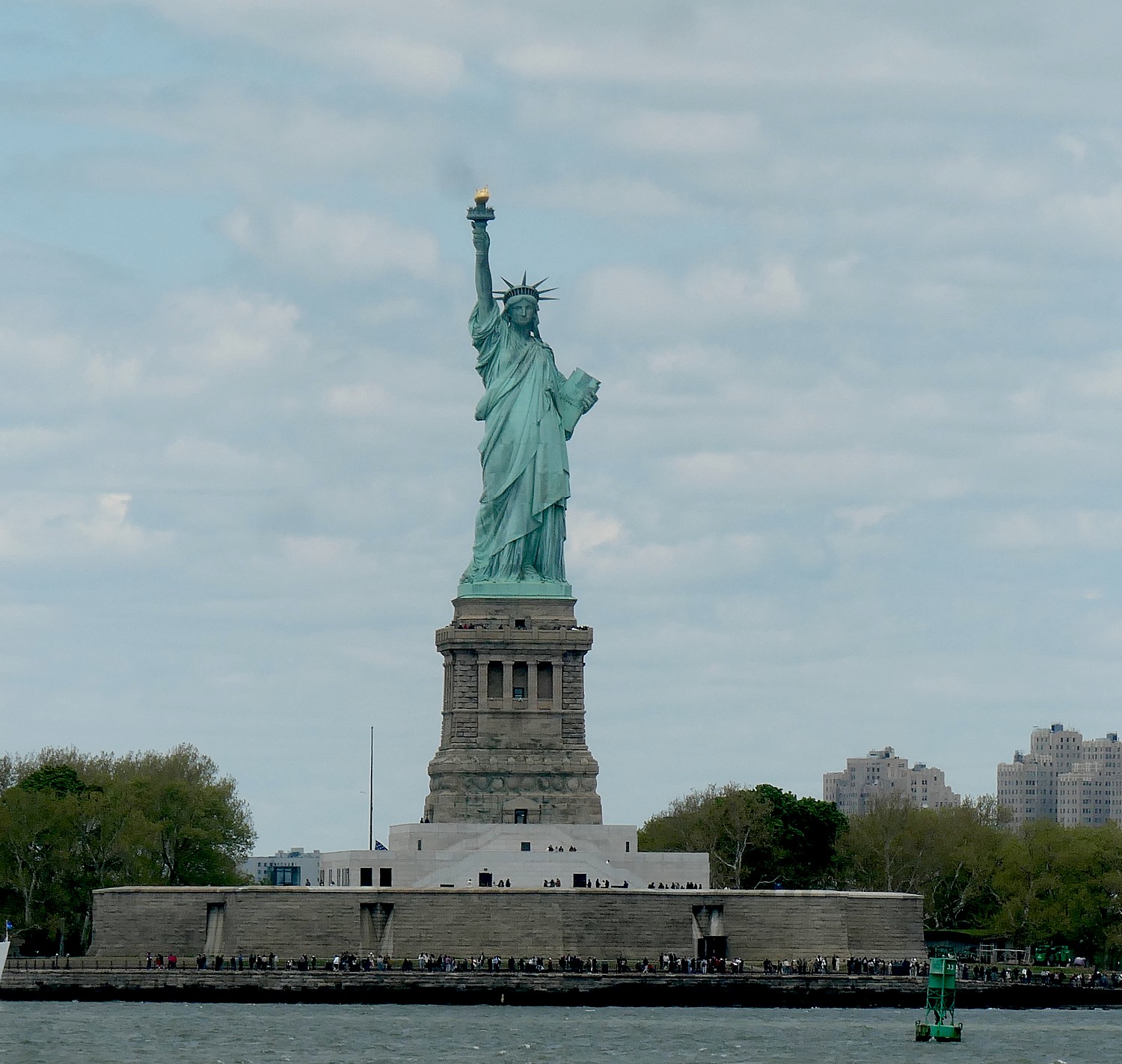
The experience completes after the finish line just at the end of the Verrazano Bridge, at Fort Wadsworth (where we each get medals – this isn’t a race, it’s a tour and a shared community experience). But we’re not done! Then we ride four miles further along Staten Island’s waterfront to the ferry, with more beautiful scenes (if you have time, visit Alice Austen’s historic house – she was an important photographer), climaxing with a ride on the Staten Island ferry that makes you feel like you are really cruising somewhere (try to get a position at the front of the boat so you can see the views, especially of the Statue of Liberty).
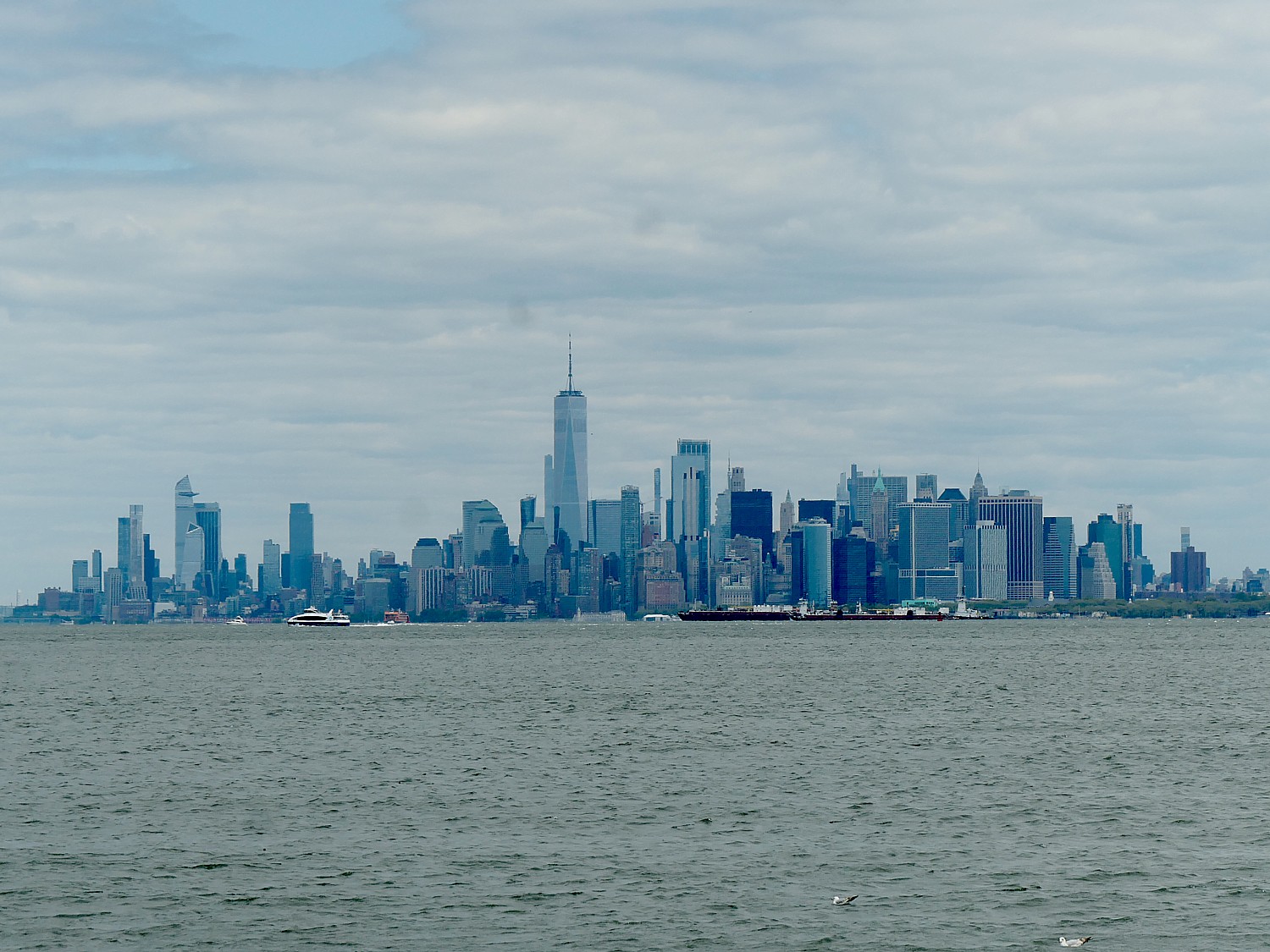
For many of us (the ride draws as many as 32,000 from all over the country and all over the world), we are still not done, but get to bike on the Hudson River Greenway one of the most beautiful recreational trails anywhere. There is so much along this gorgeous trail (which btw is the southernmost portion of New York’s Empire State Trail that extends all the way up to Canada) – you see the Freedom Tower looming over the skyline (if you have time, veer off and visit the World Trade Center 9/11 memorial park), stunning parks, playgrounds (a new one has a massive whale you climb through), even a sand beach, restaurants, and the incomparable City Islands park, a destination of its own). If you ride further north, you get to the Intrepid Air & Sea Museum (there’s a space shuttle you can visit, and a submarine!) and up to the George Washington Bridge. But I cut off at 34th street, enroute to Penn Station for the train ride to Long Island, where I chalk up a total of 50 miles for the day.
We all finish so impressed with how extremely organized the bike tour is – with some 1500 volunteers who so cheerfully direct traffic, stop traffic to allow pedestrians to cross (putting their own selves in danger), hand out snacks, and are on hand to help with emergencies.
“For one day, the streets of this great city belong to cyclists. Whether this is your first ride or your 20th, you are part of a tradition that celebrates the joy, freedom and community that cycling brings to our lives,” Bike New York President & CEO Ken Podziba, stated. “From the excitement at the start to the moment you cross the finish line, the ride offers countless opportunities to create lasting memories-with friends, family, fellow riders and the city itself.
“The TD Five Boro Bike Tour is more than just an unforgettable journey through all five boroughs. It is the only opportunity each year to experience New York City from the seat of a bicycle – traveling through its streets, highways, bridges and neighborhoods without cars, while riding alongside thousands of fellow cyclists from across the country and around the world.”
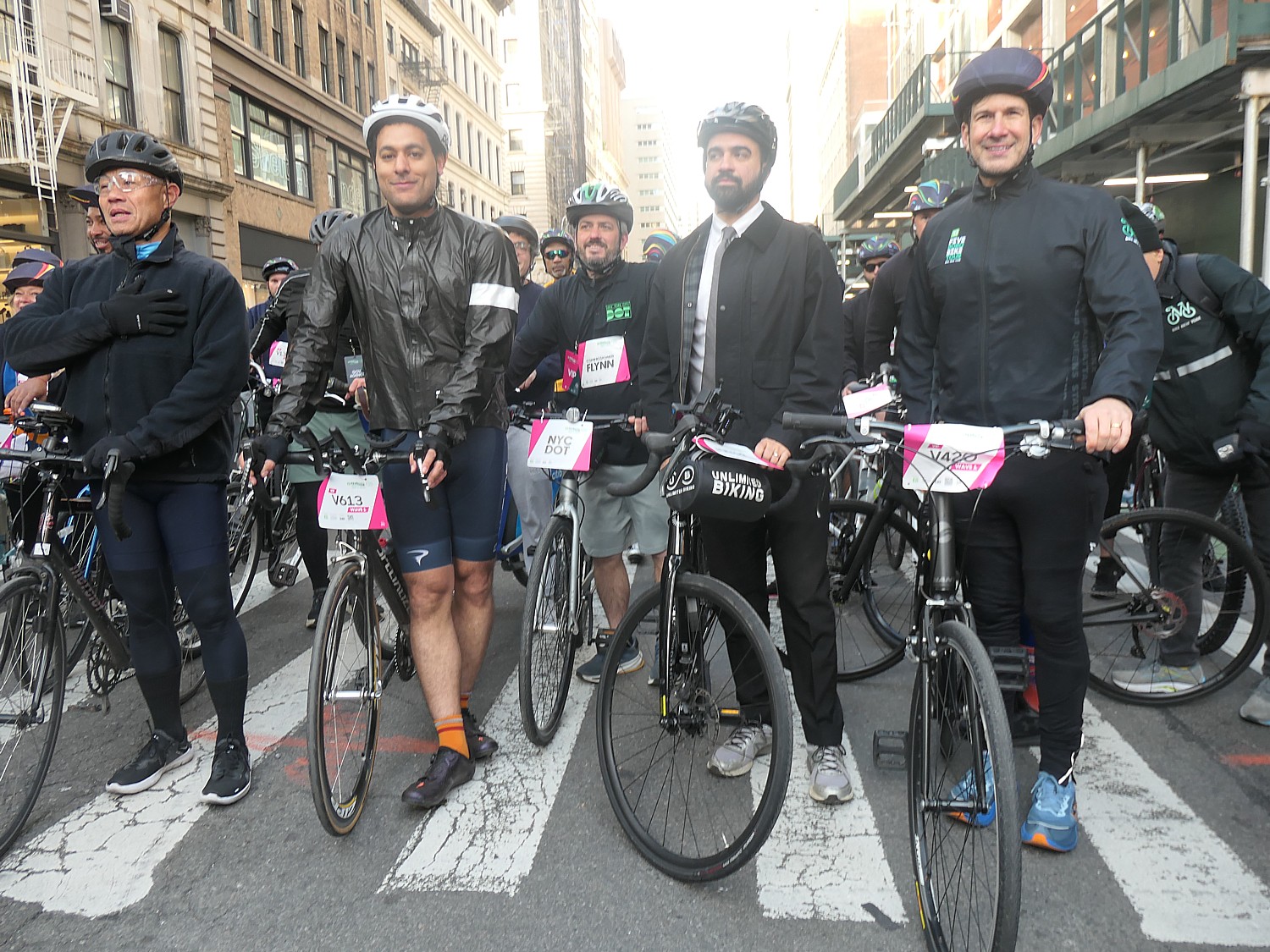
Mike Flynn, NYC Department of Transportation Commissioner, stated, ”A ride like this will change the way a person thinks about New York City. On this rare occasion, bike bells and the cheers of cyclists replace honking cars, and exhaust fumes that typically choke some of our most beautiful public spaces. Every year, the TD Five Boro Bike Tour gives cyclists a rare chance to ride New York City’s most iconic routes, from Wall Street to the Verrazzano Narrows Bridge, car free… nothing compares to 40 miles of car-free streets.”
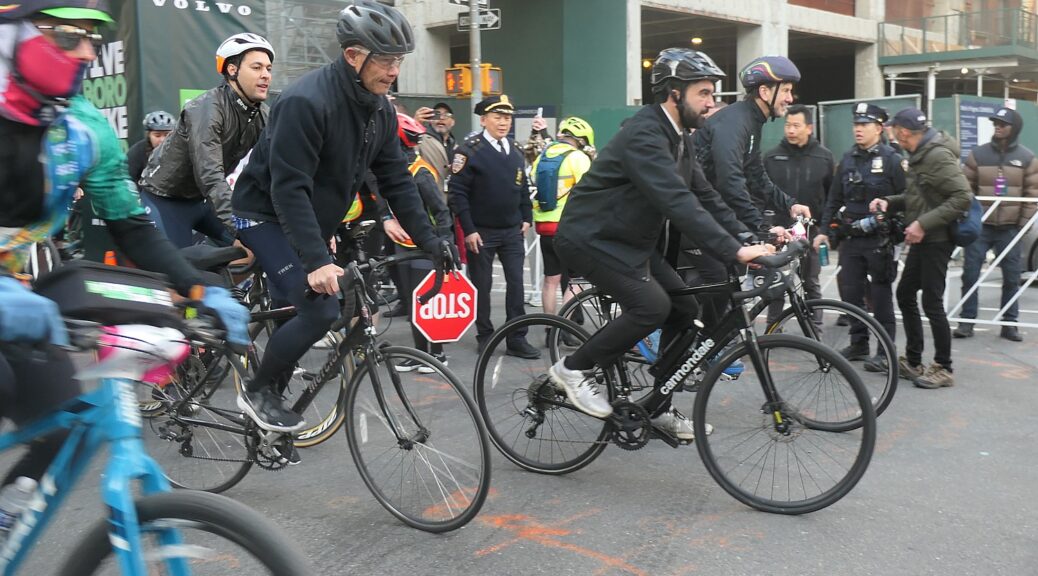
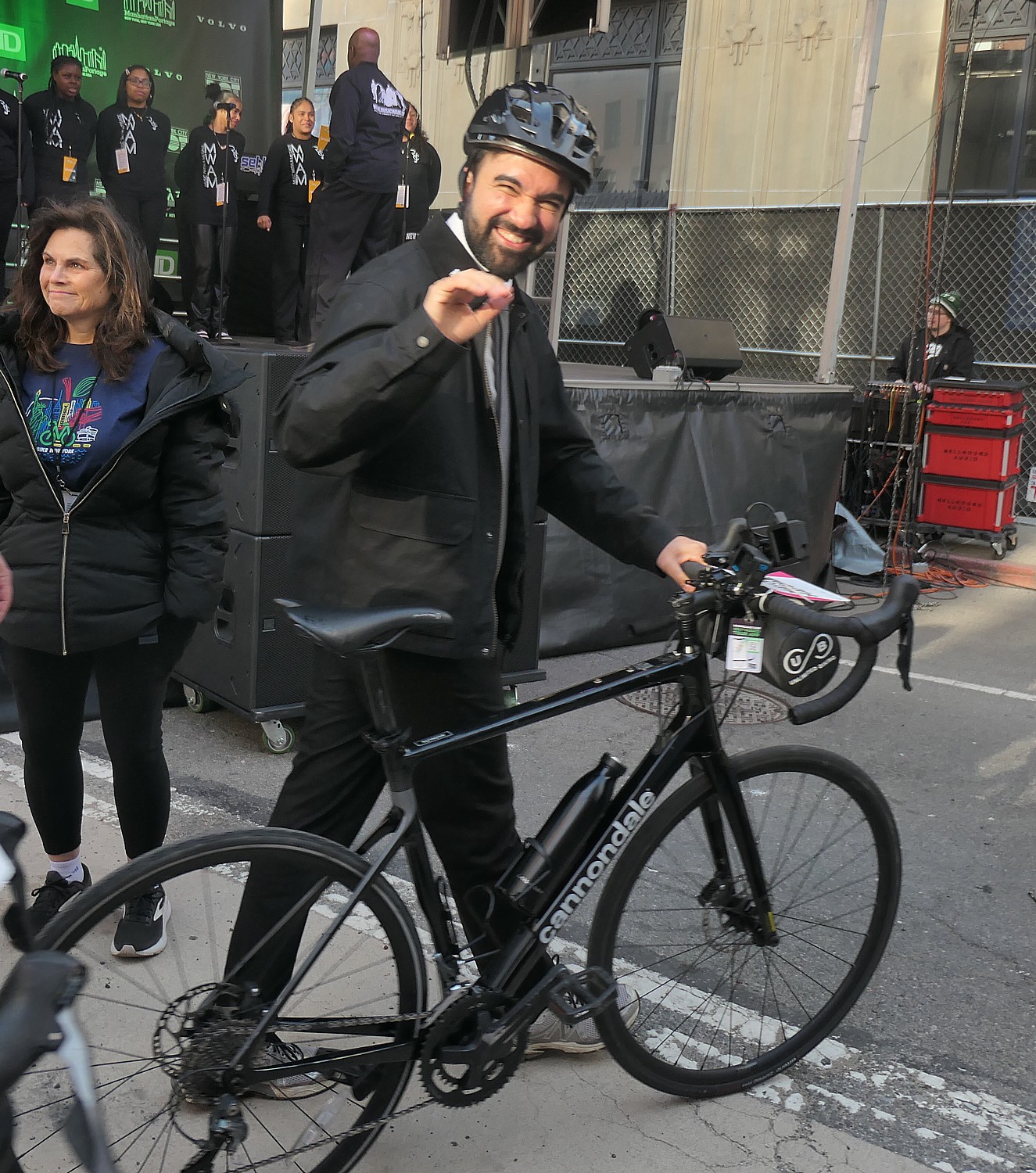
This year’s ride was historic since it is the first time the sitting mayor – Mayor Zohran Mamdani – actually joined the ride – a remarkable show of support (some people reported seeing him on the route).
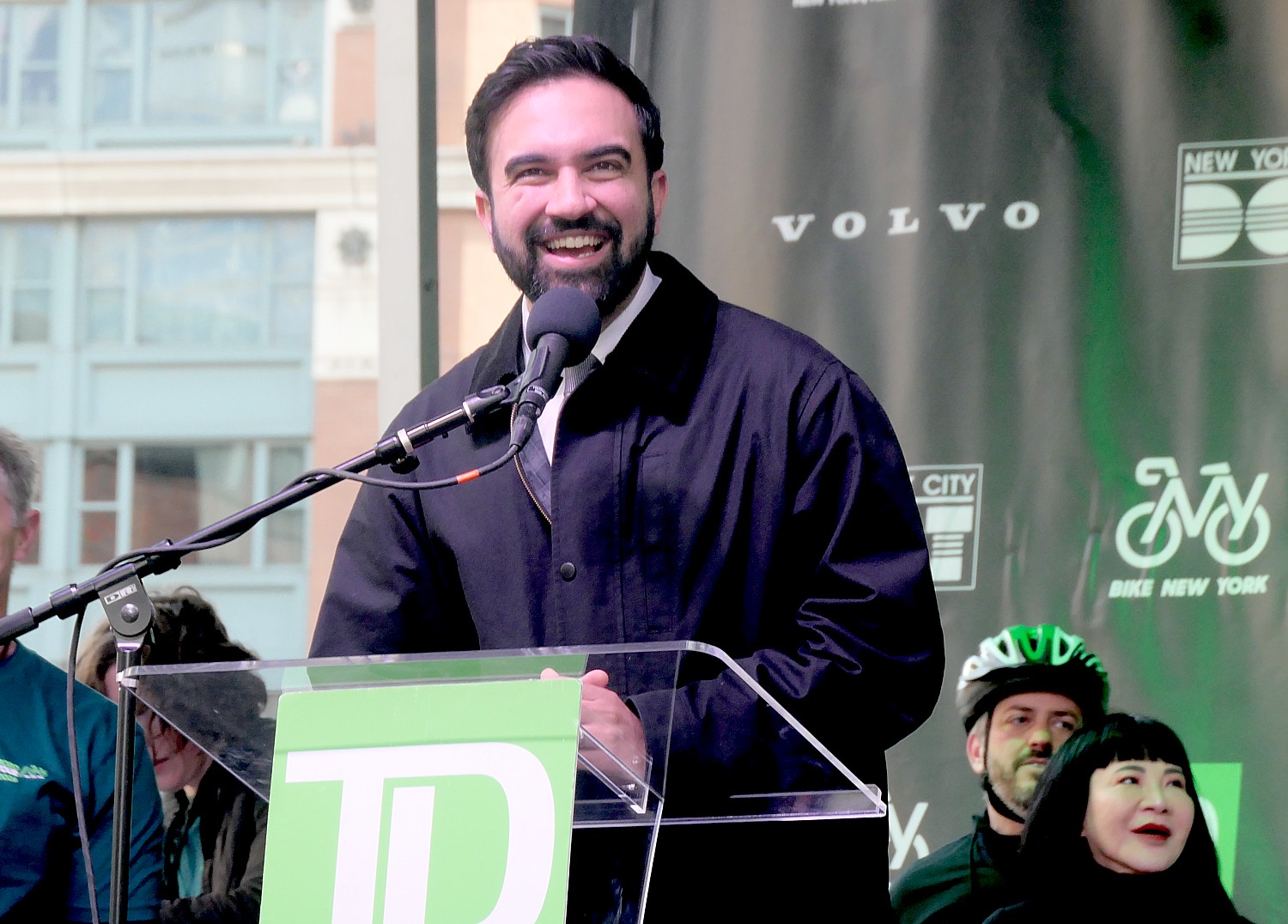
Mayor Mamdani praised those who have “brought back the love of cycling across our city,” and credited NYC Department of Transportation Commissioner Mike Flynn for “partnering to make it easier to be a cyclist in New York City and to find cycling across the five boroughs. I’m so excited to being here with all of you.”
Mayor Mamdani stated, “New Yorkers deserve to be safe no matter how they commute – whether they bike, use mass transit, walk or drive, Our administration is committed to delivering genuine street safety by advancing critical projects, including implementing parking protected bike lanes and upgrading or redesigning existing infrastructure to support cyclists. Bike New York advances our mission by offering free bike education.
“Every year its cycling tour across the five boroughs, the largest charitable ride in the world, gives tens of thousands d of participants the chance to exercise and explore new corners of our global metropolis while raising funds for a variety of nonprofit groups. I applaud everyone associated with this energetic event for their efforts to advocate for our cycling community and encourage active lifestyles. Together, we will keep our streets accessible and secure for all.”
The mayor set off, flanked by Bike New York President & CEO Ken Podziba, NYC Public Advocate Jumaane Williams, NYC DoT Commissioner Mike Flynn, State Senator John Liu, and NYC Parks Commissioner Tricia Shimamura.
Here are more photo highlights from the 2026 TD Five Boro Bike Tour:
Bike New York’s mission is to empower New Yorkers to transform their lives and their communities through bicycling and advocate for more safe cycling routes. “Our vision is to increase ridership, to empower youth to lead healthy, productive lives, to remove barriers to cycling, and to advocate for and expand services to reach more New Yorkers.”
The proceeds from the Bike Tour fund programs that transform lives through bicycling – from workforce development initiatives that train justice-involved New Yorkers for careers in the bike industry, to the largest free bike education program of its kind in the world that help thousands of people each year learn to ride safely and confidently. The tour also helps advance Bike New York’s advocacy efforts to create safer, more equitable streets with more space for bicyclists and pedestrians.
In addition to the TD Five Boro Bike Tour, other popular programs include the Twin Lights Ride, the Discover Hudson Valley Ride, and local rides (see: https://www.bike.nyc/events/)
Bike New York also offers an innovative Recycle-a-Bicycle program, averaging 1,800 salvaged bicycles a year, diverting 45,000 pounds of waste from NYC’s landfills. The bikes, that begin as donations, are sold fully refurbished, with proceeds from sales and full service repairs directly supporting its education programs.
Bike New York’s Bike Path Program trains previously justice-involved individuals to become certified Bike Mechanics for Motivate, the operator of Citi Bike, the nation’s most extensive bike-share program, with 33,000 bikes and over 1,800 stations across metro NYC. Bike Path is a 3-week training program where mechanics are trained to repair regular bikes and Citi Bike’s electric and traditional bicycle fleets. In 2024 the program trained and saw 45 people be hired as Bike Mechanics at Motivate. The Bike Path Bike Mechanic Training & Employment Program has a 98% job placement rate. One of those “graduates” of the program, now an ambassador, addressed the riders.
In 2026, we’ll see a backlash against over-optimization and the bold return of pleasure and joy; women finally getting their own lanes in longevity and sports; longevity expanding into real estate and beauty; and wellness tackling major crises: disaster preparedness, microplastics and nervous system exhaustion
The Global Wellness Summit (GWS) released its annual Future of Wellness report, the longest-running, most detailed (150-page) forecast of the big ideas that will transform health and wellness in the coming year.
There have been more shakeups in the wellness market in the last couple of years than in the last 20. The market has been rewritten by high-tech, medical, hyper-optimizing approaches—from the boom in longevity clinics to the avalanche of diagnostics and wearables. At the same time, powerful new desires for a no-tech, deeply human, social and emotional wellness are raging. These polarities, which now define the wellness market, resonate across the new report.
2026 will be another year of shakeups. A year of corrections and backlashes, a crucial year for women, one where longevity moves in new directions, and where major environmental and human crises are tackled.
Four Themes for 2026:
1)An Over-Optimization Backlash: The Revenge of the Human
The backlash against stressful, high-tech wellness will reach activist levels. Wellness experiences will embrace what humans actually are: imperfect, emotional, relational and sensory—and hardwired to seek pleasure and joy. Offerings will pivot to meaning over measurement, catharsis over clinical data, self-expression over self-surveillance. “The Over-Optimization Backlash” serves as the framing trend, detailing the many ways we’ll move beyond performance to sensation, emotional repair and embodied care. “The Festivalization of Wellness” explores a rising wave of healthy, cathartic wellness raves and gatherings, where music, dance and creative expression mean wild, collective and emotional release. If fragrance has long been about status, celebrity and corporate sameness, the “Fragrance Layering” trend predicts that the ancient art of combining scents will get a modern reimagining: fragrance as a creative, cultural and deeply personal language.
2)The Year of Women
Major gender inequities in multibillion-dollar markets will get corrected. If the booming longevity market was built for men, “Women Get Their Own Lane in Longevity” goes in depth on how the future is female. Because women age very differently, with the ovary acting as “command central” of women’s health, longevity will pivot to women’s healthspan, requiring a whole new longevity paradigm and diagnostics and interventions targeted for every life stage. If men have owned sports, “Women & Sports: The Revolution Continues” details how the women’s sports economy is at its long-awaited tipping point, with a boom in new leagues and female fandom, female athletes as marketing powerhouses, and women globally turning from lonely fitness to empowering sports.
3)Longevity Expands in New Directions
Longevity will move in other bold directions. “Longevity Residences” investigates how it’s moving out of clinics and resorts and into the home, with a new wellness real estate category that supports longer, healthier lives through preventive medicine and diagnostics, biohacking, AI-enabled health tracking and more. “Skin Longevity Redefines Beauty” argues that the traditional focus on anti-aging is shifting. Innovations in skin longevity and regeneration will introduce a new era of beauty that merges cutting-edge biotech, AI, skin diagnostics and new active ingredients.
4) Wellness Tackles Major Environmental and Human Crises
In our age of multiple crises, from terrifying climate events to brains barraged by bad news, crisis management becomes a pillar of wellness. “Ready Is the New Well” predicts that if wellness always promised prevention, the next wellness wave is about survival itself, where having a disaster plan becomes as essential as having a fitness plan. “Tackling Microplastics as a Human Health Issue” provides a deep scientific overview of how microplastics are present throughout the human body and increasingly linked to serious health issues. If we’ve had decades of false wellness “detox” rhetoric, the microplastics threat looks to be real, and in 2026, public health and the wellness market will move from awareness to action. With modern, digital life keeping our nervous systems in a state of fight-or-flight, “The Rise of Neurowellness” explores how regulating the nervous system is wellness’ next frontier, deploying everything from new consumer neurotech to somatic practices to calm our nervous systems before breakdown occurs.
This is the only wellness trends report based on insights from hundreds of health and wellness experts that gather each year at the Global Wellness Summit. Each trend is packed with new ideas, sub-trends and examples of the companies blazing these new trails.
“Each year, The Future of Wellness report delivers essential insights into the forces reshaping the global wellness landscape,” said Amway chief marketing officer Melodie Nakhle. “As the exclusive sponsor, we remain committed to advancing credible, science-driven innovation that helps people lead healthier, more vibrant lives. This research strengthens our ability to deliver meaningful solutions for communities around the world.”
Amway is the exclusive sponsor of this report. A health and wellbeing company founded in 1959, Amway has a presence in more than 100 countries and territories around the world.
Probing deeper, these are the Top 10 Wellness Trends:
Top 10 Wellness Trends
Women Get Their Own Lane in Longevity Men have dominated the longevity market, but the future is female
The booming longevity market—like medicine before it—is tacitly male: women’s path to health is extrapolated from men’s data and protocols designed for men. That era is ending. Research mounts that women age fundamentally differently, with the ovary functioning as “command central” for women’s health, and its decline (aka menopause) dramatically accelerating systemic aging in women. This leads to a cascade of conditions women suffer far more and longer: from immune disorders to dementia to osteoporosis. Men suffer no such “gonadal death” and stark “before” and “after” health decline.
Slowing/stopping ovarian decline will be the next big biotech breakthrough, and women scientists are busy working on it, from ovarian stem cell therapies to tackling ovarian fibrosis. And with the new framework that “ovary-span” is the lynchpin to women’s healthspan, the wellness market will now move beyond managing menopause symptoms to tackling ovarian aging and its specific health fallouts. This requires a new longevity paradigm: interventions tailored to women across every decade (from their 20s to 90s), ovarian aging tests becoming the new vital sign, hormone replacement therapy boomeranging back as longevity medicine, lifestyle interventions that best preserve ovarian reserve—with strength training reframed as a non-negotiable for women’s longevity. The trend details how basically every wellness market is now pivoting from treating menopause to more serious whole-life, medical-wellness longevity programs for women: wellness resorts, longevity clinics, big telehealth and women’s platforms, gyms, diagnostics and wearables. And as women finally shape longevity, its “bro” culture will change, too: less ultrahuman optimization; more human approaches.
The Over-Optimization Backlash Pushing back on peak wellness
We’re living through a modern wellbeing paradox: never before has health been so measurable—and never before has it felt so psychologically demanding. Sleep is scored, glucose is graphed, aging is tracked, and wellbeing has shifted from something we feel to something we perform correctly. Therapists warn that data-driven wellness can tip from motivation into fixation, turning insight into pressure. As health data multiplies, many experience analysis paralysis rather than clarity, overwhelmed by constant self-tracking and fear of “getting it wrong.” While longevity research, diagnostics and health technology have undeniably expanded human potential, optimization without integration is proving costly. The over-optimization backlash marks a decisive cultural pivot away from peak wellness and toward something far more human. In response, the fastest-growing spaces in wellness are prioritizing nervous-system safety, emotional repair and pleasure over metrics: social saunas are growing around the world as ritual, not endurance; brands like On and Nike are ditching performance language for campaigns about softness, presence and joy; clinics are reframing aesthetics as psychological care rather than correction; and new technologies are quietly regulating the body in the background, without dashboards or demands. From scream circles and somatic release classes going viral on TikTok, to pleasure-forward food, low-stimulation retreats and regulation-focused wearables, the trend is evident: wellness is no longer about optimizing harder—it’s about feeling safer, more connected and more alive.
The Rise of Neurowellness Regulating the nervous system is the next frontier of human health
Neurowellness is moving from niche to mainstream as people realize one of their biggest health bottlenecks isn’t willpower, it’s nervous system overload. Sleep has become the on-ramp. Wearables turned a private struggle into a daily metric: “What’s your sleep score?” When scores stay low, the message is clear: the autonomic nervous system is stuck in low-grade fight-or-flight, showing up as fragmented sleep, anxiety, inflammation, brain fog, hormonal disruption and burnout. That visibility is driving a wave of interventions that go beyond supplements and mindset. “Hard-care” neurowellness is arriving through consumer-friendly neurotech: vagus nerve stimulation devices like Pulsetto, EEG-guided sleep tools like Elemind and neurofeedback platforms like Myndlift that bring nervous system training into therapists’ offices, not just homes. Flow’s recent FDA approval for an at-home neuromodulation device adds clinical momentum, signaling a path to reimbursement and wider adoption. At the same time, long-standing “soft-care” wellness anchors are being re-framed as nervous-system medicine: breathwork, touch therapy, yoga and Feldenkrais are increasingly recognized for their measurable effects on regulation, making them more mainstream, more repeatable and, in some settings, even prescribed. Next, expect brain–body research, including Stanford’s focus on whole-system connections, to push neurowellness into everyday spaces: mental health care, local fitness studios, hospitality, real estate and next-gen destination spas and clinics—making regulation a quietly built-in feature of modern life.
Fragrance Layering The new art of combining scents to create unique personalized identities
Fragrance layering—the art of combining scents to create a personalized olfactory signature—is changing the way we express ourselves, shape our moods and interact with others. Once associated mainly with luxury and seduction, fragrance is re-emerging as a cultural and emotional language, echoing ancient traditions from Egypt, Arabia and India, where scent signified ritual, status and meaning. Today, Gen Z and Millennials are reviving this heritage through experimentation, fueled by TikTok, indie fragrance communities and brands like Kayali and Rare Beauty that encourage mixing, mood-shifting and the creation of “fragrance wardrobes.” This rise of “smellmaxxing” coincides with experimental cocktailing, social-coded scents and layering workshops, which transform fragrance into a participatory, skill-based hobby. Layering is extending beyond personal fragrance into spaces and experiences, with environments crafted to carry evolving aromas that shape mood and ritual. Technology is amplifying this, as smart fragrance systems and AI tools allow scents to shift dynamically throughout the day, responding to activity, context or emotional state. In an era of homogenous beauty products, fragrance layering offers both creative freedom and social currency—a way to express identity, foster connection and reclaim individuality through scent.
Ready Is the New Well Preparing for climate disaster is the new preventative wellness
Wellness has always promised protection—from disease, from burnout, from the slow erosion of mental health. But the next wave of wellness will promise something different: survival itself. Just as preventive medicine once transformed healthcare, disaster readiness is becoming the next evolution of everyday resilience, where having a disaster plan is as essential as having a fitness plan. This shift connects mental health, physical readiness and community interdependence into one continuum of care. The implications for the global wellness economy are vast. Gyms and fitness studios will double as emergency shelters; wellness retreats will teach readiness; and demand for disaster-proof architecture will surge. But perhaps the greatest opportunity lies in the industry’s ability to hold both sides of the psychological spectrum at once—supporting people who live in chronic fear of what might happen, while also caring for those navigating the emotional fallout of what already has. As disasters become inescapable, the most forward-thinking companies will prioritize practical, proven solutions that put people’s minds at ease.
Skin Longevity Redefines Beauty Move over anti-aging: innovations in skin regeneration usher in a new era
A transformation is sweeping the beauty and wellness industries as “anti-aging” is rapidly being replaced by the concept of skin longevity. This emerging vertical merges cutting-edge biotech, proactive skincare and holistic wellness, reframing the conversation from reversing the unwanted effects of time to optimizing the skin’s health and function over the long term. Skin longevity honors skin as the body’s largest organ and a key marker of overall health. It’s driven by demographic realities—people are living longer and seeking solutions to maintain long term health and vitality—and by a philosophical shift, treating skin as a diagnostic tool and reflection of overall health. The movement is gaining significant momentum, backed by major investments and deep scientific research. Advances include sophisticated skin diagnostics, such as L’Oréal’s Cell BioPrint, and the development of new active ingredients and regenerative treatments. These innovations are creating a new age of personalized, preventative care. The trend extends beyond the face to encompass “hair longevity,” with a focus on scalp health and regenerative therapies for hair. Industry experts concur that skin longevity is a defining turning point in beauty and wellness, where the cross-pollination of science, biology and technology is unlocking unprecedented horizons for personalized, visible results and long-term health optimization.
The Festivalization of Wellness A new wave of healthy, wild, cathartic wellness raves and gatherings
A new wave of group wellness events is reshaping the global wellness landscape, marking the rise of the “festivalization of wellness.” These gatherings respond to widespread economic stress, social fragmentation and digital overload by prioritizing human connection, collective energy and emotional release. Inspired by festival and rave culture, wellness raves, sober morning dance events and multi-day immersions are reframing wellbeing as experiential, social and identity-driven rather than prescriptive or perfection-oriented. Spanning movement, music, sauna culture, learning and creative expression, they emphasize participation over performance and lower barriers to entry by creating judgment-free spaces where people explore what intuitively feels good. Around the world, sober morning raves, grief raves and headphone-led somatic dance experiences like Sanctum are turning dancefloors into spaces for emotional release, connection and catharsis. At the same time, mass-participation fitness festivals such as Hyrox attract hundreds of thousands of athletes and spectators to sweat, celebrate and heal together. Luxury resorts from Six Senses and Soneva to SHA Wellness are now hosting immersive multi-day wellness festivals, while mainstream music events like Wilderness, Lost Village and Envision are embedding breathwork, rituals and recovery zones into their lineups. The result is a global shift where wellness becomes social, expressive and identity-shaping—built on joy, belonging and shared experience rather than discipline and optimization. By making wellness playful, inclusive and culturally relevant, the festivalization of wellness is redefining health as belonging, connection and sustainable joy.
Women and Sports: The Revolution Continues More women become empowered as athletes as the women’s sports economy booms
This trend captures a long-overdue cultural and economic reckoning as women’s athletics moves from the margins to the mainstream—reshaping fitness, media, fashion, fandom and business along the way. Around the world, new leagues like the Professional Women’s Hockey League, League One Volleyball and the upcoming Women’s Professional Baseball League are launching alongside bold, culture-forward events such as Athlos in New York City, which turned women’s track and field into a Times Square spectacle complete with instant prize payouts and a Ciara concert. Female fandom is exploding too, visible in the rapid rise of women’s sports bars like The Sports Bra (now franchising nationwide), record-breaking attendance at the 2025 Women’s Rugby World Cup and massive global viewership for women’s cricket in India. At the same time, female athletes are becoming cultural and commercial powerhouses: Coco Gauff co-creating fashion lines, Ilona Maher and Sloane Stephens launching beauty brands, Allyson Felix building a motherhood-centered footwear company, and media platforms like Togethxr rewriting who gets visibility and voice. On the ground, this momentum is changing bodies and behaviors—women are lifting heavier, joining grassroots leagues, filling women-only gyms from Dubai to Shanghai, and embracing strength over thinness as both a physical and political act. Together, these shifts signal a structural change, not a moment: women’s sports are no longer asking for permission, but actively redefining what power, performance and possibility look like—on the field, in culture and across the global wellness economy.
Tackling Microplastics as a Human Health Issue We’ve grasped the severity of the microplastics crisis; this year is about action
Microplastics have crossed a critical threshold—from an environmental problem to a direct human health concern. Once associated mainly with oceans and wildlife, these microscopic particles are now being detected in human blood, lungs, placentas and even the brain. Each year, an estimated 130 million metric tons of plastic enter the environment, breaking down into particles we ingest through bottled water and packaged food, inhale from synthetic clothing fibers in household dust, and absorb through everyday consumer products. Early research links this exposure to inflammation, hormonal disruption, cardiovascular disease and potential cognitive effects. As concern grows, the wellness and medical sectors are moving from observation to intervention. In London, private clinics are already offering costly treatments claiming to reduce microplastic loads in the body, while consumer-facing innovations such as plastic-free underwear are also emerging. Looking ahead, microplastics may become a routinely measured health marker—tracked alongside cholesterol or inflammation—and plastic exposure a factor shaping architecture, fashion, food systems and healthcare. The challenge now is not awareness, but whether society acts quickly enough to reduce exposure at the source, before the smallest pollutants create the largest health legacy.
Longevity Residences Healthspan finally comes home
A new category of “longevity residences” is emerging within wellness real estate, designed to support longer, healthier lives. This trend signals a major shift in how—and where—longevity is delivered, as real estate becomes an active participant in extending healthy life rather than a passive backdrop. Around the world, a new generation of longevity-focused communities is embedding preventive medicine, advanced diagnostics, biohacking and AI-driven personalization directly into daily living. The Estate is building a global network of residences where architecture, circadian lighting, diagnostics and concierge medicine operate as a continuous longevity system; Australia’s Elysium Fields has plans to pair luxury living with on-site MRIs, brain scans and anti-ageing clinics; Velvaere in Utah will integrate Fountain Life’s early-detection diagnostics into its ski-in, ski-out community; and Tri Vananda in Thailand is blending medical longevity science with holistic design, biophilia and multigenerational living. Unlike traditional wellness real estate, these residences go deeper—tracking biomarkers, personalizing care over decades and removing friction from proactive health behaviors. Fueled by an aging global population, soaring investment in longevity tech and the rise of concierge medicine, longevity residences reflect a growing realization that true healthspan gains happen at home, not during one-off clinic stays. For culture and capital alike, the message is clear: longevity is no longer a service you visit—it’s a lifestyle you live in, and the home is becoming the most powerful longevity tool of all.
The Global Wellness Summit brings together leaders and visionaries to shape the future of the $6.8 trillion global wellness economy which is forecast to reach $9.8 trillion by 2029, according to the Global Wellness Institute’s 2025 Global Wellness Economy Monitor.
The non-profit Global Wellness Institute (GWI) released its annual “Country Rankings” report, packed with data on the wellness markets of 145 countries. The new research identifies the countries and regions with the fastest growth rates, and reveals the amount of money spent annually on wellness in each nation.
The five largest wellness markets are: the US ($2.1 trillion), China ($950 billion), Germany ($281 billion), Japan ($262 billion) and the UK ($261 billion). Together these five nations represent a whopping 58% of the total wellness economy.
Among the largest wellness markets, the standout five-year growth leaders are the UAE, Saudi Arabia, India, Mexico, Poland, the UK, the Netherlands, Canada, the US and Australia. For smaller markets, the growth stars include Croatia, Cuba, Romania, Costa Rica and Kazakhstan.
The new research is a story of global growth for wellness: Each of the top 25 largest markets have surpassed their pre-pandemic (2019) sizes, most by sizable margins, despite economic challenges for many of the nations. The growth shows that, as GWI partner economist Thierry Malleret put it, the wellness industry is not only resilient—it resists shocks—but is “anti-fragile”: it actually improves under stress and shocks.
The US, which accounts for a staggering one-third (32%) of the total global wellness economy, is a striking example of that. If a record number of Americans report high stress and a healthcare system in crisis, its wellness market remains unstoppable. It grew by over $130 billion just between 2023 and 2024—a gain roughly the size of Italy and Australia’s entire wellness markets.
In addition to an annual conference, held at a different location around the globe, GWS also hosts annual in-person events such as the Wellness Real Estate & Communities Symposium and the Beauty & the Brain Symposium, along with virtual gatherings, including Wellness Master Classes and Wellness Sector Spotlights. The 20th annual Global Wellness Summit will be held in Phuket, Thailand, November 10-13, 2026.
Governor Kathy Hochul announced $10 million will be made available for the second round of the Municipal Parks and Recreation (MPR) Grant Program to fund the development and improvement of municipal parks and recreation sites statewide for the public to enjoy. Funding for this program comes from the Clean Water, Clean Air, and Green Jobs Environmental Bond Act.
“This second round of Municipal Parks and Recreation Grant funding will help improve the state’s social infrastructure to encourage New Yorkers to disconnect from their digital devices and reconnect with the outdoors,” Governor Hochul said. “Expanding access to quality parks and recreational facilities makes our communities healthier and ensures children have places to play, learn, and grow in a safe and engaging environment.”
The MPR grant funding is available for the construction of recreational facilities and other improvements to municipally owned recreational sites and parks. Examples include playgrounds, courts, playing fields, and facilities for swimming, biking, boating, picnicking, hiking, fishing, camping, or other recreational activities. Program guidelines, including how to apply, will be available beginning December 31, 2025, on the State Parks website. The first round of the MPR grant program awarded $10 million to 17 projects across the state.
Eligible applicants include counties, cities, towns and villages within New York State that own the property where the proposed project will take place. Grants will primarily fund construction costs. Preconstruction activities, such as developing plans and design specifications, may be included in the project budget, but the grant cannot fund projects that are solely for planning and design without a construction component.
To maximize accessibility to funding, the MPR grant opportunity can fund up to 90 percent of the total eligible project costs, with a matching share requirement of 10 percent. The maximum grant award is $900,000. Grants are administered on a reimbursement basis.
The application period opened on December 31, 2025 and applications must be submitted by February 9, 2026 at 4 p.m. Awards are expected to be announced no earlier than May 22, 2026.
The MPR grant program complements Governor Hochul’s Unplug and Play initiative to promote kids’ mental and physical health by continuing to rebuild the state’s social infrastructure and help steer children away from the harms of social media and toward positive activities like youth sports, arts programs, civic engagement, and community building. Unplug and Play includes three grant programs that invest in swimming infrastructure, playground construction and renovation, and the building and renovation of community centers.
New York State Office of Parks, Recreation and Historic Preservation Acting Commissioner Kathy Moser said, “Our agency is proud to support Governor Hochul’s priority initiative to expand affordable recreational opportunities throughout New York State. Through this continued grant funding, we are helping more New Yorkers get outside to enjoy community-based parks and outdoor spaces year-round, while making it easier to engage in healthy activities that enhance overall quality of life.
“The Municipal Parks and Recreation Grant Program is another prime example of Governor Hochul’s commitment to outdoor recreation opportunities for all New Yorkers,” New York State Department of Environmental Conservation Commissioner Amanda Lefton said. “With $10 million funded through the truly transformative Clean Water, Clean Air, and Green Jobs Environmental Bond Act, more youth will be able to unplug and play at new or upgraded parks and recreation sites statewide.”
State Senator Jose Serrano said, “The Municipal Parks and Recreation (MPR) Grant Program is an important investment to fund the development and improvement of municipal parks and recreation sites statewide for the public to enjoy. The development and improvement of municipal parks and recreation sites allow for increased access to vital green spaces. As Chair of the Senate Committee on Cultural Affairs, Tourism, Parks and Recreation, I firmly believe that outdoor recreation can provide many physical and mental health benefits for New Yorkers. Many thanks to Governor Kathy Hochul, The New York State Office of Parks, Recreation and Historic Preservation, and my colleagues in government for working to maintain and expand this important initiative.”
Assemblymember Ron Kim said, “The Municipal Parks and Recreation Grant Program is an important, impactful plan to create and develop public spaces in New York for recreation. We need to protect and expand the number of fields, courts, and playgrounds available in our state to people of all ages, and give New Yorkers as many opportunities as possible to reconnect with and enjoy the great outdoors. I thank Governor Hochul and our State Department of Parks, Recreation and Historic Preservation for their work in implementing this program and encourage all eligible applicants to apply.”
New York’s Clean Water, Clean Air and Green Jobs Environmental Bond Act
On November 8, 2022, New York voters overwhelmingly approved the $4.2 billion Environmental Bond Act. State agencies, local governments, and partners will be able to access funding to protect water quality, help communities adapt to climate change, improve resiliency, and create green jobs. Bond Act funding will support new and expanded projects across the state to safeguard drinking water sources, reduce pollution, and protect communities and natural resources from climate change. Progress on implementing funding continues, with New York State awarding approximately $1.25 billion, or 25 percent, of Bond Act funds to date. For more information and to sign up for progress updates, go to the Environmental Bond Act webpage.
By Karen Rubin, Travel Features Syndicate, goingplacesfarandnear.com
City Harvest, an unconventional choice to be Grand Marshal of New York City’s 2025 Village Halloween Parade, themed, “It’s a Potluck,” proved prescient, for within hours of the 50,000 marchers, performers, puppeteers and bands marching up Sixth Avenue under the delighted gaze of a million onlookers, the Trump Administration was set to cut SNAP benefits for 42 million Americans, including three million New Yorkers (14% of the state’s population – talk about trick or treat!).
For over 50 years, the Village Halloween Parade has transformed the streets of New York City into a spellbinding spectacle of creativity, self-expression, and community spirit. Each year, a unique theme shapes the identity of the parade and reflects the cultural moment in time.
This year’s theme was “It’s a Potluck!” and, in a considerable break with past practice, the Grand Marshal was City Harvest instead of a single person, in the incarnation of famed restaurateur and philanthropist Simon Kim.
“We recognize and celebrate the extraordinary work of this organization that feeds New Yorkers experiencing food insecurity every single day,” writes Jeanne Fleming, the parade’s Artistic and Producing Director, announcing this year’s grand marshal. “City Harvest is committed to being there – rescuing fresh produce and delivering it for free to New Yorkers across the five boroughs.”
“City Harvest feeds the BODY and the SPIRIT, bringing a literal Feast every day to New York City, just as the Parade feeds its imagination on Halloween!”
“Right now, food insecurity in New York City is at the highest level on record,” commented Jilly Stephens, CEO of City Harvest. “City Harvest is committed to making sure that every one of our neighbors has access to the high-quality, nutritious food they need to thrive. Together, we will feed our city—one day, one meal, one New Yorker at a time.”
And while there was the usual smattering of costumes with a political message, the overwhelming majority of people reveled in the escapism and fantasy that Halloween affords, and the sheer joy of blood, gore, horror and fairytales. (In New York City, it is often hard to tell who is actually wearing a costume.)
The joy and delight was there, as always, along with the traditional skeleton puppets that creep into the crowds, and the perennial favorite, ThrillerNYC flash dancing zombies.
It seemed the crowds watching the parade and roaming the city’s avenues were in some of the greatest numbers, with people needing a respite from the true horror of news headlines and the hunger for a shared communal experience. New York City had just experienced a history-making march – 350,000 turning out – so no doubt many were practiced in humongous gatherings and even had the costumes.
The Village Halloween Parade has become “the nation’s most wildly creative public participatory event in the greatest city in the world!” Artistic Director Jeanne Flemming enthuses.
With participation in the parade open to anyone in a costume, each year some 50,000-60,000 join the march from Canal Street up Sixth Avenue to 15th Street. Crowds line the route 10 -20 deep, (A VIP ticket for special seating is available; and parade marchers can also skip the line with a VIP ticket; ticket holders are automatically admitted to The Vampire Ball, the official after party, at House of Yes).
Started in 1973 by Greenwich Village mask maker and puppeteer Ralph Lee, the Parade began as a walk from house to house in his neighborhood for his children and their friends. After the second year of this local promenade, Theater for the New City stepped in and produced the event on a larger scale as part of their City in the Streets program. Today the Parade is the largest celebration of its kind in the world and has been picked by Festivals International as “The Best Event in the World” for October 31.
In 1994, the Mayor of the City of New York issued a Proclamation honoring the Village Halloween Parade for 20 years of bringing everyone in the City together in a joyful and creative way and being a boon to the economic life of the City. “New York is the world’s capital of creativity and entertainment. The Village Halloween Parade presents the single greatest opportunity for all New Yorkers to exhibit their creativity in an event that is one-of-a-kind, unique and memorable every year. New Yorkers of all ages love Halloween, and this delightful event enables them to enjoy it every year and join in with their own special contributions. The Halloween Parade in Greenwich Village is a true cultural treasure.”
I’ve been going to the week of qualifying matches that precedes the official opening of the US Open Tennis event at Flushing Meadow Park in Queens since it was an informal, almost sneak-peek, event, and always with a festive air. Along with the growth and development of the Billie Jean National Tennis Center, it has evolved into a full-fledged festival, now called Fan Week. This year’s was the best ever, and record attendance proves it.
Free to attend, you have amazing freedom to wander around from the practice courts, the Arthur Ashe stadium, Armstrong stadium and the Grandstand (they now post a schedule so you know who, where and when to watch), as well as watching the smashing high-quality qualifying matches. It’s so much fun to simply walk into things and find yourself watching Coco Gauff, Aryna Sabalenka or Carlos Alcaraz (he still had his hair then).
The event is a giant “thank you” by US Tennis Association to the New York community.
It is an opportunity to not only see the pros up close (get photos and autographs on those giant tennis balls), and watch them as they practice, but to see amazing qualifying matches. The weeklong event has evolved into a true festival with a rocking atmosphere And now, there is also entertainment and activities – player appearances, a Block Party, a silent disco, and interactive games – enhancing the festivities.
This year’s US Open Fan Week shattered attendance records, with a total of 239,307 fans in the course of the six days from August 18-23.
One of the crown jewels of this year’s Fan Week was the reimagined 2025 US Open Mixed Doubles Championship. The tournament drew two days of sellout crowds in Arthur Ashe Stadium on Tuesday and Wednesday, and an additional 20,000 fans watched mixed doubles for free in Louis Armstrong Stadium on Tuesday. Attendees got to see fan favorites Ben Shelton, Venus Williams, Taylor Fritz, Frances Tiafoe, Jessica Pegula, Madison Keys and several other top players compete for the $1 million awarded to the eventual champions, Sara Errani and Andrea Vavassori.
Thursday continued with Stars of the Open, featuring Williams, Coco Gauff, Andre Agassi, John McEnroe, Andy Roddick and other star tennis players a chance to put their tennis skills and their personalities on display, with everyone mic’d up for their entertaining doubles 10-point tiebreaks on the sport’s biggest stage. Two-time World Cup winner Alex Morgan joined the fun as well, and a portion of the ticket proceeds support the USTA Foundation, the national charitable arm of the USTA, which provides tennis and educational programs to under-resourced communities.
Friday night was the second-annual US Open Block Party featuring DJ D-Nice and Beverly Bond, the world-renowned DJ, author, entrepreneur and founder of Black Girls Rock. People gathered to enjoy the music, the vibes and the electrifying energy that permeates the grounds.
The week wrapped us with Saturday’s Arthur Ashe Kids’ Day, which drew a record 54,020 fans, breaking last year’s record of 47,875. The annual celebration of the life and legacy of tennis champion and cultural icon Arthur Ashe drew attendees of all ages to enjoy family-friendly entertainment and activities in the hopes of getting kids excited about tennis. Fans watched a Dude Perfect show in Ashe with Carlos Alcaraz and Tommy Paul, saw top players practice ahead of the US Open Singles Championships, enjoyed musical performances and player appearances on the Fan Week Fountain Plaza Stage, and participated in on-court clinics, interactive games and family activities for all.