Tag Archives: America 250 events

U.S.S. Nimitz Aircraft Carrier Shines During Sail4th 250 and Historic International Naval Review to Honor America’s 250th

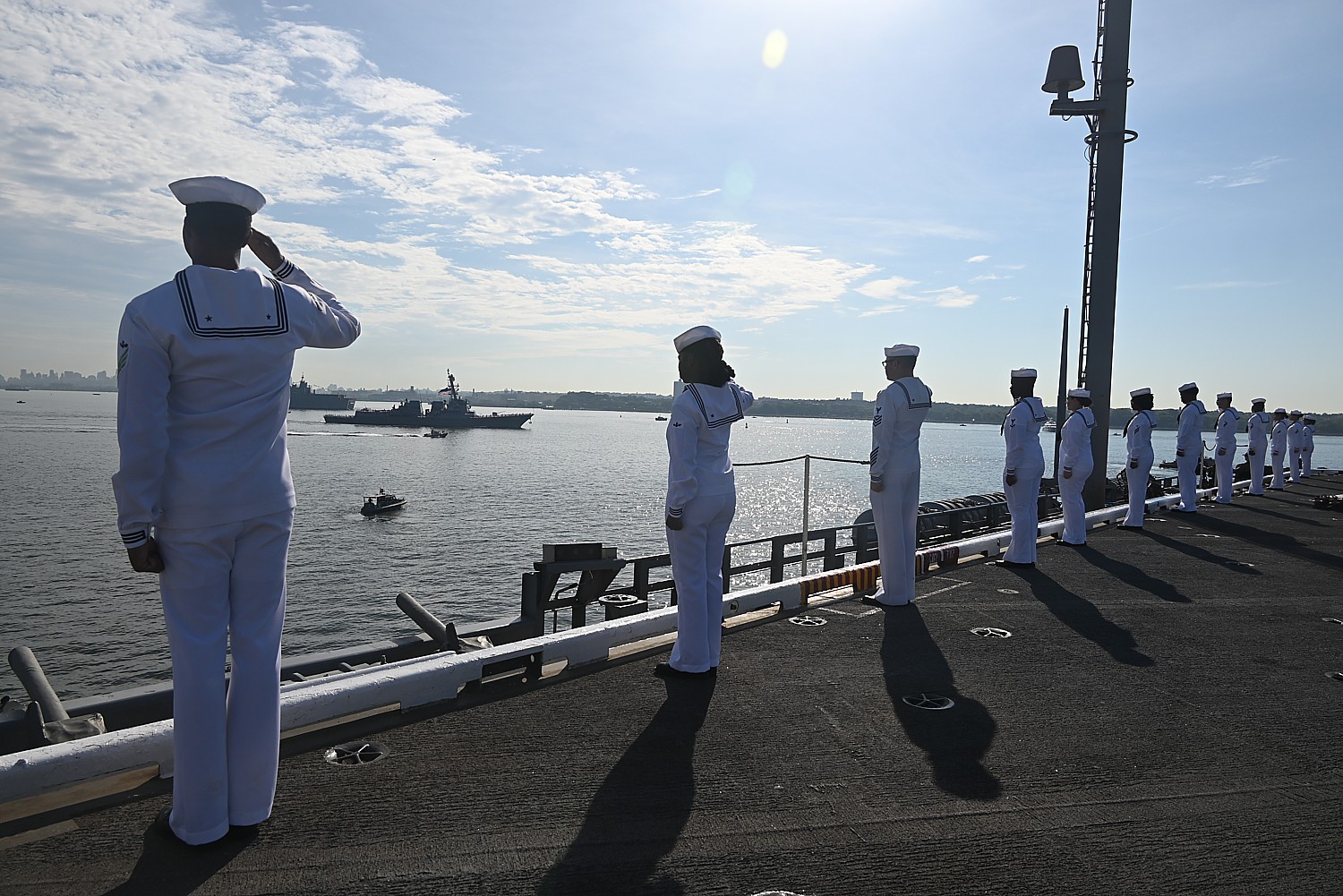
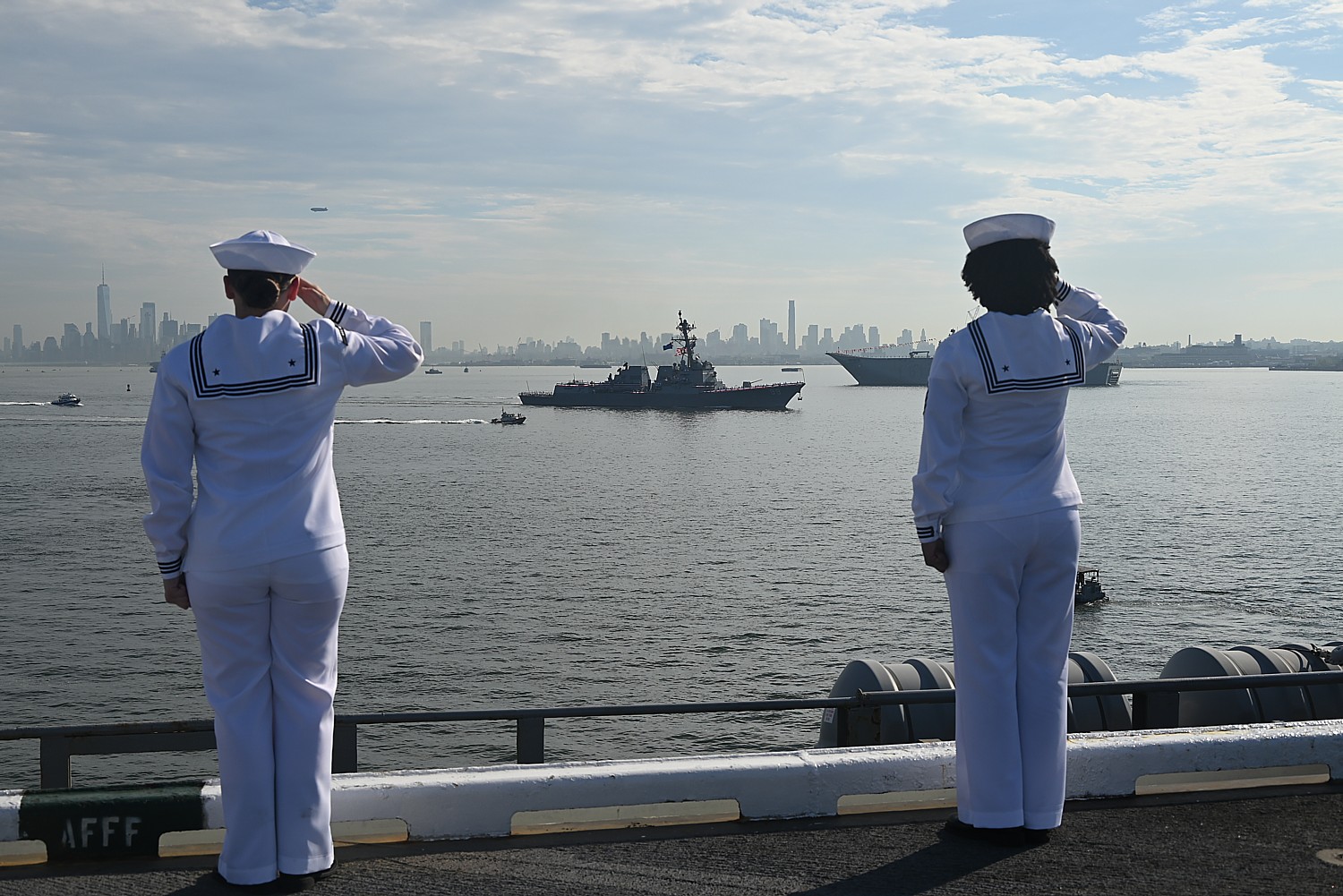
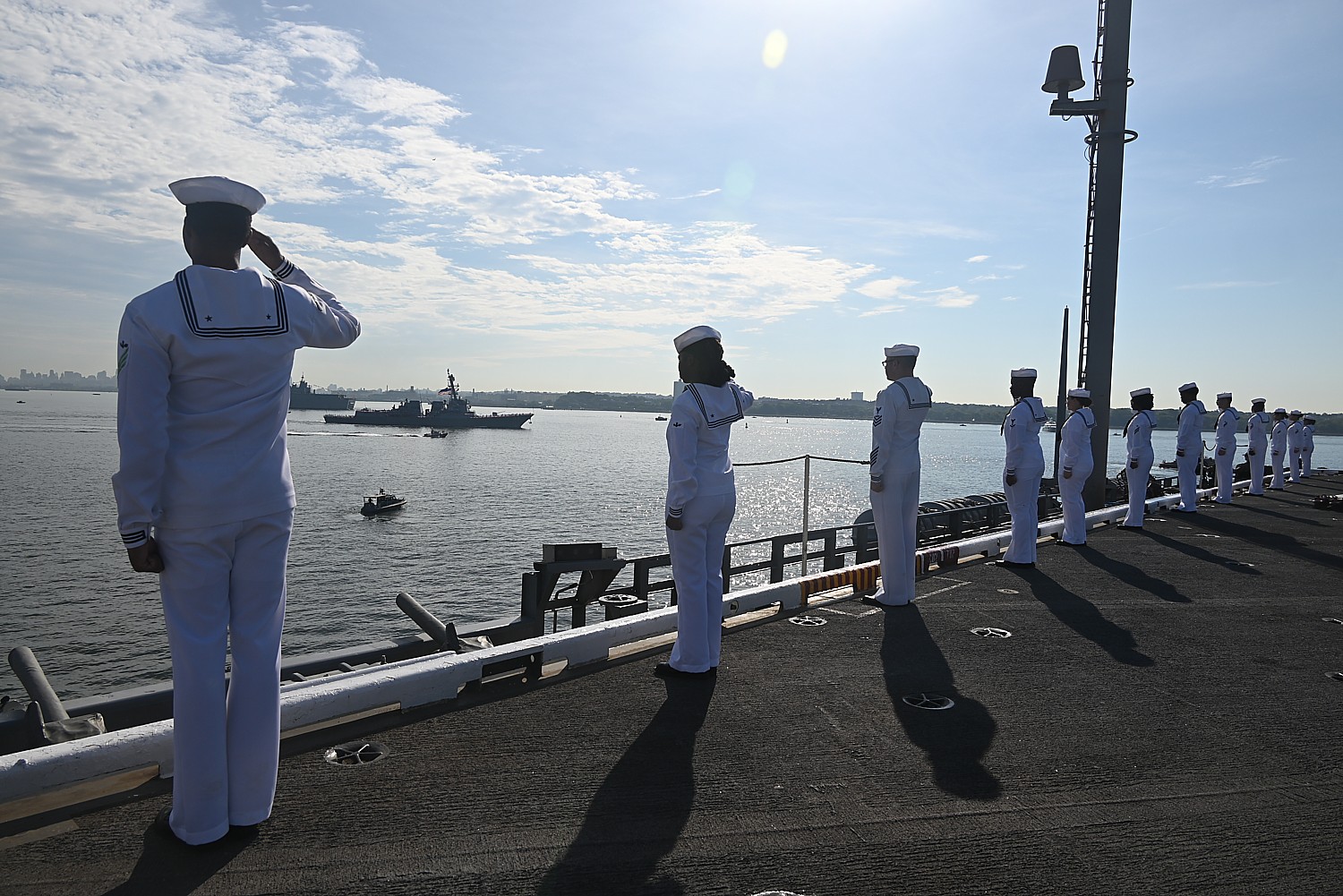
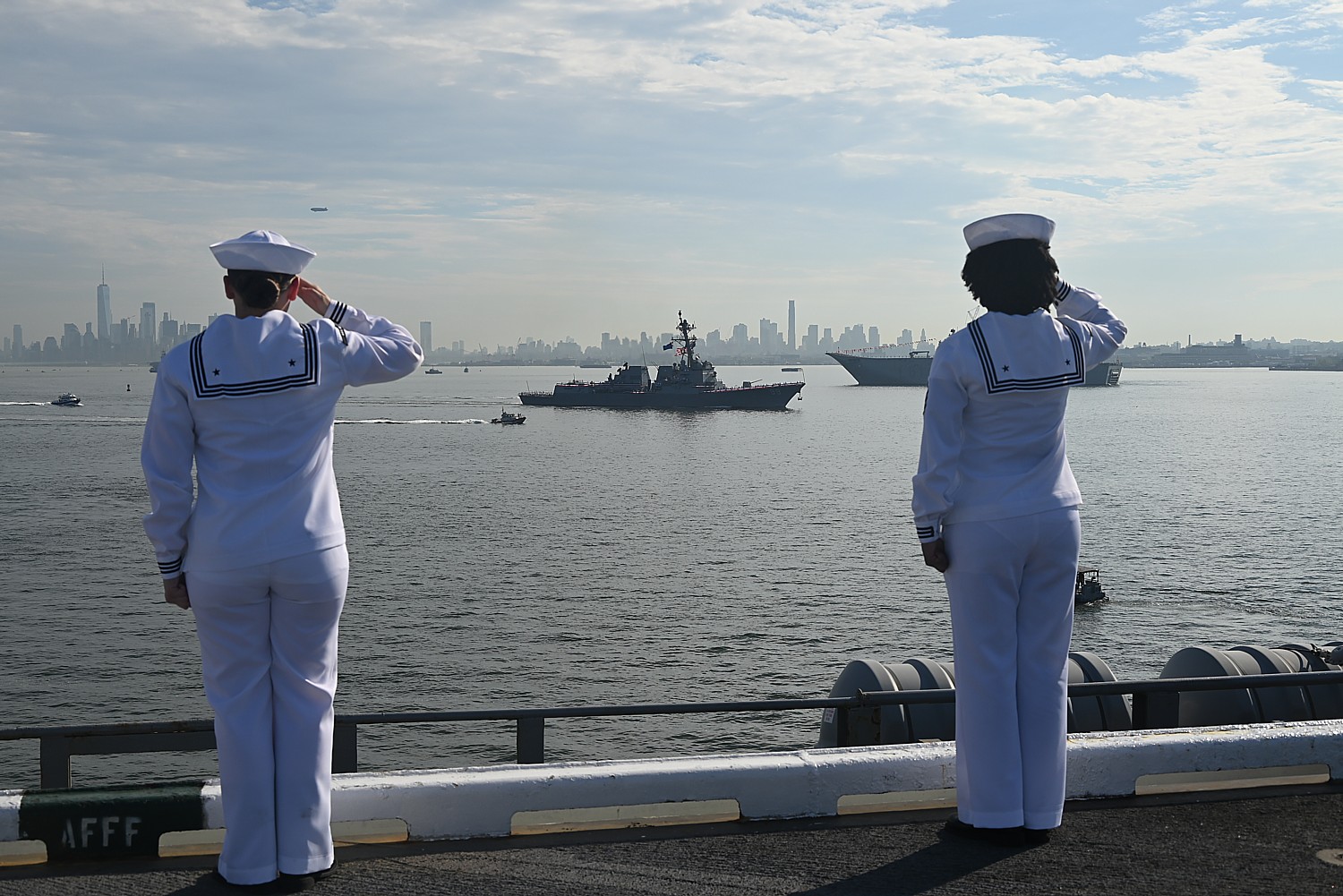
Sailors aboard the USS Nimitz give salute as the USS Farragut sails by for The International Naval Review to honor America’s 250th, that has only occurred six times previously in U.S. history © Karen Rubin/news-photos-features.com

By Karen Rubin, editor@news-photos-features.comnews-photos-features.com

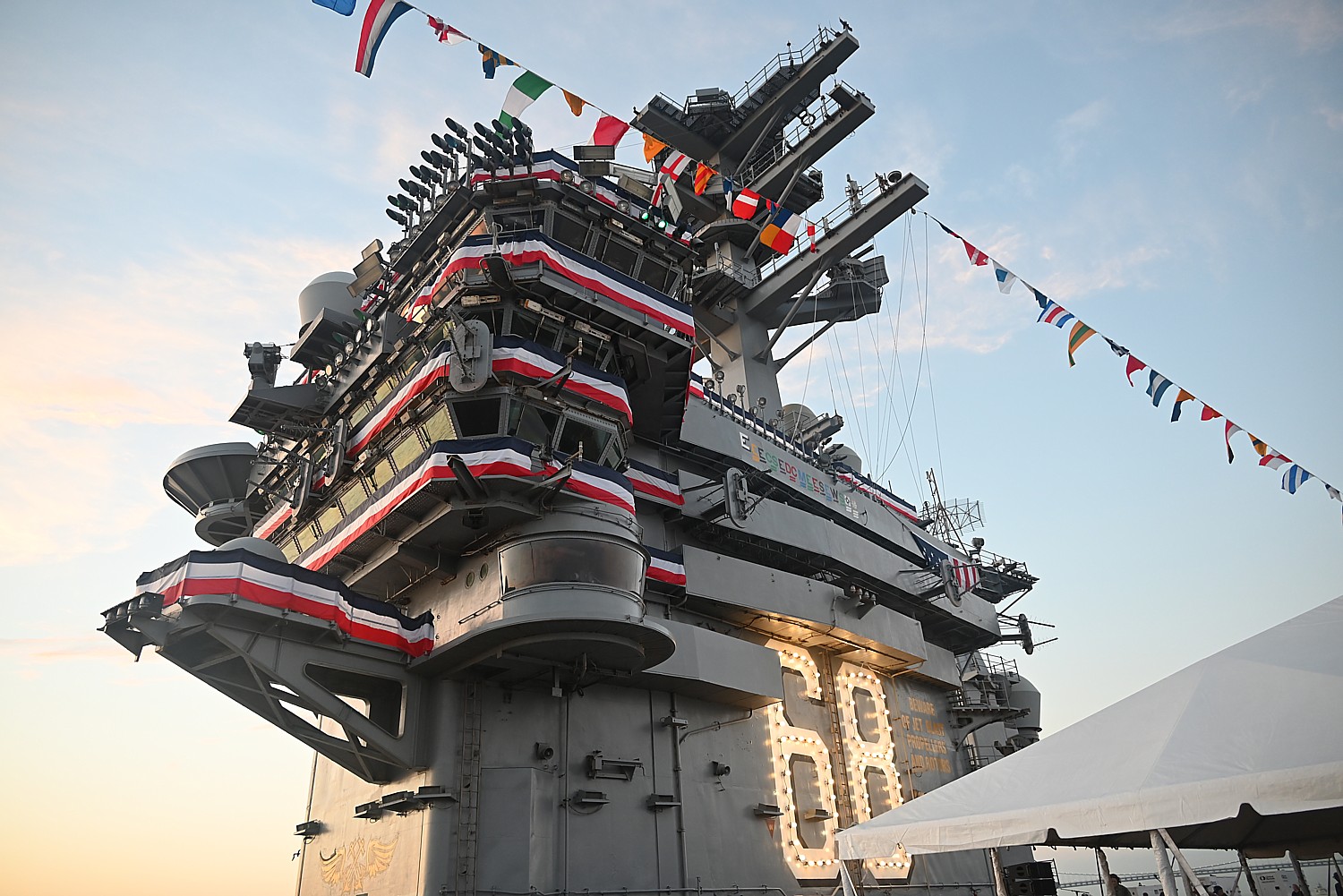
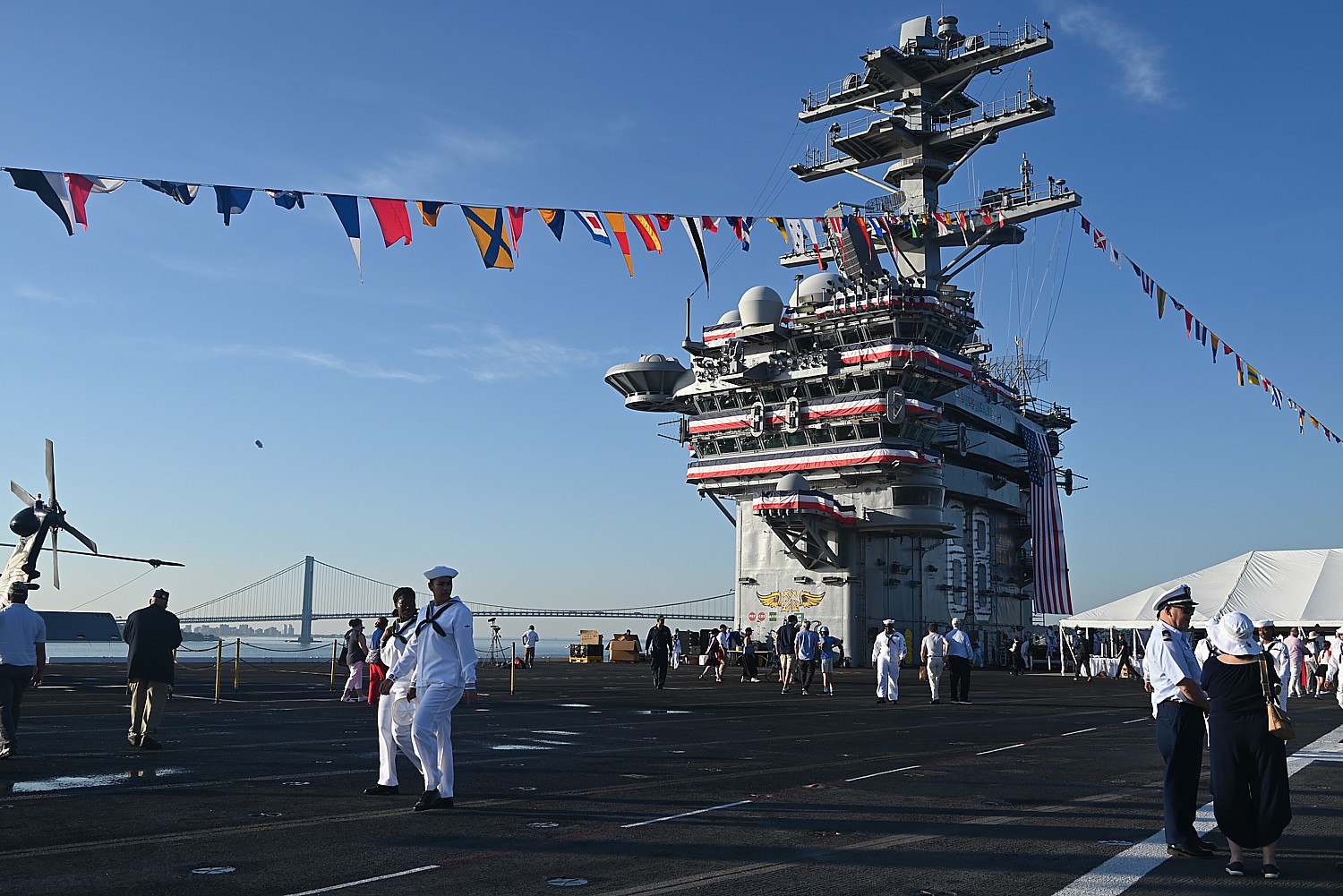
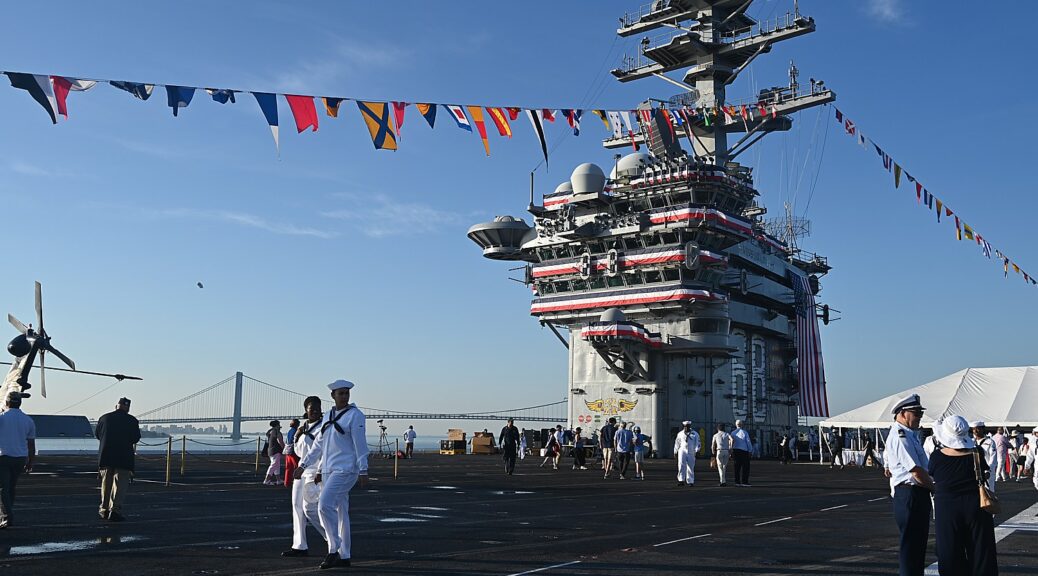
On America’s historic day, July 4th 2026, exactly 250 years after the signing of the Declaration of Independence, I was on the deck of the legendary “Old Salt” aircraft carrier, the USS Nimitz. The timing couldn’t be more appropriate for this ship, commissioned in 1975, just a year before the Bicentennial Celebration in 1976, and scheduled to be retired in March 2027, the year after the Semisesquicentennial. 

While ships of this kind typically have a 50-year lifespan, the Nimitz’ retirement was postponed to maintain its 11 carrier fleet while waiting for the commissioning of the second Ford-class carrier, the John F. Kennedy, which is expected to arrive in March. But this enabled the Nimitz to proudly anchor The International Naval Review (INR 250) in New York Harbor, featuring more than 30 U.S. and allied military vessels that has only occurred six times previously in American history.

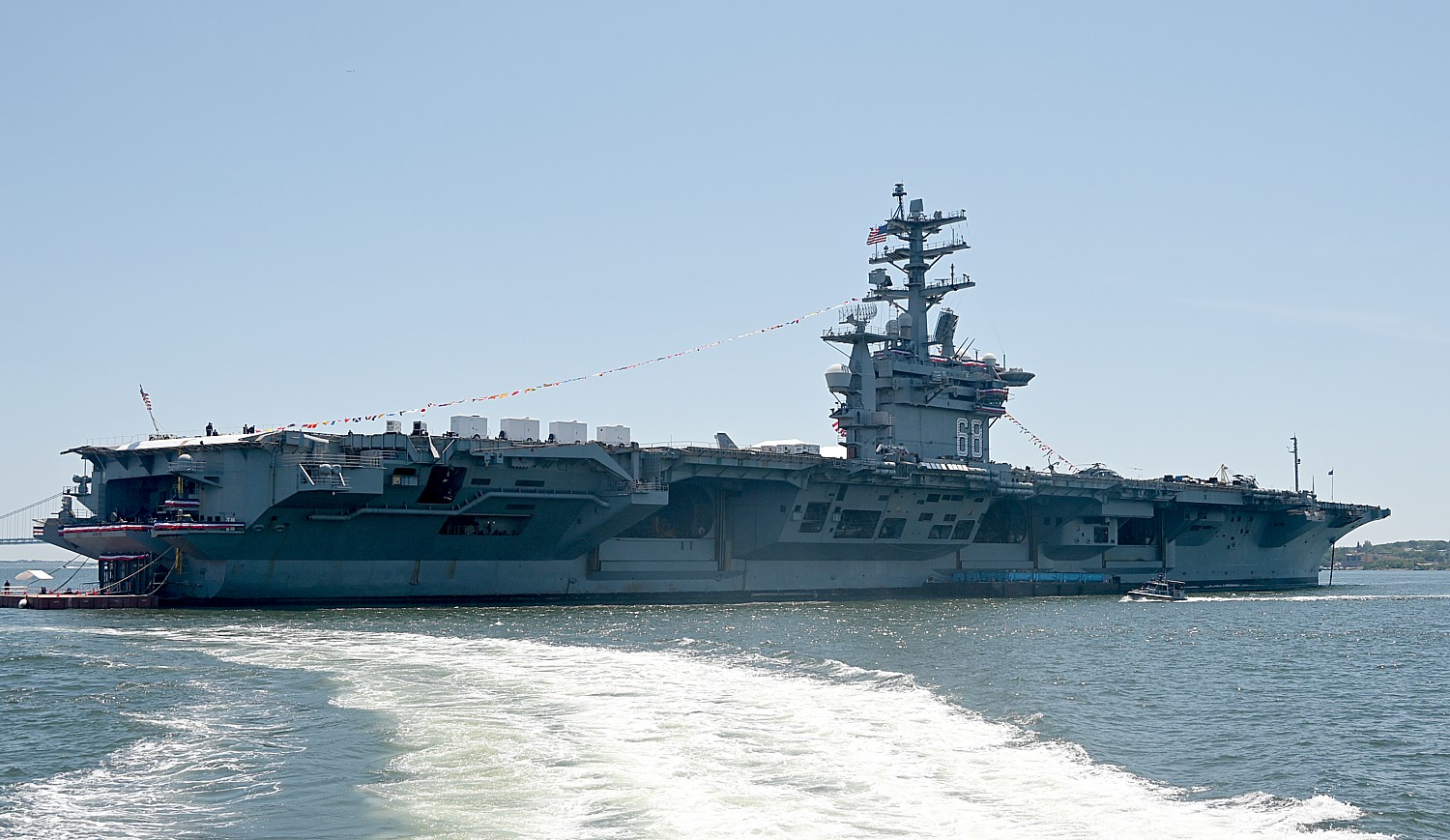
The first of the Nimitz class of nuclear-powered aircraft carriers, named in honor of Fleet Admiral Chester W. Nimitz, is now the oldest American aircraft carrier in active service.
© Karen Rubin/news-photos-features.com

It is a massive vessel, one of the largest warships in the world: 20-stories high, 1,092 feet long (1/5 of a mile or nearly four football fields), displacing 100,000 long tons when fully loaded, it can carry up to 75-90 fixed and rotary-wing aircraft (fighter jets, early warning, anti-submarine, and transport), and when fully operational, carries 5,000 crew and air wing members. Propelled by two nuclear reactors, the Nimitz has unlimited range and speeds exceeding 30 knots. A major storm is nothing for this ship.

(Indeed, the night before Sail4th 250, when the ship was hosting important dignitaries and guests, a major squall came through and pretty much destroyed all the tents that had been set up; the crew worked all night to clean up and set up.)
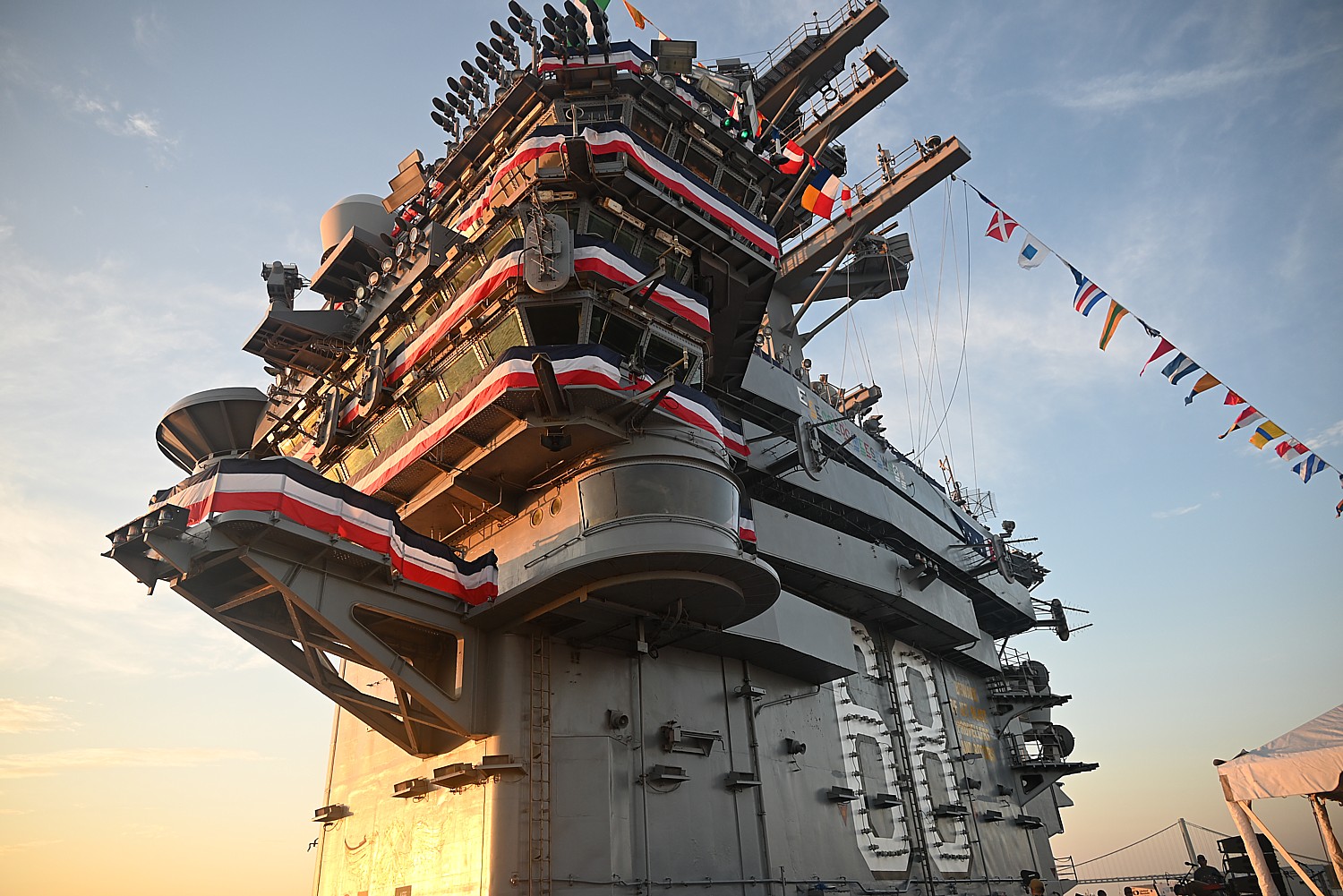
Among its notable operations:

On Sept. 10, 1979, Nimitz was dispatched to the Indian Ocean as tensions heightened after Iran took 52 U.S. hostages. Four months later, Operation Evening Light/Eagle Claw was launched from Nimitz in an attempt to rescue the hostages, which was aborted.

The Nimitz also took part in Operation Earnest Will to provide protection of Kuwaiti-owned tankers from Iranian attacks; Operation Desert Storm; Operation Southern Watch and United Nations initiatives in the Arabian Gulf; Operation Enduring Freedom; Operation Iraqi Freedom; and the Global War on Terrorism. During a deployment in 2022, sailing over 65,000 nautical miles, the Nimitz logged her 350,000th arrested aircraft landing, the most of any aircraft carrier.

In June, the Nimitz completed its Southern Seas 2026 mission, the last operational deployment in the ship’s history.

The USS Nimitz had come into New York Harbor, coming under the Verrazano Bridge (after a careful calculation of total height to make sure it could fit), after sailing from the West Coast around South America, through the Strait of Magellan, where it hosted allies. Following Sail4th 250 events, it will sail to its new (old) homeport of Newport, Virginia, where it will serve as a training ship as it undergoes its decommissioning.
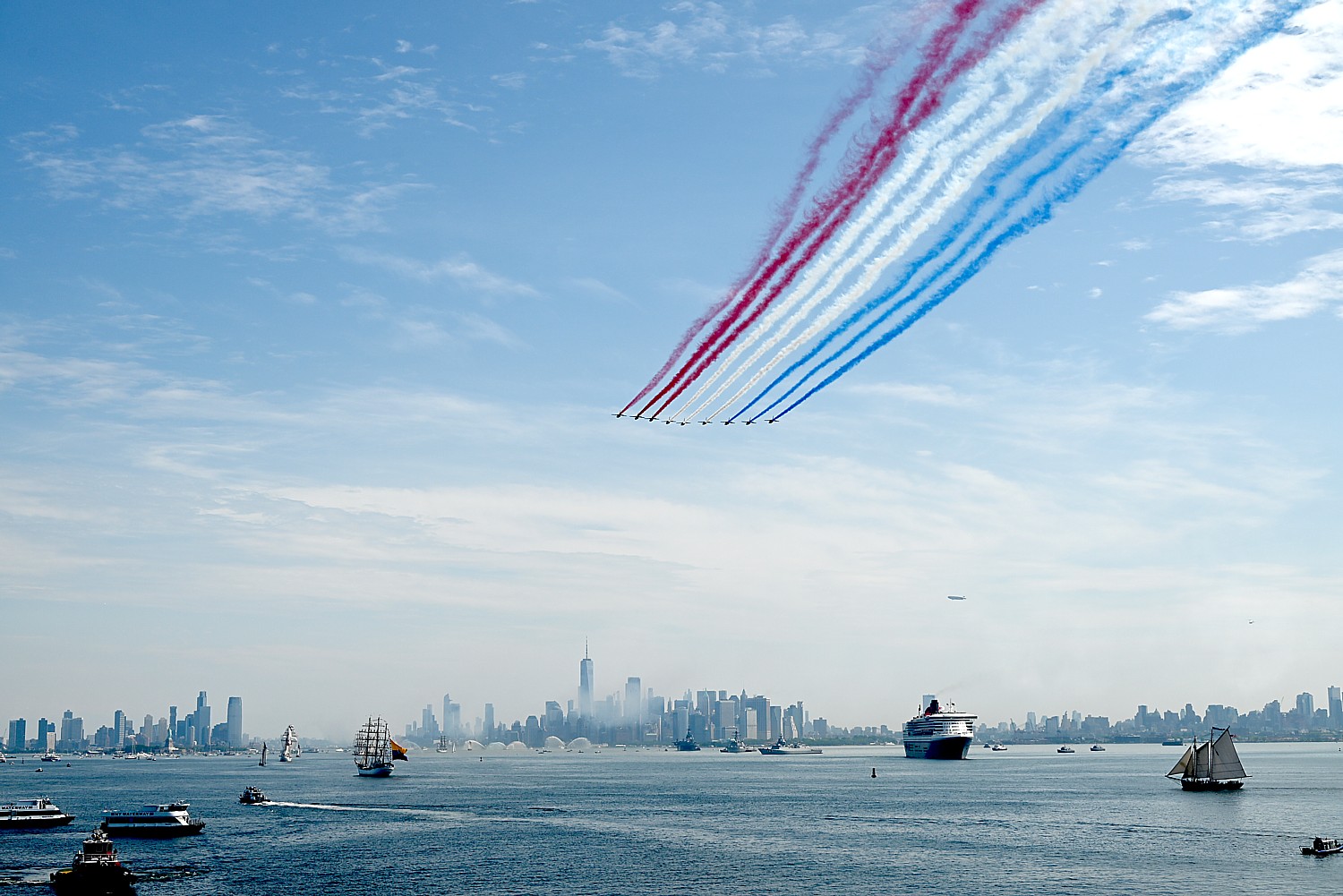
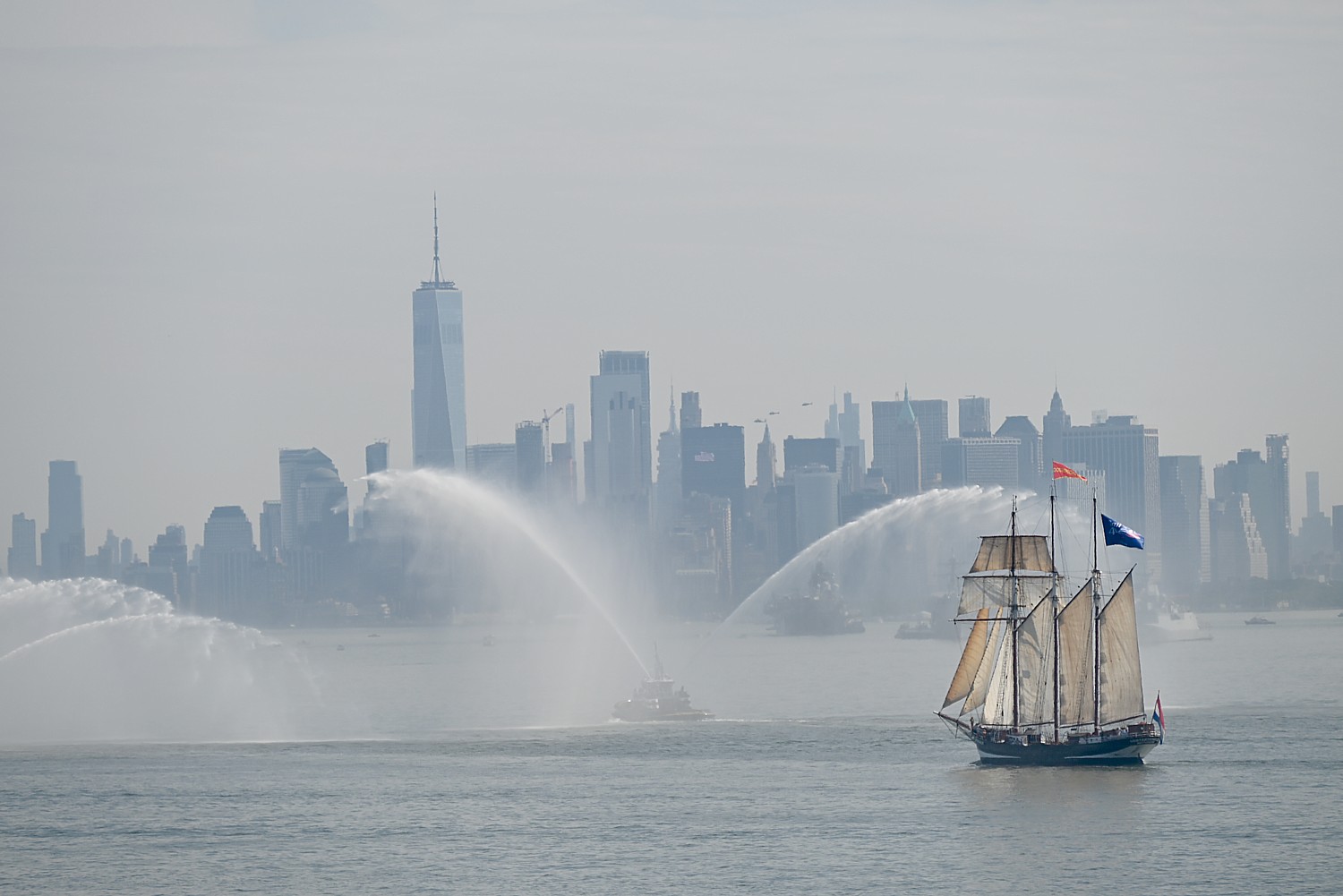
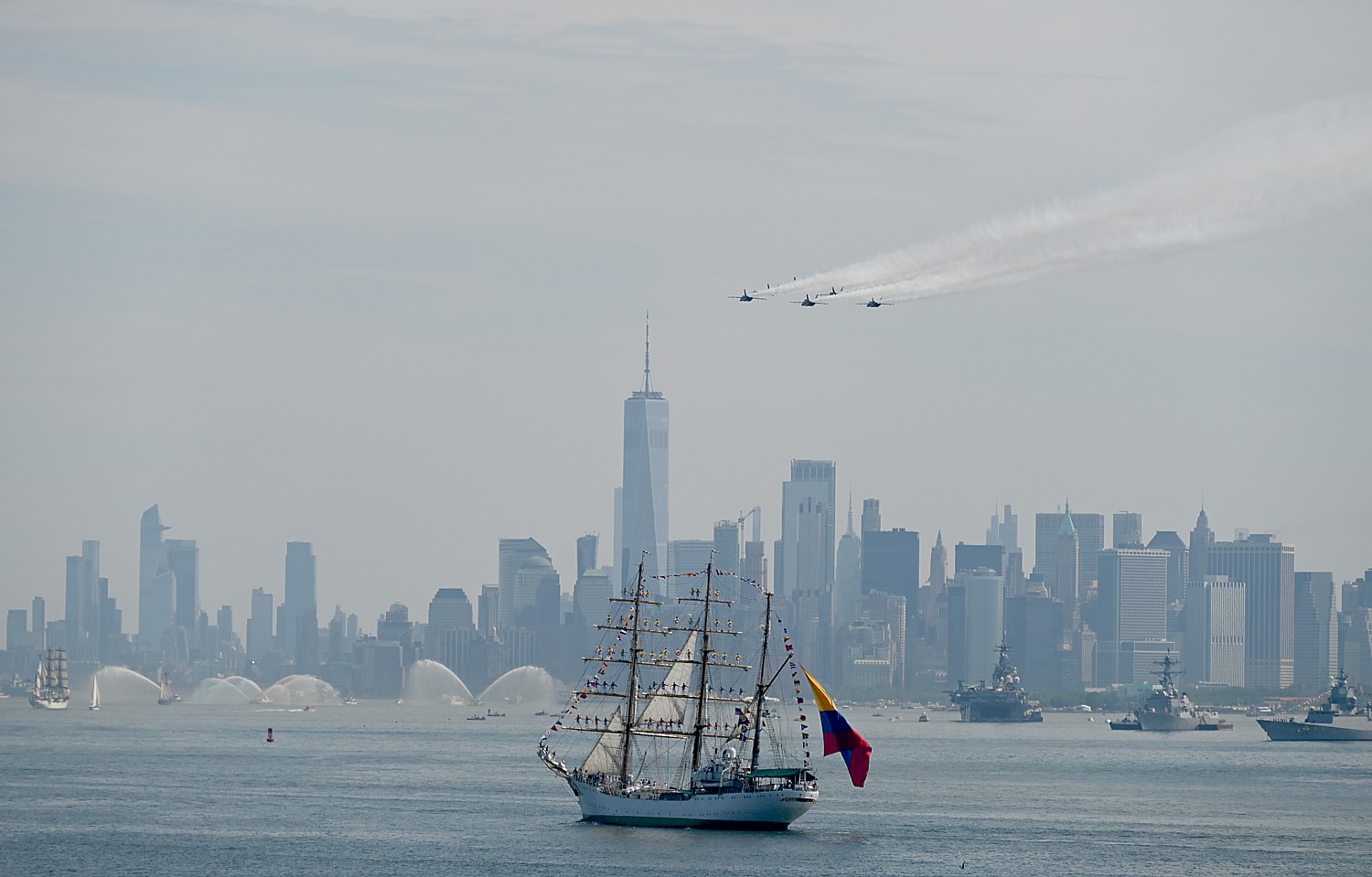
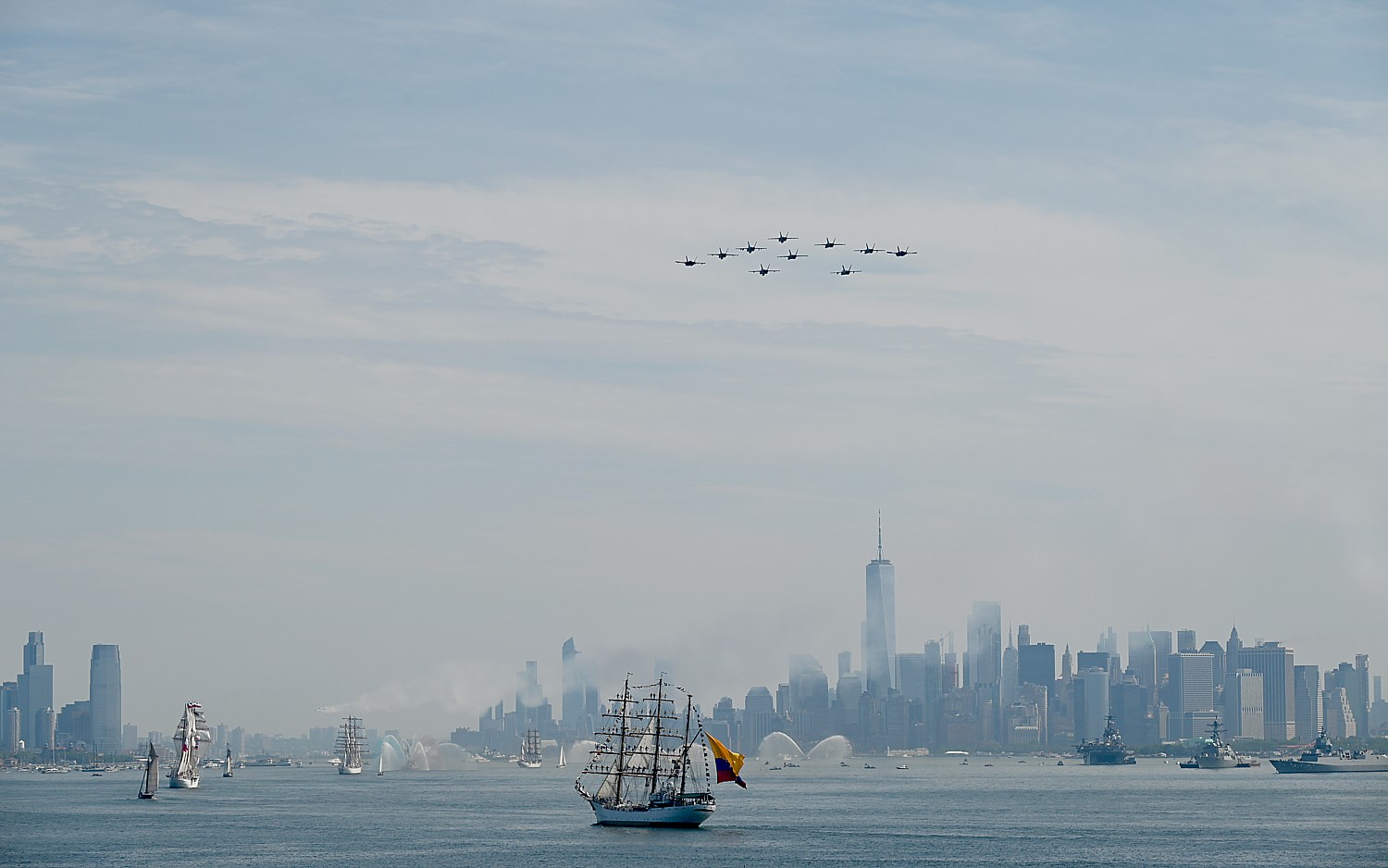
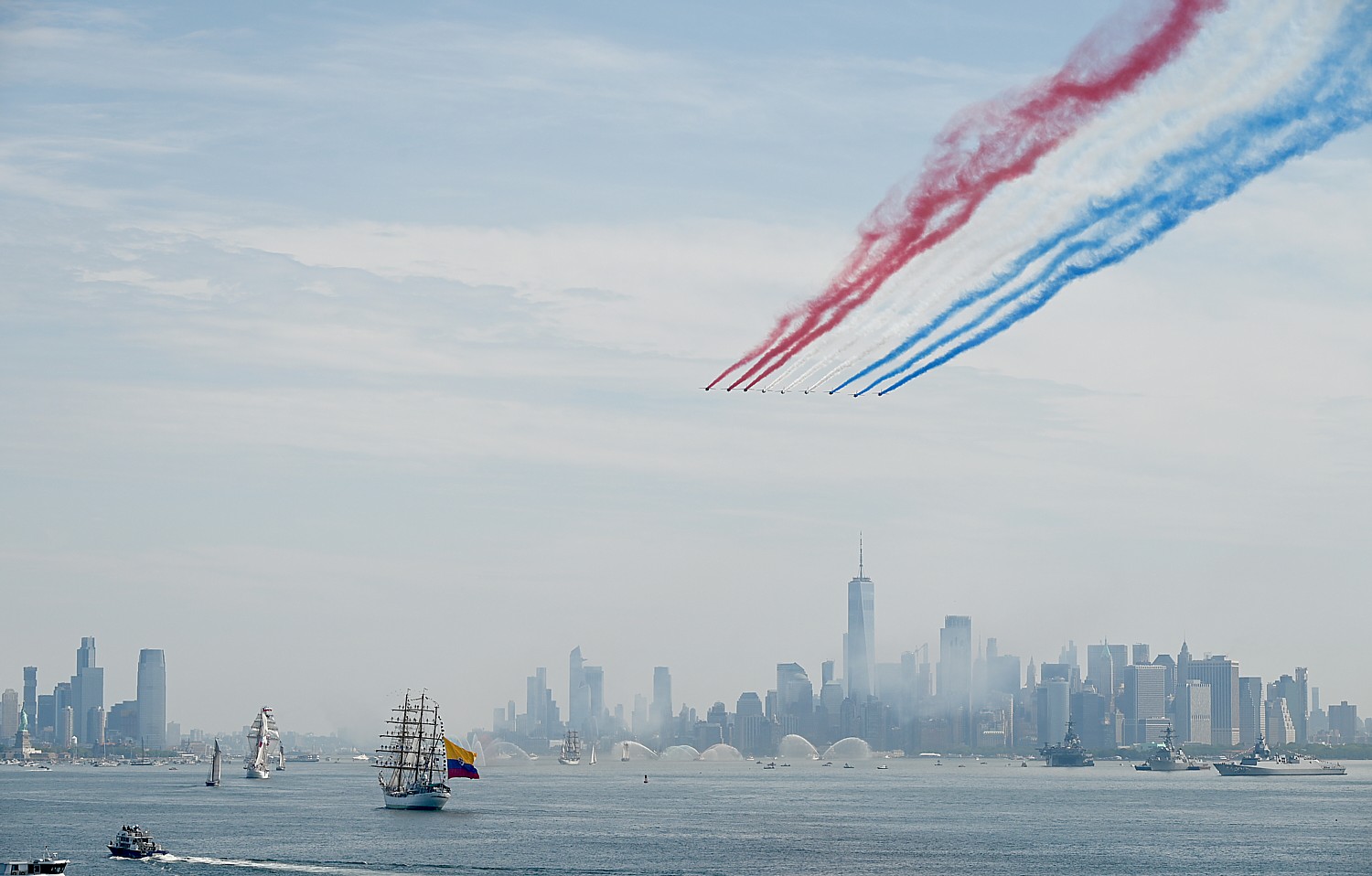
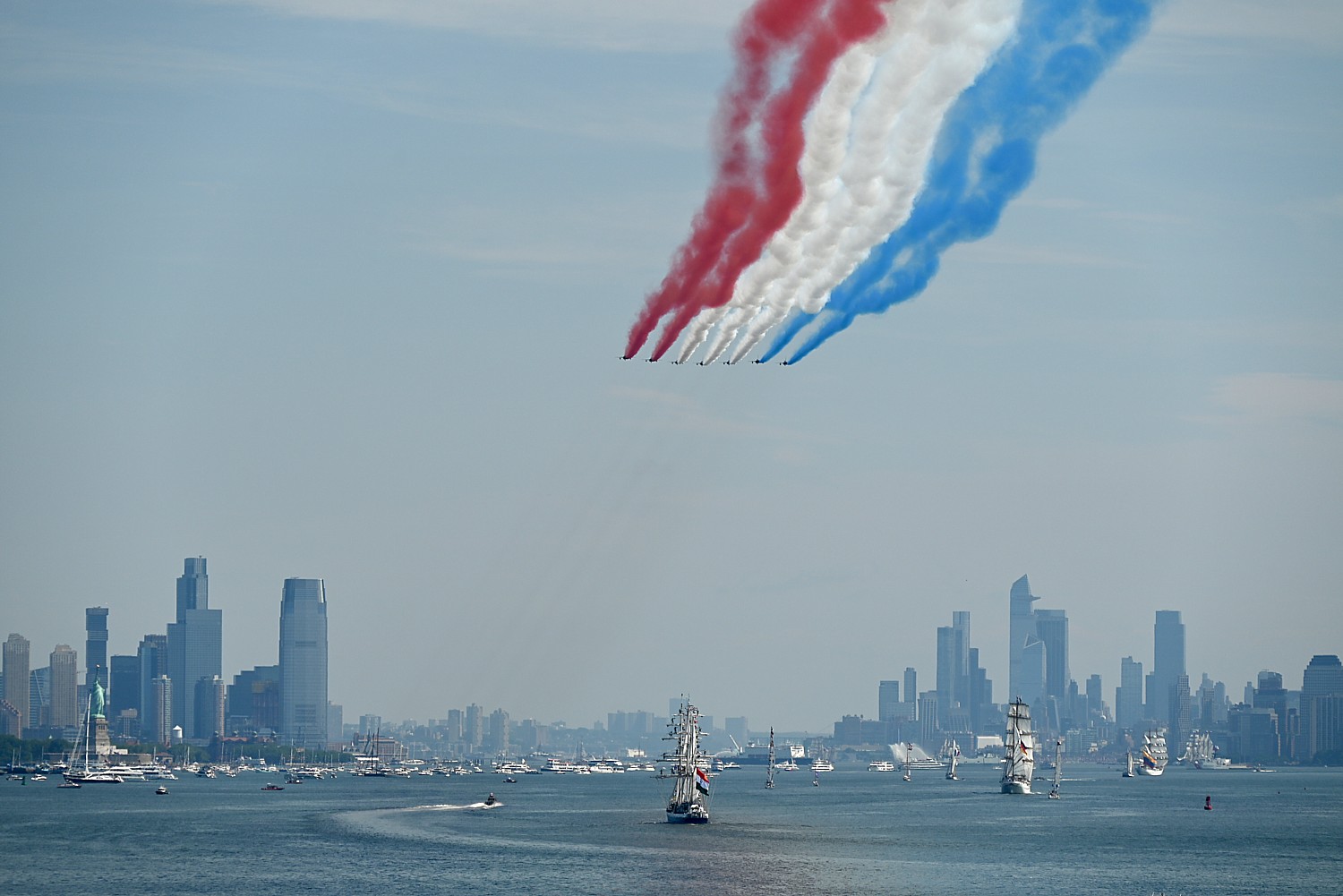
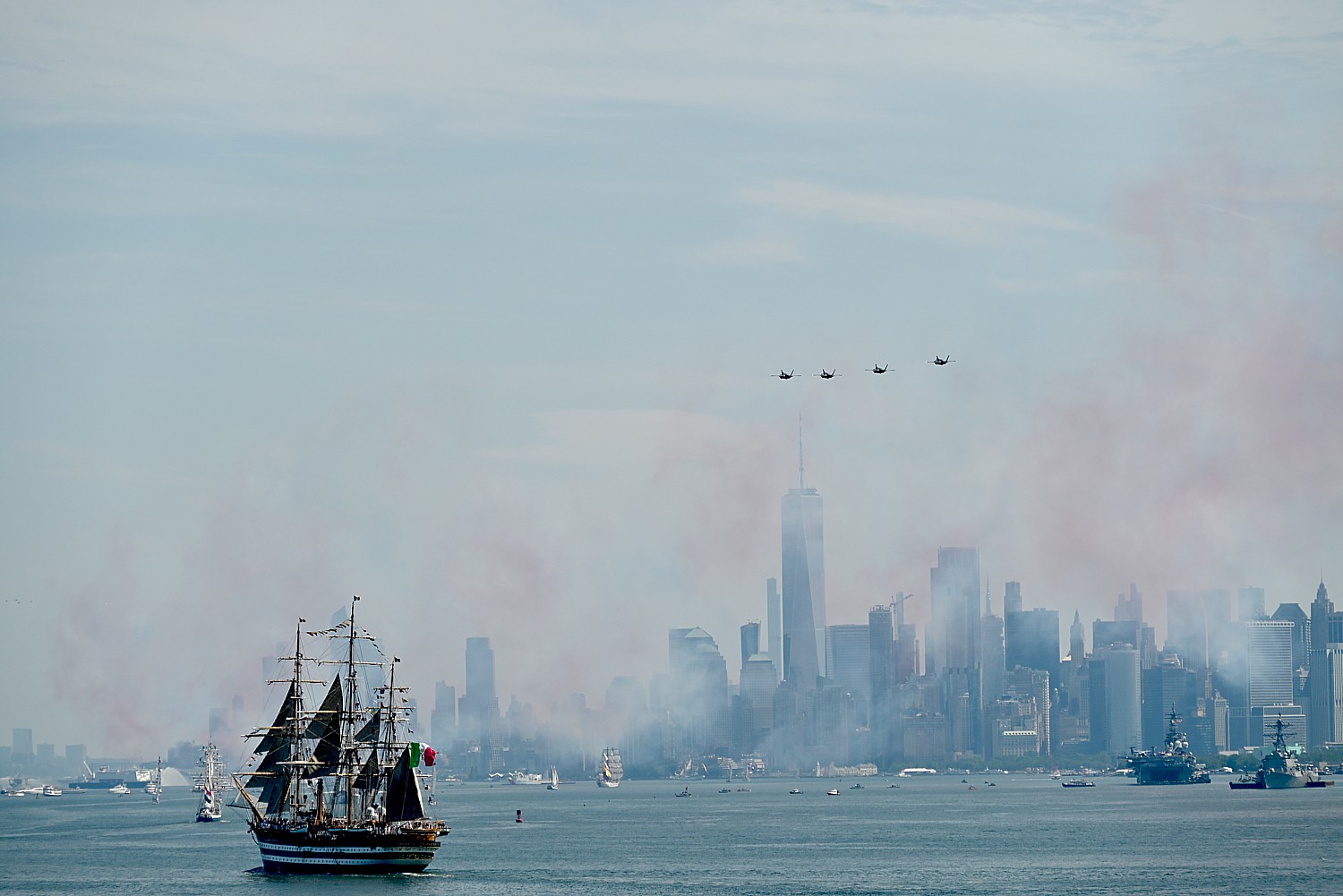
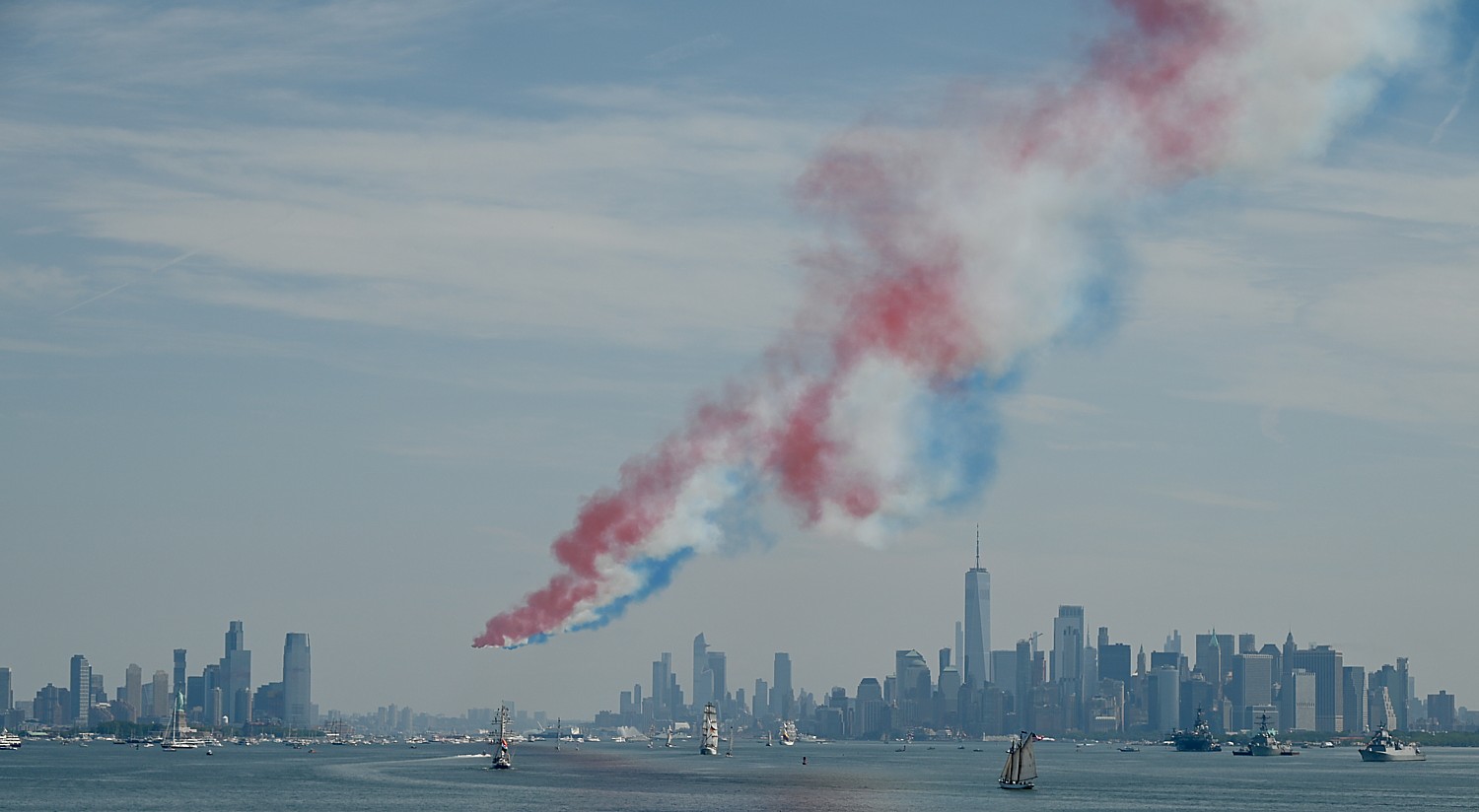
From the flight deck of the U.S.S. Nimitz aircraft carrier, we watch as historic tall ships sail through New York Harbor for Sail4th 250, bookended by the Statue of Liberty and the Freedom Tower, as jets fly over for the International Aerial Review © Karen Rubin/news-photos-features.com

From the flight deck on the Nimitz, we were able to observe the International Naval Review (INR) 250, the pinnacle event of the U.S. Navy’s celebration of America’s 250th birthday. Hosted in the Port of New York and New Jersey from July 3-8, 2026, INR 250 was a historic, multinational maritime event that gathered ships, aircraft, and personnel from over 50 international navies and coast guards.
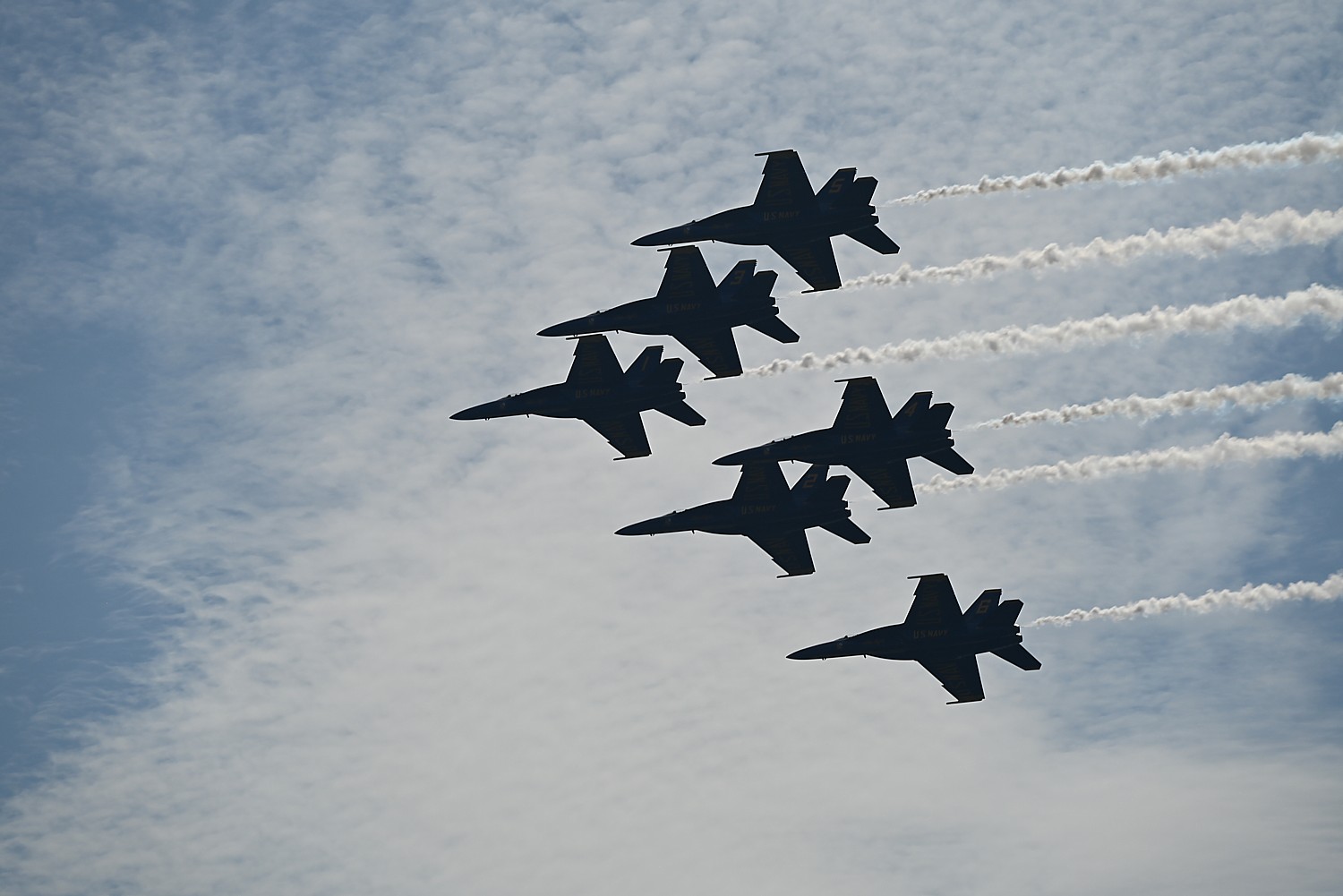
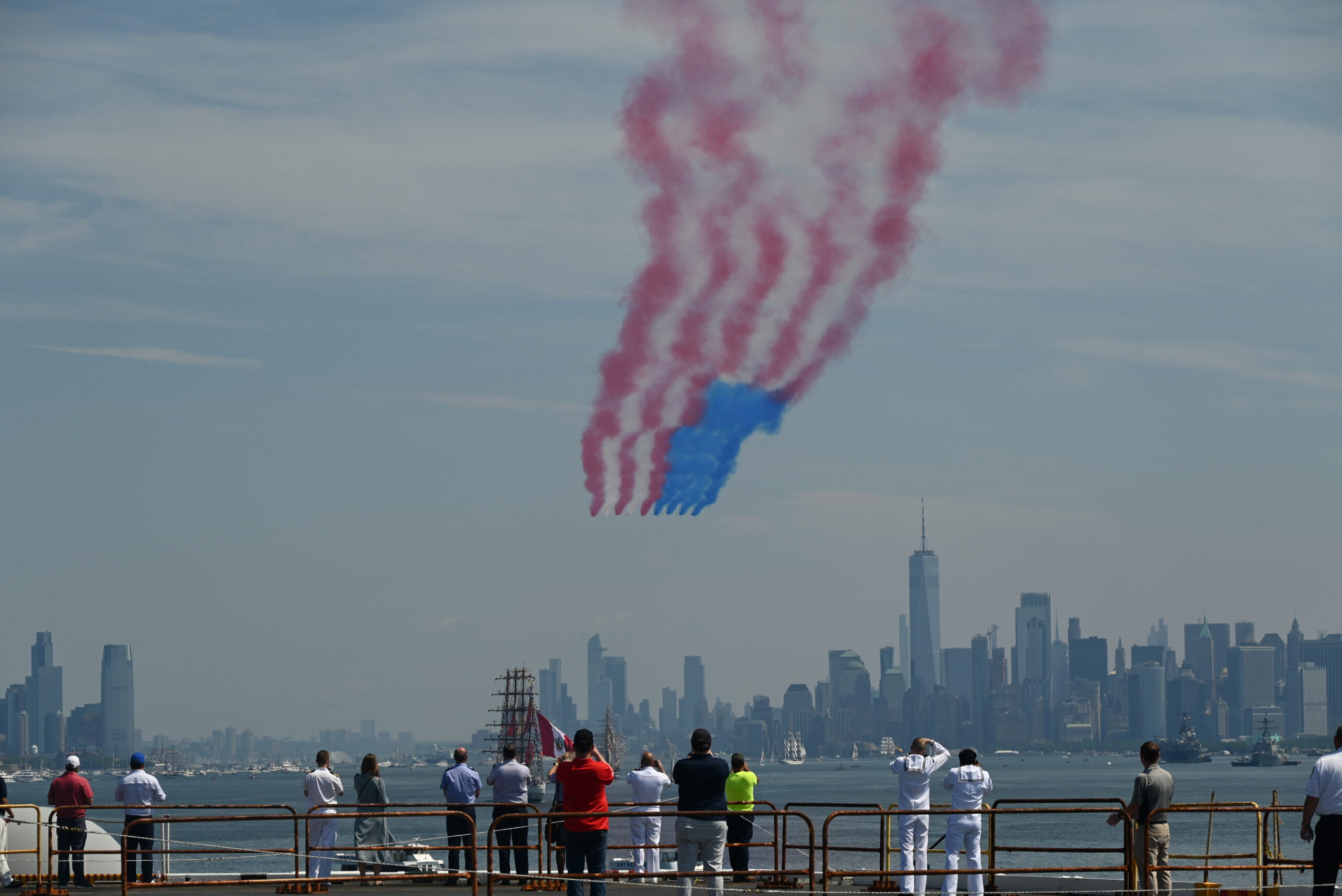
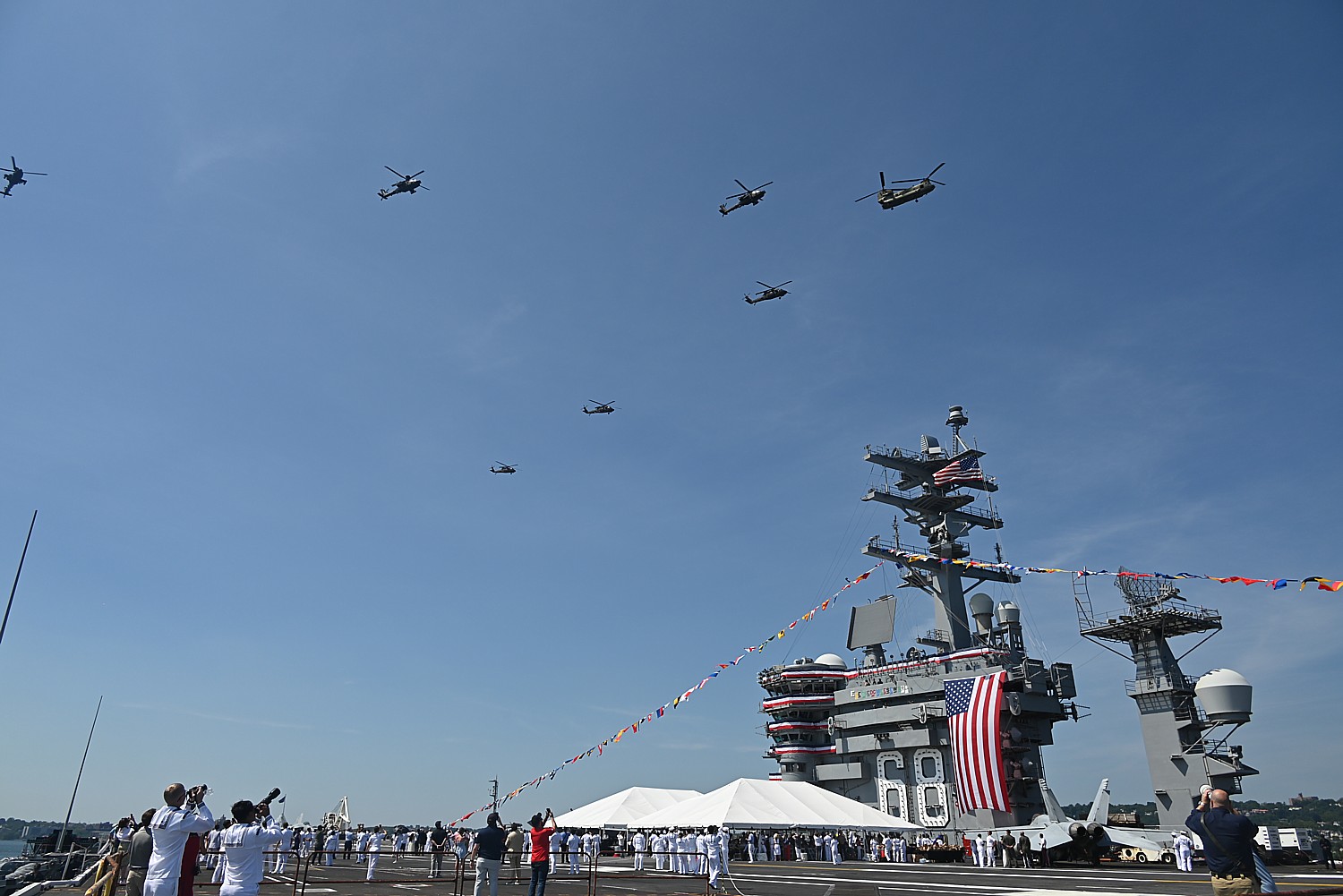
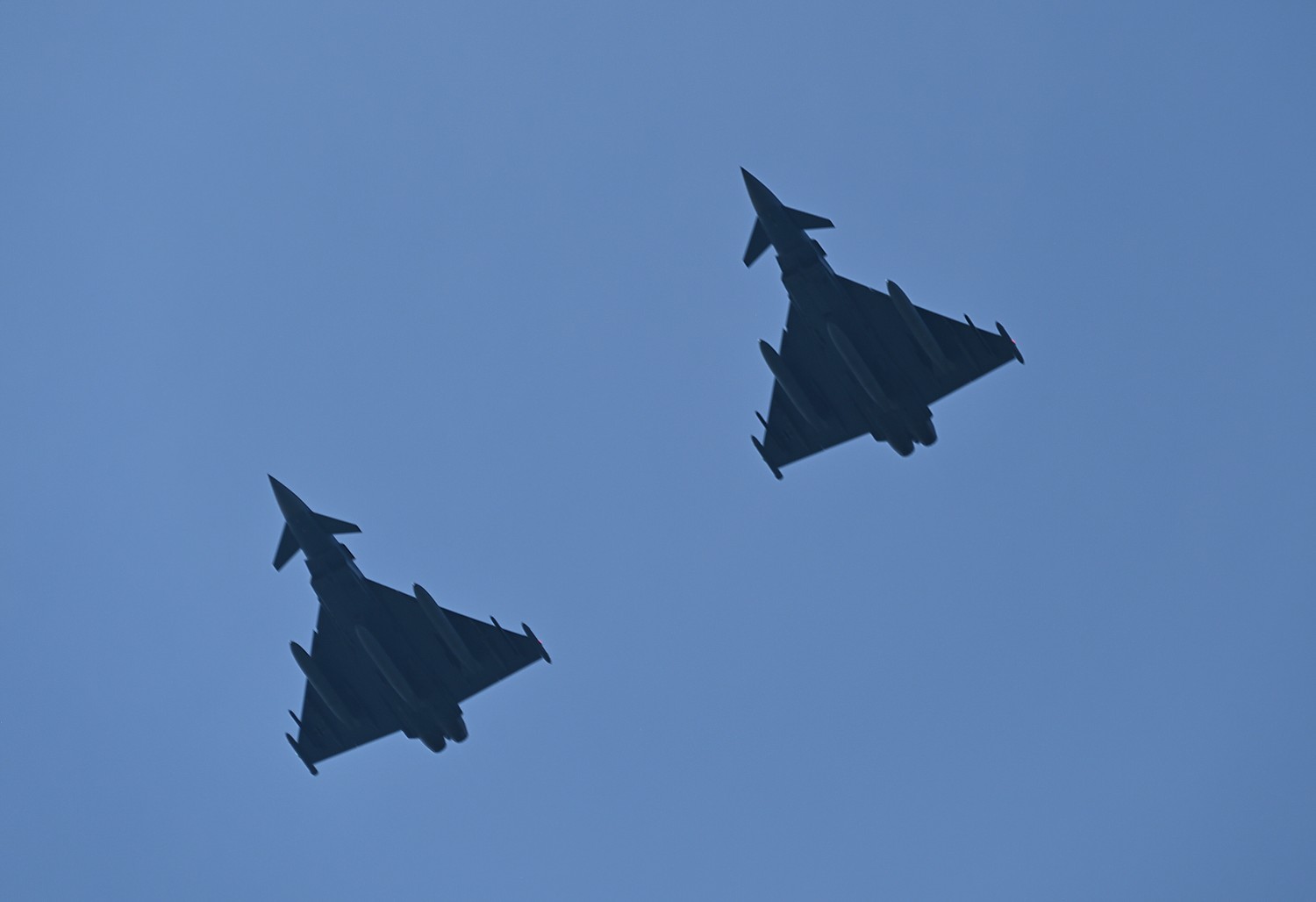
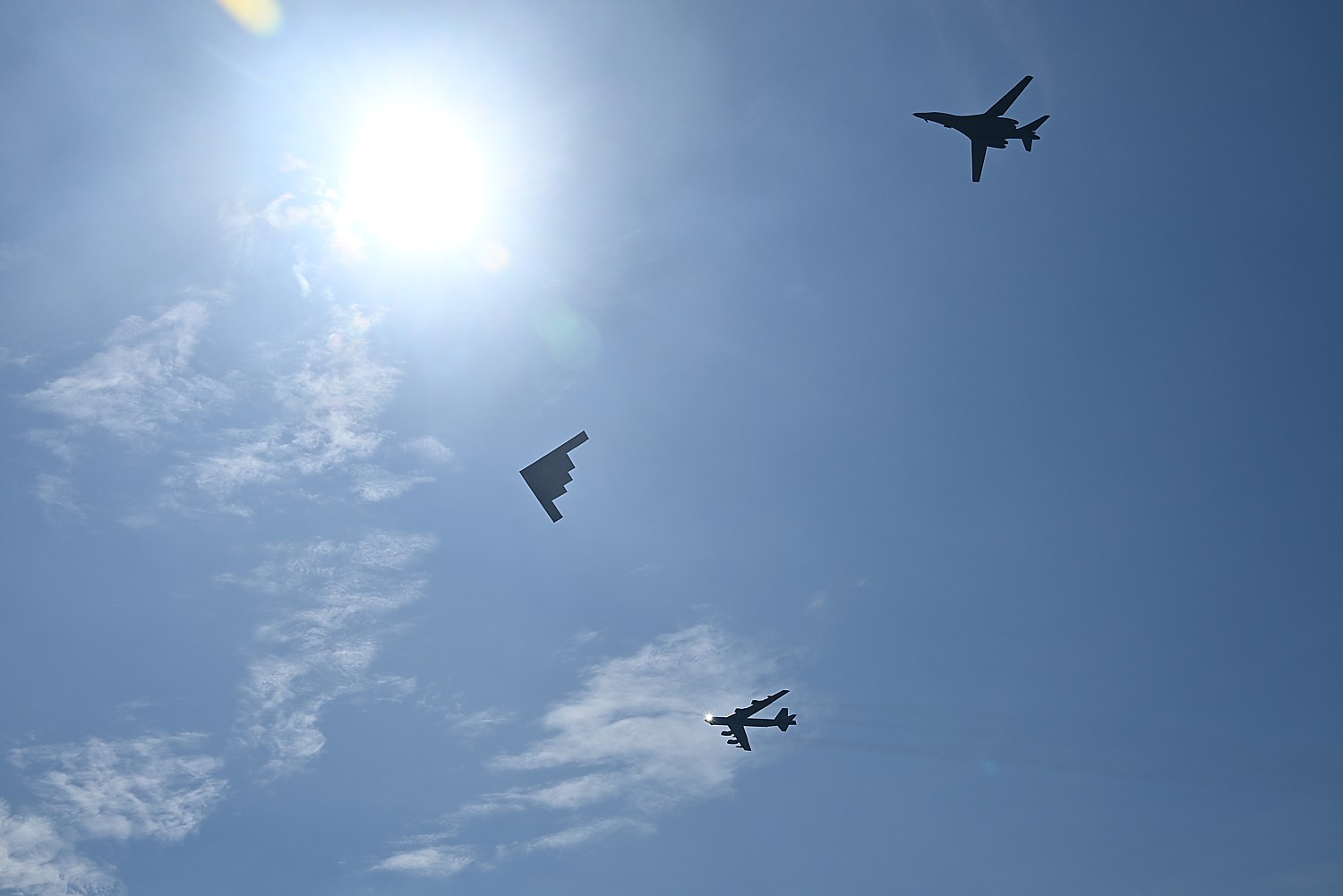
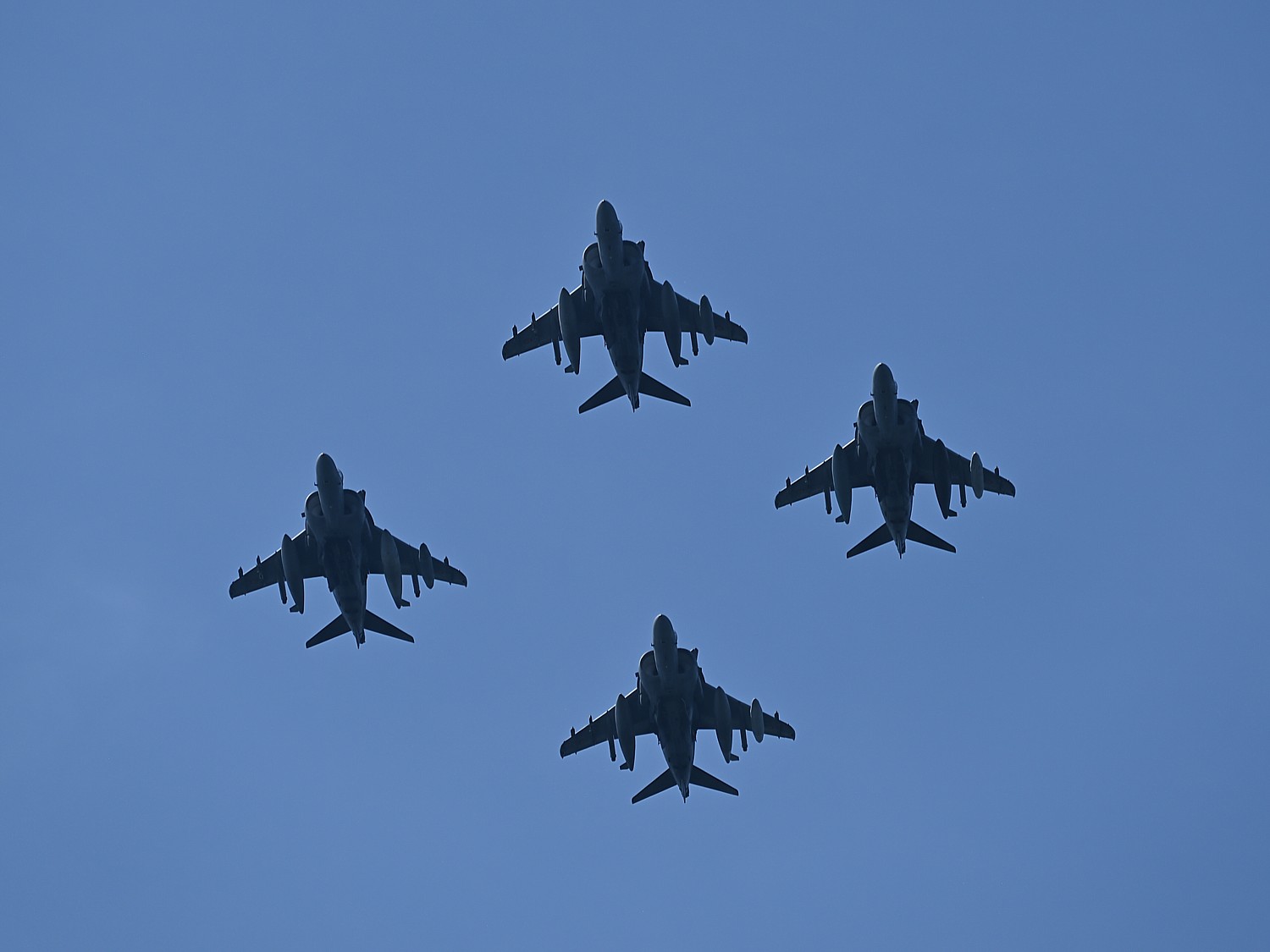
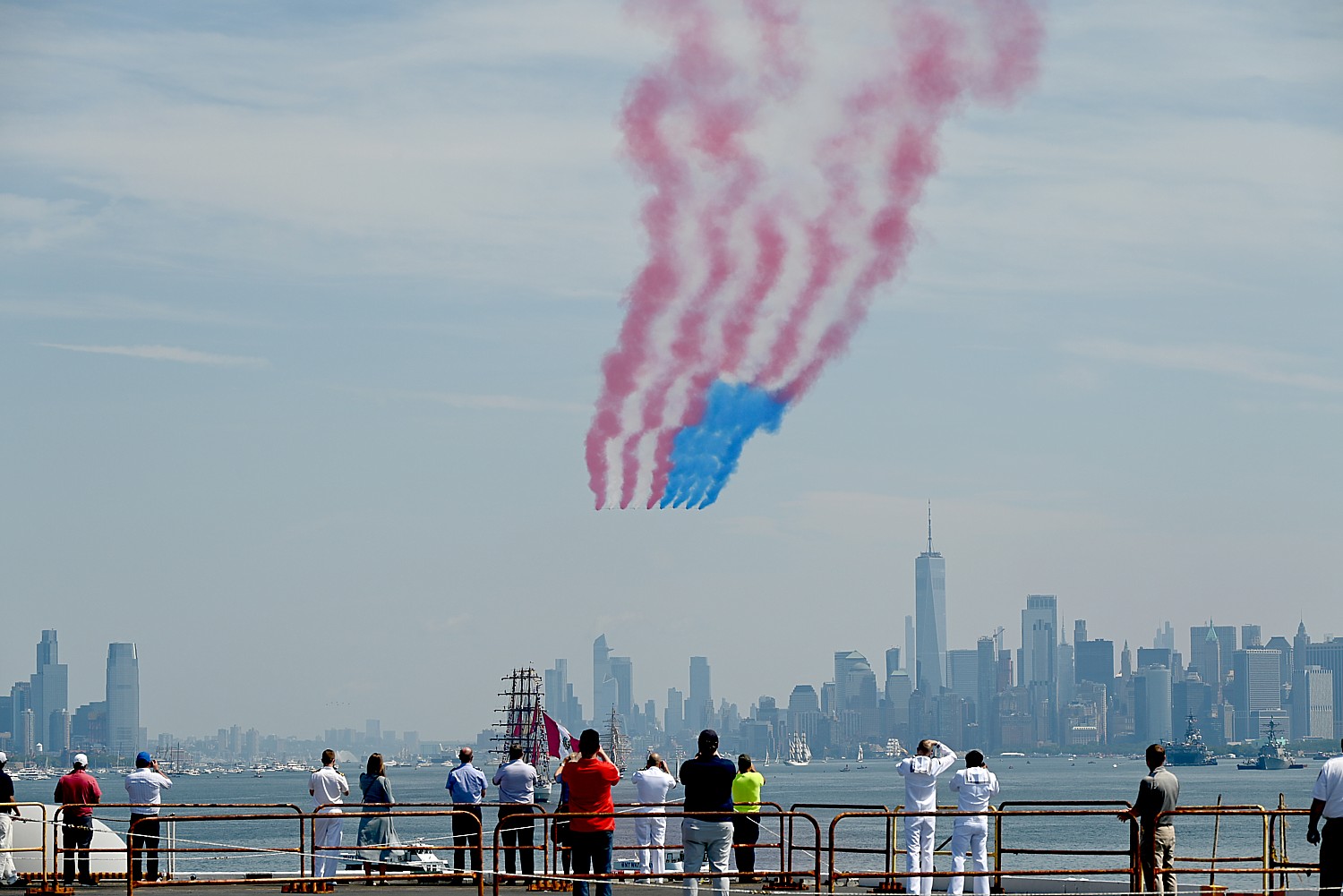
The U.S. Navy Blue Angels lead one of the longest International Aerial Reviews, with military aircraft from several nations joining in, flying directly over the U.S.S. Nimitz © Karen Rubin/news-photos-features.com
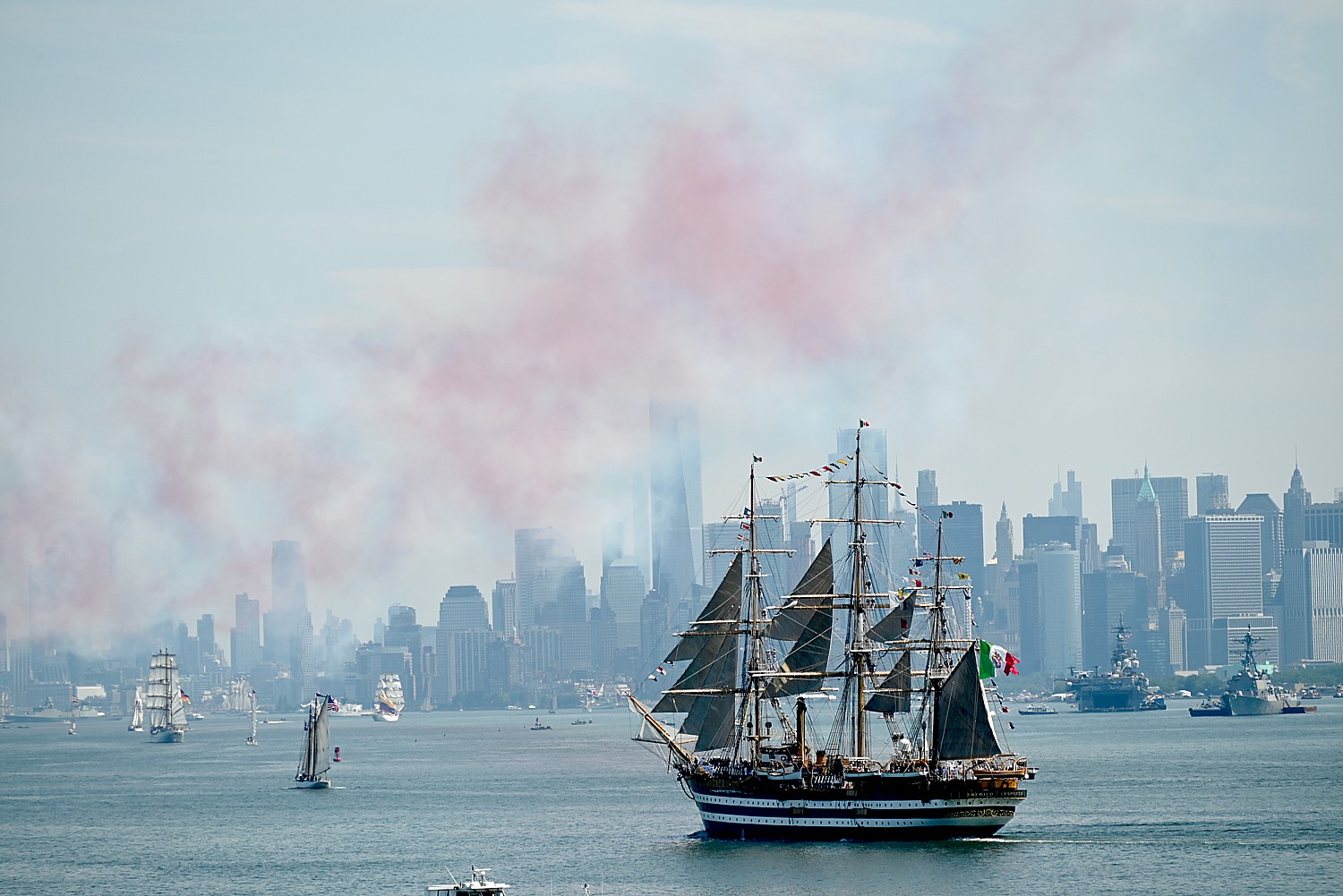
The view of the Parade of Sail and the International Aerial Review from the flight deck of the U.S.S. Nimitz © Karen Rubin/news-photos-features.com
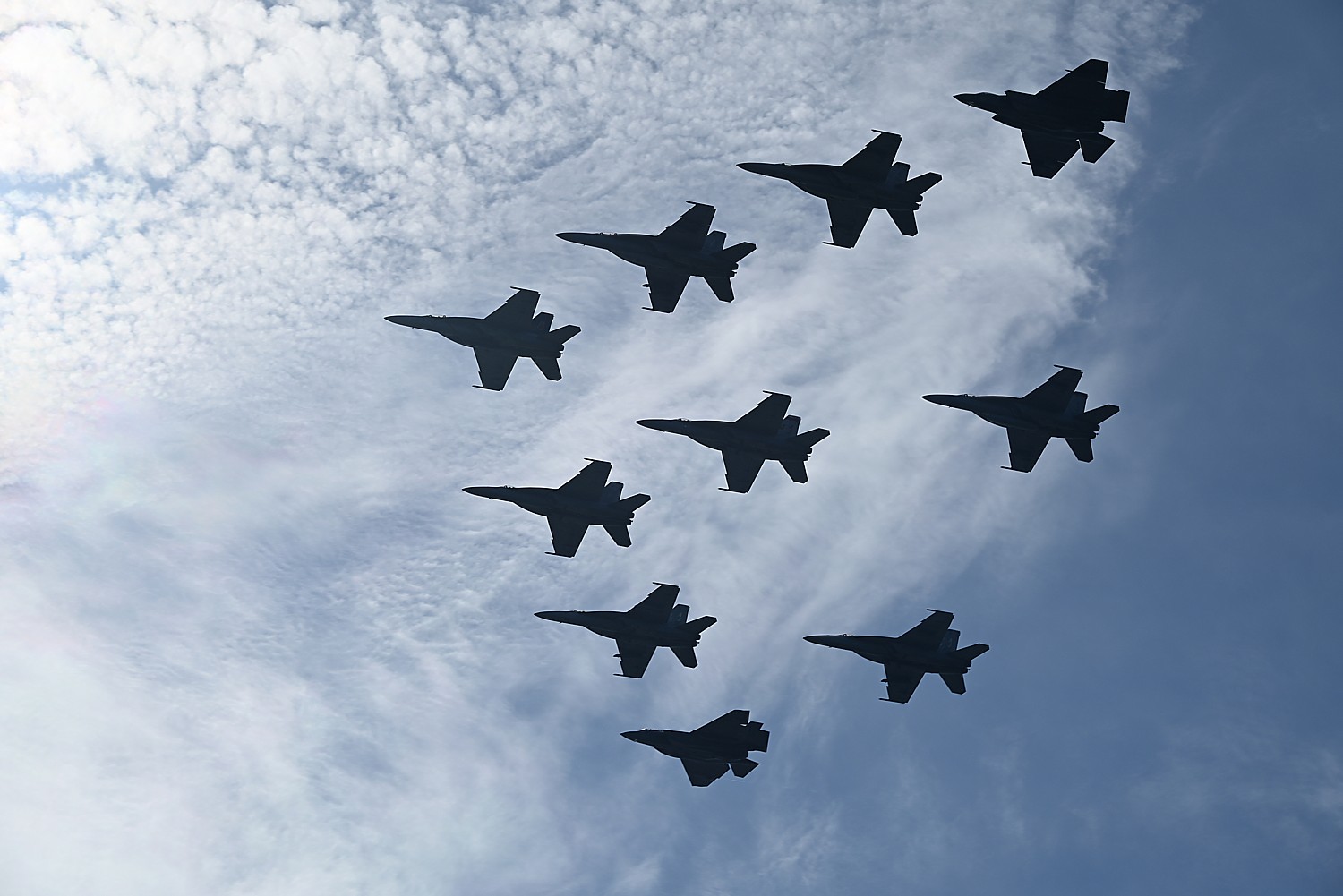
The International Aerial Review flies directly over the U.S.S. Nimitz © Karen Rubin/news-photos-features.com

This once-in-a-generation gathering, the largest international maritime event in U.S. history, featured a Parade of Ships with over 70 U.S. and allied naval vessels and international tall ships. It also includes the International Aerial Review, a multinational flyover led by the U.S. Navy Blue Angels. INR 250 honored 250 years of American sea power and global maritime partnership, showcasing the strength of alliances and a shared commitment to a free and open international order, and the importance of the U.S. Navy, Marine Corps and Coast Guard’s role defending the nation, securing global maritime security, and preserving American independence.
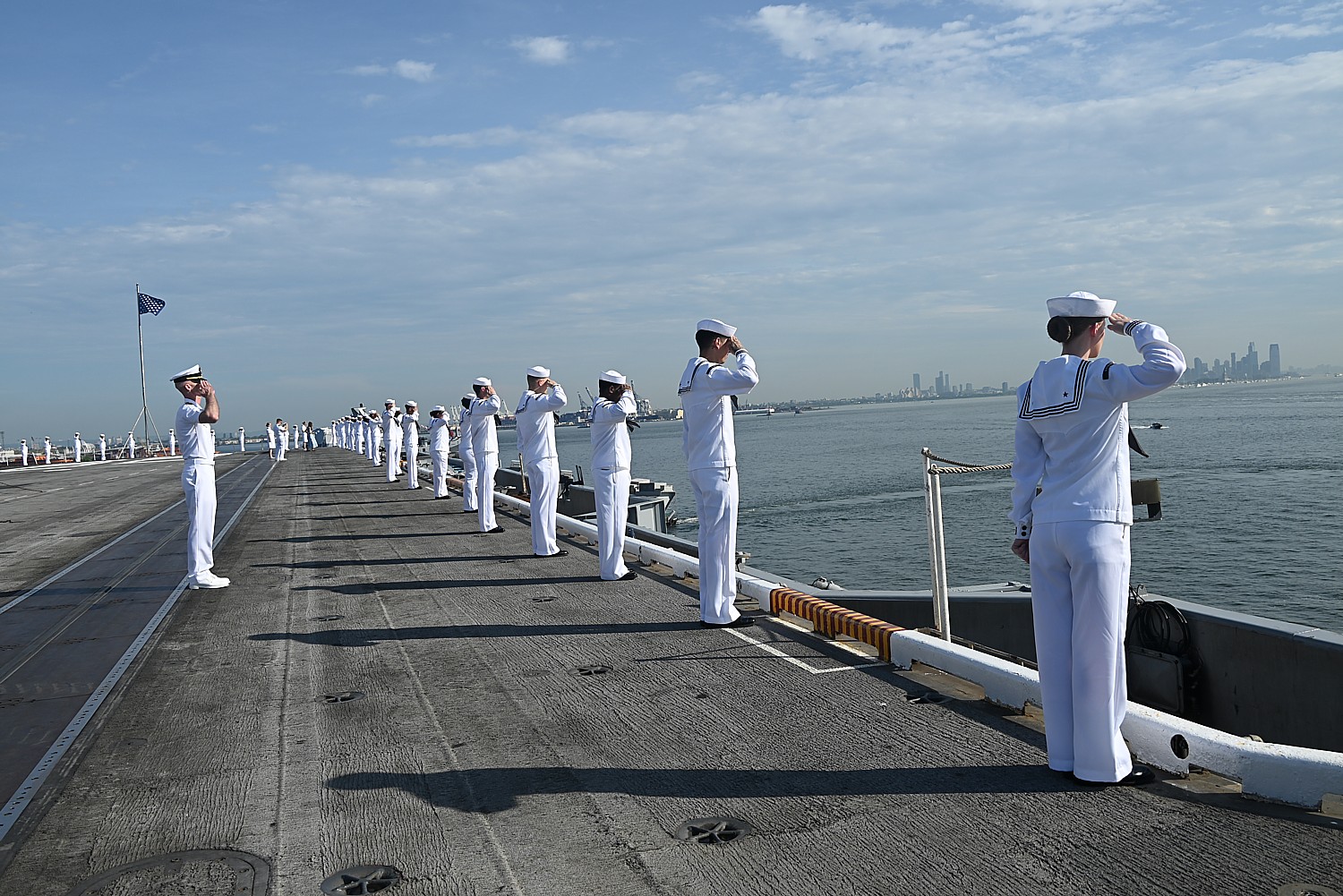
U.S.S. Nimitz sailors take part in a centuries old maritimne tradition, “Manning the Rails” © Karen Rubin/news-photos-features.com
Sailors aboard the USS Nimitz give salute as the USS Farragut sails by for The International Naval Review to honor America’s 250th, that has only occurred six times previously in U.S. history © Karen Rubin/news-photos-features.com

Prior to the parade of some 40 Tall Ships from 20 countries on the morning of July 4, the Acting Secretary of the Navy boarded the USS FARRAGUT and proceeded slowly past U.S. and allied military vessels all at anchor on the west side of the Hudson River. The USS Nimitz sailors engaged in a centuries old ceremonial tradition, Manning the Rails, where they line up along the entirety of the outer decks, to render high-level honors to dignitaries, celebrate a homecoming, or pay solemn respects to historical memorials.
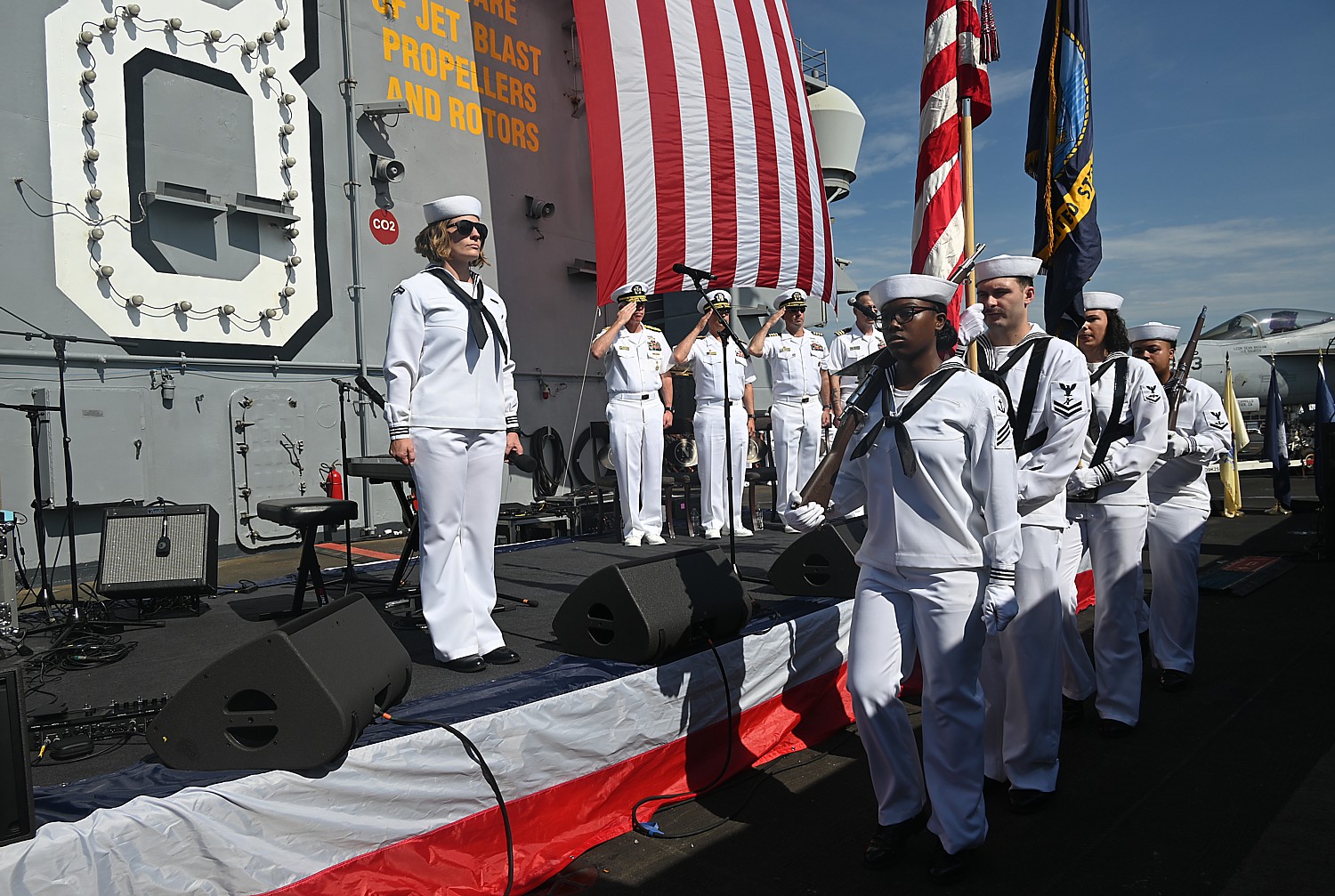
Presenting the colors, U.S.S. Nimitz © Karen Rubin/news-photos-features.com
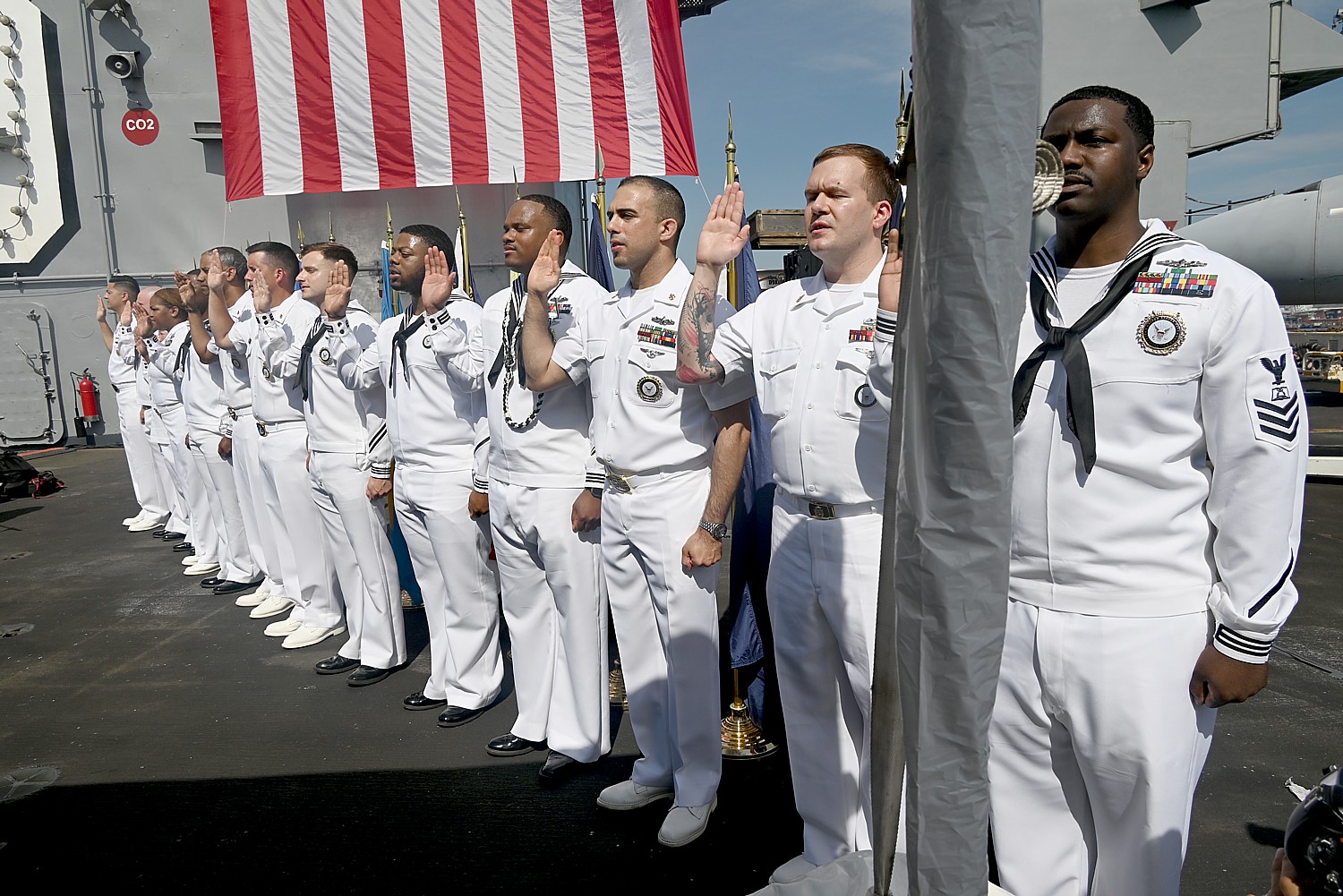
Thirteen sailors take their re-enlistment oath – one each representing the original 13 states © Karen Rubin/news-photos-features.com

As part of the ship’s celebration, 13 sailors – each representing one of the original 13 states – took their oath to re-enlist.

We get to tour the ship – see the “catapult” that actually launches the aircraft and learn that the ship has to be sailing at sufficient speed to create enough wind for the jets to take off; and the hook mechanism that enables the jet to land on such a short runway.
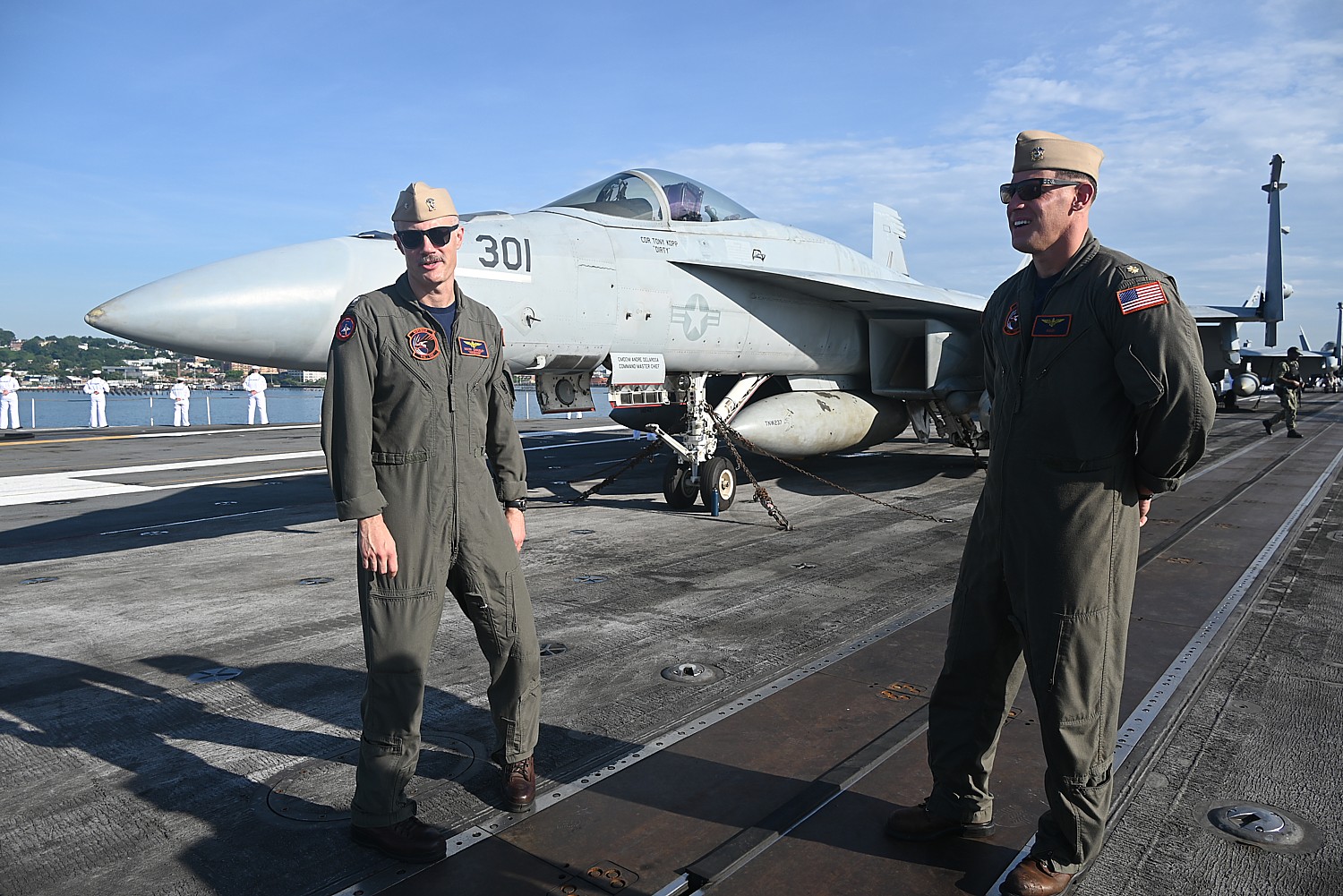
Pilots Chalkley and Riggs from Strike Fighter Squadron 137 aboard the U.S.S. Nimitz © Karen Rubin/news-photos-features.com

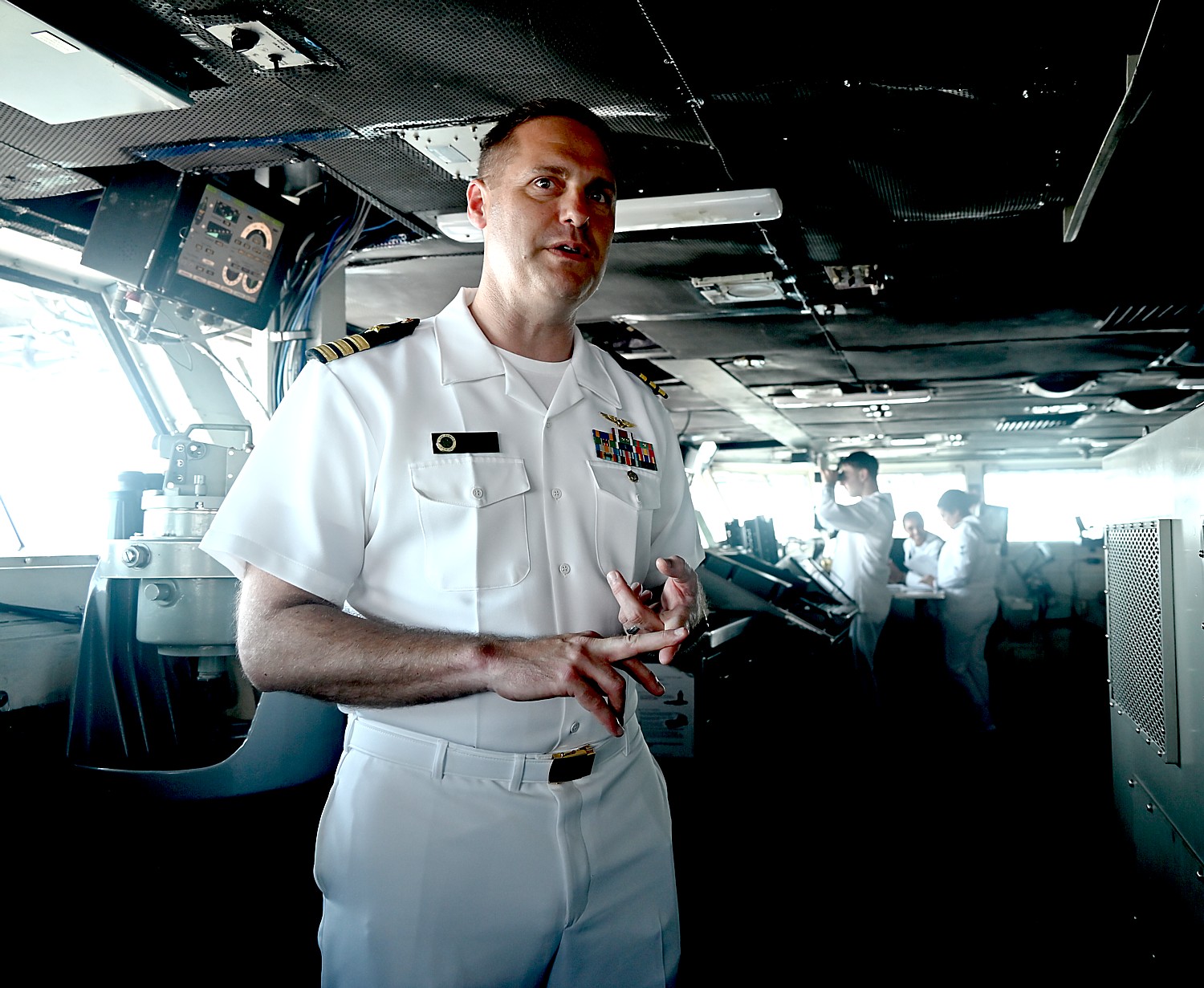
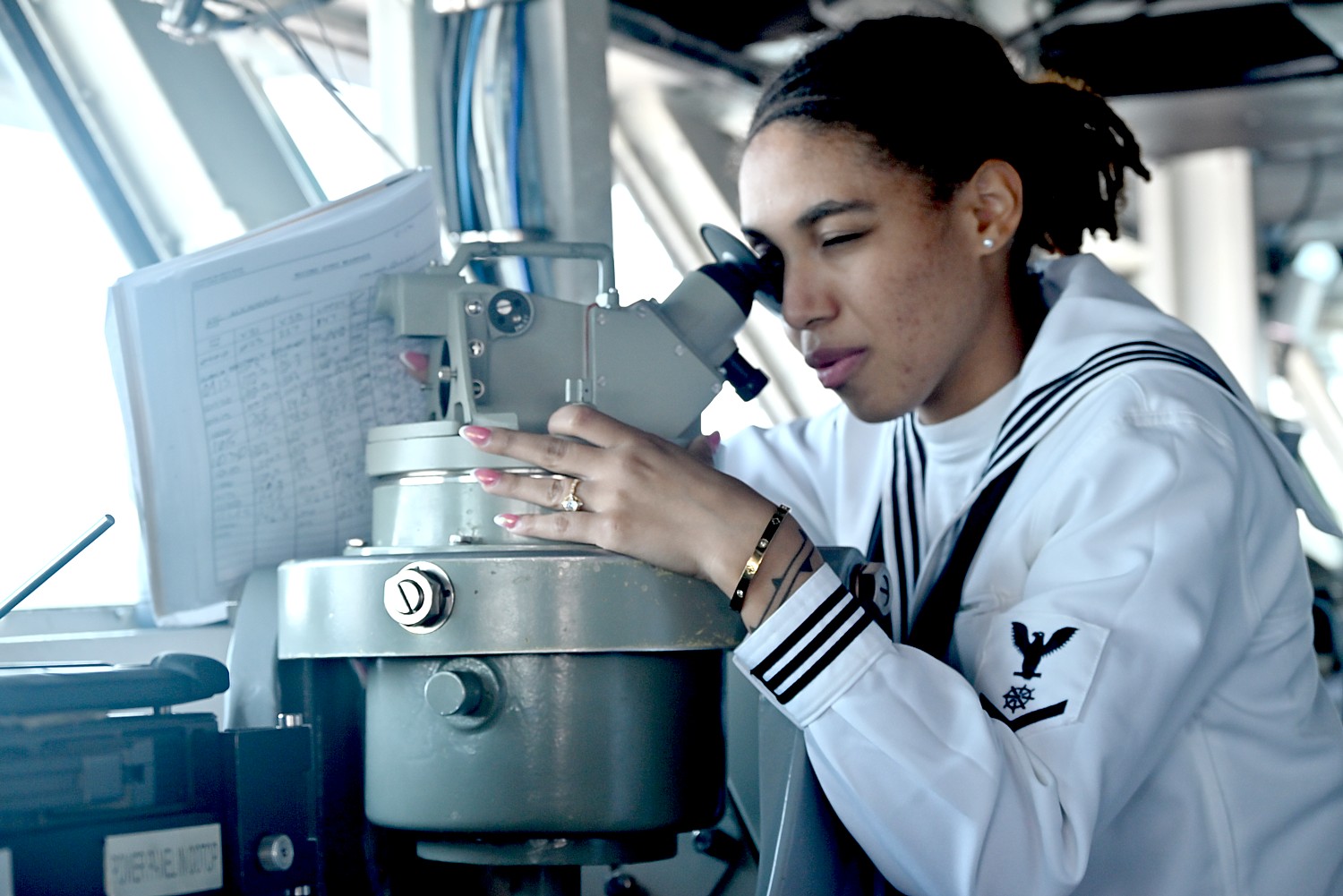
We climb up four-stories by ladder to visit the flight deck control, the navigation center and air traffic control (but we get to go down in the elevator built to take airplanes from the hangar to the flight deck).

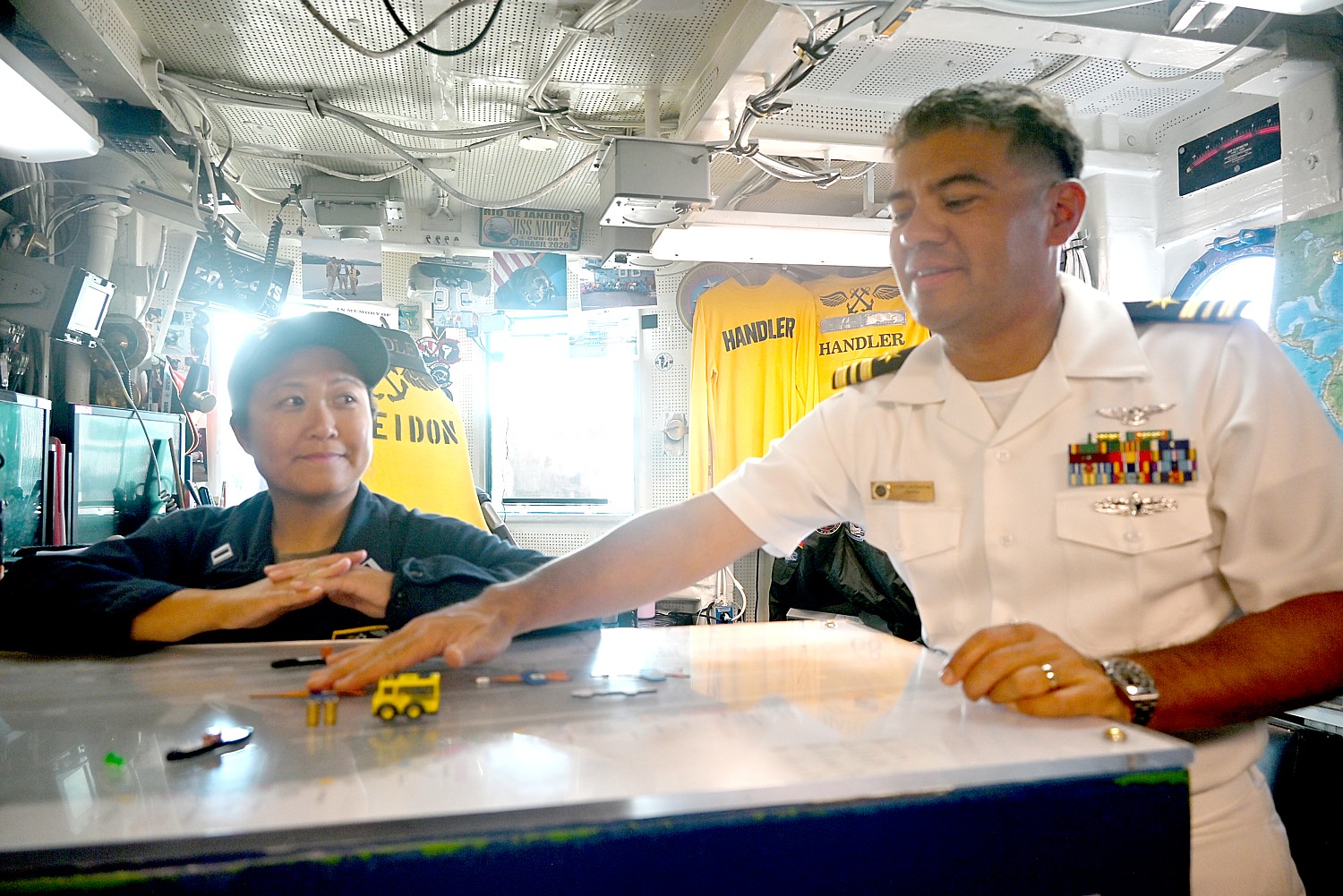
Despite its age, it has up-to-date technology to control aircraft, though its Chief Flight Deck Officers Nhu O. Lei and Marty Martinez prefer their “weegie board” over a computer program – with physical cutouts to exact specifications of every aircraft, vehicle or container that needs to be on the flight deck that they can move around like pieces of a puzzle (“weegie board” because they use two fingers to move the elements around).
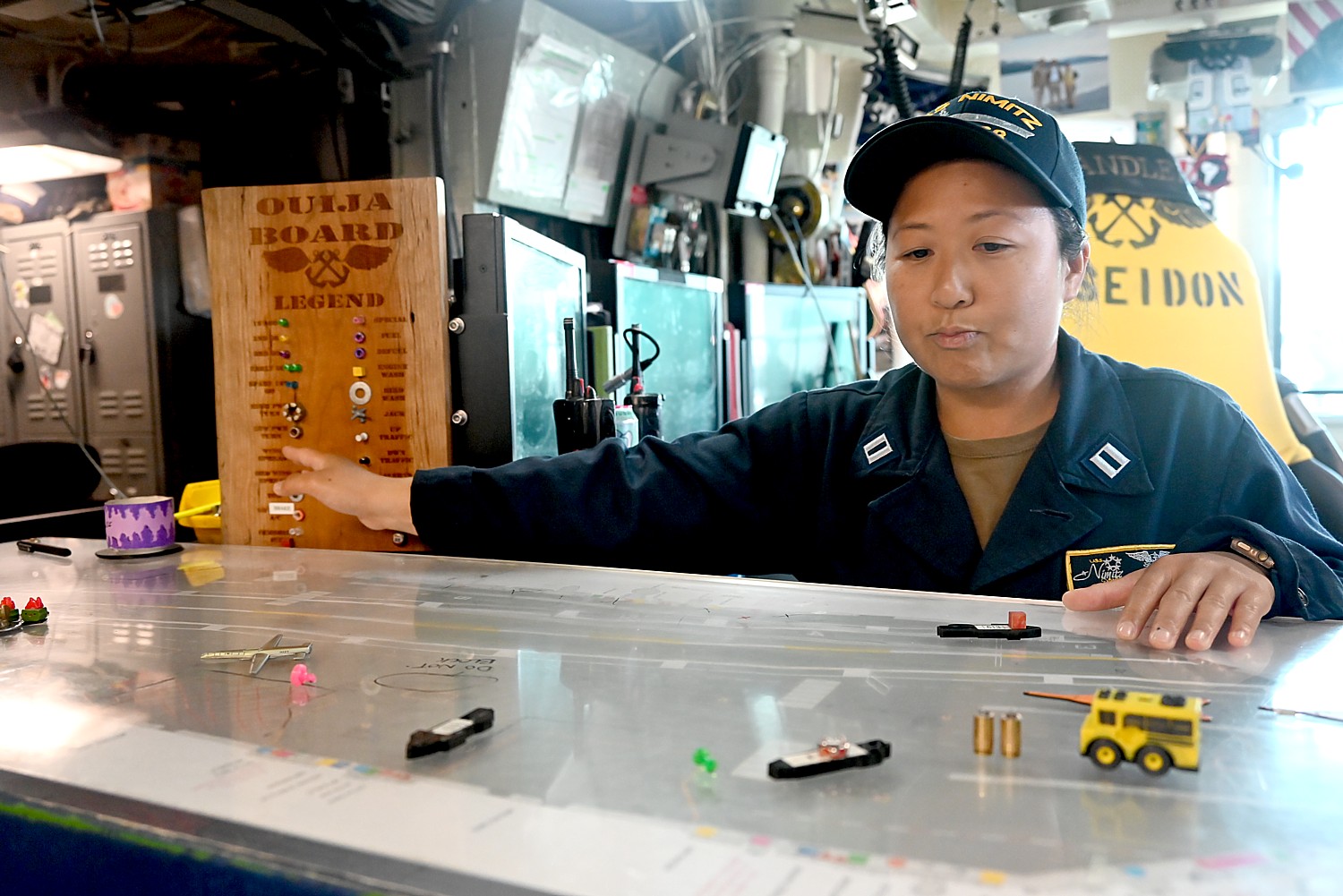
Chief Flight Deck Officer Nhu O. Lei shows how she uses the “weegie board” to positions everything on the flight deck © Karen Rubin/news-photos-features.com
Chief Flight Deck Officers Nhu O. Lei and Martin Martinez shows how she uses the “weegie board” to positions everything on the flight deck © Karen Rubin/news-photos-features.com
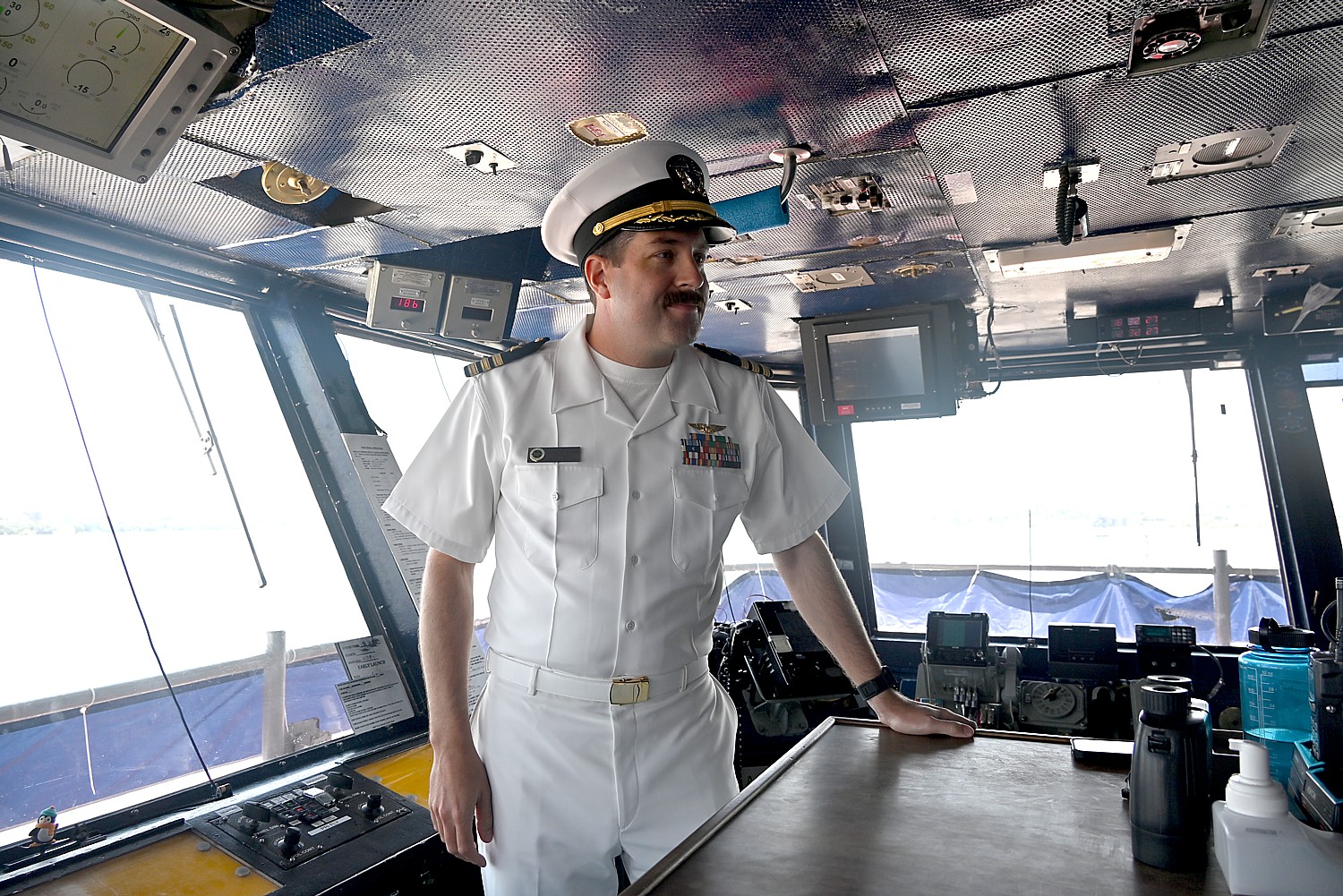
The navigation deck aboard the U.S.S. Nimitz, led by Commander Ryan Peddifore © Karen Rubin/news-photos-features.com
The navigation deck aboard the U.S.S. Nimitz © Karen Rubin/news-photos-features.com
Air Boss Matthew Bezold in charge of flight control aboard the U.S.S. Nimitz © Karen Rubin/news-photos-features.com

Here are photo highlights:

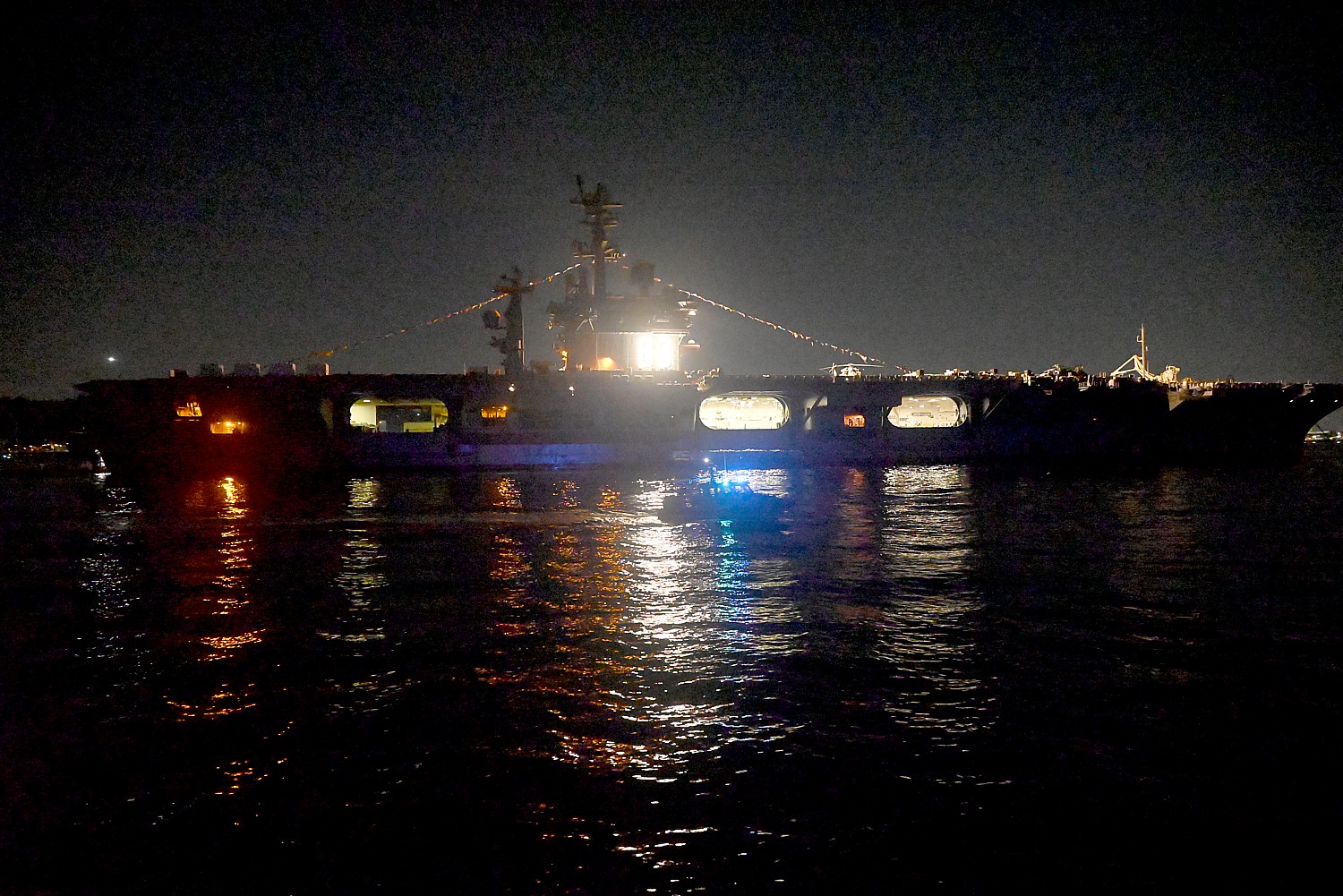
Arriving at U.S.S. Nimitz in the night © Karen Rubin/news-photos-features.com
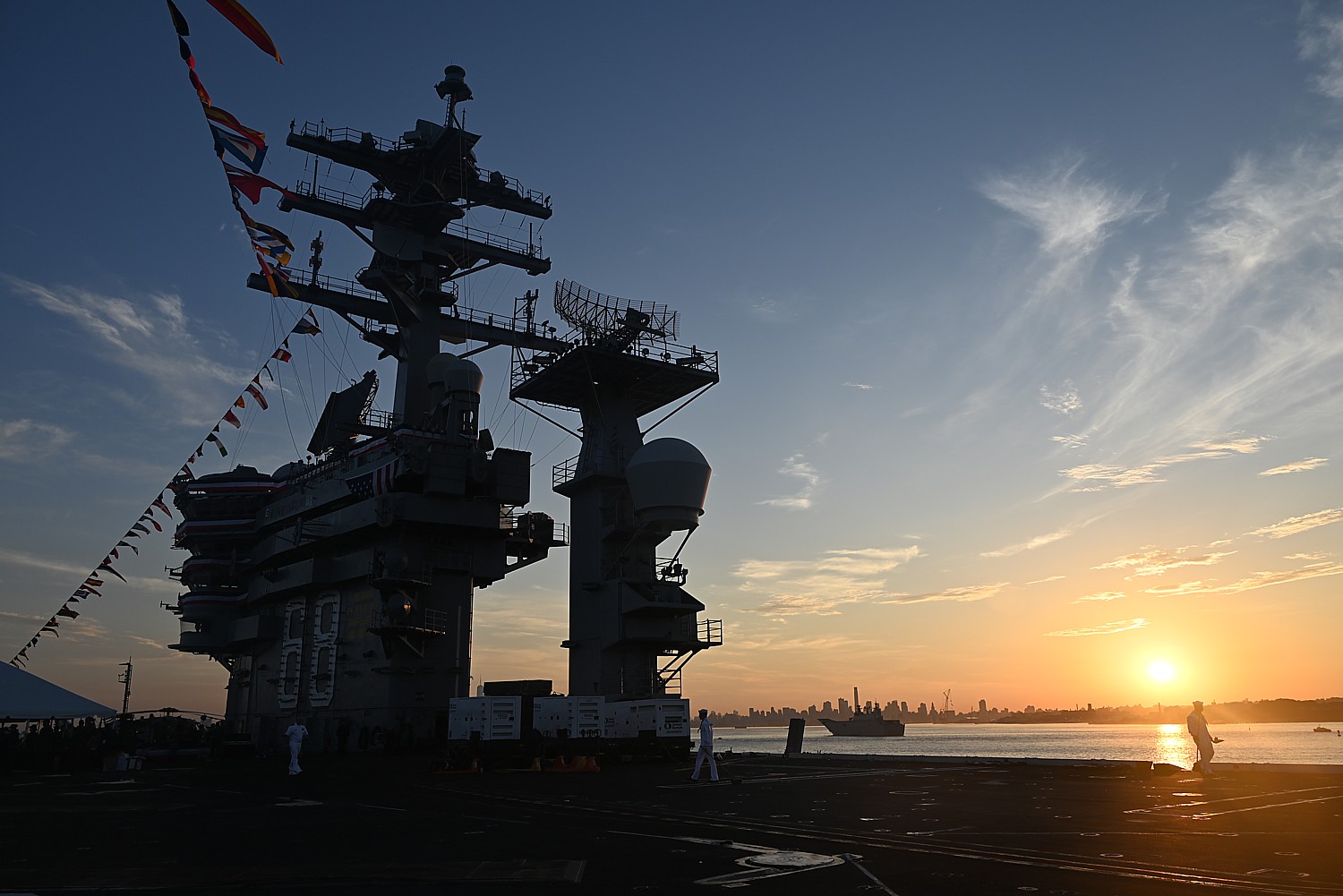
Dawn’s early light onboard the U.S.S. Nimitz © Karen Rubin/news-photos-features.com
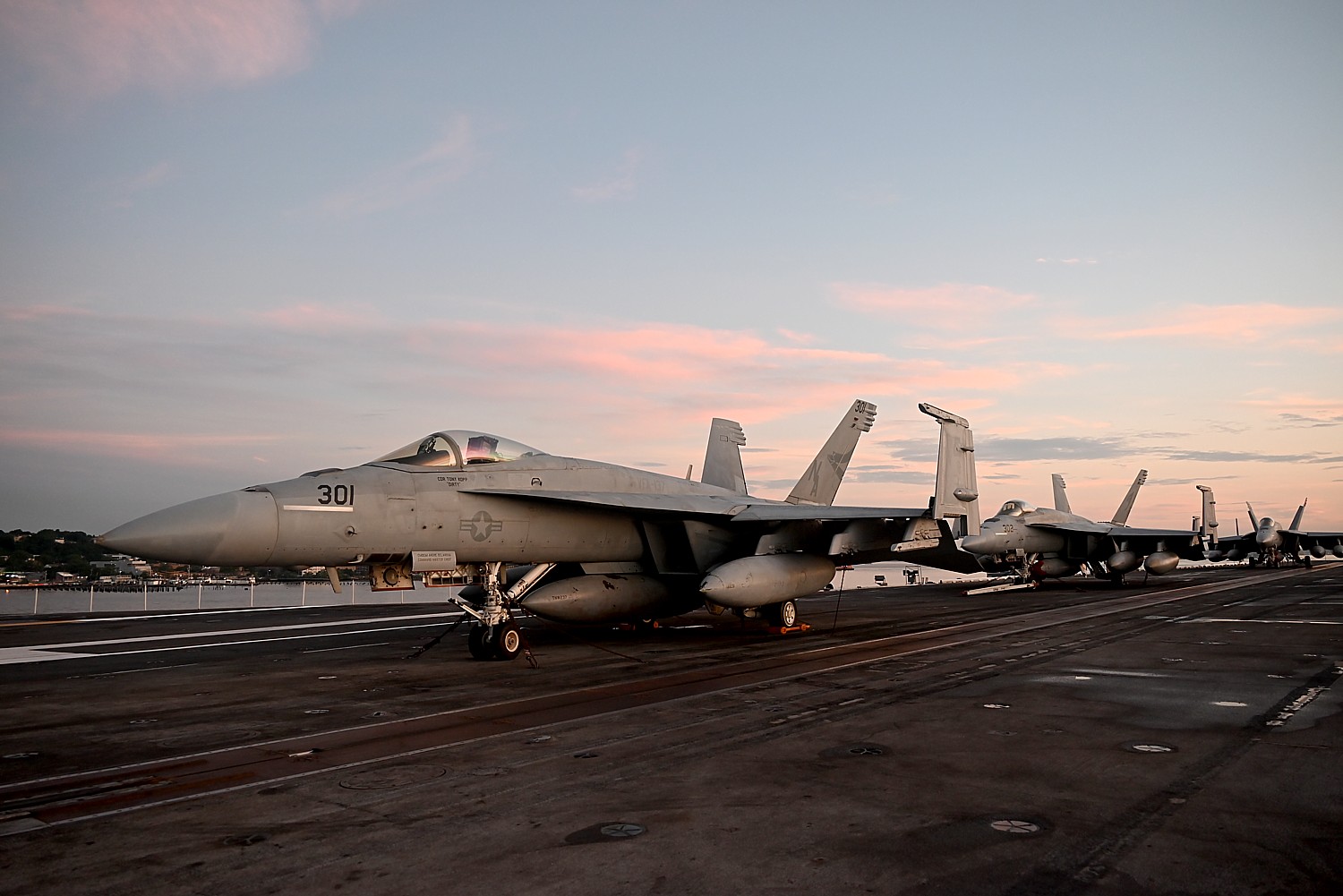
Jets parked on the U.S.S. Nimitz flight deck © Karen Rubin/news-photos-features.com
The U.S.S. Nimitz bridge © Karen Rubin/news-photos-features.com
Preparing to welcome the Parade of Sail and International Aerial Review aboard the U.S.S. Nimitz © Karen Rubin/news-photos-features.com

See also: 

Photo Highlights: Millions Turn Out for Sail4th 250 in New York Harbor, Nation’s Premier International Event Honoring America’s 250th

Photo Highlights: Blue Angels Headline Four Leaf Air Show at Jones Beach Honoring America’s 250th

Photo Highlights: Four Leaf Airshow at Jones Beach State Park Honors America’s 250th

_______________________

© 2026 News & Photo Features Syndicate, a division of Workstyles, Inc. All rights reserved. For editorial feature and photo information, go to www.news-photos-features.com, email editor@news-photos-features.com.Blogging at www.dailykos.com/blogs/NewsPhotosFeatures
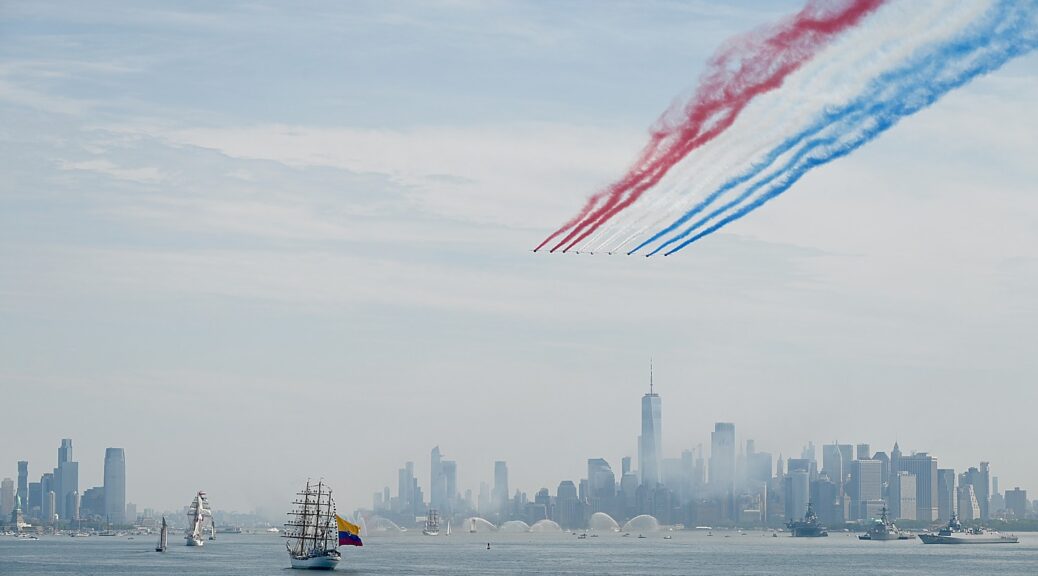
Photo Highlights: Millions Turn Out for Sail4th 250 in New York Harbor, Nation’s Premier International Event Honoring America’s 250th

Historic tall ships sail through New York Harbor for Sail4th 250, bookended by the Statue of Liberty and the Freedom Tower, as jets fly over © Karen Rubin/news-photos-features.com

By Karen Rubin, editor@news-photos-features.comnews-photos-features.com

An estimated 6 million spectators lined 15 miles of waterfront to see the historic Parade of Sail in New York City on July 4, 2026, braving nearly 100-degree heat. They clearly could not resist the spectacular, once in an eon sight of more than 40 tall ships and 30 navy vessels from 20 countries, carrying 20,000 sailors, sailing into New York Harbor and up the Hudson River to commemorate America’s 250th anniversary of Independence, in what was billed “the largest-ever flotilla of tall ships”. Many made themselves available for public visits during the six-day festival, July 3-7.

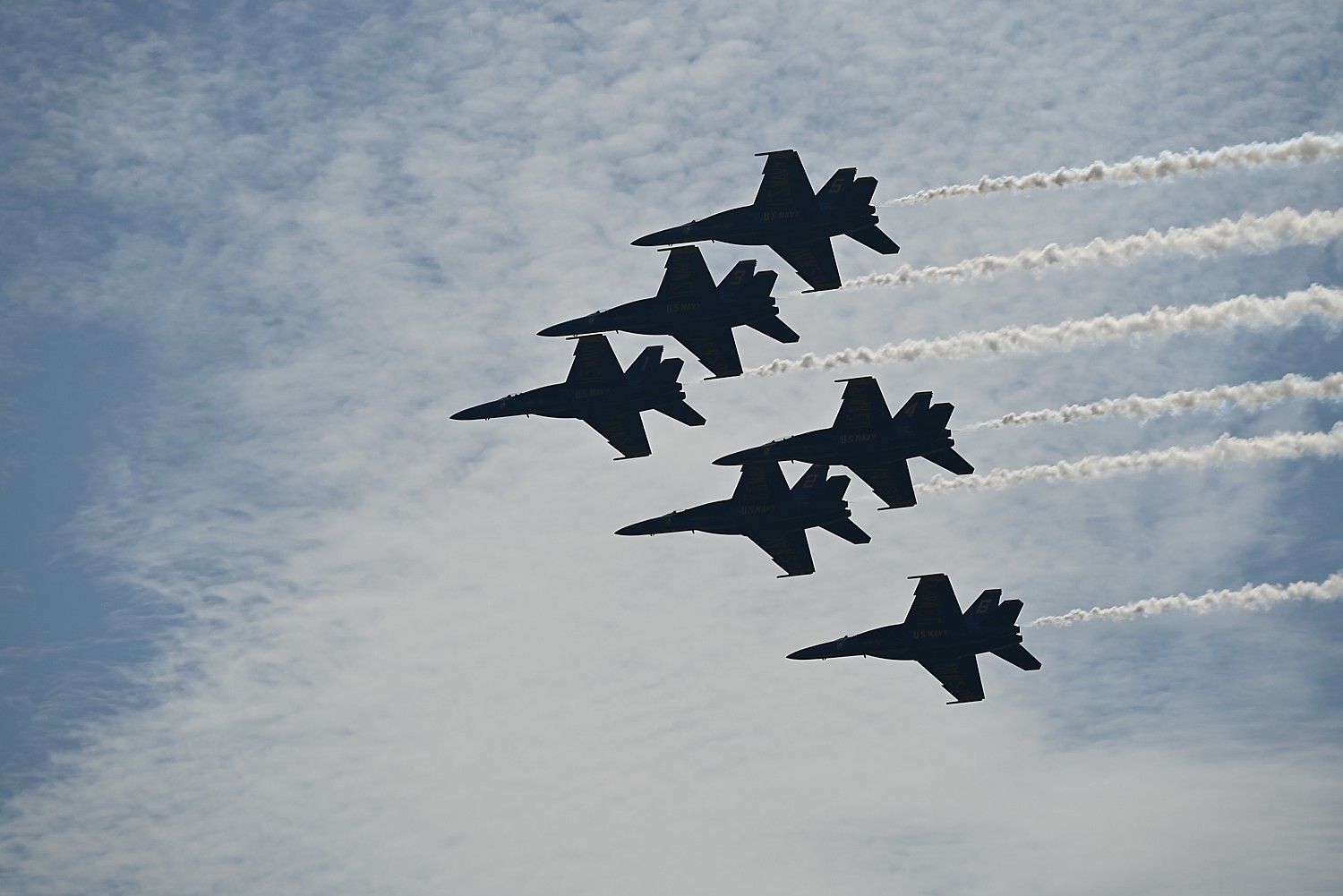
The Parade of Sail was accompanied by what was hailed as one of the longest fly-overs ever – nearly 200 aircraft – led by the U.S. Navy Blue Angels.

Just before the tall ship parade, the Acting Secretary of the Navy boarded the USS Farragut and proceeded slowly past about 30 U.S. and allied military vessels all at anchor on the west side of the Hudson River, with the aircraft carrier, the USS Nimitz, the lead in The International Naval Review. The International Naval Review (INR 250) has only occurred six times previously in U.S. history.

Here are photo highlights:

Sailors aboard the USS Nimitz give salute as the USS Farragut sails by for The International Naval Review to honor America’s 250th, that has only occurred six times previously in U.S. history © Karen Rubin/news-photos-features.com
Oosterschelde, 164-foot, 3-masted topsail schooner from Rotterdam, Netherlands, re-creates the Dutch arrival on New York harbor more than 400 years ago, when it was called New Amsterdam  © Karen Rubin/news-photos-features.com
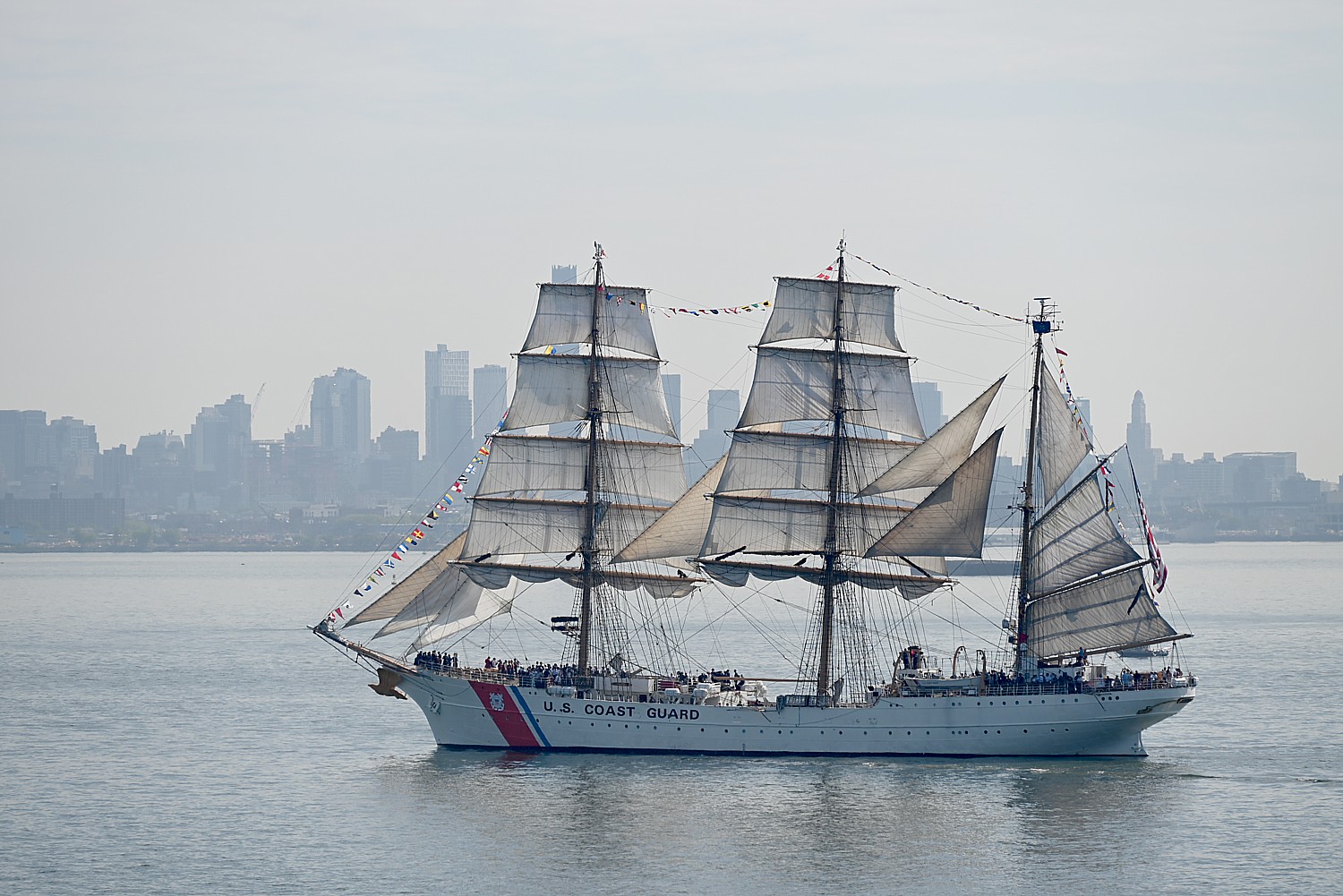
U.S. Coast Guard Cutter Eagle represents the USA at Sail4th 250 in New York City © Karen Rubin/goingplacesfarandnear.com
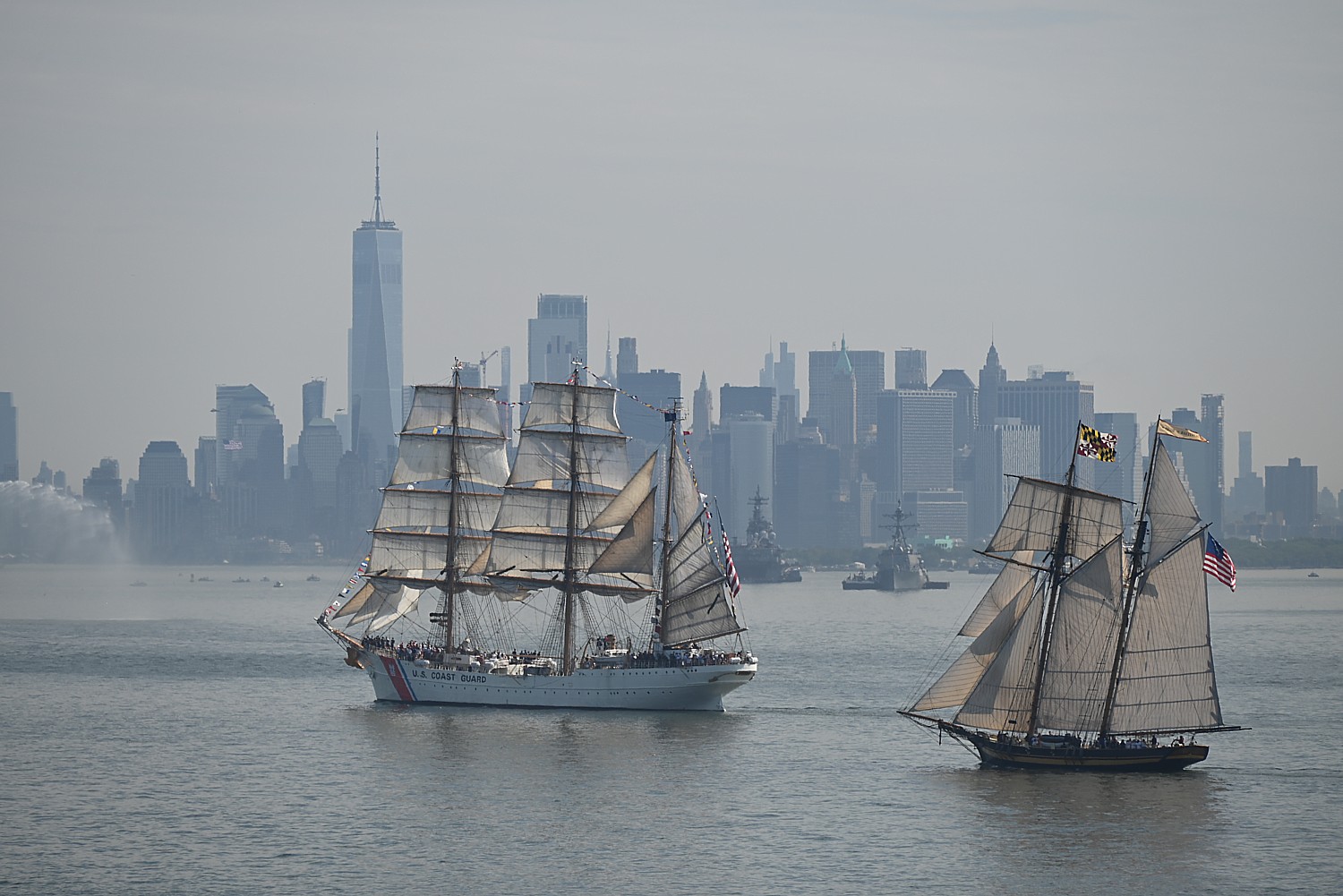
U.S. Coast Guard Cutter Eagle with the Pride of Baltimore II © Karen Rubin/goingplacesfarandnear.com
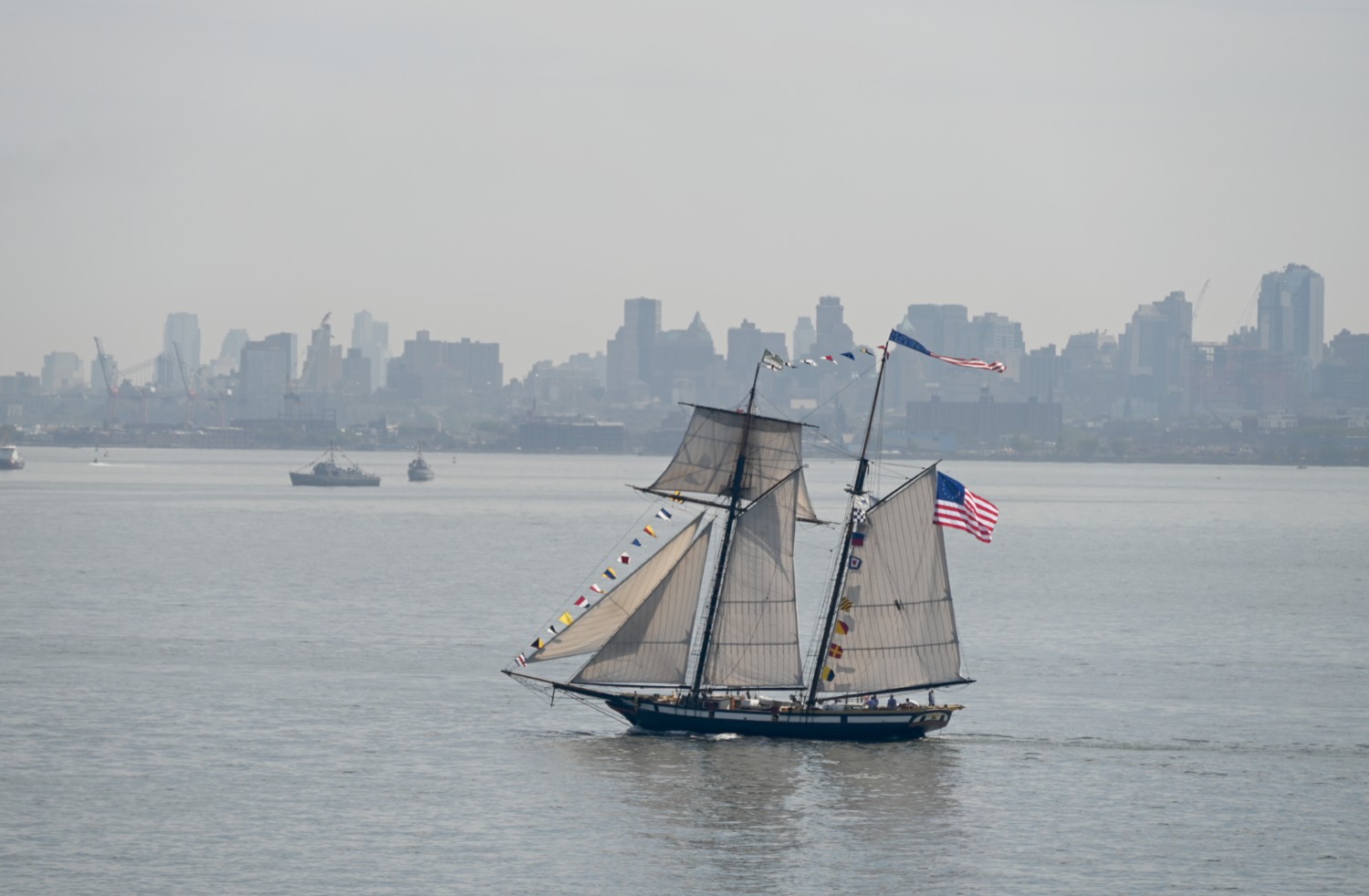
Pride of Baltimore II at Sail4th 250 in New York City © Karen Rubin/goingplacesfarandnear.com
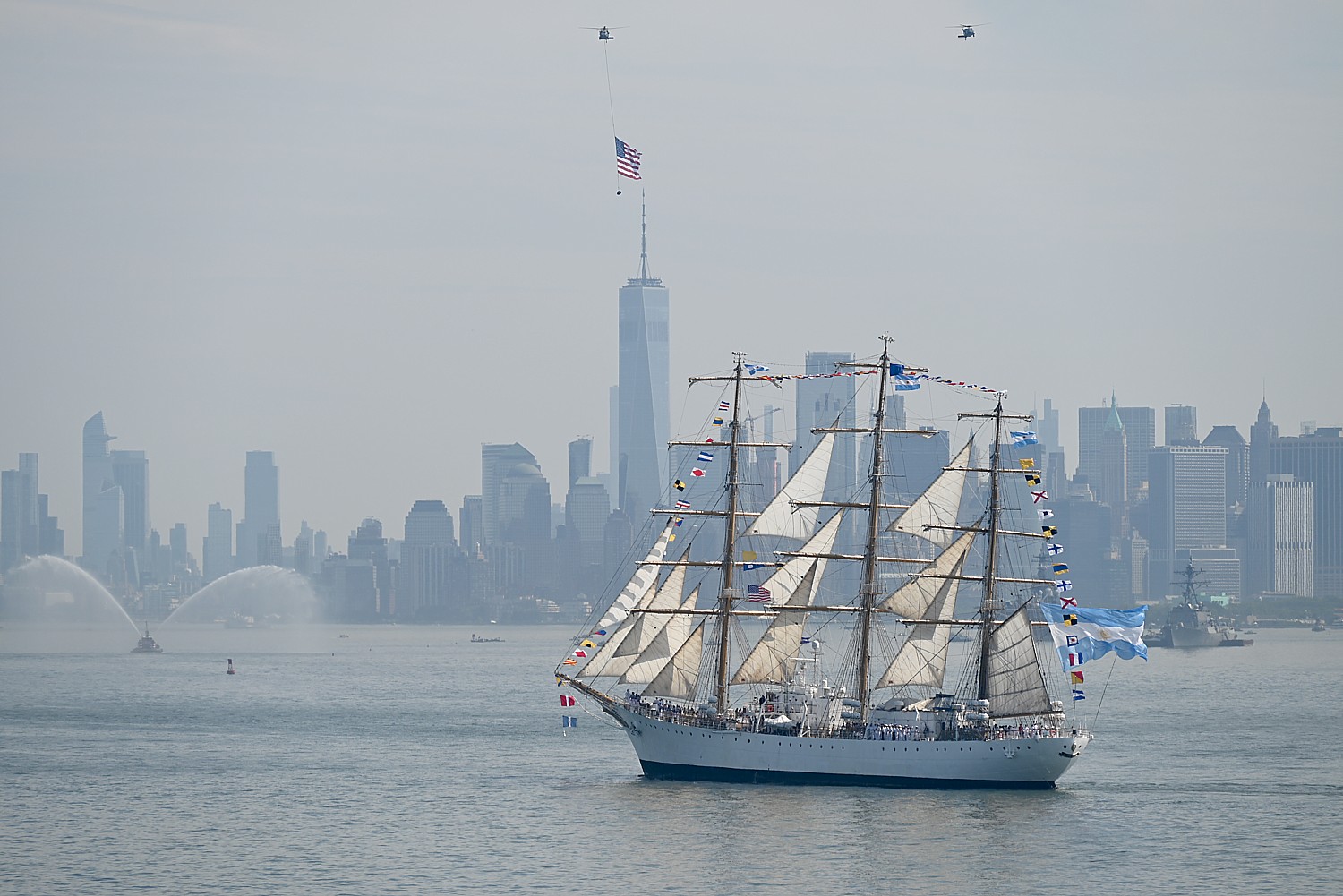
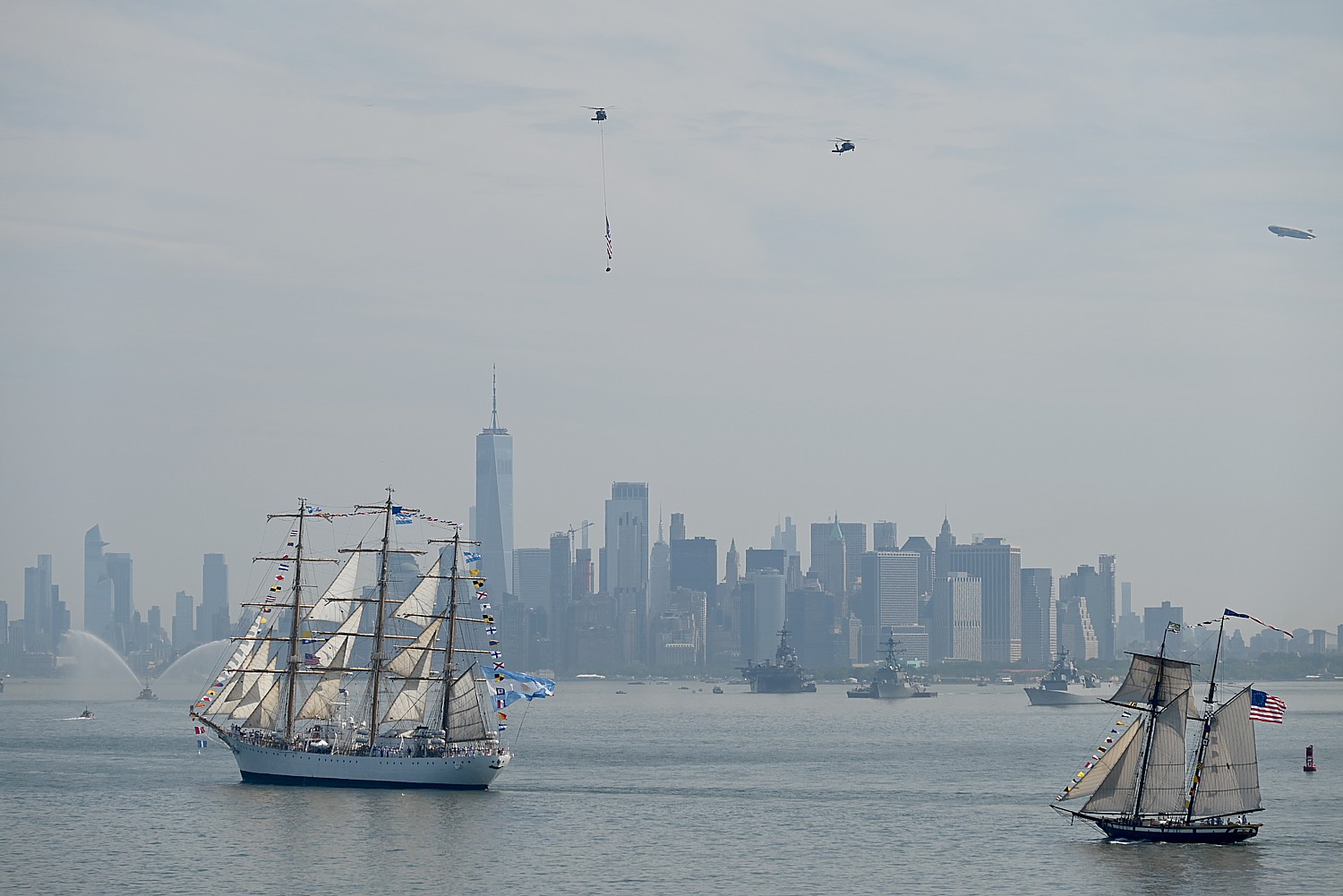
ARA Libertad of Argentina at Sail4th 250 in New York City © Karen Rubin/goingplacesfarandnear.com
The Argentine Navy frigate ARA Libertad and the Lynx, from Portsmouth, New Hampshire © Karen Rubin/goingplacesfarandnear.com
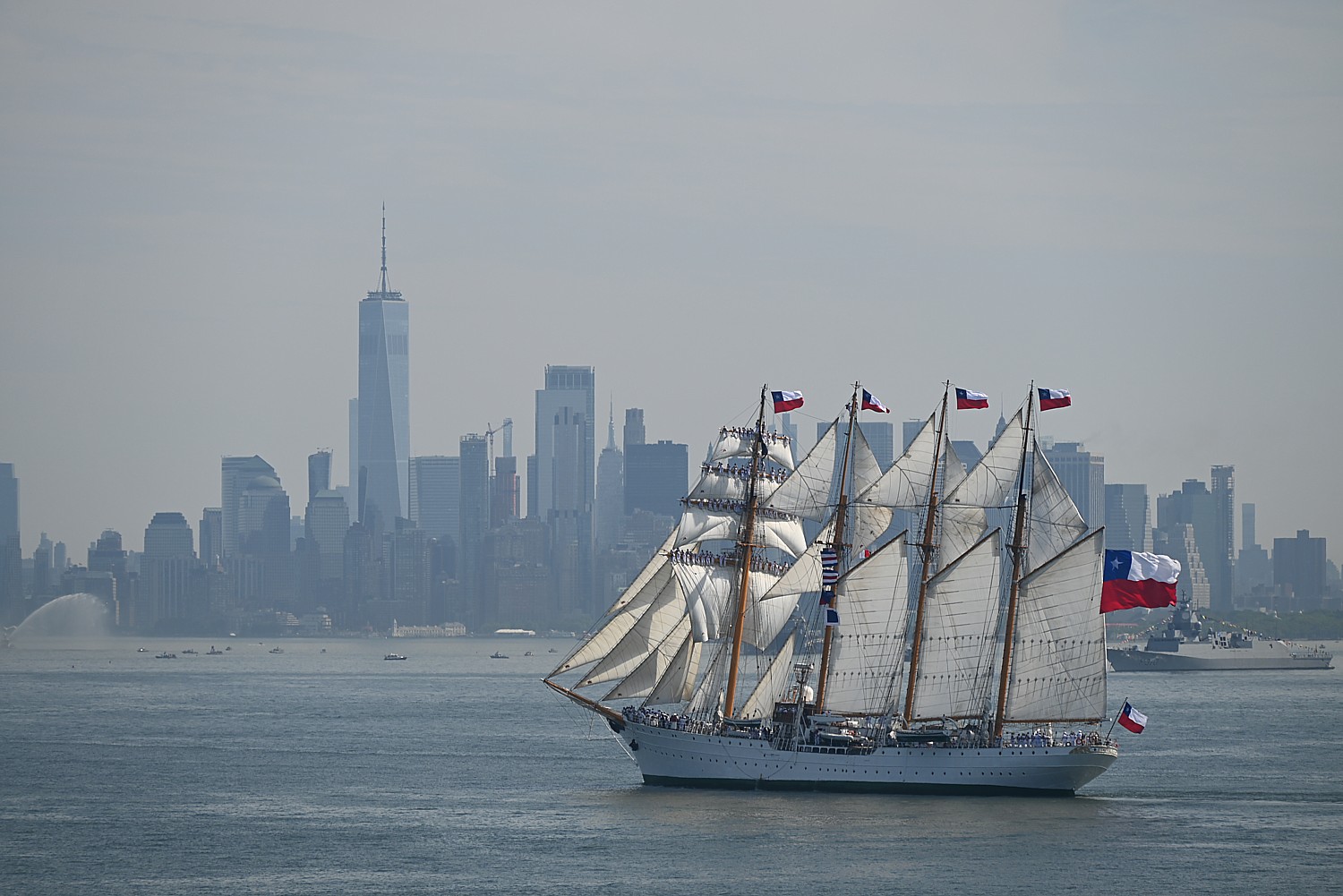
The barquentine Esmeralda from Chile © Karen Rubin/goingplacesfarandnear.com
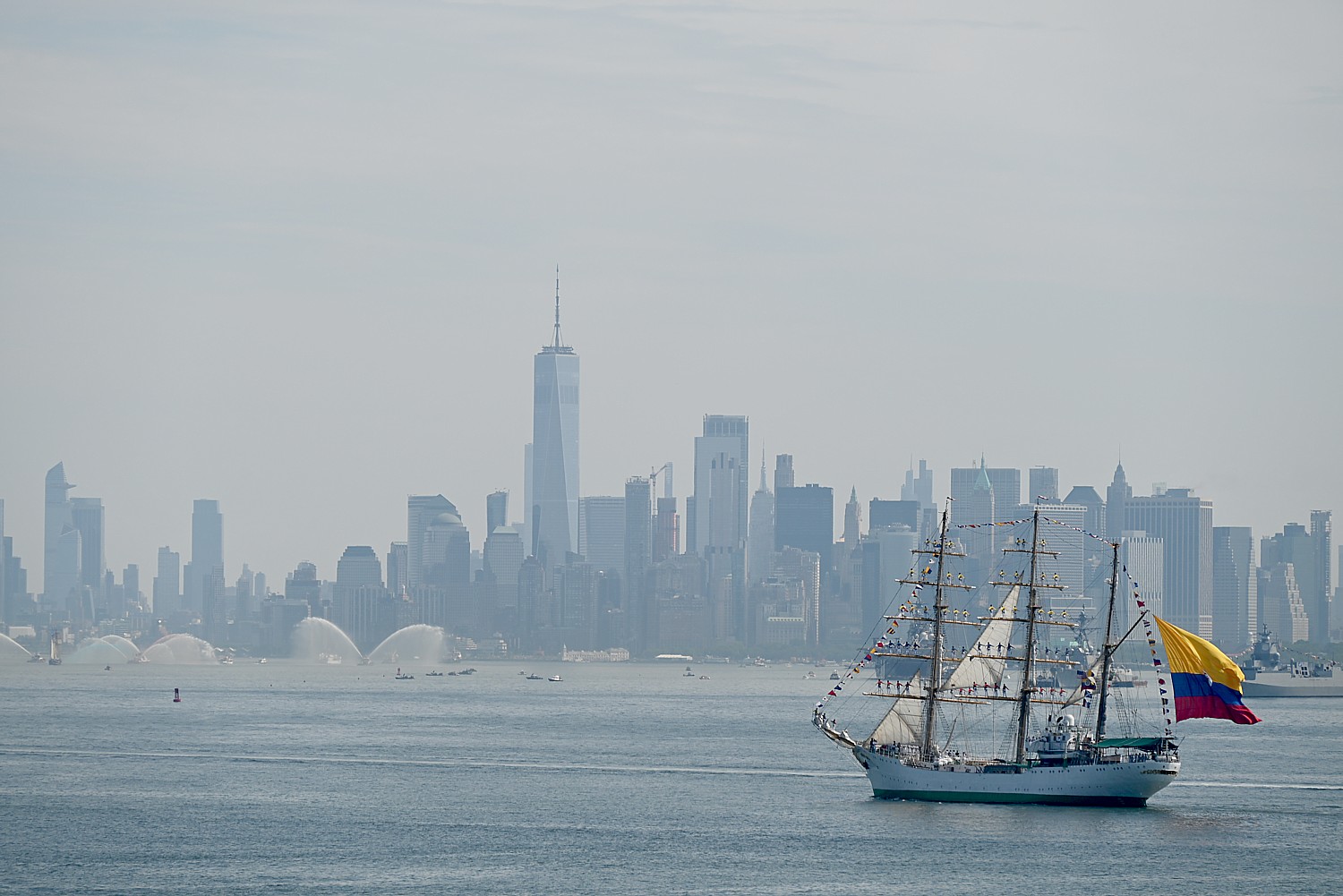
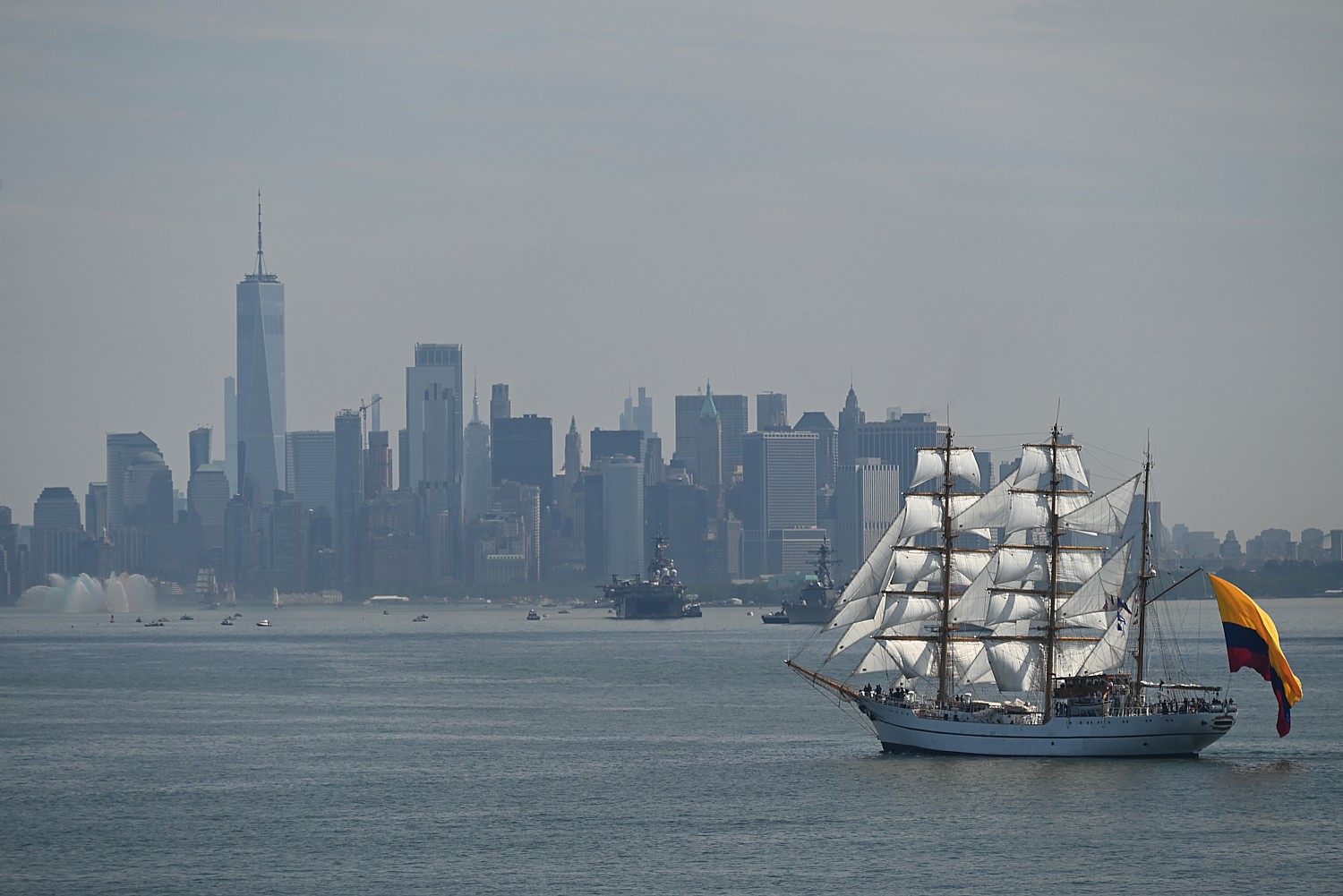
The Colombian Navy’s flagship ARC Gloria © Karen Rubin/goingplacesfarandnear.com
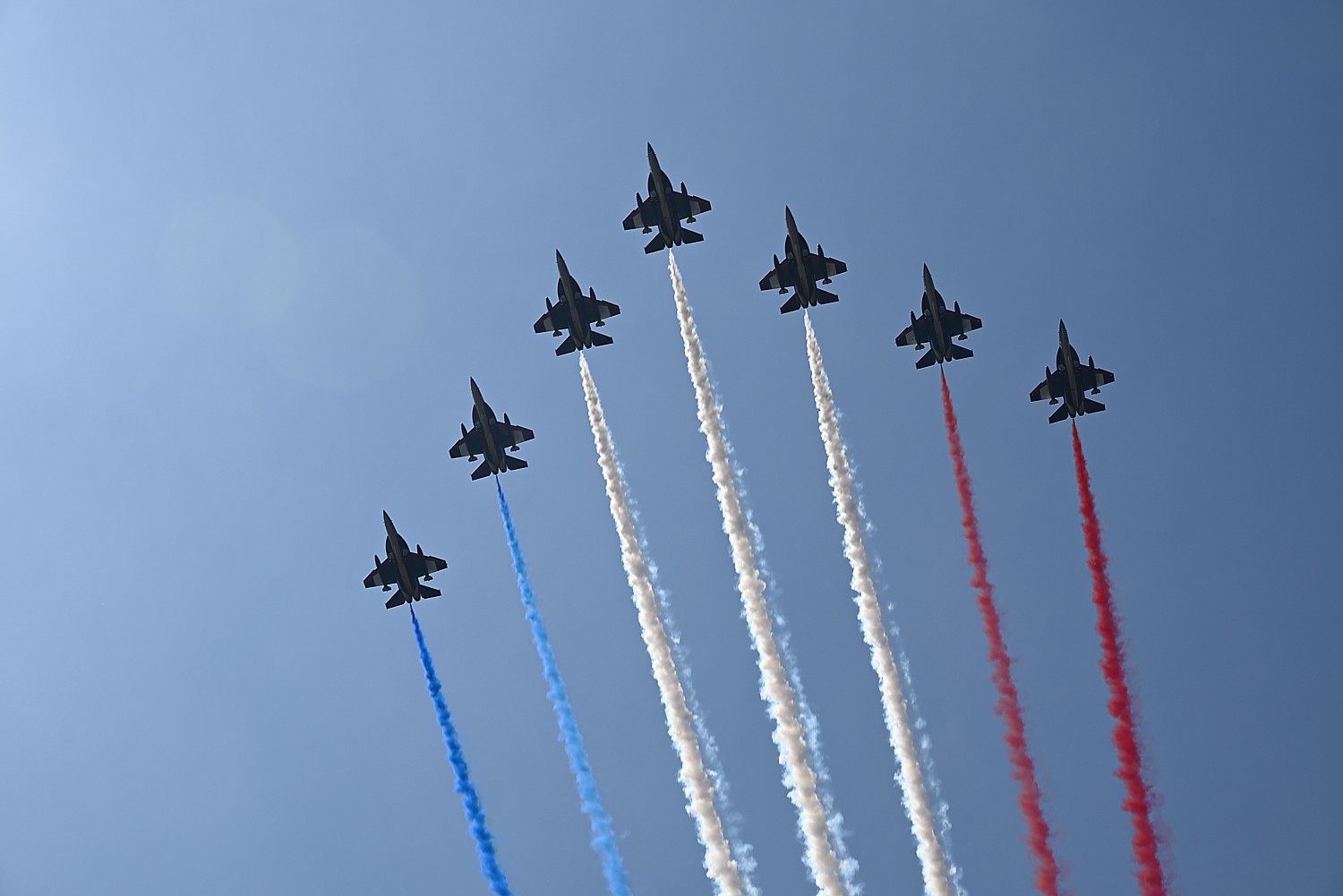
The US Navy Blue Angels lead the fly-over during Sail4th 250 © Karen Rubin/goingplacesfarandnear.com
The fly-over during Sail4th 250 © Karen Rubin/goingplacesfarandnear.com
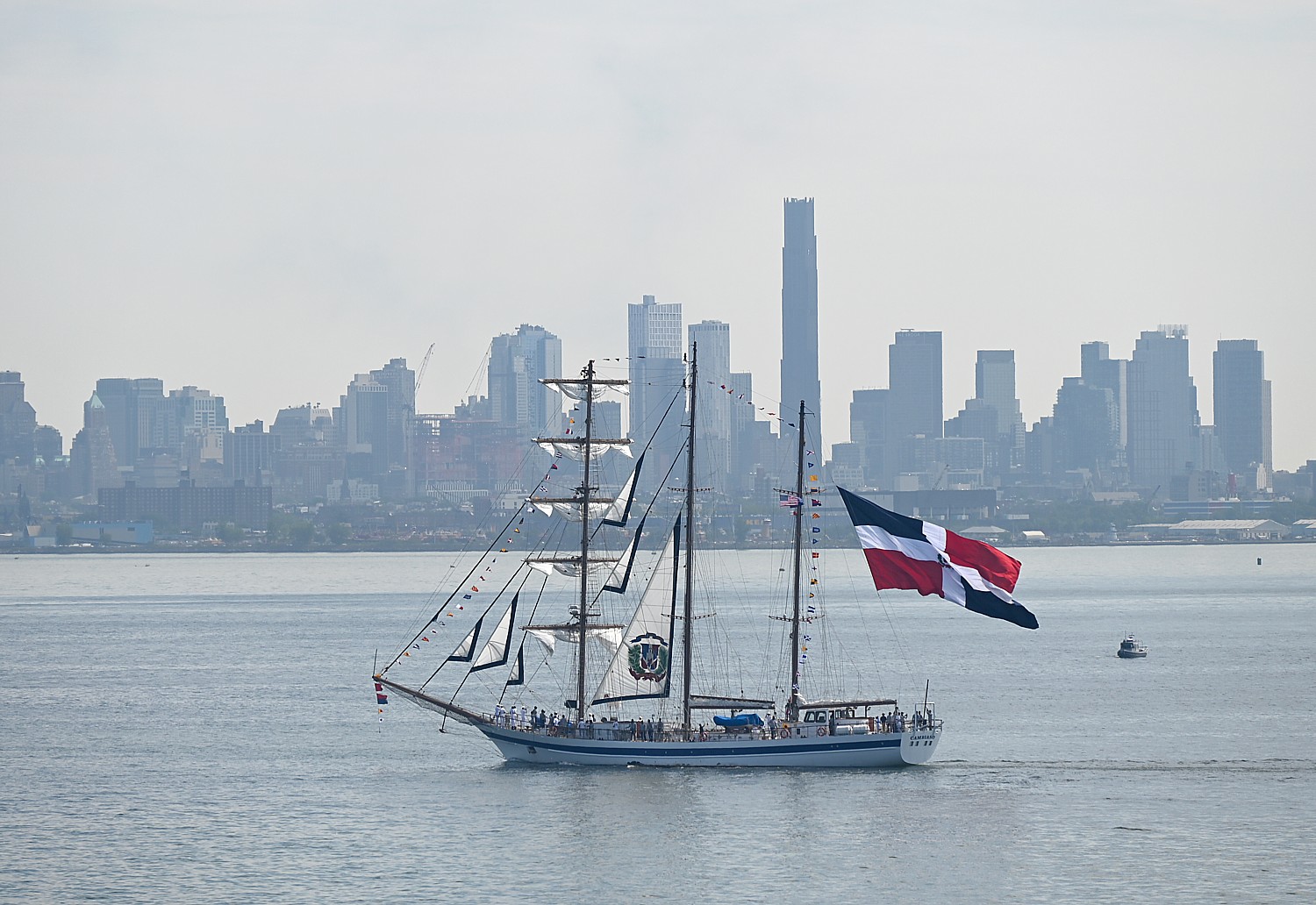
The Juan Bautista Cambiaso, from Dominican Republic © Karen Rubin/goingplacesfarandnear.com
The three-masted barque BAE Guayas from Ecuador © Karen Rubin/goingplacesfarandnear.com
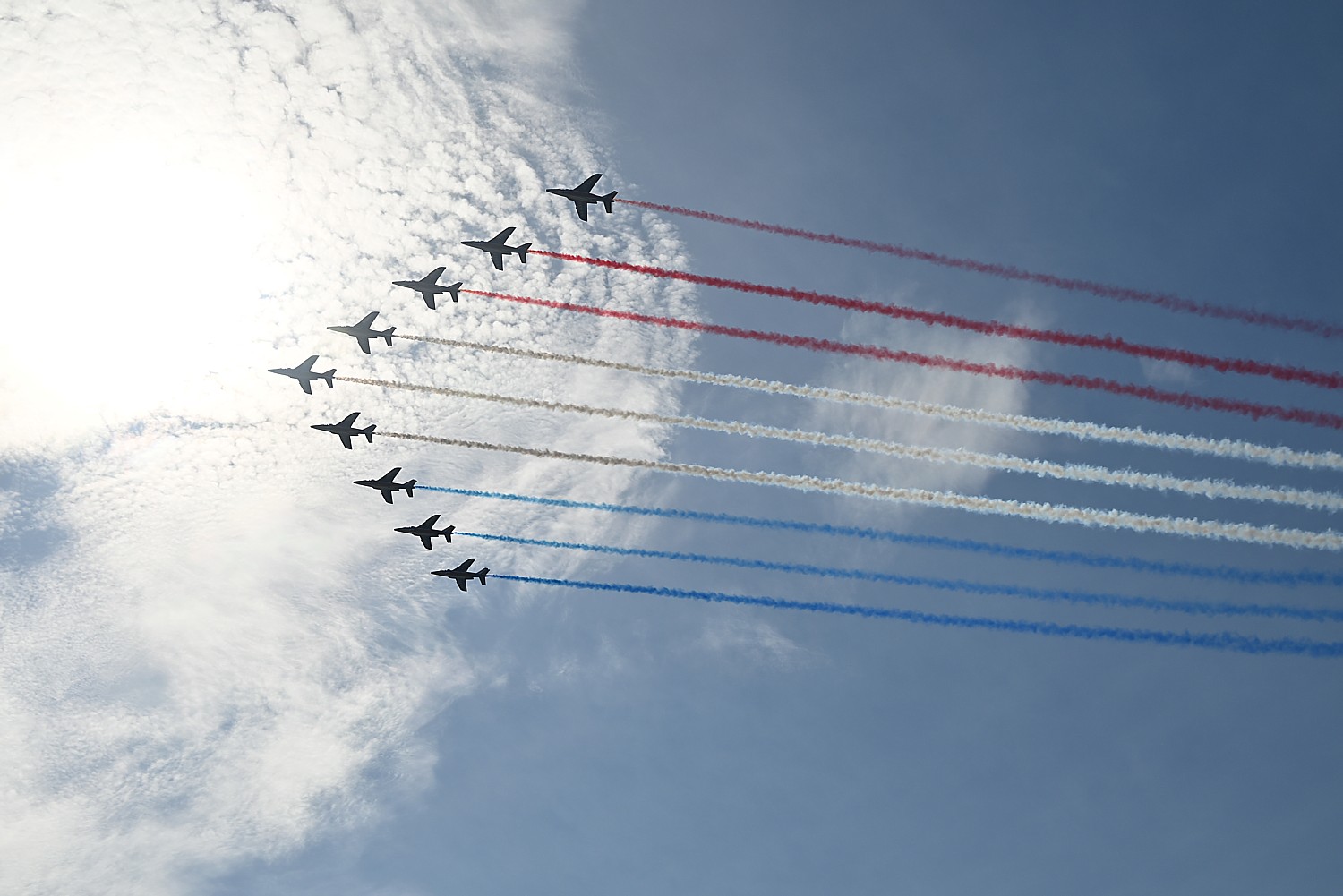
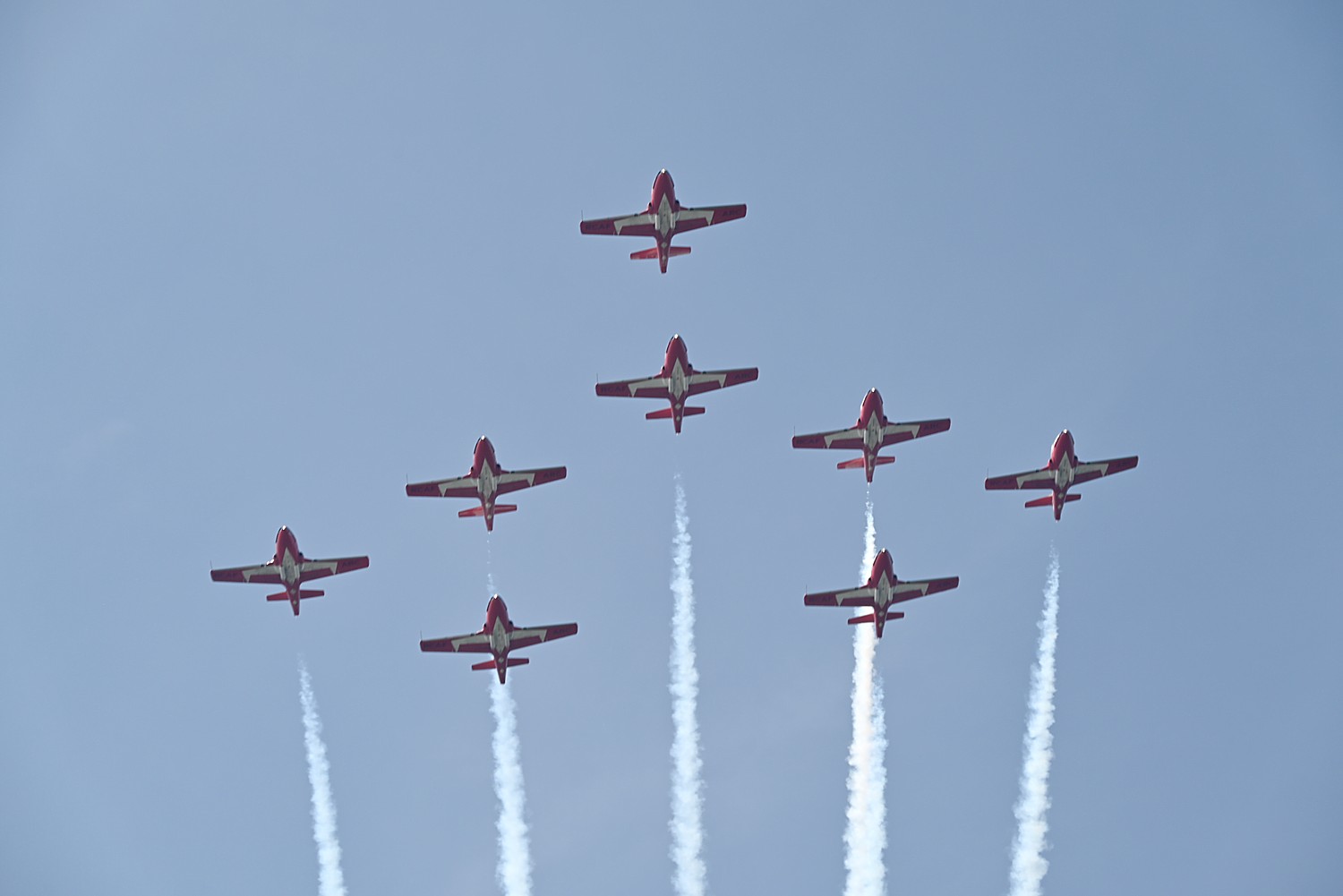
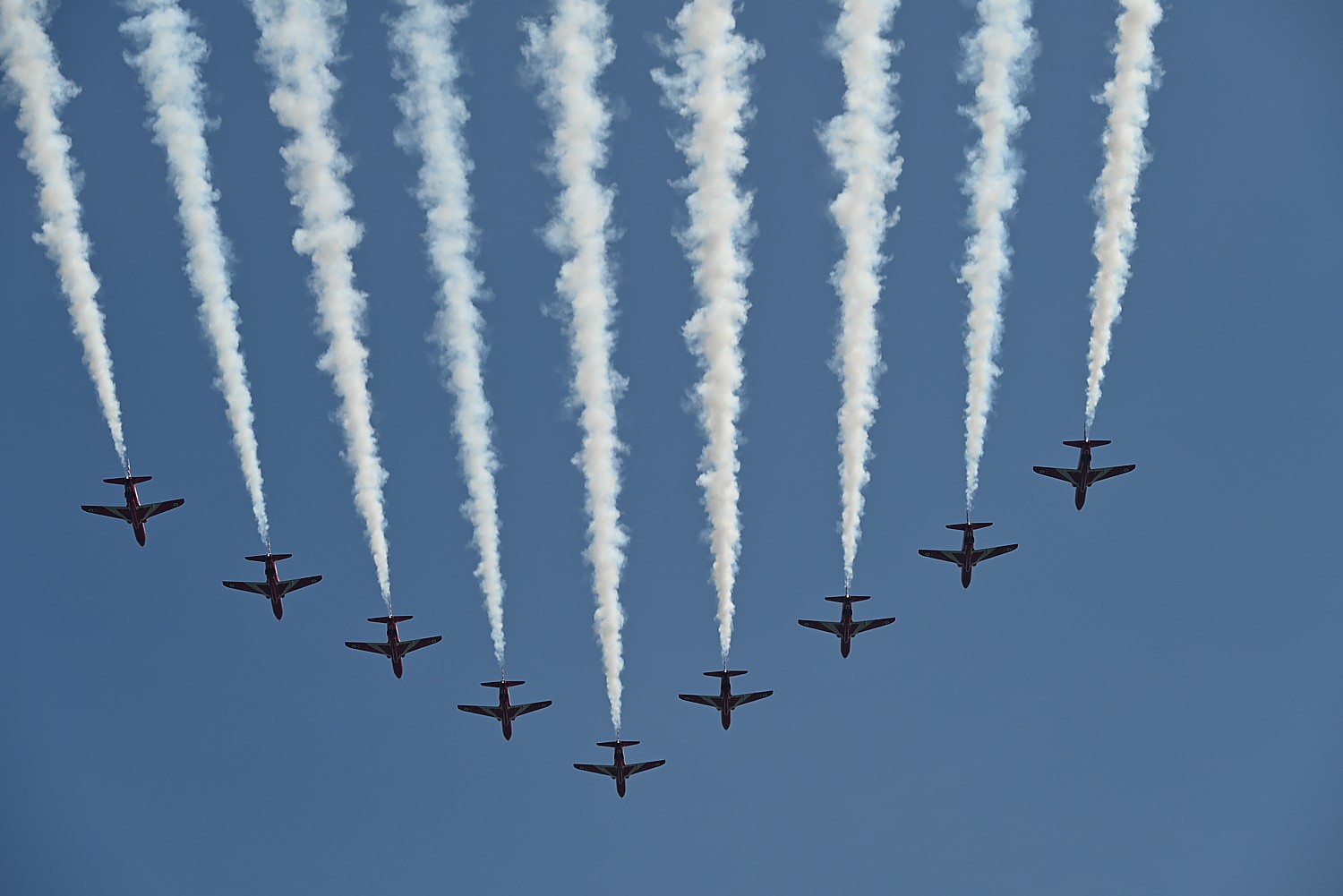
Canada’s Snowbirds © Karen Rubin/goingplacesfarandnear.com
US Navy jets © Karen Rubin/goingplacesfarandnear.com
Fighter jets at Sail4th 250 in New York City © Karen Rubin/goingplacesfarandnear.com
US fighters at Sail4th 250, NYC © Karen Rubin/goingplacesfarandnear.com
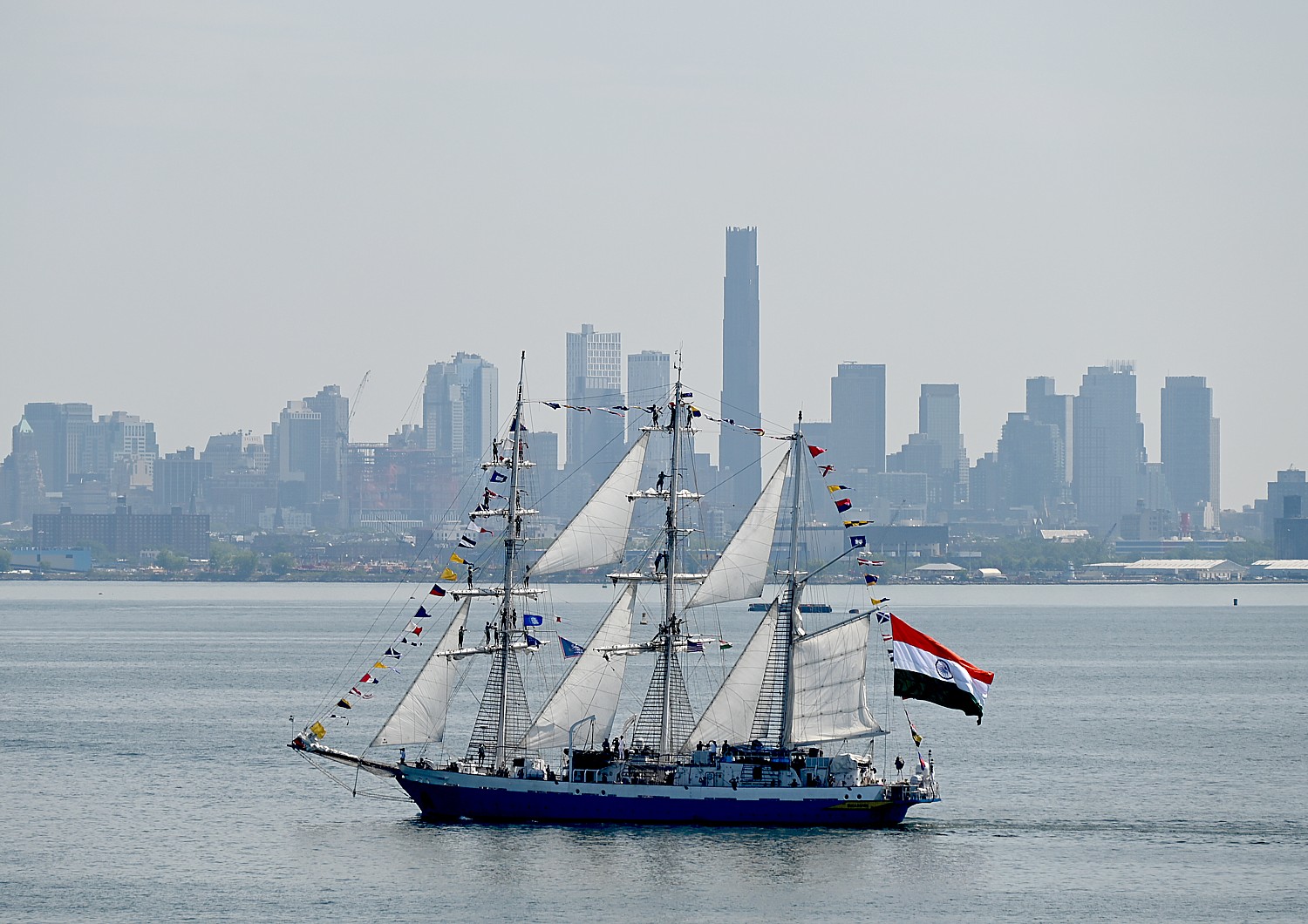
INS Sudarshini, three-masted barque from India © Karen Rubin/goingplacesfarandnear.com
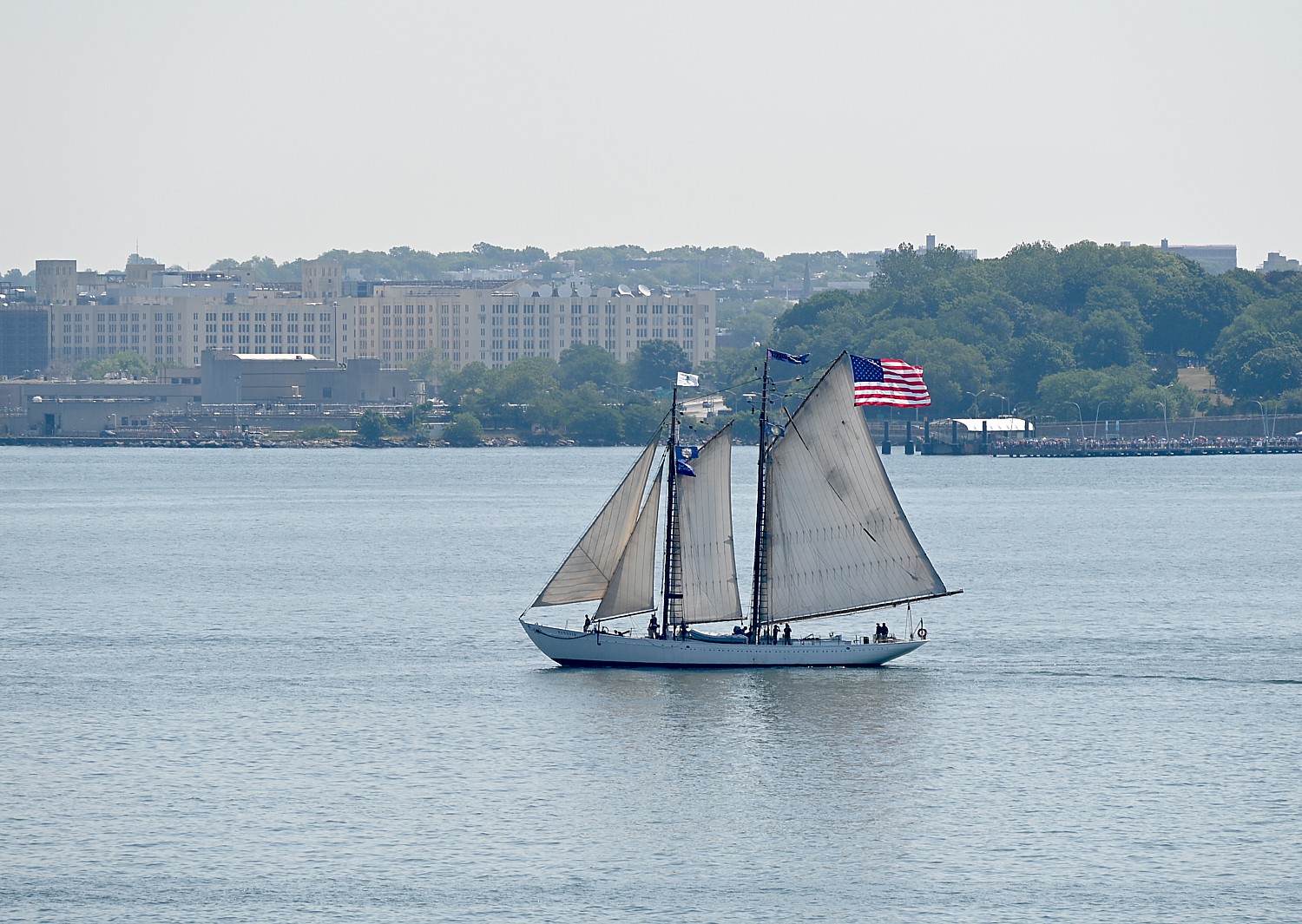
The schooner Bowdoin from Maine © Karen Rubin/goingplacesfarandnear.com
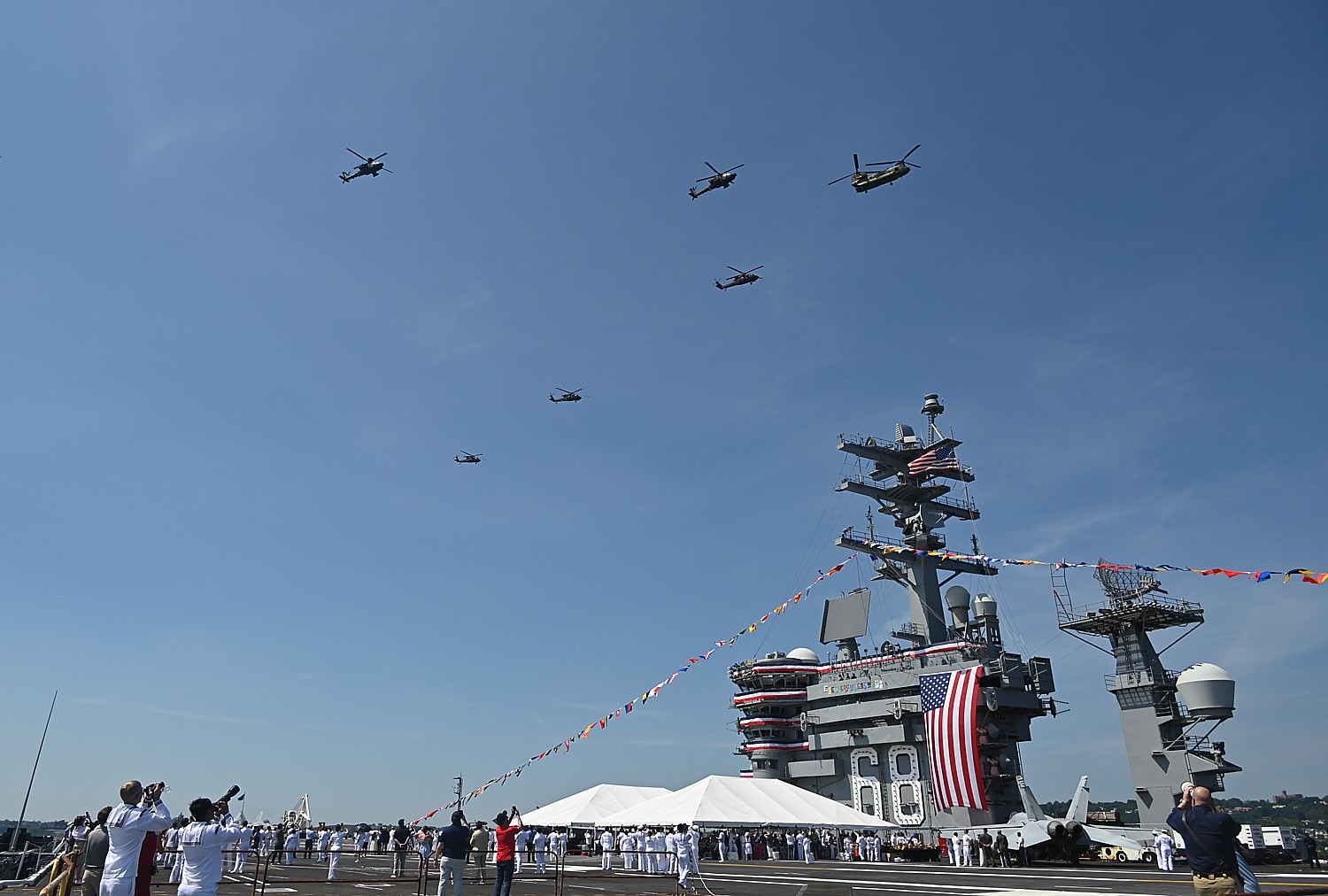
Watching the fly-over from the flight deck of the USS Nimitz © Karen Rubin/goingplacesfarandnear.com
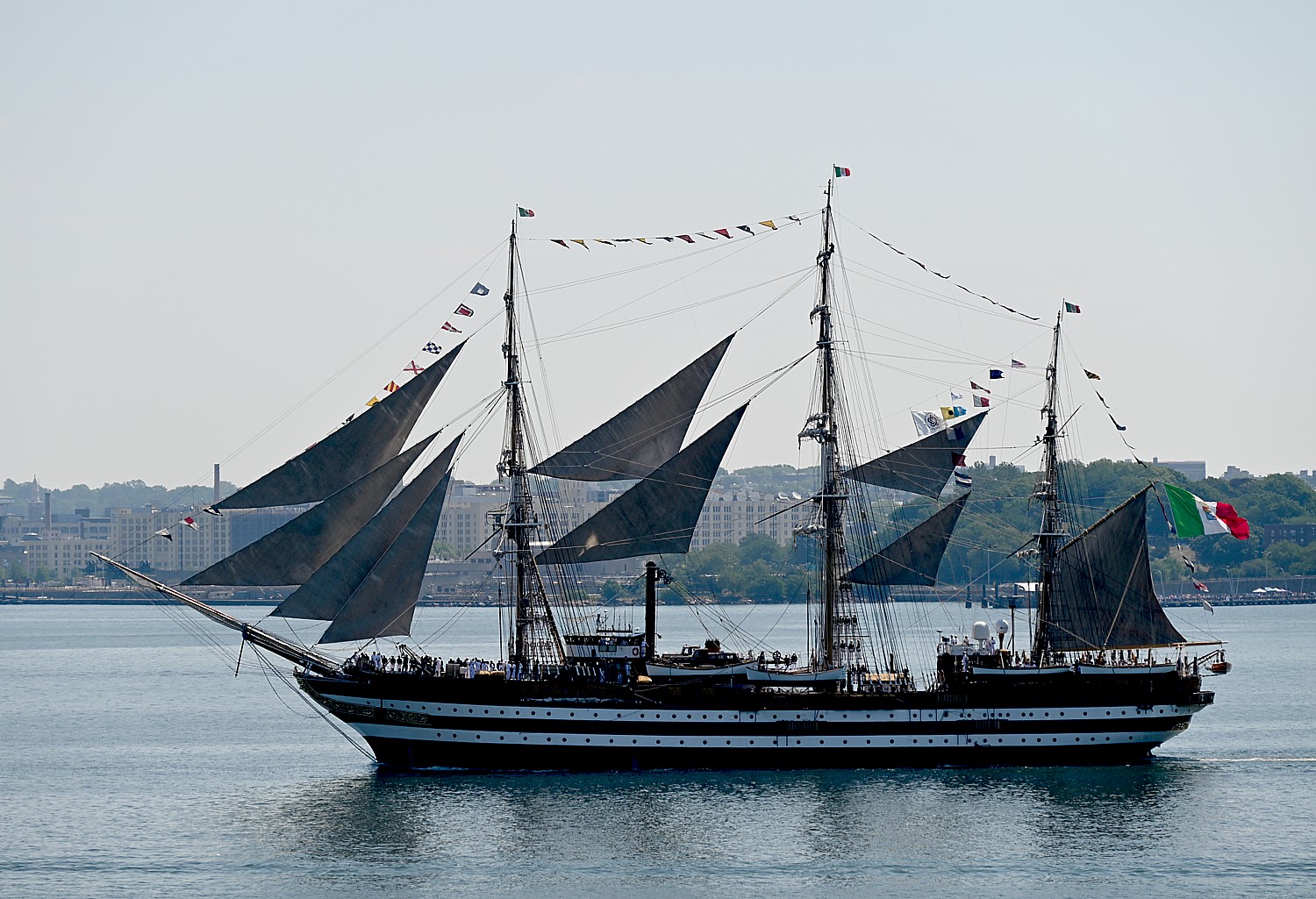
Amerigo Vespucci,  329-foot, full-rigged, three-masted sail training vessel, from Italy © Karen Rubin/goingplacesfarandnear.com
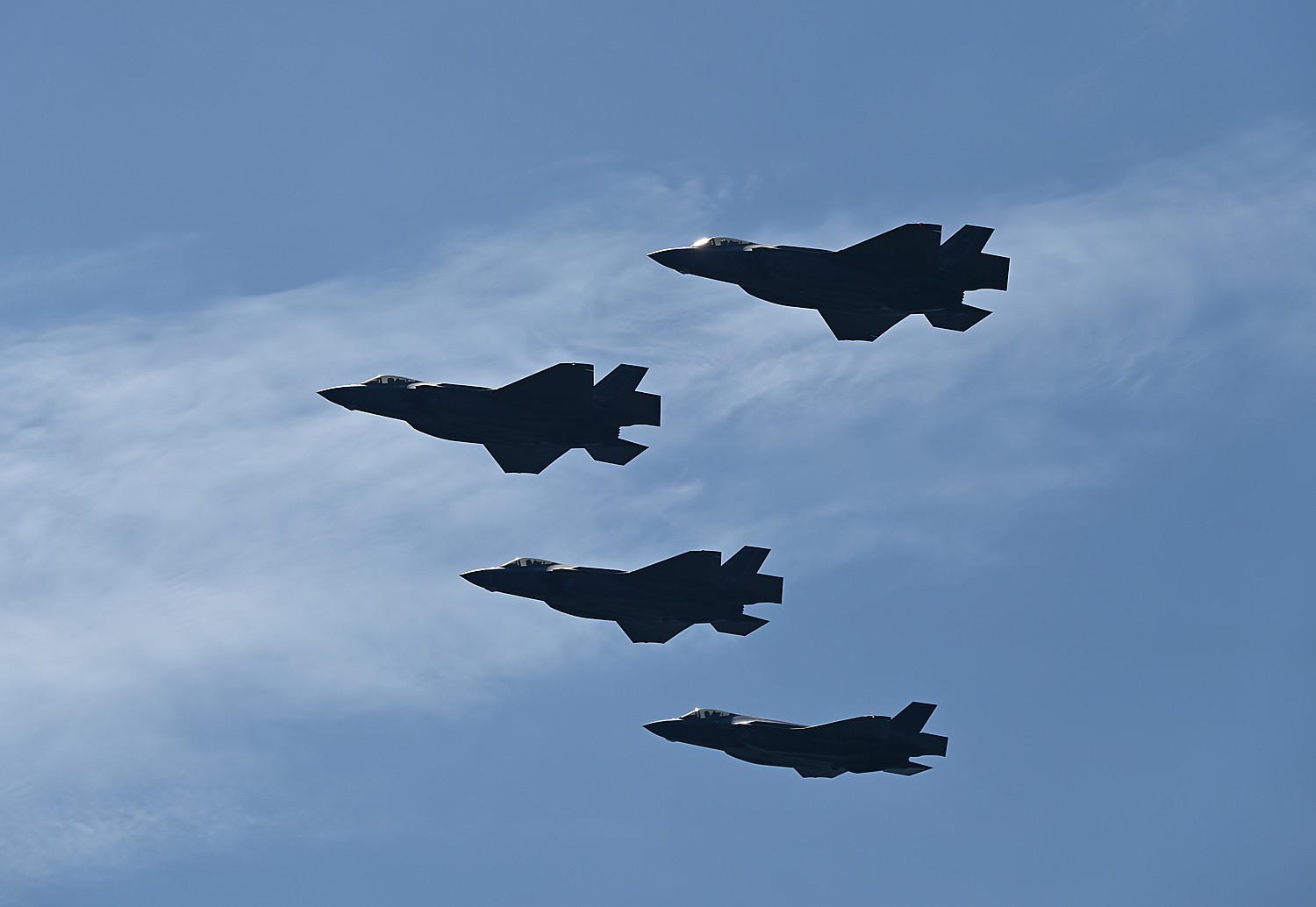
Fighter jets celebrate America’s 250th © Karen Rubin/goingplacesfarandnear.com
Fighter jets celebrate America’s 250th in New York Harbor © Karen Rubin/goingplacesfarandnear.com
Italy’s Amerigo Vespucci, sails into New York Harbor © Karen Rubin/goingplacesfarandnear.com
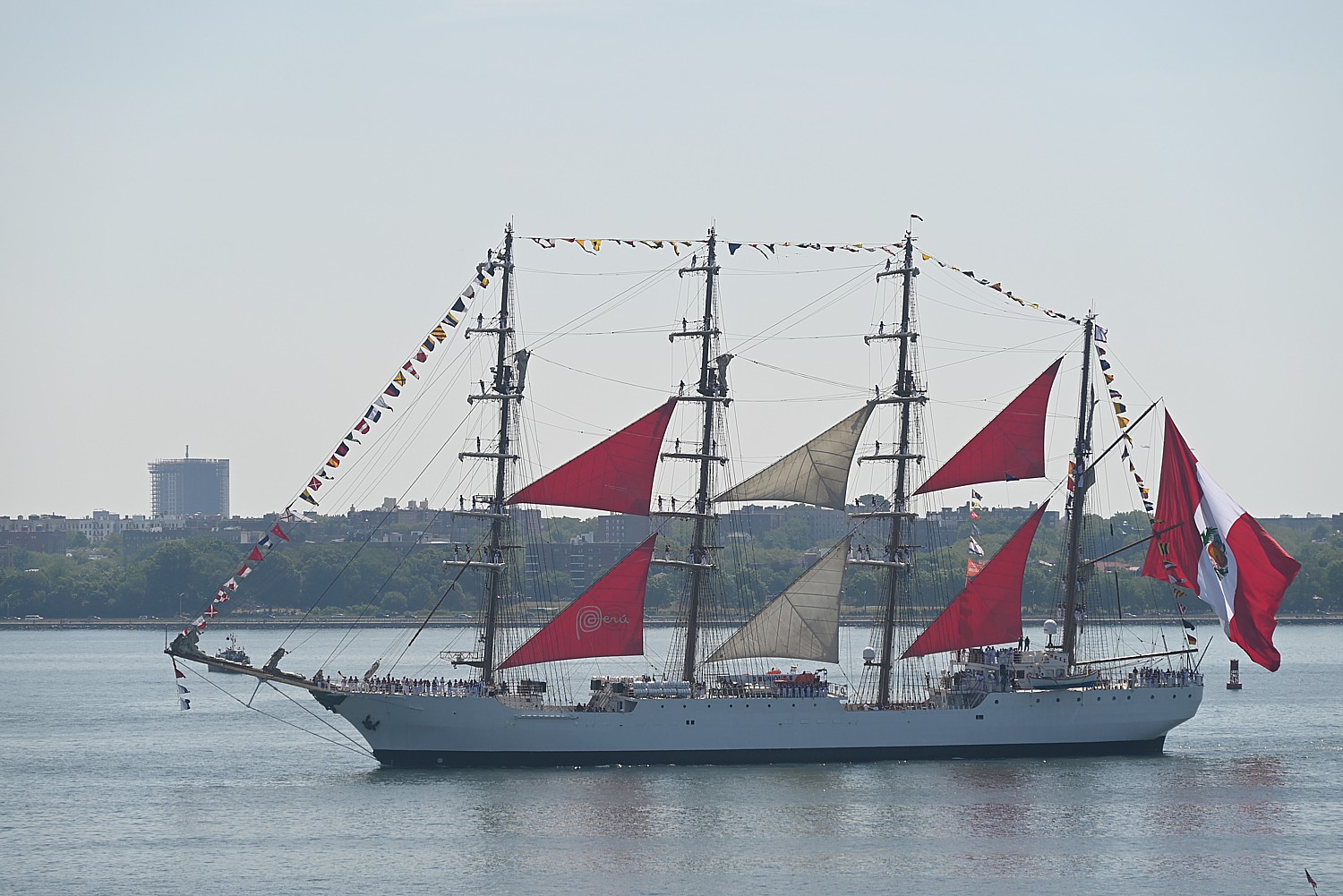
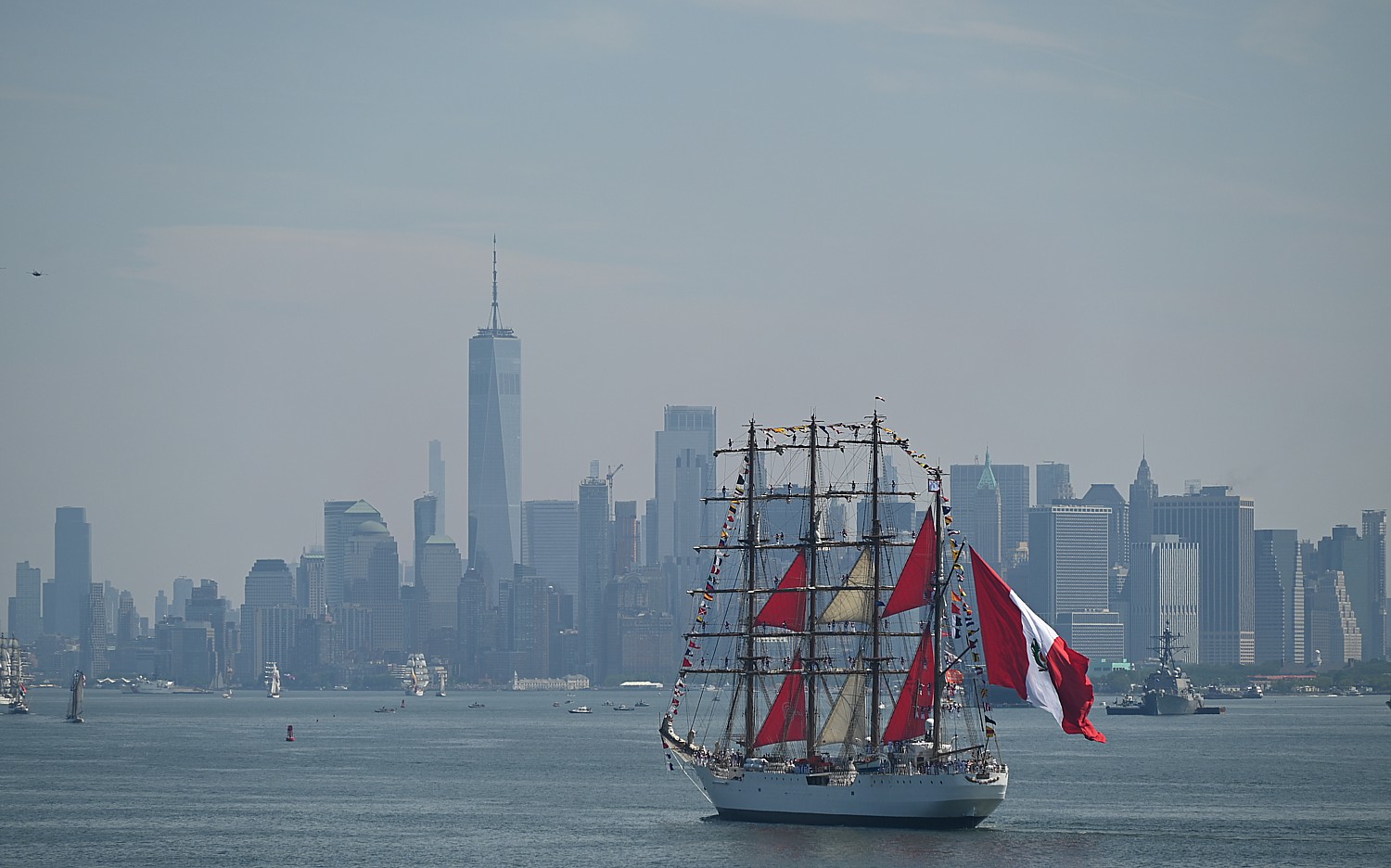
BAP Unión, Peru’s 378-foot, four-masted sail training ship © Karen Rubin/goingplacesfarandnear.com
Fighter jets at Sail4th 250 © Karen Rubin/goingplacesfarandnear.com
Sail4th 250 in New York’s harbor on July 4th 2026 © Karen Rubin/goingplacesfarandnear.com
Fighter jets at Sail4th 250 © Karen Rubin/goingplacesfarandnear.com
NRP Sagres, 292-foot, three-masted barque, from Portugal © Karen Rubin/goingplacesfarandnear.com
Fly over at Sail4th 250 © Karen Rubin/goingplacesfarandnear.com
Watching Sail4th 250 from the flight deck of the USS Nimitz aircraft carrier © Karen Rubin/goingplacesfarandnear.com
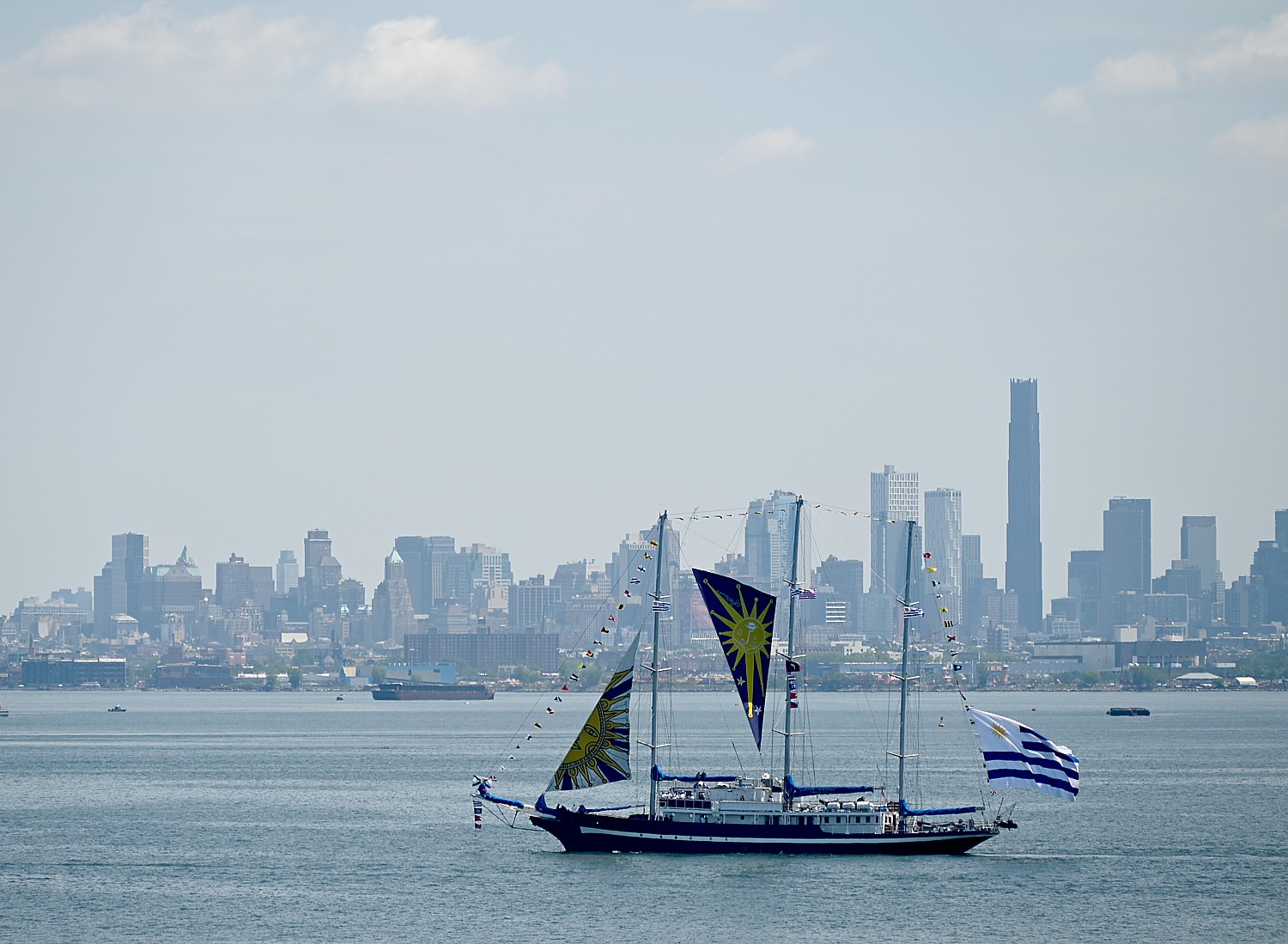
Uruguay’s Navy training sail vessel Capitan Miranda© Karen Rubin/goingplacesfarandnear.com
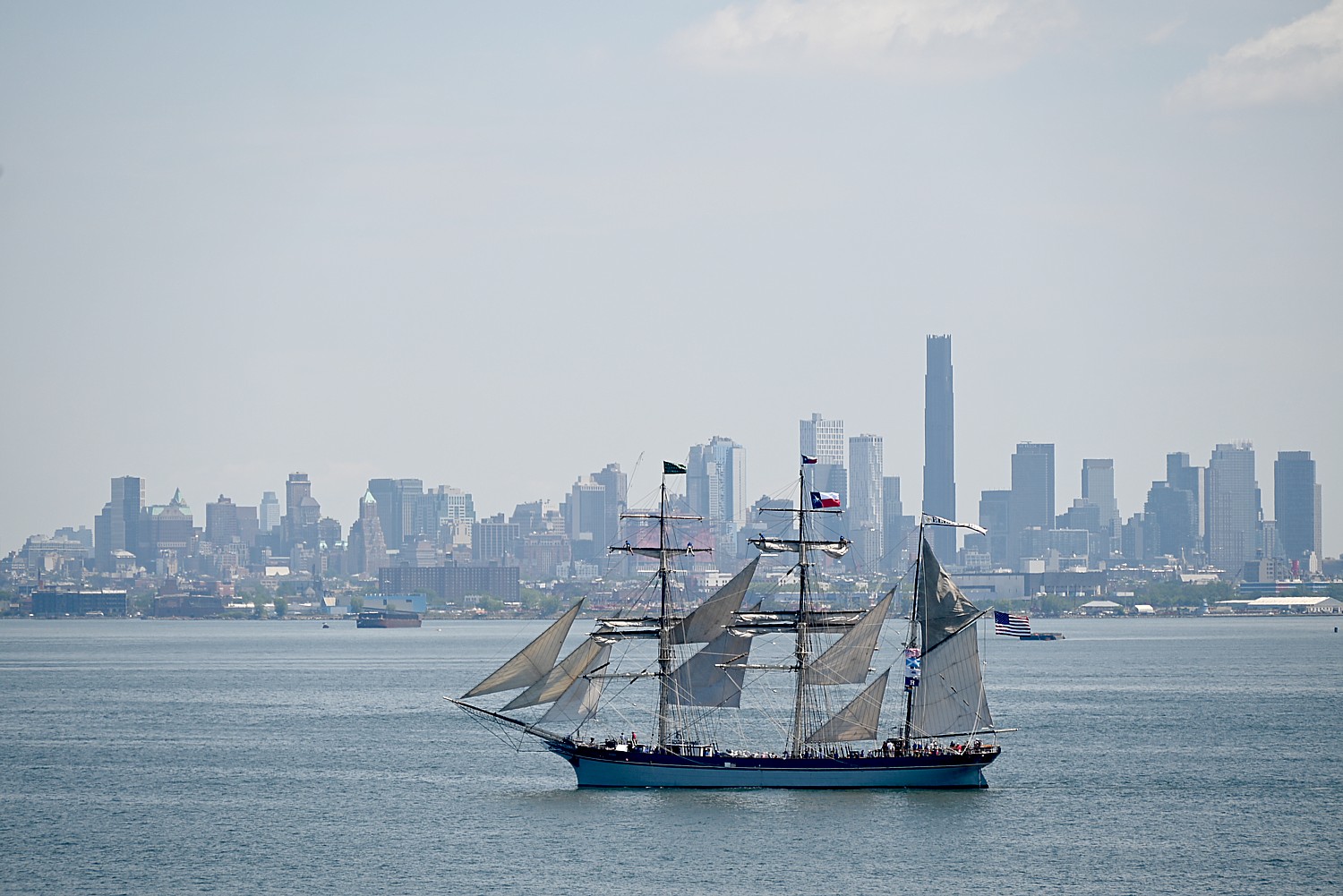
Elissa, 141-foot three-masted barque from Galveston Historic Seaport, Texas © Karen Rubin/goingplacesfarandnear.com
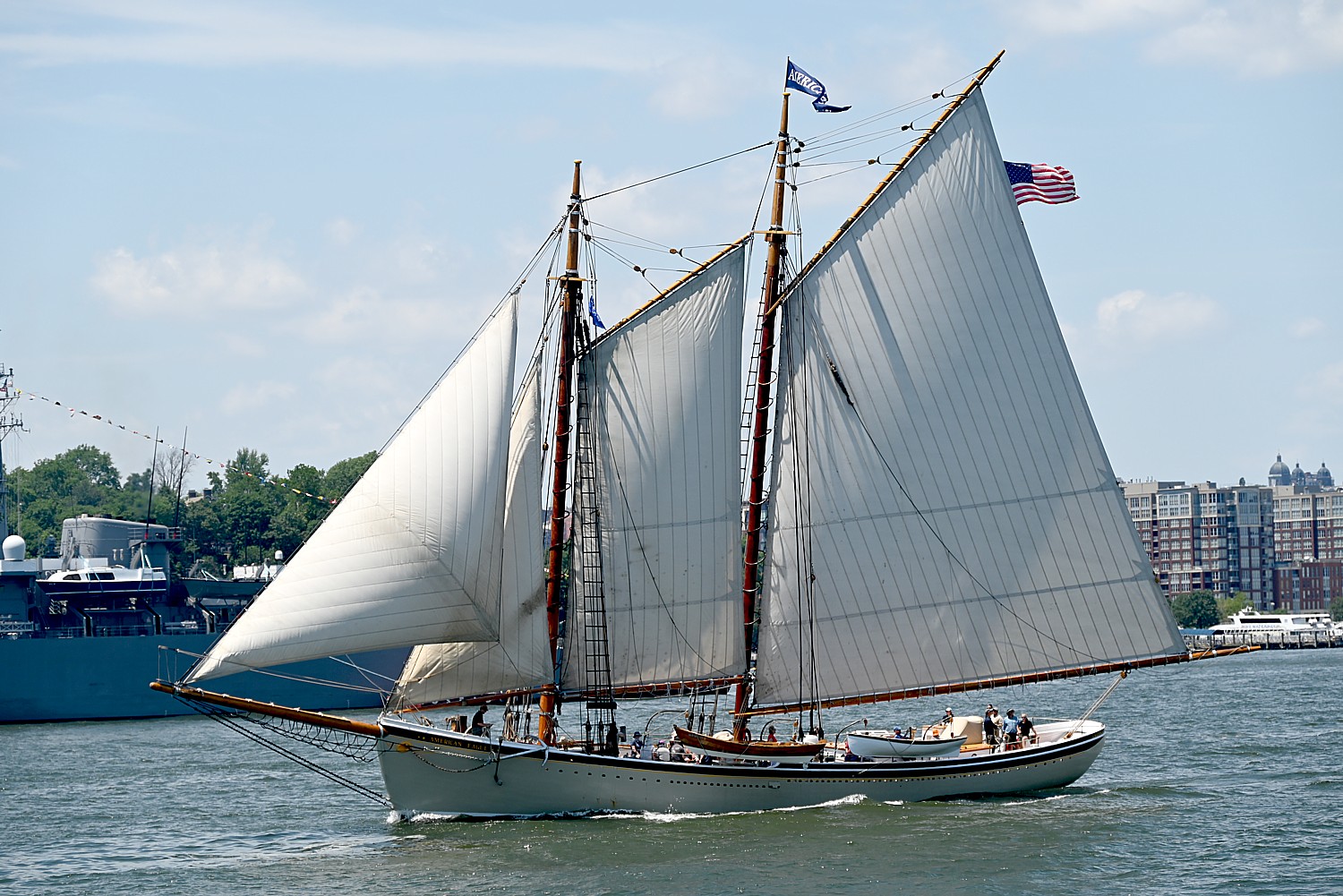
The American Eagle schooner © Karen Rubin/goingplacesfarandnear.com
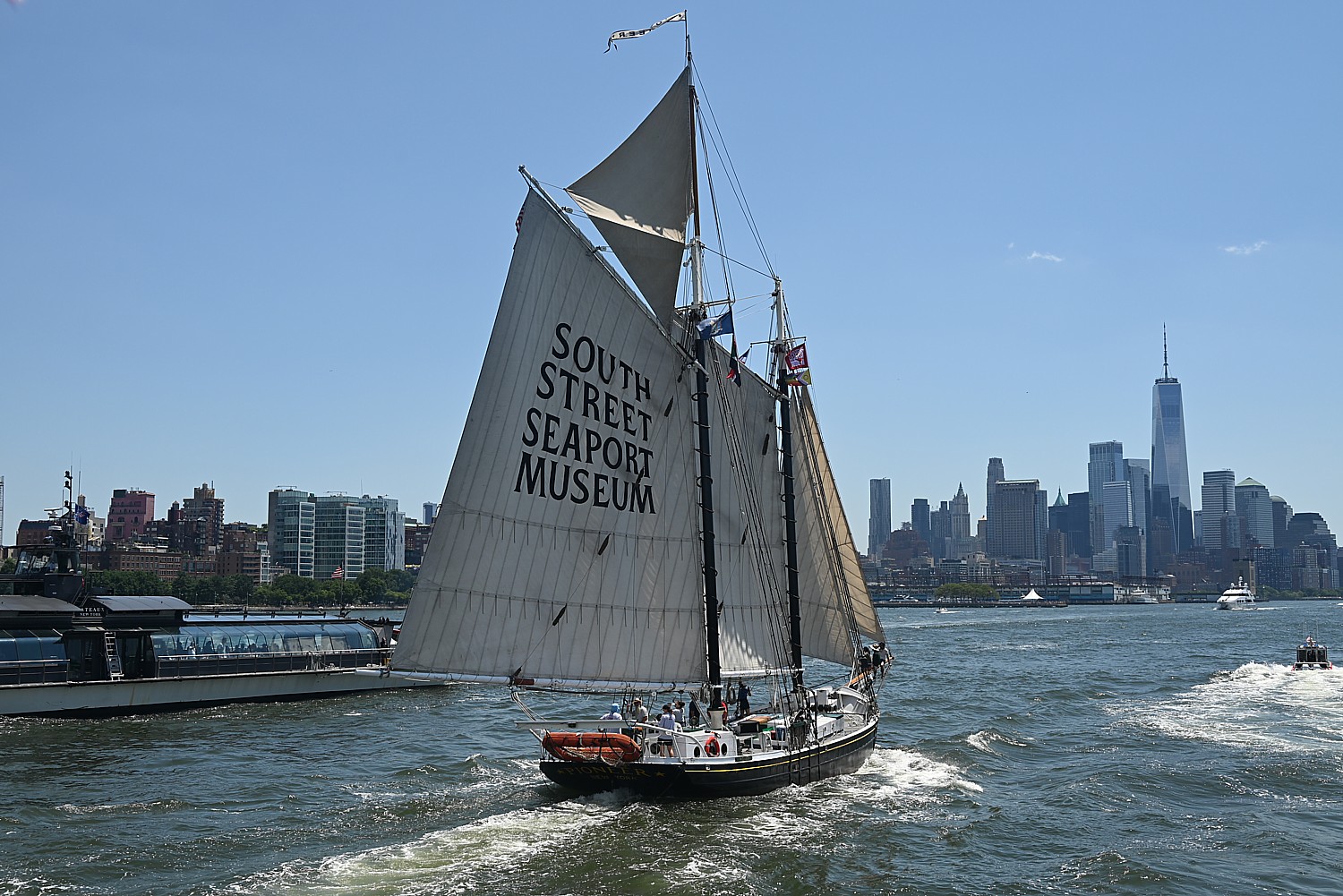
Pioneer, South Street Seaport Museum’s tall ship © Karen Rubin/goingplacesfarandnear.com
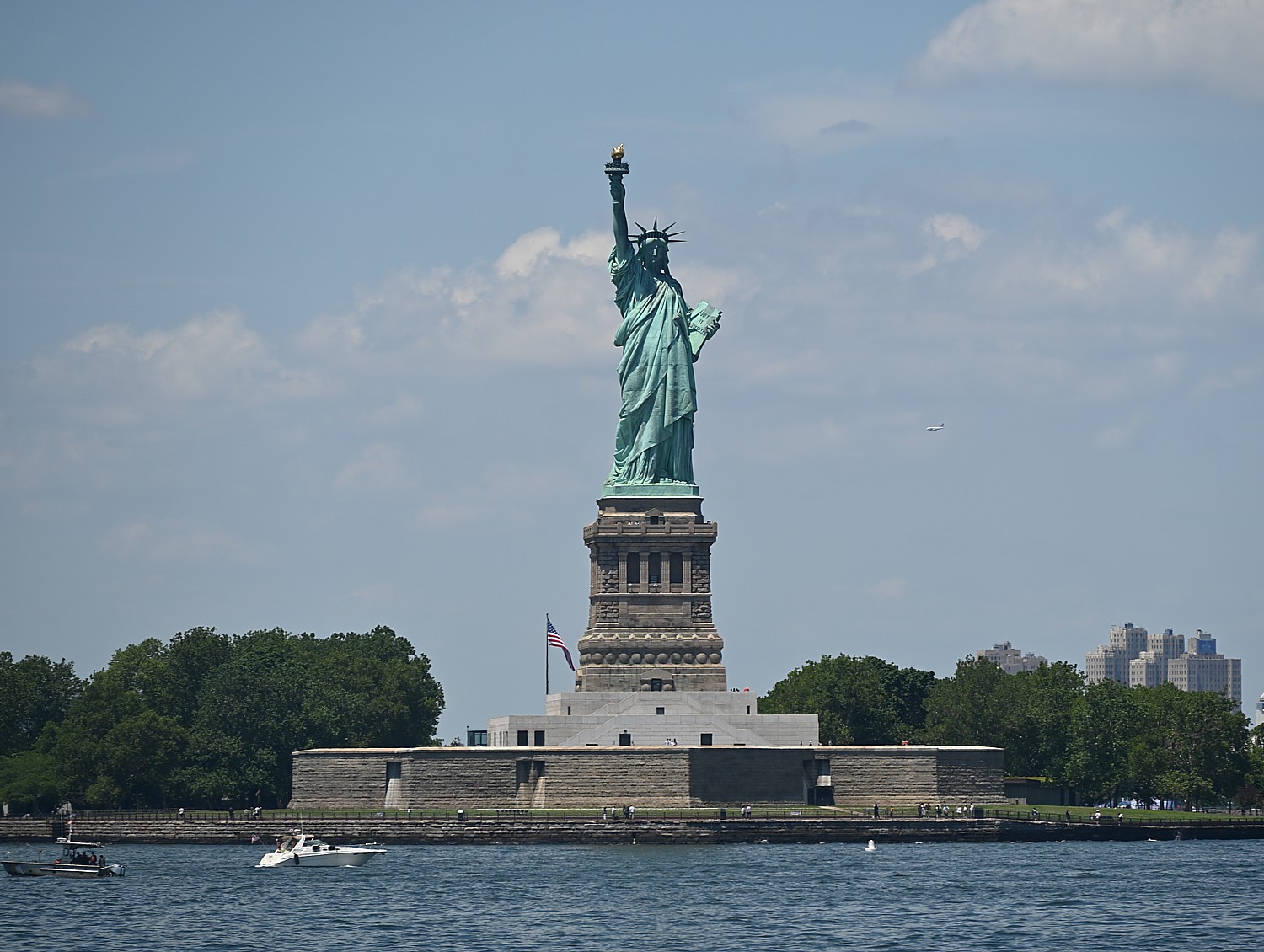
The Statue of Liberty was a present to the United States from France on its centennial, but sculptor Frédéric Auguste Bartholdi meant it to honor the emancipation of slaves after the Civil War, which many today call “the Second Founding.” © Karen Rubin/goingplacesfarandnear.com

See also:

Photo Highlights: Four Leaf Airshow at Jones Beach State Park Honors America’s 250th

Photo Highlights: Blue Angels Headline Four Leaf Air Show at Jones Beach Honoring America’s 250th

_______________________

© 2026 News & Photo Features Syndicate, a division of Workstyles, Inc. All rights reserved. For editorial feature and photo information, go to www.news-photos-features.com, email editor@news-photos-features.com.Blogging at www.dailykos.com/blogs/NewsPhotosFeatures
Nassau County Executive Blakeman Hosts ‘America’s 250’ Event Commemorating ‘Millionaires Unit’ Who Founded of U.S. Naval Aviation

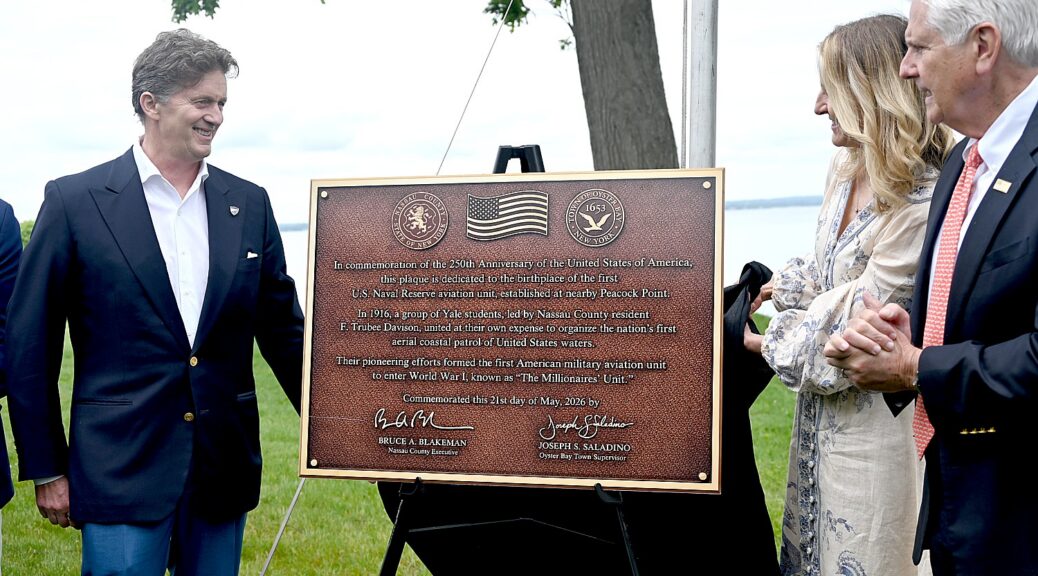
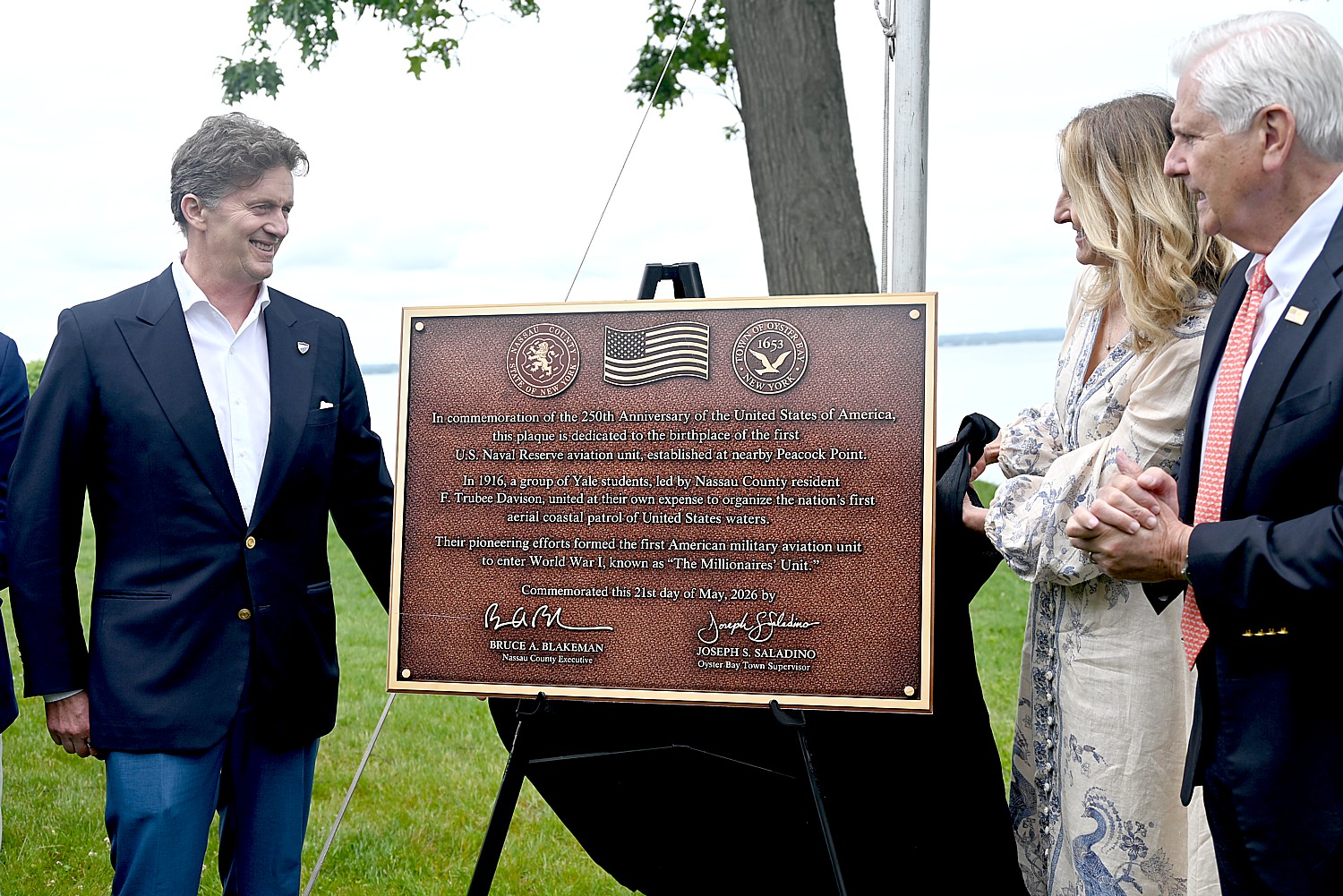
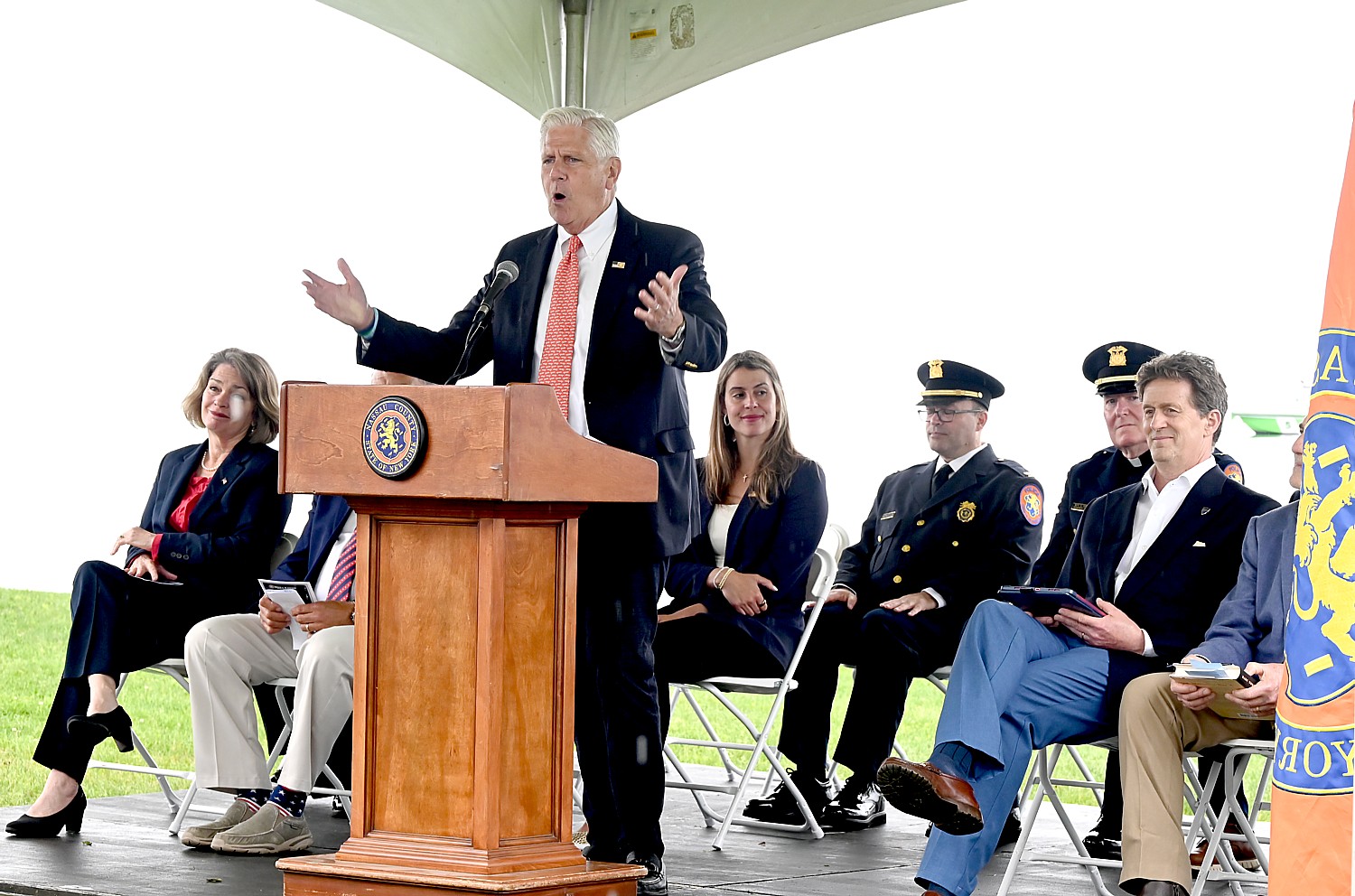
Henry Davison II, grandson of F. Trubee Davison, wife Christina, with Nassau County Executive Bruce Blakeman unveil a plaque commemorating the founding of U.S. Naval Aviation at Peacock Point © Karen Rubin/news-photos-features.com

By Karen Rubin, editor@news-photos-features.com, news-photos-features.com

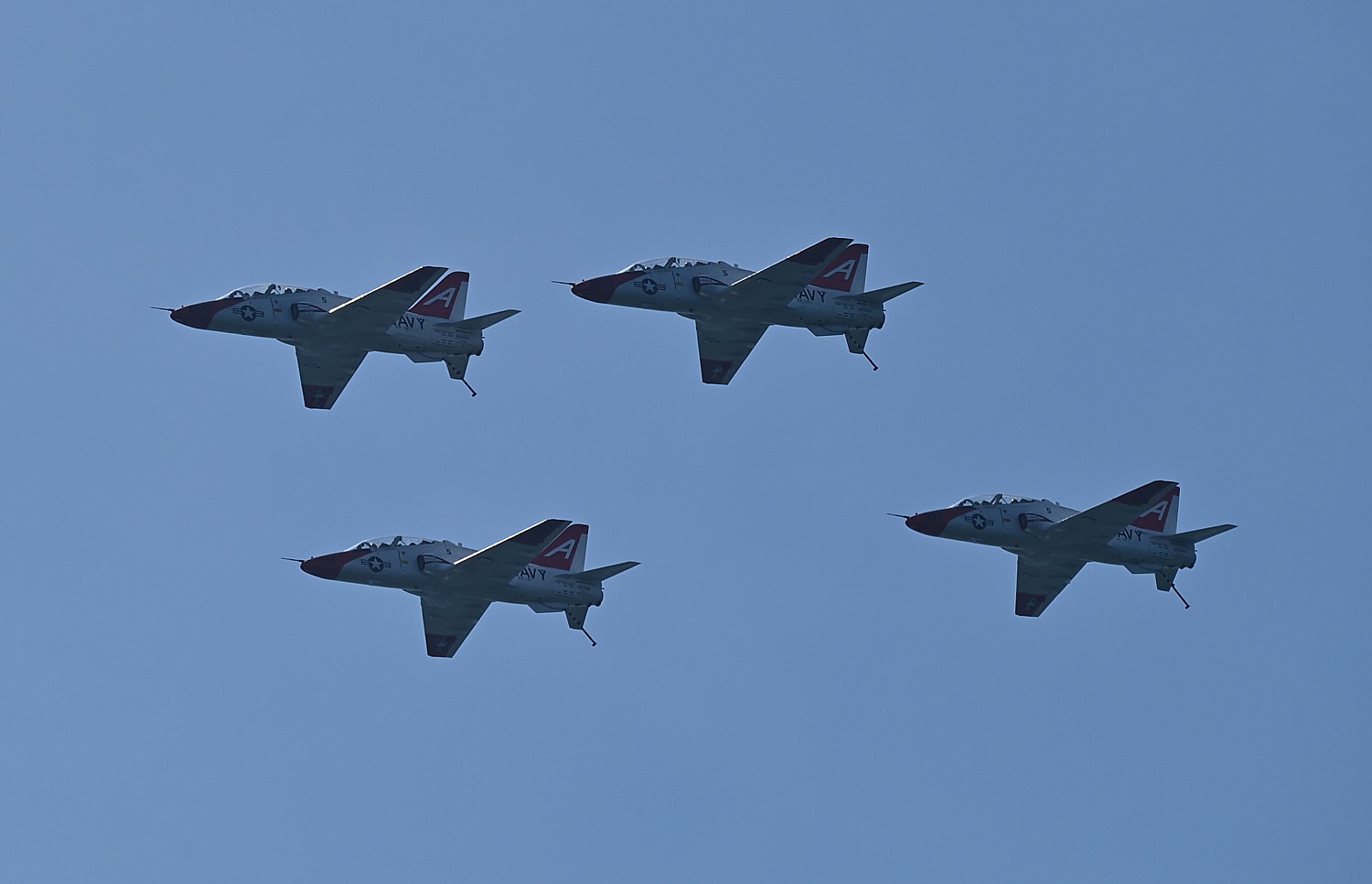
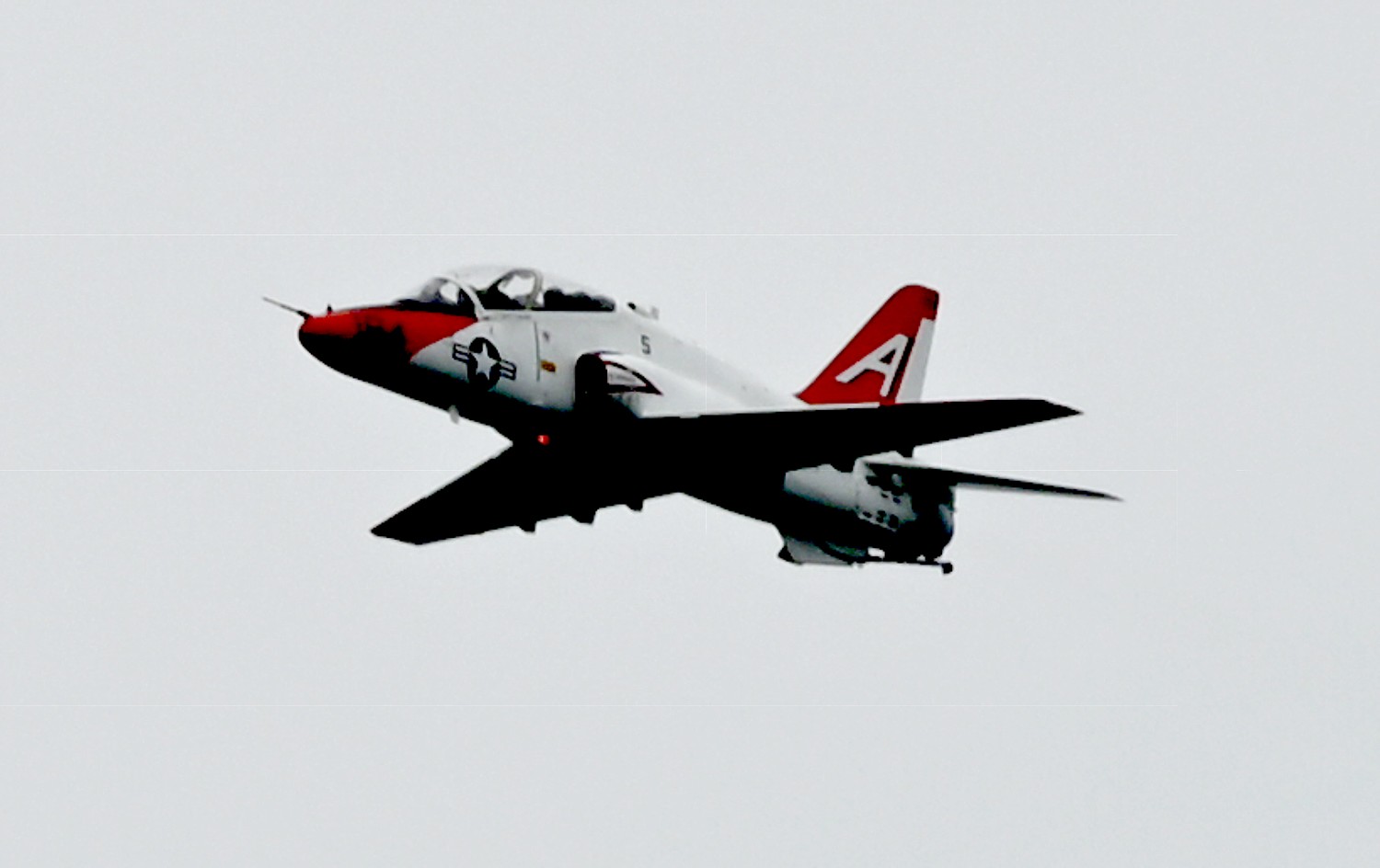
It’s most apt that Nassau County Executive Bruce Blakeman, who has ambitions of becoming New York State Governor, presided over an “America’s 250th” event at Peacock Point,  a waterfront mansion in Locust Valley, to honor the founding of U.S. Naval Aviation by the First Yale Unit that became known as the “Millionaire’s Unit”, featuring a rainy-day flyover by a U.S. Navy T-45 Goshawk, before an audience of VIPs, Republican officials and county police and first responders, or that the host of the event, Henry Davison II, introduced him as “Mr. Governor…too soon?”

This wasn’t a flyover for 250,000, like at the Jones Beach Memorial Day air show, which this year, is being pushed back to July 5-6 to actually honor America’s 250th. The flyover lasting mere seconds – in rainy weather – was for an audience of about 60 invitees.

Nassau County Executive Bruce Blakeman relates how he called the White House, then the Secretary of War, to arrange a fly-over by U.S. Navy jet © Karen Rubin/news-photos-features.com

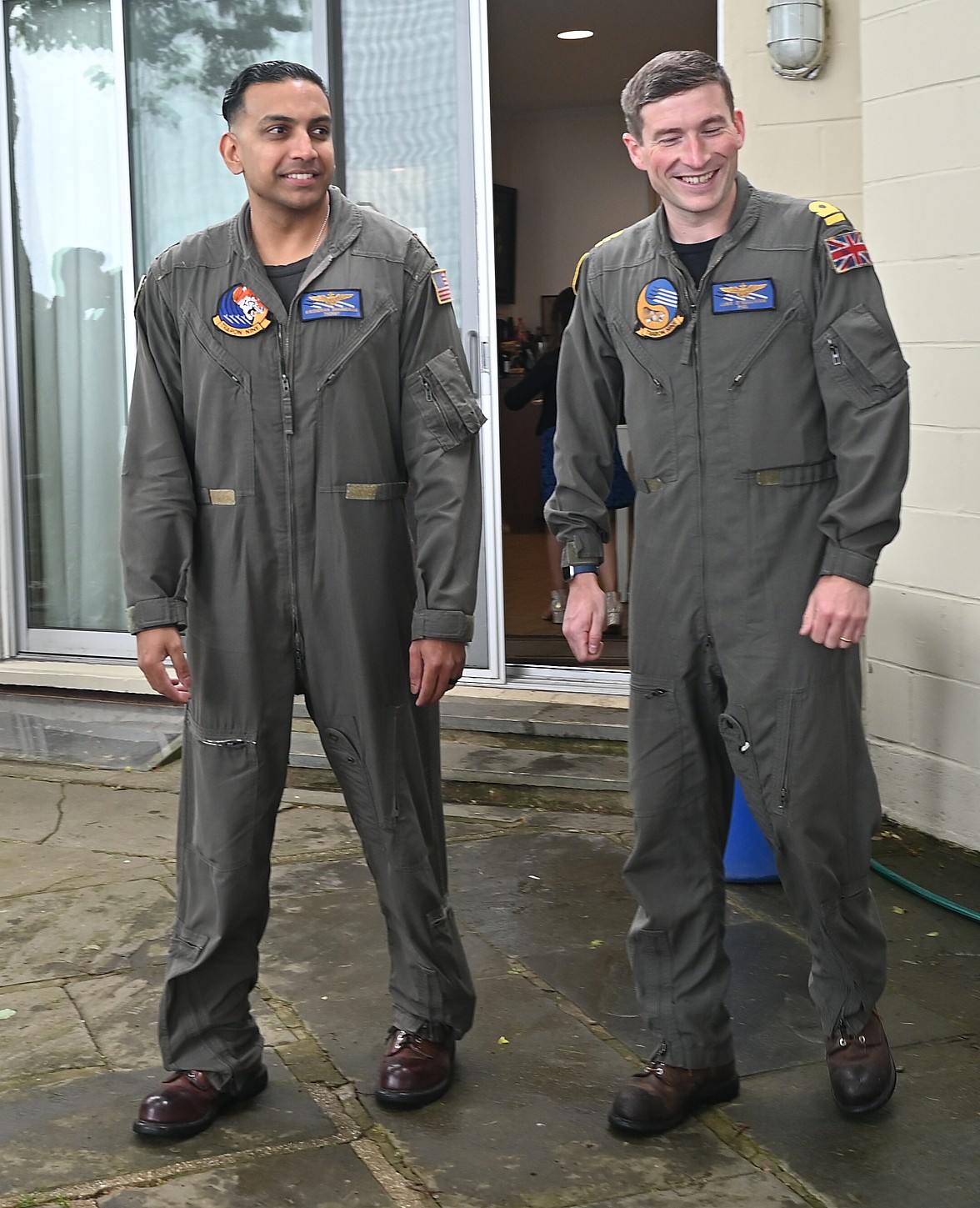
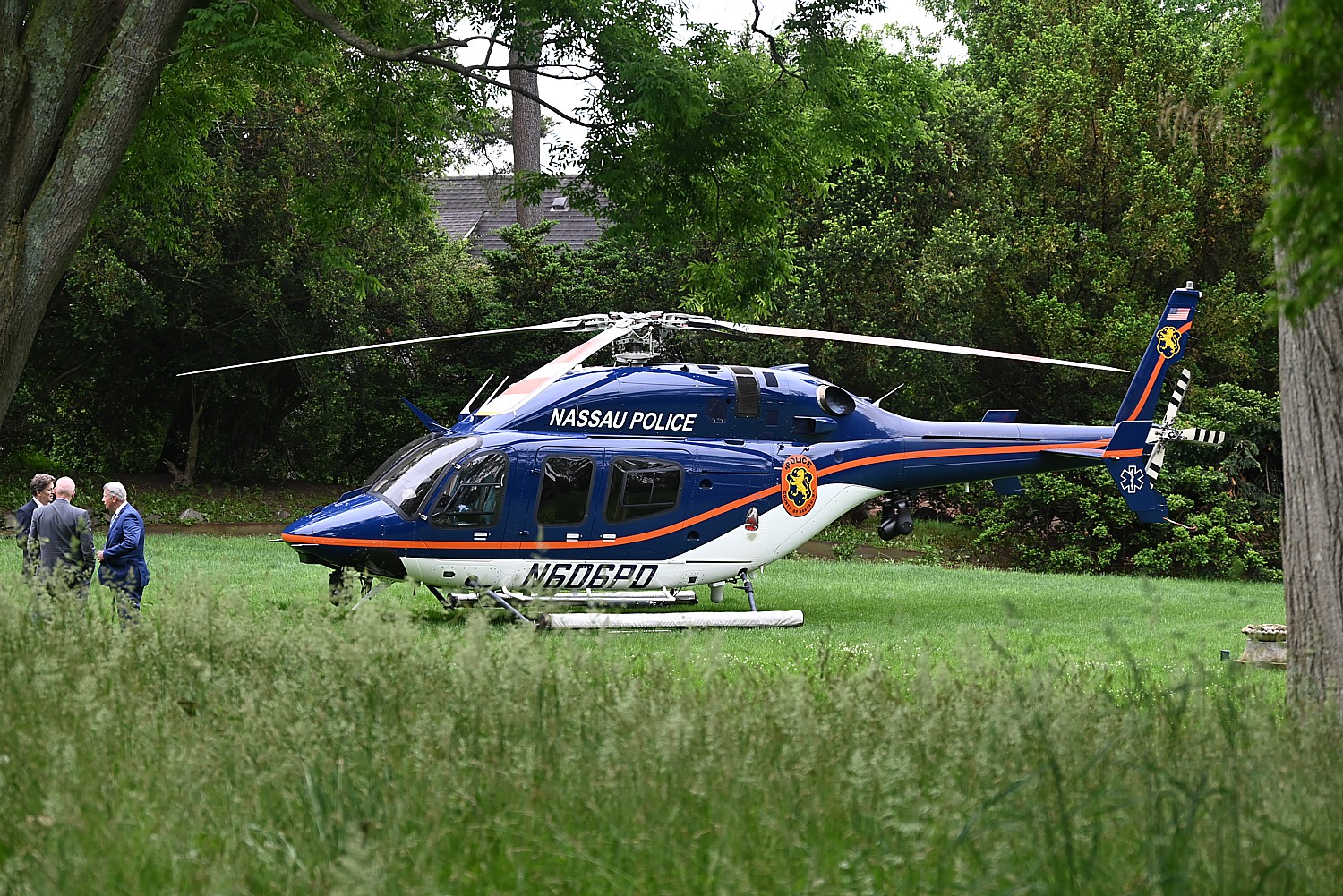
Blakeman’s boast about how he got the flyover was particularly revealing: “I called the White House to ask for a flyover and was directed to the Secretary of War,” he gleefully recounted. “Instead of 3 to 4, I got one” because there is a war on, you know. After the fly-by, the two pilots of Training Squadron NINE Tiger – US Navy Lt. Ravendran Shanmugam Thorny and Lt. Luke O’Sullivan (an “exchange” pilot from the Royal Navy Britain) – were ferried to the event by Nassau County Police helicopter, performing a second “flyover” and landing on the lawn.

Blakeman also related how he came to learn of the “Millionaires Unit.” it began at a dinner in New York City where he met a historian whom he asked what he might do to mark the 250th anniversary. He subsequently learned the history of these Yale students who formed their own flying club and went to Europe during World War I.

“The flying group they formed here at Peacock Point became the foundation for the U.S. naval air unit.

“Rather than do what others were doing for the 250th, I wanted to celebrate the rich history of the United States here in Nassau County.”

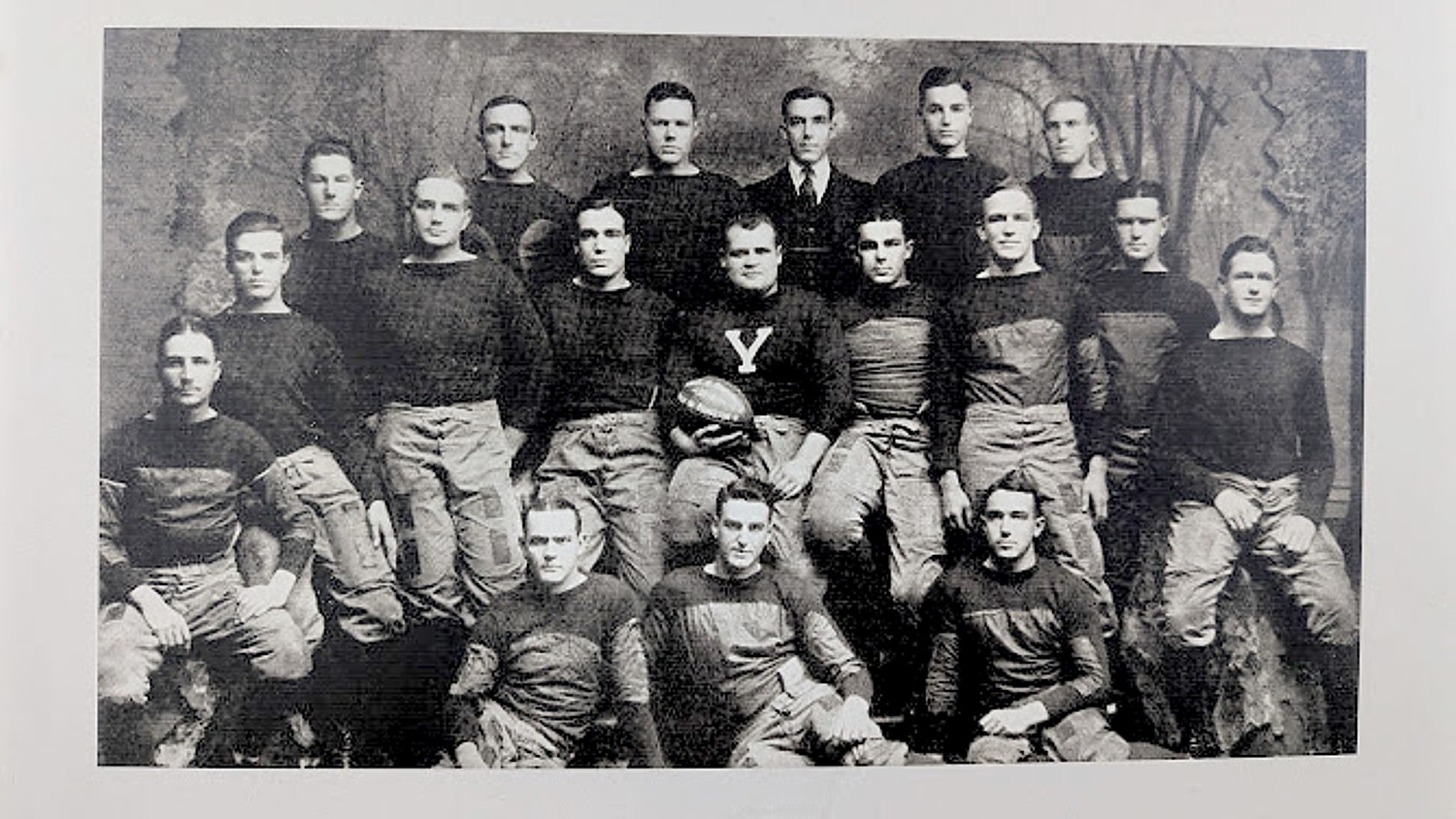
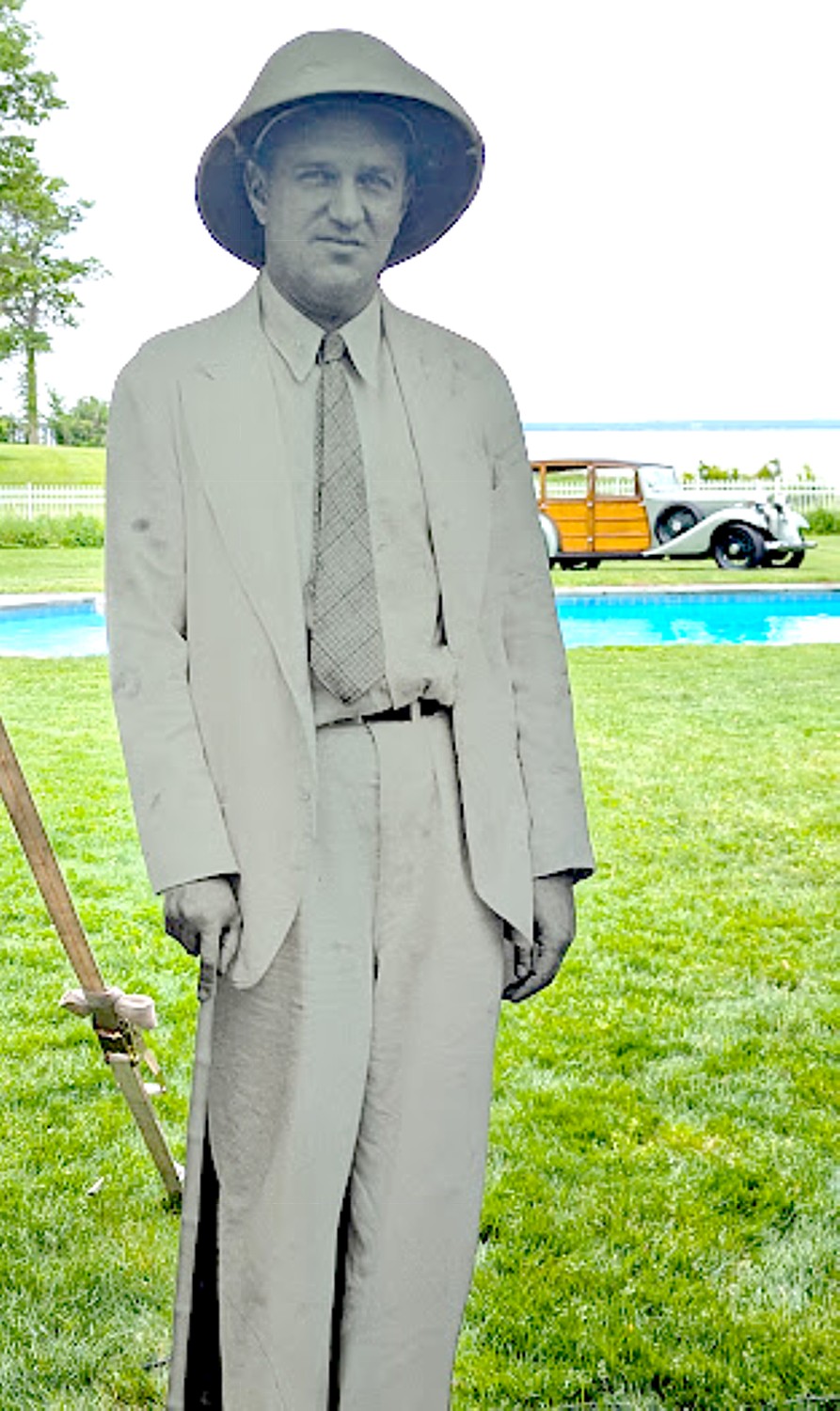
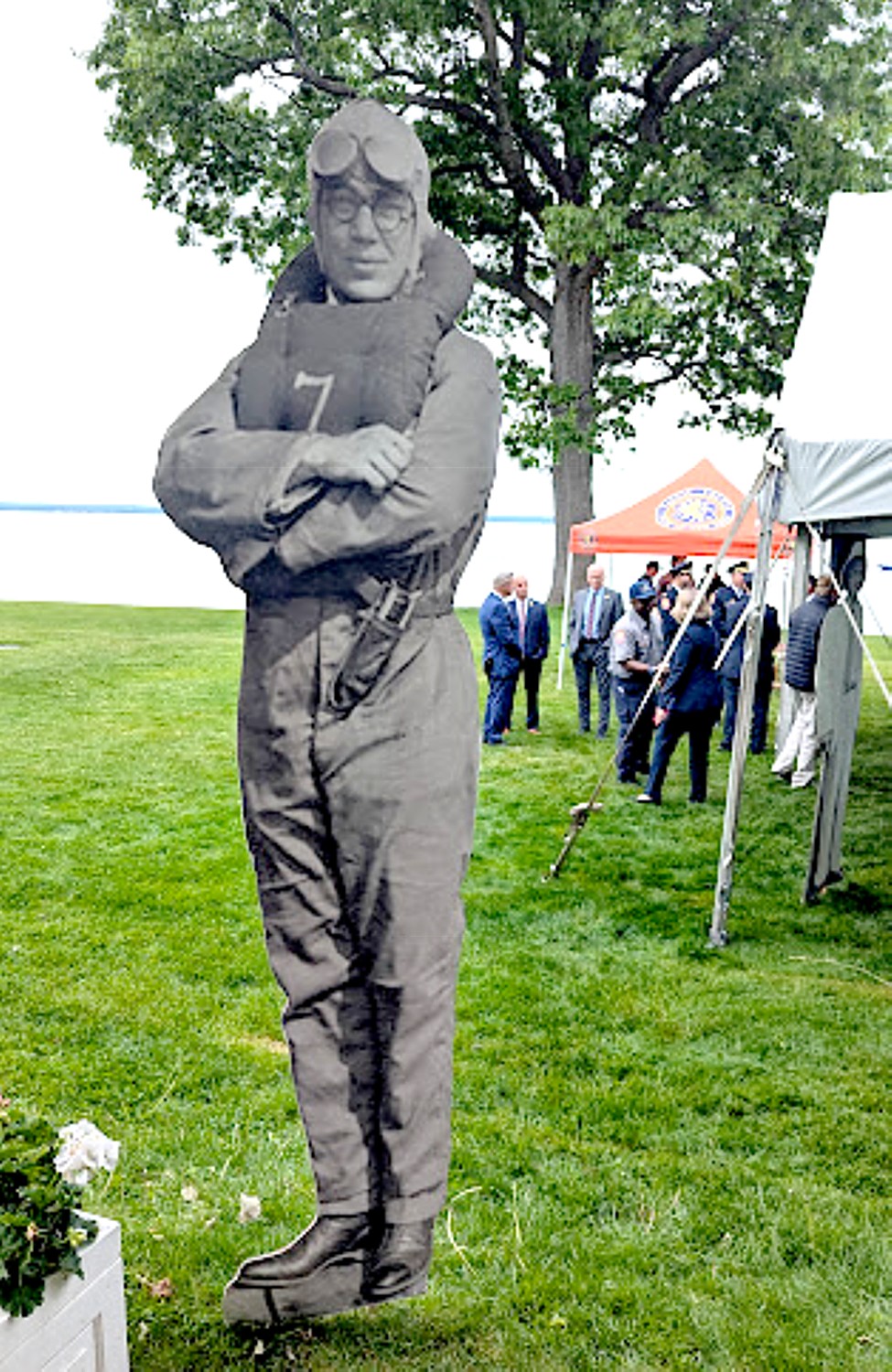
The Yale men who formed the nucleus of the First Yale Unit that came to be known as the “Millionaires Unit” © Karen Rubin/news-photos-features.com

The event focused on the history surrounding “The Millionaire’s Unit,” a group of young Yale students who founded the U.S. Naval Aviation Reserves in Nassau County and became the first aviation unit to enter World War I from America. County Executive Blakeman highlighted Nassau County’s place in U.S. history and spoke about the values Americans should be proud of as we celebrate our nation’s 250th anniversary.

In fact, Long Island is known as the “Cradle of Aviation” (there is even a museum dedicated to it) for good reason – the first airplanes were developed and manufactured here, and it was from what is now Roosevelt Field on this very day in 1927 (of which Blakeman was not aware), that Charles Lindbergh set out on his historic solo, nonstop 33.5-hour flight 3,600 miles to Paris. Lindbergh actually stayed at Peacock Point.

“We are known as the Cradle of Aviation, but not that many people know what happened here at Peacock Point,” County Executive Blakeman said. “This is the greatest country in the world. This country was founded on values and principles that have made us a rich, diverse, and, quite frankly, the greatest country in the world…There are values that we cherish: Judeo-Christian work ethic…democracy, freedom of religion, freedom of speech – things we might take for granted. But on this day, we should remember that those freedoms cannot be taken for granted.”

Henry Davison II, grandson of F. Trubee Davison, reflects on what motivated his grandfather and others in the First Yale Unit to be the vanguard of military aviation © Karen Rubin/news-photos-features.com

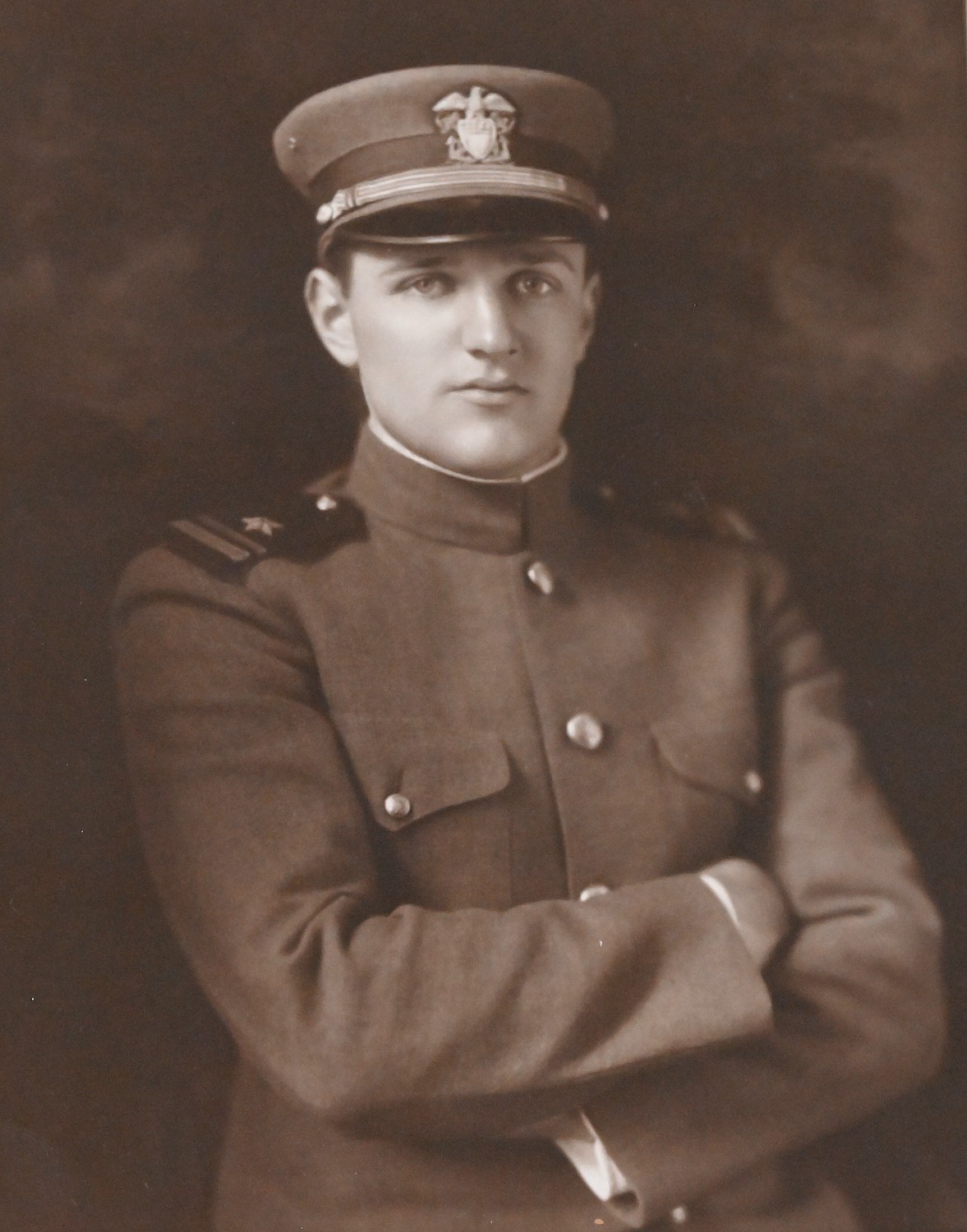
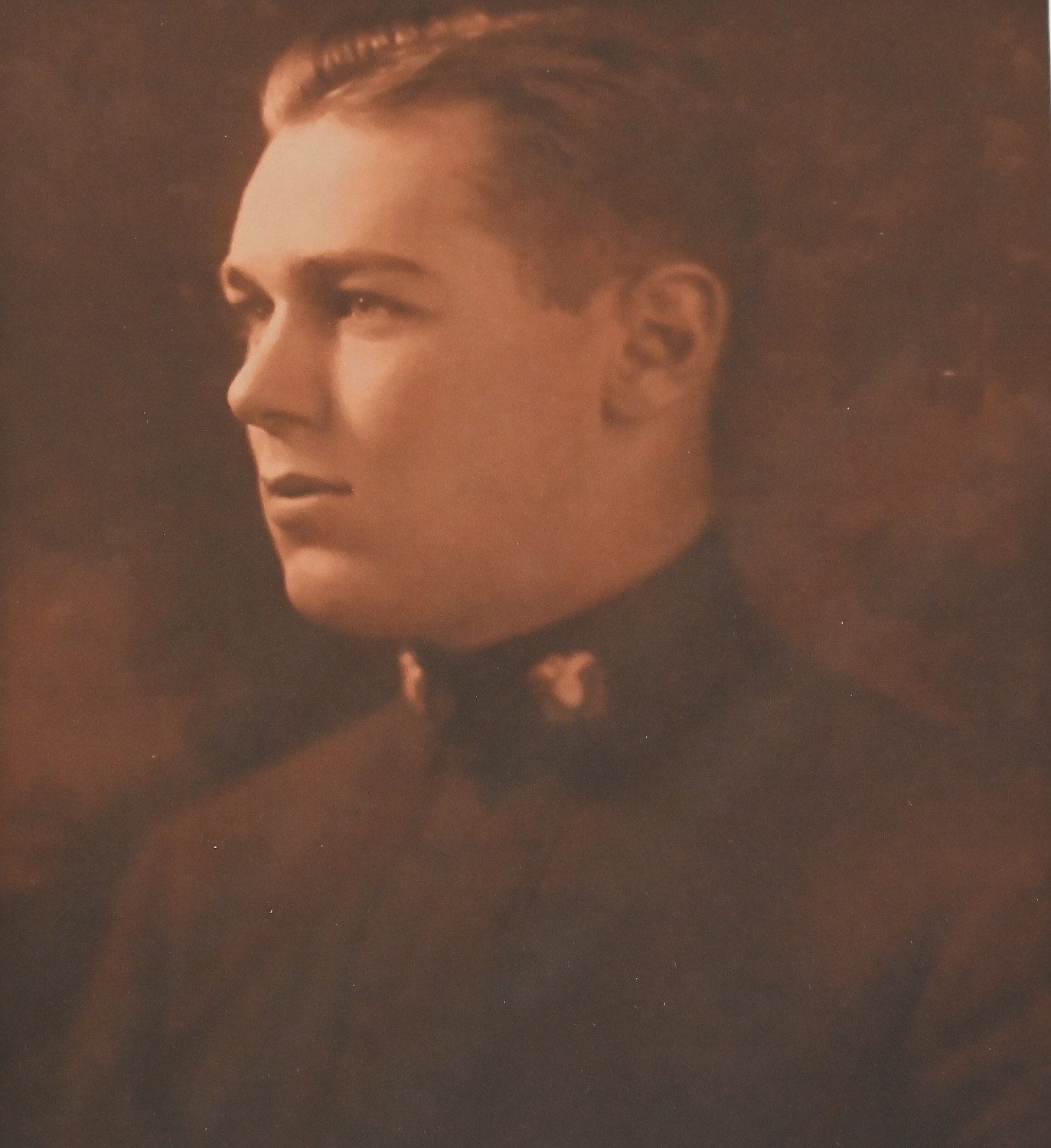
The event was held on the property of Henry Davison II, the grandson of F. Trubee Davison, who with his brother, Henry P. Davison Jr., were founding members of the first Yale Unit (known as the Millionaires’ Unit). He reiterated the importance of honoring American history and spoke about his family’s connection to Nassau County.

F. Trubee Davison, one of the founders of the First Yale Unit that came to be known as the “Millionaires Unit” went to war before the United States entered World War I © Karen Rubin/news-photos-features.com

“The Davison family has been here for a long time. We have been here longer than anybody but the Indians, and we plan to stay here. And we are never leaving Oyster Bay,” Davison said. 

Henry P. Davison one of the founders of the First Yale Unit that came to be known as the “Millionaires Unit” © Karen Rubin/news-photos-features.com

There actually is a link in this event – or rather this family – to America’s 250th. Davison noted that his wife, Christina, is descendent from Benjamin Talmadge who was George Washington’s first spy master. Nathan Hale, Talmadge’s roommate at Yale, was captured by the British very near to this place, and hung in 1776, famously declaring, “I only regret that I have but one life to lose for my country.” After Hale’s death, Talmadge set up the Culper Spy Ring to report on British troop movements.

Davison, whose great grandfather, Harry P. Davison, was a managing partner of J.P. Morgan, related the story to illustrate his family’s commitment to duty and sacrifice. “There was an explicit understanding, that to whom much is given, much is expected.”  Which is why the very wealthy, privileged Davisons and the other Yale men, formed the Millionaires Unit and went to Europe to fight in World War I, when they didn’t have to. “They were willing to sacrifice their own life for those who represented their ideals.”

Actually Harry P. Davison is an American Dream success story. Abandoned by his father and orphaned at a young age, he got into a card game with circus impresario P.T. Barnum who introduced him to his future wife, Kate Trubee, daughter of a local merchant family, and got Harry his first job as a cashier at the Astor Place Bank in New York City, where he foiled a bank robbery and came to the attention of J.P. Morgan. He worked his way up, founded the Bankers Trust Company, became J.P. Morgan’s personal assistant, and ultimately a partner. After J.P. Morgan died, he took the helm. He became chairman and raised funds for the American Red Cross during World War I – a demonstration of where the sense of noblesse oblige originated.

Marc Wortman, author of “The Millionaires’ Unit” resurrected the story of the First Yale Unit that was almost lost © Karen Rubin/news-photos-features.com

Marc Wortman, author of The Millionaires’ Unit that so inspired Blakeman, related that the First Yale Unit (dubbed “Millionaires’ Unit” for their privileged backgrounds), was a pioneering group of 28 wealthy Yale undergraduates who formed a private air militia in 1916. At a time when the United States had funding for but one airplane (but not for parts or equipment) and just 40 aviators (fewer than Bulgaria), they financed their own training, planes, and equipment and formed a private air militia. Their group became the founding squadron of the U.S. Naval Air Reserve and the first to fly for the U.S. in World War I, ultimately persuading Congress to create the Naval Reserve Flying Corps.

“They formed the vanguard, the nucleus of the service that grew to 40,000 men,” he said. Among them were the first American to fly a bomber, first to fly a submarine patrol, the first strategic bomber force and the first aviator ace (Lt. David Ingalls), as well as the first aviator killed in combat and  numerous accounts of heroism – when Harry Davison’s friend, Di Gates,  was shot down in Europe, he undertook a rescue mission (Gates was taken as a PoW).

Harry Davison tried to rescue DI Gates after Gates was shot down in Europe © Karen Rubin/news-photos-features.com

Many members went on to become top government and military officials, including serving as Secretaries of War and Defense. Davison’s godfather was Robert Lovett, one of the Yale First Unit who became Under Secretary of State from 1947 to 1949 and George C. Marshall’s primary deputy. Lovett orchestrated the Berlin Air Lift and spearheaded early Cold War initiatives, including the Marshall Plan.

Wortman noted that the young men were well aware of the risks and horrors that would befall them. Trubee Davison had been an ambulance driver, bringing wounded from the front, before the United States entered World War I. “He knew how dangerous war and flying was.”

“They were after honor, loved their country, had a sense of duty, righteousness, loyalty and a spirit of mission.”

Their stories were all but forgotten when Wortman wrote his book (that was turned into a documentary) based in part on letters from Kenneth MacLeish to his brother, the Pulitzer prize winner Archibald McLeish. Kenneth MacLeish was shot down and killed over Belgium on October 14, 1918—just weeks before the war ended.

 “They put their lives at risk for the ideals, the principles that kept our country free,” Blakeman added before unveiling a plaque that will commemorate Peacock Point as the place of the founding of U.S. Naval Aviation.

US Navy Lt. Ravendran Shanmugam Thorny and Lt. Luke O’Sullivan piloted a flyover of a T-45 Goshawk © Karen Rubin/news-photos-features.com

In addition to covering the history of aviation in Nassau County, the event also featured two live demonstrations. The proceedings began with a ceremonial flyover of a U.S. Navy T-45 Goshawk advanced jet trainer, operated by pilots of Training Squadron NINE “Tigers” of the Naval Air Station Meridian, Mississippi. A second flyover featuring a Nassau County Police Department helicopter concluded the ceremony. 

US Navy Lt. Ravendran Shanmugam Thorny and Lt. Luke O’Sullivan piloted a flyover of a T-45 Goshawk © Karen Rubin/news-photos-features.com
A second “flyover” by Nassau County Police helicopter ferries the T-45 Goshawk pilots to Peacock Point © Karen Rubin/news-photos-features.com

______________________________

© 2026 News & Photo Features Syndicate, a division of Workstyles,Inc. All rights reserved. For editorial feature and photo information, go to www.news-photos-features.com,email editor@news-photos-features.com.Blogging at www.dailykos.com/blogs/NewsPhotosFeatures