Tag Archives: America 250

U.S.S. Nimitz Aircraft Carrier Shines During Sail4th 250 and Historic International Naval Review to Honor America’s 250th

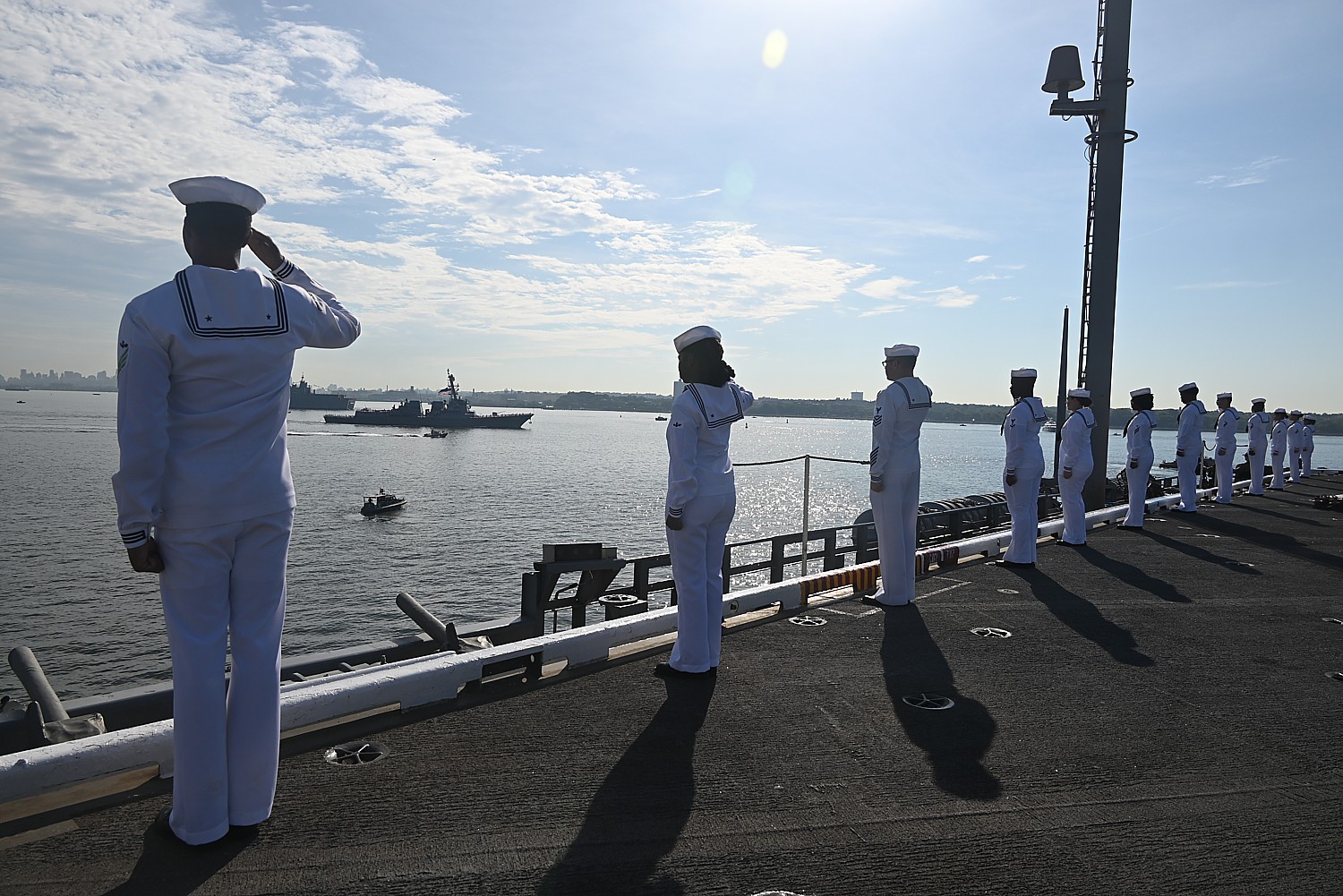
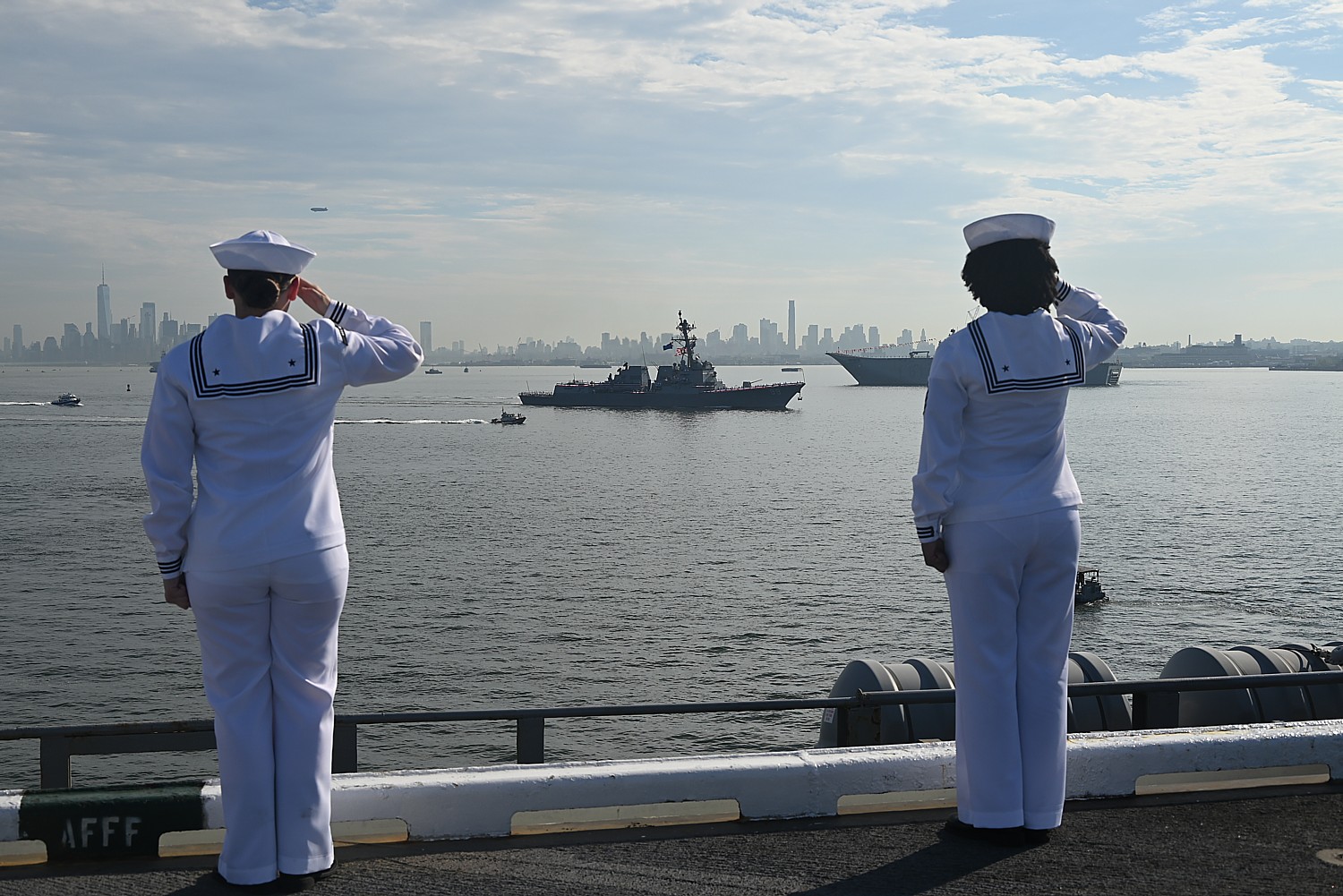
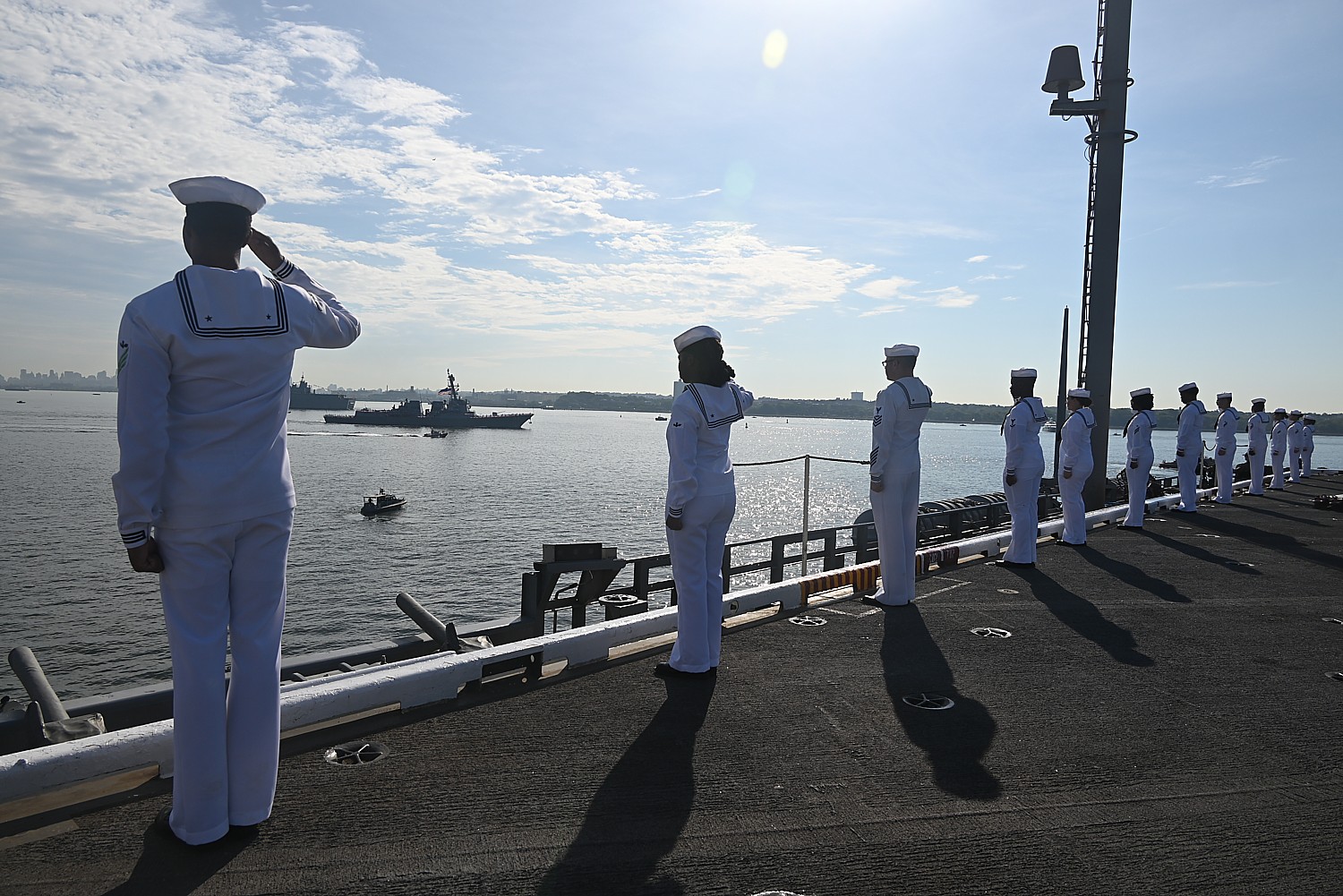
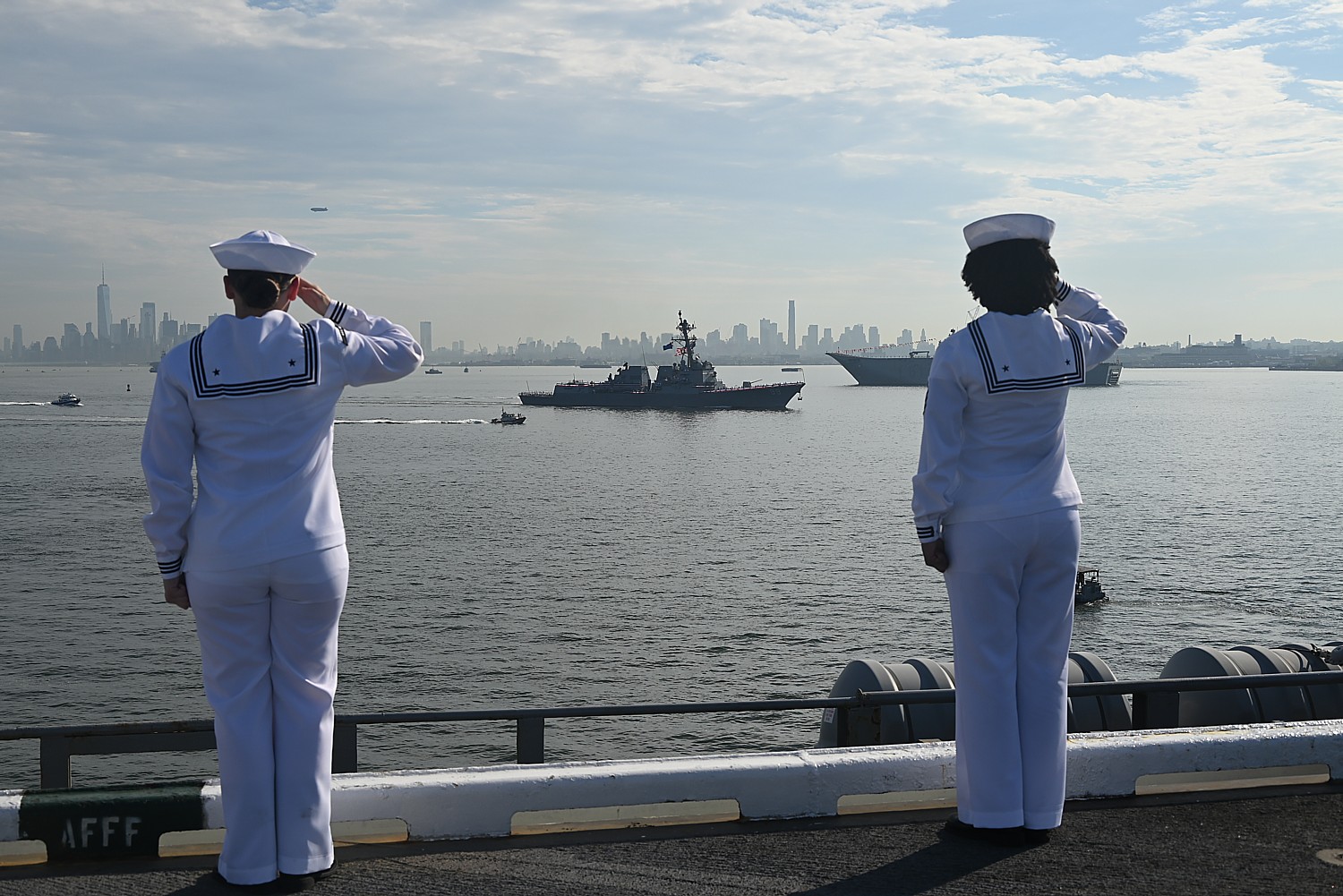
Sailors aboard the USS Nimitz give salute as the USS Farragut sails by for The International Naval Review to honor America’s 250th, that has only occurred six times previously in U.S. history © Karen Rubin/news-photos-features.com

By Karen Rubin, editor@news-photos-features.comnews-photos-features.com

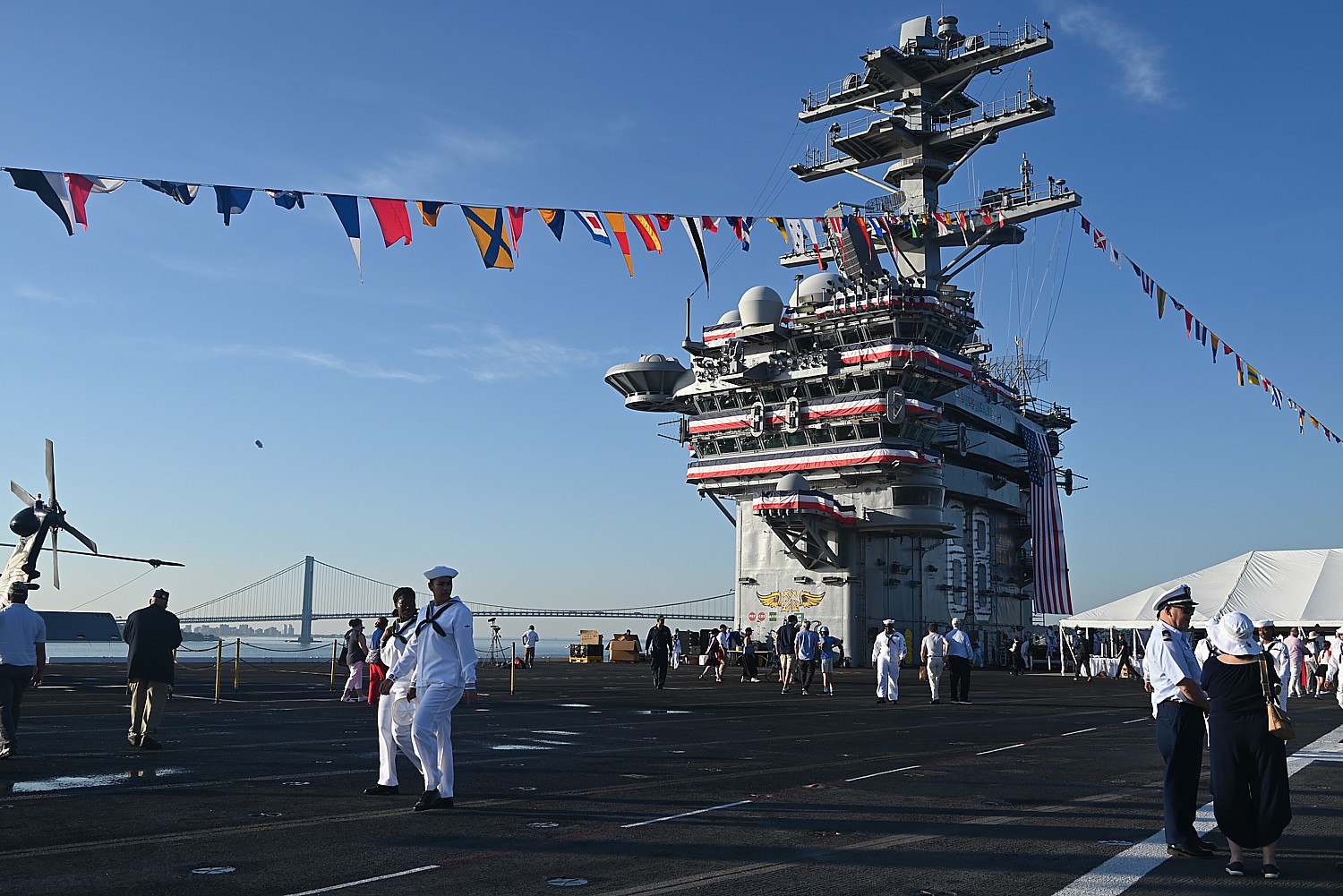
On America’s historic day, July 4th 2026, exactly 250 years after the signing of the Declaration of Independence, I was on the deck of the legendary “Old Salt” aircraft carrier, the USS Nimitz. The timing couldn’t be more appropriate for this ship, commissioned in 1975, just a year before the Bicentennial Celebration in 1976, and scheduled to be retired in March 2027, the year after the Semisesquicentennial. 

While ships of this kind typically have a 50-year lifespan, the Nimitz’ retirement was postponed to maintain its 11 carrier fleet while waiting for the commissioning of the second Ford-class carrier, the John F. Kennedy, which is expected to arrive in March. But this enabled the Nimitz to proudly anchor The International Naval Review (INR 250) in New York Harbor, featuring more than 30 U.S. and allied military vessels that has only occurred six times previously in American history.

The first of the Nimitz class of nuclear-powered aircraft carriers, named in honor of Fleet Admiral Chester W. Nimitz, is now the oldest American aircraft carrier in active service.
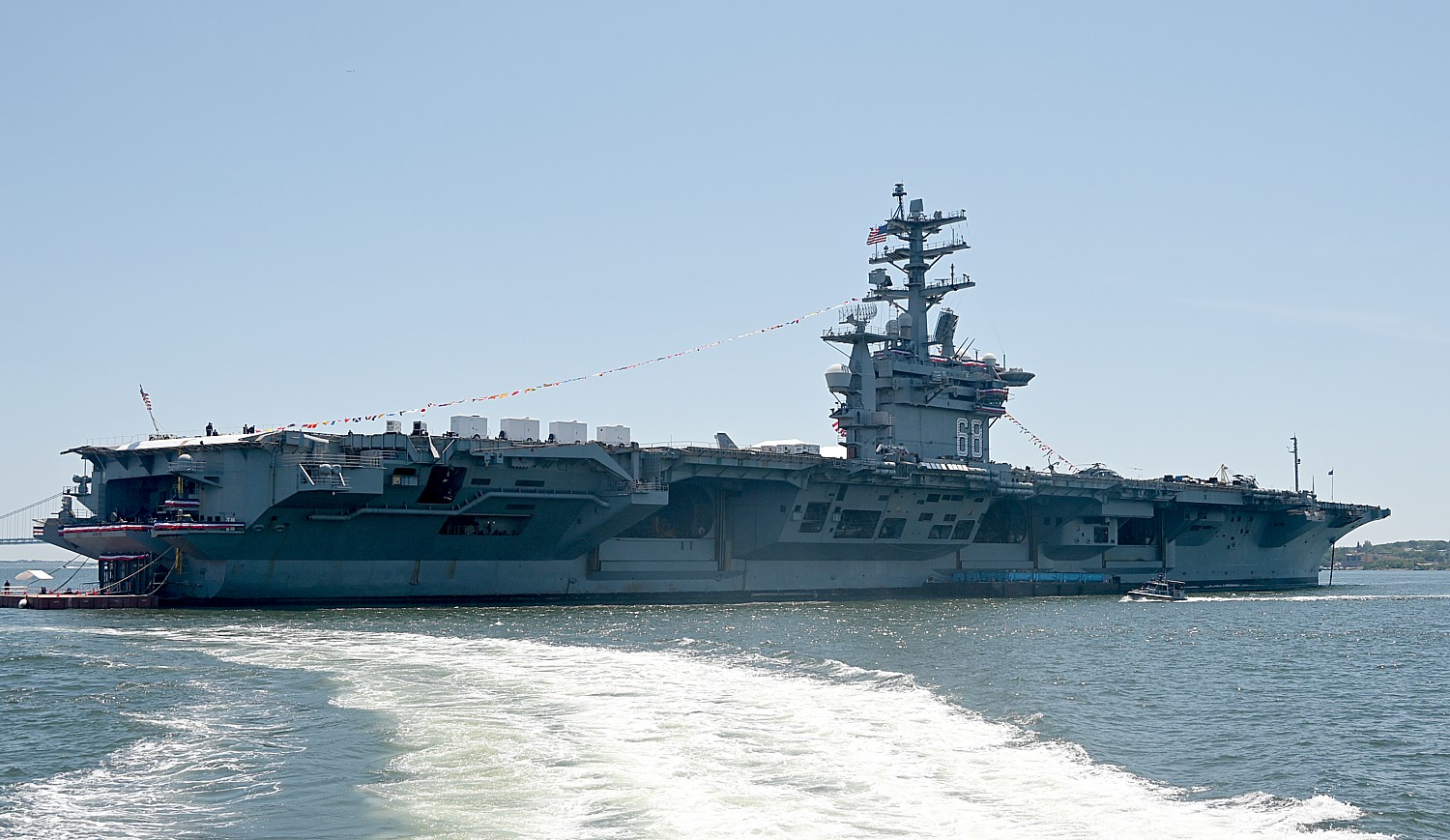
© Karen Rubin/news-photos-features.com

It is a massive vessel, one of the largest warships in the world: 20-stories high, 1,092 feet long (1/5 of a mile or nearly four football fields), displacing 100,000 long tons when fully loaded, it can carry up to 75-90 fixed and rotary-wing aircraft (fighter jets, early warning, anti-submarine, and transport), and when fully operational, carries 5,000 crew and air wing members. Propelled by two nuclear reactors, the Nimitz has unlimited range and speeds exceeding 30 knots. A major storm is nothing for this ship.

(Indeed, the night before Sail4th 250, when the ship was hosting important dignitaries and guests, a major squall came through and pretty much destroyed all the tents that had been set up; the crew worked all night to clean up and set up.)
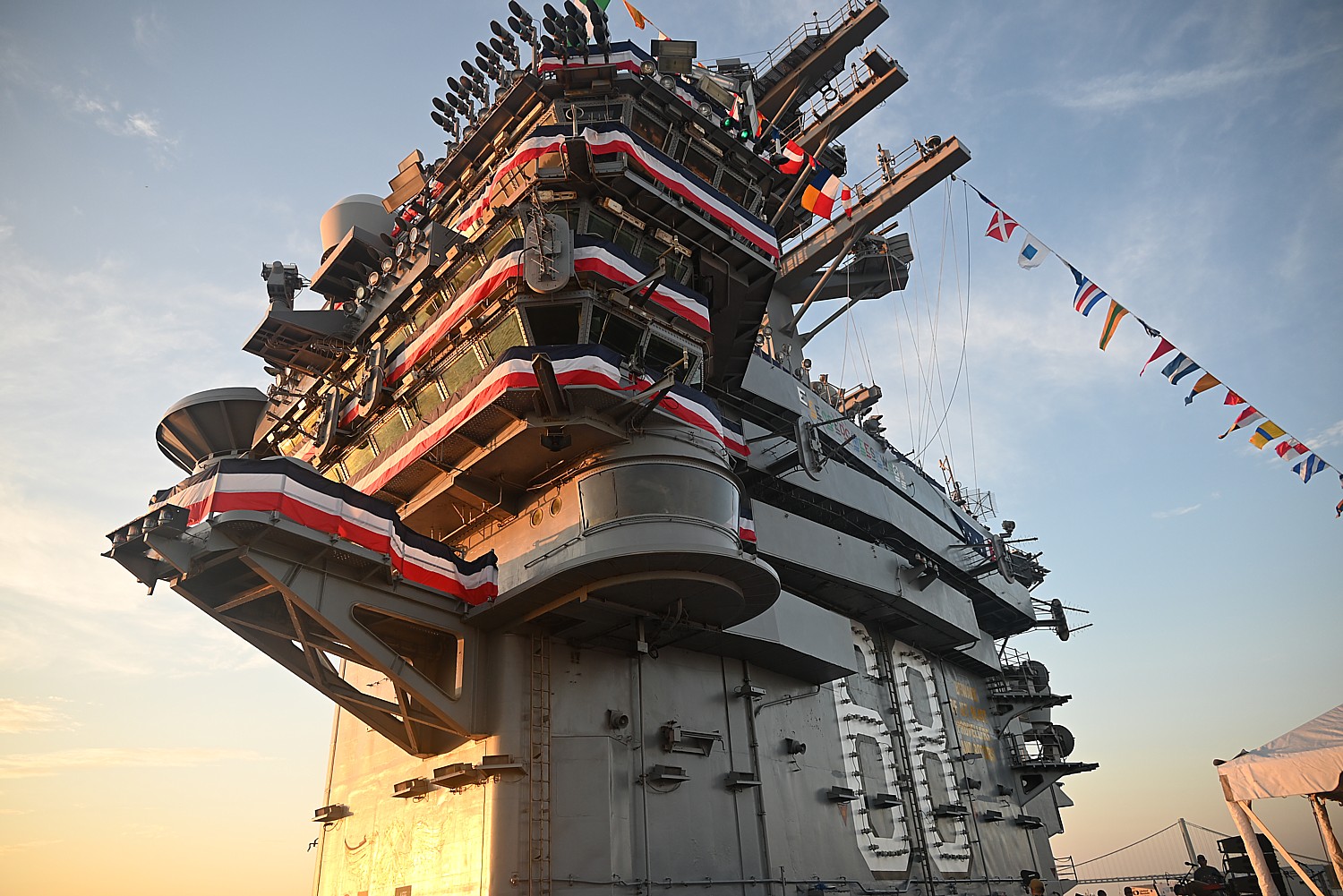
Among its notable operations:

On Sept. 10, 1979, Nimitz was dispatched to the Indian Ocean as tensions heightened after Iran took 52 U.S. hostages. Four months later, Operation Evening Light/Eagle Claw was launched from Nimitz in an attempt to rescue the hostages, which was aborted.

The Nimitz also took part in Operation Earnest Will to provide protection of Kuwaiti-owned tankers from Iranian attacks; Operation Desert Storm; Operation Southern Watch and United Nations initiatives in the Arabian Gulf; Operation Enduring Freedom; Operation Iraqi Freedom; and the Global War on Terrorism. During a deployment in 2022, sailing over 65,000 nautical miles, the Nimitz logged her 350,000th arrested aircraft landing, the most of any aircraft carrier.

In June, the Nimitz completed its Southern Seas 2026 mission, the last operational deployment in the ship’s history.

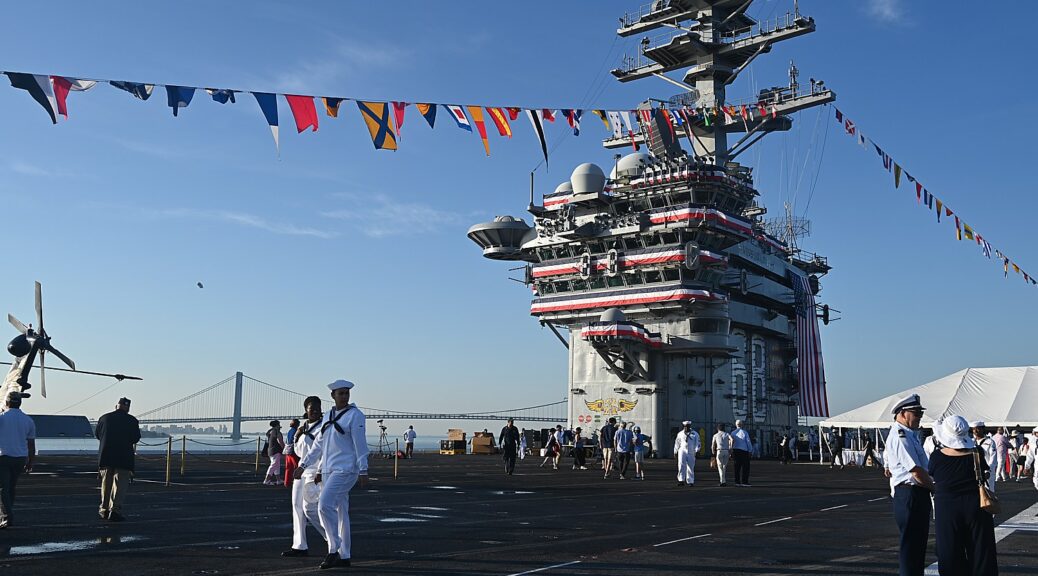
The USS Nimitz had come into New York Harbor, coming under the Verrazano Bridge (after a careful calculation of total height to make sure it could fit), after sailing from the West Coast around South America, through the Strait of Magellan, where it hosted allies. Following Sail4th 250 events, it will sail to its new (old) homeport of Newport, Virginia, where it will serve as a training ship as it undergoes its decommissioning.
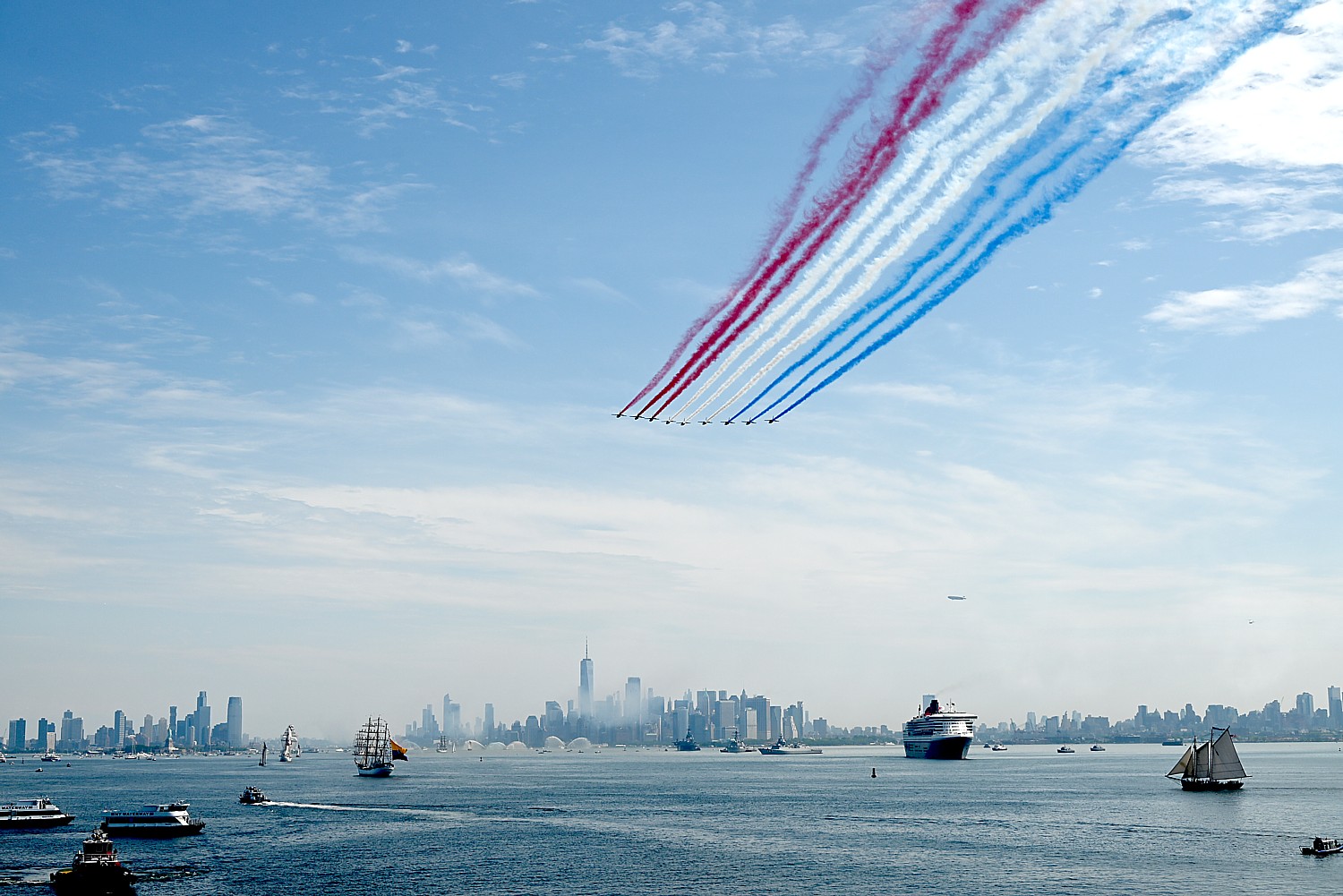
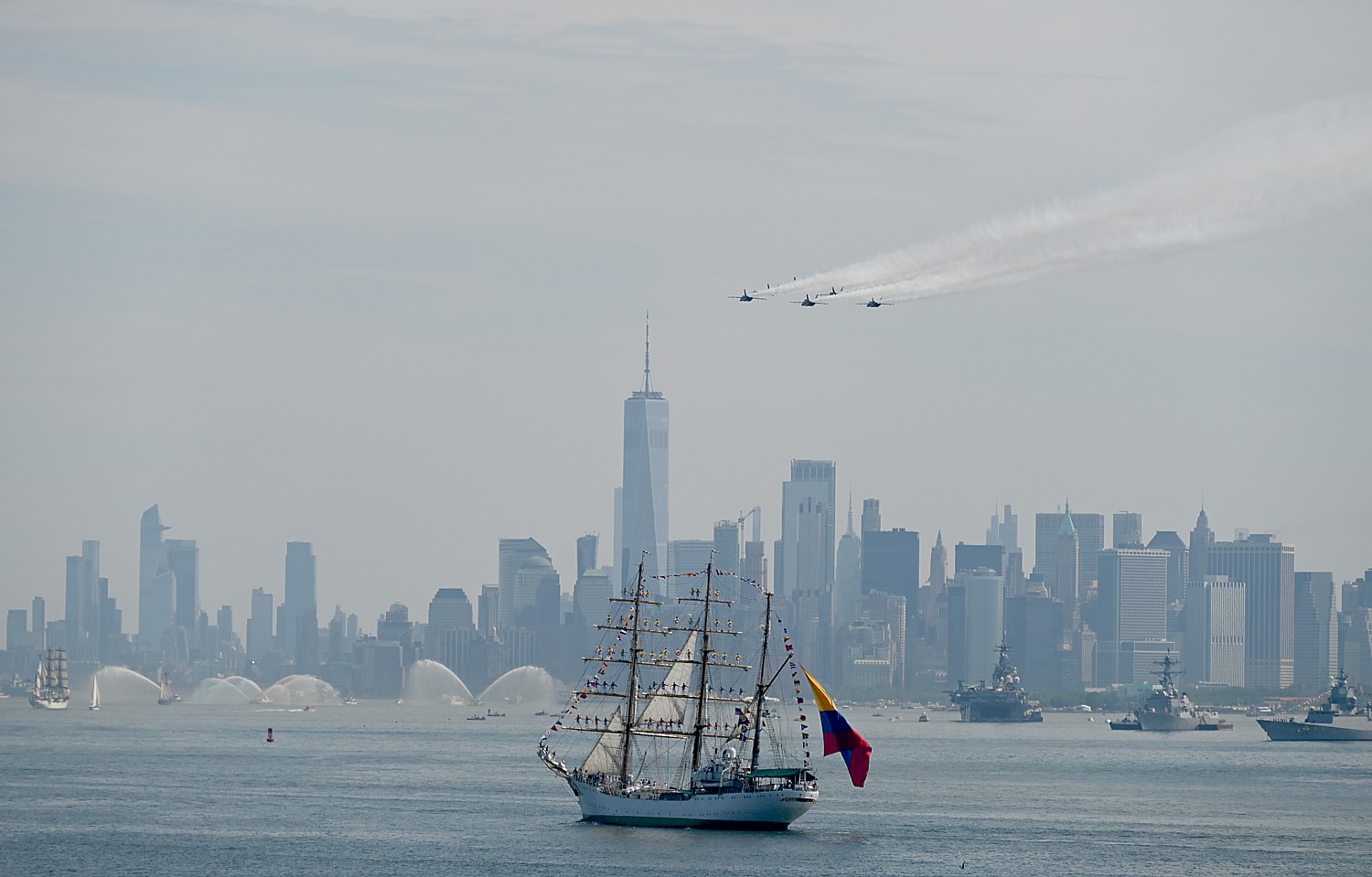
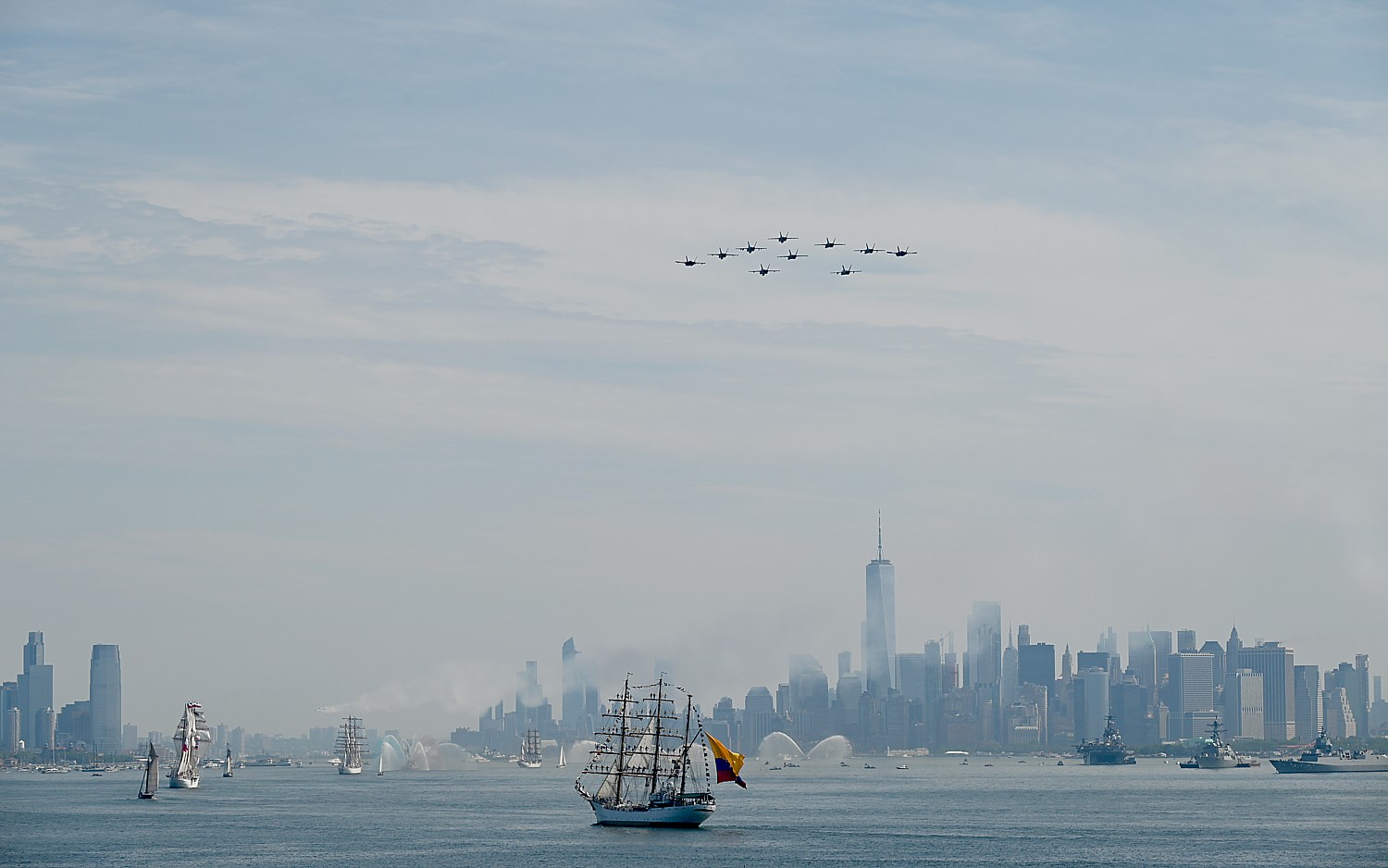
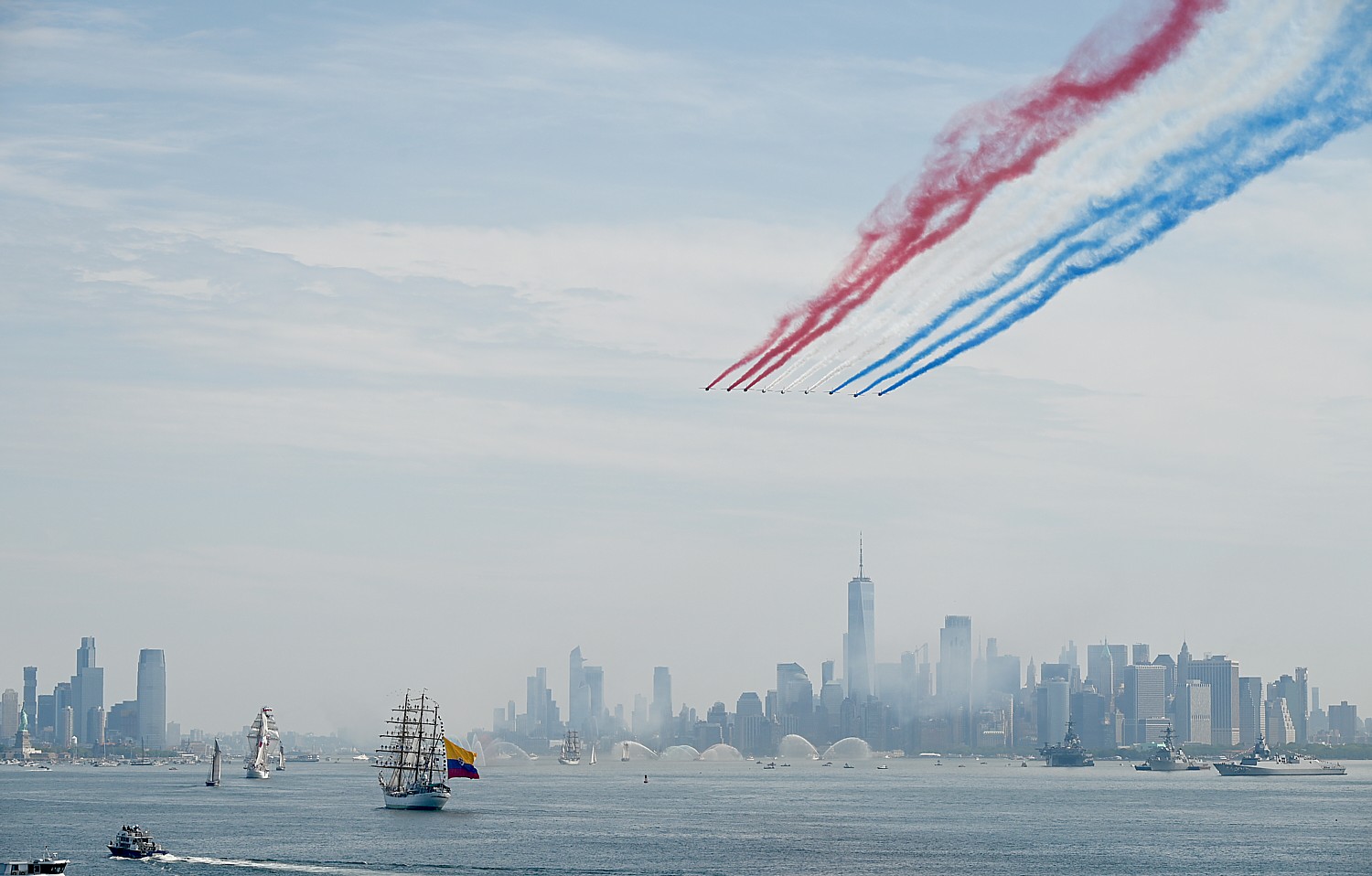
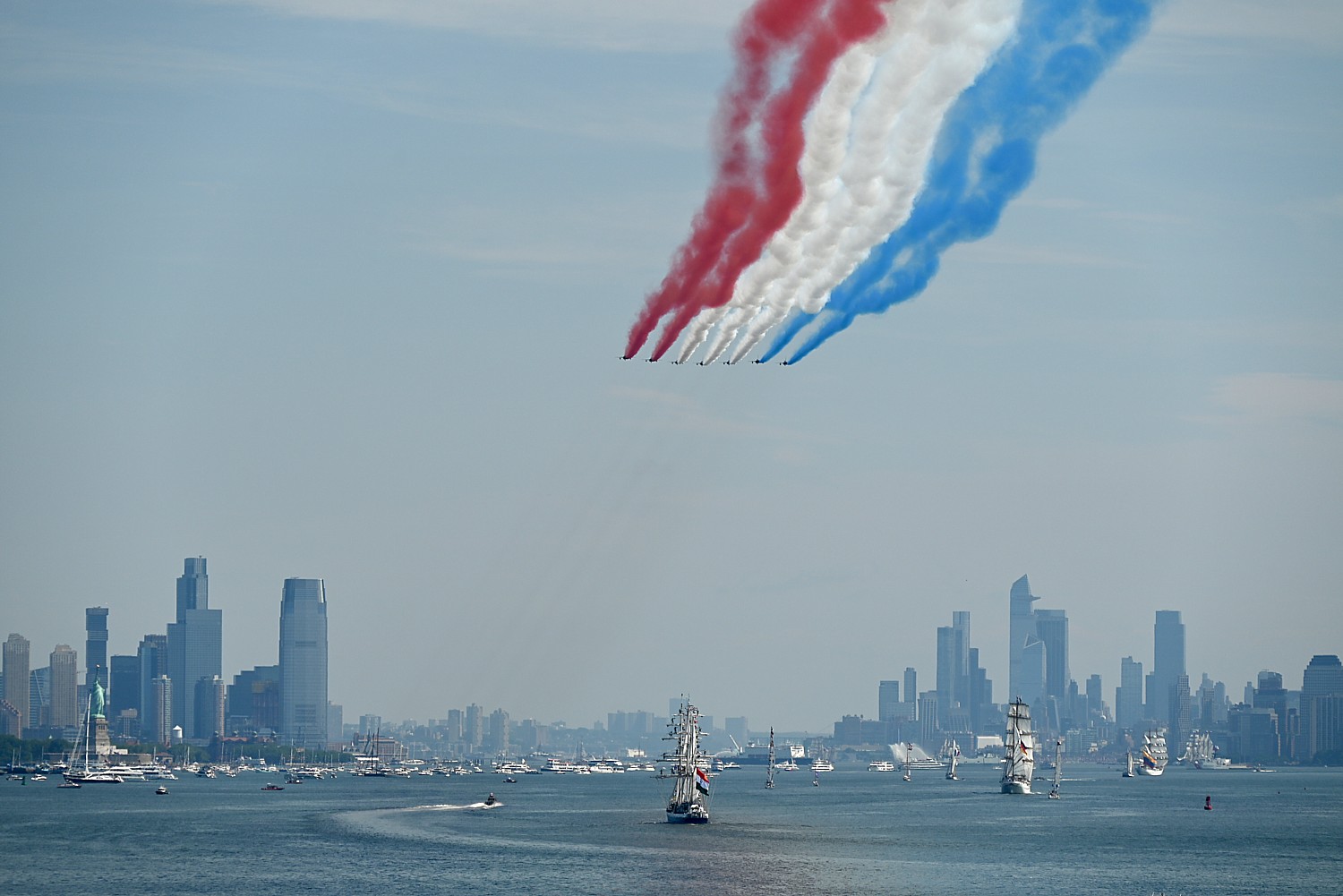
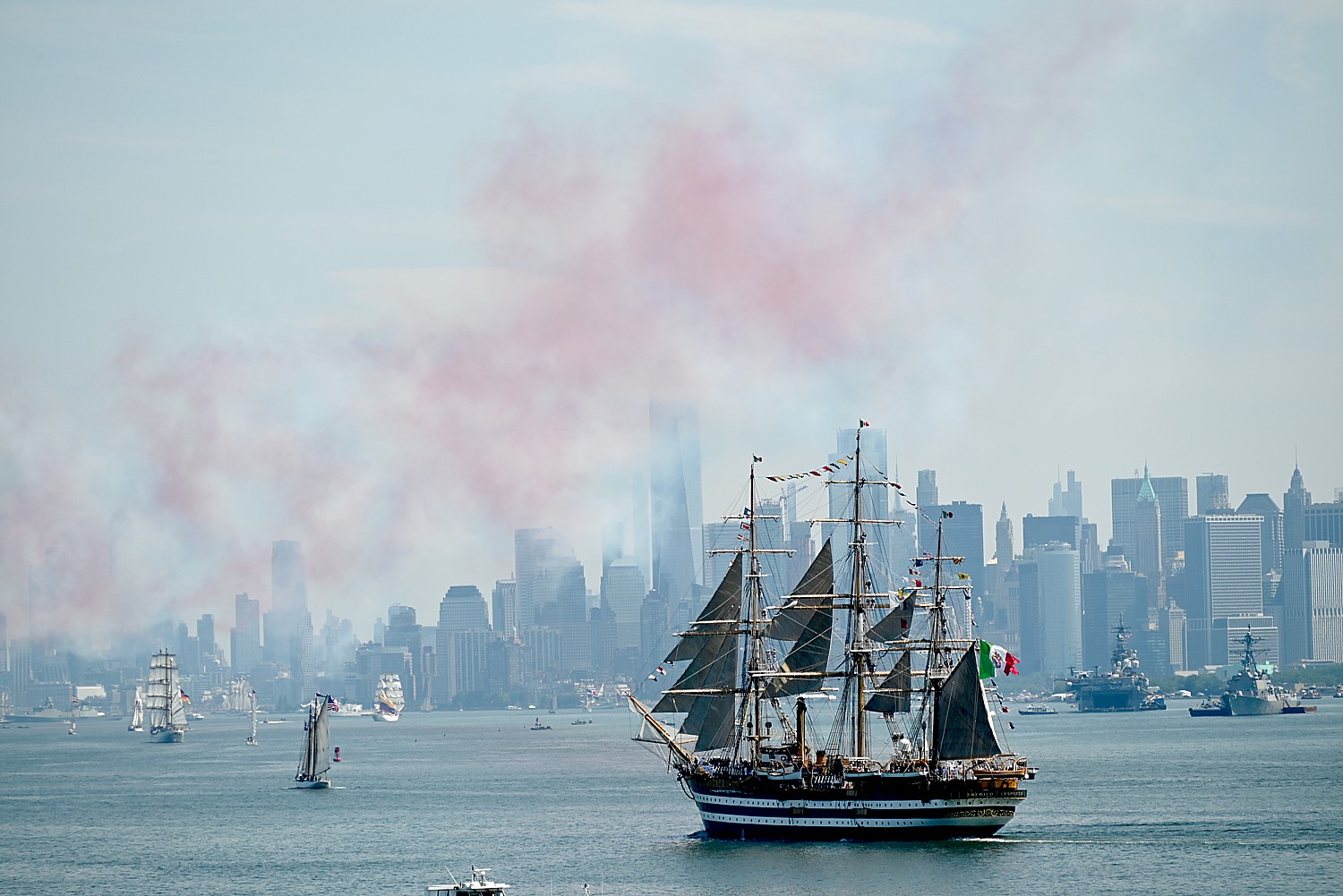
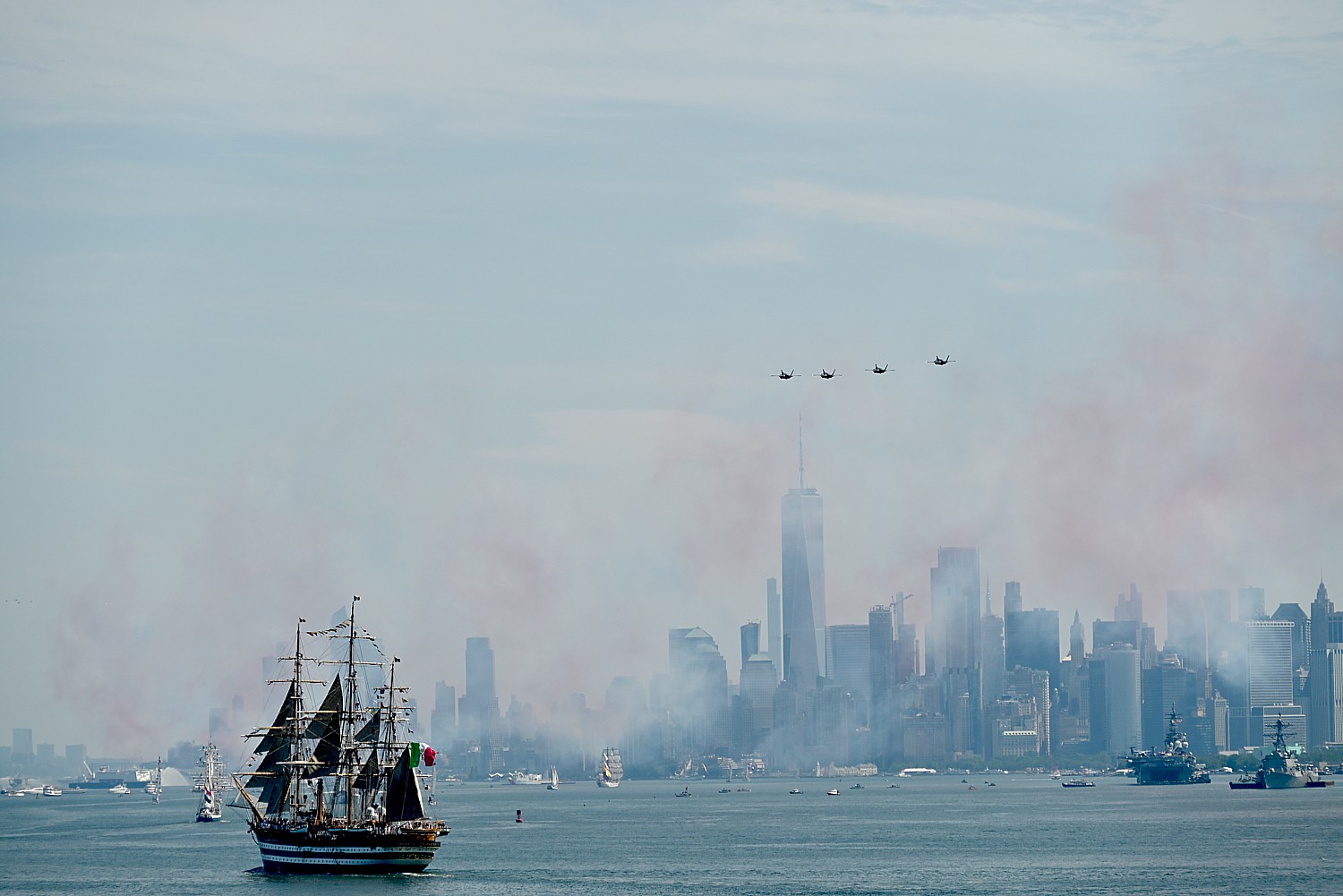
From the flight deck of the U.S.S. Nimitz aircraft carrier, we watch as historic tall ships sail through New York Harbor for Sail4th 250, bookended by the Statue of Liberty and the Freedom Tower, as jets fly over for the International Aerial Review © Karen Rubin/news-photos-features.com

From the flight deck on the Nimitz, we were able to observe the International Naval Review (INR) 250, the pinnacle event of the U.S. Navy’s celebration of America’s 250th birthday. Hosted in the Port of New York and New Jersey from July 3-8, 2026, INR 250 was a historic, multinational maritime event that gathered ships, aircraft, and personnel from over 50 international navies and coast guards.
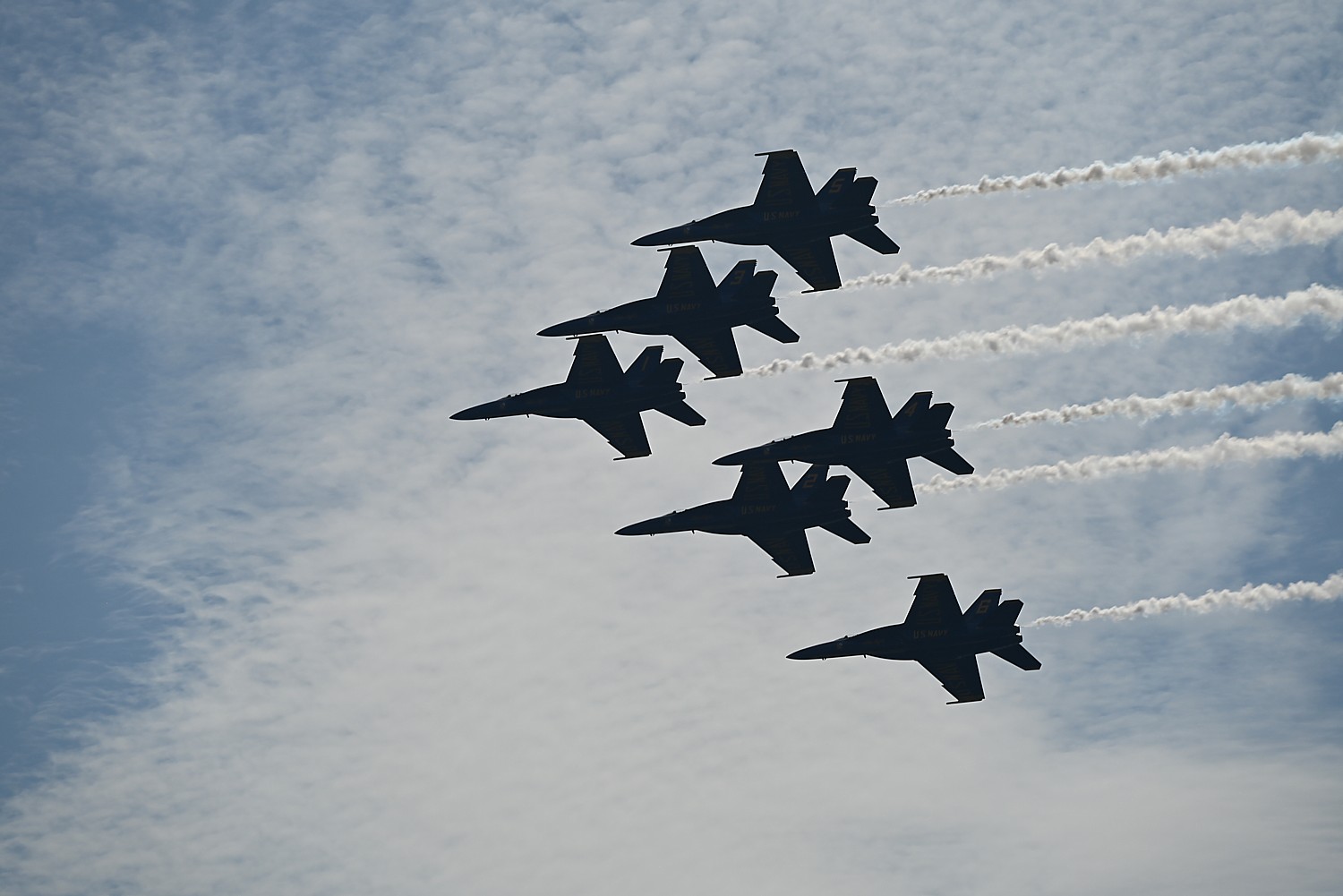
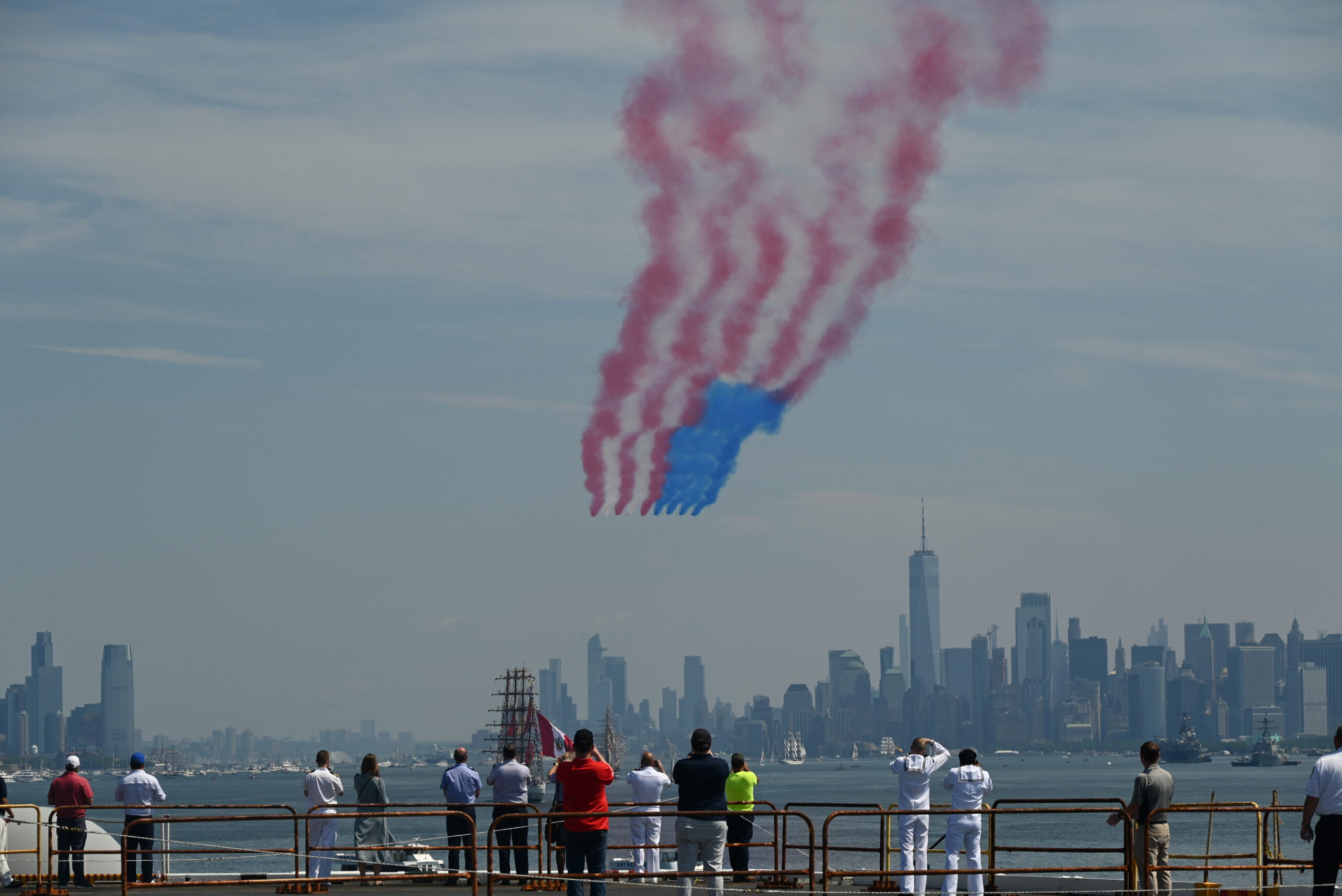
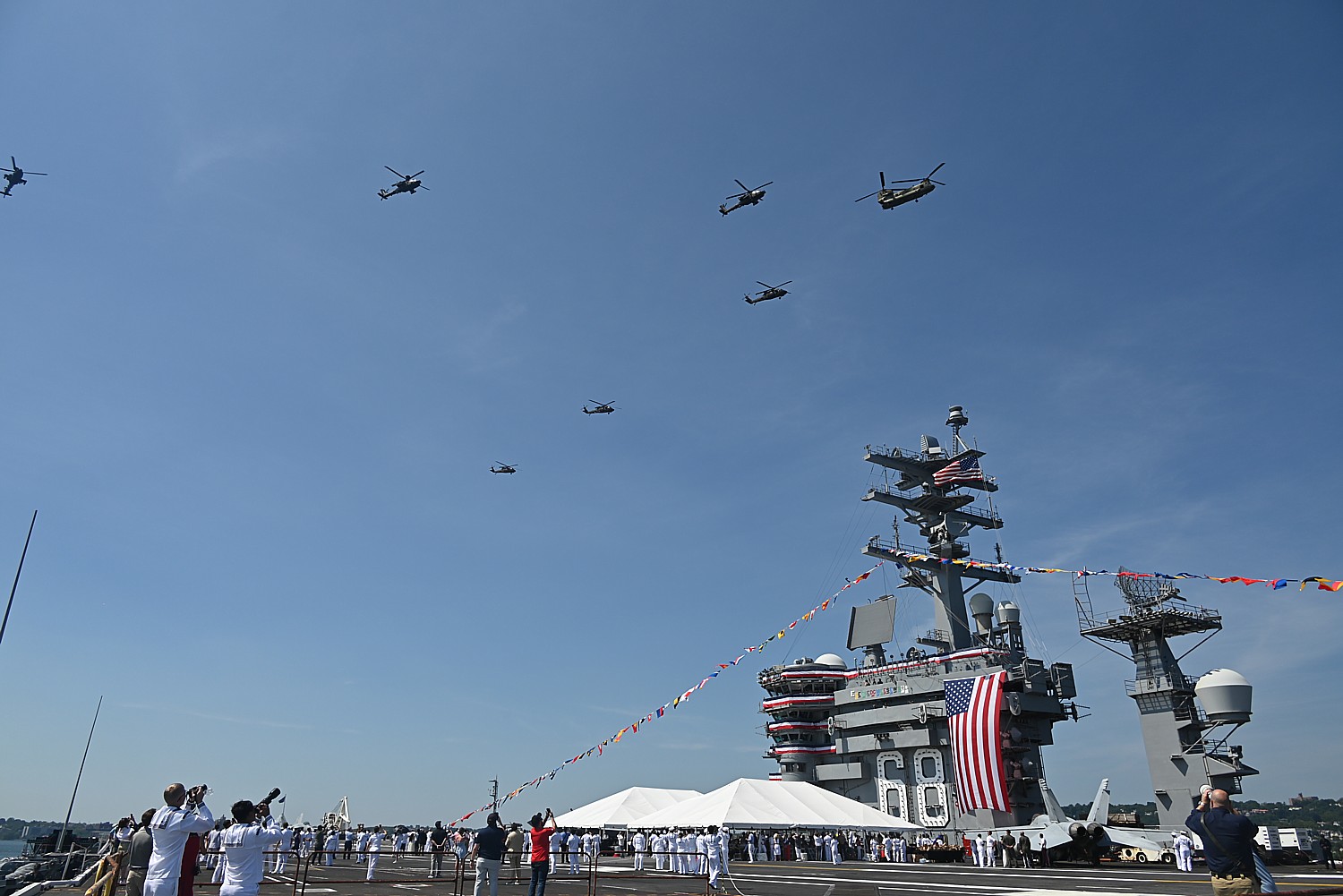
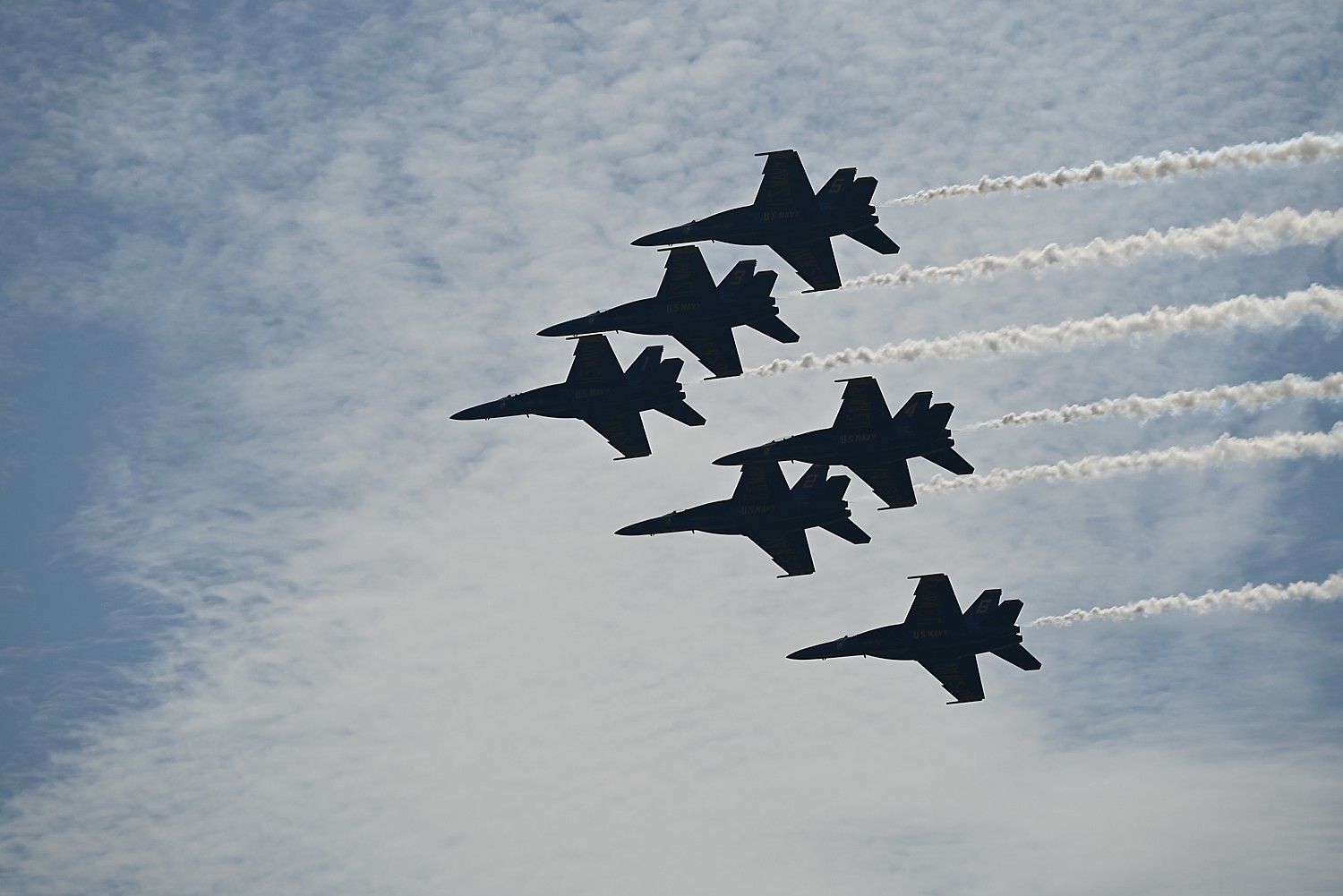
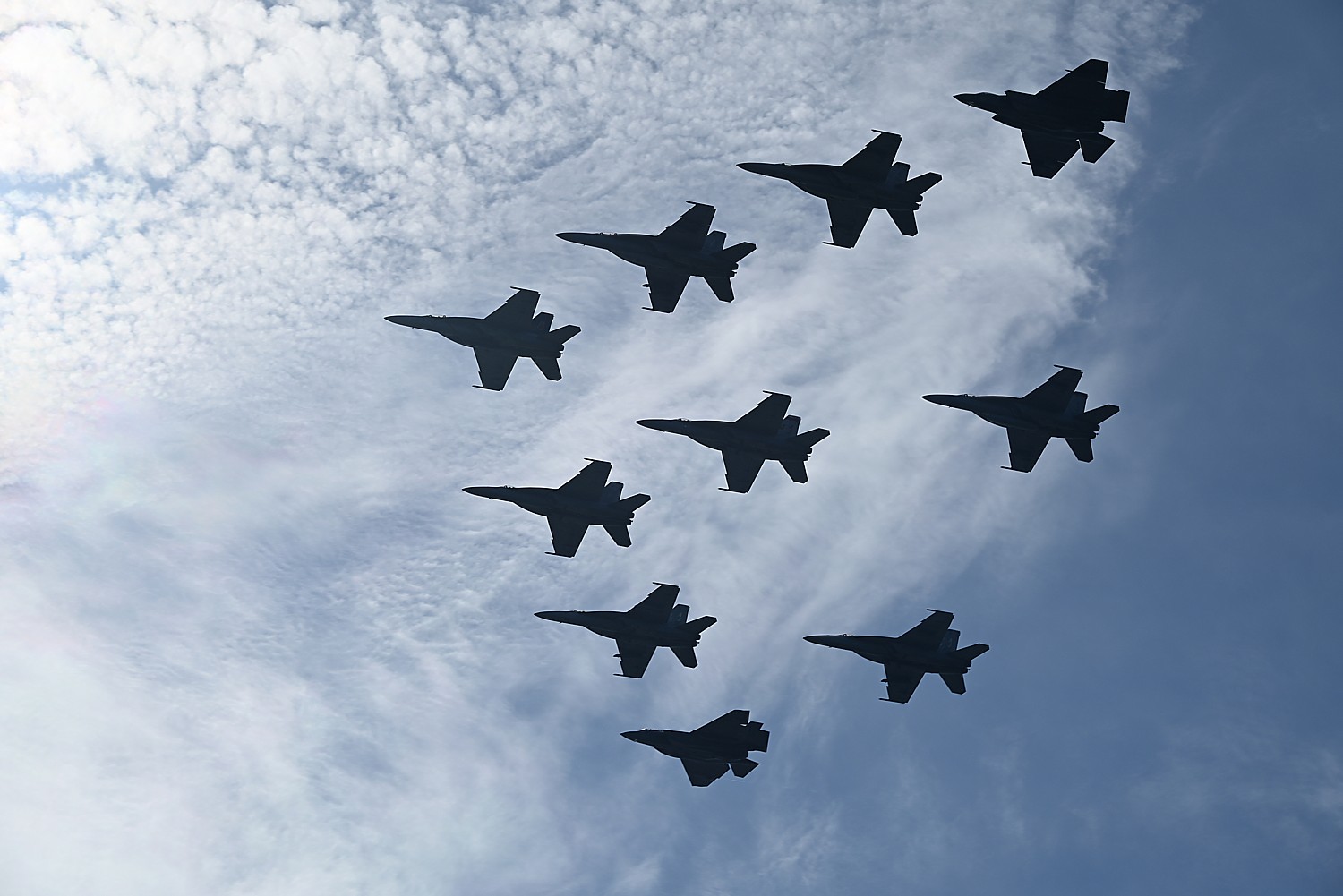
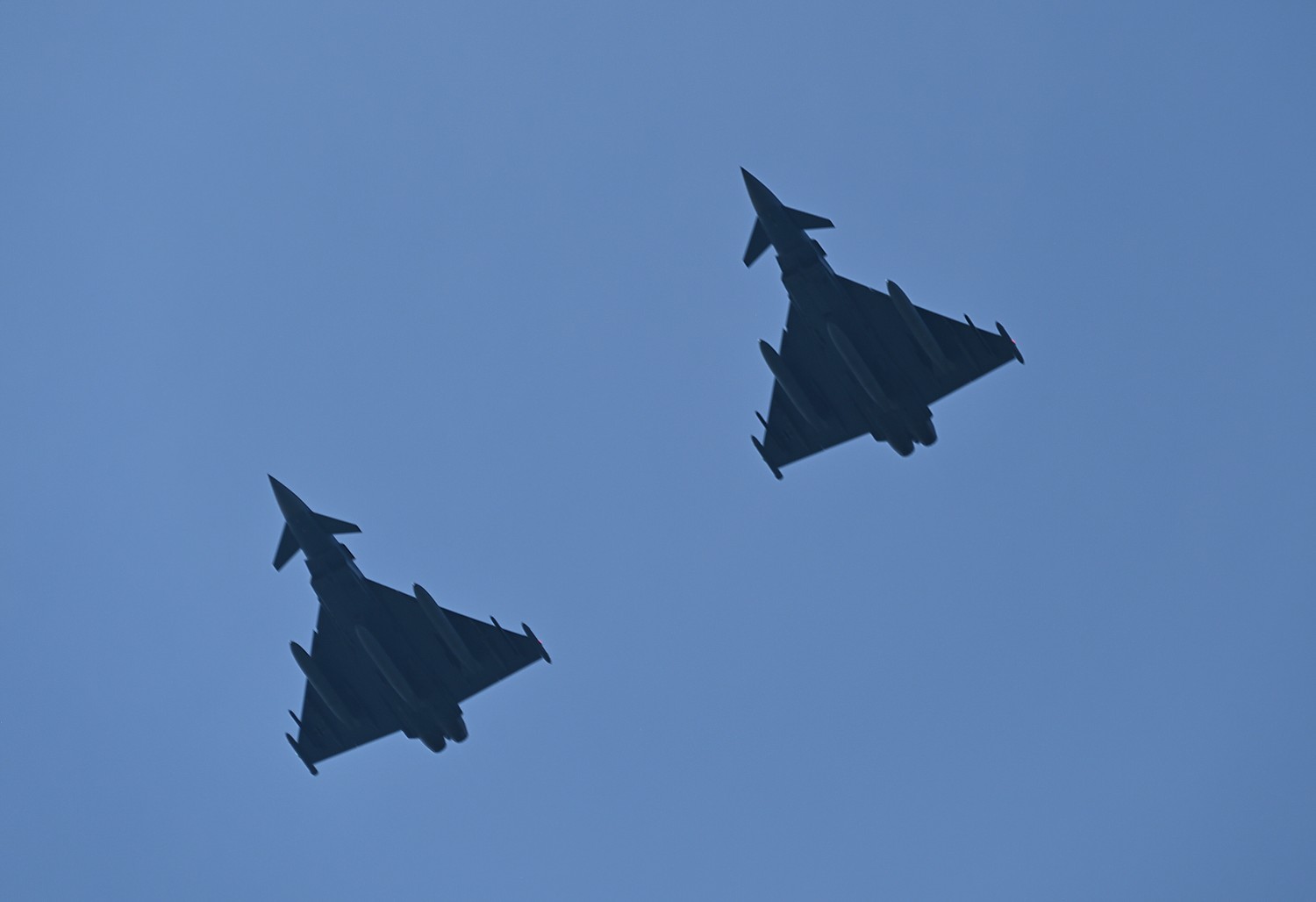
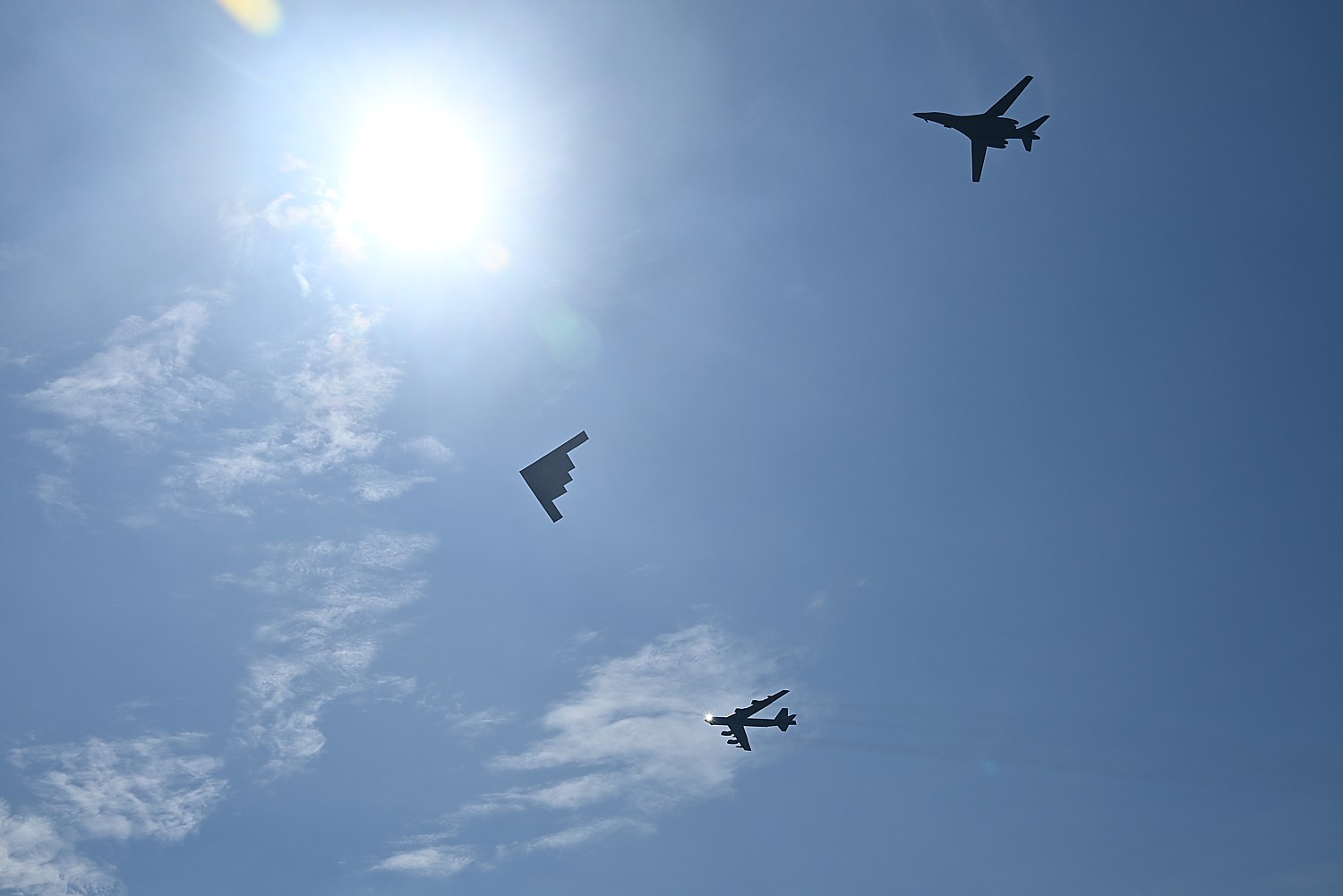
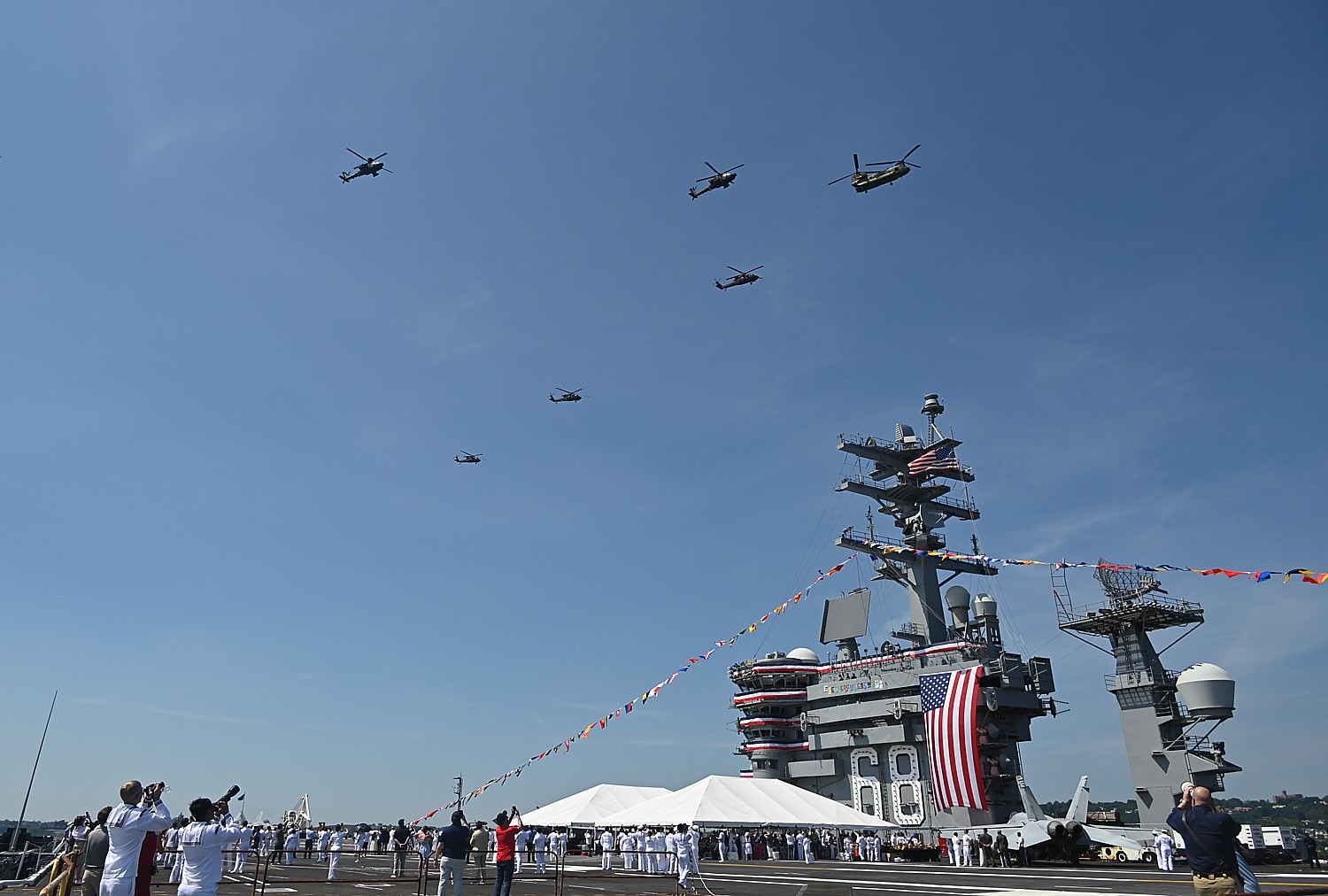
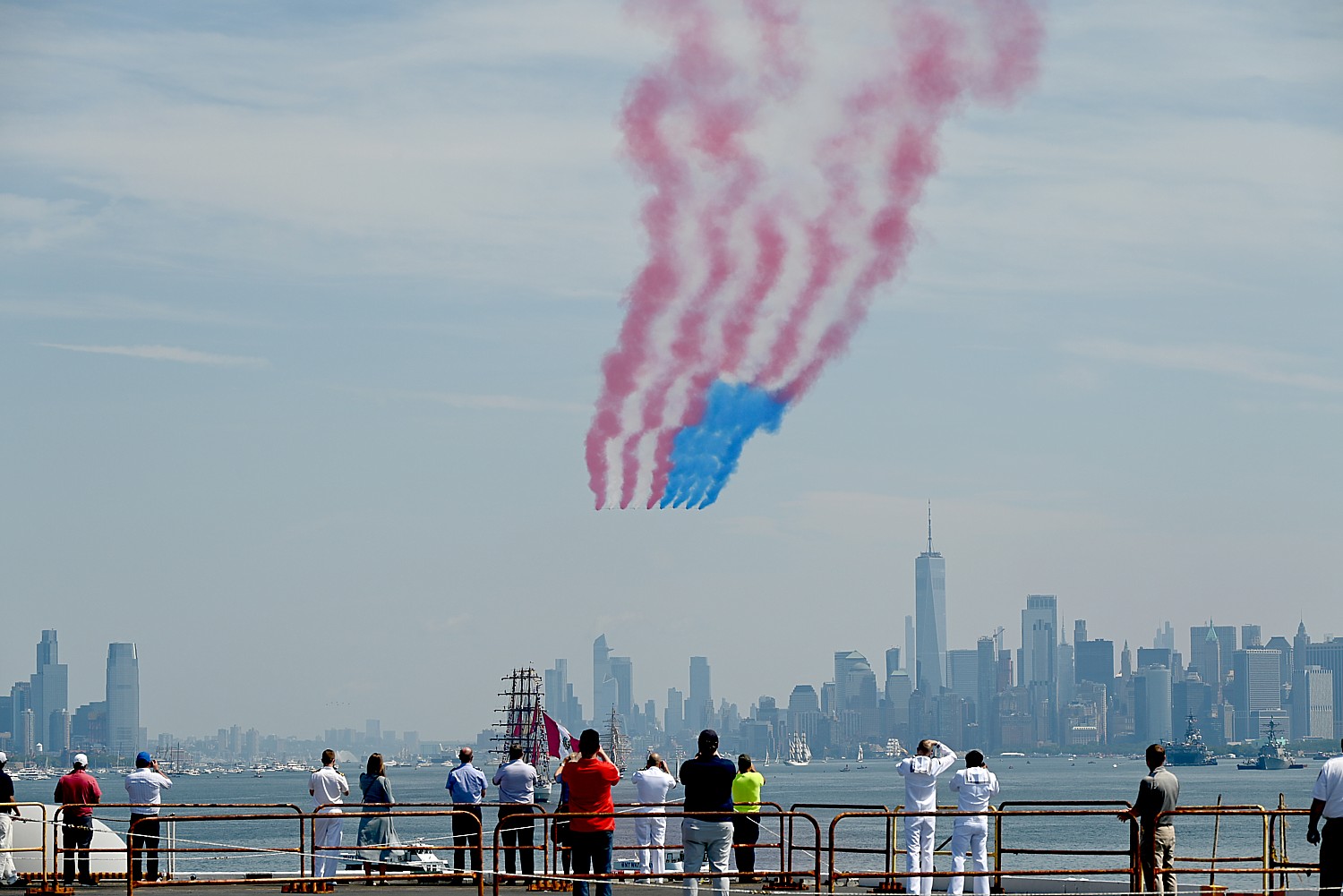
The U.S. Navy Blue Angels lead one of the longest International Aerial Reviews, with military aircraft from several nations joining in, flying directly over the U.S.S. Nimitz © Karen Rubin/news-photos-features.com
The view of the Parade of Sail and the International Aerial Review from the flight deck of the U.S.S. Nimitz © Karen Rubin/news-photos-features.com
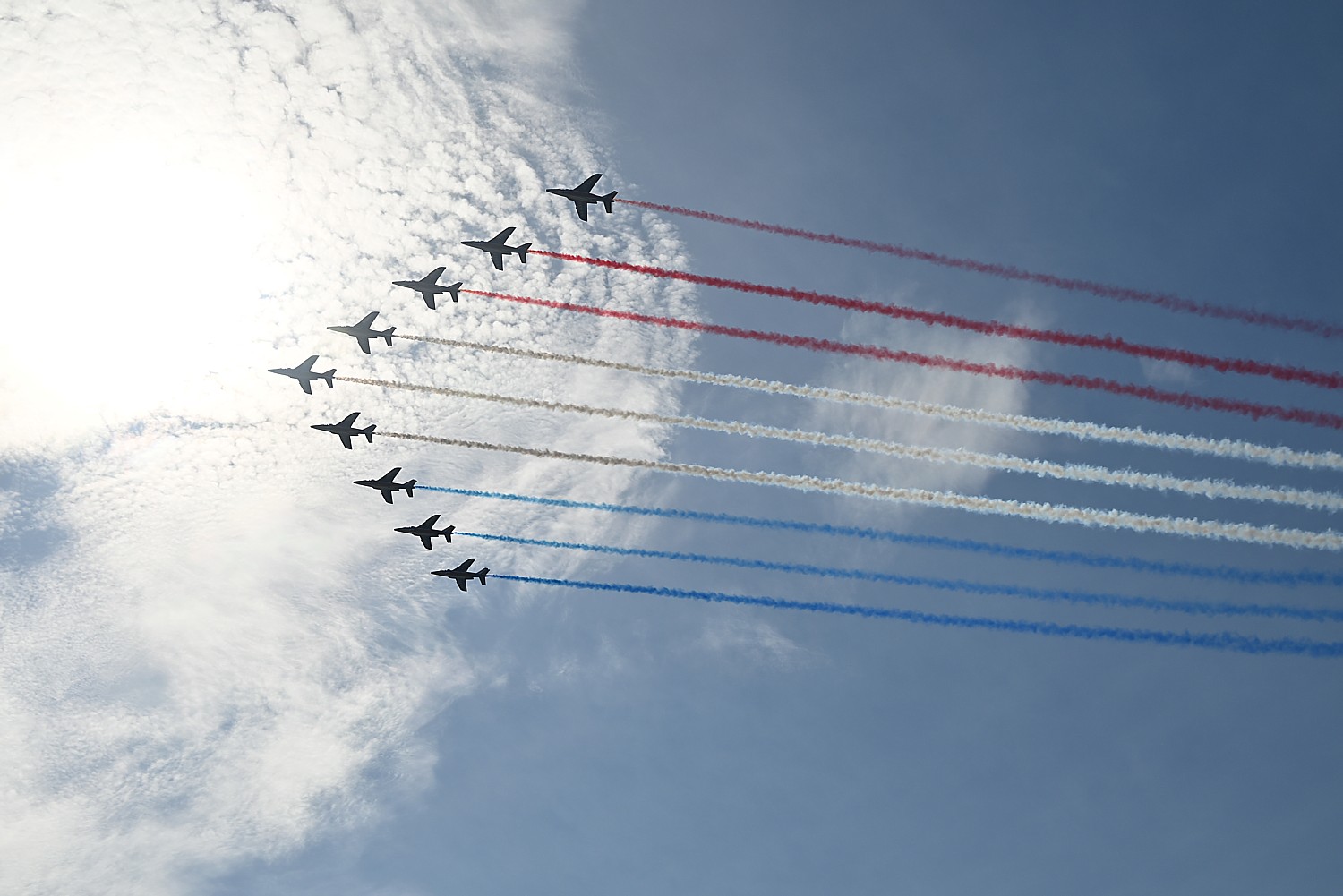
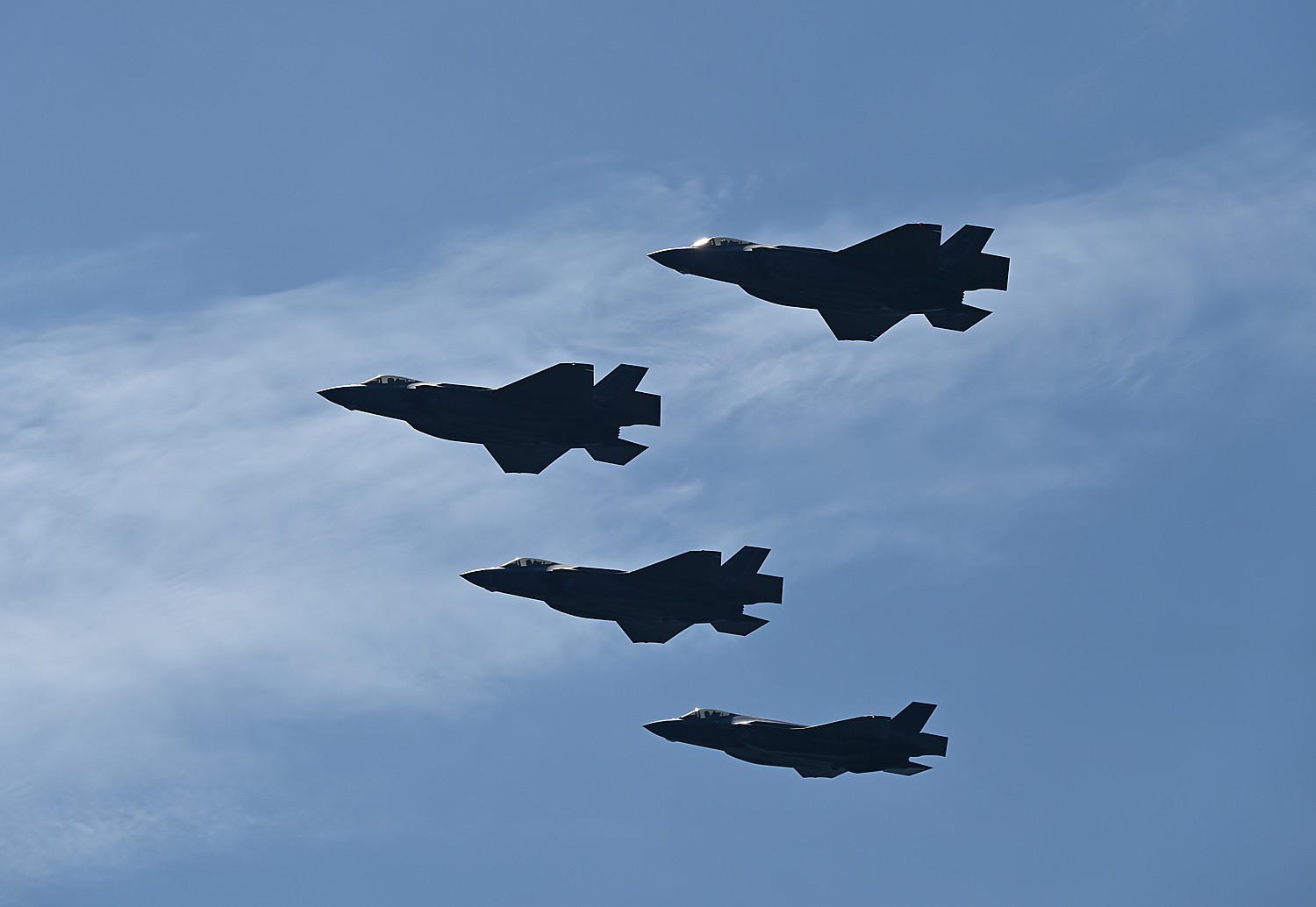
The International Aerial Review flies directly over the U.S.S. Nimitz © Karen Rubin/news-photos-features.com

This once-in-a-generation gathering, the largest international maritime event in U.S. history, featured a Parade of Ships with over 70 U.S. and allied naval vessels and international tall ships. It also includes the International Aerial Review, a multinational flyover led by the U.S. Navy Blue Angels. INR 250 honored 250 years of American sea power and global maritime partnership, showcasing the strength of alliances and a shared commitment to a free and open international order, and the importance of the U.S. Navy, Marine Corps and Coast Guard’s role defending the nation, securing global maritime security, and preserving American independence.
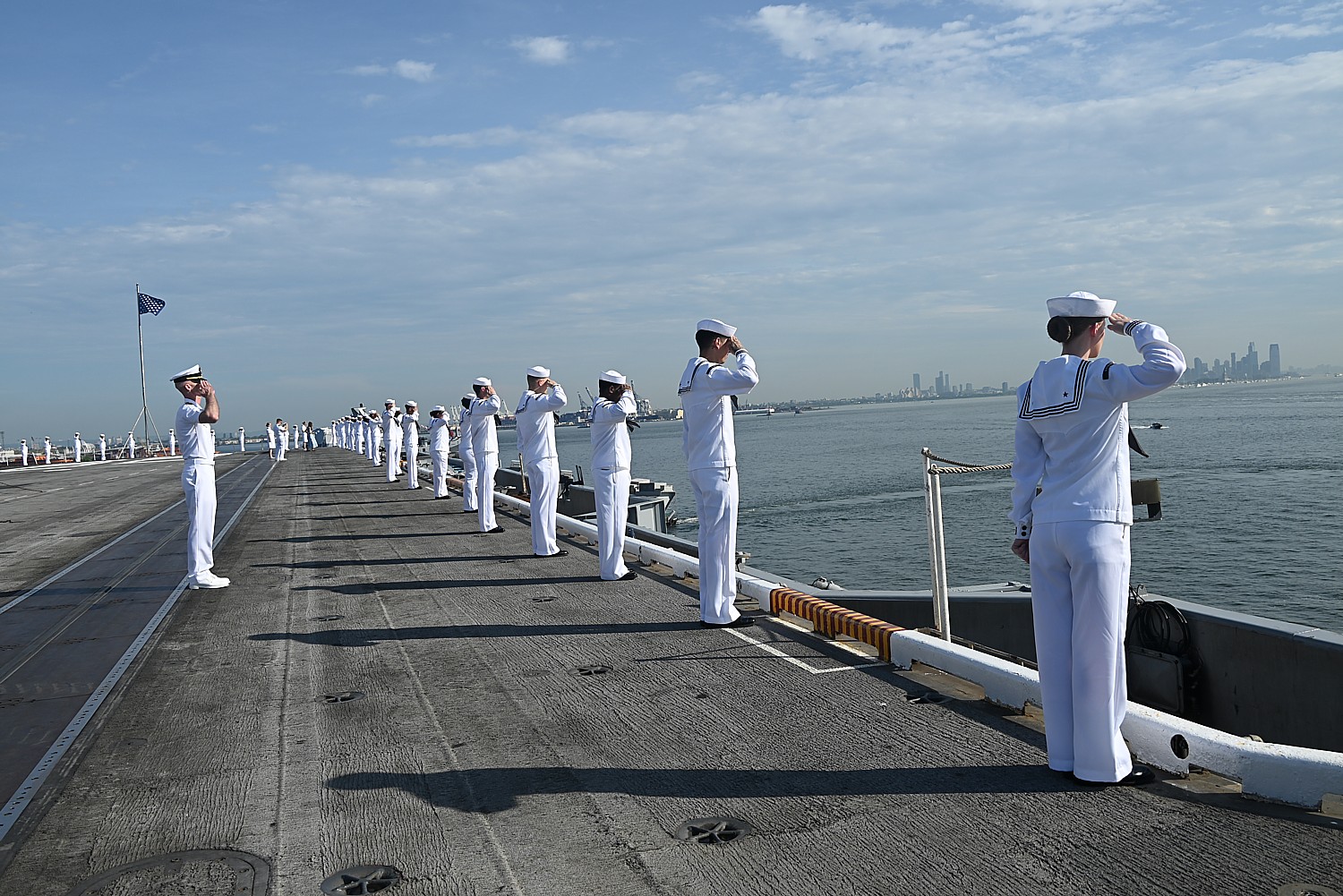
U.S.S. Nimitz sailors take part in a centuries old maritimne tradition, “Manning the Rails” © Karen Rubin/news-photos-features.com
Sailors aboard the USS Nimitz give salute as the USS Farragut sails by for The International Naval Review to honor America’s 250th, that has only occurred six times previously in U.S. history © Karen Rubin/news-photos-features.com

Prior to the parade of some 40 Tall Ships from 20 countries on the morning of July 4, the Acting Secretary of the Navy boarded the USS FARRAGUT and proceeded slowly past U.S. and allied military vessels all at anchor on the west side of the Hudson River. The USS Nimitz sailors engaged in a centuries old ceremonial tradition, Manning the Rails, where they line up along the entirety of the outer decks, to render high-level honors to dignitaries, celebrate a homecoming, or pay solemn respects to historical memorials.
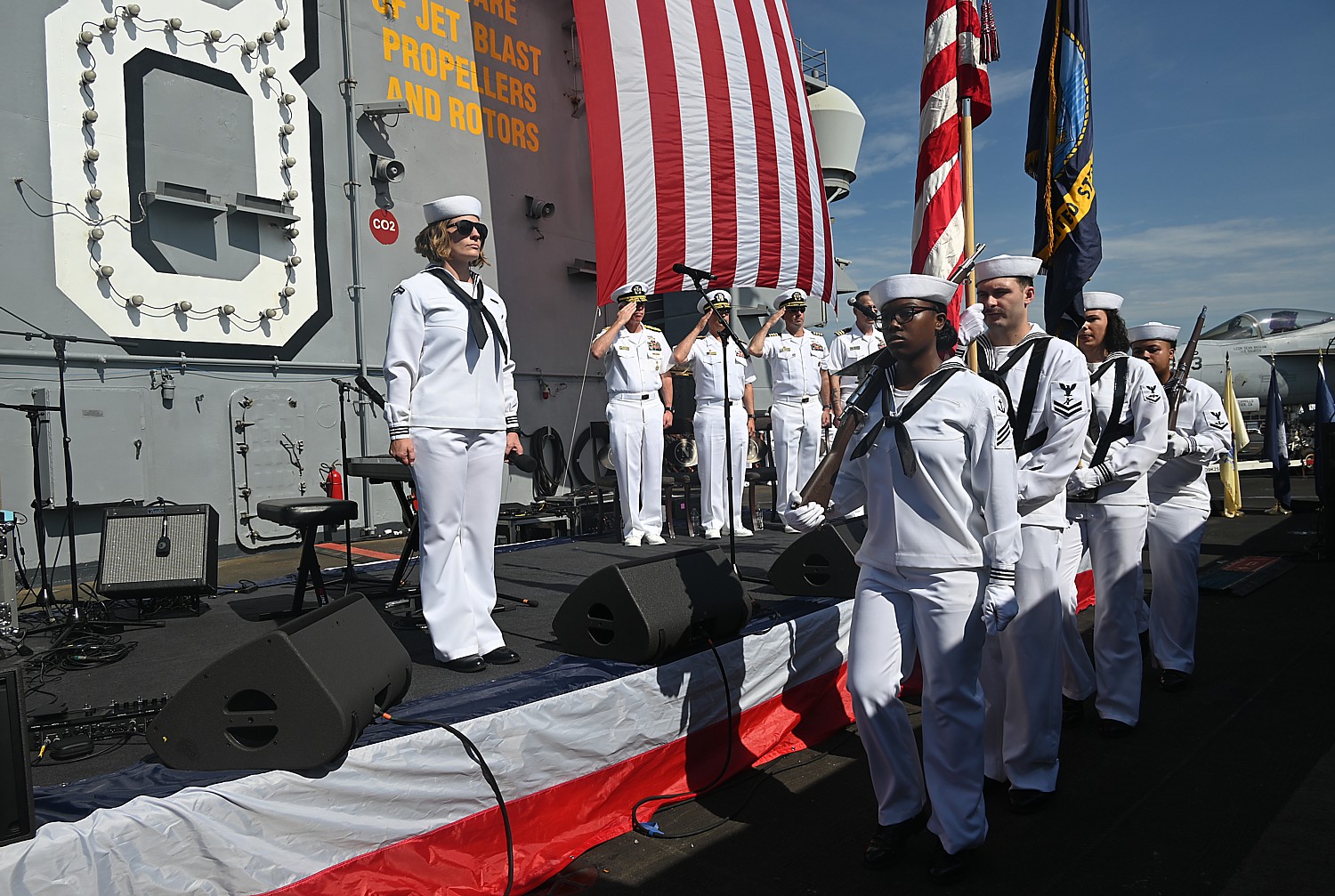
Presenting the colors, U.S.S. Nimitz © Karen Rubin/news-photos-features.com
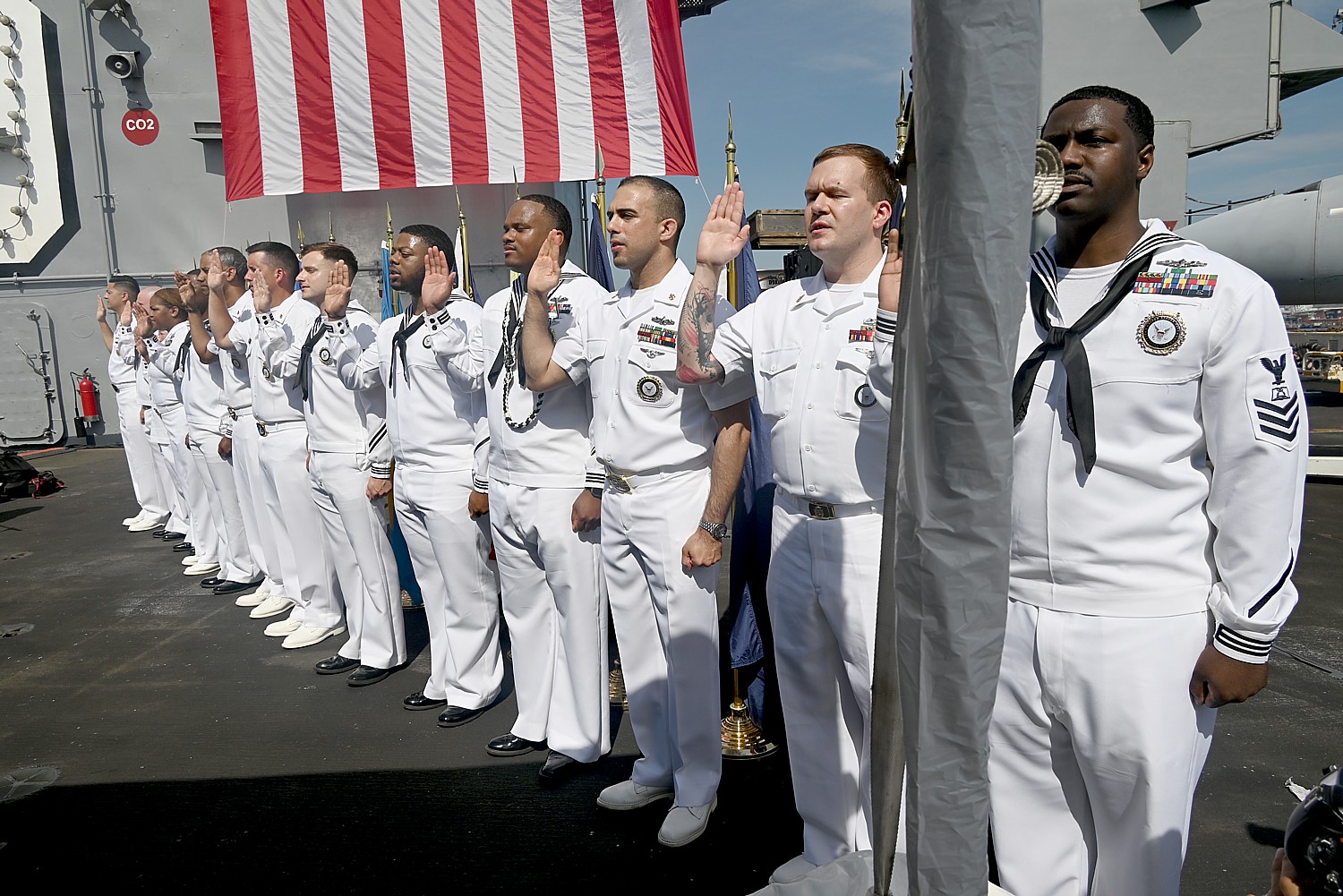
Thirteen sailors take their re-enlistment oath – one each representing the original 13 states © Karen Rubin/news-photos-features.com

As part of the ship’s celebration, 13 sailors – each representing one of the original 13 states – took their oath to re-enlist.

We get to tour the ship – see the “catapult” that actually launches the aircraft and learn that the ship has to be sailing at sufficient speed to create enough wind for the jets to take off; and the hook mechanism that enables the jet to land on such a short runway.
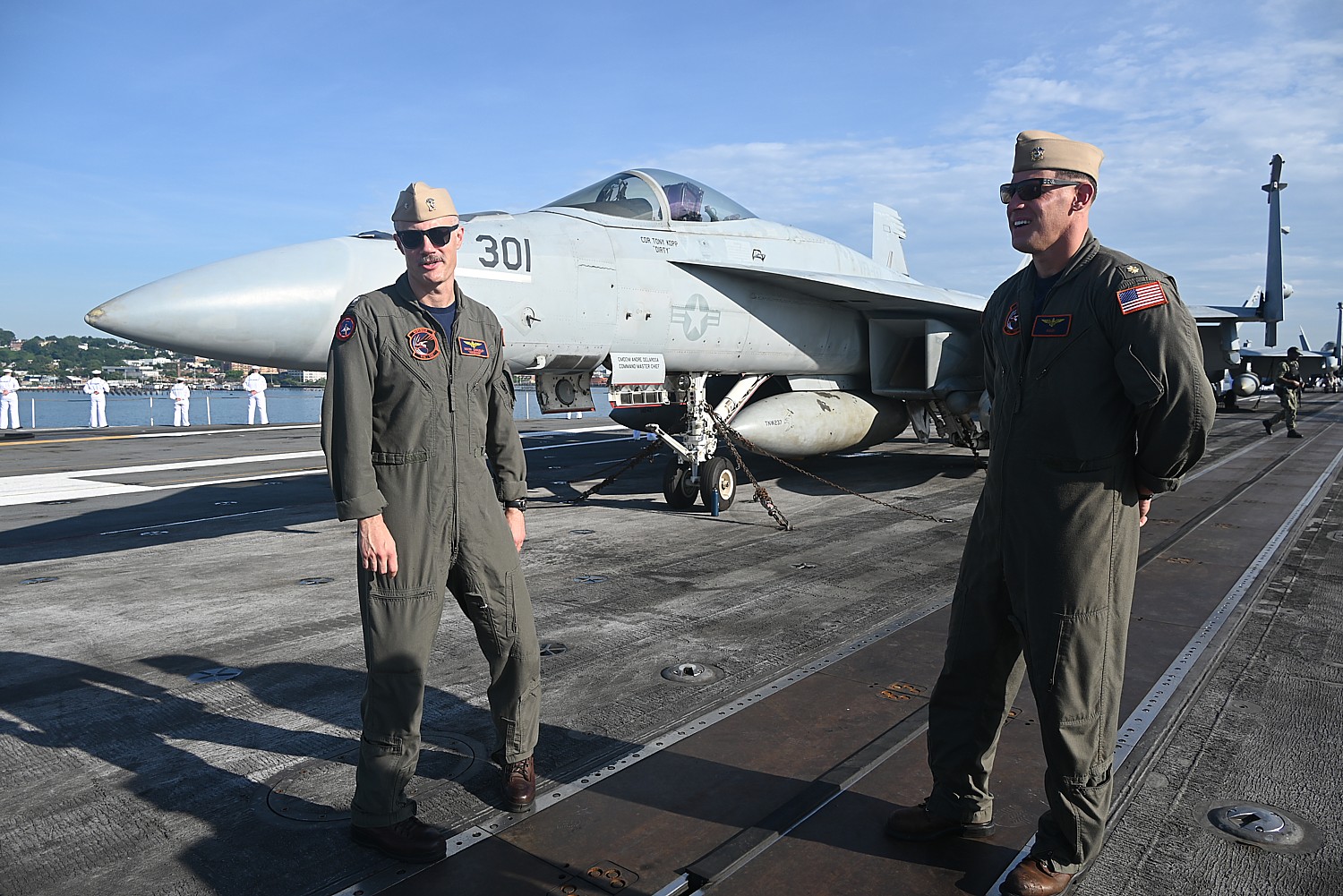
Pilots Chalkley and Riggs from Strike Fighter Squadron 137 aboard the U.S.S. Nimitz © Karen Rubin/news-photos-features.com

We climb up four-stories by ladder to visit the flight deck control, the navigation center and air traffic control (but we get to go down in the elevator built to take airplanes from the hangar to the flight deck).

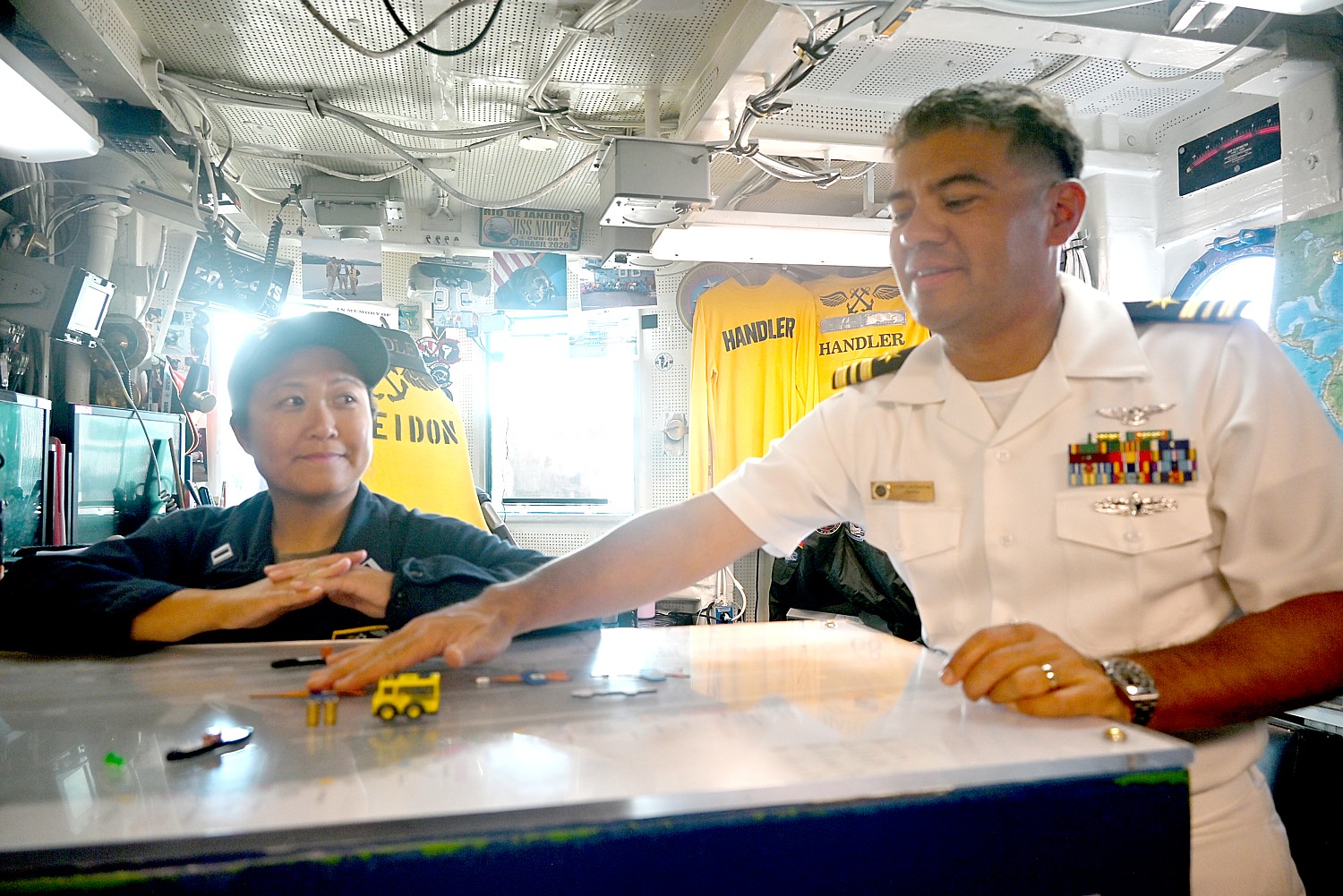
Despite its age, it has up-to-date technology to control aircraft, though its Chief Flight Deck Officers Nhu O. Lei and Marty Martinez prefer their “weegie board” over a computer program – with physical cutouts to exact specifications of every aircraft, vehicle or container that needs to be on the flight deck that they can move around like pieces of a puzzle (“weegie board” because they use two fingers to move the elements around).
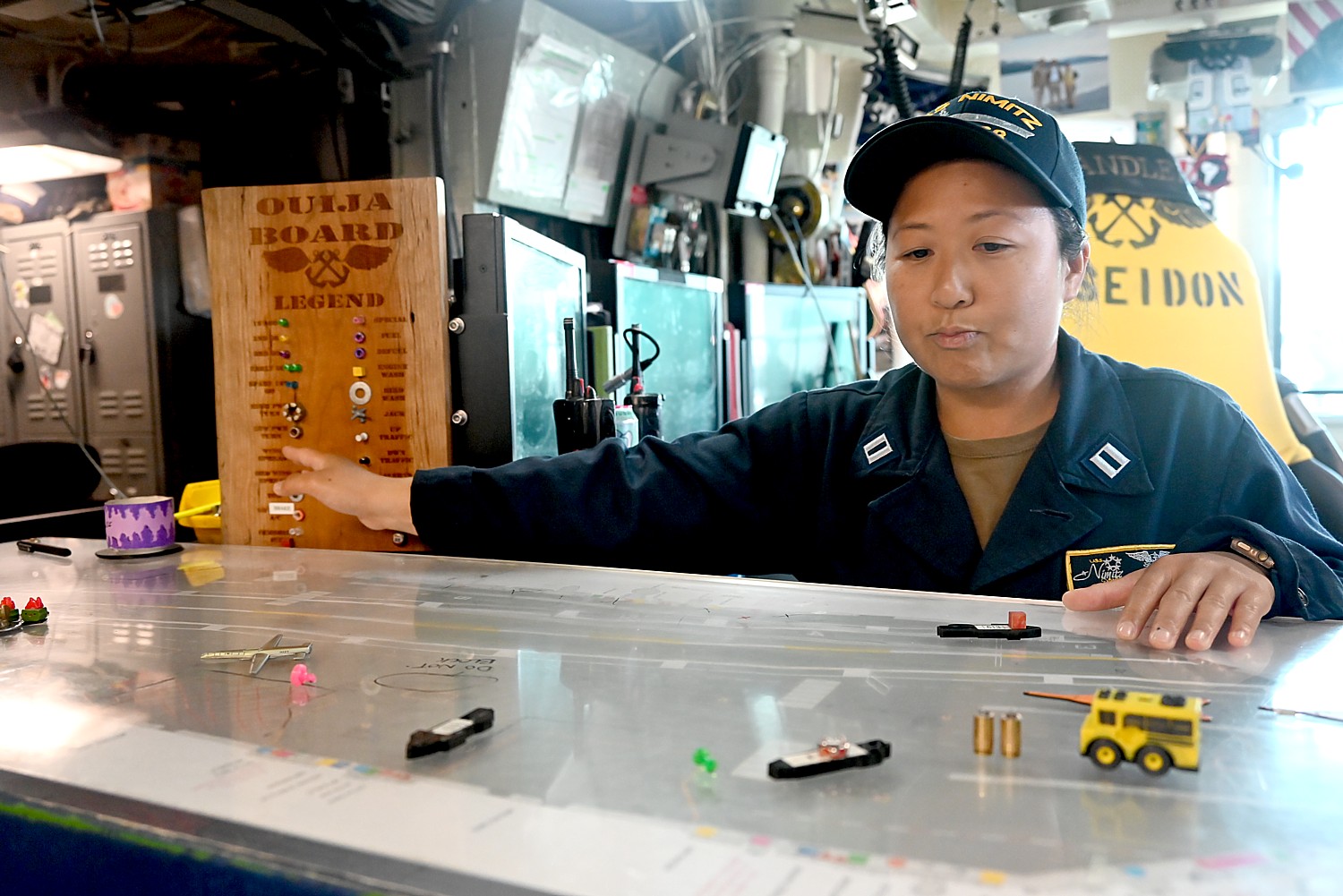
Chief Flight Deck Officer Nhu O. Lei shows how she uses the “weegie board” to positions everything on the flight deck © Karen Rubin/news-photos-features.com
Chief Flight Deck Officers Nhu O. Lei and Martin Martinez shows how she uses the “weegie board” to positions everything on the flight deck © Karen Rubin/news-photos-features.com
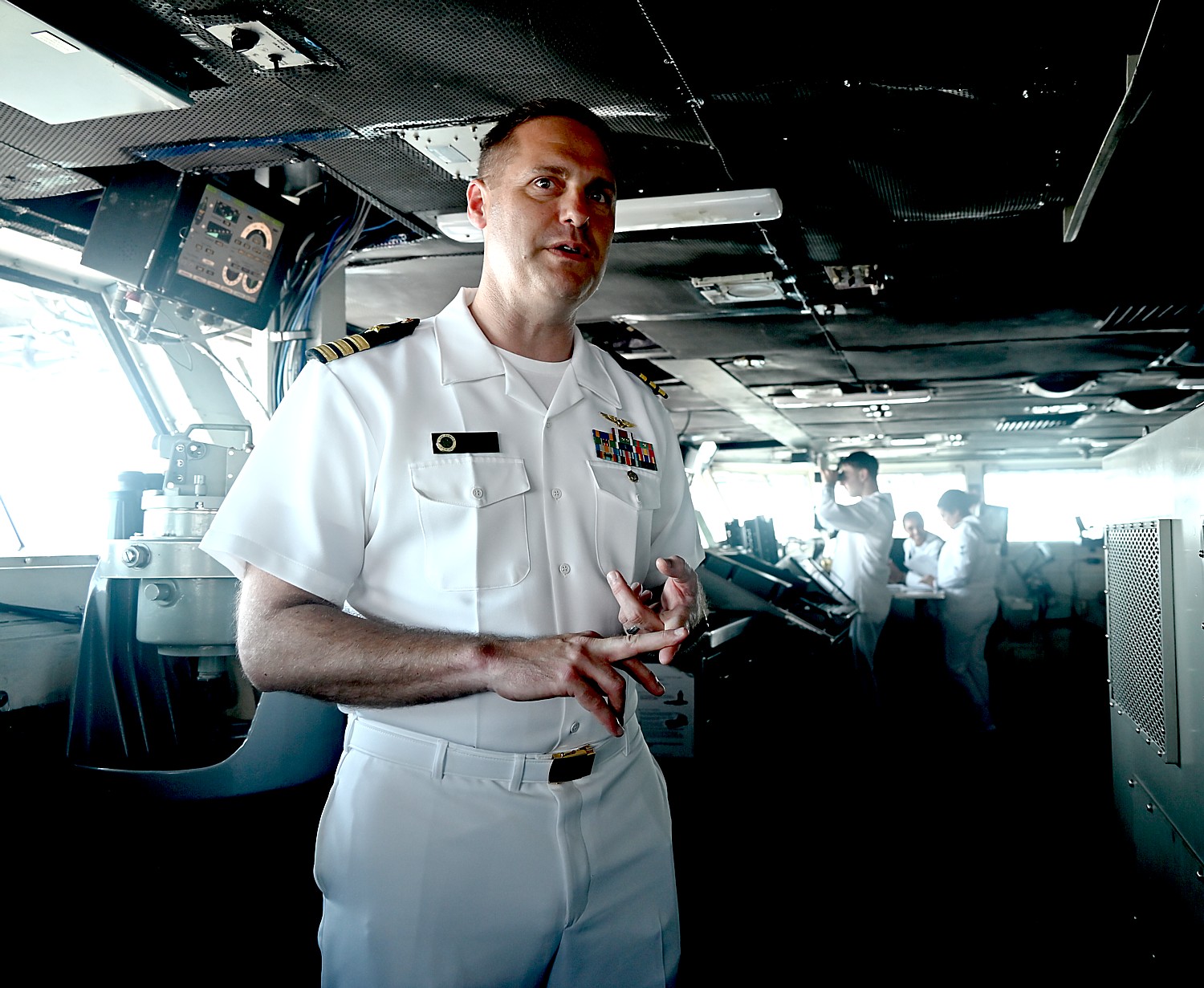
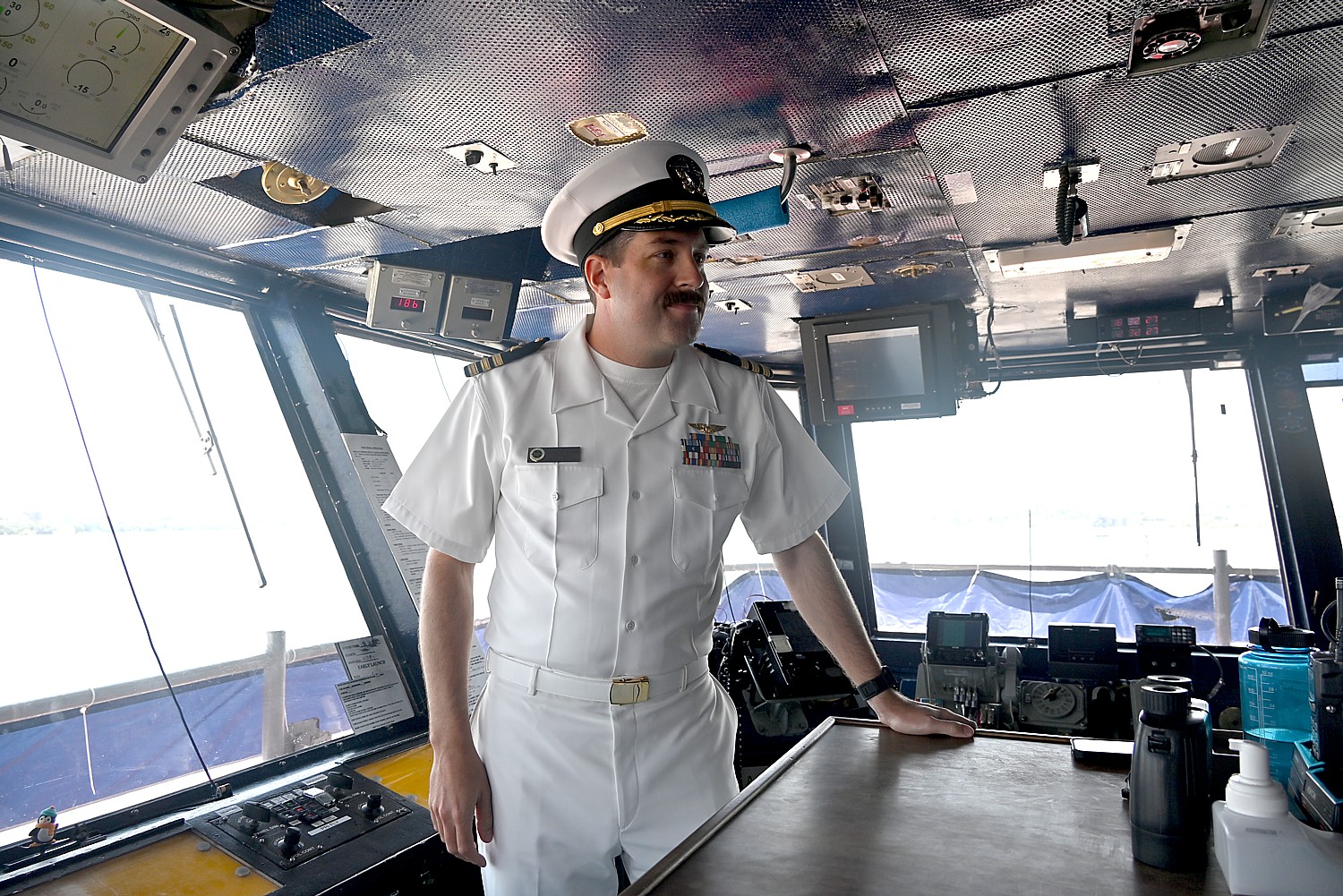
The navigation deck aboard the U.S.S. Nimitz, led by Commander Ryan Peddifore © Karen Rubin/news-photos-features.com
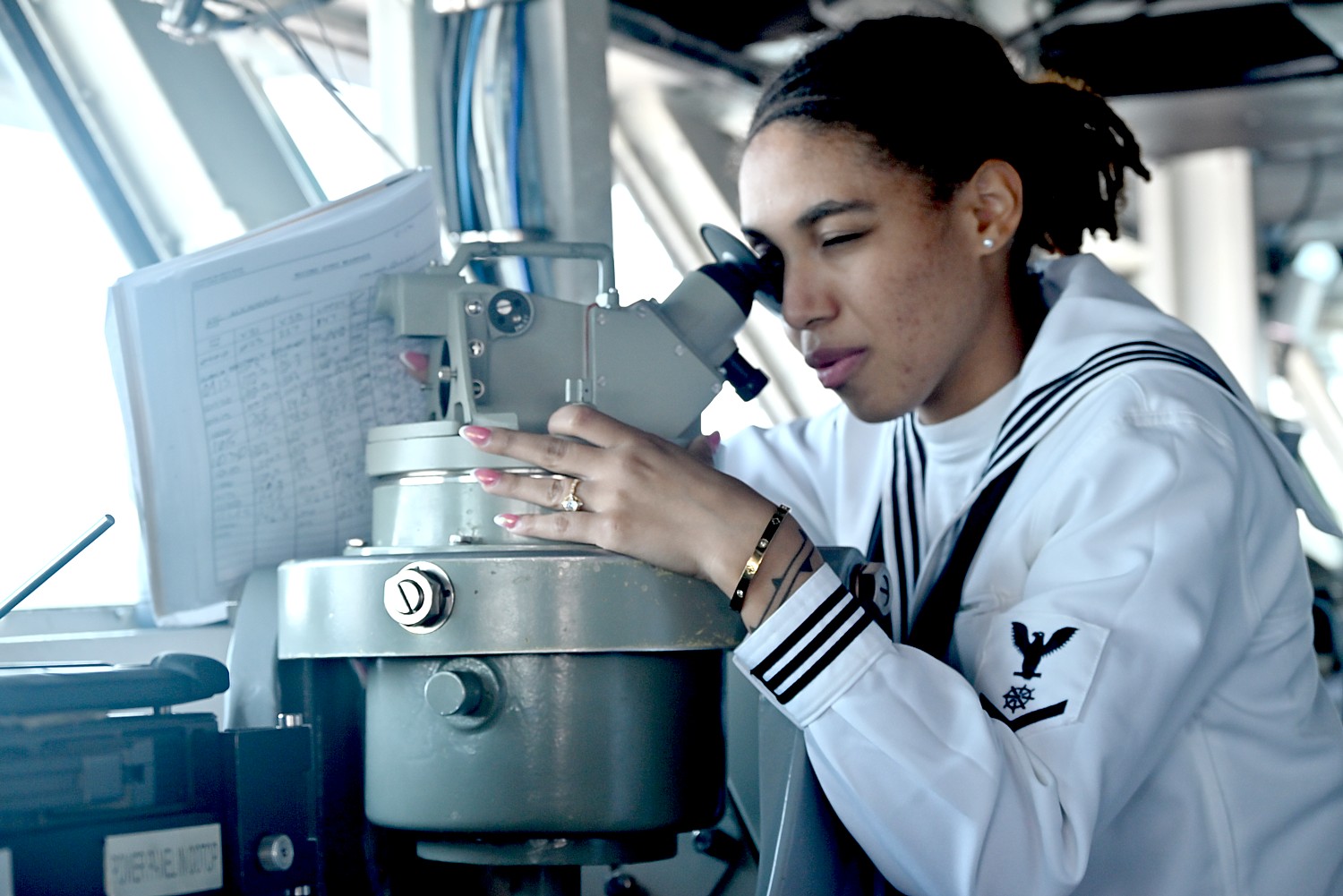
The navigation deck aboard the U.S.S. Nimitz © Karen Rubin/news-photos-features.com
Air Boss Matthew Bezold in charge of flight control aboard the U.S.S. Nimitz © Karen Rubin/news-photos-features.com

Here are photo highlights:

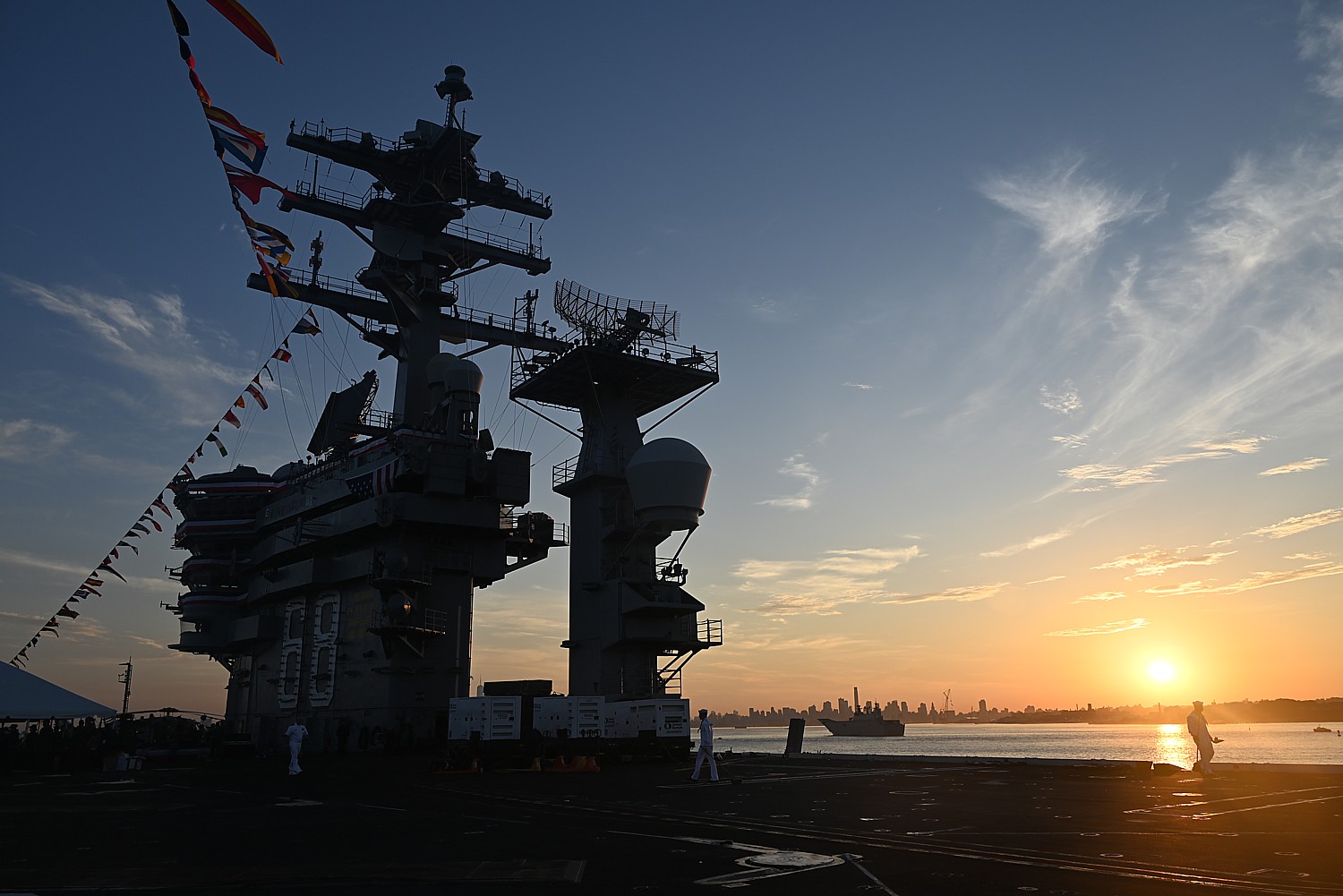
Arriving at U.S.S. Nimitz in the night © Karen Rubin/news-photos-features.com
Dawn’s early light onboard the U.S.S. Nimitz © Karen Rubin/news-photos-features.com
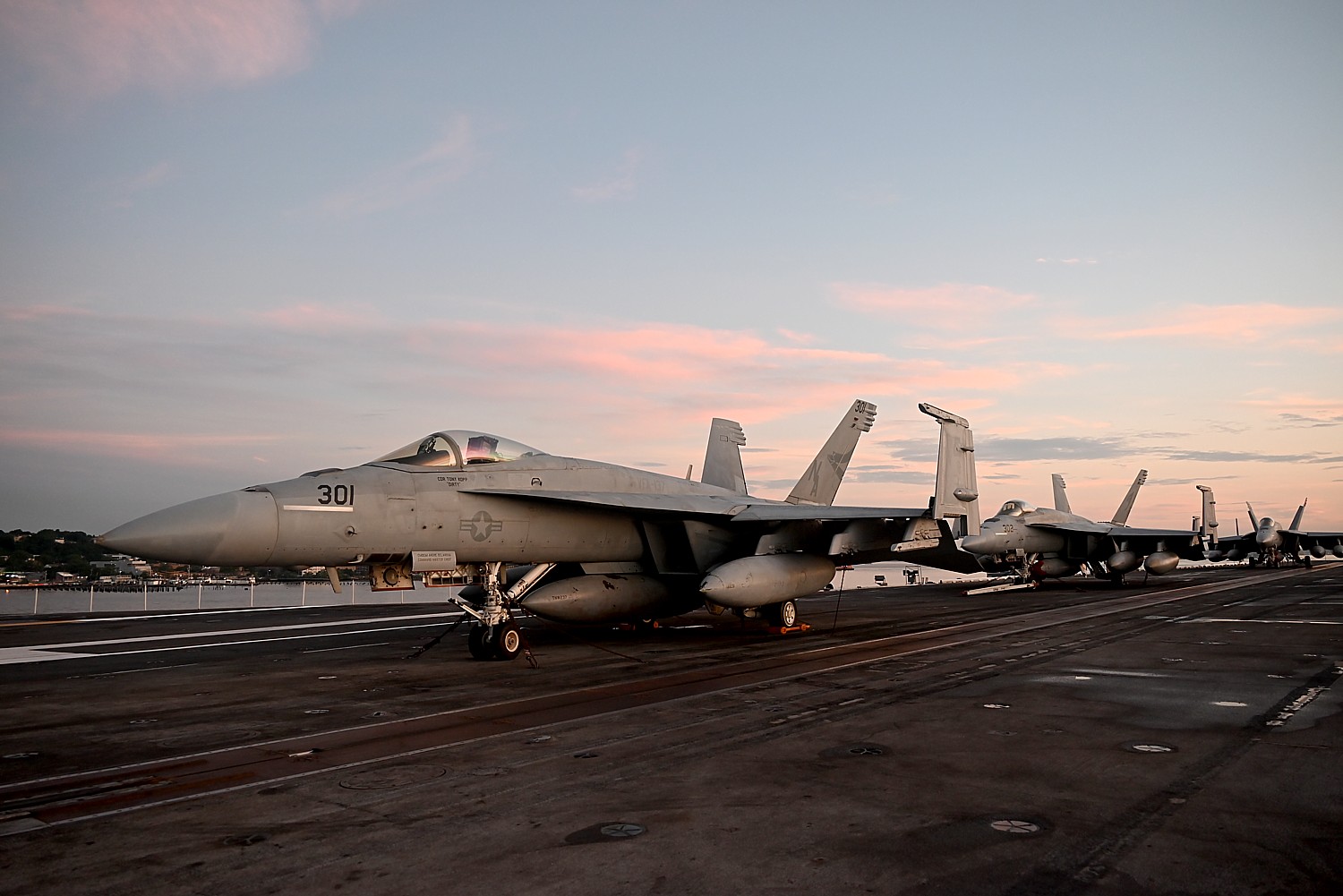
Jets parked on the U.S.S. Nimitz flight deck © Karen Rubin/news-photos-features.com
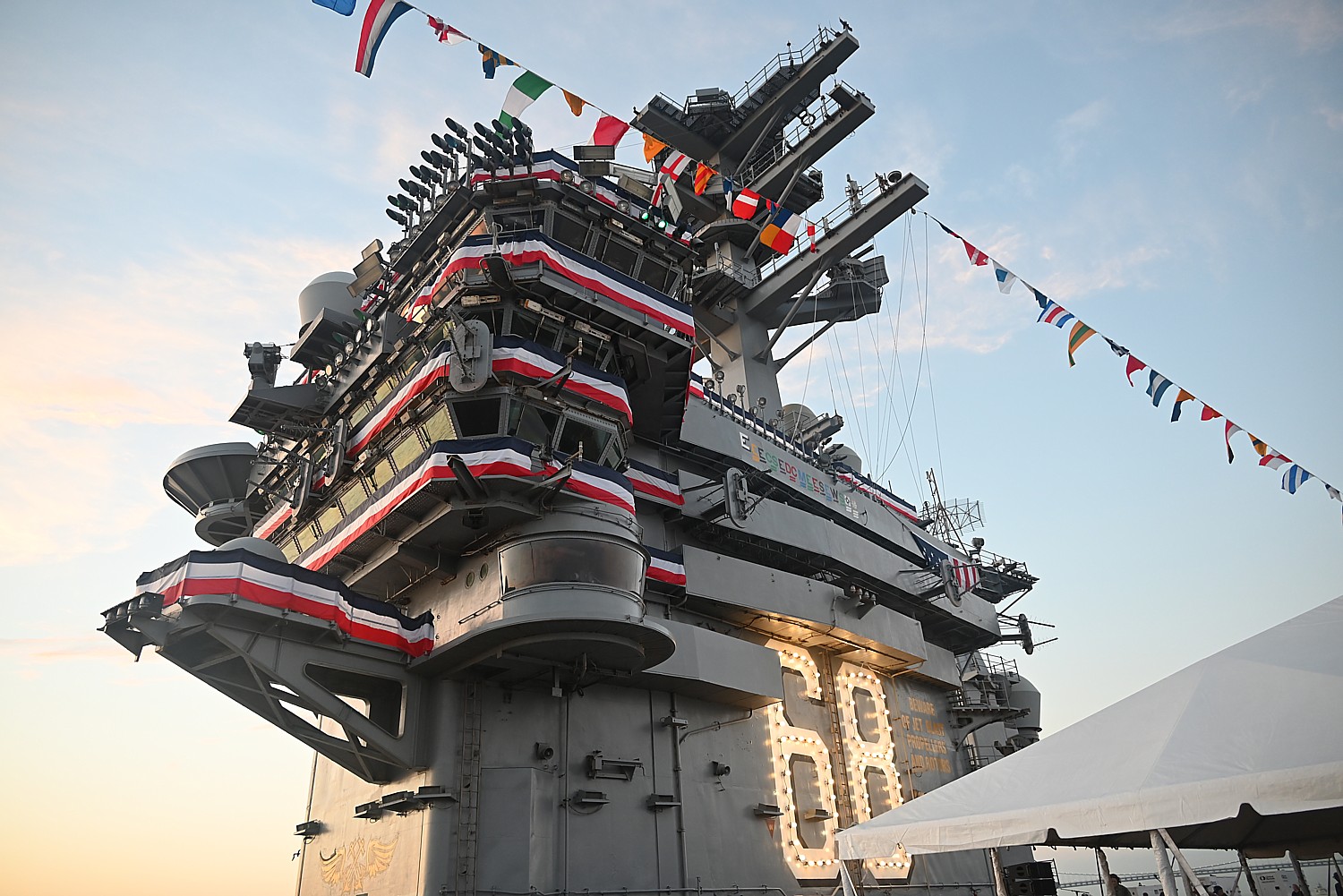
The U.S.S. Nimitz bridge © Karen Rubin/news-photos-features.com
Preparing to welcome the Parade of Sail and International Aerial Review aboard the U.S.S. Nimitz © Karen Rubin/news-photos-features.com

See also: 

Photo Highlights: Millions Turn Out for Sail4th 250 in New York Harbor, Nation’s Premier International Event Honoring America’s 250th

Photo Highlights: Blue Angels Headline Four Leaf Air Show at Jones Beach Honoring America’s 250th

Photo Highlights: Four Leaf Airshow at Jones Beach State Park Honors America’s 250th

_______________________

© 2026 News & Photo Features Syndicate, a division of Workstyles, Inc. All rights reserved. For editorial feature and photo information, go to www.news-photos-features.com, email editor@news-photos-features.com.Blogging at www.dailykos.com/blogs/NewsPhotosFeatures
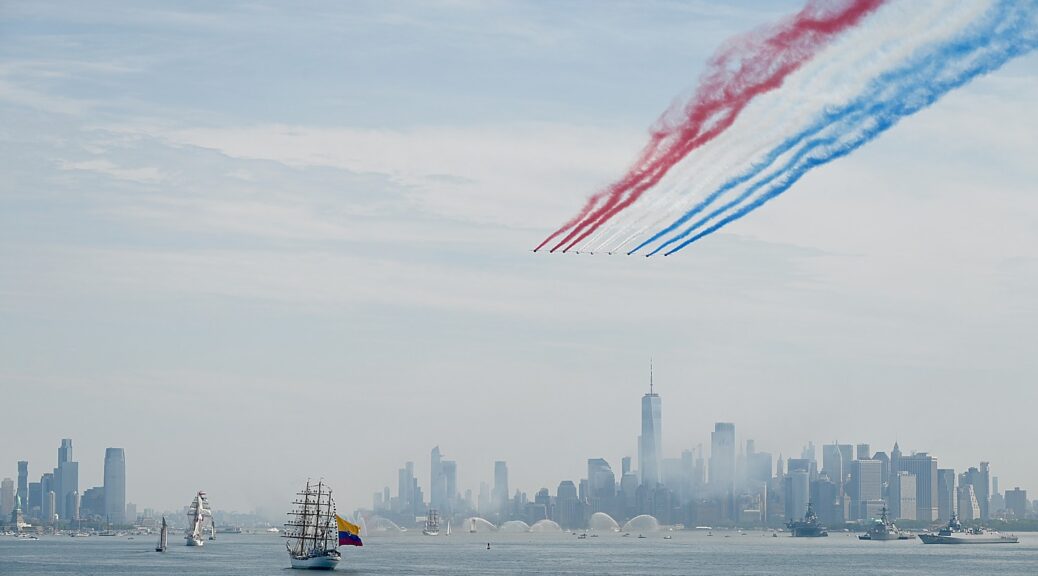
Photo Highlights: Millions Turn Out for Sail4th 250 in New York Harbor, Nation’s Premier International Event Honoring America’s 250th

Historic tall ships sail through New York Harbor for Sail4th 250, bookended by the Statue of Liberty and the Freedom Tower, as jets fly over © Karen Rubin/news-photos-features.com

By Karen Rubin, editor@news-photos-features.comnews-photos-features.com

An estimated 6 million spectators lined 15 miles of waterfront to see the historic Parade of Sail in New York City on July 4, 2026, braving nearly 100-degree heat. They clearly could not resist the spectacular, once in an eon sight of more than 40 tall ships and 30 navy vessels from 20 countries, carrying 20,000 sailors, sailing into New York Harbor and up the Hudson River to commemorate America’s 250th anniversary of Independence, in what was billed “the largest-ever flotilla of tall ships”. Many made themselves available for public visits during the six-day festival, July 3-7.

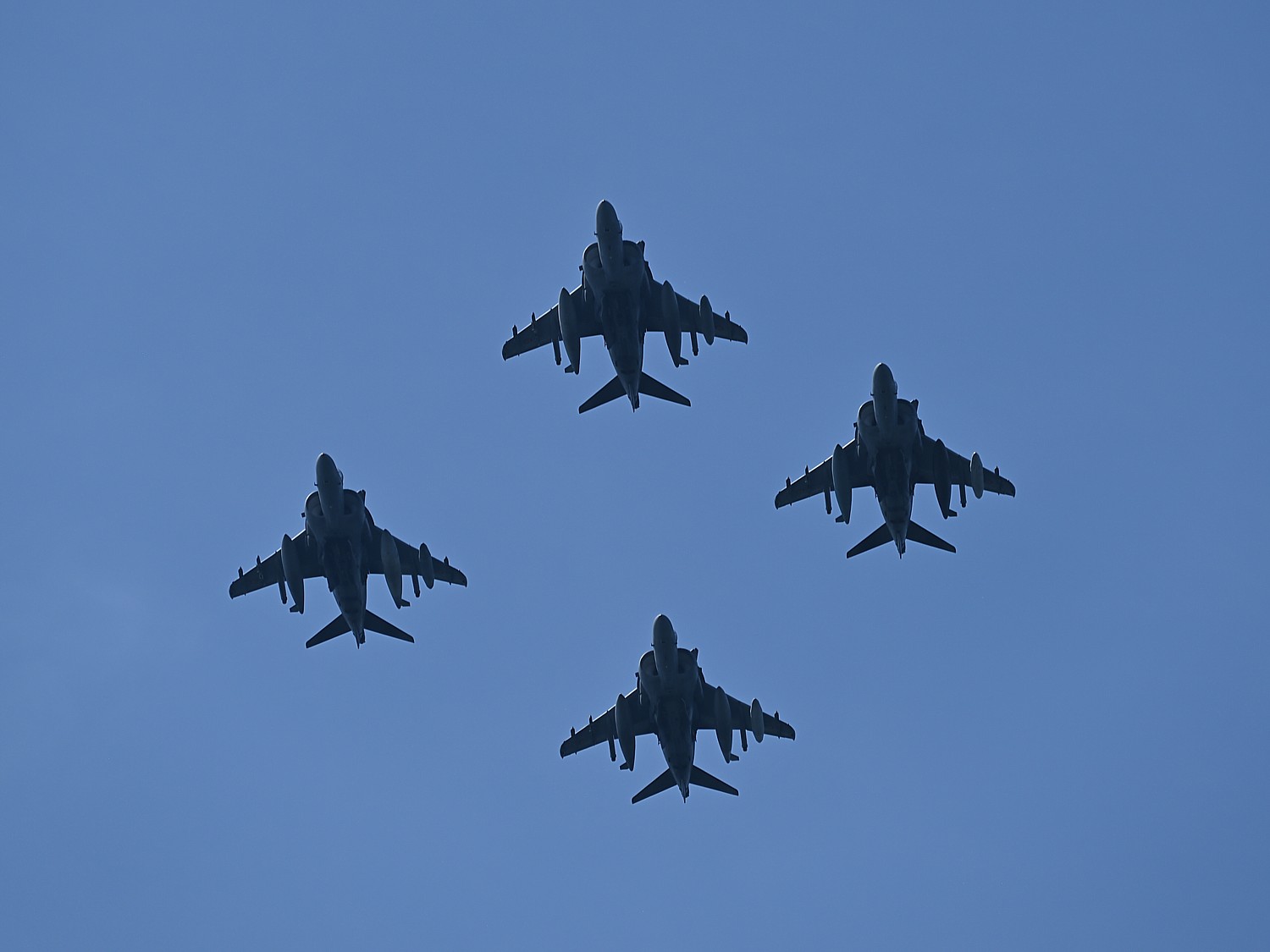
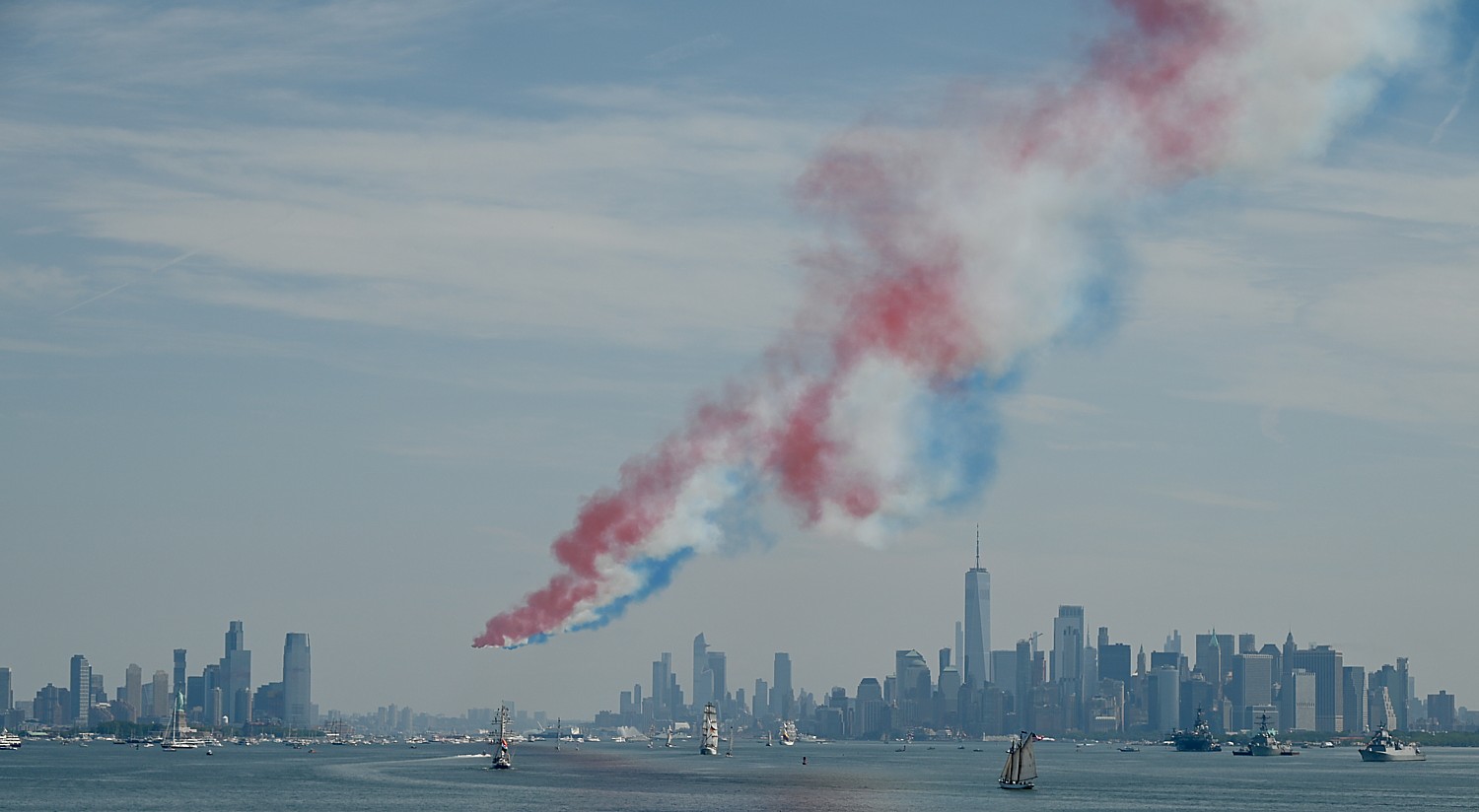
The Parade of Sail was accompanied by what was hailed as one of the longest fly-overs ever – nearly 200 aircraft – led by the U.S. Navy Blue Angels.

Just before the tall ship parade, the Acting Secretary of the Navy boarded the USS Farragut and proceeded slowly past about 30 U.S. and allied military vessels all at anchor on the west side of the Hudson River, with the aircraft carrier, the USS Nimitz, the lead in The International Naval Review. The International Naval Review (INR 250) has only occurred six times previously in U.S. history.

Here are photo highlights:

Sailors aboard the USS Nimitz give salute as the USS Farragut sails by for The International Naval Review to honor America’s 250th, that has only occurred six times previously in U.S. history © Karen Rubin/news-photos-features.com
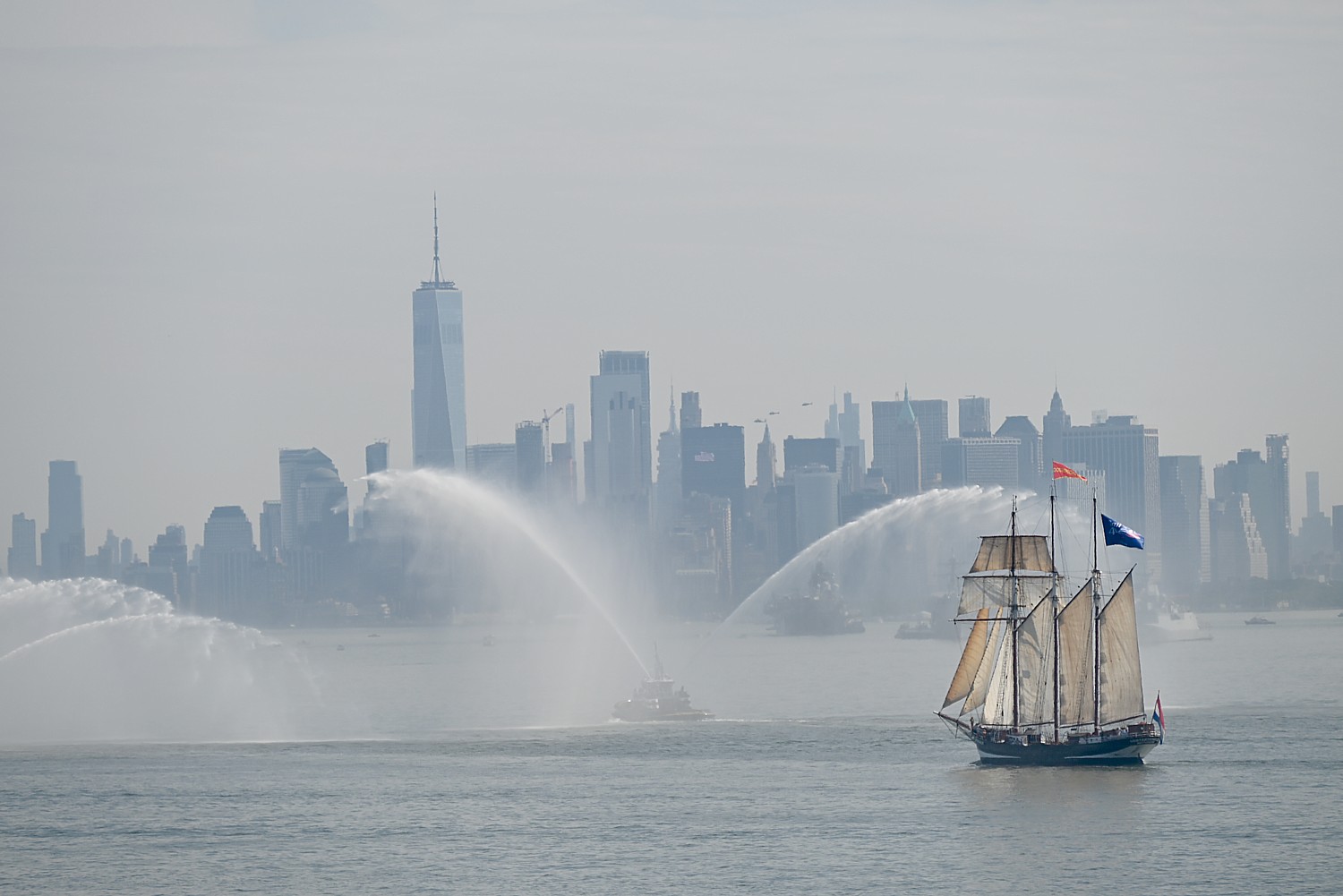
Oosterschelde, 164-foot, 3-masted topsail schooner from Rotterdam, Netherlands, re-creates the Dutch arrival on New York harbor more than 400 years ago, when it was called New Amsterdam  © Karen Rubin/news-photos-features.com
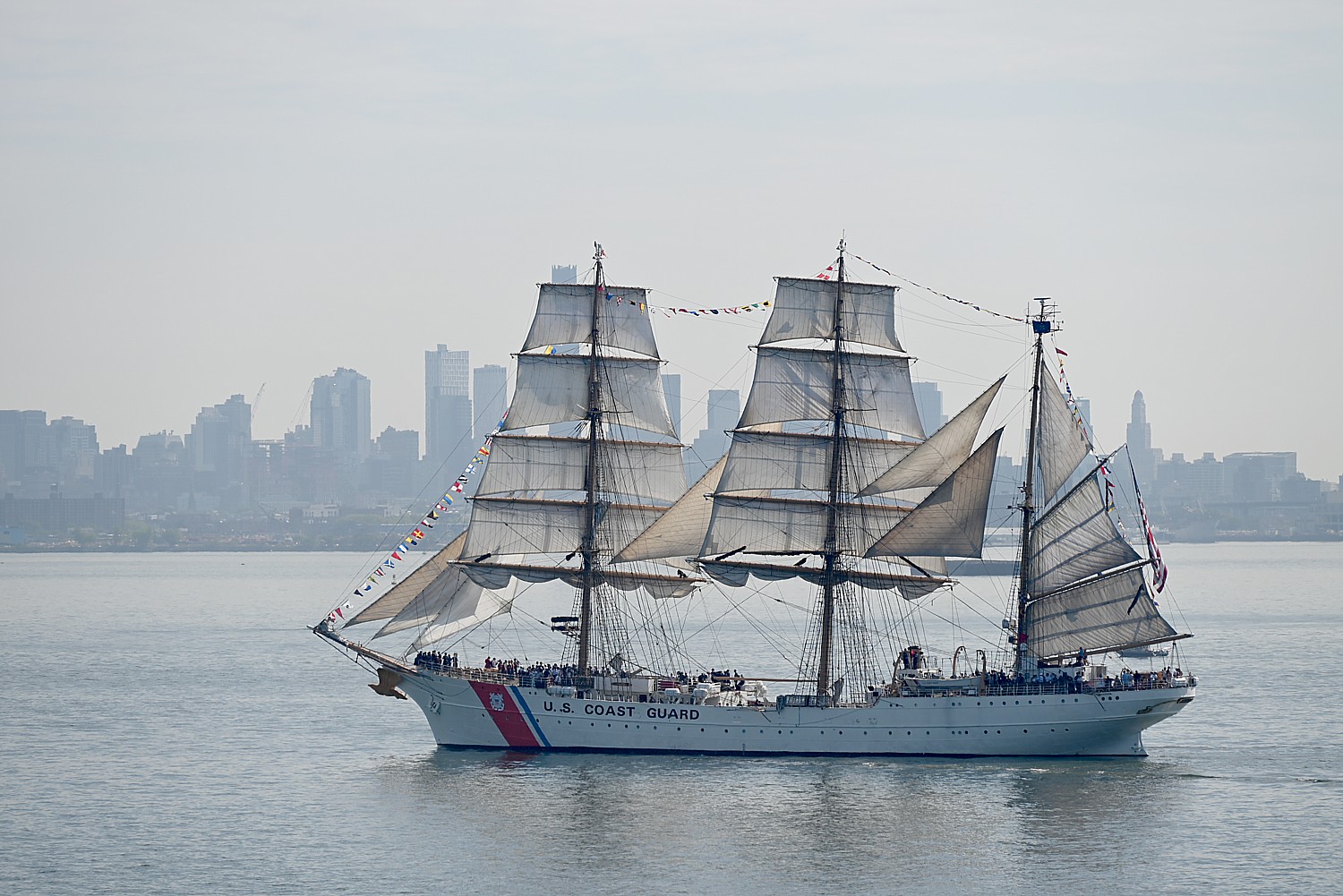
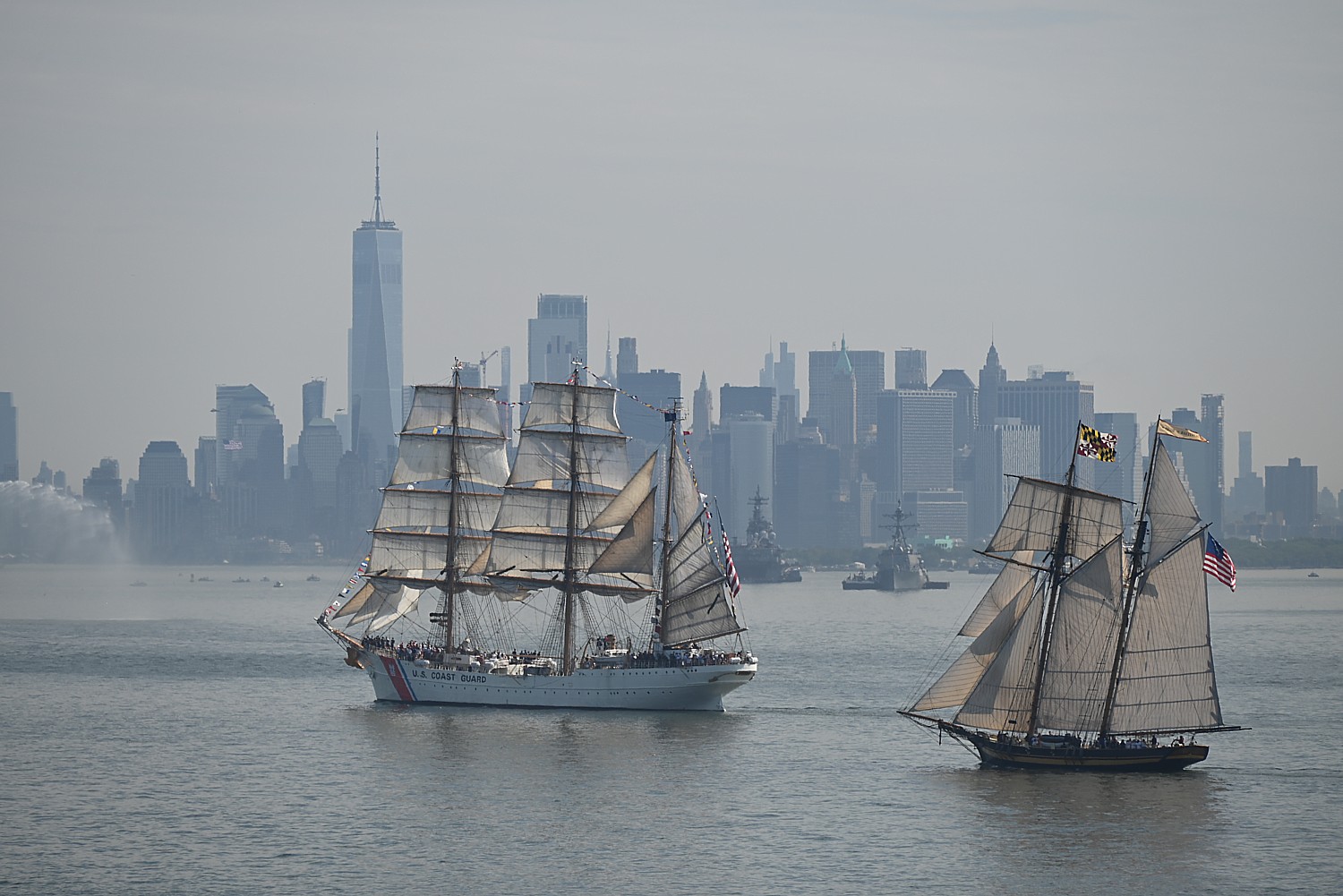
U.S. Coast Guard Cutter Eagle represents the USA at Sail4th 250 in New York City © Karen Rubin/goingplacesfarandnear.com
U.S. Coast Guard Cutter Eagle with the Pride of Baltimore II © Karen Rubin/goingplacesfarandnear.com
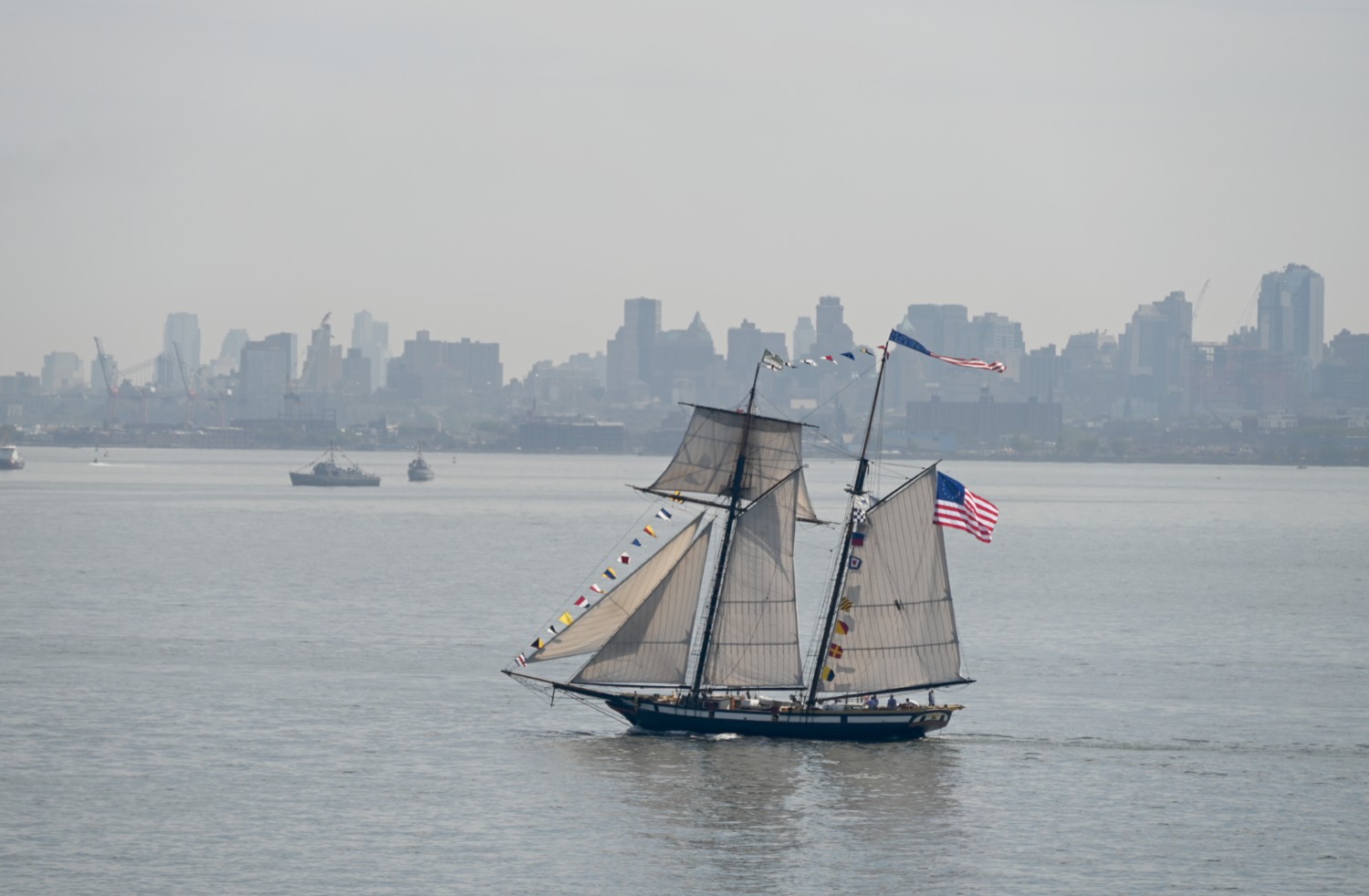
Pride of Baltimore II at Sail4th 250 in New York City © Karen Rubin/goingplacesfarandnear.com
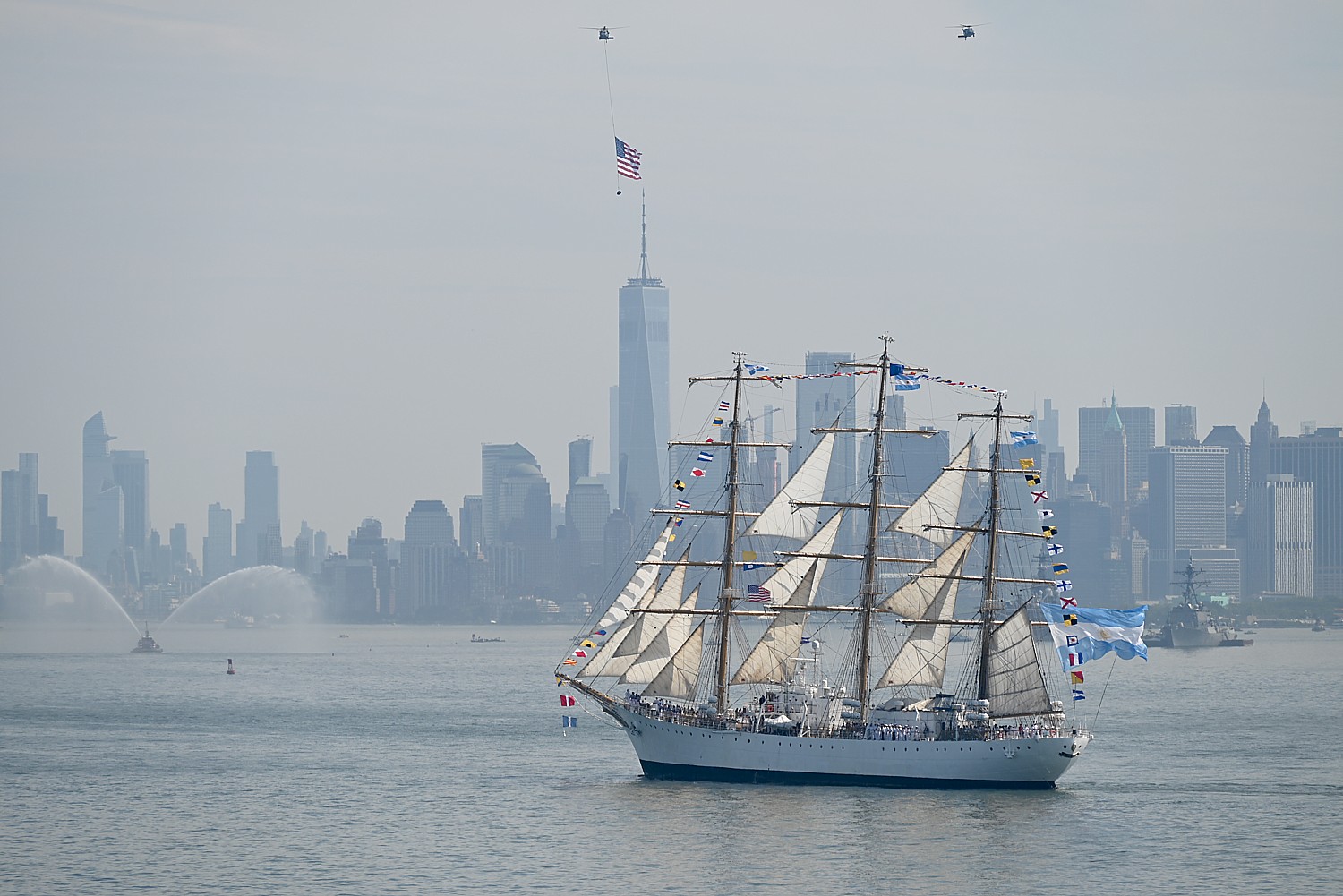
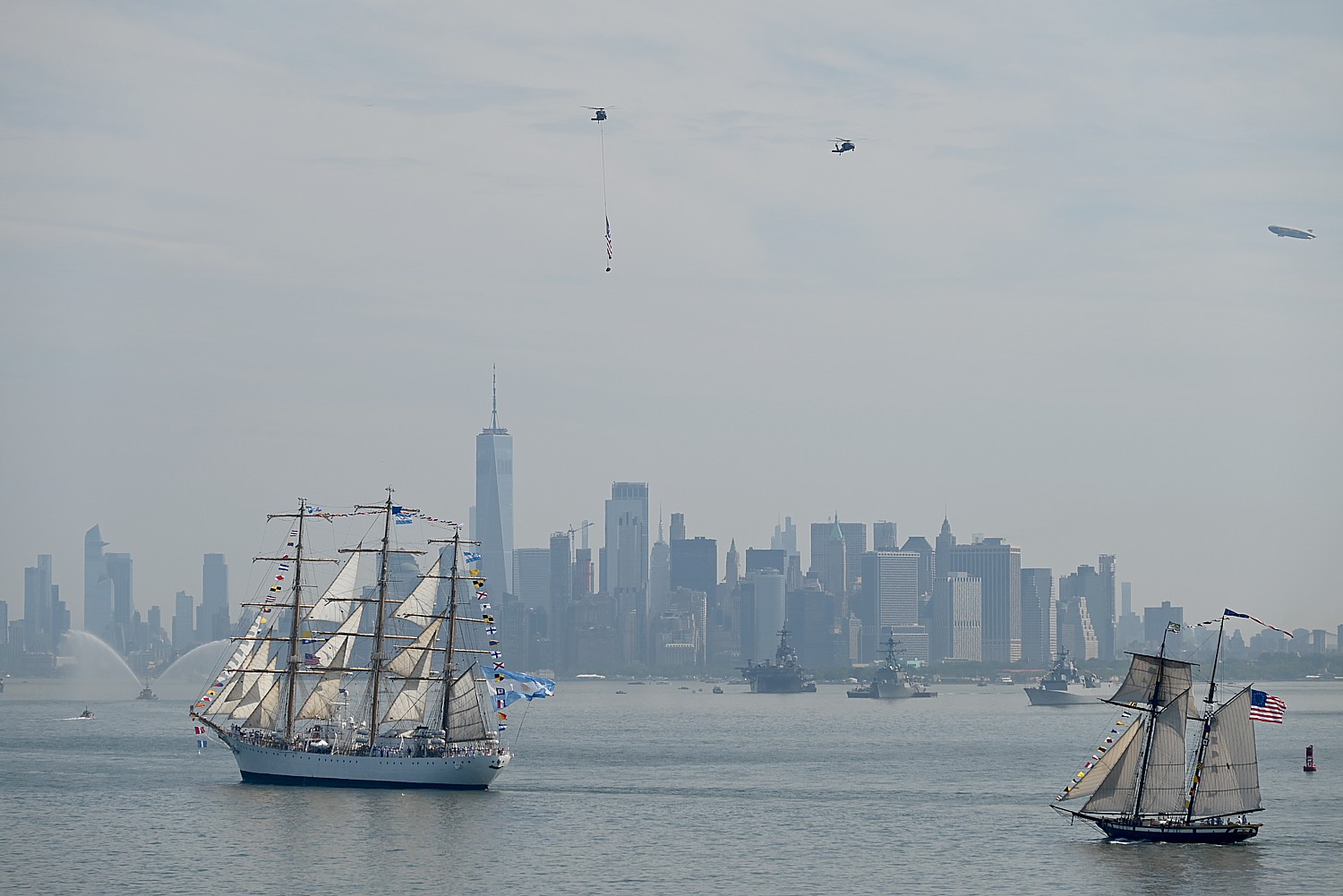
ARA Libertad of Argentina at Sail4th 250 in New York City © Karen Rubin/goingplacesfarandnear.com
The Argentine Navy frigate ARA Libertad and the Lynx, from Portsmouth, New Hampshire © Karen Rubin/goingplacesfarandnear.com
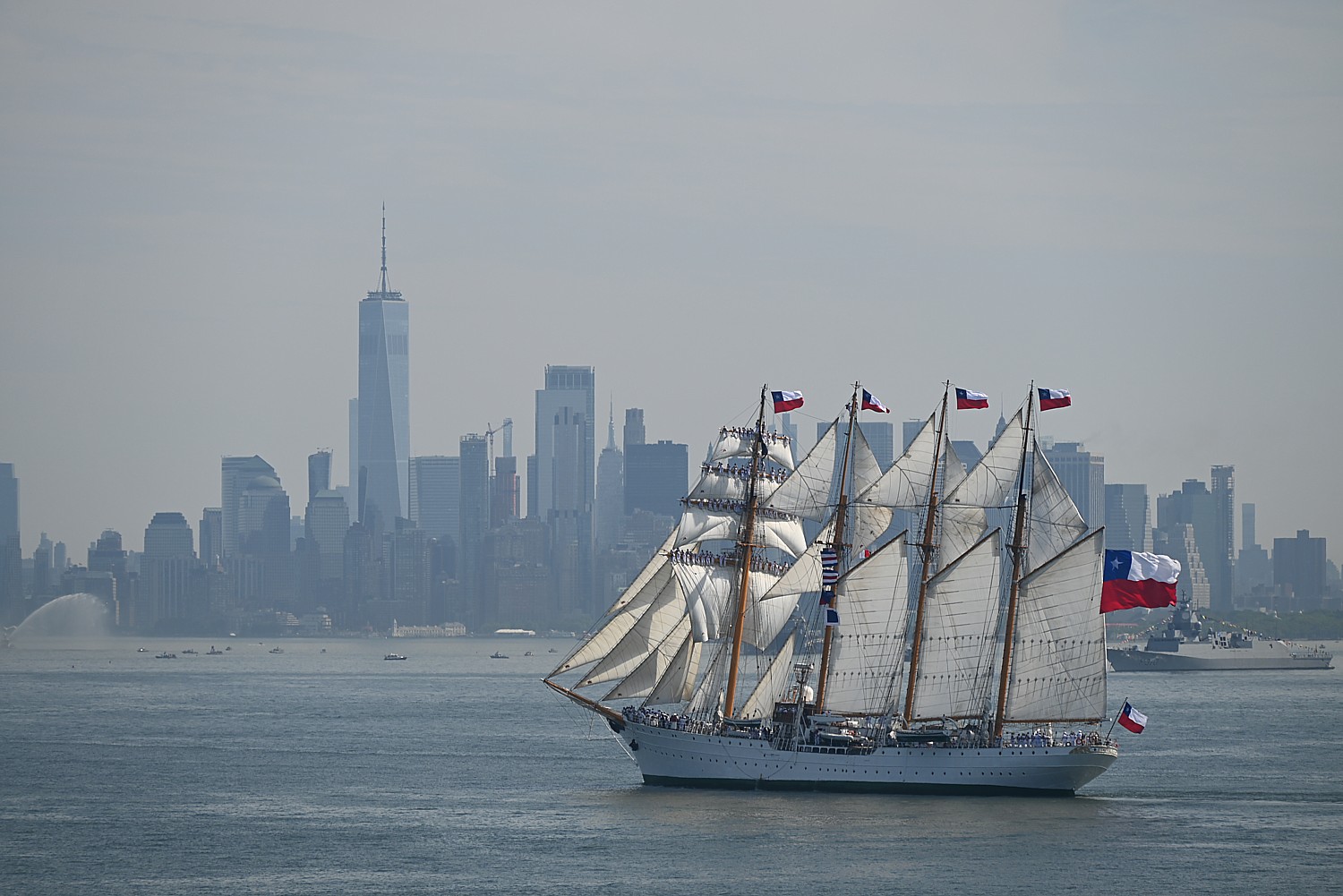
The barquentine Esmeralda from Chile © Karen Rubin/goingplacesfarandnear.com
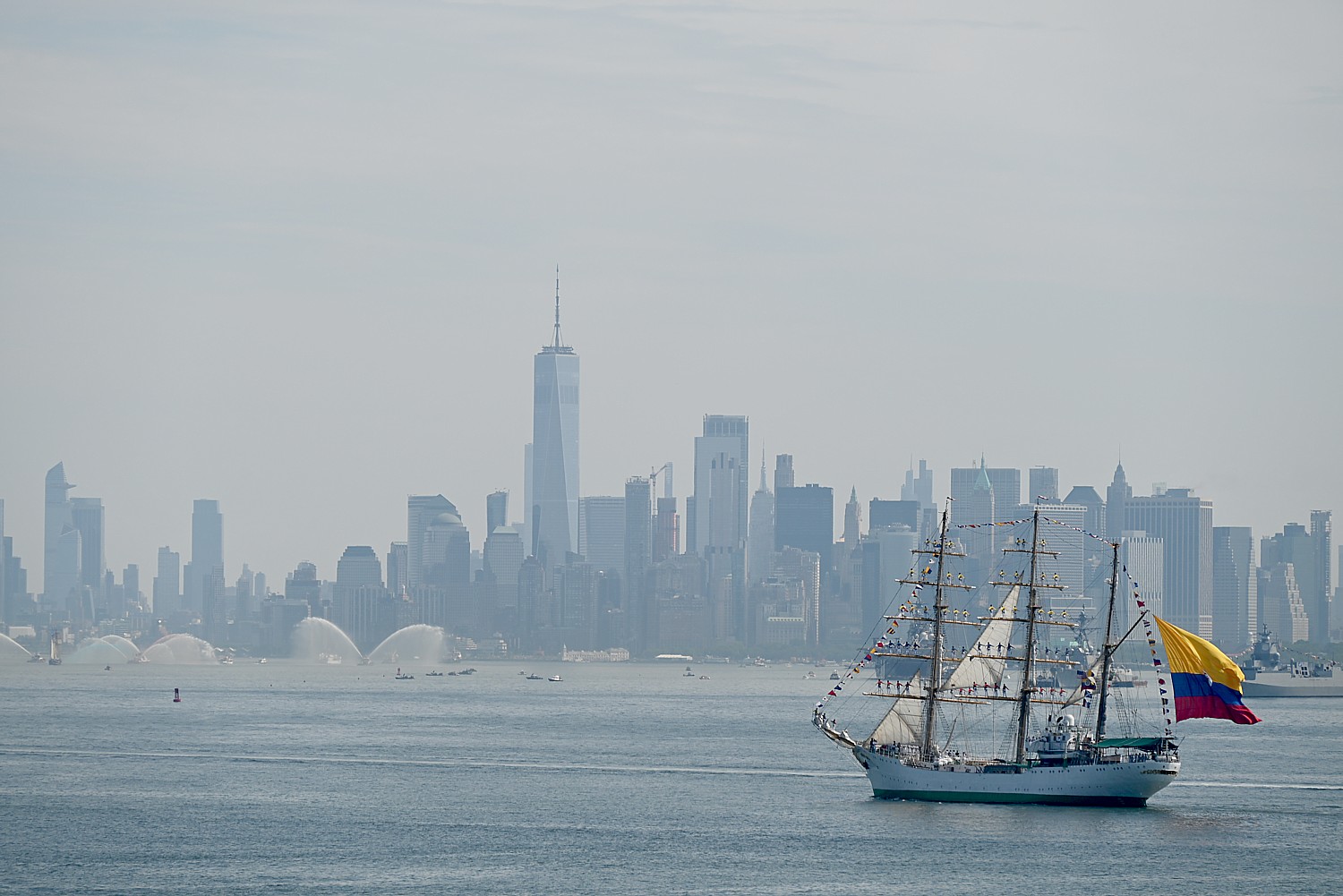
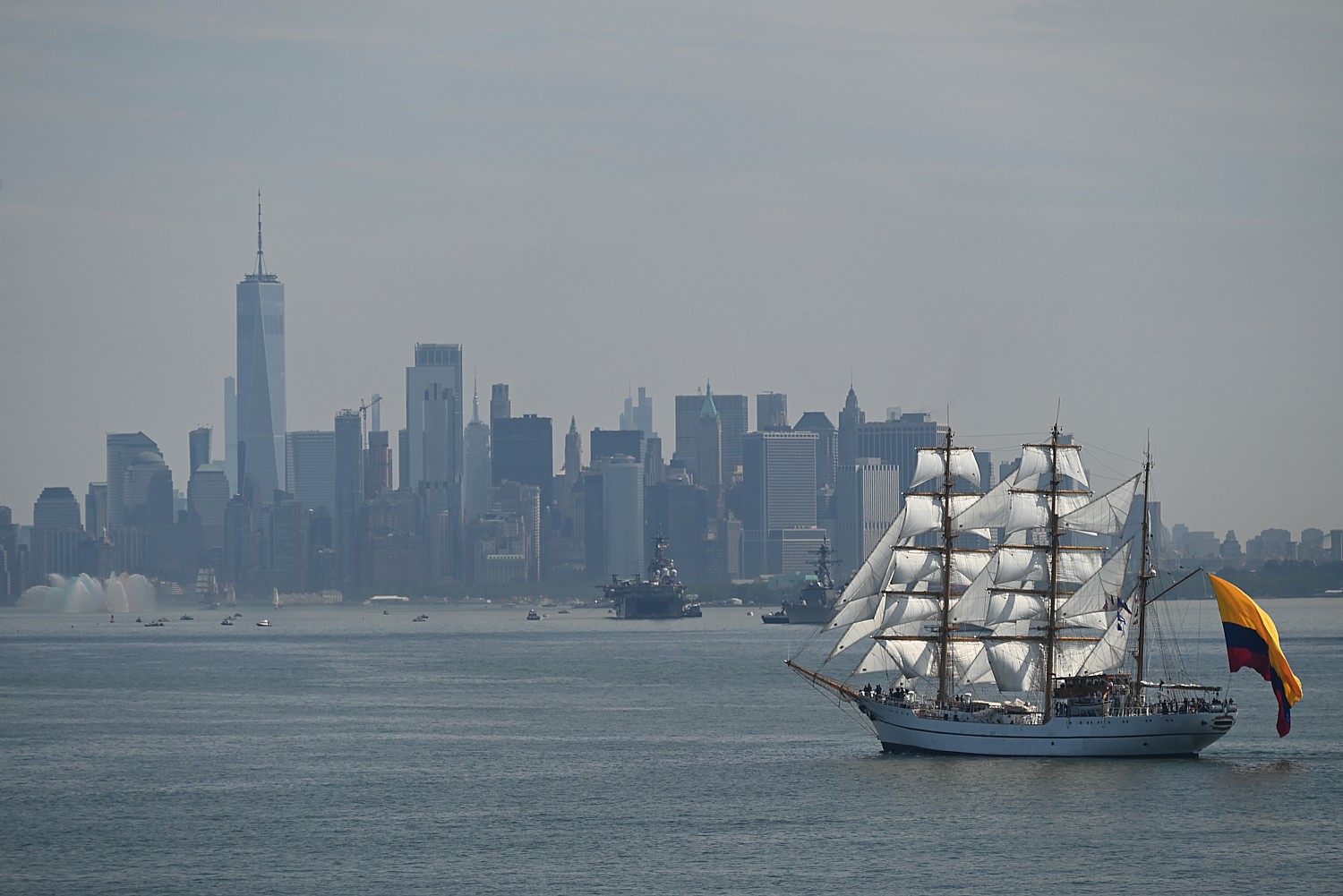
The Colombian Navy’s flagship ARC Gloria © Karen Rubin/goingplacesfarandnear.com
The US Navy Blue Angels lead the fly-over during Sail4th 250 © Karen Rubin/goingplacesfarandnear.com
The fly-over during Sail4th 250 © Karen Rubin/goingplacesfarandnear.com
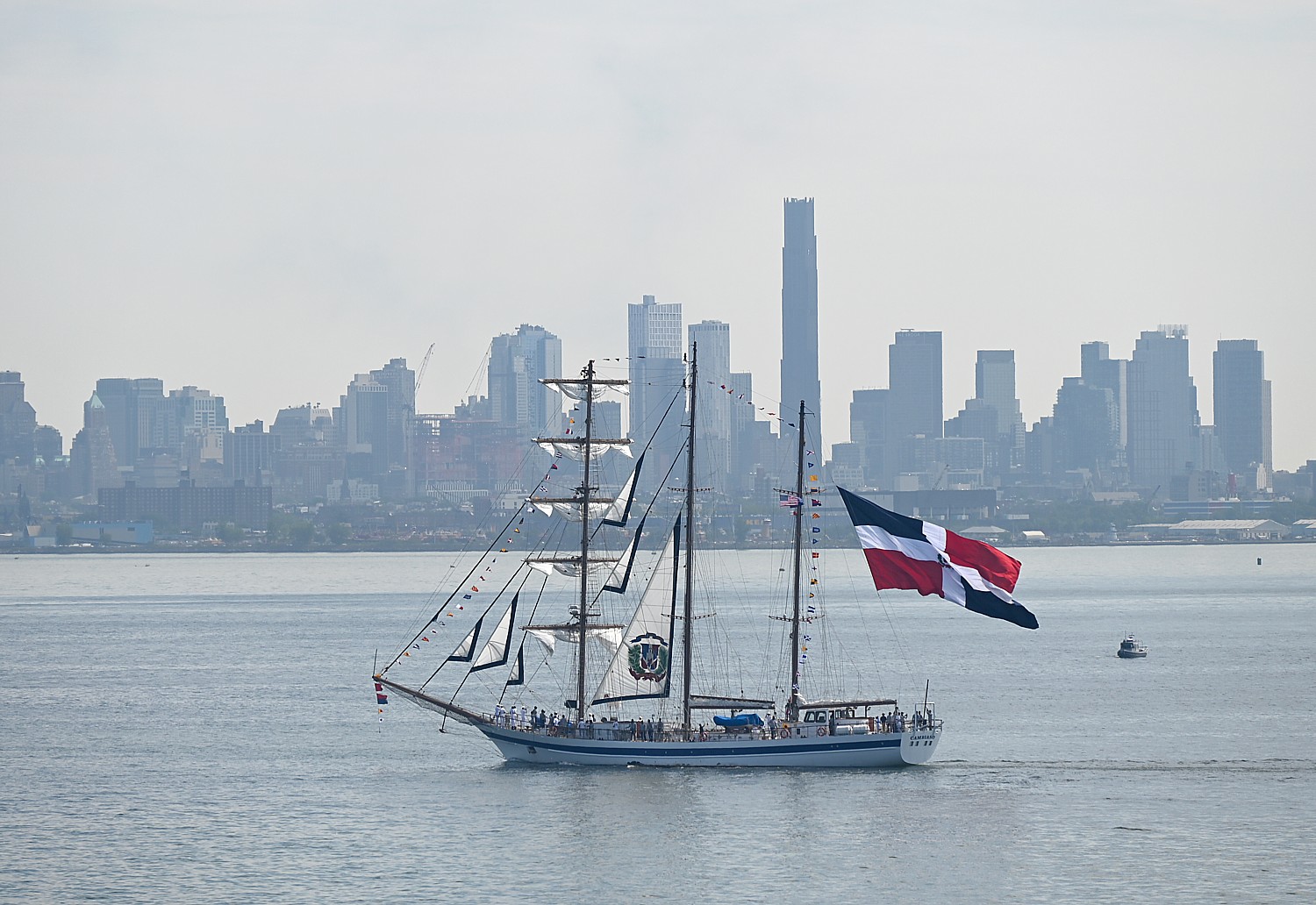
The Juan Bautista Cambiaso, from Dominican Republic © Karen Rubin/goingplacesfarandnear.com
The three-masted barque BAE Guayas from Ecuador © Karen Rubin/goingplacesfarandnear.com
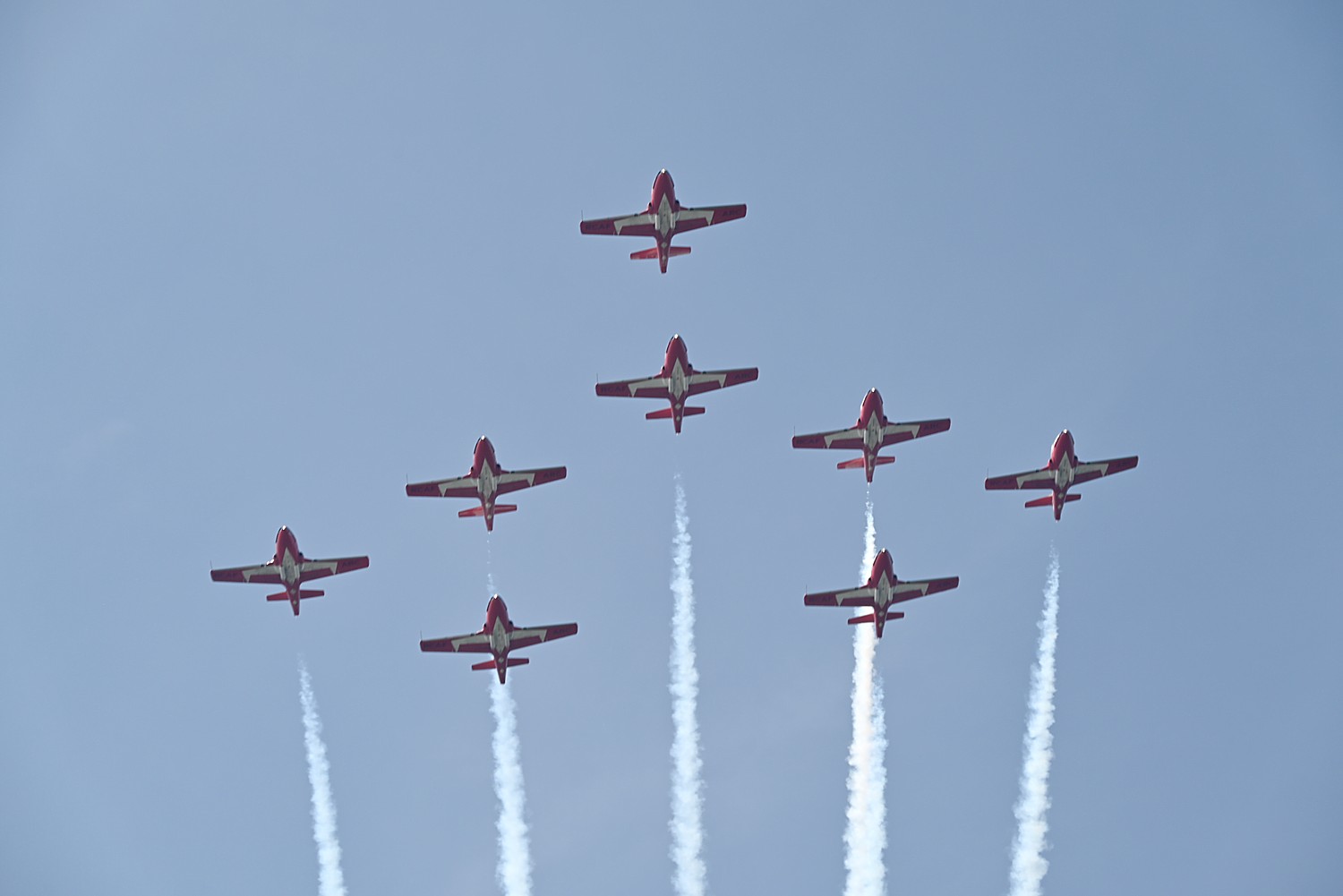
Canada’s Snowbirds © Karen Rubin/goingplacesfarandnear.com
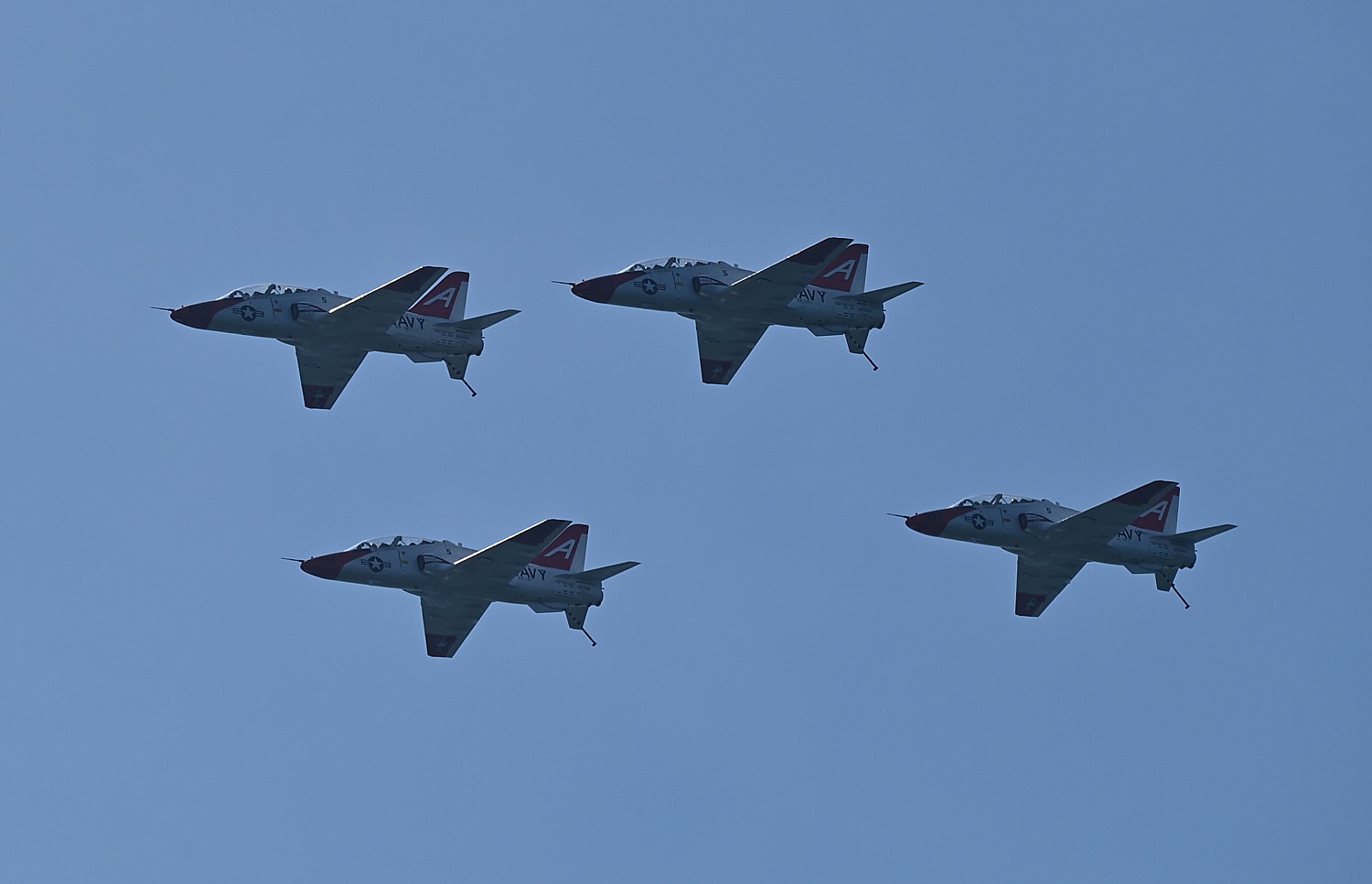
US Navy jets © Karen Rubin/goingplacesfarandnear.com
Fighter jets at Sail4th 250 in New York City © Karen Rubin/goingplacesfarandnear.com
US fighters at Sail4th 250, NYC © Karen Rubin/goingplacesfarandnear.com
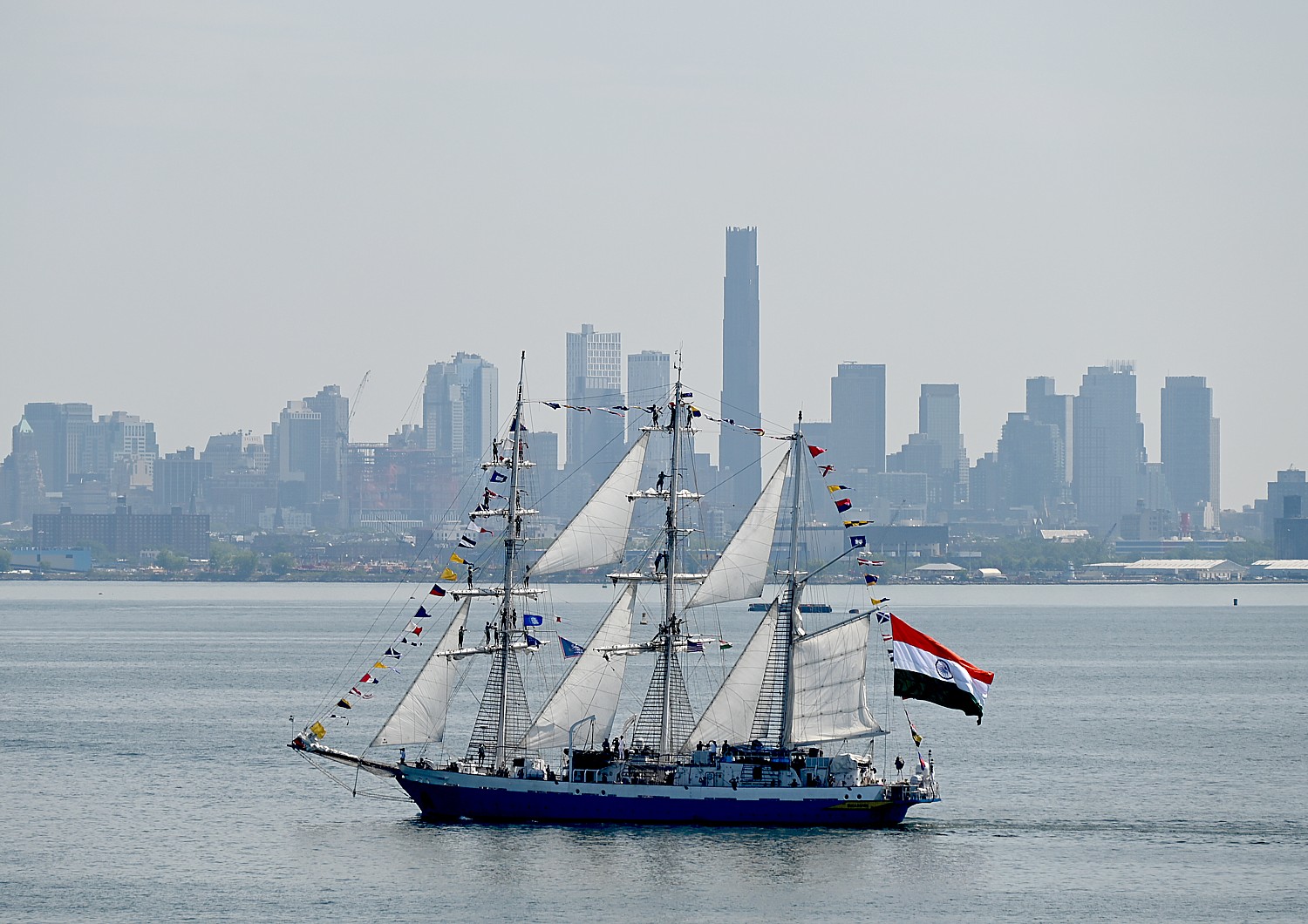
INS Sudarshini, three-masted barque from India © Karen Rubin/goingplacesfarandnear.com
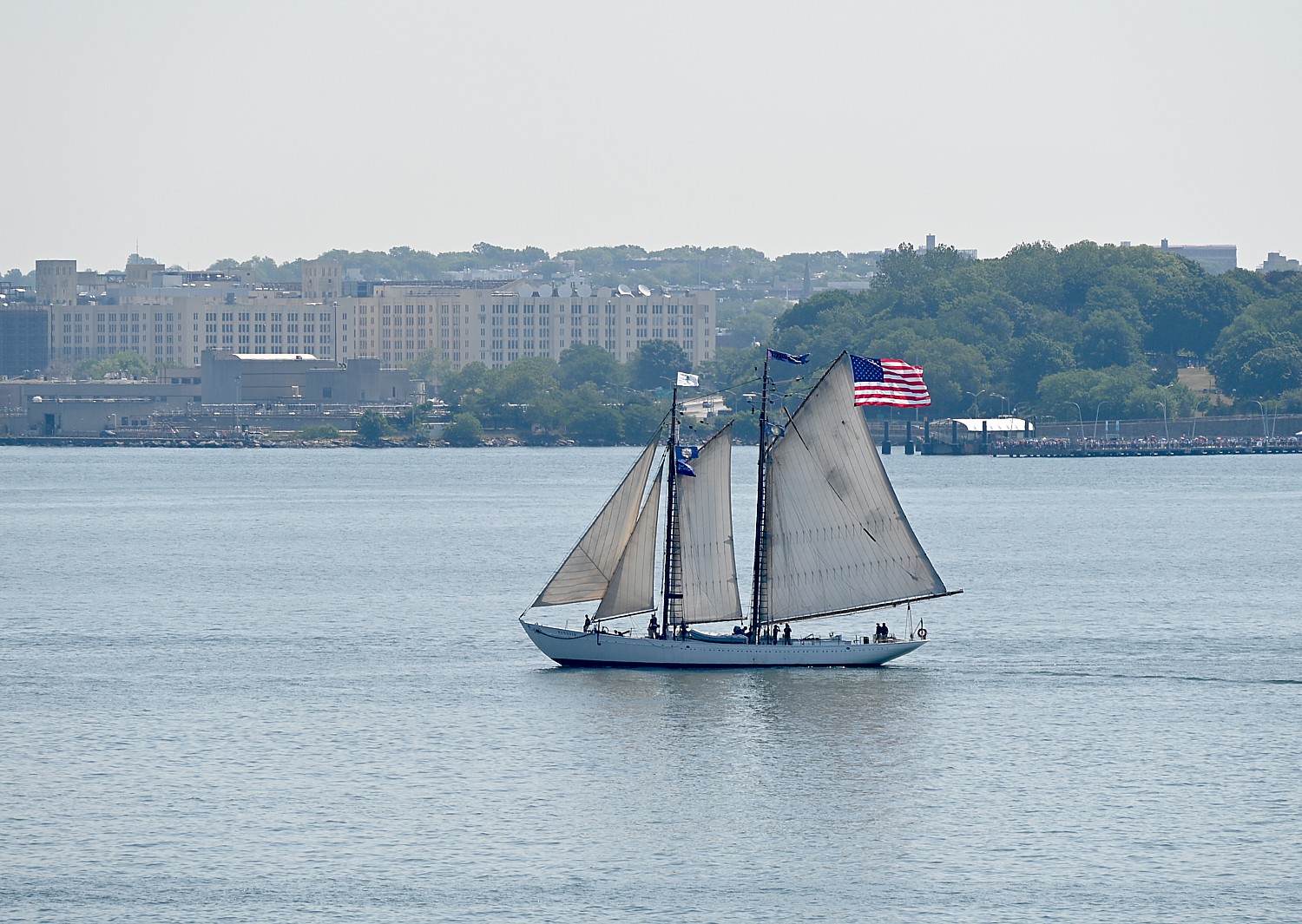
The schooner Bowdoin from Maine © Karen Rubin/goingplacesfarandnear.com
Watching the fly-over from the flight deck of the USS Nimitz © Karen Rubin/goingplacesfarandnear.com
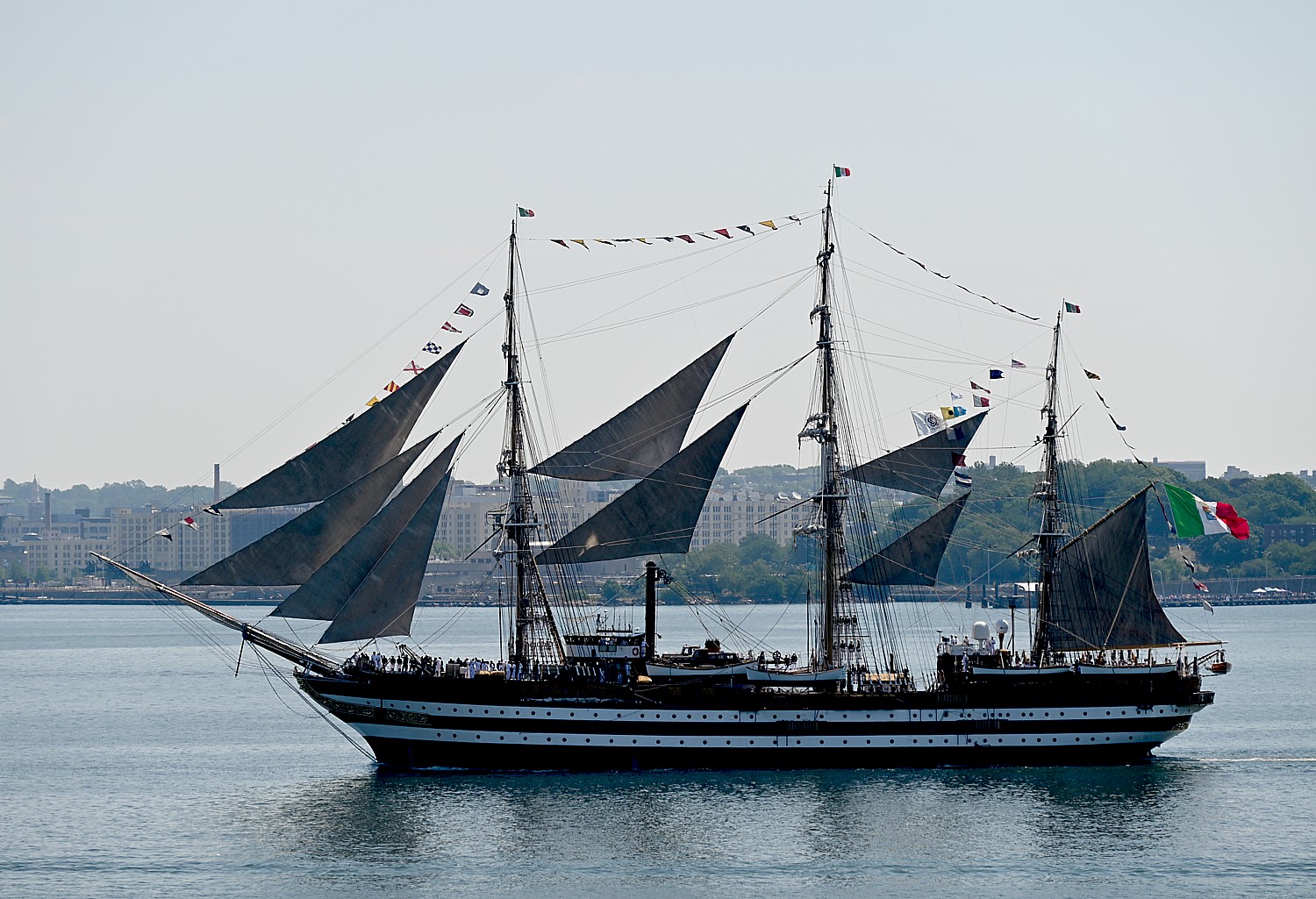
Amerigo Vespucci,  329-foot, full-rigged, three-masted sail training vessel, from Italy © Karen Rubin/goingplacesfarandnear.com
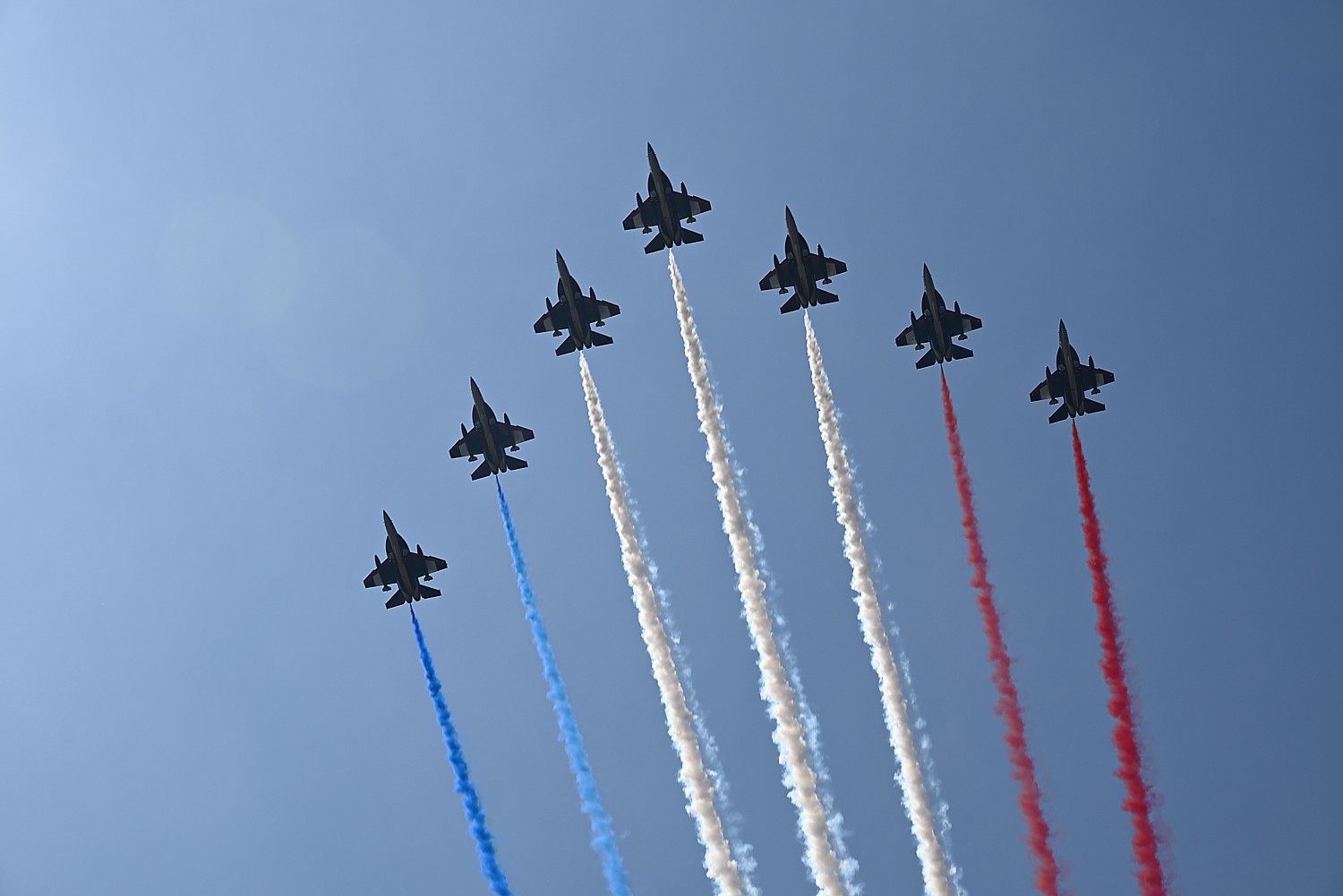
Fighter jets celebrate America’s 250th © Karen Rubin/goingplacesfarandnear.com
Fighter jets celebrate America’s 250th in New York Harbor © Karen Rubin/goingplacesfarandnear.com
Italy’s Amerigo Vespucci, sails into New York Harbor © Karen Rubin/goingplacesfarandnear.com
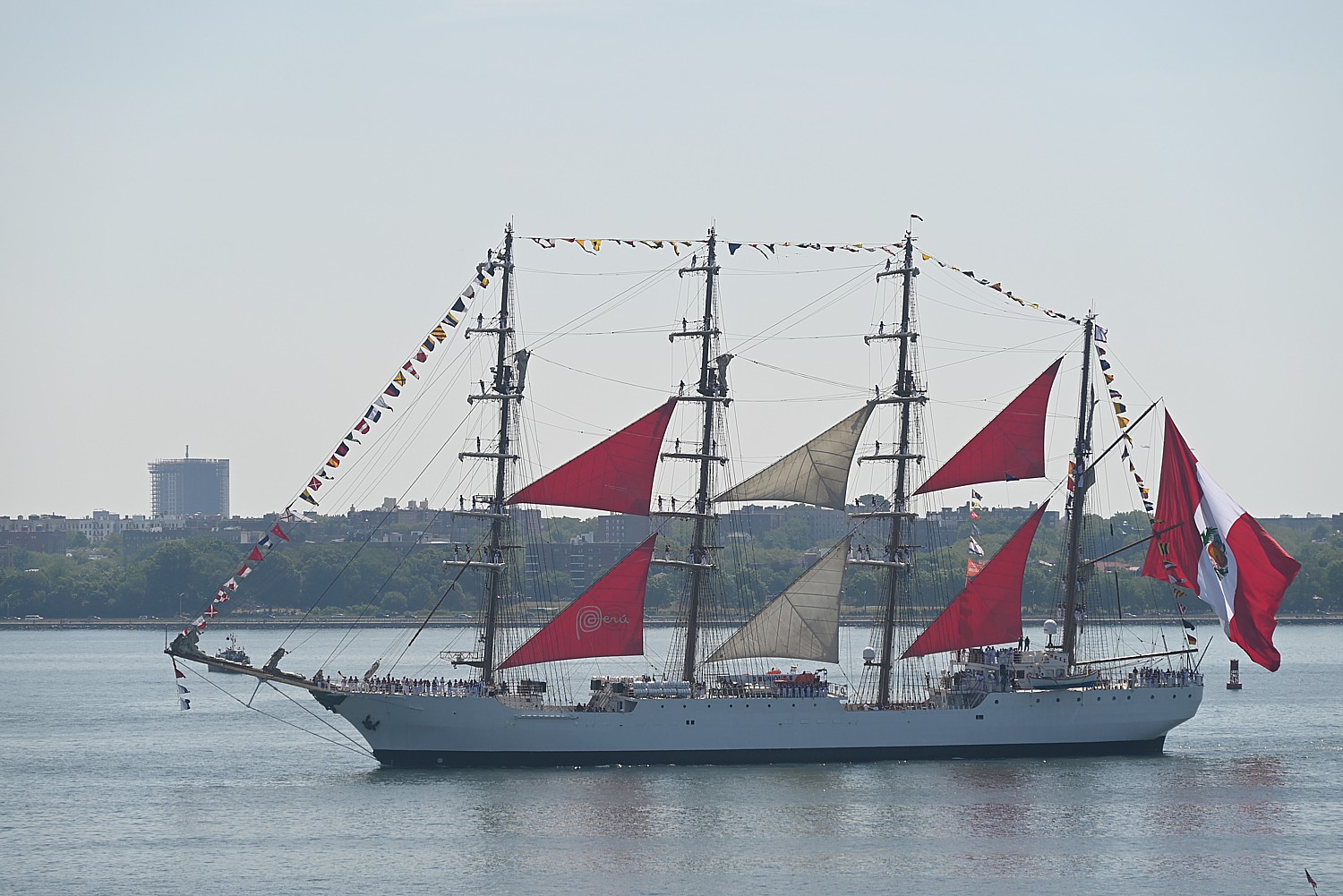
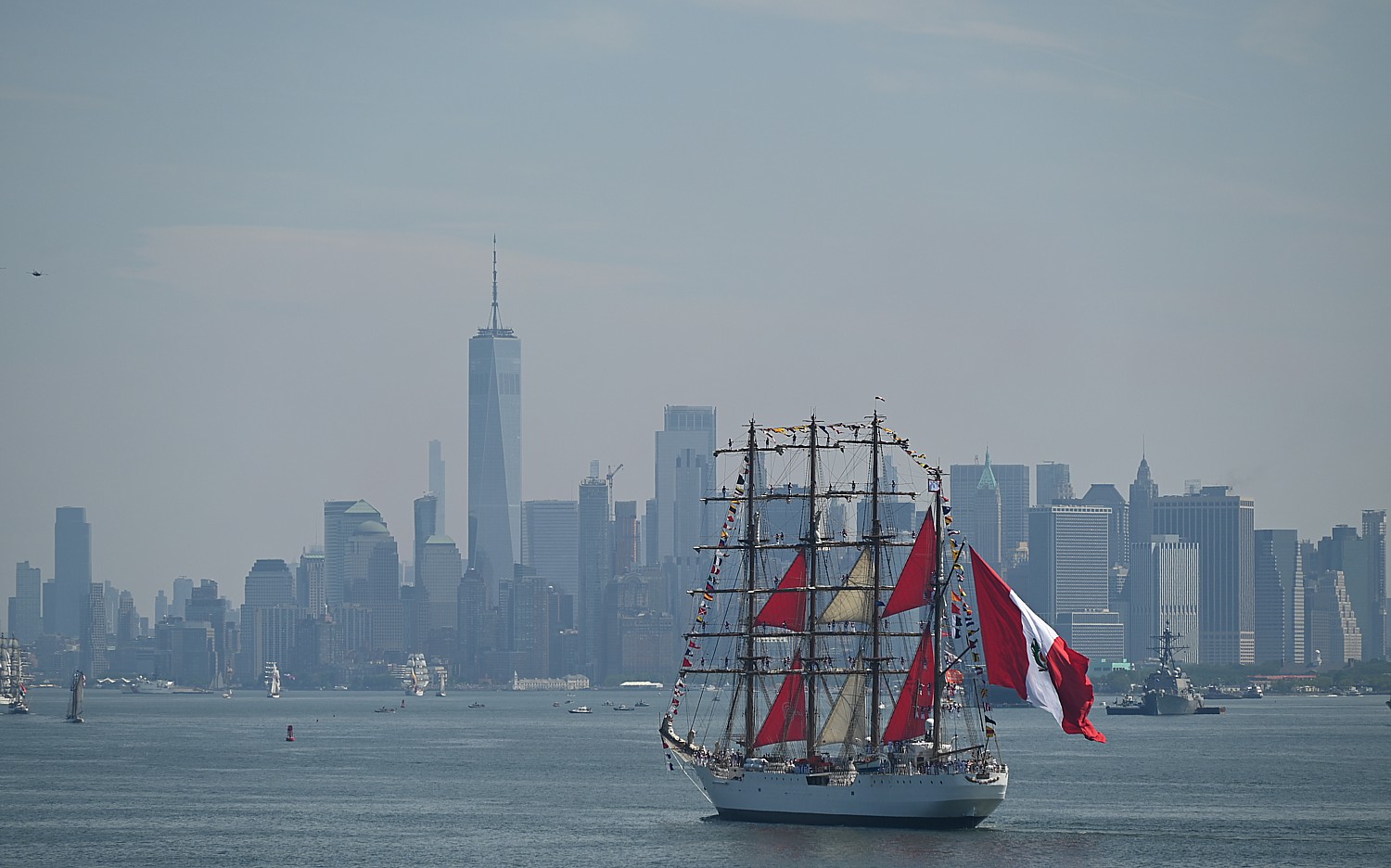
BAP Unión, Peru’s 378-foot, four-masted sail training ship © Karen Rubin/goingplacesfarandnear.com
Fighter jets at Sail4th 250 © Karen Rubin/goingplacesfarandnear.com
Sail4th 250 in New York’s harbor on July 4th 2026 © Karen Rubin/goingplacesfarandnear.com
Fighter jets at Sail4th 250 © Karen Rubin/goingplacesfarandnear.com
NRP Sagres, 292-foot, three-masted barque, from Portugal © Karen Rubin/goingplacesfarandnear.com
Fly over at Sail4th 250 © Karen Rubin/goingplacesfarandnear.com
Watching Sail4th 250 from the flight deck of the USS Nimitz aircraft carrier © Karen Rubin/goingplacesfarandnear.com
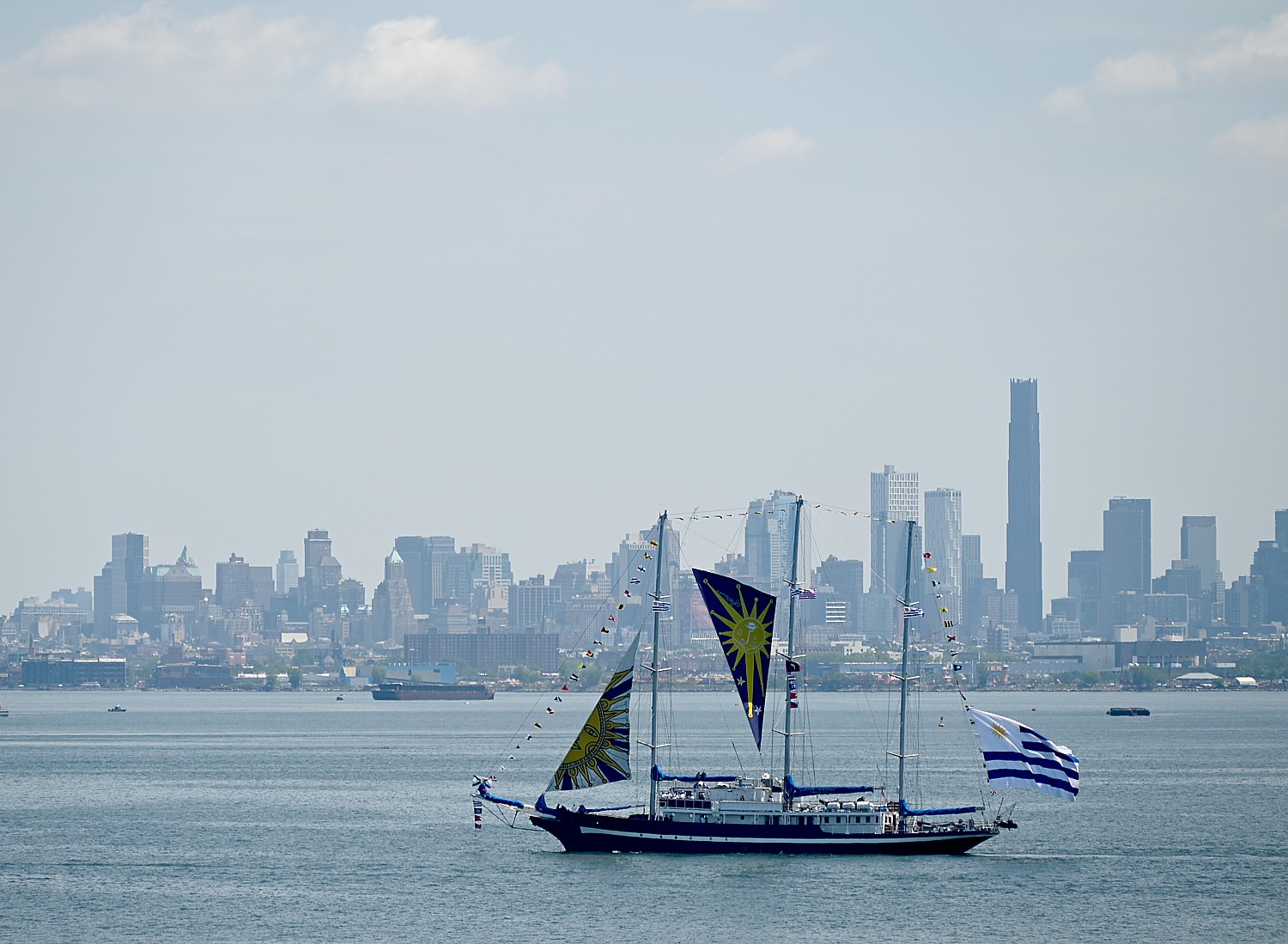
Uruguay’s Navy training sail vessel Capitan Miranda© Karen Rubin/goingplacesfarandnear.com
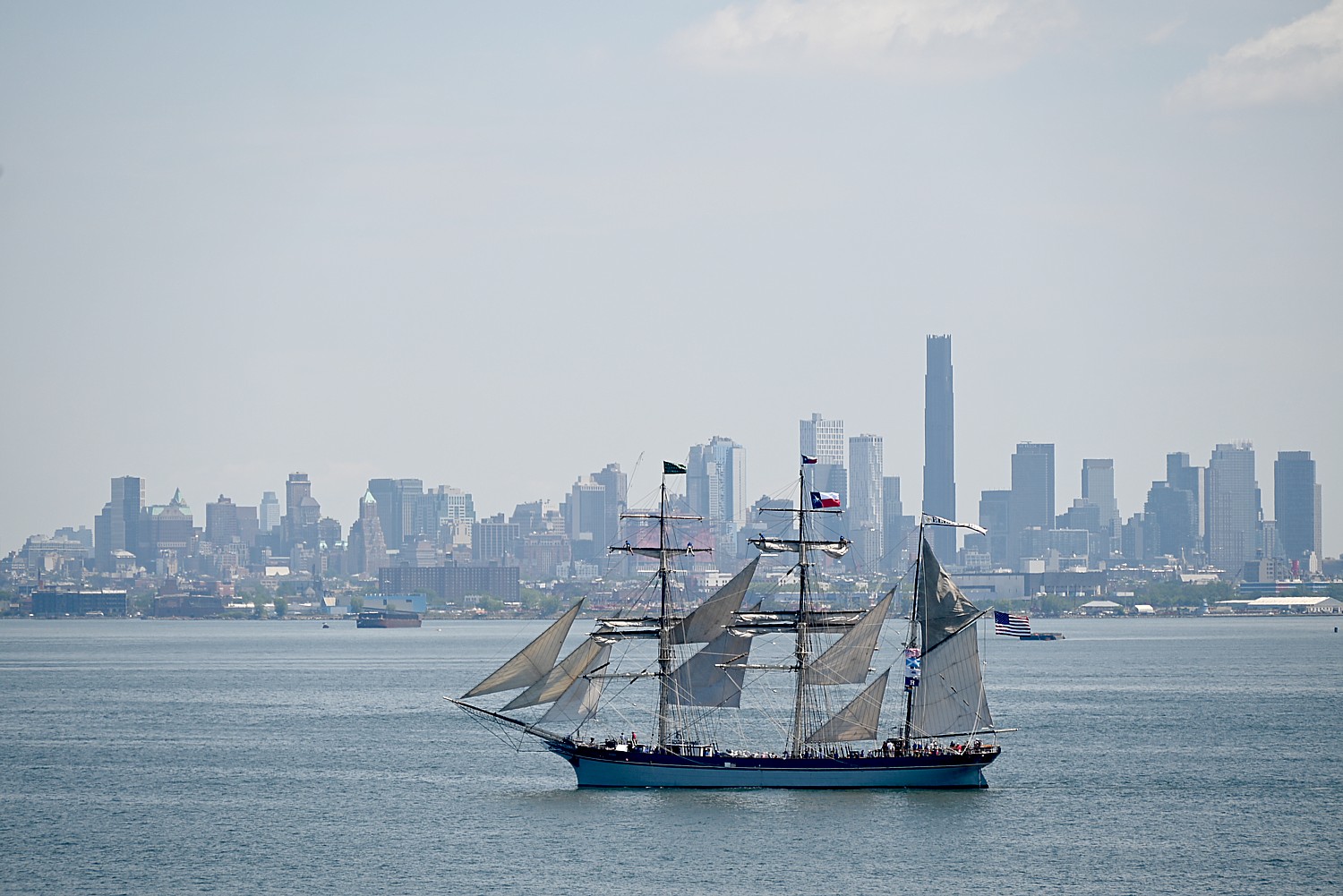
Elissa, 141-foot three-masted barque from Galveston Historic Seaport, Texas © Karen Rubin/goingplacesfarandnear.com
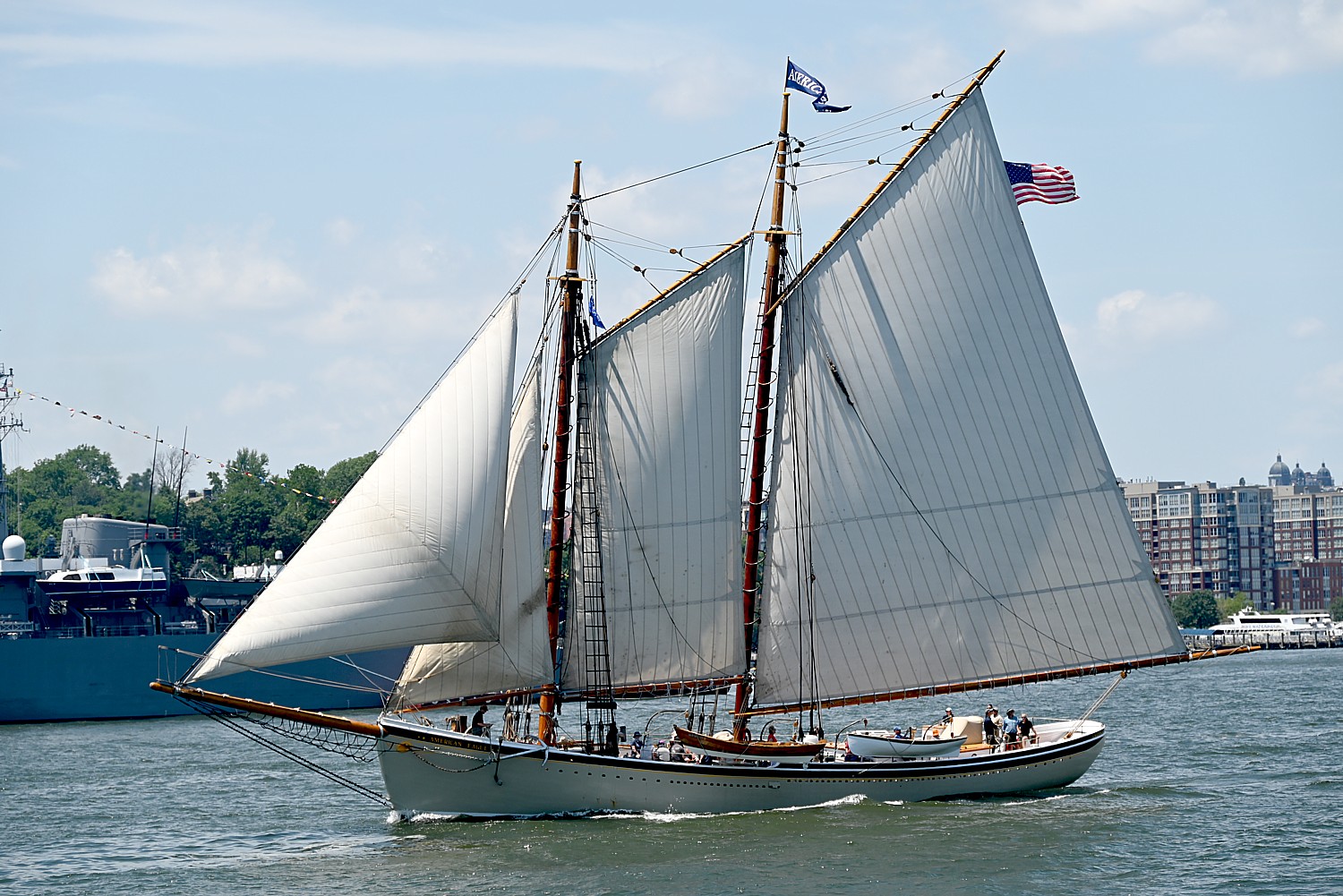
The American Eagle schooner © Karen Rubin/goingplacesfarandnear.com
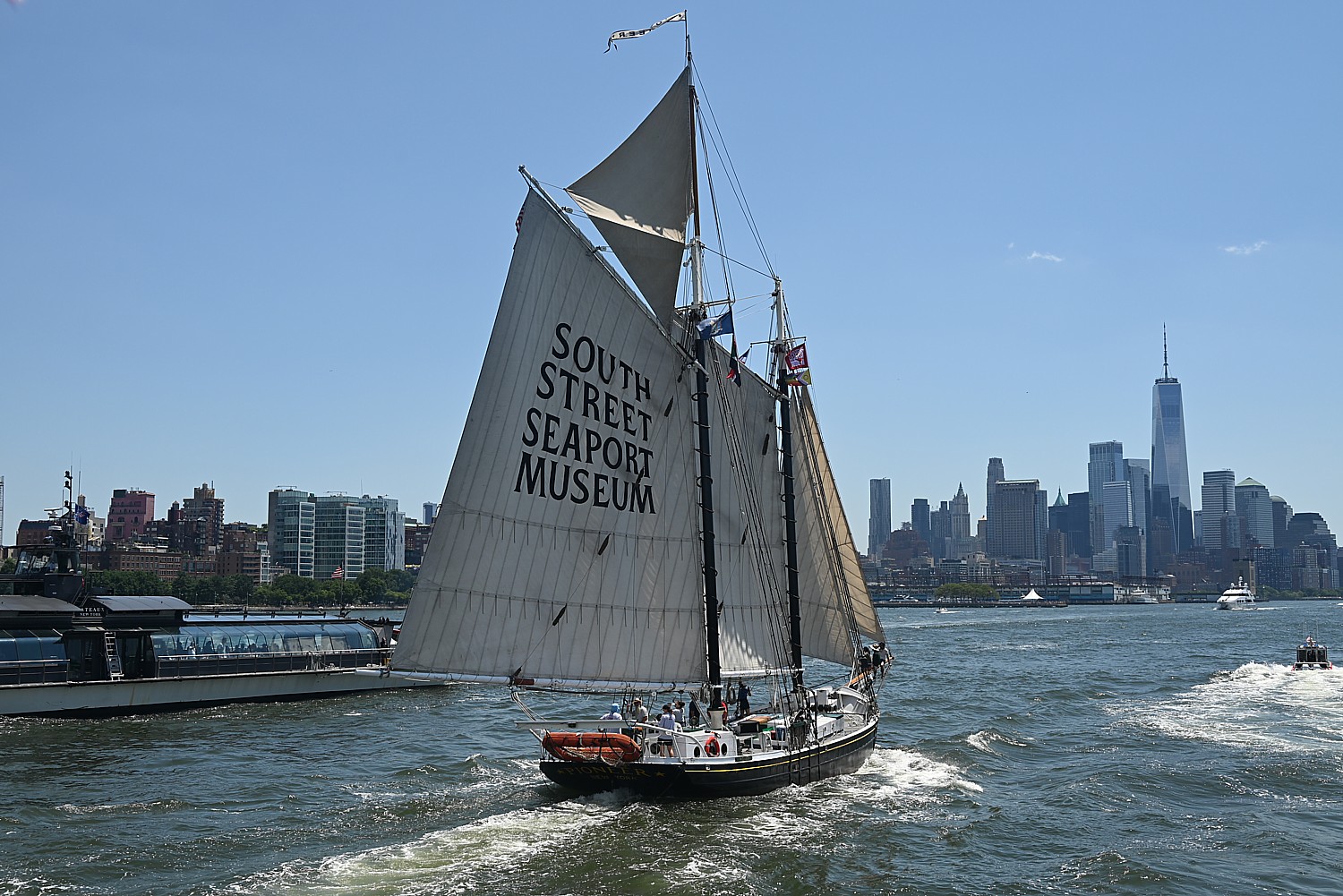
Pioneer, South Street Seaport Museum’s tall ship © Karen Rubin/goingplacesfarandnear.com
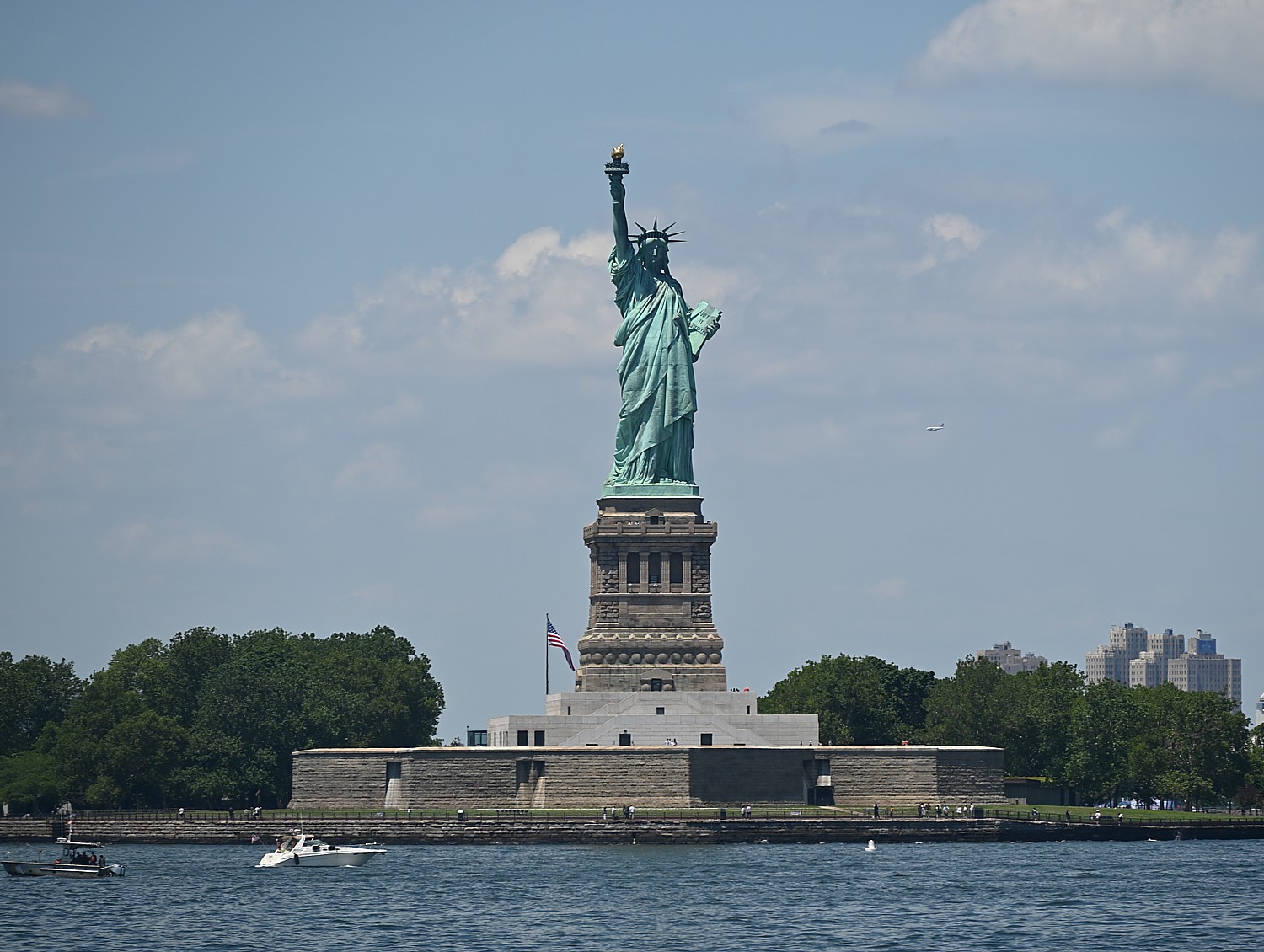
The Statue of Liberty was a present to the United States from France on its centennial, but sculptor Frédéric Auguste Bartholdi meant it to honor the emancipation of slaves after the Civil War, which many today call “the Second Founding.” © Karen Rubin/goingplacesfarandnear.com

See also:

Photo Highlights: Four Leaf Airshow at Jones Beach State Park Honors America’s 250th

Photo Highlights: Blue Angels Headline Four Leaf Air Show at Jones Beach Honoring America’s 250th

_______________________

© 2026 News & Photo Features Syndicate, a division of Workstyles, Inc. All rights reserved. For editorial feature and photo information, go to www.news-photos-features.com, email editor@news-photos-features.com.Blogging at www.dailykos.com/blogs/NewsPhotosFeatures
President Clinton: ‘What part you will play to keep making our union more perfect?’

President Bill Clinton reminds us that the Founding Fathers were fallible humans, who knew they were fallible, not omniscient gods, that they were creating an experiment in self-governance, and that they were forced to compromise to achieve consensus. They purposefully built in the ability to amend the Constitution, in recognition of all they did not know, could not foresee and were forced to accept. When the Declaration of Independence is read aloud today, all the grievances mounted against King George III can be leveled today against a dictator wannabe, willfully ignorant of history, shamelessly uncaring about his responsibilities, obsessed with his personal aggrandizement, who never had an ounce of “public service” in his being. We are living in a time not unlike the colonists, not unlike the Americans called up to defend the Union in the Civil War, which led to the “Second Founding” of the United States, correcting much of what was left out of the Constitution, and not unlike the Freedom Fighters of the 1960s. We are again asked to put our bodies as well as our values and all the force of our being on the line to restore America on the path to that idealized “more perfect union” and the values of the Declaration: “We hold these truths to be self-evident, that all men are created equal, that they are endowed by their Creator with certain unalienable Rights, that among these are Life, Liberty and the pursuit of Happiness.”
President Bill Clinton on America’s 250th: “That’s the lesson of our first 250 years: we can always do better. In how we treat one another, in person and online; in building a better future for ourselves, our families, and our communities; and in standing up, showing up, and speaking out for our democracy.” © Karen Rubin/news-photos-features.com

Statement from President Clinton on America at 250 and the State of the Country

Two hundred and fifty years ago in Philadelphia, our Founders embarked on a radical experiment and declared a new nation rooted in the ideal of equality, with an elected government charged to advance life, liberty, and the pursuit of happiness.

Since then, our government of, by, and for the people has become the longest-lasting continuous democracy in the history of the world.

Our road from 1776 to today has been, in Abraham Lincoln’s words, “piled high with difficulty.”  At every turn, there have been forces of reaction seeking to claw back the extension of our rights and liberties to more people. But by and large, thanks to celebrated leaders and everyday Americans alike, we have stumbled in the right direction—widening the circle of opportunity, deepening the meaning of freedom, and strengthening the bonds of our community.

Today, we celebrate this milestone amid another period of deep division, renewed questions about America’s future and role in the world, and serious threats to our own institutions and to our democracy itself.

The people in charge have unleashed masked agents on American communities to seize people from their homes, workplaces, and the street. They have started an unconstitutional war on a whim, with no clear objectives or exit strategy, and zero regard for the consequences to the lives of millions of people around the world. With the help of lifetime appointees to the Supreme Court and a compliant Congress, they have weaponized government to settle personal scores, prosecute enemies, stamp out free speech, and made the federal government a new profit center for themselves and their allies. Their New Deal is socialism for the super-rich (and their own enrichment) even if it means increasing poverty, inequality, and illness at home and around the world. They also want to rewrite history to ignore and outright deny our past flaws while banning books that say otherwise from our libraries. And they select even our military leaders based on their version of political correctness over ability.

But this isn’t the first time we’ve come close to the edge. Throughout our history, we’ve fought about what it means to make our union more perfect and who belongs. So far, at every major turning point, we have chosen inclusion over division: in the early days of the Republic, by building a national economic and legal system; during the Civil War, by preserving the Union and ending slavery; in the early 20th century, as we moved from an agricultural to an industrial society, by making our government stronger to preserve competition, promote basic safeguards for labor, and provide for the poor, the elderly, and the infirm; in the 60s and 70s, by advancing civil rights and women’s rights and protecting our natural resources from plunder; and at the dawn of the new millennium, by moving into the global information age in a way that distributed the benefits of our interdependence to more people.

Our Founders were wise when they gave us our mission to form a more perfect union.  They knew America would never be perfect but could always be better. That’s what they meant by “more perfect.”  We’ve done that by being courageous enough to acknowledge our flaws and missteps—and then bold enough to leave them behind for brighter tomorrows.

That’s the lesson of our first 250 years: we can always do better. In how we treat one another, in person and online; in building a better future for ourselves, our families, and our communities; and in standing up, showing up, and speaking out for our democracy.

There is still nothing wrong with America that cannot be cured by what’s right with America. We see it in the people lining up to vote, no matter how hard some may try to prevent them. We see it in those bringing groceries to their neighbors, donating to charities in record numbers, and serving their country and communities in countless ways. And we see it in the immigrants eager to bring their talents, hard work, and dreams to our country.  

So today, celebrate the miracle that has brought us this far. I know I will, because I love my country so much. Then tomorrow, wake up, and ask yourself what part you will play to keep making our union more perfect by keeping our country in the future business. We owe that much to those who struggled and sacrificed to bring us this far, and to our children and grandchildren who soon will inherit that future.