Tag Archives: climate disaster

Governor Hochul Updates New Yorkers on How State is Prepared for Extreme Weather

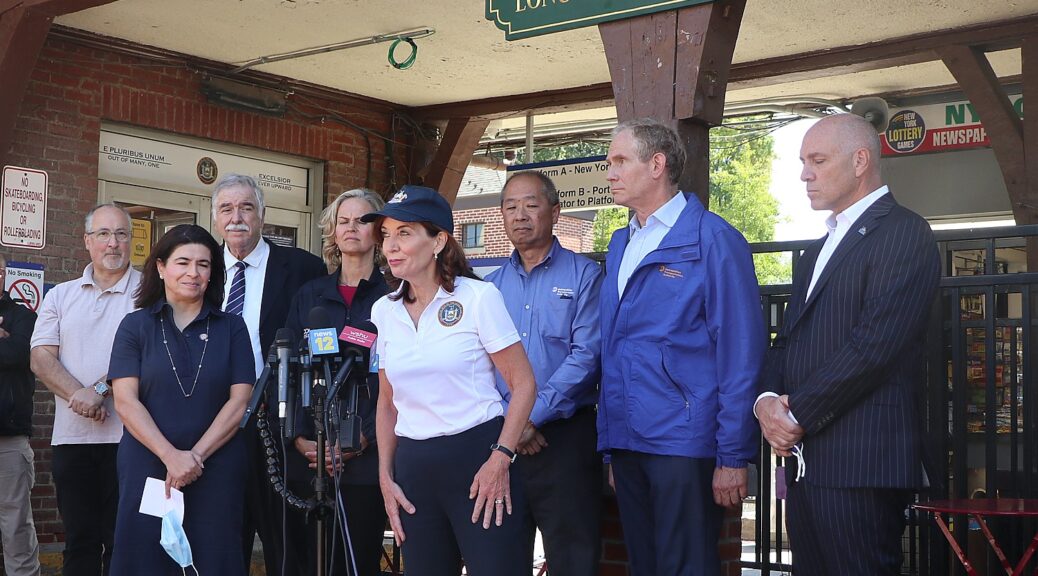
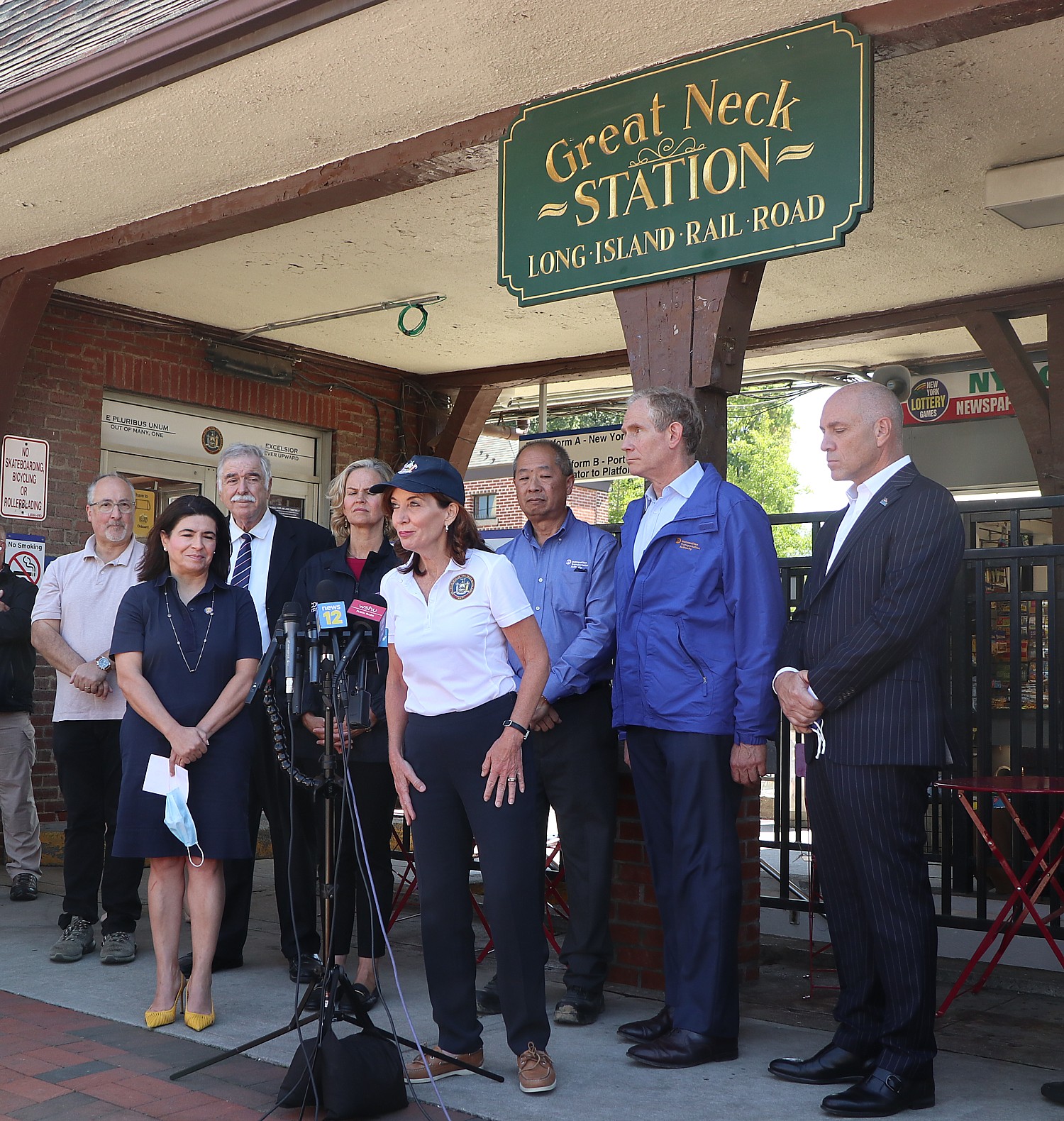
It can happen here! Remembering the devastation on Long Island caused by Superstorm Sandy, New York State has mounted a Climate Action agenda to transition to a clean energy economy that creates family-sustaining jobs, promotes economic growth through green investments, while also taking action to mitigate against climate disasters and increase preparedness. Governor Kathy Hochul reviewed the state’s preparations in wake of renewed concern after the tragedies caused by Texas floods. © Karen Rubin/news-photos-features.com

Extreme Weather Continues To Grow in Frequency and Intensity — Dozens of Temperature and Snowfall Records Broken in Recent Years, Along With Numerous Significant Rainfalls and Wildfires

Governor Launched Innovative State Weather Risk Communication Center at UAlbany; Invested More Than $25 Million to Expand Regional Presence of State Emergency Management Staff and Response Assets

New Yorkers Encouraged To Prepare Themselves Through Citizen Preparedness Corps

New Yorkers Can Text Their County or Borough to 333111 To Receive Real Time Emergency and Weather Alert Texts Directly to Their Phones

In contrast to the malicious negligence of climate-denying Trump, HHS Secretary Kristi Noem, Republican governors including Texas Governor Greg Abbott, New York State Governor Kathy Hochul has worked for years stepping up the state’s mitigation and protection against the worsening severity and likelihood of climate disasters. After the tragic results of the Republican administration in Texas failure to spend money from its $30 billion “rainy day fund” on emergency warning system that could have prevented the loss of life of Camp Mystic and throughout the flash-flood prone region, and the extraordinary negligence of Kristi Noem who failed to send out rescue teams for 72 hours, Governor Hochul sought to alleviate New Yorkers’ concerns by focusing on how the state prepares for extreme weather and taking actions to mitigate for climate change as the state transitions to a clean-energy economy.- Karen Rubin/news-photos-features.com

Governor Kathy Hochul updated New Yorkers on the state’s preparedness and response capabilities as extreme weather continues to grow in frequency and intensity each year. In the face of this growing threat, as well as looming cuts in critical federal funding, Governor Hochul has made it a top priority to invest in the State’s capabilities to prepare for, and respond to, all types of extreme weather.

“New York State is no stranger to extreme weather, and New Yorkers must be prepared for the myriad of severe weather events that come our way,” Governor Hochul said. “Keeping our state safe and protected is my top priority, and my administration is committed to ensuring accessible emergency weather preparedness and an all-hands-on-deck approach to response and recovery operations as severe weather threats increase.”

New York has one of the nation’s most diverse threat landscapes, especially when it comes to the threat of extreme weather. Since taking office in 2021, weather-related natural disasters have resulted in eight Major Disaster Declarations, five Emergency Declarations and one Fire Management Assistance Grant Declaration from the federal government, as well as the declaration of at least 19 State Disaster Emergencies by Governor Hochul herself.

The diversity of natural threats has been wide ranging too. In 2024 and 2025 alone, New York has:

  • Broken 49 High Temperature Records
  • Broken 10 Low Temperature Records
  • Broken 19 Snowfall Records
  • Experienced 38 Tornadoes
  • Experienced 20 significant brush and wildfires, including the largest wildfire in NYS in 30+ years
  • Experienced at least 20 significant rainfall events; and
  • Experienced impacts from two tropical systems (Beryl and Debby)

New York State Division of Homeland Security and Emergency Services Commissioner Jackie Bray said, “Extreme weather events are now the norm, so being prepared is our best defense. We are fortunate to have a Governor that not only understands this, but actively does something about it.  The significant investments Governor Hochul has made in training, equipment, planning and staffing have prepared us to support our local partners and all New Yorkers when a severe weather emergency strikes.”

“New York is leading the nation in building a strong connection between weather experts, emergency managers and the public— which is critical as our state faces increasingly frequent and extreme weather,: New York State Weather Risk Communication Center Director Nick Bassill said. “From hurricanes to lake effect snow and everything in between, the State Weather Risk Communication Center at UAlbany is working daily to help state and local emergency managers better prepare for and respond to severe weather events. I’d like to thank Governor Hochul and Commissioner Bray for their continued support and remain committed to making our communities safer and more resilient.”

Strengthening Preparedness and Response, While Building Resiliency

Under the leadership of Governor Hochul, New York has invested heavily in not only preparedness and response capabilities, but in building a more resilient state. Some of those efforts have included:

  • In December 2023, Governor Hochul announced the creation of New York’s State Weather Risk Communication Center (SWRCC) at the State University of New York at Albany. The Center is a first-of-its kind operational collaboration between university researchers and state emergency managers and serves as a clearinghouse for critical weather information. It also works to develop tools to help emergency managers make informed decisions to help protect communities and examines how communicating extreme weather risks to the public can be improved.
  • Governor Hochul secured $15 million in the FY25 Enacted Budget to enable the Division of Homeland Security and Emergency Services to supply county partners with critical emergency response assets such as generators, high-flow pumps and flood barrier technology.
  • Governor Hochul secured an additional $10.4 million in the FY25 Enacted Budget to further strengthen the regional presence of State Emergency Management Staff, which will add to the volume and availability of on-the-ground support, planning, trainings, exercises, as well as build out our analytic and geospatial capabilities.
  • Governor Hochul secured a total of $90 million in the past two years to launch the Resilient & Ready, an initiative administered by New York Homes and Community Renewal (HCR) consisting of two programs that support resiliency and home repair efforts for low-and-moderate income homeowners. The Resilient Retrofits program provides assistance to eligible homeowners for making proactive flood mitigation and resiliency improvements. The Rapid Response program helps assist eligible households that experience home damage to make necessary repairs in the aftermath of certain major storms.
  • In January 2024, the Governor announced a comprehensive resiliency plan to protect people, communities, infrastructure and homes. 
  • Following the devastating tornado in Rome, Governor Hochul provided $11 million in Emergency Assistance, including up to $5 million for homeowners and $4 million for demolition in Oneida County after the event did not qualify for federal assistance. Another in May 2025 provided $3.5 million to rehab two buildings destroyed by the tornadoes as well. 

State Preparedness, Response and Recovery Operations

The New York State Division of Homeland Security and Emergency Services’ Office of Emergency Management (OEM) is New York’s primary conduit for emergency preparedness and response operations for all emergencies, both natural and human made. During emergencies, OEM not only coordinates with local emergency responders to support local operations but helps coordinate the deployment of thousands of State personnel and pieces of equipment from numerous State agencies. 

OEM is also home to the State Watch Center which is staffed 24/7/365 to monitor hazardous activity throughout the State and ensure situational awareness for state leaders. Additionally, OEM maintain nine stockpiles located throughout the State which are able to provide emergency response assets and supplies as needed.

Along with Emergency Management, training first responders from all disciplines is a core mission for the Division.  Whether online, or in-person, over 54,000 firefighters, emergency managers, officers and other first responders received some form of training from the Division, including the 4,778 students who received training at the state’s Academy of Fire Science in Montour Falls. Separately, nearly 10,000 state and local first responders received training at the State Preparedness Training Center in Oriskany — one of the nation’s premier first responder training facilities.

The Division is also home to the Office of Disaster Recovery Programs which is responsible for the legwork necessary for obtaining federal disaster declarations and administering the federal recovery dollars that flow to communities as a result. Since 2021, the Division has issued payments totaling $12.36 billion in federal Public Assistance recovery funding and $410.6 million in Hazard Mitigation Assistance funding.

Individual Preparedness

In any emergency situation, individual preparedness is one of the most critical components of an effective response and the state offers New Yorkers a number of different ways to not only stay prepared, but stay informed as well. 

The New York State Citizen Preparedness Corps (CPC), administered by the Division and the New York National Guard, was established in 2014 to train New Yorkers how to prepare for emergencies and disasters, respond immediately and recover as quickly as possible to pre-disaster conditions. Nearly 433,000 New Yorkers have taken CPC training in community settings throughout the State.

CPC trainings are free and held in-person throughout the State. New Yorkers can find a local training and enroll online at the DHSES website. For those unable to attend in person, courses are also available online in English and with subtitles in 12 additional languages, including Arabic, Bengali, Chinese, English, French, Haitian Creole, Italian, Korean, Polish, Russian, Spanish, Urdu and Yiddish.

Additionally, Governor Hochul announced a new real-time emergency and weather alert system earlier this year as part of the State’s Hurricane Preparedness Week recognition efforts. Managed by the Division, this text option allows New Yorkers to text the name of their county or borough to 333111 to receive real time emergency and weather alerts and updates directly to their phones. New Yorkers should also remember to follow their local forecasts and visit the DHSES Facebook page, follow @NYSDHSES on X, or visit dhses.ny.gov for important safety information.

Heat waves and other extreme heat events are likely to happen again this summer and New York State agencies are working to implement initiatives recommended by the State’s Extreme Heat Action Plan to help New Yorkers prepare for heat’s negative health and environmental impacts. In June, New York State marked significant progress on the first year of implementation of the Extreme Heat Action Plan (EHAP) with the first readiness update now available. The EHAP, led by DEC and NYSERDA along with DHSES and DOH under the direction of Governor Hochul, includes nearly 50 actions by State agencies to address extreme heat impacts across four tracks (local planning and capacity building, community preparedness and workers’ safety, resilient buildings and access to cooling, and advancing ecosystem-based adaptations). The full update on implementation progress is available here.

The State Department of Environmental Conservation (DEC) closely monitors air quality conditions statewide and works with the State Department of Health to issue timely public health advisories that millions of New Yorkers depend on each year. Visit DEC’s website for updated forecasts and information about air quality index levels, and the Department of Health website for information on health risks and precautions related to air quality.  

New York State’s climate agenda calls for an affordable and just transition to a clean energy economy that creates family-sustaining jobs, promotes economic growth through green investments, and directs a minimum of 35 percent of the benefits to disadvantaged communities. New York is advancing a suite of efforts to achieve an emissions-free economy by 2050, including in the energy, buildings, transportation, and waste sectors.
FACT SHEET: Biden-Harris Administration’s Continued Response to Hurricane Helene, State by State Update

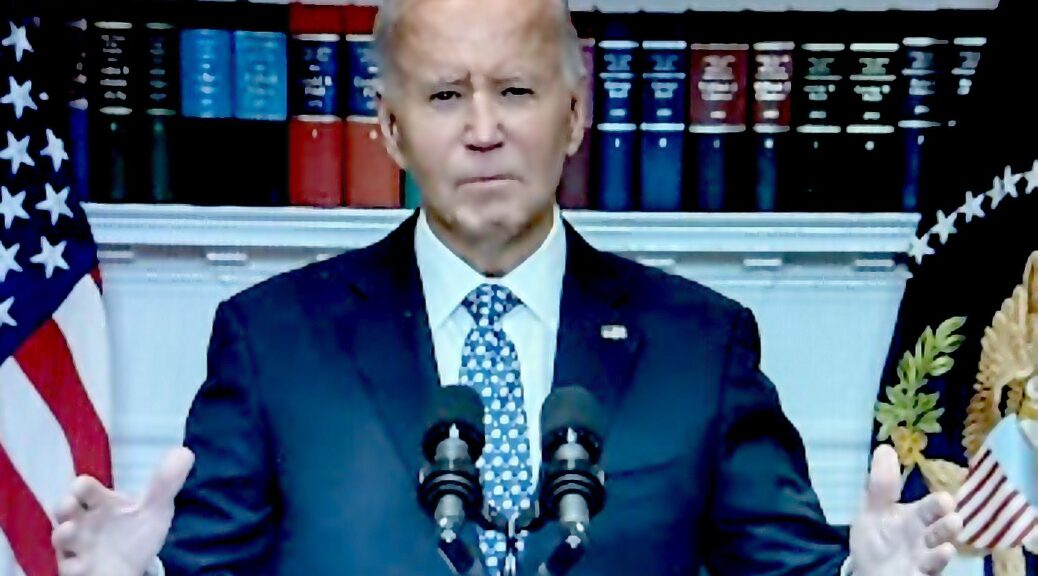
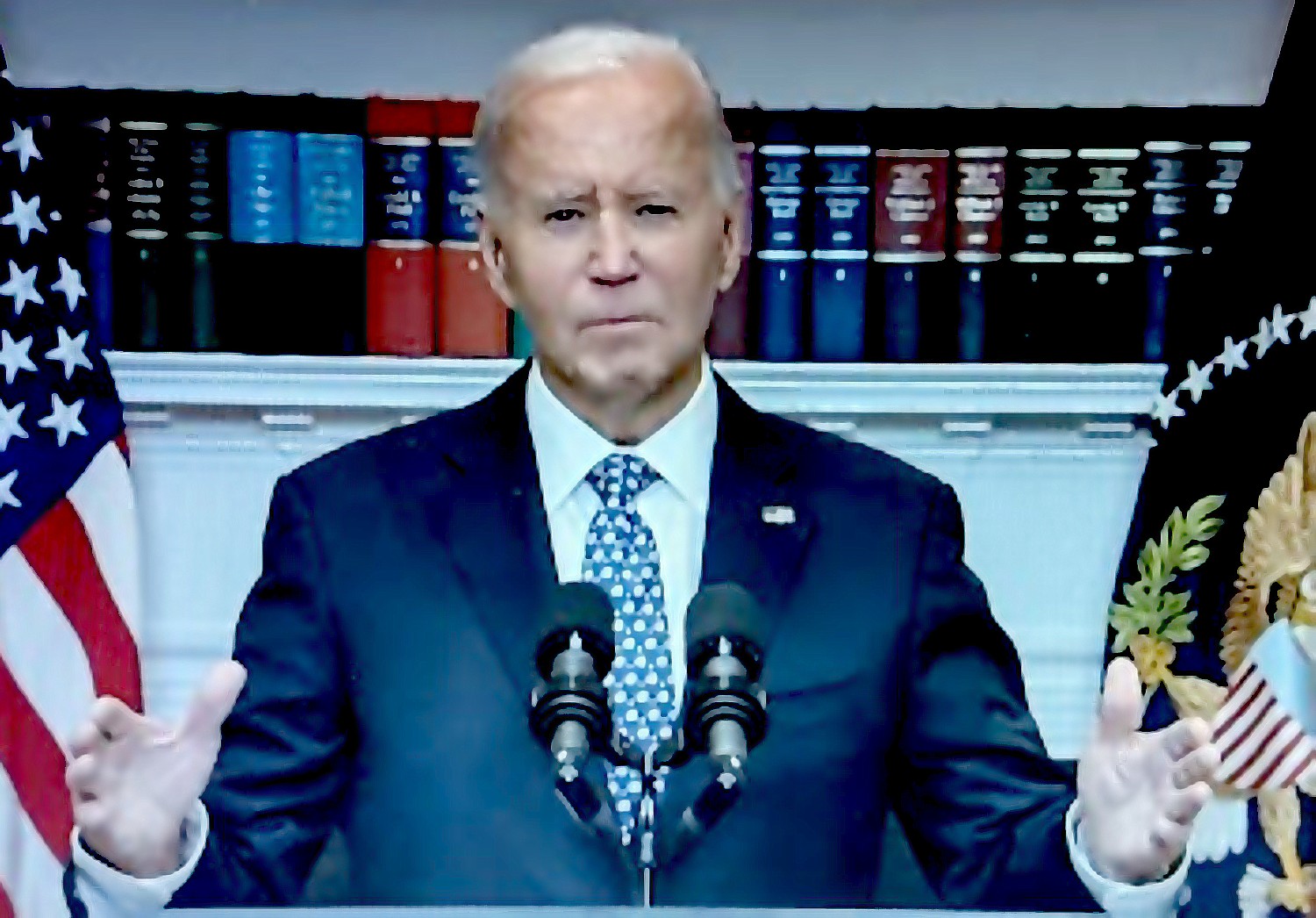
President Joe Biden gives an update on the federal response to the devastating havoc caused by Hurricane Helene © Karen Rubin/news-photos-features.com via MSNBC

This update Biden-Harris Administration’s continued response efforts after the havoc wreaked by Hurricane Helene across multiple states for days, one of the deadliest storms ever to hit is provided by an administration official.

The National Weather Service reported Helene made landfall in the Big Bend area of the Florida Gulf Coast as a Category 4 storm late in the evening of September 26, 2024.  Although slowly weakening as it moved north across the Deep South and then northwestward across the southern Appalachians, Helene caused significant impacts across a large portion of the Southeast U.S., especially around the southern Appalachians. It brought record wind and rain, lines of tornadoes.

While FEMA has attributed Helene’s severity to the ongoing climate crisis, Donald Trump dismisses climate change as a “scam” and didn’t mind disrupting rescue and recovery efforts underway in order to showboat a photo opp in a devastated Georgia community, actually lying about the Biden-Harris administration’s response and outreach to Georgia Governor Brian Kemp and others and charging that the Biden administration discriminates against sending disaster aid to red states (which is what Trump did throughout his presidency. And be reminded that Trump pressured Speaker Johnson to shutdown government unless he got a law requiring voters to prove their citizenship attached to the budget authorization, which would have left these communities without any assistance whatsoever. Trump is the last one to criticize federal response when his “help” to Puerto Rico after devastating Hurricane Maria was to toss paper towels and give the contract to rebuilt the power infrastructure to a Montana crony.

Trump advocates shutting down NOAA, the Weather Service and Hurricane Preparedness (because they provide evidence of human-caused climate change). Trump, who pulled the US out of the Paris Climate Accord in his first term and reversed Obama’s climate initiatives) also promised Big Oil donors that if they ponied up $1 billion, he would reverse Biden’s historic climate actions, and his answer to everything from inflation to housing affordability is “drill baby, drill.”

In contrast, “Vice President Kamala Harris canceled her West Coast campaigning and headed straight to FEMA headquarters in DC to do what she’s always done — confront the existential threat of climate change head-on. Through her unwavering support for the 2022 Inflation Reduction Act and the 2021 infrastructure law, Harris has championed investments in environmentally friendly programs and resources, showcasing a dedication to safeguarding our planet for future generations,” the progressive organization Indivisible writes.

Trump’s legacy of environmental deregulation and his current ambitions to dismantle vital agencies like the National Weather Service pose a direct threat to our nation’s ability to respond to climate-related disasters — such actions would leave us blindsided in the face of future crises, rendering the unconscionable notion of being unprepared a reality.”

The Biden-Harris Administration continues to lead a robust Federal response to help impacted communities in the wake of Hurricane Helene. The Administration is working around the clock and mobilizing every resource available to support life-saving response efforts in North Carolina, South Carolina, Tennessee, Georgia, and Florida.
 
The President and Vice President continue to receive regular briefings from their teams, including today, and Administration officials remain in constant communication with state and local officials to ensure they have the support and resources they need. President Biden has spoken with North Carolina Governor Roy Cooper, Georgia Governor Brian Kemp, South Carolina Governor Henry McMaster, and Asheville Mayor Esther Manheimer, along with other state and local officials in the impacted areas to offer further assistance as needed. This afternoon, the President was briefed by Governor Cooper and FEMA Administrator Deanne Criswell from the field following surveys of Helene’s impacts across the State. Vice President Harris also received an in-person briefing at FEMA today and has been in touch with Governor Cooper, Governor Kemp, Greenville Mayor Knox White, and Savannah Mayor Van Johnson.
 
President Biden directed Administrator Criswell to determine what more can be done to accelerate delivering support to those who are having the most difficult time accessing assistance in isolated communities. At the President’s direction, Administrator Criswell has been on the ground to survey damage and determine any unmet needs, and at the President’s direction she will remain on the ground in Asheville, North Carolina, until the situation has stabilized.

An administration official provided this update as of October 1:

Biden-Harris Administration Updates on Hurricane Helene Response in North Carolina

Latest updates as of October 1:

  • At the Direction of President Biden, FEMA Administrator Deanne Criswell is in North Carolina and will remain there until the situation has stabilized. FEMA and other agencies have more than 1,200 personnel in North Carolina, with more resources and staff arriving daily.
    • President Biden plans to visit North Carolina on Wednesday to survey the damage, receive a briefing at the State Emergency Operations Center and participate in an aerial tour of Asheville.Yesterday, the White House reached out to over 130 officials in North Carolina and Georgia.
    • After President Biden approved a Major Disaster declaration for North Carolina over the weekend, people in 25 counties in North Carolina can now apply for assistance with FEMA. More counties may be declared in these states as damage assessments continue.
  • People can apply in three ways: online by visiting disasterassistance.gov, calling 1-800-621-3362 or on the FEMA App.
    • FEMA Disaster Survivor Assistance teams are deployed to North Carolina to help survivors register for disaster assistance, answer questions and help people jumpstart their recovery. Team members will be visiting shelter locations to help survivors without cell service or power be able to begin their application.
    • FEMA assistance in may include funds to help with essential items like food, water, baby formula and emergency supplies. Funds may also be available to repair storm-related damage to homes and personal property, as well as assistance for a temporary place to stay.
    • Homeowners and renters with damage to their home or personal property from previous disasters, whether they received FEMA funds or not, are still eligible to apply for and receive assistance for Hurricane Helene.
  • Power restoration crews continue working 24 hours a day throughout parts of North Carolina. Generators, mutual aid crews and additional power restoration assets are being moved into the hardest hit areas as debris removal allows.
    • The U.S. Department of Health and Human Services teams are working in North Carolina, one team started emergency department decompression at Mission Hospital in Asheville and is treating patients. Another team is moving to Blue Ridge Regional Hospital in Spruce Pine to support emergency department decompression mission. Additionally, 200 federal ambulances have been provided to the state.
    • With 10 search and rescue teams on the ground, another nine teams are arriving today for more than 900 personnel to assist with these efforts. 
    • Together with local and state responders, teams have rescued or supported more than 1,130 in North Carolina.
    • The U.S. Coast Guard crews have saved 21 lives and five pets in the response so far, with rescues continuing in North Carolina.
    • The U.S. Department of Energy has responders deployed to North Carolina to assist restoration efforts.
    • Two FEMA Incident Management Assessment Teams are in North Carolina. The team will coordinate directly with the state to facilitate requests for assistance.
    • So far, 25 trailer-loads of meals and 60 trailers-loads of water have been delivered to the state to support response efforts. More trailer loads of meals and water will be delivered in the coming days.
    • A C-17 cargo plane full of food, water and other commodities has arrived at the forward operating base in Asheville, with a daily flow of commodities established via air bridge.
    • There are 29 shelters open with over 1,000 occupants. 
    • 40 Starlink satellite systems are available to help with responder communications and an additional 140 satellites are being shipped to assist with communications infrastructure restoration.
    • One Starlink will be deployed per county EOC to assist with communications and continuity of government.
    • Generators are moving from Charlotte-Mecklenberg to Asheville, with another 30 generators enroute to the staging base in Mecklenburg.
    • Disaster Medical Assistance Teams are in Asheville providing emergency room medical support at hospitals.
    • FEMA Disaster Survivor Assistance teams are going to the field, focusing on shelters, where they will assist survivors in applying for assistance.
    • The Salvation Army is coordinating with county emergency management agencies and partner organizations. North Carolina’s Incident Management Team is activated, with two canteens in Boone and Buncombe County.

Biden-Harris Administration Updates on Hurricane Helene Response in Georgia

Latest updates as of October 1:

  • President Biden approved a Major Disaster declaration for Georgia, allowing individuals in 41 counties to apply for FEMA assistance. More counties may be declared as damage assessments continue.
  • People can apply in three ways: online by visiting disasterassistance.gov, calling 1-800-621-3362 or on the FEMA App.
  • Yesterday, the White House reached out to over 130 officials in North Carolina and Georgia.
    • Power restoration crews continue working 24 hours a day throughout parts of Georgia. Generators, mutual aid crews and additional power restoration assets are being moved into the hardest hit areas as debris removal allows.
    • FEMA supplied over 500,000 meals primarily to Macon-Bibb County. 
    • FEMA is trucking in 2,500 gallons of gasoline a day to help alleviate potential fuel issues in hard hit communities. 
    • The U.S. Department of Energy has responders deployed to Georgia to assist restoration efforts.
    • A FEMA Incident Management Assistance Team is onsite at the state Emergency Operations Center to coordinate with the state and facilitate any requests for assistance.
    • FEMA Disaster Survivor Assistance teams are going to the field, focusing on shelters, where they will assist survivors in applying for assistance.
    • The American Red Cross, in coordination with FEMA and the Department of Health and Human Services are supporting shelter operations.  Eight shelters are open, supporting 519 survivors.
    • FEMA and the Federal Communications Commission are working with commercial carriers to augment or have telecommunication systems restored.
    • USDA’s Farm Service Agency personnel are traveling to impacted areas to extend emergency credit to farmers and agriculture producers who lost crops and livestock. 
    • The Salvation Army is coordinating with county emergency management agencies and partner organizations. In Georgia, meal services are underway in Valdosta, Alma, Vidalia, with six units serving Chatham County and Augusta.

Biden-Harris Administration Updates on Hurricane Helene Response in Florida

Latest updates as of October 1:

  • The White House has reached out to more than 200 federal, state, and local officials across Florida over the last few days to offer support and gauge additional assistance needs.
    • FEMA Disaster Survivor Assistance teams are in Florida neighborhoods and shelters helping people apply for FEMA assistance after Hurricane Helene.
    • Two FEMA Incident Management Assistance Teams are onsite at the state Emergency Operations Center in Tallahassee to coordinate with the state and facilitate any requests for assistance.
    • 30 FEMA Division Supervisors are embedded in 21 Florida county Emergency Operations Centers.
    • All federal Urban Search and Rescue teams have been released from the state to assist other affected states, specifically the Asheville area in North Carolina.
    • Disaster Recovery Centers are operating in Hillsborough, Manatee and Sarasota counties to provide one-on-one help to Floridians affected by Hurricane Helene.
    • On September 28, President Biden approved a major disaster declaration for the state of Florida, allowing survivors to immediately access funds and resources to jumpstart their recovery. People in 17 counties in Florida can now apply for assistance with FEMA. People can apply in three ways: online by visiting disasterassistance.gov, calling 1-800-621-3362 or on the FEMA App.
  • FEMA assistance in Florida may include upfront funds to help with essential items like food, water, baby formula and other emergency supplies. Funds may also be available to repair storm-related damage to homes and personal property, as well as assistance to find a temporary place to stay.
    • Florida homeowners and renters in 17 counties who had uninsured damage or losses caused by Hurricane Helene may be eligible for FEMA disaster assistance.
    • FEMA may be able to help with serious needs, displacement, temporary lodging, basic home repair costs, personal property loss or other disaster-caused needs. Homeowners and renters in Charlotte, Citrus, Dixie, Franklin, Hernando, Hillsborough, Jefferson, Lafayette, Lee, Levy, Madison, Manatee, Pasco, Pinellas, Sarasota, Taylor and Wakulla counties can apply.

Biden-Harris Administration Updates on Hurricane Helene Response in South Carolina

Latest updates as of October 1:

  • President Biden has spoken with South Carolina Governor Henry McMaster.
    • President Biden approved a Major Disaster declaration for South Carolina this weekend, allowing survivors to immediately access funds and resources to jumpstart their recovery. 
  • FEMA assistance in South Carolina may include a one-time $750 payment to help with essential items like food, water, baby formula and other emergency supplies. After registering for disaster assistance, individuals may also qualify to receive disaster-related financial assistance to repair storm-related damage to homes and replace personal property, as well as assistance to find a temporary place to stay.
    • Homeowners and renters with damage to their home or personal property from previous disasters, whether they received FEMA funds or not, are still eligible to apply for and receive assistance for Hurricane Helene.
    • People in 13 counties in South Carolina can now apply for assistance with FEMA. People can apply in four ways: online by visiting disasterassistance.gov, calling 1-800-621-3362, on the FEMA App, or via disaster recovery centers.
  • Emergency declarations were also approved for South Carolina. Under an emergency declaration, FEMA provides direct Federal support to states for life saving activities and other emergency protective measures, such as evacuation, sheltering, and search and rescue.
    • A FEMA Incident Management Assistance Team is onsite at the state Emergency Operations Center in Columbia to coordinate with the state and facilitate any requests for assistance.
    • HHS declared a public health emergency for South Carolina to address the health impacts of Hurricane Helene.
    • Two Urban Search and Rescue teams are working near Greenville and Pickens.
    • 10 shelters are open with a total of 63 survivors seeking shelter there. Additionally, there are 10 medical shelters active in the state.

On Wednesday, President Biden will travel to North Carolina. He will also travel to Georgia and Florida as soon as possible.

Additionally, the Federal government is closely monitoring an additional weather disturbance in the Caribbean Sea that has the potential to form into another storm in the coming week. Residents throughout the Gulf Coast should remain alert, listen to local officials, and make additional preparations as needed.

NYS Gov Hochul Surveys Superstorm Damage, Joins 9 Other Governors to Demand Congress Take ‘Impactful Climate Actions’

Governor Kathy Hochul comes Great Neck LIRR station to show support for Great Neck and Nassau County after devastating tropical storm Ida wreaked havoc, flooding buildings and streets, and causing Long Island Railroad to shut down. Here with State Senator Anna Kaplan, Nassau County Executive Laura Curran, Great Neck Plaza Mayor Ted Rosen, Village of Great Neck Deputy Mayor Barton Sobel, executives of the MTA and LIRR and transport workers union. © Karen Rubin/news-photos-features.com

Governor Kathy Hochul: “One thing I want to make clear: we’re not treating this as if it’s not going to happen again for 500 years. What we saw, the record rainfall that precipitated, the situation out here in Great Neck as well as what we’ve seen all the way from here to Suffolk to the five boroughs to Rockland to Putnam to Westchester, it was an unbelievable amount of rainfall in an incredibly short amount out of time.”

Hochul: “We know how to build resiliency. … Many of our coastal areas are in a far better place to be able to handle the wind and wave action. … But what we’re not prepared for and what I’m not satisfied with, what’s happening on our streets at the higher elevations. … The raging flood waters cannot be contained by the existing storm sewers and drainage systems, and then the flood starts going into our subway system. That’s what happened here. It happened all over Long Island. It happened in New York City and our surrounding counties. That’s what we have to address.”

Thank you for joining us as we continue our survey of storm effects and also now the cleanup and what I was just witnessing moments ago was an extraordinary effort by the incredible team literally a few feet away who worked through this morning and through the night to try and restore service here on Long Island and Nassau County and here in the Great Neck Station.

“The Port Washington Line has been disrupted considerably and they are working tirelessly to restore the tracks so they are safe once again and they anticipate in the next few hours they’ll be able to make some announcements on that timing so that’s something I just saw, but I want to thank the incredible leaders who are with me here today…

“What we saw last night was nothing short of unprecedented. I cannot imagine a community having gone through this before. In fact we were told it was a 500-year event. I’m not sure how they know that; I’m not sure who was here 500 years ago to tell us that but that is the scale we’re talking about.

“One thing I want to make clear: we’re not treating this as if it’s not going to happen again for 500 years. What we saw, the record rainfall that precipitated, the situation out here in Great Neck as well as what we’ve seen all the way from here to Suffolk to the five boroughs to Rockland to Putnam to Westchester, it was an unbelievable amount of rainfall in an incredibly short amount out of time.

“We’re talking about literally from 8:50 p.m. to 9:50 p.m. last night, a record shattering rainfall, at LaGuardia, JFK, at Central Park. Records are broken, but what is fascinating is that the records that they broke were literally set a week before. That’s what we’re dealing with now, my friends, so when we talk about how is this happening, people have been warning for decades that the effect of climate change and what it would do to our communities – it’s happening right now. It is not a future threat. It is a current situation and it is the status quo.

“We know how to build resiliency. We saw that particular here on Long Island after Superstorm Sandy. Many of our coastal areas are in a far better place to be able to handle the wind and wave action. I just was down last week in anticipating the onslaught of Hurricane Henri. I was on the beaches and I saw what we had done to build up.”

Just a day earlier, as Hurricane Ida barreled through the south up toward the Northeast, Governor Hochul joined 8 other governors to Congressional Leadership urging passage of impactful climate actions.

GOVERNOR HOCHUL, 9 OTHER GOVERNORS ISSUE LETTER TO CONGRESSIONAL LEADERSHIP URGING PASSAGE OF IMPACTFUL CLIMATE ACTIONS

Letter Urges Congress to Prioritize Key Elements of President Biden’s Build Back Better Agenda that Protect the Climate

Governors Request that 40 Percent of Benefits of Climate and Clean Infrastructure Investments Are Directed to Disadvantaged Communities

Governor Kathy Hochul and nine other Governors today issued a letter to House Speaker Nancy Pelosi and Senate Majority Leader Charles Schumer urging the passage of both the bipartisan infrastructure deal and a bold reconciliation bill that meets the urgency of the moment and tackles the climate crisis. The Governors urge Congress to prioritize key elements of President Biden’s Build Back Better Agenda that will have the most impact in protecting the climate, including programs that support a carbon free grid, the electrification of the transportation system, and investments in climate resilience. The Governors also request that 40 percent of the benefits of the climate and clean infrastructure investments included in these legislative packages are directed to disadvantaged communities.

Here is the full text of the letter:

September 1, 2021 

Dear Speaker Pelosi and Majority Leader Schumer: 

As Governors from across the country, we strongly support your joint efforts to pass landmark legislation that will create millions of good jobs, rebuild our country’s infrastructure, improve public health, advance environmental justice, and tackle the climate crisis. 

Climate change is intensifying the wildfires that burn in the West, hurricanes that threaten the East, and extreme heat that endangers people and animals throughout the country. Now is the time for bold climate action. The most recent Intergovernmental Panel on Climate Change (IPCC) report details what we already know – the window for preventing irreversible climate consequences is closing and we need to act quickly and comprehensively. 

As we approach the 26th United Nations Climate Change Conference of Parties (COP 26) in November, it is imperative that the United States demonstrates that America is ready to lead and solve the climate crisis. President Biden has committed America to cutting its greenhouse gas emissions to 50 percent to 52 percent below 2005 levels by 2030. America’s ability to meet this goal rests on how we respond to climate change today. 

President Biden proposed the Build Back Better Agenda to rebuild America in a just and equitable way and ensure America’s economy flourishes in the 21st century. It is vital for Congress to adopt both the bipartisan infrastructure deal and a bold and comprehensive reconciliation bill to achieve the goals of the Build Back Better Agenda. Each of the elements of the Build Back Better Agenda are worthy of inclusion in an infrastructure package, but as Governors of states on the front line of the climate crisis, we place particular emphasis that the combined package includes the most impactful actions to protect our climate: 

  • Carbon Free Grid: A Clean Electricity Performance Program, expansion of tax credits for clean energy generation and storage, and funding for new and upgraded electricity transmission. 
  • Transportation Electrification: Tax credits for manufacturing of zeroemission vehicles; incentives for consumers, especially low-income consumers, to purchase zero-emission vehicles; funding for zero-emission infrastructure; and elimination of statutory obstacles to charging on federal rights of way. 
  • Methane Emissions Reduction: Funding to plug orphan wells and adoption of a methane polluter fee for the venting or burning of excess methane. 
  • Climate-Smart Agriculture: Investment in climate-smart agricultural and forest management programs for farmers and rural communities. 
  • Climate Resilience: Investment in protections for communities and transportation infrastructure from the impacts of climate change, as well as robust funding for a new Civilian Climate Corps. 
  • Clean Building Incentives: New consumer rebates for home electrification and weatherization. 
  • Clean Energy and Sustainability Accelerator: Establish an accelerator to mobilize private investment into distributed energy resources; retrofits of residential, commercial, and municipal buildings; and clean transportation.

We also respectfully request that any infrastructure package ensure 40 percent of the benefits of climate and clean infrastructure investments are directed to disadvantaged communities and invests in rural communities and communities impacted by the market-based transition to clean energy. We are excited to build back better with both of you and are committed to taking action to advance this crucial agenda. 

Sincerely,

Governor Kathy Hochul, New York

Governor Gavin Newsom, California 

Governor Ned Lamont, Connecticut

Governor David Ige, Hawaii 

Governor Janet Mills, Maine

Governor Steve Sisolak, Nevada 

Governor Kate Brown, Oregon
Governor Tom Wolf, Pennsylvania 

Governor Dan McKee, Rhode Island

Governor Jay Inslee, Washington