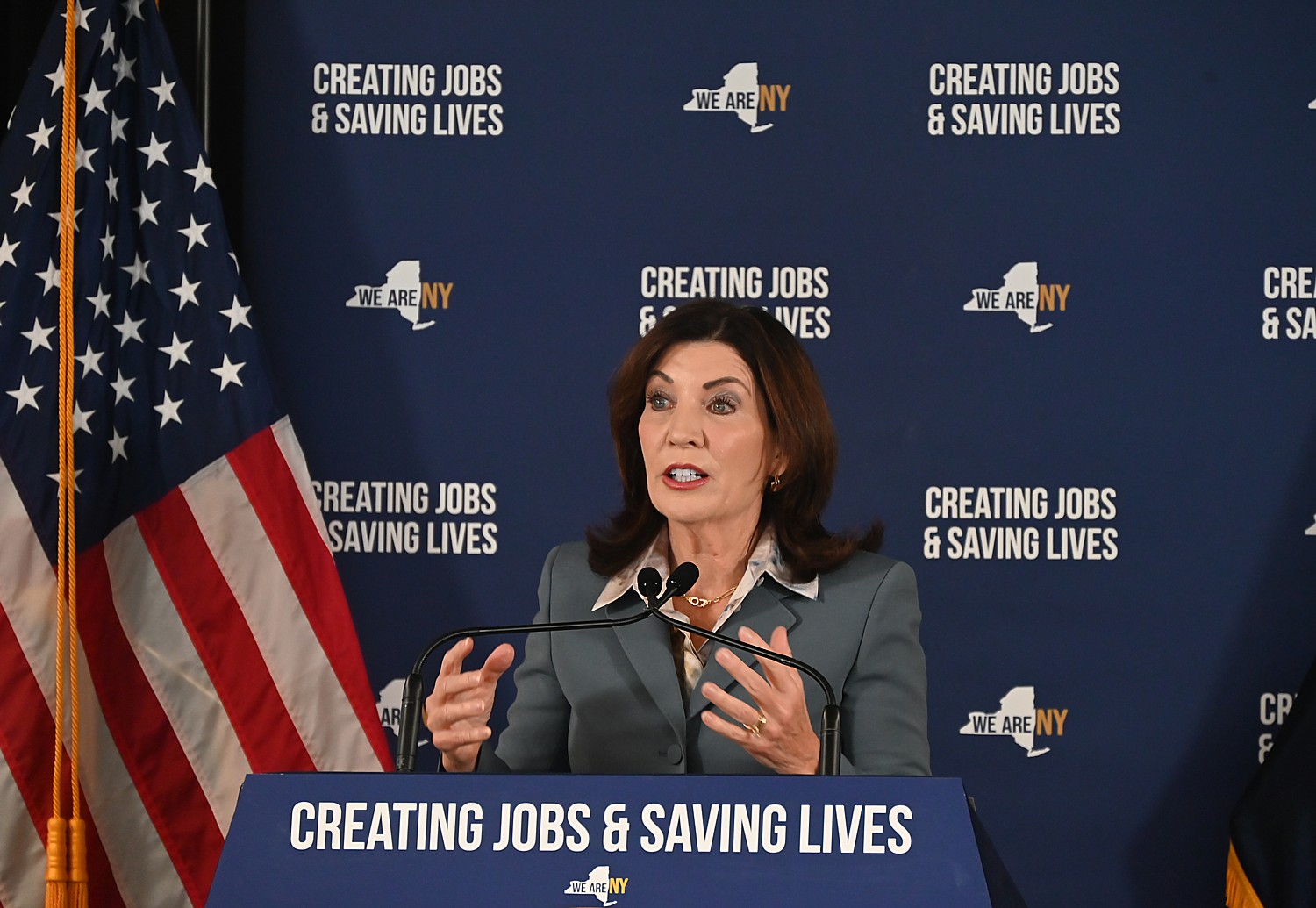
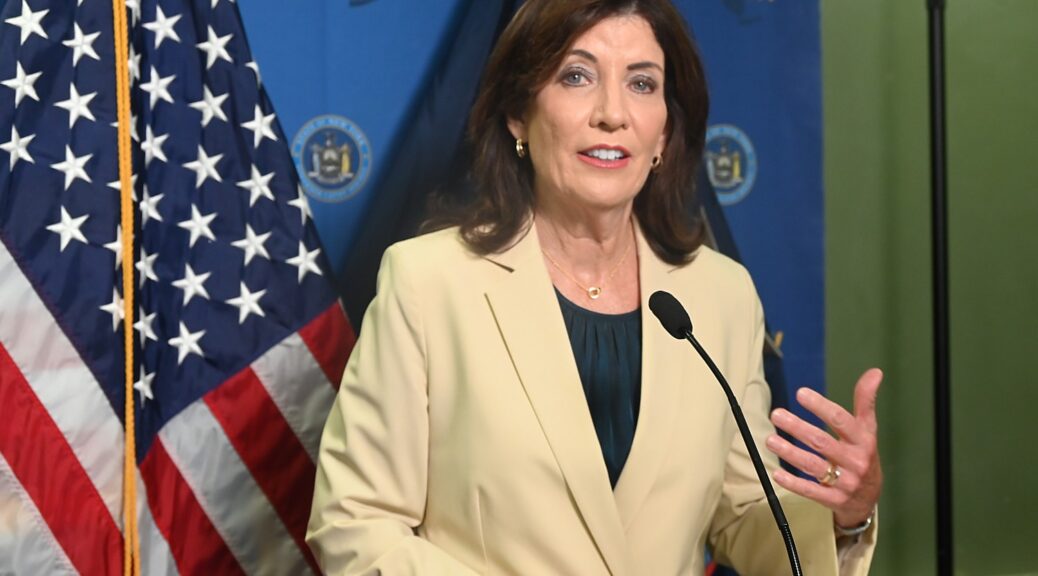
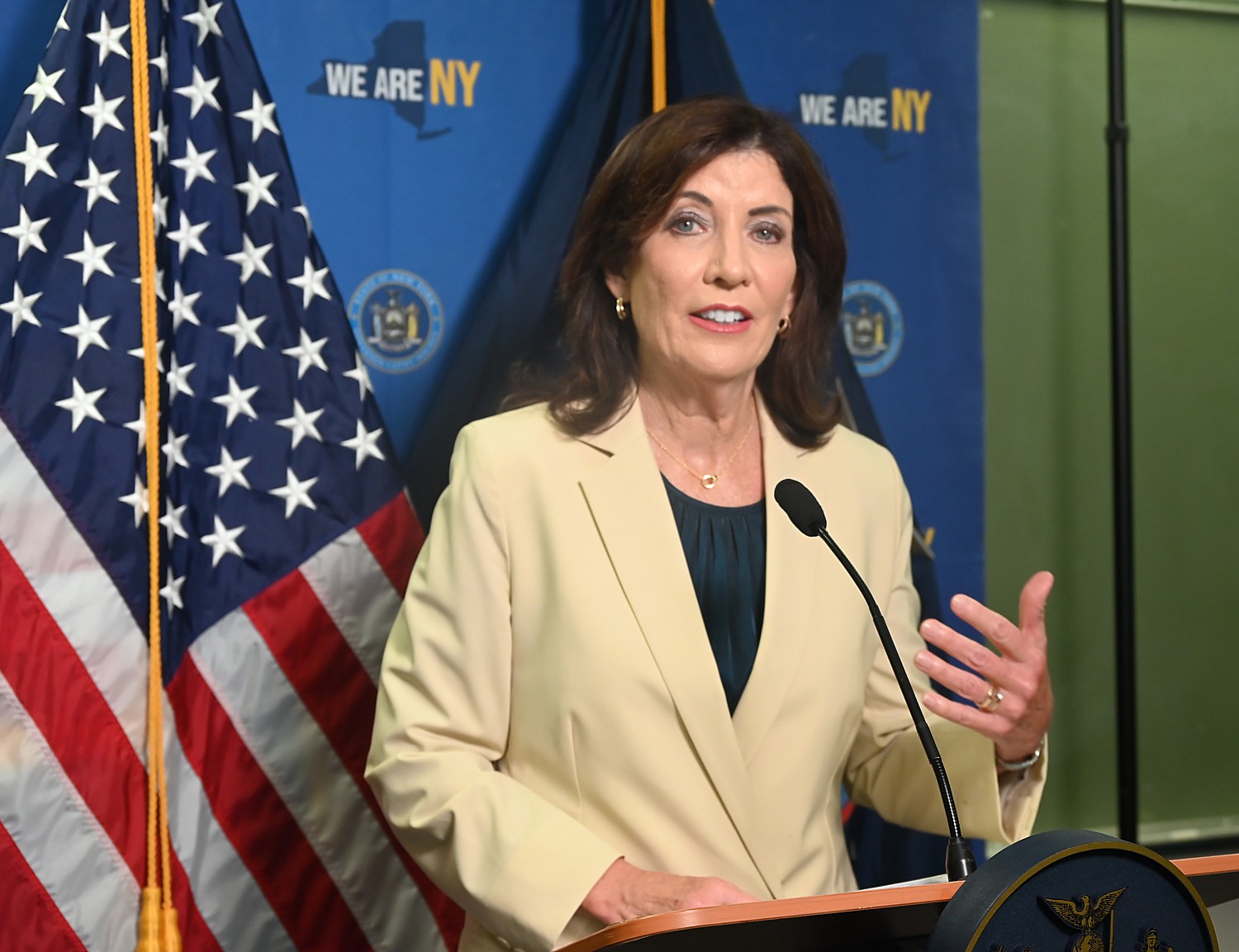
While Trump, Blakeman Expected to Crow Over Crime Rates, Governor Hochul Touts Declines & Her $4 Billion Investment in Public Safety
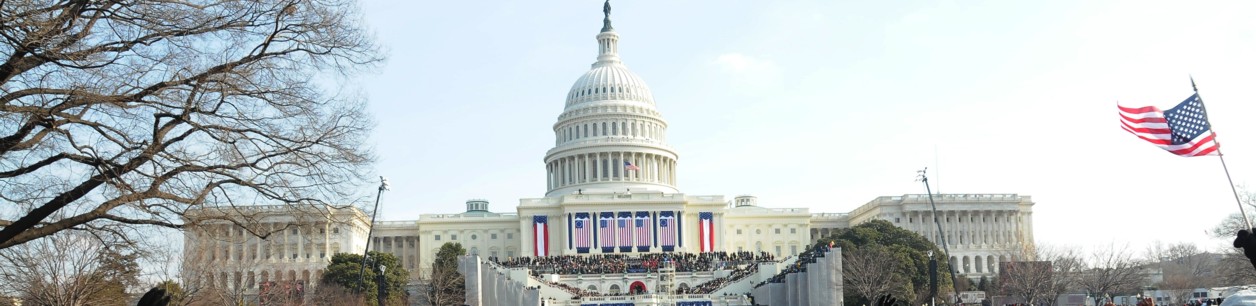
During his visit to Nassau County to backslap County Executive Bruce Blakeman and give his blessing to Blakeman’s run to depose Kathy Hochul as New York State governor, Trump was expected to tout a continued decline in crime and Blakeman, who pitches himself as a law-and-order candidate, was expected to take credit for any drop in crime.
However, crime rates have been declining since peaking during the coronavirus pandemic, and was coming down during the administrations of Democrats President Joe Biden, Governor Kathy Hochul, and County Executive Laura Curran, when Nassau County was designated “the safest county of its size in the USA.”
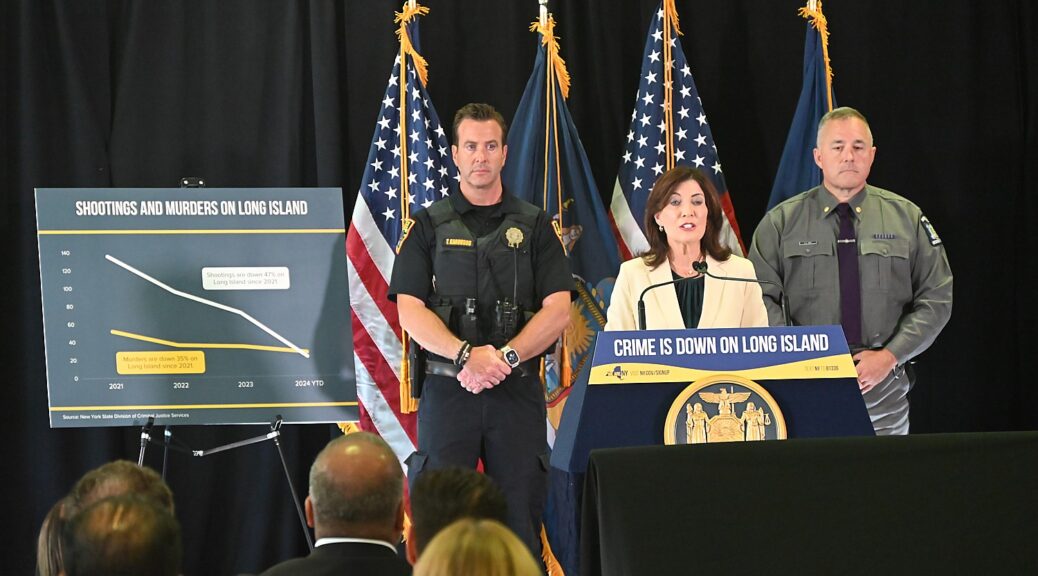
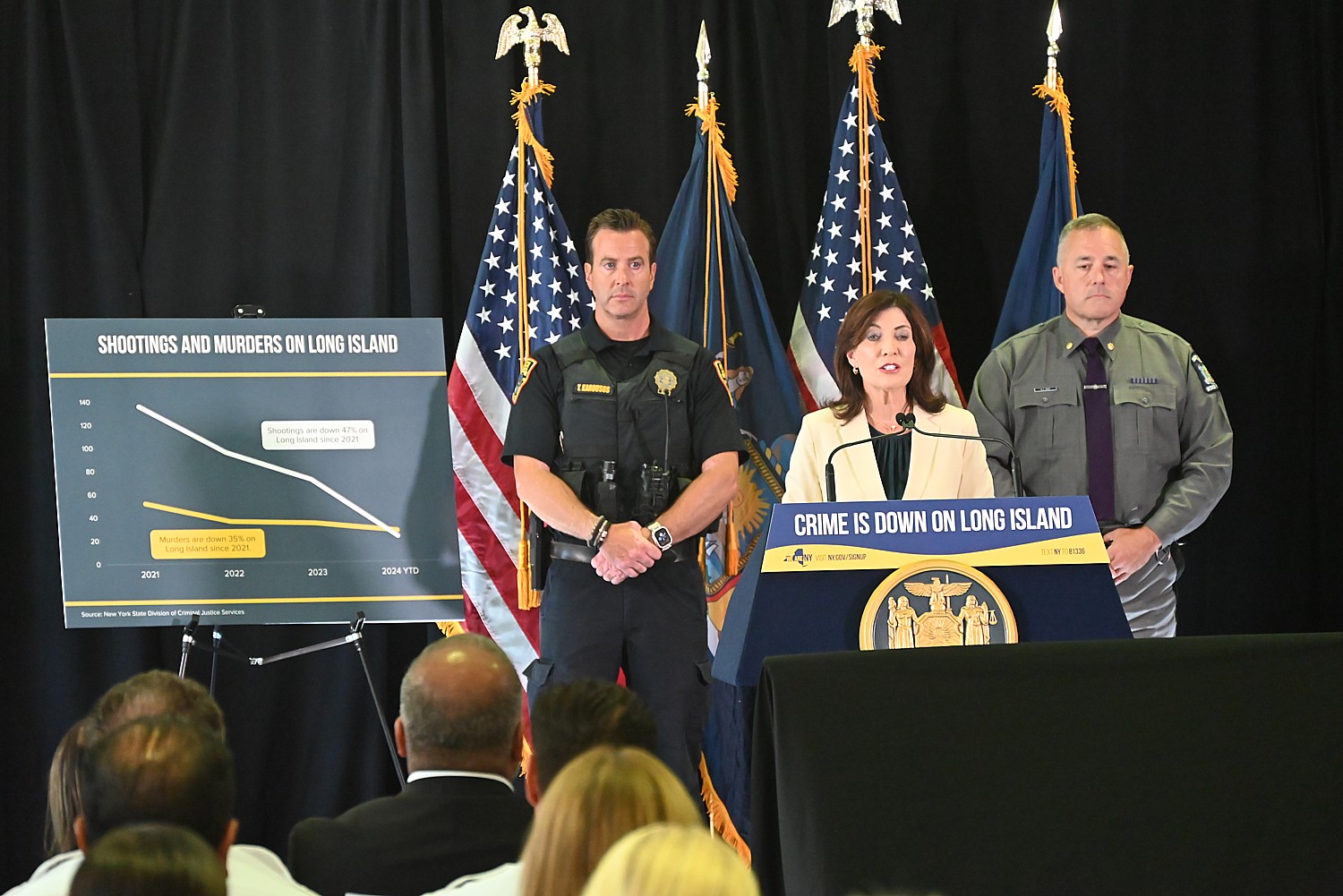
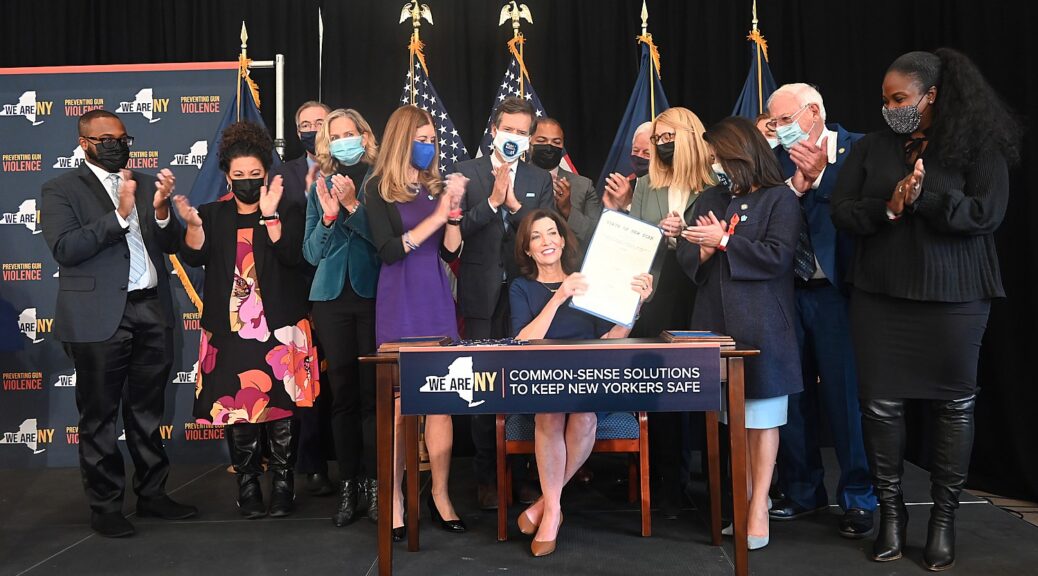
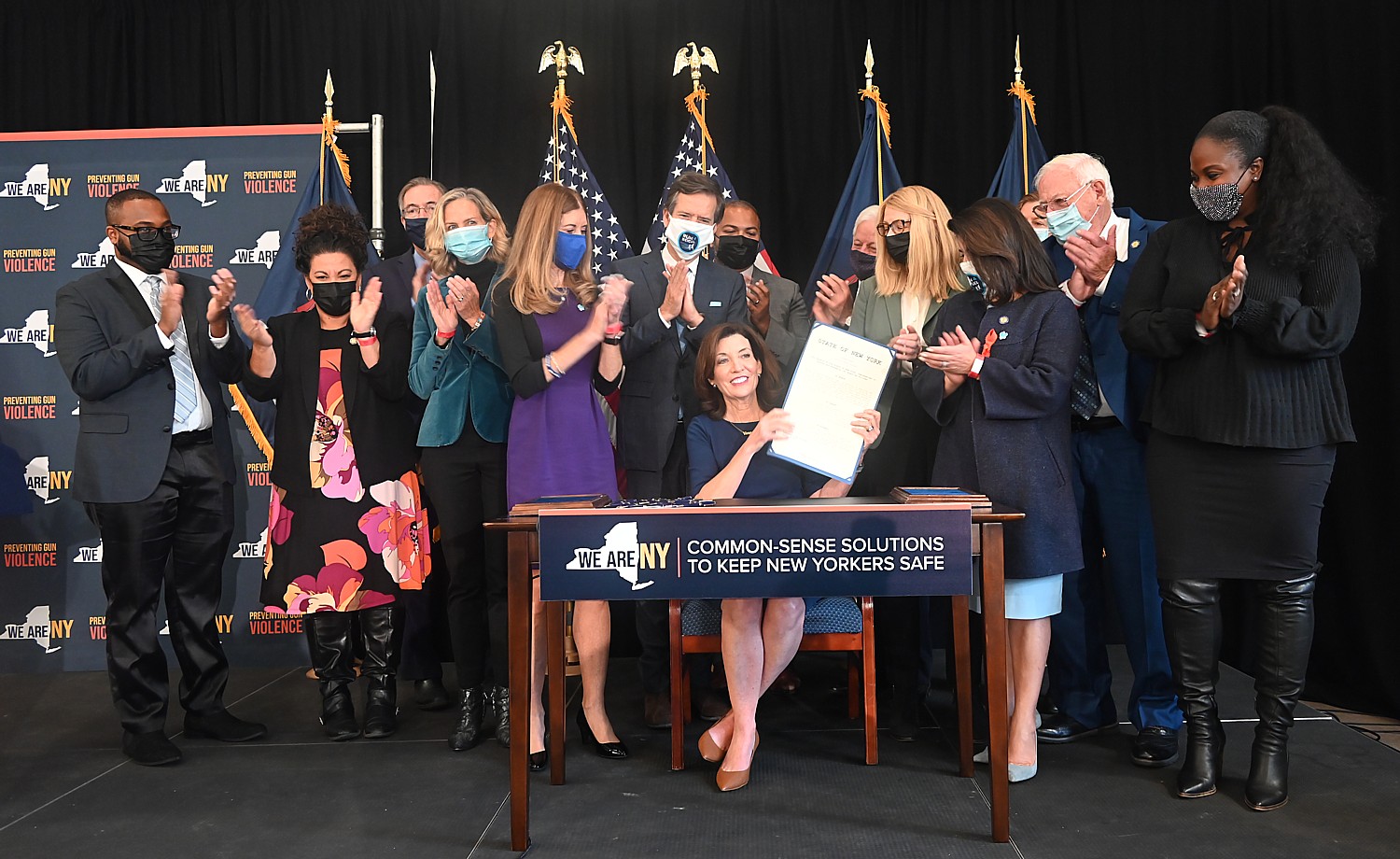
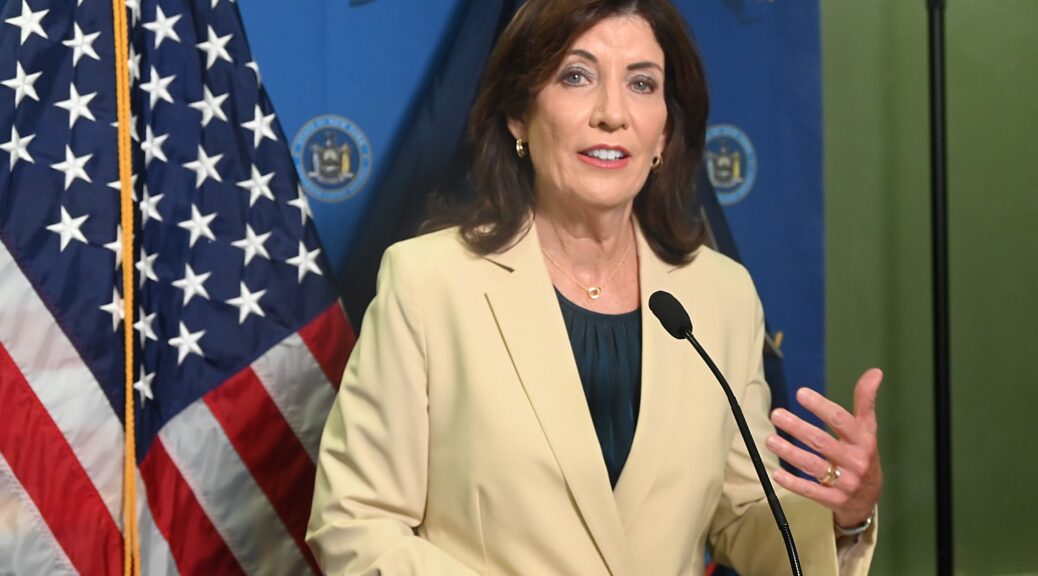
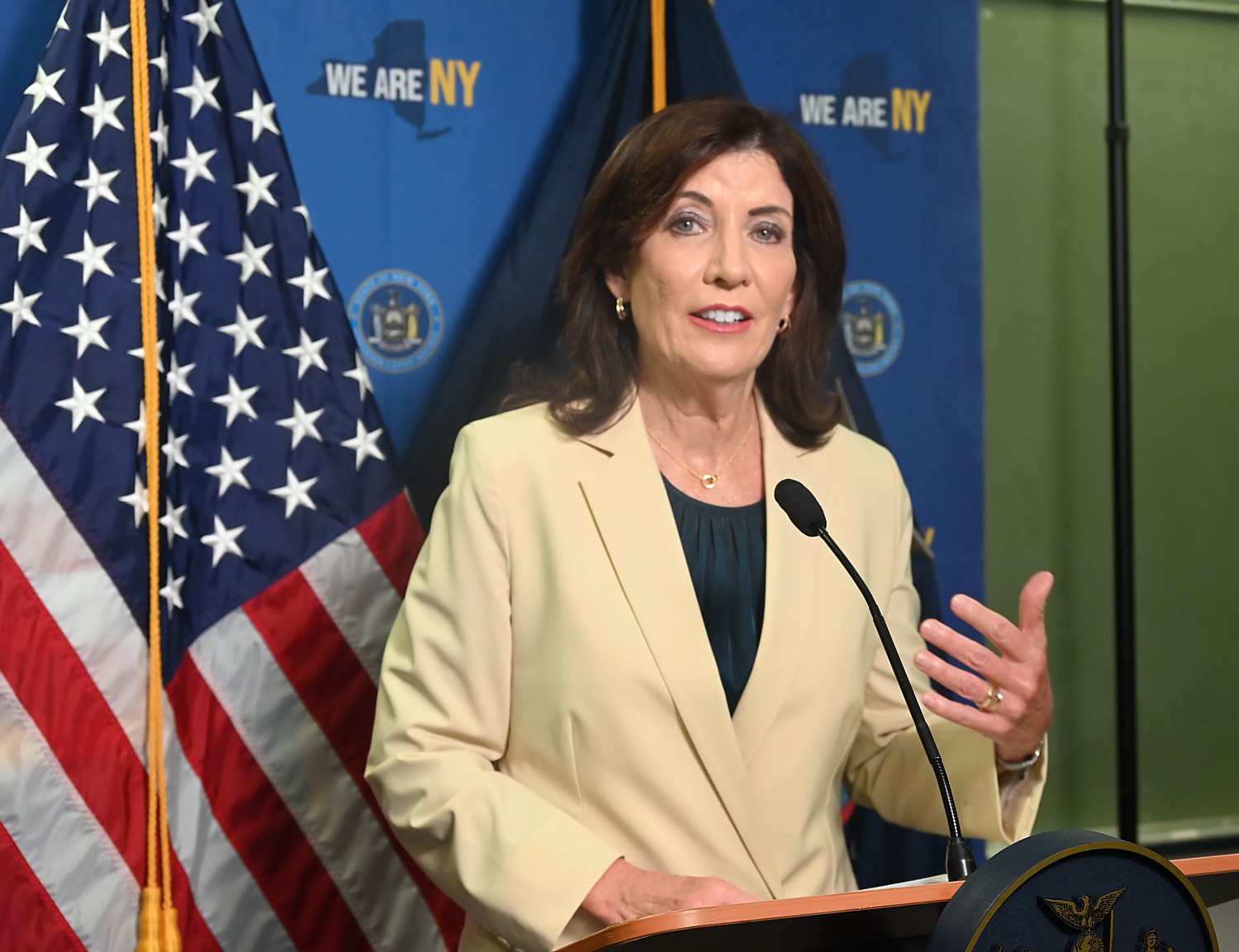
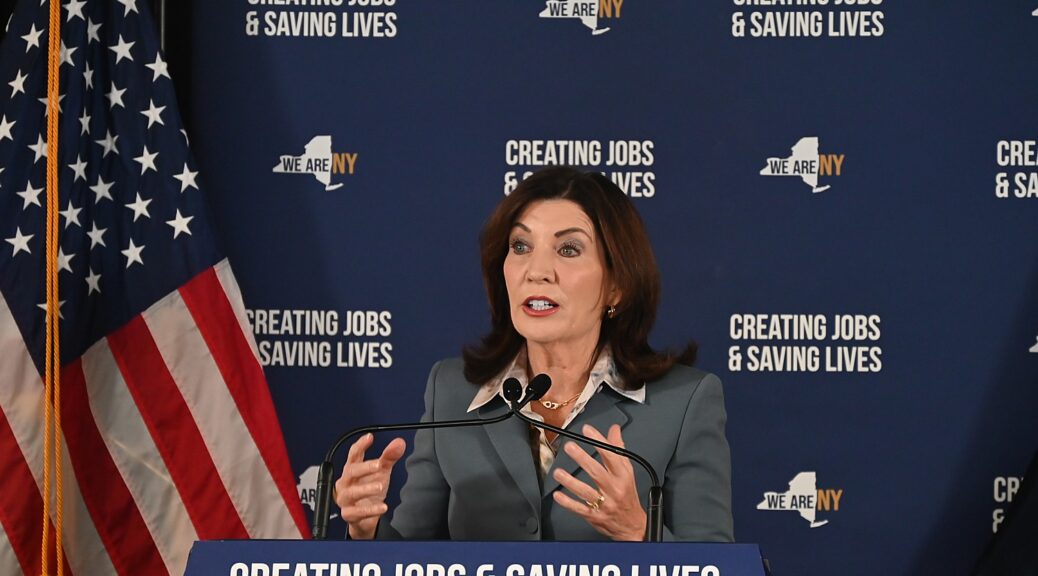
Indeed, Governor Hochul today updated New Yorkers on her record investments in public safety, which have contributed to a significant reduction in crime and gun violence throughout her tenure. To date, the Governor has invested nearly $4 billion in public safety initiatives — including gun violence prevention, subway safety, hate crime prevention, and border security — while providing historic support for local and state law enforcement from Long Island to Buffalo. As a result, New York State has seen a 10 percent decrease in index crime, with reductions across all seven crime categories and a more than 60 percent decline in shooting deaths since the Governor’s first full year in office.
“Keeping New Yorkers safe has been my top priority since taking office,” Governor Hochul said. “While the Trump administration has cut funding for critical counterterrorism and transit security initiatives and made concessions to the gun lobby, we’ve invested nearly $4 billion in statewide public safety programs and driven crime rates to record lows. As Governor, I remain committed to doing everything in my power to protect New York communities — with or without support from Washington.”
As a result, between January through March 2026 compared to the same time period in 2022, New York State has seen a 10 percent decrease in total index crime, with reductions across all seven categories. This includes the four violent offense classifications — murder, rape, robbery, and aggravated assault — which fell by 15 percent, and the three property offense classifications — burglary, larceny, and motor vehicle theft — which decreased by 9 percent.
Additional highlights include a 57 percent decrease in murders, a 28 percent decrease in burglaries, and a 19 percent decrease in motor vehicle thefts.
From January through July 2026, compared to the same period in 2022, New York State saw a 57 percent reduction in shooting incidents with injury, a 57 percent decline in the number of individuals shot, and a 62 percent decrease in shooting deaths.
Highlights of Governor Hochul’s investments in public safety include:
More than $1 billion for gun violence prevention programs, $202 million for law enforcement technology and equipment upgrades, and nearly $50 million in other support, including $25 million to replace an antiquated records management system still used by police agencies across the state;
More than $680 million for aid to prosecution;
More than $667 million for aid to defense, including alternatives to incarceration, pre-trial services, and re-entry programs;
More than $300 million invested in subway safety for increased law enforcement presence, safety upgrades, and SCOUT teams, reducing summer transit crimes to historic lows;
$165 million for Securing Communities Against Hate Crimes grants;
$120 million to combat retail theft; and
$12 million for border security and safety.
For the FY27 fiscal year, Governor Hochul continued her record investments in public safety with:
$352 million in gun violence prevention grants;
$122 million to continue the increase of police presence on platforms and trains;
$35 million for Securing Communities Against Hate Crimes (SCAHC) program;
$14 million for law enforcement and correctional activities performed by county sheriffs;
$6.7 million increase for upgrades to DNA and drug analysis technology and accreditation and proficiency testing;
$5 million for the State Police to develop a comprehensive plan for drone technology;
$4.5 million to expand the Crime Analysis Center (CAC) network and complete statewide coverage by establishing a new center in Westchester County;
$4.5 million to prevent and combat deed theft;
$2 million to expand the State Police’s Auto Theft Unit (ATU); and
$500,000 for a task force to protect from the threat of homegrown 3-D printed guns.
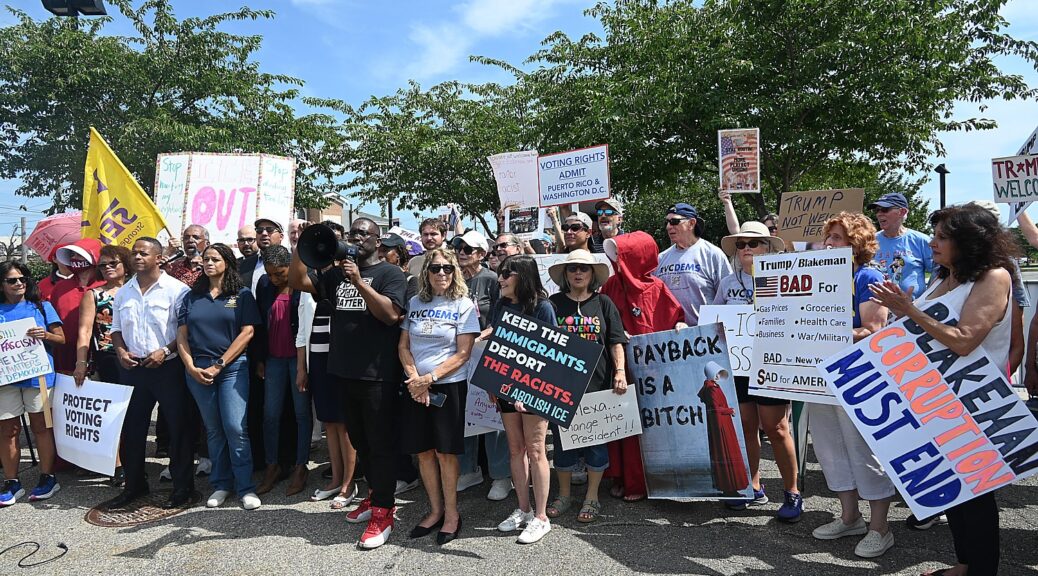
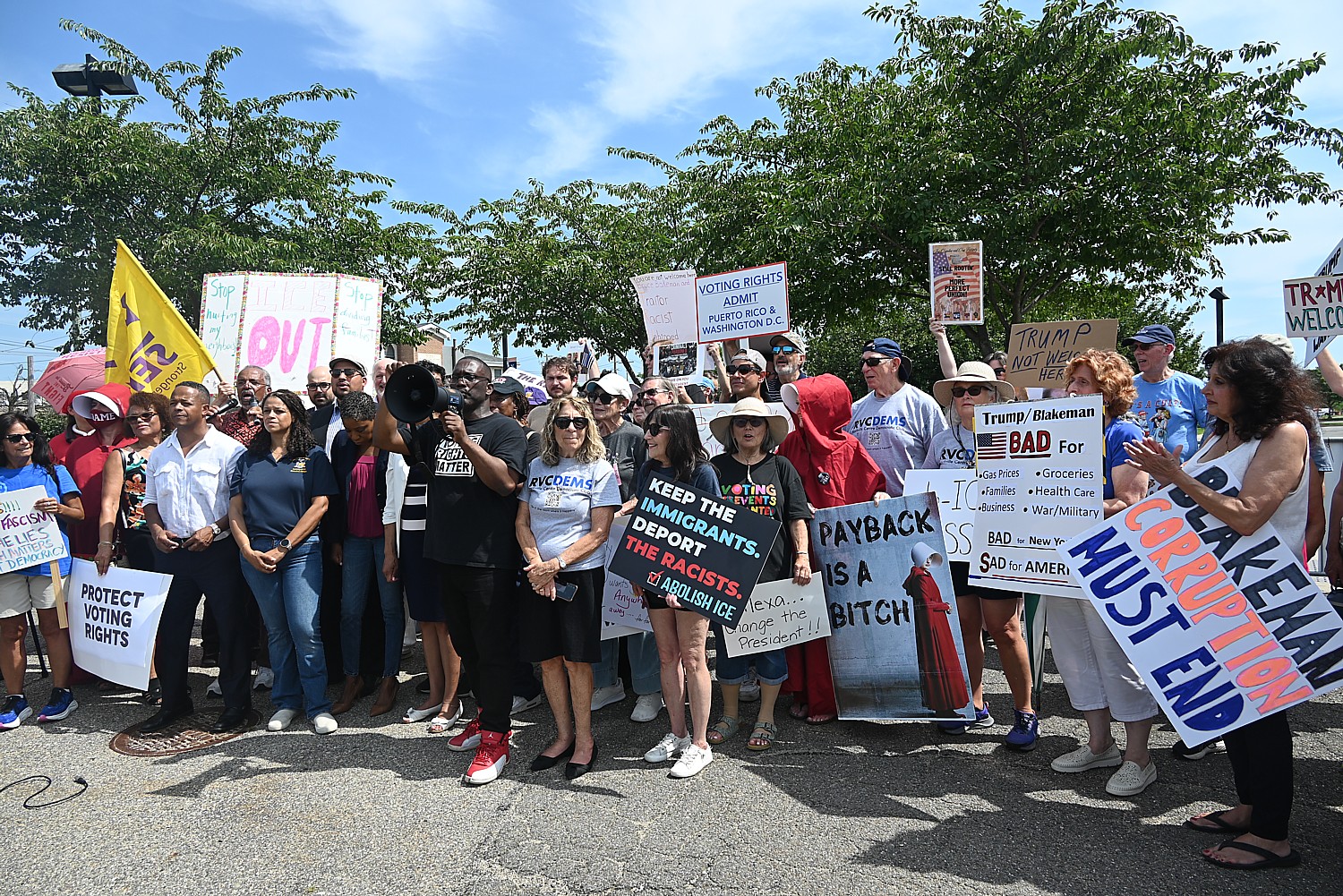
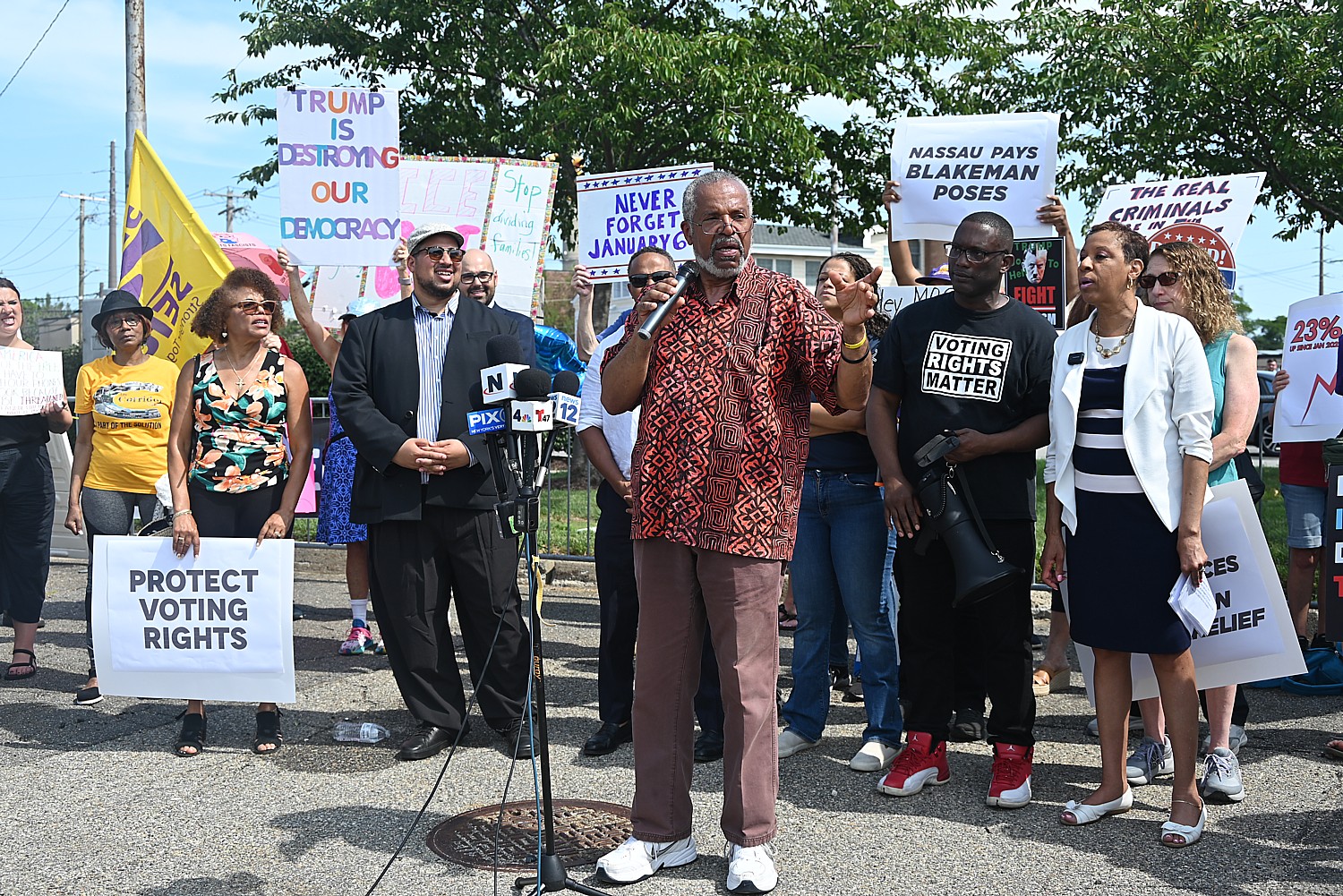
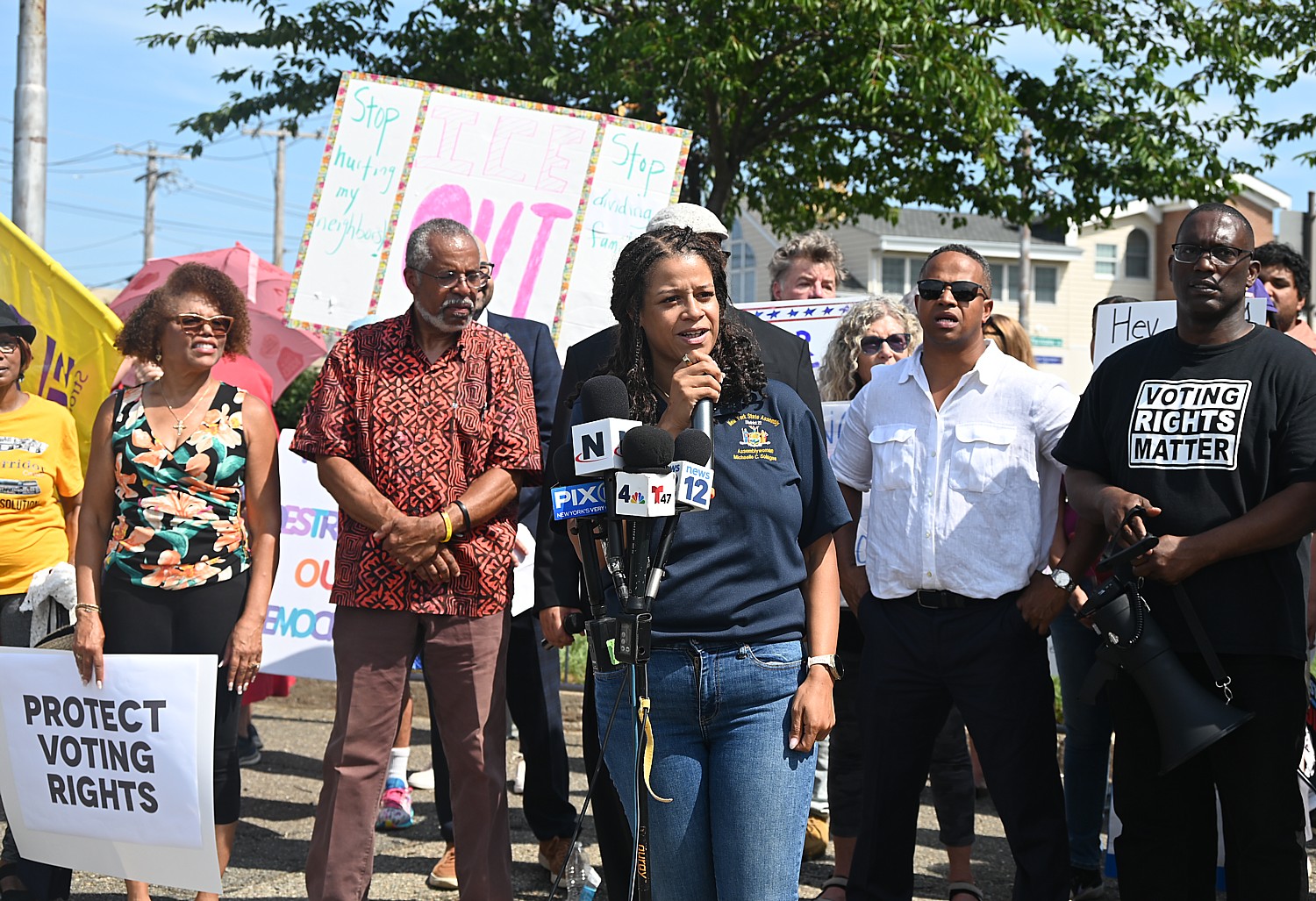
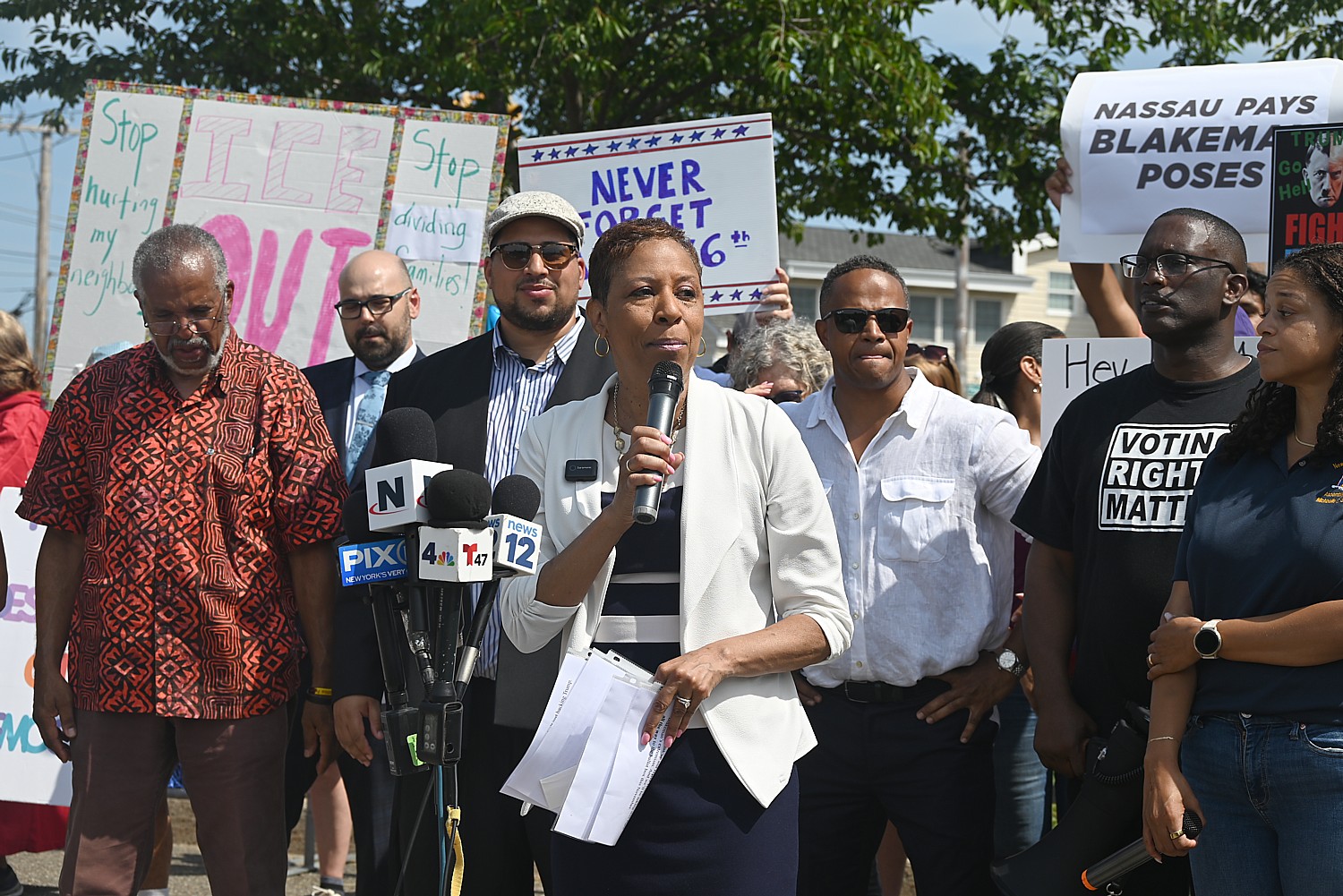
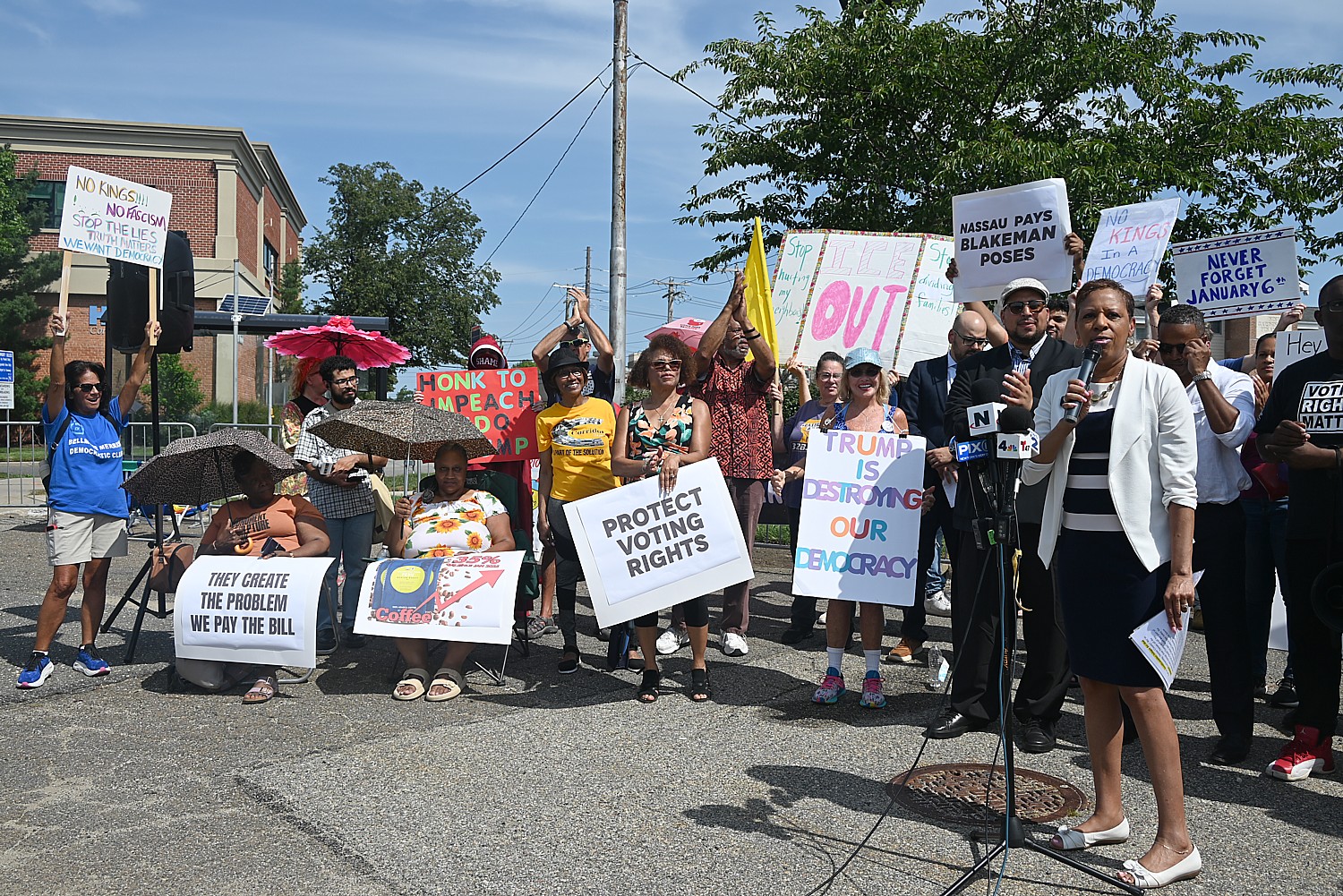
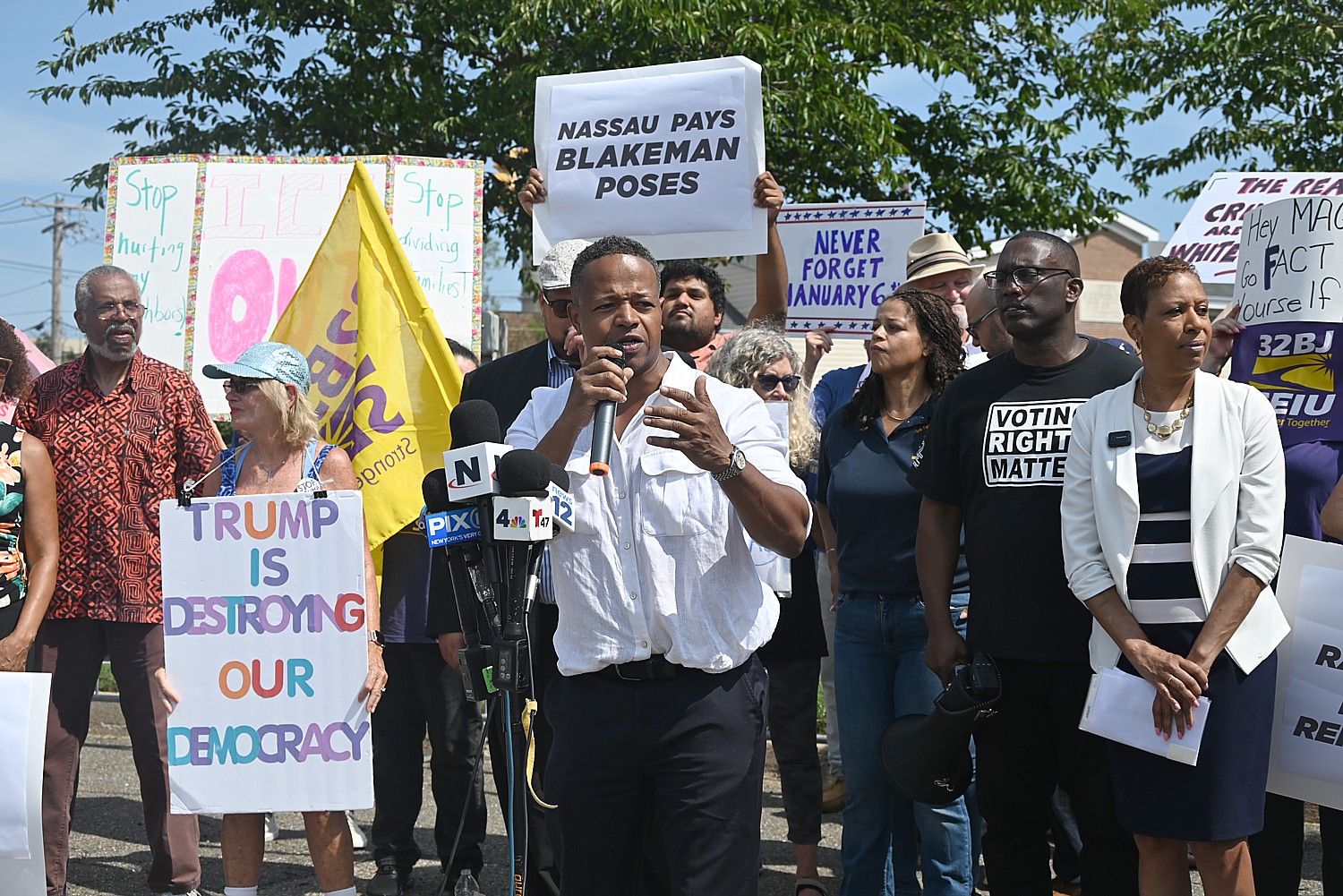
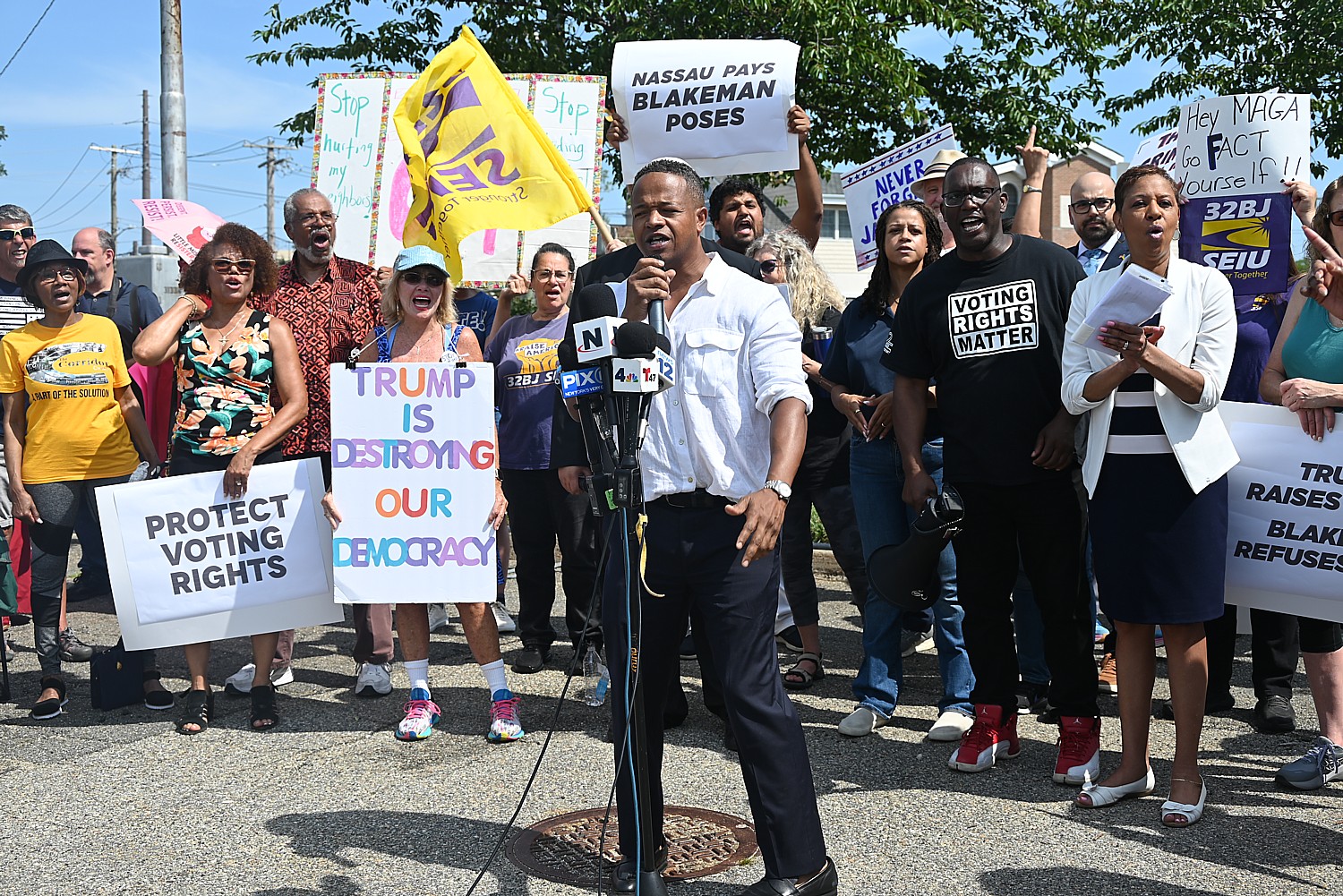
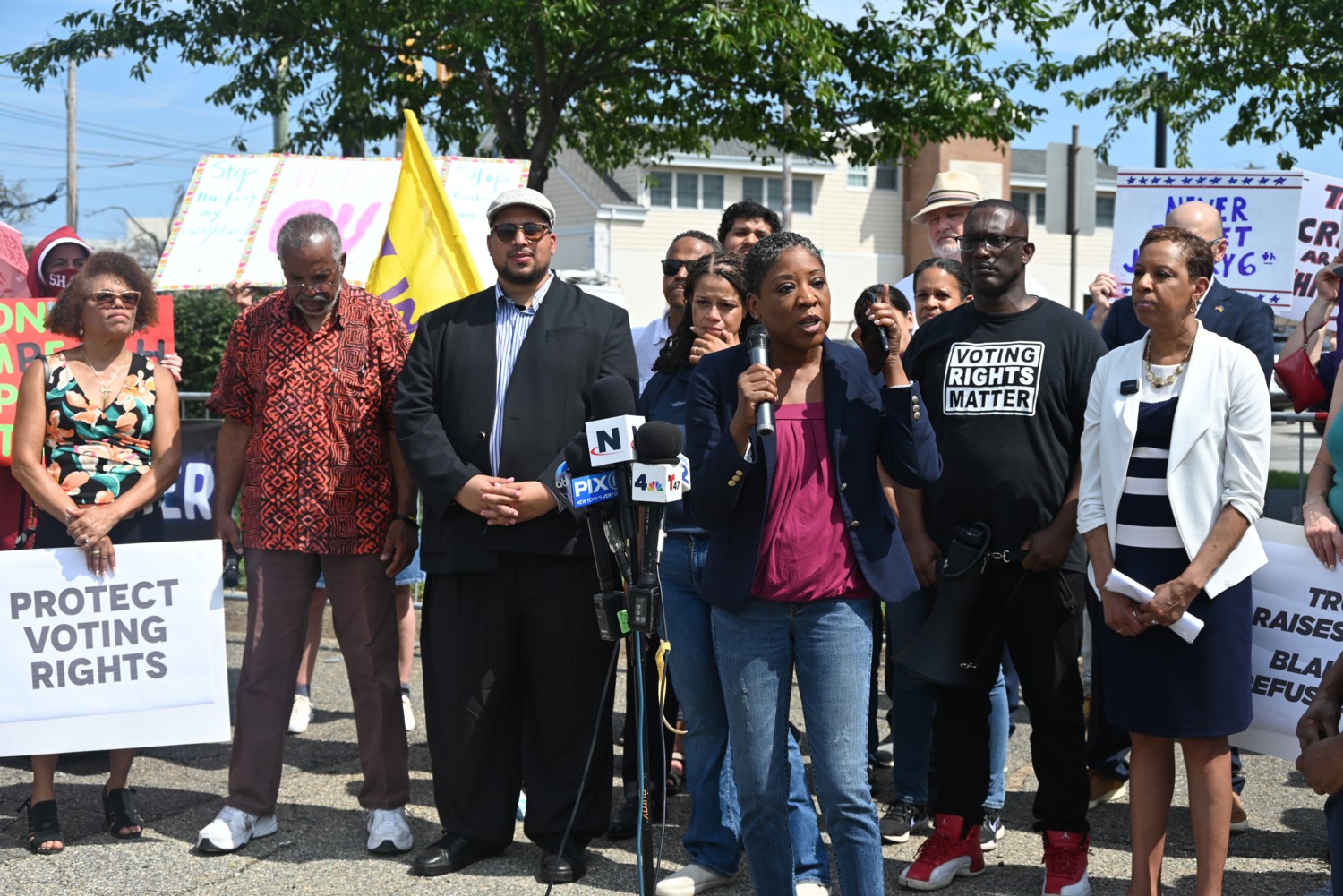
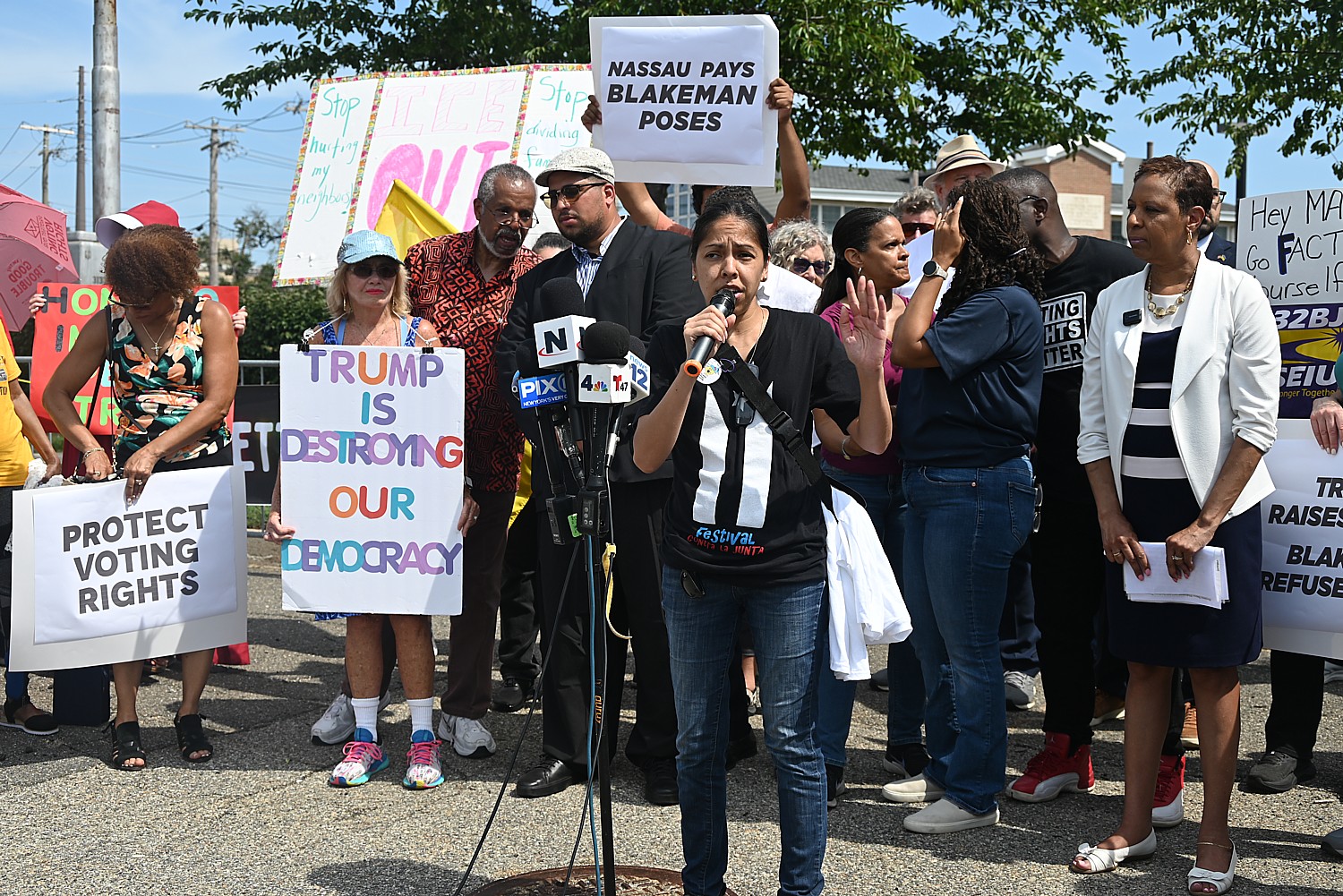
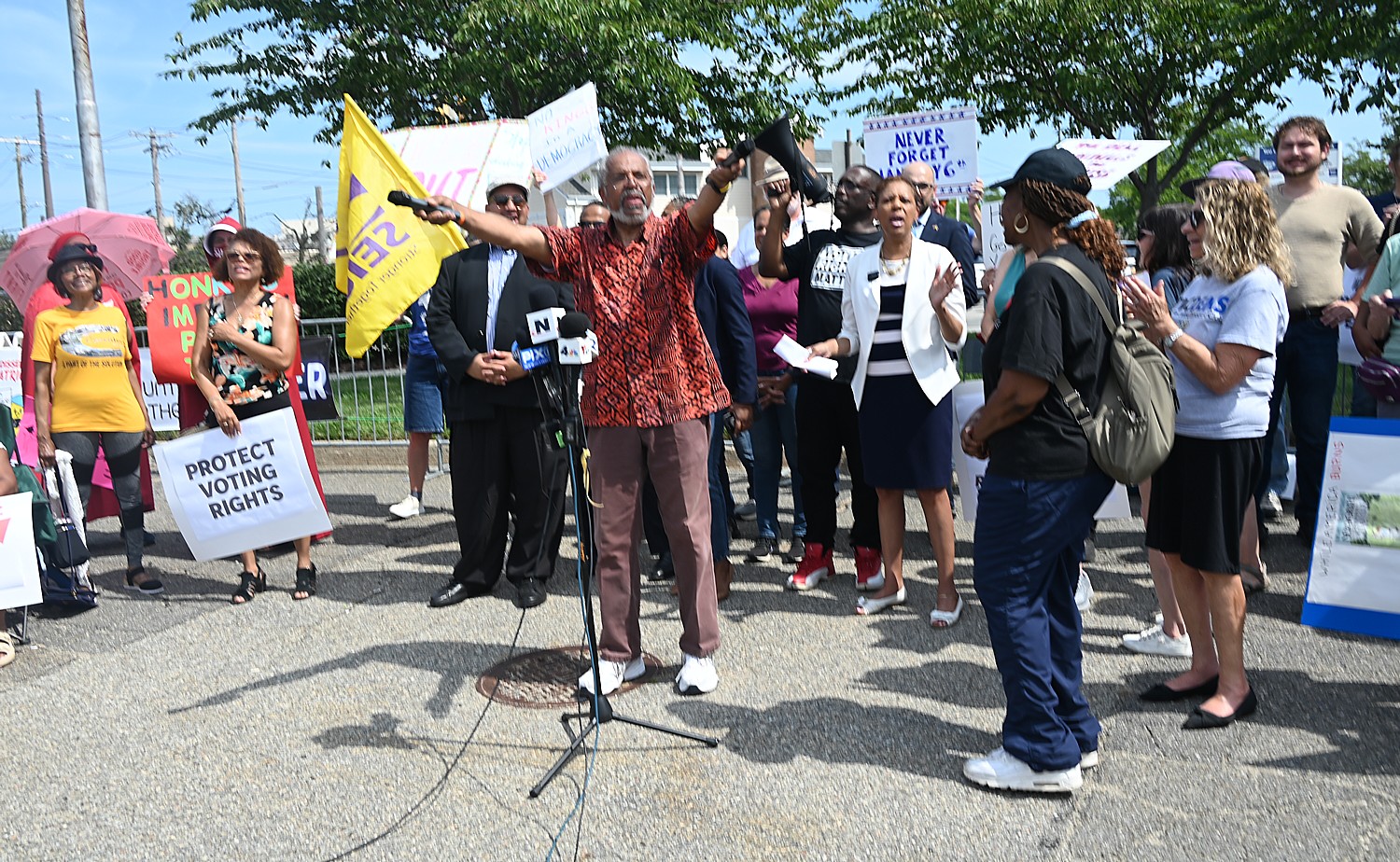
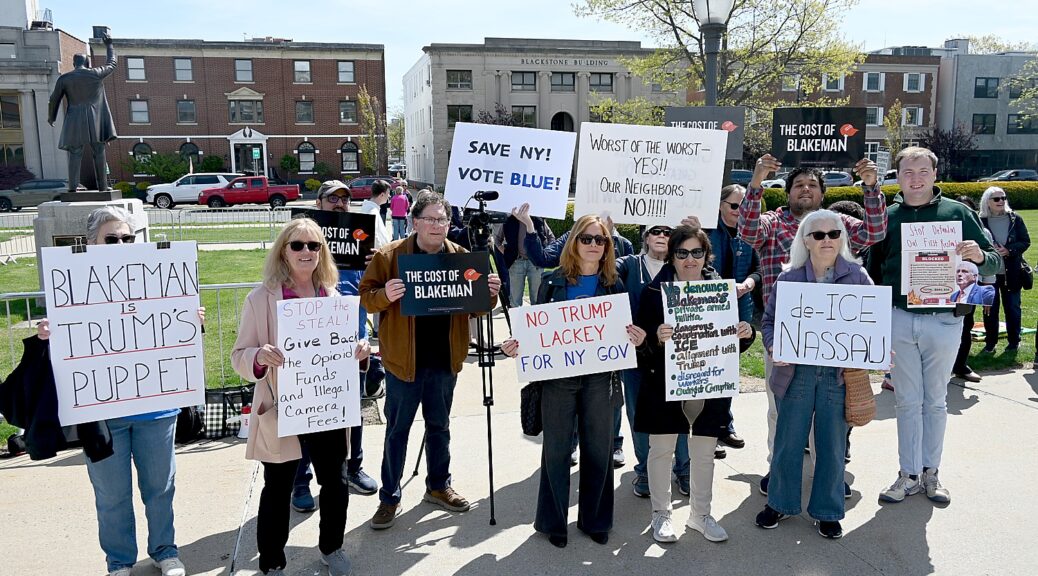
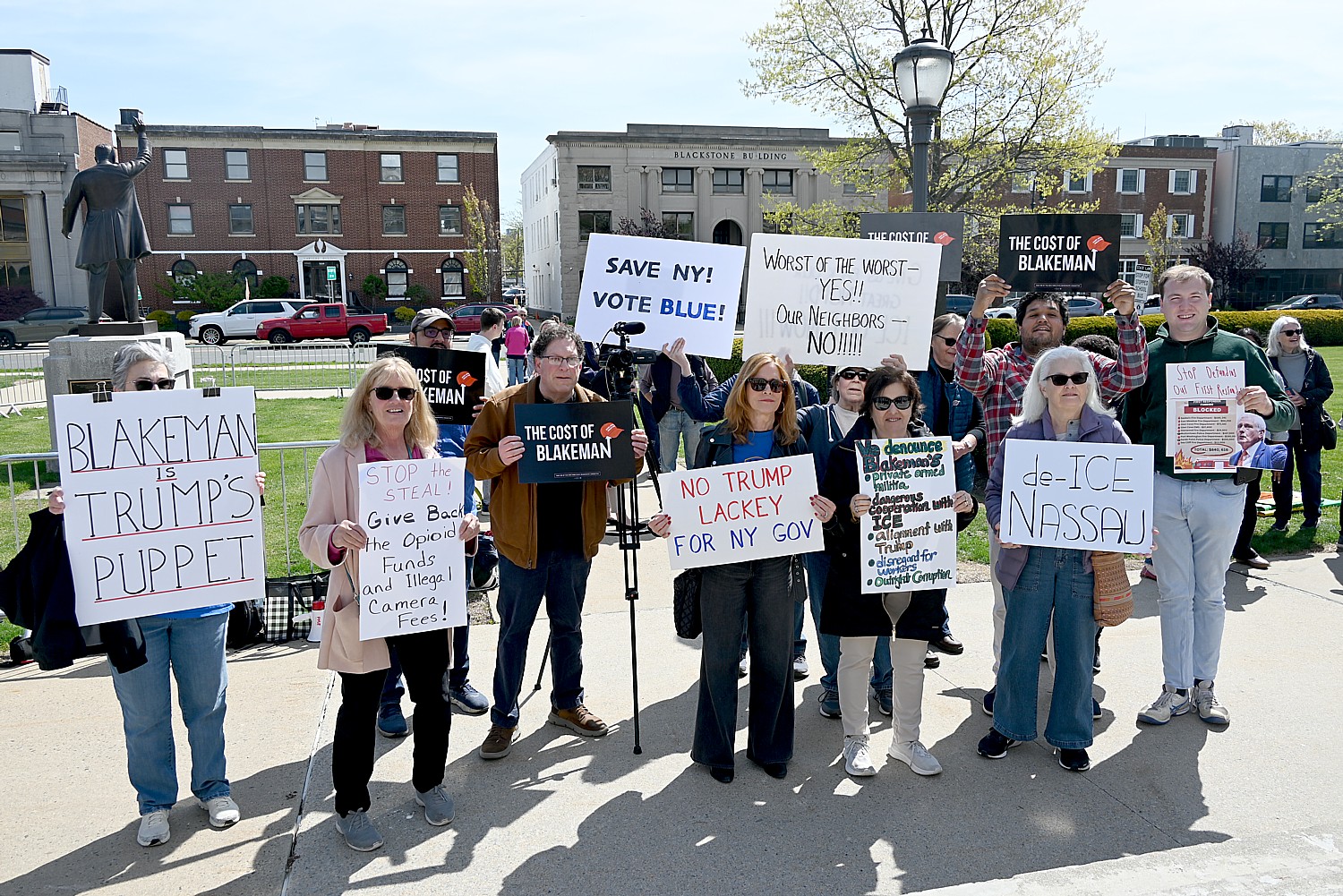
Nassau County Democrats organized a rally opposing Nassau County Executive Bruce Blakeman’s candidacy for New York State Governor, and the visit by Donald Trump to bolster him. The rally took place from 10 a.m and dispersed before noon.
A second rally outside the NCPD for Training & Intelligence organized by local community organizers, immigrant rights advocates and faith leaders was supposed to be held at 2 pm at that designated “free speech” zone, including New York Communities for Change, New York Immigration Coalition, and National Day Laborer Organizing Network.
But when we attempted to get to the 2 pm rally, access to the “free speech zone” was blocked by Nassau County Police who had put a miles-wide perimeter of closed streets and roadways around the area.
Trump was scheduled to tour county law enforcement facilities, including the Nassau County Police Academy Center for Training and Intelligence on Law Enforcement Way and the Bolla Training Village, in Garden City, Friday, in keeping with Blakeman’s law-and-order visage.
Some tickets were supposed to be available to the public for the president’s remarks by registering online via a White House link but were hard to come by.
Trump Administration’s Proposed Rollbacks Open Door for Dangerous Individuals To Obtain Firearms and Make it Harder to Hold Bad Actors in Firearms Industry Accountable
Governor Takes Immediate Action to Preserve Public Safety by Prioritizing State Police Inspections of Firearms Dealers Linked to Crime and Expanding Scope of Interstate Task Force on Illegal Guns
Governor Will Explore Legislative Actions to Require In-Person Sale of Firearms
State Launches Public Awareness Campaign Targeting Gun Dealers to Remind Them of New York State Laws
Note: The Republican opponent for New York Governor, Nassau County Executive Bruce Blakeman, opposed Governor Hochul’s gun safety regulations after the Trump Supreme Court overturned the state’s century-old gun law, and said he wanted to ease access to gun licenses and people should be able to carry guns into religious centers. Governor Hochul, during her term, has worked to reduce the number of guns imported into the state from states with lax gun laws, joining a regional consortium. Trump Administration – and his Attorney General designee Todd Blanche – have declared their love of a Second Amendment without any restrictions or regulation despite the United States having the highest rate of gun violence in the world. An average of 117 to 122 people die from gun-related injuries each day in the United States, according to recent data from the Pew Research Center and public health tracking, a rate that is 26 times higher than peer “developed” countries. This total includes suicides, homicides, accidents, and law enforcement actions.–Karen Rubin/editor@news-photos-features.com
Governor Kathy Hochul today announced actions in response to the Trump Administration’s proposed rollbacks that would make sweeping and dangerous changes to federal firearms regulations. Earlier this year, the Bureau of Alcohol, Tobacco, Firearms and Explosives (ATF) announced changes to more than 30 rules that will make it easier for dangerous individuals to obtain firearms and harder to hold bad actors in the firearms industry accountable. In response, New York State is taking action by increasing enforcement and education and exploring legislative changes that will blunt the effect of many of these changes and preserve public safety.
“Time and time again, we see the Trump Administration concede to the gun lobby, and these rollbacks are yet another giveaway that will have devastating and dangerous effects across the country,” Governor Hochul said.“ While the federal government paves the way for increased firearm trafficking and putting guns in the hands of those who should not have them, New York State is taking action to blunt their efforts by bolstering our nation-leading gun laws and committing to closing the loopholes that put lives in jeopardy.”
Firearm dealers operating in New York must obtain licensure at the federal and state levels, but action against licensees happens almost exclusively at the federal level. The ATF’s proposed rollbacks are a clear abdication of their responsibility to hold bad actors accountable and keep firearms out of the hands of dangerous individuals, requiring states to increase their enforcement against bad actors.
Governor Hochul announced the following actions alongside the New York State Police and members of New York’s gun safety coalition, including representatives from Everytown for Gun Safety, Moms Demand Action, Giffords, Brady United and New Yorkers Against Gun Violence:
Immediate Actions
Prioritizing State Police Inspections of all Firearms Dealers who are Linked to Crime Guns
New York will step up oversight and enforcement to ensure that its state-licensed dealers are complying with the rigorous standards imposed by law. NYSP will prioritize onsite inspections of all dealers who are determined to be the source of crime guns and will work with the Office of the Attorney General to increase enforcement on dealers who are repeatedly traced to crime guns when appropriate.
Expanding the Scope of the Interstate Task Force on Illegal Guns
Originally convened by Governor Hochul in 2022, New York’s Interstate Task Force on Illegal Guns includes local, state, and federal law enforcement agencies in Connecticut, Maine, Massachusetts, New Hampshire, New Jersey, Ohio, Pennsylvania, Rhode Island and Vermont. The scope of this Task Force will expand to combine resources, share information, and develop strategies to combat increased public safety threats. Governor Hochul has directed Task Force members to reconvene to develop a coordinated interstate response to the ATF rollbacks and commit to regular information sharing related to crime guns located in one state that were purchased in another state.
Launching a Public Education Campaign Targeted at Firearm Dealers
New York State is launching a public awareness campaign and increased enforcement operation targeted specifically at gun dealers to remind them that many of New York’s strong laws remain in effect notwithstanding the federal regulations and must be followed despite the federal rollbacks. The campaign, which will feature direct mailers and emails to firearm dealers and firearm licensing officials, will focus on ATF rollbacks that state law prevents from having practical effect. This will be developed by the Division of Criminal Justice Services in close coordination with the New York State Police.
Legislative Actions
Requiring the In-Person Sale of Firearms
The ATF rule changes would allow for online sales of firearms. At the start of the next legislative session, Governor Hochul plans on introducing legislation to amend the penal law to require in-person sale of firearms. This law change would align firearm sales with ammunition sales, which are required to be done in-person.
Since taking office, Governor Hochul has committed more than $4 billion to public safety initiatives and doubled funding to combat gun violence in New York communities. Governor Hochul also partnered with 11 other states to intercept weapons along the I-95 corridor, enhance Red Flag Laws to keep guns away from individuals that are a risk to themselves and others, and strengthened New York’s concealed carry laws in response to the Supreme Court’s reckless Bruen decision. As part of the FY 27 Enacted Budget, Governor Hochul sustained record-level investments in prevention, intervention and enforcement, including addressing emerging threats as 3-D printed guns and DIY machine guns.
“Here in New York, I’ve been laser focused on this since I was elected back in 2022,” Governor Hochul stated. “Top priority. Crime was off the charts back then. I said, “It is unsustainable. We cannot keep this, this violence in our streets, the bloodshed, it has to stop. Today.” We now have gun violence at an all-time low in New York State. All-time low. It’s not an accident. It’s about investments in public safety and police, historic investments. Smart, targeted law enforcement — seizing illegal guns at record rates, going after emerging threats like those 3D-printed ghost guns. We banned those. We banned those. You know what we also did in our budget? We also banned the sale of the 3D printers in the state of New York, so even if you wanted to make your kitchen table into a munitions factory, you can’t do that anymore without facing down the law of the State of New York. Okay? So that was just done a couple months ago.
“But also, I believe one of the reasons we’re safe is because we’ve made investments and support our advocates in the streets…
“New Yorkers are safer today, more than they were just a few short years ago. But I’m not going to let the rogue cops in Washington undermine our progress.
“My administration will make sure our laws are enforced, and today, I’m announcing that New York State Police will ramp up on-site inspections at all gun dealers — you are on notice — that are linked to firearms and recovered at a crime…
“A background check is everything, it’s so critical. Also, mental health screening — we need to know. There’s people who should not have a gun in their hands, and the federal government doesn’t give a damn. But we do, we do. So you’re not going to be able to give someone a gun, sell a gun to someone without a mental health screening, because you’re going to be in for a rude awakening. This is New York. Welcome to a state that actually likes keeping people alive. We like keeping people alive in this state. So if you don’t follow our laws, oh, boy, consequences. Our police will work directly with our Attorney General, Tish James, and our District Attorneys to shut you down…Follow the laws or we’re shutting you down. And we’re not stopping at our own state borders. No, in New York, 80 percent of the guns recovered at crime scenes originate in other states — 80 percent, 80 percent. So to help fill the void, what I’m going to do is reconvene our Interstate Task Force on illegal guns,” Hochul said.
State Senator Zellnor Myrie said, “As the federal government rolls back common-sense public safety measures, New York is stepping up to protect our communities. I was proud to write the first state law in the nation taking on reckless and irresponsible gun dealers, and today’s actions build on our work to hold bad actors accountable. We will always put safe streets, subways, schools and neighborhoods ahead of the gun industry’s profits.”
Assemblymember Michaelle C. Solages said, “Our safety should never be compromised, especially not because of weakened federal oversight. As Washington rolls back basic and commonsense firearm regulations, New York is stepping up to protect our communities and to keep guns out of the hands of those who pose a danger. These actions will reinforce our state’s longstanding commitment to preventing gun violence while at the same time respecting responsible gun ownership. I am grateful to Governor Hochul for being clear-eyed and proactive on this issue.”
Assemblymember Monique Chandler-Waterman said, “As the Co-chair of the Subcommittee on Anti-Gun Violence of the NYS BPHA Caucus I stand with my colleagues along with the Governor to do all we can to advance gun safety legislation. We will not stand idle while the federal government rolls back common sense gun safety law. We will continue in the effort to keep our communities safe by keeping illegal guns off the streets, increasing interstate partnership, enforcement, and the education on best gun safety practices. In addition we will continue to advocate for more investments in wrap around services for our youth and families. That includes expanding access to safe spaces like Community Center Concepts in schools, afterschool programs, and stronger support for survivors. We understand that public safety requires common sense legislation and investments in prevention through youth programs, community spaces, and services that help survivors heal and rebuild.”
Senior Firearms Industry Advisor at Everytown for Gun Safety and Former Associate Assistant Director of Field Operations at the Bureau of Alcohol, Tobacco and Firearms and Explosives Marianna Mitchem said, “These changes proposed by the ATF prioritize gun industry profits over human lives. They will exacerbate our national gun violence epidemic and undermine public safety in communities across New York State. I want to thank Governor Hochul for the steps New York is taking to protect its communities from gun trafficking and I want to encourage all local and state leaders to step up and follow her example. It is deeply disappointing that the agency I dedicated my career to has decided to cater to the gun industry rather than properly regulate it. But I am hopeful that with actions like those announced today, our communities will not be the ultimate victims of this Administration’s dangerous decisions.”
GIFFORDS Executive Director Emma Brown said, “The Trump administration says it’s tough on crime, but its record says otherwise. They are de-funding law enforcement, dismantling commonsense gun safety rules, and making our communities less safe. With these ATF rule changes, the administration’s actions threaten to undermine years of progress in reducing gun violence, meaning it’s more important than ever for state leaders to take bold action and fight to protect public safety. We’re grateful to Governor Hochul for her continued leadership on public safety, and her continuing the fight to keep New Yorkers safe.”
New Yorkers Against Gun Violence Executive Director Rebecca Fischer said, “At a time when the ATF is rolling back critical gun safety regulations that help prevent illegal gun trafficking and keep firearms out of dangerous hands, Governor Hochul is making it clear that New York will not lower its standards. While Washington weakens protections, New York is strengthening them. These proactive actions will help protect New Yorkers, reinforce our nation’s strongest gun safety laws, and send a clear message that public safety comes before politics. New York has proven that strong gun safety laws save lives, and we’re proud to stand with Governor Hochul as she continues to lead the nation in preventing gun violence.”
Brady: United Against Gun Violence President Kris Brown said, “The proposed changes to the ATF will categorically put communities across the country in danger. They are not technical adjustments — they are sweeping structural changes that will reshape how guns are bought and sold in America, a country where gun violence is the number one killer of kids. Rolling back common-sense gun violence prevention measures will make it easier for prohibited purchasers to obtain guns, harder for law enforcement to solve and prosecute gun crimes, and increase the likelihood for ‘mass casualty events.’ We cannot stand idly by and let this happen. We thank Governor Hochul for taking action with us to prevent fallout from these proposed changes and to keep New York communities safe.”
Bronx District Attorney Darcel Clark said, “I commend Governor Hochul for taking bold action to protect New Yorkers from gun violence. The proposed changes to federal firearm regulations threaten the progress our state has made in keeping our communities safe. Allowing firearms to be sold online without requiring an in-person transaction undermines responsible gun safety measures and puts lives at risk. I support the Governor’s effort to codify the requirement for in-person firearm sales into New York State law. In the Bronx, we know all too well the pain and devastation that has struck so many families. Just last weekend, an innocent 12-year-old child was tragically killed after being caught in the crossfire. We must continue advancing thoughtful, commonsense legislation that strengthens public safety, protects our neighborhoods, and helps prevent more families from experiencing trauma and loss from gun violence.”
Richmond County District Attorney Michael McMahon said, “At a time when Staten Island and New York City have witnessed historic decreases in homicides and acts of gun violence, the federal government’s decision to roll back firearm safety regulations is the wrong decision at the wrong time and needlessly jeopardizes public safety. These sweeping changes would weaken background checks, make it easier for dangerous individuals to obtain and traffic deadly firearms, and undermine the progress we have made in the fight against gun violence. Simply put, the ATF’s proposed rollbacks are bad for public safety and for the communities my office is tasked with protecting, and I commend Governor Hochul for her swift efforts to counteract these dangerous policies and protect New Yorkers across our State from the deadly scourge of gun violence.”
Manhattan Borough President Brad Hoylman-Sigal said, “I’m extremely grateful to Governor Hochul for her plan to stop the flow of illegal guns into New York through the infamous ‘Iron Pipeline.’ While Donald Trump is making it easier for trafficked weapons to hit the streets of New York City, Governor Hochul is fighting back at the state level. The Governor will blunt the impact of Trump’s dangerous changes to our gun laws at the federal level by prioritizing State Police inspections of all firearms dealers linked to crime guns, expanding the scope of the Interstate Task Force on Illegal Guns, aligning requirements for firearm background checks with ammunition requirements, and exploring a number of legislative fixes in Albany. The result will be a safer Manhattan and New York City.”
Bronx Borough President Vanessa L. Gibson said, “Gun violence and the proliferation of guns in our neighborhoods is a public health crisis that is affecting communities across our state that requires our immediate action and attention. Every day, families in the Bronx are forced to confront unimaginable grief, and far too many of our young people are growing up in fear instead of opportunity. Despite this White House administration’s attempts to roll back progress, I am grateful to Governor Hochul for her leadership and commitment to keeping our streets safe. Together, we must continue fighting to protect our children, support impacted families, and ensure that every youth in our city can thrive without the shadow of gun violence.”
Earlier this year, Governor Kathy Hochul launched a statewide public service announcement (PSA) campaign to promote secure firearm storage and raise awareness about safe storage options and how to prevent firearm misuse. Led by the New York State Office of Gun Violence Prevention (OGVP) within the Division of Criminal Justice Services and developed in partnership with Brady: United Against Gun Violence and the Ad Council, the campaign is part of New York’s comprehensive approach to strengthening public safety and reducing firearm deaths and injuries.
Biden-era gun regulations, instituted when gun violence hit new peaks during the coronavirus pandemic, as well as Hochul’s efforts to reduce gun violence have been successful.
“New York continues to make historic progress reducing gun violence and making our communities safer,” Governor Hochul said. “At the same time, we know too many firearm tragedies happen in homes and involve family members, children and loved ones. This public education campaign will empower gun owners with information and resources on how to securely store their firearms, helping protect their families and prevent needless injuries and deaths.”
Program Will Help Connect Workers to Opportunities in America’s Fastest Growing Semiconductor Ecosystem
New York Leading the Way in Addressing the National Skilled Worker Challenge, Moving To Prevent Projected Shortfalls Threatening the U.S. Chip Factory Revival
Governor Kathy Hochul announced the launch of the Semiconductor Manufacturing Workforce Training Incentive Program, designed to connect workforce training programs to careers in the state’s rapidly growing semiconductor industry sector. The new program, administered by Empire State Development, supports eligible semiconductor manufacturers and manufacturing businesses by offsetting the costs of training employees for high-demand manufacturing careers, helping companies build the skilled workforce needed to support continued industry growth across New York State.
“New York is making historic investments to become the nation’s premier destination for semiconductor manufacturing, and that means investing in people just as much as projects,” Governor Hochul said. “This new workforce training tax credit will help manufacturers develop the highly skilled workforce they need while creating new opportunities for New Yorkers to build careers in one of the world’s fastest-growing industries.”
The program supports employer-led training that addresses specific business needs, enhances employee skills, improves productivity and creates opportunities for career advancement. Eligible training may be provided directly by employers, third-party providers or New York State Registered Apprenticeship Programs. Tax credits can cover up to 75 percent of eligible training costs, including employee wages during training, curriculum development, instructor costs and qualifying wraparound services, up to $25,000 per employee receiving eligible training. Eligible semiconductor manufacturing businesses may receive up to $5 million in credits over the life of the program, while other eligible manufacturing businesses may receive up to $1 million.
To qualify, businesses must operate in New York State as eligible semiconductor manufacturing or manufacturing businesses, submit an approved workforce training plan before training begins, and demonstrate compliance with worker protection and environmental requirements. Applications are now being accepted through ESD. Additional program information, eligibility requirements and application materials are available here.
Empire State Development President, CEO and Commissioner Hope Knight said, “A strong semiconductor ecosystem depends on a strong workforce. By helping employers invest in training, New York is ensuring businesses have access to the talent they need while creating pathways to high-quality manufacturing careers for New Yorkers. This program complements our broader strategy to grow the semiconductor industry and reinforce New York’s position as a global leader in advanced manufacturing.”
The new program demonstrates New York’s semiconductor leadership by directly addressing the national shortage of skilled workers threatening the resurgence of domestic chip manufacturing. Recent industry reports are forecasting a nationwide deficit of up to 157,000 skilled full-time semiconductor manufacturing workers by 2030. By providing state support to offset training costs and facilitate new hires, New York is answering the urgent call for industry and government to pool resources, ensuring that the industry has the workers it needs while empowering New Yorkers with accessible career opportunities in a fast-growing industry.
This also builds on Governor Hochul’s comprehensive strategy to grow New York’s semiconductor industry. To ensure New Yorkers are prepared for the thousands of high-paying jobs created by these investments, Governor Hochul is leading an ambitious statewide workforce development strategy. This effort is anchored by the $200 million ON-RAMP initiative, which is establishing four advanced manufacturing workforce centers across Upstate New York. This includes the flagship ON-RAMP facility on the Southside of Syracuse, a hub designed to provide critical skills training and wraparound services — such as childcare and transportation — to create accessible career pathways.
Governor Hochul celebrated a major milestone at Micron’s $100 billion semiconductor manufacturing campus in Central New York as workers poured the first concrete foundations. This major milestone was achieved less than six months after breaking ground and marks a pivotal turning point from site preparation to full vertical construction.
Semiconductors power everything from smartphones to satellites, and the sector is poised to generate revenues of $1 trillion globally by the end of the decade. The industry also brings an outsized economic impact for workers and families — 60 percent of semiconductor manufacturing jobs don’t require a four-year degree and pay more than 25 percent more than other advanced manufacturing sectors on average. With more than $126 billion in new investments announced since 2022, New York State is home to the nation’s fastest growing semiconductor manufacturing ecosystem. By the end of the decade, one in four U.S.-made chips will be produced within 350 miles of Upstate New York — more than any other region in the nation.
This op-ed from Nassau County Legislator Olena Nicks (D-Uniondale) tells who County Executive Bruce Blakeman, the Republican candidate for Governor, is by those who know him best, who have undergone his rule. Should he defeat Democrat Kathy Hochul, he will bring trump-style “governance” to Albany. He has done absolutely nothing for Nassau County, one of the largest in the country, with larger population (and budget), 1.4 million, than 12 states. This op-ed from Legislator Olena Nicks, expressing the frustration of dealing with this super-partisan, super-petty, self-serving “leader”, should be a cautionary tale for the rest of the state.
Women’s reproductive rights, gun violence prevention, immigrant rights, criminal justice, public health and healthcare, childcare and eldercare, Medicaid, clean energy and de-carbonization would all be tossed aside. His claims to “fame”: banning masks by citizens (not ICE or police) in public; setting up a private militia without any transparency, authority or public disclosure of funding; rushing to assist ICE in its raids on communities. What has he not done? Nothing for public health (he came to office declaring COVID-19 ended in the midst of a new mutation spread and as this op-ed shows, has hoarded funds intended for opioid treatment); nothing for infrastructure or clean energy or climate change mitigation; nothing to address affordability, not even his campaign promise to “fix the property tax assessment system.”
What he has devoted his time, attention, and funding to are self-promoting photo ops (firefighters, sports celebrities), and doing anything and everything to appease and appeal to his mentor, Donald Trump. Here’s just one example out of many: On a day when Governor Kathy Hochul was addressing the heat wave by reminding eligible New Yorkers to enroll in the State’s Energy Affordability Program & Enhanced Energy Affordability Program for discounts on monthly electric or gas utility bills, her challenger Nassau County Exec Bruce Blakeman was hosting another photo op, this one with Reggae singer Keznamdi, to promote a Caribbean American Night concert, and as usual, excluding any Democrat.
He turns every event into a partisan one and has hosted almost every cabinet secretary -“Education” Secretary Linda McMahon (to overturn the state’s ban on school teams using insulting Indian mascots) and Treasury Secretary Bessent, VP Vance and even trump himself – all of whom are only in town to deliver partisan messages. – Karen Rubin, editor@news-photos-features.com, news-photos-features.com
Op-Ed: Legislative Proposals Deserve Public Vetting
By Legislator Olena Nicks
As a coequal branch of Nassau County government, the Legislature is designed to provide critical oversight of the County Executive’s administration, and a transparent forum for debate, discussion, and consideration of legislative proposals for addressing the pressing issues our constituents face in their daily lives.
During the last seven months, my Democratic colleagues and I have introduced numerous proposals that seek to make life more affordable, combat the ongoing opioid addiction crisis, improve the safety of our roads, and correct outdated policies that make us a regional outlier.
The Republican Majority’s refusal to even hold a public hearing on any of these legislative ideas is not only a disservice to residents on policy grounds, but it also undermines the Legislature’s established role as a deliberative body and stifles transparency within the government funded by their tax dollars.
As a firefighter in my hometown of Uniondale, initiatives that protect and enhance public health will always be deeply important to me. That is why I was especially alarmed by County Executive Bruce Blakeman’s attempt to move $13.7 million in interest and investment income out of the opioid settlement account – funds which are only to be used for programs that seek to prevent and treat addiction in our communities – and into the county’s general fund, where it could be used for any purpose.
These funds are meant to save lives, not balance the County’s budget, and this attempted raid of the opioid fund exposed a critical gap in our laws. Soon after we discovered the issue, I filed legislation that would prevent those monies from being transferred out of the opioid fund for non-recovery purposes. Although the Republican majority refused to consider the item or hold a public hearing on my proposal, the Democratic caucus ultimately used its leverage under the County Charter to prevent the transfer of those funds.
This is but the most recent example of what has become a well-established practice by the Republican majority of dismissing Democratic-sponsored proposals and ignoring them until they expire at the end of the term. Other recent examples of legislative proposals from my office that have been set aside into this form of legislative purgatory include:
Modernizing Nassau County’s outdated, convoluted laws governing E-bikes and scooters to maintain public safety while protecting users from unfair fines and confiscation
Legislation to enshrine Juneteenthas an official holiday for County employees, bringing us in line with every major municipality in our region
Establishing a 3-1-1 line for non-emergency service requests, which would reduce strain on our emergency call center and make government more accessible and transparent, and
Requiring the County to create an app for reporting and tracking potholes and other unsafe road conditions in real time.
In a similar fashion, Republican leadership is refusing to consider Legislator Cynthia Nuñez’s proposal to enact a gas tax holiday to ease the burden of soaring costs amidst the war in Iran, and Alternate Deputy Minority Leader Debra Mulé’s legislations which would slash outrageous, unlawful fees homeowners are charged to file documents at the County Clerk’s office and greatly reduce permit fees for an array of business owners.
I suspect that the Majority’s refusal to consider these items has less to do with their merits and more to do with political games. By prioritizing the latter, the Majority is depriving the public of formal opportunities to weigh in either for or against what is being proposed.
Moreover, considering how strictly the one-hour rule of public comment at full Legislature meetings is enforced, it all but eliminates the opportunity for Nassau residents to directly address their elected officials on critically important issues.
At a time when public servants should be taking every possible step to strengthen the pillars of participatory democracy, the Nassau County Legislature is sending a clear message that public feedback is an unwanted hindrance.
That is wrong, and it must change. Let our constituents say their piece and then let us vote on the issues that impact the daily lives of the people we are elected to serve.
Olena Nicks, of Uniondale, represents the communities of Nassau County’s Fifth Legislative District.
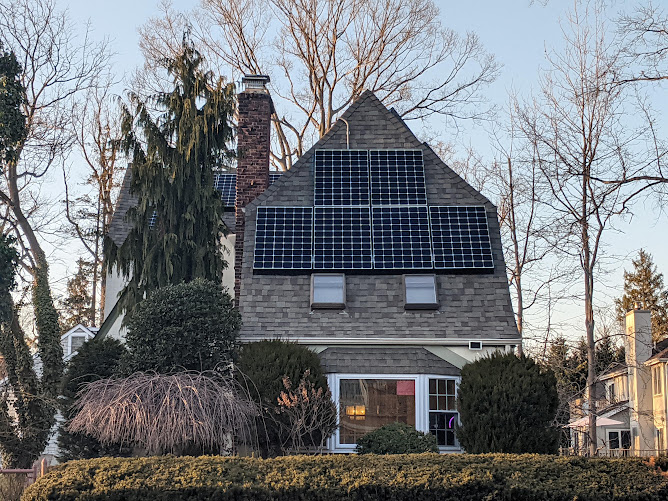
As the United States has reached a point where data centers powering Artificial Intelligence consumer more electricity than is currently produced by the nation and the trump administration continues to block and overturn clean, renewable energy projects, Governor Kathy Hochul announced eight gigawatts (GW) of distributed solar has been installed across New York State, which puts the state ahead of schedule for reaching 10 GW by 2030. This substantial growth in the distributed solar market has generated approximately $12.2 billion in private investment across New York and provided more than 16,000 jobs statewide and is enough energy to power more than 1.3 million homes and businesses across the state – including those in disadvantaged communities.
“New York continues to set the bar high as we mark another milestone for solar within our communities across the state,” said Governor Kathy Hochul. “This is low-cost, reliable clean energy that is delivering cost savings for families and businesses while expanding the availability of renewable energy which benefits our environment, our economy and contributes to New York’s diverse energy resource mix.”
With eight GW of distributed solar in New York, which is underpinned by community solar and the state’s signature NY-Sun Program, there is enough energy to power more than 1.3 million homes and businesses across the state – including those in disadvantaged communities. Currently, there are more than 276,000 projects operating across the State, with another 2.7 GW in development. Solar can be built more quickly than other types of energy infrastructure. Community solar projects expand access to clean energy by allowing households and businesses to benefit from solar power without needing to put panels on their own property.
New York State Energy Research and Development Authority President and CEO Doreen M. Harris said, “New York is home to 35 percent of the nation’s community solar generation – securing its position as the top community solar market in the country. Solar energy is one of the most reliable contributors to our state’s grid and by producing energy during peak load periods, it lowers energy costs for all New Yorkers, not just those participating in community solar.”
Public Service Commission Chair and CEO Rory Christian said, “We are seeing the benefits of New York’s solar assets in real time. Solar is reducing the strain on our electric grid, while providing significant reliability benefits especially during periods of peak demand. The milestone we are celebrating today is a win for affordability and clean energy for all New Yorkers.”
Last summer, solar generation helped save New Yorkers an estimated $90 million by lowering demand on the electric grid during periods of peak electricity use. More recently, on June 3, 2026, New York set a new solar generation record when solar supplied approximately 29 percent of statewide electricity demand during the noon hour, demonstrating the growing role solar plays in providing low-cost, reliable clean energy across the state.
After achieving its original six-gigawatt distributed solar target a year ahead of schedule in 2024, New York installed a record-breaking 1.28 GW of solar in a single year in 2025. And through its Statewide Solar For All Program, New York continues to be a model for other states by allowing renters, low-income residents and others who cannot install their own panels to participate in and benefit from solar energy. Additionally, under Governor Hochul’s leadership, $200 million was secured in New York’s Fiscal Year 2027 Budget to help further expand New York’s solar success and continue to improve energy affordability for all New Yorkers.
State Senator Pete Harckham said, “Today’s announcement that eight gigawatts of distributed solar have been installed across New York is great news and further assurance that we are on the right path toward a clean energy future. I thank Governor Hochul for her support of important solar initiatives in the new State Budget, including $200 million for NY-Sun, a program which will make solar projects more affordable to all New Yorkers, and solar connectivity modernization to be overseen by the Public Service Commission, another cost-saving measure. There are brighter days ahead for renewable energy here in New York!”
Assemblymember Didi Barrett said,Distributed solar is a win-win-win — lowering New Yorkers energy costs, creating good-paying union jobs, and reducing emissions — and reaching 8 GWs ahead of schedule is a testament to New York’s continued commitment to expanding clean, affordable energy. I’m proud that this year’s budget included key provisions of my ASAP Act and $200 million for the NY-Sun program, which will cut red tape and unlock even more solar projects throughout the state.”
Assemblymember Deborah Glick said, “New York’s solar programs are a tremendous success, enabling more New Yorkers to shift to clean, sustainable energy while saving money on utility bills. Thank you to Governor Hochul for investing in solar energy, making it more accessible for all and allowing us to decrease our reliance on fossil fuels, reduce demand on the electric grid, all while providing jobs and improving the environment.”
New York Solar Energy Industries Association Executive Director Noah Ginsburg said, “Rooftop and community solar are lowering New Yorkers’ utility bills, powering the economy, and supporting communities all across the Empire State. Today’s 8-gigawatt announcement demonstrates New York’s continued commitment to deploying clean, affordable, local power. On behalf of New York’s solar and energy storage industry and our 18,688-strong local workforce, NYSEIA congratulates Governor Hochul, the Legislature and the many public and private sector leaders who had a hand in achieving this milestone.”
Coalition for Community Solar Access Northeast Regional Director Kate Daniel said, “Congratulations to Governor Hochul, NYSERDA and all New Yorkers for reaching this impressive milestone. 8 GWs of distributed solar are now working to lower energy costs for all New Yorkers and playing a critical role in keeping the grid reliable. It’s incredibly timely, as temperatures and electric demand climb higher every day. We look forward to continued progress in the nation’s top state for community solar, as we unlock the next several GWs of fuel-free, low-cost, local energy.”
New York’s NY-Sun Program provides incentives to make solar more affordable and accessible to homes, businesses and communities while lowering their energy costs and providing improved efficiency and reliability to New York’s electric grid. Governor Hochul allocated $200 million in New York’s Fiscal Year 2027 budget for NY-Sun which will help to expand New York’s solar success and continue to improve energy affordability for all New Yorkers.
The Statewide Solar For All Program, which was initiated by the Public Service Commission in 2024 and is part of NY-Sun, is designed to automatically lower bills for low-income New Yorkers, including those that live in a disadvantaged community and are enrolled in the Energy Affordability Program. Statewide Solar for All provides eligible low-income households with free electricity bill savings by sharing the discounts generated from community solar projects.
New York State’s Climate Agenda New York State’s climate agenda calls for an affordable and just transition to a clean energy economy that creates family-sustaining jobs, promotes economic growth through green investments, and directs a minimum of 40 percent of the benefits to disadvantaged communities. New York is advancing a suite of efforts to achieve an emissions-free economy, including in the energy, buildings, transportation, and waste sectors. The State is also working to disburse the historic $2 billion Sustainable Future Program, which will deliver targeted funding to lower emissions, reduce household energy costs, and spur green job growth.
Governor Kathy Hochul signed her FY 2027 Budget making New York more affordable, keeping New Yorkers safe and expanding opportunity for all. The Governor delivered sweeping measures to lower costs including putting New York on a path to universal childcare, reducing utility costs and delivering energy rebate checks, and bringing auto insurance rates down for drivers. She also implemented a surcharge on luxury New York City second homes, generating much needed revenue for the City without impacting everyday New Yorkers. Additionally, the Governor continues to build on her unprecedented investments in public safety with more than $900 million in funding, measures to crack down on illegal 3D printed guns, and a nation leading package of immigration protections that keep New Yorkers safe.
“Every proposal included in this Budget was a fight for New Yorkers and their future. Working with my partners in the Legislature, we delivered an ambitious agenda that will lower costs for hardworking families, keep New Yorkers safe and create opportunity for all,” Governor Hochul said. “While Washington continues to make life more difficult for New Yorkers, I’m doing everything in my power to make real, tangible progress on the issues New Yorkers are facing and I will always fight for the people who call this great state home.”
Delivering Universal Childcare
Governor Hochul is putting New York State on a pathway toward universal childcare, beginning with committing to investments that will support the delivery of affordable childcare to up to nearly 100,000 additional children.
The Governor’s landmark investment will increase funding by $1.7 billion bringing the total FY27 investment to $4.5 billion for childcare and prekindergarten services statewide.
These investments will:
Make Pre-K truly universal statewide by making funding available to provide high-quality pre-k seats for all four-year-olds in the State by the start of the 2028-29 school year.
Partner with New York City to launch the Mayor’s signature 2-Care program and finally realize the promise of universal 3K access in New York City.
Support counties in building out New York’s First 3 Program providing high-quality affordable childcare to families across the state regardless of income.
Expand childcare subsidies to tens of thousands of additional families.
Support the workforce through early childhood educator preparation.
Launch an Office of Childcare and Early Education to steer the implementation of high-quality, universal childcare for New York families and will work to enhance awareness of the Child Tax Credit to ensure as many New Yorkers as possible benefit from the Governor’s historic expansion of the program that increased the credit from $330 per child to $1,000 annually for children under four.
Tackling Utility Costs
New Yorkers deserve reliable energy at a price they can afford, which is why Governor Hochul is proposing a sweeping set of reforms to modernize the Public Service Law, demanding strict fiscal discipline from utilities and empowering the State to fight more effectively for lower bills.
In her FY27 Budget, the Governor is putting ratepayers first by:
Issuing one-time $1 billion Protecting Our Wallets Energy Rebate (POWER) checks to help provide needed relief. The POWER program will provide $200 to joint filers with incomes under $150,000 and $150 to joint filers with incomes between $150,000 and $300,000. Tying executive pay directly to customer affordability,
Requiring utilities to present a budget constrained option when requesting a rate increase to ensure efficiency and affordability are prioritized,
Ensuring customers do not foot the bill for hidden costs like lobbying, political contributions and unnecessary executive travel.
Allowing for the installation of an “Affordability Monitor” within any utility company when the average residential bills creep too high.
Modernizing the way utility rate cases are reviewed to help keep prices manageable.
Incentivizing the use of smart thermostats to help reduce energy usage and lower bills.
Establishing the RATES commission, bringing together consumer advocates and energy experts to investigate the root causes of surging utility bills, evaluate utility profits, review energy market designs and recommend actionable, transparent reforms.
Pied-à-Terre Tax on Luxury Second Homes in New York City
Governor Hochul’s Budget includes a pied-à-terre tax, a surcharge that will apply to high-value – $5 million or more – second homes within New York City. The tax ensures that those who own luxury properties as their second homes are still fairly contributing towards the funding of essential services like policing or parks that make New York City a global destination.
Given the complexity of New York City’s property tax system, the pied-à-terre surcharge makes accommodations in the short term transition phase for the ways in which different property types are currently valued in New York City, while ensuring the surcharge is applied fairly and immediately to luxury properties. The proposal is expected to generate at least $500 million a year in recurring revenue for New York City without impacting everyday New Yorkers.
Protecting New Yorkers From ICE Overreach
Governor Hochul has enacted a sweeping set of laws to protect New Yorkers against aggressive federal immigration enforcement as part of the FY27 Enacted Budget.
These new laws will expand protections by:
Prohibiting state, local and federal officers from wearing face covering while interacting with the public.
Prohibiting local governments, state and local police and state and local corrections from entering into 287(g) Agreements or similar agreements with the federal government that allow for state and local law enforcement personnel and facilities to be used for civil immigration enforcement purposes.
Establishing a state law under which New Yorkers can bring a lawsuit against federal, state and local government officials for a violation of their constitutional rights.
Prohibiting the use of state and local civilian agencies and public school resources, including employee time, for immigration enforcement activities.
Prohibiting civilian state, local and school employees (including higher education and K-12) from permitting access to any non-public area of a state-owned or operated facility to immigration authorities without a judicial warrant, meaning any state or municipally owned, or operated facility including housing accommodations, parks, childcare facilities, preschools, hospitals, schools, dorms, healthcare facilities, community centers, libraries and shelters, cannot grant or facilitate access to any non-public areas of their facilities to immigration authorities without a warrant.
Ensuring immigrant students can access education, codifying the right to a free public education regardless of immigration status.
Record Investments in Public Safety
Since taking office, Governor Hochul has invested more than $3 billion in public safety initiatives. The funding has provided record support for local and state law enforcement that has contributed to gun violence reaching record lows, reduced subway crime and combated pandemic-era surges in motor vehicle and retail thefts.
This Budget adds more than $900 million to those record investments and strengthens public safety by:
Prioritizing New Yorkers’ safety throughout the transit system. The Governor secured an additional $77 million to support the deployment of NYPD officers across the subway system and $25 million for expanding the Subway Co-Response Outreach Teams initiative to respond more quickly to individuals in acute distress.
Establishing a pilot program for New York City requiring the installation of Intelligent Speed Assistance devices in the vehicles of so-called “super speeders,” drivers with a documented pattern of flouting speeding laws and putting New Yorkers at risk.
Advancing a comprehensive approach to both prohibit risky drone use and expand responsible use of drones as first responders by creating a crime for dangerous drone use and flying in and around restricted areas, and authorizing the use of detection and mitigation efforts by qualified law enforcement officers.
Protecting safe access to worship — creating a new crime for knowingly and intentionally interfering with a person seeking to enter or exit a place of religious worship or acting in a way that makes a person within 50 feet of a place of worship fear for their safety.
Stopping Illegal Homegrown Guns
Governor Hochul has passed the strongest gun laws in the nation and made record investments in gun violence prevention, resulting in New York having the fewest shooting incidents statewide in 2025 in recorded history.
Governor Hochul’s FY27 Enacted Budget will:
Require first-in-the-nation minimum safety standards for 3D printers sold in New York to be equipped with basic technology that prevents the unlicensed, illegal production of lethal firearms and firearm parts.
Require the New York State Division of Criminal Justice Services to lead a task force of experts to recommend regulations that will ensure New Yorkers are protected from these dangerous weapons. Following the implementation of the resulting regulations, state law will allow for recourse against any actor who sells a 3D printer in New York without equipping it with such technology.
Criminalize the unlawful possession, sale, or distribution of blueprints that allow the printing of illegal guns and gun parts, and the manufacture of 3D-printed firearms.
Prohibit gun manufacturers and firearms dealers from selling pistols that can be quickly and easily converted into machine guns using common tools.
Lowering Car Insurance Rates for New Yorkers
Fraud is a major driver of elevated auto insurance premiums. Increasingly sophisticated actors stage elaborate accidents, designed to allow for “jackpot” payouts from insurance companies or jury awards. These schemes imperil the safety of honest drivers, cause property damage, and increase rates for drivers across the state. Increasingly, scams go beyond just one bad actor at the wheel and are orchestrated by organized criminal rings.
The Governor’s plan will:
Cap payouts for drivers engaging in criminal behavior at the time of the incident, including uninsured motorists, drunk drivers, and drivers in the act of committing a felony.
Better define what actually constitutes a ‘serious injury’ so that damages for pain and suffering or emotional distress are reserved for those able to objectively demonstrate that they have suffered a serious injury.
Ensure that if a driver is found to be mostly at fault for causing an accident, they cannot claim outsized payments for damages.
Prevent insurance companies from exorbitantly raising rates by setting a legal threshold that prevents excess profits and returns savings to consumers.
Create new regulatory safeguards to prevent insurance companies from raising rates without seeking express approval from the Department of Financial Services.
Protect consumers by prohibiting insurance companies from setting rates based on extraneous, personal factors like homeownership status, occupation, education level or zip code.
Enable prosecutors to seek criminal penalties against any individual responsible for organizing a staged accident, not just the particular individual behind the wheel.
These measures come in addition to the Governor’s whole-of-government approach to combatting fraud by tasking DFS, DMV, DCJS and NYSP with a more proactive and coordinated approach to enforcement.
The Governor’s plan also includes transparency for auto insurance policyholders by requiring insurers to notify policyholders about rate changes.
Protecting Vulnerable Renters and Homeowners
High prices and unscrupulous landlords are driving too many tenants out of their homes and making it harder for vulnerable homeowners to make ends meet. Governor Hochul has secured agreements to help address these issues in the FY27 Budget including:
Protecting renters by clarifying anti-harassment laws.
Enacting stiffer criminal penalties for landlords who engage in systemic harassment of rent-regulated tenants across multiple buildings or who are repeat serious offenders of existing anti-harassment laws.
To ensure that housing remains affordable for both seniors and New Yorkers with disabilities who are living in rent-regulated housing and Mitchell-Lama affordable housing, Governor Hochul’s final FY27 Budget:
Increases income eligibility limits for New York’s Rent Freeze Program for both the Senior Citizen Rent Increase Exemption and Disability Rent Increase Exemption from $50,000 to $75,000.
Authorizes raising the eligibility for the Senior Citizen Homeowners’ Exemption and Disabled Homeowner’s Exemption from $50,000 to $75,000.
Adds notice requirements to make more elderly and disabled rent-regulated tenants aware of the SCRIE/DRIE rent freeze programs.
Consistent with current practice, New York City and other communities may opt into both the SCRIE/DRIE and SCHE/DHE programs.
Improving Transparency in the Residential Property Insurance Market
Homeowners and housing providers across the state are contending with escalating home insurance premiums and shrinking options for coverage, which threaten the affordability of New York’s single and multi-family homes. While single family home insurance rates in New York are on average lower than many other states — thanks to New York’s tightly regulated market — year over year increases in insurance rates still threaten to sap money from families’ pocketbooks and make multi-family housing less and less affordable for homeowners and renters. For years, New Yorkers have not been properly informed about the reasons for rising premiums. This year, the Governor’s reforms will increase transparency for consumers and give the Department of Financial Services (DFS) a better understanding of the multi-family market with new data from insurers.
Governor Hochul is tackling this problem head-on by:
Requiring insurers to provide detailed information to DFS on how they price policies for multifamily residential buildings.
Increasing transparency for home insurance as well as auto insurance by requiring insurers to notify policyholders about rate changes.
Protecting New York Farmers from the Disruption of Federal Tariffs
Agriculture is a cornerstone of New York’s economy, yet the federal government’s tariff policy has threatened the competitiveness of our farmers. Federal actions have driven up the cost of essential resources — like seeds, fertilizer, and necessary machinery — while creating market instability. Although the USDA recently announced a national assistance program, it is fundamentally flawed for New York since it leaves specialty crops and the dairy sector with no meaningful support.
To relieve farmers from the adverse impacts caused by federal tariffs, Governor Hochul will:
Create the Agricultural Resiliency Against Tariffs Program, which will provide $30 million in direct payments to New York specialty crop growers, livestock producers, aquaculture, and dairy farmers.
This initiative will quickly distribute much needed support to offset rising costs caused by tariffs.
This program reinforces New York’s commitment to our agricultural community, while safeguarding local jobs and ensuring our farmers have the certainty needed to compete in a volatile global marketplace.
Helping New Yorkers Put Food on the Table
The recent shutdown of the federal government reminded the nation of how precarious our nutrition safety net is and how many New Yorkers contend with food insecurity. In response to the shutdown, Governor Hochul rushed an additional $65 million toward food assistance programs that delivered meals to tens of thousands of New Yorkers in their hour of need. To build on these actions and further reinforce our emergency food system:
Governor Hochul is announcing a $51 million investment in the Department of Health (DOH)’s Hunger Prevention and Nutrition Assistance Program (HPNAP) program, which will help New York’s network of about 2,700 food banks, pantries, and soup kitchens reach more New Yorkers in need. An additional $15 million will strengthen and expand operations, allowing them to reach more people with healthier options.
The Enacted Budget also includes $55 million for the Nourish New York Program, which reroutes surplus agricultural products to those who need them most through the state’s food banks.
Theft of Supplemental Nutrition Assistance Program (SNAP) benefits is an epidemic across the United States, with hundreds of millions of dollars illegally stolen from families’ EBT cards nationwide using illegal “skimming” devices. Governor Hochul’s FY27 Budget will protect New Yorkers from this predatory behavior by:
Upgrading New York’s EBT cards to secure chip-based technology that makes cards virtually impervious to skimming. While the federal administration tries to strip SNAP benefits from as many New Yorkers as possible and turns a blind eye to criminals taking food from vulnerable families, transitioning to chip-based EBT cards will help safeguard the SNAP dollars that New Yorkers depend on.
The Governor’s plan will also:
Establish New York PLATES, a statewide competitive $10 million grant program for eligible food pantries that will fund capital projects, to increase the capacity of these critical organizations and enable food pantries to safely store, transport and distribute food to more families.
Support localities in expanding free summer meal sites.
No Taxes on Tips for Hardworking New Yorkers
Tipped workers — New York’s bartenders, servers, and deliveristas — are the backbone of the state’s service economy. In jobs that demand long hours and daily dedication, every dollar is hard-won. Governor Hochul is committed to making sure tipped workers can hold on to more of what they earn. The Governor passed legislation that eliminates state income taxes on up to $25,000 of tipped income in tax year 2026, consistent with federal tax guidance.
Governor Hochul’s FY27 Budget builds on her efforts to put more money back in New Yorkers’ pockets. To date, her administration has:
Cut middle-class taxes to their lowest rates in 70 years, ensuring families keep more of the paychecks they earn.
Raised New York’s minimum wage and tied future increases to inflation so a day’s work covers a day’s needs.
Implemented an historic expansion of New York’s Child Tax Credit, also known as the Empire State Child Credit, to provide families up to $1,000 per child under the age of four beginning in 2026, and up to $500 for school-aged children beginning in 2027, substantially increasing the previous maximum of $330.
Made school meals free for every student, saving families $1,600 per child every year and making sure no child goes hungry at school.
Sent Inflation Refund checks to 8.2 million New Yorkers — up to $200 for individuals and up to $400 for families.
Increased the maximum weekly unemployment benefit by $300 a week so people can focus on finding work, not keeping the lights on.
Established a nation-leading birth allowance — the New York State BABY Benefit (Birth Allowance for Beginning Year Benefit) — providing $1,800 to new parents receiving Public Assistance when they have a new baby.
The Long Island Railroad Strike has stranded some 300,000 riders a day, cost millions of dollars of economic activity daily, exacerbated traffic and pollution when air quality is already bad. The Teamsters’ demands would cause fares to increase 8%, and trigger wage and cost increases across the state’s workforce at a time when commuters can scarcely afford it.
Governor Hochul, while showing respect for unions and workers, has noted that Long Island Railroad workers are already the highest paid in the country, and if the MTA accedes to their fairly outrageous demands, it not only will force a further increase in fares for already hard-pressed Long Islanders, but will trigger similar, unsustainable increases throughout the workforce.
Here are Governor Kathy Hochul’s remarks about the Long Island Railroad strike – Karen Rubin, editor@news-photos-features.com
“The Long Island Rail Road is essential. Every day it carries nearly 300,000 commuters and without this service, life on Long Island as we know it is not possible.
“As Governor, I have been proud to make historic investments in the LIRR. Working with the MTA, we increased service by 40%, improved safety for riders and workers, secured the railroad’s fiscal future after the pandemic, and delivered transformative projects like the Main Line Third Track and Grand Central Madison.
“The LIRR is more stable now than it has been for generations. The decision by some unions to strike over demands that would threaten that progress is reckless. These unions represent the highest paid workers of any railroad in the nation, yet they are demanding contracts that could raise fares as much as 8%, pit workers against one another, and risk tax hikes for Long Islanders. This is unacceptable. My priority is protecting affordability for riders and ensuring fairness across the workforce.
“The disruption that Long Islanders face starting tonight is the direct result of reckless actions by the Trump Administration to cut mediation short and push these negotiations toward a strike. For weeks, the MTA has attempted to negotiate in good faith and put multiple fair offers on the table that included meaningful wage increases, but you cannot make a deal if one side refuses to engage in good faith.
“Commuters are dealing with unnecessary dysfunction and thousands of union LIRR workers are being forced to go without a paycheck because of decisions made by a small group of union leaders. I stand with LIRR riders and will fight to preserve the long term stability of the MTA. I believe a deal can be done and I urge both the MTA and these unions to return to the table and bargain non-stop until a deal is reached.”
After the strike was underway, Governor Hochul gave a briefing and discussed what was being done to mitigate the disruption in transportation:
I want to give Long Island Rail Road riders the latest updates on the strike. Let me be clear, I did not want a strike. The MTA did not want a strike. The MTA has put fair offers on the table, in fact, many of them. And so despite that, for the first time in 30 years, the hundreds of thousands of people who rely on the LIRR are without service because of a strike. We all know that the railroad is the lifeblood of Long Island. Without it, life as we know it is simply not possible. The bottom line is: No one wins in a strike. Everyone is hurt — the hundreds of thousands of people who rely on the railroad, and the thousands of unionized workers who are losing out on wages.
I want to speak directly to the men and women of labor at the LIRR: The work you do is absolutely vital. Absolutely. I value your labor, and I believe that you deserve fair wages and benefits. But this strike has put all that at risk. Just three days of a strike would erase every dollar of additional salary that workers would receive under a new contract. We don’t need to be here. Workers deserve better, but also New Yorkers deserve better. That’s why today I’m urging all parties once again to bargain at the table, and to get a deal done.
I also want to give an update to the Long Island Rail Road riders who are wondering about work tomorrow. Now, I’ve been in close communication, I’ve been touring the sites. I’m here at the Operations Control Center to talk to the individuals overseeing the lines that we anticipate the highest volume on tomorrow — you’ll hear more about that from our MTA leadership team — and we have a plan to ensure that essential workers can get into the city during the workday commute.
Now, starting at 4:00 a.m. tomorrow, the MTA will deploy shuttle buses to bring essential workers from across Long Island to subway stations in Queens, and those shuttle buses will be standing by to bring those essential workers back home to Long Island at the end of the day, to Long Island and Queens.
For those in Nassau County who absolutely cannot work from home, there continues to be the option of taking a Nassau Inter-County Express bus directly to the subway connections in Queens. They’ll run extra bus service weekdays during the strike, and we’ve encouraged the county to add additional capacity.
Another option is Citi Field. With the Mets hitting the road tomorrow, you can park there and transfer to the 7 train.
So right here, as I said, in the nerve center of the subway, every day four million New Yorkers rely on this system to get around. This subway system is absolutely vital, even more so tomorrow. And the MTA, as I’ve listened and asked questions, they’re ready to meet the challenge. Extra trains are on standby, and the MTA stands ready to run additional New York City subway service to meet the demand. And for the residents of Eastern Queens, who typically rely on the speed and convenience of the LIRR, the E and A trains are there for you as a great option to get to and from the city at this time.
But let’s face the facts. It’s impossible to fully replace LIRR service. So effective Monday, I’m asking that regular commuters who can work from home should. Please do so. And employers should make every accommodation necessary to allow for remote work. Now, I’ve already directed all state agencies affected to implement telecommuting plans for the state employees who typically commute in from Long Island. But also, we have to maintain essential government services. Now, everyone knows these alternatives are not business as usual. But unfortunately, they’re the direct result of this strike.
Let me be clear: This strike would not have been possible if the Trump Administration had not taken the highly unusual step last fall of releasing labor unions from mediation. Unfortunately for our commuters, the direct consequence of this action is the strike we have today.
Now, New York, everyone knows, is a pro-labor state. We believe in working men and women receiving a fair wage and benefits. But the MTA cannot agree to a contract that would raise fares as much as eight percent and risk hiking taxes for Long Islanders. I have worked too long and hard to reduce costs for our residents, and I will not allow that to be undone. As Governor, my priority is to fight for affordability for all New Yorkers, and this strike puts that affordability at risk.
Long Islanders deserve a break, as do all the residents who commute on our lines from Queens and elsewhere. They face tariff prices, price hikes on everything from food to school supplies, and skyrocketing gas prices after Trump’s war in Iran. I will not let this dispute lead to higher prices and less money in the pockets of our residents.
So we’re looking at ways to defray the costs caused by this strike, costs that fly in the face of affordability, and I’ll have more to say about that in the coming days if necessary.
Now, remember this — not long ago when I became Governor, the MTA was barreling off a fiscal cliff. Rider post-pandemic was down, and there were calls to reduce service and slash costs. I took a different approach. I said, “Let’s invest more. Let’s create more reliability. Let’s have a higher level of service.” And those results have borne out. We’ve invested billions of dollars, and I need those investments to hold and not be diminished. And as a result, ridership has surged back, nearly all the way back to the pre-pandemic levels, which is an extraordinary result, and I want to thank all the workers across the lines and at the MTA who’ve been responsible for that success.
Like I said, I put the MTA on stable financial grounds. I worked hard to do that, and I don’t want that undone. I will not let that be undone. But I believe, I know a deal can be reached to end this strike and end it soon. But to reach the deal, as I’ve said before, the MTA needs a partner. The MTA has made multiple generous offers with real wage increases.
I urge both sides to come together as soon as possible and resolve this to avoid a prolonged strike that’ll disrupt the lives of hardworking New Yorkers and affect the pocketbooks of the union members that their leaders are representing. So getting everyone back to the table is the surest way to resolve this strike, also achieving all of our goals, and getting the trains running once again.
Governor Kathy Hochul signed two bills to safeguard access to lifesaving vaccines for New Yorkers as the Trump administration continues to undermine the scientific consensus around the safety and efficacy of immunization. The bills were introduced in March in coordination with New York State Senate Majority Leader Andrea Stewart-Cousins and Assembly Speaker Carl Heastie.
“When public health comes under attack by an anti-science administration, New York fights back,” Governor Hochul said. “Sadly, our country has witnessed the deadly consequences of politicizing science and rejecting expert opinion, especially for young people. That’s why this legislation protects access to lifesaving vaccines for New Yorkers of all ages. I thank Leader Stewart-Cousins and Speaker Heastie for partnering with us on this legislation to keep New Yorkers healthy.”
The first bill, A.10710/S.9599, requires that in addition to the vaccines recommended by the federal Advisory Committee on Immunization Practice (ACIP), health insurers also cover vaccines recommended by the Commissioner of Health to the Superintendent of Financial Services, utilizing generally accepted medical standards and taking into consideration recommendations by nationally or internationally recognized scientific organizations.
The second bill, A.10711/S.9598, removes references to ACIP in the Public Health Law (relating to school immunization requirements and recommended immunization schedule for newborns), Education Law (relating to the immunizations that physicians and nurse practitioners are authorized to prescribe or order and that pharmacists are authorized to administer), and Social Services Law (relating to Medicaid coverage). The legislation would also authorize pharmacists to administer the COVID-19 immunization to children ages two to 18 under State law. Currently, pharmacists are only authorized by State law to administer the vaccine to adults.
New York State Health Commissioner Dr. James McDonald said, “I thank Governor Hochul for her continued leadership and unwavering commitment to protecting public health and ensuring New Yorkers continue to have access to safe, effective, evidence-based immunizations. Vaccines remain one of the greatest public health tools in history, protecting individuals, families and entire communities from serious and preventable diseases. At a time when misinformation is undermining confidence in science, this legislation reinforces New York State’s commitment to following trusted medical guidance and keeping New Yorkers healthy.”
Senate Majority Leader Andrea Stewart-Cousins said, “In an era where federal health officials are undermining scientific integrity and sowing skepticism about lifesaving vaccines, New York is making the conscious choice to champion our medical professionals and reaffirm this state’s commitment to the evidence-based practices that have safeguarded communities for generations. This joint legislative package builds off our previously passed proposals and embodies a comprehensive and scientifically grounded approach to public health. It reinforces our healthcare system while modernizing our vaccine guidance to ensure it is clear, accessible and firmly anchored in expert knowledge. Together, we are not just advocating for public health; we are upholding the principles of science and evidence that have been proven time and again are essential for a healthy society.”
Assembly Speaker Carl Heastie said, “As the administration in Washington continues its attacks on lifesaving immunizations and places people at risk, New York will stand firm on the side of proven science. Vaccines are the bedrock of public health and a critical bulwark against harmful and deadly diseases. The Assembly Majority will always prioritize the health and wellbeing of New Yorkers and we will continue to work with our partners in government to safeguard access to these vital resources that keep our communities safe and healthy.”
State Senator Gustavo Rivera said, “I am grateful to Governor Hochul for signing these two bills and ensuring that New York State prioritizes scientific research and knowledge when it comes to life saving vaccines as well as making them more accessible to all New Yorkers. This sends a clear message to the federal administration and the rest of the country that public health must be protected from unfounded conspiracies that are putting communities in danger.”
State Senator Jamaal Bailey said, “We are committed to the scientific consensus that keeps our families safe. By having medical experts guide insurance coverage, we are creating a vital safeguard for public health in New York State. This legislation breaks barriers to care by authorizing pharmacists and medical professionals to do their jobs without unnecessary limitations, making it easier for parents to choose the medical resources they deem necessary for their children. I thank Governor Hochul and my colleagues in government for ensuring that the health of New Yorkers remains in the hands of New Yorkers.”
Assemblymember Amy Paulin said, “As our federal administration continues to undermine the long-trusted science behind lifesaving vaccines, it is critical that we take decisive action to ensure our communities remain safe and healthy. This legislation safeguards vital guidance New Yorkers need to make informed choices regarding their health and ensures that our residents continue to have access to the immunizations they need. I thank Governor Hochul for her steadfast support in protecting public health and ensuring New Yorkers continue to have access to science-based healthcare.”
Assemblymember Erik M. Dilan said, “The Vaccine Access Act ensures that New Yorkers maintain their ability to access vaccines recommended by professional medical groups such as the American Academy of Pediatrics, the American College of Physicians. With the federal CDC Advisory Committee on Immunization Practices pursuing a rollback of recommended immunizations, this legislation is not a vaccine mandate but will ensure coverage that is crucial for New Yorkers to still be able to obtain those vaccines without facing additional out-of-pocket expenses, and I thank Governor Hochul for her forward-looking support of this legislation.”
Governor Kathy Hochul announced awards for a total of 11 transformational projects for Long Island as part of two economic development programs: the Downtown Revitalization Initiative (DRI) and NY Forward.
Seven projects were announced for the Village of Hempstead, the Round 8 winner of a $10 million DRI award and four projects were announced for the Village of Farmingdale, a Round 3 winner of a $4.5 million NY Forward award.
“Main streets and downtowns across our state serve as a hub for businesses to thrive and residents and visitors to come together in community, especially on Long Island,” Governor Hochul said. “These funds will allow Hempstead and Farmingdale to transform their downtowns in a way that is best suited to the needs of the community and region and enriches their culture.”
DRI and NY Forward communities developed Strategic Implementation Plans (SIPs), which create a vision for the future of their downtown and identify and recommend a slate of complementary, transformative and implementable projects that support that vision. The SIPs are guided by a Local Planning Committee (LPC) comprised of local and regional leaders, stakeholders and community representatives, with the assistance of an assigned consultant and DOS staff, all of whom conduct extensive community outreach and engagement when determining projects. The projects selected for funding from the SIP were identified as having the greatest potential to jumpstart revitalization and generate new opportunities for long-term growth.
The Village of Hempstead
Hempstead’s Main Street is the social, retail and civic heart of the community, serving as a key destination for the Village, Town and County. Its strategic location offers walkable access to essential transit services, commercial corridors and cultural institutions, including restaurants, and the Nassau County African American Museum. Signature buildings with distinctive facades line the street, adding to its character and enhancing its unique visual identity. With a vibrant mix of arts, culture and retail, Hempstead seeks to transform its Main Street into a thriving hub of activity, community and commerce. Specific community goals include creating a broad mix of housing opportunities, increasing business and service offerings, enhancing cultural arts and fostering recreation and entertainment.
The 7 Hempstead DRI projects, totaling $9.7 million, include:
Implement an Innovation Hub at 150 Bedell Street ($475,000): Transform an unimproved commercial space within the new Estella Housing mixed-use development into a state-of-the-art training hub, providing the community a resource to upgrade their professional skillset.
Construct Infill Mixed-Use Development at 257 Main Street ($1,900,000): Construct a new mixed-use infill housing development on an underutilized lot, creating multi-family housing and retail space in the northern portion of downtown Hempstead.
Establish Small Project Grant Program to Support Capital Improvements ($600,000): Create a grant fund to assist small businesses and property owners to bolster interior and exterior renovations throughout the downtown area.
Install a Pedestrian Plaza at Helen Keller Way ($1,100,000): Revamp the Helen Keller Way intersection between Cooper Square and Denton Green Park by creating a protected area for pedestrians, providing a space for community programming and other recreational activities.
Build Transit-Oriented Development and Greenway at Block 39 ($880,000): Transform several underutilized lots adjacent to the existing LIRR Station to create multi-family housing, as well as ground-floor retail and a green corridor.
Develop a Workforce Center in Hempstead Bank Building at 54 Main Street ($1,250,000): Renovate the existing Hempstead Bank Building into a vibrant office space and workforce development center while providing building facade and sidewalk improvements.
Implement Main Street Streetscape and Pedestrian Improvements ($3,495,000): Address critical pedestrian and traffic safety improvements along Fulton Street between Main and Washington Streets while also enhancing the pedestrian experience with new and upgraded amenities such as improved lighting, seating, and planters.
The Village of Farmingdale
The Village of Farmingdale’s downtown is a compact area mixed with small parcels and dense building coverage, mixed land uses and charming architecture. It is situated among some of the most popular tourist destinations in New York State. Due to the Village’s characteristics, Farmingdale is focusing on projects that will yield dramatic and positive effects, thereby advancing an active downtown with a strong sense of place. The Village seeks to attract new businesses, encourage a diverse population, improve downtown living and quality of life and enhance the pedestrian walkability and cyclability of the downtown.
The 4 Farmingdale NY Forward projects, totaling $4.5 million, include:
Upgrade Streetscapes, Signage, and Village Green ($729,000): Address critical pedestrian and aesthetic needs throughout the downtown to enhance safety, connectivity, and the overall sense of place in the downtown area.
Construct New Performing Arts Center in Downtown Farmingdale ($3,000,000): Construct a performing arts center on a municipal parking lot near Main Street to provide a year-round venue for cultural and educational events.
Improve Pedestrian Safety on Fulton Street ($564,000): Implement pedestrian safety and traffic calming improvements along Fulton Street at the intersections of Main Street and Staples Street, which serve as key gateways to the downtown business district.
Implement a Small Project Fund in Downtown Farmingdale ($207,000): Establish a Small Project Fund to assist property and business owners with improvements that enhance the appearance and functionality of the downtown.
To receive funding from either the DRI or NY Forward program, localities must be certified under Governor Hochul’s Pro-Housing Communities Program, which recognizes and rewards municipalities actively working to unlock their housing potential and encourages others to follow suit. After becoming certified, localities have exclusive access to up to $750 million in discretionary State funding, including DRI and NY Forward. Since the launch of the Pro-Housing Communities Program, funds awarded to Pro-Housing Communities throughout the state have supported up to 20,000 more homes. To date, more than 410 communities across New York have been certified, including the Villages of Hempstead and Farmingdale.
Many of the projects funded through the DRI and NY Forward support Governor Hochul’s affordability agenda. The DRI has invested in the creation of more than 5,000 units of housing – more than 2,000 of which (40 percent) are affordable or workforce housing. The programs committed $9 million to 12 projects that provide affordable or free childcare and childcare worker training. The DRI and NY Forward have also invested in the creation of public parks, public art – such as murals and sculptures – and art, music and cultural venues that provide free outdoor recreation and entertainment opportunities.
New York Secretary of State Walter T. Mosley said, “Long Island’s downtowns are vital hubs of economic activity and community life, and these latest investments will help them continue to grow and thrive. Through the DRI and NY Forward, we are supporting projects that strengthen local economies, expand housing opportunities and create vibrant, accessible public spaces. Each project reflects the unique character of its community while advancing smart, sustainable growth across the region. We are proud to partner with these incredible Long Island communities as they bring their bold visions for revitalization to life.”
Empire State Development President, CEO, and Commissioner Hope Knight said, “Under Governor Hochul’s leadership, the Downtown Revitalization Initiative and NY Forward are helping Long Island communities turn locally driven plans into projects that create housing, support small businesses, strengthen workforce development and make downtowns more vibrant and accessible. These investments in Hempstead and Farmingdale will advance walkable, mixed-use neighborhoods, improve public spaces and support the kind of long-term economic growth that benefits residents, businesses and visitors alike.”
Empire State Development Board Chair Kevin Law said, “Long Island’s downtowns are among our region’s greatest assets, and these projects reflect the power of targeted state investment to support local priorities and unlock new opportunities. From new housing and retail space in Hempstead to cultural amenities and pedestrian improvements in Farmingdale, these awards will help create more connected, active and economically resilient communities across Long Island.”
New York State Homes and Community Renewal Commissioner RuthAnne Visnauskas said, “Through the Downtown Revitalization Initiative and NY Forward, HCR is helping communities across Long Island transform their downtowns into stronger economic and residential centers. In Hempstead and Farmingdale, these investments will create new housing opportunities, support small businesses, strengthen workforce development and enhance vibrant public spaces that bring residents and visitors together. By tying these projects to the Pro-Housing Communities Program, we are ensuring that revitalization and housing growth go hand in hand, helping communities expand affordability, attract new investment and build more resilient futures. Together, these projects are creating dynamic, walkable downtowns
where people can live, work and thrive for generations to come.”
Assemblymember Noah Burroughs said, “On behalf of the residents and businesses of the Village of Hempstead, we extend our sincere gratitude to governor Kathy Hochul for her leadership and commitment in awarding $10 million toward our Downtown Revitalization Initiative. This transformative investment is both greatly appreciated and deeply needed as we continue the important work of enhancing the image, economic vitality, and overall quality of life within the largest village in New York. Governor Hochul’s support represents a major step forward in helping us reimagine and strengthen our downtown corridor, creating a more vibrant, welcoming, and prosperous future for generations to come.”
Village of Hempstead Mayor Waylyn Hobbs said “Governor Hochul’s announcement about funding for transformational projects on Long Island is a real game-changer. This is another step for the Village of Hempstead in our continued work towards revitalization. This is an investment not only in our infrastructure and economic development, but, more importantly, in the great people of our Village. I am so grateful for Governor Hochul’s leadership and our state partners for their aid in ensuring Hempstead continues its path toward a brighter future through the Downtown Revitalization Initiative.”
Village of Farmingdale Mayor Ralph Ekstrand said “As a Downtown that has gone through incredible revitalization, Farmingdale Village is always very appreciative and enthusiastic to work with New York State on these Programs & Grants. The improvements from being part of the $4.5 Million NY Forward Award; are well recognized! And we utilize all these opportunities to continue to improve our Village and make it a better place for our residents and visitors. And the evidence is everywhere, certainly a boost to our local businesses and especially since Farmingdale Village was voted Best Downtown 11 out of the last 12 years in the Four Leaf Best of LI contest. We thank NYS and Governor Kathy Hochul!”
Nassau County Legislator Olena Nicks said “I am beyond thrilled for the seven projects selected for the Village of Hempstead. This is a monumental moment for our downtown and for the hard-working families and small businesses who have made the Village the wonderful place it is. Hempstead has long deserved this level of investment and Governor Hochul‘s commitment to transforming Long Island from the ground up is exactly the kind of action that changes lives.”
Nassau County Legislator Scott Davis said, “Lasting, sustainable revitalization is built from the ground up to reflect a community’s vision for a brighter and more prosperous future for all. As a Hempstead Village native myself, I am thrilled to see how my hometown continues to embrace these endeavors, and I am deeply appreciative to Governor Hochul and New York State for providing the resources that will help propel this important work.”
LIREDC Co-Chairs Linda Armyn and Dr. Kimberly R. Cline said, “The LIREDC is proud to support projects that reflect the vision, character and needs of Long Island communities. These investments in Hempstead and Farmingdale will help strengthen downtown corridors, expand housing and business opportunities, enhance public spaces and support the cultural and economic activity that makes our region thrive. We are excited to see these locally driven projects take shape and help create more dynamic, welcoming downtowns across the region.”
About the Downtown Revitalization Initiative The Downtown Revitalization Initiative was created in 2016 to accelerate and expand the revitalization of downtowns and neighborhoods in all ten regions of the state to serve as centers of activity and catalysts for investment. Led by the Department of State with assistance from Empire State Development, Homes and Community Renewal and NYSERDA, the DRI represents an unprecedented and innovative “plan-then-act” strategy that couples strategic planning with immediate implementation and results in compact, walkable downtowns that are a key ingredient to helping New York State rebuild its economy from the effects of the COVID-19 pandemic, as well as to achieving the State’s bold climate goals by promoting the use of public transit and reducing dependence on private vehicles. Through nine rounds, the DRI will have awarded a total of $1 billion to 101 communities across every region of the State. The Governor has proposed another $100 million for the program in her 2026-2027 Executive Budget.
About the NY Forward Program First announced as part of the 2022 Budget, Governor Hochul created the NY Forward program to build on the momentum created by the DRI. The program works in concert with the DRI to accelerate and expand the revitalization of smaller and rural downtowns throughout the State so that all communities can benefit from the State’s revitalization efforts, regardless of size, character, needs and challenges.
NY Forward communities are supported by a professional planning consultant and team of State agency experts led by DOS to develop a Strategic Investment Plan that includes a slate of transformative, complementary and readily implementable projects. NY Forward projects are appropriately scaled to the size of each community; projects may include building renovation and redevelopment, new construction or creation of new or improved public spaces and other projects that enhance specific cultural and historical qualities that define and distinguish the small-town charm that defines these municipalities. Through four rounds, the NY Forward program will have awarded a total of $400 million to 77 communities across every region of the State. The Governor has proposed another $100 million for the program in her 2026-2027 Executive Budget.