Category Archives: NYS Governor Kathy Hochul

Governor Hochul Signs Budget that Makes New York More Affordable, Keeps New Yorkers Safe, Expands Opportunity for All

Putting New York on Path to Statewide Universal Childcare

$1 Billion in One-Time Energy Rebate Checks

Puts Ratepayers First in Push To Reduce Utility Costs

Protecting New Yorkers From ICE Overreach

Making More Than $900 Million Record Investment in Public Safety Funding To Continue Driving Down Crime and Keeping New Yorkers Safe

Advances First-in-the-Nation Legislation To Ban Illegal, Homegrown 3D-Printed Ghost Guns and DIY Machine Guns

Measures To Reduce Insurance Rates for Drivers

Offsets Rising Costs for Farmers Due to Federal Tariffs

No Tax on Tips for Hardworking New Yorkers

Improving Transparency in the Residential Property Insurance Market

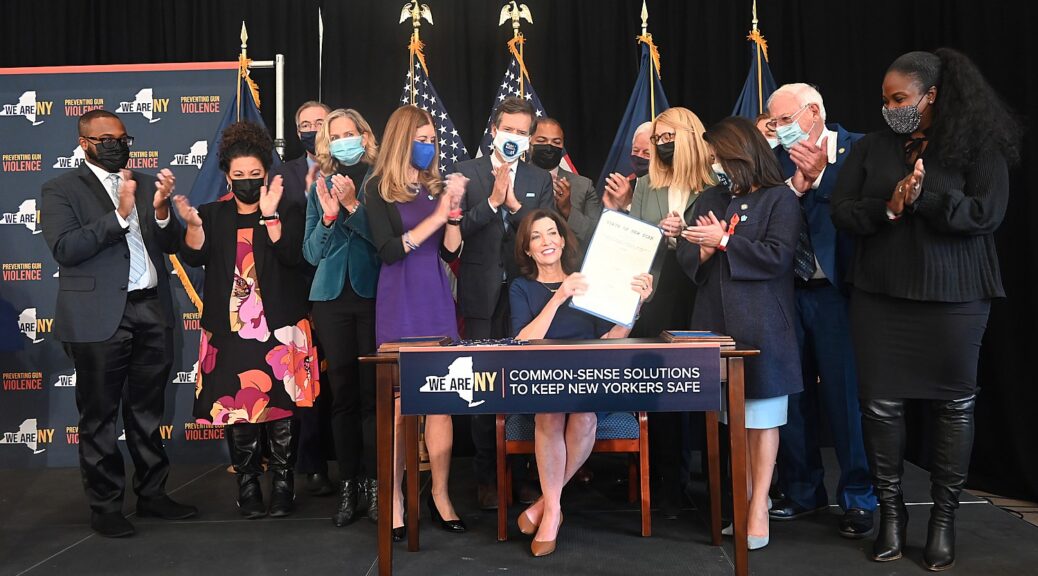
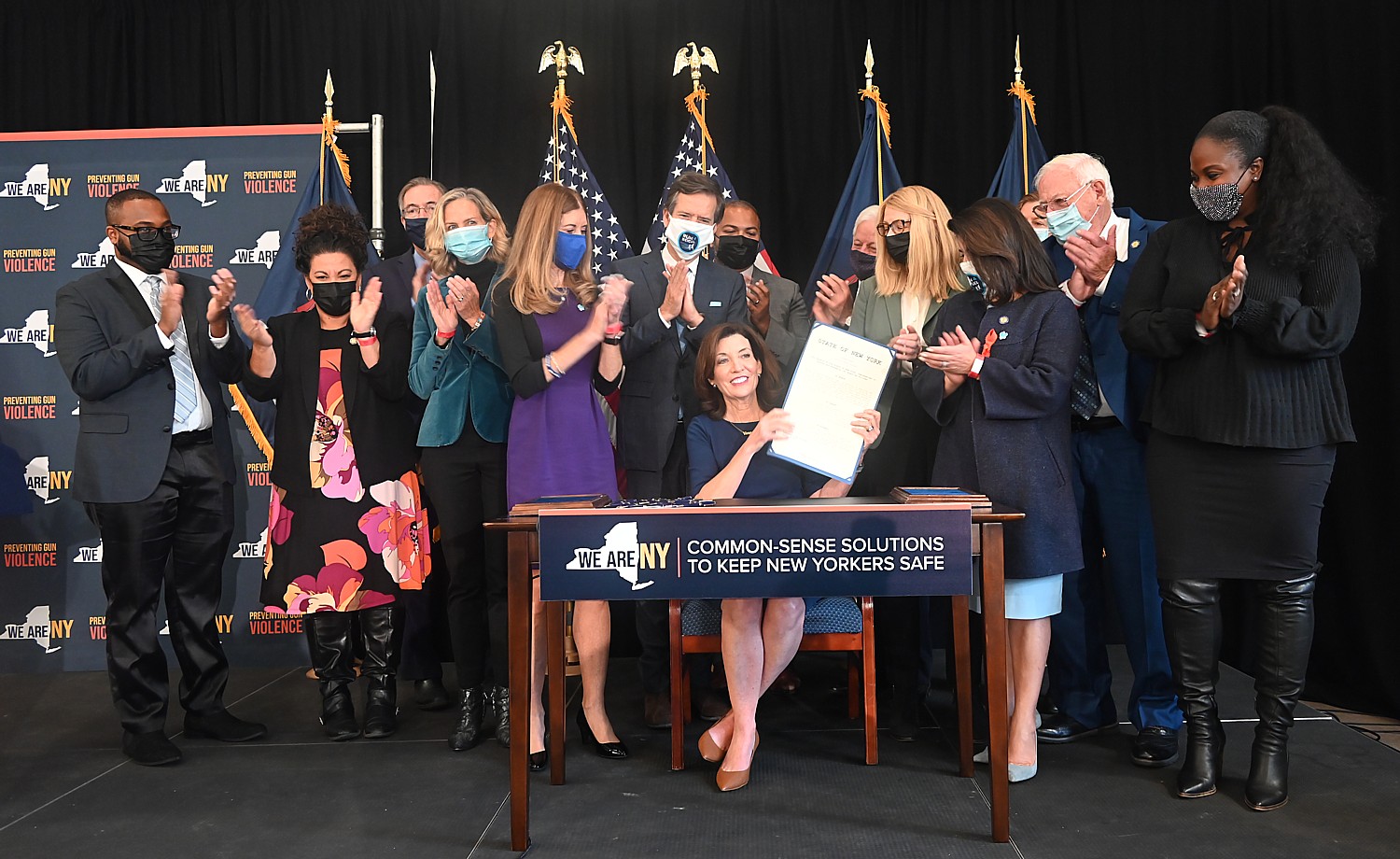
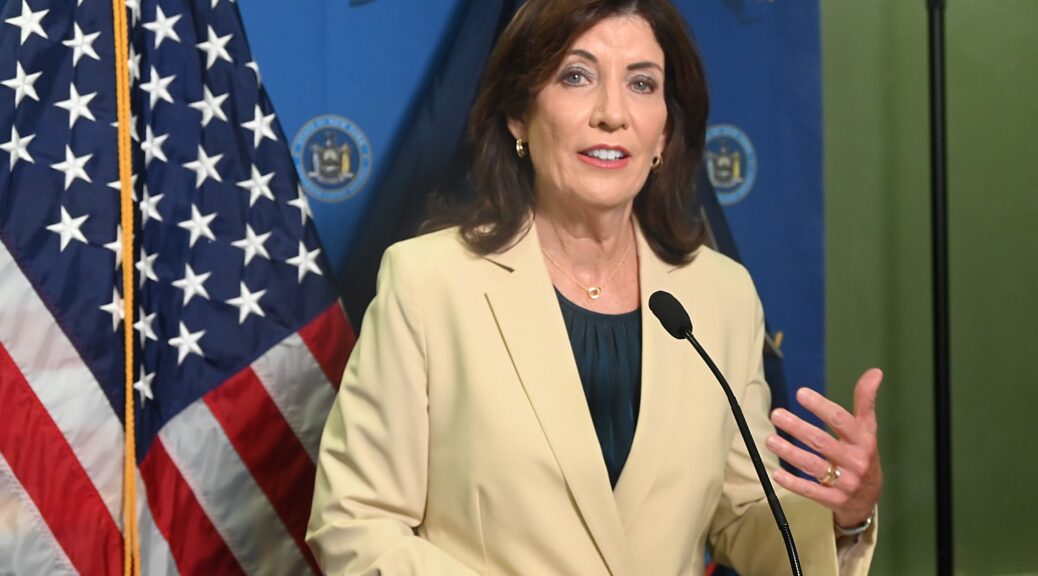
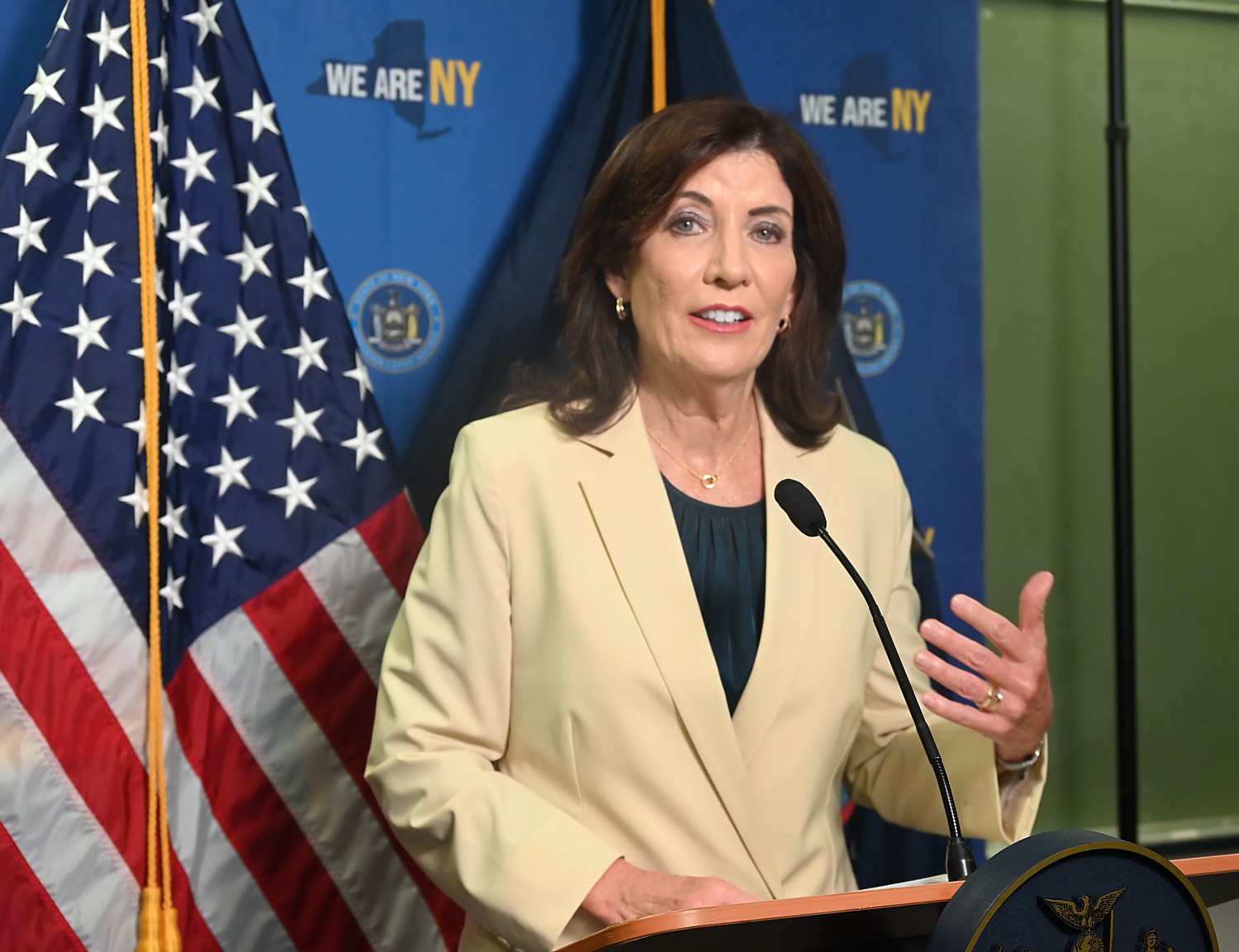
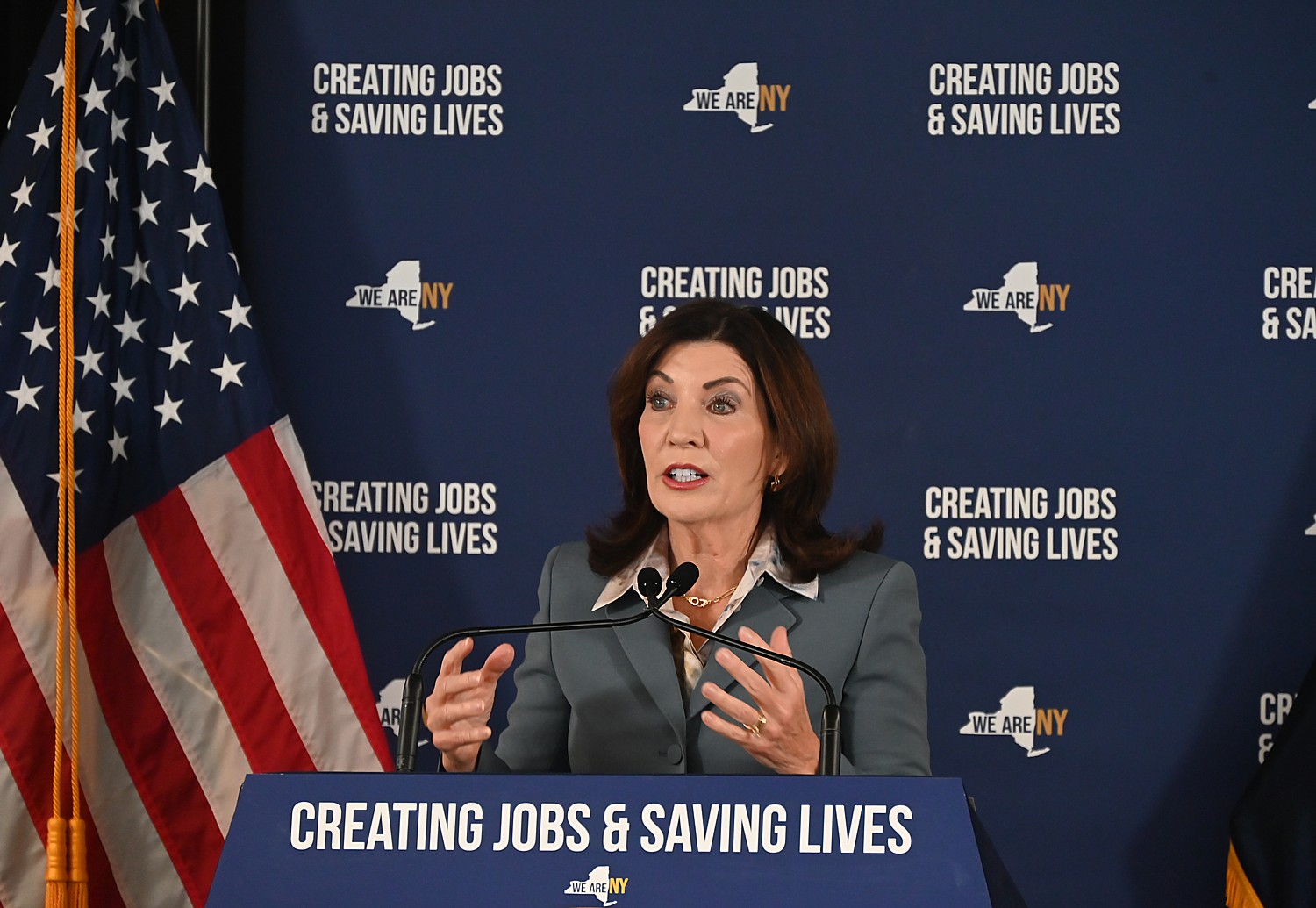
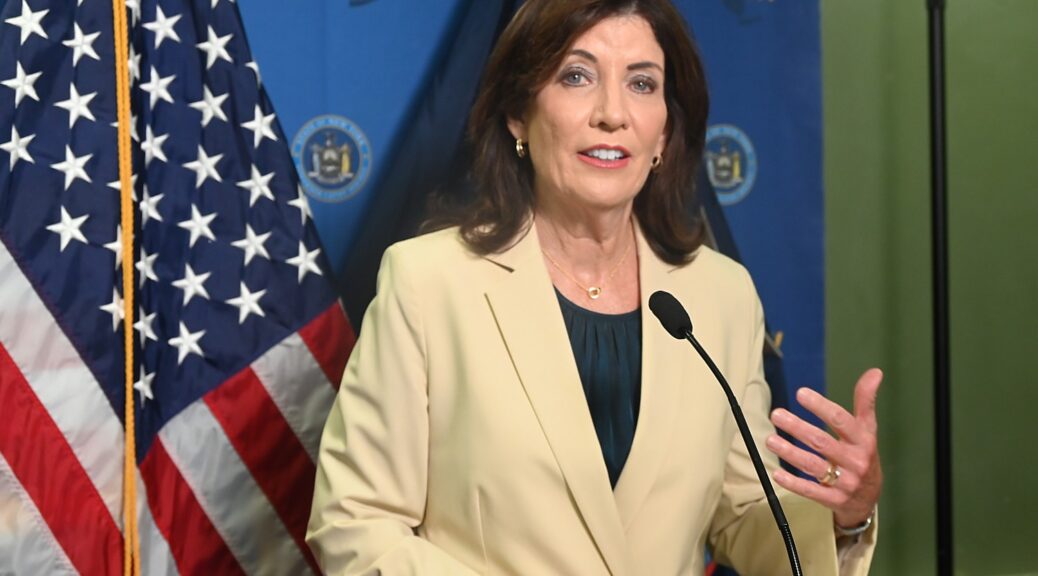
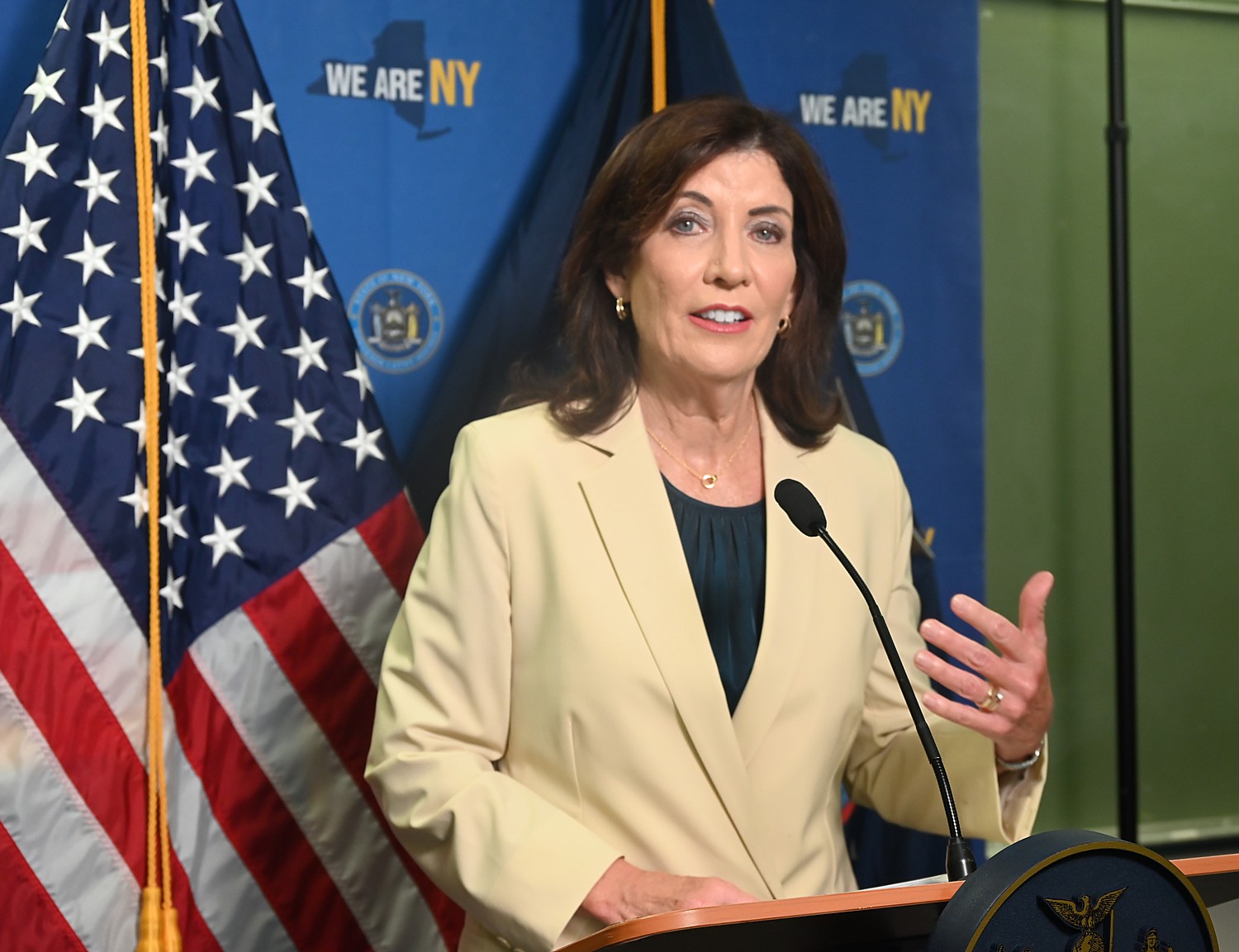
Governor Kathy Hochul signed her FY 2027 Budget making New York more affordable, keeping New Yorkers safe and expanding opportunity for all © Karen Rubin/news-photos-features.com

Governor Kathy Hochul signed her FY 2027 Budget making New York more affordable, keeping New Yorkers safe and expanding opportunity for all. The Governor delivered sweeping measures to lower costs including putting New York on a path to universal childcare, reducing utility costs and delivering energy rebate checks, and bringing auto insurance rates down for drivers. She also implemented a surcharge on luxury New York City second homes, generating much needed revenue for the City without impacting everyday New Yorkers. Additionally, the Governor continues to build on her unprecedented investments in public safety with more than $900 million in funding, measures to crack down on illegal 3D printed guns, and a nation leading package of immigration protections that keep New Yorkers safe.

“Every proposal included in this Budget was a fight for New Yorkers and their future. Working with my partners in the Legislature, we delivered an ambitious agenda that will lower costs for hardworking families, keep New Yorkers safe and create opportunity for all,” Governor Hochul said. “While Washington continues to make life more difficult for New Yorkers, I’m doing everything in my power to make real, tangible progress on the issues New Yorkers are facing and I will always fight for the people who call this great state home.”

Delivering Universal Childcare

Governor Hochul is putting New York State on a pathway toward universal childcare, beginning with committing to investments that will support the delivery of affordable childcare to up to nearly 100,000 additional children.

The Governor’s landmark investment will increase funding by $1.7 billion bringing the total FY27 investment to $4.5 billion for childcare and prekindergarten services statewide.

These investments will:

  • Make Pre-K truly universal statewide by making funding available to provide high-quality pre-k seats for all four-year-olds in the State by the start of the 2028-29 school year.
  • Partner with New York City to launch the Mayor’s signature 2-Care program and finally realize the promise of universal 3K access in New York City.
  • Support counties in building out New York’s First 3 Program providing high-quality affordable childcare to families across the state regardless of income.
  • Expand childcare subsidies to tens of thousands of additional families.
  • Support the workforce through early childhood educator preparation.
  • Launch an Office of Childcare and Early Education to steer the implementation of high-quality, universal childcare for New York families and will work to enhance awareness of the Child Tax Credit to ensure as many New Yorkers as possible benefit from the Governor’s historic expansion of the program that increased the credit from $330 per child to $1,000 annually for children under four.

Tackling Utility Costs

New Yorkers deserve reliable energy at a price they can afford, which is why Governor Hochul is proposing a sweeping set of reforms to modernize the Public Service Law, demanding strict fiscal discipline from utilities and empowering the State to fight more effectively for lower bills.

In her FY27 Budget, the Governor is putting ratepayers first by:

  • Issuing one-time $1 billion Protecting Our Wallets Energy Rebate (POWER) checks to help provide needed relief. The POWER program will provide $200 to joint filers with incomes under $150,000 and $150 to joint filers with incomes between $150,000 and $300,000. Tying executive pay directly to customer affordability,
  • Requiring utilities to present a budget constrained option when requesting a rate increase to ensure efficiency and affordability are prioritized,
  • Ensuring customers do not foot the bill for hidden costs like lobbying, political contributions and unnecessary executive travel.
  • Allowing for the installation of an “Affordability Monitor” within any utility company when the average residential bills creep too high.
  • Modernizing the way utility rate cases are reviewed to help keep prices manageable.
  • Incentivizing the use of smart thermostats to help reduce energy usage and lower bills.
  • Establishing the RATES commission, bringing together consumer advocates and energy experts to investigate the root causes of surging utility bills, evaluate utility profits, review energy market designs and recommend actionable, transparent reforms.

Pied-à-Terre Tax on Luxury Second Homes in New York City

Governor Hochul’s Budget includes a pied-à-terre tax, a surcharge that will apply to high-value – $5 million or more – second homes within New York City. The tax ensures that those who own luxury properties as their second homes are still fairly contributing towards the funding of essential services like policing or parks that make New York City a global destination.

Given the complexity of New York City’s property tax system, the pied-à-terre surcharge makes accommodations in the short term transition phase for the ways in which different property types are currently valued in New York City, while ensuring the surcharge is applied fairly and immediately to luxury properties. The proposal is expected to generate at least $500 million a year in recurring revenue for New York City without impacting everyday New Yorkers.

Protecting New Yorkers From ICE Overreach

Governor Hochul has enacted a sweeping set of laws to protect New Yorkers against aggressive federal immigration enforcement as part of the FY27 Enacted Budget.

These new laws will expand protections by:

  • Prohibiting state, local and federal officers from wearing face covering while interacting with the public.
  • Prohibiting local governments, state and local police and state and local corrections from entering into 287(g) Agreements or similar agreements with the federal government that allow for state and local law enforcement personnel and facilities to be used for civil immigration enforcement purposes.
  • Establishing a state law under which New Yorkers can bring a lawsuit against federal, state and local government officials for a violation of their constitutional rights.
  • Prohibiting the use of state and local civilian agencies and public school resources, including employee time, for immigration enforcement activities.
  • Prohibiting civilian state, local and school employees (including higher education and K-12) from permitting access to any non-public area of a state-owned or operated facility to immigration authorities without a judicial warrant, meaning any state or municipally owned, or operated facility including housing accommodations, parks, childcare facilities, preschools, hospitals, schools, dorms, healthcare facilities, community centers, libraries and shelters, cannot grant or facilitate access to any non-public areas of their facilities to immigration authorities without a warrant.
  • Ensuring immigrant students can access education, codifying the right to a free public education regardless of immigration status.

Record Investments in Public Safety

Since taking office, Governor Hochul has invested more than $3 billion in public safety initiatives. The funding has provided record support for local and state law enforcement that has contributed to gun violence reaching record lows, reduced subway crime and combated pandemic-era surges in motor vehicle and retail thefts.

This Budget adds more than $900 million to those record investments and strengthens public safety by:

  • Prioritizing New Yorkers’ safety throughout the transit system. The Governor secured an additional $77 million to support the deployment of NYPD officers across the subway system and $25 million for expanding the Subway Co-Response Outreach Teams initiative to respond more quickly to individuals in acute distress.
  • Establishing a pilot program for New York City requiring the installation of Intelligent Speed Assistance devices in the vehicles of so-called “super speeders,” drivers with a documented pattern of flouting speeding laws and putting New Yorkers at risk.
  • Advancing a comprehensive approach to both prohibit risky drone use and expand responsible use of drones as first responders by creating a crime for dangerous drone use and flying in and around restricted areas, and authorizing the use of detection and mitigation efforts by qualified law enforcement officers.
  • Protecting safe access to worship — creating a new crime for knowingly and intentionally interfering with a person seeking to enter or exit a place of religious worship or acting in a way that makes a person within 50 feet of a place of worship fear for their safety.

Stopping Illegal Homegrown Guns

Governor Hochul has passed the strongest gun laws in the nation and made record investments in gun violence prevention, resulting in New York having the fewest shooting incidents statewide in 2025 in recorded history.

Governor Hochul’s FY27 Enacted Budget will:

  • Require first-in-the-nation minimum safety standards for 3D printers sold in New York to be equipped with basic technology that prevents the unlicensed, illegal production of lethal firearms and firearm parts.
  • Require the New York State Division of Criminal Justice Services to lead a task force of experts to recommend regulations that will ensure New Yorkers are protected from these dangerous weapons. Following the implementation of the resulting regulations, state law will allow for recourse against any actor who sells a 3D printer in New York without equipping it with such technology.
  • Criminalize the unlawful possession, sale, or distribution of blueprints that allow the printing of illegal guns and gun parts, and the manufacture of 3D-printed firearms.
  • Prohibit gun manufacturers and firearms dealers from selling pistols that can be quickly and easily converted into machine guns using common tools.

Lowering Car Insurance Rates for New Yorkers

Fraud is a major driver of elevated auto insurance premiums. Increasingly sophisticated actors stage elaborate accidents, designed to allow for “jackpot” payouts from insurance companies or jury awards. These schemes imperil the safety of honest drivers, cause property damage, and increase rates for drivers across the state. Increasingly, scams go beyond just one bad actor at the wheel and are orchestrated by organized criminal rings.

The Governor’s plan will:

  • Cap payouts for drivers engaging in criminal behavior at the time of the incident, including uninsured motorists, drunk drivers, and drivers in the act of committing a felony.
  • Better define what actually constitutes a ‘serious injury’ so that damages for pain and suffering or emotional distress are reserved for those able to objectively demonstrate that they have suffered a serious injury.
  • Ensure that if a driver is found to be mostly at fault for causing an accident, they cannot claim outsized payments for damages.
  • Prevent insurance companies from exorbitantly raising rates by setting a legal threshold that prevents excess profits and returns savings to consumers.
  • Create new regulatory safeguards to prevent insurance companies from raising rates without seeking express approval from the Department of Financial Services.
  • Protect consumers by prohibiting insurance companies from setting rates based on extraneous, personal factors like homeownership status, occupation, education level or zip code.
  • Enable prosecutors to seek criminal penalties against any individual responsible for organizing a staged accident, not just the particular individual behind the wheel.
  • These measures come in addition to the Governor’s whole-of-government approach to combatting fraud by tasking DFS, DMV, DCJS and NYSP with a more proactive and coordinated approach to enforcement.
  • The Governor’s plan also includes transparency for auto insurance policyholders by requiring insurers to notify policyholders about rate changes.

Protecting Vulnerable Renters and Homeowners

High prices and unscrupulous landlords are driving too many tenants out of their homes and making it harder for vulnerable homeowners to make ends meet. Governor Hochul has secured agreements to help address these issues in the FY27 Budget including:

  • Protecting renters by clarifying anti-harassment laws.
  • Enacting stiffer criminal penalties for landlords who engage in systemic harassment of rent-regulated tenants across multiple buildings or who are repeat serious offenders of existing anti-harassment laws.

To ensure that housing remains affordable for both seniors and New Yorkers with disabilities who are living in rent-regulated housing and Mitchell-Lama affordable housing, Governor Hochul’s final FY27 Budget:

  • Increases income eligibility limits for New York’s Rent Freeze Program for both the Senior Citizen Rent Increase Exemption and Disability Rent Increase Exemption from $50,000 to $75,000.
  • Authorizes raising the eligibility for the Senior Citizen Homeowners’ Exemption and Disabled Homeowner’s Exemption from $50,000 to $75,000.
  • Adds notice requirements to make more elderly and disabled rent-regulated tenants aware of the SCRIE/DRIE rent freeze programs.

Consistent with current practice, New York City and other communities may opt into both the SCRIE/DRIE and SCHE/DHE programs.

Improving Transparency in the Residential Property Insurance Market

Homeowners and housing providers across the state are contending with escalating home insurance premiums and shrinking options for coverage, which threaten the affordability of New York’s single and multi-family homes. While single family home insurance rates in New York are on average lower than many other states — thanks to New York’s tightly regulated market — year over year increases in insurance rates still threaten to sap money from families’ pocketbooks and make multi-family housing less and less affordable for homeowners and renters. For years, New Yorkers have not been properly informed about the reasons for rising premiums. This year, the Governor’s reforms will increase transparency for consumers and give the Department of Financial Services (DFS) a better understanding of the multi-family market with new data from insurers.

 Governor Hochul is tackling this problem head-on by:

  • Requiring insurers to provide detailed information to DFS on how they price policies for multifamily residential buildings.
  • Increasing transparency for home insurance as well as auto insurance by requiring insurers to notify policyholders about rate changes.

Protecting New York Farmers from the Disruption of Federal Tariffs

Agriculture is a cornerstone of New York’s economy, yet the federal government’s tariff policy has threatened the competitiveness of our farmers. Federal actions have driven up the cost of essential resources — like seeds, fertilizer, and necessary machinery — while creating market instability. Although the USDA recently announced a national assistance program, it is fundamentally flawed for New York since it leaves specialty crops and the dairy sector with no meaningful support. 

To relieve farmers from the adverse impacts caused by federal tariffs, Governor Hochul will:

  • Create the Agricultural Resiliency Against Tariffs Program, which will provide $30 million in direct payments to New York specialty crop growers, livestock producers, aquaculture, and dairy farmers.
  • This initiative will quickly distribute much needed support to offset rising costs caused by tariffs.
  • This program reinforces New York’s commitment to our agricultural community, while safeguarding local jobs and ensuring our farmers have the certainty needed to compete in a volatile global marketplace.

Helping New Yorkers Put Food on the Table

The recent shutdown of the federal government reminded the nation of how precarious our nutrition safety net is and how many New Yorkers contend with food insecurity. In response to the shutdown, Governor Hochul rushed an additional $65 million toward food assistance programs that delivered meals to tens of thousands of New Yorkers in their hour of need. To build on these actions and further reinforce our emergency food system:

  • Governor Hochul is announcing a $51 million investment in the Department of Health (DOH)’s Hunger Prevention and Nutrition Assistance Program (HPNAP) program, which will help New York’s network of about 2,700 food banks, pantries, and soup kitchens reach more New Yorkers in need. An additional $15 million will strengthen and expand operations, allowing them to reach more people with healthier options.
  • The Enacted Budget also includes $55 million for the Nourish New York Program, which reroutes surplus agricultural products to those who need them most through the state’s food banks.

Theft of Supplemental Nutrition Assistance Program (SNAP) benefits is an epidemic across the United States, with hundreds of millions of dollars illegally stolen from families’ EBT cards nationwide using illegal “skimming” devices. Governor Hochul’s FY27 Budget will protect New Yorkers from this predatory behavior by:

  • Upgrading New York’s EBT cards to secure chip-based technology that makes cards virtually impervious to skimming. While the federal administration tries to strip SNAP benefits from as many New Yorkers as possible and turns a blind eye to criminals taking food from vulnerable families, transitioning to chip-based EBT cards will help safeguard the SNAP dollars that New Yorkers depend on.

The Governor’s plan will also:

  • Establish New York PLATES, a statewide competitive $10 million grant program for eligible food pantries that will fund capital projects, to increase the capacity of these critical organizations and enable food pantries to safely store, transport and distribute food to more families.
  • Support localities in expanding free summer meal sites.

No Taxes on Tips for Hardworking New Yorkers

Tipped workers — New York’s bartenders, servers, and deliveristas — are the backbone of the state’s service economy. In jobs that demand long hours and daily dedication, every dollar is hard-won. Governor Hochul is committed to making sure tipped workers can hold on to more of what they earn. The Governor passed legislation that eliminates state income taxes on up to $25,000 of tipped income in tax year 2026, consistent with federal tax guidance.

Governor Hochul’s FY27 Budget builds on her efforts to put more money back in New Yorkers’ pockets. To date, her administration has:

  • Cut middle-class taxes to their lowest rates in 70 years, ensuring families keep more of the paychecks they earn.
  • Raised New York’s minimum wage and tied future increases to inflation so a day’s work covers a day’s needs.
  • Implemented an historic expansion of New York’s Child Tax Credit, also known as the Empire State Child Credit, to provide families up to $1,000 per child under the age of four beginning in 2026, and up to $500 for school-aged children beginning in 2027, substantially increasing the previous maximum of $330.
  • Made school meals free for every student, saving families $1,600 per child every year and making sure no child goes hungry at school.
  • Sent Inflation Refund checks to 8.2 million New Yorkers — up to $200 for individuals and up to $400 for families.
  • Increased the maximum weekly unemployment benefit by $300 a week so people can focus on finding work, not keeping the lights on.
  • Established a nation-leading birth allowance — the New York State BABY Benefit (Birth Allowance for Beginning Year Benefit) — providing $1,800 to new parents receiving Public Assistance when they have a new baby.

Governor Hochul Announces End to LIRR Strike

Governor Kathy Hochul announced a resolution to the Long Island Railroad strike that ensures 3,500 workers are paid fairly, without compromising affordability for Long Islanders by causing fares or taxes to rise. © Karen Rubin/news-photos-features.com

Governor Hochul: “I also would not accept a deal that would compromise affordability for Long Islanders. At a time when everything is going up, we all know the story, I was not going to allow taxes or fares to go up. And that’s why we stood firm for a deal that would not require any additional fare increases or tax increases, period. Full stop. Got it done.”

Hochul: “Now, this contract will ensure that 3,500 Long Island Rail Road employees will be paid fairly for their labor. I want them to know this, I deeply value and respect the hard work they do. They’re out there every single day making sure the job gets done. Their work is critical for the entire region, and they deserve a fair wage.”

Late Monday night, after the first full work day with the Long Island Railroad, the busiest commuter railroad in the country, on strike, Governor Kathy Hochul announced a resolution ending the strike: Here are her comments:  

 Good evening, everyone. I’m truly pleased to share that the five Long Island Rail Road unions and the MTA were able to come together and reach a fair deal this evening.

 Now, negotiations are rarely easy, but I have a lot of respect for the collective bargaining process that unfolded over the last few days. And I always believed that we could reach a good, fair compromise, a contract that achieved two principles: Number one, protecting affordability for Long Islanders and commuters while giving fair wages to the employees. And by working and negotiating together, we have reached that kind of deal.

Now, this contract will ensure that 3,500 Long Island Rail Road employees will be paid fairly for their labor. I want them to know this, I deeply value and respect the hard work they do. They’re out there every single day making sure the job gets done. Their work is critical for the entire region, and they deserve a fair wage.

I also would not accept a deal that would compromise affordability for Long Islanders. At a time when everything is going up, we all know the story, I was not going to allow taxes or fares to go up. And that’s why we stood firm for a deal that would not require any additional fare increases or tax increases, period. Full stop. Got it done.

Now, the Long Island Rail Road service will resume tomorrow at noon, with the full service time, expected in time for the evening rush hour, and yes, in time for the Knicks game. Knicks fans will be able to take the trains to MSG tomorrow in time for game one of the Eastern Conference Finals.

Finally, I want to thank so many people. I want to thank New Yorkers, Long Islanders particularly, who made all the accommodations, who had to work from home, who sacrificed, who had to put up with inconveniences. We are so grateful for their patience and understanding. And for those who helped us weather the storm over the last few days, to their employers who made the accommodations, helped get this done, the elected officials who helped get the word out.

I also want to say, the MTA negotiating team, led by Janno Lieber, did an exceptional job. I want to thank every single one of them. And also the preparations that I came down to see over many days, going to the command centers and talking to the people that were deciding how many shuttle buses, how many trains, how many workers need to be out there greeting people. The job was done like a military operation, and I was very impressed with that, Janno, so I want to thank you and your entire team for anticipating the worst and preparing all of our commuters for a better experience than they would have had otherwise.

I also want to thank our labor leaders, who fought hard for a fair deal, and I respect them for that. They’re looking out for their members. Also, Mario Cilento, the state leader of the AFL-CIO, played an integral role in this process as well. I want to thank, finally, the extra people who showed up every single day to make sure this ran smoothly. We got the deal done. It is a very good night for everyone, and I’m really proud of the work that was accomplished by an extraordinary team and our partners in labor. Thank you.

Long Island Rail Road Strike!

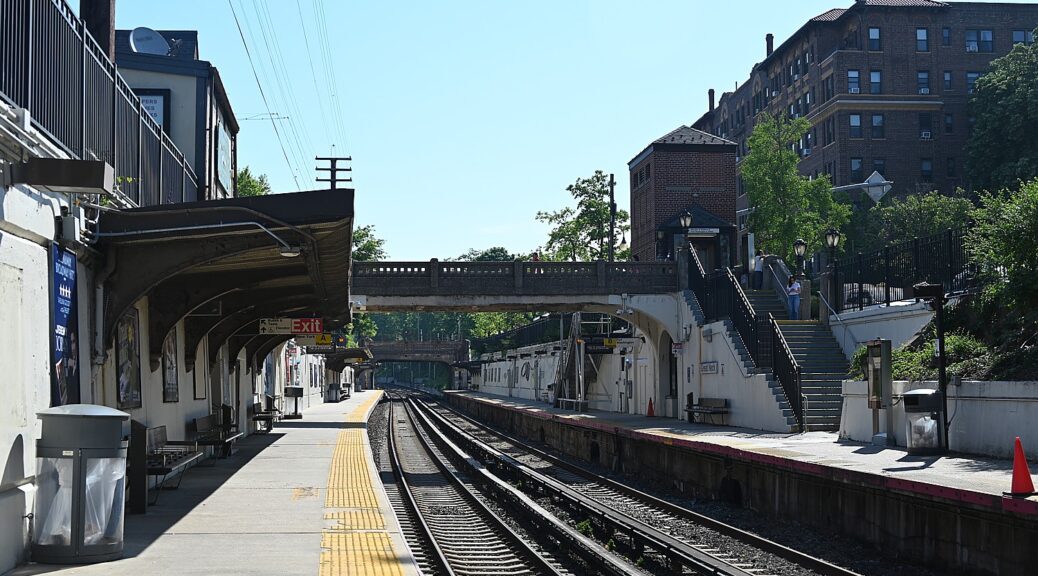
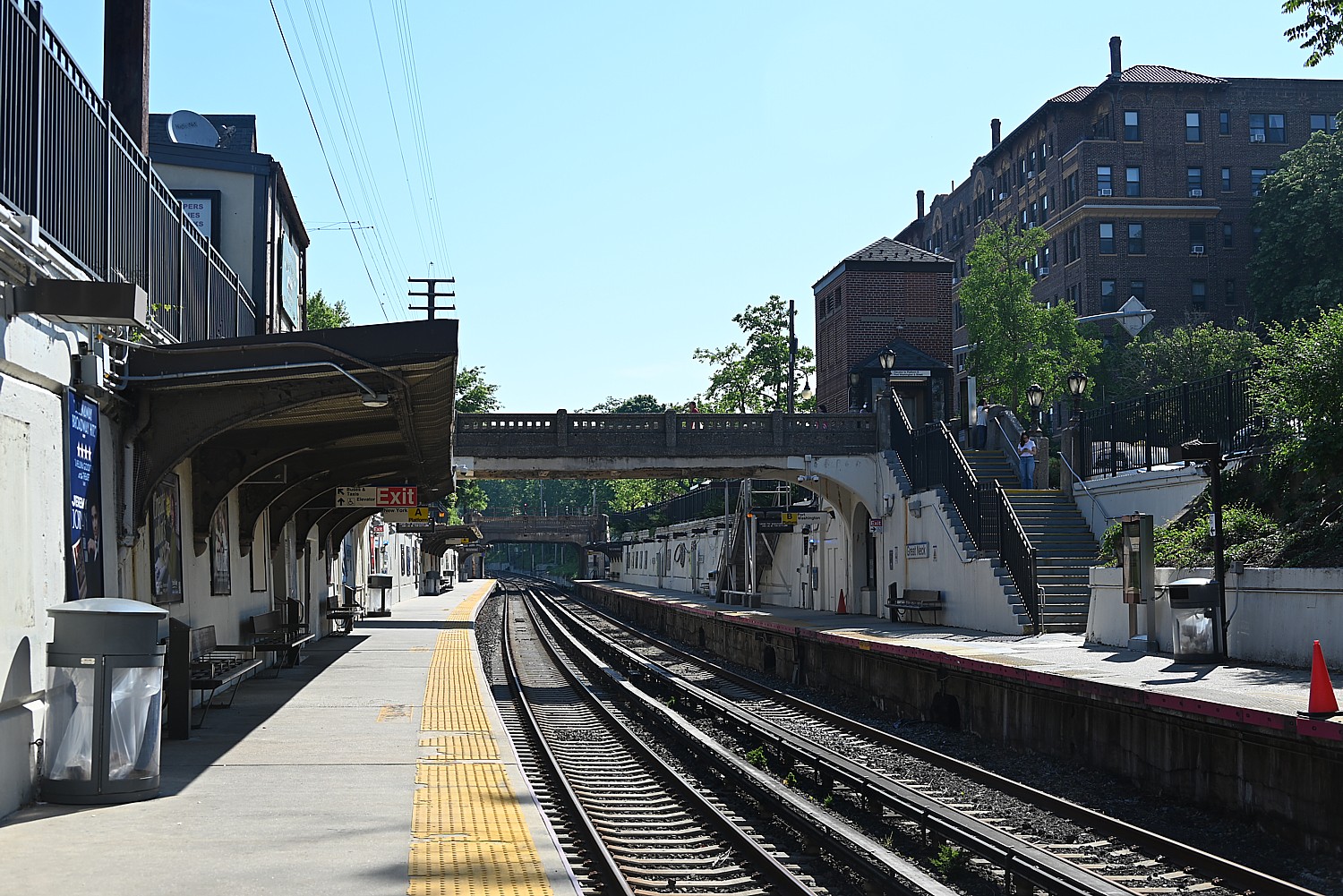
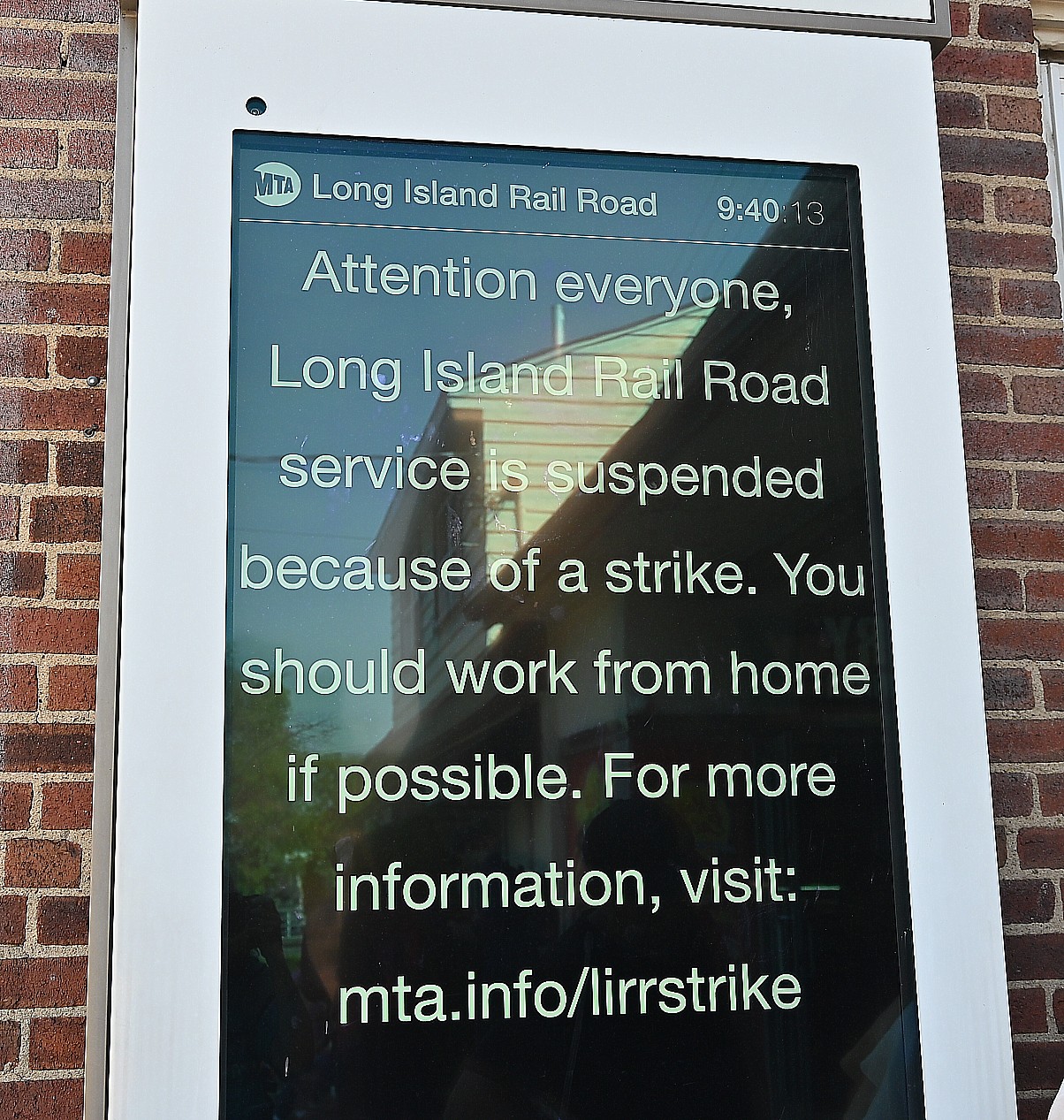
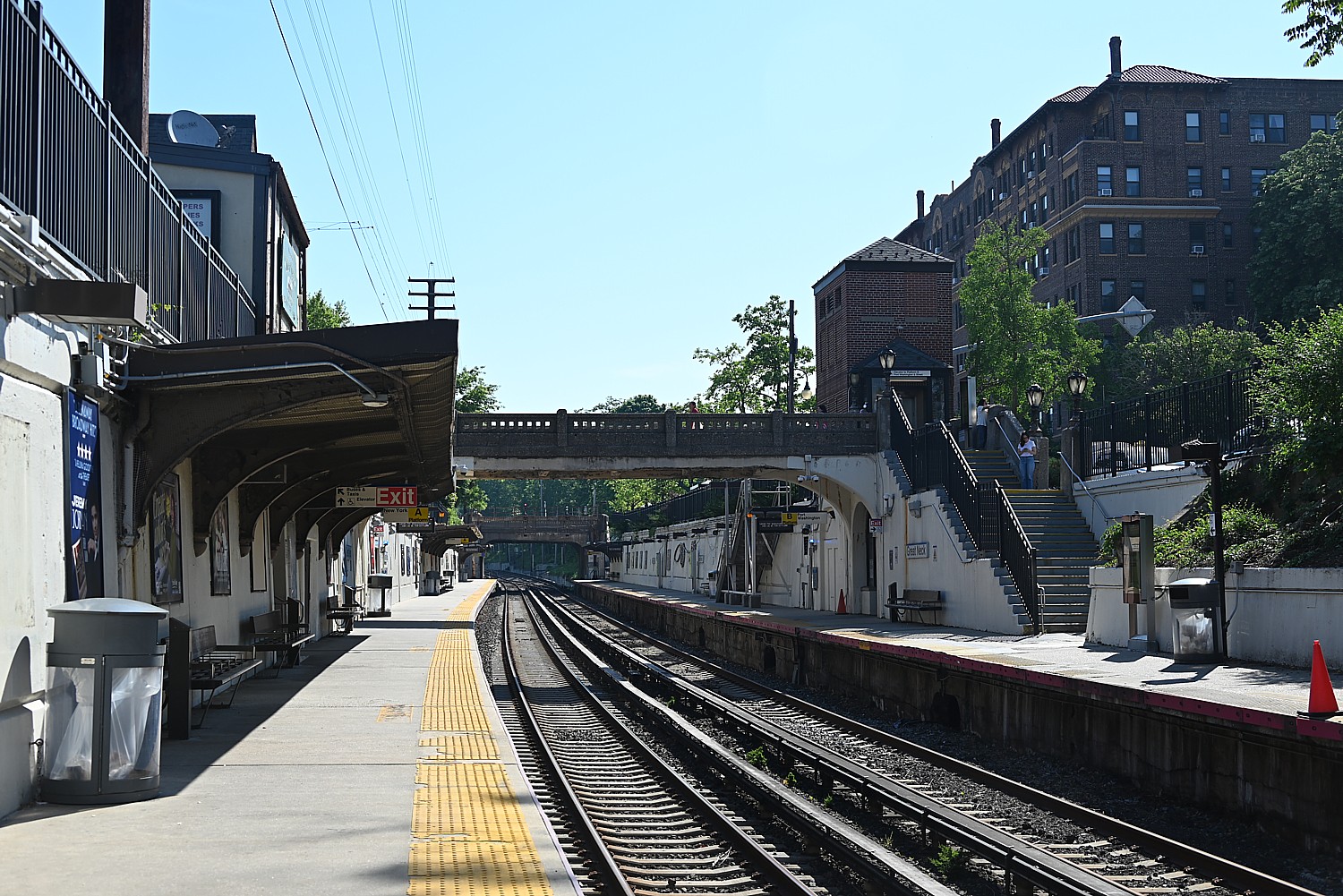
Great Neck, Long Island. The Long Island Railroad Strike has stranded some 300,000 riders a day, cost millions of dollars of economic activity daily. The Teamsters’ demands would cause fares to increase 8%, and trigger wage and cost increases across the state’s workforce at a time when commuters can scarcely afford it © Karen Rubin/news-photos-features.com

By Karen Rubin, editor@news-photos-features.com, news-photos-features.com

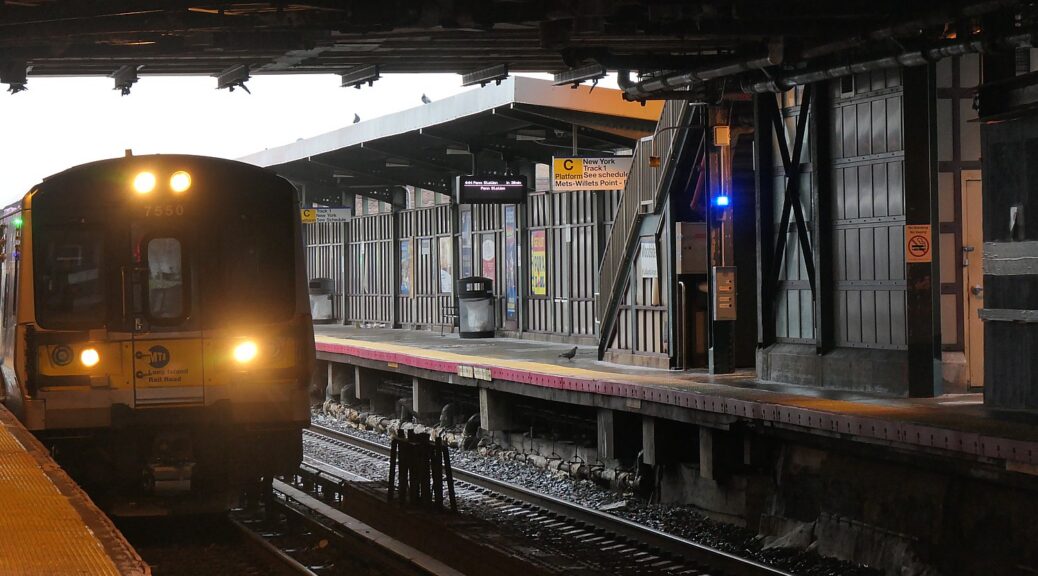
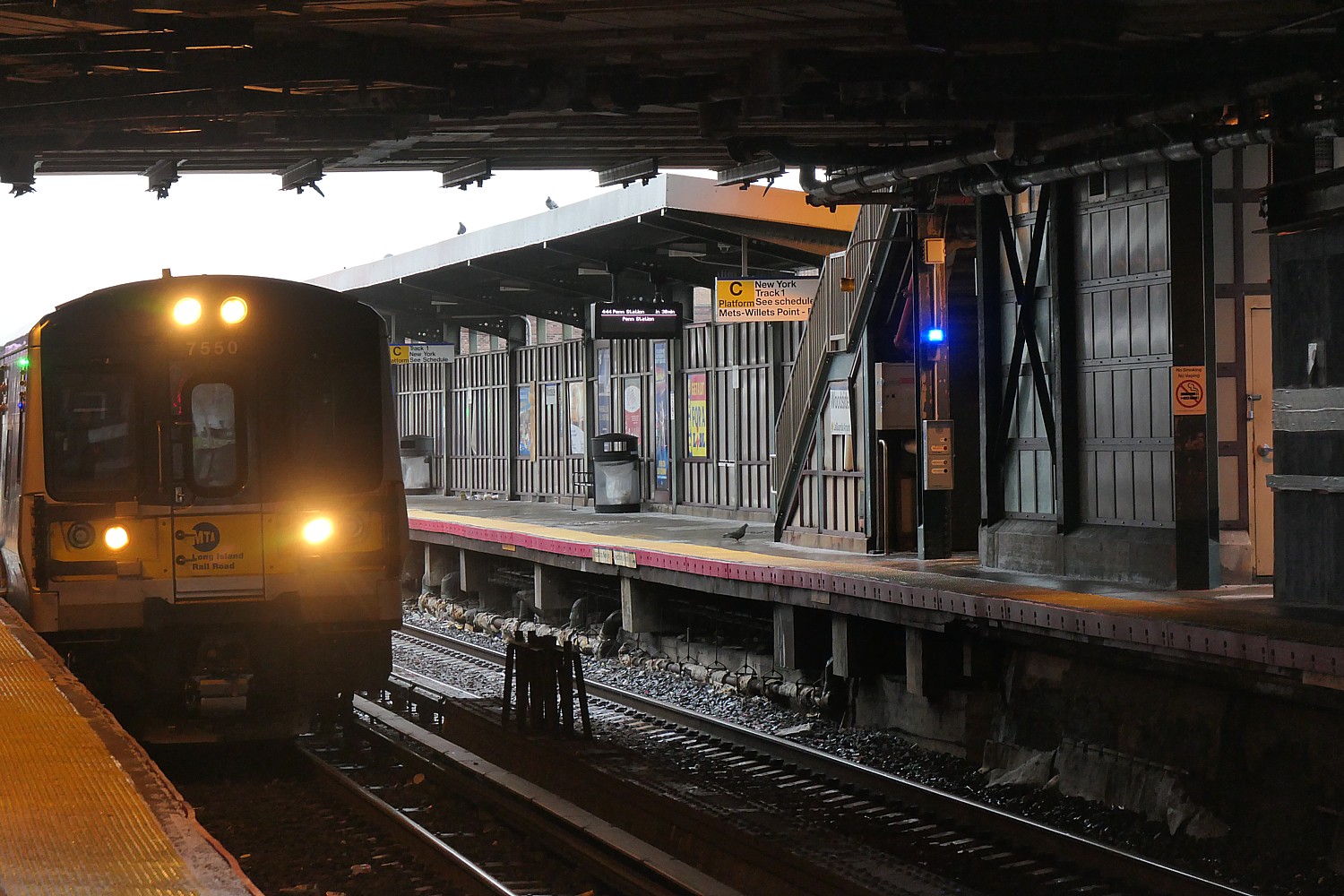
For the first time in 30 years, the Long Island Rail Road, the biggest commuter rail system in the nation, is on strike, causing havoc across the region, as some 300,000 daily riders have to find alternate ways to get to work.

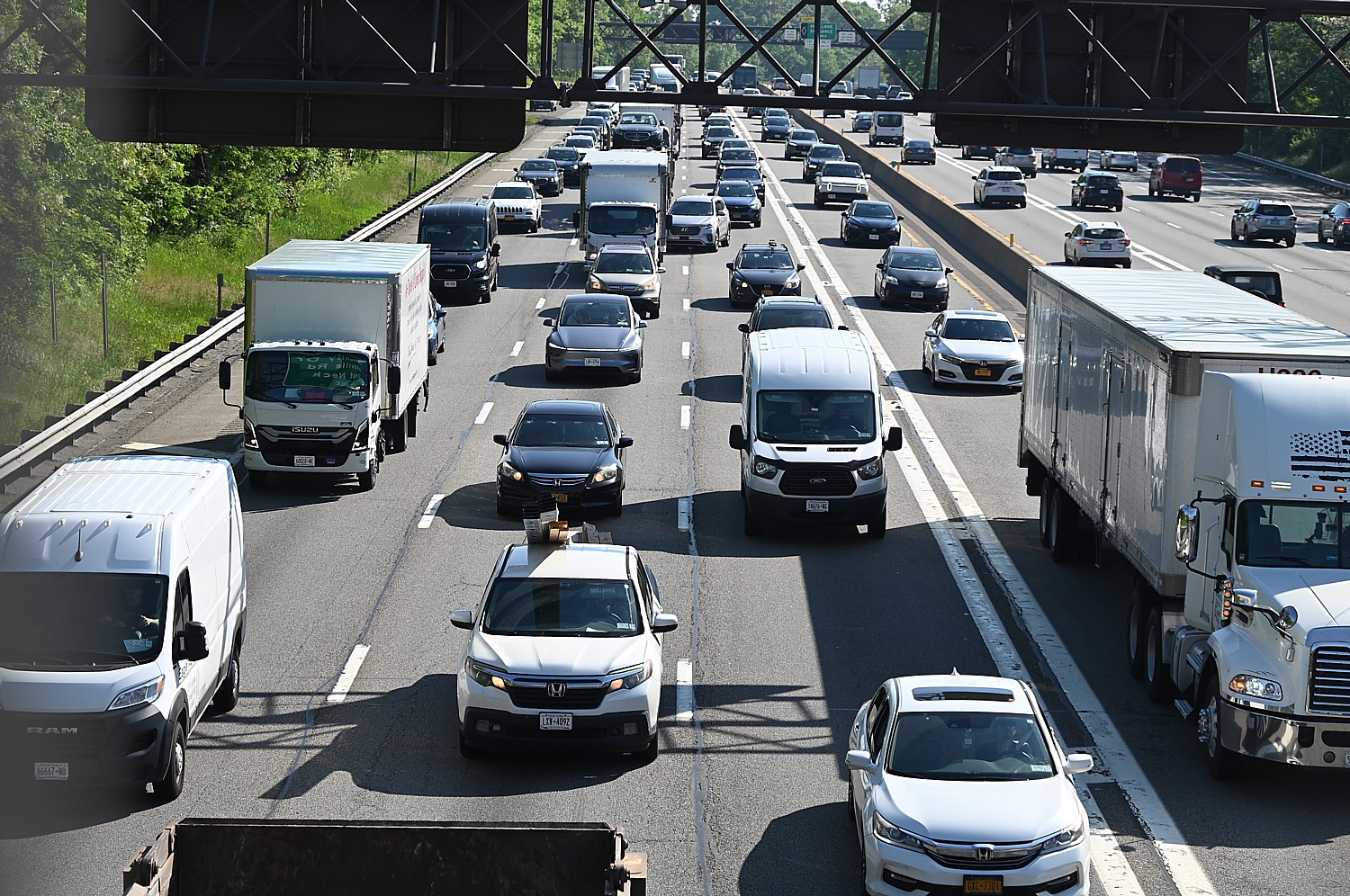
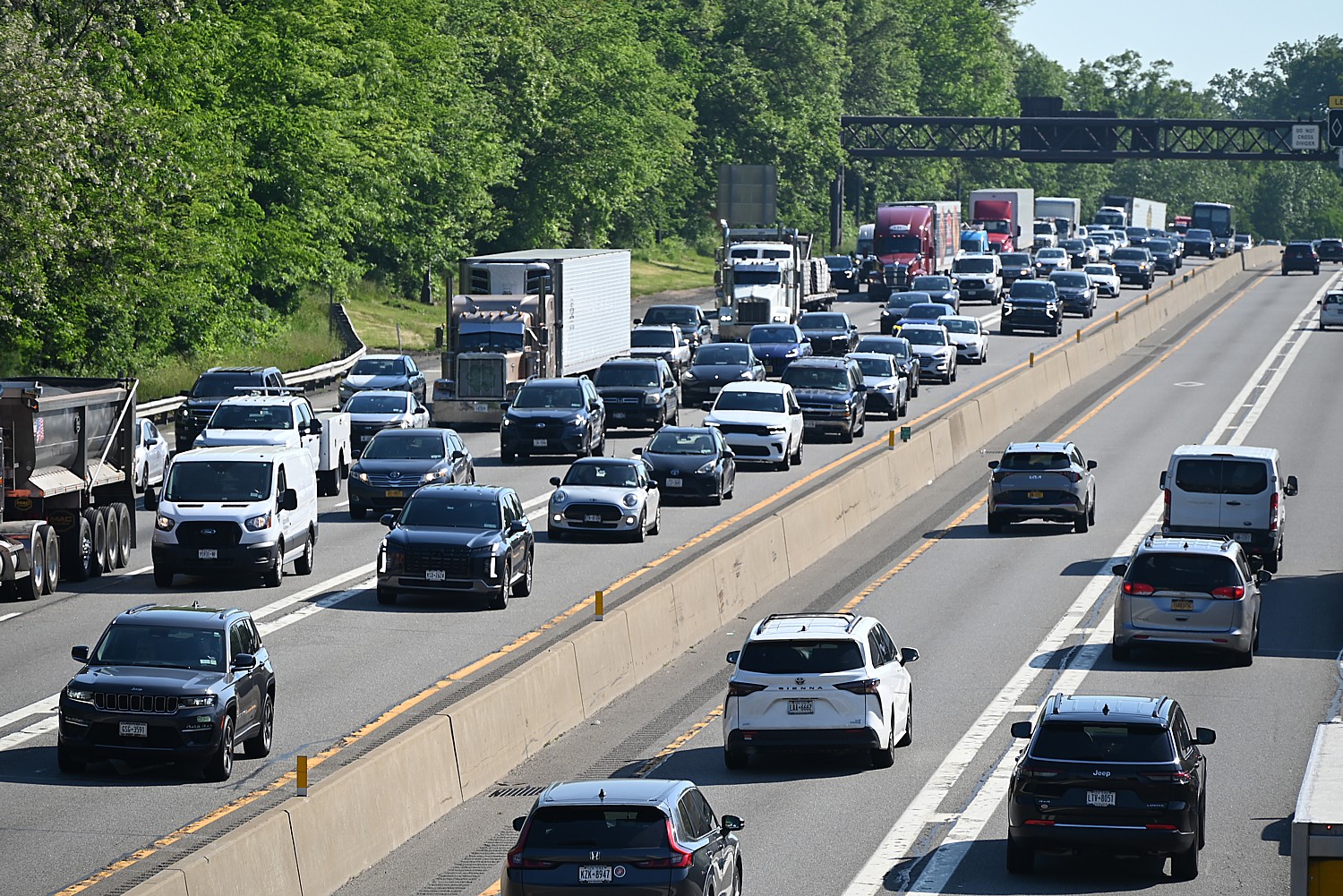
At a time when the air quality is already bad, the increased traffic and emissions will make it worse.

People who normally have to drive for work, to get to doctor, or some emergency are stuck in traffic, at a time when gas prices are reaching new heights, compounding family financial woes.

You look at the vacant cafes and shops around the train station that are normally bustling with people.

The timing is interesting, aimed at hurting Governor Kathy Hochul who is being challenged by Republican Bruce Blakeman, the Nassau County Executive.

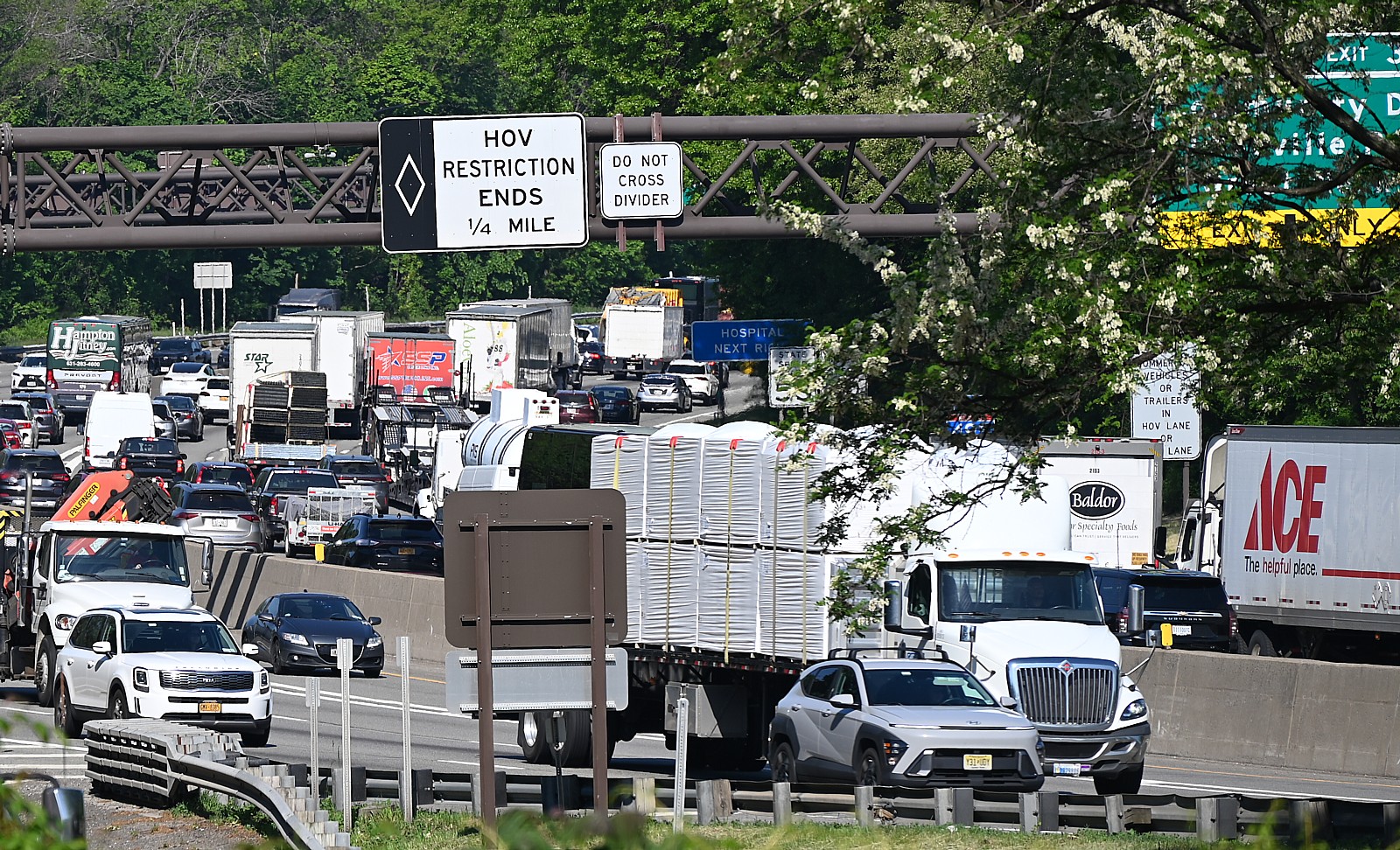
The Long Island Rail Road strike is exacerbating traffic congestion on the Long Island Expressway, even with the HOV lane jammed © Karen Rubin/news-photos-features.com

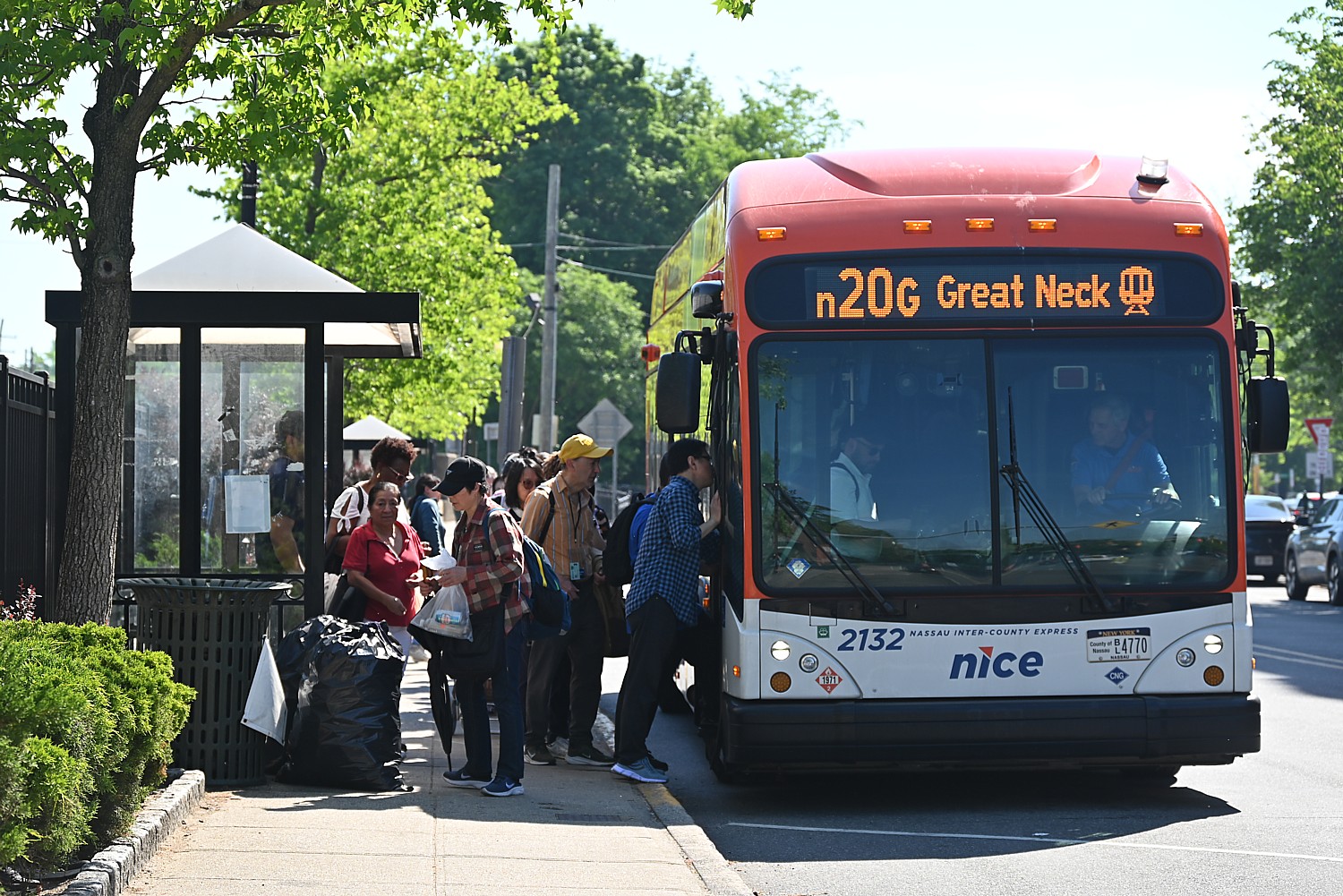
The NICE buses which are under Blakeman’s control, take only 13,000 people from Long Island train stations, depositing them at subway stations in Queens.

A commute that normally takes 40 minutes can take 2 hours.

The timing of the strike – the first in 30 years – is interesting, especially since the MTA put very favorable terms on the table, and the LIRR workers are already the highest paid in the nation.

I would bet Trump is behind the Long Island Railroad strike in order to boost Nassau County Executive Bruce Blakeman, who is the Republican challenging Governor Kathy Hochul and thinks the strike makes Governor Hochul look bad and the pain it will cause the 300,000 daily LIRR riders will result in lots of angry votes against her, because of course you blame the Democrat – except it actually makes Blakeman look impotent.

The Long Island Rail Road strike is exacerbating traffic congestion on the Long Island Expressway, even with the HOV lane jammed © Karen Rubin/news-photos-features.com

It also makes it clear that like his idol, Donald Trump, Blakeman is willing to inflict misery and suffering on his constituents in order to benefit himself. The Teamsters, who have supported trump for the unfathomable notion that trump is for workers and for unions (when he has sold workers and unions under the bus at every turn) and that waving the trump flag makes them more patriotic and better Americans than others (radical liberal lunatics who want to be able to afford food, clothing and shelter) are doing this to bolster Blakeman.

The Long Island Rail Road strike is exacerbating traffic congestion on the Long Island Expressway, even with the HOV lane jammed © Karen Rubin/news-photos-features.com

Here’s how you know that Blakeman is enjoying seeing Hochul and Long Islanders squirm: he could offer to help organize NICE buses to relieve some of the stress, but instead, uses the opportunity to try to get Hochul to cancel congestion pricing tolls (which he sued to overturn), to be told by Hochul that it is not possible under the federal contract. Instead, the pro-Blakeman NICE unions are urging bus drivers to support the LIRR strikers and not change their schedules to help. (Where were the unions defending the federal workers as they were fired by DOGE?)

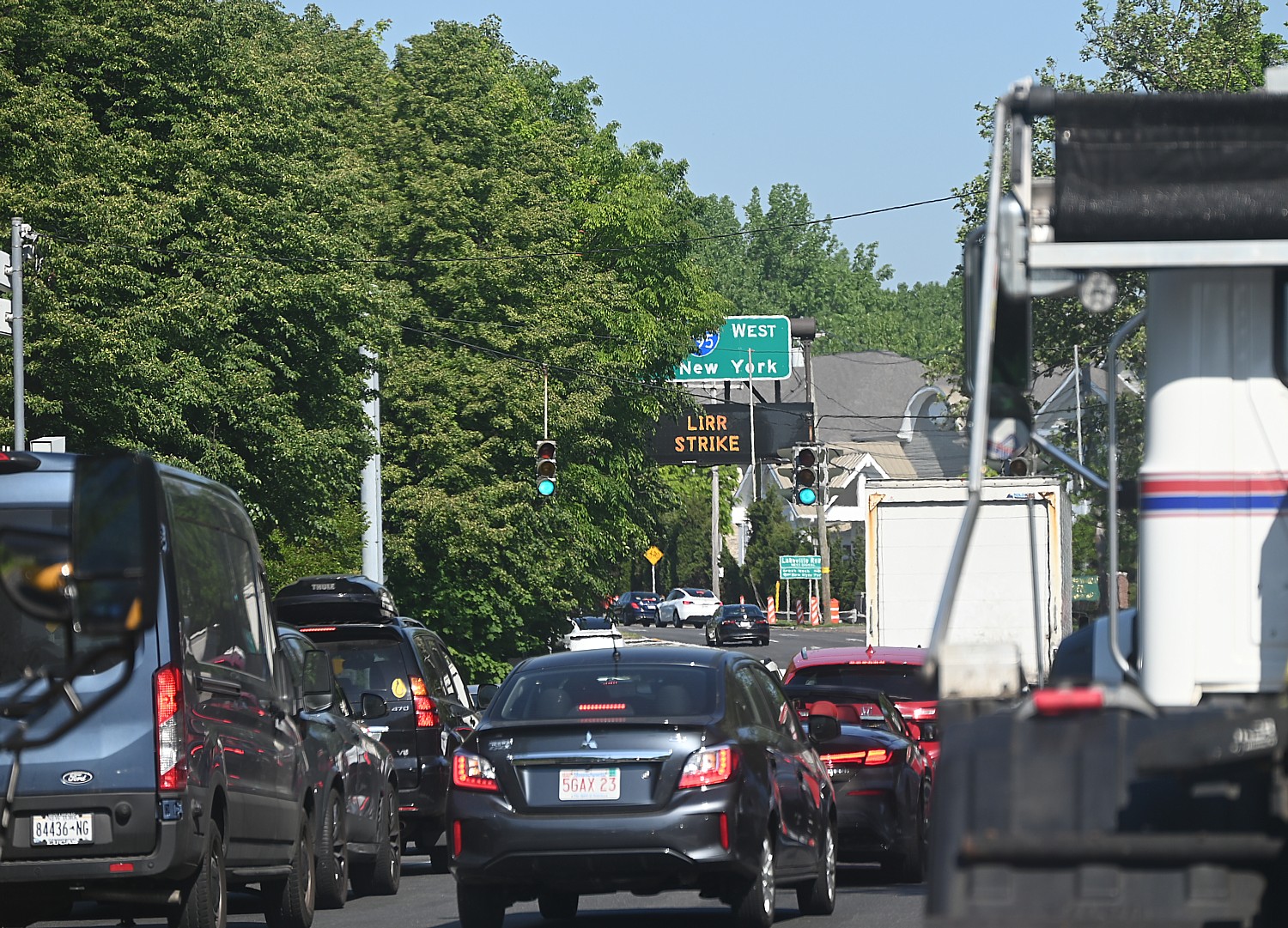
The Long Island Rail Road strike is exacerbating traffic congestion when drivers are already slammed by high gas prices © Karen Rubin/news-photos-features.com

But Governor Hochul, while showing respect for unions and workers, has noted that Long Island Railroad workers are already the highest paid in the country, and if the MTA accedes to their fairly outrageous demands, it not only will force a further increase in fares for already hard-pressed Long Islanders, but will trigger similar, unsustainable increases throughout the workforce.

Lining up for the NICE bus from Great Neck train station to Flushing subway: NICE buses can only take 13,000 passengers, versus the 300,000 who ride the Long Island Railroad © Karen Rubin/news-photos-features.com

“The LIRR is more stable now than it has been for generations,” Governor Kathy Hochul stated. “The decision by some unions to strike over demands that would threaten that progress is reckless. These unions represent the highest paid workers of any railroad in the nation, yet they are demanding contracts that could raise fares as much as 8%, pit workers against one another, and risk tax hikes for Long Islanders. This is unacceptable. My priority is protecting affordability for riders and ensuring fairness across the workforce.

“The disruption that Long Islanders face starting tonight is the direct result of reckless actions by the Trump Administration to cut mediation short and push these negotiations toward a strike. For weeks, the MTA has attempted to negotiate in good faith and put multiple fair offers on the table that included meaningful wage increases, but you cannot make a deal if one side refuses to engage in good faith.

“Commuters are dealing with unnecessary dysfunction and thousands of union LIRR workers are being forced to go without a paycheck because of decisions made by a small group of union leaders. I stand with LIRR riders and will fight to preserve the long term stability of the MTA. I believe a deal can be done and I urge both the MTA and these unions to return to the table and bargain non-stop until a deal is reached.”

See: Governor Hochul Manages, Mitigates Impacts of LIRR Strike, Calls for Settlement

______________________________

© 2026 News & Photo Features Syndicate, a division of Workstyles,Inc. All rights reserved. For editorial feature and photo information, go to www.news-photos-features.com,email editor@news-photos-features.com.Blogging at www.dailykos.com/blogs/NewsPhotosFeatures

Governor Hochul Manages, Mitigates Impacts of LIRR Strike, Calls for Settlement

The Long Island Railroad Strike has stranded some 300,000 riders a day, cost millions of dollars of economic activity daily. The Teamsters’ demands would cause fares to increase 8%, and trigger wage and cost increases across the state’s workforce at a time when commuters can scarcely afford it © Karen Rubin/news-photos-features.com

The Long Island Railroad Strike has stranded some 300,000 riders a day, cost millions of dollars of economic activity daily, exacerbated traffic and pollution when air quality is already bad. The Teamsters’ demands would cause fares to increase 8%, and trigger wage and cost increases across the state’s workforce at a time when commuters can scarcely afford it.

Governor Hochul, while showing respect for unions and workers, has noted that Long Island Railroad workers are already the highest paid in the country, and if the MTA accedes to their fairly outrageous demands, it not only will force a further increase in fares for already hard-pressed Long Islanders, but will trigger similar, unsustainable increases throughout the workforce.

Here are Governor Kathy Hochul’s remarks about the Long Island Railroad strike – Karen Rubin, editor@news-photos-features.com
“The Long Island Rail Road is essential. Every day it carries nearly 300,000 commuters and without this service, life on Long Island as we know it is not possible.

“As Governor, I have been proud to make historic investments in the LIRR. Working with the MTA, we increased service by 40%, improved safety for riders and workers, secured the railroad’s fiscal future after the pandemic, and delivered transformative projects like the Main Line Third Track and Grand Central Madison.

“The LIRR is more stable now than it has been for generations. The decision by some unions to strike over demands that would threaten that progress is reckless. These unions represent the highest paid workers of any railroad in the nation, yet they are demanding contracts that could raise fares as much as 8%, pit workers against one another, and risk tax hikes for Long Islanders. This is unacceptable. My priority is protecting affordability for riders and ensuring fairness across the workforce.

“The disruption that Long Islanders face starting tonight is the direct result of reckless actions by the Trump Administration to cut mediation short and push these negotiations toward a strike. For weeks, the MTA has attempted to negotiate in good faith and put multiple fair offers on the table that included meaningful wage increases, but you cannot make a deal if one side refuses to engage in good faith.

“Commuters are dealing with unnecessary dysfunction and thousands of union LIRR workers are being forced to go without a paycheck because of decisions made by a small group of union leaders. I stand with LIRR riders and will fight to preserve the long term stability of the MTA. I believe a deal can be done and I urge both the MTA and these unions to return to the table and bargain non-stop until a deal is reached.”

After the strike was underway, Governor Hochul gave a briefing and discussed what was being done to mitigate the disruption in transportation:

I want to give Long Island Rail Road riders the latest updates on the strike. Let me be clear, I did not want a strike. The MTA did not want a strike. The MTA has put fair offers on the table, in fact, many of them. And so despite that, for the first time in 30 years, the hundreds of thousands of people who rely on the LIRR are without service because of a strike. We all know that the railroad is the lifeblood of Long Island. Without it, life as we know it is simply not possible. The bottom line is: No one wins in a strike. Everyone is hurt — the hundreds of thousands of people who rely on the railroad, and the thousands of unionized workers who are losing out on wages. 

I want to speak directly to the men and women of labor at the LIRR: The work you do is absolutely vital. Absolutely. I value your labor, and I believe that you deserve fair wages and benefits. But this strike has put all that at risk. Just three days of a strike would erase every dollar of additional salary that workers would receive under a new contract. We don’t need to be here. Workers deserve better, but also New Yorkers deserve better. That’s why today I’m urging all parties once again to bargain at the table, and to get a deal done. 

I also want to give an update to the Long Island Rail Road riders who are wondering about work tomorrow. Now, I’ve been in close communication, I’ve been touring the sites. I’m here at the Operations Control Center to talk to the individuals overseeing the lines that we anticipate the highest volume on tomorrow — you’ll hear more about that from our MTA leadership team — and we have a plan to ensure that essential workers can get into the city during the workday commute.

Now, starting at 4:00 a.m. tomorrow, the MTA will deploy shuttle buses to bring essential workers from across Long Island to subway stations in Queens, and those shuttle buses will be standing by to bring those essential workers back home to Long Island at the end of the day, to Long Island and Queens.

For those in Nassau County who absolutely cannot work from home, there continues to be the option of taking a Nassau Inter-County Express bus directly to the subway connections in Queens. They’ll run extra bus service weekdays during the strike, and we’ve encouraged the county to add additional capacity. 

Another option is Citi Field. With the Mets hitting the road tomorrow, you can park there and transfer to the 7 train.

So right here, as I said, in the nerve center of the subway, every day four million New Yorkers rely on this system to get around. This subway system is absolutely vital, even more so tomorrow. And the MTA, as I’ve listened and asked questions, they’re ready to meet the challenge. Extra trains are on standby, and the MTA stands ready to run additional New York City subway service to meet the demand. And for the residents of Eastern Queens, who typically rely on the speed and convenience of the LIRR, the E and A trains are there for you as a great option to get to and from the city at this time.

But let’s face the facts. It’s impossible to fully replace LIRR service. So effective Monday, I’m asking that regular commuters who can work from home should. Please do so. And employers should make every accommodation necessary to allow for remote work. Now, I’ve already directed all state agencies affected to implement telecommuting plans for the state employees who typically commute in from Long Island. But also, we have to maintain essential government services. Now, everyone knows these alternatives are not business as usual. But unfortunately, they’re the direct result of this strike. 

Let me be clear: This strike would not have been possible if the Trump Administration had not taken the highly unusual step last fall of releasing labor unions from mediation. Unfortunately for our commuters, the direct consequence of this action is the strike we have today.

Now, New York, everyone knows, is a pro-labor state. We believe in working men and women receiving a fair wage and benefits. But the MTA cannot agree to a contract that would raise fares as much as eight percent and risk hiking taxes for Long Islanders. I have worked too long and hard to reduce costs for our residents, and I will not allow that to be undone. As Governor, my priority is to fight for affordability for all New Yorkers, and this strike puts that affordability at risk. 

Long Islanders deserve a break, as do all the residents who commute on our lines from Queens and elsewhere. They face tariff prices, price hikes on everything from food to school supplies, and skyrocketing gas prices after Trump’s war in Iran. I will not let this dispute lead to higher prices and less money in the pockets of our residents.

So we’re looking at ways to defray the costs caused by this strike, costs that fly in the face of affordability, and I’ll have more to say about that in the coming days if necessary.

Now, remember this — not long ago when I became Governor, the MTA was barreling off a fiscal cliff. Rider post-pandemic was down, and there were calls to reduce service and slash costs. I took a different approach. I said, “Let’s invest more. Let’s create more reliability. Let’s have a higher level of service.” And those results have borne out. We’ve invested billions of dollars, and I need those investments to hold and not be diminished. And as a result, ridership has surged back, nearly all the way back to the pre-pandemic levels, which is an extraordinary result, and I want to thank all the workers across the lines and at the MTA who’ve been responsible for that success. 

Like I said, I put the MTA on stable financial grounds. I worked hard to do that, and I don’t want that undone. I will not let that be undone. But I believe, I know a deal can be reached to end this strike and end it soon. But to reach the deal, as I’ve said before, the MTA needs a partner. The MTA has made multiple generous offers with real wage increases.

I urge both sides to come together as soon as possible and resolve this to avoid a prolonged strike that’ll disrupt the lives of hardworking New Yorkers and affect the pocketbooks of the union members that their leaders are representing. So getting everyone back to the table is the surest way to resolve this strike, also achieving all of our goals, and getting the trains running once again.

See: Long Island Rail Road Strike!

Governor Hochul Signs Two Bills Protecting Access to Vaccines for New Yorkers

Governor Kathy Hochul at Northwell medical center on Long Island. The governor signed two laws to protect access to vaccines for New Yorkers as the Trump administration continues to undermine the scientific consensus around the safety and efficacy of immunization © Karen Rubin/news-photos-features.com

Governor Kathy Hochul signed two bills to safeguard access to lifesaving vaccines for New Yorkers as the Trump administration continues to undermine the scientific consensus around the safety and efficacy of immunization. The bills were introduced in March in coordination with New York State Senate Majority Leader Andrea Stewart-Cousins and Assembly Speaker Carl Heastie.

“When public health comes under attack by an anti-science administration, New York fights back,” Governor Hochul said. “Sadly, our country has witnessed the deadly consequences of politicizing science and rejecting expert opinion, especially for young people. That’s why this legislation protects access to lifesaving vaccines for New Yorkers of all ages. I thank Leader Stewart-Cousins and Speaker Heastie for partnering with us on this legislation to keep New Yorkers healthy.”

The first bill, A.10710/S.9599, requires that in addition to the vaccines recommended by the federal Advisory Committee on Immunization Practice (ACIP), health insurers also cover vaccines recommended by the Commissioner of Health to the Superintendent of Financial Services, utilizing generally accepted medical standards and taking into consideration recommendations by nationally or internationally recognized scientific organizations.

The second bill, A.10711/S.9598, removes references to ACIP in the Public Health Law (relating to school immunization requirements and recommended immunization schedule for newborns), Education Law (relating to the immunizations that physicians and nurse practitioners are authorized to prescribe or order and that pharmacists are authorized to administer), and Social Services Law (relating to Medicaid coverage). The legislation would also authorize pharmacists to administer the COVID-19 immunization to children ages two to 18 under State law. Currently, pharmacists are only authorized by State law to administer the vaccine to adults.

New York State Health Commissioner Dr. James McDonald said, “I thank Governor Hochul for her continued leadership and unwavering commitment to protecting public health and ensuring New Yorkers continue to have access to safe, effective, evidence-based immunizations. Vaccines remain one of the greatest public health tools in history, protecting individuals, families and entire communities from serious and preventable diseases. At a time when misinformation is undermining confidence in science, this legislation reinforces New York State’s commitment to following trusted medical guidance and keeping New Yorkers healthy.”

Senate Majority Leader Andrea Stewart-Cousins said, “In an era where federal health officials are undermining scientific integrity and sowing skepticism about lifesaving vaccines, New York is making the conscious choice to champion our medical professionals and reaffirm this state’s commitment to the evidence-based practices that have safeguarded communities for generations. This joint legislative package builds off our previously passed proposals and embodies a comprehensive and scientifically grounded approach to public health. It reinforces our healthcare system while modernizing our vaccine guidance to ensure it is clear, accessible and firmly anchored in expert knowledge. Together, we are not just advocating for public health; we are upholding the principles of science and evidence that have been proven time and again are essential for a healthy society.”

Assembly Speaker Carl Heastie said, “As the administration in Washington continues its attacks on lifesaving immunizations and places people at risk, New York will stand firm on the side of proven science. Vaccines are the bedrock of public health and a critical bulwark against harmful and deadly diseases. The Assembly Majority will always prioritize the health and wellbeing of New Yorkers and we will continue to work with our partners in government to safeguard access to these vital resources that keep our communities safe and healthy.”

State Senator Gustavo Rivera said, “I am grateful to Governor Hochul for signing these two bills and ensuring that New York State prioritizes scientific research and knowledge when it comes to life saving vaccines as well as making them more accessible to all New Yorkers. This sends a clear message to the federal administration and the rest of the country that public health must be protected from unfounded conspiracies that are putting communities in danger.”

State Senator Jamaal Bailey said, “We are committed to the scientific consensus that keeps our families safe. By having medical experts guide insurance coverage, we are creating a vital safeguard for public health in New York State. This legislation breaks barriers to care by authorizing pharmacists and medical professionals to do their jobs without unnecessary limitations, making it easier for parents to choose the medical resources they deem necessary for their children. I thank Governor Hochul and my colleagues in government for ensuring that the health of New Yorkers remains in the hands of New Yorkers.”

Assemblymember Amy Paulin said, “As our federal administration continues to undermine the long-trusted science behind lifesaving vaccines, it is critical that we take decisive action to ensure our communities remain safe and healthy. This legislation safeguards vital guidance New Yorkers need to make informed choices regarding their health and ensures that our residents continue to have access to the immunizations they need. I thank Governor Hochul for her steadfast support in protecting public health and ensuring New Yorkers continue to have access to science-based healthcare.”

Assemblymember Erik M. Dilan said, “The Vaccine Access Act ensures that New Yorkers maintain their ability to access vaccines recommended by professional medical groups such as the American Academy of Pediatrics, the American College of Physicians. With the federal CDC Advisory Committee on Immunization Practices pursuing a rollback of recommended immunizations, this legislation is not a vaccine mandate but will ensure coverage that is crucial for New Yorkers to still be able to obtain those vaccines without facing additional out-of-pocket expenses, and I thank Governor Hochul for her forward-looking support of this legislation.”

Governor Hochul Comes to Long Island to Award Valley Stream, Patchogue Downtown Revitalization Initiative and NY Forward Program Grants With Pro-Housing Component

Village of Valley Stream To Receive $10 Million From Downtown Revitalization Initiative; Village of Patchogue To Receive $4.5 Million From NY Forward

Localities Must Be Certified Under Governor Hochul’s Pro-Housing Communities Program To Receive DRI or NY Forward Funding

Governor Kathy Hochul came to Long Island to announce that Village of Valley Stream will receive $10 million in funding as the Long Island winner of the ninth round of the Downtown Revitalization Initiative (DRI), and the Village of Patchogue will receive $4.5 million as the Long Island winner of the fourth round of NY Forward. © Karen Rubin/news-photos-features.com

Governor Kathy Hochul came to Long Island to announce that Village of Valley Stream will receive $10 million in funding as the Long Island winner of the ninth round of the Downtown Revitalization Initiative (DRI), and the Village of Patchogue will receive $4.5 million as the Long Island winner of the fourth round of NY Forward. For Round 9 of the DRI and Round 4 of the NY Forward Program, each of the State’s 10 economic development regions is being awarded $10 million from each program, for a total state commitment of $200 million in funding and investments to help communities boost their economies by transforming downtowns into vibrant neighborhoods. To date, total investments in the DRI and NY Forward have reached $1.4 billion.

“Downtowns and Main Streets are powerhouses for localities, and any investments toward them shape the business and recreational scene for residents and visitors — that’s why the Downtown Revitalization Initiative and NY Forward programs are so impactful,” Governor Hochul said.“These transformational projects in Valley Stream and Patchogue are a commitment to Long Island’s future, where we will secure walkable downtowns, affordable housing, support for the arts and so much more. I’ll always keep fighting for Long Island.”

To receive funding from either the DRI or NY Forward program, localities must be certified under Governor Hochul’s Pro-Housing Communities Program, which recognizes and rewards municipalities actively working to unlock their housing potential and encourages others to follow suit. After becoming certified, localities have exclusive access to up to $750 million in discretionary state funding, including DRI and NY Forward. Since the launch of the Pro-Housing Communities Program, funds awarded to Pro-Housing Communities throughout the state have supported up to 20,000 more homes. To date, more than 410 communities across New York have been certified, including the Village of Valley Stream and the Village of Patchogue.

Many of the projects funded through the DRI and NY Forward support Governor Hochul’s affordability agenda. The DRI has invested in the creation of more than 5,000 units of housing — more than 2,000 of which (40 percent) are affordable or workforce housing. The programs committed $9 million to 12 projects that provide affordable or free childcare and childcare worker training. The DRI and NY Forward have also invested in the creation of public parks, public art — such as murals and sculptures — and art, music and cultural venues that provide free outdoor recreation and entertainment opportunities.

$10 Million Downtown Revitalization Initiative Award for the Village of Valley Stream
The Village of Valley Stream’s “International Downtown” stands as a bold vision for the future of Long Island — where diversity, connectivity and opportunity converge in a vibrant, transit-oriented community. As one of the region’s most diverse municipalities, Valley Stream is redefining what a modern downtown can be: walkable, compact and welcoming to residents and visitors of all backgrounds, ages and stages of life. Strategically located near JFK International Airport, Belmont Park and major transit connections, including the LIRR, Valley Stream serves as a true gateway to Long Island’s South Shore. Its bustling Rockaway Avenue corridor and thriving mixed-use center around the train station anchor a downtown rich with local businesses, global cuisine and essential services, which are all supported by ongoing investments in housing, infrastructure and public space. Now, with the DRI, Valley Stream will be able to advance transformative projects that will shape its next chapter. Surrounded by an interconnected network of parks and trails and driven by a deep commitment to inclusivity and community engagement, Valley Stream is emerging as a dynamic hub of culture, commerce and quality of life, which is poised to lead the way in Long Island’s continued growth and revitalization.

$4.5 Million NY Forward Award for the Village of Patchogue
Founded in 1812 along the shores of the Great South Bay, the Village of Patchogue has evolved from an historic maritime hub into one of Long Island’s most dynamic and walkable downtown communities. Once known as “Mill Town” for its thriving shipbuilding and industrial past, Patchogue’s modern renaissance has been defined by strategic reinvestment, beginning with the transformation of the Patchogue Theatre for the Performing Arts into a cultural anchor that now draws more than 100,000 visitors each year. Building on this momentum, decades of public and private investment have introduced new housing, arts spaces and small businesses, creating a lively Main Street and a growing reputation as a regional destination for culture, dining and events. Today, Patchogue stands as a model for smart growth, where a compact downtown supports a diverse mix of housing, jobs and recreation within a connected, accessible environment. With this investment from NY Forward, Patchogue will be able to extend its revitalization beyond Main Street, strengthening connections to the waterfront, enhancing public spaces and ensuring its future as a bustling, resilient and welcoming community for generations to come.

The Village of Valley Stream joins Hempstead, Smithtown-Kings Park, Huntington Station, Amityville, Baldwin, Central Islip, Hicksville and Westbury as winners of the DRI for Long Island, while the Village of Patchogue joins Farmingdale, Mineola, North Bellport, Long Beach and Lindenhurst as NY Forward winners for Long Island.

New York Secretary of State Walter T. Mosley said,“Across Long Island, we’ve seen how the Downtown Revitalization Initiative and NY Forward programs help communities build momentum and spark new possibilities. With this investment, the Villages of Valley Stream and Patchogue can begin shaping a vision that reflects the community’s desired goals for their downtown and its future growth. Thanks to Governor Hochul for her continued support of these great programs, and congratulations to both communities and look forward to working together in this next phase.”

Empire State Development President, CEO, and Commissioner Hope Knight said, “Through the Downtown Revitalization Initiative and NY Forward, we are partnering with communities like Valley Stream and Patchogue to turn local priorities into lasting progress. These investments will support locally driven visions that strengthen small businesses, expand housing opportunities and enhance public spaces — ensuring Long Island remains a dynamic place to live, work and visit.”

New York State Homes and Community Renewal Commissioner RuthAnne Visnauskas said, “Through the Downtown Revitalization Initiative and NY Forward, we are helping communities across Long Island turn bold local visions into real, lasting progress. In Valley Stream and Patchogue, this $14.5 million investment will unlock new opportunities to create housing, support small businesses and strengthen vibrant, transit-connected downtowns that reflect the diversity and energy of these communities. By linking these resources to our Pro-Housing Communities Program, we are ensuring that growth goes hand in hand with expanding housing supply and affordability. Together, these efforts are building stronger, more resilient communities where people can live, work and thrive for generations to come.”

New York State Energy Research and Development Authority President and CEO Doreen M. Harris said, “New York State is transforming downtowns into vibrant, environmentally friendly hubs that strengthen local economies and improve quality of life for residents. By integrating modern features and infrastructure into these updated spaces across Long Island, we are advancing a more sustainable, resilient, and healthy future for communities across the region.”

Empire State Development Board Chair Kevin Law said, “Long Island’s economic future is rooted in strong, connected downtowns, and Valley Stream and Patchogue are communities ready to seize that opportunity. This investment reflects Governor Hochul’s commitment to growing every corner of the state — and it will generate a real, lasting impact on Long Island families, small businesses, and the region.”

Long Island Regional Economic Development Council Co-Chairs Linda Armyn and Dr. Kimberly R. Cline said, “These awards reflect the strength of Long Island’s communities and the thoughtfulness of their vision for the future. Valley Stream and Patchogue each bring a compelling, community-grounded plan for growth — one centered on diversity and transit access, the other on culture and waterfront connection. The Long Island Regional Economic Development Council is proud to support projects that create opportunity, strengthen small businesses and improve quality of life.”

The Long Island Regional Economic Development Council conducted a thorough and competitive review process of proposals submitted from communities throughout the region and considered all criteria before recommending these communities as nominees.

State Senator Dean Murray said, “Patchogue Village has become a model for revitalization not just on Long Island, but across New York State, and this $4.5 million dollar NY Forward grant is a tremendous investment in its future. The ‘Storefront to Shorefront’ project will strengthen the connection between Patchogue’s thriving community and its beautiful waterfront, creating new opportunities for residents, visitors, and local businesses alike. Patchogue’s transformation has been remarkable, and this exciting next step will continue the Village’s growth and success for years to come.”

Assemblymember Michaelle Solages said, “This $10 million investment in Valley Stream is exactly for what DRI was originally established. Valley Stream is the gateway to Long Island: a diverse community filled with families and small businesses who will benefit from this initiative. Through this funding, we will build a more walkable, connected community while supporting local economic growth and ensuring our beloved village receives the updated infrastructure that it deserves. This funding will go a long way to keeping Valley Stream a neighborhood that residents can be proud of for generations to come. I thank Governor Hochul for this timely and well-considered investment.”

Assemblymember Judy Griffin said, “I am truly grateful that the Village of Valley Stream will be awarded $10 million as the well-deserved winner of the Long Island Downtown Revitalization Initiative, and I applaud the dedicated and determined efforts by all involved in achieving this milestone. Congratulations Mayor Fare, residents, and business owners! This will be a game-changer for this over 100 year old village and I am proud to have played a role in bringing it to fruition. I am excited to see the many ways this vibrant community and downtown village hub will be enhanced. Already a well-planned and attractive residential, business, recreational and commuter community, Valley Stream will further become a dynamic destination for shoppers, diners, and patrons – offering new employment and residential opportunities. Thank you, Governor Hochul, for shining a light on the welcoming Village of Valley Stream.”

Village of Patchogue Mayor Paul Pontieri said, “Success is built on partnerships and Governor Hochul has been a dedicated partner to the Village of Patchogue since she first walked our streets years ago. With this ‘Storefront to Shorefront’ grant, we are finally bridging the gap between our vibrant downtown and our beautiful waterfront. This funding allows us to expand recreation, improve walkability, and ensure that as our Village grows, our residents’ quality of life remains on top priority. Thank you, Governor Hochul, for being the dedicated advocate our community deserves.”

Village of Valley Stream Trustee Kevin Waszak said, “On behalf of the Village of Valley Stream, I want to thank Governor Hochul for this transformational investment in our downtown and our future. This $10 million DRI award will help us create a more vibrant, connected and welcoming community for residents, businesses, commuters and future generations.”

Long Island Association Acting President & CEO Stacey Sikes said, “Our downtowns and its small businesses are the lifeblood of Long Island’s economy, and the Long Island Association thanks Governor Hochul for her commitment to ensuring the vibrancy of our local communities and the success of the businesses that drive them. We appreciate the collaboration of officials at all levels of government to support these critical investments in Valley Stream and Patchogue.”

Vision Long Island Executive Director Eric Alexander said, “Special thanks to Governor Hochul for continuing the NYS DRI and NY Forward programs to bring resources to Long Island’s downtowns.The Village of Valley Stream has been working on revitalization of Rockaway Avenue and supported transit oriented development housing for many years and has tremendous opportunities to expand its diverse business base, arts, pedestrian safety and housing. This grant funding can help realize goals from residents and business owners for their business district we have heard in recent years.”

Nassau County Legislator Cynthia Nunez said, “Governor Hochul continues to deliver real investments for Long Island communities, and I’m pleased to see the Village of Valley Stream receive this transformative $10 million Downtown Revitalization Initiative award to help create a safer, more vibrant, and more walkable downtown for residents, commuters, and local businesses.”

Valley Stream and Patchogue will now begin the process of developing a Strategic Investment Plan to revitalize their downtowns. A Local Planning Committee made up of municipal representatives, community leaders and other stakeholders will lead the effort, supported by a team of private sector experts and state planners. The Strategic Investment Plan will guide the investment of DRI and NY Forward grant funds in revitalization projects that are poised for implementation, will advance the community’s vision for their downtown and that can leverage and expand upon the state’s investment.

About the Downtown Revitalization Initiative
The Downtown Revitalization Initiative was created in 2016 to accelerate and expand the revitalization of downtowns and neighborhoods in all ten regions of the state to serve as centers of activity and catalysts for investment. Led by the Department of State with assistance from Empire State Development, Homes and Community Renewal and NYSERDA, the DRI represents an unprecedented and innovative “plan-then-act” strategy that couples strategic planning with immediate implementation and results in compact, walkable downtowns that are a key ingredient to helping New York State rebuild its economy from the effects of the COVID-19 pandemic, as well as to achieving the State’s bold climate goals by promoting the use of public transit and reducing dependence on private vehicles. Through nine rounds, the DRI will have awarded a total of $1 billion to 99 communities across every region of the State. The Governor has proposed another $100 million for the program in her 2026-27 Executive Budget.

About the NY Forward Program
First announced as part of the 2022 Budget, Governor Hochul created the NY Forward program to build on the momentum created by the DRI. The program works in concert with the DRI to accelerate and expand the revitalization of smaller and rural downtowns throughout the State so that all communities can benefit from the State’s revitalization efforts, regardless of size, character, needs and challenges.

NY Forward communities are supported by a professional planning consultant and team of State agency experts led by DOS to develop a Strategic Investment Plan that includes a slate of transformative, complementary and readily implementable projects. NY Forward projects are appropriately scaled to the size of each community; projects may include building renovation and redevelopment, new construction or creation of new or improved public spaces and other projects that enhance specific cultural and historical qualities that define and distinguish the small-town charm that defines these municipalities. Through four rounds, the NY Forward program will have awarded a total of $340 million to 77 communities across every region of the State. The Governor has proposed another $100 million for the program in her 2026-27 Executive Budget.

Governor Hochul, AG James Intervene to Protect Long Island’s Offshore Sunrise Wind Project

Long Islanders have been clamoring for offshore windpower for more than 10 years. Now that nation-leading projects are well underway, Trump and his allies are trying to overturn them, but Governor Kathy Hochul is fighting back. © Karen Rubin/news-photos-features.com

State Moves to Defend Major Offshore Wind Project That Will Power 600,000 New York Homes

Sunrise Wind Will Support Thousands of Jobs, Strengthen New York’s Energy Grid, and Advance State Climate Goals

Governor Kathy Hochul and New York Attorney General Letitia James moved to intervene in a lawsuit that threatens the successful completion of the Sunrise Wind Project, a major offshore wind development that will deliver clean energy to New York, support thousands of jobs, and strengthen the state’s electric grid. The lawsuit, filed by Green Oceans and other plaintiffs in the U.S. District Court for the District of Columbia, seeks to vacate federal approvals for the project and could delay or block construction. Governor Hochul and Attorney General James are seeking to intervene to defend New York’s interests in the project and ensure that Sunrise Wind can move forward.

“Offshore wind projects like Sunrise Wind will not only provide needed clean energy that will help our environment, but also create good-paying union jobs, benefit our local economies, and help secure our energy independence,” Governor Hochul said. “We successfully fought the Trump administration’s multiple attempts to stop construction on this fully–permitted project and expect that we will prevail against this lawsuit. While Washington Republicans are hell bent on taking us backward, here in New York we remain committed to protecting our clean energy future.”

New York State Attorney General Letitia James said, “Contrary to the president’s claims, wind energy is essential for our economy, our environment, and our electric grid. Sunrise Wind will power hundreds of thousands of homes, support thousands of good-paying jobs, and help protect New Yorkers from pollution and climate change. This administration has already tried to shut down Sunrise Wind once, and we will not leave the fate of this critical project in its hands.”

The Sunrise Wind Project is a 924-megawatt offshore wind project that is expected to generate enough electricity to power 600,000 New York homes. The project is expected to begin delivering power to New York’s electric grid this year and become fully operational next year. In March of this year, Green Oceans and other plaintiffs filed a lawsuit seeking to block construction and vacate the federal government’s approval of the project. If successful, the lawsuit could delay completion or even force cancellation of the project, leaving New York with significant costs and none of the project’s benefits. Given this administration’s past statements and actions opposing wind energy, including its repeated attempts to halt wind energy projects, Governor Hochul and Attorney General James are intervening to ensure New York’s interests are fully defended.

Governor Hochul and Attorney General James argue that New York has significant economic, environmental, public health, and sovereign interests in the successful completion of Sunrise Wind. The project is expected to provide more than $875 million in economic benefits to New York by the end of its third year of operations, with additional benefits to follow. The project also supports more than 3,500 jobs in construction, steel manufacturing, shipbuilding, and operations, including many high-paying union jobs.

Sunrise Wind will also help strengthen New York’s electric grid at a time of growing energy demand. New York’s energy needs are expected to increase as the state electrifies transportation and buildings, and consumers are already experiencing rising electric bills. The Sunrise Wind Project will add nearly 1,000 megawatts of energy capacity to the grid, helping reduce New York’s reliance on fossil fuels and improve grid reliability, particularly on Long Island.

This federal administration has consistently opposed offshore wind projects, imposed a stop-work order on Sunrise Wind, and paused federal approvals for wind projects more broadly. While Attorney General James has secured several court orders blocking these actions – including, most recently, a preliminary injunction ensuring Sunrise Wind can continue construction – the Trump administration’s record raises serious concerns that it may not fully defend the project’s federal approvals. Governor Hochul and Attorney General James are moving to intervene to ensure that New York’s interests are protected.

Safer Streets: Crime in NYC Falls in 2025, NYC Remains Safest Big City in USA

New York City remains the safest big city in the country. New 2025 data released by the NYPD show that the city is safer above and below ground, with murders, retail theft, robberies, and subway crime continuing to decline. Shooting incidents and the number of individuals harmed by gunfire also reached record lows last year across the city © Karen Rubin/news-photos-features.com

Governor Kathy Hochul, Mayor Zohran Mamdani and NYPD Commissioner Jessica Tisch today announced that New York City remains the safest big city in the country. New 2025 data released by the NYPD and detailed this morning during a press conference show that the city is safer above and below ground, with murders, retail theft, robberies, and subway crime continuing to decline. Shooting incidents and the number of individuals harmed by gunfire also reached record lows last year across the city.

“When I became Governor, I made keeping New Yorkers safe my top priority and tackled crime head-on in New York City and across the state. Since then, I have made unprecedented investments in police and public safety – more than $3 billion – to make New York’s neighborhoods and subways safer,” Governor Hochul said.“Our aggressive approach is paying off: crime has fallen to record lows, making New York a safer place to live, work and visit. I look forward to continuing this work with Mayor Mamdani, Police Commissioner Tisch and the brave men and women of law enforcement who sacrifice so much to ensure New York remains the safest big city in the country.”

New York City Mayor Zohran Mamdani said, “Last year, New York City had its safest year for gun violence ever. This achievement—among many others—is a testament to the leadership of Police Commissioner Jessica Tisch, the dedication of the NYPD, and the tireless work of community-based organizations that help keep our neighborhoods safe. This work, however, is not done. Together with Police Commissioner Tisch and Governor Kathy Hochul, we will continue to drive down crime—addressing the needs of New Yorkers and working with our officers to deliver public safety.”

“These historic reductions in crime did not happen by chance or accident — they are the direct product of a deliberate, data-driven strategy achieving unprecedented public safety milestones for New York City,” NYPD Commissioner Jessica S. Tisch said. “The NYPD drove shooting incidents and shooting victims to the lowest levels in recorded history and delivered the safest year on our subway system, outside of the pandemic era, since 2009. These numbers describe an agency that’s firing on all cylinders: taking down violent gangs, removing thousands of guns off the street, and shattering record-low violent crime numbers. New York City is still the safest big city in the country, thanks to the extraordinary work of the women and men of the NYPD who answer the call every day to protect and serve.”   

The following data were compiled by the New York City Police Department as of December 31, 2025.

Record-Lows for Shooting Incidents and Victims, Shattering Previous Records

In 2025, New York City recorded 688 shooting incidents, shattering the previous record low set in 2018 by 10 percent with 66 fewer shootings (688 vs. 754). Compared to 2024, shooting incidents declined 24 percent, a staggering 216 fewer shootings (688 vs. 904). In the fourth quarter of 2025, shooting incidents decreased 36 percent (134 vs. 211) compared to the same period last year. In December, there were only 35 shooting incidents citywide — the fewest shootings ever recorded in any single month in New York City history. 

For comparison, Chicago – a city of roughly 3 million people — recorded more than 1,400 shooting incidents last year, more than double New York City’s total, despite having roughly one-third of the population. Philadelphia — less than one-fifth of the size of New York City, with 1.5 million people — recorded more than 825 shooting incidents in 2025.    

The number of people shot in New York City also fell 5 percent to a historic low in 2025 with 856 shooting victims citywide, compared to the previous low of 897 reported in 2018. Compared to 2024, shooting victims declined by 22 percent, a stunning 247 fewer people shot (856 vs. 1,103). In the fourth quarter, the number of shooting victims fell by more than 34 percent (161 vs. 246), with December experiencing the lowest victim total ever recorded.    

The historic decline reflected a citywide effort, with reductions across all five boroughs in 2025 and Brooklyn, Queens and Staten Island each recording the lowest number of shooting incidents in their history. Shooting incidents declined by 38 percent in Manhattan, 26.7 percent in Staten Island, 25.4 percent in the Bronx, 24.4 percent in Queens, and 15 percent in Brooklyn.

The NYPD’s work to remove guns from the streets and take down the most dangerous gangs also helped achieve historic lows in shootings. Last year, officers seized more than 5,293 illegal guns and NYPD detectives carried out 70 gang-related takedowns, getting the most dangerous criminals off the streets and out of our communities. 

Reductions in Major Crime Across All Five Boroughs   

In addition to addressing gun violence, the NYPD successfully drove down major crime by implementing a data-driven, precision policing strategy that resulted in consistent declines throughout the entire year. The Department deployed an unprecedented number of officers assigned to nightly foot posts to areas with high crime across precincts, public housing, and the subway system. This targeted strategy led to a three percent decline in major crime in 2025 (121,542 vs. 125,026). 

Across the city, murders declined by 20.2 percent (305 vs. 382), with 77 fewer murders compared to 2024. In December, there were only 15 murders citywide, down nearly 38 percent from 2024 (15 vs. 24). Alongside those reductions, the NYPD’s Detective Bureau maintained a murder clearance rate of 69 percent in 2025. Murders also decreased in four of the five boroughs. On Staten Island, murders fell by more than 60 percent in 2025, with no murders reported in December. Murders decreased 33 percent in Manhattan, 24 percent in Brooklyn, and 18 percent in the Bronx. In Queens, murders increased seven percent.  

Citywide, robberies declined by nearly 10 percent, with 1,600 fewer incidents compared to last year (15,065 vs. 16,696). For the month of December, robberies declined by 15 percent (1,039 vs 1,224). Burglary dropped nearly four percent (12,777 vs. 13,301), marking the third consecutive year of declines. In December, burglary decreased by more than 15 percent (1,017 vs. 1,201) and by 9.9 percent (3,168 vs. 3,518) in the fourth quarter. Auto theft decreased by five percent (13,520 vs. 14,233) citywide in 2025, with a nearly eight percent (3,127 vs. 3,386) drop in the fourth quarter compared to 2024. Grand larceny declined nearly two percent (48,034 vs. 48,963).   

In the city’s housing developments, crime declined by 3.6 percent (5,794 vs. 6,009). Hate crimes decreased by 12 percent compared to 2024 (576 vs. 657). Antisemitic incidents were down three percent, but still accounted for 57 percent of all hate crimes reported in 2025, despite Jewish New Yorkers representing approximately 10 percent of the city’s population. 

Rape incidents increased by 16 percent (2,049 vs. 1,767). The rise in reported incidents is partly attributed to legislative changes made in September 2024 that importantly broadened the legal definition of rape in New York State to include additional forms of sexual assault.

Domestic-violence-related rapes increased by 25 percent, and now account for roughly half of all reported rape cases citywide. To address this concerning trend, the NYPD launched the Domestic Violence Unit (DVU) in October 2025 — the largest unit of its kind in the nation with 450 fully dedicated domestic violence investigators — to investigate domestic violence cases, build stronger relationships with survivors, and receive enhanced training. The NYPD continues to encourage survivors of sexual assault to come forward and report these incidents. 

Felony assault increased slightly: 29,792 vs. 29,684, or 0.4 percent. During the month of December, however, there were 106 fewer felony assault victims compared to the same period in 2024 (2,235 vs. 2,341), a decrease of 4.5 percent citywide. The increase in felony assaults is largely driven by assaults on public sector employees and domestic violence. Assaults on public sector employees, which include police officers, increased by roughly 25 percent in 2025. Domestic violence incidents accounted for 41 percent of recorded felony assaults. To address this issue directly, the Domestic Violence Unit will continue its work with providers and survivors to prevent and investigate domestic violence incidents.

Safest Year on the Subways in 16 Years, Excluding the Pandemic Years   

Below ground, the NYPD delivered the safest year on the subways since 2009, excluding the pandemic years. For six consecutive months, major crime on the subways declined, contributing to a four percent reduction in 2025 (2,160 vs. 2,251). Officers recovered an all-time high of 77 firearms, which helped drive a reduction in shooting incidents from eight to three as well as a reduction in shooting victims from 14 to three. This decline in violence also contributed to a drop in murders in the subway system, which reached their lowest levels in five years and declined by 60 percent (four vs. 10) from 2024. 

Transit robberies reached their lowest levels ever, including the pandemic years, and fell 12.5 percent (398 vs. 455), compared to last year. Grand larceny pickpocketing within the subways declined to its lowest level outside of the pandemic years, down nearly 44 percent (122 vs. 217), compared to last year. 

In January, the NYPD strategically shifted officers onto trains and platforms where the vast majority of transit crime — 73 percent in 2025 — occurs. Governor Hochul secured $77 million in the current state budget to support this effort and has committed to funding an additional $77 million for enhanced patrols in her FY 27 Executive Budget proposal. This additional funding and targeted deployment has led to a more secure, orderly transit system. New Yorkers are feeling the results: a recent MTA poll revealed that seven out of ten subway riders say they feel safe in the transit system, an increase of 12 percent from the start of 2025. Finally, the NYPD continues to deploy drones to monitor, respond to, and intervene in subway surfing incidents.  Drones enabled 163 rescues and overall subway surfing incidents declined 37 percent (11 vs. 16) compared to 2024. 

Addressing Retail Theft

In addition to these historic declines the NYPD’s revamped strategy on retail theft led to a 14 percent (52,696 vs. 61,328) decline in retail theft citywide compared to 2024. Last year, the NYPD developed and executed a new strategy to respond to retail theft, a recidivist-driven crime, including identifying the patterns driving retail theft, concentrating resources at high-propensity locations during peak hours, and shifting from pass-through enforcement to sustained investigation. 

Less Traffic, Better Transit: Governor Hochul Celebrates ‘Transformational Success’ of Congestion Pricing

27 Million Fewer Vehicles Entered the Congestion Relief Zone, Traffic Down 11%; Crossing Speeds Up by as Much as 51%; Transit Ridership Up 7%

Congestion Pricing Delivers Cleaner Air and Safer Streets: Pollution Down 22% in the Zone and Down Throughout Region; Crashes Down 7% and Traffic Injuries Down 8%

Manhattan Economy is Thriving: Best Year for Office Leasing in 23 Years; Foot Traffic Up From 2024; Sales Tax Receipts up Over 6%

$15 Billion in Funding Unlocked to Advance Critical Transit Improvements Including New Railcars, Signal Upgrades and the Second Avenue Subway

Read MTA’s Report on First Year of Congestion Pricing Here

Governor Hochul celebrated the success of congestion pricing in Manhattan after its first year: 27 million fewer vehicles, traffic down 11%, transit ridership up 7%; pollution down 22% in the zone and throughout the region; crashes down 7% and traffic injuries down 8%. Contrary to the naysayers, Manhattan economy is thriving with the best year for office leasing in 23 years, foot traffic up and sales tax receipts up 6%. © Karen Rubin/news-photos-features.com

Governor Kathy Hochul today announced that on its one-year anniversary, New York City’s first-in-the-nation congestion pricing program has been a transformational success, reducing traffic, improving quality of life and supporting billions in transit upgrades. In its first year, congestion pricing resulted in 27 million fewer vehicles entering the Congestion Relief Zone (CRZ) of Manhattan south of 60th St, an 11 percent reduction in traffic. Reduced gridlock has improved commute times across the region, especially at crossings into the CRZ, with some drivers saving as much as 15 minutes each way. Congestion pricing has reduced emissions, made streets safer, improved quality of life, and has generated over $550 million in net revenue in its first year, allowing the MTA to proceed with $15 billion in transit improvement projects. Governor Hochul has also stood strong to defend congestion pricing from unlawful federal efforts to terminate the program. One year in, congestion pricing is working and it is legal.

“The results are in and it is clear that in just one year, congestion pricing has been an unprecedented success in New York,” Governor Hochul said. “By every measure, this program has met or exceeded expectations: traffic and gridlock are down substantially, people are moving faster, air quality is improved, streets are safer and our economy is stronger. New Yorkers are benefitting from congestion pricing every day, and that’s why we have fought to stop any unlawful federal attempt to end this program. And there are even more benefits to come: $15 billion in transit upgrades with major projects already underway, improving the commutes of millions of New Yorkers.”

New York City Mayor Zohran Mamdani said, “As we mark the one-year anniversary of congestion pricing going into effect, its benefits are clearer than ever. Traffic crashes and noise complaints are dropping, while funding for the MTA and air quality are rising. Working New Yorkers deserve less congestion, a well-funded transit system, and a safer and quieter place to call home, and I’m proud to see congestion pricing deliver on that promise.”

MTA Chair and CEO Janno Lieber said, “I want to thank all who worked on this program over the years. The congestion pricing experience demonstrates what the new MTA can accomplish working with our State and City partners. The result here is flawless execution and unprecedented benefits for all New Yorkers.”

New York State and the MTA have successfully fought off repeated legal challenges to congestion pricing and have stood up to block the unlawful attempts of the United States Department of Transportation (USDOT) and the Trump Administration to terminate the program. In May, a preliminary injunction was issued in the case of Metropolitan Transportation Authority v. Duffy, keeping congestion pricing in effect pending further court proceedings and enjoining the federal government from taking retaliatory measures in response.

Since congestion pricing commenced at 12:00 am on January 5, 2025, it has delivered a wide array of benefits according to data from the MTA and other reports from business groups, government agencies and academic institutions.

Congestion Pricing Has Reduced Gridlock

Following the launch of congestion pricing, over 27 million fewer cars have entered the CRZ. On any given day, over 73,000 fewer vehicles are entering the zone, an 11 percent reduction on average. Crossings entering and exiting the CRZ experienced especially pronounced speed improvements, with morning rush hour traffic speeds up an average of 23 percent.

  • Brooklyn Bridge: 15 percent faster
  • Holland Tunnel: 51 percent faster
  • Hugh L Carey Tunnel: 10.8 percent faster
  • Lincoln Tunnel: 24.7 percent faster
  • Manhattan Bridge: 6.7 percent faster
  • Queensboro Bridge: 29.3 percent faster
  • Queens-Midtown Tunnel: 18.4 percent faster
  • Williamsburg Bridge: 28.3 percent faster

Reduced gridlock is speeding up trips for motorists and transit riders. Within the CRZ, bus speeds increased 2.3 percent, reversing the trend of declining speeds seen in 2023 and 2024. Weekday vehicle speeds in the CRZ were up 4 percent compared to 2024, with weekends seeing a 6.2 percent improvement. Deliveries and the movement of goods in the CRZ are also being completed faster, with truck speeds up 5.6 percent compared to 2024.

The amount of driving done in the CRZ has declined as well, with the total Vehicle Miles Traveled (VMT) down by 7.1 percent. The share of personal vehicles like cars, pickup trucks and vans entering the CRZ has declined by six percentage points since the launch of congestion pricing.

Congestion pricing has also yielded benefits outside of the CRZ, including in previously identified Environmental Justice Communities. The BQE saw a 5 percent reduction in total traffic and a 10.2 percent reduction in truck traffic. The Cross Bronx Expressway saw total traffic decline by 7.4 percent and truck traffic drop by 4.3 percent. The Major Deegan Expressway in Mott Haven experienced a total traffic reduction of 7.1 percent, with truck traffic down 9.2 percent.

Roads approaching the CRZ are moving faster as well: sections of Flatbush Ave approaching the Manhattan Bridge saw speed increases of 6 percent, I-495 in New Jersey has experienced a 15 percent speed increase approaching the Lincoln Tunnel, and the Gowanus Expressway saw a 7 percent improvement between the Verrazzano-Narrows Bridge and the Hugh L. Carey Tunnel.

New York City’s Economy is Thriving

The launch of congestion pricing has coincided with a booming Manhattan economy. On metrics ranging from office leasing rates to Broadway ticket sales, 2025 saw business up in the CRZ and in New York City as a whole.

Manhattan’s office economy is thriving. In July of 2025, New York City became the first major American city to exceed pre-pandemic office traffic, according to data from placer.ai. Office leasing has surged in 2025: according to a recent report from Colliers, office leasing activity in Q3 2025 was up 9.2 percent year over year, exceeding pre-pandemic levels and on track for the highest volume of new office leases since 2002. There are one percentage point fewer vacant storefronts in the CRZ in the year since the program launched, according to NYC Economic Development Corporation data. Jobs increased as well, with NYS Department of Labor statistics showing private sector employment in New York City up 2.0 percent in August, more than double the national rate of 0.9 percent.

Economic activity has increased both in the CRZ and across New York City. Data from the NYS Department of Taxation and Finance shows that sales tax receipts were up 6.3 percent in New York City in 2025 through November, exceeding the state’s average, three times higher than neighboring Westchester County and more than six times higher than neighboring Nassau county. In 2025, Broadway had its best season in history, with $1.9 billion in ticket sales, up 23 percent from the previous season. Restaurant reservations and retail sales were also up in the CRZ, according to industry reports.

More people are entering the CRZ to work and visit since the launch of congestion pricing. Foot traffic increased by 3.4 percent in the zone, compared to a boroughwide increase of 1.4 percent. Transit ridership also rose entering and within the CRZ; according to MTA data, subway trips entering the zone increased by 9 percent, with express bus trips up 7.8 percent and local bus trips up 8.4 percent.

Congestion Pricing Has Improved Quality of Life

Congestion pricing has produced benefits that extend far beyond reduced traffic and faster trips; it has yielded transformative benefits to the quality of life of New Yorkers.

Preliminary data has shown improved air quality since congestion pricing launched. A recent study from Cornell University found that air pollution, in the form of particulate matter 2.5 micrometers and smaller, dropped by 22 percent in the CRZ, with reductions seen across the five boroughs and surrounding suburbs. MTA data also found a 6.1 percent reduction in greenhouse gas emissions within the zone through Q3 of 2025. Reduced gridlock is also driving down noise pollution. According to 311 data, vehicle noise complaints for issues like horn honking decreased in the CRZ by 17 percent compared to 2024.

Reduced traffic has corresponded with a record year for street safety in New York City. Crashes within the CRZ declined by 7 percent, with traffic injuries down 8 percent. Traffic fatalities were down by 40 percent in the CRZ as of July, according to data from the NYPD. Citywide, 2025 saw the fewest traffic deaths in recorded history, with fatalities down 19 percent from 2024. Safety was improved for motorists, pedestrians, and the cyclists who take 600,000 trips each day: pedestrian fatalities were down 9 percent, and cyclist fatalities on New York City’s streets decreased to 20, compared to 23 in 2024.

Critical Transit Improvement Projects are Underway

Congestion pricing has consistently met monthly revenue targets needed to generate the projected $500 million in annual net revenue. As of November 2025, $518 million in net tolling revenue has been collected and allocated to support transit improvements and mitigation initiatives, with preliminary projections for year-end exceeding $550 million in net revenues.

Overall, the program allows the MTA to proceed with $15 billion in funding for the 2020-2024 Capital Plan, advancing projects to rebuild, improve and expand the transit system. A third of that funding is dedicated towards performing critical state of good repair work to ensure the continued reliability of the transit system.

Projects funded by congestion pricing include:

  • Second Avenue Subway Phase 2 ($3B)
  • Signal upgrades along the AC and BDFM lines ($3B)
  • Accessibility improvements to 23+ subway stations ($2B)
  • New railcars and buses ($2B)
  • State of Good Repair projects ($5B)

As of January 1, 2026, more than $6 billion in projects unlocked by Congestion Relief are in construction, including Second Avenue Subway Phase 2, ADA upgrades at nine stations, new signals serving more than 600,000 A/C riders in Brooklyn and Queens, and systemwide state of good repair work.

Mitigation Initiative Progress

The MTA and its project sponsors continue to deliver on the mitigation and monitoring commitments outlined in the Final Environmental Assessment (EA). The MTA and sponsors committed to $125 million in total mitigations across eight initiatives, with every initiative now in progress. Final implementation has now begun for three mitigations:

  • Expand NYC Clean Trucks Program ($20M): Implementation has begun. NYC DOT will begin accepting new applications for rebate incentives by the spring.
  • Expand NYC DOT Off-Hours Delivery Program ($5M): Implementation is in progress. In partnership with NYC DOT to improve safety and reduce daytime truck traffic, NYC DOT will begin onboarding new participants in Q1 2026.
  • Replacement of Truck Refrigeration Units (TRUs) at Hunts Point Market ($15M): Implementation is in progress. Replacing up to 1,000 TRUs will result in major nitrogen oxide and particulate matter reductions — replacement of a single TRU avoids the equivalent of particulate-matter emissions from 330 truck trips a day on the Cross Bronx Expressway. The first unit was delivered in December 2025.

New York City Department of Transportation Commissioner Mike Flynn said, “In just congestion pricing’s first year, we’ve seen fewer vehicles entering Manhattan’s central business district, cleaner air, safer streets, and more people choosing to bike, walk, and take mass transit. All New Yorkers are benefiting, with new investments in mass transit and other projects that make it easier to get around without a car. Congestion pricing is a reminder that when you dare to be bold, you can achieve big things. That is why NYC DOT will lead with ambition and innovation—determined not just to make our streets better, but to make them the envy of the world. I thank the Governor and the MTA for their leadership, as well as the NYC DOT staff who are working every day to support this invaluable program.”

Representative Jerry Nadler said, “The bottom line is this: One year later congestion pricing is making New York better. We know it works. It’s cut down on traffic, and commuting times into the city are dramatically faster. Less traffic brings faster emergency response times, cleaner air, and safer streets—all while funding MTA accessibility improvements and transit extensions like the Second Avenue Subway that rely on the revenue congestion pricing generates. So I say this to anyone who tries to derail congestion pricing: get out of the way. This train is staying on the tracks. Congestion pricing will continue. We will fund the MTA. And we will protect the rights of New Yorkers to make decisions about their own city.”

Representative Dan Goldman said, “The results of the first year of Congestion Pricing in Lower Manhattan are clear: reduced congestion, fewer traffic accidents, cleaner air, increased foot traffic, and new revenue that will be used to improve the nation’s largest public transportation system that services the vast majority of New York City commuters. I’m looking forward to continuing to work alongside Governor Hochul and the MTA to make sure our commuters, our city and our environment continue to reap the benefits of this vitally important policy.”

State Senator Kristen Gonzalez said, “Congestion pricing is working for New York City. One year after implementation, we are already seeing the benefits of safer streets, cleaner air, and a better funded transportation system. These benefits improve the quality of life for working class New Yorkers across the five boroughs and regions. I commend Governor Hochul, Mayor Mamdani, and MTA Chair Lieber on their commitment to congestion pricing and defending this vital program from attacks from the Trump administration.”

Assemblymember Tony Simone said, “Fighting for the working class is never easy, but always worth it. We are one year in, and Congestion Pricing is already delivering results far beyond expectation. For the millions of New Yorkers who rely on transit, we have invested billions into expansion and improvement. For New Yorkers who choose to drive, traffic is down and speeds are up. And for my constituents who live in the zone, noise is down, pollution is down, and business is up. Congestion Pricing has quickly proven to be one of the single most effective public policy measures in history.”

Assemblymember Deborah J. Glick said, “The first year of the congestion pricing program has delivered to the MTA more resources than anticipated to support critical capital improvements to our essential transit system. I’m heartened to see this strong foundation that will enable the MTA to make desperately needed upgrades to our transit system, upon which millions of New Yorkers rely. It’s also great to see reduced traffic, improved commute times, and a reduction in air pollution throughout the Congestion Relief Zone.”

Assemblymember Linda B. Rosenthal said, “The cumulative impacts of congestion pricing cannot be overstated as we confront the realities of climate change. The Legislature understood the immense benefits that such a policy would have on the Big Apple when we originally passed it back in 2019 – and that foresight is certainly paying off. In just one year, Midtown is being released from gridlock, noise complaints are down, traffic-related incidents are becoming less frequent and the MTA is using the fees to make much-needed repairs to our transportation system. That is why we must remain steadfast in our commitment to this policy and continue rejecting any federal overtures to end this transformative program.”

New York City Comptroller Mark Levine said, “After just one year, congestion pricing has proven to be a resounding victory for transit riders, our communities, and the city. Despite the early hand-wringing, congestion pricing has stimulated economic activity across our restaurants, storefronts, and cultural hubs, all while generating millions for the MTA. By standing up to the Trump administration, Governor Hochul has ensured New York can invest in subway accessibility, reduce traffic and crashes, improve air quality, and deliver a reliable transportation system for generations to come.”

New York City Councilmember Gale Brewer said, “One year in, congestion pricing has proven to be exactly what New York needed. It’s been incredibly effective at reducing car trips, easing gridlock, and expanding subway and bus usage, while also delivering cleaner air and safer streets. The data shows that fewer vehicles are entering Manhattan, transit ridership is up, and our economy continues to thrive — all at the same time. This program is working. I look forward to the report that NYC DOT is producing with recommendations for the future so we can build on this success and ensure congestion pricing continues to benefit New Yorkers across the city and the region.”

New York City Councilmember Harvey Epstein said, “After one year, it is clear that congestion pricing is delivering real benefits for everyday New Yorkers. We’re seeing less traffic and noise, cleaner air, and faster, more reliable transit, creating a safer, greener, more efficient city for everyone.”

New York City Councilmember Erik Bottcher said, “After one year, congestion pricing has proven what so many New Yorkers believed all along: when we put people first, our city works better. We are seeing fewer cars, cleaner air, safer streets, and faster commutes, while unlocking billions of dollars to modernize and expand our transit system. This is a win for working New Yorkers, for our environment, and for the long-term health of our economy. I commend Governor Hochul for standing strong and defending this program, because the data is clear—congestion pricing is working, and New York City is better because of it.”

New York City Councilmember Virginia Maloney said, “Traffic has always been a headache for New Yorkers, especially here in the heart of Manhattan. One year later, congestion pricing has delivered on its two main goals: cutting down on gridlock and raising much-needed funding for mass transit. I look forward to working with my colleagues in the City Council and in Albany to make sure the Congestion Pricing Program continues to deliver results and works for all New Yorkers.”

Manhattan Borough President Brad Hoylman-Sigal said, “Again and again, congestion pricing works. One year in, with traffic down 11 percent and over half a billion dollars in substantial new revenue for the MTA raised, the program is proving exactly why bold, smart policy matters. New Yorkers are feeling the benefits of fewer cars, faster commutes, cleaner air, and safer streets every day. Thank you to Governor Hochul for her continued leadership standing up for this critical program and New Yorkers.”

Roosevelt House at Hunter College Transportation Research Program Chair Samuel I. Schwartz (Gridlock Sam) said, “I’ve been wrestling with NYC traffic for nearly 60 years having started as a cabdriver circa 1967 and 15 years later as traffic commissioner. I’ve seen avenues converted to one-way, traffic signals retimed, several thousand traffic agents hired but I never saw a program as effective as congestion pricing in improving traffic flow and safety. Kudos to the governor and the MTA for a near flawless roll-out.”

Environmental Defense Fund Senior Advisor Andy Darrell said, “One year in, congestion pricing has delivered on its promise of cleaner air, safer streets, and a healthier city. Fewer cars mean less pollution, faster buses, and cleaner air for communities citywide. And the program is strengthening New York’s economy by funding transit improvements that keep New York City affordable for millions of people every day and supporting good jobs across the state. New York has set a national example for how environmental leadership can drive economic opportunity and improve quality of life.”

Regional Plan Association President and CEO Tom Wright said, “By every measure we have data for, the nation’s first-ever congestion pricing program has delivered positive results for commuters and residents both in New York City and across the tri-state metropolitan region. Residents, businesses, and commuters are enjoying cleaner air, faster travel with less delays, and improved transit. New York’s congestion pricing program has proven to be a wildly successful proof of concept for policy interventions that improve quality of life in every community it touches. Thank you Governor Hochul for leading the way.”

Natural Resources Defense Council (NRDC) New York City Environment Director Eric A. Goldstein said, “The success to date of New York’s congestion pricing program is no accident. It took years of planning and analysis, public engagement, and attention to detail. But on the program’s one year anniversary, the results are clear – reduced congestion, faster commutes, reduced pollution, and enhancements to the region’s irreplaceable transit network that moves millions of commuters every day. Bravo to Governor Kathy Hochul, MTA Chair Janno Lieber, and their staff for the accomplishments to date and the progress yet to come from implementation of this landmark transportation strategy.”

StreetsPAC Executive Director Eric McClure said, “New York City’s congestion pricing program has been an unequivocal success and has delivered on all of its promises – reduced traffic volumes, improved travel times, cleaner air, critical revenue for the transit system – and then some, like fewer crashes and increased pedestrian and retail activity. We should have implemented it decades ago, but we’re grateful to be celebrating its first anniversary. Congratulations to everyone responsible for making it happen.”

New York Building Congress President & CEO Carlo A. Scissura said, “One year in, New York’s congestion relief program has shown that when we invest in moving people better, we move the entire region forward. In just 12 months, the program has started to generate the reliable funding needed to modernize our aging transit system and help keep the city flowing. We’re already seeing accelerated repair work, progress on long-planned infrastructure projects, and new economic activity across the state, including in upstate communities that build the railcars and equipment that power our system. This first year has proved that smart policy can reduce gridlock and air pollution, and lay the foundation for a stronger, greener, more connected New York.”

Permanent Citizens Advisory Committee to the MTA (PCAC) Executive Director Lisa Daglian said, “By every measure imaginable, the congestion relief program has exceeded expectations in its first year, benefiting transit riders and drivers alike while breaking the gridlock that has choked our city and region. As longtime advocates for this program, we could not be prouder of its enormous successes, even as we continue to defend it from its misguided detractors. We celebrate today’s anniversary milestone because it is a win for all New Yorkers, and thank Governor Hochul, MTA leadership, and the many people who had the political courage to implement this historic and transformative program.”

CIVITAS Executive Director Sharon Pope-Marshall said, “New York City’s Congestion Pricing Program has yielded undeniable benefits, particularly significant reductions in traffic volume, particulate pollution, motor vehicle crashes, traffic-related injuries, and noise. Data also shows that traffic is down outside of the congestion relief zone. The Program generated $500 million in substantial new revenue for the Metropolitan Transportation Authority. This vital funding stream will help advance transit infrastructure and other transit-related projects across the city. Investment in public transit reinforces a core tenet of urban planning: efficient and accessible transportation is an essential link to support thriving, sustainable, and resilient urban neighborhoods.”

Real Estate Board of New York (REBNY) President James Whelan said, “Congestion pricing has delivered tangible benefits for the people of New York City — decreased traffic, improved air quality, and a critical revenue stream for important transit improvements. We commend Governor Hochul for her ongoing commitment to this program, and we expect to see even greater benefits from congestion pricing in the years to come.”

New York Lawyers for the Public Interest Disability Justice Program Managing Attorney Christopher Schuyler said, “Congestion pricing benefits all New Yorkers, particularly people with disabilities. Congestion pricing funds subway accessibility improvement projects, reduces traffic so that people who use Access-A-Ride and emergency vehicles can get to where they are going faster, makes the roads and crosswalks safer for all pedestrians including people who use wheelchairs – a group disproportionately harmed by traffic related-incidents, and reduces emissions in the zone thereby improving air quality. One year in, the data proves that congestion pricing is a resounding success for all New Yorkers!”

Tri-State Transportation Campaign Executive Director Renae Reynolds said, “One year in, we can finally settle the debate: congestion pricing was the right move not just for New York City but for the entire region and the people who call it home. Traffic is down, streets are safer, crashes and noise complaints have dropped, truck traffic is easing, and we can breathe cleaner air. We’re seeing long overdue subway improvements, the establishment of an asthma case management program in the Bronx, and more visitors enjoying what the city has to offer, proof that this world-class city is building the world-class transportation system we imagined, with even better days ahead.”

Evergreen Action Senior Transportation Policy Lead Liya Rechtman said, “One year of congestion pricing in New York has been an unmitigated success for commuters and the climate. We are thrilled that New Yorkers are sitting in less traffic, breathing cleaner air, and investing in long awaited public transit upgrades. And we are deeply grateful to Governor Hochul and leaders in this state for holding the line in the face of ongoing spurious attacks from the Trump administration. Congestion pricing is here to stay and we’re excited for New Yorkers to continue reaping the benefits.”

New York League of Conservation Voters President Julie Tighe said, “One year in, congestion pricing is delivering what New Yorkers were promised. Traffic is down 11 percent. Travel times are faster and more reliable. Bus, train, and subway ridership are up, and the MTA is investing $15 billion to modernize the system and deliver more frequent, reliable service. At its core, congestion pricing reflects a simple truth: we can’t drive our way out of the climate crisis. By reducing the number of cars on the road, it’s cutting congestion while strengthening the transit system millions of New Yorkers rely on. It takes bold leadership to advance policies that improve our communities and daily lives — especially when they aren’t universally popular at the start. That’s exactly what Governor Hochul showed by moving congestion pricing forward to deliver real results for New Yorkers.”

Riders Alliance Policy & Communications Director Danny Pearlstein said, “Public transit riders organized and won congestion relief, which has now survived infancy and shows great promise at the start of year two. America’s slowest buses are moving faster. New revenue is improving subway service and upgrading stations. New York’s air quality is getting better. Of the entire parade of horribles that the program’s opponents threatened, just one has come true: Success has once again proven the worth of government action and emboldened everyday New Yorkers to continue to tackle persistent challenges together.”

Hudson Square Business Improvement District President & CEO Samara Karasyk said, “At the doorstep of the Holland Tunnel, Hudson Square is seeing firsthand how effective congestion pricing can be. With fewer cars on our streets and dramatically faster tunnel crossings, the neighborhood feels calmer, safer, and more welcoming. Pedestrian activity has risen by nearly 20 percent year over year, and we’re seeing the benefits in improved air quality, reduced horn honking, and growing momentum in our retail and commercial spaces. For the Hudson Square community, congestion pricing is helping create a healthier, more vibrant environment where people, not traffic, take priority.”

Governor Hochul Declares State of Emergency, Initiates Actions in Response to Trump Administration Cutting Off Food Assistance to 8 Million New Yorkers

Announces $65 Million in New State Funds for Emergency Food Assistance, Providing 40 Million Meals to New Yorkers

Deploys SUNY Empire State Service Corps Members To Support Food Banks

State of Emergency Enables Governor To Take Additional Actions as Needed, as Trump Administration Refuses to Release Federal Contingency Funding

Governor Kathy Hochul today declared a state of emergency and announced new actions in response to the Trump administration stripping food assistance from 3 million New Yorkers come November 1. As the GOP federal government shutdown continues, the Trump administration has refused to release billions in statutorily approved federal contingency funding that would address this crisis in states across the nation. By refusing to release this contingency funding, the federal government is leaving millions of New Yorkers without critical assistance they rely on to feed themselves and their families. © Karen Rubin/news-photos-features.com

Governor Kathy Hochul today declared a state of emergency and announced new actions in response to the Trump administration stripping food assistance from 3 million New Yorkers come November 1. As the GOP federal government shutdown continues, the Trump administration has refused to release billions in statutorily approved federal contingency funding that would address this crisis in states across the nation. By refusing to release this contingency funding, the federal government is leaving millions of New Yorkers without critical assistance they rely on to feed themselves and their families.

While Washington Republicans refuse to act to avert this crisis, Governor Hochul is stepping up by committing an additional $65 million in new State funds for emergency food assistance that will reinforce New York’s network of vital food bank and pantry partners and provide about 40 million meals to hungry New Yorkers. The Governor is also deploying Empire State Service Corps and SUNY Corps Members to support local food banks during this emergency period of increased need, and continuing to explore food hubs at schools.

“The Trump Administration is cutting food assistance off for three million New Yorkers, leaving our state to face an unprecedented public health crisis and hurting our grocers, bodegas and farmers along the way,” Governor Hochul said. “Unlike Washington Republicans, I won’t sit idly by as families struggle to put food on the table. Today, I’m declaring a state of emergency and am committing additional state funds for emergency food assistance to ensure New Yorkers don’t go hungry. Donald Trump and Republicans in Congress have the power to stop this crisis — millions of families depend on it.”

Since the inception of the program, SNAP benefits have been federally funded. New York administers approximately $650 million per month in federally funded SNAP benefits to nearly 3 million New Yorkers. Given the scale of the program, Governor Hochul along with governors across the country have repeatedly emphasized that no state government can replace SNAP benefits or backfill the program.

Here’s a look at what today’s announcement means for New Yorkers:

$65M in new State funds for programs that support food banks, pantries, soup kitchens and more to provide emergency food assistance to New Yorkers

  • $40M in new funding for the Hunger Prevention and Nutrition Assistance Program, which provides emergency food relief and nutrition services to food-insecure populations. HPNAP works in partnership with a network of about 2,700 Emergency Food Providers (EFPs), including food pantries, soup kitchens, and shelters.
  • $25M in new funding for Nourish NY, which supplies surplus agricultural products (e.g., milk, apples, cheese, yogurt, cabbage, squash) to populations who need them through the State’s network of food relief organizations (i.e., regional food banks, food pantries, soup kitchens, and community-based organizations that provide food for free to persons experiencing food insecurity).

Deploying Empire State Service Corps and SUNY Corps Members to support food banks

  • Currently, hundreds of SUNY students serve as peer navigators, helping fellow students complete SNAP applications and assisting at campus and local food pantries.
  • The Empire State Service Corps will allow current members to expand their paid hours, enabling them to provide greater support at food pantries statewide. In addition, new short-term crisis response positions will be created to assist food pantries and food banks facing staffing shortages.

Today’s announcement comes as New York, along with 24 other states, sued the Trump administration on Tuesday to demand the release of emergency SNAP funds. The Governor also joined a letter alongside 20 other Governors to the President, calling for the Administration to reverse course and release emergency SNAP funds. Governor Hochul also fast-tracked $41 million in state funds for emergency food assistance earlier this week — today’s announcement brings the total of allocated state funds to $106 million.

New York State Health Commissioner Dr. James McDonald said, “The federal government’s refusal to release emergency food assistance will have devastating consequences for families already struggling to make ends meet. Access to nutritious food is a fundamental public health necessity — it affects everything from childhood development to chronic disease prevention. Under Governor Hochul’s leadership, the State Health Department is working closely with food banks, local health departments and community organizations to ensure no New Yorker goes hungry during this crisis. These actions reflect our shared commitment to protecting the health and well-being of all New Yorkers.”

New York State Education Commissioner Betty A. Rosa said, “No student should have to choose between focusing on their education and worrying about their next meal. In response to the recent cuts to SNAP benefits, our agencies are coming together to make sure no student is left behind. This is a team effort, working hand in hand with our partners in government, communities, and local organizations to build a safety net that ensures that hunger never stands in the way of learning and opportunity.”

New York State Office of Temporary and Disability Assistance Commissioner Barbara C. Guinn said, “SNAP recipients, most of whom are children, older adults or individuals with a disability, count on SNAP every month to feed their families. The federal government’s callous decision to cut off federal funding for SNAP recipients for the first time in the program’s history underscores this administration’s lack of understanding of the difficult economic realities facing nearly 3 million New Yorkers and millions more of our fellow Americans. Now is a pivotal moment for our federal government to honor its long-standing social safety-net obligations. We are grateful for Governor Hochul’s leadership and commitment to fighting on behalf of New Yorkers and demanding accountability from federal officials.”

New York State Agriculture Commissioner Richard A. Ball said, “I am grateful for our Governor’s swift response to the federal government’s senseless and reckless cuts that will put millions of New Yorkers in jeopardy of not having enough food to put on the table, stress the emergency food system, and impact our farmers in the process. By providing additional, critical funding to our feeding assistance programs, such as Nourish NY, we will be able to help our food banks and food pantries purchase and make available more local farm products to our communities in need. This is one more step in New York’s efforts to fight back and ensure we do everything we can to maintain support of our families and our farmers.”

House Democratic Leader Hakeem Jeffries said, “From day one, Donald Trump and rubber-stamp Republicans have waged an all-out assault on the health, safety and well-being of the American people. Their latest attempt to rip food out of the mouths of children, seniors and veterans who have served our country honorably is a disgusting dereliction of duty and makes clear that the cruelty is the point. Instead of finding money to pay off wannabe dictators in Argentina, Donald Trump should use the money that was appropriated by Congress to make sure that 42 million Americans do not go hungry and lose their SNAP benefits. I am grateful to Governor Hochul for her strong leadership and her principled commitment to making sure that every single New Yorker can put food on the table. It’s time for Republicans in Washington to do the same.”

State Senator Cordell Cleare said, “Over 3 million New Yorkers rely on SNAP including almost 1 million of our beloved Older New Yorkers. The program is a lifeline and provides a baseline of humanity and quality of life for those seeking just to simply provide for themselves and their family. It shocks the conscience that Trump and Congressional Republicans would hold families hostage like this, bulldozing the White House and plowing under the well-being of millions. I join the Governor in not only calling out the hypocrisy but in making certain that New York steps up to the plate and funds SNAP with state resources.”

State Senator Michelle Hinchey said, “Starting Saturday, the Trump administration will cut off SNAP benefits, leaving 3 million New Yorkers without enough to eat. SNAP is one of our country’s most effective anti-hunger programs, and taking it away is a cruel abdication of the federal government’s duty. We have to take every action to protect New Yorkers from the food insecurity created by the Trump administration, and I thank Governor Hochul for this new funding and support for food pantries, which will help us fight against this crisis.”

Assemblymember Rebecca A. Seawright said, “As Chair of the Assembly Committee on Aging, I applaud Governor Hochul for taking swift action to safeguard millions of New Yorkers from losing the food assistance they rely on. Older adults are among the most vulnerable to food insecurity, and the continued refusal of the federal government to release emergency SNAP funds is unconscionable. The Governor’s investment will strengthen our food banks and pantries, ensuring seniors and families can continue to access the nutrition they need to live with dignity. I stand with Governor Hochul in calling for the immediate release of federal contingency funding and for protecting the health and well-being of every New Yorker.”

New York Common Pantry Executive Director Stephen Grimaldi said, “The Government shutdown will have serious adverse effects for SNAP recipients on November 1st, impacting the working poor, elderly, children and the disabled. We’ve got to do better. The federal government must continue to provide SNAP funds to ensure people are fed or millions will flood food pantries and soup kitchens, overwhelming the emergency feeding network. We’ve just served the largest number of households coming for Pantry services in one day, in anticipation of the cuts.”

Food Bank For NYC CEO and President Leslie Gordon said, “Amid surging food insecurity rates, the Federal shutdown has created so much uncertainty and devastating long lasting impact for so many. We are incredibly grateful for the Governor’s leadership. Her support, along with that of the State government, allows us to continue to meet the growing need and serve every neighbor with dignity.”

Sharing Excess CEO Evan Ehlers said, “While we face a growing crisis of food access, the U.S. continues to waste nearly 40% of its food supply, throwing away ten times more food than we need to feed everyone. At Sharing Excess, we’re committed to redirecting that surplus to communities in need, and we’re thrilled to partner with Governor Kathy Hochul and r4 to make a meaningful difference for families across New York during a critical time of need.”