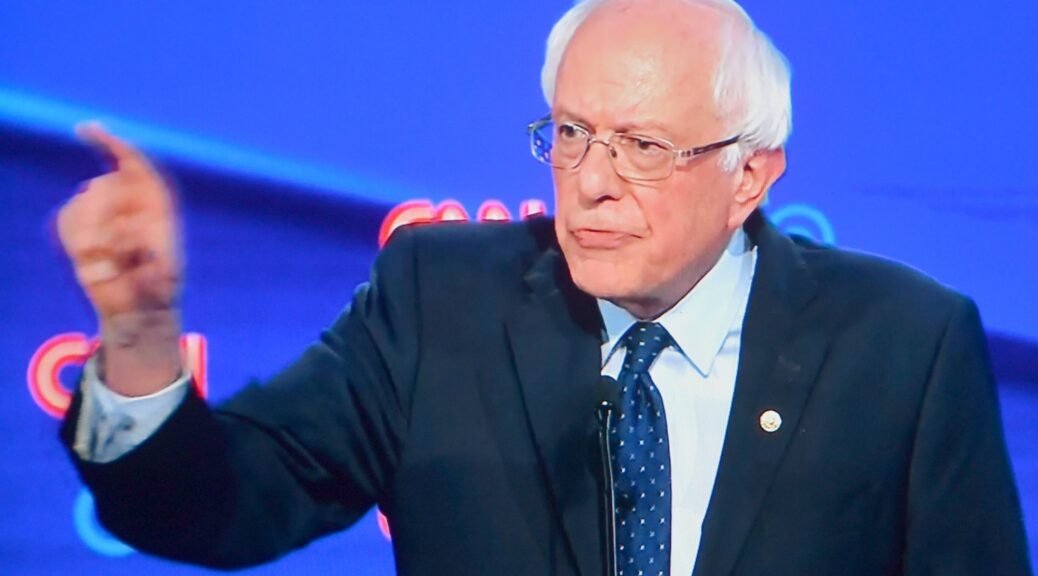
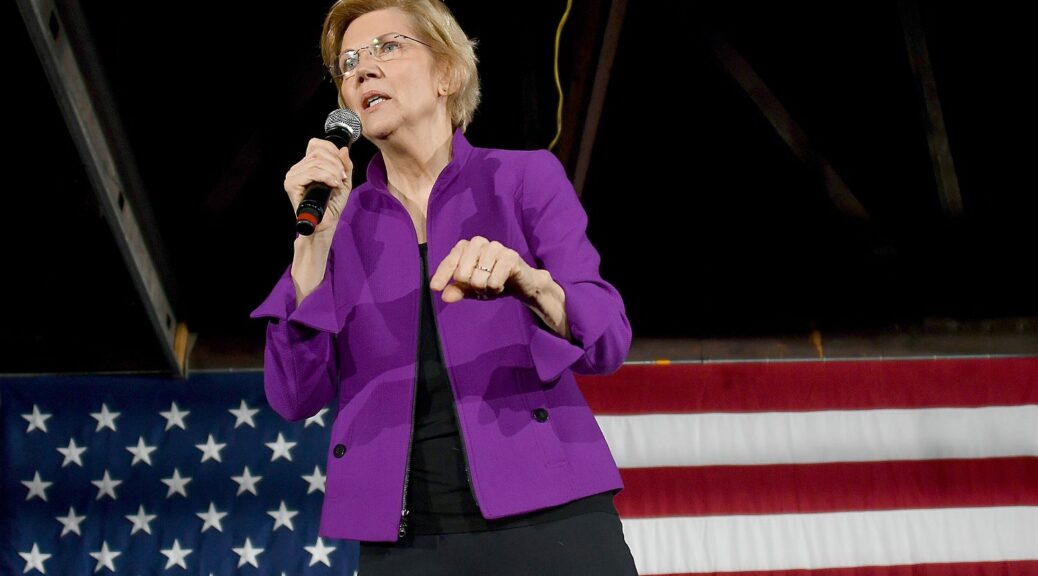
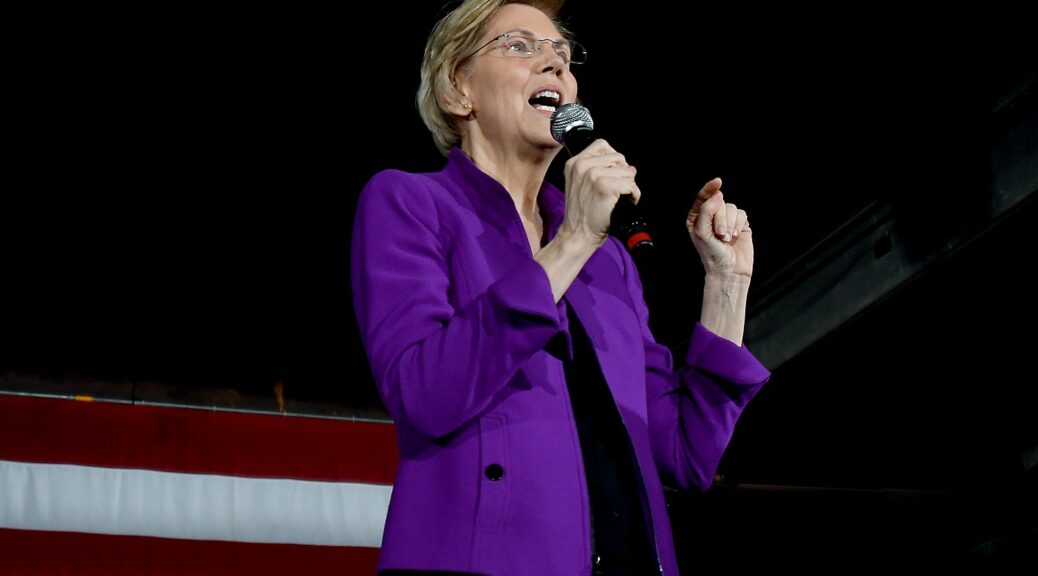
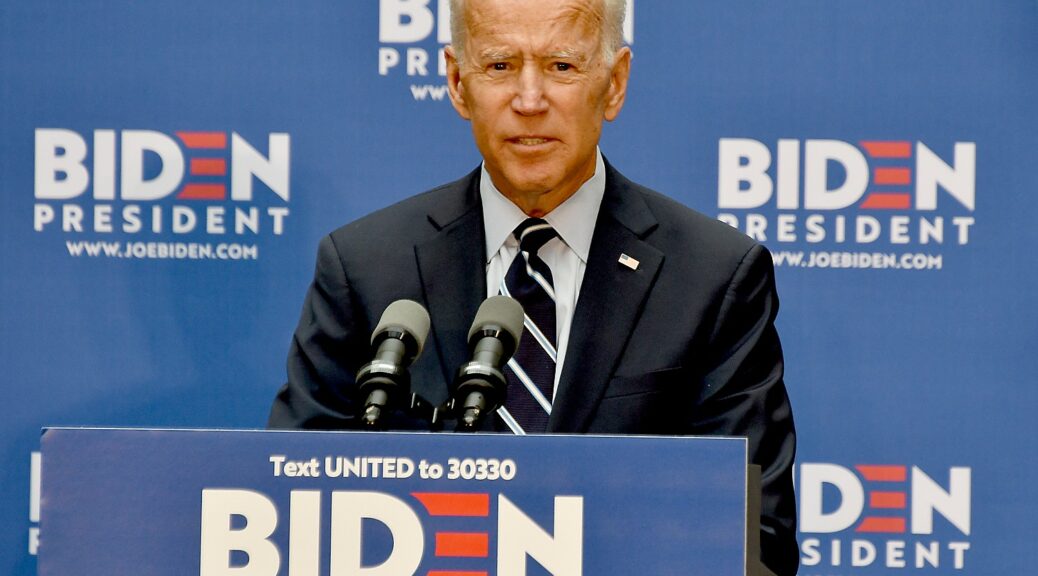
Senator Bernie Sanders, at Second Democratic Debate, has released his plan to reform the criminal justice system.
The vigorous contest of Democrats seeking the 2020 presidential nomination has produced excellent policy proposals to address major issues. Senator Bernie Sanders released his plan to reform the entire criminal justice system. This is from the Sanders campaign:
Blueprint aims to reform every aspect of America’s dysfunctional criminal justice system, ridding it of institutional racism and corporate profiteering
COLUMBIA, SC – Senator Bernie Sanders, who is running to be the Democratic candidate for president, released a comprehensive plan to reform the entire American criminal justice system in a speech he delivered August 18 in the Greenview neighborhood of Columbia, South Carolina. The plan is designed to root out the institutional racism and corporate profiteering that is plaguing the existing system.
“If we stand together, we can eliminate private
prisons and detention centers. No more profiteering from locking people
up. If we stand together we can end the disastrous “war on drugs.” If we stand
together we can end cash bail. No more keeping people in jail because
they’re too poor. If we stand together we can enact real police department
reform and prosecute police brutality. If we stand together, there is nothing,
nothing, nothing that we cannot accomplish.”
Sanders has fought mass incarceration during his decades in Congress, and
he campaigned
for president in 2016 on a pledge to end for-profit prisons —
a pledge that other Democrats have subsequently decided to support 4 years
later. Sanders’ new plan reiterates his original call to ban for-profit
prisons, and builds on his leadership on criminal justice with new proposals
for a top-to-bottom reform of America’s law enforcement, judicial and
incarceration systems. They include:
End for-profit
greed in our criminal justice system, top to bottom
Ending for-profit greed in our criminal justice system, top to
bottom, including banning cash bail and banning civil asset forfeiture, which
allows police departments to seize property from people who have not been
accused or convicted of a crime.
Ensure the criminal justice system is not the “best justice
money can buy” by vastly increasing funding for public defenders and creating a
federal formula to ensure populations have a minimum number of public defenders
to meet their needs, and working with states to set a minimum starting salary
for public defenders.
End
Mass Incarceration and Excessive Sentencing and Inhumane Incarceration and
Transform the Way We Police Communities
Reversing mass incarceration and setting a
goal of cutting the incarcerated population in half.
Transforming the way we police our
communities, creating an unarmed civilian corp of first responders to handle
mental health emergencies, homelessness, and other low-level issues that should
not require contact with the police and criminal justice system.
Creating national standards for use of police
force that emphasize de-escalation rather than violence, and holding police
misconduct to strict federal standards, including limiting qualified immunity
for police officers, creating a federal deadly use of force database, and a
registry of disreputable officers.
Ending the War on Drugs, including legalizing
marijuana and expunging past convictions for marijuana-related offenses and finally
ending the sentencing disparities for crack cocaine and powder cocaine
offenses.
Abolishing the death penalty and solitary
confinement.
Enacting a Prisoner Bill of Rights for
incarcerated individuals, including living wages, access to families, access to
educational and vocational training, and the right to vote.
Reverse the
Criminalization of Communities, End Cycles of Violence and Provide Support to
Survivors of Crime
Reversing the criminalization of disability, addiction, and homelessness.
Treat children in the criminal justice system
as children. This means raising the age to charge children in adult court to
18, ending long mandatory minimum sentences and life without parole sentences
for youth, decriminalizing truancy, and investing in youth diversion programs
and alternatives to the court and prison system.
End cycles of violence and interrupt them
before they begin. This means focusing law enforcement resources on solving
homicides and other serious crimes, funding Cure Violence programs and similar
proven violence interruption models, and ending the national rape kit
backlog.
Support the victims and survivors of crimes by
providing sustained resources to survivors and their families, including mental
health care, trauma recovery services, relocation services, and assistance with
basic needs.
The
vigorous contest of Democrats seeking the 2020 presidential nomination has
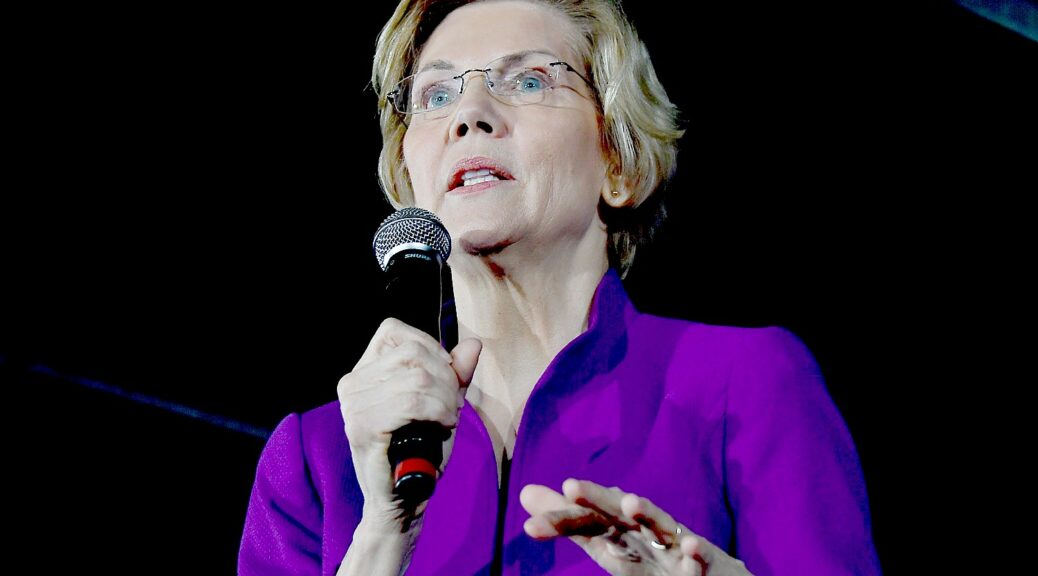
produced excellent policy proposals to address major issues. Senator Elizabeth
Warren released her plan to protect communities from gun violence. This is from
the Warren2020 campaign (Read it here).
“The conversation about
gun violence in America is shifting — but not just because we’ve seen a spike
in violence fueled by the NRA and the Trump administration’s dangerous policies
and extremist rhetoric. It’s also because of the tireless work of activists,
organizers, and community leaders who have been fighting for reform at the
state and local level.
“If you need proof that the majority
of Americans support common sense gun reform, look at what’s happening in state
legislatures and city councils across the country. Moms, students, and faith
leaders have been packing hearing rooms and taking back spaces formerly reserved
for NRA lobbyists. Survivors of mass shootings are doing the critical work of
turning our attention to the daily gun violence in cities that doesn’t make
headlines.
“And it’s working. States that pass
expanded background checks see lower rates of gun-related deaths and gun
trafficking. States that disarm domestic abusers see lower rates of intimate
partner gun violence. States with extreme risk laws have been successful in
reducing gun suicides and have used them to prevent potential mass shootings.
Community-based violence intervention programs are popping up in cities across
the country.
“Together, we can build on this
momentum. We can build a grassroots movement to take back the Senate, eliminate
the filibuster, and pass federal gun safety legislation that will save lives.
And from the White House, I’ll make sure that the NRA and their cronies are
held accountable with executive action. If we turn our heartbreak and our anger
into action, I know we can take the power from the NRA and the lawmakers in
their pockets and return it to the people.”
Charlestown, MA – Prior to her appearance at the Everytown presidential forum,
Elizabeth Warren released her plan to confront gun violence in America.
Yesterday, she called on Walmart to stop selling
guns — one of the largest gun retailers in the world.
Elizabeth will set a goal of reducing
gun deaths in this country by 80%, starting with an ambitious set of executive
actions she will take as president. In order to break the hold of the NRA and
the gun lobby, she will pass her sweeping anti-corruption legislation and
eliminate the filibuster to pass gun legislation in her first 100 days. She
supports federal licensing, universal background checks, a military-style
assault weapon ban, higher taxes on guns and ammunition, and closing the
loopholes to make it harder for someone violent to get a gun.
We know that Black and Latinx
Americans have borne the brunt of the gun violence tragedy in our country.
Instead of focusing solely on law enforcement and incarceration, Elizabeth will
invest in interventions designed to stop gun violence before it occurs by
piloting evidence-based community violence intervention programs at scale.
She will call on Congress to repeal
the liability shield that protects the industry – and then go further, by
establishing a federal private right of action to allow survivors of gun
violence to get their day in court. Her plan also includes $100 million
annually for gun safety research, and commits to study the reforms we enact to
see what’s working, and send Congress updated reform proposals on an annual
basis.
These are just a few of the names
etched into the American consciousness, synonymous with senseless loss and
enduring grief.
It’s been a week since these latest
attacks, and on average every day 100 people are killed in the U.S. by a gun —
in shootings that occur in our homes, on our streets, at our playgrounds.
The victims are our neighbors and our
friends. Someone’s mother, someone’s child, someone’s sibling.
There is no shortage of horrifying
statistics about our gun violence epidemic.
Our firearm homicide rate is 25 times higher
than other comparable countries.
Our firearm suicide rate is
nearly 10 times higher.
Women in the U.S. are 21 times more
likely to be shot to death than women in other high-income countries, most
killed by an intimate partner.
And while the majority of
Americans — including a majority of
gun owners — support sensible gun legislation, even the most basic proposals,
like universal background checks, are consistently blocked by far-right
ideologues in Congress who are bought and paid for by
the gun industry, their NRA partners, and
a supporting army of lobbyists and lawyers.
Faced with a complex and entrenched
public health crisis, made worse by the ongoing inability of a corrupt
government to do anything about it, it’s easy to despair. But we are not
incapable of solving big problems. We’ve done it before.
In 1965, more than five people died in
automobile accidents for every 100 million miles traveled. It was a massive
crisis. As a nation, we decided to do better. Some things were obvious:
seatbelts, safer windshields, and padded dashboards. Other things only became
clear over time: things like airbags and better brake systems. But we made
changes, we did what worked, and we kept at it. Over fifty years, we reduced
per-mile driving deaths by almost 80% and prevented 3.5 million automobile
deaths. And we’re still at it.
In 2017, almost 40,000 people
died from guns in the United States. My goal as President, and our goal as a
society, will be to reduce that number by 80%. We might not know how to get all
the way there yet. But we’ll start by implementing solutions that we believe
will work. We’ll continue by constantly revisiting and updating those solutions
based on new public health research. And we’ll make structural changes to end
the ability of corrupt extremists to block our government from defending the
lives of our people — starting with ending the filibuster.
Here’s what that will look like.
As president, I will immediately take
executive action to rein in an out-of-control gun industry — and to hold both
gun dealers and manufacturers accountable for the violence promoted by their
products.
I will break the NRA’s stranglehold on
Congress by passing sweeping anti-corruption legislation and eliminating the
filibuster so that our nation can no longer be held hostage by a small group of
well-financed extremists who have already made it perfectly clear that they
will never put the safety of the American people first.
I will send Congress comprehensive gun
violence prevention legislation. I will sign it into law within my first 100
days. And we will revisit this comprehensive legislation every single year —
adding new ideas and tweaking existing ones based on new data — to continually
reduce the number of gun deaths in America.
Executive Action to Reduce
Gun Violence
Reform advocates are engaged in a
valuable discussion about gun reforms that can be achieved by executive action.
We must pursue these solutions to the fullest extent of the law, including by
redefining anyone “engaged in the business”
of dealing in firearms to include the vast majority of gun sales outside of
family-to-family exchanges. This will extend requirements — not only for
background checks, but all federal gun rules — to cover all of those sales.
This includes:
Requiring background checks. We will
bring the vast majority of private sales, including at gun shows and online,
under the existing background check umbrella.
Reporting on multiple purchases. We
will extend the existing requirement to report bulk sales to nearly all gun
sales. And I’ll extend existing reporting requirements on the mass purchase of
certain rifles from the southwestern border states to all 50 states.
Raising the minimum age. We will
expand the number of sales covered by existing age restriction provisions that
require the purchaser to be at least 18 years old, keeping guns out of the
hands of more teenagers.
My administration will use
all the authorities at the federal government’s disposal to investigate and
prosecute all those who circumvent or violate existing federal gun laws. This
includes:
Prosecuting gun traffickers. Gun
trafficking across state lines allows
guns to move from states with fewer restrictions to those with strict safety
standards, and gun trafficking across our southern border contributes to gang
violence that sends migrants fleeing north. I’ll instruct my Attorney General
to go after the interstate and transnational gun trafficking trade with all the
resources of the federal government.
Revoking licenses for gun dealers who
break the rules. Only 1% of gun dealers are responsible for 57% of guns used in
crimes. My Administration will direct the ATF to prioritize oversight of
dealers with serial compliance violations — and then use its authority to
revoke the license of dealers who repeatedly violate the rules.
Investigating the NRA and its cronies.
The NRA is accused of exploiting loopholes in federal laws governing
non-profit spending to divert member dues into lavish payments for
its board members and senior leadership. I’ll appoint an attorney general
committed to investigating these types of corrupt business practices, and the
banks and third-party vendors — like Wells Fargo — that
enabled the NRA to skirt the rules for so long.
To protect the most
vulnerable, my administration will use ATF’s existing regulatory authority to
the greatest degree possible, including by:
Protecting survivors of domestic
abuse. We will close the so-called “boyfriend loophole” by
defining intimate partner to include anyone with a domestic violence conviction
involving any form of romantic partner.
Reversing the Trump administration’s
efforts to weaken our existing gun rules. We will rescind the Trump-era rules
and policies that weaken our gun safety regime, including rules that lower the standards for
purchasing a gun, and those that make it easier to create untraceable weapons
or modify weapons in ways that circumvent the law. This includes overturning
Trump-era policies enabling
3-D printed guns, regulating 80% receivers as firearms,
and reversing the ATF ruling that allows a shooter to convert a pistol to a
short-barreled rifle using pistol braces.
Restrict the movement of guns across
our borders. We will reverse the Trump administration’s efforts to make
it easier to export U.S.-manufactured
weapons by transferring exports of semi-automatic firearms and ammunition from
the State Department to the Commerce Department, and we will prevent the import
of foreign-manufactured assault weapons into the United States.
The shooting in El Paso
also reminds us that we need to call out white nationalism for what it is:
domestic terrorism. Instead of a president who winks and nods as white
nationalism gets stronger in this country, we need a president who will use all
the tools available to prevent it. It is completely incompatible with our
American values, it is a threat to American safety and security, and a Warren
Justice Department will prosecute it to the fullest extent of the law.
Structural Changes to Pass Gun Safety Legislation
The next president has a moral
obligation to use whatever executive authority she has to address the gun
crisis. But it is obvious that executive action is not enough. Durable reform
requires legislation — but right now legislation is impossible. Why? A virulent
mix of corruption and abuse of power.
Big money talks in Washington. And the
NRA represents a particularly noxious example of Washington corruption at work.
Over the last two decades, the NRA has spent over $200 million on
lobbying Congress, influencing elections, and buying off politicians — and
that’s just the tip of the iceberg. The NRA spends millions poisoning our
political discourse with hateful, conspiracy-fueled propaganda, blocking even
modest reforms supported by 90% of American voters.
In the wake of the Sandy Hook
massacre, the American people rallied for reform. President Obama suggested
several serious legislative changes. The Senate voted down an assault weapons
ban. It rejected a background checks proposal, even though 54 Senators from
both parties voted for it, because of a right-wing-filibuster. These were the
bare minimum steps we needed to take. And six years later, Congress still
hasn’t done a thing.
This pattern repeats itself throughout
our government. When money and influence can override the will of a huge
majority of Americans, that is corruption, pure and simple.
It’s time to fight back. I
have proposed the most sweeping set of anticorruption reforms since
Watergate — a set of big structural changes that includes ending lobbying as we
know it and slamming shut the revolving door. My first priority when I’m
elected President is to enact this package to get our government working for
everyone again.
But anti-corruption legislation alone
won’t be enough to get gun safety legislation done. After decades of inaction,
Democrats have rallied behind a number of important gun reforms. If we continue
to allow bought and paid for extremists in the Senate to thwart the will of the
people, we will never enact any of them.
Enough is enough. Lasting
gun reform requires the elimination of the filibuster.
Legislation to Reduce Gun
Violence
When I am president, I will send
Congress comprehensive legislation containing our best ideas about what will
work to reduce gun violence.
It starts by ensuring that safe, responsible ownership is the standard for
everyone who chooses to own a gun. We’ll do that by:
Creating a federal licensing system.
States with strict licensing requirements experience lower rates of gun
trafficking and violence. A license is required to drive a car, and Congress
should establish a similarly straightforward federal licensing system for the
purchase of any type of firearm or ammunition.
Requiring universal background checks.
I’ll expand background checks via executive action — but Congress should act to
permanently mandate universal background checks. And I’ll push Congress to
close the so-called “Charleston loophole”
that allows a sale to proceed after three days even if the background check is
not complete.
Increasing taxes on gun manufacturers.
Since 1919, the federal
government has imposed an excise tax on manufacturers and importers of guns and
ammunition. Handguns are taxed at 10% and other guns and ammunition are taxed
at 11%. These taxes raise less in revenue than the federal excise tax on
cigarettes, domestic wine, or even airline tickets. It’s time for Congress to
raise those rates — to 30% on guns and 50% on ammunition — both to reduce new
gun and ammunition sales overall and to bring in new federal revenue that we
can use for gun violence prevention and enforcement of existing gun laws.
Establishing a real waiting period.
Waiting periods prevent impulsive gun violence, reducing gun suicides by 7–11% and gun
homicides by 17%. Over the past 5
years, a national handgun waiting period would have stopped at least 4,550 gun
deaths. The federal government should establish a one-week waiting period for
all firearm purchases.
Capping firearms purchases.
About one out of four of
firearms recovered at the scene of a crime were part of a bulk purchase.
Congress should limit the number of guns that can be purchased to one per
month, similar to a Virginia law that
successfully reduced the likelihood of Virginia-bought guns being used in
criminal activity.
Creating a new federal anti-trafficking
law. Congress should make clear that trafficking firearms or engaging in “straw
purchases” — when an individual buys a gun on behalf of a prohibited purchaser
— are federal crimes. This would give law enforcement new tools to crack down
on gun trafficking and help keep guns out of the wrong hands.
Raising the minimum age for gun
purchases. I’ll extend existing age requirements to virtually all sales, but
federal law is currently conflicting — for example, a person must be 21 to
purchase a handgun from a federally licensed dealer, but only 18 to purchase a
rifle. Congress should set the federal minimum age at 21 for all gun sales.
We can also do more to
keep military-style assault weapons off our streets. We’ll do that by:
Passing a new federal assault weapons
ban. The 1994 federal assault weapons ban successfully reduced gun deaths
but was allowed to expire ten years later. Congress should again ban the future
production, sale, and importation of military-style assault weapons, and
require individuals already in possession of assault weapons to register them
under the National Firearms Act. Just as we did successfully with machine guns
after the passage of that law, we should establish a buyback program to allow
those who wish to do so to return their weapon for safe disposal, and
individuals who fail to register or return their assault weapon should face
penalties.
Banning high-capacity ammunition
magazines. High-capacity magazines were used in 57% of mass shootings from 2009
to 2015, allowing the shooters to target large numbers of people without
stopping to reload. Congress should enact a federal ban on large-capacity
magazines for all firearms, setting reasonable limits on the lethality of these
weapons.
Prohibiting accessories that make
weapons more deadly. Gun manufacturers sell increasingly deadly gun
accessories, including silencers, trigger cranks, and other mechanisms that
increase the rate of fire or make semi-automatic weapons fully automatic.
Congress should ban these dangerous accessories entirely.
We should also do
everything possible to keep guns out of the hands of those at highest risk of
violence. We’ll do that by:
Passing extreme risk protection laws.
Extreme risk protection orders allow families and law enforcement to petition
to temporarily restrict access to firearms for individuals in crisis or at
elevated risk of harming themselves or others. Congress should pass a federal
extreme risk law and create a grant system to incentivize states to enact their
own laws that clearly define extreme risk.
Prohibiting anyone convicted of a hate
crime from owning a gun. Too often, guns are used in acts of mass violence
intended to provoke fear in minority communities; more than 10,000 hate crimes
involve a gun every year. Any individual convicted of a hate crime should be
permanently prohibited from owning a gun, full stop.
Protecting survivors of domestic
abuse. Domestic violence and gun violence are deeply connected — in an average
month, more than 50 women are shot
and killed by an intimate partner. I’ll close the boyfriend loophole, but
Congress should make that permanent, and expand the law to include individuals
with restraining orders or who have been convicted of stalking.
Securing our schools. Parents
shouldn’t have to buy bullet-proof backpacks for
their children — guns have no place on our campuses or in our schools. Congress
should improve the Gun-Free School Zones Act to include college and university
campuses, and apply to individuals licensed by a state or locality to carry a
firearm.
If we want real,
long-lasting change, we must also hold the gun industry accountable, including
online sites that look the other way when sellers abuse their platforms. We’ll
do that by:
Repealing the Protection of Lawful
Commerce in Arms Act. Nearly every other industry has civil liability as a
check on irresponsible actions, but a 2005 law insulates firearms and dealers
from civil liability when a weapon is used to commit a crime, even in cases
when dealers were shockingly irresponsible. No one should be above the law, and
that includes the gun industry. Congress should repeal this law, immediately.
Holding gun manufacturers strictly
liable for the harm they cause through a federal private right of action. Gun
manufacturers make billions in profit by knowingly selling deadly products.
Then they are let completely off the hook when people take those deadly
products and inflict harm on thousands of victims each year. State tort law
already recognizes that certain types of products and activities are so
abnormally dangerous that the entities responsible for them should be held
strictly liable when people are injured. Congress should codify that same
principle at the federal level for guns by creating a new private right of
action allowing survivors of gun violence to hold the manufacturer of the
weapon that harmed them strictly liable forcompensatory damages to
the victim or their family.
Strengthening ATF. The NRA has long
sought to hobble the ATF, lobbying against staffing and
funding increases for the agency and getting its congressional allies to
impose absurd restrictions on
its work even as the agency struggled to meet its basic responsibilities.
Congress should fully fund ATF’s regulatory and compliance programs and remove
the riders and restrictions that prevent it from doing its job.
Regulating firearms for consumer
safety. Today there are no federal safety standards for
firearms produced in the United States. We can recall unsafe products from
trampolines to children’s pajamas — but not defective guns. Congress should
repeal the provision of law that prevents the Consumer Product Safety
Commission from regulating the safety of firearms and their accessories.
Tightening oversight for gun dealers.
Today there is no requirement for federally-licensed gun shops to take even
simple steps to prevent guns from falling into the wrong hands. Congress should
pass basic safety standards for federally-licensed gun dealers, including
employee background checks, locked cabinets, and up-to-date inventories of the
weapons they have in stock.
Holding gun industry CEOs personally
accountable. I’ve proposed a lawthat would impose
criminal liability and jail time for corporate executives when their company is
found guilty of a crime or their negligence causes severe harm to American
families — and that includes gun industry CEOs.
Tragedies like the shootings we
witnessed in El Paso and Dayton capture our attention and dominate the
conversation about gun reform. But they’re just the tip of the iceberg of gun
violence in America. Everyday, we lose one hundred Americans
to gun violence, with hundreds more physically injured and countless more
mentally and emotionally traumatized. And Black and Latinx Americans have borne
the brunt of the gun violence tragedy in our country.
In the past, those statistics have been used to justify increased policing
and strict sentencing laws. Communities already traumatized by gun violence
were doubly victimized by policies that locked up their young people and threw
away the key. We’ve got a chance to show that we’ve learned from the past and
to chart a new path. It starts by acknowledging that gun violence is a public
health crisis, one that cannot be solved solely by the criminal justice system.
We can start to do that by investing
in evidence-based community violence intervention programs. Federal grant
funding today focuses significantly on law enforcement and incarceration,
rather than interventions designed to stop gun violence before it occurs. The
data in urban communities indicate that the majority of violence is perpetrated
by a small number of
offenders, and many cities have found success with programs that identify those
at highest risk of becoming the victim or perpetrator of a violent gun crime,
then employing strategies to interrupt the cycle of violence before it
escalates. Programs that engage the surrounding community, employ mediation to
prevent retaliation, build trust with law enforcement, and provide needed
long-term social services have been proven to de-escalate tensions and dramatically reduce violence.
As president, I’ll establish a grant program to invest in and pilot these types
of evidence-based intervention programs at scale.
Annual Research and Annual
Reauthorization
Historically, when Congress works to
address big national issues, we don’t simply pass one law and cross our
fingers. Instead, we continue the research — into new policies and around the
consequences of our existing policies — and then come back on a regular basis
to update the law.
We don’t do this with guns. Not only
have we not passed meaningful legislation in almost a generation, but thanks to the NRA, for
decades Congress prohibited federal funding from being used to promote gun
safety at all, effectively freezing nearly all research on ways to reduce gun
violence. Last year, Congress finally clarified that the CDC could in fact
conduct gun violence research — but provided no funding to do so.
This ends when I’m President. My
budget will include an annual investment of $100 million for DOJ and HHS to
conduct research into the root causes of gun violence and the most effective
ways to prevent it, including by analyzing gun trafficking patterns, and
researching new technologies to improve gun safety. These funds will also be
used to study the reforms we enact — to see what’s working, what new ideas
should be added, and what existing policies should be tweaked. And every year,
I will send Congress an updated set of reforms based on this new information.
That’s how we’ll meet our goal.
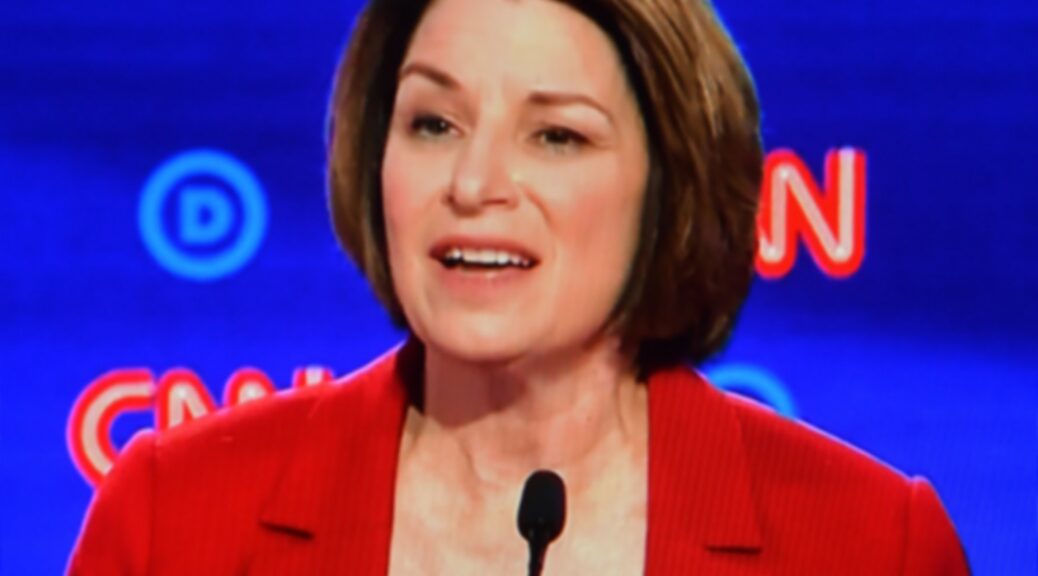
The vigorous contest of Democrats seeking the 2020 presidential nomination has produced excellent policy proposals to address major issues. On August 8, immediately after the back-to-back massacres in El Paso, Dayton and Gilroy, US Senator Amy Klobuchar released her plan to keep communities safe from the rising tide of domestic terrorism and hate crimes. This is from the Klobuchar campaign:
“The events of the last week have served as a disturbing reminder that hate crimes and domestic terrorism are on the rise in our country,” said Senator Amy Klobuchar. “As President, I will end the hateful rhetoric that has become all too routine during the Trump Administration and make combating domestic terrorism and hate-motivated violence a priority. We will strengthen enforcement against those who commit acts of hate – including white nationalist hate crimes – and work with law enforcement and communities around the country to increase protections and not only combat these threats, but to address the root causes of domestic terrorism.”
Senator Klobuchar has been taking on hate crimes and combating hate since she was the Hennepin County Attorney. She has seen firsthand the terrible trauma that hate crimes can inflict – not just on individual victims, but on whole communities. And because of her work on this issue as County Attorney, she was invited to the White House when President Bill Clinton proposed the Matthew Shepard federal hate crimes bill.
As County Attorney, she vigorously prosecuted hate crimes. Her office prosecuted defendants responsible for crimes against a 14-year-old boy who was shot while riding his bike on Martin Luther King Jr. Day in a Minneapolis suburb because of the color of his skin, a Minneapolis middle school that was terrorized with burning crosses placed on its grounds, a Korean church in Minneapolis that was desecrated with spray-painted hate messages targeted against blacks, women and gays, and a Hispanic man who was assaulted and severely injured simply because he was speaking Spanish.
In the Senate, Senator Klobuchar has been a leader when it comes to combating hate. She supported the passage of the Matthew Shepard and James Byrd Jr. Hate Crimes Prevention Act and she has pushed to provide additional grant funding to safeguard all faith-based community centers and to protect religious institutions in the face of rising threats of violence. She has been a champion when it comes to securing federal resources to help heal distressed communities after hate crimes. She has also urged the Trump Administration to strengthen measures to combat the threat of white supremacist violence.
As President, Senator Klobuchar will take the following actions to combat hate and domestic terrorism:
Domestic Terrorism
Prioritize combating domestic terrorism
and empower law enforcement to investigate and prosecute perpetrators of
hate-motivated violence, including against minorities, people of color,
immigrants, and the LGBTQ community.
Direct the Department of Homeland
Security to resume its work tracking right wing extremism, including white
nationalism.
Require federal law enforcement agencies
to regularly assess the threat of domestic terrorism and increase training and
resources for state and local law enforcement to address it.
Law Enforcement
In addition to the gun safety proposals
the Senator has previously outlined, prevent people convicted of violent
misdemeanor hate crimes from purchasing or possessing firearms.
Strengthen enforcement of hate crimes,
including white nationalist hate crimes.
Make lynching a federal hate
crime.
Work with Communities
Require the Justice Department and the
Department of Commerce to assess how current forms of communication are being
used to spread hate and recommend ways to combat threats.
Better coordinate efforts to focus on
combating domestic terrorism not only through law enforcement but also by
addressing the root causes of domestic terrorism.
Increase protections for places of
worship and schools.
Restore the Voting Rights Act protections
for voters immediately in states with a recent history of discrimination.
Fully staff and fund the Justice
Department’s Community Relations Service, which provides communities facing
racial and other conflict with services.
The vigorous contest of Democrats seeking the 2020 presidential nomination has produced excellent policy proposals to address major issues. Senator Elizabeth Warren details a plan to transform America’s approach to trade: “Trade can be a powerful tool to help working families but our failed pro-corporate agenda has used trade to harm American workers and the environment. My plan represents a new approach to trade — one that uses America’s leverage to boost American workers and raise the standard of living across the globe. The President has a lot of authority to remake trade policy herself. When I’m elected, I intend to use it.” Here are the details, as provided by the Warren campaign:
Charlestown, MA – Senator Elizabeth Warren, who is running to be the 2020 Democratic candidate for president, released her plan to break decades of Washington consensus and transform every aspect of America’s current approach to trade.
America enters trade negotiations with enormous leverage because it is the world’s most attractive market. A Warren Administration won’t hand that leverage to big corporations to use for their own narrow purposes. Elizabeth will use it to create and defend good American jobs, raise wages and farm income, combat climate change, lower drug prices, and raise living standards worldwide. Under Elizabeth’s plan, America will engage in international trade — but on our terms and only when it benefits American families.
The plan is the third pillar of Elizabeth’s economic patriotism agenda. Read more about her plan here and below:
Last month, I released my economic patriotism agenda
— my commitment to fundamentally changing the government’s approach to the
economy so that we put the interests of American workers and families ahead of
the interests of multinational corporations. I’ve already released my ideas for
applying economic patriotism to manufacturing and
to Wall Street. This is my
plan for using economic patriotism to overhaul our approach to trade.
For decades, big multinational corporations have bought and
lobbied their way into dictating America’s trade policy. Those big corporations
have gotten rich but everyone else has paid the price. We’ve lost millionsofjobs to
outsourcing, depressedwages for American
workers, accelerated climate
change, and squeezed America’s
family farmers. We’ve let China get away with the suppression of pay and labor rights, poor environmental
protections, and years of currency manipulation.
All to add some zeroes to the bottom lines of big corporations with no loyalty
or allegiance to America.
We need to completely transform our approach to trade.
America enters into trade negotiations with enormous leverage because America
is the world’s most attractive market. As President, I won’t hand
America’s leverage to big corporations to use for their own narrow purposes —
I’ll use it to create and defend good American jobs, raise wages and farm
income, combat climate change, lower drug prices, and raise living standards
worldwide.We will engage in international trade — but on our terms
and only when it benefits American families.
A New Approach to Trade
My plan is a new approach to trade — one that is different
from both the Washington insider consensus that brought us decades of bad trade
deals and from Donald Trump’s haphazard and ultimately corporate-friendly
approach.
Unlike the insiders, I don’t think “free trade” deals that
benefit big multinational corporations and international capital at the expense
of American workers are good simply because they open up markets. Trade is good
when it helps American workers and families — when it doesn’t, we need to
change our approach. And unlike Trump, while I think tariffs are an important
tool, they are not by themselves a long-term solution to our failed trade
agenda and must be part of a broader strategy that this Administration clearly
lacks.
To ensure that American families benefit from international
trade in the decades to come, I want to invest in American workers and
to use our leverage to force other countries to raise the bar on everything
from labor and environmental standards to anti-corruption rules to access to
medicine to tax enforcement. If we raise the world’s standards to our level and
American workers have the chance to compete fairly, they will thrive — and
millions of people around the world will be better off too.
Achieving this vision isn’t about tough talk or tweets. We
must do the hard work of transforming every aspect of our current approach to
trade: from our negotiating process to the negotiating objectives we pursue to
the way we enforce agreements. That’s what I intend to do.
A Trade Negotiation Process that Reflects America’s
Interests
Our current approach to negotiating trade agreements works
great for the wealthy and the well-connected. The negotiating text is
kept confidential from
all but a small set of advisory groups comprised mostly of corporate
executives and industry trade group representatives. Once those corporate
interests are finished whispering in the ears of our negotiators, the completed
text is released. Then, under the expedited “Fast Track” procedure
Congress typically uses to approve trade agreements, our elected
representatives must vote up or down on the agreement with no ability to
propose and secure any changes to it. Meanwhile, the negotiators who
constructed it often breeze through the revolving door to
take jobs with the corporations whose interests underlie the deal.
This is undemocratic and obviously corrupt. In a Warren
Administration, we will negotiate and approve trade agreements through a
transparent process that offers the public a genuine chance to shape it:
Trade negotiators will publicly disclose negotiating
drafts and provide the public with an opportunity to comment. When
federal agencies write new rules, they typically must publish a proposed
version of the rule and permit the public to submit comments on it. I will
adopt a similar approach for our trade deals. Prior to negotiations, our
negotiators will publish a draft of their proposals in the Federal Register,
let the public offer comments on the draft, and take those comments into
consideration during negotiations. And then as talks proceed, they will publish
drafts of the negotiating texts so the public can monitor the negotiations.
Trade advisory committees will prioritize the views of workers and consumers. I will ensure that there are more representatives from labor, environmental, and consumer groups than from corporations and trade groups on every existing advisory committee. And I’ll expand the current list of advisory committees to create one for consumers, one for rural areas, and one for each region of the country, so that critical voices are at the table during negotiations.
The US International Trade Commission will provide a regional analysis of the economic effects of a trade agreement. Trade agreements can hollow out communities and transform regional economies. Yet the report the ITC provides before Congress considers a trade agreement only includes a nationwide analysis of a trade deal’s economic impact. I will push for the agency to provide a region-by-region analysis so the public and Members of Congress can understand how an agreement is likely to affect the places they live and represent.
The congressional approval process will offer more
opportunities for the public and elected representatives to shape trade
agreements. I will seek expedited congressional approval of trade
agreements only when every regional advisory committee and the labor, consumer,
and rural advisory committees unanimously certify that the agreement serves
their interests. I will also expand the list of congressional committees that
must review any agreement before it is eligible for expedited consideration.
Together, these changes will ensure that our negotiations
reflect the views of American families, not corporate interests.
Using Our Leverage to Demand More for American Families
and to Raise the Global Standard of Living
While a better process will produce better agreements, we
also must fundamentally shift the goals of our trade agenda so they are aligned
with the interests of America’s families.
With certain important exceptions, we live in a low-tariff
world. Modern trade agreements are less about the
mutual reduction of tariffs and more about establishing regulatory standards
for everything from worker rights to pollution to patent protections.
My approach to trade reflects that reality. For too long, we
have entered into trade deals with countries with abysmal records on labor, environmental, and human rights issues.
In exchange for concrete access to the American market, we get vague
commitments to do better, which we then hardly enforce. The
result is that millions of people in our trading-partner countries don’t gain
the benefits of higher standards — and companies can easily pad their profits
by shifting American jobs to countries where they can pay workers next to
nothing and pollute the air and water freely.
That will end under my Administration. I am establishing a set of standards countries must meet as a precondition for any trade agreement with America. And I will renegotiate any agreements we have to ensure that our existing trade partners meet those standards as well.
My preconditions are that a country must:
Recognize and enforce the core labor rights of the International Labour Organization, like collective bargaining and the elimination of child labor.
Uphold internationally recognized human rights, as reported in the Department of State’s Country Reports on Human Rights, including the rights of indigenous people, migrant workers, and other vulnerable groups.
Recognize and enforce religious freedom as reported in the State Department’s Country Reports.
Comply with minimum standards of the Trafficking Victims Protection Act.
Be a party to the Paris Climate agreement and have a national plan that has been independently verified to put the country on track to reduce its emissions consistent with the long-term emissions goals in that agreement.
Eliminate all domestic fossil fuel subsidies.
Ratify the Convention on Combating Bribery of Foreign Public Officials in International Business Transactions.
Comply with any tax treaty they have with the United States and participate in the OECD’s Base Erosion and Profit Shifting project to combat tax evasion and avoidance.
Not appear on the Department of Treasury monitoring list of
countries that merit attention for their currency practices.
A country should only be considered an acceptable partner if
it meets these basic standards. Shamefully, America itself does not meet many
of these labor and environmental standards today. I am committed to fixing that
as President. And to help bring other countries up to these standards, I’ll
revitalize our commitment to providing technical assistance to help countries
improve.
I will also go beyond these minimum standards in key areas
to promote the interests of American workers and families.
Labor. I will ensure trade agreements protect
Buy American and other programs designed to develop local industry, contain
strong rule-of-origin standards to promote domestic manufacturing, protect
worker pensions, promote equal pay for equal work for women, and prohibit
violence against workers. Unlike previous trade deals agreements that
have put labor standards in side agreements that
are difficult to enforce, I will make labor standards central to any agreement.
Climate Change and the Environment. Climate
change is real, it’s man-made, and we’re running out of time to address it.
America should be leading this fight, but we have turned our backs on our
responsibilities — with communities of color in the U.S. and developing countries bearing
a disproportionate amount of the harm.
Beyond requiring implementation of the Paris Climate accord
and the elimination of fossil fuel subsidies as preconditions for any trade
agreement, I have already proposed a Green Marshall Plan to
dedicate $100 billion to helping other countries purchase and deploy
American-made clean energy technology.
But we must do more. I will push to secure a
multilateral agreement to protect domestic green policies like subsidies for
green products and preferential treatment for environmentally sustainable
energy production from WTO challenges. And because big corporations
will move their production to the countries with the weakest greenhouse gas
emissions standards — undermining global efforts to address climate change and
penalizing countries that are doing their part — I will impose a border carbon adjustment so
imported goods that these firms make using carbon-intensive processes are
charged a fee to equalize the costs borne by companies playing by the rules.
Prescription Drugs. Last year, Americans spent more
than $500 billion on
prescription drugs. That’s a 50% increase since 2010. Nearly 3 in 10Americans
report not taking their medicine as directed because of costs. And yet, one of
the core elements of America’s current trade agenda is guaranteeing
pharmaceutical firms monopoly protections so they can avoid competition from
generic drugs — driving up costs and reducing access to
necessary medicine abroad, and undermining our
efforts to reduce drug prices here at home. That’s exactly what
the Trump Administration has done as part of their failed effort to renegotiate
NAFTA.
While medical innovation is important, there is no link between
extremely long exclusivity periods and pharmaceutical innovation. These are
giveaways to drug companies, plain and simple, which allow them to maintain
ludicrously high drug prices.
As President, I will fight to bring down the costs of
prescription drugs here and around the world. I will never use
America’s leverage to push another country to extend exclusivity periods for
prescription drugs. I will support efforts to impose price controls on
pharmaceuticals. And I will actively seek out opportunities to reduce
exclusivity periods in our existing trade deals in exchange for securing other
changes that will help America’s working families.
Agriculture. For decades, trade deals have squeezed family
farmers, with Black farmers losing their land particularly quickly.
Between the trade fights incited by Trump’s haphazard tariffs and a series
of natural disasters,
America’s farmers are now facing the worst crisis in almost 40
years. They are also facing unprecedented levels of uncertainty and
instability. Trump’s tariffs have reduced crop prices, threatened farmers
already operating on razor-thin margins, and opened up new non-American markets
against which our farmers are now forced to compete. Like trade deals of the
past, Trump’s NAFTA 2.0 is written to help giant multinational agribusinesses
at the expense of family farms, and it
will do nothing to solve the newly created market insecurity Trump’s tariffs
have caused.
As President, I will fight for trade agreements that reward
American farmers for their hard work by negotiating for fair prices for goods,
breaking up the monopolies in grain
trading and meat packing, and protecting domestic markets to create stability
for America’s family farms. And I will impose Country-of-Origin Labeling rules
to protect American producers and provide transparency to consumers.
Consumer protection. We must ensure that the food we
eat is high-quality and safe. But our trade agreements have limited safety
standards and the inspection of imported foods,
while simultaneously enabling a new flood of food imports that overwhelm food
safety inspectors. In my Administration, our trade pacts will require
imported food to meet domestic food safety standards, including enhanced border
inspection requirements.
As with imported food, our current trade deals require us to
allow imports of other products and services that do not meet domestic safety
and environmental standards. My trade agreements will ensure that imported
products and services must meet the same standards as domestic products and
services.
Antitrust. We are in an era of massive
consolidation across many sectors of the economy. One of the reasons why is
that we have a narrow, permissive approach to mergers that looks only at
economic efficiency and consumer welfare instead of assessing the impact that a
merger will have on competition itself.
In recent years, we have added this problematic
standard into trade agreements and
proposed it as the defining objective for competition policy in new and renegotiated agreements.
Under my administration, we will not propose this standard in any new
agreement, and we will work to renegotiate agreements to remove it.
Delivering for American Families with Stronger
Enforcement
Our approach to enforcing trade agreements drives down
standards worldwide and undermines American families. We offer big corporations
fast and powerful methods to enforce the provisions that benefit them but make
it nearly impossible for Americans to enforce labor and environmental
protections. Foreign governments only fear a challenge to strong rules that
might hurt corporate bottom lines, not to weak rules that might not adequately
protect workers, the environment, or public health.
I will entirely reorient our approach to enforcement so we drive standards up, not down. I’ll start by ending “Investor-State Dispute Settlement,” or ISDS, the favorable enforcement approach we offer corporations. Under ISDS, a company that believes that a new law violates some aspect of a trade agreement can skip the courts and challenge the law before an international panel of arbitrators. If the company wins, the panel can order that country’s taxpayers to pay out billions in damages — with no review by an actual court. What’s worse, the arbitration panels handing out these binding rulings are often made up of corporate lawyers whose day jobs are representing the very same companies that seek judgments before them.
Companies have used ISDS to undermine laws intended to benefit the public interest. A French company challenged Egypt when it increased the minimum wage. A Swedish company challenged Germany when it decided to cut back on nuclear power after the Fukushima disaster. These cases have real effects across the globe: an ISDS panel’s decision to hear a challenge that Philip Morris brought against Uruguay’s anti-smoking campaign prompted several other countries to abandon similar public health efforts.
As President, I will not include ISDS in any new
agreement and will renegotiate existing agreements to remove ISDS from them.
And I’ll strengthen our approach to enforcing labor and environmental
standards. Unlike a corporation under ISDS, a labor union seeking to enforce
labor standards can’t bring a claim on its own — it must convince the federal
government to bring a claim on its behalf. Even in the face of overwhelming
evidence, our government can refuse to act for diplomatic or other unrelated
reasons.
As a result, the federal government has only pursued one such claim in
the last 25 years. In that one case, the American government, AFL-CIO, and
Guatemalan unions spent nine years trying
to challenge the Guatemalan government for violating the labor chapter of one
of our trade deals because Guatemalan workers were being murdered for trying to
join a union. In the end, we lost because the
trade agreement required a showing that the violations had affected trade.
I will replace this broken process by creating independent
commissions — made up of experts in the area — to monitor potential violations,
respond to complaints, and investigate claims. The commissions must review and
investigate claims promptly so that claims don’t languish for years. If
one of these commissions recommends that the United States bring a claim
against another country, the United States will be required to do so, without
exception.
I will also fix the problem that arose in the Guatemala case
by pushing to remove language from our deals that require us to show that a
violation of rights was “sustained or recurring” and “affecting trade or
investment.” A violation is a violation, and I won’t let another case like
Guatemala happen ever again.
I will strengthen our enforcement approach in other ways as
well:
Under WTO rules, a country designated as a “non-market economy” can face more serious trade penalties. I will push for a new “non-sustainable economy” designation that would allow us to impose tougher penalties on countries with systematically poor labor and environmental practices. We cannot allow countries that treat their workers and the environment poorly to undercut American producers that do things the right way.
I already have a plan to move the lead American trade negotiator — the Office of the United States Trade Representative — within my new Department of Economic Development. That will ensure that America’s trade policy supports our broader economic agenda of defending and creating good American jobs. I will also create a new labor and environment enforcement division at the USTR to more effectively enforce obligations, and embed a labor attache at U.S. embassies to monitor compliance with our labor standards.
Unlike the current approach that lets our government ignore unfair trade practices, my administration will create automatic triggers to initiate investigations into unfair trade practices. If those investigations produce compelling evidence of a violation, the Department will impose trade remedies immediately until the offenders show they are no longer engaging in an unfair trade practice. These automatic triggers will also apply to violations of labor and environmental standards.
Finally, when we impose duties to support particular
domestic industries, I want to ensure that the money we collect actually goes
to American workers, instead of being sucked up by
executives and shareholders. I will fight to change our trade laws so
that we review duties every six months and lift the duties if companies can’t
demonstrate the benefits of the duties are going to their workers.
The
vigorous contest of Democrats seeking the 2020 presidential nomination has
produced excellent policy proposals to address major issues.Senator
Elizabeth Warren details a plan for Rural America that “will help create a new farm economy where family farmers have
financial security and the freedom to do what they do best. Farmers of all
backgrounds will finally have the economic freedom to pursue diverse,
sustainable farming — and get paid up front for doing so. Americans will have
a steady and affordable supply of food. Kids in rural communities will have
healthy lunches grown in their backyards and packaged at local food hubs run by
small town entrepreneurs. Taxpayers won’t pay twice — once at the grocery
store and once through their taxes — for overproduced commodities. We will
replenish our soil and our water to chart a path towards a climate solution and
achieve the goals of the Green New Deal.”Here are the details, as provided by
the Warren campaign:
Charlestown, MA – Elizabeth Warren released her plan to invest in rural America and build a new farm economy. Her plan includes creating a public option for broadband and ending government giveaways for private internet service providers, investing in rural health care, and taking strong anti-trust action against hospital mergers that threaten access to basic services. She outlines how her plans for universal child care and high-quality early education, student debt cancellation, building and rehabilitating affordable housing, and tackling the opioid crisis will restore opportunity in rural America.
Warren also lays out how she will replace the government’s failed approach to the farm economy and address our climate crisis head-on by paying farmers for sustainable farming practices that can help us fight climate change.
Warren released her plan before kicking of a 4-day tour across Iowa. Read more about her plan to invest in rural America here. Read more about her plan to build a new farm economy here.
My Plan to Invest in Rural America
A strong America requires a strong rural America. Rural communities are home to 60 million people, hundreds of tribal nations, and a growing number of new immigrants who account for 37% of rural population growth. These communities feed our nation. And they are leading the country in sustainable energy, generating 99% of America’s wind energy and pioneering efforts to harness solar energy.
But both corporate America and leaders in Washington have turned their backs on the people living in our rural communities and prioritized the interests of giant companies and Wall Street instead. Burdened by student debt, young people are leaving rural communities to find jobs elsewhere. Big broadband companies exclude entire communities – especially tribal communities and rural communities of color – from access to high-speed Internet. Rural communities are losing access to quality health care. Climate change – from more severe floods to extreme heat – is changing the rural way of life. And farmers are forced to compete with giant agribusinesses on an uneven playing field.
Our failure to invest in rural areas is holding back millions of families, weakening our economy, and undermining our efforts to combat climate change. It’s time to fix this.
Protecting Access to Health Care in Rural Communities
Health care is a human right. But people can’t fully exercise that right in communities lacking access to basic services like primary, emergency, and maternity care. That is what’s happening across rural America, where the prevalence of chronic diseases like heart disease and diabetes is higher, as is the risk of dying from the leading causes of death in the country compared to urban areas. Barriers to coverage, disappearing health facilities, and a shortage of health professionals are denying rural communities the high-quality health care they deserve.
Insurance coverage continues to remain out of reach for many people living in rural communities – and even for those with coverage, rural America is quickly becoming a medical desert. In less than a decade, 112 rural hospitals have closed, with hundreds more teetering on the edge. Those that do remain open operate on razor-thin margins from uncompensated care, lower patient volume, and insufficient reimbursement.
That’s why I support Medicare for All, so that every person will have access to affordable care no matter where they live. That means access to primary care and lower health care costs for patients – and less uncompensated care for hospitals, helping hospitals stay afloat. We also need to increase reimbursement rates for rural hospitals and alleviate unnecessary restrictions that make it difficult for them to serve their communities. Medicare already has special designations available to rural hospitals, but they must be updated to match the reality of rural areas. I will create a new designation that reimburses rural hospitals at a higher rate, relieves distance requirements, and offers flexibility of services by assessing the needs of their communities.
But we can’t stop there. Higher rates of consolidation for both for-profit and non-profit hospitals are making it harder to access care. And yet, many hospitals can evade federal antitrust enforcement either because the value of the merger is too small to trigger mandatory review or because the Federal Trade Commission’s purview over non-profit hospitals is constrained. Vertical integration is also increasing as more hospitals acquire physician practices, and some states have deliberately sheltered hospitals from federal antitrust action. I will boost the federal government’s oversight of mergers and anti-competitive behavior to make sure that health care companies play by the rules and put the needs of patients first.
As President, I will direct the FTC to block all future mergers between hospitals unless the merging companies can show that the newly-merged entity will maintain or improve access to care. If a proposed merger helps maintain or improve access to health care, that’s fine. But when it is a first step to closing hospitals or slashing basic services, then a Warren administration will block it.
I’ll also put forward a set of reforms to strengthen FTC oversight over health care organizations, including establishing new federal regulations and guidance to require that all mergers involving health care centers be reported to the FTC. I’ll authorize the FTC to conduct reviews of non-profit hospitals for anti-competitive behavior, update Department of Justice guidance on vertical mergers, and crack down on vertically integrated health care companies that are raising costs without improving the quality of care. And I’ll work with states to repeal Certificate of Public Advantage, or COPA, statutes that shield health care organizations from federal antitrust review and can leadto the creation of large monopolies with little to no oversight.
We also have a responsibility to make sure that places that have experienced a loss in services or are otherwise medically underserved can better meet the needs of their communities. That’s why I will increase funding for Community Health Centers by 15 percent per year over the next five years. I will also establish a $25 billion dollar capital fund to support a menu of options for improving access to care in health professional shortage areas, including: constructing a new facility like a Community Health Center, Rural Health Clinic, School-Based Health Center, or birthing center; expanding capacity or services at an existing clinic; establishing pharmacy services or a telemedicine program; supporting a diabetes self-management education program; improving transportation to the nearest hospital; or piloting models like mobile clinics and community paramedicine programs.
Rural communities have been particularly impacted by the opioid epidemic, with the rate of opioid overdose deaths having been higher there than in urban areas in recent years. I’m pushing for $100 billion over 10 years to end the opioid crisis, including $2.7 billion for the hardest-hit counties and cities and $800 million in direct funding for tribal governments and organizations. Funding can be used for prevention and early intervention services at federally qualified health centers and rural health clinics and to train health professionals on treating substance use disorders in rural and other medically underserved areas.
To ensure access to quality health services, we must also close the health care workforce gaps across rural America. Nearly 60% of Health Professional Shortage Areas – those lacking sufficient primary care physicians, physician assistants, nurses, dentists, pharmacists, EMTs, and home health aides – are in rural regions. More than 3,600 additional doctors are needed to close the rural physician workforce deficit today, but Congressionally-imposed caps on medical residencies and unstable funding of the National Health Service Corps (NHSC) have made this gap nearly impossible to close. What’s more, this shortage is rapidly increasing as rural physicians near retirement and fewerincoming medical students plan to practice in rural areas.
As President, I will make sure we expand our health care workforce by investing more resources in building the pipeline of medical professionals in rural areas. This starts by dramatically scaling up apprenticeship programs as proposed in my Economic Patriotism plan to support partnerships between unions, high schools, community colleges, and a wide array of health care professionals to build a health care workforce that is rooted in the community. I’ll lift the cap on residency placements by 15,000 – and because residents are more likely to practice where they train, I’ll target half of new placements in medically-underserved areas such as rural residency programs, residency programs with Rural Training Track programs, and the Indian Health Service (IHS), while working with rural programs to ensure that they can take full advantage of these increases. I’ll also significantly expand the NHSC loan repayment program to $15 billion and the IHS loan repayment program to $1 billion over the next 10 years to cover full loan repayment for 5 years of service and to increase the number of health professionals serving rural and Native American communities.
Building Economic Security in Rural America
My plan doesn’t stop at health care. Every American is entitled to some basic financial security, no matter where they live. But people living in rural communities face challenges that can threaten that security. My plans are designed to address these challenges and allow people in rural communities to thrive economically.
Take child care. Today, a majority of rural communities lack sufficient access to child care. On average, rural families spend more of their incomes on child care than families in urban areas. My plan for Universal Child Care will provide access to high-quality child care in every community that is free for millions and affordable for everyone. The federal government will also work closely with local providers and tribal governments to make sure there are high-quality child care options available in every community – including home-based child care services, which rural families are more likely to use.
Rural communities also face unique housing challenges. More than 150 rural counties have a severe-need for affordable rental housing and 38% of rural counties have moderately-severe rental housing needs. Home values in rural areas have also been slower to recover from the financial crisis. My housing planinvests $523 million to create 380,000 affordable rental homes in rural communities and provides an additional $2 billion to help homeowners with underwater mortgages still struggling to recover from the financial crisis. It also invests $2.5 billion to build or rehabilitate 200,000 homes on tribal lands, where overcrowding, homelessness, and substandard housing have reached crisis levels.
And the student debt crisis hits rural areas particularly hard. In part because of huge student debt burdens, young adults are leaving rural communities for jobs in cities. Just 52% of rural student loan borrowers remain in a rural area, compared to 66% of those who did not take out loans – and those with more debt are more likely to leave. My plan to cancel up to $50,000 in student loan debt will mean that recent graduates won’t need to flock to urban centers to find jobs that will help them pay down these loans. And my plan to provide universal free technical, two-year, and four-year public college will make sure that no student is ever put in this situation again. We need to make it possible for students to see rural communities as places of opportunity where they can live, work, and build a future for themselves.
A Public Option for Broadband
One of the best tools for unlocking economic opportunity and advances in health care, like telemedicine, is access to reliable, high-speed Internet. In the twenty-first century, every home should have access to this technology – but we’re not even close to that today. According to the FCC, in 2017 26.4% of people living in rural areas and 32.1% of people living on tribal lands did not have access to minimum speed broadband (25 Mbps/ 3 Mbps), compared to 1.7% in urban areas. And given the notorious loopholes in FCC reporting requirements, these figures underestimate the gap.
At the same time, while urban areas may be more likely to have access to fiber broadband, many residents can’t afford to connect to it. Nearly 27% of households in Detroit and Cleveland had no Internet access in 2017, and households with incomes below $35,000 comprise 60% of households without broadband access, despite making up just 31% of the national population.
We’ve faced this kind of problem before. Prior to the late 1930s, private electric companies passed over rural communities they felt offered minimal profit opportunities, leaving the families living there literally in the dark. Just like the electric companies eighty years ago, today’s biggest internet service providers (ISPs) have left large parts of the country unserved or dramatically underserved.
Not only that, they have deliberately restricted competition, kept prices high, and used their armies of lobbyists to convince state legislatures to ban municipalities from building their own public networks. Meanwhile, the federal government has shoveled billions of taxpayer dollars to private ISPs in an effort to expand broadband to remote areas, but those providers have done the bare minimum with these resources – offering internet speeds well below the FCC minimum.
This ends when I’m President. I will make sure every home in America has a fiber broadband connection at a price families can afford. That means publicly-owned and operated networks – and no giant ISPs running away with taxpayer dollars. My plan will:
Make it clear in federal statute that municipalities have
the right to build their own broadband networks. Many small towns and
rural areas have turned to
municipal networks to provide broadband access in places that the private
market has failed to serve – but today, as many as 26 states have
passed laws hindering or banning municipalities from building their own
broadband infrastructure to protect the interests of giant telecom companies.
We will preempt these laws and return this power to local governments.
Create an Office of Broadband Access in my Department of Economic Development that will manage a new $85 billion federal grant program to massively expand broadband access across the country. Under my plan, only electricity and telephone cooperatives, non-profit organizations, tribes, cities, counties, and other state subdivisions will be eligible for grants from this fund – and all grants will be used to build the fiber infrastructure necessary to bring high-speed broadband to unserved areas, underserved areas, or areas with minimal competition.
The federal government will pay 90 cents on the dollar for construction under these grants. In exchange, applicants will be required to offer high-speed public broadband directly to every home in their application area. Applicants will have to offer at least one plan with 100 Mbps/ 100 Mbps speeds and one discount internet plan for low-income customers with a prepaid feature or a low monthly rate.
Of these funds, $5 billion will be set aside specifically for 100% federal grants to tribal nations to expand broadband access on Native American lands. In addition to necessary “last mile” infrastructure, tribes will be able to apply for funds to build the missing 8,000 miles of middle mile fiber on tribal lands.
Appoint FCC Commissioners who will restore net neutrality. I will appoint FCC Commissioners who will restore net neutrality, regulatinginternet service providers as “common carriers” and maintaining open access to the Internet.And I will require all telecommunications services to contribute fairly into the Universal Service Fund to shore up essential universal service programs that provide subsidies to low-income individuals, schools, and libraries to increase broadband adoption, including signing into law and building on the Tribal Connect Act, so that we can work toward every tribal library having broadband access.
Bolster the FCC’s Office of Native Affairs and Policy. This office holds trainings, technical assistance, and consultations for Indian Country. Providing it with dedicated, increased funding to expand its capacity will help close the digital divide.
Improve the accuracy of broadband maps. Weak FCC oversight has allowed ISPs to greatly exaggerate how many households they serve and has given ISPs added fuel to downplay their failures and protect themselves from regulation. To provide universal broadband access and crack down on anti-competitive behaviors, the government has to know how extensive the problems are. I will appoint FCC Commissioners who will require ISPs to report service and speeds down to the household level, as well as aggregate pricing data, and work with community stakeholders – including tribal nations – to make sure we get this process right. Then, we will make these data available to the public and conduct regular audits to ensure accurate reporting.
Prohibit the range of sneaky maneuvers giant private providers use to unfairly squeeze out competition, hold governments hostage, and drive up prices. It’s time to crack down on all the anti-competitive behaviors that giant ISPs have used to steamroll the competition. We will return control of utility poles and conduits to cities, prohibit landlords from making side deals with private ISPs to limit choices in their properties, and ban companies from limiting access to wires inside buildings. We will make sure that all new buildings are fiber-ready so that any network can deliver service there, and we will also enact “Dig Once” policies to require that conduit is laid anytime the ground is opened for a public infrastructure project.
Ensure every person has the skills to fully participate
in our online economy. Even when there’s access to broadband internet
– and even when it’s available at an affordable price – people may still not
take advantage of it because they don’t know how to use it. That’s why I will
work to pass the Digital Equity Act,
which invests $2.5 billion over ten years to help states develop digital equity
plans and launch digital inclusion projects.
Creating and Defending Jobs in Rural America
Expanding broadband is just the first step to boosting economic opportunity in
rural communities. We need to do more to bring high-quality jobs back to rural
areas and small towns and negotiate trade agreements that keep jobs in the U.S.
– and don’t ship them overseas. That’s why I’ve committed to creating a National Jobs Strategy focused
specifically on regional economies and trends that disproportionately affect
rural areas and small cities. And why I will spend $2 trillion in green research,
manufacturing, and exporting to create more than a million new
jobs, reversing the manufacturing losses that many rural communities have
experienced over the last two decades.
I’ve also called for a $400 billion commitment in clean energy research and
development – funding that will go to land grant universities, rural
areas, and areas that have seen the worst job losses in recent years. I’ll
dramatically scale up worker training programs, spending $20 billion on
apprenticeships and instituting new sectoral training programs to boost job
opportunities for people across Rural America.
Immigration is also revitalizing local
economies and reversing population
decline in a number of rural communities. I’ve called for expanding legal
immigration – done the right way and consistent with our principles – to grow
our economy, reunite families, and meet our labor market demands. My immigration plan
will raise wages for everyone and make sure that businesses won’t be able to
get away with dirty tricks that undercut pay.
And I will build a new approach to
our trade policy to make sure that the new, high-quality jobs
we create stay right here in America. As part of my new plan, I’ll
fundamentally change our negotiation process so that rural communities are
explicitly represented at the table, and use our leverage to demand more for
workers and farmers by raising standards worldwide.
Bolstering Small and Local Business
Small businesses are critical to the economic vitality of rural communities,
but people in rural communities face challenges accessing capital and financial
services to start, grow, and operate their businesses. The number of rural counties
without a locally owned community bank has doubled since 1994,
and 86 new rural
banking deserts have appeared since 2008, leaving these communities with no
banking services within 10 miles. That’s why I’ve proposed allowing the
U.S. Postal Service to partner with local community banks and
credit unions to provide access to low-cost, basic banking services online and
at post offices.
What’s more, 25% of new rural
banking deserts have been in communities of color. Credit and small loans are
critical to starting and growing a small business, but longer distances between
a borrower and their bank are associated with more credit denials and higher interest rates on
loans. That’s why I will establish a $7 billion
fund to close the gap in startup capital for entrepreneurs of
color, which will support 100,000 new minority-owned businesses, provide over a
million new jobs, and further boost economic development in rural areas.
Private equity firms have further harmed local businesses, buying up everything
from mobile home parks to hospitals to nursing homes to local newspapers,
loading them up with debt, sucking them dry, and leaving workers to pick up the
pieces. I’ll rein in Wall
Street to hold private equity firms accountable and keep them
from destroying businesses that bring economic opportunity – and jobs – to
small towns and rural communities across the country. It’s time to
prioritize the long-term interests of American workers, not the short-term
interests of big financial institutions.
Building a New Farm Economy
Rural America is also the home of our nation’s agriculture
sector, but today, farmers are getting squeezed by giant agribusinesses that
are gobbling up more land and driving down prices. In 1935, there were 6.8 million farms in
the United States – but in 2017, there were just above 2 million. What’s more,
as the number of farms has decreased, the size of each remaining farm has
dramatically grown – from an average of 155 acres per farm in 1935 to an average
of 444 acres per farm
today. Meanwhile, the farmer’s share of the food dollar has plummeted to
just 14.6 cents in 2017
– the lowest number since
the USDA began reporting this figure in 1993.
That’s why I’ve pledged to
address consolidation in the agriculture sector by reviewing – and reversing –
anti-competitive mergers and breaking up big agribusinesses that have become
vertically integrated. I’ll also support a national right to repair law for
farmers, reform country-of-origin labeling, and restrict foreign ownership of
American agriculture companies and farmland.
And I’ll take it one step further – charting a new farm economy that
replaces our government’s failed approach with one that guarantees farmers a
fair price and protects our environment.
The cost of each and every one of these investments is fully offset by my plans
to make the ultra-wealthy and large corporations pay more in taxes. Those plans
include my annual two-cent wealth tax on
fortunes over $50 million and my plan to ensure
that very large and profitable American corporations can’t get away with paying
zero taxes. And the new investments I’m announcing today for universal
broadband access and health care options in rural areas can be offset by
changing the tax laws that encourage companies to merge and reduce
competition.
I want Washington to work for communities all over this country. From expanding
access to broadband to boosting investment in quality jobs, together we can
make big, structural change to create new opportunities all across rural
America
A New Farm Economy
Consolidation in the agriculture sector is leaving America’s family farmers
with lower prices
and fewer choices.
Giant corporations use their market share to squeeze farmers
from both sides. Farmers are pressured into taking on huge debts to pay the
high prices that a small number of large suppliers charge them for inputs like seeds and
fertilizer. Then, farmers are at the whim of a market that is controlled
by meatpackers and grain traders that
can pay them low prices for the
commodities they produce — prices that often don’t cover all the
money farmers had to spend in the first place.
All of this causes tremendous overproduction of
commodities. In the face of lower and lower
prices in the market, farmers are left to produce more to try and
break even. But this just causes prices to go down even further, benefiting the
huge corporations looking to buy goods on the cheap and leaving farmers dependent on the
government to backfill their costs.
As a consequence, the agriculture sector has become one of the largestpolluters in our
economy. As farmers are pressured to plant fence row to fence row and
use more fertilizer in search of a higher yield, rural communities lose their
soil and water and the environment suffers.
Much of this situation is the direct result of government policy. Our current
system of subsidies is supposed to make up
the difference between the low prices farmers get on the market and what they
have to pay to grow food. But instead it lets big corporations at the top of
the supply chain get away with paying artificially low costs while farmers
struggle and taxpayers make up the difference. It encourages overproduction by
guaranteeing revenue regardlessof prices or
environmental conditions. And it feeds climate change.
Farmers are stewards of the land, and they know this system of overproduction
is unsustainable — but without a change in incentives, they have no other
choice.
To fix this problem, we need big, structural change. That’s why I’m calling for
a complete overhaul of our failed approach to the farm economy. Instead
of subsidizing industrial agriculture and starving farmers and rural
communities, my new approach will guarantee farmers a fair price, reduce
overproduction, and pay farmers for environmental conservation.
By making this shift, we can raise farm incomes and reduce taxpayer
expenditures. We can break the stranglehold that giant agribusinesses have over
our farm economy, and expand economic opportunities for small- and medium-sized
farmers, family farmers, women farmers, and farmers of color. We can also
provide consumers with affordable, high-quality, and often local food, while
protecting our land and water and combating the existential threat of climate
change.
Replacing our government’s failed approach to the farm economy
Our agriculture markets are badly broken. American farmers spend their days
toiling over their crops, but at sale time, more than half report
negative income from their farming activity. In 2018, the median income farmers
made from farming activity before federal subsidies was negative $1,316. Why?
Because the market is paying farmers far less than what it costs them to
produce their goods.
And it gets worse. Farm subsidies that are necessary to keep farms afloat in
this market function as an incentive to overproduce by
guaranteeing payments only for certain commodities and encouraging farming
on marginal land. This squeezes small farmers, undermines sustainable farming
for the long-term, and damages our environment.
It hasn’t always been this way. During the New Deal, FDR’s administration
recognized the critical role farmers would play in getting our country out of
the Great Depression. His administration set up a system
that guaranteed farmers fair prices, tackled overproduction, and reversed environmental
degradation. And it worked: for decades, this system
gave farmers the security they needed to thrive, kept consumer prices stable,
and helped restore our country’s farmland.
But starting in the 1970s, giant agribusinessesconvinced the Nixon
Administration to change the system. Corporations called it “deregulating” the
farm economy, but of course, this didn’t actually mean reducing government
intervention. It just meant shifting that intervention from advancing the
interests of farmers, consumers, and the environment to protecting the bottom
line of giant agriculture corporations.
Now, the Department of Agriculture budgets over $10 billion each
year on post-sale subsidies that are supposed to make up for the low prices
that big corporations and livestock giants pay farmers on the market.
Meanwhile, Big Ag pockets the profit:
one study shows
industrial livestock giants, for example, have saved $35 billion over twenty
years from buying feed below the cost of production.
We need a new approach that uses taxpayer money more wisely, provides stable
access to food, and accounts for the complexities of the agriculture
markets. Just like workers need a living wage, farmers need a fair price — one
that covers the costs they have to pay to produce their goods. We need to
replace our failed system with a tried-and-true method that guarantees farmers
that fair price and ends overproduction. Building on the successful model of
the New Deal, my plan calls for a new supply management program — which studies show
would be billions cheaper for
taxpayers than our current subsidy program, yet provide farm incomes that
are higher.
Here’s how it will work. First, we guarantee farmers a price at their cost of
production. To do that, the government would offer farmers a non-recourse loan
that covers most of their costs of production — essentially, an offer to buy
their products at cost if a farmer can’t get a better price from a private
purchaser on the market before the end of the loan period. Farmers can either
repay the loan by selling their products or they can forfeit the products they
used as collateral for the loan at the end of the loan period.
If the farmer does not sell those products to a private buyer during that time
period, then the government will store the products in reserves. As supply
comes off the market as a result, prices will rise. And if prices rise beyond a
certain point, the government can release the supply from the reserves back
onto the market, stabilizing prices once again. This mechanism guarantees
farmers a fair price at a far lower cost than the current subsidy system.
In addition, to address overproduction, farmers will have the option of bidding
acres of land currently used to produce commodities into conservation programs.
USDA will offer attractive prices based on the environmental benefit that
repurposing the land towards conservation programs would provide. This will
provide farmers with the choice — and revenue — to diversify their farms,
rather than face mounting pressure to produce more and more of the same.
.
This approach has advantages beyond guaranteeing farmers a fair price for their
goods. It gives us the tools to stabilize farm income where farmers aren’t
getting prices at the cost of production, like commodity crops and dairy. It enhances
our foodsecurity by giving
the government access to reserves if needed — a particularly important consideration
as climate change continues to disruptfoodproduction. It addresses our
overproduction problem and helps reduce environmental
damage. And it keeps consumer prices relatively stable.
It would also save taxpayers billions. Because a supply management
program only pays for the
amount of commodities that it takes off of the market, it would substantially
reduce costs for taxpayers who, in the current subsidy approach, can end up
paying for every single bushel and bale that farmers grow.
Paying farmers to fight climate change
To transition to a sustainable farm economy, we also need to diversify our
agriculture sector. As President, I will lead a full-out effort to
decarbonize the agricultural sector by investing in our farmers and giving them
the tools, research, and training they need to transform the sector — so that
we can achieve the objectives of the Green New Deal to reach net-zero emissions
by 2030.
This begins with paying farmers for embracing techniques that promote a
sustainable future for all of us. Farmers are already adopting climate-friendly
practices — including proven and profitable techniques
like cover crops. But today,
there are far more farmers who
want to join land conservation programs than there are funds available to
support them. That’s because we have continually underfunded a
tried-and-true program — the Conservation Stewardship Program (CSP)
— that provides funding for farmers eager to transition to sustainable
practices, and that delivers substantial returns to
taxpayers.
My plan will make it economically feasible for farmers to be part of the
climate change solution by increasing CSP’s payments for sustainable farming
practices from around $1 billion today to
$15 billion annually – and expanding the types of practices eligible for
compensation – so that every farmer who wants to use their land to fight
climate change can do so. This will put our future investment in
conservation above the level we currently
fund commodity programs. And I will support staff at USDA to empower them in
the fight against climate change, from scientists in Washington all the
way down to the county-level offices tailoring solutions to challenges in their
local communities.
Research and innovation are also essential in supporting a transition to
sustainable farming. I will dedicate resources from the $400 billion
R&D commitment in my Green
Manufacturing Plan towards innovations for
decarbonizing the agriculture sector, including a farmer-led Innovation Fund
that farmers can apply to use towards pioneering new methods of sustainable
farming, like agroforestry.
Our land grant universities also have a critical role to play – but first, we
need to reclaim our land grant universities from Big Ag and restore
them to their core purpose of supporting our family farmers. My
Administration will reinvest inour
land grant universities and focus their agricultural efforts in part on
evaluating farmers’ ideas to decarbonize the agricultural sector and training a
new generation of farmers.
Take on Big Ag to level the playing field for family farmers
We also must take on Big Ag head on if we want to create a new farm economy.
When Nixon’s Secretary of Agriculture told farmers to “get big or get out,”
he paved the way for
the giant agribusinesses that have eroded America’s
rural communities and turned the
agricultural sector into one of the largestpolluters, all
while making huge profits.
That ends now. I will use every tool at my disposal to level the playing field
for family farmers and hold agribusinesses accountable for the damage they’ve
wrought on our farmland.
Break up Big Agribusinesses. Under my plan to level the playing field for
America’s farmers I’ll use every tool I have to break up big
agribusinesses, including by reviewing — and reversing — anti-competitive
mergers.
Strengthen rules and enforcement under the Packers and
Stockyards Act.In 1921, Congress passed the Packers & Stockyards Act (P&S
Act) to protect independent farmers. But Trump has eliminated Grain
Inspection, Packers and Stockyards Administration (GIPSA) — the office
responsible for upholding the
P&S Act — as an independent office. My administration will restore
GIPSA and make it easier for farmers to bring suits against unfair practices —
including by clarifying that they do not have to prove harm across the entire
sector to bring a claim.
Make sure programs benefit independent family farmers,
not the rich and powerful. Agribusinesses exploit loopholes to put
taxpayer dollars that should be going towards family farmers into their own
pockets instead. The Trump administration has handed over billions more into
the pockets of the wealthiest through trade war bailouts. On average, the top 1% of
recipients received over $180,000, and the bottom 80% percent received less
than $5,000. — all without Congressional authorization. I will prevent
huge factory farms from accessing funds intended to benefit family farmers,
like those for payment limitations and for programs like EQIP, and ban
companies that violate labor and environmental standards from accessing funds,
too.
Hold Big Ag accountable for environmental abuses. Agribusinesses
are the likely culprits for
polluting hundreds of thousands of miles of rivers and streams and causing dead
zones in our waters, including in the Chesapeake Bay and the Gulf of Mexico. I
will make agribusinesses pay the full costs of the
environmental damage they wreak by closing the loopholes that
CAFOs use to get away with polluting and beefing up enforcement of the Clean
Air and Clean Water Acts against them, including by working with state and
local officials.
Build out local and regional food systems that support rural farmers and their communities
Because giant agribusinesses control entire supply chains, many small farmers today must send their products to huge packaging and distribution centers that are hundreds of miles away from their farms and from the end consumer. This deprives rural communities from access to produce, contributing to food desertsand obesity.
I will provide farmers and rural communities with the resources they need to build thriving local and regional food systems so that every community has access to healthy food — and the billions in economic opportunities that come with it.
I will use the full power of federal and state procurement to ensure access to local, sustainable produce in all communities. My administration will expand the “Farm-to-School” program a hundredfold and turn it into a billion-dollar “Farm to People” program in which all federally-supported public institutions — including military bases and hospitals — will partner with local, independent farmers to provide fresh, local food.
To meet this additional demand, farmers will need access to local and regional supply chain infrastructure. USDA’s Local Agriculture Market Program (LAMP) currently invests $50M a year in local infrastructure-building projects — which experts estimate falls far short of meeting the substantialdemand. I will increase LAMP’s funding ten-fold, investing $500M a year over the next decade to fund food hubs, distribution centers, and points-of-sale that our rural and small town communities can use.
Create opportunities for diverse and beginning farmers
Farmers of color have experienced a longhistory of discrimination, some of it at the hands of the federal government. From 1910 to 1997, black farmers were stripped of 90% of black-owned farmland. They received a mere fraction of the value of the land they lost — a staggering loss of wealth that is a major contributor to the racial wealth gap. My plan will end the policies that have perpetuated this discrimination and help rural families of color build wealth and sustainable livelihoods.
Addressing the systematic dispossession of land in communities of color, including Black farmers and Native American communities. Over the past century, Black farmers were stripped of 90% of black-owned farmland and received a mere fraction of the value of the land they lost – largely because they held the land as “heirs’ property,” an unstable and much-exploited form of ownership. I will establish programs to assist heirs’ property owners and make sure they retain access to their land, including building on successes in the 2018 Farm Bill to allow heirs’ property owners to present additional types of documentation to not only access USDA programs, but also other federal programs in FEMA and HUD. I will also fully fund the relending programenacted in the 2018 Farm Bill to expand support services for farmers of color, including legal and technical assistance to help farmers hold on to their land – and prioritize lending organizations operating in states that have enacted model legislation that protects heirs’ property ownership.
Native American communities have also experienced challenges related to fractionated land ownership. This problem was caused by a destructive federal policy from the late 1800s that allotted tribal lands held in common to individual tribal members and sold additional tribal lands to non-Native settlers and commercial interests. This policy eventually led to roughly two-thirds of all reservation lands being taken from tribes without compensation. Several generations later, individual tribal allotments are now co-owned by many people — sometimes hundreds or thousands — making it difficult to use the land or coordinate activities on it.
Expand access to credit and land for new and diverse farmers. Women and farmers of color have been disproportionatelyexcluded from accessing the credit and land they need to farm. The Farm Credit System was founded a century ago as a government-sponsored enterprise to provide credit for farmers — but it has strayed from its central mission and instead is pocketing big profits. I will require FCS to allocate 10% of its $5 billion in annual profits towards supporting new and diverse farmers through regional lending mechanisms. I will make sure that farmers can access land, too, by stopping foreign interests from buying up American farmland and expanding the use of programs like the transition incentives program. Native American Community Development Financial Institutions also provide crucial access to credit in underbanked areas and for underbanked businesses, especially farmers. We should provide significant financial support to Native CDFIs.
Invest in protecting the civil rights of farmers of color. I will fully fund and staffUSDA’s Office of Civil Rights and administrative law courts — so that they have the resources necessary to resolve discrimination complaints at a reasonable pace. I will direct regular audits of USDA to ensure that it is not discriminating against farmers of color in issuing loans or subsidy grants. And I will increase the agency’s transparency by creating an online civil rights database that would regularly report on the complaint process.
***
My plan will help create a new farm economy where family farmers have financial security and the freedom to do what they do best. Farmers of all backgrounds will finally have the economic freedom to pursue diverse, sustainable farming — and get paid up front for doing so. Americans will have a steady and affordable supply of food. Kids in rural communities will have healthy lunches grown in their backyards and packaged at local food hubs run by small town entrepreneurs. Taxpayers won’t pay twice — once at the grocery store and once through their taxes — for overproduced commodities. We will replenish our soil and our water to chart a path towards a climate solution and achieve the goals of the Green New Deal.
The vigorous contest of Democrats seeking the 2020 presidential nomination has produced excellent policy proposals to address major issues. Vice President Joe Biden has presented his plan for Rural America. This summary is provided by the Biden campaign:
Rural America is home to roughly 20% of Americans, but we are all connected to rural
communities in many ways. Rural Americans fuel us and feed us. Rural lands
provide us with places to spend time outdoors with friends and family and
relax.
A healthy, vibrant rural America is essential to the success of our country.
Yet in small town after small town, parents watch their kids and grandkids
leave rural communities because there just is not enough opportunity for them
at home. For too many rural Americans, a pathway to the middle class is out of
reach if they stay in their rural communities.
The moral obligation of our time is rebuilding the middle class, so that this
time everyone comes along regardless of their race, gender, sexual orientation,
disability or zip code. It should not be dependent on whether they live
in a city center, a small town, or a remote area. Everyone means everyone.
As president, Biden will build a pathway to the middle class for rural
Americans, in rural America. He will pursue a rural economic development
strategy that partners with rural communities to invest in their unique assets,
with the goal of giving young people more options to live, work, and raise the
next generation in rural America. It’s not just good for those in rural
America, it’s good for everyone across our country.
I. FUNDAMENTALLY REVITALIZE
RURAL ECONOMIES
Rural America is asset-rich. It feeds and fuels the rest of the country, gives
us places to enjoy the outdoors and spend time with friends and family, and is
home to creative, hard-working Americans. Yet rural America’s economy is
traditionally based on extraction, taking the resources out of rural
communities and never returning the profits.
The Biden strategy for rural economic development will be to partner with rural
communities, invest in their unique assets, and make sure the wealth created in
rural America stays in rural America.
Under this strategy, Biden will:
Strengthen our
agricultural sector by:
Pursuing a trade policy that works
for American farmers. More than 20% of all crops grown and products raised in the United
States are exported, supporting
hundreds of thousands of jobs and helping
to stabilize farm income. But America’s farmers and rural communities have paid
a heavy price for President Trump’s tariffs. While Trump is pursuing a damaging
and erratic trade war without any real strategy, President Biden will stand up
to China by working with our allies to negotiate from the strongest possible
position. And, he’ll make sure our trade policy works for American farmers.
Supporting beginning farmers. America tries to make it easy to start a business, but unless
you inherit the land, it’s much more difficult to start a farm. The Biden
Administration will expand the Obama-Biden Administration’s microloan program
for new and beginning farmers, doubling the
maximum loan amount to $100,000. And, it will increase funding for the U.S.
Department of Agriculture’s farm ownership
and operating loans that typically serve
beginning farmers who grew up on a family farm but need low-cost capital to add
to their family’s operation to support another household.
Fostering the development of
regional food systems. The Biden Administration will
partner with small and mid-sized farmers to help them collectively create
supply chains to deliver fresh produce and other products to schools,
hospitals, and other major state and federal institutions, including the
Defense Department. This will allow these farmers to negotiate their own
prices. And, it will help farmers identify markets for specialty crops and
secondary products, like ice cream produced by dairy farmers to bring in
additional revenue.
Re-investing in land grant
universities’ agricultural research so the public, not private companies, owns
patents to agricultural advances. The Biden
Administration will reinvest in agricultural research by bolstering funding for
the Sustainable Agriculture
Research and Education Program and
the National
Institute of Food and Agriculture. Our farmers
need new technologies to compete in world markets while protecting our soil and
water. These new technologies – and the next new seeds – should be developed
and owned by the American people, not private companies who can use patents to
expand profits.
Partnering with farmers to make
American agriculture first in the world to achieve net-zero emissions, giving
farmers new sources of income in the process. Many
farmers are some of the best stewards of our land, air, and water. The
government needs to partner with them to accelerate progress toward net-zero
emissions. As president, Biden will ensure our agricultural sector is the first
in the world to achieve net-zero emissions, and that our farmers earn income as
we meet this milestone. Toward this end, the Biden Administration will
dramatically expand and fortify the pioneering Conservation
Stewardship Program, created by former Senate
Agriculture Committee Chair Tom Harkin, to support farm income through payments
based on farmers’ practices to protect the environment, including carbon
sequestration. In addition to seeking full federal funding for the program, the
Biden Administration will ensure the program can participate in carbon markets.
Corporations, individuals, and foundations interested in promoting greenhouse
gas reductions could offset their emissions by contributing to Conservation
Stewardship Program payments to farmers for those sequestering carbon — for
example, through cover crops. This will not only help combat climate change,
which Vice President Biden has called an existential threat, but also create additional revenue sources for farmers
at a time when many are struggling to make ends meet. And, this approach will
create a whole series of new businesses that survey, measure, certify, and
quantify conservation results. In addition, the Biden Plan will make a
significant investment in research to refine practices to build soil carbon
while maximizing farm and ranch productivity. Soil is the next frontier for
storing carbon.
Strengthening antitrust
enforcement. From the inputs they depend on –
such as seeds – to the markets where they sell their products, American farmers
and ranchers are being hurt by increasing market concentration. The Biden
Administration will protect small and medium-sized farmers and producers by
strengthening enforcement of the Sherman and Clayton Antitrust Acts and the
Packers and Stockyards Act.
Expand bio-based manufacturing to
bring cutting-edge manufacturing jobs back to rural America. The Biden Administration will create a low-carbon
manufacturing sector in every state in the
country, but not just in cities. As president, Biden will grow the bioeconomy
and bio-based manufacturing to bring cutting-edge manufacturing jobs back to
rural America. This means taking every aspect of agricultural production – from
corn stock to manure – to create chemicals, materials, fabrics, and fibers in a
process that is good for the environment and creates new sources of revenue for
farmers. Key to this strategy will be connecting research universities,
community colleges, incubators and accelerators, manufacturing institutes,
employers, unions, and state and local governments – alone or as part of a
regional pact. The federal government will provide them with significant
funding for deployment of a place-based plan to help their state or region
build a competitive and low-carbon future in manufacturing that reflects
climate impacts in their local communities.
Promote ethanol
and the next generation of biofuels. Joe
Biden believes renewable fuels are vital to the future of rural America – and
the climate. The Biden Plan will invest $400 billion in
clean energy research, innovation, and deployment – more than twice what America spent to
put a man on the moon. And, as part of this effort, developing the next
generation of biofuels will be a top priority. The Biden Plan will invest in
research to develop cellulosic biofuels in a manner that protects our soil and
water and addresses the challenge of climate change, while turning grass, crop
residues, and other biomass into fuel. Doubling down on these liquid fuels of
the future will not only make value-added agriculture a key part of the
solution to climate change – reducing emissions in planes, ships, and other
forms of transportation – but will also create quality jobs across rural
America. From day one, President Biden will use every tool at his disposal,
including the federal fleet and the federal government’s purchasing power, to
promote and advance renewable energy, ethanol, and other biofuels.
Invest in wind and solar energy. President Obama put Vice President
Biden in charge of the Recovery Act, which invested more than $90 billion in clean energy technology. Those
investments contributed to a doubling of the share of domestically produced
wind turbine components and produced a dramatic decrease in solar costs, making wind and solar
power cost-competitive. Biden will build on the Recovery Act by setting an
ambitious but essential goal for America to achieve a 100% clean energy economy
and net-zero emissions no later than 2050. His clean energy plan will accelerate the already dramatic
growth of solar, wind, and other renewable energy sources.
Invest $20 billion in rural broadband infrastructure, and triple funding to
expand broadband access in rural areas. High-speed broadband is essential
in the 21st Century economy. Yet far too many rural communities still don’t
have access to it. Rural Americans are over 10 times
more likely than urban
residents to lack quality broadband access. At a time when so many jobs and
businesses could be located anywhere, high-speed internet access should be a
great economic equalizer for rural America, not another economic disadvantage.
Investing $20 billion in rural broadband infrastructure has the potential to
create more than a quarter million
new jobs. The Biden Plan will
triple Community Connect broadband grants and partner with
municipal utilities to bring cutting-edge broadband connections to communities
across rural America.
Invest in green infrastructure nationwide. As president, Biden will
make smart infrastructure investments to rebuild the nation and to ensure that
our buildings, water, transportation, and energy infrastructure can meet
America’s economic needs and withstand the impacts of climate change. The Biden
Administration will use this infrastructure funding to ensure that rural
communities across the country have access to clean, safe drinking water. It will
modernize the lock and dam system vital to getting rural products to markets,
leveraging the federal resources to the maximum extent possible with the
private sector. And, it will build the roads to give farms and small town
businesses access to markets and an efficient means to participate in the world
economy.
Expand access to credit for new and small businesses. Entrepreneurs
in small towns and rural areas should have access to the capital they need to
realize their dreams. The Biden Administration will dramatically expand funding
for Community Development Financial Institutions (CDFIs) and the Rural
Microentrepreneur Assistance Program to help rural entrepreneurs. Biden will
expand the number of Rural Business
Investment Companies to help
rural companies obtain capital.
II. PARTNER WITH RURAL
COMMUNITIES TO HELP THEM FULLY ACCESS FEDERAL RESOURCES
A contributing factor to place-based inequality across the U.S. is the simple
fact that some communities are more successful at accessing federal dollars and
technical assistance than others. The federal government’s programs are too
often too challenging to navigate for cities and towns that do not have the
ability to hire highly qualified professionals to engage with the system.
The Biden Administration wants to fundamentally change how the federal
government interacts with rural communities that so often do not have access to
federal programs. The Biden Administration will partner with these communities
to help them fully access federal resources to create jobs, build wealth, and
give rural Americans who live in poverty the chance to join the middle class.
The Biden Administration will do this in two ways:
Create a White House “StrikeForce”
to partner with rural communities to help them access federal funds. The Biden Administration will create a White House
StrikeForce consisting of agency leaders who will partner with
community-building organizations in persistent poverty rural communities and
help them unlock federal resources. This approach is modeled on the StrikeForce Secretary Tom Vilsack successfully
established in the U.S. Department of Agriculture during the Obama-Biden
Administration.
III. PROTECT AND
BUILD ON THE AFFORDABLE CARE ACT TO IMPROVE ACCESS TO QUALITY HEALTH CARE IN
RURAL COMMUNITIES
The Affordable Care Act was a big deal in rural America, and it should be
protected and built upon. As president, Biden will protect and build on
Obamacare – not get rid of it and start over with something new. He will not
support any policy that means getting rid of Obamacare, whether proposed by a
Democrat or Republican.
Vice President Biden believes that every American has a right to the peace of
mind that comes with knowing they have health insurance and access to
affordable, quality health care. He believes that it’s a right, not a
privilege. It should not be dependent on whether they live in a city center, a
small town, or a remote community.
Rural America faces unique challenges and opportunities when it comes to access
to quality health care. In many rural communities, the local hospital is one of
the largest – if not the largest – employers. Keeping our rural hospitals
open is critical not only for saving lives, but also for supporting local
economies in rural America. Yet, since 2010, more than 100 rural
hospitals across the United
States have closed. Combined, these closures represent the loss of over 10,000 jobs. And, they could mean life or death for
patients in rural communities. Already, someone injured in a rural area has to
travel, on average, nearly twice as
far to get to the closest hospital as someone
injured in an urban area. These critical moments lost in travel time are one
reason an estimated 60% of all trauma fatalities occur in rural
communities.
This problem is at risk of getting even worse. Roughly 1 out of 3 rural hospitals are at risk of shutting
down. And that’s only part of the story. Rural clinics and rural nursing homes
are closing as well.
You can read Vice President Biden’s full health care plan here. To specifically help rural Americans, his
plan will also:
Finishing the job of expanding
coverage to low-income adults. Research found that, in states that took up the Affordable Care
Act’s Medicaid expansion, the expansion was a critical tool in keeping rural
hospitals open. Yet, 14 states have still not expanded Medicaid eligibility, and an estimated 4.9
million individuals would be eligible for
coverage but for their state’s inaction. Vice President Biden’s plan will
enroll all of these individuals in a new public option, without a premium and
with benefits like those offered in Medicaid. This isn’t just the right thing
to do, it will help rural hospitals remain solvent. And, under the Biden Plan,
which preserves individuals ability to choose private insurance, these
hospitals won’t be threatened by having to get by on low Medicare reimbursement
rates for all.
Giving rural hospitals the
flexibility they need to keep their doors open and care for their patients. The Biden Administration will provide rural health care
providers with funding and flexibility necessary to identify, test, and deploy
innovative approaches to keeping their doors open and providing care for the
unique needs of rural communities. The Affordable Care Act supports this type
of innovation, for example through demonstration projects like the Pennsylvania
Rural Health Model, which is giving rural hospitals
in the state more flexibility to decide how best to spend dollars to improve
the health of the population they serve. The Biden Plan will expand funding for
these types of demonstration projects, and then accelerate efforts to replicate
proven models to other rural hospitals across the country. And, the Biden Plan
will identify and eliminate federal rules making it harder for rural hospitals
to serve their communities. For example, many rural hospitals serving small
populations do not have enough patients to maintain inpatient care, but those
communities still need a 24/7 emergency department. One approach to ensure they
can keep their doors open is to create a new designation, the Community
Outpatient Hospital, as proposed in the bipartisan Save Rural
Hospitals Act. The Biden Administration will
make sure the federal government is helping rural hospitals meet community
needs, not serving as a roadblock.
Adequately funding our rural
hospitals. To help hospitals keep their doors open,
President Biden supports the elimination of payment cuts and additional
payments for rural hospitals as detailed in the bipartisan Save Rural
Hospitals Act.
Expand primary
care and innovative health care delivery models in rural communities by:
Doubling funding for community
health centers. Community health
centers provide primary, prenatal, and other
important care to underserved populations. The Biden Plan will double the
federal investment in these centers, expanding access to high quality health
care for the populations that need it most. More than half of community health centers are in rural areas.
Equipping rural community health
centers to be hubs for healthy communities. As
president, Biden will establish a grant program to help community health
centers hire social workers or other professionals to coordinate resources
necessary for community health, such as transportation to get patients to
health centers and connections to housing and nutrition services.
Expanding the pipeline of rural
health care providers. The Biden Administration will
use a comprehensive approach to increase the number of rural individuals going
to medical school or other training programs and returning or staying in rural
communities to provide care, with a focus on primary care physicians, nurses,
nurse practitioners, nurse anesthetists, and other in-demand providers. This
initiative will include additional funding for residency programs in rural
areas, expanding theNational Health
Service Corps, and developing high
school-community-college-health-center partnerships to inspire rural youth to
pursue jobs in health care and pursue the advanced credits or industry
credentials that will put them on the path to success in the field.
Building new health clinics and
deploying telehealth in rural America. The Obama-Biden
Administration successfully used the USDA Community
Facility Direct Loan & Grant Program to build
rural hospitals and mental health clinics across rural America and equip them
with the best technology. As president, Biden will expand this grant funding,
with a focus on accelerating the deployment of telehealth for mental health and
specialty care. Telehealth – the use of videoconferencing and other technology
to provide remote care – can be a vital resource for rural communities with
limited access to providers.
——
Previously Released Biden Plans & Rural America
To Protect & Build on the Affordable Care Act, including a public option, which will give rural Americans a new health insurance choice, and other policies to lower health care costs.
For Educators, Students, and Our Future, which will triple funding for Title I schools, including those in rural communities, and expand high school-community college-business partnerships to prepare students for good jobs.
For a Clean Energy Revolution and Climate Justice, which commits our country to fulfilling our obligation to all workers impacted by the energy transition, like coal miners and power plant workers and their communities.
In the months ahead, Biden will release a higher education proposal which will include a policy to support small, low-endowment private colleges that are often anchor institutions in rural communities.
The vigorous contest of Democrats
seeking the 2020 presidential nomination has produced excellent policy
proposals to address major issues. Senator Amy Klobuchar’s “Plan from the
Heartland” seeks to strengthen agricultural and rural communities. This is a
summary from the Klobuchar campaign:
MINNEAPOLIS, MN — Senator Amy Klobuchar is proposing a plan for America’s Heartland that will strengthen our agricultural and rural communities, bridge the rural-urban divide, and make sure that kids who grow up in rural America can stay in rural America. Senator Klobuchar knows that America’s prosperity depends on the success of our farmers and as a senior member of the Agriculture Committee, she’s been a champion for farmers and rural communities in the Senate. Her plan builds on her record of getting things done for rural America and as President, she will:
1. HEARTLAND
ECONOMICS
Support our
farmers. Our farmers are facing significant uncertainty as a result
of recent floods and other natural disasters, unprecedented market
consolidation, low commodity prices, and uncertainty surrounding market access
in some of our biggest export markets. As President, Senator Klobuchar would
invest in growth opportunities like renewables to raise farm incomes and create
good paying jobs, and maintain and expand critical safety nets.
Expand commodity support, disaster programs, and federal crop insurance for our small and family-owned farms. As a senior member of the Agriculture Committee, Senator Klobuchar worked to write and pass three farm bills with strong farm safety nets for our farmers. As President, Senator Klobuchar would push to index farm safety net support levels to reflect changes in our country’s cost of production, low commodity prices, and loss of global market access. She would also work to improve and fully fund permanent disaster programs and improve support levels, loan rates and program delivery. Senator Klobuchar also supports improving and expanding commodity support and federal crop insurance programs and increasing the average premium subsidy for crop insurance. And as dairy farms continue to close, Senator Klobuchar would convene a commission to immediately address the dairy crisis.
Strengthen the Animal Disease Vaccine Bank and prioritize crop and livestock health. Strengthening our agricultural disease prevention, surveillance, and response capabilities is critical to our farmers and livestock producers, as new emerging diseases like African Swine Fever could cause billions in damages should they reach the U.S. Senator Klobuchar understands that we need to be doing everything we can to prevent catastrophic disease outbreaks before they start, and if we do have an outbreak, we need to be prepared. She authored and passed provisions to create a disaster response program and a foot and mouth disease (FMD) vaccine bank to protect farmers against the next disease outbreak. As President, she will fully fund disease eradication programs, support new research, and push for additional emergency support for farmers, producers and ranchers impacted by agricultural diseases.
Ensure safety net programs are targeted to help family-owned and small farms and beginning farmers and make sure farmers know about all the available support programs. Senator Klobuchar has repeatedly led efforts to reform the farm support payment system, including an income cap on eligibility for commodity payments. As President, she will work to ensure payments are directed toward those who need them most, including small and family-owned farms. She would enforce the prohibition against artificial subdivision of farms to avoid limits and work to protect family farms from cuts scheduled under the terms of any budget act. Senator Klobuchar will support regional food systems and also create and expand programs that educate farmers on available programs and opportunities including by supporting existing outreach and extension programs through our land grant universities.
Promote exports
and drive job growth. With 95 percent of the world’s customers living
outside our borders, opening up new markets and lowering trade barriers is
critical to our agricultural and rural economy. Our farmers produce food, fuel,
feed, and fiber, and they need export markets where they can sell their
products. Senator Klobuchar will direct her administration to create a national
rural export strategy to coordinate efforts across agencies and review all
international tariffs in place as of 2021 and she will build on her work in the
Senate to continue to increase access for U.S. agriculture producers. In her
first 100 days as President, she will restart the President’s Export Council,
which brings together business, labor, and agricultural leaders with Members of
Congress and key Administration officials to help promote a comprehensive
export and trade strategy.
Invest in rural
infrastructure and transportation. Rural areas are a major focus of
Senator Klobuchar’s $1 trillion infrastructure plan, and she will require a new
Infrastructure Financing Authority to make investments in rural areas. As
President, Senator Klobuchar will invest in the repair and improvement of rural
bridges that are not part of the federal-aid highway network and invest in the
Harbor Maintenance Trust fund to improve inland waterways and ports, including
funding for the Navigation and Ecosystem Restoration Program to modernize and
expand outdated locks and restore ecosystems along the Mississippi. She
will direct additional resources to help close the backlog in USDA’s Water and
Waste Disposal Loan and Grant Program. To keep rural and general aviation
airports strong, she will continue support for the Essential Air Service and
Airport Improvement Program.
Bring high-speed broadband to every household and business in America. Broadband creates jobs, opens new economic opportunities, and allows America to compete and succeed in an increasingly digital world, but roughly one in four rural Americans say access to high-speed internet is a major problem. In an effort to close the rural-urban divide, Senator Klobuchar has previously announced a commitment to connect every household in America to the internet by 2022. She will focus on creating accurate broadband maps to identify areas that lack adequate access, bringing high-speed internet infrastructure to areas most in need, including by expanding Rural Utility Service grants, and providing greater incentives for existing providers to upgrade their networks to cover unserved and underserved areas. She will also work to quickly implement the recommendations of the Precision Ag Connectivity Task Force to help farmers fully realize the potential of broadband in their operations.
Revitalizing freight and passenger rail. Railroads provide a vital link between rural communities and a cost-effective way for producers to bring their goods to market. As President, Senator Klobuchar will encourage investment in short-line and freight rail networks. She will also address safety concerns including two-man crews, better braking systems, and ensuring communities are prepared to respond to derailments involving hazardous cargo. She will also build on her work pushing for greater competition in freight markets by providing fair treatment for captive shippers, appointing well qualified members to the Surface Transportation Board, and reviewing and addressing consolidation in the freight rail industry. She is also committed to expanding Amtrak service in rural America.
Expand
opportunities for rural small businesses, entrepreneurs and beginning farmers. Rural America
is home to many innovators and entrepreneurs, but we need to do more to help
give them the tools they need to succeed and expand job opportunities in rural
areas. Senator Klobuchar will strengthen USDA programs that support
entrepreneurs like the Value-Added Producer Grants, Rural Microentrepreneur
Assistance Program, Intermediary Relending Program, and Agricultural Innovation
Centers. She will promote regional cooperation to facilitate economies of scale
among businesses, development organizations, government programs, and community
area anchor institutions. She will also fully implement and support the Farm
Bill provision restoring the USDA’s Under Secretary of Rural Development so
that rural development remains a top priority for the department.
Expand access to capital and loans for small and family-owned farms. Senator Klobuchar has worked successfully in the Senate to increase the caps on Farm Service Agency loans to ensure farmers and ranchers have access to the land and capital they need. As President, she will push to further increase the maximum loan amount that an individual farmer or rancher can receive under the direct farm ownership and operating loans, where some loans are reserved for beginning farmers. At the same time, Senator Klobuchar will work to increase the size of Farm Service Agency’s loan portfolio to ensure more farmers are able to access this critical lending source. She would also make sure that equipment updates — that allow farmers to take advantage of technology and innovation — are readily available and that loans and credit are targeted to small and family-owned farms.
Strengthen rural small business lending. Small businesses in rural areas face additional obstacles in accessing credit because many traditional lenders do not have the infrastructure and experience to effectively serve rural America. As President, Senator Klobuchar will expand and strengthen USDA’s Business and Industry Loan Guarantee Program and the Rural Business Investment Program, which supports start-up of venture capital firms, and she will continue support for the Farm Credit System. She will continue to support sensible regulation of community banks and credit unions, which are important sources of credit for rural businesses. She will push to reauthorize the New Market Tax Credit and make sure it effectively serves rural America. She will also improve controls to ensure government programs designed for small businesses actually serve small businesses.
Support agricultural research. The Trump Administration has repeatedly proposed budgets for USDA that cut billions for rural development, conservation, and research. These include the forced closure of agricultural research laboratories and stations. In her first 100 days as President, Senator Klobuchar will re-open these laboratories and give these important programs the support they deserve. She will also publish all government-funded studies on climate change conducted by in-house scientists and in collaboration with land-grant universities. And she will halt the arbitrary relocation of USDA scientific agencies which has resulted in staff attrition and decreased capacity.
Support our new and beginning farmers. Senator Klobuchar believes if we want to continue to maintain our country’s agricultural strength and keep our rural communities vibrant, we need to do more to support our new and beginning farmers and ranchers. As a Senator she has authored several provisions that would expand loans and land transitions to beginning farmers. As President, she would push for a new tax credit for farmers who sell land or equipment to beginning farmers and expand assistance to beginning farmers and ranchers so that they have better access to land, capital, and risk management tools. Senator Klobuchar has also been a champion in the Senate for permanent mandatory funding for the Beginning Farmer and Rancher Development Program, and as President she would continue to promote efforts with non-profit and university partners to provide farm business education and on-site trainings for beginning farmers.
Promote rural
workforce development to connect people to jobs and address workforce shortages. Senator
Klobuchar will address rural workforce shortages and close the skills gap by
promoting apprenticeships so students and workers can get on-the-job training.
She will direct her Secretary of Labor to analyze the use of apprenticeships
and expand apprenticeship opportunities and benefits in rural areas. Senator
Klobuchar is also committed to passing comprehensive immigration reform in the
first year of her presidency. Immigrants accounted for more than a third of
rural population growth from 2000 to 2018 and comprehensive immigration should
include providing a pathway to citizenship and updated policies that will help
rural communities get the workers they need when they need them.
Expand student loan forgiveness to help our farmers. Senator Klobuchar has proposed a loan forgiveness program — modeled after the public service loan forgiveness program — that would forgive federal student loan debt for in-demand occupations that will include farmers and people who choose careers in agriculture.
Agricultural
Competition and Concentration. The concentration across
agricultural markets and steep decline in family farms have resulted in an
increasingly anti-competitive industry. Senator Klobuchar is committed to
reducing barriers for family farmers and promoting fair, transparent practices
that increase competition.
Taking on consolidation. Senator Klobuchar will look at large acquisitions and mergers in the agriculture industry that have already happened and assess whether the integration of services insulate agricultural corporations from competition. She will also make sure that our antitrust agencies have the resources they need to aggressively enforce our antitrust laws. And she will give antitrust agencies and courts the legal tools necessary to promote competition by updating legal standards, shifting the burden of proof for mega-mergers to the merging parties to show that their transactions do not reduce competition, clarifying that existing antitrust laws should take into account more than price and should consider vertical integration, harms to innovation, and monopsony, where a buyer has the power to reduce wages or the prices it pays for agricultural products. As President, Senator Klobuchar would also require the USDA to collect and publish concentration information in agricultural markets and allow the USDA to participate in the review of proposed mergers in the agricultural sector. As President, her Administration would thoroughly review our agriculture laws and assess their application in an environment with increased market concentration.
Support strong enforcement by the Commodity Futures Trading Commission (CFTC). The CFTC budget has stagnated in recent years making it difficult for the commission to do its job. Senator Klobuchar will provide the CFTC with the resources to make sure our commodity markets work, encourage the commission to put the needs of farmers first in all of its decisions, and move aggressively to stop price manipulation in energy and other markets.
Restore staffing levels at the Department of Agriculture. Under the first two years of the Trump Administration, between December 2016 and March 2018, USDA had more staff departures than any other federal agency. This has severely impacted USDA’s ability to carry out its mission on behalf of rural communities and farmers. During her first 100 days as President, Senator Klobuchar will restore staffing levels to the appropriate levels. She will also stop politically-motivated relocations that result in the loss of critical agency expertise.
2. LIVING IN
RURAL AMERICA
Expanding rural
health care and saving our rural hospitals. As President,
Senator Klobuchar would revise our Medicare rules to help rural hospitals stay
open, provide expanded support to our critical access hospital and community
health centers, over half of which are located in rural areas, and dramatically
expand telehealth services. To address rural workforce shortages, she will
build on the Conrad 30 program that allows international doctors trained in the
United States to extend their stay in the country if they agree to practice in
underserved communities. To further bolster the health care workforce Senator
Klobuchar will expand student loan forgiveness programs for health care and
long term care workers practicing in underserved areas. She will also reform
Medicare telehealth rules that unfairly limit coverage and reimbursement.
Preserve and strengthen rural hospitals. Over 100 rural hospitals have closed since 2010 and more than more than a third of rural hospitals, providing care to almost 12 million Americans, are at risk of closing. As President, Senator Klobuchar will help hospitals in rural areas stay open by creating a new Rural Emergency Hospital classification under Medicare to give hospitals more support if they maintain an emergency room and provide outpatient services.
Provide sustainable reimbursements for rural health care providers. Today, inadequate reimbursement from federal health programs that do not take into account the additional costs of rural health providers puts significant pressure on the rural health care system. Senator Klobuchar will adjust Medicare’s geographic practice cost index to reflect the actual costs of providing health care in rural areas. She will also provide ongoing financial relief by ending the two percent Medicare automatic reimbursement cut for rural hospitals.
Tackle rural mental health and addiction. Mental health and addiction services are often lacking in rural areas where accessibility, availability, affordability and acceptability may be limited. For example, 65 percent of non-metropolitan counties do not have a psychiatrist and almost half of non-metropolitan counties do not have a psychologist. As President, Senator Klobuchar will strengthen mental health and addiction programs in rural America by investing in and expanding the Farm and Ranch Stress Assistance Network, tackling the opioid epidemic and increasing access to mental health and substance use care, including support for clinics and community-based services, as well as technical support and telehealth services. She will address the challenge of farmer suicide, while also focusing on recruitment, retention, training and workplace protections for the mental health and substance use health care workforce in rural areas and our hardest hit communities.
Support rural
education and public schools. On average, rural districts receive
just under 20 percent of state education funding and have smaller student
populations, so they’re often disadvantaged by funding formulas. And higher
transportation costs for students who live in rural areas can often mean even
less money for instruction. As part of her previously announced “Progress
Partnerships” Senator Klobuchar will help improve rural schools by encouraging
states to create funding formula commissions to improve equity and establish
equitable school infrastructure funding mechanism.
Empower community colleges to be community hubs for economic development and workforce training. In many rural areas, local community colleges provide key economic development and workforce training resources for the community. Senator Klobuchar will work to better integrate federal business and workforce development programs with local community colleges building on the Small Business Administration’s successful Small Business Development Centers.
Invest in land-grant universities agricultural research. Recognizing the long standing contributions of our land-grant universities to innovation and development in agriculture, as well as their central role in their communities, Senator Klobuchar will also expand resources available to these schools for capital projects, research and extension programs.
Address child
care and energy costs and expand access to affordable housing. Many Americans
want to live and work in rural communities but cannot find an affordable place
to live. More than 50 million Americans live in rural areas with a severe need
for more affordable rental housing. Senator Klobuchar will strengthen rural rental
assistance programs, increase investments in the rural housing supply. We also
need to cut red tape and improve communication among local, state, and federal
officials so renters, communities, and developers have access to information
about the programs available in rural America. Senator Klobuchar will also
strengthen protections for mobile home owners.
Directly address the challenge of rural child care: Rural communities experience unique challenges when it comes to child care, as nearly two-thirds of rural families live in a child care desert, or an area where there are at least three young children for every licensed child care slot — or no licensed child care providers at all. As President, Senator Klobuchar would expand assistance for child care, with a focus on rural areas by increasing funding for the Child Care and Development Block Grant and increasing the subsidy rate so that rural child care providers can more easily meet their operating expenses and increase the quality of their programs. She would also work to pass a landmark childcare proposal limiting child care payments to 7 percent of a family’s income and making targeted investments to build the supply of licensed child care in rural child care deserts.
Make energy costs affordable. Recognizing that rural households pay a significantly higher share of their income on energy costs than the national rate, Senator Klobuchar will also will preserve and expand resources for LIHEAP and the Weatherization Assistance Program, which helps households in need reduce energy spending. Senator Klobuchar is a strong supporter of the Rural Energy for America program and Rural Energy Savings program so that farmers and rural communities can access renewable energy solutions that lower their costs.
3. PROTECTING OUR
FUTURE
Expand
conservation practices. Senator Klobuchar has been a champion of
supporting farmer conservation efforts and promoting farming practices that
reduce soil erosion and improve air and water quality, including by helping
pass the 2018 Farm Bill, which included several of her priorities. As
President, she will support significant new investments in conservation of
working and retired lands. Senator Klobuchar will support the continued
expansion of the Environmental Quality Incentives Program and increase
resources for the Conservation Stewardship Program to help provide farmers the
tools they need to protect and enhance natural resources on working
agricultural lands. And after successfully increasing the acreage cap of the
Conservation Reserve Program, Senator Klobuchar will work to attract more
enrollees and ensure payment rates are fair.
Protect native sod and improve soil health. Senator
Klobuchar pushed for provision in the 2018 Farm Bill that closed a
loophole allowing some non-insured crops to be planted four consecutive
years without a reduction in crop insurance assistance for succeeding
insured crops. As President, she will expand nationwide the sodsaver’s
prohibition to substitute crop insurance yields on native sod that is converted
to cropland. She will also expand the Soil
Health and Income Protection Pilot Program to
help provide farmers an alternative to cropping less productive cropland.
Invest in conservation innovation. Senator
Klobuchar will target research into soil carbon sequestration, which could
improve soil health as well as reduce carbon levels in the atmosphere. She
will also expand Conservation Innovation Grants to test emerging
conservation approaches, including practices that increase carbon
sequestration levels. And building on provisions she included in the 2018
farm bill, Senator Klobuchar will further improve agriculture data
research of conservation practices to help farmers reduce risk and
increase profitability.
Investing in and
providing incentives for homegrown energy. Senator Klobuchar believes that
homegrown biofuels are key to our rural economies, our nation’s energy
security, and reducing greenhouse gas emissions. In the Senate, she has been a
leader when it comes to standing up to the Administration’s misuse of small
refinery renewable fuel standard (RFS) waivers. She has also worked successfully
in the Senate to provide financing and grant support to biobased manufacturers.
She authored an amendment that was included in the Farm Bill that provides
mandatory funding to support biobased marketing, manufacturing.
Strengthen the RFS. As President, Senator
Klobuchar will work with the EPA to continue and strengthen the RFS.
Continuing to increase the required blend levels will add value to farm
products, reduce the use of fossil fuels, and contribute to better air
quality.
End the overuse of secret RFS small refinery waivers. In the
first 100 days of her presidency, Senator Klobuchar has pledged to end the
misguided overuse of secret RFS small refinery waivers that have been
granted to big oil companies at the expense of farmers. As President, she
will take action to increase transparency in the waiver application
process and to make sure that the market for Renewable Identification
Numbers accurately accounts for the overuse of small refinery
waivers.
Promote the use of blender pumps. In addition,
Senator Klobuchar will promote and invest in blender pump infrastructure
by restarting and building upon USDA’s Biofuel Infrastructure Partnership,
providing consumers more refueling choice and supporting the transition
away from fossil fuels.
Pass a statute to ensure year-round E15 sales. After
successfully pushing for the administration to allow for the year-round
sale of E15, Senator Klobuchar will also advance legislation that would
allow for year-round E15 sales to remove regulatory uncertainty and help
reduce the consumption of fossil fuels.
Extend biodiesel and second generation biofuels tax credits. Senator
Klobuchar has long championed tax credits for renewable energy and as
President she will push to extend biodiesel and second generation biofuels
tax credits.
Invest in wind
and solar and support rural energy development. Clean energy,
including wind and solar, is a major driver of job growth in rural areas. In
fact, 99 percent of operating wind capacity is located in rural areas. A part
of Senator Klobuchar’s plan to tackle climate change, she will prioritize rural
energy development, including expanding storage capacity and strengthening our
energy grid is critical for continuing to scale up renewable energy. Senator
Klobuchar will invest in interregional transmission lines and grid improvements
to support the development of renewable energy and establish a Clean Energy
bond program to expand clean energy tax incentives. And as President, Senator
Klobuchar will launch a grant program to help rural cooperatives develop energy
storage and microgrid projects for renewable energy for generation,
transmission and storage. She will also support increased investment in small,
distributed wind, solar and biogas projects.
Expand energy
efficiency programs. Energy costs can be a significant burden on farms,
small businesses and households in rural communities. Senator Klobuchar has
long worked to see that the Rural Energy for America Program (REAP) has the
resources needed to provide grants to farms and rural businesses to install
energy efficient technologies, and she will continue to push for additional
resources.
Safeguard federal
lands. Federal lands are integral to many rural economies. Senator
Klobuchar is committed to preserving these lands for future generations
including by restoring environmental protections repealed by the Trump
Administration. She will also make sure that rural counties that host
tax-exempt federal lands will receive their payments in-lieu of taxes in a
predictable and uninterrupted manner.
4. LEAVING NO ONE BEHIND
Reducing child
poverty in rural areas. According to the Department of Agriculture, poverty
rates in rural America are still higher than in urban areas, and one in five
rural households with children face food insecurity. As part of her plan to cut
childhood poverty in half within ten years, Senator Klobuchar will expand the
earned income tax credit, the child care tax credit, and SNAP benefits and make
housing choice vouchers available to every qualifying household with a
child.
Meeting the nutrition needs of our most vulnerable citizens. As a
member of the Agriculture Committee, Senator Klobuchar has always pushed
for a strong nutrition title in the Farm Bill. As President, she will make
sure that nutrition programs are there for families when they need them,
while also strengthening employment and training programs that help get
people back into the workforce. She will oppose efforts to institute
draconian and ineffective work requirements and reverse the harmful
rulemakings that the Trump Administration has proposed that would force
millions of families, elderly, and veterans out of nutrition programs.
Overcoming persistent poverty. Senator
Klobuchar supports Congressman Jim Clyburn’s 10-20-30 proposal, which would
require that a minimum of 10% of federal funds of a particular program go
to persistent poverty communities, where the poverty level has been 20% or
higher over the past 30 years.
Rural Veterans. Roughly one in
four U.S. veterans live in rural areas, and many face challenges accessing
health care and affordable housing. Building on her strong track record of
supporting veterans, including our veterans in rural areas, Senator Klobuchar
will focus on ensuring our veterans receive the support they deserve. As
President, she will work to attract medical professionals to VA health care
facilities in rural areas, invest in VA telehealth services and expand
transportation options for our veterans. In addition, she will expand programs
to connect veterans in rural areas to affordable housing and invest in programs
that tackle veterans homelessness.
Helping farmers
in bankruptcy. In many regions, farm bankruptcy rates are reaching their
highest point in a decade due to persistently low commodity prices, economic
uncertainty and tight farm lending regulations. As President, Senator Klobuchar
will work to allow more family farmers to seek relief under Chapter 12
bankruptcy, which would allow family farmers to reorganize and keep the farm
after falling on hard times. This builds off of Senator Klobuchar’s bipartisan
legislation that recently passed the Senate and House. She will also promote
support programs and education for farmers so they are familiar with sound farm
management principles in an effort to reduce foreclosure rates.
Fight
discrimination and empower communities of color. People of color
make up one in five Americans living in rural areas, but too often systemic
racism limits their contributions to rural economies. Senator Klobuchar will
instruct all federal agencies to aggressively enforce anti-discrimination rules
when it comes to housing, education, employment and wages. She will strengthen
USDA’s Office of the Assistant Secretary for Civil Rights, increase diversity
in senior leadership positions at USDA, and develop better metrics to
accurately reflect the impact of USDA programs of people of color. She will
also increase rural outreach by the Minority Business Development
Administration to help minority businesses overcome social and economic
disadvantages.
Partner with Native American tribes. Senator Klobuchar is committed to partnering with Native American tribes in rural areas. As President, she will end the Trump Administration’s attacks on tribal sovereignty and increase meaningful tribal consultation. She will fully support the Indian Health Service and build on her work to provide resources for tribal schools. She will work to expand broadband deployment on tribal lands including working to restore the Tribal Lifeline program, which the Trump Administration has tried to eliminate. She will also direct the USDA to increase support for tribal agricultural needs.
Supporting rural seniors. Older Americans who live in rural areas can be isolated, with fewer transportation options and limited access to other important services like transportation, health care, and affordable housing. As President, Senator Klobuchar will make sure her USDA and other federal agencies are investing in housing, health care, transportation and nutrition programs for our country’s rural seniors. She will support generous tax-credits and programs that allow seniors to remain and age in their homes as long as possible, with a focus on promoting affordable housing and long-term care options.
The
vigorous contest of Democrats seeking the 2020 presidential nomination has
produced excellent policy proposals to address major issues. Senator Amy
Klobuchar’s plan to address the need for affordable housing seeks to bridge the
rural-urban divide, expand housing opportunities and revitalize neglected
neighborhoods. This is a summary from the Klobuchar campaign:
MINNEAPOLIS, MN – Senator Klobuchar is proposing a plan to bridge the rural-urban divide, expand affordable housing opportunities and revitalize neglected neighborhoods.
Stable and affordable housing is out of reach for too many American families. Both rural and urban areas struggle with a shortage of affordable rental housing, homelessness and neglected neighborhoods. Racial disparities and discrimination persist in housing and many families face significant obstacles to buying a home. As President, Senator Klobuchar will tackle these challenges to make a safe and affordable home a reality for more Americans.
Expanding Access to Justice and Fighting Discrimination
Provide access to counsel. Senator Klobuchar will create a
new federal grant program with the goal of eliminating the unmet need when
it comes to providing access to counsel in
civil cases involving basic human needs, which means providing counsel for
people who are dealing with evictions, being denied
access to health care and having wages unfairly taken.
Prohibit landlords from unfairly discriminating against
renters. Senator
Klobuchar will ban all landlords from discriminating against people based
on their income, including housing vouchers or disability
benefits. She will also protect renters by preventing the blacklisting of
people who have been to court over eviction or discrimination on the basis
of sexual orientation, gender identity, or veterans status.
Combat segregation in housing. Senator Klobuchar will suspend
the Trump Administration’s proposals to weaken fair housing rules. As
previously announced, in her first 100 days as President Senator Klobuchar
will suspend the Trump Administration’s attempts to weaken
efforts to combat segregation in housing by modifying the Affirmatively
Furthering Fair Housing Rule.
Reinstate the Office of Fair Lending and Opportunity’s
enforcement and oversight powers. The Trump Administration has significantly weakened the Office
of Fair Lending and Opportunity, stripping the
office of its ability to ensure fair and equitable access to credit. As
President, Senator Klobuchar will restore all enforcement and oversight
powers to the Office of Fair Lending and Opportunity to monitor
fair lending practices and coordinate with the Department of Justice to
prevent lending discrimination before it happens.
Addressing the Rural Housing Crisis
Increase affordable rental housing in rural communities. 54 million Americans live in rural
areas with a severe need for more affordable rental housing. Senator
Klobuchar will strengthen rural rental assistance programs and
significantly increase investments in the rural housing supply, which
includes expanding affordable housing programs serving Native Americans.
Improve access to information about rural housing programs. To take advantage of federal
support for new rural housing, developers must first know about the
programs available to them. Senator Klobuchar will improve training for state,
local and federal agencies so communities and developers can better access
housing opportunities. Senator Klobuchar will also improve and expand
programs that provide technical assistance to rural nonprofits to connect
rural communities with resources to develop housing.
Encourage innovative strategies to attract private investment. Senator Klobuchar will use the
loan purchasing power of Fannie Mae and Freddie Mac to ask lenders to
create new ways to meet the mortgage credit needs for rural markets based on
evidence from their existing portfolio data. Senator Klobuchar will also
provide incentives for community financial development institutions to
provide access to credit in rural communities using the expertise of local
financial institutions.
Increasing Access to Affordable Housing
Invest in Housing Choice Vouchers. The Housing Choice Voucher
program helps provide the stable homes families need to succeed, but
demand far exceeds the number of vouchers available. Senator Klobuchar
will make a major investment to make vouchers available to all qualifying
households with children.
Promote effective zoning rules. Outdated zoning rules can make
it harder to build affordable housing in many areas. Some cities are
beginning to update their zoning policies through initiatives like
Minneapolis 2040 to increase affordable housing opportunities. Senator
Klobuchar will prioritize areas that have updated their zoning rules when
awarding federal housing and infrastructure grants.
Give renters access to emergency funds for rent. The path toward eviction can
start with an unexpected emergency expense. As she has previously
announced, Senator Klobuchar will work to create innovative, portable
personal savings accounts called UP Accounts that can be used for retirement and
emergencies — including non-routine expenses like rent payments in
situations like a lapse in earnings, a car accident, or family leave. [This
proposal is modeled after the Saving for the Future Act, which was introduced by Senators Coons and Klobuchar.] Under
her plan, employers will set aside at least 50 cents per hour worked,
helping a worker build more than $600,000 in wealth over the course of a
career.
Support housing for people with disabilities. Senator Klobuchar will
strengthen housing programs that assist people with disabilities. She will
also invest in the successful Housing Opportunities for Persons with
AIDS program.
Promote climate change mitigation and resilience. Residential buildings are a
significant source of carbon emissions. Senator Klobuchar will ensure that
all federal housing programs implement strong standards to reduce carbon
emissions and she will invest in retrofitting so existing housing
is more energy efficient.
Providing Access to Opportunity
Encourage mobility for renters. An effective way to break the cycle of
poverty is to move to a neighborhood that provides greater opportunity. Senator Klobuchar will expand the pilot for mobility housing
vouchers that allows families to use their vouchers in higher opportunity
neighborhoods. She will expand incentives to encourage relocation and work
with regional and federal housing agencies to reduce obstacles
that can make these relocations difficult.
Increase the supply of affordable housing in high opportunity
neighborhoods. The Low-Income
Housing Tax Credit is a critical tool for developing affordable rental
housing. Senator Klobuchar
will push to expand the current allocations to support the construction of
additional units. She will also work to encourage construction in high
opportunity neighborhoods.
Reduce homelessness. Over half a million Americans
experience homelessness every night. Senator Klobuchar will make a major
investment in homeless assistance grants that provide emergency and
long-term housing and build on her work in the Senate increasing access to
case management services like counseling and job training. This also means
addressing the unique challenges of specific homeless populations
including those living in rural areas, domestic violence victims, and the
formerly incarcerated.
Help seniors age in place. By 2040, one in five Americans
will be over 65, but the current supply of rental housing is not equipped for
this Silver Surge. In the first 100 days of her Administration, Senator
Klobuchar will reverse the Trump Administration’s proposed changes to
federal housing subsidies that could triple rent for some households and
would be particularly harmful for seniors. In addition, she will update
regulations for reverse mortgages to make sure seniors have access to safe
products that make it easier to stay in their homes, as well as expand
support for affordable senior housing. She will direct affordable housing
programs to allow retrofitting of rental housing and encourage a share of
new rental housing to be built in a senior friendly way.
Increasing Access to Homeownership
Revitalize and build value in neglected neighborhoods. In some neighborhoods,
neglected properties make investments to improve living conditions or
build property value economically infeasible. Neighboring blighted and
abandoned properties further reduce the possibility of investment, leading to
downward spiral. Senator Klobuchar will advocate for a new federal tax
credit, similar to the Low-Income Housing Tax Credit, to encourage
investment in family-owned homes in distressed neighborhoods.
Promote homeownership through down payment assistance and
credit development. Saving for a downpayment and building a credit
history are two of the largest obstacles new homebuyers face. Senator
Klobuchar will build on programs that allow certain types of rental
housing assistance to be used for home ownership expenses. She will also
work to pass legislation that expands access to capital for down payments
and makes it easier to build a credit history by allowing credit bureaus
to use on-time payment data from cell phone bills, utilities, and rent in
calculating credit scores.
Protect the Community Reinvestment Act. During the first 100 days of her
presidency, Senator Klobuchar will direct financial regulators to
strengthen Community
Reinvestment Act protections,
develop policies to encourage financial institutions to make loans and
investment in local communities, especially communities in need, and
conduct greater outreach to assess the true credit needs of certain areas.
Improve education for homebuyers. Buying a
home can be confusing, especially for first-time homebuyers. Senator
Klobuchar will strengthen federal homebuyer education programs including
targeted programs for communities with low levels of homeownership.
To pay for these policies, Senator Klobuchar will raise the capital
gains rate to the income tax rate for households making over $400,000, and as
announced in her infrastructure plan, which included plans for housing, raising
the corporate tax rate to 25%.
The vigorous contest of Democrats seeking the 2020 presidential nomination has produced excellent policy proposals to address major issues. Senator Amy Klobuchar’s plan for Seniors tackles Alzheimer’s, enhances health care and retirement security and reduces prescription drug costs. This is a summary from the Klobuchar campaign:
MINNEAPOLIS, MN – Senator Amy Klobuchar released her policy priorities for seniors. Building on her leadership in the Senate when it comes
to lowering the cost of prescription drugs and addressing the challenges our
seniors face, Senator Klobuchar is proposing a bold plan to tackle Alzheimer’s
disease and other forms of dementia, enhance health care and retirement
security, reduce skyrocketing prescription drug costs and combat senior fraud
and abuse. As President, Senator Klobuchar will continue to stand up for our
seniors and the 10,000 Americans who turn 65 each day.
“Everywhere I go, I meet seniors who tell me about their struggles to afford
everyday costs like prescription drugs or health care,” said Senator
Amy Klobuchar. “I meet family members who face challenges
caring for loved ones with Alzheimer’s and urgent action is needed to take on
these problems. I believe we owe it to our seniors to make sure they have the
care and support they need as they get older, and as President I will
prioritize tackling Alzheimer’s, strengthening health care and retirement
security, and reducing prescription drug costs.”
Support
caregivers for those living with Alzheimer’s and other chronic conditions.
Senator Klobuchar has been a leader when it comes to supporting people affected
by Alzheimer’s and their families. As President, she will support expanding
resources for health care providers to expand training and support services for
families and caregivers of people living with Alzheimer’s disease or other
forms of dementia as well as other chronic conditions, improving caregiver
well-being and health, as well as allowing patients to stay in their homes
longer.
Make
it easier for people with Alzheimer’s and their families to get the medical
care they need. Medicare is an essential resource for people
affected by Alzheimer’s, but many patients and their families are unaware of
the resources and coverage available when it comes to Alzheimer’s. Senator
Klobuchar will take action to expand Medicare covered services for Alzheimer’s
and she will expand efforts to make patients and their families aware of the
care-planning and services that are covered. She will also support an ongoing
investment in public health infrastructure for Alzheimer’s that reduces risk,
improves early detection and diagnosis, and focuses on tribal, rural, minority,
and other underserved populations.
Strengthen
the National Institutes of Health and invest in research for chronic conditions.
While the current administration has proposed draconian cuts to lifesaving
research, Senator Klobuchar will bolster research at the National Institutes of
Health and increase investments in research into cancer, including breast
cancer, which the Senator has long supported, and other chronic conditions. And
Senator Klobuchar will also invest in research into health disparities.
Significant and persistent disparities exist in health outcomes for minority
populations in the United States. When it comes to healthy aging, research has
shown divides based on race, wealth, and education. Senator Klobuchar will
invest in research across the federal government into the causes of these
disparities and how they can be reduced.
Invest
in Alzheimer’s research.
Senator Klobuchar will commit to preventing, treating and facilitating a cure
for Alzheimer’s disease, with the goal of putting us on a path toward
developing a cure and treatment by 2025. To support researchers, she will make
sure that funding is reliable and consistent. Since African Americans and the
Latino community will represent nearly 40 percent of the 8.4 million American
families affected by Alzheimer’s disease by 2030, Senator Klobuchar will
increase federal research into disparities in the incidents and outcomes of
Alzheimer’s and other forms of dementia.
Improve mental health care for seniors. Senator Klobuchar is committed to making mental health a priority, including for our seniors. As part of her recently released mental health plan, she will expand access to mental health treatment for seniors and expand depression treatment and suicide prevention efforts that focus on seniors.
Implement and extend Kevin and Avonte’s law and expand dementia training. Senator Klobuchar introduced bipartisan legislation signed into law last year that helps families locate missing people with forms of dementia, such as Alzheimer’s, or developmental disabilities, such as autism. As President, Senator Klobuchar will make sure the program is fully implemented and she will also establish federal partnerships with state and local governments to provide dementia training for public sector workers who interact with seniors.
Ensure a Secure Retirement
Protect Social Security and make sure it is fair. Social Security has served as a stable and secure retirement guarantee for generations of Americans. Senator Klobuchar believes that this program must remain solvent for generations to come and she will fight against risky schemes to privatize it. As President, Senator Klobuchar will work to lift the Social Security payroll cap. Currently the payroll tax only applies to wages up to $133,000. Senator Klobuchar supports subjecting income above $250,000 to the payroll tax and extending the solvency of Social Security. And Senator Klobuchar will make sure people are treated fairly by the current Social Security system. As President, she will work to strengthen and improve Social Security benefits for widows and people who took significant time out of the paid workforce to care for their children, aging parents, or sick family members.
Expand retirement savings. Senator Klobuchar believes all Americans deserve a secure retirement. As she has previously announced, Senator Klobuchar will work to create innovative, portable personal savings accounts called Up Accounts that can be used for retirement and emergencies by establishing a minimum employer contribution to a savings plan. [ This proposal is modeled after the Saving for the Future Act, which was introduced by Senators Coons and Klobuchar.] Under her plan, employers will set aside at least 50 cents per hour worked, helping a worker build more than $600,000 in wealth over the course of a career. And Senator Klobuchar will work to reduce disparities when it comes to retirement savings. According to a recent study, the median wealth for white families was more than $134,000, but for African American families it was just $11,000.
Defend pensions. Senator Klobuchar has been a leader in the Senate when it comes to keeping our pension promises. As President, she will support legislation to ensure retirees can keep the pensions they have earned and, in her first 100 days, she will recommend that Treasury heighten the scrutiny of any applications to reduce retiree benefits under the Kline-Miller Multiemployer Pension Reform Act of 2014.
Improve Health Care for Seniors and Lower Prescription Drug Costs
Unleash the power of 43 million seniors in Medicare Part D to negotiate better drug prices. Seniors should have access to their medicines at the lowest possible prices. As President, Senator Klobuchar will push to allow the government to directly negotiate lower drug prices for Medicare Part D, building on legislation she has led in the Senate.
Take immediate and aggressive action to lower prescription drug prices, including allowing personal importation from countries like Canada and crack down on “Pay-for-Delay” agreements. Senator Klobuchar has been a leading advocate for reducing the price of prescription drugs for seniors, including by helping close the Medicare Part D donut hole and introducing legislation to increase competition and require Medicare to negotiate lower drug prices. As President, during her first 100 days she will allow for the personal importation of prescription drugs from safe countries like Canada and crack down on “Pay-for-Delay” agreements that increase the cost of prescription drugs.
Strengthen Medicare and provide incentives for getting the best quality health care at the best price. Senator Klobuchar opposes cuts and risky schemes to privatize Medicare and will take action to strengthen Medicare and find solutions so it remains solvent. She will improve Medicare for current beneficiaries by reforming payment policies through measures like site neutral payments and providing incentives for getting the best quality health care at the best price, including bundled payments and telehealth.
Expand coverage for dental, vision and hearing under Medicare. Dental, vision, and hearing care should be covered as part of Medicare. Senator Klobuchar will support new Medicare coverage for these services that makes them affordable for all seniors.
Expand telehealth and rural health services and maintain rural hospitals. In the Senate, Senator Klobuchar has championed policies that ensure seniors who want to stay in their homes and communities can do so. As President, she will promote remote monitoring technology and telehealth services in Medicare and other programs that improve the quality of life and expand access to quality home care and emergency hospital services in rural areas. As President, she would work to create a new Rural Emergency Hospital classification under Medicare to help rural hospitals stay open and provide expanded support to our critical access hospitals.
Invest in Long-Term Care
Create a refundable tax credit to offset long-term care costs. Senator Klobuchar will work with Congress to establish a new refundable tax credit to help offset the costs of long-term care. The credit will be available for qualifying long-term care costs including both nursing facility care and home- and community-based services, and additional expenses like assistive technologies, respite care, and necessary home modifications. The credit will be targeted towards those who are most in need of support. Senator Klobuchar will also stand up to efforts to cap Medicaid spending, which would put services like mental health care, transportation costs, and long-term care at risk for millions of Americans.
Reduce the costs of long-term care insurance and increase access. Senator Klobuchar believes seniors and their adult children must have the resources they need to prepare for long-term care, including education about the types of services available. To reduce the costs of long-term care, Senator Klobuchar will propose a new targeted tax credit equal to 20 percent of the premium costs of qualified long-term care insurance. Senator Klobuchar will also establish incentives and make it easier for employers to offer their employees long-term care insurance on an opt-out basis. In addition, she will explore updating federal policies to combine long-term care policies with life insurance.
Provide financial relief to caregivers and ensure paid family leave for all Americans, including those who care for elderly or disabled relatives. Senator Klobuchar is proposing a tax credit of up to $6,000 a year to provide financial relief to those caring for an aging relative or a relative with a disability to help offset expenses, including the cost of medical care, counseling and training, lodging away from home, adult day care, assistive technologies, and necessary home modifications. As President, Senator Klobuchar will also support legislation to provide paid family leave to all Americans so no one has to sacrifice a paycheck to care for someone they love, including an elderly parent.
Support a world class long-term care workforce, increase long-term care options, and tackle disparities in long-term care. Senator Klobuchar believes we must invest in and address shortages in our long-term care workforce. She is committed to increasing wages, improving job conditions and promoting other recruitment and retention policies, especially in rural communities facing workforce challenges. She will also support training for long-term care workers and new loan forgiveness programs for in-demand occupations that includes our long-term care workers. In addition, she will expand long-term care facilities and beds as well as home care and telehealth services. Research also suggests that there are significant racial and ethnic disparities in the quality of long-term care as well as disparities in coverage for long-term care. Senator Klobuchar is committed to tackling disparities in care through expanding access to long-term care with a focus on reducing inequities as well as addressing the costs of long-term care services for people in the greatest need of assistance.
Reduce Costs and Prevent Fraud
Fight senior fraud and elder abuse. As a prosecutor, Senator Klobuchar created a senior protection unit at the Hennepin County Attorney’s Office. And she has always believed that we need strong safeguards to prevent and address fraud, abuse and exploitation of our seniors, and has led and passed multiple bills in the Senate that would strengthen these safeguards. Within her first 100 days as President, she will establish a new senior fraud prevention office to educate consumers, expedite the handling of complaints, and coordinate prevention efforts across the federal government. Senator Klobuchar will stregthen enforcement of age discrimination laws, and she will also take action to tackle elder abuse, strengthen oversight and accountability for court-appointed guardians, support training for employees at long-term care facilities, and increase tracking of incidents and investigations to help prevent and better respond to elder abuse.
Improve access to affordable housing, transit, and nutrition for seniors and expand workforce opportunities. In the first 100 days of her Administration, Senator Klobuchar will reverse the Trump Administration’s proposed changes to federal housing subsidies that could triple rent for some households and would be particularly harmful for seniors. In addition, she will update regulations for reverse mortgages to make sure seniors have access to safe products that make it easier to stay in their homes, as well as expand support for affordable senior housing. Senator Klobuchar is also committed to expanding transportation programs and services for older adults, particularly in rural and underserved populations. She also supports expanding resources for Meals on Wheels, helping the food bank system serve seniors in need, and launching a national effort to increase enrollment among seniors in the Supplemental Nutrition Assistance Program. Senator Klobuchar will also work to expand workforce and training opportunities for older Americans who are looking to remain in and return to the workforce.
Help seniors afford their energy costs: Senator Klobuchar strongly opposes efforts by the Trump Administration to eliminate funding for programs like the Low Income Home Energy Assistance Program (LIHEAP), which helps seniors afford heating and cooling. As President, Senator Klobuchar’s budget will preserve and expand resources for LIHEAP and the Weatherization Assistance Program, which helps households in need reduce energy spending, and she will support new efforts to help seniors with their energy costs.
To pay for these policies, Senator Klobuchar will close the trust fund loopholes that allow the wealthy to avoid paying taxes on inherited wealth.
The
vigorous contest of Democrats seeking the 2020 presidential nomination has
produced excellent policy proposals to address major issues. This is from the
Biden 2020 campaign:
THE
BIDEN PLAN FOR OLDER AMERICANS
The moral obligation of our time is rebuilding
the middle class. The middle class isn’t a number, it’s a value set. And, a key
component of that value set is having a steady, secure income as you age so
your kids won’t have to take care of you in retirement. This means not only
protecting and strengthening Social Security, but also helping more
middle-class families grow their savings.
A dignified retirement also means having access to affordable health care and
support. Too many Americans – and too many older Americans – cannot afford
their prescriptions or their long-term care. Their families are faced with
saving for their own retirement or taking care of their aging parents. It’s not
right.
Working- and middle-class Americans built this country. And, they deserve to
retire with dignity – able to pay for their prescriptions and with access to
quality, affordable long-term care.
I.
STAND UP TO THE ABUSE OF POWER BY PRESCRIPTION DRUG CORPORATIONS
Too many Americans cannot afford their prescription drugs, and prescription
drug corporations are profiteering off of the pocketbooks of sick individuals.
The Biden Plan will put a stop to runaway drug prices and the profiteering of
the drug industry by:
Repealing the
outrageous exception allowing drug corporations to avoid negotiating with
Medicare over drug prices. Because Medicare covers so
many Americans, it has significant leverage to negotiate lower prices for
its beneficiaries. And it does so for hospitals and other providers
participating in the program but not drug manufacturers. Drug
manufacturers not facing any competition, therefore, can charge whatever
price they choose to set. There’s no justification for this except the power
of prescription drug lobbying. The Biden Plan will repeal the existing law
explicitly barring Medicare from negotiating lower prices with drug
corporations.
Limiting launch
prices for drugs that face no competition and are being abusively priced
by manufacturers. Through his work on the Cancer Moonshot, Biden
understands that the future of pharmacological interventions is not
traditional chemical drugs, but specialized biotech drugs that will have
little to no competition to keep prices in check. Without competition, we
need a new approach for keeping the prices of these drugs down. For these
cases where new specialty drugs without competition are being launched,
under the Biden Plan the Secretary of Health and Human Services will
establish an independent review board to assess their value. The board
will recommend a reasonable price, based on the average price in other
countries (a process called external reference
pricing)
or, if the drug is entering the U.S. market first, based on an evaluation
by the independent board members. This reasonable price will be the rate
Medicare and the public option will pay. In addition, the Biden Plan will
allow private plans participating in the individual marketplace to access
a similar rate.
Limiting price
increases for all brand, biotech and abusively priced generic drugs to
inflation. As
a condition of participation in the Medicare program and public option,
all brand, biotech and abusively priced generic drugs will be prohibited
from increasing their prices more than the general inflation rate. The
Biden plan will also impose a tax penalty on drug manufacturers that
increase the costs of their brand, biotech or abusively priced generic
over the general inflation rate.
Allowing
consumers to buy prescription drugs from other countries. To create
more competition for U.S. drug corporations, the Biden Plan will allow
consumers to import prescription drugs from other countries, as long as
the U.S. Department of Health and Human Services has certified that those
drugs are safe.
Improving the
supply of quality generics. Generics help reduce health
care spending, but brand drug corporations have succeeded in preserving a
number of strategies to help them delay the entrance of a generic into the
market even after the patent has expired. The Biden Plan supports numerous
proposals to accelerate the development of safe generics, such as Senator Patrick
Leahy’s proposal to make sure generic
manufacturers have access to a sample.
II. PROTECT AND STRENGTHEN MEDICARE AS WE KNOW
IT AND ENSURE QUALITY, AFFORDABLE HEALTH CARE FOR ALL OLDER AMERICANS
On March 23, 2010, President Obama signed the Affordable Care Act into law,
with Vice President Biden standing by his side, and made history. It was a
victory 100 years in the making. It was the conclusion of a tough fight that
required taking on Republicans, special interests, and the status quo to do
what’s right. But the Obama-Biden Administration got it done.
Today, the Affordable Care Act is still a big deal – especially for older
Americans. Because of Obamacare, over 100 million people no
longer have to worry that an insurance company will deny coverage or charge
higher premiums just because they have a pre-existing condition –
whether cancer or diabetes or heart disease or a mental health challenge.
Insurance companies can no longer set annual
or lifetime limits on coverage. The law limited the extent to which insurance
companies may charge you higher premiums just because of your age. And, the
Affordable Care Act strengthened Medicare by extending the life of the
Medicare Trust Fund; giving Medicare beneficiaries access to free recommended
preventive services, such as an annual wellness visit; and
closing the prescription drug coverage gap, often referred to as the “donut hole.”
But, every day over the past nine years, the Affordable Care Act has been under
relentless attack.
Immediately after its passage, Congressional Republicans began trying again and
again to repeal it. Following the lead of
President Trump, Republicans in Congress have only doubled down on this
approach since January 2017. And, since repeal through Congress has not been
working, President Trump has been unilaterally doing everything he can to
sabotage the Affordable Care Act. Now, the Trump Administration is trying to
get the entire law – including protections for people with pre-existing
conditions – struck down in court.
As president, Biden will protect
the Affordable Care Act from these continued attacks. He opposes
every effort to get rid of this historic law – including efforts by Republicans,
and efforts by Democrats. Instead of starting from scratch and getting rid of
private insurance, he has a plan to build
on the Affordable Care Act by giving Americans more choice, reducing health care costs, and making our health care system less complex to navigate. You
can read Biden’s full health care plan [here]. In
addition, to improve older Americans’ access to affordable, quality health
care, Biden will:
Protect Medicare
as we know it. Today,
Medicare provides health insurance coverage to over 60 million older
Americans and people with disabilities. As president, Biden will
continue to defend our nation’s commitment to older Americans and people
with disabilities through Medicare, and he will keep Medicare as a
separate and distinct program, and ensure there is no disruption to the
current Medicare system.
Protect Medicaid
and ensure its beneficiaries can access home and community-based long-term
care when they want it. Medicaid pays for more
long-term care than any other insurer in the country. In fact,
roughly 6 in 10 individuals
residing in nursing homes are enrolled in Medicaid, including many older
Americans. Yet, the Trump Administration is reportedly considering
a plan to cut Medicaid funding by turning it into a block grant. And
Republican leadership in states like Iowa, where Medicaid has been
privatized with devastating results for some
of its most vulnerable residents, are not fulfilling their obligations
under the program. The Biden Plan will protect Medicaid funding and make
sure the program gives those on Medicaid who need long-term care the
flexibility to choose home- and community-based care. In addition, the
Biden Administration won’t let states skirt their duties under Medicaid
and will take enforcement action against any state that allows
profiteering to get in the way of Medicaid beneficiaries’ health.
Provide tax
relief to help solve the long-term care challenge. The Biden
Plan will also help Americans pay for long-term care by providing relief
for Americans needing long-term care by creating a $5,000 tax credit for
informal caregivers, modeled off of legislation
supported by AARP. These informal caregivers –
whether family members or other loved ones – have for too long been doing
tireless work without any financial support. In addition, Biden will
increase the generosity of tax benefitsfor older
Americans who choose to buy long-term care insurance and pay for it using
their savings for retirement.
Care for our
caregivers. The
physical, emotional, and financial challenges of caring for a loved one is
enormous. As president, Biden will work to enact at the federal level
the AARP-endorsed
Caregiver Advise, Record, Enable (CARE) Act, which has
already been passed in 39 states. This
legislation will help our caregivers by ensuring hospitals equip them with
instructions and information when their loved ones are discharged. Biden
also supports additional proposals to support caregivers, such as funding
to give them access to respite care.
III. PRESERVE AND STRENGTHEN SOCIAL SECURITY
Social Security is the bedrock of American retirement. Roughly 90% of retirement-age
Americans receive Social Security benefits, and one-in-four rely
on Social Security for all, or almost all, of their income. The program has not
only ensured that middle-class workers can enjoy the sound and secure
retirement they worked so hard for, it also lifted over 17 million older
Americans out of poverty in 2017 alone.
The Biden Plan will protect Social Security for the millions of Americans who
depend on the program. With Social Security’s Trust Fund already in deficit and expected to be
exhausted in 2035, we
urgently need action to make the program solvent and prevent cuts to American
retirees.
But the Biden Plan doesn’t stop there. As president, Joe Biden will strengthen
benefits for the most vulnerable older Americans – including widows and
widowers, lifelong workers with low monthly benefits, and old-age beneficiaries
who may have exhausted their other savings. Specifically, the Biden Plan will:
Put Social
Security on a path to long-run solvency. The impending exhaustion of
the Social Security Trust fund imperils American retirement as we know it.
Waiting to act only jeopardizes the program further, and will make an
eventual solution that much more difficult. The Biden Plan will put the
program on a path to long-term solvency by asking Americans with
especially high wages to pay the same taxes on those earnings that
middle-class families pay.
Preserve the
nature of Social Security. Social Security is one of
our nation’s great public policy successes, in large part due to the fact
that participation in the program is shared across almost all workers.
Efforts to privatize the program – such as an approach suggested under the
Bush Administration – will undermine the program’s solvency, while putting
at risk individuals’ income in retirement. Similarly, proposals to make
the program “means-tested” – so that only low-income retirees workers
receive benefits – jeopardizes the program’s universal nature and key role
as the bedrock of American retirement. Ultimately, the success of Social
Security is largely due to the fact that almost all Americans can rely on
the program to make their retirement more secure.
Provide a higher
benefit for the oldest Americans. At advanced ages, Americans
become more vulnerable to exhausting their savings, sometimes falling into
poverty and living a life of hardship. The Biden Plan will provide the
oldest beneficiaries – those who have been receiving retirement
benefits for at least 20
years –
with a higher monthly check to help protect retirees from the pain of
dwindling retirement savings.
Implement a true
minimum benefit for lifelong workers. No one who has worked for
decades and paid into Social Security should have to spend their
retirement in poverty. The Biden Plan will revolutionize the Social
Security’s minimum benefit, which has deteriorated over time to the point
of being entirely ineffective. Under the Biden Plan, workers who spent 30
years working will get a benefit of at least 125%
of the poverty level.
Protect widows
and widowers from steep cuts in benefits. For many
couples, the death of a spouse means that Social Security benefits will be
cut in half – putting pressure on the surviving spouse who still needs to
make the mortgage payment and handle other bills. The Biden Plan
will allow surviving
spouse to
keep a higher share of the benefits. This will make an appreciable
difference in the finances of older Americans, especially women (who live
longer on average than men), raising the monthly payment by about 20% for
affected beneficiaries.
Eliminate
penalties for
teachers and other public-sector workers. Current rules penalize
teachers and other public sector workers who either switch jobs or who
have earned retirement benefits from various sources. The Biden Plan would
eliminate these penalties by ensuring that teachers not eligible for
Social Security will begin receiving benefits sooner – rather than the
current ten-year period for many teachers. The Biden Plan
will also get rid of the benefit cuts for workers and surviving
beneficiaries who happen to be covered by both Social Security and another
pension. These workers deserve the benefits they earned.
IV. EQUALIZE SAVING INCENTIVES FOR
MIDDLE-CLASS WORKERS
In the modern retirement landscape, a sound retirement begins with years of
diligent saving. While other aspects of the Biden Plan will help raise wages
for workers and reduce costs for spending like child care and health insurance,
the Biden Plan will also ensure that middle-class families get a leg up as they
grow their nest egg.
Under current law, the tax code affords workers over $200 billion
each year for various retirement benefits – including saving in 401(k)-type
plans or IRAs. While these benefits help workers reach their retirement goals,
many are poorly designed to help low- and middle-income savers – about
two-thirds of the benefit goes to the wealthiest 20% of families. The
Biden Plan will make these savings more equal so that middle class families can
enter retirement with enough savings to support a healthy and secure
retirement. President Biden will do so by:
Equalizing the
tax benefits of defined contribution plans. The
current tax benefits for retirement savings are based on the concept of
deferral, whereby savers get to exclude their retirement contributions
from tax, see their savings grow tax free, and then pay taxes when they
withdraw money from their account. This system provides upper-income
families with a much stronger tax break for saving and a limited benefit
for middle-class and other workers with lower earnings. The Biden Plan
will equalize benefits across the income scale, so that low- and
middle-income workers will also get a tax break when they put money away
for retirement.
Removing
penalties for caregivers who want to save for retirement. Under
current law, people who work as caregivers without receiving wages are
ineligible to get tax breaks for retirement saving. The Biden Plan will
allow caregivers to make “catch-up” contributions to retirement accounts,
even if they’re not earning income in the formal labor market, as has
been proposed in
bipartisan legislation by Representatives Jackie Walorski
and Harley Rouda.
Giving small
businesses a tax break for starting a retirement plan and giving workers
the chance to save at work. As proposed by the
Obama-Biden Administration, the Biden Plan will call for widespread
adoption of workplace savings plans and offer tax credits to small
businesses to offset much of the costs. Under Biden’s plan, almost all
workers without a pension or 401(k)-type plan will have access to an
“automatic 401(k),” which provides the opportunity to easily save for
retirement at work – putting millions of middle-class families in the path
to a secure retirement.
V. PROVIDE HELP FOR OLDER WORKERS WHO WANT TO
KEEP WORKING
With longer lifespans and the changing nature of work, many Americans are
choosing to stay in the workforce longer. Despite their valuable contributions,
these workers often face illegal discrimination or steep tax penalties when
they try to continue to earn a living. Joe Biden believes that all workers
deserve an opportunity to earn a living and will fight to change the laws to
allow all people – regardless of their age – to get the pay they deserve. The
Biden Plan will:
Protect older
Americans against harmful age discrimination. As
president, Biden will back bipartisan legislation protecting older workers
from being discriminated against in the workforce. According to an AARP
survey,
this practice is widespread – with more than 60% of older workers
reporting discrimination because of their age. The Biden Plan will put in
place workplace safeguards making it easier for older workers to prove
that they were treated unfairly at work.
Expand the
Earned Income Tax Credit (EITC) to older workers. The EITC
is one of the most effective strategies for helping low-wage workers
achieve a living wage. Unfortunately, the EITC is not available to workers
once they turn 65, putting them at a distinct disadvantage relative to
their younger peers. As president, Joe Biden will allow low-wage older
workers to claim the tax credit they deserve.