WASHINGTON – Today, the Department of Justice announced it will launch five cross-jurisdictional firearms trafficking strike forces within the next 30 days to help reduce violent crime by addressing illegal gun trafficking in significant firearms trafficking corridors. Tomorrow, the Attorney General will discuss with the President, law enforcement officials, and local and community leaders, this initiative, which, along with other measures, the Department of Justice is undertaking as part of the administration-wide comprehensive strategy to combat the rise in violent crime.
Gun violence is a major driver in the increase in violent crime over the last 18 months, and today’s action is an important step in stemming the supply of illegally trafficked firearms which are used in deadly shootings and other violent crimes.
“Working with our local partners to tackle violent crime is one of the Justice Department’s most important responsibilities,” said Attorney General Merrick B. Garland. “Today, the department is taking another concrete step to address violent crime and illegal firearms trafficking. Our firearms trafficking strike forces will investigate and disrupt the networks that channel crime guns into our communities with tragic consequences. This effort reflects our shared commitment to keep communities safe.”
The five strike forces will focus on significant firearms trafficking corridors that channel guns into New York, Chicago, Los Angeles, the San Francisco Bay Area and Washington, D.C. They will be led by designated U.S. Attorneys who will coordinate with the Bureau of Alcohol, Tobacco, Firearms, and Explosives (ATF) and with state and local law enforcement partners in places where firearms originate and where they are used to commit crimes. The strike forces will share information and otherwise collaborate across districts where firearms trafficking schemes cross state or jurisdictional boundaries to focus enforcement against entire trafficking networks, from the places where guns are unlawfully obtained to the areas where they are used to commit violent crimes.
At an event today hosted by the Police Executive Research Forum, attended by hundreds of law enforcement professionals from around the country, the Deputy Attorney General spoke about the strike force launch, emphasizing the department’s commitment to working closely with state, local, tribal and territorial law enforcement partners as part of a comprehensive approach to reduce crime and make our communities safer.
Today’s announcement builds on the Justice Department’s broader Violent Crime Reduction Initiative, announced on May 26, 2021, that supports local communities in preventing, investigating and prosecuting gun violence and other violent crime. In guidance to federal agents and prosecutors as part of that comprehensive strategy, the Deputy Attorney General made clear that firearms traffickers that provide weapons to violent offenders are an enforcement priority across the country.
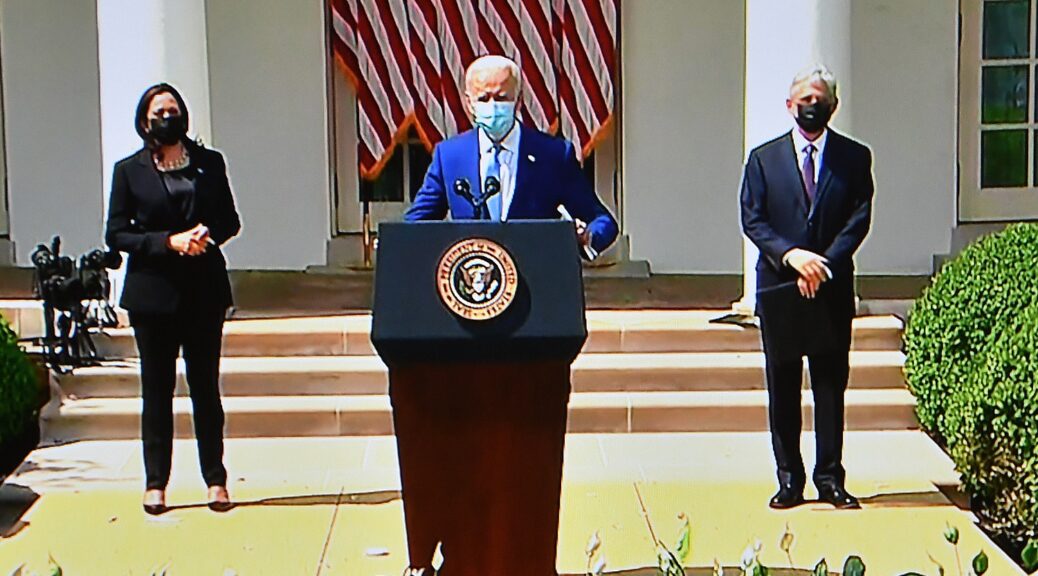
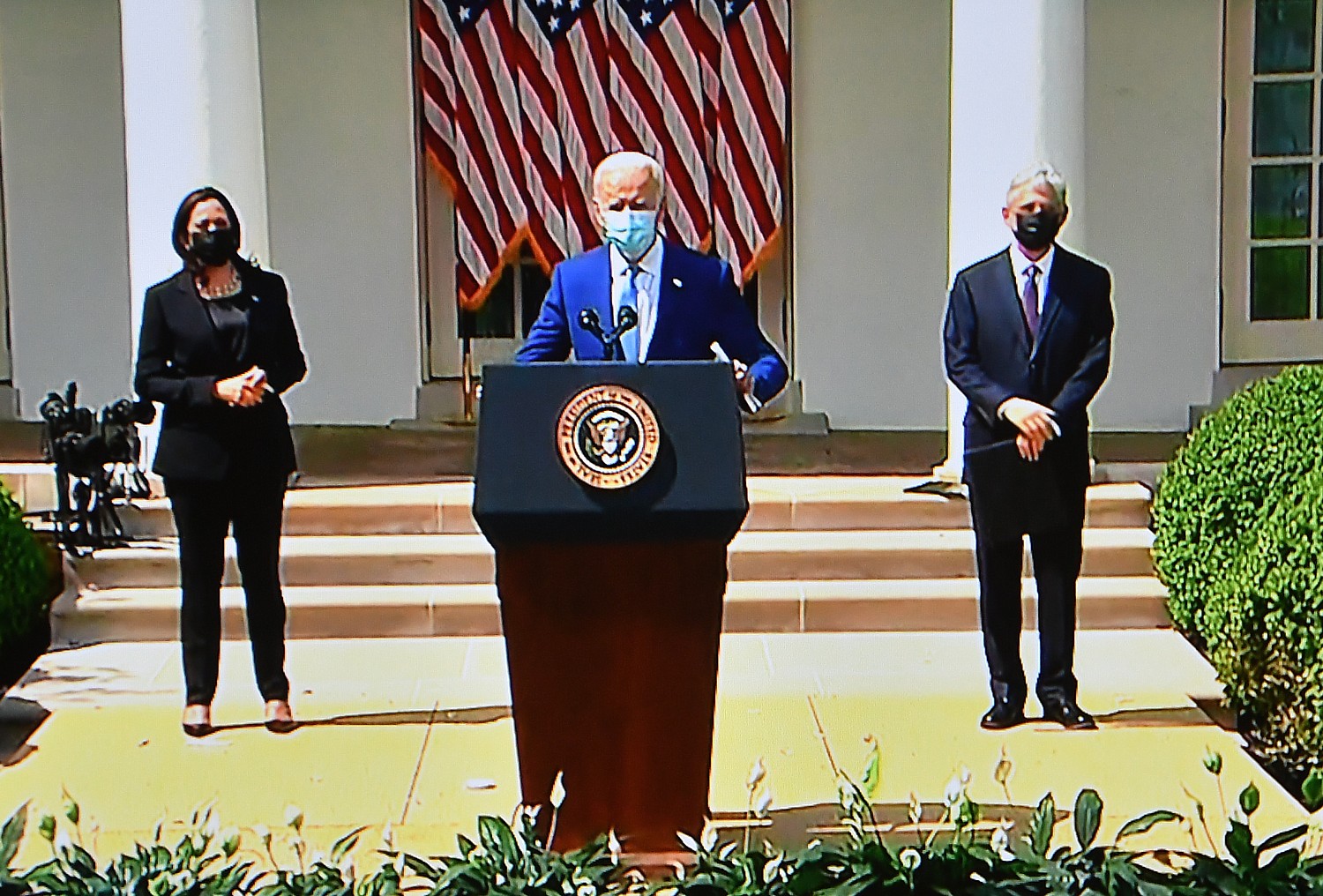
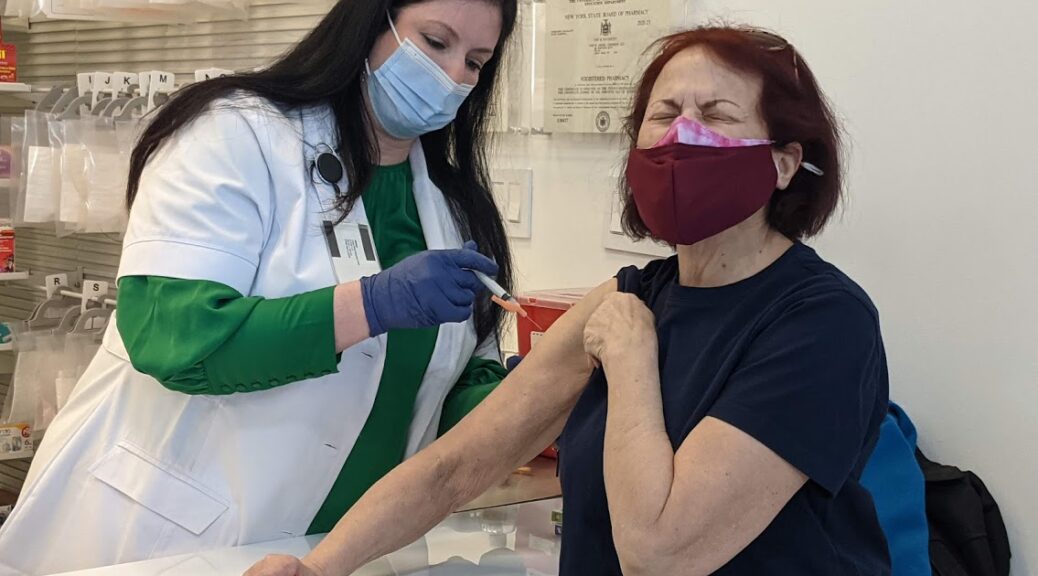
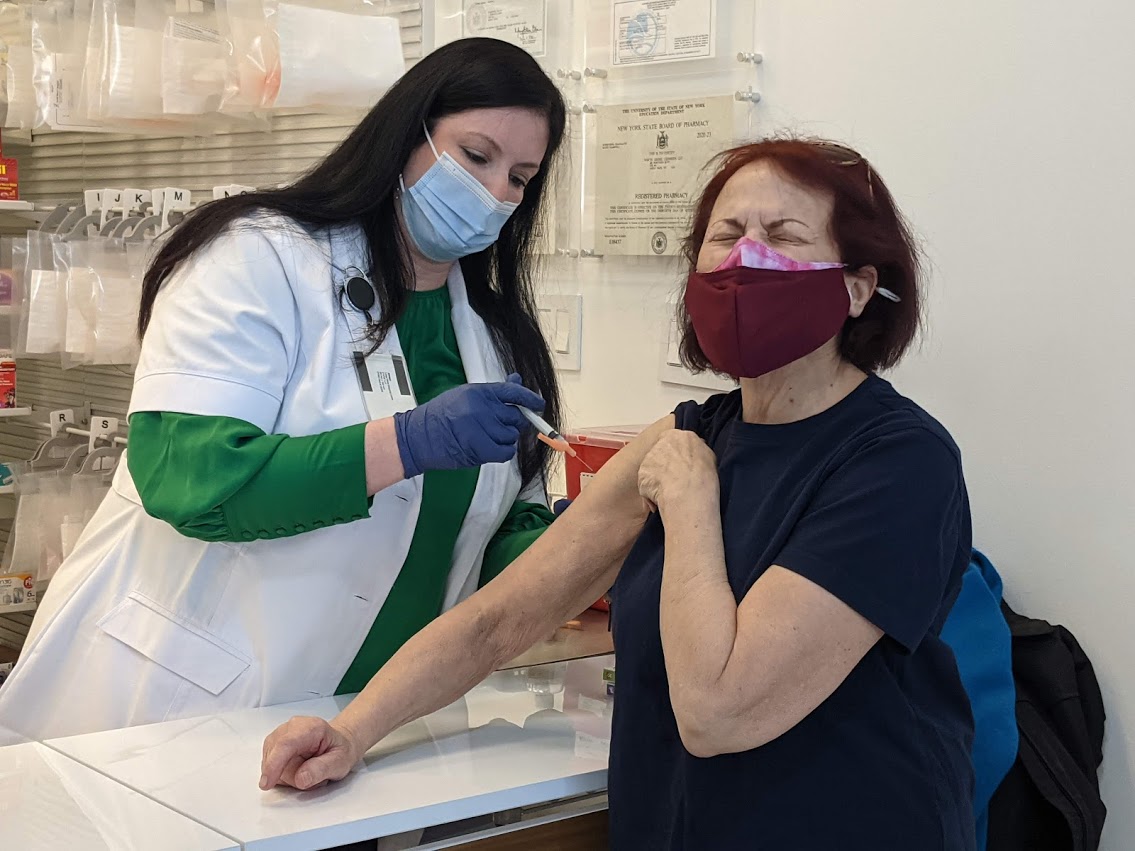
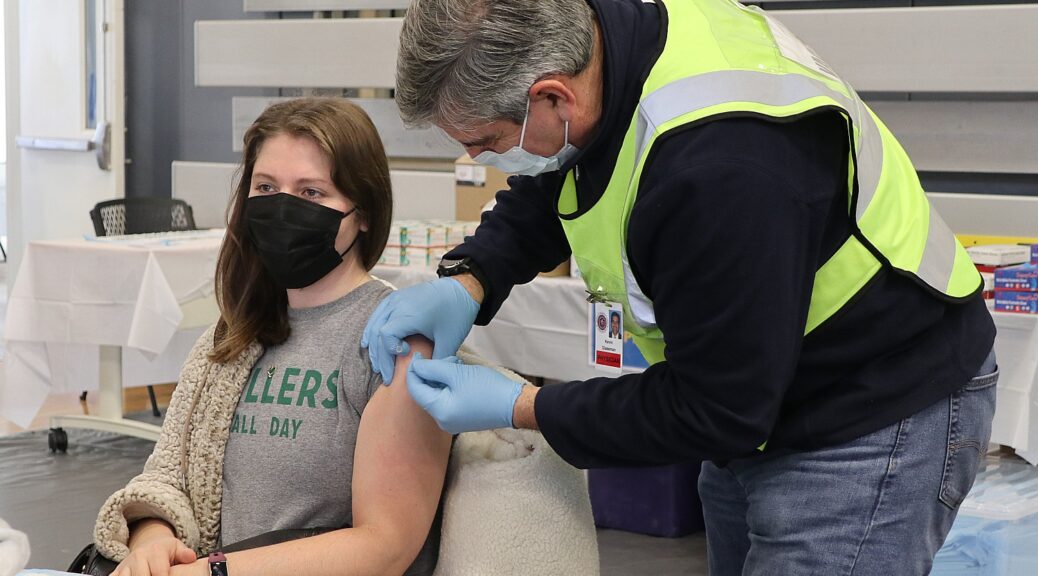
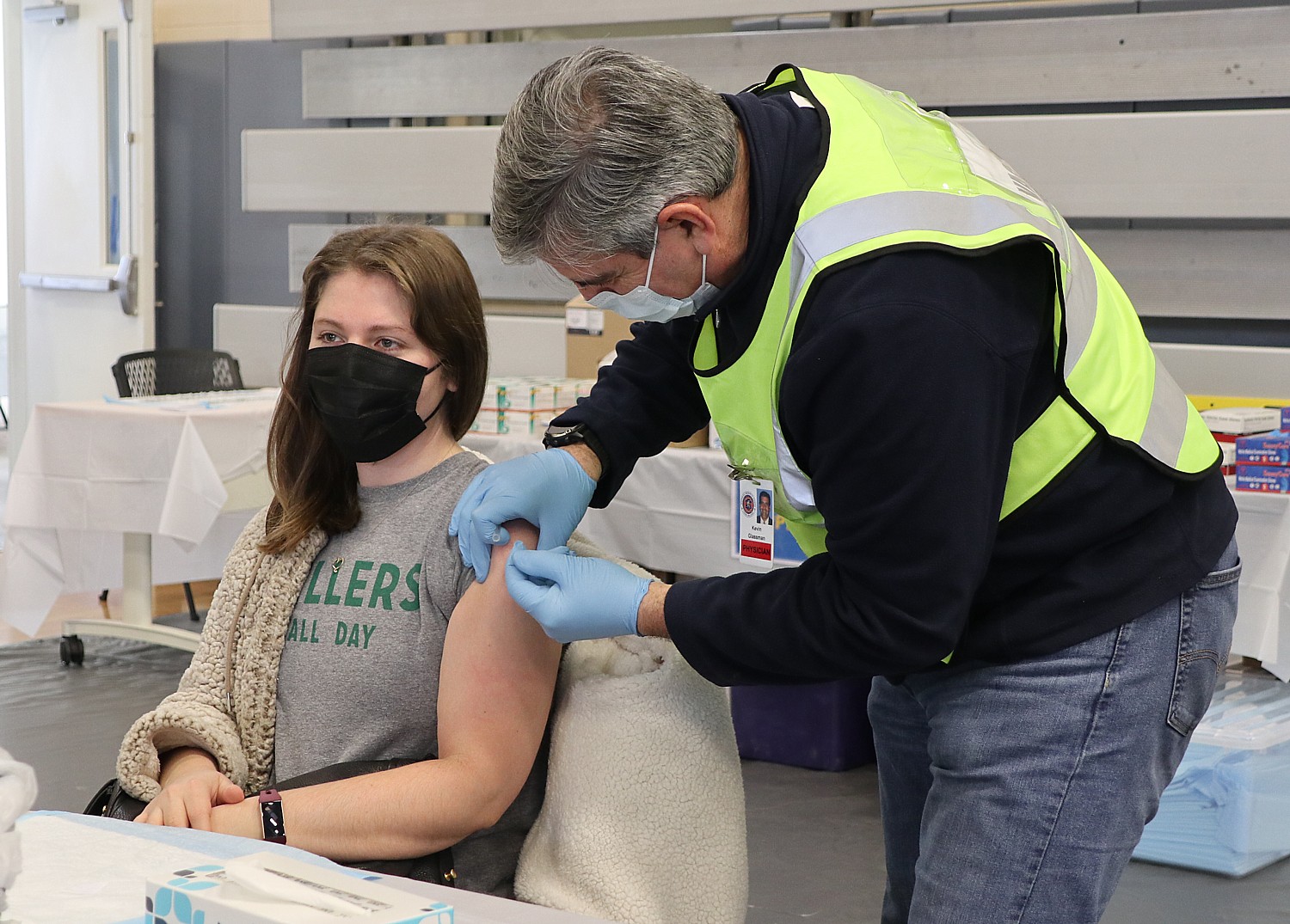
President Joe Biden is calling for June to be a “Month of Action” – a full-court press to reach the goal of 70 percent of Americans vaccinated against COVID-19 by July 4th. He outlined the unprecedented peacetime effort to make the vaccinations available for free, and even enticing incentives from governments, companies and sports organizations. New York State is awarding full four-year scholarships at a SUNY college; Ohio is picking $1 million lottery winners. The Biden Administration has created a website in order to find the nearest place to get a vaccination by texting your zipcode, organized free Uber lifts, free drop-in-day care and incentivized employers to give paid leave to get the shot.
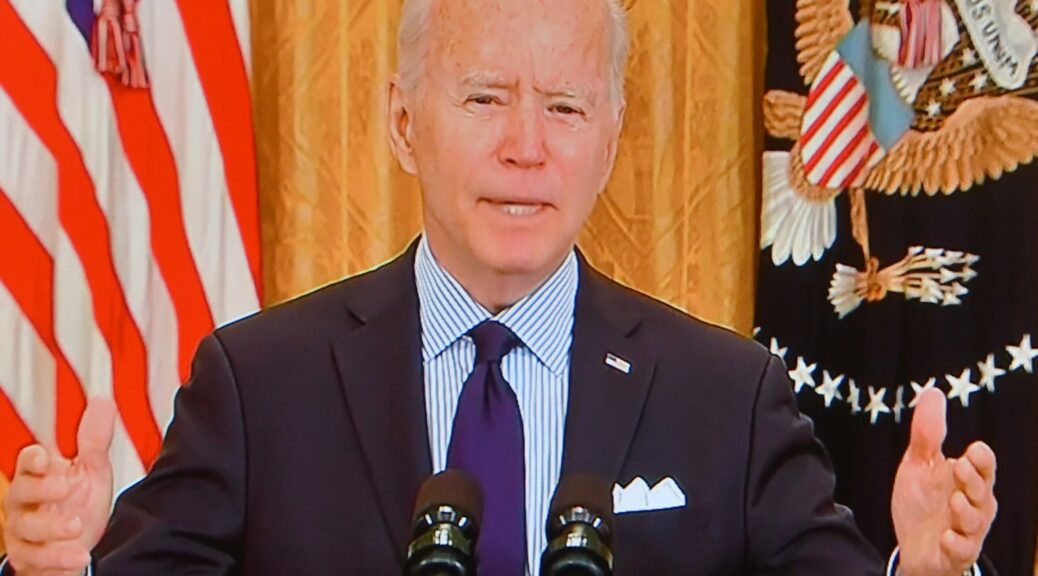
“The more people we get vaccinated, the more success we’re going to have in our fight against this virus,” he said. “America is headed into the summer dramatically different from last year’s summer: a summer of freedom, a summer of joy, a summer of get-togethers and celebrations. An all-American summer that this country deserves after a long, long, dark winter that we’ve all endured.”
Here are his remarks:
In just four months, thanks to the American people, we have made incredible progress getting people vaccinated quickly, efficiently, and equitably. Nearly 170 million Americans of every party, every background, every walk of life have stepped up, rolled up their sleeves, and gotten the shot.
Fifty-two percent of adults are now fully vaccinated, including seventy-five percent of all seniors. Twenty-eight states and the District of Columbia have achieved 50 percent of adults being fully vaccinated in their jurisdictions.
And it’s clearer than ever: The more people we get vaccinated, the more success we’re going to have in our fight against this virus.
Since January 20 — and we’re talking, now, about 15 [5] months — the average daily cases are down from 184,000 to 19,000, below 20,000 for the first time since March of 2020. Average hospitalizations are down from 117,000 to 21,000. Death rates are down over 85 percent.
And this didn’t just happen by chance. We got to this moment because we took aggressive action from day one with a whole-of-government response. We used every lever at our disposal to get this done.
We experienced the production and expanded it in a significant way: in lifesaving vaccines available for every single American. They’re available, and we knew that was the case months ago.
We worked with cities and states to create over 80,000 vaccination sites. We deployed over 9,000 federal staff, including 5,100 active-duty troops to help get shots in arms. Now, as a result, we have built a world-class vaccination program.
I promised you we’d marshal a wartime effort to defeat this virus, and that’s just what we’ve been doing.
And now, tens of millions of Americans have been vaccinated. They’re able to return to closer to a — closer-to-normal life.
Fully vaccinated people are safely shedding their masks and greeting one another with a smile. Grandparents are hugging their grandkids again. Small-business owners are reopening storefronts and restaurants.
Because of the vaccination strategy, our economic strategy, we’re — experienced the strongest economic recovery this country has seen in decades.
There is a group called the Organization of Economic Co-operation and Development — OECD — which includes most of the world’s largest economies in its membership. They’ve been one of those leading bodies analyzing economic growth across — around the world for 60 years.
Just this week, they increased their projection for the U.S. economic growth this year to 6.9 percent — 6.9 percent. That’s the fastest pace in nearly four decades. And that’s because of our vaccination program and our economic response, which, alone, are adding 3 to 4 percentage points to our growth; driving stronger growth not just there — not just this year, but in years to come.
In fact, America is the only major country where global forecasters have actually increased their five-year forecasts for economic growth since January of 2020.
And because of that, America is headed into the summer dramatically different from last year’s summer: a summer of freedom, a summer of joy, a summer of get-togethers and celebrations. An all-American summer that this country deserves after a long, long, dark winter that we’ve all endured.
But what happens after the summer? The data could not be clearer: For all the progress we’re making as a country, if you are unvaccinated, you are still at risk of getting seriously ill or dying, or spreading disease to others, especially when Americans spend more time indoors again, closely gathered in the fall, as — and as we face the potential threat of a new, more dangerous variants.
Even now, if you look at the areas of the country where vaccination rates are the highest, the death — the death rates are dramatically falling. They — the vaccines are effective; they’re effective against the variants currently circulating in the United States. On the other hand, COVID deaths are unchanged in many parts of our country that are lagging behind in vaccinations.
And for young people who may think this doesn’t affect you, listen up, please: This virus, even a mild case, can be with you for months. It will impact on your social life. It could have long-term implications for your health that we don’t even know about yet or fully understand yet.
It’s true that young people are much less likely to die from COVID. But if you do not get vaccinated, you could get COVID sooner or later. But you could get COVID still.
A substantial percentage of people with COVID, even young people, will suffer illnesses, and some will have long-term health impacts as a consequence.
If you’re thinking that the side effects from the shot are worse than the COVID, or that you can’t just take a chance, you are just dead wrong.
Do it for yourself. Do it to protect those more vulnerable than you: your friends, you family, your community.
You know, some people have questions about how quickly the vaccines were developed. They say they’ve been developed so quickly, they can’t be that good. Well, here’s what you need to know: Vaccines were developed over a decade of research in similar viruses, and they’ve gone through strict FDA clinical trials.
The bottom line is this — I promise you: They are safe. They are safe. And even more importantly, they’re extremely effective.
And if you’re vaccinated, you are protected. If you are not vaccinated, you are not protected.
Places with high vaccination rates will also see fewer cases of COVID moving forward. Places with lower vaccination rates are going to see more.
You know, we were elected to be President and Vice President for all Americans. And I don’t want to see the country that is already too divided become divided in a new way — between places where people live free from fear of COVID and places where, when the fall arrives, death and severe illnesses return.
The vaccine is free, it’s safe, and it’s effective. Getting the vaccine is not a partisan act. The science was done under Democratic and Republican administrations. Matter of fact, the first vaccines were authorized under a Republican President and widely developed by a Democratic President — deployed by a Democratic President.
All over the world, people are desperate to get a shot that every American can get at their neighborhood drug store at no cost, with no wait.
Every American over 12 years of age — no matter where you live, what you believe, who you voted for — has the right to get vaccinated. It’s your choice.
So, please, exercise your freedom, live without fear. We need to be one America, united — free from fear this fall.
Now, how will we keep beating this virus as we enter — as we enter the fall after summer? On May 4, I asked Americans to come together to get 70 percent of adults with one shot by July 4th — 70 percent at least with one shot. To date, 12 states have already reached this important milestone. We expect — we expect more to make this milestone this week.
Nationally, we are at 63 percent of adults with one shot. And we are getting closer, but we still have work to do. With 73 percent of Americans over the age of 40 with one shot, and as — we especially need people under 40 to step up. Over 40 is doing much better.
That’s why, today, we’re announcing a month-long effort to pull all the stops — all the stops to free ourselves from this virus and get to 70 percent of adult Americans vaccinated.
Now, I’m going to take everyone — you know, it’s going to take everyone — everyone — the federal government; the state governments; local, Tribal, and territorial governments; the private sector; and, most importantly, the American people — to get to the 70 percent mark so we can declare our independence from COVID-19 and free ourselves from the grip it has held over us — our lives for the better part of a year.
Each of you has the power to help us gain this freedom as a nation. If you get a shot this week, you can be fully vaccinated by July 4th — by the week of July the 4th. And you can celebrate Independence Day free from fear or worry.
This effort has five key parts. First, we’re making it easier than ever to get vaccinated. Ninety percent of you live within five miles of a vaccination site. The vaccinations are free, and most places allow walk-up vaccinations. No appointment needed.
You can go to Vaccines.gov or text your ZIP Code to 438829 to get a text back with the places you can get a shot that are close by.
And now, we’re going to make it even easier. In response to our call to action, businesses and organizations across the country have stepped up to help everyone get vaccinated.
Starting next week, many vaccination sites will be offering extended hours during the month of June, including pharmacies that will be open 24 hours every Friday night — for 24 hours they’ll be open — this month.
And if you’re too busy at work or school, you can get vaccinated around the clock on any Friday. Any Friday.
For parents who haven’t been able to get the shot because they didn’t have the childcare: Starting today, KinderCare, Learning Care Group, the Bright Horizons, alongside with hundreds of YMC- loc- — YMCA locations, are going to offer free drop-in childcare while the parents are getting vaccinated.
In addition, Uber and Lyft are both offering free rides to and from vaccination sites — vaccination centers. It’s easier than ever to get vaccinated.
So, again, text 438829 to find out what the nearest places you can get vaccinated are from your ZIP Code. And visit pharmacies with an extended-hour and walk-up shots that are available. Free childcare, free rides, free shots.
Second, we’re going to redouble our outreach and public education efforts. We’re going to relaunch them, in effect. We’re going to launch a national vaccination tour to encourage people to take the shot. The Vice President is going to lead that tour across the South and the Midwest, where we still had millions of people to vaccinate.
She’s going to be joined by Jill — by the First Lady and the Second Gentleman and Cabinet Secretaries along the way.
In the spirit of meeting people where they are, we’ll also be working with the Black Coalition Against COVID and other organizations to launch a new initiative called “Shots at the Shop.” Barbershops, beauty shops are hubs of activity and information in Black and brown communities in particular, but in many communities across the nation. Local barbers, stylists, they become key advocates for vaccinations in their communities, offering information to customers, booking appointments for them, even using their own businesses as vaccination sites. We’re going to work with shops across the country to make an even bigger impact over the next month.
We’ll also kick things off this weekend with a National Canvassing Weekend, where thousands of volunteers will be out knocking on doors and encourage their communities to get vaccinated.
And mayors — mayors will be stepping up even more over the next month and partnering with us on the City Vaccination Challenge to see which city can grow its vaccination rate the fastest — the most — by July 4th.
We need you to join these efforts. This is the kind of on-the-ground work that’s going to get the job done.
Third, we’ll be increasing our work with employers — employers. A lot of working people are holding back because they’re concerned about losing pay if they take time off to get a shot, or if they don’t feel well the next day. I’ve said before: For small- and medium-sized employers, if you give people paid time off to get a shot, you’ll get a tax credit to cover that cost.
Already, millions of workers across the country are eligible for paid time off and incentives from their employers. I’m asking all employers: Do the right thing.
And we’re making it easy for employers to set up on-the-job vaccination clinics to make it even more convenient for their employees to get a shot.
Fourth, we’re going to continue encouraging people to get vaccinated with incentives and fun rewards. The state of Ohio had a heck of a fun reward — a new millionaire last week — thanks to the creative idea of the governor for holding a vaccination — a vaccine lottery.
The grocery store, Kroger, announced that they’re going to give away $1 million each week to someone who gets vaccinated at one of their pharmacies.
The NBA, the NHL, NASCAR — NASCAR tracks — they’re offering vaccine- — vaccines outside playoff games and at races. Major League Baseball will be offering free tickets to people who get vaccinated at the ballpark.
And to top it off, Anheuser-Busch announced that beer is on them on July the 4th. That’s right, get a shot and have a beer. Free beer for everyone 21 years or over to celebrate the independence from the virus.
Fifth, and finally, we’re asking the American people to help. We need you. We need you to get your friends, family, neighbors, and coworkers vaccinated. Help them find an appointment. Drive them to the site. Talk to them about why you made the choice for yourself. So many Americans have already stepped up to help get their communities vaccinated.
And over the next month, we’re going to need you more than ever. We need every American to commit to the five actions I’ve mentioned this month.
Take at least five actions to help in June. And you might even be invited to visit us at the White House in July to celebrate independence together.
I’ll close with this: We need everyone across the country to pull together to get us over the finish line. I promise you we can do this. Just look at what we’ve already done — we’ve already accomplished together in only four months.
We know it for a fact: Americans could do anything when we do it together. So, please, do your part. Give it your all through July the 4th. Let’s reach our 70 percent goal. Let’s go into the summer freer and safer. Let’s celebrate a truly historic Independence Day.
“The more people we get vaccinated, the more success we’re going to have in our fight against this virus,” he said. “America is headed into the summer dramatically different from last year’s summer: a summer of freedom, a summer of joy, a summer of get-togethers and celebrations. An all-American summer that this country deserves after a long, long, dark winter that we’ve all endured.”
National Month of Action will mobilize national organizations, local government leaders, community-based and faith-based partners, businesses, employers, social media influencers, celebrities, athletes, colleges, young people, and thousands of volunteers
President Biden highlights additional efforts by businesses and organizations across the country to advance equity and make it even easier to get vaccinated
Vice President Kamala Harris will lead a National Vaccination Tour to encourage vaccinations in key communities across the country
President Biden announced June would be a National Month of Action to mobilize an all-of-America sprint to get 70% of U.S. adults at least one shot by July 4th, so that more people can get the protection they need to be safe from a pandemic that has taken the lives of nearly 600,000 Americans. July 4th, he said, would be a true Day of Independence against this debilitating, lethal virus.
Throughout the month, national organizations, local government leaders, community-based and faith-based partners, businesses, employers, social media influencers, celebrities, athletes, colleges, young people, and thousands of volunteers across the nation will work together to get their communities vaccinated.
The President announced a slew of actions that will make it even easier to get vaccinated, mobilize the country around vaccine outreach and education efforts,and incentivize vaccination. Additionally, organizations and businesses from across the country continue to step up and respond to the President’s call to action.
Thanks to the President’s whole-of-government response, the U.S. has made significant progress in its fight against the pandemic since the President took office less than 5 months ago. Already, 63% of adult Americans have gotten vaccinated, including 73% of Americans age 40 and over, and COVID-19 cases and deaths have plummeted as a result – cases are down over 90% and deaths are down over 85% since January 20th.
Twelve states have already given at least one shot to 70% of adults and more than 28 states and D.C. have fully vaccinated 50% or more of their adult populations, but millions of Americans still need protection against the virus.
Organizations and business from across the country have stepped up and responded to the President’s call to action.
The National Month of Action will include the following initiatives:
MAKING IT EASIER TO GET VACCINATED AND ADVANCING EQUITY
Free child care for individuals getting vaccinated: Four of the nation’s largest child care providers will offer free child care to all parents and caregivers getting vaccinated or recovering from vaccination from now until July 4th. KinderCare and Learning Care Group locations across the country will offer free, drop-in appointments to any parent or caregiver who needs support to get vaccinated or recover from vaccination, and more than 500 YMCAs in nearly every state will offer drop-in care during vaccination appointments. Bright Horizons will also provide free child care to support the vaccination of over 10 million workers employed at participating organizations. The vaccine is free for everyone, however, many unvaccinated Americans report concern about the potential ripple expenses of getting vaccinated, such as having to pay for child care.
The U.S. Department of Health and Human Services is also issuing new guidance that encourages states to use child care funding from the American Rescue Plan to provide financial incentives to neighborhood- and home-based child care providers who join the President’s call to action and support their communities in getting vaccinated. Visit Vaccines.gov/incentives.html to learn more.
Extended hours at pharmacies across the country in June to offer more flexible appointment availability: Starting next week, thousands of pharmacies nationwide will stay open late every Friday in June, and offer services throughout the night to make sure Americans can get their shot. These extended hours will ensure that those with less flexible work hours have the opportunity to get vaccinated at times convenient to them. Participating pharmacy chains include Albertsons, CVS, Rite-Aid, and Walgreens.
MOBILIZING THE COUNTRY TO DO MORE VACCINATION EDUCATION AND OUTREACH:
Community Canvassing, Phone Banking, Text Banking, and Vaccination Events: The Administration’s organizing efforts will focus on what we know works best to ensure everyone has equitable vaccine access: person-to-person action that connects people with key resources and information like Vaccines.gov, text 4-3-8-8-2-9, the National COVID-19 Vaccination Hotline (1-800-232-0233), and more. The Month of Action will include calls and texts to people in areas with low vaccination rates and canvasses in neighborhoods close to walk-in clinics where people can get vaccinated on the spot. More than 100 organizations have already committed to host over 1,000 events the first weekend alone, with thousands of additional events to take place over the course of the month. The President will call on Americans to take at least five actions to help their communities during the Month of Action, and some volunteers may be invited to visit the White House in July. Americans can visit WeCanDoThis.hhs.gov to learn more and sign up to help their communities get vaccinated.
“We Can Do This” National Vaccination Tour: The President will announce the Vice President will lead a nation-wide tour to reach millions of Americans who still need protection against the virus, to highlight the ease of getting vaccinated, encourage vaccinations, and energize and mobilize grassroots vaccine education and outreach efforts. The Vice President’s travel will be anchored in the South, and the First Lady, the Second Gentleman, and members of the Cabinet will also join the Administration’s tour to communities across the country.
Mayors Challenge to Increase Vaccination Rates in Cities Across America: Mayors across the country are stepping up to help in this effort by launching the “Mayors Challenge,” a competition to see which city can grow its vaccination rate the most by July 4th. Participating mayors commit to taking actions throughout the month to boost vaccinations, such as coordinated canvassing efforts, partnerships with local businesses, and incentives for local residents. The Administration has created a toolkit for mayors and local leaders, and will help recognize the winning cities later this year. More than 50 mayors of cities in Alabama, Arizona, California, Florida, Illinois, Kentucky, Louisiana, Massachusetts, Maryland, Michigan, Missouri, Montana, Nevada, New Jersey, New York, New Mexico, Ohio, Oregon, South Carolina, Tennessee, Texas, Virginia, Washington, and Wisconsin, and, as well as D.C., have already signed up the challenge, which is being run in collaboration with the U.S. Conference of Mayors.
Shots at the Shop – A New Initiative to Engage Black-Owned Barbershops and Beauty Salons: The President will announce the Administration is teaming up with the Black Coalition Against COVID, the University of Maryland Center for Health Equity, and SheaMoisture to launch “Shots at the Shop,” an initiative that will engage Black-owned barbershops and beauty salons across the country to support local vaccine education and outreach efforts. Throughout the month of June, each participating shop will engage customers with information about the vaccines, display educational materials, and host on-site vaccination events in partnership with local providers. The “Shots at the Shop” initiative will invite participation from across the country, with a particular focus on supporting shops in some of the hardest-hit localities still experiencing significant gaps in vaccination rates.
Blanketing Local TV and Radio and Social Media to Get Americans the Facts and Answer Their Questions: The National Association of Broadcasters (NAB), representing more than 7,000 TV and radio stations across the country, will have local station members participate in the National Month of Action. NAB members will be airing vaccine education segments in their programming featuring trusted voices from the community, as well as medical professionals from leading medical associations across the country, including the American Medical Association, American Academy of Family Physicians, American Academy of Pediatrics, American College of Physicians, American Hospital Association, American Association of Nurse Practitioners, and Primary Care Collaborative. Medical experts will have the opportunity to share information on benefits of vaccination, address questions and concerns, and publicize where individuals in the community can get vaccinated. And, the Administration will continue deploying medical experts, public health leaders, and Cabinet officials through a whole-of-government approach to communicate directly with Americans, including by working with social media platforms and engaging celebrities and influencers to reach people where they are.
COVID-19 College Challenge: The Administration is launching the COVID-19 College Challenge, where colleges and universities can take a pledge and commit to taking action to get their students and communities vaccinated by going to WhiteHouse.gov/COVIDCollegeChallenge and signing up. As part of the challenge, the Administration will provide resources like training sessions, toolkits, and educational material to assist colleges and universities in vaccination efforts; facilitate on-site vaccinations at schools; and launch a student corps within the COVID-19 Community Corps to recognize and activate students across the country who are taking extraordinary efforts to draw young people out to get vaccinated and engage the youth community. More than 200 colleges in 43 states have already taken the pledge and committed to the COVID-19 College Challenge. This challenge builds on the Administration’s work to facilitate partnerships between more than 60 community colleges and pharmacies in the Federal Retail Pharmacy Program to provide pop-up vaccination clinics at high-enrollment community colleges between now and July 4th.
INCENTIVIZING VACCINATION
Business Incentives for Vaccinated Americans: Thousands of employers and businesses have already stepped up to support vaccination efforts, including by offering incentives for vaccinations and providing their workers paid-leave for vaccinations. During the Month of Action, the Administration will continue working with employers to make it even easier to set up workplace vaccination clinics, and call on more businesses to encourage and incentivize vaccinations.
Starting today, Americans will be able to find a list of these and other incentives on Vaccines.gov/incentives.html. Examples of new private sector actions and incentives that recently launched include:
Anheuser-Busch will give away free beer to all adults over the age of 21 in America on July 4th to celebrate the country’s progress against COVID.
CVS launched a sweepstakes for vaccinated people to win free cruises, tickets to Super Bowl LVI, and cash prizes.
Door Dash will give $2 million in gift cards to the National Association of Community Health Centers to incentivize vaccinations.
Major League Baseball teams will offer on-site vaccinations at games and give free tickets to those who get vaccinated.
Microsoft will give away thousands of Xboxes to Boys and Girls Clubs in hard-hit areas who will run promotions and educational seminars about the importance of vaccinations in hard-hit and hard-to-reach communities.
Kroger launched a “Community Immunity” program to give $1 million to a vaccinated person every week in June and give dozens of vaccinated Americans free groceries for a year.
United Airlines launched the “Your Shot to Fly” Sweepstakes for Mileage Plus members to win a year of free flights or a roundtrip for two in any class of service.
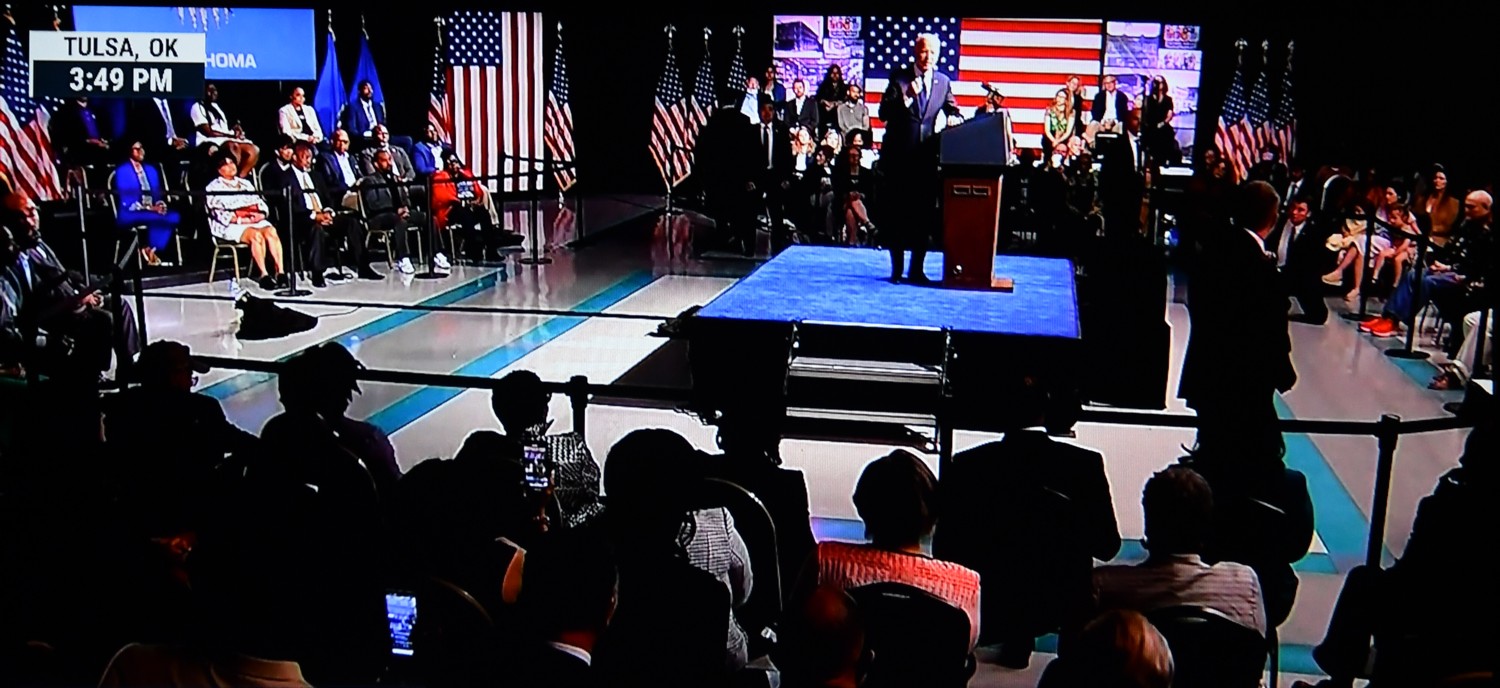
In moving remarks, President Joe Biden, only the first sitting president to acknowledge the Tulsa Race Massacre of 100 years ago, tackled systemic, institutional racism and laid out a plan for economic justice including improving access to homeownership (the most significant factor in family wealth), investments in minority-owned small businesses and disadvantaged communities, and said he would act to preserve voting rights. He pointed to the most significant threat against domestic tranquility – White Supremacy and the rise of domestic terrorists – drawing a line from the Tulsa Race Massacre a century ago and today, and tackled the latest assault by right-wingers to whitewash history, rather than take responsibility.
“We can’t just choose to learn what we want to know and not what we should know. We should know the good, the bad, everything. That’s what great nations do: They come to terms with their dark sides. And we’re a great nation. The only way to build a common ground is to truly repair and to rebuild”
“Only with truth can come healing and justice and repair.”
Biden said, “And there’s greater recognition that, for too long, we’ve allowed a narrowed, cramped view of the promise of this nation to fester — the view that America is a zero-sum game where there is only one winner. “If you succeed, I fail. If you get ahead, I fall behind. If you get a job, I lose mine.” And maybe worst of all, “If I hold you down, I lift myself up,” instead of “If you do well, we all do well.” (Applause.) We see that in Greenwood.
“This story isn’t about the loss of life, but a loss of living, of wealth and prosperity and possibilities that still reverberates today.”
He announced significant policies aimed at redressing generational discrimination:
“Today, we’re announcing two expanded efforts targeted toward Black wealth creation that will also help the entire community. The first is: My administration has launched an aggressive effort to combat racial discrimination in housing. That includes everything from redlining to the cruel fact that a home owned by a Black family is too often appraised at a lower value than a similar home owned by a white family…
“I’m going to increase the share of the dollars the federal government spends to small, disadvantaged businesses, including Black and brown small businesses” from 10 percent to 15 percent.
Biden laid out a plan to use infrastructure investments to specifically improve lives in historically disadvantaged communities.
Then the President turned to voting rights, which Congressman john Lewis called “precious,” “almost sacred”… “The most powerful nonviolent tool we have in a democratic society”.
Biden declared, “This sacred right is under assault with an incredible intensity like I’ve never seen.. It’s simply un-American. It is not, however, sadly, unprecedented,” and vowed to ”today, let me be unequivocal: we’re going to be ramping up our efforts to overcome again.” He said june would be a month of action, called upon voting rights groups to engage in voter registration campaigns and designated Vice President Kamala Harris as the point-person in his administration to get Congress to pass critical voting rights legislation, including the For the People Act and the John Lewis Voting Rights Act.
But returning to the Tulsa Massacre of 100 years ago, he said that violence resonates again in the rise of White Supremacy, Neo-Nazism, the resurrection of the KKK – the rise of hate crimes and terror against blacks, Asian-Americans, Jews – as was on display in Charlottesville NC that inspired Biden to run for president to “reclaim the soul of the nation.”
“Hate is never defeated; it only hides,” Biden declared. “And given a little bit of oxygen — just a little bit oxygen — by its leaders, it comes out of there from under the rock like it was happening again, as if it never went away. We must not give hate a safe harbor.”
“Terrorism from white supremacy is the most lethal threat to the homeland today. Not ISIS, not al Qaeda — white supremacists” and promised to soon lay out “a broader strategy to counter domestic terrorism and the violence driven by the most heinous hate crimes and other forms of bigotry.”
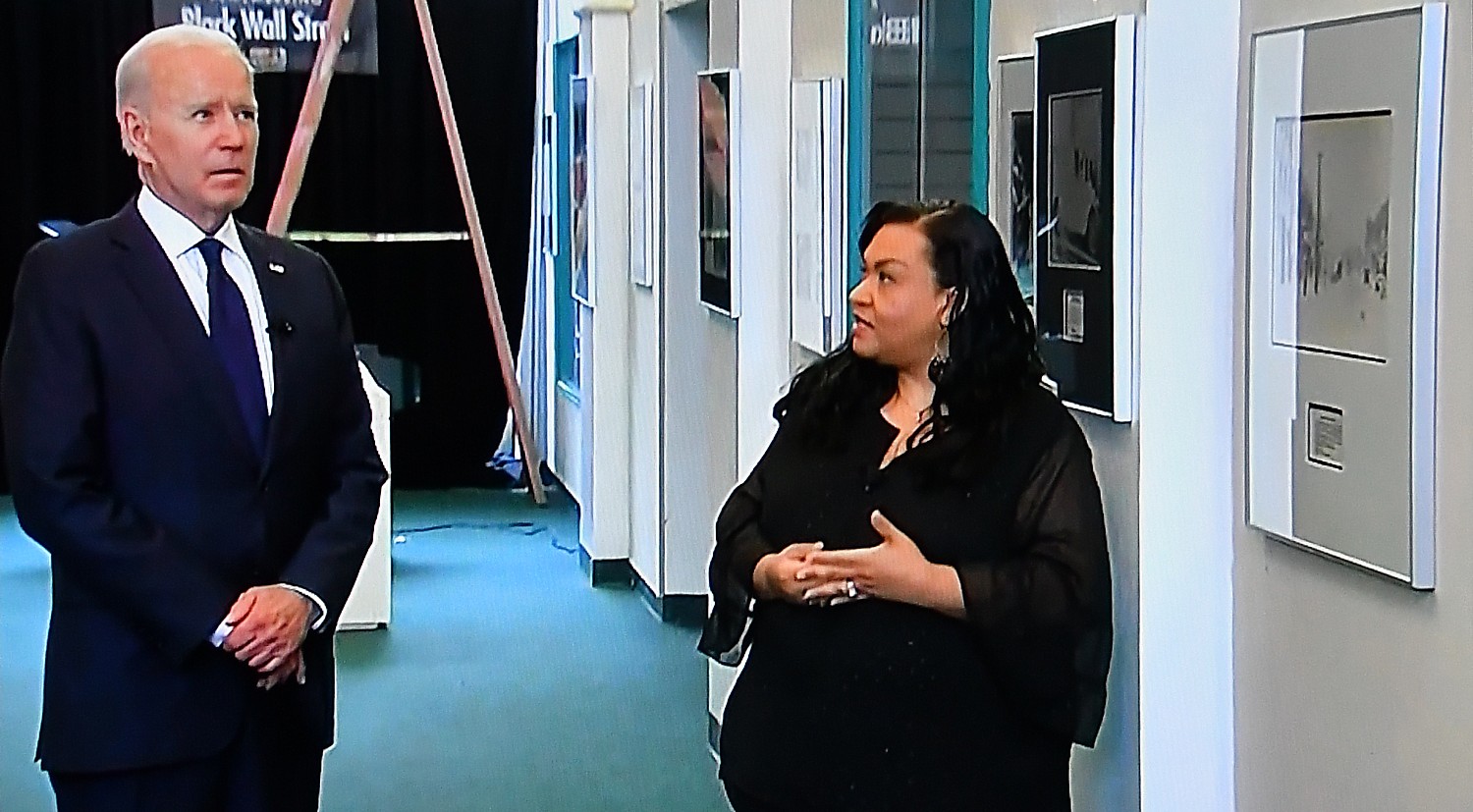
I just toured the Hall of Survivors here in Greenwood Cultural Center, and I want to thank the incredible staff for hosting us here. And — (applause) — I mean that sincerely. Thank you.
In the tour, I met Mother Randle, who’s only 56 [107] years old. (Laughter.) God love her. And Mother Fletcher, who’s 67 [106] years old. (Laughter.) And her brother — her brother, Van Ellis, who’s 100 years old. (Laughter.) And he looks like he’s 60. Thank you for spending so much time with me. I really mean it. It was a great honor. A genuine honor.
You are the three known remaining survivors of a story seen in the mirror dimly. But no longer. Now your story will be known in full view.
The events we speak of today took place 100 years ago. And yet, I’m the first President in 100 years ever to come to Tulsa — (applause) — I say that not as a compliment about me, but to think about it — a hundred years, and the first President to be here during that entire time, and in this place, in this ground, to acknowledge the truth of what took place here.
For much too long, the history of what took place here was told in silence, cloaked in darkness. But just because history is silent, it doesn’t mean that it did not take place. And while darkness can hide much, it erases nothing. It erases nothing. Some injustices are so heinous, so horrific, so grievous they can’t be buried, no matter how hard people try.
And so it is here. Only — only with truth can come healing and justice and repair. Only with truth, facing it. But that isn’t enough.
First, we have to see, hear, and give respect to Mother Randle, Mother Fletcher, and Mr. Van Ellis. (Applause.) To all those lost so many years ago, to all the descendants of those who suffered, to this community — that’s why we’re here: to shine a light, to make sure America knows the story in full.
May 1921: Formerly enslaved Black people and their descendants are here in Tulsa — a boom town of oil and opportunity in a new frontier.
On the north side, across the rail tracks that divided the city already segregated by law, they built something of their own, worthy — worthy of their talent and their ambition: Greenwood — a community, a way of life. Black doctors and lawyers, pastors, teachers; running hospitals, law practices, libraries, churches, schools.
Black veterans, like a man I had the privilege to giving a Command Coin to, who fought — volunteered and fought, and came home and still faced such prejudice. (Applause.) Veterans had been back a few years helping after winning the first World War, building a new life back home with pride and confidence, who were a mom-and — they were, at the time — mom-and-plack [sic] — mom-and-pop Black diners, grocery stores, barber shops, tailors — the things that make up a community.
At the Dreamland Theatre, a young Black couple, holding hands, falling in love. Friends gathered at music clubs and pool halls; at the Monroe family roller-skating rink. Visitors staying in hotels, like the Stradford.
All around, Black pride shared by the professional class and the working class who lived together, side by side, for blocks on end.
Mother Randle was just six years old — six years old — living with her grandmom. She said she was lucky to have a home and toys, and fortunate to live without fear.
Mother Fletcher was seven years old, the second of seven children. The youngest, being Mr. Van Ellis, was just a few months old. The children of former sharecroppers, when they went to bed at night in Greenwood, Mother Fletcher says they fell asleep rich in terms of the wealth — not real wealth, but a different wealth — a wealth in culture and community and heritage. (Applause.)
But one night — one night changed everything. Everything changed. While Greenwood was a community to itself, it was not separated from the outside.
It wasn’t everyone, but there was enough hate, resentment, and vengeance in the community. Enough people who believed that America does not belong to everyone and not everyone is created equal — Native Americans, Asian Americans, Hispanic Americans, Black Americans. A belief enforced by law, by badge, by hood and by noose.
And it speaks to that — lit the fuse. It lit it by the spark that it provided — a fuse of fury — was an innocent interaction that turned into a terrible, terrible headline allegation of a Black male teenager attacking a white female teenager.
A white mob of 1,000 gathered around the courthouse where the Black teenager was being held, ready to do what still occurred: lynch that young man that night. But 75 Black men, including Black veterans, arrived to stand guard.
Words were exchanged. Then a scuffle. Then shots fired. Hell was unleashed. Literal hell was unleashed.
Through the night and into the morning, the mob terrorized Greenwood. Torches and guns. Shooting at will. A mob tied a Black man by the waist to the back of their truck with his head banging along the pavement as they drove off. A murdered Black family draped over the fence of their home outside. An elderly couple, knelt by their bed, praying to God with their heart and their soul, when they were shot in the back of their heads.
Private planes — private planes — dropping explosives — the first and only domestic aerial assault of its kind on an American city here in Tulsa.
Eight of Greenwood’s nearly two dozen churches burned, like Mt. Zion — across the street, at Vernon AME.
Mother Randle said it was like war. Mother Fletcher says, all these years later, she still sees Black bodies around.
The Greenwood newspaper publisher A.J. Smitherman penned a poem of what he heard and felt that night. And here’s the poem. He said, “Kill them, burn them, set the pace… teach them how to keep their place. Reign of murder, theft, and plunder was the order of the night.” That’s what he remembered in the poem that he wrote.
One hundred years ago at this hour, on this first day of June, smoke darkened the Tulsa sky, rising from 35 blocks of Greenwood that were left in ash and ember, razed and in rubble.
In less than 24 hours, 1,100 Black homes and businesses were lost. Insurance companies — they had insurance, many of them — rejected claims of damage. Ten thousand people were left destitute and homeless, placed in internment camps.
As I was told today, they were told, “Don’t you mention you were ever in a camp or we’ll come and get you.” That’s what survivors told me.
Yet no one — no arrests of the mob were made. None. No proper accounting of the dead. The death toll records by local officials said there were 36 people. That’s all. Thirty-six people.
But based on studies, records, and accounts, the likelihood — the likely number is much more, in the multiple of hundreds. Untold bodies dumped into mass graves. Families who, at the time, waited for hours and days to know the fate of their loved ones are now descendants who have gone 100 years without closure.
But, you know, as we speak, the process — the process of exhuming the unmarked graves has started. And at this moment, I’d like to pause for a moment of silence for the fathers, the mothers, the sisters, sons, and daughters, friends of God and Greenwood. They deserve dignity, and they deserve our respect. May their souls rest in peace.
[Pause for a moment of silence.]
My fellow Americans, this was not a riot. This was a massacre — (applause) — among the worst in our history, but not the only one. And for too long, forgotten by our history.
As soon as it happened, there was a clear effort to erase it from our memory — our collective memories — from the news and everyday conversations. For a long time, schools in Tulsa didn’t even teach it, let alone schools elsewhere.
And most people didn’t realize that, a century ago, a second Ku Klux Klan had been founded — the second Ku Klux Klan had been founded.
A friend of mine, Jon Meacham — I had written — when I said I was running to restore the soul of America, he wrote a book called “The Soul of America” — not because of what I said. And there’s a picture about page 160 in his book, showing over 30,000 Ku Klux Klan members in full regalia, Reverend — pointed hats, the robes — marching down Pennsylvania Avenue in Washington, D.C. Jesse, you know all about this. Washin- — Washington, D.C.
If my memory is correct, there were 37 members of the House of Representatives who were open members of the Klan. There were five, if I’m not mistaken — it could have been seven; I think it was five — members of the United States Senate — open members of the Klan. Multiple governors who were open members of the Klan.
Most people didn’t realize that, a century ago, the Klan was founded just six years before the horrific destruction here in Tulsa. And one of the reasons why it was founded was because of guys like me, who were Catholic. It wasn’t about African Americans, then; it was about making sure that all those Polish and Irish and Italian and Eastern European Catholics who came to the United States after World War One would not pollute Christianity.
The flames from those burning crosses torched every region — region of the country. Millions of white Americans belonged to the Klan, and they weren’t even embarrassed by it; they were proud of it.
And that hate became embedded systematically and systemically in our laws and our culture. We do ourselves no favors by pretending none of this ever happened or that it doesn’t impact us today, because it does still impact us today.
We can’t just choose to learn what we want to know and not what we should know. (Applause.) We should know the good, the bad, everything. That’s what great nations do: They come to terms with their dark sides. And we’re a great nation.
The only way to build a common ground is to truly repair and to rebuild. I come here to help fill the silence, because in silence, wounds deepen. (Applause.) And only — as painful as it is, only in remembrance do wounds heal. We just have to choose to remember.
We memorialize what happened here in Tulsa so it can be –so it can’t be erased. We know here, in this hallowed place, we simply can’t bury pain and trauma forever.
And at some point, there will be a reckoning, an inflection point, like we’re facing right now as a nation.
What many people hadn’t seen before or ha- — or simply refused to see cannot be ignored any longer. You see it in so many places.
And there’s greater recognition that, for too long, we’ve allowed a narrowed, cramped view of the promise of this nation to fester — the view that America is a zero-sum game where there is only one winner. “If you succeed, I fail. If you get ahead, I fall behind. If you get a job, I lose mine.” And maybe worst of all, “If I hold you down, I lift myself up,” instead of “If you do well, we all do well.” (Applause.) We see that in Greenwood.
This story isn’t about the loss of life, but a loss of living, of wealth and prosterity [prosperity] and possibilities that still reverberates today.
Mother Fletcher talks about how she was only able to attend school until the fourth grade and eventually found work in the shipyards, as a domestic worker.
Mr. Van Ellis has shared how, even after enlisting and serving in World War Two, he still came home to struggle with a segregated America.
Imagine all those hotels and dinners [diners] and mom-and-pop shops that could been — have been passed down this past hundred years. Imagine what could have been done for Black families in Greenwood: financial security and generational wealth.
If you come from backgrounds like my — my family — a working-class, middle-class family — the only way we were ever able to generate any wealth was in equity in our homes. Imagine what they contributed then and what they could’ve contributed all these years. Imagine a thriving Greenwood in North Tulsa for the last hundred years, what that would’ve meant for all of Tulsa, including the white community.
While the people of Greenwood rebuilt again in the years after the massacre, it didn’t last. Eventually neighborhoods were redlined on maps, locking Black Tulsa out of homeownerships. (Applause.) A highway was built right through the heart of the community. Lisa, I was talking about our west side — what 95 did to it after we were occupied by the military, after Dr. King was murdered. The community — cutting off Black families and businesses from jobs and opportunity. Chronic underinvestment from state and federal governments denied Greenwood even just a chance at rebuilding. (Applause.)
We must find the courage to change the things we know we can change. That’s what Vice President Harris and I are focused on, along with our entire administration, including our Housing and Urban Development Secretary, Marcia Fudge, who is here today. (Applause.)
Because today, we’re announcing two expanded efforts targeted toward Black wealth creation that will also help the entire community. The first is: My administration has launched an aggressive effort to combat racial discrimination in housing. That includes everything from redlining to the cruel fact that a home owned by a Black family is too often appraised at a lower value than a similar home owned by a white family. (Applause.)
And I might add — and I need help if you have an answer to this; I can’t figure this one out, Congressman Horsford. But if you live in a Black community and there’s another one on the other side of the highway — it’s a white community; it’s the — built by the same builder, and you have a better driving record than they guy with the same car in the white community, you’re — can pay more for your auto insurance.
Shockingly, the percentage of Black American homeownership is lower today in America than when the Fair Housing Act was passed more than 50 years ago. Lower today. That’s wrong. And we’re committing to changing that.
Just imagine if instead of denying millions of Americans the ability to own their own home and build generational wealth, we made it possible for them to buy a home and build equity into that — into that home and provide for their families.
Second, small businesses are the engines of our economy and the glue of our communities. As President, my administration oversees hundreds of billions of dollars in federal contracts for everything from refurbishing decks of aircraft carriers, to installing railings in federal buildings, to professional services.
We have a thing called — I won’t go into it all because there’s not enough time now. But I’m determined to use every taxpayer’s dollar that is assigned to me to spend, going to American companies and American workers to build American products. And as part of that, I’m going to increase the share of the dollars the federal government spends to small, disadvantaged businesses, including Black and brown small businesses.
Right now, it calls for 10 percent; I’m going to move that to 15 percent of every dollar spent will be spent (inaudible). (Applause.) I have the authority to do that.
Just imagine if, instead of denying millions of entrepreneurs the ability to access capital and contracting, we made it possible to take their dreams to the marketplace to create jobs and invest in our communities.
That — the data shows young Black entrepreneurs are just as capable of succeeding, given the chance, as white entrepreneurs are. But they don’t have lawyers. They don’t have — they — they don’t have accountants, but they have great ideas.
Does anyone doubt this whole nation would be better off from the investments those people make? And I promise you, that’s why I set up the — a national Small Business Administration that’s much broader. Because they’re going to get those loans.
Instead of consigning millions of American children to under-resourced schools, let’s give each and every child, three and four years old, access to school — not daycare, school. (Applause.)
In the last 10 years, studies have been done by all the great universities. It shows that, if increased by 56 percent, the possibility of a child — no matter what background they come from; no matter what — if they start school at three years old, they have a 56 percent chance of going all through all 12 years without any trouble and being able to do well, and a chance to learn and grow and thrive in a school and throughout their lives.
And let’s unlock more than — an incredible creativity and innovation that will come from the nation’s Historically Black Colleges and Universities. (Applause.) I have a $5 billion program giving them the resources to invest in research centers and laboratories and high-demand fields to compete for the good-paying jobs in industries like — of the future, like cybersecurity.
The reason why they don’t — their — their students are equally able to learn as well, and get the good-paying job that start at 90- and 100,000 bucks. But they don’t have — they don’t have the back — they don’t have the money to provide and build those laboratories. So, guess what? They’re going to get the money to build those laboratories. (Applause.)
So, instead of just talking about infrastructure, let’s get about the business of actually rebuilding roads and highways, filling the sidewalks and cracks, installing streetlights and high-speed Internet, creating space — space to live and work and play safely.
Let’s ensure access to healthcare, clean water, clean air, nearby grocery stores — stock the fresh vegetables and food that — (applause) — in fact, deal with — I mean, these are all things we can do.
Does anyone doubt this whole nation would be better off with these investments? The rich will be just as well off. The middle class will do better, and everybody will do better. It’s about good-paying jobs, financial stability, and being able to build some generational wealth. It’s about economic growth for our country and outcompeting the rest of the world, which is now outcompeting us.
But just as fundamental as any of these investments I’ve discussed — this may be the most fundamental: the right to vote. (Applause.) The right to vote. (Applause.)
A lot of the members of the Black Caucus knew John Lewis better than I did, but I knew him. On his deathbed, like many, I called John, to speak to him. But all John wanted to do was talk about how I was doing. He died, I think, about 25 hours later.
But you know what John said? He called the right to vote “precious,” “almost sacred.” He said, “The most powerful nonviolent tool we have in a democratic society”.
This sacred right is under assault with an incredible intensity like I’ve never seen — even though I got started as a public defender and a civil rights lawyer — with an intensity and an aggressiveness that we have not seen in a long, long time.
It’s simply un-American. It is not, however, sadly, unprecedented. The creed “We Shall Overcome” is a longtime mainstay of the Civil Rights Movement, as Jesse Jackson can tell you better than anybody.
The obstacle to progress that have to be overcome are a constant challenge. We saw it in the ‘60s, but with the current assault, it’s not just an echo of a distant history.
In 2020, we faced a tireless assault on the right to vote: restrictive laws, lawsuits, threats of intimidation, voter purges, and more. We resolved to overcome it all, and we did. More Americans voted in the last election than any — in the midst of a pandemic — than any election in American history. (Applause.)
You got voters registered. You got voters to the polls. The rule of law held. Democracy prevailed. We overcame.
But today, let me be unequivocal: I’ve been engaged in this work my whole career, and we’re going to be ramping up our efforts to overcome again.
I will have more to say about this at a later date — the truly unprecedented assault on our democracy, an effort to replace nonpartisan election administrators and to intimidate those charged with tallying and reporting the election results.
But today, as for the act of voting itself, I urge voting rights groups in this country to begin to redouble their efforts now to register and educate voters. (Applause.)
June should be a month of action on Capitol Hill. I hear all the folks on TV saying, “Why doesn’t Biden get this done?” Well, because Biden only has a majority of, effectively, four votes in the House and a tie in the Senate, with two members of the Senate who vote more with my Republican friends.
But we’re not giving up. Earlier this year, the House of Representatives passed For the People Act to protect our democracy. The Senate will take it up later this month, and I’m going to fight like heck with every tool at my disposal for its passage.
The House is also working on the John Lewis Voting Rights Act, which is — which is critical — (applause) — to providing new legal tools to combat the new assault on the right to vote.
To signify the importance of our efforts, today I’masking Vice President Harris to help these efforts and lead them, among her many other responsibilities.
With her leadership and your support, we’re going to overcome again, I promise you. But it’s going to take a hell of a lot of work. (Applause.)
And finally, we have to — and finally, we must address what remains the stain on the soul of America. What happened in Greenwood was an act of hate and domestic terrorism with a through line that exists today still.
Just close your eyes and remember what you saw in Charlottesville four years ago on television. Neo-Nazis, white supremacists, the KKK coming out of those fields at night in Virginia with lighted torches — the veins bulging on their — as they were screaming. Remember? Just close your eyes and picture what it was.
Well, Mother Fletcher said when she saw the insurrection at the Capitol on January the 9th [6th], it broke her heart — a mob of violent white extremists — thugs. Said it reminded her what happened here in Greenwood 100 years ago.
Look around at the various hate crimes against Asian Americans and Jewish Americans. Hate that never goes away. Hate only hides.
Jesse, I think I mentioned this to you. I thought, after you guys pushed through, with Dr. King, the Voting Rights Act and the Civil Rights Act — I thought we moved. But what I didn’t realize — I thought we had made enormous progress, and I was so proud to be a little part of it.
But you know what, Rev? I didn’t realize hate is never defeated; it only hides. It hides. And given a little bit of oxygen — just a little bit oxygen — by its leaders, it comes out of there from under the rock like it was happening again, as if it never went away.
And so, folks, we can’t — we must not give hate a safe harbor.
As I said in my address to the joint session of Congress: According to the intelligence community, terrorism from white supremacy is the most lethal threat to the homeland today. Not ISIS, not al Qaeda — white supremacists. (Applause.) That’s not me; that’s the intelligence community under both Trump and under my administration.
Two weeks ago, I signed into law the COVID-19 Hate Crimes Act, which the House had passed and the Senate. My administration will soon lay out our broader strategy to counter domestic terrorism and the violence driven by the most heinous hate crimes and other forms of bigotry.
But I’m going to close where I started. To Mother Randle, Mother Fletcher, Mr. Van Ellis, to the descendants, and to all survivors: Thank you. Thank you for giving me the honor of being able to spend some time with you earlier today. Thank you for your courage. Thank you for your commitment. And thank your children, and your grandchildren, and your unc- — and your nieces and your nephews.
To see and learn from you is a gift — a genuine gift. Dr. John Hope Franklin, one of America’s greatest historians — Tulsa’s proud son, whose father was a Greenwood survivor — said, and I quote, “Whatever you do, it must be done in the spirit of goodwill and mutual respect and even love. How else can we overcome the past and be worthy of our forebearers and face the future with confidence and with hope?”
On this sacred and solemn day, may we find that distinctly Greenwood spirit that defines the American spirit — the spirit that gives me so much confidence and hope for the future; that helps us see, face to face; a spirit that helps us know fully who we are and who we can be as a people and as a nation.
I’ve never been more optimistic about the future than I am today. I mean that. And the reason is because of this new generation of young people. They’re the best educated, they’re the least prejudiced, the most open generation in American history.
And although I have no scientific basis of what I’m about to say, but those of you who are over 50 — how often did you ever see — how often did you ever see advertisements on television with Black and white couples? Not a joke.
I challenge you — find today, when you turn on the stations — sit on one station for two hours. And I don’t know how many commercials you’ll see — eight to five — two to three out of five have mixed-race couples in them. That’s not by accident. They’re selling soap, man. (Laughter.) Not a joke.
Remember ol’ Pat Caddell? He used to say, “You want to know what’s happening in American culture? Watch advertising, because they want to sell what they have.”
We have hope in folks like you, honey. I really mean it. We have hope. But we’ve got to give them support. We have got to give them the backbone to do what we know has to be done. Because I doubt whether any of you would be here if you didn’t care deeply about this. You sure in the devil didn’t come to hear me speak. (Laughter.)
But I really mean it. I really mean it. Let’s not give up, man. Let’s not give up.
As the old saying goes, “Hope springs eternal.” I know we’ve talked a lot about famous people, but I’m — my colleagues in the Senate used to kid me because I was always quoting Irish poets. They think I did it because I’m Irish. They think I did it because we Irish — we have a little chip on our shoulder. A little bit, sometimes.
That’s not why I did it; I did it because they’re the best poets in the world. (Laughter.) You can smile, it’s okay. It’s true.
There was a famous poet who wrote a poem called “The Cure at Troy” — Seamus Heaney. And there is a stanza in it that I think is the definition of what I think should be our call today for young people.
It said, “History teaches us not to hope on this side of the grave, but then, once in a lifetime, the longed-for tidal wave of justice rises up, and hope and history rhyme.”
California will soon be a leading player in America’s transition to a clean, green energy economy. Secretary of the Interior Deb Haaland, National Climate Advisor Gina McCarthy, Under Secretary of Defense for Policy Dr. Colin Kahl, and California Governor Gavin Newsom announced an agreement to advance areas for offshore wind off the northern and central coasts of California. This significant milestone is part of the Biden-Harris administration’s goal to create thousands of jobs through the deployment of 30 gigawatts (GW) of offshore wind by 2030. These initial areas for offshore wind development could bring up to 4.6 GW of clean energy to the grid, enough to power 1.6 million homes.
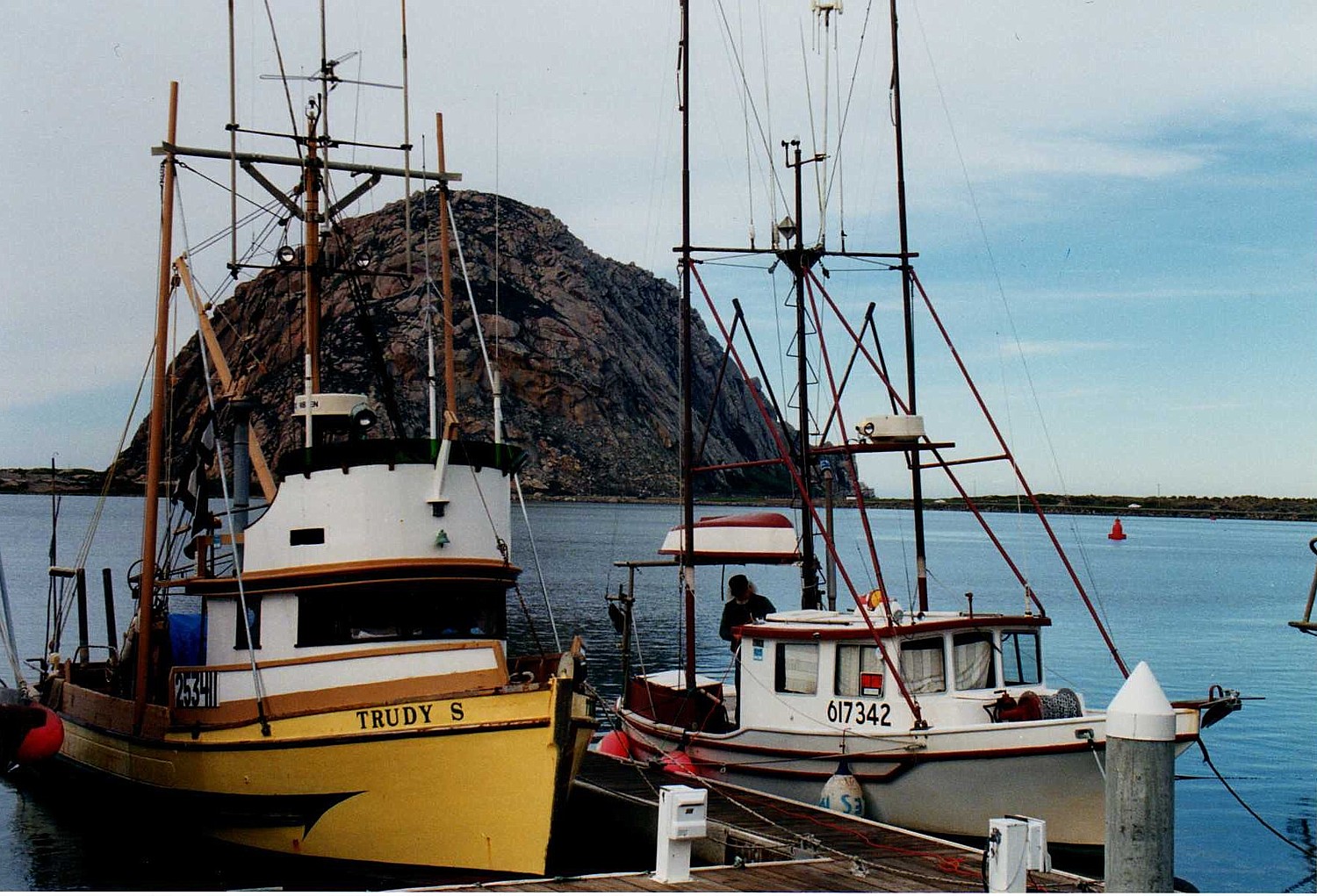
The Department of the Interior, in cooperation with the Department of Defense and the State of California, has identified an area (“the Morro Bay 399 Area”) that will support 3 gigawatts of offshore wind on roughly 399 square miles off California’s central coast region, northwest of Morro Bay. The Department of the Interior is also advancing the Humboldt Call Area as a potential Wind Energy Area (WEA), located off northern California. These identified areas will enable the build out of a significant new domestic clean energy resource over the next decade or more.
“I believe that a clean energy future is within our grasp in the United States, but it will take all of us and the best-available science to make it happen. Today’s announcement reflects months of active engagement and dedication between partners who are committed to advancing a clean energy future,” said Secretary of the Interior Deb Haaland. “The offshore wind industry has the potential to create tens of thousands of good-paying union jobs across the nation, while combating the negative effects of climate change. Interior is proud to be part of an all-of-government approach toward the Biden-Harris administration’s ambitious renewable energy goals.”
Because the outer continental shelf falls away much more quickly into much deeper waters in the Pacific than it does in the Atlantic Ocean, new floating offshore wind technology will be deployed in offshore California waters. Notably, and as a further demonstration of the Biden administration’s whole-of-government approach to clean energy development, the. Department of Energy, through its Office of Energy Efficiency and Renewable Energy and ARPA-E, has invested more than $100 million in researching, developing, and demonstrating floating offshore wind technology. These investments have helped position the United States as a leader in the emerging global floating offshore wind market.
Today’s announcement comes after the Biden Administration announced a set of bold actions to catalyze offshore wind energy as part of the President’s commitment to building new American infrastructure and a clean energy future that creates good-paying, union jobs. And, it follows the Administration’s approval of the first major offshore wind project in U.S waters advancing the construction and operation of the Vineyard Wind project in Massachusetts.
“Today’s announcement again demonstrates that by taking a whole-of-government approach, the U.S. can smartly develop our nation’s world-class offshore wind energy resources, deploy new technologies that our government has helped to advance, and create thousands of good-paying, union jobs – all in the service of combating the climate crisis,” stated National Climate Advisor Gina McCarthy. “I salute the Departments of the Interior, Defense, and Energy, and our partners in California, for all they have done to make this possible.”
In addition to contributing to the goals of the Biden-Harris administration, the development of offshore wind can help California reach its goal of carbon free energy by 2045, create good-paying, union jobs, and foster investments in coastal communities.
Offshore wind resources are typically stronger and more consistent than land-based wind and is especially strong in the evening hours when solar production drops off, ensuring that it can make an important contribution to California’s electric grid.
“Developing offshore wind to produce clean, renewable energy could be a game changer to achieving California’s clean energy goals and addressing climate change – all while bolstering the economy and creating new jobs,” Governor Gavin Newsom said. “This historic announcement, which could provide clean power for up to 1.6 million homes over the next decade, represents the innovative approach we need for a clean energy economy that protects the coasts, fisheries, marine life, and Tribal and cultural resources we value so much as Californians.”
BOEM, in partnership with California, will hold an Intergovernmental Renewable Energy Task Force meeting on June 24 to discuss the identified areas off the north and central coasts as potential WEAs. Following the task force meeting, the WEAs can be finalized and will undergo environmental analysis; BOEM will also undertake government-to-government tribal consultation. The processes for the northern and central coasts will then be merged in a Proposed Sale Notice (PSN) for one lease sale auction, targeted for mid-2022.
Today’s announcement comes after years of collaboration between the Departments of the Interior and Defense to find areas offshore the central coast of California that are compatible with the Department of Defense’s training and testing operations. The Bureau of Ocean Energy Management (BOEM) issued a Call for Information and Nominations for offshore wind on October 19, 2018, for three areas off the central and northern coasts, including Humboldt and Morro Bay.
The Department of Defense engages in significant testing, training and operations off the coast of California that are essential to national security. The Department of the Interior acknowledges the critical nature of current and future military testing, training and operations and acknowledges that ensuring the operational integrity thereof is a national security imperative. Interior’s Bureau of Ocean Energy Management will work with the Department of Defense to ensure long-term protection of military testing, training and operations, while pursuing new domestic clean energy resources.
“Tacking the climate crisis is a national security imperative and the Defense Department is proud to have played a role in this important effort,” said Dr. Colin Kahl, Under Secretary of Defense for Policy. “The Defense Department is committed to working across the U.S. government to find solutions that support renewable energy in a manner compatible with essential military operations. Throughout this effort, the Defense Department has worked tirelessly with the White House, the Department of the Interior, and the State of California to find solutions that enable offshore wind development while ensuring long-term protection for testing, training, and operations critical to our military readiness. The Defense Department applauds this step and looks forward to continued coordination to address the climate crisis.”
Earlier this week, President Biden met with members of his homeland security and climate teams at the Federal Emergency Management Agency’s (FEMA) National Response Coordination Center in Washington, D.C. to receive an update on preparations for the 2021 hurricane season. In advance of the President’s visit, the Administration announced it will direct $1 billion for communities, states, and Tribal governments into pre-disaster mitigation resources to prepare for extreme weather events and other disasters. The Administration also announced the development of next generation climate data systems at NASA to help understand and track how climate change is impacting communities. This fact sheet was provided by the White House:
In 2020, the United States experienced a record year for extreme weather, including an unprecedented 30 named storms in the Atlantic Basin. The National Oceanic and Atmospheric Administration (NOAA) is anticipating another above-normal hurricane season this year.
The costs of extreme weather events, in lives and economic damage, have been staggering. Last year alone, communities across the United States suffered through 22 separate weather and climate-related disasters with loses exceeding $1 billion each, shattering previous records, at a cumulative price tag of nearly $100 billion. This year has already wrought devastation, as unusual winter storms crossed Texas and the south.
On May 20th, NOAA released its 2021 Atlantic hurricane season outlook. Forecasters predict a 60% chance of an above-normal season, a 30% chance of a near-normal season, and a 10% chance of a below-normal season. Additionally, forecasters expect a likely range of 13 to 20 named storms, of which six to 10 could became hurricanes.
As climate change threatens to bring more extreme events like increased floods, sea level rise, and intensifying droughts and wildfires, it is our responsibility to better prepare and support communities, families, and businesses before disaster – not just after. This includes investing in climate research to improve our understanding of these extreme weather events and our decision making on climate resilience, adaptation, and mitigation. It also means ensuring that communities have the resources they need to build resilience prior to these crises.
President Biden has elevated the importance of climate resilience on the global stage and prioritized resilience in his investment agenda, including in the American Jobs Plan and the FY22 discretionary request.
NEW STEPS TO ENHANCE CLIMATE RESILIENCE
President Biden continued to act through a whole-of-government approach in support of climate resilience goals. The Administration is directing $1 billion in pre-disaster mitigation resources to communities, and it is announcing next generation climate data systems that will help us understand and track how climate change impacts communities.
The Administration announced it will:
Provide $1 billion for communities through FEMA’s Pre-Disaster Building Resilient Infrastructure and Communities program. FEMA will provide $1 billion in 2021 for the Building Resilient Infrastructure and Communities (BRIC) program, a portion of which will be targeted to disadvantaged communities. BRIC supports states, local communities, tribes, and territories in undertaking pre-disaster hazard mitigation projects, reducing the risks they face from disasters and natural hazards. This level of funding level is double the amount provided last year. The program seeks to categorically shift the federal focus from reactive disaster spending and toward research-supported, proactive investment in community resilience so that when the next hurricane, flood, or wildfire comes, communities are better prepared.
Develop and launch a new NASA mission concept for an Earth System Observatory. As the number of extreme weather events increases due to climate change, the ability to forecast and monitor natural disasters is integral for the nation’s preparation, mitigation, and resilience. NASA’s Earth System Observatory will be a new architecture of advanced spaceborne Earth observation systems, providing the world with an unprecedented understanding of the critical interactions between Earth’s atmosphere, land, ocean, and ice processes. These processes determine how the changing climate will play out at regional and local levels, on near and long-term time scales.
CONTINUE A WHOLE-OF-GOVERNMENT APPROACH TO CLIMATE RESILIENCE
The action builds on the whole-of-government approach President Biden is taking to climate resilience. Resilience is a key focus area of the National Climate Task Force as they drive a number of actions to strengthen the resilience of our infrastructure, forests, coastal areas, oceans, range lands, and farm lands to drought, wildfire, heatwaves, and other climate impacts.
Examples of actions to date across the federal government include:
Issuing an Executive Order on Climate-Related Financial Risk. Last week, President Biden issued an Executive Order on Climate-Related Financial Risk that will help the American people better understand how climate change can impact their financial security. It will strengthen the U.S. financial system and it will inform concrete decisions that the federal government can take to mitigate the risks of climate change. With so much at stake, this Executive Order ensures that the right rules are in place to properly analyze and mitigate these risks. That includes disclosing these risks to the public, and empowering the American people to make informed financial decisions.
Developing agency climate adaptation and resilience plans. The Administration has taken significant steps to revitalize Federal climate adaptation and resilience by initiating the development of Agency Climate Action Plans as required by Executive Order 14008. The Plans, which are being developed by 36 agencies, broadened the scope of relevant climate adaptation and resilience experts to include acquisitions and finance professionals and focus on integrating climate information in the management of procurement, real property, public lands and water, and financial programs for climate informed decisions.
Setting a responsible flood risk standard for the federal government. Through his Executive Order on Climate-Related Financial Risk, President Biden reinstated the Federal Flood Risk Management Standard to improve the resilience of American communities and federal assets against the impacts of flood damage, which is predicted to increase over time due to the effects of climate change. The Standard requires federal agencies to consider current and future flood risk when taxpayer dollars are used to build or rebuild in floodplains. Implementing guidelines offer a toolkit of flexible and practical options to implement these protections.
Investing in resilience through the American Jobs Plan and the FY22 budget. Resilience and adaptation are critical priorities for President Biden and his administration. Americans around the country have been feeling the effect of climate change and underinvestment in resilience. Investments to make our infrastructure more resilient are a key piece of the American Jobs Plan and the President’s FY 2022 Discretionary Request. In addition to supporting the goal that every dollar spent on rebuilding our infrastructure during the Biden administration will be used to prevent, reduce and withstand the impacts of the climate crisis – the American Jobs Plan calls for $50 billion in dedicated resilience investments. The President’s FY22 Discretionary Request also includes significant budget increases to enable incorporation of climate impacts into disaster planning and projects to ensure that the Nation is rebuilding smarter and safer for the future.
Integrating resilience into the White House Environmental Justice Advisory Council. The White House Environmental Justice Advisory Council (WHEJAC) was established by President Biden’s Executive Order on Tackling the Climate Crisis at Home and Abroad to fulfill his and Vice President Harris’s commitment to confronting longstanding environmental injustices and ensure that historically marginalized and polluted, overburdened communities have greater input on federal policies and decisions. The WHEJAC members are to provide advice and recommendations to the Environmental Justice Interagency Council and the Chair of CEQ on a whole-of-government approach to environmental justice, including, but not limited to, climate change mitigation, resilience, and disaster management.
Establishing an Interagency Working Group to better prepare and respond to drought. The National Climate Task Force, as part of its whole-of-government consideration of climate issues, established an Interagency Working Group to address worsening drought conditions in the West and to support farmers, ranchers, Tribes, and communities impacted by ongoing water shortages. The Working Group is co-chaired by the Departments of the Interior and Agriculture and will build upon existing resources to help coordinate across the federal government, working in partnership with state, local, and Tribal governments to address the needs of communities suffering from drought-related impacts. DOI and USDA have already announced more than $25 million to assist farmers, ranchers and communities in the Klamath Basin to help them in the face of a severe drought.
Increasing investments in forest restoration to reduce the threat of catastrophic wildfire. Climate change is increasing the severity and frequency of wildfire seasons, which are transforming our Nation’s forests at an unprecedented rate, and destroying homes and businesses. The Biden-Harris Administration’s discretionary budget request provides nearly $1.7 billion for high-priority hazardous fuels and forest resilience projects at a scope and scale to meet the challenge we face, an increase of $476 million over the 2021 enacted level. This funding supports the Administration’s science-based approach to vegetation management at the Forest Service and DOI to protect watersheds, wildlife habitat, and the wildland-urban interface.
Launching a resilience focused task force at the Department of the Interior. Department of the Interior (DOI) Secretary Deb Haaland announced a new Climate Task Force at DOI that will develop a strategy to reduce climate pollution; improve and increase adaptation and resilience to the impacts of climate change; address current and historic environmental injustice; protect public health; and conserve DOI managed lands. Its mission will include supporting the development and use of the best available science to evaluate the greenhouse gas emissions and associated climate change impacts of Federal land uses as well as opportunities to increase carbon sequestration; to predict the effects of climate change on public lands and land uses; and to assess and adopt measures to increase the resilience and adaptive capacity of public lands.
Launching a new approach to climate change adaptation and resilience at the Department of Homeland Security. Homeland Security Secretary Alejandro Mayorkas announced the launch of the DHS Climate Change Action Group, a coordinating body comprised of the Department’s senior leadership that will drive urgent action to address the climate crisis and will report directly to the Secretary. DHS also recently published a public Request for Information on how FEMA can ensure its programs advance equity and increase resilience for all – especially among those who are disproportionately at risk from the impacts of climate change.
Utilizing a Climate Assessment Tool to Analyze Climate Vulnerabilities at the Department of Defense. Climate change has been identified by the Department of Defense (DoD) as a critical national security threat and threat multiplier. As a result, DoD has undertaken assessments of the impacts that the climate crisis has on American military instillations. The DoD announced a plan to complete climate exposure assessments on all major U.S. installations within 12 months and all major installations outside the continental U.S. within 24 months using the Defense Climate Assessment Tool (DCAT). The DCAT helps identify the climate hazards to which DoD installations are most exposed, which is the first step in addressing the potential physical harm, security impacts, and degradation in readiness resulting from global climate change.
Tracking the indicators of climate change at the U.S. Environmental Protection Agency. For the first time in four years, the U.S. Environmental Protection Agency (EPA) has updated and relaunched its Climate Change Indicators. This comprehensive resource presents compelling and clear evidence of changes to our climate reflected in rising temperatures, increased ocean acidity, sea level rise, and changing river flooding, droughts, heat waves, and wildfires, among other indicators. The long-overdue update to this crucial scientific resource shows that climate change has become even more evident, stronger, and extreme, and underscores the urgency for action on the climate crisis.
Releasing new U.S. Climate Normals at the NOAA. NOAA recently released the U.S. Climate Normals, a large suite of data products that provide information about typical climate conditions for thousands of locations across the United States. Normals act both as a ruler to compare today’s weather and tomorrow’s forecast, and as a predictor of conditions in the near future. These data products assist agencies and State, local, Tribal, and territorial governments, communities, and businesses in preparing for and adapting to the impacts of climate change.
Investing in grid and community resilience at the Department of Energy. The Department of Energy is investing in grid resilience and energy resilience, including microgrid strategies, through research under the Grid Modernization Initiative. In partnership with the National Laboratories, the Department is developing a set of comprehensive energy resilience metrics and modeling capabilities to mitigate climate impacts to our energy infrastructure. The Department is also investing in projects that improve community resilience by deploying energy storage and microgrid technologies. In addition, for communities across the West, the Department is working with the Western Area Power Administration and Bonneville Power Administration to aggressively forecast, model and mitigate the potential impacts of severe climate-change-related droughts and fires on electricity systems.
Building climate and resilience considerations into transportation discretionary grants at the U.S. Department of Transportation. The U.S. Department of Transportation is incorporating climate and resilience criteria into over $2 billion in discretionary grant programs, including the RAISE, INFRA, and Port Infrastructure Development grant programs. This will promote transportation investments that are future-proofed against extreme weather events. In addition, the Federal Highway Administration (FHWA) has also issued new guidance for planning and design for highways in coastal areas.
President Biden’s latest executive order on climate change is a big deal. For the first time, government agencies in their procurement, regulatory responsibilities, and by consequence, government contractors, financial companies and private companies, will have to analyze, mitigate, assess the cost and reveal the financial risk of climate change to homeowners, consumers, businesses, workers, the financial system and federal government itself. Already, many international financial institutions, in assessing grants and loans are doing this, but Trump actually did the opposite, barring regulatory agencies from assessing cost – to climate or health – of activities that exacerbated the climate crisis. The White House has issued this fact sheet – Karen Rubin/news-photos-features.com
President Biden has issued an Executive Order to address the serious threat that the climate crisis poses to our economy. Extreme weather related to climate change can disrupt entire supply chains and deprive communities of food, water, or emergency supplies. Snowstorms can offline entire power grids. Floods made worse by rising sea levels destroy homes and businesses. As the United States builds a modern and equitable clean energy future that creates millions of good-paying jobs and advances environmental justice, the agency actions spurred by the President’s directive today will help safeguard the financial security of America’s families, businesses, and workers from the climate-related financial risks they are already facing.
The President’s Executive Order on Climate-Related Financial Risk will help the American people better understand how climate change can impact their financial security. It will strengthen the U.S. financial system. And it will inform concrete decisions that the federal government can take to mitigate the risks of climate change.
From signing a loan for a new home or small business to managing life savings or a retirement fund—it is important for the American people to have access to the information needed to understand the potential risks associated with these significant financial decisions. We know that the climate crisis, whether through rising seas or extreme weather, already presents increasing risks to infrastructure, investments, and businesses. Yet, these risks are often hidden.
With so much at stake, this Executive Order ensures that the right rules are in place to properly analyze and mitigate these risks. That includes disclosing these risks to the public, and empowering the American people to make informed financial decisions.
The Executive Order will also ensure that the federal government takes concrete steps to mitigate these risks itself. Together, these steps will protect workers’ life savings, spur the creation of good-paying jobs, and help position the United States to lead the global economy.
Specifically, the Executive Order on Climate-Related Financial Risk will:
Develop a Whole-of-Government Approach to Mitigating Climate-Related Financial Risk. The Executive Order requires the National Climate Advisor and the Director of the National Economic Council to develop, within 120 days, a comprehensive government-wide climate-risk strategy to identify and disclose climate-related financial risk to government programs, assets, and liabilities. This strategy will identify the public and private financing needed to reach economy wide net-zero emissions by 2050 – while advancing economic opportunity, worker empowerment, and environmental mitigation, especially in disadvantaged communities and communities of color.
Encourage Financial Regulators to Assess Climate-Related Financial Risk. The Executive Order encourages the Treasury Secretary, in her role as the chair of the Financial Stability Oversight Council, to work with Council members to assess climate-related financial risk to the stability of the federal government and the stability of the U.S. financial system. Additionally, in her role as the chair, she should work with member agencies to consider issuing a report, within 180 days, on actions the Council recommends to reduce risks to financial stability, including plans that member agencies are taking to improve climate-related disclosures and other sources of data, and to incorporate climate-related financial risk into regulatory and supervisory practices.
Bolster the Resilience of Life Savings and Pensions. The Executive Order directs the Labor Secretary to consider suspending, revising, or rescinding any rules from the prior administration that would have barred investment firms from considering environmental, social and governance factors, including climate-related risks, in their investment decisions related to workers’ pensions. The order also asks the Department to report on other measures that can be implemented to protect the life savings and pensions of U.S. workers and families from climate-related financial risk, and to assess how the Federal Retirement Thrift Investment Board has taken environmental, social, and governance factors, including climate-related risk, into account.
Modernize Federal Lending, Underwriting, and Procurement. The Executive Order directs the development of recommendations for improving how Federal financial management and reporting can incorporate climate-related financial risk, especially as that risk relates to federal lending programs. It also requires consideration of new requirements for major federal suppliers to disclose greenhouse gas emissions and climate-related financial risks and to ensure that major federal agency procurements minimize those risks.
Reduce the Risk of Climate Change to the Federal Budget. The Executive Order ensures that the federal government is taking steps to be fiscally responsible in response to the significant risk that unmitigated climate change poses to the federal budget through increased costs and lost revenue. The Executive Order directs that the federal government develop and publish annually an assessment of its climate-related fiscal risk exposure. It also directs the Office of Management and Budget to reduce the federal government’s exposure through the formulation of the President’s Budget and oversight of budget execution.
Tinder, Hinge, Match, OkCupid, BLK, Chispa, Plenty of Fish, Bumble, and Badoo to create badges displaying vaccination status and offer vaccinated Americans free premium benefits
In support of President Biden’s goal of getting 70 percent of adults at least one shot by July 4, the largest dating apps in America will launch new features to encourage Americans to get vaccinated. These companies join organizations across the country that have answered the President’s call by stepping up and offering incentives and information to help Americans get vaccinated.
Today, dating apps are announcing that they will offer a variety of features such as:
Badges showing vaccination status
Access to free premium content like boosts, super likes, and super swipes for vaccinated people
In-app promotions and links to vaccines.gov or the text code for users
Filters so individuals can see individuals who have been vaccinated
Tinder: Members will be able to add stickers to their profile including “I’m Vaccinated” or “Vaccines Save Lives.” And vaccinated users will have access to free premium content like a “Super Like” to help them stand out among potential matches. Tinder will also launch a “Vaccine Center” with a suite of resources to education and connect users with their nearest vaccination site. Tinder is the world’s biggest non-gaming app.
OkCupid: Daters will be able toadd an “I’m Vaccinated” profile badge and be featured within OkCupid’s “Vaccinated Stacks,” a new matching system that lets users search by vaccination status. Vaccinated people will also receive a free “Boost” to move their profile to the front of a daters’ stack. The campaign will begin on May 24 and will continue to help daters “Match on What Matters.”
Bumble and Badoo will enable all U.S. customers to add a “vaccinated” badge to their profiles. In addition, Bumble and Badoo will give vaccinated users complimentary credits for premium features such as Spotlight and Superswipes across both apps. The apps will also leverage their network of influencers to amplify the need to get vaccinated as part of a push this summer.
BLK will add a new “Vaxified” profile badge for singles to show their support in ending the COVID-19 pandemic. When vaccinated individuals add the badge to their profile, they will receive a free “Boost” on the app to be one of the first profiles seen by potential matches. The features will launch on June 1. BLK is the largest dating app made for Black singles.
Chispa will add a new “Vacunado” profile badge for Latinx singles to show their support for ending the pandemic. Vaccinated individuals who add the badge will get a free “Boost,” making them one of the first profiles to be seen by their matches. The feature will be available starting June 1. Chispa is the largest dating app for Latino singles in English and Spanish.
Hinge: Hinge will encourage users to share their vaccination status on their profile and give vaccinated users a free “Rose,” which is premium content that indicates to other users that they’re especially excited to get to know them. As the dating app “designed to be deleted,” Hinge is focused on helping its community get back out on dates and in safe relationships.
Match: Members will have the option to add a new “Vaccinated” badge to their profile to display their vaccine status, with vaccinated Americans getting access to a free “Boost” to help them stand out on the app.
Plenty of Fish: Members will be able to add an “I Got My Shot” badge to their profiles in early June. Those who participate will receive 20 Live! credits to use on the Plenty of Fish Live! streaming feature. In the spirit of Plenty of Fish’s mission to create low pressure dating experiences, this campaign will provide members with one less question to ask so they can start building meaningful connections.
More than 60% of U.S. adults have gotten at least one vaccine shot. It’s easier than ever to get vaccinated, with more than 80,000 locations with vaccines and 90% of Americans live within 5 miles of a vaccine. Find out more about where to get vaccinated by visiting Vaccines.gov or texting their zip code 438829.
Funding Will Create Tens of Thousands of Jobs to Respond to COVID-19, Prepare U.S. for Future Outbreaks, and Support Local Public Health Officials
As Vaccine for Adolescents Comes Online, Administration Sets Aside Dedicated Funding for School Nurses, Who Can Help Provide Information about Vaccinations
Even as the CDC is lifting mask and social-distancing requirements for fully vaccinated people, the Biden Administration is looking to the long-term health of the nation, our ability to get through COVID-19, but also be well positioned for the next pandemic or public health crisis. The Biden-Harris Administration announced it would invest $7.4 billion from the American Rescue Plan to recruit and hire public health workers and also redress the fact that over the past several decades, public health departments have been hollowed out. The White House provided this fact sheet:
As part of its ongoing COVID-19 response efforts, the Biden-Harris Administration will invest $7.4 billion from the American Rescue Plan to recruit and hire public health workers to respond to the pandemic and prepare for future public health challenges. The COVID-19 pandemic has reinforced that public health workers are essential, providing critical services to keep Americans safe and healthy. The funding announced today will allow the United States to expand its public health workforce, creating tens of thousands of jobs to support vaccinations, testing, contact tracing, and community outreach, and strengthen America’s future public health infrastructure.
The Biden-Harris Administration will invest $4.4 billion to allow states and localities to expand their over-stretched public health departments with additional staff to support COVID-19 response efforts. This funding will support a range of public health roles, including funding for Disease Intervention Specialists to do contact tracing, case management, and support outbreak investigations, and dedicated funding to hire school nurses to help schools safely reopen and remain open for in-person instruction. Additionally, funds will support the development of the next generation of public health leaders by creating a Public Health AmeriCorps and expanding CDC’s Epidemic Intelligence Service – the renowned program that equips workers to identify and contain public health outbreaks.
Finally, CDC will use $3 billion from the American Rescue Plan to create a new grant program that will facilitate federal investment in the people and expertise needed at the state and local levels to expand, train, and modernize the public health workforce for the future. In the months ahead, CDC will work with leaders from across the public health community to design this new grant program.
All awardees of this American Rescue Plan funding will be asked to prioritize recruiting individuals from the communities they will serve and from backgrounds underrepresented in critical public health professions.
Today’s funding builds on the President’s announcement last week of $250 million to help community -based organizations hire and mobilize community outreach workers and social support specialists to increase access to vaccinations in the hardest-hit and highest risk communities.
The Biden-Harris Administration will:
Invest $4.4 Billion to Surge Public Health Staffing for COVID-19 Response
Help States and Localities Increase their Public Health Staffing and Expertise: State and local public health heroes have led the fight against COVID-19 for more than a year. Often understaffed and lacking resources, local public health departments have provided critical services during the pandemic, including setting up testing sites, leading local vaccination efforts, and delivering personal protective equipment, therapeutics, and care to those in need. Thanks to the American Rescue Plan, CDC will fund $3.4 billion in new hiring for state and local public health departments to quickly add staff to support critical COVID-19 response efforts – including vaccination outreach and administration efforts, testing and contact tracing, epidemiologists, data scientists, and other vital public health functions. This funding includes at least $500 million for the hiring of school nurses, who can offer medical expertise to support parents and teens as vaccination options for younger people expand. This builds on resources in the American Rescue Plan’s Elementary and Secondary School Emergency Relief Fund which can also be used to hire school nurses.
Launch Public Health AmeriCorps: At a time of unprecedented interest in public health, CDC and AmeriCorps (the Corporation for National and Community Service) will launch the Public Health AmeriCorps – a $400 million investment from the American Rescue Plan to recruit and build a new workforce ready to respond to the public health needs of the nation. The program will focus on building a diverse pipeline for the public health workforce and providing direct service to communities across the country. The partnership will leverage the expertise of both agencies, capitalizing on AmeriCorps’ experience managing some of the most prominent public service and workforce development programs in the nation while benefitting from CDC’s technical expertise as the country’s leading public health agency.
Recruit and Train Public Health Leaders: CDC will expand its current workforce programs, including the Epidemic Intelligence Service (EIS). EIS is a national, deployable, cutting-edge public health workforce that responds to local outbreaks. Over the past seven decades, EIS officers have served as boots-on-the-ground epidemiologists during some of the most severe outbreaks and public health emergencies, including the Ebola outbreak, H1N1, the Flint water crisis, Zika, and the COVID-19 pandemic. With $245 million from the American Rescue Plan, CDC will increase support for programs including EIS, the Undergraduate Public Health Scholars Program, and the Dr. James A. Ferguson Emerging Infectious Diseases RISE Fellowship, which offers students from underrepresented background the opportunity to study infectious diseases and health disparities. Expanding these programs will support workforce diversity in public health to help reduce longstanding health disparities and inequities. In addition, the Office of the National Coordinator for Health Information Technology will invest $80 million to train public health professionals to help modernize the public health data infrastructure, with a focus on recruiting from minority serving institutions and universities.
Building the Laboratory Workforce and Building Capacity for Future Outbreaks: With $337 million from the American Rescue Plan, CDC will strengthen the public health laboratory workforce pipeline. CDC will expand the current public health laboratory fellowship programs for laboratory science graduates and implement a new public health internship program for undergraduate students to gain experiences in public health laboratory settings. Funds will improve the capacity of the nation’s public-private clinical laboratory infrastructure to support rapid, large-scale responses to public health emergencies.
Invest $3 Billion to Prepare for Future Pandemics
Create a New Program to Modernize the Public Health Workforce: CDC will create a new grant program to provide under-resourced health departments with the support they need to hire staff and build a strong public health workforce. This grant program will offer community health workers and others hired for the COVID-19 response an opportunity to continue their careers beyond the pandemic as public health professionals. CDC will convene federal, state, local, and territorial public health experts to inform the design and focus of this new grant program. Ultimately, the program will allow the United States to continue to support the nation’s public health infrastructure, particularly in lower-income and underserved communities.
Today, just days after Colonial Pipeline, which supplies 45 percent of the gasoline to the Eastern Seaboard, was hit by a ransomware attack which the FBI believes was perpetrated by DarkSide, a relatively new criminal group based in Eastern Europe exposed the vulnerability of key U.S. infrastructure, President Biden signed an Executive Order to improve the nation’s cybersecurity and protect federal government networks.
The White House supplied this fact sheet about the actions taken under the Executive Order:
Recent cybersecurity incidents such as SolarWinds, Microsoft Exchange, and the Colonial Pipeline incident are a sobering reminder that U.S. public and private sector entities increasingly face sophisticated malicious cyber activity from both nation-state actors and cyber criminals. These incidents share commonalities, including insufficient cybersecurity defenses that leave public and private sector entities more vulnerable to incidents.
This Executive Order makes a significant contribution toward modernizing cybersecurity defenses by protecting federal networks, improving information-sharing between the U.S. government and the private sector on cyber issues, and strengthening the United States’ ability to respond to incidents when they occur. It is the first of many ambitious steps the Administration is taking to modernize national cyber defenses. However, the Colonial Pipeline incident is a reminder that federal action alone is not enough. Much of our domestic critical infrastructure is owned and operated by the private sector, and those private sector companies make their own determination regarding cybersecurity investments. We encourage private sector companies to follow the Federal government’s lead and take ambitious measures to augment and align cybersecurity investments with the goal of minimizing future incidents.
Specifically, the Executive Order the President is signing today will:
Remove Barriers to Threat Information Sharing Between Government and the Private Sector. The Executive Order ensures that IT Service Providers are able to share information with the government and requires them to share certain breach information. IT providers are often hesitant or unable to voluntarily share information about a compromise. Sometimes this can be due to contractual obligations; in other cases, providers simply may be hesitant to share information about their own security breaches. Removing any contractual barriers and requiring providers to share breach information that could impact Government networks is necessary to enable more effective defenses of Federal departments, and to improve the Nation’s cybersecurity as a whole.
Modernize and Implement Stronger Cybersecurity Standards in the Federal Government. The Executive Order helps move the Federal government to secure cloud services and a zero-trust architecture, and mandates deployment of multifactor authentication and encryption with a specific time period. Outdated security models and unencrypted data have led to compromises of systems in the public and private sectors. The Federal government must lead the way and increase its adoption of security best practices, including by employing a zero-trust security model, accelerating movement to secure cloud services, and consistently deploying foundational security tools such as multifactor authentication and encryption.
Improve Software Supply Chain Security. The Executive Order will improve the security of software by establishing baseline security standards for development of software sold to the government, including requiring developers to maintain greater visibility into their software and making security data publicly available. It stands up a concurrent public-private process to develop new and innovative approaches to secure software development and uses the power of Federal procurement to incentivize the market. Finally, it creates a pilot program to create an “energy star” type of label so the government – and the public at large – can quickly determine whether software was developed securely. Too much of our software, including critical software, is shipped with significant vulnerabilities that our adversaries exploit. This is a long-standing, well-known problem, but for too long we have kicked the can down the road. We need to use the purchasing power of the Federal Government to drive the market to build security into all software from the ground up.
Establish a Cybersecurity Safety Review Board. The Executive Order establishes a Cybersecurity Safety Review Board, co-chaired by government and private sector leads, that may convene following a significant cyber incident to analyze what happened and make concrete recommendations for improving cybersecurity. Too often organizations repeat the mistakes of the past and do not learn lessons from significant cyber incidents. When something goes wrong, the Administration and private sector need to ask the hard questions and make the necessary improvements. This board is modeled after the National Transportation Safety Board, which is used after airplane crashes and other incidents.
Create a Standard Playbook for Responding to Cyber Incidents. The Executive Order creates a standardized playbook and set of definitions for cyber incident response by federal departments and agencies. Organizations cannot wait until they are compromised to figure out how to respond to an attack. Recent incidents have shown that within the government the maturity level of response plans vary widely. The playbook will ensure all Federal agencies meet a certain threshold and are prepared to take uniform steps to identify and mitigate a threat. The playbook will also provide the private sector with a template for its response efforts.
Improve Detection of Cybersecurity Incidents on Federal Government Networks. The Executive Order improves the ability to detect malicious cyber activity on federal networks by enabling a government-wide endpoint detection and response system and improved information sharing within the Federal government. Slow and inconsistent deployment of foundational cybersecurity tools and practices leaves an organization exposed to adversaries. The Federal government should lead in cybersecurity, and strong, Government-wide Endpoint Detection and Response (EDR) deployment coupled with robust intra-governmental information sharing are essential.
Improve Investigative and Remediation Capabilities. The Executive Order creates cybersecurity event log requirements for federal departments and agencies. Poor logging hampers an organization’s ability to detect intrusions, mitigate those in progress, and determine the extent of an incident after the fact. Robust and consistent logging practices will solve much of this problem.