Tag Archives: Gateway Hudson Tunnel

Hochul Celebrates Start of Tunnel Boring for Gateway Hudson Tunnel Project

First New Tunnel Underneath Hudson River Since the Holland Tunnel Was Opened in 1927

Project Will Serve 200,000 Daily Riders Between New York and New Jersey

Governor Kathy Hochul, on Sept. 28, 2026 joined New Jersey Governor Mikie Sherrill to celebrate the start of tunnel boring for the Hudson Tunnel Project by the Gateway Development Commission (photo: New York State)

Governor Kathy Hochul, on Sept. 28, 2026 joined New Jersey Governor Mikie Sherrill to celebrate the start of tunnel boring for the Hudson Tunnel Project by the Gateway Development Commission (GDC).

Following the ceremonial launch, final testing will be completed and the first tunnel boring machine that will be used to build the new train tunnel under the Hudson River will begin digging the new connection between New Jersey and New York Penn Station. A second machine will launch soon after. This historic moment marks the start of the first phase of tunnel boring for the Hudson Tunnel Project — the first new rail tunnel under the river in more than 100 years. It is the culmination of more than a decade of planning and nearly three years of construction work. 

“Building a new rail connection across the Hudson River has been a dream for over a generation, one that would improve reliability and resilience for over 200,000 daily riders who power our economy,” Governor Hochul said. “We fought and beat efforts from the Trump administration to halt the Gateway project and today, that dream becomes a reality, with state of the art machinery operated by expert union workers starting their journey through soil and bedrock under the Hudson to Penn Station. This is a historic day for New York and a clear demonstration of our ambitions to once again be a state that dreams and builds big.” 

The two tunnel boring machines launching this fall will bore approximately one mile through the hard rock under the Palisades Cliffs in New Jersey to the Hudson County Access Shaft in Weehawken. These two machines will be removed via the access shaft and replaced with a second pair of machines that will build the section of the tunnel under the Hudson River. 

The two hard-rock tunnel boring machines are expected to build roughly 30 feet of tunnel per day, including scheduled pauses for maintenance. They will reach the Hudson County Access Shaft approximately one year after launching. 

The first phase of tunnel boring is being completed by Schiavone Dragados Lane JV as part of the contract for the Palisades Tunnel Project construction package. The Port Authority of New York and New Jersey is managing delivery of this construction package in partnership with GDC. 

New Jersey Governor Mikie Sherrill said, “I spent years in Congress fighting for the Hudson Tunnel Project because it is the most important infrastructure project in the country. Now, tunnel boring is beginning on the first new rail tunnel under the Hudson in more than a century. I was proud to be called the ‘tunnel-obsessed Congresswoman,’ and as Governor, I will keep fighting until this tunnel is built, so 100,000 jobs will be delivered, and millions of New Jersey commuters and travelers finally have the reliable service they deserve.” 

U.S. Senator Charles Schumer said, “From Day One on Gateway, I have said: If we dig it, they will come. ‘They’ being millions of passengers, and freight, and goods and services, flowing into and out of the heart of the New York-New Jersey region and pumping the veins of every nook and cranny with billions of dollars in economic energy. Who says infrastructure is boring? This astounding machine will carve the first new rail tunnel under the Hudson in more than a century, keeping tens of thousands of union workers on the job and creating a vitally needed crossing that hundreds of thousands of commuters depend on every single day. The Gateway Hudson tunnel is the most important infrastructure project in America, period, and I will keep fighting until the job is done.” 

“This milestone is a major step toward fulfilling the Hudson Tunnel Project’s two-track tunnel and giving New Jerseyans the dependable rail infrastructure they’ve waited decades for,” U.S. Senator Cory Booker said. “Millions of people depend on the Northeast Corridor every day to get to work, to school, and back home to their families. I’m proud to help deliver a project that will lower costs, strengthen our rail system, boost reliability, double capacity, and make commutes better for generations of New Jerseyans to come.” 

U.S. Senator Kirsten Gillibrand said, “Building a stronger New York means strengthening our transit and infrastructure systems. Working families and commuters have been waiting for over a decade for us to deliver on our promise of creating more efficient transportation, and this phase marks more than a vow to start — it marks a vow to finish. I will continue fighting for funding towards landmark projects like the Hudson Tunnel to keep riders on track.” 

U.S. Senator Andy Kim said, “Modernizing New Jersey’s transit infrastructure cannot happen without new tracks and tunnels for North Jersey commuters; with Gateway Development Commission breaking ground on this next phase, New Jersey is one step closer to that reality. I will continue tracking progress as construction of the Hudson Tunnel Project begins and look forward to seeing the project continue.” 

Representative Hakeem Jeffries said, “House Democrats, working in partnership with the Biden-Harris administration, enacted the Infrastructure Investment and Jobs Act to rebuild our nation’s crumbling infrastructure and bring transformative projects like the Gateway Tunnel to life. Today’s start of tunnel boring marks a tremendous step forward in delivering world-class infrastructure improvements for the people of New York and across our region. Despite Donald Trump’s efforts to illegally rip funding away from this important project, construction will begin and more reliable service is on the way for passengers across the Northeast Corridor. I applaud the Gateway Development Corporation for their work in reaching this milestone and helping to create good-paying union jobs, strengthen our economy and provide the safe and reliable passenger rail service our nation deserves.” 

“New York City doesn’t work without efficient, dependable public transportation,” New York Gateway Development Commission Co-Chair Alicia Glen said. “The Hudson Tunnel Project will finally fix one of the key weaknesses in our region’s rail network, and we will feel the benefits for generations. Starting tunnel boring sends a clear signal: we are getting this tunnel done. I’m thrilled to celebrate this achievement and GDC’s commitment to seeing this vital investment in public transit through.”

The Hudson Tunnel Project

The Hudson Tunnel Project is an urgent investment in the most heavily traveled stretch of America’s rail network that will improve transportation between New Jersey and New York by building a new two-tube rail tunnel under the Hudson River and rehabilitating the existing North River Tunnel, which has been in continuous service since 1910 and is a leading cause of train delays for hundreds of thousands of daily passengers.

The project is being delivered through ten construction packages. The first construction package was completed in early 2026. Six additional packages are currently in progress.

Boring the New Tunnel

The new tunnel under the Hudson River will be bored using two sets of two tunnel boring machines — four machines total. Each pair of tunnel boring machines will build the two parallel tunnel tubes simultaneously. The two machines launching in the coming weeks will bore 5,100 feet through the Palisades Cliffs, from the tunnel portal in North Bergen to the Hudson County Access Shaft in Weehawken. 

The machines will be removed via the access shaft, and a second pair of tunnel boring machines optimized for the mixed ground conditions under the Hudson River will be inserted to build the stretch of the tunnel tubes from New Jersey to Manhattan.  

Tunneling Using Single Shield Tunnel Boring Machines

The first set of tunnel boring machines are single shield machines, designed for efficient tunneling through hard, dry rock. Each machine’s cutterhead is 28 feet, 8 inches in diameter and the trailing gantry extends roughly 500 feet. Each weighs more than 1,680 tons. 

These machines dig through the rock in front of them using a rotating cutterhead fitted with disc cutters that press against the rock face, applying intense pressure that breaks the rock into chips. Buckets behind the cutterheads collect the excavated rock and direct it through a muck ring onto the machine’s conveyor belt, which moves it through the trailing gantry to the back of the machine, where it is hauled out of the tunnel.

As the machine advances, an erector arm is used to place precast concrete segments to form the permanent tunnel lining. Hydraulic thrust jacks push the machine forward, bracing against the edges of the completed tunnel lining. 

Years of Work To Reach This Milestone

Today’s milestone is the culmination of nearly three years of construction work. Starting in late 2023, GDC’s contractors built a bridge supporting Tonnelle Avenue to create space under the highway for the machines’ gantries and excavated the launch box where the tunnel boring machines will start digging. 

While this construction was happening, the tunnel boring machines were being manufactured. A single machine is comprised of nearly one hundred complex components, and manufacturing took more than a year. 

After factory testing at the end of 2025, the machines were disassembled and shipped to New Jersey. Workers spent months reassembling and testing them on site in preparation for launch.
Biden Administration Infrastructure Law Funds Gateway Hudson Tunnel, Major Transportation Projects

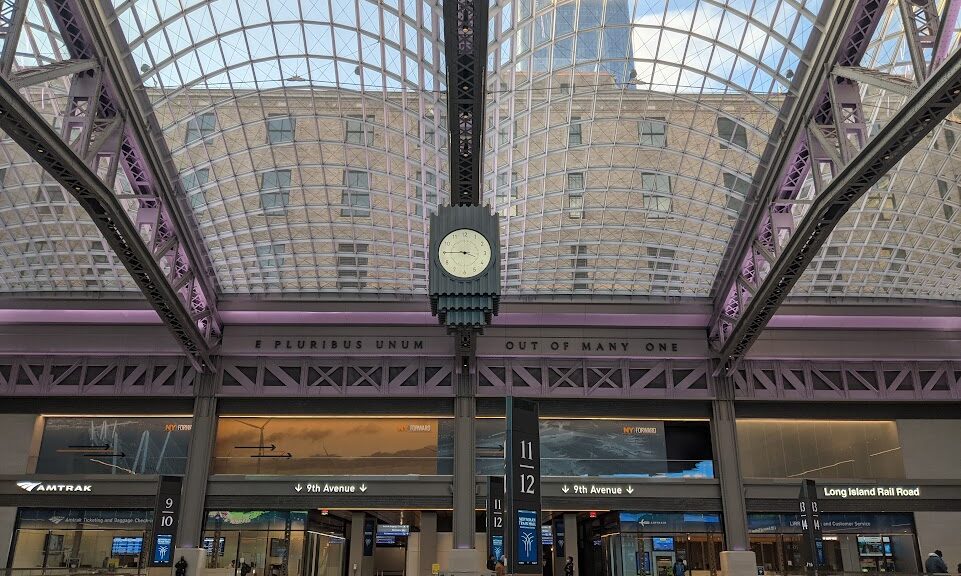
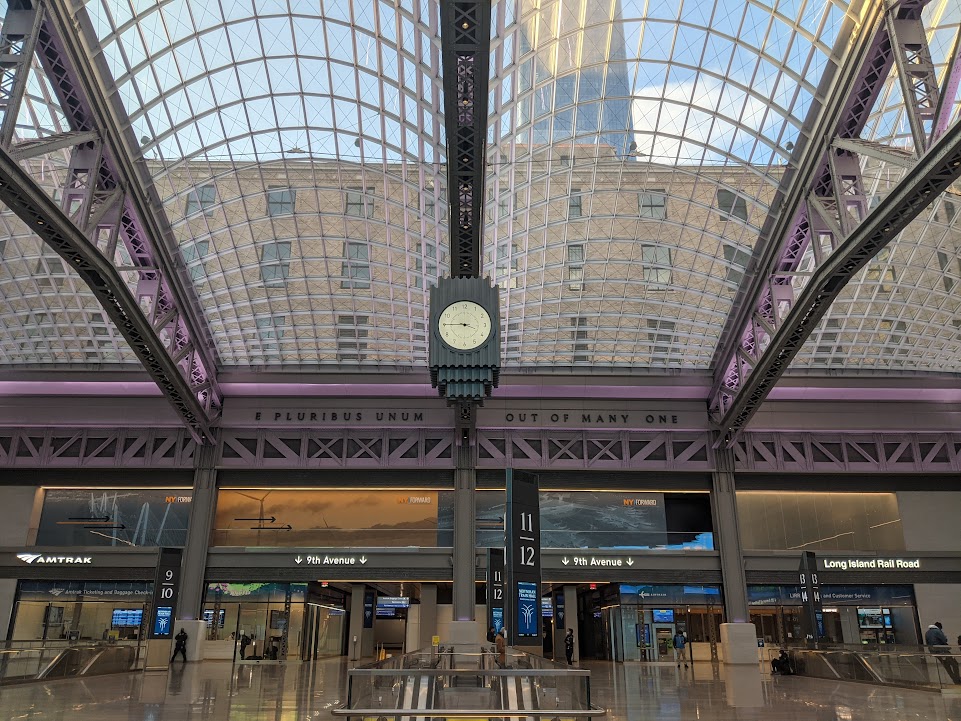
President Biden announced $292 million to complete a critical early phase of the Gateway Hudson Tunnel Project, thanks to his Bipartisan Infrastructure Law. The Hudson Tunnel Project will improve access to Penn Station, rehabilitate the old North River Tunnel which opened in 1910, build a new tunnel beneath the Palisades, Hudson River, and the waterfront area in Manhattan, and improve reliability for 200,000 weekday passengers on New Jersey Transit (NJ Transit) and Amtrak. It will result in 72,000 well-paying jobs © Karen Rubin/news-photos-features.com

Continuing the progress implementing the Biden-Harris Administration’s economic agenda, President Biden visited New York on January 31 to announce funding for a critical early phase of the Hudson Tunnel Project and Mega grants for other major infrastructure projects across the country.  The President announced the Administration has awarded nearly $1.2 billion from the infrastructure law’s new National Infrastructure Project Assistance discretionary grant program (Mega) for nine projects across the country, including over $292 million to complete a critical early phase of the Hudson Tunnel Project.

These infrastructure investments will create good-paying jobs – including union jobs and jobs that do not require a college degree. The projects will grow the economy, strengthen supply chains, improve mobility for residents, and make our transportation systems safer for all users.

This announcement comes on the heels of several other announcements of funding for major infrastructure projects, including more than $2 billion to upgrade some our nation’s most economically significant bridges such as the Golden Gate Bridge and the Brent-Spence Bridge through the Bridge Investment Program and $1.5 billion for 26 major projects through the INFRA program.  

These infrastructure improvements are a critical part of President Biden’s economic agenda to build the economy from the bottom up and middle out.

Hudson Tunnel Project

President Biden announced a $292 million Mega grant to Amtrak for Hudson Yards Concrete Casing, Section 3. This funding is part of a $649 million early phase project that will complete the final section of concrete casing intended to preserve future right-of-way for the new passenger rail tunnel under the Hudson River. The concrete casing protects the path of the new tunnel from Penn Station to the Hudson River’s edge.  If this casing were not built now, the foundations from the new Hudson Yards development would likely impede the path of the tunnel and make the project extremely difficult.

The overall Hudson Tunnel Project is an over $16 billion investment that will improve resilience, reliability, and redundancy for New Jersey Transit (NJ Transit) and Amtrak train service between New York and New Jersey.  The project will reduce commute times for NJ Transit riders, enhance Amtrak reliability on the Northeast Corridor (NEC), and support the northeast regional economy. Amtrak expects the Hudson Tunnel Project will result in 72,000 direct and indirect jobs during construction with union partnerships for job training. 

The existing North River Tunnel is over 100 years old, built to early 20th century standards, opened for service in 1910, and is the only passenger rail tunnel connecting New York and New Jersey. It facilitates more than 200,000 passenger trips per weekday on more than 450 Amtrak and NJ Transit trains servicing New York Penn Station. The tunnel has reached its full capacity of 24 trains per hour, causing bottlenecks and delays. The tunnel has two tubes with one track each.  When one goes out of service for any reason, trains have to wait to go through the working tube.  This creates headaches for NJ Transit commuters and Amtrak travelers and delays that cascade up and down the Northeast Corridor. In 2020, passengers experienced 12,653 minutes of delay due to problems caused by aging tunnel infrastructure. Delays occurred on 54 different days in 2020 and were attributed to a variety of causes involving the electrical power, signal and track systems.

In 2012, millions of gallons of salt water flooded into the tunnel during Superstorm Sandy. Even today, the remnants of seawater that entered the tunnel in 2012 continue to harm the concrete, steel, tracks and third rail, signaling, and electrical components within the tunnel. Today the tunnel requires regular, and occasional emergency, maintenance that disrupts service for hundreds of thousands of riders throughout the region.  Rehabilitation of the tunnel would require a full closure, which will only be possible if a second tunnel existed.

To address those challenges, the Hudson Tunnel Project will rehabilitate the old North River Tunnel; build a new tunnel beneath the Palisades, the Hudson River, and the waterfront area in Manhattan; construct new surface alignment from Secaucus to the new tunnel portal in North Bergen; construct ventilation shafts and fan plants in New Jersey and New York; and make track modifications near Penn Station. When the project is done, the redundant capacity provided by a second tunnel will mean fewer delays and less risk for catastrophic disruption.

The project is part of the larger Gateway Program which envisions expanding and rebuilding the rail line between Newark, New Jersey and New York City through a number of projects, including the new Portal North Bridge, which broke ground last year and is supported by $900 million in federal funding.

Today’s Mega grant announcement is the first of several funding announcements for the project expected this year and the most significant federal funding for the Gateway Hudson Tunnel Project to date. 

The Administration is committed to providing the billions of dollars in funding necessary to ensure that this critical project is completed. Later this year, if and when additional milestones are met by the states and other parties, a full funding agreement will be completed.

President Biden’s Bipartisan Infrastructure Law makes the largest investment in passenger rail since the creation of Amtrak, with a $66 billion investment in rail. After waiting years for new federal funding, 2023 will be a year in which major rail projects along the 450-mile Northeast Corridor between Washington, DC, and Boston, receive their first significant funding.

New Mega Project Grants

The Mega grant program, created by the infrastructure law, funds projects that are too large or complex for traditional funding programs. Eligible projects include highway, bridge, freight, port, passenger rail, and public transportation projects that are a part of one of the other project types.   The Mega program will invest a total of $5 billion through 2026 to help rebuild the United States’ infrastructure for the benefit of residents now and for generations to come.

Beyond the Hudson Tunnel concrete casing project, the Administration is announcing projects of regional and national economic significance that are receiving Mega grant awards including:

  • $250 million for the Brent Spence Bridge connecting Kentucky and Ohio, part of a total investment of $1.6 Billion from the infrastructure law to build a new companion bridge and rehab an existing bridge along a major freight corridor on I-75. Earlier this month, the President and Senate Minority Leader McConnell visited the Brent Spence Bridge to announce this funding.
  • $150 million to the Louisiana Department of Transportation for the Calcasieu River Bridge Replacement which will increase capacity on a critical stretch of Interstate 10 which is an important freight route;
  • $117 million to the Metra Commuter Railroad in Illinois to make improvements on the Metra Union Pacific-North line on a two-mile corridor from the Addison to Fullerton rail bridges, replacing approximately 11 bridges, 4 miles of track structure, and more than 1.75 miles of retaining walls along Metra’s UP-N line;
  • $110 to the North Carolina Department of Transportation to replace the Alligator River Bridge on U.S. Highway 64 with a modern high-rise fixed span bridge along the primary east-west route in northeastern North Carolina between I-95 and the Outer Banks;
  • $85 million to the Oklahoma Department of Transportation for I-44 and US-75 improvements along a critical urban freight corridor near Tulsa, including vehicular, pedestrian and bicycle infrastructure improvements;
  • $78 million to the City of Philadelphia to make improvements along approximately 12.3 miles of Roosevelt Boulevard, from North Broad Street to the Bucks County line including making traffic signal upgrades, constructing intersection and roadway reconfigurations, constructing median barriers and pedestrian refuge islands, making corridor access management improvements, constructing complete streets improvements for accessibility, pedestrian, and bicycle improvements, as well as installing new business access and transit lanes;
  • $60 million to the Mississippi Department of Transportation to widen I-10 in Harrison and Hancock counties along a major freight corridor of regional significance; and,
  • $30 million to the California Department of Transportation (Santa Cruz County) for the Watsonville-Cruz Multimodal Corridor Program which will construct approximately 2.5 miles of State Route 1 auxiliary lanes and a Bus on Shoulder facility between Freedom Boulevard and State Park Drive, construct approximately 1.25 miles of the New Coastal Rail Trail within Santa Cruz Branch Rail Line right-of-way, and fund the purchase of 4 new zero-emission buses.