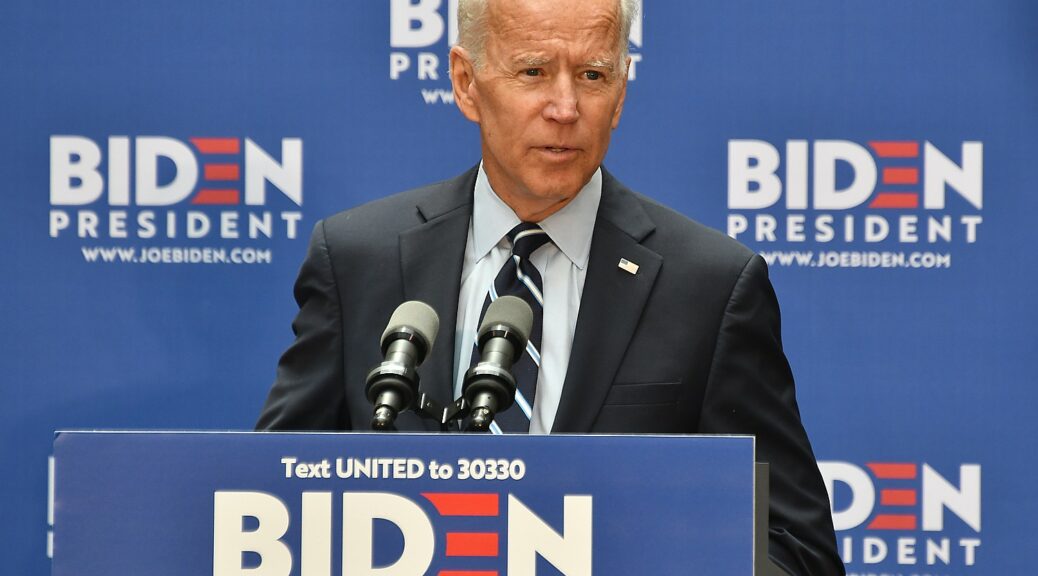
Former Vice
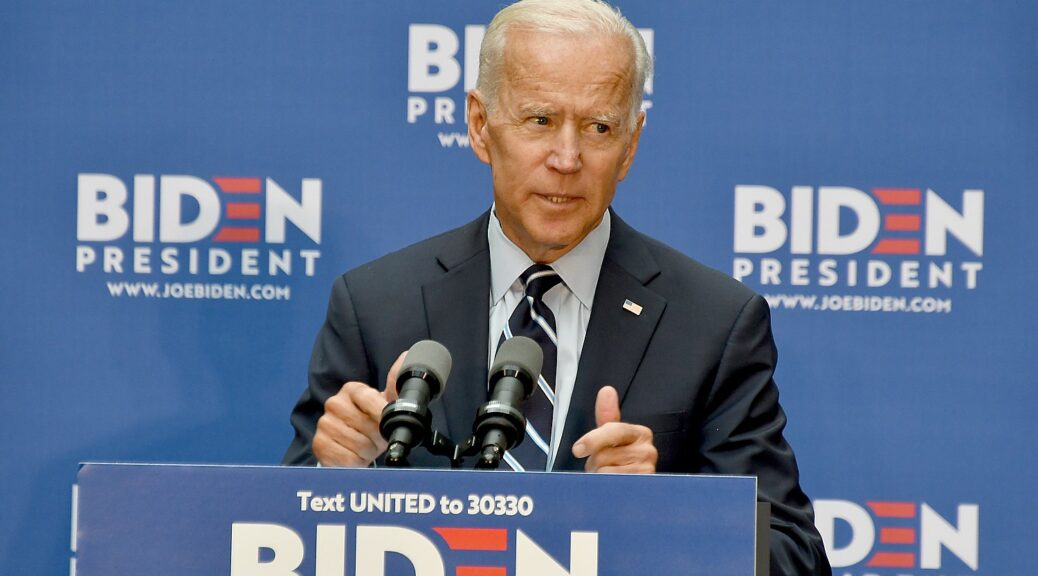
President Joe Biden, in a hotly contested race for President, attacked Donald
Trump for his failed foreign policy in the wake of yet another missile test by
North Korea. Foreign policy is Biden’s
greatest strength among the Democratic rivals for 2020. Here is his statement:
This morning, North Korea fired two missiles in a
deliberate attempt to provoke its neighbors and intimidate the United States —
again. It was the 12th such test the regime has conducted since May in
violation of UN resolutions, and which President Trump has down-played. After
the latest round of denuclearization talks collapsed almost immediately in
Stockholm earlier this month, these tests are a stark reminder that Donald
Trump — a self-proclaimed deal maker — has achieved nothing but a string of
spectacular diplomatic failures that are making the American people less safe.
His “love letters” to murderous dictator Kim Jong Un have delivered little more
than made-for-TV moments. North Korea today has more fissile material and more
capability than when talks began, and Trump has given away our leverage —
including suspending military exercises with our allies and granting Kim
co-equal status at two summits with the president of the United States of
America — for practically nothing in return. Now a more confident Kim is
ticking up the pace of his violations because he believes he can pressure Trump
to bend to his will. There is no deal, because there is no strategy and no
patience for the kind of tough, hard diplomacy that actually produces results.
It’s a pattern we see over and over again. Donald Trump talks a big game,
promises the greatest deal ever, then gives away America’s best negotiating
tools in exchange for a photo op for himself. He only cares about his own
self-aggrandizement and self-enrichment. And every single time, it’s the
American people who end up paying.
He pulled us out of the successful Iran nuclear deal, promising he’d get a
better one. He hasn’t. And now, Iran has taken its nuclear program out of the
deep-freeze and ramped up its aggressive acts across the region — and Trump has
no strategy to deal with these predictable responses.
He pulled us out of the Paris climate accord and dismisses climate change as a
hoax. In less than a week, we will officially notify our departure from Paris,
even as California is on fire and states throughout the Midwest are still
recovering from record flooding over the summer.
He scuttled negotiations with the Taliban that might have opened the door to a
peace settlement, reportedly because he didn’t get the Camp David moment of
glory he wanted. Meanwhile he’s significantly weakened our negotiating position
by imposing a possibly politically-motivated timeline for removing our troops
from Afghanistan, without extracting any concessions from the Taliban in
return.
His vaunted Middle East peace deal has yet to emerge. He gave away our
strongest asset to take on ISIS by precipitously withdrawing our troops from
Northeast Syria. He promised to get tough with China, saying trade wars
were “good and easy to win.” But at more than a year in, what do we have to
show for it? Nothing but pain for American farming and manufacturing, and vague
promises that would only restore trade levels with China back to where they
were before Trump’s irresponsible trade war.
The American people can’t afford four more years of Donald Trump’s art of no
deals.
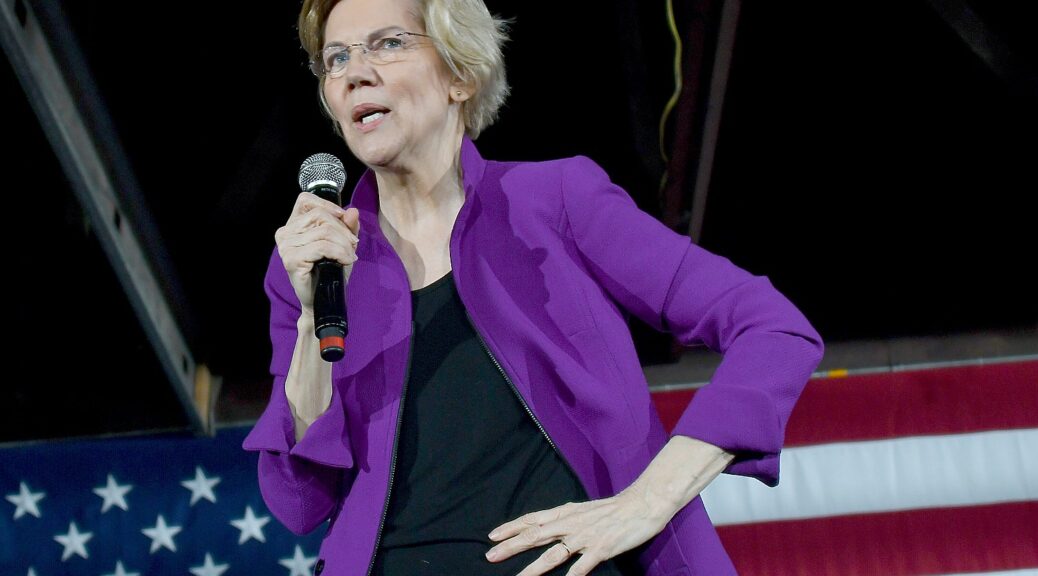
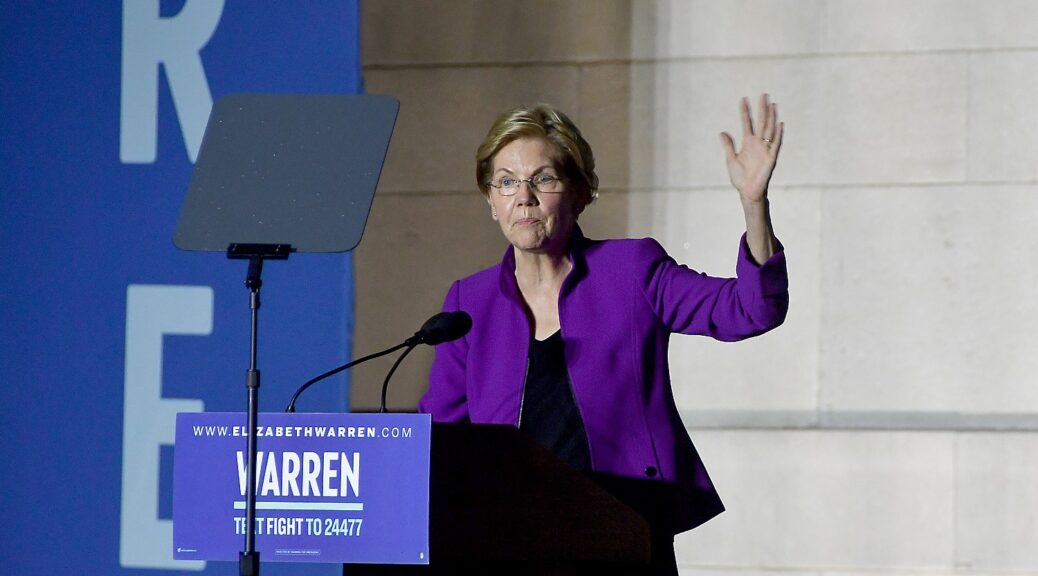
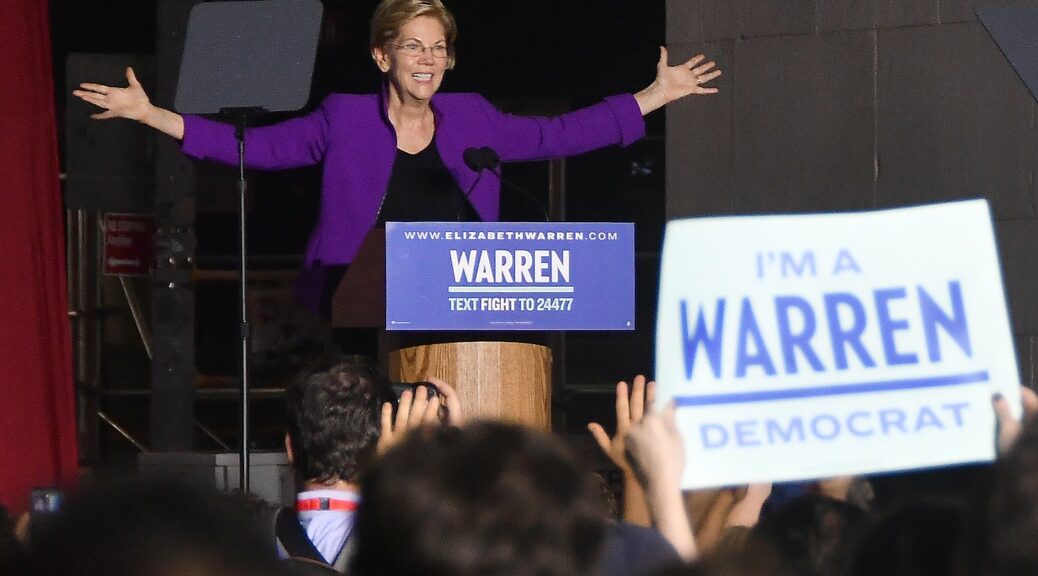
Senator Elizabeth Warren, Democratic candidate for President, has released details of her most controversial proposal, Medicare for All, promising that it will cover every person in America with health care, including long-term care, vision and dental, without increasing taxes on middle class families. Warren focuses on an overall restructuring taxes and spending – going after the loopholes and tax cheats and reining in military spending as well as drug costs and cutting healthcare costs by removing the for-profit insurance companies (gatekeepers) as middlemen. What her plan misses, though, is the obvious: collect the Medicare tax (1.45%, plus an extra 0.9% on income over $200,000) on all income, not just wages, and, if necessary raise the surcharge for incomes over $250,000. Interestingly, while employers would no longer pick and choose the private health insurance they subsidize, employers would still subsidize their employees’ Medicare cost. Health care is considered the leading issue for voters in 2020. Here is the detailed plan, from the Warren campaign: –Karen Rubin/news-photos-features.com.
Charlestown, MA
– Today, Senator Elizabeth
Warren, candidate for President, released her plan to finance Medicare for All.
The coverage is identical to the coverage in the Medicare for All legislation
in the Senate and it will cover every single person in America with excellent,
high-quality health care, including long-term care and vision and dental.
Elizabeth will pay
for this plan without raising taxes one penny on middle class families. Instead, she will put about $11
trillion in the pockets of American families by eliminating what they would pay
in premiums, deductibles, co-pays, and other out-of-pocket costs over the next
ten years.
Her numbers add up and
are backed by experts including:
Simon Johnson, the
former Chief Economist at the International Monetary Fund and a professor at
MIT
Dr. Donald Berwick,
one of the nation’s top experts in health system management and improvement,
who ran the Medicare and Medicaid programs under President Barack Obama
Mark Zandi, Chief
Economist of Moody’s Analytics
Betsey Stevenson,
former Chief Economist for the Obama Labor Department
Elizabeth’s plan to
dramatically improve health care and cut family costs would cost the United
States less than our current broken system. It would require $20.5 trillion in
new revenue, nearly half of which comes simply from having employers pay
Medicare instead of private insurance companies.
Elizabeth will finance
the remainder of Medicare for All with targeted defense spending cuts, new
taxes on financial firms, giant corporations, and the richest 1% of Americans,
and by cracking down on tax evasion and fraud. The $11 trillion in household
insurance and out-of-pocket expenses projected under our current system goes
right back into the pockets of America’s working people — substantially larger than the
largest tax cut in American history — and no middle class tax increases.
My daddy’s heart attack nearly sent our family skidding over
a financial cliff. Today I think about all the kids this year who will face the
double blow of nearly losing a parent and then watching their lives turn upside
down as their families struggle to pay a growing stack of medical
bills.
I spent my career studying why so many hard-working middle
class families were going broke. For years, my research partners and I traveled
the country from bankruptcy courtroom to bankruptcy courtroom, talking directly
to people who’d seen their lives turned upside down. We interviewed lawyers,
judges, and families involved in bankruptcy cases. To save on printing costs,
we lugged around a Xerox machine (I nicknamed him “R2-D2”) to save money on
photocopying court records.
Eventually, we built the largest and most comprehensive
database of consumer bankruptcy data ever assembled. That first study surprised
us: we found that 90% of families went bankrupt because of job loss, medical
problems, and marital disruption. That finding was confirmed in 2007 by my
later research, which found that the number one reason
families were going broke was health care – and three quarters of
those who declared bankruptcy after an illness were people who already had
health insurance.
It’s been nearly thirty years since we published that first
groundbreaking study. And after all that time, here’s where we are: between
2013 and 2016, the number one reason families
went broke was still because of health care – even though 91.2% of Americans
had health insurance in 2016.
Families are getting crushed by health costs. Just look at
the numbers.
$12,378. That’s
how much an average family of four with employer-sponsored insurance personally
spent per year on employee premium contributions and out-of-pocket
costs in 2018. And this figure has increased each
year.
87 million. That’s
how many American adults in 2018 were uninsured or “underinsured” – meaning
either they have no insurance or their so-called health insurance is like a car
with the engine missing. It looks fine sitting on the lot, but inadequate if
they actually need to use it. Nearly one in every
two adults not currently on Medicare has no insurance or unreliable insurance.
37 millionAmerican
adults didn’t fill a prescription last year because of costs. 36 millionpeopleskipped
a recommended test, treatment, or follow-up because of costs. 40 millionpeople
didn’t go to a doctor to check out a health problem because of costs. 57 millionpeople
had trouble covering their medical bills.
Today, in 2019, in the United States of America, the
wealthiest nation in the history of the world, inadequate health coverage is
crushing the finances and ruining the lives of tens of millions of American
families.
I’m running for President based on a radical idea – calling
out what’s broken and speaking plainly about how to fix it.
All my plans start with our shared values. There are two
absolute non-negotiables when it comes to health care:
One: No American should ever, ever die or go bankrupt
because of health care costs. No more GoFundMe campaigns to pay for care. No
more rationing insulin. No more choosing between medicine and groceries.
Two: Every American should be able to see the doctors they
need and get their recommended treatments, without having to figure out who is
in-network. No for-profit insurance company should be able to stop anyone from
seeing the expert or getting the treatment they need.
Health care is a human right, and we need a system that
reflects our values. That system is Medicare for All.
Let’s be clear: America’s medical professionals are among
the best in the world. Health care in America is world-class. Medicare for All
isn’t about changing any of that.
It’s about fixing what is broken – how we pay for that care.
And when it comes to health care, what’s broken is obvious.
A fractured system that allows private interests to profiteer off the health
crises of the American people. A system that crushes our families with costs
they can’t possibly bear, forcing tens of millions to go without coverage or
to choose between basic
necessities like food, rent, and health – or bankruptcy.
We must fix this system. And over the long-term, the best
way to achieve that goal is to move from the system we have now to a system of
Medicare for All.
Medicare for All is about where doctors, hospitals, and care
providers send the bill – to a collection of private insurance companies who make billions off
denying people care or to the Medicare program for fair compensation. Under
Medicare for All, everyone gets the care they need, when they need it, and
nobody goes broke.
A key step in winning the public debate over Medicare for
All will be explaining what this plan costs – and how to pay for it. This task
is made a hundred times harder by powerful health insurance and drug companies
that makebillions of dollars
off the current bloated, inadequate system – and would be perfectly happy to
leave things exactly the way they are.
In 2017 alone, health industry players whose profiteering
would end under Medicare for All unleashed more than 2,500 lobbyists on
Washington. These industries will spendfreely on shady TV
ads and lobbying to convince people that a program that saves them massive
sums of money will somehow cost them money.
That being able to see the doctors and get the treatments they need regardless
of what their employer or
their insurance company thinks
is somehow actually a loss of choice. That a program that covers more services,
more people, and costs the American people less than what we
currently spend on health care is somehow too expensive.
Meanwhile, where are the 2,500 lobbyists for the people who
get sick and can’t pay their medical bills? Where are the hundreds of
millions being spent so that people who are trying to balance a budget around
rising health care premiums and growing deductibles and copays can make their
voices heard in Washington? Washington hears plenty from the giant health
insurance and giant drug industries, but not so much from families being
squeezed to the breaking point.
So let’s focus on families’ expenses and families’ health
care.
Start with the Medicare for All Act – which
I have cosponsored. The bill provides a detailed proposal for how to achieve
our end goal. But as economists and advocates have noted, the legislation
leaves open a number of key design decisions that will affect its overall cost,
and the bill does not directly incorporate specific revenue measures. While
much of this ambiguity results from the reasonable choice to delegate
significant implementation discretion to the Executive Branch, it has also
allowed opponents of
Medicare for All to make up their own price tags and try to scare middle class
families about the prospect of tax increases – despite the conclusions of expert after expert after expert that it is
possible to eventually move to a Medicare for All system that gives both high
quality coverage for everybody and dramatically lowers costs for middle class
families.
The best way to fight misinformation is with facts. That’s
why today, I’m filling in the details and releasing a plan that describes how I
would implement the long-term policy prescriptions of the Medicare for
All Act and how to pay for it.
Under my plan, Medicare for All will cover the full list of
benefits outlined in the Medicare for All Act, including long-term
care, audio, vision, and dental benefits. My plan will cover every single
person in the U.S., and includes common-sense payment reforms that make
Medicare for All possible without spending any more money overall than we spend
now.
My plan reflects careful, detailed analyses from key
national experts in health policy, tax policy, and economics. By filling in the
details, we can strip away all the misleading political attacks and make plain
the choice facing the American people:
Option 1: Maintain our current system, which will cost
the country $52 trillion over ten years. And under that current system
–
24 million people
won’t have coverage, and millions can’t get
long-term care.
63 million have
coverage gaps or substandard coverage that could break down if they actually
get sick. And millions who have
health insurance will end up going broke at least in part from medical costs
anyway.
Together, the American people will pay $11 trillion of
that bill themselves in the form of premiums, deductibles, copays,
out-of-network, and other expensive medical equipment and care they pay for
out-of-pocket – all while America’s wealthiest individuals and
biggest companies pay far
less in taxes than in other major countries.
Option 2: Switch to my approach to Medicare for All,
which would cost the country just under $52 trillion over ten
years. Under this new system –
Every person in America – all 331 million people
– will have full health coverage, and coverage for long-term care.
Everybody gets the doctors and the treatments they need,
when they need them. No more restrictive provider networks, no more insurance
companies denying coverage for prescribed treatments, and no more going broke
over medical bills.
The $11 trillion in
household insurance and out-of-pocket expenses projected under our current
system goes right back into the pockets of America’s working people. And we
make up the difference with targeted spending cuts, new taxes on giant corporations
and the richest 1% of Americans, and by cracking down on tax evasion and
fraud. Not one penny in middle-class tax increases.
That’s it. That’s the choice. A broken system that leaves
millions behind while costs keep going up and insurance companies keep sucking
billions of dollars in profits out of the system – or, for about the same
amount of money, a new system that drives down overall health costs and, on
average, relieves the typical middle class families of $12,400 in insurance
premiums and other related health care costs.
No middle class tax increases. $11 trillion in household
expenses back in the pockets of American families. That’s substantially larger than the
largest tax cut in American history.
Not every candidate for president supports moving to a
system of Medicare for All. Some who support Medicare for All will have
different ideas about how to finance and structure it. And everybody knows that
there must be a real transition. But you don’t get what you don’t fight for –
and my view is clear.
Every candidate who opposes my long-term goal of Medicare
for All should explain why the “choice” of private insurance plans is
more important than being able to choose the doctor that’s best for you without
worrying about whether they are in-network or not. Why it’s more important than
being able to choose the right prescription drug for you without worrying about
massive differences in copays. Why it’s more important than being able to
choose to start a small business or choose the job you want without worrying
about where your health care coverage will be coming from and how much it will
cost.
Every candidate who opposes my long-term goal of Medicare
for All should put forward their own plan to cover everyone, without costing
the country anything more in health care spending, and while putting $11
trillion back in the pockets of the American people by eliminating premiums and
virtually eliminating out-of-pocket costs. Or, if they are unwilling to do
that, they should concede that they think it’s more important to protect the
eye-popping profits of private insurers and drug companies and the immense
fortunes of the top 1% and giant corporations, rather than provide
transformative financial relief for hundreds of millions of American
families.
And every candidate who opposes my long-term goal of
Medicare for All should put forward their own plan to make sure every single
person in America can get high-quality health care and won’t go broke – and
fully explain how they intend to pay for it. Or, if they are unwilling to do
that, concede that their half-measures will leave millions behind.
And make no mistake – any candidate who opposes my long-term
goal of Medicare for All and refuses to answer these questions directly should
concede that they have no real strategy for helping the American people address
the crushing costs of health care in this country. We need plans, not
slogans.
THE COST OF MEDICARE FOR ALL
A serious conversation about how to pay for Medicare for All
requires, first, determining how much such a system would cost.
In recent years, several economists and think tanks have
attempted to estimate the cost of a single-payer system in the United States.
Those estimates consider how much our nation’s health care spending will change
over a ten year window, and range from a $12.5 trillion decrease
to a $7 trillion increase.
They also consider how much additional money the federal government would need
to fund this system, and those estimates range from a low of $13.5 trillion to a
high of $34 trillion over
ten years.
Because nobody can actually see the future, some of this
variation results from different assumptions about how parts of our health care
system might work differently under Medicare for All. But most of the
difference comes from policy choices. And while the Medicare for All
Act is clear about some of these choices – for example, generous
benefits, long-term care coverage, and virtually no out-of-pocket expenses – it
is silent on a number of really important ones. How much will we pay for
medical care and for prescription drugs? What do we do with the existing money
that states spend on Medicaid? How aggressively will we cut administrative
costs? Aggressive choices mean a lower total cost. Less aggressive choices
result in a higher total cost.
Serious candidates for president should speak plainly about
these issues and set out their plans for cost control – especially those who
are skeptical of Medicare for All. Because whether or not we make modest or
transformative changes to our health care system, cancer, diabetes, strokes,
Alzheimer’s, and Parkinson’s aren’t going to simply disappear. And without
leadership from the top, neither will the mushrooming cost of care in America
that’s bankrupting our families.
I’ve asked top experts to consider the long-term cost of my
plan to implement Medicare for All over ten years – Dr. Donald Berwick, one of
the nation’s top experts in health system improvement and who ran the Medicare
and Medicaid programs under President Obama; and Simon Johnson, the former
Chief Economist at the International Monetary Fund and a professor at MIT.
Their analysis begins with the assumptions of a recent study by the Urban
Institute and then examines how that cost estimate would change as certain new
key policy choices are applied. These experts conclude that my plan would slightly
reduce the projected amount of money that the United States would otherwise
spend on health care over the next 10 years, while covering everyone and giving
them vastly better coverage.
REDUCING INSURER ADMINISTRATIVE COSTS
The business model of private insurers is straightforward:
pay out less for medical care than they take in as premiums. This model is
located right in the center of our health care system, wasting huge amounts of
time and money documenting and arguing over who is owed what. Incredibly,
insurance companies spend a whopping $350 billion on
administration costs annually—and then, in turn, push huge additional
administrative costs onto hospitals, doctors, and millions of other health care
professionals in the from of complex billing—and then, in turn, drive up costs
incurred by employers as they attempt to navigate the complexity of providing
their employees with insurance.
Medicare for All will save money by bringing down the
staggering administrative costs for insurers in our current system. As the
experts I asked to evaluate my plan noted, private insurers had administrative
costs of 12% of premiums collected in 2017, while Medicare kept its
administrative costs down to 2.3%. My plan will ensure that Medicare for All
functions just as efficiently as traditional Medicare by setting net
administrative spending at 2.3%.
COMPREHENSIVE PAYMENT REFORM
In 2016, the United States spent nearly twice as
much on health care as ten high-income countries, and these costs have
been steadily rising for
decades, growing from 5.2%
of U.S. GDP in 1963 to 17.9% in 2017. But
instead of resulting in better health outcomes, Americans have the lowest
life expectancy of residents in high-income countries, the highest infant
mortality rate, and the highest obesity rates.
Why? As a group of health economists famously wrote, “It’s the prices,
stupid.”
Studieshave continued to
show that it’s not how much people use the health care system, often referred
to as “utilization,” but rather how much people pay that drives our high spending.
Compared to other high income countries, Americans simply pay more for health
care. We pay more for physicians and nurses. We pay more in administrative
costs. We pay more for prescription drugs.
A heart bypass surgery that costs nearly
$16,000 in the Netherlands costs an average of $75,000 in the United States. A
CT scan that costs $97 in Canada
costs an average of $896 here. And in the United States, hospitals can charge new parents
for holding their newborn after delivery.
Meanwhile, private equity firms fight bipartisan
legislation in Washington that might undermine the profitability of their
investments or prevent their hospitals from sending patients surprise bills.
And health care CEO salaries continue to soar. Between 2005 and 2015,
non-profit hospital CEO salaries increased by 93% to
an average of over $3 million, and last year, 62 health care CEOs raked in a
combined $1.1 billion – more
than the CDC spent on chronic disease prevention.
If we expect the American people to be able to afford health
care, we need to rein in these costs. Comprehensive payment reform, as part of
Medicare for All, will reduce this component of health care spending. Under my
approach, Medicare for All will sharply reduce administrative spending
and reimburse physicians and other non-hospital providers at current Medicare
rates. My plan will also rebalance rates in a budget neutral way that
increases reimbursements for primary care providers and lowers reimbursements
for overpaid specialties.
While private insurance companies pay higher rates, this system would be
expected to continue compensating providers at roughly the same overall rate
that they are currently receiving. Why? This is partially because providers
will now get paid Medicare rates for their Medicaid patients – a substantial
raise. But it’s also because providers spend an enormous amount of time on
billing and interacting with insurance companies that reduces their efficiency
and takes away from time with patients. Some estimate that hospitals will spend $210 billion on
average annually on these costs.
The nonpartisan Institute of Medicine estimates that
these wasted expenses account
for 13% of the revenue for physician practices, 8.5% for hospitals, and 10% for
other providers. Together, the improved efficiency will save doctors time and
money – helping significantly offset the revenue they will lose from
getting rid of higher private insurance rates.
Under my approach, Medicare for All will sharply
reduce administrative spending and reimburse hospitals at an average of 110% of
current Medicare rates, with appropriate adjustments for rural hospitals,
teaching hospitals, and other care providers with challenging cost structures.
In 2017, hospitals that treated Medicare patients were paid about 9.9% less than
what it cost to care for that patient. The increase I am proposing under
Medicare for All will cover hospitals’ current costs of care – but hospital
costs will also substantially decrease as a result of simpler administrative
processes, lower prescription drug prices, the end of bad debt from
uncompensated care, and more patients with insurance seeking care.
Of course, as Medicare currently recognizes,
not every provider situation is the same, and my Medicare for All program
maintains these base rate adjustments for geography and other factors. In
my plan for Rural
America, for example, I have committed to creating a new designation under
Medicare for rural hospitals due to the unique challenges health systems face
in rural communities. That’s why my plan allows for adjustments above the 110%
average rate for certain hospitals, like rural and teaching hospitals, and
below this amount for hospitals that are already doing fine with current
Medicare rates.Universal coverage will also have a
disproportionately positive effect on rural hospitals. Because people living in
rural counties are more likely to be
uninsured than people living in urban counties, these hospitals currently
provide a lot of uncompensated care. Medicare for All fixes that problem. And
I’ve previously laid out additional
investments to increase the number of Community Health Centers and grow our
health care workforce in rural and Native American communities, while cracking
down on anti-competitive mergers that lead to worse outcomes and higher costs
for rural communities.
We can also apply a number of common-sense, bipartisan
reforms that have been proposed for Medicare. Today, for example, insurers can
charge dramatically different prices for the exact same service based on where the service was
performed. Under Medicare for All, providers will receive the same
amount for the same procedure, saving hundreds of billions of dollars. We can
also make adjustments to things that we know Medicare currently pays too much
for – like post-acute care – by adjusting those payments down slightly while
accounting for the patient’s health status, bringing health care costs down
even more.
We will also shift payment rates so that we are paying for
better outcomes, instead of simply reimbursing for more services. We build on
the success of value-based reforms enabled by the Affordable Care Act,
including by instituting bundled payments for inpatient care and for 90 days of
post-acute care. Instead of paying providers for each individual service,
bundled payments reimburse providers for an entire “episode” of care and have
been shown to both improve outcomes and control costs. These
bundles help ensure that a patient’s different providers all communicate because
they are all tied to the same payment.
RESTORING HEALTH CARE COMPETITION
Health care consolidation has also contributed to
rising health care costs. One analysis found that over 90% of
metropolitan areas had health care provider markets that were either highly
concentrated or super concentrated in 2016. And despite the same kinds of empty
promises we see every time there’s industry consolidation – in this case, that
bigger hospitals would lead to better care – the data have not borne
this out. In fact, it’s theopposite: more
competition between providers creates incentives to improve care, and that
incentive will only increase under a
Medicare for All system where quality, not price, is the main differentiator in
the system.
Under Medicare for All, hospitals won’t be able to force
some patients to pay more because the hospital can’t agree with their insurance
company. Instead, because everyone has good insurance, providers will have to
compete on better care and reduced wait times in order to attract more
patients.
That’s why I will appoint aggressive antitrust enforcers to
the Department of Justice and Federal Trade Commission and allow hospitals to
voluntarily divest holdings to restore competition to hospital markets. I’ve
also previously committed to
strengthening FTC oversight over health care organizations, including
non-profit hospitals, to crack down on anti-competitive behavior. And I will
direct my FTC to block all future hospital mergers unless the merging companies
can prove that the newly-merged entity will maintain or improve care.
REINING IN OUT-OF-CONTROL PRESCRIPTION DRUG COSTS
Americans pay more for prescription drugs than anyone in the
world – $333 billion in
2017 alone. Americans spent $1,220 per person on
average for prescription drugs, while the next highest spending country,
Switzerland, spent $963 per person. That’s not because Americans use more
prescription medication – it’s because lax laws have allowed pharmaceutical
companies to charge insurance companies and patients exorbitant rates. In a
now-infamous example, when Turing Pharmaceuticals purchased the rights to the
HIV medication Daraprim, the company raised the price of
this life-saving drug from $13.50 per pill to a stunning $750 per tablet overnight.
The price of insulin has skyrocketed, forcing
people to risk their lives by rationing. And as prices continue to rise, more
Americans are turning to Canada in
search of affordable prices.
Reining in prescription drug costs should be a top priority
for any President – and there’s no better way to do it than through Medicare
for All. My administration will use a suite of aggressive policy tools to set a
net savings target that will bring down Medicare prices for brand name
prescription drugs by 70% and prices for generics by 30%, with an initial focus
on more expensive drugs.
Under Medicare for All, the federal government would have
real bargaining power to negotiate lower prices for patients. I will adopt an
altered version of the mechanism outlined in the Lower Prescription
Drug Costs Now Act which leverages excise taxes to bring manufacturers
to the table to negotiate prices for both branded and generic drugs, with no
drug exceeding 110% of the average international market price, but removes the
limit of the number of drugs Medicare can negotiate for and eliminates the
“target price” so Medicare could potentially negotiate prices lower than other
countries.
If negotiations fail, I will use two tools – compulsory
licensing and public manufacturing – to allow my administration to ensure
patient access to medicines by either overriding the patent, as modeled in
the Medicare Negotiation and Competitive Licensing Act, or by
providing public funds to support manufacturing of these drugs, as modeled in
my Affordable Drug Manufacturing Act. Medicare for All will also
incentivize pharmaceutical companies to develop the drugs we need – like
antibiotics, cancer cures, and vaccines. And it’s not just about driving down
drug prices. Making sure patients get important drug therapies up front that
keep them healthy and cost a fraction compared to more severe treatment down
the line can save money overall. Insurers, who may only cover individuals for a
few years of their lives, see those investments in long-term health as a cost
they’ll never recoup – so they have a financial incentive to deny patients these
treatments. But Medicare for All covers each patient for their entire lifespan.
There’s no perverse incentive to deny the prescriptions they need today because
the long-term benefits to their health won’t benefit their current private
insurance company.
STEMMING THE GROWTH OF MEDICAL COSTS
Year after year, U.S. health spending has grown at rates
above GDP growth, reaching a whopping 17.9% of GDP in
2017. Experts believe the changes to prescription drug spending and value-based
payment systems that I’ve already outlined will bring growth rates in line with
U.S. GDP, which CBO projects to be an average of 3.9% for
the next decade. And if growth rates exceed this rate, I will use available
policy tools, which include global budgets, population-based budgets, and
automatic rate reductions, to bring it back into line.
REDIRECTING TAXPAYER-FUNDED HEALTH SPENDING
Through Medicaid and public health plans for state
employees, state and local governments play a significant role in financing
health care coverage in America. Under my approach to Medicare for All, we will
redirect $6 trillion in existing state and local government insurance spending
into the Medicare for All system. This is similar to the mechanism that the
George W. Bush Administration used to redirect Medicaid spending to the federal
government under the Medicare prescription drug program.Under this
maintenance-of-effort requirement, state and local governments will redirect
$3.3 trillion of what they currently spend to support Medicaid and the
Children’s Health Insurance Program and $2.7 trillion of what they currently
spend on employer contributions to private insurance premiums for their
employees into Medicare for All. Because we bring down the growth rate of
overall health spending, states will pay less than they would have without
Medicare for All. They’ll also have far more predictable budgets, resulting in
improved long-term planning for state and community priorities.
Together, these policy choices represent significant
reductions in health care spending over current levels. Compared to the
estimate by the Urban Institute, they will save over $7 trillion over ten
years, bringing the expected share of additional federal revenue to just over
$26 trillion for that period. After incorporating the $6 trillion we will
redirect from states to help fund Medicare, the experts conclude that total
new federal spending required to enact Medicare for All will be $20.5 trillion.
PAYING FOR MEDICARE FOR ALL
Medicare for All puts all health care spending on the
government’s books. But Medicare for All is about the same price as our current
path – and cheaper over time. That means the debate isn’t really about
whether the United States should pay more or less. It’s about who should
pay.
Right now, America’s total bill for health care is projected
to be $52 trillion for the next ten years. That money will come from four
places: the federal government, state governments, employers, and individuals
who need care. Under my approach to Medicare for All, most of these funding
sources will remain the same, too.
Existing federal spending on Medicare and Medicaid will help
fund Medicare for All.
Existing state spending on health insurance will continue in
the form of payments to Medicare – but states would be better off because
they’d have more long-term predictability, and they’d pay less over time
because these costs will grow more slowly than they do today.
Existing total private sector employer contributions to
health insurance will continue in the form of contributions to Medicare – but
employers would be better off because under the design of my plan, they’d pay
less than they would have otherwise.
Here’s the main difference: Individual health care
spending.
Over the next ten years, individuals will spend $11 trillion
on health care in the form of premiums, deductibles, copays, and out-of-pocket
costs. Under my Medicare for All plan, that amount will drop from $11
trillion to practically zero.
I asked top experts – Mark Zandi, the Chief Economist of
Moody’s Analytics; Betsey Stevenson, the former Chief Economist for the Obama
Labor Department; and Simon Johnson – to examine options for how we can make up
that $11 trillion difference. They conclude that it
can be done largely with new taxes on financial firms, giant corporations, and
the top 1% – and making sure the rich stop evading the taxes we already have.
That’s right: We don’t need to raise taxes on the
middle class by one penny to finance Medicare for All.
Here’s how it would work.
REPLACING EMPLOYER HEALTH SPENDING WITH A NEW EMPLOYER
MEDICARE CONTRIBUTION
Let’s start with a basic fact: American companies are
already paying a lot for health care for their employees. They are projected to
pay nearly $9 trillion over the next ten years, mostly on employer
contributions for employee health insurance and on health-related expenses for
employees under workers’ compensation and long-term disability. My idea is that
instead of these companies sending those payments to private insurance
companies, they would send payments to the federal government for Medicare in
the form of an Employer Medicare Contribution.
In fact, it’ll be a better deal than what they have
now: companies will pay less than they otherwise would have, saving
$200 billion over the next ten years.
To calculate their new Employer Medicare Contribution,
employers would determine what they spent on health care over the last few
years and divide that by the number of employees of the company in those years
to arrive at an average health care cost per employee at the company.
(Companies would count part-time employees towards the total based on the
number of hours they worked during a year.) Under the first year of Medicare
for All, employers would then take that average cost, adjust it upwards to
account for the overall increase in national health care spending, and multiply
it by their total number of employees that year. Their Employer Medicare
Contribution would be 98% of that amount – ensuring that every company
paying for health care today will pay less than they would have if they were
still offering their employees comparable private insurance.
A similar calculation would apply to pass-through entities,
like law firms or private equity funds, even though many of the people that
work there technically aren’t employees. People who are self-employed would be
exempt from making Employer Medicare Contributions unless they exceed an income
threshold.
Small businesses – companies with under 50 employees – would
be exempt from this requirement too if they aren’t paying for employee health
care today. When either new or existing firms exceed this employee threshold,
we would phase in a requirement that companies make Employer Medicare Contributions
equal to the national average cost of health care per employee for every
employee at that company. Merging firms would pay the weighted average cost of
health care per employee of the two firms that are merging.
Employers currently offering health benefits under a
collective bargaining agreement will be able to reduce their Employer Medicare
Contribution if they pass along those savings to workers in the form of
increased wages, pensions, or other collectively-bargained benefits. New
companies or existing companies who enter into a collective bargaining
agreement with their employees after the enactment of Medicare for All will be
able to reduce their Employer Medicare Contributions in the same way. Employers
can reduce their contribution requirements all the way down to the national
average health care cost per employee.
That way, my plan helps unions that have bargained
for good health care already, and creates a significant new incentive for
unionization generally by making collective bargaining appealing for both
workers and employers as a way of potentially reducing the employer’s Employer
Medicare Contributions.
Over time, an employer’s health care cost-per-employee would
be gradually shifted to converge at the average health care cost-per-employee
nationally. That helps make sure the system is fair but also gives
employers and employees time to adapt to the new system.
If we’re falling short of the $8.8 trillion revenue target
for the next ten years, we will make up lost revenue with a Supplemental
Employer Medicare Contribution requirement for big companies with extremely
high executive compensation and stock buyback rates.
There are a variety of ways to structure an employer
contribution to Medicare for All. This particular approach has the benefit of
helping American employers in a few ways:
Employers would collectively save $200 billion over the next
ten years.
Employers receive far more certainty about how their health
care costs will vary over time and affect their finances.
Small businesses – who often suffer when competing for
employees because they can’t afford to
offer health care coverage – would no longer be at a competitive disadvantage
against bigger businesses.
Employers can reduce their Employer Medicare Contribution by
supporting unionization efforts and negotiating with workers to provide better
wages and benefits – reducing costs and promoting collective bargaining at the
same time.
Because my plan holds health care cost growth to GDP levels,
businesses will have stable balance sheets that grow with the economy instead
of crowding out other priorities.
By asking employers to pay a little less than what they
are already projected to pay for health care, we can get almost halfway to
where we need to go to cover the cost of my Medicare for All plan.
Automatic Increases in Take-Home Pay
Medicare for All puts a whole lot of money back in the
American people’s pockets. One way it does that is by taking the share of
premiums employees are responsible for paying through employer-sponsored
insurance – that line on pay stubs each week or month that says “health
insurance” – and returning it to working people. Congratulations on the
raise!
And higher take-home pay for workers also means additional
tax revenue just from applying our existing taxes – approximately $1.15
trillion if we apply average effective tax rates.
Medicare for All saves people money in other ways too. With
Medicare for All, nobody would need to put money in Health Savings Accounts or
medical savings accounts to try and protect themselves against the unthinkable.
And because individual spending on premiums, deductibles, copays, and
out-of-pocket costs will basically disappear, the tax break for medical
expenses in excess of 10% of Adjusted Gross Income becomes irrelevant.
Together, those changes would generate another
$250 billion in revenue.
All told, another $1.4 trillion in funding for Medicare for
All is generated automatically through existing taxes on the enormous amount of
money that will now be returned to individuals’ pockets from moving to a
Medicare for All system with virtually no individual spending on health
care.
Here’s what that means: we can generate almost half
of what we need to cover Medicare for All just by asking employers to pay
slightly less than what they are projected to pay today, and through existing
taxes.
So where does the rest of the money come from that allows us
to eliminate premiums, deductibles, copays, and most out-of-pocket spending for
every American? Four sources: (1) better enforcement of our existing tax laws
so we stop letting people evade their tax obligations; (2) targeted taxes on
the financial sector, large corporations, and the top 1% of individuals; (3) my
approach to immigration; and (4) shutting down a slush fund for defense
spending.
CRACKING DOWN ON TAX EVASION AND FRAUD
The federal government has a nearly 15% “tax gap”
between what it collects in taxes what is actually owed because of systematic
under-enforcement of our tax laws, tax evasion, and fraud. If that 15% gap
persists for the next ten years, we will collect a whopping $7.7 trillion less in
federal taxes than the law requires. By investing in stronger
enforcement and adopting best practices on tax reporting, withholding, and
filing, experts predict that we can close the tax gap by a third – generating
about $2.3 trillion in additional federal revenue without a single new
tax.
A big part of our current tax gap problem is that we’re letting
wealthier taxpayers get away with paying less than what they owe. Studies show that the
wealthiest 5% of taxpayers misrepresent their income more frequently than the
bottom 90%.
The wealthy and their allies in Washington have worked
to slash the IRS
budget, leaving it without the resources it needs. The agency today has about the
same number of revenue agents as it did when the economy was one-seventh its
current size in the 1950s. And the IRS insists on targeting low-income
taxpayers rather than wealthy ones, even though the amount of revenue we can
recover from wealthy taxpayers is far more.
We know how to fix this problem. We can draw lessons from
what works in other countries with much lower tax gaps and rely on the
recommendations of tax experts. Here’s a game plan:
Substantially increase funding for the IRS, including the
Criminal Investigation Division. The Treasury Department estimated in its
Fiscal Year 2017 budget request that every $1 invested in IRS enforcement
brings in nearly $6 in additional revenue – not even including an indirect
deterrence effect three times that amount.
Expand third-party reporting and withholding requirements.
Research shows that third-party reporting and withholding cuts down on the
tax misreporting rate substantially.
Strengthen enforcement of the Foreign Account Tax Compliance
Act (FATCA). FATCA requires foreign financial institutions to report the
holdings and income of U.S. taxpayers, but the IRS is generally not systematically matching these
reports to individual tax returns. We also don’t hold foreign financial firms
truly accountable for ignoring their reporting obligations. Automatically
matching FATCA reports to tax returns and instituting sanctions for
non-compliant foreign financial institutions would help narrow the tax gap.
Simplify tax filing obligations in line with other
comparable countries with lower tax gaps, including by adopting my Tax Filing Simplification Act and
using “smart returns” to
improve honest reporting.
Redirect enforcement resources away from low-income taxpayers towards
high-income taxpayers.
Increase the nonfiler compliance program, strengthen
reporting requirements for international income, use existing currency
transaction reports to enforce cash income compliance, and increase reporting
requirements for virtual- or crypto-currencies, as suggested by the
Treasury Department’s Inspector General.
Allow employees who
disclose tax evasion and abuse to use the protections of the False Claims Act
and other whistleblower protections.
The experts who reviewed these ideas estimated that if we
implemented them, we could close the tax gap by one-third from 15% to 10%,
bringing us closer to the tax gap in countries like the United Kingdom (5.6%). That will
produce another $2.3 trillion in net federal revenue – without imposing a
single new tax.
TARGETED TAXES ON THE FINANCIAL SECTOR, LARGE
CORPORATIONS, AND THE TOP 1%
We can generate a whole lot of the remaining revenue we need
for Medicare for All just by eliminating bad incentives in our current tax
system and asking those who have done really well in the last few decades to
pay their fair share.
Let’s start with the financial sector. It’s been more than
ten years since the 2008 financial crisis, and while a lot of families
are still dealing with
the aftereffects, the financial sector is making record, eye-popping profits.
Meanwhile, the risk of another financial crisis remains unacceptably high. By
imposing targeted taxes and fees on financial firms, we can generate needed
revenue and also make our financial system safer and more secure.
For example, a small tax on financial transactions –
one-tenth of one percent on the sale of bonds, stocks, or derivatives – would
generate about $800 billion in
revenue over the next ten years. The tax would be assessed on and
collected from financial firms, and would likely have little to no effect on
most investors. Instead, according to experts, the tax could
help decrease what Americans pay in fees for their investments and reduce the
size of relatively unproductive parts of the financial sector.
We can also impose a fee on big banks that encourages them
to take on fewer liabilities and reduce the risk they pose to the financial
system. A small fee that applies only to the forty or so largest banks in the
country would generate an additional $100 billion over
the next ten years – while making our financial system more safe and
resilient.
Next, we can make some basic changes to ensure that large
corporations pay their fair share and to fix some fundamental problems with our
current approach that actually encourage companies to shift jobs and investment
overseas. These changes will generate an estimated $2.9 trillion over
the next ten years.
For instance, our current tax system lets companies deduct
the cost of certain investments they make in assets faster than those assets
actually lose value. That means that if a company buys a machine for a million
dollars, it gets to deduct a million dollars from its taxes that same year –
even if the machine only loses $100,000 in value a year. Letting the company
write off the extra $900,000 all at once is like giving them an interest-free loan from
the government.
That might be worth it if the company responded to this tax
break by investing more and building out their businesses. But the datasuggest this isn’t
happening because companies don’t actually value these tax deferrals as much as
policymakers assume. Companies are mostly making the same investments they
would’ve made anyways – sometimes with small changes in timing – and getting a
write-off in exchange. Some experts even suggest that
accelerated expensing could induce less domestic investment,
not more.
That’s why I’m proposing to get rid of this loophole. Under
my plan, businesses will still write off the depreciation of their assets –
they’ll just do it in a way that more accurately reflects the actual loss in
value. This would generate $1.25 trillion over
ten years.
We can also stop giant multinational corporations from
calling themselves American companies while sheltering their profits in foreign
tax havens to avoid paying their share for American investments.
Currently, a U.S. multinational corporation can make
billions in profits and attribute it to a company it set up in a tax haven like
the Cayman Islands, which has no corporate taxes. The Trump tax bill claimed to
address that problem by creating a global minimum tax rate for corporations,
but that minimum tax – the result of heavy lobbying by
multinationals – is too low and easily gamed. While Trump and congressional
Republicans claimed their
minimum tax would keep companies from shifting profits to tax havens and limit
offshoring, the opposite is happening. The current
approach bothencourages companies
to shift their profits to tax havens and actually incentivizes American
companies to outsource their operations overseas.
That’s why I’m proposing to institute a country-by-country minimum
tax on foreign earnings of 35% – equal to a restored top corporate tax rate for
U.S. firms – without permitting corporations to defer those payments. Under
my plan, corporations would have to pay the difference between the minimum tax
and the rate in the countries where they book their profits. For example, an
American corporation booking a billion dollars in profits in the Cayman
Islands, taxed at 0% there, would need to pay the federal government a 35% tax
rate – the difference between the new minimum rate (35%) and the foreign rate
(0%) – on the billion dollars in profits.
My plan would also collect America’s fair share of profits
that foreign companies make by selling their products to Americans. Today, we
have a “global tax deficit”: companies that sell their goods abroad don’t have
to pay the extra taxes that they would have to pay if they were subject to a
minimum effective tax rate in each country they operated in. Making U.S. firms
pay a country-by-country minimum tax effectively collects their whole global
tax deficit – but foreign companies should have to pay their fair share, too.
That’s why I’m proposing that the U.S. collect the fraction of this global tax
deficit that corresponds to the percentage of that company’s sales in the U.S.
In other words, if a foreign company should owe an additional $1 billion in
taxes if it were subject to a country-by-country minimum tax, the U.S. would
collect a fraction of that $1 billion based on the amount of sales that company
made in the United States.
Together, the country-by-country minimum tax and the
taxation of foreign firms based on their domestic sales would result in an
additional $1.65 trillion in
revenue.
Finally, we can raise another $3 trillion over ten years by
asking the top 1% of households in America to pay a little more.
The tax burden on ultra-millionaires and billionaires is
less than half that of working families in the United States. In 2019, the
bottom 99% of families will pay 7.2% of their wealth
in taxes, while the top 0.1% of households will pay just 3.2%. My Ultra-Millionaire Tax, a
2-cent tax on the wealth of fortunes above $50 million, tackles this head on.
Under this tax, the top 0.1% – the wealthiest 75,000 Americans – would have to
pitch in two cents for every dollar of net worth above $50 million and three
cents for every dollar on net worth over $1 billion. With this version of the
Ultra-Millionaire Tax in place, the tax burden on the wealthiest households
would increase from 3.2% to 4.3% of total
wealth – better, but still below the 7.2% that the bottom 99% are projected to
pay.
Today, I’m going one step further. By asking
billionaires to pitch in six cents on each dollar of net worth above $1
billion, we can raise an additional $1 trillion in revenue and further close
the gap between what middle-class families pay as a percentage of their wealth
and what the top one-tenth of one percent pay.
Yes, billionaires will have to pay a little more, but they
will still likely pay less than what they would earn just from putting their
assets into an index fund and doing nothing. The average annual rate of return
of the S&P 500 has regularly topped 10%. And billionaires
have access to the kinds of fancy investment opportunities that can generate
even higher returns on average. Put it this way – should we ask billionaires to
pitch in an extra three cents on every dollar above $1 billion, or force
middle-class families to bear another $1 trillion in health care costs?
We can also change the way the government taxes investment
income for the top 1%. Today, taxes are only assessed on capital gains when securities are sold.
That means wealthy investors can put their money in the stock market, see it
grow, and not pay a dime in
taxes on those earnings unless or until it is taken out of the market. Under
the current system, they can then pass along those shares to their heirs when
they die and their heirs will be able to pay even less when
they choose to sell.
I’ve already proposed closing that loophole for how capital
gains are treated when shares are passed on to heirs. But we can go a step
further. Under a “mark-to-market” system for
the wealthiest 1% of households, we will tax capital gains income (excluding
retirement accounts) annually, rather than at the time of sale, and raise the
rates on capital gains to match the tax rates for labor income. Individuals
would still only pay taxes on gains and could use current losses to offset
future taxes.
Under this system, investment income will no longer be
treated differently than labor income for the top 1% of households.
Ultra-millionaires and billionaires won’t be able to earn income on giant
fortunes year after year without paying a penny in taxes. Andwe
can raise another $2 trillion over
ten years to pay for my Medicare for All plan.
IMMIGRATION REFORM
I support immigration reform that’s consistent with our
values, including a pathway to citizenship for undocumented immigrants and
expanded legal immigration consistent with my principles. That’s not only the
right thing to do – it also increases federal revenue we can dedicate to
Medicare for All as new people come into the system and pay taxes. Based on
CBO’s analysis of the 2013 comprehensive immigration reform bill, experts
project that immigration reform would generate an additional $400 billion in
direct federal revenue.
REINING IN DEFENSE SPENDING
Since the attacks of 9/11, the United States has
appropriated $2 trillion to fund
combat and counterterrorism operations around the world via the Overseas
Contingency Operations fund, or OCO. On average this spending has amounted
to $116 billion per
year – and in total, an amount equivalent to nearly 10 percent of all
federal discretionary spending over that same time period.
Republicans –
including the President’s current Chief of Staff – and Democrats alike
agree that OCO is a budget gimmick that masks the true impact of war spending.
The emergency supplemental funding mechanism was never intended to fund the
costs of long-scale, long-term operations outside of the normal appropriations
process. And in recent years, OCO has also been used to fund so-called “base”
requirements unrelated to the wars, outside of the Budget Control Act caps – in
effect acting as a slush fund for increased Pentagon spending. And as
everything from more F-35s to massive bombs never
used in combat have migrated into the OCO account, the Department of Defense
has been spared from having to prioritize or live
within its means. It’s not just bad budgetary practice – it’s wasteful
spending.
I’ve called out this
slush fund for what it is. I’ve also called for an end to endless
combat engagements in places like Afghanistan, Iraq, and Syria, and to
responsibly bring our combat troops home from these nations. These open-ended
commitments are not necessary to advance American foreign policy or
counterterrorism interests, their human cost has been staggering, and their
financial cost has created a drag on our economy by diverting money better
invested in critical domestic priorities.
I’ve also called to reduce defense spending overall.
The Pentagon budget will cost more this year than
everything else in the discretionary budget put together. That’s wrong, and
it’s unsustainable. We need to identify which programs actually benefit American
security in the 21st century, and which programs merely line the pockets of
defense contractors – then pull out a sharp knife and make some cuts.
As I have said repeatedly, under my Medicare for All plan,
costs will go up for the very wealthy and big corporations, and costs will go
down for middle-class families. I will not sign a bill that violates these
commitments. And as my plan to pay for Medicare for All makes clear, we can
meet these commitments without a tax increase on the middle class – and, in
fact, without any increase in income taxes at all.
America’s middle class is facing a crisis. For a generation,
wages have remained largely flat while family costs have exploded. I’ve spent
decades sounding the alarm about it. I’m running for President to fix it. That
means doing whatever we can to reduce the overall strain on family budgets.
Medicare for All can be a huge part of the solution. When
fully implemented, my approach to Medicare for All would mark one of the
greatest federal expansions of middle class wealth in our history. And
if Medicare for All can be financed without any new taxes on the middle class,
and instead by asking giant corporations, the wealthy, and the well-connected
to pay their fair share, that’s exactly what we should do.
ACHIEVING MEDICARE FOR ALL
Of course, moving to this kind of system will not be easy and
will not happen overnight. This is why every serious proposal for Medicare for
All contemplates a significant transition period.
In the weeks ahead, I will propose a transition plan that
will specifically address how I would use this time to begin providing
immediate financial relief to struggling families, rein in out-of-control
health care costs, increase coverage, and save lives. My transition plan will
take seriously and address substantively the concerns of unions, individuals
with private insurance, hospitals, people who work for private health insurers,
and medical professionals who worry about what a new system will mean for them.
It will also grapple directly with the entrenched political and economic
interests that would spend freely, as they havethroughout modern
American history, to influence politicians and
try to frighten the
American people into rejecting a plan that would save them thousands of dollars a year on
premiums and deductibles while making sure they can always see the health care
providers they need with false claims and scare tactics.
But there’s a reason former President Barack Obama has called Medicare for
All a good idea. There’s a reason the American people support it. It’s
because when it comes to the cost of health care, we are in the middle of a
full-blown crisis.
We are paying twice as much as
any other major nation for care – even as tens of millions lack
coverage, and even as family after family sees its finances destroyed by a
health issue. And the American people know that in the
long-term, a simple system that covers everybody, provides the care they need
when they need it, puts $11 trillion back in their pockets and uses all of the
public’s leverage to keep costs as low as possible is the best option for their
family budgets and for the health of their loved ones.
As President, I’ll fight to get it done.
Read the plan here
Read expert letter on cost estimate of Medicare for All here
Read expert letter on financing Medicare for All here
Calculator here
Vice President Joe Biden, candidate for the 2020 candidate
for President, issued a statement criticizing Trump’s “lack of strategy to
secure our nation against terrorist threats.”
The
successful operation to take Abu Bakr al-Baghdadi off the battlefield was a win
for American national security. And it’s an important reminder of the skill and
commitment of our military, intelligence, and national security professionals.
They are beyond compare.
I’m glad President Trump ordered the mission. But as more details of the raid
emerge, it’s clear that this victory was not due to Donald Trump’s leadership.
It happened despite his ineptitude as Commander-in-Chief.
It’s been reported that Trump’s reckless decision to withdraw our troops from
northern Syria forced the planning for the mission to be accelerated and the
timeline compressed. His erratic behavior made it harder and more dangerous for
the special forces carrying it out. And they had to fly through territory that
is now hostile to the U.S., taking fire along the way—including territory we
controlled just weeks ago.
Trump has also made it less likely we will be able to successfully replicate a
mission like this in the future. The operation leveraged a limited presence of
U.S. counterterrorism capabilities in the region, which he keeps trying to
dismantle. It was made possible by the work of intelligence professionals, who
he has relentlessly attacked. It relied on allies he has belittled, undermined,
and in some cases betrayed and abandoned.
Trump’s total disregard for our alliances and partnerships endanger any future
intelligence sharing or cooperation. In fact, the first people he saw fit to
thank after our brave troops were the Russians and the Iranian-backed Syrian
government. All this makes us less safe and less prepared for whatever
terrorist leader emerges next.
And make no mistake, the threat is not gone. One man does not constitute an
organization, and Trump has opened a path for ISIS to reconstitute itself under
new leadership by withdrawing troops from the region. In doing so, he has given
up our best asset to keep the pressure on ISIS during a dangerous period of
organizational chaos. His fixation on keeping troops in the region to defend
the oil fields betrays his true priorities—profit seeking—and will surely serve
as a tool for future terrorist recruitment. And with his decision to slash
humanitarian assistance to the region, it’s more likely that ISIS will be able
to insinuate itself back into areas where we had successfully rooted it
out.
There is a difference between deploying hundreds of thousands of U.S. troops to
the Middle East indefinitely, and keeping small numbers of special operations
and intelligence assets in place to maintain local partnerships and keep
pressure on terrorists. That’s the smart, strong, and sustainable strategy we
pioneered during the Obama-Biden Administration. That’s the effective policy we
put in place, which laid the groundwork to end ISIS’s territorial caliphate.
That’s the way we built the very relationships that ultimately delivered this
victory.
Now, Trump wants to tear it all down and walk away.
He has no strategy for securing our nation against terrorist threats. He has no
strategy for anything. Every day that Donald Trump directs American national
security is a dangerous day for the United States.
The vigorous contest of
Democrats seeking the 2020 presidential nomination has produced excellent
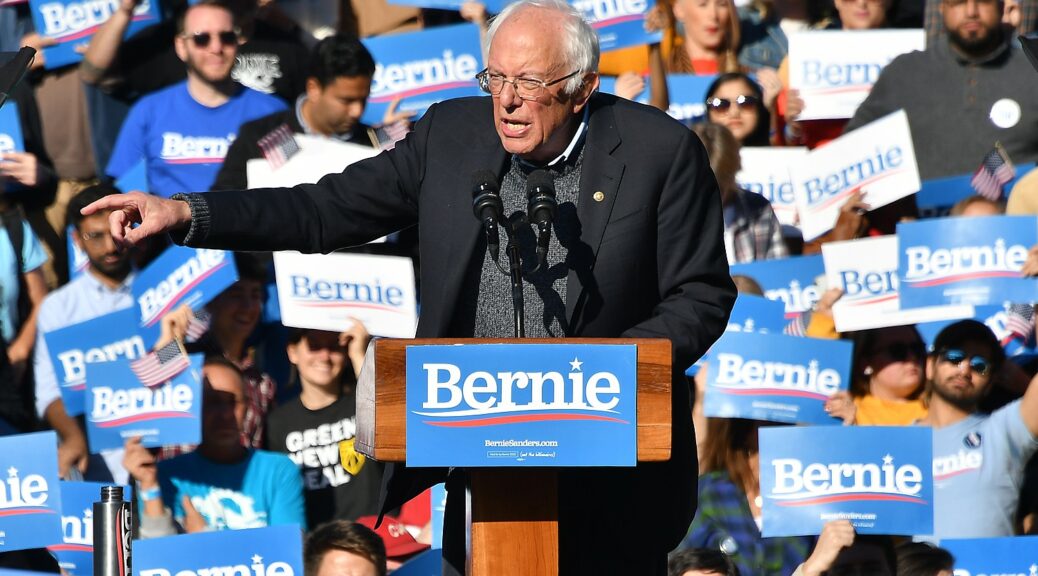
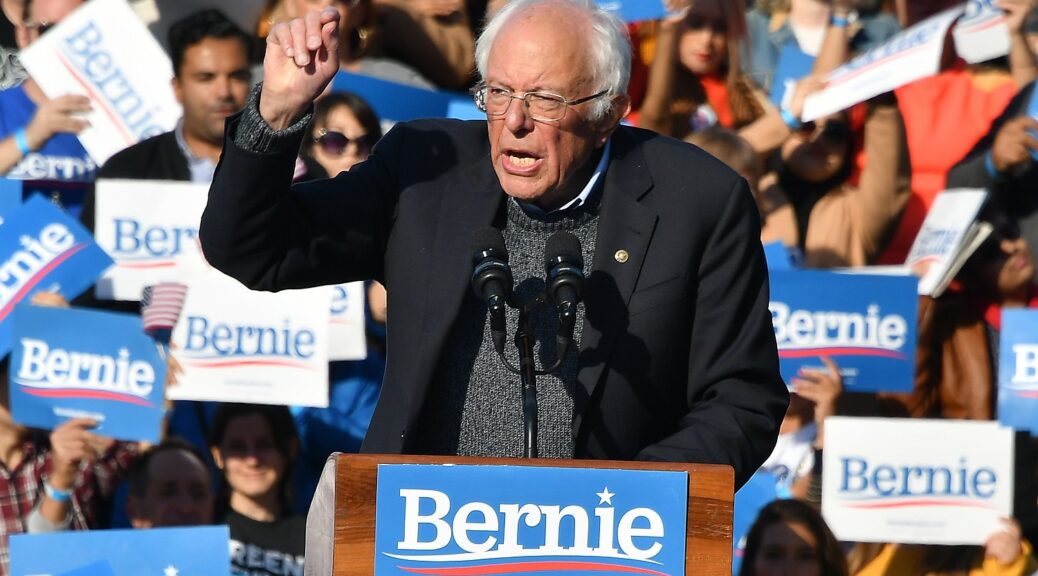
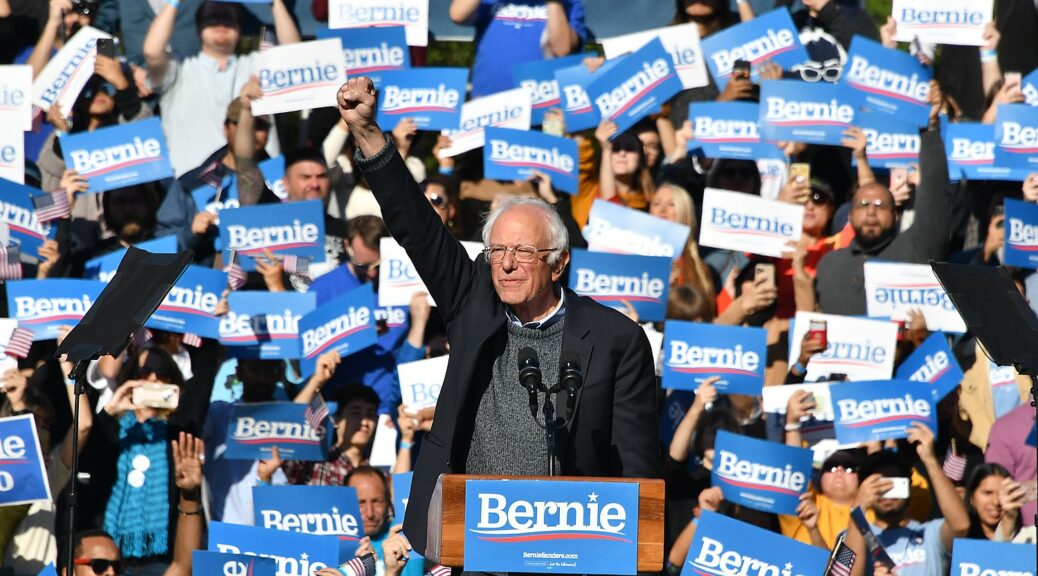
policy proposals to address major issues. Senator Bernie Sanders, long a
crusader to end corporate influence and corruption in the political system,
unveiled his “Money Out of Politics” Plan. He has expanded upon it to
detail how he would end corporate greed and corruption, ensure corporations pay
their fair share of taxes and give workers an ownership stake in companies
where they work, end corrupt corporate mergers and break up monopolies. This is
from the Sanders campaign:
WASHINGTON – Sen. Bernie Sanders unveiled a plan to end corporate greed and corruption, ensure corporations pay their fair share of taxes, give workers an ownership stake in the companies where they work, end corrupt corporate mergers and break up monopolies.
“For more than 40 years, the largest and most profitable corporations in America have rigged the tax code and our economy to redistribute wealth and income to the richest and most powerful people in this country,” said Sen. Sanders. “The American people are saying enough is enough. They are sick and tired of companies like Amazon, General Motors and Chevron making billions in profits, but paying nothing in federal income taxes. Under this plan, we will demand that profitable corporations pay their fair share of taxes. We will give workers an ownership stake in the companies they work for. And we will start breaking up some of the largest and most powerful companies in America to lower prices for consumers, help small business and make markets competitive.”
Bernie’s plan, the boldest and most comprehensive corporate accountability plan in modern presidential history, would bring an end to the era of unchecked corporate greed and return power to American workers.
As President Bernie would:
Give
Workers an Ownership Stake in Corporate America and End Corporate Greed
Give
workers 20 percent of shares in their companies and 45 percent of the seats on
their corporate boards.
Ensure
all workers and savers have the right to vote the shares they own.
Give
workers the right to purchase factories or offices they are employed in from
companies that decide to put them up for sale or shut them down.
Establish
a U.S. Employee Ownership Bank to provide low-cost financing to employees who
want to start their own businesses.
Make
large-scale stock buybacks illegal.
Require
companies to provide shares of stock to workers who lose their jobs as a result
of outsourcing or automation.
Break Up
Monopolies and Make Markets Competitive
Review
all Trump administration mergers and undo improper mergers.
Reinvigorate
the Federal Trade Commission to break up conglomerates and monopolies and
institute clear, strong merger guidelines.
Establish
caps for vertical mergers, horizontal mergers, and total market share.
Ban
mandatory arbitration clauses and non-compete clauses that trap workers in
low-wage jobs and strip them of their legal rights.
Make
Large Corporations Pay Their Fair Share of Taxes
Repeal
all of Trump’s corporate tax breaks
Restore
the corporate tax rate to 35% from 21%.
Ensure
that corporations pay 35% by eliminating virtually all corporate tax breaks and
loopholes.
Eliminate
the use of offshore tax havens by:
Requiring
corporations with revenues over $25 million to publicly disclose significant
portions of their tax returns and country by country financial information
including earnings, financial accounts, and tax payments in other
countries.
Eliminating
the 20% deduction on pass-through business income and requiring large
pass-through businesses to be subject to corporate taxes.
If this plan had been in effect last
year, instead of paying nothing in federal income taxes:
Amazon
would have paid up to $3.8 billion in taxes.
Delta
would have paid up to $1.8 billion in taxes.
Chevron
would have paid up to $1.6 billion in taxes.
GM would
have paid up to $1.5 billion in taxes.
The top ten percent of Americans today
own an estimated 97 percent of all capital income, including capital
gains, corporate dividends, and interest payments. Since the 2008 Wall Street
crash, 49 percent of all new income generated in America has gone to the top
one percent. The three wealthiest people in our country now own more wealth
than the bottom 160 million Americans. And the richest family in America
– the Walton family, which inherited about half of Walmart’s stock – is worth
$200 billion and owns more wealth than the bottom 42 percent of the American
people.
With Attorney General
William Barr facing criticism for his direct involvement in extorting Ukraine
to engage in a bogus investigation intended to harm Democratic candidate for
2020 Vice President Joe Biden and opening a criminal investigation into the
intelligence officers in the CIA and FBI who initially investigated and exposed
Russian meddling in the 2016 Election and contacts with the Trump campaign,
Senator Elizabeth Warren’s proposals unveiled earlier this month to restore
trust in the federal judiciary are particularly noteworthy in light of
widespread concern that the judiciary has been politicized. This is from the
Warren campaign:
Charlestown, MA – Senator Elizabeth Warren
detailed how she will strengthen the ethical integrity and impartiality of the
federal judiciary. Her plan will ensure that judges do not hear cases where
they have conflicts of interests, strengthen our nation’s ethics rules for
judges, and ensure accountability for judges who violate these rules.
Under her plan, investigations into judicial misconduct
could continue even when a judge resigns from office or is elevated to the Supreme
Court. This provision would allow the judiciary to reopen the investigations
into Alex Kozinski, Maryanne Trump Barry, Brett Kavanaugh, and any other judge
who benefited from this loophole.
In December 2017, more than 15 female law clerks alleged that Ninth Circuit Judge Alex Kozinski committed sexual misconduct and created a “hostile, demeaning and persistently sexualized environment” for employees. According to their accounts, Kozinski inappropriately touched female clerks and showed them pornography in his chambers.
It wasn’t the first time he
was accused of misconduct. But what did Judge Kozinski do when the judiciary
started to investigate? He retired.
And because of inadequate ethics laws, the investigation
ended immediately. Meanwhile, Kozinski continues to collect his
taxpayer-funded pension for life.
The Kozinski case is just one example of the broader problem
of accountability in the federal judiciary.
Justices Clarence Thomas and Antonin Scalia did not recuse themselves
from Citizens United v. FEC, the case that opened an avalanche of money in
politics to the benefit of people like the Koch brothers, who invited the pair to multiple
all-expenses paid retreats.
The basic premise of our legal system is that every person
is treated equally in the eyes of the law – including judges. Our judiciary
only functions properly when it lives up to this promise, and it risks eroding
its legitimacy when the American people lose faith that
judges are ethical and fair-minded.
That’s why today I’m announcing my plan to strengthen the
ethical integrity and impartiality of the federal judiciary. It’s time to
ensure that judges do not hear cases where they have conflicts of interests,
strengthen our nation’s ethics rules for judges, and ensure accountability for
judges who violate these rules.
Recusing Judges and Supreme Court Justices with Conflicts
of Interest.
In 2011, Eleventh Circuit Court of Appeals Judge James
Hill ruled in favor of Johnson &
Johnson in a case brought by a woman who suffered from a
malfunctioning medical implant. He did so while owning as much as $100,000 in
the company’s stock. The same judge ruled on three other cases involving
companies in which he owned stock – and ruled in favor of the company each
time. Judge Hill, unfortunately, is not alone: one study identified 24 cases in
which judges owned stock in a company that appeared before them in court.
A basic principle of our federal judicial system is that
judges make decisions as disinterested, impartial observers – stepping aside
when they may not be able to decide cases objectively. This principle should
also bar judges from being the final arbiter of whether they can be objective
in the first place.
It’s time for fundamental reform:
Prohibit judges from deciding for themselves whether they
should recuse from a case due to a conflict. When a litigant believes
that a judge cannot consider a case in an unbiased manner, the litigant may
file a recusal motion asking for another judge to decide the case instead. But
our current system gives judges enormous discretion to decide for themselves whether
to grant recusal motions where their objectivity is challenged. My plan will
instead empower the Chief Judges within regional circuits to establish a
binding recusal process. It will also require courts to publish its reasons any
time judges are disqualified from a case without a recusal motion, including
when judges voluntarily recuse or when an automated conflict-checking
software disqualifies them.
Ban judges from owning or trading individual
stocks. It’s not enough for judges like James Hill to recuse in cases
with conflicts of interest – my plan would eliminate the appearance of
impropriety by banning federal judges from owning or trading individual stocks,
while allowing them to instead invest in conflict-free mutual funds or open new
investment accounts managed by the Federal Retirement Thrift Investment Board.
Law firms follow rules like these to avoid the appearance of financial
conflicts with the interests of their clients. Judges should certainly be held
to the same standard.
Require Supreme Court Justices to provide written
explanations of recusal decisions when a litigant challenges for recusal. If
a Supreme Court Justice has a conflict of interest, they are ethically
obligated to recuse themselves from considering a case, but the law allows them
to deny recusal motions without even providing an
explanation. Under my plan, when a party asks for a Justice to
recuse, the Judicial Conference will issue a non-binding, public advisory
opinion with its recommendation – and the challenged Justice will publicly
explain their final recusal decision in writing. Because all recusal decisions
will be a matter of public record, future litigants will understand these
conflicts and know when to bring recusal decisions of their own.
Strengthening Ethics Rules for All Judges.
Every lawyer in America is subject to ethics rules. Federal
judges are generally subject to a Code of Conduct that
applies the most basic of these principles to members of the judiciary.
That means that Supreme Court Justices can go on trips with litigants,
like Justice Scalia did when he heard a case involving Vice President
Cheney after going hunting with him –
without an independent ruling on whether it was proper to do so. It means
Justices can receive large speaking fees and all-expenses paid trips to fancy
conferences, like Justice Thomas did when the Federalist Society, an extremist
right-wing legal group, flew him to Palm Springs and
paid for meals and transportation for four days. And it means that someone
like Brett Kavanaugh can
face accusations of lying to Congress – without a full and fair
investigation by the judiciary. These actions could violate
the Judicial Code of Conduct,
but because unlike all other federal judges these Justices are not bound by a
code of ethics, they are immune from any judicial investigations into
misconduct.
We must act now to fix this – and that means strengthening
the Code of Conduct for all judges.
Here’s where I would start:
Extend the Code of Conduct to Supreme Court Justices. When
Judge Kavanaugh was elevated to the Supreme Court, 83 ethics complaints that had been
lodged against him were dismissed – and because the Supreme
Court is not covered by a Code of Conduct, no procedure exists to file new
complaints. Questions are oftenraised about the
behavior of Supreme Court Justices, such as Justice Thomas’s 13 years of
financial disclosures that failed to list $690,000
in payments to his wife from the Heritage Foundation, a right-wing judicial
activist group – but these actions are beyond the scope of current rules.
Enough. My plan applies the Code of Conduct for United States
Judges to Supreme Court Justices – and places the Judicial
Conference in charge of violations. My plan also allows individuals to file
complaints against Supreme Court Justices, just like they can against all other federal judges.
Strengthen the Code of Conduct to ensure a fair and
impartial judiciary. When judges accept gifts or financial
contributions from interested parties, public trust in a fair-minded judiciary
erodes. My plan strengthens the Code of Conduct so that judges generally cannot
receive paid speaking fees or
all-expenses-paid trips from outside organizations. To ensure that
judges continue to interact with the public without the appearance of
impropriety, my plan also establishes a modest fund to help cover reasonable
expenses.
Real Enforcement for Judicial Misconduct.
When a lawyer violates the ethics rules, their state’s
judiciary can investigate their behavior and impose disciplinary punishment,
including stripping their licence to practice law.
But the panels of judges
that investigate judicial conduct complaints have limited disciplinary power beyond
asking the judge to voluntarily resign or asking the House of Representatives
to consider impeachment proceedings – a request the House is free to
ignore.
It’s time for real accountability for judges. Here’s how
we’ll start:
Continue investigations into judicial misconduct even
when a judge resigns from office or is elevated to the Supreme Court.
In 2016, Federal District Court Judge Walter Smith faced a judicial
investigation into allegations of sexual harassment of
court employees and drinking on the
bench while presiding over cases. Judge Smith resigned, and the complaints
filed against him were dismissed.
My plan extends the authority of the Judicial Conference to former judges so
that individuals under investigation cannot simply resign from the bench to
avoid accountability. This provision would allow the judiciary to reopen the
investigations into Alex Kozinski, Maryanne Trump-Barry, Brett Kavanaugh, and any
other judge who benefited from this loophole.
Provide strong disciplinary authority to judicial ethics
watchdogs, including the ability to strip non-vested taxpayer-funded pensions
from judges.
Under today’s rules, even if retired judges could be investigated, the Judicial
Conference has no meaningful tools to discipline them. American taxpayers are
paying for the more than $180,000-per-year retirement pay of Judge Smith, Judge
Kozinski, Judge Trump-Barry, and several other judges who left office during
investigations into their behavior. We need to restore real accountability
within our judiciary.
That’s why my plan provides disciplinary tools to the Judicial Councils and
their parent organization, the Judicial Conference, including the ability to
strip sitting or retired judges of their non-vested pension benefits by making
retirement pay for new judges explicitly contingent on the absence of serious
misconduct. In addition to strengthening these disciplinary tools, my
administration will also work to prevent judicial misconduct against employees
and law clerks by supporting strong climate surveys,
questionnaires to court employees about the work environment in our federal
courts, to help the judiciary understand how to improve the culture within our
courts.
Create a new, fast-track impeachment process for federal
judges who commit impeachable offenses.
The Constitution reserves the impeachment of judges for only the most egregious offenses. But
when a judge commits a serious offense or ethical violation, we need to make
sure that there is a prompt investigation – and that Congress takes action.
It’s time to fast-track the process for judges who commit impeachable offenses.
My plan would strengthen the process to certify
that a judge may have committed an impeachable offense, and would ensure that
any impeachment referrals will trigger a series of automatic rules under which
the House Judiciary Committee will conduct a thorough investigation and vote
without unnecessary delay. These reforms will ensure that judges who commit
serious, impeachable offenses will more likely be promptly removed from office.
These changes will not only allow us to ensure
accountability for bad actors, including reopening inquiries into the conduct
of offenders like Brett Kavanaugh. They will also hold the vast majority of
judges who act in good faith to the highest ethical standards, and in the
process, begin to restore accountability and trust in a fair and impartial
federal judiciary.
The vigorous contest of Democrats seeking the 2020 presidential
nomination has produced excellent policy proposals to address major issues. Senator
Bernie Sanders, long a crusader to end corporate influence and corruption in
the political system, unveiled his “Money
Out of Politics” Plan. This is from the Sanders campaign:
WASHINGTON – Sen. Bernie Sanders unveiled his Money Out of Politics Plan, a comprehensive proposal to end all corporate influence and corruption in the political system.
“Our grassroots-funded campaign is proving every single day that you don’t need billionaires and private fundraisers to run for president,” Sanders said. “We’ve received more contributions from more individual contributors than any campaign in the history of American politics because we understand the basic reality that you can’t take on a corrupt system if you take its money. Working people all over the country are responding to that message and demanding a political revolution through their small dollar donations. When we win the Democratic nomination and defeat Donald Trump, we will transform our political system by rejecting the influence of big corporate money.”
Sanders’ plan will end the greed-fueled, corrupt corporate influence over elections, national party convention, and presidential inaugurations.
In
2016, seventeen donors gave three-quarters of the Democratic National
Convention funding, with large corporations like Comcast, Bank of America and
Facebook donating millions. At the 2013 Presidential inauguration, corporate
donors including, AT&T, Microsoft, and Chevron donated millions.
As
the Democratic nominee, Sanders would ban all corporate contributions to the
Democratic Party Convention and all related committees, and as President he
would be ban all corporate donations for inaugural events and cap individual
donations at $500.
Additionally,
Sanders’ plan would abolish the now-worthless FEC and replace it with the
Federal Election Administration, a true law enforcement agency originally
proposed by former Senators John McCain and Russ Feingold.
Other
key elements Sanders’ Money Out of Politics Plan include:
Enacting mandatory public financing laws for all federal
elections.
Updating
and strengthen the Federal Election Campaign Act to return to a system of
mandatory public funding for National Party Conventions.
Passing
a Constitutional Amendment that makes clear that money is not speech and
corporations are not people.
Ending
the influence of corporations at the DNC.
Banning
donations from federal lobbyists and corporations.
Institute
a lifetime lobbying ban for National Party Chairs and Co-Chairs
Banning
Chairs and Co-Chairs from working for entities with federal contract, that are
seeking government approval for projects or mergers, or can reasonably be
expected to have business before Congress in the future.
Banning
advertising during presidential primary debates.
Instituting
a lifetime lobbying ban for former members of Congress and senior
staffers.
The vigorous contest of Democrats seeking the 2020 presidential nomination has produced excellent policy proposals to address major issues. Former Vice President Joe Biden, seeking the 2020 Democratic nomination for president, is proposing an ambitious campaign finance plan to guarantee that government works for the people and not for special interests. Biden has been criticized, however, for his recent announcement, in face of low campaign cash on hand, that he would accept money from Super PACs.
This is from the Biden campaign:
“Donald Trump has presided over the most corrupt administration in modern history. Trump has abused the presidency to enrich himself — spending countless tax dollars at his own properties. Members of his administration have failed to divest themselves from conflicts of interest as promised. Trump has weaponized the Executive Branch against its core mission, including using the U.S. Justice Department to protect the president and his interests, over the American people and the rule of law. And, Trump has welcomed wealthy special interests — including the National Rifle Association — into the Oval Office and to the highest levels of his administration to develop and guide policy.”
Biden will strengthen our laws to ensure that no future president can ever again abuse the office for personal gain.
As president, Biden will:
Reduce the corrupting influence of money in
politics and make it easier for candidates of all backgrounds to run for
office;
Return integrity to the U.S. Department of
Justice and to Executive Branch decision-making;
Restore ethics in government;
Rein in Executive Branch financial conflicts
of interest; and
Hold the lobbyists and those they lobby to a
higher standard of accountability.
Highlights from Biden’s plan include:
Biden will introduce a constitutional
amendment to entirely eliminate private dollars from our federal elections.
This amendment will do far more than just overturn Citizens United: it will
return our democracy to the people, away from the corporate interests that seek
to distort it. While we work toward a constitutional amendment, meaningful
change can be made by legislation. Biden will propose legislation to provide
public matching funds for small dollar donations to all federal candidates.
Biden has advocated for public financing of federal campaigns since the very
beginning of his Senate career. He first co-sponsored legislation to create a
public financing system for House and Senate candidates in 1973.
Biden will block any future president or
anyone else in the White House from interfering with decisions about who or
what to investigate and prosecute. On day one, Biden will issue an Executive
Order directing that no White House staff or any member of his administration
may initiate, encourage, obstruct, or otherwise improperly influence specific
DOJ investigations or prosecutions for any reason; he will commit to
terminating anyone who tries to do so. Biden will also enact legislation giving
the DOJ Inspector General full power to investigate any allegation of improper
partisan influence on DOJ investigations and prosecutions; and requiring the IG
to report in detail to Congress any time such an allegation is
substantiated.
Biden will establish the Commission on Federal
Ethics (CFE), a single government agency empowered to oversee and enforce
federal anti-corruption and ethics laws. CFE will have the authority to enforce
its own subpoenas and to refer matters for criminal investigation to the DOJ,
as well as an obligation to report to the public when DOJ has chosen not to
proceed with that referral. It will be tasked with tightening existing
loopholes that let public officials hide assets in discretionary trusts, or let
lobbyists cloak influence campaigns in vague disclosures. And, CFE will be
tasked with establishing ethics.gov, a new one-stop destination with all campaign finance,
financial disclosure, and lobbying information all in one place.
Biden will expand and strengthen lobbying
disclosure laws, requiring the office-holder in addition to the lobbyist to
disclose the meeting. And, Biden will require Members of Congress to disclose
any legislative language or bill text submitted by any lobbying party.
Additionally, Executive Branch officials will be required to disclose any
regulatory text submitted by any outside entity.
Biden will bar lobbying by foreign
governments; and will require that any foreign business seeking to lobby must
verify that no foreign government materially owns or controls any part of it.
Biden will enact legislation that requires all
candidates for federal office disclose returns dating back 10 years prior to
the date they declared their candidacy for their first federal office.
FACT SHEET: THE BIDEN PLAN TO
GUARANTEE GOVERNMENT WORKS FOR THE PEOPLE
REDUCE THE CORRUPTING
INFLUENCE OF MONEY IN POLITICS
Biden strongly believes that we could improve our politics overnight if we
flushed big money from the system and had public financing of our elections.
Democracy works best when a big bank account or a large donor list are not
prerequisites for office, and elected representatives come from all backgrounds,
regardless of resources. But for too long, special interests and corporations
have skewed the policy process in their favor with political contributions.
Biden has advocated for public financing of federal campaigns since the very
beginning of his Senate career. He first co-sponsored legislation to create a public financing system for
House and Senate candidates in 1973. In 1997 and many years afterward, he co-sponsored a constitutional amendment that would have limited contributions as
well as corporate and private spending in elections and prevented the damage
caused by the Supreme Court in Citizens United.
Biden will reform our campaign finance system so that it amplifies the voices
of the public, not the powerful — particularly the voices of working Americans.
Under his leadership, our system will make sure that the principles of
equality, transparency, and public — not private — interest drive all
government decisions. Toward those ends, Biden will:
Introduce a
constitutional amendment to entirely eliminate private dollars from our federal
elections. Biden believes it is long
past time to end the influence of private dollars in our federal elections. As
president, Biden will fight for a constitutional amendment that will require
candidates for federal office to solely fund their campaigns with public
dollars, and prevent outside spending from distorting the election process.
This amendment will do far more than just overturn Citizens United: it will return our democracy to the people and away from
the corporate interests that seek to distort it.
Enact legislation to
provide voluntary matching public funds for federal candidates receiving small
dollar donations. While we work toward a
constitutional amendment, meaningful change can be made by legislation. Biden
will propose legislation to provide public matching funds for small dollar
donations to all federal candidates. This will especially help first-time
candidates access the resources needed to compete, freeing them to focus on
interacting with voters, not high-dollar donors.
Keep foreign money out of
our elections. Biden will propose a law
to strengthen our prohibitions on foreign nationals trying to influence
federal, state, or local elections. He will direct a new independent
agency, the Commission on Federal Ethics (discussed in detail below), to assure
vigorous and unified enforcement of this and other anti-corruption laws. The
Commission will establish robust disclosure requirements, so that any online
electioneering communication that originates abroad is identified and
flagged.
Restrict SuperPACs. The Supreme Court’s decision in Citizens United is wrong and should be overturned by a constitutional amendment
– but we can’t wait to limit its pernicious effect. As president, Biden will
work to enact legislation ensuring that SuperPACs are wholly independent of
campaigns and political parties, from establishment, to fundraising and
spending.
Increase transparency of
election spending. Our campaign
finance law is outdated, and Biden will update it to reflect the modern era.
Too often, candidates and their allies now use online platforms like Facebook
and Twitter to spread misleading or outright false ads that are micro-targeted
to certain populations and unrecognized by the press. Biden will propose
legislation codifying what should be a simple tenet of campaign finance law:
any group that advocates for or against candidates for federal office in its
ads or communications must disclose its contributors. No more hiding
behind “dark money” groups to spread lies. This law will require all online
ads, how they’re targeted, and who paid for them to be posted by the groups to
a public database on a new one-stop website, ethics.gov — so no one can
target voters with misinformation without attracting media or political
attention.
End dark money
groups. Federal law recognizes
“social welfare” groups, also known as 501(c)(4)s, which were intended to
advocate for specific causes. But after Citizens United, they’ve increasingly
been used as dark money groups — spending hundreds of millions of dollars on
federal and state elections without disclosing their donors. Biden will enact
legislation to bar 501(c)(4)s from spending in elections – the same bar that
applies to Section 501(c)(3) charitable groups. He’ll also lead reform of the
Federal Election Campaign Act, to ensure that any entity of any kind that
spends more than $10,000 on federal elections must register with the Commission
on Federal Ethics and publicly disclose its donors.
Require real time
disclosure. Today, voters have to
wait until after an election to fully learn who spent money to influence their
decision. Biden will propose legislation to change that, by requiring campaigns
and outside entities that run ads within 60 days of an election to disclose any
new contributions within 48 hours.
Ban corporate PAC
contributions to candidates, and prohibit lobbyist contributions to those who
they lobby. Biden will ensure that
lobbyists and corporate PACs do not play a role in our elections. Biden’s
presidential campaign is refusing any funding from lobbyists and corporate
PACs. As president, he’ll enact legislation to bar lobbyists from making
contributions to, and fundraising or bundling for, those who they lobby. This
legislation will be designed to ensure that the public knows as much as
possible about the political spending of those who seek to influence
officeholders and other government officials. Any lobbyist contribution
must be disclosed within 24-hours, and any lobbyist-hosted fundraising event
must be disclosed before it occurs.
Reform funding for
national party conventions. Biden will propose
legislation establishing that any political party that receives more than 5% of
the national vote should have its national convention publicly financed.
Primaries — and the conventions that certify their results — are good for
democracy. Conventions should be, too. They should not be funded by corporate
or monied interests.
Close the federal
contractor loophole. As president, Biden will
close the loophole that currently allows officers and directors of federal
contractors to contribute to federal candidates. If you make money from
government contracts, you should do so on merit — not because of campaign
spending.
RETURN INTEGRITY TO THE
DEPARTMENT OF JUSTICE AND OTHER EXECUTIVE BRANCH DECISION-MAKING
The Attorney General and the rest of U.S. Department of Justice (DOJ) serve and
protect the American people, not the private and political interests of the
president. The same is true for other Executive Branch agencies. Yet time after
time, President Trump has improperly sought to use DOJ to attack his political
opponents and to shield him, his family, and his associates from any meaningful
oversight or investigation. Trump has asked DOJ to prosecute Democrats and
others who disagree with him; he has enlisted DOJ in his effort to keep his tax
returns from seeing the light of day; and he has attacked the hard-working
career prosecutors and agents who devote their lives to public service.
Trump has weaponized the DOJ against laws enacted by Congress and supported by
the public — like the Affordable Care Act, which has given more than 20 million
Americans access to health insurance that they lacked before. He has
similarly used his appointments and executive orders to ask Executive Branch
agencies to stray from their mission — directing the Department of Health and
Human Services to dismantle, rather than enforce, the Affordable Care Act and
asking the Environmental Protection Agency to excuse polluters, rather than to
ensure clean air and clean water for the American people, as the law
requires. It’s wrong.
To maintain the rule of law, and to bring integrity back to our justice system
and government, Biden will take aggressive action, including:
Prevent the president or
White House from improperly interfering in federal investigations and
prosecutions. Biden will work to
block any future president or anyone else in the White House from improperly
interfering with decisions about who or what to investigate and prosecute.
Those decisions must be based on the facts and the law alone, free from
political or partisan influence. The president can set broad enforcement
priorities, but he or she should never tell DOJ which specific people or
companies to investigate or prosecute. On day one of his presidency, Biden will
issue an Executive Order directing that no White House staff or any member of
his administration may initiate, encourage, obstruct, or otherwise improperly
influence specific DOJ investigations or prosecutions for any reason; and he
will pledge to terminate anyone who tries to do so. Biden will also enact
legislation giving the DOJ Inspector General full power to investigate any
allegation of improper partisan influence on DOJ investigations and
prosecutions; and requiring the IG to report in detail to Congress any time
such an allegation is substantiated. And, Biden will work with Congress to
strengthen our whistleblower laws, so that any federal employee who learns of
an improper attempt to influence a DOJ investigation or prosecution knows how
to report it and receives full protection against retaliation by anyone,
including the president. Those reforms will also ensure that all such reports
are transmitted directly to the Congress.
Increase transparency in
DOJ decision-making. Biden will make DOJ
policies and practices more transparent and accessible to the public. Too many
of the Trump Administration’s worst decisions – whether claiming that the
Affordable Care Act is unconstitutional or that DACA is illegal – were made
without grounding in the law. Biden will require DOJ to report and explain in
detail any change in position on a significant legal issue to Congress and the
public.
Empower agency watchdogs
to combat unethical behavior. Biden will
strengthen Inspectors General laws — which established watchdogs in nearly
every Executive Branch agency — to give IGs the full subpoena power and
independence they need to investigate and publicize any official’s actual or
attempted improper conduct. Inspectors General must be given the express
authority to prevent, investigate, and disclose all violations.
Prohibit improper
interference in agency matters. Biden will ensure
that agency decisions on specific matters, like awarding government contracts
or granting government permits, are based on merit and expertise, not on political
preferences. Biden will issue an Executive Order prohibiting anyone in the
White House from interfering with federal agencies on these matters, and he
will require the White House to disclose to the public if any corporation,
individual, or other entity tries to solicit White House help. This
information will be aggregated and made public by the Commission on Federal
Ethics.
Empower DOJ to enforce
the law. Biden will ensure that DOJ has the
resources and authority to enforce our laws, including those the Trump
Administration has told career prosecutors and agents to ignore – laws that
protect our voting rights, make discrimination illegal, and protect the
environment. And, Biden will re-commit the Department’s Civil Rights and Energy
and Natural Resources divisions to their missions.
RESTORE ETHICS IN
GOVERNMENT
For the eight years of the Obama-Biden Administration, there was not a hint of
scandal. The administration established the most stringent ethics code ever
adopted by any White House. Its procedures ensured that all decisions were made
on the merits, without bias, favoritism, or undue influence. President Obama
and Vice President Biden set clear expectations that the ethics code and
existing law must be followed.
The Trump Administration has shredded those standards. Trump is accepting
foreign emoluments, and has disregarded his pledge not to expand his business
overseas. And, Trump is using the federal government to prop up his resorts
with countless tax dollars.
Many of our imperfect yet essential government ethics laws trace their origins
to the country’s response to Watergate. As president, Biden will ensure that
the country’s response to the Trump Administration’s violations is even more
aggressive. Specifically, Biden will:
Establish the Commission
on Federal Ethics to more effectively enforce federal ethics law. Biden will propose and enact legislation establishing a single
government agency empowered to oversee and enforce federal anti-corruption and
ethics laws. Today, existing law is a patchwork of subject-matter-specific
mandates, overseen by agencies that often lack the authority to demand and
receive compliance. And, public data tracking who is trying to influence our
elected officials is equally patchworked and hard to find. This commission will
make all information about how certain interests are seeking to influence our
government easily accessible.
The office will have broad investigative and
civil enforcement authority, expanding on powers now held by the FEC, OGE, and the
Office of Special Counsel. It will have the authority to enforce its own
subpoenas, ending the Trump Administration’s illegal stonewalling. It will have
the power to refer matters for criminal investigation to the DOJ, and an
obligation to report to the public when DOJ has chosen not to proceed with that
referral. And it will be tasked with tightening existing loopholes that let
public officials hide assets in discretionary trusts, or let lobbyists cloak
influence campaigns in vague disclosures.
In addition, the Commission on Federal Ethics
(CFE) will be tasked with establishing an ethics.gov, a new one-stop
destination for Americans interested in learning about the elected and
appointed officials who serve them, and those who seek to influence that
service. It will compile campaign finance, financial disclosure, and lobbying
information all in one place — and, as detailed in this plan, that information
will be more comprehensive than ever.
CFE Structure: To avoid the stalemate that afflicts some agencies today, CFE
will be run by a five-member Commission, appointed by the President and
confirmed by the Senate, with no more than three commissioners from the same
political party. Commissioners will hold office for staggered 10-year terms
across presidential administrations, removable only for cause. Nominations to
the Commission will be suggested by a blue ribbon panel of former prosecutors,
judges, and state regulators. Only those with experience in prosecuting public
corruption or regulating ethics and campaign finance will be eligible for
appointment.
To monitor CFE effectiveness, and to ensure
that it responds to all threats to ethical and transparent government, the
Office will be advised by an 11-member CFE Oversight Board, comprised of
bipartisan experts in ethics, campaign finance, and open government. The Board
will report to CFE twice annually with recommendations on how to strengthen
ethics enforcement; when the Board recommends updates, CFE will be bound to
consider them publicly and to explain if any are not followed.
Require that all
candidates for federal office release tax returns dating back 10 years prior to
the date they declared candidacy for their first federal office. Many Senate committees require nominees for Cabinet-level
positions to provide their tax returns for inspection – because knowing how a
person has earned their living can inform decisions on their suitability for
office. If we require that of appointed officials, why do we expect less of
elected-office seekers? The past 21 years of Biden’s federal tax returns have
been released, open to inspection by voters and the media. As president, Biden
will enact legislation requiring that every candidate for federal office
disclose returns dating back 10 years prior to the date they declared their
candidacy for their first federal office.
Expand on and codify into
law the Obama-Biden Administration ethics pledge. On day one, Biden will issue an ethics pledge, building and
improving on the Obama-Biden Administration’s pledge, to ensure that every member of his administration focuses
day-in and day-out on the best outcomes for the American people, and nothing
else. The pledge will address not only the improper influence of lobbyists, but
also any improper or inappropriate influence from personal, financial, and
other interests – ensuring an extra layer of review and scrutiny whenever
policy proposals or recommendations come from a conflicted source.
REIN IN EXECUTIVE BRANCH
FINANCIAL CONFLICTS OF INTEREST
President Trump is using the Presidency to enrich himself. His Cabinet is full
of members who’ve failed to follow through on promised divestments or recusals.
Biden will renew public confidence in our democracy by ensuring that everyone
in a position of public trust eliminates even the appearance that their
financial holdings could influence decision-making.
As president, Biden will:
Prevent the president and
other senior Executive Branch members from being influenced by personal
financial holdings. No member of the Biden
Administration will be influenced by personal financial holdings. As President,
just as he did as Vice President, Biden will hold only Treasury bonds,
annuities, mutual funds, and private residential real estate; likewise, any
retirement plans benefiting Joe or Jill Biden will be in large-cap mutual
funds. By Executive Order, Biden will demand strict compliance with ethics
agreements that he will demand of each of his Cabinet and other senior
administration officials. And, he will enact legislation strengthening these
practices, so we’re never again exposed to self-enrichment like that seen in the
Trump Administration.
Extend this standard to
U.S. House and Senate members. Biden will work with
Congress to enact legislation to apply similar standards to its members.
Eliminate the trust
loophole in existing financial disclosure law. The Ethics in Government Act requires candidates for
federal office and senior Executive Branch officials to disclose their assets.
It aims to give the public, media, and other government officials a chance to
identify potential conflicts, and to demand recusal where appropriate. But
candidates and public officials often transfer assets into trusts controlled by
family members or close friends, and then disclose just the existence of the
trust rather than the assets it holds. This loophole has allowed many senior
officials — including President Trump — to avoid disclosing significant
financial interests. Biden will work with Congress to close this loophole; and
will meanwhile require that any member of his Administration who is a
beneficiary of a discretionary trust disclose all of its holdings.
HOLD THE LOBBIED AND
LOBBYISTS TO A HIGHER STANDARD OF ACCOUNTABILITY
Our government should operate in the public interest—making decisions on the
merits, and not to meet the demands of well-heeled interests. The public has a
right to know when lobbyists meet Members of Congress and Executive Branch
officials; it should know with whom they speak, and about what. What’s more,
lobbyists often provide draft legislative or regulatory language they hope to
be enacted. That information should be made public, too. Today, our lobbyist
regulations are filled with loopholes and only lobbyists and the corporate
interests they represent are required to disclose far too little.. It is time
that we strengthen our lobbyist rules and hold public officials accountable by
making sure they meet these higher standards too.
As president, Biden will:
Hold elected officials
accountable for public transparency of lobbying meetings. Existing lobbying law focuses primarily on the people who are
doing the lobbying. It is time the law expanded to include the public officials
who are the subject of lobbying. If your Senator or Representative is meeting
with a special interest group, you should know. If the Secretary of Education
is making decisions about student debt after dozens of meetings with lenders,
you should know that, too. Biden will expand lobbying disclosure laws, so the
obligation for transparency falls on the office-holder, as well as on the
lobbyist. Specifically, Biden will propose legislation to require elected
officials to disclose monthly any meetings or communications with any lobbyist
or special interest trying to influence the passage or defeat of a specific
bill – whether seeking the officeholder’s vote, or assistance in introducing or
developing legislation. Under the Biden plan, members of Congress will be
required to disclose any legislative language or bill text submitted by any
lobbying party. Executive Branch officials will be required to disclose any
regulatory text submitted by any outside entity. And, members of Congress and
senior executive branch officials will be required to develop and disclose any
access policy they have that governs requests for appointments. The CFE will
make all of that information publicly available. If an office-holder believes
that meetings with particular entities serve the public, let them explain why.
Make lobbying disclosure
meaningful. Lobbying law should
effectively inform the public and discourage conduct that distorts government
decision-making. But current law does neither. Disclosure requirements are
riddled with loopholes, so lobbyists can coordinate a PR campaign without ever
disclosing their work. Detailed campaigns can be shielded by vague references
to lobbying a chamber of Congress. Influencers are free to disclose only
general information about the laws and regulatory activity they are trying to
shape, without revealing specifics. Biden will lower the threshold for when those
seeking to influence government decisions must register as “lobbyists” — to
include anyone who earns more than $1,000 annually to be involved in developing
or overseeing a lobbying strategy. The law will require them to disclose in
detail exactly what they’re doing: with whom they’re meeting, the materials
they’re sharing, any specific legislative (or regulatory) language they are
proposing, and precisely what outcomes they’re seeking.
Prohibiting foreign
governments’ use of lobbyists. There is no reason why a
foreign government should be permitted to lobby Congress or the Executive
Branch, let alone interfere in our elections. If a foreign government wants to
share its views with the United States or to influence its decision-making, it
should do so through regular diplomatic channels. The Biden Administration will
bar lobbying by foreign governments; and it will require that any foreign
business seeking to lobby must verify that no foreign government materially
owns or controls any part of it.
Ensure truly public
access. In Washington, the
ability to schedule a meeting with an elected official or his or her staff is a
form of currency. Under the Biden plan, members of Congress and senior
Executive Branch officials will be required to develop and disclose to the
public any policies that their office has instituted on when to accept or
prioritize appointments. In addition, Biden will return to the Obama-Biden
Administration practice of disclosing White House visitor lists.
The vigorous contest of
Democrats seeking the 2020 presidential nomination has produced excellent
policy proposals to address major issues. In a recent poll, Americans have
indicated that education is a top issue. Senator Amy Klobuchar released her “Many Paths to Success”
Post-Secondary Education Plan.
This is from the Klobuchar campaign:
Senator Klobuchar believes there are many paths to success. Her grandpa worked
1,500 feet underground in the mines, never graduated from high school, and
saved money in a coffee can in the basement to send her dad to community
college. Her sister didn’t graduate from high school, worked in manufacturing
in Iowa, got her GED, went to community college and eventually got a four-year
degree.
Today many of the fastest growing occupations require one- and two-year
degrees. The Bureau of Labor Statistics projects that there will be 74,000 job
openings for electricians over the next 10 years, 68,200 openings for plumbers,
and over 137,000 openings for nurses’ assistants. Senator Klobuchar believes we
must do more to connect people to an affordable education for the jobs we have
available today and tomorrow.
That’s why as President, Senator Klobuchar will focus on championing
tuition-free one- and two-year community college degrees and technical
certifications, expanding apprenticeship opportunities, respecting the dignity
of work by paying people a decent living wage so they can care for and support
their families, as well as making it easier for Americans who need help to
afford four year degrees.
As part of her Post-Secondary Education Plan, Senator Klobuchar
will:
Provide Tuition Free One- and Two-Year Community College Degrees and
Technical Certifications, Promote Apprenticeships, and Respect the Dignity of
Work
● Provide tuition-free community college and technical
certifications. Today many of the fastest growing occupations require one-
and two-year degrees. As President, Senator Klobuchar will create a new
federal-state partnership to provide tuition-free community college one- and
two-year degrees, technical certifications and industry-recognized credentials.
The federal government will match $3 for every $1 invested by the state for
students who qualify for in-state tuition, are enrolled at least half-time, and
maintain satisfactory academic progress. When certain economic indicators show
a state has increased financial need, the federal share of the match will
increase. To qualify for the federal funding, states will also be required to
maintain their spending on higher education, limit the rate of tuition
increases and ensure that students can easily transfer their credits to
four-year programs. This proposal is based on Senator Baldwin’s America’s
College Promise Act and an Obama Administration proposal.
● Connecting students to jobs and ensuring the
dignity of work. It is not enough to provide students and workers with an
affordable education, we must also connect students to job openings and ensure
the dignity of work for the jobs that are available today. As President,
Senator Klobuchar will invest in our workers so that everyone who works hard
can earn enough to care for and support their family. That means raising the
minimum wage, providing child care, and paid family leave and making sure
people have a secure retirement. She will also work with high schools,
community colleges, universities, businesses, labor unions, trade associations
and job training centers to provide information to students earlier in their
education about the availability and outlook for jobs in different careers,
their expected earning potential, and the necessary educational
credentials.
● Invest in apprenticeships. Apprenticeships combine
academic instruction with on-the-job training to give students the skills they
need to succeed while helping employers create a source of qualified workers.
Senator Klobuchar will direct her Secretary of Labor to analyze the use of
apprenticeships for In-Demand occupations, launch a nationwide campaign, and
expand apprenticeship opportunities and benefits with the goal of doubling the
number of apprenticeships to over a million by the end of her first term. She
will also work to pass the American Apprenticeship Act, a
bipartisan bill she leads in the Senate that would help states create and expand
tuition assistance programs for students in pre-apprenticeship and Registered
Apprenticeship programs.
● Improve tax incentives for retraining and
post-secondary education. Tax credits help make college more affordable for
many families, but too often they are not designed to help non-traditional
students. As President, Senator Klobuchar will work to pass bills she currently
leads in the Senate to allow older students and workers to use tax-advantaged
“529” savings accounts for recognized post-secondary credentials and
occupational licenses. As President, she will also pass bipartisan legislation
she leads in the Senate to remove age-based contribution restrictions for
Coverdell education accounts, allowing the accounts to be used for a broader
range of career and technical education costs. Both tax incentives would apply
to older students and workers pursuing retraining opportunities.
● Adapt high school curricula to improve workforce
readiness and post-secondary success and expand opportunities for dual
enrollment. As part of her previously announced Progress Partnerships for
K-12 education, Senator Klobuchar will create incentives for state education
departments to evaluate and improve student career readiness, including
coursework, curriculum and other policies that prepare students for the jobs
available in today’s workforce. As President, Senator Klobuchar will also help
school districts cover the tuition expenses of high schoolers enrolled in
community colleges, apprenticeships, technical certifications, and universities
through dual enrollment programs.
Lower the Cost of College and Reduce the Burden of Student
Loans
● Double the maximum Pell Grant and expand
eligibility to families making up to $100,000 per year. As President,
Senator Klobuchar will double the maximum Pell Grant — which, unlike loans, do
not have to be repaid — to $12,000 per year and expand eligibility to families
making up to $100,000 per year. She will also index Pell Grant levels to
inflation.
● Provide financial support beyond tuition. For
many college students, non-tuition expenses can present a significant hurdle to
completing their education. In addition to expanding Pell Grants, which can be
used for certain non-tuition expenses, Senator Klobuchar will work with states to
establish microgrant programs to help students with necessary expenses if they
face unexpected financial hardship. In addition, she will expand categorical
eligibility for SNAP benefits for low-income students and support pilot
projects to increase the availability of federal housing assistance to
students.
● Simplify the financial aid process. The
income verification process for the Free Application for Federal Student Aid
(FAFSA) can be a significant barrier for low-income students. As President,
Senator Klobuchar will work to improve coordination between the IRS and
Department of Education to streamline income verification. She will also allow
previous year tax forms to be used to avoid complications from income
estimates.
● Fix the Public Service Loan Forgiveness program
and expand it to cover In-Demand occupations. Loan forgiveness can be
a powerful tool to help encourage recent graduates and current students to
enter public service, but the current Public Service Loan Forgiveness program
is broken. As President, Senator Klobuchar will completely overhaul the Public
Service Loan Forgiveness program to require lenders to provide better
information to borrowers about their eligibility and progress toward
forgiveness, allow borrowers more flexibility to meet the program requirements,
and streamline reporting and verification requirements. She will also expand
the loan forgiveness program to borrowers who work in In-Demand occupations so
we can match students with the job openings of today and tomorrow. Under the
In-Demand occupation loan forgiveness program, any remaining balance on
undergraduate federal student loans would be forgiven after 10 years of
payments through an income-driven repayment plan.
● Allow borrowers to refinance their student loans to
lower rates. Senator Klobuchar believes that if billionaires can
refinance their yachts, students should be able to refinance their student
loans. As President, Senator Klobuchar will work with Congress to pass
legislation that allows students and parents with existing federal and private
student loans for undergraduate and graduate programs to refinance their loans
at lower rates.
● Protect student borrowers and increasing financial
literacy. Too many students have been taken advantage of by
unscrupulous private lenders. As President, Senator Klobuchar will restore and
strengthen rules that allow students who believe they were defrauded by their
colleges to apply for loan forgiveness, providing relief to thousands of
additional students. She will also establish best practices for student
financial literacy and require schools to notify student borrowers of their
total loan obligations, estimated interest rate, and expected monthly payment.
This proposal is modeled after the bipartisan Empowering Student Borrowers
Act, which Senator Klobuchar has co-sponsored in the Senate.
Support Multiple Paths to Success and Invest in Retraining
● Establish a Worker Training Tax Credit. Today
businesses are investing less in workforce training, particularly when it comes
to lower wage workers who are most at risk of losing their jobs to automation
and other emerging technologies. As President, Senator Klobuchar would create a
new tax credit for employers that invest in training for workers at risk of
being laid off through on-site training programs or provide paid time off for
off-site retraining. To qualify for the tax credit, training would have to lead
to an industry-recognized credential, certificate, or degree.
● Invest in adult basic education. In her
first 100 days as President, Senator Klobuchar will reverse President Trump’s
proposal to cut basic education programs for adults, and launch an initiative
focused on increasing opportunities for adults to master literacy and basic
math skills.
● Promote stackable credentials. Stackable
credentials are certifications or occupational licenses that can be combined
with additional coursework that will then lead to an associates degree. As
President, Senator Klobuchar will encourage states to work with employers,
unions, trade associations, and community colleges to develop stackable
credentials for In-Demand fields that provide meaningful employment skills
while building towards a degree.
● Expand accountable skills-based education.
Senator Klobuchar supports finding ways to give students credit for the skills
and knowledge they have from previous jobs or military experience. As a
Senator, her legislation was signed into law to make it easier for veterans
with training to become paramedics and law enforcement officers. As President,
Senator Klobuchar will initiate a grant program for skills-based education with
strong accountability and transparency standards to make it easier for students
to receive credit for skills and knowledge they’ve already acquired.
● Give students returning to school later in life a
fair shot. Students should be able to pursue post-secondary
opportunities later in life. Senator Klobuchar will allow students who are
returning to post-secondary education to requalify for Pell Grants by resetting
their Satisfactory Academic Progress (SAP) and to receive additional Pell
Grants even if they have reached the Lifetime Eligibility Used (LEU). She will
also restore Pell Grant eligibility for incarcerated students.
● Improve GED programs. As President, Senator Klobuchar will work to improve GED programs by linking them to career skills and community college curricula while increasing students’ chances of success through wraparound support services.
Provide All Students Opportunities for Success
● Increase STEM education including for women and
underrepresented minorities. As co-chair of the Diversify Tech Caucus and
Women’s High Tech Coalition, Senator Klobuchar has been a leader in expanding
STEM education including for women and underrepresented minorities. As Senator,
she successfully passed multiple bills to promote STEM-focused programs at
schools, improve the representation of underrepresented groups on the National
Science Foundation’s Advisory Panel, improve retention of minority STEM
teachers, strengthen NASA’s STEM outreach, and help the National Science
Foundation assist female entrepreneurs. As President, Senator Klobuchar will
continue to promote STEM education including computer science and data literacy.
● Strengthen and increase affordability for
Historically Black Colleges and Universities (HBCUs) and other Minority Serving
Institutions (MSIs). As President Senator Klobuchar will invest in HBCUs
and MSIs through a new Pathways to Student Success initiative. Participating
HBCUs and MSIs will receive federal funding to waive or significantly reduce
the first two years of tuition for low-income students at four-year
schools.
● Expand and fully support TRIO and GEAR UP. The
TRIO and GEAR UP programs help low-income, first-generation college students,
and students with disabilities, veterans, homeless youth, foster youth, and
individuals underrepresented in graduate education prepare for and succeed in
higher education. The Trump Administration has attempted to cut funding for
these programs, but as President, Senator Klobuchar will expand these programs
and ensure that they are fully funded.
● Ensure veterans have access to the educational
opportunities they have earned. Senator Klobuchar has been a champion
for expanding and modernizing education benefits for our servicemembers. As
President, she will push to reduce the burden of student debt on servicemembers
by lowering or eliminating the accrual of interest on student loans during
their service. She will also ensure that members of the National Guard and
Reserve receive the same GI Bill education benefits as their counterparts in
active duty and adjust tuition assistance for members of the National Guard and
Reserve to keep the tuition assistance competitive. And to support veterans on
college campuses and expand career counseling, Senator Klobuchar will launch
and implement a grant program to invest in college veteran education
centers.
● Remove barriers to education for homeless and
foster youth. During her first 100 days as President, Senator
Klobuchar will direct her Secretary of Education to remove barriers to higher
education for homeless and foster youth, including by ensuring grant programs
identify, recruit and prepare homeless and foster students for post-secondary
education.
● Invest in Tribal Colleges and Universities (TCUs). As
President, Senator Klobuchar will work to ensure that Tribal Colleges and
Universities are fully funded and that TCUs, Alaska Native-serving
institutions, Native Hawaiian-serving institutions and Native American-serving
nontribal institutions will be eligible for the Pathways to Student Success
initiative. She will also build on her work to provide resources for tribal
schools so that they can prepare students to be career and college ready.
● Support students with disabilities. Senator
Klobuchar is committed to accessible education for people of differing
abilities. That includes making sure that education facilities accommodate
people with disabilities, educators have the training and resources to
effectively teach students with learning and other disabilities, and schools
provide supportive resources for students with disabilities.
● Support student parents. Students who
have children are more likely to drop out of their educational programs without
completing them. As President, Senator Klobuchar will expand the Child Care
Access Means Parents in School (CCAMPIS) Program, which provides on-campus
child care services. She will also expand the eligibility for the Child and
Dependent Care Tax Credit to cover child care expenses while parents pursue
postsecondary education and make financial aid calculations fairer for student
parents.
To pay for these investments, Senator Klobuchar will raise the capital
gains and dividends rate for people in the top two income tax brackets, limit
the amount of capital gain deferral allowable through like-kind exchanges, and
implement the Buffet Rule through a 30 percent minimum tax for people with
incomes over $1 million.
The vigorous contest of Democrats seeking the 2020 presidential nomination has produced excellent policy proposals to address major issues. In a recent poll, Americans have indicated that education is a top issue. Senator Elizabeth Warren released her plan to invest hundreds of billions of dollars in public schools, paid for by a 2c wealth tax on fortunes above $50 million. “It’s time to live up to the promise of a high-quality public education for every student. My plan makes big, structural changes that would help give every student the resources they need to thrive.” This is from the Warren campaign:
Charlestown, MA – Senator Elizabeth Warren
released her plan to invest hundreds of billions of dollars in our public
schools — paid for by a two-cent wealth tax on fortunes above $50 million —
and make a series of legislative and administrative changes to ensure a great
public school education for every student.
Her plan has five objectives:
Fund schools adequately and equitably: Invest
hundreds of billions of dollars in pre-K-12 public education, paid for by her
wealth tax — including quadrupling Title I funding, fully funding the
Individuals with Disabilities Education Act, investing an additional $50 billion
in repairing and upgrading school buildings, and offering schools $100 billion
in Excellence Grants to invest in options that schools and districts identify
to help their students. A Warren Administration will also set the goal of
turning 25,000 public schools into true community schools. She will condition
the new Title I money on states chipping in more funding and adopting and
implementing more progressive funding formulas, so that more resources go to
the schools and students that really need them. She will also improve the way
the federal government allocates this new Title I funding.
Renew the fight against segregation and discrimination in
our schools: She will attack residential segregation in a variety of
ways, strengthen Title VI of the Civil Rights Act by expanding the private
right of action under Title VI to cover claims of disparate impact against
states and school districts, revive the Department of Education’s Office for
Civil Rights, apply particular scrutiny to breakway districts, and commit to
enforcing the civil rights of all students.
Provide a warm, safe, and nurturing school climate for
all our kids: She will cancel student breakfast and lunch debt and
provide free and nutritious school meals, eliminate high stakes testing, end zero
tolerance discipline policies, implement and expand Social Emotional Learning,
and address chronic absenteeism.
Treat teachers and staff like the professionals they are: She
will address not just teacher pay, but other important issues including strengthening
bargaining power, cancelling student loan debt, diversifying the teacher
pipeline, and funding professional development.
Stop the privatization and corruption of our public
education system: She will ensure public dollars are not diverted from
traditional public schools, end all federal funding for creating new charter
schools, and push to ensure that existing charter schools are subject to at
least the same level of transparency and accountability as traditional public
schools. She also supports banning for-profit charters, and will direct the IRS
to investigate so-called nonprofit schools that are violating the statutory
requirements for nonprofits, and will ban the storing and selling of student
data.
I attended public school growing up in Oklahoma. After I
graduated from the University of Houston, a public university where tuition
cost only $50 a semester, my first job was as a special education teacher at a
public school in New Jersey. I later attended a public law school.
I believe in America’s public schools. And I believe
that every kid in America should have the same access to a high-quality
public education — no matter where they live, the color of their skin, or how
much money their parents make.
We’re not living up to that promise. Funding for public K-12
education is both inadequate and inequitable. I’ve long been concerned about
the way that school systems rely heavily on local property taxes, shortchanging
students in low-income areas and condemning communities caught in a spiral of
decreasing property values and declining schools. Despite a national expectation
of progress, public schools are more segregated today than they were thirty
years ago, and the link between school funding and property values perpetuates
the effects of ongoing housing discrimination and racist housing policies, like
redlining, that restricted homeownership and home values for Black
Americans.
We ask so much of our public school teachers,
paraprofessionals, and school staff. But instead of treating them like
professionals — paying them well, listening to them, and giving them the
support they need — we impose extreme accountability measures that punish them
for factors they cannot possibly control. We divert public dollars from
traditional public schools that need them, leave our students vulnerable to
exploitative companies that prey on schools’ limited resources for profit, and
allow corruption to undermine the quality of education that our students
receive.
And each of these trends has gotten worse under Betsy DeVos
— a Secretary of Education who thinks traditional public schools are a “dead end.”
We can do so much better for our students, our teachers, and
our communities. I’ll start – as I promised in May
– by replacing DeVos with a Secretary of Education who has been a public school
teacher, believes in public education, and will listen to our public school
teachers, parents, and students.
But that’s just the beginning. As public school teachers
across the country know, our schools do not have the financial resources they
need to deliver a quality public education for every child. That’s why my plan
invests hundreds of billions of dollars in our public schools — paid for by a
two-cent wealth tax on fortunes above $50 million — and makes a series of
legislative and administrative changes to achieve five objectives:
Fund schools adequately and equitably so that all
students have access to a great public education.
Renew the fight against segregation and discrimination in
our schools.
Provide a warm, safe, and nurturing school climate for
all our kids.
Treat teachers and staff like the professionals they are.
Stop the privatization and corruption of our public
education system.
What would this plan mean for America’s families? Parents
wouldn’t have to bust their budgets to live in certain exclusive neighborhoods
just to ensure that their children get a good education. Parents of children
with disabilities wouldn’t have to fight every day so their children get the
services they’re entitled to and that they need. Public school teachers and
staff would have more financial security and more freedom to use their
expertise to teach their students. And every student would have the chance to
go to a safe, enriching public school from pre-K to high school.
Funding Schools Adequately and Equitably
All students should have the resources they need to get a
great public education. That’s not happening today. The data show that more school
funding significantly improves student achievement, particularly for students from low-income
backgrounds. Yet our current approach to school funding at the
federal, state, and local level underfunds our schools and results in many
students from low-income backgrounds receiving less funding than
other students on a per-student basis. My plan makes a historic new federal
investment in public schools — and pushes both the federal government and
state governments to dedicate more resources to the schools and students that
need them most.
State and local funds make up about 90% of total K-12
education funding. The federal government provides roughly the remaining 10% of K-12
funding, primarily through Title I of the Elementary and Secondary Education
Act of 1965.
Both sets of investments have serious shortcomings. On the
state side, even when states provide substantial supplemental funding for
high-need communities, reliance on local property tax revenue means wealthier
communities are often still able to spend more money on their public schools
than poorer communities. As of 2015, only 11 states used a
progressive funding formula — one that dedicates more money per-student to
high-poverty school districts. The remaining states use a funding formula that
is either basically flat per-student or dedicates less money per-student to
high-poverty districts. In a handful of states, students in high-poverty
districts get less than 75 cents for
every dollar that students in wealthier school districts get.
There are problems with federal funding too. The Elementary
and Secondary Education Act is a civil rights law Congress enacted to provide
supplemental support for students from low-income backgrounds or those who need
extra support, like English Language Learners and students who are homeless or
in foster care. Almost every school
district and 70% of
schools receive some Title
I money, but the current investment in Title I — $15.8 billion — is
not nearly enough to make up for state-level funding inequities. And Title I
funding itself is distributed based on a formula that isn’t always efficiently targeted
to ensure adequate support for the schools and students who need it most.
Our flawed approach to K-12 funding isn’t just producing
disparities in education between poor and rich students. It’s also helping
produce disparities in education based on race. Black and Latinx students
are disproportionately likely to
attend chronically under-resourced schools. Bureau of Indian Education schools
are badly underfunded too.
My plan addresses each and every aspect of this
problem. It starts by quadrupling Title I funding — an additional $450
billion over the next 10 years — to help ensure that all children get a
high-quality public education.
But we need to do more than just increase funding. We also
need to ensure that federal funds are reaching the students and schools that
need it most. That’s why I’m committed to working with public education
leaders and school finance experts to improve the way the federal government
allocates this new Title I funding. And I would impose transparency
requirements on this new funding so that we can understand what investments
work best and adapt our approach accordingly.
I’m also committed to using this new federal investment to
press states to adopt better funding approaches themselves. I would
condition access to this additional Title I funding on states chipping in more
funding, adopting more progressive funding formulas, and actually allocating
funding consistently with these new formulas. This would ensure that
both the federal government and state governments do their part to
progressively and equitably fund public schools while still ensuring that no
child gets less per-student funding than they do today.
My plan also lives up to our collective commitments to
students with disabilities. The Individuals with Disabilities Education Act
protects the civil rights of students with disabilities by guaranteeing their
right to a free and appropriate public education. When Congress passed the
original version of IDEA in 1975, it promised to cover
40% of the additional costs of educating students with disabilities.
But today, Congress is failing spectacularly in meeting that
obligation. Last year, the federal government covered less than 15% of
these costs. That failure has shifted the burden to states and school districts
that simply can’t find the money to make up the difference. The result?
Students with disabilities are denied the resources they need
to fulfill their potential.
This will end under my administration. I’ll make
good on the federal government’s original 40% funding promise by committing an additional
$20 billion a year to IDEA grants. I will also expand IDEA funding for
3-5 year olds and for early intervention services for toddlers and infants.
In addition to ensuring that all students have the resources
they need for a high-quality public education, I’ll give schools the chance to
invest in programs and resources that they believe are most important to their
students. That’s why my plan will invest an additional $100 billion
over ten years in “Excellence Grants” to any public school. That’s the
equivalent of $1 million for every public school in the country to invest in
options that schools and districts identify to help their students. These funds
can be used to develop state-of-the art labs, restore afterschool arts
programs, implement school-based student mentoring programs, and more. I’ll
work with schools and school leaders to develop the best way to structure these
grants to meet their needs.
Those funds can also be invested in developing sustainable community schools —
and the Warren Administration will have the goal of helping 25,000
public schools transition to the community school framework by 2030. Community
schools are hubs of their
community. Through school coordinators, they connect students and families with
community partners to provide opportunities, support, and services inside and
outside of the school. These schools centeraround wraparound
services, family and community engagement, afterschool programs and expanded
learning time, and collaborative leadership structures.
Studies show that every
dollar invested in community schools generates up to $15 in economic return to
the community.
Finally, my plan will provide a surge of investment in
school facilities and infrastructure. About 50 million students
and 6 million adults spend their weekdays in public school buildings. Too many of
these schools are dealing with leaky roofs, broken heating systems, lead pipes,
black mold, and other serious infrastructure issues. According to the most
recent data, more than half of
our public schools need repairs to be in “good” condition. Our poor school
infrastructure has serious effects on
the health and academic outcomes of students and on the well-being of teachers
and staff.
The vastly unequal state of public school facilities is
unacceptable and a threat to public education itself. We cannot legitimately
call our schools “public” when some students have state-of-the-art classrooms
and others do not even have consistent running water. The federal government
must step in.
That’s why, as President, I’ll invest at least an
additional $50 billion in school infrastructure across the country — targeted
at the schools that need it most — on top of existing funding for school
upgrades and improvements in my other plans. For example, my Clean Energy Plan for America commits
billions of dollars to retrofit and upgrade buildings to increase energy
efficiency and to invest in zero-emission school buses. My housing plan commits
$10 billion in competitive grants that communities can use for school repairs.
My Environmental Justice plan establishes
a lead abatement grant program focused on schools. My Plan to Invest in Rural America commits
to universal broadband so that every student in this country can access the
Internet at school. And I will fully fund Bureau
of Indian Education schools to support major construction and repair
backlogs.
Renewing the Fight Against Segregation and Discrimination
in Public Schools
While Donald Trump tries to divide us and pit people of
different races and backgrounds against each other, Americans know that we are
stronger because of our differences. As my dear friend Congressman Elijah
Cummings said earlier this
year before his passing, “America has always been at its best when we
understand that diversity is our promise — not our problem.” Integrated
communities and integrated schools help create a society built on mutual
respect and understanding.
But broad public affirmation of the Brown v. Board
of Education decisions in the 1950s and recent debates about
historical desegregation policies have obscured an uncomfortable truth — our
public schools are moresegregated today
than they were about thirty years ago.
We made only fitful progress towards integration in the
years immediately after the Brown v. Board decisions. But by
the mid-1980s, thanks to dedicated advocacy by civil rights leaders and
sustained investment and oversight by the federal government, school
segregation had declined.
Then we reversed course. The Supreme Court scaled back the
courts’ remedial tools to address segregation, which — as I called out at the
time as a law student — entrenched segregation, particularly in Northern urban
schools. To make matters worse, the Nixon and Reagan Administrations slashed investments
in integration efforts and loosened federal oversight, setting us on a path
towards heightened segregation. Over the same period, segregation of Latinx
students entrenched even
further.
Integrated schools improve educational outcomes for
students of all races. And
integrated schools are demanded by our Constitution’s guarantee of equal
protection to every person in this country. In a Warren Administration, we will
achieve this goal.
The first step toward integrating our schools is integrating
our communities. Today in America, residential communities are highly
segregated. Some believe that’s purely a result of people choosing to live
close to other people who look like them. That’s wrong. Modern residential
segregation is driven at least in part by income inequality and parents
seeking out the best possible school districts for their children.
By investing more money in our public schools — and helping ensure that every
public school is a great one — my plan will address one of the key drivers of
residential segregation.
Beyond that, my Housing Plan for America establishes
a $10 billion competitive grant program that offers states and cities money to
build parks, roads, and schools if they eliminate the kinds of restrictive
zoning laws that can further racial
segregation. And it includes a historic new down payment assistance program
that promotes integration by giving residents of formerly redlined areas help
to buy a home in any community they choose.
My plan would also use federal education funding to
encourage states to further integrate their schools. Under current law, states
may use a portion of
Title I funds to implement evidence-based interventions for low-performing
schools. The data show that students at integrated schools perform better, so even
in the absence of congressional action, my administration can and will use
these provisions to encourage states to use that portion of Title I money on
integration efforts of their own design. All told, that will add up to
billions of dollars a year that states can use to promote residential and
public school integration, including through the use of public magnet schools. And
to ensure that school districts won’t have to choose between integration and
federal funding, my plan will guarantee that districts will retain access to
Title I funds even if their successful integration efforts cause the districts
to fall below current Title I funding thresholds.
Incentives to integrate communities and schools will
encourage many districts to do the right thing. But they won’t be sufficient
everywhere. That’s why I’m committed to strengthening Title VI of the
Civil Rights Act of 1964 — which prohibits discrimination
on the basis of race in any program or activity that receives federal funding
— and reviving robust enforcement of its terms. Betsy DeVos and the
Trump Administration have pulled back on
civil rights enforcement, seemingly content to let states and districts use
billions of taxpayer dollars to entrench or exacerbate racial segregation in
schools. That ends under a Warren Administration. Here’s what we’ll do:
Strengthen Title VI: Under current Supreme Court precedent on
Title VI, the government can challenge any policy that disproportionately harms
students of color, but students and parents can only bring a claim under Title
VI for intentional discrimination. Students and parents should have the right
to challenge systemic discrimination that perpetuates school segregation,
so I will push to expand the private right of action under Title VI to
cover claims of disparate impact against states and school districts. I
will also fight to give the Justice Department — in coordination with the
relevant funding agency — direct enforcement authority to bring disparate
impact claims under Title VI, and to give DOJ the right to issue subpoenas and
civil investigative demands under Title VI to strengthen their investigative
capacity.
Revive and fund the Department of Education’s Office for
Civil Rights (OCR): OCR is responsible for enforcing federal civil
rights laws in our public schools. Betsy DeVos rescinded dozens of
guidelines intended to prevent discrimination and limited OCR’s
capacity to give complaints the consideration they deserve. My administration
will restore and expand OCR’s capacity, reinstate and update the rules and
guidance revoked by DeVos, press for new protections for students, and give OCR
clear marching orders to root out discrimination wherever it is
found.
Subject attempts to create “breakaway” districts to
additional enforcement scrutiny: Since 2000, there have been at
least 128 attempts to
break off a part of an existing school district into its own separate district.
These “breakaway” districts are often wealthier and whiter than
the district they leave behind and typically result in massive funding inequities
between the new district and the old one. Under my leadership, the Department
of Education and the Justice Department will subject any attempt to create a
breakaway district to careful scrutiny and bring appropriate Title VI
enforcement actions.
Improve federal data collection to support better
outcomes: Activists, academics, and legislators rely on the Department
of Education’s Civil Rights Data Collection to better monitor and remedy what’s
broken in our public education system. But there’s a years-long lag in
the data collection process — and the data that are collected glosses over
crucial details. I will increase funding for CRDC so that we can expand the
types of data collected, provide data collection training on the district and
state level, and produce data more quickly.
I am also committed to ending discrimination against all
students. My administration will strictly enforce the right of students
with disabilities to a free and appropriate public education. I will
push to build on Obama-era policies by writing new rules to help ensure that
students of color with disabilities are treated fairly when it comes to
identifying disabilities, classroom placement, services and accommodations, and
discipline. I am opposed to the use of restraint and seclusion in schools, and
I will push for sufficient training to ensure student, teacher, and staff
safety. I will protect students’ right to be educated in the least restrictive
environment. And in light of the Supreme Court’s unanimous decision in Endrew F. v. Douglas County School
District, which affirmed the right
of every child to have the chance to meet challenging objectives, my Department
of Education will help schools and districts develop and implement ambitious
individualized education programs for all students with disabilities. This
includes upholding the right to
a fair and appropriate public education for students in juvenile detention
facilities, who are disproportionately students
with disabilities.
I will also fight to protect the rights of LGBTQ+
students. When Gavin Grimm took
his school district to court to defend the rights of transgender students, he
bravely stood for the many LGBTQ+ students facing harassment and discrimination
in our schools. Today, more than half of
LGBTQ+ students report feeling unsafe at school, and nearly a fifth have been
forced to switch schools. That’s why I will press to enact the Safe Schools Improvement Act,
which requires school districts to adopt codes of conduct that specifically
prohibit bullying and harassment on the basis of sexual orientation and gender
identity. I will also direct the Department of Education to reinstate
guidance revoked under Trump
about transgender students’ rights under Title IX, and make clear that federal
civil rights law prohibits anti-LGBTQ+ rules like discriminatory dress codes,
prohibiting students from writing or discussing LGBTQ+ topics in class, or
punishing students for bringing same-sex partners to school events. And I will
affirm and enforce federal protections under Title IX for all students who are survivors of sexual
harassment and assault.
I will commit to protecting English Language Learners. Our
public schools are home to nearly 5 million English
Language Learners — about 10% of the entire student population. In 1974, the
Supreme Court ruled that failing
to give English Language Learners meaningful instruction was a violation of
their civil rights. But, once again, the Department of Education is failing these
students under Betsy DeVos. As President, I will affirm and strengthen the Obama Administration’s 2015
guidelines on the civil rights of English Language Learners to
include meaningful access to rigorous coursework, teachers, special education
services, and integration with the rest of the student body, while fostering
their home language.
I will also commit to protecting immigrant students and
their families. Immigration makes America stronger — economically,
socially, and culturally. But because of the Trump Administration’s inhumane
immigration policies, many immigrant students are afraid to go to school,
and many families living in the shadows are afraid to access resources like free school lunch.
I would end the Trump’s Administration’s monstrous policies and enact immigration reform that
is fair, humane, and reflects our values. I will ensure immigrant students
don’t get second-class status by being directed into GED programs instead of
classrooms. I will protect sensitive locations like schools from
immigrant enforcement actions. And I’ll recommit OCR to upholding and enforcing Plyler
v. Doe — which the Trump administration has tried to
undermine — so that all immigrant children have access to a quality education,
no matter their native language, national origin, immigration status, or
educational history.
Finally, I will nominate judges who look like America and
are committed to applying our civil rights laws. The courts often have
the final say on critical civil rights matters. Donald Trump has appointed judges
who are overwhelmingly white and overwhelmingly male. During their confirmation
processes, dozens of his
appointees refused to state publicly that they would uphold Brown v.
Board of Education. I’m committed to appointing a diverse slate of judges,
including those who have a background in civil rights. And while it is shocking
to need to make this commitment, I will only appoint judges who will apply the
law as established in Brown v. Board of Education and other landmark
civil rights rulings.
Providing a Warm, Safe, and Nurturing School Climate for
All Our Kids
Every student deserves the opportunity to learn in a
traditional public school that’s welcoming and safe. Research shows that
students learn best when they have supportive and nurturing relationships with
teachers and administrators, and when learning is not just academic but social
and emotional too. With 46 million children
experiencing some form of trauma — whether it’s poverty, violence in the
community or in the home, homelessness, family separation, or an incarcerated
caretaker — we can’t expect schools to bear this burden alone.
In addition to my goal of turning 25,000 public schools into
true community schools, my plan will ensure the federal government plays its
part in trying to bring a positive and nurturing climate to every
school.
Here’s what we’ll do:
Expand access to early childhood services and
education: My plan for Universal Child Care and
Early Learning will provide high-quality child care and early
learning to 12 million kids across the country. As part of a comprehensive
early childhood education system, I will ensure all children can attend free
high-quality universal pre-K. That means pre-K teachers that are prepared, supported, and
compensated fairly, and program alignment to K-3,
ensuring that every child is ready for day one of kindergarten and beyond.
Eliminate high-stakes testing: The push toward
high-stakes standardized testing has hurt both students and teachers. Schools
have eliminated critical
courses that are not subject to federally mandated testing, like social studies
and the arts. They can exclude students
who don’t perform well on tests. Teachers feel pressured to teach
to the test, rather than ensuring that students have a rich learning
experience.
I oppose high-stakes testing, and I co-sponsored successful legislation in
Congress to eliminate unnecessary and low-quality standardized tests. As
president, I’ll push to prohibit the use of standardized testing as a primary
or significant factor in closing a school, firing a teacher, or making any
other high-stakes decisions, and encourage schools to use authentic assessments
that allow students to demonstrate learning in multiple ways.
Cancel student breakfast and lunch debt and provide free
and nutritious school meals: No one should have to go into debt to get
a nutritious meal at school. I’ve already proposed expanding
the farm-to-school program one-hundred fold so that schools get access to
fresh, local, nutritious meals. I will also push to cancel all existing
student meal debt and increase federal funding to school meals programs so that
students everywhere get free breakfast and lunch. And to meaningfully
address student food insecurity and hunger, I will direct my Department of
Education to work with schools to look for ways to provide dinner, and meals
over weekends and
throughout long holidays, to students
who need it.
Invest in evidenced-based school safety: Despite
evidence that the militarization of our schools does not improve
school safety, the Trump Administration has doubled down
on militarization policies that only make students, teachers, and parents
feel less safe.
Enacting basic gun safety laws that
the overwhelming majority of Americans support is a critical step towards
improving school safety. But we need to take a different approach in
our schools, too — 14 million students
attend schools with police but no counselor, nurse, psychologist, or social
worker.
I will push to close the mental health provider gap in schools so that every
school has access to the staff necessary to support students. And if police
officers have to be in schools, they should receive training on discrimination,
youth development, and de-escalation tactics, and the contracts between
districts and law enforcement agencies should clearly define the
responsibilities and limitations of the officers and the rights of the
students. And no teacher should be armed — period.
End zero-tolerance discipline policies: Zero-tolerance
policies require out-of-school suspensions or expulsions on the first offense
for a variety of behaviors. These policies are ineffective, disproportionately hurt Black, Latinx, Native American,
and Southeast Asian and Pacific
Islander students, and can serve as the entry
point to the school-to-prison pipeline. My administration will
encourage schools to adopt discipline policies that draw students in rather
than pushing them out, including restorative justice programs, which
have been shown to dramatically reduce suspension
rates and the discipline gap between Black and White students. I will also push
to issue guidance to limit the use of discriminatory dress codes targeting
student dress and hairstyle that lead to students of color losing
valuable learning time and Muslim students being denied participation in
school activities.
Establish more School-Based Health Centers: Students
do better when they
have access to good health care on site, but students from low-income
backgrounds are less likely to have
regular access to providers and preventative care. Students from rural
communities and students attending
Bureau of Indian Education schools also face significant barriers to health
care access. School-Based Health Centers have been shown to improve
grade promotion and decrease suspension rates and to increase the rates of
vaccination and detection of hearing and vision issues. I’ve committed
to establishing a $25 billion capital fund for
communities that are health professional shortage areas to improve access to
care through projects like constructing a School-Based Health Center or
expanding capacity or services at an existing clinic.
Expand the implementation of comprehensive, culturally
relevant curriculum and Social Emotional Learning: Rigorous,
culturally relevant, identity-affirming curriculum can increase attendance
and academic success of students. And Social Emotional Learning —
curriculum that focuses on empathy, responsible decision-making, and positive
relationships — has positive
effects too. Unfortunately, because of tight budgets, these subjects and
programs are often considered expendable. We should invest more in curricula
that engage all students across a wide array of subject areas like the arts,
STEM, civics, and health, including evidence-based inclusive sex ed. I’ll fight
to fully fund and target programs that conduct research in and support
well-rounded, culturally relevant education, some of which the Trump
administration has proposed eliminatingentirely. I’ve
already committed to
supporting programs to ensure that public school curriculum includes Native
American history and culture as a core component of all students’ education. In
addition to those programs, we should ensure that all the communities that make
up our public schools are reflected in school curricula. And I’ll require
states receiving these grants to provide the same well-rounded, culturally
relevant curriculum in alternative schools and juvenile detention
facilities.
Provide better access to career and college readiness
(CCR): As President, I will enact legislation to make public two-year, four-year, and
technical colleges tuition-free for all students. We must also
ensure that students are able to take advantage of those opportunities and that
high schools are funded and designed to prepare students for careers, college,
and life. Students from low-income backgrounds are more likely than
their wealthier peers to graduate high school without having taken any CCR
coursework. Students with disabilities are also less likely to have
the opportunity to enroll in CCR courses. I’ve fought hard in Congress to make
sure high school students can access career and technical education without
paying out of pocket. I’ve also proposed dramatically
scaling up high-quality apprenticeship programs with a $20 billion investment
that will support partnerships between high schools, community colleges,
unions, and companies. I’ll work with the disability community to encourage
schools to begin the development of postsecondary transition plans, as required
by IDEA, earlier in a student’s school career. I’ll work with states to align high
school graduation requirements with their public college admission
requirements. And I’ll also direct the Department of Education to issue
guidance on how schools can leverage existing federal programs to facilitate
education-to-workforce preparedness.
Address chronic absenteeism without punishing parents or
children: About 8 million students
missed at least three weeks of school during the 2015-2016 school year, with
Black and Latinx students more likely to be
chronically absent than their white and Asian peers. In younger grades,
students who are chronically absent are less likely to meet
state proficiency standards. In middle and high school, chronic absenteeism is
a predictor of whether a student drops out of school
before completing high school. I’m committed to
decriminalizing truancy and to working to decrease the rate of chronic
absenteeism through other means. My plan to invest in programs that promote
Social Emotional Learning, free school meals, and restorative justice would
help reduce chronic
absenteeism. I’ll also increase federal funding for pilot programs that
implement best practices in truancy reduction, like sending parents
easy-to-understand notices on the effects of chronic absenteeism, which has
been shown to improve attendance
by 40%.
Treating Public School Teachers and Staff Like the
Professionals They Are
Teachers, paraprofessionals, school staff, and school
leaders are the foundation of our public education system. But inadequate pay,
shrinking benefits, under-resourced classrooms, and dangerously high levels of
student debt are squeezing teachers and staff. We trust them to educate our
children, but we fail to treat them like the professionals they are.
Despite these challenges, our country’s educators have taken
matters into their own hands — not only in the classroom, but also in the
fight for the future of our country. Teachers have been battling for public
investment over privatization, and for shared prosperity over concentrated
wealth and power. Educators, particularly women,
across the country have carried the #RedforEd movement from the streets to state capitol
buildings, striking not just to get the compensation they deserve,
but to condemn the diversion of funding from
public schools to private ones, to increase funding to reduce class sizes and improve their schools,
and to expand services that
will make their students’ lives safer and more stable.
Teachers have shown that they will stand together and fight
for what they believe in. They deserve a President who will fight for them too.
That’s why, as President, I will:
Provide funding for schools to increase pay and support
for all public school educators: Pay for our public school educators
is unacceptably low, and it’s putting incredible strain on them and causing
many to burn out and leave the profession. My plan to quadruple Title I funding
incentivizes states to shift their funding formulas to better support students
in critical ways, such as by increasing teacher pay with the goal of closing the educator pay gap and
also paying paraprofessionals and other education support professionals a living
wage. It also means additional funds to ensure that classrooms are
well-equipped with resources and supports so that teachers aren’t paying out of pocket.
Strengthen the ability of teachers, paraprofessionals,
and staff to organize and bargain for just compensation, for a voice in
education policy, and for greater investment in public education: One
of the best ways to raise teacher pay permanently and sustainably — and to
give teachers more voice in their schools — is to make it easier for teachers
to join a union, to bargain collectively, and to strike like educators did
across 14 states in
2018-2019. I have led the effort to
eliminate the ability of states to pass anti-union “right to work” laws, and I
will make enacting that change a top priority. And as part of my plan for empowering American
workers, I pledged to enact the Public Service Freedom to Negotiate
Act, which ensures that public employees like teachers can
organize and bargain collectively in each state, and authorizes voluntary
deduction of fees to support a union.
Ensure that anyone can become a teacher without drowning
in debt: A generation of educators is retiring, and our
country is facing a
looming teacher shortage. Our country’s student debt crisis hits teachers hard. Combined with
salaries that are far too low, that debt makes it difficult for many educators
to make ends meet and to continue teaching. Meanwhile, the debt forgiveness
programs that the government promised teachers for their years of service
turned out to be empty promises. My
college plan will wipe out debt for
most teachers and provide tuition-free public college so future teachers never
have to take on that debt in the first place. In addition, I will push states
to offer a pathway for teachers to become fully certified for free and to
invest in their educators and build teacher retention plans. I will increase
funding for Grow Your Own Teacher programs that
provide opportunities for paraeducators or substitute teachers to become
licensed teachers. And I will push to fully fund the Teacher Quality
Partnership program to support teacher residency programs in high-need areas,
like rural communities, and in areas of expertise like Special Education and
Bilingual Education.
Build a more diverse educator and school leadership pipeline: Representation
matters in the classroom, and a diverse workforce helps all
students. Teachers of color can boost the academic
outcomes of their students and improve graduation
rates among students of color. Though the teacher workforce is getting more
diverse, it is not keeping pace with changes in student demographics: educators
of color comprise only 20% of the teaching
workforce, while students of color now represent more than half of
public school students.
My plan to cancel student loan debt, provide tuition-free public college, and
invest a minimum of $50 billion in Historically Black Colleges and Universities
and Minority Serving Institutions will help more Black, Latinx, Native
American, Asian American, and Pacific Islander students become educators and
school and district leaders. Over 38% of Black
teachers have degrees from HBCUs or MSIs. And Hispanic Serving Institutions are
playing a crucial role in
closing the teacher-student population demographic gap. I’ve also committed to
significantly increasing BIE funding so these schools can attract and train
teachers, particularly those from Native communities. But we must do more. I
will target the biases and discrimination that inhibit our ability to build a
diverse educator workforce and school leadership pipeline, such as pay discrimination,
by expanding OCR’s purview to investigate systemic and individual workplace
discrimination in our schools. And I am committed to passing the Equality Act to
guarantee workplace protections for LGBTQ+ teachers and staff.
Provide continuing education and professional development
opportunities to all school staff: Ongoing high-quality professional
development opportunities for teachers, administrators, and education support
professionals produce better
outcomes for students. As President, I will increase funding for critical
programs that fund professional development and ongoing education on effective
instruction, cultural competency, and child development for school staff, like
the Supporting Effective Instruction and Supporting Effective Educator
Development grants, that the Trump administration has proposed eliminating. And
I will invest in funding of IES research on best practices in professional
development that is effective and engages educators in decision-making on their
own learning.
Combating the Privatization and Corruption of Our Public
Schools
To keep our traditional public school systems strong, we
must resist efforts to divert public funds out of traditional public schools.
Efforts to expand the footprint of charter schools, often without even ensuring
that charters are subject to the same transparency requirements and
safeguards as traditional public schools, strain the resources of school
districts and leave students behind, primarilystudents of color.
Further, inadequate funding and a growing education technology industry have
opened the door to the privatization and corruption of our traditional public
schools. More than half of the states allow public schools to be run by for-profit companies,
and corporations are leveraging their market power and schools’ desire to keep
pace with rapidly changing technology to extract profits at
the expense of vulnerable students.
This is wrong. We have a responsibility to provide great
neighborhood schools for every student. We should stop the diversion of public
dollars from traditional public schools through vouchers or tuition tax credits
— which are vouchers by another name. We should fight back against the
privatization, corporatization, and profiteering in our nation’s schools. I did
that when I opposed a ballot
question in Massachusetts to raise the cap on the number of charter schools,
even as dark money groups spent millions in
support of the measure. And as president, I will go further:
Ensure existing charter schools are subject to at least
the same level of transparency and accountability as traditional public
schools: Many existing charter schools aren’t subject to the
same transparency and accountability
requirements as traditional public schools. That’s wrong. That’s
why I support the NAACP’s recommendations to
only allow school districts to serve as charter authorizers, and to empower
school districts to reject applications that do not meet transparency and
accountability standards, consider the fiscal impact and strain on district
resources, and establish policies for aggressive oversight of charter schools.Certainstates are already
starting to take action along these lines to address the diversion of public
funds from traditional public schools. My administration will oppose the
authorization of new charter schools that do not meet these standards. My
administration also will crack down on union-busting and discriminatory enrollment, suspension, and expulsionpractices in
charter schools, and require boards to be made up of parents and members of the
public, not just founders, family members, or profit-seeking service providers.
End federal funding for the expansion of charter
schools: The Federal Charter School Program (CSP), a series of federal
grants established to
promote new charter schools, has been an abject failure. A recent report showed
that the federal government has wasted up to $1 billion on charter schools that
never even opened, or opened and then closed because of mismanagement and other
reasons. The Department of Education’s own watchdog has even criticized the
Department’s oversight of the CSP. As President, I would eliminate this
charter school program and end federal funding for the expansion of charter
schools. I would also examine whether other federal programs or tax credits
subsidize the creation of new charter schools and seek to limit the use of
those programs for that purpose.
Ban for-profit charter schools: Our public
schools should benefit students, not the financial or ideological interests of
wealthy patrons like the DeVos and Walton families. I
will fight to ban for-profit charter schools and charter schools that outsource
their operations to for-profit companies.
Direct the IRS to investigate so-called nonprofit schools
that are violating the statutory requirements for nonprofits: Many
so-called nonprofit schools – including charter schools – operate alongside closely
held, for-profit service providers. Others are run by for-profit companies that
siphon off profits from students and taxpayers. The IRS should investigate the
nonprofit status of these schools and refer cases to the Tax Fraud Division of
the Department of Justice when appropriate. I would also apply my plan’s ban on
for-profit charter schools to any of these so-called “nonprofit” schools
that actually servefor-profit interests.
And my plan would ban self-dealing in nonprofit schools to prevent founders and
administrators from funneling resources to service providers owned or managed
by their family members.
Expand enforcement of whistleblower actions against
schools that commit fraud against taxpayers: Our federal laws allow
whistleblowers to bring actions to expose fraud and retrieve stolen federal
money. The Department of Justice should expand its enforcement of these
whistleblower actions to address fraud that appears all too common in certain charter schools,
including online charter schools that falsify or inflate their
enrollment numbers.
It’s also time to end the corporate capture of our education
system and crack down on corruption and anti-competitive practices in the
education industry. Here’s how we can start:
Require companies that lobby school systems that receive
federal funding to comply with expanded federal lobbying restrictions and
disclosure requirements: Corporate lobbyists spend millions of
dollars lobbying state
officials. If companies are lobbying for contracts from schools receiving
federal funding, they should be subject to our federal lobbying rules, even
when they are lobbying state officials. That’s why my plan would
require all companies that lobby for these contracts to comply with the new
federal lobbying proposals in my plan to end Washington corruption. That
means that these education conglomerates will have to disclose the details of
their meetings with all public officials, their lobbyists will not be able to
donate or fundraise for federal candidates, those lobbyists will not be able to
cycle through the revolving door into our federal government, and education
companies like Pearson that often spend over $500,000 in a single year on
lobbying will be subject to my new lobbying tax.
Ban the sharing, storing, and sale of student data:Severalinvestigations have revealed that
educational technology companies, for-profit schools, and other educational
entities are selling student data to corporations. My plan would extend the
Family Educational Rights and Privacy Act (FERPA) to ban the sharing,
storing, and sale of student data that includes names or other information that
can identify individual students. Violations should be punishable by
civil and criminal penalties.
Direct the FTC to crack down on anti-competitive data mining practices by educational technology companies: Big companies like Facebook and Google, and smaller companies like Class Dojo, have already collected student data to market products or to sell themselves to companies that can do so. As president, I would direct the FTC to crack down on these antic-competitive data mining practices by technology companies engaging in these practices in the education space, including by reviewing and blocking mergers of companies that have taken advantage of data consolidation.Require high-stakes testing companies to make all released prior testing materials publicly available: High-stakes testing companies create their own test prep companies using proprietary materials or sell these materials directly to those who can afford it, giving some children a distinct advantage on those tests. My plan would bar companies with federal government contracts from selling questions to individuals or to companies for commercial purposes.
Read statements of support from
National Education Association, American Federation of Teachers, and others here
Pointing to how the park
had to be closed once 20,000 people had jammed in, leaving some 5,000 more to
take over the street, Senator Bernie Sanders declared, “There is no doubt
revolution will sweep the country, sweep Trump out of office and bring the country
the change long needed.
“This campaign is not
just about defeating most dangerous president in history, it’s about
transforming the country, creating economy and government that works for all of
us, not just 1%.
“For 45 years, class war has been waged against working families by the billionaire class and corporate elite. I have bad news for them: things will change. We will have government of working people, not 1%.”
Sanders acknowledged the endorsement of Congresswoman Alexandria Ocasio-Cortez, saying she “is the youngest woman elected to Congress. In one year, it is hard to believe the degree she has transformed politics in America. She has electrified the country with the concept of Green New Deal. She has been an inspiration to millions of young people who now understand the importance of participation and standing up for justice.”
In his first major campaign rally since undergoing heart surgery, he said, “As far as my health, I am more than ready, more ready than ever to carry on. I am back.
“I was faced with adversity
over last couple of weeks, but Americans throughout country are facing own
adversity: 500,000 homeless. In NYC over 130,000 including 45,000 children
slept in homeless shelters last year. Half our population – working class – is
living paycheck ot paycheck, dealing with incredible stress of struggle just to
stay alive and feed family.
“87 million are
uninsured or underinsured, unable to go to doctor when get sick because the
United States maintains the most dysfunctional and cruel health care system in the
world.
“In a country that once
led the world in education, millions of working class families search for
affordable child care, thousands are unable to fulfill their dream because they
can’t afford outrageous cost of higher education, tens of millions struggle
with student debt.
“Millions of senior
citizens unable to afford prescription drugs – government allowed price fixing
and political bribery by the pharmaceuticals industry, while Trump and the
Republicans cut Social Security, Medicare, Medicaid.
[Chant: “We will win.”]
“Damn right,” Sanders
said. “Justice is coming to America.”
“Income inequality: people
are working two to three jobs to pay their bills, while 49% of all new money
goes to the top 1%.
“The richest people live
15 years longer than poorest; poverty is a death sentence. We will end that.
“The average white family owns 10 times more wealth
than blacks; a black woman is three times more likely to die; the rate of infant
mortality in black family is double white [boo].
“We have a broken and
racist criminal justice system: blacks get 19% more jail time for the same
crime; African Americans are jailed at 5 times the rate of whites.
“These enormous problems can’t be solved by
same old approach to politics. We tell corporate elite, enough is enough, no longer
accept greed, corruption, attacks against working class.
Brothers and sisters,
need new vision for America – that’s what this campaign is about.”
Quoting Nelson Mandela, “It
always seems impossible until it’s done,” Sanders said, “They want us to
believe real change is impossible – not just Republicans, Democrats on the Ohio
debate stage, too.
“We disagree on the kind
of America we will fight for:
“End all forms of
discrimination.
“Education, universal affordable child care, rebuild public
education that gives teachers respect, compensation they deserve, make public
colleges and universities tuition free, fund HBCUs, cancel all student debt.
“If Congress 11 years
ago could bail out crooks on Wall Street and provide zero interest loans to
banks and Trump and Republicans give over $1 trillion in tax breaks to big
corporations and the 1%, if we can spend $750 billion year on military [boo],
we can cancel all student debt with a modest tax on Wall Street.”
A Federal Jobs Guarantee program that pays good wages and affords union representation. “There is
an enormous amount of work to be done – we
need new skilled workers.15 million jobs rebuilding crumbling infrastructure;
expand child care, education, health care and services for senior citizens.
Health care:
“We must end the international embarrassment of the USA as the only major
country that doesn’t guarantee health care to all. End the absurdity of
spending twice as much per capita as every major country when 87 million are
uninsured or underinsured.30,000die each year for lack of care; 500,000 go
bankrupt [over medical bills]. We will pass Medicare for All single payer.
Green New Deal
to address climate change – the most comprehensive plan of any candidate. I
propose legislation holding the fossil fuel industry accountable. A Green New
Deal would create 20 million jobs as we transform away from fossil fuel to
energy efficiency and sustainable energy, and develop the tools we need to help
lead the world in combating climate change and save planet.
“A Green New Deal will
end environmental racism. It will clean the environment and end environmental
racism.
“In the richest country
in history of world, Alexandria and I believe every American should have
fundamental right to safe, decent affordable
housing. It is unacceptable and un-American for veterans and families with
young children to sleep on the streets.
“18 million families pay
over half of their income on housing, and wealthy real estate developers are
gentrifying neighborhoods.
“We will fund 10 million
apartments and homes, eliminate homelessness in America, end gentrification in
New York, Seattle, San Francisco and across America. I will create a National
Rent Control Standards, and provide $20 billion to the New York public housing
authority to repair, modernize, make accessible and access to hi speed
broadband.
“I will end broken,
racist criminal justice system in America,
end the embarrassment of having more people in jail in America than any country.
We spend $80 billion on jails and incarceration instead of investing in jobs
and education. I will end the war on drugs, legalize marijuana [big cheers]. End
the disgrace of 400,000 locked up because they are too poor to afford cash
bail. I will redefine criminal justice –it is absurd to jail someone for
selling marijuana when the crooks on Wall Street and at drug companies who
killed thousands are not facing criminal charges. Equal justice under law, rich
or poor.
“Instead of demonizing
undocumented immigrants, I will pass comprehensive
immigration reform and create a path to citizenship. On my first day, I will
sign executive order legalizing the status for 1.8 million DACA recipients and
extend it to parents. I will develop a humane border policy for those seeking
asylum; I won’t snatch babies from mothers, throw children in cages; I will end
ICE raids.
“Our administration will
take on the NRA, move aggressively to end
the epidemic of gun violence, pass commonsense gun legislation that an overwhelming
majority of Americans want. People who should not have guns will not have.
“Women have the right to
control own bodies, not politicians. I would never nominate anyone to Supreme
Court not 100% pro-Roe v Wade.”
As for how he would pay
for his progressive agenda, Sanders said, “I will tell the wealthiest they are
going to start paying their fair share of taxes; rescind the Trump tax breaks for billionaires and corporations, end
the insanity of tax breaks and subsidies to the fossil fuel industry. And we don’t’
have to spend more than next 10 nations combined on defense.”