The vigorous contest of
Democrats seeking the 2020 presidential nomination has produced excellent
policy proposals to address major issues. Senator Bernie Sanders, long a
crusader to end corporate influence and corruption in the political system,
unveiled his “Money Out of Politics” Plan. He has expanded upon it to
detail how he would end corporate greed and corruption, ensure corporations pay
their fair share of taxes and give workers an ownership stake in companies
where they work, end corrupt corporate mergers and break up monopolies. This is
from the Sanders campaign:
WASHINGTON – Sen. Bernie Sanders unveiled a plan to end corporate greed and corruption, ensure corporations pay their fair share of taxes, give workers an ownership stake in the companies where they work, end corrupt corporate mergers and break up monopolies.
“For more than 40 years, the largest and most profitable corporations in America have rigged the tax code and our economy to redistribute wealth and income to the richest and most powerful people in this country,” said Sen. Sanders. “The American people are saying enough is enough. They are sick and tired of companies like Amazon, General Motors and Chevron making billions in profits, but paying nothing in federal income taxes. Under this plan, we will demand that profitable corporations pay their fair share of taxes. We will give workers an ownership stake in the companies they work for. And we will start breaking up some of the largest and most powerful companies in America to lower prices for consumers, help small business and make markets competitive.”
Bernie’s plan, the boldest and most comprehensive corporate accountability plan in modern presidential history, would bring an end to the era of unchecked corporate greed and return power to American workers.
As President Bernie would:
Give
Workers an Ownership Stake in Corporate America and End Corporate Greed
Give
workers 20 percent of shares in their companies and 45 percent of the seats on
their corporate boards.
Ensure
all workers and savers have the right to vote the shares they own.
Give
workers the right to purchase factories or offices they are employed in from
companies that decide to put them up for sale or shut them down.
Establish
a U.S. Employee Ownership Bank to provide low-cost financing to employees who
want to start their own businesses.
Make
large-scale stock buybacks illegal.
Require
companies to provide shares of stock to workers who lose their jobs as a result
of outsourcing or automation.
Break Up
Monopolies and Make Markets Competitive
Review
all Trump administration mergers and undo improper mergers.
Reinvigorate
the Federal Trade Commission to break up conglomerates and monopolies and
institute clear, strong merger guidelines.
Establish
caps for vertical mergers, horizontal mergers, and total market share.
Ban
mandatory arbitration clauses and non-compete clauses that trap workers in
low-wage jobs and strip them of their legal rights.
Make
Large Corporations Pay Their Fair Share of Taxes
Repeal
all of Trump’s corporate tax breaks
Restore
the corporate tax rate to 35% from 21%.
Ensure
that corporations pay 35% by eliminating virtually all corporate tax breaks and
loopholes.
Eliminate
the use of offshore tax havens by:
Requiring
corporations with revenues over $25 million to publicly disclose significant
portions of their tax returns and country by country financial information
including earnings, financial accounts, and tax payments in other
countries.
Eliminating
the 20% deduction on pass-through business income and requiring large
pass-through businesses to be subject to corporate taxes.
If this plan had been in effect last
year, instead of paying nothing in federal income taxes:
Amazon
would have paid up to $3.8 billion in taxes.
Delta
would have paid up to $1.8 billion in taxes.
Chevron
would have paid up to $1.6 billion in taxes.
GM would
have paid up to $1.5 billion in taxes.
The top ten percent of Americans today
own an estimated 97 percent of all capital income, including capital
gains, corporate dividends, and interest payments. Since the 2008 Wall Street
crash, 49 percent of all new income generated in America has gone to the top
one percent. The three wealthiest people in our country now own more wealth
than the bottom 160 million Americans. And the richest family in America
– the Walton family, which inherited about half of Walmart’s stock – is worth
$200 billion and owns more wealth than the bottom 42 percent of the American
people.
With Attorney General
William Barr facing criticism for his direct involvement in extorting Ukraine
to engage in a bogus investigation intended to harm Democratic candidate for
2020 Vice President Joe Biden and opening a criminal investigation into the
intelligence officers in the CIA and FBI who initially investigated and exposed
Russian meddling in the 2016 Election and contacts with the Trump campaign,
Senator Elizabeth Warren’s proposals unveiled earlier this month to restore
trust in the federal judiciary are particularly noteworthy in light of
widespread concern that the judiciary has been politicized. This is from the
Warren campaign:
Charlestown, MA – Senator Elizabeth Warren
detailed how she will strengthen the ethical integrity and impartiality of the
federal judiciary. Her plan will ensure that judges do not hear cases where
they have conflicts of interests, strengthen our nation’s ethics rules for
judges, and ensure accountability for judges who violate these rules.
Under her plan, investigations into judicial misconduct
could continue even when a judge resigns from office or is elevated to the Supreme
Court. This provision would allow the judiciary to reopen the investigations
into Alex Kozinski, Maryanne Trump Barry, Brett Kavanaugh, and any other judge
who benefited from this loophole.
In December 2017, more than 15 female law clerks alleged that Ninth Circuit Judge Alex Kozinski committed sexual misconduct and created a “hostile, demeaning and persistently sexualized environment” for employees. According to their accounts, Kozinski inappropriately touched female clerks and showed them pornography in his chambers.
It wasn’t the first time he
was accused of misconduct. But what did Judge Kozinski do when the judiciary
started to investigate? He retired.
And because of inadequate ethics laws, the investigation
ended immediately. Meanwhile, Kozinski continues to collect his
taxpayer-funded pension for life.
The Kozinski case is just one example of the broader problem
of accountability in the federal judiciary.
Justices Clarence Thomas and Antonin Scalia did not recuse themselves
from Citizens United v. FEC, the case that opened an avalanche of money in
politics to the benefit of people like the Koch brothers, who invited the pair to multiple
all-expenses paid retreats.
The basic premise of our legal system is that every person
is treated equally in the eyes of the law – including judges. Our judiciary
only functions properly when it lives up to this promise, and it risks eroding
its legitimacy when the American people lose faith that
judges are ethical and fair-minded.
That’s why today I’m announcing my plan to strengthen the
ethical integrity and impartiality of the federal judiciary. It’s time to
ensure that judges do not hear cases where they have conflicts of interests,
strengthen our nation’s ethics rules for judges, and ensure accountability for
judges who violate these rules.
Recusing Judges and Supreme Court Justices with Conflicts
of Interest.
In 2011, Eleventh Circuit Court of Appeals Judge James
Hill ruled in favor of Johnson &
Johnson in a case brought by a woman who suffered from a
malfunctioning medical implant. He did so while owning as much as $100,000 in
the company’s stock. The same judge ruled on three other cases involving
companies in which he owned stock – and ruled in favor of the company each
time. Judge Hill, unfortunately, is not alone: one study identified 24 cases in
which judges owned stock in a company that appeared before them in court.
A basic principle of our federal judicial system is that
judges make decisions as disinterested, impartial observers – stepping aside
when they may not be able to decide cases objectively. This principle should
also bar judges from being the final arbiter of whether they can be objective
in the first place.
It’s time for fundamental reform:
Prohibit judges from deciding for themselves whether they
should recuse from a case due to a conflict. When a litigant believes
that a judge cannot consider a case in an unbiased manner, the litigant may
file a recusal motion asking for another judge to decide the case instead. But
our current system gives judges enormous discretion to decide for themselves whether
to grant recusal motions where their objectivity is challenged. My plan will
instead empower the Chief Judges within regional circuits to establish a
binding recusal process. It will also require courts to publish its reasons any
time judges are disqualified from a case without a recusal motion, including
when judges voluntarily recuse or when an automated conflict-checking
software disqualifies them.
Ban judges from owning or trading individual
stocks. It’s not enough for judges like James Hill to recuse in cases
with conflicts of interest – my plan would eliminate the appearance of
impropriety by banning federal judges from owning or trading individual stocks,
while allowing them to instead invest in conflict-free mutual funds or open new
investment accounts managed by the Federal Retirement Thrift Investment Board.
Law firms follow rules like these to avoid the appearance of financial
conflicts with the interests of their clients. Judges should certainly be held
to the same standard.
Require Supreme Court Justices to provide written
explanations of recusal decisions when a litigant challenges for recusal. If
a Supreme Court Justice has a conflict of interest, they are ethically
obligated to recuse themselves from considering a case, but the law allows them
to deny recusal motions without even providing an
explanation. Under my plan, when a party asks for a Justice to
recuse, the Judicial Conference will issue a non-binding, public advisory
opinion with its recommendation – and the challenged Justice will publicly
explain their final recusal decision in writing. Because all recusal decisions
will be a matter of public record, future litigants will understand these
conflicts and know when to bring recusal decisions of their own.
Strengthening Ethics Rules for All Judges.
Every lawyer in America is subject to ethics rules. Federal
judges are generally subject to a Code of Conduct that
applies the most basic of these principles to members of the judiciary.
That means that Supreme Court Justices can go on trips with litigants,
like Justice Scalia did when he heard a case involving Vice President
Cheney after going hunting with him –
without an independent ruling on whether it was proper to do so. It means
Justices can receive large speaking fees and all-expenses paid trips to fancy
conferences, like Justice Thomas did when the Federalist Society, an extremist
right-wing legal group, flew him to Palm Springs and
paid for meals and transportation for four days. And it means that someone
like Brett Kavanaugh can
face accusations of lying to Congress – without a full and fair
investigation by the judiciary. These actions could violate
the Judicial Code of Conduct,
but because unlike all other federal judges these Justices are not bound by a
code of ethics, they are immune from any judicial investigations into
misconduct.
We must act now to fix this – and that means strengthening
the Code of Conduct for all judges.
Here’s where I would start:
Extend the Code of Conduct to Supreme Court Justices. When
Judge Kavanaugh was elevated to the Supreme Court, 83 ethics complaints that had been
lodged against him were dismissed – and because the Supreme
Court is not covered by a Code of Conduct, no procedure exists to file new
complaints. Questions are oftenraised about the
behavior of Supreme Court Justices, such as Justice Thomas’s 13 years of
financial disclosures that failed to list $690,000
in payments to his wife from the Heritage Foundation, a right-wing judicial
activist group – but these actions are beyond the scope of current rules.
Enough. My plan applies the Code of Conduct for United States
Judges to Supreme Court Justices – and places the Judicial
Conference in charge of violations. My plan also allows individuals to file
complaints against Supreme Court Justices, just like they can against all other federal judges.
Strengthen the Code of Conduct to ensure a fair and
impartial judiciary. When judges accept gifts or financial
contributions from interested parties, public trust in a fair-minded judiciary
erodes. My plan strengthens the Code of Conduct so that judges generally cannot
receive paid speaking fees or
all-expenses-paid trips from outside organizations. To ensure that
judges continue to interact with the public without the appearance of
impropriety, my plan also establishes a modest fund to help cover reasonable
expenses.
Real Enforcement for Judicial Misconduct.
When a lawyer violates the ethics rules, their state’s
judiciary can investigate their behavior and impose disciplinary punishment,
including stripping their licence to practice law.
But the panels of judges
that investigate judicial conduct complaints have limited disciplinary power beyond
asking the judge to voluntarily resign or asking the House of Representatives
to consider impeachment proceedings – a request the House is free to
ignore.
It’s time for real accountability for judges. Here’s how
we’ll start:
Continue investigations into judicial misconduct even
when a judge resigns from office or is elevated to the Supreme Court.
In 2016, Federal District Court Judge Walter Smith faced a judicial
investigation into allegations of sexual harassment of
court employees and drinking on the
bench while presiding over cases. Judge Smith resigned, and the complaints
filed against him were dismissed.
My plan extends the authority of the Judicial Conference to former judges so
that individuals under investigation cannot simply resign from the bench to
avoid accountability. This provision would allow the judiciary to reopen the
investigations into Alex Kozinski, Maryanne Trump-Barry, Brett Kavanaugh, and any
other judge who benefited from this loophole.
Provide strong disciplinary authority to judicial ethics
watchdogs, including the ability to strip non-vested taxpayer-funded pensions
from judges.
Under today’s rules, even if retired judges could be investigated, the Judicial
Conference has no meaningful tools to discipline them. American taxpayers are
paying for the more than $180,000-per-year retirement pay of Judge Smith, Judge
Kozinski, Judge Trump-Barry, and several other judges who left office during
investigations into their behavior. We need to restore real accountability
within our judiciary.
That’s why my plan provides disciplinary tools to the Judicial Councils and
their parent organization, the Judicial Conference, including the ability to
strip sitting or retired judges of their non-vested pension benefits by making
retirement pay for new judges explicitly contingent on the absence of serious
misconduct. In addition to strengthening these disciplinary tools, my
administration will also work to prevent judicial misconduct against employees
and law clerks by supporting strong climate surveys,
questionnaires to court employees about the work environment in our federal
courts, to help the judiciary understand how to improve the culture within our
courts.
Create a new, fast-track impeachment process for federal
judges who commit impeachable offenses.
The Constitution reserves the impeachment of judges for only the most egregious offenses. But
when a judge commits a serious offense or ethical violation, we need to make
sure that there is a prompt investigation – and that Congress takes action.
It’s time to fast-track the process for judges who commit impeachable offenses.
My plan would strengthen the process to certify
that a judge may have committed an impeachable offense, and would ensure that
any impeachment referrals will trigger a series of automatic rules under which
the House Judiciary Committee will conduct a thorough investigation and vote
without unnecessary delay. These reforms will ensure that judges who commit
serious, impeachable offenses will more likely be promptly removed from office.
These changes will not only allow us to ensure
accountability for bad actors, including reopening inquiries into the conduct
of offenders like Brett Kavanaugh. They will also hold the vast majority of
judges who act in good faith to the highest ethical standards, and in the
process, begin to restore accountability and trust in a fair and impartial
federal judiciary.
The vigorous contest of Democrats seeking the 2020 presidential
nomination has produced excellent policy proposals to address major issues. Senator
Bernie Sanders, long a crusader to end corporate influence and corruption in
the political system, unveiled his “Money
Out of Politics” Plan. This is from the Sanders campaign:
WASHINGTON – Sen. Bernie Sanders unveiled his Money Out of Politics Plan, a comprehensive proposal to end all corporate influence and corruption in the political system.
“Our grassroots-funded campaign is proving every single day that you don’t need billionaires and private fundraisers to run for president,” Sanders said. “We’ve received more contributions from more individual contributors than any campaign in the history of American politics because we understand the basic reality that you can’t take on a corrupt system if you take its money. Working people all over the country are responding to that message and demanding a political revolution through their small dollar donations. When we win the Democratic nomination and defeat Donald Trump, we will transform our political system by rejecting the influence of big corporate money.”
Sanders’ plan will end the greed-fueled, corrupt corporate influence over elections, national party convention, and presidential inaugurations.
In
2016, seventeen donors gave three-quarters of the Democratic National
Convention funding, with large corporations like Comcast, Bank of America and
Facebook donating millions. At the 2013 Presidential inauguration, corporate
donors including, AT&T, Microsoft, and Chevron donated millions.
As
the Democratic nominee, Sanders would ban all corporate contributions to the
Democratic Party Convention and all related committees, and as President he
would be ban all corporate donations for inaugural events and cap individual
donations at $500.
Additionally,
Sanders’ plan would abolish the now-worthless FEC and replace it with the
Federal Election Administration, a true law enforcement agency originally
proposed by former Senators John McCain and Russ Feingold.
Other
key elements Sanders’ Money Out of Politics Plan include:
Enacting mandatory public financing laws for all federal
elections.
Updating
and strengthen the Federal Election Campaign Act to return to a system of
mandatory public funding for National Party Conventions.
Passing
a Constitutional Amendment that makes clear that money is not speech and
corporations are not people.
Ending
the influence of corporations at the DNC.
Banning
donations from federal lobbyists and corporations.
Institute
a lifetime lobbying ban for National Party Chairs and Co-Chairs
Banning
Chairs and Co-Chairs from working for entities with federal contract, that are
seeking government approval for projects or mergers, or can reasonably be
expected to have business before Congress in the future.
Banning
advertising during presidential primary debates.
Instituting
a lifetime lobbying ban for former members of Congress and senior
staffers.
The vigorous contest of Democrats seeking the 2020 presidential nomination has produced excellent policy proposals to address major issues. Former Vice President Joe Biden, seeking the 2020 Democratic nomination for president, is proposing an ambitious campaign finance plan to guarantee that government works for the people and not for special interests. Biden has been criticized, however, for his recent announcement, in face of low campaign cash on hand, that he would accept money from Super PACs.
This is from the Biden campaign:
“Donald Trump has presided over the most corrupt administration in modern history. Trump has abused the presidency to enrich himself — spending countless tax dollars at his own properties. Members of his administration have failed to divest themselves from conflicts of interest as promised. Trump has weaponized the Executive Branch against its core mission, including using the U.S. Justice Department to protect the president and his interests, over the American people and the rule of law. And, Trump has welcomed wealthy special interests — including the National Rifle Association — into the Oval Office and to the highest levels of his administration to develop and guide policy.”
Biden will strengthen our laws to ensure that no future president can ever again abuse the office for personal gain.
As president, Biden will:
Reduce the corrupting influence of money in
politics and make it easier for candidates of all backgrounds to run for
office;
Return integrity to the U.S. Department of
Justice and to Executive Branch decision-making;
Restore ethics in government;
Rein in Executive Branch financial conflicts
of interest; and
Hold the lobbyists and those they lobby to a
higher standard of accountability.
Highlights from Biden’s plan include:
Biden will introduce a constitutional
amendment to entirely eliminate private dollars from our federal elections.
This amendment will do far more than just overturn Citizens United: it will
return our democracy to the people, away from the corporate interests that seek
to distort it. While we work toward a constitutional amendment, meaningful
change can be made by legislation. Biden will propose legislation to provide
public matching funds for small dollar donations to all federal candidates.
Biden has advocated for public financing of federal campaigns since the very
beginning of his Senate career. He first co-sponsored legislation to create a
public financing system for House and Senate candidates in 1973.
Biden will block any future president or
anyone else in the White House from interfering with decisions about who or
what to investigate and prosecute. On day one, Biden will issue an Executive
Order directing that no White House staff or any member of his administration
may initiate, encourage, obstruct, or otherwise improperly influence specific
DOJ investigations or prosecutions for any reason; he will commit to
terminating anyone who tries to do so. Biden will also enact legislation giving
the DOJ Inspector General full power to investigate any allegation of improper
partisan influence on DOJ investigations and prosecutions; and requiring the IG
to report in detail to Congress any time such an allegation is
substantiated.
Biden will establish the Commission on Federal
Ethics (CFE), a single government agency empowered to oversee and enforce
federal anti-corruption and ethics laws. CFE will have the authority to enforce
its own subpoenas and to refer matters for criminal investigation to the DOJ,
as well as an obligation to report to the public when DOJ has chosen not to
proceed with that referral. It will be tasked with tightening existing
loopholes that let public officials hide assets in discretionary trusts, or let
lobbyists cloak influence campaigns in vague disclosures. And, CFE will be
tasked with establishing ethics.gov, a new one-stop destination with all campaign finance,
financial disclosure, and lobbying information all in one place.
Biden will expand and strengthen lobbying
disclosure laws, requiring the office-holder in addition to the lobbyist to
disclose the meeting. And, Biden will require Members of Congress to disclose
any legislative language or bill text submitted by any lobbying party.
Additionally, Executive Branch officials will be required to disclose any
regulatory text submitted by any outside entity.
Biden will bar lobbying by foreign
governments; and will require that any foreign business seeking to lobby must
verify that no foreign government materially owns or controls any part of it.
Biden will enact legislation that requires all
candidates for federal office disclose returns dating back 10 years prior to
the date they declared their candidacy for their first federal office.
FACT SHEET: THE BIDEN PLAN TO
GUARANTEE GOVERNMENT WORKS FOR THE PEOPLE
REDUCE THE CORRUPTING
INFLUENCE OF MONEY IN POLITICS
Biden strongly believes that we could improve our politics overnight if we
flushed big money from the system and had public financing of our elections.
Democracy works best when a big bank account or a large donor list are not
prerequisites for office, and elected representatives come from all backgrounds,
regardless of resources. But for too long, special interests and corporations
have skewed the policy process in their favor with political contributions.
Biden has advocated for public financing of federal campaigns since the very
beginning of his Senate career. He first co-sponsored legislation to create a public financing system for
House and Senate candidates in 1973. In 1997 and many years afterward, he co-sponsored a constitutional amendment that would have limited contributions as
well as corporate and private spending in elections and prevented the damage
caused by the Supreme Court in Citizens United.
Biden will reform our campaign finance system so that it amplifies the voices
of the public, not the powerful — particularly the voices of working Americans.
Under his leadership, our system will make sure that the principles of
equality, transparency, and public — not private — interest drive all
government decisions. Toward those ends, Biden will:
Introduce a
constitutional amendment to entirely eliminate private dollars from our federal
elections. Biden believes it is long
past time to end the influence of private dollars in our federal elections. As
president, Biden will fight for a constitutional amendment that will require
candidates for federal office to solely fund their campaigns with public
dollars, and prevent outside spending from distorting the election process.
This amendment will do far more than just overturn Citizens United: it will return our democracy to the people and away from
the corporate interests that seek to distort it.
Enact legislation to
provide voluntary matching public funds for federal candidates receiving small
dollar donations. While we work toward a
constitutional amendment, meaningful change can be made by legislation. Biden
will propose legislation to provide public matching funds for small dollar
donations to all federal candidates. This will especially help first-time
candidates access the resources needed to compete, freeing them to focus on
interacting with voters, not high-dollar donors.
Keep foreign money out of
our elections. Biden will propose a law
to strengthen our prohibitions on foreign nationals trying to influence
federal, state, or local elections. He will direct a new independent
agency, the Commission on Federal Ethics (discussed in detail below), to assure
vigorous and unified enforcement of this and other anti-corruption laws. The
Commission will establish robust disclosure requirements, so that any online
electioneering communication that originates abroad is identified and
flagged.
Restrict SuperPACs. The Supreme Court’s decision in Citizens United is wrong and should be overturned by a constitutional amendment
– but we can’t wait to limit its pernicious effect. As president, Biden will
work to enact legislation ensuring that SuperPACs are wholly independent of
campaigns and political parties, from establishment, to fundraising and
spending.
Increase transparency of
election spending. Our campaign
finance law is outdated, and Biden will update it to reflect the modern era.
Too often, candidates and their allies now use online platforms like Facebook
and Twitter to spread misleading or outright false ads that are micro-targeted
to certain populations and unrecognized by the press. Biden will propose
legislation codifying what should be a simple tenet of campaign finance law:
any group that advocates for or against candidates for federal office in its
ads or communications must disclose its contributors. No more hiding
behind “dark money” groups to spread lies. This law will require all online
ads, how they’re targeted, and who paid for them to be posted by the groups to
a public database on a new one-stop website, ethics.gov — so no one can
target voters with misinformation without attracting media or political
attention.
End dark money
groups. Federal law recognizes
“social welfare” groups, also known as 501(c)(4)s, which were intended to
advocate for specific causes. But after Citizens United, they’ve increasingly
been used as dark money groups — spending hundreds of millions of dollars on
federal and state elections without disclosing their donors. Biden will enact
legislation to bar 501(c)(4)s from spending in elections – the same bar that
applies to Section 501(c)(3) charitable groups. He’ll also lead reform of the
Federal Election Campaign Act, to ensure that any entity of any kind that
spends more than $10,000 on federal elections must register with the Commission
on Federal Ethics and publicly disclose its donors.
Require real time
disclosure. Today, voters have to
wait until after an election to fully learn who spent money to influence their
decision. Biden will propose legislation to change that, by requiring campaigns
and outside entities that run ads within 60 days of an election to disclose any
new contributions within 48 hours.
Ban corporate PAC
contributions to candidates, and prohibit lobbyist contributions to those who
they lobby. Biden will ensure that
lobbyists and corporate PACs do not play a role in our elections. Biden’s
presidential campaign is refusing any funding from lobbyists and corporate
PACs. As president, he’ll enact legislation to bar lobbyists from making
contributions to, and fundraising or bundling for, those who they lobby. This
legislation will be designed to ensure that the public knows as much as
possible about the political spending of those who seek to influence
officeholders and other government officials. Any lobbyist contribution
must be disclosed within 24-hours, and any lobbyist-hosted fundraising event
must be disclosed before it occurs.
Reform funding for
national party conventions. Biden will propose
legislation establishing that any political party that receives more than 5% of
the national vote should have its national convention publicly financed.
Primaries — and the conventions that certify their results — are good for
democracy. Conventions should be, too. They should not be funded by corporate
or monied interests.
Close the federal
contractor loophole. As president, Biden will
close the loophole that currently allows officers and directors of federal
contractors to contribute to federal candidates. If you make money from
government contracts, you should do so on merit — not because of campaign
spending.
RETURN INTEGRITY TO THE
DEPARTMENT OF JUSTICE AND OTHER EXECUTIVE BRANCH DECISION-MAKING
The Attorney General and the rest of U.S. Department of Justice (DOJ) serve and
protect the American people, not the private and political interests of the
president. The same is true for other Executive Branch agencies. Yet time after
time, President Trump has improperly sought to use DOJ to attack his political
opponents and to shield him, his family, and his associates from any meaningful
oversight or investigation. Trump has asked DOJ to prosecute Democrats and
others who disagree with him; he has enlisted DOJ in his effort to keep his tax
returns from seeing the light of day; and he has attacked the hard-working
career prosecutors and agents who devote their lives to public service.
Trump has weaponized the DOJ against laws enacted by Congress and supported by
the public — like the Affordable Care Act, which has given more than 20 million
Americans access to health insurance that they lacked before. He has
similarly used his appointments and executive orders to ask Executive Branch
agencies to stray from their mission — directing the Department of Health and
Human Services to dismantle, rather than enforce, the Affordable Care Act and
asking the Environmental Protection Agency to excuse polluters, rather than to
ensure clean air and clean water for the American people, as the law
requires. It’s wrong.
To maintain the rule of law, and to bring integrity back to our justice system
and government, Biden will take aggressive action, including:
Prevent the president or
White House from improperly interfering in federal investigations and
prosecutions. Biden will work to
block any future president or anyone else in the White House from improperly
interfering with decisions about who or what to investigate and prosecute.
Those decisions must be based on the facts and the law alone, free from
political or partisan influence. The president can set broad enforcement
priorities, but he or she should never tell DOJ which specific people or
companies to investigate or prosecute. On day one of his presidency, Biden will
issue an Executive Order directing that no White House staff or any member of
his administration may initiate, encourage, obstruct, or otherwise improperly
influence specific DOJ investigations or prosecutions for any reason; and he
will pledge to terminate anyone who tries to do so. Biden will also enact
legislation giving the DOJ Inspector General full power to investigate any
allegation of improper partisan influence on DOJ investigations and
prosecutions; and requiring the IG to report in detail to Congress any time
such an allegation is substantiated. And, Biden will work with Congress to
strengthen our whistleblower laws, so that any federal employee who learns of
an improper attempt to influence a DOJ investigation or prosecution knows how
to report it and receives full protection against retaliation by anyone,
including the president. Those reforms will also ensure that all such reports
are transmitted directly to the Congress.
Increase transparency in
DOJ decision-making. Biden will make DOJ
policies and practices more transparent and accessible to the public. Too many
of the Trump Administration’s worst decisions – whether claiming that the
Affordable Care Act is unconstitutional or that DACA is illegal – were made
without grounding in the law. Biden will require DOJ to report and explain in
detail any change in position on a significant legal issue to Congress and the
public.
Empower agency watchdogs
to combat unethical behavior. Biden will
strengthen Inspectors General laws — which established watchdogs in nearly
every Executive Branch agency — to give IGs the full subpoena power and
independence they need to investigate and publicize any official’s actual or
attempted improper conduct. Inspectors General must be given the express
authority to prevent, investigate, and disclose all violations.
Prohibit improper
interference in agency matters. Biden will ensure
that agency decisions on specific matters, like awarding government contracts
or granting government permits, are based on merit and expertise, not on political
preferences. Biden will issue an Executive Order prohibiting anyone in the
White House from interfering with federal agencies on these matters, and he
will require the White House to disclose to the public if any corporation,
individual, or other entity tries to solicit White House help. This
information will be aggregated and made public by the Commission on Federal
Ethics.
Empower DOJ to enforce
the law. Biden will ensure that DOJ has the
resources and authority to enforce our laws, including those the Trump
Administration has told career prosecutors and agents to ignore – laws that
protect our voting rights, make discrimination illegal, and protect the
environment. And, Biden will re-commit the Department’s Civil Rights and Energy
and Natural Resources divisions to their missions.
RESTORE ETHICS IN
GOVERNMENT
For the eight years of the Obama-Biden Administration, there was not a hint of
scandal. The administration established the most stringent ethics code ever
adopted by any White House. Its procedures ensured that all decisions were made
on the merits, without bias, favoritism, or undue influence. President Obama
and Vice President Biden set clear expectations that the ethics code and
existing law must be followed.
The Trump Administration has shredded those standards. Trump is accepting
foreign emoluments, and has disregarded his pledge not to expand his business
overseas. And, Trump is using the federal government to prop up his resorts
with countless tax dollars.
Many of our imperfect yet essential government ethics laws trace their origins
to the country’s response to Watergate. As president, Biden will ensure that
the country’s response to the Trump Administration’s violations is even more
aggressive. Specifically, Biden will:
Establish the Commission
on Federal Ethics to more effectively enforce federal ethics law. Biden will propose and enact legislation establishing a single
government agency empowered to oversee and enforce federal anti-corruption and
ethics laws. Today, existing law is a patchwork of subject-matter-specific
mandates, overseen by agencies that often lack the authority to demand and
receive compliance. And, public data tracking who is trying to influence our
elected officials is equally patchworked and hard to find. This commission will
make all information about how certain interests are seeking to influence our
government easily accessible.
The office will have broad investigative and
civil enforcement authority, expanding on powers now held by the FEC, OGE, and the
Office of Special Counsel. It will have the authority to enforce its own
subpoenas, ending the Trump Administration’s illegal stonewalling. It will have
the power to refer matters for criminal investigation to the DOJ, and an
obligation to report to the public when DOJ has chosen not to proceed with that
referral. And it will be tasked with tightening existing loopholes that let
public officials hide assets in discretionary trusts, or let lobbyists cloak
influence campaigns in vague disclosures.
In addition, the Commission on Federal Ethics
(CFE) will be tasked with establishing an ethics.gov, a new one-stop
destination for Americans interested in learning about the elected and
appointed officials who serve them, and those who seek to influence that
service. It will compile campaign finance, financial disclosure, and lobbying
information all in one place — and, as detailed in this plan, that information
will be more comprehensive than ever.
CFE Structure: To avoid the stalemate that afflicts some agencies today, CFE
will be run by a five-member Commission, appointed by the President and
confirmed by the Senate, with no more than three commissioners from the same
political party. Commissioners will hold office for staggered 10-year terms
across presidential administrations, removable only for cause. Nominations to
the Commission will be suggested by a blue ribbon panel of former prosecutors,
judges, and state regulators. Only those with experience in prosecuting public
corruption or regulating ethics and campaign finance will be eligible for
appointment.
To monitor CFE effectiveness, and to ensure
that it responds to all threats to ethical and transparent government, the
Office will be advised by an 11-member CFE Oversight Board, comprised of
bipartisan experts in ethics, campaign finance, and open government. The Board
will report to CFE twice annually with recommendations on how to strengthen
ethics enforcement; when the Board recommends updates, CFE will be bound to
consider them publicly and to explain if any are not followed.
Require that all
candidates for federal office release tax returns dating back 10 years prior to
the date they declared candidacy for their first federal office. Many Senate committees require nominees for Cabinet-level
positions to provide their tax returns for inspection – because knowing how a
person has earned their living can inform decisions on their suitability for
office. If we require that of appointed officials, why do we expect less of
elected-office seekers? The past 21 years of Biden’s federal tax returns have
been released, open to inspection by voters and the media. As president, Biden
will enact legislation requiring that every candidate for federal office
disclose returns dating back 10 years prior to the date they declared their
candidacy for their first federal office.
Expand on and codify into
law the Obama-Biden Administration ethics pledge. On day one, Biden will issue an ethics pledge, building and
improving on the Obama-Biden Administration’s pledge, to ensure that every member of his administration focuses
day-in and day-out on the best outcomes for the American people, and nothing
else. The pledge will address not only the improper influence of lobbyists, but
also any improper or inappropriate influence from personal, financial, and
other interests – ensuring an extra layer of review and scrutiny whenever
policy proposals or recommendations come from a conflicted source.
REIN IN EXECUTIVE BRANCH
FINANCIAL CONFLICTS OF INTEREST
President Trump is using the Presidency to enrich himself. His Cabinet is full
of members who’ve failed to follow through on promised divestments or recusals.
Biden will renew public confidence in our democracy by ensuring that everyone
in a position of public trust eliminates even the appearance that their
financial holdings could influence decision-making.
As president, Biden will:
Prevent the president and
other senior Executive Branch members from being influenced by personal
financial holdings. No member of the Biden
Administration will be influenced by personal financial holdings. As President,
just as he did as Vice President, Biden will hold only Treasury bonds,
annuities, mutual funds, and private residential real estate; likewise, any
retirement plans benefiting Joe or Jill Biden will be in large-cap mutual
funds. By Executive Order, Biden will demand strict compliance with ethics
agreements that he will demand of each of his Cabinet and other senior
administration officials. And, he will enact legislation strengthening these
practices, so we’re never again exposed to self-enrichment like that seen in the
Trump Administration.
Extend this standard to
U.S. House and Senate members. Biden will work with
Congress to enact legislation to apply similar standards to its members.
Eliminate the trust
loophole in existing financial disclosure law. The Ethics in Government Act requires candidates for
federal office and senior Executive Branch officials to disclose their assets.
It aims to give the public, media, and other government officials a chance to
identify potential conflicts, and to demand recusal where appropriate. But
candidates and public officials often transfer assets into trusts controlled by
family members or close friends, and then disclose just the existence of the
trust rather than the assets it holds. This loophole has allowed many senior
officials — including President Trump — to avoid disclosing significant
financial interests. Biden will work with Congress to close this loophole; and
will meanwhile require that any member of his Administration who is a
beneficiary of a discretionary trust disclose all of its holdings.
HOLD THE LOBBIED AND
LOBBYISTS TO A HIGHER STANDARD OF ACCOUNTABILITY
Our government should operate in the public interest—making decisions on the
merits, and not to meet the demands of well-heeled interests. The public has a
right to know when lobbyists meet Members of Congress and Executive Branch
officials; it should know with whom they speak, and about what. What’s more,
lobbyists often provide draft legislative or regulatory language they hope to
be enacted. That information should be made public, too. Today, our lobbyist
regulations are filled with loopholes and only lobbyists and the corporate
interests they represent are required to disclose far too little.. It is time
that we strengthen our lobbyist rules and hold public officials accountable by
making sure they meet these higher standards too.
As president, Biden will:
Hold elected officials
accountable for public transparency of lobbying meetings. Existing lobbying law focuses primarily on the people who are
doing the lobbying. It is time the law expanded to include the public officials
who are the subject of lobbying. If your Senator or Representative is meeting
with a special interest group, you should know. If the Secretary of Education
is making decisions about student debt after dozens of meetings with lenders,
you should know that, too. Biden will expand lobbying disclosure laws, so the
obligation for transparency falls on the office-holder, as well as on the
lobbyist. Specifically, Biden will propose legislation to require elected
officials to disclose monthly any meetings or communications with any lobbyist
or special interest trying to influence the passage or defeat of a specific
bill – whether seeking the officeholder’s vote, or assistance in introducing or
developing legislation. Under the Biden plan, members of Congress will be
required to disclose any legislative language or bill text submitted by any
lobbying party. Executive Branch officials will be required to disclose any
regulatory text submitted by any outside entity. And, members of Congress and
senior executive branch officials will be required to develop and disclose any
access policy they have that governs requests for appointments. The CFE will
make all of that information publicly available. If an office-holder believes
that meetings with particular entities serve the public, let them explain why.
Make lobbying disclosure
meaningful. Lobbying law should
effectively inform the public and discourage conduct that distorts government
decision-making. But current law does neither. Disclosure requirements are
riddled with loopholes, so lobbyists can coordinate a PR campaign without ever
disclosing their work. Detailed campaigns can be shielded by vague references
to lobbying a chamber of Congress. Influencers are free to disclose only
general information about the laws and regulatory activity they are trying to
shape, without revealing specifics. Biden will lower the threshold for when those
seeking to influence government decisions must register as “lobbyists” — to
include anyone who earns more than $1,000 annually to be involved in developing
or overseeing a lobbying strategy. The law will require them to disclose in
detail exactly what they’re doing: with whom they’re meeting, the materials
they’re sharing, any specific legislative (or regulatory) language they are
proposing, and precisely what outcomes they’re seeking.
Prohibiting foreign
governments’ use of lobbyists. There is no reason why a
foreign government should be permitted to lobby Congress or the Executive
Branch, let alone interfere in our elections. If a foreign government wants to
share its views with the United States or to influence its decision-making, it
should do so through regular diplomatic channels. The Biden Administration will
bar lobbying by foreign governments; and it will require that any foreign
business seeking to lobby must verify that no foreign government materially
owns or controls any part of it.
Ensure truly public
access. In Washington, the
ability to schedule a meeting with an elected official or his or her staff is a
form of currency. Under the Biden plan, members of Congress and senior
Executive Branch officials will be required to develop and disclose to the
public any policies that their office has instituted on when to accept or
prioritize appointments. In addition, Biden will return to the Obama-Biden
Administration practice of disclosing White House visitor lists.
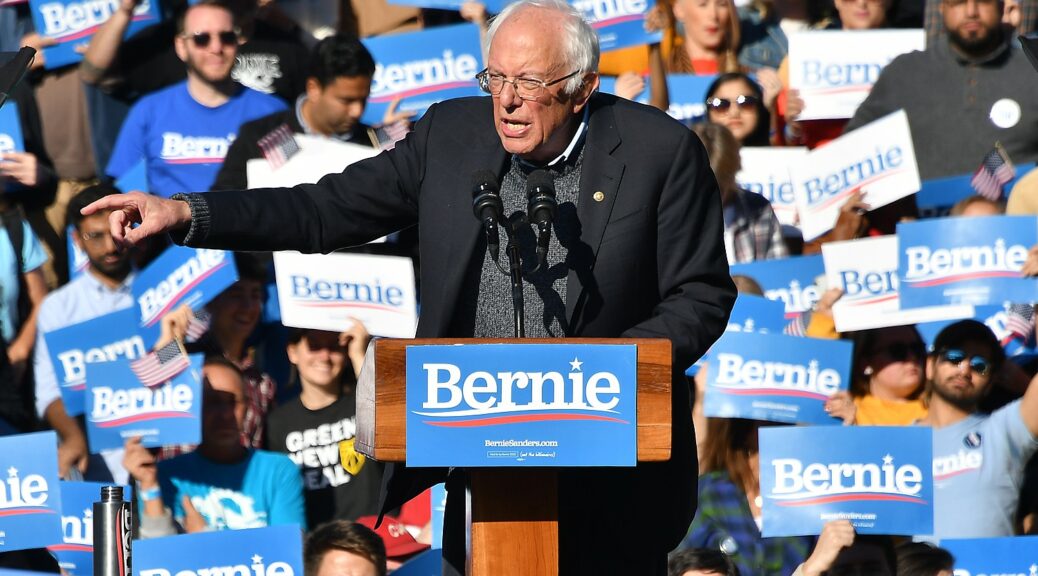
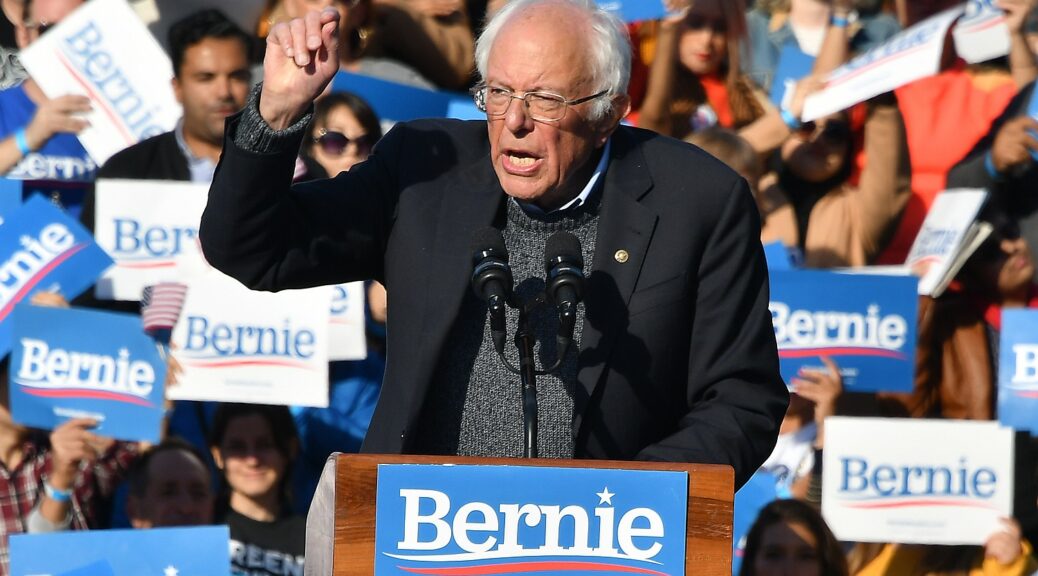
Pointing to how the park
had to be closed once 20,000 people had jammed in, leaving some 5,000 more to
take over the street, Senator Bernie Sanders declared, “There is no doubt
revolution will sweep the country, sweep Trump out of office and bring the country
the change long needed.
“This campaign is not
just about defeating most dangerous president in history, it’s about
transforming the country, creating economy and government that works for all of
us, not just 1%.
“For 45 years, class war has been waged against working families by the billionaire class and corporate elite. I have bad news for them: things will change. We will have government of working people, not 1%.”
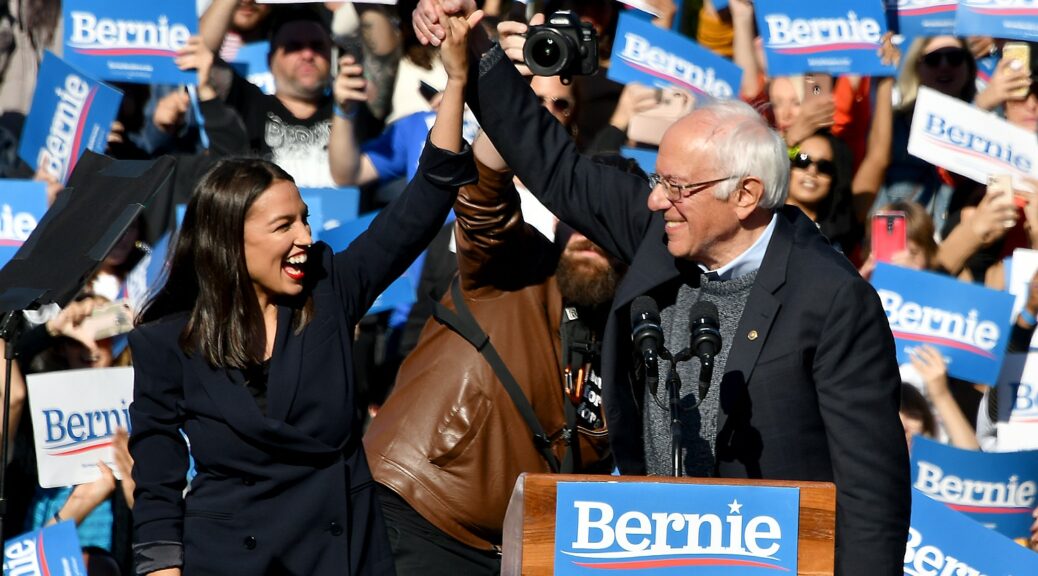
Sanders acknowledged the endorsement of Congresswoman Alexandria Ocasio-Cortez, saying she “is the youngest woman elected to Congress. In one year, it is hard to believe the degree she has transformed politics in America. She has electrified the country with the concept of Green New Deal. She has been an inspiration to millions of young people who now understand the importance of participation and standing up for justice.”
In his first major campaign rally since undergoing heart surgery, he said, “As far as my health, I am more than ready, more ready than ever to carry on. I am back.
“I was faced with adversity
over last couple of weeks, but Americans throughout country are facing own
adversity: 500,000 homeless. In NYC over 130,000 including 45,000 children
slept in homeless shelters last year. Half our population – working class – is
living paycheck ot paycheck, dealing with incredible stress of struggle just to
stay alive and feed family.
“87 million are
uninsured or underinsured, unable to go to doctor when get sick because the
United States maintains the most dysfunctional and cruel health care system in the
world.
“In a country that once
led the world in education, millions of working class families search for
affordable child care, thousands are unable to fulfill their dream because they
can’t afford outrageous cost of higher education, tens of millions struggle
with student debt.
“Millions of senior
citizens unable to afford prescription drugs – government allowed price fixing
and political bribery by the pharmaceuticals industry, while Trump and the
Republicans cut Social Security, Medicare, Medicaid.
[Chant: “We will win.”]
“Damn right,” Sanders
said. “Justice is coming to America.”
“Income inequality: people
are working two to three jobs to pay their bills, while 49% of all new money
goes to the top 1%.
“The richest people live
15 years longer than poorest; poverty is a death sentence. We will end that.
“The average white family owns 10 times more wealth
than blacks; a black woman is three times more likely to die; the rate of infant
mortality in black family is double white [boo].
“We have a broken and
racist criminal justice system: blacks get 19% more jail time for the same
crime; African Americans are jailed at 5 times the rate of whites.
“These enormous problems can’t be solved by
same old approach to politics. We tell corporate elite, enough is enough, no longer
accept greed, corruption, attacks against working class.
Brothers and sisters,
need new vision for America – that’s what this campaign is about.”
Quoting Nelson Mandela, “It
always seems impossible until it’s done,” Sanders said, “They want us to
believe real change is impossible – not just Republicans, Democrats on the Ohio
debate stage, too.
“We disagree on the kind
of America we will fight for:
“End all forms of
discrimination.
“Education, universal affordable child care, rebuild public
education that gives teachers respect, compensation they deserve, make public
colleges and universities tuition free, fund HBCUs, cancel all student debt.
“If Congress 11 years
ago could bail out crooks on Wall Street and provide zero interest loans to
banks and Trump and Republicans give over $1 trillion in tax breaks to big
corporations and the 1%, if we can spend $750 billion year on military [boo],
we can cancel all student debt with a modest tax on Wall Street.”
A Federal Jobs Guarantee program that pays good wages and affords union representation. “There is
an enormous amount of work to be done – we
need new skilled workers.15 million jobs rebuilding crumbling infrastructure;
expand child care, education, health care and services for senior citizens.
Health care:
“We must end the international embarrassment of the USA as the only major
country that doesn’t guarantee health care to all. End the absurdity of
spending twice as much per capita as every major country when 87 million are
uninsured or underinsured.30,000die each year for lack of care; 500,000 go
bankrupt [over medical bills]. We will pass Medicare for All single payer.
Green New Deal
to address climate change – the most comprehensive plan of any candidate. I
propose legislation holding the fossil fuel industry accountable. A Green New
Deal would create 20 million jobs as we transform away from fossil fuel to
energy efficiency and sustainable energy, and develop the tools we need to help
lead the world in combating climate change and save planet.
“A Green New Deal will
end environmental racism. It will clean the environment and end environmental
racism.
“In the richest country
in history of world, Alexandria and I believe every American should have
fundamental right to safe, decent affordable
housing. It is unacceptable and un-American for veterans and families with
young children to sleep on the streets.
“18 million families pay
over half of their income on housing, and wealthy real estate developers are
gentrifying neighborhoods.
“We will fund 10 million
apartments and homes, eliminate homelessness in America, end gentrification in
New York, Seattle, San Francisco and across America. I will create a National
Rent Control Standards, and provide $20 billion to the New York public housing
authority to repair, modernize, make accessible and access to hi speed
broadband.
“I will end broken,
racist criminal justice system in America,
end the embarrassment of having more people in jail in America than any country.
We spend $80 billion on jails and incarceration instead of investing in jobs
and education. I will end the war on drugs, legalize marijuana [big cheers]. End
the disgrace of 400,000 locked up because they are too poor to afford cash
bail. I will redefine criminal justice –it is absurd to jail someone for
selling marijuana when the crooks on Wall Street and at drug companies who
killed thousands are not facing criminal charges. Equal justice under law, rich
or poor.
“Instead of demonizing
undocumented immigrants, I will pass comprehensive
immigration reform and create a path to citizenship. On my first day, I will
sign executive order legalizing the status for 1.8 million DACA recipients and
extend it to parents. I will develop a humane border policy for those seeking
asylum; I won’t snatch babies from mothers, throw children in cages; I will end
ICE raids.
“Our administration will
take on the NRA, move aggressively to end
the epidemic of gun violence, pass commonsense gun legislation that an overwhelming
majority of Americans want. People who should not have guns will not have.
“Women have the right to
control own bodies, not politicians. I would never nominate anyone to Supreme
Court not 100% pro-Roe v Wade.”
As for how he would pay
for his progressive agenda, Sanders said, “I will tell the wealthiest they are
going to start paying their fair share of taxes; rescind the Trump tax breaks for billionaires and corporations, end
the insanity of tax breaks and subsidies to the fossil fuel industry. And we don’t’
have to spend more than next 10 nations combined on defense.”
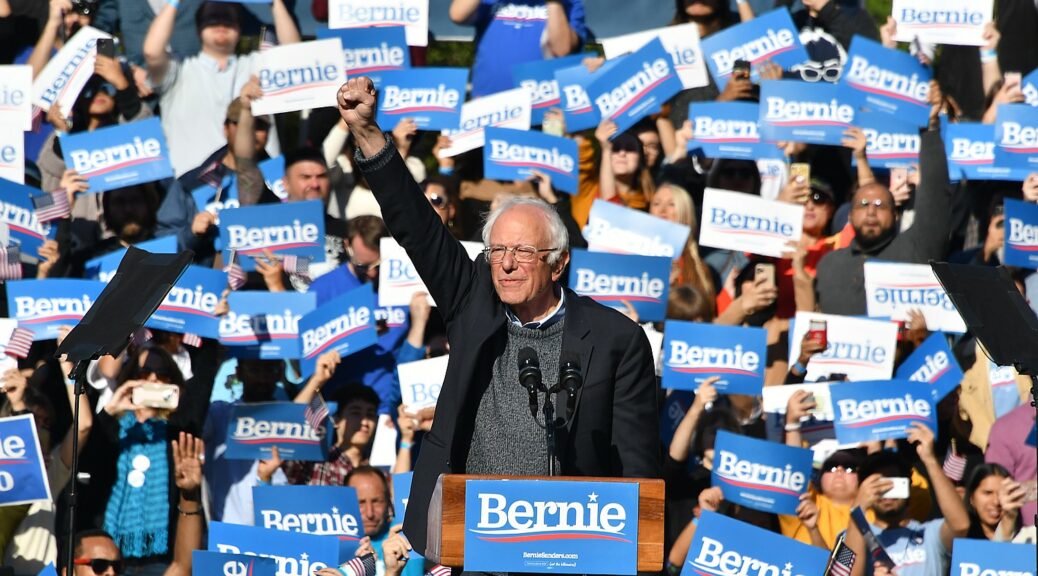
Amid
a sea of “Bernie” signs and chants of “We are the 99%” and “We will win”, Jane
Sanders, looked out over the massive crowd of 25,000 that overflowed
Queensbridge Park, beneath the Queensborough Bridge, onto the street, and said,
“Here are people from every background in the melting pot called New York. Most
of our ancestors came to America for a better life- mine from Ireland to escape
famine, poverty; Bernie’s from Poland escaping anti-Semitism, poverty.
“All believed they could have a better life. But in the last 40 years that
promise has eroded. Bernie plans to change that.” And, noting that this is his
first rally since his heart attack, she said to massive cheers, “Bernie is
back. He’s healthy and more than ready to continue his lifelong fight for
working people of America.”
Michael Moore: “This is not just about defeating Trump, but the
rotten system that gave us Trump’
Democracy,
said documentary filmmaker Michael Moore, is where “Everyone gets a seat at the
table, a slice of the pie and not fight for last crumbs. We don’t just need a
democratic politics, we need a democratic economy.”
Moore said, “The powers that be are very unhappy you’re here, that Bernie is
back. The pundits, the media [boo] are throwing everything out there to get
people to think differently:
“That Bernie is too old. Here’s what’s too old: the Electoral College, the
$7 minimum wage, women not being paid the same as men, thousands and thousands
of dollars of student debt, $10,000 deductible for health care, Super
Delegates, the fossil fuel industry – that’s what’s too old.
“It’s a gift we have 78-year-old American running for president. The
experience he has, what he has seen. He knows what a pay raise is, a pension –
look it up. What it looks like to defend against fascism and white supremacy,
to have the library open every day, what regulations are (Boeing). I’m glad
he’s 78.
“Health? We should be talking about the health of planet that’s dying [crowd
chants “Green New Deal”]; the health of kids in Flint Michigan, of 40 million
living in poverty, of young black males shot in back by police [chant Black
Lives Matter, Black Lives Count]. The only heart attack we should talk about is
the one Wall Street will have when Bernie wins.
“Next, that Bernie can’t win. He will win he has won 8 times to the House, 2
times to the Senate, 22 states in 2016 – almost half [chant “We will win.]. In
2016 [Democratic primary], Bernie won Michigan, Wisconsin, Minnesota. Of the 11
states that border Canada, Bernie won 10 (not NY) [boo] – we can fix that. Of
the 5 states that border the Pacific, he won 4; of 6 in New England, won 4;
Bernie won West Virginia – all 55 counties. According to a poll, he is #1 in
Nevada, a dead heat in Iowa, #1 in New Hampshire. He has raised more money from
more donors with the smallest amount.
“Why say Bernie can’t win? Because they are lying to the American people.
Bernie will win. [Chant, “We will win”]
“They say he can’t win because he is a [Democratic] socialist [yay!]. That’s
not going to fly. The American people have loved socialism for the last 70
years. Social Security, free public school, Medicare, Medicaid, fire department
– all are socialist.
“What they don’t want to do is tell the truth, what would happen if they
structured economic policies with democracy instead of capitalism. And this
isn’t capitalism of your great grandpa, this is a form of greed, selfishness so
that just few at the top succeed, the rest struggle paycheck to paycheck.
“Afraid taxes on rich will go up under Sanders? It was depressing during the
debate to watch Democrats go after Medicare for All. What would Franklin
Roosevelt say?
“They say we can’t afford it? How does Canada afford it? Every other
industrialized country has figured it out, why can’t we? They don’t want us to
figure it out.
“They say taxes will go up? That is part of the big lie – your taxes already
are up. We don’t call it a tax – in Canada, France, Finland they get free
health care, free or nearly free day care and college, but pay more in tax for
these things. The average American family pays $12,000 a year for child care,
$4000 in student loans, $6000 for deductibles, co-pays and premiums for health
care – too damn much – the average is $20,000/year but we don’t call it a tax.
“We are here in Queensbridge Park, Manhattan Island just across the river is
headquarters of corporate America [boo], corporate media [boo], Wall Street
[boo]
. So much misery has been visited on the American people from a half mile
away. It must stop.
“They must hear us at Goldman Sachs, Fox News, Trump Tower – the scene of
the crime.
“This [election] is not just about defeating Trump, but the rotten system
that gave us Trump…. beating Trump isn’t enough. We must crush Trump at
the polls, then fix the rotten corrupt economic system that gave us Trump.”
San Juan Mayor Cruz: “Move forward on the path of progressive agenda.
We are equal. We will win. We must win.”
Calling herself a “climate change survivor,” San Juan Mayor Carmen Yulín Cruz
Soto, attacked Trump for “killing us with inefficiency” that contributed to
3,000 Puerto Ricans dying after being smacked by back-to-back hurricanes.
“Why we have to win” she says is for Medicare-for-All, so no one has to
choose between groceries and insulin; to be able to afford college and life
after college, to “stand against those who earn $100 million and pay workers
starving wages; who take away women’s right to choose; the crime of separating
families at southern border; climate change.
“I am a climate change survivor. Climate change is real – 3000 Puerto Ricans
were killed because Trump Is a racist, xenophobic, paper throwing demagogue.” [Chant, “Lock him up.
Vote him out.”]
“The time is now to be fearless, relentless. I stand with Sanders – I respect
every other candidate but there is one name only who can get the job done. Be
united in one progressive voice, cross generations. Move forward on the path of
progressive agenda. We are equal. We will win. We must win.”
Nina Turner: “We must knock out Billionaire class that doesn’t
believe working people deserve a good life.”
National
co chair Nina Turner quoted Congresswoman Barbara Jordan who said American
people want an America as good as its promise. “That means an America where
people don’t die because have to ration insulin; hospitals are not closing;
where there is clean water, air, food; a justice system that doesn’t gun down
black folks in their houses.
“We need to clean up the criminal injustice system, Truth & Reconciliation
about the ravages of racism, a health care system not commodified. We need to
take care of Mother Earth.”
Alluding to the Democratic candidates, she said, “There are many copies but
only one original. We finally have somebody in our lifetime, his own special
interest is people of nation.
“We must knock out Billionaire class that doesn’t believe working people
deserve a good life.”
Congresswoman Alexandria Ocasio-Cortez: “We need a United States
truly, authentically operated, owned by working people.”
“We must bring revolution of working class to the ballot box of America,”
declared Congresswoman Alexandria Ocasio-Cortez. She prompted chants of “Green
New Deal,” saying, “Queensbridge Park is ground zero in the fight for public
housing and environmental justice.
“Last February I was working as a waitress in Manhattan, shoulder to
shoulder with undocumented workers who were putting in12 hour days with no
healthcare, not a living wage. We didn’t think we deserved it. That is the
script we tell working people: your inherent worth, value as human depends on
income another underpays. Turn around that basic language… We must change the
system that puts corporate profit ahead of all human and planetary costs.”
After her parents put all they had to buy a house, she said she learned from
an early age that “kids’ destiny determined by zipcode. Income inequality is a
fact of life of children.” Her father died of cancer when she was 18 and she
learned, “We all are one accident away from everything falling apart.
Sanders, she said, has fought for Planned Parenthood, for public education,
for CHIP, for single-payer health care, for gender rights, to end
“life-crushing” student debt.
“He didn’t do it because it was popular. He fought when it came at the
highest political cost in America.
“In 2016, he changed politics in America. We now have one of the best
Democratic fields – much because of Sanders.
“I’m in Congress today but one year ago I was a sexually harassed waitress.
This freshman class in overwhelming numbers rejected corporate money – thanks
to Bernie – endorsed Medicare for All, sees the climate crisis as an
existential threat.
“[In Congress] it is no joke to stand up against corporate power and
establishment interests. Arms are twisted, political pressure psychological and
otherwise applied to make you abandon the working class.
“I have come to appreciate the nonstop advocacy of Sanders. It’s not just
what he fights for but how: mass mobilization of the working class at the
ballot box, a movement (against) racism, classism of Hyde Amendment,
imperialist and colonial histories that lead to endless war and immigration
crisis.
“NYCHA is underfunded by $30 billion –that is not an accident, but an
outcome of system that devalues poor, Logic that got us into this won’t get us
out.”
Vice President Joe Biden announced a detailed plan to end the epidemic of gun violence. (c) Karen Rubin/news-photos-features.com
Former Vice President Joe Biden became the latest 2020 Democratic Candidate to come out with a detailed plan to end the epidemic of gun violence, once again proving that there is no shortage of pragmatic plans to solve the most intransient, important issues we face as a nation and a world – what has been lacking is political will. Have you seen a plan from Donald Trump? Me neither. – Karen Rubin, News-Photos-Features.com
This is from the Biden 2020 campaign:
Former
Vice President Joe Biden announced a detailed plan to end America’s gun
violence epidemic ahead of his participation in the Giffords
and March for Our Lives presidential gun safety forum in Las Vegas,
Nevada.
While Democratic leaders and the American public have reached an undeniable and
broad consensus about what needs to be done to address the gun violence
epidemic that has engulfed communities across America, Donald Trump, Mitch
McConnell, Congressional Republicans, and the NRA refuse to take any sensible
action. As president, Biden will not let anyone hold our nation’s children,
families, and communities hostage to the scourge of gun violence Americans face
every day.
Biden is introducing a bold, comprehensive plan that
not only calls for common sense gun safety reform, but outlines how he is going
to get it done for the American people. Biden’s plan calls for universal
background checks, closing loopholes in the background check system, banning
assault weapons and high capacity magazines, incentivizing states to establish
red flag law, holding gun manufacturers accountable, and investing in public
health research regarding the causes and prevention of gun violence.
As a leader who has championed common sense gun safety laws both as a United
States Senator and Vice President, Biden has unmatched substantive expertise on
addressing gun violence. He has been pushing the conversation on ending gun
violence for at least 25 years. And he has taken on the NRA twice and won –
first with the Brady Bill, which established firearms background check system,
and then securing the passage of a ten-year ban on assault rifles and high-capacity
magazines together with Senator Dianne Feinstein.
Based on his expertise and experience on this issue, Biden’s plan also includes
three standout sections that further demonstrate how he will end the gun
violence epidemic:
Addressing
the daily combination of guns and domestic violence;
Tackling
urban gun violence with targeted, evidence-based community interventions; and
Supporting
survivors of violence and their communities.
On
the second anniversary of the deadliest mass shooting in modern American
history, Vice President Biden released a statement decrying Donald Trump’s
continued inaction on sensible gun reform and his capitulation to the NRA.
Biden also declared, “We can beat the NRA; we can get those weapons of war
off our streets; and we can make sure our children don’t grow up in constant
fear. Real leadership — moral leadership — can get these reforms done.”
Today’s plan follows Biden for President’s release of “Purpose,” a video
of gun safety advocate Fred Guttenberg who credits Biden for helping inspire
his mission as a gun safety advocate after his 14-year-old daughter was killed
in Parkland, Florida.
FACT SHEET:
THE BIDEN PLAN TO END OUR GUN VIOLENCE EPIDEMIC
Vice President Joe Biden presents a plan to address gun violence as a public health epidemic. (c) Karen Rubin/news-photos-features.com.
Joe Biden knows that gun violence is a public health epidemic. Almost 40,000 people die as a result of firearm injuries every year in the United States, and many more are wounded. Some of these deaths and injuries are the result of mass shootings that make national headlines. Others are the result of daily acts of gun violence or suicides that may not make national headlines, but are just as devastating to the families and communities left behind.
Joe Biden has taken on the National Rifle Association (NRA) on the national stage and won – twice. In 1993, he shepherded through Congress the Brady Handgun Violence Prevention Act, which established the background check system that has since kept more than 3 million firearms out of dangerous hands. In 1994, Biden – along with Senator Dianne Feinstein – secured the passage of 10-year bans on assault weapons and high-capacity magazines. As president, Joe Biden will defeat the NRA again.
Joe Biden also knows how to make progress on reducing gun violence using executive action. After the tragedy at Sandy Hook Elementary School in 2012, President Obama tasked Vice President Biden with developing both legislative proposals and executive actions to make our communities safer. As a result of this effort, the Obama-Biden Administration took more than two dozen actions, including narrowing the so-called “gun show loophole,” increasing the number of records in the background check system, and expanding funding for mental health services.
It’s within our grasp to end our gun violence epidemic and respect the Second Amendment, which is limited. As president, Biden will pursue constitutional, common-sense gun safety policies. Biden will:
Hold gun manufacturers accountable. In 2005, then-Senator Biden voted against the Protection of Lawful Commerce in Arms Act, but gun manufacturers successfully lobbied Congress to secure its passage. This law protects these manufacturers from being held civilly liable for their products – a protection granted to no other industry. Biden will prioritize repealing this protection.
Get weapons of war off our streets. The bans on assault weapons and high-capacity magazines that Biden, along with Senator Feinstein, secured in 1994 reduced the lethality of mass shootings. But, in order to secure the passage of the bans, they had to agree to a 10-year sunset provision and when the time came, the Bush Administration failed to extend them. As president, Biden will:
Ban the manufacture and sale of assault
weapons and high-capacity magazines. Federal law prevents
hunters from hunting migratory game birds with more than three shells in their
shotgun. That means our federal law does more to protect ducks than children.
It’s wrong. Joe Biden will enact legislation to once again ban assault weapons.
This time, the bans will be designed based on lessons learned from the 1994
bans. For example, the ban on assault weapons will be designed to prevent
manufacturers from circumventing the law by making minor changes that don’t
limit the weapon’s lethality. While working to pass this legislation, Biden
will also use his executive authority to
ban the importation of assault weapons.
Regulate possession of existing assault
weapons under the National Firearms Act. Currently, the National Firearms
Act requires individuals possessing machine-guns, silencers, and short-barreled
rifles to undergo a background check and register those weapons with the Bureau
of Alcohol, Tobacco, Firearms and Explosives (ATF). Due to these requirements,
such weapons are rarely used in
crimes. As president, Biden will pursue legislation to regulate possession of existing
assault weapons under the National Firearms Act.
Buy back the assault weapons and
high-capacity magazines already in our communities. Biden will also
institute a program to buy back weapons of war currently on our streets. This
will give individuals who now possess assault weapons or high-capacity
magazines two options: sell the weapons to the government, or register them
under the National Firearms Act.
Reduce stockpiling of weapons. In order
to reduce the stockpiling of firearms, Biden supports legislation restricting
the number of firearms an individual may purchase per month to one.
Keep guns out of dangerous hands. The
federal background check system (the National Instant Criminal Background Check
System) is one of the best tools we have to prevent gun violence, but it’s only
effective when it’s used. Biden will enact universal background check
legislation and close other loopholes that allow people who should be
prohibited from purchasing firearms from making those purchases. Specifically,
he will:
Require background checks for all gun
sales. Today,
an estimated 1 in 5 firearms are
sold or transferred without a background check. Biden will enact universal
background check legislation, requiring a background check for all gun sales
with very limited exceptions, such as gifts between close family members. This
will close the so-called “gun show and online sales loophole” that the
Obama-Biden Administration narrowed, but which cannot be fully closed by
executive action alone.
Close other loopholes in the federal
background check system. In addition to closing the “boyfriend
loophole” highlighted below, Biden will:
Reinstate the Obama-Biden policy to keep
guns out of the hands of certain people unable to manage their affairs for
mental reasons, which President Trump reversed. In 2016, the
Obama-Biden Administration finalized a rule to make sure
the Social Security Administration (SSA) sends to the background check system
records that it holds of individuals who are prohibited from purchasing or
possessing firearms because they have been adjudicated by the SSA as unable to
manage their affairs for mental reasons. But one of the first actions Donald
Trump took as president was to reverse this rule.
President Biden will enact legislation to codify this policy.
Close the “hate crime loophole.” Biden will
enact legislation prohibiting
an individual “who has been convicted of a misdemeanor hate crime, or received
an enhanced sentence for a misdemeanor because of hate or bias in its
commission” from purchasing or possessing a firearm.
Close the “Charleston loophole.” The Charleston
loophole allows people to complete a firearms purchase if their background
check is not completed within three business days. Biden supports the proposal
in the Enhanced Background Checks Act of
2019, which extends the timeline from three to 10 business days.
Biden will also direct the Federal Bureau of Investigation (FBI) to put on his
desk within his first 100 days as president a report detailing the cases in
which background checks are not completed within 10 business days and steps the
federal government can take to reduce or eliminate this occurrence.
Close the “fugitive from justice”
loophole created by the Trump Administration. Because of actions by the
Trump Administration, records of almost 500,000 fugitives from justice who are
prohibited from purchasing firearms were deleted from the background check
system. The Biden Administration will restore these records, and enact
legislation to make clear that people facing arrest warrants are prohibited
from purchasing or possessing firearms.
End the online sale of firearms and
ammunitions. Biden
will enact legislation to
prohibit all online sales of firearms, ammunition, kits, and gun parts.
Create an effective program to ensure
individuals who become prohibited from possessing firearms relinquish their
weapons. Federal
law defines categories of individuals who are prohibited from purchasing or
possessing firearms, and the federal background check system is an effective
tool for ensuring prohibited persons cannot purchase firearms. But we lack any
serious tool to ensure that when someone becomes newly prohibited – for example,
because they commit a violent crime – they relinquish possession of their
firearms. There are some promising models for how this could be enforced. For example, California
has a mandatory process for ensuring relinquishment by any individual newly
subject to a domestic violence restraining order. As president, Biden will
direct the FBI and ATF to outline a model relinquishment process, enact any
necessary legislation to ensure relinquishment when individuals newly fall
under one of the federal prohibitions, and then provide technical and financial
assistance to state and local governments to establish effective relinquishment
processes on their own.
Incentivize state “extreme risk”
laws. Extreme risk laws, also
called “red flag” laws, enable family members or law enforcement officials to
temporarily remove an individual’s access to firearms when that individual is
in crisis and poses a danger to themselves or others. Biden will incentivize
the adoption of these laws by giving states funds to implement them. And, he’ll
direct the U.S. Department of Justice to issue best practices and offer
technical assistance to states interested in enacting an extreme risk law.
Give states incentives to set up gun
licensing programs. Biden will enact legislation to give
states and local governments grants to require individuals to obtain a license
prior to purchasing a gun.
Adequately fund the background check
system. President
Obama and Vice President Biden expanded incentives for
states to submit records of prohibited persons into the background checks
system. As president, Biden will continue to prioritize that funding and ensure
that the FBI is adequately funded to accurately and efficiently handle the NICS
system.
ADDRESSING
THE DEADLY COMBINATION OF GUNS AND DOMESTIC VIOLENCE
The statistics tell a devastating and overwhelming story. The likelihood that a
woman in a domestic violence situation will be killed increases by a factor of five if a
gun is nearby. Half of mass
shootings involve an individual shooting a family member or former intimate
partner. This deadly connection tragically impacts children as well: 86% of children
killed in shootings with four or more victims were involved in domestic or
family violence.
Biden recognizes that the gun violence and domestic violence epidemics are
linked and cannot be solved in isolation. Addressing the interconnectedness of
these challenges will be a core focus of Biden’s anti-violence work as
president.
The Violence Against Women
Reauthorization Act of 2019, which Leader McConnell refuses to bring
to the floor for a vote, includes a number of reforms to keep firearms out of
the hands of abusers. Senator McConnell should ensure this legislation gets
passed long before President Biden would take the oath of office. But if
McConnell refuses to act, Biden will enact legislation to close the so-called
“boyfriend loophole” and “stalking loophole” by prohibiting all individuals
convicted of assault, battery, or stalking from purchasing or possessing
firearms, regardless of their connection to the victim. This proposal is
modeled after existing laws in California,
Connecticut, Hawaii, Nevada, New York, and Pennsylvania. Biden also supports
enacting the proposal to
prohibit anyone under a temporary restraining order from purchasing or
possessing a firearm before their hearing.
In addition, President Biden will:
Establish a new Task Force on Online
Harassment and Abuse to focus on the connection between mass shootings, online
harassment, extremism, and violence against women. As President,
Joe Biden will convene a national Task Force with federal agencies, state
leaders, advocates, law enforcement, and technology experts to study rampant
online sexual harassment, stalking, and threats, including revenge porn and
deepfakes — and the connection between this harassment, mass shootings,
extremism and violence against women. The Task Force will be charged with developing
cutting-edge strategies and recommendations for how federal and state
governments, social media companies, schools, and other public and private
entities can tackle this unique challenge. The Task Force will consider
platform accountability, transparent reporting requirements for incidents of
harassment and response, and best practices.
Expand the use of evidence-based
lethality assessments by law enforcement in cases of domestic violence. Lethality
assessments, sometimes called “risk” or “danger” assessments, are a proven
strategy to help law enforcement officers identify domestic violence survivors
who are at high risk of being killed by their abusers. These survivors are then
connected with social service programs that can offer services and safety
planning. An evaluation of the Lethality Assessment Program (LEP) created by
the Maryland Network Against Domestic Violence showed promising results.
Increased federal funding will incentivize jurisdictions to take advantage of
implementing these programs more widely.
Make sure firearm owners take on the responsibility
of ensuring their weapons are used safely.
Put America on the path to ensuring that
100% of firearms sold in America are smart guns. Today, we have
the technology to allow only authorized users to fire a gun. For example,
existing smart gun technology requires a fingerprint match before use. Biden
believes we should work to eventually require that 100% of firearms sold in the
U.S. are smart guns. But, right now the NRA and gun manufacturers are bullying
firearms dealers who try to sell these guns. Biden will stand up against these
bullying tactics and issue a call to action for gun manufacturers, dealers, and
other public and private entities to take steps to accelerate our transition to
smart guns.
Hold adults accountable for giving
minors access to firearms. Biden supports legislation holding
adults criminally and civilly liable for directly or negligently giving a minor
access to a firearm, regardless of whether the minor actually gains possession
of the firearm.
Require gun owners to safely store their
weapons. Biden
will pass legislation requiring firearm owners to store weapons safely in their
homes.
Empower law enforcement to effectively
enforce our gun laws.
Prioritize prosecution of straw
purchasers. “Straw
purchasers” buy a firearm on behalf of an individual who cannot pass a
background check. Biden will end those loopholes by enacting a law to make all
straw purchases a serious federal crime and ensure the U.S. Justice Department
has sufficient resources to prioritize their prosecution.
Notify law enforcement when a potential
firearms purchaser fails a background check. Too often, when prohibited
persons attempting to buy a firearm fail a background check, state and local
law enforcement is never informed of the attempt. As president, Biden will
direct the FBI to set up a process to ensure timely notification of denials to
state and local law enforcement, and he’ll support legislation to
codify this process. This empowers law enforcement to follow up and ensure
prohibited persons do not attempt to acquire firearms through other means.
Require firearms owners to report if
their weapon is lost or stolen. Responsible gun owners have a responsibility
to inform law enforcement if their weapon is lost or stolen. Biden will enact
legislation to make this the law of the land.
Stop “ghost guns.” One way people
who cannot legally obtain a gun may gain access to a weapon is by assembling a
one on their own, either by buying a kit of disassembled gun parts or 3D
printing a working firearm. Biden will stop the proliferation of these
so-called “ghost guns” by passing legislation requiring that purchasers of gun
kits or 3D printing code pass a federal background check. Additionally, Biden
will ensure that the authority for firearms exports stays with the State
Department, and if needed reverse a proposed rule by
President Trump. This will ensure the State Department continues to block the
code used to 3D print firearms from being made available on the Internet.
Reform, fund, and empower the U.S.
Justice Department to enforce our gun laws. Biden will direct his
Attorney General to deliver to him within his first 100 days a set of
recommendations for restructuring the ATF and related Justice Department
agencies to most effectively enforce our gun laws. Biden will then work to secure
sufficient funds for the Justice Department to effectively enforce our existing
gun laws, increase the frequency of inspections of firearms dealers, and repeal
riders that get in the way of that work.
Direct the ATF to issue an annual
report on firearms
trafficking. This report will provide officials with critical
information to better identify strategies for curbing firearms trafficking.
TACKLE URBAN
GUN VIOLENCE WITH TARGETED, EVIDENCE-BASED COMMUNITY INTERVENTIONS
Daily acts of gun violence in our communities may not make national headlines,
but are just as devastating to survivors and victims’ families as gun violence
that does make the front page. And, these daily acts of gun violence
disproportionately impact communities of color. But there is reason to be
optimistic. There are proven strategies for
reducing gun violence in urban communities without turning to incarceration.
For example, Group Violence Intervention organizes
community leaders to work with individuals most likely to commit acts of gun
violence, express the community’s demand that the gun violence stop, and
connect individuals who may be likely perpetrators with social and economic
support services that may deter violent behavior. These types of interventions
have reduced homicides by as much as 60%. Hospital-Based Violence
Intervention engages young people who have been injured by gun
violence while they are still in the hospital, connecting them to social and
economic services that may decrease the likelihood they engage in or are
victims of gun violence in the future. Biden will create a $900 million, eight-year
initiative to fund these and other types of evidence-based
interventions in 40 cities across the country – the 20 cities with the highest
number of homicides, and 20 cities with the highest number of homicides per
capita. This proposal is estimated to save more than 12,000
lives over the eight-year program.
Dedicate the brightest scientific minds
to solving the gun violence public health epidemic. In 2013, President Obama issued a memorandum clarifying
that a longstanding appropriations rider that prohibited the Centers for
Disease Control and Prevention (CDC) and other federal scientific agencies from
using federal dollars to “advocate or promote gun control”
does not prohibit those agencies from researching the causes and prevention of
gun violence. The National Institutes of Health (NIH) subsequently embarked on funding
some of this research, though Republican leadership in Congress refused to
appropriate any funds to the CDC for this work. Biden will call for Congress to
appropriate $50 million to
accelerate this research at the CDC and NIH.
Prohibit the use of federal funds
to arm or train educators to discharge firearms. We should be passing rational gun laws, not requiring educators
who already have too much on their plates to also protect the safety of their
students. Biden supports barring states from using federal dollars to arm or
train educators to discharge firearms.
Address the epidemic of suicides
by firearms. Biden believes any plan to
address the gun violence epidemic must address suicides by firearms, which
account for 6 in 10 gun-related
deaths but are often left out of the conversation. Many of the policies noted
above – including safe storage requirements and extreme risk protection orders
– will have a serious impact on efforts to reduce gun violence. But there’s so
much more we need to do to support people experiencing suicidal ideation. In
the months ahead, Biden will put forward a comprehensive plan to improve access
to mental health services.
SUPPORTING
SURVIVORS OF VIOLENCE AND THEIR COMMUNITIES
Violence causes ripples of trauma throughout our communities, impacting not
just the victims of violence but also their communities and first responders.
Fear of school shootings is having a noticeable impact on
the mental health of Gen Z. Intimate partner violence is linked to
depression, post-traumatic stress, and other mental health challenges among
survivors. And, this trauma can be intergenerational. Science now shows that young
children who witness violence – including in their home – literally alters the
parts of their brains that affect “reasoning, planning, and behavioral
control.”
We need to reduce violence to prevent trauma from happening in the first place.
But we also must treat the resulting trauma as a serious crisis in its own
right.
As president, Biden will:
Make federal programs more
trauma-informed. During his first 100 days, Biden will direct his
Cabinet to conduct a review of all federal programs that directly serve
communities likely to experience violence and identify reforms to make sure
those programs effectively address resulting trauma. Biden will then invest
significant federal funds in expanding and improving the federal government’s
support for trauma-informed and culturally responsive care.
Create a network of trauma care centers. Biden will
bring together offices within the federal government to establish specialized
trauma care centers for survivors of violence, with a special focus on
survivors of domestic and sexual violence. Domestic violence services are
focused on meeting the emergency needs of survivors, including safety planning
and crisis intervention. As a result, frontline providers lack the resources
they need to offer therapeutic services to help survivors heal from trauma.
These trauma care centers will be flexible in meeting the needs of communities,
and could be housed at rape crisis centers, domestic violence programs,
universities, and existing mental health centers.
Train health care and other service
providers in trauma-centered care. To prevent
revictimization and secondary trauma, Biden will align training efforts
throughout relevant federal programs to include a focus on understanding the
traumatic effects of violence, providing appropriate care to avoid furthering
the trauma, linking survivors with evidence-based trauma therapies, and
reducing myths about domestic and sexual violence. This will be accomplished
through agency directives, policy guidance, and special conditions for grantees
and contractors.
For more on Vice President
Biden’s plan, see HERE.
There was the sense at the United
Nations Climate Action Summit that took place September 23, that the Trump
Administration – but not the United States – is irrelevant to the crusade to
mitigate the most devastating impacts of climate change. Indeed, the rest of
the world, American states, localities and businesses, is forging full steam
ahead to prevent the earth from warming more than 1.5 degrees Celsius – and all
the devastation that would result – within the next 12 years.
“We know why tackling climate change is important”, said Deputy
Secretary-General Amina Mohammed before the Climate Action Summit began. “The
devastation wreaked by Dorian on the Bahamas, what the Secretary-General called
a Category Hell hurricane, is a glimpse into one aspect of a future powered by
climate change – a future with super storms that grow in intensity and
frequency, where those countries with the lowest greenhouse gas emissions,
continue to feel the worst impacts of the planet’s rising temperatures.”
“The summit will present practical and new measures, speed transition from
coal to clean energy, cut pollution harming health, protect nature, unlock the potential
of nature to deliver on climate, create cleaner greener waste, speed up transition
from grey to green economies, mitigate impacts of climate change, leave no one
behind, transition must be ramped up now,” she said at a press briefing before
the summit.
The Climate Action Summit was
designed to showcase only the boldest, transformative actions – specifics, not
hyperbole or speechifying.
“We will see what climate leadership
looks like – progress toward carbon neutral future.”
Trump snubbed the summit, choosing instead to host a Religious Freedom Forum, and highlighted America’s military might but did not mention climate change once, in his address to the General Assembly. But just about every other leader did refer to the critical need and their commitment to climate action in their speech.
“Can
we afford to ignore the crisis of extinction, or will we do the right thing,
support energies and talents of all the world’s youth and drive all the
economies forward to fair and inclusive society?” Abdullah
II bin Al–Hussein, King of Jordan, declared. “What will our world
become if we do not work together for a healthy and safe climate. We already
know the dangers of climate change – how can we excuse [inaction]”
Kolinda Grabar-Kitarović, president of
Croatia, declared, “Climate
change- rising sea levels – is the greatest threat. Without protection of
waters and marine life, there will be nothing to leave.”
Russia, one of the few holdouts and
one of the world’s largest carbon emitters with an economy largely based on
fossil fuel extraction and export, used the occasion to officially adopt the
Paris Climate Agreement. The document signed by Prime Minister Dmitry Medvedev says
Russia will now “allocate financial resources… to developing countries
for prevention and adaptation to climate change. The threat of climate change
is (the) destruction of the ecological balance, increased risks for successful
development of key industries… and most importantly, threat to safety of
people living on permafrost and increase of natural disasters.”
Governor Janet Mills of Maine challenged
leaders of the world to take action against climate change, saying the State of
Maine will do its part and announcing that she has signed an Executive Order
committing the state to carbon neutrality by 2045.
Separately,
Governor Andrew M. Cuomo announced
New York State is pursuing partnerships with Ireland and Denmark that will lead
to improved electric infrastructure and the advancement of more renewable
energy sources, including offshore wind. The agreements were announced during
Climate Week and will advance both New York’s nation-leading plan to combat
climate change and the Governor’s Green New Deal agenda. This summer,
Governor Cuomo signed the Climate Leadership and Community Protection Act,
which mandates New York’s power be 100 percent clean and carbon-free by 2040. New
York is one of 25 states including California that have formed the US Climate
Alliance (USclimatealliance.org) to
uphold the Paris Agreement. – collectively representing over 50% of the US
population and 60% of the United States’
GDP.
Mohammed acknowledged that the transition “is not one-size fits all
– in some countries, renewable energy is already cheaper than coal; others need
funding options. It’s not enough that we stop funding coal and actively move to
making renewable possible –there is tension there. We must be realistic – you can’t
click fingers and create a renewable grid overnight but we also determined there
are over 100 coal plants in pipeline and emissions are still rising – that pathway
is a serious threat to human survival.”
Informed by the perspectives of more than 130 Governments, a newly issued
report, The Heat is On – Taking Stock of Global Climate Ambition,
reveals that business as usual, is not good enough and requires more
mitigation, adaptation and finance – all which must be done quickly.
“When I look back on this Climate
Action Summit, I want us to see it as a sling shot – that helped to change our
common trajectory towards sustainability”, said Ms. Mohammed, building trust
“between this generation of adults and the next – between our children and
ourselves – that we are all working together to our fullest potential to tackle
the climate emergency”.
She recapped that the Intergovernmental Panel on Climate Change report
stressed the need to ensure that “the global temperature rise does not go
beyond 1.5 degrees Celsius” through “cutting emissions by 45 per cent by 2030”,
warning that “we have very little time to take the decisions needed to get
there”.
Those decisions should be set out in each country’s Nationally Determined
Contributions (NDCs) on climate change, which she called “the cornerstone of
the Paris
Agreement”.
“The world’s poorest 1 billion, we
are least responsible for climate crisis – emitting less than 1% of global
emissions, yet, our small gross national
incomes and limited resources means we suffer the most,” said Sonam P.
Wangdi, Secretary of the National Environment Commission, Bhutan.
The United
States, with only 5% of the population is responsible for 25% of carbon
emissions, and the present administration, which hides behind science denial in
order to preserve the status quo of their economic systems, will have a huge
impact on whether the efforts made by 190 countries succeed in preserving the
planet. But though the government was a no-show at the Climate Action Summit,
states, localities and business interests were on hand, offering their
commitments so that the United States will achieve the goals of the Paris
Climate Agreement led by Obama and rejected by Trump.
Indeed, it
was just as if the world has moved on, rendering the United States irrelevant.
The thought of holding the US accountable for reparations when an island nation
like the Bahamas is devastated by Hurricane Dorian, was discounted. “Who would
enforce a decision?” said Wilfred P.
Elrington, Minister of Foreign Affairs, Belize, a statement made from the
experience of Trinidad & Tobago which won a judgment against the US in the
World Trade Organization that has yet to be paid.
Small Island
Developing States are stepping up and striking back.
“The recent activity of Dorian in Bahamas – devastated that island, and unless you really have experience this kind of devastation it is hard to appreciate how difficult, how absolutely destructive it is,” said Elrington, recalling his own terror at the age of 4 years old when a Category 4 hurricane hit. “From one moment being in a safe, secure structure or building, the next to be completely out in environment with absolutely nothing – you have absolutely nothing – no clothes, medicine, food, completely at the mercy of God. We think of the damage to human beings and the destruction, but equally tragic is the destruction done to floral and fauna – exceedingly depressing to see the entire landscape devastated and and of course, does not come back quickly.”
Apart from saving habitats, climate
mitigation and adaptation has the added benefit of addressing poverty and
inequality, in part perpetuated by the cost – and reliance –on fossil fuels as
the basis for an economy. Shifting to clean, renewable like solar, wind, water,
geothermal, lowers the expenditure and increases the independence from
concentrated utility companies. Eliminating fossil fuels also reduces pollution
and improves health.
But with
worldwide pressure – by citizens and consumers – the private sector is being
forced to take action as well. Sixteen
countries are phasing out gasoline-powered cars over the next several years,
rendering US-manufactured cars unexportable, regardless of how Trump attempts
to overturn California’s call for higher fuel efficiency standards and lower
emissions.
Coalition for Climate Resilient Investment
Just announced, “first of its kind,” Coalition for Climate Resilient Investment “will transform mainstream infrastructure investment and drive a permanent shift toward climate resilient economy for all countries, but especially for low and mid income countries which bear the brunt,” said John Haley, CEO, Willis Towers Watson, one of the world’s largest insurance companies. One of the ways it will change the way money is invested in business ventures and infrastructure is by creating new data analytics that incorporate the cost-benefit of climate adaptation, mitigation and resiliency into the model. “Rapid advancement in data analytics, coupled in momentum of regulatory initiatives and growing pressure from global society is what allows this initiative to be as ambitious as it is.”
He said, “I come from the world of
insurance. We work on a lot of analytical tools to price the effect of climate
disasters. We will take those kind of analytical tools and build them into
understanding what kind of investments we should make in infrastructure – measure
the impacts of climate on infrastructure everywhere in the world – more
important in vulnerable communities but everywhere in the world [including US,
where former Treasury Secretary Henry Paulson has been saying the very thing in
pushing for a carbon tax].
“Pricing the risks
posed by climate change will create opportunities to build a network of
resilient infrastructure in high, medium and low-income countries, enabling us
to better prevent future human and financial disasters.”
The coalition will
develop case studies to build the business case, and identify the critical
enabling environments, for climate resilient infrastructure investment.
By the end of
2020, analytical tools including a physical risk pricing framework and
methodology to prioritize national resilient investment needs, will be
developed, alongside a range of instruments to prevent capital flight from
vulnerable regions.
Biggest Names in Video Game Industry
Commit to Climate Action
And,
in a major mind-blowing commitment, 21 of the biggest names in the video games
industry, with a combined audience of 970 million players, formally committed
to harness the power of their platforms to take action in response to the
climate crisis. Combined, these commitments will result in a 30 million ton
reduction of CO2 emissions by 2030, will see millions of trees planted, new
“green nudges” in game design and improvements to energy management, packaging,
and device recycling. Equally significantly, under
the banner of Playing for the Planet Alliance, many will incorporate
sustainability and climate action into the games, themselves, letting gamers,
for example, toy with building sustainable societies.
These
voluntary commitments were announced during the UN Climate Action Summit. CEOs
from 14 platforms and games makers, including Sony Interactive Entertainment,
Microsoft, Google Stadia, Rovio, Supercell, Sybo, Ubisoft and WildWorks, were
present to showcase their commitments. The Alliance intends to support
companies in sharing learning and monitoring progress on the environmental
agenda.
A
full list of the announcements and commitments made at the Climate Summit can
be found at www.un.org/climatechange
Youth leaders including Greta Thunberg, who in an impassioned address to the UN Climate Action Summit that followed a worldwide Climate Strike that brought out 4 million people worldwide and an unprecedented UN Youth Climate Summit, said, “We will be watching,” drove home the urgency of greater action by leaders, and their determination to hold leaders to account.
By Karen Rubin, News-Photos-Features.com
Clearly the world’s leaders are finally listening to the rising tide of civic actions, including an outpouring of youth activists, not asking but demanding action on climate change – preventing the planet from heating more than 1.5 degrees Celsius, mitigating and adapting to the impacts of global warming, from rising sea levels, more frequent and violent superstorms, wildfires, droughts, floods and famines, extinction of wildlife and plants due to lost habitats, and the health impacts due to the spread of epidemics, disease and illness.
Major announcements by government and private sector
leaders during the course of the day-long United Nations Climate Action Summit,
September 23, boosted climate action momentum, and demonstrated growing
recognition that the pace of climate action must be rapidly accelerated.
77 countries committed to cut greenhouse gas
emissions to net zero by 2050, while 70 countries announced they will either
boost their national action plans by 2020 or have started the process of doing
so.
Over 100 business leaders delivered concrete actions
to align with the Paris Agreement targets, and speed up the transition from the
grey to green economy, including asset-owners holding over $2 trillion in
assets and leading companies with combined value also over $2 trillion.
Many countries and over 100 cities – including many
of the world’s largest – announced significant and concrete new steps to combat
the climate crisis.
Many smaller countries, including Small Island
Developing States and Least Developed Countries, were among those who made the
biggest pledges, despite the fact they have contributed the least to the
problem.
UN Secretary-General António Guterres, closing the
Summit, said “You have delivered a boost in momentum, cooperation and ambition.
But we have a long way to go. We need more concrete plans, more ambition from
more countries and more businesses. We need all financial institutions, public
and private, to choose, once and for all, the green economy.”
Youth leaders
including Greta Thunberg, who in an impassioned address that followed a
worldwide Climate Strike, said, “We will be watching,” drove home the urgency
of greater action by leaders, and their determination to hold leaders to
account.
• France announced that it would not enter into any
trade agreement with countries that have policies counter to the Paris
Agreement.
• Germany committed to carbon neutrality by 2050
• Russia, one of the few holdouts
and one of the world’s largest carbon emitters, with an economy largely based
on fossil fuel extraction and export, adopted the Paris Climate Agreement.
• 12 countries made financial
commitments to the Green Climate Fund, the official financial mechanism to
assist developing countries in adaptation and mitigation practices to counter
climate change. This is in addition to recent announcements from Norway,
Germany, France and the United Kingdom who have recently doubled their present
contributions.
• The United Kingdom made a major additional
contribution, doubling its overall international climate finance to L11.6
billion for the period from 2020 to 2025.
• India pledged to increase renewable energy
capacity to 175gw by 2022 and committed to further increasing to 450GW, and
announced that 80 countries have joined the International Solar Alliance.
• China said it would cut emissions by over 12
billion tons annually, and would pursue a path of high quality growth and low
carbon development.
• The European Union announced at least 25% of the
next EU budget will be devoted to climate-related activities.
• The Russian Federation announced that they will
ratify the Paris Agreement, bringing the total number of countries that have
joined the Agreement to 187.
• Pakistan said it would plant more than 10 billion
trees over the next five years. On unprecedented levels of private sector
action:
• A group of the world’s largest asset-owners —
responsible for directing more than $2 trillion in investments — committed to
move to carbon-neutral investment portfolios by 2050.
• 87 major companies with a combined market
capitalization of over US$ 2.3 trillion pledged to reduce emissions and align
their businesses with what scientists say is needed to limit the worst impacts
of climate change—a 1.5°C future.
• 130 banks – one-third of the global banking sector
– signed up to align their businesses with the Paris agreement goals On
transitioning from brown to green energy:
• Michael Bloomberg will increase the funding and
geographic spread of his coal phase out efforts to 30 countries. Already, his
work has helped to close 297 out of 530 coal plants in the US.
• Countries, including France and New Zealand,
announced that they will not allow oil or gas exploration on their lands or
off-shore waters.
• Heads of State from Finland, Germany, Greece,
Hungary, Ireland, Italy, Netherlands, Portugal, and Slovakia, are among those
that announced that they will work to phase out coal. The Republic of Korea
announced it would shut down four coal-fired power plants, and six more will be
closed by 2022, as well as the doubling of its contribution to the Green
Climate Fund.
• The Summit also delivered critical platforms for
improving energy efficiency and reducing the growing energy needs for cooling,
with the “Three Percent Club” coalition working to drive a three percent annual
global increase in energy efficiency and the Cool Coalition setting ambitious
national cooling targets for its members with the potential to deliver up to 1
degree on the pathway to a 2050 net zero carbon world. On scaling up financing
and unlocking barriers to funds:
• Many countries announced new contributions to the
Green Climate Fund, the official financial mechanism to assist developing
countries in adaptation and mitigation practices to counter climate change,
with several countries, including France, Germany, Norway and the United
Kingdom, announcing that they would double their present contributions.
• Further, the Climate Investment Platform,
officially announced during the Summit, will seek to directly mobilize US$ 1
trillion in clean energy investment by 2025 in 20 Least Developed Countries in
its first year.
• The African Development Bank said it was doubling
its climate-related financing to $25 billion by 2025. Funding will go to
projects including a multi-billion initiative to develop 10,000 megawatts of
solar power from the Sahara that will provide electricity to 250 million
people. “What
a difference a green, more prosperous, resilient, peaceful and secure future
will mean,” said Dr. Akinwumi Adesina, President, African
Development Bank.
• Coalition for Climate Resilient Investment – just announced and the first of its kind – “will transform mainstream infrastructure investment and drive a permanent shift toward climate resilient economy for all countries, but especially for low and mid income countries which bear the brunt” by providing data analytical tools to price in the cost of climate resiliency into investments, said John Haley, CEO, Willis Towers Watson, one of the world’s largest insurance companies.
• The state of Maine committed to carbon
neutrality by 2045.
• Summit initiatives were designed to ensure the
actions undertaken would be fair for all, supporting jobs and clear air for
better health, and protect the most vulnerable, as well as new initiatives on
adaptation, agriculture and early warning systems that will protect 500 million
additional people against the impacts of climate change.
New initiatives announced have been designed to be scaled up to deliver
impact at the global scale needed. The Secretary-General urged governments,
businesses and people everywhere to join the initiatives announced at the
Summit, and promised to “keep pushing” for greater ambition and action.
The Secretary-General committed the UN system to
support implementation of plans presented at the Summit, with an initial report
to be delivered at COP25 in Santiago, Chile.
A full list of the announcements and commitments made at the Climate Summit can be found at www.un.org/climatechange
There couldn’t be more divergently contrasting speeches between that of UN Secretary-General Antonio Guterres and US President Donald Trump, even more stark by coming virtually on heels of each other – or then again, between Trump and every other head of state and minister who came to the podium.
“I have the privilege of addressing you today as the elected leader of a nation that prizes liberty, independence and self-government above all,” Trump declared. “The United States, after having spent over two and a half trillion dollars since my election to completely rebuild our great military, is also by far the world’s most powerful nation.”
Coming
immediately after the Youth Climate March on Friday which brought out some 4
million people around the world to demand the world’s leaders act to save the
habitability of the planet, and the United Nation’s Climate Summit in which
over 100 nations (not the United States, but states and regions were
represented) gave specifics on programs and achievements in order to prevent
the earth from heating more than 1.5 degrees more, Trump boasted that the United
States has become the world’s “Number One Producer of Oil and Gas.”
In
a body created out of the ashes of two devastating world wars to prevent such
global conflicts, Trump declared, “The
future does not belong to globalists. The future belongs to patriots. The
future belongs to sovereign and independent nations who protect their citizens,
respect their neighbors and honor the differences that make each country
special and unique.”
Reprising and expanding upon his America First speech he delivered to the United Nations last year, he attacked anything that might smack of multilateralism, and urged the rest of the world to follow suit.
“If you want democracy, hold on to your sovereignty. And if you want peace, love your nation,” he declared – a statement that defies any reading of history.
Yet, Trump insisted the nations of the world adopt the
Trumpian view of “Freedom of Religion”.
“This fundamental right is under growing threat around the
world. Hard to believe, but 80 percent of the world’s population lives in
countries where religious liberty is in significant danger or even completely
outlawed. Americans will never fire or tire in our effort to defend and promote
freedom of worship and religion. We want and support religious liberty for all.
“Americans will also never tire of defending innocent life,”
he said. “We are aware that many United Nations projects have attempted to
assert a global right to taxpayer funded abortion on demand right up until the
moment of delivery. Global bureaucrats have absolutely no business attacking
the sovereignty of nations that wish to protect innocent life. Like many
nations here today, we in America believe that every child born and unborn is a
sacred gift from God.”
Defend innocent life – except when it comes to guns.
“There is no circumstance under which the United States
will allow international interests to trample on the rights of our citizens,
including the right to self-defense. That is why this year I announced that we
will never ratify the U.N. Arms Trade Treaty, which would threaten the
liberties of law-abiding American citizens. The United States will always
uphold our constitutional right to keep and bear arms. We will always uphold
our Second Amendment. The core rights and values America defends today were
inscribed in America’s founding documents.
“Our nation’s founders understood that there will always be
those who believe they are entitled to wield power and control over others.
Tyranny advances under many names and many theories, but it always comes down
to the desire for domination. It protects not the interests of many, but the privilege
of few. Our founders gave us a system designed to restrain this dangerous
impulse. They choose to entrust American power to those most invested in the
fate of our nation: a proud and fiercely independent people.”
Each year, Trump has to find a boogey-man to attack.
In his first address, he lambasted North
Korea’s “Rocket Man” Kim Jong-Un; last year he went after Venezuela. This year,
he declared “One of the greatest security threats facing peace-loving nations
today is the repressive regime in Iran. The regime’s record of death and
destruction is well known to us all. Not only is Iran the world’s number one
state sponsor of terrorism, but Iran’s leaders are fueling the tragic wars in
both Syria and Yemen.”
As the United Nations raises alarms about the greatest
numbers of displaced people around the globe since World War II, Trump tripled
down on his hostility and hatred for refugees, asylum-seekers and migrants.
“To anyone conducting crossings of our border illegally,
please hear these words: Do not pay the smugglers. Do not pay the coyotes. Do
not put yourself in danger. Do not put your children in danger. Because if you
make it here, you will not be allowed in. You will be promptly returned home.
You will not be released into our country as long as I am president of the
United States. We will enforce our laws and protect our borders. For all of the
countries of the western hemisphere, our goal is to help people invest in the
bright futures of their own nation. Our region is full of such incredible
promise, dreams, waiting to be built, and national destinies for all, and they
are waiting also to be pursued.” The United States rejected the United Nations
Global Migration Compact.
Trump’s speech to the General Assembly, just as his remarks
to the “Freedom of Religion” forum the day before, was tailored for his base
(and helps explain his eagerness to pal around with India’s Prime Minister
Modi, attending the 50,000-strong rally in Houston, despite Modi’s harsh
assault on Muslim-majority Kashmir – it is his ticket to the Indian-American
vote). In this context, his attack on Venezuela served as his foil for
attacking Democrats and their radical ideas about income inequality and
universal health care.
“One of the most serious challenges our country has faced
is the specter of socialism. It’s the wrecker of nations and destroyer of
societies. The events in Venezuela reminds us all that socialism and communism
are not about justice. They are not about equality, they are not about lifting
up the poor, and they are certainly not about good of the nation. Socialism and
communism are about one thing only: power for the ruling class. Today I repeat
a message for the world that I have delivered at home: America will never be a
socialist country. The last century socialism and communism killed 100 million
people.”
Guterres
began his speech noting that the United Nations Charter’s first words are “We
the Peoples” “It puts people at the center of our work, everyday,
everywhere…. people with rights. Those rights are an endowment.”
“Machines
take their jobs. Traffickers take their dignity. Demagogues take
their rights. Warlords take their lives. Fossil fuels take their
future”, he declared. “And because people still believe in the United Nations,
we, the leaders, must deliver. They believe as leaders we will put people
first, because we the leaders must deliver for We the Peoples…People have a
right to live in peace.”
He
cited promising developments, such as peaceful elections in Madagascar and the
Democratic Republic of the Congo; the Greece-North Macedonia name dispute
resolution; political dialogue in Sudan; and an agreement in Syria. But he
spoke of persisting conflicts, terrorism and “the risk of a new arms race
growing” across the world, and lamented unresolved situations in Yemen, Libya
and Afghanistan; an evasive solution to the Israel-Palestine conflict;
Venezuelan displacements; and “the alarming possibility of armed conflict in
the Gulf”.
And without actually naming the United States and China, he raised alarm over “a new risk looming on the horizon: the possibility of a great fracture, the world splitting in two, with the two largest economies on earth creating two separate and competing worlds, each with their own dominant currency, trade and financial rules, their own internet and artificial intelligence capacities, and their own zero sum geopolitical and military strategies”.
“We must do everything possible to avert the Great Fracture
and maintain a universal system…with strong multilateral institutions”, he
stressed.
And
he, like every other leader, pointed to the need to aggressively confront
Climate Action. Referencing Monday’s Climate
Action Summit, the UN chief underscored the importance of
adaptation.
“Even
our language has to adapt: what was once called ‘climate change’ is now truly a
“climate crisis” … and what was once called ‘global warming’ has more
accurately become ‘global heating’,” he said.
Guterres
referred to Hurricane Dorian in the Bahamas as he spoke of “unprecedented
temperatures, unrelenting storms and undeniable science”.
Though
“not fast enough”, the world is starting to move “in the right direction” –
away from fossil fuels and towards a green economy, he said.
Turning
to fundamental freedoms, the UN chief said, “we are at a critical juncture
where advances made across the decades are being restricted and reversed,
misinterpreted and mistrusted”.
The
Secretary-General pointed to new forms of authoritarianism; narrowing civic
spaces; the targeting of activists, human rights defenders and journalists; and
expanding surveillance systems that are “shredding the fabric of our common
humanity”.
And in direct contradiction to the Trumpian vision of the
world order, Guterres said that anything that is done to uphold security
and human rights “helps deliver sustainable development and peace”.
“In
the 21st century, we must see human rights with a vision that speaks to each
and every human being and encompasses all rights”, lauding the 2030 Agenda for Sustainable Development as
a tool for social protection, a sustainable environment, education and decent
jobs.
These
themes were echoed by just about every other leader and representative – except
for Donald Trump. Indeed, the rest of the world seems more resolved than ever
to work together – basically ignoring the United States.
That is fine with Trump, who thinks of the rest of the world as children trying to tap their Dad for money.