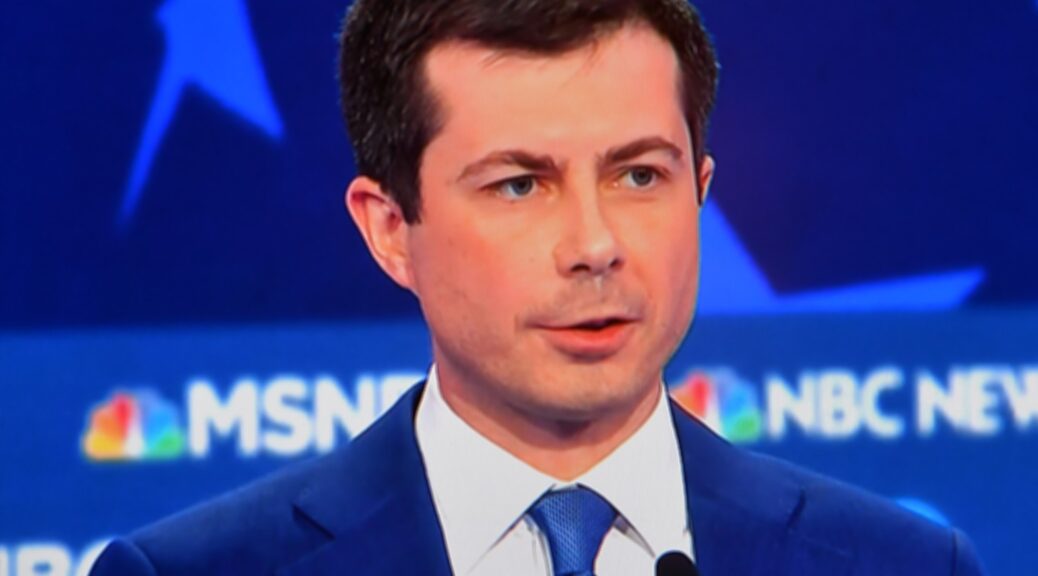
The vigorous contest of Democrats seeking the 2020 presidential nomination has produced excellent policy proposals to address major issues. Pete Buttigieg, stepping up his progressive bona fides, offered his plan to rebalance the economy in favor of American families, while ensuring the largest corporations and the wealthiest Americans pay their fair share. This is from the Buttigieg campaign:
Los Angeles, CA – Today, Pete Buttigieg announced a series of proposals to rebalance
the economy in favor of American families while ensuring the largest
corporations and the wealthiest Americans pay their fair share.
Pete is announcing a series of proposals that
will provide tax relief to the 98% of American households that aren’t in the
richest 2%, including expanding the child tax credit to reduce child poverty by
2.5 million, expanding the Earned Income Tax Credit by an average of $1,000 per
year for 35 million American families and rolling back the Trump
administration’s cap on the State and Local Tax Deduction (SALT), which
disproportionately hurts states like California in their efforts to enact more
progressive tax policies.
At the same time, Pete will hold Wall Street and
corporations accountable for paying their fair share. As president, Pete will
roll back the Trump and Reagan-era tax cuts on millionaires and billionaires,
impose a Financial Transaction Tax and make big banks pay for financial crisis
risk to ensure Wall Street no longer takes advantage of Main Street, and crack
down on multinational corporations shipping profits and jobs
overseas.
“This president has done everything in his
power to line the pockets of corporations and the wealthy, while too many
working and middle class families are having to choose between child care and
saving for college, and while homeownership remains out of reach for millions,”
said Pete Buttigieg. “As president, I will rebalance our economy so it works
for all Americans, hold Wall Street and corporations accountable, and bring
fairness to our tax system so we can lift millions out of poverty and into
greater opportunity.”
Pete’s plans to achieve tax fairness in America
include:
Expanding the Child Tax Credit to reduce child poverty
by 2.5 million
Under the Trump administration, housing and health care costs have
outstripped working-class wages. As President, Pete will rebalance the economy
in favor of working and middle class Americans by making the current Child Tax
Credit fully refundable, so every family earning under $400,000 receives $2,000
per child per year in refundable tax relief. He will also create an additional
$1,000 refundable Young Child Tax Credit for children under 6. These policies
will lift 2.5 million children out of poverty, including 1.5 million Black and
Latino children.
Expanding the Earned
Income Tax Credit.
Pete will expand the Earned Income Tax Credit and grow workers’
incomes by an average of $1,000 per year for 35 million American households.
This tax cut will help put more money in the hands of workers and middle class
families by offsetting income taxes and other taxes that eat into workers’ take
home pay.
Removing Trump’s
punitive cap on the State and Local Tax Deduction (SALT) for households earning
less than $400,000.
SALT avoids penalizing states and cities in high-cost areas and
with robust social services, by allowing families to pay state and local taxes
out of pre-federal-income-tax dollars and thereby avoid double taxation. In the
2017 Republican tax bill, while at the same time as providing tax breaks to
corporations and millionaires, Trump placed a politically motivated cap on
SALT. Trump’s economic adviser gloated that it would deliver “death to
Democrats” by hurting families in Democratic-leaning states with high costs of
living and more progressive tax policies and social services. Removing the SALT
cap for families undoes Trump’s politically motivated tax increase and enables
governors and mayors across the country to enact progressive tax
policies.
These efforts bring Pete’s total direct
investments in the working and middle class families to $6 trillion and, in
combination with his other policy proposals, will cut child poverty in half. He
makes an additional $3 trillion of long-term investments in climate resilience,
strengthening our infrastructure, and protecting Social Security for American
workers and families.
At the same time as providing tax relief to
working and middle class Americans, Pete will hold Wall Street, corporations
and the wealthy accountable to pay their fair share by:
Rolling back the Trump and Reagan-era tax cuts for
corporations and the wealthy.
Pete will raise the total effective tax rate on millionaires from
31% to 49%, rolling back the Trump and Reagan-era tax cuts for the wealthiest
Americans and the corporations they own. In rolling back these tax cuts – which
lined the pockets of corporations, millionaires and billionaires – Pete will
achieve historic tax fairness by raising $9 trillion from corporations, Wall
Street, and the top 2% over the next ten years and will raise over $5 trillion
from wealth and wealth income.
Holding Wall Street
accountable through a Financial Transaction Tax and by making banks pay for
financial risk.
It’s time that Wall Street be held accountable for taking
advantage of Main Street. As president, Pete will impose a .1% financial
transaction tax on all stock and other securities trades to curb inequality and
Wall Street gambling that causes “flash crashes”. Pete will also make big banks
pay every year for the extra financial crisis risk they pose: the bigger and
more threatening the bank, the more tax they have to pay. Together, these
policies will raise $900 billion to pay for tax relief for working and middle
class Americans and to invest in priorities like education, infrastructure and
protecting Social Security.
Cracking down on
corporations shipping profits and jobs overseas.
Foreign profits of U.S. multinational corporations are currently
taxed at only 10.5% and on a weak “global basis” instead of a strong
“per-country basis”. As president, Pete will increase the tax on corporate
profits made abroad on a per-country basis at a 28-35% rate to ensure that
multinational companies are held accountable when they ship profits and jobs
overseas. This will raise over $700 billion to pay for tax relief for working
and middle class Americans and to invest in priorities like education, infrastructure
and long-term care for ailing seniors.
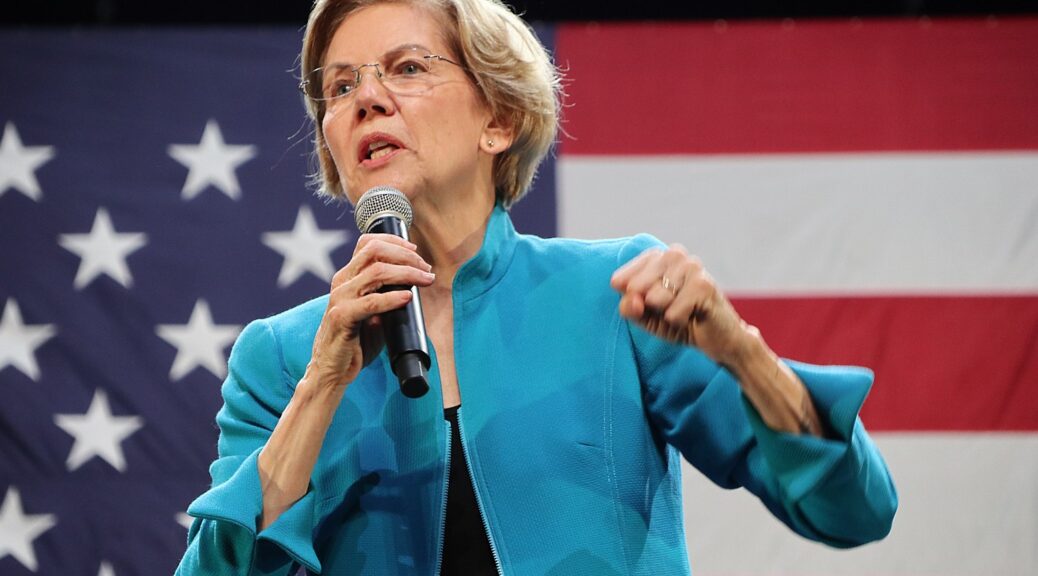
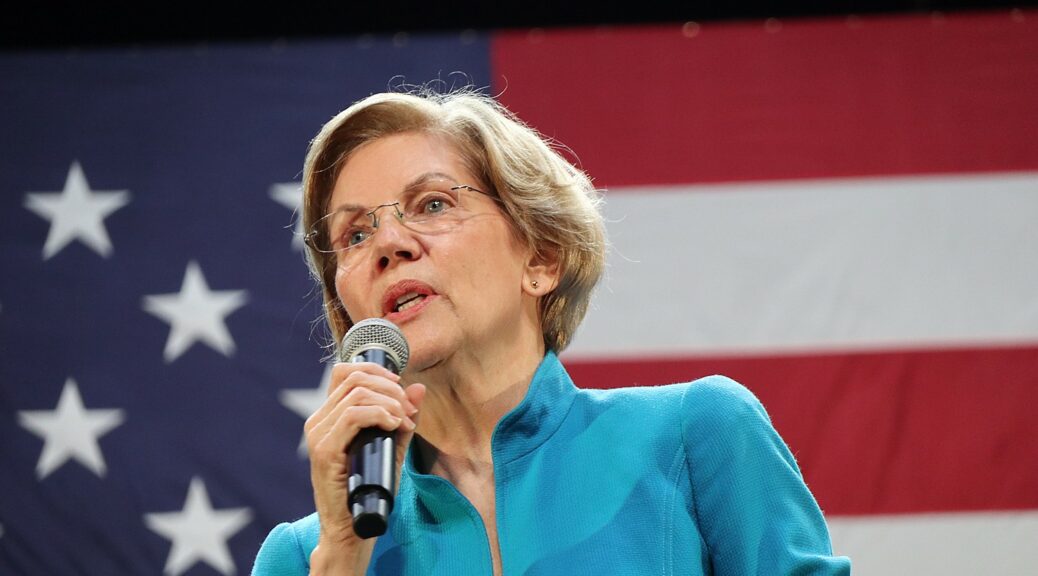
The vigorous contest of Democrats
seeking the 2020 presidential nomination has produced excellent policy
proposals to address major issues. Senator Elizabeth Warren released her
plan to “Restore Integrity and Competence to Government After Donald Trump”
“Donald Trump’s
presidency has been a dark period in American history. That period won’t end
just because Donald Trump has left office. If we want to write a new chapter in
the American story — one in which the government and economy actually work for
the people — we will have to cleanse the corruption from our government and
urgently act to appoint officials who will bring integrity to public service,”
Warren states.
This is from the Warren campaign:
Charlestown, MA – In one year, the next
president will start her first full day of work. Donald Trump will be leaving
behind a disaster: agencies gutted, others run by lobbyists and rife with
corruption and policies that have thrown our country into crisis. The next president
will need to have the energy, expertise, and vision to safeguard our country,
rebuild the government swiftly, and make fundamental changes so that it works
for the American people.
Elizabeth has a plan to restore integrity and competence to government after
Donald Trump. She will:
Address the corruption and incompetence of the Trump Administration by:
Asking for the resignations of all political appointees,
including U.S. Attorneys, with an exception only for those positions necessary
to preserve continuity and protect national security during the transition
period.
Establishing an independent Justice Department Task Force to
investigate violations by Trump administration officials of federal bribery
laws, insider trading laws, and other anti-corruption and public integrity
laws, and give that task force independent authority to pursue any
substantiated criminal and civil violations.
Reviewing the performance of independent agencies and
removing leading officials for cause where there is justification to do
so.
Identifying federal contracting arrangements that arose as a
result of corruption in the Trump administration – and ending them.
Swiftly appoint new personnel:
Elizabeth will announce her choices for the Cabinet by
December 1, 2020, other top nominations by December 15, 2020, and fully staff
all senior and mid-level White House positions by Inauguration Day.
She will not hire any current lobbyists. If someone has
served as a corporate lobbyist in the past, they will have a six year cooling
off period and there will be no waivers or exceptions. Non-corporate lobbyists
will have a two year cooling off period, and any waivers will be made public.
She will also institute a number of rules to make sure that
executive branch officials are working on behalf of the people – not themselves
or their former employers.
She will use a number of existing tools to swiftly fill
government vacancies.
Build a government that reflects the energy and diversity of
America:
The Cabinet and senior leadership team will reflect the full
diversity of America, including having at least 50% of Cabinet positions filled
by women and non binary people.
LGBTQ+ people will be represented across all levels of
government, including in leadership roles.
She will diversify recruitment to direct real resources
toward attracting entry-level applicants for public service from HBCUs, Tribal
Colleges and Universities, Hispanic Serving Institutions, and other
minority-serving institutions, and reform high-level recruiting processes to
attract diverse experienced hires into senior management positions.
She will create new paid fellowship programs for federal
jobs for people from marginalized communities and low-income applicants,
including formerly incarcerated individuals.
She will open up promotion pathways by requiring every
federal agency to incorporate diversity as part of their core strategic plan
and creating support networks through a government-wide mentorship program that
centers Black and Brown employees.
And she will recommit to President Obama’s efforts to raise
the level of people with disabilities in federal service.
One year from today, the next president will begin her first full day of work.
She will be inheriting a government in crisis: from children in cages at
detention facilities near the border to a reckless foreign policy that
endangers our country and a bigoted ban on travelers from Muslim-majority
countries, our country will be in desperate need of immediate course
correction. Further, Donald Trump will leave behind a government that has been
infected by corruption and incompetence, and his vindictive actions as
president suggest that he is likely to do everything he can to undermine the
next president. We cannot assume that everything will be fine once Donald Trump
leaves office. The next president will need to have the energy, expertise, and
vision to safeguard our country, rebuild the government swiftly, and make
fundamental changes so that it works for the American people.
I know how to get the government working for the people because I’ve done it
before. Back in 2010, President Obama picked me to get the Consumer Financial
Protection Bureau (CFPB) up and running. We recruited a mission-driven staff
and set up the organization, and it took swift action to protect Americans from
financial predators and make financial products safer. From defending people
with crushing levels of student debt to fighting for servicemembers and their
families who were targeted by financial vultures, the agency used every tool in
its toolbox to stand up for ordinary Americans. And that agency has now returned
more than $12 billion directly to people who were cheated.
I have also spent the last seven years in the Senate studying the intimate
details of how our government works, finding the levers that can bring about
big structural change, and identifying the key positions that are responsible
for making these changes. And I have learned from a diverse community of
experts who share my vision for progressive, structural change and who know the
executive branch inside and out.
My agenda would make our government and our economy work for everyone. It
starts with anti-corruption reforms, democracy reforms, campaign finance
reforms — reforms that will break the stranglehold that corporate interests
have on Washington and get our government working for the people. We’ll also
make our economy work for everyone — from cancelling student loan debt to
providing universal child care for every kid age 0 to 5 to investing in green
manufacturing. But achieving this agenda while also addressing the crises that
Donald Trump has created will require an energetic president with expertise on
how the executive branch works, a real commitment to making the executive
branch free from corruption, and the courage to use every tool available to
deliver for working families.
Donald Trump has done serious damage to our government. Of over 700 key
government posts requiring Senate confirmation, the Trump administration
has failed to confirm nearly a third.
At both the Department of Homeland Security and the Department of
Justice, less than half of all key positions
have been filled. The Trump administration has had 28 acting cabinet secretaries over
three years – more than the total number of acting secretaries
in either Bill Clinton or Barack Obama’s eight years in office. Senior career
civil servants have been leaving the Trump administration at a record
pace. Approximately 1 in 5 members of the
Senior Executive Service left the administration in 2017 – a
far greater share than during previous transitions, draining the agencies of
long-held expertise and institutional knowledge.
Of the positions he has filled, Donald Trump has been stacking the government
with lobbyists, campaign donors, and cronies. Halfway through his first
term, he had already hired 281 lobbyists into
political appointments. Shortly after being elected, thirty-eight percent of those he
picked for high-level government jobs were donors and during
his first two years, 40% of his ambassadors came
from outside the foreign service. The mix of industry insiders and donors has
both created turmoil and opened up an opportunity for big businesses to tilt
the rules in their favor. This government run by and for lobbyists has
dismantled workplace safety and environmental rules, health care protections,
and dozens of other programs and regulations that benefit working people.
Rebuilding our government to work for the people won’t just happen. It’s going
to require painstaking work, extraordinary drive and urgency, and a serious
plan to root out the corruption and incompetence that Trump will leave behind.
That means cleaning out the corruption that has infected the government, and it
means moving immediately to fill key jobs and set up agencies with capable
officials committed to putting the public interest first.
Addressing the Corruption and Incompetence of the Trump Administration
On day one of my presidency, I will take aggressive steps to root out the
corruption and incompetence of the Trump administration and to hold that
administration accountable. I will:
Remove all political appointees. Rooting out the
corruption in our government starts with wiping the slate clean on political
appointments. Donald Trump gave influential, high-ranking positions to his
donors, friends, and political allies. I will ask for the resignations of all
political appointees, including U.S. Attorneys, save only those positions
necessary to preserve continuity and protect national security during the
transition period.
Prevent political appointees from burrowing into career
positions. The law outlinesclear rules that
help prevent political appointees from circumventing standard hiring practices
and “burrowing” into the government by converting from a political appointment
into a career position. I will strengthen enforcement of rules around
conversion from appointed positions to career civil service to root out
officials who attempt to burrow into agencies.
Establish a Justice Department Task Force to investigate
corruption during the Trump administration and to hold government officials
accountable for illegal activity. Donald Trump has run the most
corrupt administration in history. He was impeached for withholding foreign
aid in an effort to try to benefit his re-election campaign. He
has enriched himself and his business through
the power of his office. And there are public reports of potentially illegal
corruption in everycorner of hisadministration. If we
are to move forward to restore public confidence in government and deter future
wrongdoing, we cannot simply sweep this corruption under the rug in a new
administration. That’s why I will direct the Justice Department to establish a
task force to investigate violations by Trump administration officials of
federal bribery laws, insider trading laws, and other anti-corruption and
public integrity laws, and give that task force independent authority to pursue
any substantiated criminal and civil violations. I have also committed to
establishing a task force to investigate accusations of serious violations by
immigration officials during the Trump era.
Review the performance of independent agencies and remove
leading officials for cause where there is justification to do so. For
good reason, the heads of independent agencies can only be removed for cause —
for example, if they neglect their duties or engage in malfeasance while in
office. My administration will review these agencies and determine whether any
of these agency heads warrant removal for cause — and I will not hesitate to
use my for-cause removal authority if the facts justify it.
Identify federal contracting arrangements that arose as a
result of corruption in the Trump administration – and end them. The
corruption in the Trump administration extends beyond those who work for the government
directly to those who have won contracts to execute government services. For
example, Donald Trump repeatedly pushed the
Army Corps of Engineers to award a border wall contract to a particular company;
the company won the contract despite not meeting the standards for a bid. My
administration will review major contracts executed under the Trump
administration to identify conflicts of interest and other forms of corruption
and take action to cancel any contracts procured as a result of corrupting
influences.
Swiftly Appoint New Personnel Who Will Undo the Trump
Administration’s Disastrous Policies, Restore Integrity to Government, and
Fight on Behalf of the American People
It would be foolish to assume that after Trump is gone, the government will
start moving in the right direction all on its own. This will be no ordinary
transition between administrations. One year from now, the next president will
take charge in the middle of multiple crises – from the border, to our foreign
policy, to the undermining of health, safety, and environmental rules, to the
hollowing out and corruption of our public institutions.
My transition will move faster than any transition in modern history to
identify appointees and develop plans for making change starting on day one. Unlike
previous transitions, we will not be able to assume good faith cooperation on
the part of the outgoing administration, and we do not have an outgoing
administration that shares even the most basic values. There will be no time to
lose in putting teams in place to address the crises this administration has
brought on our country – and to take action on the extraordinary challenges
that the American people face.
And that is why I am committing to announcing my choices for the Cabinet by
December 1, 2020, other top nominations by December 15, 2020, and fully staff
all senior and mid-level White House positions by Inauguration Day. Historically,
the Obama administration was the most successful at sending nominations to the
Senate, delivering 35 nominations for confirmation on his first day in office.
As president, I will send the largest package of nominees to the Senate for
confirmation on day one. In addition, I will have the senior and mid-level
ranks of my White House fully staffed on day one, so that we can hit the ground
running.
Trump
Obama
GW
Bush
Clinton
GHW
Bush
Day 1
28
35
13
25
18
Day 100
71
190
85
176
95
Day
200
277
433
414
345
315
Source: Partnership for
Public Service, Center for Presidential Transition
I have often said that personnel is policy. The
choices of who to appoint are policy choices, because individuals make policy
decisions. But personnel is also performance. If our government doesn’t have
good people, it can’t perform for the American people. To meet this ambitious
schedule while also ensuring that our government reflects the interests of all
Americans, I will focus on three key areas: instituting hiring rules and
practices that end the revolving door and prevent corruption; building an
administration that reflects the experiences and diversity of our country; and
using all available tools to swiftly fill vacancies.
Ending the Revolving Door and Preventing Corruption
We must ensure that the next administration isn’t afflicted by the corrupting
influence of money that plagues Washington. I have introduced the biggest
anti-corruption legislation since Watergate and my first priority as president
is to pass my Anti-Corruption and Public Integrity Act, so that we can clean up
every aspect of Washington policymaking.
But there are many actions a president can take all by herself, and my
administration will adopt the strictest anti-corruption hiring rules of any
administration in American history. And that starts by ending
the revolving door between big corporations and their lobbyists and government
jobs.
My administration will not hire any current
lobbyists. If someone has served as a corporate lobbyist in the
past, my administration will require them to have a six year cooling off period
before they are eligible for a government position, and there will be no
waivers or exceptions. Non-corporate lobbyists will have a two year cooling off
period, and any waivers will be made public.
My administration will not hire employees of for-profit
federal contractors, unless I personally review the situation and decide it is
in the national interest. For-profit contractors and licensees do
business with the government – they are often awarded huge contracts and
licenses for important federal projects. Unless I make a specific exception, my
administration will not hire employees of such firms into the agencies or
departments that awarded contracts to their former employers for four years
after their last contract or license was awarded.
My administration will not hire executives of companies
that break federal law or are under investigation unless six years have passed
since the conclusion of the investigation or enforcement action. People
in the private sector can have valuable experience to bring to public service.
But too often, government agencies hire senior executives at companies and
banks that have broken federal law, are subject to enforcement actions, or are
under investigation. Leaders of companies and banks that don’t follow the law
should not be in a position of public trust developing and enforcing the law.
These appointments stop in my administration.
My administration will not hire any person who receives a
“golden parachute” from their employer. “Golden parachutes” – payments,
bonuses, salaries, or other forms of compensation contingent on accepting a
position in the federal government – create the impression that the recipients
will work in their former employers’ best interest – not the public’s. A Warren
administration will not allow such arrangements.
In addition to these hiring restrictions, my administration
will institute rules to make sure that executive branch officials are working
on behalf of the people – not themselves or their former employers:
To prevent conflicts of interest, officials in my
administration will have to divest from any individual stock, bond, or other
investment that federal ethics officials determine may be directly influenced
by the actions of the employee’s agency.
Senior officials in my administration will be required to
divest from all complex investments – including individual stocks and bonds, as
well as commercial real estate and privately-owned or closely-held
businesses.
Senior officials must also commit to divesting any interests
in family trusts if ethics officials determine that an asset belonging to the
trust might pose a conflict of interest.
Further, executive branch officials who have not been Senate
confirmed must recuse themselves from matters affecting their former employer,
direct competitor, client, or organization that an employee belonged to in the
last four years. Senior officials will be prohibited from being employed
by or consulting for the private sector while simultaneously working in the federal
government. And anyone who volunteers for the federal government, including
White House staff and advisors, will have to agree to abide by all federal
ethics rules too.
The revolving door goes both ways, and too often, people in government depart
and take jobs working at the very firms they had been regulating. At best, this
creates the appearance of corruption. At worst, individuals who are thinking
about their next job corrupt the policymaking process to favor potential
employers. We will end this kind of revolving door corruption.
Senior members of my administration will be required to
pledge not to accept a lobbying appointment after finishing their official
duties – for life. This will apply to all members of my Cabinet, heads of
agencies, my Vice President – and me.
All other members of my administration will have to commit
to not lobby their former office or agency for two years after they leave the
administration – and six years if they become corporate lobbyists – or
until the administration ends, whichever is longer.
Senior government officials in my administration will also
have to pledge for a year not to work for or accept payment from any company
that has lobbied their department or office within the past two years.
Senior government officials in my administration will be
asked to commit not to work for any giant bank or company worth more than $150
billion, any federal contractor receiving more than $5 billion in revenue from
federal contracts, or any market-dominant company, as determined by the
Attorney General, for four years after leaving their post. And anyone in my
administration who participated in the process of granting a contract or
license to a for-profit contractor will also be required to agree not to accept
a job with that contractor for at least four years after leaving government
service.
Both President Obama and President Trump issued their ownethics pledges at
the start of their administrations – and despite good intentions, both failedto curb the number
of lobbyists and government officials that spin through the revolving door.
That’s why the steps I have outlined here will eliminate the loopholes in
previous ethics pledges, principally by expanding the definition of ‘lobbyist’
to include anyone who is hired to influence government, not just those who are
required to register as a lobbyist under current law. Additionally, my plan
requires every executive branch employee – not just political appointees – to
abide by these rules as a condition of their government service and extends the
cooling off periods for executive branch staff to prevent them from lobbying
their former agency or office through the end of an administration. And it
removes the president’s ability to waive these requirements for corporate
lobbyists and executives of law-breaking companies.
Building a Government that Reflects the Energy and Diversity of America
It is not enough, of course, to have people in government who don’t have
conflicts of interest. We need people who are passionate about the mission of
their agencies, deeply understand the needs and experiences of all Americans,
and reflect the diversity of the American people.
Under the Trump Administration, we have seen appointees who are actively
hostile to the mission of their agencies. Secretary of Education Betsy Devos
doesn’t believe in public education. EPA Administrator Andrew Wheeler doesn’t
think climate change is a top priority. As President, I will appoint
people who want to fulfill the purposes of our government, not undermine it —
and that starts with some serious departures from the Trump Administration. For
example, I will appoint:
A Secretary of Education who has been a public
school teacher.
A Secretary of Labor who has been a labor
leader, and appointees to the National Labor Relations Board who have a record
of fighting for workers.
A Secretary of Agriculture who has a
demonstrated commitment to advocating for Black farmers.
A Secretary of Homeland Security who is committed
to undoing the damage caused by the Trump administration and who believes that
immigration makes our country stronger, not weaker.
Department of Justice officials who believe in
voting rights and the rule of law – including for the president.
Antitrust officials who will aggressively
scrutinize mergers, bring challenges to vertical and horizontal mergers, and
are not afraid to take on big tech, big ag, big pharma, and other consolidated
industries.
A Securities and Exchange Commission chair who
will require corporate political spending disclosure, strictly enforce our
securities laws, and use all existing tools to require robust disclosure of
climate-related risks.
A Federal Communications Commission chair who
will restore the 2015 Net Neutrality rules, block monopolistic mergers by media
and telecom corporations, and protect the Lifeline program that helps
low-income Americans afford broadband Internet.
An EPA head who believes in the urgency of
addressing climate change and protecting our environment.
Federal Reserve officials who believe in the
agency’s full employment mandate, recognize that inflation fears have been
overblown for years, and who are willing to let wages grow.
Our government officials can best serve the American public
when they reflect the diversity of the country itself. The federal government
does a dismal job on diversity and inclusion. The share of Latinas in the
federal workforce is about half that of the entire workforce. Even though Black
women are disproportionately represented in the federal workforce, they are
nearly absent from its leadership ranks. White workers make up nearly 80% of
the senior civil service despite making up only 63% of the overall federal
workforce. The Obama administration worked to raise the proportion of people
with disabilities to more than 14% of the federal workforce, but that dropped to 9.2% under Trump.
My administration will be committed to diversity and inclusion, starting on day
one. I will:
Build a Cabinet and senior leadership team that reflects the
full diversity of America, including having at least 50% of Cabinet positions
filled by women and non binary people.
Ensure representation of LGBTQ+ people across all levels of
government, including in leadership roles.
Diversify recruitment to direct real resources toward
attracting entry-level applicants for public service from HBCUs, Tribal
Colleges and Universities, Hispanic Serving Institutions, and other
minority-serving institutions, and reform high-level recruiting processes to
attract diverse experienced hires into senior management positions.
Create new paid fellowship programs for federal jobs for
people from marginalized communities and low-income applicants, including
formerly incarcerated individuals.
Open up promotion pathways by requiring every federal agency
to incorporate diversity as part of their core strategic plan and creating
support networks through a government-wide mentorship program that centers
Black and Brown employees.
Recommit to President Obama’s efforts to raise the level of
people with disabilities in federal service — and I will include federal
contractors and internship programs too.
Using Existing Tools to Swiftly Fill Government Vacancies
To implement the kind of big, structural changes I have proposed, we will need
to address the substantial vacancies in career civil service positions left
behind by the Trump administration. For example, the State Department lost
a significant percentage of
its employees in the first year of the Trump Administration alone. The federal
government has a number of tools to expedite
hiring processes, and a Warren administration would use them to put
well-qualified public servants to work as quickly as possible. For example:
My Office of Personnel and Management (OPM) will use
its direct hire authority to
identify areas of severe shortage and allow agencies to waive competitive
hiring processes in these areas of critical need.
Finally, I will designate officials at OPM to work with agencies to ensure that they are using their hiring authorities as effectively as possible while also prioritizing diversity in hiring and following all relevant laws, regulations, and administration policies.
New York State has made
$4.3 million in grants for 111 projects across the state that will help prevent
hunger and reduce the disposal of food waste though food donation and
recycling. The grants will support efforts by municipalities and organizations,
such as pantries and soup kitchens, to help divert scraps for recycling and
reduce the amount of organic waste by redirecting excess, edible food to New
Yorkers struggling with food insecurity.
“Wasted food hurts
needy families facing the terrible challenges of food insecurity and harms the
environment by growing landfills and contributing to climate
change,” Governor Andrew M. Cuomo
said. “These awards are the latest step New York is
taking to help local governments and community organizations support smart
investments that prevent food waste, reduce greenhouse gas emissions caused by
food disposal, and provide nutritious and healthy food to combat hunger across
New York State.”
Wasted food has
significant environmental, social, and economic impacts and these grants help
support municipalities and emergency food relief organizations by improving
food rescue efforts and diverting food scraps from disposal in landfills.
Reducing the landfilling of food scraps is also recognized as a valuable
mitigation measure in the state’s ongoing fight against climate change. The New
York State Department of Environmental Conservation will administer the grants.
DEC Commissioner Basil Seggos said, “It is a sad fact that Americans waste about 25 percent of
the food purchased, leading to negative impacts on our environment and a waste
of food resources that could otherwise be used to help people in need. The projects
supported by the grants announced today are a combination of public outreach
initiatives and innovative, common-sense approaches to promoting food
recycling, helping the hungry, and reducing waste to build stronger, healthier,
and environmentally sustainable communities.”
Municipal Food Scraps
Reduction, Food Donation, and Food Scraps Recycling Grants
DEC is awarding a total
of $3.28 million in grants to 27 municipal projects that will use innovative
and comprehensive approaches to support wasted food prevention and reduction
initiatives, streamline food donation and rescue efforts, and/or develop
organics recycling programs and facilities. Many projects involve strategic
partnerships with community-based organizations to reduce the volume of
wasted food and food scraps entering the municipal waste stream. This is
accomplished through the development and implementation of wasted food
reduction education and outreach programs and by establishing municipal
composting and other organics recycling infrastructure. Among the highlights of
the municipal grant projects:
City
of Cortland $195,936: The
funding will support the Cortland Food Project Rescue and Waste
Prevention, a comprehensive community education campaign focused on wasted
food prevention and reduction. The city will develop and implement
Cortland’s first local food rescue system and volunteer network to seek
out large quantities of “past prime” produce that program staff
and volunteers will be trained to process into value-added food products.
The city will then coordinate with existing local hunger projects, such as
food pantries, soup kitchens, and the planned commercial community kitchen
and entrepreneurship program to be located at the Homer Avenue
Revitalization Project site;
Town
of Ossining $99,145: The
town will create a comprehensive food scraps recycling pilot program to
serve approximately 38,300 residents and neighboring areas. The town will:
purchase collection bins for several public sites, including nearby
Environmental Justice communities and for residential home use; develop
informational materials to include in the kits residents will use in their
homes; and Teatown Lake Reservation will begin community
education events and programming regarding food waste prevention and
reduction, composting, and the town-run food scrap recycling program;
Tompkins
County $70,426: The county will address
wasted food prevention and food donation by targeting apartment complexes
and multifamily units in the county. The project will educate tenants and
property managers, focusing on smart shopping, smart storage, and smart
food prep; site a food hub cooler for sharing excess edible food, with
leftover donations going to Friendship Donations Network (FDN) for further
distribution throughout the Tompkins County community; provide tenants
with free toolkits to collect food scraps from their kitchens for
composting; and develop “kitchen to compost” educational
materials; and
Village
of Sleepy Hollow $11,286: The
village will develop and launch a comprehensive food scraps recycling
program that includes: education efforts and materials that are accessible
for all residents, despite income or language barriers; create a food
scraps recycling program that offers 500 free starter kits (countertop
food scraps collection pail and storage bin) to residents for composting;
and create outreach materials designed to reach all demographics in the
village, including Spanish-language translations, and engaging low-income
residents and seniors in the participation of the project.
Emergency Food Relief
Organization Grants
Food pantries and other
local emergency food relief organizations are on the front lines when it comes
to helping those in need. These organizations often rely on donations of food
through partnerships with local businesses, farms, and other food donors to
supplement their inventories of wholesome food. However, as many of these food
pantries and organizations are volunteer-run and have limited funds, they often
do not have the resources to establish these partnerships or purchase the
necessary storage equipment and vehicles to transport donated perishable foods.
Due to these challenges, highly nutritious, perishable food that is ready to be
distributed to food pantries and soup kitchens — such as fresh produce — often
goes to waste, despite the efforts of donors and food rescue organizations.
DEC is funding 84
projects with $1.1 million to support projects including: hiring food recovery
staff focused on developing donation partnerships; purchasing efficient cold
storage equipment; kitchen equipment to prepared rescued, perishable produce;
vehicles to transport rescued food; and the implementation of hyper-local
perishable and prepared food recovery and distribution networks. In addition,
several projects include the establishment of nutrition and cooking classes to
help them use the food they receive from the pantries most efficiently. These
classes and workshops help clients reduce wasted food and stretch limited food
budgets. Highlighted grant projects include:
Iris
House $13,720: Iris House in Central
Harlem will use the funds to support efforts to distribute food closer to
the residents of East Harlem in New York City. Iris House will use part of
the grant funds to cover the operation costs of a van to transport food
pantry bag distribution to pop-up locations in East Harlem to save
residents the costs of transportation to Central Harlem. Iris House will
also develop and distribute brochures about nutrition and to advertise
their services and provide information about free food availability;
Second
Chance Foods $15,000: Second
Chance Foods is not-for-profit food rescue organization in Carmel, New
York, that will use the grant to support the salary of a kitchen manager
to process rescued food into cooked meals or prepare parts of meals to
donate to local food programs. By processing rescued food such as
blemished produce and unfamiliar foods, Second Chance Foods makes more
rescued food “usable” by soup kitchen managers and pantry
clients, preventing wasted food and increasing the amount of wholesome
food available to people;
Comfort
Food of Washington County, Inc. $12,420: Comfort Food Community serves a rural county with
limited access to grocery stores and a significant percent of the
population in poverty. CFC will hire a seasonal Food Recovery Assistant to
improve gleaning efforts at the 35 farms in their service area through
volunteer recruitment and management, as well as coordinating and
supervising rescue efforts. The Food Recovery Assistant will also work on
outreach and education elements of the Fresh Food Collective. CFC will
also use these grant funds to dedicate staff time to developing recipe
cards and coordinated meal kits for the gleaned produce to help ensure
that recipients of the produce are able to use all of it properly and
incorporate more nutritious food into their diets; and
Pitney
Meadows Community Farm, Inc. $15,000: Pitney
Meadows Community Farm, Inc., is not-for-profit organization in Saratoga
Springs dedicated to urban agriculture, farmland conservation, community
empowerment, and increasing access to fresh, healthy produce. The farm
will install a “Giving Garden” dedicated to growing food
for food pantries and will use the grant to hire a farm manager to oversee
the Giving Garden and associated donation partnerships; construct a wash/pack
station to properly prepare freshly harvested vegetables in a safe,
reliable, and convenient way; and install a walk-in cooler to store food
before it is donated to local pantries.
A complete list of
awardees/grantees and summaries of projects is available at the DEC website. For more information about how to
reduce food waste in all New York households: https://www.dec.ny.gov/chemical/98102.html.
New York State has long
been committed to the fight against hunger and Governor Cuomo has launched groundbreaking
initiatives and programs in recent years, including the Council on
Hunger and Food Policy, Vital Brooklyn, and the No Student Goes Hungry
initiative to combat hunger, improve access to healthy, locally grown foods,
and bring New York-grown foods and beverages to underserved communities. The
grants announced today also build upon the success of the 2019 Food Donations
and Food Scraps Recycling law signed by the Governor, that requires all designated
food scraps generators to first donate edible food to those in need, and
secondly, to recycle food scraps if a viable recycling facility is located
within 25 miles. In response to this crucial legislation, DEC has provided
$800,000 to Feeding New York State for additional resources to handle the
anticipated influx of donated food.
The grant announcement
was made at the Regional Food Bank of Northeastern
New York in Latham, to help prepare New Yorkers for the
statewide ban on plastic carryout bags, which begins March 1. DEC, in
coordination with Feeding New York State, will distribute reusable bags to food
banks across the state as part of DEC’s efforts to encourage
consumers to bring their own bags whenever and wherever they shop. Feeding New York State helps
feed millions of people each year through more than 5,000 food pantries, soup
kitchens, shelters, and other programs.
The BYOBagNY initiative
is part of New York’s comprehensive outreach campaign with state and local
partners to educate retailers and consumers about the plastic bag ban, which
will help reduce the scourge of plastic bag waste in the state’s environment
and communities. New Yorkers use an estimated 23 billion plastic bags
annually—each for about 12 minutes—and approximately 85 percent of this
staggering total ends up in landfills, recycling machines, waterways, and
streets. For more information about the outreach efforts and details of the
law’s implementation, visit DEC’s website.
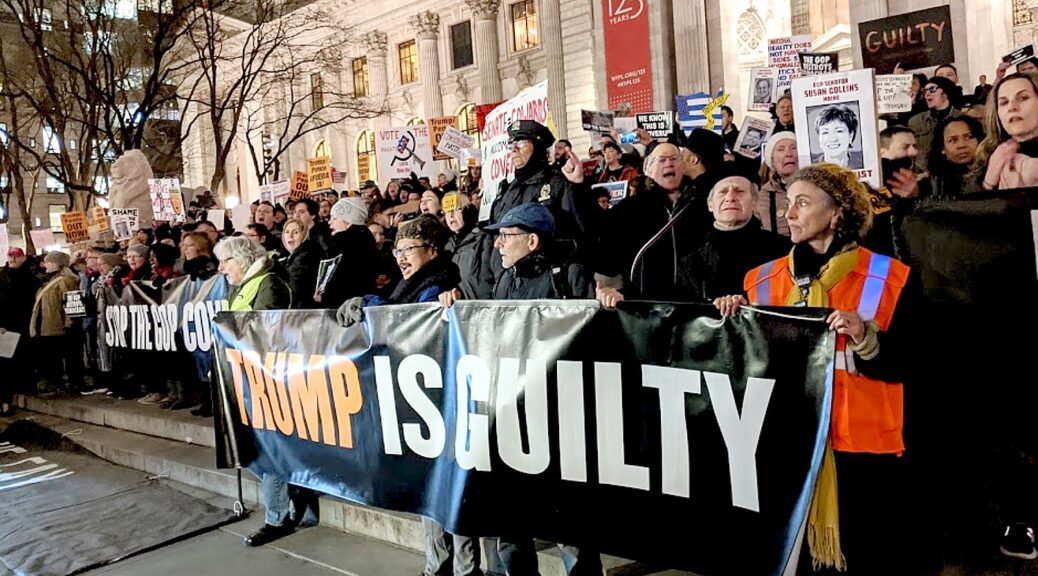
The widely anticipated vote to “acquit” Trump, impeached for abuse of power and obstruction of Congress, was never in doubt, though activists had hoped nationwide protests would shame Republicans into at least allowing witnesses and evidence into their show “trial”. But the activists are still determined for Trump to be held accountable – along with the Republicans in House and Senate who have been complicit enablers in higher and higher crimes and misdemeanors, breaching the public trust.
Mere hours after the Republicans voted to acquit – with the
singular exception of Senator Mitt Romney who acknowledged Trump’s abuse of
power – hundreds took to the streets, vowing to continue the protest, turn
Trump out of office and “flip the Senate”. “We will remember in November,” they
chanted as they marched from Columbus Circle, just across one of Trump’s
Manhattan buildings, down 57th Street o Fifth Avenue, and passed the
Trump Tower, to 42nd Street Public Library.
About 2,500 people in all participated in the protest, met
by fewer than a dozen pro-Trumpers.
They are calling for continued investigations and for
Congressional oversight so that Trump isn’t able to skate away, as in the 2016
campaign, hiding his tax returns which most likely would have shown financial
ties to Putin and Russian oligarchs (who made outsized donations to his
inaugural and bought condos at inflated rates), and made secret payments to
hush up a porn star, causing Trump to be labeled “Individual 1” in the
prosecution of his “fixer” Michael Cohen, now imprisoned, and the 10 counts of
obstruction of justice which the Mueller Probe found, saying they would have
indicted but for a Department of Justice “policy” against indicting a sitting
president.
In reaction, Trump, who used the State of the Union like a
political rally – even offering to
broadcast the names of donors “live” – followed up with continued smears
against any and all who have opposed him, even threatening to unleash the
Department of Justice to do the very thing – political witch hunt – that he
says he was the victim of. Except that there has never been any evidence or any
testimony offered that contradicts the crimes he is accused of, only the abuse
of his political power to extort complicity.
Indeed, it is now revealed that the Treasury Department,
which has stonewalled lawful requests from Congress for Trump’s tax returns (it
is actually a law), based on some sort of invasion of privacy of a US citizen,
and has sequestered the mandated audit of Trump’s returns while in office, has
been probing Hunter Biden to supply Senate Republicans with dirt.
The question is how long Republicans can ignore substantial majorities of people who want climate action, gun safety, immigration reform, voting rights and preservation of the Rule of Law and the fundamental premise that no one, not even a president, is above it.
There were more than 300 marches and protests around the country in towns large and small – marches in places from New York City and Petoskey, Michigan to Wasilla, Alaska; rallies in 46 states and Washington, D.C. and a “flash mob to say thank you to Sen. Romney” at his office in Salt Lake City.
Here are highlights from the rally, march and protest in New York City, one of dozens held around the nation on Wednesday, February 5, 2020:
With
chants of “No More Cover-Ups. We Want Witnesses” and “What do we want?
Witnesses. If we don’t get it, Shut It Down,” protesters took to the streets in
New York City as well as Washington DC and 30 other cities to demand Senators
uphold their oath for an impartial examination of the truth before a vote to
convict or acquit Donald Trump of his office as President of the United States.
In
New York, a couple of hundred protesters organized by the NYC Coalition to
Impeach and Remove gathered in Times Square, and then marched down to Herald
Square. Here are highlights:
The Women’s Marches that took place across the country – some 250 of them including Washington DC and New York City – are the opening salvo to the 2020 Election. Make no mistake, this was about voting, realizing that all the issues that they care about hinge on the coming election and not on changing the minds of lawmakers who currently control the levers of power: reproductive freedom and a woman’s right to self-determination; access to the ballot and access to health care; climate action and environmental justice; gun safety and domestic violence; gender equity, sexism and misogyny; discrimination and sexual harassment; immigration reform and human rights. They are all on the ballot this November.
And the Supreme Court and all the courts now
dominated by radical right-wing judges that seek to roll back women’s rights,
civil rights, voting rights, health-care-is-a-human-right. “Ruth Bader
Ginsburg, hold on,” Manhattan Borough President Gale Brewer declared as the
march set off down Columbus Avenue, passed the Trump International Hotel, where
the most animated expressions of outrage against Trump and his administration
were manifest.
A singular, unifying message emerged: Dump Trump and
his henchmen and his enablers.
And a theme for the New York City march organized by Women’s March Alliance (womensmarchalliance.org): Rise & Roar.
Though it is unlikely that women will re-create the 750,000 who marched on Washington with millions more around the world who turned out in 2017 in the largest single day of protest in history, vastly outnumbering those who came out the day before on the National Mall to watch Trump swear to uphold the Constitution and protect the nation against enemies foreign and domestic, it is crucial that people turn out for the women’s marches in Washington, DC (Meet at Freedom Plaza, 1455 Pennsylvania Ave. at 10 am, womensmarch.com), New York City (at Central Park West & 72nd Street, 11 am, womensmarchalliance.org) and many other cities in 2020, taking place on Saturday, January 18.
The disappointing reality after that
first spectacular Women’s March is how little it accomplished. Lawmakers could
care less, based on the policies they enacted, including moving so close to
repealing Obamacare except for Senator McCain’s last-second vote, and tax
policy that discriminated against women’s health, and shifted $1 trillion in
resources from infrastructure and services for everyday Americans to the
richest 1% and corporations. They could care less for the hundreds of
thousands who pleaded for sensible gun laws, or for climate action and
environmental protection.
There isn’t even the same buzz as in
the 2018 march in Washington and around the country (200,000 attended in New York City,
alone) , so much more significant because the protest was less about
“converting” lawmakers than mobilizing voter registration, inspiring
women to run for elected office, and driving turnout in the November mid-terms.
And they did in historic numbers, putting Democrats back in control of
the House which put the brakes to the extent possible on the worst impulses of
Trump and the Republicans. “I can do whatever I want as president,” Trump
declared at a Turning Point event with young Republicans. (After the House
Republican majority’s first success in repealing Obamacare in 2017, Trump said,
‘I’m president. Can you believe it?”)
In 2019, tens of thousands
marched in New York City, calling for action on a Woman’s Agenda
that encompasses everything from pay parity, paid parental leave, affordable
child care and pre-K to immigration reform, gun violence prevention, climate
action, criminal justice reform – in other words, the gamut of social,
political, environmental and economic justice. And yes, reproductive freedom.
“I’m Not Ovary Acting.” Pussy hats come out again for Women’s March on NYC organized by Womens March Alliance, Jan. 19, 2019 (c) Karen Rubin/news-photos-features.com
During 2019, which opened with Trump
declaring a “national emergency” to justify shutting down the federal
government in order to extort billions to build his wall, migrants continued to
be separated and die in custody, thousands were sent to horrific and dangerous
conditions in Mexico; gun violence reached new heights; climate disasters have
exploded around the globe; and reproductive freedom has been further
constricted.
600,000 women lost birth control
coverage last year because of the Trump Administration’s attacks on your
healthcare; funding for women’s health clinics has been eliminated and
artificial barriers to their operation have forced many to close. The Hyde
Amendment which bans the use of federal funds to pay for abortions, serves as a
de facto ban for a quarter of low-income women.
Women’s March NYC, Jan. 20, 2018 (c) Karen Rubin/news-photos-features.com
Even more is at stake in 2020, when
Trump and Trumpism is on the ballot. Over this first term, he has been
increasingly emboldened and unbridled, to the point where he believes he can
unleash a war while schmoozing on the golf course.
So far, the organizers of this
Saturday’s Women’s March on Washington, took out a permit for 10,000.
The women’s movement, inexplicably
and yet probably not, has gotten wound up, bogged down and even subverted with
other issues – racism, anti-Semitism. Leaders are bending over backwards to
show how progressive, how inclusive they are, and moving away from the key
issues that women are fighting for.
Women’s issues wind up being about
all these other issues because all of them affect women’s ability to have equal
opportunity, earn what they deserve in order to provide for their families: war
and peace, climate change, living wage, public education, health care,
affordable pharmaceuticals, clean air and water, voting rights, gun safety,
DACA and immigration reform.
But at the heart of all of them is
women’s reproductive rights, under threat as never before by a radical
right-wingers in Congress and on the courts determined to disregard law and
precedent and overturn Roe v Wade (along with Obamacare) with a Supreme Court
that has been shifted radically right because of the illegitimate appointments
secured by Trump and Senate Majority Mitch McConnell (along with hundreds of
judges throughout the federal court system that are long-lasting bombs to
womens rights and civil rights.
The Roe v Wade decision in 1973
ruled that the Constitution protects a pregnant woman’s liberty to choose to
have an abortion without excessive government restriction – in other words, it
was built upon some extrapolation of privacy and property rights, rather than
equal protection.
Overturning Roe v Wade would mean
that women, unlike men, are not entitled to the same right to
self-determination, to make their own judgments and choices for their health,
their body, their family or their lives. And like all those other cases that
Ginsburg argued as the leading gender rights lawyer for the ACLU before
becoming Supreme Court Justice, it would re-establish the systemic barriers to
women (not men) to fulfill all their aspirations and abilities. It is as
Senator Elizabeth Warren, Democratic candidate for president, said, when women
are forced out of the career track, they never get back to where they were if
they return at all. This I s the result of unaffordable, inaccessible quality
child care and the lack of universal pre-K.
“Our Bodies Our Rights.” Women’s March on NYC, Jan. 19, 2019 (c) Karen Rubin/news-photos-features.com
It would essentially make women a subject
of the state, forced to give up professional aspirations to care for a child,
or spend inordinate amounts of money and resources on child care, put women
into poverty because all of these social services are also being tied to work
while doing nothing to make childcare affordable, taking away food stamps and
school lunch. It’s not one thing, it’s many different elements.
As Justice Ginsburg said, “The
decision whether or not to bear a child is central to a woman’s life, to her
well-being and dignity. It is a decision she must make for herself. When the
government controls that decision for her, she is being treated as less than a
fully adult human responsible for her own choices.”
“I Ask No Favor For My Sex,” Ruth Bader Ginsburg makes appearance at Women’s March on NYC , Jan. 19, 2019 (c) Karen Rubin/news-photos-features.com
And the Supreme Court decision would
not necessarily mean that the state you live in would determine if you might
have access to abortion, which would set up a different category of unequal
protection – their ruling could make abortion illegal nationwide by
establishing “personhood” rights of a fetus, in which case the fetus would have
more rights than its mother.
Women are marching for affordable
child care, quality public education, affordable and accessible health care
without higher cost for women or for pre-existing conditions (which before
Obamacare rendered women of child-bearing age), or lifetime caps on coverage at
a time when middle class families are spending 20% of income ($12,000/year) on
health insurance, 35 million can’t afford life saving drugs they are
prescribed, 30,000 die prematurely because of lack of access to health care,
and 500,000 go bankrupt because of medical bills.
Women are marching for environmental
justice at a time when the Trump Administration is making it easy for polluters
to destroy the air and water producing creating public health issues such as
asthma affecting a child’s ability to succeed in school, and worker
productivity. It means climate justice at a time when the Trump Administration
is actually prosecuting those who would try to reduce carbon emissions (they
are trying to prosecute the four auto manufacturers who said they would comply
with California’s emissions standards for anti-trust violations), while
families are losing their homes, their workplaces and communities have to spend
fortune to rebuild after climate disasters.
Women are marching for gun safety so
that parents and children don’t have the constant anxiety and school districts
and communities don’t have to spend a fortune on security rather than programs
that benefit people.
“Voting Is My Super Power!” Women’s March on NYC , Jan. 19, 2019 (c) Karen Rubin/news-photos-features.com
This year’s march may be the most
important one, just as the 2020 election is the most important one of our
lifetimes (and yes, 2016, as we now know, was the most important election up
until this one).
The march is an affirmation, brings
like-minded people together, validates our case, and yes, motivates and
provides a platform for people to run for office, as in 2018, and win their
office.
The march is not about “them” it is
about us.
Women’s March NYC, Jan. 20, 2018 (c) Karen Rubin/news-photos-features.com
That is why it is so very important
to have a strong turnout for this year’s marches, the fourth year in a row,
especially in 2020, the centennial of women winning the right to vote,
especially in this election year when the nation faces an existential threat
from its own government. Women must turn out, and continue the momentum
of 2018 into the 2020 election.
Virginia could be the 38th
state to pass the Equal Rights Amendment, which would make the ERA the 28th
amendment to the Constitution, though the opponents argue that the votes by the
other 37 states have expired, and we’ll have to go through this entire 60-year
process all over again. (Trump’s
The opponents argue there is no
reason for an amendment that certifies the equal rights of all people. But
based on the policies, laws and lawsuits at the federal and state level, an ERA
is more necessary than ever, because as we have seen from the Supreme Court,
precedents like Roe v Wade and one-person, one-vote, or equal protection for
all are fungible.
This is a crucial year for women to
turn out, not allow the momentum of 2018 to be lost, but rev up for the 2020 election.
So whip out those pink pussy hats
and march for women’s rights on Saturday, January 18. March as if your ability
to determine your own future is at stake.
Women’s March NYC, Jan. 20, 2018 (c) Karen Rubin/news-photos-features.com
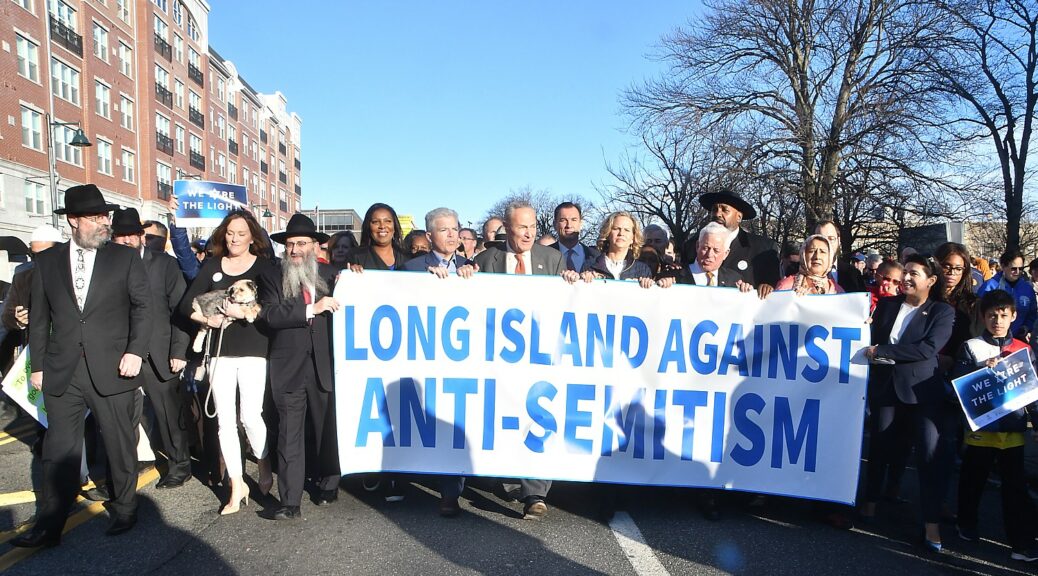
Senator Schumer, County Executives Laura Curran and Steve Bellone, Congressmen Tom Suozzi, Kathleen Rice and Peter King, Attorney General Letitia James, Comptroller Tom DiNapoli, State Senators Anna Kaplan and Todd Kaminsky, Assemblyman Charles Lavine, Dr. Isma Chaudhry of Islamic Center of Long Island among elected officials and faith leaders joining together with 2,500 Long Islanders marching to stand against anti-Semitism.
I thought it was impressive when a couple of dozen elected officials from state, county and local government came to a Shabbat service at Temple Beth-el of Great Neck to show support for the Jewish community after horrific attacks at a Rabbi’s home in Monsey and a massacre at Jersey City kosher grocery. I was moved by the outpouring of 25,000 mostly Jewish (surprisingly few Orthodox) who marched as a demonstration of Jewish pride and resolution over the Brooklyn Bridge, led by Senators Schumer and Gillibrand, Governor Cuomo and Lt. Governor Kathy Hochul, and faith leaders. But what was truly awesome were the 2500 Long Islanders who marched in a show of solidarity to fight anti-Semitism and hate crimes at the county seat in Mineola, representing just about every aspect, community and culture across the length and breadth of Long Island. Marchers came from across the Island, representing more than 125 religious and community groups.
Nassau County Executive
Laura Curran organized the march and rally in solidarity with the Jewish
community and against Anti-Semitism in response to horrific attacks in Brookyn,
Monsey, and Jersey City, as well as incidents of Anti-Semitic graffiti at the Holocaust Memorial and
Tolerance Center of Nassau County in Glen Cove. In December, Nassau and Suffolk Counties formed a bi-county coalition that
will identify and develop a plan of action to combat and report acts of hate
and bias incidents on Long Island. In conjunction with a number of
organizations, today’s march marked one of the task force’s inaugural
initiatives.
“We organized this march
to send a clear message in one voice: Long Islanders of all faiths and
backgrounds stand united with our Jewish community and against Anti-Semitism,”
said Nassau County Executive Laura
Curran.
As Assemblyman Charles Lavine read off
the names of participating groups, closing out nearly two hours of speeches
(notably very short speeches, that’s how many speakers there were) included on
the list: Turkish, Chinese, Indian…
Many of the speakers spoke of bigotry
and anti-Semitism as being anathema to American values. But of course,
Americans have a Pollyannish notion of this country’s “tolerance,”
“acceptance.” The strain of bigotry, hatred and particularly anti-Semitism has
always been here, even during World War II. It was muted after the Holocaust,
after the US soldiers penetrated the concentration camps and saw, for the first
time, that it was not “propaganda” that millions and millions were caged for
extermination, that the Final Solution was real. But it was anti-Semitism that
kept America from accepting refugees before, during and after the Holocaust,
and no coincidence that the Palmer raids of the 1920s targeted Jewish labor
leaders and the McCarthy blacklist consisted mainly of Jewish writers and
officials.
The “popular” view is that anti-Semitism
is back on the rise because working people feel somehow disadvantaged, though
the connection eludes me. But here’s what I don’t get: in Nazi Germany, Jews
were a convenient scapegoat for the genuine suffering of Germans caught in a
Great Depression. That is not the case here in the United States. In fact, we
are constantly told that the economy is the strongest in history, unemployment
is at a 50-year low.
The rise in anti-Semitism – not just
vandalism and nasty remarks but physical violence like the massacres at the
Tree of Life Synagogue in Pittsburg, a synagogue in Poway, California, in
Jersey City and the attack at a rabbi’s home in Monsey during a Chanukah
celebration, has been quite astonishing. Over 2,000 hate crimes against Jews in
2019. In New York City, according to the New York Police Department, hate
crimes against all other groups (Asian, Catholic, Hispanic, Black, Arab, Muslim,
LBGTQ) totaled 206; the number directed against Jews, just in the five
boroughs? 229.
Speakers referred to the fear that Jews now
feel in their own neighborhood, community, college campus. Many
Holocaust survivors are being wracked with renewed PTSD, their terrors
re-awakened.
Indeed, a study by the American Jewish
Committee in October found that 31% of Jews hide the fact they are Jewish; 25
percent avoid certain places, events, situations out of concern for their
safety. In America? “We must be proud
and not shy away,” said Eric Post, AJC NY Associate Director.
“Anti-Semitism is not solely a Jewish problem. It’s an American problem. If not
eradicated, it will corrode our fabric.”
There is a difference in today’s
anti-Semitism, in that individuals armed with social media or semi-automatic
weapons can do horrific damage that before would have required some
organization or government sanction. And even if the defense is some sort of
mental illness, as in the Monsey case, the question is why the voices compel them to strike out
against Jews, what is it in the culture that directs hatred in that way?
But such hate turns out not even to be
solely “organic” or a representation of “grassroots” disaffection. Foreign
governments, particularly Russia, as well as domestic political factions that
are using anti-Semitism, racism and fomenting hate in order to sow division,
disrupt and destabilize our society to tilt elections and take power – after
all, it worked so well during the 2016 campaign.
Indeed,
five of our region’s Congressional representatives – Suozzi, King, Rice, Meeks and Zeldin – are requesting FBI
Director Christopher Wray, CIA Director Gina Haspel, Homeland Security acting
Secretary Chad Wolf and Secretary of Defense Mark Esper conduct an investigation into
potential campaigns sponsored by foreign adversaries to cause civil unrest on
domestic soil.
“Whether anti-Semitic, anti-immigrant, race
based or some other form of hate, internal divisions provide an opportunity for
our adversaries to exploit and further divide our nation,” the letter states.
“We must work together to combat those that exploit ignorance to sow division for
their strategic interest.”
The letter also cites a recent FBI study
that found the rate of hate crimes increased by 17 percent from 2016 to 2017
but the rate of anti-Semitic crimes increased by 37 percent in 2017 and attacks
motivated by racial or ethnical prejudice doubled. The timing since Trump’s
ascendancy is not coincidence; Trump has curried the support of racists and
bigots and basically green-lighted their activities. No longer is racism and
bigotry kept under wraps or in shadow; with Trump it is out in the open.
But to the extent America is a melting
pot, that melting pot is the New York metropolitan region – the city and suburbs,
especially Long Island. Which is why the dramatic escalation in anti-Semitic
hate crimes our area is all the more shocking and terrifying.
Rabbi Meir Feldman, who gave the sermon
at Temple Beth-el on that Friday night, had only 72 hours before been at Yad
Vashem, the Holocaust Memorial in Jerusalem.
State, county, town, and local elected officials stand against anti-Semitism at Temple Beth-el of Great Neck (c) Karen Rubin/news-photos-features.com
“Our question tonight is not why there
is anti-Semitism. It is simpler: what is this crazy evil thing, this abnormal
force of anti-Semitism?” He shows a cartoon that is displayed at the memorial,
an image of a parasite, an insect meant to be walked on but sits on top of the
world, in its right eye, a symbol of money, in its left eye a hammer and
sickle, the symbols of Capitalist and the communist seemingly
contradictory. That is anti-Semitism –
hated by both ends, a convenient scapegoat for anybody’s discontent and any
politician’s demagoguery.
“Anti-Semitism is an impossible series
of contradictions,” he says. “What’s our response? How do we confront and fight
this scourge of contradictions?” He says with honesty, unity, solidarity and
hope.
“We must call out Anti-Semitism
wherever, whenever, reveal it for what it is: insane contradictions. Identify
the ideological source – right, left, White Nationalist, Black Nationalist.”
But this is the most
significant difference between Germany in the 1930s (where Jews had been living
for 1000 years) and now: the vast majority of elected officials are standing up
and calling out anti-Semitism, initiating new laws and calling for police enforcement,
as they did on Friday night at Temple Beth-el, in the March Against Hate in New
York last week, and in this weekend’s extraordinary march and rally on the
steps of the Theodore Roosevelt County Building.
And
it isn’t just speeches and marches, but actions. Senator Charles Schumer is
advocating $360 million more in spending to secure houses of worship and
federal assistance to localities to prosecute hate crimes; 298 Representatives
have signed on to sponsor the Never Again Education Act to authorize the Secretary of Education
to award grants to eligible entities to carry out educational programs about
the Holocaust. (It was introduced in the House in January 2019.)
Congressman Tom Suozzi attributed the
rise in anti-Semitism to social media which makes it easy to spread and magnify
hate, some of it promulgated by foreign adversaries trying to stir up civil
unrest. It works because “there is too much ignorance. How many deny the
Holocaust or don’t know about it? That is a recipe for disaster.” The US
soldiers, he said, who were just two or three months away from liberating the
concentration camps were still debating if the Holocaust was real or propaganda.
“We must educate.”
The state and county are stepping up
prosecution of hate crimes, as well. Governor Cuomo is proposing a domestic terrorism law that encompasses
hate crimes, and is seeking resources and security funding for law enforcement
and faith based institutions.
State Senator Anna
Kaplan has introduced four bills aimed at combating the rising tide of
anti-Semitism and hate in New York State, through education, awareness, and a
stronger hate crimes statute to ensure prosecutors have the tools necessary to
hold accountable those committing anti-Semitic and hate motivated crimes.
“As a Jewish
refugee who came to this country fleeing anti-Semitic violence in my homeland,
my heart aches over the out-of-control spree of anti-Semitic violence taking
place here in New York. I’ve been proud to stand shoulder to shoulder with New
Yorkers of all faiths and backgrounds as we have marched in the streets and
loudly proclaimed that we will not allow anti-Semitism and hatred to take hold
in New York, and today, I’m proud to announce that I am taking concrete steps
to address this crisis from every direction.”
Kaplan,
the first Persian-American elected State Senator: “We speak with one voice. We
are never going to accept anti-Semitism in our community or anywhere. Anti-Semitism
has been a plague on society for thousands of years. We have to be the
generation that stands up and takes decisive action.”
Nassau County District Attorney Madeline
Singas said, “We see thousands of you shoulder to shoulder, different colors,
creeds, faiths, standing with neighbors, community to say ‘Enough.’ Hate is
offensive to a nation born of tolerance, and it is criminal. We will work hard
to arrest, prosecute, hold offenders accountable. “ She has created a hate
crimes bureau. ‘We hope one day soon we won’t need it. We say no to
anti-Semitism, racism, misogyny, homophobia, bigotry.”
Nassau County Executive Laura Curran,
who organized the massive display, said, “Hate has no place on our beautiful
island. We have got your back,” and introduced five Holocaust survivors.
Suffolk County Executive Steve Bellone:
“this is the one nation on earth where every form of humanity is a citizen…
January 27 is the 75th anniversary of the liberation of Auschwitz.
That date is a reminder, we must stand up, any time we see bias or hate in
words or actions.”
Senator Schumer, relating how his great
grandmother, along with 30 other
relatives aged 3 months to 85 years old, were machine gunned by Nazis in
Ukraine, said, “Unfortunately people there didn’t speak up.”
New York State Attorney General Letitia James said, “As an African American, I know hate, know discrimination. An attack against one of us is an attack against all of us… During the civil rights movement, it was Jews who referred to blacks by their last name, not their first; who let Blacks enter the front door, not the back door, Jewish people who died for my people. Not just black blood but Jewish blood [was shed for civil rights]. Hate won’t be tolerated on Long Island or anywhere in the State.”
New York State Comptroller Tom DiNapoli
said it is hard to believe how the numbers of anti-Semitic incidents, of hate,
violence are going up in the New York metro area. “You being here show that we
will not accept this as the new normal. What we take from today, in our homes,
workplaces, houses of worship, neighborhoods, that’s where we must fight hate.”
Everyone, he said, should see the “Auschwitz: Not Long Ago, Not Far Away”
exhibit at the Museum of Jewish Heritage (extended until August 30, 2020). “Eli
Wiesel warned of the great peril of indifference in the face of hate.”
Dr. Isma Chaudhry, president of the Islamic Center of Long Island, which turned out in force for the march, said, ‘What I see today is a strong Long Island. As a Muslim, our moral obligation to stand by humanity suffering in pain, prosecution of hatred, discrimination. We stand with our Jewish brothers and sisters in solidarity… Nassau is making history by this strong statement of solidarity of diverse communities.”
Kevin Thomas, the first Indian-American
elected State Senator, holding his 13-month old daughter: “My community stands
with the Jewish community” adding, we need to teach our children when they are
young.
Assemblyman Tony D’Urso’s family is a
model of the courage that it takes. When he was just a boy, Nazis took over his
village in Italy. His father protected the only two Jewish families who lived
in the village, hiding them in the mountains when others would have happily
given them up for a little money or food.
Probably most touching was Linda Beigel
Schulman, whose son Scott was a teacher-coach when he was murdered in
the massacre at Parkland school in 2018. She noted that the target of his
killer was a history class teaching about the Holocaust.
“We held a celebration of his life at
the temple where Scott was bar mitzvahed. The rabbi asked if I wanted any
security. I said ‘Why?’ Six days later, a gunman massacred Jews at the Tree of
Life synagogue, simply because they were Jewish.”
Schulman’s father was a Holocaust
survivor and when she taught in Germany 1977-9, “I feared telling people I was
a Jew. But living in Louisiana, a woman asked me, ‘where do you hide your
horns.’ Her husband attended NYU; his roommate moved out when he discovered he
was Jewish.
“I know why I am here today, why we all
must be here, to have our voices heard. Over 2,000 anti-Semitic incidents in
2019 – gestures, name-calling, painting swastikas, toppling headstones,
physical attacks and murder, merely because a person is Jewish or believed to
be. Anti-Semitism is like a virus infecting, sometimes killing its host. The
body tries to fight it off, but it lies dormant, and rears up again. If we
allow anti-Semtiism to take hold in the United States, it will destroy the
fiber that holds us together. E Plubus Unum – out of many, one. Without that
motto is tribalism and ‘me first’.
“We need to become the best society we
can. We the people are the antidote. It
doesn’t matter if Jew, Christian, Muslim, Hindu, Sikh or no religion, Asian
American, Hispanic, Italian, African American, whether citizen or immigrant, if
you came by airplane, ship or on foot. We are the antidote to wipe out
anti-Semitism once and for all. Our voices must be heard. Silence only brings
acceptance and gives anti-Semitism the fuel it needs to spread.”
Assemblyman Charles Lavine, who served
as the emcee for the event, said, “For generations, tragedy after tragedy, Jews
have been saying “Am Yisrael Chai” – the people of Israel live. It is time for
us all Americans to stand together, united to say, Am America Chai. These are
the stakes.”
When
you watch Elizabeth Warren at her rallies, you don’t get the feeling she is
doing this for her own ego, for her own advantage. Her own situation is so far
passed the stress she had as a young person, when her father, a janitor, got
sick and her mother had to go out and support the family on a minimum wage job
at Sears, or when she attended the only community college she could afford, She’s
well passed being a special education public school teacher, and even the
prestigious job of a Harvard law professor and could easily sail through being
a US Senator without the superhuman tension of being the Leader of the Free
World. She would not personally benefit from any of the proposals she is
fighting for, except that they would make the country stronger, healthier,
happier, more prosperous, and restore its moral compass so badly misdirected by
a president who regards the Constitution as having as much force as a
suggestion, who separates families, puts children in cages, launches illegal
assassination, pardons war criminals, and advances economic policies that
exacerbate the inequality between rich and poor.
As
one young woman said walking into the Kings Theater in Brooklyn where Warren
was going to campaign with Julian Castro for the first time, “You feel hope.
You feel she is speaking to you.”
Her
smarts come through, even as she makes jokes and makes fun of herself (“When
you have to number your husbands, not a good thing.” “Are you sensing a pattern
here?” she says as she relates how her quest to get a college education or hold
a job was interrupted by pregnancy and raising a baby. And you must hear her
story about the toaster to appreciate how she got the idea for the Consumer
Financial Protection Board, which boils down to the idea that government
regulation is needed to protect consumers and like with product safety,
financial security should also have consumer protection, and level the playing
field for enterprises that seek to implement socially responsible,
environmentally sustainable practices.)
Proposals that come from the heart: Senator Elizabeth Warren campaigns in Brooklyn (c) Karen Rubin/news-photos-features.com.
Not surprisingly, among the reams of specific plans she has come out with, from universal health care to public education to environmental justice, to immigration reform, Warren, who notes that she spent 45 minutes as a lawyer after getting her degree, but as a Harvard law professor, taught everything to do with finance, has come out with specific plan to re-write the bankruptcy law.
At her rally at the grand historic Kings Theater in Brooklyn, in front of an audience of over 3,000 (another 1500 outside who couldn’t be admitted), Senator Warren went through her biography, her resume, and managed to digest down to three key points the sum-total of a bold progressive remaking of America – attack corruption; structural change in the economy; protect democracy – that comes down to “making government work for everyone,” and, as Julian Castro said, putting the American Dream back within reach of ordinary people.
Julian
Castro, the former HUD Secretary under Obama who had just abandoned his own
presidential bid and immediately endorsed Warren, made this plain, describing
her as someone who has overcome adversity, understands what ordinary people
need and more significantly, understands the structural forces that contribute
to inequality and the undoing of democracy:
“She’s
a fighter because she has also struggled and lived that American dream.
Elizabeth Warren grew up the daughter of a janitor. She grew up to become a
public school teacher. And a law professor. And a United States Senator. And
a champion for consumers everywhere in this country.
“She
knows what sacrifice is like after her father had a heart attack, her mom had
to take a minimum wage job at Sears to make ends meet. She understands because
she’s listened to people for many years, throughout this country. She’s heard
their calls for change. She’s heard about their dreams and their aspirations
for themselves and for their families and communities and for our country.
She’s a fighter because she knows that too often times today the deck is
stacked against people who just want a shot at reaching their dreams. She knows
that too often today in Washington, the power goes to special interests who can
afford big lobbyists and lawyers to write in special provisions and
legislation. She knows that we need to get big money out of politics.
“She knows that we need to give the people the powerful — the power and not the powerful the biggest voice. And let me tell you something, I don’t have to guess what kind of President she’s going to be, because I’ve seen firsthand what kind of the senator she is…
“She
was there to know what we were gonna do to invest in communities that were
hurting. She is a fighter for people who need a voice.
“She’s a fighter for everyday Americans that simply want a shot. So I know that that’s the kind of president that she’s gonna be.”
In the video Castro made announcing his endorsement of Warren,
he said, In the video
announcing his endorsement, Secretary Castro said: “There’s one candidate I see
who’s unafraid to fight like hell to make sure America’s promise will be there
for everyone. Who will make sure that no matter where you live in America or
where your family came from in the world, you have a path to opportunity too.
That’s why I’m proud to endorse Elizabeth Warren for president.”
Warren came to the stage, embraced
Castro, and immediately opened with her concern about Trump orchestrating a war
in Iran, and reaching out to the “brothers and sisters in Puerto Rico who need
help” after devastating series of earthquakes, and should get the federal help
the island was denied after Hurricane Maria.
She renewed her charge that
government works great for Big Pharma but not for people needing to fill
prescriptions; for giant oil companies, but not for the rest of us who realize
the existential risk that climate change poses. (Just this week, the Trump
Administration is seeking to eliminate environmental restrictions on building
pipelines or drilling).
“If there is a decision to be made,
it’s made by Big Money,” she declared. “The middle class is being hollowed out.”
“To fix this, we can’t just nibble
at the edges. We need big structural change. And I have a plan for that.”
Indeed, she has already released a
score of detailed plans, including how she would battle corruption in
government. “I have the biggest anti-corruption plan since Watergate; I will
end lobbying as we know it. Make the Supreme Court play by the basic rules of
ethics. Make everyone who runs for federal office put their tax returns on
line. Attack the corruption head on. Disrupt the inflow of money into politics.
It is time for a president to enforce the anti-trust laws.”
She also is advocating for “an
ultra-millionaire” wealth tax, prompting chants of “Two Cents. Two Cents” – the
amount of tax she would impose after the first $50 million of net worth (6% on
amounts over $1 billion) – that is the top one tenth of one percent of the
country who would fall into this category. That money, she insists, would pay
for scores of programs needed to restore equal opportunity, from universal
child care, to universal pre-K, to erasing student debt (big cheers).
So the first part of her vision is
to attack corruption that disrupts the stranglehold on government that money in
politics plays, so we can fight back against score of big issues that have
languished: climate change, gun safety
The second element is structural change in the economy – and on this, she has proposed a score of changes including tax reform, a living wage, changing the rules for mortgages and rentals and bankruptcy, investing in a Green New Deal and affordable housing.
The third element is protecting
democracy.
“I will seek a Constitutional
amendment to protect the right to vote and to get every vote counted; a law
banning political gerrymandering (applause); to roll back every racist voter
suppression law (big cheers), to overturn Citizen United (cheers of “Warren,
Warren, Warren.).
And that’s what brought her to
toasters.
“I think about toasters,” she turns
and with a sly smile, says, “You are surprised?”
“When I was a young mother,
toasters could burn down houses – they didn’t turn off. Ask me how I know,”
(she again has that sly smile). Then along comes the Consumer Product Safety
Board. Manufacturers were forced to put in safety switches.
“In the early 2000s, mortgages were so complex, dangerous that there was a one in five chance of a family losing their home through foreclosure. The federal government was not on the side of the people’s, but was deep in the pocket of banks, preying on the young, farmers, seniors, They crashed the economy.
“So I had the idea for an agency
like the toaster agency, so that you can’t cheat people.
“People said, ‘You can’t make a
difference. Don’t even try. You can’t get it done.
“Big structural change is hard, but
the right thing to do,” she said applying the lesson of having created the
Consumer Financial Protection Board (chants of “CFPB”, “CFPB”) to take on Wall
Street, which Obama signed into being in 2010. Since then, she said, more than
$12 billion in ill-gotten gains from financial companies has been returned to
consumers.
“We can make government work for
people,” she said.
But, she said with an air of
warning to those who would back a moderate candidate believing a moderate would
have the best chance at defeating Trump in 2020, “We need big ideas to inspire
people, to vote, to bring their friends out to vote, to tell the world who and
what Democrats will fight for. To take back the Senate and put Mitch McConnell
out of a job,” she declared, bringing the audience of 3000 to its feet with its
loudest cheers.
“We need big ideas and be willing
to fight. But if we give up big ideas, if we only offer business as usual,
Democrats will lose.
“I’m not running to appease big donors – I passed that stop sign a long time ago. This campaign is from the heart. 2020 is our moment. We will fight for a Green New Deal, Medicare for All, and a 2 cent wealth tax.”
Before coming to Brooklyn, Warren had held 199 town halls across the country and traveled to 29 states and Puerto Rico. She had taken over 100,000 selfies since the beginning of the campaign (20,000 of them in Washington Square Park, posing until midnight). She took her 100,000th selfie in Manchester, Iowa the Saturday before coming to Brooklyn. She had visited the boroughs of New York City and Queens and now Brooklyn. By the end of the Brooklyn event, with enthusiastic supporters lined up throughout the Kings Theater and down the street, Warren would have added some 3,000 more selfies to her total.
Outside the theater, a score of volunteers on every street corner were collecting signatures to meet the required 40,000 by January 21 deadline to be on New York’s ballot. The New York primary is April 28.
Just before taking the stage at Kings Theater in Brooklyn, NY, with Julian Castro, in her campaign for president, Senator Elizabeth Warren detailed how her administration will fix the bankruptcy system to protect working families and give people a second chance. It is part of her plan to restructure the systemic impediments to financial and economic opportunity for ordinary Americans.The plan to reform bankruptcy laws is a particular jab at Vice President Joe Biden, who as Senator representing the State of Delaware, helped push the George W Bush re-write of the bankruptcy laws that shielded financial institutions but put consumers on the hook. This is from the Warren campaign:
As one of the nation’s leading experts on the financial pressures facing middle class families, Elizabeth conducted groundbreaking research on why families go broke. Elizabeth spent ten years battling the banking industry over the bad 2005 bankruptcy bill — which spent $100 million on lobbying efforts. The bill became law with overwhelming support from Republicans and support from some Democrats in Congress.
Elizabeth has a plan to repeal the harmful provisions
in the 2005 bankruptcy bill and overhaul consumer bankruptcy rules to level the
playing field for consumers.
Make it easier for people being crushed by debt to obtain
relief through bankruptcy.
Expand people’s rights to take care of themselves and their
children while they are in the bankruptcy process.
End the absurd rules that make it nearly impossible to
discharge student loan debt in bankruptcy.
Let more people protect their homes and cars in bankruptcy
so they can start from a firm foundation when they start to pick up the pieces
and rebuild their financial lives.
Help address shameful racial and gender disparities that
plague our bankruptcy system.
Close loopholes that allow the wealthy and corporate
creditors to abuse the bankruptcy system at the expense of everyone else.
I spent most of my career
studying one simple question: why do American families go broke?
When I started my career as a young law
professor, I thought — like a lot of people at the time — that most families
went broke because they were irresponsible or wasteful. They lived beyond their
means. And when their irresponsibility finally caught up with them, they took
advantage of our bankruptcy system to get out from under their debts.But when I
started to teach bankruptcy, I found that no one — not even the supposed
“experts” — had actually dug into the data to figure out what drove families
into bankruptcy.
So I found two incredible partners and set out
to gather the data about why families go broke. That was back when you had to
collect information by hand, and courts charged a lot to make copies for you.
To save money, I flew around to courthouses all over the country with my own
photocopier — nicknamed R2D2 — strapped into the airplane seat next to me,
copying thousands of bankruptcy filings to begin understanding why American
families turned to bankruptcy.
I’ll never forget sitting in a wood-paneled
courtroom in San Antonio on one of my first trips, watching the families filing
for bankruptcy move in and out of the courtroom to appear in front of the
judge. They looked just like the family I grew up in — hanging on to the
ragged edge of the middle class. Now they were standing in front of a judge,
ready to give up nearly everything they owned just to get some relief from the
bill collectors.Our research ended up showing that most of these families
weren’t reckless or irresponsible — they were just getting squeezed by an
economy that forced them to take on more debt and more risk to cling to their
place in America’s middle class.
And that meant one bad break could send them
tumbling over the edge. The data showed that nearly 90% of these families were
declaring bankruptcy for one of three reasons: a job loss, a medical problem,
or a family breakup.
In the early 1990s, Congress launched a
blue-ribbon commission to review the bankruptcy laws and suggest improvements.
I was asked to help. Initially, I said no. Then I thought about the stories I
had come across in our research. I thought about the family that finally got a
shot at their lifelong dream to launch a new restaurant — and it went
belly-up. The young and very tired woman who described how she finally managed
to leave her abusive ex-husband, but now was alone with her small children and
a pile of bills. The elderly couple who had cashed out everything they owned
and then went into debt to bail out their son who was fighting addiction and
put him through rehab again and again. And then I called back and said yes.
That’s what started my ten-year fight against
the banking industry’s effort to change our bankruptcy laws to squeeze
everything they could out of working families. Just as the commission’s report
was due, the banking industry wrote its own version of a bankruptcy bill and
got its allies in Congress to introduce it. In the industry’s version of the
world, Congress could support either “honest people who pay their bills” or
“people who skip out on their debts.” There wasn’t any room to talk about
rising health care costs or lost jobs that pushed working families to the
brink. I knew that those hundreds of changes in the industry-backed bill would
make it harder for struggling families to get relief.
And I knew I needed help. I was lucky to pick up
some terrific allies in the Senate. Senator Ted Kennedy, who led the fight for
years. Senators Paul Wellstone, Russ Feingold, and Dick Durbin all
enthusiastically jumped in. For the next three years, we fought off the
industry as best we could. Ultimately, however, the Senate and House passed the
industry-backed bill by wide margins. But President Clinton, in the last days
of his presidency, upended the industry plan and vetoed its bill.
The financial industry lost that round — but it
didn’t quit. Eventually, it rallied its allies in Congress again and managed to
push through another version of its bill in 2005 with overwhelming Republican
support and some Democratic support.
I lost that fight in 2005, and working families
paid the price. But I didn’t stop fighting to hold the financial industry
accountable and to help American families. I started laying the groundwork for
new protections for credit card users and in 2007 proposed the idea of a new
federal agency to protect
American families from tricks in mortgages, student loans, and other financial
products. The rules helping credit card users ended up in the Credit CARD Act,
which President Obama signed into law in 2009. And in 2010, President Obama
signed that new consumer agency — the Consumer Financial Protection Bureau —
into law too. That agency has now returned
$12 billion to people who were cheated by
big banks and other financial firms.
But there are still serious problems with our bankruptcy
laws today, thanks in large part to that bad 2005 bill. That’s why I’m
announcing my plan to repeal the harmful provisions in the 2005 bankruptcy bill
and overhaul consumer bankruptcy rules in this country to give Americans a
better chance of getting back on their feet.
Making it Easier to Obtain Relief Through Bankruptcy
Thanks in part to the 2005 bankruptcy bill, our current
system makes it far too hard for people in need to start the bankruptcy process
so they can get back on their feet. My plan streamlines the process, reduces
costs, and gives people more flexibility in bankruptcy to find solutions that
match their financial problems.
Streamlining the bankruptcy filing process. Currently, there
are two main types of bankruptcy proceedings for individuals — the traditional
Chapter 7 proceeding and the longer and less generous Chapter 13 proceeding. In
Chapter 7, bankruptcy filers pay off their debts by surrendering all of their
property other than that protected by
“exemption” laws, but keep their future income. In Chapter 13,
filers keep their property, but undertake a multi-year repayment plan.
The core of the 2005 bankruptcy bill was an onerous and
complicated means test that forces many people with income above their state’s
median income to file for Chapter 13 and make payments from their wages for an
extended period. That is a big additional burden. In Chapter 13, debtors remain
in bankruptcy longer and must pay more to creditors. Many are unable to
complete their repayment plans and do not obtain a discharge of
their unpaid debts at all.
My plan does away with means testing and the two chapters
for consumer debtors. Instead, it offers a single system available to all
consumers. Here’s how it would work.
When people file for bankruptcy, they would disclose all of
their debts, assets, and income, just as they do now. And just as under the
current system, creditors must stop all collection actions against the debtor
outside of bankruptcy court.
Filers would then choose from a menu of options for
addressing their debts. The menu of options available would include a Chapter
7-type option of surrendering all non-exempt property in exchange for having
their unpaid debts “discharged,” as well as options that allow people to deal
with specific financial problems without involving all of their obligations.
For example, someone might use bankruptcy to cure a home mortgage delinquency
while continuing to pay other debts outside of bankruptcy. Or if someone has
long-term debt she needs to restructure, non-exempt property such as a car that
she needs to get to work, a family home she wants to protect, or if the debtor
simply wants to try to pay her creditors, the debtor can also choose to file a
payment plan and request that the court limit the stay of collection actions to
the extent necessary to execute that plan.
As with the current system, certain types of debts would be
non-dischargeable. Additionally, creditors could seek to dismiss a case or
object to an individual’s discharge on grounds of abuse, and they would have an
easier time proving abuse for higher-income debtors. These provisions would
protect against misuse of the bankruptcy system.
My plan would make the bankruptcy system simple, cheap,
fast, and flexible. It would eliminate the burdensome paperwork that drives up
costs for filers and deters them from seeking bankruptcy protection in the
first place. The 2005 bill imposed the same onerous paperwork requirements on a
middle-class American filing bankruptcy that it did on a wealthy real-estate
developer. Both must file the same documentation — including months of pay
stubs and old tax returns — much of which is useless to creditors looking to
get debts repaid.
These requirements are costly and ineffective. The
nonpartisan Government Accountability
Office estimates that these requirements increased what a
Chapter 7 filer had to pay for a lawyer by over 50%. My plan scraps this
unnecessary paperwork and simply requires that bankruptcy filers disclose their
assets, liabilities, income, and expenses. If necessary, the court can always
direct people to provide more information.
Further, my plan reverses the provisions in the 2005 bill
that required people to seek pre-filing credit counseling. This is a costly and
time-consuming requirement, with little, if any, evidence
that it’s effective.
Congress also added to the cost of bankruptcy relief in the
2005 bill by putting onerous requirements on consumer bankruptcy attorneys.
Congress required attorneys to certify the accuracy of debtor’s financial
disclosures, to certify the debtor’s ability to make certain payments, to
advertise their services in certain ways, and to provide certain financial
advice to clients. These rules, opposed by the American Bar Association,
increase costs to lawyers that get passed on to consumers, while failing to
adequately protect consumers against unscrupulous lawyers. My plan gets rid of
these requirements and authorizes local bankruptcy courts to develop
disciplinary panels to strengthen enforcement of the existing rules that
discipline ineffective or dishonest lawyers.
Reducing the costs of filing for bankruptcy. A Chapter 7
bankruptcy case today costs the person filing for bankruptcy $1,200 in attorneys’ fees on
average. Academic studies document how
families and individuals, ironically, have to save up for bankruptcy.
Bankruptcy filings spike every spring as tax refunds go to pay a bankruptcy
lawyer, and on days when people often receive paychecks.
Worse, many bankruptcy filers are
shuffled into a more onerous Chapter 13 bankruptcy because it
is the only way they can afford to pay their bankruptcy lawyer. These people
often do not need the more complicated and more expensive Chapter 13 procedure,
which at $3,200 on average costs
more than twice a Chapter 7 filing. Chapter 7, however, requires the filer to
have the cash to pay the lawyer up front, and most people filing bankruptcy are
by definition short on cash, while Chapter 13 allows the person filing to pay
the lawyer over time. Forcing people into Chapter 13 because they cannot afford
to pay their lawyer up front is a ridiculous way to run a consumer debt relief
system.
My plan makes it easier for people to pay for the bankruptcy
relief they need. It automatically waives filing fees for anyone below the
federal poverty level and slowly phases in the fees above that line. And it
allows the bankruptcy filer to pay off reasonable lawyers’ fees at any time
during or after the bankruptcy, not just up front.
These proposals will make it cheaper and quicker for people
to obtain debt relief. And speed is important. Research has shown that the “sweatbox” period when
consumers wrestle with the decision to file for bankruptcy is particularly
damaging to families and their financial health. The 2005 law benefited credit card
companies by extending the sweatbox period. Bankruptcy is not the
right solution for every family facing financial difficulties, but for those
who need bankruptcy relief, it should be available without unnecessary
obstacles or costs. My plan will shrink the sweatbox and make sure that
consumers who need bankruptcy are able to promptly obtain help.
Expanding People’s Rights to Take Care of Themselves and
Their Families During the Bankruptcy Process
Bankruptcy law places certain spending limitations on people
while they are in the bankruptcy process. My plan pares back some of the
limitations that place a particular burden on people — particularly parents
with children — and limit their ability to recover after the bankruptcy
process.
For example, during the debate on the 2005 bankruptcy bill,
Democrats proposed modifying the bill so that renters in bankruptcy could
continue paying their rent if it allowed them to avoid eviction. While that
change was voted down in Congress, my plan adopts it as a fair way to let
people avoid the incredible disruption of an eviction during the bankruptcy
process.
Similarly, my plan allows people in the bankruptcy process
who select a repayment plan option to set aside more money to cover the basics
for themselves and their children. In 2005, Congress rejected an
amendment to the bankruptcy bill that would have allowed
parents to spend a reasonable amount of money on toys and books and basic
recreation activities for their kids during the bankruptcy process. That’s just
wrong — and my plan will provide those protections.
In that same vote, Congress rejected a change that
would have allowed union members to continue paying their union dues during the
bankruptcy process — a critical protection so that people can maintain their
employment and get back on their feet after the bankruptcy process is over. My
plan adopts that protection too for those people who choose a repayment
plan.
Ending the Prohibition on Discharging Student Loan Debt
in Bankruptcy
We have a student loan debt crisis in America. And one
reason is that our bankruptcy system makes it nearly impossible to get rid of
that debt, even when you have nothing left.
Over the past forty years, Congress and the courts have made
it progressively more difficult to gain relief from student loan debt in
bankruptcy. Congress initially passed a law saying
that publicly backed student loans could be discharged only with a showing of
“undue hardship” by the borrower. The courts eventually interpreted
that language to impose a very high standard for discharge — a
standard that generally doesn’t apply to other forms of consumer debt. Then, as
part of the 2005 bankruptcy bill, Congress explicitly protected
private student loans with the same undue hardship standard.
As President, I’ll attack the student debt crisis head on.
My student loan debt
cancellation plan cancels up to $50,000 in debt for 95% of
people who have it, relieving a massive burden on families and boosting our economy.
But for people who may still have debt, my bankruptcy reform plan ends the
absurd special treatment of student loans in bankruptcy and makes them
dischargeable just like other consumer debts.
Letting People Protect Their Homes and Cars in Bankruptcy
My plan also makes it easier for people to protect their
homes and cars in bankruptcy so they can start from a better foundation as they
try to rebuild their financial lives.
The current system allows bankruptcy filers to protect a
certain amount of home equity value (called a “homestead exemption”) in
bankruptcy. But these values vary widely from state to state. Some states have limited exemptions that
make it hard for anyone in those states to save their homes. Meanwhile, certain
states exempt the full value of
the filer’s home from bankruptcy, regardless of how much it’s worth. This is
ripe for abuse, and disgraced corporate executives (such as Lehman Brothers’ Dick Fuld and WorldCom’s Scott Sullivan)
and celebrities (such as O.J. Simpson and Fox News’
Roger Ailes) facing financial distress frequently move to these
states as part of their asset-protection planning. And while Congress acted
aggressively in the 2005 bill to clamp down on mythical “bankruptcy abuse” by
working families, it did little to address this
obvious opportunity for abuse by the rich and powerful.
My plan creates a uniform federal homestead exemption. The
exemption would be set at half of the Federal Housing Finance
Agency’s conforming loan limit for the bankruptcy filer’s county of residence.
Because the conforming loan limit varies by county to reflect variations in
housing markets, my plan would avoid a cap that is too generous for people in
low-cost housing markets and too stingy for those in high-cost markets.
Additionally, the use of the conforming loan limit as a benchmark would be more
generous than the current federal $170,350 homestead exemption limit. For most
communities, it would be $255,200 in 2020. Because home equity makes up a larger
share of personal wealth for communities of color, a larger
homestead exemption improves racial equity in the consumer credit system.
My plans also permits people to modify their mortgages in
bankruptcy — something that is generally prohibited by law. The restriction on
mortgage modifications in bankruptcy — even though other types of debts can be
renegotiated in bankruptcy — can hurt both bankruptcy filers and mortgage
lenders. Studies have found that the existing restriction on
modifications has not led to a lasting reduction in mortgage
rates. My plan ends this harmful limitation.
My plan further encourages win-win mortgage modifications
by creating a streamlined, standardized mortgage modification option in
bankruptcy.
The 2008 financial crisis resulted in an unprecedented wave
of mortgage foreclosures, with nearly 8 million foreclosures completed
in the decade starting in 2007. While not all of these foreclosures could have
been prevented, there were many foreclosures that made no sense. In these
cases, the lender and borrower should have been able to agree to a win-win
modification. Yet these common sense deals weren’t happening.
Bankruptcy does not currently provide a solution for this
problem. My plan does. As part of the menu of options available to a bankruptcy
filer, it offers a special streamlined pre-packaged mortgage bankruptcy
procedure that will allow struggling homeowners to get a statutorily defined
mortgage modification. Under this procedure, if a foreclosure has started, and
the homeowner certifies that she has attempted to negotiate a modification in
good faith, she could seek an automatic modification of the mortgage debt to
the market value of the property, with interest rates reduced to achieve a
sustainable debt-to-income ratio.
The homeowner benefits by receiving a sustainable mortgage.
The lender benefits from a modification that produces significantly better
recovery than foreclosure. The neighborhood also benefits by avoiding a nearby
foreclosure. This commonsense proposal should not only be win-win, but the
possibility of a mortgage modification in bankruptcy should encourage more
negotiated modifications outside of bankruptcy.
Finally, my plan will help address so-called “zombie”
mortgages. Mortgage lenders sometimes start, but do not complete, foreclosures
to avoid assuming liability for property taxes and code violations on the
mortgaged property. When the homeowner has vacated the property, the result is
a “zombie” title situation, in which the homeowner remains liable for taxes and
code violations but does not have use of the property. My plan uses bankruptcy
law to “slay” these zombie mortgages by enabling a homeowner who is no longer
in residence to force the lender to complete the foreclosure or otherwise take
title to the property and pay its ongoing costs. This will enable families to
move on with their lives and get a fresh start without the overhang of
liability for a former property they no longer live in. It will also help
communities by reducing the number of abandoned and derelict properties.
My plan goes beyond protecting homes to offering more fair
protection for people’s cars too. For over one-third of bankruptcy
filers, cars represent their most important asset. For these
struggling Americans, the family car is the principal resource that
bankruptcy’s safety net is protecting. And access to a car is often a
requirement for commuting to a job, getting children to child
care, and starting to rebuild finances.
As part of the 2005 bankruptcy bill, Congress made it more
difficult for Chapter 13 bankruptcy filers to keep their cars.
Under prior law, a debtor could keep their car by paying the lender the fair
market value of the car over a reasonable time. But the 2005 bill changed the
law so that families who want to keep their cars often repay more than the fair
market value of the car; they must pay the full amount of their original car
loan, regardless of the true worth of the vehicle.
Families should not have to pay more than the car is
actually worth to keep it. That’s why my plan repeals the 2005 bankruptcy bill
requirement, makes it easier for bankruptcy filers to keep their cars, and
ensures that their fresh start includes the ability to get to work, to school,
and to the doctor.
Addressing Racial and Gender Disparities in the
Bankruptcy System
Bankruptcy doesn’t affect all
people equally — it mirrors the systemic inequalities in our economy. Women and people of color are more likely to file for bankruptcy, which is
in part a reflection of wealth and income disparities. The situation is especially dire
for middle-class families: my
research found that Black middle class families are three times more likely to
file for bankruptcy, and Latinx families are twice as likely, than white
families. The persistent wealth gap in America means that families of color
have far less wealth than white families on average — and at the same time, families of color are far
more likely to be abused by
predatory lending practices. The outcomes in our current bankruptcy system
aren’t equal, either. Black Americans appear to be much more likely to file for
bankruptcy under Chapter 13, a
costlier and more burdensome form of bankruptcy that requires people to make
several years of payments before getting their debts wiped out — and leaves many in an even worse
position as they struggle to
make these payments. The data suggests Black filers are more likely to have
their cases dismissed, too: people who live in majority Black zip codes are more than
twice as likely to have their cases thrown out as those living in majority white areas.I raised
the alarm on the disparate effects of bankruptcy during the years-long debate
over bankruptcy reform. I called out racial disparities in the economic security of middle-class
families filing for bankruptcy. I published articles showing that bankruptcy reform is a
women’s issue, and that women — in
fact, more women than would graduate from four-year colleges or file for
divorce — would be most affected by the changes Congress was considering.The
changes I’ve outlined above — like the new single entry point system that
eliminates the steering of Black bankruptcy filers into Chapter 13, the new
homestead exemption, and the elimination of the means test — will help address
some of these shameful racial and gender inequities in the bankruptcy system.
But my plan takes additional steps as well: Local
fines. Under current law, people who file for bankruptcy are generally not able
to discharge local government fines. Although some of these fines may have an
important governmental function, many operate as a regressive form of revenue
targeting lower-income Black communities in particular for truly minor offenses. My plan eliminates the
special privilege for local fines, with an exception for fines related to
death, personal bodily injury, or other egregious behavior that threatened
public safety.Civil Rights Debts. While current law prevents people from
discharging local fines, it permits discharging debts resulting from civil rights violations. That is unacceptable, especially as police brutality
and the shooting of unarmed Black children and adults in particular remain
serious problems in our country. My plan changes the law so it’s clear that
individuals cannot get relief from debts arising from the commission of civil
rights violations such as police brutality.Improved data collection and audits.
When individuals file bankruptcy petitions, they are obliged to make a long
list of disclosures — but not their race, gender, or age. Although extensive data collection efforts by
academics helped bring to light the differential experiences of filers of color, women, and older Americans, we can continue to improve upon our bankruptcy
system if we collect this information systematically. That’s why my plan
invites bankruptcy filers to provide their racial identification, gender, and
age if they choose to.
A simpler single portal into the personal bankruptcy system
and replacing many line-item categories with a lump-sum personal property
exemption, separate from the homestead exemption, will help align those values.
The lump-sum personal property exemption would be provided by household,
adjusted by the number of dependents, rather than by number of bankruptcy
filers in the household, to prevent under-protecting a single parent with
children.
In addition, my plan adds extra protections for alimony,
child support income, the child tax credit, and the Earned Income Tax Credit
(EITC), ensuring that people (especially single mothers) will be able to
provide for their families and get back on the path to financial security.
These sources of income and assets traceable to them would be exempt
property.
Closing Loopholes that Benefit the Wealthy and Cracking
Down on Big Corporations
While the current bankruptcy system imposes all sorts of
obstacles for working families, it includes loopholes that benefit wealthy
individuals filing for bankruptcy and failed to hold big companies accountable
when they break the law. My plan closes these loopholes and imposes more
accountability so that our system is more fair.
Loopholes benefiting wealthy individuals. In certain states
like Delaware, wealthy individuals can file for bankruptcy and get debt relief
while shielding their assets by placing them in trusts for their own benefit.
This is known as the “Millionaire’s Loophole.”
As part of the 2005 bankruptcy legislation, Congress pretended to close the
Millionaire’s Loophole, while rejecting legislation that actually
would have shut it down. My plan stitches up the Millionaire’s Loophole once
and for all by ensuring that assets in self-settled trusts and revocable trusts
are not exempt from creditors’ claims in bankruptcy. My plan also closes off
the related “spendthrift clause”
loophole that allows the beneficiaries of “dynasty trusts” to
avoid paying their creditors (while maintaining such protection for bona fide
qualified disability trusts).
I am also committed to giving bankruptcy courts more tools
to address fraud. For example, under current law,
a bankruptcy filer who lied and submitted fraudulent documents regarding one of
his assets is entitled to an exemption even when it was shown that he lied. My
plan closes this enormous loophole so that courts can deny an exemption in an
asset that the filer has concealed or lied about.
My plan also strengthens the so-called “fraudulent transfer”
law. Fraudulent transfer law allows creditors to claw back certain transfers
the bankruptcy filer made with the intent to hinder, delay, or defraud
creditors. For example, fraudulent transfer law would apply to a deadbeat
ex-spouse who has transferred money into a trust to avoid paying alimony. The
federal statute of limitations for actual fraudulent transfers is shorter than
that of some states, so my plan extends the federal statute of limitations to
match the longest state statute of limitations. Additionally, to discourage
third parties from receiving these fraudulent transfers, my plan updates
federal criminal law to add penalties for knowingly engaging in, aiding and
abetting, or receiving an actual fraudulent transfer.
Accountability for creditors. My plan also cracks down on
big companies that break the law or otherwise unfairly squeeze families in the
bankruptcy process. For example, some companies will use the bankruptcy process
to collect debts even as they have a track record of violating consumer
financial protection laws. By disallowing debts of creditors that harm debtors
by violating consumer financial laws, my plan strengthens the deterrent effect
of our consumer protection laws and helps ensure better compliance of creditors
and their agents, such as mortgage servicers and debt collectors.
My plan also stops companies from collecting on debts that
are no longer valid. In bankruptcy, many debt collectors attempt to
collect on expired debts, whose statute of limitations has run, by
filing claims to be paid and hoping that no one will notice that they no longer
have the right to collect the debt. This practice is harmful to everyone
involved, including other creditors with legally enforceable claims. The Supreme Court wrongly
ruled that seeking to get paid on expired debts does not
violate the Fair Debt Collection Practices Act, so it’s up to Congress to fix
the law now. That’s what my plan does, by making clear that collection of an
expired debt is a violation of the law.
And my plan allows individuals to file to sue to deter
creditors from seeking to collect on debts that were already discharged in an
earlier bankruptcy. Too often, creditors, particularly companies that buy debts for
pennies on the dollar, attempt to collect debts that have been discharged in an
earlier bankruptcy. For decades this has been illegal, but the practice has
persisted because the courts have limited remedies available to address this
misconduct. As recommended by the American
Bankruptcy Institute’s Commission on Consumer Bankruptcy, my plan
gives bankruptcy filers the right to file a lawsuit and have the court order
compensation for the harms caused by creditors who violate this law. My plan
also gives courts the power to impose effective sanctions when they catch this
abuse on their own.
Finally, consumer loans often contain provisions requiring
the borrower to resolve any disputes outside of court, through arbitration. My
plan ensures that creditors cannot continue their efforts to go after consumers
during the bankruptcy process through mandatory arbitration as part of my larger fight against
unfair forced arbitration clauses. Disputes between bankruptcy filers and
creditors should be resolved openly and transparently as part of the bankruptcy
process in court, not in forced arbitration proceedings behind closed doors.