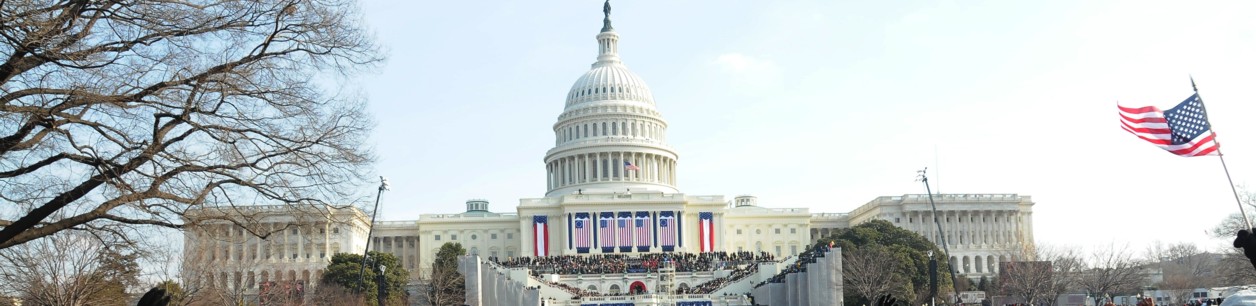
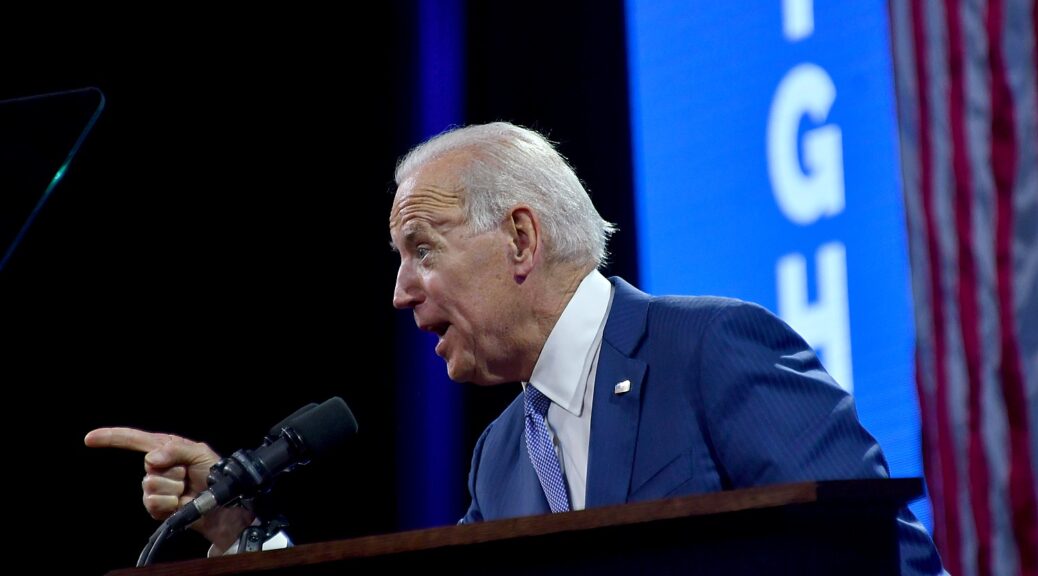
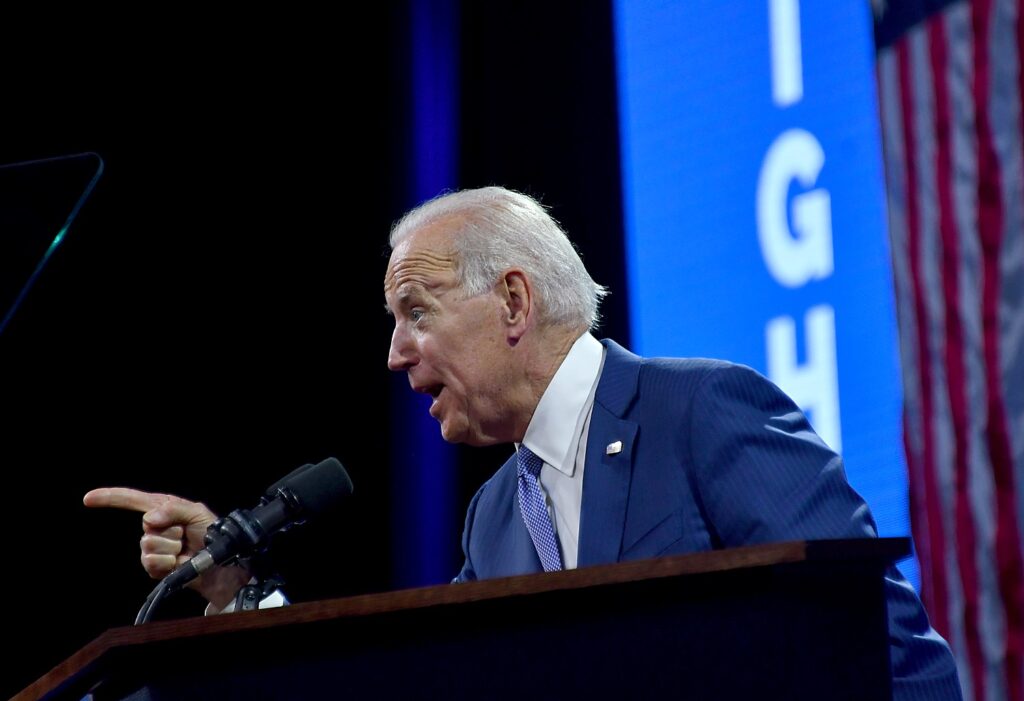
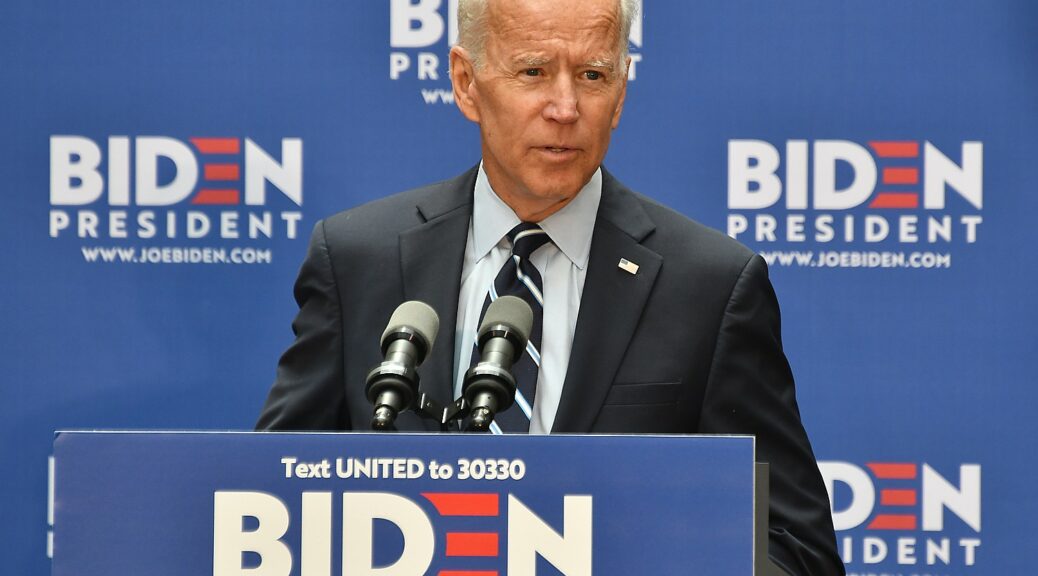
Vice President Joe Biden, the presumptive Democratic candidate for President, issued a forceful statement decrying the Trump administration’s failure to protect America’s election and democracy from foreign interference, warning how the threat undermines America’s sovereignty and describing what he would do – indeed, what a functioning President and government should do – immediately upon taking office (c) Karen Rubin/news-photos-features.com
Vice President Joe Biden, the presumptive Democratic candidate for President, issued a forceful statement decrying the Trump administration’s failure to protect America’s election and democracy from foreign interference, warning how the threat undermines America’s sovereignty and describing what he would do – indeed, what a functioning President and government should do – immediately upon taking office . Here is his statement:
Foreign interference in the U.S. electoral process represents an assault on the American people and their constitutional right to vote. When foreign states direct hackers, trolls, money launderers, and misinformation to subvert or cast doubt on our elections, they threaten America’s sovereignty, democratic institutions, and national security. They undermine the vote and the voice of every U.S. citizen. They attack our very way of life.
The Senate Select Committee on Intelligence has concluded that the Kremlin’s interference in past elections represented “only the latest installment in an increasingly brazen interference by the Kremlin on the citizens and democratic institutions of the United States.” Despite the exposure of Russia’s malign activities by the U.S. Intelligence Community, law enforcement agencies, and bipartisan Congressional committees, the Kremlin has not halted its efforts to interfere in our democracy. In Senate testimony on July 23 2019, FBI Director Christopher Wray testified that Russia was “absolutely intent on trying to interfere with our elections.” And on March 27, 2020, the State Department held a briefing describing how Russia was recklessly spreading disinformation about the COVID-19 pandemic. Russia is not the only foreign actor seeking to interfere in our democracy. Increasingly, other states have shown an interest in copying Russia’s tactics.
Congress passed with an overwhelming bipartisan majority the Countering America’s Adversaries Through Sanctions Act of 2017. The Trump administration has thus far failed to make adequate use of these authorities to counter and deter foreign election interference. Instead, President Trump has repeatedly denied that Russia interfered in our elections, most egregiously during a joint press conference with Russian President Vladimir Putin in Helsinki on July 16, 2018.
In spite of President Trump’s failure to act, America’s adversaries must not misjudge the resolve of the American people to counter every effort by a foreign power to interfere in our democracy, whether by hacking voting systems and databases, laundering money into our political system, systematically spreading disinformation, or trying to sow doubt about the integrity of our elections.
That is why, today, I am putting the Kremlin and other foreign governments on notice. If elected president, I will treat foreign interference in our election as an adversarial act that significantly affects the relationship between the United States and the interfering nation’s government. I will direct the U.S. Intelligence Community to report publicly and in a timely manner on any efforts by foreign governments that have interfered, or attempted to interfere, with U.S. elections. I will direct my administration to leverage all appropriate instruments of national power and make full use of my executive authority to impose substantial and lasting costs on state perpetrators. These costs could include financial-sector sanctions, asset freezes, cyber responses, and the exposure of corruption. A range of other actions could also be taken, depending on the nature of the attack. I will direct our response at a time and in a manner of our choosing.
In addition, I will take action where needed to stop attempts to interfere with U.S. elections before they can impact our democratic processes. In particular, I will direct and resource the Department of Defense, Department of Homeland Security’s Cybersecurity and Infrastructure Security Agency, the Department of State, and the Federal Bureau of Investigation’s Foreign Interference Task Force to develop plans for disrupting foreign threats to our elections process. This will be done, wherever possible, in coordination with our allies and partners, so that we are isolating the regimes that seek to undermine democracies and civil liberties.
I have no desire to escalate tensions with Russia or any other country. I would prefer to focus the full energies of my administration on bringing the international community together to fight COVID-19 and the economic pain it has caused, and to tackle other pressing issues of international concern. But if any foreign power recklessly chooses to interfere in our democracy, I will not hesitate to respond as president to impose substantial and lasting costs.
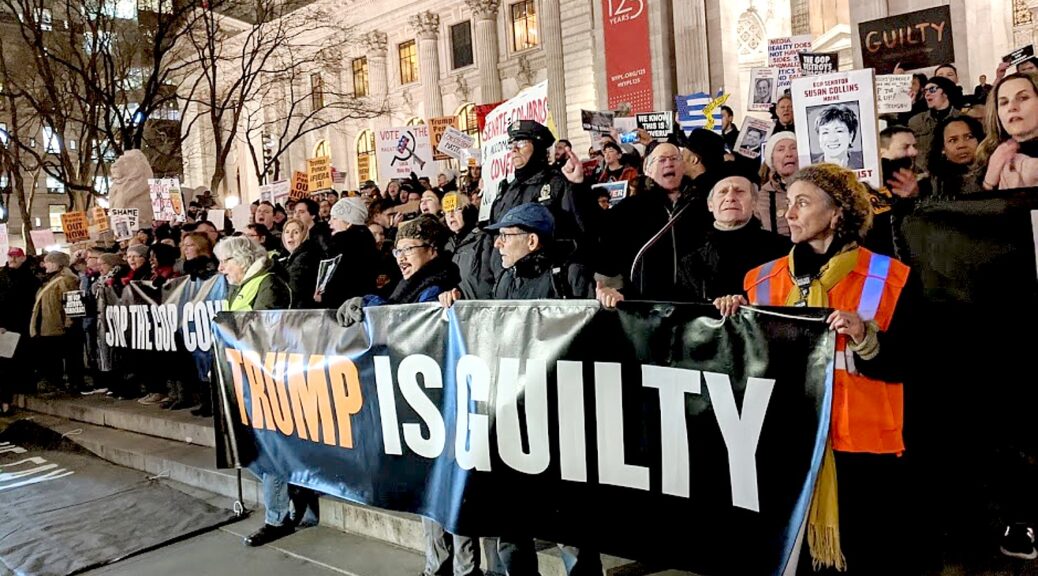
The widely anticipated vote to “acquit” Trump, impeached for abuse of power and obstruction of Congress, was never in doubt, though activists had hoped nationwide protests would shame Republicans into at least allowing witnesses and evidence into their show “trial”. But the activists are still determined for Trump to be held accountable – along with the Republicans in House and Senate who have been complicit enablers in higher and higher crimes and misdemeanors, breaching the public trust.
Mere hours after the Republicans voted to acquit – with the
singular exception of Senator Mitt Romney who acknowledged Trump’s abuse of
power – hundreds took to the streets, vowing to continue the protest, turn
Trump out of office and “flip the Senate”. “We will remember in November,” they
chanted as they marched from Columbus Circle, just across one of Trump’s
Manhattan buildings, down 57th Street o Fifth Avenue, and passed the
Trump Tower, to 42nd Street Public Library.
About 2,500 people in all participated in the protest, met
by fewer than a dozen pro-Trumpers.
They are calling for continued investigations and for
Congressional oversight so that Trump isn’t able to skate away, as in the 2016
campaign, hiding his tax returns which most likely would have shown financial
ties to Putin and Russian oligarchs (who made outsized donations to his
inaugural and bought condos at inflated rates), and made secret payments to
hush up a porn star, causing Trump to be labeled “Individual 1” in the
prosecution of his “fixer” Michael Cohen, now imprisoned, and the 10 counts of
obstruction of justice which the Mueller Probe found, saying they would have
indicted but for a Department of Justice “policy” against indicting a sitting
president.
In reaction, Trump, who used the State of the Union like a
political rally – even offering to
broadcast the names of donors “live” – followed up with continued smears
against any and all who have opposed him, even threatening to unleash the
Department of Justice to do the very thing – political witch hunt – that he
says he was the victim of. Except that there has never been any evidence or any
testimony offered that contradicts the crimes he is accused of, only the abuse
of his political power to extort complicity.
Indeed, it is now revealed that the Treasury Department,
which has stonewalled lawful requests from Congress for Trump’s tax returns (it
is actually a law), based on some sort of invasion of privacy of a US citizen,
and has sequestered the mandated audit of Trump’s returns while in office, has
been probing Hunter Biden to supply Senate Republicans with dirt.
The question is how long Republicans can ignore substantial majorities of people who want climate action, gun safety, immigration reform, voting rights and preservation of the Rule of Law and the fundamental premise that no one, not even a president, is above it.
There were more than 300 marches and protests around the country in towns large and small – marches in places from New York City and Petoskey, Michigan to Wasilla, Alaska; rallies in 46 states and Washington, D.C. and a “flash mob to say thank you to Sen. Romney” at his office in Salt Lake City.
Here are highlights from the rally, march and protest in New York City, one of dozens held around the nation on Wednesday, February 5, 2020:
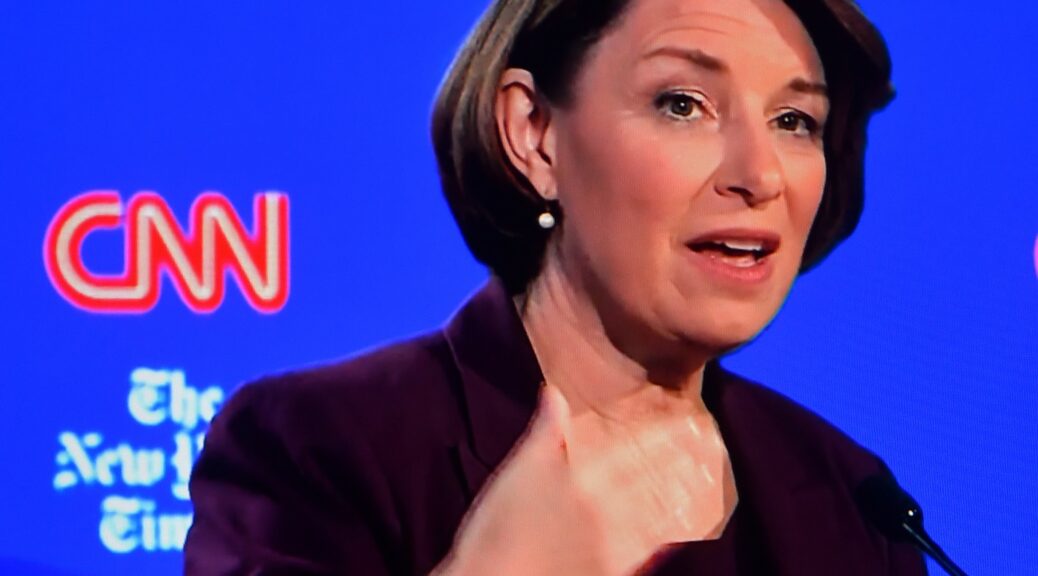
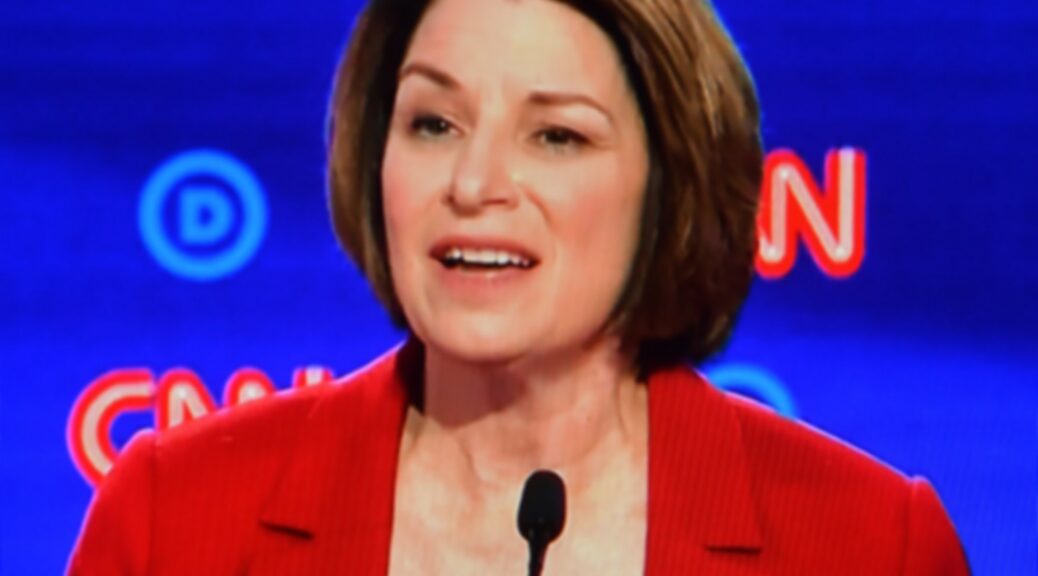
The vigorous contest of Democrats seeking the 2020 presidential nomination has produced excellent policy proposals to address major issues. In light of the threats to free and fair elections posed by Russian hacking, foreign interference, gerrymandering, Citizens United and voter suppression, and the impeachment proceedings unnerving public trust in government, Senator Amy Klobuchar has released her plan to safeguard elections, strengthen democracy and restore trust in government. This is from the Klobuchar campaign:
Senator Amy Klobuchar released her plan to safeguard our elections, strengthen our democracy and restore trust in government.
Senator Klobuchar believes that everything we talk about getting done – from taking on climate change to gun safety to health care reform — will depend on one thing: a democracy that works for the people and making sure every vote counts.
Today insidious forces are working to suppress the vote and drown out people’s voices with dark money. And our intelligence agencies have confirmed time and time again that there have been foreign attacks on our elections, and that our elections remain a target. Republicans in the Senate have repeatedly blocked Senator Klobuchar’s bipartisan legislation to strengthen our election security while our country faces continued threats from foreign adversaries.
Senator Klobuchar believes it’s time to take back our democracy. She has been a leader in the fight to protect our elections from foreign interference, including by securing $380 million in election security funds in 2018 so states could improve their election infrastructure and protect their election systems from cyberattacks. She leads bipartisan legislation in the Senate that would protect our elections with paper ballots and post-election audits, as well as the bipartisan legislation that would promote accountability and transparency for political ads on the internet.
Senator Klobuchar is also leading the effort in Congress to automatically register every American to vote when they turn 18, and she has fought for the passage of legislation that would restore the Voting Rights Act to take on discrimination at the polls. And she has worked to get dark money out of politics and restore trust in government dating back to her first month as a Senator, when she helped lead the successful push for meaningful ethics reform in Congress.
As President, Senator Klobuchar will champion a major voting rights and democracy reform package and she has already pledged that the For the People Act — legislation that has thirteen of Senator Klobuchar’s legislative provisions — will be the first bill she sends to Congress as President.
Strengthening Election Security and Regulating Online Political Ads
Promote accountability for political ads on the internet. Senator Klobuchar wrote and introduced the bipartisan Honest Ads Act, which would increase transparency and accountability for political ads on the internet by holding large online platforms to the same disclosure and disclaimer standards that apply to radio, broadcast, cable and satellite providers. As President, Senator Klobuchar will push to pass the Honest Ads Act, work to pass the PAID ADs Act — which she leads in the Senate — to make it illegal for foreign nationals to purchase election ads, and work to ban foreign nationals from involvement in decisions regarding political expenditures by corporations, PACs and Super PACs. She will work to prohibit online platforms from allowing political ads that discriminate against people and require online platforms to use human reviewers to approve political ads placed on their platforms. Today, there are no protections preventing misleading and outright false political ads online. That’s why Senator Klobuchar supports preventing social media companies from running political ads full of false claims and lies by holding them responsible.
Take on disinformation campaigns and foreign efforts to influence our elections. As President, Senator Klobuchar will require political campaigns to report any attempt by a foreign entity to influence our elections to the Federal Election Commission and Federal Bureau of Investigation. She will also prohibit U.S. political campaigns from offering non-public material to foreign entities. Senator Klobuchar will work to pass legislation based on the Deceptive Practices and Voter Intimidation Act, which she leads with Senator Cardin, to make it illegal to knowingly deceive others about how to participate in a federal election and to direct the Attorney General to work with states to counter voter intimidation. She will invest in media literacy education to teach students how to identify misinformation online, based on her Digital Citizenship and Media Literacy Act. Finally, she will work to pass the Combatting Foreign Influence Act, which she leads in the Senate, to direct the Director of National Intelligence to establish a Malign Foreign Influence Response Center to coordinate work across the intelligence community and law enforcement to assess foreign influence operations with a whole-of-government approach.
Build U.S. cyber expertise to defend our elections. As President, Senator Klobuchar will make cybersecurity an immediate priority. She will issue an Executive Order launching government-wide cybersecurity initiatives, fast-tracking and streamlining procurement of modern information technology across agencies. She will launch a cabinet-level taskforce on election cybersecurity to coordinate across agencies, including the intelligence community, on how the federal government can work with state and local governments to address cyber threats to our democracy and infrastructure. She will also work to pass legislation based on the Invest in Our Democracy Act, bipartisan legislation she leads in the Senate, to provide grants to states for election officials to receive continuing education in cybersecurity and election administration.
Fortify state election infrastructure against cyberattacks. Senator Klobuchar leads the effort to require all jurisdictions to have paper ballots through her Election Security Act, but Senator McConnell and the White House have prevented the bill from coming to a vote. She also led the successful effort to secure $380 million for State Election Security Grants in 2018. As President, Senator Klobuchar will require states to use paper ballots, set strong cybersecurity standards for voting infrastructure, increase grants to states for upgrades to their voting infrastructure and promote the use of post-election risk-limiting audits. These proposals are based on Senator Klobuchar’s legislation, Senator Wyden’s Protecting American Votes and Elections Act of 2019, which Senator Klobuchar co-sponsors in the Senate, and the SAFE Act, which passed the House in June 2019. She will also require the Director of National Intelligence to assess election threats and work with the Department of Homeland Security and Election Assistance Commission to provide assistance to states to counter those threats.
Eliminating Obstacles to Voting and Making It Easier to Vote
Automatically register every American when they turn 18. Senator Klobuchar believes we must do more to reduce barriers to voting. In the Senate, she has championed the Register America to Vote Act to automatically register all eligible citizens on their eighteenth birthday and she will get it passed as President. Automatically registering voters in every state would result in 22 million newly registered voters in just the first year of implementation, according to the Center for American Progress. Senator Klobuchar will also launch a pilot program to provide resources for initiatives that provide 12th graders with voter registration information. This proposal is based on the Students VOTE Act, legislation Senator Klobuchar leads in the Senate.
Restore the Voting Rights Act. Senator Klobuchar has long advocated for Congress to take action to address the U.S. Supreme Court’s 2013 decision in Shelby County v. Holder, which struck down key parts of the Voting Rights Act. As President, she will restore protections for voters in states with a recent history of discrimination. Senator Klobuchar will also champion the Native American Voting Rights Act, legislation she helps lead in the Senate, to provide the necessary resources and oversight to ensure Native Americans have equal access to the ballot box and the electoral process.
Prohibit voter purges and remove exact-match requirements. Senator Klobuchar has pushed to protect the constitutional rights of Americans from voter purges, which disproportionately impact minority, low-income, disabled, and veteran voters. In Georgia, former Secretary of State Brian Kemp purged over 1.4 million voters from the rolls and held up the voter registrations of 53,000 people because of things like a discrepancy over a hyphen in a last name. As President, Senator Klobuchar will pass her bill with Senator Brown, the SAVE Voters Act, to prohibit states from purging Americans from voter rolls for not voting in recent elections. The bill amends the National Voter Registration Act to prevent a state from using someone’s failure to vote or respond to a state notice as reason to target them for removal from voter rolls. Senator Klobuchar will also work with Congress to pass legislation requiring states to remove “exact-match” requirements and other unnecessary and discriminatory obstacles to registering to vote.
Break down institutional barriers to voting. Senator Klobuchar believes we must do more to make it easier for Americans to vote — not harder. As President, she will champion reforms to break down institutional barriers to voting, including:
Promote early voting and
no-excuse absentee voting. Nine states do not offer early
voting and in 19 states an excuse is required to vote absentee. Senator
Klobuchar will push to make voting more convenient and support voter
participation by working with states to establish early voting and no-excuse
absentee voting nationwide.
Establish minimum notification
requirements for voters affected by polling place changes. Senator Klobuchar will stand up to attempts to suppress voter
turnout by requiring states notify voters affected by polling place changes no
later than seven days before the date of the election or the first day of an
early voting period.
Designate election day as a
federal holiday. Senator Klobuchar will
designate election day as a federal holiday.
Establish Same Day Registration. In addition to championing her legislation to automatically register every American when they turn 18, Senator Klobuchar will also pass legislation she leads in the Senate, the Same Day Voter Registration Act, that requires states to allow people to register to vote on the same day as the election.
Increase accessibility in voting for people with disabilities. Senator Klobuchar believes we need to make it easier for the voices of people with disabilities to be heard on Election Day. As President, she will strengthen requirements for increased accessibility at polling places and expand resources by providing grants for states to make it easier for people with disabilities to vote.
Ensure ballots are counted from Americans living overseas and those serving in the military and their family members. Senator Klobuchar believes we should be doing everything we can to make voting easier for every American – including the 3 million Americans living overseas and more than 1.3 million active duty service members. Recently, she was successful in passing a provision in the Senate’s 2020 National Defense Authorization Act that would require Federal Voting Assistance Program to conduct a comprehensive study on how to scale a ballot tracking program for all military and overseas voters. As President, she will push to require states to ensure that all overseas voters receive their ballots at least 45 days before an election; improve the availability and transmission of absentee ballots abroad; and ensure that those ballots are counted by hand in any recount or audit. In addition, Senator Klobuchar will make sure that spouses of active duty service members do not have to change their legal residency each time they move for a military reassignment, a proposal that is based on the Support our Military Spouses Act, legislation she has championed in the Senate.
Ensure that those affected by natural disasters can still vote. As the effects of climate change become more disruptive, Senator Klobuchar believes that it is especially important to ensure that natural disasters do not prevent Americans from voting. As President, she will ensure that people living in areas where an emergency has been declared, those who have been displaced by a natural disaster, and professional or volunteer service emergency responders have access to an absentee ballot. In addition, anyone who expects to be hospitalized on Election Day or is not able to receive a requested absentee ballot from their state or jurisdiction would also be eligible to receive an emergency ballot. This proposal is based on the Natural Disaster Emergency Ballot Act, legislation Senator Klobuchar has championed in the Senate.
Overhauling Our Campaign Finance System
Overturn Citizens United. Senator Klobuchar believes that the surge in special interest cash in political campaigns since the Citizens United Supreme Court decision is undermining our elections and shaking the public’s trust in our elections. She will lead the effort to pass a constitutional amendment to overturn Citizens United and get the dark money out of politics.
Establish a public financing system and increase the power of small donors. Senator Klobuchar has long pushed for meaningful campaign finance reform to ensure the voices of average Americans are heard. As President, Senator Klobuchar will push to establish a campaign finance system to increase the power of small donors that matches 6-to-1 donations of $200 or less to eligible candidates.
Reform the Federal Election Commission (FEC). Senator Klobuchar believes that gridlock in the FEC — including the recent lack in quorum — has prevented the Commission from fully playing its role in administering and enforcing federal campaign finance laws. She has called on President Donald Trump to work with the Senate to help reestablish a quorum by nominating a commissioner to fill the vacant Democratic seat. And as President she will advance critical reforms to ensure a fully functioning FEC, including reducing the number of members from 6 to 5, ensuring the Commission has an accountable Chair with clear distribution of duties between the Chair and the FEC, and preventing commissioners from remaining in office indefinitely as holdovers. This proposal is based on the Campaign Finance Transparency Act, legislation she leads in the Senate.
Increase transparency in political spending. Senator Klobuchar believes that we must do more to shine a light on the corporate dark money spending. As President, she will champion the passage of the DISCLOSE Act, legislation she co-sponsors in the Senate, requiring corporations, super PACs and certain non-profits to promptly disclose election spending of $10,000 or more and list any donor who gives over $10,000 to the organization.
Ensuring Free and Fair Elections
End partisan gerrymandering. Senator Klobuchar believes that partisan gerrymandering undermines the principles of our democracy. She has signed the Fair Districts Pledge developed by former Attorney General Eric Holder and the National Democratic Redistricting Committee to support fair redistricting that ends map manipulation and creates truly representative districts. Particularly in the wake of the 2019 Supreme Court decision that effectively gave the greenlight to politically manipulate congressional districts, Senator Klobuchar will require states to establish independent, bipartisan redistricting commissions that will develop fair statewide district maps following each decennial census. This proposal is based on the Redistricting Reform Act, legislation Senator Klobuchar leads in the Senate.
Improve the treatment of provisional ballots. Senator Klobuchar will require states to establish uniform and nondiscriminatory standards for issuing, handling, and counting provisional ballots including requiring provisional ballots from eligible voters who voted at the wrong voting place to be counted.
Restore Americans’ right to vote after being released from incarceration. Senator Klobuchar believes that Americans who have been released from incarceration should be able to exercise their right to vote. As President she will restore citizens’ right to vote after being released from incarceration.
Restoring Trust in Government
Ensure that the President is not above the law. Senator Klobuchar believes we must take urgent action to reverse the harm President Trump has done to his office by openly flaunting the rule of law. She will instruct the Justice Department to withdraw the Office of Legal Counsel’s opinions prohibiting the indictment of a sitting president. She will also make it clear that the President and Vice President have to follow conflict of interest laws and require the President and major candidates for President to make their tax returns publicly available.
Overhaul ethics rules for White House employees and other senior officials. Senator Klobuchar believes that accountability starts at the top, and that in addition to strengthening accountability for the President, we must have the highest ethical standards for White House employees and other senior officials. Senator Klobuchar will strengthen investigations of foreign agents who lobby in the United States, give the Office of Government Ethics more enforcement power and provide additional protections for all Special Counsels. She will also publicly post executive branch ethics waivers and report senior officials’ conflicts of interest in rulemaking.
Strengthen protections for whistleblowers. Senator Klobuchar believes that the best way to encourage individuals with knowledge of wrongdoing to come forward is to provide and enforce strong protections for whistleblowers. Within her first 100 days in office, Senator Klobuchar will issue guidance affirming that the Department of Justice cannot intervene in the transmission of a whistleblower complaint to Congress under the Intelligence Community Whistleblower Protection Act. She will also work with Congress to expand whistleblower protections, including for government contractors, and direct all federal agencies to fully implement whistleblower education and anti-retaliation plans.
Increase transparency and protect journalists. As the daughter of a newspaper man, Senator Klobuchar has always believed transparency and journalism are critical to our nation’s democracy. Within her first 100 days in office, she will restore former Attorney General Eric Holder’s guidance on protections for journalists so that they are not jailed for doing their jobs. Senator Klobuchar will also direct the Office of Legal Counsel to make all of its opinions publicly available unless there is a compelling national security reason to prevent their release. She will fully fund Freedom of Information Act offices within executive agencies and direct them to post FOIA requests online.
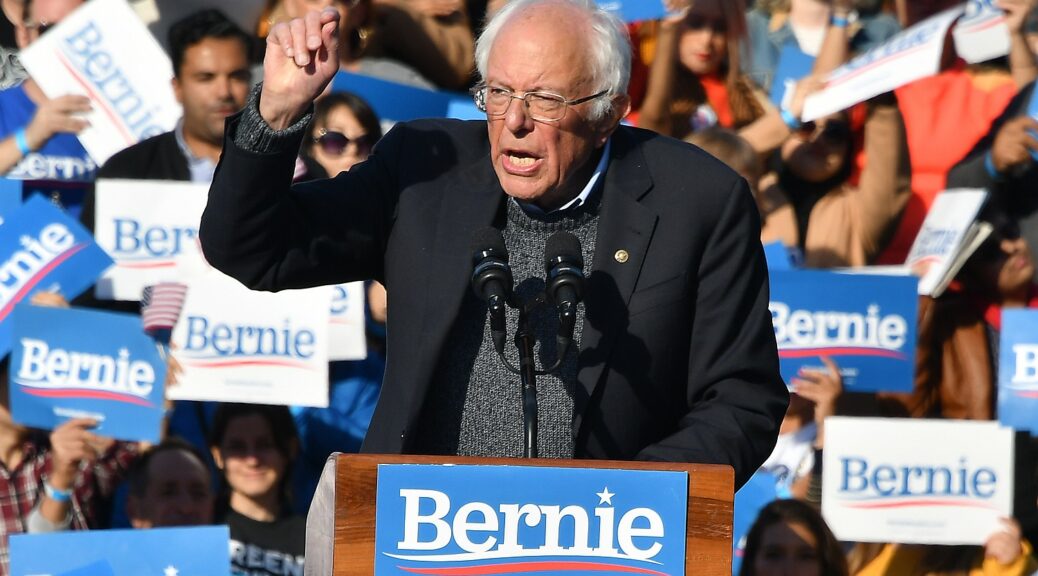
The vigorous contest of Democrats seeking the 2020 presidential
nomination has produced excellent policy proposals to address major issues. Senator
Bernie Sanders, long a crusader to end corporate influence and corruption in
the political system, unveiled his “Money
Out of Politics” Plan. This is from the Sanders campaign:
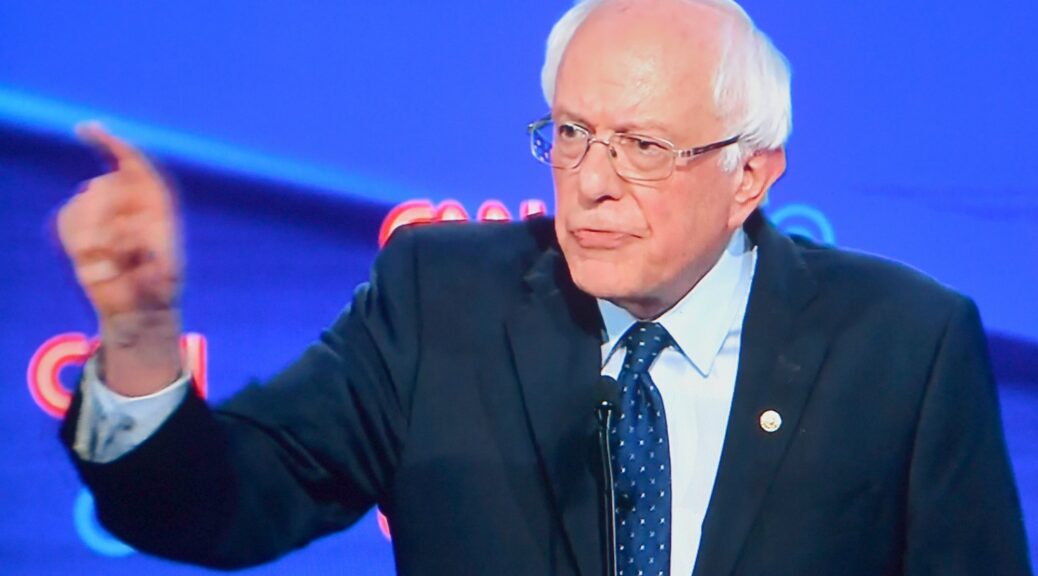
WASHINGTON – Sen. Bernie Sanders unveiled his Money Out of Politics Plan, a comprehensive proposal to end all corporate influence and corruption in the political system.
“Our grassroots-funded campaign is proving every single day that you don’t need billionaires and private fundraisers to run for president,” Sanders said. “We’ve received more contributions from more individual contributors than any campaign in the history of American politics because we understand the basic reality that you can’t take on a corrupt system if you take its money. Working people all over the country are responding to that message and demanding a political revolution through their small dollar donations. When we win the Democratic nomination and defeat Donald Trump, we will transform our political system by rejecting the influence of big corporate money.”
Sanders’ plan will end the greed-fueled, corrupt corporate influence over elections, national party convention, and presidential inaugurations.
In
2016, seventeen donors gave three-quarters of the Democratic National
Convention funding, with large corporations like Comcast, Bank of America and
Facebook donating millions. At the 2013 Presidential inauguration, corporate
donors including, AT&T, Microsoft, and Chevron donated millions.
As
the Democratic nominee, Sanders would ban all corporate contributions to the
Democratic Party Convention and all related committees, and as President he
would be ban all corporate donations for inaugural events and cap individual
donations at $500.
Additionally,
Sanders’ plan would abolish the now-worthless FEC and replace it with the
Federal Election Administration, a true law enforcement agency originally
proposed by former Senators John McCain and Russ Feingold.
Other
key elements Sanders’ Money Out of Politics Plan include:
Enacting mandatory public financing laws for all federal
elections.
Updating
and strengthen the Federal Election Campaign Act to return to a system of
mandatory public funding for National Party Conventions.
Passing
a Constitutional Amendment that makes clear that money is not speech and
corporations are not people.
Ending
the influence of corporations at the DNC.
Banning
donations from federal lobbyists and corporations.
Institute
a lifetime lobbying ban for National Party Chairs and Co-Chairs
Banning
Chairs and Co-Chairs from working for entities with federal contract, that are
seeking government approval for projects or mergers, or can reasonably be
expected to have business before Congress in the future.
Banning
advertising during presidential primary debates.
Instituting
a lifetime lobbying ban for former members of Congress and senior
staffers.
The vigorous contest of Democrats seeking the 2020 presidential nomination has produced excellent policy proposals to address major issues. Former Vice President Joe Biden, seeking the 2020 Democratic nomination for president, is proposing an ambitious campaign finance plan to guarantee that government works for the people and not for special interests. Biden has been criticized, however, for his recent announcement, in face of low campaign cash on hand, that he would accept money from Super PACs.
This is from the Biden campaign:
“Donald Trump has presided over the most corrupt administration in modern history. Trump has abused the presidency to enrich himself — spending countless tax dollars at his own properties. Members of his administration have failed to divest themselves from conflicts of interest as promised. Trump has weaponized the Executive Branch against its core mission, including using the U.S. Justice Department to protect the president and his interests, over the American people and the rule of law. And, Trump has welcomed wealthy special interests — including the National Rifle Association — into the Oval Office and to the highest levels of his administration to develop and guide policy.”
Biden will strengthen our laws to ensure that no future president can ever again abuse the office for personal gain.
As president, Biden will:
Reduce the corrupting influence of money in
politics and make it easier for candidates of all backgrounds to run for
office;
Return integrity to the U.S. Department of
Justice and to Executive Branch decision-making;
Restore ethics in government;
Rein in Executive Branch financial conflicts
of interest; and
Hold the lobbyists and those they lobby to a
higher standard of accountability.
Highlights from Biden’s plan include:
Biden will introduce a constitutional
amendment to entirely eliminate private dollars from our federal elections.
This amendment will do far more than just overturn Citizens United: it will
return our democracy to the people, away from the corporate interests that seek
to distort it. While we work toward a constitutional amendment, meaningful
change can be made by legislation. Biden will propose legislation to provide
public matching funds for small dollar donations to all federal candidates.
Biden has advocated for public financing of federal campaigns since the very
beginning of his Senate career. He first co-sponsored legislation to create a
public financing system for House and Senate candidates in 1973.
Biden will block any future president or
anyone else in the White House from interfering with decisions about who or
what to investigate and prosecute. On day one, Biden will issue an Executive
Order directing that no White House staff or any member of his administration
may initiate, encourage, obstruct, or otherwise improperly influence specific
DOJ investigations or prosecutions for any reason; he will commit to
terminating anyone who tries to do so. Biden will also enact legislation giving
the DOJ Inspector General full power to investigate any allegation of improper
partisan influence on DOJ investigations and prosecutions; and requiring the IG
to report in detail to Congress any time such an allegation is
substantiated.
Biden will establish the Commission on Federal
Ethics (CFE), a single government agency empowered to oversee and enforce
federal anti-corruption and ethics laws. CFE will have the authority to enforce
its own subpoenas and to refer matters for criminal investigation to the DOJ,
as well as an obligation to report to the public when DOJ has chosen not to
proceed with that referral. It will be tasked with tightening existing
loopholes that let public officials hide assets in discretionary trusts, or let
lobbyists cloak influence campaigns in vague disclosures. And, CFE will be
tasked with establishing ethics.gov, a new one-stop destination with all campaign finance,
financial disclosure, and lobbying information all in one place.
Biden will expand and strengthen lobbying
disclosure laws, requiring the office-holder in addition to the lobbyist to
disclose the meeting. And, Biden will require Members of Congress to disclose
any legislative language or bill text submitted by any lobbying party.
Additionally, Executive Branch officials will be required to disclose any
regulatory text submitted by any outside entity.
Biden will bar lobbying by foreign
governments; and will require that any foreign business seeking to lobby must
verify that no foreign government materially owns or controls any part of it.
Biden will enact legislation that requires all
candidates for federal office disclose returns dating back 10 years prior to
the date they declared their candidacy for their first federal office.
FACT SHEET: THE BIDEN PLAN TO
GUARANTEE GOVERNMENT WORKS FOR THE PEOPLE
REDUCE THE CORRUPTING
INFLUENCE OF MONEY IN POLITICS
Biden strongly believes that we could improve our politics overnight if we
flushed big money from the system and had public financing of our elections.
Democracy works best when a big bank account or a large donor list are not
prerequisites for office, and elected representatives come from all backgrounds,
regardless of resources. But for too long, special interests and corporations
have skewed the policy process in their favor with political contributions.
Biden has advocated for public financing of federal campaigns since the very
beginning of his Senate career. He first co-sponsored legislation to create a public financing system for
House and Senate candidates in 1973. In 1997 and many years afterward, he co-sponsored a constitutional amendment that would have limited contributions as
well as corporate and private spending in elections and prevented the damage
caused by the Supreme Court in Citizens United.
Biden will reform our campaign finance system so that it amplifies the voices
of the public, not the powerful — particularly the voices of working Americans.
Under his leadership, our system will make sure that the principles of
equality, transparency, and public — not private — interest drive all
government decisions. Toward those ends, Biden will:
Introduce a
constitutional amendment to entirely eliminate private dollars from our federal
elections. Biden believes it is long
past time to end the influence of private dollars in our federal elections. As
president, Biden will fight for a constitutional amendment that will require
candidates for federal office to solely fund their campaigns with public
dollars, and prevent outside spending from distorting the election process.
This amendment will do far more than just overturn Citizens United: it will return our democracy to the people and away from
the corporate interests that seek to distort it.
Enact legislation to
provide voluntary matching public funds for federal candidates receiving small
dollar donations. While we work toward a
constitutional amendment, meaningful change can be made by legislation. Biden
will propose legislation to provide public matching funds for small dollar
donations to all federal candidates. This will especially help first-time
candidates access the resources needed to compete, freeing them to focus on
interacting with voters, not high-dollar donors.
Keep foreign money out of
our elections. Biden will propose a law
to strengthen our prohibitions on foreign nationals trying to influence
federal, state, or local elections. He will direct a new independent
agency, the Commission on Federal Ethics (discussed in detail below), to assure
vigorous and unified enforcement of this and other anti-corruption laws. The
Commission will establish robust disclosure requirements, so that any online
electioneering communication that originates abroad is identified and
flagged.
Restrict SuperPACs. The Supreme Court’s decision in Citizens United is wrong and should be overturned by a constitutional amendment
– but we can’t wait to limit its pernicious effect. As president, Biden will
work to enact legislation ensuring that SuperPACs are wholly independent of
campaigns and political parties, from establishment, to fundraising and
spending.
Increase transparency of
election spending. Our campaign
finance law is outdated, and Biden will update it to reflect the modern era.
Too often, candidates and their allies now use online platforms like Facebook
and Twitter to spread misleading or outright false ads that are micro-targeted
to certain populations and unrecognized by the press. Biden will propose
legislation codifying what should be a simple tenet of campaign finance law:
any group that advocates for or against candidates for federal office in its
ads or communications must disclose its contributors. No more hiding
behind “dark money” groups to spread lies. This law will require all online
ads, how they’re targeted, and who paid for them to be posted by the groups to
a public database on a new one-stop website, ethics.gov — so no one can
target voters with misinformation without attracting media or political
attention.
End dark money
groups. Federal law recognizes
“social welfare” groups, also known as 501(c)(4)s, which were intended to
advocate for specific causes. But after Citizens United, they’ve increasingly
been used as dark money groups — spending hundreds of millions of dollars on
federal and state elections without disclosing their donors. Biden will enact
legislation to bar 501(c)(4)s from spending in elections – the same bar that
applies to Section 501(c)(3) charitable groups. He’ll also lead reform of the
Federal Election Campaign Act, to ensure that any entity of any kind that
spends more than $10,000 on federal elections must register with the Commission
on Federal Ethics and publicly disclose its donors.
Require real time
disclosure. Today, voters have to
wait until after an election to fully learn who spent money to influence their
decision. Biden will propose legislation to change that, by requiring campaigns
and outside entities that run ads within 60 days of an election to disclose any
new contributions within 48 hours.
Ban corporate PAC
contributions to candidates, and prohibit lobbyist contributions to those who
they lobby. Biden will ensure that
lobbyists and corporate PACs do not play a role in our elections. Biden’s
presidential campaign is refusing any funding from lobbyists and corporate
PACs. As president, he’ll enact legislation to bar lobbyists from making
contributions to, and fundraising or bundling for, those who they lobby. This
legislation will be designed to ensure that the public knows as much as
possible about the political spending of those who seek to influence
officeholders and other government officials. Any lobbyist contribution
must be disclosed within 24-hours, and any lobbyist-hosted fundraising event
must be disclosed before it occurs.
Reform funding for
national party conventions. Biden will propose
legislation establishing that any political party that receives more than 5% of
the national vote should have its national convention publicly financed.
Primaries — and the conventions that certify their results — are good for
democracy. Conventions should be, too. They should not be funded by corporate
or monied interests.
Close the federal
contractor loophole. As president, Biden will
close the loophole that currently allows officers and directors of federal
contractors to contribute to federal candidates. If you make money from
government contracts, you should do so on merit — not because of campaign
spending.
RETURN INTEGRITY TO THE
DEPARTMENT OF JUSTICE AND OTHER EXECUTIVE BRANCH DECISION-MAKING
The Attorney General and the rest of U.S. Department of Justice (DOJ) serve and
protect the American people, not the private and political interests of the
president. The same is true for other Executive Branch agencies. Yet time after
time, President Trump has improperly sought to use DOJ to attack his political
opponents and to shield him, his family, and his associates from any meaningful
oversight or investigation. Trump has asked DOJ to prosecute Democrats and
others who disagree with him; he has enlisted DOJ in his effort to keep his tax
returns from seeing the light of day; and he has attacked the hard-working
career prosecutors and agents who devote their lives to public service.
Trump has weaponized the DOJ against laws enacted by Congress and supported by
the public — like the Affordable Care Act, which has given more than 20 million
Americans access to health insurance that they lacked before. He has
similarly used his appointments and executive orders to ask Executive Branch
agencies to stray from their mission — directing the Department of Health and
Human Services to dismantle, rather than enforce, the Affordable Care Act and
asking the Environmental Protection Agency to excuse polluters, rather than to
ensure clean air and clean water for the American people, as the law
requires. It’s wrong.
To maintain the rule of law, and to bring integrity back to our justice system
and government, Biden will take aggressive action, including:
Prevent the president or
White House from improperly interfering in federal investigations and
prosecutions. Biden will work to
block any future president or anyone else in the White House from improperly
interfering with decisions about who or what to investigate and prosecute.
Those decisions must be based on the facts and the law alone, free from
political or partisan influence. The president can set broad enforcement
priorities, but he or she should never tell DOJ which specific people or
companies to investigate or prosecute. On day one of his presidency, Biden will
issue an Executive Order directing that no White House staff or any member of
his administration may initiate, encourage, obstruct, or otherwise improperly
influence specific DOJ investigations or prosecutions for any reason; and he
will pledge to terminate anyone who tries to do so. Biden will also enact
legislation giving the DOJ Inspector General full power to investigate any
allegation of improper partisan influence on DOJ investigations and
prosecutions; and requiring the IG to report in detail to Congress any time
such an allegation is substantiated. And, Biden will work with Congress to
strengthen our whistleblower laws, so that any federal employee who learns of
an improper attempt to influence a DOJ investigation or prosecution knows how
to report it and receives full protection against retaliation by anyone,
including the president. Those reforms will also ensure that all such reports
are transmitted directly to the Congress.
Increase transparency in
DOJ decision-making. Biden will make DOJ
policies and practices more transparent and accessible to the public. Too many
of the Trump Administration’s worst decisions – whether claiming that the
Affordable Care Act is unconstitutional or that DACA is illegal – were made
without grounding in the law. Biden will require DOJ to report and explain in
detail any change in position on a significant legal issue to Congress and the
public.
Empower agency watchdogs
to combat unethical behavior. Biden will
strengthen Inspectors General laws — which established watchdogs in nearly
every Executive Branch agency — to give IGs the full subpoena power and
independence they need to investigate and publicize any official’s actual or
attempted improper conduct. Inspectors General must be given the express
authority to prevent, investigate, and disclose all violations.
Prohibit improper
interference in agency matters. Biden will ensure
that agency decisions on specific matters, like awarding government contracts
or granting government permits, are based on merit and expertise, not on political
preferences. Biden will issue an Executive Order prohibiting anyone in the
White House from interfering with federal agencies on these matters, and he
will require the White House to disclose to the public if any corporation,
individual, or other entity tries to solicit White House help. This
information will be aggregated and made public by the Commission on Federal
Ethics.
Empower DOJ to enforce
the law. Biden will ensure that DOJ has the
resources and authority to enforce our laws, including those the Trump
Administration has told career prosecutors and agents to ignore – laws that
protect our voting rights, make discrimination illegal, and protect the
environment. And, Biden will re-commit the Department’s Civil Rights and Energy
and Natural Resources divisions to their missions.
RESTORE ETHICS IN
GOVERNMENT
For the eight years of the Obama-Biden Administration, there was not a hint of
scandal. The administration established the most stringent ethics code ever
adopted by any White House. Its procedures ensured that all decisions were made
on the merits, without bias, favoritism, or undue influence. President Obama
and Vice President Biden set clear expectations that the ethics code and
existing law must be followed.
The Trump Administration has shredded those standards. Trump is accepting
foreign emoluments, and has disregarded his pledge not to expand his business
overseas. And, Trump is using the federal government to prop up his resorts
with countless tax dollars.
Many of our imperfect yet essential government ethics laws trace their origins
to the country’s response to Watergate. As president, Biden will ensure that
the country’s response to the Trump Administration’s violations is even more
aggressive. Specifically, Biden will:
Establish the Commission
on Federal Ethics to more effectively enforce federal ethics law. Biden will propose and enact legislation establishing a single
government agency empowered to oversee and enforce federal anti-corruption and
ethics laws. Today, existing law is a patchwork of subject-matter-specific
mandates, overseen by agencies that often lack the authority to demand and
receive compliance. And, public data tracking who is trying to influence our
elected officials is equally patchworked and hard to find. This commission will
make all information about how certain interests are seeking to influence our
government easily accessible.
The office will have broad investigative and
civil enforcement authority, expanding on powers now held by the FEC, OGE, and the
Office of Special Counsel. It will have the authority to enforce its own
subpoenas, ending the Trump Administration’s illegal stonewalling. It will have
the power to refer matters for criminal investigation to the DOJ, and an
obligation to report to the public when DOJ has chosen not to proceed with that
referral. And it will be tasked with tightening existing loopholes that let
public officials hide assets in discretionary trusts, or let lobbyists cloak
influence campaigns in vague disclosures.
In addition, the Commission on Federal Ethics
(CFE) will be tasked with establishing an ethics.gov, a new one-stop
destination for Americans interested in learning about the elected and
appointed officials who serve them, and those who seek to influence that
service. It will compile campaign finance, financial disclosure, and lobbying
information all in one place — and, as detailed in this plan, that information
will be more comprehensive than ever.
CFE Structure: To avoid the stalemate that afflicts some agencies today, CFE
will be run by a five-member Commission, appointed by the President and
confirmed by the Senate, with no more than three commissioners from the same
political party. Commissioners will hold office for staggered 10-year terms
across presidential administrations, removable only for cause. Nominations to
the Commission will be suggested by a blue ribbon panel of former prosecutors,
judges, and state regulators. Only those with experience in prosecuting public
corruption or regulating ethics and campaign finance will be eligible for
appointment.
To monitor CFE effectiveness, and to ensure
that it responds to all threats to ethical and transparent government, the
Office will be advised by an 11-member CFE Oversight Board, comprised of
bipartisan experts in ethics, campaign finance, and open government. The Board
will report to CFE twice annually with recommendations on how to strengthen
ethics enforcement; when the Board recommends updates, CFE will be bound to
consider them publicly and to explain if any are not followed.
Require that all
candidates for federal office release tax returns dating back 10 years prior to
the date they declared candidacy for their first federal office. Many Senate committees require nominees for Cabinet-level
positions to provide their tax returns for inspection – because knowing how a
person has earned their living can inform decisions on their suitability for
office. If we require that of appointed officials, why do we expect less of
elected-office seekers? The past 21 years of Biden’s federal tax returns have
been released, open to inspection by voters and the media. As president, Biden
will enact legislation requiring that every candidate for federal office
disclose returns dating back 10 years prior to the date they declared their
candidacy for their first federal office.
Expand on and codify into
law the Obama-Biden Administration ethics pledge. On day one, Biden will issue an ethics pledge, building and
improving on the Obama-Biden Administration’s pledge, to ensure that every member of his administration focuses
day-in and day-out on the best outcomes for the American people, and nothing
else. The pledge will address not only the improper influence of lobbyists, but
also any improper or inappropriate influence from personal, financial, and
other interests – ensuring an extra layer of review and scrutiny whenever
policy proposals or recommendations come from a conflicted source.
REIN IN EXECUTIVE BRANCH
FINANCIAL CONFLICTS OF INTEREST
President Trump is using the Presidency to enrich himself. His Cabinet is full
of members who’ve failed to follow through on promised divestments or recusals.
Biden will renew public confidence in our democracy by ensuring that everyone
in a position of public trust eliminates even the appearance that their
financial holdings could influence decision-making.
As president, Biden will:
Prevent the president and
other senior Executive Branch members from being influenced by personal
financial holdings. No member of the Biden
Administration will be influenced by personal financial holdings. As President,
just as he did as Vice President, Biden will hold only Treasury bonds,
annuities, mutual funds, and private residential real estate; likewise, any
retirement plans benefiting Joe or Jill Biden will be in large-cap mutual
funds. By Executive Order, Biden will demand strict compliance with ethics
agreements that he will demand of each of his Cabinet and other senior
administration officials. And, he will enact legislation strengthening these
practices, so we’re never again exposed to self-enrichment like that seen in the
Trump Administration.
Extend this standard to
U.S. House and Senate members. Biden will work with
Congress to enact legislation to apply similar standards to its members.
Eliminate the trust
loophole in existing financial disclosure law. The Ethics in Government Act requires candidates for
federal office and senior Executive Branch officials to disclose their assets.
It aims to give the public, media, and other government officials a chance to
identify potential conflicts, and to demand recusal where appropriate. But
candidates and public officials often transfer assets into trusts controlled by
family members or close friends, and then disclose just the existence of the
trust rather than the assets it holds. This loophole has allowed many senior
officials — including President Trump — to avoid disclosing significant
financial interests. Biden will work with Congress to close this loophole; and
will meanwhile require that any member of his Administration who is a
beneficiary of a discretionary trust disclose all of its holdings.
HOLD THE LOBBIED AND
LOBBYISTS TO A HIGHER STANDARD OF ACCOUNTABILITY
Our government should operate in the public interest—making decisions on the
merits, and not to meet the demands of well-heeled interests. The public has a
right to know when lobbyists meet Members of Congress and Executive Branch
officials; it should know with whom they speak, and about what. What’s more,
lobbyists often provide draft legislative or regulatory language they hope to
be enacted. That information should be made public, too. Today, our lobbyist
regulations are filled with loopholes and only lobbyists and the corporate
interests they represent are required to disclose far too little.. It is time
that we strengthen our lobbyist rules and hold public officials accountable by
making sure they meet these higher standards too.
As president, Biden will:
Hold elected officials
accountable for public transparency of lobbying meetings. Existing lobbying law focuses primarily on the people who are
doing the lobbying. It is time the law expanded to include the public officials
who are the subject of lobbying. If your Senator or Representative is meeting
with a special interest group, you should know. If the Secretary of Education
is making decisions about student debt after dozens of meetings with lenders,
you should know that, too. Biden will expand lobbying disclosure laws, so the
obligation for transparency falls on the office-holder, as well as on the
lobbyist. Specifically, Biden will propose legislation to require elected
officials to disclose monthly any meetings or communications with any lobbyist
or special interest trying to influence the passage or defeat of a specific
bill – whether seeking the officeholder’s vote, or assistance in introducing or
developing legislation. Under the Biden plan, members of Congress will be
required to disclose any legislative language or bill text submitted by any
lobbying party. Executive Branch officials will be required to disclose any
regulatory text submitted by any outside entity. And, members of Congress and
senior executive branch officials will be required to develop and disclose any
access policy they have that governs requests for appointments. The CFE will
make all of that information publicly available. If an office-holder believes
that meetings with particular entities serve the public, let them explain why.
Make lobbying disclosure
meaningful. Lobbying law should
effectively inform the public and discourage conduct that distorts government
decision-making. But current law does neither. Disclosure requirements are
riddled with loopholes, so lobbyists can coordinate a PR campaign without ever
disclosing their work. Detailed campaigns can be shielded by vague references
to lobbying a chamber of Congress. Influencers are free to disclose only
general information about the laws and regulatory activity they are trying to
shape, without revealing specifics. Biden will lower the threshold for when those
seeking to influence government decisions must register as “lobbyists” — to
include anyone who earns more than $1,000 annually to be involved in developing
or overseeing a lobbying strategy. The law will require them to disclose in
detail exactly what they’re doing: with whom they’re meeting, the materials
they’re sharing, any specific legislative (or regulatory) language they are
proposing, and precisely what outcomes they’re seeking.
Prohibiting foreign
governments’ use of lobbyists. There is no reason why a
foreign government should be permitted to lobby Congress or the Executive
Branch, let alone interfere in our elections. If a foreign government wants to
share its views with the United States or to influence its decision-making, it
should do so through regular diplomatic channels. The Biden Administration will
bar lobbying by foreign governments; and it will require that any foreign
business seeking to lobby must verify that no foreign government materially
owns or controls any part of it.
Ensure truly public
access. In Washington, the
ability to schedule a meeting with an elected official or his or her staff is a
form of currency. Under the Biden plan, members of Congress and senior
Executive Branch officials will be required to develop and disclose to the
public any policies that their office has instituted on when to accept or
prioritize appointments. In addition, Biden will return to the Obama-Biden
Administration practice of disclosing White House visitor lists.
The vigorous contest of Democrats seeking the 2020 presidential
nomination has produced excellent policy proposals to address major issues.
Senator Bernie Sanders has unveiled his plan to “end corporate corruption and
return our elections back to the working class of America.” This is from the
Sanders campaign:
WASHINGTON – Sen. Bernie Sanders unveiled his Money Out of
Politics Plan, a comprehensive proposal to end all corporate influence and
corruption in the political system.
“Our grassroots-funded campaign is proving every single day that you don’t
need billionaires and private fundraisers to run for president,” Sanders
said. “We’ve received more contributions from more individual contributors
than any campaign in the history of American politics because we understand the
basic reality that you can’t take on a corrupt system if you take its money.
Working people all over the country are responding to that message and
demanding a political revolution through their small dollar donations. When we
win the Democratic nomination and defeat Donald Trump, we will transform our political
system by rejecting the influence of big corporate money.”
Sanders’ plan will end the greed-fueled, corrupt corporate influence over
elections, national party convention, and presidential inaugurations.
In 2016, seventeen donors gave three-quarters of the Democratic
National Convention funding, with large corporations like Comcast, Bank of
America and Facebook donating millions. At the 2013 Presidential inauguration,
corporate donors including, AT&T, Microsoft, and Chevron donated millions.
As the Democratic nominee, Sanders would ban all corporate
contributions to the Democratic Party Convention and all related committees,
and as President he would be ban all corporate donations for inaugural events
and cap individual donations at $500.
Additionally, Sanders’ plan would abolish the now-worthless FEC
and replace it with the Federal Election Administration, a true law
enforcement agency originally proposed by former Senators John McCain and Russ
Feingold.
Other key elements Sanders’ Money Out of Politics Plan include:
Enacting mandatory public financing laws for all federal
elections.
Updating and strengthen the Federal Election Campaign Act to
return to a system of mandatory public funding for National Party
Conventions.
Passing a Constitutional Amendment that makes clear that money
is not speech and corporations are not people.
Ending the influence of corporations at the DNC.
Banning donations from federal lobbyists and corporations.
Institute a lifetime lobbying ban for National Party Chairs and
Co-Chairs
Banning Chairs and Co-Chairs from working for entities with
federal contract, that are seeking government approval for projects or mergers,
or can reasonably be expected to have business before Congress in the
future.
Banning advertising during presidential primary debates.
Instituting a lifetime lobbying ban for former members of
Congress and senior staffers.
The vigorous contest of
Democrats seeking the 2020 presidential nomination has produced excellent
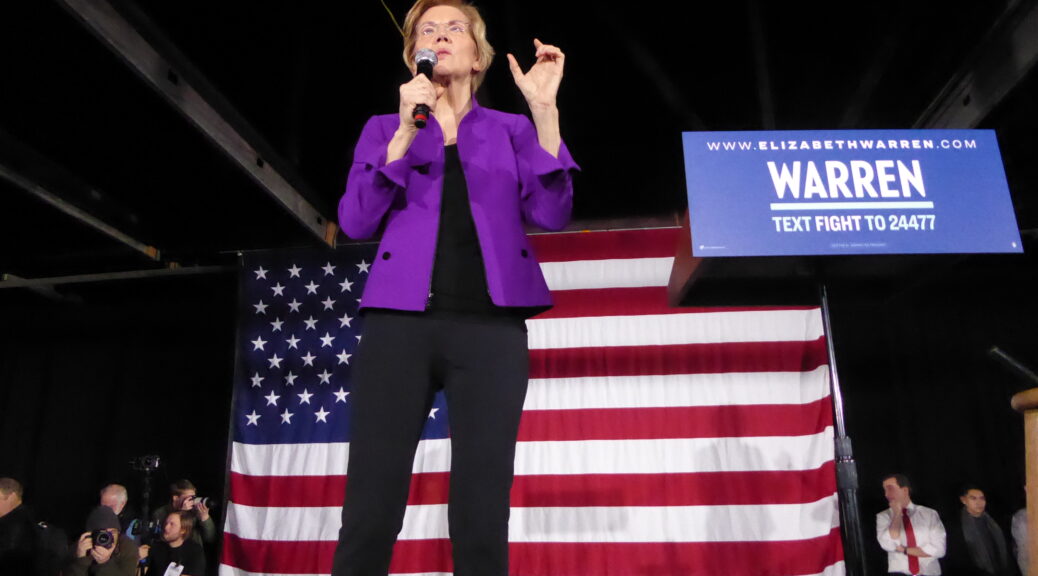
policy proposals to address major issues. Senator Elizabeth Warren details her
plan to tax excessive lobbying as part of her anti-corruption proposal. This is
from the Warren campaign:
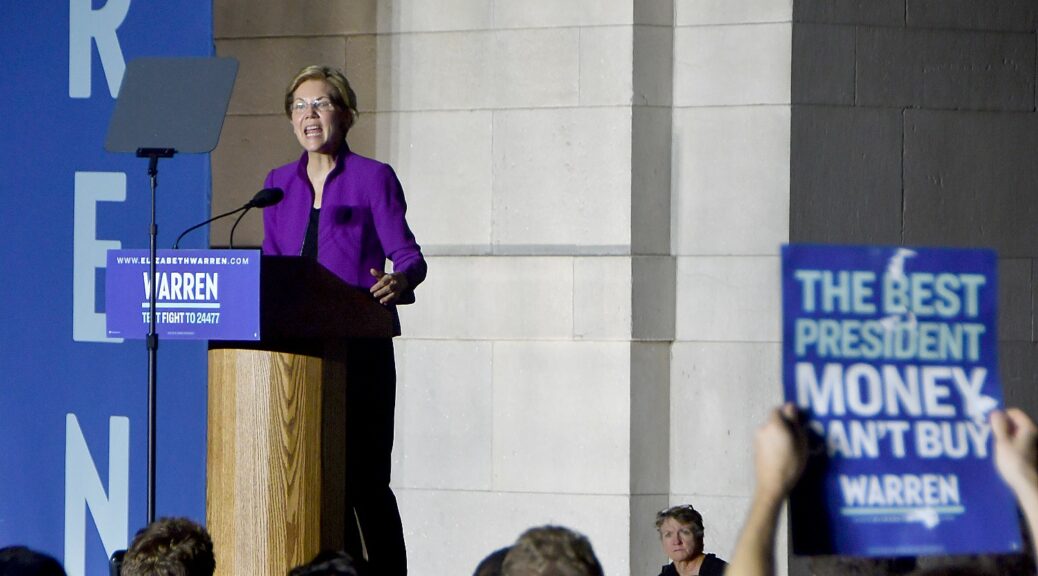
Charlestown, MA – Senator Elizabeth Warren recently unveiled her plan for a new tax on excessive lobbying. It applies to every corporation and trade organization that spends over $500,000 per year lobbying our government. The revenue from this tax will be used to help our government fight back against the influence of lobbyists.
Based on our analysis of lobbying data provided by the Center for Responsive Politics, if this tax had been in effect over the last 10 years, over 1,600 corporations and trade groups would have had to pay up – leading to an estimated $10 billion in total revenue.
Senator Warren has already laid out how she will end lobbying as we know it and strengthen Congressional independence from lobbyists. (Read more about her plan here.)
Here is more about her plan to tax
excessive lobbying:
When Americans think about corporate lobbyists, they usually think about the
people in fancy suits who line the halls of Congress armed with donations,
talking points, and whatever else they need to win favorable treatment for their
big corporate clients.
They’re right. In fact, corporate interests spend more on lobbying than
we spend to fund both houses of Congress — spending more than $2.8 billion on
lobbying last year alone. That’s why I have a plan to strengthen congressional
independence from lobbyists and give Congress the resources it
needs to defend against these influence campaigns.
But corporate lobbyists don’t just swarm Congress. They also target our federal
departments like the Environmental Protection Agency and
the Consumer Financial Protection
Bureau. These agencies exist to oversee giant corporations and
implement the laws coming out of Congress – but lobbyists often do their best
to grind public interest work at these agencies to a halt.
When the Department of Labor tried to protect workers from
predatory financial advisors who got rich by siphoning off large and
unnecessary fees from workers’ life savings, Wall Street lobbyists descended on
Washington to try to kill the effort – twice. When they failed
the second time, they sued to stop it in
the courts.
When the Environmental Protection Agency decided to act on greenhouse gas
emissions by passing regulations on methane,
fossil fuel companies called in their lobbyists. The rule was dramatically weakened –
and then Trump’s EPA went even further than some in the industry wanted by
proposing to scrap the rule altogether.
When the Consumer Financial Protection Bureau tried to crack down on
payday lenders exploiting vulnerable communities, lobbyists convinced the Trump
administration to cripple the rule –
while the payday lenders who hired them spent about $1 million at
a Trump resort.
Regulatory agencies are only empowered to implement public interest rules under
authority granted by legislation already passed by Congress. So how is it that
lobbyists are able to kill, weaken, or delay so many important efforts to
implement the law?
Often they accomplish this goal by launching an all out assault on the process
of writing new rules – informally meeting with
federal agencies to push for favorable treatment, burying those agencies
in detailed industry comments during
the notice-and-comment rulemaking process, and pressuring members of Congress to
join their efforts to lobby against the rule. If the rule moves forward anyway,
they’ll argue to an obscure
federal agency tasked with weighing the costs and benefits of agency rules that
the rules are too costly, and if the regulation somehow survives this
onslaught, they’ll hire fancy lawyers to
challenge it in court.
I have released the most sweeping set of anti-corruption reforms since
Watergate. Under my plan, we will end lobbying as we know it.
We will make sure everyone who is paid to influence government is required to
register as a lobbyist, and we’ll impose strict disclosure requirements so that
lobbyists have to publicly report which agency rules they are seeking to
influence and what information they provide to those agencies. We’ll also shut
the revolving door between government and K Street to prevent another Trump
administration where ex-lobbyists lead the Department
of Defense, the Environmental Protection Agency, the Department of Labor, the
Department of Interior, and the Office of the U.S. Trade Representative.
My plan also calls for something unique – a new tax on excessive lobbying
that applies to every corporation and trade organization that spends over
$500,000 per year lobbying our government. This tax will reduce the incentive
for excessive lobbying, and raise money that we can use to fight back against
this kind of onslaught when it occurs.
Under my lobbying tax proposal, companies that spend between $500,000 and $1
million per year on lobbying, calculated on a quarterly basis, will pay a 35%
tax on those expenditures. For every dollar above $1 million spent on lobbying,
the rate will increase to 60% – and for every dollar above $5 million, it will
increase to 75%.
Based on our analysis of lobbying data provided
by the Center for Responsive Politics, if this tax had been in effect over the
last 10 years, over 1,600 corporations and trade groups would have had to pay
up – leading to an estimated $10 billion in total revenue. And 51 of them –
including the U.S. Chamber of Commerce, Koch Industries, Pfizer, Boeing,
Microsoft, Walmart, and Exxon – would have been subject to the 75% rate for
lobbying spending above $5 million in every one of those years.
Nobody will be surprised that the top five industries that would have paid the
highest lobbying taxes are the same industries that have spent the last decade
fighting tooth and nail against popular policies: Big Pharma, health insurance
companies, oil and gas companies, Wall Street firms, and electric
utilities.
Among individual companies, the U.S. Chamber of Commerce would have owed the
most of any company or trade group in lobbying taxes: an estimated $770 million
on $1 billion in lobbying spending – over $400 million more than the
next-highest-paying organization, the National Association of Realtors, which
would have paid $307 million on $425 million in lobbying spending. Blue Cross
Blue Shield, PhRMA, and the American Hospital Association would have all paid
between $149 and $163 million in taxes on between $213 and $233 million in
lobbying spending. And General Electric, Boeing, AT&T, Business Roundtable,
and Comcast round out the top ten, paying between $105 million and $129 million
in taxes.
Every dollar raised by the lobbying tax will be placed into a new Lobbying
Defense Trust Fund dedicated to directing a surge of resources to Congress and
federal agencies to fight back against the effort to bury public interest
actions by the government.
Corporate lobbyists are experts at killing widely popular policies behind
closed doors.
Take just one example from the Obama administration. In October 2010, the
Department of Labor (DOL) proposed a
“fiduciary rule” to protect employee retirement accounts from brokers who charge exorbitant fees and
put their own commissions above earning returns for their clients. The idea was
simple: if you’re looking after someone’s money, you should look out for their
best interests.
It’s an obvious rule – but it would cut into financial industry profits. So the
industry dispatched an army of lobbyists to fight against the
rule, including by burying the agency in public comments. In the first four
months, the DOL received hundreds of comments on
the proposed rule, including comments from the U.S. Chamber of Commerce, Morgan
Stanley, Bank of America, BlackRock, and other powerful financial interests.
After a public hearing with testimony from groups like Fidelity and J.P Morgan,
the agency received over 100 more comments —
including dozens from members of Congress,
many of which were
heavily slanted toward industry talking points.
Because the law requires agencies to respond to each concern laid out in the
public comments, when corporate interests flood agencies with comments, the
process often becomes so time-consuming and resource-intensive that it can kill or delay final rules altogether
– and that’s exactly what happened. On September 19, 2011, the DOL withdrew the proposed rule,
but said that it planned to try again in the future.
Undeterred, Wall Street pushed forward their lobbying campaign to ensure that
the Department of Labor wouldn’t try again to re-issue the fiduciary rule. In
June 2013, Robert Lewis, a lobbyist for an investment industry trade
group, personally drafted a letter opposing
this common-sense reform – and got 32 members of Congress to sign it. The
letter ominously urged the Department to “learn from its earlier experience”
when the financial industry had killed the first proposal. Soon, members of
Congress from both parties were joining in, telling the Obama
administration to delay re-issuing the rule.
To its great credit, the Obama Department of Labor didn’t give up. On February
23, 2015, the agency finally re-proposed the rule. Wall Street ramped up their
lobbying once more to try to kill it a second time. This time, with firm resolve
and committed allies, DOL and those of us fighting alongside
them beat back thousands of comments,
and retirees won – but it took so long that Donald Trump became President
before the rule fully went into effect.
Lobbyists have followed this same playbook to
block, narrow, or delay countless other common- sense industry regulations.
Swarm regulators and Congress, bury everyone in an avalanche of money, and
strangle government action in the public interest before it even gets off the
ground.
That’s why I’m using the revenue from my tax on excessive lobbying to
establish a new Lobbying Defense Trust Fund, which will help our government
fight back against the influence of lobbyists.
First,
we’ll use the Lobbying Defense Trust Fund to strengthen congressional support
agencies. In
my plan to strengthen congressional
independence from lobbyists, I explained how lobbying tax revenue
would help to reinstate the Office of Technology Assessment and increase the
budget for other congressional support agencies, like the Congressional Budget
Office.
Second,
we’ll give more money to federal agencies that are facing significant lobbying
activity. Every
time a company above the $500,000 threshold spends money lobbying against a
rule from a federal agency, the taxes on that spending will go directly to the
agency to help it fight back. In 2010, DOL could have used that money to hire
more staffers to complete the rule more quickly and intake the flood of
industry comments opposing it.
Third,
revenue from the lobbying tax will help to establish a new Office of the Public
Advocate. This
office will help the American people engage with federal agencies and fight for
the public interest in the rule-making process. If this office had existed in
2010, the Public Advocate would have made sure that DOL heard from workers and
retirees – even while both parties in Congress were spouting industry talking
points.
My new lobbying tax will make hiring armies of lobbyists significantly more
expensive for the largest corporate influencers like Blue Cross Blue Shield,
Boeing, and Comcast. Sure, this may mean that some corporations and industry
groups will choose to reduce their lobbying expenditures, raising less tax
revenue down the road – but in that case, all the better.
And if instead corporations continue to engage in excessive lobbying, my
lobbying tax will raise even more revenue for Congress, agencies, and federal
watchdogs to fight back.
It’s just one more example of the kind of big, structural change we need to put
power back in the hands of the people – and break the grip that lobbyists have
on our government for good.
Senator Amy Klobuchar has pledged that the For the People Act — legislation that contains 13 of Senator Klobuchar’s legislative provisions to improve access to the ballot box — will be the first bill she sends to Congress as President. (c) Karen Rubin/news-photos-features.com
The vigorous contest of Democrats seeking the 2020 presidential nomination has produced excellent policy proposals to address major issues. Senator Amy Klobuchar has pledged that the For the People Act — legislation that contains 13 of Senator Klobuchar’s legislative provisions to improve access to the ballot box — will be the first bill she sends to Congress as President. This is from the Klobuchar campaign:
MINNEAPOLIS,
MN –
The right to vote has been hard-fought and hard-won. Right now, insidious
forces are working to take that right away. There are those who suppress the
vote with intimidation, repress our voices with dark money, and refuse to
address foreign attacks on our elections.
Not Senator Klobuchar.
Senator Klobuchar believes it’s time to take back our democracy. She’s leading
the effort in Congress to automatically register every American to vote when
they turn 18, and she has fought for the passage of legislation that would
restore the Voting Rights Act to take on discrimination at the polls. She’s
also worked to get dark money out of politics and in her first month as a
Senator, she helped lead the successful push for meaningful ethics reform in
Congress.
At the same time, Senator Klobuchar is working to make it harder for foreign
adversaries to interfere in our elections. In 2018, she secured $380 million in
election security funds so states could improve their election infrastructure
and protect their elections from attacks by foreign adversaries. And she’s leading
legislation in the Senate to protect our elections with backup paper ballots,
election audits, and accountability for political ads on the internet.
Senator Klobuchar has pledged that the For the People Act — legislation that
has thirteen of Senator Klobuchar’s legislative provisions — will be the first
bill she sends to Congress as President.
She will also champion a voting rights and democracy reform package that:
Eliminates obstacles to voting and makes it easier to vote by
Spearheading
automatic voter registration for all eligible citizens on their eighteenth
birthday by passing and signing into law Senator Klobuchar’s Register America
to Vote Act
Restoring
the Voting Rights Act protections for voters in states with a recent history of
discrimination
Breaking
down institutional barriers to voting, promoting early voting, and prohibiting
states from purging voters from rolls for not voting in recent elections by
passing and signing into law Senator Klobuchar’s SAVE VOTERS Act
Establishing
minimum notification requirements for voters affected by polling place changes
Designating
election day as a federal holiday
Working
with states to assist voters with disabilities
Passing
Same Day Registration to require states to allow people to register to vote on
the same day as the election by passing and signing into law Senator
Klobuchar’s Same Day Registration Act
Ensures
elections are free and fair by
Restoring
citizens’ right to vote after being released from incarceration.
Ending
partisan gerrymandering
Requiring
backup paper ballots and providing election security grants to states for cyber
improvements and audits as part of the Election Security Act — an effort
Senator Klobuchar has led and continues to lead in the Senate
Ensuring
accountability for political ads on the internet by passing and signing into
law Senator Klobuchar’s bipartisan Honest Ads Act
Ensuring
ballots are counted from Americans serving in the military and their family
members
Combating
foreign interference campaigns by improving media literacy education that
teaches students skills to identify misinformation online
Overhauls
our campaign finance system by
Supporting
a constitutional amendment to overturn Citizens United
Establishing
a campaign finance system to increase the power of small donors through a
multiple matching system for small donations
In
addition, Senator Klobuchar has laid out a plan for her first 100 days that
includes executive action she can take to strengthen our democracy
immediately:
Revive the aggressive protection of voting rights. Senator
Klobuchar will restore the federal government’s longstanding position of
challenging intentionally racially discriminatory voting laws. And while
Congress works to restore the Voting Rights Act (VRA), Senator
Klobuchar will direct the Department of Justice to use Section 3 of the VRA to
“bail-in” jurisdictions to its preclearance requirements, allowing federal
courts to place jurisdictions under the oversight requirement of the VRA.
Prioritize cybersecurity and protect our elections and other American
infrastructure from cyber attack. As President, Senator Klobuchar will
make cybersecurity an immediate priority. She will issue an Executive Order
launching government-wide cybersecurity initiatives, fast-tracking and
streamlining procurement of modern information technology across agencies. She
will also launch a cabinet-level taskforce on election cybersecurity to
coordinate across agencies, including the intelligence community, on how the
federal government can work with state and local governments to address cyber
threats to our democracy and infrastructure. She will also introduce
legislation that provides election security funding, requires backup paper
ballots, and requires campaigns to report contacts from foreign nationals
seeking to interfere in an election to federal authorities.
Impose full sanctions on Russia for hostile act against the United States
and its allies. In 2017, Congress passed legislation providing
additional authorities for the President to impose sanctions on Russia in
response to its election interference and other aggressive actions. The Trump
Administration has resisted full implementation of these sanctions. Senator
Klobuchar will use these authorities to the fullest extent possible to impose
serious costs on the Putin regime and its enablers for hostile acts against the
United States and our allies.
Shine a light on the corporate dark money spending. Senator
Klobuchar will shine a light on the dark money by requiring publicly traded
companies to disclose all political spending over $10,000 to their
shareholders.
Bring transparency to dark money issue advocacy. Senator Klobuchar
will direct the IRS to institute the requirement that tax-exempt organizations
that engage in issue advocacy disclose to the IRS the names of individual
donors who contribute more than $5,000 per year.
Restore protections for journalists and protect the First Amendment. Senator
Klobuchar will restore former Attorney General Eric Holder’s guidance on protections
for journalists so that they are not jailed for doing their jobs.
Overhaul ethics rules for White House employees and other senior officials. Senator
Klobuchar will make clear that the President and Vice President must follow our
conflict of interest laws, do more to investigate foreign agents who lobby in
the United States, give the Office of Government Ethics more enforcement power,
and provide additional protections for all Special Counsels.
Ensure that the President is not above the law. Senator Klobuchar
will instruct the Justice Department to withdraw the Office of Legal Counsel’s
opinions prohibiting the indictment of a sitting president.
Fill judicial vacancies by nominating well-qualified judges on day one. Senator
Klobuchar will waste no time in working with the Senate and the American Bar
Association to nominate a full slate of well-qualified judges who will follow
the law to fill judicial vacancies on federal courts on day one of her
presidency.
House Intelligence committee Chair Adam Schiff (D-CA), in his opening and closing statements for the historic hearings on July 24, 2019, set out the significance of the findings of Special Counsel Robert Mueller’s investigation into Russian interference in the 2016 Election, and the ramifications of the government’s failure to prevent such interference in future elections.
“When asked, ‘If the Russians intervene again, will you take
their help, Mr. President?” ‘Why not?’ was the essence of his answer. ‘Everyone
does it.’
“No, Mr. President, they don’t. Not in the America
envisioned by Jefferson, Madison and Hamilton. Not for those who believe in the
idea that Lincoln labored until his dying day to preserve, the idea animating
our great national experiment, so unique then, so precious still, that our
government is chosen by our people, through our franchise, and not by some
hostile foreign power.
“This is what is at stake, our next election, and the one
after that for generations to come. Our democracy.”
Here is the text of
his opening and closing statements: – – Karen Rubin, News & Photo Features
Your report, for
those who have taken the time to study it, is methodical and it is devastating,
for it tells the story of a foreign adversary’s sweeping and systemic
intervention in a close U.S. presidential election.
That should be enough
to deserve the attention of every American, as you well point out. But your
report tells another story as well. The story of the 2016 election is also a
story about disloyalty to country, about greed, and about lies.
Your investigation
determined that the Trump campaign, including Donald Trump himself, knew that a
foreign power was intervening in our election and welcomed it, built Russian
meddling into their strategy and used it.
Disloyalty to
country. Those are strong words, but how else are we to describe a presidential
campaign which did not inform the authorities of a foreign offer of dirt on
their opponent, which did not publicly shun it or turn it away, but which
instead invited it, encouraged it and made full use of it?
That disloyalty may
not have been criminal. Constrained by uncooperative witnesses, the destruction
of documents and the use of encrypted communications, your team was not able to
establish each of the elements of the crime of conspiracy beyond a reasonable
doubt, so not a provable crime in any event.
But I think maybe
something worse: The crime is the violation of law written by Congress. But
disloyalty to country violates the very oath of citizenship, our devotion to a
core principle on which our nation was founded that we, the people and not some
foreign power that wishes us ill, we decide who governs us.
This is also a story
about money, and about greed and corruption. About the leadership of a campaign
willing to compromise the nation’s interest not only to win, but to make money
at the same time.
About a campaign
chairman indebted to pro-Russian interests who tried to use his position to
clear his debts and make millions. About a national security advisor using his
position to make money from still other foreign interests.
And about a candidate
trying to make more money than all of them put together through real estate
project that to him was worth a fortune, hundreds of millions of dollars and
the realization of a life-long ambition, a Trump Tower in the heart of Moscow.
A candidate who, in fact, viewed his whole campaign as the greatest infomercial
in history.
Donald Trump and his
senior staff were not alone in their desire to use the election to make money.
For Russia, too, there was a powerful financial motive. Putin wanted relief
from U.S. economic sanctions imposed in the wake of Russia’s invasion of
Ukraine and over human rights violations.
The secret Trump
Tower meeting between the Russians and senior campaign officials was about
sanctions. The secret conversations between Flynn and the Russian ambassador
were about sanctions. Trump and his team wanted more money for themselves, and
the Russians wanted more money for themselves and for their oligarchs.
But the story doesn’t
end here either, for your report also tells a story about lies. Lots of lies.
Lies about a gleaming tower in Moscow and lies about talks with the Kremlin.
Lies about the firing of FBI Director James Comey and lies about efforts to
fire you, Director Mueller, and lies to cover it up. Lies about secret
negotiations with the Russians over sanctions and lies about WikiLeaks. Lies
about polling data and lies about hush money payments. Lies about meetings in
the Seychelles to set up secret back channels and lies about a secret meeting
in New York Trump Tower. Lies to the FBI, lies to your staff, and lies to this
committee. Lies to obstruct an investigation into the most serious attack on
our democracy by a foreign power in our history.
That is where your
report ends, Director Mueller, with a scheme to cover up, obstruct and deceive
every bit as systematic and pervasive as the Russian disinformation campaign
itself, but far more pernicious since this rot came from within.
Even now after 448
pages and two volumes, the deception continues. The president and his accolades
say your report found no collusion, though your report explicitly declined to
address that question, since collusion can involve both criminal and
noncriminal conduct.
Your report laid out
multiple offers of Russian help to the Trump campaign, the campaign’s
acceptance of that help, and overt acts in furtherance of Russian help. To most
Americans that is the very definition of collusion, whether it is a crime or
not.
They say your report
found no evidence of obstruction, though you outlined numerous actions by the
president intended to obstruct the investigation.
They say the
president has been fully exonerated, though you specifically declare you could
not exonerate him.
In fact, they say
your whole investigation was nothing more than a witch hunt, that the Russians
didn’t interfere in our election, that it’s all a terrible hoax. The real
crime, they say, is not that the Russians intervened to help Donald Trump, but
that the FBI investigated it when they did.
But worst of all,
worse than all the lies and the greed, is the disloyalty to country, for that,
too, continues.
When asked, “If the
Russians intervene again, will you take their help, Mr. President?” “Why not?”
was the essence of his answer. “Everyone does it.”
No, Mr. President,
they don’t. Not in the America envisioned by Jefferson, Madison and Hamilton.
Not for those who believe in the idea that Lincoln labored until his dying day
to preserve, the idea animating our great national experiment, so unique then,
so precious still, that our government is chosen by our people, through our
franchise, and not by some hostile foreign power.
This is what is at
stake, our next election, and the one after that for generations to come. Our
democracy.
This is why your work
matters, Director Mueller. This is why our investigation matters, to bring
these dangers to light.
Closing Statement:
Director Mueller, let
me close by returning to where I began. Thank you for your service and thank
you for leading this investigation. The facts you set out in your report and
have elucidated here today tell a disturbing tale of a massive Russian
intervention in our election, of a campaign so eager to win, so driven by
greed, that it was willing to accept the help of a hostile foreign power, and a
presidential election decided by a handful of votes in a few key states.
Your work tells of a
campaign so determined to conceal their corrupt use of foreign help that they
risked going to jail by lying to you, to the FBI and to Congress about it and,
indeed, some have gone to jail over such lies. And your work speaks of a
president who committed countless acts of obstruction of justice that in my
opinion and that of many other prosecutors, had it been anyone else in the
country, they would have been indicted.
Notwithstanding, the
many things you have addressed today and in your report, there were some
questions you could not answer given the constraints you’re operating under.
You would not tell us whether you would have indicted the president but for the
OLC only that you could not, and so the Justice Department will have to make
that decision when the president leaves office, both as to the crime of
obstruction of justice and as to the campaign finance fraud scheme that
individual one directed and coordinated and for which Michael Cohen went to
jail.
You would not tell us
whether the president should be impeached, nor did we ask you since it is our
responsibility to determine the proper remedy for the conduct outlined in your
report. Whether we decide to impeach the president in the House or we do not,
we must take any action necessary to protect the country while he is in office.
You would not tell us
the results or whether other bodies looked into Russian compromise in the form
of money laundering, so we must do so. You would not tell us whether the
counterintelligence investigation revealed whether people still serving within
the administration pose a risk of compromise and should never have been given a
security clearance, so we must find out.
We did not bother to
ask whether financial inducements from any gulf nations were influencing this
U.S. policy, since it is outside the four corners of your report, and so we
must find out.
One thing is clear
from your report, your testimony from Director Wray’s statements yesterday, the
Russians massively intervened in 2016, and they are prepared to do so again in
voting that is set to begin a mere eight months from now.
The president seems
to welcome the help again. And so, we must make all efforts to harden our
election’s infrastructure to ensure there is a paper trail for all voting, to
deter the Russians from meddling, to discover it when they do, to disrupt it,
and to make them pay.
Protecting the sanctity of our elections begins, however,
with the recognition that accepting foreign help is disloyal to our country,
unethical, and wrong. We cannot control what the Russians do, not completely,
but we can decide what we do and that the centuries old experiment we call
American democracy is worth cherishing.
Charlestown, MA – Presidential candidate Elizabeth Warren, Democratic US
Senator from Massachusetts, released her plan to make voting easy and
convenient and secure our elections from threats both foreign and domestic:
Elections are the foundation of our democracy, but in the United
States – the greatest democracy in the world – our government treats voting
like it’s one of the least important things we do. We have around 8,000
election jurisdictions all doing their own thing. They are overstretched,
under-resourced, and their technology is often laughably out of date.
Voting should be easy. But instead, many states make it hard for
people to vote. We have all heard stories about polling places running
out of ballots, computer problems causing delays, ballot designs confusing voters, and
extremely long
lines preventing
working people from voting. And on top of these administrative issues, racist
and partisan officials often deliberately seek to stop citizens from exercising
the right to vote. States have purged names from the voter rolls, limited
same-day registration, closed polling places
in communities of color, used
voter ID laws to try to disenfranchise
Native Americans, and even placed restrictions and
criminal penalties on efforts to
register new voters.
Our elections should be as secure as Fort Knox. But instead,
they’re less secure than your Amazon account. State and local
officials take their jobs seriously, but they often don’t have the resources to
secure their elections. Even then, it’s hard for local officials to defend
against attacks from foreign governments. In the 2016 election, the Russian
government tried to infiltrate at
least39
state election systems and at least one election equipment company. They
tried to spear-phish more
than 100 local election officials’ email accounts. They even successfully broke into several
voter registration databases.
The harsh truth is that our elections are extremely vulnerable
to attack: Forty-two states use voter registration databases that are more than
a decade old. Laughably, in 2019, some still use Windows
2000 and Windows XP. Twelve
states still use paperless machines, meaning there’s no paper trail to
verify vote counts. Some states don’t require post-election audits.
And ten
states don’t
train election officials to deal with cybersecurity threats. This is a national
security threat, and three years after a hostile foreign power literally
attacked our democracy, we’ve done far too little to address it.
We need a constitutional amendment to guarantee the right to
vote. But the moral necessity of this amendment shouldn’t stop us from acting
now. The federal government already has the power to regulate federal elections,
secure our democracy, and put a stop to racist voter suppression.
Under our Constitution, Congress can regulate the “Times,
Places, and Manner,” of federal elections. This power is so broad that
even Justice
Scalia believed
this provision gives Congress “authority to provide a complete code for
congressional elections.” Congress also has the power to enforce the 14th and
15th Amendments to prevent voting discrimination, and the power of the purse to
grant money to the states to meet federal standards. It’s time to draw on these
constitutional powers to strengthen our democracy.
Enough is enough. It is time to make high-quality voting in the
greatest democracy in the world easy, convenient, and professional. It’s time
to secure our elections from all threats, foreign and domestic. It’s time to
address election security, administration problems, and voter suppression.
Here’s how my plan will work:
Federal elections get state-of-the-art federal machines, federal
ballots, and federal security. Right now some jurisdictions use dated
machines that are easily hackable with no paper trail. Ballot design is all
over the place. No more. The federal government will replace every voting
machine in the country with state-of-the-art equipment and require adoption of
a uniform federal ballot. And we will lock all federal voting technology
systems behind a security firewall like it’s Fort Knox.
Federal standards for federal elections. We have 8,000
election jurisdictions running elections. Problems with resources, malfeasance,
and errors are rampant. No more. We will have federal standards to ensure
everyone can vote, including mandating automatic and same-day registration,
early voting, and vote by mail. My plan will mean no more arbitrary voter
purges. No more registration issues. And no more gerrymandering. We will also
make Election Day a holiday to make it easier for people to get to the polls.
Enforce the law and expand access – through incentives where
possible, and with federal authority where necessary. My plan will give
states cutting-edge voting equipment and election security protocols, all paid
for by the federal government, and states will be required to follow all
federal standards for federal elections. States who also choose to meet these
requirements in their state elections can work through federal-state
partnership agreements to have those elections fully funded by the federal
government, too – and we’ll give them a bonus for achieving high voter turnout
rates. And where racist or corrupt politicians refuse to follow the law, the
federal government will temporarily take over the administration of their
federal elections to guarantee the fundamental right to vote.
Securing Our Elections
Under my plan, federal elections will get state-of-the-art
federal machines, federal ballots, and federal security. The federal
government will replace insecure and outdated systems with hand-marked,
voter-verified paper ballot machines. To prevent
hanging-chads and other confusing ballot designs, we’ll have uniform federal
ballots all across the country that are based on easy-to-use design principles.
The federal government will also provide every polling location with accessible
ballot machines for people with disabilities and conduct research into how to
improve voting security and accessibility for all people, including those with
disabilities and people for whom English isn’t their primary language.
Through a new independent Secure Democracy Administration, which
will replace the Election Assistance Commission and be staffed by civil
servants, the federal government will manage the cybersecurity aspects of
elections and develop additional security procedures for election
administration and the end-to-end handling of ballots. States will implement
these additional security measures, and will receive technical assistance and
training from the Secure Democracy Administration. In addition, states will be
required to conduct risk-limiting audits prior to certifying elections – and
we’ll have independent oversight of those audits.
Establishing Binding Federal Standards for Federal Elections
Our elections are never going to be secure, fair, or workable
with so many jurisdictions each making their own rules — especially when some
officials deliberately manipulate those rules to stop people from voting. Under
my plan, we’ll have a uniform set of federal election standards that achieve four
goals:
No more registration problems. My plan will mandate
automatic voter registration and same-day registration for federal elections.
State and federal government agencies will automatically register voters and
transfer that information to state elections officials, and voters can opt-out,
if they choose. Every state will also be required to offer same-day
registration, which acts as a fail-safe for anyone who is mistakenly left off
the rolls.
No more voter purges. Under my plan,
states will be banned from removing voters from the election rolls unless the
voter affirmatively requests to be removed or there is objective evidence of a
legitimate reason to remove them, like death, change of address, or loss of
eligibility to vote. We will also re-enfranchise those who have served their
time and left prison.
No more difficulties voting. We will make
Election Day a national holiday, and all federal elections will have a minimum
of 15 days of early voting, expanded voting hours, the option to vote with a sworn
statement of identity instead of an ID, convenient polling locations, and
voting by mail. And we will pass the Voting Rights Advancement Act and the
Native American Voting Rights Act to shut down a host of festering
discriminatory practices.
No more gerrymandering.Under my plan,
states will be required to use independent redistricting commissions to draw
federal congressional districts to prevent gerrymandering. Both parties should
compete on a level playing field; not in a rigged game designed to suppress the
will of the people.
Enforcing the law and expanding access – through incentives
where possible, and with federal authority where necessary
Our democracy shouldn’t be about keeping people out – it should
strive to bring everyone to the polls. Under my plan, states will receive new
state-of-the-art machines and federal election security, all paid for by the
federal government, and they will also be obligated to comply with the federal
standards for federal elections. But we should make voting easier in all
elections – federal, state, and local. I’m
proposing a federal-state partnership so that states will have a strong
financial incentive to follow these rules in their state and local elections as
well — and to maximize voter turnout.
Here’s how it will work: the federal government will pay the
entirety of a state’s election administration costs, as long as the state meets
federal standards in its state and local elections and works to make voting
more convenient. States will create state implementation plans, describing how
they will adhere to federal law and increase access to voting (e.g. location of
polling places). The Secure Democracy Administration will review state
implementation plans for compliance with federal law, election security protocols,
potentially racially discriminatory impacts, and efforts to make voting more
convenient. States that achieve high percentage voter turnout, including across
racial, gender, and age groups, will be awarded additional bonus payments. All
plans will be finalized well in advance of Election Day, and states will
provide data on their election activities. If a state does not participate in
the federal-state partnership, but a local jurisdiction within the state wishes
to do so, the local jurisdiction can work with the federal government to create
a local implementation plan and it will get access to federal funds to cover
its election administration costs.
States can choose to follow their own rules for their state and
local elections. But if they do, they won’t receive new funding for
administering state elections beyond election security measures, and they will
still have to administer federal elections in accordance with federal law –
including preclearance for any changes that might have a discriminatory impact
under the Voting Rights Advancement Act.
If state or local election officials choose to ignore these
federal rules and instead move to violate them, my plan will give the Secure
Democracy Administration the authority to seek a court order to step in and
guarantee that every voter has access to the polls unless or until the state
shows its intent to fully comply with federal law. The right to vote is a fundamental
right, and we will not let racist and corrupt politicians undermine it or our
democracy.
Our democracy is too important for it to be under-resourced and
insecure. We need to do everything we can to make sure our elections are
convenient, professional, and secure — and we should be willing to pay for it.
Based on estimates of national
election administration expenses, recentstateefforts to upgrade their election systems, and
assessments of the costs of newmachines and audits, to cover these
costs, we would allocate around $20 billion over ten years, which includes
around $15 billion for election administration and around $5 billion for
election security. This investment can be fully paid for with revenue generated
from the Ultra-Millionaire
Tax.
Democracy hangs on the idea that whoever gets the most votes
wins. Politicians are supposed to compete over how many voters they can
persuade, not how many they can disqualify or demoralize. And we have a solemn
obligation to secure our elections from those who would try to undermine them.
That’s why the Constitution gives Congress the tools to regulate the administration
of federal elections. It’s time to pick up those tools and use them.