Category Archives: News & Photo Features

NYS Gov Hochul Signs Landmark Legislation to Strengthen Gun Laws, Bolster Restrictions on Concealed Carry in Response to SCOTUS Decision

Legislation (S.51001/A.41001) Restricts the Carrying of Concealed Weapons in List of Sensitive Locations

Institutes a Default of No Concealed Carry on Private Property and Businesses Unless Deemed Permissible by Property Owners

Establishes New Eligibility Requirements and Expands Disqualifying Criteria for Those Seeking Concealed Carry Permits

Enhances Safe Storage Requirements, Extends Requirements to Vehicles

Requires Backgrounds Checks for All Ammunition Purchases

Amends Body Armor Purchase Ban to Include Hard Body Armor Used by Suspect in Buffalo Shooting

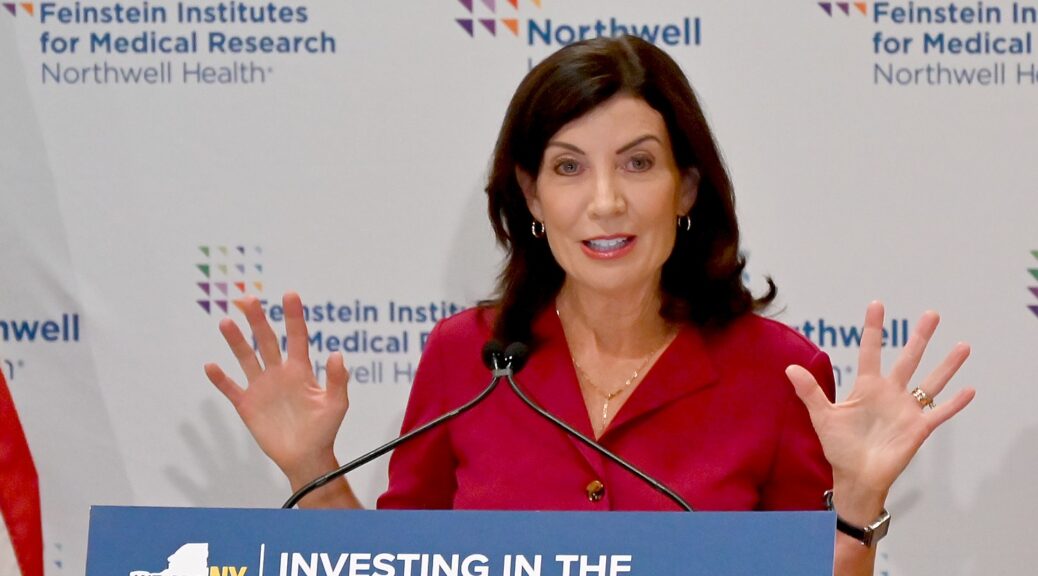
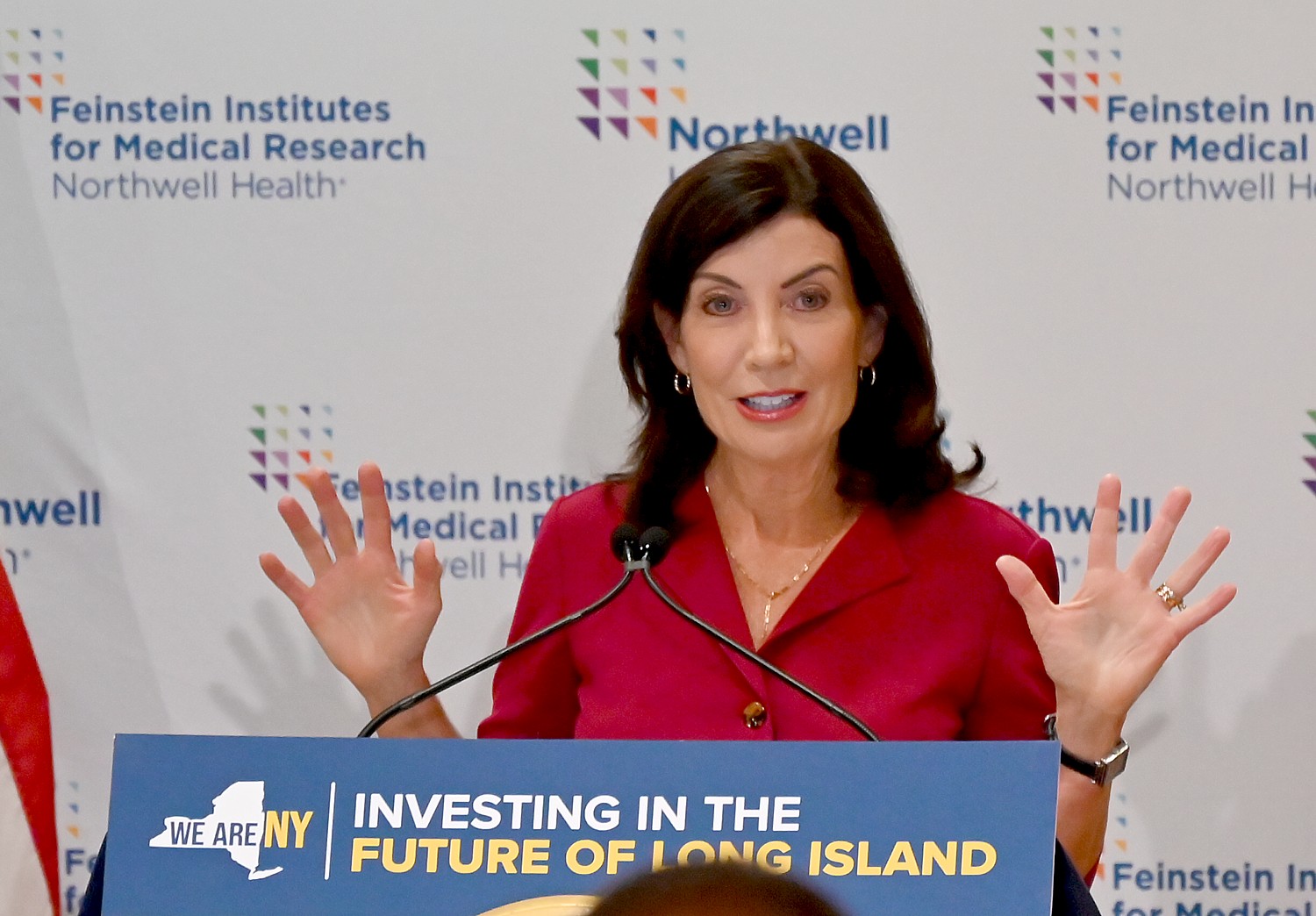
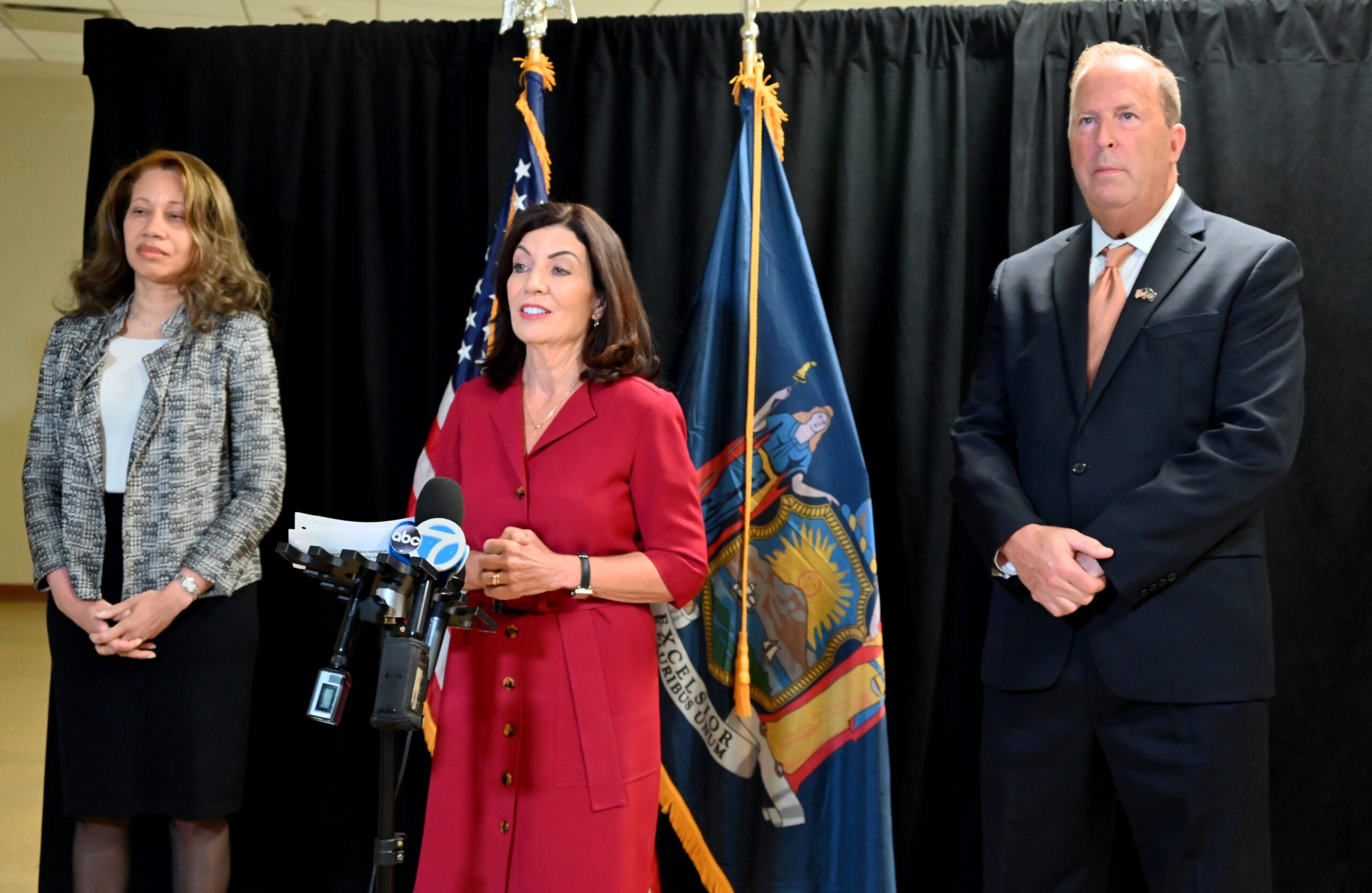
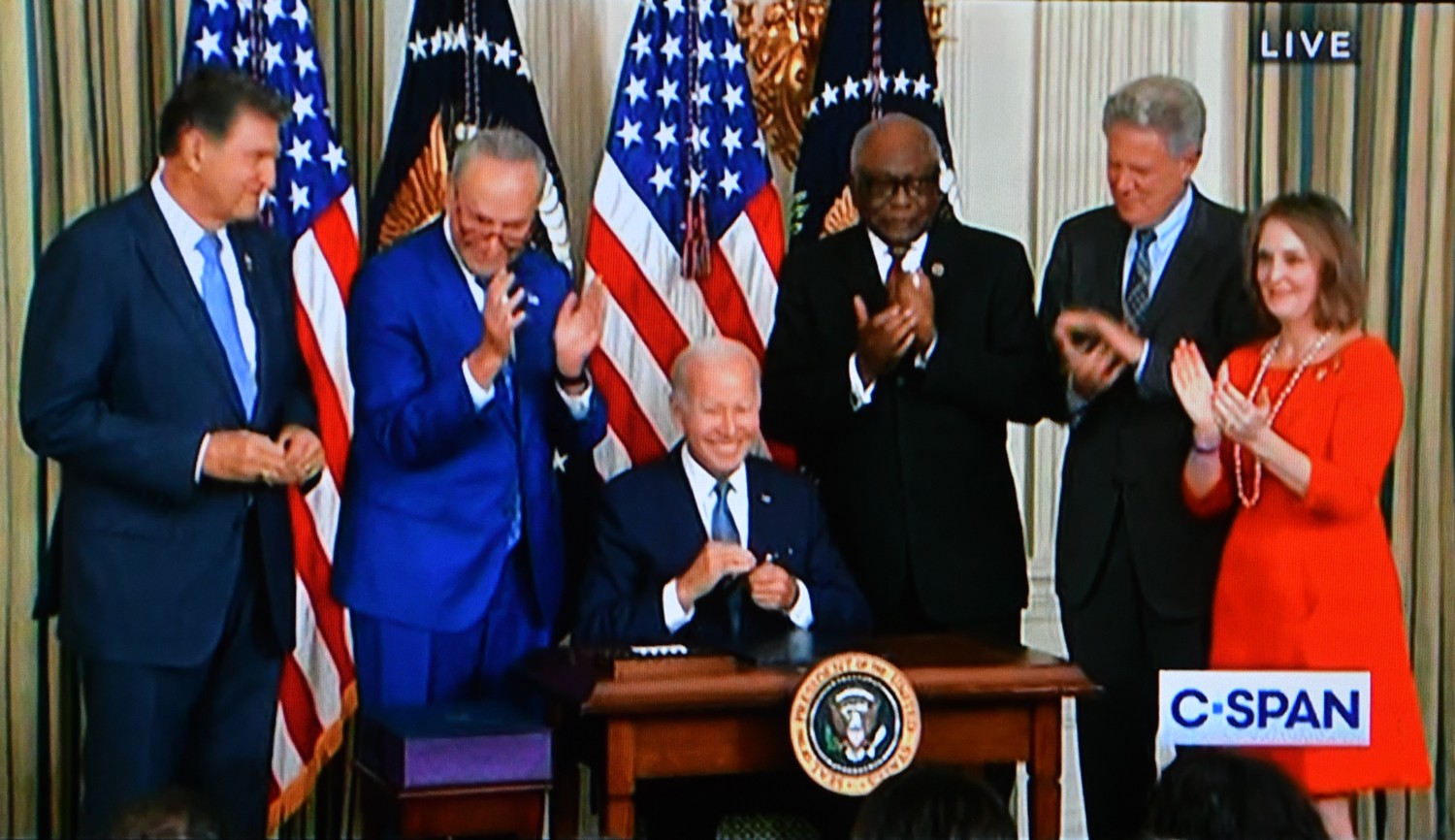
New York State Governor Kathy Hochul has been steadfast in combating the epidemic of gun violence in the state and nation. Back in October 2021, she signed landmark legislation to crack down on “ghost guns,” untraceable firearms used by criminals to evade background checks. Immediately upon the Supreme Court striking down the state’s 111-year law restricting concealed carry permits, she called back the state legislature for a special session to enact new, landmark legislation to strengthen the state’s gun laws and concealed carry regulations to conform with the radical decision © Karen Rubin/news-photos-features.com

Barely a week after the Supreme Court struck down New York State’s 111-year old law regulating concealed gun carry permits, Governor Kathy Hochul signed landmark legislation to strengthen New York’s gun laws and bolster restrictions on concealed carry weapons. This package of new laws — drafted in close collaboration with the Legislature — is devised to align with the Supreme Court’s recent decision in NYSRPA v. Bruen. As a result of this decision, the State has taken steps to address the consequences of the Supreme Court decision and the resulting increase in licenses and in the number of individuals who will likely purchase and carry weapons in New York State.

“A week ago, the Supreme Court issued a reckless decision removing century-old limitations on who is allowed to carry concealed weapons in our state — senselessly sending us backward and putting the safety of our residents in jeopardy,” Governor Hochul said. “Today, we are taking swift and bold action to protect New Yorkers. After a close review of the NYSRPA vs. Bruen decision and extensive discussions with constitutional and policy experts, advocates, and legislative partners, I am proud to sign this landmark legislative package that will strengthen our gun laws and bolster restrictions on concealed carry weapons. I want to thank Majority Leader Stewart-Cousins, Speaker Heastie, and all of our partners in the Legislature for their willingness to take on this critical issue with urgency and precision. I will continue to do everything in my power to combat the gun violence epidemic.”

“Keeping the people of New York State safe is our greatest priority and I am proud to stand with the Governor and Legislature in enacting the measures put into place today,” Lieutenant Governor Antonio Delgado said. “With this action, New York has sent a message to the rest of the country that we will not stand idly by and let the Supreme Court reverse years of sensible gun regulations.”

Research has shown that violent crime involving firearms increases by 29 percent when people are given the right to carry handguns, caused in part by a 35 percent increase in gun theft and a 13 percent decrease in the rate that police solved cases. Today’s legislative package furthers the State’s compelling interest in preventing death and injury by firearms by:

  • Expanding on eligibility requirements in the concealed carry permitting process, including completed firearm training courses for applicants.
  • Allowing the state to regulate and standardize training for license applicants.
  • Restricting the carrying of concealed weapons in sensitive locations and establishing that private property owners must expressly allow a person to possess a firearm, rifle, or shotgun on their property. Individuals who carry concealed weapons in sensitive locations or in contravention of the authority of an owner of private property will face criminal penalties.
  • Establishing state oversight over background checks for firearms and regular checks on license holders for criminal convictions.
  • Creating a statewide license and ammunition database.
  • Strengthening and clarifying the law relating to the sale of body armor to include hard body armor, such as the type worn by the suspect in the Buffalo shooting and the safe storage of firearms.

The law will take effect on September 1, 2022. In addition, an appeals board will be created for those applicants whose license or renewal is denied or revoked, which will take effect on April 1, 2023.

Senate Majority Leader Andrea Stewart-Cousins said,”In response to the Supreme Court’s decision implying that guns are more important than lives in this country, we are passing legislation to ensure that New York State has safe and responsible gun laws. States are the last line of defense, which is why we are stepping up to protect New York from being easily flooded with concealed weapons and keeping firearms out of the wrong hands. These measures, in addition to the previous anti-gun violence legislation we passed, are vital in a time when there are more guns than people in America. New York will continue to prioritize people’s safety and lives, and I thank my conference, Speaker Heastie, and Governor Hochul for their partnership.”

Speaker Carl Heastie said, “In the wake of the Supreme Court’s dismantling our more than 100-year-old sensible concealed carry law, the Assembly Majority worked tirelessly alongside our Senate colleagues and the governor to ensure that our state has the strongest gun laws possible. We will not let this ruling make our streets less safe. Here in New York, the right to feel safe in public spaces is not secondary to unfettered access to firearms. And when this right-wing conservative court inevitably continues its assault on our democracy, we will remain as committed as ever to protecting the rights of every New Yorker.”

Last week, the Supreme Court’s 6-3 decision ended a 100-year legal precedent requiring individuals to demonstrate “proper cause” to obtain a license to carry a concealed firearm. The existing law gave discretion to the state and its licensing officers in determining what constitutes “proper cause”, which the court cited as unconstitutional.

Governor Hochul has worked closely with the legislature to devise the following Legislation (S.51001/ A.41001), which carefully and strictly regulate concealed carry weapons while staying within the confines of the NYSRPA vs. Bruen decision.

Sensitive locations and Private Property

Certain locations are always unsafe for guns, and this legislation makes concealed carry in sensitive locations a punishable crime. Sensitive locations include:

  • Airports
  • Bars and restaurants that serve alcohol
  • Courthouses
  • Daycare facilities, playgrounds and other locations where children gather
  • Educational Institutions
  • Emergency shelters, including domestic violence shelters and homeless shelters
  • Entertainment venues
  • Federal, state, and local government buildings
  • Health and medical facilities
  • Houses of worship
  • Libraries
  • Polling sites
  • Public demonstrations and rallies
  • Public transportation including subways and buses
  • Times Square

The law also makes ‘no carry’ the default for private property, unless deemed permissible by property owners. This gives power to business and property owners to decide whether or not they want guns in their establishments, which could include bars, restaurants, shops or grocery stores. Property owners who do decide to allow concealed carry will have to disclose with signage saying concealed carry is allowed on the premises. This allows people to make an informed decision on whether or not they want to be in a space where people could potentially be carrying a weapon.

Expanded Eligibility Requirements and Disqualifying Criteria

The legislation expands eligibility requirements for concealed carry permit applicants. Expanded application requirements include character references, firearm safety training courses, live fire testing, and background checks. Additionally, applicants who have documented instances of violent behavior will be disqualified from obtaining a concealed carry permit. Disqualifying criteria also includes misdemeanor convictions for weapons possession and menacing, recent treatment for drug-related reasons, and for alcohol-related misdemeanor convictions.

Safe Storage

Today’s legislation also implements new safe storage requirements for rifles, shotguns, and firearms. Gun owners will be prohibited from leaving a gun in their car unless it is stored in a lockbox. Additionally, state law previously required that guns be stored safely in a home if someone under 16 resides there, but new legislation will require safe gun ownership in a home if someone under 18 resides there.

Ammunition Background Checks

The legislation allows the state to conduct and have oversight over background checks for firearms and run regular checks on license holders for criminal convictions. State background checks will go beyond those conducted by the National Instant Criminal Background Check System maintained by the FBI, which lack access to crucial state-owned and local-owned records and databases that provide a more accurate assessment of an applicant’s background. Research has found that states that perform their own background checks, instead of solely using the federal database, experience 27 percent lower firearm suicide rates and 22 percent lower firearm homicide rates. The legislation also requires background checks for ammunition sales and creates a statewide license and ammunition database.

Body Armor Amendment

Under current law, a “body vest” has a limited defined as a bullet-resistant soft body armor. This legislation will redefine body vests to encompass a broader array of protective equipment that is bullet resistant, expanding current purchase and sale prohibitions to include hard body armor. During the Buffalo tragedy, the shooter was wearing a steel-plated vest which would be captured under this new body armor definition.

Rebecca Fischer, Executive Director of New Yorkers Against Gun Violence said, “Even as the gun industry attacks our sensible gun laws, our communities, and our children, we know we can count on New York State’s leadership to protect us time and time again. Last week, the gun-lobby backed U.S. Supreme Court overhauled New York’s concealed carry licensing law, a law that has helped keep New Yorkers safe for over a century.  Last night, our state took swift action by enacting new laws that will strengthen our public carry permitting process and enable New Yorkers to live safely in sensitive places across New York.  We applaud Governor Kathy Hochul, Senate Majority Leader Andrea Stewart-Cousins, and Speaker Carl Heastie for being model leaders for our nation as we continue to address the gun violence crisis and save lives.” 

FACT SHEET: Biden Takes Bold Executive Action to Spur Domestic Clean Energy Manufacturing

Historic Actions Include Authorizing Defense Production Act to Lower Energy Costs, Strengthen Power Grid, and Create Good-Paying Jobs

Solar array on a farm in upstate New York. Biden is accelerating and incentivizing clean energy manufacture in the US. The nation is on track to triple domestic solar manufacturing capacity by 2024 –  to reach 22.5 gigawatts by the end of Biden’s first term, enough to enable more than 3.3 million homes to switch to clean solar energy each year. © Karen Rubin/news-photos-features.com

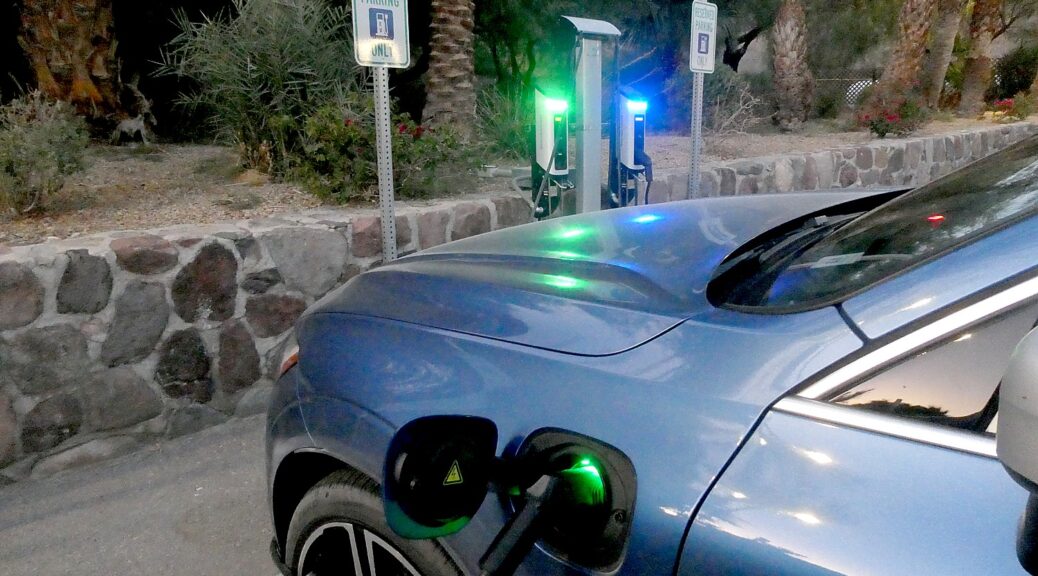
I find it infuriating that the “news” is completely taken over by the latest travesties by Trump, Putin and Supreme Court, fueling anger and cynicism among Democrats and Progressives who may well take their anger out at the polls and simply not vote – that, I would remind you, is how we got Trump and this Christo Fascist Supreme Court. Biden Administration not doing anything on climate change? Inflation? Health care? Nonsense. This administration has been incredibly productive – finding real solutions, not bandaids, rhetoric and hype, that have at their foundation a sense of equity, sustainability and social justice. Want to solve inflation? Not by the Keystone Pipeline or overturning coal plant rules, but investing in EV infrastructure, as Biden wants to do. But you wouldn’t know it from the media, social or otherwise. It is our practice, then, to publish first-hand accounts from the White House, federal agencies and officials. –Karen Rubin/news-photos-features.com

Today’s clean energy technologies are a critical part of the arsenal we must harness to lower energy costs for families, reduce risks to our power grid, and tackle the urgent crisis of a changing climate. From day one, President Biden has mobilized investment in these critical technologies. Thanks to his clean energy and climate agenda, last year marked the largest deployment of solar, wind, and batteries in United States history, and our nation is now a magnet for investment in clean energy manufacturing.
 
Since President Biden took office, the private sector has committed over $100 billion in new private capital to make electric vehicles and batteries in the United States. We have made historic investments in clean hydrogen, nuclear, and other cutting-edge technologies. And companies are investing billions more to grow a new domestic offshore wind industry.
 
We are also now on track to triple domestic solar manufacturing capacity by 2024. The expansions to domestic solar manufacturing capacity announced since President Biden took office will grow the current base capacity of 7.5 gigawatts by an additional 15 gigawatts. This would total 22.5 gigawatts by the end of his first term – enough to enable more than 3.3 million homes to switch to clean solar energy each year.
 
While President Biden continues pushing Congress to pass clean energy investments and tax cuts, he is taking bold action to rapidly build on this progress and create a bridge to this American-made clean energy future. Today, President Biden is taking action to:  

  • Authorize use of the Defense Production Act (DPA) to accelerate domestic production of clean energy technologies, including solar panel parts;
  • Put the full power of federal procurement to work spurring additional domestic solar manufacturing capacity by directing the development of master supply agreements, including “super preference” status; and
  • Create a 24-month bridge as domestic manufacturing rapidly scales up to ensure the reliable supply of components that U.S. solar deployers need to construct clean energy projects and an electric grid for the 21st century, while reinforcing the integrity of our trade laws and processes. 

 Together, these actions will spur domestic manufacturing, construction projects, and good-paying jobs – all while cutting energy costs for families, strengthening our grid, and tackling climate change and environmental injustice. With a stronger clean energy arsenal, the United States can be an even stronger partner to our allies, especially in the face of Putin’s war in Ukraine.
 
The stakes could not be higher. That is why President Biden also continues to urge Congress to quickly pass tax cuts and additional investments that advance U.S. clean energy manufacturing and deployment. Failing to take these actions would deny consumers access to cost-cutting clean energy options, add risks to our power grid, and stall domestic clean energy construction projects that are critical to tackling the climate crisis. At the same time, President Biden will keep using his executive authority to take bold action to build an American-made clean energy future.

INVOKING THE DEFENSE PRODUCTION ACT FOR CLEAN ENERGY

Today, President Biden is authorizing the use of the Defense Production Act (DPA) to accelerate domestic production of clean energy technologies – unlocking new powers to meet this moment. Specifically, the President is authorizing the Department of Energy to use the DPA to rapidly expand American manufacturing of five critical clean energy technologies:

  • Solar panel parts like photovoltaic modules and module components;
  • Building insulation;
  • Heat pumps, which heat and cool buildings super efficiently;
  • Equipment for making and using clean electricity-generated fuels, including electrolyzers, fuel cells, and related platinum group metals; and
  • Critical power grid infrastructure like transformers.

In deploying the DPA, the Biden-Harris Administration will strongly encourage the use of strong labor standards, including project labor agreements and community benefits agreements that offer wages at or above the prevailing rate and include local hire provisions. The Administration also will strongly encourage projects with environmental justice outcomes that empower the clean energy transition in low-income communities historically overburdened by legacy pollution.
 
Following this announcement, the White House and the Department of Energy will convene relevant industry, labor, environmental justice, and other key stakeholders as we maximize the impact of the DPA tools made available by President Biden’s actions and strengthen domestic clean energy manufacturing.
 
BOOSTING MADE-IN-AMERICA CLEAN ENERGY WITH FEDERAL PROCUREMENT
 
President Biden is also putting the full power of federal procurement to work spurring additional domestic solar manufacturing capacity. Today, the President directed the development of two innovative tools to accelerate Made-in-America clean energy:

  • Master Supply Agreements for domestically manufactured solar systems to increase the speed and efficiency with which domestic clean electricity providers can sell their products to the U.S. Government; and
  • So-called “Super Preferences” to apply domestic content standards for federal procurement of solar systems, including domestically manufactured solar photovoltaic components, consistent with the Buy American Act.

These federal procurement measures can stimulate demand for up to a gigawatt of domestically produced solar modules in the near term, and up to 10 gigawatts over the next decade from U.S. government demand alone. To further increase the impact of these actions, the Administration will also partner with state and local governments and municipal utilities in these innovative arrangements – increasing the potential market impact over the next decade to as much as over 100 gigawatts. These procurement actions will provide a significant demand anchor for a revitalized domestic solar manufacturing industry.
 
SUPPORT FOR U.S. GRID-STRENGTHENING, CLEAN ENERGY CONSTRUCTION PROJECTS
 
Because of private investor confidence in President Biden’s leadership and our national commitment to a clean energy future, the United States is now on track to triple its solar manufacturing capacity by 2024. The expansions to domestic solar manufacturing capacity announced since the President took office will grow the current 7.5 gigawatts of capacity by an additional 15 gigawatts of capacity, for a total of 22.5 gigawatts by the end of his first term – enough to enable more than 3.3 million homes to switch to clean solar energy every year. To rapidly build on this progress and create a bridge to this American-made clean energy future, we need to boost short-term solar panel supply to support construction projects in the United States right now. This is because grid operators around the country are relying on planned solar projects to come online to ensure there is sufficient power to meet demand, and to ensure we can continue to deploy solar at the rates needed to keep us on track to meet the President’s climate goals. 
 
Today, President Biden is using his powers to create a 24-month bridge for certain solar imports while reinforcing the integrity of our trade laws and processes. Specifically, the President is:

  • Temporarily facilitating U.S. solar deployers’ ability to source solar modules and cells from Cambodia, Malaysia, Thailand, and Vietnam by providing that those components can be imported free of certain duties for 24 months in order to ensure the U.S. has access to a sufficient supply of solar modules to meet electricity generation needs while domestic manufacturing scales up; and
  • Reinforcing his commitment to safeguarding the integrity and independence of all ongoing trade investigations by career officials at the Department of Commerce and recognizing the vital role these processes play in strengthening our economy.

ADDITIONAL STEPS TO CUT COSTS, SUPPORT GOOD-PAYING JOBS, AND ADVANCE ENVIRONMENTAL JUSTICE
 
Today’s actions build on this Administration’s existing initiatives to grow domestic clean energy innovation and manufacturing and to lower energy costs for Americans, including: 

  • Permitting More Clean Energy on Public Lands. As part of the Biden-Harris Permitting Action Plan, a new five-agency collaboration is expediting reviews of clean energy projects on public lands through the Department of the Interior, helping us race ahead toward permitting at least 25 gigawatts by 2025 – enough to power around five million homes. These actions have already increased clean energy permitting activities by 35 percent, including major solar project approvals and leases. We have also launched five new Renewable Energy Coordination Offices and reduced rents and fees by more than 50 percent for solar and wind projects on public lands.
     
  • Boosting Community-Based Clean Energy in Cities and Rural Areas. The Biden-Harris Administration is helping 17 local communities remove red tape with the SolarAPP+ online tool to enable same-day approvals for residential solar installation permits, and an additional 400 interested communities are in the pipeline. The National Climate Task Force launched new initiatives on increasing deployment of Distributed Energy Resources, including rooftop solar, with a focus on bringing the benefits of these projects to underserved communities. The United States Department of Agriculture provided the largest-ever investment in rural renewable energy last year. In addition, the Department of Energy and the Department of Health and Human Services are partnering to develop and pilot a digital platform that will connect customers who are eligible for the Low Income Home Energy Assistance Program with community solar subscriptions, to further reduce customer energy costs. Likewise, the U.S. Department of Housing and Urban Development is working with municipalities to enable residents of affordable housing to directly benefit from low-cost community solar power without seeing a rent increase or adjustment to their utility allowance.
     
  • Supporting a Diverse Solar Workforce with Good-Paying Jobs, including pathways to stable careers with the free and fair choice to join a union. Solar industry jobs consistently rank among the top fastest-growing in the nation, and many require only a high school education or GED. The Economic Development Administration recently awarded funding to support solar employment training in tribal and coal-impacted communities. In addition, the Department of Energy has issued a Request for Information and hosted six workshops to determine common goals and needs from stakeholders, including industry, unions, and training organizations. DOE will continue to explore these issues, including by providing funding, new collaborations with industry, other federal agencies, and state-based job boards to develop equitable worker-centric training and education programs, work-based learning opportunities, and support services such as career counseling, mentorship, and job readiness programs.
     
  • Developing Clean Energy Domestic Manufacturing for Export and Building Capacity in Allied Nations. The Export-Import Bank of the United States (EXIM) Make More in America Initiative, approved by the EXIM board in April, will prioritize investments to expand clean energy manufacturing. The U.S. International Development Finance Corporation supports building resilient clean energy manufacturing supply chains in allied nations around the world, reducing global dependence on China.
     
  • Investing in Clean Energy for Resilience in Puerto Rico: The Biden-Harris Administration joined forces with the Commonwealth of Puerto Rico to advance dozens of solar energy projects that will enable Puerto Rico to meet its target of 100% renewable electricity, while improving power sector resilience and increasing access to more affordable energy and cleaner air. 

FACT SHEET: Biden-Harris Administration’ Monkeypox Outbreak Response

For years, the United States has invested in research on monkeypox and in tools to effectively respond to the disease. Monkeypox is a virus that is generally spread through close or intimate contact, with symptoms that include a rash and fever. It is much less transmissible than fast-spreading respiratory diseases like COVID-19, and this outbreak has not caused any deaths in the United States.  The virus, however, is spreading in the United States and globally, and requires a comprehensive response from federal, state, local, and international governments and communities. Since the first United States case was confirmed on May 18, President Biden has taken critical actions to make vaccines, testing, and treatments available to those who need them as part of its whole-of-government monkeypox outbreak response.

The Biden-Harris Administration announced the first phase of its national monkeypox vaccine strategy, a critical part of its monkeypox outbreak response. The vaccine strategy will help immediately address the spread of the virus by providing vaccines across the country to individuals at high risk. This phase of the strategy aims to rapidly deploy vaccines in the most affected communities and mitigate the spread of the disease.

This announcement is a critical component of the Administration’s broader public health response, which includes rapidly scaling up and decentralizing testing alongside continued provider education and community engagement across the country. The Administration’s monkeypox outbreak response is also informed by the multiple times over the last twenty years that the United States has effectively responded to the virus. The United States government’s response is coordinated by the National Security Council Directorate on Global Health Security and Biodefense – more commonly known as the White House Pandemic Office – which President Biden restored on day one of his presidency, in collaboration with the Department of Health and Human Services (HHS).

Collectively, the Administration’s efforts aim to expand vaccination for individuals at risk and make testing more convenient for healthcare providers and patients across the country. The Biden-Harris Administration remains committed to working with urgency to detect more cases, protect those at risk, and respond rapidly to the outbreak.

Scaling and Delivering Vaccines to Mitigate New Infections: Thanks to prior investments in health security and the nation’s prior experience responding to the monkeypox virus, the United States has effective vaccines and treatments that can be used against monkeypox. To date, HHS has received requests from 32 states and jurisdictions, deploying over 9,000 doses of vaccine and 300 courses of antiviral smallpox treatments. With today’s national monkeypox vaccine strategy, the United States is significantly expanding deployment of vaccines, allocating 296,000 doses over the coming weeks, 56,000 of which will be allocated immediately. Over the coming months a combined 1.6 million additional doses will become available.

Making Testing Easier: The new national monkeypox vaccine strategy builds on the Administration’s efforts to make testing more widely available and easier to access. On day one of this outbreak, providers had access to a high-quality, FDA-cleared test to detect monkeypox. The CDC has since scaled testing capacity to 78 sites in 48 states, primarily at state public health laboratories, with spare capacity to conduct nearly 10,000 tests per week nationwide. Last week, CDC began shipping  tests to five commercial laboratory companies, including some of the nation’s largest reference laboratories, to further increase monkeypox testing capacity and access in every community. This action will dramatically improve convenience for patients and health care providers across the nation.

Activating Community Leaders and Stakeholders: The response to monkeypox requires a whole-of-society effort between federal, state, territorial, and local governments and communities. The Biden-Harris Administration is communicating with healthcare providers, public health officials, and affected communities on a daily basis to share information on what the virus is, how to treat it, and which communities are most at risk. The Administration is also sharing information on how to access testing, treatments, and vaccines, and how to prevent transmission with local, government, and community leaders in geographies and communities where transmission rates have been the highest. The Administration is grateful for the leadership and activism of advocates in the LGBTQI+ community who have thus far been most affected and have quickly mobilized to promote information and awareness.

The Biden-Harris Administration is providing vaccines to protect high-risk groups across America.

As part of the monkeypox outbreak response, the Biden-Harris Administration is launching a national strategy to provide vaccines for monkeypox for individuals at higher risk of exposure. The strategy aims to mitigate the spread of the virus in communities where transmission has been the highest and with populations most at risk. This plan distributes the two-dose JYNNEOS vaccine, which the Food and Drug Administration (FDA) approved for protection against smallpox and monkeypox in individuals 18 years and older determined to be at high risk for smallpox or monkeypox infection. States will be offered an equitable allotment based on cases and proportion of the population at risk for severe disease from monkeypox, and the federal government will partner with state, local, and territorial governments in deploying the vaccines.

The goal of the initial phase of the strategy is to slow the spread of the disease. HHS will immediately allocate 56,000 vaccine doses currently in the Strategic National Stockpile to states and territories across the country, prioritizing jurisdictions with the highest number of cases and population at risk. To date, vaccines have been provided only to those who have a confirmed monkeypox exposure. With these doses, CDC is recommending that vaccines be provided to individuals with confirmed monkeypox exposures and presumed exposures. This includes those who had close physical contact with someone diagnosed with monkeypox, those who know their sexual partner was diagnosed with monkeypox, and men who have sex with men who have recently had multiple sex partners in a venue where there was known to be monkeypox or in an area where monkeypox is spreading.

In the coming weeks, HHS expects to receive an additional 240,000 vaccines, which will be made available to a broader population of individuals at risk. HHS will hold another 60,000 vaccines in reserve.

As additional doses are received from the manufacturer, HHS will make them available to jurisdictions to expand availability to the vaccine for individuals with elevated risk. HHS is increasing the availability of doses by leveraging its long-standing partnership with the manufacturer of JYNNEOS to expand vaccine supply and by accelerating completion and shipment of doses to the United States.  HHS expects more than 750,000 doses to be made available over the summer. An additional 500,000 doses will undergo completion, inspection, and release throughout the fall, totaling 1.6 million doses available this year.

To supplement the supply of JYNNEOS, states and territories may also request a second vaccine, ACAM2000. ACAM2000 is FDA-approved for protection against smallpox, caused by the variola virus. ACAM2000 is also believed to confer protection against monkeypox, and is available under an expanded access investigational new drug protocol sponsored by CDC for vaccination of individuals at risk of monkeypox infection. However, ACAM2000 carries greater risk of certain serious side effects than JYNNEOS and cannot be provided to individuals who are immunocompromised or who have heart disease. The CDC will work with state, territorial, and local health departments requesting the ACAM2000 vaccine to ensure that individuals are fully informed on the benefits and the risks before receiving the vaccine.

HHS will work closely with local and state partners and health providers to continuously evolve and strengthen its vaccine strategy to ensure that vaccines are being made available to communities most at risk and where transmission has been highest.

The Administration is expanding testing supply and availability.

Last week, CDC began shipping its FDA-cleared orthopox test to five major commercial laboratory companies to rapidly increase monkeypox testing access across the country. This action will dramatically expand testing capacity nationwide and convenience for patients and health care providers. These laboratories will begin to come on board for testing in early July and increase capacity through the month.

This expansion reflects the latest, most significant increase in testing accessibility, building on the capacities already available within the Laboratory Response Network (LRN). CDC has worked with the LRN to increase public health testing capacity by more than 50% since the start of the outbreak, increasing testing capacity from 6,000 tests per week to approximately 10,000 test per week. This network continues to provide spare testing capacity to jurisdictions across the country. CDC is working with state, territorial, and local health departments to make the monkeypox testing process more accessible to health care providers.
To further expand access to testing early in the outbreak, CDC published its protocol from their FDA-cleared test on June 9, 2022 for any laboratory to test for monkeypox. The FDA is exercising enforcement discretion regarding CDC’s tests, which permits the use of tests beyond the current network. FDA has also authorized the use of additional reagents and automation to increase the capacity of laboratories using the CDC test.

Since the start of the monkeypox outbreak, the number of days from average symptom onset to test has decreased by approximately 35%, enabling patients to more quickly learn their diagnosis, access care, and prevent spread to others. The expansion of testing aims to facilitate further reductions in the gap between symptom onset and test result, maximizing access to treatment and vaccines for patients and high-risk contacts early in the course of disease.

The Administration has launched a robust community and stakeholder engagement strategy.

The most effective response to infectious disease outbreaks is a community-based response. The Biden-Harris Administration is communicating with healthcare providers, public health officials, and communities on a daily basis to raise awareness of the monkeypox outbreak and educate the public and local and community leaders about what the virus is, how it is transmitted, and which populations are most at risk of the virus. As part of its robust engagement strategy, the Administration is facilitating access to vaccines, treatments, and tests. The Administration will also continue to engage directly with leaders and stakeholders in the LGBTQI+ community to work together to prevent and combat stigma and bias, and promote testing and vaccine access and health equity for LGBTQI+ communities. Through its comprehensive stakeholder engagement strategy, the Administration is also creating a critical feedback loop – learning from the experiences of those most at risk and responding based on their insights and needs.

HHS has provided a range of public health information to inform providers and high-risk communities, including:

  • Updating and expanding the monkeypox case definition by June 1st to encourage health care providers to consider testing for all rashes with clinical suspicion for monkeypox;
  • Releasing emergency information on May 20th and June 14th covering clinical testing, treatment, contact tracing, and other topics to health providers, sexual and community health centers, and public health officials across the nation;
  • Providing over 570 case consultations to healthcare providers and health departments;
  • Clarifying how to transport and dispose of medical waste that allowed healthcare facilities and waste management companies to operate confidently and safely; and,
  • Regularly speaking with global, community, clinical, and public health stakeholders to solve challenges and answer questions.

HHS and CDC will continue to engage with the public and communities most impacted and at risk on a daily basis throughout the response.

The Administration is leading efforts to combat monkeypox globally

There is no domestic-only response to a global outbreak. The Biden-Harris Administration is committed to combatting monkeypox in the United States and around the world, including in countries where it has been historically endemic. The United States has also supported international efforts to combat monkeypox in endemic countries for years, including in Nigeria and the Democratic Republic of the Congo. The Biden-Harris Administration is dedicated to assisting endemic and non-endemic countries combat their outbreaks and is exploring options to further support the international response.

The Administration is also developing key U.S. monkeypox research and evidence priorities, led by the White House Office of Science and Technology Policy, to drive efforts to improve our arsenal of medical countermeasures, strengthen real-time monitoring, enhance our understanding of the monkeypox virus, and energize the broader U.S. and global scientific community around urgent monkeypox research and evidence challenges.

The Biden Administration has been responding to the outbreak since the first domestic case was identified with urgency, humility, and transparency, adapting our approach as we learn more about how this virus is spreading. It will continue to ensure a whole-of-government response to the monkeypox outbreak moving forward, and will lead the government in adapting our response as the situation develops.

To learn more about monkeypox, signs and symptoms, treatments, and prevention, please visit the CDC page here.

Reactions, Next Steps After Supreme Court Extremists Strike Down State’s Concealed Carry Restriction

New York Attorney General Leticia James and New York City Mayor Eric Adams join March Against Gun Violence: Policy & Action Over Thoughts & Prayers protest.New York Governor Kathy Hochul and NYC Mayor Adams are reacting to the Supreme Court decision striking down the state’s conceal carry permit regulation © Karen Rubin/news-photos-features.com

By Karen Rubin, news-photos-features.com

The statement by Clarence Thomas’ majority opinion justifying striking down New York State’s sensible qualifications to obtain a concealed carry gun permit saying regulation must conform with “history” – as if the 1791 technology of muskets and a ball were still the norm instead of high-tech assault weapons made for war that pulverize, vaporize human body – rather than common sense restrictions that go back more than 100 years, means that all of us must live in terror that an altercation, road rage, misunderstanding or a suicidal meltdown will lead to murder or massacre. The Supreme Court has basically given its blessing to gun violence as political weapon of intimidation – threatening poll workers, election workers, voters, elected officials. Imagine Trump or DeSantis thugs, strapped with AR15s blocking access to a polling place, or protesting in front of a home of a Secretary of State or House member of the January 6 committee (but certainly not the Supreme Court justices’ homes).

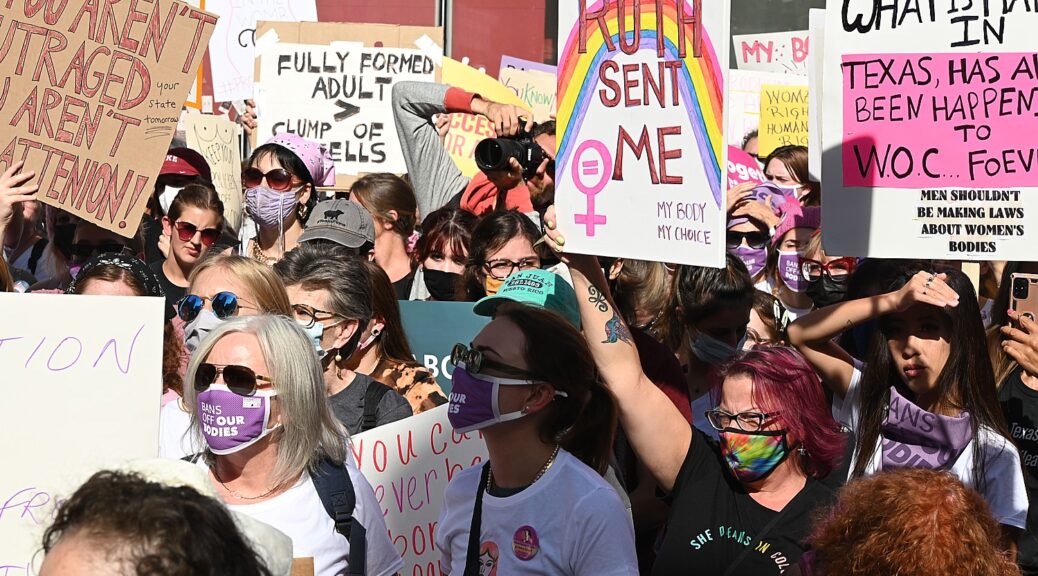
The Supreme Court has proved itself to be a political actor with a Christo Fascist ideological agenda – overturning state’s rights to protect citizens against guns and epidemic while insisting on state’s right to overturn a woman’s federal, Constitutional right to Equal Protection or equal citizenship. The court has lost all legitimacy or credibility – with three justices illegally placed on the court by an illegitimate president using anti-constitutional means by the Republican Senate Majority Leader, and a fourth corrupt justice, Clarence Thomas who should be impeached.

So short of disregarding the court’s radical extremist majority altogether, states should follow the “founders’” 1791 language to the letter. This is what states and municipalities should do to protect citizens from the epidemic of gun violence:

All gun owners should be required to enlist in a well-regulated militia, be required to go for regular training, be registered, licensed every five years, and be prepared to defend the state.

Also: impose tax on guns, ammunition to support a Victims Fund. Require gun owners to have liability insurance.

Following the tactic used by anti-choice activists, restrict all gun sales to licensed gun sellers, who are restricted where and when they can operate, and who are held liable if they sell a gun to someone who failed background check or if the gun is used in crime. Outlaw online and private sales. Restrict what kinds of guns and ammunition can be sold.

Require gun manufacturers to use SMART ID so only the registered, licensed, trained gun owner can operate the gun; require microstamping so that ammunition used in crime can be traced back. Make gun manufacturers liable when their guns are used in crimes, mass shooting. Restrict advertising (as is done for tobacco sales).

Here are the statements from New York State Governor Kathy Hochul, New York City Mayor Eric Adams, and President Joe Biden:

Governor Hochul: “As Governor of the State of New York, my number one priority is to keep New Yorkers safe, but today the Supreme Court is sending us backwards in our efforts to protect families and prevent gun violence.”

Hochul: “I’m prepared to call the legislature back into session to deal with this. We’ve been in contact with the leadership. We’re just looking at dates. Everyone wants a little bit of time to digest this, but I will say we are not powerless in this situation. We’re not going to cede our rights that easily. Despite the best efforts of the politicized Supreme Court of the United States of America, we have the power of the pen.”

We just received some very disturbing news from Washington; that the Supreme Court of the United States of America has stripped away the state of New York’s right and responsibility to protect its citizens with a decision – which we are still digesting – which is frightful in its scope of how they are setting back this nation and our ability to protect our citizens back to the days of our founding fathers. And the language we’re reading is shocking.

As Governor of the State of New York, my number one priority is to keep New Yorkers safe, but today the Supreme Court is sending us backwards in our efforts to protect families and prevent gun violence. And it’s particularly painful that this came down at this moment. We are still dealing with families in pain from mass shootings that have occurred; the loss of life of their beloved children and grandchildren.

Today, the Supreme Court struck down a New York law that limits who can carry concealed weapons. Does everyone understand what a concealed weapon means? That you have no forewarning that someone can hide a weapon on them and go into our subways, go into our grocery stores like stores up in Buffalo, New York, where I’m from, go into a school in Parkland or Uvalde.

This could place millions of New Yorkers in harm’s way. And this is at a time when we’re still mourning the loss of lives, as I just mentioned. This decision, isn’t just reckless, it’s reprehensible. It’s not what New Yorkers want. We should have the right of determination of what we want to do in terms of our gun laws in our state.

If the federal government will not have sweeping laws to protect us, then our states and our governors have a moral responsibility to do what we can and have laws that protect our citizens because of what is going on – the insanity of the gun culture that has now possessed everyone all the way up to even to the Supreme Court.

The law we’re talking about has been in place since the early 1900s. And now to have our ability to determine who is eligible for a concealed carry permit – this is not an ordinary permit. This is a special use that you can hide it from people. We have limitations, if it’s for a proper cause, someone who’s been threatened, someone who needs it for their job as a security guard. We have classifications where it is allowed and has been allowed for over a hundred years.

We do not need people entering our subways, our restaurants, our movie theaters with concealed weapons. We don’t need more guns on our streets. We’re already dealing with a major gun violence crisis. We don’t need to add more fuel to this fire.

But I will tell New Yorkers, we’ve been ready for this. We feared this day would come and it came. At this very moment when we are about to sign a law into place, the origins of which was a loss of a 14 year old child, Alyssa, in her school.

The confluence of these two events is shocking. But again, I’m going to reassure this state. We are reading the language as we speak. We’ve been preparing, but we have been working with a team of experts, legal experts from all over this country and organizations like Everytown, true leaders, to make sure that we are prepared.

I’m prepared to call the legislature back into session to deal with this. We’ve been in contact with the leadership. We’re just looking at dates. Everyone wants a little bit of time to digest this, but I will say we are not powerless in this situation. We’re not going to cede our rights that easily. Despite the best efforts of the politicized Supreme Court of the United States of America, we have the power of the pen.

And I just want to read some language here. Apparently, the Supreme Court has now decided with this far reaching decision that the two step standard that had been in place since Heller [and] McDonald, where they analyze the Second Amendment, where it combines history. We have a history, yes we do, but also means and scrutiny. Does the means of the restriction justify the infringement.

And most people would say, yes, we have a right to protect people from gun violence. But I’ll simply say in our very quick analysis because this is only minutes old, they have now said that the government must demonstrate that the regulation is consistent with this nation’s historical tradition of firearm regulation.

That’s it. No longer can we strike the balance. Only if a firearm regulation is consistent with this nation’s historical tradition may a court conclude that the individual’s conduct falls outside the Second Amendment’s unqualified command.

Shocking, absolutely shocking that they have taken away our right to have reasonable restrictions. We can have restrictions on speech. You can’t yell fire in a crowded theater, but somehow there’s no restrictions allowed on the second amendment.

This is New York. We don’t back down, we fight back. And we’ll be alerting the public, the media in the very short term of exactly what our language is that we’ve been analyzing. We have language we’d like to now enact into law. We’ll be sharing that with the leaders.

And I’m sorry this dark day has come. That we’re supposed to go back to what was in place since 1788 when the Constitution of United States America was ratified. And I would like to point out to the Supreme Court justices that the only weapons at that time were muskets. I’m prepared to go back to muskets.

I don’t think they envision the high capacity assault weapon magazines intended for battlefields as being covered from this, but I guess we’re just going to have to disagree.

New York City Mayor Eric Adams: This decision has made every single one of us less safe from gun violence.

This decision has made every single one of us less safe from gun violence. It ignores the shocking crisis of gun violence every day, engulfing not only New York, but entire country.

To base this decision on “historical past” that does not account for the reality of today, ignores the present and endangers our future.

While nothing changes today, we have been preparing for this decision and will continue to do everything possible to work with fed, state, local partners to protect city. We will collaborate with other mayors, municipality leaders, leave no stone unturned, as we seek to undue and mitigate the damage today.

We are undertaking a comprehensive review with counsel, legal experts, as we start to define sensitive locations where carrying gun is banned and reviewing application process to insure only those fully qualified can obtain carry license.

We cannot allow New York to become the wild wild west. That’s unacceptable. We will not allow our city to live in fear that everyone around is armed, and any altercation could evolve into shootout. We will not allow our police to be subject to further danger, making their already difficult jobs even more harrowing.

We will do everything in our power, using every legal resource to insure gains are not undone, and New Yorkers are not put in greater danger of gun violence.

There is no place in the nation this decision affects more than New York City, no place in the nation that will be impacted more than New York City or is affected as much as New Yorkers.

And we are prepared to set example, lead the country in fighting back this decision. Today’s Supreme Court decision may feed gun violence.

Now is time for every elected official who cares for safety of all Americans to come together, to respond thoroughly, comprehensively to this appalling decision.

New York City Police Commissioner Keechant L. Sewell added, “This decision has been remanded back to lower courts. Nothing changes. A premise permit doesn’t automatically change to a carry permit. If you carry without a permit, you will be arrested.” 

Statement by President Joe Biden on Supreme Court Ruling on Guns

I am deeply disappointed by the Supreme Court’s ruling in New York State Rifle & Pistol Association v. Bruen. Since 1911, the State of New York has required individuals who would like to carry a concealed weapon in public to show a need to do so for the purpose of self-defense and to acquire a license. More than a century later, the United States Supreme Court has chosen to strike down New York’s long-established authority to protect its citizens. This ruling contradicts both common sense and the Constitution, and should deeply trouble us all.
 
In the wake of the horrific attacks in Buffalo and Uvalde, as well as the daily acts of gun violence that do not make national headlines, we must do more as a society — not less — to protect our fellow Americans. I remain committed to doing everything in my power to reduce gun violence and make our communities safer. I have already taken more executive actions to reduce gun violence than any other President during their first year in office, and I will continue to do all that I can to protect Americans from gun violence. 
 
I urge states to continue to enact and enforce commonsense laws to make their citizens and communities safer from gun violence. As the late Justice Scalia recognized, the Second Amendment is not absolute. For centuries, states have regulated who may purchase or possess weapons, the types of weapons they may use, and the places they may carry those weapons. And the courts have upheld these regulations.
 
I call on Americans across the country to make their voices heard on gun safety. Lives are on the line.

New Yorkers Protest for Gun Safety Laws to End Scourge of Gun Violence Epidemic

“The NRA Has Blood on Its Hands.” UFT joins March For Our Lives rally in New York City © Karen Rubin/news-photos-features.com

By Karen Rubin, News-Photos-Features.com

[Breaking news: Just one day after the March for Our Lives events, the bipartisan Senate committee working on some compromise gun violence prevention legislation announced they had come up with a framework. The proposal calls for making juvenile records of gun buyers under age 21 available when they undergo background checks; provides money to states to implement “red flag” laws and to bolster school safety and mental health programs; require more people who sell guns obtain federal dealers’ licenses, which means they would have to conduct background checks of purchasers. President Biden immediately put out a statement that the framework “does not do everything that I think is needed, but it reflects important steps in the right direction, and would be the most significant gun safety legislation to pass Congress in decades.” He urged rapid passage. But as you see in what the gun violence prevention activists are saying, there is much, much more to do.]

Amid the palpable outrage, frustration and fear, there is this kernel of hope that what didn’t happen after Columbine, Sandy Hook, Parkville and now Uvalde, the 40,000 lives lost to gun violence last year, and the more than 200 mass shootings that have already happened this year, or the report that more children and teens are killed by guns than by disease or car accidents, may finally happen: that Congress would finally pass sensible gun safety regulations to end the public health epidemic of gun violence. And the difference is this: the election season for the midterms is already underway and Congressmen have already had their primary challenges so shouldn’t “fear” being primaried by an even more fascist candidate to appeal to the bloodlust of their base.

“I’m Scared to Be a Teacher..” UFT joins March For Our Lives rally in New York City © Karen Rubin/news-photos-features.com

Over a thousand protesters – representing a huge array of groups including March for Our Lives, Youth Against Violence, teachers from the UFT and AFT, Moms Demand Action, Everytown, NYACLU, New Yorkers Against Gun Violence and many more – who marched from Brooklyn to Manhattan to rally – screamed and cheered when urged to vote out any politician who refuses to put children’s lives over the gun industry’s profits.

“United States of School Shootings.” UFT joins March For Our Lives rally in New York City © Karen Rubin/news-photos-features.com

“End gun worship,” Rev. Amanda Hambrick Ashcraft of Middle Church, intoned. “Vote out every politician who supports the NRA, gun lobby.”

“Love Children More.” UFT joins March For Our Lives rally in New York City © Karen Rubin/news-photos-features.com

They called for universal background checks, banning assault weapons and high-capacity magazines and other instruments and weapons of war never meant for the streets; raise the minimum age to buy a gun to 21; mandate safe storage so that a two-year old who finds a gun doesn’t kill his sibling (or what just happened when a mother handed her two year old her gun, killed his father), and Red Flag laws.

“Message to Congress: None of You are Ballotproof.” March For Our Lives rally in New York City © Karen Rubin/news-photos-features.com

And mindful that it is Republican Senators (Democrats passed gun reform in the House) who have blocked every gun safety measure for the past 30 years, they called for an end to the filibuster, since there do not seem to be 10 Republican Senators of conscience.

“End Gun Violence.” March For Our Lives rally in New York City © Karen Rubin/news-photos-features.com

Dr. Nancy Dodson, a pediatrician and gun safety activist, said gun violence is a public health crisis and one that is propagated by the propaganda of the gun industry, no different in its campaign to deflect and distract (mental health, not guns), than the lead paint industry who blamed neglectful mothers and even put out a children’s book to say that lead paint is good for you, and the tobacco industry.

“Hey NRA, How Many Kids Did you Kill Today,” became one of the cheers during the March For Our Lives protest in New York City © Karen Rubin/news-photos-features.com

“Why aren’t there cigarette ads in magazines, commercials on TVs, toy giveaways?  Because they were sued. But the gun industry, despite 40,000 killed last year including 4000 children has near-total immunity, under the Protection of Legal Commerce in Arms Act. This is an unjust law that must be repealed so that victims and survivors can sue,” she declared, to cheers.

“Never Again.” March For Our Lives rally in New York City © Karen Rubin/news-photos-features.com

 “It would lead to economic justice for victims and radical changes in design, advertising and sales of guns. “What is the life of a child worth? Gun manufacturers should find out in court.”

“Laws can change social norms,” she said. Drunk driving became socially unacceptable, it became a loving gesture to take your friend’s keys away. It should be the same for guns.”

That means more use of Red Flag Laws, so that it becomes culturally acceptable to say, “You’re struggling now, so don’t do something you’ll regret.”

“We have saved lives of children before and cited examples and a public health scourge through changing  culture – drunk driving… And many examples of government taking action – after one guy got on a plane with explosives in his shoe and another with explosive underpants, everyone for the past 20 years has had to take off their shoes at the airport, been patted down and x-rayed.

March Against Gun Violence: Policy & Action Over Thoughts & Prayers, takes the protest over the Brooklyn Bridge © Karen Rubin/news-photos-features.com
New York State Attorney General Letitia James and New York City Mayor Eric Adams join organizers of the March Against Gun Violence, March for Our Lives and UFT crossing the Brooklyn Bridge to call for gun safety legislation to end the gun violence epidemic  © Karen Rubin/news-photos-features.com

Ali and Aj of AJ Band described the terror of being in the midst of multiple mass shootings – outside their concert venue, someone sprayed 100 rounds , leaving six dead on the pavement just outside their tour bus where they had hit the ground, then again in Portland, then again in Atlanta they heard shots. “This should not be normal.”

Aly and AJ of the AJ Band speak of their own terror surviving a mass shooting that left six dead on the street in front of their tour bus parked at a concert venue © Karen Rubin/news-photos-features.com

Instead, the Republicans are trying to deflect, putting the onus on mental health and school security, when school districts are cutting funding for actual education, for the arts, theater and music programs that might help that alienated youth to find a better outlet.

“Books Not Bullets.” March for Our Lives rally, New York City © Karen Rubin/news-photos-features.com

“Young people must turn their passion and pain to purpose and vote,” said Attorney General Letitia James, who was with the protest from the beginning of the march through the end of the rally. “Congress won’t act until they feel the power of the people.  Vote in record numbers to end the violence.

“I am 21 and have lived through 369 school shootings.” Gun Violence is now the number one killer of children under 18, surpassing disease and car accidents. © Karen Rubin/news-photos-features.com

“Enough prayers, empty thoughts. This is a defining moment young people, for the country. Women’s rights, civil rights, gay rights, trans rights, disabled rights, environmental protection did not start with politicians. It was all of you young people who lead and politicians who followed. Break the collective yoke around the neck of this country…Turn out and vote, vote, vote the reckless cowards out of office, the spineless, gutless who believe in power over people.”

Janella Hines, a high school teacher, speaks of gun violence in homes and how one of her students was murdered. “The trauma is experienced day after day. This is not what teachers went to school for, but we have to do it. It’s time for policy and change.”Gun safety activists are calling for Red Flag laws and universal background checks.  © Karen Rubin/news-photos-features.com

Janella Hines, representing the UFT which helped organize the march, spoke for the teachers who carried signs saying, “I’m scared.” “Books not bullets.” And how when they decided to make teaching their career, they never expected that protecting children from gunmen with military-style weapons, and comforting the traumatized children after they have lost classmates, was part of the job description.

She focused not on the mass shootings that have so terrorized – in schools, churches, grocery stores, concerts, movie theaters, malls – but violence in homes. One of her student’s, named Chloe, was murdered with her sister and mother by her step father on her sister’s birthday. “The entire school community suffered the loss. The trauma is experienced day after day. This is not what teachers went to school for, but we have to do it. It’s time for policy and change.”

Congresswoman Carolyn Maloney declared, “If guns made us safe, we would be the safest on earth. But the only place more dangerous is Ukraine, and they are at war. We are killing people because of the easy access to guns,” and called for an end to gun manufacturers’ immunity to lawsuits © Karen Rubin/news-photos-features.com

Congresswoman Carolyn Maloney declared, “If guns made us safe, we would be the safest on earth. But the only place more dangerous is Ukraine, and they are at war.

“We are killing people because of the easy access to guns.” She said that gun manufacturers need to be held accountable for profiting from murdering children. and called for an end to the immunity gun manufacturers, unlike every other industry, from liability lawsuits.

Congressman Mondaire Jones, if the Senate Republicans block passing the Protecting Our Kids Act, end the filibuster, and if the Supreme Court overturns gun safety laws, expand the court to nullify Trump’s three radical rightwing ideologues © Karen Rubin/news-photos-features.com

Congressman Mondaire Jones, the youngest member of the House Judiciary Committee (whose remarks inspired rebuke from Republicans and Tucker Carlson), noted that the House has passed a package of gun safety bills, but that they will likely languish, as have all gun regulations for the past 30 years, in the Senate. “Make sure the Senate hears you.”

He is a sponsor of the Protecting Our Kids Act which changes federal firearms laws, including to establish new criminal offenses and to expand the types of weapons and devices that are subject to regulation. The bill:

  • generally prohibits the sale or transfer of certain semiautomatic firearms to individuals who are under 21 years of age;
  • establishes new federal criminal offenses for gun trafficking and related conduct;
  • establishes a federal statutory framework to regulate ghost guns (i.e., guns without serial numbers);
  • establishes a framework to regulate the storage of firearms on residential premises at the federal, state, and tribal levels;
  • subjects bump stocks to regulation under federal firearms laws;
  • generally prohibits the import, sale, manufacture, transfer, and possession of large capacity ammunition feeding devices; and
  • requires the Department of Justice to report on the demographic data of persons who are determined to be ineligible to purchase a firearm based on a background check performed by the national instant criminal background check system.

“If we can’t find 10 Senate Republicans of good conscience, we need to abolish the filibuster.”

He also introduced the Judiciary Act, which would expand the Supreme Court by four, to undo the damage of Trump putting three hard-right ideological partisans on the bench, orchestrated by then Majority Leader Mitch McConnell, who refused to allow Obama to appoint a justice after Antonin Scalia died 10 months before the 2016 election, then rushed through Amy Coney Barrett’s appointment even though voting in the 2020 presidential election had already begun.

The young people of Youth Against Violence and March for Our Lives are propelling the movement to end the gun violence epidemic © Karen Rubin/news-photos-features.com

Meanwhile, the rightwing majority on the Supreme Court is poised to overturn New York’s gun permit law, taking away a vital tool to keep guns off the streets, even as New York State passed 10 more gun safety laws.

Governor Kathy Hochul vowed to bring back the Legislature for an emergency session to address whatever the Supreme Court throws. (My idea is to require all gun owners to be enlisted in a “well-regulated militia” where they would train, drill, and be available to protect the state against foreign and domestic enemies, as the Founding Fathers intended in the Second Amendment (See: Guns Again Again).

Moms Demand Action was prominent at the March for Our Lives event in New York City © Karen Rubin/news-photos-features.com

New York’s was one of some 450 events throughout the United States and the world, including a re-do of the March For Our Lives rally in Washington DC that followed the 2018 massacre.

They are hoping it isn’t déjà vu all over again, with Congress doing nothing.

The message from Jessalise Rivera: “I’m 9. Please don’t shoot me while I’m learning.”

Jessalise Rivera offers this message: “I’m 9. Please don’t shoot me while I’m learning.” © Karen Rubin/news-photos-features.com

Here are more photo highlights from the march and rally:

March Against Gun Violence in New York City, one of 450 March for Our Lives events on June 11, 2022 to demand gun safety legislation and end the public health crisis © Karen Rubin/news-photos-features.com
UFT was one of the organizers of the March Against Gun Violence in New York City, one of 450 March for Our Lives events on June 11, 2022 to demand gun safety legislation and end the public health crisis © Karen Rubin/news-photos-features.com
March Against Gun Violence in New York City, one of 450 March for Our Lives events on June 11, 2022 to demand gun safety legislation and end the public health crisis © Karen Rubin/news-photos-features.com
“We March for Those Who Can’t.” March Against Gun Violence in New York City, one of 450 March for Our Lives events on June 11, 2022 to demand gun safety legislation and end the public health crisis © Karen Rubin/news-photos-features.com
March Against Gun Violence in New York City, one of 450 March for Our Lives events on June 11, 2022 to demand gun safety legislation and end the public health crisis © Karen Rubin/news-photos-features.com
“Am I Next”. March Against Gun Violence in New York City, one of 450 March for Our Lives events on June 11, 2022 to demand gun safety legislation and end the public health crisis © Karen Rubin/news-photos-features.com
“The Scar Splattered Banner: The only way to stop a bad guy with a gun is a good guy with a vote!” March Against Gun Violence in New York City, one of 450 March for Our Lives events on June 11, 2022 to demand gun safety legislation and end the public health crisis © Karen Rubin/news-photos-features.com

____________________

© 2022 News & Photo Features Syndicate, a division of Workstyles, Inc. All rights reserved. For editorial feature and photo information, go to www.news-photos-features.com, email editor@news-photos-features.com. Blogging at www.dailykos.com/blogs/NewsPhotosFeatures. ‘Like’ us on facebook.com/NewsPhotoFeatures, instagram.com/News_and_Photo_Features/, Tweet @KarenBRubin

Fact Sheet: Biden Economic Plan Delivers Robust Progress in all 50 States- See How Your State is Doing

Sign of a robust economy: airline traffic © Karen Rubin/news-photos-features.com

The White House released new state-by-state fact sheets that highlight several economic indicators —including state employment, unemployment insurance claims, gross domestic product, supplemental poverty, and vaccination rates—which demonstrate the robust economic progress under President Biden’s leadership. This wasn’t by accident. This is the result of President Biden’s plan to build the economy from the bottom up and the middle out.
 
When President Biden took office, our economy was in crisis and COVID-19 was wreaking havoc on our country. Thanks to his American Rescue Plan, unemployment is near historic lows, the vast majority of Americans are vaccinated, the number of adults with a positive outlook on their overall financial well-being reached an all-time high last year, the number of Americans relying on government unemployment benefits has dropped by more than 90%, and new businesses are being created at record rates. 
 
The fact sheets highlight our historic economic recovery strong foundation to transition to stable and steady growth that works for working families. Fact sheets for all 50 states are linked below. 

Fact Sheets by State

White House Memo: Five Key Points on our Economic Transition and How We Got Here

Even before disruptions to global energy and food markets from Russia’s invasion of Ukraine drove inflation higher, many other factors boosted demand, shifted its composition, and constrained supply, which led to higher prices. Higher gas prices – which have become a political weapon – are also caused by price gouging as Big Oil reaps record profits. And consumers, spoiled by low gas prices from the last two years, are finding ways to reduce consumption, which would benefit the climate © Karen Rubin/news-photos-features.com

This memo, highlighting five key points of America’s transition to sustainable growth, the role the American Rescue Plan played in that growth, and how the Administration is turning its focus to address a range of global economic challenges with inflation chief among them, was provided by the White House:

Earlier this week, the President noted that our economy is in a moment of transition: from what has been an historic economic recovery to what can be a period of stable, steady growth that works for working families. The President understands that Americans are dealing with the challenge of elevated inflation. And addressing inflation is his top economic priority.

This is a moment when we can build on the unique strengths of our recovery to bring down inflation and ensure that we don’t give up the historic economic gains of the last year. It also means building on the recovery to deliver growth that actually works for working families – unlike the growth that we saw too often in the years before the pandemic, when we were promised that gains for those at the top would trickle down to working families. President Biden’s approach is to build the economy from the bottom up and the middle out.

As we look ahead and aim to achieve stable, steady growth, here are five key points about how we arrived at our current economic moment. In short, the Administration passed the American Rescue Plan in a moment of significant economic uncertainty and, because of the Administration’s decisive action, we now face a range of global economic challenges – with inflation chief among them – from a position of strength. 

  1. The American Rescue Plan helped deliver one of the strongest job markets in American history.

When President Biden took office, the unemployment rate was 6.4% and around 20 million Americans were on unemployment insurance. Since then, the unemployment rate has come down to 3.6 % — with only three times in the last 50 years when the rate has been lower – and fewer than 1.5 million Americans are receiving unemployment insurance. Before the Rescue Plan passed, the nonpartisan Congressional Budget Office (CBO) projected the unemployment rate would be 5% right now, and would not drop below 4% until 2026. In addition, the number of Americans between the ages of 25 and 54 who are working or looking for work is higher today than it was before the pandemic began. In the wake of the Great Recession, that recovery took 12 years. As the Washington Post noted this weekend, we are in the midst of a “great return to work.” While it “took more than six years to recover from the Great Recession … this jobs recovery is on track to take about 2.5 years. That’s worth celebrating.”

  1. The American Rescue Plan has meant the U.S. recovery has been the envy of the world.

According to the latest World Economic Outlook from the International Monetary Fund, the U.S. economy will be larger at the end of this year—relative to its pre-pandemic size—than any other Group of 7 economy. The U.S. economy may grow faster this year than China’s economy for the first time since 1976, according to a projection by Bloomberg Economics. CBO recently projected that U.S. economic growth would continue in 2022 and 2023, albeit at a slower rate than in 2021, with unemployment remaining low and inflation falling throughout this year and next. The CBO forecast was roughly in line with the consensus of private sector forecasters.

  1. The American Rescue Plan has meant economic security for millions of families.

Since President Biden took office, incomes are up 5.1% overall and by 11.9% for the bottom 50% of the income distribution – even after accounting for inflation – due to job creation and higher earnings. Self-reported financial well-being at the end of 2021 reached its highest level on record, with 78% of adults reporting that they are financially comfortable. In the same survey, 68% of Americans said they could cover a $400 emergency cash expenses – the highest level in the history of the survey and up 18 percentage points since 2013. Bankruptcy filings also remained below pre-pandemic levels, eviction filings have remained 30% below pre-pandemic levels across the eight months since the eviction moratorium ended, and foreclosures hit an all-time low in 2021.

  1. The Rescue Plan didn’t just improve our economic position; it improved our fiscal position too.

The CBO projected that the deficit will fall by $1.7 trillion this year. This is the largest nominal reduction in the federal deficit in history. According to their projections, the deficit as a share of the economy this year will be at a lower level than in 2019, before the pandemic. It is also a lower level than CBO projected for this year before the American Rescue Plan passed, showing that the strong economic recovery resulting from President Biden’s economic and vaccination plans were not just good for our economy but also for our fiscal position. Public debt as a percent of the economy is also projected to be lower this year than was projected before the Rescue Plan passed – further reflecting the degree to which our strong economic recovery has improved our fiscal position. This progress on deficits and debt was not pre-ordained. In addition to responsibly winding down emergency programs, around half of the reduction in the deficit this year is projected to be driven by an increase in revenues, as household and business earnings have increased given the strong economic recovery.

  1. Inflation is a global challenge, with many causes, but the Rescue Plan is not its predominant cause.

Inflation is elevated around the world, particularly in light of Putin’s invasion into Ukraine, which has driven global food and energy prices higher. Inflation is at its highest level on record in the Euro Area and in Germany, the highest level in 40 years in the U.K., and the highest level in more than 30 years in Canada. Consumer prices have risen by 8.2% in the United States in the last year, 8.1% in the Euro Area, and 9% in the United Kingdom.

Putin’s actions in Ukraine have driven inflation higher in recent months, with gas prices up $1.51 since Putin began amassing troops on the border of Ukraine. It is of course not plausible that disruptions in global energy and food markets are the result of the American Rescue Plan.

And even before disruptions to global energy and food markets have driven inflation higher, many other factors boosted demand, shifted its composition, and constrained supply, which led to higher prices. The pandemic meant that American consumers shifted their consumption from services to durable goods. Businesses were unprepared for demand returning quickly, and we saw an inward shift in supply capacity – from auto production to domestic energy production to rental cars. And supply chain pressures meant bottlenecks and thinner inventories that also drove up prices.

That’s why we know that even without the Rescue Plan – or with a smaller Rescue Plan – inflation would have still been elevated. In fact, according to one independent analysis, keeping inflation close to 2% would have required an unemployment rate in the double digits – instead of today’s 3.6% unemployment rate. Moreover, without the Rescue Plan, another independent analysis shows that we would have had less growth, less job creation, and more human suffering.

NYS Legislature Passes Comprehensive 10-Bill Gun Safety Package, Strengthening NY’s Already Tough Gun Laws

Gun Safety Bills to Require Microstamping Technology for All Semi-Automatic Pistols, Expand Extreme Risk Protection Order Law, Improve Oversight and Regulation of Gun Dealers, Require a License to Purchase or Possess a Semi-automatic Rifle, and Other Common Sense Gun Violence Prevention Measures

New York State Governor Kathy Hochul, at Memorial Day Parade in Queens, NY, vows to implement whatever new gun safety legislation is necessary to protect New Yorkers. If and when the Supreme Court nullifies the state’s gun permit law, she said, “I will call back the legislature to work on a comprehensive package of proposed reforms. New Yorkers should know how seriously we are taking the fight to get guns off our streets.” The State Legislature just passed a package of 10 gun-safety bills © Karen Rubin/news-photos-features.com

By Karen Rubin, News-Photos-Features.com

Even as President Joe Biden was appealing to Congress to finally act to end the scourge of gun violence that is taking more than 100 lives each day and has become the leading cause of death for children, New York State was passing a package of gun safety bills to further strengthen the state’s already stiff gun control laws. The action came just days after an 18-year old white supremacist, armed with an AR 15 assault weapon murdered 10 in a grocery store in a predominantly black neighborhood of Buffalo, followed closely by the massacre at the Uvalde, Texas elementary school, and then another at a Tulsa hospital. Meanwhile, the state awaits the radical rightwing Supreme Court majority’s decision on a case deciding whether New York can give criteria for someone to have a gun permit. Governor Kathy Hochul has said she would call the state Legislature back into session to adopt new gun laws should that happen.

Immediately following the State Legislature’s adoption of its package of gun laws, Governor Hochul stated, “Just last night a deadly semiautomatic weapon was once again used to mercilessly kill innocent civilians, this time at a medical facility in Oklahoma. It was a scene all too familiar in this country, one we’ve seen everywhere from Uvalde, to Sandy Hook, to Parkland, to my hometown of Buffalo. We cannot keep living like this. 

“We cannot be satisfied by New York’s already tough gun laws. Shooting after shooting makes it clear that they must be even stronger to keep New Yorkers safe. This comprehensive package will close loopholes, give law enforcement the tools they need to prevent easy access to guns, and stop the sale of dangerous weapons to 18-year-olds. I am grateful to Majority Leader Stewart-Cousins, Speaker Heastie, and our partners in the legislature, and I look forward to signing these bills into law. 

“Even as we take action to protect New Yorkers, we recognize that this is a nationwide problem. I once again urge Congress to seize this moment and pass meaningful gun violence prevention measures. We have no time to waste.”    

New Yorkers Against Gun Violence (NYAGV), a statewide advocacy organization, applauded the New York State Senate and New York State Assembly for passing a package of 10 gun safety bills this week.  The bills, which are expected to be signed by Governor Kathy Hochul, will require microstamping technology for all semi-automatic pistols, expand New York’s Extreme Risk Protection Order law, improve oversight and regulation of gun dealers, require a license to purchase or possess a semi-automatic rifle, and other measures that will prevent gun violence and mass shootings. 

The passage of this gun bill package comes on the heels of a scourge of gun violence and mass shootings during April and May across the state and country, including in Brooklyn and Buffalo, New York and Uvalde, Texas, and as recently as last night, in Tulsa, Oklahoma, among numerous other gun violence incidents.

Rebecca Fischer, NYAGV Executive Director said, “Faced with a surging gun violence crisis, the New York State Legislature has once again made it a priority this week to protect New Yorkers by passing a strong, life-saving slate of gun violence prevention bills.  These measures will help keep guns away from people in crisis to prevent mass shootings, suicide and other gun violence, will require a license to purchase or possess a semi-automatic rifle anywhere in this state, and will provide law enforcement with microstamping tracing technology to stop gun trafficking and hold rogue gun dealers accountable. As New Yorkers and Americans, we should not have to fear gun violence on a daily basis in our neighborhoods or homes, in our subways, our supermarkets, our schools, our houses of worship, our hospitals, or anywhere else.  While Congress continues to stall on meaningful national gun reform, we are grateful to have outstanding gun violence prevention champions leading our state government who are committed to keeping our children and all New Yorkers safe.”

A.7926-A (Rosenthal, L)/S.4116-A (Hoylman): Requires DCJS to certify or decline to certify that microstamping-enabled pistols are technologically viable and if certified as viable, to establish programs and processes for the implementation of such technology; and, establishes the crime of the unlawful sale of a non-microstamping-enabled firearm.

A.1023-A (Paulin)/S.4970-A (Kavanagh): Requires all state and local law enforcement agencies to report seized or recovered guns to the criminal gun clearinghouse; participate in ATFs collective data sharing program; test-fire seized or recovered guns for national integrated Ballistic Information Network; and enter the make, model, caliber, and serial number of the gun into the national crime information center. Also requires gun dealers to implement a security plan for securing firearms, rifles and shotguns; prohibit persons under eighteen and not accompanied by a parent from the certain locations of a gun dealer’s premises; provide training to all employees on the conduct of firearm, rifle, and shotgun transfers, including identification of and response to illegal purchases; adhere to record keeping requirements; and require the State police to conduct inspections of gun dealers every three years.

A. 10502 (Cahill)/S. 9113-A (Skoufis): Expands who may file an Extreme Risk Protection Order (ERPO) petition to include health care practitioners who have examined the individual within the last six months; requires police and district attorneys to file ERPO petitions upon credible information that an individual is likely to engage in conduct that would result in serious harm to himself, herself or others; requires the State Police and the Municipal Police Training Council to create and disseminate policies and procedures to identify when an ERPO petition may be warranted; amends the firearm licensing statute to make it clear that when an individual has been reported by a mental health practitioner and a county mental health commissioner has concurred with such practitioner that the individual is likely to engage in conduct that would result in serious harm to them self or others, such report is considered in determining whether or not to issue a firearm license to the individual; and, expands the mental health practitioners who can make such reports.

A.10501 (Meeks)/S. 9465 (Bailey): Creates a new Task Force on Social Media and Violent Extremism in the Attorney General’s office to study and investigate the role of social media companies in promoting and facilitating violent extremism and domestic terrorism online.

A10503 (Jackson)/S. 9458 (Thomas): Requires that an individual obtain a license prior purchasing a semiautomatic rifle. This is prospective and applies to purchases made on and after the effective date.

A.6716-A (Wallace)/S89-B (Kaminsky): Creates the crimes of making a threat of mass harm and aggravated making a threat of mass harm.

A7865-A (Fahy)/ S.4511-A (Kaplan): Requires social media networks in New York to provide a clear and concise policy regarding how they would respond to incidents of hateful conduct on their platform and maintain easily accessible mechanisms for reporting hateful conduct on those platforms

A.10428-A (People-Stokes)/S.9229-A (Hoylman): Eliminates the grandfathering of large capacity ammunition feeding devices that were lawfully possessed prior to the enactment of the Safe Act or manufactured prior to 1994.

A. 10497 (Jacobson)/S.9407-B (Kavanagh): Makes unlawful the purchase and sale of body vests for anyone who is not engaged in an eligible profession. Eligible professions include law enforcement officers and other professions designated by the Department of State in consultation with other agencies. Also requires that any sale of a body vest be done in person.

A. 10504 (Burgos)/S. 9456 (Sepulveda): Expands the definition of a “firearm” to include any weapon not defined in the Penal Law that is designed or may readily be converted to expel a projectile by action of an explosive. This is intended to capture firearms that have been modified to be shot from an arm brace, which are evading our current definitions of firearms and rifles.

Biden Pleads for Congress to Act to End Scourge of Gun Violence: ‘Do something.  Just do something.  For God’s sake, do something’

After a spate of mass shootings that made the headlines – Buffalo, Uvalde, Tulsa – President Joe Biden addressed the nation to appeal, to demand Congress act to reduce America’s unique public health epidemic of gun violence. My fellow Americans, enough.  Enough.  It’s time for each of us to do our part.  It’s time to act,” he said, offering an agenda, a to-do list of what has to be done to at least reduce the carnage. © Karen Rubin/news-photos-features.com via msnbc

After a spate of mass shootings that made the headlines – Buffalo, Uvalde, Tulsa – President Joe Biden addressed the nation to appeal, to demand Congress act to reduce America’s unique public health epidemic of gun violence. Even as he spoke, there were additional mass shootings – more than one each and every day. More than 100 Americans are killed each day from gun violence – just since 1968, almost twice the number, nearly 2 million, than have died in all of America’s wars going back to the Revolution, 1 million. “My fellow Americans, enough.  Enough.  It’s time for each of us to do our part.  It’s time to act,” he said, offering an agenda, a to-do list of what has to be done to at least reduce the carnage.

Here is a highlighted transcript of President Biden’s remarks:

On Memorial Day this past Monday, Jill and I visited Arlington National Cemetery.
 
As we entered those hallowed grounds, we saw rows and rows of crosses among the rows of headstones, with other emblems of belief, honoring those who paid the ultimate price on battlefields around the world.
 
The day before, we visited Uvalde — Uvalde, Texas.  In front of Robb Elementary School, we stood before 21 crosses for 19 third and fourth graders and two teachers.  On each cross, a name.  And nearby, a photo of each victim that Jill and I reached out to touch.  Innocent victims, murdered in a classroom that had been turned into a killing field.
 
Standing there in that small town, like so many other communities across America, I couldn’t help but think there are too many other schools, too many other everyday places that have become killing fields, battlefields here in America.

We stood at such a place just 12 days before, across from a grocery store in Buffalo, New York, memorializing 10 fellow Americans — a spouse, a parent, a grandparent, a sibling — gone forever.
 
At both places, we spent hours with hundreds of family members who were broken and whose lives will never be the same.  And they had one message for all of us:

Do something.  Just do something.  For God’s sake, do something.
 
After Columbine, after Sandy Hook, after Charleston, after Orlando, after Las Vegas, after Parkland, nothing has been done.
 
This time, that can’t be true.  This time, we must actually do something.
 
The issue we face is one of conscience and common sense.
 
For so many of you at home, I want to be very clear: This is not about taking away anyone’s guns.  It’s not about vilifying gun owners.  In fact, we believe we should be treating responsible gun owners as an example of how every gun owner should behave.  I respect the culture and the tradition and the concerns of lawful gun owners. 
 
At the same time, the Second Amendment, like all other rights, is not absolute.  It was Justice Scalia who wrote, and I quote, “Like most rights, the right…” — Second Amendment — the rights granted by the Second Amendment are “not unlimited.”  Not unlimited.  It never has been. 
 
There have always been limitations on what weapons you can own in America.  For example, machine guns have been federally regulated for nearly 90 years.  And this is still a free country.
 
This isn’t about taking away anyone’s rights.  It’s about protecting children.  It’s about protecting families.  It’s about protecting whole communities.  It’s about protecting our freedoms to go to school, to a grocery store, and to a church without being shot and killed.
 
According to new data just released by the Centers for Disease Control and Prevention, guns are the number one killer of children in the United States of America.  The number one killer.  More than car accidents.  More than cancer.
 
Over the last two decades, more school-aged children have died from guns than on-duty police officers and active-duty military combined.  Think about that: more kids than on-duty cops killed by guns, more kids than soldiers killed by guns.
 
For God’s sake, how much more carnage are we willing to accept?  How many more innocent American lives must be taken before we say “enough”?  Enough.
 
I know that we can’t prevent every tragedy.  But here’s what I believe we have to do.  Here’s what the overwhelming majority of the American people believe we must do.  Here’s what the families in Buffalo and Uvalde, in Texas, told us we must do.
 
We need to ban assault weapons and high-capacity magazines.  And if we can’t ban assault weapons, then we should raise the age to purchase them from 18 to 21. 

Strengthen background checks. 

Enact safe storage laws and red-flag laws. 

Repeal the immunity that protects gun manufacturers from liability. 

Address the mental health crisis deepening the trauma of gun violence and as a consequence of that violence.
 
These are rational, commonsense measures.  And here’s what it all means.  It all means this:

We should reinstate the assault weapons ban and high-capacity magazines that we passed in 1994 with bipartisan support in Congress and the support of law enforcement.  Nine categories of semi-automatic weapons were included in that ban, like AK-47s and AR-15s.
 
And in the 10 years it was law, mass shootings went down.  But after Republicans let the law expire in 2004 and those weapons were allowed to be sold again, mass shootings tripled.  Those are the facts.
 
A few years ago, the family of the inventor of the AR-15 said he would have been horrified to know that its design was being used to slaughter children and other innocent lives instead of being used as a military weapon on the battlefields, as it was designed — that’s what it was designed for.
 
Enough.  Enough. 
 
We should limit how many rounds a weapon can hold.  Why in God’s name should an ordinary citizen be able to purchase an assault weapon that holds 30-round magazines that let mass shooters fire hundreds of bullets in a matter of minutes?
 
The damage was so devastating in Uvalde, parents had to do DNA swabs to identify the remains of their children — 9- and 10-year-old children. 
 
Enough.
 
We should expand background checks to keep guns out of the hands of felons, fugitives, and those under restraining orders. 
 
Stronger background checks are something that the vast majority of Americans, including the majority of gun owners, agree on.
 
I also believe we should have safe storage laws and personal liability for not locking up your gun.
 
The shooter in Sandy Hook came from a home full of guns that were too easy to access.  That’s how he got the weapons — the weapon he used to kill his mother and then murder 26 people, including 20 first graders.
 
If you own a weapon, you have a responsibility to secure it — every responsible gun owner agrees — to make sure no one else can have access to it, to lock it up, to have trigger locks.  And if you don’t and something bad happens, you should be held responsible.
 
We should also have national red-flag laws so that a parent, a teacher, a counselor can flag for a court that a child, a student, a patient is exhibiting violent tendencies, threatening classmates, or experiencing suicidal thoughts that makes them a danger to themselves or to others.
 
Nineteen states and the District of Columbia have red-flag laws.  The Delaware law is named after my son, Attorney General Beau Biden.
 
Fort Hood, Texas, 2009 — 13 dead and more than 30 injured.
 
Marjorie Stoneman Douglas High School in Parkland, Florida, 2018 — 17 dead, 17 injured.
 
In both places, countless others suffering with invisible wounds. 
 
Red-flag laws could have stopped both these shooters.
 
In Uvalde, the shooter was 17 when he asked his sister to buy him an assault weapon, knowing he’d be denied because he was too young to purchase one himself.  She refused. 
 
But as soon as he turned 18, he purchased two assault weapons for himself.  Because in Texas, you can be 18 years old and buy an assault weapon even though you can’t buy a pistol in Texas until you’re 21.

If we can’t ban assault weapons, as we should, we must at least raise the age to be able to purchase one to 21.
 
Look, I know some folks will say, “18-year-olds can serve in the military and fire those weapons.”  But that’s with training and supervision by the best-trained experts in the world.  Don’t tell me raising the age won’t make a difference. 
 
Enough.
 
We should repeal the liability shield that often protects gun manufacturers from being sued for the death and destruction caused by their weapons.  They’re the only industry in this country that has that kind of immunity.
 
Imagine — imagine if the tobacco industry had been immune from being sued — where we’d be today.  The gun industry’s special protections are outrageous.  It must end.
 
And let there be no mistake about the psychological trauma that gun violence leaves behind.
 
Imagine being that little girl — that brave little girl in Uvalde who smeared the blood off her murdered friend’s body onto her own face to lie still among the corpses in her classroom and pretend she was dead in order to stay alive.  Imagine — imagine what it would it be like for her to walk down the hallway of any school again.
 
Imagine what it’s like for children who experience this kind of trauma every day in school, in the streets, in communities all across America. 
 
Imagine what it is like for so many parents to hug their children goodbye in the morning, not sure whether they’ll come back home.

 
Unfortunately, too many people don’t have to imagine that at all.
 
Even before the pandemic, young people were already hurting.  There’s a serious youth mental health crisis in this country, and we have to do something about it. 
 
That’s why mental health is at the heart of my Unity Agenda that I laid out in the State of the Union Address this year. 
 
We must provide more school counselors, more school nurses, more mental health services for students and for teachers, more people volunteering as mentors to help young people succeed, more privacy protection and resources to keep kids safe from the harms of social media.
 
This Unity Agenda won’t fully heal the wounded souls, but it will help.  It matters.

I just told you what I’d do.  The question now is: What will the Congress do?
 
The House of Representatives has already passed key measures we need.  Expanding background checks to cover nearly all gun sales, including at gun shows and online sales.  Getting rid of the loophole that allows a gun sale to go through after three business days even if the background check has not been completed.
 
And the House is planning even more action next week.  Safe storage requirements.  The banning of high-capacity magazines.  Raising the age to buy an assault weapon to 21.  Federal red-flag law.  Codifying my ban on ghost guns that don’t have serial numbers and can’t be traced.  And tougher laws to prevent gun trafficking and straw purchases.
 
This time, we have to take the time to do something.  And this time, it’s time for the Senate to do something.

But, as we know, in order to get anything done in the Senate, we need a minimum of 10 Republican senators.
 
I support the bipartisan efforts that include a small group of Democrats and Republican senators trying to find a way.  But my God, the fact that the majority of the Senate Republicans don’t want any of these proposals even to be debated or come up for a vote, I find unconscionable.
 
We can’t fail the American people again.

Since Uvalde, just over a week ago, there have been 20 other mass shootings in America, each with four or more people killed or injured, including yesterday at a hospital in Tulsa, Oklahoma.
 
A shooter deliberately targeted a surgeon using an assault weapon he bought just a few hours before his rampage that left the surgeon, another doctor, a receptionist, and a patient dead, and many more injured.
 
That doesn’t count the carnage we see every single day that doesn’t make the headlines.
 
I’ve been in this fight for a long time.  I know how hard it is, but I’ll never give up.  And if Congress fails, I believe this time a majority of the American people won’t give up either.  I believe the majority of you will act to turn your outrage into making this issue central to your vote.
 
Enough.  Enough.  Enough.
 
Over the next 17 days, the families in Uvalde will continue burying their dead.
 
It will take that long in part because it’s a town where everyone knows everyone, and day by day they will honor each one they lost.
 
Jill and I met with the owner and staff of the funeral home that is being strong — strong, strong, strong — to take care of their own.
 
And the people of Uvalde mourn.  As they do over the next 17 days, what will we be doing as a nation?
 
Jill and I met with the sister of the teacher who was murdered and whose husband died of a heart attack two days later, leaving behind four beautiful, orphaned children — and all now orphaned.
The sister asked us: What could she say?  What could she tell her nieces and nephews?
 
It was one of the most heartbreaking moments that I can remember.  All I could think to say was — I told her to hold them tight.  Hold them tight.
 
After visiting the school, we attended mass at Sacred Heart Catholic Church with Father Eddie.
 
In the pews, families and friends held each other tightly.  As Archbishop Gustavo spoke, he asked the children in attendance to come up on the altar and sit on the altar with him as he spoke.
 
There wasn’t enough room, so a mom and her young son sat next to Jill and me in the first pew.  And as we left the church, a grandmother who had just lost her granddaughter passed me a handwritten letter.
 
It read, quote, “Erase the invisible line that is dividing our nation.  Come up with a solution and fix what’s broken and make the changes that are necessary to prevent this from happening again.”  End of quote.
 
My fellow Americans, enough.  Enough.  It’s time for each of us to do our part.  It’s time to act.

For the children we’ve lost, for the children we can save, for the nation we love, let’s hear the call and the cry.  Let’s meet the moment.  Let us finally do something.
 
God bless the families who are hurting.  God bless you all.
 
From a hymn based on the 91st Psalm sung in my church:

May He raise you up on eagle’s wings
and bear you on the breath of dawn
make you to shine like the sun
and hold you in the palm of His hand.

 
That’s my prayer for all of you.  God bless you.

Biden Acts to Expand Affordable Care Act, Fix ‘Family Glitch’, Lower Health Care Costs

With former President Barack Obama making his first visit to the White House since leaving office, President Joe Biden took action to expand access to the Affordable Care Act, fix the “family glitch” and lower health care costs for one million Americans. The ACA is stronger now than it has ever been and today we are strengthening it further,” Biden declared. © Karen Rubin/news-photos-features.com via msnbc.

President Joe Biden, with former President Barack Obama at his side, signed an Executive Order to expand access to the Affordable Care Act, which he said was fittingly dubbed “Obamacare”, fix the “family glitch” and lower health care costs for one million Americans. Recalling the difficulty of passing Obamacare, Biden remarked on Obama’s unwavering commitment toward the goal of universal health care, where a medical emergency wouldn’t bankrupt a family and people did not live with the insecurity of being denied coverage. Obama reflecting on the strong opposition from Republicans – who have attempted to repeal the ACA more than 70 times, and only last week, vowed to repeal it when they regain control of Congress – said that compromises had to be made in order to achieve what presidents had failed to do for 100 years in providing access to health care. As Biden said, it was the most consequential legislation since Medicare of 1965. Obama said it was always recognized that the law would need to be improved. That’s what Biden did today.

From day one of his presidency, Biden has worked to expand access to health care, and now, some 30 million have health insurance coverage because of Obamacare, while 100 million Americans with pre-existing conditions are assured of having health insurance (a number that will be vastly expanded with over 75 million having contracted COVID-19 and millions suffering effects of Long-COVID), children can stay on their parents’ plan until age 26, and there are no longer lifetime caps on coverage. Here’s a Fact Sheet from the White House on how Biden-Harris Administration proposes to fix the “family glitch” and lower health care costs – the most significant administrative action to improve implementation of Obamacare since its enactment 12 years ago. “The ACA is stronger now than it has ever been and today we are strengthening it further,” Biden declared.

President Biden and Vice President Harris believe that health care is a right, not a privilege. They promised to protect and build on the Affordable Care Act (ACA), lowering costs and expanding coverage so that every American has the peace of mind that health insurance brings.
 
The Biden-Harris Administration continues to deliver on that promise. Thanks to the landmark American Rescue Plan, ACA premiums are at an all-time low, while enrollment is at an all-time high. Four out of five Americans can find quality coverage for under $10 a month, and families are saving an average of $2,400 on their annual premiums—$200 in savings every month back to families. The Administration has lowered costs and increased enrollment to a record high of 14.5 million Americans—including nearly 6 million who newly gained coverage. With the addition of Missouri and Oklahoma, two states that expanded Medicaid last year, nearly 19 million low-income Americans are enrolled in the ACA’s Medicaid expansion coverage, adding up to a record nearly 80 million children, pregnant women, seniors, people with disabilities, and other low-income Americans covered by Medicaid.
 
PROPOSING TO FIX THE “FAMILY GLITCH”
 
Today, the Biden-Harris Administration is proposing a rule to strengthen the ACA by fixing the “family glitch,” which would save hundreds of thousands of families hundreds of dollars a month.
 
Under the ACA, people who do not have access to “affordable” health insurance through their jobs may qualify for a premium tax credit to purchase affordable, high-quality coverage on the ACA’s health insurance marketplaces. Current regulations define employer-based health insurance as “affordable” if the coverage solely for the employee, and not for family members, is affordable, making family members ineligible for a premium tax credit even though they need it to afford high-quality coverage through the Marketplace.  For family members of an employee offered health coverage through an employer, the cost of that family coverage can sometimes be very expensive and make health insurance out of reach. The “family glitch” affects about 5 million people and has made it impossible for many families to use the premium tax credit to purchase an affordable, high-quality Marketplace plan.
 
The Treasury Department and the Internal Revenue Service are proposing to eliminate the “family glitch.” Should today’s proposed rule be finalized, family members of workers who are offered affordable self-only coverage but unaffordable family coverage may qualify for premium tax credits to buy ACA coverage. Should the proposed change be made, it’s estimated that 200,000 uninsured people would gain coverage, and nearly 1 million Americans would see their coverage become more affordable. Many families would be able to save hundreds of dollars a month thanks to lower premiums. This proposed rule would amount to the most significant administrative action to improve implementation of the ACA since its enactment.
 
EXECUTIVE ORDER CONTINUING TO STRENGTHEN AMERICANS’ ACCESS TO AFFORDABLE, QUALITY HEALTH COVERAGE
 
Last January, President Biden signed an Executive Order directing federal agencies to take action to strengthen Medicaid and the Affordable Care Act. Today, President Biden is building on that directive with a new Executive Order directing federal agencies to continue doing everything in their power to expand affordable, quality health coverage. This includes:

  • Making it easier for people to enroll in and keep their coverage.
     
  • Helping people better understand their coverage options so they can pick the best one for them.
     
  • Strengthening and improving the generosity of benefits and improving access to health care providers.
     
  • Improving the comprehensiveness of coverage and protecting Americans from low-quality coverage.
     
  • Continuing to make health coverage more accessible and affordable by expanding eligibility and lowering costs for Americans with ACA, Medicare, or Medicaid coverage.
     
  • Connecting people to health care services by improving access to health care providers and linkages between the health care system and communities to help Americans with health-related needs.
     
  • Taking steps to help reduce the burden of medical debt that far too many Americans experience.

 
ADDITIONAL EFFORTS TO STRENGTHEN THE ACA AND MEDICAID
 
These latest actions build on months of work to strengthen the ACA and Medicaid by lowering costs and expanding coverage.

  • Lowered premiums and out of pocket costs for millions of Americans. As the biggest expansion of affordable health care since the ACA, the American Rescue Plan (ARP) included enhanced subsidies that lowered premiums for 9 million Americans by an average of $50 per month per person. The enhanced subsidies helped expand the availability of free and low-cost health plans to millions of consumers with nearly half of existing consumers able to enroll in a silver level plan with no premium and 70 percent of existing able to enroll in a low-premium silver plan. In addition, the Administration lowered the cap on total out-of-pocket costs by $400 in 2022.
     
  • Made it easier to sign up for affordable coverage, including opening a Special Enrollment Period in 2021. In addition to opening a Special Enrollment Period last year, which enabled nearly 3 million Americans to newly sign up for coverage under the ACA, the Administration extended HealthCare.gov’s Open Enrollment period by one month, giving people more time to sign up for coverage The Administration operated the most successful Open Enrollment Period in history last year, with a historic 14.5 million Americans signing up for ACA coverage and another million people signing up for the Basic Health Program, an alternative coverage program created by the ACA.  The Administration also eliminated unnecessary paperwork and increased outreach, quadrupling the number of trained Navigators to help Americans sign up for coverage on HealthCare.gov. These efforts helped reach communities that have historically been left behind, with the HealthCare.gov enrollment rate increasing by 26 percent for Hispanic Americans and 35 percent for Black Americans.
     
  • Facilitated the expansion of Medicaid in Missouri and Oklahoma. The Centers for Medicare & Medicaid Services (CMS) helped Missouri and Oklahoma become the 38th and 39th states to expand Medicaid, which will cover nearly half a million more low-income Americans in those two states. Missouri and Oklahoma are also taking advantage of the ARP’s financial incentive to expand Medicaid, which is expected to provide an extra $968 million and $500 million in federal dollars to these states, respectively. 
     
  • Expanded and strengthened access to home care for millions of older Americans and people with disabilities. The ARP provided states with increased Medicaid funding to help expand access to home care services, furthering the Administration’s commitment to ensuring people can get the care they need in their homes and communities.  The additional Medicaid funding will also help states strengthen their home- and community-based services programs by investing in the home care workforce and other innovations to improve the delivery of care.
     
  • Provided new options to help people experiencing a behavioral health crisis. Thanks to the ARP, states can now receive enhanced Medicaid funding to establish mobile crisis intervention services teams to help provide services to Medicaid beneficiaries experiencing a behavioral health crisis.  This new option is a key component in the Administration’s strategy to address the Nation’s mental health crisis by ensuring that Medicaid beneficiaries experiencing a behavioral health crisis can get connected to the care they need.
     
  • Tackled the maternal health crisis. Medicaid covers more than 40 percent of births in the United States. Thanks to the ARP and the Vice President’s leadership, the Biden-Harris Administration partnered with Illinois, New Jersey, Virginia, and Louisiana to make sure new moms can keep their Medicaid coverage for a year after they deliver. Another 9 states are in the process of seeking CMS approval to expand postpartum coverage to their states as well. Based on HHS estimates, more than 83,000 beneficiaries across five states will benefit from this extended post-partum coverage during the critical first year after delivery.