Col. Lawrence Wilkerson, a former chief of staff to Secretary of State Colin Powell, laid out a rather dire forecast of “The Consequences of Climate Change: A National Security Perspective,” in remarks at a Great Neck, NY synagogue. He couldn’t help but register a bit of panic over the incoming Trump Administration and its crew of climate-deniers and Big Oilmen.
“We have gone from ecstasy before the election to despair,” he says. We can’t afford to lose ground over the next 4 or 8 years.” That’s because once the earth heats more than 2 degrees, “it is enough to start the process to the point where it is unrecoverable. We will accelerate so fast that by the end of the 21st century, we will see dire developments.”
It was reminiscent of how George W. Bush and Dick Cheney, two Texas oil men, reversed course on President Bill Clinton’s climate action, especially when Al Gore, a foremost climate change activist, was robbed of the presidency. Trump threatens to be even more dangerous because the planet is heating up more quickly than forecast, the arctic ice sheets are melting faster than predicted, and Trump has made clear his intention to reverse course on Obama’s progress, put the brakes on transitioning from a carbon-emitting economy, and go back to promoting fossil fuel development.
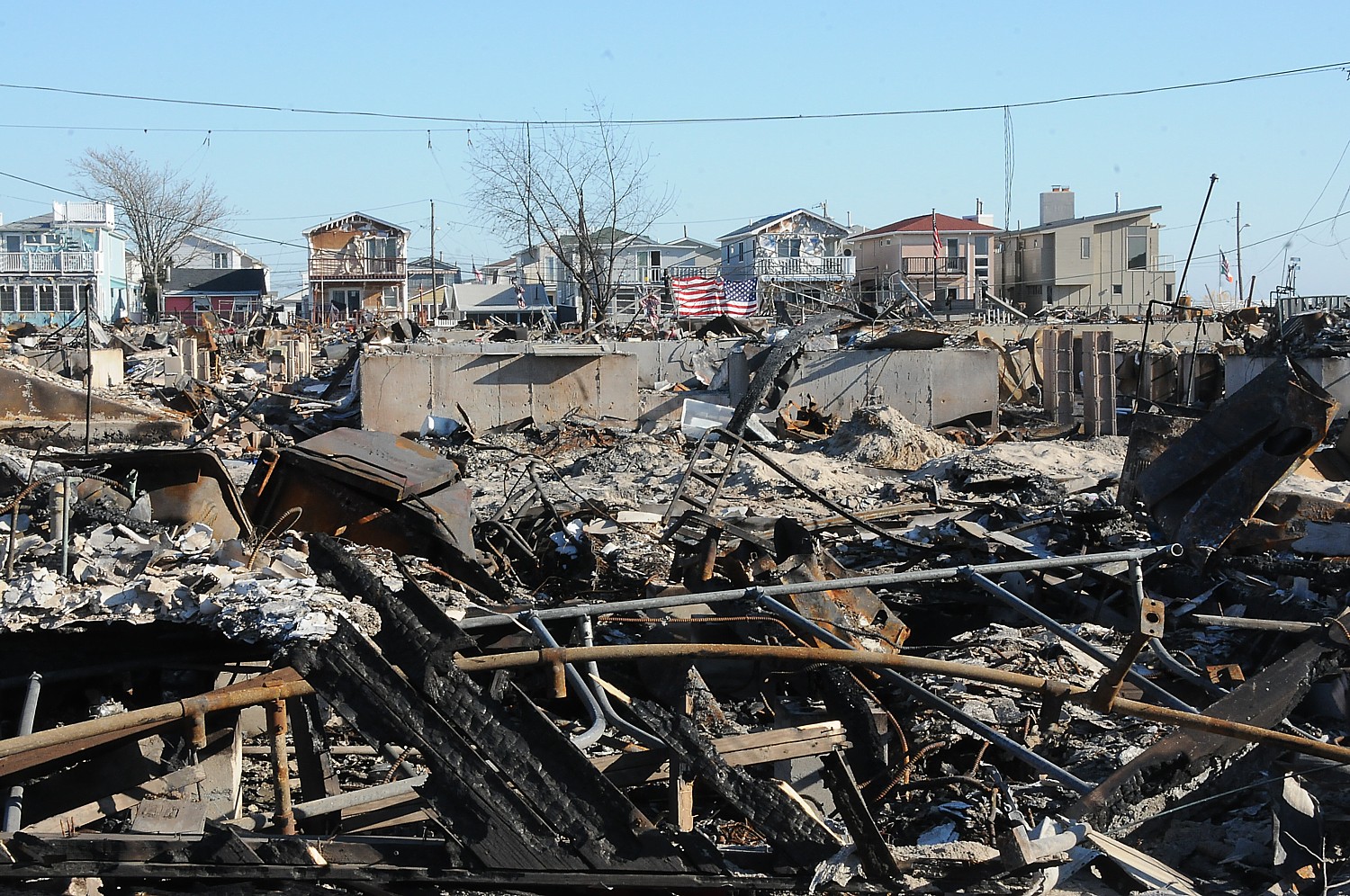
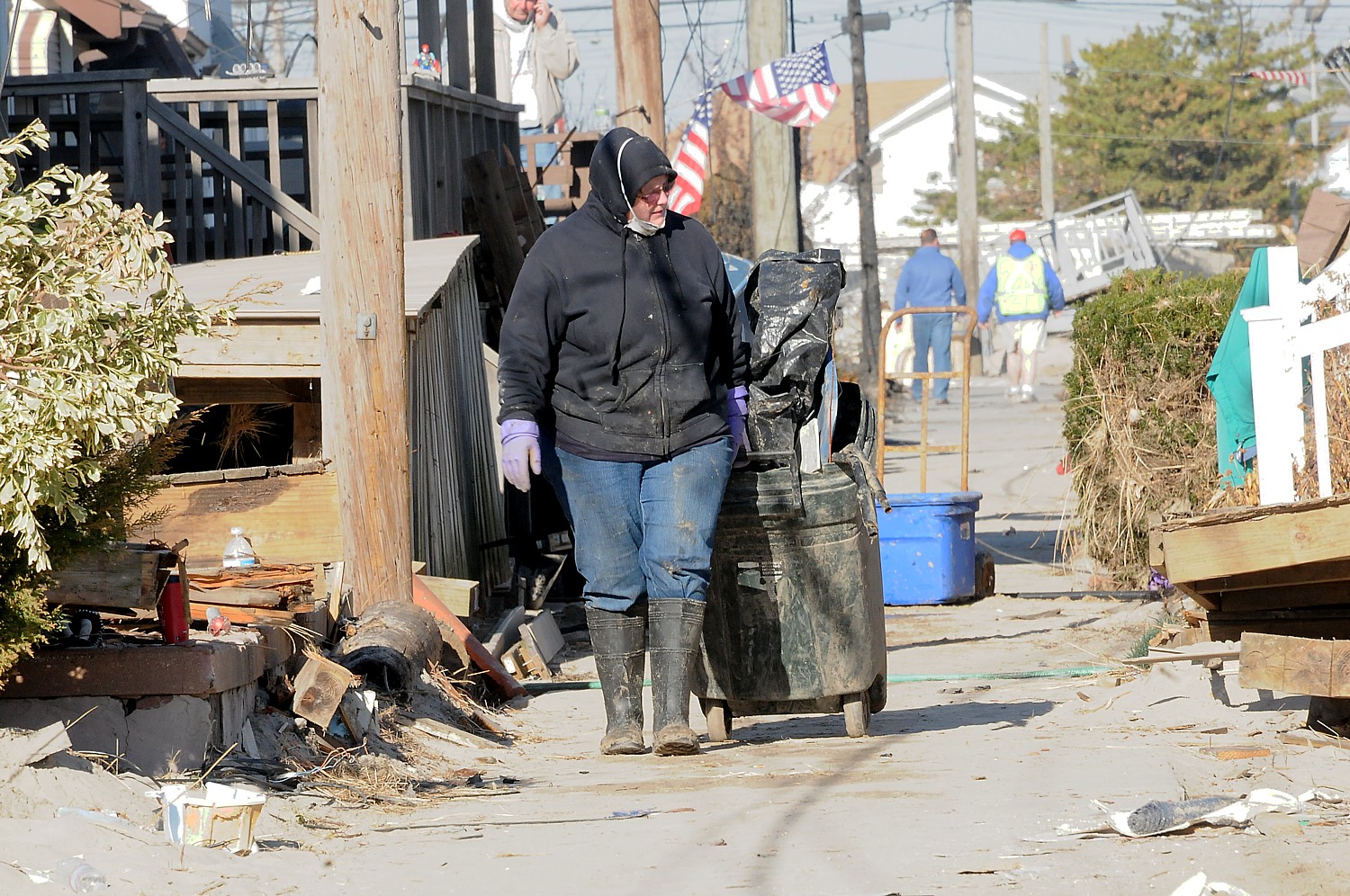
Wilkerson didn’t dwell on the public health aspects of climate change, but on how drought, famine, wildfires and sea level rise making coastal and island communities and even US naval and military bases, uninhabitable, would create national security challenges. Indeed, if you thought that a few million Syrian refugees could destabilize European democracies, think what hundreds of millions of climate refugees, would mean.
“By 2065, you are talking about machine guns on the border shooting people.”
We’ve actually already seen that happen: when police snipers murdered two black men as they tried to cross the Danziger bridge to flee New Orleans flooding after Hurricane Katrina.
Superstorms like the tsunami in Indonesia, the super typhoon in the Philippines, Hurricane Katrina and Superstorm Sandy that supposedly shouldn’t happen except once a century are hitting at least once every decade.
The US military is already concerned, but is unable to do anything for fear of being perceived as acting “politically.” As a result, “sea rise alone, will force the DoD to cannibalize its own budget, diverting 10 to 20% of its $600 billion budget to make its military installations resilient. “The air force at Langley already has days when jets can’t take off because the runways are flooded.”
“The military has no question at all about the climate changing and changing rapidly and that it’s changing faster” than previously projected, he said.
“The military sees the risk, wants something done. They don’t want to be the only ones who watch and then become the hammer, manning the machine guns on the border.”
Wilkerson did not offer much in the way of solution, beyond his organization, Climate Security Working Group, lobbying Congressmembers individually (he said he had a hopeful meeting with Joni Ernst and Charles Grassley). That is futile, though, because you have a Congress and a Trump Cabinet that is wholly in bed with donors from fossil fuels.
Wilkerson said he was an “optimist.” But what a difference a couple of weeks makes.
Trump has doubled down to undermine Obama’s climate action efforts and reverse the transition to clean, renewable energy, after feigning that he was “open-minded” in an interview with the “failing” New York Times, and a pretend meeting with Al Gore. Trump says he will shut down NASA’s Climate Research division, pull the US out of the Paris Climate Agreement, and reverse course on Obama’s Clean Power Plan (which his pick to lead the EPA, Oklahoma Attorney General Scott Pruitt is fighting to overturn in court).
Trump’s transition team has demanded the names of all Department of Energy employees and contractors who have attended climate change policy conferences; many have reported a climate of intimidation, and there is fear of a witch hunt. (The agency said it would not comply.)
He is installing Oil Men and Climate Deniers in key governmental positions. His pick for Secretary of State, ExxonMobil CEO Rex Tillerson, not only has oil deals with Vladimir Putin, but vigorously supports the Trans Pacific Partnership, which empowers corporations to sue localities for “lost profits” when they adopt regulations for environmental protection.
Instead of a Nobel laureate to head Energy, he is installing former Texas Governor Rick Perry, who couldn’t even remember the name of the agency when he said he would shut it down.
What’s left to be done?
Some might naively think that technology will save us, when the situation really becomes dire.
Some of the proposals call for “geoengineering” – launching shields to keep the sun’s rays from the earth to slow the warming (what about the solar energy needed to produce food and solar energy?). “This is like playing god,” Wilkerson said – an ironic statement considering the climate deniers typically are in the camp that says God wants the earth to heat. Not to mention the cost.
Indeed, by the time societies are that desperate, it will be too late to reverse the impacts.
On the other hand, the despairing realization that Planet Earth may be doomed is what is behind Elan Musk’s Mars shot (something that is being made clear in the “Mars” television series). “He is doing it because he wants to hedge the bet (on continuation of the humanrace). But how many can pay $20 million for a seat on a rocketship?”
“To us in military, one of clearest indicators there are people who understand the depth of the problem, but doing something serious – getting off this planet. They know there is a real chance this planet may become uninhabitable.
“We have put more people on the face of earth since 1900 than the previous 5000 years, reaching a global population of 7 billion, and by the next century, there will be 3-4 billion more. That ain’t going to happen, not without dire circumstances.
I find myself rooting for other nations to treat the US, the world leader on climate action under Obama, as a pariah, especially if Trump tears up the Paris Climate Agreement, and that they slap carbon fees on US goods, and that the UN and international Court prosecute the US for actions that result in the death and unliveability of lands. They should sue for damages and reparations.
We need to fight corporations that are not making the transition to clean energy – boycott products, fight permits, cram stockholders meetings, or alternatively, divest and drive down stock prices of offending corporations and climate deniers. Sue to recover costs when pollution impacts public health or damages the environment, require new projects to be designed sustainably and address clean energy and water. Block rate hikes and actions of utilities that refuse to adopt the Clean Power Plan standards.
Launch lawsuits over pollution that impacts public health, recover costs for remediation, require new projects to address clean energy and water; block rate hikes and actions of utilities that are refusing to adopt the Clean Power Plan standards; divest and drive down the stock prices of offending corporations and climate deniers.
The EDF has a good strategy: tripling the size of its legal team; ramping up investments in state-based work to modernize the electric grid and advance clean-energy policy (EDF co-authored the first ever statewide bill to limit carbon emissions in California, which has created nearly 1 million new jobs and made California the nation’s leading clean technology patent developer).
The League of Conservation Voters is funding a campaign that goes hard after every dangerous executive action, nominee, and vote in Congress, coordinating with allies in new ways so that nothing slips through the cracks; plans to bolster allies in the Senate to stand strong, use their bully pulpit, and form a “green” firewall to beat back congressional attacks that require 60 votes to pass; hold key elected officials accountable, especially in the Senate, for their votes, words and actions, and expose those who push Trump’s anti-science agenda; mobilize hundreds of thousands of grassroots activists, activating grassroots networks and standing in solidarity with allies across the progressive movement; working with states to advance solar, renewable and other sustainable solutions; and lay the groundwork for 2017 and 2018 elections, where key Governor and Senate races are already unfolding.
We need to protest, to occupy, to boycott, to sue, to conduct unrelenting shaming campaigns of companies, corporate executives, investors and politicians who put short-term personal gain over long-term havoc, and if necessary, impeach – impeach an EPA Administrator who does not abide by the Clean Air, Clean Water acts. Impeach a Secretary of Health & Human Services who does not advocate for public health. Impeach a president who violates his Constitutional oath and sets aside national security for self-enrichment.
The contrast between the candidates’ ideas for energy could not be starker. Hillary Clinton recognizes that energy policy is critical climate action (saving the planet and human habitability), seeing the potential for economic revolution and jobs creation through making the US the world leader in the emerging clean, renewable energy industry. Donald Trump, who never mentions climate change except to say it is a “hoax” perpetrated by China, frames his “America First Energy Plan” as unleashing production of fossil fuels – properly presenting it as “USA, USA and the rest of the planet be damned.” Keep in mind, the US is 5% of the world’s population but is responsible for 25% of the planet’s carbon emissions that are already rendering island nations virtually uninhabitable. China may be close, but it also has four times the population and, in face of choking, debilitating air pollution, is already implementing its agreement to reduce emissions. Here are their campaigns’ own statements about their plans. – Karen Rubin, News & Photo Features.
Hillary Clinton believes climate change is an urgent threat and a defining challenge of our time. That’s why she’s released a bold plan to make the United States the clean energy superpower of the 21st Century, create millions of good-paying jobs across the country, save families money on their energy bills, and ensure that no community is left out or left behind in the clean energy economy, from coal country to Indian country to our inner cities.
Her strategy calls for three goals to achieve within ten years of taking office:
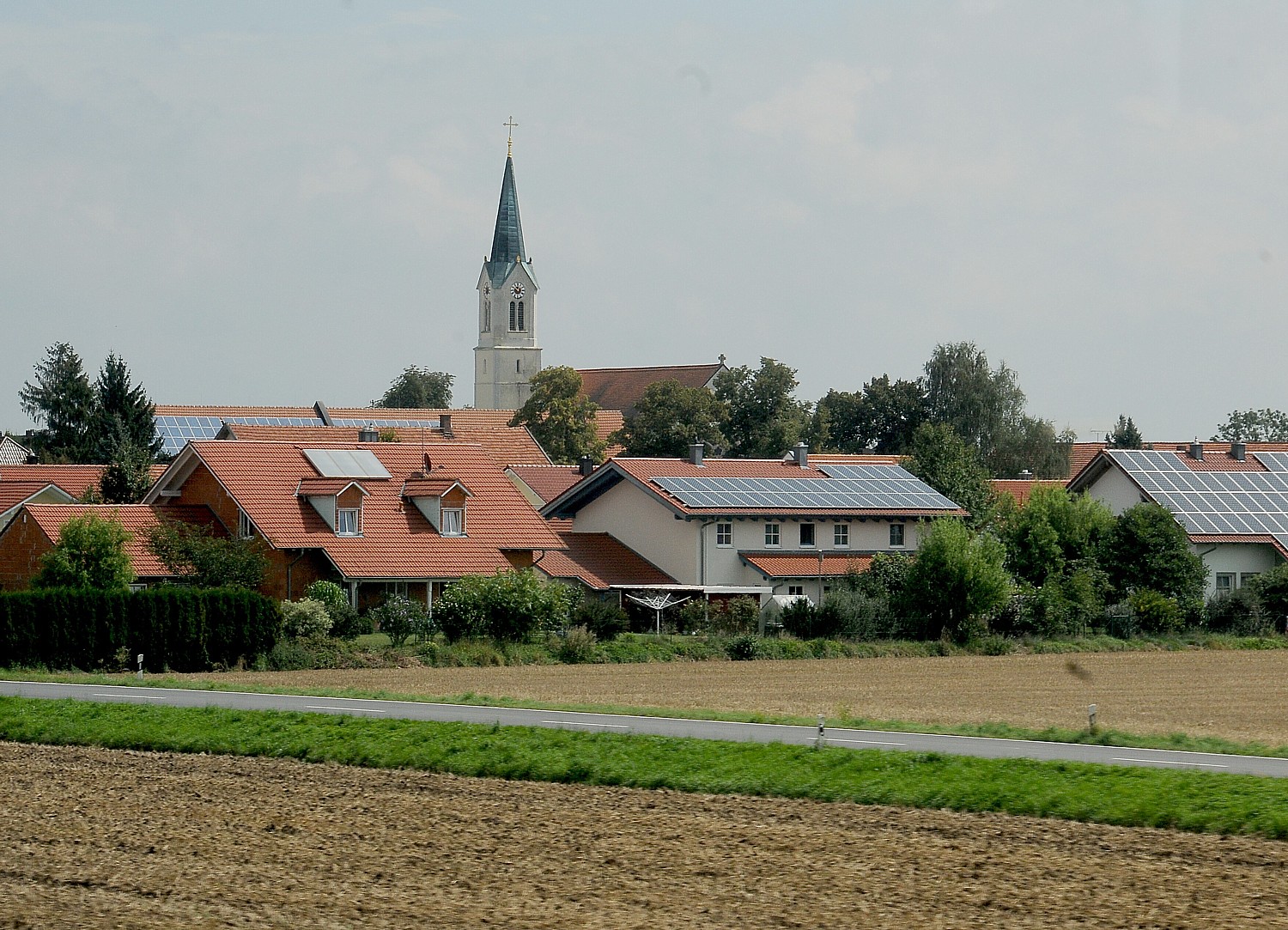
Generate half of our electricity from clean sources, with half a billion solar panels installed by the end of her first term.
Cut energy waste in American homes, schools, hospitals and offices by a third and make American manufacturing the cleanest and most efficient in the world.
Reduce American oil consumption by a third through cleaner fuels and more efficient cars, boilers, ships and trucks.
Clinton has long fought for clean energy and measures to curb climate change:
As Secretary of State, she built an unprecedented global effort to combat climate change, making it a key U.S. foreign policy priority, and with President Obama achievedthe key diplomatic breakthrough that yielded the first international climate agreement in which major developing countries like China, India, and Brazil committed to reduce their GHG pollution.
She has praised the Paris climate agreement, calling it a “testament to America’s ability to lead the world in building a clean energy future where no one is left out or left behind.”
TIME op-ed: America Must Lead at Paris Climate Talks — “As Secretary of State, I put combating climate change on the agenda for my first trip to Beijing and kept it there over the next four years. I appointed the first high-level special envoy for climate change and led an international effort to launch the Climate and Clean Air Coalition to reduce so-called “super pollutants” that make up just a fraction of emissions, but drive a disproportionate share of warming. As President, I will protect and build on the progress President Obama has made at home.”
As Senator, she twiceintroduced the Strategic Energy Fund Act to prioritize investment in smarter energy and extend tax credits for ethanol, wind, and other renewable energy sources. The Strategic Energy Fund Act would have eliminated key tax breaks for oil and gas companies. She also introduced a measure that was signed into law requiring the Pentagon to address the risks of climate change in its strategic planning.
She worked with Senate colleagues of all stripes to confront these challenges, teaming upwith Bernie Sanders to create job training opportunities in the clean energy industry, and working with Jim Inhofe to expand alternative energy use in federal buildings.
She worked with Senator Chuck Schumer on legislation calling for the study and potential creation of a national heritage area surrounding Niagara Falls. Following the release of the study, the Niagara Falls National Heritage Area was established in 2008. She workedwith Carl Levin to safeguard wildlife and promote sound water management in the Great Lakes region, and she consistentlyfoughtagainst opening the Arctic National Wildlife Refuge to oil drilling.
Mr. Trump’s America First Energy Plan will make America energy independent, create millions of new jobs, and protect clean air and clean water. We will conserve our natural habitats, reserves and resources. And we will unleash an energy revolution that will bring vast new wealth to our country.
We must make American energy dominance a strategic economic and foreign policy goal of the United States. President Obama’s anti-energy orders have weakened our security, by keeping us reliant on foreign sources of energy. Every dollar of energy we don’t explore here, is a dollar of energy that makes someone else rich over there. Imagine a world in which our foes, and the oil cartels, can no longer use energy as a weapon.
America will become, and stay, totally independent of any need to import energy from the OPEC cartel or any nations hostile to our interests. And at the same time, we will work with our Gulf allies to develop a positive energy relationship as part of our anti-terrorism strategy.
Mr. Trump’s plan is an “all of the above” energy plan that encourages the use of natural gas and other American energy resources. It reduces emissions, the price of energy, and increases our economic output. In addition, we will decrease residential and transportation energy costs, leaving more money for American families as they pay less each month on power bills and gasoline for cars. Electricity will be more affordable for U.S. manufacturers, which will help our companies create jobs, and heaper energy will boost American agriculture.
An America First Energy plan will make the choice of sharing in our great American energy wealth, over sharing in the poverty promised by Hillary Clinton. We will engage in energy exploration which will create a resurgence in American manufacturing, dramatically reducing both our trade deficit and our budget deficit. The Trump plan will end the war on the American worker, putting our coal miners and steel workers back to work.
This new direction will end all job-destroying Obama executive actions as well as reduce and eliminate all barriers to responsible energy production. We must support coal production, safe hydraulic fracturing, and allow energy production on federal lands in appropriate areas. It is also time to open up vast areas of our offshore energy resources for safe production.
The Trump plan will use the revenues from energy production to reduce our debt, rebuild our inner cities, roads, schools, bridges and public infrastructure. It will ensure a reliable, streamlined regulatory and permitting process for energy infrastructure projects to be completed on time and on budget. We commit to solving real environmental problems in our communities like the need for clean and safe drinking water. Most importantly, American workers will be the ones building this new infrastructure.
Mr. Trump’s 100-Day Action Plan
Mr. Trump will rescind all the job-destroying Obama executive actions including the Climate Action Plan and the Waters of the U.S. rule.
Mr. Trump will ask TransCanada to renew its permit application for the Keystone Pipeline.
Mr. Trump will lift moratoriums on energy production in federal areas
Mr. Trump will revoke policies that impose unwarranted restrictions on new drilling technologies. These technologies will create millions of jobs with a smaller footprint than ever before.
Mr. Trump will cancel the Paris Climate Agreement and stop all payments of U.S. tax dollars to U.N. global warming programs.
Any regulation that is outdated, unnecessary, bad for workers, or contrary to the national interest will be scrapped. Mr. Trump will also eliminate duplication, provide regulatory certainty, and trust local officials and local residents.
Any future regulation will go through a simple test: Is this regulation good for the American worker? If it doesn’t pass this test, the rule will not be approved.
“Climate change is an urgent and growing threat to our national security, contributing to increased natural disasters, refugee flows, and conflicts over basic resources like food and water. The present day effects of climate change are being felt from the Arctic to the Midwest. Increased sea levels and storm surges threaten coastal regions, infrastructure, and property. In turn, the global economy suffers, compounding the growing costs of preparing and restoring infrastructure.”–U.S. National Security Strategy, February 15, 2015
The White House issued a Fact Sheet on President Obama’s historic step to address national security implications of climate change:
On Sept. 21, President Obama signed a Presidential Memorandum (PM) on Climate Change and National Security, establishing a policy that the impacts of climate change must be considered in the development of national security-related doctrine, policies, and plans. To achieve this, 20 Federal agencies and offices with climate science, intelligence analysis, and national security policy development missions and responsibilities will collaborate to ensure the best information on climate impacts is available to strengthen our national security. The Presidential Memorandum was released alongside a report from the National Intelligence Council identifying pathways through which climate change will likely pose significant national security challenges for the United States over the next two decades, including threatening the stability of other countries.
There is current and growing attention paid by national security experts to ways in which climate impacts are adversely affecting national security now, and will stress national security even more dramatically in the coming decades. In addition to tackling the impacts from climate change by reducing emissions, there is a need for increased collaboration among the climate science, intelligence, and national security policy communities to prepare for the impacts that we can no longer avoid.
This announcement builds on steps the Obama Administration has already taken to address emerging national security challenges impacted by climate change. For example, because climate change in the Arctic will necessitate greater presence in the region’s open seas, the Administration proposed in 2015 to accelerate the acquisition of a replacement heavy icebreaker for the Arctic and began planning for the construction of additional icebreakers. This year, the Administration requested $150 million from Congress to accelerate production of a new Polar Icebreaker, and the Administration continues to call on Congress to provide this critical funding to the U.S. Coast Guard this year.
PRESIDENT OBAMA DIRECTS FEDERAL AGENCIES TO TAKE ACTION TO ADDRESS THE NATIONAL SECURITY IMPLICATIONS OF CLIMATE CHANGE
Today’s Presidential Memorandum adds an essential element to the President’s comprehensive approach to addressing climate change at all levels, providing the policy guidance and direction needed to ensure that climate risks are fully characterized and considered in our national security planning, through:
Establishing a dedicated Federal Climate and National Security Working Group, led by representatives from the National Security Council staff and the White House Office of Science and Technology Policy, and including over 20 Federal agencies and offices with climate science, intelligence, and national security responsibilities. The Working Group will identify the U.S. national security priorities related to climate change and national security, and develop methods to share climate science and intelligence information to inform national security policies and plans.
The Climate and National Security Working Group will create a Climate Change and National Security Action Plan within 90 days to identify specific steps that are required to perform the Working Group’s functions, which includes facilitating the exchange of climate data and information with the intelligence community and identifying gaps; recommending research guidelines concerning the Federal Government’s ability to detect climate intervention activities; identifying the most current information on regional, country, and geographic areas most vulnerable to current and projected impacts of climate variability for the next 30 years; and developing recommendations for the Secretary of State to help ensure that the work of U.S. embassies, including their planning processes, are better informed by relevant climate change-related analyses.
Directing individual agencies to develop Implementation Plansaddressing climate-related hazards and threats to national security; identifying economic considerations arising from the impacts of climate change globally and the resulting specific impacts on national security, human mobility (including migration and displacement), global water and food security, nutrition, public health, and infrastructure; identifying climate change-related risks to agency missions; and identifying risks that may be caused by agency policies, programs, and actions concerning international development objectives, fragility, and regional stability.
NATIONAL INTELLIGENCE COUNCIL RELEASES REPORT ON IMPLICATIONS FOR US NATIONAL SECURITY OF ANTICIPATED CLIMATE CHANGE
The National Intelligence Council released a report finding that the effects of climate change are “likely to pose significant national security challenges for the United States over the next two decades,” including by stressing our military operations and bases. Globally, the report found that climate-related national security disruptions are underway now and climate change and its resulting effects are likely to pose wide-ranging national security challenges for the United States and other countries over the next 20 years through a number of pathways including:
Overwhelming a state’s capacity to respond or recover, its authority can be so undermined as to lead to large-scale political instability. In the most dramatic cases, state authority may collapse partially or entirely;
Decreasing water and disputes over access to arable land will increase the risk of conflict between people who share river basins, aquifers, or land areas;
Contributing to migrations that exacerbate social and political tensions, some of which could overwhelm host governments and population; and
Straining the capacity of US and allied armed forces to deliver humanitarian assistance and disaster relief.
“These effects will be especially pronounced as populations continue to concentrate in climate-vulnerable locations such as coastal areas, water-stressed regions, and ever-growing cities.
“While President Obama continues to pursue all practical actions to reduce harmful greenhouse gases and other carbon sources, it is important to evaluate and pursue the actions needed to identify the current and projected climate impacts on our national security, and develop actions to mitigate these impacts,” the White House stated in the fact sheet.
“Since taking office, President Obama has taken unprecedented steps to address climate change and protect our planet for future generations. Building on the President’s historic action to reduce greenhouse gas emissions and build a clean energy economy, the Administration has sought to lead by example, investing in Federal sustainability to improve environmental, energy and economic performance across the Federal government,” the White House stated in a fact sheet announcing the 2016 GreenGov Presidential Awards, along with new initiatives to advance federal sustainability.
“With 343,000 buildings, 630,000 fleet vehicles, and $438 billion in annual purchasing power, the government has taken significant steps to operate more efficiently across the board.”
Here is the fact sheet:
Today, in recognition of the progress our Federal agencies have made, the White House announced the winners of the 2016 GreenGov Presidential Awards, honoring those who have gone above and beyond to implement innovative sustainability projects within the government. Senior Administration officials will recognize the 12 individuals and team winners today in a ceremony at the White House.
The Administration also announced today new steps to advance sustainability in federal purchasing with the release of the General Services Administration’s new “Green ✓” tool to help agencies make informed decisions about products and services that save money, increase sustainability and meet green purchasing requirements. Additionally, this week, Federal agencies will release their annual Federal Agency Strategic Sustainability Performance Plans, outlining how they are working to meet sustainability goals such as achieving a 40% reduction in Federal greenhouse gas emissions by 2025.
Winners of 2016 GreenGov Presidential Awards
The GreenGov Presidential Awards celebrate outstanding achievement in the pursuit of President Obama’s Federal sustainability goals. They recognize Federal civilian and military personnel, agency teams, agency projects, facilities, and programs. These awardees have contributed to the Nation’s prosperity, promoted energy security, protected the interests of taxpayers, and combated climate change to safeguard the health of our environment.
Climate Champion Award: Dr. Richard Bennett, Department of the Interior, U.S. Fish and Wildlife Service
Following the devastation left by Hurricane Sandy in 2012, Dr. Richard Bennett led the Department of the Interior team charged with helping the region recover, overseeing 167 million dollars in project funding to revitalize the Northeast, and to protect it from future storms and sea level rise. Dr. Bennett worked to launch more than 100 sustainability-focused projects, and led a team that developed performance metrics for climate resilience that are changing the way the Federal government prepares for severe weather events.
Sustainability Heroes Award: Dr. Rosalind A. Grymes, National Aeronautics and Space Administration
For nearly a decade, Dr. Rosalind Grymes has been working to enhance NASA’s sustainability portfolio with a focus on optimizing the use of water, energy and other resources. She has held numerous leadership roles in the pursuit of a more sustainable NASA, including as the Executive Director of the NASA Astrobiology Institute, and as the Founding Director of the Advanced Studies Laboratories.
Green Innovation Award: U.S. Army Corps of Engineers & Department of Defense
The U.S. Army Corps of Engineers and the Department of Defense have created a software tool that is revolutionizing sustainability planning for their agencies. The tool helps evaluate the sustainability and energy needs of an installation, and then generates a list of energy projects perfectly suited to meet the organization’s goal. The software tool has been successfully leveraged by other agencies across the country to transform federal sustainability planning and implementation.
Lean, Clean, and Green Award: Department of Veterans Affairs
Under the leadership of Timothy Morris, the Calverton National Cemetery has implemented energy saving measures and revolutionized its sustainability efforts, including the incorporation of the first ever installation of solar power at a national cemetery. From the use of automatic lighting sensors to programmable thermostats and timers, the Calverton National Cemetery has made sustainability a core part of its daily mission, becoming an energy efficiency model for cemeteries across the country.
Green Dream Team Award: Environmental Protection Agency / General Services Administration
An employee-led team at EPA established the first compost collection program at EPA’s Washington, DC headquarters. The team coordinated with custodial staff, repurposed existing collection bins, and developed low cost communication tools to educate 4,500 employees about the program. GSA partnered with EPA in this effort, and is now working to expand compost services to over 50 Federal buildings in the National Capital region.
Good Neighbor Award: Environmental Protection Agency
In the years following the foreclosure crisis, the number of vacant homes across the country grew by 44% from 2000 to 2010. To guard against the significant environmental impact from demolishing these homes, EPA created a toolkit that’s changing the way communities deal with demolitions across the country. The toolkit helps municipalities make sound environmental decisions during the demolition process, reducing pollution, among other benefits.
Building the Future Award: U.S. Army Corps of Engineers & Department of Defense
The Army Corps of Engineers and Department of Defense have constructed the first LEED Platinum certified, net-zero energy aviation hangar at Fort Carson, Colorado. This innovative building includes high efficiency lighting and solar panels that supply half its power needs, and is a major step in support of Fort Carson’s goal to become a Net Zero Energy facility by 2020.
Greening the Fleet Award: Timothy Currie, National Aeronautics and Space Administration
As NASA’s Fleet and Transportation Manager, Timothy Currie has helped transform NASA’s fleet of over 3,000 vehicles nationwide. In just two years, NASA has replaced almost two-thirds of its fleet with vehicles that run on cleaner fuels, including biofuels, compressed natural gas, and electricity. This transition contributed to NASA achieving a 62% reduction in petroleum use since 2005.
Purchasing Power Award: National Aeronautics and Space Administration
NASA’s White Sands Test Facility in Las Cruces, New Mexico has developed a software tool that seamlessly integrates management and oversight of green purchasing. The tool provides a list of green products available for order, captures data on purchases, and tracks compliance with sustainability requirements. With real-time data, NASA’s Sustainability Program team members can now track performance on green purchasing goals from their desktops.
Keeping It Clean Award: Department of Energy
Faced with the need to treat groundwater at a former nuclear weapons production facility, the Department of Energy’s Office of Legacy Management developed an innovative groundwater treatment system. Installed at Rocky Flats, Colorado, the system runs on battery power and recharges with solar power. This design enhances safety, improves groundwater treatment reliability, reduces long-term maintenance and costs, and reduces waste.
Resilience Role Model Award: Environmental Protection Agency / Department of Homeland Security-FEMA
Soon after Hurricane Sandy, a group of Federal, State, and local government leaders formed the Long Island Smart Growth Resiliency Partnership, focused on implementing recovery efforts that would be environmentally sustainable, and make the region more resilient to climate-related threats in the future. The partnership has held numerous events to educate and train the public, and is currently developing a joint EPA-FEMA guidance document for use by other impacted communities throughout the nation.
The Ripple Effect Award: Department of Health and Human Services
In response to employee interest in electric vehicle (EV) charging, the Department of Health and Human Services launched an initiative to support EV commuting, and to install charging infrastructure across its agencies. The National Institutes of Health, Centers for Disease Control and Prevention, and the Food and Drug Administration have developed innovative plans to make commuting by EV easier, including dedicated parking spaces and use of the conference room scheduling system to reserve charging stations.
Federal Agency Strategic Sustainability Performance Plans
This week, the Administration is also releasing the Federal Agency Strategic Sustainability Performance Plans. In these strategic plans, Federal agencies detail how they are working to meet the President’s goals to cut greenhouse gas emissions, increase use of renewable energy, reduce energy and water used in Federal buildings, improve efficiency of Federal fleet vehicles, and enhance climate resilience.
Below are some examples of how Federal Agencies are leading by example:
Saving Energy and Saving Money for Veteran Care: When compared to hospitals nationwide, Veterans Administration (VA) hospitals are a top energy performer. VA hospitals are approximately 35% more efficient than the average U.S. hospital, allowing more resources to be directed to the care of Veterans. The Department of Veterans Affairs has reduced energy intensity by 23.2% compared to a 2003 baseline.
Reducing Water Use at the World’s Largest Museum and Research Complex: The Smithsonian Institution has reduced water use at its museums and the National Zoo by 54.5% since 2007, exceeding the Federal 26% reduction goal for FY 2020. The Smithsonian accomplished this achievement by using sub meters and leak detectors to discover water waste, and by focusing on water efficient landscapes for iconic public buildings on the National Mall and at the National Zoo.
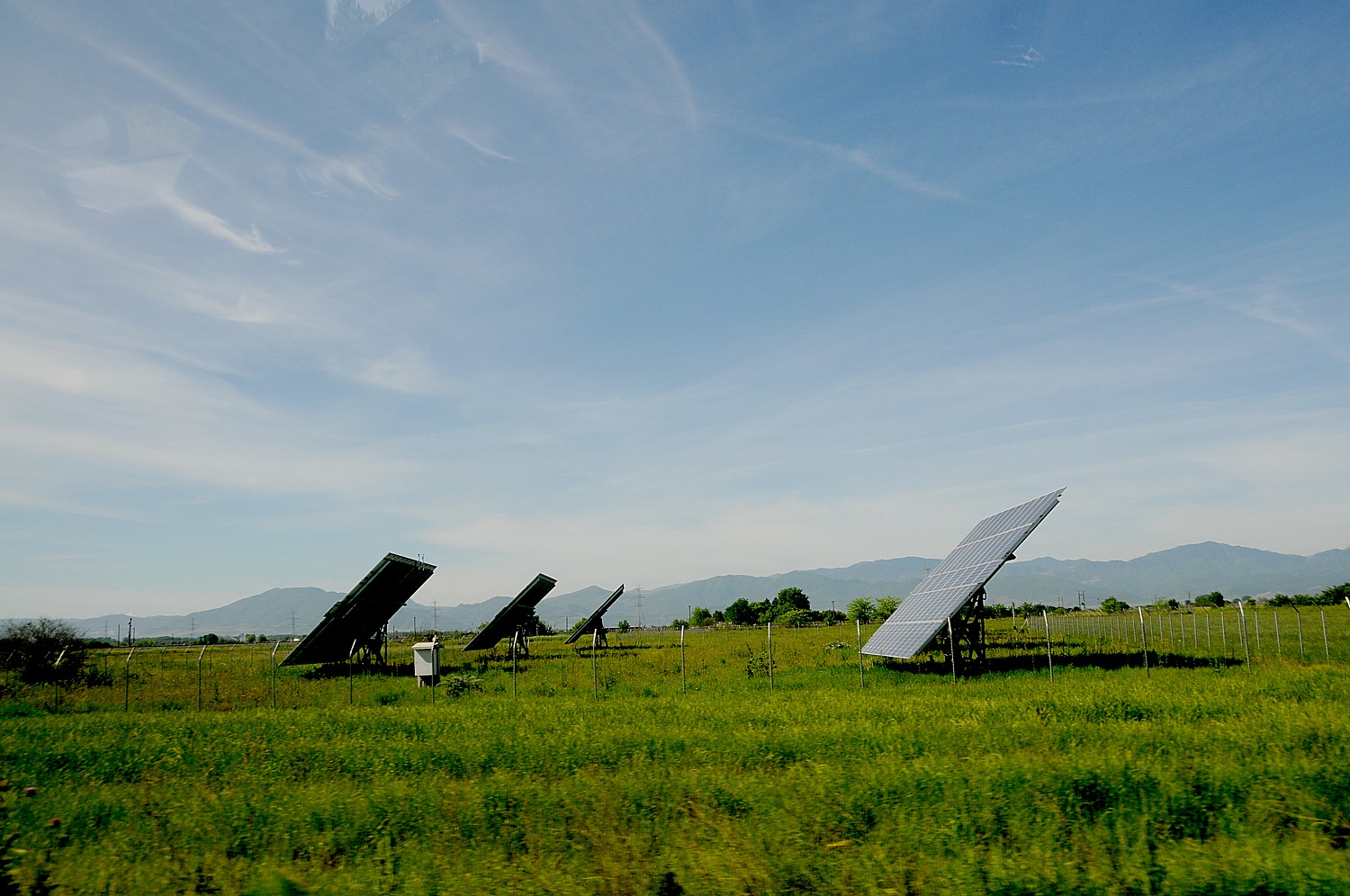
Navy Achieves 1 GW in Renewable Energy: In the 2012 State of the Union address, President Obama announced that the Department of the Navy would seek to produce or procure 1 gigawatt (GW) of renewable energy by 2020. The Navy not only met that goal, but they did it by the end of 2015, five years ahead of schedule. One recent project represents the largest renewable energy procurement in Federal government history – a solar project that will bring 210MW of renewable power to 14 Navy bases in California. Over the life of the 25-year contract, the Navy will save more than $90 million, while enhancing energy security and resiliency.
Obama Administration’s Record on Federal Sustainability
Since taking office, President Obama has taken unprecedented steps to lead by example in the Federal government, investing in innovative and cost effective initiatives to reduce carbon pollution. In March 2015, President Obama set aggressive targets for the government to cut Federal greenhouse gas emissions by 40 percent by the year 2025, from a 2008 baseline. To date, the Federal government has met the challenge by achieving the following:
Emissions Reductions:
The Federal Government has reduced its annual greenhouse gas emissions 17.6 percent since 2008, and avoided the emission of over 41 million metric tons of GHGs, equivalent to taking 8.7 million cars off the road for one year.
Federal agencies have cut energy use at Federal facilitiesby 15.4 percent since 2008. In 2015 alone, the government consumed almost 38 trillion British Thermal Units less than 2008, saving $680 million in energy costs.
The amount of greenhouse gas emissions resulting from Federal government business air travel in 2015 was 35 percent less compared to 2008. That is comparable to 4.8 million flights across the U.S.
Water Consumption:
Over the past 8 years, the Federal government has saved almost 140 billion gallons of drinkable water, comparable to the amount of water used by almost 1 million households over the course of a year.
Clean Energy Use:
The Federal government has nearly doubled the amount of clean energy used in facilities since 2008, totaling over 6% of facility energy use.
Vehicle and Equipment Energy Use:
The Federal government reduced spending on gasoline/diesel by more than $963 million in 2015 compared to 2008.
The government has tripled its consumption of alternative fuels since 2005, to 15.1 million gallons, surpassing the Administration’s fleet alternative fuel consumption goal by 50 percent. These fuels are produced in the U.S., decreasing our dependence on foreign oil and enhancing our energy security.
The number of electric vehicles in the Federal fleet have increased over 50-fold, from 83 vehicles in 2008, to 4,337 in 2015. The number of hybrid electric vehicles in the Federal fleet increased 1,194% between 2008 and 2015, from 1,766 to 22,863 vehicles.
President Obama quadrupled the size of the Papahānaumokuākea Marine National Monument off the coast of Hawaii, creating the world’s largest marine protected area. When he declared National Oceans Month in June, he stated, “Oceans and their nearby regions are also highly vulnerable to the effects of a changing climate — a once-distant threat that is now very present and is affecting ecosystems and shoreline communities on every coast. Rising sea levels, coastal storms, and a growing risk of erosion and flooding are looming realities faced by seaside towns.” (photo by James Watt).
The Obama Administration has announced nearly $40 million in new programming to enhance resilience to climate change and advance clean-energy development by building regional, national, and local capacity in the Pacific Islands to prepare for and help mitigate the negative impacts of climate change. These steps come as sea level rise and the increased strength and frequency of catastrophic weather events pose an existential threat to places most vulnerable to their impacts, such as the Pacific Islands. In addition, and consistent with the theme of this year’s World Conservation Congress, the Administration is announcing policies to promote conservation and combat climate change by protecting wildlife, oceans, and lands.
The announcement coincided with the World Conservation Congress, which the United States hosted for the first time, President Obama addressed leaders from Pacific Island Conference of Leaders and the World Conservation Congress before traveling to Midway Atoll in the newly expanded Papahānaumokuākea Marine National Monument.
At Midway, the President discussed the reality that climate change is already altering the structure and function of ecosystems, changing the distribution and abundance of plants and animals, and in many cases limiting the ability of lands and waters to provide critical services to communities.
Throughout the week, senior Administration officials, including Secretary of the Interior Sally Jewell, attended the World Conservation Congress to discuss these steps and hear directly from leaders in government, business, NGOs, Indigenous groups, and youth groups on a broad range of topics related to conservation and climate change.
Building Regional, National, and Local Capacity to Prepare for Climate Change
The United States announced new investments over the coming years to build regional, national, and local capacity in the Pacific Islands to enhance resilience to climate change.
Building Regional Capacity through the Institutional Strengthening in Pacific Island Countries to Adapt to Climate Change (ISACC) Program: Under this program the United States intends to invest up to $5 million to support regional organizations, which are critical to address the collective needs of Pacific Islands. The program will leverage the substantial regional expertise and professional networks of the Pacific Community (SPC), the Secretariat of the Pacific Regional Environment Programme (SPREP), and the Pacific Islands Forum Secretariat (PIFS). The program will embed climate-adaptation coordinators from the three partner organizations in eight Pacific Island countries to provide technical assistance and train key staff of national climate-change agencies.
Building National Capacity through the Climate Ready Program: The United States will be launching a new program to enhance the resilience of Pacific Island nations. Under the Climate Ready program, USAID is announcing $9 million to help national governments develop and implement policies that promote resilience, enhance access to climate finance, and improve national capacity to manage and monitor adaptation programs. Climate Ready will engage in twelve Pacific Island nations: the Federated States of Micronesia, Fiji, Kiribati, Nauru, Palau, Papua New Guinea, the Republic of the Marshall Islands, Samoa, Solomon Islands, Tonga, Tuvalu, and Vanuatu.
Building Local Capacity for Climate Change Adaptation: To enhance the capacities of communities and governments in the Pacific Islands to reduce the risk of disasters, the United States is announcing $15 million in disaster risk reduction programs next year, and will continue to stand shoulder to shoulder with Pacific Island countries to prepare for natural disasters in the face of a changing climate.
In addition, seven new local recipients have been awarded a total of over $1.7 million by the Pacific American Climate Fund, which overall has provided 22 grants valued at $9.5 million to civil- society organizations across the Pacific Islands, to help communities adapt to the impacts of climate change. Specifically, the grants will support community-based farmers in Fiji, a women’s council in the Federated States of Micronesia, and vulnerable communities in Samoa, the Solomon Islands, and Palau.
Finally, USAID will continue its ongoing community-based initiatives that help particularly at-risk communities better prepare for and respond in the immediate aftermath of a disaster. For example, in Vanuatu, USAID helped to reintroduce indigenous preparedness practices, such as safe water collection and food-preservation techniques that, in the wake of Tropical Cyclone Pam, enabled affected communities to survive until the arrival of international assistance. In Papua New Guinea, USAID supports community- and provincial-level DRR investments that enable community members and policy makers to identify and mitigate the increasing effects of climate-change-induced hazards. In Micronesia and the Marshall Islands, USAID trains school-aged children and community members in climate change and community preparedness. And across the Pacific, USAID is investing to develop strong, local Red Cross Societies to help countries better manage disasters and to ensure that community-preparedness work is sustainable and fully institutionalized.
Contributing to the Pacific Catastrophe Risk Assessment and Financing Facility: The United States will contribute $8 million to a World Bank multi-donor trust fund to support the creation of a disaster and climate risk insurance facility for Pacific Islands (“the Pacific Catastrophe Risk Assessment and Financing Initiative (PCRAFI) Facility”). The PCRAFI multi-donor trust fund will establish a long-term, sustainable insurance facility to provide climate- and disaster-risk insurance products to the Pacific Islands countries. It will also support technical assistance to these countries and related regional organizations to bolster capacity to assess and manage climate and disaster risks, with the overall objective of strengthening the financial resilience of Pacific Islands to climate and natural disaster risks.
Expanding Research on Climate Migration and Relocation
The United States is committed to engaging with the international research community to understand how to build a comprehensive approach to reduce the risk of climate-related displacement and manage the consequences of unplanned migration while also harnessing the opportunities of voluntary, planned migration and community relocation. This research can help facilitate migration and community relocation as effective adaptation and coping strategies to the effects of climate change.
Symposium on Climate Migration: The Council on Environmental Quality, in collaboration with Hawaii and Alaska Sea Grant College Programs, the William S. Richardson School of Law at the University of Hawai’i Manoa, and the National Sea Grant Law Center, will host a Symposium on Climate Displacement, Migration, and Relocation in December 2016. The Symposium will provide an opportunity for stakeholders, researchers, policy experts, indigenous leaders, and local, State, and Federal, government officials to explore legal and policy opportunities and challenges arising from climate displacement. This includes questions about how to plan for and implement voluntary migration and community-led relocation as adaptation strategies to the impacts of climate change, both domestically and in the context of the Pacific Islands.
Facilitating the Transition to a Cleaner Energy Future
Although they are not large emitters of greenhouse gases, the Pacific Islands are committed to combating climate change and to making major changes in their energy profiles as part of their Nationally Determined Contributions within the Paris Agreement. The United States is committed to helping the Pacific Islands increase their resources and technical expertise in order to develop a comprehensive approach to energy transformation.
Energy Excelerator Targeting Half a Billion Investment in Clean Energy: The Energy Excelerator, a public-private partnership financed through the U.S. Navy and located in Hawaii, is setting the goal of achieving half a billion dollars in total private, follow-on investment in companies in its accelerator program, including those developing clean-energy technologies for the Pacific Islands, by September 2017. This effort builds upon the $350 million already raised by the accelerator’s 42 companies to create innovative clean-energy technologies to support Pacific Islands in transitioning to cleaner sources of energy, agriculture, and transportation. (Of the 42 companies, 23 are already actively deploying solutions in the Pacific Islands.)
Developing a New Pacific Energy Transition Program: The U.S. Department of Energy and the State Department are announcing the creation of a new Energy Transition Initiative Pacific Program to assist Pacific Islands with their transition away from imported fuels. Building on U.S. government technical assistance delivered to Caribbean nations under the Caribbean Energy Security Initiative, and ongoing successful Energy Transition Initiative efforts in Hawaii and the U.S. Virgin Islands, this new effort will bring the lessons learned and technical assistance to the Pacific Islands, including those setting ambitious targets to deploy clean energy. To initiate this process, the Department of State, Department of Energy, the International Renewable Energy Agency (IRENA), and the Pacific Community (SPC) are announcing they will host a workshop to provide regional governments with concrete strategies for implementing an Energy Transition Initiative model in their countries, to identify specific areas for follow-on technical assistance and/or advisory support, and to facilitate access to Green Climate Fund and sources of finance for clean-energy projects. This workshop will support IRENA’s Small Islands Developing States (SIDS) Lighthouses Initiative.
Promoting Conservation
The United States is continuing our leadership in addressing conservation challenges across the continent and globe, from the Hawaiian Islands, known as the “extinction capital” of the world, to Africa, where elephant poaching is a gruesome reality. New, innovative approaches to conservation, including conservation finance and mapping technology, are taking hold, alongside of long-tested strategies like land protection and smart public-land management.
Releasing the State of Conservation in North America Report: The Department of Interior is releasing the State of Conservation in North America Report, which highlights progress in protecting 12 percent of all land in North America under the highest protection standards. The analysis and information in the report create a baseline for progress in protecting important ecosystems and can offer a catalyst for future conservation actions in the United States and with international partners.
Signing an Arrangement with the Vietnam Biodiversity Agency: The United States Geological Service will establish a partnership and conclude an arrangement with the Vietnam Biodiversity Agency to offer scientific and technical support of their effort to revise the Vietnam Biodiversity Conservation Law. The arrangement will be a “Project Annex” to the 2010 MOU signed by DOI and the country of Vietnam’s Ministry of Natural Resources and Environment, which provided a framework for the exchange of scientific and technical knowledge with respect to earth sciences and effective management of natural resources.
Launching the Next Generation Conservation Ambassadors Program:The Department of Interior will also launch an international mentorship partnership, Next Generation Conservation Ambassadors, which will involve matching subject-matter experts from the Department of the Interior with young people working on various conservation-related topics in other countries. Topics may include but are not limited to water management, historical preservation, land management, relationships with indigenous people, climate change, wildlife monitoring, and habitat restoration. Mentors will provide input, counsel, and guidance for one year. This program will provide avenues to share our expertise and knowledge with emerging young leaders from other countries, furthering a vision for comprehensive, collaborative approaches toward addressing climate change.
Restoring Humpback Whale Populations around the Globe: NOAA will announce its final decision to remove 10 populations of humpback whales from the endangered species list, including almost all the populations found around North America. This is continued evidence that U.S. efforts to protect and restore thousands of endangered animals and plants are working.
Supporting the Expansion of Large-Scale Marine Protected Areas: In 2015, NOAA and partners launched a multi-year effort to provide a foundation of publicly accessible baseline data and information from the deepwater areas of central and western U.S. Pacific Islands marine protected areas (MPAs). Recent and planned expeditions using vessels such as NOAA Ship Okeanos Explorer are informing priority MPA science and management needs such as the identification and mapping of vulnerable marine habitats like high-density, deep-sea coral and sponge communities. To continue to support the global expansion of large-scale MPAs, NOAA vessels in 2017 will total more than 200 days at sea; include complementary work across multiple research vessels;; and improve fundamental understanding of at least four existing MPAs.
Issuing a Unified Strategy with the International Oceanographic Commission (IOC): NOAA’s Ocean Service will later this month conclude a formal unified strategy with the International Oceanographic Commission (IOC), ensuring closer coordination between the U.S. Marine Biodiversity Observation Network (MBON) and international ocean observing and data networks such as the Global Ocean Observation System (GOOS) and the Ocean Biogeographic Information System (OBIS). This will improve the acquisition, delivery and application of information on change in the marine environment, and support marine conservation and decision-making at the national, regional, and global levels.
Announcing New Grants to Combat Wildlife Trafficking: USAID and partner organizations will announce the grand prize winners of the Wildlife Crime Tech Challenge, whose innovative technology has the best potential to strengthen forensic evidence, reduce consumer demand or address the corruption that fuels poaching and illegal trafficking. The Fish and Wildlife Service will announce $1.3 million in grant funding for combating wildlife trafficking. Up to 13 grants will contribute to efforts to reduce demand for illegally traded wildlife products. The grant program was developed as part of the Implementation Plan which resulted from President Obama’s 2015 release of the National Strategy for Combatting Wildlife Trafficking.
It is beyond infuriating that Republicans, who every four years call themselves the “Party of Lincoln,” can claim the Clean Air and Clean Water acts and the EPA which were signed when Richard Nixon was president, and that on this, the 100th anniversary of the National Park Service, we all can thank President Theodore Roosevelt, a (Progressive) Republican, for America’s “best idea” – our national park system.
That’s because these are under attack by today’s Republicans – the party of Donald Trump. Today’s Republicans bear as little resemblance to the party of Lincoln or Roosevelt as George Wallace to the Democratic party.
Republicans are so infuriated by the 22 national monuments and preserves Obama has designed during his time in office using his powers under the Antiquities Act (265 million acres of public lands and waters — more than any administration in history), that they have tried to repeal it and take the power to preserve lands from for the use of all Americans, equally, into the hands of greedy developers (a la Donald Trump).
Trump is probably thinking, “Donald J. Trump will be the president who dispatches the $19 trillion national debt – I only need to sell off Yellowstone, and maybe Yosemite,” (no doubt to the cheers of Peter G. Peterson, who is obsessed with the national debt, see www.pgpf.org/.)
As New York Times columnist Nicholas Kristof noted in his annual paean to the national parks, fresh from his hike along the Pacific Crest Trail, the most democratic place in America isn’t the voting booth, but the national parks.
“Even in the Great Depression, an impoverished America could afford to work on building paths like the John Muir Trail, yet today we can’t afford to maintain them properly,” Kristof writes. “Our predecessors pretty much invented the idea of national parks and wilderness trails, bequeathing us an inheritance of incalculable wealth. And on our watch, as we mark the 100th birthday of the National Park Service, we’re squandering it.”
Our national parks system are overwhelmingly popular – indeed, the number of annual visits to non-local parks (not even counting if New Yorkers climb the Statue of Liberty), equates to one per person.
According to a study by Linda J. Bilmes and John Loomis published in US News, the national park system is valued at $92 billion a year, but total revenue, including Congressional appropriation comes to a mere $3 billion a year. Meanwhile, Congress has cut its funding for NPS by 15 percent over the last 15 years (after factoring inflation), while its backlog of overdue maintenance projects amounts to $12 billion a year (and rising).
Despite opposition from Republicans – or perhaps because of it – Obama has during his tenure designated more national monuments using his power under the Antiquities Act than any prior president (much as he has had to resort to Executive Orders to get anything else done): Obama not only has saved natural treasures for generations to come, but has used the designations to tell a more complete story of America’s heritage, so that more of our community can feel the same sense of pride: So, in addition to preserving natural settings like Browns Canyon National Monument, New Mexico, San Gabriel Mountains National Monument and Sand to Snow National Monument, California, Obama designated monuments honoring Black-Americans (Charles Young Buffalo Soldiers Monument, Ohio; Harriet Tubman Underground Railroad National Monument), Hispanics (Cesar Chavez National Monument ), workers (Pullman National Monument, Illinois), women (Belmont-Paul Women’s Equality National Monument, Washington, DC), and the latest one, LGBT Stonewall National Monument, New York. (See a full list of monuments designated under the Antiquities Act, going back to Theodore Roosevelt, who designated the first National Monument, Devils Tower National Monument, Wyoming, in 1906.www.npca.org/resources/2658-monuments-protected-under-the-antiquities-act.)
“Stonewall will be our first national monument to tell the story of the struggle for LGBT rights. I believe our national parks should reflect the full story of our country – the richness and diversity and uniquely American spirit that has always defined us. That we are stronger together. That out of many, we are one. That’s what makes us the greatest nation on earth. And it’s what we celebrate at Stonewall – for our generation and for all those who come after us,” Obama said at the ceremony.
Meanwhile, the National Park Service and national park system has been under assault by Republicans, who not only have tried to repeal the President’s power under the Antiquities Act, but regularly introduce bills to remove impediments to private/corporate access and use of federal lands.
“This includes three dangerous new bills that would allow millions of acres of national forests to be auctioned off by the states for mining, logging, drilling, road construction and more. This would happen with no regard for current environmental protections, and could cut off access to our shared public lands,” writes The Wilderness Society’s Alan Rowsome, Senior Director, Government Relations for Lands.
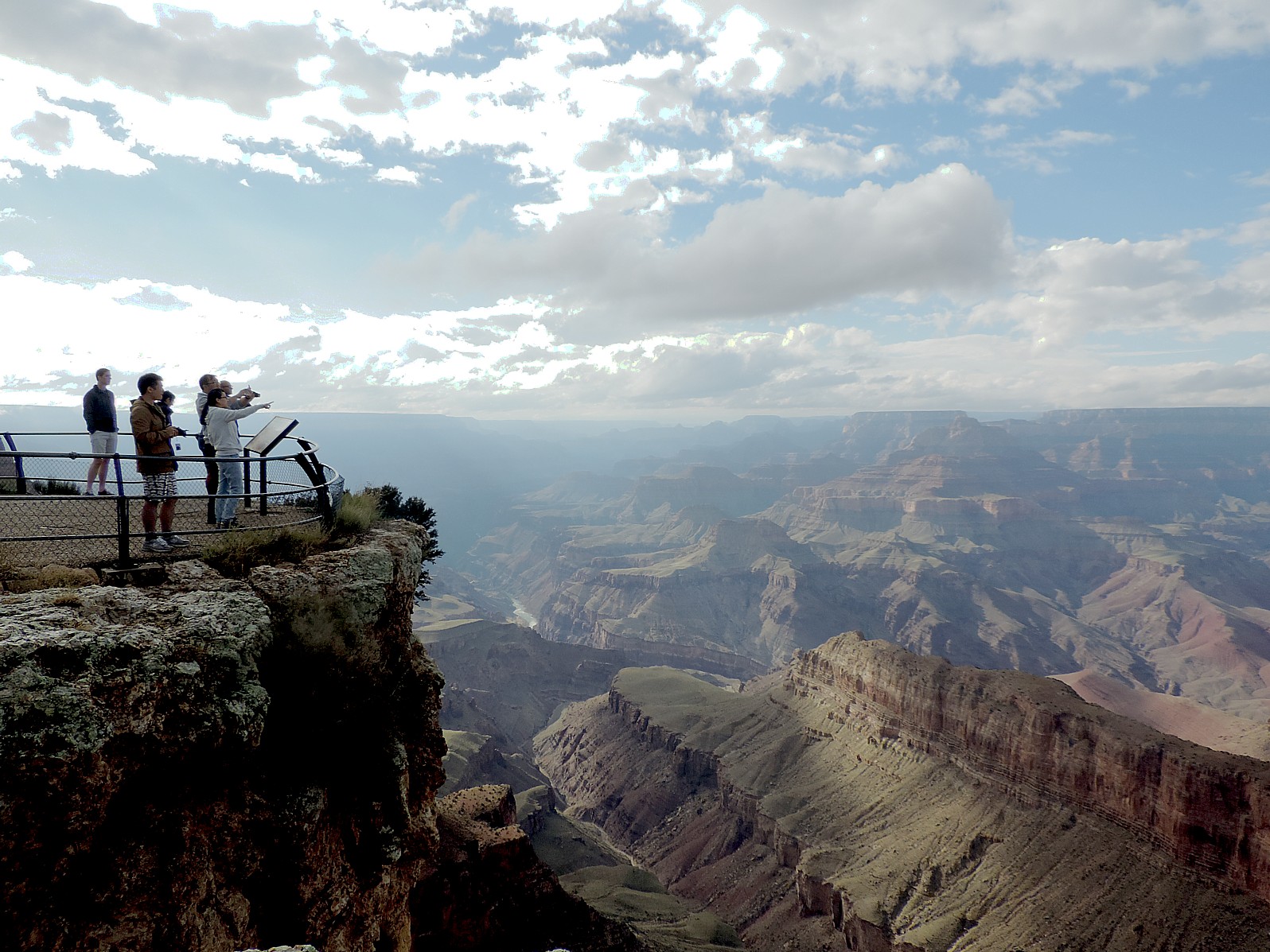
Grand Canyon National Park is celebrating its 100th birthday, but potential uranium mines and logging of old growth ponderosa pine forest just outside the boundary directly threaten water quality, human health, wildlife connectivity and cultural heritage protected by this most wondrous preserve.Because the Republican-controlled Congress has refused to act on legislation Rep. introduced by Raul Grijalva, the Wilderness Society is calling for Obama to proclaim a Greater Grand Canyon Heritage National Monument.
Republicans have even blocked donations of land: for example, the National Park Service was set to receive 87,500 acres of pristine land in the Maine Woods from a non-profit organization started by the founder of Burt’s Bees, which would be used to designate a new national monument and, eventually, a new national park.
Who is responsible for blocking the acquisition? Believe it or not, the chair of the House Natural Resources Committee, Rep. Rob Bishop (R-Utah), who has led a crusade to overturn the Antiquities Act.
“When he learned that President Obama used the Antiquities Act to protect 704,000 amazing acres as the Basin and Range Monument in Nevada, Representative Bishop called that ‘shameless.’ He even said that the Antiquities Act was ‘evil in the flesh’,” writes The Wilderness Society’s Alan Rowsome. “When he was informed that Basin and Range was home to many Native American artifacts, including cave paintings, he replied ‘Ah, bull crap. That’s not an antiquity’.”
The anti-National Parks furor is bound up with climate denial and a fervent effort to shut down the Environmental Protection Agency, which is itself wrapped up in a goal of preserving the status quo for the Capitalists who currently control the economy. Of course, clean, renewable energy would be a new capitalist endeavor, creating a new generation of millionaires, but that would displace the current Power Brokers whose wealth is tied to fossil fuels.
But setting aside land does not only mitigate against climate change, the national parks are also victims.
As Obama wrote after personally visiting two national parks: National Parks — spectacular natural treasures that are available to everybody, not just the lucky few — have been called America’s best idea. Under my administration, we’ve protected more than 265 million acres of public lands and waters — more than any administration in history. I’ve been proud to build on the work of the giants of conservation and environmental protection who came before me, like President Lincoln who first protected the Yosemite Valley in 1864, and President Teddy Roosevelt, who spoke so eloquently about why our strength and future as a nation relied on protecting our precious natural resources.
But there is more we must do to protect our parks and to protect this planet for generations to come. Make no mistake: The biggest challenge we are going to face in protecting them is climate change.
That’s why we’ve worked so hard to jump-start a clean energy revolution and to build a solar industry that’s growing by leaps and bounds. That’s why we’re tackling carbon pollution through the Clean Power Plan here in America and by rallying the whole world to tackle climate change together through the Paris Agreement.
Climate change is no longer just a threat; it’s already a reality. Yosemite meadows are drying up. Bird ranges are shifting further north. Alpine mammals are being forced further upslope to escape higher temperatures. We’re also seeing longer, more expensive, and more dangerous wildfire seasons — fires that are raging across the West right now.
In the coming years and decades, rising temperatures could mean no more glaciers at Glacier National Park and no more Joshua trees at Joshua Tree National Park. Rising seas could destroy vital ecosystems in the Everglades and at some point might even threaten landmarks like the Statue of Liberty and Ellis Island. Doing nothing to stop those changes is not the example we want to set for the next generation.
We have to take seriously the idea that these treasured places could be marred or lost to history. We can’t deal with it later or think that it’s somebody else’s problem. And we can’t let climate change deniers carelessly suggest that we don’t need to get serious about the carbon pollution being released into our atmosphere or that we should scrap an international climate treaty that we spent years putting together. We can’t afford to go backward.
And much the same as clean, renewable energy is no threat to America’s capitalist model, national parks and monuments may be communally owned and enjoyed, but are also very much part of the Capitalist fabric: Headwaters Economics calculated that in 2015, non-local park visits totaled 307,247,267, spending amounted to $16.9 trillion, visitor spending (alone) supported 251,997 jobs and $8.1 trillion in income. There are whole towns, as well as tens of thousands of small businesses, that depend upon their proximity to a national park (as was dramatically demonstrated when Republicans shut down government in 2013.)
This does not even take into consideration the public health benefits of national parks, the value to families, to the benefits of personal experience. Priceless to be sure, if not incalculable.
Signing a proclamation honoring the 100th anniversary of the National Park Service, Obama declared, “NPS parks and programs strive to tell our diverse stories, allowing us to learn from the past and help write our country’s next great chapters. In celebration of the 100th anniversary of the National Park Service, let us thank all those who — through their dedication to the mission of the NPS — help our country build on the legacy left by all those who came before us. As we look to the next century and embrace the notion that preserving these public spaces in ways that engage, reflect, and honor all Americans has never been more important, let us summon the foresight and faith in the future to do what it takes to protect our National Parks for generations to come.” (see 2016parkservice.prc.rel.pdf)
Update:Marking the 100th anniversary of the National Park System, President Obama designated the Katahdin Woods and Waters National Monument in Maine as our 413th national park site. The park is more than 87,500 acres in size and sits along the East Branch of the Penobscot River in Maine. In addition, Obama will more than quadruple the size of the Papahānaumokuākea Marine National Monument off the coast of Hawaii, creating the world’s largest marine protected area.
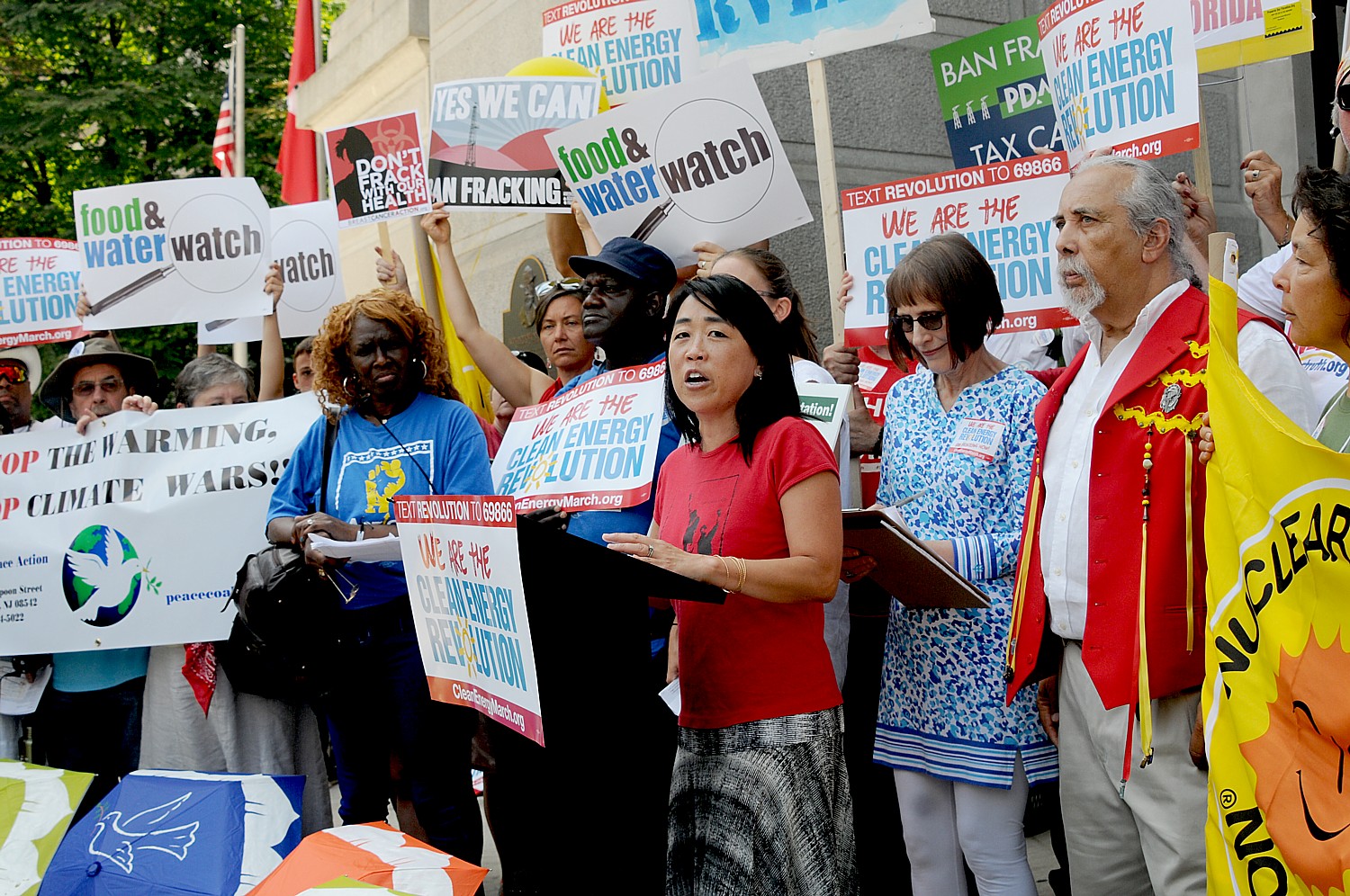
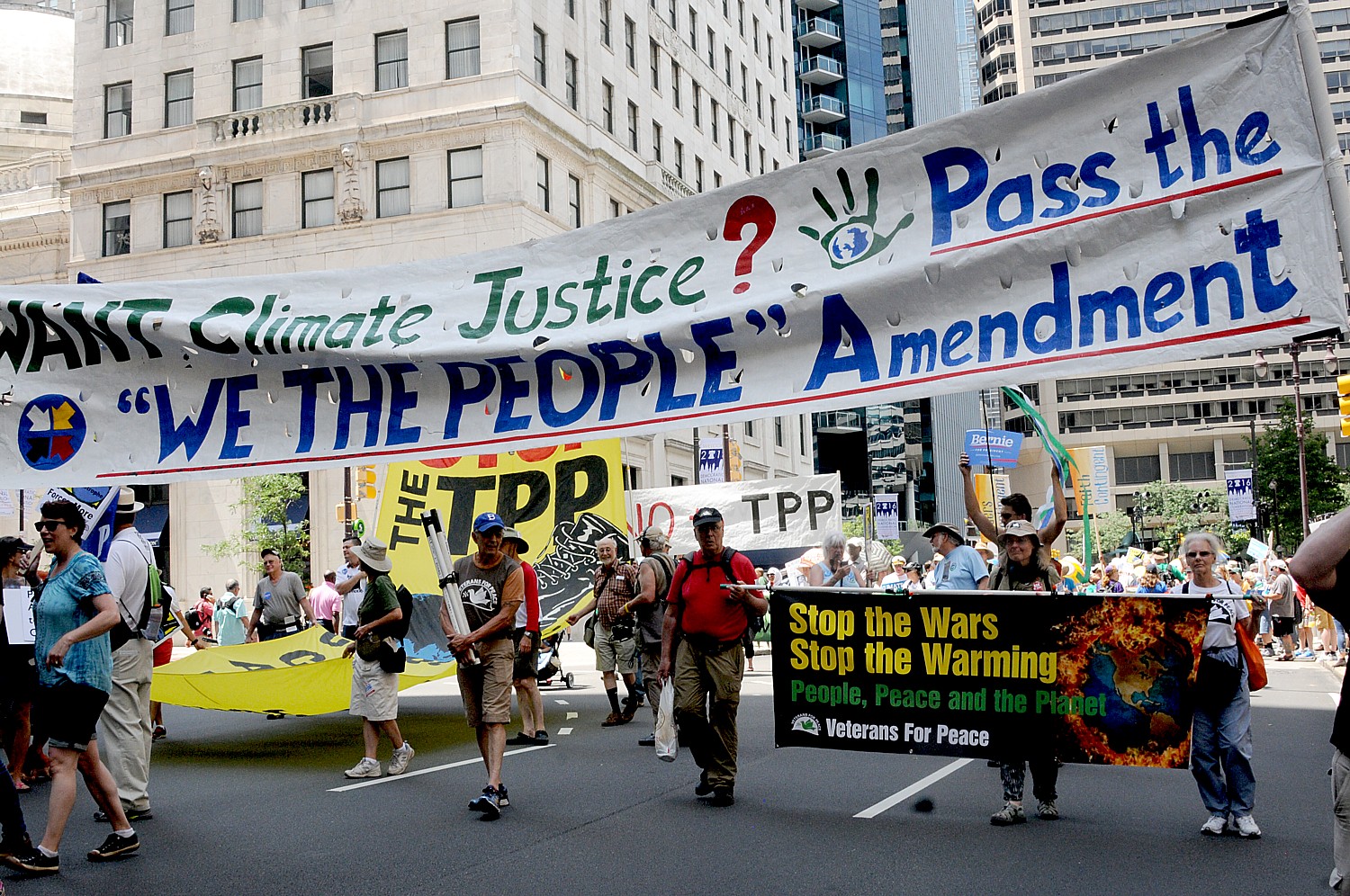
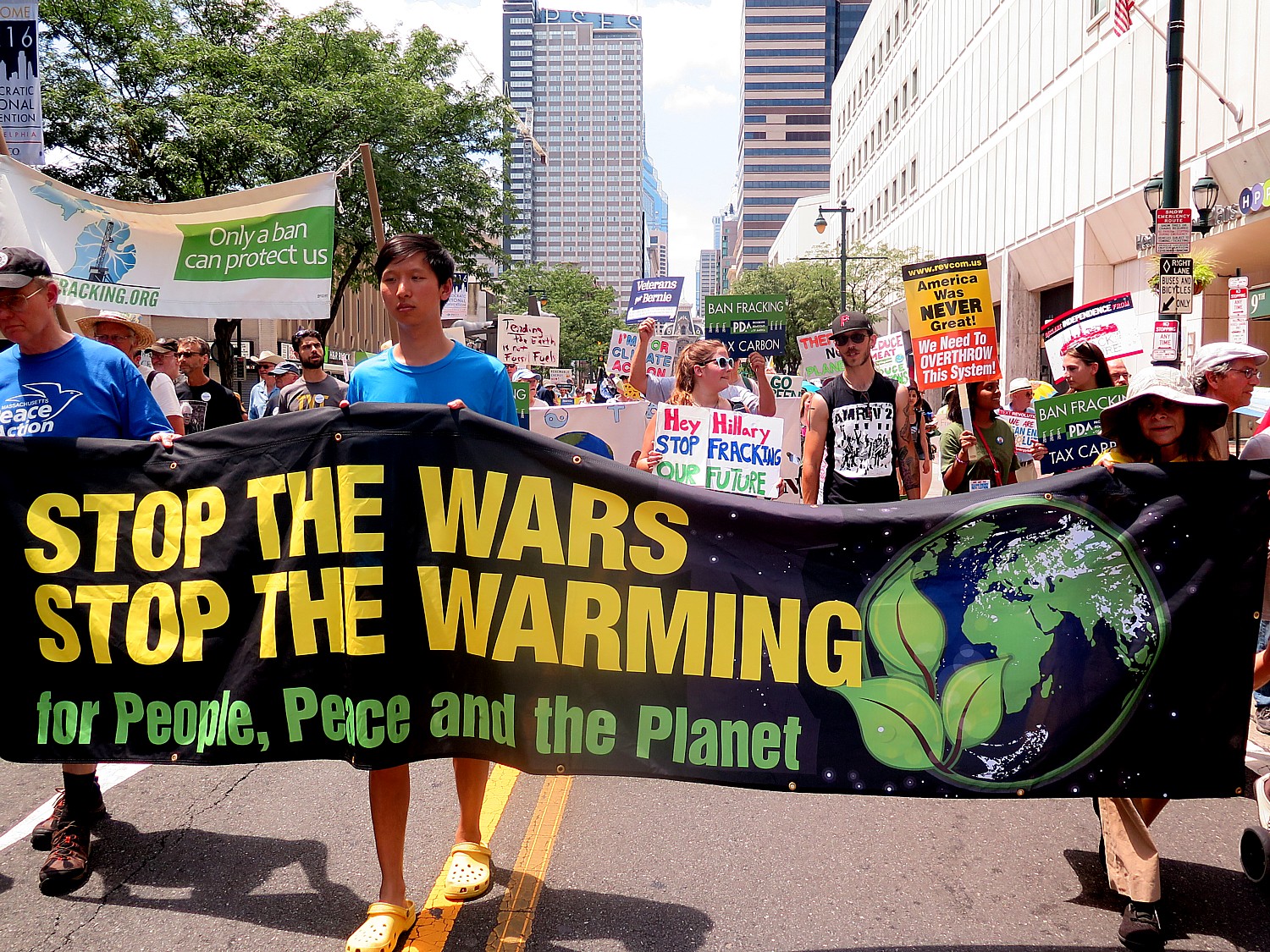
Philadelphia, PA – Local and national advocacy leaders and affected individuals held a press conference at City Hall in Philadelphia on Sunday July 24, the day before the start of the Democratic National Convention, before being joined by over 10,000 activists concerned Americans at 1 pm for the March for a Clean Energy Revolution. Convened by Americans Against Fracking, the march was intended to demand a nationwide ban on fracking and major investment in renewable energy. The march was endorsed by more than 900 environmental, health, labor, political, faith, justice, indigenous and student organizations from every state.
Advocacy leaders and individuals harmed by fracking called on the nation’s current and future leaders to ban fracking now, keep fossil fuels in the ground, stop dirty energy, transition to 100% renewable energy, and ensure environmental justice for all.
“As the first national organization in America to call for a ban on fracking, Food & Water Watch has seen the movement expand dramatically, becoming a major issue in the battle over the Democratic nomination for the presidency. Today, after listening to the science, more Americans are opposed to fracking than support it. Our elected leaders must listen to the people, which is why over a thousand groups from all 50 states endorsed the March for a Clean Energy Revolution and called for the need to keep fossil fuels in the ground and focus on renewable energy options that will create jobs, not destroy lives,” said Wenonah Hauter, Founder & Executive Director, Food & Water Watch.
The most recent Gallup poll, from March 2016, shows that Americans oppose fracking 51-36%.
“I am honored to welcome the march to our great city and to join the urgent call to free our country from its addiction to fossil fuels. Cities and elected officials cannot sleepwalk their way through a climate crisis that threatens not only our future but also our current way of life. We have a responsibility and opportunity to rebuild cities like Philadelphia through clean, just, and sustainable energy solutions,” said Helen Gym, Philadelphia City Councilmember.
“Climate change is already causing conflicts and crises around the world, from Louisiana to Syria. That’s why the peace and justice community marched today with our allies in the climate and environmental justice movement. We need to make giant leaps towards a clean energy economy and put an end to the viscous cycle of dirty wars, climate refugees, and reliance on dirty energy. The world and its inhabitants can no longer afford to suffer from poverty, illness, and racial discrimination due to wars on our people and the planet,” said Alesha Vega, Assistant Director, Coalition for Peace Action.
“We are marching to demand an end to fracking and other dangerous drilling practices that rely on toxic chemicals and are linked to an array of deadly diseases and disorders. As health professionals, public health experts and people concerned with protecting health, we are gravely concerned about the mounting scientific evidence showing that these chemicals are regularly contaminating the water, the air, and ultimately our bodies. It’s time our leaders commit to a clean energy future which does not jeopardize good health and public safety,” said Karuna Jaggar, Executive Director, Breast Cancer Action.
“For far too long Indigenous Peoples’ voices have been silenced and erased. Most especially when it comes to extreme extraction practices such as fracking. No longer will I stand by and watch that happen. I am here to share my Voice for my Family, for my People, for our youth and most importantly for Mother Earth. Now, more than ever, is the time to use our Voices to heal, protect and thrive!” said Krystal Rain Two Bulls, Oglala Lakota/Northern Cheyenne.
“We’ve just wrapped up a Republican National Convention filled with climate denial and extreme energy talking points. Tomorrow we start the Democratic Convention, and the question to all these leaders and politicians is: Are you willing to take the action that science demands, or are you just another kind of climate denier? Science tells us we need to keep 80% or more of fossil fuels in the ground: that means a ban on fracking, a halt to dirty trade deals like the TPP, and no more use of eminent domain for polluter gain. I’m marching today to tell all elected officials, if you’re not down to #KeepItInTheGround, you’re just another climate denier,” said Drew Hudson, Director of Environmental Action.
“The good news about moving quickly to 100% renewables is not only is it feasible with existing technology, but it will create good-paying jobs, reduce illness and death from air pollution, and result in lower energy bills compared to continued reliance on fossil fuels. We need the US to become a world leader in offshore wind, solar and conservation,” said Mark Dunlea, 350NYC and 100% Renewables Now NY Campaign.
“Science is the grand marshall of the March for a Clean Energy Revolution. As science advisor for Americans Against Fracking and a co-founder if Concerned Health Professionals of New York, I’ve reviewed hundreds of studies that reveal that fossil fuels, including fracked gas, are not safe for human health nor for the climate. It’s time for our elected leaders to lift up their heads, turn off the industry noise machine, and and listen to the data. It’s time for bold action to ban fracking, gas power plants, and new pipelines and move rapidly to 100% renewable energy,” said Sandra Steingraber, noted biologist, author, activist and science advisor to the Americans Against Fracking Coalition.
“The climate crisis is already having a substantial, harmful effect on public health in the spread of vector-borne diseases, accelerating pollution, malnutrition linked to drought induced food loss, rising sea levels, and extreme weather events, as well as the existential threat to our children, our future, and our planet. The time for words has long passed, we must act now. Air pollution from fossil fuel production and consumption kills millions of mostly working class and poor people of color around the world,” said Martha Kuhl, RN, Secretary Treasurer, National Nurses United.
“Unions represent workers around the world who will be instrumental in responding to the growing climate crisis and enabling the shift to a clean energy economy. However, we are also deeply concerned about ensuring a just transition for workers and their communities, and about environmental justice and the unequal and discriminatory impacts of climate change. Unions represent millions of organized workers across the United States and as such have a tremendous potential to confront the unbridled greed that is driving us to environmental disaster. We must be involved in this fight for our members, our families, our neighbors and our country,” said Jon Forster, AFSCME Local 375/DC37.
“We’re joining the March for a Clean Energy Revolution to stop the TPP and other bad trade deals. If the TPP is ratified this fall, it will supersede the Paris Climate Treaty and prevent us from taking the actions we need to transition rapidly to the clean energy economy by giving corporations power over our laws and our courts. The TPP makes profit more important than human health and safety and protection of the planet. We are rising together to call for a new model of trade that respects the planet and all life,” said Margaret Flowers, Stop the TPP
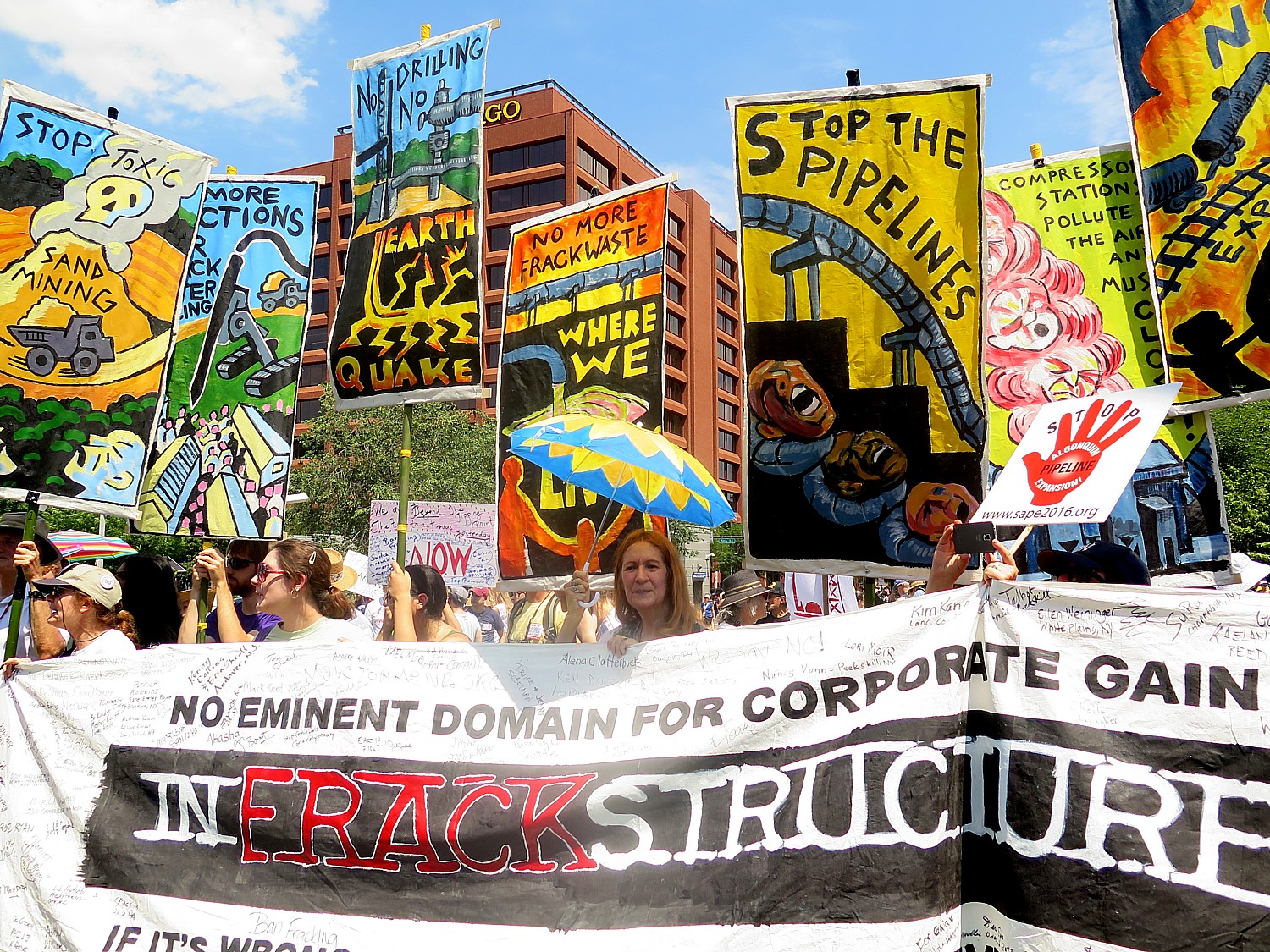
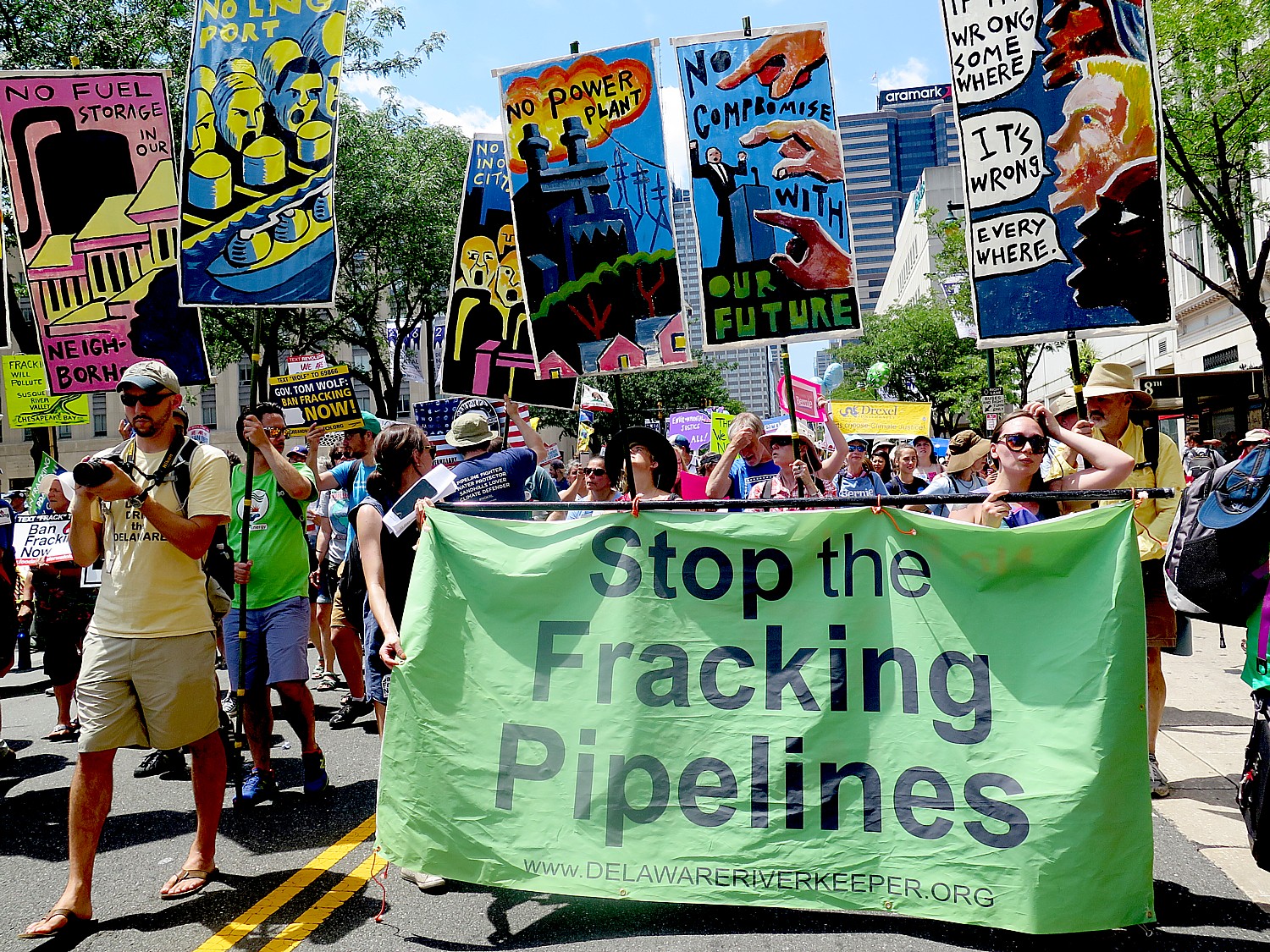
“The inFRACKstructure contingent of our March for a Clean Energy Revolution includes communities harmed and threatened by the growing number of pipelines, compressors, LNG exports facilities, oil trains, and new gas powerplants that are cutting through our communities and environment in order to service the dirty fossil fuel industry and fracked shale. This infrackstructure is inflicting devastating harm on our health and environment, and locking us into a dirty energy future. All of this damage is unnecessary because clean energy options are here today and are better able to support our energy, job, community and environmental goals. We are coming to Philadelphia to demand our political leaders from all parties put an end to dirty fossil fuels and its infrackstructure and commit to clean energy now,” said Maya van Rossum, the Delaware Riverkeeper and leader of the Delaware Riverkeeper Network.
“In order to secure a livable future for our generation, we need to a grassroots movement that’s equipped to win strategic local fights,” said Lydia Avila, Executive Director of the Power Shift Network, the organization behind Power Shift- a convergence of hundreds of young climate activists taking place in Philadelphia this weekend. “Young people came out this weekend because we want our decision-makers and future decision-makers to know that we are going to be holding them accountable for implementing strong climate policies that will create the just and healthy planet we all deserve.”
“Over one quarter of children in Philadelphia have asthma, primarily in lower income communities of color. We have the right to breathe, but corporations like the Philadelphia Energy Solutions oil refinery are poisoning us. We need our elected officials like Governor Wolf to stand up to the dirty energy industry and say no to expansion of oil and gas at the Southport site in Philadelphia!” said Teresa Hill, ACTION United.
Pennsylvanians, in particular, called on Governor Tom Wolf, a DNC Host Committee Honorary Chair, to stop harming those who live in Pennsylvania, where the fracking industry has developed more than 9,000 wells in Pennsylvania in just the past decade.
“Sunoco Logistics felled our trees, but the government that let them do it took down Democracy. What happened to my family should be a wake-up call to all Pennsylvanians that they could be next, that the Wolf administration will always put the industry’s interests over theirs,” said Elise Gerhart, Huntingdon County landowner whose family lost the woods on their property to the Sunoco Mariner East pipeline.
At 1 pm, over ten thousand advocates began the one-mile march at City Hall. They carried hand-painted signs and chanted demands down Market St. Final action and chants were held at Independence Hall. The day concluded with an enormous artistic display, transforming a drill rig into a sun.
The March for a Clean Energy Revolution came just after a Johns Hopkins study, published July 18 in JAMA Internal Medicine, found that people with asthma who live near bigger or larger numbers of active unconventional natural gas wells operated by the fracking industry in Pennsylvania are 1.5 to four times likelier to have asthma attacks than those who live farther away.
The study on fracking and asthma comes about a year after a comprehensive study linking premature births and at-risk pregnancies to fracking. Data on over 10,000 pregnancies in Pennsylvania from 2009 to 2013 showed odds of premature births increased 40% when expectant mothers live in heavily fracked communities.The vast majority of studies find risks and harms; a recent peer-reviewed study analyzing all of the relevant peer-reviewed literature found that, “the great majority of science contains findings that indicate concerns for public health, air quality and water quality.”
Pennsylvanians Against Fracking is a statewide coalition of organizations, institutions, and businesses calling for a halt to fracking in the Commonwealth. Learn more about Pennsylvanians Against Fracking at paagainstfracking.org.
Americans Against Fracking is comprised of entities dedicated to banning drilling and fracking for oil and natural gas in order to protect our shared vital resources for future generations.
Food & Water Watch, a lead organizer of the March for a Clean Energy Revolution, was the first national organization to call for a ban on fracking everywhere. Food & Water Watch champions healthy food and clean water for all. We stand up to corporations that put profits before people, and advocate for a democracy that improves people’s lives and protects our environment.
CDC researchers have just concluded that that the virus damages fetal development, resulting in microcephaly and other serious brain anomalies. No other mosquito-borne virus has ever caused birth defects.
That’s just the tip of the iceberg of the public health impacts already being caused by climate change. That’s because changing climate is expanding the habitat for mosquitoes that carry the Zika Virus, Lyme disease and other issues.
Developed over three years by 100 experts in climate-change science and public health – including representatives from the Environmental Protection Agency (EPA), the Department of Health and Human Services (HHS), the National Oceanic and Atmospheric Administration (NOAA), the National Aeronautics and Space Administration (NASA), the Department of Agriculture (USDA), and U.S. Geological Survey (USGS), the Department of Defense (DOD), and the Department of Veteran’s Affairs (VA) – the Climate and Health Assessment reinforces that climate change is a significant threat to the health of Americans not just in the future but right now. As the climate continues to change, the risks to human health will grow, exacerbating existing health threats and creating new public health challenges, and impacting more people in more places. From children to the elderly to pregnant women and the disabled, every American is vulnerable to the health impacts associated with climate change, now and in the future. A few examples of the increased health risks found in the assessment include:
Air pollution and airborne allergens will likely increase, worsening allergy and asthma conditions. Future ozone-related human health impacts attributable to climate change are projected to lead to hundreds to thousands of premature deaths, hospital admissions, and cases of acute respiratory illnesses each year in the United States by 2030, including increases in asthma episodes and other adverse respiratory effects in children. Ragweed pollen season is longer now in central North America, having increased by as much as 11 to 27 days between 1995 and 2011, which impacts some of the nearly 6.8 million children in the United States affected by asthma and susceptible to allergens due to their immature respiratory and immune systems.
Extreme heat can be expected to cause an increase in the number of premature deaths, from thousands to tens of thousands, each summer, which will outpace projected decreases in deaths from extreme cold. One model projected an increase, from a 1990 baseline for more than 200 American cities, of more than an additional 11,000 deaths during the summer in 2030 and more than an additional 27,000 deaths during the summer in 2100.
Warmer winter and spring temperatures are projected to lead to earlier annual onset of Lyme disease cases in the eastern United States and a generally northward expansion of ticks capable of carrying the bacteria that cause Lyme disease. Between 2001 and 2014, both the distribution and the number of reported cases of Lyme disease increased in the Northeast and Upper Midwest.
Increase the risks of water-related illnesses. Runoff from more frequent and intense extreme precipitation events, and increased water temperatures, will increasingly compromise recreational waters, shellfish harvesting waters, and sources of drinking water, increasing risks of waterborne illness.
Climate change, including rising temperatures and changes in weather extremes, is expected to increase the exposure of food to certain pathogens and toxins. Rising temperature and increases in flooding, runoff events, and drought will likely lead to increases in the occurrence and transport of pathogens in agricultural environments, which will increase the risk of food contamination and human exposure to pathogens and toxins. This will increase health risks and require greater vigilance in food safety practices and regulation.
Climate change will have the largest health impact on vulnerable populations including those with low incomes, some communities of color, limited English proficiency and immigrant groups, Indigenous peoples, children, pregnant women, older adults, vulnerable occupational groups, persons with disabilities, and persons with preexisting or chronic medical conditions.
Extreme weather and other events related to climate change will impact health by exacerbating underlying medical conditions, increasing exposure to food-borne and waterborne illness risks, and disrupting infrastructure, including power, water, transportation, and communication systems, that are essential to maintaining access to health care and emergency response services and safeguarding human health.
In addition, the Administration has announced a number of actions to respond to the critical challenges and vulnerabilities outlined in the Climate and Health Assessment. These include:
Developing K-12 educational materials on climate change and health.
A Climate-Ready Tribes and Territories Initiative, which will provide awards for tribal and territorial health departments to investigate, prepare for, and adapt to the health effects of climate change.
Designating May 23-27, 2016, as Extreme Heat Week, during which Federal agencies will take a number of actions to work with community planners and public-health officials to enhance community preparedness for extreme heat events.
The findings of the Climate and Health Assessment strengthen and broaden the scientific foundation for future decision making, allowing individuals, communities, organizations, and governments to proactively manage the health risks of climate change. A better understanding of how climate change affects our health, and the health of our children and grandchildren, underscores the need for urgent action to combat the threats climate change poses on American citizens and communities.
Already, under President Obama’s leadership, the United States has done more to combat climate change and protect the health of communities than ever before. For example, the Clean Power Plan will deliver better air quality, improved public health, clean energy investment and jobs across the country. Since the historic global climate agreement was reached at COP21 in Paris last year (signed on Earth Day at the United Nations), the United States has announced plans to not only implement the agreement to reduce greenhouse gas emissions, but has also committed to adopting an amendment to the Montreal Protocol that would phase down HFCs, a potent greenhouse gas. The Administration has forged a global agreement to cut aviation emissions, and most recently taken a series of actions to reduce methane emissions from the oil and gas sector, while also helping to spur a historic increase in wind and solar energy while doubling the fuel efficiency in our cars.
HOW CLIMATE CHANGE AFFECTS HEALTH:
KEY FINDINGS AND MESSAGES FROM THE ASSESSMENT
Changes in Extreme Heat and Extreme Cold. A warmer future is projected to lead to “on the order of thousands to tens of thousands of additional premature deaths per year across the United States by the end of this century” from heat. Any reduction in cold-related deaths is projected to be smaller than the increase in heat-related deaths in most regions. High temperatures can also lead to a wide range of illnesses. Examples of illnesses associated with extreme heat include cardiovascular, respiratory, and renal illnesses; diabetes; hyperthermia; mental health issues; and preterm births. Even small differences from seasonal average temperatures result in illness and death. An increased risk for respiratory and cardiovascular death is observed in older adults during temperature extremes.
Impacts on Air Quality. Changes in the climate affect the levels and location of outdoor air pollutants such as ground-level ozone and fine particulate matter. These changes in ozone are projected to lead to hundreds to thousands of premature deaths, hospital admissions, and cases of acute respiratory illnesses per year in the United States in 2030. In addition, the area burned by wildfires in North America is expected to increase dramatically over the 21st century due to climate change. Air pollution from wildfires can affect people far downwind from the fire location,increasing the risk of premature death and hospital and emergency department visits. Higher temperatures and increasing carbon dioxide levels also promote the growth of plants that release airborne allergens.
More Frequent and Intense Extreme Events. Climate change will expose more people to increases in the frequency and/or intensity of drought, wildfires, and flooding related to extreme precipitation and hurricanes. Many types of extreme events related to climate change cause disruption of critical infrastructure, including power, water, transportation, and communication systems, that are essential to maintaining access to health care and emergency response services and safeguarding human health. Health risks may also arise long after the event, or in places outside the area where the event took place, particularly if multiple events occur simultaneously or in succession in a given location – this could be the result of damage to property, destruction of assets, loss of infrastructure and public services, social and economic disruption, and environmental degradation. Poverty also is a key risk factor, and the poor are disproportionately affected by extreme events.
Altered Timing and Location of Vector-Borne Disease. Climate change is expected to alter the geographic and seasonal distributions of existing vectors and vector-borne diseases, such as Lyme disease, West Nile virus infections, and other diseases spread by vectors like mosquitoes. Rising temperatures, changing precipitation patterns, and a higher frequency of some extreme weather events associated with climate change will influence the distribution, abundance, and prevalence of infection in the mosquitoes that transmit West Nile virus, the leading cause of mosquito-borne disease in the United States. Outdoor workers are at a greater risk for contracting Lyme disease and, if working in areas where there are infected mosquitoes, occupational exposures can also occur for West Nile virus.
Increased Risks of Water-Related Illnesses. Runoff from more frequent and intense extreme precipitation events will increasingly compromise recreational waters, shellfish harvesting waters, and sources of drinking water, increasing the risk that infrastructure for drinking water, wastewater, and stormwater will fail due to either damage or exceeding system capacity. Although the United States has one of the safest municipal drinking water supplies in the world, water-related outbreaks still occur—between 1948 and 1994, 68 percent of waterborne disease outbreaks in the United States were preceded by extreme precipitation events. Inequities in exposure to contaminated water disproportionately affects tribes and Alaska Natives, residents of low-income rural subdivisions along the U.S.–Mexico border, migrant farm workers, the homeless, and low-income communities not served by public water utilities—some of which are predominately Hispanic or Latino and African-American communities.
Increased Threats to Food Safety and Nutrition. As climate change drives changes in environmental variables, such as ambient temperature, precipitation, and weather extremes (particularly flooding and drought), increases in foodborne illnesses are expected. In the United States, the Centers for Disease Control and Prevention (CDC) estimate that there are 48 million cases of foodborne illnesses per year, with approximately 3,000 deaths. Rising levels of carbon dioxide in the atmosphere can actually lower the nutritional value of most food crops. Climate-change impacts on food production, food processing and utilization, food prices, and agricultural trade were recently addressed in a separate assessment report on Climate Change, Global Food Security, and the U.S. Food System.
Adverse Impacts on Mental Health. The cumulative and interactive effects of climate change, as well as the threat and perception of climate change, adversely impact individual and societal physical and mental health and well-being. Mental health consequences of climate change range from minimal stress and distress symptoms to clinical disorders, such as anxiety, depression, post-traumatic stress, and suicidal thoughts and behaviors. The mental health impacts of extreme events, such as hurricanes, floods, and drought, can be expected to increase as more people experience the stress—and often trauma—of these disasters. People with mental illness and those using medications to treat a variety of mental health conditions such as depression, anxiety, and other mood disorders are particularly vulnerable to extreme weather events and extreme heat.
Disproportionate Effects on Vulnerable Populations. Every American is vulnerable to the health impacts associated with climate change. People at every life stage have varying sensitivity to climate change impacts. The most vulnerable populations include individuals with low income, some communities of color, individuals with limited English proficiency and immigrant groups, Indigenous peoples, children, pregnant women, older adults, vulnerable occupational groups, persons with disabilities, and persons with preexisting or chronic medical conditions.
Communities of Color, Low Income, Immigrants, and Limited-English-Proficiency Groups. Vulnerable populations are at increased risk of exposure given their higher likelihood of living in risk-prone areas (such as urban heat islands, isolated rural areas, or coastal and other flood-prone areas), areas with older or poorly maintained infrastructure, or areas with an increased burden of air pollution. Communities of color, low income, immigrant and limited-English-proficiency groups also experience relatively greater incidence of chronic medical conditions, such as cardiovascular and kidney disease, diabetes, asthma, and chronic obstructive pulmonary disease (COPD), which can be exacerbated by climate-related health impacts.
Indigenous Peoples in the United States. Because of existing vulnerabilities, Indigenous people, especially those who are dependent on the environment for sustenance or who live in geographically isolated or impoverished communities, are likely to experience greater exposure and lower resilience to climate-related health effects.
Pregnant Women. Climate-related exposures may lead to adverse pregnancy and newborn health outcomes, including low birth weight, preterm birth, dehydration and associated renal failure, diarrhea, and respiratory disease. Estimates indicated that there were more than 56,000 pregnant women and nearly 75,000 infants directly affected by Hurricane Katrina and that pregnant women with high hurricane exposure and severe hurricane experiences were at a significantly increased risk for post-traumatic stress disorder (PTSD) and depression.
Children. Climate change—interacting with factors such as economic status, diet, living situation, and stage of development—will increase children’s exposure to health threats. Children are vulnerable to adverse health effects associated with environmental exposures due to factors related to their immature physiology and metabolism, their unique exposure pathways, their biological sensitivities, and limits to their adaptive capacity. Children have a proportionately higher intake of air, food, and water relative to their body weight compared to adults. They also share unique behaviors and interactions with their environment that may increase their exposure to environmental contaminants.
Older Adults. The nation’s older adult population (ages 65 and older) will nearly double in size from 2015 through 2050. Between 1979 and 2004, deaths from heat exposure were reported most commonly among adults aged 65 and older. The need to evacuate an area during or after extreme events can pose increased health and safety risks for older adults, especially those who are poor or reside in nursing or assisted-living facilities. Air pollution can also exacerbate asthma and COPD and can increase the risk of heart attack in older adults, especially those who are also diabetic or obese.
Occupational Groups. Outdoor workers are often among the first to be exposed to the effects of climate change. Climate change is expected to affect the health of outdoor workers through increases in ambient temperature, degraded air quality, extreme weather, vector-borne diseases, industrial exposures, and changes in the built environment. An increased need for complex emergency responses will expose rescue and recovery workers to physical and psychological hazards. The incidence of heat illness among active duty U.S. military personnel is several-fold higher than the summertime incidence in the general U.S. population (147 per 100,000 among the military versus 21.5 per 100,000 in the general population per year)
Persons with Disabilities. An increase in extreme weather can be expected to disproportionately affect populations with disabilities, who experience higher rates of social risk factors—such as poverty and lower educational attainment—that contribute to poorer health outcomes during extreme events or climate-related emergencies. Persons with disabilities often rely on medical equipment (such as portable oxygen) that requires an uninterrupted source of electricity.
Persons with Chronic Medical Conditions. Preexisting medical conditions present risk factors for increased illness and death associated with climate-related stressors, especially exposure to extreme heat. Hospital admissions and emergency room visits increase during heat waves for people with diabetes, cardiovascular diseases, respiratory diseases, and psychiatric illnesses. Medical conditions like Alzheimer’s disease or mental illnesses can impair judgment and behavioral responses in crisis situations, which can place people with those conditions at greater risk.
NEW ADMINISTRATION ACTIONS RESPONDING TO THE
CLIMATE AND HEATH ASSESSMENT
President Obama has already taken action to combat the health impacts of climate change and protect the health of future generations. Just last year, the Administration:
Brought together health and medical professionals, academics, and other interested stakeholders to discuss the challenges of climate change for public health through a series of convenings, workshops, and a formal White House Climate Change and Health Summit;
Expanded access to climate and health data, involving more than 100 health-relevant datasets, to spur innovation so that communities and businesses could act to reduce the health impacts of climate change;
Started integrating climate considerations into agency health and safety policies; and
Created initiatives at EPA, USGS, CDC, and the Department of Defense to improve, consolidate, and better visualize data connecting climate change effects to human health.
The Administration has announced a series of additional actions to keep us on track to better understand, communicate, and reduce the health impacts of climate change on our communities, including:
President’s Task Force on Environmental Health Risks and Safety Risks to Children Addresses Climate Change. The President’s Task Force on Environmental Health Risks and Safety Risks to Children, has expanded its scope to include climate change. The Task Force includes representatives of 17 federal departments and White House offices and focuses on environmental threats to the health and wellbeing of children that are best addressed through interagency efforts. Its priorities are asthma disparities, healthy settings, chemical exposures, and climate change and children’s health. The Task Force has made available examples of actions being taken around the country to protect children from the impacts of climate change on HHS’s new climate and health website at http://www.hhs.gov/climate/childrenshealth/index.html.
Developing a Climate-Ready Tribes and Territories Initiative. This year, CDC’s Climate and Health Program will launch the Climate-Ready Tribes and Territories Initiative, which will provide awards for up to five tribal and territorial health departments in the U.S to support public health preparedness and resilience activities that address the health challenges of climate change in these areas. Although some state and city health departments receive guidance and funding for climate and health research and adaptation planning, no similar program has been available to assist tribal and territorial governments. CDC will work with stakeholders to develop guidance relevant to the unique challenges faced in these jurisdictions. CDC will use its disease prevention expertise to assist tribal and territorial governments in investigating, preparing for, and adapting to the health effects of climate change.
Updating the Sustainable and Climate Resilient Health Care Facilities Toolkit.The Toolkit is undergoing pilot testing and evaluation and will be revised and expanded by the end of the year. In addition, lectures and trainings on the toolkit are being planned for a series of major conferences this year, including the NACCHO Preparedness Summit, the meeting of the American Society for Healthcare Engineering, and the CleanMed Conference. Also planned is a series of training webinars for the private sector on how to use of the toolkit by Practice Greenhealth.
National Institute of Environmental Health Sciences (NIEHS) to Develop K-12 Educational Materials on Climate Change and Health. NIEHS is developing educational materials on climate change and health at the K-12 level based on the new Climate and Health Assessment. They will partner with the National Oceanic and Atmospheric Administration and the American Meteorological Society to help disseminate the materials and offer training. The audience for training is teachers and “train the trainer” teacher experts. The training is expected to be piloted this fall.
Reducing the Health Impacts of Extreme Heat. The Administration is announcing that May 23 – 27 is Extreme Heat Week during which agencies will take a number of activities to prepare the nation for extreme heat. This week is a key part of America’s PrepareAthon!, the Administration’s seasonal campaign to build community-level preparedness action. The White House is planning a webinar during Extreme Heat Week focused on education and outreach to populations more vulnerable to extreme heat as well as to community planners and public health officials to enhance community preparedness to extreme heat events.
Ahead of the April 19 New York State Primary, the gloves came off between the two contenders for the Democratic presidential nomination, former Secretary of State and New York Senator Hillary Clinton and Vermont Senator Bernie Sanders, at what is being called “The Brooklyn Brawl” – the Democratic Debate at the Brooklyn Navy Yard.
The confrontation was the most contentious to date, but still substantive with both candidates making strong arguments on major issues.
Here are annotated highlights from the “Brooklyn Brawl” – the debate between Democratic contenders for the nomination for president, former Secretary of State and New York State Senator Hillary Clinton and Vermont Senator Bernie Sanders, based on a transcript provided by CNN, the news organization that hosted the debate, April 14.
In this section, the candidates discuss climate change, energy and the environment:
Climate Change, Energy & the Environment
In yet another question framed around a Sanders attack, Blitzer asks, “Secretary Clinton, Senator Sanders has said you are in the pocket of the fossil fuel industry. You say you’re sick and tired of him lying about your record. What are his lies?”
CLINTON: Well, let me start by saying we need to talk about this issue and we should talk about it in terms of the extraordinary threats that climate change pose to our country and our world. And that’s why for the last many years, both in the Senate and as secretary of State, it’s been a big part of my commitment to see what could be done.
“But there has never been any doubt that when I was a senator, I tried — I joined with others to try to get rid of the subsidies for big oil. And I have proposed that again, because that’s what I think needs to be done as we transition from fossil fuels to clean energy. And everyone who’s looked at this independently, “The Washington Post” and others, who give us both hard times when called for on facts, have said that this is absolutely an incorrect false charge.
“So, we both have relatively small amounts of contributions from people who work for fossil fuel companies. Best we can tell from the reports that are done. But, that is not being supported by big oil, and I think it’s important to distinguish that. And, let’s talk about what each of us has proposed to try to combat greenhouse gas emissions and put us on the fastest track possible to clean energy.”
SANDERS: Now, what I think is when we look at climate change now, we have got to realize that this is a global environmental crisis of unprecedented urgency. (APPLAUSE) (CHEERING)
“And, it is not good enough. You know, if we, God forbid, were attacked tomorrow the whole country would rise up and say we got an enemy out there and we got to do something about it. That was what 9/11 was about.
“We have an enemy out there, and that enemy is going to cause drought and floods and extreme weather disturbances. There’s going to be international conflict. (APPLAUSE) I am proud, Wolf, that I have introduced the most comprehensive climate change legislation including a tax on carbon. Something I don’t believe Secretary Clinton supports.”
CLINTON: Well, let’s talk about the global environmental crisis. Starting in 2009 as your Secretary of State, I worked with President Obama to bring China and India to the table for the very first time, to get a commitment out of them that they would begin to address their own greenhouse gas emissions. (APPLAUSE)
“I continued to work on that throughout the four years as Secretary of State, and I was very proud that President Obama and America led the way to the agreement that was finally reached in Paris with 195 nations committing to take steps to actually make a difference in climate change. (APPLAUSE)
“And, I was surprised and disappointed when Senator Sanders attacked the agreement, said it was not enough, it didn’t go far enough. You know, at some point putting together 195 countries, I know a little bit about that, was a major accomplishment (APPLAUSE CHEERING) and, our President led the effort to protect our world and he deserve our appreciation, not our criticism.”
SANDERS: Let’s talk about that. When you were Secretary of State, you also worked hard to expand fracking to countries all over the world. (CHEERING)
“The issue here — of course the agreement is a step forward, but you know agreements and I know agreements, there’s a lot of paper there. We’ve got to get beyond paper right now. We have got to lead the world in transforming our energy system, not tomorrow, but yesterday. (APPLAUSE) And, what that means, Wolf, it means having the guts to take on the fossil fuel industry. Now, I am on board legislation that says, you know what, we ain’t going to excavate for fossil fuel on public land. That’s not Secretary Clinton’s position.
Let us support a tax on carbon.”
CLINTON: Well, I’m a little bewildered about how to respond when you have an agreement which gives you the framework to actually take the action that would have only come about because under the Obama administration in the face of implacable hostility from the Republicans in Congress, President Obama moved forward on gas mileage, he moved forward on the clean power plant. He has moved forward on so many of the fronts that he could given the executive actions that he was able to take. (APPLAUSE)
“And, you know, I am getting a little bit — I’m getting a little bit concerned here because, you know, I really believe that the President has done an incredible job against great odds and deserves to be supported. (APPLAUSE) (CHEERING)
“Now, it’s easy to diagnose the problem. It’s harder to do something about the problem.” (APPLAUSE)
Fracking
LOUIS: Secretary Clinton, as secretary of state, you also pioneered a program to promote fracking around the world, as you described. Fracking, of course, a way of extracting natural gas. Now as a candidate for president, you say that by the time you’re done with all your rules and regulations, fracking will be restricted in many places around the country. Why have you changed your view on fracking?
CLINTON: No, well, I don’t think I’ve changed my view on what we need to do to go from where we are, where the world is heavily dependent on coal and oil, but principally coal, to where we need to be, which is clean renewable energy, and one of the bridge fuels is natural gas.
“And so for both economic and environmental and strategic reasons, it was American policy to try to help countries get out from under the constant use of coal, building coal plants all the time, also to get out from under, especially if they were in Europe, the pressure from Russia, which has been incredibly intense. So we did say natural gas is a bridge. We want to cross that bridge as quickly as possible, because in order to deal with climate change, we have got to move as rapidly as we can.
“That’s why I’ve set big goals. I want to see us deploy a half a billion more solar panels by the end of my first term and enough clean energy to provide electricity to every home in America within 10 years. (APPLAUSE)
“So I have big, bold goals, but I know in order to get from where we are, where the world is still burning way too much coal, where the world is still too intimidated by countries and providers like Russia, we have got to make a very firm but decisive move in the direction of clean energy.”
SANDERS: This is a difference between understanding that we have a crisis of historical consequence here, and incrementalism and those little steps are not enough. (APPLAUSE)
“Not right now. Not on climate change. Now, the truth is, as secretary of state, Secretary Clinton actively supported fracking technology around the world. Second of all, right now, we have got to tell the fossil fuel industry that their short-term profits are not more important than the future of this planet. (APPLAUSE)
“And that means — and I would ask you to respond. Are you in favor of a tax on carbon so that we can transit away from fossil fuel to energy efficiency and sustainable energy at the level and speed we need to do?” (APPLAUSE)
CLINTON: You know, I have laid out a set of actions that build on what President Obama was able to accomplish, building on the clean power plan, which is currently under attack by fossil fuels and the right in the Supreme Court, which is one of the reasons why we need to get the Supreme Court justice that President Obama has nominated to be confirmed so that we can actually continue to make progress.
“I don’t take a back seat to your legislation that you’ve introduced that you haven’t been able to get passed. I want to do what we can do to actually make progress in dealing with the crisis. That’s exactly what I have proposed. And my approach I think is going to get us there faster without tying us up into political knots with a Congress that still would not support what you are proposing.”
LOUIS: I have a question for you, Senator. You’ve said that climate change is the greatest threat to our nation’s security. You’ve called for a nationwide ban on fracking. You’ve also called for phasing out all nuclear power in the U.S. But wouldn’t those proposals drive the country back to coal and oil, and actually undermine your fight against global warming?
SANDERS: No, they wouldn’t. Look, here’s where we are. Let me reiterate. We have a global crisis. Pope Francis reminded us that we are on a suicide course. Our legislation understands, Errol, that there will be economic dislocation. It is absolutely true. There will be some people who lose their job. And we build into our legislation an enormous amount of money to protect those workers. It is not their fault that fossil fuels are destroying our climate. But we have got to stand up and say right now, as we would if we were attacked by some military force, we have got to move urgency — urgently and boldly.
UNIDENTIFIED MALE: Jobs are one thing, but with less than 6 percent of all U.S. energy coming from solar, wind and geothermal, and 20 percent of U.S. power coming from nuclear, if you phase out all of that,how do you make up that difference?
SANDERS: Well, you don’t phase it all out tomorrow. And you certainly don’t phase nuclear out tomorrow. What you do do is say that we are going to have a massive program — and I had introduced — introduced legislation for 10 million solar rooftops. We can put probably millions of people to work retrofitting and weatherizing buildings all over this country. (CHEERING) Saving — rebuilding our rail system. (APPLAUSE) Our mass transit system. (APPLAUSE)
“If we approach this, Errol, as if we were literally at a war…that is exactly the kind of approach we need right now.”
The fact that nearly 200 countries–representing nearly the entire population of Earthlings–have signed on to the Paris Climate Agreement, pledging to take climate action is, as President Obama said, “a turning point for the world.”
“Together, we’ve shown what’s possible when the world stands as one,” he said in a statement from the White House, December 12:
“Today, the American people can be proud — because this historic agreement is a tribute to American leadership. Over the past seven years, we’ve transformed the United States into the global leader in fighting climate change. In 2009, we helped salvage a chaotic Copenhagen Summit and established the principle that all countries had a role to play in combating climate change. We then led by example, with historic investments in growing industries like wind and solar, creating a new and steady stream of middle-class jobs. We’ve set the first-ever nationwide standards to limit the amount of carbon pollution power plants can dump into the air our children breathe. From Alaska to the Gulf Coast to the Great Plains, we’ve partnered with local leaders who are working to help their communities protect themselves from some of the most immediate impacts of a changing climate.”
And doing it all while breaking all records for the longest streak of private sector job creation. “We’ve driven our economic output to all-time highs while driving our carbon pollution down to its lowest level in nearly two decades,” Obama said.
Speaking to detractors are both sides – climate activists who said the agreement does not go far enough, and climate deniers who would reject any action at all, he said, “Now, no agreement is perfect, including this one. Negotiations that involve nearly 200 nations are always challenging. Even if all the initial targets set in Paris are met, we’ll only be part of the way there when it comes to reducing carbon from the atmosphere. So we cannot be complacent because of today’s agreement. The problem is not solved because of this accord. But make no mistake, the Paris agreement establishes the enduring framework the world needs to solve the climate crisis. It creates the mechanism, the architecture, for us to continually tackle this problem in an effective way.
“This agreement is ambitious, with every nation setting and committing to their own specific targets, even as we take into account differences among nations. We’ll have a strong system of transparency, including periodic reviews and independent assessments, to help hold every country accountable for meeting its commitments. As technology advances, this agreement allows progress to pave the way for even more ambitious targets over time. And we have secured a broader commitment to support the most vulnerable countries as they pursue cleaner economic growth.
“In short, this agreement will mean less of the carbon pollution that threatens our planet, and more of the jobs and economic growth driven by low-carbon investment. Full implementation of this agreement will help delay or avoid some of the worst consequences of climate change, and will pave the way for even more progress, in successive stages, over the coming years.
“Moreover, this agreement sends a powerful signal that the world is firmly committed to a low-carbon future. And that has the potential to unleash investment and innovation in clean energy at a scale we have never seen before. The targets we’ve set are bold. And by empowering businesses, scientists, engineers, workers, and the private sector — investors — to work together, this agreement represents the best chance we’ve had to save the one planet that we’ve got.
“So I believe this moment can be a turning point for the world. We’ve shown that the world has both the will and the ability to take on this challenge. It won’t be easy. Progress won’t always come quick. “We cannot be complacent. While our generation will see some of the benefits of building a clean energy economy — jobs created and money saved — we may not live to see the full realization of our achievement. But that’s okay. What matters is that today we can be more confident that this planet is going to be in better shape for the next generation. And that’s what I care about…..our work today prevented an alternate future that could have been grim; that our work, here and now, gave future generations cleaner air, and cleaner water, and a more sustainable planet. And what could be more important than that?
“Today, thanks to strong, principled, American leadership, that’s the world that we’ll leave to our children — a world that is safer and more secure, more prosperous, and more free. And that is our most important mission in our short time here on this Earth.
Significantly, the United States, whose Republican rightwingers are the smallest, tiniest minority of 7 billion souls, opted for language – “should” rather than “shall” – in order to bypass the need for Senate ratification of an actual treaty. We’ve seen how treaties, as benign as making America’s standards for disabled people, have been rejected, and the GOP Majority made it clear they would do everything possible – even shutting down the government – to make sure the United States does not do its part. It is notable that the United States represents a mere 5% of the world’s population, but is responsible for 25% of the emissions that are causing climate change. China, the second largest emitter, has four times the population but during the Paris talks, had to issue its first ever Red Alert because air quality was too dangerous due largely to emissions from coal-fired plants.
Without missing a beat, Republican Congressional leaders said they would block whatever action Obama promised, based on the idea that the President “made promises he can’t keep.”
But as Secretary of State John Kerry responded, 195 countries in the world have signed on to this historic agreement, bringing their own strategies and solutions to the table so they are more likely to follow through (much as the Obama Administration allowed states to develop their own Clean Power Plan solutions, and their own Affordable Care Act solutions). Essentially he is saying that the Republicans are on the wrong side of history, or just plain wrong.
This was the genius of Obama’s strategy, going back to forging a historic joint announcement with China last year that “showed it was possible to bridge the old divides between developed and developing nations that had stymied global progress for so long,” the President said. “That accomplishment encouraged dozens and dozens of other nations to set their own ambitious climate targets. And that was the foundation for success in Paris. Because no nation, not even one as powerful as ours, can solve this challenge alone. And no country, no matter how small, can sit on the sidelines. All of us had to solve it together.”
He also has managed to bring along many of the world’s most influential companies (not Koch Industries, of course), and billionaires (not the Koch Brothers, of course, who are spending their billions buying sycophant politicians), who are pledged to invest in climate action strategies including developing clean, renewable energy technologies that will shift our economy from its dependence on burning dirty fossil fuels (that’s what has the Koch brothers really worried).
But now, it is key that the vast majority of us who want climate action push for Congress (that means getting the GOP to stop blocking) to reauthorize the tax credits for renewable energy industries – solar and wind, in particular – to get a foothold. Solar industry is the fastest growing in the US. This is jobs creation. This is giving households more disposable income by bringing down the cost being extorted for fossil fuels (is anyone giving Obama credit for the fact that gas prices are likely to fall below $2 a gallon for the first time since 2007, as they blamed him when gas prices rose to nearly $5?). This is making communities more energy independent.
You would think that Republicans, whose singular economic policy consists of cutting taxes, especially corporate taxes and taxes that go to the wealthy, would be in favor of tax credits to spur a fledgling industry. But this is clean, renewable energy that threatens the profits and the power of the Old Fossils.
Current legislation could extend the renewable energy production tax credit for wind energy that expired a year ago. Environmentalists are also pushing for the extension of the solar investment tax credit which is set to be significantly reduced next year. And for those GOPers who suggest that the federal government “shouldn’t pick winners and losers” – they refuse to rescind the billions of dollars in subsidies that still flow to fossil fuels (or for that matter, the legislative advantages that are given, in terms of licensing and liability), despite the fact these are some of the most profitable companies in the history of humankind. Here’s a compromise: they should condition those subsidies to Exxon-Mobil, etc. on only what they spend to develop and implement clean, renewable fuels (and not natural gas, which is their big new product).
“Subsidies to fossil fuels do not expire. Neither should incentives for clean energy. Clean energy is one of America’s fastest growing industries, creating homegrown, well-paying jobs across the country—but failure to extend these tax credits could seriously set back that progress,” stated Heather Shelby Action Network Manager for Environmental Defense Fund Action.
EDF is urging people to contact Congress and urge they support for:
* An extension of the renewable energy production tax credit for wind and other renewable energy technologies, which expired at the end of 2014.
* An extension of the tax incentives for residential and commercial energy-efficient construction, which expired at the end of 2014.
* An extension of the solar investment tax credit for residential and commercial properties, which will be greatly reduced in 2017.
So what’s in the Paris Agreement? The White House produced a Fact Sheet, breaking it down
FACT SHEET: U.S. Leadership and the Historic Paris Agreement to Combat Climate Change
Today, more than 190 countries came together to adopt the most ambitious climate change agreement in history. The Paris Agreement establishes a long term, durable global framework to reduce global greenhouse gas emissions. For the first time, all countries commit to putting forward successive and ambitious, nationally determined climate targets and reporting on their progress towards them using a rigorous, standardized process of review.
The Agreement provides strong assurance to developing countries that they will be supported as they pursue clean and climate resilient growth. The deal builds on the unprecedented participation of 187 countries that submitted post-2020 climate action targets in advance of the meeting, and establishes a framework to ratchet up ambition by driving down global emissions in the decades to come.
This new global framework lays the foundation for countries to work together to put the world on a path to keeping global temperature rise well below 2 degrees Celsius and sets an ambitious vision to go even farther than that. This Agreement sends a strong signal to the private sector that the global economy is moving towards clean energy, and that through innovation and ingenuity, we can achieve our climate objectives while creating new jobs, raising standards of living and lifting millions out of poverty.
The Paris Agreement is also the culmination of a broader effort by nations, businesses, cities, and citizens to reorient the global economy to a path of low-carbon growth – progress that will accelerate as a result of the Agreement’s provisions on mitigation ambition, transparency, and climate finance.
An Ambitious Agreement
The Paris Agreement sets forward an ambitious vision for tackling climate change globally. This includes:
Strengthening long-term ambition:The Agreement sets a goal of keeping warming well below 2 degrees Celsius and for the first time agrees to pursue efforts to limit the increase in temperatures to 1.5 degrees Celsius. It also acknowledges that in order to meet that target, countries should aim to peak greenhouse gas emissions as soon as possible.
Establishing a universal approach for all countries:The Agreement moves beyond dividing the world into outdated categories of developed and developing countries and instead directs all parties to prepare, communicate and maintain successive and ambitious nationally determined climate targets. This approach – where countries set non-binding targets for themselves – paved the way for 187 mitigation contributions this year and will form the basis for a long-term, durable system to ratchet down emissions.
Locking in five year target cycles:Under the Agreement, all countries will communicate their climate targets every five years, starting in 2020. Targets must be submitted 9-12 months before they are finalized, creating time for other countries and civil society to seek clarity about the targets submitted.
Ratcheting up ambition over time:Each target should reflect progress from the prior one, reflecting the highest possible ambition that each country can achieve. This durable, long term framework will drive greater climate ambition as technologies improve and circumstances change.
Rigorous assessment of global climate action:To help inform further domestic and global efforts, the Agreement puts in place a mechanism to assess collective progress on global mitigation action using the best available science. This process will begin in 2018 and occur every five years to help inform countries’ future targets and strategies.
Sending a market signal on innovation and technology:The mitigation components of the Agreement, combined with a broad push on innovation and technology, will help significantly scale up energy investments over the coming years – investments that will accelerate cost reductions for renewable energy and other low-carbon solutions. This set of actions will create a mutually reinforcing cycle in which enhanced mitigation increases investment and enhanced investment allows additional mitigation by driving down costs.
A Transparent and Accountable Agreement
The Paris Agreement establishes a robust transparency system to help make sure that all countries are living up to their commitments. This will send a market signal to the private sector and investors that countries are serious about meeting the targets they have set. These steps include:
Putting in place an enhanced transparency system for all countries:A critical component of the Agreement, the transparency framework agreed to by parties ensures that all countries are on a level playing field with the United States with flexibility for those developing countries with less capacity.
Requiring countries to report on greenhouse gas inventories: For the first time, the Agreement requires all countries to report on national inventories of emissions by source. This breakthrough will give unprecedented clarity to the public’s understanding of emissions and pollution in countries throughout the world.
Requiring countries to report on mitigation progress:Also for the first time, countries are required to report on information necessary to track progress made in implementing and achieving the targets and strategies countries have put forward.
Establishing a technical review process with agreed upon standards:To help ensure countries are meeting transparency requirements, countries are subject to a comprehensive technical expert review process that analyzes whether reporting is in line with the standards adopted. Countries will also engage in a multilateral review with their peers to share their experiences and lessons learned.
An Agreement for a Low-Carbon Future
Tackling climate change will require shifting global investment flows towards clean energy, forest protection, and climate-resilient infrastructure. Developing countries, particularly the most vulnerable, will need support from the global community as they pursue clean and resilient growth. The Paris Agreement makes real progress on this front by:
Providing a strong, long-term market signal that the world is locking in a low-carbon future:The submission of ambitious national targets in five-year cycles gives investors and technology innovators a clear signal that the world will demand clean power plants, energy efficient factories and buildings, and low-carbon transportation not just in the short-term but in the decades to come. This will make it far easier to draw in the largest pools of capital that need long-term certainty in order to invest in clean technologies.
Giving confidence that existing financial commitments will be met:Many developing countries, particularly the poorest and most vulnerable, came to Paris seeking reassurance that a global climate deal is not just about the big emitters but also supports their transition to a low-carbon growth path. In this regard, we are already making strong progress towards meeting the existing goal to mobilize $100 billion from a wide variety of sources, including both public and private, by 2020. The Paris outcome provides further confidence that this goal will be met and that climate finance will continue to flow. For the first time, the Agreement recognizes the reality that countries like China are already joining the base of donor countries contributing to climate finance and encourages developing countries to contribute to climate finance, while reaffirming that the United States and other developed economies should continue to take the lead.
These components of the Agreement build on steps the United States took in Paris to demonstrate its commitment to mobilizing finance from public and private sources for both mitigation and adaptation activities in developing countries. These steps include:
Launching Mission Innovation:On the first day of the conference, President Obama joined other world leaders to launch Mission Innovation, a landmark commitment to accelerate public and private global clean energy innovation, and dramatically expand the new technologies that will define a clean, affordable, and reliable global power mix. Twenty countries representing around 80% of global clean energy research and development (R&D) funding base committed to double their R&D investments over five years. In addition, a coalition of 28 global investors led by Bill Gates committed to support early-stage breakthrough energy technologies in countries that have joined Mission Innovation.
Doubling U.S. grant-based public finance for adaptation by 2020: Secretary of State John Kerry announced that the United States will double its grant-based, public climate finance for adaptation by 2020. As of 2014, the United States invested more than $400 million per year of grant-based resources for climate adaptation in developing countries. These investments provide vulnerable countries with support – through both bilateral and multilateral channels – to reduce climate risks in key areas, including infrastructure, agriculture, health and water services.
An Agreement Complemented by Subnational, Private Sector and Citizen Action
Because the Agreement should serve as a floor for future ambitious climate action, complementary actions outside of the Agreement by sub-national governments, enterprising businesses, investors and entrepreneurs, and an enlightened global public are important complements to the Paris Agreement. As part of these global efforts, Americans have demonstrated their dedication to climate action through a wide variety of commitments.
Compact of Mayors:117 United States mayors have signed onto the Compact of Mayors pledge. The Compact establishes a common platform to capture the impact of cities’ collective actions through standardized measurement of emissions and climate risk, and consistent, public reporting of their efforts.
Under-2 MOU:States including California, Oregon, Vermont, Washington, Minnesota, New Hampshire, and New York have signed onto the Under-2 MOU. The MOU commits signatories to cut greenhouse gas emissions 80-95% below 1990 levels, share technology and scientific research, expand zero-emission vehicles, improve air quality by reducing short-lived climate pollutants and assess projected impacts of climate change on communities.
American Business Act on Climate Pledge:154 companies have signed the White House’s American Business Act on Climate Pledge. These companies have operations in all 50 states, employ nearly 11 million people, represent more than $4.2 trillion in annual revenue and have a combined market capitalization of over $7 trillion. As part of this initiative, each company expressed support for an ambitious Paris Agreement and announced significant pledges to reduce their emissions, increase low-carbon investments, deploy more clean energy and take other actions to build more sustainable businesses and tackle climate change.
American Campuses Act on Climate Pledge:311 colleges and universities representing over 4 million students have demonstrated their commitment to climate action by joining the American Campuses Act on Climate Pledge.