Biden: Infrastructure Deal Will Strengthen Nation’s Resilience, Reduce Greenhouse Gas Emissions, Help Battle Climate Crisis

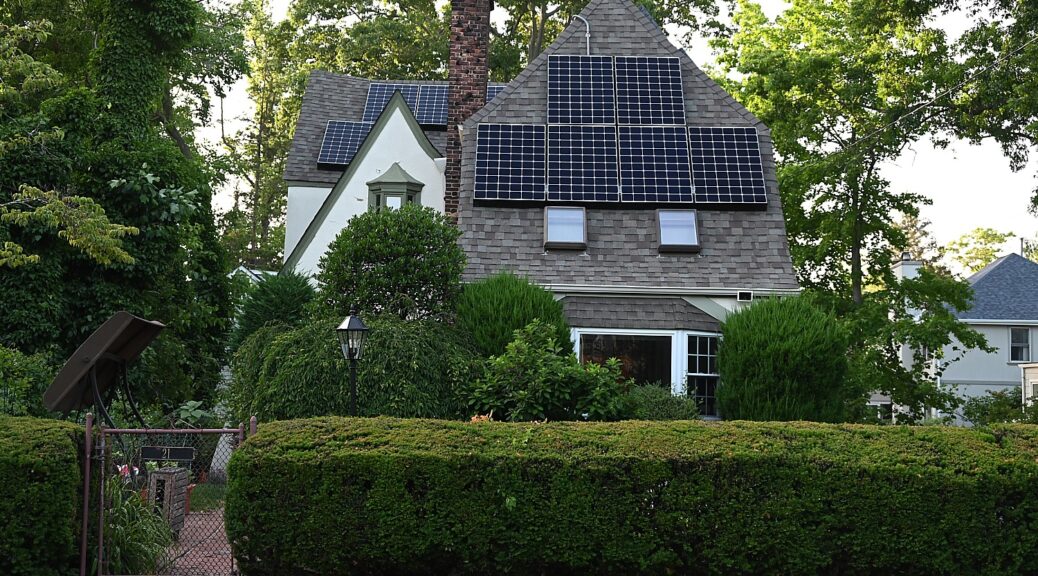
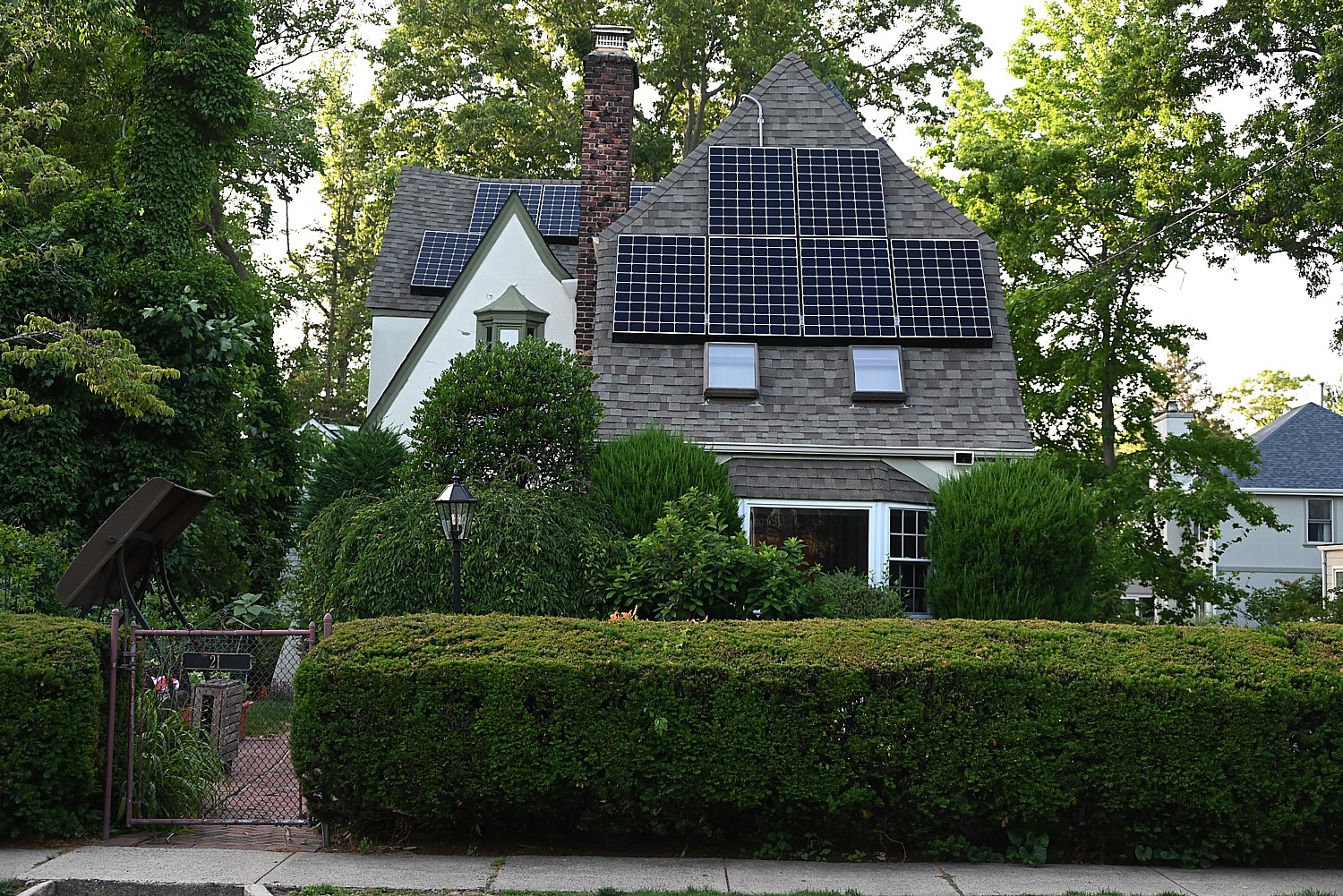
Solar array at farm in the Finger Lakes of New York. The Bipartisan infrastructure Deal passed by Congress will help strengthen the nation’s resilience to extreme weather and climate change, reduce greenhouse gas emissions, expand access to clean drinking water and build up a clean power grid © Karen Rubin/news-photos-features.com

This fact sheet provided by the White House spells out how the bipartisan infrastructure package just passed will arm the government in battling the climate crisis:

President Biden’s Bipartisan Infrastructure Deal passed by Congress will strengthen our nation’s resilience to extreme weather and climate change while reducing greenhouse gas emissions, expanding access to clean drinking water, building up a clean power grid, and more.

Here’s more: 

President Biden has made combatting the climate crisis a central priority of his Administration, including throughout his legislative agenda. Climate change is already impacting almost every aspect of life in the United States. Extreme heat waves, catastrophic wildfires, and severe drought are taking American lives and livelihoods. In the last year alone, extreme weather has cost America more than $100 billion – often hitting historically underserved groups the hardest, particularly low-income communities, communities of color, and people with disabilities. In just the last few months, nearly 1 in 3 Americans have been hit by a severe weather disaster and 2 in 3 Americans have suffered through dangerous heat waves. Delayed action on climate also sets us back in the global race on manufacturing and innovation, preventing us from harnessing the economic opportunity that this moment represents.
 
As President Biden emphasized at COP26 in Glasgow, climate change poses an existential threat to people, economies, and countries across the world – and it requires swift and bold action to reduce emissions and strengthen resilience. President Biden has been clear: the climate crisis is a blinking code red for our nation. We must take decisive action to tackle the climate crisis in a way that strengthens our nation’s resilience, cuts consumer costs, and ensures the U.S. can compete and win in the race for the 21st century. This moment demands urgent investments the American people want and our nation needs – investments that will bolster America’s competitiveness, resilience, and economy all while creating good-paying jobs, saving people money, and building an equitable clean energy economy of the future. 
 
President Biden’s Bipartisan Infrastructure Deal passed by Congress will strengthen our nation’s resilience to extreme weather and climate change while reducing greenhouse gas emissions, expanding access to clean drinking water, building up a clean power grid, and more. When coupled with the Build Back Better Framework, these historic investments will help reduce our emissions by well over one gigaton this decade – ensuring we meet President Biden’s commitment to reduce U.S. emissions by 50-52% from 2005 levels in 2030, create a 100% carbon pollution-free power sector by 2035, and achieve a net-zero economy by 2050. Together, these once-in-a-generation investments will unlock the full potential of a clean energy economy that combats climate change, advances environmental justice, and creates good-paying, union jobs.
 
President Biden promised to work across the aisle and unify the country to deliver results for working families. The Bipartisan Infrastructure Deal is a critical step towards reaching President Biden’s goal of a net-zero emissions economy by 2050, and is paired with the Build Back Better Framework to realize his full vision to grow our economy, lower consumer costs, create jobs, reduce climate pollution, and ensure more Americans can participate fully and equally in our economy.

BIPARTISIAN INFRASTRUCTURE DEAL
 
Public Transit
The Bipartisan Infrastructure Deal makes the largest investment in passenger rail since the creation of Amtrak – helping reduce greenhouse gas emissions by repairing, upgrading, and modernizing the nation’s transit infrastructure. The deal will invest $66 billion to provide healthy, sustainable transportation options for millions of Americans by modernizing and expanding transit and rail networks across the country. It will replace thousands of transit vehicles, including buses, with clean, zero emission vehicles. And, it will benefit communities of color who are twice as likely to take public transportation and often lack sufficient public transit options. In addition, it will help transit workers who are disproportionally workers of color.

Electric Vehicle Infrastructure
The Bipartisan Infrastructure Deal will invest $7.5 billion to build out the first-ever national network of EV chargers in the United States. The deal is also a critical element in the Biden-Harris Administration’s plan to accelerate the adoption of EVs to address the climate crisis and support domestic manufacturing jobs. The deal will provide funding for deployment of EV chargers along highway corridors to facilitate long-distance travel and within communities to provide convenient charging where people live, work, and shop – and funding will have a particular focus on rural, disadvantaged, and hard-to-reach communities.

Clean School Buses
The Bipartisan Infrastructure Deal will deliver thousands of electric school buses nationwide, including in rural communities, to help school districts across the country buy clean, American-made, zero emission buses and replace the yellow school bus fleet for America’s children. The deal invests in zero- and low-emission school buses, in addition to more than $5 billion in funding for public transit agencies to adopt low- and no-emissions buses. These investments will drive demand for American-made batteries and vehicles, creating jobs and supporting domestic manufacturing, while also removing diesel buses from some of our most vulnerable communities. In addition, they will help the more than 25 million children and thousands of bus drivers who breathe polluted air on their rides to and from school. Diesel air pollution is linked to asthma and other health problems that hurt our communities and cause students to miss school, particularly in communities of color and Tribal communities.

Modern Infrastructure
The Bipartisan Infrastructure Deal invests $17 billion in port infrastructure and $25 billion in airports to address repair and maintenance backlogs, reduce congestion and emissions near ports and airports, and drive electrification and other low-carbon technologies. Modern, resilient, and sustainable port, airport, and freight infrastructure will support U.S. competitiveness by removing bottlenecks and expediting commerce and reduce the environmental impact on neighboring communities.

Resilience
The Bipartisan Infrastructure Deal is the largest investment in the resilience of physical and natural systems in American history. Millions of Americans feel the effects of climate change each year when their roads wash out, airport power goes down, or schools get flooded. People of color are more likely to live in areas most vulnerable to flooding and other climate change-related weather events. The deal makes our communities safer and our infrastructure more resilient to the impacts of climate change and cyber-attacks, with an investment of over $50 billion to protect against droughts, heat, and floods – in addition to a major investment in the weatherization of American homes.

Clean Drinking Water
The Bipartisan Infrastructure Deal will expand access to clean drinking water to all American families, eliminate the nation’s lead service lines and help to clean up the dangerous chemical PFAS (per- and polyfluoroalkyl). Currently, up to 10 million American households and 400,000 schools and child care centers lack access to safe drinking water. The Bipartisan Infrastructure Deal will invest $55 billion to expand access to clean drinking water for households, businesses, schools, and child care centers all across the country. From rural towns to struggling cities, the deal will invest in water infrastructure and eliminate lead service pipes, including in Tribal Nations and disadvantaged communities that need it most.

Legacy Pollution
The Bipartisan Infrastructure Deal delivers the largest investment in tackling legacy pollution in American history by cleaning up Superfund and brownfield sites, reclaiming abandoned mines, and capping orphaned oil and gas wells. In thousands of rural and urban communities around the country, hundreds of thousands of former industrial and energy sites are now idle – sources of blight and pollution. Proximity to a Superfund site can lead to elevated levels of lead in children’s blood. Millions of Americans also live within a mile of the tens of thousands of abandoned mines and oil and gas wells – a large, continuing course of methane, a powerful greenhouse gas that is a major cause of climate change. The bill will invest $21 billion to clean up Superfund and brownfield sites, reclaim abandoned mine land, and cap orphaned oil and gas wells. These projects will remediate environmental harms, address the legacy pollution that harms the public health of communities, create good-paying, union jobs, and advance long overdue environmental justice This investment will benefit communities of color like the 26% of Black Americans and 29% of Hispanic Americans who live within three miles of a Superfund site – a higher percentage than for Americans overall.
 
Clean Energy Transmission
The Bipartisan Infrastructure Deal’s more than $65 billion investment is the largest investment in clean energy transmission and the electric grid in American history. It upgrades our power infrastructure, including by building thousands of miles of new, resilient transmission lines to facilitate the expansion of renewable energy. It creates a new Grid Deployment Authority, invests in research and development for advanced transmission and electricity distribution technologies, and promotes smart grid technologies that deliver flexibility and resilience. It also invests in demonstration projects and research hubs for next generation technologies like advanced nuclear reactors, carbon capture, and clean hydrogen.

Biden: House Passes Once-In-A-Generation $1.2 Trillion Infrastructure Investment & Jobs Act

The Infrastructure Investment and Jobs Act will upgrade our nation’s airports and ports to strengthen our supply chains and prevent disruptions that have caused inflation. This will improve U.S. competitiveness, create more and better jobs at these hubs, and reduce emissions. © Karen Rubin/news-photos-features.

Upon the House passing the historic, $1.2 trillion bipartisan Infrastructure Investment and Jobs Act, President Joe Biden issued this statement:

Tonight, we took a monumental step forward as a nation.

The United States House of Representatives passed the Infrastructure Investment and Jobs Act, a once-in-generation bipartisan infrastructure bill that will create millions of jobs, turn the climate crisis into an opportunity, and put us on a path to win the economic competition for the 21st Century.

It will create good-paying jobs that can’t be outsourced. Jobs that will transform our transportation system with the most significant investments in passenger and freight rail, roads, bridges, ports, airports, and public transit in generations.

This will make it easier for companies to get goods to market more quickly and reduce supply chain bottlenecks now and for decades to come. This will ease inflationary pressures and lower costs for working families.

The bill will create jobs replacing lead water pipes so every family can drink clean water.

It will make high-speed internet affordable and available everywhere in America.

This bill will make historic and significant strides that take on the climate crisis. It will build out the first-ever national network of electric vehicle charging stations across the country. We will get America off the sidelines on manufacturing solar panels, wind farms, batteries, and electric vehicles to grow these supply chains, reward companies for paying good wages and for sourcing their materials from here in the United States, and allow us to export these products and technologies to the world.

It will also make historic investments in environmental clean-up and remediation, and build up our resilience for the next superstorms, droughts, wildfires, and hurricanes that cost us billions of dollars in damage each year.

I’m also proud that a rule was voted on that will allow for passage of my Build Back Better Act in the House of Representatives the week of November 15th.

The Build Back Better Act will be a once-in-a-generation investment in our people.

It will lower bills for healthcare, child care, elder care, prescription drugs, and preschool. And middle-class families get a tax cut.

This bill is also fiscally responsible, fully paid for, and doesn’t raise the deficit. It does so by making sure the wealthiest Americans and biggest corporations begin to pay their fair share and doesn’t raise taxes a single cent on anyone making less than $400,000 per year. 

I look forward to signing both of these bills into law.

Generations from now, people will look back and know this is when America won the economic competition for the 21st Century.

FACT SHEET:
The Bipartisan Infrastructure Deal


Today, Congress passed the Bipartisan Infrastructure Deal (Infrastructure Investment and Jobs Act), a once-in-a-generation investment in our nation’s infrastructure and competitiveness. For far too long, Washington policymakers have celebrated “infrastructure week” without ever agreeing to build infrastructure. The President promised to work across the aisle to deliver results and rebuild our crumbling infrastructure. After the President put forward his plan to do exactly that and then negotiated a deal with Members of Congress from both parties, this historic legislation is moving to his desk for signature.

This Bipartisan Infrastructure Deal will rebuild America’s roads, bridges and rails, expand access to clean drinking water, ensure every American has access to high-speed internet, tackle the climate crisis, advance environmental justice, and invest in communities that have too often been left behind. The legislation will help ease inflationary pressures and strengthen supply chains by making long overdue improvements for our nation’s ports, airports, rail, and roads. It will drive the creation of good-paying union jobs and grow the economy sustainably and equitably so that everyone gets ahead for decades to come. Combined with the President’s Build Back Framework, it will add on average 1.5 million jobs per year for the next 10 years.
 
This historic legislation will:                               

Deliver clean water to all American families and eliminate the nation’s lead service lines. Currently, up to 10 million American households and 400,000 schools and child care centers lack safe drinking water. The Bipartisan Infrastructure Deal will invest $55 billion to expand access to clean drinking water for households, businesses, schools, and child care centers all across the country. From rural towns to struggling cities, the legislation will invest in water infrastructure and eliminate lead service pipes, including in Tribal Nations and disadvantaged communities that need it most.

Ensure every American has access to reliable high-speed internet. Broadband internet is necessary for Americans to do their jobs, to participate equally in school learning, health care, and to stay connected. Yet, by one definition, more than 30 million Americans live in areas where there is no broadband infrastructure that provides minimally acceptable speeds – a particular problem in rural communities throughout the country. And, according to the latest OECD data, among 35 countries studied, the United States has the second highest broadband costs. The Bipartisan Infrastructure Deal will deliver $65 billion to help ensure that every American has access to reliable high-speed internet through a historic investment in broadband infrastructure deployment. The legislation will also help lower prices for internet service and help close the digital divide, so that more Americans can afford internet access.
 
Repair and rebuild our roads and bridges with a focus on climate change mitigation, resilience, equity, and safety for all users. In the United States, 1 in 5 miles of highways and major roads, and 45,000 bridges, are in poor condition. The legislation will reauthorize surface transportation programs for five years and invest $110 billion in additional funding to repair our roads and bridges and support major, transformational projects. The Bipartisan Infrastructure Deal makes the single largest investment in repairing and reconstructing our nation’s bridges since the construction of the interstate highway system. It will rebuild the most economically significant bridges in the country as well as thousands of smaller bridges. The legislation also includes the first ever Safe Streets and Roads for All program to support projects to reduce traffic fatalities, which claimed more than 20,000 lives in the first half of 2021.

Improve transportation options for millions of Americans and reduce greenhouse emissions through the largest investment in public transit in U.S. history. America’s public transit infrastructure is inadequate – with a multibillion-dollar repair backlog, representing more than 24,000 buses, 5,000 rail cars, 200 stations, and thousands of miles of track, signals, and power systems in need of replacement. Communities of color are twice as likely to take public transportation and many of these communities lack sufficient public transit options. The transportation sector in the United States is now the largest single source of greenhouse gas emissions. The legislation includes $39 billion of new investment to modernize transit, in addition to continuing the existing transit programs for five years as part of surface transportation reauthorization.  In total, the new investments and reauthorization in the Bipartisan Infrastructure Deal provide $89.9 billion in guaranteed funding for public transit over the next five years — the largest Federal investment in public transit in history. The legislation will expand public transit options across every state in the country, replace thousands of deficient transit vehicles, including buses, with clean, zero emission vehicles, and improve accessibility for the elderly and people with disabilities.

Upgrade our nation’s airports and ports to strengthen our supply chains and prevent disruptions that have caused inflation. This will improve U.S. competitiveness, create more and better jobs at these hubs, and reduce emissions. Decades of neglect and underinvestment in our infrastructure have left the links in our goods movement supply chains struggling to keep up with our strong economic recovery from the pandemic. The Bipartisan Infrastructure Deal will make the fundamental changes that are long overdue for our nation’s ports and airports so this will not happen again. The United States built modern aviation, but our airports lag far behind our competitors. According to some rankings, no U.S. airports rank in the top 25 of airports worldwide. Our ports and waterways need repair and reimagination too. The legislation invests $17 billion in port infrastructure and waterways and $25 billion in airports to address repair and maintenance backlogs, reduce congestion and emissions near ports and airports, and drive electrification and other low-carbon technologies. Modern, resilient, and sustainable port, airport, and freight infrastructure will strengthen our supply chains and support U.S. competitiveness by removing bottlenecks and expediting commerce and reduce the environmental impact on neighboring communities.

Make the largest investment in passenger rail since the creation of Amtrak. U.S. passenger rail lags behind the rest of the world in reliability, speed, and coverage. China already has 22,000 miles of high-speed rail, and is planning to double that by 2035. The legislation positions rail to play a central role in our transportation and economic future, investing $66 billion in additional rail funding to eliminate the Amtrak maintenance backlog, modernize the Northeast Corridor, and bring world-class rail service to areas outside the northeast and mid-Atlantic. This is the largest investment in passenger rail since Amtrak’s creation, 50 years ago and will create safe, efficient, and climate-friendly alternatives for moving people and freight.

Build a national network of electric vehicle (EV) chargers. U.S. market share of plug-in EV sales is only one-third the size of the Chinese EV market. That needs to change. The legislation will invest $7.5 billion to build out a national network of EV chargers in the United States. This is a critical step in the President’s strategy to fight the climate crisis and it will create good U.S. manufacturing jobs. The legislation will provide funding for deployment of EV chargers along highway corridors to facilitate long-distance travel and within communities to provide convenient charging where people live, work, and shop. This investment will support the President’s goal of building a nationwide network of 500,000 EV chargers to accelerate the adoption of EVs, reduce emissions, improve air quality, and create good-paying jobs across the country.

Upgrade our power infrastructure to deliver clean, reliable energy across the country and deploy cutting-edge energy technology to achieve a zero-emissions future. According to the Department of Energy, power outages cost the U.S. economy up to $70 billion annually. The Bipartisan Infrastructure Deal’s more than $65 billion investment includes the largest investment in clean energy transmission and grid in American history. It will upgrade our power infrastructure, by building thousands of miles of new, resilient transmission lines to facilitate the expansion of renewables and clean energy, while lowering costs. And it will fund new programs to support the development, demonstration, and deployment of cutting-edge clean energy technologies to accelerate our transition to a zero-emission economy. 
 
Make our infrastructure resilient against the impacts of climate change, cyber-attacks, and extreme weather events. Millions of Americans feel the effects of climate change each year when their roads wash out, power goes down, or schools get flooded. Last year alone, the United States faced 22 extreme weather and climate-related disaster events with losses exceeding $1 billion each – a cumulative price tag of nearly $100 billion. People of color are more likely to live in areas most vulnerable to flooding and other climate change-related weather events. The legislation makes our communities safer and our infrastructure more resilient to the impacts of climate change and cyber-attacks, with an investment of over $50 billion to protect against droughts, heat, floods and wildfires, in addition to a major investment in weatherization. The legislation is the largest investment in the resilience of physical and natural systems in American history.
 
Deliver the largest investment in tackling legacy pollution in American history by cleaning up Superfund and brownfield sites, reclaiming abandoned mines, and capping orphaned oil and gas wells. In thousands of rural and urban communities around the country, hundreds of thousands of former industrial and energy sites are now idle – sources of blight and pollution. Proximity to a Superfund site can lead to elevated levels of lead in children’s blood. The bill will invest $21 billion clean up Superfund and brownfield sites, reclaim abandoned mine land and cap orphaned oil and gas wells. These projects will remediate environmental harms, address the legacy pollution that harms the public health of communities, create good-paying union jobs, and advance long overdue environmental justice This investment will benefit communities of color as, it has been found that 26% of Black Americans and 29% of Hispanic Americans live within 3 miles of a Superfund site, a higher percentage than for Americans overall.

Moody’s: Build Back Better Will Add 1.5 Million Jobs a Year, Add $3 Trillion to GDP Over Decade

Moody’s notes that President Biden’s Build Back Better legislation will add 1.5 million jobs a year, add $3 trillion to GDP over a decade and “ease the financial burden of inflation for lower- and middle-income Americans by helping with the cost of childcare, eldercare, education, healthcare and housing for these income groups.” The Moody’s report concludes that, “failing to pass legislation would diminish the economy’s prospects.” © Karen Rubin/news-photos-features.com

From the White House:

According to a new report from Moody’s this morning, President Biden’s bipartisan infrastructure deal and Build Back Better Framework will add 1.5 million jobs per year on average across the whole decade, while accelerating America’s path to full employment and increasing labor force participation.
 
Moody’s also projects that total GDP will increase by nearly $3 trillion relative to the baseline over the next decade.
 
And, the Moody’s report confirms what the President has said for weeks: that these sorts of investments in making our economy more productive will keep prices stable and decrease inflationary pressure.
 
Moody’s notes that, “the legislation is also designed to ease the financial burden of inflation for lower- and middle-income Americans by helping with the cost of childcare, eldercare, education, healthcare and housing for these income groups.” The Moody’s report concludes that, “failing to pass legislation would diminish the economy’s prospects.”
 
Since President Biden took office, there has been historic job growth –  nearly 5 million new jobs, the most in any President’s first eight months on record. The average number of new unemployment insurance claims has been cut by more than 60 percent and small business optimism has returned to its pre-pandemic levels. Independent projections from the CBO, the IMF, the Federal Reserve, the World Bank, the OECD, and many others all forecast America this year reaching the highest levels of growth in decades thanks to the President’s success in getting economic relief to the middle-class and curbing the pandemic. While the American Rescue Plan is changing the course of the pandemic and delivering relief for working families, this is no time to build back to the way things were.
 
This is the moment to reimagine and rebuild a new economy by making transformational investments in our middle-class and economic competitiveness. The President’s bipartisan Infrastructure Investment and Jobs Act and Build Back Better Framework will rebuild the economy from the bottom up and the middle out, ease the burden of high costs on working families, and deliver one of the biggest middle class tax cuts ever.
 
Read more about the Moody’s report here.

Analysis: Build Back Better Legislation Will Reduce Deficits

Analysis by US Treasury tax policy expert Lily Batchelder indicates that the Build Back Better legislation would generate $2 trillion, fully paying for its investments in families, workers and climate, and actually reduce deficits. © Karen Rubin/news-photos-features.

By: Lily Batchelder, Assistant Secretary for Tax Policy

The Build Back Better invests meaningfully in American families and workers, while laying the foundation for meeting imperative climate goals. When the President released the Build Back Better framework last week, he proposed $2 trillion in savings that would more than pay for the critical investments in the legislation – and in fact generate net deficit reduction.  With the release of the text of the Build Back Better Act in the House and scoring from the Joint Committee on Taxation, we can update the estimate of fiscal savings.

The legislation would, as the President proposed, generate more than $2 trillion in savings. These savings come from ensuring large multinational corporations and wealthy Americans pay their fair share and reducing the cost of prescription drugs. These provisions will not raise taxes on any taxpayer making less than $400,000.

The table below includes the latest estimates by the Joint Committee on Taxation, Congressional Budget Office, and the Treasury Department of the revenue raising provisions in the bill. The bottom line is that the Build Back Better Act under consideration in the House of Representatives will be fully paid for and reduce the deficit.

At the crux of reforms to the tax code is a historic overhaul of the international tax regime, whose global adoption has been successfully negotiated with 136 countries representing nearly 95% of the world’s economy. As a result of these changes, the ability of large corporations to shift profits abroad will be substantially limited, and the race to the bottom in corporate taxation will no longer be a driving force weakening capital taxation. The Build Back Better Act adopts the agreed-upon 15% country-by-country minimum tax on the foreign profits of U.S. multinational corporations and includes strong incentives for any hold-out countries to join the agreement through a separate tax on companies based in such hold-out jurisdictions. Together with other international and business tax reforms and loophole closers, these provisions are estimated to generate over $350 billion in additional U.S. tax revenue.  

The Act further ensures that large, profitable corporations will pay a minimum amount of tax by imposing a 15% minimum tax on companies that report over $1 billion in profits to their shareholders. Less than 0.00075% of U.S. businesses will owe this tax in a given year, which will raise more than $300 billion over the course of the next decade.

Over $200 billion is generated from a surtax on multi-millionaires (the top 0.02% of taxpayers making $10 million or more annually), and about $400 billion comes from closing loopholes that allow some wealthy taxpayers to avoid paying Medicare taxes on their earnings and permit well-off taxpayers to offset ordinary income with business losses.

The largest pay-for in the bill is not a tax increase at all. By collecting taxes that are already owed—and disproportionately unpaid by the highest-earners—the Build Back Better Act will generate at least $400 billion in additional revenue. Over the last decade, an under-resourced IRS has been unable to appropriately focus attention on top earners who are most responsible for the tax gap. Indeed, audit rates decreased more over that period for high earners than for Earned Income Tax Credit recipients. This additional revenue will result from providing the IRS with much-needed resources to pursue wealthy tax evaders, modernize outdated technological infrastructure, and provide meaningful taxpayer services.

Even beyond their sizable revenue-raising potential, these collective policies make the American economy more competitive by reducing profit shifting, ending a corporate tax race to the bottom, and overhauling a two-tiered system of tax administration—where American workers pay what they owe, but the wealthiest often do not.

These are historic policy achievements in and of themselves—and they also pay for transformational investments that will improve the lives of American workers, our children, and the generations that will follow.    

Revenue Raisers in Build Back Better Act

 Revenue
(in billions)
 
International and Other Business Reforms
 
$371
15% Minimum Tax on the Largest Corporations$319
AGI Surtax for Multi-Millionaires$228
Medicare Tax Loophole for High Earners$252
Limit Business Losses for High Earners$160
Stock Buybacks$124
IRS Investments in Compliance, IT, and Taxpayer Services*$400
Reduce the Cost of Prescription Drugs**~$250
Other Provisions$47
 
Total
 
~$2,151
 
Unless otherwise noted, all estimates are from the Joint Committee on Taxation.

* Source: U.S. Department of the Treasury.

** Source: The framework released by the White House last week proposed repealing the prescription drug rebate rule as negotiations continued on prescription drug reform. Based on the Congressional Budget Office, adjusted downward for reforms in bipartisan infrastructure framework, this would have saved about $150 billion. Other components of the Administration estimate the deal reached on prescription drug reform announced this week, which includes additional reforms, will generate about an additional $100 billion in savings, based on Congressional Budget Office estimates of prescription drug negotiations in previous legislation. A more precise CBO estimate will be available in the future.
 

COP26: Biden, Global Leaders Commit to Addressing Climate Crisis Through Infrastructure Development

At COP26, Biden and global leaders agreed that climate-smart infrastructure development should play an important role in boosting economic recovery and sustainable job creation. © Karen Rubin/news-photos-features.com

Building on the June 2021 commitment of G7 Leaders to launch a values-driven, high-standard, and transparent infrastructure partnership to meet global infrastructure development needs, U.S. President Biden and European Commission President von der Leyen hosted a discussion on the margins of COP26 with UK Prime Minister Johnson, Barbadian Prime Minister Mottley, Canadian Prime Minister Trudeau, Colombian President Duque, Ecuadorian President Lasso, Democratic Republic of the Congo President Tshisekedi, Indian Prime Minister Modi, Japanese Prime Minister Kishida, and Nigerian President Buhari on how infrastructure initiatives must simultaneously advance prosperity and combat the climate crisis, in line with the Sustainable Development Goals and the Paris Agreement. 

Global leaders discussed how the Build Back Better World, Global Gateway and Clean Green Initiatives will jumpstart investment, sharpen focus, and mobilize resources to meet critical infrastructure needs to support economic growth, while ensuring that this infrastructure is clean, resilient, and consistent with a net-zero future.  President Lasso, Prime Minister Modi, President Buhari, and President Duque shared their perspectives on the challenges their countries have previously faced with infrastructure development and principles they would like to see from future infrastructure initiatives.  UN Special Envoy for Climate Action and Finance Mark Carney and World Bank Group President David Malpassspoke on the imperative of mobilizing investment from the private sector, international financial institutions and multilateral development banks, including through country platforms, to achieve these goals. 

***

President Biden, President von der Leyen, and Prime Minister Johnson endorsed five key principles for infrastructure development:

1.Infrastructure should be climate resilient and developed through a climate lens.

We commit to build resilient, low- and zero-carbon infrastructure systems that are aligned with the pathways towards net-zero emissions by 2050, which are needed to keep the goal of limiting global average temperature change to 1.5 degrees Celsius within reach. Further, we commit to viewing all projects carried out through infrastructure development partnerships through the lens of climate change.

2.Strong and inclusive partnerships between host countries, developed country support, and the private sector are critical to developing sustainable infrastructure.

Infrastructure designed, financed, and constructed in partnership with those whom it benefits will last longer, be more inclusive, and generate greater and more sustainable development impacts. We will consult with stakeholders—including representatives of civil society, governments, NGOs, and the private sector to better understand their priorities and development needs.

3.Infrastructure should be financed, constructed, developed, operated, and maintained in accordance with high standards.

We resolve to uphold high standards for infrastructure investments, promoting the implementation of the G20 Principles for Quality Infrastructure Investments as the baseline. Environmental, Social and Governance standards help safeguard against graft and other forms of corruption; mitigate against climate risks and risks of ecosystem degradation; promote skills transfer and preserve labor protections; avoid unsustainable costs for taxpayers; and, crucially, promote long-term economic and social benefits for partner countries.

4.A new paradigm of climate finance—spanning both public and private sources—is required to mobilize the trillions needed to meet net-zero by 2050 and keep 1.5 degrees within reach.

The world must mobilize and align the trillions of dollars in capital over the next three decades to meet net-zero by 2050, the majority of which will be needed in developing and emerging economies. Mobilizing capital at this scale requires a collaborative effort from all of us, including governments, the private sector, and development finance institutions, as well as better mechanisms to match finance and technical assistance with country projects, including through country partnerships.

5.Climate-smart infrastructure development should play an important role in boosting economic recovery and sustainable job creation.

Infrastructure investment should also drive job creation and support inclusive economic recovery. We believe our collective efforts to combat the climate crisis can present the greatest economic opportunity of our time: the opportunity to build the industries of the future through equitable, inclusive, and sustainable economic development worldwide.

***
President Biden, European Commission President von der Leyen, and Prime Minister Johnson called on countries around the world to make similar commitments and take action to spur a global transformation towards reliable, climate-smart infrastructure.

United States Advances Shared Interests with G20 World Leaders

For the first time ever, G20 Leaders agree to establish a historic Global Minimum Corporate Tax

 The White House provided this fact sheet summarizing what was accomplished at the G20:

At the G20 Summit in Rome, President Biden coordinated with fellow Leaders on shared interests, including the climate crisis, global health and pandemic preparedness, and the global economic recovery, using the power of diplomacy to address key issues that matter to the American people. Together with the European Union, we achieved a major breakthrough arrangement to negotiate the world’s first carbon-based sectoral arrangement on steel and aluminum, protecting and creating American jobs and lowering costs for families while fighting the climate crisis.  
 
Throughout the G20 President Biden stressed the need for balanced, well-supplied, and competitive global energy markets to underpin an inclusive economic recovery that supports working families at home and abroad. Leaders committed to guaranteeing just and orderly energy transitions of our energy systems that ensure affordability, including for the most vulnerable households and businesses as we recover from the global pandemic. They expressed their intent to explore among other things, paths to enhanced energy security and markets stability.
 
President Biden met with Leaders from France, Germany, and the United Kingdom to discuss the risks posed to international security by Iran’s escalating nuclear program, and hosted a supply chain summit with 14 countries and the European Union to discuss how we collectively tackle the immediate supply chain challenges from this unprecedented economic recovery and build long-term supply chain reliance for the future. President Biden also held bilateral meetings on the margins of the G20 with Chancellor Angela Merkel and Vice Chancellor Olaf Scholz of Germany, President Felix Tshisekedi of the Democratic Republic of the Congo, President Recep Tayyip Erdogan of Turkey and Prime Minister Lee Hsien Loong of Singapore.
 
After the Summit, the G20 Leaders came to a consensus across a host of issues, including:
 
Historic Global Minimum Tax: G20 Leaders representing 80% of the world’s gross domestic product (GDP) endorsed the establishment of a historic Global Minimum Tax (GMT) to end the race to the bottom, ensure giant corporations pay their fair share no matter where they are located, help prevent the offshoring of good American jobs, and invest in our people at home. One recent independent study found that this agreement to establish a 15% GMT—up from 0% today—would lead to at least $60 billion in revenue per year in the United States alone. Today’s announcement is a testament to American diplomacy and leadership. 
 
COVID-19 Pandemic and Health Security: The Leaders came together in support of the COVID-19 response and global vaccination targets. The Leaders also decide to take next steps toward the design and establishment of an inclusive, sustained, and adequate financing facility to improve global health security and bolster pandemic preparedness around the world. The Leaders agreed to establish a G20 Finance and Health Task Force to enhance global cooperation to detect and response to emerging health threats. The G20 Leaders also came out in support of a global ambition to channel $100 billion worth of reallocation of special drawing rights (SDRs) to help the world’s most vulnerable countries and restructuring debts for low-income countries on a case by case basis – a major step towards global economic recovery. The Leaders also supported efforts to shorten the cycle for the development of safe and effective vaccines, therapeutics, and diagnostics from 300 to 100 days (following the identification of such threats) and work to make them equitably and widely available. This work follows calls for more urgent action and continued focus from the United States following the President’s Global COVID-19 Summit.
 
Climate Change: G20 Leaders came out in support of ending public finance for new unabated coal power generation abroad, to contribute to keeping a 1.5 degrees Celsius limit on global temperature rise with reach. They stressed the importance of fully meeting, as soon as possible, the developed country collective goal of mobilizing $100B per year to help developing countries in the face of climate change. After a four-year absence of U.S. federal leadership, President Biden’s commitment to climate finance, alongside strong new pledges from other donors, are fundamental to achieving this goal no later than 2023. This is a decisive decade for climate action and the President will continue to rally the world to tackle the climate crisis together. 
 
Anticorruption and Ransomware: The Leaders also lifted up the global fight against corruption as a shared priority, which includes transparency for beneficial ownership and real estate, and they committed to fight any new and sophisticated forms of corruption. The Leaders recognized the need for international cooperation to counter ransomware and other forms of cybercrime. Just this month, the Biden Administrationheld a meeting with more than 30 countries to accelerate cooperation to counter ransomware, including to improve collective resilience, address the misuse of virtual currency to launder ransom payments, and investigate and prosecute cyber criminals. This work builds on U.S. international efforts to promote cybersecurity, including our commitment to work with G7 partners to address criminal ransomware networks, our support for updating NATO cyber policy for the first time in seven years, and our continuing efforts to work with allies and partners to attribute malicious cyber activity, as evidenced by the broad international support we garnered in our attributions for SolarWinds and Hafnium malicious cyber activity. 
 
Leaders also committed to achieving food security and adequate nutrition, particularly in famine-stricken parts of the world where armed conflicts have exacerbated these problems—such as Ethiopia. Leaders will continue to enhance concrete measures to advance gender equality in national policies. President Biden issued the first-ever national gender strategy to advance the full participation of all people – including women and girls – in the United States and around the world.

Biden Administration and Private Sector Leaders Initiate Ambitious Initiatives to Bolster the Nation’s Cybersecurity

Back in August, President Biden met with private sector and education leaders to discuss the whole-of-nation effort needed to address cybersecurity threats. Recent high-profile cybersecurity incidents demonstrate that both U.S. public and private sector entities increasingly face sophisticated malicious cyber activity. Cybersecurity threats and incidents affect businesses of all sizes, small towns and cities in every corner of the country, and the pocketbooks of middle-class families. Compounding the challenge, nearly half a million public and private cybersecurity jobs remain unfilled. The White House provided a fact sheet outlining steps the Biden Administration is taking to address cybersecurity:

Cybersecurity is a national security and economic security imperative for the Biden Administration and we are prioritizing and elevating cybersecurity like never before. On May 12, 2021, President Biden issued an Executive Order that modernizes Federal Government defenses and improves the security of technology. To secure our critical infrastructure, this spring the Biden Administration launched a 100-day initiative to improve cybersecurity across the electric sector with others to follow. On July 28, the President issued a National Security Memorandum establishing voluntary cybersecurity goals that clearly outline our expectations for owners and operators of critical infrastructure. The Administration has also engaged with the private sector on the importance of prioritizing cybersecurity as a central part of their efforts to maintain business continuity. And internationally, the Biden Administration has rallied G7 countries to hold accountable nations who harbor ransomware criminals and to update NATO cyber policy for the first time in seven years.

The purpose of the meeting was to discuss opportunities to bolster the nation’s cybersecurity in partnership and individually. Several participants announced commitments and initiatives including:

  • The Biden Administration announced that the National Institute of Standards and Technology (NIST) will collaborate with industry and other partners to develop a new framework to improve the security and integrity of the technology supply chain. The approach will serve as a guideline to public and private entities on how to build secure technology and assess the security of technology, including open source software. Microsoft, Google, Travelers, and Coalition committed to participating in this NIST-led initiative.
     
  • The Biden Administration also announced the formal expansion of the Industrial Control Systems Cybersecurity Initiative to a second major sector: natural gas pipelines. The Initiative has already improved the cybersecurity of more than 150 electric utilities that serve 90 million Americans.
     
  • Apple announced it will establish a new program to drive continuous security improvements throughout the technology supply chain. As part of that program, Apple will work with its suppliers — including more than 9,000 in the United States— to drive the mass adoption of multi-factor authentication, security training, vulnerability remediation, event logging, and incident response.
     
  • Google announced it will invest $10 billion over the next five years to expand zero-trust programs, help secure the software supply chain, and enhance open-source security. Google also announced it will help 100,000 Americans earn industry-recognized digital skills certificates that provide the knowledge that can lead to secure high-paying, high-growth jobs. 
     
  • IBM announced it will train 150,000 people in cybersecurity skills over the next three years, and will partner with more than 20 Historically Black Colleges & Universities to establish Cybersecurity Leadership Centers to grow a more diverse cyber workforce.
     
  • Microsoft announced it will invest $20 billion over the next 5 years to accelerate efforts to integrate cyber security by design and deliver advanced security solutions. Microsoft also announced it will immediately make available $150 million in technical services to help federal, state, and local governments with upgrading security protection, and will expand partnerships with community colleges and non-profits for cybersecurity training.
     
  • Amazon announced it will make available to the public at no charge the security awareness training it offers its employees. Amazon also announced it will make available to all Amazon Web Services account holders at no additional cost, a multi-factor authentication device to protect against cybersecurity threats like phishing and password theft.
     
  • Resilience, a cyber insurance provider, announced it will require policy holders to meet a threshold of cybersecurity best practice as a condition of receiving coverage.
     
  • Coalition, a cyber insurance provider, announced it will make its cybersecurity risk assessment & continuous monitoring platform available for free to any organization.
     
  • Code.org announced it will teach cybersecurity concepts to over 3 million students across 35,000 classrooms over 3 years, to teach a diverse population of students how to stay safe online, and to build interest in cybersecurity as a potential career.
     
  • Girls Who Code announced it will establish a micro credentialing program for historically excluded groups in technology. The program will make scholarships and early career opportunities more accessible to underrepresented groups.
     
  • University of Texas System announced it will expand existing and develop new short-term credentials in cyber-related fields to strengthen America’s cybersecurity workforce. A major part of this effort will be to upskill and reskill over 1 million workers across the nation by making available entry-level cyber educational programs through UT San Antonio’s Cybersecurity Manufacturing Innovation Institute. Credentials do not depend on traditional degree pathways, and should also contribute significantly to diversifying the pipeline. 
     
  • Whatcom Community College announced it has been designated the new NSF Advanced Technological Education National Cybersecurity Center, and will provide cybersecurity education and training to faculty and support program development for colleges to “fast-track” students from college to career. The nature of community colleges dispersed in every community in the nation makes them an ideal pipeline for increasing diversity and inclusion in the cybersecurity workforce.

Biden Administration Blueprint for ‘Fair, Orderly, Humane’ Immigration System

Protesters against the Trump Administration’s zero-tolerance anti-migrant policies in June 2018. The Biden Administration has been wrestling with record number of migrants attempting to cross the border while reckoning with the Trump Administration’s cruel and reckless immigration policies, which exacerbated long-standing challenges and failed to securely manage our border. © Karen Rubin/news-photos-features.com

(This is a fact sheet from the White House concerning its proposal for Immigration reform from August 18, 2021. The Biden Administration has come under attack from both sides concerning immigration. The problem, though, lies with inaction by Congress to adopt necessary reforms and create a new system to responsibly manage and secure the border, provide a pathway to citizenship and better manage migration.)

The United States can have an orderly, secure, and well-managed border while treating people fairly and humanely. In January, the Biden-Harris Administration launched a broad, whole of government effort to reform our immigration system, including sending to Congress legislation that creates a new system to responsibly manage and secure our border, provide a pathway to citizenship, and better manage migration across the Hemisphere.

In the months since, the Administration has made considerable progress to build a fair, orderly, and humane immigration system while continuing to call on Congress to make long overdue reforms to U.S. immigration laws. We successfully processed over 12,500 people who had been returned to Mexico under the Migrant Protection Protocols. We expanded lawful pathways for protection and opportunity, including the Central American Minors (CAM) program to reunite children with their parents in the United States. We strengthened collaborative migration management with regional partners, including through a new Human Smuggling and Trafficking Task Force to disrupt and prevent migrant smuggling and human trafficking operations. And we continue to deter irregular migration at our Southern border.

The Biden-Harris Administration has accomplished this and more while reckoning with the prior Administration’s cruel and reckless immigration policies, which exacerbated long-standing challenges and failed to securely manage our border. Case in point: the total number of unique encounters at the Southern border to date this fiscal year remains below the total number of unique encounters to date during fiscal year 2019 under the Trump Administration.

Today the Administration is releasing a blueprint that outlines the next steps Federal agencies will be taking to continue implementing the President’s transformative vision for a 21st century immigration system that secures the border, fairly and efficiently considers asylum claims, strengthens regional migration management efforts in North and Central America, and addresses the root causes of migration from Central America. Success in building this fair, orderly, and humane immigration system won’t be achieved overnight, especially after the prior Administration’s irrational and inhumane policies, but this Administration has a blueprint to get there and is making real progress.

We will always be a nation of borders, and we will enforce our immigration laws in a way that is fair and just. We will continue to work to fortify an orderly immigration system.

ENSURING A SECURE, HUMANE AND WELL-MANAGED BORDER

The United States can allow people to exercise their legal right to apply for asylum while also reducing irregular migration and maintaining an orderly, secure, and well-managed border.

• Making better use of existing enforcement resources. Since fiscal year 2011, U.S. Customs and Border Protection’s (CBP) discretionary budget has grown from $9.9 billion to $15 billion in FY 2021. The President’s Budget redirects resources from a needless border wall to make robust investments in smarter border security measures, like border technology and modernization of land ports of entry, that are proven to be more effective at improving safety and security at the border. These investments will serve as a force multiplier to the over 19,500 Border Patrol Agents currently helping secure our Nation’s borders and the over 25,500 CBP Officers working at our land, air, and sea ports. The investments will also facilitate more robust and effective security screening to combat human smuggling and trafficking and the entry of undocumented migrants.

• Improving the expedited removal process for those who arrive at the border. The Administration is working to improve the expedited removal process at the border to fairly and efficiently determine which individuals have legitimate claims for asylum and other forms of protection. Asylum and other legal migration pathways should remain available to those seeking protection. Those not seeking protection or who don’t qualify will be promptly removed to their countries of origin.

• Facilitating secure management of borders in the region by providing training and technical assistance, supporting the improvement of border infrastructure and technology, and promoting collaborative migration and border management approaches.

• Strengthening anti-smuggling and anti-trafficking operations by working with regional governments to investigate and prosecute individuals involved in migrant smuggling, human trafficking, and other crimes against migrants. In April 2021, DHS announced Operation Sentinel, a new operation targeting organizations involved in criminal smuggling.

• Bolstering public messaging on migration by ensuring consistent messages to discourage irregular migration and promote safe, legal, and orderly migration.

IMPLEMENTING ORDERLY AND FAIR PROCESSING OF ASYLUM APPLICATIONS

The Administration is committed to fairly and efficiently considering asylum claims. Asylum and other legal migration pathways should remain available to those seeking protection. But those not seeking protection or who don’t qualify will be returned to their country of origin.

• Establishing a dedicated docket to consider asylum claims. The Administration has set up a special immigration court docket to promptly and fairly consider the protection claims of certain recent arrivals.

• Further improving the efficiency and fairness of the U.S. asylum system by authorizing asylum officers to adjudicate asylum claims for those arriving at the border and establishing clear and just eligibility standards that harmonize the U.S. approach with international standards. The Administration has already begun to rescind Trump administration policies and decisions that unjustly prevent individuals from obtaining asylum. On June 16, the Department of Justice reversed two of the former administration’s rulings severely restricting asylum protections for victims of domestic and gang violence.

• Maximizing legal representation and legal orientation programs by working closely with pro bono legal service providers. The President’s FY 2022 Budget requests $15 million to provide representation to families and vulnerable individuals, as well as $23 million to support DOJ legal orientation programs. • Reducing immigration court backlogs by ensuring priority cases are considered in a timely manner and hiring more immigration judges. The FY 2022 Budget requests an additional 100 immigration judges and provides support for additional court staff to ensure the efficient and fair processing of cases. The Department of Justice also restored the discretion of immigration judges to administratively close cases in another step to ensure priority cases are considered in a timely manner.

STRENGTHENING COLLABORATIVE MIGRATION MANAGEMENT WITH REGIONAL PARTNERS

The United States seeks to expand U.S. and multilateral efforts to address the dire humanitarian situation in Central America and strengthen regional collaborative migration management. The United States believes that all individuals should be able to have a safe, stable and dignified life within their own countries, while ensuring that asylum and other legal migration pathways remain available to those who need them.

• Providing humanitarian support to address the acute needs that pressure individuals to abandon their homes. U.S. efforts will address food insecurity and malnutrition, mitigate the impacts of successive droughts and food shortages, promote protection for vulnerable individuals, and provide materials to support rebuilding of homes and schools damaged by the hurricanes. The United States will also work with the United Nations to mobilize international support for the deteriorating situation in the Northern Triangle. As part of these efforts, the United States in April provided $255 million in assistance to meet immediate and urgent humanitarian needs for people in El Salvador, Guatemala, and Honduras, refugees, other displaced people, and vulnerable migrants in the region.

• Expanding access to international protection to provide safety to individuals closer to their homes by building and improving national asylum systems, enhancing efforts to resettle refugees, and scaling up protection efforts for at-risk groups.

• Establishing Migration Resource Centers in the Northern Triangle countries with the support of international organizations and in coordination with governments in Central America to provide referrals to services for people seeking lawful pathways for migration and protection. The centers also provide referrals to reintegration support for migrants returned from the United States and other countries.

• Restarting and expanding the Central American Minors (CAM) program to provide children the opportunity to receive protection and reunite with parents in the United States. In March 2021, the United States reopened the CAM program and, in June 2021, expanded it to additional categories of eligible U.S.-based relatives who can petition for their children.

• Expanding refugee processing in the region, including in-country processing in Northern Triangle countries, and helping international organizations and local nongovernmental organizations to identify and refer individuals with urgent protection needs to the U.S. Refugee Admissions Program and other resettlement countries. The U.S. Department of State and Department of Homeland Security have resumed interviewing individuals via the Protection Transfer Arrangement (PTA) to expand protection for vulnerable nationals of El Salvador, Guatemala, and Honduras.

• Expanding access to temporary work visas in the region. DHS announced a supplemental increase of 6,000 H-2B visas for temporary non-agricultural workers from Honduras, Guatemala and El Salvador in FY 2021. The Administration is also exploring ways to enhance access to H-2A visas for temporary agricultural workers when there are insufficient qualified U.S. workers to fill these jobs, while ensuring strong labor protections for all workers. The Administration will also encourage other governments to develop and expand regional labor migration programs that protect workers’ rights and allow access for individuals to find meaningful, temporary work.

• Reducing immigrant visa backlogs. The United States aims to reduce the backlog of immigrant visa applications for Northern Triangle nationals as quickly as possible.

INVESTING IN CENTRAL AMERICA TO ADDRESS THE ROOT CAUSES OF MIGRATION

We cannot solve the challenge at our border without addressing the lack of economic opportunity, weak governance and corruption, and violence and insecurity that compel people to flee their homes in the first place. The impact of two major hurricanes in late 2020, a prolonged drought, and COVID-19 have aggravated these long-standing challenges. The FY 2022 Budget requests $861 million to address the root causes of migration.

• Addressing economic insecurity and inequality by investing in programs that foster a business-enabling environment for inclusive economic growth; enhancing workforce development, health, and education; and building resilience to climate change and food insecurity so individuals can find economic opportunity at home. The U.S. will also work with stakeholders to increase trade and diversify industry, as well as with the private sector to build on the Call to Action to catalyze investments in the region and support economic development.

• Combatting corruption and strengthening democratic governance by working with governments, civil society, and independent media to improve government services, increase transparency, promote accountability and respect for human rights, sanction corrupt actors, and provide protection to at-risk youth, victims of violence, and other marginalized populations.

• Promoting respect for human rights, labor rights and a free press by working with governments and civil society to strengthen legal frameworks and build institutional capacity, hold perpetrators accountable, promote labor rights compliance, and ensure citizens have access to information from independent sources to inform their choices.

• Countering and preventing violence, extortion, and other crimes by strengthening accountable law enforcement, focusing on crime prevention, and encouraging regional cooperation to address shared criminal threats. • Combatting sexual, gender-based and domestic violence by working with governments and civil society to prevent and prosecute violence and support victims.

While President Biden can implement significant parts of this strategy within his executive authority, Congress must also act. Millions of noncitizens call our country home. Immigrants are key a key part of our communities and make significant contributions to our economy. Over the past year, millions of immigrants have risked their health to work side by side with other Americans to perform jobs that are essential to the functioning of the country. They are Americans in every way but on paper. The American public supports a path to citizenship and a fair and efficient legal immigration system that welcomes talent from around the globe and allows families to reunite and make a life in our country.

Congress should pass through reconciliation or other means:

• The U.S. Citizenship Act (H.R. 1177/S. 348) that reunites families, gives businesses access to a workforce with full labor rights, and creates a path to citizenship for those already living and working in the United States. These critical reforms, coupled with measures to address the root causes of migration from Central America, will relieve pressure at the border by dissuading irregular migration.

• The Dream and Promise Act (H.R. 6) and Farm Workforce Modernization Act (H.R. 1603) to create a path to citizenship for Dreamers, TPS recipients, and farmworkers. Both bills passed the House with bipartisan support. They will protect millions of families, children, and essential workers who live, work, study, and worship in our communities.

New York Governor Hochul Signs into Law Nation’s Toughest Restrictions on Ghost Guns

From left to right: Jacob Dixon; CEO of Choice For All, Assemblywoman Gina Sillitti, Nassau County Executive Laura Curran, Linda Beigel Schulman, Senator Brad Hoylman, Governor Kathy Hochul, Senator Kevin Thomas, Senator Anna Kaplan, Senator John Brooks, Assemblywoman Taylor Darling © Karen Rubin/news-photos-features.com

By Karen Rubin, News & Photo Features, news-photos-features.com

WESTBURY, NY (October 28, 2021) – Today, Governor Kathy Hochul signed landmark legislation to crack down on “ghost guns,” untraceable firearms used by criminals to evade background checks. The move follows action by the New York State Senate and Assembly, who passed the legislation in June, 2021. Together, The Scott J. Beigel Unfinished Receiver Act (S.13a), sponsored by Senator Anna M. Kaplan (D-North Hills) and Assemblymember Charles Lavine (D-Glen Cove), and The Jose Webster Untraceable Firearms Act (S.14a), sponsored by Senator Brad Hoylman (D/WFP-Manhattan) and Assemblymember Linda Rosenthal (D/WF-Manhattan), create the strongest protections from these dangerous weapons in the nation.

New York State Governor Kathy Hochul: “gun violence is a public health and public safety crisis that must be dealt with aggressively.” © Karen Rubin/news-photos-features.com

“Gun violence is a public health and public safety crisis that must be dealt with aggressively,” said Governor Hochul. “Working with partners at all levels, my administration will continue to crack down on the distribution and possession of dangerous weapons and put an end to the gun violence epidemic.”

“If you can’t pass a background check to get a gun, then you shouldn’t be able to get a gun–period. For too long, the unfinished receiver loophole let anyone get their hands on all the parts needed to build an untraceable, unregistered AR-15 without ever going through a background check, but today, we’re taking historic action here in New York to close that dangerous loophole for good” said State Senator Anna M. Kaplan. 

“If you can’t pass a background check to get a gun, then you shouldn’t be able to get a gun—period,” said State Senator Anna Kaplan © Karen Rubin/news-photos-features.com

“I’m proud to be the sponsor of the Scott J. Beigel Unfinished Receiver Act because I know it’s going to save lives, just like Scott Beigel did when he gave his life to protect his students from gunfire during the attack on Marjory Stoneman Douglas High School. I’m grateful for my partners in this effort, Governor Kathy Hochul, Senate Majority Leader Andrea Stewart-Cousins, Senator Brad Hoylman, Assemblymember Chuck Lavine, and Assemblymember Linda Rosenthal, each of whom have shown extraordinary leadership to make sure our state is combating the scourge of gun violence. And most importantly, I want to thank Scott Beigel’s parents Linda and Michael, for never giving up the fight to ensure that our communities are safe from gun violence.” 

State Senator Brad Hoylman: “In the last three years, we’ve seen a 479% increase in ghost gun seizures across the state. Thanks to the Jose Webster Untraceable Firearms Act being signed today we’re addressing this growing problem by banning the sale and possession of ghost guns, so nobody will be able to purchase these firearms without first passing a background check.” © Karen Rubin/news-photos-features.com

State Senator Brad Hoylman said: “In the last three years, we’ve seen a 479% increase in ghost gun seizures across the state. Thanks to the Jose Webster Untraceable Firearms Act being signed today we’re addressing this growing problem by banning the sale and possession of ghost guns, so nobody will be able to purchase these firearms without first passing a background check. I’m deeply grateful for the advocacy and support of Jose Webster’s sister, Nathalie Arzu, along with Assembly Member Rosenthal, Senator Kaplan, Assembly Member Levine, Senate Majority Leader Stewart-Cousins and Governor Hochul for their leadership on this important issue.”

During the COVID-19 crisis, gun violence has spiked; so have sales of firearms and ghost guns. At the beginning of the pandemic, gun manufacturers reported massive sales of ghost gun kits; at least 16 manufacturers told customers they were experiencing shipping delays due to a high volume of orders. 

Ghost guns continue to pose a threat, both in New York and nationwide. Last week, a Queens man who had been ordering gun parts online was caught with an arsenal of do-it-yourself “ghost guns”ProPublica reported that the “Boogaloo Boys,” a right-wing militia group involved with the January 6 Capitol riots, have embraced ghost guns as one of their preferred weapons.

“The Scott J. Beigel Unfinished Receiver Act”, sponsored by Senator Anna M. Kaplan and Assemblymember Charles Lavine, specifically addresses the proliferation of “unfinished receivers” or “80% Receivers” which can be purchased online without a background check and which are easily converted into operable firearms by people with limited skills. The legislation:

  • Defines what constitutes an unfinished frame or receiver
  • Makes possession of an unfinished frame or receiver by anyone other than a licensed gunsmith or dealer illegal
  • Prohibits the possession of major components of a firearm, rifle, or shotgun by persons who are otherwise lawfully prohibited from possessing such weapons
  • Makes it illegal to sell or transfer an unfinished frame or receiver to anyone other than a licensed gunsmith or dealer
Assemblymember Charles Lavine. “It is incumbent upon the states to enact common-sense reforms that close dangerous loopholes that allow untraceable weapons to flood our communities.” © Karen Rubin/news-photos-features.com

“Amidst an epidemic of gun violence plaguing the United States, I commend my good friend Governor Kathy Hochul for supporting and signing this bill which I sponsored in the Assembly,” said Assemblymember Charles Lavine. “It is incumbent upon the states to enact common-sense reforms that close dangerous loopholes that allow untraceable weapons to flood our communities.  This new law further strengthens New York’s existing gun safety laws, already among the toughest in the country.  It also significantly increases protection to our community and our children by creating much more accountability.  It is intended, just as Scott intended, to save lives.” 

Senator Kaplan and Assemblymember Lavine’s legislation is named in memory of Scott J. Beigel, the hero teacher of Marjory Stoneman Douglas High School in Parkland, Florida, who lost his life during the shooting over three years ago while shielding his students from gunfire. Beigel’s parents, Linda Beigel Schulman and Michael Schulman of Long Island, are nationally recognized advocates in the fight against gun violence. 

Linda Beigel Schulman has put her grief at losing her son Scott, a teacher who died protecting his students at Parkland, into unceasing activism to prevent gun violence. © Karen Rubin/news-photos-features.com

Speaking to the crowded room  at the “Yes We Can” community center in Westbury, Long Island, Linda Beigel Schulman reflected back to Feb 13, 2018, when she spoke to Scott, exchanged, “I love yous” and “Have a good rest of today. I’ll speak to you tomorrow.” “He walked into Marjory Stoneman Douglas High School and gave his last breath after saving lives. A 19 year old shot him 16 times with an AR15 assault rifle. I made a vow to myself and my son to do everything to end gun violence…Nothing will bring Scott back, but these new laws today will save lives.”

“The Jose Webster Untraceable Firearms Act” sponsored by Senator Brad Hoylman and Assemblymember Linda Rosenthal, prohibits the sale and possession of unregistered ghost guns and ensures law enforcement will be able to track the manufacture and sale of all guns in New York. The legislation:

  • Defines a “ghost gun” as any firearm, rifle, or shotgun that isn’t serialized and registered in accordance with either state or federal law
  • Prohibits the possession of ghost guns by anyone but a licensed gunsmith
  • Prohibits the sale of ghost guns entirely
  • Prohibits the manufacture or assembly of a firearm, rifle, or shotgun by anyone other than a licensed gunsmith
  • Requires New York gunsmiths to serialize all firearms, rifles, shotguns, or unfinished frames or receivers they manufacture or assemble, and to register any such gun, or unfinished frame or receiver that isn’t otherwise covered by federal serialization law with the Division of State Police
“Ghost guns have exploded in popularity as people have taken to the internet to evade New York’s strong laws requiring background checks and licensing, to gain access to deadly weapons they can construct in the comfort and privacy of their own homes,” said Assemblymember Linda B. Rosenthal. © Karen Rubin/news-photos-features.com

“Ghost guns have exploded in popularity as people have taken to the internet to evade New York’s strong laws requiring background checks and licensing, to gain access to deadly weapons they can construct in the comfort and privacy of their own homes,” said Assemblymember Linda B. Rosenthal. “Closing the ghost gun loophole by signing the Jose Webster Untraceable Firearms Act, along with the Scott J. Beigel Unfinished Receivers Act, will help to keep our communities safe. Thank you to Governor Hochul for signing these bills into law. I look forward to working with the Executive to passing more legislation to keep New Yorkers safe from gun violence in the future.”

Senator Hoylman and Assemblymember Rosenthal’s legislation is named in memory of Jose Webster, a young man from The Bronx killed by gun violence in 2011. Webster’s sister, Nathalie Arzu, has become a gun violence prevention advocate.

The Scott J. Beigel Unfinished Receiver Act, S.13a, will take effect in 180 days. Individuals who currently possess an unfinished frame or receiver as defined in the new law have 360 days from today to either voluntarily surrender the unfinished frame or receiver to authorized law enforcement officials, or bring the piece into compliance with the law regarding serialization and registration. 

The Jose Webster Untraceable Firearms Act, S.14a, will take effect in 180 days. There is a six month grace period to turn in ghost guns or have them registered and serialized.

Legislation S.7152/A.6522 adds firearms capable of being concealed and designed to resemble toys to the definition of a ‘disguised gun’ and prohibits their manufacture, design, or sale. Weapons capable of causing severe injury and death but that resemble toys are unjustifiably deceptive, and pose a clear threat to the safety of both children, who may mistake them for actual toys, and the public at large. 

State Senator John Brooks:No one should live in fear of gun violence, not when walking down the street, serving our communities in law enforcement, while learning at schools, spending time at home, or anywhere else.” © Karen Rubin/news-photos-features.com

“The gun violence epidemic has stolen the lives of so many in our state and country, and we have only seen the problem grow worse in recent years,” said Senator John Brooks. “Common sense measures like this legislation to crackdown on disguised guns are critical to protecting New Yorkers. No one should live in fear of gun violence, not when walking down the street, serving our communities in law enforcement, while learning at schools, spending time at home, or anywhere else. I am thankful to local law enforcement for the support they provided in getting this bipartisan bill passed and I applaud Governor Hochul for her continued effort to keep New Yorkers safe.” 

“I am proud to sponsor this critically important legislation that will prohibit the design, manufacture and possession of disguised guns in New York State,” said Assemblymember Steve Stern. “These weapons put our law enforcement personnel at a dangerous disadvantage in situations when they are facing down the barrel of a gun and have a split second to decide if it is a toy or a real weapon, a split second that could make the difference between life or death. This legis will protect our entire community and save lives.  I thank my colleagues in the Legislature for their bi-partisan support of this legislation and applaud Governor Hochul’s strong leadership on this important issue.”

Nassau County Executive Laura Curran: “Nassau County is rated the safest community in America for two years in a row. But I won’t rest until everyone in county feels it is the safest.” © Karen Rubin/news-photos-features.com

Nassau County Executive Laura Curran, speaking directly to Linda Biegel Schulman and husband Michael: “I know your story, your pain, and the fact you are out everyday to fight for common sense gun laws is inspiring. Nassau County is rated the safest community in America for two years in a row. But I won’t rest until everyone in county feels it is the safest.”

A moment between Linda Beigel Schulman and Governor Kathy Hochul after the signing of gun violence prevention bills aimed at restricting ghost guns © Karen Rubin/news-photos-features.com

Governor Hochul added, “it is nothing short of extraordinary – so many affected. To have lost someone you treasured, when you lose a child, it is more than heartbreak, it is a permanent mark on your soul. So many retreat in pain, suffer in silence. It takes an extraordinary person to say, I won’t suffer in silence.

“This is a new era of collaboration, we are changing things. What we accomplished solidifies New York as having the toughest gun laws in the nation.”

Gun violence prevention activists from Moms Demand Action © Karen Rubin/news-photos-features.com

____________________________

© 2021 News & Photo Features Syndicate, a division of Workstyles, Inc. All rights reserved. For editorial feature and photo information, go to www.news-photos-features.com, email editor@news-photos-features.com. Blogging at www.dailykos.com/blogs/NewsPhotosFeatures. ‘Like’ us on facebook.com/NewsPhotoFeatures, Tweet @KarenBRubin

Thousands Join NYC March for Reproductive Freedom and Justice

Women’s March for Reproductive Freedom and Justice, NYC, October 2, 2021 © Karen Rubin/news-photos-features.com

By Karen Rubin, News & Photo Features, news-photos-features.com

Thousands gathered in Foley Square, in front of the federal court house, to hear calls for justice, equal rights and full personhood for women in face of the assault on abortion rights from Texas and dozens of states and the right wing majority Supreme Court’s deference and then marched up to Washington Square Park, bringing their messages of “Save Roe” “Keep Your Rosaries Off My Ovaries”, “Hands off Our Privates” “We Won’t Go Back” and “Ruth Sent Us.” (See: NYC Joins Millions Across Country in Rallies, Marches for Women’s Reproductive Freedom)

Here are some highlights:

We Demand Abortion Justice”. Women’s March for Reproductive Freedom and Justice, NYC, October 2, 2021 © Karen Rubin/news-photos-features.com
Women’s March for Reproductive Freedom and Justice, NYC, October 2, 2021 © Karen Rubin/news-photos-features.com
“I Love Someone Who Has Had an Abortion.” Women’s March for Reproductive Freedom and Justice, NYC, October 2, 2021 © Karen Rubin/news-photos-features.com
“Break All the Chains.” Women’s March for Reproductive Freedom and Justice, NYC, October 2, 2021 © Karen Rubin/news-photos-features.com
“No Going Back.” Women’s March for Reproductive Freedom and Justice, NYC, October 2, 2021 © Karen Rubin/news-photos-features.com
“Protect Our Rights.” Women’s March for Reproductive Freedom and Justice, NYC, October 2, 2021 © Karen Rubin/news-photos-features.com
“Pro Roe”. Women’s March for Reproductive Freedom and Justice, NYC, October 2, 2021 © Karen Rubin/news-photos-features.com
“We Are Not Your Incubators.” Women’s March for Reproductive Freedom and Justice, NYC, October 2, 2021 © Karen Rubin/news-photos-features.com
“Safe Accessible Abortions for Everyone.” Women’s March for Reproductive Freedom and Justice, NYC, October 2, 2021 © Karen Rubin/news-photos-features.com
“Baby.” Women’s March for Reproductive Freedom and Justice, NYC, October 2, 2021 © Karen Rubin/news-photos-features.com
“My Body. My Choice.” Women’s March for Reproductive Freedom and Justice, NYC, October 2, 2021 © Karen Rubin/news-photos-features.com
Resistance Revival Chorus sings for Reproductive Freedom. Women’s March for Reproductive Freedom and Justice, NYC, October 2, 2021 © Karen Rubin/news-photos-features.com