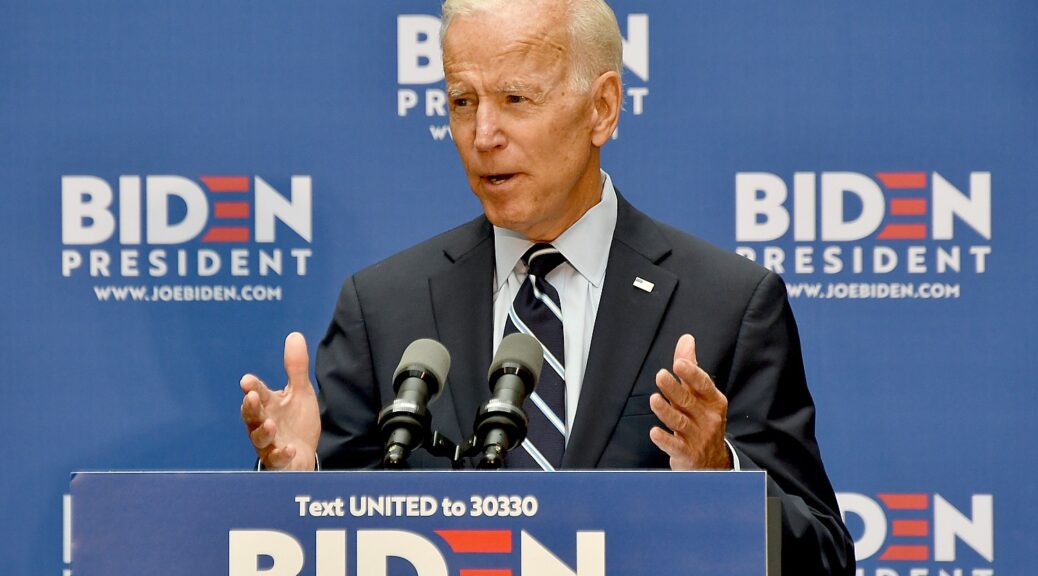
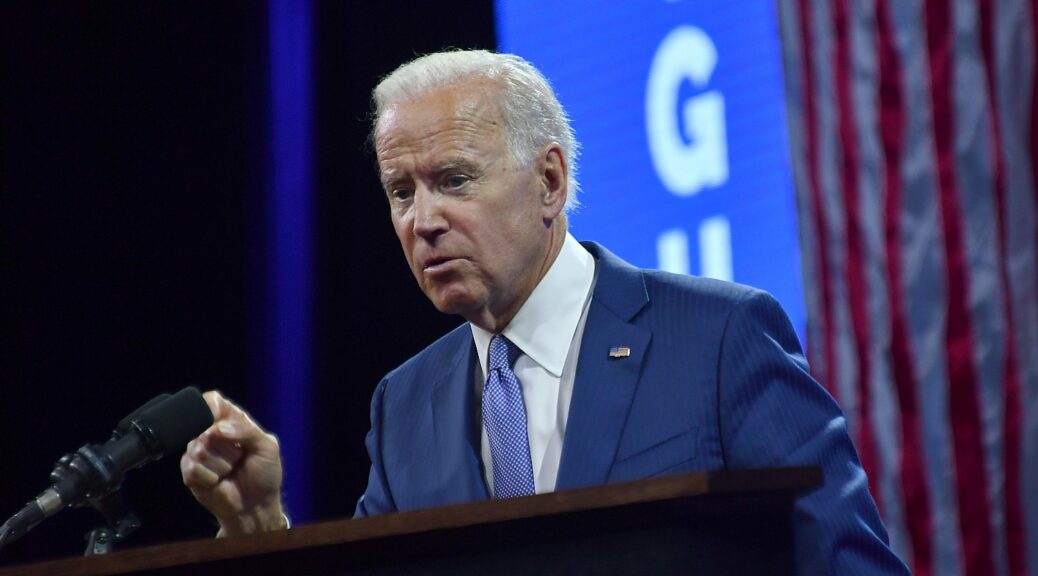
Vice President Joe Biden, the presumptive Democratic candidate for president, presented a 9-point plan for a Clean Energy Revolution, in stark contrast to Trump’s efforts to roll back climate actions and reignite oil, gas, coal industries over clean, renewable energy. This is from the Biden campaign:
President Trump has spent his presidency ignoring the experts and scientists, reversing the Obama-Biden Administration’s efforts to address climate change, abandoning communities and workers, and blocking states and cities trying to lead— going backwards, all while we should have been doing even more.
On the first day of Biden’s Administration, according to the Intergovernmental Panel on Climate Change, there will only be 9 years left to stop the worst consequences of climate change. Biden will act on climate immediately and ambitiously, because there’s no time to waste.
1) Take executive action on Day 1 to not just reverse all of the damage Trump has done, but go further and faster. Day 1 of the Biden Administration is going to be very busy! To immediately make progress on his climate agenda, Biden will take actions including requiring aggressive methane pollution limits for new and existing oil and gas operations; developing rigorous new fuel economy standards aimed at ensuring 100% of new sales for light- and medium-duty vehicles will be zero emissions and annual improvements for heavy duty vehicles; protecting America’s natural treasures by permanently protecting the Arctic National Wildlife Refuge and other areas impacted by President Trump’s attack on federal lands and waters; and banning new oil and gas leasing on public lands and waters.
2) Work with Congress to enact in 2021, President Biden’s first year in office, legislation that, by the end of his first term, puts us on an irreversible path to achieve economy-wide net-zero emissions no later than 2050. The legislation must require polluters to bear the full cost of the carbon pollution they are emitting.
3) Rally the world to urgent and additional action. We know we cannot solve this emergency on our own: the United States accounts for only 15% of global emissions. On Day 1, Biden will rejoin the Paris Climate Agreement. But we must go further. In his first 100 days in office, Biden will convene a climate world summit to directly engage the leaders of the major greenhouse gas-emitting nations of the world to persuade them to join the United States in making more ambitious national pledges, above and beyond the commitments they have already made. Biden will not allow other nations, including China, to game the system by becoming destination economies for polluters, undermining our climate efforts and exploiting American workers and businesses.
4) Make a historic investment in clean energy and innovation. Biden will invest $400 billion over ten years, as one part of a broad mobilization of public investment, in clean energy and innovation. That investment is twice the investment of the Apollo program which put a man on the moon, in today’s dollars. He will also establish ARPA-C, a new research agency focused on accelerating climate technologies.
5) Accelerate the deployment of clean technology throughout our economy. Creating the best, most innovative clean technology in the world is not enough. We also need to make sure it is used by households and industry in order to achieve aggressive emissions reductions. Biden will set a target of reducing the carbon footprint of the U.S. building stock 50% by 2035, creating incentives for deep retrofits that combine appliance electrification, efficiency, and on-site clean power generation. He will work with our nation’s governors and mayors to support the deployment of more than 500,000 new public charging outlets by the end of 2030. And, Biden will ensure our agricultural sector is the first in the world to achieve net-zero emissions, and that our farmers earn income as we meet this milestone.
6) Make environmental justice a priority across all federal agencies. Everyone is already feeling the effects of climate change. But the impacts of climate change (and inaction on climate change) – on health, economics, and overall quality of life – are far more acute on communities of color, tribal lands, and low-income communities. The coronavirus pandemic, which early data suggests is linked to air pollution that disproportionately affects communities of color and low-income communities, is shining new light on this reality. Biden will make it a priority for all federal agencies — and hold them accountable for results — to engage in community-driven approaches to develop solutions for environmental injustices affecting communities of color, low-income communities, and indigenous communities.
7) Hold polluters accountable. On Day 1, Biden will require public companies to disclose climate-related financial risks and the greenhouse gas emissions in their operations and supply chains. In his first year, he’ll work to enact legislation requiring polluters to bear the full cost of their climate pollution. But that’s not all: Biden will direct his EPA and Justice Department to pursue these cases to the fullest extent permitted by law and, when needed, seek additional legislation to hold corporate executives personally accountable – including jail time when merited. Allowing corporations to continue to pollute – affecting the health and safety of both their workers and surrounding communities – without consequences perpetuates an egregious abuse of power. These companies must be accountable to the American people, the communities where they operate, and the workers they employ.
8) Create 10 million good-paying, middle-class, union jobs. Every federal dollar spent on rebuilding our infrastructure during the Biden Administration will be used to prevent, reduce, and withstand the impacts of this climate crisis. American workers should build American infrastructure and manufacture all the materials that go into it, and all of these workers must have the option to join a union and collectively bargain. Biden will ensure his infrastructure legislation incorporates labor provisions so federal investments create millions of middle-class jobs, benefiting workers across industries.
9) Fulfill our obligation to the communities and workers that have risked their lives to produce fossil fuels that made it possible for America to win world wars and become an industrial power. Biden will stand with communities and workers impacted by the changing energy market, including by increasing coal companies’ payments into the black lung benefits program, reforming the black lung benefits system so it is no longer rigged in favor of coal companies who can hire lawyers and doctors to ensure miners’ benefits are denied, expanding efforts to help miners detect black lung cases earlier and access care, and enforcing regulations to reduce cases of black lung in the first place. Biden will also establish a task force to help these communities access federal investments and leverage private sector investments to help create high-paying union jobs based upon the unique assets of each community, partner with unions and community colleges to create training opportunities for these new jobs, repair infrastructure, keep public employees like firefighters and teachers on the payroll, and keep local hospitals open.
Read Biden’s full climate and environmental justice plan at joebiden.com/climate
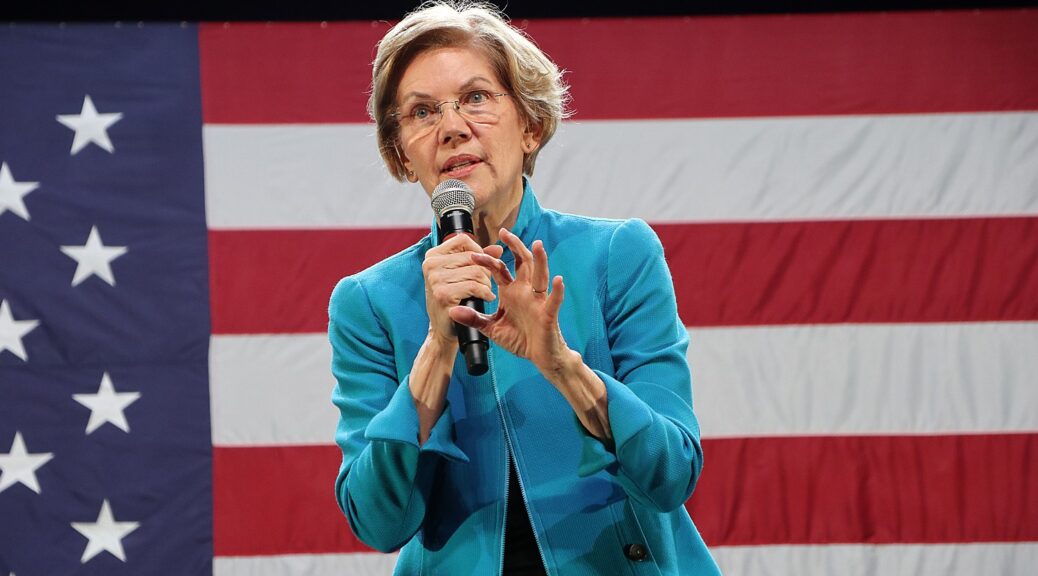
Capitalists are actually much more responsive to the public will than lawmakers – which may not be saying much. But as the United Nations Climate Summit demonstrated, corporations and the financial institutions that fund them are becoming more conscious of climate change. Even former Treasury Secretary Henry Paulson has become an advocate for climate action. More investors are factoring in the cost of climate disasters as well as the change to agriculture, human productivity and health, availability of resources including potable water. Still, corporations that are wedded to the status quo and an economy and society oriented around fossil fuels and intense carbon emissions, that don’t respect air and water quality, need a nudge. Senator Elizabeth Warren, running for president, has just released a plan to stop Wall Street from financing the climate crisis.
“Climate change poses a systemic risk to the health and stability of our financial system,” Senator Warren stated. “And yet, Wall Street is refusing to listen, let alone take real action. My plan to Stop Wall Street From Financing the Climate Crisis is just the first step to ensuring our financial system is ensured against the worst effects of climate change and Wall Street stops financing the climate crisis.“
This is from the Warren campaign:
Charlestown, MA – Senator Elizabeth Warren released her
plan to stop Wall Street from financing the climate crisis. Elizabeth’s plan
will limit and manage the risk that climate change poses to our economy by
reining in Wall Street and ensuring our banks, asset managers, and insurers pay
the true cost of climate change, instead of passing it on to millions of
Americans.
Elizabeth rang the alarm in
the lead up to the 2008 financial crisis. She is sounding the alarm on Wall
Street once again as we face the existential threat of our time: climate
change. It’s clear that our entire financial system is in major
danger from the climate crisis. And yet, neither the largest U.S. financial
institutions, nor the public watchdogs that
are supposed to hold them accountable, have taken adequate steps to address
Wall Street’s role in exacerbating the crisis.
As President, Elizabeth Warren will:
Direct the Federal Reserve to invoke its authority under Section 165 of
Dodd-Frank to impose “enhanced prudential standards” –– things like
higher capital standards, or tougher stress testing –– on large
financial institutions based on their exposure to climate-related risks.
Treat climate change as the systemic risk to our financial system that
it is and use existing financial regulations to push the Financial Stability
Oversight Council (FSOC) to carefully examine the risks posed by climate change
and use its authority to designate financial institutions as
“systemically important” if appropriate.
Go beyond her Climate Risk Disclosure Plan by strengthening
SEC rules that govern the climate change expertise in the composition
of boards of directors, as well as in shareholder representation and disclosure
in proxy voting.
Elizabeth will also require U.S. banks to report annually how much
fossil fuel equity and debt is created, and/or held as assets, with respect to
all fossil fuel extraction and infrastructure.
Fight for pensions by pushing the Securities and Exchange
Commission and Department of Labor –– the two government bodies charged with
regulating pensions –– to declare carbon-intensive investments not consistent
with a fund manager’s fiduciary duty to its clients.
Hold insurance companies accountable for the risk they’re
spreading through the financial system — and through vulnerable communities —
by working with Congress to make large insurance companies doing business in
the U.S. disclose the size of the premiums they’re deriving from coal, oil and
gas projects, associated infrastructure, and companies.
Elizabeth will also investigate insurers who talk out of both sides of
their mouth when they deny coverage to policyholders under
the guise of too much climate risk, while simultaneously insuring fossil fuel
projects.
Transition us away from Donald Trump’s climate-denying
administration at a speed unmatched by any transition in modern
history. As part of that transition, she will announce her choices for Cabinet,
including a Treasury Secretary who understands the financial risks of the
climate crisis, by December 1, 2020. And she will staff all senior and mid-level
White House positions, like financial regulators, by Inauguration Day.
Requiring implementation of the Paris Climate accord and the
elimination of fossil fuel subsidies as preconditions for any trade
agreement.
Dedicating $100 billion to helping other countries purchase and deploy
American-made clean energy technology that is manufactured right here at home
under the Green Marshall Plan.
Ending all American support for international oil and gas projects
through the Export-Import Bank and the Overseas Private Investment
Corporation.
Committing to using America’s voting power in the World Bank and other
global financial institutions to cut off investment in fossil fuel projects and
to direct that investment into clean energy projects instead.
Stop Wall Street from Financing the Climate Crisis
I’ve spent most of my career getting to the bottom of what’s happening to
working families in America. And when I saw the seeds of the 2008 financial
crisis growing, I rang the alarm as
loud as I could. But the people with the power to stop the crisis didn’t listen
— not enough of them anyway. Not the banks, not Alan Greenspan or other federal
regulators, not Congress. And when the financial crisis hit in 2008, working
families lost it all while the big banks that broke the economy got a fat
taxpayer bailout.
And once again, as we face the existential threat of our time –– climate
change –– Wall Street is refusing to listen, let alone take real action.
Climate change threatens our financial system in two ways. First, it poses
a physical risk to
property as climate-fueled extreme weather events — floods, hurricanes,
wildfires — become more and more frequent. Second, it poses transition risks to
our economy: investments in the fossil fuel industry may abruptly lose value as
we transition to a clean economy, posing risks of financial crisis and
destabilization. If we remain on a pathway to 2°C of warming (right now
we’re on track for roughly 3°C of warming),
the costs to the financial system could reach as much as $69 trillion by
2100. Other estimates put the global economic losses caused by climate
change at $23 trillion ––
still roughly three or four times the scale of
the 2008 crisis.
It’s clear that our entire financial system is in major danger from the climate
crisis. And yet, neither the largest U.S. financial institutions, nor the public watchdogs that
are supposed to hold them accountable, have taken adequate steps to address
Wall Street’s role in exacerbating the crisis. In fact, many of the largest banks and assetmanagers have
actually increased their holdings of fossil fuel assets since
the Paris Agreement was signed. And in the two years immediately after the
Paris Agreement was adopted, the six largest U.S. bank investors in fossil
fuels companies loaned, underwrote, or otherwise financed over $700 billion for fossil fuel
companies. Wall Street banks are making a quick buck accelerating
climate change, all while communities across the country are suffering from the lasting impacts
of industrial pollution and the increasingly devastating
effects of climate change.
There has been some movement by big financial firms. A recently leaked report from J.P. Morgan —
the world’s largest financial backer of fossil fuel companies — stated that
the climate crisis could lead to “catastrophic outcomes where human life as we
know it is threatened.” Late last year, Goldman Sachs announced that
it will spend $750 billion over ten years on sustainable finance projects,
restrict financing to all new oil production and exploration in the Arctic, and
impose stricter lending requirements for coal companies. And in a letter to
investors earlier this year, Blackrock –– the world’s largest asset manager ––
announced that it will exit investments with high
environmental risk, like thermal coal, and launch new investment
products that screen for fossil fuels. While these actions are a small step in
the right direction, they are long overdue given the relative impact the
financial industry has had on the climate crisis — and they’re not enough to
protect us from a climate-fueled financial collapse, either.
We will not defeat the climate crisis if we have to wait for the financial
industry to self-regulate or come forward with piecemeal voluntary commitments.
Winning a Green New Deal and achieving 100% clean energy for our global economy
–– or enacting any of my 13 plans to defeat the climate
crisis –– will be near impossible so long as large financial
institutions are allowed to freely underwrite investments in dirty fossil
fuels.
This ends when I am president. A Warren administration will act
decisively and swiftly to manage the risk that climate change poses to our
economy by reining in Wall Street and ensuring our banks, asset managers, and
insurers pay the true cost of climate change instead of passing it on to
millions of Americans. We can make the financial system work for good
as we transition to 100% clean energy, but first, we have to change the way
Wall Street is currently doing business.
Use existing financial regulations to tackle climate change because it is
a systemic risk to our financial system
Foreign financial regulators understand that the climate crisis poses serious
risks to the financial system. European regulators are warning of a “green swan” event that
could trigger a climate change-driven financial crisis. The Governor of the
Bank of England, Mark Carney, and the Governor of the Banque de France,
François Villeroy warned that climate change poses a
“catastrophic effect” to the global economy that could lead to
“a sudden collapse in asset prices” similar to the to the 2008 financial
crisis, and has urged central banks, such as the Federal Reserve Board, to play
a much larger role in tackling the crisis.
I am sounding the alarm on Wall Street once again –– just as I did in
the lead up to the 2008 financial crash.
The Dodd–Frank Wall Street Reform and Consumer Protection Act was our country’s
response to the 2008 crisis. It included tools that our federal regulators
could use to protect the safety and soundness of our financial
system. Regulators should use those tools now to address the systemic risk that
climate change poses.
Specifically, the Financial Stability Oversight Council (FSOC) –– a body
created by Dodd-Frank to bring together heads of financial regulatory agencies
to assess threats across jurisdictions and markets –– should carefully examine
the risks posed by climate change and use its authority to designate financial
institutions as “systemically important” if appropriate. And the Federal
Reserve should invoke its authority under Section 165 of Dodd-Frank to impose
“enhanced prudential standards” –– things like higher capital standards and
margin requirement, or tougher stress testing –– on large financial
institutions based on their climate-related risks.
By using the authorities Congress has already given them, federal regulators
can mitigate the climate-related risk in our financial system and help accelerate
the transition towards a clean energy economy.
Increase corporate accountability through the Securities & Exchange
Commission
That’s a problem in two ways. First, there are a lot of companies that could be
badly hurt by the likely environmental effects of climate change, and their
financial implications such as stranded assets, and supply-chain risk. We’ve
already seen how record storms, flooding, and wildfires can cause billions of dollars in damage.
Second, global efforts to combat climate change will have an enormous impact on
certain types of companies, particularly those in the energy sector. The Task
Force on Climate-related Financial Disclosures found that reductions in greenhouse
gas emissions and increasingly affordable deployment of clean
energy technology could have “significant, near-term financial implications”
for Big Oil and fossil fuel companies.
My Climate Risk Disclosure plan addresses
these problems by requiring companies to publicly disclose both of these types
of climate-related risks. It directs the Securities and Exchange Commission
(SEC) to issue rules that make every public company disclose detailed
information, including the likely effect on the company if climate change
continues at its current pace and the likely effect on the company if the world
successfully restricts greenhouse gas emissions to meet the targets of the
Paris Agreement. My plan also requires the SEC to tailor these disclosure
requirements for specific industries so that, for instance, fossil fuel
companies will have to make even more detailed disclosures.
But disclosure is just the first step. There is more the SEC can do to ensure
companies are more accurately accounting for climate risk, which is why a
Warren administration will go further by strengthening SEC rules that govern
the climate change expertise in the composition of boards of directors, as well
as in shareholder representation and disclosure in proxy voting. My
administration will also require U.S. banks to report annually how much fossil
fuel equity and debt is created, and/or held as assets, with respect to all
fossil fuel extraction and infrastructure. And a Warren administration will
work with the SEC Office of Credit Ratings to direct credit rating agencies to
impose process standards — like climate due diligences — that incorporate the
physical and financial risks that climate change presents to securities and
other financial assets, as well as to the companies that issue them.
Protect Pensions
For the millions of public school teachers, firefighters, police officers, and
other state and federal public employees who spend their careers in service to
our government, pension funds provide a shot at a decent retirement. Most
simply, pensions are deferred wages for our public employees. And yet
today, our pension systems are failing our public employees.
That’s in part because they are invested in fossil fuels –– leaving
all the risk of fossil fuel investments in hard working Americans’ retirement
accounts.
One recent analysis found
that pension funds would be significantly more successful without risky fossil
investments. California’s $238 billion state teachers retirement fund CalSTRS
–– which serves nearly a million public school teachers –– would have earned an
additional $5.5 billion over ten years without its fossil fuel investments. And
Colorado’s state pension fund PERA –– which serves 600,000 current and former
teachers, state troopers, corrections officers, and other public employees ––
would have earned almost $2 billion more in value. This matters for
hard-working pension-holders: investments in fossil fuels over the last 10
years have lost many of California’s public school teachers $5,572 each, and
cost many of Colorado’s public employees $2,900 each. And yet, despite calls
from environmentalists to divest from fossil fuels, in January of this
year CalSTRS rejected divestment,
claiming it would have a “lasting negative impact on the
health of the fund.”
As president, I will fight for every person’s pension, because every
American deserves the right to retire with dignity after spending their career
in service of our local, state and federal government. A Warren
administration would explicitly state policy preferences for limiting climate
risk, beginning with divestment from fossil fuels and prioritizing investments
in environmental, social and governance (ESG) options. And I would go further
by pushing the Securities and Exchange Commission and Department of Labor ––
the two government bodies charged with regulating pensions –– to declare
carbon-intensive investments not consistent with a fund manager’s fiduciary
duty to its clients.
And, as a matter of justice, we should tighten bankruptcy laws to prevent coal
and other fossil fuel companies from evading their responsibility to their
workers and to the communities that they have helped to pollute. In the
Senate, I have fought to improve the
standing of coal worker pensions and benefits in bankruptcy ––
and as president, I will work with Congress to pass legislation to make these
changes a reality.
Instead of halting the effects of climate change, insurers are passing on
the high prices to consumers — or foregoing offering protection to vulnerable
Americans altogether. In some places, insurance companies are pulling
out of areas entirely, leaving consumers exposed. For example, the number of
new and renewed homeowners’ insurance policies fell by 8,700 in
California counties at greatest risk for wildfires. But some insurance
providers will still write policies in vulnerable areas, ratcheting up the monthly prices
consumers pay to counterbalance their increased risk. Premiums
rose in every single state in the nation over the past decade, with states
in tornado alley experiencing the
highest jumps by an average of over $500. And private companies
are taking advantage of the price increases: the number of private flood
insurers has more than doubled since 2016, and they’ve taken in an additional half
a billion in premiums since the prior year.
It’s time to hold insurance companies accountable for the risk they’re
spreading through the financial system — and through vulnerable
communities. I’ll work with Congress to make large insurance companies
doing business in the U.S. disclose the size of the premiums they’re deriving
from coal, oil and gas projects, associated infrastructure, and companies. I’ll
investigate insurers who talk out of both sides of their mouth when they deny coverage to policyholders under
the guise of too much climate risk, while simultaneously insuring fossil fuel
projects. I’ll push the SEC to require insurance companies to show that they
have evaluated climate-related risks in their underwriting processes and in
their reserves. I will reform the National Flood Insurance Program by making it
easier for existing residents to move out of flood-prone properties – both
inland and coastal – including a program to buy back those properties from
low-income homeowners at market value. And within my first term I will ensure
the Federal Emergency Management Agency’s flood maps are fully updated, so that
we can raise the standard for new construction through the Federal Flood Risk
Management Standard.
Personnel is Policy
At the World Economic Forum in Davos last month, economic leaders from across
the world highlighted the vital need to include climate risks in
economic analysis. But Treasury Secretary Steve Mnuchin found himself in a
minority of one, arguing that costs were being overestimated when
considering the impacts of climate change. Either he’s uninformed or he’s
lying: study after study shows that we
are drastically underestimating the cost of the climate
crisis.
I have often said that personnel is policy. The
regulators in charge of protecting the American people need to understand the
risk that the climate crisis poses to our entire financial system — and the
millions whose livelihoods depend on it. That’s why I will appoint at every
level of the system financial regulators committed to holding financial
institutions accountable for climate risk. Here’s what that means:
I will appoint a Treasury Secretary who — unlike Steven Mnuchin —
believes in the power of markets to help defeat the climate crisis: because
right now, research in both of those fields shows
how vital it is that we expose the climate risk.
I’ll appoint financial regulators — including Federal Reserve
governors, Commodity Futures Trading Commission commissioners, and leadership
of every other agency represented on the Financial Stability Oversight Council
— who understand the clear threat climate change poses to our financial system
and who implement policy that addresses financial institutions’ exposure to
climate risks and hold them accountable to addressing.
I’ve already pledged to appoint an SEC
chair who will use all existing tools to require robust
disclosure of climate-related risks. I’ll also appoint SEC commissioners who
will manage the threat climate change poses to the economy by pushing for
corporate disclosure of climate risk and a shift of finances away from fossil
fuels.
The size and the scope of the risk that climate poses to our financial
system requires immediate action. I’ve committed to transitioning us
away from Donald Trump’s climate-denying administration at a speed unmatched by
any transition in modern history, so that we can begin tackling the urgent
challenges ahead on Day One. As part of that transition, I will
announce my choices for Cabinet, including a Treasury Secretary who understands
the financial risks of the climate crisis, by December 1, 2020. And I’ll staff
all senior and mid-level White House positions, like financial regulators, by Inauguration
Day — so that we can begin de-risking our financial system from the moment I’m
in office.
Work with international allies
One of the next catastrophic global financial crises may well be caused by the growing
climate crisis. The 2008 recession proved how financial crises are
no longer isolated: their impact echoes across countries. That’s why addressing
the financial risks of the climate crisis is an international issue. But
the United States isn’t just lagging behind other countries on addressing the
climate risk: right now, we’re not even in the same league.
A Warren Administration will work with international allies to build a more
resilient financial and environmental future for our planet. And I’ll use every
tool in the box to build that world. As President I’ll advocate for the Federal
Reserve to join the global coalition of central banks known as the Network on Greening the Financial
System. As we transition to a 100% clean energy economy, the United
States should be a leader on the global stage, and having a seat at the table
is the first step. As part of my New Approach to Trade, I
will require implementation of the Paris Climate accord and the elimination of
fossil fuel subsidies as preconditions for any trade agreement. My Green
Marshall Plan will dedicate $100 billion to helping other countries purchase
and deploy American-made clean energy technology that is manufactured right
here at home. And we should end all American support for international oil and
gas projects through the Export-Import Bank and the Overseas Private Investment
Corporation. We should also commit to using America’s voting power in the World
Bank and other global financial institutions to cut off investment in fossil
fuel projects and to direct that investment into clean energy projects instead.
Our efforts should be dedicated to accelerating the global transition to clean
energy.
New York State has made
$4.3 million in grants for 111 projects across the state that will help prevent
hunger and reduce the disposal of food waste though food donation and
recycling. The grants will support efforts by municipalities and organizations,
such as pantries and soup kitchens, to help divert scraps for recycling and
reduce the amount of organic waste by redirecting excess, edible food to New
Yorkers struggling with food insecurity.
“Wasted food hurts
needy families facing the terrible challenges of food insecurity and harms the
environment by growing landfills and contributing to climate
change,” Governor Andrew M. Cuomo
said. “These awards are the latest step New York is
taking to help local governments and community organizations support smart
investments that prevent food waste, reduce greenhouse gas emissions caused by
food disposal, and provide nutritious and healthy food to combat hunger across
New York State.”
Wasted food has
significant environmental, social, and economic impacts and these grants help
support municipalities and emergency food relief organizations by improving
food rescue efforts and diverting food scraps from disposal in landfills.
Reducing the landfilling of food scraps is also recognized as a valuable
mitigation measure in the state’s ongoing fight against climate change. The New
York State Department of Environmental Conservation will administer the grants.
DEC Commissioner Basil Seggos said, “It is a sad fact that Americans waste about 25 percent of
the food purchased, leading to negative impacts on our environment and a waste
of food resources that could otherwise be used to help people in need. The projects
supported by the grants announced today are a combination of public outreach
initiatives and innovative, common-sense approaches to promoting food
recycling, helping the hungry, and reducing waste to build stronger, healthier,
and environmentally sustainable communities.”
Municipal Food Scraps
Reduction, Food Donation, and Food Scraps Recycling Grants
DEC is awarding a total
of $3.28 million in grants to 27 municipal projects that will use innovative
and comprehensive approaches to support wasted food prevention and reduction
initiatives, streamline food donation and rescue efforts, and/or develop
organics recycling programs and facilities. Many projects involve strategic
partnerships with community-based organizations to reduce the volume of
wasted food and food scraps entering the municipal waste stream. This is
accomplished through the development and implementation of wasted food
reduction education and outreach programs and by establishing municipal
composting and other organics recycling infrastructure. Among the highlights of
the municipal grant projects:
City
of Cortland $195,936: The
funding will support the Cortland Food Project Rescue and Waste
Prevention, a comprehensive community education campaign focused on wasted
food prevention and reduction. The city will develop and implement
Cortland’s first local food rescue system and volunteer network to seek
out large quantities of “past prime” produce that program staff
and volunteers will be trained to process into value-added food products.
The city will then coordinate with existing local hunger projects, such as
food pantries, soup kitchens, and the planned commercial community kitchen
and entrepreneurship program to be located at the Homer Avenue
Revitalization Project site;
Town
of Ossining $99,145: The
town will create a comprehensive food scraps recycling pilot program to
serve approximately 38,300 residents and neighboring areas. The town will:
purchase collection bins for several public sites, including nearby
Environmental Justice communities and for residential home use; develop
informational materials to include in the kits residents will use in their
homes; and Teatown Lake Reservation will begin community
education events and programming regarding food waste prevention and
reduction, composting, and the town-run food scrap recycling program;
Tompkins
County $70,426: The county will address
wasted food prevention and food donation by targeting apartment complexes
and multifamily units in the county. The project will educate tenants and
property managers, focusing on smart shopping, smart storage, and smart
food prep; site a food hub cooler for sharing excess edible food, with
leftover donations going to Friendship Donations Network (FDN) for further
distribution throughout the Tompkins County community; provide tenants
with free toolkits to collect food scraps from their kitchens for
composting; and develop “kitchen to compost” educational
materials; and
Village
of Sleepy Hollow $11,286: The
village will develop and launch a comprehensive food scraps recycling
program that includes: education efforts and materials that are accessible
for all residents, despite income or language barriers; create a food
scraps recycling program that offers 500 free starter kits (countertop
food scraps collection pail and storage bin) to residents for composting;
and create outreach materials designed to reach all demographics in the
village, including Spanish-language translations, and engaging low-income
residents and seniors in the participation of the project.
Emergency Food Relief
Organization Grants
Food pantries and other
local emergency food relief organizations are on the front lines when it comes
to helping those in need. These organizations often rely on donations of food
through partnerships with local businesses, farms, and other food donors to
supplement their inventories of wholesome food. However, as many of these food
pantries and organizations are volunteer-run and have limited funds, they often
do not have the resources to establish these partnerships or purchase the
necessary storage equipment and vehicles to transport donated perishable foods.
Due to these challenges, highly nutritious, perishable food that is ready to be
distributed to food pantries and soup kitchens — such as fresh produce — often
goes to waste, despite the efforts of donors and food rescue organizations.
DEC is funding 84
projects with $1.1 million to support projects including: hiring food recovery
staff focused on developing donation partnerships; purchasing efficient cold
storage equipment; kitchen equipment to prepared rescued, perishable produce;
vehicles to transport rescued food; and the implementation of hyper-local
perishable and prepared food recovery and distribution networks. In addition,
several projects include the establishment of nutrition and cooking classes to
help them use the food they receive from the pantries most efficiently. These
classes and workshops help clients reduce wasted food and stretch limited food
budgets. Highlighted grant projects include:
Iris
House $13,720: Iris House in Central
Harlem will use the funds to support efforts to distribute food closer to
the residents of East Harlem in New York City. Iris House will use part of
the grant funds to cover the operation costs of a van to transport food
pantry bag distribution to pop-up locations in East Harlem to save
residents the costs of transportation to Central Harlem. Iris House will
also develop and distribute brochures about nutrition and to advertise
their services and provide information about free food availability;
Second
Chance Foods $15,000: Second
Chance Foods is not-for-profit food rescue organization in Carmel, New
York, that will use the grant to support the salary of a kitchen manager
to process rescued food into cooked meals or prepare parts of meals to
donate to local food programs. By processing rescued food such as
blemished produce and unfamiliar foods, Second Chance Foods makes more
rescued food “usable” by soup kitchen managers and pantry
clients, preventing wasted food and increasing the amount of wholesome
food available to people;
Comfort
Food of Washington County, Inc. $12,420: Comfort Food Community serves a rural county with
limited access to grocery stores and a significant percent of the
population in poverty. CFC will hire a seasonal Food Recovery Assistant to
improve gleaning efforts at the 35 farms in their service area through
volunteer recruitment and management, as well as coordinating and
supervising rescue efforts. The Food Recovery Assistant will also work on
outreach and education elements of the Fresh Food Collective. CFC will
also use these grant funds to dedicate staff time to developing recipe
cards and coordinated meal kits for the gleaned produce to help ensure
that recipients of the produce are able to use all of it properly and
incorporate more nutritious food into their diets; and
Pitney
Meadows Community Farm, Inc. $15,000: Pitney
Meadows Community Farm, Inc., is not-for-profit organization in Saratoga
Springs dedicated to urban agriculture, farmland conservation, community
empowerment, and increasing access to fresh, healthy produce. The farm
will install a “Giving Garden” dedicated to growing food
for food pantries and will use the grant to hire a farm manager to oversee
the Giving Garden and associated donation partnerships; construct a wash/pack
station to properly prepare freshly harvested vegetables in a safe,
reliable, and convenient way; and install a walk-in cooler to store food
before it is donated to local pantries.
A complete list of
awardees/grantees and summaries of projects is available at the DEC website. For more information about how to
reduce food waste in all New York households: https://www.dec.ny.gov/chemical/98102.html.
New York State has long
been committed to the fight against hunger and Governor Cuomo has launched groundbreaking
initiatives and programs in recent years, including the Council on
Hunger and Food Policy, Vital Brooklyn, and the No Student Goes Hungry
initiative to combat hunger, improve access to healthy, locally grown foods,
and bring New York-grown foods and beverages to underserved communities. The
grants announced today also build upon the success of the 2019 Food Donations
and Food Scraps Recycling law signed by the Governor, that requires all designated
food scraps generators to first donate edible food to those in need, and
secondly, to recycle food scraps if a viable recycling facility is located
within 25 miles. In response to this crucial legislation, DEC has provided
$800,000 to Feeding New York State for additional resources to handle the
anticipated influx of donated food.
The grant announcement
was made at the Regional Food Bank of Northeastern
New York in Latham, to help prepare New Yorkers for the
statewide ban on plastic carryout bags, which begins March 1. DEC, in
coordination with Feeding New York State, will distribute reusable bags to food
banks across the state as part of DEC’s efforts to encourage
consumers to bring their own bags whenever and wherever they shop. Feeding New York State helps
feed millions of people each year through more than 5,000 food pantries, soup
kitchens, shelters, and other programs.
The BYOBagNY initiative
is part of New York’s comprehensive outreach campaign with state and local
partners to educate retailers and consumers about the plastic bag ban, which
will help reduce the scourge of plastic bag waste in the state’s environment
and communities. New Yorkers use an estimated 23 billion plastic bags
annually—each for about 12 minutes—and approximately 85 percent of this
staggering total ends up in landfills, recycling machines, waterways, and
streets. For more information about the outreach efforts and details of the
law’s implementation, visit DEC’s website.
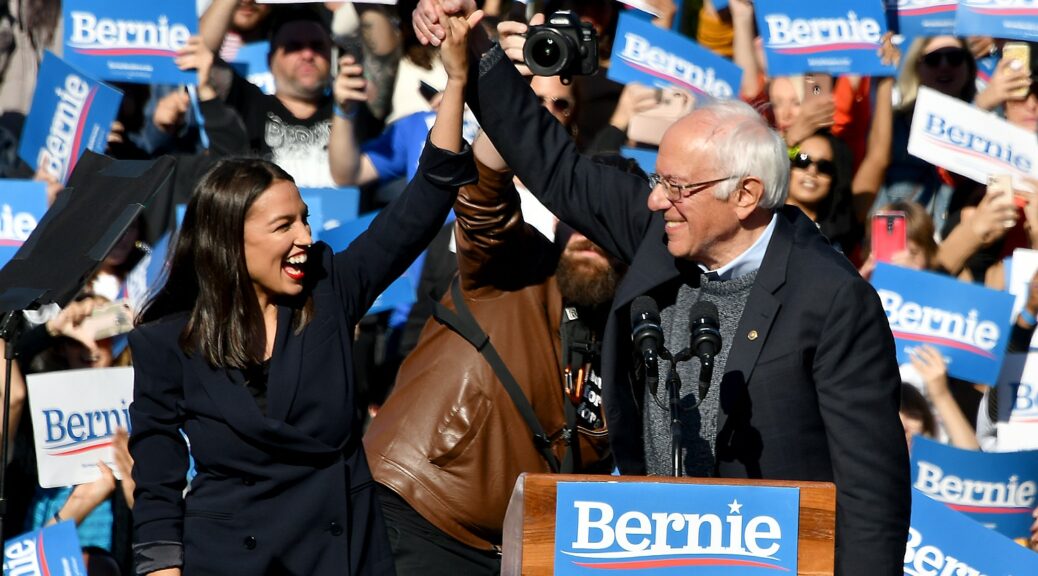
The vigorous contest of Democrats
seeking the 2020 presidential nomination has produced excellent policy
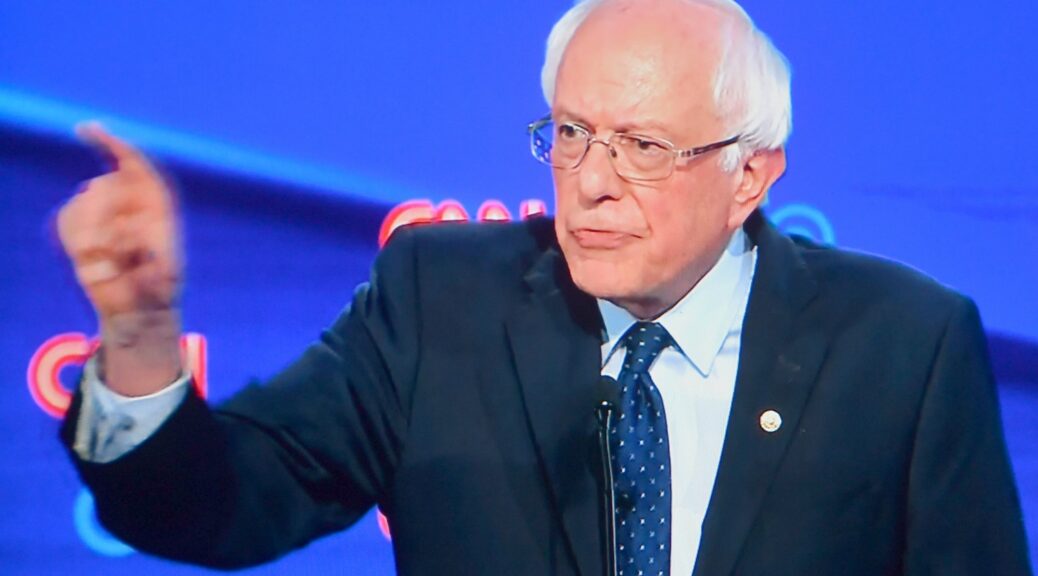
proposals to address major issues. Senator Bernie Sanders, along with
Congresswoman Alexandria Ocasio-Cortez, presented the Green New Deal for Public
Housing Act to address the shortage of public housing in a way that also
attacks climate change by transitioning to sustainable buildings. Here is the
plan from the Sanders campaign:
WASHINGTON – Sen. Bernie Sanders (I-Vt.) and Rep. Alexandria
Ocasio-Cortez (D-N.Y.), in an event outside the Capitol Building, announced the
introduction of the Green New Deal for Public Housing Act in partnership with
public housing residents, affordable housing advocates, and climate change
activists. The sweeping legislation they will unveil aims to retrofit,
rehabilitate, and decarbonize the entire nation’s public housing stock.
The Green New Deal for Public Housing Act invests up to $180 billion over ten
years in sustainable retrofits that include all needed repairs, vastly improved
health, safety and comfort, and eliminate carbon emissions in our federal
public housing. The legislation also provides funding to electrify all
buildings, add solar panels, and secure renewable energy sources for all public
housing energy needs. The bill dramatically improves living conditions for
nearly 2 million people living in roughly 1 million public homes.
“Faced with the global crisis of climate change, the United States must lead
the world in transforming our energy system away from fossil fuel to
sustainable energy,” said Sanders. “But let us be clear: as Congresswoman
Ocasio-Cortez understands, the Green New Deal is not just about climate change.
It is an economic plan to create millions of good-paying jobs, strengthen our
infrastructure, and invest in our country’s frontline and vulnerable
communities. This bill shows that we can address our climate and affordable
housing crises by making public housing a model of efficiency, sustainability
and resiliency. Importantly, the working people who have been most impacted by
decades of disinvestment in public housing will be empowered to lead this
effort and share in the economic prosperity that it generates for our country.”
“Climate change represents both a grave threat and a tremendous opportunity,”
said Ocasio-Cortez. “The Green New Deal for Public Housing Act will train and
mobilize the workforce to decarbonize the public housing stock and improve the
quality of life for all residents. I am proud to begin the hard work of
codifying the Green New Deal into law with my friend and colleague, Senator
Bernie Sanders.”
About 40 percent of
total U.S. energy consumption is attributable to residential and commercial
buildings. With its focus on transforming 1 million units of federally owned
housing, the Green New Deal for Public Housing Act will spur economies of scale
for weatherization, retrofitting, and renewable energy, making them more cost
effective and attractive throughout the country. The legislation is expected to
create nearly 250,000 good-paying, union jobs per
year across the country while reducing carbon emissions on the scale of taking
1.2 million cars off the road over the next ten years. Public housing costs
would also be reduced by $97 million per year, or 30 percent, and energy costs
would be slashed by $613 million, or 70 percent.
The legislation envisions a federal-state partnership, creating new grant
programs to swiftly and efficiently transition public housing, tribal housing,
and Native Hawaiian housing to zero-carbon, energy efficient housing. The bill
creates sustainable communities for families by building new childcare and
senior centers, expanding access to clean transit, and creating community
gardens and other community amenities. Under the legislation, public housing
will receive deep energy retrofits, build community-generated renewable
electricity, and upgrade unsafe and unsanitary infrastructure, including
buildings’ water and electrical systems.
The Green New Deal for Public Housing Act requires that the hundreds of
thousands of jobs created by this investment be high-road, family-sustaining
jobs by requiring strong labor standards, prevailing wages, and “Buy America”
requirements. Public housing residents will lead the decision-making process for
these investments and receive jobs training for the newly created jobs from
this legislation.
The bill is cosponsored in the Senate by Sen. Jeff Merkley (D-OR), Sen.
Elizabeth Warren (D-MA) and endorsed by more than 50 organizations.
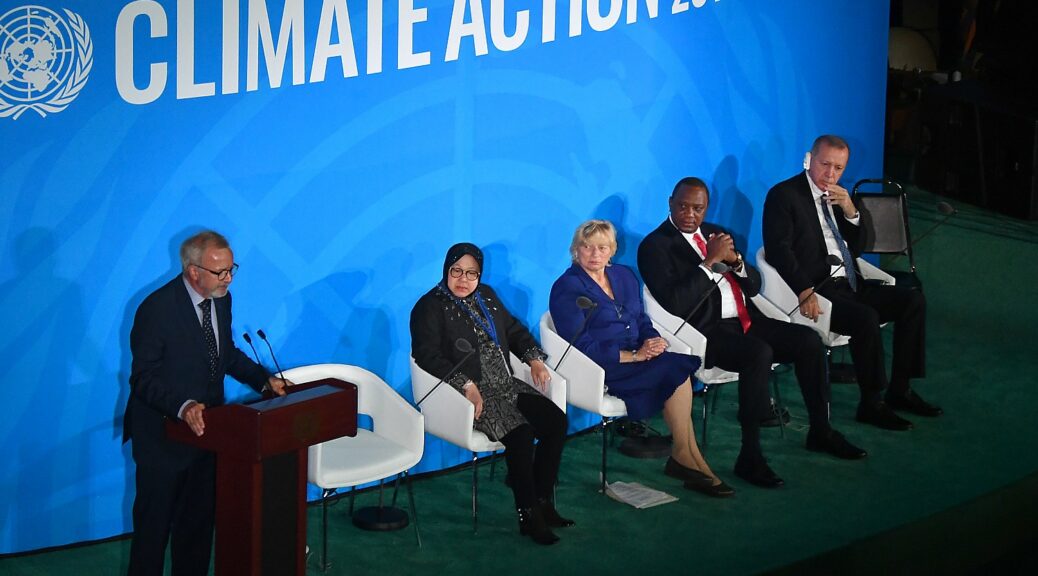
There was the sense at the United
Nations Climate Action Summit that took place September 23, that the Trump
Administration – but not the United States – is irrelevant to the crusade to
mitigate the most devastating impacts of climate change. Indeed, the rest of
the world, American states, localities and businesses, is forging full steam
ahead to prevent the earth from warming more than 1.5 degrees Celsius – and all
the devastation that would result – within the next 12 years.
“We know why tackling climate change is important”, said Deputy
Secretary-General Amina Mohammed before the Climate Action Summit began. “The
devastation wreaked by Dorian on the Bahamas, what the Secretary-General called
a Category Hell hurricane, is a glimpse into one aspect of a future powered by
climate change – a future with super storms that grow in intensity and
frequency, where those countries with the lowest greenhouse gas emissions,
continue to feel the worst impacts of the planet’s rising temperatures.”
“The summit will present practical and new measures, speed transition from
coal to clean energy, cut pollution harming health, protect nature, unlock the potential
of nature to deliver on climate, create cleaner greener waste, speed up transition
from grey to green economies, mitigate impacts of climate change, leave no one
behind, transition must be ramped up now,” she said at a press briefing before
the summit.
The Climate Action Summit was
designed to showcase only the boldest, transformative actions – specifics, not
hyperbole or speechifying.
“We will see what climate leadership
looks like – progress toward carbon neutral future.”
Trump snubbed the summit, choosing instead to host a Religious Freedom Forum, and highlighted America’s military might but did not mention climate change once, in his address to the General Assembly. But just about every other leader did refer to the critical need and their commitment to climate action in their speech.
“Can
we afford to ignore the crisis of extinction, or will we do the right thing,
support energies and talents of all the world’s youth and drive all the
economies forward to fair and inclusive society?” Abdullah
II bin Al–Hussein, King of Jordan, declared. “What will our world
become if we do not work together for a healthy and safe climate. We already
know the dangers of climate change – how can we excuse [inaction]”
Kolinda Grabar-Kitarović, president of
Croatia, declared, “Climate
change- rising sea levels – is the greatest threat. Without protection of
waters and marine life, there will be nothing to leave.”
Russia, one of the few holdouts and
one of the world’s largest carbon emitters with an economy largely based on
fossil fuel extraction and export, used the occasion to officially adopt the
Paris Climate Agreement. The document signed by Prime Minister Dmitry Medvedev says
Russia will now “allocate financial resources… to developing countries
for prevention and adaptation to climate change. The threat of climate change
is (the) destruction of the ecological balance, increased risks for successful
development of key industries… and most importantly, threat to safety of
people living on permafrost and increase of natural disasters.”
Governor Janet Mills of Maine challenged
leaders of the world to take action against climate change, saying the State of
Maine will do its part and announcing that she has signed an Executive Order
committing the state to carbon neutrality by 2045.
Separately,
Governor Andrew M. Cuomo announced
New York State is pursuing partnerships with Ireland and Denmark that will lead
to improved electric infrastructure and the advancement of more renewable
energy sources, including offshore wind. The agreements were announced during
Climate Week and will advance both New York’s nation-leading plan to combat
climate change and the Governor’s Green New Deal agenda. This summer,
Governor Cuomo signed the Climate Leadership and Community Protection Act,
which mandates New York’s power be 100 percent clean and carbon-free by 2040. New
York is one of 25 states including California that have formed the US Climate
Alliance (USclimatealliance.org) to
uphold the Paris Agreement. – collectively representing over 50% of the US
population and 60% of the United States’
GDP.
Mohammed acknowledged that the transition “is not one-size fits all
– in some countries, renewable energy is already cheaper than coal; others need
funding options. It’s not enough that we stop funding coal and actively move to
making renewable possible –there is tension there. We must be realistic – you can’t
click fingers and create a renewable grid overnight but we also determined there
are over 100 coal plants in pipeline and emissions are still rising – that pathway
is a serious threat to human survival.”
Informed by the perspectives of more than 130 Governments, a newly issued
report, The Heat is On – Taking Stock of Global Climate Ambition,
reveals that business as usual, is not good enough and requires more
mitigation, adaptation and finance – all which must be done quickly.
“When I look back on this Climate
Action Summit, I want us to see it as a sling shot – that helped to change our
common trajectory towards sustainability”, said Ms. Mohammed, building trust
“between this generation of adults and the next – between our children and
ourselves – that we are all working together to our fullest potential to tackle
the climate emergency”.
She recapped that the Intergovernmental Panel on Climate Change report
stressed the need to ensure that “the global temperature rise does not go
beyond 1.5 degrees Celsius” through “cutting emissions by 45 per cent by 2030”,
warning that “we have very little time to take the decisions needed to get
there”.
Those decisions should be set out in each country’s Nationally Determined
Contributions (NDCs) on climate change, which she called “the cornerstone of
the Paris
Agreement”.
“The world’s poorest 1 billion, we
are least responsible for climate crisis – emitting less than 1% of global
emissions, yet, our small gross national
incomes and limited resources means we suffer the most,” said Sonam P.
Wangdi, Secretary of the National Environment Commission, Bhutan.
The United
States, with only 5% of the population is responsible for 25% of carbon
emissions, and the present administration, which hides behind science denial in
order to preserve the status quo of their economic systems, will have a huge
impact on whether the efforts made by 190 countries succeed in preserving the
planet. But though the government was a no-show at the Climate Action Summit,
states, localities and business interests were on hand, offering their
commitments so that the United States will achieve the goals of the Paris
Climate Agreement led by Obama and rejected by Trump.
Indeed, it
was just as if the world has moved on, rendering the United States irrelevant.
The thought of holding the US accountable for reparations when an island nation
like the Bahamas is devastated by Hurricane Dorian, was discounted. “Who would
enforce a decision?” said Wilfred P.
Elrington, Minister of Foreign Affairs, Belize, a statement made from the
experience of Trinidad & Tobago which won a judgment against the US in the
World Trade Organization that has yet to be paid.
Small Island
Developing States are stepping up and striking back.
“The recent activity of Dorian in Bahamas – devastated that island, and unless you really have experience this kind of devastation it is hard to appreciate how difficult, how absolutely destructive it is,” said Elrington, recalling his own terror at the age of 4 years old when a Category 4 hurricane hit. “From one moment being in a safe, secure structure or building, the next to be completely out in environment with absolutely nothing – you have absolutely nothing – no clothes, medicine, food, completely at the mercy of God. We think of the damage to human beings and the destruction, but equally tragic is the destruction done to floral and fauna – exceedingly depressing to see the entire landscape devastated and and of course, does not come back quickly.”
Apart from saving habitats, climate
mitigation and adaptation has the added benefit of addressing poverty and
inequality, in part perpetuated by the cost – and reliance –on fossil fuels as
the basis for an economy. Shifting to clean, renewable like solar, wind, water,
geothermal, lowers the expenditure and increases the independence from
concentrated utility companies. Eliminating fossil fuels also reduces pollution
and improves health.
But with
worldwide pressure – by citizens and consumers – the private sector is being
forced to take action as well. Sixteen
countries are phasing out gasoline-powered cars over the next several years,
rendering US-manufactured cars unexportable, regardless of how Trump attempts
to overturn California’s call for higher fuel efficiency standards and lower
emissions.
Coalition for Climate Resilient Investment
Just announced, “first of its kind,” Coalition for Climate Resilient Investment “will transform mainstream infrastructure investment and drive a permanent shift toward climate resilient economy for all countries, but especially for low and mid income countries which bear the brunt,” said John Haley, CEO, Willis Towers Watson, one of the world’s largest insurance companies. One of the ways it will change the way money is invested in business ventures and infrastructure is by creating new data analytics that incorporate the cost-benefit of climate adaptation, mitigation and resiliency into the model. “Rapid advancement in data analytics, coupled in momentum of regulatory initiatives and growing pressure from global society is what allows this initiative to be as ambitious as it is.”
He said, “I come from the world of
insurance. We work on a lot of analytical tools to price the effect of climate
disasters. We will take those kind of analytical tools and build them into
understanding what kind of investments we should make in infrastructure – measure
the impacts of climate on infrastructure everywhere in the world – more
important in vulnerable communities but everywhere in the world [including US,
where former Treasury Secretary Henry Paulson has been saying the very thing in
pushing for a carbon tax].
“Pricing the risks
posed by climate change will create opportunities to build a network of
resilient infrastructure in high, medium and low-income countries, enabling us
to better prevent future human and financial disasters.”
The coalition will
develop case studies to build the business case, and identify the critical
enabling environments, for climate resilient infrastructure investment.
By the end of
2020, analytical tools including a physical risk pricing framework and
methodology to prioritize national resilient investment needs, will be
developed, alongside a range of instruments to prevent capital flight from
vulnerable regions.
Biggest Names in Video Game Industry
Commit to Climate Action
And,
in a major mind-blowing commitment, 21 of the biggest names in the video games
industry, with a combined audience of 970 million players, formally committed
to harness the power of their platforms to take action in response to the
climate crisis. Combined, these commitments will result in a 30 million ton
reduction of CO2 emissions by 2030, will see millions of trees planted, new
“green nudges” in game design and improvements to energy management, packaging,
and device recycling. Equally significantly, under
the banner of Playing for the Planet Alliance, many will incorporate
sustainability and climate action into the games, themselves, letting gamers,
for example, toy with building sustainable societies.
These
voluntary commitments were announced during the UN Climate Action Summit. CEOs
from 14 platforms and games makers, including Sony Interactive Entertainment,
Microsoft, Google Stadia, Rovio, Supercell, Sybo, Ubisoft and WildWorks, were
present to showcase their commitments. The Alliance intends to support
companies in sharing learning and monitoring progress on the environmental
agenda.
A
full list of the announcements and commitments made at the Climate Summit can
be found at www.un.org/climatechange
Youth leaders including Greta Thunberg, who in an impassioned address to the UN Climate Action Summit that followed a worldwide Climate Strike that brought out 4 million people worldwide and an unprecedented UN Youth Climate Summit, said, “We will be watching,” drove home the urgency of greater action by leaders, and their determination to hold leaders to account.
By Karen Rubin, News-Photos-Features.com
Clearly the world’s leaders are finally listening to the rising tide of civic actions, including an outpouring of youth activists, not asking but demanding action on climate change – preventing the planet from heating more than 1.5 degrees Celsius, mitigating and adapting to the impacts of global warming, from rising sea levels, more frequent and violent superstorms, wildfires, droughts, floods and famines, extinction of wildlife and plants due to lost habitats, and the health impacts due to the spread of epidemics, disease and illness.
Major announcements by government and private sector
leaders during the course of the day-long United Nations Climate Action Summit,
September 23, boosted climate action momentum, and demonstrated growing
recognition that the pace of climate action must be rapidly accelerated.
77 countries committed to cut greenhouse gas
emissions to net zero by 2050, while 70 countries announced they will either
boost their national action plans by 2020 or have started the process of doing
so.
Over 100 business leaders delivered concrete actions
to align with the Paris Agreement targets, and speed up the transition from the
grey to green economy, including asset-owners holding over $2 trillion in
assets and leading companies with combined value also over $2 trillion.
Many countries and over 100 cities – including many
of the world’s largest – announced significant and concrete new steps to combat
the climate crisis.
Many smaller countries, including Small Island
Developing States and Least Developed Countries, were among those who made the
biggest pledges, despite the fact they have contributed the least to the
problem.
UN Secretary-General António Guterres, closing the
Summit, said “You have delivered a boost in momentum, cooperation and ambition.
But we have a long way to go. We need more concrete plans, more ambition from
more countries and more businesses. We need all financial institutions, public
and private, to choose, once and for all, the green economy.”
Youth leaders
including Greta Thunberg, who in an impassioned address that followed a
worldwide Climate Strike, said, “We will be watching,” drove home the urgency
of greater action by leaders, and their determination to hold leaders to
account.
• France announced that it would not enter into any
trade agreement with countries that have policies counter to the Paris
Agreement.
• Germany committed to carbon neutrality by 2050
• Russia, one of the few holdouts
and one of the world’s largest carbon emitters, with an economy largely based
on fossil fuel extraction and export, adopted the Paris Climate Agreement.
• 12 countries made financial
commitments to the Green Climate Fund, the official financial mechanism to
assist developing countries in adaptation and mitigation practices to counter
climate change. This is in addition to recent announcements from Norway,
Germany, France and the United Kingdom who have recently doubled their present
contributions.
• The United Kingdom made a major additional
contribution, doubling its overall international climate finance to L11.6
billion for the period from 2020 to 2025.
• India pledged to increase renewable energy
capacity to 175gw by 2022 and committed to further increasing to 450GW, and
announced that 80 countries have joined the International Solar Alliance.
• China said it would cut emissions by over 12
billion tons annually, and would pursue a path of high quality growth and low
carbon development.
• The European Union announced at least 25% of the
next EU budget will be devoted to climate-related activities.
• The Russian Federation announced that they will
ratify the Paris Agreement, bringing the total number of countries that have
joined the Agreement to 187.
• Pakistan said it would plant more than 10 billion
trees over the next five years. On unprecedented levels of private sector
action:
• A group of the world’s largest asset-owners —
responsible for directing more than $2 trillion in investments — committed to
move to carbon-neutral investment portfolios by 2050.
• 87 major companies with a combined market
capitalization of over US$ 2.3 trillion pledged to reduce emissions and align
their businesses with what scientists say is needed to limit the worst impacts
of climate change—a 1.5°C future.
• 130 banks – one-third of the global banking sector
– signed up to align their businesses with the Paris agreement goals On
transitioning from brown to green energy:
• Michael Bloomberg will increase the funding and
geographic spread of his coal phase out efforts to 30 countries. Already, his
work has helped to close 297 out of 530 coal plants in the US.
• Countries, including France and New Zealand,
announced that they will not allow oil or gas exploration on their lands or
off-shore waters.
• Heads of State from Finland, Germany, Greece,
Hungary, Ireland, Italy, Netherlands, Portugal, and Slovakia, are among those
that announced that they will work to phase out coal. The Republic of Korea
announced it would shut down four coal-fired power plants, and six more will be
closed by 2022, as well as the doubling of its contribution to the Green
Climate Fund.
• The Summit also delivered critical platforms for
improving energy efficiency and reducing the growing energy needs for cooling,
with the “Three Percent Club” coalition working to drive a three percent annual
global increase in energy efficiency and the Cool Coalition setting ambitious
national cooling targets for its members with the potential to deliver up to 1
degree on the pathway to a 2050 net zero carbon world. On scaling up financing
and unlocking barriers to funds:
• Many countries announced new contributions to the
Green Climate Fund, the official financial mechanism to assist developing
countries in adaptation and mitigation practices to counter climate change,
with several countries, including France, Germany, Norway and the United
Kingdom, announcing that they would double their present contributions.
• Further, the Climate Investment Platform,
officially announced during the Summit, will seek to directly mobilize US$ 1
trillion in clean energy investment by 2025 in 20 Least Developed Countries in
its first year.
• The African Development Bank said it was doubling
its climate-related financing to $25 billion by 2025. Funding will go to
projects including a multi-billion initiative to develop 10,000 megawatts of
solar power from the Sahara that will provide electricity to 250 million
people. “What
a difference a green, more prosperous, resilient, peaceful and secure future
will mean,” said Dr. Akinwumi Adesina, President, African
Development Bank.
• Coalition for Climate Resilient Investment – just announced and the first of its kind – “will transform mainstream infrastructure investment and drive a permanent shift toward climate resilient economy for all countries, but especially for low and mid income countries which bear the brunt” by providing data analytical tools to price in the cost of climate resiliency into investments, said John Haley, CEO, Willis Towers Watson, one of the world’s largest insurance companies.
• The state of Maine committed to carbon
neutrality by 2045.
• Summit initiatives were designed to ensure the
actions undertaken would be fair for all, supporting jobs and clear air for
better health, and protect the most vulnerable, as well as new initiatives on
adaptation, agriculture and early warning systems that will protect 500 million
additional people against the impacts of climate change.
New initiatives announced have been designed to be scaled up to deliver
impact at the global scale needed. The Secretary-General urged governments,
businesses and people everywhere to join the initiatives announced at the
Summit, and promised to “keep pushing” for greater ambition and action.
The Secretary-General committed the UN system to
support implementation of plans presented at the Summit, with an initial report
to be delivered at COP25 in Santiago, Chile.
A full list of the announcements and commitments made at the Climate Summit can be found at www.un.org/climatechange
It
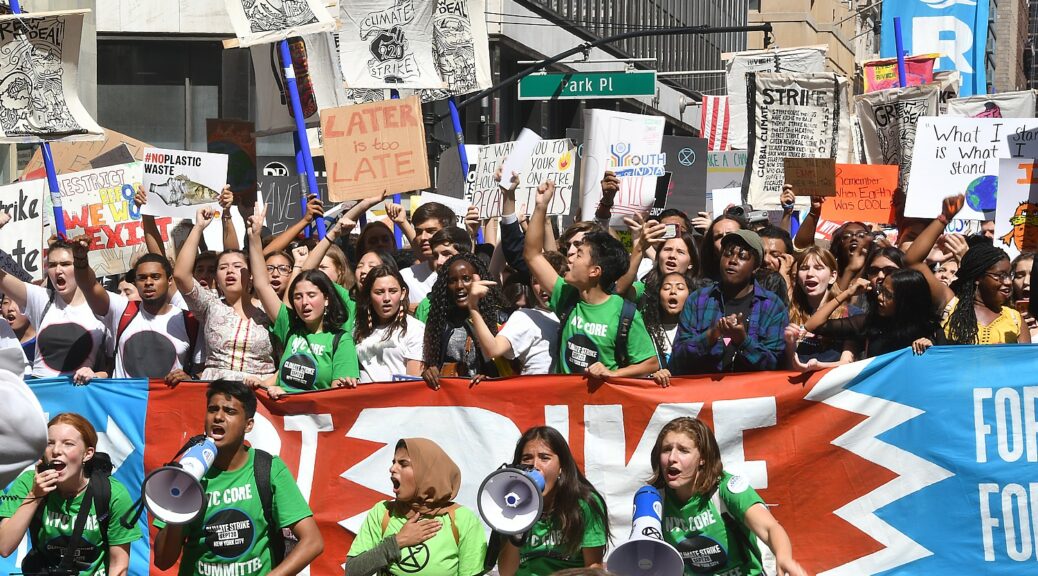
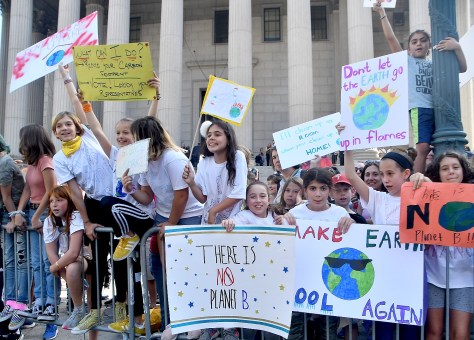
is being hailed as the biggest climate protest in history: a worldwide climate
strike that brought out over 4 million people in more than 2100 events in 175
countries, with some 600 in the United States.
New
York’s climate strike brought out more than 250,000 who overflowed Foley
Square, marched down to Battery Park, where the global climate leader, Greta
Thunberg of Sweden, laid down the gauntlet to the do-nothing world leaders:
“This is an emergency. Our house is on fire,” Thunberg
told the cheering crowd. “We will do everything in our power to stop this
crisis from getting worse.” Noting that she has withdrawn from school in order
to agitate for climate action and to take part in the strikes, children have
left school, she said “Why should we study for a future that is being taken
away from us. That is being sold for profit.”
“Everywhere I have been the situation is more or less
same. The people in power, their beautiful words are the same,” she said. “The
number of politicians and celebrities who want to take selfies with us are the
same. The empty promises are the same. The lies are the same, and the inaction
is the same.”
Virtually daring the world’s leaders to act, she declared,
“The eyes of the world” will be on the world leaders at the climate summit on
Monday for the U.N. Climate Summit. “They have a chance to prove that they too
are united behind the science, they have a chance to take leadership, to prove
they actually hear us,” she said to chants.
“It should not be that way. We should not be the ones who
are fighting for the future, and yet here we are,” she continued.
“We demand a safe future,” she said. “Is
that really too much to ask?”
The link between capitalistic greed and political
corruption was very much on view, with signs that called for “Green Jobs Not
Dirty Fuel” and even more radical calls to “Save the Planet. End capitalism.”
The demands of the strikers echoed the Green New Deal being
proposed: a 100 percent shift away from fossil fuels to clean, renewable
energy; shifts to sustainable agriculture, in such a fair and equitable way as
to “leave no one behind”; environmental, social, political and economic
justice.
“Charge
ahead toward 100 percent clean renewable
energy, protect habitat and species, hold corporations accountable, have a just
transition – leave no one behind,” stated Dr. Ayana Elizabeth Johnson, 39, a
marine biologist, policy expert, founder and CEO of Ocean Collectiv, was one of
the only adults to give a speech. “We need strong government policies that
accelerate transition, a Green New Deal.
She
argued that regenerative farming, renewable energy, electrifying transporation
necessary to mitigate or reverse the adverse impacts of climate change are
already available. “We don’t need new technology.” What is needed is government
policy.
“But
when there is failure at the national level, localities, states need to step
up.” Individuals can make a difference as well: “Plant trees, grow food, plant
a climate victory garden, choose foods that are grown regeneratively. Show up,
transform culture. Vote in every election. In 2016, 10 million registered
environmentalists failed to vote. Do not let that happen again.
“We
cannot mobilize at the scale we need unless we face the challenge head on.
Focus on solution. Build a coalition so massive, it shifts the status quo. Dig
in for the long and beautiful struggle for a new world.”
Capitalism was very much under fire – with the opposition
asserting that addressing climate change is akin to throwing the doors open to
socialism, or worse, communism, and in any case, that it would be damaging to
the economy.
But the case is made by former Vice President Al Gore and
others that the fastest growing areas for jobs are in solar and wind power;
Democratic candidate Bernie Sanders makes the case that the $1 trillion spent
to transition the economy to clean, renewable energy will create 20 million
jobs.
And in fact, the economy has already been transformed to new
energy: 150 years ago, when coal was discovered in Pennsylvania and emerging industrialists
figured out how to turn it into fuel, and petroleum extractors figured out a
way to capitalize on the waste product of processing petroleum for industrial
grease, gasoline and effectively killed the development of the electric car.
That caused a migration of workers- imported migrants and transplants – to new
villages, cities and towns based on mining, processing, and manufacturing that
had not existed before, often by displacing indigenous people.
The
worldwide climate strike comes just ahead of the United Nations Climate Summit
to be held Monday, September 23, when countries are expected to present
concrete proposals to mitigate and reverse the climb in temperature before
global warming has catastrophic impacts on food, water, public health and
habitats. The United Nations summit, though, begins with an unprecedented youth
climate summit on Saturday, September 21.
The
16-year old Thunberg, who began her climate crusade more than a year ago, holding
Friday strike, has become the world’s most recognized climate activist, who has
stood her ground against world leaders and the snarky questions of US
congressmembers.
The worldwide climate strike actions coincided with the second anniversary of Hurricane Maria’s devastation of Puerto Rico in which 2,975 people died, and New York City strike’s was held jointly with a Puerto Rico Day of Action. It also comes just days after Hurricane Dorian devastated much of the Bahamas, with Trump shutting the door on climate refugees from that catastrophe.
Here are more highlights from New York City’s Climate Strike:
The vigorous contest of Democrats seeking the 2020 presidential
nomination has produced excellent policy proposals to address major issues.
With this summer posting heat records and yet another Category 5 hurricane wreaking
havoc in the Caribbean and Atlantic islands and barreling down on the East
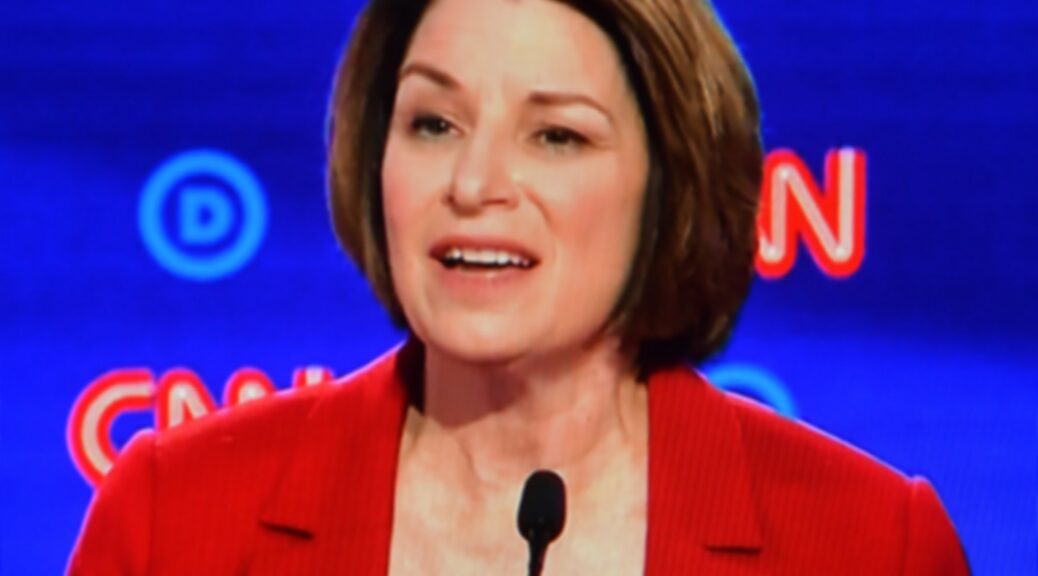
Coast, US Senator Amy Klobuchar has released her plan to tackle the Climate
Crisis, which is distinguished for a focus on agriculture and the Heartland, in
addition to the more common focus on manufacturing, transportation and clean,
renewable energy. This is from the Klobuchar campaign:
MINNEAPOLIS, MN — The climate crisis isn’t
happening in 100 years — it’s happening now. 2018 was the fourth-hottest year
on record globally and it was another near-record year for U.S. weather and
climate disasters. The dire warnings in the UN Intergovernmental Panel on Climate
Change and the National Climate Assessment make clear that immediate action is
needed. The National Climate Assessment lays out how increasing global
temperatures are harming our country’s food systems and public health by
increasing the risk of respiratory and cardiovascular disease, while
displacement and destruction caused by climate-related natural disasters
threaten our economy and national security.
Senator Klobuchar is a strong voice from the Midwest when it comes to
climate change. In the Senate, she leads the fight to combat climate change by
serving on the Senate Climate Action Taskforce, has fought for legislation to
reduce greenhouse gases, and has led a Senate resolution recognizing that
global climate change is occurring and will continue to pose ongoing risks
unless we take action. She authored legislation setting a national renewable
electricity standard and she successfully extended renewable energy production
tax credits. The first bill Senator Klobuchar ever introduced was a carbon counter
bill to establish the first national greenhouse gas registry to track emissions
by major industries.
We can’t wait. That’s why Senator Klobuchar is committed to taking
immediate action — without Congress — to transform our energy sector, unlock
scientific breakthroughs, hold the fossil fuel industry accountable, and
support workers and communities that are on the front lines of the climate
crisis. She will:
Use the full power of the presidency to tackle the climate crisis.
Starting on day one of her administration, Senator Klobuchar will take
aggressive executive action to confront the climate crisis. She will introduce
sweeping climate legislation in the first 100 days of her presidency, but she
also won’t wait for Congress when it comes to the full range of legal actions a
President can take to address climate change. Specifically, in the first 100
days of her administration Senator Klobuchar will:
Get the United States back in the Paris International
Climate Agreement on day one. On day one of Senator Klobuchar’s presidency
she will get us back into the Paris International Climate Change Agreement, and
she will immediately begin working with global leaders to strengthen the
agreement so that the United States maintains global leadership to address the
climate crisis.
Restore the Clean Power Plan. Senator Klobuchar will
bring back the Clean Power Plan, which set emissions standards for states with
respect to reductions in carbon dioxide emissions. She will negotiate even
stronger emissions standards that account for the progress states have already
made.
Bring back the fuel-economy standards. Senator Klobuchar
will restore and strengthen our fuel economy standards, which are key to making
an immediate impact on the emissions of cars and light trucks. The Trump
Administration has weakened the fuel-economy standards for cars and light
trucks and has challenged the right of California and other states to follow
more stringent standards.
Introduce sweeping legislation that will put our country
on the path to 100% net zero emissions by 2050. In her first 100 days as
President, Senator Klobuchar will introduce and work with Congress to pass
sweeping legislation that will put our country on a path to achieving 100%
net-zero emissions no later than 2050.
End the Trump Administration’s censoring of climate
science. Senator Klobuchar will end Trump Administration efforts to censor
climate science through actions like deleting climate-focused websites,
removing the phrase “climate change” from reports, and preventing government
scientists from attending conferences on climate change.
Set ambitious goals to reduce the carbon footprint of the
federal government. During the first 100 days of her administration,
Senator Klobuchar will aggressively work to reduce the federal government’s
significant carbon footprint. As President, she will set ambitious goals to
increase the efficiency of federal buildings, data centers, and vehicles,
reduce water consumption, and increase the use of renewable energy.
Reinstate the National Climate Assessment Advisory
Committee to immediately start addressing the climate crisis. The National Climate
Assessment Advisory Committee was charged with translating the findings of the
National Climate Assessment into concrete goals. During the first 100 days of
her administration, Senator Klobuchar will reinstate this committee that
President Trump let expire.
Hold the fossil fuel industry accountable. Senator
Klobuchar is committed to standing up to the oil companies and holding the
fossil fuel industry accountable. She will:
End federal fossil fuel subsidies. For too long,
taxpayers have subsidized the massive profits of fossil fuel companies. Senator
Klobuchar will end federal tax subsidies for fossil fuel exploration and
production.
Make politicians accountable to voters, not special
interests. Again and again, bold action on climate has been blocked by the
power of special interests. As President, Senator Klobuchar will put people
first by working to pass a constitutional amendment to overturn Citizens United
and get dark money out of our politics, as well as establish a campaign finance
system that increases the power of small donors through a matching system for
small donations. She will investigate potential wrongdoings and hold energy
companies accountable.
Expanding Renewable Energy and Transforming the Energy
Sector
There is a scientific consensus that in order to avoid the
worst effects of climate change we will need to achieve 100% net-zero emissions
no later than 2050, which cannot be done without a wholesale transformation of
the energy sector. To expand renewable energy and transform the energy sector
to produce clean power, Senator Klobuchar will:
Invest in infrastructure and provide incentives for state
and local governments, nonprofits, and private companies to expand clean energy
production. Senator Klobuchar will support a landmark carbon pricing system
that does not have a regressive impact on Americans and will help make clean
energy production more cost competitive. She will also do more to accelerate
the adoption of clean energy, including by subsidizing production and investment
by state and local governments, nonprofits and private companies, as well as by
upgrading our grid infrastructure and storage capabilities.
Provide production and investment tax credits.
Senator Klobuchar will create a technology neutral tax credit to support
production of or investment into clean sources of energy. She will also create
a clean energy bond program so that tax-exempt entities can benefit. The
credits will be phased out as overall emissions are reduced.
Upgrade energy grids and storage capacity. Our
country’s electric grid needs an upgrade to account for the irregular nature of
certain clean energy sources, accommodate distributed energy production, and
facilitate smart metering and other innovative technologies. As President,
Senator Klobuchar will create a competitive grant program and a new investment
tax credit to promote investments in grid improvements and storage. She will
also provide rural electric cooperatives access to technical resources and expertise
to overcome the barriers to renewable energy storage and grid improvements
based on a bipartisan bill she leads in the Senate.
Streamline renewable energy production on federal land.
Many federal lands have significant renewable energy potential. As President,
Senator Klobuchar will work to streamline the permitting process for renewable
projects on federal lands while protecting sensitive ecosystems and ensuring a
fair distribution of payments.
Empower municipal utilities and electric cooperatives to
lead on clean energy. Senator Klobuchar knows that one size doesn’t fit all
when it comes to clean energy policy. She will make sure smaller producers,
including municipal utilities and electric cooperatives, have a seat at the
table when decisions are made about federal energy policy. In the Senate, she
authored bipartisan legislation that was signed into law that enables rural
electric power cooperatives and their members to continue to use
energy-efficient water heaters as part of conservation programs. This law
allows cooperatives to optimize both their own energy management and the
environmental benefits of water heaters.
Reduce climate pollution. A carbon price will create
an economic incentive to reduce carbon pollution and there is more we can do to
limit climate pollution from existing fossil fuel production.
Restore and expand the Clean Power Plan. In her first
100 days as President, Senator Klobuchar will bring back the Clean Power Plan,
which set emissions standards for states with respect to reductions in carbon
dioxide emissions. She will negotiate even stronger emissions standards that
account for the progress states have made.
Strengthen enforcement of the Clean Air Act and other
environmental laws. Under the Trump Administration, EPA enforcement efforts
have fallen dramatically. As President, Senator Klobuchar will direct the EPA
to vigorously enforce the Clean Air Act and other environmental laws and make
sure the enforcers have the resources they need.
Reduce methane leakage from oil and gas production.
Methane has as much as 84 times the warming potential of carbon dioxide. The
Trump Administration has rolled back EPA and BLM rules to prevent methane
leakage even though the Senate defeated an attempt to repeal the BLM methane
rule on a bipartisan vote and many companies already comply with stricter state
rules. As President, Senator Klobuchar will restore and strengthen the EPA and
BLM methane rules.
Support research to improve negative emissions
technologies. To supplement other mitigation efforts as we transition
to clean energy, Senator Klobuchar will support research to improve negative
emissions technologies that could be used to reduce the amount of carbon
currently in the atmosphere.
Ban new fossil fuel permitting on federal lands and
review and restore environmental protections repealed by the Trump
Administration. To help accelerate the transition away from fossil fuels,
Senator Klobuchar will ban new fossil fuel permits on federal lands. Senator
Klobuchar will also undertake a comprehensive review and restore environmental
protections repealed by the Trump Administration. The Trump Administration has
revoked dozens of guidance documents and rules that protect people’s safety,
health and the environment when it comes to our power plants, oil refineries,
national parks and wildlife refuges, offshore drilling, pipelines, and oil and
gas development. Senator Klobuchar will undertake a thorough review of all the
repealed guidance and rules, and work to restore our environmental and safety
protections.
Increasing Efficiency and Rebuilding a Green America
Confronting the climate crisis also means improving energy
efficiency and rebuilding infrastructure to reduce greenhouse gas emissions and
stand up to the effects of climate change. As President, Senator Klobuchar
will:
Increase efficiency and move toward an electrified
transportation sector. Today, transportation accounts for about 30 percent
of U.S. greenhouse gas emissions. Senator Klobuchar will work to reduce
emissions in the transportation sector through increasing fuel economy,
supporting electrification, and promoting efficient transportation
options.
Bring back the fuel-economy standards. In her first
100 days as President, Senator Klobuchar will restore and strengthen our fuel
economy standards, which are key to making an immediate impact on the emissions
of cars and light trucks. The Trump Administration has weakened the
fuel-economy standards for cars and light trucks and has challenged the right
of California and other states to follow more stringent standards.
Invest in electric vehicle infrastructure and promote
electric vehicle sales. As President, Senator Klobuchar will make a significant
investment in electric vehicle charging infrastructure and bring back the tax
credit for electric vehicle purchases.
Strengthen transit and commuter rail networks and support
low- and no-carbon alternatives. As President, Senator Klobuchar will refocus
federal transportation grants to prioritize transit projects, first and last
mile connections, and bicycle and pedestrian improvements. She will also
develop new incentives for transit systems and school districts to replace
their existing bus fleets with low- and no-carbon alternatives.
Revitalize freight and passenger rail. Railroads are
an energy- and cost-effective way for producers to bring their goods to market
and get people where they need to go. As President, Senator Klobuchar will
encourage investment in short-line and freight rail networks. She will also
address safety concerns including by mandating two-man crews, improving braking
systems, and ensuring communities are prepared to respond to derailments
involving hazardous cargo. In addition, she will build on her work pushing for
greater competition in freight markets by providing fair treatment for captive
shippers, appointing well qualified members to the Surface Transportation
Board, and reviewing and addressing consolidation in the freight rail industry.
She is also committed to expanding high-speed rail and Amtrak service in rural
America.
Innovate in international shipping and aviation.
International shipping and aviation account for a growing share of carbon
emissions. As President, Senator Klobuchar will support research and strengthen
international agreements to reduce emissions from sources like aviation and
shipping.
Support green manufacturing and provide consumers with
green options. Manufacturing processes and consumer goods can have a
significant climate impact. New technologies can significantly reduce carbon
pollution, but we need to make sure manufacturers have the tools to adopt these
technologies.
Assist businesses transitioning to green manufacturing
processes. Senator Klobuchar is committed to ensuring businesses have the
resources they need to transition to green manufacturing processes. She will
increase technical support through the Manufacturing Extension Partnership and
regional development strategies and encourage partnerships with community
colleges and research universities. She will also expand manufacturing tax
credits to specifically support upgrades and investments to reduce greenhouse
gas pollution for manufacturers of all sizes.
Build a market for new and existing climate-friendly
products. As President, Senator Klobuchar will support a market for
climate-friendly products by promoting federal procurement policies that
account for low-carbon energy sources and climate conscious processes.
Create a “Buy Clean” product labeling system. Many
consumers are concerned about how their purchasing decisions affect the
climate. As President, Senator Klobuchar will create a “Buy Clean” product
labeling system to give consumers clear information about products that are
produced to minimize their climate impact.
Institute an import fee on carbon-intensive goods. We
cannot allow foreign competitors to undercut U.S. manufacturers that are
producing goods with climate conscious processes. That’s why as President,
Senator Klobuchar will work to institute a fee on imports of carbon-intensive
goods from foreign countries.
Invest in green jobs and infrastructure. Senator
Klobuchar has proposed a $1 trillion infrastructure package that will modernize
our aging energy infrastructure so that it is secure and efficient. This
massive infrastructure investment will create good-paying union jobs and give
workers the skills they need to succeed in the green economy.
Retrofit buildings to reduce their emissions. Residential
and commercial buildings account for a significant share of U.S. greenhouse gas
emissions. Senator Klobuchar will launch a major initiative to retrofit
existing buildings to reduce their emissions through grants and tax credits
that support insulation, weatherization improvements, upgrades to heating and
cooling systems, and other energy saving upgrades.
Make new buildings climate friendly. As President,
Senator Klobuchar will support the development of the next generation of
low-emission buildings through model building energy codes and benchmarking and
transparency programs that cut carbon pollution and energy bills for American
families and businesses.
Promote effective zoning rules to minimize climate
impacts. Some cities are beginning to update their zoning policies through
initiatives like Minneapolis 2040. Senator Klobuchar will prioritize areas that
have updated their zoning rules when awarding federal housing and
infrastructure grants.
Expand the Land and Water Conservation Fund. Senator
Klobuchar has been a strong supporter of the Land and Water Conservation Fund
(LWCF), which preserves natural resources while supporting outdoor recreation
through investments on our public lands. As President, Senator Klobuchar will
push to permanently fund the LWCF.
Coordinate with broadband and other infrastructure
priorities. In the Senate, Senator Klobuchar has been a leading proponent
of “dig once” policies and other ways to reduce costs by coordinating
infrastructure deployment. As President, she will direct federal agencies to
maximize opportunities for coordinating climate, broadband, and other types of
infrastructure deployment.
Build climate resiliency into all federal infrastructure
investments. As President, Senator Klobuchar will make federal infrastructure
investments resilient to both current and future climate risks and partner with
states and communities to develop regionally coordinated, resilient
infrastructure strategies.
Promoting Research and Unlocking New Scientific
Breakthroughs for Green Technologies
At the same time as we move forward aggressively with the
tools we have today, we need to invest in research that will create new
opportunities to tackle the climate crisis. To unlock new scientific
breakthroughs and promote research, Senator Klobuchar will:
Invest in federally sponsored research. Basic and
applied research can uncover new technologies, make existing products more
efficient, and reduce the costs of the tools we need to take on climate change.
Senator Klobuchar will increase investment in federally sponsored research.
Expand direct federal research. As President, Senator
Klobuchar will make bold investments in direct climate research at the
Department of Energy, National Labs, ARPA-E and the Department of Defense.
Partner with universities and non-profits. As
President, Senator Klobuchar will support a major expansion of federal grants
for climate research to universities and non-profits.
Unleash the creativity of the private sector.
American workers and businesses are a vital source of innovation. Senator
Klobuchar believes we must include the private sector in climate research and
innovation.
Strengthen tax incentives for climate research.
Senator Klobuchar will strengthen existing tax credits for businesses investing
in research to develop new processes, technologies and products that reduce
greenhouse gas emissions and help tackle the climate crisis.
Encourage collaboration between researchers and the private
sector. As President, Senator Klobuchar will make it easier for federal
research grant recipients to partner with the private sector and provide
set-aside grants for projects with strong commercialization potential.
Help American companies become global green leaders.
As President, Senator Klobuchar will increase support for businesses looking to
export green products and technologies through a new initiative across U.S.
export promotion agencies.
Respect science and empower scientists. As President,
Senator Klobuchar will stop the constant attacks on scientists and science. She
will also direct all federal agencies to reimplement scientific integrity
policies, reverse rules limiting what types of science agencies can use, and
restart data collection canceled by the Trump Administration.
Mobilizing the Heartland
Senator Klobuchar is a strong voice from the Midwest when it
comes to climate change. She will give rural areas the tools they need to be
leaders in clean energy production, support agricultural practices that take on
climate change and make sure the heartland benefits from rebuilding a green
America.
Support rural clean energy production. Clean energy,
including wind and solar, is a major driver of job growth in rural areas. In
fact, 99 percent of operating wind capacity is located in rural areas. As part
of Senator Klobuchar’s plan to tackle climate change, she will prioritize rural
energy development, including expanding storage capacity and strengthening our
energy grid. And as we continue to develop advanced biofuel technologies, she
will strengthen the renewable fuel standard.
Invest in wind and solar and support rural energy
development. As President, Senator Klobuchar will invest in interregional
transmission lines and grid improvements to support the development of
renewable energy. She will launch a grant program to help rural cooperatives
develop energy storage and microgrid projects for renewable energy generation,
transmission and storage. She will also support increased investment in small,
distributed wind, solar and biogas projects.
Provide technical resources for small, rural energy
producers and distributors. As President, Senator Klobuchar will push for
new economic and environmental opportunities in rural America by investing in
rural renewable energy development and by passing and signing into law her
bipartisan Expanding Access to Sustainable Energy (EASE) Act to provide rural
electric cooperatives access to technical resources and expertise to overcome
the barriers to renewable energy storage and grid improvements.
Investing in and providing incentives for homegrown
energy. Senator Klobuchar believes that homegrown biofuels are an important
part of our rural economies, our nation’s energy security and reducing
greenhouse gas emissions. In the Senate, she has been a leader when it comes to
standing up to the Administration’s misuse of small refinery renewable fuel
standard (RFS) waivers. She has also worked successfully in the Senate to
provide financing and grant support to biobased manufacturers. As President,
Senator Klobuchar will strengthen the RFS, end the overuse of secret RFS small
refinery waivers, promote the use of blender pumps, pass a statute to ensure
year-round E15 sales, and invest in advanced and cellulosic biofuels.
Help farmers be leaders in responding to the climate crisis.
We can position American farmers to be leaders in responding to the climate
crisis by increasing land conservation and expanding on new techniques that
help store more carbon in topsoil on productive farmland.
Invest in conservation innovation. Senator Klobuchar
will target research into soil carbon sequestration, which could improve soil
health as well as reduce carbon levels in the atmosphere. She will also expand
Conservation Innovation Grants to test emerging conservation approaches,
including practices that increase carbon sequestration levels. And building on
provisions she included in the 2018 farm bill, Senator Klobuchar will further
improve agriculture data research of conservation practices to help farmers
reduce risk and increase profitability.
Protect native sod and improve soil health. Senator
Klobuchar pushed for a provision in the 2018 Farm Bill that closed a loophole
allowing some non-insured crops to be planted four consecutive years without a
reduction in crop insurance assistance for succeeding insured crops. As
President, she will expand nationwide the sodsaver’s prohibition to substitute
crop insurance yields on native sod that is converted to cropland. She will
also expand the Soil Health and Income Protection Pilot Program to help provide
farmers an alternative to cropping less productive cropland.
Expand conservation practices. Senator Klobuchar has
been a champion of supporting farmer conservation efforts and promoting farming
practices that reduce soil erosion and improve air and water quality, including
by helping pass the 2018 Farm Bill, which included several of her priorities.
As President, she will support significant new investments in conservation of
working and retired lands. Senator Klobuchar will support the continued expansion
of the Environmental Quality Incentives Program and increase resources for the
Conservation Stewardship Program to help provide farmers the tools they need to
protect and enhance natural resources on working agricultural lands. And after
successfully increasing the acreage cap of the Conservation Reserve Program,
Senator Klobuchar will work to attract more enrollees and ensure payment rates
are fair.
Use green infrastructure investment to strengthen rural
communities. There is a significant infrastructure backlog in rural
America. From roads and bridges to levees and stormwater systems many rural
areas face infrastructure challenges that will be difficult to address without
federal investment. Upgrading rural infrastructure to meet our climate goals
will also provide an opportunity to address the backlog and overcome
infrastructure challenges that are holding back rural America.
Strengthen rural transportation infrastructure. Rural
transportation infrastructure is at risk from the effects of climate change. As
President, Senator Klobuchar will invest in the repair and improvement of rural
bridges that are not part of the federal-aid highway network and invest in the
Harbor Maintenance Trust Fund to improve inland waterways and ports, including
funding for the Navigation and Ecosystem Restoration Program to modernize and
expand outdated locks and restore ecosystems along the Mississippi.
Expand energy efficiency programs. Energy costs can
be a significant burden on farms, small businesses and households in rural
communities. Senator Klobuchar has long worked to see that the Rural Energy for
America Program (REAP) has the resources needed to provide grants to farms and
rural businesses to install energy efficient technologies, and she will
continue to push for additional resources. In the Senate, she authored
bipartisan legislation that was signed into law that empowers the nonprofit
community to make energy-efficiency improvements to their buildings and
offices.
Upgrade levees to account for more frequent and severe
floods. The floods we saw throughout the Midwest this year show why we
cannot wait to upgrade our levees so they can protect communities from more
frequent and severe floods. Senator Klobuchar will make upgrading levees a
major focus of her infrastructure investment in the heartland.
Update the rural housing stock. Much of the existing
rural housing stock is outdated and in poor condition, which contributes to the
rural housing crisis. Investments in weatherizing and updating homes and their
heating and cooling systems will build value and help renew the rural housing
stock.
Bring high-speed broadband to every household and
business in America. Broadband access can reduce commuting and make
business and farms more efficient. In an effort to close the rural-urban
divide, Senator Klobuchar has previously announced a commitment to connect
every household in America to high-speed internet by 2022. She will focus on
creating accurate broadband maps to identify areas that lack adequate access, bringing
high-speed internet infrastructure to areas most in need, including by
expanding Rural Utility Service grants, and providing greater incentives for
existing providers to upgrade their networks to cover unserved and underserved
areas. She will also work to quickly implement the recommendations of the
Precision Ag Connectivity Task Force to help farmers fully realize the
potential of broadband in their operations.
Leaving No One Behind
Vulnerable communities are currently experiencing a
disproportionate share of the effects of climate change. Senator Klobuchar is
committed to leaving no one behind through investments in climate adaptation
and support for frontline communities. She will also focus on fulfilling our
responsibility to our communities and workers who have helped power this
country.
Support communities that are most directly experiencing
the effects of climate change. Traditionally marginalized communities
including African Americans, Latinos, Native Americans, and disabled Americans
are experiencing some of the most severe effects of climate change. Senator
Klobuchar will prioritize assisting these communities as they adapt to the
effects of climate change.
Make sure vulnerable communities are a key part of all
decision making. We cannot continue to make decisions about climate change
without directly and meaningfully involving the communities that are most
affected. Senator Klobuchar will make sure traditionally marginalized
communities are a key part of all decision-making processes.
Direct resources to the communities with the greatest
needs. As President, Senator Klobuchar will create tax incentives and
increase federal funding to communities that are most directly experiencing the
effects of climate change. She will also prioritize these communities for
infrastructure investments and in other federal climate change programs.
Strengthen environmental justice programs at the EPA.
The Trump Administration has worked to dismantle environmental justice
programs. Senator Klobuchar will invest in the EPA’s Environmental Justice
Grants, Funding and Technical Assistance and Office of Civil Rights.
Invest in affordable housing that promotes climate
resilience and mitigation. As President, Senator Klobuchar will ensure that
all federal housing programs put strong standards in place to reduce carbon
emissions and she will invest in retrofitting so that existing housing is more
energy efficient.
Strengthen LIHEAP and SNAP to protect the most vulnerable
Americans. To be sure that the most vulnerable Americans do not bear
the costs of climate change mitigation and adaptation, Senator Klobuchar will
strengthen two important programs for low-income Americans — LIHEAP, which
helps with home energy costs, and SNAP, which provides nutrition assistance.
Use disaster funding to build more resilient communities. As
President, Senator Klobuchar will work to end the Stafford Act prohibition that
prevents disaster funding from being used for significant infrastructure
improvements. She will also increase funding for FEMA’s Hazard Mitigation Grant
Program.
Fulfill our responsibility to our communities and workers
who have helped power this country. As the granddaughter of miner who
worked 1,500 feet underground, Senator Klobuchar understands the hard work and
sacrifice of those who built and powered our country. She is committed to
supporting and creating new opportunities for workers and communities that have
depended on the fossil fuel industry.
Promote community assistance and support workers.
Senator Klobuchar will work with the public and private sector to attract new
employers and maintain public services, while investing in infrastructure and
educational opportunities in areas that experience job loss. As part of any
carbon pricing system, she will create a significant manufacturing tax
incentive to encourage investment in rural communities or communities that have
faced or are about to face job losses. To make it easier for workers to find
new jobs, Senator Klobuchar will create a new tax credit for companies that
hire workers who had previously depended on the fossil fuel industry for
employment. Workers will also be able to take advantage of Senator Klobuchar’s
previously announced plan to provide tuition-free one- and two-year community
college degrees and technical certifications and expand student loan
forgiveness programs to workers in in-demand occupations.
Reestablish U.S. International Leadership on Climate.
When it comes to global leadership on climate change, the United States has
abdicated its leadership role under the Trump Administration. As President,
Senator Klobuchar will reassert U.S. global leadership to confront the climate
crisis.
Get the United States back in the Paris International
Climate Agreement on day one. On day one of Senator Klobuchar’s presidency
she will get the United States back into the Paris International Climate Change
Agreement, and she will immediately begin working with global leaders to
strengthen the agreement so that the United States maintains global leadership
to address the climate crisis.
Build on the Paris International Climate Agreement to
achieve global emissions reductions we need. Senator Klobuchar will work
with international leaders to build consensus around stronger goals to limit
global warming to no more than 2.7 degrees Fahrenheit. She will also recommit
to controls on other greenhouse gasses through agreements like the Kigali
Amendment. And she will increase U.S. support for the Green Climate Fund.
Establish meaningful enforcement of international climate
goals. The United States is the second largest emitter of greenhouse
gasses, but still only accounts for about 15 percent of global greenhouse gas
emissions. Preventing catastrophic global warming will require meaningful
enforcement mechanisms to ensure other countries also meet their emission
reduction goals, which means making accountability for climate commitments a central
part of our international agenda, taking on China’s efforts to promote dirty
energy sources in other countries, and considering climate goals in all types
of international assistance.
Protect our national security. As President
Senator Klobuchar will elevate the voices of our military and security experts
who have repeatedly warned that climate change will increase the risks of
international conflict and humanitarian crises. She will work with our allies
to support countries most affected by climate change, including addressing
global food and water shortages, supporting climate resilient development,
helping countries adapt to the effects of climate change, and preparing for the
increased risk of natural disasters.
To pay for these critical investments, Senator Klobuchar
will:
Work with Congress to put a price on carbon that does not
have a regressive impact on Americans. We know that carbon pollution has
significant costs, but for too long the public has been forced to bear those
costs while those responsible for the pollution have paid nothing. Most
economists agree that the most efficient way to promote a transition away from
fossil fuels is by putting a price on carbon. As President, Senator Klobuchar
will work with Congress to put a carbon pricing system in place that does not
have a regressive impact on Americans.
Develop Clean Energy Bonds. As President, Senator
Klobuchar will create Clean Energy Bonds that will support investment in clean
energy projects. Investors would earn back their full investment as well as
interest from energy savings to the government and loan repayments for clean
energy projects. Estimates suggest that these clean energy bonds could raise up
to $50 billion and leverage $150 billion for clean energy innovation and the creation
of over 1 million jobs.
End federal fossil fuel subsidies. For too long,
taxpayers have subsidized the massive profits of fossil fuel companies. Senator
Klobuchar will end federal tax subsidies for fossil fuel exploration and
production.
Make a series of corporate tax reforms. To pay for a
green infrastructure investment worth hundreds of billions of dollars, Senator
Klobuchar will make a series of corporate tax reforms including adjusting the
corporate tax rate to 25%, closing loopholes that encourage U.S. companies to
move jobs and operations overseas, establishing a financial risk fee on our
largest banks, and increasing efforts for tax enforcement.
Increase the capital gains rate. To support and
create new opportunities for workers and communities that have depended on the
fossil fuel industry, Senator Klobuchar will raise the capital gains rate for
Americans who make over $200,000.
Close the trust fund loophole. To support updating
our buildings and providing consumers support through programs like LIHEAP and
rebates, Senator Klobuchar will close the trust fund loophole.
The vigorous contest
of Democrats seeking the 2020 presidential nomination has produced excellent
policy proposals to address major issues. Senator Bernie Sanders, in the town
of Paradise, California, which was obliterated in last season’s wildfires, unveiled
his Green New Deal, “the only plan bold
enough to confront the climate crisis and create an economy that works for all.”
Under Sanders’ plan, the United States will reach 100 percent renewable energy
for electricity and transportation by no later than 2030 and complete decarbonization
by 2050. This is from the Sanders campaign:
“This
is a pivotal moment in the history of America — and really, in the history of
humanity. The climate crisis is not only the single greatest challenge facing
our country; it is also our single greatest opportunity to build a more just
and equitable future, but we must act immediately,” said Sen. Sanders. “When we
are in the White House, we will launch the decade of the Green New Deal, a
10-year mobilization to avert climate catastrophe during which climate change,
justice and equity will be factored into virtually every area of policy, from
immigration to trade to foreign policy and beyond.”
Sanders’
Green New Deal boldly embraces the moral imperative of addressing the climate
crisis and builds on an unprecedented grassroots movement powerful enough to
take on the fossil fuel industry and win. As president, Sanders will mobilize
the political will necessary for a wholesale transformation of our society,
with support for frontline communities and massive investments in sustainable
energy, energy efficiency, and a transformation of our transportation system.
The
Green New Deal will avert climate catastrophe, transform our energy system,
build an economy for all and end the greed of the fossil fuel industry
by:
Ending unemployment by creating 20 million jobs needed to solve the climate crisis.
Ensuring a just transition for communities and workers, including fossil fuel workers.
Ensuring justice for frontline communities, especially under-resourced groups, communities of color, Native Americans, people with disabilities, children and the elderly.
Saving American families money with investments in weatherization, public transportation, modern infrastructure and high-speed broadband.
Committing to reducing emissions throughout the world.
The
Green New Deal will pay for itself over 15 years by holding the fossil fuel
industry accountable for the damage it has caused. Sanders’ plan will:
Make the fossil fuel industry pay for their pollution, through litigation, fees, and taxes, and by eliminating federal fossil fuel subsidies.
Generate revenue from the wholesale of energy produced by the regional Power Marketing Authorities. Revenues will be collected from 2023-2035, and after 2035 electricity will be virtually free, aside from operations and maintenance costs.
Scale back military spending on maintaining global oil dependence.
Collect new income tax revenue from the 20 million new jobs created by the plan.
Reduce the need for federal and state safety net spending due to the creation of millions of good-paying, unionized jobs.
Make the wealthy and large corporations pay their fair share.
With Democrats clamoring for the Democratic National Committee to host a climate debate for candidates, several have issued their own climate action plans, including Vice President Joe Biden. The Biden Plan for a Clean Energy Revolution & Environmental Justice details how a Biden Administration will tackle the moral and economic imperative of climate change on day one.
“More severe storms and droughts, rising sea levels, warming temperatures, shrinking snow cover and ice sheets – it’s already happening. We must take drastic action now to address the climate disaster facing the nation and our world,” said Vice President Joe Biden. “Science tells us that how we act or fail to act in the next 12 years will determine the very livability of our planet. That’s why I’m calling for a Clean Energy Revolution to confront this crisis and do what America does best – solve big problems with big ideas.”
Here is an overview:
The Biden Plan for a Clean Energy Revolution & Environmental Justice
Addressing the global threat of climate change and revitalizing America’s economy
From coastal towns to rural farms to urban centers, climate change poses an existential threat – not just to our environment, but to our health, our communities, our national security, and our economic well-being. It also damages our communities with storms that wreak havoc on our towns and cities and our homes and schools. It puts our national security at risk by leading to regional instability that will require U.S military-supported relief activities and could make areas more vulnerable to terrorist activities.
Vice President Biden knows there is no greater challenge facing our country and our world. Today, he is outlining a bold plan – a Clean Energy Revolution – to address this grave threat and lead the world in addressing the climate emergency.
Biden believes the Green New Deal is a crucial framework for meeting the climate challenges we face. It powerfully captures two basic truths, which are at the core of his plan: (1) the United States urgently needs to embrace greater ambition on an epic scale to meet the scope of this challenge, and (2) our environment and our economy are completely and totally connected.
If we can harness all of our energy and talents, and unmatchable American innovation, we can turn this threat into an opportunity to revitalize the U.S. energy sector and boost growth economy-wide. We can create new industries that reinvigorate our manufacturing and create high-quality, middle-class jobs in cities and towns across the United States. We can lead America to become the world’s clean energy superpower. We can export our clean-energy technology across the globe and create high-quality, middle-class jobs here at home. Getting to a 100% clean energy economy is not only an obligation, it’s an opportunity. We should fully adopt a clean energy future, not just for all of us today, but for our children and grandchildren, so their tomorrow is healthier, safer, and more just.
As president, Biden will make the United States a world leader to address the climate emergency through the power of example, by ensuring the U.S. achieves a 100% clean energy economy and net-zero emissions no later than 2050.
The Biden Plan will:
Ensure the U.S. achieves a 100% clean energy economy
and reaches net-zero emissions no later than 2050. On day one, Biden will sign a series of new
executive orders with unprecedented reach that go well beyond the
Obama-Biden Administration platform and put us on the right track. And, he
will demand that Congress enacts legislation in the first year of his
presidency that: 1) establishes an enforcement mechanism that includes
milestone targets no later than the end of his first term in 2025, 2)
makes a historic investment in clean energy and climate research and
innovation, 3) incentivizes the rapid deployment of clean energy
innovations across the economy, especially in communities most impacted by
climate change.
Build a stronger, more resilient nation. On day one, Biden will make smart infrastructure
investments to rebuild the nation and to ensure that our buildings, water,
transportation, and energy infrastructure can withstand the impacts of
climate change. Every dollar spent toward rebuilding our roads, bridges,
buildings, the electric grid, and our water infrastructure will be used to
prevent, reduce, and withstand a changing climate. As President, Biden
will use the convening power of government to boost climate resilience
efforts by developing regional climate resilience plans, in partnership
with local universities and national labs, for local access to the most
relevant science, data, information, tools, and training.
Rally the rest of the world to meet the threat of
climate change. Climate change is a global
challenge that requires decisive action from every country around the
world. Joe Biden knows how to stand with America’s allies, stand up to
adversaries, and level with any world leader about what must be done. He
will not only recommit the United States to the Paris Agreement on climate
change – he will go much further than that. He will lead an effort to get
every major country to ramp up the ambition of their domestic climate
targets. He will make sure those commitments are transparent and
enforceable, and stop countries from cheating by using America’s economic
leverage and power of example. He will fully integrate climate change into
our foreign policy and national security strategies, as well as our
approach to trade.
Stand up to the abuse of power by polluters who
disproportionately harm communities of color and low-income
communities. Vulnerable
communities are disproportionately impacted by the climate emergency and
pollution. The Biden Administration will take action against fossil fuel
companies and other polluters who put profit over people and knowingly
harm our environment and poison our communities’ air, land, and water, or
conceal information regarding potential environmental and health risks.
The Biden plan will ensure that communities across the country from Flint,
Michigan to Harlan, Kentucky to the New Hampshire Seacoast have access to
clean, safe drinking water. And he’ll make sure the development of
solutions is an inclusive, community-driven process.
Fulfill our obligation to workers and communities who
powered our industrial revolution and subsequent decades of economic
growth. This is support they’ve
earned for fueling our country’s industrial revolution and decades of
economic growth. We’re not going to leave any workers or communities
behind.
The Biden plan will
make a historic investment in our clean energy future and environmental justice,
paid for by rolling back the Trump tax incentives that enrich corporations at
the expense of American jobs and the environment. Biden’s climate and environmental justice
proposal will make a federal investment of $1.7 trillion over the next ten years,
leveraging additional private sector and state and local investments to total
to more than $5 trillion. President Trump’s tax cut led to trillions in stock
buybacks and created new incentives to shift profits abroad. Joe Biden believes
we should instead invest in a Clean Energy Revolution that creates jobs here at
home.
The Biden plan will be paid for by reversing the excesses of the Trump tax cuts
for corporations, reducing incentives for tax havens, evasion, and outsourcing,
ensuring corporations pay their fair share, closing other loopholes in our tax
code that reward work not wealth, and ending subsidies for fossil fuels.
This all builds on Vice President Biden’s years of leadership on climate change
– from introducing one of the first climate bills in the Senate to overseeing
the largest clean energy investment in our country’s history, the Recovery Act
and to mobilizing the world to achieve the Paris Climate Accord.
Vice President Biden
has committed that Biden for President will not accept contributions from the
oil, gas and coal corporations or executives.
For more on Vice
President Biden’s plan, watch THIS video,
view the policy HERE.