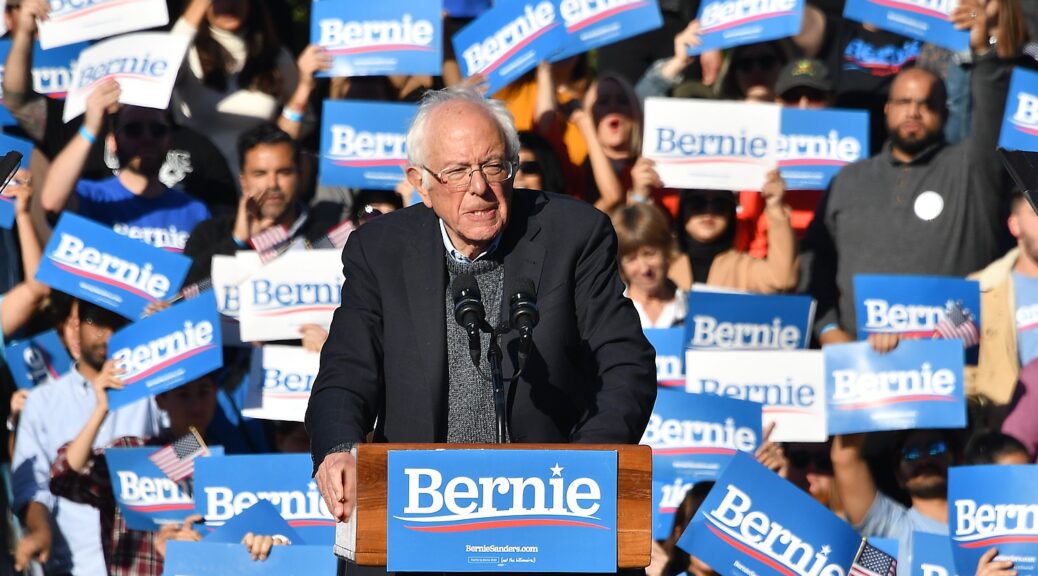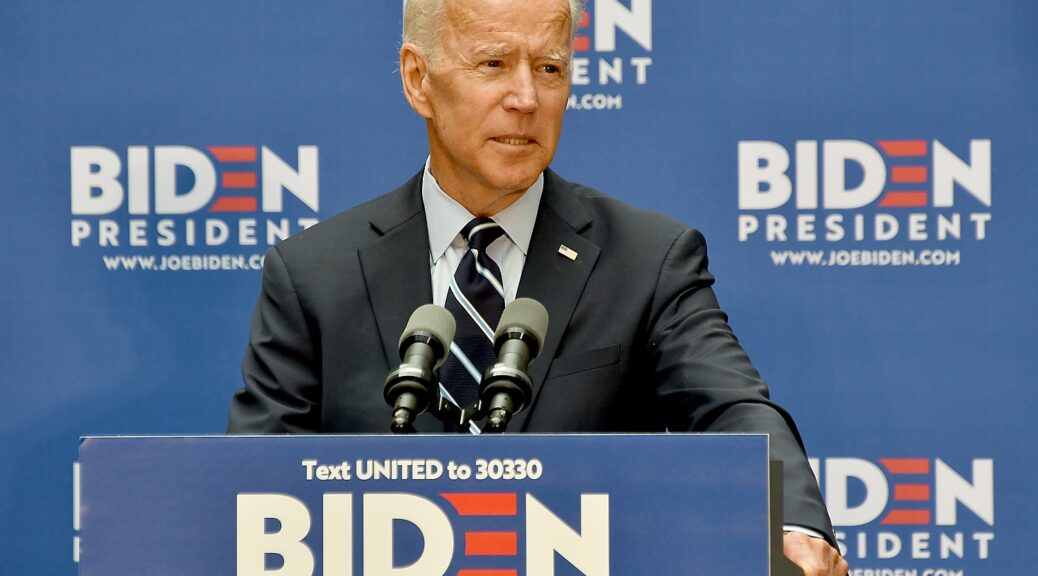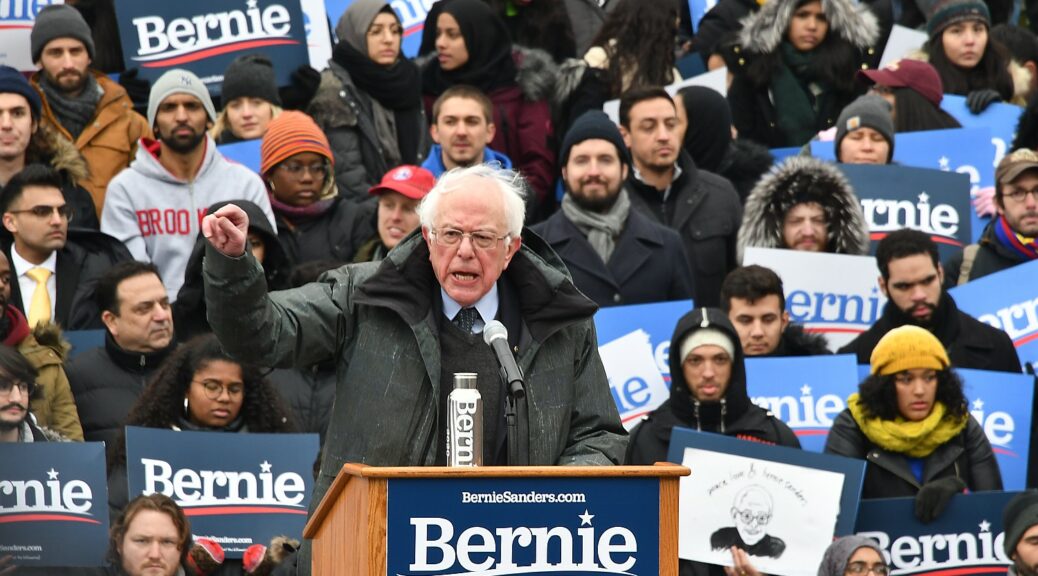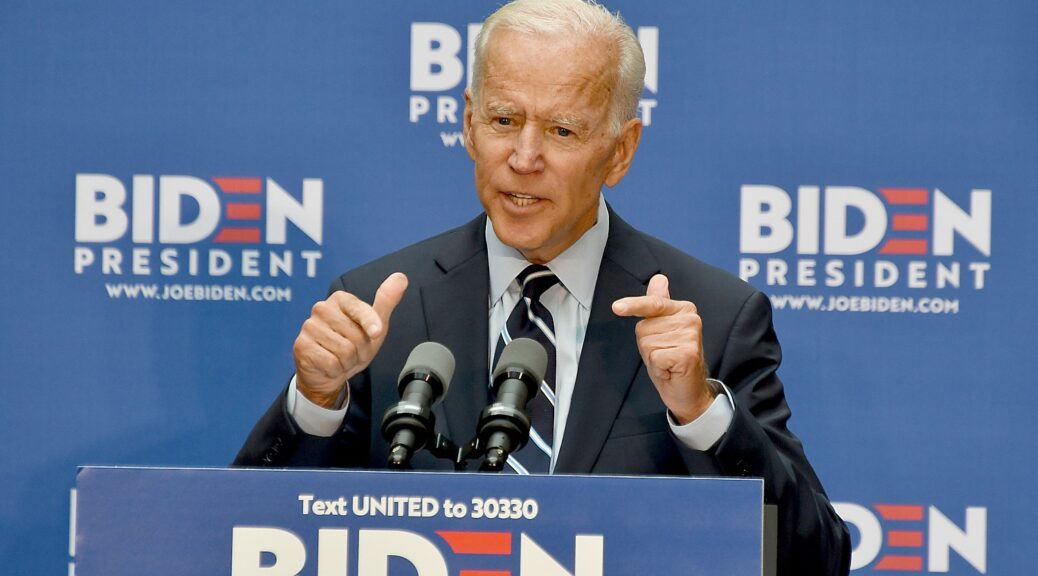
COLUMBIA, S.C. – Sen. Bernie Sanders on Thursday issued the following statement on the Trump administration’s response to coronavirus:
“Concern about the coronavirus continues to grow, yet the Trump administration’s response has been inadequate, misleading, and dangerous. By picking Vice President Mike Pence to lead the administration’s response to the pandemic, Trump has not only chosen someone completely unqualified, but the president has made clear that he’s more concerned about his own politics than the health and safety of the country.
“In my view, the Trump administration must take immediate action. First, they must replace Mike Pence with an expert on pandemics and disaster response. Second, the Trump administration must stop releasing misleading, unscientific, and false information about whether the coronavirus is controlled or when it will be controlled. Third, they must immediately staff their response team with experts and scientists to help us address a pandemic based on facts – Steve Mnuchin and Larry Kudlow are political cronies, not scientists. In addition, Trump must sign the full $8.5 billion in coronavirus response funding proposed by Sen. Chuck Schumer.
“We need a president who does not play politics with our health and national security. Besides passing Medicare for All so everyone can see a doctor or get a vaccine for free, my administration will greatly expand funding for the Center for Disease Control and National Institute of Health, work with the international community, including with the World Health Organization, and invest in research and technology to make vaccines available quickly,” Sanders stated.
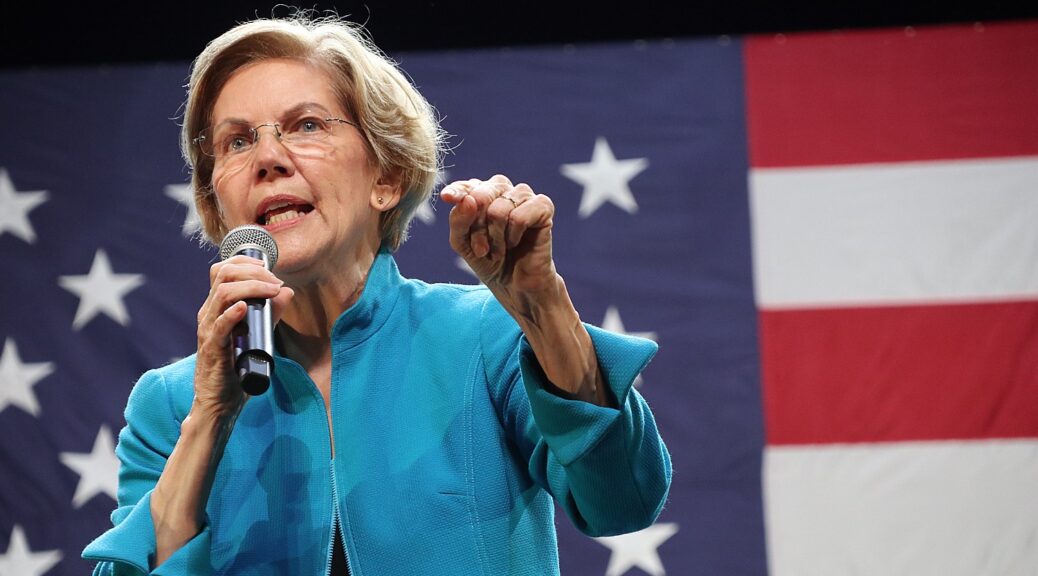
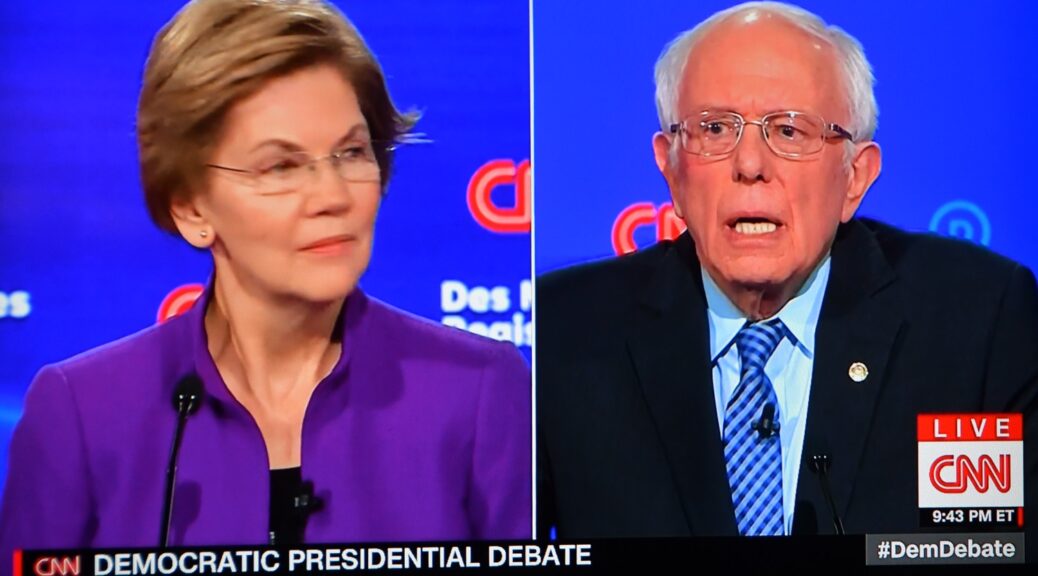
A new study that shows Medicare for All would save Americans $450 billion and 68,000 premature deaths a year could bolster the 2020 presidential campaigns of progressives Senator Elizabeth Warren and Bernie Sanders.
Medicare for All is
ironically, considering that Americans and especially Democrats have indicated
that access to affordable healthcare is their number one priority, is the issue
that could sink the 2020 presidential candidacy of progressives Bernie Sanders and
Elizabeth Warren. Now Sanders is heralding a new study by epidemiologists in
the medical journal The Lancet which found that Medicare for All would save
Americans $450 billion and prevent 68,000 premature deaths a year. Here is
Sanders’ statement:
Sen. Bernie Sanders on Saturday applauded a new study published
today by a team of epidemiologists in the peer-reviewed medical journal The
Lancet, which found that Medicare for All will save Americans $450 billion
and prevent 68,000 unnecessary deaths each and every year.
“This study confirms that Medicare for All will save the American people
$450 billion on health care costs and will prevent 68,000 unnecessary deaths –
each and every year,” Sanders said. “In other words, guaranteeing health care
as a human right by creating a Medicare for All system will cost substantially
less than our current dysfunctional health care system. It will save working

class families thousands of dollars and it will prevent tens of thousands of
Americans from dying each year. While the CEOs in the pharmaceutical and health
insurance industry may not like it, we will end their greed and enact Medicare
for All when I am president.”
According to the study, by replacing premiums, deductibles, co-payments
and out-of-pocket costs with a progressive tax system, Medicare for All will
save the average family thousands of dollars each year and will provide
lower-income households the greatest relief.
Struggling hospitals serving low-income communities would be
particularly helped by Medicare for All by eliminating uncompensated care,
increasing Medicaid reimbursement rates to Medicare levels, and reducing
administrative overhead, according to the study.
The study also debunks several attacks on Medicare for All from the
private health care industry that made well over $100 billion in profits last
year. Doctors and hospitals would see large savings in cost and time from
streamlining our bloated and inefficient administrative and billing system,
allowing doctors to spend more time with patients, the study found.
The study is the latest in a series of studies conducted over the past
three decades that have found that guaranteeing universal health care through a
single-payer health care system would not only dramatically improve the health
and well-being of the American people, it would cost less than our current
dysfunctional health care system that puts profits over people.
Last month, another medical journal found
that 19 out of 22 studies done over the past 30 years concluded that moving to
a Medicare for All, single-payer health care system would cost less than our current
health care system in the first year, and all of the studies showed that it
would cost less within a decade of implementation.
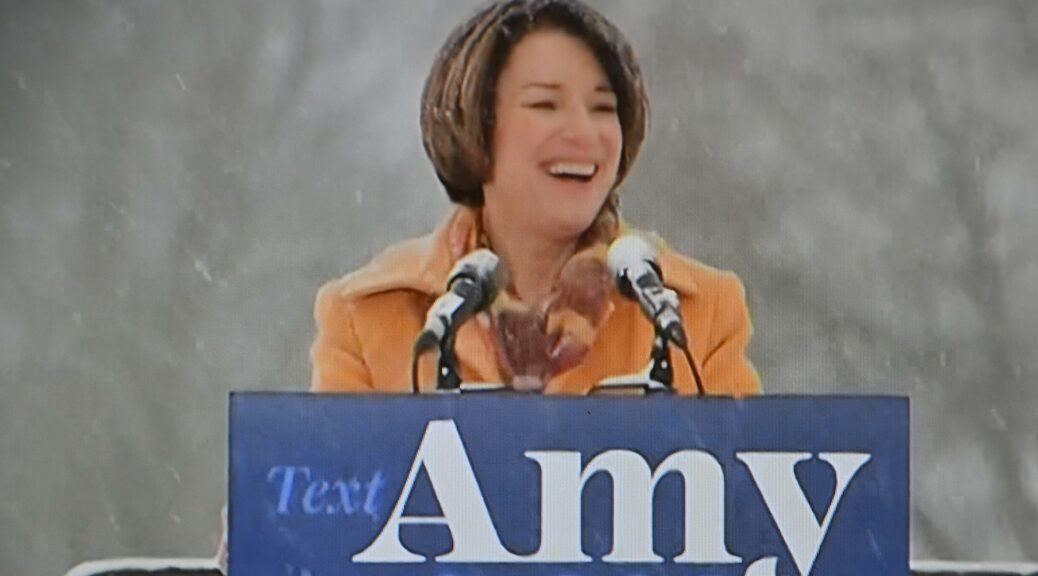
The vigorous contest of Democrats seeking the 2020 presidential nomination has produced excellent policy proposals to address major issues. Senator Amy Klobuchar’s plan for Seniors tackles Alzheimer’s, enhances health care and retirement security and reduces prescription drug costs. This is a summary from the Klobuchar campaign:
MINNEAPOLIS, MN – Senator Amy Klobuchar released her policy priorities for seniors. Building on her leadership in the Senate when it comes
to lowering the cost of prescription drugs and addressing the challenges our
seniors face, Senator Klobuchar is proposing a bold plan to tackle Alzheimer’s
disease and other forms of dementia, enhance health care and retirement
security, reduce skyrocketing prescription drug costs and combat senior fraud
and abuse. As President, Senator Klobuchar will continue to stand up for our
seniors and the 10,000 Americans who turn 65 each day.
“Everywhere I go, I meet seniors who tell me about their struggles to afford
everyday costs like prescription drugs or health care,” said Senator
Amy Klobuchar. “I meet family members who face challenges
caring for loved ones with Alzheimer’s and urgent action is needed to take on
these problems. I believe we owe it to our seniors to make sure they have the
care and support they need as they get older, and as President I will
prioritize tackling Alzheimer’s, strengthening health care and retirement
security, and reducing prescription drug costs.”
Support
caregivers for those living with Alzheimer’s and other chronic conditions.
Senator Klobuchar has been a leader when it comes to supporting people affected
by Alzheimer’s and their families. As President, she will support expanding
resources for health care providers to expand training and support services for
families and caregivers of people living with Alzheimer’s disease or other
forms of dementia as well as other chronic conditions, improving caregiver
well-being and health, as well as allowing patients to stay in their homes
longer.
Make
it easier for people with Alzheimer’s and their families to get the medical
care they need. Medicare is an essential resource for people
affected by Alzheimer’s, but many patients and their families are unaware of
the resources and coverage available when it comes to Alzheimer’s. Senator
Klobuchar will take action to expand Medicare covered services for Alzheimer’s
and she will expand efforts to make patients and their families aware of the
care-planning and services that are covered. She will also support an ongoing
investment in public health infrastructure for Alzheimer’s that reduces risk,
improves early detection and diagnosis, and focuses on tribal, rural, minority,
and other underserved populations.
Strengthen
the National Institutes of Health and invest in research for chronic conditions.
While the current administration has proposed draconian cuts to lifesaving
research, Senator Klobuchar will bolster research at the National Institutes of
Health and increase investments in research into cancer, including breast
cancer, which the Senator has long supported, and other chronic conditions. And
Senator Klobuchar will also invest in research into health disparities.
Significant and persistent disparities exist in health outcomes for minority
populations in the United States. When it comes to healthy aging, research has
shown divides based on race, wealth, and education. Senator Klobuchar will
invest in research across the federal government into the causes of these
disparities and how they can be reduced.
Invest
in Alzheimer’s research.
Senator Klobuchar will commit to preventing, treating and facilitating a cure
for Alzheimer’s disease, with the goal of putting us on a path toward
developing a cure and treatment by 2025. To support researchers, she will make
sure that funding is reliable and consistent. Since African Americans and the
Latino community will represent nearly 40 percent of the 8.4 million American
families affected by Alzheimer’s disease by 2030, Senator Klobuchar will
increase federal research into disparities in the incidents and outcomes of
Alzheimer’s and other forms of dementia.
Improve mental health care for seniors. Senator Klobuchar is committed to making mental health a priority, including for our seniors. As part of her recently released mental health plan, she will expand access to mental health treatment for seniors and expand depression treatment and suicide prevention efforts that focus on seniors.
Implement and extend Kevin and Avonte’s law and expand dementia training. Senator Klobuchar introduced bipartisan legislation signed into law last year that helps families locate missing people with forms of dementia, such as Alzheimer’s, or developmental disabilities, such as autism. As President, Senator Klobuchar will make sure the program is fully implemented and she will also establish federal partnerships with state and local governments to provide dementia training for public sector workers who interact with seniors.
Ensure a Secure Retirement
Protect Social Security and make sure it is fair. Social Security has served as a stable and secure retirement guarantee for generations of Americans. Senator Klobuchar believes that this program must remain solvent for generations to come and she will fight against risky schemes to privatize it. As President, Senator Klobuchar will work to lift the Social Security payroll cap. Currently the payroll tax only applies to wages up to $133,000. Senator Klobuchar supports subjecting income above $250,000 to the payroll tax and extending the solvency of Social Security. And Senator Klobuchar will make sure people are treated fairly by the current Social Security system. As President, she will work to strengthen and improve Social Security benefits for widows and people who took significant time out of the paid workforce to care for their children, aging parents, or sick family members.
Expand retirement savings. Senator Klobuchar believes all Americans deserve a secure retirement. As she has previously announced, Senator Klobuchar will work to create innovative, portable personal savings accounts called Up Accounts that can be used for retirement and emergencies by establishing a minimum employer contribution to a savings plan. [ This proposal is modeled after the Saving for the Future Act, which was introduced by Senators Coons and Klobuchar.] Under her plan, employers will set aside at least 50 cents per hour worked, helping a worker build more than $600,000 in wealth over the course of a career. And Senator Klobuchar will work to reduce disparities when it comes to retirement savings. According to a recent study, the median wealth for white families was more than $134,000, but for African American families it was just $11,000.
Defend pensions. Senator Klobuchar has been a leader in the Senate when it comes to keeping our pension promises. As President, she will support legislation to ensure retirees can keep the pensions they have earned and, in her first 100 days, she will recommend that Treasury heighten the scrutiny of any applications to reduce retiree benefits under the Kline-Miller Multiemployer Pension Reform Act of 2014.
Improve Health Care for Seniors and Lower Prescription Drug Costs
Unleash the power of 43 million seniors in Medicare Part D to negotiate better drug prices. Seniors should have access to their medicines at the lowest possible prices. As President, Senator Klobuchar will push to allow the government to directly negotiate lower drug prices for Medicare Part D, building on legislation she has led in the Senate.
Take immediate and aggressive action to lower prescription drug prices, including allowing personal importation from countries like Canada and crack down on “Pay-for-Delay” agreements. Senator Klobuchar has been a leading advocate for reducing the price of prescription drugs for seniors, including by helping close the Medicare Part D donut hole and introducing legislation to increase competition and require Medicare to negotiate lower drug prices. As President, during her first 100 days she will allow for the personal importation of prescription drugs from safe countries like Canada and crack down on “Pay-for-Delay” agreements that increase the cost of prescription drugs.
Strengthen Medicare and provide incentives for getting the best quality health care at the best price. Senator Klobuchar opposes cuts and risky schemes to privatize Medicare and will take action to strengthen Medicare and find solutions so it remains solvent. She will improve Medicare for current beneficiaries by reforming payment policies through measures like site neutral payments and providing incentives for getting the best quality health care at the best price, including bundled payments and telehealth.
Expand coverage for dental, vision and hearing under Medicare. Dental, vision, and hearing care should be covered as part of Medicare. Senator Klobuchar will support new Medicare coverage for these services that makes them affordable for all seniors.
Expand telehealth and rural health services and maintain rural hospitals. In the Senate, Senator Klobuchar has championed policies that ensure seniors who want to stay in their homes and communities can do so. As President, she will promote remote monitoring technology and telehealth services in Medicare and other programs that improve the quality of life and expand access to quality home care and emergency hospital services in rural areas. As President, she would work to create a new Rural Emergency Hospital classification under Medicare to help rural hospitals stay open and provide expanded support to our critical access hospitals.
Invest in Long-Term Care
Create a refundable tax credit to offset long-term care costs. Senator Klobuchar will work with Congress to establish a new refundable tax credit to help offset the costs of long-term care. The credit will be available for qualifying long-term care costs including both nursing facility care and home- and community-based services, and additional expenses like assistive technologies, respite care, and necessary home modifications. The credit will be targeted towards those who are most in need of support. Senator Klobuchar will also stand up to efforts to cap Medicaid spending, which would put services like mental health care, transportation costs, and long-term care at risk for millions of Americans.
Reduce the costs of long-term care insurance and increase access. Senator Klobuchar believes seniors and their adult children must have the resources they need to prepare for long-term care, including education about the types of services available. To reduce the costs of long-term care, Senator Klobuchar will propose a new targeted tax credit equal to 20 percent of the premium costs of qualified long-term care insurance. Senator Klobuchar will also establish incentives and make it easier for employers to offer their employees long-term care insurance on an opt-out basis. In addition, she will explore updating federal policies to combine long-term care policies with life insurance.
Provide financial relief to caregivers and ensure paid family leave for all Americans, including those who care for elderly or disabled relatives. Senator Klobuchar is proposing a tax credit of up to $6,000 a year to provide financial relief to those caring for an aging relative or a relative with a disability to help offset expenses, including the cost of medical care, counseling and training, lodging away from home, adult day care, assistive technologies, and necessary home modifications. As President, Senator Klobuchar will also support legislation to provide paid family leave to all Americans so no one has to sacrifice a paycheck to care for someone they love, including an elderly parent.
Support a world class long-term care workforce, increase long-term care options, and tackle disparities in long-term care. Senator Klobuchar believes we must invest in and address shortages in our long-term care workforce. She is committed to increasing wages, improving job conditions and promoting other recruitment and retention policies, especially in rural communities facing workforce challenges. She will also support training for long-term care workers and new loan forgiveness programs for in-demand occupations that includes our long-term care workers. In addition, she will expand long-term care facilities and beds as well as home care and telehealth services. Research also suggests that there are significant racial and ethnic disparities in the quality of long-term care as well as disparities in coverage for long-term care. Senator Klobuchar is committed to tackling disparities in care through expanding access to long-term care with a focus on reducing inequities as well as addressing the costs of long-term care services for people in the greatest need of assistance.
Reduce Costs and Prevent Fraud
Fight senior fraud and elder abuse. As a prosecutor, Senator Klobuchar created a senior protection unit at the Hennepin County Attorney’s Office. And she has always believed that we need strong safeguards to prevent and address fraud, abuse and exploitation of our seniors, and has led and passed multiple bills in the Senate that would strengthen these safeguards. Within her first 100 days as President, she will establish a new senior fraud prevention office to educate consumers, expedite the handling of complaints, and coordinate prevention efforts across the federal government. Senator Klobuchar will stregthen enforcement of age discrimination laws, and she will also take action to tackle elder abuse, strengthen oversight and accountability for court-appointed guardians, support training for employees at long-term care facilities, and increase tracking of incidents and investigations to help prevent and better respond to elder abuse.
Improve access to affordable housing, transit, and nutrition for seniors and expand workforce opportunities. In the first 100 days of her Administration, Senator Klobuchar will reverse the Trump Administration’s proposed changes to federal housing subsidies that could triple rent for some households and would be particularly harmful for seniors. In addition, she will update regulations for reverse mortgages to make sure seniors have access to safe products that make it easier to stay in their homes, as well as expand support for affordable senior housing. Senator Klobuchar is also committed to expanding transportation programs and services for older adults, particularly in rural and underserved populations. She also supports expanding resources for Meals on Wheels, helping the food bank system serve seniors in need, and launching a national effort to increase enrollment among seniors in the Supplemental Nutrition Assistance Program. Senator Klobuchar will also work to expand workforce and training opportunities for older Americans who are looking to remain in and return to the workforce.
Help seniors afford their energy costs: Senator Klobuchar strongly opposes efforts by the Trump Administration to eliminate funding for programs like the Low Income Home Energy Assistance Program (LIHEAP), which helps seniors afford heating and cooling. As President, Senator Klobuchar’s budget will preserve and expand resources for LIHEAP and the Weatherization Assistance Program, which helps households in need reduce energy spending, and she will support new efforts to help seniors with their energy costs.
To pay for these policies, Senator Klobuchar will close the trust fund loopholes that allow the wealthy to avoid paying taxes on inherited wealth.
The
vigorous contest of Democrats seeking the 2020 presidential nomination has
produced excellent policy proposals to address major issues. This is from the
Biden 2020 campaign:
THE
BIDEN PLAN FOR OLDER AMERICANS
The moral obligation of our time is rebuilding
the middle class. The middle class isn’t a number, it’s a value set. And, a key
component of that value set is having a steady, secure income as you age so
your kids won’t have to take care of you in retirement. This means not only
protecting and strengthening Social Security, but also helping more
middle-class families grow their savings.
A dignified retirement also means having access to affordable health care and
support. Too many Americans – and too many older Americans – cannot afford
their prescriptions or their long-term care. Their families are faced with
saving for their own retirement or taking care of their aging parents. It’s not
right.
Working- and middle-class Americans built this country. And, they deserve to
retire with dignity – able to pay for their prescriptions and with access to
quality, affordable long-term care.
I.
STAND UP TO THE ABUSE OF POWER BY PRESCRIPTION DRUG CORPORATIONS
Too many Americans cannot afford their prescription drugs, and prescription
drug corporations are profiteering off of the pocketbooks of sick individuals.
The Biden Plan will put a stop to runaway drug prices and the profiteering of
the drug industry by:
Repealing the
outrageous exception allowing drug corporations to avoid negotiating with
Medicare over drug prices. Because Medicare covers so
many Americans, it has significant leverage to negotiate lower prices for
its beneficiaries. And it does so for hospitals and other providers
participating in the program but not drug manufacturers. Drug
manufacturers not facing any competition, therefore, can charge whatever
price they choose to set. There’s no justification for this except the power
of prescription drug lobbying. The Biden Plan will repeal the existing law
explicitly barring Medicare from negotiating lower prices with drug
corporations.
Limiting launch
prices for drugs that face no competition and are being abusively priced
by manufacturers. Through his work on the Cancer Moonshot, Biden
understands that the future of pharmacological interventions is not
traditional chemical drugs, but specialized biotech drugs that will have
little to no competition to keep prices in check. Without competition, we
need a new approach for keeping the prices of these drugs down. For these
cases where new specialty drugs without competition are being launched,
under the Biden Plan the Secretary of Health and Human Services will
establish an independent review board to assess their value. The board
will recommend a reasonable price, based on the average price in other
countries (a process called external reference
pricing)
or, if the drug is entering the U.S. market first, based on an evaluation
by the independent board members. This reasonable price will be the rate
Medicare and the public option will pay. In addition, the Biden Plan will
allow private plans participating in the individual marketplace to access
a similar rate.
Limiting price
increases for all brand, biotech and abusively priced generic drugs to
inflation. As
a condition of participation in the Medicare program and public option,
all brand, biotech and abusively priced generic drugs will be prohibited
from increasing their prices more than the general inflation rate. The
Biden plan will also impose a tax penalty on drug manufacturers that
increase the costs of their brand, biotech or abusively priced generic
over the general inflation rate.
Allowing
consumers to buy prescription drugs from other countries. To create
more competition for U.S. drug corporations, the Biden Plan will allow
consumers to import prescription drugs from other countries, as long as
the U.S. Department of Health and Human Services has certified that those
drugs are safe.
Improving the
supply of quality generics. Generics help reduce health
care spending, but brand drug corporations have succeeded in preserving a
number of strategies to help them delay the entrance of a generic into the
market even after the patent has expired. The Biden Plan supports numerous
proposals to accelerate the development of safe generics, such as Senator Patrick
Leahy’s proposal to make sure generic
manufacturers have access to a sample.
II. PROTECT AND STRENGTHEN MEDICARE AS WE KNOW
IT AND ENSURE QUALITY, AFFORDABLE HEALTH CARE FOR ALL OLDER AMERICANS
On March 23, 2010, President Obama signed the Affordable Care Act into law,
with Vice President Biden standing by his side, and made history. It was a
victory 100 years in the making. It was the conclusion of a tough fight that
required taking on Republicans, special interests, and the status quo to do
what’s right. But the Obama-Biden Administration got it done.
Today, the Affordable Care Act is still a big deal – especially for older
Americans. Because of Obamacare, over 100 million people no
longer have to worry that an insurance company will deny coverage or charge
higher premiums just because they have a pre-existing condition –
whether cancer or diabetes or heart disease or a mental health challenge.
Insurance companies can no longer set annual
or lifetime limits on coverage. The law limited the extent to which insurance
companies may charge you higher premiums just because of your age. And, the
Affordable Care Act strengthened Medicare by extending the life of the
Medicare Trust Fund; giving Medicare beneficiaries access to free recommended
preventive services, such as an annual wellness visit; and
closing the prescription drug coverage gap, often referred to as the “donut hole.”
But, every day over the past nine years, the Affordable Care Act has been under
relentless attack.
Immediately after its passage, Congressional Republicans began trying again and
again to repeal it. Following the lead of
President Trump, Republicans in Congress have only doubled down on this
approach since January 2017. And, since repeal through Congress has not been
working, President Trump has been unilaterally doing everything he can to
sabotage the Affordable Care Act. Now, the Trump Administration is trying to
get the entire law – including protections for people with pre-existing
conditions – struck down in court.
As president, Biden will protect
the Affordable Care Act from these continued attacks. He opposes
every effort to get rid of this historic law – including efforts by Republicans,
and efforts by Democrats. Instead of starting from scratch and getting rid of
private insurance, he has a plan to build
on the Affordable Care Act by giving Americans more choice, reducing health care costs, and making our health care system less complex to navigate. You
can read Biden’s full health care plan [here]. In
addition, to improve older Americans’ access to affordable, quality health
care, Biden will:
Protect Medicare
as we know it. Today,
Medicare provides health insurance coverage to over 60 million older
Americans and people with disabilities. As president, Biden will
continue to defend our nation’s commitment to older Americans and people
with disabilities through Medicare, and he will keep Medicare as a
separate and distinct program, and ensure there is no disruption to the
current Medicare system.

Protect Medicaid
and ensure its beneficiaries can access home and community-based long-term
care when they want it. Medicaid pays for more
long-term care than any other insurer in the country. In fact,
roughly 6 in 10 individuals
residing in nursing homes are enrolled in Medicaid, including many older
Americans. Yet, the Trump Administration is reportedly considering
a plan to cut Medicaid funding by turning it into a block grant. And
Republican leadership in states like Iowa, where Medicaid has been
privatized with devastating results for some
of its most vulnerable residents, are not fulfilling their obligations
under the program. The Biden Plan will protect Medicaid funding and make
sure the program gives those on Medicaid who need long-term care the
flexibility to choose home- and community-based care. In addition, the
Biden Administration won’t let states skirt their duties under Medicaid
and will take enforcement action against any state that allows
profiteering to get in the way of Medicaid beneficiaries’ health.
Provide tax
relief to help solve the long-term care challenge. The Biden
Plan will also help Americans pay for long-term care by providing relief
for Americans needing long-term care by creating a $5,000 tax credit for
informal caregivers, modeled off of legislation
supported by AARP. These informal caregivers –
whether family members or other loved ones – have for too long been doing
tireless work without any financial support. In addition, Biden will
increase the generosity of tax benefitsfor older
Americans who choose to buy long-term care insurance and pay for it using
their savings for retirement.
Care for our
caregivers. The
physical, emotional, and financial challenges of caring for a loved one is
enormous. As president, Biden will work to enact at the federal level
the AARP-endorsed
Caregiver Advise, Record, Enable (CARE) Act, which has
already been passed in 39 states. This
legislation will help our caregivers by ensuring hospitals equip them with
instructions and information when their loved ones are discharged. Biden
also supports additional proposals to support caregivers, such as funding
to give them access to respite care.
III. PRESERVE AND STRENGTHEN SOCIAL SECURITY
Social Security is the bedrock of American retirement. Roughly 90% of retirement-age
Americans receive Social Security benefits, and one-in-four rely
on Social Security for all, or almost all, of their income. The program has not
only ensured that middle-class workers can enjoy the sound and secure
retirement they worked so hard for, it also lifted over 17 million older
Americans out of poverty in 2017 alone.
The Biden Plan will protect Social Security for the millions of Americans who
depend on the program. With Social Security’s Trust Fund already in deficit and expected to be
exhausted in 2035, we
urgently need action to make the program solvent and prevent cuts to American
retirees.
But the Biden Plan doesn’t stop there. As president, Joe Biden will strengthen
benefits for the most vulnerable older Americans – including widows and
widowers, lifelong workers with low monthly benefits, and old-age beneficiaries
who may have exhausted their other savings. Specifically, the Biden Plan will:
Put Social
Security on a path to long-run solvency. The impending exhaustion of
the Social Security Trust fund imperils American retirement as we know it.
Waiting to act only jeopardizes the program further, and will make an
eventual solution that much more difficult. The Biden Plan will put the
program on a path to long-term solvency by asking Americans with
especially high wages to pay the same taxes on those earnings that
middle-class families pay.
Preserve the
nature of Social Security. Social Security is one of
our nation’s great public policy successes, in large part due to the fact
that participation in the program is shared across almost all workers.
Efforts to privatize the program – such as an approach suggested under the
Bush Administration – will undermine the program’s solvency, while putting
at risk individuals’ income in retirement. Similarly, proposals to make
the program “means-tested” – so that only low-income retirees workers
receive benefits – jeopardizes the program’s universal nature and key role
as the bedrock of American retirement. Ultimately, the success of Social
Security is largely due to the fact that almost all Americans can rely on
the program to make their retirement more secure.
Provide a higher
benefit for the oldest Americans. At advanced ages, Americans
become more vulnerable to exhausting their savings, sometimes falling into
poverty and living a life of hardship. The Biden Plan will provide the
oldest beneficiaries – those who have been receiving retirement
benefits for at least 20
years –
with a higher monthly check to help protect retirees from the pain of
dwindling retirement savings.
Implement a true
minimum benefit for lifelong workers. No one who has worked for
decades and paid into Social Security should have to spend their
retirement in poverty. The Biden Plan will revolutionize the Social
Security’s minimum benefit, which has deteriorated over time to the point
of being entirely ineffective. Under the Biden Plan, workers who spent 30
years working will get a benefit of at least 125%
of the poverty level.
Protect widows
and widowers from steep cuts in benefits. For many
couples, the death of a spouse means that Social Security benefits will be
cut in half – putting pressure on the surviving spouse who still needs to
make the mortgage payment and handle other bills. The Biden Plan
will allow surviving
spouse to
keep a higher share of the benefits. This will make an appreciable
difference in the finances of older Americans, especially women (who live
longer on average than men), raising the monthly payment by about 20% for
affected beneficiaries.
Eliminate
penalties for
teachers and other public-sector workers. Current rules penalize
teachers and other public sector workers who either switch jobs or who
have earned retirement benefits from various sources. The Biden Plan would
eliminate these penalties by ensuring that teachers not eligible for
Social Security will begin receiving benefits sooner – rather than the
current ten-year period for many teachers. The Biden Plan
will also get rid of the benefit cuts for workers and surviving
beneficiaries who happen to be covered by both Social Security and another
pension. These workers deserve the benefits they earned.
IV. EQUALIZE SAVING INCENTIVES FOR
MIDDLE-CLASS WORKERS
In the modern retirement landscape, a sound retirement begins with years of
diligent saving. While other aspects of the Biden Plan will help raise wages
for workers and reduce costs for spending like child care and health insurance,
the Biden Plan will also ensure that middle-class families get a leg up as they
grow their nest egg.
Under current law, the tax code affords workers over $200 billion
each year for various retirement benefits – including saving in 401(k)-type
plans or IRAs. While these benefits help workers reach their retirement goals,
many are poorly designed to help low- and middle-income savers – about
two-thirds of the benefit goes to the wealthiest 20% of families. The
Biden Plan will make these savings more equal so that middle class families can
enter retirement with enough savings to support a healthy and secure
retirement. President Biden will do so by:
Equalizing the
tax benefits of defined contribution plans. The
current tax benefits for retirement savings are based on the concept of
deferral, whereby savers get to exclude their retirement contributions
from tax, see their savings grow tax free, and then pay taxes when they
withdraw money from their account. This system provides upper-income
families with a much stronger tax break for saving and a limited benefit
for middle-class and other workers with lower earnings. The Biden Plan
will equalize benefits across the income scale, so that low- and
middle-income workers will also get a tax break when they put money away
for retirement.
Removing
penalties for caregivers who want to save for retirement. Under
current law, people who work as caregivers without receiving wages are
ineligible to get tax breaks for retirement saving. The Biden Plan will
allow caregivers to make “catch-up” contributions to retirement accounts,
even if they’re not earning income in the formal labor market, as has
been proposed in
bipartisan legislation by Representatives Jackie Walorski
and Harley Rouda.
Giving small
businesses a tax break for starting a retirement plan and giving workers
the chance to save at work. As proposed by the
Obama-Biden Administration, the Biden Plan will call for widespread
adoption of workplace savings plans and offer tax credits to small
businesses to offset much of the costs. Under Biden’s plan, almost all
workers without a pension or 401(k)-type plan will have access to an
“automatic 401(k),” which provides the opportunity to easily save for
retirement at work – putting millions of middle-class families in the path
to a secure retirement.
V. PROVIDE HELP FOR OLDER WORKERS WHO WANT TO
KEEP WORKING
With longer lifespans and the changing nature of work, many Americans are
choosing to stay in the workforce longer. Despite their valuable contributions,
these workers often face illegal discrimination or steep tax penalties when
they try to continue to earn a living. Joe Biden believes that all workers
deserve an opportunity to earn a living and will fight to change the laws to
allow all people – regardless of their age – to get the pay they deserve. The
Biden Plan will:
Protect older
Americans against harmful age discrimination. As
president, Biden will back bipartisan legislation protecting older workers
from being discriminated against in the workforce. According to an AARP
survey,
this practice is widespread – with more than 60% of older workers
reporting discrimination because of their age. The Biden Plan will put in
place workplace safeguards making it easier for older workers to prove
that they were treated unfairly at work.
Expand the
Earned Income Tax Credit (EITC) to older workers. The EITC
is one of the most effective strategies for helping low-wage workers
achieve a living wage. Unfortunately, the EITC is not available to workers
once they turn 65, putting them at a distinct disadvantage relative to
their younger peers. As president, Joe Biden will allow low-wage older
workers to claim the tax credit they deserve.
WASHINGTON – U.S. Senator Bernie Sanders, running to be the Democratic nominee for president, on July 17 delivered a major address on Medicare for All, coinciding with the 54th anniversary of Medicare being signed into law. In his remarks, Sanders outlined his plan to make health care a human right for all Americans. Here is highlighted transcript of remarks as they were prepared for delivery: – Karen Rubin, News & Photo Features
Thank you all very
much for being here to discuss one of the major crises facing our country.
Let me also thank the dozens of organizations throughout America who
support Medicare for All and the tens of thousands of doctors, nurses and other
health professionals who support my legislation. Let me thank the 14
Senate co-sponsors that we have on this legislation and the 118 Members of the
House who support similar legislation. And mostly, let me thank the
American people who by the millions understand, as I do, that health care is a
human right, not a privilege.
Together, we will end
the international embarrassment of the United States being the only major
country on earth that does not guarantee health care to all of its citizens.
It is not acceptable to
me, nor to the American people, that some 87
million people today are either uninsured or underinsured.
It is not acceptable
to me that we end up spending almost
twice as much as any other major country on health care, while our life expectancy continues to decline
and our healthcare outcomes lag behind many other countries.
Frankly, I am sick and
tired of talking to doctors who tell me about the patients who died because
they were uninsured or underinsured, and walked into the doctor’s office when
it was too late. And we are talking about over 30,000 Americans who die every year because they are uninsured or
under-insured. What a tragedy.
I am sick and tired of
seeing working class families and small
businesses pay far more for healthcare than they can afford, and 530,000 Americans declare bankruptcy each
year because they cannot pay off the outrageous cost of a medical emergency
or a hospital stay. Families should not be driven into financial ruin
because someone in the family became seriously ill. How insane is that?
I am sick and tired of
hearing from Americans who lost loved ones because they could not afford the unbelievably high cost of prescription drugs, or
hearing from constituents who are forced to cut their pills in half due to the
cost.
In fact, later this
month, I will be travelling from Detroit, Michigan to Windsor, Ontario with a
busload of Americans who have diabetes in order to purchase insulin in Canada
at one-tenth of the price that they pay in America.
I am sick and tired of
talking with people who are struggling with mental illness but cannot afford the mental health counseling they
desperately need.
I am tired of talking
to people who have teeth that are rotting in their mouths, but cannot afford the high cost of dental care.
Let me be very honest
and tell you that, in my view, the
current debate over Medicare for All really has nothing to do with healthcare.
It has everything to do with greed and the desire of the healthcare
industry to maintain a system which fails the average American, but which makes
the industry tens and tens of billions of dollars every year in profit.
It is about whether we
maintain a dysfunctional system which
allows the big drug and health insurance companies to make over $100 billion in
profits last year, while the top CEOs in that industry made $2.6 billion in
total compensation – all the while 1 out of 5 Americans cannot afford the
prescription drugs their doctors prescribe.
It’s about whether we
maintain a system in which the CEO of the Aetna insurance company, Mr. Mark
Bertolini, received a golden parachute worth nearly $500 million after his
company merged with CVS Health, while elderly people lack the resources to
purchase a hearing aid.
It’s about whether we
maintain a system that allows the former CEO
from Gilead (John Martin) to become a billionaire by charging $1,000 a pill for
a hepatitis c drug called Sovaldi that costs a dollar to manufacture.
Let us make no mistake
about it. The struggle that we are
now undertaking, to guarantee health care to all Americans as a right and to
substantially lower the cost of prescription drugs, will be opposed by some of
the most powerful forces in America – entities that have unlimited amounts of
money. We’re talking about the insurance companies, the drug companies,
private hospitals, medical equipment suppliers, Wall Street and other powerful
entities.
Let me make a
prediction. In order to defeat the Medicare for All movement, powerful special
interests will be spending millions on 30 second television ads, full page
magazine ads, and corporate-sponsored “studies” to frighten the American people
about Medicare for All – which is exactly what happened before the passage of
Medicare in the 1960s. They failed then and they’re going to fail now.
And let me give you an
example of the kind of money and power we are talking about.
Over the last 20 years, the insurance industry
and pharmaceutical companies have spent more than $330 million in campaign
contributions and over $4 billion in lobbying to get Congress to do its
bidding.
The pharmaceutical industry alone has hired
some 1,200 lobbyists – including the former leadership of both political
parties.
I find it quite
interesting that Billy Tauzin, the
Republican Congressman who wrote the bill to prevent Medicare from negotiating
for lower drug prices and then went on to become the President and CEO of
Pharma, received over $11.6 million in compensation in 2010.
That’s how business is done in Washington. Well, I have a different vision of what
a rational healthcare system is all about. Instead of massive profits for the drug companies, the insurance
companies and Wall Street, we must provide a healthcare system that provides
quality healthcare to all in a cost effective way.
And that is exactly what Medicare for All does.
Under this
legislation, every family in America
would receive comprehensive coverage, and middle-class families would save
thousands of dollars a year by eliminating their private insurance costs as we
move to a publicly funded program.
The transition to the Medicare for All program
would take place over four years. In the first year, benefits to older people
would be expanded to include dental care, vision coverage and hearing aids, and
the eligibility age for Medicare would be lowered to 55. All children under the
age of 18 would also be covered. In the second year, the eligibility age would
be lowered to 45 and in the third year to 35. By the fourth year, every man,
woman and child in the country would be covered by Medicare for All.
Medicare for All will reduce – let me repeat,
reduce — overall health care spending while lowering the number of uninsured
and underinsured people in this country to zero.
We accomplish this
because Medicare for All creates a
system of health care insurance that isn’t designed to generate profits for
insurance and drug companies — it will be a system focused on delivering actual health care. It will save lives, save money, and end the
frustration of endless paperwork, denials, and desperate fights with an
insurance company to cover medically-necessary medications and procedures.
Medicare for All will
fully eliminate health insurance premiums, deductibles and co-payments. Make no
mistake about it: These are nothing less than taxes on the middle class.
And when we do that, the
average middle class family will save an estimated $3,000 each and every year.
Further, unlike the
current dysfunctional system, Medicare for All allows people the freedom to
choose any doctor, clinic, and hospital without worrying about whether their provider is in-network or
not. People will be able to make
the health care choices that are best for themselves and their families without
some insurance bureaucrat telling them which providers they can see or not
see. Medicare for All is at the end of the day empowering patients and health
care providers.
In addition, a
Medicare for All system will allow us to
address the serious problem of medically underserved areas.
Just to demonstrate
how absurd our health care system is, I was in Philadelphia two days ago
rallying with the people of that city to try to stop the closure of Hahnemann
University Hospital, an important, safety net hospital in that community.
Why do the owners want to close this hospital? Because they can make more
money redeveloping that property into condominiums and hotels.
Let me address some of
the half-truths, misinformation, and, in some cases, outright lies that people
may be hearing about Medicare for All.
Medicare for All
critics tell us that Americans just love their private health insurance
companies. We heard this most recently from UnitedHealth CEO David Wichmann,
who by the way, made $83 million in 2017 and who said Medicare for All would
“destabilize the nation’s health system.”
But let’s remember: the current system is already disrupting
and destabilizing millions of people’s lives. In the current system, 50 million
Americans every year lose their existing health insurance when their employer
changes insurer, when they change jobs, or when they cannot afford their current
plan. For many of them, they will no longer be able to see the doctor they have
relied on for years. For others, important treatments for long-term
conditions or disabilities will be changed or stopped altogether.
Here is the simple
truth. The American people do not like their private health insurance
companies. In fact private health insurance companies are quite unpopular.
What the American people do like are their doctors, nurses and other
health care providers.
While our opponents
claim that Medicare for All is too expensive, the reality is that it is much more cost effective than our
current system.
The Center for
Medicare and Medicaid Services estimates that, if we do not change the system, this country will be spending $50
trillion over the next ten years –19.4 percent of our nation’s GDP.
This is unsustainable and will be incredibly harmful to the people of our
country, to the business community, and to the entire economy.
And the reason why we spend so much is obvious. It
is not just the huge profits in the insurance industry and the pharmaceutical
industry, but it is the incredible and wasteful bureaucratic maze developed by
thousands of different healthcare plans. Today, hospitals and doctors
must deal with patients who have different deductibles, different co-payments,
different networks of coverage, and different coverage for pharmaceuticals, or
no insurance at all. All of this is not only driving doctors and nurses
and hospital administrators to distraction, but it is wasting
up to $500 billion a year on unnecessary administrative costs.
Unlike our current
system, there is broad consensus – from conservative to progressive economists
– that Medicare for All would result in substantial savings to the American
people. Two of the most recent studies on this issue have estimated that Medicare
for All would save the American people between $2 trillion and $5 trillion over
a 10-year period.
Let us be clear, the
fight against Medicare for All today is not a new development. Powerful
special interests have always opposed healthcare programs that work for the
people and not for corporate interests.
Let us not forget that
when President Harry Truman first proposed a program guaranteeing health care
to seniors that idea was billed as radical, “un-American,” and an attack on
basic freedom. And because of that assault, the idea stalled in Congress for
years — until voters made their voices heard.
In 1960, America
elected John F. Kennedy after he campaigned in support of Truman’s idea. That
election prompted serious work on universal health care bill, and Kennedy at
the time noted that “what we are now talking about doing, most of the countries
of Europe did years ago.”
Finally, following the
1964 Democratic election landslide, the new Congress was able to pass what is
now known as Medicare despite intense opposition from the health insurance
industry and the pharmaceutical companies.
More than a
half-century after that achievement, the time is now to go forward. The
time is now to expand Medicare to every man, woman and child in this
country.
Let us be very clear.
When it comes to health care, the insurance and drug industries have been
able to control the political process.
If we are going to break the stranglehold of
corporate interests over the health care needs of the American people, we have
got to confront a Washington culture that is corrupt, that puts profits before
people.
That is why I am
calling on every Democratic candidate in this election to join me in rejecting
money from the insurance and drug industries. That means not accepting
donations over $200 from health insurance or pharmaceutical company PACs,
lobbyists or executives. Candidates who are not willing to take that pledge
should explain to the American people why those corporate interests believe
their campaigns are a good investment.
Of course, President Trump should do the same but I am not going
to even waste my breath suggesting that he will. His efforts to throw 32
million people off their health insurance to have it replaced with junk
insurance shows exactly what side he is on.
Finally, let me say,
eliminating health insurance and drug company money from the Democratic primary
won’t solve all the problems, but it is an important step forward. Now is the
time to tell the health care industry that your profits are not more important
than the lives of the American people.
Vice
President Joe Biden, in the race for the Democratic nomination for President,
has staked out a position on improving on the Affordable Care Act (Obamacare)
as his solution to providing universal healthcare – essentially, enabling people keep their
private insurance but creating a new public option. That is more moderate than
the Democrats like Bernie Sanders and Elizabeth Warren who want a more extreme
Medicare for All that replaces private insurance (though it is unlikely that
there will not still be a market for supplemental private insurance, just as
there is now for Medicare). Here, is the Biden campaign’s description and
rationale for Biden’s plan to protect and build upon the Affordable Care Act: – Karen Rubin, News&
Photo Features
On March 23, 2010, President Obama signed the
Affordable Care Act into law, with Vice President Biden standing by his side,
and made history. It was a victory 100 years in the making. It was the
conclusion of a tough fight that required taking on Republicans, special
interests, and the status quo to do what’s right. But the Obama-Biden
Administration got it done.
But, every day over the past nine years, the Affordable Care Act has been under
relentless attack.
Immediately after its passage, Congressional Republicans began trying again and
again to repeal it. Following the lead of President
Trump, Republicans in Congress have only doubled down on this
approach since January 2017. And, since repeal through Congress has not been
working, President Trump has been unilaterally doing everything he can to
sabotage the Affordable Care Act. Now, the Trump Administration is trying to
get the entire law – including protections for people with pre-existing
conditions – struck down in court.
As president, Biden will protect the Affordable Care Act from
these continued attacks. He opposes every effort to get rid of this historic
law – including efforts by Republicans, and efforts by Democrats. Instead of
starting from scratch and getting rid of private insurance, he has a plan
to build on the Affordable Care Act by giving Americans more choice, reducing
health care costs, and making our health care system less complex
to navigate.
For Biden, this is personal. He believes that every American has a right to the
peace of mind that comes with knowing they have access to affordable, quality
health care. He knows that no one in this country should have to lay in bed at
night staring at the ceiling wondering, “what will I do if she gets breast cancer?”
or “if he has a heart attack?” “Will I go bankrupt?” He knows there is no peace
of mind if you cannot afford to care for a sick child or a family member
because of a pre-existing condition, because you’ve reached a point where your
health insurer says “no more,” or because you have to make a decision between
putting food on the table and going to the doctor or filling a prescription.
In the coming months, Joe Biden will build on today’s plan by rolling out his
proposals to tackle some of our greatest public health challenges – from
reducing gun violence to curing devastating diseases as we know them like
cancer, Alzheimer’s, diabetes, and addiction.
I. GIVE EVERY AMERICAN ACCESS TO AFFORDABLE HEALTH INSURANCE
From the time right before the Affordable Care Act’s key coverage-related
policies went into effect to the last full year of the Obama-Biden
Administration, 2016, the number of Americans lacking health insurance fell
from 44 million to 27 million –
an almost 40% drop. But President Trump’s persistent efforts to sabotage
Obamacare through executive action, after failing in his efforts to repeal it
through Congress, have started to reverse this progress. Since 2016, the number
of uninsured Americans has increased by
roughly 1.4 million.
As president, Biden will stop this reversal of the progress made by Obamacare.
And he won’t stop there. He’ll also build on the Affordable Care Act with a
plan to insure more than an estimated 97% of Americans. Here’s how:
Giving Americans a new choice, a public
health insurance option like Medicare. If your insurance
company isn’t doing right by you, you should have another, better choice.
Whether you’re covered through your employer, buying your insurance on your
own, or going without coverage altogether, the Biden Plan will give you the
choice to purchase a public health insurance option like Medicare. As in
Medicare, the Biden public option will reduce costs for patients by negotiating
lower prices from hospitals and other health care providers. It also will better coordinate among
all of a patient’s doctors to improve the efficacy and quality of their care,
and cover primary care without any co-payments. And it will bring relief to
small businesses struggling to afford coverage for their employees.
Increasing the value of tax credits to
lower premiums and extend coverage to more working Americans. Today,
families that make between 100% and 400% of the
federal poverty level may receive a tax credit to reduce how
much they have to pay for health insurance on the individual marketplace. The
dollar amount of the financial assistance is calculated to ensure each family
does not have to pay more than a certain percentage of their
income on a silver (medium generosity) plan. But, these shares of
income are too high and silver plans’ deductibles are too high. Additionally,
many families making more than 400% of the federal poverty level (about $50,000 for a single person
and $100,000 for a family of four), and thus not qualifying for
financial assistance, still struggle to afford health insurance. The Biden Plan
will help middle class families by eliminating the 400% income cap on tax
credit eligibility and lowering the limit on the cost of coverage from 9.86% of
income to 8.5%. This means that no family buying insurance on the individual
marketplace, regardless of income, will have to spend more than 8.5% of their
income on health insurance. Additionally, the Biden Plan will increase the size
of tax credits by calculating them based on the
cost of a more generous gold plan, rather than a silver plan. This
will give more families the ability to afford more generous coverage, with
lower deductibles and out-of-pocket costs.
Expanding coverage to low-income
Americans. Access to affordable health insurance
shouldn’t depend on your state’s politics. But today, state politics is getting
in the way of coverage for millions of low-income Americans. Governors and
state legislatures in 14 states have
refused to take up the Affordable Care Act’s expansion of Medicaid eligibility,
denying access to Medicaid for an estimated 4.9 million adults.
Biden’s plan will ensure these individuals get covered by offering premium-free
access to the public option for those 4.9 million individuals who would be
eligible for Medicaid but for their state’s inaction, and making sure their
public option covers the full scope of Medicaid benefits. States that have
already expanded Medicaid will have the choice of moving the expansion
population to the premium-free public option as long as the states continue to
pay their current share of the cost of covering those individuals.
Additionally, Biden will ensure people making below 138% of the federal poverty
level get covered. He’ll do this by automatically enrolling these individuals
when they interact with certain institutions (such as public schools) or other
programs for low-income populations (such as SNAP).
II. PROVIDE THE PEACE OF MIND OF
AFFORDABLE, QUALITY HEALTH CARE AND A LESS COMPLEX HEALTH CARE SYSTEM
Today, even for people with health insurance, our health care system is too
expensive and too hard to navigate. The Biden Plan will not only provide
coverage for uninsured Americans, it will also make health care more affordable
and less complex for all.
The plan’s elements described above will help reduce the cost of health
insurance and health care for those already insured in the following ways:
All Americans will have a new, more
affordable option. The public option, like Medicare,
will negotiate prices with providers, providing a more affordable option for
many Americans who today find their health insurance too expensive.
Middle class families will get a premium
tax credit to help them pay for coverage. For
example, take a family of four with an income of $110,000 per year. If they
currently get insurance on the individual marketplace, because their premium
will now be capped at 8.5% of their income, under the Biden Plan they will
save an estimated $750 per month on
insurance alone. That’s cutting their premiums almost in half. If a family is
covered by their employer but can get a better deal with the 8.5% premium cap,
they can switch to a plan on the individual marketplace, too.
Premium tax credits will be calculated
to help more families afford better coverage with lower deductibles. Because
the premium tax credits will now be calculated based on the price of a more
generous gold plan, families will be able to purchase a plan with a lower
deductible and lower out-of-pocket spending. That means many families will see
their overall annual health care spending go down.
The Biden Plan has several additional proposals
aimed directly at cutting the cost of health care and making the health care
system less complex to navigate. The Biden Plan will:
Stop “surprise billing.” Consumers
trying to lower their health care spending often try to choose an in-network
provider. But sometimes patients are unaware they are receiving care from an
out-of-network provider and a big, surprise bill. “Surprise medical billing”
could occur, for example, if you go to an in-network hospital but don’t realize
a specialist at that hospital is not part of your health plan. The Biden Plan
will bar health care providers from charging patients out-of-network rates when
the patient doesn’t have control over which provider the patient sees (for
example, during a hospitalization).
Tackle market concentration across our
health care system. The concentration of market power

in the hands of a few corporations is occurring throughout our health care system,
and this lack of competition is driving up prices for consumers.
The Biden Administration will aggressively use its existing antitrust authority
to address this problem.
Lower costs and improve health outcomes
by partnering with the health care workforce. The Biden
Administration will partner with health care workers and accelerate the testing
and deployment of innovative solutions that improve quality of care and
increase wages for low-wage health care workers, like home care workers.
III. STAND UP TO ABUSE OF POWER BY
PRESCRIPTION DRUG CORPORATIONS
Too many Americans cannot afford their prescription drugs, and prescription
drug corporations are profiteering off of the pocketbooks of sick individuals.
The Biden Plan will put a stop to runaway drug prices and the profiteering of
the drug industry by:
Repealing the outrageous exception
allowing drug corporations to avoid negotiating with Medicare over drug prices. Because
Medicare covers so many Americans, it has significant leverage to negotiate
lower prices for its beneficiaries. And it does so for hospitals and other
providers participating in the program, but not drug manufacturers. Drug
manufacturers not facing any competition, therefore, can charge whatever price
they choose to set. There’s no justification for this except the power of
prescription drug lobbying. The Biden Plan will repeal the existing law
explicitly barring Medicare from negotiating lower prices with drug
corporations.
Limiting launch prices for drugs that
face no competition and are being abusively priced by manufacturers. Through
his work on the Cancer Moonshot, Biden understands that the future of
pharmacological interventions is not traditional chemical drugs but specialized
biotech drugs that will have little to no competition to keep prices in check.
Without competition, we need a new approach for keeping the prices of these
drugs down. For these cases where new specialty drugs without competition are
being launched, under the Biden Plan the Secretary of Health and Human Services
will establish an independent review board to assess their value. The board
will recommend a reasonable price, based on the average price in other countries
(a process called external reference pricing)
or, if the drug is entering the U.S. market first, based on an evaluation by
the independent board members. This reasonable price will be the rate Medicare
and the public option will pay. In addition, the Biden Plan will allow private
plans participating in the individual marketplace to access a similar rate.
Limiting price increases for all brand,
biotech, and abusively priced generic drugs to inflation. As
a condition of participation in the Medicare program and public option, all
brand, biotech, and abusively priced generic drugs will be prohibited from
increasing their prices more than the general inflation rate. The Biden Plan
will also impose a tax penalty on drug manufacturers that increase the costs of
their brand, biotech, or abusively priced generic over the general inflation
rate.
Allowing consumers to buy prescription
drugs from other countries. To create more competition
for U.S. drug corporations, the Biden Plan will allow consumers to import
prescription drugs from other countries, as long as the U.S. Department of
Health and Human Services has certified that those drugs are safe.
Improving the supply of quality
generics. Generics help reduce health care spending, but
brand drug corporations have succeeded in preserving a number of strategies to
help them delay the entrance of a generic into the market even after the patent
has expired. The Biden Plan supports numerous proposals to accelerate the
development of safe generics, such as Senator Patrick Leahy’s proposal to
make sure generic manufacturers have access to a sample.
IV. ENSURE HEALTH CARE IS A RIGHT FOR
ALL, NOT A PRIVILEGE FOR JUST A FEW
Joe Biden believes that every American – regardless of gender, race, income,
sexual orientation, or zip code – should have access to affordable and quality
health care. Yet racism, sexism, homophobia, transphobia, and other forms of
discrimination permeate our health care system just as in every other part of
society. As president, Biden will be a champion for improving access to health
care and the health of all by:
Expanding access to contraception and
protect the constitutional right to an abortion. The
Affordable Care Act made historic progress by ensuring access to free preventive care, including
contraception. The Biden Plan will build on that progress. Vice
President Biden supports repealing the Hyde Amendment because health care is a
right that should not be dependent on one’s zip code or income. And, the public
option will cover contraception and a woman’s constitutional right to choose.
In addition, the Biden Plan will:
1) Reverse the Trump Administration and states’
all-out assault on women’s right to choose. As president, Biden will work to
codify Roe v. Wade, and
his Justice Department will do everything in its power to stop the rash of
state laws that so blatantly violate the constitutional right to an abortion,
such as so-called TRAP laws, parental
notification requirements, mandatory waiting periods, and ultrasound
requirements.
2) Restore federal funding for Planned Parenthood.
The Obama-Biden administration fought Republican attacks on funding for Planned
Parenthood again and again. As president, Biden will reissue guidance specifying
that states cannot refuse Medicaid funding for Planned Parenthood and other
providers that refer for abortions or provide related information and reverse
the Trump Administration’s rule preventing
Planned Parenthood and certain other family planning programs from obtaining
Title X funds.
3) Just as the Obama-Biden Administration did, President Biden
will rescind the Mexico City Policy (also referred to as the global gag rule) that
President Trump reinstated and
expanded. This rule currently bars the U.S. federal government from supporting
important global health efforts – including for malaria and HIV/AIDS – in
developing countries simply because the organizations providing that aid also
offer information on abortion services.
Reducing our unacceptably high maternal
mortality rate, which especially impacts people of color. Compared
to other developed nations, the U.S. has the highest rate of
deaths related to pregnancy and childbirth, and we are the only country
experiencing an increase in this death rate. This problem is especially
prevalent among black women, who experience a death rate from complications
related to pregnancy that is more than three times higher than
the rate for non-Hispanic white women. California came up with a strategy
that halved the state’s
maternal death rate. As president, Biden will take this strategy nationwide.
Defending health care protections for
all, regardless of gender, gender identity, or sexual orientation. Before
the Affordable Care Act, insurance companies could increase premiums merely due
to someone’s gender, sexual orientation, or gender identity. Further, insurance
companies could increase premiums or deny coverage altogether due to someone’s HIV status. Yet,
President Trump is trying to walk back this progress. For example, he has proposed to once
again allow health care providers and insurance companies to discriminate based
on a patient’s gender identity or abortion history. President Biden will defend
the rights of all people – regardless of gender, sexual orientation, gender
identity – to have access to quality, affordable health care free from
discrimination.
Doubling America’s investment in
community health centers. Community health centers
provide primary, prenatal, and other important care to underserved populations.
The Biden Plan will double the federal investment in these centers, expanding
access to high quality health care for the populations that need it most.
In the months ahead, Biden will put forward
additional plans to tackle health challenges affecting specific communities,
including access to health care in rural communities, gun violence, and opioid
addiction.
SUPPORTING HEALTH, NOT REWARDING
WEALTH
Joe Biden believes in rewarding work, not just wealth – and investing in
hard-working Americans’ health, not protecting the most privileged Americans’
wealth. Warren Buffett said it best when he stated that he should not pay a
lower tax rate than his secretary.
The Biden Plan will make health care a right by getting rid of capital gains
tax loopholes for the super wealthy. Today, the very wealthy pay a tax rate of
just 20% on long-term capital gains. According to the Joint Committee on
Taxation, the capital gains and dividends exclusion is the second largest tax
expenditure in the entire tax code: $127 billion in fiscal year 2019
alone. As President, Biden will roll back the Trump rate cut for the
very wealthy and restore the 39.6% top rate he helped restore when he negotiated an end to the Bush
tax cuts for the wealthy in 2012.
Biden’s capital gains reform will close the loopholes that allow the super
wealthy to avoid taxes on capital gains altogether. The Biden plan will assure
those making over $1 million will pay the top rate on capital gains, doubling
the capital gains tax rate on the super wealthy.
WATCH: Joe Biden
talks more about the need to build on and protect ACA in THIS new video.
Normally rote proclamations take on a sardonic, sarcastic, ironic tone when signed by Donald J. Trump.
It may surprise people that May 1 (in many places called May Day) is proclaimed Law Day – particularly ironic as Trump, insisting he doesn’t have to answer to the investigation into possible Russian collusion with his campaign and obstruction of justice while in office, is nothing but undermining the Rule of Law and the concept that “No Man is Above the Law.” He has said as much, in such statements echoing Nixon’s “When the President does it, well, that means it’s not illegal”. Or in his echo of Louis XIV’s “L’etat s’est moi” – when he decried the “raid” on his lawyer Michael Cohen as an attack on the nation (what does he make of sending his goons to raid his Dr. Bornstein’s office without any kind of warrant and steal his medical records over his pique at being outed for using a hair-growth prescription? That press shill Sarah Huckabee Sanders said was “routine” when someone becomes president? Does anyone recall any other president raiding their doctor’s office to seize records? ).
Here’s what Trump signed (and clearly did not write and likely never read):
On Law Day, we celebrate our Nation’s heritage of liberty, justice, and equality under the law. This heritage is embodied most powerfully in our Constitution, the longest surviving document of its kind. The Constitution established a unique structure of government that has ensured to our country the blessings of liberty through law for nearly 229 years.
The Framers of our Constitution created a government with distinct and independent branches — the Legislative, the Executive, and the Judicial — because they recognized the risks of concentrating power in one authority. As James Madison wrote, “the accumulation of all powers, legislative, executive, and judiciary, in the same hands . . . may justly be pronounced the very definition of tyranny.” By separating the powers of government into three co-equal branches and giving each branch certain powers to check the others, the Constitution provides a framework in which the rule of law has flourished.
The importance of the rule of law can be seen throughout our Nation’s history.
It is not really a coincidence that May 1 (May Day, a celebration of Workers rights around the world, including in the US of A where May Day began), is also designated as Loyalty Day – a McCarthy-era direct assault on Communism (but apparently, not on Russia, which is no longer communist but fascist and Trump’s best bud).
Loyalty Day, just like National Prayer Day, is actually a violation of what this nation holds dear. In America, we are not supposed to be required to pledge allegiance, certainly not to swear “under God”. No doubt, Trump signed the proclamation, thinking that Loyalty Day meant to swear loyalty to himself, the Dear Leader. I have no doubt he actually read the proclamation:
On Loyalty Day, we reflect with humility and gratitude upon the freedoms we hold dear, and we reaffirm our allegiance to our Nation and its founding principles. We cherish our system of self-government, whereby each American citizen is free to exercise their God-given and inalienable rights to life, liberty, and the pursuit of happiness. We honor and defend our Constitution, which constrains the power of government and allows us freely to exercise these rights. We also recognize the great responsibility that accompanies a free people and vow to preserve our hard-won liberty. For we know, as President Ronald Reagan once said, that “freedom is never more than one generation away from extinction.”
This Loyalty Day, we remember and honor the thousands of Americans who have laid down their lives to protect and defend our Nation’s beautiful flag.
May is also when this government has decided to hold the National Prayer Breakfast – another action (along with “In God We Trust” as a motto on money) to institutionalize the violation of the Constitution’s separation of church and state.
Instead, Trump went a step beyond what even George W. Bush did in setting up the Office of Faith Based Initiatives, to sign his own Faith-Based Initiative.
The nexus of Capitalism and Christian Zealotry came during the McCarthy era, when the notion of Christian charity was replaced by the Puritan concept that you got what you deserved, so rich people were rich because they deserved it; poor people were impoverished because they deserved it. Such zealotry was used to justify slavery as well as prohibiting abortion to rape victims.
Much of today’s malevolent political climate can be traced to the McCarthy era, including Trump’s own mentor, Roy Cohn, who was McCarthy’s own counsel, and taught Donnie everything he knows about attacking in order to evade legal or moral accountability.
And of course, May features Mothers Day… Trump’s proclamation for May 13, 2018 begins this way:
Mother’s Day is a very special occasion and opportunity to express our endless gratitude to the women who give their unyielding love and devotion to their families, and their unending sacrifices to guide, protect, and nurture the success of their children. Our country has long appreciated and benefited from the contributions women have made to empowering and inspiring not only those under their roofs, but those in our schools, communities, governments, and businesses…
Today, and every day, let us express our utmost respect, admiration, and appreciation for our mothers who have given us the sacred gifts of life and unconditional love. In all that they do, mothers influence their families, their communities, our Nation, and our world. Whether we became their children through birth, adoption, or foster care, we know the unmatched power of the love, dedication, devotion, and wisdom of our mothers.
Certainly, Trump cherishes motherhood so much, he had an affair with Stormy Daniels, among others, while Melania was still nursing 4-month old Barron.
This is the man who directs his administration to terrorize undocumented mothers, that they will be forced to abandon their American-citizen children, who pulls away parents who are the major breadwinners for their families, who have lived in the United States for decades and are contributing to their communities.
The precious sentiment of his Mothers Day proclamation is belied by the cruelty the Trump Administration has shown to refugees claiming asylum, purposefully separating children, even infants, from their parents in order to discourage people fleeing violence from attempting to find refuge in the United States.
“There is no law enforcement or other legitimate basis for separating children from their parents at the border,” Congressman Adam Schiff tweeted. “It is simply cruel. Imagine the terror of a young child in a strange land, pried away from his or her parents. Whatever happened to compassion or family values?”
“Arresting and ripping apart parents and children is a new low in demagoguery. It’s another reminder of President Trump’s failure to craft a genuine set of border laws and his inhumane outlook,” the San Francisco Chronicle wrote.
“It’s a chilling but predictable new low for an administration that reacts blindly and harshly to any mention of immigrants. Families may be fleeing persecution, seeking a better life or trying to find relatives already in the U.S.”
It doesn’t stop there. The Republicans, which just passed a tax scam that shifts $1.5 trillion in wealth from working people to the richest and adds that much to the national debt,so Trump is clawing back $7 billion in spending from the Children’s Health Insurance Program (CHIP), and $252 million from a fund that earmarked to combat the Ebola outbreak.
Trump also is advocating for a Republican-pushed Farm Bill which cuts SNAP – the food stamp program that helps 40 million people, the majority who are children, seniors and disabled – by $20 billion, literally taking food from babes’ mouths. Attaching new work requirements to qualify for the very benefits that are necessary because wages have not kept pace, despite record corporate profits and now $1.5 trillion in tax windfall for the richest.
He also sheds crocodile tears for how devastating the opioid crisis has been. But what has Trump actually done to address the opioid crisis? And for that matter, what has he or the Republican majority done to solve the life/death problem of access to affordable health care, instead, making impossible demands for the very people most desperate for health care to access Medicaid.
Indeed, he chose Mother’s Day to proclaim the start of National Women’s Health Week the guy who is doing everything possible to shut down Planned Parenthood, to sabotage access to affordable health care, who would make being a woman a “pre-existing condition”, who appears to care less that the US is facing a maternal mortality crisis, that up to 900 women die from pregnancy or childbirth complications each year with Black women are 3 to 4 times more likely to die than white women from those complications, not to mention that a woman who suffers a miscarriage may well be jailed for infanticide. (See: Virginia Woman Given a Jail Sentence for “Concealing a Dead Body” After Her Stillbirth)
Trump proclaims:
This is an opportunity to honor the importance of women across America and renew our pledge to support their health and well being.
One of the most LOL ironic among the May proclamations was the one Trump issued as a nod to his wife, Melania, who after a year and a half as First Lady, finally declared her “agenda” branded as “Be Best” (which turns out to be copied from an Obama handbook on social media and bullying), declaring May 7, “Be Best Day”.
Trump’s remarks at this heralded event in which he followed up by signing a proclamation of “Be Best Day” did not speak at all to the essence of anti-bullying. No, not at all. It was all praise for Melania.
America is truly blessed to have a First Lady who is so devoted to our country and to our children.
On Be Best Day, we encourage and promote the well-being of children everywhere. In an increasingly complex and inter‑connected world, nothing is more important than raising the next generation of Americans to be healthy, happy, productive, and morally responsible adults. This begins with educating our children about the many critical issues they must confront in our modern world that affect their ability to lead balanced and fulfilled lives.
Our Nation’s children deserve certain knowledge that they are safe to grow, learn, and make mistakes. Adults must provide them with the tools they need to make positive contributions in their schools, with their friends, and in their communities.
It will surprise people that May is also Jewish American Heritage Month, and here we can recall Trump’s varied and many dogwhistles to bigotry and hate and his tacit encouragement of White Supremacists.
Jewish Americans have helped guide the moral character of our Nation… The contributions of the Jewish people to American society are innumerable, strengthening our Nation and making it more prosperous.
Lumping other minorities together in the same month’s celebrations, May is also Asian Americans and Pacific Islander Heritage Month, as a gratuitous nod to an appreciation of “diversity”:
Americans of Asian and Pacific Islander descent have contributed immeasurably to our Nation’s development and diversity as a people.
It’s also Older Americans Month, as Trump declared:
Our country and our communities are strong today because of the care and dedication of our elders. Their unique perspectives and experiences have endowed us with valuable wisdom and guidance, and we commit to learning from them and ensuring their safety and comfort.
My Administration is focused on the priorities of our Nation’s seniors. The Department of Justice, for example, is focused on protecting seniors from fraud and abuse. My Administration is also committed to protecting the Social Security system so that seniors who have contributed to the system can receive benefits from it. We are also dedicated to improving healthcare, including by increasing the quality of care our veterans receive through the Department of Veterans Affairs and by lowering prescription drug prices for millions of Americans.
Except that everything Trump’s administration has done goes against seniors, including rolling back the Consumer Financial Protection Board which helps seniors (and everyone else) address predatory tactics by financial industry, including Obama-era rules reining in PayDay lenders; has exploded the budget deficit in order to justify pulling billions out of Medicare and Social Security, is determined to narrow Medicaid, has sabotaged the Affordable Care Act resulting in higher premiums, and is risking the Veterans Administration’s ability to provide the specialized health care veterans require by its intent to privatize and put in charge Dr. Ronny with absolutely no experience whatsoever. And let’s examine again what this administration has not done to address opioid addiction or skyrocketing cost of prescription medication. What exactly has this administration done for seniors?
And now Republicans are taking $800 million out of Medicare and standing by as drug costs continue to skyrocket.
Of course, May finishes with Memorial Day, and Trump will no doubt pull out one of the proclamations that express such appreciation for those who have made the ultimate sacrifice to preserve America’s liberty and freedoms – 660,000 have died in all America’s wars since the Revolution (when 4,435 died), including 1,000 in the Indian Wars (1817-1898), 225,000 in the Civil War (140,414 for the Union, 74,524 Confederates); 53,402 in World War I, 291,557 in World War II, 33,739 in the Korean War, 47,434 in Vietnam and 6915 in the Global War on Terror (2001 to present).
Millions more have returned home, some with lifelong injuries both physical and mental. Trump’s answer to these Veterans isn’t the same as during Michelle Obama and Jill Biden’s Joining Forces campaign, or the efforts taken to improve access to health care and other services including a new GI Bill. Trump is moving forward with plans to privatize the Veterans Administration which is opposed by most veterans.
We ask so much of our military spouses: frequent moves; heartbreaking separations; parenting alone; incomplete celebrations; and weeks, months, and sometimes years of waiting for a loved one’s safe return from harm’s way. Time and time again, however, military spouses respond with resilience that defies explanation. Our service members are often praised as national heroes, but their spouses are equally worthy of that distinction.
My Administration is committed to taking care of our Armed Forces and ensuring that our military is equipped to defend our country and protect our way of life. This mission also includes caring for the unique needs of military spouses, whose service to our Nation cannot be overstated.
About 1,000 people gathered in Washington Square Park in downtown Manhattan for a rally, teach-in, and March for Science. Speakers, including Congresswoman Carolyn Maloney, decried the politicization of science, the censorship, banning and defunding of scientists and research, and warned that the United States will lose its economic and political leadership in the world if it loses its place on the forefront of scientific innovation and development.
All I could think about as I marched the 1.8 miles from Washington Square Park down Broadway to Zuccotti Park (famous for the Occupy Wall Street movement), is how sad, how pathetic, what an embarrassment for the United States of America to have to hold demonstrations to “Save Science.” We have regressed back to the Salem Witch Trials.
The New York City March for Science was one of many organized around the country during this Earth Month (April 22 is Earth Day). Last year, the first year of such demonstrations, brought out 1.3 million in support of robust science research, evidence-based policies, and science education. “Today, we continue the momentum gained from last year’s inaugural march to show policy makers that the March for Science is more than a single-day event. It’s a movement.”
“The 2018 March for Science New York City recognizes the importance of an informed democracy in order to maintain a free, healthy, happy, and accessible society. That is why we come together as a community of non-partisan scientists and friends to show the importance of protecting and promoting people’s rights, the public’s access to scientific information, the environment in which we exist, and scientific research. We hope to use this march to spark increased community involvement for the promotion of science for the common good through sustained action.”
“Science is beacon to a better future, health care, technology, transport,” declared Congresswoman Carolyn Maloney (D-NY). “Devotion to science is at the root of progress in every industry, lifting people from poverty; expanding opportunity, saving lives, feeding the hungry. We will never fund a better investment.
“But Congress wants to cut funds for research, cut fuel efficiency standards. [America] is losing leadership because of cutbacks,” she said. “We have to go forward….Science took us to moon.. America is the tech, innovation leader in the world because of science. Science brought us success.
“We must support science, truth, freedom and democracy,” said Maloney, a sponsor of the Science Integrity Act to shield science from ideology.
Paul Gallay of Riverkeeper, which has helped to clean up the Hudson River and drinking water throughout the state, contrasted the backward movement by the federal government to the progress in New York State. Largely based on the data collection by Riverkeeper and other advocates, New York has allocated $3 billion to improve water infrastructure based on scientific data, and a new law that requires testing and regulation of “emerging contaminants, “because we in New York value science.
“The EPA has been decimated. Hundreds of scientists who were there in January 2017, are gone. Ideology masquerades as policy. There is no quantitative analysis, just press releases.
“You keep doing research, driving innovation and groups like Riverkeeper will fight for policies to get clean water. And if politicians don’t, we’ll keep suing.
“We need to get politics out of science – get more active. And not just once a year. Make policies about science, not in spite of science. Pound pavement, so they can hear it in DC. Tell your state senators, local politicians to fight for science, save science,” Gallay said.
Bill Ulfeder, executive director of The Nature Conservancy, declared, “Science is what makes America great. It is essential for health, prosperity, safety, security.
“This is Earth Month (April 22 is Earth Day). Scientists, including Rachel Carson, alerted the country to the dangers of pollution, pesticides. Science informed the Endangered Species Act.
“For 65 years, the Nature Conservancy has been guided by science. We believe in the power of science to solve the problems we face – climate change, food shortage, disease. Only through science can we create a world where nature and humans thrive together.
“Invest in science. Appreciate that science needs and deserves diverse voices – more perspectives – to inform, promote healthy debate to make the best choices.”
Lauren Kurtz, Executive Director of the Climate Science Legal Defense Fund (CSLDF), charged that “Scientific facts are downplayed, rejected. Policies are advocated that run counter to known science, including climate science.” And when that happens, CSLDF, which works to protect the scientific endeavor in general and climate scientists in particular by providing legal support and resources to scientists who are threatened, harassed, or attacked for doing their job, fights back.
“We keep track: 126 incidents when the government silenced scientists. Regulations have not kept pace with science and of the health risk of certain chemicals. We want stronger rules.”
“Removing ‘climate change’ [from EPA, Department of Agriculture and other government agency sites], staffing with ideologues… undermines out competitiveness and position on the forefront of science, leader in scientific discovery.
“We have the power to fight back – shine spotlight – call attention to misrepresentation, to speak out when censorship. March, speak out, act where can have impact such as on the local level. Vote.”
State Senator Brad Hoylman, who represents the district that New York University is in, noted “People think NY is deep blue state, that everyone smart, watches Rachel Maddow, reads NY times, understands a fact is not opinion. But things are different in Albany when comes to science. We need more evidence-based policy making.
“We know vaccinations save lives,” he said, drawing a cheer. Vaccination is one of greatest turning points in health. But when I introduced a bill to make vaccinations mandatory for elementary school children, you would have thought I called for destruction of society. The Anti-Vacs movement, even though the link between vaccines and autism has been disproved over and over again…
“Gay conversion therapy,” he continued, drawing boos.”There are mental health providers licensed by New York State who are trying to convert people from being gay. New York needs to yank their licenses.” People who are exposed to such conversion therapy, he said, “affects who they are as a person, sends a message to others, and perpetuates myth.”
Another issue is climate change, “one of the most important issues of our time. When Trump was inaugurated, the White House page on climate change was removed. [In reaction], in Albany, we tried to pass a resolution about the danger of climate change but Republicans wouldn’t allow a vote, saying there was ‘disagreement on the validity. Science doesn’t back that up.
“We need to take this energy today and elevate public discourse, based on facts from people who know what talking about – scientists, researchers, academics, experts. Everything else is bluster…We will embrace our intellectual, academic, research to bring to bear the best policies for New York.”
“Where live shouldn’t Increase risk to pollution, toxins, pesticides,” stated
Beverly Watkins, a community-based research scientist and health care provider who does “Big Picture Science” research into health disparities. “Health is a human right – growing up poor, your gender, sexual orientation, ethnic background should not have a higher rate of disease – diabetes, asthma, hypertension. Yet a difference in socioeconomic status perpetuates health disparities.”
Laurie Garrett, former senior fellow for global health at the Council on Foreign Relations (CFR) in New York, currently developing the
Anthropocene Disruption Project, raised the issue of global competitiveness.
“In a race with three centers- China, France and Canada are welcoming scientists, with the appeal, ‘America may not be a home for you.’
“America needs science. And Science needs globalization.” Take for example what happens when you destroy globalization and internationalism – Brexit. Already, Britain is experiencing an 11.8% decrease in technology investment because of its impending dissociation with the European Union.
But besides a reduction in investment, “Collaborative science is failing. There is diminished freedom to emigrate from the EU to UK.
“Democracy depends on science. Congress can’t protect us from Russian trolls, from surveillance by greedy companies. We need science to advise, create appropriate policies. If we don’t have strong science, Research & Development, our economy can’t survive.
“The good news after all the panic about [the Trump Administration’s determination to slash the science budget, it got its biggest increase, 12.2%. National Institutes of Health budget is up 8.3%; energy up 15%; NASA saw its allocation increased to $1.2 billion; the US Geological Survey’s budget was increased to $1.1 billion; EPA was allocated $8.1 billion. The American people get it.”
But Science is not just global, international and collaborative, she continued, “We need to get out of our silos to solve the biggest challenges we face – climate change, microbiological resistance, cybersecurity, robotics, water and food scarcity, safety, acidification of the oceans. The world needs globalized, collectivized, interdisciplinary science.”
“Why we march? We march for evidence-based policy; for increased diversity, inclusion in the scientific community, for meaningful engagement between science and society, to build global community of advocates for science,” David Kantor, professor of environmental studies of NYU and the coordinator for New York’s March for Science.
Here are more images from the March for Science NYC:
Some 200,000 took over the streets of New York City for the Womens March, exactly one year after Donald Trump gave his dystopic inauguration speech and one year after the first Womens March that brought out millions in the largest single day of protest in history.
The Government shutdown kept Kristin Gillibrand away. It also overshadowed news coverage.
No matter. The women had already learned that the change we need, the rights we want, are up to us. It was important to be together, to see comrades in arms, to be amid a sea of people – 200,000 was the official count in New York City – who despite the fact there were 280 other womens marches taking place across the country including Philadelphia, Los Angeles, Chicago with about 2 million turning out – still came from all over the country, all ages and walks of life.
They marched for the Womens Agenda, which includes a score of vital issues: an end to sexual harassment, assault and extortion is one; reproductive rights and the right to self-determination as well as Equal Protection is another (somehow always get overshadowed and put on a back-burner of priorities). But the list encompasses access to affordable health care, gun violence prevention, environmental protection, protection for Dreamers and rational, humane immigration reform that keeps families together and ends the torture of insecurity. They marched for justice and fairness: political, social, economic, environmental and criminal justice.
There was definitely a change in attitude from last year, when people marched to show their despair over the selection by the Electoral College of Donald Trump as president, despite Hillary Clinton, the first woman to be a serious contender for President, winning 3 million more popular votes, and they marched to put the Republican majority in Congress on notice which they didn’t heed. This year, the Womens March was ramped up on anger and a new jeer, courtesy of Trump himself: “Shithole” is what marchers yelled as they passed Trump International on Columbus Circle, his incarnation; otherwise placid grey-haired suburban women giving the middle finger.
Anger and determination. It doesn’t matter whether or not the news media covered – in this case, the conundrum, “if a protest happens but no one reports it, did it happen?” doesn’t apply. The marchers aren’t asking permission, they are marching to register voters, launch the candidacy of a record number of women (390 for House, 49 for Senate, as many as 16,000 for state and local offices), and get out the vote in the 2018 midterms.
Hillary Clinton tweeted, “In 2017, the Women’s March was a beacon of hope and defiance. In 2018, it is a testament to the power and resilience of women everywhere. Let’s show that same power in the voting booth this year. #PowerToThePolls”
Instead of Trump and the Republicans heeding the message of the 2017 womens marches, the year has been one long travesty – the news didn’t bother to report – about stripping away women’s reproductive freedom (441 rulings limiting access just since Jan. 1), access to health care, their children’s health care, rolling back the regulations that protected the environment and public health and safety, launching reign of terror against undocumented immigrants, a tax code that literally robs working people to further enrich the already obscenely rich and undermines the ability to reach the American Dream and threatens Social Security, Medicare, Medicaid and CHIP.
“The 2017 Women’s March unleashed a collective energy for change that continues to this day,” Laura McQuade, President and CEO, Planned Parenthood of New York City said at a pre-march rally held by New York Planned Parenthood. “President Trump and Congress have spent the last year pushing policies to take away our hard won rights, roll back our ability to make decisions about our own lives, and block access to the fundamental health care we need and deserve. And we’ve responded with the largest grassroots movement in a generation. New York must be a leader in this fight. We have the momentum behind us and we won’t stop fighting until ALL New Yorkers have the ability to live the fullest lives they can.”
“We march to demand full equality for women,” JoAnn Smith, President and CEO of Planned Parenthood of Nassau County.“We know that 2018 promises to be a pivotal year for women’s health and rights. If 2017 taught us anything, it is that woman are a potent political force in fighting for a just world.”
“The Women’s March tapped into an energy that is even more powerful one year later,” Vincent Russell, President & CEO, Planned Parenthood Hudson Peconic.“In the past year, we defeated Trumpcare and attempts to defund Planned Parenthood, witnessed voters turn out to make their voice heard with amazing results, and saw victims of sexual harassment speak out and say ‘No more!’ I continue to be amazed by our dedicated supporters who turn out, sign petitions, and march to ensure that each individual is empowered to determine their own reproductive future and have control over their own body.”
“We must step forward to achieve our goals,” says Robin Chappelle Golston, President and CEO, Planned Parenthood Empire State Acts. “While the Women’s March started in the streets like many other social movements throughout history, the energy and power must transition into deeper action to create lasting change in policies and laws, to counter this harmful federal agenda. We must march toward seats in the halls of power, call out injustice and push for legislative change locally and on a state level. We must protect our people against discriminatory and damaging policies that impact access to justice, health care and progress in this country.”
At the rally before the march, New York State Attorney General declared, “I’m your lawyer.” He was referring not only to women’s rights including reproductive rights, but the due-process rights of the undocumented, of the Dreamers.
“Equal justice means that there is not one set of rules for the powerful and another for everyone else.
“This is a moment of transformation for the US. All of you here and across the country, showing up, registering and mobilizing, have built a movement to transform the country. You are no longer just the opposition. You are committed to justice and making sure government delivers.
“We believe in unions and the right to organize; that health care is a right, not a privilege; in a woman’s right to control her body and reproductive health care. If not, a woman is not truly free. We embrace a vision of America as one of pluralism and diversity, equal justice. We fight for the rights of immigrants. We are against white supremacy, against male supremacy in all its forms.
“I’m proud to be your lawyer, to fight the toxic volcano of bad policy, to fight for justice, equality, fairness, dignity and respect. We can never go back, only forward.”
Halsey, a Grammy winning Jersey girl, told her story on behalf of the many victims of sexual assault and extortion in the way that best captured the emotion, in a stirring poem:
It’s 2018 and I’ve realized nobody is safe long as she is alive
And every friend that I know has a story like mine
And the world tells me we should take it as a compliment
But then heroes like Ashley and Simone and Gabby, McKayla and Gaga, Rosario, Aly
Remind me this is the beginning, it is not the finale
And that’s why we’re here
And that’s why we rally
Ashley Bennett, newly elected Atlantic County, NJ Freeholder, said she was motivated to challenge her opponent after last year’s March when he said he hoped the women would get back in time to prepare dinner. “Because you marched, I took the first step toward changing my own community… people standing together for equal citizenship, pay, respect. When ordinary people stand for what they believe, for a common purpose, for the betterment of their community, extraordinary things happen…You don’t have to be perfect, just willing.”
The women marched for workers rights, for a living wage, for the right to collective bargaining.
Nancy Kaufman of the National Council of Jewish Woman, working on behalf of civil rights, workers rights, immigrant rights, women’s rights for 125 years, said, “We work to resist racism, sexism, Islamophobia” battling back against the “repeated, relentless assault on the Affordable Care Act, the goal of ending access to healthcare for millions.” The Republicans, she said, were willing to shut down government rather than allay the anxiety of Dreamers, or to reauthorize health care for 9 million children.
“Enough, we’re fed up. Persist and Resist because our democracy depends on it, for us, for our children and grandchildren. Our voices, our votes will count in November 2018 and November 2020. March on, turn passion into action today and every day.”
Ann Toback of the Workman’s Circle, fighting for worker and immigrant rights since 1909, winning the 8 hour workday, child labor laws, worker safety. “As Jews, we know too well the danger of name-calling, threats, closing borders…. The Jewish community is here to say, ‘Never again, the subjugation of women, immigrants, Muslims. All must be welcomed, protected, empowered. The way to victory is for all to stand united and resist bigotry. Attacks on one are attacks on all. Fight back the attacks on women, the deportation of 800,000 Dreamers whose only crime was not being born here – they didn’t cause the shutdown. Trump caused it…. We will rise up, resist. We will win.”
Actors Veronica Dunne and Rosie Perez spoke to the #MeToo movement and the need for women to mobilize. “This is our time. Power to the Polls. Create the world you want to live in because no one will do it for you.”
Nadina LaSpina spoke up for the rights of those with disabilities. “My body, my choice. We want control over the way our bodies are cared for and who cares for us, choose where care is provided – in home not an institution, not having treatments or drugs forced, never being denied care we need or want, not having strangers grab us, ask personal questions, stare with contempt, view with suspicion of a disability that is not obvious or visible, the assumption that a disability makes us less valuable as human beings. But this is a marginalized group that everyone can join – you never know what will happen. It intersects with all other s- women, color, immigrant, LGBTQ, seniors, poor. Many are forced into poverty by discrimination in the workplace – those with disabilities earn 37% less than persons with equal qualifications. Many are forced into poverty by the for-profit health care system. You have to impoverish yourself to be eligible for Medicare to pay for long-term care. Medicaid is under attack.

Disabled activists were dragged out of Congress and arrested, but stopped a bill that would have taken away your health care. Health care must be equal for all. Medicare for all, and include long-term care.
“We are strong fighters, we’ve been fighting for a half-century. We are not going to let our hard won rights be stripped away by a brutal, vicious administration and Congress. Put an end to this political nightmare. Move forward toward equality for all.”
Sulma Arzu-Brown, an immigrant rights advocate, said, “What 45 has done to this country has taken us back decades, even centuries. I never thought this country would be banning Muslims…. Save the soul of this nation and don’t let 45 destroy what we built. Show up for one another.”
“The Religious Freedom Act has been revived, marginalizing LGBT and repudiating the rights movement. Don’t let them dictate what we do with our bodies, how we choose to live our lives.”
At the end of the rally, the marchers were sent off with an inspiring performance by MILCK, joined on stage by Yoko Ono. (See video https://youtu.be/bPqkv7bqdec)
As the fate of Americans’ health care falls in the hands of 13 Republican Senators conferring in secret without input from Democrats let alone health care experts or patients, deciding how much of the “harsh” House plan they incorporate into their own bill, it may well fall to states to take matters into their own hands. Indeed, New York State may provide the model for health care, just as California has dictated pollution standards to the auto manufacturing industry, exceeding federal standards.
New York State Governor Andrew M. Cuomo has directed the New York State Department of Financial Services to promulgate new emergency regulations mandating health insurance providers do not discriminate against New Yorkers with preexisting conditions or based on age or gender, in addition to safeguarding the 10 categories of protections guaranteed by the Affordable Care Act. The new first-in-the-nation measures will ensure that essential health services are protected and covered for all New Yorkers regardless of efforts at the federal level to strip millions of Americans of their healthcare.
At the Governor’s direction, the Department of Health will ban all insurers who withdraw from offering Qualified Health Plans on the State Health Marketplace from future participation in any program that interacts with the marketplace, including Medicaid, Child Health Plus, and the Essential Plan. New York is home to one of the most robust health marketplaces in the country, and insurers who do not comply will lose access to such profitable programs. The Governor will also direct state agencies and authorities to ban insurers who withdraw from the State Health Marketplace from contracting with the state and to consider all available actions to protect New Yorker’s access to quality healthcare.
Furthermore, the administration finalized regulations that will ensure that contraceptive drugs and devices are covered by commercial health insurance policies without co-pays, coinsurance, or deductibles no matter federal action. The regulations also ensure all medically necessary abortion services are covered by commercial health insurance policies without co-pays, coinsurance, or deductibles.
“We will not stand idly by as ultra-conservatives in Washington try to roll back the progress we have made to expand access quality, affordable health care, putting our most vulnerable New Yorkers at risk,” Governor Cuomo said. “As long as I am Governor, New Yorkers will not be subject to price discrimination based on age, gender, or pre-existing conditions, and essential health benefits will continue to be the rule, not the exception. These aggressive actions will make certain that no matter what happens in Congress, the people of New York will not have to worry about losing access to the quality medical care they need and deserve.”
Under the new regulations, DFS will require that individual and small group accident and health insurance policies, which provide hospital, surgical, or medical expense coverage, as well as student accident and health insurance policies cover the same categories of essential health benefits and be subject to the same benchmark plan rules that currently apply through the Affordable Care Act. Insurers must comply with the new regulations as a requirement of their license in New York.
Ambulatory patient services, such as office visits, ambulatory surgical services, dialysis, radiology services, chemotherapy, infertility treatment, abortion services, hospice care, and diabetic equipment, supplies and self-management education;
Emergency services, such as emergency room, urgent care services, and ambulance services;
Hospitalization, such as preadmission testing, inpatient physician and surgical services, hospital care, skilled nursing facility care, and hospice care;
Maternity and newborn care, such as delivery, prenatal and postnatal care, and breastfeeding education and equipment;
Mental health and substance use disorder services, including behavioral health treatment, such as inpatient and outpatient services for the diagnosis and treatment of mental, nervous and emotional disorders, screening, diagnosis and treatment for autism spectrum disorder, and inpatient and outpatient services for the diagnosis and treatment of substance use disorder;
Prescription drugs, such as coverage for generic, brand name and specialty drugs, enteral formulas, contraceptive drugs and devices, abortifacient drugs, and orally administered anti-cancer medication;
Rehabilitative and habilitative services and devices, such as durable medical equipment, medical supplies, prosthetic devices, hearing aids, chiropractic care, physical therapy, occupational therapy, speech therapy, and home health care;
Laboratory services, such as diagnostic testing;
Preventive and wellness services and chronic disease management, such as well child visits, immunizations, mammography, gynecological exams including cervical cytology screening, bone density measurements or testing, and prostate cancer screening; and
Pediatric services, including oral and vision care, such as preventive and routine vision and dental care, and prescription lenses and frames.
The Superintendent of the Department of Financial Services may issue model contract language identifying the coverage requirements for all individual and small group accident and health insurance policies that provide hospital, surgical, or medical expense coverage and all student accident and health insurance policies delivered or issued for delivery in New York State.
DFS will also mandate under existing New York law that health insurers:
Provide coverage for all contraceptive drugs and devices and cover at least one form of contraception in each of the FDA-approved contraceptive delivery methods without co-pays, coinsurance, or deductibles, regardless of the future of the Affordable Care Act.
Provide coverage for the dispensing of an initial three-month supply of a contraceptive to an insured person. For subsequent dispensing of the same contraceptive covered under the same policy or renewal, an insurer must allow coverage for the dispensing of the entire prescribed contraceptive supply, up to 12 months, at the same time.
Provide coverage for abortion services that are medically necessary without co-pays, coinsurance, or deductibles (unless the plan is a high deductible plan).
Provide full and accurate information about coverage, enforced in a letter available here.