Tag Archives: reproductive freedom

FACT SHEET: One Year After SCOTUS Overturned Roe, Biden Administration Highlights Actions to Protect Access to Reproductive Health Care, Ongoing Commitment to Defending Reproductive Rights

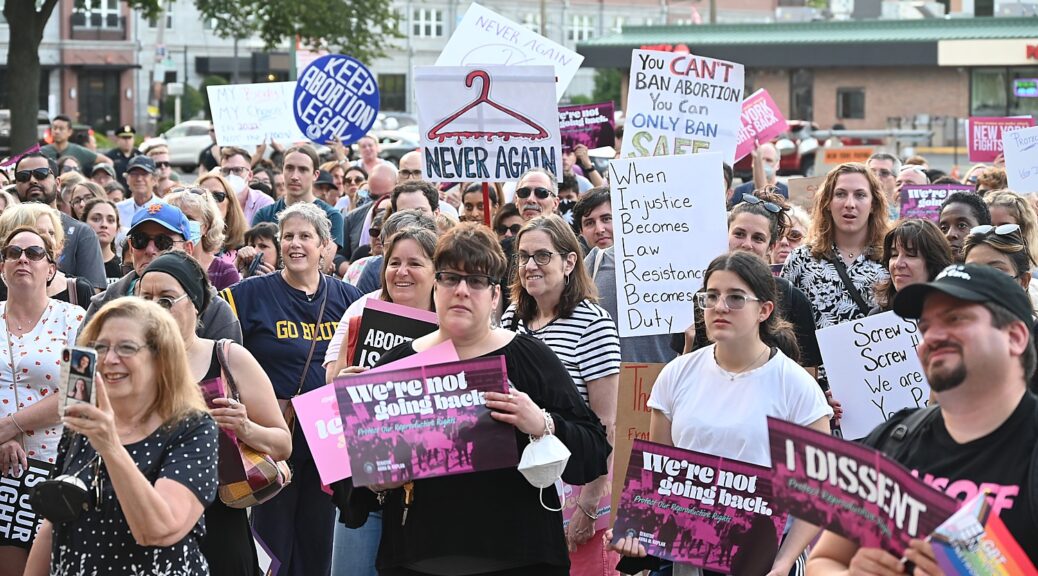
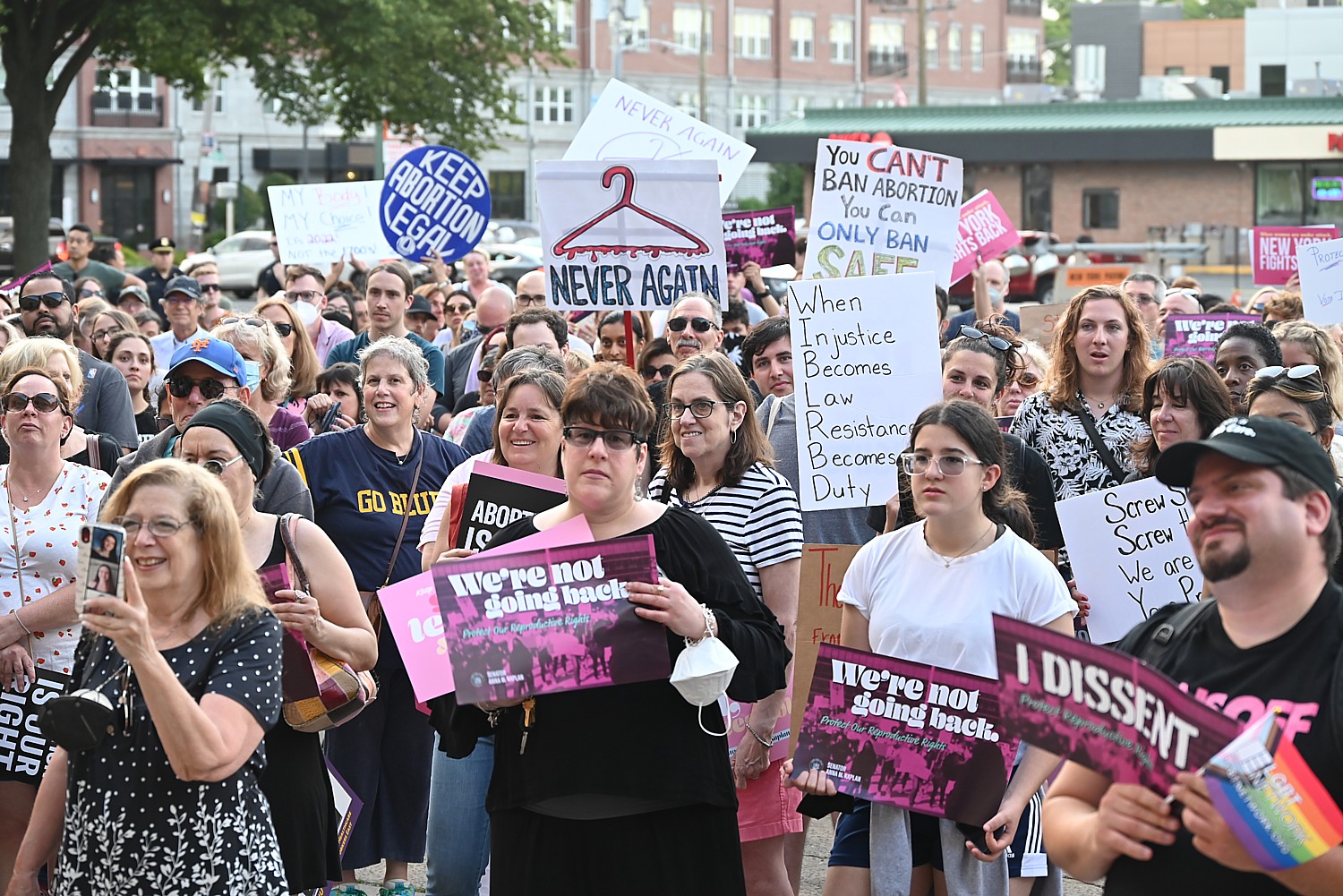
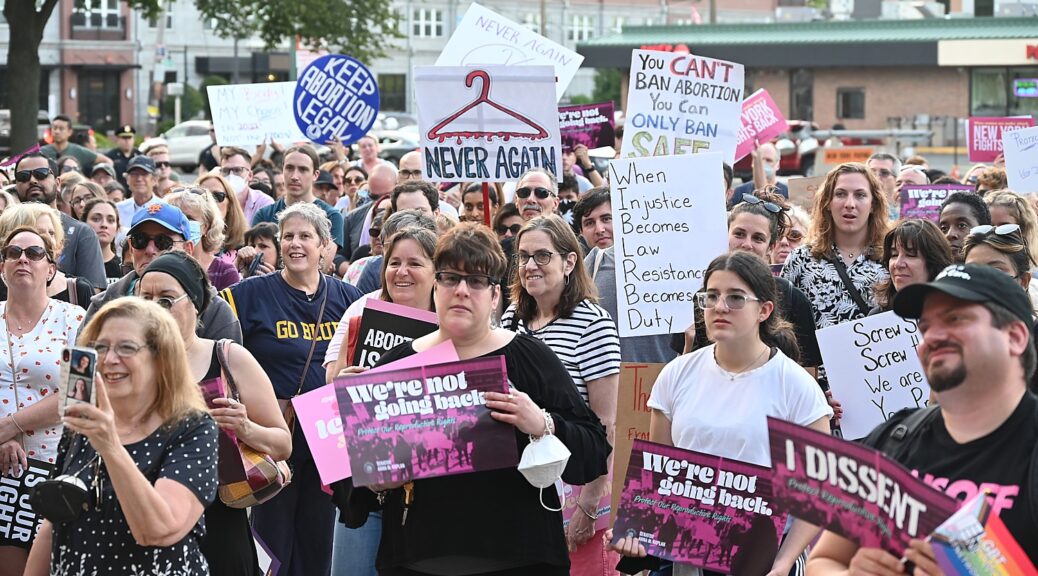
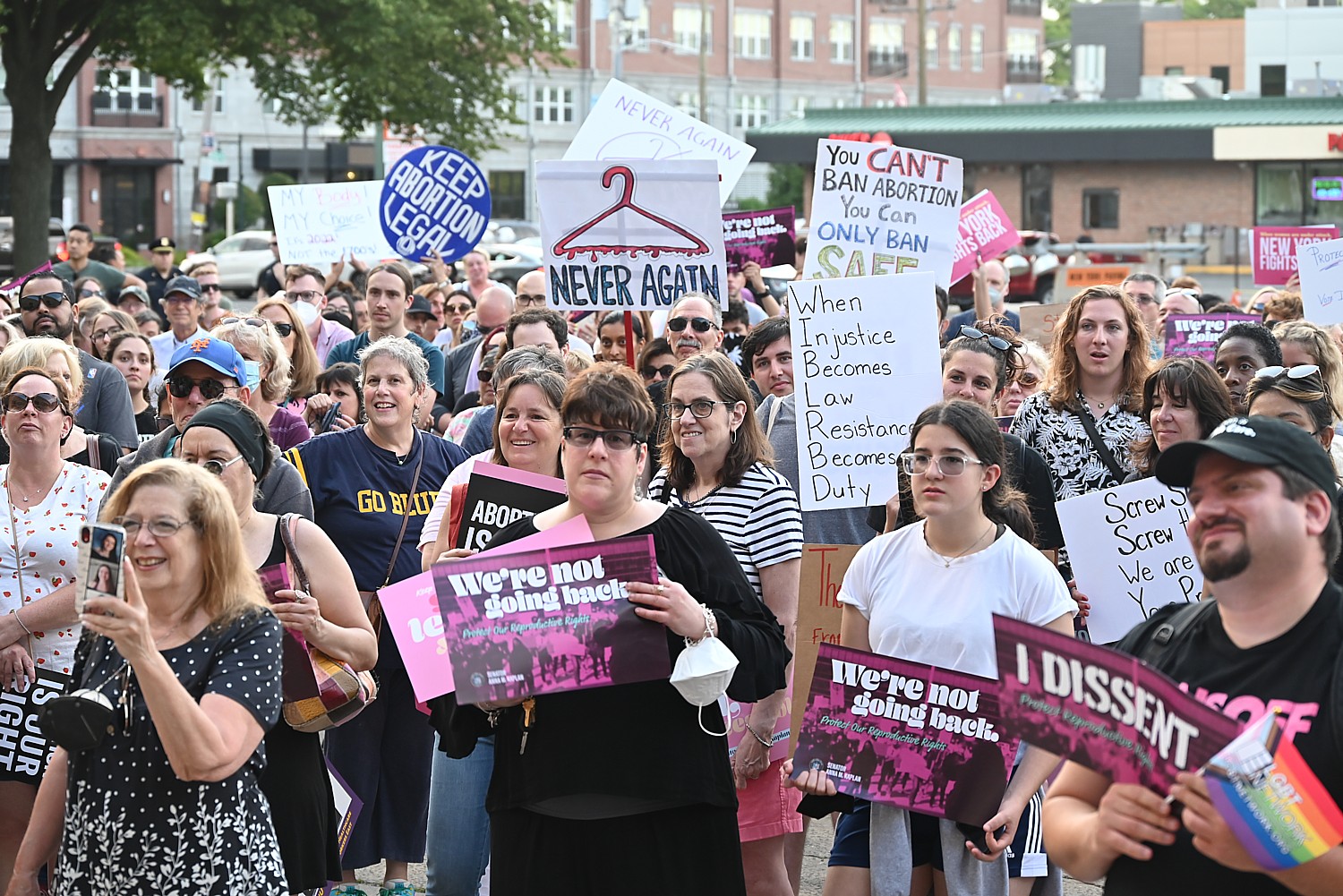
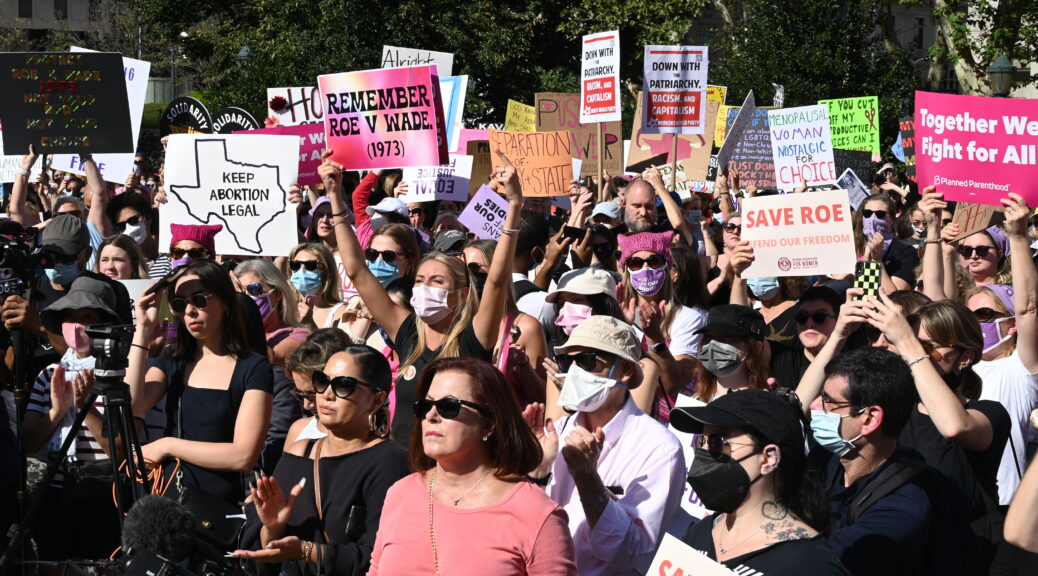
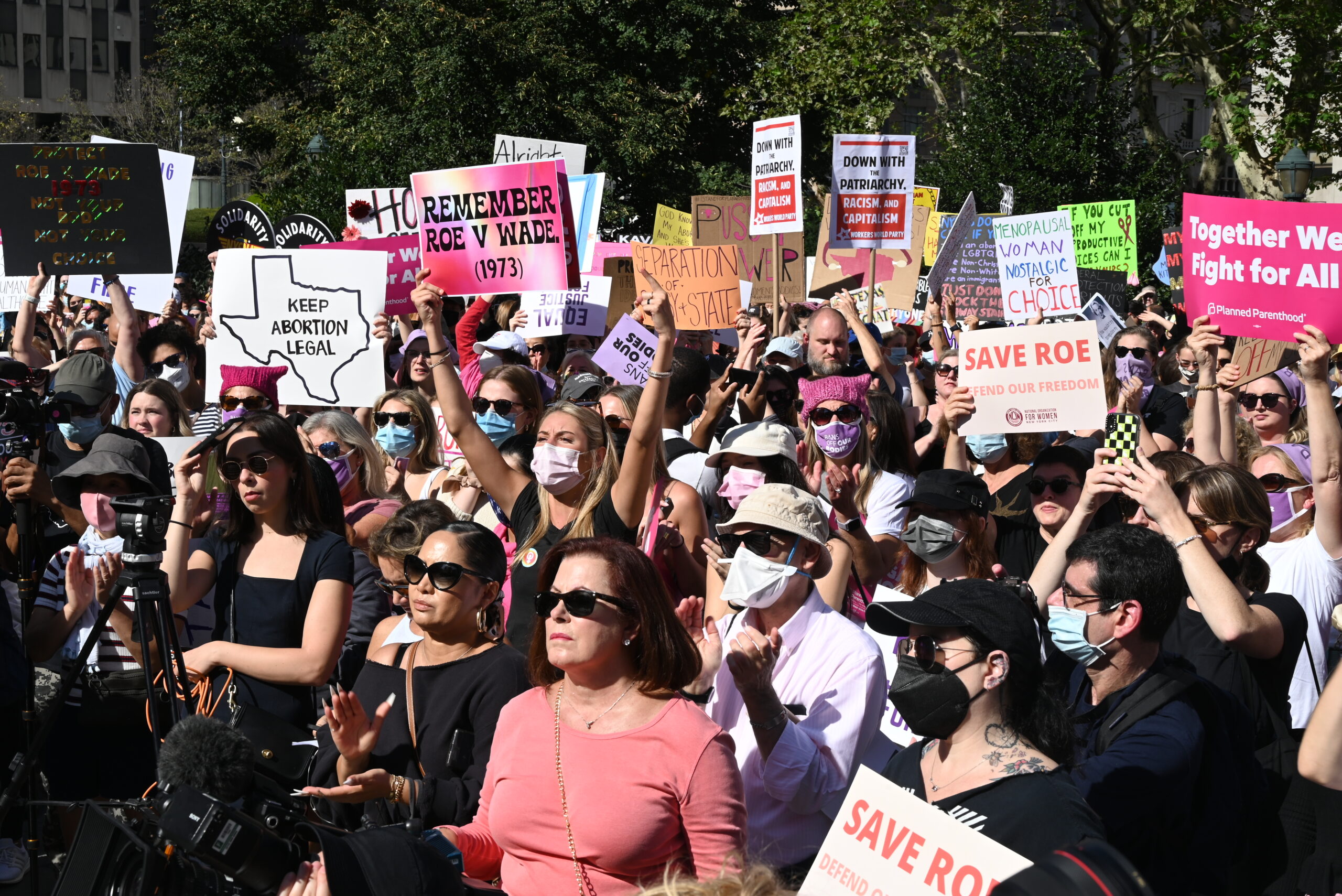
New Yorkers protest the Supreme Court’s decision overturning women’s constitutional reproductive rights under Roe v. Wade a year ago © Karen Rubin/news-photos-features.com

On the one-year anniversary since the radical religious ideologues on the Supreme Court overturned Roe v. Wade and women’s constitutional right to self-determination and bodily autonomy, the White House issued this fact sheet highlighting the actions the Biden Administration has taken to protect access to reproductive health care, and its ongoing commitment to defending reproductive rights.

In a statement, President Joe Biden declared,

“One year ago today, the Supreme Court took away a constitutional right from the American people, denying women across the nation the right to choose. Overturning Roe v. Wade, which had been the law of the land for nearly half a century, has already had devastating consequences.
 
“States have imposed extreme and dangerous abortion bans that put the health and lives of women in jeopardy, force women to travel hundreds of miles for care, and threaten to criminalize doctors for providing the health care that their patients need and that they are trained to provide.
 
“Yet, state bans are just the beginning. Congressional Republicans want to ban abortion nationwide, but go beyond that, by taking FDA-approved medication for terminating a pregnancy, off the market, and make it harder to obtain contraception. Their agenda is extreme, dangerous, and out-of-step with the vast majority of Americans.
 
“My Administration will continue to protect access to reproductive health care and call on Congress to restore the protections of Roe v. Wade in federal law once and for all.”

– Karen Rubin/news-photos-features.com

One year ago, the Supreme Court eliminated a constitutional right that it had previously recognized, overturning nearly 50 years of precedent. Today, more than 23 million women of reproductive age—one in three—live in one of the 18 states with an abortion ban currently in effect. In the last year, women have been denied essential medical care to preserve their health and even save their lives. They have been turned away from emergency rooms, forced to delay care, and made to travel hundreds of miles and across state lines for needed medical care. Despite this devastating impact on women’s health, Republican elected officials continue to advance these bans at both the state and national level.

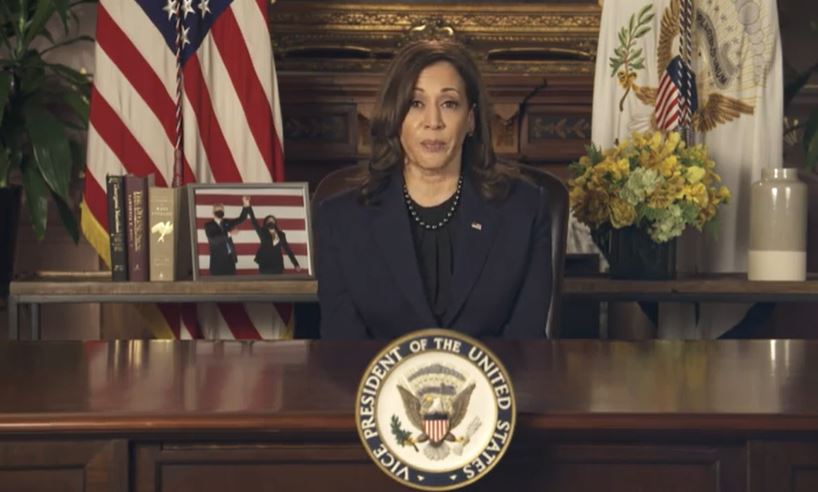
President Biden and Vice President Harris stand with the majority of Americans who believe the right to choose is fundamental—and who have made their voices heard at every opportunity since the Supreme Court’s decision in Dobbs v. Jackson Women’s Health Organization. As the President has made clear since the day of the Dobbs decision, the only way to ensure women in every state have access to abortion is for Congress to pass a law restoring the protections of Roe v. Wade.

While we continue to call on Congress to restore these protections, the Administration has taken executive action to protect access across the full spectrum of reproductive health care. In the wake of Dobbs, the President issued two Executive Orders directing a comprehensive slate of actions to protect access to reproductive health care services, including abortion. And today, the President is issuing a third Executive Order focused on strengthening access to affordable, high-quality contraception, a critical aspect of reproductive health care. The Administration remains fully committed to implementing these Executive Orders and advancing access to reproductive health care through the leadership of the interagency Task Force on Reproductive Healthcare Access, co-chaired by the White House Gender Policy Council and the Department of Health and Human Services (HHS).

Today, the Biden-Harris Administration is providing an update on the work of the Task Force on Reproductive Healthcare Access and the Administration’s ongoing efforts to defend reproductive rights.

Protecting Access to Abortion, including Medication Abortion

  • Ensure Access to Emergency Medical Care.  The Administration is committed to ensuring all patients, including women who are experiencing pregnancy loss, have access to the full rights and protections for emergency medical care afforded under federal law—including abortion care when that is the stabilizing treatment required. HHS issued guidance affirming requirements under the Emergency Medical Treatment and Labor Act (EMTALA) and Secretary Becerra sentletters to providers making clear that federal law preempts state law restricting access to abortion in emergency situations. The U.S. District Court of Idaho issued a preliminary injunction blocking the enforcement of Idaho’s abortion ban as applied to medical care required by EMTALA after the Department of Justice (DOJ) filed a lawsuit seeking to enjoin Idaho’s ban to the extent it makes abortion a crime even when necessary to prevent serious risks to the health of pregnant patients.
    • Defend FDA Approval of Medication Abortion in Court.  The Food and Drug Administration (FDA) and DOJ are defending access to mifepristone, a safe and effective drug used in medication abortion that FDA first approved more than twenty years ago, and FDA’s independent, expert judgment in court—including in a lawsuit in Texas that attempts to eliminate access nationwide. The Administration will continue to stand by FDA’s decades-old approval of the medication and by FDA’s ability to review, approve, and regulate a wide range of prescription medications.
       
    • Protect Access to Safe and Legal Medication Abortion.  On what would have been the 50th anniversary of Roe v. Wade on January 22, President Biden issued a Presidential Memorandum directing further efforts to protect access to medication abortion, including to support patients, providers, and pharmacies who wish to legally access, prescribe, or provide mifepristone—and to safeguard their safety and security, including at pharmacies. This Presidential Memorandum was issued in the face of attacks by state officials to prevent women from accessing mifepristone and discourage pharmacies from becoming certified to dispense the medication. These attacks followed independent, evidence-based action taken by FDA to allow mifepristone to continue to be prescribed by telehealth and sent by mail as well as to enable interested pharmacies to become certified.
       
    • Partner with State Leaders on the Frontlines of Abortion Access.  Today, the White House is releasing a new report on the battle for abortion access at the state level and the Administration’s engagement with state leaders over the past year. The report underscores the Administration’s ongoing commitment to partnering with leaders on the frontlines of protecting access to abortion—both those fighting extreme state legislation and those advancing proactive policies to protect access to reproductive health care, including for patients who are forced to travel out of state for care. The Vice President has led these efforts, traveling to 18 states and meeting with more than 250 state legislators, health care providers, and advocates in the past year. And last week, the White House hosted over 80 state legislators from 41 states to discuss efforts to protect access to reproductive health care.
    • Provide Access to Reproductive Health Care for Veterans.  The Department of Veterans Affairs (VA) issued an interim final rule to allow VA to provide abortion counseling and, in certain circumstances, abortion care to Veterans and VA beneficiaries. VA provides abortion services when the health or life of the patient would be endangered if the pregnancy were carried to term or when the pregnancy is a result of rape or incest. When working within the scope of their federal employment, VA employees may provide authorized services regardless of state restrictions. DOJ will defend any VA providers whom states attempt to prosecute for violations of state abortion laws. 
       
    • Support Access to Care for Service Members.  The Department of Defense (DoD) has taken action to ensure that Service members and their families can access reproductive health care and that DoD health care providers can operate effectively. DoD has released policies to support Service members and their families’ ability to travel for lawful non-covered reproductive health care and to bolster Service members’ privacy and afford them the time and space needed to make personal health care decisions.

       
    • Defend Reproductive Rights in Court. DOJ created a Reproductive Rights Task Force, which monitors and evaluates state and local actions that threaten to infringe on federal protections relating to the provision or pursuit of reproductive health care, impair women’s ability to seek abortion care where it is legal, impair individuals’ ability to inform and counsel each other about the care that is available in other states, ban medication abortion, or impose criminal or civil liability on federal employees who provide legal reproductive health services in a manner authorized by Federal law.

 
Supporting Women’s Ability to Travel for Medical Care

  • Defend the Right to Travel.  On the day of the Dobbs decisions, President Biden reaffirmed the Attorney General’s statement that women must remain free to travel safely to another state to seek the care they need. President Biden committed his administration to defending “that bedrock right,” and DOJ continues to monitor attempts to restrict a woman’s right to travel to receive lawful health care.  
    • Support Patients Traveling Out of State for Medical Care.  HHS Secretary Becerra and CMS Administrator Chiquita Brooks-LaSure issued a letter to U.S. governors inviting them to work with CMS and apply for Medicaid 1115 waivers to provide increased access to care for women from states where reproductive rights are under attack and women may be denied medical care. HHS continues to encourage state leaders to consider and develop new waiver proposals that would support access to reproductive health care services.
       

Safeguarding Access to Contraception

  • Strengthen Access to Affordable, High-Quality Contraception.  Today, the President issued an Executive Order directing agencies to: improve access and affordability for women with private health insurance; promote increased access to over-the-counter contraception; support access to affordable contraception through Medicaid and Medicare; ensure Service members, veterans, and Federal employees are able to access contraception; bolster contraception access across Federal health programs; and support access for college students and employees. The Task Force on Reproductive Healthcare Access will oversee the swift and robust implementation of this Executive Order in the coming months.
    • Clarify Protections for Women with Private Health Insurance. Under the Affordable Care Act, most private health plans must provide contraception and family planning counseling with no out-of-pocket costs. The Departments of the Treasury, Labor, and HHS convened a meeting with health insurers and employee benefit plans. These agencies called on the industry to meet their obligations to cover contraception as required under the law. Following this conversation, these agencies issued guidance to clarify protections for contraceptive coverage under the Affordable Care Act.
       
    • Expand Access Under the Affordable Care Act.  The Departments of the Treasury, Labor, and HHS proposed a rule to strengthen access to contraception under the Affordable Care Act so all women who need and want contraception can obtain it. Millions of women have already benefited from this coverage, which has helped them save billions of dollars on contraception.
       
    • Support Title X Clinics.  HHS provided resources to bolster quality family planning services through the Title X Family Planning Program, including funding to help clinics deliver equitable, affordable, client-centered, and high-quality family planning services and provide training and technical assistance for Title X clinics. In addition, recognizing the important role that Title X clinics play in supporting access to contraception, the President’s Fiscal Year 2024 Budget Request includes $512 million for the Title X Family Planning Program, a 76 percent increase above the 2023 enacted level.
    • Promote Access to Contraception for Service Members and Their Families and Certain Dependents of Veterans.  To improve access to contraception at military hospitals and clinics, DoD expanded walk-in contraceptive care services for active-duty Service members and other Military Health System beneficiaries, and eliminated TRICARE copays for medical contraceptive services. And VA proposed a rule to eliminate out-of-pocket costs for certain types of contraception through the Civilian Health and Medical Program of the Department of Veterans Affairs.

       

Reinforcing Nondiscrimination Protections under Federal Law

  • Issue Guidance to Retail Pharmacies.  HHS issued guidance to roughly 60,000 U.S. retail pharmacies to remind them of their obligations under federal civil rights laws to ensure access to comprehensive reproductive health care services. The guidance makes clear that as recipients of federal financial assistance, pharmacies are prohibited under law from discriminating on the basis of race, color, national origin, sex, age, and disability in their programs and activities. This guidance is especially important in the wake of reports that women of reproductive age have been denied prescription medication at pharmacies—including medication that is used to treat stomach ulcers, lupus, arthritis, and cancer—due to concerns that these medications could be used to terminate a pregnancy.
    • Protect Students from Discrimination Based on Pregnancy.  The Department of Education (ED) released a resource for universities outlining their responsibilities not to discriminate on the basis of pregnancy or pregnancy-related conditions, including termination of pregnancy. This guidance reminds schools of their existing and long-standing obligations under Title IX.
       
    • Strengthen Nondiscrimination in Healthcare.  HHS announced a proposed rule to strengthen nondiscrimination in health care. The proposed rule implements Section 1557 of the Affordable Care Act and affirms protections consistent with President Biden’s executive orders on nondiscrimination based on sexual orientation and gender identity.
       

Promoting Safety and Security of Patients, Providers, and Clinics

  • Promote Safety and Security of Patients, Providers and Clinics.  DOJ continues to robustly enforce the Freedom of Access to Clinic Entrances Act, which protects the right to access and provide reproductive health services.
     

Safeguarding Privacy and Sensitive Health Information

  • Strengthen Reproductive Health Privacy under HIPAA.  HHS issued a proposed rule to strengthen privacy protections under the Health Insurance Portability and Accountability Act (HIPAA). This rule would prevent an individual’s information from being disclosed to investigate, sue, or prosecute an individual, a health care provider, or a loved one simply because that person sought, obtained, provided, or facilitated legal reproductive health care, including abortion. By safeguarding sensitive information related to reproductive health care, the rule will strengthen patient-provider confidentiality and help health care providers give complete and accurate information to patients. Prior to the proposed rule and immediately after Dobbs, HHS issued guidance reaffirming HIPAA’s existing protections for the privacy of individuals’ protected health information.
    • Take Action Against Illegal Use and Sharing of Sensitive Health Information.  The Federal Trade Commission (FTC) has committed to enforcing the law against illegal use and sharing of highly sensitive data, including information related to reproductive health care. Consistent with this commitment, the FTC has taken first-of-its-kind enforcement actions against companies for disclosing consumers’ personal health information, including highly sensitive reproductive health data, without permission.
    • Help Consumers Protect Their Personal Data.  The Federal Communications Commission (FCC) launched a new guide for consumers on best practices for protecting their personal data, including geolocation data, on mobile phones. The guide follows a recent Notice of Proposed Rulemaking issued by FCC that would strengthen data breach rules to provide greater protections to personal data. In addition, separately, HHS issued a how-to guide for consumers on steps they can take to better protect their data on personal cell phones or tablets and when using mobile health apps, like period trackers, which are generally not protected by HIPAA.
    • Protect Students’ Health Information.  ED issued guidance to over 20,000 school officials to remind them of their obligations to protect student privacy under the Family Educational Rights and Privacy Act (FERPA). The guidance helps ensure that school officials—including those at federally funded school districts, colleges, and universities—know that, with certain exceptions, they must obtain written consent from eligible students or parents before disclosing personally identifiable information from students’ educational records, which may include student health information. The guidance encourages school officials to consider the importance of student privacy, including health privacy, with respect to disclosing student records. ED also issued a know-your-rights resource to help students understand their privacy rights for health records at school. 
    • Safeguard Patients’ Electronic Health Information.  HHS issued guidance affirming that doctors and other medical providers can take steps to protect patients’ electronic health information, including their information related to reproductive health care. HHS makes clear that patients have the right to ask that their electronic health information generally not be disclosed by a physician, hospital, or other health care provider. The guidance also reminds health care providers that HIPAA’s privacy protections apply to patients’ electronic health information.

 
Providing Access to Accurate Information and Legal Resources

  • Ensure Easy Access to Reliable Information.  HHS launched and maintains ReproductiveRights.gov, which provides timely and accurate information on people’s right to access reproductive health care, including contraception, abortion services, and health insurance coverage, as well as how to file a patient privacy or nondiscrimination complaint. DOJ also launched justice.gov/reproductive-rights, a webpage that provides a centralized online resource of the Department’s work to protect access to reproductive health care services under federal law.
    • Hosted a Convening of Lawyers in Defense of Reproductive Rights.  The Department of Justice and the Office of White House Counsel convened more than 200 lawyers and advocates from private firms, bar associations, legal aid organizations, reproductive rights groups, and law schools across the country for the first convening of pro-bono attorneys, as directed in the first Executive Order. Following this convening, reproductive rights organizations launched the Abortion Defense Network to offer abortion-related legal defense services, including legal advice and representation.
       
    • Launch a National Hotline to Enable Access to Accurate Information.  HHS issued a Notice of Funding Opportunity to establish a safe and secure national hotline to provide referral services to women in need of accurate information about their legal reproductive health care options. The nondirective hotline will provide information to patients served by the Title X family planning program who request information related to prenatal care and delivery; infant care, foster care, or adoption; or pregnancy termination.
       

Promote Research and Data Collection

  • Use Data to Track Impacts on Access to Care.  HHS will convene leading experts to discuss the state of existing reproductive health research and what the data tells us about the impact of the Dobbs decision, as well as the future of research on reproductive health care access. These convenings will help identify research gaps, opportunities for collaboration, and ways to bolster research efforts for both Federal agencies and external partners.

Leverage Maternal Health Data to Address Disparities.  FCC has committed to the swift implementation of the Data Mapping to Save Moms’ Lives Act, which directs FCC, in coordination with the Centers for Disease Control and Prevention, to incorporate publicly available data on maternal mortality and morbidity into its Mapping Broadband Health in America platform. This innovation will support women’s health by informing efforts to expand broadband access—including access to telehealth—in areas with poor maternal health outcomes. FCC will continue to explore opportunities to improve research, data collection, data analysis, and interpretation in the context of reproductive health care and maternal health outcomes.

FACT SHEET: Biden-Harris Administration Announces Actions to Protect Patient Privacy at the Third Meeting of the Task Force on Reproductive Healthcare Access

New Yorkers protest for reproductive rights. The Biden-Harris administration is taking steps to protect the privacy of women seeking reproductive healthcare and their providers. Efforts to protect sensitive health information, including related to reproductive health care, have taken on renewed importance, as states seek to penalize and criminalize health care providers and interfere in deeply personal medical decisions. © Karen Rubin/news-photos-features.com

The White House provided this fact sheet of actions the Biden-Harris Administration is taking to protect patient privacy in the wake of the assault on women’s access to reproductive health care:

Today, the Biden-Harris Administration will announce new actions to safeguard patient privacy at the third meeting of the Task Force on Reproductive Healthcare Access with Vice President Harris. These announcements build on actions that the Administration has taken to protect privacy and access to accurate information in the wake of the Supreme Court’s decision in Dobbs v. Jackson Women’s Health Organization, as the President directed in his first Executive Order to protect access to reproductive health care, including abortion. Efforts to protect sensitive health information, including related to reproductive health care, have taken on renewed importance, as states seek to penalize and criminalize health care providers and interfere in deeply personal medical decisions.

At the meeting, the Cabinet will discuss their ongoing efforts to defend reproductive rights and support access to reproductive health care more broadly. The Task Force will also discuss updates on the Administration’s response to Alliance for Hippocratic Medicine v. FDA, as well as efforts to implement the Presidential Memorandum on ensuring safe access to medication abortion, which has been approved by the Food and Drug Administration as safe and effective for over two decades.

Today, the Administration announced actions to:

  • Strengthen Reproductive Health Privacy under HIPAA. The Department of Health and Human Services (HHS) is issuing a Notice of Proposed Rulemaking to strengthen privacy protections under the Health Insurance Portability and Accountability Act (HIPAA). This rule would prohibit doctors, other health care providers, and health plans from disclosing individuals’ protected health information, including information related to reproductive health care, under certain circumstances. Specifically, the rule would prevent an individual’s information from being disclosed to investigate, sue, or prosecute an individual, a health care provider, or a loved one simply because that person sought, obtained, provided, or facilitated legal reproductive health care, including abortion. By safeguarding sensitive information related to reproductive health care, the rule will strengthen patient-provider confidentiality and help health care providers give complete and accurate information to patients.                                              
  • Protect Students’ Health Information. The Department of Education (ED) is issuing guidance to over 20,000 school officials to remind them of their obligations to protect student privacy under the Family Educational Rights and Privacy Act (FERPA). The guidance helps ensure that school officials—including those at federally funded school districts, colleges, and universities—know that, with certain exceptions, they must obtain written consent from eligible students or parents before disclosing personally identifiable information from students’ educational records, which may include student health information. The guidance encourages school officials to consider the importance of student privacy, including health privacy, with respect to disclosing student records. ED is also issuing a know-your-rights resource to help students understand their privacy rights for health records at school.  
  • Support Consumer Privacy. The Federal Communications Commission (FCC) is launching a new guide for consumers on best practices for protecting their personal data on mobile phones. The guide also explains how existing FCC requirements protect against the disclosure of consumers’ sensitive information, including geolocation data, which can be especially important in the context of accessing reproductive health care. The guide follows a recent Notice of Proposed Rulemaking issued by FCC that is aimed at updating and strengthening data breach rules to provide greater protections to personal data. 
  • Safeguard Patients’ Electronic Health Information. HHS is issuing guidance affirming that doctors and other medical providers can take steps to protect patients’ electronic health information, including their information related to reproductive health care. HHS will make clear that patients have the right to ask that their electronic health information generally not be disclosed by their physician, hospital, or other health care provider—including to other health care providers. The guidance also reminds health care providers that HIPAA’s privacy protections continue to apply to patients’ electronic health information.

The Administration also announced related efforts to provide access to accurate information and bolster data related to women’s health more broadly:

  • Leverage Maternal Health Data to Address Disparities. FCC is committing to the swift implementation of the Data Mapping to Save Moms’ Lives Act, which directs FCC, in coordination with the Centers for Disease Control and Prevention, to incorporate publicly available data on maternal mortality and morbidity into its Mapping Broadband Health in America platform. This innovation will support women’s health by informing efforts to expand broadband access—including access to telehealth—in areas with poor maternal health outcomes. This builds on the Administration’s work to improve maternal health and address long-standing disparities, including those spotlighted this Black Maternal Health Week. FCC will continue to explore opportunities to improve research, data collection, data analysis, and interpretation in the context of reproductive health care and maternal health outcomes. 
  • Promote Accurate Information About Reproductive Care. HHS is announcing that it will issue a new Notice of Funding Opportunity to establish a safe and secure national hotline to provide referral services to women in need of accurate information about their legal reproductive health care options. The nondirective hotline would provide information to patients served by the Title X family planning program who request information related to prenatal care and delivery; infant care, foster care, or adoption; or pregnancy termination.

Today’s announcements build on previous actions to protect patient privacy and access to accurate information. The Administration has taken action to:

  • Prevent Illegal Use and Sharing of Sensitive Health Information. The Federal Trade Commission (FTC) has committed to enforcing the law against illegal use and sharing of highly sensitive data, including information related to reproductive health care. Consistent with this commitment, the FTC recently took first-of-its-kind enforcement action against companies for disclosing consumers’ personal health information without permission to Facebook, Google, and others. The FTC has also urged companies to consider that sensitive data is protected by numerous state and federal laws and that claims that data is “anonymous” are often deceptive. 
  • Reinforce Existing Protections under the HIPAA Privacy Rule. Immediately after Dobbs, HHS issued guidance to help ensure doctors and other health care providers and health plans know that, with limited exceptions, they are not required—and in many cases, are not permitted—to disclose individuals’ health information, including to law enforcement. This guidance, which helps protect individuals seeking or receiving reproductive health care, remains in effect while today’s rulemaking is underway. The Notice of Proposed Rulemaking noted above would further strengthen privacy protections under the HIPAA Privacy Rule. 
  • Protect Individuals’ Health Information Online. HHS issued a bulletin to affirm that HIPAA’s privacy protections extend to the use of online tools offered by or on behalf of covered entities that collect protected health information through websites and mobile apps. These tools, such as “cookies” on a website, can be used to track online activity and information about website and app users, sometimes in ways that collect or reveal protected health information. This can include information about reproductive health care, such as the location of where an individual sought medical treatment. The bulletin makes clear that health care providers and health plans—as well as many of the entities that these organizations do business with—cannot use online tracking tools or share patient information with third parties in a way that violates HIPAA.
  • Help Consumers Protect Their Personal Data. HHS issued a how-to guide for consumers on steps they can take to make sure they are protecting their personal data on personal cell phones or tablets. HHS also provided tips for protecting individuals’ privacy when using mobile health apps, like period trackers. This resource helps ensure that consumers have the information they need to better protect their health information when it is accessed or stored on their personal cell phones or tablets, which are generally not protected under HIPAA.  
  • Promote the Privacy of Service Members. The Department of Defense issued an updated policy to provide Service members with time and flexibility to make private health care decisions while accounting for the responsibility placed on commanders to meet operational requirements and protect the health and safety of those in their care. This policy standardized the timeframe for Service members to inform their commanders about a pregnancy, generally allowing Service members until up to 20 weeks of pregnancy to notify their commanders of their pregnancy status, with limited exceptions to account for specific military duties, occupational health hazards, and medical conditions. 
  • Provide Access to Accurate Information and Legal Resources. On the day of the Supreme Court’s Dobbs decision, HHS launched ReproductiveRights.gov, which provides timely and accurate information about reproductive rights and access to reproductive health care. This includes know-your-rights information for patients and providers and promotes awareness of and access to family planning services, as well as guidance for how to file a patient privacy or nondiscrimination complaint with its Office for Civil Rights. DOJ also launched justice.gov/reproductive-rights, a webpage that provides a centralized online resource of the Department’s work to protect reproductive freedom under federal law.

Biden Administration to Fight Judge’s Ruling That Would End Access to Key Drug Used in Most Abortions

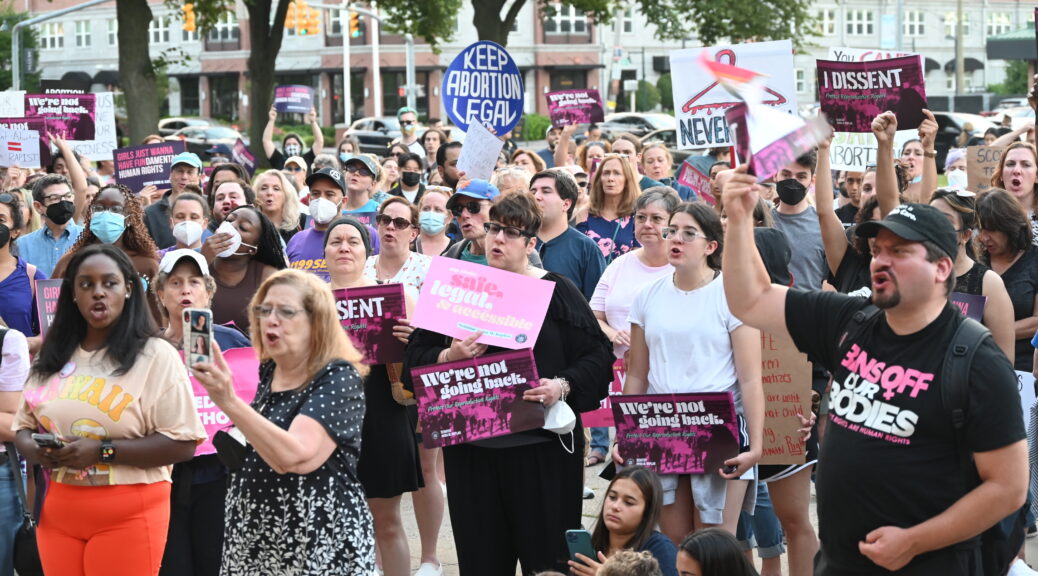
“We’re not going back.” The Biden Administration said it would stand with women and fight to uphold reproductive rights after a Texas judge ruled for anti-abortion extremists to remove approval for a key drug, mifepristone, used in most abortions and miscarriages that has been used safely by over 5 million women over the past 23 years, and declared it would challenge the decision in court. © Karen Rubin/news-photos-features.com

The Biden Administration reacted to the Texas judge’s decision siding with anti-abortion extremists to remove approval for a key drug, mifepristone,  used in most abortions that has been used safely by over 5 million women over the past 23 years, and declared it would challenge the decision in court. Meanwhile, another federal court found in favor of Democratic Attorney Generals that the drug must be made more readily available. The contradicting decisions means that the cases will likely go before the Supreme Court, which has already overturned Roe v Wade based on a legal reasoning that states, not the federal government, should determine whether women have reproductive rights.—Karen Rubin/news-photos-features.com


Statement from President Joe Biden on Decision in Alliance for Hippocratic Medicine v. FDA 

Today a single federal district judge in Texas ruled that a prescription medication that has been available for more than 22 years, approved by the FDA and used safely and effectively by millions of women here and around the world, should no longer be approved in the United States.  The Court in this case has substituted its judgment for FDA, the expert agency that approves drugs.  If this ruling were to stand, then there will be virtually no prescription, approved by the FDA, that would be safe from these kinds of political, ideological attacks. 
 
The prescription medication in question in this case is used for medication abortion, and medication abortion accounts for over half the abortions in America.  The lawsuit, and this ruling, is another unprecedented step in taking away basic freedoms from women and putting their health at risk.  This does not just affect women in Texas – if it stands, it would prevent women in every state from accessing the medication, regardless of whether abortion is legal in a state.  It is the next big step toward the national ban on abortion that Republican elected officials have vowed to make law in America.
 
My Administration will fight this ruling.  The Department of Justice has already filed an appeal and will seek an immediate stay of the decision.  But let’s be clear – the only way to stop those who are committed to taking away women’s rights and freedoms in every state is to elect a Congress who will pass a law restoring Roe versus Wade.  Vice President Harris and I will continue to lead the fight to protect a woman’s right to an abortion, and to make her own decisions about her own health.  That is our commitment. 

Vice President Kamala Harris:

Today’s unprecedented decision threatens the rights of women nationwide to make decisions about their health care and the ability to access medication prescribed to them by their doctors. Simply put: this decision undermines the FDA’s ability to approve safe and effective medications—from chemotherapy drugs, to asthma medicine, to blood pressure pills, to insulin—based on science, not politics. This decision threatens the rights of Americans across the country, who can look in their medicine cabinets and find medication prescribed by a doctor because the FDA engaged in a process to determine the efficacy and safety of that medication.

At the same time as the court in Texas issued the decision to try to restrict access to FDA-approved medication, a court in Washington state reached a different conclusion.

Each person in our nation should have the right to access safe and effective medication which has been approved by the FDA. In the face of attacks on a woman’s right to access an abortion, our Administration will continue to fight to protect reproductive freedom and the ability of all Americans to make health care decisions with their doctors free from political interference.

Attorney General Merrick B. Garland:

The Justice Department tonight issued the following statement from Attorney General Merrick B. Garland following the district court decisions in Alliance for Hippocratic Medicine v. FDA and Washington et al. v. FDA:

The Justice Department strongly disagrees with the decision of the District Court for the Northern District of Texas in Alliance for Hippocratic Medicine v. FDA and will be appealing the court’s decision and seeking a stay pending appeal. Today’s decision overturns the FDA’s expert judgment, rendered over two decades ago, that mifepristone is safe and effective. The Department will continue to defend the FDA’s decision. 

Separately, the Justice Department is reviewing the decision of the District Court for the Eastern District of Washington in Washington et al. v. FDA.

The Department is committed to protecting Americans’ access to legal reproductive care.

HHS Secretary Xavier Becerra:

This is a regressive ruling issued by a single court in a single state that will have a disastrous impact on women and families across America if not overturned. Mifepristone was approved by the FDA as safe and effective to manage abortion decades ago and has been approved by drug regulators around the globe. Today’s decision jeopardizes the health of women across the country. It undermines our nation’s entire system of drug approval. It opens the door for courts to overturn FDA’s evidence-based decisions for purely political or ideological reasons.

Today’s ruling affects more than just access to abortion care. Some physicians use mifepristone for miscarriage management, which can be one of the most difficult times in a woman’s life.

We will vigorously fight this unprecedented decision in court. We have appealed the decision and will seek a stay. The Texas district court’s ruling does not take effect for seven days, so mifepristone remains approved and available for the time being while we pursue our appeal.  Separately, another temporary order issued today in Washington State seeks to maintain access to mifepristone by directing the FDA not to take action to alter the status quo as it relates to the availability of mifepristone under the REMS in certain states.  We are reviewing that decision.

Biden Administration Takes New Actions to Support, Advance Women’s Economic Security

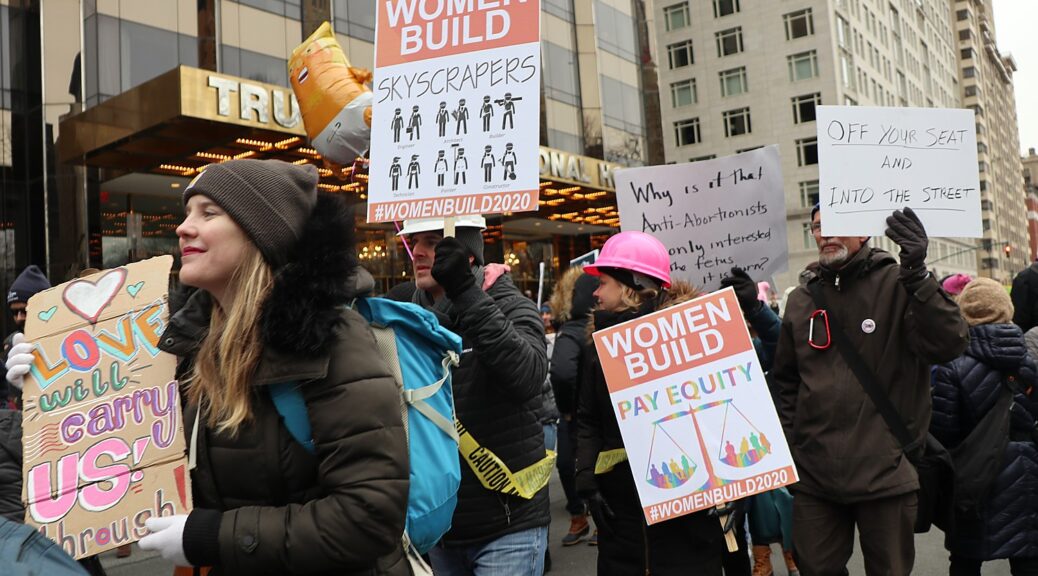
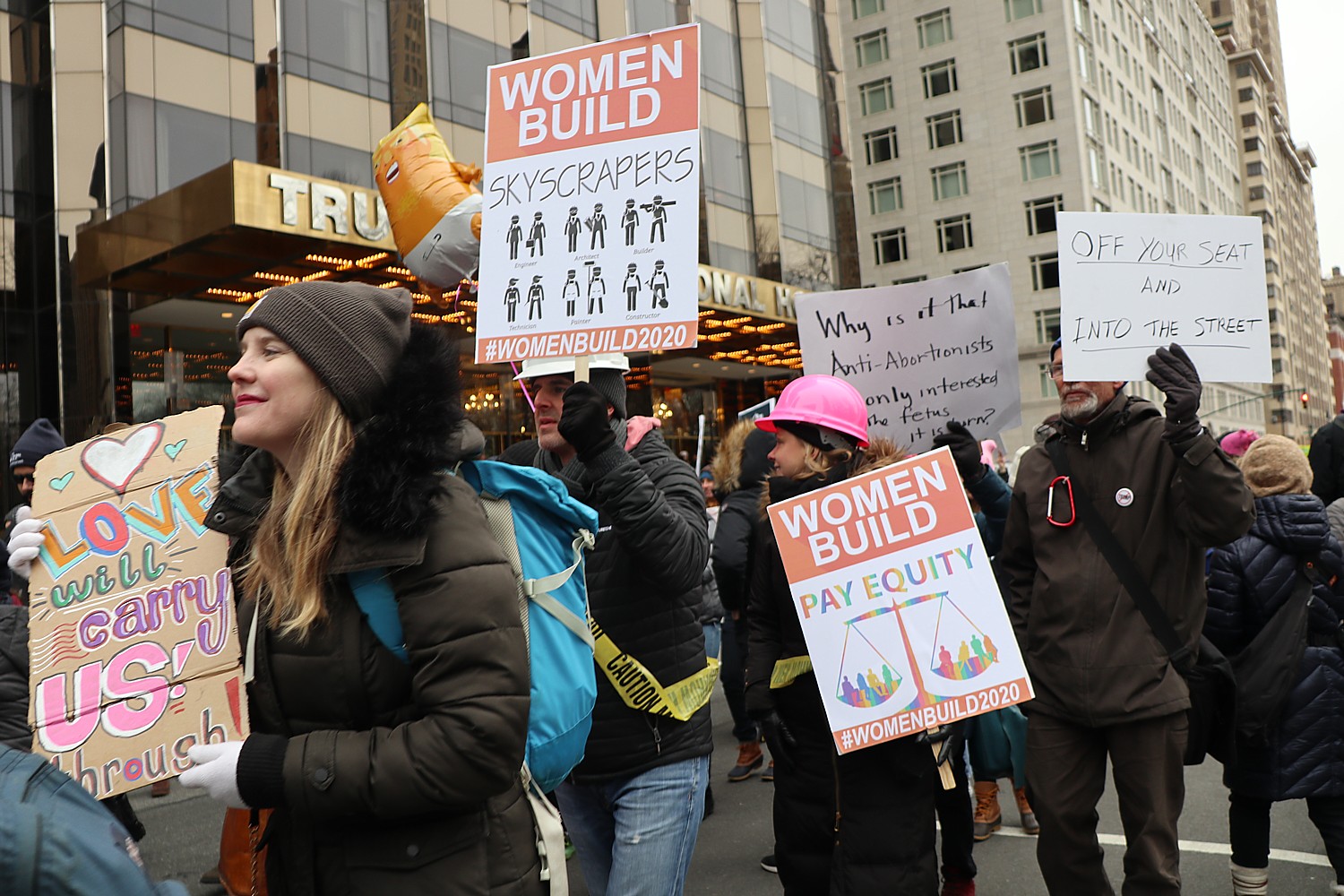
Women’s March 2020, New York City The Biden Administration is marking the 30th anniversary of the Family and Medical Leave Act by announcing new actions to support and advance women’s economic security. Women’s economic security also means reproductive health rights. © Karen Rubin/news-photos-features.com

The Biden-Harris Administration is marking the upcoming 30th anniversary of the Family and Medical Leave Act (FMLA) by announcing new actions to support and advance women’s economic security. For thirty years, the FMLA has helped Americans take up to 12 weeks of unpaid leave from work when they are seriously ill or to care for a new child or a sick family member without the risk of losing their jobs. Today, President Biden is demonstrating his commitment to ensuring access to family and medical leave, by encouraging heads of Federal agencies to provide access to leave for Federal employees when they need it, including during their first year of service.

Across the country, millions of workers still face impossible choices between keeping a paycheck and caring for their family or themselves. This is especially true for women, who shoulder disproportionate caregiving responsibilities, with real consequences for their ability to participate in the labor force and support their families over the course of their lives. That’s why the Biden-Harris Administration will continue to champion and take action on national paid family and medical leave, affordable child care, and home and community-based care so that all Americans can both care for and financially support their families.

Improving Access to Leave. Today, President Biden is issuing a Presidential Memorandum to support Federal employees’ access to leave when they need to care for themselves or a loved one. The memorandum calls on heads of Federal agencies to support access to leave without pay for Federal employees, including during their first year of service, to ensure employees are able to bond with a new child, care for a family member with a serious health condition, address their own serious health condition, help manage family affairs when a family member is called to active duty, or grieve after the death of a family member. The Office of Personnel Management is further directed to provide recommendations regarding “safe leave,” to support Federal employees’ access to paid leave and leave without pay for purposes related to seeking safety and recovering from domestic violence, dating violence, sexual assault, or stalking. These may include obtaining medical treatment, seeking assistance from organizations that provide services to survivors, seeking relocation, and taking related legal action.  

This Presidential Memorandum builds on other Administration efforts to improve access to and awareness of family and medical leave, including to:

  • Ensure military personnel have access to 12 weeks of paid parental leave. The Department of Defense issued a memorandum expanding the Military Parental Leave Program. Active-duty service members are now eligible for 12 weeks of parental leave following the birth, adoption, or placement of a child for long-term foster care. The expanded leave erases the previous distinction between primary and secondary caregivers, enabling both parents to take time to care for their children while balancing the needs of their unit, and it is in addition to medical convalescent leave, which continues to be available for birth parents recovering from pregnancy. Additionally, service members may request to take the 12 weeks of parental leave in multiple increments of at least one week, which allows for flexibility to meet both family and mission needs.
     
  • Support paid leave efforts in states. The Administration remains committed to working with states on opportunities to expand access to paid family and medical leave. Yesterday, the White House convened state legislators who are working to advance bills this session that would create statewide paid family and medical leave programs. These new efforts build on the 11 states and the District of Columbia that have passed paid family and medical leave laws. The Department of Labor will also release a new website with information on state paid leave laws.
     
  • Help employees impacted by cancer know their rights under the FMLA. As the Administration marks one year since the launch of President Biden’s Cancer Moonshot, the Department of Labor issued new resources in December to help employees know their rights when diagnosed with cancer or taking on a caregiver role. These new tools included a resource page on “Workplace Protections for Individuals Impacted by Cancer,” a practical guide on “How to Talk to Your Employer about Taking Time Off,” and an easy-to-post flyer to help health care providers support FMLA leave.

Investing in Economic Security. The actions announced today build on critical steps the Biden-Harris Administration has taken recently to support economic security for women and families, including:

  • Protecting the health and economic security of pregnant workers. President Biden signed into law the Pregnant Workers Fairness Act as part of the bipartisan end-of-year omnibus law, which will provide basic, long-overdue protections to ensure that millions of pregnant and postpartum workers have the right to reasonable accommodations in the workplace for pregnancy, childbirth, and related medical conditions. Under the new law, employers must make reasonable accommodations for pregnant workers and job applicants, which may include light duty, breaks, or a stool to sit on, without discriminating or retaliating against them.
     
  • Extending protections for nursing workers. The President also signed into law the Providing Urgent Maternal Protections (PUMP) for Nursing Mothers Act, which extends break time and private space protections for nursing parents to nearly 9 million workers, including teachers, nurses, and farmworkers. These protections will empower parents to continue expressing milk at work, so they do not have to choose between their job or their infant’s health. Today, the Department of Labor’s Wage and Hour Division released an updated Fact Sheet detailing employee rights and employer responsibilities under the new law and will continue outreach and public education efforts to help pregnant and nursing workers, and their employers, know their rights.
  • Increasing investments in early childhood education and child care. As part of the end-of-year omnibus, the Administration secured a 30 percent increase in funding for the Child Care and Development Block Grant, which could help up to 130,000 more families afford child care and access better child care options. The new law also made significant investments in programs such as Head Start and the Preschool Development Grant – Birth through Five that help young children and their families access quality, affordable early care and education. Greater availability and affordability of high-quality early care and education will help women with young children to enter and stay in the workforce.
     
  • Supporting women’s right to be safe in the workplace and free from sexual harassment and assault. In December, the President signed the Speak Out Act, which will enable survivors to speak out about workplace assault and harassment by prohibiting the enforcement of pre-dispute nondisclosure and non-disparagement clauses regarding allegations of sexual harassment or assault. Earlier last year, the President also signed into law the Ending Forced Arbitration of Sexual Assault and Sexual Harassment Act of 2021, which amended the Federal Arbitration Act and allows employees who sign pre-dispute mandatory arbitration agreements with their employers to pursue claims of sexual harassment or assault in court.

Meanwhile,on what would have been the 50th anniversary of the Supreme Court’s decision in Roe v. Wade, President Biden issued a Presidential Memorandum on Further Efforts to Protect Access to Reproductive Healthcare Services. Vice President Harris announced the Presidential Memorandum in Florida later today, where she will speak about the next steps in the fight for reproductive rights and reinforce the Biden-Harris Administration’s commitment to protecting access to abortion, including medication abortion.

Since the day of the Supreme Court’s decision in Dobbs v. Jackson Women’s Health Organization, President Biden has emphasized the need to protect access to mifepristone, a drug used in medication abortion that has been approved by the Food and Drug Administration (FDA) for over 20 years and accounts for the majority of all abortions in the United States.

Earlier this month, the FDA took evidence-based action to support safe access to mifepristone by allowing the continued use of telehealth to prescribe the medication and creating a new option for certified pharmacies to dispense it to patients.

Some state officials have taken steps to try to prevent women from legally accessing medication abortion and to discourage pharmacies from becoming certified by the FDA.
Today, President Biden will sign a Presidential Memorandum to further protect access to medication abortion.

In the face of barriers to medication abortion and concerns about the safety of patients, healthcare providers, and pharmacists, today’s Presidential Memorandum announces actions to:

  • Protect Legal Access to Medication Abortion. The Presidential Memorandum directs the Secretary of Health and Human Services (HHS), in consultation with the Attorney General and the Secretary of Homeland Security (DHS), to consider new guidance to support patients, providers, and pharmacies who wish to legally access, prescribe, or provide mifepristone—no matter where they live.
     
  • Safeguard Patient Safety and Security. To ensure that patients understand their right to access reproductive healthcare despite roadblocks, the Presidential Memorandum directs the Secretary of HHS, in consultation with the Attorney General and the Secretary of DHS, to consider new actions to ensure that patients can access legal reproductive care, including medication abortion from a pharmacy, free from threats or violence. The President has long made clear that people should have access to reproductive care free from harassment, threats, or violence. Pharmacies should be treated no differently.

The Attorney General and the Secretaries of HHS and DHS also provided recommendations to the White House Interagency Task Force on Reproductive Healthcare Access, which was established by President Biden in Executive Order 14076, on additional ways to address barriers faced by patients, providers, and pharmacies in safely and legally accessing or providing medication abortion, consistent with evidence-based requirements set by the FDA.

Justice Department Sues Idaho to Protect Reproductive Rights

Complaint Alleges Idaho Law Violates the Emergency Medical Treatment and Labor Act
 

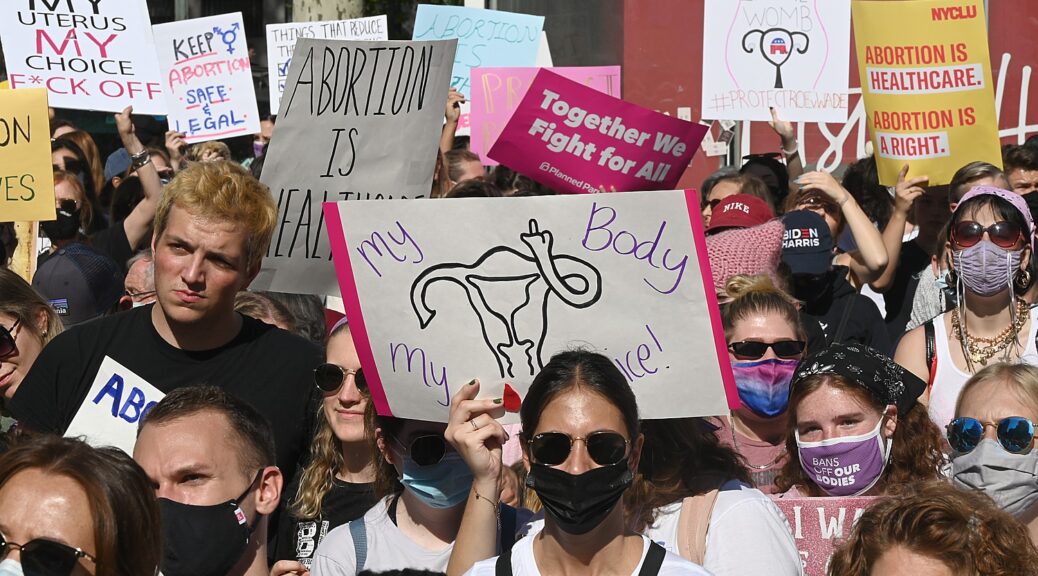
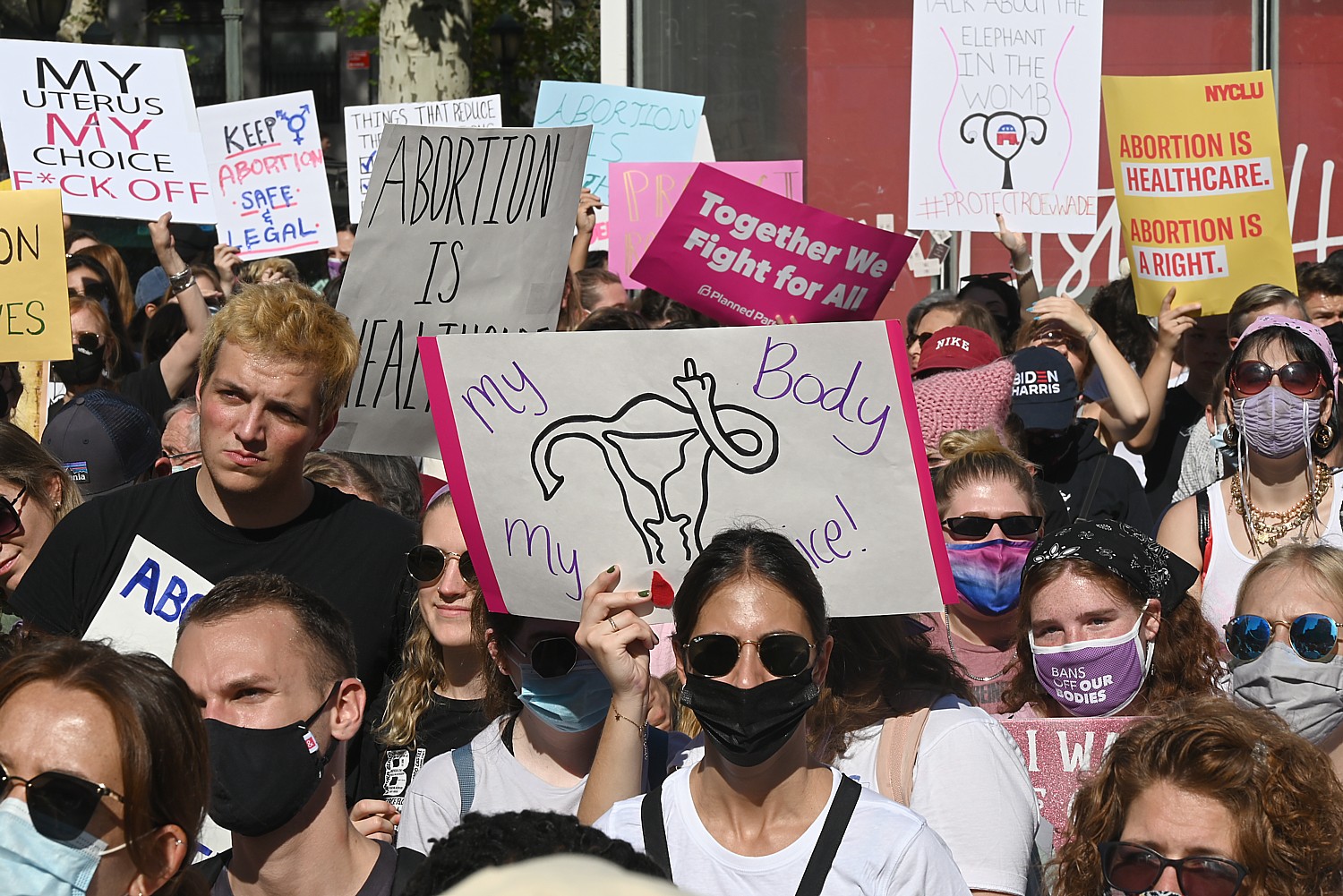
Protesting for reproductive rights © Karen Rubin/news-photos-features.com

The Justice Department today filed a lawsuit to protect the rights of patients to access emergency medical care guaranteed by federal law. The suit challenges Idaho Code § 18-622 (§ 18-622), which is set to go into effect on Aug. 25 and imposes a near-total ban on abortion.

The complaint seeks a declaratory judgment that § 18-622 conflicts with, and is preempted by, the Emergency Medical Treatment and Labor Act (EMTALA) in situations where an abortion is necessary stabilizing treatment for an emergency medical condition. The United States also seeks an order permanently enjoining the Idaho law to the extent it conflicts with EMTALA.

“On the day Roe and Casey were overturned, we promised that the Justice Department would work tirelessly to protect and advance reproductive freedom,” said Attorney General Merrick B. Garland.  “That is what we are doing, and that is what we will continue to do. We will use every tool at our disposal to ensure that pregnant women get the emergency medical treatment to which they are entitled under federal law. And we will closely scrutinize state abortion laws to ensure that they comply with federal law.” 

“Federal law is clear: patients have the right to stabilizing hospital emergency room care no matter where they live,” said Department of Health and Human Services Secretary Xavier Becerra. “Women should not have to be near death to get care. The Department of Health and Human Services will continue its work with the Department of Justice to enforce federal law protecting access to health care, including abortions.”

“One critical focus of the Reproductive Rights Task Force has been assessing the fast-changing landscape of state laws and evaluating potential legal responses to infringements on federal protections,” said Associate Attorney General Vanita Gupta. “Today’s lawsuit against the State of Idaho for its near-absolute abortion ban is the first public example of this work in action. We know that these are frightening and uncertain times for pregnant women and their providers, and the Justice Department, through the Task Force’s work, is committed to doing everything we can to ensure continued lawful access to reproductive services.”

EMTALA requires hospitals that receive federal Medicare funds to provide necessary stabilizing treatment to patients who arrive at their emergency departments while experiencing a medical emergency. When a physician reasonably determines that the necessary stabilizing treatment is an abortion, state law cannot prohibit the provision of that care. The statute defines necessary stabilizing treatment to include all treatment needed to ensure that a patient will not have her health placed in serious jeopardy, have her bodily functions seriously impaired, or suffer serious dysfunction of any bodily organ or part.

As explained in the complaint, once § 18-622 enters into effect in Idaho, a prosecutor can indict, arrest and prosecute a physician merely by showing that an abortion has been performed, without regard to the circumstances. A physician who provides an abortion in Idaho can ultimately avoid criminal liability only by establishing as an affirmative defense that “the abortion was necessary to prevent the death of the pregnant woman” or that, before performing the abortion, the pregnant patient (or, in some circumstances, their parent or guardian) reported an “act of rape or incest” against the patient to a specified agency and provided a copy of the report to the physician. The law provides no defense for an abortion necessary to protect the health of the pregnant patient. 

Idaho’s criminal prohibition of all abortions, subject only to the statute’s two limited affirmative defenses, directly conflicts with EMTALA and stands as an obstacle to the accomplishment of EMTALA’s federal objectives of providing stabilizing care and treatment to anyone who needs it. The Justice Department is committed to protecting access to reproductive services. Following the Supreme Court’s decision in Dobbs, the Justice Department established the Reproductive Rights Task Force, chaired by Associate Attorney General Gupta. The Task Force is charged with protecting access to reproductive freedom under federal law. For additional information on the work of the Task Force visit www.justice.gov/reproductive-rights.

Biden Administration’s DoJ, HHS Work to Protect Reproductive Freedom Under Federal Law

Long Islanders react to Supreme Court overturning Roe’s constitutional protections of reproductive freedom. The Biden Administration is setting up a task force within the Justice Department to insure rights are protected, and the Department of Health and Human Services (HHS) is issuing guidance to roughly 60,000 U.S. retail pharmacies, reminding them of their obligations under federal civil rights laws. © Karen Rubin/news-photos-features.com

Justice Department Announces Reproductive Rights Task Force

The Task Force Formalizes the Department’s Ongoing Work to Protect Reproductive Freedom Under Federal Law

The Justice Department announced today the establishment of the Reproductive Rights Task Force. The Task Force formalizes an existing working group and efforts by the Department over the last several months to identify ways to protect access to reproductive health care in anticipation of the possibility of the Supreme Court overturning Roe v. Wade and Planned Parenthood v. Casey. Associate Attorney General Vanita Gupta will chair the Task Force, which will consist of representatives from the Department’s Civil Division, Civil Rights Division, U.S. Attorney community, Office of the Solicitor General, Office for Access to Justice, Office of Legal Counsel, Office of Legal Policy, Office of Legislative Affairs, Office of the Associate Attorney General, Office of the Deputy Attorney General and Office of the Attorney General and will be supported by dedicated staff.

“As Attorney General Garland has said, the Supreme Court’s Dobbs decision is a devastating blow to reproductive freedom in the United States,” said Associate Attorney General Gupta. “The Court abandoned 50 years of precedent and took away the constitutional right to abortion, preventing women all over the country from being able to make critical decisions about our bodies, our health, and our futures. The Justice Department is committed to protecting access to reproductive services.”

The Task Force will monitor and evaluate all state and local legislation and enforcement actions that threaten to:

  • Infringe on federal legal protections relating to the provision or pursuit of reproductive care;
  • Impair women’s ability to seek reproductive care in states where it is legal;
  • Impair individuals’ ability to inform and counsel each other about the reproductive care that is available in other states;
  • Ban Mifepristone based on disagreement with the FDA’s expert judgment about its safety and efficacy; or
  • Impose criminal or civil liability on federal employees who provide reproductive health services in a manner authorized by federal law.

The Task Force will identify such actions and coordinate appropriate federal government responses, including proactive and defensive legal action where appropriate. The Task Force will work with agencies across the federal government to support their work on issues relating to reproductive rights and access to reproductive healthcare. 

The Justice Department is working with external stakeholders such as reproductive services providers, advocates and state attorneys general. The Task Force will continue this important effort. It will also work with the Office of Counsel to the President to convene a meeting of private pro bono attorneys, bar associations and public interest organizations in order to encourage lawyers to represent and assist patients, providers and third parties lawfully seeking reproductive health services throughout the country. In order to assist attorneys working to protect access to comprehensive reproductive health services, the Task Force will centralize online legal resources, such as filed Justice Department legal briefs and information about the Freedom of Access to Clinic Entrances Act.

Recognizing that the best way to protect reproductive freedom is through congressional action, the Task Force will also coordinate providing technical assistance to Congress in connection with federal legislation to codify reproductive rights and ensure access to comprehensive reproductive services. It will also coordinate the provision of technical assistance concerning Federal constitutional protections to states seeking to afford legal protection to out-of-state patients and providers who offer legal reproductive healthcare.

HHS Issues Guidance to the Nation’s Retail Pharmacies Clarifying Their Obligations to Ensure Access to Comprehensive Reproductive Health Care Services
 

Today, following President Biden’s Executive Order on ensuring access to reproductive health care, the U.S. Department of Health and Human Services (HHS) is issuing guidance to roughly 60,000 U.S. retail pharmacies, reminding them of their obligations under federal civil rights laws. The guidance makes clear that as recipients of federal financial assistance, including Medicare and Medicaid payments, pharmacies are prohibited under law from discriminating based on race, color, national origin, sex, age, and disability in their programs and activities. This includes supplying prescribed medications; making determinations regarding the suitability of prescribed medications for a patient; and advising a patient about prescribed medications and how to take them.  The action is the latest step in the HHS’ response to protect reproductive health care.

“We are committed to ensuring that everyone can access health care, free of discrimination,” said Secretary Becerra. “This includes access to prescription medications for reproductive health and other types of care.”

Under Section 1557 of the Affordable Care Act (Section 1557), 42 U.S.C. 18116, recipients of federal financial assistance cannot exclude an individual from participation in, denying them the benefits of, or otherwise subjecting them to discrimination based on sex and other bases (i.e., race, color, national origin, age, and disability) in their programs and activities. Under federal civil rights law, pregnancy discrimination includes discrimination based on current pregnancy, past pregnancy, potential or intended pregnancy, and medical conditions related to pregnancy or childbirth.

Read the guidance here: https://www.hhs.gov/sites/default/files/pharmacies-guidance.pdf.

HHS is committed to ensuring that people can access reproductive health care, free from discrimination. If you believe that your or another person’s civil rights have been violated, you can file a complaint with HHS at: https://www.hhs.gov/ocr/complaints/index.html.

Below are a list of actions HHS has taken in the days following the Supreme Court’s ruling to ensure access to reproductive health care:

  • Launched the ReproductiveRights.gov public awareness website, which includes a know-your-rights patient fact sheet;
  • Convened a meeting with health insurers, and sent them a letter, calling on the industry to commit to meeting their obligations to provide coverage for contraceptive services at no cost as required by the Affordable Care Act; 
  • Issued guidance to patients and providers that addresses the extent to which federal law and regulations protect individuals’ private medical information when it comes to seeking abortion and other forms of reproductive health care, as well as when it comes to using health information apps on smartphones;
  • Announced nearly $3 million in new funding to bolster training and technical assistance for the nationwide network of Title X family planning providers; 
  • Met with Michigan Governor Gretchen Whitmer, Oregon Governor Kate Brown, and Maine Governor Janet Mills and state attorneys general to discuss state-specific concerns;
  • Issued guidance on the Emergency Medical Treatment and Active Labor Act (EMTALA) reaffirming that it protects providers when offering legally-mandated, life- or health-saving abortion services in emergency situations.

On 49th Anniversary of Roe v. Wade, Biden-Harris Commit to Protecting Women’s Reproductive Rights; HHS Acts

New York City Women’s Rally to protect Roe v. Wade © Karen Rubin/news-photos-features.com

On the 49th anniversary of Roe v. Wade, President Joe Biden and Vice President Kamala Harris issued a statement asserting their commitment to protecting women’s reproductive freedom:

The constitutional right established in Roe v. Wade nearly 50 years ago today is under assault as never before. It is a right we believe should be codified into law, and we pledge to defend it with every tool we possess. We are deeply committed to protecting access to health care, including reproductive health care—and to ensuring that this country is not pushed backwards on women’s equality.

In recent years, we have seen efforts to restrict access to reproductive health care increase at an alarming rate. In Texas, Mississippi, and many other states around the country, access to reproductive health care is under attack. These state restrictions constrain the freedom of all women. And they are particularly devastating for those who have fewer options and fewer resources, such as those in underserved communities, including communities of color and many in rural areas.

The Biden-Harris Administration strongly supports efforts to codify Roe, and we will continue to work with Congress on the Women’s Health Protection Act. All people deserve access to reproductive health care regardless of their gender, income, race, zip code, health insurance status, immigration status, disability, or sexual orientation. And the continued defense of this constitutional right is essential to our health, safety, and progress as a nation.

We must ensure that our daughters and granddaughters have the same fundamental rights that their mothers and grandmothers fought for and won on this day, 49 years ago—including leaders like the late Sarah Weddington, whose successful arguments before the Supreme Court led to the landmark Roe v. Wade decision in 1973.

At this pivotal moment, we recommit to strengthening access to critical reproductive health care, defending the constitutional right established by Roe, and protecting the freedom of all people to build their own future.

Watch the Vice President’s Exclusive with Elle Magazine Marking the 49th Anniversary of Roe v. Wade

The Vice President recorded a video message reiterating our administration’s commitment to protecting constitutional rights. “Roe v. Wade advanced women’s equality and that case saved women’s lives,” Harris says in the video. Read the Full Exclusive Here

HHS Secretary Becerra Takes Action to Protect Reproductive Health Care

New Task Force Launched on Eve of Roe v. Wade Anniversary

Today, on the eve of the 49th anniversary of Roe v. Wade, Health and Human Services Secretary Xavier Becerra announced the first-ever HHS Intra-agency Task Force on Reproductive Healthcare Access.

The task force includes subject matter experts from across the department. The HHS Assistant Secretary for Health and the HHS Assistant Secretary for Global Affairs will serve as the co-chairs of this coordinating body. The task force’s primary goal is to facilitate collaborative, innovative, transparent, equitable, and action-oriented approaches to protect and bolster sexual and reproductive health.

“As we commemorate the 49th anniversary of Roe v. Wade, we recommit to protecting and strengthening access to reproductive health care, including the right to safe and legal abortion care that the Supreme Court has recognized for decades,” said Secretary Becerra. “Patients have the right to make decisions about their own bodies. In light of restrictive laws across the nation, HHS will evaluate the impact on patients and our communities. That’s why today, I have launched the first Intra-agency Task Force on Reproductive Healthcare Access. Once again, we are telling health care providers and patients, we have your back.”

“Across America, we must protect access to sexual and reproductive health,” said HHS Assistant Secretary for Health Admiral Rachel Levine, MD. “Establishing a new task force dedicated to this critical public health topic will advance policies that improve reproductive health care access within Federal programs and services, eliminate health disparities, and expand access to culturally competent health care services for underserved communities, including people of color, people with disabilities, young people, LGBTQI+ people, and others.”

“Advancing sexual and reproductive health and rights is central to our core global health goals, including our focus on addressing health inequities and expanding access to universal health coverage,” said HHS Assistant Secretary for Global Affairs Loyce Pace. “In order to build back better in the U.S. and around the world, we must ensure that all people can access high quality health care, including sexual and reproductive health care services.”

HHS has taken several meaningful actions under the Biden-Harris Administration to protect and bolster reproductive health, rights, and justice, including:

  • The Department issued a new final rule for Title X, the nation’s family planning program, to ensure access to equitable, affordable, client-centered, quality family planning services.
  • The Department announced $6.6 million through the Title X family planning program to address the demand for family planning services where restrictive laws and policies have impacted reproductive health access, or in states where there is a lack of or limited Title X access.
  • The Department has advanced maternal health priorities, including expanding access to postpartum Medicaid coverage, rural health care services, and implicit bias training.
  • The Department has issued guidance on both nondiscrimination requirements of the Church Amendments protecting health care providers through its Office for Civil Rights and providers’ legal obligations and protections under the Emergency Medical Treatment and Labor Act (EMTALA) through the Centers for Medicare & Medicaid Services to provide medical treatment to a pregnant patient who presents to the emergency department regardless of conflicting state laws or mandates that might seek to prevent such treatment.

Thousands Join NYC March for Reproductive Freedom and Justice

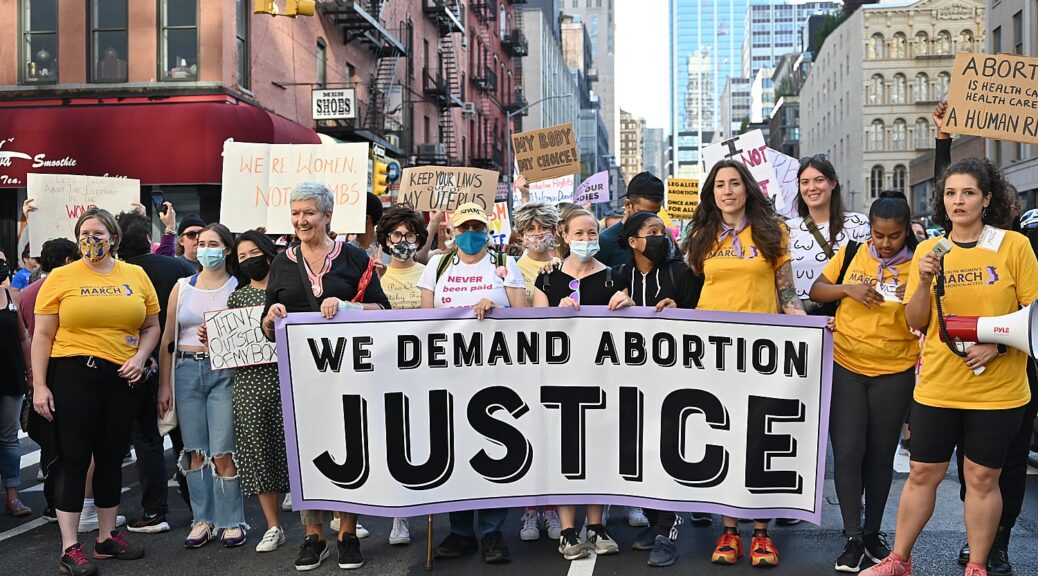
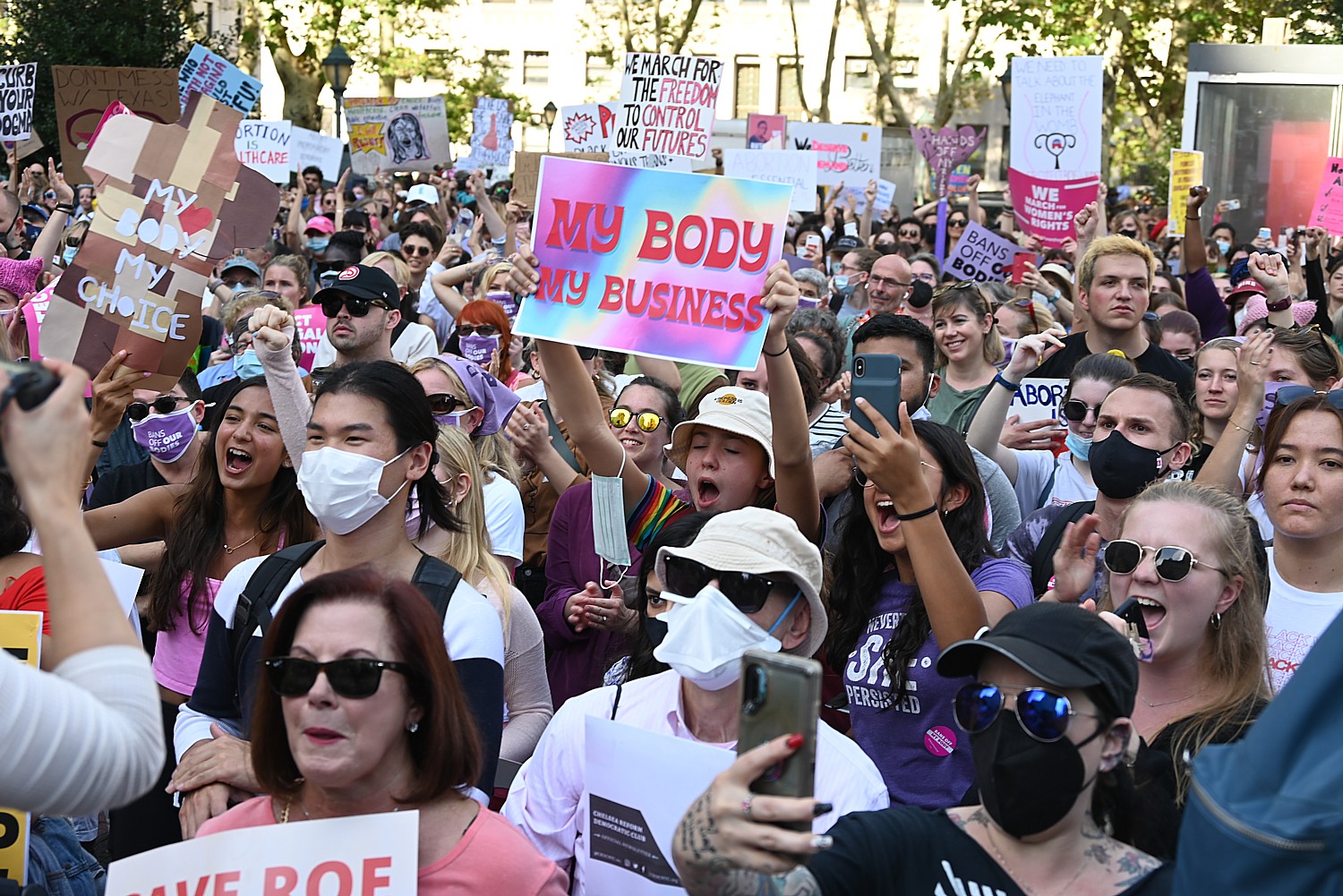
Women’s March for Reproductive Freedom and Justice, NYC, October 2, 2021 © Karen Rubin/news-photos-features.com

By Karen Rubin, News & Photo Features, news-photos-features.com

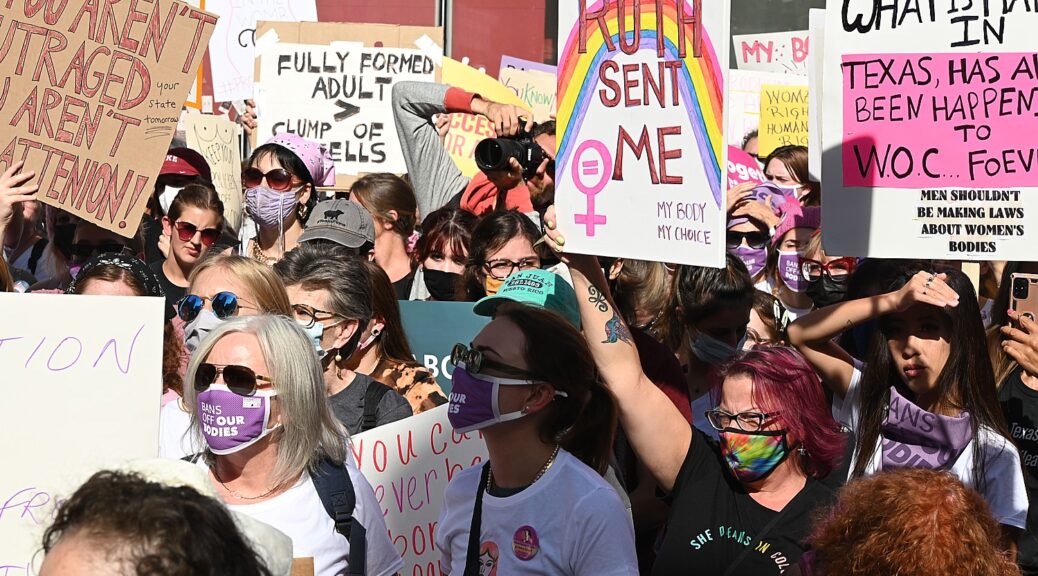
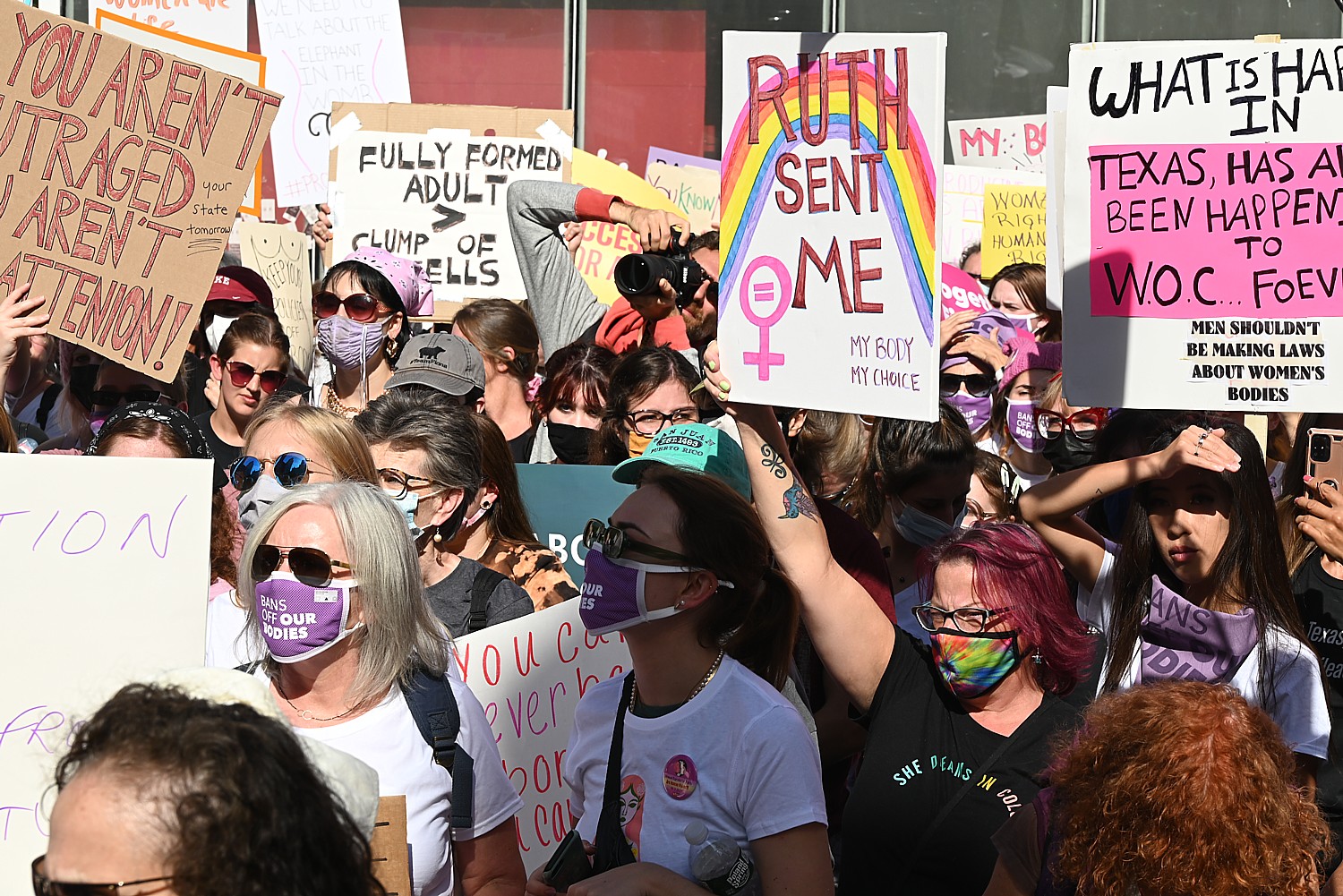
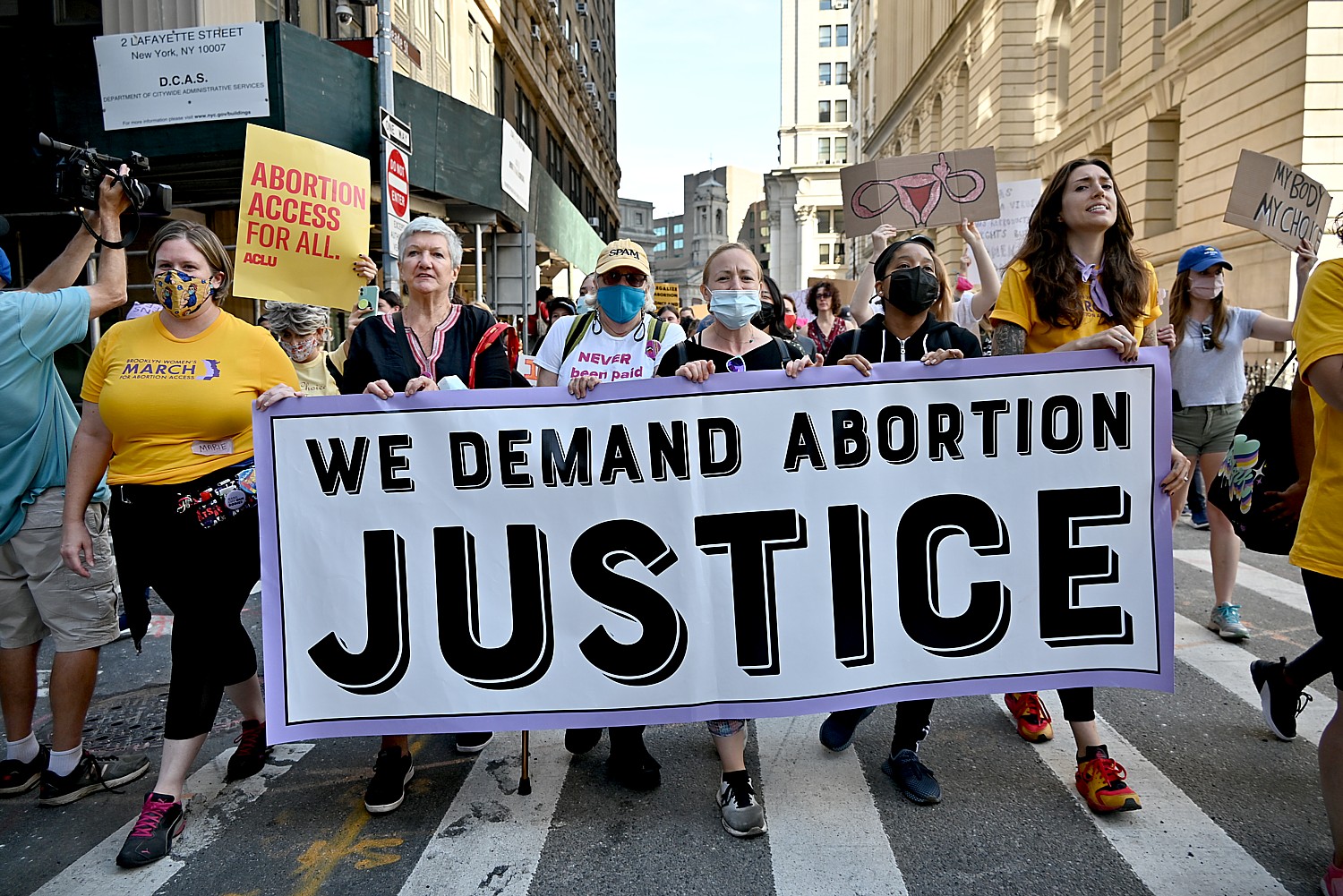
Thousands gathered in Foley Square, in front of the federal court house, to hear calls for justice, equal rights and full personhood for women in face of the assault on abortion rights from Texas and dozens of states and the right wing majority Supreme Court’s deference and then marched up to Washington Square Park, bringing their messages of “Save Roe” “Keep Your Rosaries Off My Ovaries”, “Hands off Our Privates” “We Won’t Go Back” and “Ruth Sent Us.” (See: NYC Joins Millions Across Country in Rallies, Marches for Women’s Reproductive Freedom)

Here are some highlights:

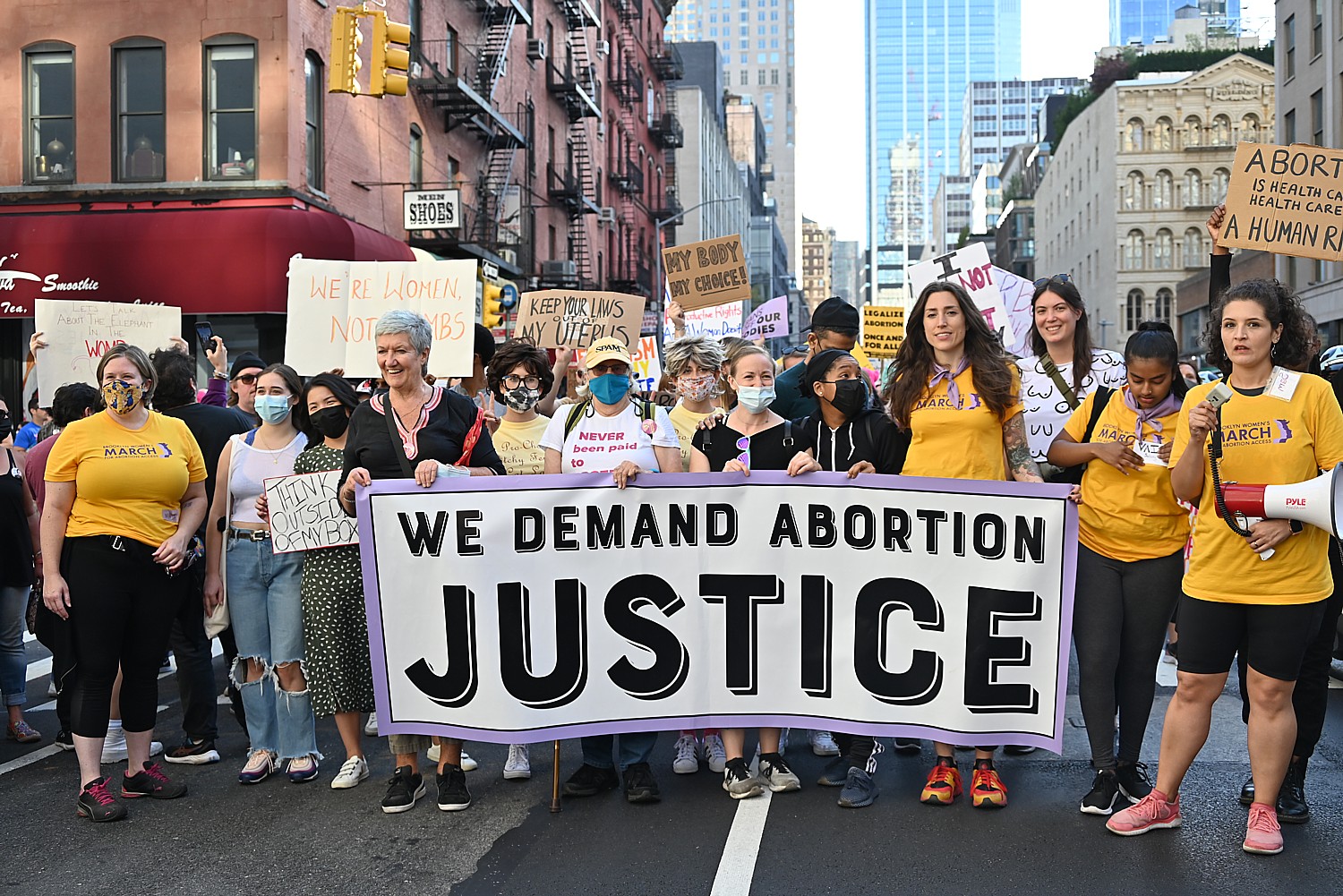
We Demand Abortion Justice”. Women’s March for Reproductive Freedom and Justice, NYC, October 2, 2021 © Karen Rubin/news-photos-features.com
Women’s March for Reproductive Freedom and Justice, NYC, October 2, 2021 © Karen Rubin/news-photos-features.com
“I Love Someone Who Has Had an Abortion.” Women’s March for Reproductive Freedom and Justice, NYC, October 2, 2021 © Karen Rubin/news-photos-features.com
“Break All the Chains.” Women’s March for Reproductive Freedom and Justice, NYC, October 2, 2021 © Karen Rubin/news-photos-features.com
“No Going Back.” Women’s March for Reproductive Freedom and Justice, NYC, October 2, 2021 © Karen Rubin/news-photos-features.com
“Protect Our Rights.” Women’s March for Reproductive Freedom and Justice, NYC, October 2, 2021 © Karen Rubin/news-photos-features.com
“Pro Roe”. Women’s March for Reproductive Freedom and Justice, NYC, October 2, 2021 © Karen Rubin/news-photos-features.com
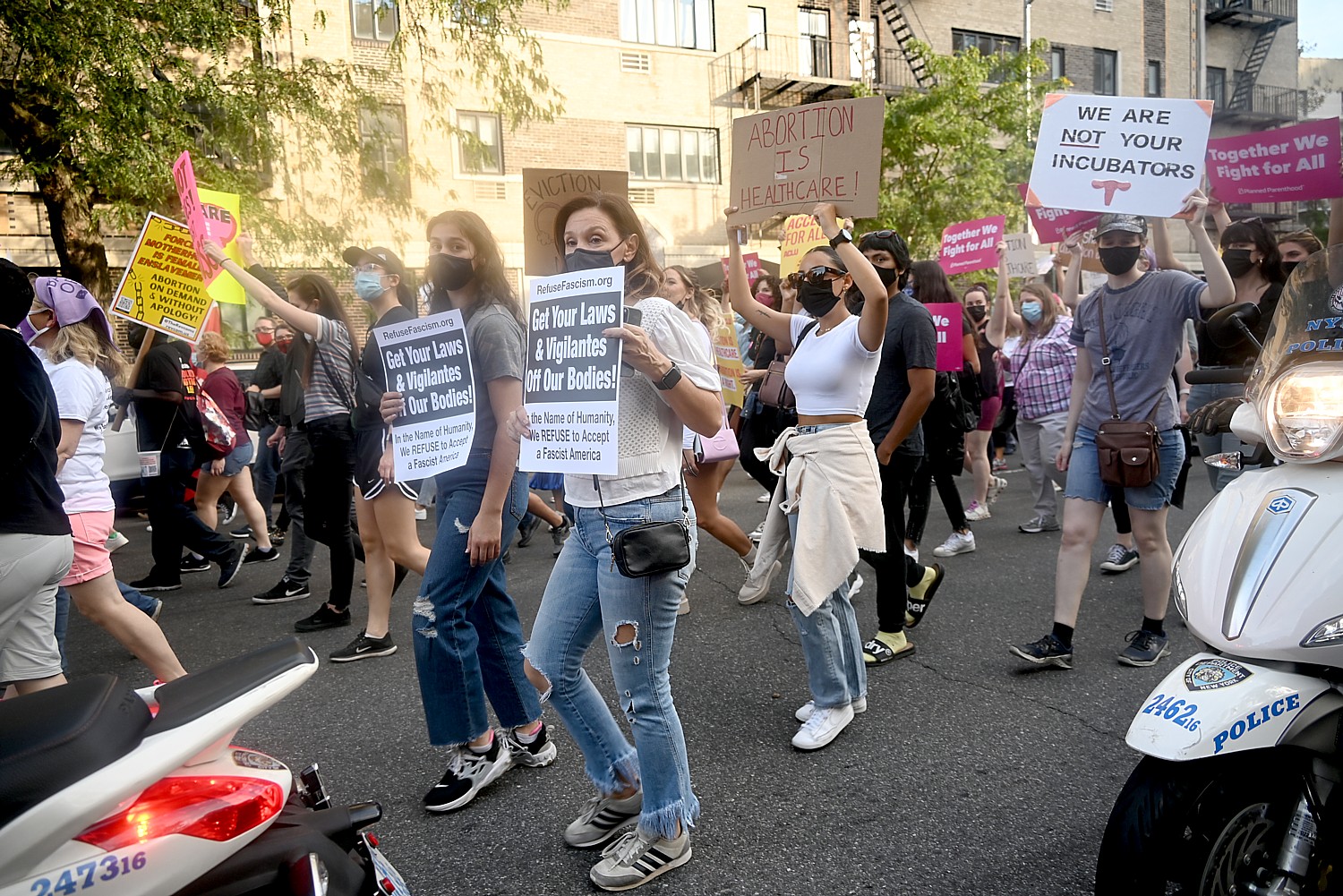
“We Are Not Your Incubators.” Women’s March for Reproductive Freedom and Justice, NYC, October 2, 2021 © Karen Rubin/news-photos-features.com
“Safe Accessible Abortions for Everyone.” Women’s March for Reproductive Freedom and Justice, NYC, October 2, 2021 © Karen Rubin/news-photos-features.com
“Baby.” Women’s March for Reproductive Freedom and Justice, NYC, October 2, 2021 © Karen Rubin/news-photos-features.com
“My Body. My Choice.” Women’s March for Reproductive Freedom and Justice, NYC, October 2, 2021 © Karen Rubin/news-photos-features.com
Resistance Revival Chorus sings for Reproductive Freedom. Women’s March for Reproductive Freedom and Justice, NYC, October 2, 2021 © Karen Rubin/news-photos-features.com

NYC Joins Millions Across Country in Rallies, Marches for Women’s Reproductive Freedom

By Karen Rubin, News & Photo Features, news-photos-features.com

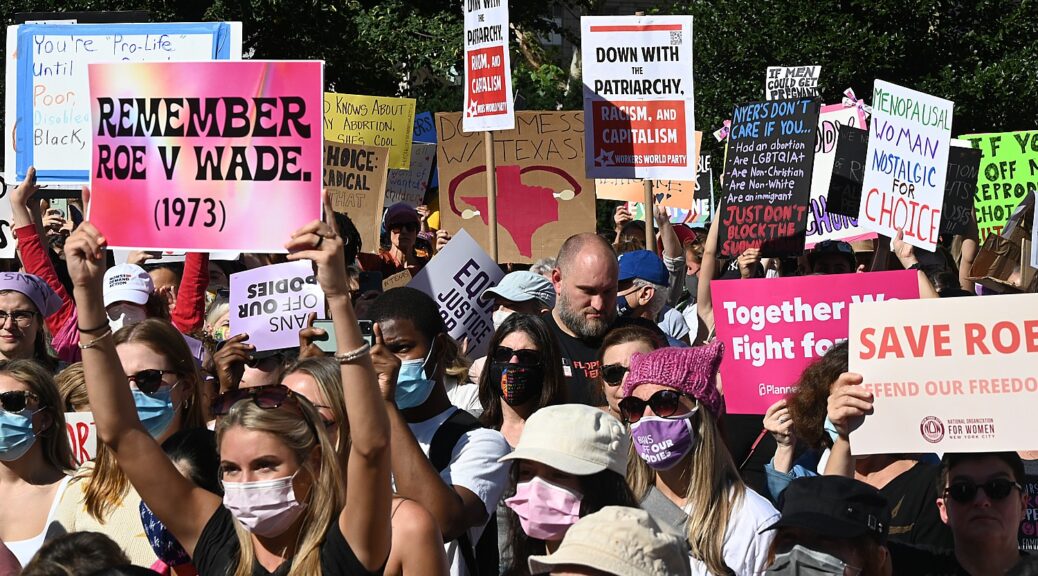
“Remember Roe v Wade.” Women’s March for Reproductive Freedom and Justice, NYC, October 2, 2021 © Karen Rubin/news-photos-features.com

Thousands gathered in Foley Square, in front of the federal court house, to protest for justice, equal rights and full personhood for women in face of the assault on abortion rights from Texas and dozens of states and the right wing majority Supreme Court’s deference. The timing was key, just days before the Supreme Court begins its session in which it will hear a Mississippi case banning abortions after 15 weeks. Texas SB8 bans abortions after six-weeks, the theoretical point when a fetus has a heartbeat, and deputizes vigilantes and bounty hunters to enforce it against anyone even suspected of aiding a woman who gets an abortion and collect $10,000.

“Ruth Sent Me.” Women’s March for Reproductive Freedom and Justice, NYC, October 2, 2021 © Karen Rubin/news-photos-features.com
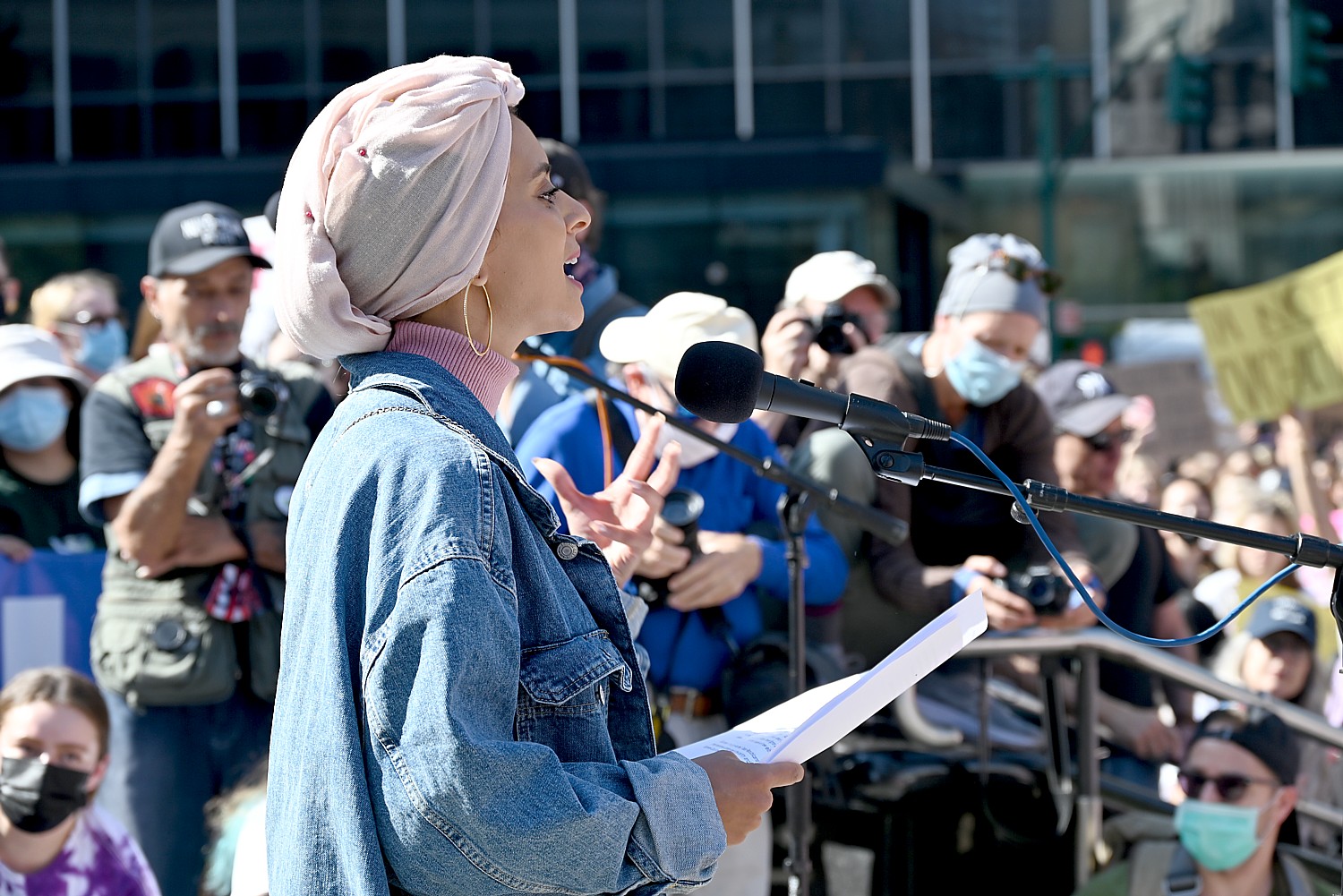
Rana Abdelhamid, Women’s March for Reproductive Freedom and Justice, NYC, October 2, 2021 © Karen Rubin/news-photos-features.com

Rana Abdelhamid: “This is not about religion, not about life. They called us ‘hysterical’ for warning about the effort to overturn Roe v. Wade. It’s time for congress to do what’s right and protect our constitutional right to abortion. End the filibuster. We know what it is to have our bodies policed. Abolition Justice!

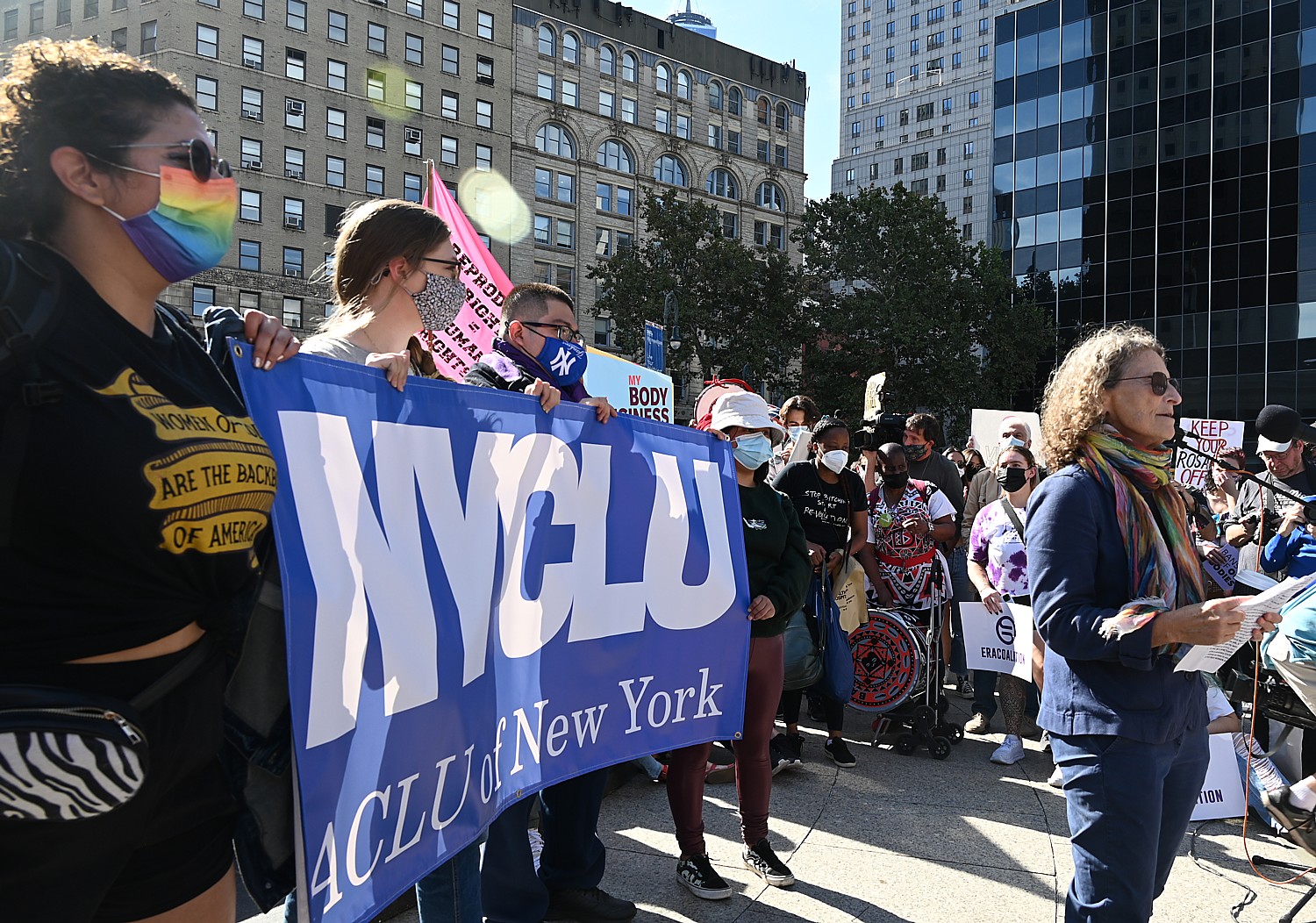
Donna Lieberman, NYCLU Women’s March for Reproductive Freedom and Justice, NYC, October 2, 2021 © Karen Rubin/news-photos-features.com

Donna Lieberman, executive director of the NYCLU: We stand with women in Texas, Mississippi and all over the country. Abortion Justice. Reproductive Justice. Make New York a safe haven, close every loophole in state law, so anyone can come for reproductive health. We won’t turn back. We will be at every polling place in every election. Hold elected leaders accountable.

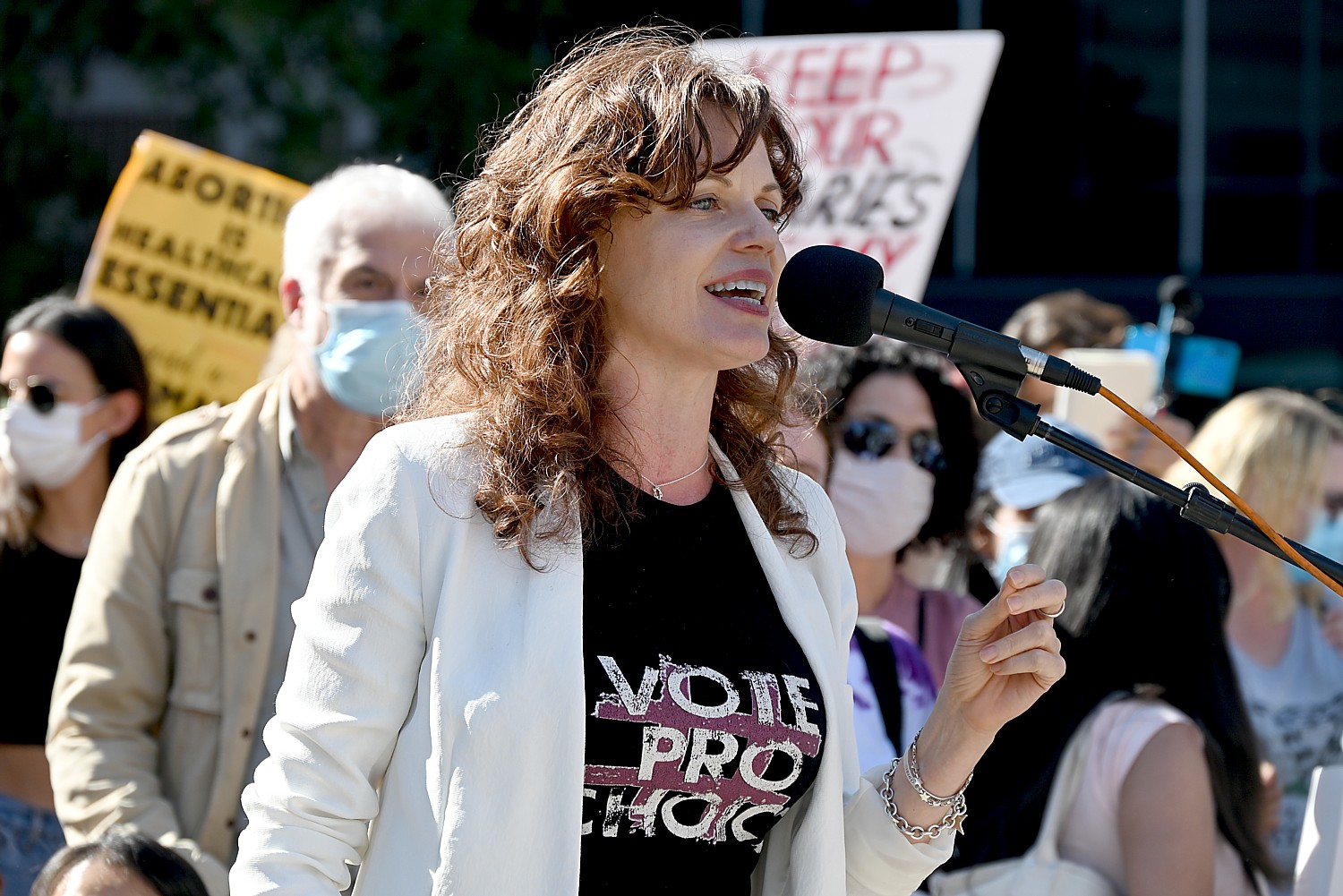
Heidi Sieck, Vote Pro Chooce, Women’s March for Reproductive Freedom and Justice, NYC, October 2, 2021 © Karen Rubin/news-photos-features.com

Heidi Sieck, Vote Pro Choice: Reproductive freedom and abortion justice are at stake. Small, massively overfunded group of white supremacist, Christian conservatives have invested in state legislatures, built an anti-choice infrastructure. They stole two Supreme Court seats. That changes now. Over 80 percent support reproductive freedom. Pass the Women’s Health Protection Act (that passed the House, but not the senate), end the filibuster, rebalance Supreme Court. In November, 2021, 40,000 seats are up for election. Every ingle elected has a role to protect reproductive rights. Not just congress but state and local. Run for office, donate to VoteProChoice.us.

Batala NY, Women’s March for Reproductive Freedom and Justice, NYC, October 2, 2021 © Karen Rubin/news-photos-features.com
Congresswoman Carolyn Maloney, Women’s March for Reproductive Freedom and Justice, NYC, October 2, 2021 © Karen Rubin/news-photos-features.com

Congresswoman Carolyn Maloney: They have been chipping away at abortion rights for years, but now they are bulldozing our rights into the ground.Last week, chaired House Oversight Committee on Texas SB8, when three Congresswomen told their abortion stories. Women are speaking out. In December, Mississippi comes before the Supreme Court. For my entire time in Congress we hadn’t had a pro-choice majority, until this year. We passed the Women’s Health Protection Act, codifying Roe. It has to pass in the Senate. We could pass it except for the filibuster. We have to carve out an exception. There is no democracy if women cannot control their own bodies, make their own reproduction choices. It is so outrageous, I can’t believe we are still fighting for this.

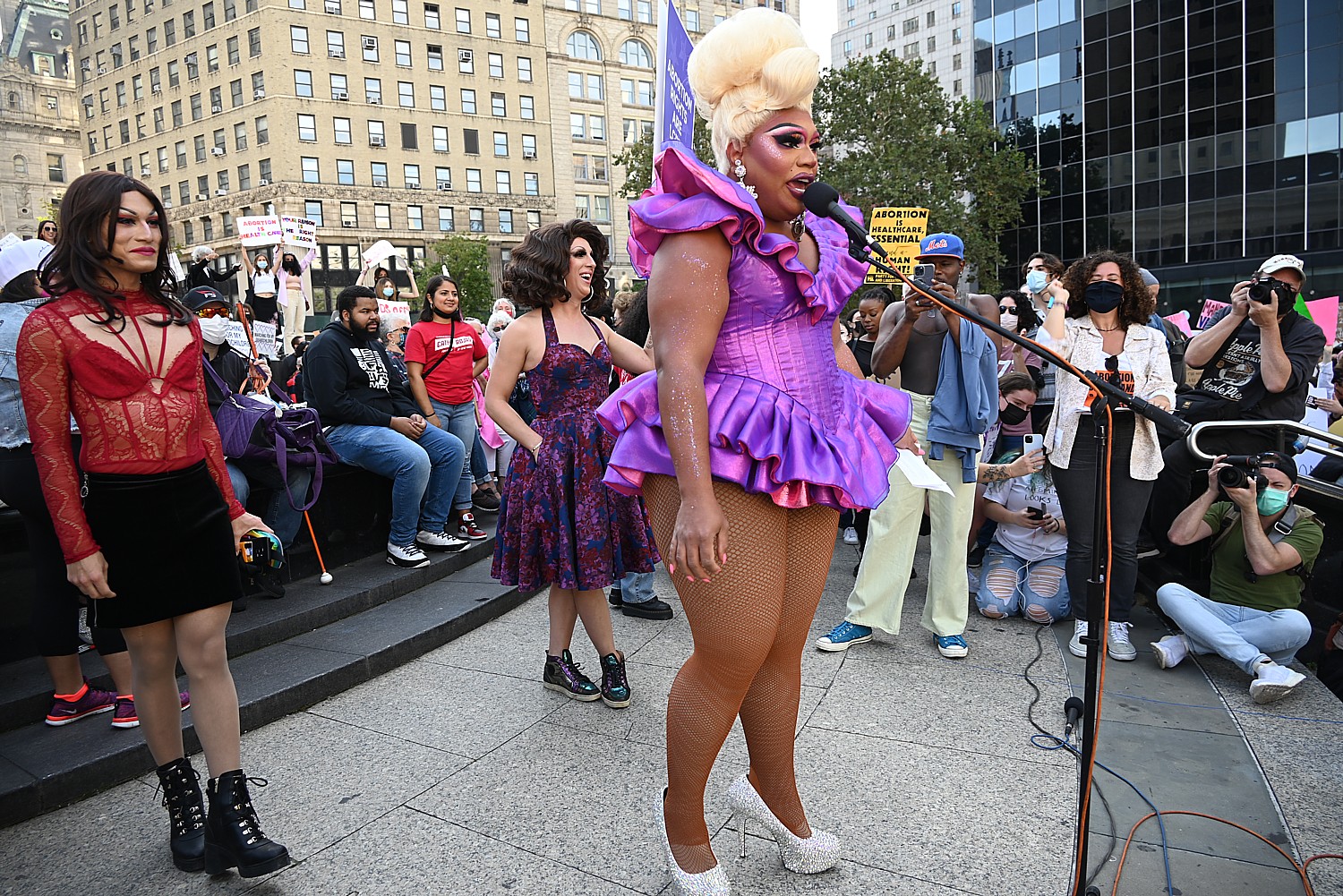
Brita Filter, Women’s March for Reproductive Freedom and Justice, NYC, October 2, 2021 © Karen Rubin/news-photos-features.com

Brita Filter: Abortion rights are LGBTQ rights.

“My Body, My Business.” Women’s March for Reproductive Freedom and Justice, NYC, October 2, 2021 © Karen Rubin/news-photos-features.com
Congressman Jerry Nadler, Women’s March for Reproductive Freedom and Justice, NYC, October 2, 2021 © Karen Rubin/news-photos-features.com

Congressman Jerry Nadler, who, over 50 years ago, lobbied the New York State Assembly to legalize abortion: It’s been 30 days since women were stripped of their constitutional rights, their freedom to make their own decisions of their lives, their bodies. That’s 30 days too many.

Amsi, Women’s March for Reproductive Freedom and Justice, NYC, October 2, 2021 © Karen Rubin/news-photos-features.com

Amsi: The battle for reproductive rights is not new. It’s been long, hard, frustrating.

Pascale Bernard, Planned Parenthood of New York City, Women’s March for Reproductive Freedom and Justice, NYC, October 2, 2021 © Karen Rubin/news-photos-features.com

Pascale Bernard, Planned Parenthood of New York City: History is repeating. We have been here before. Enough is enough. Women in Texas are having to drive to Oklahoma, having to choose between paying for an abortion or feeding their children. People are scared. Justice Ginsburg told us to dissent, she left a roadmap to protect reproductive rights. We are lucky in New York, but we nee dto close loopholes, we need an abortion fund so women can come to New York for care, for safety.

Cathy Rojas, Women’s March for Reproductive Freedom and Justice, NYC, October 2, 2021 © Karen Rubin/news-photos-features.com

Cathy Rojas, a teacher and candidate for NYC mayor running as a Socialist: We need to build a sustainable people-powered movement ion New York City, In Texas, where people were freezing and is one of worst states to live – hunger, poverty of children, maternal mortality – they are leading the attack on abortion rights. So when claim is about protecting life, is really about protecting profit over lives.The right wing don’t give a damn about lives. Instead of dealing with the real crises are attacking abortion rights. Congress is ineffective at passing laws for basic necessities, but quick to bail out banks and the ultra rich. They always find time to attack women, LGBTQ and the vulnerable. This is not just about a bad law, but the whole damn system – the bigots, the politicians for hire, the courts up to the Supreme Court, the corporate control of the media, the police and ICE. I am fed up with capitalism. We need systemic change.

“Legalize Abortion, Once and For All.” Women’s March for Reproductive Freedom and Justice, NYC, October 2, 2021 © Karen Rubin/news-photos-features.com
The Band Betty, Women’s March for Reproductive Freedom and Justice, NYC, October 2, 2021 © Karen Rubin/news-photos-features.com

The Band Betty: We are one-fourth through the 21st century. I don’t see flying cars or universal health care. I see women being told to be ashamed. Until women have equal rights in the Constitution, we will continue to see how the state commands our fate.

Rev. Nori Rost of New York Society of Ethical Culture, Women’s March for Reproductive Freedom and Justice, NYC, October 2, 2021 © Karen Rubin/news-photos-features.com

Rev. Nori Rost, New York Society of Ethical Culture: They are “protecting” a fetus with a heartbeat? How about fighting for people who already have a heart beat. Anti-choice, anti-woman is nothing new – it is about subjugation, oppression. We will not give up, shut up, slow down, sit down until all people have agency over their own body. We are among millions marching as one, we will not be stopped.

Jeannie Park, Women’s March for Reproductive Freedom and Justice, NYC, October 2, 2021 © Karen Rubin/news-photos-features.com

Jeannie Park (Warriors in the Garden): Abortion bans have no humanity, no exception for rape, incenst. 3 million have experienced rape, the next 3 million will be forced to carry to term. The penalty to abort is more severe than to rape. Women’s bodies are more regulated than guns. What does it mean to be pro life if you only value certain lives. Encouraging vigilantes, bounty hunters is too lcose to the Fugitive Slave Act of 1850. I will not go back.

Miriam Elhajli, Women’s March for Reproductive Freedom and Justice, NYC, October 2, 2021 © Karen Rubin/news-photos-features.com

Miriam Elhajli sings a song 100 years old, “Wagoner’s Lad,” and sounding so much like Joan Baez who sang it:  “Oh, hard is the fortune of all woman kind/She’s always controlled, she’s always confined/Controlled by her parents until she’s a wife/A slave to her husband the rest of her life”

Carol Jenkins, ERA Coalition, Women’s March for Reproductive Freedom and Justice, NYC, October 2, 2021 © Karen Rubin/news-photos-features.com

Carol Jenkins, Co-President and CEO of The ERA Coalition and the Fund for Women’s Equality: The Equal Rights Amendment has been around for 100 years; it has been 50 years since passed in Congress, now 38 states have ratified it, so could be published in the Constitution. The only hold up is a time limit, put into the introduction, not the amendment. The root of sexism, misogyny, and racism is in the Constitution, written by slaveholding white males. Everything we’ve been doing since has been to repair what was left out of the Constitution. We have to put the ERA on list of things, so we don’t have to keep repairing the Constitution. Congress has removed the timeline twice, it is now in the Senate. We are done having to beg for rights, gather in the streets and ask “please”. Go to ERACoalition.org.

Women’s March for Reproductive Freedom and Justice, NYC organizers Rose Baseil Massa and Juliet Aguerre, October 2, 2021 © Karen Rubin/news-photos-features.com
Women’s March for Reproductive Freedom and Justice, NYC, October 2, 2021 © Karen Rubin/news-photos-features.com
“Abortion is a Human Right!” Women’s March for Reproductive Freedom and Justice, NYC, October 2, 2021 © Karen Rubin/news-photos-features.com
“My Body, My Choice,” Women’s March for Reproductive Freedom and Justice, NYC, October 2, 2021 © Karen Rubin/news-photos-features.com

See next: THOUSANDS JOIN NYC MARCH FOR REPRODUCTIVE FREEDOM AND JUSTICE

____________________________

© 2021 News & Photo Features Syndicate, a division of Workstyles, Inc. All rights reserved. For editorial feature and photo information, go to www.news-photos-features.com, email editor@news-photos-features.com. Blogging at www.dailykos.com/blogs/NewsPhotosFeatures. ‘Like’ us on facebook.com/NewsPhotoFeatures, Tweet @KarenBRubin

Hochul Standing Firm in Defense of Women’s Reproductive Rights, Issues Invitation to Come to NYS for Care

#StopTheBans Rally, NYC, May 2019. New Yorkers rally against abortion bans. The assault on women’s reproductive rights have only intensified, climaxing with Texas total abortion ban enforced by incentivizing vigilante bounty hunters, which the theocratic majority on the Supreme Court allowed to go forward. The Department of Justice has now sued Texas, while other states move to mimic the Texas law. © Karen Rubin/news-photos-features.com

By Karen Rubin, News & Photo Features, news-photos-features.com

New York State Governor Kathy Hochul came out hopping mad over the Texas abortion ban strategy and swinging at the Planned Parenthood Day of Action Rally in support of abortion access, making a sweeping invitation to any woman in a state where abortion access is obstructed, to come to New York, a sanctuary.

“We are here to show the rest of the nation that New Yorkers stand with every single one of you. Women across this nation, we have your back.”

She declared, “Right now, we have oppression going on in our own country when people are trying to tell women what to do with their own bodies. It stops here in New York. Let’s take this battle all across the nation. To Washington, to Texas, and anywhere else that they think they have a right to have their hands on our bodies.

“Keep your damn hands off our bodies.”

In addition, Governor Hochul announced an agenda to affirm abortion rights and cement New York’s status as a place to welcome women seeking abortion care.

Governor Hochul was joined by Senator Kirsten Gillibrand to lay out their combined efforts to fight for reproductive rights. As part of these efforts, the Governor is directing State agencies to coordinate a statewide public information campaign, including the development of a patient bill of rights, in coordination with stakeholders. This campaign will help women know their rights and legal protections and ensure this information is accessible and widely available. The Governor also directed the Department of Health to take immediate action to develop and widely distribute modern and comprehensive provider guidance on the right to provide abortion care and to ensure updates to existing regulations are adopted so that medication abortion can be more easily accessed during telehealth visits.

“Abortion access is safe in New York – the rights of those who are seeking abortion services will always be protected here,”  Governor Hochul said. “This plan will affirm that in our state, and leaders like Senator Gillibrand will fight on a national level. To the women of Texas, I want to say I am with you. Lady Liberty is here to welcome you with open arms.”

Recognizing that national attention on abortion issues may make misinformation more likely to spread, the Governor also wrote a letter to Facebook urging the company to provide information on any current efforts to mitigate the spread of abortion misinformation online and to take new action to combat misinformation about abortion laws, regulations, and availability.

Here is a highlighted transcript:

Are you all fired up? I am fired up. I love a good fight. But I’ll tell you, my friends, this is a fight that I thought ended when my mother was starting out as a parent, as a young person. I had no idea that all these years later we’d be fighting the same fight that grandma and my mom fought, that my own daughter now has her rights threatened by crazy people in places like Texas.

We are sick and tired of being sick and tired, are we not? Have you heard that before? We don’t want to be fighting this anymore, but we are ready. We are here to show the rest of the nation that New Yorkers stand with every single one of you.

Women across this nation, we have your back. We will not abandon you just because we are far more enlightened in our respect for women’s bodies, and I have been a fighter on the forefront of this battle since 27 years ago when I ran for local office, running for a simple town board in a small town, and I was told in this very conservative community, if I didn’t take the “Right to Life” political line that I would never get elected in a million years. And I said, well watch this. I would not touch that line. I ran for office and I won overwhelmingly, time and time and time again.

And I say that because that is what’s going on in other parts of our nation and even in parts of our own state. And I’ll tell you one more story. I am so passionately engaged in making sure that every woman never has to find her way to a back alley, or to fight for simply having contraception access. I will join this battle and I will help lead the nation in this fight because when I was a member of congress, as member of congress I fought for the Affordable Care Act, because I thought health rights are human rights. It’s that simple. Everybody deserves the dignity of good healthcare and included in that was the right to contraceptive coverage by employers. They had to provide this, and I stood firm for that, and as a result that was an issue that I lost my seat in Congress on, and I would do it all over again because sometimes you just have to stand up and do what’s right and stand up for other people. And that’s what you’re doing here, standing in the rain in Brooklyn today. I am so proud of you, every one of you.

I want to thank our great borough president, Eric Adams, who is hosting us. Thank you, future Mayor Eric Adams. And to all of the elected officials who are here today. This is a battle that’s always happening in the streets. It’s happening at the Planned Parenthoods facilities that I’ve gone to after they’ve been subjected to attacks and terrorist actions.

We have to stand together and let people know that there is a reason why we feel we should be the sanctuary for people across this nation whose rights are attacked, whether it’s Texas or anywhere else because in 1886 they erected a beautiful woman in our harbor with her hand held high with torch in it, a beacon of hope for people who are oppressed.

And right now, we have oppression going on in our own country when people are trying to tell women what to do with their own bodies. It stops here in New York. Let’s take this battle all across the nation. To Washington, to Texas, and anywhere else that they think they have a right to have their hands on our bodies.

Keep your damn hands off our bodies. Keep your damn hands off our bodies. We are sick and tired. We are going to take this battle anywhere it occurs, and I want to thank all of you. You inspire me. You inspire me, each and every one of you when I come out here and I see your passion to fight for other people and make they have their dignity and rights. I want to thank you, Joy, and all our friends at Planned Parenthood for being there when we need you the most.

I am going to join this army, I’m going to help lead this army, whatever you need me to do, I will be there my friends. It’s all about showing up just like you showed up here on this beautiful day in Brooklyn. Thank you everybody.

Standing Up for Women’s Reproductive Rights

Senator Gillibrand said,”Having control over your own body and your own future is a basic human right. But that right is being threatened every day. The recent law in Texas – and the Supreme Court’s refusal to block it – is dangerous and disturbing. This law is not just unconscionable, it’s unconstitutional. At the federal level, we must pass the Women’s Health Protection Act, which would create federal protections against state restrictions that fail to protect women’s health and intrude upon personal decision-making. Here in New York, we luckily have a governor who understands and champions fundamental reproductive rights. I stand ready to support Governor Hochul’s efforts to ensure that providers, patients and the people of New York have the best information about abortion care and the resources to get the care they need.”

Representative Carolyn B. Maloney said, “The Supreme Court’s failure to block the draconian Texas anti-choice SB8 law flies in the face of decades of precedent and is a major blow to Americans’ constitutional right to an abortion. SB 8 makes it illegal to end a pregnancy under nearly all circumstances after 6 weeks — before most people even know they’re pregnant. This devastating ruling by the highest court will most impact BIPOC and lower income individuals who often do not have the same access to health care or ability to travel out of state to access an abortion. The House has already voted to repeal the Hyde Amendment, and we must pass the Women’s Health Protection Act.  Here in New York, I’m so proud to have a governor like Kathy Hochul, who I know will work each and every day to protect New Yorkers’ reproductive rights.”

New York Senate Majority Leader Andrea Stewart-Cousins said, “In New York, we have shown that we are ready to protect women’s right to choose and access high quality reproductive healthcare,” “I want to thank Gov. Hochul and all the partners involved in this campaign, for amplifying the message that in New York, we will continue to be the standard bearers for women’s reproductive rights. With this campaign we are saying that in New York, women’s health matters, women’s decisions matter and the reproductive rights of ALL New Yorkers’ and visitors alike are protected.”

Senator Liz Krueger, Co-Chair of Bipartisan Pro-Choice Legislative Caucus said, “For many years before we passed the Reproductive Health Act in New York, we were told by opponents of choice that it was unnecessary, because the Supreme Court would never overturn Roe v. Wade. And yet here we are: just two years after passing the RHA, a Court packed with radical extremists has upheld Texas Republicans’ flagrantly unconstitutional forced-birth law. Opponents of reproductive freedom have made clear that their attacks on women will not let up, so neither can we. I thank Governor Hochul for taking a strong stand for the rights of women and families to make their own reproductive decisions without government interference.”

Assemblymember Deborah J. Glick said, “Texas’ draconian abortion ban is deeply disturbing, but not surprising. Despite a majority of Americans supporting a pregnant person’s right to choose, anti-choice extremists continue to try to undermine our constitutional right to seek reproductive health care, including abortions. I have worked tirelessly to protect and strengthen reproductive rights, and I am proud to have led the charge to codify Roe v Wade in New York State state law in the Reproductive Health Act for just this eventuality. Texas’ disgraceful law shows us why we must continue to fight to protect our right to choose.”

Assemblymember Rodneyse Bichotte Hermelyn, incoming Chair of the New York State Assembly Task Force on Women’s Issues said, “We cannot allow oppressive, anti-woman bans on our bodies to penetrate our state or nation. The GOP-led stripping of women’s rights in Texas must be stopped. We need to protect women from the Court’s inaction, which could jeopardize our reproductive rights everywhere. I am grateful to the Governor, Kathy Hochul, and Sen. Gillibrand for taking a stand to make sure these archaic laws never undermine our health care in the state of New York.”

Assemblymember Kimberly Jean-Pierre, Chair of the Legislative Women’s Caucus said, “Make no mistake, Texas’s draconian new abortion law is an unconstitutional attack on the reproductive rights of women across our nation. Here in New York, we will always stand up for the right of women to make their own reproductive health choices, and under the leadership of Governor Hochul, I know that our state will continue to be a safe haven for women and their access to care in the face of this abhorrent assault on our fundamental rights to reproductive freedom.”

Assemblymember Karines Reyes, Co-Chair of Bipartisan Pro-Choice Legislative Caucus said, “The abortion ban recently enacted in Texas is completely reprehensible. A women’s right to an abortion is just that – a right – and in New York we will always do everything we can to protect a women’s right to choose. I thank Governor Hochul for taking aggressive actions to affirm abortion rights in New York and making sure that every woman in New York knows her rights.”

Manhattan Borough President Gale A. Brewer said, “While other states are cracking down on reproductive rights with needless and extreme laws, here in New York State Governor Kathy Hochul is taking action to ensure that we remain a beacon of hope. All reproductive health, including abortion must be legal, safe, accessible, and affordable. That’s what today’s announcement by Governor Hochul aims to promote.”

Robin Chappelle Golston, President & CEO of Planned Parenthood Empire State Acts said, “Make no mistake – there is a national effort to destroy access to abortion in this country and we must be just as aggressive to expand reproductive healthcare. This is our moment, to not just hold the line on access to abortion here in New York, but to boldly advance it. Everyone deserves the freedom to control their own body, make personal decisions and shape their own future. I want to thank Governor Hochul for her shared and unwavering commitment to this vision, and for the steps she is taking to ensure New York remains a beacon of freedom and access for all.”

Donna Lieberman, Executive Director of the New York Civil Liberties Union said, “We’ve done it before and we’ll do it again: New York will open its doors to those in need of an abortion and stand up against any state that puts a bounty on reproductive freedom. In the face of Texas’ blatantly unconstitutional attacks on abortion access, we applaud Governor Hochul’s decisive action in partnering with experts and stakeholders to ensure New York is a haven state for all who need abortion care. We will not let Texas, or any other state that tries to follow suit, turn back the clock.”

Camille A. Clare, MD, MPH, CPE, FACOG, chair of ACOG District II said, “In a time when women’s reproductive healthcare is under attack across this country, the American College of Obstetricians and Gynecologists, District II is proud to stand with Governor Hochul as she prioritizes access to comprehensive abortion services. Abortion is health care and ACOG District II supports and uplifts the voices of the women seeking abortion services and the medical professionals who provide them. New York State must become a safe haven for anyone seeking abortion care and our medical leadership looks forward to partnering with the Governor and the Department of Health as they work to ensure a comprehensive and transparent system of abortion care here in New York.”

Andrea Miller, President of the National Institute for Reproductive Health Action Fund said, “Texas has passed the most extreme abortion ban in the country, leading to a crisis point for abortion access. The NIRH Action Fund is pressing forward in every state and city we can to secure equitable access to abortion care — because everyone who needs care should receive with it with support, with dignity, and without fear. We applaud Governor Hochul for taking bold action to ensure that New York State is doing all it can to ensure access to all New Yorkers and all those who travel here for care. We invite governors and legislators in states across the country to follow her lead.” 

Plan to Ensure the Right to Abortions in New York State 

In an effort to ensure the right to abortions in New York State, the Department of Health will develop webpage on the provision of abortion care, complete with a Patient Bill of Rights. This will include information on abortion care in New York State, patients’ rights to abortion care within New York State, and links to identify providers who offer abortion services.

DOH will convene a group of experts to develop and issue a guidance document on the provision of abortion care in New York State. This will include collaboration from American College of Obstetricians & Gynecologists, National Abortion Federation, National Institute for Reproductive Health, Planned Parenthood Empire State Acts, New York Civil Liberties Union and clinical providers with an expertise in abortion care. Webinar on guidance document and clinical considerations will be open to providers across New York State and recorded for ongoing availability on the DOH website.

Guidance for Individual Provider Discretion Under Reproductive Health Act

The New York State Department of Health will develop guidance with an emphasis on clarifying the full scope of individual provider discretion under the Reproductive Health Act, and the definition of the term “commencement of pregnancy” as it relates to abortion care. The New York State Abortion Guidance Document will be shared with all New York State clinical providers able to perform abortion in New York State via the Health Commerce System.

Regulatory Updates

The Department of Health will enact regulatory updates including to allow for provision of services via telehealth. These updates will ensure that medication abortion is more easily accessed during telehealth visits, and with the goal of making this an option irrespective of the pandemic.

____________________________

© 2021 News & Photo Features Syndicate, a division of Workstyles, Inc. All rights reserved. For editorial feature and photo information, go to www.news-photos-features.com, email editor@news-photos-features.com. Blogging at www.dailykos.com/blogs/NewsPhotosFeatures. ‘Like’ us on facebook.com/NewsPhotoFeatures, Tweet @KarenBRubin