We, the Leaders of the Group of Seven, acknowledge that the COVID-19 pandemic is a human tragedy and a global health crisis, which also poses major risks for the world economy. We are committed to doing whatever is necessary to ensure a strong global response through closer cooperation and enhanced coordination of our efforts. While current challenges may require national emergency measures, we remain committed to the stability of the global economy. We express our conviction that current challenges related to the COVID-19 pandemic need a strongly coordinated international approach, based on science and evidence, consistent with our democratic values, and utilizing the strengths of private enterprise.
We are committed to marshalling the full power of our governments to: Coordinate on necessary public health measures to protect people at risk from COVID-19; Restore confidence, growth, and protect jobs; Support global trade and investment; Encourage science, research, and technology cooperation. By acting together, we will work to resolve the health and economic risks caused by the COVID-19 pandemic and set the stage for a strong recovery of strong, sustainable economic growth and prosperity.
Accelerate Our Response to COVID-19
We will work hard to protect the health and safety of everyone in our countries. Stepping up the response to the outbreak remains our foremost priority. We will coordinate our efforts to delay the spread of the virus, including through appropriate border management measures.
We will enhance our efforts to strengthen health systems in our countries and globally. We fully support the World Health Organization in its global mandate to lead on disease outbreaks and emergencies with health consequences, leaving no geographical vacuum, and encourage all countries, international organizations, and the private sector to assist global efforts such as the Global Preparedness and Response Plan.
We stress the value of real-time information sharing to ensure access to the best and latest intelligence, improving prevention strategies and mitigation measures.
We will pool epidemiologic and other data to better understand and fight the virus.
We will increase coordinated research efforts, including through voluntary support for the global alliance Coalition for Epidemic Preparedness and Innovation. We will support the launch of joint research projects funded by both public and private resources, and the sharing of facilities, towards rapid development, manufacture and distribution of treatments and a vaccine, adhering to the principles of efficacy, safety, and accessibility.
We will make efforts to increase the availability of medical equipment where it is most needed.
We will coordinate with online platforms to maximize public access to the latest correct and relevant official information, in recognition that millions of citizens receive information and news via social media.
To implement these objectives, and adapt measures if necessary, will require efforts across all parts of our governments, and we ask our health ministers to continue to coordinate on a weekly basis.
Forcefully Address the Economic Impact of the Outbreak
We resolve to coordinate measures and do whatever it takes, using all policy tools, to achieve strong growth in the G7 economies, and to safeguard against downside risks.
To this end, we are mobilizing the full range of instruments, including monetary and fiscal measures, as well as targeted actions, to support immediately and as much as necessary the workers, companies, and sectors most affected. This is particularly important for small and medium businesses and working families.
We also ask our central banks to continue to coordinate to provide the necessary monetary measures in order to support economic and financial stability, and to promote recovery and growth.
We ask our finance ministers to coordinate on a weekly basis on the implementation of those measures and to develop further timely and effective actions.
We reinforce the importance of coordination among international organizations even in the face of challenges to business continuity. We call on the International Monetary Fund and the World Bank Group and other International Organizations to further support countries worldwide as part of a coordinated global response, focused on this specific challenge. We also ask our finance ministers to work closely with International Organizations to design and implement swiftly the international financial assistance that is appropriate to help countries, including emerging and developing economies, face the health and economic shock of COVID-19.
We will address disturbances to international supply chains and continue our work to facilitate international trade.
Restore and Expand Growth
We will continue to work together with resolve to implement these measures to respond to this global emergency. In facing the economic challenge, we are determined not only to restore the level of growth anticipated before the COVID-19 pandemic but also to build the foundation for stronger future growth. We will continue to coordinate through the G7 Presidency including at the G7 Leaders’ Summit and call upon the G20 to support and amplify these efforts.
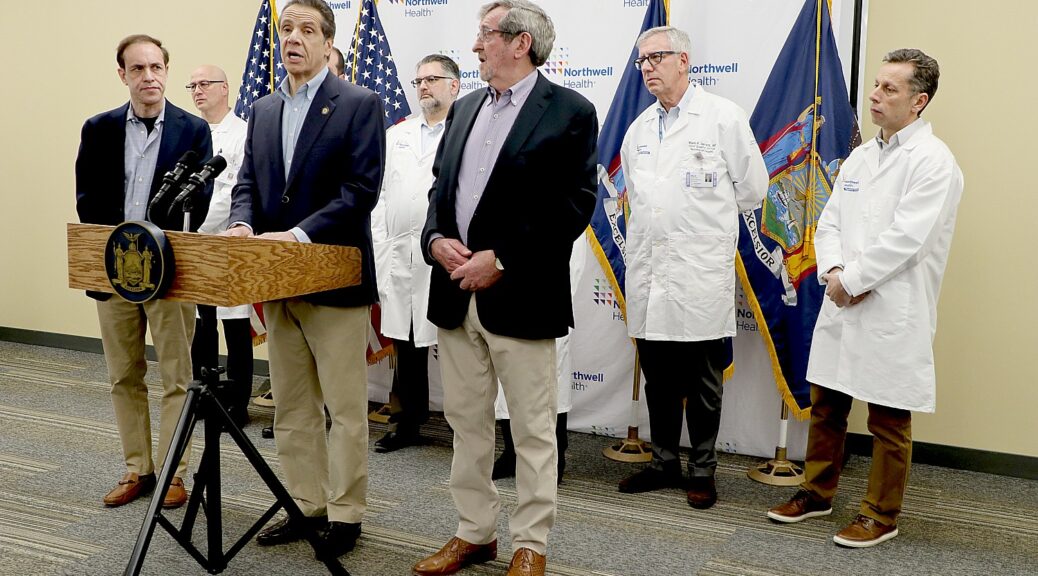
New York, New Jersey, Connecticut have unified on policies regarding closures, including public schools, to combat the spread of coronavirus (c) Karen Rubin/news-photos-features.com
Amid a lack of federal
direction and nationwide standards, New York Governor Andrew M. Cuomo, New
Jersey Governor Phil Murphy and Connecticut Governor Ned Lamont today announced
a regional approach to combating the novel coronavirus (COVID-19) throughout
the tri-state area, in announcing closures of restaurants, bars,
gyms, movie theaters and gatherings over 50 people, as well as public schools.
But the governors all
called upon the federal government – the Army Corps of Engineers and FEMA – to assist
with building emergency hospitals and providing medical equipment and
protective gear for health workers.
In what may be the first
regional coalition in the country to slow the spread of the infection, these
uniform standards will limit crowd capacity for social and recreational
gatherings to 50 people, effective 8 PM tonight. This follows updated
guidance that the Centers for Disease Control and Prevention issued yesterday
recommending the cancellation or postponement of in-person events
consisting of 50 people or more.
The three governors also
announced restaurants and bars will close for on premise service and move
to take-out and delivery services only. These establishments will be
provided a waiver for carry-out alcohol. These measures will take effect
at 8 PM tonight.
Finally, the three
governors said they will temporarily close movie theaters, gyms and casinos,
effective at 8 PM tonight.
This uniform approach to
social distancing is meant to slow the spread of the novel coronavirus, or
COVID-19.
“Our primary goal
right now is to slow the spread of this virus so that the wave of new
infections doesn’t crash our healthcare system, and everyone agrees social
distancing is the best way to do that,” New York Governor Cuomo said. “This
is not a war that can be won alone, which is why New York is partnering with
our neighboring states to implement a uniform standard that not only keeps our
people safe but also prevents ‘state shopping’ where residents of one state
travel to another and vice versa. I have called on the federal government to
implement nationwide protocols but in their absence we are taking this on
ourselves.”
New Jersey Governor Murphy said, “With all we are seeing in our state – and across our
nation and around the world – the time for us to take our strongest, and most direct,
actions to date to slow the spread of coronavirus is now. I’ve said many times
over the past several days that, in our state, we are going to get through this
as one New Jersey family. But if we’re all in this together, we must work with
our neighboring states to act together. The work against coronavirus isn’t just
up to some of us, it’s up to all of us.”
Connecticut Governor Lamont said, “The only way to effectively fight the spread of
COVID-19 is by working together as states. We have shared interests, and a
patchwork of closures and restrictions is not the best way forward. I know that
because of this collaboration, we will save lives.”
But the governors called upon the federal government
to quickly assist to address what is anticipated as a critical shortage of
hospital capacity, medical equipment and protective gear for health workers.
“The best way
to [add hospital capacity] is the Army Corp of Engineers – they build airports,
bridges,” said Governor Cuomo. “They have the personnel, equipment and do it
well. They have the medical equipment and experience setting up hospitals. The
state doesn’t have existing workforce. We could contract out –and expedite
contracting, which is very expensive – but we still don’t have the medical
equipment. It is very, very hard for a state to get this equipment. Everybody
wants ventilators, oxygen tanks. The federal government has a stockpile of
emergency medical equipment. [But], if the federal government doesn’t step up
and doesn’t step up quickly, states will be forced to do what they can on own,
and New York will do exactly that” – use its own construction authority and
Dormitory Authority to build.
New Jersey Governor Murphy said that to expand his
state’s hospital capacity, “we are looking at host of contingency plans in
similar light. We have had constructive conversations with FEMA, but more about
testing. We will take all the help we can get. Our big needs from the federal
government alongside testing is personal protective equipment. In long term, we
will need help with economic recovery – states can’t do that on own. But our
immediate need on personal protective equipment.
“We need
hospital beds and within a couple of weeks,” Connecticut Governor Lamont said. “We
are woefully short, especially if a surge comes, even if we flatten the curve
in the most optimistic way, we are badly outgunned. We saw what happened in
China, where built new hospitals, added capacity in short order.”
The governors said they were not going to shut down
public transportation, but to “right size the equipment to ridership,” Governor
Murphy said. “There are huge focuses on hygiene, cleanliness, making sure all
the equipment is as clean and germ free as possible.”
Meanwhile, the governors are looking to increase
telecommunications capacity, to enable people to telecommute, to maintain
education online and medical assistance, as well as stay in touch with family.
“We’re working with telecom service providers ,upping
capacity, taking away caps, to learn at home, telehealth at home, so people get
out of cars and stay closer at home,” Said Governor Lamont. “Ridership on rail
is way down.”
“New York also,” Cuomo added. “We want people to stay home, so we need capacity for
telecommuting.”
The three states, acting in concert, are shutting
down bars and restaurants except for take out and delivery. The exceptions will
be supermarkets, pharmacies, gas stations and other essential retailers.
New Jersey is strongly discouraging nonessential
travel between 8 pm & 5 am on any given day beginning tonight.
Other states may join New York, New Jersey and
Connecticut in a wider regional coalition for coordinated action – including Pennsylvania,
Massachusetts and Rhode Island.
Asked about the downsides to closing public schools –
including loss of food service for needy children, and child care for workers, Cuomo
said, “We will do it in a way that accentuates the upside and negates the
downside. The downside is people lose childcare, first responders may not be
able to go to work, especially healthcare workers if there isn’t child care, so
the crash will be on the healthcare system. So we said that schools can close
but must provide child care for essential workers, first responders, healthcare
workers. Schools close but we will not stop the food for breakfast, lunch,
dinner. Educational opportunities lost but we are planning to continue to teach
through telecommuting or summer school if this has abated to that point by
summer.
“There are few easy calls on this one,” Governor
Murphy said. “There is enormous pressure on the economy, small businesses going
forward. In schools, the three issues referenced- food security (we have a couple
of hundred thousand kids who depend on schools for a hot meal), child care,
remote learning (250,000 New Jersey kids
don’t have access to device). So we are preprinting monthly syllibi. None of these
decisions are easy, without offsets. But we believe strongly this is right path
to pursue.
As for tribal casinos in New York and Connecticut, which
as sovereign nations, the states cannot order to close but Governor Cuomo said “This
is a ‘do the right thing’ situation.”
Earlier, Governor Cuomo had issued a ruling to close
schools in
New York City, Westchester, Nassau and Suffolk, and instructed New York City to
develop a plan within 24 hours to ensure children who rely on school breakfast
and lunch programs will continue to receive that support, and parents –
especially critical healthcare workers and first responders – will be provided
access to child care as needed.
“Our goal is to
slow the spread of the virus to a rate that the healthcare system can manage,
and one of the ways to do that is to reduce density,” Governor Cuomo said.”Closing
the schools is a good idea but you have to anticipate and correct any
unintended consequences – we have to ensure children who rely on free school
meals continue to get them and that there’s adequate child care, especially for
healthcare workers and first responders who are parents of young children. We
will close these schools but it needs to be done with these contingencies in
mind so that children are not harmed and our hospitals aren’t understaffed –
otherwise we cut off our nose to spite our face.”
The Governor also called
on 1199 SEIU President George Gresham, New York State Nurses
Association President Judy Sheridan Gonzalez, Greater New York Hospitals
Association President Ken Raske and United Federation of Teachers
President Mike Mulgrew to work together to ensure children who rely
on school breakfast and lunch programs will continue to receive that support,
and parents will be provided access to child care as needed, including
temporary daycare centers. These centers would prioritize care for children of
healthcare workers and first responders to ensure these school closures do not
strain the hospital and emergency response systems.
Earlier today, the Governor tasked SUNY Empire State
College President Jim Malatras with working with counties to develop
contingency plans in preparation for school closings, including how to provide
meals to food insecure children and ensuring families have adequate access to
childcare.
County executives from
Westchester, Suffolk and Nassau joined a conference call with Governor Cuomo to
discuss the school closures.:
Westchester County Executive George Latimer said, “Our county has been coordinating
with the State to ensure an effective means of slowing the spread of the
COVID-19 virus. Cancelling group events and meetings, limiting access for
non-essential social contacts and anticipating additional testing and
healthcare needs are all part of our response in concert with the Governor and
his administration. Closing schools – with adequate childcare and nutrition
provisions – is the next step we will undertake this week. We deeply appreciate
the leadership shown by Governor Cuomo.”
“Over the last
several days we have worked with our state and local partners on the potential
closure of schools as the number of confirmed cases of COVID-19 continued to
increase around the state,” Suffolk
County Executive Steve Bellone said. “As part of our larger
social distancing efforts, we came to the conclusion that closing schools is
the right thing to do at this time. I would like to thank Governor Cuomo
for his leadership as we deal with this crisis as well as our school districts
for their partnership and swift action to protect Suffolk families.”
Nassau County Executive Laura Curran said, “I thank Governor Cuomo for fully
supporting our decision to close all public and private schools and for his
unwavering commitment to ensure every child in Nassau County is fully taken
care of while this crisis continues to unfold. We all agree that nothing is
more important than the safety and well-being of our children.”
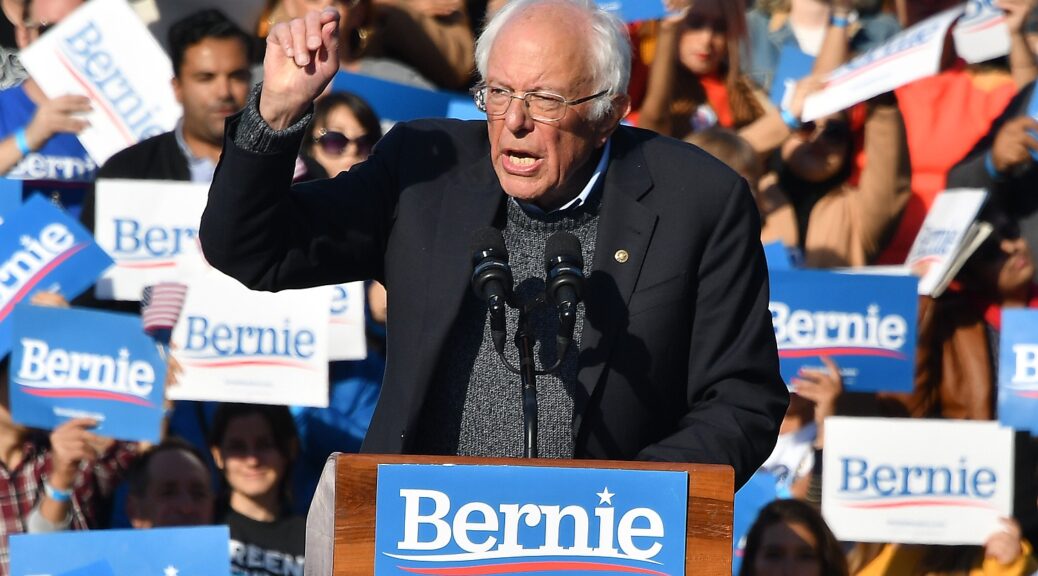
BURLINGTON, Vt. – Sen. Bernie Sanders gave remarks regarding the lessons we can learn from the growing coronavirus outbreak.This is a rushed transcript provided by the Sanders campaign:
Good afternoon everyone, thank you for being here. In the midst of a major healthcare and economic crisis currently facing our country, I’d like to take a few minutes to talk about the lessons we can learn long-term about what we are experiencing today.
As I discussed yesterday, our country is facing, as everybody knows, a medical and economic crisis, the likes of which we have not seen for generations. And we must prepare for this response in an unprecedented way, making certain that our government responds effectively, and protects the interests of all our people regardless of their income, or where they live. In other words, this is not just about giving tax breaks to large corporations, but about remembering the people today who don’t have much money, who are nervous about their economic futures and healthcare prospects.
Needless
to say we must massively increase the availability of test kits for the coronavirus and the speed at which the tests are
processed. We need to anticipate significant increases in hospital admissions, which means that we will need more
ICU units and ventilators, we will need more
doctors, nurses, and medical personnel of all kinds – and we must make sure
that these frontline personnel are well
protected from the diseases they are treating. I have talked to nurses
recently who worry very much about whether they are getting the kind of
knowledge and equipment they need so that they do not get sick.
We need to significantly improve
our communications and collaboration with other countries to ensure that we
are learning everything that we can about the successes and failures of other
countries as they deal with this crisis. And furthermore, we must be honest with the American people and
communicate as effectively and directly as we can with all of the scientific
information that we can provide.
Further, and most importantly, our
response to this entire crisis must be guided by the decisions of doctors,
scientists, and researchers, not politicians.
But as we struggle with this crisis, it is also important that we learn
the lessons of how we got to where we are today, and what we must do in the
future so that we are better prepared for similar crises that may come.
Poll after poll already shows us that the American people understand
that we must do what every other major country on earth does, and that is to guarantee healthcare to all of our people
as a human right, not a privilege. As we begin to see the failures and
vulnerabilities of the current healthcare system, my guess is that those
numbers and the demand for universal healthcare will only go up.
The American people are asking: how is it possible that we spend twice as much per capita as
the people of Canada and other major countries, while 87 million of us are uninsured or underinsured.
And obviously, in this crisis, and unbelievably, it means that people
who are sick today, people who woke up this morning with symptoms of the
coronavirus, are saying, “you know I feel sick but I cannot afford to go to a doctor.” And when somebody is
not treated for the virus – somebody who is unable to afford to go to that
doctor – that means that that infection can spread to many others, putting us
at risk.
So it’s not just
a question that in normal times – tragically, unbelievably – that we lose 30,000 people a year because they
don’t get to doctor on time, but now the lack of healthcare threatens other
people as well.
How could it be, that when we spend so much more than what other countries are spending, we have millions of people who may be dealing with the virus but they cannot go to the doctor because they can’t afford it? That is a question that must resonate in every American’s mind.
If this isn’t a red flag for the current
dysfunctional and wasteful healthcare system, frankly I don’t know what is.
For the benefit of all of us, we must make sure that every person in
this country who needs to seek medical treatment can go to a doctor free of
charge regardless of their income. That is obviously what we must do now in the
middle of a crisis, but it is what we must do as a nation in the near future.
Here are just a few instances about how absurd and dysfunctional our
current healthcare system is.
It has been estimated that a full battery of tests for the coronavirus costs over $1,300. First of all,
take a look at that – $1,300 to get the test people need to have to know if
they have the virus or not.
In America today, 40% of our
people don’t have $400 in the bank to pay for an emergency expense. We
have half of our people living paycheck to paycheck.
If their car breaks down they can’t afford to get it fixed, and if
somebody tells them it costs $1,300 for the test to determine whether you have
the coronavirus if they’re sick, what are they supposed to do? What happens to
them?
How can someone without insurance afford to pay $1,331 to get tested when they don’t even have $400 in the bank? What are they supposed to do? What happens to them? Do they go to a payday lender where the average interest rate is over 390%? Do they borrow money from their family? Or do they go without the test? Which every doctor in the world will tell them is a test they should have.
And while the Trump administration says it may cover co-pays to cover
the cost of testing for those who have insurance, they will not cover the cost of treatment – which could cost tens of
thousands of dollars.
How cruel is that? How absurd is that? To say to people, “we’re sorry
you have coronavirus, we covered the cost of the test, but now you’re on your
own and it’s going to cost tens of thousands of dollars to get treated.” That
is totally absurd.
Clearly what we need to do is to make sure that if someone has the
coronavirus that person gets the treatment that they need.
In other
words, our current system leaves people uninsured, but even if you have
insurance you may not even have the ability to travel to a doctor near you.
Because now we’re talking about a system in which many rural hospitals have closed down and
they cannot find a doctor in their communities.
The reality today, and this is an issue we must to deal with, is that we don’t have enough doctors, we don’t have
enough hospitals, and we don’t have enough clinics in rural communities and
inner cities.
Further, we are in a situation when we desperately need affordable prescription drugs, yet we have a
pharmaceutical industry that continues to make billions in profits by charging
outrageous prices for prescription drugs, sometimes 10x more in this country than in other countries.
In my view,
the most cost effective way to reform our dysfunctional and cruel system is to
move to a Medicare for All, single-payer healthcare system.
And I think in the midst of this crisis, more and more Americans
understand the truth of that.
It is nearly impossible to
believe that anyone can still think it’s acceptable to continue with a
healthcare system that leaves tens of millions of people uninsured. The cruelty
and absurdity of that view is more obvious in the midst of this crisis than it
has ever been.
And let’s be clear. Lack of
healthcare and affordable medicine does not only threaten the healthcare and
well-being of the uninsured. It threatens everyone who comes in contact with
them.
In fact, what this crisis is beginning to teach us is that we are only as safe as the least insured
person in America.
Further, we are the only major
country on earth that does not mandate paid family and medical leave. And
we’re seeing how that crisis is impacting where we are today.
As we speak, there are millions of workers — right now — who are
being told to go to work, yet they may be ill and should be staying home.
But these very same families
will face financial ruin if they don’t go to work. These are workers in the
restaurant industry, transportation industry, tourism, retail — in other words
the people who interact with the public every single day.
Right now, at a time when half of our people live paycheck to paycheck,
and at a time of massive wealth and income inequality, we must directly address the economic desperation facing a
huge number of Americans.
So we must finally pass a paid
family leave program in the United States to keep this virus from spreading
and to keep Americans healthy.
We must do it right now.
People should not be going to work when they are sick, it is unfair to
them, it is unfair to the people they are in contact with. And yet, that
reality exists, because we are the only major country on earth not to guarantee
paid family leave and sick time.
Finally, from a national
security perspective, it is
incomprehensible that we are dependent on China and other countries for masks,
for prescription drugs, for rubber gloves, and for key parts needed to make
advanced medical equipment like ventilators.
As a result of
globalization and our disastrous trade policies, we have been outsourcing
millions of jobs and factories overseas that have gutted our economy. Now we
are seeing another tragic and devastating result of those policies, as we find
ourselves dependent on other countries to provide the most essential things we
need to combat a pandemic and protect the lives of the people in our country.
Now trade is
a good thing, but it has to be based on common sense principles. It has to
be based on protecting American workers
and protecting our national security, making sure we are producing what we need
in this country in the event of a national crisis.
Now is the time to begin
bringing back production and manufacturing to the United States and enact fair
trade policies so that we are never in this position again.
Now here is the bottom line. As we are dealing with this crisis, we
need to listen to the scientists, to the
researchers, and to the medical professionals, not politicians.
We need to move quickly to prepare for the exponential increase of
cases we will be seeing here in our country.
But as we do that, we must begin thinking about how, as a society, we
can create a healthcare and economic system that is humane, that is compassionate,
and that works for all people, not just the wealthiest.
Now that is an issue that people have had to think about for a long
time, but I think in this moment of
crisis more and more people understand that we need fundamental changes to our
economy, and we need fundamental changes to our healthcare system.
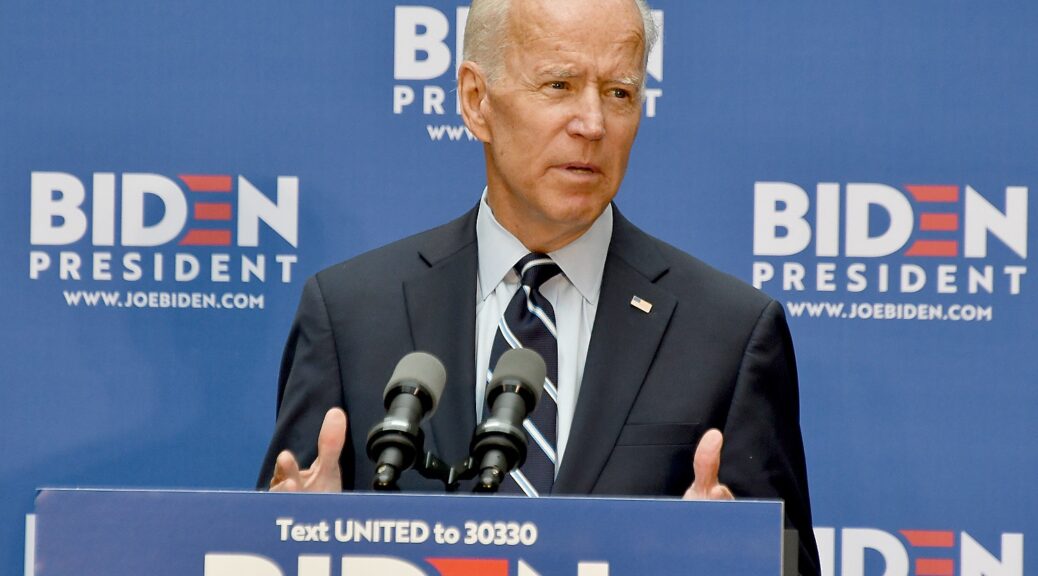
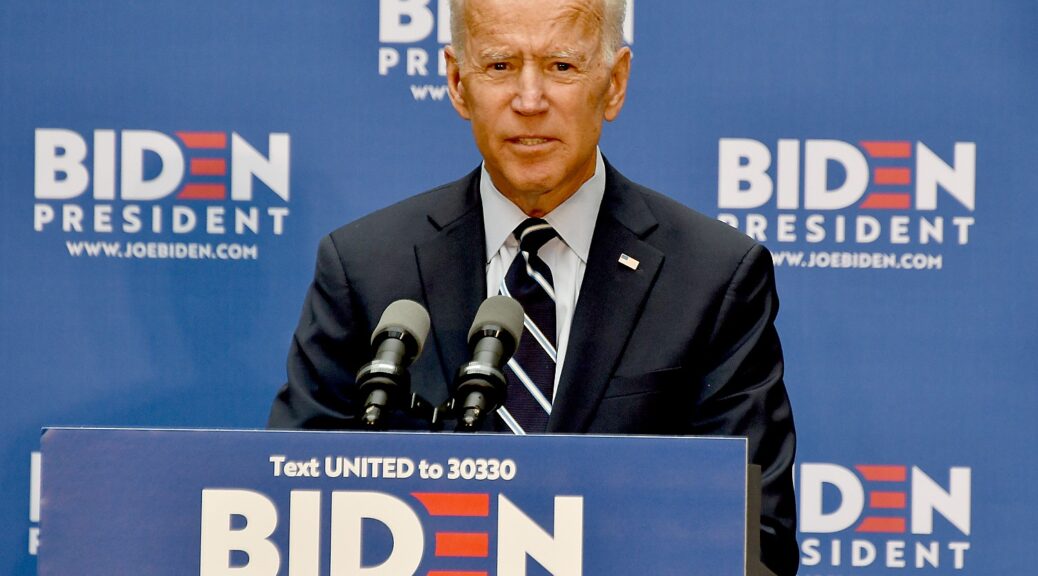
Vice President Joe Biden gave his prescription for addressing the health and economic impacts of the coronavirus pandemic – a strong contrast to the speech Trump delivered from the Oval Office (c) Karen Rubin/news-photos-features.com
This is the speech on protecting against the health and economic impacts of the coronavirus pandemic that Americans should have heard from the Oval Office:
Remarks by Vice President Joe Biden on Combating Coronavirus (COVID-19)
My fellow Americans:
Today, across the nation, many of us are feeling anxious about the rapid spread of COVID-19, known as the coronavirus, and the threat it poses to our health, our loved ones, and our livelihoods.
I know people are worried, and my thoughts are with all those who are directly fighting this virus — those infected, families that have suffered a loss, our first responders and health care providers who are putting themselves on the line for others. And I’d like to thank those who are already making sacrifices to protect us— whether that’s self-quarantining or cancelling events or closing campuses. Because whether or not you are infected, or know someone who is infected, or have been in contact with an infected person — this will require a national response. Not just from our elected leaders or our public health officials — from all of us.
We all must follow the guidance of health officials and take appropriate precautions — to protect ourselves, and critically, to protect others, especially those who are most at-risk from this disease.
It will mean making some radical changes to our personal behaviors: more frequent and more through handwashing and staying home from work if you are ill, but also altering some deeply-ingrained habits, like handshakes and hugs, and avoiding large public gatherings.
That is why earlier this week, on the recommendation of officials, my campaign cancelled the election night rally we had planned to hold in Cleveland, Ohio. We will also be re-imagining the format for the large-crowd events we had planned in Chicago and Miami in the coming days. And we will continue to assess and adjust how we conduct our campaign as we move forward, and find new ways to share our message with the public, while putting the health and safety of the American people first.
Yesterday, we announced a Public Health Advisory Committee of experts who will counsel our campaign and help guide our decisions on steps to minimize the risk. We will be led by the science.
The World Health Organization has now officially declared COVID-19 a pandemic. Downplaying it, being overly dismissive, or spreading misinformation will only hurt us and further advantage the spread of the disease. But neither should we panic or fall back on xenophobia. Labeling COVID-19 a “foreign virus” does not displace accountability for the mismanagement that we have seen from the Trump Administration.
Let me be crystal clear: the coronavirus does not have a political affiliation. It will infect Republicans and Democrats alike. It will not discriminate based on national origin, race, gender, or zip code. It will touch people in positions of power and the most vulnerable in our society.
A wall will not stop it. Banning all travel from Europe, or any other part of the world, may slow it — but as we have seen — it will not stop it. And travel restrictions based on favoritism and politics — rather than risk — will be counterproductive. This disease could impact every nation and any person on the planet. And we need a plan about how we are going to aggressively manage it here at home.
The American people have the capacity to meet this moment. We will face this with the same spirit that has guided us through previous crises. We will come together as a nation. We will look out for one another and do our part as citizens. We have to harness the ingenuity of our scientists and the resourcefulness of our people. And we have to lead the world to drive a coordinated global strategy, not shut ourselves off from it.
Protecting the health and safety of the American people is the most important job of any president — and unfortunately, this virus has laid bare the severe shortcomings of the current Administration. Public fears are being compounded by a pervasive lack of trust in this president, fueled by his adversarial relationship with the truth.
Our government’s ability to respond effectively has been undermined by the hollowing-out of our agencies and the disparagement of science. And our ability to drive a global response is dramatically undercut by the damage Trump has done to our credibility and our relationships around the world.
We have to get to work immediately to dig ourselves out of this hole. That is why, today, I am releasing a plan to combat and overcome the coronavirus. The full details are on JoeBiden.com laying out the immediate steps we must take to deliver: A decisive public health response to curb the spread of this disease and provide treatment to those in need; and a decisive economic response that delivers real relief to American workers, families, and small businesses — and protects the economy as a whole.
I offer it as a roadmap, not for what I will do as president 10 months from now, but for the leadership I believe is required right now, in this moment. President Trump is welcome to adopt it today.
The core principle is simple: public health professionals must be the ones making our public health decisions and communicating with the American people. It would be a step toward reclaiming public trust and confidence in the United States government and toward stopping the fear and chaos that can overtake communities faster than this pandemic. And it’s critical to mounting an effective national response that will save lives, protect our front-line health workers, and slow the spread of this virus.
First, anyone who needs to be tested based on medical guidelines, should be tested—at no charge. The Administration’s failure on testing is colossal. It is a failure of planning, leadership, and execution. The White House should measure and report each day how many tests were ordered, how many tests have been completed, and how many have tested positive. By next week, the number of tests should be in the millions, not the thousands. We should make sure every person in a nursing home, a senior center, or a vulnerable population has easy access to a test.
We should establish hundreds of mobile testing sites — at least 10 per state — and drive-thru testing centers to speed testing and protect health care workers.
The CDC, private labs, universities, and manufacturers should be working in lock-step to get this done, and get it done right. No effort should be spared. No excuses should be made. Tests should be available to all who need them and the government should stop at nothing to make that happen.
We must know the true extent of this outbreak so we can map it, trace it, and contain it. Nor should we hide the true number of infections in hopes of protecting political interests or the stock market. The markets will respond to strong, steady, capable leadershipthat addresses the root of the problem, not efforts to cover it up.
Second, we need to surge our capability to both prevent and treat the coronavirus, and prepare our hospitals to deal with an influx of those needing care. This means not just getting out the testing kits and processing them quickly, but making sure communities have the hospital beds, the staff, the medical supplies, and the personal protective equipment necessary to treat patients.
The president should order FEMA to prepare the capacity with local authorities to establish temporary hospitals with hundreds of beds on short notice. The Department of Defense should prepare for the potential deployment of its resources to provide medical facility capacity and logistical support. A week from now, a month from now, we could need an instant, 500-bed hospital to isolate and treat patients in any city in the country. We can do that — but we aren’t ready yet, and the clock is ticking.
As we take these steps, state, federal, and local authorities need to ensure that there is accurate, up-to-date information easily available to every American so everyone can make an informed decision about when to get tested, when to self-quarantine, and when to seek medical treatment. And the federal government should provide states and municipalities with clear guidance about when to trigger more aggressive mitigation policies, such as closing schools.
Third, we need to accelerate the development of treatments and a vaccine. Science takes time. It will still be many months before we have a vaccine that can be proven safe for public use and produced in sufficient quantity to make a difference. Therapeutics can and should come sooner. That will save lives. We passed the Cures Act in 2016 to accelerate work at the National Institutes of Health, but now it must have every available resource to speed the process along.
We must fast-track clinical trials within the NIH, while closely coordinating with the Food and Drug Administration on trial approvals, so that the science is not hindered by the bureaucracy. And, when we do have a vaccine ready to go, it should also be made widely available, free of charge.
We should also immediately restore the White House National Security Council Directorate for Global Health Security and Biodefense –with a full-time, dedicated coordinator to oversee the response.
Our Administration created that office to better respond to future global health threats after the Ebola crisis in 2014.
It was designed for exactly this scenario.
President Trump eliminated the office two years ago.
Here’s the bottom line: we have to do what is necessary to beat this challenge sooner rather than later.
I assure you, if we wait for it to worsen then scramble to catch up, the human and economic toll will be far greater and last far longer.
Congress gave the Administration $8 billion last week to fight the virus. We need to know exactly where that money is going, how quickly it is going out the door, and how it is being spent.
This brings me to the second half of this challenge — the economic dislocation the coronavirus will cause in our country.
We must do whatever it takes, spend whatever it takes, to deliver relief for our families and ensure the stability of our economy.
Taking immediate, bold measures to help Americans who are hurting economically right now.
It means we will need bigger and broader measures to shore up economic demand, protect jobs, keep credit flowing to our job creators, and make sure we have the economic fire power we need to weather this storm and get our people and this economy back to full strength as soon as possible.
This crisis will hit everyone, but it will hit folks who live paycheck-to-paycheck the hardest, including working people and seniors.
Another tax cut to Google or Goldman or millionaires won’t get the job done.
Indiscriminate corporate tax subsidies won’t effectively target those who really need help.
We need to place our focus on those who will struggle just to get by.
People are already losing jobs — we need to replace their wages.
That includes workers in the gig economy who lack unemployment insurance.
Parents who are already struggling with childcare costs — we need to give them relief.
Children who rely on school lunches will need food.
And schools will need help ensuring children who do not have easy access to computers can still learn if their schools close.
People who have difficulty paying their rent or mortgage because they’ve been laid off or had their hours cut back — we need to help them stay in their homes.
Small businesses that will be devastated as customers stay home and events are canceled — we need to make sure they have access to interest-free loans.
It is a national disgrace that millions of our fellow citizens do not have a single day of paid sick leave.
We need — both — a permanent plan for paid sick leave and an emergency plan for everyone who needs it due to the outbreak.
Beyond these national measures, my plan also calls for the creation of a State and Local Emergency Fund to make sure governors, mayors, and local leaders who are battling coronavirus on the ground have the resources necessary to meet this crisis head on.
These funds could be used at the discretion of local leaders for whatever they most need: expanding critical health infrastructure, hiring additional health care and emergency service personnel, or cushioning the wider economic blow this virus will cause our communities.
We need smart, bold, and compassionate leadership that will help contain the crisis, reduce hardship to our people, and help our economy rebound.
But let me be clear: this is just a start.
We must prepare now to take further decisive action, including direct relief, that will be large in scale and focused on the broader health and stability of our economy.
But we can only protect the health of our economy, if we do everything in our power to protect the health of our people.
The last point I want to make today is this — we will never fully solve this problem if we are unwilling to look beyond our own borders and engage fully with the world.
A disease that starts any place on the planet can be on a plane to any city on earth a few hours later.
So we have to confront coronavirus everywhere.
We should be leading a coordinated, global response, just as we did for Ebola, that draws on the incredible capability of the U.S. Agency for International Development and our State Department to assist vulnerable nations in detecting and treating coronavirus wherever it is spreading.
We should be investing in rebuilding and strengthening the Global Health Security Agenda, which we launched during our Administration, specifically to mobilize the world against the threat of new infectious diseases.
It can be hard to see the concrete value of this work when everything seems well with the world.
But by cutting our investments in global health, this Administration has left us woefully ill-prepared for the exact crisis we now face.
No President can promise to prevent future outbreaks.
But I can promise you that when I’m president, we will prepare better, respond better, and recover better.
We will lead with science.
We will listen to experts and heed their advice.
We will rebuild American leadership and rally the world to meet global threats.
And I will always, always tell you the truth.
That is the responsibility of a president.
That is what is owed to the American people.
Now, and in the difficult days that still lie ahead, I know that this country will summon our spirit of empathy, decency, and unity.
Because, in times of crisis, Americans stand as one.
With the Trump Administration’s response to the
coronavirus pandemic in severe disarray, it is falling to states and localities
to protect their residents. This is the latest from New York State Governor
Andrew Cuomo:
During a novel
coronavirus briefing, Governor Andrew M. Cuomo today announced the state will
institute limits on mass gatherings, directing events with 500 or more
individuals in attendance to be cancelled or postponed. Public health experts
agree mass gatherings with people making sustained close contact are a place
where the novel coronavirus can easily infect many people quickly and continue
its spread. As such, events, gatherings, or places of business with less than
500 individuals in attendance will be required to cut capacity by 50 percent,
with exceptions being made for spaces where individuals do not make sustained
close contact, such as schools, hospitals, public buildings, mass transit,
grocery stores and retail stores. These new regulations will go into effect
Friday, March 13th at 5pm, with the exception of Broadway Theaters where the
limits will go into effect this evening at 5pm.
In an effort to protect some of the most vulnerable New Yorkers,
Governor Cuomo also announced only medically necessary visits will be allowed
at nursing homes. This policy will be effective Friday at 5pm. The state is
also asking nursing homes to set up skyping and other online communication
capacity so families can tele-visit their loved ones. Additionally, the state
will require health screenings for all nursing home workers each day when they
enter a facility and require them to wear surgical masks to guard against any
potential asymptomatic spread.
In order to increase testing capacity, the State is contracting
with BioReference Laboratories to run an additional 5,000 tests per day on top
of what the state is already doing. These additional 5,000 tests per day will
come online next week. This additional testing capacity is on top of that of
the 28 private labs the Governor announced are partnering with the state in the
coming days and weeks. Additionally, the Governor announced the first public
drive-through testing facility on the east coast will start testing people
tomorrow in New Rochelle. Testing will be done by appointment only. New
Rochelle residents who have been quarantined will be tested first.
Finally, the Governor
confirmed 109 additional cases of novel coronavirus, bringing the statewide
total to 325 confirmed cases in New York State. Of the 325 total individuals
who tested positive for the virus, the geographic breakdown is as follows:
Albany County: 1 (1 new)
Broome County: 1 (1 new)
Delaware County: 1 (1
new)
Dutchess County: 1 (1
new)
Herkimer County: 1 (1
new)
Monroe County: 1 (1 new)
Nassau County: 41 (13
new)
New York City: 95 (43
new)
Orange County: 1 (1 new)
Rockland County: 7 (1
new)
Saratoga County: 3 (1
new)
Suffolk County: 20 (14
new)
Ulster County: 4 (3 new)
Westchester County: 148
(27 new)
“The spread of this coronavirus is not going to stop on its
own, and we know that mass gatherings have been hotspots for the virus to infect
large numbers of people quickly,” Governor Cuomo said.”To help contain it, we are
instituting limits on large events as well as new measures to protect our most
vulnerable populations — including people in nursing homes — and preparing our
healthcare system to be able to deal with any future capacity issues. While the
context is key and the anxiety is outpacing the facts of this situation, we
will continue taking aggressive action to protect public health and prepare for
any future spread of this virus.”
“Our number one priority is protecting the public health and
every action the Governor and the State of New York have taken thus far have
been in furtherance of that goal,” State Health Department Commissioner Dr. Howard Zucker said. “Public
health experts have been clear that limiting large public gatherings where
there is potential for close contact is a critical way to slow the spread of
this virus. This regulation will help keep people healthy and safe.”
The Governor also announced that the State is taking measures to
create a reserve workforce of health care professionals in the event of a
staffing shortage and identify state facilities that can be used as temporary
hospitals. The State is asking former doctors, nurses and other health care professionals
to reconnect with their former employers and offer to work on an on-call basis
in the cases of a staffing shortage. The State is also identifying National
Guard medics for reserved staffing and contacting medical schools to identify
possible reserve health care professionals. Additionally, the Department of
Health is accelerating regulations to get more health care personnel trained so
they can work in other areas.
For all schools in communities with the highest rates of positive
cases, the state will be taking proactive steps to implement protocols that
limit mass contact. Today the Governor announced SUNY Albany will cancel in
person classes for the rest of the semester effective tomorrow after a positive
case was confirmed today.
Additionally, any
business that cannot accommodate rigorous cleaning standards should contact
Empire State Development at (212) 803-3100 for a close order.
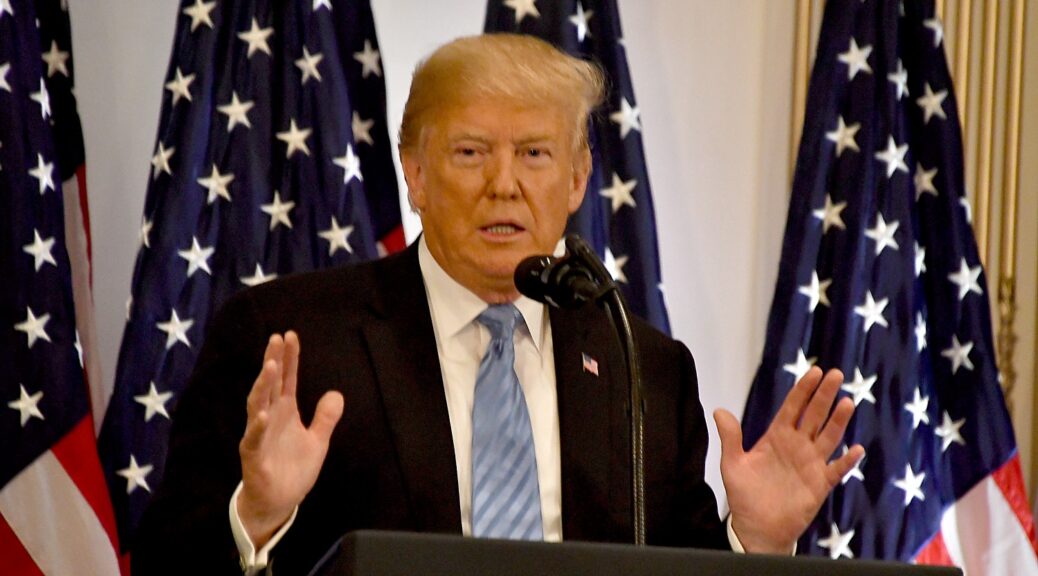
Trump offers his “historic actions” to address the coronavirus pandemic: payroll tax cut, tax deferral, travel ban from Europe (c) Karen Rubin/news-photos-features.com.
Trump, in an address to the nation from the Oval Office, tried to calm fears and most importantly (for him) calm the financial markets after the World Health Organization declared the coronavirus a pandemic and chided nations for underplaying the crisis. Trump spent most of the time self-congratulating himself, calling the crisis “unprecedented” (it’s not), and his actions “historic” (hardly). Trump said nothing about making the health care infrastructure work to save Americans from suffering and needless dying, or for bolstering finances for people who have lost their means of earning money, paying bills, caring for children. His solution, to unilaterally ban travel from Europe (not UK) is absurd. Still no idea how many Americans harbor the infection. He used words like “unprecedented” when this is hardly unprecedented (Spanish flu, Swine flu, Ebola, and months of seeing what happened in China, South Korea, Italy). He kept saying that America will get by because we are the strongest, smartest, best nation that ever existed. Trump’s solution is medieval: pull up the drawbridge, build a wall against foreign invasion. Balderdash. And by the way, YOU DIDN’T BUILD THAT: the strong economy was bequeathed by Obama and other predecessors that Trump is frittering away with $1 trillion budget deficits despite (as Trump constantly claims) a historic, strong economy. And what does strong military have to do with coronavirus pandemic? The amount of back-slapping Trump does to himself (“unprecedented steps” which are hardly unprecedented or even dramatic or adequate or on target for the health crisis at hand), and his sychophants, even the “experts” have had to lather praise is disgusting. As for abandoning the partisanship, he means “adore me, go along with whatever I say.” Immediately after, he attacked Nancy Pelosi and Democrats. Here s the speech annotated – Karen Rubin/news-photos-features.com.
REMARKS BY PRESIDENT TRUMP IN ADDRESS TO THE NATION
Oval Office
9:02 P.M. EDT
THE PRESIDENT: My fellow Americans: Tonight, I want to speak with you about our nation’s unprecedented response to the coronavirus outbreak that started in China and is now spreading throughout the world.
Today, the World Health Organization officially announced that this is a global pandemic.
We have been in frequent contact with our allies, and we are marshalling the full power of the federal government and the private sector to protect the American people.
[And yet the European Union was blindsided by Trump’s sudden ban on travel from Europe but not the UK].
This is the most aggressive and comprehensive effort to confronta foreign virusin modern history. I am confident that by counting and continuing to take these tough measures, we will significantly reduce the threat to our citizens, and we will ultimately and expeditiously defeat this virus.
From the beginning of time, nations and people have faced unforeseen challenges, including large-scale and very dangerous health threats. This is the way it always was and always will be. It only matters how you respond, and we are responding with great speed and professionalism.
[Hardly ‘unforeseen’ when the outbreak began in December in China and his first response came in March after pooh-poohing.]
Our team is the best anywhere in the world. At the very start of the outbreak, we instituted sweeping travel restrictions on China and put in place the first federally mandated quarantine in over 50 years. We declared a public health emergency and issued the highest level of travel warning on other countries as the virus spread its horrible infection.
And taking early intense action,we have seen dramatically fewer cases of the virus in the United States than are now present in Europe. [Except you really don’t know how many Americans are harboring the coronavirus because there hasn’t been adequate testing. And back in January, when Seattle doctor suspected coronavirus, federal agencies refused allowing testing, continued to reject the test kits from W.H.O. and relied on faulty, inadequate tests of its own.]
The European Union failed to take the same precautions and restrict travel from China and other hotspots. As a result, a large number of new clusters in the United States were seeded by travelers from Europe.
[That is one of Trump’s ‘blame others’ ‘blame them’ ‘blame Europe’ out of his ass comments. He doesn’t know how the infection came here or where it came from. Those cruise goers didn’t come from Europe.]
After consulting with our top government health professionals, I have decided to takeseveral strong but necessary actions to protect the health and wellbeing of all Americans.
To keep new cases from entering our shores, we will be suspending all travel from Europe to the United States for the next 30 days. The new rules will go into effect Friday at midnight. These restrictions will be adjusted subject to conditions on the ground.
There will be exemptions for Americans who have undergone appropriate screenings, and these prohibitions will not only apply to the tremendous amount of trade and cargo, but various other things as we get approval. Anything coming from Europe to the United States is what we are discussing. These restrictions will also not apply to the United Kingdom.
At the same time, we are monitoring the situation in China and in South Korea. And, as their situation improves, we will reevaluate the restrictions and warnings that are currently in place for a possible early opening. [There is no travel ban on South Korea.]
Earlier this week, I met with the leaders of health insurance industry who have agreed to waive all copayments for coronavirus treatments, extend insurance coverage to these treatments, and to prevent surprise medical billing.
We are cutting massive amounts of red tape to make antiviral therapies available in record time. These treatments will significantly reduce the impact and reach of the virus.
[Treatment still not likely to be available for a year.]
Additionally, last week, I signed into law an $8.3 billion funding bill to help CDC and other government agencies fight the virus and support vaccines, treatments, and distribution of medical supplies. Testing and testing capabilities are expanding rapidly, day by day. We are moving very quickly.
[Who will get that money and supplies? Will Trump steer to “loyal” states and communities like Texas and Florida, and away from places like New York, California, Massachusetts, just as he did with Ukraine’s military aid, George w. Bush did with anti-terror funding after 9/11 and Chris Christie did by shutting down the George Washington bridge to punish Democratic mayors who refused to endorse him?]
The vast majority of Americans: The risk is very, very low.Young and healthy people can expect to recover fully and quickly if they should get the virus. The highest risk is for elderly population with underlying health conditions. The elderly population must be very, very careful.
[The problem here is that the ‘young, healthy’ people can transmit the infection to others who are vulnerable.]
In particular, we are strongly advising that nursing homes for the elderly suspend all medically unnecessary visits. In general, older Americans should also avoid nonessential travel in crowded areas.
My administration is coordinating directly with communities with the largest outbreaks, and we have issued guidance on school closures, social distancing, and reducing large gatherings.
Smart action today will prevent the spread of the virus tomorrow.
Every community faces different risks and it is critical for you to follow the guidelines of your local officials who are working closely with our federal health experts — and they are the best.
[Here is the key piece: the federal government is failing and useless and has no clue what to do, so Trump needs to rely – and probably blame – state and local officials who are doing their best to keep up with the needs. But key policies need to be made at the federal level. See Nicholas Kristof, “12 Steps to Tackle the Coronavirus” in New York Times of what Trump should have said and done.]
For all Americans, it is essential that everyone take extra precautions and practice good hygiene. Each of us has a role to play in defeating this virus. Wash your hands, clean often-used surfaces, cover your face and mouth if you sneeze or cough, and most of all, if you are sick or not feeling well, stay home.
To ensure that working Americans impacted by the virus can stay home without fear of financial hardship, I will soon be taking emergency action, which is unprecedented, to provide financial relief. This will be targeted for workers who are ill, quarantined, or caring for others due to coronavirus.
I will be asking Congress to take legislative action to extend this relief.
Because of the economic policies that we have put into place over the last three years, we have the greatest economy anywhere in the world, by far. [To the extent the US has in fact has greatest economy in the world, it is largely because of his abuse of tariff wars, sanctions, ending aid to undermine other economies.]
Our banks and financial institutions are fully capitalized and incredibly strong.
[Thanks Obama! And Dodd Frank.]
Our unemployment is at a historic low. This vast economic prosperity gives us flexibility, reserves, and resources to handle any threat that comes our way.
[He neglects to mention the $1 trillion budget deficits he has run despite his ‘historic’ strong economy, low unemployment. The fact that 40% of all Americans don’t have $400 available to cover an emergency.]
This is not a financial crisis, this is just a temporary moment of time that we will overcome together as a nation and as a world.
[The next morning, the Dow plummeted another 2000 points, more than 7%, down to 21,400 from a high of 29,000 just a couple of weeks earlier. Trump was reported to have leveled a tirade at Federal Reserve Chair Powell for failing to cut interest rates even further than the half-point “emergency” cut a week ago.]
However, to provide extra support for American workers, families, and businesses, tonight I am announcing the following additional actions: I am instructing the Small Business Administration to exercise available authority to provide capital and liquidity to firms affected by the coronavirus.
Effective immediately, the SBA will begin providing economic loans in affected states and territories. These low-interest loans will help small businesses overcome temporary economic disruptions caused by the virus. To this end, I am asking Congress to increase funding for this program by an additional $50 billion.
Using emergency authority, I will be instructing the Treasury Department to defer tax payments, without interest or penalties, for certain individuals and businesses negatively impacted. This action will provide more than $200 billion of additional liquidity to the economy.
[How are the individuals and businesses chosen? What will this do to the Treasury’s ability to pay bills? How does starving the federal government of resources help the situation]
Finally, I am calling on Congress to provide Americans with immediate payroll tax relief. Hopefully they will consider this very strongly.
[Payroll tax only helps people who are earning wages, not the people who are laid off or lose their jobs. The amount of money is so miniscule, people don’t even realize. And how does starving Medicare and Social Security of funding help? Instead, should be requiring paid sick leave, unemployment benefits expanded to people with fewer hours and contract workers. See Nicholas Kristof.]
We are at a critical time in the fight against the virus. We made a life-saving move with early action on China. Now we must take the same action with Europe. We will not delay. I will never hesitate to take any necessary steps to protect the lives, health, and safety of the American people. I will always put the wellbeing of America first.
[Yet another undeserved pat on the back, and misguided focus on putting up walls instead of gearing up for the spreading epidemic in the country. Some 100 million are projected to get the illness; more than 1 million expected to die. Millions will jam emergency rooms and ICUs. There are only 1 million hospital beds and 700,000 of these are already occupied. People will die of heart attacks and other ailments because they cannot be accommodated. Doctors and nurses and health care workers will get sick or become so overworked they can’t function. Who is available to replace? What is Trump doing about that? Is he setting up mobile clinics, like MASH units? Sending out mobile testing vehicles. Doing drive-by testing as in South Korea which is handling 20,000 tests a day?]
If we are vigilant — and we can reduce the chance of infection, which we will — we will significantly impede the transmission of the virus. The virus will not have a chance against us.
No nation is more prepared or more resilient than the United States. We have the best economy, the most advanced healthcare, and the most talented doctors, scientists, and researchers anywhere in the world.
[More jingoism, American Exceptionalism. America First. Balderdash. Basically his argument is, ‘We will defeat this epidemic because we are The Greatest.’ And by the way, YOU DIDN’T BUILD THAT! Obama and predecessors handed Trump a strong economy, rescued from the depths of the Great Recession. Obama created the Affordable Care Act which covered 30 million more people than before, controlled health care costs, enabled more people to become doctors, nurses, health care workers.]
We are all in this together. We must put politics aside, stop the partisanship, and unify together as one nation and one family. [Biggest joke-on-America ever, since Trump, who wears a MAGA hat on CDC tour, and tells Pence not to praise Washington Governor Jay Inslee (“a snake”, and accuses Democrats and Nancy Pelosi of perpetrating a hoax in raising alarm about coronavirus in order to undermine him. As for abandoning the partisanship, what he really means, as Moscow Mitch always means when he uses the term “compromise” is “Do what we say, don’t criticize or point out why we are inept, corrupt, and out only for ourselves.”]
[Trump assailed Democrats hours after he implored lawmakers to “stop the partisanship.” Then the markets cratered, unassuaged by his economic proposals, New York Times reported.]
As history has proven time and time again, Americans always rise to the challenge and overcome adversity.
Our future remains brighter than anyone can imagine.Acting with compassion and love, we will heal the sick, care for those in need, help our fellow citizens, and emerge from this challenge stronger and more unified than ever before.
[Such pablum. Trump reads the teleprompter in a monotone, the sentences running one into another. He has no idea what he just said.]
During a novel coronavirus
briefing, Governor Andrew M. Cuomo today announced the state will provide
alcohol-based hand sanitizer to New Yorkers free of charge. To help combat
price-gouging and ensure New Yorkers have access to this vital prevention
method, the state will produce up to 100,000 gallons of hand sanitizer each
week in 1.7 oz., 7 oz. and gallon bottles. The hand sanitizer will be made
available to residents free of charge, and distribution will be prioritized by
the most impacted and high risk communities, including the New Rochelle
community, and state agencies, including the MTA.
Governor Cuomo also
confirmed 37 additional cases of novel coronavirus in New York State since his
last update from Sunday, bringing the statewide total to 142 confirmed cases.
The Governor also
announced the New York State Department of Health will work with the New York
State Education Department to issue guidance for schools with students,
teachers or other staff who test positive for novel coronavirus. Under the
policy, schools will close for an initial 24-hour period if a student or a
teacher or any other staff at the school test positive for the novel
coronavirus. This will allow the school to undergo disinfection, and for the
State to perform an assessment of the situation and make a determination going
forward in that particular school district.
Additionally, the
Governor will send a program bill to the legislature today to provide paid sick
leave to working New Yorkers and specifically protect those who are required to
stay home from work because they are being isolated or quarantined as a result
of the novel coronavirus.
“As the number of
confirmed cases of the coronavirus continues to rise, unscrupulous retailers
are exploiting New Yorkers’ anxieties about the virus and charging exorbitant
prices for hand sanitizer and other similar products,” Governor
Cuomo said. “To solve this problem, the state is producing and
deploying hand sanitizer to high impact areas as well as schools, the MTA and
other government agencies because you can’t get it on the market and the
product that is available is very expensive. The biggest problem we have in
this situation is fear, not the virus itself, and I’m once again reminding
everyone to focus on the facts because the facts do not warrant the level of
anxiety we are seeing.”
Of the 142 total
individuals in New York State who tested positive for the virus, the geographic
breakdown is as follows:
Westchester: 98 (16 new
cases)
New York City: 19 (7 new
cases)
Nassau: 17 (12 new
cases)
Rockland: 4 (2 new
cases)
Saratoga: 2
Suffolk: 1
Ulster: 1
DOCCS, through its
correctional industries entity known as Corcraft, will produce an
alcohol-based formula recognized by the World Health Organization and has begun
production at Great Meadow Correctional Facility in Comstock, Washington
County, this week. Through this ongoing effort, the Department will be able to
produce up to 100,000 gallons of hand sanitizer per week. Corcraft, which
produces dozens of products, uses the manufacturing process to assist in the
department’s overall mission to prepare offenders for release through skill
development, work ethic, respect and responsibility.
Local governments
seeking to obtain additional stocks of hand sanitizer should work with their
County’s Emergency Manager and local Health Department to submit requests
directly into NY Responds, the state’s web-based system which enables both
local governments and state agencies to submit and share vital
emergency-related information and resource requests.
Reportedly, some
retailers are charging approximately 10 times what major retailers charge for
hand sanitizer. On eBay a pack of five 2.5-ounce Germ-X hand sanitizer bottles
were selling for $500 – by comparison, two 30-ounce bottles of Germ-X were
offered online by Walmart for less than $8.
The Department of
Corrections and Community Supervision also began a new screening protocol for
COVID-19 for visitors to each of the State’s 52 correctional facilities to help
avoid the introduction of COVID-19 into the Department’s facilities. Upon
arrival to the facility, visitors will be asked a series of questions regarding
any illness or symptoms they may be currently experiencing; travel outside of
the United States within the past four weeks, including that of family members;
and any direct exposure to an individual diagnosed with the novel coronavirus
in the past four weeks.
DOCCS Acting Commissioner Anthony J. Annucci said, “Between increased demand and the
price gouging currently taking place in the market, there is a very real need
for hand sanitizer for New York residents. DOCCS is proud to meet the
Governor’s call to action and do our part in stemming the spread of COVID-19
across the state.”
Last night, the Governor announced that Northwell Laboratories has been authorized to test under Wadsworth’s emergency use authorization. Manual testing of 75 to 80 samples per day has begun at Northwell, but automated testing still needs to be approved by the federal administration so the lab can perform thousands of tests per day. Additionally, NY Presbyterian Hospital is ready to start running 50 to 60 tests daily once it receives federal approval for testing. The Governor again today urged the federal administration to approve the use of the state’s coronavirus test by private labs, such as NY Presbyterian.
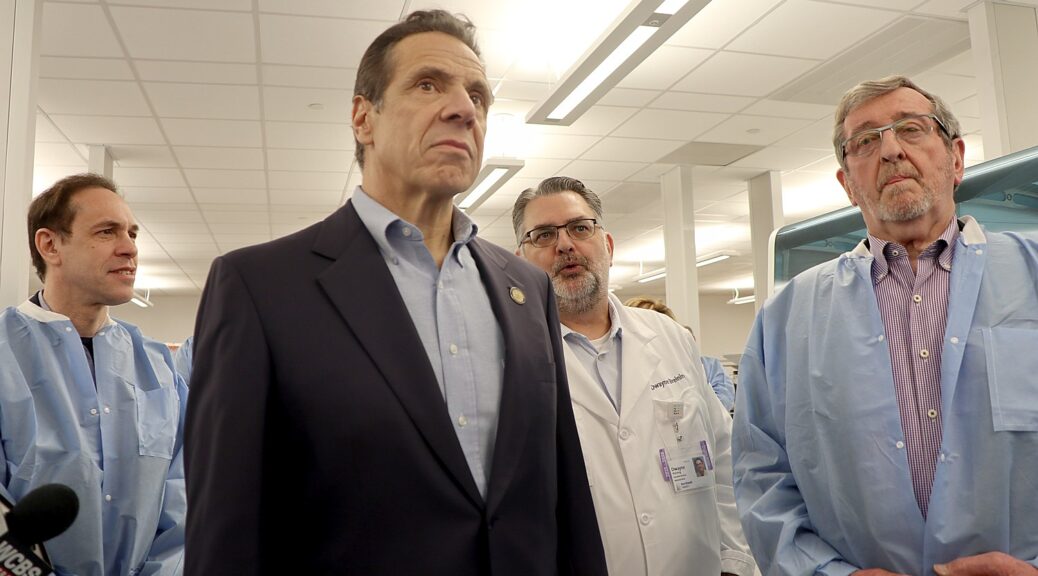
Update: After tour of Northwell Labs, Governor Cuomo announced FDA approval for Northwell to test novel coronavirus: “After days of advocating the FDA and the federal government to expand testing capacity for the novel coronavirus in New York State and working with Northwell and Wadsworth to expedite the process, we just received word that Northwell Laboratories has been authorized to test under Wadsworth’s emergency use authorization. Manual testing of 75 to 80 samples per day will begin at Northwell immediately, but we still need automated testing approved so we can perform thousands per day.
“While this approval is a good first step, the FDA must increase the testing capacity for the State and private labs, because the more tests we run, the more positive people we will find and the better we can control and contain the virus. It’s one thing for the federal government not to have the testing capacity in place themselves – that was bad enough – but there’s no excuse for them not to be authorizing existing labs to do the work.”
New York State Governor Andrew Cuomo took the Center for Disease Control and federal government to task for failing to authorize private laboratories to test for the coronavirus, and for failing to authorize automated testing which could increase exponentially the number of people tested.
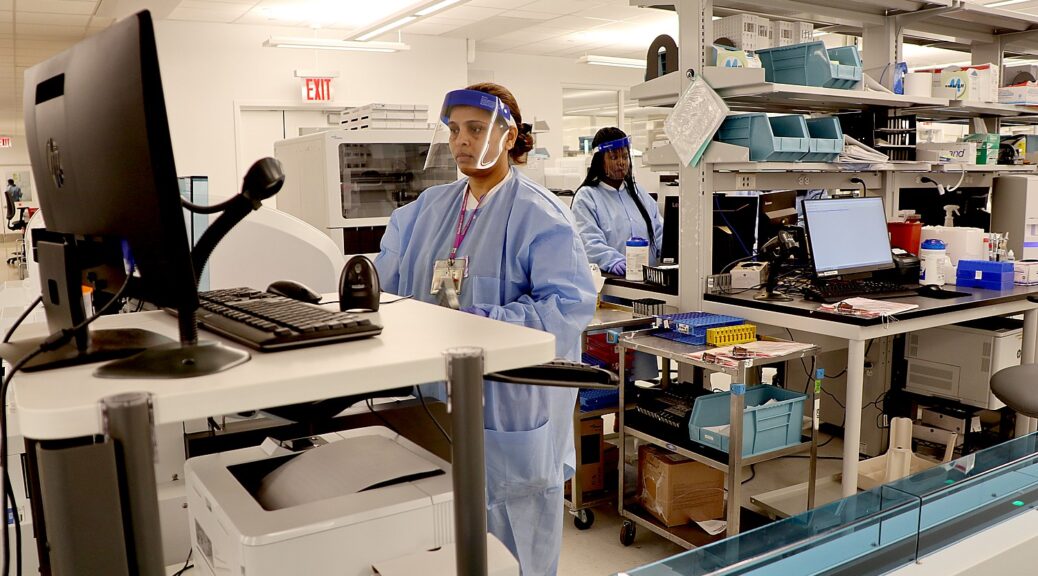
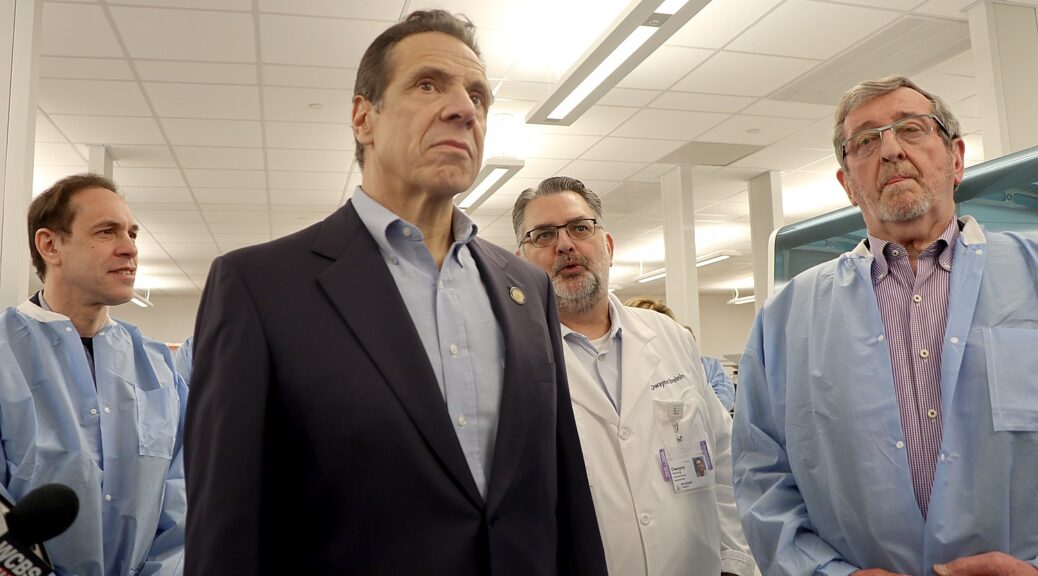
Testing is critical to finding people infected with the coronavirus in order to contain the spread of the infection, he said during a tour of Northwell Health Laboratories on Long Island, where as many as 1000 tests could be done a day using state-of-the-art automated testing devices which can analyze as many as 120 samples at one time.
Northwell’s laboratory is the most sophisticated lab in New York State and one of the most advanced in the nation. But as yet, CDC has not authorized private labs to do the tests, and has not authorized the automated testing systems that Northwell has, Cuomo said.
“CDC has not authorized the use of this lab, which
is just outrageous and ludicrous,” the Governor scolded. “CDC, wake up, let the
state’s test. Let private labs test. Let’s increase as quickly as possible our
testing capacity so we identify the positive people so we can isolate them and
we’re successful in our containment.”
The state is “continuing to test people and are working with
hospitals and local governments to give them the resources they need to contain
the spread of this virus,” Governor
Cuomo said. “We mobilized quickly but the federal government
has been slow off the mark and they continue to be slow. That’s unacceptable
– we need them to approve these private labs today so we can stay ahead of this
evolving situation. Worse than the virus right now is the fear pandemic – and
getting these additional facilities online will ensure we have more facts that
will help keep people calm.”
The Northwell Lab on Long Island would be the first private lab in
the state to handle coronavirus testing.
“This is an extraordinary facility,” the Governor said, flanked by
his state Health Commissioner Howard A. Zucker, and Northwell Health CEO
Michael J. Dowling.
“We
are trying
to contain spread of virus and to do that, we are testing as many as possible,
to find the positives and isolate them.”
If the spread of infection is not contained, he warned, more disastrous
measures, such as China and Italy have been forced to undertake – massive quarantines
of millions of people – “would be very disruptive to society and the economy.”
Cuomo said that the level of fear surrounding coronavirus (the disease associated with the virus is COVID-19) is unwarranted. “There is more fear, anxiety than facts would justify. This isn’t Ebola, or SARS. This is a virus we have a lot of information on. Johns Hopkins has been tracking 100,000 cases and what happens.”
Most people who become infected will experience mild symptoms like a cold or flu and can recover at home. But for vulnerable populations – the elderly, people who have medical conditions – the disease is dangerous and can be deadly.
The best “weapon” against the disease is
to reduce situations that create density.
Cuomo said he is speaking with business leaders across the state to encourage them to offer liberal sick leave so that people who are sick, who feel symptoms, stay home but are still paid; he also is encouraging businesses as well as state and local government offices, to stagger workers in shifts if possible; and to allow work-at-home where feasible.
Individuals also have a role in keeping themselves safe, he said – wash hands frequently, don’t shake hands, just as in any flu season. He advises people who take mass transit to let a train pass if the cars are too packed, and to move to less crowded cars. “Reduce density, proximity.”
The single best thing government can do
is to test. “The more positives we identify, the more we can isolate to stop
the spread.”
The Governor confirmed 16 additional cases of novel coronavirus in New York State since his last update yesterday, bringing the statewide total to 105 confirmed cases on Sunday morning. Of the new cases, 12 are in Westchester County, one in New York City in the Bronx, one in Nassau, one in Suffolk, and one in Ulster.
Of the 105 total individuals in New York State who tested positive
for the virus, 82 are in Westchester; 12 are in New York City; five are in
Nassau; one in Suffolk; two in Rockland; one in Ulster and two in Saratoga
counties.
Cuomo criticized the CDC for being
unprepared, even as the outbreak became clear in China by December (“It is
delusional not to expect people to come from China”), and only recently
allowing states to do their own testing. New York has the Wadsworth lab, but
now is asking the CDC to authorize the state to utilize private labs, like
Northwell Laboratories.
“Not to be using this laboratory, not to be using the other private labs around the state makes no sense whatsoever. Not to be using automated testing, which means rather than a person manually handling a test tube and a test, the machines we saw that handle 120 samples at a time place them in a machine, the machine runs the test. Of course you should be using that technology. And it’s one thing for the CDC not to have the testing capacity in place themselves, but that was bad enough. For the CDC not to be authorizing existing labs to do the work, there’s no excuse for that.”
Cuomo also criticized the federal government for creating unnecessary confusion, which fuels fear. “The President of the United States says anyone who wants a test can have a test. Vice President of the United States says we don’t have the testing capacity. People say, how can you say both things? You can’t say both things. We don’t have the testing capacity that we need. Not everyone who wants a test can have a test.
“We have to prioritize the people who get the tests to fit our capacity, right. You can’t ask more people to come in and get tested until you know you have the capacity to test them. The number of people coming in for a test must equal the number of tests you can perform. That’s why in New York we have a standard protocol that’s in place all across the state, prioritizing who can get tested to fit our testing capacity.
“Once we increase our
testing capacity and we can perform more tests, then we can change the
prioritization of those people coming in for the tests. We have a statewide
protocol because we don’t want people shopping tests. I don’t want someone from
Nassau driving to Suffolk, driving to Manhattan, driving to Westchester because
you have different rules on who can get a test. Everyone, everywhere in this
state has the same rules, doesn’t matter where you go. Hopefully, the CDC acts
responsibly and acts quickly and we raise the capacity, we bring a great facility
like this online with the automated testing. We can then get testing per day to
about 1000 tests. And then we can calibrate the prioritization to the capacity.”
The
Governor also addressed price gouging, which is happening across the state and
the nation, “symptomatic of fear.”
“It’s unethical, exploitative of fear and illegal,” he said. “To make a few extra bucks on hand sanitizer, they would jeopardize their license to do business. There is an increased penalty for price gouging.” He said that consumers can call a hot line, that state police are investigating and the state Attorney General has the power to prosecute.
The state’s Division of Consumer Protection has created an online consumer complaint form, where New Yorkers can report suspected price gouging or concerns about improper delivery of quantity. (Consumers who wish to file a complaint can visit https://www.dos.ny.gov/consumerprotection/.)
Also, travel insurance companies and travel agents will offer New York residents and businesses the ability to purchase coverage when making travel plans that would allow them to cancel a trip for any reason, including for reasons related to COVID-19.
The Department of
Financial Services issued guidance allowing
travel agents and travel insurers to offer this type of coverage after DFS
received consumer complaints that such polices were not available in New York
State. This new action is designed to provide reassurance to New York
businesses and residents who are seeking to make plans that may involve travel
to locations that are not currently under travel advisories due to COVID-19.
Six global and national
insurance companies have agreed to offer “cancel for any reason”
coverage to travelers, including: Allianz, Nationwide, Starr Indemnity,
Berkshire, Crum & Forster, and Zurich.
DFS also directed New York State travel insurance issuers to proactively reach out to individuals and businesses who bought their policies to let them know what is covered. (Read a copy of the DFS Insurance Guidance Letter)
Yesterday, the Governor announced that he declared a state of emergency to help New York more quickly and effectively contain the spread of the virus. The state of emergency declaration allows, among other things:
Expedited procurement of cleaning supplies,
hand sanitizer and other essential resources
Allowing qualified professionals other
than doctors and nurses to conduct testing
Expedited procurement of testing
supplies and equipment
Expedited personnel onboarding
Expedited leasing of lab space
Allowing EMS personnel to transport
patients to quarantine locations other than just hospitals
Providing clear basis for price gouging
and enforcement investigation
“We do not want to have to do massive close
downs, massive quarantines, and we don’t want members of the vulnerable
population getting sick. That is why we are doing what we are doing,” Cuomo
said.
“So in sum, CDC let’s
move, authorize the State to authorize private labs, get this most sophisticated
lab in the State, one of the most sophisticated labs in the country, get this
lab to work. Why you wouldn’t makes absolutely no sense.
“And to New Yorkers, we
understand the facts. Keep this in perspective. We don’t want a lot of people
getting this virus. We don’t want to take more drastic measures. But, if you
get the virus, you will get sick, you will recover, you most likely won’t even
go to the hospital. And the only the people who we really have to worry about
are the vulnerable populations – senior citizens, people with compromised
immune systems.
“So keep it all in
perspective. I know there’s a whole frenzy about it, the facts do not justify
the frenzy, period. The biggest problem we have in this situation is fear, not
the virus. The virus we can handle. It’s the fear. And the fear is just
unwarranted.”
On International Women’s Day, Vice President Joe Biden, running for president, released a fact sheet detailing his record of working to advance gender equality at home and around the world, both as a Senator, notably championing the Violence Against Women Act (which Republicans have refused to renew) and as part of the Obama Administration which, as Obama’s first act, signed the Lilly Ledbetter Fair Pay Act and promoted Obamacare which ended the hardship of being a woman counting as a “pre-existing condition”. This is from the Biden campaign:
Joe Biden has a long track record of working to advance
gender equality at home and around the world. As a Senator, Biden
introduced the International Violence Against Women Act (IVAWA), which provided
a framework for the United States to address gender-based violence globally.
Though IVAWA never became law, the Obama-Biden administration used executive
action to implement much of the bill and its comprehensive approach to
gender-based violence.
The Obama-Biden Administration promoted the health, safety, and empowerment of
women and girls around the world because it was both the right thing to do and
the smart thing to do. Women’s full participation in all spheres of
society is fundamental to achieving global peace, development, and
prosperity. Twenty-five years ago this principle was agreed to by 189
countries in the Beijing Declaration,
which set forth a platform for action to advance women’s rights
globally. Unfortunately, today, as a result of the disastrous policies of
the Trump Administration, women’s rights and their opportunities for full
economic and political participation are under assault.
Trump’s decision to reinstate and expand the
global gag rule has had devastating effects on the health and well-being of
women around the world, with fewer organizations providing critical healthcare;
and his implementation of this rule here in the United States has cut funds
to over 900 women’s health clinics that
primarily serve women of color. Trump Administration policies have sought to
cut funds for global efforts to improve child and maternal health and
to halt the spread of HIV/AIDS. His
Administration’s cruel immigration policies have rejected asylum claims for
women fleeing horrific gender-based violence and made it much more difficult for
foreign women and girls who were trafficked into the United States to obtain
visas and receive the medical and social services they need to recover. He
has watered down and threatened to veto UN
Security Council resolutions that address sexual violence in conflict, making
it far more difficult for the international community to hold the perpetrators
of such violence accountable and ensure survivors have access to the health and
support services they need.
As President, Joe Biden will restore America’s leading role as a champion for
women and girls around the world and return to a government-wide focus of
uplifting the rights of women and girls at home and around the world. He
will do so by:
Confronting Gender-Based Violence Globally. The scourge of violence
against women affects global communities: An estimated 1 in 3 women are
subject to physical violence, rape, or stalking by a partner at some point in
their lives, with closer to 70% of women affected in
some countries. Gender-based violence has profound economic costs
for societies. It is a barrier to girls’ education,
and inhibits women’s full participation in politics and
the economy, holding back
entire communities and countries.
As president, Joe Biden will expand his Violence Against Women Act of 1994 to
the global landscape and restore U.S. leadership internationally by championing
the fundamental human right that all women should live free from violence—a
future the Violence Against Women Act helped make possible in the United
States. President Biden will rescind the Mexico City Policy that President
Trump reinstated and
restore U.S. funding to the United Nations Population Fund, which advances child
and maternal health, and works to end female genital mutilation and
cutting, early and forced marriage,
and other practices detrimental to the well-being of women and girls. The
Biden Administration will launch multi-sectoral efforts to confront
gender-based violence globally, beginning in Central America, where women face
some of the highest rates of
femicide (the murder of women because of their gender) in the world. Biden
will spearhead a comprehensive effort that places diplomatic pressure on
governments to train law enforcement to root out the corruption that enables
gender-based violence and teaches authorities to effectively investigate and
prosecute these crimes. Moreover, he will ensure that women and girls fleeing
gender-based violence are given the opportunity they deserve to seek asylum in
the United States.
Elevating Women Economically. The Biden Administration will invest
in women as economic catalysts for growth and development around the world,
because we know that when we grow incomes and opportunity for women, entire
communities, economies, and countries benefit.We forgo trillions of dollars in
wealth globally because women aren’t fully empowered and employed, and that has
negative consequences for the well-being of families and entire communities,
because women invest a particularly large share of their income in the
education and health of their families. Alarmingly, women’s global
economic participation and opportunity actually declined in the last year. Given
the trends, it will take 257 years to
achieve gender parity. Leaving one-half of the world’s population behind
inhibits peace, prosperity, and security at home and abroad, and we must tackle
the multifaceted barriers hindering the economic advancement of women and
girls. We cannot help half the world’s population advance meaningfully
without also addressing gender-limiting laws, policies, and norms, and we can’t
do it alone, without working with other countries.
Joe Biden will invest in critical areas to advance the status of women, and
close gaps between the economic well-being of men and women, and boys and girls
around the world. Specifically, the Biden Administration will increase access
to education as a driver of empowerment and accumulation of wealth.
Additionally, President Biden will focus on enhancing financially inclusive
banking and increasing women’s access to capital, so that women have the
resources they need to start and expand businesses. And President Biden will
work with partners in countries and multilateral organizations to
systematically tackle and eliminate legal and attitudinal barriers to equity and
inclusion. . More broadly, Biden Administration efforts to advance development
globally will pay particular attention to the often unique challenges faced by
underrepresented communities around the world, including indigenous women,
Afro-Latina women, and women in the LGBTQ community. The goal will be equality.
Promoting Women’s Contributions to Peace and Security. For 20
years, the international community has recognized the critical contributions
women make to advancing peace and security,
whether it’s recognizing the first signs of violent conflict in their
communities, or helping to forge more durable peace agreements in the wake of
conflicts. Yet women continue to be excluded from conflict resolution and
peacebuilding.
President Biden will ensure that efforts to build a more peaceful and secure
world include the talents of everyone, including women. In countries affected
by war, terrorism, and insecurity, a Biden Administration will protect and
advance women’s inclusion in decision-making roles, from negotiators to
parliamentarians, from security actors to peaceful protestors. He will ensure
full implementation of the United States’ 2017 law — based
on the groundbreaking Obama-Biden Administration National Action Plan on
Women, Peace, and Security — recognizing the security benefits of women’s
participation. As president, Biden will revive the United States’ commitment to
refugees and displaced persons, raising our refugee target to admit 125,000
annually to start, and he will require that programs supporting refugees
recognize and address the specific challenges women and girls face, from targeted violence and
trafficking to unequal access to basic services. He will champion multilateral
efforts to end sexual violence in conflict in the UN Security Council and to
hold perpetrators of such violence accountable, starting with ISIS. The
Biden Administration will provide financial assistance and training for local
and international efforts to document cases of ISIS-perpetrated sexual violence,
urge the Iraqi government to prosecute ISIS prisoners for gender-based violence
crimes, and support peacebuilding efforts in Iraq and elsewhere that promote
women’s inclusion.To ensure all civilians are better protected in times of
crisis, President Biden will work with the United Nations to improve
peacekeeper performance and accountability, including by supporting the UN’s
efforts to ensure peacekeepers are trained to prevent conflict-related sexual
violence and are held accountable if they perpetrate sexual exploitation and
abuse.
Supporting Women’s Leadership Globally. Women’s political and civic
leadership promotes equality and stability. When women
are represented in parliaments, their participation is associated with a
decreased risk of civil war and
fewer human rights abuses.
Around the world, women are more likely to advocate for policies on issues
like education and health,
which promote the well-being of everyone. Yet, only 4 out of 193 countries have
at least 50 percent women in the national legislature. A Biden Administration
will amplify and elevate the voices of authentic, local women leaders globally,
creating an initiative to strengthen the influence of women-led civil society
organizations in advancing women’s and girls’ well-being; combating
gender-based violence; and promoting peace, security, and prosperity.
Furthermore, recognizing the benefits to equality and stability when women are
represented in political office, the Biden administration will break down
barriers to women’s political empowerment, supporting civic education and
leadership development for women and girls around the world.
Pursue Ratification for the U.N. Convention on the Elimination of all forms
of Discrimination Against Women (CEDAW). For nearly 40 years, CEDAW
has been the most important international vehicle for advancing gender
equality. It is simply embarrassing that the United States has not ratified the
convention. We are in the company of some of the most oppressive countries in
the world, including Iran, Sudan, and Somalia. From the very beginning, the
Obama-Biden Administration made ratifying this U.N. convention a priority. As
president, Biden will continue to push the Senate to ratify this important
treaty, so that we can better advance the rights of women and girls here at
home and around the world.
Ensuring Gender Parity and Diversity in National Security
Appointments. To keep our nation safe and effectively advance our
national security interests, our government needs the best possible team of
national security professionals. That means developing senior leadership teams
that are diverse, by elevating more women into senior national security
positions and ensuring that women of color are well represented in senior
ranks. Women are underrepresented in our national security establishment, and
throughout the federal government their levels of representation are decreasing. 4 of the 23 positions in
Trump’s Cabinet are currently held by women. Joe Biden has pledged that, as
president, he will “strive for gender parity in senior national security and
foreign policy appointments.”
The vigorous contest of Democrats seeking the 2020 presidential nomination has produced excellent policy proposals to address major issues. In what can be described as an love letter to Senator Elizabeth Warren’s supporters, Senator Bernie Sanders has released his “Reproductive Health Care and Justice for All” plan. But you decide how many of these provisions would ever be enacted. This is from the Sanders campaign:
WASHINGTON – Senator Bernie Sanders
released a major tenet of his presidential platform: Reproductive Health Care and Justice for All. The latest
policy plan builds on the Senator’s wide-ranging agenda for quality and
affordable health care for all people. The plan centers on two primary prongs
— ensuring universal and affordable access to reproductive health care, and a
comprehensive action plan to address the crisis of maternal mortality in
communities of color across the country.
“There has been no time in the history of this country when women, especially
Black women, have had the reproductive freedom and justice that they deserve.
In my administration, that will finally change,” said Senator Bernie Sanders.
“We must once and for all put an end to the unacceptable crisis of Black
maternal mortality, and ensure every woman in this country — no matter where
they’re from — has the basic right to quality healthcare.”
Sen. Sanders continued, “When I am in the White House, we will fight back
against the Republican assault on abortion rights across this country and
defend a woman’s fundamental right to control her own body. As President, there
will be no doubt that in the United States of America, abortion is a
constitutional right. Period.”
The Reproductive Health Care and Justice for All plan reflects the fact that
issues of justice must be addressed holistically and intersectionally. The plan
will be implemented in tandem with a comprehensive, progressive agenda to end
racial disparities in our economic, criminal justice, environmental, education,
and health care systems.
The full and detailed plan can be found here. The following is a summary of key policies and action
items as part of Reproductive Health Care and Justice for All.
As President, Bernie Sanders will:
Use executive authority to reverse President Trump’s anti-choice actions.
Codify Roe v. Wade in legislative statute, require all judicial nominees to support Roe v. Wade as settled law, and require preclearance for state abortion laws to ensure that state laws do not impose undue restrictions and barriers for abortion services.
Protect and expand funding for Planned Parenthood, and repeal the Hyde and Helms Amendments.
Ban state Targeted Regulation of Abortion Providers (TRAP) laws that put undue and unnecessary burdens and regulations on doctors who provide abortion services with the goal of restricting access.
Ensure anti-choice crisis pregnancy centers do not receive federal funds.
Ensure that all communities have access to nearby abortion care.
Make birth control available over-the-counter, in addition to free under Medicare for All.
Ban ineffective abstinence-only sex education.
Increase access to and funding for reproductive services and facilities in communities of color, eliminate “contraceptive deserts,” and increase funding to hospitals where Black mothers and parents receive care.
Work with women of color-led community organizations to develop and coordinate policy.
Educate health care providers and medical school students on providing culturally competent care.
Ban discrimination by health care providers, and provide a right of action for patients discriminated against.
Establish standard protocols to rapidly address postpartum hemorrhage, a leading cause of maternal mortality in Black women.
Require hospitals that receive federal funding to hire culturally competent care liaisons to field complaints, and provide training to all labor and delivery staff, including nurses, doctors, and clerks.
Ensure there are sufficient OBGYN physicians, midwives, lactation consultants and doulas in medically underserved communities of color.
Create and expand programs for Black maternal mortality liaisons, patient advocates, care coordinators, and social workers at hospitals serving at-risk women of color.
Expand the Special Supplemental Nutrition
Program for Women, Infants, and Children (WIC) program for pregnant mothers,
infants, and children.