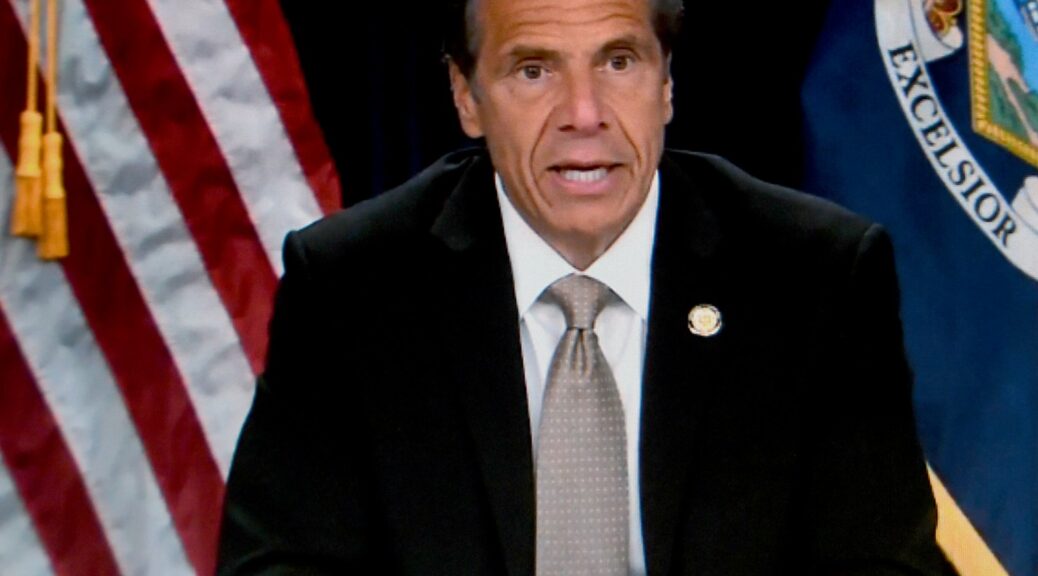
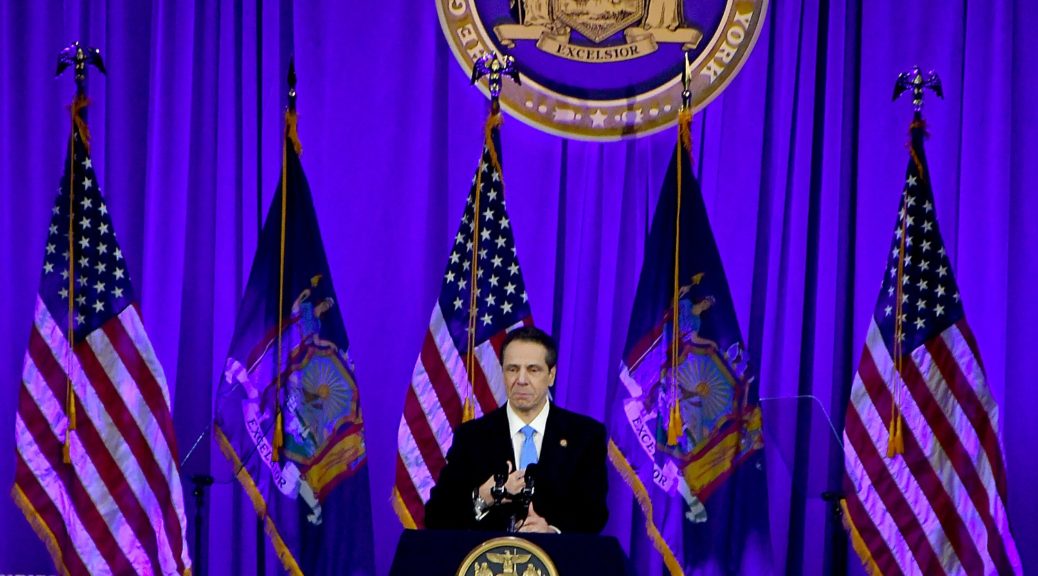
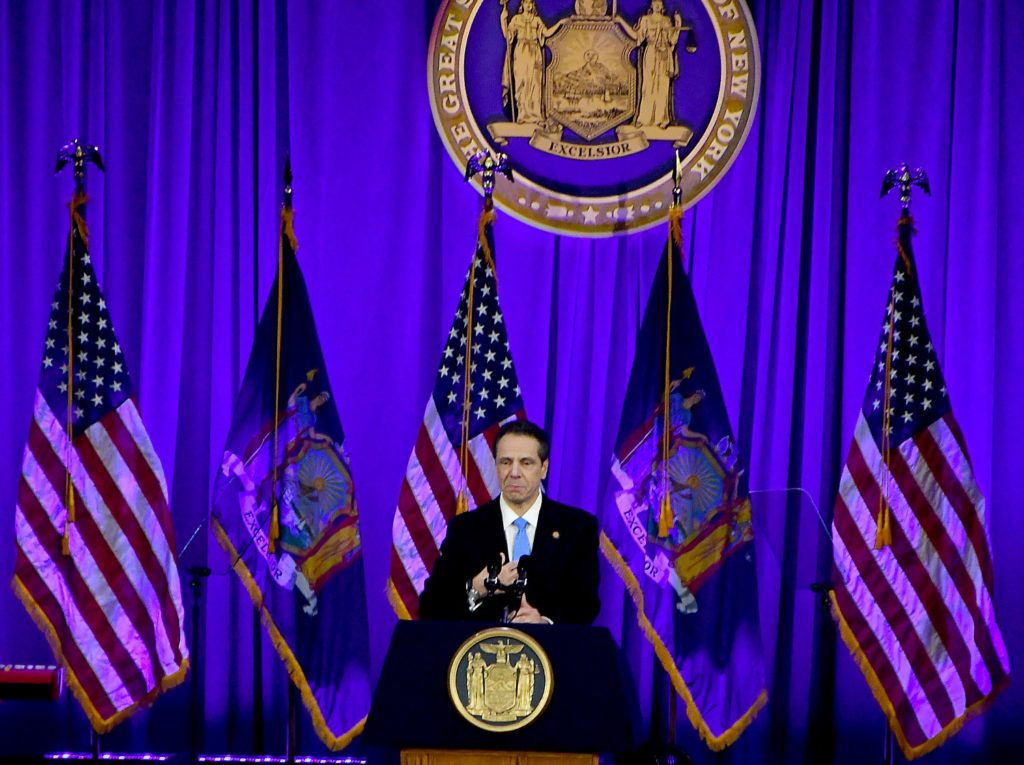
Governor Andrew M. Cuomo proposed a positive reform agenda to address systemic racism and police brutality amidst the ongoing protests across the state and nation in response to the killing of George Floyd. The reform agenda includes a national ban on excessive force and chokeholds by law enforcement officers; independent investigations of police brutality conducted by independent, outside agencies – not by local prosecutors; and disclosure of disciplinary records of police officers being investigated.
While standing firmly in support of the protests against police brutality, the Governor said that protest for its own sake would only work against the cause, but that there needs to be a clearly defined list of actions that need to be articulated.
“You want to make that moment work,” he declared. “Yes, you express the outrage. But then you say, ‘Here’s my agenda. Here’s what I want.’ That’s what we have to be doing in this moment. And the protesters are making a point. And most of them are making a smart, sensible point. But you have to add the positive reform agenda that every voice calls for so the government, the politicians know what to do. And there is a positive reform agenda here. There should be a national ban on excessive force by police officers. There should be a national ban on chokeholds. Period. There should be independent investigations of police abuse.”
And Cuomo also differentiated between the those who are exercising their Constitutional First Amendment right to protest against those who are taking advantage to loot and vandalize, giving Trump the opportunity to deflect and discount, and shift focus to himself as the “law-and-order” strongman. Indeed, there are reports that White Nationalist group is posing as Antifa on Twitter, calling for violence. Trump is proposing to designate Antifa a terrorist group, and is using them to justify calling out military against protesters – which would be a violation of the Posse Comitatus Act.
“There’s no doubt that what the President’s trying to do here is turn the attention to the looters rather than the point of the protest, which is genuine outrage,” Cuomo said in an interview with Nicolle Wallace on MSNBC. “”You look at what happened with Mr. Floyd, you have to be outraged. It’s not just Mr. Floyd in an isolated situation, it’s been years and years of the same situation. You can go back to Rodney King, Amadou Diallo and Eric Garner – it’s a long list.
“They want to make this about looting and criminals rather than the killing. That’s what they’re trying to do. In New York, we did have large protests and we do have people who are, I think, exploiting the protest. There’s no doubt that there’s some people who came out and did looting and criminal activity. You have some disrupting organizations that are seizing upon the moment. We want to make sure that order is maintained and we’re putting in place a curfew.”
“Use this moment. You look in history, Nicolle, when did change come? Change came when the people insisted on change. Let’s talk about investigation of police abuse. No chokeholds, nation-wide standard for undue force. Let’s talk about funding of education and equal funding in education. Let’s talk about affordable housing. Let’s talk about a child poverty agenda. Let’s use the moment constructively.”
Cuomo ordered a curfew of 11 pm in New York City, and doubled the number of police, from 4,000 to 8,000. However, that was not enough to stop a spate of acts of looting and vandalism.
The protests come just as New York City was hitting the milestones in the fight against COVID-19, which has taken more lives – and more disproportionately in communities of color – in the city and state than anywhere in the country or world. The Governor said that if there was any “silver” lining in the timing, the protests are happening when the infection rate has been cut from 20 percent to 2 percent but still raised concerns of reigniting the spread of the pandemic.
Here is a transcript of Governor Cuomo’s remarks:
We’re talking about reopening in one week in New York City. Now we’re seeing these mass gatherings over the past several nights that could, in fact, exacerbate the COVID-19 spread. We spent all this time closed down, locked down, masked, socially distanced and then you turn on the TV and you see there’s mass gatherings that could potentially be infecting hundreds and hundreds of people. After everything that we have done. We have to talk a minute and ask ourselves what are we doing here? What are we trying to accomplish?
We have protests across the state that continued last night, they continued across the nation. Upstate we worked with the cities very closely. The State Police did a great job. We had, basically, a few scattered arrests, upstate New York. But the local governments did a great job, the people did a great job, law enforcement did a great job. The protestors were responsible. It wasn’t great, but it wasn’t bad, either, upstate.
I said from day one, I share the outrage and I stand with the protestors. You look at that video of the killing of an unarmed man, Mr. Floyd, it is horrendous. Horrendous. It’s frightening. It perverts everything you believe about this country. It does and there’s no excuse for it. No right minded American would make an excuse for it. So, protest yes. Be frustrated, yes. Outraged, yes of course. Is there a larger problem? Of course. It’s not just Mr. Floyd, it goes back – there are 50 cases that are just like Mr. Floyd. We’ve them here in New York City. What’s the difference between Mr. Floyd and Amadou Diallo? Or Abner Louima? Or Eric Garner? What is the difference? What have we learned? Nothing?
So, yes, we should be outraged. And yes, there’s a bigger point to make. It is abuse by police. But it’s something worse. It is racism. It is discrimination. It is fundamental inequality and injustice. My father spoke about it in 1984. The speech called “The Tale of Two Cities.” People still talk about it. The point of the tale of two cities is there’s two Americas. Two sets of rules. Two sets of outcomes. Two sets of expectations. It’s true. It was true then, it’s true now. Look at our prisons and tell me there’s not inherit injustice in society. Look at public housing, tell me there’s not inherent injustice.
Look at what happened with this COVID infection rate nationwide. More African Americans infected, more African Americans dead proportionally than white Americans. Of course, there’s chronic institutionalized discrimination. There is no doubt. There is no doubt. And there’s no doubt that it’s been going on for a long time and people are frustrated, and it has to be corrected and it has to be corrected now. And there’s no doubt, that this nation as great as it is has had the continuing sin of discrimination. From before the nation was formed and it started with slavery. And it has had different faces over the decades, but it’s still the same sin. That is true. That is true. So let’s use this moment as a moment of change? Yes.
When does change come? When the stars align and society focuses and the people focus, and they focus to such an extent that the politicians follow the people. That’s when change comes. “Well, the leaders lead!” Baloney. The people lead. And then the politicians see the people moving, and the politicians run to catch up with the people. How did we pass marriage equality in this State, giving a new civil right to the LGBTQ community? Because the people said, “enough is enough. How can you say only heterosexual people can marry, but the LGBTQ people— they can’t marry? How is that constitutional? How is that legal?” You have your own preference— God bless you. But how in the law, do you discriminate between two classes of people. We passed marriage equality.
After the Sandy Hook massacre, after all those years we tried to pass common sense gun safety. Do you really need an assault weapon to kill a deer? But then the Sandy Hook massacre happened, and the people said, “enough. You’re killing children? Young children in schools with an assault weapon? In the Sandy Hook massacre. Enough.”
And in that moment, we passed common sense gun safety in the State of New York. Record income inequality? People said, “enough” and passed a real minimum wage in this State that went all across the nation. There’s a moment for change, and is there a moment here? Yes. If we’re constructive and if we’re smart, and if we know what were asking for! It’s not enough to come out and say, “I’m angry, I’m frustrated.” OK. And what? “Well, I don’t know, but I’m angry and frustrated.”
And you want what done? You need the answer. “Well, I want common sense gun reform.” OK, what does it look like? Here it is— three points. “Well I want to address income inequality.” Well, what do you want? “Here’s what I want. Minimum wage at $15. Free college tuition.” What do you want?
You want to make that moment work. Yes, you express the outrage! But then you say, “here’s my agenda. Here’s what I want.” That’s what we have to be doing in this moment. And the protestors are making a point. And most of them are making a smart, sensible point. But you have to add the positive reform agenda that every voice calls for so the government, the politicians know what to do. And there is a positive reform agenda here. There should be a national ban on excessive force by police officers. There should be a national ban on chokeholds. Period. There should be independent investigations of police abuse. When you have the local District Attorney doing the investigations— I don’t care how good they are— there is the suggestion of a conflict of interest. Why? Because that DA works with that police department every day and now that prosecutor is going to do the investigation of that police department that they work with every day? Conflict of interests can be real or perceived. How can people believe that the local prosecutor who works with that police department is going to be fair in the investigation? It shouldn’t be state by state. Minnesota Governor Walz put the attorney general in charge. Good. In this state, I put attorney general in charge of investigations where police kill an unarmed person. Good. But it shouldn’t be the exception. It should be the rule. There is no self-policing. There’s an allegation, independent investigation. Give people comfort that the investigation is real.
If a police officer is being investigated, how is there disciplinary records not relevant? Once a police officer is being investigated, if they have disciplinary records that show this was a repeat pattern, how is that not relevant? By the way, the disciplinary records can also be used to exonerate. If they have disciplinary records that say he never, she never did anything like this before, fine. That’s relevant too.
We still have two education systems in this country. Everybody knows it. Your education is decided by your zip code. Poorer schools in poorer communities have a different level of funding than richer schools in this state. $36,000 per year we spend in a rich district. $13,000 in a poor district. How do you justify that? If anything, the children in a poorer community need more services in a school, not less. How do you justify that? You can’t. Do something about it. You still have children living in poverty in this nation? Well, when we had to, we found a trillion dollars to handle the COVID virus, but you can’t find funding to help children who live in poverty? No, you can find it, United States. You just don’t want to. It’s political will. When you need to find the money, you can find it. Let’s be honest, the federal government has a printing press in their basement. When they have the political will, they find the money.
The federal government went out of the housing business and never re-entered it. We have a national affordable housing crisis. Of course you do. You don’t fund affordable housing. I’m the former HUD secretary. I know better than anyone what the federal government used to do in terms of affordable housing with Section 8 and building new public housing. And we just stopped, and we left it to the market. Now you have an affordable housing plan. That’s what we should be addressing in this moment. And we should be saying to our federal officials, “There’s an election this year, a few months away. Here’s my agenda. Where do you stand?” Say to the congress, the House and Senate, “Where’s your bill on this?”
I heard some congressional people talking saying well maybe they’ll do a resolution. Yeah, resolutions are nice. Resolutions say in theory I support this. Pass a law, that’s what we want. A law that actually changes the reality, where something actually happens. That’s government’s job is to actually make change. Make change. You’re in a position to make change. Make change. Use this moment to galvanize public support. Use that outrage to actually make the change. And have the intelligence to say what changes you actually want. Otherwise, it’s just screaming into the wind if you don’t know exactly what changes we need to make.
And we have to be smart in this moment. The violence in these protests obscures the righteousness of the message. The people who are exploiting the situation, the looting, that’s not protesting. That’s not righteous indignation. That’s criminality and it plays into the hands of the people and the forces that don’t want to make the changes in the first place because then they get to dismiss the entire effort. I will tell you what they’re going to say. They’re going to say the first thing the President said when this happened. They’re going to say “These are looters.” Remember when the President put out that incendiary tweet? “We start shooting when they start looting or they start looting, we start shooting?” That’s an old ’60s call. The violence, the looting, the criminality plays right into those people who don’t want progressive change. And you mark my words, they’re going to say today, “Oh you see, they’re criminals. They’re looters. Did you see what they did breaking the store windows and going in and stealing?” And they’re going to try to paint this whole protest movement that they’re all criminals, they’re all looters. That’s what they’re going to do. Why? They don’t want to talk about Mr. Floyd’s death. They don’t want people seeing that video. They want people seeing the video of the looting. And when people see the video of the looting they say “Oh yeah, that’s scary. They’re criminals.” No, look at the video of the police officer killing Mr. Floyd. That’s the video we want people watching.
Now, I don’t even believe it’s the protesters. I believe there are people who are using this moment and using the protest for their own purpose. There are people who want to sow the seeds of anarchy, who want to disrupt. By the way, there are people who want to steal. And here’s a moment that you can use this moment to steal. You can use this moment to spread chaos. I hear the same thing from all the local officials. They have people in their communities who are there to quote unquote protest. They’re not from their community. They don’t know where they’re from, extremist groups, some people are going to blame the left, some people will blame the right. It will become politicized. But there is no doubt there are outside groups that come in to disrupt. There is no doubt that there are people who just use this moment to steal. What, it’s a coincidence they broke into a Rolex watch company? That was a coincidence? High end stores, Chanel. That was a coincidence? That was random? That was not random. So, can you have a legitimate protest movement hijacked? Yes, you can. Yes, you can. And there are people and forces who will exploit that moment and I believe that’s happening.
But we still have to be smart. And at the same time, we have a fundamental issue which is we just spent 93 days limiting behavior, closing down, no school, no business, thousands of small businesses destroyed. People will have lost their jobs. People wiped out their savings. And now mass gatherings with thousands of people in close proximity one week before we’re going to reopen New York City? What sense does this make? Control the spread, control the spread, control the spread. We don’t even know the consequence for the COVID virus of those mass gatherings. We don’t even know. We won’t know possibly for weeks. It’s the nature of the virus. How many super-spreaders were in that crowd? “Well, they were mostly young people.” How many young people went home and kissed their mother hello or shook hands with their father or hugged their father or their grandfather or their brother or their mother or their sister and spread a virus?
New York City opens next week. Took us 93 days to get here. Is this smart? New York tough. We went from the worst situation to reopening. From the worst situation to 54 deaths in 50 days. We went from the worst situation to reopening in 93 days. We did that because we were New York tough. New York tough was smart. We were smart. We were smart for 93 days. We were united, we were respectful of each other. We were disciplined. Wearing the mask is just discipline, it’s just discipline. Remember to put it on, remember to pick it up, remembering to put it on when see someone, it’s just discipline.
It was also about love. We did it because we love one another. That’s what a community is. We love one another. And yes, you can be loving even in New York. Even with the New York toughness, even with a New York accent, even with a New York swagger. We’re loving. That’s what we’ve done for 93 days in a way we’ve never done it before. Never in my lifetime. Never in my lifetime has this city and this state come together in the way we have. I don’t think it ever will again, in my lifetime. Now you can say maybe it takes a global pandemic for it to happen. I don’t know if that’s true and I don’t know that the power of what it was like when it came together might not be so beautiful that people want to do it again.
Remember when we all acted together during coronavirus and we rallied and we knocked coronavirus on its rear end. Remember when we all wore masks and we had to have hand sanitizer? Remember what we did? Wow. When we come together, we can do anything and it’s true. It’s true for the state, it’s true for a nation. When you come together and you have one agenda you can do anything. You want to change society, you want to end the tale of two cities, you want to make it one America? You can do that, just the way you knocked coronavirus on its rear end.
People united can do anything. We showed that, we just showed that the past 93 days. We can end the injustice and the discrimination and the intolerance and the police abuse. We have to be smart. We have to be smart right now. Right now in this state. We have to be smart tonight in this city because this is not advancing a reform agenda. This is not persuading government officials to change. This is not helping end coronavirus. We have to be smart.
With Attorney General
William Barr facing criticism for his direct involvement in extorting Ukraine
to engage in a bogus investigation intended to harm Democratic candidate for
2020 Vice President Joe Biden and opening a criminal investigation into the
intelligence officers in the CIA and FBI who initially investigated and exposed
Russian meddling in the 2016 Election and contacts with the Trump campaign,
Senator Elizabeth Warren’s proposals unveiled earlier this month to restore
trust in the federal judiciary are particularly noteworthy in light of
widespread concern that the judiciary has been politicized. This is from the
Warren campaign:
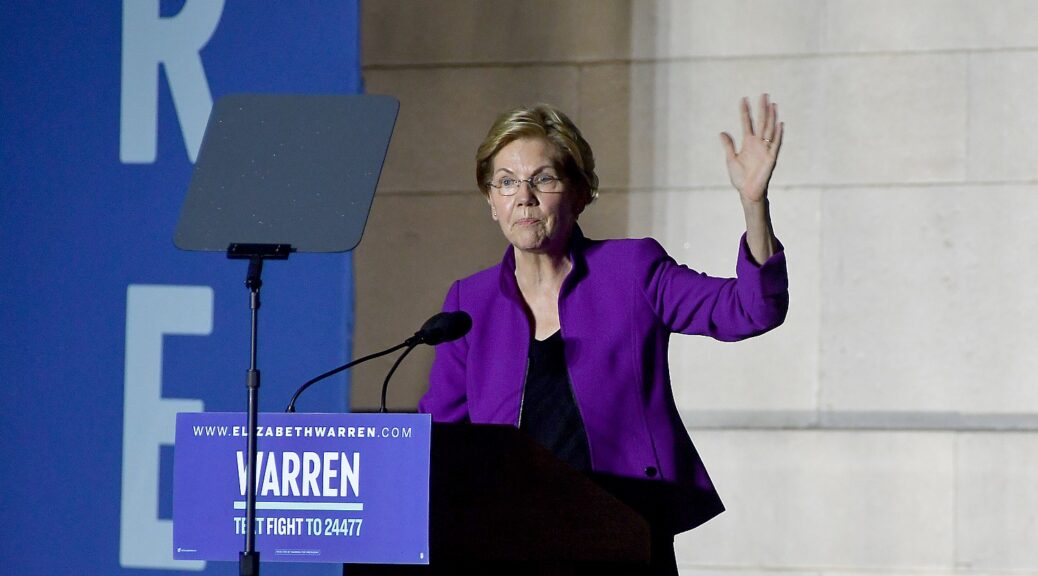
Charlestown, MA – Senator Elizabeth Warren
detailed how she will strengthen the ethical integrity and impartiality of the
federal judiciary. Her plan will ensure that judges do not hear cases where
they have conflicts of interests, strengthen our nation’s ethics rules for
judges, and ensure accountability for judges who violate these rules.
Under her plan, investigations into judicial misconduct
could continue even when a judge resigns from office or is elevated to the Supreme
Court. This provision would allow the judiciary to reopen the investigations
into Alex Kozinski, Maryanne Trump Barry, Brett Kavanaugh, and any other judge
who benefited from this loophole.
In December 2017, more than 15 female law clerks alleged that Ninth Circuit Judge Alex Kozinski committed sexual misconduct and created a “hostile, demeaning and persistently sexualized environment” for employees. According to their accounts, Kozinski inappropriately touched female clerks and showed them pornography in his chambers.
It wasn’t the first time he
was accused of misconduct. But what did Judge Kozinski do when the judiciary
started to investigate? He retired.
And because of inadequate ethics laws, the investigation
ended immediately. Meanwhile, Kozinski continues to collect his
taxpayer-funded pension for life.
The Kozinski case is just one example of the broader problem
of accountability in the federal judiciary.
Justices Clarence Thomas and Antonin Scalia did not recuse themselves
from Citizens United v. FEC, the case that opened an avalanche of money in
politics to the benefit of people like the Koch brothers, who invited the pair to multiple
all-expenses paid retreats.
The basic premise of our legal system is that every person
is treated equally in the eyes of the law – including judges. Our judiciary
only functions properly when it lives up to this promise, and it risks eroding
its legitimacy when the American people lose faith that
judges are ethical and fair-minded.
That’s why today I’m announcing my plan to strengthen the
ethical integrity and impartiality of the federal judiciary. It’s time to
ensure that judges do not hear cases where they have conflicts of interests,
strengthen our nation’s ethics rules for judges, and ensure accountability for
judges who violate these rules.
Recusing Judges and Supreme Court Justices with Conflicts
of Interest.
In 2011, Eleventh Circuit Court of Appeals Judge James
Hill ruled in favor of Johnson &
Johnson in a case brought by a woman who suffered from a
malfunctioning medical implant. He did so while owning as much as $100,000 in
the company’s stock. The same judge ruled on three other cases involving
companies in which he owned stock – and ruled in favor of the company each
time. Judge Hill, unfortunately, is not alone: one study identified 24 cases in
which judges owned stock in a company that appeared before them in court.
A basic principle of our federal judicial system is that
judges make decisions as disinterested, impartial observers – stepping aside
when they may not be able to decide cases objectively. This principle should
also bar judges from being the final arbiter of whether they can be objective
in the first place.
It’s time for fundamental reform:
Prohibit judges from deciding for themselves whether they
should recuse from a case due to a conflict. When a litigant believes
that a judge cannot consider a case in an unbiased manner, the litigant may
file a recusal motion asking for another judge to decide the case instead. But
our current system gives judges enormous discretion to decide for themselves whether
to grant recusal motions where their objectivity is challenged. My plan will
instead empower the Chief Judges within regional circuits to establish a
binding recusal process. It will also require courts to publish its reasons any
time judges are disqualified from a case without a recusal motion, including
when judges voluntarily recuse or when an automated conflict-checking
software disqualifies them.
Ban judges from owning or trading individual
stocks. It’s not enough for judges like James Hill to recuse in cases
with conflicts of interest – my plan would eliminate the appearance of
impropriety by banning federal judges from owning or trading individual stocks,
while allowing them to instead invest in conflict-free mutual funds or open new
investment accounts managed by the Federal Retirement Thrift Investment Board.
Law firms follow rules like these to avoid the appearance of financial
conflicts with the interests of their clients. Judges should certainly be held
to the same standard.
Require Supreme Court Justices to provide written
explanations of recusal decisions when a litigant challenges for recusal. If
a Supreme Court Justice has a conflict of interest, they are ethically
obligated to recuse themselves from considering a case, but the law allows them
to deny recusal motions without even providing an
explanation. Under my plan, when a party asks for a Justice to
recuse, the Judicial Conference will issue a non-binding, public advisory
opinion with its recommendation – and the challenged Justice will publicly
explain their final recusal decision in writing. Because all recusal decisions
will be a matter of public record, future litigants will understand these
conflicts and know when to bring recusal decisions of their own.
Strengthening Ethics Rules for All Judges.
Every lawyer in America is subject to ethics rules. Federal
judges are generally subject to a Code of Conduct that
applies the most basic of these principles to members of the judiciary.
That means that Supreme Court Justices can go on trips with litigants,
like Justice Scalia did when he heard a case involving Vice President
Cheney after going hunting with him –
without an independent ruling on whether it was proper to do so. It means
Justices can receive large speaking fees and all-expenses paid trips to fancy
conferences, like Justice Thomas did when the Federalist Society, an extremist
right-wing legal group, flew him to Palm Springs and
paid for meals and transportation for four days. And it means that someone
like Brett Kavanaugh can
face accusations of lying to Congress – without a full and fair
investigation by the judiciary. These actions could violate
the Judicial Code of Conduct,
but because unlike all other federal judges these Justices are not bound by a
code of ethics, they are immune from any judicial investigations into
misconduct.
We must act now to fix this – and that means strengthening
the Code of Conduct for all judges.
Here’s where I would start:
Extend the Code of Conduct to Supreme Court Justices. When
Judge Kavanaugh was elevated to the Supreme Court, 83 ethics complaints that had been
lodged against him were dismissed – and because the Supreme
Court is not covered by a Code of Conduct, no procedure exists to file new
complaints. Questions are oftenraised about the
behavior of Supreme Court Justices, such as Justice Thomas’s 13 years of
financial disclosures that failed to list $690,000
in payments to his wife from the Heritage Foundation, a right-wing judicial
activist group – but these actions are beyond the scope of current rules.
Enough. My plan applies the Code of Conduct for United States
Judges to Supreme Court Justices – and places the Judicial
Conference in charge of violations. My plan also allows individuals to file
complaints against Supreme Court Justices, just like they can against all other federal judges.
Strengthen the Code of Conduct to ensure a fair and
impartial judiciary. When judges accept gifts or financial
contributions from interested parties, public trust in a fair-minded judiciary
erodes. My plan strengthens the Code of Conduct so that judges generally cannot
receive paid speaking fees or
all-expenses-paid trips from outside organizations. To ensure that
judges continue to interact with the public without the appearance of
impropriety, my plan also establishes a modest fund to help cover reasonable
expenses.
Real Enforcement for Judicial Misconduct.
When a lawyer violates the ethics rules, their state’s
judiciary can investigate their behavior and impose disciplinary punishment,
including stripping their licence to practice law.
But the panels of judges
that investigate judicial conduct complaints have limited disciplinary power beyond
asking the judge to voluntarily resign or asking the House of Representatives
to consider impeachment proceedings – a request the House is free to
ignore.
It’s time for real accountability for judges. Here’s how
we’ll start:
Continue investigations into judicial misconduct even
when a judge resigns from office or is elevated to the Supreme Court.
In 2016, Federal District Court Judge Walter Smith faced a judicial
investigation into allegations of sexual harassment of
court employees and drinking on the
bench while presiding over cases. Judge Smith resigned, and the complaints
filed against him were dismissed.
My plan extends the authority of the Judicial Conference to former judges so
that individuals under investigation cannot simply resign from the bench to
avoid accountability. This provision would allow the judiciary to reopen the
investigations into Alex Kozinski, Maryanne Trump-Barry, Brett Kavanaugh, and any
other judge who benefited from this loophole.
Provide strong disciplinary authority to judicial ethics
watchdogs, including the ability to strip non-vested taxpayer-funded pensions
from judges.
Under today’s rules, even if retired judges could be investigated, the Judicial
Conference has no meaningful tools to discipline them. American taxpayers are
paying for the more than $180,000-per-year retirement pay of Judge Smith, Judge
Kozinski, Judge Trump-Barry, and several other judges who left office during
investigations into their behavior. We need to restore real accountability
within our judiciary.
That’s why my plan provides disciplinary tools to the Judicial Councils and
their parent organization, the Judicial Conference, including the ability to
strip sitting or retired judges of their non-vested pension benefits by making
retirement pay for new judges explicitly contingent on the absence of serious
misconduct. In addition to strengthening these disciplinary tools, my
administration will also work to prevent judicial misconduct against employees
and law clerks by supporting strong climate surveys,
questionnaires to court employees about the work environment in our federal
courts, to help the judiciary understand how to improve the culture within our
courts.
Create a new, fast-track impeachment process for federal
judges who commit impeachable offenses.
The Constitution reserves the impeachment of judges for only the most egregious offenses. But
when a judge commits a serious offense or ethical violation, we need to make
sure that there is a prompt investigation – and that Congress takes action.
It’s time to fast-track the process for judges who commit impeachable offenses.
My plan would strengthen the process to certify
that a judge may have committed an impeachable offense, and would ensure that
any impeachment referrals will trigger a series of automatic rules under which
the House Judiciary Committee will conduct a thorough investigation and vote
without unnecessary delay. These reforms will ensure that judges who commit
serious, impeachable offenses will more likely be promptly removed from office.
These changes will not only allow us to ensure
accountability for bad actors, including reopening inquiries into the conduct
of offenders like Brett Kavanaugh. They will also hold the vast majority of
judges who act in good faith to the highest ethical standards, and in the
process, begin to restore accountability and trust in a fair and impartial
federal judiciary.
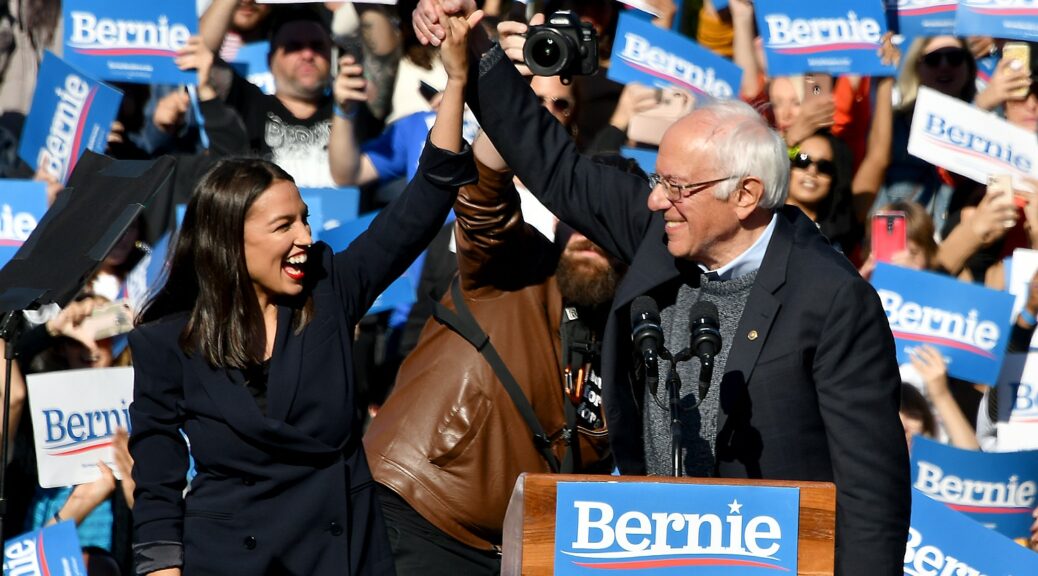
Amid
a sea of “Bernie” signs and chants of “We are the 99%” and “We will win”, Jane
Sanders, looked out over the massive crowd of 25,000 that overflowed
Queensbridge Park, beneath the Queensborough Bridge, onto the street, and said,
“Here are people from every background in the melting pot called New York. Most
of our ancestors came to America for a better life- mine from Ireland to escape
famine, poverty; Bernie’s from Poland escaping anti-Semitism, poverty.
“All believed they could have a better life. But in the last 40 years that
promise has eroded. Bernie plans to change that.” And, noting that this is his
first rally since his heart attack, she said to massive cheers, “Bernie is
back. He’s healthy and more than ready to continue his lifelong fight for
working people of America.”
Michael Moore: “This is not just about defeating Trump, but the
rotten system that gave us Trump’
Democracy,
said documentary filmmaker Michael Moore, is where “Everyone gets a seat at the
table, a slice of the pie and not fight for last crumbs. We don’t just need a
democratic politics, we need a democratic economy.”
Moore said, “The powers that be are very unhappy you’re here, that Bernie is
back. The pundits, the media [boo] are throwing everything out there to get
people to think differently:
“That Bernie is too old. Here’s what’s too old: the Electoral College, the
$7 minimum wage, women not being paid the same as men, thousands and thousands
of dollars of student debt, $10,000 deductible for health care, Super
Delegates, the fossil fuel industry – that’s what’s too old.
“It’s a gift we have 78-year-old American running for president. The
experience he has, what he has seen. He knows what a pay raise is, a pension –
look it up. What it looks like to defend against fascism and white supremacy,
to have the library open every day, what regulations are (Boeing). I’m glad
he’s 78.
“Health? We should be talking about the health of planet that’s dying [crowd
chants “Green New Deal”]; the health of kids in Flint Michigan, of 40 million
living in poverty, of young black males shot in back by police [chant Black
Lives Matter, Black Lives Count]. The only heart attack we should talk about is
the one Wall Street will have when Bernie wins.
“Next, that Bernie can’t win. He will win he has won 8 times to the House, 2
times to the Senate, 22 states in 2016 – almost half [chant “We will win.]. In
2016 [Democratic primary], Bernie won Michigan, Wisconsin, Minnesota. Of the 11
states that border Canada, Bernie won 10 (not NY) [boo] – we can fix that. Of
the 5 states that border the Pacific, he won 4; of 6 in New England, won 4;
Bernie won West Virginia – all 55 counties. According to a poll, he is #1 in
Nevada, a dead heat in Iowa, #1 in New Hampshire. He has raised more money from
more donors with the smallest amount.
“Why say Bernie can’t win? Because they are lying to the American people.
Bernie will win. [Chant, “We will win”]
“They say he can’t win because he is a [Democratic] socialist [yay!]. That’s
not going to fly. The American people have loved socialism for the last 70
years. Social Security, free public school, Medicare, Medicaid, fire department
– all are socialist.
“What they don’t want to do is tell the truth, what would happen if they
structured economic policies with democracy instead of capitalism. And this
isn’t capitalism of your great grandpa, this is a form of greed, selfishness so
that just few at the top succeed, the rest struggle paycheck to paycheck.
“Afraid taxes on rich will go up under Sanders? It was depressing during the
debate to watch Democrats go after Medicare for All. What would Franklin
Roosevelt say?
“They say we can’t afford it? How does Canada afford it? Every other
industrialized country has figured it out, why can’t we? They don’t want us to
figure it out.
“They say taxes will go up? That is part of the big lie – your taxes already
are up. We don’t call it a tax – in Canada, France, Finland they get free
health care, free or nearly free day care and college, but pay more in tax for
these things. The average American family pays $12,000 a year for child care,
$4000 in student loans, $6000 for deductibles, co-pays and premiums for health
care – too damn much – the average is $20,000/year but we don’t call it a tax.
“We are here in Queensbridge Park, Manhattan Island just across the river is
headquarters of corporate America [boo], corporate media [boo], Wall Street
[boo]
. So much misery has been visited on the American people from a half mile
away. It must stop.
“They must hear us at Goldman Sachs, Fox News, Trump Tower – the scene of
the crime.
“This [election] is not just about defeating Trump, but the rotten system
that gave us Trump…. beating Trump isn’t enough. We must crush Trump at
the polls, then fix the rotten corrupt economic system that gave us Trump.”
San Juan Mayor Cruz: “Move forward on the path of progressive agenda.
We are equal. We will win. We must win.”
Calling herself a “climate change survivor,” San Juan Mayor Carmen Yulín Cruz
Soto, attacked Trump for “killing us with inefficiency” that contributed to
3,000 Puerto Ricans dying after being smacked by back-to-back hurricanes.
“Why we have to win” she says is for Medicare-for-All, so no one has to
choose between groceries and insulin; to be able to afford college and life
after college, to “stand against those who earn $100 million and pay workers
starving wages; who take away women’s right to choose; the crime of separating
families at southern border; climate change.
“I am a climate change survivor. Climate change is real – 3000 Puerto Ricans
were killed because Trump Is a racist, xenophobic, paper throwing demagogue.” [Chant, “Lock him up.
Vote him out.”]
“The time is now to be fearless, relentless. I stand with Sanders – I respect
every other candidate but there is one name only who can get the job done. Be
united in one progressive voice, cross generations. Move forward on the path of
progressive agenda. We are equal. We will win. We must win.”
Nina Turner: “We must knock out Billionaire class that doesn’t
believe working people deserve a good life.”
National
co chair Nina Turner quoted Congresswoman Barbara Jordan who said American
people want an America as good as its promise. “That means an America where
people don’t die because have to ration insulin; hospitals are not closing;
where there is clean water, air, food; a justice system that doesn’t gun down
black folks in their houses.
“We need to clean up the criminal injustice system, Truth & Reconciliation
about the ravages of racism, a health care system not commodified. We need to
take care of Mother Earth.”
Alluding to the Democratic candidates, she said, “There are many copies but
only one original. We finally have somebody in our lifetime, his own special
interest is people of nation.
“We must knock out Billionaire class that doesn’t believe working people
deserve a good life.”
Congresswoman Alexandria Ocasio-Cortez: “We need a United States
truly, authentically operated, owned by working people.”
“We must bring revolution of working class to the ballot box of America,”
declared Congresswoman Alexandria Ocasio-Cortez. She prompted chants of “Green
New Deal,” saying, “Queensbridge Park is ground zero in the fight for public
housing and environmental justice.
“Last February I was working as a waitress in Manhattan, shoulder to
shoulder with undocumented workers who were putting in12 hour days with no
healthcare, not a living wage. We didn’t think we deserved it. That is the
script we tell working people: your inherent worth, value as human depends on
income another underpays. Turn around that basic language… We must change the
system that puts corporate profit ahead of all human and planetary costs.”
After her parents put all they had to buy a house, she said she learned from
an early age that “kids’ destiny determined by zipcode. Income inequality is a
fact of life of children.” Her father died of cancer when she was 18 and she
learned, “We all are one accident away from everything falling apart.
Sanders, she said, has fought for Planned Parenthood, for public education,
for CHIP, for single-payer health care, for gender rights, to end
“life-crushing” student debt.
“He didn’t do it because it was popular. He fought when it came at the
highest political cost in America.
“In 2016, he changed politics in America. We now have one of the best
Democratic fields – much because of Sanders.
“I’m in Congress today but one year ago I was a sexually harassed waitress.
This freshman class in overwhelming numbers rejected corporate money – thanks
to Bernie – endorsed Medicare for All, sees the climate crisis as an
existential threat.
“[In Congress] it is no joke to stand up against corporate power and
establishment interests. Arms are twisted, political pressure psychological and
otherwise applied to make you abandon the working class.
“I have come to appreciate the nonstop advocacy of Sanders. It’s not just
what he fights for but how: mass mobilization of the working class at the
ballot box, a movement (against) racism, classism of Hyde Amendment,
imperialist and colonial histories that lead to endless war and immigration
crisis.
“NYCHA is underfunded by $30 billion –that is not an accident, but an
outcome of system that devalues poor, Logic that got us into this won’t get us
out.”
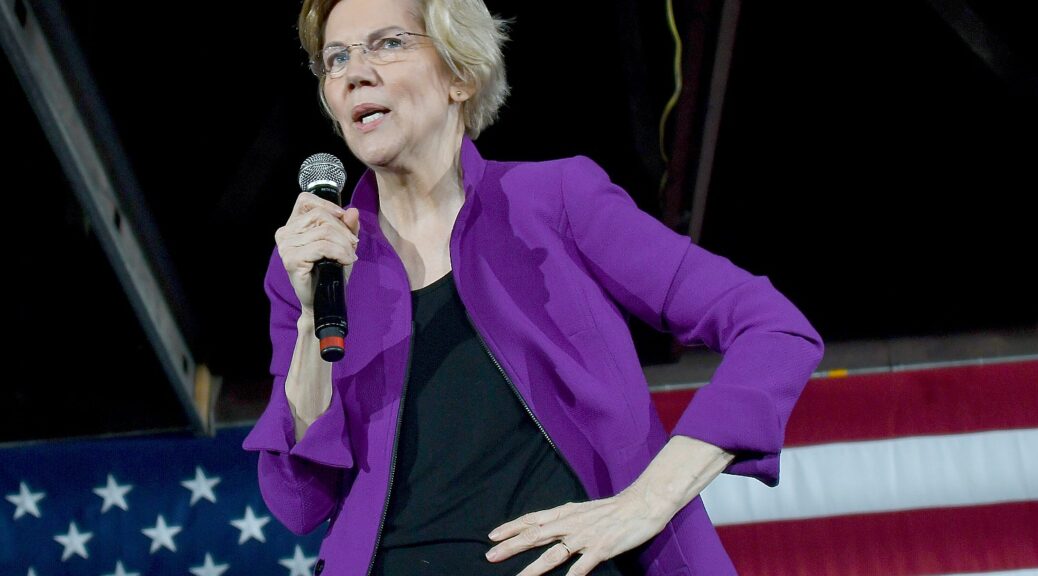
Sen. Elizabeth Warren, 2020 Democratic candidate for president, proposes a plan to reduce mass incarceration and reform the criminal justice system without infringing on public safety (c) Karen Rubin/news-photos-features.com
The vigorous contest of
Democrats seeking the 2020 presidential nomination has produced excellent
policy proposals to address major issues. Senator Elizabeth Warren released her
plan to reduce mass incarceration and reform the criminal justice system
without infringing on public safety. This is from the Warren2020 campaign:
Charlestown, MA – Today, Elizabeth Warren released her plan to reduce mass incarceration and reform our criminal justice system. Elizabeth believes we need to reimagine how we talk and think about public safety, spending our budgets not on putting people in prison but on community services that lift people up. It is a false choice to suggest a trade off between safety and mass incarceration – we can decarcerate and make our communities safer.
Her plan details how she will reform all aspects of our system:
what we choose to criminalize, how law enforcement and prosecutors engage with
communities and the accused, how long we keep people behind bars and how we
treat them when they’re there, and how we reintegrate them when they return.
“We will reduce incarceration and improve justice in our country
by changing what we choose to criminalize, reforming police behavior and
improving police-community relations, and reining in a system that preferences
prosecution over justice. When people are incarcerated, we will provide
opportunities for treatment, education and rehabilitation, and we’ll continue
those supports for returning citizens as they reenter our communities. Most
importantly, we’ll rethink the way we approach public safety — emphasizing
preventative approaches over law enforcement and incarceration. That’s the way
we’ll create real law and order and real justice in our country.”
The United States makes up 5% of the world’s
population, but nearly 20% of the world’s
prison population. We have the highest rate of
incarceration in the world, with over 2 million people in
prison and jail.
Our system is the result of the dozens of
choices we’ve made — choices that together stack the deck against the poor and
the disadvantaged. Simply put, we have criminalized too many things. We send
too many people to jail. We keep them there for too long. We do little to
rehabilitate them. We spend billions, propping
up an entire industry that
profits from mass incarceration. And we do all of this despite little evidence that
our harshly punitive system makes our communities safer — and knowing that a
majority of people currently in prison will eventually return to our
communities and our neighborhoods.
To make matters worse, the evidence is clear
that there are structural race problems in this system. Latinx adults are three times more
likely to be incarcerated than whites. For the exact same crimes, Black
Americans are more likely than whites to be arrested, charged, wrongfully
convicted, and given harsher sentences. One in ten Black
children has an incarcerated parent.
Four words are etched above the Supreme Court:
Equal Justice Under Law. That’s supposed to be the promise of our justice
system. But today in America, there’s one system for the rich and powerful, and
another one for everybody else. It’s not equal justice when a kid with
an ounce of pot can get thrown in jail, while a bank executive who launders
money for a drug cartel can get a bonus. It’s long past time for us to reform
our system.
Real reform requires examining every step of
this system: From what we choose to criminalize, to how law enforcement and
prosecutors engage with communities and the accused, to how long we keep people
behind bars, how we treat them when they’re there, and how we reintegrate them
when they return.
We cannot achieve this by nibbling around the
edges — we need to tackle the problem at its roots. That means implementing a
set of bold, structural changes at all levels of government.
And it starts by reimagining how we talk and
think about public safety. For example:
Public safety should mean providing every
opportunity for all our kids to get a good education and stay in school.
It should mean safe, affordable housing that
keeps families together and off the streets.
It should mean violence intervention programs
that divert young people from criminal activity, before the police become
involved.
It should mean policies that recognize the
humanity of trans people and other LGBTQ+ Americans and keep them safe from
violence.
It should mean accessible mental health
services and treatment for addiction.
It is a false choice to suggest a tradeoff
between safety and mass incarceration. By spending our budgets not on
imprisonment but on community services that lift people up, we’ll
decarcerate and make our communities safer. Here’s my plan.
Rethink Our Approach to
Public Safety
It’s not enough merely to reform our
sentencing guidelines or improve police-community relations. We need to rethink
our approach to public safety, transitioning away from a punitive system and
investing in evidence-based approaches that address the underlyingdrivers of violence
and crime — tackling it at its roots, before it ever has a chance to grow.
Break the school-to-prison pipeline. Schools increasingly rely
on police officers to carry out discipline while neglecting services that are
critical to the well being of students. At least fourteen million students
attend schools with a police officer but without a single counselor, social
worker, psychologist, or nurse. It’s no surprise that tens of thousands of
students are arrested annually, many for minor infractions. Zero tolerance
policies start early — on average 250 preschoolers are
suspended or expelled every day — and, even in the youngest years, students of
color bear the brunt. In
later grades, Black and Brown students are disproportionately arrested
in schools, while students with disabilities face an increased risk of
disciplinary action.
Every child should have the opportunity to
receive the support they need to thrive inside and outside of the classroom.
Adverse childhood experiences such as poverty, violence at home, homelessness,
family separation, or an incarcerated caretaker are proven to negatively impact child
development. I will equip schools with resources to meet their students’ needs
by providing access to health care to support the physical, mental, and social
development of children, improve their overall school readiness and
providing early intervention services.
We should decriminalize truancy and instead increase the number of school
mental health personnel and provide schools with resources to train teachers
and administrators in positive behavioral interventions, trauma-informed
alternative discipline practices, and implicit bias to
limit suspensions, expulsions, and minor-infraction arrests. We should require
that any police department receiving federal funds provide mandatory training
in the scientific and psychological roots of discrimination, youth development,
and de-escalation tactics to officers assigned to school campuses. I’ll
rescind Trump’s executive order that
allows school districts to participate in the 1033 program, giving them access
to military-grade weapons. And I’ll fully fund the Office of Civil Rights of
the Department of Education so that it can investigate school districts with
dramatic disparities in school disciplinary actions.
Reduce homelessness and housing insecurity. Children that experience
homelessness are more likely to drop out of school and more likely to become
involved with the criminal system. But as housing and rental costs skyrocket
and federal housing assistance doesn’t keep pace, housing insecurity is
growing, particularly for families of color. A Warren administration will
commit federal funding to the goal of ending homelessness in our country.
My housing plan will
help, by investing $500 billion over 10 years to build, preserve, and rehab
affordable housing, creating 3.2 million new housing units and bringing down
rental costs by 10%. It would also help families, especially families of color,
buy homes and start to build wealth. Substantially improving housing
affordability isn’t just good for the economy and for working families — it
will also reduce homelessness and crime.
Invest in evidence-based interruption programs. To improve safety in our
communities, we also need to invest in programs that prevent violence and
divert criminal behavior. Models in cities like Boston, Oakland and Chicago demonstrate that
we can successfully reduce homicide and gun violence rates through creating
cross-community partnerships and focused deterrence on
the small percentage of people most likely to commit violence. These programs
are cost-effective and
have multiplier effects:
transforming community climate, improving health outcomes, and boosting local
economies. My administration will invest in piloting similar programs at scale.
Decriminalize Mental Health Crises. The solution for someone
experiencing a mental health crisis should not be a badge and a gun, but police
officers have become America’s de facto first mental health providers.
Historically, 7–10% of police encounters involve a person affected by mental
illness, and people with untreated severe mental illness are sixteen times more
likely to be killed during a police encounter. People with mental illnesses are
not incarcerated at higher rates because they are prone to violence. To
the contrary, most are arrested for non-violent offenses,
many because they lack access to necessary services. But incarcerating people
with mental illness is more expensive as
providing appropriate community-based treatment — instead of shuttling people
into a system not built to meet their needs, we should invest in preventing
people from reaching those crisis points in the first place. Medicare for All
will provide continuous access to critical mental health care services, decreasing
the likelihood that the police will be called as a matter of last resort. I’ll
also increase funding for “co-responder” initiatives that connect law
enforcement to mental health care providers and experts. And my administration
will pilot evidence-based
crisis response efforts to provide needed services to individuals struggling
with mental illness.
Invest in diversion programs for substance abuse disorder. People who struggle with
addiction should not be incarcerated because of their disease. Mass
incarceration has not reduced addiction
rates or overdose deaths, because substance abuse disorder is a public health
problem — and it’s long past time to treat it that way. We know that diversion
programs are both more humane and a better investment than incarceration — for
every dollar we invest in
treatment programs, we can save $12 in future crime and health care costs. I’ll
support evidence-based safe injection sites and needle exchanges, and expand
the availability of buprenorphine to prevent overdoses. And my CARE Act would
invest $100 billion over ten years to increase access to high quality treatment
and support services. It would provide the regions most affected by the opioid
crisis with the resources they need, and would allow state, local and tribal
governments to use CARE Act funds to provide incarcerated individuals, and
individuals in pre-trial detention, with substance use disorder treatment.
Change What We Choose to
Criminalize
We face a crisis of overcriminalization. It has filled our prisons and devastated entire neighborhoods.
Addressing the crisis starts by rethinking what we choose to criminalize. It is
easy for legislators, fearful of being labeled soft on crime, to rubber stamp
every new criminal and sentencing proposal, no matter how punitive. It’s
equally easy for them to look the other way when the wealthy and well-connected
abuse the rest of us. But from the Senate on down, elected lawmakers have an
obligation to do better than that. Here’s where we can start.
Repeal the 1994 crime bill.The 1994 crime bill exacerbated incarceration rates in
this country, punishing people more severely for even minor infractions, and
limiting discretion in charging and sentencing in our judicial system. That
punitive “tough on crime” approach was wrong, it was a mistake, and it needs to
be repealed. There are some sections of law, like those relating to domestic
violence, that should be retained — but the bulk of the law must go.
Address the legacy of the War on Drugs. For four decades, we’ve
subscribed to a “War on Drugs” theory of crime, which has criminalized addiction,
ripped apart families — and largely failed to curb drug use. This failure has
been particularly harmful for
communities of color, and we need a new approach. It starts with decriminalizing marijuana and
erasing past convictions, and then eliminating the remaining disparity between
crack and powder cocaine sentencing. And rather than incarcerating individuals
with substance abuse disorders, we should expand options that divert them into
programs that provide real treatment.
Stop criminalizing homelessness. Housing provides safety
and stability, but too many experience
homelessness. To make matters worse, many cities have criminalized homelessness
by banning behavior
associated with it, like sleeping in public or living in vehicles. These laws
draw people into the justice system instead of giving them access to the
services they need. They disproportionately impact communities of color, LGBTQ+ people, and people with disabilities,
all of whom experience higher rates of homelessness. Rather than treating the
homeless like criminals, we should get them with the resources they need to get
back on their feet.
Stop criminalizing poverty. A simple misdemeanor like
a speeding ticket shouldn’t be enough to send someone to spiraling into poverty
or worse — but often the fines and fees levied
by our legal system bury low-income people who are unable to pay under
court-related debt, with no way out. We abolished debtors prisons nearly two
hundred years ago, but we’re still criminalizing poverty in
this country — low-income individuals are more likely to find
themselves entangled in the system and less likely to
find their way out. There is no justification for imposing unreasonably high
punitive burdens on those who are least able to bear them. As president, I will
fight to:
End cash bail. Around 60% of the nearly
750,000 people in jail have not been convicted of a crime — and too often,
those jails are overcrowded and inhumane. Our justice
system forces its citizens to choose either to submit to the charges brought
against them or be penalized for wanting to fight those charges. We should
allow people to return to their jobs and families while they wait for trial,
reserving preventive detention only for those cases that pose a true flight or
safety risk.
Restrict fines and fees
levied before adjudication. In many
jurisdictions individuals are charged cost-prohibitive pre-trial fees, sending
them into debt even if they are ultimately acquitted of a
crime. In cases of pre-trial civil forfeiture, an individual often cannot
recover property seized prior to conviction. I’ll reverse the Trump
administration’s policy expanding
pre-trial civil forfeiture at the federal level, and restrict the use of civil
forfeiture overall.
Cap the assessment of
fines and fees. Jailing someone who can’t
afford to pay thousands of dollars in fines on an hourly minimum wage salary is
not only cruel — it’s ineffective. Criminal debt collection should be capped at
a percentage of income for low-income individuals. States should also eliminate
the profit incentive that drives excessive fees and fines by capping the
percentage of municipal revenues derived from the justice system, and diverting
seized assets into a general fund.
Eliminate fees for
necessary services. Private companies and
contractors can charge incarcerated people for essential services, like phone
calls, bank transfers, and health care. Private companies also profit from
charging individuals for their own incarceration and supervision, including
through fees for re-entry, supervision, and probation. As I detailed in my plan
to end private prisons, I will end this practice and ensure that private
companies don’t get rich from exploiting vulnerable people.
Accountability for the wealthy and the well-connected. Equal justice also means
an end to the impunity enjoyed by those with money and power. Instead of
criminalizing poverty and expanding mass incarceration, I’ve proposed a
new criminal negligence standard for
executives of corporations with more than $1 billion in annual revenue when
their company is found guilty of a crime or their negligence causes severe harm
to American families. Instead of locking up people for nonviolent marijuana
crimes, I’ve proposed putting pharmaceutical executives on the hook to report
suspicious orders for controlled substances that damage the lives of millions.
And I’ve proposed new certification requirements for
executives at giant financial institutions so that we can hold them criminally
accountable if the banks they oversee commit fraud.
Reform How the Law Is
Enforced
While reform begins with deciding what
constitutes a crime, the authority to enforce the law includes tremendous
discretion. Law enforcement officers, prosecutors, and judges make countless
decisions every day that shape the reality of how our criminal justice system
functions for the millions of Americans it comes into contact with. We must
critically examine each aspect of the enforcement process to ensure that it is
both just and consistent with public safety.
Law Enforcement Reform. The vast majority of police officers sign up so they can protect
their communities. They are part of a profession that works tirelessly and
takes risks every day to keep us safe. But we also know that many people of
color, including Native Americans, disproportionately experience trauma at the
hands of law enforcement, sometimes with life-altering consequences. On
average, three people are
shot and killed by the police every day, a disproportionate number of them
young and Black. Others are arrested and
entered into a system that unduly penalizes even minor infractions.
Everyone is less safe when
trust erodes between the police and the communities they serve. Yet we’ve
continued to allow policing practices that are both ineffective and
discriminatory. It’s time to fundamentally change how police work is done in
America: funding what works; replacing failed policies with effective,
evidence-based practices that do not violate individual rights; and reframing
our approach to public safety to prioritize prevention over punishment. Here’s
how we do it.
Improve access to
treatment and early intervention. For
the third straight year, the number of suicides among law
enforcement in 2018 outnumbered the line-of-duty deaths. Law enforcement
officers experience higher rates of
addiction, post-traumatic stress, and other trauma related disorders. I’ll
invest in mental and emotional health support to help our officers do their
job, including by expanding promising pilots like peer intervention and early warning programs.
Improve data collection
and reporting. For nearly a century, we
have measured crime in this country. It’s time we measure justice — and act
when we don’t measure up. Today there is no comprehensive government database
on fatal police shootings, ethics issues, misconduct complaints, or use of
force incidents. My Justice Department will establish a rigorous and systematic
process to collect this data, provide relevant data collection training to
local law enforcement, and make data publicly available wherever possible.
We’ll use that data to prioritize federal oversight and to hold police
accountable for the portion of the bad policing outcomes for which they are
responsible. And we’ll work with interested departments to use their own data
to improve their legitimacy in the communities they serve and inform more just
and effective policing.
Increase federal
oversight capacity. The Obama Justice
Department used its authority to investigate police departments with a pattern or practice of
unconstitutional policing — but resource constraints limited the number of
interventions carried out. Meanwhile, the Trump administration hasn’t
initiated any investigations
at all. I’ll reverse the Sessions guidance limiting the use of consent decree
investigations, and triple funding for the Office of Civil Rights to allow for
increased investigations of departments with the highest rates of police
violence and whenever there is a death in custody. In this way, we can further
incentivize police departments with persistent issues to adopt best practices.
Empower State Attorneys
General. Even an expanded DOJ will
not be able to provide oversight for many thousands of law enforcement agencies
in this country. And accountability for unconstitutional policing shouldn’t
simply shut down under a hostile President like Trump. To build a more durable
system, I’ll incentivize states to empower their attorneys general to
conduct their own oversight of police behavior nationwide.
Demand increased civilian
oversight. Community engagement can
fill the gap and provide oversight where the federal government, even with
increased capacity, cannot. Approximately 150 communities have
civilian oversight boards, but that covers only a small percentage of law
enforcement agencies in America. To expand local oversight and democratic
engagement in policing, I will implement a competitive grant program that
provides funding to communities that establish an independent civilian
oversight mechanism for their police departments, such as a civilian oversight
board or Office of Civilian Complaints. These boards should have a role in
officer discipline and provide input on hiring police executives as well as
hiring and promoting within the departments they oversee.
Establish a federal
standard for the use of force. When
cities employ more restrictive policies for police use of force, they improve
both community trust and officersafety. I will direct my
administration to develop and apply evidence-based standards for the use of
force for federal law enforcement, incorporating proven approaches and
strategies like de-escalation, verbal
warning requirements, and the use of non-lethal alternatives. At the federal
level, I’ll prohibit permissive pursuit policies that often result in collateral damage, like
high-speed chases and shooting at moving vehicles. And I’ll work with local law
enforcement agencies to ensure that training and technology deployed at the
federal level can be implemented at all levels of government, helping to limit
the use of force while maintaining safety for officers and the communities they
are sworn to protect.
Increase federal funding
for law enforcement training. Improved
training can reduce the number
of police-involved shootings and improve perceptions
of police legitimacy. But if If we want police practices to change, then the
way we train our officers must change — both when they are hired and throughout
their careers. My administration will provide incentives for cities and states
that hire a diverse police force and provide tools and resources to ensure that
best practices on law enforcement training are available across America,
providing local police with what they need to meet federal training
requirements, including training on implicit bias and the scientific and
psychological roots of discrimination, cultural competency, and engaging
individuals with cognitive or other disabilities. And we should support evidence-based continuing
education for officers throughout their careers.
Restrict qualified
immunity to hold police officers accountable. When an officer abuses the law, that’s bad for law enforcement,
bad for victims, and bad for communities. Without access to justice and
accountability for those abuses, we cannot make constitutional due process
protections real. But today, police officers who violate someone’s
constitutional rights are typically shielded from civil rights lawsuits by
qualified immunity — a legal rule invented by the courts that blocks lawsuits against
government officials for misconduct unless a court has previously decided that
the same conduct in the same context was unconstitutional. Qualified immunity
has shielded egregious police misconduct from accountability and drawn
criticism from across the politicalspectrum. Last month,
for example, a federal appeals court in Atlanta granted qualified immunity to a
police officer who, while aiming at a family’s dog, shot a 10-year-old boy while
the child was lying on the ground 18 inches away from the officer. Just two
weeks ago, another federal court used qualified immunity to dismiss a lawsuit
against a school police officer who handcuffed a sobbing seven-year-old
boy for refusing to go to the principal’s office. This makes no
sense. I support limiting qualified immunity for law enforcement officials who
are found to have violated the Constitution, and allowing victims to sue police
departments directly for negligently hiring officers despite prior misconduct.
End racially
discriminatory policing. Policies
like stop-and-frisk and “broken windows” policing have trampled the
constitutional rights of countless Americans — particularly those from Black
and Brown communities — without any measurableimpact on violent
crime. I’ll end stop-and-frisk by directing the Justice Department to withhold
federal funding from law enforcement agencies that continue to employ it and
other similar practices, and I’ll work with Congress to pass legislation to
prohibit profiling at all levels of law enforcement.
Separate law enforcement
from immigration enforcement. The
data are clear. When local law enforcement is mixed with immigration
enforcement, immigrants are less likely to
report crimes, and public safety suffers. It’s time to
stop directing law enforcement officers to do things that undermine their
ability to keep communities safe. My immigration plan will
address this by ending the 287(g) and “Secure Communities” programs, putting in
guidelines to protect sensitive locations like hospitals and schools, and
expanding protections for immigrant survivors of violent crimes that come
forward and work with law enforcement.
Demilitarize local law
enforcement. Officer safety is
critically important. But we don’t build trust between police and communities
when we arm local law enforcement as if they are going to war. Militarizing our
police contributes to mutual fear and distrust, and there is evidence to
suggest it can actually make officers themselves less safe. As President,
I will eliminate the transfer of military-grade weapons and lethal equipment to
local police via the 1033 program, prohibit local law enforcement from buying
military equipment with federal funding, and create a buy-back program for
equipment already in use in our communities.
Expand the responsible
use of body cameras and protect citizen privacy. Body cameras don’t solve every problem, but used consistently
and appropriately they can decrease the use of force and misconduct complaints.
The federal government should expand funding for body cameras — especially for
smaller jurisdictions that struggle to afford them — in exchange for
departments implementing accountability policies that
ensure consistent and responsible camera use. I’ll also establish a task force
on digital privacy in public safety to establish guardrails and appropriate
privacy protections for this and other surveillance technology, including the
use of facial recognition technology and algorithms that exacerbate underlying
bias. And I’ll make it clear that individuals have every right to record an interaction with
the police.
Reduce gun
violence. We’ve learned the hard
way in Massachusetts that the job of our police is made exponentially harder by
the weapons flooding our streets. Common sense gun reform and meaningful
safeguards will improve safety for law enforcement and the communities they
serve. In 2017, almost 40,000 people died from guns in the United States. I
have a plan with the goal
of reducing that number by 80%, including by expanding background checks,
establishing a federal licensing system, and holding the gun industry
accountable for the violence promoted by their products.
Prosecutorial and Judicial Reform. Our current criminal
system is complex and places enormous power in the hands of the state. The
government controls what leads to pursue, what charges are levied, whether a
plea is offered, and how long someone spends behind bars. It has massive
resources at its disposal, and enjoys few obligations to share information and
limited oversight of its actions. All of this makes it challenging to ensure
that the accused can go to trial, can get a fair trial, and can receive a just
and reasonable sentence if convicted. To make matters worse, race permeates
every aspect of the system — people of color are twice as likely to
be charged with crimes that carry a mandatory minimum sentence. Reform requires
a transparent system that emphasizes justice, that gives people a fighting
chance — and truly treats everyone equally, regardless of color. Here’s how we
can start.
Strengthen public
defenders and expand access to counsel. The
Sixth Amendment provides every American accused of a crime with the right to an
attorney — but too many defendants cannot afford one, and too often, public
defenders are under-resourced, overworked, and overwhelmed. If we expect fair
adversarial trials, we need to balance resources on both sides of each case in
every jurisdiction. I’ll fund federal public defenders and expand targeted
grant funding for public defenders at the state level, to ensure that they have
the tools to effectively defend their clients. I’ll also reopen and expand
DOJ’s Office for Access to Justice, which worked with state and local
governments to expand access to counsel. We should ensure that our public
defenders are paid a fair salary for their work, and that their caseloads allow
for the comprehensive defense of their clients. Finally, I’ll provide funding
for language and cultural competency training, including on gender identity and
treatment of individuals with disabilities, so that public defenders are best
able to serve their clients.
Rein in prosecutorial
abuses. Prosecutors are enormously powerful and
often not subject to
scrutiny or accountability. I will support a set of reforms that would rein in
the most egregious prosecutorial abuses and make the system fairer, including
reducing the use of coercive plea bargaining by
DOJ prosecutors at the federal level, establishing open-file discovery, and
putting in place responsible standards for evidence gathering. I’ll establish a
Commission on Prosecutorial Conduct to make additional recommendations for best
practices and monitor adoption of those recommendations. And I’ll create an
independent prosecutorial integrity unit to hold accountable prosecutors who
abuse their power.
Expand access to justice
for people wrongfully imprisoned. Defendants
who are wrongfully imprisoned have the right to challenge their detention in
court through a procedure known as habeas corpus. The Framers believed this
right was so important to achieving justice that they guaranteed it
specifically in the Constitution. It’s particularly important for minority
defendants — Black Americans, for example, make up only 13% of the population
but a plurality of wrongful convictions. In
1996, at the height of harsh federal policies that drove mass incarceration,
Congress made it absurdly difficult for
wrongfully imprisoned individuals to bring these cases in federal court. Since
then, conservative Supreme Court Justices have built on those restrictions —
making it nearly impossible for
defendants to receive habeas relief even when they have actual proof of
innocence. We should repeal these overly restrictive habeas rules, make it
harder for courts to dismiss these claims on procedural technicalities, and
make it easier to apply new rules that emerge from these cases to people who
were wrongfully imprisoned before those rules came into effect.
Protect the rights of
survivors. Crime victims have the
right to safety and justice, the right to be consulted and informed about the
status of their case, and the right to be treated with dignity and respect. We
should provide support for those who have experienced trauma, including medical
care and safe housing. This is particularly true for those who have experienced
sexual assault or violence at the hands of an intimate partner. I’ll also fight
to reauthorize the Violence Against Women Act and provide full funding to
eliminate the rape kit backlog across the country.
Appointing a diverse
judicial bench. The justice system should
reflect the country it serves. Judicial appointments are primarily white and male, and
large numbers tend to have a prosecutorial background.
Diversity of experience matters. That’s why I have pushed for increasing the
professional diversity of our federal judiciary to insulate the courts
from corporate capture, and
why I support gender and racial diversity for judicial nominees. I’ll appoint a
diverse slate of judges, including those who have a background defending civil
liberties or as public defenders.
Take into account the
views of those most impacted by the system.As
President, I will establish an advisory board comprised of survivors of
violence, along with formerly incarcerated individuals. I’ll consult with this
advisory board and listen to the needs of those who have first-hand experience
with the system as we find fair and just solutions to the challenges we face.
Reforming Incarceration
The federal prison population has grown 650% since
1980, and costs have ballooned by 685%. This explosion has
been driven in large part by rules requiring mandatory minimum sentences and
other excessively long sentencing practices. These harsh sentencing practices
are not only immoral, there’s little evidence that they are effective. As president
I will fight change them.
Reduce mandatory minimums. The 1994 crime bill’s
mandatory minimums and “truth-in-sentencing” provisions that require offenders
to serve the vast majority of their sentences have not proven effective.
Congress should reduce or eliminate these provisions, giving judges more flexibility in
sentencing decisions, with the goal of reducing incarceration to mid-1990s
levels. My administration will also reverse the Sessions memo that
requires federal prosecutors to seek the most severe possible penalties, and
allow federal prosecutors discretion to raise the charge standards for
misdemeanors and seek shorter sentences for felony convictions.
Raise the age for criminal liability. We know that cognition
and decision-making skills continue to develop beyond the teenage years.
For that reason, many states have
raised the age of adult criminal liability to at least 17, or granted
additional discretion to prosecutors when charging offenders between the ages
of 16 and 18. The federal government should do the same — raising the age of
adult criminal liability to 18, eliminating life-without-parole sentences for
minors, and diverting young adult offenders into rehabilitative programs
wherever possible.
End the death penalty. Studies show that capital punishment is often applied in a
manner biased against people of color and those with a mental illness.
I oppose the death penalty. A Warren administration would reverse Attorney
General Barr’s decision to move
forward with federal executions, and Congress should abolish the death penalty.
Use the pardon and clemency powers broadly to right systemic
injustices. The president has significant powers to grant clemency and
pardons, and historically presidents have used that power broadly. But
today’s hierarchical process
at DOJ results in relatively few and conservative clemency recommendations.
I’ll remove the clemency process from DOJ, instead empowering a clemency board
to make recommendations directly to the White House. I’ll direct the board to
identify broad classes of potentially-deserving individuals for review,
including those who would have benefited from retroactivity under the First
Step Act, individuals who are jailed under outdated or discriminatory drug
laws, or those serving mandatory minimums that should be abolished.
Improving conditions in prison. Today prisons are
often understaffed and overcrowded,
making them dangerous for both inmates and corrections officers. Even as we
fight to reduce incarceration levels, we should support improved staffing
levels and better training for corrections officers, and humane conditions for
those behind bars. As president, I will:
Ensure that incarceration meets basic human
rights standards. From inadequate health care to dangerous overcrowding,
today our prison system is not meeting the government’s basic responsibility to
keep the people in its care safe. I’ll embrace a set of standards for the
Bureau of Prisons to fix this. That includes accommodating religious practices,
providing reasonable accommodations for prisoners with disabilities, and
limiting restrictive housing in
accordance with evidence-based best practices. We should ensure that trans
people are assigned to facilities that align with their gender identity and
provide the unique medical and psychiatric care they need, including access to
hormone treatments and help with adjusting to their care. And we should
eliminate solitary confinement, which provides little carcerative benefit and
has been demonstrated to harm prisoners’ mental and physical health,
in favor of safe alternatives.
Protect special
populations. Vulnerable individuals
like pregnant women, victims of domestic violence, people with disabilities,
and LGBTQ+ individuals often require special protections while behind bars.
I’ll implement a rigorous auditing program to ensure that prisons are adhering
to legal requirements to
protect LGBTQ+ individuals and others from sexual violence and assault while
incarcerated, and prosecute prison staff who engage in misconduct. I’ll ensure
that juveniles are not housed in adult facilities. I’ll also eliminate the use
of solitary confinement for protective purposes. Instead, I’ll direct the
Bureau of Prisons to establish a set of standards and reforms to protect the
most vulnerable in our prison system in a way that does not involve confining a
person for more than 20 hours a day.
Invest in programs that
facilitate rehabilitation. The
evidence is clear: providing education and opportunity behind bars reduces recidivism when
people leave prison. But when prison populations went up and budgets went down,
rehabilitation services were often the first cuts. In a world where the vast
majority of prisoners will eventually leave prison, this makes no sense. I’ll
double grant funding for these services in our prisons, expanding programs
focused on things like vocational training, anger management, and parenting
skills.
Expand mental health and
addiction treatment. 14% of prisoners
meet the threshold for serious psychological distress, and many more struggle
with addiction — but too often, they receive prison time rather than treatment.
And instead of increasing access to treatment in prison, the Bureau of Prisons has reduced it.
Providing mental health treatment during incarceration reduces recidivism. We
must take a comprehensive approach to incarcerated people who face mental
health and addiction challenges, including requiring an adequate number of
counselors and addiction specialists, individualized treatment, and increased
access to medication-assisted treatment.
Eliminate private
prisons. I have called to eliminate private prisonsthat
make millions off the backs of incarcerated people. We should also end
all-foreign or “criminal alien requirement” facilities, which are reported to
have higher negative outcomes.
Support Reentry
The period after release from prison can be
challenging for returning citizens. During this critical period, they are more
likely to be unemployed, more likely
to be rearrested, more likely
to overdose, and more
likely to die. Recidivism rates
remain high, in part because our prisons have not fulfilled their
rehabilitative function, and in part because lack of opportunity after release
drives individuals to re-offend. On top of all of this, more than 60,000
inmates in our prisons are there because of technical violations
of their parole — for offenses as minor as a speeding ticket. We need
evidence-based programs and interventions to break the cycle of incarceration
and set formerly incarcerated individuals up for success when they return to
their families and their communities. This is particularly true for youth and
minors, who are especially vulnerable when returning to an unstable
environment. Here are some of the steps I will take.
Pressure states to eliminate collateral sanctions. Millions of Americans are
currently on parole or probation. We know that reducing the barriers to full
reintegration in society reduces recidivism, but the system is rife with
collateral consequences that hamper reentry for formerly incarcerated people
who have served their time — from restrictions on occupational licensing to housing to
the disenfranchisement of
over 3 million returning citizens. We should remove those barriers and allow
those who have served their time to find work and fully rejoin their
communities.
Reduce needlessly restrictive parole requirements. Technical parole and
probation violations make up a large number of all state prison admissions,
sometimes for infractions as minor as a paperwork error. While many rules are
made at the state level, the federal government should seek to remove those
barriers wherever possible, reduce parole requirements for low-level offenders,
and remove the threat of jail time for minor parole violations.
Reduce discrimination during reentry. I’ll reverse the guidance that
exempts privately run re-entry programs that contract with the Bureau of
Prisons from anti-discrimination laws, restoring protections for individuals
with disabilities and those that encounter discrimination on the basis of their
sexual orientation or gender identity.
Establish a federal expungement option. Many states provide
a certificate of recovery for
nonviolent offenders who have served their time and maintained a clean record
for a certain number of years. This should be replicated at the federal level.
Ensuring Reform at the
State and Local Level
The federal government oversees just 12% of the
incarcerated population and only a small percentage of law enforcement and the
overall criminal legal system. To achieve real criminal justice reform on a
national scale, we must move the decisions of states and local governments as
well.
My administration will work with state and
local governments and incentivize adoption of new federal standards through the
grantmaking process. Federal grants make up nearly one third of
state budgets, and states and local authorities spend about 6% of their budget on
law enforcement functions. My administration would reprioritize state and local
grant making toward a restorative approach to justice, and expand grant funding
through categorical grants that require funds to be used for criminal justice
reform and project grants that require funding to be allocated to specific
programs.
When necessary, my plan would also use federal enforcement authority. My
administration would expand on the
Obama-era practice of using Department of Justice consent decrees and other
judicial settlements to enforce federal standards and remedy constitutional
violations at the state and local level. My plan would also leverage the
federal government’s Spending Clause authority and ability to impose civil
rights mandates using cross-cutting requirements to ensure that state and local
governments comply with federal criminal justice reform standards.
Senator Bernie Sanders, at Second Democratic Debate, has released his plan to reform the criminal justice system.
The vigorous contest of Democrats seeking the 2020 presidential nomination has produced excellent policy proposals to address major issues. Senator Bernie Sanders released his plan to reform the entire criminal justice system. This is from the Sanders campaign:
Blueprint aims to reform every aspect of America’s dysfunctional criminal justice system, ridding it of institutional racism and corporate profiteering
COLUMBIA, SC – Senator Bernie Sanders, who is running to be the Democratic candidate for president, released a comprehensive plan to reform the entire American criminal justice system in a speech he delivered August 18 in the Greenview neighborhood of Columbia, South Carolina. The plan is designed to root out the institutional racism and corporate profiteering that is plaguing the existing system.
“If we stand together, we can eliminate private
prisons and detention centers. No more profiteering from locking people
up. If we stand together we can end the disastrous “war on drugs.” If we stand
together we can end cash bail. No more keeping people in jail because
they’re too poor. If we stand together we can enact real police department
reform and prosecute police brutality. If we stand together, there is nothing,
nothing, nothing that we cannot accomplish.”
Sanders has fought mass incarceration during his decades in Congress, and
he campaigned
for president in 2016 on a pledge to end for-profit prisons —
a pledge that other Democrats have subsequently decided to support 4 years
later. Sanders’ new plan reiterates his original call to ban for-profit
prisons, and builds on his leadership on criminal justice with new proposals
for a top-to-bottom reform of America’s law enforcement, judicial and
incarceration systems. They include:
End for-profit
greed in our criminal justice system, top to bottom
Ending for-profit greed in our criminal justice system, top to
bottom, including banning cash bail and banning civil asset forfeiture, which
allows police departments to seize property from people who have not been
accused or convicted of a crime.
Ensure the criminal justice system is not the “best justice
money can buy” by vastly increasing funding for public defenders and creating a
federal formula to ensure populations have a minimum number of public defenders
to meet their needs, and working with states to set a minimum starting salary
for public defenders.
End
Mass Incarceration and Excessive Sentencing and Inhumane Incarceration and
Transform the Way We Police Communities
Reversing mass incarceration and setting a
goal of cutting the incarcerated population in half.
Transforming the way we police our
communities, creating an unarmed civilian corp of first responders to handle
mental health emergencies, homelessness, and other low-level issues that should
not require contact with the police and criminal justice system.
Creating national standards for use of police
force that emphasize de-escalation rather than violence, and holding police
misconduct to strict federal standards, including limiting qualified immunity
for police officers, creating a federal deadly use of force database, and a
registry of disreputable officers.
Ending the War on Drugs, including legalizing
marijuana and expunging past convictions for marijuana-related offenses and finally
ending the sentencing disparities for crack cocaine and powder cocaine
offenses.
Abolishing the death penalty and solitary
confinement.
Enacting a Prisoner Bill of Rights for
incarcerated individuals, including living wages, access to families, access to
educational and vocational training, and the right to vote.
Reverse the
Criminalization of Communities, End Cycles of Violence and Provide Support to
Survivors of Crime
Reversing the criminalization of disability, addiction, and homelessness.
Treat children in the criminal justice system
as children. This means raising the age to charge children in adult court to
18, ending long mandatory minimum sentences and life without parole sentences
for youth, decriminalizing truancy, and investing in youth diversion programs
and alternatives to the court and prison system.
End cycles of violence and interrupt them
before they begin. This means focusing law enforcement resources on solving
homicides and other serious crimes, funding Cure Violence programs and similar
proven violence interruption models, and ending the national rape kit
backlog.
Support the victims and survivors of crimes by
providing sustained resources to survivors and their families, including mental
health care, trauma recovery services, relocation services, and assistance with
basic needs.
Prior
to her appearance at the NALEO Presidential Candidate Forum, Elizabeth Warren
released her plan to root out the profit incentives standing in the way of real
reform of our criminal and immigration systems. Her plan would ban private
prisons and detention facilities, stop contractors from charging service fees
for essential services, and hold contractors accountable by expanding
oversight, transparency and enforcement.
“Last
month Caliburn International — a for-profit company whose subsidiary operates
Homestead, the largest detention center for unaccompanied migrant children
— hired John Kelly,
Trump’s former chief of staff. Caliburn has profited directly off of the Trump
administration’s inhumane immigration policies — while children at Homestead are
reportedly kept in unsanitary, prison-like conditions, often for months. Now
John Kelly is cashing in, too,” Warren stated.
“Rep.
Pramila Jayapal and I have demanded answers. But
this is just the latest example of private prison companies wringing billions
out of federal taxpayers. I’ve been after these
companies to come clean about their practices and human rights abuses. Every answer
just raises more questions.
“We
didn’t get here by chance. Washington works hand-in-hand with private prison
companies, who spend millions on
lobbyists, campaign contributions, and revolving-door hires — all to
turn our criminal and immigration policies into ones that prioritize making
them rich instead of keeping us safe. From 2000 to 2016, the private prison
population grew five times as quickly as the overall prison population. And the
profiteers multiplied, too: today, nearly 4,000corporations make
money off mass incarceration.
“President
Obama took steps to lower
the incarceration rate and wind down private prisons, but these companies got
their biggest break yet when Donald Trump landed in the White House. With
Trump, private prison companies saw their chance to run the same playbook for
our immigration system. They poured money into
lobbying for “alternatives” to ICE detention centers. And boy, did it pay off.
Private detention centers have made millions implementing Trump’s cruel
immigration policies, as the number of detained children quintupled in just
a single year. Today 73% of detained
immigrants are held in private detention facilities.
“The
companies running prisons and detention centers regularly sacrifice safety to
boost their bottom line. Private facilities have higher rates of
assaults than federal prisons. They violate federal
rules by putting incarcerated people into solitary confinement to fit more
bodies in the building. They impose forced laboron
immigrants just to make a buck. Multiple detainees have committed suicide. And now, under
Trump, babies are getting sick and dying from their
detention centers.
“The
government has also stood silently by while private contractors providing
services in both public and private centers come up with extortive schemes to
make millions off of the backs of incarcerated people. Prison phone
companies charge as much as
$25 for a 15-minute call, forcing families into debt just to stay
connected to loved ones. Commissary contractors mark up prices, and
companies coerce detainees to
work for as little as a dollar a day just to afford basic necessities like
toothpaste.
“While
contractors getting paid taxpayer dollars cut corners to maximize margins, the
government has turned a blind eye. Food companies make millions but serve bug-infested food
to save cash. An investigation into a prison transport company that allowed at
least five deaths and a sexual assault to occur under their watch has
gone nowhere.
“And
today, the exploitation doesn’t end when individuals emerge from prison or
detention. Current law pushes money into
the hands of for-profit supervision companies, many of which are run by the
same private prison corporations. These companies get rich by making people
just getting out of prison — often with huge debts — pay outrageous fees for
monitoring and supervision services like ankle monitors. Some have gone so far
as to threaten individuals with reincarceration.
“This
is exploitation, plain and simple. Our criminal and immigration systems
are tearing apart communities
of color and devastating the
poor, including children. Women — especially
women of color — are particularly saddled with the financial burden. We need
significant reform in both criminal justice and in immigration, to end mass
incarceration and all of the unnecessary, cruel, and punitive forms of
immigration detention that have taken root in the Trump Administration.
“The
first step is to end this private profiteering off cruelty.
“The government has a basic responsibility to keep the people in
its care safe — not to use their punishment as an opportunity for profit.
That’s why today, I’m proposing my plan to root out once and for all the profit
incentives perverting our criminal and immigration systems.
“Here’s
what I’ll do:”
Ban private prisons and detention facilities. There should be no place in America for profiting off
putting more people behind bars or in detention. That’s why I will shut
down the use of federal private detention facilities by ending all
contracts that the Bureau of Prisons, ICE, and the U.S. Marshals Service
have with private detention providers. And I will extend these bans to
states and localities by conditioning their receipt of federal public
safety funding on their use of public facilities.
Stop contractors from charging service fees for
essential services. Companies
shouldn’t be able to treat incarcerated individuals as captive profit
centers. We should prohibit contractors from charging incarcerated and
detained people for basic services they need, like phone calls, bank
transfers, and healthcare. I’ll also keep contractors from imposing
exploitative price markups on other services they provide, like commissary or package services.
And I’ll prohibit companies from charging for re-entry, supervision, and
probation services, too — because no one should have to pay for their own
incarceration, whether it’s inside a facility or outside of one.
Hold contractors accountable by expanding oversight,
transparency and enforcement. It’s
time to shine sunlight on the black box of private services that receive
taxpayer dollars. I’ll close the ridiculous FOIA loophole that
lets private prison subcontractors operate in the shadows. I will put in
place an independent Prison Conditions Monitor within the Department of
Justice’s Office of the Inspector General. The Monitor will keep
contractors from cutting corners to make a quick buck by setting
enforceable quality standards, regularly auditing and investigating
contractors, and terminating their contracts if they fall short. I’ll
direct the Department of Justice to prosecute companies that blatantly
violate the law. And I’ll make sure companies are held accountable no
matter who’s in the White House by allowing people to bring a lawsuit
against abusive contractors who violate their rights.
“Washington
hands billions over to corporations profiting off of inhumane detention and incarceration
policies while ignoring the families that are destroyed in the process. We need
to call that out for what it is: corruption. Incarcerating and detaining
millions for profit doesn’t keep us safe. It’s time to do better,” Warren
stated.
Read
more about Warren’s plan to end private prisons here.
New York State Governor
Andrew M. Cuomo used his 2019 State of the State Address to delineate a Justice
Agenda that works toward the ideal of full, true justice for all.
In stark contrast to the
federal government’s dysfunction and the self-destructive tactic of using the shutdown
to extort a political prop, the Governor is laying out a blueprint to move
forward, while shielding New Yorkers from Washington’s devastating federal
attacks. It is aimed at strengthening the middle class, safeguards the
environment, improves the health of communities and invests in building an infrastructure
for the 21st century. For the ninth consecutive year, the Budget is balanced
and holds spending growth below two percent.
“In December, in the face of the nation’s biggest social crisis, and with the federal government seeking to undo generations of progress, Governor Cuomo laid out his legislative agenda to enable the Legislature to commence action on these top priorities immediately upon convening.” In this State of the State Address, the Governor called on the Legislature to swiftly and immediately act on these priorities in the first 100 days of session.
“In the face of unprecedented challenges on a national level and a federal government at a complete standstill, New York will deliver on the most productive agenda in our history and build on our record of accomplishments,” Governor Cuomo said. “This is a true Justice Agenda that ensures our neediest schools receive an equitable share of funds, advances historic criminal justice reform, safeguards our health care, protects the rights of women in our state from the federal government, and leads the nation in fight against climate change and contaminants in our environment and our water. While extreme conservatives in Washington govern by division and fuel dysfunction, New York State will raise the beacon of progress and take action to make a real difference in people’s lives.”
Here is a summary of the initiatives (it is long, but New Yorkers should see the detail of the agenda):
The FY 2020 Executive Budget is $175.2 billion on an All Funds basis.
State Operating Funds is $102.0 billion, growth of 1.9%
Health and Education spending grows at 3.6%, Executive Agencies at 0.8%.
ECONOMIC JUSTICE
Continue the Phase-In of Middle Class Tax Cuts: The Budget supports
the phase-in of the middle class tax cuts. Under these reforms, rates will
continue to drop to 5.5 percent and 6 percent when the cuts are fully phased in
– an up to 20 percent cut in income tax rates for the middle class – and
produce a projected $4.2 billion in annual savings for six million filers by
2025. As the new rates phase in, they will be the State’s lowest middle-class
tax rates in more than 70 years.
Extend the Millionaire’s Tax: To protect the progress that has been
made in enhancing progressivity and ensuring tax fairness for New York’s
middle-class, Governor Cuomo is proposing a five-year extension of the current
tax rate on millionaires. This will preserve an estimated $4.4 billion annually
otherwise unavailable to make vital investments in education and infrastructure
to secure New York’s future economic prosperity.
Make Permanent the Property Tax Cap: Governor Cuomo made a
first-ever property tax cap a hallmark of his first campaign for Governor and a
priority of his administration’s first year. Since the implementation of the
tax cap in 2012, growth has averaged approximately 2 percent and the tax cap
has produced approximately $25 billion in taxpayers’ savings. The Governor
proposes that New York preserve and make permanent the property tax cap, as he
has advocated in the past.
Close the Carried Interest Loophole: Because of an egregious
loophole in federal law, some of the wealthiest people in the country,
including hedge fund managers and private equity investors, are paying lower
tax rates on their income than many middle class families. This “carried
interest” loophole results in a substantial cost to middle-class New
Yorkers, with the State losing about $100 million every year. To ensure that
the wealthiest Americans are paying their fair share, Governor Cuomo will take
a landmark step to close the carried interest loophole under New York State law
and effectively eliminate the benefits of this loophole under the federal tax
code.
Fight for the Full Deductibility of State and Local Taxes: Governor
Cuomo fought the federal tax bill every step of the way while it was under
consideration in Congress. After its passage, New York joined together with
three other states to sue the federal government over this illegal and targeted
assault. The Governor will continue to fight against this law and the threat
that it poses to New York State, and he urges the new Democratic House of
Representations stand together and demand that the SALT deduction is fully
restored.
Continue Lawsuit Against Federal Government Challenging Unconstitutional Tax
Law That Targets New York: Governor Cuomo and Attorney General Barbara
D. Underwood filed a lawsuit to protect New York and its taxpayers from
Washington’s drastic curtailment of the SALT deduction. The lawsuit argues that
the new SALT cap was enacted to target New York and similarly situated states,
that it interferes with states’ rights to make their own fiscal decisions, and
that it will disproportionately harm taxpayers in these states. The Governor
and Attorney General Letitia James will continue in their fight to overturn the
law’s unprecedented and unconstitutional limitations on SALT deductibility.
Building 21st Century Infrastructure
Invest an Additional $150 Billion in the Nation’s Largest Infrastructure
Program: Governor Cuomo has made an unprecedented commitment to invest
$150 billion in infrastructure projects over the next five years. Beginning in
FY 2020, these capital projects will rebuild transportation and mass transit
systems, drive economic and community development, create new environmental and
park facilities, and support our sustainable energy future.
Reduce Traffic Congestion in NYC and Fund the MTA: This year, the
Governor will implement congestion pricing to establish a reliable funding
stream to transform the transit system and reduce congestion in Manhattan. By
charging fees for vehicles to move within the most congested area of New York
City and then reinvesting those funds into transit improvements, this plan will
combat gridlock and deliver to New York City’s residents and visitors the
world-class transit system they deserve.
Establish Accountability for the MTA: The MTA is a bureaucracy that
lacks any accountability. The board of 17 members gives no single person a
clear majority of nominees and there are 32 unions representing MTA employees
that exert significant political power over the elected officials who appoint
the board members. To overhaul this bureaucracy and fix the system, the
Governor will work with the Legislature to establish clear authority over the
MTA, while continuing to solve the need for dedicated funding and splitting
capital funding shortfalls between New York City and New York State. Only with
clearly designated authority and adequate funding can the MTA can be overhauled
into the efficient and effective transit system that New Yorkers deserve.
Expand Design-Build and Enact Other Efficiencies to Expedite Construction
Projects: Governor Cuomo’s $100 billion infrastructure program is arguably
the nation’s largest and boldest. Key to the program’s success is the
Governor’s decision to deploy the design-build method on complex projects, saving
taxpayers time and money by making a single contractor responsible for both a
project’s design and its actual construction. To ensure efficiency across State
projects, the Executive Budget includes legislation authorizing the use of
state-of-the-art methods such as construction manager at-risk and construction
manager-build, while expanding design-build to additional agencies.
Continuing New York’s Bottom-Up Economic Development Strategy
Invest $750 million for Round Nine of the Regional Economic Development
Councils: In 2011, Governor Cuomo established 10 Regional Economic
Development Councils (REDCs) to develop long-term regional strategic economic
development plans. Since then, the REDCs have awarded $6.1 billion to more than
7,300 projects. This strategy has resulted in 230,000 new or retained jobs in
New York. The Executive Budget includes core capital and tax-credit funding
that will be combined with a wide range of existing agency programs for a ninth
round of REDC awards totaling $750 million.
Invest in Communities Across the State Through the Fourth Downtown
Revitalization Initiative: The Downtown Revitalization Initiative is
transforming downtown neighborhoods into vibrant communities where the next
generation of New Yorkers will want to live, work and raise families.
Participating communities are nominated by the State’s ten REDCs based on the
downtown’s potential for transformation. Through three rounds of awards, each
winning community was awarded $10 million to develop a downtown strategic
investment plan and implement key catalytic projects that advance the
community’s vision for revitalization. The Executive Budget provides $100
million for the Downtown Revitalization Program Round IV.
Ensuring A Quality Education for All
Require Districts to Distribute State Aid in a More Equitable Manner to
Their Neediest Schools: Although the state distributes 70 percent of
its funding to the neediest districts, the districts do not always distribute
funding to their schools in an equitable manner. In fact, some school districts
have schools with significantly higher needs receiving less than the average
school in the district. Governor Cuomo proposes to require that these school
districts devote a portion of their 2019-20 school aid to increase the
per-pupil allocation in those high-need schools. This increase in allocation
will help ensure that funding intended to help improve educational outcomes for
the neediest students reaches those students.
$1 Billion Education Aid Increase: State support for school
districts will have increased by $8.1 billion (42 percent) since FY 2012. Over
70 percent of this year’s increase goes to high-need school districts.
Foundation Aid is increased by $338 million.
Expand Universal Pre-Kindergarten: The Budget includes an
additional $15 million investment in pre-kindergarten to expand high-quality
half-day and full-day prekindergarten instruction for three- and four-year-old
children in high-need school districts.
Recruit 250 New Teachers in Shortage Areas through the We Teach NY
Program: With the goals of diversifying and strengthening the teacher
workforce pipeline, Governor Cuomo proposes to invest $3 million in the We
Teach NY program, which will strategically recruit 250 new teachers to fill
identified needed positions in New York classrooms in 2024.
Expand Master Teacher to High Poverty Schools to Increase Access to Advanced
Courses: In 2013, Governor Cuomo launched the New York State Master
Teacher Program to strengthen our nation’s STEM education, giving selected
educators an annual $15,000 stipend for four years, professional development
opportunities and a platform to foster a supportive environment for the next
generation of STEM teachers. In order to recruit and retain outstanding
educators in the highest poverty schools, the Executive Budget will provide
$1.5 million to support 100 new Master Teachers who teach in high-poverty
schools with high rates of teacher turnover or high rates of relatively
inexperienced teachers.
Protect Student Loan Borrowers: There are approximately 2.8 million
student loan borrowers in New York that have tens of billions of dollars in
outstanding student loan debt, which is serviced by about 30 student loan
servicers. The Governor will advance sweeping protections for student loan
borrowers by requiring that companies servicing student loans held by New
Yorkers obtain a state license and meet standards consistent with the laws and
regulations governing other significant lending products such as mortgages;
banning upfront fees; requiring fair contracts and clear and conspicuous
disclosures to borrowers; and providing penalties for failing to comply with
the law.
Creating Economic Opportunity for Every New Yorker
Launch the $175 Million Workforce Initiative: Governor Cuomo will launch a new Consolidated Funding Application for workforce investments that will support strategic regional efforts that meet businesses’ short-term workforce needs, improve regional talent pipelines, expand apprenticeships, and address the long-term needs of growing industries — with a particular focus on emerging fields with growing demand for jobs like clean energy, health technology, and computer science. These funds will also support efforts to improve the economic security of women, youth, and other populations that face significant barriers to career advancement.
Expand Employer-Driven Training Opportunities by Enhancing the Employee Training Incentive Program: Governor Cuomo proposes to expand the Employee Training Incentive Program to provide more training options to more industries by enabling employers with dedicated training shops to draw on in-house expertise in delivering approved training, and by extending ETIP tax credits to internship opportunities in additional high-tech industries.
Protect Workers from Union-Busting Activity by Codifying EO 183 into Law and Expanding its Protections to Local Governments: New York State has a long and distinguished history of standing by union workers. This year, Governor Cuomo will continue to advance his support for unions by introducing legislation that not only codifies EO 183 into law, but expands its protections to local governments to ensure that more union workers are protected.
Increase Criminal Penalties for Wage Theft: Governor Cuomo will advance legislation to increase criminal penalties for employers who knowingly or intentionally commit wage theft violations to more closely align with other forms of theft.
Ensuring Access to Affordable Housing
Enact Historic Legislation to Strengthen Rent Regulation: This year, the Governor proposes aggressive rent regulation reforms, including ending vacancy decontrol, repealing preferential rent, and limiting building and apartment improvement charges. These changes will preserve the rent regulated housing stock, strengthen tenants’ rights to affordable housing, and ensure New Yorkers safe, quality affordable housing.
Limit Security Deposits to Reduce Housing Barriers: Governor Cuomo will propose legislation to limit security deposits to a maximum of one month’s rent across New York State, making New York’s security deposit limits among the strongest in the nation This law will serve to ensure that burdensome security deposits will no longer serve as a barrier to entry for anyone trying to find a new place to live.
Help Families Build Credit and Holistically Evaluate Credit Scores: In New York State, most landlords conduct background credit checks on potential tenants, which often leads to rejecting applicants with low credit scores or an insufficient credit history. To ensure all New Yorkers have a fair shot of accessing affordable, quality housing, Governor Cuomo will issue regulations prohibiting state-funded housing operators from automatically turning away applicants with poor credit or histories of bankruptcy. Instead, the State will require that all potential tenants and homeowners be holistically evaluated to determine the circumstances behind their credit history and their ability to pay rent on a forward-looking basis.
Enact Source of Income
Protections to Support Fair Housing for All: In certain parts of New York State, landlords
can reject applicants based on their lawful source of income,
disproportionately impacting households that rely on non-wage income or income
assistance and those who use vouchers to obtain housing for their families. The
Governor will work with the legislature to amend the New York State Human
Rights Law to prohibit discrimination based on lawful source of income statewide
to ensure that such lawful income is not a blanket barrier to housing, reducing
financial instability for New York’s most economically vulnerable individuals.
Combating Poverty
Support ESPRI Communities and Establish ESPRI Representation on REDC
Workforce Development Committees: In 2016, Governor Cuomo
created the Empire State Poverty Reduction Initiative (ESPRI) to combat poverty
and reduce inequality. ESPRI is an important component of the Governor’s
anti-poverty agenda, and this year Governor Cuomo proposes to build on the
success of these State and local partnerships to address poverty, supporting
more community-based efforts through continued funding of ESPRI. Governor Cuomo
will also continue to support efforts by the REDCs and the economic development
community to broaden and deepen their commitments to local anti-poverty efforts
and he will ensure an ESPRI representative is included on each region’s
Workforce Development Committee and involved in the review process for the
Governor’s new Workforce Development Initiative.
Reduce Hunger and Food Insecurity: Building on historic investments
to combat food insecurity, Governor Cuomo will establish a goal to reduce
household food insecurity in New York State by 10 percent by 2024. In order to
achieve this goal, Governor Cuomo is directing the following actions: create a
food and anti-hunger policy coordinator; simplify access to SNAP for older and
disabled adults; enhanced resources and referrals in clinical settings;
participate in SNAP online purchasing pilot; and expand food access in Central
Brooklyn.
Supporting the Rural and Agricultural Economy
Continue the Revitalization of the Great New York State Fairgrounds: The
State Fair drives $100 million a year in economic activity in Central New York
and thousands of jobs. Under Governor Cuomo’s leadership, New York State has
invested more than $120 million dollars in two phases over the last three years
to remake the New York State Fairgrounds. To continue the transformation of the
State Fairgrounds, the State will make additional renovations and upgrades to
enhance user experience. The Governor’s commitment continues to make the
fairgrounds a year-round destination.
Fund Key Programs to Support New York’s Farmers: The agricultural
industry is full of variability and uncertainty. As a reflection of the
Governor’s resolve to support New York’s farmers, this year’s Executive Budget
will continue funding the specialized technical assistance, industry promotion,
and research investments statewide to reduce farms’ exposure to economic and
climate inconsistency.
SOCIAL JUSTICE
Advancing Criminal Justice for All
Bail and Pretrial Detention Reform: Governor Cuomo is advancing
legislation that will end cash bail once and for all, significantly reduce the
number of people held in jail pretrial, and ensure due process for anyone
awaiting trial behind bars. This series of reforms will include a mandate that
police issue appearance tickets instead of making arrests in low-level cases,
eliminate money as a means of determining freedom, and institute a new
procedure whereby a district attorney can move for a hearing to determine
whether eligible defendants may be held in jail pretrial, for which the judge
must find reasonable cause to believe the individual is a danger to themselves
or others.
Improve Transparency in the Discovery Process: As only one of ten states
where prosecutors can withhold basic evidence until the day a trial begins,
Governor Cuomo’s plan will bring New York’s discovery process into the 21st
century by requiring both prosecutors and defendants to share all information
in their possession well in advance of trial. Defendants will also be
allowed the opportunity to review whatever evidence is in the prosecution’s
possession prior to pleading guilty to a crime.
Ensure the Right to a Speedy Trial: Governor Cuomo will introduce
legislation that ensures criminal cases no longer drag on without
accountability. With this proposal, Governor Cuomo will guarantee that all
necessary discovery procedures are completed quickly, and that no New Yorker is
unduly held in custody as they await their day in court.
Abolish the Death Penalty: Although the New York Court of Appeals ruled
the death penalty unconstitutional in 2004, capital punishment was never fully
repealed in statute. To address this disparity, Governor Cuomo will
introduce legislation to permanently strike capital punishment from the law to
guarantee that this draconian punishment is never again practiced in the State
of New York.
Transform the Use of Solitary Confinement in State Prisons: New
York has dramatically reformed and reduced the use of solitary confinement for
people who engage in misconduct within state prisons. The Governor is directing
DOCCS to accelerate the momentum of solitary confinement reform by limiting the
length of time spent in separation, building dedicated housing units for
rehabilitation and integration following a disciplinary sanction, and expanding
therapeutic programming to reinforce positive and social behavior.
Establish Compassionate Release: The Governor will establish a
process of compassionate release for incarcerated individuals over the age of
55 who have incapacitating medical conditions exacerbated by their age.
Enact a Comprehensive Re-entry Package to Improve Outcomes for Formerly
Incarcerated Individuals: Governor Cuomo will enact a four-point plan
to ease the burdens placed on individuals who have paid their debt to society
and provide them with the opportunities they need to succeed.
Legalizing Adult Use Cannabis
In January 2018, Governor Cuomo directed the Department of Health to launch a
multi-agency study to review the potential impact of regulated cannabis in New
York. The study, issued last July, concluded that the positive impact of a
regulated cannabis program in New York State outweighs the potential negative
aspects. Building on extensive outreach and research, Governor Cuomo is
proposing the establishment of a regulated cannabis program for adults 21 and
over in the FY 2020 budget that protects public health, provides consumer
protection, ensures public safety, addresses social justice concerns, and
invests tax revenue. Specifically, the program will:
Reduce impacts of criminalization affecting communities
of color.
Automatically seal certain cannabis-related criminal
records.
Implement quality control and consumer protections to
safeguard public health.
Counties and large cities can opt out.
Restrict access to anyone under 21.
Generate approximately $300 million in tax revenue and
create jobs.
Advancing Reproductive Justice and Women’s Equality
Pass the Reproductive Health Act and Comprehensive Contraceptive Coverage Act and Enshrine Roe v. Wade into the New York State Constitution: Governor Cuomo will work with the legislature to pass the Reproductive Health Act within the first 30 days of the 2019 Legislative Session, codifying the principles of Roe v. Wade into State law. This law will ensure the right of people to make personal health care decisions to protect their health, in addition to their life, and ensure that health care professionals can provide these crucial services without fear of criminal penalty. Upon passage of the RHA, the Governor will advance a concurrent resolution to enshrine the principles of Roe v Wade into the New York State Constitution. Additionally, Governor Cuomo will advance legislation to codify affordable access to contraception, including emergency contraception, into New York State law, by passing the Comprehensive Contraceptive Coverage Act.
Improve Access to In-Vitro Fertilization and Fertility Preservation Coverage: This year, Governor Cuomo will advance legislation to expand access to coverage for IVF, as well as medically-necessary fertility preservation services. This legislation will specifically mandate that large group insurance providers cover IVF and will also require large, small, and individual group insurance providers to cover egg-freezing services for women with certain health conditions, including those undergoing cancer treatment.
Reduce Maternal Mortality and Morbidity and Racial Disparities: Based on recommendations from the Maternal Mortality Taskforce established by Governor Cuomo in 2018, the Governor will advance a series of policies to reduce maternal mortality and racial disparities in New York State, including creating an education and training program to reduce implicit racial bias in health care institutions statewide, expand Community Health Worker programs, enacting legislation to create a statewide Maternal Mortality Review Board, creating a data warehouse to provide near real-time information on maternal mortality and morbidity and to inform targeted quality initiatives, and convening an Expert Workgroup on Postpartum Care to develop recommendations targeting the critical time immediately after birth.
Pass the Equal Rights Amendment: Governor Cuomo will push to pass the Equal Rights Amendment to add sex as a protected class to Section 11 of Article 1 of the New York State Constitution. With this change, Section 11 of Article 1 of the New York State Constitution will read: No person shall be denied the equal protection of the laws of this State or any subdivision thereof. No person shall, because of race, color, sex, creed or religion, be subjected to any discrimination in his or her civil rights by any other person or by any firm, corporation or institution, or by the State or any agency or subdivision of the state.
Pass the Domestic Violence Survivors Justice Act: Governor Cuomo will advance the Domestic Violence Survivors Justice Act, which will build on Jenna’s Law to include more meaningful sentence reductions and encompass crimes committed not only against, but also at the behest of, abusers. The Act will also permit a small population of currently incarcerated survivors to apply for re-sentencing and earlier release due to their prior victimization.
Eliminate the Statute of Limitations for Rape: While New York removed the statute of limitations for Rape in the First Degree, a five-year statute of limitations remains for Rape in the Second Degree and Rape in the Third Degree. Therefore, in 2019 Governor Cuomo will advance legislation to remove the statute of limitations for Rape in the Second Degree and Third Degree.
Increase Protections Against Harassment in the Workplace: Building on the nation’s most comprehensive sexual harassment package signed into law by Governor Cuomo in 2018, Governor Cuomo will advance legislation to lower the high bar set for employees to hold employers accountable under the New York Human Rights Law for sexual harassment, protect employees’ rights to pursue complaints, and ensure workers know their rights, by requiring all employers to conspicuously post a sexual harassment educational poster in their workplace.
Modernize New York’s Pay Equity Law: Since taking office, Governor Cuomo has fought aggressively to close the gender pay gap in New York. This year, Governor Cuomo will build upon that effort by championing the passage of a salary history ban. In addition, the Governor will advance legislation to expand the definition of “equal pay for equal work” to require equal pay on the basis of race, ethnicity, gender, and other protected characteristics, and expand the requirement that equal pay be provided for all substantially similar work, adding flexibility in recognition of the complexity of the issue.
If You Can See It, You Can Be It 2019—Girls in Government: Governor Cuomo will create an opportunity for girls to learn about the impact they can have through politics through the new Girls in Government initiative, a non-partisan program to encourage girls in grades 8 through 12 to get involved in government and public policy. The program will introduce girls to the machinery of advocacy and public policy and teach young girls about public affairs and issues that matter to them personally and in their community. They will witness first-hand the inner workings of state government and meet with elected officials and senior staff.
Creating a Safer New York
Establish Extreme Risk Protection Orders to Save Lives: Governor Cuomo will continue to champion the Red Flag Bill, also known as the Extreme Risk Protection Order Bill, which would prevent individuals determined by a court to have the potential to cause themselves or others serious harm from purchasing, possessing, or attempting to purchase or possess any type of firearm, including handguns, rifles, or shotguns. This legislation builds on New York’s strongest-in-the-nation gun laws, and, if passed, would make New York the first state to empower its teachers and school administrators to prevent school shootings by pursuing court intervention.
Extend the Background Check Waiting Period: Governor Cuomo continues to support legislation to establish a 10-day waiting period for individuals who are not immediately approved to purchase a firearm through the National Instant Criminal Background Check System (NICS).
Ban Bump Stocks: Governor Cuomo will advance legislation to close existing statutory loopholes to prohibit ownership or sale of a bump stock. As evidenced by the 2017 Las Vegas shooting, bump stocks can be equipped to semi-automatic weapons to simulate machine gun fire with deadly consequences. Bump stocks serve no legitimate purposes for hunters or sportsmen and only cause unpredictable and accelerated gun fire, and there is no reason to allow for their continued sale in New York State.
Pass the Child Victims Act: Having advanced the Child Victims Act, Governor Cuomo is fighting to enact the bill and provide survivors with a long-overdue path to justice. This legislation will increase the length of time during which a child sex abuser may be held criminally accountable, allow abuse victims to commence a civil lawsuit at any time until they reach age 50, and ensure that each and every survivor has an opportunity to seek justice by creating a one-year window for victims whose claims have previously been time-barred to bring suit.
Enact Comprehensive
Safety Reforms for Large Passenger Vehicles: The horrific tragedies involving modified stretched
limousines in Schoharie County in 2018 and Suffolk County in 2015 filled every
New Yorker with a deep sense of empathy and sorrow for the victims and their
loved ones. Governor Cuomo proposes a number of statutory reforms to both
protect passengers and hold those accountable who seek to flout the law, including
an outright ban on the registration of remanufactured limousines, prohibiting
their operation in New York State.
Authorize Speed Cameras: In order to reinstate the bill signed into law
by Governor Cuomo in 2013 authorizing the City of New York to develop a system
to advance school zone highway safety utilizing camera technology to record and
enforce speeding violations, the Governor will put forward a proposal to
reinstate and expand the speed camera program in New York City.
Enacting the Democracy Agenda
Allow Universal Absentee Voting: Governor Cuomo will push to amend the
constitution to make absentee ballots available to any eligible voter, no
matter their reason for wanting one.
Enact Statewide Early Voting: This proposal would combine early voting
with electronic poll books, making make it easier for poll workers to keep
track of voting records and verify voter identity and registration
status.
Permit Same-Day Registration: Governor Cuomo is proposing amending the
constitution to eliminate this outdated but formidable barrier to the ballot
box.
Automatic Registration: Today New Yorkers are given the opportunity
to register to vote when interacting with State agencies and they must
affirmatively ask to be registered. The budget will include a proposal to
reverse that process and register eligible New Yorkers to vote unless they
affirmatively ask not to be registered. Automatic voter registration will not
only boost voter registration and turnout in this state, it will also strengthen
our democratic process.
Make It Easier to Register to Vote: In order to ensure voter
registration is as simple as possible, the Governor is proposing that all
automatic voter registration opportunities be available online, and that New
Yorkers are able to apply to register to vote on the State Board of Elections
website if they choose to do so.
Make Election Day a Holiday: An inability to take off of work
should never be a barrier to voting. For this reason, Governor Cuomo will
advance legislation to ensure that every worker in New York State receives, as
of right, paid time off to vote on Election Day.
Eliminate Restrictions on Voting Before Noon in Upstate Primaries:
Governor Cuomo will fix unequal ballot access across the state by ensuring that
voting hours are extended for primary elections upstate to match those voting
hours across the rest of the state.
Fight to Ensure that All New Yorkers Are Counted in the 2020 Census: In
2019, Governor Cuomo will launch a comprehensive campaign to protect the
integrity of the 2020 Census and to ensure that every New Yorker is counted.
Enacting Ethics Reform
Adopt Campaign Finance Reform: Governor Cuomo will advance a
comprehensive package of campaign finance reform legislation to combat the
unprecedented influence of big money in politics and empower the voices of all
New Yorkers.
Public Financing of Elections: There is no incentive in today’s campaign finance
system for candidates to focus on ordinary donors. Large donors provide
large donations which drown out the voices of ordinary people. Public
campaign financing is the remedy to this problem. By enacting a 6:1 public
financing matching ratio for small donations, candidates will be
incentivized to focus on small donors.
Lowering Campaign Contribution Limits: Governor Cuomo is proposing lowering contribution
limits for all candidates. By implementing these reforms, and creating a
strong public financing system, New York will dramatically reduce the
influence of money in politics and return to a government by the people
and for the people.
Ban Corporate Contributions and Fully Close the LLC
Loophole: Ever since the Citizens United
decision in 2010, corporate money has overtaken our elections system. It
is time for New York State to finally say enough is enough. Governor Cuomo
will fix this problem once and for all by banning all corporate and LLC
contributions. It is time to restore the power to the people, and take it
out of the hands of dark money and special interest donors.
Strengthen Disclosure Laws that Expose Dark Money inPolitics : In June 2016, Governor
Cuomo advanced ethics reform legislation to address the impact of Citizens
United v. Federal Election Commission, 558 U.S. 310 (2010). The Governor
cautioned about the increase of dark money in politics and promised to
“strengthen disclosure requirements and mandate that groups report
the identity of anyone exerting control over them.” In August 2016,
the Governor signed into law New York Executive Law § 172, which requires
disclosures of political relationships and behaviors widely recognized to
be influential but which operate in the shadows. Now, with the lessons of
the 2018 election in hand, the Governor proposes strengthening this law in
a variety of ways to assure all New Yorkers have critical information
about who is actually speaking to them. Further, the Governor is seeking
to streamline the reporting process for 501(c)(3) and 501(c)(4)
organizations, including by providing a mechanism for organizations to
apply for a statutory exemption before the start of a reporting period.
Require Financial
Disclosures by Local Elected Officials: This proposal will require these local elected officials to
submit basic financial disclosure information to JCOPE, just like their state
counterparts, so that the people of New York State can have the information
they need about the people they choose to represent them at all levels of
government.
Build a Dynamic, User-Friendly Database of Economic Development Projects: In
an effort to increase transparency and modernize the information available on
State economic development efforts, the Governor is directing Empire State
Development (ESD) to build and host a searchable online database that will give
the public more current and relevant information on projects that receive ESD
assistance. When deployed, the new database will provide the public with more
recent information on projects and combine the data from many static,
program-specific reports into one dynamic, user-friendly website.
Ensuring Immigrant Rights
Pass the Jose Peralta DREAM Act: Governor Cuomo will pass the Senator
Jose R. Peralta DREAM Act to finally open the doors of higher education to
thousands of New Yorkers. The Senator Jose R. Peralta DREAM Act will give
undocumented New York students, who are deserving of the same advantages given
to their citizen peers, access to the Tuition Assistance Program, as well as
state administered scholarships.
Codify Executive Order Prohibiting State Agencies from Inquiring About
Immigration Status: In 2017, Governor Cuomo issued Executive Order 170,
prohibiting State agencies and officers from inquiring about or disclosing an
individual’s immigration status unless required by law or necessary to
determine eligibility for a benefit or service. Building upon further
amendments to the Executive Order, Governor Cuomo proposes codifying the
protection of the amended EO 170 into law.
Protecting LGBTQ Rights
Pass the Gender Identity and Expression Non-Discrimination Act:Governor
Cuomo supports the passage of the Gender Expression Non-Discrimination Act
(GENDA), solidifying protections against discrimination, harassment, and hate
crimes against people on the basis of gender identity.
Banning Conversion Therapy: Governor Cuomo supports legislation to
expand the definition of professional misconduct for professions licensed under
the education law to include engaging in, advertising for, or allowing someone
under one’s direction or oversight to engage in conversion therapy with a
patient under the age of eighteen years.
Ban the “Gay Panic” Defense: Governor Cuomo will again
push to close the loophole in New York State by passing legislation to ban gay
and trans panic defenses.
Make Surrogacy Legal in New York State: New York State law
presently bans the practice of gestational surrogacy, and creates destabilizing
uncertainty about who the legal parents are when a child is conceived via other
reproductive technology like artificial insemination or egg donation. The
Governor is proposing legislation to lift the ban on surrogacy contracts to
permit gestational carrier agreements.
Serving Our Veterans
Support for Transgender Troops: New York will stand with all
veterans regardless of sexual orientation or gender identity. This year, all
New York State Division of Veterans’ Affairs staff will receive LGBTQ cultural
competency training to help understand how to best serve LGBTQ veterans. DVA
will also work with LGBTQ-focused organizations to make sure that each and
every LGBTQ veteran receives individualized assistance in a safe and supportive
environment, including by helping LGBTQ veterans upgrade their service
discharges so that these brave veterans will be able to access healthcare,
education, financial compensation, and other benefits they have earned.
JUSTICE FOR ALL NEW YORKERS
Protecting Quality, Affordable Health Care
Codify Health Care Protections and Coverage Guarantees for New
Yorkers: In light of the continued federal attacks on the ACA,
Governor Cuomo believes it is essential that New York codify key ACA
provisions, including the state’s health insurance marketplace, as well as
enhanced State regulatory protections into State law. This is critical to
stabilizing the health insurance market and inoculating New York from any
further federal attacks on the health care system.
Take Action to Achieve Universal Access to Health Care: Governor
Cuomo is establishing a Commission on universal health care to be supported by
Department of Health and Department of Financial Services, and comprised of
health policy and insurance experts to develop options for achieving universal
access to high-quality, affordable health care in New York. This review process
will consider all options for expanding access to care, including strengthening
New York’s commercial insurance market, expanding programs to include
populations that are currently ineligible or cannot afford coverage, as well as
innovative reimbursement models to improve efficiency and generate savings to
support expanded coverage.
Fighting to End the Opioid Epidemic
Protect New Yorkers from Predatory Practices: Governor Cuomo will
advance legislation to 1) require that out-of-state facilities be licensed in
their home state and accredited by a nationally recognized organization, and 2)
prevent predatory out-of-state providers from targeting justice involved
individuals by working with courts to immediately connect individuals to
in-state treatment programs and by advancing legislation to protect in-state
court ordered treatment. He will also direct OASAS to implement regulations
that require out-of-state marketers comply with OASAS requirements when
marketing in New York State. With these actions, New York will implement the
strongest practices in the nation to protect its residents, forcing predatory
treatment programs to look elsewhere to fill their facility quotas.
Expand Access to Buprenorphine: Buprenorphine is an important
advance in Medication Assisted Treatment, which, like methadone and injectable
naltrexone, is used in combination with counseling as appropriate to help
people reach and sustain recovery from Opioid Use Disorder. To expand use of
buprenorphine, Governor Cuomo will direct the Department of Health to require
all hospitals statewide to develop protocols for their Emergency Departments to
address Opioid Use Disorder based on the standard of care for treatment or
referral for treatment.
Expand Access to Medication Assisted Treatment in Criminal Justice Settings: To
expand access to treatment in prisons and jails, Governor Cuomo has directed
OASAS to distribute over $4 million to support addiction treatment services in
over 50 facilities. Additionally, Governor Cuomo will expand access to
Medication Assisted Treatment by providing $1.2 million to support the
establishment of up to three new MAT programs in State prisons.
Increase Access to Naloxone: Governor Cuomo will direct DOH to
advance legislation that expands Good Samaritan laws to apply to workers in
restaurants, bars, and other retail establishments. In addition, Governor Cuomo
will increase access to naloxone at SUNY and CUNY by ensuring that naloxone is
provided as part of every dorm first aid kit, or available for the Resident
Assistant on duty every night in every SUNY and CUNY dorm.
Launch a Comprehensive Substance Use Prevention Blueprint for Schools: At
Governor Cuomo’s direction, New York State will launch a statewide
collaborative to streamline all prevention resources and develop best
practices, standards, and metrics for substance use prevention into a focused
“Prevention Blueprint” that will assist schools to follow a
comprehensive, evidence-based and data-driven approach to prevention. OASAS
shall work in collaboration with the State Education Department, Department of
Health and the Office of Mental Health to develop the Prevention Blueprint for
use in the 2020-21 school year.
Creating Healthy Communities
Protect New Yorkers from Unknown Exposure to Toxic Chemicals: Governor
Cuomo will introduce new legislation authorizing the Department of
Environmental Conservation, the Department of Health and the Department of
State to develop regulations establishing an on-package labeling requirement
for designated products, indicating the presence of potentially hazardous
chemicals, developing a list of the more than 1,000 carcinogens and other
chemicals that will trigger labeling, and identifying the types of consumer
products that will be subject to the new regime. DEC and DOH will be further
empowered to require manufacturers to disclose the chemical contents of
consumer products in sold or distributed in New York State and explore possible
additional measures to protect consumers.
Control Health Threats from Tobacco: Governor Cuomo is proposing
comprehensive legislation to combat the rising use of tobacco products. This
legislation includes:
Raising the Minimum Sales Age for Tobacco and
Electronic Cigarette Products from 18 to 21: Most underage youth obtain tobacco and vapor
products from friends who are over 18 and can legally purchase products.
Raising the minimum age will remove sources of tobacco from high schools.
Ending the Sale of Tobacco and Electronic Cigarette
Products in Pharmacies: Health
care related entities should not be in the business of selling tobacco,
the leading cause of preventable death in New York State. Ending the sale
of tobacco and electronic cigarette products in pharmacies will reduce the
availability, visibility, and social acceptability of tobacco use,
especially to youth.
Clarify the Department of Health’s Authority to Ban the
Sale of Certain Flavored E-Cigarette Liquids: Flavored combustible cigarettes, except menthol, were
banned by the FDA in 2009 to reduce youth smoking as they were frequently
used as a starter product. Most e-cigarette users said their first
e-cigarette was flavored. Flavors, such as sweet tart, toffee, and bubble
gum, make e-cigarettes more attractive and make e-cigarettes more attractive
to youth. Legislation is being introduced to provide the Department of
Health the authority to ban the sale of flavored liquids that target youth
use of e-cigarettes.
Restricting Available Discounts Provided by Tobacco and
Electronic Cigarette Manufacturers and Retailers: New York has the highest cigarette tax in the
nation, but manufacturers and retailers have developed tactics to reduce
prices, such as “buy one, get one free” discounts. These tactics
directly target price-sensitive consumers, including youth. Restricting
discounts on tobacco and vapor products will strengthen the impact of New
York’s tax on tobacco and disincentivize tobacco use.
Introduce a Tax on E-Cigarettes: Tobacco use is reduced or prevented when the price of
tobacco products is high. Youth are particularly sensitive to price
increases on tobacco products. New York State has one of the highest taxes
on combustible cigarettes and one of the lowest youth smoking rates in the
country. The same rationale is expected to apply to taxation and youth use
of electronic cigarettes and e-liquids.
Require E-Cigarettes to Be Sold Only Through Licensed
Retailers: Currently the sale of
e-cigarettes is almost entirely unregulated. Restricting the sale to
licensed retailers will allow the current enforcement infrastructure to
ensure that minors do not purchase tobacco products.
Invest in Community-Based Supports for Aging New Yorkers: Governor Cuomo proposes investing $15 million in community-based supports for aging New Yorkers. This needed targeted investment in NYSOFA’s programs and services will help serve more older adults and will help them maintain their autonomy, support family and friends in their caregiving roles, and delay future Medicaid costs. Working with the Department of Health, NYSOFA will develop specific metrics to evaluate the success of this investment.
Create the Family First Transition Fund: The state will leverage the investment of private foundation funding to create a Family First Transition fund that will provide resources to local departments of social services and foster care agencies to have the resources needed to prepare for the implementation of the Family First federal legislation. This investment will allow New York State to adequately prepare for the implementation of Family First and will position New York to continue to prioritize the needs of its most vulnerable children and families and ensure the local departments of social services are fully equipped to meet those needs while maintaining compliance with important federal benchmarks.
Continuing New York’s Environmental Leadership
Launching the Green New Deal: Amidst the Trump Administration’s assault on the environment and in order to continue New York’s progress in the fight against climate change, Governor Cuomo is announcing New York’s Green New Deal, a nation-leading clean energy and jobs agenda that will put the state on a path to carbon neutrality across all sectors of New York’s economy. At the Governor’s direction, New York will move boldly to achieve this goal with specific near-term actions and long-term strategies to spur unparalleled innovation and transform the state’s electric, transportation, and building infrastructure while prioritizing the needs of low- and moderate-income New Yorkers. This landmark initiative will further drive the growth of New York’s clean energy economy, create tens of thousands of high-quality 21st century jobs, provide all New Yorkers with cleaner air and water by reducing harmful emissions, and set an example of climate leadership for the rest of the nation and world to follow.
Establish $10 Billion Green Future Fund: This year, Governor Cuomo will advance a $10 billion Green Future Fund to support clean water infrastructure, renewable energy and clean transportation, and open space and resiliency. This fund includes $5 billion in total for drinking water and wastewater infrastructure—building upon the $2.5 billion Clean Water Infrastructure Act and effectively doubling the state’s investment in clean water over the next five years.
Continue Historic $300 Million Environmental Protection Fund: Governor Cuomo proposes maintaining the State’s historic $300 million EPF. This investment will prioritize programs to protect New York’s water bodies, promote stewardship projects in parks and on other state lands, revitalize municipal waterfronts, and build community resilience to climate change—all while creating jobs and stimulating local economies.
Expanding the Bottle Bill to Include Most Nonalcoholic Drinks: In order to reduce litter and provide relief to overburdened municipal recycling entities who are struggling amidst changes to the global recycling markets, Governor Cuomo will expand the Bottle Bill to make most non-alcoholic beverage containers eligible for 5 cent redemption, including those for sports drinks, energy drinks, fruit and vegetable beverages and ready-to-drink teas and coffee.
Prohibiting the Use of Plastic Bags: To address the environmental impacts of single-use plastic bags, Governor Cuomo proposes a statewide plastic bag prohibition with certain exceptions.
Women’s March Alliance, the official organizer of the March on NYC since 2017, will stage its third annual march on Saturday, January 19. Line up begins at 10 a.m. with the march kicking off at 11 a.m. on 61st Street and Central Park West (main entrance on 72nd and Columbus). The march, which is expected to draw 100,000 participants, will run along Central Park West south around Columbus Circle, east on 59th Street then south on 6th Avenue.
The theme for this year’s Woman’s March, taking place in New York City on Saturday Jan 19, could well be “I am woman. Hear me roar,” especially after the dramatic successes culminating in the 2018 elections that saw a record number of women running for office and elected – women now one-fourth of Congress, and there are four more women governors.
And in New York, the
successful takeover of the Senate gives new hope for a progressive agenda,
topped with the Women’s Reproductive Health Act.
But the Women’s March
Alliance organizers worry that sheer exhaustion and complacency might rightly
set in after all that happened to produce the success of 2018, but that there still so much work to be
done, not the least is: Now you have heard our roar, act.
“We want to make sure we don’t
stop fighting. We are half way there. We can’t stop now. We have to move
forward,” said Katherine Siemionko, founder and president of Women’s March
Alliance. “The theme for the march
is ‘Your Voice Your Power.’ We have seen what happened in 2018 Elections. New York cannot stand back. New
York leads nation in progress.” (The actual hashtag for the march is #YourVoiceYourPower)
Indeed, that there is still
so much work to be done is reflected in the cavalier attitude Trump and
Republicans have to shutting down government, with no clue and no care of the
ramifications on women and families that go beyond withholding pay to 800,000
federal workers as well as contractors,from food safety to food stamps, from
mortgages to small business loans, from housing vouchers to veterans benefits. They
even stood by while the Violence Against Women Act expired.
And then there is the
unbelievable cruelty being inflicted on millions of families across the nation
who may have an undocumented immigrant among them but American citizen spouse
or children, or the four million Dreamers whose lives are in limbo. Think of
the desperate migrants as the Trump Administration tries to overturn domestic
violence and gang violence as a basis for asylum; the forced separation of
families; the families of tens of thousands of migrants and refugees here for
decades under Temporary Protected Status who have been told they will be
deported. Think of the families ripped apart. That’s a woman’s issue, too.
Now Trump is threatening
to declare a national emergency in order to take funds allocated for rebuilding
communities devastated by climate disasters in Puerto Rico afflicted by Maria,
in California after the wildfires, in Florida and South Carolina after Michael.
And then there is the humanitarian crisis created by Trump’s anti-immigrant
policy that has led to two children dying while in US custody, and hundreds of
children rendered orphans, thousands more traumatized by their condition.
But this is New York
State, and thankfully, there is finally full control by Democrats. On January
22, the 46th anniversary of Roe v Wade, the State Legislature is
expected to pass the Reproductive Health Act, strengthening abortion access by
codifying the principles of Roe v. Wade in state law, after 12
years of trying but failing. But this action cannot be taken for granted. There
is still need to push the politicians to act –and not take such landmark for
granted..
This is no time to be
complacent – the regressive forces are not complacent, they are seizing the opportunity of a hard-religious right
majority on the Supreme Court, to push through personhood amendments that
essentially give more rights to a fetus than the mother carrying it. Women have
actually been prosecuted for miscarrying and such laws could be applied to
punish women for behaviors that are deemed harmful to a fetus. Essentially,
women would become slaves of the state, not considered entitled to the same
right of self-determination as a man. Big Brother doesn’t begin to describe
government’s intervention..
If Roberts’ Court rules that the fetus has “personhood” rights under the Constitution, all abortions would be illegal — even in states like New York that overwhelmingly support a woman’s right to choose. (See the full series of editorials in the New York Times, www.nytimes.com/interactive/2018/12/28/opinion/abortion-law-pro-life.html).
So this year’s march has
its own urgency: to cement and recommit, to make sure that the electeds carry
out what could be called a woman’s agenda but encompasses so much because women’s
issues are so broad.
Here’s a partial list:
gun violence prevention, universal health care, universal pre-K, affordable
college, climate action and environmental justice, immigration reform, pay
equity, parental leave, criminal justice reform… Way too many to fit into a
soundbite, a poster or a tweet.
But if you still need a
motivation, consider this: the 2020 presidential election is already underway,
and the way women candidates for office are once again being evaluated
according to a different standard (“likeability,” “shrill”).
The danger of
complacency needs to be recalled: that’s what happened in 2016, when too many believed
that Hillary Clinton becoming the first woman to head a major party ticket
meant that America had entered a post-feminist era, just as Obama’s election
was supposedly a post-racist era. Okay to stay home out of some manufactured
outrage, just because you could; okay to throw a vote away on an independent
candidate, because of course the most qualified candidate, who stood for gender
rights, civil rights, criminal justice, environmental justice, economic
justice, would win. We saw how that went.
The march, which will
include opportunities to register to vote (and local elections in 2019 are
important), is a call to action to get things done while we have the
“honeymoon” of the new electeds and the fear of God in the incumbents – because
they think they can do anything they want and ignore the voices of 2018 because
the electorate won’t remember in 2020.
It is important, as
well, to keep the networks and the alliances intact, for the affirmation and
validation that the marchers give to one another. And because 2020 is right
around the corner.
Indeed, the greatest
threat to the Women’s movement is complacency (and fatigue) after the hard-won
victories of 2018.
“We must be fearful that
people have become comfortable, because that’s what happened in 2016 – we were
the popular vote, we still are the popular vote, we don’t want to get
comfortable and let the crazy seem like the status quo & normal,” said
Freedom Shannon, a member of the board of WMA which describes itself as “a nonprofit alliance of human rights
supporters who seek to close the social, political and economic gender divide.”
“We are changing what it
means to be a woman in our society. We have marched to being one in five in Congress,
but we need to come out January 19 to honor those who have come before us, to
show those in countries that cannot assemble, what democracy looks like, and
pave the way for future generations,” Shannon said. “On January 19, we will unify our voices so we amplify enough to be
heard by the people in power and soften their hearts so they can act without
prejudice.”
The organizers at a
press conference introducing the event stressed that WMA is completely separate
from Womens March Inc. which organized the Washington March in 2017 and is
holding a rally in New York City also on January 19. That organization raised
controversy of being anti-Semitic when leaders expressed support for Louis
Farrakhan.
Siemionko noted “We
are a local grassroots team of volunteers hosting this event for the third year
in a row, and we do not have nor have we ever had an association with Women’s
March, Inc. or its founders.”
She continued, “Our mission is to include and advance women regardless of
faith, sexual identity and preference, race, cultural and religious background
or political affiliation.”
Siemionko was firm on
insisting that WMA is inclusive, and that like all the other sister marches
that took place in 2017 and 2018 in cities across the nation, all grew
organically, as local grassroots organizations reflecting their communities.
She stressed how WMA
went out of its way to accommodate the Jewish community, including organizing
the march so it would start within walking distance of a large segment of the community
on the Upper West Side. “We wanted to honor those Jews who want to honor Sabbath without taking public
transportation, but can march to support women’s rights.” In addition,
Siemionko will be participating in a panel on January 17 at the Stephen Wise
Synagogue.
“The confusion happened
when Womens March Inc, the official march of DC, decided to break ground here
in NYC. Unfortunately that happened at time when irresponsible wording was used
to insult different communities.
“One of the reasons we
became part of WMA since its inception is that anti-Semitism, racial discrimination,
LGBT discrimination had no place here, especially in New York City, the most
diverse place in the nation, in the world,” said Debra Dixon Anderson, director
of operations of the New York City Hispanic Chamber of Commerce and a WMA board
member, “and we appreciate all different walks of life.”
WMA is the only
organization that has a permit from New York City for a march on January 19.
Enter at 72nd
Street to Central Park West, or enter from Central Park. There will be a
15-minute kickoff at 11 am (not a rally), then the march will get underway at
11:15, go south past Columbus Circle, east on 59, then south to 44 Street.
Check the site for details.
There will be a female Indian chief to bless the march, female drum bands, brass bands, acrobats, DJs, and activists.
In conjunction with
the event, people will have a chance to see “Eyes of the World,” a giant, collaborative mosaic, 5 ft tall and
18 feet wide, produced by thousands of contributors since the first Women’s
March on New York City in 2017. that is on view at the Newburger Gallery in the
lobby of SUNY Optometry (33 West 42nd Street), across from Bryant
Park, noon to 9 pm.
“’Eyes of the World’ is
a tangible and permanent reminder to the United States government that our eyes
are constantly watching to ensure all policies embody human rights, advance
civil rights, and promote the highest degree of equality,” write Joanne and
Bruce Hunter, artists and creators of public art.
The message of the 2019 Women’s March should be: We won. Now act.
Governor Andrew Cuomo has designated Nassau County District Attorney Madeline Singas as Special Prosecutor to investigate, and if warranted, prosecute, “any and all matters” concerning the public allegations against Eric Schneiderman, who has resigned as the state’s Attorney General after being accused by four women of sexual assault.
In a letter to Acting Attorney General Barbara D. Underwood, who was formerly the state’s Solicitor General, and Singas, Governor Cuomo referenced the New Yorker article dated May 7, 2018 titled “Four Women Accuse New York’s Attorney General of Physical Abuse.”.
Singas is the former head of the Special Victims’ Bureau at the Nassau County District Attorney’s Office and the founding member of the Domestic Violence Bureau at the Queens County District Attorney’s Office, so she has specific and extensive expertise in this area, the Governor noted.
“In addition to investigating the specific allegations outlined against Schneiderman in the article, the Special Prosecutor shall investigate facts in the article suggesting that the Attorney General staff and office resources may have been used to facilitate alleged abusive liaisons referenced in the article.
“The Special Prosecutor shall have the powers and duties specified in subdivision 2 of section 63 of the Executive Law for purposes of this review, and shall possess and exercise all the prosecutorial powers necessary to investigate, and if warranted, prosecute the alleged incidents.”
The Special Prosecutor is also charged with working with District Attorney Tim Sini of Suffolk County regarding the incident that reportedly occurred in the Hamptons located in Suffolk County, as well as with any other District Attorneys who have relevant fact patterns.
“The Special Prosecutor’s jurisdiction will displace and supersede the jurisdiction of the New York County District Attorney’s Office (“DANY”), as there appears, at a minimum, an appearance of a conflict of interest with the Attorney General’s Office, which is currently investigating the relationship and actions between DANY and the New York Police Department and their handling of alleged illegal acts including sexual harassment and assault, by producer Harvey Weinstein.
“There can be no suggestion of any possibility of the reality or appearance of any conflict or anything less than a full, complete and unbiased investigation. The victims deserve nothing less.”
NEW YORK –The New York Civil Liberties Union, American Civil Liberties Union and Brooklyn Defender Services filed a federal class action lawsuit today challenging the recent cessation of bond hearings for immigrant detainees and the Trump administration’s indefinite detention of immigrants.
The administration’s halting of bond hearings in New York follows a February Supreme Court decision in a case from California, Jennings v. Rodriguez, holding that a federal immigration statute does not entitle immigrants to bond hearings. In that case, the Supreme Court chose not to decide whether the U.S. Constitution independently requires bond hearings and instead sent the case back to the appeals court in California to address that question. In New York, however, the federal appeals court already recognized that the Constitution requires such hearings in a 2015 case, Lora v. Shanahan. Nonetheless, the federal government has stopped providing them to immigrant detainees in New York. Today’s lawsuit seeks to restore bond hearings and due process protections for jailed immigrant New Yorkers.
“In the pursuit of its anti-immigrant agenda the Trump regime seeks to do away with basic legal protections that are fundamental to any notion of justice,” said Donna Lieberman, executive director of the New York Civil Liberties Union. “Immigrants are entitled to due process, and bond hearings are a vital safeguard against the unjustified and prolonged imprisonment that the Trump regime seeks to impose on all immigrants. The New York Civil Liberties Union and our partners will fight to ensure immigrant New Yorkers can rely on the rule of law even under the Trump regime. ”
Hundreds of thousands of people both with and without lawful status are detained by Immigration and Customs Enforcement (ICE) each year. Immigration detention can last months or even years, as people fight their deportation cases through a slow and backlogged immigration court system. Bond hearings are an essential opportunity to demonstrate to a judge that incarceration is not necessary to ensure that someone returns to court. Without a hearing, immigrants, including asylum seekers and green card holders, may remain locked up indefinitely while they fight their cases.
“Without the opportunity to request release, our clients, including asylum seekers and long-time green card holders, are indefinitely detained and separated from their families, their jobs, and their communities in horrific detention centers,” said Lisa Schreibersdorf, Executive Director of Brooklyn Defender Services. “Indefinite detention is contrary to our most basic constitutional principles and we are proud to continue the fight for due process and justice for our clients and their communities.”
The lead plaintiff in the class action, Augustin Sajous, is a 60-year-old Haitian man who has lived in the US for 46 years, since he became a permanent resident as a child in the 1970s. He studied engineering, bought a house, and helped raise a family, but in recent years he has struggled with mental health issues, which led to bouts of homelessness. Mr. Sajous was arrested by ICE in September 2017 and is subject to deportation because of two 2015 misdemeanor convictions for bending MetroCards in order to use them with zero balance.
“The Supreme Court’s recent ruling does nothing to undermine the fact that the Constitution ensures that all people in the U.S. are entitled to due process protections,” said Jordan Wells, staff attorney at the New York Civil Liberties Union. “We are taking action now to ensure that immigrant New Yorkers who are currently detained get a fair opportunity to secure their freedom.”
In addition to Wells, counsel on the case include NYCLU staff attorneys Robert Hodgson, Paige Austin, and Aadhithi Padmanabhan, associate legal director Christopher Dunn and paralegal Maria Rafael, ACLU Immigrants’ Rights Project staff attorney Michael Tan and deputy director Judy Rabinowitz, and BDS attorneys Andrea Saenz, Brooke Menschel, Zoey Jones and Bridget Kessler.