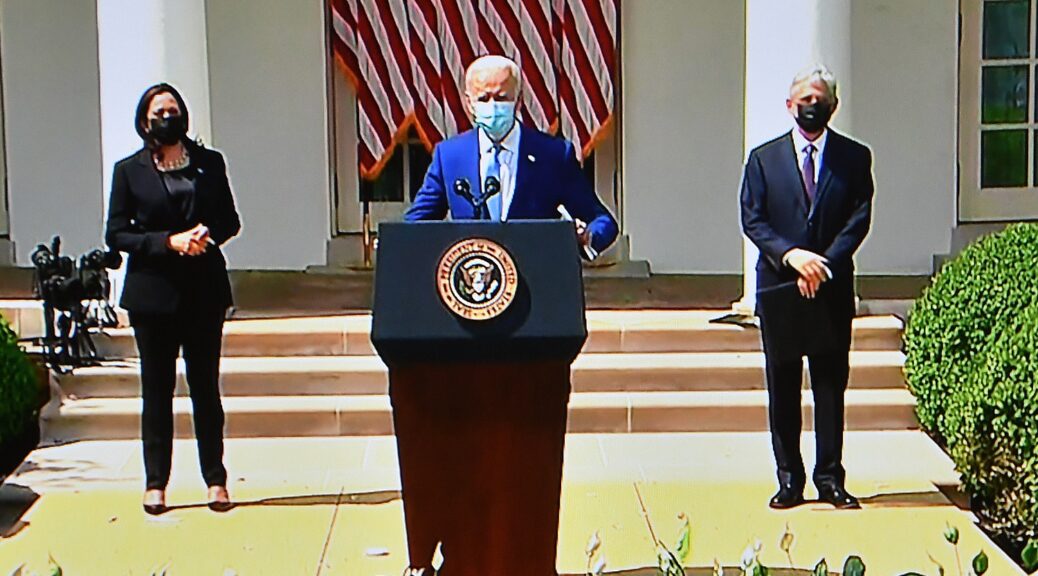
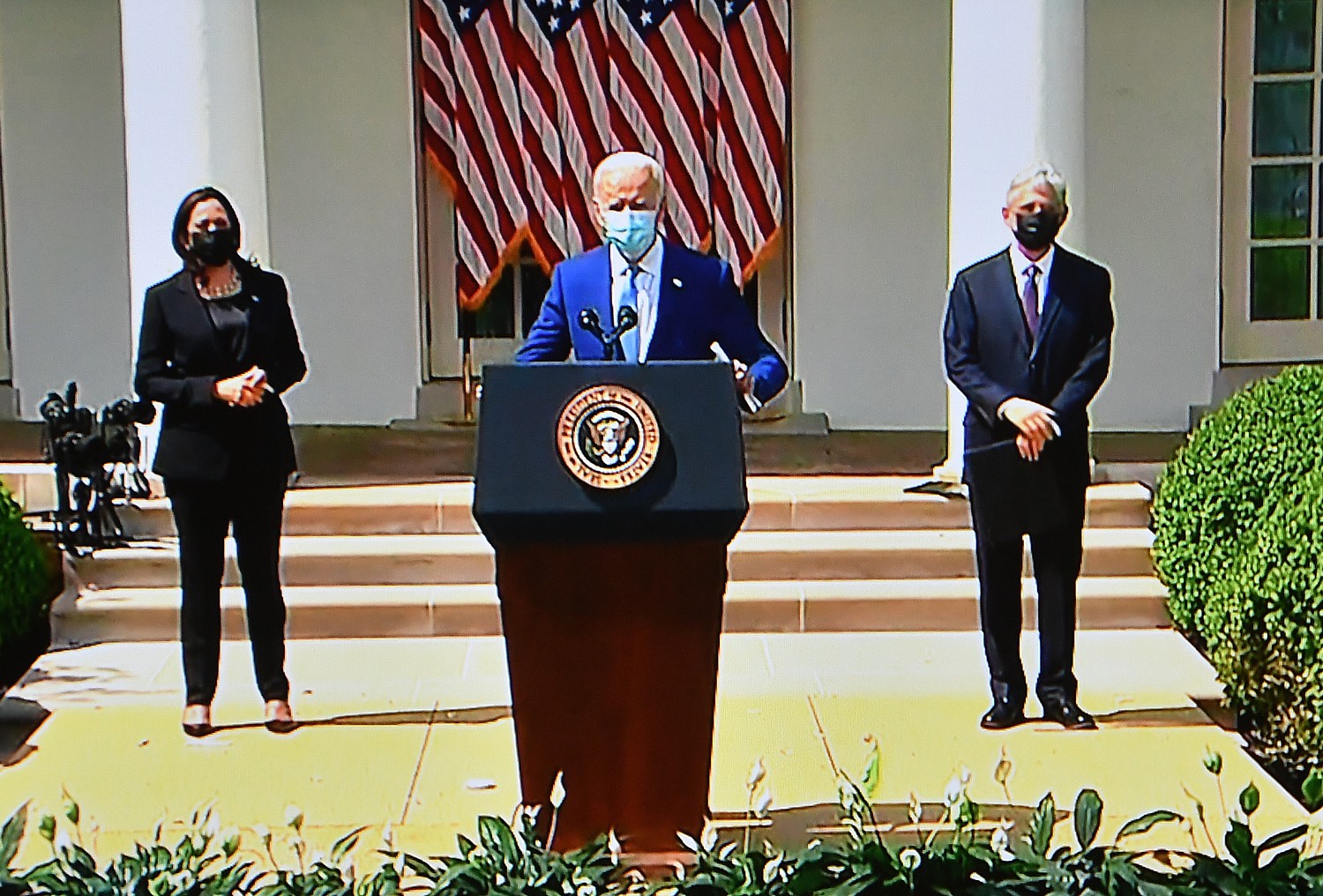
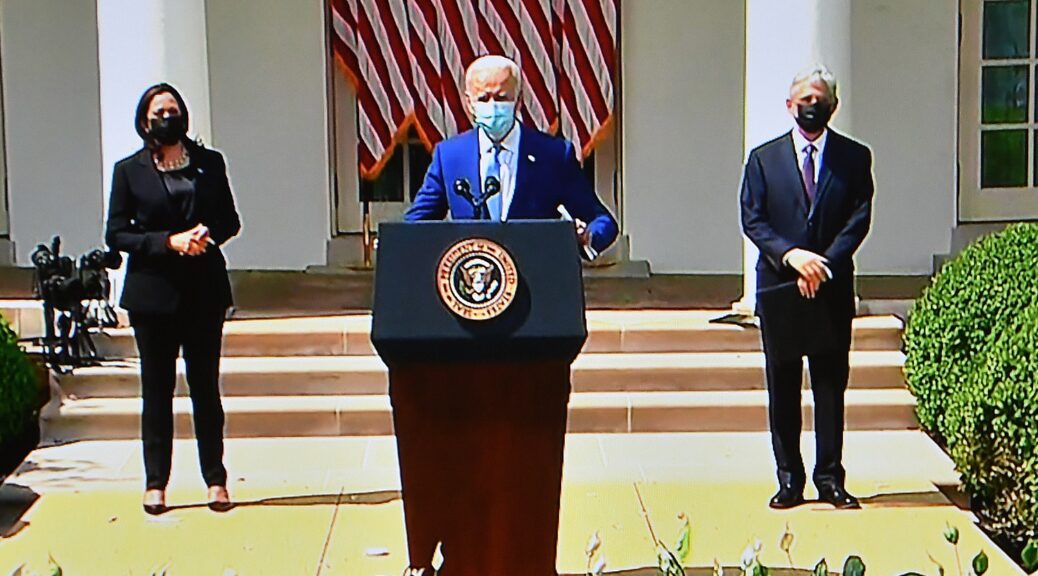
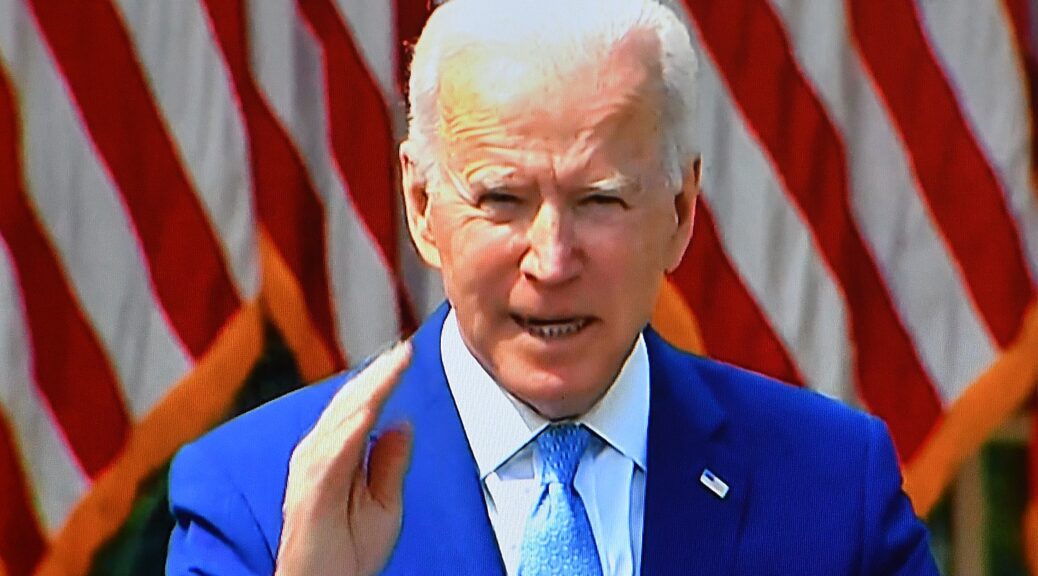
WASHINGTON – Today, the Department of Justice announced it will launch five cross-jurisdictional firearms trafficking strike forces within the next 30 days to help reduce violent crime by addressing illegal gun trafficking in significant firearms trafficking corridors. Tomorrow, the Attorney General will discuss with the President, law enforcement officials, and local and community leaders, this initiative, which, along with other measures, the Department of Justice is undertaking as part of the administration-wide comprehensive strategy to combat the rise in violent crime.
Gun violence is a major driver in the increase in violent crime over the last 18 months, and today’s action is an important step in stemming the supply of illegally trafficked firearms which are used in deadly shootings and other violent crimes.
“Working with our local partners to tackle violent crime is one of the Justice Department’s most important responsibilities,” said Attorney General Merrick B. Garland. “Today, the department is taking another concrete step to address violent crime and illegal firearms trafficking. Our firearms trafficking strike forces will investigate and disrupt the networks that channel crime guns into our communities with tragic consequences. This effort reflects our shared commitment to keep communities safe.”
The five strike forces will focus on significant firearms trafficking corridors that channel guns into New York, Chicago, Los Angeles, the San Francisco Bay Area and Washington, D.C. They will be led by designated U.S. Attorneys who will coordinate with the Bureau of Alcohol, Tobacco, Firearms, and Explosives (ATF) and with state and local law enforcement partners in places where firearms originate and where they are used to commit crimes. The strike forces will share information and otherwise collaborate across districts where firearms trafficking schemes cross state or jurisdictional boundaries to focus enforcement against entire trafficking networks, from the places where guns are unlawfully obtained to the areas where they are used to commit violent crimes.
At an event today hosted by the Police Executive Research Forum, attended by hundreds of law enforcement professionals from around the country, the Deputy Attorney General spoke about the strike force launch, emphasizing the department’s commitment to working closely with state, local, tribal and territorial law enforcement partners as part of a comprehensive approach to reduce crime and make our communities safer.
Today’s announcement builds on the Justice Department’s broader Violent Crime Reduction Initiative, announced on May 26, 2021, that supports local communities in preventing, investigating and prosecuting gun violence and other violent crime. In guidance to federal agents and prosecutors as part of that comprehensive strategy, the Deputy Attorney General made clear that firearms traffickers that provide weapons to violent offenders are an enforcement priority across the country.
The White House issued fact sheets detailing the executive actions the Biden Administration announced on April 7 to address the gun violence, along with a whole-of-government response to the public health epidemic of gun violence, including regulating ghost guns, pistols enhanced with braces, incentivizing states to implement Red Flag laws, and launching community-based anti-violence programs. At the same time, President Joe Biden called upon Congress to pass universal background checks, ending gun manufacturers’ immunity, and issuing a new ban on assault weapons and high-capacity ammunition.
The recent high-profile mass shootings in Boulder – taking the lives of 10 individuals – and Atlanta – taking the lives of eight individuals, including six Asian American women – underscored the relentlessness of this epidemic. Gun violence takes lives and leaves a lasting legacy of trauma in communities every single day in this country, even when it is not on the nightly news. In fact, cities across the country are in the midst of a historic spike in homicides, violence that disproportionately impacts Black and brown Americans. The President is committed to taking action to reduce all forms of gun violence – community violence, mass shootings, domestic violence, and suicide by firearm and detailed a whole-of-government response.
Meanwhile, President Biden reiterated his call for Congress to pass legislation to reduce gun violence. Last month, a bipartisan coalition in the House passed two bills to close loopholes in the gun background check system. Congress should close those loopholes and go further, including by closing “boyfriend” and stalking loopholes that currently allow people found by the courts to be abusers to possess firearms, banning assault weapons and high capacity magazines, repealing gun manufacturers’ immunity from liability, and investing in evidence-based community violence interventions. Congress should also pass an appropriate national “red flag” law, as well as legislation incentivizing states to pass “red flag” laws of their own.
“But this Administration will not wait for Congress to act to take its own steps – fully within the Administration’s authority and the Second Amendment – to save lives.” The Administration announced the following six initial actions:
The Justice Department, within 30 days, will issue a proposed rule to help stop the proliferation of “ghost guns.” We are experiencing a growing problem: criminals are buying kits containing nearly all of the components and directions for finishing a firearm within as little as 30 minutes and using these firearms to commit crimes. When these firearms turn up at crime scenes, they often cannot be traced by law enforcement due to the lack of a serial number. The Justice Department will issue a proposed rule to help stop the proliferation of these firearms.
The Justice Department, within 60 days, will issue a proposed rule to make clear when a device marketed as a stabilizing brace effectively turns a pistol into a short-barreled rifle subject to the requirements of the National Firearms Act. The alleged shooter in the Boulder tragedy last month appears to have used a pistol with an arm brace, which can make a firearm more stable and accurate while still being concealable.
The Justice Department, within 60 days, will publish model “red flag” legislation for states. Red flag laws allow family members or law enforcement to petition for a court order temporarily barring people in crisis from accessing firearms if they present a danger to themselves or others. The President urges Congress to pass an appropriate national “red flag” law, as well as legislation incentivizing states to pass “red flag” laws of their own. In the interim, the Justice Department’s published model legislation will make it easier for states that want to adopt red flag laws to do so.
The Administration is investing in evidence-based community violence interventions. Community violence interventions are proven strategies for reducing gun violence in urban communities through tools other than incarceration. Because cities across the country are experiencing a historic spike in homicides, the Biden-Harris Administration is taking a number of steps to prioritize investment in community violence interventions.
The American Jobs Plan proposes a $5 billion investment over eight years to support community violence intervention programs. A key part of community violence intervention strategies is to help connect individuals to job training and job opportunities.
The U.S. Department of Health and Human Services is organizing a webinar and toolkit to educate states on how they can use Medicaid to reimburse certain community violence intervention programs, like Hospital-Based Violence Interventions.
Five federal agencies are making changes to 26 different programs to direct vital support to community violence intervention programs as quickly as possible. These changes mean we can start increasing investments in community violence interventions as we wait on Congress to appropriate additional funds.
The Justice Department will issue an annual report on firearms trafficking. In 2000, the Bureau of Alcohol, Tobacco, and Firearms (ATF) issued a report summarizing information regarding its investigations into firearms trafficking, which is one way firearms are diverted into the illegal market where they can easily end up in the hands of dangerous individuals. Since the report’s publication, states, local, and federal policymakers have relied on its data to better thwart the common channels of firearms trafficking. But there is good reason to believe that firearms trafficking channels have changed since 2000, for example due to the emergence of online sales and proliferation of “ghost guns.” The Justice Department will issue a new, comprehensive report on firearms trafficking and annual updates necessary to give policymakers the information they need to help address firearms trafficking today.
The President will nominate David Chipman to serve as Director of the Bureau of Alcohol, Tobacco, and Firearms. ATF is the key agency enforcing our gun laws, and it needs a confirmed director in order to do the job to the best of its ability. But ATF has not had a confirmed director since 2015. Chipman served at ATF for 25 years and now works to advance commonsense gun safety laws.
Details on the Biden-Harris Administration’s Investments in Community Violence Interventions
Cities across the country are experiencing a historic spike in homicides, violence that is greatest in racially segregated, high-poverty neighborhoods. Black men make up 6% of the population but over 50% of gun homicide victims. Black women, Latinos, and Native Americans are also disproportionately impacted. The loss of life has devasting consequences for family members and cascading harms for communities. As just one example, research shows that exposure to firearm violence—including as a victim or witness—makes it twice as likely an adolescent will commit a violent act within two years.
But there is reason to be optimistic. We know that a relatively small number of people are involved in urban gun violence, whether as perpetrators or victims. There are proven community violence intervention (CVI) strategies for reducing gun violence through tools other than incarceration. For example, violence interruption programs deploy trusted messengers work directly with individuals most likely to commit gun violence, intervene in conflicts, and connect people to social and economic services to reduce the likelihood of gun violence as an answer. Hospital-based violence interventions engage people who have been shot while they are still in the hospital, connecting them to services to decrease the likelihood that they commit gun violence or are victimized in the future. Programs like these have reduced homicides by as much as 60% in areas where they are implemented.
To date, CVI programs have been badly underfunded, even though the economic consequences of gun violence are staggering. One study calculates that gun violence costs America $280 billion annually. For fraction of that cost, we can save lives, create safe and healthy communities, and build an economy that works for all of us.
As part of a package of initial actions to reduce gun violence, the Biden-Harris Administration announces historic investments in community violence intervention to combat the gun violence epidemic.
American Jobs Plan: President Biden’s American Jobs Plan, unveiled last week, calls on Congress to invest $5 billion over eight years to support evidence-based community violence intervention programs that train at-risk individuals for jobs and provide other wraparound services to prevent violence and assist victims. These strategies will help rebuild economies in the hardest hit areas.
Medicaid Funding: The U.S. Department of Health and Human Services is organizing a webinar and toolkit to educate states on how they can use Medicaid to reimburse certain community violence intervention programs, like Hospital-Based Violence Interventions Leveraging Existing Grant Programs: Five agencies are making changes to existing federal funding streams across 26 programs to direct vital support to CVI programs quickly as possible. For example:
The Department of Justice will give priority to applicants proposing CVI strategies in its Comprehensive Youth Violence Prevention and Reductions Programs, a $11 million competitive grant that provides funding for programs that prevent and reduce youth violence. The solicitation will post by the end of April 2021 and awards will be made by September 30, 2021.
The Department of Justice will develop guidance to clarify that states can use their allocations from annual Victims of Crime Act (VOCA) funding—including over $1 billion in FY21—for CVI efforts and will provide training and technical assistance on CVI to grantees.
The National Institutes of Health will prioritize community-based intervention research for its Firearm Injury and Mortality Prevention Research grant awards. These programs will provide $12.5 million to improve understanding of the determinants of firearm injury, those most at risk (including both victims and perpetrators), and strategies to prevent firearm injury and mortality. Applications are due April 30, 2021, with awards expected in September 2021.
Full List of Agency Actions
Department of Justice
DOJ will place a special emphasis on CVI in its FY21 Edward Byrne Memorial Justice Assistance Grant (JAG) program, a $484 million formula grant that is the leading federal source of criminal justice funding to states, territories, local governments, and Tribes. The solicitation will post by June 1, 2021 and the awards will be made by September 30, 2021. In addition, DOJ will highlight CVI in its National Training and Technical Assistance Center (NTTAC) website.
DOJ will issue guidance to raise awareness that the $18.9 million under its FY21 Byrne Criminal Justice Innovation (BCJI) program is available to support CVI efforts. This solicitation was posted on January 11, 2021, and its deadlines are April 26, 2021 on Grants.gov and May 10, 2021 on JustGrants.
DOJ will include CVI as a topic area in its FY21 Community Policing Development (CPD) Micro-Grants, a $3 million program that supports innovative community policing strategies. The solicitation will be posted by April 15, 2021 and awards will be made by September 30, 2021.
DOJ will make CVI a priority focus area in its FY21 Cops Hiring Program, a $156 million competitive grant program that funds entry-level law enforcement officers. Law enforcement agencies that partner with community organizations to implement community violence intervention strategies will receive preference points in the scoring of applications. The solicitation will be posted by the end of April 2021 and awards will be made by September 30, 2021.
DOJ will give priority to applicants proposing CVI strategies in its FY21 Smart Policing program, which provides $8 million in funding, training, and technical assistance for law enforcement to use data and technology to respond to crime. The solicitation will post by April 30, 2021 and awards will be made by September 30, 2021.
DOJ will issue guidance to clarify that community-based organizations with CVI proposals are eligible for the $12.75 million Second Chance Act Community-Based Reentry Program. This solicitation was posted on January 14, 2021, and its deadlines are April 13, 2021 on Grants.gov and April 27, 2021 on JustGrants.
DOJ will make clear to all judicial districts that they can support CVI programs through Project Safe Neighborhoods (PSN) funding and technical assistance. PSN is designed to make neighborhoods safer through a sustained reduction in violent crime. The solicitation will post by April 30, 2021 and the awards will be made by September 30, 2021.
DOJ will support CVI through its FY21 Strategies to Support Children Exposed to Violence program, a $7 million program that provides funding, training, and technical assistance to communities to address children’s exposure to violence and prevent gun violence. Priority will be given to CVI applicants and technical assistance providers addressing youth violence. The solicitation will post by the end of April 2021 and awards will be made by September 30, 2021.
DOJ will give priority to CVI applicants in its Comprehensive Youth Violence Prevention and Reductions Programs, a $11 million competitive grant that funds youth violence prevention and reduction. The solicitation will post by the end of April 2021 and awards will be made by September 30, 2021.
DOJ will continue to uplift CVI programs via webinars and trainings through the National Gang Center. The National Gang Center will expand its outreach efforts to interested communities about evidence-based models, such as the Comprehensive Gang Model that includes street outreach and violence interrupters.
DOJ will support CVI in its FY21 School Violence Prevention Program (SVPP), a $53 million competitive grant program that funds equipment, technology, and training to address school violence. Applicants that have experienced high rates of gun violence will receive priority, with an emphasis on wraparound services for students most likely to engage in or be victimized by gun violence. The solicitation will be posted by April 15, 2021 and awards will be made by September 30, 2021.
DOJ will support CVI through its FY21 Hospital-Based Victim Services program, a $2 million funding stream for programs that link the victim services field and medical facilities. The solicitation will post by the end of April 2021 and the awards will be made by September 30, 2021.
DOJ will support CVI through the Office for Victims of Crime’s (OVC) new Center for Culturally Responsive Victim Services program, which will provide $3 million to an organization to launch a national resource to improve trauma-informed, victim-centered services in communities of color. The solicitation will post by the end of April 2021 and the award will be made by September 30, 2021.
DOJ OVC will release guidance to clarify that the Victims of Crime Act (VOCA) Victim Assistance Rule does not prevent states from using VOCA funding—over $1 billion in FY21—for CVI efforts. The guidance will also inform states that funding CVI programs is a means to meet VOCA’s requirement that 10% of funds go toward serving underserved communities. In addition, OVC’s Training and Technical Center (OVC TTAC) and its new Center for VOCA Administrators (VOCA Center) will to provide assistance around CVI strategies.
Department of Health and Human Services
The National Institutes of Health published two opportunities for Firearm Injury and Mortality Prevention Research in March, PAR-21-191 and PAR-21-192. These programs will provide $12.5 million to improve understanding of the determinants of firearm injury, those most at risk, and interventions that prevent firearm injury and mortality. For grant applications with comparable scientific merit, NIH will prioritize applications about CVI. Applications are due April 30, 2021, with awards expected in September 2021.
The Centers for Disease Control and Prevention (CDC) published a notice of funding opportunity in March for Preventing Violence Affecting Young Lives (PREVAYL), a program that addresses violence impacting adolescent and young adults. CDC anticipates awarding $10 million over 5 years. CDC will highlight CVI strategies in an April 8 informational call, through guidance, and on its website. Applications are due May 1, 2021, with awards expected by August 2021.
CDC has an open funding opportunity announcement for its National Centers of Excellence in Youth Violence Prevention (Youth Violence Prevention Centers or YVPCs) program, which builds the evidence base for strategies like CVI that reduce rates of youth violence within geographic communities. CDC anticipates awarding $30 million over 5 years. Applications are due April 21, 2021, with awards expected in September.
Department of Housing and Urban Development
HUD will encourage applicants for the FY21 Choice Neighborhoods Initiative, a $200 million competitive place-based grant program that transforms underserved neighborhoods, to include CVI as part of their overall public safety strategy to reduce crime. HUD will discuss the importance of CVI in the notice of funding announcement and in grantee resources.
HUD will encourage grantees of Community Development Block Grant – CV Funds (CDBG-CV), who received a special appropriation of $5 billion through the CARES Act, to use part of their allocations to support CVI efforts needed to combat violence as a result of the coronavirus pandemic. HUD will publish a guide by June that explains how CVI activities can use CDBG funds, which will also apply to annual formula CDBG funds—approximately $3.4 billion per year.
Department of Education
ED will issue guidance on how grantees can use 21st Century Learning Centers (21st CCLC) funds to support children impacted by trauma and reengage disconnected youth. 21st CCLC provides $1.26 billion for community learning centers with after-school and summer programs for students in high-poverty and underperforming schools. New awards will be made July 1, 2021.
ED will support states and school districts in investing Student Support and Academic Enrichment (SSAE) funds toward CVI activities via a guidance document and technical assistance. SSAE is a $1.22 billion program that boosts academic achievement by improving learning conditions. New awards will be made July 1, 2021.
ED will launch a new competition in FY22 for Project Prevent, an $11 million program that helps schools increase their capacity to identify and serve students who have been exposed to pervasive violence by expanding access to counseling and conflict-resolution strategies.
ED will incentivize applicants to use CVI-focused strategies in two grant competitions for FY22: Full Service Community Schools and Promise Neighborhoods. Full-Service Community Schools supports partnerships between schools and community-based organizations to offer academic and social services for students in high-poverty communities. Promise Neighborhoods supports coordinated community pipeline services to improve educational outcomes in the most underserved neighborhoods.
Department of Labor
DOL will issue guidance to state and local workforce agencies and nonprofits under its Workforce Innovation and Opportunity Act (WIOA) programs, encouraging grantees to incorporate CVI into their activities. WIOA provides $3.5 billion in formula and discretionary grants to support employment and training programs for low-income adults, disadvantaged youth, and dislocated workers. YouthBuild, a WIOA discretionary program, provides $89 million annually for pre-apprenticeship programs for at-risk youth, including youth who are formerly incarcerated.
DOL will make CVI an allowable grant activity in Program Year 2021 (July 2021-June 2022) for its Young Adult Reentry Partnership grants, $25 million for organizations providing education and employment training to young adults who left high school before graduation or have had justice system involvement. The grants prepare participants who reside in high-poverty and high-crime communities—those disproportionately impacted by gun violence—for stable, quality employment. The funding opportunity announcement will be posted in early 2022.
The culture war revolving around “gun rights” (as if the 2nd Amendment did not already specify “well regulated” and “militia” – that is, to protect the state in the absence of a standing army) suggests fear of a tyrannical government. But the focus on unlimited, unfettered, unregulated guns everywhere while blaming “mental illness” after the fact suggests an even more dangerous role for government, in deciding pre-crime who will likely be a murderer. But the government can’t be responsible for anticipating who or when someone will snap. The only common denominator to the 100 deaths each day, 300 injured each day possibly for life, this epidemic of gun violence, this “international embarrassment” that costs $280 billion a year in death, prosecution, imprisonment, health care, lost productivity is the obscene availability of guns, ghost guns, and assault weapons and high-capacity magazines, weapons manufactured for war whose only purpose is large scale murder of people.
President Joe Biden has had enough, and offered six initial steps while pleading with the Senate to pass the already-passed House measures for universal background checks. One of them, that he actually said was his highest priority, was ending the immunity from liability that the $1 billion gun manufacturing industry has, the only industry that has such immunity. He should have added that the federal government will require every gun it purchases – for military, for law enforcement including grants it makes to local police departments – have Smart technology.
Besides the emotional trauma and tragedy, President Biden also put gun violence epidemic into economic terms that Republicans might appreciate more: Gun violence in America costs the nation $280 billion a year – hospital bills, physical therapy, trauma counseling, legal fees, prison costs, and the loss of productivity.” And for those Republicans who all of a sudden are so gravely concerned about the trauma of children not being able to attend school in person, he noted, “the psychological damage done to the children who live in these cities, watching this happen, knowing someone it happened to.” Except that children will eventually go back to school once the coronavirus pandemic is under control; they will never get back their parent or sibling.
“This gun violence in our neighborhood is having a profound impact on our children, even if they’re never involved in pulling the trigger or being the victim of — on the other side of a trigger.
“For a fraction of the cost of gun violence, we can save lives, create safe and healthy communities, and build economies that work for all of us, and save billions of American dollars.”
President Biden also called for:
Reining in ghost guns
Require Bureau of Alcohol, Tobacco, and Firearms to prepare a report on its investigations into firearms trafficking in America annually
Make pistols modified with stabilizing braces subject to the National Firearms Act, subject to taxation and registration
Expand state adoption of extreme risk protection order laws, known as “red flag” laws; instruct the Department of Justice to issue model legislation. This would reduce dramatically the number of suicides (half are by guns); and murders of women by domestic partners (53 women are shot dead each month), and cut down on mass murders by mentally unstable individuals who just snap.
Recognizing historic spikes in homicide rates in cities across the country, proposing to fund community programs to address violence.
Name a director of the Bureau of Alcohol, Tobacco & Firearms, which hasn’t had a permanent director since 2015; nominating David Chipman who worked at ATF for 25 years.
“My job, the job of any President, is to protect the American people. Whether Congress acts or not, I’m going to use all the resources at my disposal as President to keep the American people safe from gun violence. But there’s much more that Congress can do to help that effort. And they can do it right now.
“They’ve offered plenty of thoughts and prayers — members of Congress — but they’ve passed not a single new federal law to reduce gun violence. Enough prayers. Time for some action.”
He urged the Senate to immediately pass three House-passed bills to close loopholes that allow gun purchases — purchasers to bypass the background checks: require background checks for anyone purchasing a gun at a gun show or an online sale; close the “Charleston loophole” which limits the FBI’s background check timeline to three days (initiated under AG Ashcroft in the George Bush administration); and reauthorize the Violence Against Women Act.
He also called for a new ban on assault weapons and high-capacity magazines(Biden sponsored the passage of the last one, in effect 1994-2004, as Senator)
“There’s no reason someone needs a weapon of war with 100 rounds, 100 bullets that can be fired from that weapon. Nobody needs that. Nobody needs that.”
“Everything that’s being proposed today is totally consistent with the Second Amendment. And there’s a wide consensus behind the need to take action.
“I know that when overwhelming majorities of Americans want to see something change that will affect their lives and it still doesn’t change, it can be demoralizing to our fellow citizens. It can feel like our entire political process is broken.
“No matter how long it takes, we’re going to get these passed. We’re not going to give up. We have an opportunity to fulfill the first responsibility of government: to keep our people safe. And in the process, we can show the world and show ourselves that democracy works, that we can come together and get big things done.”
Here is an edited, highlighted version of President Biden’s remarks in the Rose Garden on Thursday, April 8:
We’re joined today by the Attorney General, Merrick Garland, who I’ve asked to prioritize gun violence. It’s also good to see the Second Gentleman, who is here. And it’s good to see the First Lady, Dr. Jill Biden, who cares deeply about this issue as well.
And I look out there and I see so many members of Congress who have led in this fight. So many of you who have never given up. So many of you who are absolutely determined, as Murph and others are, to get this done.
We got a long way to go. It always seems like we always have a long way to go. But I also — today, we’re taking steps to confront not just the gun crisis, but what is actually a public health crisis. Nothing — nothing I’m about to recommend in any way impinges on the Second Amendment. They’re phony, arguments suggesting that these are Second Amendment rights at stake from what we’re talking about.
But no amendment — no amendment to the Constitution is absolute.You can’t yell “fire” in a crowded movie theater and call it freedom of speech.From the very beginning, you couldn’t own any weapon you wanted to own. From the very beginning that the Second Amendment existed, certain people weren’t allowed to have weapons. So the idea is just bizarre to suggest that some of the things we’re recommending are contrary to the Constitution.
Gun violence in this country is an epidemic. Let me say it again: Gun violence in this country is an epidemic, and it’s an international embarrassment. (Applause.)
You know, we saw that again. Last night, as I was coming to the Oval office, I got the word that, in South Carolina, a physician with his wife, two grandchildren, and a person working at his house was gunned down — all five. So many people — so many of the people sitting here today know that well, unfortunately. You know, they know what it’s like when the seconds change your life forever.
I have had the — the pleasure of getting to meet, in awful circumstances, many of you — many of you who’ve lost your children, your husbands, your wives. You know, they know what it’s like to bury a piece of their soul deep in the Earth. We understand that.
Mark and Jackie, I want to tell you: It’s always good to see you, but not under these circumstances.
I want to say, before I introduce the rest of the folks, is, you know, what — a lot of people have not been through what they’ve been through — don’t understand. It takes a lot of courage to come to an event like this. They’re absolutely, absolutely determined to make change.
But Mark and Jackie, whose son Daniel was a first grader at Sandy Hook Elementary School. Daniel loved sports — loves outdoors sports, getting muddy.
I see my friend Fred Guttenberg. His daughter, Jaime, was a freshman at Marjorie Stoneman Douglas High School. She was an accomplished dancer.
I see Brandon Wolf, who — the shooting at the Pulse nightclub. He survived, but his two best friends died.
Greg Jackson, who was just walking down the street when he was caught in the crossfire of a gunfight.
And, of course, I see a close friend of Jill’s and mine, Congresswoman Gabby Giffords, who is here. Who was speaking with her constituents in front a grocery store in her state when she was shot and a member of her staff was killed.
You know, they’re here, and their pain is immense. And, you know, what a lot of you — hopefully many of you — don’t know is if you’ve gone through a trauma, no matter how much you work to make sure others don’t go through it, every time you show up at an event like this, it brings back when you got that phone call. It brings back the immediacy of what happened at that moment.
So I genuinely mean it: Thank you. Thank you for having the courage to be here, the courage to continue this fight. Senator Blumenthal understands it. A lot of the folks out here understand it. But it takes real courage, so thank you.
To turn pain into purpose and demand that we take the actions that gives meaning to the word “enough.” Enough. Enough. Enough. Enough. Because what they want you to know, what they want you to do is not just listen.
Every day in this country, 316 people are shot. Every single day. A hundred and six of them die every day. Our flag was still flying at half-staff for the victims of the horrific murder of 8 primarily Asian American people in Georgia when 10 more lives were taken in a mass murder in Colorado.
You probably didn’t hear it, but between those two incidents, less than one week apart, there were more than 850 additional shootings — 850 — that took the lives of more than 250 people, and left 500 — 500 — injured. This is an epidemic, for God’s sake. And it has to stop.
So I’m here to talk about two things: first, the steps we’re going to take immediately, and, second, the action that needs to be taken going forward to curb the epidemic of gun violence.
I asked the Attorney General and his team to identify for me immediate, concrete actions I could can take now without having to go through the Congress. And today, I’m announcing several initial steps my administration is taking to curb this epidemic of gun violence.
Much more need be done, but first, I want to rein in the proliferation of so-called “ghost guns.” These are guns that are homemade, built from a kit that include the directions on how to finish the firearm. You can go buy the kit. They have no serial numbers, so when they show up at a crime scene, they can’t be traced.
And the buyers aren’t required to pass a background check to buy the kit to make the gun. Consequently, anyone — anyone from a criminal to a terrorist can buy this kit and, in as little as 30 minutes, put together a weapon.
You know, I want to see these kits treated as firearms under the Gun Control Act, which is going to require that the seller and manufacturers make the key parts with serial numbers and run background checks on the buyers when they walk in to buy that package.
The second action we’re going to take — back in 2000 — the year 2000, the Bureau of Alcohol, Tobacco, and Firearms released a report on its investigations into firearms trafficking in America. The report was of pivotal value. It was an important tool for policymakers when I was in the Senate and beyond, at all levels, to stop firearms from being illegally diverted into dangerous hands.
Today, with online sales and ghost guns, times and trafficking methods have changed, and we have to adjust. We also have to ask the Justice Department to release a new annual report. This report will better help policymakers address firearms trafficking as it is today, not what it was yesterday.
A third change: We want to treat pistols modified with stabilizing braces with the seriousness they deserve. A stabilizing brace — you’re going to (inaudible) — essentially, it makes that pistol a hell of a lot more accurate and a mini-rifle. As a result, it’s more lethal, effectively turning into a short-barreled rifle. That’s what the alleged shooter in Boulder appears to have done.
I want to be clear that these modifications to firearms that make them more lethal should be subject to the National Firearms Act. The National Firearms Act requires that a potential owner pay a$200 fee and submit their name and other identifying information to the Justice Department, just as they would if they went out and purchased a silencer for a gun.
Fourthly, during my campaign for President, I wanted to make it easier for states to adopt extreme risk protection order laws. They’re also called “red flag” laws, which everybody on this lawn knows, but many people listening do not know. These laws allow a police or family member to petition a court in their jurisdiction and say, “I want you to temporarily remove from the following people any firearm they may possess because they’re a danger. In a crisis, they’re presenting a danger to themselves and to others.”And the court makes a ruling.
To put this in perspective, more than half of all suicides, for example, involve the use of a firearm. But when a gun is not available, an attempt at suicide — the death rate drops precipitously. States that have red flag laws have seen and — seen a reduction in the number of suicides in their states.
Every single month, by the way, an average of 53 women are shot and killed by an intimate partner. I wrote the Violence Against Women Act. It’s been a constant struggle to keep it moving. We know red flag laws can have a significant effect in protecting women from domestic violence. And we know red flag laws can stop mass shooters before they can act out their violent plans.
I’m proud — “Excuse the point of personal privilege,” as we used to say in the Senate — I’m proud that the red flag law in my home state of Delaware was named after my son, Attorney General Beau Biden — our son; excuse me, Jill — who proposed that legislation back in 2013.
I want to see a national red flag law and legislation to incentivize states to enact their own red flag laws. Today, I asked the Justice Department to publish a model red flag legislation so states can start crafting their own laws right now. Just like with background checks, the vast majority of Americans support these extreme risk protection order laws, and it’s time to put these laws on the books and protect even more people. The Attorney General will have more to say about this in a moment.
Additionally, we recognize that cities across the country are experiencing historic spikes in homicides, as the law enforcement can tell you. The violence is hitting Black and brown communities the hardest. Homicide is the leading cause of death of Black boys and men ages 15 to 34 — the leading cause of death.
But there are proven strategies that reduce gun violence in urban communities, and there are programs that have demonstrated they can reduce homicides by up to 60 percent in urban communities. But many of these have been badly underfunded or not funded at all of late.
Gun violence in America — for those of you who think of this from an economic standpoint listening to me — estimated to cost the nation $280 billion –- let me say it again — $280 billion a year. They said, “How could that be, Joe?” Hospital bills, physical therapy, trauma counseling, legal fees, prison costs, and the loss of productivity. Not to mention the psychological damage done to the children who live in these cities, watching this happen, knowing someone it happened to.
This gun violence in our neighborhood is having a profound impact on our children, even if they’re never involved in pulling the trigger or being the victim of — on the other side of a trigger.
For a fraction of the cost of gun violence, we can save lives, create safe and healthy communities, and build economies that work for all of us, and save billions of American dollars.
In the meantime, much of it, as Senator Cicilline knows, is taxpayer money.
Finally, the Bureau of Alcohol, Tobacco, and Firearms, the key agency enforcing gun laws, hasn’t had a permanent director since 2015.
Today, I’m proud to nominate David Chipman to serve as the Director of the ATF. David knows the AFT well. He served there for 25 years. And Vice President Harris and I believe he’s the right person, at this moment, for this important agency.
And I’ve said before: My job, the job of any President, is to protect the American people. Whether Congress acts or not, I’m going to use all the resources at my disposal as President to keep the American people safe from gun violence. But there’s much more that Congress can do to help that effort. And they can do it right now.
They’ve offered plenty of thoughts and prayers — members of Congress — but they’ve passed not a single new federal law to reduce gun violence. Enough prayers. Time for some action.
I believe the Senate should immediately pass three House-passed bills to close loopholes that allow gun purchases — purchasers to bypass the background checks. The vast majority of the American people, including gun owners, believe there should be background checks before you purchase a gun.
As was noted earlier, hundreds of thousands of people have been denied guns because of the background checks. What more would have happened?
These bills, one, require background checks for anyone purchasing a gun at a gun show or an online sale. (Applause.)
Most people don’t know: If you walk into a store and you buy a gun, you have a background check. But you go to a gun show, you can buy whatever you want and no background check.
Second thing is to close what’s known as the “Charleston” loophole. Like people here, I spent time down at that church in Charleston. What happened is someone was allowed to get the gun used to kill those innocent people at a church service. If the FBI didn’t complete the background check within three days.
There’s a process. If wasn’t done in three days, according to Charleston loophole, you get to buy the gun. They bought the gun and killed a hell of a lot of innocent people who invited him to pray with them.
And three, reauthorize the Violence Against Women Act, which — the so-called — close — (applause) — the “boyfriend” and “stalking” loopholes to keep guns out of the hands of people found by a court to be an abuser and continuing threat.
I held over a thousand hours of hearings to pass the Violence Against Women Act, and one thing came through. If, in fact, a stay-away order — an order preventing the abuser from coming in a certain distance of the person he has abused or she has abused — and now the idea that they can own a weapon when they have a court order saying they are an abuser?
These are some of the best tools we have right now to prevent gun violence and save lives. But all these bills, they had support of both Democrats and Republicans in the House. And universal background checks are supported by the vast majority of the American people and, I might add, the vast majority of responsible gun owners.
So let me be clear: This is not a partisan issue among the American people. This is a view by the American people as an American issue. And I’m willing to work with anyone to get these done. And it’s long past time that we act.
Now, I know this has been a hobbyhorse of mine for a long time — got it done once. We should also ban assault weapons and high-capacity magazines in this country. (Applause.)
For that 10 years we had it done, the number of mass shootings actually went down. Even law enforcement officials have told me and told other champions of this legislation they sometimes feel outgunned by assault weapons with large-capacity magazines.
There’s no reason someone needs a weapon of war with 100 rounds, 100 bullets that can be fired from that weapon. Nobody needs that. Nobody needs that.
We got that done when I was a United States senator. It wasn’t easy going up against the gun lobby, but it saved lives. And we should also eliminate gun manufacturers from the immunity they received from the Congress. (Applause.)
You realize — again, the people here — because they’re so knowledgeable out here in the Rose Garden. But what people don’t realize: The only industry in America — a billion-dollar industry — that can’t be sued — has exempt from being sued — are gun manufacturers.
Imagine how different it would be had that same exemption been available to tobacco companies who knew — who knew and lied about the danger they were causing — the cancer caused and the like. Imagine where we’d be.
But this is the only outfit that is exempt from being sued. If I get one thing on my list — the Lord came down and said, “Joe, you get one of these” — give me that one. (Applause.) Because I tell you what, there would be a “come to the Lord” moment these folks would have real quickly. But they’re not. They’re not. They’re exempt.
I know that the conversation about guns in this country can be a difficult one. But even here, there’s much more common ground than we — anyone would believe. There’s much more common ground.
Everything that’s being proposed today is totally consistent with the Second Amendment. And there’s a wide consensus behind the need to take action.
I know that when overwhelming majorities of Americans want to see something change that will affect their lives and it still doesn’t change, it can be demoralizing to our fellow citizens. It can feel like our entire political process is broken.
I know it’s painful and frustrating that we haven’t made the progress that we’d hoped for. But it took five years to get the Brady bill passed, and it took even more years to work to pass the assault weapons ban. And it saved lives.
No matter how long it takes, we’re going to get these passed. We’re not going to give up. We have an opportunity to fulfill the first responsibility of government: to keep our people safe. And in the process, we can show the world and show ourselves that democracy works, that we can come together and get big things done.
When I look around and see such brave survivors sitting out here in the Rose Garden, public servants who devoted their lives to dealing with this, advocates who feel strongly and are pushing every day to make the rational changes, and courageous parents and family members, I know that progress, even in this most difficult of issues, is possible.
So, folks, this is just the start. We’ve got a lot of work to do. But I know almost every one of you sitting in the garden here; none of you have ever given up. We’re not going to give up now.
The idea that we have so many people dying every single day from gun violence in America is a blemish on our character as nation.
Let me say to all of you: God bless you, but most importantly, the memory of all many of you have lost to this senseless gun violence.
The Office of Management and Budget issued a statement strongly supporting passage of H.R. 1620, the Violence Against Women Reauthorization Act of 2021, introduced by Rep. Jackson Lee (D-TX) with 182 co-sponsors.
The statement comes as news reports circulate about a Georgia man who murdered 8 women in a shooting spree in Atlanta, March 16.
The Administration strongly supports House passage of H.R. 1620, the Violence Against Women Reauthorization Act of 2021. The Violence Against Women Act (VAWA) is a landmark piece of bipartisan legislation that was first enacted in 1994 and that was reauthorized in 2000, 2005, and 2013. VAWA has transformed the Nation’s response to violence against women and has brought critically needed resources to States, Territories, Tribes, and local communities to help prevent and improve the response to domestic violence, dating violence, sexual assault, and stalking. Strengthening and renewing VAWA, however, is long overdue. As many as 1 in 3 women are subjected to domestic violence, dating violence, sexual assault, and stalking at some point in their lives, and the rate is even higher for women of color, lesbian and bisexual women, and transgender people. VAWA reauthorization is more urgent now than ever, especially when the pandemic and economic crisis have only further increased the risks of abuse and the barriers to safety for women in the United States.
The Administration is pleased that H.R. 1620 continues to build upon previous VAWA authorizations, and includes new provisions to enhance efforts and address identified gaps and barriers. H.R. 1620 would authorize funding for VAWA grant programs for fiscal years 2022 through 2026 and would continue to invest in, and expand, strategies that advance access to safety, justice, and economic stability for victims and survivors. The bill would maintain established and effective protections and programs, while also addressing persistent gaps through more holistic approaches in order to address the complex realities and intersecting issues that impact survivors’ lives.
H.R. 1620 would reauthorize grant programs that support the development of a coordinated community response to domestic violence, sexual assault, dating violence, and stalking. It would expand the categories for which funds may be used in various grant programs to provide additional pathways to safety and support for survivors. Further, the bill seeks to reduce intimate partner homicides committed with firearms by expanding protections for victims and enhancing support for law enforcement agencies and courts to improve the enforcement of court orders. The bill would also improve the health care system’s response to domestic violence, sexual assault, dating violence, and stalking.
Domestic violence is a leading cause of homelessness for women and their children. Without the ability to access affordable housing, a victim must often times choose between becoming homeless or remaining in an abusive situation. H.R. 1620 includes provisions that would provide important housing protections to allow survivors in federally assisted housing to relocate to safe housing with victim relocation vouchers, maintain their housing after a perpetrator leaves, or terminate a lease early. The bill also would expand economic security protections for survivors.
H.R. 1620 would authorize increased funding to enhance culturally specific services for victims. This would include developing culturally-relevant training and education programs for health care professionals that are designed to be inclusive of the experiences of all individuals, including people of color and LGBTQ+ individuals. It would also include training on equity and anti-racism approaches to health services delivery, disparities in access to health care services and prevention resources, and current and historic systemic racism in health care services.
The Rape Prevention & Education (RPE) formula grants, administered by the Centers for Disease Control and Prevention, authorize essential funding to States and Territories to support rape prevention and education programs conducted by rape crisis centers, sexual assault coalitions, and other public and private nonprofit entities. H.R. 1620 would authorize higher levels of funding for prevention through the RPE program grants, as well as grant programs focused on prevention efforts with youth administered through the Department of Justice. It also would expand grants to support implementation of training programs to improve the capacity of early childhood programs to address domestic violence, dating violence, sexual assault, and stalking among the families they serve. H.R. 1620 would also support institutions of higher education in developing and disseminating comprehensive prevention education for all students and expanding training for school-based personnel and campus health centers to meet the needs of young victims of sexual violence.
The Administration strongly supports measures in H.R. 1620 that would expand access to justice for Native American victims. Native women are victimized at rates higher than any other population in the United States, and the vast majority of Native victims report being victimized by a non-native individual. This bill would build on the effectiveness of special criminal jurisdiction for domestic violence cases that was included in prior VAWA reauthorization laws and address other significant co-occurring crimes. It recognizes tribal jurisdiction that will allow participating Tribes to hold accountable non-native perpetrators of sexual violence, sex trafficking, domestic violence against child victims, stalking, elder abuse, and assault against law enforcement officers when they commit such crimes on tribal territory.
The Administration is pleased that H.R. 1620 recognizes the need to provide protection and services to all victims of abuse and includes proposals to strengthen existing policies that were supported by both Democrats and Republicans last year. The Administration urges swift passage of this legislation.
March for Our Lives, Washington DC , March 24, 2018, organized by survivors of the Marjory Stoneman Douglas High School in Parkland, Florida. On the anniversary of the massacre, President Joe Biden called on Congress to enact sensible gun reform (c) Karen Rubin/news-photos-features.com
On the anniversary of Parkland shooting, February 14, President Joe Biden, saying “This Administration will not wait for the next mass shooting to heed that call. We will take action to end our epidemic of gun violence and make our schools and communities safer,” issued a demand that Congress enact “commonsense gun reform” including requiring background checks on all gun sales, banning assault weapons and high-capacity magazines, and eliminating immunity for gun manufacturers who knowingly put weapons of war on our streets. “We owe it to all those we’ve lost and to all those left behind to grieve to make a change. The time to act is now.”
Here is President Biden’s statement:
Three years ago today, a lone gunman took the lives of 14 students and three educators at Marjory Stoneman Douglas High School in Parkland, Florida. In seconds, the lives of dozens of families, and the life of an American community, were changed forever.
For three years now, the Parkland families have spent birthdays and holidays without their loved ones. They’ve missed out on the experience of sending their children off to college or seeing them on their first job after high school. Like far too many families, they’ve had to bury pieces of their soul deep within the Earth. Like far too many families — and, indeed, like our nation — they’ve been left to wonder whether things would ever be okay.
These families are not alone. In big cities and small towns. In schools and shopping malls. In churches, mosques, synagogues, and temples. In movie theaters and concert halls. On city street corners that will never get a mention on the evening news. All across our nation, parents, spouses, children, siblings, and friends have known the pain of losing a loved one to gun violence. And in this season of so much loss, last year’s historic increase in homicides across America, including the gun violence disproportionately devastating Black and Brown individuals in our cities, has added to the number of empty seats at our kitchen tables. Today, as we mourn with the Parkland community, we mourn for all who have lost loved ones to gun violence.
Over these three years, the Parkland families have taught all of us something profound. Time and again, they have showed us how we can turn our grief into purpose – to march, organize, and build a strong, inclusive, and durable movement for change.
The Parkland students and so many other young people across the country who have experienced gun violence are carrying forward the history of the American journey. It is a history written by young people in each generation who challenged prevailing dogma to demand a simple truth: we can do better. And we will.
This Administration will not wait for the next mass shooting to heed that call. We will take action to end our epidemic of gun violence and make our schools and communities safer. Today, I am calling on Congress to enact commonsense gun law reforms, including requiring background checks on all gun sales, banning assault weapons and high-capacity magazines, and eliminating immunity for gun manufacturers who knowingly put weapons of war on our streets. We owe it to all those we’ve lost and to all those left behind to grieve to make a change. The time to act is now.
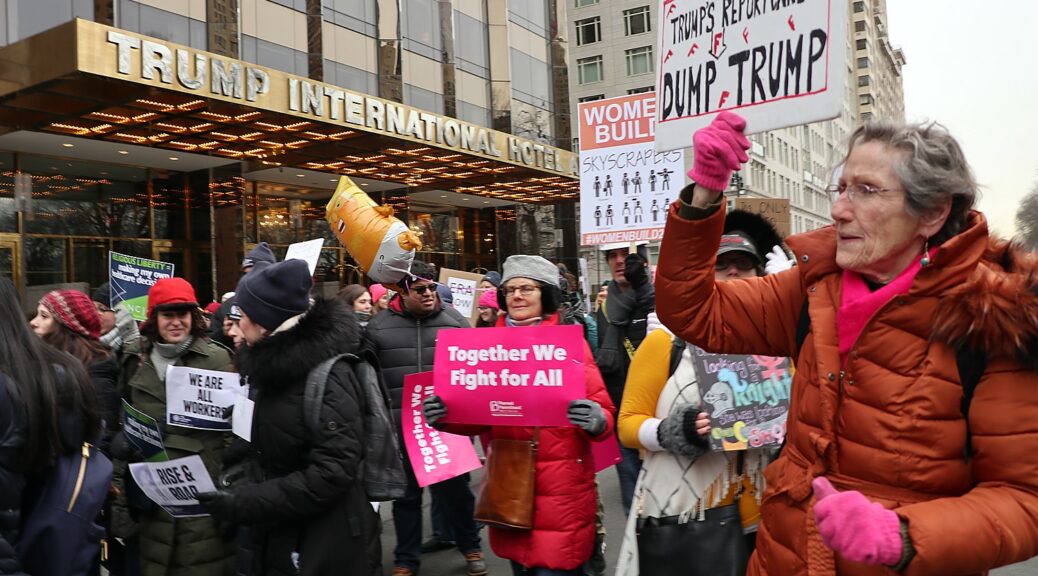
The Women’s Marches that took place across the country – some 250 of them including Washington DC and New York City – are the opening salvo to the 2020 Election. Make no mistake, this was about voting, realizing that all the issues that they care about hinge on the coming election and not on changing the minds of lawmakers who currently control the levers of power: reproductive freedom and a woman’s right to self-determination; access to the ballot and access to health care; climate action and environmental justice; gun safety and domestic violence; gender equity, sexism and misogyny; discrimination and sexual harassment; immigration reform and human rights. They are all on the ballot this November.
And the Supreme Court and all the courts now
dominated by radical right-wing judges that seek to roll back women’s rights,
civil rights, voting rights, health-care-is-a-human-right. “Ruth Bader
Ginsburg, hold on,” Manhattan Borough President Gale Brewer declared as the
march set off down Columbus Avenue, passed the Trump International Hotel, where
the most animated expressions of outrage against Trump and his administration
were manifest.
A singular, unifying message emerged: Dump Trump and
his henchmen and his enablers.
And a theme for the New York City march organized by Women’s March Alliance (womensmarchalliance.org): Rise & Roar.
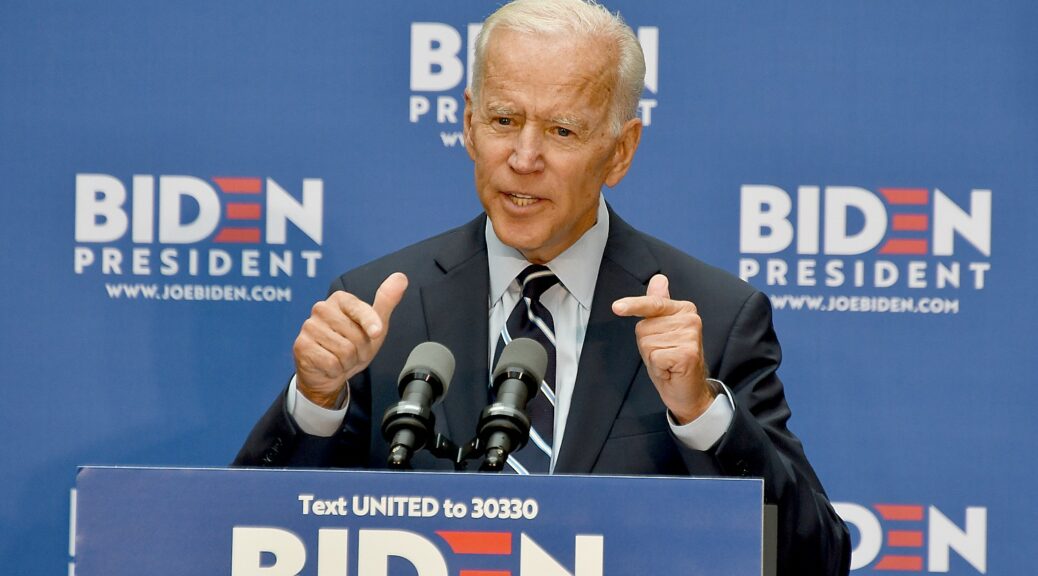
Vice President Joe Biden announced a detailed plan to end the epidemic of gun violence. (c) Karen Rubin/news-photos-features.com
Former Vice President Joe Biden became the latest 2020 Democratic Candidate to come out with a detailed plan to end the epidemic of gun violence, once again proving that there is no shortage of pragmatic plans to solve the most intransient, important issues we face as a nation and a world – what has been lacking is political will. Have you seen a plan from Donald Trump? Me neither. – Karen Rubin, News-Photos-Features.com
This is from the Biden 2020 campaign:
Former
Vice President Joe Biden announced a detailed plan to end America’s gun
violence epidemic ahead of his participation in the Giffords
and March for Our Lives presidential gun safety forum in Las Vegas,
Nevada.
While Democratic leaders and the American public have reached an undeniable and
broad consensus about what needs to be done to address the gun violence
epidemic that has engulfed communities across America, Donald Trump, Mitch
McConnell, Congressional Republicans, and the NRA refuse to take any sensible
action. As president, Biden will not let anyone hold our nation’s children,
families, and communities hostage to the scourge of gun violence Americans face
every day.
Biden is introducing a bold, comprehensive plan that
not only calls for common sense gun safety reform, but outlines how he is going
to get it done for the American people. Biden’s plan calls for universal
background checks, closing loopholes in the background check system, banning
assault weapons and high capacity magazines, incentivizing states to establish
red flag law, holding gun manufacturers accountable, and investing in public
health research regarding the causes and prevention of gun violence.
As a leader who has championed common sense gun safety laws both as a United
States Senator and Vice President, Biden has unmatched substantive expertise on
addressing gun violence. He has been pushing the conversation on ending gun
violence for at least 25 years. And he has taken on the NRA twice and won –
first with the Brady Bill, which established firearms background check system,
and then securing the passage of a ten-year ban on assault rifles and high-capacity
magazines together with Senator Dianne Feinstein.
Based on his expertise and experience on this issue, Biden’s plan also includes
three standout sections that further demonstrate how he will end the gun
violence epidemic:
Addressing
the daily combination of guns and domestic violence;
Tackling
urban gun violence with targeted, evidence-based community interventions; and
Supporting
survivors of violence and their communities.
On
the second anniversary of the deadliest mass shooting in modern American
history, Vice President Biden released a statement decrying Donald Trump’s
continued inaction on sensible gun reform and his capitulation to the NRA.
Biden also declared, “We can beat the NRA; we can get those weapons of war
off our streets; and we can make sure our children don’t grow up in constant
fear. Real leadership — moral leadership — can get these reforms done.”
Today’s plan follows Biden for President’s release of “Purpose,” a video
of gun safety advocate Fred Guttenberg who credits Biden for helping inspire
his mission as a gun safety advocate after his 14-year-old daughter was killed
in Parkland, Florida.
FACT SHEET:
THE BIDEN PLAN TO END OUR GUN VIOLENCE EPIDEMIC
Vice President Joe Biden presents a plan to address gun violence as a public health epidemic. (c) Karen Rubin/news-photos-features.com.
Joe Biden knows that gun violence is a public health epidemic. Almost 40,000 people die as a result of firearm injuries every year in the United States, and many more are wounded. Some of these deaths and injuries are the result of mass shootings that make national headlines. Others are the result of daily acts of gun violence or suicides that may not make national headlines, but are just as devastating to the families and communities left behind.
Joe Biden has taken on the National Rifle Association (NRA) on the national stage and won – twice. In 1993, he shepherded through Congress the Brady Handgun Violence Prevention Act, which established the background check system that has since kept more than 3 million firearms out of dangerous hands. In 1994, Biden – along with Senator Dianne Feinstein – secured the passage of 10-year bans on assault weapons and high-capacity magazines. As president, Joe Biden will defeat the NRA again.
Joe Biden also knows how to make progress on reducing gun violence using executive action. After the tragedy at Sandy Hook Elementary School in 2012, President Obama tasked Vice President Biden with developing both legislative proposals and executive actions to make our communities safer. As a result of this effort, the Obama-Biden Administration took more than two dozen actions, including narrowing the so-called “gun show loophole,” increasing the number of records in the background check system, and expanding funding for mental health services.
It’s within our grasp to end our gun violence epidemic and respect the Second Amendment, which is limited. As president, Biden will pursue constitutional, common-sense gun safety policies. Biden will:
Hold gun manufacturers accountable. In 2005, then-Senator Biden voted against the Protection of Lawful Commerce in Arms Act, but gun manufacturers successfully lobbied Congress to secure its passage. This law protects these manufacturers from being held civilly liable for their products – a protection granted to no other industry. Biden will prioritize repealing this protection.
Get weapons of war off our streets. The bans on assault weapons and high-capacity magazines that Biden, along with Senator Feinstein, secured in 1994 reduced the lethality of mass shootings. But, in order to secure the passage of the bans, they had to agree to a 10-year sunset provision and when the time came, the Bush Administration failed to extend them. As president, Biden will:
Ban the manufacture and sale of assault
weapons and high-capacity magazines. Federal law prevents
hunters from hunting migratory game birds with more than three shells in their
shotgun. That means our federal law does more to protect ducks than children.
It’s wrong. Joe Biden will enact legislation to once again ban assault weapons.
This time, the bans will be designed based on lessons learned from the 1994
bans. For example, the ban on assault weapons will be designed to prevent
manufacturers from circumventing the law by making minor changes that don’t
limit the weapon’s lethality. While working to pass this legislation, Biden
will also use his executive authority to
ban the importation of assault weapons.
Regulate possession of existing assault
weapons under the National Firearms Act. Currently, the National Firearms
Act requires individuals possessing machine-guns, silencers, and short-barreled
rifles to undergo a background check and register those weapons with the Bureau
of Alcohol, Tobacco, Firearms and Explosives (ATF). Due to these requirements,
such weapons are rarely used in
crimes. As president, Biden will pursue legislation to regulate possession of existing
assault weapons under the National Firearms Act.
Buy back the assault weapons and
high-capacity magazines already in our communities. Biden will also
institute a program to buy back weapons of war currently on our streets. This
will give individuals who now possess assault weapons or high-capacity
magazines two options: sell the weapons to the government, or register them
under the National Firearms Act.
Reduce stockpiling of weapons. In order
to reduce the stockpiling of firearms, Biden supports legislation restricting
the number of firearms an individual may purchase per month to one.
Keep guns out of dangerous hands. The
federal background check system (the National Instant Criminal Background Check
System) is one of the best tools we have to prevent gun violence, but it’s only
effective when it’s used. Biden will enact universal background check
legislation and close other loopholes that allow people who should be
prohibited from purchasing firearms from making those purchases. Specifically,
he will:
Require background checks for all gun
sales. Today,
an estimated 1 in 5 firearms are
sold or transferred without a background check. Biden will enact universal
background check legislation, requiring a background check for all gun sales
with very limited exceptions, such as gifts between close family members. This
will close the so-called “gun show and online sales loophole” that the
Obama-Biden Administration narrowed, but which cannot be fully closed by
executive action alone.
Close other loopholes in the federal
background check system. In addition to closing the “boyfriend
loophole” highlighted below, Biden will:
Reinstate the Obama-Biden policy to keep
guns out of the hands of certain people unable to manage their affairs for
mental reasons, which President Trump reversed. In 2016, the
Obama-Biden Administration finalized a rule to make sure
the Social Security Administration (SSA) sends to the background check system
records that it holds of individuals who are prohibited from purchasing or
possessing firearms because they have been adjudicated by the SSA as unable to
manage their affairs for mental reasons. But one of the first actions Donald
Trump took as president was to reverse this rule.
President Biden will enact legislation to codify this policy.
Close the “hate crime loophole.” Biden will
enact legislation prohibiting
an individual “who has been convicted of a misdemeanor hate crime, or received
an enhanced sentence for a misdemeanor because of hate or bias in its
commission” from purchasing or possessing a firearm.
Close the “Charleston loophole.” The Charleston
loophole allows people to complete a firearms purchase if their background
check is not completed within three business days. Biden supports the proposal
in the Enhanced Background Checks Act of
2019, which extends the timeline from three to 10 business days.
Biden will also direct the Federal Bureau of Investigation (FBI) to put on his
desk within his first 100 days as president a report detailing the cases in
which background checks are not completed within 10 business days and steps the
federal government can take to reduce or eliminate this occurrence.
Close the “fugitive from justice”
loophole created by the Trump Administration. Because of actions by the
Trump Administration, records of almost 500,000 fugitives from justice who are
prohibited from purchasing firearms were deleted from the background check
system. The Biden Administration will restore these records, and enact
legislation to make clear that people facing arrest warrants are prohibited
from purchasing or possessing firearms.
End the online sale of firearms and
ammunitions. Biden
will enact legislation to
prohibit all online sales of firearms, ammunition, kits, and gun parts.
Create an effective program to ensure
individuals who become prohibited from possessing firearms relinquish their
weapons. Federal
law defines categories of individuals who are prohibited from purchasing or
possessing firearms, and the federal background check system is an effective
tool for ensuring prohibited persons cannot purchase firearms. But we lack any
serious tool to ensure that when someone becomes newly prohibited – for example,
because they commit a violent crime – they relinquish possession of their
firearms. There are some promising models for how this could be enforced. For example, California
has a mandatory process for ensuring relinquishment by any individual newly
subject to a domestic violence restraining order. As president, Biden will
direct the FBI and ATF to outline a model relinquishment process, enact any
necessary legislation to ensure relinquishment when individuals newly fall
under one of the federal prohibitions, and then provide technical and financial
assistance to state and local governments to establish effective relinquishment
processes on their own.
Incentivize state “extreme risk”
laws. Extreme risk laws, also
called “red flag” laws, enable family members or law enforcement officials to
temporarily remove an individual’s access to firearms when that individual is
in crisis and poses a danger to themselves or others. Biden will incentivize
the adoption of these laws by giving states funds to implement them. And, he’ll
direct the U.S. Department of Justice to issue best practices and offer
technical assistance to states interested in enacting an extreme risk law.
Give states incentives to set up gun
licensing programs. Biden will enact legislation to give
states and local governments grants to require individuals to obtain a license
prior to purchasing a gun.
Adequately fund the background check
system. President
Obama and Vice President Biden expanded incentives for
states to submit records of prohibited persons into the background checks
system. As president, Biden will continue to prioritize that funding and ensure
that the FBI is adequately funded to accurately and efficiently handle the NICS
system.
ADDRESSING
THE DEADLY COMBINATION OF GUNS AND DOMESTIC VIOLENCE
The statistics tell a devastating and overwhelming story. The likelihood that a
woman in a domestic violence situation will be killed increases by a factor of five if a
gun is nearby. Half of mass
shootings involve an individual shooting a family member or former intimate
partner. This deadly connection tragically impacts children as well: 86% of children
killed in shootings with four or more victims were involved in domestic or
family violence.
Biden recognizes that the gun violence and domestic violence epidemics are
linked and cannot be solved in isolation. Addressing the interconnectedness of
these challenges will be a core focus of Biden’s anti-violence work as
president.
The Violence Against Women
Reauthorization Act of 2019, which Leader McConnell refuses to bring
to the floor for a vote, includes a number of reforms to keep firearms out of
the hands of abusers. Senator McConnell should ensure this legislation gets
passed long before President Biden would take the oath of office. But if
McConnell refuses to act, Biden will enact legislation to close the so-called
“boyfriend loophole” and “stalking loophole” by prohibiting all individuals
convicted of assault, battery, or stalking from purchasing or possessing
firearms, regardless of their connection to the victim. This proposal is
modeled after existing laws in California,
Connecticut, Hawaii, Nevada, New York, and Pennsylvania. Biden also supports
enacting the proposal to
prohibit anyone under a temporary restraining order from purchasing or
possessing a firearm before their hearing.
In addition, President Biden will:
Establish a new Task Force on Online
Harassment and Abuse to focus on the connection between mass shootings, online
harassment, extremism, and violence against women. As President,
Joe Biden will convene a national Task Force with federal agencies, state
leaders, advocates, law enforcement, and technology experts to study rampant
online sexual harassment, stalking, and threats, including revenge porn and
deepfakes — and the connection between this harassment, mass shootings,
extremism and violence against women. The Task Force will be charged with developing
cutting-edge strategies and recommendations for how federal and state
governments, social media companies, schools, and other public and private
entities can tackle this unique challenge. The Task Force will consider
platform accountability, transparent reporting requirements for incidents of
harassment and response, and best practices.
Expand the use of evidence-based
lethality assessments by law enforcement in cases of domestic violence. Lethality
assessments, sometimes called “risk” or “danger” assessments, are a proven
strategy to help law enforcement officers identify domestic violence survivors
who are at high risk of being killed by their abusers. These survivors are then
connected with social service programs that can offer services and safety
planning. An evaluation of the Lethality Assessment Program (LEP) created by
the Maryland Network Against Domestic Violence showed promising results.
Increased federal funding will incentivize jurisdictions to take advantage of
implementing these programs more widely.
Make sure firearm owners take on the responsibility
of ensuring their weapons are used safely.
Put America on the path to ensuring that
100% of firearms sold in America are smart guns. Today, we have
the technology to allow only authorized users to fire a gun. For example,
existing smart gun technology requires a fingerprint match before use. Biden
believes we should work to eventually require that 100% of firearms sold in the
U.S. are smart guns. But, right now the NRA and gun manufacturers are bullying
firearms dealers who try to sell these guns. Biden will stand up against these
bullying tactics and issue a call to action for gun manufacturers, dealers, and
other public and private entities to take steps to accelerate our transition to
smart guns.
Hold adults accountable for giving
minors access to firearms. Biden supports legislation holding
adults criminally and civilly liable for directly or negligently giving a minor
access to a firearm, regardless of whether the minor actually gains possession
of the firearm.
Require gun owners to safely store their
weapons. Biden
will pass legislation requiring firearm owners to store weapons safely in their
homes.
Empower law enforcement to effectively
enforce our gun laws.
Prioritize prosecution of straw
purchasers. “Straw
purchasers” buy a firearm on behalf of an individual who cannot pass a
background check. Biden will end those loopholes by enacting a law to make all
straw purchases a serious federal crime and ensure the U.S. Justice Department
has sufficient resources to prioritize their prosecution.
Notify law enforcement when a potential
firearms purchaser fails a background check. Too often, when prohibited
persons attempting to buy a firearm fail a background check, state and local
law enforcement is never informed of the attempt. As president, Biden will
direct the FBI to set up a process to ensure timely notification of denials to
state and local law enforcement, and he’ll support legislation to
codify this process. This empowers law enforcement to follow up and ensure
prohibited persons do not attempt to acquire firearms through other means.
Require firearms owners to report if
their weapon is lost or stolen. Responsible gun owners have a responsibility
to inform law enforcement if their weapon is lost or stolen. Biden will enact
legislation to make this the law of the land.
Stop “ghost guns.” One way people
who cannot legally obtain a gun may gain access to a weapon is by assembling a
one on their own, either by buying a kit of disassembled gun parts or 3D
printing a working firearm. Biden will stop the proliferation of these
so-called “ghost guns” by passing legislation requiring that purchasers of gun
kits or 3D printing code pass a federal background check. Additionally, Biden
will ensure that the authority for firearms exports stays with the State
Department, and if needed reverse a proposed rule by
President Trump. This will ensure the State Department continues to block the
code used to 3D print firearms from being made available on the Internet.
Reform, fund, and empower the U.S.
Justice Department to enforce our gun laws. Biden will direct his
Attorney General to deliver to him within his first 100 days a set of
recommendations for restructuring the ATF and related Justice Department
agencies to most effectively enforce our gun laws. Biden will then work to secure
sufficient funds for the Justice Department to effectively enforce our existing
gun laws, increase the frequency of inspections of firearms dealers, and repeal
riders that get in the way of that work.
Direct the ATF to issue an annual
report on firearms
trafficking. This report will provide officials with critical
information to better identify strategies for curbing firearms trafficking.
TACKLE URBAN
GUN VIOLENCE WITH TARGETED, EVIDENCE-BASED COMMUNITY INTERVENTIONS
Daily acts of gun violence in our communities may not make national headlines,
but are just as devastating to survivors and victims’ families as gun violence
that does make the front page. And, these daily acts of gun violence
disproportionately impact communities of color. But there is reason to be
optimistic. There are proven strategies for
reducing gun violence in urban communities without turning to incarceration.
For example, Group Violence Intervention organizes
community leaders to work with individuals most likely to commit acts of gun
violence, express the community’s demand that the gun violence stop, and
connect individuals who may be likely perpetrators with social and economic
support services that may deter violent behavior. These types of interventions
have reduced homicides by as much as 60%. Hospital-Based Violence
Intervention engages young people who have been injured by gun
violence while they are still in the hospital, connecting them to social and
economic services that may decrease the likelihood they engage in or are
victims of gun violence in the future. Biden will create a $900 million, eight-year
initiative to fund these and other types of evidence-based
interventions in 40 cities across the country – the 20 cities with the highest
number of homicides, and 20 cities with the highest number of homicides per
capita. This proposal is estimated to save more than 12,000
lives over the eight-year program.
Dedicate the brightest scientific minds
to solving the gun violence public health epidemic. In 2013, President Obama issued a memorandum clarifying
that a longstanding appropriations rider that prohibited the Centers for
Disease Control and Prevention (CDC) and other federal scientific agencies from
using federal dollars to “advocate or promote gun control”
does not prohibit those agencies from researching the causes and prevention of
gun violence. The National Institutes of Health (NIH) subsequently embarked on funding
some of this research, though Republican leadership in Congress refused to
appropriate any funds to the CDC for this work. Biden will call for Congress to
appropriate $50 million to
accelerate this research at the CDC and NIH.
Prohibit the use of federal funds
to arm or train educators to discharge firearms. We should be passing rational gun laws, not requiring educators
who already have too much on their plates to also protect the safety of their
students. Biden supports barring states from using federal dollars to arm or
train educators to discharge firearms.
Address the epidemic of suicides
by firearms. Biden believes any plan to
address the gun violence epidemic must address suicides by firearms, which
account for 6 in 10 gun-related
deaths but are often left out of the conversation. Many of the policies noted
above – including safe storage requirements and extreme risk protection orders
– will have a serious impact on efforts to reduce gun violence. But there’s so
much more we need to do to support people experiencing suicidal ideation. In
the months ahead, Biden will put forward a comprehensive plan to improve access
to mental health services.
SUPPORTING
SURVIVORS OF VIOLENCE AND THEIR COMMUNITIES
Violence causes ripples of trauma throughout our communities, impacting not
just the victims of violence but also their communities and first responders.
Fear of school shootings is having a noticeable impact on
the mental health of Gen Z. Intimate partner violence is linked to
depression, post-traumatic stress, and other mental health challenges among
survivors. And, this trauma can be intergenerational. Science now shows that young
children who witness violence – including in their home – literally alters the
parts of their brains that affect “reasoning, planning, and behavioral
control.”
We need to reduce violence to prevent trauma from happening in the first place.
But we also must treat the resulting trauma as a serious crisis in its own
right.
As president, Biden will:
Make federal programs more
trauma-informed. During his first 100 days, Biden will direct his
Cabinet to conduct a review of all federal programs that directly serve
communities likely to experience violence and identify reforms to make sure
those programs effectively address resulting trauma. Biden will then invest
significant federal funds in expanding and improving the federal government’s
support for trauma-informed and culturally responsive care.
Create a network of trauma care centers. Biden will
bring together offices within the federal government to establish specialized
trauma care centers for survivors of violence, with a special focus on
survivors of domestic and sexual violence. Domestic violence services are
focused on meeting the emergency needs of survivors, including safety planning
and crisis intervention. As a result, frontline providers lack the resources
they need to offer therapeutic services to help survivors heal from trauma.
These trauma care centers will be flexible in meeting the needs of communities,
and could be housed at rape crisis centers, domestic violence programs,
universities, and existing mental health centers.
Train health care and other service
providers in trauma-centered care. To prevent
revictimization and secondary trauma, Biden will align training efforts
throughout relevant federal programs to include a focus on understanding the
traumatic effects of violence, providing appropriate care to avoid furthering
the trauma, linking survivors with evidence-based trauma therapies, and
reducing myths about domestic and sexual violence. This will be accomplished
through agency directives, policy guidance, and special conditions for grantees
and contractors.
For more on Vice President
Biden’s plan, see HERE.
All the Democratic candidates for 2020 have strong stands
on gun safety regulations they would implement to reduce the sick, tragic
epidemic of gun violence.
Beto O’Rourke had his break-out moment at the third
Democratic Debate, in Houston no less, forcefully declaring, “Hell, yes, we’re going to take your AR-15, your AK-47. We’re
not going to allow it to be used against our fellow Americans anymore. If the
high-impact, high-velocity round, when it hits your body, shreds everything
inside of your body because it was designed to do that so that you would bleed
to death on a battlefield … when we see that being used against children.”
Senator Amy Klobuchar was joined at the Democratic Debate in Houston by gun safety activists from across the country and following the debate, issued her detailed plan for enacting gun safety measures. This is from the Klobuchar campaign:
MINNEAPOLIS, MN — Gun violence in America has cut short far too many lives, torn families apart and plagued communities across the country. This year there has been an average of about one mass shooting a week in which three or more people have died, including the shootings in El Paso, Texas and Dayton, Ohio that killed 31 people in less than 24 hours. At the same time, everyday gun violence in this country continues to take the lives of the equivalent of a classroom of school children every week.
The gun homicide rate in the United States is 25 times higher than other developed countries and gun safety laws are long overdue. Senator Klobuchar has been standing up to the NRA and fighting for stronger gun safety measures since she was the Hennepin County Attorney, working with local law enforcement to push to ban military-style assault weapons. In the Senate, she has supported legislation to ban assault weapons and bump stocks and improve background checks.
As a member of the Judiciary Committee, she authored legislation that would prevent convicted stalkers from purchasing firearms and close the “boyfriend loophole” by expanding the definition of a domestic abuser to include dating partners. That Klobuchar legislation has now passed the House of Representatives and has been blocked by Republicans in the Senate.
Because of her leadership on gun violence prevention, Senator Klobuchar advocated for gun safety legislation at a meeting with President Trump at the White House after Parkland. Seated across from Senator Klobuchar at the meeting, President Trump publicly declared that he supported doing something on background checks nine times. The next day he then met with the NRA and folded. The legislation never was pushed by the White House.
At tonight’s debate, Senator Klobuchar is joined by gun safety activists Roberta McKelvin, Perry and Sharia Bradley, and Mattie Scott as well as the former mayor of Cedar Rapids, IA, Kay Halloran, who is a member of the Mayors Against Illegal Guns Coalition.
Instituting universal background checks by closing the gun show loophole.
Banning bump stocks that can increase a semi-automatic rifle’s rate of fire to 700 rounds per minute.
Banning high capacity magazines that hold more than 10 rounds of ammunition.
Quickly raising the age to buy military-style assault weapons from 18 to 21 and fighting to ban the sale of assault weapons.
Providing grants to states to implement extreme risk provisions to empower families and law enforcement to keep guns away from people who show signs of threatening behavior.
Closing the “Charleston loophole” by giving law enforcement additional time to complete background checks.
Closing the “boyfriend loophole” by preventing people who have abused dating partners from buying or owning firearms.
Establishing a waiting period for sales of handguns and assault rifles, which law enforcement can waive in the case of an emergency.
Prohibiting the online publication of code for 3D printing firearms.
Holding manufacturers and distributors of gun kits to the same standards as those of completed firearms.
Providing funding for the Centers for Diseases Control and Prevention to conduct research on firearm safety and gun violence prevention.
In addition, Senator Klobuchar has laid
out a plan for her
first 100 days that includes
executive action she can take immediately to address gun violence:
Immediately close the
“boyfriend loophole.”
Consider gun violence
as a public health issue in CDC studies.
Crack down on gun
manufacturers and dealers that break the law.
Prevent people with
severe mental illness from acquiring guns.
Prevent federal
funding from being used to arm teachers.
The
vigorous contest of Democrats seeking the 2020 presidential nomination has
produced excellent policy proposals to address major issues. Senator Elizabeth
Warren released her plan to protect communities from gun violence. This is from
the Warren2020 campaign (Read it here).
“The conversation about
gun violence in America is shifting — but not just because we’ve seen a spike
in violence fueled by the NRA and the Trump administration’s dangerous policies
and extremist rhetoric. It’s also because of the tireless work of activists,
organizers, and community leaders who have been fighting for reform at the
state and local level.
“If you need proof that the majority
of Americans support common sense gun reform, look at what’s happening in state
legislatures and city councils across the country. Moms, students, and faith
leaders have been packing hearing rooms and taking back spaces formerly reserved
for NRA lobbyists. Survivors of mass shootings are doing the critical work of
turning our attention to the daily gun violence in cities that doesn’t make
headlines.
“And it’s working. States that pass
expanded background checks see lower rates of gun-related deaths and gun
trafficking. States that disarm domestic abusers see lower rates of intimate
partner gun violence. States with extreme risk laws have been successful in
reducing gun suicides and have used them to prevent potential mass shootings.
Community-based violence intervention programs are popping up in cities across
the country.
“Together, we can build on this
momentum. We can build a grassroots movement to take back the Senate, eliminate
the filibuster, and pass federal gun safety legislation that will save lives.
And from the White House, I’ll make sure that the NRA and their cronies are
held accountable with executive action. If we turn our heartbreak and our anger
into action, I know we can take the power from the NRA and the lawmakers in
their pockets and return it to the people.”
Charlestown, MA – Prior to her appearance at the Everytown presidential forum,
Elizabeth Warren released her plan to confront gun violence in America.
Yesterday, she called on Walmart to stop selling
guns — one of the largest gun retailers in the world.
Elizabeth will set a goal of reducing
gun deaths in this country by 80%, starting with an ambitious set of executive
actions she will take as president. In order to break the hold of the NRA and
the gun lobby, she will pass her sweeping anti-corruption legislation and
eliminate the filibuster to pass gun legislation in her first 100 days. She
supports federal licensing, universal background checks, a military-style
assault weapon ban, higher taxes on guns and ammunition, and closing the
loopholes to make it harder for someone violent to get a gun.
We know that Black and Latinx
Americans have borne the brunt of the gun violence tragedy in our country.
Instead of focusing solely on law enforcement and incarceration, Elizabeth will
invest in interventions designed to stop gun violence before it occurs by
piloting evidence-based community violence intervention programs at scale.
She will call on Congress to repeal
the liability shield that protects the industry – and then go further, by
establishing a federal private right of action to allow survivors of gun
violence to get their day in court. Her plan also includes $100 million
annually for gun safety research, and commits to study the reforms we enact to
see what’s working, and send Congress updated reform proposals on an annual
basis.
These are just a few of the names
etched into the American consciousness, synonymous with senseless loss and
enduring grief.
It’s been a week since these latest
attacks, and on average every day 100 people are killed in the U.S. by a gun —
in shootings that occur in our homes, on our streets, at our playgrounds.
The victims are our neighbors and our
friends. Someone’s mother, someone’s child, someone’s sibling.
There is no shortage of horrifying
statistics about our gun violence epidemic.
Our firearm homicide rate is 25 times higher
than other comparable countries.
Our firearm suicide rate is
nearly 10 times higher.
Women in the U.S. are 21 times more
likely to be shot to death than women in other high-income countries, most
killed by an intimate partner.
And while the majority of
Americans — including a majority of
gun owners — support sensible gun legislation, even the most basic proposals,
like universal background checks, are consistently blocked by far-right
ideologues in Congress who are bought and paid for by
the gun industry, their NRA partners, and
a supporting army of lobbyists and lawyers.
Faced with a complex and entrenched
public health crisis, made worse by the ongoing inability of a corrupt
government to do anything about it, it’s easy to despair. But we are not
incapable of solving big problems. We’ve done it before.
In 1965, more than five people died in
automobile accidents for every 100 million miles traveled. It was a massive
crisis. As a nation, we decided to do better. Some things were obvious:
seatbelts, safer windshields, and padded dashboards. Other things only became
clear over time: things like airbags and better brake systems. But we made
changes, we did what worked, and we kept at it. Over fifty years, we reduced
per-mile driving deaths by almost 80% and prevented 3.5 million automobile
deaths. And we’re still at it.
In 2017, almost 40,000 people
died from guns in the United States. My goal as President, and our goal as a
society, will be to reduce that number by 80%. We might not know how to get all
the way there yet. But we’ll start by implementing solutions that we believe
will work. We’ll continue by constantly revisiting and updating those solutions
based on new public health research. And we’ll make structural changes to end
the ability of corrupt extremists to block our government from defending the
lives of our people — starting with ending the filibuster.
Here’s what that will look like.
As president, I will immediately take
executive action to rein in an out-of-control gun industry — and to hold both
gun dealers and manufacturers accountable for the violence promoted by their
products.
I will break the NRA’s stranglehold on
Congress by passing sweeping anti-corruption legislation and eliminating the
filibuster so that our nation can no longer be held hostage by a small group of
well-financed extremists who have already made it perfectly clear that they
will never put the safety of the American people first.
I will send Congress comprehensive gun
violence prevention legislation. I will sign it into law within my first 100
days. And we will revisit this comprehensive legislation every single year —
adding new ideas and tweaking existing ones based on new data — to continually
reduce the number of gun deaths in America.
Executive Action to Reduce
Gun Violence
Reform advocates are engaged in a
valuable discussion about gun reforms that can be achieved by executive action.
We must pursue these solutions to the fullest extent of the law, including by
redefining anyone “engaged in the business”
of dealing in firearms to include the vast majority of gun sales outside of
family-to-family exchanges. This will extend requirements — not only for
background checks, but all federal gun rules — to cover all of those sales.
This includes:
Requiring background checks. We will
bring the vast majority of private sales, including at gun shows and online,
under the existing background check umbrella.
Reporting on multiple purchases. We
will extend the existing requirement to report bulk sales to nearly all gun
sales. And I’ll extend existing reporting requirements on the mass purchase of
certain rifles from the southwestern border states to all 50 states.
Raising the minimum age. We will
expand the number of sales covered by existing age restriction provisions that
require the purchaser to be at least 18 years old, keeping guns out of the
hands of more teenagers.
My administration will use
all the authorities at the federal government’s disposal to investigate and
prosecute all those who circumvent or violate existing federal gun laws. This
includes:
Prosecuting gun traffickers. Gun
trafficking across state lines allows
guns to move from states with fewer restrictions to those with strict safety
standards, and gun trafficking across our southern border contributes to gang
violence that sends migrants fleeing north. I’ll instruct my Attorney General
to go after the interstate and transnational gun trafficking trade with all the
resources of the federal government.
Revoking licenses for gun dealers who
break the rules. Only 1% of gun dealers are responsible for 57% of guns used in
crimes. My Administration will direct the ATF to prioritize oversight of
dealers with serial compliance violations — and then use its authority to
revoke the license of dealers who repeatedly violate the rules.
Investigating the NRA and its cronies.
The NRA is accused of exploiting loopholes in federal laws governing
non-profit spending to divert member dues into lavish payments for
its board members and senior leadership. I’ll appoint an attorney general
committed to investigating these types of corrupt business practices, and the
banks and third-party vendors — like Wells Fargo — that
enabled the NRA to skirt the rules for so long.
To protect the most
vulnerable, my administration will use ATF’s existing regulatory authority to
the greatest degree possible, including by:
Protecting survivors of domestic
abuse. We will close the so-called “boyfriend loophole” by
defining intimate partner to include anyone with a domestic violence conviction
involving any form of romantic partner.
Reversing the Trump administration’s
efforts to weaken our existing gun rules. We will rescind the Trump-era rules
and policies that weaken our gun safety regime, including rules that lower the standards for
purchasing a gun, and those that make it easier to create untraceable weapons
or modify weapons in ways that circumvent the law. This includes overturning
Trump-era policies enabling
3-D printed guns, regulating 80% receivers as firearms,
and reversing the ATF ruling that allows a shooter to convert a pistol to a
short-barreled rifle using pistol braces.
Restrict the movement of guns across
our borders. We will reverse the Trump administration’s efforts to make
it easier to export U.S.-manufactured
weapons by transferring exports of semi-automatic firearms and ammunition from
the State Department to the Commerce Department, and we will prevent the import
of foreign-manufactured assault weapons into the United States.
The shooting in El Paso
also reminds us that we need to call out white nationalism for what it is:
domestic terrorism. Instead of a president who winks and nods as white
nationalism gets stronger in this country, we need a president who will use all
the tools available to prevent it. It is completely incompatible with our
American values, it is a threat to American safety and security, and a Warren
Justice Department will prosecute it to the fullest extent of the law.
Structural Changes to Pass Gun Safety Legislation
The next president has a moral
obligation to use whatever executive authority she has to address the gun
crisis. But it is obvious that executive action is not enough. Durable reform
requires legislation — but right now legislation is impossible. Why? A virulent
mix of corruption and abuse of power.
Big money talks in Washington. And the
NRA represents a particularly noxious example of Washington corruption at work.
Over the last two decades, the NRA has spent over $200 million on
lobbying Congress, influencing elections, and buying off politicians — and
that’s just the tip of the iceberg. The NRA spends millions poisoning our
political discourse with hateful, conspiracy-fueled propaganda, blocking even
modest reforms supported by 90% of American voters.
In the wake of the Sandy Hook
massacre, the American people rallied for reform. President Obama suggested
several serious legislative changes. The Senate voted down an assault weapons
ban. It rejected a background checks proposal, even though 54 Senators from
both parties voted for it, because of a right-wing-filibuster. These were the
bare minimum steps we needed to take. And six years later, Congress still
hasn’t done a thing.
This pattern repeats itself throughout
our government. When money and influence can override the will of a huge
majority of Americans, that is corruption, pure and simple.
It’s time to fight back. I
have proposed the most sweeping set of anticorruption reforms since
Watergate — a set of big structural changes that includes ending lobbying as we
know it and slamming shut the revolving door. My first priority when I’m
elected President is to enact this package to get our government working for
everyone again.
But anti-corruption legislation alone
won’t be enough to get gun safety legislation done. After decades of inaction,
Democrats have rallied behind a number of important gun reforms. If we continue
to allow bought and paid for extremists in the Senate to thwart the will of the
people, we will never enact any of them.
Enough is enough. Lasting
gun reform requires the elimination of the filibuster.
Legislation to Reduce Gun
Violence
When I am president, I will send
Congress comprehensive legislation containing our best ideas about what will
work to reduce gun violence.
It starts by ensuring that safe, responsible ownership is the standard for
everyone who chooses to own a gun. We’ll do that by:
Creating a federal licensing system.
States with strict licensing requirements experience lower rates of gun
trafficking and violence. A license is required to drive a car, and Congress
should establish a similarly straightforward federal licensing system for the
purchase of any type of firearm or ammunition.
Requiring universal background checks.
I’ll expand background checks via executive action — but Congress should act to
permanently mandate universal background checks. And I’ll push Congress to
close the so-called “Charleston loophole”
that allows a sale to proceed after three days even if the background check is
not complete.
Increasing taxes on gun manufacturers.
Since 1919, the federal
government has imposed an excise tax on manufacturers and importers of guns and
ammunition. Handguns are taxed at 10% and other guns and ammunition are taxed
at 11%. These taxes raise less in revenue than the federal excise tax on
cigarettes, domestic wine, or even airline tickets. It’s time for Congress to
raise those rates — to 30% on guns and 50% on ammunition — both to reduce new
gun and ammunition sales overall and to bring in new federal revenue that we
can use for gun violence prevention and enforcement of existing gun laws.
Establishing a real waiting period.
Waiting periods prevent impulsive gun violence, reducing gun suicides by 7–11% and gun
homicides by 17%. Over the past 5
years, a national handgun waiting period would have stopped at least 4,550 gun
deaths. The federal government should establish a one-week waiting period for
all firearm purchases.
Capping firearms purchases.
About one out of four of
firearms recovered at the scene of a crime were part of a bulk purchase.
Congress should limit the number of guns that can be purchased to one per
month, similar to a Virginia law that
successfully reduced the likelihood of Virginia-bought guns being used in
criminal activity.
Creating a new federal anti-trafficking
law. Congress should make clear that trafficking firearms or engaging in “straw
purchases” — when an individual buys a gun on behalf of a prohibited purchaser
— are federal crimes. This would give law enforcement new tools to crack down
on gun trafficking and help keep guns out of the wrong hands.
Raising the minimum age for gun
purchases. I’ll extend existing age requirements to virtually all sales, but
federal law is currently conflicting — for example, a person must be 21 to
purchase a handgun from a federally licensed dealer, but only 18 to purchase a
rifle. Congress should set the federal minimum age at 21 for all gun sales.
We can also do more to
keep military-style assault weapons off our streets. We’ll do that by:
Passing a new federal assault weapons
ban. The 1994 federal assault weapons ban successfully reduced gun deaths
but was allowed to expire ten years later. Congress should again ban the future
production, sale, and importation of military-style assault weapons, and
require individuals already in possession of assault weapons to register them
under the National Firearms Act. Just as we did successfully with machine guns
after the passage of that law, we should establish a buyback program to allow
those who wish to do so to return their weapon for safe disposal, and
individuals who fail to register or return their assault weapon should face
penalties.
Banning high-capacity ammunition
magazines. High-capacity magazines were used in 57% of mass shootings from 2009
to 2015, allowing the shooters to target large numbers of people without
stopping to reload. Congress should enact a federal ban on large-capacity
magazines for all firearms, setting reasonable limits on the lethality of these
weapons.
Prohibiting accessories that make
weapons more deadly. Gun manufacturers sell increasingly deadly gun
accessories, including silencers, trigger cranks, and other mechanisms that
increase the rate of fire or make semi-automatic weapons fully automatic.
Congress should ban these dangerous accessories entirely.
We should also do
everything possible to keep guns out of the hands of those at highest risk of
violence. We’ll do that by:
Passing extreme risk protection laws.
Extreme risk protection orders allow families and law enforcement to petition
to temporarily restrict access to firearms for individuals in crisis or at
elevated risk of harming themselves or others. Congress should pass a federal
extreme risk law and create a grant system to incentivize states to enact their
own laws that clearly define extreme risk.
Prohibiting anyone convicted of a hate
crime from owning a gun. Too often, guns are used in acts of mass violence
intended to provoke fear in minority communities; more than 10,000 hate crimes
involve a gun every year. Any individual convicted of a hate crime should be
permanently prohibited from owning a gun, full stop.
Protecting survivors of domestic
abuse. Domestic violence and gun violence are deeply connected — in an average
month, more than 50 women are shot
and killed by an intimate partner. I’ll close the boyfriend loophole, but
Congress should make that permanent, and expand the law to include individuals
with restraining orders or who have been convicted of stalking.
Securing our schools. Parents
shouldn’t have to buy bullet-proof backpacks for
their children — guns have no place on our campuses or in our schools. Congress
should improve the Gun-Free School Zones Act to include college and university
campuses, and apply to individuals licensed by a state or locality to carry a
firearm.
If we want real,
long-lasting change, we must also hold the gun industry accountable, including
online sites that look the other way when sellers abuse their platforms. We’ll
do that by:
Repealing the Protection of Lawful
Commerce in Arms Act. Nearly every other industry has civil liability as a
check on irresponsible actions, but a 2005 law insulates firearms and dealers
from civil liability when a weapon is used to commit a crime, even in cases
when dealers were shockingly irresponsible. No one should be above the law, and
that includes the gun industry. Congress should repeal this law, immediately.
Holding gun manufacturers strictly
liable for the harm they cause through a federal private right of action. Gun
manufacturers make billions in profit by knowingly selling deadly products.
Then they are let completely off the hook when people take those deadly
products and inflict harm on thousands of victims each year. State tort law
already recognizes that certain types of products and activities are so
abnormally dangerous that the entities responsible for them should be held
strictly liable when people are injured. Congress should codify that same
principle at the federal level for guns by creating a new private right of
action allowing survivors of gun violence to hold the manufacturer of the
weapon that harmed them strictly liable forcompensatory damages to
the victim or their family.
Strengthening ATF. The NRA has long
sought to hobble the ATF, lobbying against staffing and
funding increases for the agency and getting its congressional allies to
impose absurd restrictions on
its work even as the agency struggled to meet its basic responsibilities.
Congress should fully fund ATF’s regulatory and compliance programs and remove
the riders and restrictions that prevent it from doing its job.
Regulating firearms for consumer
safety. Today there are no federal safety standards for
firearms produced in the United States. We can recall unsafe products from
trampolines to children’s pajamas — but not defective guns. Congress should
repeal the provision of law that prevents the Consumer Product Safety
Commission from regulating the safety of firearms and their accessories.
Tightening oversight for gun dealers.
Today there is no requirement for federally-licensed gun shops to take even
simple steps to prevent guns from falling into the wrong hands. Congress should
pass basic safety standards for federally-licensed gun dealers, including
employee background checks, locked cabinets, and up-to-date inventories of the
weapons they have in stock.
Holding gun industry CEOs personally
accountable. I’ve proposed a lawthat would impose
criminal liability and jail time for corporate executives when their company is
found guilty of a crime or their negligence causes severe harm to American
families — and that includes gun industry CEOs.
Tragedies like the shootings we
witnessed in El Paso and Dayton capture our attention and dominate the
conversation about gun reform. But they’re just the tip of the iceberg of gun
violence in America. Everyday, we lose one hundred Americans
to gun violence, with hundreds more physically injured and countless more
mentally and emotionally traumatized. And Black and Latinx Americans have borne
the brunt of the gun violence tragedy in our country.
In the past, those statistics have been used to justify increased policing
and strict sentencing laws. Communities already traumatized by gun violence
were doubly victimized by policies that locked up their young people and threw
away the key. We’ve got a chance to show that we’ve learned from the past and
to chart a new path. It starts by acknowledging that gun violence is a public
health crisis, one that cannot be solved solely by the criminal justice system.
We can start to do that by investing
in evidence-based community violence intervention programs. Federal grant
funding today focuses significantly on law enforcement and incarceration,
rather than interventions designed to stop gun violence before it occurs. The
data in urban communities indicate that the majority of violence is perpetrated
by a small number of
offenders, and many cities have found success with programs that identify those
at highest risk of becoming the victim or perpetrator of a violent gun crime,
then employing strategies to interrupt the cycle of violence before it
escalates. Programs that engage the surrounding community, employ mediation to
prevent retaliation, build trust with law enforcement, and provide needed
long-term social services have been proven to de-escalate tensions and dramatically reduce violence.
As president, I’ll establish a grant program to invest in and pilot these types
of evidence-based intervention programs at scale.
Annual Research and Annual
Reauthorization
Historically, when Congress works to
address big national issues, we don’t simply pass one law and cross our
fingers. Instead, we continue the research — into new policies and around the
consequences of our existing policies — and then come back on a regular basis
to update the law.
We don’t do this with guns. Not only
have we not passed meaningful legislation in almost a generation, but thanks to the NRA, for
decades Congress prohibited federal funding from being used to promote gun
safety at all, effectively freezing nearly all research on ways to reduce gun
violence. Last year, Congress finally clarified that the CDC could in fact
conduct gun violence research — but provided no funding to do so.
This ends when I’m President. My
budget will include an annual investment of $100 million for DOJ and HHS to
conduct research into the root causes of gun violence and the most effective
ways to prevent it, including by analyzing gun trafficking patterns, and
researching new technologies to improve gun safety. These funds will also be
used to study the reforms we enact — to see what’s working, what new ideas
should be added, and what existing policies should be tweaked. And every year,
I will send Congress an updated set of reforms based on this new information.
That’s how we’ll meet our goal.
The vigorous contest of Democrats seeking the 2020 presidential nomination has produced excellent policy proposals to address major issues. On August 8, immediately after the back-to-back massacres in El Paso, Dayton and Gilroy, US Senator Amy Klobuchar released her plan to keep communities safe from the rising tide of domestic terrorism and hate crimes. This is from the Klobuchar campaign:
“The events of the last week have served as a disturbing reminder that hate crimes and domestic terrorism are on the rise in our country,” said Senator Amy Klobuchar. “As President, I will end the hateful rhetoric that has become all too routine during the Trump Administration and make combating domestic terrorism and hate-motivated violence a priority. We will strengthen enforcement against those who commit acts of hate – including white nationalist hate crimes – and work with law enforcement and communities around the country to increase protections and not only combat these threats, but to address the root causes of domestic terrorism.”
Senator Klobuchar has been taking on hate crimes and combating hate since she was the Hennepin County Attorney. She has seen firsthand the terrible trauma that hate crimes can inflict – not just on individual victims, but on whole communities. And because of her work on this issue as County Attorney, she was invited to the White House when President Bill Clinton proposed the Matthew Shepard federal hate crimes bill.
As County Attorney, she vigorously prosecuted hate crimes. Her office prosecuted defendants responsible for crimes against a 14-year-old boy who was shot while riding his bike on Martin Luther King Jr. Day in a Minneapolis suburb because of the color of his skin, a Minneapolis middle school that was terrorized with burning crosses placed on its grounds, a Korean church in Minneapolis that was desecrated with spray-painted hate messages targeted against blacks, women and gays, and a Hispanic man who was assaulted and severely injured simply because he was speaking Spanish.
In the Senate, Senator Klobuchar has been a leader when it comes to combating hate. She supported the passage of the Matthew Shepard and James Byrd Jr. Hate Crimes Prevention Act and she has pushed to provide additional grant funding to safeguard all faith-based community centers and to protect religious institutions in the face of rising threats of violence. She has been a champion when it comes to securing federal resources to help heal distressed communities after hate crimes. She has also urged the Trump Administration to strengthen measures to combat the threat of white supremacist violence.
As President, Senator Klobuchar will take the following actions to combat hate and domestic terrorism:
Domestic Terrorism
Prioritize combating domestic terrorism
and empower law enforcement to investigate and prosecute perpetrators of
hate-motivated violence, including against minorities, people of color,
immigrants, and the LGBTQ community.
Direct the Department of Homeland
Security to resume its work tracking right wing extremism, including white
nationalism.
Require federal law enforcement agencies
to regularly assess the threat of domestic terrorism and increase training and
resources for state and local law enforcement to address it.
Law Enforcement
In addition to the gun safety proposals
the Senator has previously outlined, prevent people convicted of violent
misdemeanor hate crimes from purchasing or possessing firearms.
Strengthen enforcement of hate crimes,
including white nationalist hate crimes.
Make lynching a federal hate
crime.
Work with Communities
Require the Justice Department and the
Department of Commerce to assess how current forms of communication are being
used to spread hate and recommend ways to combat threats.
Better coordinate efforts to focus on
combating domestic terrorism not only through law enforcement but also by
addressing the root causes of domestic terrorism.
Increase protections for places of
worship and schools.
Restore the Voting Rights Act protections
for voters immediately in states with a recent history of discrimination.
Fully staff and fund the Justice
Department’s Community Relations Service, which provides communities facing
racial and other conflict with services.