Category Archives: Economic Policies

Cuomo Tells Trump to ‘Be Bold & Build’ to Spur Covid-Ravaged Economy, Blasts Washington’s Hyper-Partisanship

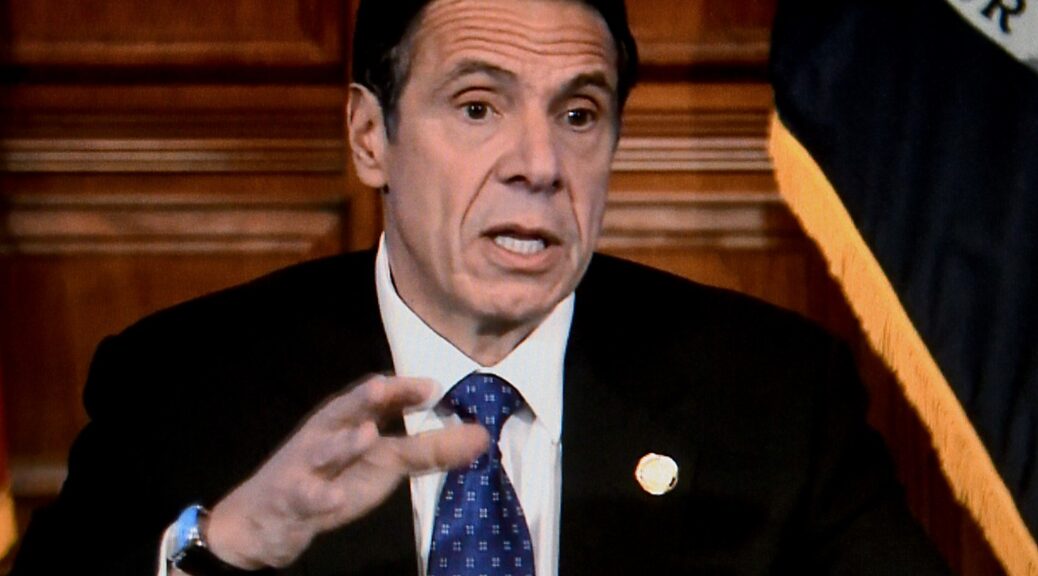
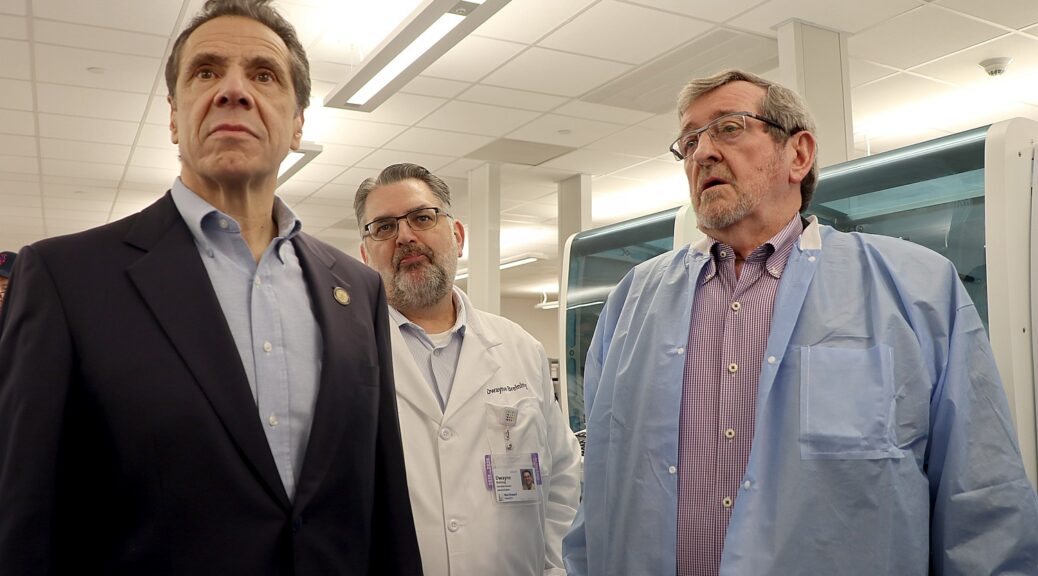
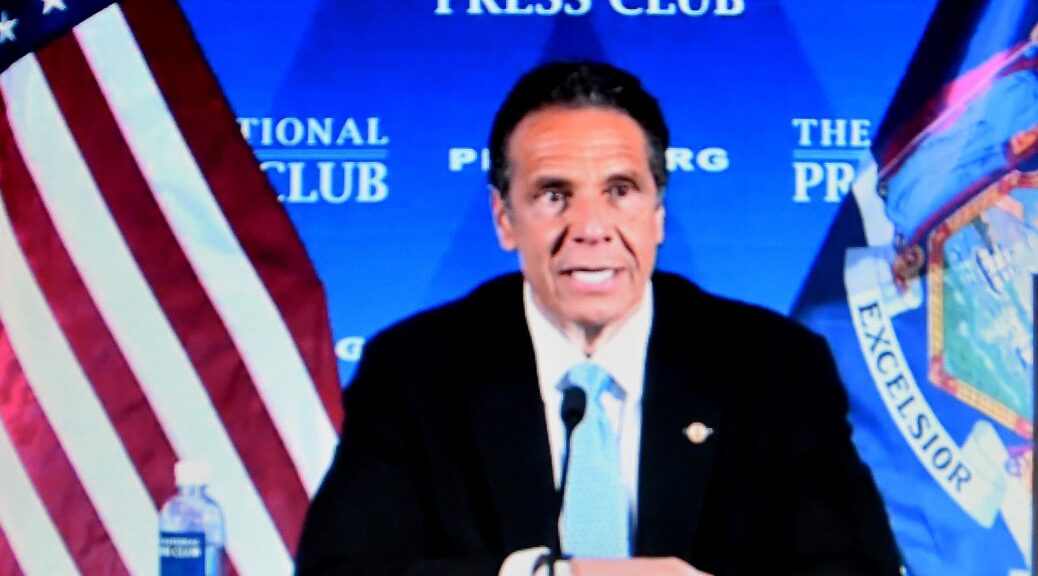
New York State Governor Andrew Cuomo at the National Press Club, Washington DC, after meeting Trump at the White House, calling for COVID-19 aid to states and localities, repeal of the SALT cap, and a bold infrastructure spending plan (c) Karen Rubin/news-photos-features.com

By Karen Rubin, News-Photos-Features.com

New York State Governor Andrew Cuomo, after a meeting with Donald Trump at the White House, chided Washington for politicizing the coronavirus pandemic, and not acting swiftly enough to provide crucial funding to states and localities, especially those – New York, New Jersey, Illinois, Massachusetts, California – where the outbreak of cases and the death toll has been the worst. “This hyper-partisan  Washington  environment is toxic for this country,” he stated in a press briefing shortly afterward at the National Press Club in Washington. He urged government to “do the right thing.”

Senate Republicans, led by Senate Majority Leader Mitch McConnell of Kentucky, have called such funding a “blue state bail out,” after having allocated billions to friendly industries and funneling millions to connected business interests. He stressed that New York and California, alone, represent one-third of the nation’s Gross Domestic Product, so you don’t have a reenergized economy without them. New York and California are also are the biggest donor states, sending billions of dollars more to taker-states like Kentucky than they get back in federal spending (New York sends $29 billion a year more than it gets back; Kentucky takes $29 billion more than it sends).If the states do not get federal aid, he stresseded, they will be forced to cut spending for hospitals, schools, police and fire – all the services most essential during a public health crisis – and excess thousands of workers, which won’t do the unemployment rate much good. Or, he said, the federal government can use this time as Franklin Roosevelt did during the Great Depression, to finally build the big, bold infrastructure projects that have been put on back-burners for 30 years.

Cuomo noted that the The House of Representatives has already passed its Heroes bill that includes $500 billion for states and $375 billion for locals; Medicaid funding for the most vulnerable; increased SNAP food assistance; 100 percent FEMA federal assistance; funding for testing; and repeals SALT cap to help states most affected by COVID-19, “the politically motivated first double tax in U.S. history” that was implemented by the federal tax law in 2017.

The Governor also renewed his call for Congress to pass the ‘Americans First Law’ to help prevent corporate bailouts following the COVID-19 pandemic. First proposed by the Governor on May 10th, the legislation states that a corporation cannot be eligible to receive government funding if it doesn’t maintain the same number of employees that the corporation had before the COVID-19 pandemic.

Cuomo also urged President Trump to support a real public infrastructure program and to advance infrastructure projects in New York — including the LaGuardia AirTrain, the Cross-Hudson Tunnels, and the Second Avenue Subway expansion — to help supercharge the economy.

He listed a series of projects in New York State that are ready to go – including the LaGuardia AirTrain, the Cross-Hudson Tunnels, and the Second Avenue Subway expansion – that are just awaiting federal approval “to help supercharge the economy.” Significantly, Trump earlier has told agencies to dispense with regulations that are obstacles to speedy development, and during the 2016 campaign, boasted he would be the builder, with a $1 trillion infrastructure spending plan.

Cuomo also renewed his call for ‘Americans First Law’ which would require any company that takes government funding to rehire the same number of employees it had before the COVID-19 pandemic, and not use the pandemic to “right-size” or “downsize” and cut costs to increase profits.

“Washington is now debating their next bill that would aid in the reopening and the recovery. Prior bills have helped businesses, large businesses, small businesses, hotels, airlines, all sorts of business interests,” Cuomo said. “That’s great but you also have states and local governments and state governments do things like fund schools and fund hospitals. Do you really want to cut schools now? Do you really want to cut hospitals now after what we have just gone through when we are talking about a possible second wave, when we are talking about a fall with possible more cases? Do you really think we should starve state governments and cut hospitals? Would that be smart? Do you really want to cut local governments right now? That is cutting police. That is cutting fire. Is now the time to savage essential services and don’t you realize that if do you this, if you cut state and local governments and you cause chaos on the state and local level, how does that help a nation striving to recover economically?

“The Covid states, the states that bore the brunt of the Covid virus are one third of the national GDP. How can you tell one third of the country to go to heck and then think you’re going to see an economic rebound? Also, state governments, state economies, local economies, that is what the national economy is made of. What is the national economy but for a function of the states? There is no nation without the states. They tend to forget that in this town. But it is the obvious fact and we have made this mistake before.

“Again, look at history. If you don’t learn from your mistakes you are going to repeat the mistakes. It is that simple and we have seen in the past what has happened when state and local governments were savaged and how it hurt the national recovery. Wall Street Journal, not exactly a liberal publication, makes the point that on the economy cuts to employment and spending likely to weigh on growth for years. So even if you believe the rhetoric we are about reopening, we are about getting the economy back, great. Then if that is what you believe you would provide funding to the state and local governments.

“The Federal Reserve Chairman Powell, very smart man respected on both sides of the aisle, said we have evidence the global financial crisis in the years afterward where state and local government layoffs and lack of hiring weighed on economic growth. We want to reopen the economy. We want to get this national economy better than ever. Fine. Then act accordingly and act appropriately.

“This hyper-partisan Washington environment is toxic for this country. You have people saying, well don’t want to pass a bill that we continue don’t want to pass a bill that helps Democratic states. It would be a blue state bailout is what some have said. Senator McConnell, stopping blue state bailouts. Senator Scott, we’re supposed to go bail them out? That’s not right. On Fox TV, Laffer, you want us to give our money to Cuomo and New York? Hello, not this week.

“First of all, this is really an ugly, ugly sentiment. It is an un-American response. We’re still the United States of America. Those words meant something. United States of America. First of all, Mr. federal legislator, you’re nothing without the states, and you represent the United States. Not only is it ugly, it is false. It is wholly untrue, what they are saying, 100 percent. And there are facts, if you want to pose the question, which is, I think, divisive at this period of time.

“But if you want to pose the question, what states give money and what states take money? Right? There is a financial equation that is the federal government. And if you want to ask, what states give money to other states and what states take money from other states, that’s a question that Senator McConnell and Senator Scott and Mr. Laffer don’t really want to ask, because the truth, the truth is totally the opposite of what they’re saying. You look at the states that give more money to the federal government than they get back. You know the top, what they call donor state, you know what one state pays in more to the pot than they take out to the federal pot than any other state than the United States? It’s the State of New York. New York pays more every year, $29 billion more, than they take back. You know the second state, New Jersey. Massachusetts, Connecticut, California, every year, they contribute more to the federal pot. You know who takes out more than they put in from that pot? You know whose hand goes in deeper and takes out than they put in? Virginia, Maryland, Kentucky, Alabama, Florida. Those are the facts, those are the numbers.

“The great irony is, the conservatives want to argue against redistribution of wealth. Why should you take money from the rich and give it to the poor? That’s exactly what you are doing. That is exactly what you have done every year. So it’s only redistribution unless you wind up getting more money. Then it’s fine, then it’s not redistribution. Take from the rich, give to the poor, that’s redistribution, yes, unless you’re the poor, Senator McConnell, Senator Scott because you were the ones who have your hand out. You were the ones who are taking more than others. Redistribution, you’re against it, except when the richer states give you more money every year. Then the great hypocrisy, they actually make the redistribution worse when they passed three years ago a provision ending what’s called state and local tax deductibility. That didn’t level the playing field. 

“What they did was they took the states that were already paying more money into the federal government, the quote, unquote richer states and they increased the money they were taking from the richer states. They took another $23 billion from California and another $14 billion from New York, New Jersey, Massachusetts, Illinois, Connecticut. The hypocrisy is so insulting because when you start to talk about numbers, there is still facts. People can still add and people can still subtract and they know what they put in and they know what they take out. 

“I know it’s Washington, D.C. but the truth actually still matters. Americans are smart and they find out the truth even in the fog and the blather of Washington, DC. My point to our friends in the Congress: Stop abusing New York. Stop abusing New Jersey. Stop abusing Massachusetts and Illinois and Michigan and Pennsylvania. Stop abusing the states who bore the brunt of the Covid virus through no fault of their own. Why did New York have so many cases. It’s nothing about New York. It’s because the virus came from Europe and no one in this nation told us.”

Cuomo hit back on suggestions that the state was at fault for having so many COVID-19 cases – indeed, more than almost any other nation, at 364,965, including 1129 cases added the day before, from 45 counties. Indeed, though Trump had intelligence briefings in January, he downplayed the threat and even later, only looked to China as a source, so the country’s attention was focused on cases in Washington and California. 

“We were told the virus is coming from China. It’s coming from China, look to the West. We were looking to the West it came from the East. The virus left China, went to Europe. Three million Europeans come to New York, land in our airports January, February, March and bring the virus. And nobody knew. It was not New York’s job. We don’t do international, global health. It didn’t come from China. It came from Europe and we bore the brunt of it. Now, you want to hold that against us because we bore the brunt of a national mistake? And because we had more people die? We lost more lives and you want to now double the insult and the injury by saying, ‘Well, why should we help those states? Those states had more Covid deaths.’ That’s why you’re supposed to help those states because they did have more Covid deaths and this is the United States and when one state has a problem, the other states help. 

“I was in the federal government for eight years. When Los Angeles had earthquakes, we helped. When the Midwest had the Red River floods, we helped. When Florida had Hurricane Andrew, we helped. When Texas had floods, we helped. When Louisiana had Hurricane Katrina, we helped. We didn’t say “well, that is Louisiana’s fault. They had the hurricane. Well, that is Texas’s fault, they had the floods.” It was nobody’s fault. And we were there to help because that is who we are and that is what we believe. What happened to that American spirit? What happened to that concept of mutuality?

“You know there still a simple premise that you can’t find in a book, and Washington hasn’t written regulations for, called doing the right thing. There is still a right thing in life. The right thing you feel inside you. The right thing is calibration of your principle and your belief and your soul and your heart and your spirit. And we do the right thing in this country, not because a law says do the right thing, but because we believe in doing the right thing. As individuals, as people, we believe in doing right by each other, by living your life by a code where you believe you are living it in an honorable way, acting on principle, and you are doing the right thing.

“Why can’t the government? Why can’t the Congress reflect the right thing principle that Americans live their life by? Pass a piece of legislation that is honorable and decent and does the right thing for all Americans. Why is that so hard? And if you want to talk about reopening the economy, then do it in a productive way. People think this economy is just going to bounce back. I don’t think it is going to bounce back. I think it will bounce back for some, and I think there will be collateral damage of others. We already know that tens of thousands of small businesses closed and probably won’t come back. We already know the large corporations are going to lay off thousands and thousands of workers, and they are going to use this pandemic as an excuse to get lean, to restructure, and they will boost their profits by reducing their payroll.

“We know it. We have been there before. We saw this in the 2008 Mortgage Crisis where the government bailed them out, the big banks that created the problem, and they used the money to pay themselves bonuses and they laid off their workers. They will do is same thing again that. That is why I propose the Americans First legislation that said a corporation can’t get a dime of government bailout unless they rehire the same number of workers they had pre-pandemic as post. Don’t take a gift from the taxpayer and then lay off Americans who are going to file for unemployment insurance paid for by the taxpayers. Don’t do that again.

“And if you want to be smart, we know that there is work to do in this nation. We have known it for years. You can fill a library with the number of books on the infrastructure and the decay of our infrastructure and how many roads and bridges have to be repaired, how this nation is grossly outpaced by nations across the world in terms of infrastructure, airports and development. Now is the time to stimulate the economy by doing that construction and doing that growth. You want to supercharge the reopening? That’s how do you it. This nation was smart enough to do it before. We did it in the midst of the great depression. We created 8 million jobs. We built an infrastructure that we’re still living on today. We’re still living on the infrastructure built by our grandparents, not even our parents. What are we going to leave our children? And now is the time to do it.

“We have major infrastructure projects in New York that are ready to go, that are desperately needed, that were desperately needed 30 years ago. Build them now. Supercharge the reopening. Grow the economy. That’s what we would do if we were smart. You’re not going to have a supercharged economy. You’re not going to see this nation get up and start running again, unless we do it together. That’s states working with other states. That’s a federal government that stands up and puts everything else aside.

“They were elected to provide good government. Nobody elected anyone to engage in partisan politics. There was a time when as a nation we were smart enough to say, “You want to play politics? That’s what a campaign is for.” Run your campaign against your opponent. Say all sorts of crazy things. That’s crazy campaign time. But when government starts, stop the politics, and do what’s right and smart. Don’t play your politics at the expense of the citizens you represent. There is no good government concept anymore. It’s politics 365 days a year. From the moment they’re elected to the moment they run again, it’s all politics. And that is poison. We have to get to a point, if only for a moment, if only for a moment, if only for a moment in response to a national crisis where we say it’s not red and blue. It’s red, white, and blue. It’s the United States and we’re going to act that way.

“In New York we say that by saying New York tough, but it’s America tough. Which is smart, and united, and disciplined, and loving, and loving.”

Cuomo said that the ninth of 10 regions, Long Island, began reopening today, joining Mid-Hudson Valley which opened yesterday, the Capital Region, Western New York, Central New York, North Country, Finger Lakes, Southern Tier and Mohawk Valley Regions, which all have met the seven metrics required for Phase One of a multi-phase process. Each of the regions has to have a monitoring commission in place to make sure reopening does not trigger new outbreaks, and that any upticks are addressed.

New York City still has more metrics to complete before it can begin its formal reopening, though the New York Stock Exchange did reopen yesterday.

Governor Cuomo: “States are responsible for the enforcement of all the procedures around reopening but at the same time the federal government has a role to play and the federal government has to do its part as we work our way through this crisis. There cannot be at national recovery if the state and local governments are not funded.”

See also: Politicizing a Pandemic

________________________

© 2020 News & Photo Features Syndicate, a division of Workstyles, Inc. All rights reserved. For editorial feature and photo information, go to www.news-photos-features.com, email editor@news-photos-features.com. Blogging at www.dailykos.com/blogs/NewsPhotosFeatures. ‘Like’ us on facebook.com/NewsPhotoFeatures, Tweet @KarenBRubin
Cuomo Launches $100 Million New York Forward Loan Fund for Small Businesses; Sees Phase 1 Reopening in LI, Mid-Hudson; Expands Testing to Pharmacies

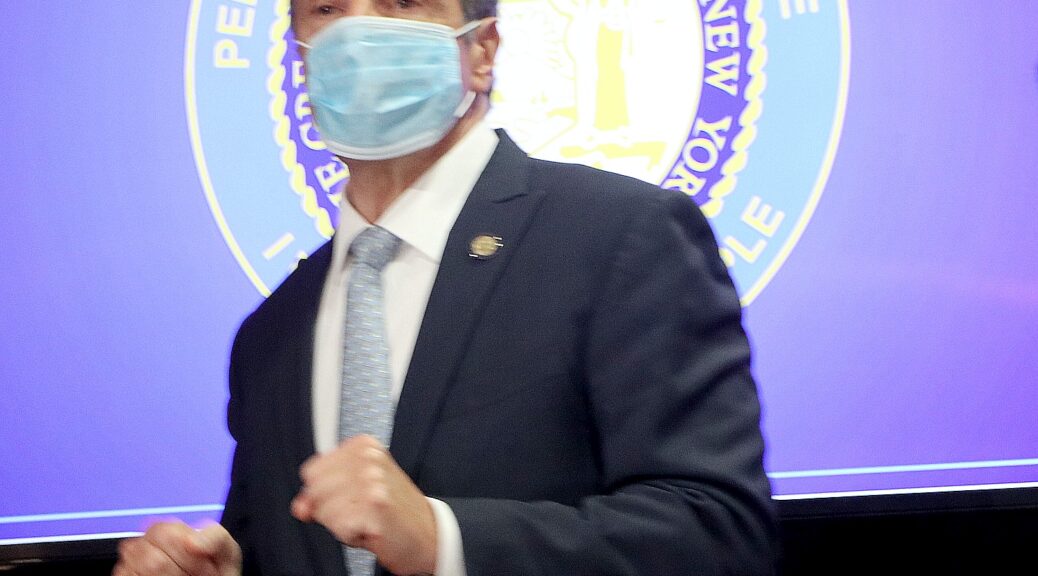
New York State Governor Andrew Cuomo  is so keen on emphasizing the importance of wearing a mask to keep down the rates of infection, hospitalization and deaths from COVID-19, the state is mounting a contest for a public service announcement. Five finalists have been selected. To vote (by May 25) go to coronavirus.health.ny.gov/wear-mask © Karen Rubin/news-photos-features.com

Amid the ongoing COVID-19 pandemic, Governor Andrew M. Cuomo today announced the launch of the $100 million New York Forward Loan Fund to provide flexible and affordable loans to help small businesses, focusing on minority and women owned small businesses, that did not receive federal COVID-19 assistance. The state will take a smart, targeted approach for distributing these loans, focusing on businesses with 20 or fewer employees and less than $3 million in gross revenues. Businesses interested in receiving a loan should visit esd.ny.gov/nyforwardloans.

Governor Cuomo also announced the Long Island and Mid-Hudson Valley Regions will be permitted to begin construction staging in anticipation of phase one of reopening. If the number of deaths continues to decrease and the tracing is online, both regions could reopen next week.

The Governor also announced the launch of a new pilot program with 52 independent pharmacies to conduct 7,000 tests per week. New York State now has more than 750 testing sites across the state. The Governor also encouraged eligible New Yorkers to visit coronavirus.health.ny.gov to find a nearby testing site and get tested.

The Governor also announced that the state is making its contact tracing training curriculum available at no cost to all states through the National Governors Association to speed the process of creating contact tracing programs. The state partnered with Bloomberg Philanthropies and the Bloomberg School of Public Health at Johns Hopkins University to develop this comprehensive online curriculum to train potential contact tracers. Contact tracing is currently underway in seven regions of the state – the Capital Region, Central New York, Finger Lakes, the Mohawk Valley, the North Country, the Southern Tier and Western New York.

New York Governor Andrew Cuomo stresses the importance of wearing a mask to slow the spread of coronavirus (c) Karen Rubin/news-photos-features.com.

The Governor pointed to the urgency of continuing practices like social distancing, hand-washing and perhaps most critically, wearing a mask in public when six-feet separation cannot be maintained.

“How do you know the mask works?” he said. “First responders have a lower infection rate than the general population. Nurses, doctors in emergency rooms have a lower infection rate than the general population. How can that possibly be? Because they wear the mask and they do the hand sanitizers. You feel out of control, you can’t protect yourself, you can’t protect family? Yes, you can. That’s what the mask does. You want to be in control of yourself? You want to greatly increase your odds? Wear the mask. By the way, not just asking you. The mask is mandatory in public settings. Public transportation, if you are in a taxi or Uber, private carriers, or anytime you are in public within six feet of another person, the mask is mandatory. It is not just a nice thing to do, a responsible thing to do, for citizen duty, it is mandatory that you wear the mask within six feet of another person in public. You don’t have a right to infect another person. You don’t. Look at the constitution, tell me where it says you have the right to infect another person. You don’t.

“So, how do we reopen smart? It’s up to you. It’s up to us. And that’s both the beauty and the conundrum of this situation. It is wholly dependent on social action. Wholly dependent on social action. You tell me what people do, I will tell you the results, period. Government can say whatever it wants. I can sit up here and say whatever I want. I can’t control it. People can control it.”

Cuomo is so keen on mask-wearing, that he enlisted his daughter Mariah Kennedy Cuomo to create the state’s Wear a Mask New York Ad Contest, which was launched on May 5th. Out of 600 submissions, five finalists have been selected. New Yorkers can vote for the winning ad until Monday May 25th at WearAMask.ny.gov, and 92,000 people have voted to date. The winning ad will be announced on Tuesday, May 26th, and that ad will be used as a public service announcement.

On the state’s decision to launch its own small business loan program, Cuomo said, “Small business is a priority. Federal government passed the Small Business Assistance Program. That has run out of money and small businesses are taking a real beating in this situation. They are 90 percent of New York’s businesses and they’re facing the toughest challenges. The economic projections, vi-a-vie small business are actually frightening. More than 100,000 have shut permanently since the pandemic hit. Many small businesses just don’t have the staying power to continue to pay all the fixed costs, the lease, et cetera, when they have no income whatsoever. Minority owned businesses face a far greater risk and have received less in federal relief.”

The state’s own small business relief program will make $100 million available through private banks.

“We’re going to focus on MWBEs that did not receive federal assistance and focus on really small business. The federal definition of small business is what many could consider large business, but we’re going to focus on true small businesses. Twenty or fewer employees, less than $3 million in gross revenues.”

Finally, the Governor confirmed 1,696 additional cases of novel coronavirus, bringing the statewide total to 358,154 confirmed cases. Of the 358,154 total individuals who tested positive for the virus, the geographic breakdown is as follows:

CountyTotal PositiveNew Positive
Albany1,75656
Allegany440
Broome46817
Cattaraugus743
Cayuga731
Chautauqua635
Chemung1351
Chenango1180
Clinton940
Columbia3561
Cortland371
Delaware721
Dutchess3,76722
Erie5,397127
Essex360
Franklin190
Fulton1893
Genesee1891
Greene2150
Hamilton50
Herkimer952
Jefferson721
Lewis191
Livingston1140
Madison2973
Monroe2,60171
Montgomery770
Nassau39,608121
Niagara89717
NYC196,484809
Oneida82811
Onondaga1,82857
Ontario1804
Orange10,14250
Orleans1751
Oswego964
Otsego670
Putnam1,18712
Rensselaer4604
Rockland12,90528
Saratoga4488
Schenectady6457
Schoharie490
Schuyler111
Seneca542
St. Lawrence1950
Steuben2402
Suffolk38,672119
Sullivan1,2876
Tioga1181
Tompkins1472
Ulster1,59511
Warren2465
Washington2242
Wayne1041
Westchester32,76794
Wyoming790
Yates340

Biden on Trump’s Disastrous Economic Numbers, Worst Since Great Depression: ‘It Didn’t Have to Be This Way’

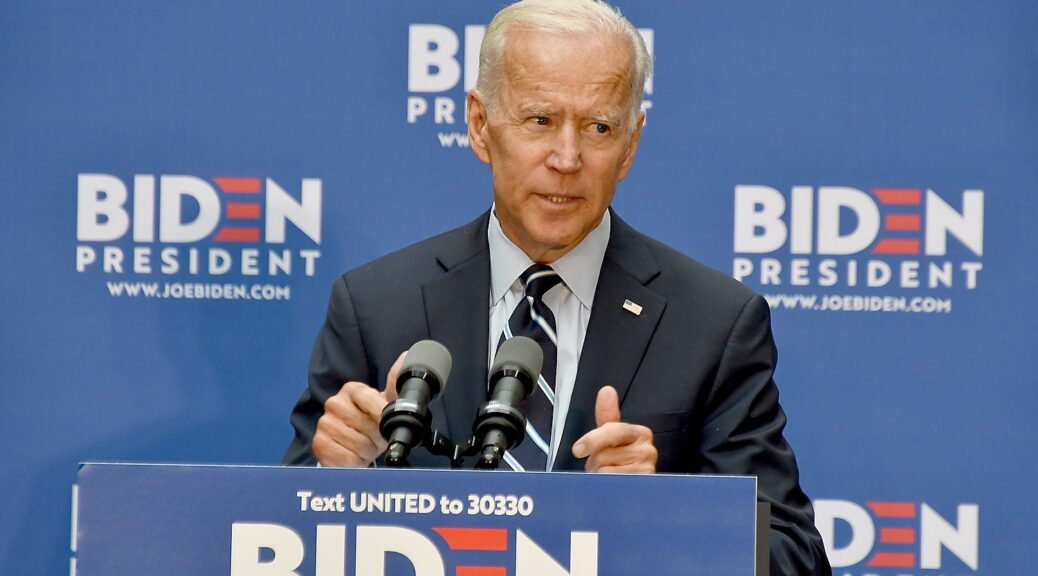
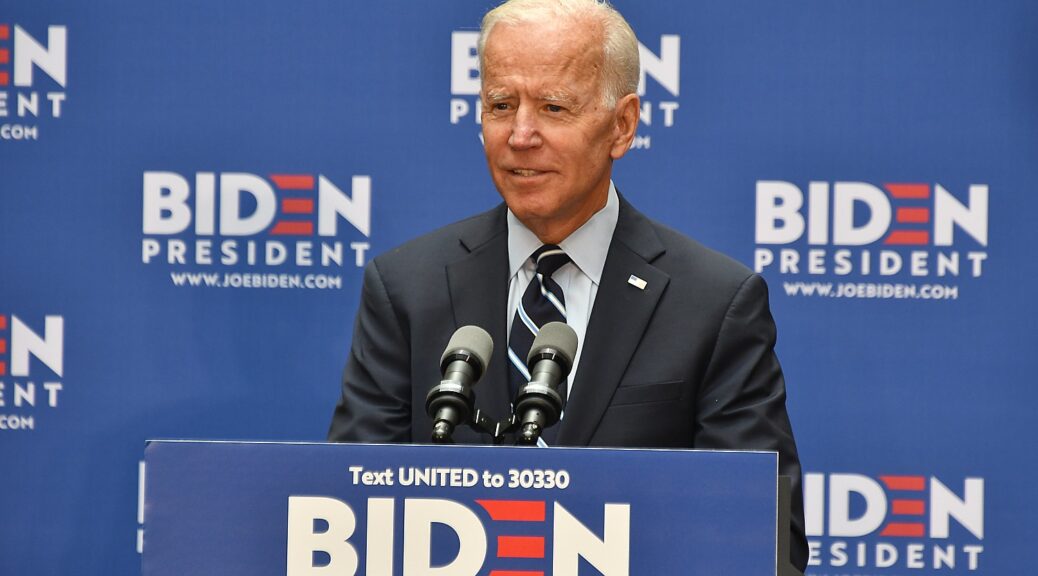
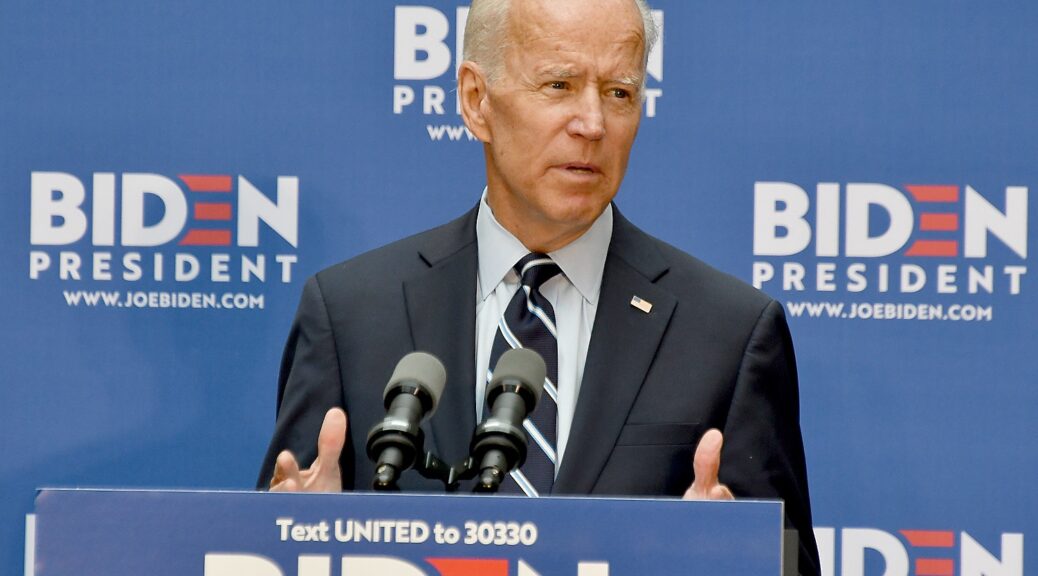
After the April jobs report showed a loss of 20.5 million jobs and an unemployment rate of 14.7% – the worst since the Great Depression –former Vice President Joe Biden, the presumptive Democratic nominee for President, offered remarks on “Trump’s Disastrous Economy,” saying “it didn’t have to be this way.”

After the April jobs report showed a loss of 20.5 million jobs and an unemployment rate of 14.7% – the worst since the Great Depression –former Vice President Joe Biden, the presumptive Democratic nominee for President, offered these remarks on “Trump’s Disastrous Economy,” saying “it didn’t have to be this way.” Here are the remarks, as prepared for delivery, which provide an alternate to how things could have, should have been handled:

This morning, we received the worst jobs report in history. 20.5 million jobs lost last month, and an unemployment rate now 14.7 percent — the highest it’s been since the Great Depression.
 
It’s an economic disaster worse than any we have seen in decades — and it’s made all the worse, because it didn’t have to be this way.
 
Donald Trump utterly failed to prepare for this pandemic and delayed in taking the necessary steps to safeguard our nation against the near-worst-case-economic scenario we are now living. 
 
COVID-19 caused a massive economic challenge. But this crisis hit us harder, and will last longer, because Donald Trump spent the last three years undermining the core pillars of our economic strength.
 
Many small businesses have closed because of stay-at-home orders. But a lot of them won’t open again because they do not have a cushion due to three years of Trump’s policies that reward the biggest companies.
 
Yes, many have lost their jobs because of this crisis — but we are seeing so many proud families forced to endure epic lines for food boxes in football stadium parking lots because Donald Trump has spent three years tilting the playing field to the wealthy, and not the middle class.
 
Trump has loved to crow about the great economy he built. But when the crisis hit, it became clear who that economy has been built to serve. Not workers. Not the middle class. Not families.
 
Trump’s economic agenda has three unmistakable failings; failings that have been present since day one, but are coming into sharp relief in the current crisis:
 
First, Donald Trump’s main measure of economic progress is the state of the stock market.

It’s the only metric he values, so it’s the only lens through which he sees our economy.

For the past three years, even as Americans have had to work harder than ever to pay their bills, he’s said the economy was “great” because the stock market was up. 
 
He irresponsibly downplayed and delayed action on the virus to protect the Dow Jones Average, a choice that has so far cost tens of thousands of American lives and millions of American jobs.
 
Make no mistake: it doesn’t matter how much the market rebounds. As long as there are millions of unemployed people struggling to get by — we won’t be anywhere near bouncing back.
 
Second, his entire economic strategy is focused on helping the wealthy and big corporations.

Just imagine what we could be doing now with the $2 trillion in tax cuts that Trump delivered for his rich friends as his first priority.

Imagine how much better a position we’d be in right now if — instead of Donald Trump cheering on corporations that spent hundreds of billions buying back their stock — those corporations were using that money to keep workers on their payrolls. 
 
Imagine if, instead of providing incentives to shift jobs overseas – he had ensured we were investing in manufacturing at home.
 
Imagine how much more resilient our small businesses might be right now if – rather than repeatedly trying to slash the Small Business Administration’s budget – Trump had invested in making them stronger. 
 
Imagine if instead of fighting tooth and nail to take away people’s health insurance, he’d invested in expanding access, so that families didn’t worry that a visit to the hospital would put their finances at risk.
 
Third, Donald Trump claimed he would fight for the forgotten middle class – and as soon as he got into office, he forgot them. 
 
He’s been President for more than three years, but hasn’t yet followed through on his core economic campaign promises to middle class voters.
 
He promised to work with Congress to pass a bill to limit offshoring of jobs. He promised to create $1 trillion worth of new infrastructure jobs. He promised to expand child care support. 
 
He said it would all happen before May 2017. It’s now May 2020 and not one of these promises has materialized.
 
Instead, he’s run the same playbook that has hollowed out our economy time and again over the past four decades.
 
It always ends up the same way. The rich get richer, the powerful get more power, and everyone else gets told they just need to work harder.
 
We’ve heard it before — and we’re not buying it.

And if you need proof that Trump’s policies were a failure even before this virus hit, just compare the first 35 months of Trump’s presidency to the last 35 months of the Obama-Biden Administration, hiring was slower and real wages grew more slowly too.
 
Trump was already well into the process of hollowing out the good economy we left him long before the first case of coronavirus.

The numbers looked good, but underneath the numbers, things were eroding. 

But this pandemic has laid bare exactly how much damage Trump has done in just over three years.
 
Because Donald Trump has gotten the virus response wrong, the jobs and unemployment numbers are just the beginning. His mistakes will also mean it takes more time to recover from this.
 
We’re already seeing the tell-tale hallmarks of Trump-o-nomics in the way he is implementing the crisis response efforts: no strings, no oversight, no accountability.
 
I’ve started to think of it as the Corrupt Recovery.
 
First, Trump made sure we didn’t have an empowered Inspector General to oversee all of this. 

And now, we seeing reports that loan money went to Trump’s donors, political allies, and companies with Trump-connected lobbyists.

Here’s how it worked: Trump’s Treasury Department allowed corporations with connections to go right to the front of the line — they got concierge service. 

Meanwhile the mom and pop shops that needed help most got shut out.

More than 40 percent of the initial funding designed to support small businesses—didn’t go to real small businesses at all.
 
The single largest recipient of small-business money was a hotel executive and a major Trump donor.

The Trump Administration let him exploit the loophole to get $59 million in help, and he’s only giving it back now because the press found out.

And, who knows what else we’d find if the Trump Administration would stop hiding the full list of businesses who received help. 

This is your money they’re getting.
 
We’re reading press stories that the Trump Administration is allowing big corporations that take money to lay off their workers, while other big companies are laying off workers then pay-out millions to shareholders.
 
How hard is it for Trump to say that if you are a major corporation and you are going to receive taxpayer money, you must first use it to take care of your workers?

But it turns out corruption is a feature of the Trump economic agenda, not a bug.
 
He will pick his wealthy friends, his corporate cronies, over working families every time.

I say it’s time we pick a different way.

In the coming weeks, I’ll be laying out a detailed plan for the right kind of economic recovery. Today, let me outline just a few key principles.
 
It starts with rebuilding the backbone of this country: a stronger, more inclusive, more resilient middle class – a middle class that can withstand the next public health crisis or whatever else comes our way.
 
It’s time we make sure everyone gets a fair shot at success, not just the Mar-a-Lago crowd.

Since the very first days of my campaign, I’ve had a simple message:

Wall Street and CEOs didn’t build this country. The middle class built this country. Ordinary women and men who are capable of doing extraordinary things when given half a chance. They built the country. 
 
That’s who I believe in. That’s who I’m in this race to fight for.
 
Who is out there on the front lines of this crisis? Who are the workers that are literally carrying this nation on their backs?
 
The doctors and nurses and other health care workers. The EMTs and firefighters and police. The grocery store clerks and the meat packers and the farmers. The delivery drivers and the mass transit workers.
 
And these heroes are all too often the lowest-paid and the least appreciated members of our society.
 
But this crisis is showing us what is essential. And, I think it’s time we reward the people who actually make this country work.
 
I do believe that from this moment, from this crisis, we have the opportunity to not just rebuild our economy—but transform it.
 
To make our economy more resilient for whatever comes our way in the future. 

Making sure everyone has paid sick leave and child care support. 
 
Remaking our system of unemployment insurance into employment insurance, to help keep people in their jobs.

Putting millions and millions of people to work building the new, green economy that will position us to own the 21st century.

Making sure we’re producing here at home the machines and equipment we need to fight the pandemic and ensure public health. 
 
Guaranteeing an education that equips you to succeed,and access to high-quality, affordable health care. 
 
We can restore the basic bargain that used to exist in this country. The bargain was that if you contributed to the success of an enterprise, you shared in the rewards.
 
And the way we will do that is by empowering our workers. It means encouraging unionization and collective bargaining. It means more protections to ensure fair pay, over-time compensation, worker-safety, and a secure retirement.
 
We can insist that big corporations – which we’ve bailed out twice in 12 years – set up and take responsibility for their workers and communities. They have to step up to do that.
 
We can rip out the race-based inequities that infect every part of our society— from the pollution being pumped into the air and water in communities of color to the health care treatment they receive.
 
I’ll have more to say on all this in the weeks ahead, but here’s what it comes down to: we can choose who our economy, our government,
and our country works for.
 
Just the wealthy — or everyone else as well. All of us together. All of us together.
 
That’s the choice we must make – all of us together – this November. It could not be more stark what the choice is.
 
I’d like to end today by saying thank you to all of our front line workers who are working day in and day out to keep our nation afloat during this crisis. And who are risking their personal health and safety in the process.
 
And to everyone, to everyone who is struggling with this virus who I talk to or grieving a lost loved one or losing sleep worrying about how you are going to make ends meet for another week — I want to offer my heartfelt condolences.
 
But I know that we will get through this. We’ll get through it together. I know because I know the American spirit, and the American character. We’re seeing it on display every day.
 
The proof that there’s nothing, nothing we cannot accomplish when we stand together—one nation, united in purpose, taking care of our neighbors, committing to get the job done.
 
That’s what has seen us through every moment of crisis in our past — it will see us through again today. It will empower us to write the future we want for our country and our children. 

There’s no quit in America. None at all. We’re going to get through this. 
 
Thank you, and God bless you.

Biden Offers Plan to Scale up Unemployment Insurance

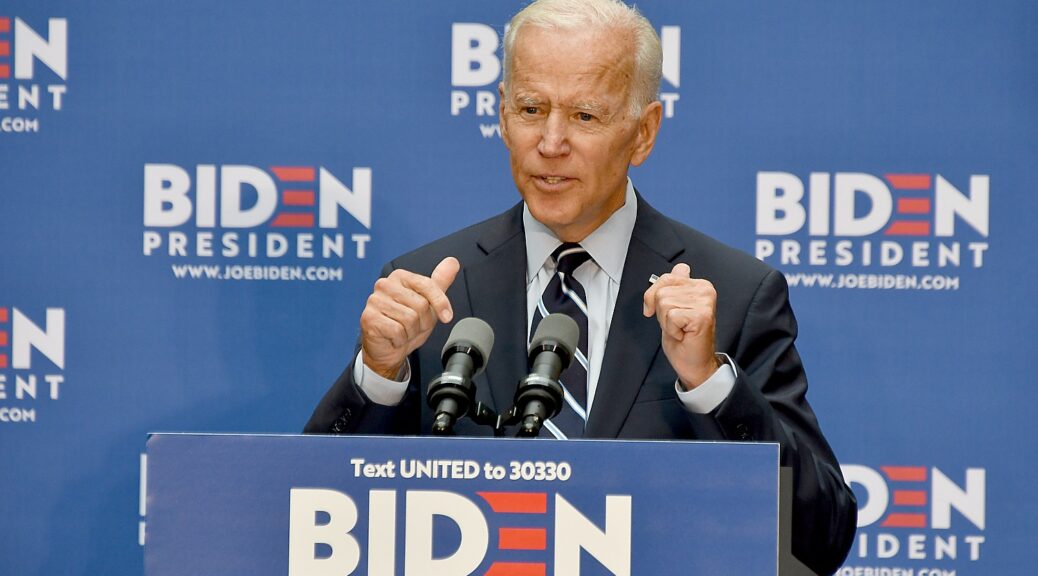
As the unprecedented number of Americans filing unemployment claims rose once again, Joe Biden, the presumptive Democratic candidate for president, announced a new plan to transform unemployment insurance into Employment Insurance for millions of workers by getting all 50 states to adopt and dramatically scale up short-time compensation programs (c) Karen Rubin/news-photos-features.com.

As the unprecedented number of Americans filing unemployment claims rose once again, Joe Biden, the presumptive Democratic candidate for president, announced a new plan to transform unemployment insurance into Employment Insurance for millions of workers by getting all 50 states to adopt and dramatically scale up short-time compensation programs.

Vice President Biden released the following statement on today’s unemployment claims and his new plan on scaling up employment insurance:

Today, we learned that another 5.2 million people have filed unemployment claims, bringing the total to more than 22 million in the last month.

This dire economic dislocation stems from the need to protect public health through strong social distancing measures. But let’s not forget: these measures are required to the extent they are because we didn’t prepare early enough, and when the virus surfaced in our communities, we didn’t test sufficiently to contain it. This pain is a product of poor decision making by Donald Trump.

With true American spirit, workers did not hesitate to sacrifice to save the lives of fellow citizens. But even as we temporarily shrink economic activity, there’s no reason why the incomes of working people must shrink, too.

As we navigate this crisis, our paramount economic priority must be to make American workers whole, so they retain their income and benefits during this period of social distancing. For the workers that are laid off, we should swiftly compensate for lost wages and health benefits for all of them, not just those who can make it through the bureaucracy. 

But we should also be doing more — much more — to reduce the number of people who are laid off in the first place. We should be committed to keeping as many people as possible attached to their employment, so they can easily return to work when appropriate, and maintain their income and benefits.

This is more than just the right thing to do — it is the surest road to a rapid recovery, because the faster everyone returns to their jobs, the faster we can improve demand and get our economy running again. 

The Trump Administration has been given a number of extraordinary tools to make this happen — to keep people employed. Yet, they are failing to use them effectively. For more people to stay in their jobs, Donald Trump has to do his job. 

As this crisis continues to unfold, I will be putting forward ideas to not only better address the immediate needs of working Americans, but also what is needed for long-term, structural reform to make our economy work for all its people.

So today, as we see these chilling numbers of job losses — each one a mother or father, a neighbor or friend, a proud, hardworking American — I am calling for a bigger and bolder approach to keeping people on the job in times of crisis. That idea is called “short-time compensation” or “work-sharing.” I call it Employment Insurance.

The Biden Plan to Scale Up Employment Insurance by Reforming Short-Time Compensation Programs

Transform unemployment insurance into Employment Insurance for millions of workers by getting all 50 states to adopt and dramatically scale up short-time compensation programs. Under short-time compensation — also known as work sharing — firms in distress keep workers employed but at reduced hours and the federal government helps make up the difference in wages. The Obama-Biden administration championed this approach in the U.S., and so far 27 states have established short-time compensation programs.
 
These programs must become more flexible and attractive to both employers and employees, so that as many workers as possible can remain attached to their jobs and receive full wages and health benefits during crisis times, even if employers must significantly cut their hours.
 
Germany has long used short-time work programs to protect jobs in recessions, so that workers are ready to hit the ground running as the economy improves. And this approach is especially well suited to the current moment, when we can expect a more gradual recovery in certain sectors, with some businesses operating a partial capacity for an extended period.
 
In short, we should start thinking of this as Employment Insurance more than Unemployment Insurance.
 
For the current crisis, the administration should move rapidly to scale up short-time compensation to save or restore millions of jobs. Specifically:

Small businesses who use this program must be able to get help to cover their worker’s benefits as well as their other costs, like rent and non-payroll overhead, as they are partially shut down through the crisis. Companies that fulfill the goal of payroll protection by using work sharing should not be punished by being excluded from any small business program for loans or forgiveness that is tied to essential overhead in proportion to their fall in revenues.

The federal government should temporarily waive the need for states to “experience rate” companies, that is, force employers to pay higher taxes in the future if they use short-time compensation now.

These are crisis measures, but we can and should do more to strengthen short-time compensation to prevent layoffs in future downturns, learning lessons from other nations and from those states in America that have been leading the way.
 
As President, Joe Biden would pursue permanent reform of short-time compensation, through the following steps:

Establish 100% federal financing: Currently, states bear the burden of paying for short-time compensation, except in emergencies. Yet, state unemployment funds are already straining under the burden of unprecedented numbers of unemployment claims. Joe Biden would call for short-time compensation to be 100% permanently funded by the federal government to catalyze far greater use of short-time compensation that can keep workers working and connected to their benefits and work relationships.

Secure participation from all 50 states, DC, Puerto Rico, and the Virgin Islands: 23 states still have not established short-time compensation programs. This initiative is too important to leave out millions of Americans. Joe Biden would make it a top priority, using a mix of conditioned assistance and additional incentives, to ensure universal participation, consistent with Supreme Court precedent in Dole and Sebelius.

Create a tax credit for employers’ extra health care costs: Employers must currently provide full health benefits for employees even if they are reducing hours. While it is crucial that employees keep their full benefits, having to fund the full health care costs of workers when they are seeing a significant fall in revenue can discourage companies from choosing short-time compensation over layoffs. Joe Biden would create a refundable tax credit that would reimburse companies as well as non-profits for the extra costs of providing full health benefits of all their workers during a period of work hour reductions.

Raise caps on employer work reductions: States usually cap work hour reductions at 40% to 60%. If your hours go down more than that, you can’t participate. In deep downturns, companies may need to reduce hours even further to prevent layoffs. Raising those caps to 80%, with waivers for extreme circumstances, will help employers keep people in their jobs, even in severe recessions.

Launch a major awareness campaign to improve business participation rates. During the last recession, Rhode Island had much greater participation in its short-time compensation program than the national average. One study from the Brookings Institution found that the chief reason for that was that the state “aggressively marketed work sharing to employers engaged in layoffs during the Great Recession and made use of the media to highlight potential work-sharing benefits.” Joe Biden would take a Rhode Island-style marketing campaign nationwide.

Build automatic triggers based on economic and public health conditions. Enhancements to short-time compensation and unemployment insurance tied to the COVID-19 crisis should be automatically extended based on economic and health conditions, and renewed in future crises. Workers and businesses should not be held hostage by partisans in Congress.

Senator Klobuchar Releases Plan to Prepare For and Respond to the Coronavirus in Rural America

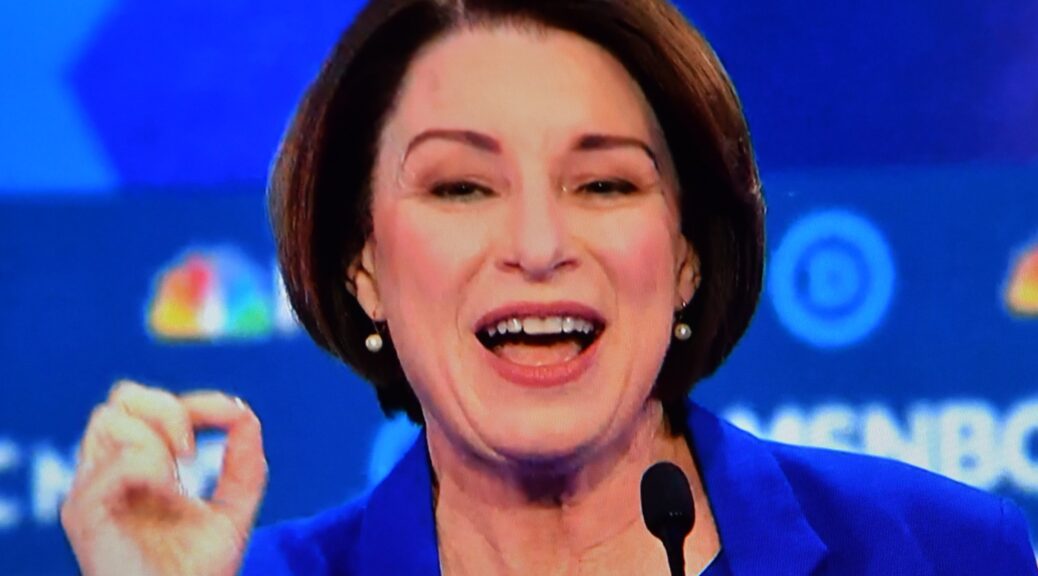
Senator Amy Klobuchar, a member of the Senate Agriculture Committee, released a plan to prepare for and respond to the coronavirus in rural America involving bolstering health care infrastructure, agriculture supply chain and rural economy © Karen Rubin/news-photos-features.com

MINNEAPOLIS, MN — Today, Senator Amy Klobuchar released a plan to prepare for and respond to the coronavirus in rural America. 

As a senior member of the Senate Agriculture Committee, Senator Klobuchar has long been a leader in tackling the challenges that rural communities face. She believes our country needs to take immediate action to respond to the pandemic’s spread to rural America by strengthening rural hospitals and rural health care systems, supporting farmers and ensuring the continuity of the agricultural supply chain, and helping small businesses, workers and other critical aspects of the rural economy. 

“We’re facing a national crisis — it affects every American, no matter where they live,” said Senator Amy Klobuchar. “While COVID-19 may be slower to spread to some rural areas, its impact will likely be just as serious, as we’ve seen in places like Albany, Georgia and Martin County, Minnesota. From expanding access to health care, to supporting farmers, to helping small businesses, we need to ensure that all communities across rural America are not left behind and have the resources they need to respond to this pandemic.”

Plan to Prepare For and Respond to the Coronavirus in Rural America

The coronavirus pandemic is a national crisis — it affects every American, no matter where they live. While COVID-19 may be slower to spread to some rural areas, its impact is expected to be as serious as it has been in urban areas. Rural Americans are more vulnerable to the virus but are often less able to access treatment. Rural Americans are more likely to be older and have serious chronic medical conditions — two of the greatest risk factors for severe illness from COVID-19. At the same time, people living in rural America are more likely to be poor and uninsured, making it difficult for them to afford treatment. And many rural hospitals and health care systems have fewer ICU beds and resources and could quickly become overwhelmed if they experience even a minor surge in critical patients.

Many rural communities are already facing these challenges. In Georgia, the rural city of Albany has been badly hit by pandemic — in early April it had one of the highest percentages of confirmed cases anywhere in the country and the National Guard has been deployed to help the local hospital. The town, whose residents are predominantly African American, also highlights the impact that our country’s response to the virus in rural America has on people of color — one in five rural Americans is a person of color or an indigenous person, and the coronavirus appears to be infecting and killing people of color at a disproportionately high rate.

In addition to the public health crisis rural communities are confronting, they are also facing an economic crisis. The farming and agriculture industry is seeing major disruptions due to the coronavirus, which will not only hurt rural areas, but could lead to higher food prices for consumers across the country. Small businesses, which are the backbone of many rural economies, are being hit hard, and rural workers are struggling to access child care, broadband, and many other critical services during the pandemic.

As a senior member of the Senate Agriculture Committee, Senator Klobuchar has long been a leader in tackling the challenges that rural communities face. She believes our country needs to take immediate action to respond to the pandemic’s spread to rural America by strengthening rural hospitals and rural health care systems, supporting farmers and ensuring the continuity of the agricultural supply chain, and helping small businesses, workers, and other critical aspects of the rural economy. The only way to beat this pandemic is to fight the virus together, and that means making sure that every community — from the biggest city to the smallest town — has the resources and support they need to respond to this crisis. 

Rural Health Care

Rural health care systems are on the front lines of combating the coronavirus, but many are facing shortages of critical resources that they will need to treat patients — from ICU beds and ventilators, to doctors, nurses and other health care workers staffing the hospitals, to testing and personal protective equipment. We need to anticipate these challenges in areas that haven’t yet seen a surge in cases and make sure that we’re getting rural health care systems the support they need to keep people safe.

Rural Hospitals and Health Clinics

Provide rural hospitals the resources they need to confront the pandemic. Rural hospitals, including Critical Access Hospitals, provide essential medical services to rural communities, but they also often have smaller operating margins than larger hospitals. Right now, they face added financial pressure due to increased expenditures to prepare for an influx of patients with COVID-19 at the same time they have had to cancel elective procedures, which are normally a major source of revenue. We need to take action to make sure these hospitals remain able to serve rural communities, especially during this crisis. Senator Klobuchar is calling for an expedited process with dedicated support for Critical Access Hospitals and other rural hospitals to immediately receive grants and loans they need to purchase supplies, modify their facilities, and pay their staff. She is pushing for an expansion of the $100 billion Public Health and Social Services Emergency Fund so that funding is available for hospitals that are likely to experience a surge of patients later in the crisis, including many in rural America. She is also calling for a longer timeline for repayment and other necessary flexibility under the Medicare Accelerated Payments Program so rural hospitals have the time they need to regain their financial footing and she is calling for changes to ensure that small publicly-owned hospitals are eligible for the Payment Protection Program. In addition, Senator Klobuchar has championed legislation to help hospitals in rural areas stay open by creating a new Rural Emergency Hospital classification under Medicare to give hospitals more support if they maintain an emergency room and provide outpatient services. She also supports providing ongoing financial relief by making the suspension of the two percent Medicare automatic reimbursement cut permanent for rural hospitals and considering what other temporary relief may need to be extended to allow rural hospitals to recover financially from the impact of the pandemic. 

Temporarily reopen recently closed rural hospitals when possible. Senator Klobuchar is calling for the Department of Health and Human Services to explore funding and regulatory flexibility to temporarily reopen some of the over 120 rural hospitals that have closed in the last decade. Temporarily reopened facilities could help provide overflow support to hospitals that have reached capacity and provide an option for basic levels of care for rural residents to limit pressure on larger hospitals. 

Support rural health clinics. Many rural communities don’t have easy access to a hospital and instead rely on rural clinics for their health care. We need to make sure that these clinics have the resources they need to effectively diagnose and treat patients who may not need to be hospitalized, or who come to them before hospitalization. Senator Klobuchar is calling for increased support for the USDA’s Community Facilities Direct Loan and Grant Program, additional support for community health centers — over half of which are in rural areas — and specifically targeting additional small business assistance to health care providers. To strengthen the long-term financial health of rural health care providers, Senator Klobuchar supports adjusting Medicare’s geographic practice cost index to reflect the actual costs of providing health care in rural areas.

Health Care Workers and Supplies

Strengthen the rural health care workforce. On average, rural areas have half as many physicians per capita as urban areas, and rural areas face shortages of nurses, physicians assistants, specialists, and other medical providers. Senator Klobuchar is calling on the Department of Health and Human Services to provide the maximum possible flexibility to rural health providers to develop adaptable staffing plans to respond to increased demand and compensate for workers who may become sick or need to isolate. She has also called on the Department of Homeland Security to provide additional flexibility for foreign medical workers in the United States on temporary visas. Many health care workers in rural areas are also facing challenges with child care, especially in child care deserts that already have a shortage of child care facilities. Senator Klobuchar is calling for dedicated funding to set up temporary child care facilities for health care and other critical workers in child care deserts. To address rural workforce shortages more broadly, Senator Klobuchar supports building on the Conrad 30 program that allows international doctors trained in the United States to extend their stay in the country if they agree to practice in underserved communities. She also supports expanding student loan forgiveness programs for health care and long-term care workers practicing in underserved areas. 

Ensure rural areas have access to necessary medical supplies and testing. Medical facilities across the country face a shortage of necessary medical supplies including personal protective equipment, testing supplies, hospital beds, and ventilators. As competition for supplies has intensified, rural health providers, with less available cash and smaller economies of scale, are at a significant disadvantage. Senator Klobuchar is calling for additional funding to hospitals to purchase these critical supplies and specific consideration of the needs of rural areas when designing federal, state, and regional supply distribution strategies and when allocating equipment from the National Strategic Stockpile.    

Health Policies that Work for Rural America

Target public health messages for rural areas. The coronavirus pandemic is a national crisis and public health communications should reflect all parts of the country. Senator Klobuchar is calling for consistent and targeted messages from public health agencies to highlight the importance of preparation and prevention in rural areas. Public health officials also need to provide practical information to those living in rural areas who cannot stay at home for financial, medical or safety reasons and may need to continue to travel significant distances during the pandemic. 

Address racial disparities in health outcomes. Senator Klobuchar is calling for the Department of Health and Human Services to provide rural health systems information and tools they need to address racial disparities in health outcomes from coronavirus. She has also called on the Centers for Disease Control and Prevention to provide demographic and racial data about the impact of coronavirus and for the Administration to increase outreach to minority communities disproportionately impacted by the virus, including those living in rural areas. 

Increase regional collaboration. Small rural health care providers are less likely to have additional resources to reallocate internally to respond to sudden increases in demand or shortages of personnel and equipment. Senator Klobuchar is calling for the Department of Health and Human Services to develop best practices for local regional cooperation among health care providers during the pandemic. She will also push for needed regulatory flexibility and additional funding for the Hospital Preparedness Program to facilitate cooperative agreements. 

Expand access to telehealth and virtual visits. Telehealth services can protect patients and providers from exposure to coronavirus while still responding to patients’ medical needs. This is even more important in rural areas where patients could otherwise have to travel long distances to receive care, further increasing the possibility of exposure and transmission. To build on the temporary flexibility already provided for some telehealth services, Senator Klobuchar is leading bipartisan legislation to expand telehealth programs and support access to technology for virtual visits to help protect vulnerable populations from possible exposure to the virus. She also supports permanently reforming Medicare telehealth rules that unfairly limit coverage and reimbursement so that rural communities can continue to benefit from strong telehealth options after the pandemic. 

Farmers and Agriculture 

Spring is a critical planting and harvesting time for many American farmers, and they are facing major disruptions due to the pandemic. If farmers are unable to plant their crops or get their goods to market, that could devastate many rural economies and hurt consumers, who will see higher prices for their food at a time when budgets are already stretched too thin. We need to make sure that we are providing farmers and farm workers with the support they need to survive this crisis and continue to get food to Americans across the country who need it. 

Immediate Support for Farmers

Provide farmers financial relief. The coronavirus pandemic is causing new disruptions across the agricultural sector for producers who have already been dealing with persistently low commodity prices, economic uncertainty, and tight farm lending regulations. Senator Klobuchar has called for the Farm Service Agency to provide clear guidance, consider targeted loan forgiveness measures, and expand efforts to ensure farmers have reliable access to credit. She is calling on USDA to fully use the Agricultural Mediation Program to resolve credit issues in a way that works for both farmers and lenders. Senator Klobuchar is also calling for the Small Business Administration to allow for the broadest possible access to the Paycheck Protection Program and the Economic Injury Disaster Loans in rural America, including by allowing Farm Credit System institutions to serve as lenders where many farmers and rural businesses have already established relationships. Building off bipartisan legislation led by Senator Klobuchar that was recently passed into law to expand access to Chapter 12 bankruptcy for family farmers, Senator Klobuchar is also calling for outreach to farmers about eligibility for and the benefits of this option, which allows family farmers to reorganize and keep the farm after falling on hard times. 

Address low commodity prices. As a senior member of the Agriculture Committee, Senator Klobuchar worked to write and pass three farm bills with strong farm safety nets for our farmers. These safety nets are more important than ever as farmers, ranchers and other agricultural producers are facing direct losses from disruptions caused by the coronavirus pandemic and futures for most agricultural products indicate that these losses are likely to continue. These losses are being experienced across the board with reports of dairy farmers suffering $5.7 billion in losses in the last five weeks, hog producers estimating they will lose $37 per pig for the remainder of the year, and cattle ranchers facing a 30 percent loss to the value of their cattle since the beginning of the year. Senator Klobuchar is calling for additional short-term support to producers as needed through dedicated disaster funding and the Commodities Credit Corporation. To provide stability for farmers as they recover from the effects of the pandemic, Senator Klobuchar is calling for indexing farm safety net support levels to reflect changes in our country’s cost of production, low commodity prices, and loss of global market access. She is also calling for fully funding permanent disaster programs and improving support levels, loan rates and program delivery. Senator Klobuchar also is pushing for improving and expanding commodity support and federal crop insurance programs and increasing the average premium subsidy for crop insurance.

Protecting Farm Workers

Protect farm workers and food processors on the job. Workers on farms and at food processing facilities often work in crowded conditions that present an opportunity for the spread of coronavirus. Senator Klobuchar is calling for updated Occupational Safety and Health Administration rules to keep these workers safe, increased training on best practices available in appropriate languages, and support for farms and businesses to provide appropriate personal protective equipment to employees and adjust their operations to lower the likelihood of coronavirus transmission among their workers. The closure of the Smithfield Foods processing plant in Sioux Falls, South Dakota, demonstrates how the lack of national testing and public health response can disrupt food supplies and put workers at risk.

Support health and safety for agricultural workers. Many agricultural workers lack access to health care and housing appropriate for social distancing or quarantining. Senator Klobuchar is calling for increased support for the National Center for Farmworker Health and other programs at the Health Resources and Services Administration that support farm worker health. In addition, she is calling for emergency housing for agricultural workers to limit the spread of the virus among workers at home, provide a safe place for workers who need to self quarantine, and to make it easier for unemployed Americans to relocate to areas where agricultural jobs may be available. She is also calling on the Administration to provide clear, long-term guidance that will allow immigration programs for temporary farm workers to operate at a level consistent with past years even as consular services are reduced. 

Ensuring the Continuity of the Supply Chain

Ensure the continuity of the food supply chain. Complex supply chains connect farmers to consumers. Disruptions in any portion of the supply chain can ripple through and create additional challenges for producers or shortages for consumers, especially when it comes to highly perishable products such as fruits and vegetables. Among others, truck drivers play a critical role in this supply chain. Senator Klobuchar is calling for actions to protect the safety of workers throughout the supply chain and minimize disruptions of interstate freight operations. That means clear federal standards and enforcement for employee health and safety, exemptions from travel restrictions for workers critical to supply chains, temporary flexibility on commercial drivers license renewals, and efforts to maintain rest areas and other services important to the safety of commercial vehicle operators. She also is calling for emergency funding for ports and other intermodal facilities that may see temporary reductions in demand but will be essential for responding to shifting supply chains as the pandemic progresses. She is calling for additional flexibility for USDA inspectors to increase the use of virtual certifications and overtime as necessary to compensate for inspectors who are sick or quarantined. 

Help producers transition to new supply chains. Some producers who normally sell to commercial food services operators or farmers markets and need to temporarily find new supply chains to connect them to grocery stores and other customers facing increased demand. Senator Klobuchar is calling for increased support for establishing alternate supply chains including through programs such as the Value-Added Producer Grant program, Local Agriculture Market Program, and Regional Food System Partnerships. 

Responding to Changing Demand for Food and Fuel

Promote food security. As unemployment rises and many families face reduced incomes, demand for nutritional assistance from the federal government and charitable organizations is increasing. Senator Klobuchar is calling for expanding the maximum Supplemental Nutrition Assistance Program (SNAP) benefit, increasing the size of the benefit provided for teenage family members and expanding the Summer Electronic Benefit Transfer for Children. These policies should be made permanent as recommended in a National Academies of Science Report on how to reduce child poverty by half in ten years, but at minimum they need to be extended through the duration of the economic recovery that will follow the immediate health emergency. Senator Klobuchar is calling for the Administration to authorize the use of the Disaster Household Distribution nationwide to provide increased flexibility to food banks during the pandemic. She is also urging the Administration to end rulemakings currently in progress that make it harder to qualify for SNAP by restricting categorical eligibility, changing the way utility costs are calculated, and giving states less flexibility during times of high unemployment. 

Support homegrown energy. Senator Klobuchar believes that homegrown biofuels are key to our rural economies, our nation’s energy security, and reducing greenhouse gas emissions. She has been a leader when it comes to standing up to the Administration’s misuse of small refinery renewable fuel standard (RFS) waivers, and she authored an amendment that was included in the Farm Bill that provides mandatory funding to support biobased marketing and manufacturing. As demand for fuel has dramatically declined, many biofuel producers are being forced to idle plants and layoff workers. Senator Klobuchar is calling for temporary relief for the biofuels sector from the Commodity Credit Corporation. In addition, to strengthen the long-term outlook for biofuel production in the United States, Senator Klobuchar supports strengthening the RFS, promoting the use of blender bumps, passing a law to ensure year-round E-15 sales, and extending the biodiesel and second generation biofuels tax credits.

Rural Workers and Businesses

Like the rest of America, rural economies are getting hit hard by this crisis. Many rural workers and businesses will face unique challenges getting back on their feet, and we need to make sure that they are getting the support they need to make it through the pandemic. 

A Path to Recovery for Small Businesses

Provide small businesses the relief they need. Small businesses are the lifeblood of many rural communities, and are being hit extremely hard during this pandemic. If small businesses in rural America close for good, entire towns will suffer. That’s why Senator Klobuchar, along with Senators Chris Coons and Ben Cardin, secured a provision in the CARES Act that provides six months of relief on SBA loan payments for 320,000 small businesses — but more needs to be done. Senator Klobuchar is calling for an expansion of the Paycheck Protection Program created in the CARES Act to provide sufficient funding to get rural small businesses through the crisis. She is also calling for targeted tax relief to allow businesses to preserve cash and additional relief for businesses struggling with rent, mortgage, and insurance premiums. She has also introduced legislation to create a Treasury Department program to partner with states and private investors to help fund new businesses in parts of the country that have a shortage of equity investments in new businesses, with a focus on businesses founded by women and people of color. 

Increase technical assistance for small businesses. The number and complexity of programs designed to provide support for small businesses can make access assistance difficult in some instances. Many small businesses in rural areas work closely with community banks and credit unions who are well positioned to provide advice based on their understanding of local conditions. That’s why Senator Klobuchar supports reserving a portion of future small business relief for distribution through community-based financial institutions. She is also calling on the Small Business Administration to make sure their outreach and education efforts reach small businesses in rural areas and address their needs and for Congress to provide additional support for nonprofit organizations assisting small businesses to retain staff. 

Provide ongoing support to rural small businesses. Small businesses in rural areas face additional obstacles in accessing credit because many traditional lenders do not have the infrastructure and experience to effectively serve rural America. Senator Klobuchar is calling for expanding and strengthening USDA’s Business and Industry Loan Guarantee Program and the Rural Business Investment Program and continued support for the Farm Credit System. Senator Klobuchar will strengthen USDA programs that support entrepreneurs like the Value-Added Producer Grants, Rural Microentrepreneur Assistance Program, Intermediary Relending Program, and Agricultural Innovation Centers. She will push to reauthorize the New Market Tax Credit and make sure it effectively serves rural America. 

Ensure federal investments reach communities suffering from decades of neglect. When it comes to long-term economic development investments to help communities recover from the economic crisis caused by the pandemic, Senator Klobuchar is calling for adopting Congressman Jim Clyburn’s 10–20–30 plan, which Senator Cory Booker has also led in the Senate, in which 10 percent of federal resources are committed to communities where at least 20 percent of the population has been living below the poverty line for 30 years or more, many of which are in rural areas. 

Standing up for Rural Workers

Support the service sector. While agriculture is a significant part of rural economies, the service sector actually employs the largest number of workers in rural counties — and these jobs are being hit hard by the crisis. We need to make sure these workers are able to continue to make ends meet and provide for their families during and after the pandemic. The CARES Act included critical relief for workers — including direct cash payments, expanded unemployment insurance that covers self-employed workers and gig workers, and temporary relief for borrowers with federal student loans — but more needs to be done. Senator Klobuchar is calling for expanding paid leave to cover additional workers, enforceable standards from the Occupational Safety and Health Administration to protect workers from exposure to coronavirus, and making sure rural businesses of all sizes can access support and incentives to retain and rehire workers. 

Expand access to child care. Rural communities experience unique challenges when it comes to child care, as nearly two-thirds of rural families live in a child care desert, meaning an area where there are at least three young children for every licensed child care slot — or no licensed child care providers at all. The closure of schools has created additional challenges for essential workers who need to find child care while they provide critical services. Senator Klobuchar is calling for expanding assistance in rural areas by further increasing funding for the Child Care and Development Block Grant and increasing the subsidy rate so that rural child care providers can more easily meet their operating expenses and increase the quality of their programs. She also supports limiting child care payments to 7 percent of a family’s income and making targeted investments to build the supply of licensed child care in rural child care deserts.  

Living in Rural America 

From the lack of broadband access to child care deserts, living in rural America during this pandemic can pose unique challenges. We need to take action to make sure that families in rural communities have the resources they need to continue to live their lives during this pandemic.

Ensuring Families Have the Resources to Succeed

Improve broadband access. Roughly one in four rural Americans say access to high-speed internet is a major problem. Access to broadband increases options for employment, health care, education, and staying in touch with loved ones during the pandemic. During a time when schools are switching their classes to distance learning, rural and low-income students without broadband access are at a particular disadvantage. We must make sure that rural and low-income families have access to resources to help them access broadband. That’s why Senator Klobuchar has introduced legislation to provide $2 billion for a new Keeping Critical Connections Emergency Fund to help connect low-income families and students who have switched to distance learning by compensating small providers who offer free or discounted broadband services or upgrades. She has also called for additional funding for the E-Rate program, including support to provide WiFi hotspots to students without broadband connections.  

Support rural education. Rural school districts typically have fewer students, face higher transportation costs and have fewer options for professional development compared to urban school districts. Senator Klobuchar is calling for formulas, flexibility, and guidance for federal and state support to school districts that take into account the unique needs of rural districts to ensure they receive equitable funding. She is also calling for additional support for rural school districts that are distributing meals to students who are unable to pick them up at school, including working with local agricultural producers to incorporate fresh food when possible. 

Increase support for affordable housing. Before the beginning of the coronavirus pandemic, 54 million Americans lived in rural areas with a severe need for more affordable rental housing. With millions of Americans facing unemployment through no fault of their own, even more Americans are now likely to need housing assistance. Senator Klobuchar is calling for strong enforcement of the temporary moratorium on evictions for properties with federally-backed mortgages and an extension of the moratorium if economic conditions have not significantly improved by the time it is set to expire. She will also push for any emergency rental assistance funding to be fairly distributed to renters living in rural areas. Senator Klobuchar also supports strengthening rural rental assistance programs and significantly increasing investments in the rural housing supply by the federal government and through incentives to private lenders. 

Maintaining Important Government Services

Support local governments. Many rural counties and municipalities already faced tight budgets before the pandemic. Now they are spending money to change how services are delivered during the pandemic and are seeing higher levels of demand for many services. At the same time, sources of revenue such as sales taxes are declining. Since many of these governments also have smaller workforces, any absences due to illness or quarantine can also have a disproportionate effect on their ability to provide essential services. Senator Klobuchar is calling for additional federal support for local governments, including direct federal support for smaller and rural local governments. .  

Maintain a reliable Postal Service. A reliable Postal Service providing consistent mail delivery has always been important in rural areas, including for mail-order prescription drugs, and is even more important when people are staying home and practicing social distancing. However, the steep decline in mail volume caused by the pandemic, combined with ongoing financial difficulties, has created a crisis for the Postal Service. Senator Klobuchar is calling for immediate financial relief for the Postal Service and increased flexibility for the Postal Service to respond to workforce shortages caused by the coronavirus while maintaining the highest possible delivery standards that prioritize medical deliveries and account for the needs of rural America. She will also continue to stand up against attempts to privatize this essential public service.

Protect consumers from bad actors. While most Americans are coming together to do our part to fight the pandemic, some bad actors are using the crisis to take advantage of people. There are widespread reports of price gouging, which can be a particular problem in rural America where consumers are less likely to be able to find alternative vendors for the supplies they need. To address this, Senator Klobuchar has introduced legislation to outlaw price gouging during pandemics, natural disasters, and other emergencies and to empower the Federal Trade Commission (FTC) to fine those trying to unfairly profit off of disasters. There are also increasing reports of scams, especially those targeting seniors. Senator Klobuchar has called on the FTC to step up its education and enforcement efforts to stop scammers, and she leads bipartisan legislation in the Senate to give the FTC additional tools to prevent and respond to fraud targeting seniors.

Read the full plan here

Amid Ongoing COVID-19 Pandemic, NYS Ramps Up Antibody Testing Critical to Reopening Economy, Calls Upon Federal Support, Partners with NJ, CT; Seeks Heroes Compensation Fund

NYS Governor Andrew Cuomo points to success in flattening the curve of coronavirus infection in the state which already has more cases than any other country, but warns against complacency, saying it is the stay-at-home policies that have worked (c) Karen Rubin/news-photos-features.com

Governor Offers Full Partnership with Federal Government as Part of State’s Continued Efforts to Bring Mass Testing to Scale; New York Will Partner with Connecticut and New Jersey to Create a Regional Testing Partnership

Announces $200 Million in Emergency Food Assistance for More Than 700,000 Low-Income Households Enrolled in SNAP

Governor is Working with Congressional Delegation to Create a COVID-19 Heroes Compensation Fund

Announces New Partnerships with Private Sector to Provide Free Housing for Frontline Medical Workers

Releases ‘New York Tough’ Video Showing How New Yorkers are Spending Their Time at Home, Building on Ongoing State Efforts to Reach All Communities in New York with the Life-Saving Stay Home Message – Video is Available Here

Confirms 10,575 Additional Coronavirus Cases in New York State – Bringing Statewide Total to 170,512; New Cases in 54 Counties

The reason that the national coronavirus numbers are plateauing is because New York State, with more coronavirus cases than any other country, has brought down the rates of new infections, even as the daily death toll remains high. But it is not clear whether COVID-19 has yet to strike places where the numbers seem relatively low, because there is not sufficient testing. Trump is pushing to reopen the economy – desperate to be able to go into the election with a strong economy, low unemployment rates, high Dow – without care that lifting stay-at-home mitigation will trigger new spikes in infections and new waves, as are already being experienced in some Asian countries.

New York Governor Andrew Cuomo, who has received high marks for his command-and-control that clearly has resulted in significantly lower rates of infection than a slew of statisticians predicted could happen if steps to contain the virus were not implemented, said as much. Looking ahead to how and when the state could get back to work, he warned against doing it too early or too suddenly. Testing – both to diagnose and to determine if someone has the antibodies to effectively be immune to the coronavirus – is critical and he called for the federal government to exercise the Defense Production Act to get private labs and manufacturers to bring tests up to scale, that is, by the tens of millions.—Karen Rubin, news-photos-features.com.

Amid the ongoing COVID-19 pandemic, Governor Andrew M. Cuomo today announced New York State is ramping up antibody testing, a key component of any plan to reopen the economy. The state is currently conducting 300 of these antibody tests, and is on track to conduct 1,000 per day by next Friday and 2,000 per day by the following week. As part of the state’s continued efforts to bring mass testing to scale, the Governor offered a full partnership with the federal government to conduct this important work. In the interim, the Governor announced that New York, Connecticut and New Jersey will create a regional testing partnership to bring mass testing to scale for residents in these states.

Governor Cuomo also announced an additional $200 million in emergency food assistance will be available for more than 700,000 low-income households enrolled in the Supplemental Nutrition Assistance Program. Those enrolled in SNAP and not yet receiving the maximum benefit will receive an additional payment to bring them up to this amount in March and April. The supplemental benefits will be issued in April and delivered directly to recipients’ existing Electronic Benefit Transfer accounts. Households eligible for the supplement that live in counties outside of New York City will begin receiving the supplemental emergency benefit starting on April 13, and all eligible households will have received it by April 24. In New York City, the emergency benefits will be issued starting on April 14, and the issuance completed on April 25.

Governor Cuomo is also working with New York’s Congressional delegation to create a COVID-19 Heroes Compensation Fund to support health care and other frontline workers and their families who contracted COVID-19.

The Governor also announced new partnerships with the private sector to provide housing for frontline medical workers. Airbnb co-founder and CEO Brian Chesky will contribute $2 million to help provide rooms in union hotels at no cost to frontline workers. As part of this effort, 1199SEIU is partnering with Airbnb to offer housing to its members — comprised of hospital and other healthcare workers — as they fight the COVID-19 crisis statewide. Additionally, the InterContinental Times Square, Yotel and the Hudson Hotel are providing an additional 800 free rooms for health care workers coming to New York City from out of state, collaborating with the Hotel Association of New York City, MetLife and the Related Companies.

As part of Governor Cuomo’s social media awareness campaign, the state today released a video that features New Yorkers showing us their reality as they stay home under the state-wide Pause restrictions. Working in partnership with Resonant Pictures, the state put out a call for photographs of life in the city over the past three weeks. The video, set to the iconic song by The Fray, truly illustrates “How to Save a Life,” during the pandemic.

“The data has shown that what we do today will determine the infection rate two or three days from now, so we must continue to do what we are doing even though it is difficult –because it is working,” Governor Cuomo said. “The key to reopening is going to be testing. New York State has been very aggressive on testing, and our state lab is now developing an antibody test which is fast and non-invasive. The State Department of Health can currently do 300 tests a day and by next Friday, they will be able to do 1,000 tests and 2,000 tests the following week. That’s great, sounds like a lot, but 2,000 tests are still a drop in the bucket, and I’m proud of how New York has advanced on testing.”

NYS Governor Andrew Cuomo on needing a stimulus bill that actually addresses the needs of state and local governments: “ou need a fair federal stimulus bill that is not a political pork barrel bill. You know where the cases are. You know where the need is. I understand the political dynamics of the U.S. Senate but this is not a time to be passing bills that really are to make sure your home state gets enough funding. That’s not what this is about. This is about helping the country coming back and focusing on the need. When I says the bills were unfair to New York, the past bills, it is not just that I am advocating to New York. Look at the need. Look at where the cases are. Look at where the damage has been done.” (c) Karen Rubin/news-photos-features.com

Here is more of what Governor Cuomo said in his daily briefing:

“New York State has been very aggressive on testing and our state lab has been very aggressive on testing. Our state lab is now developing an antibody test which is a fast and not invasive test. The State Department of Health can do 300 tests a day. By next Friday, they will be able to do 1,000 tests and 2,000 tests the following week. That’s great, sounds like a lot but 2,000 tests are still a drop in the bucket, and I’m proud of how New Yorkers advanced on testing. You look at how quickly New York State has moved on testing and how many tests we have done – we’ve done a higher percentage of tests in New York State than other countries have done and New York State far exceeds what this nation as a whole is doing on testing. Even with our high capacity and high performance on testing it’s still not enough. It’s not enough if you want to reopen on a meaningful scale and reopen quickly so the testing front is going to be a challenge for us.

“Why can’t New York just develop more tests and do more testing? How do we get New York State Department of Health to scale? That’s an issue that we’ve been working on it’s harder than it sounds. You need certain reagents so you can do the testing. You need certain materials so you can do the testing. It’s very hard to get these reagents right. You’re in a situation where countries all across the globe are trying to do the same thing.

“Federal government has something called the Defense Production Act, DPA they call it, which I’ve been saying from day one is a very powerful tool for the federal government to use when they need to secure a product in the defense of this nation. This is in the defense of this nation. The federal government has used it effectively. They’ve used that in this situation more as a point of leverage than anything else, basically saying to a company, you know, we need you to do this, we do have the Defense Production Act that we could use. But we need an unprecedented mobilization where government can produce these tests in the millions.

“New York State Department of Health is doing is doing several thousand. We have 9 million people we want to get back to work. You need more than several thousand tests per week if this is going to happen any time soon. Private sector companies on their own, I don’t believe will be able to come to scale. We’re working with the private sector companies. They have the tests but they don’t have the capacity to come to scale. You’re going to need government intervention to make that happen and the federal government is in the best position to do that.

“New York State offers to be a full partner with the federal government. We do have the largest number of cases in New York. New York is an economic engine. I can’t do it as a state. If I had a Defense Production Act in the state, I would use it. I would use it. I don’t have that tool, the federal government does. Any way we can partner with the federal government to get these tests up to scale as quickly as possible, we are all in. I like to operate as a coalition with New Jersey and Connecticut because we are the tri-state area. I have spoken to Governor Murphy and Governor Lamont of Connecticut. They will join in a testing coalition. So, I ask the federal government if you are willing to step in and use the federal powers, New York State and New Jersey and Connecticut would partner with the federal government. And let’s get the testing up to scale quickly so we can start to build that bridge to reopening the economy.

“Second on reopening, you need a federal stimulus bill. You need a federal stimulus bill – they passed a couple already. But you need a fair federal stimulus bill that is not a political pork barrel bill. You know where the cases are. You know where the need is. I understand the political dynamics of the U.S. Senate but this is not a time to be passing bills that really are to make sure your home state gets enough funding. That’s not what this is about. This is about helping the country coming back and focusing on the need. When I says the bills were unfair to New York, the past bills, it is not just that I am advocating to New York. Look at the need. Look at where the cases are. Look at where the damage has been done. The federal government is trying to address that damage. You know where it has been done. Look at the chart on where the cases exist. Look at the number of deaths, the number of cases, the number of hospitalizations and help those places come back and come back quickly. That’s what the stimulus bill is supposed to be doing.

“Also, let’s make sure we are learning from what we just went through and are going through. Because there are lessons I think we should all be aware of over the past few months. And before you take a step forward, let’s make sure we know what we are stepping into. A question I had from day one, when you look back at this, where were the horns that should have been triggered back in December and January. Where were the warning signs? Who was supposed to blow the whistle? The President has asked this question and if think he’s right. The President’s answer is the World Health Organization should have been blowing the whistle. I don’t know enough to know if that’s right or wrong, but I know the question is right and sometimes the question is more important than the answer.

“How did this happen? I still want to know how this happened. Because the warning signs were there. And if you don’t know the answer, then how do you know it is not going to happen again, right? Fool me once – January, you go back and look at the headlines in January and you see questions and you see warnings. Now, they were all over the map, but we saw what was happening in Asia. We saw what was happening in Europe. Where were the international experts saying, ‘Well, if this is happening there, this is what we should expect to happen in the United States? Or prepare to happen in the United States?’ January, February, you still had sources in this country saying basically there’s nothing to worry about. You know, how did that happen? Did we really need to be in this situation where the United States winds up with a higher number of cases than the places that went before? We sat here and we watched China. China winds up have 84,000 cases, we wind up having 474,000 cases. I mean, how does that happen? We saw South Korea. They wind up with 10,000 cases. Italy, where we saw a collapse of the whole health system, winds up with 143,000 cases.

“I raise the question because the answer, again, is less important than the question, but before we move forward let’s make sure we’re not repeating the same mistake that we made, right? George Santayana. ‘Those who do not remember the past are condemned to repeat it.’ I don’t want to repeat what we just repeated, what we just went through over this past month.

“So, what are the relevant questions? Is there going to be a second wave? Let’s look at the countries that have gone through this reopening process and what can we learn from them? Right? Well, we have to start to reopen. Let’s look at what the other countries who have gone before us, what they did, what worked and what didn’t work. When you take just a cursory review you see caution signs. Hong Kong appeared to have the virus under control, they let its guard down, the virus came back. Hong Kong recorded the biggest rise in cases and a new wave of infections. Is that true? Could it happen here? Article yesterday, Italy has seen a bump in the number of cases. You know, before we take a step make sure we are more informed and more aware than we were in the past. They’re talking about a second wave in Singapore.

“You got back and you look at the 1918 flu epidemic. That was over 10 months. There was a first wave, there was a second wave. The second wave was worse than the first wave because the virus mutated. Third peak and the whole experience was 10 months. Is there any extrapolation to where we are today? I don’t know the answers. This is not what I do. It’s not what a state does.

“But, we know the questions and we should have the questions answered before we take a step forward. Yes, no one has been here before. These are totally uncharted waters. But we do know that none of this is predetermined and it is all a function of our actions. We are in total control of our destiny here. What we do will effect literally live and death for hundreds of people.

“So, where do we go from here? First, keep doing what we’re doing. Stay home because that works. We are flattening the curve, we must continue to flatten the curve. We have to get testing to scale. That is an entirely new exercise. It’s something we still haven’t done well in this country. We need both diagnostic testing and antibody testing. We need millions and millions of them. We need them in a matter of weeks, not months.

“We have to be more prepared as a nation. We should never go through this scramble that we went through with states competing against other states to buy masks from China. I mean, we should just never have been here in the first place, but certainly we should never be here again. And then let’s make sure we study the waters ahead and proceed with caution before we set off on the next journey. When we talk about reopening, let’s study the data and let’s look at what has happened around the world. Let’s make sure the best health minds in the country are giving us their best advice.

“How do we go forward? We stay New York tough. New York tough means more than just tough, it means discipline. It means unified. It means loving. And it means smart. Now is a time to be smart. Now more than ever. That’s what it means to be New York tough and we are.”

“The actual curve, today 18,569, is much, much better. How do you create a curve so different from the projections? In fairness to experts, nobody has been here before, and a big variable was what policies would put in place, and a bigger variable is whether people listen to the policies you put in place. Just because you announce a policy– to close businesses and everybody stay home – if people don’t take seriously or feel is political, they wouldn’t follow it.”

Finally, the Governor confirmed 10,575 additional cases of novel coronavirus, bringing the statewide total to 170,512 confirmed cases in New York State. Of the 170,512 total individuals who tested positive for the virus, the geographic breakdown is as follows:

CountyTotal PositiveNew Positive
Albany42647
Allegany264
Broome1127
Cattaraugus181
Cayuga2711
Chautauqua202
Chemung590
Chenango605
Clinton433
Columbia744
Cortland171
Delaware392
Dutchess1,598105
Erie1,40947
Essex102
Franklin110
Fulton183
Genesee659
Greene346
Hamilton30
Herkimer364
Jefferson431
Lewis60
Livingston293
Madison998
Monroe74244
Montgomery291
Nassau21,5121,372
Niagara15610
NYC92,3845,356
Oneida17214
Onondaga36911
Ontario518
Orange4,532442
Orleans242
Oswego360
Otsego412
Putnam48749
Rensselaer9112
Rockland7,122457
Saratoga18210
Schenectady19124
Schoharie120
Schuyler51
Seneca150
St. Lawrence782
Steuben11728
Suffolk18,6921,279
Sullivan31824
Tioga181
Tompkins1050
Ulster53070
Warren433
Washington261
Wayne412
Westchester18,0771,073
Wyoming301
Yates21

Bernie Sanders Releases Priorities for Next Coronavirus Stimulus Package: Calls for ‘Boldest Legislation Ever Written in Modern History’

Sen. Bernie Sanders on Friday released a list of priorities to ensure the next coronavirus legislation passed by Congress is the boldest legislation in history, matches the scale of the crisis, saves lives and ensures working Americans are not left behind. © Karen Rubin/news-photos-features.

BURLINGTON, Vt. – Sen. Bernie Sanders on Friday released a list of priorities to ensure the next coronavirus legislation passed by Congress is the boldest legislation in history, matches the scale of the crisis, saves lives and ensures working Americans are not left behind.  

“We are in the midst of a COVID-19 pandemic that could lead to the death of hundreds of thousands of Americans and infect millions of others, and we are entering an economic downturn that could be worse than the Great Depression of the 1930s.” Sanders said. “In this unprecedented moment in modern American history, it is imperative that we respond in an unprecedented way. That means that Congress must pass, in the very near future, the boldest piece of legislation ever written in modern history. Today, I am outlining a set of six core provisions that must be included in new Congressional legislation to support working people during this horrific crisis.” 

Sanders’ priorities include:

Keep workers on payroll – make sure that every worker in America continues to receive their paycheck, retroactive to the beginning of the crisis. An important precedent was set by keeping airline workers on payroll in the last bill

Use Medicare to make sure no one has to pay for health care during the crisis

A $2,000 monthly emergency payment to every person in the country until the crisis has passed

The forceful use of the Defense Production Act to direct the production of all of the personnel protective equipment, ventilators and other medical supplies

Hazard pay for workers on the frontlines of the emergency

$600 billion in direct fiscal aid to states and cities

Freezing monthly rent and mortgage payments

Emergency food for millions of families who would otherwise go hungry

In a mailing to supporters, Sanders described his priorities in more detail:

Our country is now facing its worst crisis in modern history. We are in the midst of a COVID-19 pandemic that could lead to the death of hundreds of thousands of Americans and infect millions of others, and we are entering an economic downturn that could be worse than the Great Depression of the 1930s.

Last week, 3.3 million Americans filed for unemployment. This week that number doubled to 6.6 million claims — ten times higher than any other week on record. It is certain that well over 10 million people have lost their jobs — more than in the Wall Street crash of 2008.

In this unprecedented moment in modern American history, it is imperative that we respond in an unprecedented way. And that means that Congress must pass, in the very near future, the boldest piece of legislation ever written in modern history.

There are many, many issues that must be addressed in our response to this pandemic, and working together, we will make sure they are addressed.

1. Addressing the Employment Crisis and Providing Immediate Financial Relief

There is little doubt in my mind that we are facing an economic crisis that could be even worse than the Great Depression. The St. Louis Federal Reserve has projected that 47 million more people may become unemployed by the end of June, with unemployment reaching 32 percent. In my view, we must make sure that every worker in America continues to receive their paycheck during this crisis and we must provide immediate financial relief to everyone in this country.

An important precedent for that approach was taken in the recent stimulus package in which grants were provided to the airlines for the sole purpose of maintaining the paychecks and benefits of some 2 million workers in that industry through September 30. We must expand that program to cover every worker in America and we must make it retroactive to the beginning of this crisis. This is not a radical idea. Other countries, such as the UK, Norway, Denmark, France, and others have all come up with similar approaches to sustain their economy and prevent workers from losing their jobs.

Our primary goal during this crisis must be to prevent the disintegration of the American economy. It will be much easier and less expensive to prevent the collapse of the economy than trying to put it back together after it collapses.

To do this, we must also begin monthly payments of $2,000 for every man, woman, and child in our country, and guarantee paid family leave throughout this crisis so that people who are sick do not face the choice of infecting others or losing their job.

2. We Must Guarantee Health Care to All

Let’s be clear: we were facing a catastrophic health care crisis before the pandemic, and now that crisis has become much, much worse. Already, 87 million people are uninsured or underinsured. Layoffs will mean tens of millions of people more will lose their current insurance — which will result in countless deaths and bankruptcies. Already in the last two weeks, an estimated 3.5 million people have lost their employer-sponsored insurance.

And as the pandemic grows, we are seeing more and more reports of people who have delayed treatment due to concerns about cost. In this pandemic, uninsurance will lead to deaths and more COVID-19 transmissions.

Therefore, during this crisis, Medicare must be empowered to pay all of the deductibles, co-payments and out-of-pocket healthcare expenses for the uninsured and the underinsured. No one in America who is sick, regardless of immigration status, should be afraid to seek the medical treatment they need during this national pandemic. Let me be clear: I am not proposing that we pass Medicare for All in this moment. That fight continues into the future. But, for the moment, we must act boldly to make sure everyone can get the health care they need in the coming months.

3. Use the Defense Production Act to Produce the Equipment and Testing We Need

Unbelievably, in the United States right now, doctors and nurses are unnecessarily putting their lives on the line treating people suffering from the coronavirus because they lack personal protective equipment like masks, gloves, and surgical gowns. The CDC has directed health professionals to use homemade gear like bandanas or scarves and some workers at the VA are being told to re-use one surgical mask for a week at a time. HHS estimated that our country needs 3.5 billion masks in response to this crisis.

President Trump has utilized the Defense Production Act thousands of times for the military and for enforcement of his immigration policies, yet he has resisted using its power to save lives during the pandemic. That is unacceptable. We must immediately and forcefully use the Defense Production Act to direct the production of all of the personal protective equipment, ventilators and other medical supplies needed.

We must also utilize this power to produce antibody tests so we can begin figuring out who has already contracted the virus and has developed some immunity to COVID-19.

In addition, OSHA must adopt a strong emergency standard to protect health care workers, patients, and the public during this crisis. We must crack down aggressively on price gougers and hoarders, and use any means necessary to secure supplies.

4. Make Sure No One Goes Hungry

Even before this crisis hit, one in every seven kids in America was going hungry and nearly 5.5 million seniors in our country struggled with hunger. Already in this crisis we see lines at food banks and growing concern that our most vulnerable communities and those recently unemployed may struggle to feed their families.

As communities face record levels of food insecurity, we must increase SNAP benefits, expand the WIC program for pregnant mothers, infants, and children, double funding for the Emergency Food Program (TEFAP) to ensure food banks have food to distribute, and expand Meals on Wheels and School Meals programs. When necessary, we must also develop new approaches to deliver food to vulnerable populations — including door-to-door drop offs.

5. Provide Emergency Aid to States and Cities

Even as state and local employees like police officers, firefighters and paramedics work on the front lines of this pandemic, states and cities that pay their salaries are facing enormous budgetary pressures.

Congress must provide $600 billion in direct fiscal aid to states and cities to ensure they have the personnel and funding necessary to respond to this crisis. In addition, the Federal Reserve must establish programs to provide direct fiscal support and budgetary relief to states and municipalities.

6. Suspend Monthly Payments

Even before this crisis, half of the people in our country were living paycheck to paycheck. In America today, over 18 million families are paying more than 50 percent of their income on housing. Now, with growing unemployment, families are facing financial ruin if we do not act quickly and boldly.

That’s why we must suspend monthly expenses like rent, mortgages, medical debt and consumer debt collection for 4 months. We must cancel all student loan payments for the duration of this crisis, and place an immediate moratorium on evictions, foreclosures, and utility shut-offs.

Brothers and sisters: In this unprecedented moment in our history it is easy to feel like we are alone, and that everyone must fend for themselves. But that would be a mistake and a terrible tragedy. Now, more than any other moment in our lives, we must remember that we are all in this together — that when one of us gets sick, many more may get sick. And when my neighbor loses their job, I may lose my job as well.

Further, we cannot wait until our economy collapses to act. It will be far easier and less expensive to act now, in a very bold way, than to try to rebuild our country later.

If we work together and unite behind these basic principles of economic and health justice, I am confident that we will not only get through this unprecedented crisis together but that we will lay the groundwork for a better and more just America in the future.

But today, I am outlining a set of six core provisions that must be included in the next legislation Congress passes to support working people in this country during this horrific crisis. Please read them and add your name to say that you agree:

(Read the priorities here.)

The proposal put forward by Sanders today is backed by several progressive groups.  

“Half of Veterans are over age 65, and we disproportionately suffer from preexisting conditions and economic challenges which make the COVID-19 pandemic particularly devastating for our community,” Common Defense Director Alex McCoy said. “Meanwhile, countless workers at the Department of Veterans Affairs are making extraordinary sacrifices to save lives, while going without sufficient protective equipment. Senator Sanders’ plan for Phase 4 of COVID-19 response takes the bold steps which are absolutely essential to saving countless lives and preventing immeasurable economic hardship. We must immediately implement his proposals to provide Americans with a financial lifeline, and pivot our industrial capacity to produce sufficient supplies. We applaud Senator Sanders for demonstrating real leadership in this crisis and centering the tangible needs of ordinary people, while Donald Trump downplays the threat and weaponizes aid to give favors to his political allies and bail-outs to his favorite corporate CEOs.”

“Senator Sanders’ economic rescue principles speak to the bold, fast action needed to protect and support people, and prevent corporations from consolidating economic and political power amidst a crisis,” People’s Action Director George Goehl said. “We urge him to build on this strong framework by including a Rent Zero policy in the short term: no rent or mortgage payments during the crisis, no late fees, and no debts from housing obligations during the crisis.”

“Bernie’s plan for the fourth phase of a federal legislative response centers people, not corporations. It is about helping us survive with the cash assistance, healthcare, nutrition, worker safety we need, and relief from monthly payments we cannot make. It speaks to the needs of frontline workers who are battling the pandemic and making it possible for the rest of us to shelter in place, said Ana Maria Archila, Co-Director of Center For Popular Democracy Action. “Bernie is uniquely courageous in demanding and lifting up the inclusion of immigrants, recognizing that low-income communities of color will bear the worst of this crisis. His plan provides urgent and direct relief to those most vulnerable — addressing the gaps left by previous relief bills and creating a foundation for long-lasting recovery.” 

“Governments all around the world are keeping people employed and on payroll by covering salaries if businesses commit to not cutting wages or laying people off,” Justice Democrats Executive Director Alexandra Rojas said. “Senator Sanders is leading the fight to bring that common sense model to our country when so many workers and small business owners are confronting a complicated Rube Goldberg machine just to get a little relief.”

“This moment of crisis exemplifies the detrimental impact failing to account for the needs and extend protections to the most vulnerable has on the health of all within our communities, said Javier H. Valdés, Co-Director of Make the Road Action. “Only through a comprehensive response that covers the immediate and future healthcare, economic and maintenance needs of all members of our society can we prevent greater loss of life and a deeper economic downturn. Make the Road will continue to fight alongside Senator Sanders to ensure the next phase of COVID-19 legislative response includes these provisions and an eye towards justice.” 

“The current government response has left behind some of our most vulnerable neighbors including the homeless, the undocumented, the unbanked, and those without internet connections, said Marisa Franco, Founder and Director of Mijente. “The priorities outlined by Senators Sanders for the next Coronavirus Stimulus Package are what our country needs to ensure everyone in our community can access the financial and medical support needed to withstand this crisis. We stand with Senator Sanders in demanding a $2,000 monthly emergency payment, emergency food, and Medicare to every person in our country regardless of their housing situation, immigration status or whether they have a bank account or internet connection.” 

Biden Challenges Trump Attempts to Spin Historic Failure to Combat Coronavirus

Vice President Joe Biden is directly challenging Trump’s handling of the coronavirus pandemic accelerating across the United States and world that has produced twin crises in healthcare and the economy, in the form of questions that should be posed at the White House briefings that have become campaign rallies for Trump’s election. (c) Karen Rubin/news-photos-features.com

Vice President Joe Biden is directly challenging Trump’s handling of the coronavirus pandemic accelerating across the United States and world that has produced twin crises in healthcare and the economy, in the form of questions that should be posed at the White House briefings that have become campaign rallies for Trump’s election. Instead of a “whole of government” marshaling of forces to combat the virus, Trump’s “whole of government” is one big political enterprise, while Trump uses that time at the bully pulpit to attack Democrats, particularly Speaker Nancy Pelosi, and call the impeachment yet another “hoax” instead of organizing his administration to make sure all the states and cities have the life-saving equipment and staff needed to save lives, that the nation unites together to curtail social contact, and to make sure businesses and families to have the financial resources necessary to make it through. Instead, Trump has denied re-opening enrollment to Obamacare for those who don’t have health insurance, and his administration has no clue how to actually implement the $2.2 trillion in “relief” money to families and businesses.  This is from the Biden campaign: –Karen Rubin, news-photos-features.com.

As Trump Attempts to Spin Away His Historic Failure to Combat the Coronavirus, Here Are Questions He Needs to Answer at Today’s Press Conference


1.  Why are you refusing to allow Americans who desperately need health insurance in the middle of a pandemic access to the Affordable Care Act’s marketplace? 
 
The Trump administration is refusing to re-open the federal ACA marketplace’s enrollment period — jeopardizing Americans’ access to health insurance in the midst of a global pandemic — despite pleas from a bipartisan coalition of leaders, including the Republican Governor of Arizona, Doug Ducey, to do so.
 
This is yet another step in Trump’s ideological battle against the ACA — no matter the cost to the health care of Americans — which has seen his Administration pursue efforts that would kick tens of millions of Americans off their coverage and roll back protections for Americans with pre-existing conditions
 
About 20 million Americans have received health insurance through the ACA, and it’s given better care and peace of mind to countless others — that’s why Vice President Biden sent a letter to President Trump and Republican leaders demanding that they drop their efforts to jeopardize Americans’ health care. 
 

2.  Why do you continue to mislead Americans about your failure to adequately develop and deploy an effective coronavirus test — a failure that allowed the virus to spread unchecked and explode across our country?
 
In a call with governors on Monday, according to the New York Times, Trump continued to shrug off the coronavirus testing crisis that exploded on his watch, claiming that “I haven’t heard about testing being a problem” and that he hasn’t “heard about testing in weeks” — even though countless Americans are still unable to be tested for the coronavirus, fatally undercutting our response to this crisis?

Trump’s lie was so out of step with reality that it prompted a rebuke from fellow Republicans, with Maryland Governor Larry Hogan saying yesterday that Trump’s claim was “just not true” and that “no state has enough testing” and Ohio Governor Mike DeWine adding that “we know Ohio hasn’t had as much testing as we would have liked. We had to ration the testing.”
 
Similarly, Trump’s assertion in a Monday interview with Fox New that testing failures were the fault of the Obama-Biden administration was demolished by PolitiFact yesterday, which rated Trump’s claim “Pants on Fire” false, and said that that his attack “flies in the face of logic.”
 
Trump’s baseless claims come just days after a bombshell report by the Times showed how his failure to quickly deploy an accurate coronavirus test resulted in a “lost month” that left America blind as it tried to combat the virus’ spread, and that his administration “squandered [America’s] best chance of containing the virus’s spread.”


3.  With new polls showing that Americans don’t approve of your handling of the coronavirus crisis, do you regret not acting sooner to halt the virus’ spread, like other countries did, instead of downplaying its threat for months?
 
Two new polls today show growing numbers of Americans disapprove of Trump’s slow and erratic response to the coronavirus, which has left the United States leading the world in confirmed cases.
 
POLITICO/Morning Consult survey found that by a seven point margin, Americans don’t think the administration is doing enough to combat the coronavirus. Similarly, an Associated Press poll also out today shows that only 44% of Americans approve of Trump’s handling of the pandemic and only 38% approve of the federal government’s response — even as people rally in support of how their state and local officials have handled the crisis. 
 
These sliding poll numbers come as Trump continues to mislead Americans about his slow response to the coronavirus pandemic, bizarrely claiming in Monday’s press briefing that he knew all along how dangerous the virus was, but failing to explain why he didn’t take swift action.
 

4.  GOP State Attorneys General confirmed Monday that they will continue their lawsuit to roll back the Affordable Care Act and kick millions of Americans off their health insurance in the midst of a pandemic. Will you, as Vice President Biden has called for, withdraw your support for this effort?
 
The Daily Beast confirmed on Monday that at least five Republican state Attorneys General plan to continue their lawsuit to overturn the ACA — threatening the health care of millions of Americans in the middle of a pandemic.  
 
Ten years ago, President Obama signed the Affordable Care Act into law, expanding access to quality, affordable health care for millions of Americans. But instead of standing up for Americans’ health care, Donald Trump continues to lead fellow Republicans in efforts to do away with the law and the critical protections it put in place.
 

5.  Why did your administration ignore existing Obama-Biden Administration plans to combat pandemics and why did you take actions that reduced our preparedness for challenges like the coronavirus?
 
POLITICO reports that the Trump administration tossed out an existing “pandemic playbook” from the National Security Council that laid out, in detail, steps to take in the face of a public health emergency like this. 
 
As a result, key problems that the playbook planned for — like the current logistical challenges plaguing our health care system — went unaddressed, slowing down our response. 
 
This is only one in a string of missteps by the Trump administration that left the United States unprepared and vulnerable to a future pandemic. Key positions across the government have been left unfilled, or occupied by unqualified political cronies. Similarly, CDC staff in China was slashed on Trump’s watch, removing important eyes and ears on the ground that could have given us critical early notice of the coronavirus’ spread.


6.  With another round of record unemployment claims showing the economic pain the coronavirus is putting the American people through, do you regret the weeks you spent downplaying the threat it posed and do you agree with your Treasury Secretary who said last week that unemployment numbers are “not relevant”?
 
With 6.6 million Americans filing for unemployment benefits last week, the explosive economic toll of the coronavirus continues to grow.
 
For months, Trump ignored and downplayed the looming threat of the coronavirus and failed to take the necessary steps to prepare us — even as other countries quickly acted. Now, America has more coronavirus cases than any other country in the world and our economy continues to suffer body blows.
 
Throughout, Trump’s administration has shown a cavalier indifference to the unimaginable economic toll of the coronavirus has had on the American workers, with Secretary Mnuchin claiming that last week’s massive unemployment figures were “not relevant” — even as families across the country are struggling to make ends meet.
 
 
7.  Why are you refusing to allow Americans who desperately need health insurance in the middle of a pandemic access to the Affordable Care Act’s marketplace? 
 
The Trump administration is refusing to re-open the federal ACA marketplace — preventing Americans’ access to health insurance in the midst of a global pandemic — despite pleas from a bipartisan coalition of leaders, including the Republican Governor of Arizona, Doug Ducey, to do so.
 
This is yet another step in Trump’s ideological battle against the ACA — no matter the cost to the health of Amercans — which has seen his Administration pursue efforts that would kick tens of millions of Americans off their coverage and roll back protections for Americans with pre-existing conditions
 
About 20 million Americans have received health insurance through the ACA, and it’s given better care and peace of mind to countless others — that’s why Vice President Biden sent a letter to President Trump and Republican leaders demanding that they drop their efforts to jeopardize Americans’ health care.
 

8.  A new report today shows that the U.S. Army was projecting as early as the beginning of February that 150,000 Americans could be killed by the coronavirus. So why did you continue to waste precious weeks downplaying the threat it posed?
 
A shocking report today by the Daily Beast shows that as early as February 3, the U.S. Army had internal projections showing that upwards of 150,000 Americans could die as a result of the coronavirus that was then spreading rapidly around the globe.
 
Instead of joining other countries around the world in taking quick action to prepare for the virus, Trump dismissed and downplayed its threat, telling a campaign rally a week later that “looks like by April, you know, in theory, when it gets a little warmer, it miraculously goes away.”
 
Vice President Biden, in contrast, was sounding the alarm — writing a January 27 op-ed in USA Today about the threat it posed and the steps that should be taken, with Jonathan Chait of New York Magazine noting yesterday that Joe Biden “very much did see the coronavirus disaster coming.”
 
 
9.  With new polls showing that Americans don’t approve of your handling of the coronavirus crisis, do you regret not acting sooner to halt the virus’ spread?
 
Two new polls released yesterday show growing numbers of Americans disapprove of Trump’s slow and erratic response to the coronavirus, which has left the United States leading the world in confirmed cases.
 
POLITICO/Morning Consult survey found that by a seven point margin, Americans don’t think the administration is doing enough to combat the coronavirus. Similarly, an Associated Press poll also out today shows that only 44% of Americans approve of Trump’s handling of the pandemic and only 38% approve of the federal government’s response — even as people rally in support of how their state and local officials have handled the crisis.
 
These sliding poll numbers come as Trump continues to mislead Americans about his slow response to the coronavirus pandemic, bizarrely claiming in Monday’s press briefing that he knew all along how dangerous the virus was, but failing to explain why he didn’t take swift action.
 
 
10.  Why do you continue to mislead Americans about your failure to adequately develop and deploy an effective coronavirus test — a failure that allowed the virus to spread unchecked and explode across our country?
 
In a call with governors on Monday, according to the New York Times, Trump continued to shrug off the coronavirus testing crisis that exploded on his watch, claiming that “I haven’t heard about testing being a problem” and that he hasn’t “heard about testing in weeks” — even though countless Americans are still unable to be tested for the coronavirus, fatally undercutting our response to this crisis?
 
Trump’s lie was so out of step with reality that it prompted a rebuke from fellow Republicans, with Maryland Governor Larry Hogan saying Tuesday that Trump’s claim was “just not true” and that “no state has enough testing” and Ohio Governor Mike DeWine adding that “we know Ohio hasn’t had as much testing as we would have liked. We had to ration the testing.”
 
Similarly, Trump’s assertion in a Monday interview with Fox New that testing failures were the fault of the Obama-Biden administration was demolished by PolitiFact yesterday, which rated Trump’s claim “Pants on Fire” false, and said that that his attack “flies in the face of logic.”
 
Trump’s baseless claims come just days after a bombshell report by the Times showed how his failure to quickly deploy an accurate coronavirus test resulted in a “lost month” that left America blind as it tried to combat the virus’ spread, and that his administration “squandered [America’s] best chance of containing the virus’s spread.

The Biden Emergency Action Plan to Save the Economy From Coronavirus Pandemic

Vice President Joe Biden offers his own plan to address the coronavirus pandemic that contrasts with Trump’s: “It would be catastrophic to reopen everything without a plan, and then have a spike in cases and shut it all back down. That would just mean more loss of life and economic pain.” © Karen Rubin/news-photos-features.com

So far, Donald Trump has failed to lead – he has begrudgingly followed when shamed into acting by Governors like Cuomo, Newsome yet still manages to take credit for the “boldest” “greatest” “historic” “unprecedented” actions for which he had no input. Trump is taking credit for a $2 trillion aid package that contradicts his own plans to bail out the Oil & Gas industry and give Treasury Secretary Mnuchin unlimited power to steer billions of dollars to friends, while his EPA and Interior Department race to institute rules that overturn Obama-era rules to reduce carbon emissions that contribute to Climate Change; there is even a provision in the bail-out specifically barring funds to go to Trump’s own businesses because of his record of using his office for self-enrichment, in violation of the Emoluments Clause. Trump’s daily briefings have been turned into substitutes for his campaign rallies, where he gets to attack “enemies” (The Press) and spout lies designed to boost his approval and chances for election. Democratic challengers Joe Biden and Bernie Sanders don’t have the same bully pulpit, but have nonetheless attempted to draw stark contrasts in how they would lead the nation out of this coronavirus pandemic, which, in fact, could be continuing into the next president’s administration. This is from the Biden campaign: — Karen Rubin, News & Photo Features, editor@news-photos-features.com

Tonight, Joe Biden is releasing an emergency action plan to save the economy, laying out three key steps he would take as president to tackle the ongoing pandemic and safeguard our country’s economic prosperity. In a new video speaking directly to Americans, Vice President Biden outlined his emergency action plan and highlighted the immediate, impactful steps that can be taken to defeat the virus and protect the livelihood of working families.

FACT SHEET:
The Biden Emergency Action Plan to Save the Economy

Congress is close to passing a massive relief bill. When it passes, it’s all about execution — and filling in the gaps.
 
If Joe Biden were President right now, here are the three things he would do now to save our economy and help our families weather the storm.  And to get them done, he would appoint a task force reporting twice-daily to him on progress.
 
FIRST, use all available authorities, including the Defense Production Act to turn the tide on this epidemic. Joe Biden knows that no economic strategy will work if we don’t stop the virus. In recent days, there’s been talk that we have to choose between public health and our economy. That’s not just a false choice. It’s a dangerous one.
 
It would be catastrophic to reopen everything without a plan, and then have a spike in cases and shut it all back down. That would just mean more loss of life and economic pain.
 
To reopen, public health experts say we need real testing capacity, the ability to trace contacts if someone tests positive, and the ability to surge equipment and supplies to any new hotspots. We should listen to them. It’s the quickest, surest way to getting our economy back on track. And we also need to address the shortage of items like ventilators and personal protective equipment for health care workers, and make sure our workforce on the frontlines everyday has the protections to provide the essential services we will continue to need.  Joe Biden would use the full powers of the presidency and this government to make that happen. 
 
Joe Biden would end this epidemic and get our economy back on track through bold action — not by picking an arbitrary date on the calendar and asserting it’s over.
 
SECOND, launch a task force reporting directly to me to make sure every dollar going out the door gets to the people who need it — fast.
 
Joe Biden led the implementation of the Recovery Act in the last crisis.  He knows it’s all about priorities. Here would be his:

  • Keep as many people on the payroll as possible and make Americans whole for lost hours and wages. Joe Biden would expedite aid to businesses who commit to helping workers stay employed through the crisis, so they can get back to work when conditions allow.  He would maximize work-sharing, a form of “employment insurance” we championed in the Obama-Biden administration to keep more workers on the job. And for those who do get laid off and who’s industries are out of work, the congressional bill boosts unemployment benefits — Biden would cut through the red tape to deliver them without delay, and extend them as long as public health and economic conditions call for it.
  • Act decisively to keep small businesses in business. Included in the legislation before Congress is $377 billion for small businesses. This money will guarantee immediate loans that banks provide to small businesses to make payroll, pay rent and other costs, and keep their doors open. But there is a real risk it won’t get out fast enough to make a difference.  So Joe Biden would take unprecedented measures to get it done  Where the government is guaranteeing loans, banks have no commercial excuse for not making them. So he would call in bank CEOs and tell them that in this time of crisis, it is a matter of the utmost national interest to get these loans out the door quickly and efficiently. And if they don’t, he would seek authority similar to the Defense Production Act to make sure their lending platforms are giving priority to small business. He would also make clear that $377 billion is not a cap — we will spend whatever it takes. 
  • Enforce real conditions and oversight on big corporations.  Joe Biden would tell large companies seeking taxpayer assistance that they need to make hard commitments that the assistance will go toward their workers, not toward enriching their CEOs or shareholders. He would hold the strictest line on bans on buybacks and raises for executives. He would impose the highest scrutiny on payroll plans. And he would impose strict oversight and enforcement of these conditions by appointing strong regulators focused on corporate accountability and worker protections in the event of bankruptcy. Joe Biden will not let companies off the hook, the way the White House and Senate originally proposed.

THIRD, bring the leaders of Congress together to build the next deal. This was a good start. But more must be done. Congress approved direct cash relief — $1,200 per person to help working families through this crisis.  But it’s a one-off.  And Congress didn’t include direct student loan forgiveness, or Social Security boosts for seniors, or cost-free treatment for COVID-19, full paid sick leave for our workers, or sufficient fiscal relief to states.  Joe Biden would:

  • Provide for additional checks to families should conditions require.
  • Forgive a minimum of $10,000 per person of federal student loans, as proposed by Senator Warren and colleagues. Young people and other student debt holders bore the brunt of the last crisis. It shouldn’t happen again.
  • Increase monthly Social Security checks by $200/month, as proposed by Senator Wyden and colleagues. Seniors and people with disabilities are uniquely at risk right now.
  • Provide emergency paid sick leave to everyone who needs it, with no one left out. This should include workers in all industries and all sectors, regardless of company size, and including gig workers, domestic workers, contractors, and the self-employed.
  • Ensure that no one has to pay a dollar out of pocket for COVID-19 testing, treatment, or an eventual vaccine.
  • Provide all necessary fiscal relief to states so their workers and communities get the help they need, especially those on the front lines like New York.

The bottom line is that Congress will have to keep acting. This is not the last bill.  There will be more. And Joe Biden would do whatever it takes, spend whatever it takes, move heaven and earth to help all the people harmed by this crisis.

NYS Governor Cuomo: ‘We’re working on every level. Every pistol is firing. Everything that can be done is being done.’

Governor Andrew Cuomo tours Northwell Health Laboratories on Long Island to urge CDC to allow private labs to test for coronavirus using automated systems to better monitor and contain the spread of COVID-19 © Karen Rubin/news-photos-features.com

Cuomo: “My last point is practice humanity. We don’t talk about practicing humanity, but now if ever there is a time to practice humanity the time is now. The time is now to show some kindness, to show some compassion to people, show some gentility – even as a New Yorker.”

Trump has played a pathetic game of catch-up to the actual task of getting Americans through the coronavirus pandemic as best as possible, with as few deaths and as little destruction to the economy and society as possible. While he has proved a mendacious inept clog, true leadership has been demonstrated by Governors, especially New York Governor Andrew Cuomo. His press availability today, in which he gave updates on his nonstop effort to increase hospital capacity and obtain necessary protective equipment and medical supplies in anticipation of a surge of patients, was heartening to New Yorkers. It was a speech that hearkened to Franklin Delano Roosevelt, who was Governor of New York before he was President, leading the nation through the Great Depression and later through World War II.  This is a rush transcript of the Governor’s remarks:

Good morning. Happy Saturday. Welcome to the weekend. I want to give you an update and briefing on where we are today and then we’re going to go out and do some real work, get out of this building before we get cabin fever. You know the people who are here today. From my far right, Simonida Subotic who is in charge of managing supplies which is a major function for us, Robert Mujica, Director of Division of the Budget, Melissa DeRosa, Secretary to the Governor, the great James Malatras who has been a tremendous help here.

Go through the facts, the numbers are still increasing. We have been seeing that. That’s the line that we’re tracking. This is all about the increase in the number of cases and managing the increase in the number of cases to the capacity of our health care system. What are we doing? We’re reducing the spread and the rate of the spread to match the increase in the number of cases and increasing hospital capacity at the same time – just how do our hospitals manage the rate of the spread.

We’re trying to reduce the spread to over a period of months. Over a period of months our healthcare system can deal with the numbers. We have moved to zero non-essential workers. You can’t go below zero so we’re doing everything we can there and we put out new rules on personal conduct and what people should be doing and how they should be behaving and where they should be.

Matilda’s Law which is for the vulnerable population, senior citizens, people with compromised immune systems, underlying illnesses – that was very specific. As I mentioned we named it for my mother Matilda because I went through this with my own siblings. How do we help mom? Where do we bring mom? There was a difference of opinion. The best health professionals put together guidelines that not only help senior citizens but also their families who are trying to deal with this. I know it was helpful to my family and the question among siblings these laws and guidelines answered. I don’t want to mention which sibling but it turns out that he was wrong.

The personal conduct rules and regulations are also very helpful. I want to thank Dr. Fauci who is really an extraordinary American and has given me great guidance and help and assistance in putting together these policies so I’d like to thank him and we’re doing those.

We’re working on every level. Every pistol is firing. Everything that can be done is being done. New Yorkers are lucky. We have a very experienced team that’s doing this. This is not their first rodeo. They’ve been through a number of emergencies on a number of levels.

Increasing hospital capacity – we want to get the capacity of 50,000 thousand up to a minimum of 75,000. We told the hospitals we’re going to be ending elective surgeries. We are now working with hospitals to reconfigure the space in the hospital to get more beds and to find more staff to manage those beds. We’re working on building new beds. We’re going to go out and review a number of sites today. I’d like to give the final list to the federal government and the Army Corps of Engineers today but we’re looking at Javits, SUNY Stony Brook, SUNY Westbury, the Westchester Convention Center, and I’m going to go out and take a look at those sites today or the ones I can get to. That would give us a regional distribution and a real capacity if we can get them up quickly enough and then increasing supplies which is one of the most critical activities.

We are literally scouting the globe looking for medical supplies. We’ve identified 2 million N-95 masks which are the high protection masks. We have apparel companies that are converting to mask manufacturing companies in the State of New York in all sorts of creative configurations and I want to thank them. I put out a plea yesterday to ask them for help and we’ve been on the phone with all sorts of companies who are really doing great work. We’re also exploring the State of New York manufacturing masks ourselves.

We’re going to send 1 million N95 masks to New York City today. That’s been a priority for New York City and 1 million masks won’t get us through the crisis but it’ll make a significant contribution to New York City’s mask issue and I want to thank Mayor de Blasio for working in partnership. We’re sending 500,000 N95 masks to Long Island. We’ve been working with County Executive Laura Curran and County Executive Steve Bellone and I want to thank them.

We’re gathering ventilators. Ventilators are the most important piece of equipment and the piece of equipment that is most scarce. We’re gathering them from all different health facilities across the state and then we’re going to use those in the most critical areas. We also identified 6,000 new ventilators that we can actually purchase so that’s a big deal.

From the federal government’s point of view I’ve spoken to the President a number of times. I spoke to the Vice President a number of times. They’ve issued a federal disaster declaration which is a technical act by the federal government but what it basically does is it allows the federal emergency management agency called FEMA to step in and assist financially. By that declaration FEMA would pay 75 percent of the cost of a disaster. New York State would pay 25 percent of the cost. The federal government can waive the 25 percent of the cost. I’m asking them to waive that 25 percent in this situation. I’ve worked on many disasters, FEMA has waived the 25 percent. If there’s any situation where FEMA should waive the 25 percent, this is the situation.

We’re also working with the federal government. We’re requesting 4 field hospitals at 250 capacity each. That would give us 1000 field hospital beds. We’re going to be looking at Javits as a location for those field hospitals. We’re also requesting 4 Army Corps of Engineers temporary hospitals. Those are the sites I mentioned earlier that I’m going to take a look at. The SUNY Stonybrook, Westbury, Westchester Convention Center and also Javits. Javits is so big that it can take the 4 field hospitals and an Army Corps of Engineers temporary hospital. We’re also requesting assistance with medical supplies which has been a very big topic of conversation all across the country. 

We’re also asking our federal congressional delegation to fix a law that was passed on the coronavirus federal aid because of a technical issue the way the bill was written, New York State does not qualify for aid. That’s over $6 billion, that is a lot of money and we need the federal delegation to fix that bill otherwise New York State gets nothing. New York State has more coronavirus cases than any state in the United States of America. That we should not be included in the bill, obviously makes no sense. 

We’re also going to conduct immediately trials for the new drug therapy which we have been discussing. I spoke to Dr. Zucker about it. There is a theory that the drug treatment could be helpful. We have people who are in serious condition and Dr. Zucker feels comfortable, as well as a number of other health professionals, that in a situation where a person is in dire circumstance, try what you can. The FDA is going to accelerate to New York 10,000 doses. As soon as we get those doses we will work with doctors, nurses and families on using those drugs and seeing where we get. 

I spoke to the President, he spoke to this drug therapy in his press conference yesterday and I spoke to him afterward. I said that New York would be interested and we have the most number of cases and health professionals have all recommended to me that we try it, so we’ll try it.  We’re also working on a number of other drug therapies, an anti-body therapy, a possible vaccine. We have a company here in New York called Regeneron that’s really showing some promising results. I exempted them from the no work order, because they couldn’t possibly have a really significant achievement for us. The new numbers, the more tests you take, the more positives you find, and I give this caution because I think people misinterpret the number of new cases. They take that number of new cases as if it is reflective of the number of new cases, the spread. It is not. The number of new cases is only reflective of the number of cases you are taking, right. Where our goal is to find the positive cases, because if we find a positive case we can isolate that person, and that stops the spread. So we’re actually looking for positives. The more tests you take, the more positives you will find.

We are taking more tests in New York than anyplace else. We’re taking more tests per capita than China or South Korea. We’re also taking more tests than any state in the United States of America. That is actually a great accomplishment. Because if you remember back, two weeks, which seems like a lifetime now, the whole question was coming up to scale on tests. How do we get the number of tests up and how do we get it up quickly? I spoke to the president and the vice president and said decentralize the testing, let the states do it. I have 200 labs. I can mobilize quickly. Let us do the tests. They agreed. We’re doing more tests than any state, so for example, we’ve done 45,000 tests. California has done 23,000, Washington has done 23,000, so you see how many more tests we are doing. And again, I credit the team that’s working here, because this is exactly what the mandate was. Perform as many tests as quickly as you can, and that’s the drive-thrus we’ve put in place, the hospital management, et cetera. So our numbers should be higher. And they are.

Total number of positive cases now is up to 10,000, number of new cases has increased by 3,000, let’s go back in case you can’t read as fast as I can read. 6,000 New York City, 1,300 Westchester, 1,200 in Nassau. You see the Westchester number is slowing. We did a New Rochelle containment area. The numbers would suggest that that has been helpful. So I feel good about that. You see Nassau increasing, you see Suffolk increasing. So that’s just the wide spread increase that we have been anticipating. But our hotspot of Westchester is now slowing, and that’s very good news. New York City, it is the most dense environment. This virus spreads in density, right. And that’s what you’re seeing in New York City, obviously, has many more people than any other specific location in the state. Number of counties are increasing. You see the blue. I said to you early on that blue is going to take over the whole state, just the way every state in the United States has now been covered. Most impacted states, you look at the cases in New York is 10,000, Washington, California, 1,000 each. Does that mean that we have ten times the number of cases as California or Washington? Or does that mean we’re doing more tests than California or Washington? The truth is somewhere in the middle, and nobody can tell you. Total number of people tested, we’re up to 45,000. Number of new tests. This is a rate that we watch. What is the rate of hospitalization? Again, because this is all about hospital capacity, right, 1,500 out of 10,000, it’s roughly 15 percent of the cases. It’s been running about 14, 15. It’s gone as high as 20 percent, 21 percent. So actually 15 percent rate of hospitalization is not a bad number. It’s actually down from where it was. The more refined number is, of those who are hospitalized, how many require the ventilators, because the ventilators are the piece of equipment that is most scarce. That’s the next refinement of these numbers that we have to do.

And again, the context on the numbers is important. We’re talking 10,000 et cetera. You look at any world health organization or the NIH, or what any of the other countries are saying. You have to expect that at the end of the day, 40 percent to 80 percent of the population is going to be infected. So the only question is, how fast is the rate to that 40 percent, 80 percent, and can you slow that rate so your hospital system can deal with it. That is all we’re talking about here. If you look at the 40 to 80 percent, that means between 7.8 million and 15 million New Yorkers will be affected at the end of the day. We’re just trying to postpone the end of the day. Again, perspective, Johns Hopkins, this is not a science fiction movie. You don’t have to wait to the end of the movie to find out what happens. Johns Hopkins has studied every case since it started, 284,000, 11,000 deaths, almost 90,000 recoveries, 183,000 still pending. Which tracks everything we know in the State of New York. Our first case, first case, healthcare worker, 39-year-old female who was in Iran. She went home, she never went to a hospital, she recovered, she’s now negative. You get sick, you get symptoms, you recover. That is true for the overwhelming number of people. Again, context, people who died in the flu, from the flu, in 2018-2019: 34,000 Americans. 34,000, so when you hear these numbers of deaths, keep it in perspective. 34,000 people died of the flu. Over 65, 74 percent of the people were over 65. 25 percent were under 65. So, if you have an underlying illness, you catch the flu, you can die. More likely if you have an underlying illness, senior citizens, et cetera, but not necessarily. You have 25 percent under 65 years old die from the flu.

Also, in terms of context, perspective. Don’t listen to rumors. I mean, you have such wild rumors out there, and people call me with the craziest theories. Just, I understand there’s anxiety and stress, but let’s remember some basic context and facts. Society functions. Everything works. There’s going to be food in the grocery stores. There’s no reason to buy a hundred rolls of toilet paper. There really isn’t. And by the way, where do you even put a hundred rolls of toilet paper? The transportation system functions. The pharmacy system functions. These things are all going to work. Nonessential workers, stay home, but the essential workers are staying home, especially the healthcare workers. There is not going to be any roadblock when you wake up in the morning that says you can’t leave this place, you can’t leave that place, right? So if you have a real question, because you think there’s a real concern from a credible source, contact my team. We have a special website: coronavirus.health.ny.gov, and ask the question and you will get a real, truthful, factual response.

I have not hidden anything from the people of this state. I have not tilted facts. Franklin Delano Roosevelt, the American people deserve the truth, they can handle the truth, give them the truth. When they don’t get the truth and if you don’t get the facts, that’s when people should get anxious. If I think I’m being deceived or there’s something you’re not telling me, or you’re shading the truth, now I’m anxious. Everything I know, I’ve told you, and I will continue to tell you, and these are facts, and you hear a rumor, and you want to check it out, go to that website, these are people who work for me directly, and you will have the truth. We do have an issue with younger people who are not complying, and I’ve mentioned it before but it’s not getting better. You know, you can have your own opinion. You cannot have your own facts – you want to have an opinion, have an opinion, but you can’t have your own facts. “Well young people don’t get this disease.” You are wrong – that is not a fact. 18-49 years old are 54 percent of the cases in New York State. 54 percent. 18-49 years old. So you’re not Superman, and you’re not Superwoman, you can get this virus and you can transfer the virus and you can wind up hurting someone who you love or hurting someone wholly inadvertently. Social distancing works and you need social distancing everywhere. There’s a significant amount of non-compliance, especially in New York City, especially in the parks – I’m going to go down there today, I want to see what situation is myself, but it has to be stopped because you are endangering people and if it’s because of misinformation, if it’s because of noncompliance, I don’t care frankly – this is a public health issue and you cannot endanger other people’s health. You shouldn’t be endangering your own. But you certainly have no right to endanger someone else’s.

This is my personal opinion, this is not a fact, you know to me it’s very important in a situation like this, tell me the facts and then tell me your opinion – this is my opinion. We talk about social responsibility, especially young people talk about social responsibility and they should – we pass a lot of legislation in this building, groundbreaking legislation, national firsts, on economic rights, highest minimum wage in the United States of America, human rights, first state to pass marriage equality, which I believe was a human rights issue, we talk about environmental responsibility and this state has the most aggressive environmental laws in the United States of America and I am proud of it, but I also want people to think about the social responsibility when it comes to public health. We haven’t talked about it before, not really a field, it’s not really an issue, it’s not really a hashtag, but social responsibility applies to public health just as it applies to human rights, and economic rights and environmental rights – public health, especially in a moment like this, is probably most critical.

So let’s think about that and let’s act on that. In this crisis, think of yourselves, we are all first responders – your actions can either save or endanger a life, so we are all first responders. What’s going to happen? We’re going to get through this. We don’t know how long it’s going to take us to get through this. Fact is we’re trying to slow the spread of the virus to a number of months so the healthcare system can deal with it, so therefore by definition it’s going to be a number of months. I know people want to hear, “It’s only going to be a matter of weeks and then it’s going to be fine.” I don’t believe it’s going to be a matter of weeks. I believe it is going to be a matter of months, but we are going to get through it, and how long and how well it takes us to get through it is up to us. It depends on what we do – you know when you’re sick and you say to the doctor, “Well how long until I get better?” And the doctor says, “It depends on what you do. If you follow the advice, you’ll get healthy faster, but it depends on what you do.” This depends on what we do. China is now reporting no news cases. Let’s assume that’s true – look at that trajectory, look at that turnaround, look at what they did, we do have data we can follow. So how long is it going to take? It depends on how smart and how we responsible are and how diligent we are. You tell me the percentage of compliance and intelligence and discipline on social disciplining et cetera? I’ll tell you how long it takes for us to get through it.

Also something that people aren’t really talking about but I think we should start talking about – we talk about the economic consequences of this situation and they are going to be significant, and we are going to have to deal with it and New York will be right on top of it and as aggressive as we are with everything else. But economic consequences come second – first, is dealing with this crisis. We talk about the economic consequences but we also need to talk about the social consequences. There is no Dow Jones index that we can watch on the screen that is measuring the social consequences and the social decline. But the stress, the anxiety, the emotions that are provoked by this crisis are truly significant, and people are struggling with the emotions as much as they are struggling with the economics. And this state wants to start to address that. I’m asking psychiatrists, psychologists, therapists who are willing to volunteer their time to contact the state and if this works out I would like to set up a voluntary network where people can go for mental health assistance where they can contact a professional to talk through how they are feeling about this. They are nervous, they are anxious, they are isolated. It can bring all sorts of emotions and feelings to the surface. When you are isolated you do not have people to talk to.

So I am asking the professional mental health establishment to contact us. Let us know that you are willing to volunteer time. It would obviously be all electronic. It would not be in person. It would be telephone, it would be Skype, etc. But I would ask you to seriously consider this. Many people are doing extraordinary things during this public health crisis. I ask the mental health community, many of them are looking for a way to participate, this is a way to participate. And if we get enough mental health professionals willing to volunteer their time, we will set up a mental health electronic help center. And we will talk more about that the next few days.

What happens besides how long? What happens? The bigger question to me is what do we learn about ourselves through this? As a society, we have never gone through this. We have never gone through a world war. We have not gone through any great social crisis. Here in New York, we went through 9/11 which I think is relevant in terms of some feelings that people are now experiencing. 9/11 transformed society. I was there. I was part of it. You were never the same after 9/11. You had a sense of vulnerability that you never had before which I feel to this day. There was a trauma to 9/11. But as a society, as a country, we have been blessed in that we have not gone through something as disruptive as this.

So what do we learn about ourselves? I think what we are saying already is a crisis really brings out the truth about ourselves first of all and about others. And your see people’s strengths and you see people’s weaknesses. You see society’s strengths and you see society’s weaknesses. You see both the beauty and the vulnerability. You see the best in people and you see the worst in people. You see people rise to the occasion and you see people fall from the burden of the emotion. So, I think – You take a step back.