All posts by krubin

FACT SHEET: Biden’s Leadership on Tackling Climate Crisis at Home and Abroad Galvanizes Unprecedented Momentum at Start of UN Climate Conference (COP27)

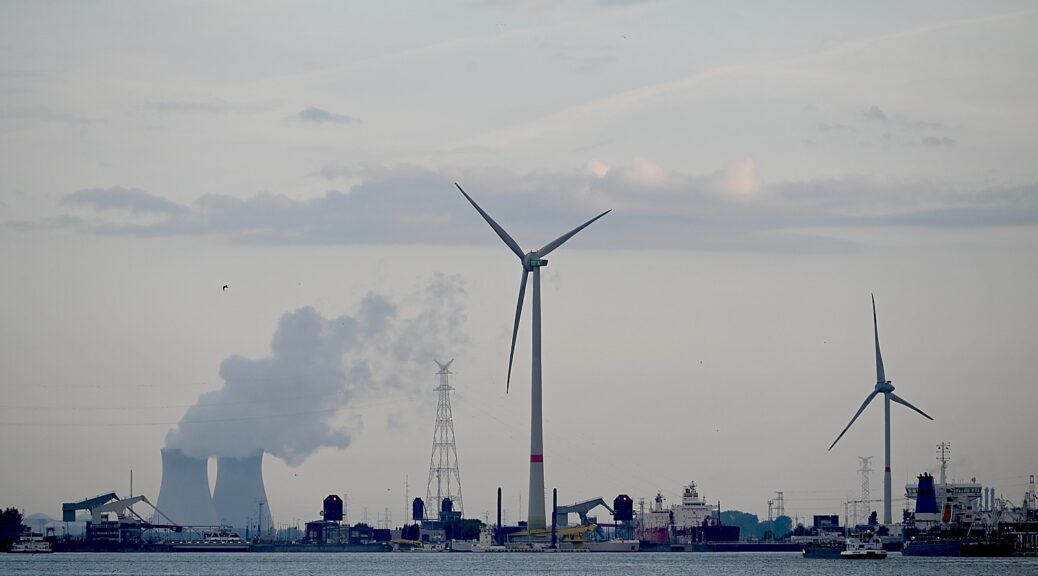
One of President Biden’s challenges is persuading nations not to abandon climate change goals because of the strain on fossil fuel supplies and prices created by Russia’s invasion of Ukraine, rather, the crisis should incentivize the transition to locally available clean, renewable energy. Here, Antwerp shows an “all-of-the-above” source of fuel, wind, nuclear and fossil © Karen Rubin/news-photos-features.com

In less than two years since taking office, President Biden’s leadership to tackle the climate crisis has boosted U.S. manufacturing and deployment of cost-cutting clean energy technologies, put the country on a durable path aligned with limiting warming to 1.5 °C, and galvanized global action by partners and the private sector – building unprecedented momentum towards achieving critical climate goals and strengthening global resilience. As more than a hundred countries gather for the 27th Conference of the Parties to the U.N. Framework Convention on Climate Change (COP27) in Sharm el-Sheikh, Egypt, the United States will work with partners to enhance global ambition to accelerate growth of the clean energy economy, avert the most catastrophic impacts of climate change, and help lower- and middle- income countries build resilience to climate impacts. In fact, the President has pledged to work with Congress to increase U.S. international climate finance to over $11 billion a year – which would make the United States the single largest contributor of climate finance. These actions are key to strengthening global security – including energy, water, food, and health security – which has been made all the more urgent following Russia’s war against Ukraine that has disrupted energy markets, strained economies with rising prices, and threatened vulnerable countries with severe food shortages.

At COP27 and beyond, the United States will encourage countries – particularly major economies – and the private sector to not only implement existing commitments and goals, but to also enhance commitments and goals to help close the gap between current pledges and what the latest science tells us is urgently needed.  And the United States will also encourage the international community to accelerate vulnerable countries’ ability to implement adaptation efforts. Through the President’s Emergency Plan for Adaptation and Resilience, PREPARE, the United States is rapidly increasing its support of adaptation and resilience programming to help more than half a billion people in developing countries adapt to and manage the impacts of climate change.

On November 11, President Biden will be at COP27 to build on efforts by the United States to accelerate growth of an equitable clean energy economy that will cut consumer energy costs, reduce global greenhouse gas emissions, advance the global climate fight, and help the most vulnerable build resilience to climate impacts. The United States is leading by example at home and abroad:

  • Leading at Home by Taking the Most Ambitious Climate Actions in U.S. History.  The President is delivering on his day one promise by positioning the United States to achieve our ambitious goals of reducing emissions 50-52% below 2005 levels in 2030 and to net-zero by 2050 through a series of unprecedented climate actions.  These actions will not only reduce emissions, but will bolster energy security, help families save money on their energy bills, create good-paying jobs for workers and spur a new era of clean American manufacturing, advance environmental justice, and ensure healthier air and cleaner water for communities.  Key actions include passing the Inflation Reduction Act and Bipartisan Infrastructure Law (BIL), ratifying the Kigali Amendment to the Montreal Protocol, tackling super-pollutants like methane, leveraging the purchasing power of the federal government, advancing decarbonization across all sectors, ensuring the clean energy transition benefits disadvantaged communities, and spurring innovation and supporting a new era of clean American manufacturing.
     
  • Supporting Vulnerable Countries in Building Resilience to Current and Future Climate Impacts by implementing the President’s Emergency Plan for Adaptation and Resilience (PREPARE). PREPARE aims to accelerate the ability of developing countries to adapt to and manage the impacts of climate change by preparing knowledge, plans, programs, finance, and private capital for adaptation and resilience efforts. Nineteen U.S. Federal agencies and departments are committed to working with partner countries to help them build resilience to climate impacts on food systems, water, infrastructure, health, and the economy.
     
  • Leading Global Efforts to Keep the 1.5 °C Goal within Reach. We are implementing the President’s major initiatives and priorities to accelerate global climate action.  This includes the Plan to Conserve Global Forests, mobilizing climate finance through the Partnership for Global Infrastructure and Investment (PGII), advancing implementation of the Global Methane Pledge (GMP), decarbonizing transportation (e.g., zero emissions vehicles, shipping, and aviation), accelerating innovation in and deployment of clean energy technologies, and enhancing food security.

LEADING AT HOME BY TAKING THE MOST AMBITIOUS CLIMATE ACTIONS IN U.S. HISTORY

  • The Inflation Reduction Act is by far the most ambitious climate and clean energy legislation in U.S. history, with $370 billion for building a clean energy economy, cutting consumer energy costs, combating the climate crisis, advancing environmental justice, and enhancing climate resilience.  The Inflation Reduction Act is expected to more than double U.S. clean energy production (e.g., solar, wind, battery storage, and more), save families hundreds of dollars per year on energy costs, and create millions of good-paying jobs, all while reducing greenhouse gas emissions by about 1 gigaton in 2030 – 10 times more climate impact than any other U.S. legislation ever enacted. This law also leans in on ensuring communities are prepared for climate impacts already here, by funding coastal resilience, drought, and tools to help communities make science-backed decisions.
     
  • The Bipartisan Infrastructure Law (BIL) delivers record support for upgrading the power grid to transmit more clean energy and withstand extreme weather, building a nationwide network of electric vehicle chargers, expanding public transit and passenger rail, investing in drought and wildfire preparedness, and cleaning up legacy pollution.
     
  • Bipartisan Senate Ratification of the Kigali Amendment to the Montreal Protocol and helping to phase down global production and consumption of hydrofluorocarbons (HFCs), super-polluting chemicals that are hundreds to thousands of times more powerful than carbon dioxide while also spurring growth in domestic manufacturing jobs in making HFC alternatives, where American companies are already leading the way.  As more countries join the United States in ratifying this amendment, we can prevent up to half a degree Celsius of warming this century.
     
  • Tackling super-pollutants like methane through implementation of the comprehensive U.S. Methane Emissions Reduction Action Plan and measures in the Inflation Reduction Act and BIL covering the oil and gas industry, agriculture, buildings and addressing abandoned mine lands, and orphan oil and gas wells – a source of toxic pollution and methane emissions.
     
  • Leading by example through the Federal Sustainability Plan to reduce emissions across 300,000 buildings, 600,000 vehicles, and $650 billion in annual purchasing power, and launching new initiatives like the Federal Buy Clean Initiative to spur private-sector commitments to reduce industrial emissions and the White House-HHS Health Care Sector Climate Pledge, which has secured aligned commitments from more than 100 health systems and industry organizations committed to resilience and decarbonization.
     
  • Addressing Climate Related Financial Risk to the federal government, real economy, and financial system by refining approaches and tools to assess fiscal risk in the President’s budget, conducting sensitivity analysis to federal programs, and undertaking macroeconomic risk analysis as well as through leadership from U.S. independent financial regulators improving their understanding and management of these risks, for example through the proposed climate disclosure rule by the Securities and Exchange Commission and the OCC’s and FDIC’s proposed principles on climate-related financial risk management for large banks.
     
  • Taking decisive action to decarbonize all key sectors – including power, transportation, buildings, industry, and lands and waters:
     
    • Power Sector Deployment – securing historic clean power investments that will more than double wind, solar, and battery storage deployment; jumpstart the American offshore wind industry; support hydrogen infrastructure; fast-track the process for permitting and deploying clean energy and transmission projects.
       
    • Clean Energy Research – through the recently launched Net Zero Gamechangers Initiative, driving the major innovation breakthroughs that we know the world needs to solve the climate crisis by addressing the toughest remaining technological challenges and cost hurdles in key sectors, and rapidly advance solutions to help achieve our climate and economic competitiveness goals. Billions of dollars have been committed to coordinate research so far on six key areas:  hydrogen, long-duration energy storage, carbon dioxide removal technologies, floating off-shore wind, advanced geothermal, and industrial heat.
       
    • Transportation – securing the largest investments ever in public transportation, passenger rail, an electric vehicle (EV) charging network, hydrogen infrastructure, and battery supply chains; rallying automakers and autoworkers around an electric transportation future, by setting a national target of 50% electric vehicle sales share in 2030, spurring more than $85 billion of investment in American manufacturing of EVs, batteries, and chargers, and launching the American Battery Materials Initiative; finalized strongest passenger vehicle standards in American history to increase average fuel economy to 49 miles per gallon – reducing emissions and savings drivers money at the pump; and advancing cleaner transit, shipping, and aviation; launching the Sustainable Aviation Fuel (SAF) grand challenge to achieve a minimum of a 50% reduction in life cycle greenhouse gas emissions compared to conventional fuel and supply sufficient SAF to meet 100% of aviation fuel demand by 2050.
       
    • Buildings – making historic investments in energy efficient homes and decarbonization, with more than $1 billion to expand weatherization and incentivize electrification, with more than $1 billion to expand weatherization and incentivize electric appliance and efficiency upgrades that will lower energy bills and emissions; updated energy-saving appliance and equipment standards to save households an average of $100 a year; accelerate next-generation clean building technologies.
       
    • Industrial – launched a breakthrough “Buy Clean” initiative leveraging federal standard setting and procurement and secured historic investments to reduce industrial emissions, including support for clean hydrogen, carbon capture, and cleaner industrial facilities for steel, iron, cement and other energy-intensive materials; and advanced manufacturing processes.
       
    • Lands and Waters – secured historic investments to enlist nature-based solutions in the fight against climate change with over $20 billion in the Inflation Reduction Act to support climate-smart farmers, ranchers, and forest landowners and the BIL support for climate resilience and ecosystem restoration; launched new initiatives to support conservation and carbon sequestration, including the America the Beautiful initiative to conserve 30 percent of U.S. lands and waters by 2030; and issued an Executive Order on strengthening America’s forests.
       
  • Ensuring the clean energy transition benefits disadvantaged communities by implementing the Justice40 Initiative to deliver 40% of overall benefits from federal investments in climate and clean energy to disadvantaged communities that are marginalized, underserved, and overburdened by pollution.
     
  • Investing in economic revitalization of coal communities by creating the Interagency Working Group on Coal and Power Plant Communities and Economic Revitalization, chaired by the White House and including eleven federal agencies, dedicated to increasing federal investment in land remediation and reclamation, economic diversification, and workforce training strategies for displaced fossil energy workers in diverse communities across the U.S.; and by directing significant new resources to fossil energy communities through the BIL and Inflation Reduction Act. 
     
  • Spurring innovation and supporting a new era of clean American manufacturing by passing the CHIPS and Science Act, using trade policy and Buy Clean actions to incentivize low-carbon production of key materials like steel, and invoking the Defense Production Act for five critical clean energy technologies.

LEADING GLOBAL EFFORTS TO SUPPORT VULNERABLE COUNTRIES IN BUILDING RESILIENCE TO CURRENT AND FUTURE CLIMATE IMPACTS

  • Scaling up U.S. public finance for climate adaptation and resilience by advancing President Biden’s commitment to work with Congress to increase U.S. international climate adaptation finance to $3 billion a year by 2024, a six-fold increase from the highest historical funded level. 
  • Helping more than half a billion people in developing countries adapt to and manage the impacts of climate change through ambitious efforts outlined in a whole-of-government PREPARE Action Plan by:
     
    • Responding to the UN Secretary-General’s call to ensure “Early Warning for All” by 2027 and increasing co-production and use of climate information;
       
    • Equipping the decision-makers of today and tomorrow with the skills, knowledge, networks, and outlook needed to adapt to climate impacts;
       
    • Building capacity to mainstream adaptation into policies, programs, and budgets and to support locally led adaptation;
       
    • Improving partner governments’ ability to assess, plan for, and implement programs that increase resilience to the impacts of climate change on food security, water, health, and infrastructure;
       
    • Increasing the amount and quality of finance that accelerates climate adaptation and resilience and supports gender-responsive, locally-led adaptation;
       
    • Assisting partner governments to assess, plan, and budget for adaptation costs, and scale up financing in all sectors;
       
    • Facilitating increased investment from the philanthropic and private sectors to advance adaptation and resilience in climate-vulnerable partner countries; and
       
    • Increasing and enhancing the use and effectiveness of disaster risk financing tools to support climate resilience.

LEADING GLOBAL EFFORTS TO KEEP THE 1.5 DEGREE GOAL WITHIN REACH

  • Executing the President’s Plan to Conserve Global Forests by working to help drive progress forward in each of the Plan’s four key objectives since President Biden launched the Plan at COP26, including building a whole-of-government approach to deliver on this ambitious, decade-long plan to support global efforts to halt and reverse deforestation by leveraging a range of diplomatic, policy, and financing tools.  The United States will continue this leadership through Special Envoy for Climate John Kerry’s co-Chairing of the Forest Climate Leaders Partnership, working alongside over 20 governments who are committed to advancing key actions and initiatives and acting to halt and reverse global deforestation by 2030.
     
  • Rapidly innovating and deploying clean energy solutions by bringing together the global community for the first-ever Global Clean Energy Action Forum in Pittsburgh last September, anchored by the Clean Energy Ministerial (CEM) and Mission Innovation (MI).  Together, 34 countries and stakeholders from the entire energy ecosystem of government, businesses, innovators, civil society, and youth around the world gathered to take action on the clean energy transition and enhance investment including the launch of the Zero-Emissions Government Fleet Declaration, regional hydrogen hubs, and new funding in carbon management programs.
     
  • Scaling up climate finance by advancing President Biden’s commitment at the 2021 UN General Assembly to work with Congress to increase U.S. international climate finance to over $11 billion a year by requesting the funds and authorities necessary to achieve this goal in his Fiscal Year 2023 Budget Request.  Recognizing that catalyzing private investment will be critical to reaching the scale of resources that will be required, the United States is also focused on using our finance in innovative ways, including to unlock the much larger sums of private finance that will be needed.  These efforts are integral to the Partnership for Global Infrastructure and Investment, which has climate and energy security as one of its central pillars.  For instance, the United States recently made a $950 million loan contribution to the Clean Technology Fund which will support MDB efforts to help key emerging market countries accelerate coal transition, which is expected to catalyze billions in private finance.  The multilateral development banks (MDBs) are also a key part of our strategy for scaling up climate finance to support climate action in developing countries. The United States is leading the charge in encouraging the MDBs to both increase their climate finance and make it more accessible to recipients.  These actions would help the MDBs build on their all-time-high of $66 billion in climate finance provided in 2020, with $38 billion going to low- and middle-income economies. USAID is also engaging directly with private sector partners to mobilize finance at scale using our grants and technical assistance to provide risk-sharing for investment in critical climate solutions, as well as building the pipeline for bankable projects.
     
  • Advancing the Global Methane Pledge (GMP) by building a coalition that now includes over 130 countries committed to reduce global anthropogenic methane emissions at least 30 percent below 2020 levels by 2030, as called for in the Global Methane Pledge that President Biden and European Commission President Von der Leyen launched at COP26.  To achieve the fastest and deepest methane reductions, President Biden announced a new GMP Energy Pathway focusing on fossil energy methane emissions at the June 2022 Major Economies Forum on Energy and Climate (MEF), alongside the European Union and 11 other countries.  The Energy Pathway mobilizes new policies, projects, technical assistance, and investment resources to dramatically reducing flaring, venting, and leakage of methane from fossil energy operations.  Achieving the full methane mitigation potential in this sector could avoid 0.1°C warming by midcentury and would boost global energy security by preventing the waste of 260 billion cubic meters of gas per year—equivalent to over one-third of Russia’s annual gas production.
     
  • Accelerating Zero-Emissions Vehicle (ZEV) Deployment by building a growing coalition of countries committed to a collective 2030 goal of ZEVs comprising 50% of new light-duty vehicle sales by 2030, to include battery electric, fuel cell electric, and plug-in hybrid vehicles.  In addition to the United States, the coalition includes Canada, Chile, the European Commission, France, Germany, Italy, Mexico, Norway, and the United Kingdom.
     
  • Advancing Agriculture Innovation Mission for Climate (AIM for Climate), launched at COP26 by the United States and the United Arab Emirates. AIM for Climate and its growing network of over 275 partners seek to drive more rapid and transformative climate action by increasing investment and support for climate-smart agriculture and food systems innovation. AIM for Climate achieved its goal of doubling the total increased investment mobilized by its partners from $4 billion announced at COP26 to over $8 billion at COP27, which includes over $1 billion from 30 partner-led innovation sprints.  The United States has also announced plans to host the AIM for Climate Summit on May 8-10, 2023 in Washington, DC.
     
  • Expanding the First Movers Coalition launched by President Biden and the World Economic Forum at COP26. The First Movers Coalition is the flagship U.S. public-private partnership to commercialize clean technologies through advance purchase commitments. Its corporate members have pledged $10 billion, the world’s strongest demand signal, for bringing emerging innovations to scale. On its first anniversary, the First Movers Coalition has grown to more than 60 companies, representing more than 10% of the global Fortune 2000 by market value, as well as ten governments. Each member company has made unprecedented purchasing commitments by the end of this decade in order to drive investment in next-generation clean steel, aluminum, and cement; near-zero carbon aviation fuels; zero-emission trucking and shipping; and carbon dioxide removal.  These commitments will drive down the green premium of emerging technologies and bring competitive technologies to market this decade that are needed to decarbonize so-called “hard-to-abate” sectors of the global economy that produce a third of global emissions.
     
  • Demonstrating Clean Energy Technologies by rallying sixteen partner countries to collectively mobilize $94 billion in public funding to build commercial-scale demonstration projects that the IEA says are needed this decade to achieve net-zero emissions by 2050 – meeting a challenge that President Biden issued to other world leaders at his June MEF. Partners that joined the President in announcing contributions earlier this year included Australia, Canada, European Commission, Finland, France, Germany, Japan, the Netherlands, Norway, Poland, the Republic of Korea, Singapore, Sweden, United Arab Emirates and the United Kingdom.
     
  • Bolstering Climate & Food Security, including through President Biden’s September 2022 announcement at UNGA of over $2.9 billion in new U.S. assistance to address global food insecurity stemming from climate change, COVID-19, and Russia’s unprovoked and ongoing war against Ukraine, which builds on the $6.9 billion in U.S. government assistance to support global food security already committed this year.  The United States is providing additional funding to the Global Agriculture and Food Security Program, the African Development Bank, and the International Fund for Agricultural Development that will promote climate resilient food systems. Following President Biden’s call to action at the June 2022 Major Economies Forum, at COP27 the United States and partners will announce funding commitments to the Global Fertilizer Challenge to advance fertilizer efficiency and reduce the impact of shortages on food security.

New York City’s Village Halloween Parade 2022 Celebrates Freedom

Village Halloween Parade 2022, NYC © Karen Rubin/goingplacesfarandnear.com

By Karen Rubin, Travel Features Syndicate, goingplacesfarandnear.com

Not even a surprise rainshower could dampen the spirits marching down 6th avenue for the New York’s famed Village Halloween Parade – and there were spirits galore.

Village Halloween Parade 2022, NYC © Karen Rubin/goingplacesfarandnear.com

The 49th Annual Village Halloween was themed FREEDOM! It’s a move! It’s a moment! Feel it!!! The Grand Marshal for 2022 was The Brooklyn United Marching Band with special surprise guests who played Jon Batiste’s song Freedom! 

Village Halloween Parade 2022, NYC © Karen Rubin/goingplacesfarandnear.com

 “We are encouraging glittery costumes, your best dance moves and anything that allows you to feel light, joyful, free and colorful! We’re gonna lift the spirits of the whole world!” says Jeanne Fleming, Artistic and Producing Director. “However you do it, feel the joy and freedom of expression in one of New York’s most iconic and wildly creative events!

Village Halloween Parade 2022, NYC © Karen Rubin/goingplacesfarandnear.com

The parade is the nation’s largest public Halloween celebration, has been named by Events International as The Greatest Event on Earth on October 31, and ranked 3rd by Citysearch as the best event in New York City.

“Tranny Grannies” from Asheville NC at Village Halloween Parade 2022, NYC © Karen Rubin/goingplacesfarandnear.com

It draws people (as we found) from around the world – Poland, England, Corsica among the locales.

Indeed, by bringing hundreds of thousands of tourists, the event generates an estimated $90 million in tourism dollars for the city, providing Greenwich Village businesses and restaurants their best night of the year.

Dominique and J.J. traveled from Corsica, France, especially for the Village Halloween Parade 2022, NYC © Karen Rubin/goingplacesfarandnear.com

And, by turning a large and complex city into a small town for just one night, the Parade has been a pioneer in the critical movement toward the resurrection and rejuvenation of the City.

Here are Parade highlights:

Village Halloween Parade 2022, NYC © Karen Rubin/goingplacesfarandnear.com
Family enjoying Village Halloween Parade 2022, NYC © Karen Rubin/goingplacesfarandnear.com
Family visiting from Massachusetts for the Village Halloween Parade 2022, NYC © Karen Rubin/goingplacesfarandnear.com
Liz and Sophie from Huntington, Long Island enjoy VIP seats at Village Halloween Parade 2022, NYC © Karen Rubin/goingplacesfarandnear.com
Susan Solow and son Daniel (the cow), from Long Island at Village Halloween Parade 2022, NYC © Karen Rubin/goingplacesfarandnear.com
Village Halloween Parade 2022, NYC © Karen Rubin/goingplacesfarandnear.com

__________________

© 2022 Travel Features Syndicate, a division of Workstyles, Inc. All rights reserved. Visit goingplacesfarandnear.com, www.huffingtonpost.com/author/karen-rubin, and travelwritersmagazine.com/TravelFeaturesSyndicate/. Blogging at goingplacesnearandfar.wordpress.com and moralcompasstravel.info. Visit instagram.com/going_places_far_and_near and instagram.com/bigbackpacktraveler/ Send comments or questions to FamTravLtr@aol.com. Tweet @TravelFeatures. ‘Like’ us at facebook.com/NewsPhotoFeatures

FACT SHEET: By The Numbers: Millions of Americans Would Lose Health Care Coverage, Benefits, and Protections Under Congressional Republicans’ Plans

This fact sheet on the impact on health care coverage, benefits and protections under the Congressional Republicans’ plans was provided by the White House:

While President Biden has secured a cap on insulin costs at $35/month, a cap on out-of-pocket prescription drug costs to $2000, enabled Medicare for the first time to negotiate drug prices, and lowered the cost of health care premiums, Congressional Republicans have promised to strip Medicare of the right to negotiate drug prices and remove the $2,000 cap on out-of-pocket pharmacy expenses and would  put Medicare, Medicaid, and Social Security on the chopping block every five years. © Karen Rubin/news-photos-features.com

President Biden’s top priority is to lower costs for the American people. He was proud to sign the Inflation Reduction Act into law, taking on Big Pharma to allow Medicare to negotiate prescription drug costs for the first time, capping seniors’ drug costs at the pharmacy and the cost of insulin, and lowering health insurance premiums for people who get coverage through the Affordable Care Act. President Biden and Congressional Democrats are committed to protecting and strengthening Social Security and Medicare.
 
Congressional Republicans have a very different vision. They have promised to strip Medicare of the right to negotiate drug prices and remove the $2,000 cap on out-of-pocket pharmacy expenses. Florida’s Republican Senator and Chair of the National Republican Senatorial Committee Rick Scott has championed a plan to put Medicare, Medicaid, and Social Security on the chopping block every five years. Further, Congressional Republicans have repeatedly pledged to hold the American economy hostage by refusing to raise the debt limit unless they can cut Social Security and Medicare benefits that tens of millions of Americans have already paid into. 
 
Here’s what Congressional Republicans’ plan would mean:

Part I: Putting Bedrock Programs like Social Security and Medicare on the Chopping Block and Threatening the Global Economy Unless Those Programs Are Cut

All Medicare, Medicaid, and Social Security beneficiaries would see their benefits threatened under Sen. Rick Scott’s plan to put those programs on the chopping block every five years. Sen. Ron Johnson’s vision of putting them up for a vote every year would make that even worse. 
 
Congressional Republican leaders have also repeatedly said they will use the debt limit as leverage to cut these bedrock programs. Congressional Republicans have supported Medicare and Social Security cuts including:

  • Gradually increasing the Medicare eligibility age to 67 and the Social Security eligibility age to 70. (Republican Study Committee FY 2023 Budget)
     
  • Transforming Medicare benefits into a voucher where seniors would get a fixed amount of money to purchase a private health plan (Better Way Plan) or offering beneficiaries the option to transition to a premium support system (Republican Study Committee FY 2023 Budget) – which could lead to hundreds or thousands of dollars in additional out of pocket costs for seniors throughout the country.


Part II: Repealing the Prescription Drug and Health Care Provisions in the Inflation Reduction Act
 

President Biden has worked for decades to let Medicare negotiate drug prices, and that is finally happening thanks to the Inflation Reduction Act.  This will save billions of dollars for both Medicare beneficiaries, who will see reduced premiums and out-of-pocket costs, and the federal government. Kaiser Family Foundation estimates suggest that some 5 to 7 million beneficiaries each year use the types of high-cost drugs that could be subject to negotiation and will directly face higher cost sharing if these provisions are repealed.

The Inflation Reduction Act also requires prescription drug companies to pay rebates if they increase drug prices faster than inflation. According to an analysis by the Department of Health and Human Services, the cost of 1,200 prescription drugs rose faster than inflation in the last year alone – some prescription drugs increasing by $1000 in just one year. If Congressional Republicans repeal the Inflation Reduction Act, drug companies will be able to continue raising prices without paying a rebate, rather than putting that money back into Americans’ pockets.
 

Before the Inflation Reduction Act, Medicare beneficiaries with conditions like cancer, multiple sclerosis, and lung disease could face thousands of dollars in out-of-pocket prescription drug costs per year. Thanks to President Biden and Congressional Democrats’ Inflation Reduction Act, those costs will be capped at $2,000 per year, saving over 1 million beneficiaries an average of over $1,300 per year. If Congressional Republicans get their way and repeal the law, over 1.4 million Medicare beneficiaries will pay more each year – thousands of dollars more in some cases – for drugs at the pharmacy.
 

Drug manufacturers have raised insulin prices so rapidly over the last few decades that some Medicare beneficiaries struggle to afford this life-saving drug that costs less than $10 a vial to manufacture. Today, Medicare beneficiaries are enrolling in plans that must cap the out-of-pocket cost of insulin at no more than $35 per month per prescription, a protection they will lose if the law is repealed.
 

The Inflation Reduction Act saves 13 million Americans an average of about $800 per year on their health care premiums, by continuing the improvements to Affordable Care Act (ACA) premium tax credits enacted in the American Rescue Plan. By making health care more affordable, these improvements have expanded coverage to millions of people, helping bring the uninsured rate to an all-time low. Starting today, during Open Enrollment season, Americans can choose health insurance plans that lock in the Inflation Reduction Act’s cost savings for 2023. But Congressional Republicans would repeal this assistance, drive premiums higher, and jeopardize the progress the Biden Administration has made in driving the uninsured rate to a historic low. Older Americans would see especially large premium spikes; in most states, annual premiums for a 60-year old making $60,000 would more than double to over $10,000.

Biden Chastises Oil Companies for Ungodly Profiteering as ‘Windfall of War;’ Warns of Windfall Profit Tax

American-based oil companies have basically indulged in price-gouging, war-profiteering – as evidenced by record profits during the third quarter. We’re talking Exxon’s highest quarterly profits in its 152-year history. The oil companies have pocketed $100 billion in just 200 days, two and three times the quarterly profit of a year ago, setting historic records. “Their profits are a windfall of war,” President Biden declared, “the windfall from the brutal conflict that’s ravaging Ukraine and hurting tens of millions of people around the globe.” © Karen Rubin/news-photos-features.com

Americans say they are really, really upset about higher gas prices, despite the fact the prices have come down consistently since the peak in the summer ($1.20) and are just about 30c higher per gallon, and that the price rise is largely due to Putin’s genocidal invasion of Ukraine, and but that inflation will affect how they vote. But what is also clear is that American-based oil companies have basically indulged in price-gouging, war-profiteering – as evidenced by record profits during the third quarter. We’re talking Exxon’s highest quarterly profits in its 152-year history. The oil companies have pocketed $100 billion in just 200 days, two and three times the quarterly profit of a year ago, setting historic records. Think about that.

“Their profits are a windfall of war,” President Biden declared, “the windfall from the brutal conflict that’s ravaging Ukraine and hurting tens of millions of people around the globe.  You know, at a time of war, any company receiving historic windfall profits like this has a responsibility to act beyond their narrow self-interest of its executives and shareholders…if they don’t, they’re going to pay a higher tax on their excess profits and face other restrictions. ..It’s time for these companies to stop war profiteering, meet their responsibilities to this country, and give the American people a break and still do very well.” 

And here’s my question: the oil companies are using billions of that profit to buy back their stock, rather than reinvest or do something productive with all that cash. Why don’t they instead  be the ones developing, installing and owning clean, renewable energy technologies – be part of the solution to carbon-emissions-caused global warming and climate change, rather than the cause. They could be developing battery-storage technologies, EV charging infrastructure, cheaper and better solar panels and wind turbines. Instead, they spend their untold billions to lobby lawmakers to challenge climate action and propagandize climate change denial.

Here’s another issue: they are deliberately keeping gas prices high because they know it may hurt Democrats’ control of Congress, and stop, even reverse Biden’s progress on climate action and a transition to clean, renewable energy.

Here are the facts, provided by the White House, and President Biden’s remarks – Karen Rubin/news-photos-features.com

Oil companies are posting record profits. Over the last two quarters alone, ExxonMobil, Chevron, Shell, BP, ConocoPhillips, and TotalEnergy earned over $100 billion in profits. That is more than they earned all of last year, and more thantwo-and-a-half times what they earned in the same quarters of 2021.

Oil companies are overcharging American families at the pump. Today, profit margins at five of the largest oil companies are higher than their pre-pandemic levels.Refining margins per gallon of gasoline are about 50 cents over historical levels – nearly double what is typical. Diesel profit margins are even larger at about $1.90 above historical levels – more than six times what is typical. 

Oil companies are padding shareholder pockets rather than increasing production. ExxonMobil, Chevron, Shell, BP, ConocoPhillips, and TotalEnergy are spending more money buying back their own shares than investing in raising their productive capacity. Over the last six months, these companies reported spending over $50 billion to buy back their own shares and pay out dividends. That’s about the same amount that these companies returned to shareholders all of last year. In Q2 and Q3 of 2022, the ratio of capital expenditures to earnings of the six large oil companies was only 35%, compared to over 130% during the same quarters from 2017 to 2019 pre-pandemic. 

President Biden remarked on the record oil profits on October 31. Here’s a transcript:

Putin’s invasion of Ukraine in March set gas prices soaring literally around the world — not just here, but around the world. 
 
And because of the action we’ve taken since then, gas prices have actually come down — going into the Strategic Petroleum Reserve — here at home, in America.  They’re down more than $1.20 since their peak this summer.  And they’ve been falling for the best of — best part of the last three weeks. 
 
In June, the average price — not the most common price, but the average price — nationwide was — was over $5 a gallon.  Today, the average price for a gallon of gas is $3.76.  That’s adding up to real savings for American families — the difference between those prices.  And this difference makes a difference. 
 
In a difficult time, Americans across the country have stepped up to do the right thing.  But not everyone has stepped up.  The oil industry has not met its commitment to invest in America and support the American people. 
 
One by one, major oil companies have reported record profits, not just a fair return for hard work.  Every company is entitled to that: a fair return for the work they do or innovation they generate.  But I mean profits so high it’s hard to believe. 
 
Now, the second quarter of the profits were really high.  But the third quarter — last week, Shell announced that it made $9.5 billion in profits for the third quarter — $9.5 billion.  That’s almost twice as much as it made in the third quarter of last year.  I think that’s something.  You think that’s incredible?  I thought, “My — that’s as good as — as high as it’s going to get.” 
 
Then along came Exxon.  Exxon’s profits for the third quarter were at $18.7 billion.  One quarter: $18.7 billion — nearly triple what Exxon made last year and the most in its 152-year history.  It’s never made that much profit. 
 
In the last six months, six of the largest oil companies have made more than $100 billion — $100 billion.  And we had a little discussion about this, the three of us and others.  One hundred billion in profits in two — less than 200 days… 

 
Here’s why it matters: If these companies were making average profits they’ve been making by refining oil over the last 20 years instead of the outrageous profits they’re making today and if they passed the rest on to the consumers, the price of gas would come down around an additional 50 cents. 
 
If they’re investing their profits at historic rates in their U.S. operations, then America would be producing more oil today and prices would be down even further.  But rather than increasing their investments in America or giving American consumers a break, their excess profits are going back to their shareholders and to buying back their stock, so the executive pay is going to skyrocket.
 
Give me a break.  Enough is enough.  Look, I’m a capitalist.  You’ve heard me say this before: I have no problem with corporations turning a fair profit or getting the return on their investment and innovation.  But this isn’t remotely what’s happening. 
 
Oil companies’ record profits today are not because they’re doing something new or innovative.  Their profits are a windfall of war — the windfall from the brutal conflict that’s ravaging Ukraine and hurting tens of millions of people around the globe.  You know, at a time of war, any company receiving historic windfall profits like this has a responsibility to act beyond their narrow self-interest of its executives and shareholders. 
 
I think they have a responsibility to act in the interest of their consumers, their community, and their country; to invest in America by increasing production and refining capacity.  Because they — they don’t want to do that.  They — they have the opportunity to do that — lowering prices for consumers at the pump.
 
You know, if they don’t, they’re going to pay a higher tax on their excess profits and face other restrictions.  My team will work with Congress to look at these options that are available to us and others.  It’s time for these companies to stop war profiteering, meet their responsibilities to this country, and give the American people a break and still do very well. 
 
The American people are going to judge who’s standing with them and who is only looking out for their own bottom line.  I know where I stand.

Biden Acts to Lower Health Care and Prescription Drug Costs for Americans

This is a fact sheet from the White House on actions President Biden has taken to lower health care and prescription drug costs:

To mark the start of Medicare Open Enrollment season, President Biden highlighted how seniors can take advantage of the Inflation Reduction Act’s cost-saving provisions as they shop for new health insurance plans. The President also signed an Executive Order directing the Department of Health and Human Services to explore additional actions it can take to lower prescription drug costs to build on his Administration’s work lowering costs for working and middle-class families © Karen Rubin/news-photos-features.com

To mark the start of Medicare Open Enrollment season, President Biden highlighted how seniors can take advantage of the Inflation Reduction Act’s cost-saving provisions as they shop for new health insurance plans. The President also signed an Executive Order directing the Department of Health and Human Services to explore additional actions it can take to lower prescription drug costs to build on his Administration’s work lowering costs for working and middle-class families.
 
Americans are squeezed by the cost of living – that’s been true for years and is a key reason the President ran. Health care costs in particular are driving inflation. Too many Americans face challenges paying for prescription drugs. On average, Americans pay two to three times as much as people in other countries for prescription drugs, and one in four Americans who take prescription drugs struggle to afford their medications. Nearly three in ten American adults who take prescription drugs say that they have skipped doses, cut pills in half, or not filled prescriptions due to cost.
 
The Inflation Reduction Act – which President Biden and Congressional Democrats delivered – tackles that problem and locks in on average $800 per year lower health care premiums for 13 million families, lowers seniors’ prescription drug prices, and caps their out of pocket expenses for prescription drugs at $2,000 per year. The Inflation Reduction Act protects Medicare beneficiaries from catastrophic drug costs by phasing in a cap for out-of-pocket costs at the pharmacy, establishing a $35 monthly cap per prescription of insulin, requiring companies who raise prices faster than inflation to pay Medicare a rebate, and allowing Medicare to negotiate prices for high-cost prescription drugs for the first time ever. Republicans in Congress, meanwhile, have said their top priority is to repeal the Inflation Reduction Act, ending these cost-saving provisions and raising prices for tens of millions of Americans.
 
To further lower health care costs, earlier this week, the Treasury Department took action to fix the so-called “family glitch” rule that was making it harder for families to afford health care coverage for their spouse or child. About 1 million Americans will either gain coverage or see their insurance become more affordable as a result of the new rule.
 
Lowering Medicare Costs This Open Enrollment Season
 
Starting this January, seniors and other Medicare beneficiaries will begin to see the benefits of these cost-saving measures. Because of the Inflation Reduction Act:

  • A month’s supply of insulin will be capped at $35 starting on January 1, 2023.
  • Medicare beneficiaries will pay $0 out of pocket for recommended adult vaccines covered by their Part D plan, including the shingles vaccine – which costs seniors up to $200.
  • Prescription drug companies that try to raise their prices faster than inflation will be required to pay Medicare a rebate. 

Earlier this year, HHS released a report showing that the price of 1,200 prescription drugs rose faster than inflation in just the last year. For example, one manufacturer of a drug used to treat high blood pressure and heart failure, used by millions of Medicare beneficiaries, increased the drug’s price by nearly 540 percent in 2022. Another drug used to treat autoimmune conditions increased by $1000 just this year.
 
During Medicare Open Enrollment – running from October 15 to December 7 – seniors and other beneficiaries will be able to choose drug coverage that reflects these new cost-savings, putting money back into their pockets.
 
Medicare beneficiaries should visit Medicare.gov or call 1-800-MEDICARE to review their options for the coming year, and make sure their health and prescription drug coverage is right for them. 
 
Using HHS’ Innovation Center to Further Bring Down Costs
 
As the Biden-Harris Administration works to implement the Inflation Reduction Act, President Biden will sign an Executive Order today directing the Department of Health and Human Services to consider additional actions to further drive down prescription drug costs. That includes leveraging the “Innovation Center” at HHS, created by the Affordable Care Act, which has authority to test new ways of paying for Medicare services that improve the quality of care while lowering costs. 
 
Under the Executive Order, HHS will have 90 days to submit a formal report outlining any plans to use the Innovation Center’s authorities to lower drug costs and promote access to innovative drug therapies for Medicare beneficiaries. This action would build on the Inflation Reduction Act’s landmark drug pricing reforms and help provide additional breathing room for American families.

Democrats Deserve to Boast Over Historic Progress in Biden’s First 2 Years

US Senator Chuck Schumer with NY Governor Kathy Hochul and NYC Mayor Eric Adams at the 2022 Lunar New Year Parade in Chinatown. Senator Schumer, the Senate Majority Leader, is touting historic progress since Democrats took control of Congress and the White House © Karen Rubin/news-photos-features.com

Washington, D.C. –  Senate Majority Leader Chuck Schumer (D-NY) released the following statement on the historic achievements made by Senate Democrats since President Biden took office:

“There are two words that I believe perfectly summarize the Senate under Democratic leadership: productive and bipartisan. To even do small things in the Senate is tough. To pass major pieces of bipartisan legislation in the longest evenly divided Senate in history is a testament to Democrats’ persistence and hard work to deliver for the American people,” Senate Majority Leader Chuck Schumer said.

“On top of all the major accomplishments last year, in 2022 alone, we passed a significant postal reform bill over a decade in the making. We passed a bold and robust government funding package which included the reauthorization of the Violence Against Women Act. We passed critical emergency aid for the people of Ukraine. We passed the Emmett Till Anti-Lynching bill, after a century of waiting. We confirmed the first Black woman to the Supreme Court. We passed the first gun safety legislation in 30 years. We passed an historic investment in America’s future with the CHIPS and Science Act. We passed legislation to help our veterans suffering from the effects of toxic burn pits. And we passed the Inflation Reduction Act which will lower costs for prescription drugs, fight climate change and cut down on inflation and the deficit.”

Lowering Costs, Creating Jobs, And Taking Historic Action to Fight Climate Change. The Senate passed the Inflation Reduction Act, historic legislation that will lower drug and energy costs, create jobs, reduce the deficit, and take the most significant action ever to fight climate change.

Delivering Critically Needed Historic Legislation To Rebuild Our Crumbling Infrastructure. The Bipartisan Infrastructure law is “the biggest public-works bill since former President Eisenhower created the interstate highway system in 1956.” The infrastructure law includes the largest-ever investment in clean drinking water, the largest-ever investment in public transit, the largest investment in passenger rail since the creation of Amtrak, and the largest investment in clean energy transmission and EV infrastructure in U.S. history. Across the country, Senate Democrats have held event after event to spread the word about the direct impact these investments will have on their communities. And the Senate passed the Water Resources Development Act of 2022.

Providing Critical Support For American Families. Thanks to the American Rescue Plan, more than 160 million Americans received economic impact payments. The American Rescue Plan provided tens of billions of dollars to support vaccination and testing in response to the COVID pandemic. The 2022 funding law includes historic investments in our communities.

Supercharging American Innovation and Laying the Groundwork for a New Century of American Leadership. President Biden signed the Chips and Science Act, critical legislation to boost American competitiveness, ease supply chains, invest in scientific research, incentivize semiconductor manufacturing, and create jobs. President Biden signed bipartisan ocean shipping legislation to ease supply chains and drive down costs of shipped goods.

Righting Wrongs For Our Veterans and Their Families. The Senate passed and President Biden signed historic legislation to help veterans exposed to burn pits access the care they need for injuries sustained serving their country.

Enacting The First Major Gun Safety Law in Decades. President Biden signed the most significant gun safety legislation in 30 years, including incentives for red flag laws, closing the “boyfriend loophole,” creating new federal straw purchasing and trafficking criminal offenses, and funding a historic expansion of mental health services. And the Senate confirmed the first permanent Director of the Bureau of Alcohol Tobacco Firearms and Explosives since 2015.

Supporting and Modernizing the Postal Service. The Senate passed bipartisan legislation to invest in the Post Office and improve delivery.

Protecting Americans Against Hunger. President Biden signed the FORMULA Act and the Access to Baby Formula Act to expand the availability of baby formula. And President Biden signed the Keep Kids Fed Act to extend funding for healthy meals for children over the summer.

Making Historic Steps to Restore the Judiciary. Senate Democrats confirmed the first Black woman to serve on the Supreme Court, Justice Ketanji Brown Jackson. Thanks to Senate Democrats, President Biden has had 75 District and Circuit Court judicial nominees confirmed. And, according to FiveThirtyEight, “Biden’s judges are breaking records on diversity.”

Supporting The People of Ukraine Against Putin’s Illegal War And Holding Russia Accountable. Senate Democrats passed and President Biden signed legislation to provide more than $10 billion in support for the people of Ukraine, followed by an additional $40 billion in emergency aid to Ukraine,suspend Permanent Normal Trade Relations (PNTR) with Russia, ban the importation of Russian energy exports, and the Ukraine Democracy Defense Lend-Lease Act. And the Senate approved NATO membership for Finland and Sweden.

Ending Forced Arbitration for Survivors of Sexual Assault. President Biden signed a bipartisan bill that ends forced arbitration in workplace sexual assault and harassment cases, allowing survivors to file lawsuits in court against perpetrators.

Fighting Back Against Hate, Crime and Oppression. President Biden signed into law legislation to make lynching a federal hate crime. The COVID-19 Hate Crimes law will allow us to better confront anti-Asian hate crimes. The Uyghur Forced Labor Prevention Act, passed unanimously by the Senate, will ban the sale of goods made by Uyghur slave labor and take a stand against the genocide of the Uyghur people. President Biden signed bipartisan legislation to provide support to the victims of crimes. And President Biden signed legislation to commemorate Juneteenth, celebrating the end of slavery in the United States. The Senate passed legislation to streamline research of marijuana. The 2022 Omnibus funding bill also included a reauthorization of the Violence Against Women Act.

Undoing the Trump Administration’s Worst Rules and Making Progress in the Fight Against Climate Change. President Joe Biden signed three separate laws to repeal Trump-era rules,“blocking payday lenders from avoiding caps on interest rates, restricting climate-warming greenhouse gas emissions from oil and gas drilling and ending rules on how the Equal Employment Opportunity Commission settles claims.”

Confirming History-Making Nominees. According to the Brookings Institution, the Biden administration made history with “the most diverse set of confirmed appointees.”This includes the first Native American Cabinet Secretary (Sec. Haaland), the first woman to be Secretary of the Treasury (Sec. Yellen), the first Black Secretary of Defense (Sec. Austin), and many more. 

See also: Elect Democrats

FACT SHEET: Biden Takes New Actions to Strengthen US Energy Security, Encourage Production, Bring Down Costs

In August, gas prices on Long Island were at $3.99/gallon – a rate that European countries would envy – having fallen steadily since June from highs of $5. By October , prices had fallen to $3.19, but rose again to $3.49 after Saudi Arabia cut production. Big Oil companies, though, are making record profits. President Biden is taking new actions to lower prices and strengthen US energy security © Karen Rubin/news-photos-features.com

It is worth noting that Republicans have staked their takeover of Congress and state houses on inflation, especially in gas prices, but while offering no actual solutions, have actively obstructed efforts to mitigate the pain of higher costs to American families, for example, blocking efforts to address price gouging and the fact that energy companies have pocketed RECORD profits. Much of the pressure on prices is out of Biden’s control, since prices are set on a global market, and Saudi Arabia , in conjunction with OPEC, has decided to throw its support to Russia by reducing oil output in order to put further upward pressure on prices. Here is a White House Fact Sheet on new actions President Biden is taking to strengthen US energy security, encourage production and bring down costs:

President Biden is committed to doing everything in his power to respond to Putin’s Price Hike at the pump, and he is delivering. Gas prices fell at the fastest rate in over a decade this summer, with average prices down by about $1.15 per gallon since their peak in June – and just about 30 cents above levels on February 24, when the war in Ukraine began. In fact, gas prices have fallen 15 out of the last 18 weeks. According to an industry analyst, the most common price across the country today is $3.39.

President Biden is directing his Administration to take additional action to strengthen energy security, address the supply crunch, and lower costs.

First, the Department of Energy (DOE) is issuing a Notice of Sale tomorrow morning for 15 million barrels from the Strategic Petroleum Reserve (SPR) to be delivered in December. This sale will complete the historic, 180-million-barrel drawdown the President announced in the spring, which has helped to stabilize crude oil markets and reduce prices at the pump. The President is also calling on DOE to be ready to move forward with additional significant SPR sales this winter if needed due to Russian or other actions disrupting global markets.

Second, the President is announcing that the Administration intends to repurchase crude oil for the SPR when prices are at or below about $67-$72 per barrel, adding to global demand when prices are around that range. As part of its commitment to ensure replenishment of the SPR, the DOE is finalizing a rule that will allow it to enter fixed price contracts through a competitive bid process for product delivered at a future date. This repurchase approach will protect taxpayers and help create certainty around future demand for crude oil. That will encourage firms to invest in production right now, helping to improve U.S. energy security and bring down energy prices that have been driven up by Putin’s war in Ukraine.     

Third, the President is calling on companies to pass through lower energy costs to consumers right away. The profit that energy refining companies are now capturing on every gallon of gasoline is about double what it typically is at this time of year, and the retailer margin over the refinery price is more than 40 percent above the typical level. These outsized industry profit margins – adding more than $0.60 to the average price of a gallon of gas – have kept pump prices higher than they should be. Keeping prices high even as input costs fall is unacceptable, and the President will call on companies to pass their savings through to consumers – now.

Continuing to Use the SPR to Advance U.S. Energy Security

In March, following Putin’s further invasion of Ukraine, the President authorized the largest-ever release from the SPR and secured historic coordination with allies and partners to release crude oil from their reserves as well. Treasury Department economists estimate that these releases, along with coordinated releases from international partners, have reduced gas prices by as much as about $0.40 per gallon, compared to what they otherwise would have been. Average U.S. gas prices have declined by more than a dollar per gallon from their peak earlier this year.

Global crude oil supply flows remain a challenge, due in large part to the ongoing instability caused by Russia’s actions in Ukraine. To help stabilize markets and shore up supply in the face of these challenges, DOE will sell 15 million barrels from the SPR for delivery in December, issuing the Notice of Sale for these barrels in the morning. The sale, which completes the 180 million barrels the President authorized in the spring, will add about 500K barrels per day of supply onto the market in December, providing continued supply certainty and some price relief.

The U.S. SPR remains the largest strategic reserve in the world with about 400 million barrels remaining, which is greater than the amount of any SPR release in U.S. history. Even as DOE executes on the plan to refill the SPR to previous levels in coming years, the SPR remains more than ready to respond to energy security needs today.

The President is prepared to authorize significant additional sales in coming months if conditions require. DOE will be prepared to act quickly to inject additional supply into the market if needed, and the Administration will not hesitate to use this tool, or the others at its disposal, to shore up the global supply of energy, support domestic inventory levels, and bring prices down for Americans.

Using SPR Repurchases to Encourage Increases in Near-Term Production

The Administration is committed to replenishing the SPR, which is an important national security asset, so it can continue to serve its purpose well into the future. And, it is committed to doing so in a way that protects taxpayer interests, avoids putting upward pressure on prices in the near term, and encourages more production right now by providing certainty about repurchases in the future.

U.S. oil production is almost 12 million barrels per day. By the end of this year, it will be up by about one million barrels per day compared to when President Biden took office, and it is on track to reach a new annual high in 2023. However, a number of industry participants have suggested that, even with today’s high prices, they are concerned about investing in production when prices could fall in the future.

The Administration is announcing its intent to use SPR repurchases to add to global crude oil demand at times when the price of West Texas Intermediate (WTI) crude oil is at or below about $67 to $72 per barrel. This will protect taxpayer interests because the SPR will be repurchasing at a lower price than recent sales, potentially allowing it to repurchase more oil than it released with sale proceeds. It will also help address producer concerns about uncertain demand in future years, encouraging immediate investment.

DOE has finalized a first-of-its-kind rule that enables it to enter into fixed-price contracts with suppliers, through a competitive bid process, to repurchase oil for future delivery windows. This new authority will shore up demand for oil when supply is less uncertain and prices are anticipated to be lower. For example, if the market were to price barrels for delivery in mid-2024 at $70, the new rule allows DOE to enter into a contract now for mid-2024 delivery of oil at, around or lower than that price. DOE plans to use this authority to enter into contracts to repurchase oil for the SPR, targeting a price of about $67 to $72 per barrel or lower, with initial repurchases being delivered in 2024 or 2025. In addition, DOE is prepared to undertake additional SPR repurchases at times when the price of oil for current delivery drops to about $67 to $72 per barrel or lower, supplementing its future fixed-price contracts as appropriate.

This approach is a win for taxpayers – refilling the SPR at a lower price compared to the barrels sold. And it is a win for energy security – giving producers who enter into the contracts more certainty of continued oil demand to inform investment decisions today, thereby spurring needed increases in production at a time when Putin’s war continues to disrupt global energy markets.

FACT SHEET: Biden-Harris Administration Acts to Strengthen America’s Cybersecurity, ‘Lock Our Digital Doors’

“Anonymous,” Spyscape, NYC. The Biden-Harris Administration has brought a relentless focus to improving the United States’ cyber defenses, building a comprehensive approach to “lock our digital doors” and take aggressive action to strengthen and safeguard our nation’s cybersecurity. © Karen Rubin/news-photos-features.com

The White House released this fact sheet on how the Biden-Harris Administration is strengthening cybersecurity – particularly important with the rise of cyberwarfare mounted by Russia, China, North Korea and others.

The Biden-Harris Administration has brought a relentless focus to improving the United States’ cyber defenses, building a comprehensive approach to “lock our digital doors” and take aggressive action to strengthen and safeguard our nation’s cybersecurity, including:

  • Improving the cybersecurity of our critical infrastructure.  Much of our Nation’s critical infrastructure is owned and operated by the private sector.  The Administration has worked closely with key sectors – including transportation, banking, water, and healthcare – to help stakeholders understand cyber threats to critical systems and adopt minimum cybersecurity standards.  This includes the introduction of multiple performance-based directives by the Transportation Security Administration (TSA) to increase cybersecurity resilience for the pipeline and rail sectors, as well as a measure on cyber requirements for the aviation sector. Through the President’s National Security Memorandum 8 on Improving Cybersecurity for Critical Infrastructure Control Systems, we are issuing cybersecurity performance goals that will provide a baseline to drive investment toward the most important security outcomes.  We will continue to work with critical infrastructure owners and operators, sector by sector, to accelerate rapid cybersecurity and resilience improvements and proactive measures.
     
  • Ensuring new infrastructure is smart and secure.  President Biden’s Bipartisan Infrastructure Law is an investment to modernize and strengthen our Nation’s infrastructure.  The Administration is ensuring that these projects, such as expanding the Nation’s network of electric-vehicle charging stations, are built to endure, meeting modern standards of safety and security, which includes cyber protections.  Investments in digital security through the Bipartisan Infrastructure Law (BIL) will also bring high-speed internet to underserved parts of the country, bridging the digital divide as well. Also the BIL, the Administration launched a first-of-its-kind cybersecurity grant program specifically for state, local, and territorial (SLT) governments across the country. The State and Local Cybersecurity Grant Program will provide $1 billion in funding to SLT partners over four years, with $185 million available for fiscal year 2022, to support SLT efforts to address cyber risk to their information systems and critical infrastructure.
     
  • Strengthening the Federal Government’s cybersecurity requirements, and raising the bar through the purchasing power of government.  Through the President’s Executive Order on Improving the Nation’s Cybersecurity, issued in May 2021, President Biden raised the bar for all Federal Government systems by requiring impactful cybersecurity steps, such as multifactor authentication.  The Administration also issued a strategy for Federal zero trust architecture implementation, as well as budget guidance to ensure that Federal agencies align resources to our cybersecurity goals. We are also harnessing the purchasing power of the Federal Government to improve the cybersecurity of products for the first time, by requiring security features in all software purchased by the Federal Government, which improves security for all Americans.
     
  • Countering ransomware attacks to protect Americans online.  In 2021, the Administration established the International Counter-Ransomware Initiative (CRI), bringing together partners from around the globe to address the scourge of ransomware.  The White House will host international partners October 31-November 1 to accelerate and broaden this joint work.  This group has raised collective resilience, engaged the private sector, and disrupted criminal actors and their infrastructure.  The United States has made it harder for criminals to move illicit money, sanction a series of cryptocurrency mixers used regularly by ransomware actors to collect and “clean” their illicit earnings.  A number of cyber criminals have also been successfully extradited to the United States to face justice for these crimes.
     
  • Working with allies and partners to deliver a more secure cyberspace.  In addition to launching the International Counter Ransomware Initiative, the Administration has established cyber dialogues with a breadth of allies and partners to build collective cybersecurity, formulate coordinated response, and develop cyber deterrence.  We are taking this work to our most vital alliances – for example, establishing a new virtual rapid response mechanism at NATO to ensure Allies can effectively and efficiently offer each other support in response to cyber incidents.
     
  • Imposing costs on and strengthening our security against malicious actors. The Biden-Harris Administration has not hesitated to respond forcefully to malicious cyber actors when their actions threaten American or our partner’s interests.  In April of 2021, we sanctioned Russian cyber actors affiliated with the Russian intelligence services in response to the SolarWinds attack.  We worked with allies and partners to attribute a destructive hack of the Viasat system at the beginning of Russia’s war in Ukraine. 
     
  • Implementing internationally accepted cyber norms.  The Administration is committed to ensuring internationally negotiated norms are implemented to establish cyber “rules of the road.” More recently, we worked with international partners to call out Iran’s counter-normative attack on Albanian government systems and impose costs on Tehran for this act.
     
  • Developing a new label to help Americans know their devices are secure. This month, we will bring together companies, associations and government partners to discuss the development of a label for Internet of Things (IoT) devices so that Americans can easily recognize which devices meet the highest cybersecurity standards to protect against hacking and other cyber vulnerabilities.  By developing and rolling out a common label for products that meet by U.S. Government standards and are tested by vetted and approved entities, we will help American consumers easily identify secure tech to bring into their homes.  We are starting with some of the most common, and often most at-risk, technologies — routers and home cameras — to deliver the most impact, most quickly.
     
  • Building the Nation’s cyber workforce and strengthening cyber education.  The White House hosted a National Cyber Workforce and Education Summit, bringing together leaders from government and from across the cyber community. At the Summit, the Administration announced a 120-Day Cybersecurity Apprenticeship Sprint to help provide skills-based pathways into cyber jobs. With momentum from the Summit, the Administration continues to work with partners throughout society on building our Nation’s cyber workforce, improving skills-based pathways to good-paying cyber jobs, educating Americans so that they have the skills to thrive in our increasingly digital society, and improving diversity, equity, inclusion, and accessibility (DEIA) in the cyber field.
     
  • Protecting the future – from online commerce to national secrets — by developing quantum-resistant encryption.  We all rely on encryption to help protect our data from compromise or theft by malicious actors.  Advancements in quantum computing threaten that encryption, so this summer the National Institute of Standards and Technology (NIST) announced four new encryption algorithms that will become part of NIST’s post-quantum cryptographic standard, expected to be finalized in about two years.  These algorithms are the first group of encryption tools that are designed to withstand the assault of a future quantum computer, which could potentially crack the security used to protect privacy in the digital systems we rely on every day, such as online banking and email software.
     
  • Developing our technological edge through the National Quantum Initiative and issuance of National Security Memorandum-10 (NSM-10) on Promoting United States Leadership in Quantum Computing While Mitigating Risks to Vulnerable Cryptographic Systems.  This initiative has more than doubled the United States Government’s research and development (R&D) investment in quantum technology, creating new research centers and workforce development programs across the country. NSM-10 prioritizes U.S. leadership in quantum technologies by advancing R&D efforts, forging critical partnerships, expanding the workforce, and investing in critical infrastructure; will move the Nation to quantum-resistant cryptography; and protects our investments, companies, and intellectual property as this technology develops so that the United States and our allies can benefit from this new field’s advances without being harmed by those who would use it against us.

Biden Administration Supports Teachers – Let’s Count the Ways

On World Teachers’ Day, October 5, the White House issued this fact sheet showing the ways the Biden-Harris Administration is standing up in support of teachers, when in many locales, teachers have been under attack. In Florida, for example, any parent can sue a teacher if they take offense with what is being taught, and expects teachers to be human shields for mass murderers – no wonder Florida is short 9,000 in the classroom.

Our teachers prepare and inspire the next generation of leaders who are critical to our future. On World Teachers’ Day, October 5, First Lady Jill Biden appeared on The Kelly Clarkson Show for an hour-long special dedicated to teachers, and participated in Pinterest’s day-long livestream to celebrate teachers, featuring top educator creators from across the country. The Biden-Harris Administration is committed to celebrating and elevating the teaching profession, and to addressing the challenges facing teachers by taking comprehensive actions to recruit, respect, and retain educators.
 
To Recruit, Respect, and Retain teachers and other school staff we must:

  • Pay educators competitively: President Biden has long called for increases in teacher pay. On average, teachers make about 33 percent less than other college-educated professionals. We cannot address staffing shortages impacting schools without addressing paying teachers a livable and competitive wage.
     
  • Improve working conditions: Whether it’s sufficient planning time and staffing levels, opportunities for leadership and collaboration with peers, or clean air to breathe and cool classrooms during heat waves, educators need working conditions that are conducive to teaching and to students’ learning.
     
  • Expand high-quality pathways into teaching: In 2016, 340,000 fewer students enrolled in educator preparation programs than in 2008, a 28 percent decline over less than a decade. Providing high-quality pathways into teaching, such as Grow Your Own and residency programs, and removing barriers, such as affordability, can help more people answer the call to become teachers and improve teacher retention and effectiveness.

 
The Biden-Harris Administration has taken concrete actions to advance these goals.
 
American Rescue Plan
 
President’s Biden’s American Rescue Plan (ARP) provided $122 billion to the nation’s K-12 schools. The President, U.S. Secretary of Education Miguel Cardona, and U.S. Secretary of Labor Marty Walsh have urged states and districts to use these funds to increase compensation for teachers, invest in teacher pipeline programs, and hire more professionals across the education workforce. These investments not only provide greater supports to students, but also reduce the burden on current teachers. With the help of the ARP, there are 261,000 more jobs in local education than when President Biden took office. As of July, ARP funding has helped school districts increase the number of school social workers by 54 percent, increase counselors by 22 percent, and increase nurses by 22 percent, compared to the pre-pandemic period. For example:

  • Iowa is using ARP funds to train 500 new paraeducators and 500 new teachers. Starting this year, the program will help current high school students and adults earn a paraeducator certificate and associate degree, and paraeducators to earn a bachelor’s degree and teaching license – all while learning and working in the classroom.
     
  • Gaston County Schools in North Carolina used ARP funds to double their nursing staff and secure a nurse for each of their 54 school locations, so that nurses no longer have to split their time between two buildings.

ARP funds are also being used to improve the physical working conditions of teachers and learning conditions for students by addressing critical health and safety issues. It’s estimated that schools are investing $10 billion of their ARP funds in HVAC systems alone, and another $5 billion in other repairs to address health and safety issues.  
 
Additional Federal Investments in Teacher Recruitment and Preparation
 
Through Department of Education grants, the Biden-Harris Administration has prioritized supporting teachers in a wide array of Fiscal Year 2022 grants, particularly investing in high-quality teacher preparation programs that include robust experience in the classroom before becoming a teacher. These programs recruit more diverse teachers, better prepare them for the classroom, and increase the likelihood of teachers staying in the profession. The President has called for an additional $590 million investment in teachers in his FY23 budget.
 
New investments under the Supporting Effective Educator Development (SEED) program to help ensure long-term support for teacher pipeline and development programs across the country. The 22 new three-year grants totaling more than $60 million include:

  • The National Center for Teacher Residencies will increase the number of effective teacher residents from diverse backgrounds in underserved schools, districts, and subjects by boosting teacher residency programs across Connecticut, Delaware, North Carolina, Tennessee, and Virginia. 
     
  • The New Orleans SEED program will address persistent teacher shortages by boosting pathways into the profession through the expansion of Grow-Your-Own pathways. By 2025, the project hopes to recruit, prepare, and place 550 teachers in underserved schools and have more than 200 high school students in its teacher pipeline.

 
New Teacher Quality Partnership awards to help recruit, prepare, develop, and retain a strong and diverse teacher workforce. The 22 five-year grants totaling $24.7 million include:

  • In Winston-Salem/Forsyth County, North Carolina, funds will support a residency program that will recruit, prepare and retain 120 special education, elementary and secondary teachers in high-need schools.
     
  • Funds will support a Grow Your Own program in Gwinnett County, Georgia, that will support alumni of Gwinnett County Public Schools in returning to the community as teachers after they graduate from college.

 For the first time, this year the Department of Education will also award grants under the Augustus F. Hawkins program to support teacher preparation programs at Historically Black Colleges and Universities, Tribal Colleges and Universities, and Minority Serving Institutions.
 
The Department of Labor has also committed to prioritizing the education sector in future apprenticeship funding, including its next round of over $100 million in apprenticeship grants. This will provide critical support for states and other partners looking to start and expand teacher apprenticeship programs, which allow individuals to earn while they learn, receiving pay while they gain teaching skills and take coursework to earn their teaching license. 
 
Ensuring Education Jobs Are Good Jobs
 
Schools cannot recruit or retain the teachers they need unless jobs in education are good jobs. Adjusted for inflation, the average weekly wages of public school teachers only increased by $29 between 1996 and 2021. Beyond calling for better pay and encouraging the use of ARP funds for this purpose, the Administration has taken concrete action to address teacher compensation.
 
Sustained Funding to Increase Teacher Pay: To increase teacher pay, schools need more funding. President Biden’s budgets have proposed an additional $20 billion for Title I—which supports schools serving students from low-income backgrounds—more than doubling funding for this program. These resources would help schools increase teacher pay and close gaps in access to educational opportunity. As roughly 92 percent of funding for public schools comes from the state and local level, state and local leaders must also take decisive action to provide schools with the resources they need to pay teachers competitively and to close funding gaps undermining schools serving low-income communities.
 
Reducing Student Debt for Teachers: Too many teachers are burdened with so much student debt that they feel like they cannot stay in the classroom. Debt also keeps many prospective teachers from entering the profession. The Administration has taken decisive action to provide more breathing room to America’s working families, including teachers, as they continue to recover from the strains associated with the COVID-19 pandemic.   

  • Public Service Loan Forgiveness (PSLF): Earlier this year, the Biden-Harris Administration made temporary changes to the PSLF program that make it easier than ever for public servants, like teachers and school staff, to receive loan forgiveness or get credit toward loan forgiveness. To date, the Department of Education has approved more than $13 billion in forgiveness for more than 211,000 public servants under this waiver. To benefit from the temporary changes, borrowers must apply and certify their employment for the period of time they wish to count toward PSLF by October 31, 2022 using this Help Tool. For more information, visit www.PSLF.gov. Teachers who previously received Teacher Loan Forgiveness can now also count those years used toward the Teacher Loan Forgiveness Program toward PSLF but they must certify those years by October 31. The Administration has also proposed regulatory changes to ensure more effective implementation of PSLF moving forward.
     
  • TEACH Grant: The Department is implementing improvements to the TEACH Grant program, which provides up to $16,000 in grants to teachers who commit to teaching in a high need school and field for 4 years.
     
  • Cancelling and Reforming Student Debt: In addition to the one-time student debt relief of up to $20,000 announced by President Biden in August, the Biden-Harris Administration has proposed a plan to reduce the burden of student debt through reforms to income-driven repayment plans. Under the proposed plan, borrowers will have more income protected and monthly payments on undergraduate loans will be cut in half – from 10 percent to 5 percent of their discretionary income.

FACT SHEET: The Biden-Harris Administration’s National Security Strategy

Read the full strategy here


President Joe Biden outlined much of his National Security Strategy in his address to the United Nations General Assembly © Karen Rubin/news-photos-features.com via MSNBC.

The White House released this fact sheet outlining the Biden-Harris Administration National Security Strategy:

President Biden’s National Security Strategy outlines how the United States will advance our vital interests and pursue a free, open, prosperous, and secure world. We will leverage all elements of our national power to out-compete our strategic competitors; tackle shared challenges; and shape the rules of the road.

The Strategy is rooted in our national interests: to protect the security of the American people, to expand economic opportunity, and to realize and defend the democratic values at the heart of the American way of life. In pursuit of these objectives, we will:

  • Invest in the underlying sources and tools of American power and influence;
  • Build the strongest possible coalition of nations to enhance our collective influence to shape the global strategic environment and to solve shared challenges; and
  • Modernize and strengthen our military so it is equipped for the era of strategic competition.

COOPERATION IN THE AGE OF COMPETITION
In the early years of this decisive decade, the terms of geopolitical competition will be set while the window of opportunity to deal with shared challenges will narrow. We cannot compete successfully to shape the international order unless we have an affirmative plan to tackle shared challenges, and we cannot do that unless we recognize how heightened competition affects cooperation and act accordingly.

Strategic Competition. The most pressing strategic challenge we face as we pursue a free, open, prosperous, and secure world are from powers that layer authoritarian governance with a revisionist foreign policy.

  • We will effectively compete with the People’s Republic of China, which is the only competitor with both the intent and, increasingly, the capability to reshape the international order, while constraining a dangerous Russia.
  • Strategic competition is global, but we will avoid the temptation to view the world solely through a competitive lens, and engage countries on their own terms.

Shared Challenges. While this competition is underway, people all over the world are struggling to cope with the effects of shared challenges that cross borders—whether it is climate change, food insecurity, communicable diseases, or inflation. These shared challenges are not marginal issues that are secondary to geopolitics. They are at the very core of national and international security and must be treated as such.

  • We are building the strongest and broadest coalition of nations to enhance our collective capacity to solve these challenges and deliver for the American people and those around the world.
  • To preserve and increase international cooperation in an age of competition, we will pursue a dual-track approach. On one track, we will work with any country, including our competitors, willing to constructively address shared challenges within the rules-based international order and while working to strengthen international institutions. On the other track, we will deepen cooperation with democracies at the core of our coalition, creating a latticework of strong, resilient, and mutually reinforcing relationships that prove democracies can deliver for their people and the world.

INVESTING AT HOME
The Biden-Harris Administration has broken down the dividing line between domestic and foreign policy because our strength at home and abroad are inextricably linked. The challenges of our age, from strategic competition to climate change, require us to make investments that sharpen our competitive edge and bolster our resilience.

  • Our democracy is at the core of who we are and is a continuous work in progress. Our system of government enshrines the rule of law and strives to protect the equality and dignity of all individuals. As we strive to live up to our ideals, to reckon with and remedy our shortcomings, we will inspire others around the world to do the same.
  • We are complementing the innovative power of the private sector with a modern industrial strategy that makes strategic public investments in our workforce, strategic sectors, and supply chains, especially in critical and emerging technologies.
  • A powerful U.S. military helps advance and safeguard vital U.S. national interests by backstopping diplomacy, confronting aggression, deterring conflict, projecting strength, and protecting the American people and their economic interests. We are modernizing our military, pursuing advanced technologies, and investing in our defense workforce to best position America to defend our homeland, our allies, partners, and interests overseas, and our values across the globe.

OUR ENDURING LEADERSHIP
The United States will continue to lead with strength and purpose, leveraging our national advantages and the power of our alliances and partnerships. We have a tradition of transforming both domestic and foreign challenges into opportunities to spur reform and rejuvenation at home. The idea that we should compete with major autocratic powers to shape the international order enjoys broad support that is bipartisan at home and deepening abroad.

  • Our alliances and partnerships around the world are our most important strategic asset that we will deepen and modernize for the benefit of our national security.
  • We place a premium on growing the connective tissue on technology, trade and security between our democratic allies and partners in the Indo-Pacific and Europe because we recognize that they are mutually reinforcing and the fates of the two regions are intertwined.
  • We are charting new economic arrangements to deepen economic engagements with our partners and shaping the rules of the road to level the playing field and enable American workers and businesses—and those of partners and allies around the world—to thrive.
  • As we deepen our partnerships around the world, we will look for more democracy, not less, to shape the future. We recognize that while autocracy is at its core brittle, democracy’s inherent capacity to transparently course-correct enables resilience and progress.

AFFIRMATIVE ENGAGEMENT
The United States is a global power with global interests; we are stronger in each region because of our engagement in the others. We are pursuing an affirmative agenda to advance peace and security and to promote prosperity in every region.

  • As an Indo-Pacific power, the United States has a vital interest in realizing a region that is open, interconnected, prosperous, secure, and resilient. We are ambitious because we know that we and our allies and partners hold a common vision for the region’s future.
  • With a relationship rooted in shared democratic values, common interests, and historic ties, the transatlantic relationship is a vital platform on which many other elements of our foreign policy are built. To effectively pursue a common global agenda, we are broadening and deepening the transatlantic bond.
  • The Western Hemisphere directly impacts the United States more than any other region so we will continue to revive and deepen those partnerships to advance economic resilience, democratic stability, and citizen security.
  • A more integrated Middle East that empowers our allies and partners will advance regional peace and prosperity, while reducing the resource demands the region makes on the United States over the long term.
  • In Africa, the dynamism, innovation, and demographic growth of the region render it central to addressing complex global problems.