This memo, highlighting five key points of America’s transition to sustainable growth, the role the American Rescue Plan played in that growth, and how the Administration is turning its focus to address a range of global economic challenges with inflation chief among them, was provided by the White House:
Earlier this week, the President noted that our economy is in a moment of transition: from what has been an historic economic recovery to what can be a period of stable, steady growth that works for working families. The President understands that Americans are dealing with the challenge of elevated inflation. And addressing inflation is his top economic priority.
This is a moment when we can build on the unique strengths of our recovery to bring down inflation and ensure that we don’t give up the historic economic gains of the last year. It also means building on the recovery to deliver growth that actually works for working families – unlike the growth that we saw too often in the years before the pandemic, when we were promised that gains for those at the top would trickle down to working families. President Biden’s approach is to build the economy from the bottom up and the middle out.
As we look ahead and aim to achieve stable, steady growth, here are five key points about how we arrived at our current economic moment. In short, the Administration passed the American Rescue Plan in a moment of significant economic uncertainty and, because of the Administration’s decisive action, we now face a range of global economic challenges – with inflation chief among them – from a position of strength.
The American Rescue Plan helped deliver one of the strongest job markets in American history.
When President Biden took office, the unemployment rate was 6.4% and around 20 million Americans were on unemployment insurance. Since then, the unemployment rate has come down to 3.6 % — with only three times in the last 50 years when the rate has been lower – and fewer than 1.5 million Americans are receiving unemployment insurance. Before the Rescue Plan passed, the nonpartisan Congressional Budget Office (CBO) projected the unemployment rate would be 5% right now, and would not drop below 4% until 2026. In addition, the number of Americans between the ages of 25 and 54 who are working or looking for work is higher today than it was before the pandemic began. In the wake of the Great Recession, that recovery took 12 years. As the Washington Post noted this weekend, we are in the midst of a “great return to work.” While it “took more than six years to recover from the Great Recession … this jobs recovery is on track to take about 2.5 years. That’s worth celebrating.”
The American Rescue Plan has meant the U.S. recovery has been the envy of the world.
According to the latest World Economic Outlook from the International Monetary Fund, the U.S. economy will be larger at the end of this year—relative to its pre-pandemic size—than any other Group of 7 economy. The U.S. economy may grow faster this year than China’s economy for the first time since 1976, according to a projection by Bloomberg Economics. CBO recently projected that U.S. economic growth would continue in 2022 and 2023, albeit at a slower rate than in 2021, with unemployment remaining low and inflation falling throughout this year and next. The CBO forecast was roughly in line with the consensus of private sector forecasters.
The American Rescue Plan has meant economic security for millions of families.
Since President Biden took office, incomes are up 5.1% overall and by 11.9% for the bottom 50% of the income distribution – even after accounting for inflation – due to job creation and higher earnings. Self-reported financial well-being at the end of 2021 reached its highest level on record, with 78% of adults reporting that they are financially comfortable. In the same survey, 68% of Americans said they could cover a $400 emergency cash expenses – the highest level in the history of the survey and up 18 percentage points since 2013. Bankruptcy filings also remained below pre-pandemic levels, eviction filings have remained 30% below pre-pandemic levels across the eight months since the eviction moratorium ended, and foreclosures hit an all-time low in 2021.
The Rescue Plan didn’t just improve our economic position; it improved our fiscal position too.
The CBO projected that the deficit will fall by $1.7 trillion this year. This is the largest nominal reduction in the federal deficit in history. According to their projections, the deficit as a share of the economy this year will be at a lower level than in 2019, before the pandemic. It is also a lower level than CBO projected for this year before the American Rescue Plan passed, showing that the strong economic recovery resulting from President Biden’s economic and vaccination plans were not just good for our economy but also for our fiscal position. Public debt as a percent of the economy is also projected to be lower this year than was projected before the Rescue Plan passed – further reflecting the degree to which our strong economic recovery has improved our fiscal position. This progress on deficits and debt was not pre-ordained. In addition to responsibly winding down emergency programs, around half of the reduction in the deficit this year is projected to be driven by an increase in revenues, as household and business earnings have increased given the strong economic recovery.
Inflation is a global challenge, with many causes, but the Rescue Plan is not its predominant cause.
Inflation is elevated around the world, particularly in light of Putin’s invasion into Ukraine, which has driven global food and energy prices higher. Inflation is at its highest level on record in the Euro Area and in Germany, the highest level in 40 years in the U.K., and the highest level in more than 30 years in Canada. Consumer prices have risen by 8.2% in the United States in the last year, 8.1% in the Euro Area, and 9% in the United Kingdom.
Putin’s actions in Ukraine have driven inflation higher in recent months, with gas prices up $1.51 since Putin began amassing troops on the border of Ukraine. It is of course not plausible that disruptions in global energy and food markets are the result of the American Rescue Plan.
And even before disruptions to global energy and food markets have driven inflation higher, many other factors boosted demand, shifted its composition, and constrained supply, which led to higher prices. The pandemic meant that American consumers shifted their consumption from services to durable goods. Businesses were unprepared for demand returning quickly, and we saw an inward shift in supply capacity – from auto production to domestic energy production to rental cars. And supply chain pressures meant bottlenecks and thinner inventories that also drove up prices.
That’s why we know that even without the Rescue Plan – or with a smaller Rescue Plan – inflation would have still been elevated. In fact, according to one independent analysis, keeping inflation close to 2% would have required an unemployment rate in the double digits – instead of today’s 3.6% unemployment rate. Moreover, without the Rescue Plan, another independent analysis shows that we would have had less growth, less job creation, and more human suffering.
With the Russian invasion of Ukraine likely to take up a large measure of President Joe Biden’s first State of the Union speech, he is unlikely to have enough time or space to detail his accomplishments and his agenda going forward. Here are more details from the White House about the Biden Administration’s historic investments to create opportunity and build wealth in rural America:
President Biden is committed to ensuring that rural Americans have the opportunity to succeed – and that they can find that opportunity in rural America. This commitment is not just vital for rural Americans, but vital for the country as a whole. For centuries, rural Americans have driven the country’s economic growth and provided the country and the world with food and fuel—and they continue to do so today. They are small business owners revitalizing Main Streets. They care for our land, ensuring that all Americans have access to nature and recreation.
In its first year, the Biden Administration has made historic investments in rural communities through the American Rescue Plan: slashing poverty and lowering costs, creating jobs and new economic opportunities, and expanding access to health care. President Biden’s Bipartisan Infrastructure Law provides a once-in-a-generation federal investment so that all rural Americans gain access to clean drinking water, are able to use high-speed broadband internet for education and business, and have safe roads and bridges for both people and goods. In addition, the Administration has invested $2.8 billion in coal and power plant communities, ensuring that these communities that fueled our country’s industrial revolution will continue to thrive in decades to come.
In the year ahead, the Biden Administration will partner with rural America to determine how best to invest these unprecedented federal resources to support local priorities.
Lowering costs for working families in rural America
The Biden Administration is building a stronger, more equitable economy that does not leave anyone behind, including rural communities that for too long have faced underinvestment and persistent poverty. Already, because of the Administration’s support for working families through the American Rescue Plan, rural poverty is estimated to have fallen by 70 percent in 2021. President Biden knows working families are the backbone of our economy, and is delivering for them in rural America.
Tax relief for rural working families. The American Rescue Plan increased the Child Tax Credit from $2,000 per child to $3,000 per child for children over the age of six, and from $2,000 to $3,600 for children under the age of six, while raising the age limit from 16 to 17 for 2021. The President’s plans call for extending this critical tax cut, which expired in December 2021. The American Rescue Plan also ensured that all lower- and moderate-income families were eligible for the full expanded child tax credit. In addition, the American Rescue Plan nearly tripled the maximum Earned Income Tax Credit for workers without dependent children to $1,500, benefitting about 2.7 million rural workers.
Lowering rural Americans’ rent and mortgage payments and energy and water bills. The American Rescue Plan enabled single-family, COVID-affected borrowers with mortgages backed by the Department of Agriculture (USDA) to refinance their mortgages and provided rental assistance to 26,000 rural tenants. Rural Americans have also benefitted from the Department of the Treasury’s Emergency Rental Assistance Program and Homeowner Assistance Fund, which together provided tens-of-billions of dollars to keep people safely housed during the pandemic. In addition, the American Rescue Plan provided $4.5 billion for the Low Income Home Energy Assistance Program—more than doubling typical annual funding—and $500 million for the first-ever federal water assistance program, lowering water and wastewater bills for rural households.
Lower child care costs and support child care providers. Even before the pandemic, nearly two-thirds of rural Americans lived in areas where there is a significant shortage of licensed child care slots, with nine infants and toddlers for every one child care slot in rural America. Rural children are less likely to be enrolled in pre-K programs than urban and suburban children. The pandemic made it harder for rural families to access these programs – with 1 in 11 licensed child care providers closing before between December 2020 and March 2021. The President secured $39 billion in American Rescue Plan funds to provide a lifeline to child care providers so they could stay open without raising prices for families. This funding has already reached more than 150,000 child care providers, including those across rural America. The American Rescue Plan also provided funding to all 1,600 Head Start grantees, which serve the vast majority of rural counties and sometimes serve as the only provider in a rural community. This funding helped allow these grantees to serve 91% of Head Start children fully in-person, compared to 38% in December 2020. Early care and education were out of reach for too many rural families before the pandemic, which is why the President has also called on Congress to cut child care spending in half for most families, offer every 3- and 4-year old free preschool, and boost the number of high-quality child care programs in high-need areas, including in rural America.
Helping states and local governments – as well as tribes and territories – provide additional direct assistance to lower families’ costs. The American Rescue Plan delivered $350 billion for the State and Local Fiscal Recovery Fund, providing support for critical investments in 3,000 counties and 30,000 small towns. These funds offer the flexibility local governments need to address their communities’ most pressing needs. Already, over 20 states and scores of counties have used these funds to directly help families, including critical food assistance, utility assistance, and other help with basics for the hardest hit families. For example, Macon-Bibb County, GA committed $2.5 million to fight food insecurity in the community, including funds to address food deserts and support local food banks; New Hanover County, NH has committed $1 million to support homeowners who are behind on their mortgage; and Doña Ana County, NM has committed $1.2 million in direct medical relief funds for COVID-19 medical bills.
Lowering costs and improving access to an education beyond high school for rural students. The Department of Education (ED) is investing $198 million in American Rescue Plan funding for competitive grants for rural colleges and universities that serve a high percentage of low-income students and are experiencing enrollment declines. With this funding, rural institutions can cover the cost of COVID-19 mitigation efforts, such as testing and personal protective equipment; support their students’ ability to meet basic needs by providing meal vouchers, childcare subsidies, and mental health services; facilitate continued enrollment and re-enrollment through support services such as academic counseling; and expand workforce programs that lead to in-demand jobs.
Improved access to affordable, nutritious food for rural Americans. Through the American Rescue Plan, USDA expanded access to the Pandemic EBT (P-EBT) program, including through the summer, to allow families with children receiving school meals to purchase healthy food more easily. The American Rescue Plan also increased SNAP benefits by 15% through September 2021. Beginning on October 1, 2021, USDA’s Thrifty Food Plan update increased SNAP benefits by $36.30 per person per month on average. These updates will increase the well-being of 2.9 million people in rural areas, including 800,000 children, reducing rural poverty by 11 percent and rural child poverty by 20 percent. USDA also invested $1 billion, including $500 million in American Rescue Plan funding, in The Emergency Food Assistance Program (TEFAP) to support and expand emergency food access so states, food banks, and local organizations can reliably serve their communities, with a focus on reaching rural and underserved areas.
Creating jobs in rural America and supporting rural-led economic development
The Biden Administration is committed to expanding opportunity to all corners of the country. That means good-paying, union jobs and economic opportunity in rural communities so that today’s workers can live with dignity and security, and rural youth can see a bright future right in their hometowns. As of October 2021, the unemployment rate in rural counties that experience persistent poverty had returned to pre-pandemic levels, ranging from 3.4 percent to 4.7 percent. President Biden will continue building on that progress and the many efforts across the Administration to create jobs and build wealth in rural America.
Build resilient rural economies. The American Rescue Plan invested a historic $3 billion in the Department of Commerce’s (DOC) Economic Development Administration (EDA) to build local economies that are resilient to future economic shocks, including a $300 million Coal Communities Commitment. In December 2021, EDA announced 60 finalists for its $1 billion Build Back Better Regional Challenge, which will support regional coalitions to develop transformative projects that strengthen regional industry clusters. These finalists include 12 coal communities, and more than 80% of the finalists propose to serve rural communities, including ten proposals focused on growing or developing agriculture and natural resource industries.
Revitalize America’s energy communities. In February 2021, President Biden established the Interagency Working Group on Coal and Power Plant Communities and Economic Revitalization to identify and deliver resources to the coal, oil and gas, and power plant communities that have powered our country for generations. The working group identified 25 communities across the country for immediate strategic investment. Since then, member agencies have delivered more than $2.8 billion in federal investment to these communities, including $167 million through USDA’s Renewable Energy for America Program and the Electric Loan Program. The working group also established a resource clearinghouse with more than $181 billion in open and planned funding opportunities for energy communities, to facilitate access to federal programs.
Invest in state and local workforce programs and small business support. More than half of all states are using the American Rescue Plan State and Local Fiscal Recovery Fund to retain and train workers for new and better jobs, and over 20 states have provided direct support to small businesses. Wisconsin’s $9.4 million investment in American Rescue Plan funds in University of Wisconsin-Eau Claire’s regional workforce development strategy recruits and connects rural workers and students with careers in healthcare, education, and social services – areas where the state has critical shortages. Gallatin County, MT is investing $2 million in American Rescue Plan funds to develop and expand programs in construction trades, welding, fabrication, manufacturing and healthcare. And, local governments are using American Rescue Plan funds to retain essential workers across the country, from Erie, NY to St. Croix County, WI to Umatilla County, OR.
Support outreach and technical assistance to rural businesses. The Small Business Administration’s (SBA) Community Navigator Pilot Program, funded by the American Rescue Plan, is reducing barriers that underrepresented and underserved entrepreneurs – including those in rural America – often face in accessing the resources they need to recover, grow, or start their businesses. The program is providing a total of $100 million to 51 nonprofits, state and local governments, universities, and tribal entities that will work with organizations in all 50 states and Puerto Rico to provide technical assistance to small businesses in underserved communities.
Advance workforce development solutions in rural communities. The Department of Labor’s (DOL) Workforce Opportunity for Rural Communities Initiative (WORC) is a partnership with the Appalachian Regional Commission and the Delta Regional Authority to support workers in rural communities impacted by economic transitions, especially in the energy sector. WORC funds provide job training and support services to dislocated workers, incumbent workers, and new entrants to the workforce to help connect them with good jobs in high-demand occupations. In 2021, DOL announced a third round of WORC grants for $29 million to 23 organizations, demonstrating the Biden Administration’s ongoing commitment to strengthening economic stability and opportunities for workers in rural communities.
Grow rural America’s outdoor recreation economy by expanding hunting and fishing. To help expand rural America’s outdoor recreation economy, the Biden Administration last year opened new or expanded hunting and fishing opportunities on 2.1 million acres of public lands, the largest such expansion in U.S. history. The Administration also recently announced a record $1.5 billion in annual funding through the Wildlife and Sport Fish Restoration Program to support state and local outdoor recreational opportunities, and wildlife and habitat conservation efforts. These efforts, along with a new Task Force on Collaborative Conservation that the Administration launched in partnership with the Western Governors Association, will support America’s hunting and fishing traditions and help power the continued growth of the nation’s outdoor economy. In addition, the Departments of Agriculture and the Interior are collaborating to invest $2.8 billion under the Great American Outdoors Act to improve access, experiences, and partnerships for outdoor recreation that not only promote tourism but also protect America’s public lands while creating jobs and opportunities in rural communities. EDA is also investing $750 million in American Rescue Plan funding through the Travel, Tourism & Outdoor Recreation program, including $510 million that has already been provided to states.
Responding to the COVID-19 pandemic in rural communities
The COVID-19 pandemic spared no part of the country, but rural communities have faced additional challenges that impact the delivery of services and assistance, including limited health care infrastructure and clinicians. As our nation turned the tide of the pandemic from crisis to recovery, the Biden Administration worked to ensure rural communities have the tools they need to combat COVID-19, keep schools open and safe, and come back stronger than before.
Safely reopen rural schools and help students make up for lost learning time. The American Rescue Plan surged $130 billion to our states, territories, tribes, and local communities to help them safely reopen our schools and keep them open, while addressing the impacts of the pandemic on students, including on their learning and mental health. Roughly $16 billion of these funds went to rural communities and $850 million went to Bureau of Indian Education (BIE) schools and Tribally-controlled Colleges and Universities (TCCUs). These are critical resources that are helping rural communities and school districts meet key challenges, including funds that school districts can use to address staff shortages. In addition, investments in broadband in the Bipartisan Infrastructure Law will be critical to supporting the education of young people in rural communities and closing the homework gap. As part of the Biden Administration’s commitment to reopen healthy learning environments, USDA issued a broad range of flexibilities and provided significant additional resources to allow school meal programs across the country to return to serving nutritious meals in fall 2021.
Dedicated COVID-19 testing for rural hospitals and clinics. The Biden Administration delivered $425 million in American Rescue Plan funding to support COVID-19 testing and mitigation in 4,200 rural health clinics, and $398 million in funding to support COVID-19 testing and mitigation for over 1,500 small rural hospitals. HHS provided up to $100,000 per clinic and up to $230,000 per hospital to increase COVID-19 testing, expand access to testing in rural communities, and broaden efforts to respond to and mitigate the spread of the virus in ways tailored to community needs.
Deliver rapid tests to rural health clinics. HHS is currently distributing millions of rapid over-the-counter at-home COVID-19 tests to rural health clinics that reach uninsured and underserved communities, often among those hardest-hit by the pandemic.
Increase vaccine education and outreach efforts in rural communities. The Biden Administration awarded over $100 million in American Rescue Plan funding to rural health clinics across the country to support vaccine outreach in rural communities. This funding is being used to assist rural residents in accessing vaccinations, as well as education and outreach efforts around the benefits of vaccination.
Expand access to COVID-19 vaccines, testing, and supplies, while strengthening rural health care providers. The American Rescue Plan provided $500 million for USDA to create the Emergency Rural Health Care Grant Program. The program provides $350 million to help rural hospitals and local communities increase access to COVID-19 vaccines and testing, medical supplies, telehealth, and food assistance, and support the construction or renovation of rural health care facilities. It also provides recovery funds that compensate for lost revenue or staffing expenses due to COVID-19. In addition, the program provides up to $125 million in grants to plan and implement models that help improve the long-term viability of rural health care providers, including health care networks that allow rural providers to collectively address community challenges and develop innovative solutions.
Improving access to health care and lowering health care costs for rural communities
Rural communities face persistent disparities in health outcomes and access to care, including higher rates of uninsured individuals, health care workforce shortages, and often difficulty reaching the nearest hospital. In many rural communities, the hospital is the largest employer in the area, providing jobs and supporting the local economy. Yet, rural hospitals have increasingly closed their doors, including 19 in 2020 alone. And rural hospital closures have been pervasive in non-expansion states. Of the ten states with the most rural hospital closures since 2010, most are in non-expansion states —the only two that are not, Oklahoma and Missouri, just began their expansions in 2021. Moreover, rural counties in the South are racially and ethnically diverse, and in some non-expansion states, rural hospitals that closed were more likely to be in counties with a higher share of Black residents. Similar disparities exist for rural hospitals at risk of closure. The Biden Administration is taking action to improve the health of rural communities by ensuring rural Americans have the health care and coverage they need and deserve and helping rural hospitals stay open.
Lower health care costs for rural Americans. The American Rescue Plan has done more to lower costs and expand access to health care than any action since the passage of the Affordable Care Act. It has made quality coverage more affordable than ever—with families saving an average of $2,400 on their annual premiums, and four out of five consumers finding quality coverage for under $10 a month. The President’s plan continues these savings, keeping health insurance affordable for millions of Americans, including those living in rural communities.
Expand rural health care coverage and keep rural hospitals open. Since President Biden took office, nearly 700,000 rural Americans have gained coverage through the Affordable Care Act and the American Rescue Plan. Throughout 2021, the Administration ensured that rural Americans who needed coverage could sign up for it, including through the most recent HealthCare.gov Open Enrollment period in which over 1.8 million rural Americans enrolled in coverage. The President’s plan builds on that progress, expanding Medicaid coverage in those states that have refused to expand it. Closing this gap is estimated to reduce the risk of rural hospital closure by 62%. Rural hospital closures deprive people living in rural areas of crucial services, including access to emergency care. To fill this gap, HHS will establish a new provider type, Rural Emergency Hospitals, which will allow facilities to offer emergency department services, observation care, and/or outpatient services in rural areas.
Support rural health care providers. The American Rescue Plan provided $8.5 billion in American Rescue Plan funding to help compensate health care providers who serve rural Medicare, Medicaid, and Children’s Health Insurance Plan (CHIP) patients for lost revenue and increased expenses associated with COVID-19. In December 2021, HHS announced that it distributed $7.5 billion of these funds to 40,000 providers in all 50 states, Washington, D.C., and six territories. These funds help ensure that providers can effectively respond to the COVID-19 pandemic, including supporting recruitment and retention efforts amidst workforce shortages and staff burnout, and place them on stable financial footing to continue serving their communities into the future.
Increase the number of health care providers in rural communities. The Administration made a historic $1.5 billion investment, including $1 billion from the American Rescue Plan, in its health workforce loan repayment and scholarship programs. More than 22,700 primary care clinicians funded by these programs now serve in underserved communities, including rural and tribal communities—the largest number ever. This group of health care providers includes nearly 20,000 National Health Service Corps members, more than 2,500 Nurse Corps nurses, and approximately 250 awardees under a new program, the Substance Use Disorder Treatment and Recovery Loan Repayment Program. Currently, one-third of HHS’s Health Resources and Services Administration workforce serves in a rural community where health care access may be especially limited or require patients to travel long distances to receive treatment. HHS is also making $48 million from the American Rescue Plan available to expand public health capacity in rural and tribal communities through health care job development, training, and placement. This will increase the number of well-trained health care professionals and connect them with future employers, including hospitals and clinics in rural areas.
Expand access to pulmonary rehabilitation services. This year, HHS will support a demonstration project to enhance access to pulmonary rehabilitation services in Critical Access Hospitals that serve rural communities with high rates of chronic obstructive pulmonary disease (COPD). COPD is one of the leading causes of death in the U.S., and adults in rural areas are almost twice as likely to have it compared to those in urban areas.
Expand Veterans Affairs training programs for rural providers outside of the VA system. The Rural Interprofessional Faculty Development Initiative, developed by the Department of Veterans Affairs (VA), is an innovative two-year training program designed to provide teaching and training skills for clinicians in rural settings, preparing rural clinicians to take on faculty roles, mentor medical professionals to serve in rural America, and grow the healthcare workforce in rural communities. In 2021, VA launched a new joint initiative with HHS, adding non-VA community clinicians to the program. This joint initiative will benefit up to 40 rural communities each year and enable rural clinicians to better train the next generation of clinicians who will serve rural America.
Increase access to telehealth. Telehealth services greatly increased during the pandemic and the Biden-Harris Administration has issued several telehealth supports including research conducted by NIH; funding for broadband, smart phones and internet connectivity; and an expansion of eligible services that can be delivered via telehealth, including a new rule that expands access to tele-mental health services for Medicare beneficiaries. Medicare will also now pay for mental health visits furnished via telehealth when they are provided by Rural Health Clinics and Federally Qualified Health Centers. This policy expands access to Medicare beneficiaries, especially those living in rural and other underserved areas.
Ensure access to effective treatment and recovery for substance use disorders. In January, HHS announced the availability of $13 million in funding to increase access to behavioral health care services and address health inequities in rural America, including through evidence-based, trauma-informed treatment for substance use disorder.
Address America’s mental health crisis. Through the American Rescue Plan, the Administration has made significant investments in expanding access to mental health and substance use services. The President’s FY22 budget also calls for investments in the mental health care workforce that will help address the shortage of professionals in rural and underserved areas. The Administration is committed to additional actions to address the mental health crisis by building workforce capacity, connecting more people to care, and creating a continuum of support for all Americans.
Support states in making public health investments through the American Rescue Plan State and Local Fiscal Recovery Fund. Over two thirds of states and hundreds of communities have already committed funds from the American Rescue Plan State and Local Fiscal Recovery Fund to address public health needs in their communities. For example, the State of Colorado is investing in an online training curriculum for providers in rural areas on mental health and substance use disorders to improve behavioral health supports. Bowie County, TX partnered with Christus St. Michael Hospital to provide vaccines at the hospital facility and several mobile vaccine clinics throughout the county, to reach the rural area of the county.
Rebuilding rural America’s infrastructure with a once-in-a-generation investment
For far too long, critical infrastructure needs in rural communities have been ignored. Building on an initial investment in the American Rescue Plan, the Bipartisan Infrastructure Law delivers on the President’s promises to provide high speed internet, safe roads and bridges, modern wastewater systems, clean drinking water, reliable and affordable electricity, and good paying jobs in every rural community. A generational investment in rural America, the Bipartisan Infrastructure Law will spend billions of dollars to revitalize and rebuild rural communities across the country.
Provide high-speed internet to every home and making internet affordable for low-income rural Americans. By one definition, more than 30 million Americans live in areas where there is no broadband infrastructure that provides minimally acceptable speeds – a particular problem in rural areas across the country. The Bipartisan Infrastructure Law invests $65 billion to make high-speed internet available to all Americans, bring down high-speed internet prices across the board, and provide technical assistance to rural communities seeking to expand broadband. In addition, it will help families afford internet service by providing eligible households with a discount of up to $30 per month toward internet services, as well as a one-time discount of up to $100 to purchase a laptop, desktop or tablet.
Invest in critical rural broadband and water infrastructure through the American Rescue Plan State and Local Fiscal Recovery Fund. Through the American Rescue Plan’s State and Local Fiscal Recovery Fund, 20 states have expanded access to high-speed internet and 21 states are improving water and sewer infrastructure, including lead removal. Additionally, many local communities are leveraging American Rescue Plan funds to expand broadband services in rural areas. For example, Kandiyohi County, MN made an initial $1.3 million investment in a project that will expand high-speed broadband to rural townships. Miami County, FL allocated $1.4 million to help fund an expansion of high-speed internet to rural parts of the county, including to underserved students in low-income areas. Oconto County, WI approved $2 million to provide high-speed wireless internet to underserved rural areas.
Create good-paying jobs cleaning up legacy pollution in rural communities. The President is committed to creating good-paying jobs in rural communities across the country and ensuring those communities are safe, high-quality places to live. Legacy pollution from industries that extracted natural resources from rural areas and left behind huge quantities of environmental degradation has held back the economic growth and success of rural communities. The Bipartisan Infrastructure Law is creating good-paying jobs cleaning up these sites by investing $4.7 billion through an interagency initiative to plug, remediate, and restore dangerous orphan well sites across the country; nearly $11.3 billion to create good-paying union jobs and catalyze economic opportunity by reclaiming abandoned mine lands; and $1 billion to initiate cleanup and clear the backlog of 49 previously unfunded Superfund sites and accelerate cleanup at dozens of other sites across the country.
Improve rural Americans’ access to transit systems and functional highway systems to they can get to school and work and bring their products to market. Limited access to transportation options in rural and remote areas impedes American’s access to jobs, basic services, and their communities. The Bipartisan Infrastructure Law invests billions of dollars to make sure rural families can get where they need to go, including through a $4.58 billion investment in Rural Area Formula Grants at the Department of Transportation (DOT). This program will support 1,300 rural transit systems by enabling them to purchase transit vehicles and infrastructure, plan transit more effectively, and fund operations. This investment builds on $282 million in American Rescue Plan funding that helped rural transit systems maintain and restore service during the pandemic.
Ensure clean drinking water and basic sanitation in rural homes. Across the country, including in rural and Tribal communities, pipes and treatment plants are aging and polluted drinking water endanger public health. The Bipartisan Infrastructure Law’s transformative $55 billion investment in our water and wastewater infrastructure will fundamentally change quality of life for millions of Americans by eliminating lead pipes, providing critical access to sanitation, ensuring access to affordable clean drinking water, and reducing drought.
Build rural communities resilient to natural disasters and the threats of climate change. Last year, the United States faced 22 extreme weather and climate-related disaster events with losses over $1 billion – a cumulative price tag of nearly $100 billion. These included damaging floods, wildfires, and wind storms across rural America. The Bipartisan Infrastructure Law will improve the resilience of rural communities by investing $3.5 billion to improve home energy efficiency for low-income families, reducing energy costs, improving household comfort and safety, and cutting pollution.
Invest in resilience and restoration on national forest lands. The Bipartisan Infrastructure Law will restore our national forests through the planting of 1.2 billion trees over the next decade, coupled with landmark investments in science-based hazardous fuels treatments that will protect communities from wildfire. The resources in the Bipartisan Infrastructure Law will provide a critical down payment to implement the USDA Forest Service’s 10-year strategy to reduce wildfire, which has a goal of treating 50 million acres across Federal and non-Federal lands.
Provide high-quality, safe roads and bridges for rural communities. While Americans living in rural areas account for just 20% of the population, they comprise nearly half of all roadway fatalities. The Bipartisan Infrastructure Law will deliver safer roads, bridges, railway crossings, and other critical improvement to the quality and safety of our roadways. The Bipartisan Infrastructure Law also invests $1.2 billion to complete the Appalachian Development Highway System, connecting the rural regions of Appalachia, creating jobs, and linking businesses with domestic and international markets.
Upgrade electric and transmission infrastructure in rural America. Power outages cost the U.S. economy up to $70 billion annually. For example, the recent Texas power outages caused estimated losses of up to $90 billion for the state. At times, rural communities can be without power for days during these outages. The Bipartisan Infrastructure Law invests $1 billion in Energy Improvement in Rural or Remote Areas to support entities in rural or remote areas to increase environmental protection from the impacts of energy use and improve resilience, reliability, safety, and availability of energy.
Explore the use of materials made from bioproducts to open up new market opportunities for farmers. The Bipartisan Infrastructure Law invests $10 million in grants to support research on the economic, social and environmental benefits of using materials derived from bioproducts in the development and manufacturing of construction and consumer products.
Strengthening the food system and creating market opportunities for America’s farmers, ranchers and foresters
Throughout the COVID-19 pandemic, American farmers, ranchers, processors, farmworkers, and other workers across the supply chain continued to adapt and put food on the table for American families, despite disruptions and other challenges. The Biden-Harris Administration is building on lessons learned during the pandemic to transform the food system so that it is more competitive, balanced, and equitable for everyone working in food and agriculture.
Address supply chain disruptions for families and farmers. As part of a whole-of-government response to tackle new and emerging near-term supply chain disruptions arising from the COVID-19 pandemic and historic economic recovery, President Biden established a Supply Chain Disruptions Task Force in June, bringing together industry, labor, and federal partners to alleviate bottlenecks and higher input costs for farmers, address rising prices at the grocery store, and support agricultural exporters. For example, USDA is leveraging $100 million in American Rescue Plan funds to offer a Food Supply Chain Guaranteed Loan Program, making available nearly $1 billion in loan guarantees to back private investment in processing and food supply infrastructure that will strengthen the food supply chain for the American people and create jobs in rural communities.
Advance equity in agriculture. In February 2022, USDA held the first meeting of the new USDA Equity Commission, which is supported by the American Rescue Plan and will evaluate USDA programs and services and recommend how USDA can reduce barriers for accessing them. Additionally, USDA has begun to deploy American Rescue Plan funds to support technical assistance and access to land, credit, and markets for historically underserved producers. USDA provided $50 million in Natural Resource Conservation Funds to organizations working with underserved communities and another approximately $75 million in American Rescue Plan funding to 20 organizations to provide technical assistance to connect underserved producers with USDA programs and services. Additionally, in July 2021, USDA rolled out the Heirs’ Property Relending Program, which provides funds to assist heirs in resolving ownership and succession issues on farmland with multiple owners.
Support a fairer, more competitive, and more resilient meat and poultry supply chain. In, January 2022, the Biden-Harris Administration announced its Action Plan for a Fairer, More Competitive, and More Resilient Meat and Poultry Supply Chain, outlining how USDA will invest an additional $900 million in American Rescue Plan funding. As part of this effort, USDA recently announced $150 million in grants for new and expanded processing through a new Meat and Poultry Processing Expansion Program, $25 million to provide technical assistance support, and $40 million to support workforce development and training, including at community and junior colleges and Minority-Serving Institutions. As part of the Action Plan, USDA will invest $500 million in additional grants and lending to further strengthen financing for independent processing, along with $85 million in additional funding for workforce development and to promote innovation in this sector. This work builds on the $100 million already available to reduce overtime and holiday inspection fees to help small processing plants keep up with unprecedented demand. This also builds on USDA’s December 2021 announcement of $32 million in pandemic assistance funds to more than 160 meat and poultry processors, helping them get federally inspected so they can reach more customers.
Issue stronger rules under the Packers & Stockyards Act and new rulemaking on “Product of USA” labeling to protect farmers, ranchers, and consumers, as well as promote an all-of-government approach to strengthening competition. USDA has begun work on three proposed rules to provide greater clarity and strengthen enforcement under the Packers & Stockyards Act, and USDA will also pursue rulemaking to ensure the “Product of USA” label for meat products meets consumer expectations and allows for fair and competitive markets. In February 2022, the Department of Justice (DOJ) and USDA launched a new joint initiative to better coordinate their enforcement efforts, including a new portal—FarmerFairness.gov—for reporting concerns about potential violations of competition laws. And today, the President is announcing an historic agreement between the DOJ and the Federal Maritime Commission to put more cops on the beat to ensure large, foreign ocean carriers cannot take advantage of U.S. farmers, businesses, and consumers.
Ensuring nutritious food gets to those who need it while opening up new market opportunities for farmers and ranchers. In December 2021, USDA committed $1.5 billion in funds from the Commodity Credit Corporation to help schools make direct food purchases and access food purchased by USDA and will also invest in cooperative agreements with state and Tribal governments to purchase foods from local underserved producers. All purchases will support domestic agriculture. Additionally, in December 2021, USDA announced a new Local Food Purchase Assistance Cooperative Agreement Program that will award up to $400 million for emergency food assistance purchases of domestic local foods. Utilizing American Rescue Plan funds, these purchases will expand local and regional markets and place an emphasis on purchasing from historically underserved farmers and ranchers.
Ensuring all of agriculture benefits from financial assistance to address the impacts of COVID-19. The pandemic affected all of agriculture, but many farmers did not benefit from previous rounds of pandemic-related assistance under the previous administration’s Coronavirus Food Assistance Program (CFAP). The Biden-Harris Administration worked to fill those gaps to help get financial assistance to a broader set of producers, including to underserved communities, small and medium sized producers, and farmers and producers of less traditional crops. USDA announced ‘Pandemic Assistance for Producers’ to distribute resources more equitably and committed to directing at least $6 billion to the agricultural producers and sectors that needed assistance the most. This includes re-opening signup for CFAP2, $700 million in grants to provide relief to farm and food workers affected by COVID-19; $700 million to provide relief for small producers, processors, farmers markets and seafood vessels affected by COVID-19; and $2 million to establish partnerships with organizations to provide outreach and technical assistance to historically underserved farmers and ranchers. As a result, there was a fourfold increase in participation among historically underserved producers in CFAP2 since April 2021.
Invest in farmworker training. DOL’s National Farmworker Jobs Program provides grants to community-based organizations and public agencies to enable farmworkers to receive skills training, career services and other critical services like housing assistance to help them obtain, retain and advance in the agricultural sector. DOL awarded $87 million in career services and training grants across the United States and Puerto Rico and $6.2 million in housing grants.
Pay farmers, ranchers, and forest landowners to be part of the solution to climate change. In February 2022, USDA launched a $1 billion investment in partnerships to support America’s climate-smart farmers, ranchers, and forest landowners. The new Partnerships for Climate-Smart Commodities opportunity will finance pilot projects that create market opportunities for U.S. agricultural and forestry products that use climate-smart production practices and include innovative, cost-effective ways to measure and verify greenhouse gas benefits. USDA has also invested $50 million in new 118 partnerships to expand access to conservation assistance for climate-smart agriculture and forestry. The new Equity Conservation Cooperative Agreements will fund two-year projects to expand the delivery of conservation assistance to farmers who are new to farming, low-income, historically underserved, or military veterans.
Reward farmers, ranchers, and forest owners for their voluntary conservation efforts. Recognizing the critical role that America’s farmers, ranchers, and forest-owners play in the stewardship of the nation’s lands, waters, and wildlife, the Administration is, as part of the President’s America the Beautiful Initiative, expanding support for voluntary conservation efforts on private lands. USDA, for example, has made changes to its Conservation Reserve Enhancement Program to remove barriers to access and provide partners increased flexibility to participate in and benefit from the program. USDA enrolled 5.3 million new acres in the Conservation Reserve Program by raising rental payment rates and expanding the number of incentivized environmental practices allowed under the program.
Support renewable fuel producers and infrastructure. USDA has dedicated $700 million to provide economic relief to biofuel producers and restore renewable fuel markets affected by the pandemic, and committed to $100 million to increase the sales and use of higher blends of bioethanol and biodiesel by expanding the infrastructure for renewable fuels derived from U.S. agricultural products.
Facilitate U.S. agricultural products in reaching export markets. USDA is working with the Port of Oakland to set up a new “pop-up” site to make it easier for agricultural companies to fill empty shipping containers. The new site, supported by Commodity Credit Corporation funds, will provide access to equipment and provide trucks faster turns without having to wait for in-terminal space. The Port of Oakland is a potential model for other ports experiencing similar issues. The Administration also continues to call on ocean carriers to mitigate disruptions to agricultural shippers by restoring full and fair service to the Port of Oakland. In addition, over $600 million in American Rescue Plan resources have already been announced to strengthen the port workforce and improve facility efficiency at our most critical ports, from California and Florida to Massachusetts and Louisiana.
Ensure trade rules work for American farmers and ranchers. The United States prevailed in the first dispute settlement panel proceeding under the U.S.-Mexico-Canada Agreement (USMCA), bringing the U.S. dairy sector one step closer to realizing the full benefits of the USMCA. The Administration scored another trade policy win when Vice President Kamala Harris traveled to Hanoi in August 2021, securing a commitment from the Vietnamese government to reduce tariffs on U.S. agricultural products. This will give U.S. corn, wheat, and pork producers greater access to our seventh-largest agricultural export market, in line with competitors from countries that have free trade agreements with Vietnam. These actions contributed to a record-shattering $177 billion in exports of U.S. farm and food products in 2021.
We publish these fact sheets – long, detailed – from the White House to counter the disinformation that the Biden Administration “isn’t doing anything”- especially on the issues that matter most to progressives, like climate action, jobs, workers rights and income growth aimed at reducing the enormous wealth gap. In fact, on almost a daily basis, the administration – without the help of a paralyzed, dysfunctional Congress – is accomplishing significant reforms and innovations to benefit the daily lives of Americans.- Karen Rubin/news-photos-features.com
Today, the Biden-Harris Administration is announcing new actions across agencies to support American leadership on clean manufacturing—including low-carbon production of the steel and aluminum we need for electric vehicles, wind turbines, and solar panels, and the clean concrete we need to upgrade our transportation infrastructure. These actions will create more good-paying jobs and follow on a historic comeback for American factories, with 367,000 manufacturing jobs added during President Biden’s first year in office, the most in nearly 30 years. Further strengthening our industrial base will revitalize local economies, lower prices for consumers, provide more pathways to the middle class through union jobs, and boost American competitiveness in global markets.
The industrial sector is also central to tackling the climate crisis, as it is currently responsible for nearly a third of domestic greenhouse gas emissions. By helping manufacturers use clean energy, efficiency upgrades, and other innovative technologies to reduce emissions, the Administration is supporting cleaner industry that can produce the next generation of products and materials for a net-zero economy. These same manufacturing improvements will also protect public health, by reducing releases of air and water pollutants and toxic materials that disproportionately harm low-income households and communities of color.
Today’s announcements will clean up industrial processes that have long been challenging sources of pollution; create good-paying, union jobs across American manufacturing; and use domestic procurement and global trade policy to reward clean, American-made materials:
The Department of Energy is launching major clean hydrogen initiatives of the Bipartisan Infrastructure Law: $8 billion for Regional Clean Hydrogen Hubs that will create jobs to expand use of clean hydrogen in the industrial sector and beyond; $1 billion for a Clean Hydrogen Electrolysis Program to reduce costs of hydrogen produced from clean electricity; and $500 million for Clean Hydrogen Manufacturing and Recycling Initiatives to support equipment manufacturing and strong domestic supply chains.
The Council on Environmental Quality and White House Office of Domestic Climate Policy are establishing the first-ever Buy Clean Task Force, which will harness the federal government’s massive purchasing power to support low-carbon materials made in American factories. The General Services Administration and the Department of Transportation are also announcing new efforts to promote use of low-carbon materials in construction projects funded by the Bipartisan Infrastructure Law, and the State Department and U.S. Special Presidential Envoy for Climate are securing corporate purchasing commitments for low-carbon materials and technologies through the First Movers Coalition.
The Administration is advancing carbon-based trade policies to reward American manufacturers of clean steel and aluminum. Working with the European Union, the Administration is taking steps to align global trade with climate goals, which will keep out dirty products and result in more jobs and lower prices for Americans.
The Council on Environmental Quality is issuing new guidance on responsible deployment of Carbon Capture, Utilization, and Sequestration (CCUS) technologies that can reduce emissions from heavy industry and help us achieve a net-zero economy. This guidance will support CCUS projects that create union jobs and protect communities from cumulative pollution impacts. Actions by agencies will incorporate environmental justice considerations across CCUS activities.
To equitably advance innovation across the entire sector, the White House Office of Science and Technology Policy is launching a new Initiative for Interdisciplinary Industrial Decarbonization Research with a focus on benefitting American workers and communities. The Department of Energy is working to establish the Industrial Technology Innovation Advisory Committee (ITIAC) to bring together a diverse group of stakeholders charged with creating a comprehensive strategy to lower the carbon footprint of America’s industrial base.
These actions and continued implementation of the Bipartisan Infrastructure Law will reduce climate pollution from industrial facilities, while growing the economy and creating jobs in producing clean materials—which customers around the world are increasingly demanding.
With a strong foundation in place from today’s announcements, the President’s Build Back Better agenda will further boost clean manufacturing and American competitiveness for decades to come, by supporting low-carbon processes across our industrial base; driving long-term investment in our clean steel, cement, and aluminum industries; and increasing domestic production of electric vehicles, wind turbines, solar panels, and more. Earlier this month, the House passed the America COMPETES Act, which would strengthen supply chains, lower prices, and create more manufacturing jobs, while decarbonizing the industrial sector—including through a $250 million Regional Clean Energy Innovation Program and new programs to decarbonize American steel.
Specifically, today the Administration is announcing new efforts on:
Accelerating Clean Hydrogen
Clean hydrogen can reduce emissions in many sectors of the economy, and is especially important for hard-to-decarbonize sectors and industrial processes, such as steel manufacturing. But clean hydrogen is not yet in widespread use. Targeted investments can help reduce costs, make new breakthroughs, and create jobs for American engineers, factory workers, construction workers, and others.
To seize those opportunities, today the Department of Energy (DOE) is launching three major new initiatives of the Bipartisan Infrastructure Law by issuing Requests for Information:
$8 billion for Regional Clean Hydrogen Hubs: DOE will support development of networks of clean hydrogen producers, potential consumers, and connective infrastructure. These regional hubs will advance the production, processing, delivery, storage, and end-use of clean hydrogen, including innovative uses in the industrial sector. DOE will prioritize hubs that can provide significant training and long-term job opportunities for residents of the region.
$1 billion for a Clean Hydrogen Electrolysis Program: Electrolysis (using electricity to split water into hydrogen and oxygen) allows for clean hydrogen production from carbon pollution-free power sources like wind, solar, and nuclear. This program will improve the efficiency and cost-effectiveness of these technologies, by supporting the entire innovation chain—from research, development, and demonstration to commercialization, and deployment.
$500 million for Clean Hydrogen Manufacturing and Recycling RD&D Activities: DOE will also support American manufacturing of clean hydrogen equipment, including projects that improve efficiency and cost-effectiveness and support domestic supply chains for key components, through the Bipartisan Infrastructure Law’s Clean Hydrogen Manufacturing Initiative. DOE is also launching Clean Hydrogen Technology Recycling Research, Development, and Demonstration activities, to fund innovative approaches to increase the reuse and recycling of clean hydrogen technologies.
These Requests for Information will gather feedback from stakeholders and communities on future implementation and priorities for DOE to consider as it moves forward with maximizing the benefits of the historic clean hydrogen programs in the Bipartisan Infrastructure Law.
To further support DOE’s Hydrogen Shot to reduce the cost of clean hydrogen by 80% to $1 for one kilogram in one decade, last week DOE announced $28 million for R&D and front-end engineering design projects to advance clean hydrogen in industrial uses, as well as the transportation and electricity sectors. DOE’s new H2 Matchmaker resource is helping clean hydrogen producers, end-users, and others find opportunities to develop networks of production, storage, and transportation infrastructure. H2 Matchmaker displays a map using information received through an online form, which stakeholders can use to connect with others nearby.
The Administration’s Interagency Working Group on Coal and Power Plant Communities and Economic Revitalization is bringing together stakeholders from across the private sector, philanthropy, labor, and community-based organizations to catalyze new job opportunities for energy communities, including in clean hydrogen. For example, a December roundtable included discussion of efforts to reduce emissions and create jobs in the South Louisiana industrial corridor. The region is a finalist in the Economic Development Administration’s Build Back Better Regional Challenge. An initial grant will help them continue to plan their clean hydrogen cluster, and they are eligible to apply for a Phase 2 implementation grant.
Launching “Buy Clean” Procurement
The federal government is the largest purchaser in the world, with annual purchasing power of over $650 billion. To harness that power to support low-carbon, made in America materials, the Council on Environmental Quality and White House Office of Domestic Climate Policy are establishing the first-ever Buy Clean Task Force. As directed by the President’s December 2021executive order on federal sustainability, the Task Force will promote use of construction materials with lower embodied emissions and pollutants across their lifecycle—including each stage of the manufacturing process.
Other members include the Departments of Defense, Energy, and Transportation; the Environmental Protection Agency; the General Services Administration; and the White House Office of Management and Budget. The Task Force, which will continue to expand, is convening to develop recommendations on:
Identifying materials, such as steel and concrete, as well as pollutants to prioritize for consideration in Federal procurement and federally funded projects
Increasing the transparency of embodied emissions through supplier reporting, including incentives and technical assistance to help domestic manufacturers better report and reduce embodied emissions
Launching pilot programs to boost federal procurement of clean construction materials
With the Buy Clean Task Force now established, the federal government is at the leading edge of using public procurement to increase demand for cleanly manufactured materials, along with states including California, Colorado, Minnesota, New York, and Washington.
Buy Clean efforts are already well underway at the General Services Administration (GSA), which manages a nationwide federal real estate portfolio and oversees approximately $75 billion in annual contracts. Over the past year, GSA has actively engaged stakeholders to learn and adopt best practices for reducing embodied emissions of buildings and materials. Today, GSA is issuing Requests for Information (RFIs) focused on concrete and asphalt. In the coming weeks, GSA will use the RFI responses to shape the launch of national low-carbon concrete and sustainable asphalt standards for Land Port of Entry projects funded by the Bipartisan Infrastructure Law. This groundbreaking effort may include requiring Environmental Product Declarations (disclosing lifecycle impacts) and the use of concrete with at least 20% lower global warming potential, whenever available.
The Department of Transportation (DOT) is announcing new efforts to support use of low-carbon materials in federal transportation projects. A new pilot program will target key products and services to increase use of Environmental Product Declarations and incentivize acquisition of low-carbon materials. Additionally, DOT is standing up a Department-wide Embodied Carbon Working Group to assess and implement actions to reduce lifecycle emissions of construction materials used in transportation infrastructure.
The Administration is also bringing together large corporate purchasers to Buy Clean. At COP26, President Biden launched the First Movers Coalition, with 34 companies valued at $6 trillion—the biggest demand signal in history for innovation across hard-to-abate sectors, including heavy industry. Led by the State Department through the U.S. Special Presidential Envoy for Climate and the World Economic Forum, and supported by the Departments of Commerce and Energy, the First Movers Coalition is making clean purchasing commitments, beginning with steel, shipping, trucking, and aviation. Today, the Administration is announcing plans to expand the First Movers Coalition to cover four additional sectors in 2022: aluminum, cement, chemicals, and carbon removal.
The Administration is also mobilizing investment in the production of clean technologies by the Department of Energy, including the Loan Programs Office, the Department of Commerce, and the U.S. International Development Finance Corporation, as well as through a partnership between the First Movers Coalition and the Breakthrough Energy Catalyst. The First Movers Coalition will recruit additional companies and launch challenge competitions for suppliers to provide the breakthrough technologies that members have committed to purchase.
Using Trade Policy to Reward Clean Manufacturing
In October, the United States and the European Union announced their commitment to negotiate the world’s first emissions-based sectoral arrangement on steel and aluminum trade by 2024. Following on that announcement, Secretary of Commerce Gina Raimondo, U.S. Trade Representative Katherine Tai, and senior White House officials are continuing to work with European Union counterparts on this unprecedented effort—never before have two global partners aligned their trade policies to confront the threats of climate change and global market distortions, ensuring that trade works to solve the challenges of the 21st century.
Together, the United States and European Union are working to restrict access to their markets for dirty steel and limit access to countries that dump steel in both markets, contributing to worldwide over-supply. The arrangement will be open to any interested country that wishes to join and meets criteria for restoring market orientation and reducing trade in high-emissions steel and aluminum products. It will thus drive investment in green steel and aluminum production in the United States, Europe, and around the world, ensuring a competitive U.S. steel and aluminum industry for decades to come.
Responsibly Advancing CCUS Technologies
Carbon Capture, Utilization, and Sequestration (CCUS) refers to technologies that remove carbon pollution from point sources like smokestacks, or from the ambient air, and permanently store the carbon. In factories, CCUS can reduce emissions from chemical reactions and high-temperature processes that are difficult and expensive to electrify. The best scientific analyses also find that to achieve a net-zero economy, we will need to remove carbon pollution that has already been released in the atmosphere. While CCUS can be an important tool in tackling the climate crisis, the benefits and impacts of potential projects vary significantly—requiring careful planning and oversight to ensure deployment is safe, equitable, and environmentally sound.
To help federal agencies advance CCUS responsibly, today the Council on Environmental Quality is issuing CCUS guidance. This guidance, called for in the bipartisan USE IT Act, builds on CEQ’s June 2021 CCUS report and addresses issues including:
Sound and transparent environmental reviews for CCUS projects
Incorporation of environmental justice and equity considerations to protect overburdened communities from any direct, indirect, and cumulative impacts
Meaningful public engagement and Tribal consultations from early in the process
Opportunities to create good-paying, union jobs and training programs
Life cycle analyses of carbon capture and utilization (CCU) and carbon dioxide removal (CDR) projects
As agencies prepare to implement more than $12 billion in CCUS investments provided by the Bipartisan Infrastructure Law, this guidance will promote projects informed by community perspectives and aligned with climate, public health, and economic goals.
To further support responsible deployment:
The Environmental Protection Agency is developing proposed rule revisions to strengthen the Greenhouse Gas Reporting Program to improve transparency on CCUS activities. This Program collects and publishes annual greenhouse gas data from large industrial sources, and the proposed updates would add reporting requirements for direct air capture and carbon storage.
To train a racially diverse, highly skilled generation of engineers and scientists for carbon management roles, DOE is announcing $5 million for university training and research projects, including $2 million for Historically Black Colleges and Universities (HBCUs) and other Minority Serving Institutions (MSIs).
The Federal Permitting Improvement Steering Council and its member agencies are working together to facilitate collaborative CCUS project reviews.
The Department of the Interior is working to establish safeguards for geologic sequestration on federally managed lands and is developing new regulations for geologic sequestration in the outer continental shelf as required under the Bipartisan Infrastructure Law.
Supporting Equitable Innovation Across the Industrial Sector
Supporting the industrial sector to achieve net-zero emissions will provide benefits to communities across the country. To ensure that innovations in this sector meet the needs of diverse stakeholders, the Administration is launching a new Initiative for Interdisciplinary Industrial Decarbonization Research. Led by the White House Office of Science and Technology Policy (OSTP), this Initiative will bring together social scientists, engineering and physical scientists, community groups, industry, government, and other stakeholders. As a first step, OSTP is convening a workshop to get advice from social science thought leaders about the research agenda needed to support rapid, widespread industrial decarbonization. This research will help build the consensus necessary to ensure a just transition to clean industry, with new, good-paying jobs for American workers and health and economic benefits for communities.
To identify and catalyze the next generation of breakthroughs, DOE’s Advanced Manufacturing Office is launching the Industrial Technology Innovation Advisory Committee (ITIAC). This federal advisory committee will bring together a diverse cross-section of the industrial sector to find viable decarbonization pathways that will equitably benefit the industrial workforce and surrounding communities. DOE has also issued a Request for Information on Industrial Decarbonization. This RFI will provide insights on emerging technologies for industry to demonstrate or adopt, including for clean production of iron and steel, cement, chemicals, and food and beverages. The Advanced Manufacturing Office will use this information to shape priorities for reducing industrial emissions and increasing competitiveness.
Additionally, DOE is helping manufacturers optimize use of energy and materials while training the workforce of the future through its Industrial Assessment Centers—which provide no-cost energy assessments conducted by university-based teams of engineering students and faculty. Through the Bipartisan Infrastructure Law, DOE will expand the Industrial Assessment Centers program by offering specialized training to staff and students and increasing access to innovation and workforce development opportunities, particularly in disadvantaged communities. These actions build on a year of progress—in 2021, DOE’s Advanced Manufacturing Office invested more than $332 million in industrial technical assistance, education and workforce development, and R&D at every stage of the supply chain.
The Environmental Protection Agency (EPA) is also partnering with manufacturers through the ENERGY STAR program, which challenges and supports industrial plants in improving energy efficiency and reducing greenhouse gas emissions. EPA is now expanding ENERGY STAR by incorporating carbon intensity metrics for certain industries. Going forward, EPA will continue to increase ENERGY STAR’s focus on ambitious emissions reductions that support net-zero goals across the industrial sector.
This fact sheet from the White House details progress the Biden-Harris Administration has made to use a “whole of government” approach to revitalize the United States’ manufacturing base, strengthen critical supply chains, drive down prices, and position American workers and businesses to not just compete but lead the world in the 21st century:
Since his first day in office, President Biden relentlessly focused on an industrial strategy to revitalize our manufacturing base, strengthen critical supply chains, drive down prices, and position U.S. workers and businesses to compete and lead globally in the 21st century. This whole-of-government effort is leading to a historic recovery in domestic manufacturing. During President Biden’s first year in office, the economy added 367,000 manufacturing jobs – the most in nearly 30 years. The U.S. economy grew at the fastest pace in nearly 40 years in 2021, and manufacturing as a share of U.S. GDP has returned to pre-pandemic levels. Manufacturing activity has seen a significantexpansion every month that President Biden has been in office, consistently above pre-pandemic levels.
The Build America, Buy America Act in the Bipartisan Infrastructure Law expands on the Biden-Harris Administration’s work to ensure that the future is made in America by American workers by strengthening and expanding Buy America rules to all taxpayer-funded infrastructure and public works projects.
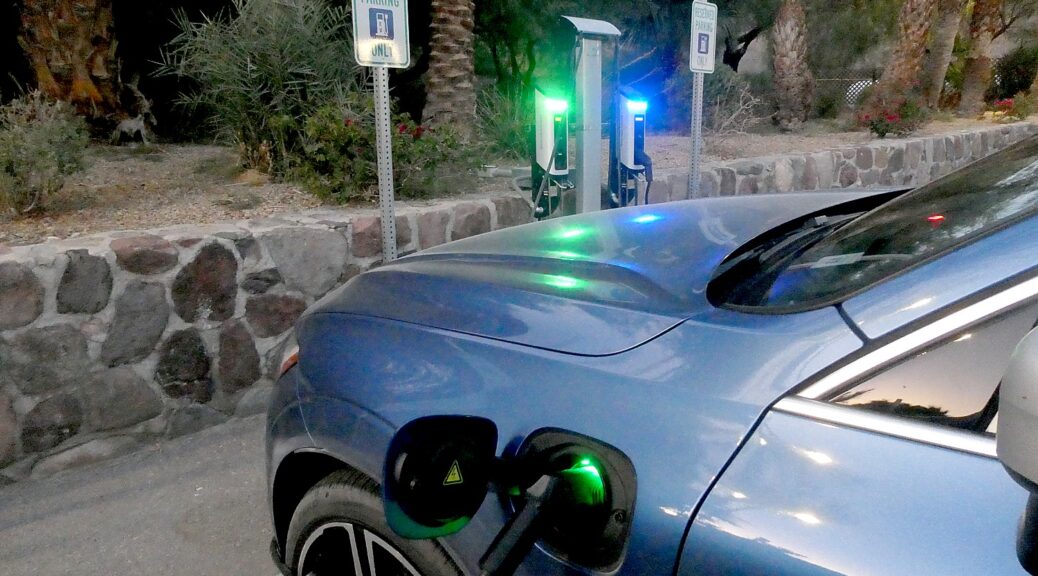
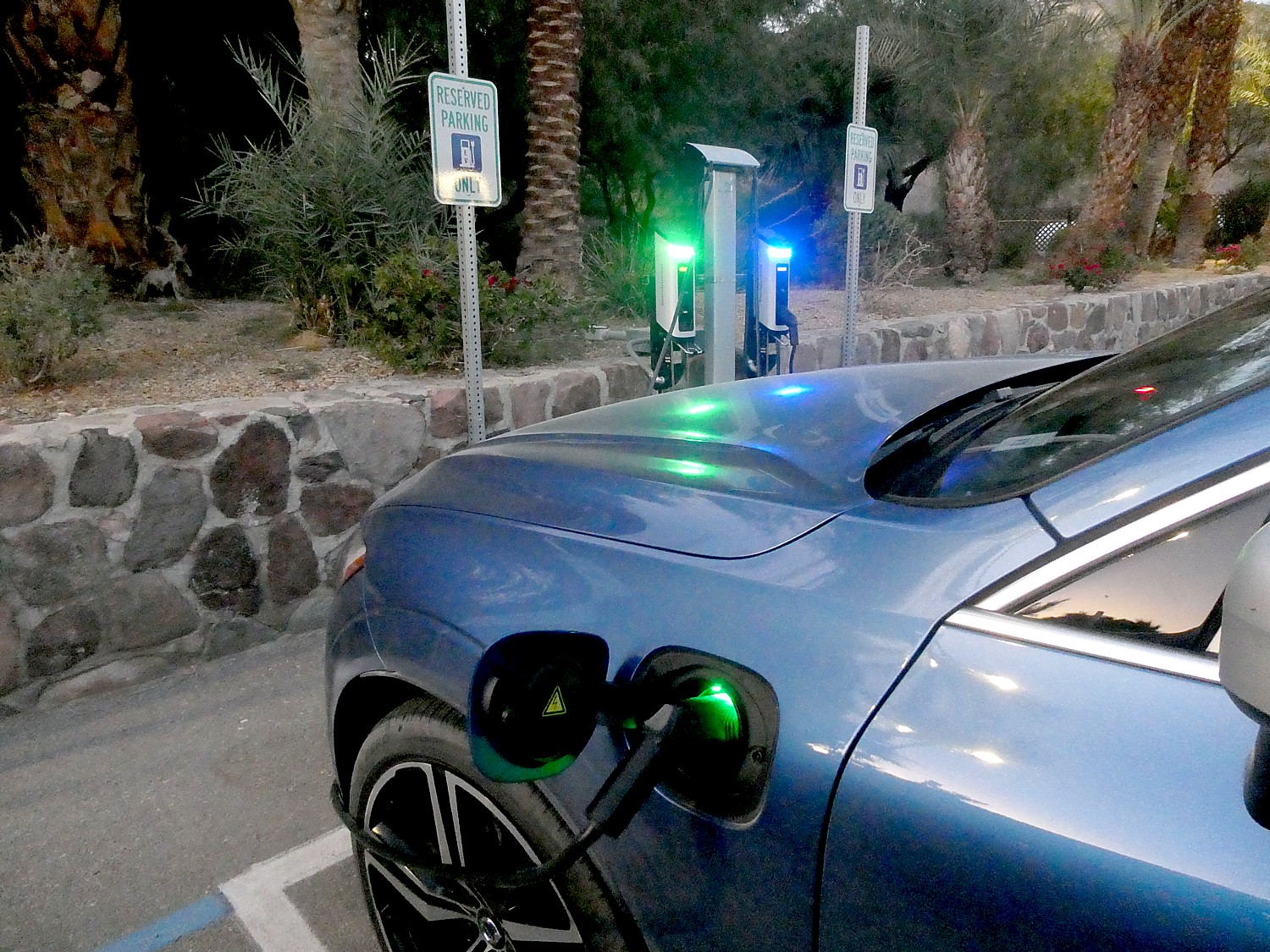
President Biden and Jane Hunter, CEO of Tritium, announced that Tritium will break ground on its first U.S. manufacturing facility in Lebanon, Tennessee. This facility will house six production lines that will produce up to 30,000 Buy America-compliant DC Fast Chargers per year at peak production and create 500 local jobs.
This is the latest of announcements in recent weeks by major companies announcing investments in U.S. manufacturing and jobs, including Intel, General Motors, and Boeing, and more than $200 billion in investments in domestic manufacturing of semiconductors, electric vehicles, aircraft, and batteries announced since 2021.
In addition to Tritium, EV charging manufacturers large and small are investing and expanding U.S. operations, driven by the Administration’s economic strategy, Made in America policies, and the Bipartisan Infrastructure Law:
Siemens, which is investing and expanding its U.S. manufacturing operations to support electric vehicle infrastructure in America, will produce 1 million EV chargers by 2025. This investment, spurred by the passage of the Bipartisan Infrastructure Law, is the latest in the company’s strategic plan to meet accelerating electric vehicle charging demand, and expand its U.S. manufacturing capabilities.
ABB, which currently manufactures Buy America-compliant transit bus chargers in the U.S., will expand its US EV charging manufacturing operations, including Level 2 and DC Fast Chargers, over the coming five years, employing hundreds of Americans and producing thousands of EV chargers each year.
FreeWire Technologies, based in Oakland, California, currently manufactures Buy America-compliant battery-integrated EV charging equipment, and recently announced groundbreaking on a research, manufacturing, and testing facility in Newark, California. FreeWire currently employs and plans to add more than 200 jobs in electrification and clean energy in and around disadvantaged communities this year.
Dunamis Clean Energy Partners, a Black- and woman-owned EV charger manufacturer based in Detroit, Michigan, will manufacture Level 2 EV chargers and charging connectors in a new production facility in Detroit beginning this summer. Dunamis’ training and workforce development efforts will focus on underrepresented, economically disadvantaged communities most impacted by greenhouse gas emissions.
The future of the auto industry is electric, and America can own that future by building more here at home, creating good-paying jobs in the process. In August, President Biden set an ambitious target and roadmap to get to 50% of electric vehicle (EV) sale shares in the U.S. by 2030. The Bipartisan Infrastructure Law included a down payment on the EV future, with more than $7 billion in funding to secure an American EV supply chain, from materials processing to battery manufacturing and recycling, along with $7.5 billion to build out the first-ever nationwide public EV charging network.
This charging network will provide a convenient, reliable, affordable and equitable charging experience, with a focus on serving national highway corridors, rural areas, and underserved communities. It will also accelerate the adoption of electric vehicles, fight the climate crisis, and support domestic manufacturing jobs.
Later this week, Department of Transportation Secretary Buttigieg and Department of Energy Secretary Granholm will announce the state allocations and guidance for the Bipartisan Infrastructure Law’s National Electric Vehicle Infrastructure Formula Program, which will provide $5 billion over five years to help states create a network of EV charging stations along designated Alternative Fuel Corridors on the Interstate Highway System.
The Biden-Harris Administration has already taken action to prepare for the build-out of the nationwide public EV charging network.
In December, Vice President Harris announced the EV Charging Action Plan to outline the steps the Administration is taking to accelerate the EV charging investments in the Bipartisan Infrastructure Law.
In December, the Department of Energy and the Department of Transportation announced the creation of the Joint Office of Energy and Transportation, which will support and accelerate deployment of the national EV charging network, including by providing technical assistance to states as they develop their comprehensive EV charging plans.
Last week, the Department of Transportation released an EV Rural Charging Toolkit, a one-stop resource for rural communities to plan and implement EV charging infrastructure projects.
Since day one in office, President Biden has focused on providing America’s small businesses with the tools and resources they need to reopen, rehire, and build back better. To-date, the Biden-Harris Administration has distributed more than $400 billion in critical relief to more than 6 million small businesses.
President Biden’s efforts have not only helped millions of Main Street businesses keep their lights on and employees on payroll, they have enabled a remarkable rebound in small business activity, with small business demand for labor and inventories near record highs. According to a leading survey of small business owners, the share of small businesses planning to create new jobs in the next three months is higher than it ever was at any point during the previous Administration. Another recent survey of small business owners found that 71 percent are optimistic about their own performance in 2022, up from 63 percent one year ago. The broader economic recovery – one of the fastest on record – has also helped spur a surge in entrepreneurship. Americans are applying to start new businesses at a record rate, up about 30 percent compared to before the pandemic.
The historically high level of new business applications has taken place amidst the Biden-Harris Administration’s historic bottom-up approach to economic recovery. Soon after taking office, the Biden-Harris Administration enacted the American Rescue Plan (ARP), which provided direct relief to families and small businesses and supported the vaccination of more than 200 million Americans. Through the combination of ARP investments and existing emergency relief programs, the Biden-Harris Administration distributed more than $400 billion in critical relief to more than 6 million small businesses. The ARP also provided thousands of entrepreneurs with the personal and financial security to launch their own business. This support included $1,400 per-person Economic Impact Payments, expanded Child Tax Credit payments of up to $300 per child per month, Affordable Care Act credits and COBRA premium support to ensure health care coverage remained available, and an expansion of the Employer Retention Credit, including expanding eligibility to recent startups.
Despite the historic progress made to-date, the Biden-Harris Administration remains committed to helping America’s new small businesses grow, create jobs, and provide the essential goods and services our communities depend on. Specifically, the Biden-Harris Administration is:Expanding access to low cost loans and investments. The Treasury Department is working with all states and territories plus 400 Tribal governments on standing up small business lending and investment programs as part of the $10 billion State Small Business Credit Initiative (SSBCI) established through the ARP. and By this summer, the first wave of programs will launch, unlocking billions of dollars in new lending and investment capital for small businesses in big cities and small towns all across America. Small businesses can also continue to access the Small Business Administration’s (SBA) traditional 7a, 504, and microloan programs, which collectively reached record high loan volume in Fiscal Year 2021 by providing $44.8 billion through more than 61,000 loans.
Increasing access to billions of dollars in federal contracts for small businesses. Last year, the Biden-Harris Administration announced its strategy for increasing the share of federal procurement dollars that go to socially disadvantaged businesses by 50% by 2025. President Biden’s Bipartisan Infrastructure Law also includes a historic procurement effort designed to support small businesses and tackle long standing inequities in the contracting system. Among other things, the legislation directs DOT to attempt to award more than $37 billion in federal contracts to small disadvantaged business contractors.
Helping small businesses hire new employees and reach new customers by providing universal broadband. Broadband internet is necessary for Americans to do their jobs and increasingly important for small business owners all across America. President Biden’s Bipartisan Infrastructure Law will invest $65 billion in broadband infrastructure, helping ensure that every American has access to reliable high-speed internet and creating new opportunities for small businesses nationwide.
12 States Set New Records on Low Unemployment as National Rate Fell to 3.9%
Meanwhile, new employment data continues to show that the labor market has improved under President Biden, with 42 states reporting drops in unemployment in December and 12 states reaching record lows. No states experienced a decline in employment. Year-over-year payroll figures have now increased in 48 states and DC.
“Thanks to the President’s economic plan and his success in getting Americans vaccinated, the unemployment rate nationally dropped to 3.9% – four years earlier than expected, wages are up, and 6.4 million jobs have been created – the most in any one year on record. The President’s economic strategy is working: strengthening our economic growth and creating millions of jobs across the country,” the White House stated.
On the occasion of President Joe Biden’s address to the U.S. Conference of Mayors, January 21, the White House issued a fact sheet detailing some of the ways the Biden-Harris Administration is working with Mayors to deliver for communities across the country, and what passing the Build Back Better agenda could mean:
Getting Shots in Arms and Saving Lives Since the start of his Administration, President Biden has prioritized local partnerships and has worked closely with mayors across the country who have been instrumental as trusted sources of information about the COVID-19 pandemic and vaccines.
Working with local governments, the Administration has shipped over 160 million pieces of personal protective equipment – gloves, gowns, masks – to protect frontline health care workers in cities across the United States. Since first launching surge response teams on July 1st, the Administration has deployed over 3,000 personnel to 39 states and 4 U.S. territories. The Administration also recently worked with several mayors and local jurisdictions to surge federal testing support and federal test sites to several cities.
Over 115 mayors across the country joined the White House, HHS, and We Can Do This campaign to launch a Mayors Challenge to Increase COVID-19 Vaccinations. This campaign was instrumental in increasing the adult vaccination rate through mayors sharing best practices and launching innovative efforts to boost vaccinations, including grassroots outreach, mobile and neighborhood vaccine clinics, incentives, prizes, and other efforts.
Richmond, VA Mayor Levar Stoney as co-lead of the Mayors Challenge, launched the #HotVaccinatedSummer campaign with the Richmond Health Department focused on taking the vaccine to residents through mobile vaccination units, pop-up vaccine sites at grocery stores, food pantries, apartment complexes, and churches, and neighborhood block parties.
Baton Rouge Mayor Sharon Weston Broome and New Orleans Mayor LaToya Cantrell, mayors of Louisiana’s two largest cities, launched a month-long, inter-city “New Orleans vs Baton Rouge COVID challenge” to motivate citizens to get vaccinated.
Detroit, MI Mayor Mike Duggan launched an innovative “Good Neighbor Program” where residents received gift cards for driving their neighbors to get vaccinated, as well as a door-to-door vaccination education canvassing effort.
San Antonio, TX Mayor Ron Nirenberg along with making pop-up vaccine clinics accessible, collaborated with local artists to create murals reminding residents of the importance of getting vaccinated.
Getting People Back to Work President Biden has grown the economy faster than any first-year administration ever with 6.4 million jobs added, the most in one year on record. The unemployment rate is 3.9% – four years faster than projected because of the American Rescue Plan. The Biden-Harris agenda has provided substantial resources to state and local governments to expand and improve America’s workforce development system so that workers of all kinds from diverse communities will be prepared and successful in good-paying union jobs.
The American Rescue Plan (ARP) included $350 billion in state and local fiscal recovery funds that governments can use to assist workers who want and are available to work – including job training, public jobs programs, job fairs, childcare, transportation, hiring bonuses, and subsidized employment efforts). The ARP also invested $3 billion in the Commerce Department’s Economic Development Administration (EDA) to assist communities in their efforts to build back better from the pandemic, including $1 billion for the Build Back Better Regional Challenge and $500 million for a Good Jobs Challenge that will support sector partnerships that bring employers, unions, non-profits, community colleges, training providers, and local governments together to enhance local training and hiring efforts.
Building Bridges to Infrastructure Jobs:
Washington, DC is using ARP resources to expand the city’s Infrastructure Academy to ensure a diverse workforce is ready to fill the infrastructure jobs that will be created by the historic bipartisan infrastructure law.
Milwaukee, WI has dedicated ARP funds to launch a lead abatement workforce development program and an Earn and Learn program which assists young people entering manufacturing and other high-skill jobs.
Phoenix, AZ is using Rescue Plan funds to partner with local community colleges and the private sector on job training programs that not only will re-skill and re-employ individuals for new careers in high demand workforce areas, such as manufacturing, construction, and the region’s emerging semiconductor industry.
Supporting our Essential Education Workers:
Seattle, WA used ARP fiscal recovery funds to provide premium pay for local child care workers, up to $835 per worker who have been there for at least 6 months.
Bolstering our Health Care Workforce:
Chicago, IL is leveraging ARP funds to build a 2,200 public health workforce working as vaccine ambassadors and addressing vaccine resistance.
New York City is dedicating ARP funds to bolster their public health workforce through the New York City Public Health Corps program, which will focus on a range of public health needs – from vaccine access, to primary care, to mental health counseling.
Building a Better America Since President Biden signed the Bipartisan Infrastructure Law, the Biden-Harris Administration has hit the ground running with a focus on fostering strong partnerships and working with mayors to implement the largest long-term investment in America’s infrastructure and competitiveness in nearly a century. The historic Bipartisan Infrastructure Law will rebuild crumbling road and bridges, replace lead pipes, help provide high-speed internet to every family in America, and produce concrete results that change people’s lives for the better. These results will create good-paying, union jobs, support domestic manufacturing and supply chains, and position the United States to win the 21st century. As the Administration implements the law, it is following through on President Biden’s commitment to ensure investments advance equity and racial justice, reach communities all across the country – including rural communities, communities of color, and disability communities – and strengthen the nation’s resilience to climate change. Since the enactment of the Bipartisan Infrastructure Law, the Biden Administration has it the ground running. Some of the key actions since the law’s passage include:
Understanding the importance of strong partnership with local governments to deliver results on the Bipartisan Infrastructure Law, the White House appointed Mitch Landrieu, former Mayor of New Orleans and former President of the US Conference of Mayors, as Infrastructure Implementation Coordinator.
The U.S. Department of Transportation (USDOT) and Federal Highway Administration (FHWA) announced $27 billion in funding to replace, repair, and rehabilitate bridges across the country over the next five years, including many locally-owned “off system” bridges.
The U.S. Army Corps of Engineers announced that it will invest more than $14 billion of funding for over 500 projects across 52 states and territories. These key projects will strengthen the nation’s supply chain, provide significant new economic opportunities nationwide, and bolster our defenses against climate change.
USDOT awarded $1 billion in Rebuilding American Infrastructure with Sustainability and Equity (RAISE) grants to invest in 90 major projects across 47 states funding that will be boosted by an additional $7.5 billion in the Bipartisan Infrastructure Law.
The Federal Aviation Administration (FAA) at USDOT announced $3 billion for 3,075 airports across the country that can use investments to upgrade critical infrastructure.
The Vice President announced the Administration’s Lead Pipe and Paint Action Plan, which includes action items focused on collaboration with local partners to accelerate the replacement of lead pipes over the next decade. As part of this plan, EPA announced $7.4 billion in funding allocations for states to upgrade America’s aging water infrastructure, sewerage systems, pipes and service lines, and more.
The Federal Communications Commission launched the Affordable Connectivity Program providing broadband subsidies of up to $30/month for low-income households (up to $75/month for households on Tribal Lands) and up to $100 towards the purchase of a desktop, laptop or tablet computer.
EPA announced $1 billion in funding to clean up 49 Superfund sites across 24 states to accelerate cleanup at dozens of other sites across the country, stop toxic waste from harming communities, and create good-paying jobs.
The Department of the Interior released initial guidance for the states interested in applying for funding to cap and plug orphaned oil and gas wells that reduce methane emissions and create jobs, with 26 states expressing interest in a portion of the $4.7 billion in funding for well plugging, remediation and restoration available in infrastructure programs.
The Department of Energy launched a new Building a Better Grid initiative to accelerate the deployment of new transition lines, and it released a notice of intent to inform the design and implementation of this historic investment.
The Bipartisan Infrastructure Law includes billions of dollars in competitive funding available to cities, towns, and municipalities across dozens of new and existing programs. As local governments begin to rebuild and reinvest in their communities, the Biden-Harris Administration stands ready to support local leaders as they combine funding streams, organize around their priorities, and build local support for long overdue infrastructure projects. The White House released a fact sheet highlights 25 already available or soon-to-be-available sources of funding that local governments – particularly cities – can compete or apply for directly. The White House will also be releasing a comprehensive guidebook of all available funding from the Bipartisan Infrastructure Law in the coming weeks.
Addressing Supply Chain Blockages As our economy has turned back on from the unprecedented shutdown resulting from the pandemic, our supply chains have been strained. The Administration is working closely with mayors and local governments across the country to mitigate supply chain blockages and ensure shelves are stocked.
The Administration’s port envoy has held weekly meetings with city-owned ports, including the Ports of Los Angeles and Long Beach, to identify ways to reduce congestion and move toward 24/7 operations, which reduces the emissions and traffic in communities.
The Department of Transportation awarded more than $241 million in discretionary grants to improve ports facilities and address supply chain disruptions in 19 cities, including Houston, TX; Brunswick, GA; Bay St Louis, MS; Tell City, IN; Alpena, MI; Delcambre, LA; Oakland, CA; Portsmouth, VA; Tacoma, WA; and Long Beach, CA.
The Administration is working to help schools experiencing challenges purchasing and reliably obtaining food for their meal plans. USDA has committed $1.5 billion for schools and states to purchase foods including funding to purchase local foods from historically underserved producers and announced an adjustment in school meal reimbursements that put an estimated $750 million more into school meal programs across the nation this year.
Advancing Local Climate Action On Day One, President Biden rejoined the Paris Agreement, reestablished U.S. leadership, and renewed the federal government’s partnership with the states, cities, Tribes, and localities that carried forward America’s progress on climate. Since then, President Biden has deployed clean wind and solar energy across the country, jumpstarted an electric vehicle future that will be built in America, advanced environmental justice in underserved communities, and taken aggressive action to make our country more resilient to climate change and extreme weather.
Today, President Biden will announce how the Biden-Harris Administration is teaming up with states, cities, labor, and industry to launch the Building Performance Standards Coalition, a first-of-its-kind partnership between 33 state and local governments dedicated to delivering cleaner, healthier, and more affordable buildings. States and cities part of the coalition will design and implement building performance standards that create good paying union jobs, lower the cost of energy bills for consumers, keep residents and workers safe from harmful pollution, and cut emissions from the building sector.
The Administration is also empowering local leaders to advance climate solutions across other sectors—for example:
The Department of Energy set a new National Community Solar Partnership target of powering 5 million homes by 2025, with on-demand technical assistance available to local governments, and launched the SolarAPP+ tool to help them speed up permitting of rooftop solar installations.
The Department of Transportation announced $182 million in grants for transit agencies to deploy zero-emission and low-emission transit buses, including awards to the Chicago Transit Authority; Anaheim, CA; Fort Collins, CO; Lawrence, KS; Jackson, MS; Fayetteville, NC; Lincoln, NE; Norman, OK; and more.
The EPA announced $50 million for environmental justice initiatives using ARP funds, including water infrastructure job training in Baltimore, MD; indoor air quality improvements in Fort Collins, CO; and outreach on asthma and environmental hazards in Hartford, CT.
FEMA announced $1 billion for the FY2021 Building Resilient Infrastructure and Communities program, available for cities and other levels of government to proactively invest in community resilience to hurricanes, wildfires, and other disasters.
In November 2021, President Biden and 15 bipartisan mayors representing communities across the country participated in COP26, where the President announced bold plans to reduce methane emissions, create clean energy jobs, and build back better with infrastructure initiatives that advance prosperity and combat the climate crisis.
Addressing Gun Violence and Crime During the President’s first year in office, the Biden-Harris Administration has partnered with mayors across the country on actions to reduce gun violence and has provided historic levels of funding for community-oriented policing and expanding community violence interventions (CVI) – neighborhood-based programs proven to combat gun violence. The Administration has made historic levels of funding from the American Rescue Plan – including $350 billion in state and local funding – available to state and local governments for law enforcement purposes to advance community policing strategies and community violence interventions.
Working with 16-jurisdictions, the White House launched the Community Violence Intervention Collaborative, a cohort of mayors, law enforcement, CVI experts and philanthropic organizations committed to using ARP funding to increase investment in their community violence intervention infrastructure and share best practices.
Cities including Milwaukee, WI; Albuquerque, NM; Syracuse, NY; and Mobile, AL responded to the President’s call by committing and deploying ARP funds for advancing community-oriented policing.
Mayors from cities across the country including Seattle, WA; Buffalo, NY; and Atlanta, GA have committed to deploy ARP fund for community violence interventions following a memo from Senior White House advisors on how state and local officials can implement ARP funding into CVI work.
Cities across the country including St. Louis, MO and Tucson, AZ committed to investing ARP funding in public safety strategies such as summer jobs for young adults and substance abuse and mental health services.
Prevent Housing Instability and Homelessness During the President’s first year in office, the Biden-Harris Administration partnered with mayors across the country to keep Americans housed. The American Rescue Plan (ARP) included over $21 billion for the Emergency Rental Assistance (ERA) program. These funds, together with $25 billion signed into law under the previous Administration but implemented under this Administration, enabled households to catch up on rent and avoid evictions. State and local grantees obligated over $25 billion in ERA in 2021, and these funds contributed to a historically low eviction filing rate. Also included within ARP were $5 billion in supplemental funding for HOME, which enables state and local governments to create and preserve affordable housing, and $5 billion in emergency housing vouchers to help people experiencing and at risk of homelessness secure housing.
In June, 46 cities joined the White House to create eviction prevention action plans as part of a first-of-its-kind summit. More than 100 eviction diversion programs were created or expanded as part of this partnership with the White House and local leaders.
Mayors from Louisville, Milwaukee, San Antonio, and Boston shared best practices in subsequent White House events including strategies to prevent evictions and distribute rental assistance to renters and landlords in need.
Dozens of mayors have signed onto House America, a federal initiative aimed at maximizing the ARP resources to address homelessness. The goal of this initiative is to cumulatively re-house 100,000 households experiencing homelessness and add 20,000 new units of affordable housing into the development pipeline by the end of 2022.
Building an Orderly, Fair, and Humane Immigration System The Biden-Harris Administration is working to build a humane, orderly, and fair 21st century immigration system at the border and beyond. One that invests in smart technology and infrastructure at the border, that prioritizes our resources and values immigrants living in our country and contributing to our communities for generations, and that once again welcomes refugees and is a beacon of light for those seeking safe haven.
Since day one, the Biden-Harris Administration took steps to undo the wrongdoings of the previous Administration, including getting rid of the Muslim ban, taking steps to protect DACA recipients, and restoring our asylum system. On day one, President Biden also sent his immigration bill to Congress – The U.S. Citizenship Act – which laid out the components needed to build an updated immigration system that reflects our values and responds to our hemisphere’s current needs.
Working with the Department of Homeland Security, the Department of State and non-profit organizations in Mexico and the United States, the Administration assisted 13,000 people in the wind down of the Migrant Protection Protocol to fight their cases in the United States. The Administration also designated Temporary Protected Status (TPS) to Haiti, Venezuela, Yemen, Syria, Somalia, and Burma, and expanded to El Salvador and Honduras.
The President tasked Vice President Harris with leading efforts to address the root causes of migration from Mexico, Guatemala, El Salvador, and Honduras. The Vice President announced $310 million in urgent humanitarian relief in April 2021, in addition to the President’s FY22 budget request for $861 million for Central America. The Vice President also secured $1.2 billion from the private sector to create job programs and invest in the economic stability and prosperity for our partner countries. In addition to the work the Vice President is leading, the Administration is working with countries in South America and leaders in the hemisphere to address migration as a regional issue that necessitates regional leadership and a regional response.
The Administration remains committed to immigration reform, to restoring asylum, and to working with partners to ensure the safety, security, and dignity of immigrants in the region:
Engaged mayors and cities to amplify the broad sweeping impact President Biden’s U.S. Citizenship Act would have on all 11 million undocumented immigrants, including farm workers and individuals with Temporary Protected Status.
Partnered with cities including San Diego, Long Beach, Pomona, Dallas, Houston, and San Antonio to stand up Emergency Influx Sites to provide temporary shelter and care for thousands of unaccompanied children.
Awarded $110 million in supplemental humanitarian funding to the National Board for Emergency Food and Shelter Program eligible to cities and services providers providing humanitarian assistance to migrants at the southern border.
Regularly engaged bipartisan border mayors to discuss and coordinate rebuilding America’s border management and asylum systems that were previously gutted by the prior administration. Additionally, engaged local elected leaders in the Rio Grande Valley, San Diego, and El Centro border sectors to protect border communities from the physical dangers resulting from the previous administration’s approach to border wall construction.
Welcoming Refugees and Resettlement Efforts The Biden-Harris Administration has taken a whole-of-America approach to safely, securely, and effectively welcome more than 76,000 Afghan allies to the United States through the Operation Allies Welcome.
In close coordination with Departments and Agencies across the Federal government, the Administration has worked with state and local officials; refugee resettlement organizations; veterans; faith, private sector, and non-profit leaders to ensure Afghans are set up for success in their new communities. The White House Operation Allies Welcome team provided briefings to USCM and visited resettlement sites in six states to engage with local officials and stakeholders on the frontlines of welcoming our Afghan allies. In his capacity as OAW Coordinator, Jack Markell attended the 2021 USCM Summer Meeting in Dayton, Ohio to brief mayors on their important role in the resettlement effort.
USCM Past President Dayton Mayor Nan Whaley and Hartford Mayor Luke Bronin led the effort for USCM’s resolution in support of Afghan resettlement and welcomed briefings from senior Administration officials to keep mayors updated on resettlement efforts
Houston Mayor Sylvester Turner worked with local resettlement agencies to raise more than $8.5 million dollars for the Houston Afghan Resettlement Fund (HARF) to help the local resettlement agencies provide additional services for Afghan evacuees
Oklahoma City Mayor David Holt collaborated with the local resettlement agency to identify additional funding stream to for affordable housing for Afghan evacuees
Lansing Mayor Andy Schor worked with the local school district to ensure a warm welcome to arriving Afghans students and families.
Sacramento Mayor Darryl Steinberg coordinated with state, county, and local leaders to create a new coalition called the American Network of Services for Afghanistan Refugees (ANSAR) to assist in meeting the needs of Afghan families.
In addition to President Biden, ten members of the President’s Cabinet spoke at the USCM Winter Meeting, including Secretary of the Treasury Janet Yellen, Secretary of Health and Human Services Xavier Becerra, Secretary of the Department of Homeland Security Alejandro Mayorkas, Secretary of Labor Marty Walsh, Secretary of Education Miguel Cardona, Secretary of Transportation Pete Buttigieg, Secretary of Commerce Gina Raimondo, Secretary of Housing and Urban Development Marcia Fudge, Attorney General Merrick Garland, and EPA Administrator Regan. Senior Administration officials including ARP Coordinator Gene Sperling, Infrastructure Implementation Coordinator Mitch Landrieu, and Director of Intergovernmental Affairs Julie Rodriguez will also speak at the event.
On January 21, President Biden addressed over 200 bipartisan mayors during their annual U.S. Conference of Mayors (USCM) Winter Meeting. This was the President’s first time addressing the entire USCM since taking office. At this year’s convening, the President highlighted the strong partnership between his Administration and mayors during the past year to tackle unprecedented crises, rebuild the economy, and deliver results for working families. The President also discussed ways to further partner with cities on implementing the American Rescue Plan (ARP) and Bipartisan Infrastructure Law, and the importance of passing the Build Back Better Act.
Here is an edited transcript of President Biden’s remarks:
Mayors carry the quality of the people’s lives on your shoulders.
Everything you do every day affects their lives more than almost anything anybody else does. And you can make or break a person’s day. “Will the bus get me home on time?” It sounds silly but, “Will the garbage get be picked up?” “Will I be safe walking in the park?”
These are the bigger questions: “Can I afford to give my family a good life?” “Will my kids have a chance to get a good job someday?” “How will I rebuild from the fire or the storm?”
You know, all of these questions, they’re not partisan, but they’re practical. People they look to are you…
That’s why, when I put together my Cabinet, I called on former mayors –Tom Vilsack was a governor; he was also a mayor. Marcia Fudge, a mayor. Marty Walsh a mayor in Boston. Pete Buttigieg was a mayor. And I picked Mitch Landrieu to oversee the implementation of the infrastructure law, which is over a $1.2 trillion, because he knows how mayors get things done. (Applause.) .. Because mayors know the measure of success isn’t scoring partisan points, it’s did you fix the problem…
The infrastructure law is a perfect example of what we can achieve when we tackle problems the way mayors do. Everybody in America knows we’ve fallen behind on infrastructure. So we came together — Democrats and Republicans — and did something about it…
And, by the way, I want to thank you all. More than 360 of you signed a letter that was sent to me when we were trying to get this legislation passed. Three hundred and sixty of you. You lobbied Congress to get it done, and it’s the reason it got done…
And now, after years of dead-ends and broken promises, not only has “Infrastructure Week” finally arrived — (applause) — but we can literally, because of you, look forward to an “Infrastructure Decade.”…
We’ve announced billions of dollars for highways, ports, airports, water and sewage systems, high-speed Internet; funding to clean up the rivers in Ohio, chemical plants and sites in Florida, polluted lakes in Michigan and dozens of other sites; a new program to cap and plug orphaned oil and gas wells spewing methane into the air, cleaning up the communities that, in fact, they’re affecting, while [creating] good-paying jobs…
A new initiative to bolster our energy grid with stronger transmission lines and towers to keep the power flowing more reliably and, consequentially, more secure energy supply…
You know, more forest, homes, buildings, and businesses have been burned to the ground than make up — if you’re taking the square miles — than the entire state of New Jersey, from New York all the way down to Cape Henlopen. That’s how much has burned to the ground. A lot of it because of the lack of resilience in those towers that get blown over and the wires snap…
Last week, we rolled out a historic investments in our nation’s bridges, like the one I visited in New Hampshire, where restrictions forced school buses and fire trucks to go 10 miles out of their way just to get across a small river…
We’re going to upgrade thousands of bridges, creating good-paying jobs, cutting commute times, ensuring that as we build back, no community gets left behind.
Folks, that mayor’s view of problem-solving is exactly what we brought to the American Rescue Plan. It’s designed so that you’d be able to have the resources and the flexibility to take both the short-term and long-term challenges created by this pandemic. A major part of the Rescue Plan was the $350 billion we allocated to state and local budgets. And again, because of you, over $100 billion of that went directly to cities and counties, not through anybody. (Applause.) A hundred billion.
It was not easy to get done, but it was important to get done because you know it’s needed. You didn’t have to go through your state legislature — or your governor – to get the money.
Today, communities are still putting those funds to work — keeping people on the job, connecting people to better jobs…
Use your funds to cover childcare costs or temporary paid leave to help certain workers dealing with Omicron; to build pathways to better jobs through union-based apprenticeships and on-the-job training; to give people in every ZIP code a chance to deal for themselves and deal them into this booming economy.
That also means building more affordable housing so people can have safe places closer to their jobs.
Funding proven programs to help fight violent crime. We shouldn’t be cutting funding for police departments. I proposed increasing funding…
The truth is we have an incredible opportunity ahead of us this year. We still have a lot of work to do to defeat COVID, to bring down costs for families.
But just look at what we’ve accomplished together so far, even in the face of those headwinds.
In 2021, more jobs are created in America than ever in a single year in American history. More jobs — over 6 million. The unemployment rate dropped more than any year in American history. (Applause.)
Income — incomes for folks working frontline jobs in service industries rose more than any year in history — the folks at the bottom of the economic rung.
We lowered child poverty in this country by nearly 40 percent — more than any time in U.S. history. (Applause.)
You all know this: Business applications grew by nearly 30 percent last year — more than any year in history. If they’re saying everything is so bad, why are people fighting to open businesses?
More Americans gained health insurance than any year in history.
These are facts.
To confront the climate crisis, we deployed more solar wind, batteries, and electric vehicles than ever, ever before.
And we’re teaming up with mayors, labor, and industry to save families and businesses money by improving energy efficiency in our buildings.
And in the battle against the deadly virus, we’ve gone from putting 2 million shots — vaccinations – in people’s arms to 210 million Americans fully vaccinated. (Applause.)
And you mayors have been critical partners…
And we still face tremendous challenges, though. But together, we’ve proven that we can get big things done in this country.
Last year, with your help, we laid the groundwork. This year, we have to build it. The biggest weapon in our arsenal is the Build Back Better Act. Nothing is going to do more to ease pressure on families…
Every mayor knows if people can’t find and afford childcare, they can’t work. (Applause.) Some of your cities, it’s 14-, 15,000 bucks a year for childcare. That’s why we have nearly 1.2 million extremely qualified women who haven’t been able to return to the workforce.
We can cut the cost of childcare in half and fix that problem.
Health insurance: We can reduce the cost for families — and we’ve done for $600 per year.
On climate: Extreme weather disasters cost communities $145 billion last year. That’s how much we spent because of weather-related crises. $145 billion. By investing in resilience and clean energy technology, we can do something about that.
To give relief to families, in the American Rescue Plan we had the Childcare Tax Credit. That did reduce child poverty by 40 percent. There’s no reason it shouldn’t continue. (Applause.)
And on education — on education: Today, about half of the three- and four-year-olds are enrolled in early childhood education…
We can do this and more on healthcare, nutrition, and a host of other issues.
And, folks, here’s the point: We can do it without increasing inflation or the deficit.
Seventeen Nobel laureates in economics wrote a letter to me recently, affirming that this bill would reduce inflationary pressures on the economy, not increase — reduce it. (Applause.)
And by the way — by the way, it’s entirely paid for. (Applause.) Every single penny. (Applause.) And not a single person making less than $400,000 a year will pay a single additional penny in federal taxes. Not a single penny. (Applause.)
And, by the way, I’m a capitalist. I’m not a socialist. If you can make $1 billion or $10 million, good for you. Just begin to pay your fair share. Pay a little bit. (Applause.)
We can pay for all this by just making sure that the wealthy — making sure that the wealthy and the biggest corporations pay their fair share…
Look, we can tackle all these challenges just like we did with the Rescue Plan, the infrastructure law, and the fight against COVID, but we can’t do it without you…
You understand the cost if we fail to act. We need the voice of mayors telling the stories of what your communities need, and the impact we’re making on people’s lives or not making. If we can get this done — I believe this with every fiber of my being: If we can get this done, there’s no limit what Americans can achieve. So, let’s continue to give working families a fighting chance.
Upon the House passing the historic, $1.2 trillion bipartisan Infrastructure Investment and Jobs Act, President Joe Biden issued this statement:
Tonight, we took a monumental step forward as a nation.
The United States House of Representatives passed the Infrastructure Investment and Jobs Act, a once-in-generation bipartisan infrastructure bill that will create millions of jobs, turn the climate crisis into an opportunity, and put us on a path to win the economic competition for the 21st Century.
It will create good-paying jobs that can’t be outsourced. Jobs that will transform our transportation system with the most significant investments in passenger and freight rail, roads, bridges, ports, airports, and public transit in generations.
This will make it easier for companies to get goods to market more quickly and reduce supply chain bottlenecks now and for decades to come. This will ease inflationary pressures and lower costs for working families.
The bill will create jobs replacing lead water pipes so every family can drink clean water.
It will make high-speed internet affordable and available everywhere in America.
This bill will make historic and significant strides that take on the climate crisis. It will build out the first-ever national network of electric vehicle charging stations across the country. We will get America off the sidelines on manufacturing solar panels, wind farms, batteries, and electric vehicles to grow these supply chains, reward companies for paying good wages and for sourcing their materials from here in the United States, and allow us to export these products and technologies to the world.
It will also make historic investments in environmental clean-up and remediation, and build up our resilience for the next superstorms, droughts, wildfires, and hurricanes that cost us billions of dollars in damage each year.
I’m also proud that a rule was voted on that will allow for passage of my Build Back Better Act in the House of Representatives the week of November 15th.
The Build Back Better Act will be a once-in-a-generation investment in our people.
It will lower bills for healthcare, child care, elder care, prescription drugs, and preschool. And middle-class families get a tax cut.
This bill is also fiscally responsible, fully paid for, and doesn’t raise the deficit. It does so by making sure the wealthiest Americans and biggest corporations begin to pay their fair share and doesn’t raise taxes a single cent on anyone making less than $400,000 per year.
I look forward to signing both of these bills into law.
Generations from now, people will look back and know this is when America won the economic competition for the 21st Century.
FACT SHEET: The Bipartisan Infrastructure Deal
Today, Congress passed the Bipartisan Infrastructure Deal (Infrastructure Investment and Jobs Act), a once-in-a-generation investment in our nation’s infrastructure and competitiveness. For far too long, Washington policymakers have celebrated “infrastructure week” without ever agreeing to build infrastructure. The President promised to work across the aisle to deliver results and rebuild our crumbling infrastructure. After the President put forward his plan to do exactly that and then negotiated a deal with Members of Congress from both parties, this historic legislation is moving to his desk for signature.
This Bipartisan Infrastructure Deal will rebuild America’s roads, bridges and rails, expand access to clean drinking water, ensure every American has access to high-speed internet, tackle the climate crisis, advance environmental justice, and invest in communities that have too often been left behind. The legislation will help ease inflationary pressures and strengthen supply chains by making long overdue improvements for our nation’s ports, airports, rail, and roads. It will drive the creation of good-paying union jobs and grow the economy sustainably and equitably so that everyone gets ahead for decades to come. Combined with the President’s Build Back Framework, it will add on average 1.5 million jobs per year for the next 10 years.
This historic legislation will:
Deliver clean water to all American families and eliminate the nation’s lead service lines. Currently, up to 10 million American households and 400,000 schools and child care centers lack safe drinking water. The Bipartisan Infrastructure Deal will invest $55 billion to expand access to clean drinking water for households, businesses, schools, and child care centers all across the country. From rural towns to struggling cities, the legislation will invest in water infrastructure and eliminate lead service pipes, including in Tribal Nations and disadvantaged communities that need it most.
Ensure every American has access to reliable high-speed internet. Broadband internet is necessary for Americans to do their jobs, to participate equally in school learning, health care, and to stay connected. Yet, by one definition, more than 30 million Americans live in areas where there is no broadband infrastructure that provides minimally acceptable speeds – a particular problem in rural communities throughout the country. And, according to the latest OECD data, among 35 countries studied, the United States has the second highest broadband costs. The Bipartisan Infrastructure Deal will deliver $65 billion to help ensure that every American has access to reliable high-speed internet through a historic investment in broadband infrastructure deployment. The legislation will also help lower prices for internet service and help close the digital divide, so that more Americans can afford internet access.
Repair and rebuild our roads and bridges with a focus on climate change mitigation, resilience, equity, and safety for all users. In the United States, 1 in 5 miles of highways and major roads, and 45,000 bridges, are in poor condition. The legislation will reauthorize surface transportation programs for five years and invest $110 billion in additional funding to repair our roads and bridges and support major, transformational projects. The Bipartisan Infrastructure Deal makes the single largest investment in repairing and reconstructing our nation’s bridges since the construction of the interstate highway system. It will rebuild the most economically significant bridges in the country as well as thousands of smaller bridges. The legislation also includes the first ever Safe Streets and Roads for All program to support projects to reduce traffic fatalities, which claimed more than 20,000 lives in the first half of 2021.
Improve transportation options for millions of Americans and reduce greenhouse emissions through the largest investment in public transit in U.S. history. America’s public transit infrastructure is inadequate – with a multibillion-dollar repair backlog, representing more than 24,000 buses, 5,000 rail cars, 200 stations, and thousands of miles of track, signals, and power systems in need of replacement. Communities of color are twice as likely to take public transportation and many of these communities lack sufficient public transit options. The transportation sector in the United States is now the largest single source of greenhouse gas emissions. The legislation includes $39 billion of new investment to modernize transit, in addition to continuing the existing transit programs for five years as part of surface transportation reauthorization. In total, the new investments and reauthorization in the Bipartisan Infrastructure Deal provide $89.9 billion in guaranteed funding for public transit over the next five years — the largest Federal investment in public transit in history. The legislation will expand public transit options across every state in the country, replace thousands of deficient transit vehicles, including buses, with clean, zero emission vehicles, and improve accessibility for the elderly and people with disabilities.
Upgrade our nation’s airports and ports to strengthen our supply chains and prevent disruptions that have caused inflation. This will improve U.S. competitiveness, create more and better jobs at these hubs, and reduce emissions. Decades of neglect and underinvestment in our infrastructure have left the links in our goods movement supply chains struggling to keep up with our strong economic recovery from the pandemic. The Bipartisan Infrastructure Deal will make the fundamental changes that are long overdue for our nation’s ports and airports so this will not happen again. The United States built modern aviation, but our airports lag far behind our competitors. According to some rankings, no U.S. airports rank in the top 25 of airports worldwide. Our ports and waterways need repair and reimagination too. The legislation invests $17 billion in port infrastructure and waterways and $25 billion in airports to address repair and maintenance backlogs, reduce congestion and emissions near ports and airports, and drive electrification and other low-carbon technologies. Modern, resilient, and sustainable port, airport, and freight infrastructure will strengthen our supply chains and support U.S. competitiveness by removing bottlenecks and expediting commerce and reduce the environmental impact on neighboring communities.
Make the largest investment in passenger rail since the creation of Amtrak. U.S. passenger rail lags behind the rest of the world in reliability, speed, and coverage. China already has 22,000 miles of high-speed rail, and is planning to double that by 2035. The legislation positions rail to play a central role in our transportation and economic future, investing $66 billion in additional rail funding to eliminate the Amtrak maintenance backlog, modernize the Northeast Corridor, and bring world-class rail service to areas outside the northeast and mid-Atlantic. This is the largest investment in passenger rail since Amtrak’s creation, 50 years ago and will create safe, efficient, and climate-friendly alternatives for moving people and freight.
Build a national network of electric vehicle (EV) chargers. U.S. market share of plug-in EV sales is only one-third the size of the Chinese EV market. That needs to change. The legislation will invest $7.5 billion to build out a national network of EV chargers in the United States. This is a critical step in the President’s strategy to fight the climate crisis and it will create good U.S. manufacturing jobs. The legislation will provide funding for deployment of EV chargers along highway corridors to facilitate long-distance travel and within communities to provide convenient charging where people live, work, and shop. This investment will support the President’s goal of building a nationwide network of 500,000 EV chargers to accelerate the adoption of EVs, reduce emissions, improve air quality, and create good-paying jobs across the country.
Upgrade our power infrastructure to deliver clean, reliable energy across the country and deploy cutting-edge energy technology to achieve a zero-emissions future. According to the Department of Energy, power outages cost the U.S. economy up to $70 billion annually. The Bipartisan Infrastructure Deal’s more than $65 billion investment includes the largest investment in clean energy transmission and grid in American history. It will upgrade our power infrastructure, by building thousands of miles of new, resilient transmission lines to facilitate the expansion of renewables and clean energy, while lowering costs. And it will fund new programs to support the development, demonstration, and deployment of cutting-edge clean energy technologies to accelerate our transition to a zero-emission economy.
Make our infrastructure resilient against the impacts of climate change, cyber-attacks, and extreme weather events. Millions of Americans feel the effects of climate change each year when their roads wash out, power goes down, or schools get flooded. Last year alone, the United States faced 22 extreme weather and climate-related disaster events with losses exceeding $1 billion each – a cumulative price tag of nearly $100 billion. People of color are more likely to live in areas most vulnerable to flooding and other climate change-related weather events. The legislation makes our communities safer and our infrastructure more resilient to the impacts of climate change and cyber-attacks, with an investment of over $50 billion to protect against droughts, heat, floods and wildfires, in addition to a major investment in weatherization. The legislation is the largest investment in the resilience of physical and natural systems in American history.
Deliver the largest investment in tackling legacy pollution in American history by cleaning up Superfund and brownfield sites, reclaiming abandoned mines, and capping orphaned oil and gas wells. In thousands of rural and urban communities around the country, hundreds of thousands of former industrial and energy sites are now idle – sources of blight and pollution. Proximity to a Superfund site can lead to elevated levels of lead in children’s blood. The bill will invest $21 billion clean up Superfund and brownfield sites, reclaim abandoned mine land and cap orphaned oil and gas wells. These projects will remediate environmental harms, address the legacy pollution that harms the public health of communities, create good-paying union jobs, and advance long overdue environmental justice This investment will benefit communities of color as, it has been found that 26% of Black Americans and 29% of Hispanic Americans live within 3 miles of a Superfund site, a higher percentage than for Americans overall.
According to a new report from Moody’s this morning, President Biden’s bipartisan infrastructure deal and Build Back Better Framework will add 1.5 million jobs per year on average across the whole decade, while accelerating America’s path to full employment and increasing labor force participation.
Moody’s also projects that total GDP will increase by nearly $3 trillion relative to the baseline over the next decade.
And, the Moody’s report confirms what the President has said for weeks: that these sorts of investments in making our economy more productive will keep prices stable and decrease inflationary pressure.
Moody’s notes that, “the legislation is also designed to ease the financial burden of inflation for lower- and middle-income Americans by helping with the cost of childcare, eldercare, education, healthcare and housing for these income groups.” The Moody’s report concludes that, “failing to pass legislation would diminish the economy’s prospects.”
Since President Biden took office, there has been historic job growth – nearly 5 million new jobs, the most in any President’s first eight months on record. The average number of new unemployment insurance claims has been cut by more than 60 percent and small business optimism has returned to its pre-pandemic levels. Independent projections from the CBO, the IMF, the Federal Reserve, the World Bank, the OECD, and many others all forecast America this year reaching the highest levels of growth in decades thanks to the President’s success in getting economic relief to the middle-class and curbing the pandemic. While the American Rescue Plan is changing the course of the pandemic and delivering relief for working families, this is no time to build back to the way things were.
This is the moment to reimagine and rebuild a new economy by making transformational investments in our middle-class and economic competitiveness. The President’s bipartisan Infrastructure Investment and Jobs Act and Build Back Better Framework will rebuild the economy from the bottom up and the middle out, ease the burden of high costs on working families, and deliver one of the biggest middle class tax cuts ever.
By: Lily Batchelder, Assistant Secretary for Tax Policy
The Build Back Better invests meaningfully in American families and workers, while laying the foundation for meeting imperative climate goals. When the President released the Build Back Better framework last week, he proposed $2 trillion in savings that would more than pay for the critical investments in the legislation – and in fact generate net deficit reduction. With the release of the text of the Build Back Better Act in the House and scoring from the Joint Committee on Taxation, we can update the estimate of fiscal savings.
The legislation would, as the President proposed, generate more than $2 trillion in savings. These savings come from ensuring large multinational corporations and wealthy Americans pay their fair share and reducing the cost of prescription drugs. These provisions will not raise taxes on any taxpayer making less than $400,000.
The table below includes the latest estimates by the Joint Committee on Taxation, Congressional Budget Office, and the Treasury Department of the revenue raising provisions in the bill. The bottom line is that the Build Back Better Act under consideration in the House of Representatives will be fully paid for and reduce the deficit.
At the crux of reforms to the tax code is a historic overhaul of the international tax regime, whose global adoption has been successfully negotiated with 136 countries representing nearly 95% of the world’s economy. As a result of these changes, the ability of large corporations to shift profits abroad will be substantially limited, and the race to the bottom in corporate taxation will no longer be a driving force weakening capital taxation. The Build Back Better Act adopts the agreed-upon 15% country-by-country minimum tax on the foreign profits of U.S. multinational corporations and includes strong incentives for any hold-out countries to join the agreement through a separate tax on companies based in such hold-out jurisdictions. Together with other international and business tax reforms and loophole closers, these provisions are estimated to generate over $350 billion in additional U.S. tax revenue.
The Act further ensures that large, profitable corporations will pay a minimum amount of tax by imposing a 15% minimum tax on companies that report over $1 billion in profits to their shareholders. Less than 0.00075% of U.S. businesses will owe this tax in a given year, which will raise more than $300 billion over the course of the next decade.
Over $200 billion is generated from a surtax on multi-millionaires (the top 0.02% of taxpayers making $10 million or more annually), and about $400 billion comes from closing loopholes that allow some wealthy taxpayers to avoid paying Medicare taxes on their earnings and permit well-off taxpayers to offset ordinary income with business losses.
The largest pay-for in the bill is not a tax increase at all. By collecting taxes that are already owed—and disproportionately unpaid by the highest-earners—the Build Back Better Act will generate at least $400 billion in additional revenue. Over the last decade, an under-resourced IRS has been unable to appropriately focus attention on top earners who are most responsible for the tax gap. Indeed, audit rates decreased more over that period for high earners than for Earned Income Tax Credit recipients. This additional revenue will result from providing the IRS with much-needed resources to pursue wealthy tax evaders, modernize outdated technological infrastructure, and provide meaningful taxpayer services.
Even beyond their sizable revenue-raising potential, these collective policies make the American economy more competitive by reducing profit shifting, ending a corporate tax race to the bottom, and overhauling a two-tiered system of tax administration—where American workers pay what they owe, but the wealthiest often do not.
These are historic policy achievements in and of themselves—and they also pay for transformational investments that will improve the lives of American workers, our children, and the generations that will follow.
Revenue Raisers in Build Back Better Act
Revenue (in billions)
International and Other Business Reforms
$371
15% Minimum Tax on the Largest Corporations
$319
AGI Surtax for Multi-Millionaires
$228
Medicare Tax Loophole for High Earners
$252
Limit Business Losses for High Earners
$160
Stock Buybacks
$124
IRS Investments in Compliance, IT, and Taxpayer Services*
** Source: The framework released by the White House last week proposed repealing the prescription drug rebate rule as negotiations continued on prescription drug reform. Based on the Congressional Budget Office, adjusted downward for reforms in bipartisan infrastructure framework, this would have saved about $150 billion. Other components of the Administration estimate the deal reached on prescription drug reform announced this week, which includes additional reforms, will generate about an additional $100 billion in savings, based on Congressional Budget Officeestimates of prescription drug negotiations in previous legislation. A more precise CBO estimate will be available in the future.