The
vigorous contest of Democrats seeking the 2020 presidential nomination has
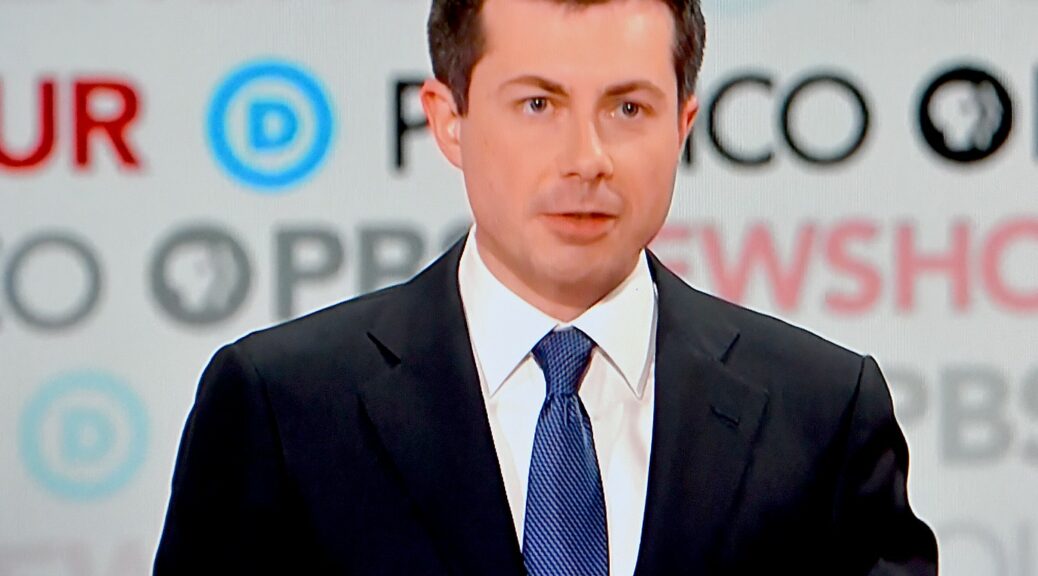
produced excellent policy proposals to address major issues. Mayor Pete
Buttigieg released his proposal to create a modern immigration system. This is a summary from the Pete for America campaign:
SOUTH BEND, IN — Mayor Pete Buttigieg released “I was a stranger and you welcomed me:
An Immigration Policy for A New Era,” a comprehensive
immigration policy that lays out Pete’s bold plan to create a modern
immigration system that fosters belonging, promotes our shared values, engages
with the global community, and ensure our nation remains competitive while
protecting all workers.
“On Day One of my administration, we will reverse this
president’s cruel and counterproductive immigration actions that separate
families, put children in cages and prevent them from having basic necessities
like toothpaste or soap, deport veterans, and sweep up workers in raids while
leaving exploitative employers unpunished,” said Buttigieg. “But we will do more than simply end these
outrages. We will reform a system that has been in dire need of reform for
decades and create an immigration system for a new era that reflects America’s
values of welcoming and belonging.”
A Buttigieg administration will work to ensure that our
nation is a beacon of hope for immigrants and refugees and will build a better
system that serves all of us. Pete’s plan will:
Pass legislation in his first 100 days that provides a
path to citizenship, including for people with temporary
protections—Deferred Action for Childhood Arrivals (DACA), Temporary Protected
Status (TPS), Deferred Enforced Departure (DED), and withholding of removal.
While working on a necessary legislative fix, Pete will immediately restore and
extend temporary protections rescinded or threatened by the current
administration on day one.
Accelerate reunification of families. Pete will
reduce the backlog of family-based visas and increase the number of visas
issued for family reunification each year. He also will fight for reforms to
re-classify spouses and children of permanent residents as immediate relatives,
eliminate discriminatory annual per-country caps, end down-grading of family
preferences (through aging out or getting married), and recognize same-sex
partners from countries lacking marriage equality.
End the Muslim Ban on Day One. Pete will immediately
end this ban, which should be anathema to our values as Americans.
Reduce barriers to health care and education by
eliminating the five-year waiting period for green card holders gaining access
to public health insurance and food assistance programs; expanding on Obamacare
to allow all immigrants to access health coverage on the marketplaces, and
expanding access to Pell grants for students with DACA.
Protect undocumented workers from retaliation when
reporting labor violations. Pete will support the Agricultural Worker
Program Act, which protects farmworker rights such as labor, pesticide
protection, and food safety laws. Pete also supports the Domestic Workers’ Bill
of Rights.
Provide opportunities for people who want to build our
economy where they are needed most. Pete will create a local Community
Renewal (CR) visa targeted toward counties that have lost prime-working-age
population over the last 10 years, and smaller cities that are struggling to
keep pace economically with larger cities.
Create a National Office of New Americans to promote and
support immigrant and refugee integration and inclusion. This office will
be in the Executive Office of the President and will coordinate integration
efforts across federal, state, and local governments.
Keep naturalization affordable. The Trump
administration is proposing to hike the naturalization application fee by 83%
to $1,170 —that’s more than an average family pays for rent each month in 43
states. Pete’s administration will keep naturalization affordable and ensure
that fee waivers are available to those unable to pay. As we do for those who
serve in the military. Pete will not require a fee from national service
participants.
Put border facilities under the purview of HHS rather
than CBP. Byshifting responsibility for processing centers to the
Department of Health and Human Services (HHS), we ensure proper care of asylum
seekers.
Fully restore and increase aid to Central America.
The Trump administration suspended nearly $450 million in aid to El Salvador,
Honduras, and Guatemala in retaliation for failing to stop migrants from
leaving for the United States, a short-sighted response that has only
exacerbated the dire conditions that cause people fleeing in the first place. A
Buttigieg administration will restore funding to additional programs proven
effective in improving the rule of law, functioning judicial systems,
education, regional safety, economic stability, and combating corruption.
Modernize our employment-based visa system. We have
not meaningfully updated our visa caps in over 30 years. Rather than reset our
visa allotments one time based on current data, which will quickly become
outdated as our economy continues to change, Pete will create a flexible review
system where the allotment for employment-based visas will be set every other
year based on our economy’s needs. This process will make our immigration
system more adaptable, evidence-based, and competitive.
Our democracy is stronger when people living here have a voice in our society.
Read Mayor Pete’s comprehensive plan for An Immigration Policy for A New Era HERE.
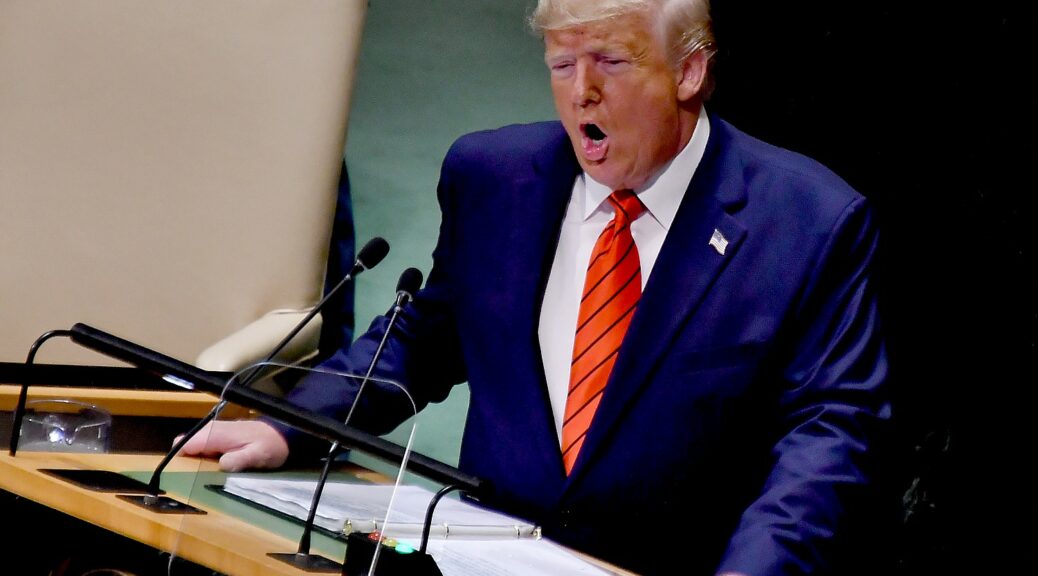
There couldn’t be more divergently contrasting speeches between that of UN Secretary-General Antonio Guterres and US President Donald Trump, even more stark by coming virtually on heels of each other – or then again, between Trump and every other head of state and minister who came to the podium.
“I have the privilege of addressing you today as the elected leader of a nation that prizes liberty, independence and self-government above all,” Trump declared. “The United States, after having spent over two and a half trillion dollars since my election to completely rebuild our great military, is also by far the world’s most powerful nation.”
Coming
immediately after the Youth Climate March on Friday which brought out some 4
million people around the world to demand the world’s leaders act to save the
habitability of the planet, and the United Nation’s Climate Summit in which
over 100 nations (not the United States, but states and regions were
represented) gave specifics on programs and achievements in order to prevent
the earth from heating more than 1.5 degrees more, Trump boasted that the United
States has become the world’s “Number One Producer of Oil and Gas.”
In
a body created out of the ashes of two devastating world wars to prevent such
global conflicts, Trump declared, “The
future does not belong to globalists. The future belongs to patriots. The
future belongs to sovereign and independent nations who protect their citizens,
respect their neighbors and honor the differences that make each country
special and unique.”
Reprising and expanding upon his America First speech he delivered to the United Nations last year, he attacked anything that might smack of multilateralism, and urged the rest of the world to follow suit.
“If you want democracy, hold on to your sovereignty. And if you want peace, love your nation,” he declared – a statement that defies any reading of history.
Yet, Trump insisted the nations of the world adopt the
Trumpian view of “Freedom of Religion”.
“This fundamental right is under growing threat around the
world. Hard to believe, but 80 percent of the world’s population lives in
countries where religious liberty is in significant danger or even completely
outlawed. Americans will never fire or tire in our effort to defend and promote
freedom of worship and religion. We want and support religious liberty for all.
“Americans will also never tire of defending innocent life,”
he said. “We are aware that many United Nations projects have attempted to
assert a global right to taxpayer funded abortion on demand right up until the
moment of delivery. Global bureaucrats have absolutely no business attacking
the sovereignty of nations that wish to protect innocent life. Like many
nations here today, we in America believe that every child born and unborn is a
sacred gift from God.”
Defend innocent life – except when it comes to guns.
“There is no circumstance under which the United States
will allow international interests to trample on the rights of our citizens,
including the right to self-defense. That is why this year I announced that we
will never ratify the U.N. Arms Trade Treaty, which would threaten the
liberties of law-abiding American citizens. The United States will always
uphold our constitutional right to keep and bear arms. We will always uphold
our Second Amendment. The core rights and values America defends today were
inscribed in America’s founding documents.
“Our nation’s founders understood that there will always be
those who believe they are entitled to wield power and control over others.
Tyranny advances under many names and many theories, but it always comes down
to the desire for domination. It protects not the interests of many, but the privilege
of few. Our founders gave us a system designed to restrain this dangerous
impulse. They choose to entrust American power to those most invested in the
fate of our nation: a proud and fiercely independent people.”
Each year, Trump has to find a boogey-man to attack.
In his first address, he lambasted North
Korea’s “Rocket Man” Kim Jong-Un; last year he went after Venezuela. This year,
he declared “One of the greatest security threats facing peace-loving nations
today is the repressive regime in Iran. The regime’s record of death and
destruction is well known to us all. Not only is Iran the world’s number one
state sponsor of terrorism, but Iran’s leaders are fueling the tragic wars in
both Syria and Yemen.”
As the United Nations raises alarms about the greatest
numbers of displaced people around the globe since World War II, Trump tripled
down on his hostility and hatred for refugees, asylum-seekers and migrants.
“To anyone conducting crossings of our border illegally,
please hear these words: Do not pay the smugglers. Do not pay the coyotes. Do
not put yourself in danger. Do not put your children in danger. Because if you
make it here, you will not be allowed in. You will be promptly returned home.
You will not be released into our country as long as I am president of the
United States. We will enforce our laws and protect our borders. For all of the
countries of the western hemisphere, our goal is to help people invest in the
bright futures of their own nation. Our region is full of such incredible
promise, dreams, waiting to be built, and national destinies for all, and they
are waiting also to be pursued.” The United States rejected the United Nations
Global Migration Compact.
Trump’s speech to the General Assembly, just as his remarks
to the “Freedom of Religion” forum the day before, was tailored for his base
(and helps explain his eagerness to pal around with India’s Prime Minister
Modi, attending the 50,000-strong rally in Houston, despite Modi’s harsh
assault on Muslim-majority Kashmir – it is his ticket to the Indian-American
vote). In this context, his attack on Venezuela served as his foil for
attacking Democrats and their radical ideas about income inequality and
universal health care.
“One of the most serious challenges our country has faced
is the specter of socialism. It’s the wrecker of nations and destroyer of
societies. The events in Venezuela reminds us all that socialism and communism
are not about justice. They are not about equality, they are not about lifting
up the poor, and they are certainly not about good of the nation. Socialism and
communism are about one thing only: power for the ruling class. Today I repeat
a message for the world that I have delivered at home: America will never be a
socialist country. The last century socialism and communism killed 100 million
people.”
Guterres
began his speech noting that the United Nations Charter’s first words are “We
the Peoples” “It puts people at the center of our work, everyday,
everywhere…. people with rights. Those rights are an endowment.”
“Machines
take their jobs. Traffickers take their dignity. Demagogues take
their rights. Warlords take their lives. Fossil fuels take their
future”, he declared. “And because people still believe in the United Nations,
we, the leaders, must deliver. They believe as leaders we will put people
first, because we the leaders must deliver for We the Peoples…People have a
right to live in peace.”
He
cited promising developments, such as peaceful elections in Madagascar and the
Democratic Republic of the Congo; the Greece-North Macedonia name dispute
resolution; political dialogue in Sudan; and an agreement in Syria. But he
spoke of persisting conflicts, terrorism and “the risk of a new arms race
growing” across the world, and lamented unresolved situations in Yemen, Libya
and Afghanistan; an evasive solution to the Israel-Palestine conflict;
Venezuelan displacements; and “the alarming possibility of armed conflict in
the Gulf”.
And without actually naming the United States and China, he raised alarm over “a new risk looming on the horizon: the possibility of a great fracture, the world splitting in two, with the two largest economies on earth creating two separate and competing worlds, each with their own dominant currency, trade and financial rules, their own internet and artificial intelligence capacities, and their own zero sum geopolitical and military strategies”.
“We must do everything possible to avert the Great Fracture
and maintain a universal system…with strong multilateral institutions”, he
stressed.
And
he, like every other leader, pointed to the need to aggressively confront
Climate Action. Referencing Monday’s Climate
Action Summit, the UN chief underscored the importance of
adaptation.
“Even
our language has to adapt: what was once called ‘climate change’ is now truly a
“climate crisis” … and what was once called ‘global warming’ has more
accurately become ‘global heating’,” he said.
Guterres
referred to Hurricane Dorian in the Bahamas as he spoke of “unprecedented
temperatures, unrelenting storms and undeniable science”.
Though
“not fast enough”, the world is starting to move “in the right direction” –
away from fossil fuels and towards a green economy, he said.
Turning
to fundamental freedoms, the UN chief said, “we are at a critical juncture
where advances made across the decades are being restricted and reversed,
misinterpreted and mistrusted”.
The
Secretary-General pointed to new forms of authoritarianism; narrowing civic
spaces; the targeting of activists, human rights defenders and journalists; and
expanding surveillance systems that are “shredding the fabric of our common
humanity”.
And in direct contradiction to the Trumpian vision of the
world order, Guterres said that anything that is done to uphold security
and human rights “helps deliver sustainable development and peace”.
“In
the 21st century, we must see human rights with a vision that speaks to each
and every human being and encompasses all rights”, lauding the 2030 Agenda for Sustainable Development as
a tool for social protection, a sustainable environment, education and decent
jobs.
These
themes were echoed by just about every other leader and representative – except
for Donald Trump. Indeed, the rest of the world seems more resolved than ever
to work together – basically ignoring the United States.
That is fine with Trump, who thinks of the rest of the world as children trying to tap their Dad for money.
The vigorous contest
of Democrats seeking the 2020 presidential nomination has produced excellent
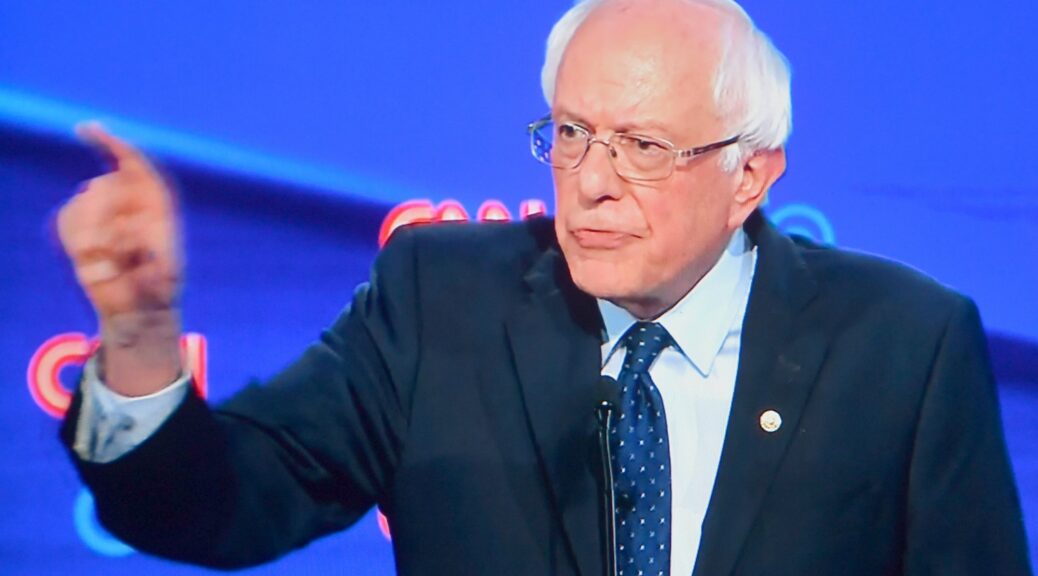
policy proposals to address major issues. Senator Bernie Sanders,in Des Moines
ahead of the Iowa AFL-CIO convention, announced a comprehensive plan to at
least double union membership during his first term as president, rebuilt the
middle class and substantially raise wages. This is from the Sanders campaign:
“Corporate America and
the billionaire class have been waging a 40-year war against the trade union
movement in America that has caused devastating harm to the middle class in
terms of lower wages, fewer benefits and frozen pensions,” Sanders said. “That
war will come to an end when I am president. If we are serious about rebuilding
the middle class in America, we have got to rebuild, strengthen and expand the
trade union movement in America.”
Sanders’ Workplace Democracy Plan would essentially repeal Iowa’s Chapter
20 law that stripped the rights of public sector workers to collectively
bargain for better benefits and safer working conditions by giving all public
sector workers the freedom to negotiate.
The sweeping proposal
to strengthen unions would end right to work laws, give every union worker in
America the right to strike and ban the replacement of striking workers.
As president, Sanders
also pledged to sign an executive order preventing large, profitable
corporations that engage in union busting, outsource jobs overseas or pay
workers less than $15 an hour from receiving federal contracts.
The plan would also
make it substantially easier to form a union and stop employers from ruthlessly
exploiting workers by misclassifying them as independent contractors or denying
them overtime by falsely categorizing them as a “supervisor.”
Other key elements of
this proposal include:
Requiring companies that merge to honor existing union contracts.
Bringing workers, employers and the government together across industries to negotiate wages, benefits and working conditions through sectoral bargaining.
Stop corporations from forcing workers to attend mandatory anti-union meetings as a condition of continued employment.
Protect the pensions of workers.
Establish federal protections against the firing of workers for any reason other than “just cause.”
In addition, the plan
makes sure that all union workers would be better off under Medicare for All.
If Medicare for All is signed into law, companies with union-negotiated health
care plans would be required to enter into new contract negotiations overseen
by the National Labor Relations Board. Under this plan, all company savings that
result from reduced health care contributions from Medicare for All will accrue
equitably to workers in the form of increased wages or other benefits.
As Donald Trump prepares to unleash raids
on undocumented migrants in cities across the country, while thousands of men, women
and children seeking asylum are crammed into unliveable detention camps for
weeks and months without end – a humanitarian crisis created through a
combination of cruelty and ineptitude – US Senator Elizabeth Warren, running
for Democratic nomination for president, announced a plan to create an immigration
system that is fair, humane, and reflects American values.
“Donald
Trump wants to divide us — to pit worker against worker, neighbor against
neighbor. He wants Americans to blame their troubles on those who are new to
our country, or who don’t look the same, even as his administration robs us
dry. He has tried his best to make it appear that immigrants are not welcome on
our shores.
“We
can be better than this. Americans know that immigrants helped weave the very
fabric of our country in the past — and they know that immigrants belong here
today.
“I’ll
work with Congress to pass broad-reaching reform, but I’m also prepared to move
forward with executive action if Congress refuses to act. We cannot continue to
ignore our immigration challenges, nor can we close our borders and isolate the
United States from the outside world. Instead we need big, structural change: a
fair immigration system that preserves our security, grows our economy, and
reflects our values. That’s good for immigrants, good for workers, and
ultimately good for the United States.”
Immigrants have always been a vital source of American strength. They grow our
economy and make our communities richer and more diverse. They are our
neighbors, our colleagues, and our friends — and every bit as much a part of
America as those who were born in the United States.
President
Trump sees things differently. He’s advanced a policy of cruelty and division
that demonizes immigrants. He’s axed programs that protect young Dreamers and
asylum seekers fleeing violence and upheaval. He’s championed dramatic cuts to legal
immigration, and imposed a bigoted ban on travelers
from Muslim-majority countries. He’s threatened to close our ports of
entry to lawful transit and commerce, and exploited a crisis
of his own making at the border to score cheap political points. But while
Trump may have taken the system to its most punitive extreme, his racist
policies build on a broken immigration system and an enforcement infrastructure
already primed for abuse.
I
saw that in McAllen, Texas, in the eyes of mothers who fled violence only to be
ripped apart from their babies at the U.S. border. I saw it in the tears of
families as they waited for their loved ones at Logan Airport in Boston on the
night Trump announced his Muslim Ban. I saw it in the tired faces of little
children made to march in formation between makeshift tents in the hot summer
sun at the Homestead detention facility in Florida.
I
also see it when I talk with our Dreamers about their aspirations and their
fears. When I meet with business owners who watch their competition exploit
undocumented workers for a competitive advantage, and with farmers who cannot
access the labor they need. When I sit with families who have been waiting
decades for a visa to reunite with their loved ones, and with mixed-status
families who worry that a parent, brother or sister could be ripped away at any
time.
We
must address the humanitarian mess at the border and reverse this president’s
discriminatory policies. But that won’t be nearly enough to fix our immigration
system. We need expanded legal immigration that will grow our economy, reunite
families, and meet our labor market demands. We need real reform that provides
cost-effective security at our borders, addresses the root causes of migration,
and provides a path to status and citizenship so that our neighbors don’t have
to live in fear. That’s why today I’m announcing my plan for immigration reform
— to create a rules-based system that is fair, humane, and that reflects our
values.
Eliminating
Abusive Enforcement
President
Trump has weaponized deportation in ways that are costly, ineffective, and
designed to maximize pain. It’s time to end this cruelty — and refocus on true
threats to public safety and national security instead. As president, I
will:
Decriminalize migration and refocus enforcement on
serious criminal activity. Entering the country without authorization has
always been a violation of civil immigration law, but thanks to a former segregationist Senator,
it’s also a criminal violation. This additional criminal provision is totally
unnecessary for border security, and for a century, it was rarely enforced. But
since the early 2000s, it has been used to build and sustain a massive
immigration detention complex. In 2016, over half of all
federal criminal prosecutions were for immigration violations — more than
prosecutions for terrorism, organized crime, hate crimes, or financial fraud.
This obsessive focus ties up federal prosecutors and overwhelms federal
courts. It’s costly and unnecessary. And under Trump, it has become
increasingly abusive. We should repeal this criminal prohibition to prevent
future abuse. As president, I will immediately issue guidance to end criminal
prosecutions for simple administrative immigration violations; end Operation
Streamline, which subjects migrants to mass prosecutions; and refocus our
limited resources on actual criminals and real threats to the United States. I
will also issue prosecutorial guidance to prioritize immigration cases with
security concerns, and make sure government attorneys are properly exercising
their discretion for individuals who pose no public safety risk.
Separate law enforcement from immigration
enforcement to strengthen our communities. There are good reasons to
keep immigration enforcement and law enforcement separate. When law enforcement
is forced to also handle immigration violations, people are less willing
to report crimes for
fear of revealing their immigration status. Combining these functions sows
distrust and harms public safety. As President, I’ll put in place strict
guidelines to protect sensitive locations like schools, medical facilities, and
courthouses from enforcement actions. I’ll expand programs that grant
protections to immigrant victims of serious crimes who come forward and assist
law enforcement. And I’ll end programs like 287(g) and “Secure
Communities” that force local cops to enforce federal immigration laws so they
can focus on effectively serving their communities.
Remake CPB and ICE in a way that reflects our
values. Our
immigration agencies should protect Americans and uphold the rule of law, not
pursue punitive anti-immigrant policies that target communities of color. I’ll
hold immigration enforcement to the same due process standards as other law
enforcement agencies — no more warrantless arrests or stops deep in the
interior of our country. I’ll reshape CBP and ICE from top to bottom, focusing
their efforts on homeland security efforts like screening cargo, identifying
counterfeit goods, and preventing smuggling and trafficking. And to change the
culture, I’ll insist on transparency and strengthen the authorities of
independent internal watchdogs to prevent future abuses.
Create accountability for the abuse perpetrated
during the Trump Era. President Trump and his Administration are
comfortable looking the other way while criminal abuses of immigrants pile up.
When I am President, I will not. I’ll designate a Justice Department task force
to investigate accusations of serious violations — including medical neglect and physical and sexualassaults of
detained immigrants — and give it independent authority pursue any substantiated
criminal allegations. Let there be no ambiguity on this: if you are violating
the basic rights of immigrants, now or in the future, a Warren Administration
will hold you accountable.
Significantly
Reduce Immigration Detention
Americans
are rightfully horrified by scenes of chaos and abuse at our
border. Separating parents and children and detaining families and other
vulnerable populations is not only staggeringly expensive and inhumane, it has
no proven deterrent effect. To end
unnecessary detention and rebuild a more humane system, a Warren administration
will:
End unnecessary detention. We already
have the tools to effectively track and monitor individuals without shoving
them into cages and camps along the border. As President, I’ll issue guidance
ensuring that detention is only used where it is actually necessary because an
individual poses a flight or safety risk. I will put additional layers of
protection in place for certain groups, including asylum seekers, families
and pregnant women, and LGBTQ+ people who are more vulnerable in a general
detention facility. And I’ll enforce strict standards for remaining detention
facilities, including for medical care and to end the use of solitary
confinement.
Eliminate private detention facilities. There is
no place in this country for profiting off cruelty. I’ll end the contracts ICE
has with private detention providers, and push for legislation to
permanently ban for-profit
detention.
Expand the executive use of parole and invest in
alternatives-to-detention. DHS has broad authority to parole individuals
who are detained prior to their cases being heard in immigration court.
Community-based alternatives to
detention are safer, save money, and can be more effective at ensuring
compliance. I’ll significantly expand successful programs, which include case
management, referrals to legal and social services, and periodic check-ins and
surveillance. These programs provide a measure of dignity for those in the
system, and their expanded use would save over a billion dollars each year in
unnecessary detention costs.
Provide
Rights and Due Process in our Immigration Courts
It’s
not enough to merely correct the excesses of the Trump administration’s
immigration policies. To prevent future abuses, we need to treat migrants
moving through the system in a manner that reflects our Constitution and our
values. A Warren administration will:
Establish professional, independent Article I
immigration courts. DOJ
both oversees the immigration court system and enjoys massive authority to
manipulate those courts to implement the president’s immigration policy agenda.
Immigration court rulings can even be overturned by the Attorney General — a
fundamental conflict of interest exploited by Jeff
Sessions. I’ll work to create a credible, independent system by passing
legislation establishing Article I judicial review for immigration cases
modeled on our federal courts. I’ll deploy smart efficiency measures, beginning
by restoring judges’ ability to prioritize and manage their own dockets. And my
administration will recruit highly qualified immigration judges with a diverse
set of legal experiences so that everyone receives appropriate justice.
Eliminate expedited removal and provide due
process. Due
process ensures basic fairness for individuals attempting to navigate complex
laws and prevents law enforcement and Presidents from abusing authority.
But mostimmigrants facing
deportation do not have attorneys — and in the Trump administration, that even
includes toddlers. In fact,
one-third of deported immigrants never even see a judge: instead, the
immigration officer serves as both prosecutor and jury. I’ll eliminate the use
of expedited removal proceedings and guarantee hearings. I’ll call for creating
a national-scale immigration public defender corps,
and a Warren administration will provide access to counsel in immigration
court.
Welcome
Those In Need
Our
laws and our values compel us to help those fleeing violence and oppression,
but Trump’s racism has contributed to a climate of fear for those seeking
refuge in our country. As president, I will:
Reject exclusionary policies based on race,
religion and nationality. I’ll reverse Trump’s bigoted Muslim Ban on my
first day in office. I’ll withdraw the Trump policy that forces
immigrant families to choose between staying together and ensuring their
children — many of whom are American citizens — have access to critical
services. And I’ll reinstate Temporary Protected Status designations and
Deferred Enforced Departure to protect individuals at risk in their home
countries, including migrants from the Caribbean and Africa that have built
lives and businesses in our country.
Raise the refugee cap. At a time
when 70 million are
displaced around the world, President Trump has abused his authority to lower
the refugee cap for the United States, admitting just over 22,000 refugees in
total last year. I’ll welcome 125,000 refugees in my first year, and ramping up
to at least 175,000 refugees per year by the end of my first term.
Affirm asylum protections. We should
welcome those fleeing violence, not imprison them in cages. As president, I
will reverse Trump’s efforts to stack the deck against asylum applicants. I’ll
ensure that asylum seekers can safely present themselves at ports of entry for
humane, efficient processing, including by ending the metering and “Remain in
Mexico” policies. I’ll restore President Obama’s promise to extend asylum for
those fleeing domestic or gang violence and affirm asylum protections for gender
identity and sexual orientation-based asylum claims. I’ll streamline processes
to eliminate the backlog of individuals waiting for an asylum adjudication. And
I’ll pardon those convicted of providing food and water to migrants — because
no one should go to jail simply providing humanitarian aid to another person in
need.
Grow
Legal Immigration and Establish a Fair and Achievable Path to Status
As
president, I’ll work to expand legal immigration. I’ll also take executive
action to provide a measure of protection for those who are undocumented, while
pursuing a legislative solution that provides a path to citizenship.
Expand legal immigration. America
should welcome more legal immigration — done in the right way and consistent
with our principles. We should use targeted immigration as a tool to create
jobs and businesses and grow our economy. We should reflect our values, which
means expanding family reunification and making it easier for relatives of
citizens and green card holders to come to the United States. We should put
American workers first by ensuring that workers already here get the first
opportunity to fill any available positions. We should empower workers, not
employers, by coupling any expansion of legal immigration with real
accountability on employers who break the rules, exploit workers, or don’t
adhere to basic labor standards. And we should be transparent and data-driven
in our immigration policies, using the best available information to identify
true needs in the labor force and to address those needs in a way that
incorporates the input of both workers and companies.
Make it easier for those eligible for citizenship
to naturalize. Today
over 9 million green card holders are eligible to apply for citizenship but
many have not chosen to naturalize due to unnecessary barriers, including the
cost of applications, the complexity of the process, and administrative issues
and backlogs. I’ll work to make it possible for everyone who is eligible to
naturalize to do so.
Reduce the family reunification backlog. As many as 4
million immigrants who are otherwise eligible to come to the United States
legally are prohibited because of by-country visa caps. My administration will
redistribute unused visas to reduce this backlog and reunite more families with
their loved ones. I’ll also urge Congress to repeal laws that make family
reunification more difficult to achieve.
Repeal the 3- and 10-year bars. The law
currently requires a person unlawfully in the United States to depart the
country for three or ten years before they can apply for legal status. I’ll
petition Congress to repeal that requirement. In the meantime, I’ll reinterpret
“extreme hardship” to include family separation, making it easier to obtain a
waiver allowing people to apply for legal status without having to leave the
country for an extended period of time.
Provide a fair and achievable pathway to
citizenship. For
the good of our economy and our communities, it’s long past time to provide a
path forward for the approximately 11 million undocumented individuals
currently living and working in the Unites States. We should immediately
reinstate the DACA program and protections for our Dreamers and their families.
I’ll expand the program to cover more young people by extending the cut-off
date, eliminating the arbitrary application age requirement, and extending the
“minor” designation to anyone who was brought to the U.S. under the age of 18.
But Dreamers have families and communities that are productive, longtime
members of our American family and need protection too. The same is true of the
Temporary Protected Status and Deferred Enforced Departure holders. I’ll extend
the individual exercise of discretion to offer deferred action protections to
hardworking immigrants who have contributed to our country for years and have
built careers and families here. And I’ll push for a far-reaching legislative
fix that provides a fair but achievable path to citizenship for them.
Limit the penalties considered for status
determinations. Part
of focusing on real threats means distinguishing between actual criminals and
law-abiding immigrants. We shouldn’t penalize people for prior convictions
under statutes that criminalize border crossing for the purpose of status
determinations. And we should establish a statute of limitations for how long a
misdemeanor will be considered as part of an individual’s immigration
adjudication. Citizens with minor, non-violent criminal records should not be
permanently excluded from being a part of American society — and immigrants
shouldn’t be, either.
Create an Office of New Americans. I’ll establish
an Office of New Americans dedicated to supporting new immigrants as they
transition into our society and economy, and task that office to draft a
national strategy for integration. We should provide English, civics, and
employment- focused classes and training for immigrants who want to enroll, and
work with faith groups and other community organizations to provide support
services for refugees and asylees, providing the tools to make it easier for
newcomers to integrate into their communities.
Address
the Forces Displacing Migrants from Their Home Countries
Migration
has spiked around the world, the result of poverty, climate change, violence
and injustice. Migrants have come to our country fleeing naturaldisasters or conflicts that forced them from
their homes.
In
recent years, many have fled north from the Northern Triangle. But the solution
to Central American migration isn’t placing children in cages, it’s stabilizing
the countries that families are risking their lives to escape. Rather than
addressing rampant corruption,
criminal gangs, and some of the
world’s highest rates of
gender-based violence, President Trump has cut off hundreds of millions of
dollars in aid for programs that provide vital support.
We
cannot fully address migration until we address its root causes. Now more than
ever, the United States must reclaim its role as the world’s beacon of hope —
and that means proposing bold and nuanced solutions to these complex
challenges. As president, I will:
Restore and increase aid. I’ll commit at
least $1.5 billion annually in aid to fully fund programs that target crime,
disrupt trafficking, address poverty, reduce sexual violence, and enhance
programs for at-risk youth in Central America and throughout our hemisphere —
and I’ll rally the international community to match those funds.
Step up efforts to address transnational crime. A Warren
administration will expand efforts to reduce corruption and improve the rule of
law, investigate and prosecute human trafficking, employ targeted financial
sanctions against drug kingpins and money launderers, and provide robust
funding for efforts to counter gangs.
Inform and protect those seeking refuge. My
administration will provide information about the right to seek asylum,
reinstate the Central American Minors program, and coordinate with the United
Nations High Commissioner for Refugees to help resettle children and families
who need protection. We’ll also do more to spread awareness about the dangers
of attempting migration across borders to help prevent vulnerable people from
being exploited along the way.
Bill Chalmers, the “ringmaster” and
Chief Experience Officer of the Global Scavenger Hunt, launches us on this around-the-world-in-23-days
mystery tour with what he calls a “chimpanzee test” – a test where a chimpanzee
is likely to get more answers right than a human being who has news and
information available to them. The test basically demonstrates that unlike the
gloom-and-doom of headlines, the trendlines are positive and these are actually
the best of times for human society.
Throughout this Global Scavenger Hunt, “A Blind Date With the World” – where we don’t know where we are going next until we are told when to go to the airport or get ourselves there, and along the way, complete scavenges and challenges – we are encouraged, even forced, to “trust in the kindness of strangers.” To interact with local people even when we can’t understand each other’s language. To learn and understand for ourselves.
For me, it is an incomparable
opportunity to see in close proximity and context what is happening in countries
literally around the globe – to examine this notion of American Exceptionalism,
America First; to see the scope of such hot-button issues as trade, technology,
migration and how they have played out over the longer course of human
civilization. (I have a theory that 98% of Trump’s so-called hard-core base
have never traveled beyond their own provincial border.)
As Chalmers notes, it is conceit to
think we can parachute into places and understand the nuances of complex
issues, but still, travel is about seeing for yourself, but also gaining an
understanding of one another, disabusing stereotypes or caricatures, and most
significantly, not seeing others as “other”, which works both ways. In very
real ways (and especially now), travelers are ambassadors, no less than
diplomats. Isolating people is not how change happens – that only hardens
points of view, and makes people susceptible to fear-mongering and all the bad
things that have happened throughout human history as a result. “See for
yourself,” Chalmers tells us.
This is particularly poignant when
we arrive in Myanmar: One of the first things I see upon arriving in
Yangon, Myanmar (formerly known as Rangoon in its colonial days) is the National
Human Rights Commission which at this juncture, strikes as ironic. But despite
the awful headlines, we all find the people of Myanmar to be kind, gentle,
considerate. And a complete lack of politics or angst.
And just after returning home, the
two prizewinning Reuters journalists imprisoned for their reporting of the
deadly crackdown on the Rohingya, were released.
Vietnam is a testament to the
resiliency of human society to rebound after wars and other crises (as we see
everywhere, in fact – in Spain, in Portugal, in Greece, places that suffered
during World War II, and you reflect on the success of the alliances that set
the stage for 70 years of progress, now being weakened). In Vietnam, visiting
the Chu Chi Tunnels and the War Remnants Museum, you cannot help but feel
ashamed at the war crimes that remain unpunished because of the wealth and
power of the United States.
In Gibraltar, still a colony of
Great Britain, I come upon a May Day labor rally that could have been New York
City: Privatization. Nonconsultation and lack of transparency. Unfair
distribution. Wage increases that don’t keep up with the cost of living.
Abu Dhabi is like a fantasy of a
society built on oil wealth, conspicuous ostentation, a gallery of skyscrapers
that defy physics; Amman, Jordan, on the other hand, is the real world. But my
side trip to Petra – a fantastic city carved out of the rock faces, showed how
greatness is made possible by innovations in engineering a water supply. Petra
was able to dominate (and protect) the caravan routes, and the result was
fabulous art and culture.
This theme picked up again in
Athens, visiting the National Archaeological Museum, where I am struck by the
artistry from 2500 years ago (themes and imagery that I will see again repeated
throughout history on our final stop in New York City, at the Metropolitan
Museum of Art) and realize that the human species is not smarter or better than
thousands of years ago, we just have better tools and technology.
But this panel about 6th Century
Greece stood out that notes the nexus between trade, migration, innovation,
democracy and culture and rise of empire:
“The nature of the economy underwent
a radical change as a result of the growth of trade. A new class of citizens
emerged who were conscious of liberty and its potential and now demanded the
right to play an active role in the running of public affairs….The liberty
that was characteristic of the Greek way of life and which governed their
thinking finds eloquent expression in their artistic creations. …Works of art
and artists moved freely along the trade routes. The wealth and power of the
city-states were expressed in the erection of monumental, lavishly adorned
temples and impressive public welfare works.
“Greeks turned their attention to
the natural world and to phenomena that gave rise to philosophical speculation,
formulative ideas such as those of matter, the atom, force, space and time, and
laying the foundations of science…”
But then came the rise of the
Persian Empire and the Persian Wars.
These themes are repeated in New
York City where our “Global Scavenger Hunt” ends. At the Metropolitan
Museum of Art where the challenge I take is to find objects from five of the
countries we visited, and this leads me to a fascinating exhibit, “The World
Between Empires: Art and Identity in the Ancient Middle East.” The museum
rarely (if ever) becomes political, but in this exhibit, archaeologists comment
on the destruction of Palmyra and other ancient sites by ISIS.
“It may seem frivolous to focus on
monuments, museums when people are enslaved and killed. But to wipe out,
destroy culture is a way of destroying people. We must protect heritage as
well.”
It is a humbling experience, to be
sure, to go to the origins of the great civilizations, fast forward to today.
How did they become great? How did they fall? Greatness is not inevitable or
forever. Empires rise and fall. Rulers use religion, art and monuments to
establish their credibility and credentials to rule; successors blot out the
culture and re-write history. Traveling around the world, you appreciate just
what a small world it is, how interdependent we are, how vulnerable our
societies are, and that individuals do have impact. Also, that people
everywhere are more similar than different.
I come back to a monstrously
disturbing New York Times headline: “Humans Are Speeding Extinction and
Altering the Natural World at an ‘Unprecedented’ Pace:”
“Humans are transforming Earth’s
natural landscapes so dramatically that as many as one million plant and animal
species are now at risk of extinction, posing a dire threat to ecosystems that
people all over the world depend on for their survival, a sweeping new United
Nations assessment has concluded.”
In this case, headlines are
trendlines. And it isn’t just about aesthetics or seeing animals like the
Barbary Macaques that delight tourists in Gibraltar, but whole economies and
sustenance. It is a matter of national security, peace and progress. It is
about food and water supply, disease, habitable spaces. Sea level rise alone is
expected to trigger 300 million climate refugees, competing for dwindling
resources. There have been periods of mass extinction in the past – in fact,
homo sapiens (us) were touch and go there for awhile.
Chalmers started off our “Blind Date
With the World” with the Nicholas Kristof model, that these are actually the
best of times for human society despite the gloom and doom headlines. But I
disagree: the trendlines are not that hopeful. We may well be living in a golden
age of human capacity, but we must recognize that we now have the power of the
Gods to shape, to destroy or to create. And we seem too short-sighted to see
that.
“Governments must start putting
people and the planet ahead of corporate interests and greed and act with the
urgency this report illustrates,” writes Annie Leonard, Executive Director,
Greenpeace USA. “Leaders must adopt strong targets and implementation plans to
protect biodiversity with the active participation and Free, Prior, and Informed
Consent of Indigenous Peoples and local communities. Instead of plundering the
forests and seas for short-term profit we need to shift our system into one
that respects planetary boundaries.”
The Greek Gods may well have the
last laugh at the extraordinary ability humans have to destroy themselves.
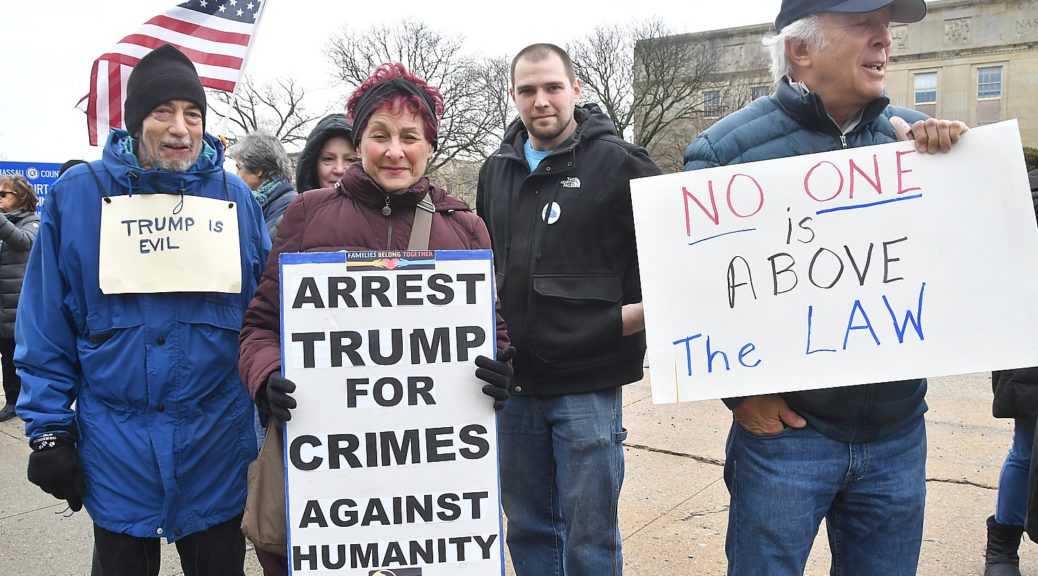
Some
55 Long Islanders assembled in front of the Nassau County Courthouse in Mineola
on Presidents Day to protest the anti-President, the illegitimate occupier of
the White House who has yet again fouled the office and undermined the
Constitution and the Rule of Law in his personal quest to see just how much
authoritarian rule he can muster to overcome his incompetence. We were just one
of more than 250 protests in 47 states that were held.
Just
as Trump abused the claim of “national security” in order to usurp power to
implement an otherwise unconstitutional Travel Ban and overturned ratified
trade agreements (Canada, really!) and treaties (the Reagan-era
Intermediate-Range Nuclear Forces (INF) Treaty with Russia), Trump now perverts
“national emergency” in order to preempt Congress’ Article 1 power of the purse
in pursuit of building his political and personal monument, the southern border
wall. And to do it, he would rob other projects, deemed worthy of appropriation
by Congress: $2.5 billion in military narcotics funding and $3.6 billion in
military construction necessary to cure the decrepit housing.
The
very definition of “emergency” – and the clear intent when Congress passed it –
was to enable a President to react to immediate crises – a foreign attack, a
natural disaster – when Congress could not have time to.
But
after two years of Republican control of all branches – executive, legislative
and judicial – and not getting the appropriation to build the wall that even
Republicans recognized as wasteful and ineffective (when Trump nixed the
Democrats’ offer of $25 billion in exchange for DACA), and then a 35-day
government shutdown followed by weeks of deliberation in which the Congress
deemed $1.4 billion sufficient for “border fencing,” now he insists there is a
“national emergency.”
What
is more accurate is that there is a humanitarian crisis solely of Trump and his
thugs’ making, for which in a just world, he and Homeland Security Secretary
Kirstjen Nielsen, HHS Secretary Alex M. Azar II, and anyone else involved in
conceiving and implementing the torturous “family separations” and “zero
tolerance” policies would be tried, convicted and jailed for crimes against
humanity.
But
in pursuit of these human rights violations, Trump is also violating
international and US law. Those Trumpers who insist “why don’t they come in
legally as my grandfather did?” should recognize that Trump has shut down what
legal immigration system there was – in fact, it hasn’t functioned since
Reagan, which is why there are an estimated 11 million undocumented people.
Instead
of actually dealing with the immigration crisis – starting with reuniting
parents with their children, implementing a program to properly vet and
legalize the status of Dreamers and parents of American citizen children, the
tens of thousands who have been in the US legally for decades under the
Temporary Protected Status (TPS) programs, and those who have a legal claim to
asylum – Trump has actually closed access through legal ports of entry, while
declaring anyone who enters and then surrenders to border patrol, as having
committed a crime, and therefore ineligible for asylum. That violates US and
international law.
The
absurdity of Trump’s unlawful assertion of “national emergency” to build a wall
is the fact that he would only have one year before it expired – and the $8
billion he is expropriating would hardly be sufficient. Moreover, a wall takes
tremendous amount of time to build, even if it would actually keep out drugs
and gangs (which it won’t). Hardly a way to address an actual “emergency.”
Of course, Trump admitted as much when he betrayed his utter ineptitude when he declared the emergency when simultaneously declaring, “Of course I didn’t need to do this. But I’d rather do it much faster.” The money, he said, could be reallocated from the many “unimportant” projects – like disaster aid to Puerto Rico and California, or cutting funding for 9/11 victims.
He then boasted about having so much money – even in the defense
budget. “When
you have that kind of money going into the military, this is a very, very small
amount that we’re asking for,” Trump said.
Here’s the question: if the Defense budget is so bloated (at
$719 billion), doesn’t that mean that Congress should allocate funding
elsewhere, like health care, infrastructure, child care, R&D? (Yes.)
In
addition to the Democratic-controlled House advancing a resolution rescinding
the declaration, and organizations like the ACLU bring suit, 16 states
(including New York), led by California, are now suing Trump. “We’re going
to try to halt the President from violating the Constitution, the separation of
powers, from stealing money from Americans and states that has been allocated
by Congress, lawfully,” California Attorney General Xavier Becerra stated.
Initially,
there was a cheering thought that Trump’s precedent would enable a Democratic
President (in just 2 years!) to finally address real emergencies, circumventing
the obstruction of the likes of Mitch McConnell – health care, climate change,
gun violence, humanitarian crisis posed by Trump’s zero tolerance immigration policy
– that destroy tens of thousands of lives needlessly, tragically each year.
But then I realized that just as Trump’s sing-song description of how he expects to lose in the 9th circuit but expects to win at the Supreme Court, which going back to Bush has been stacked with “justices” who believe in a Unitary Executive (when a Republican is in office), that this same Supreme Court right-wing, Federalist Society majority, that would empower Trump’s “presidential discretion” today would beat back a national emergency claim by a Democratic president for these purposes, just as they contradicted the Constitution and precedent in Citizens United, Hobby Lobby, Heller, Bush v Gore.
“The risk
is that we limit the president’s power to act when it really is necessary, when
it is not practical to bring the Congress into session on a moment’s notice,”
said Congressman Adam Schiff, who chairs the House Intelligence committee. “But
this president doesn’t care about future presidents. He only cares about
himself. And in this case, he only cares about placating his conservative
critics.”
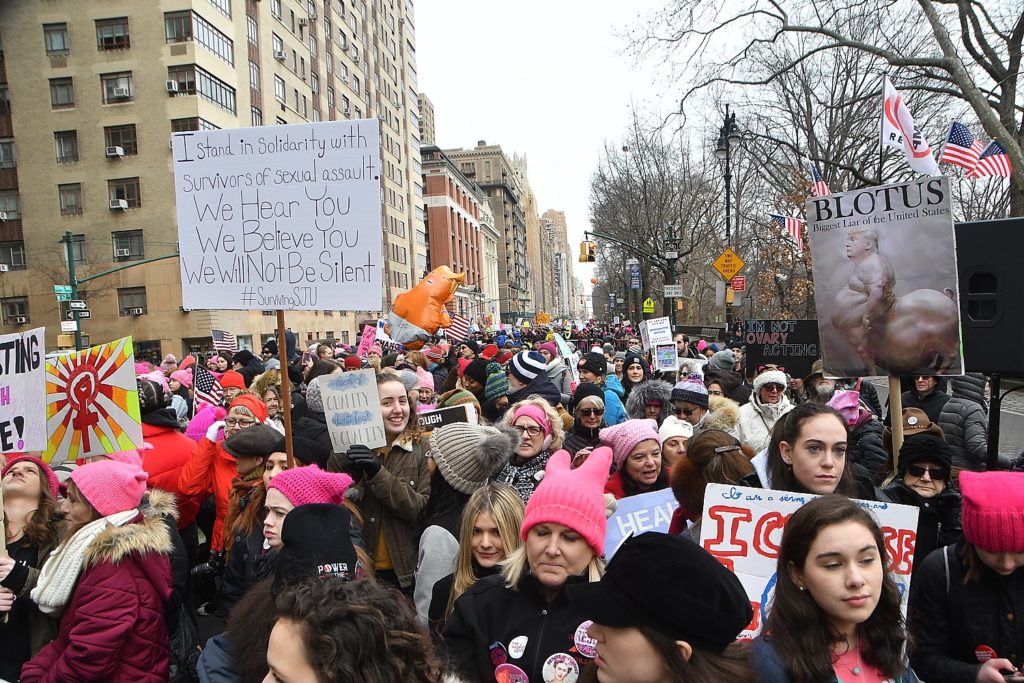
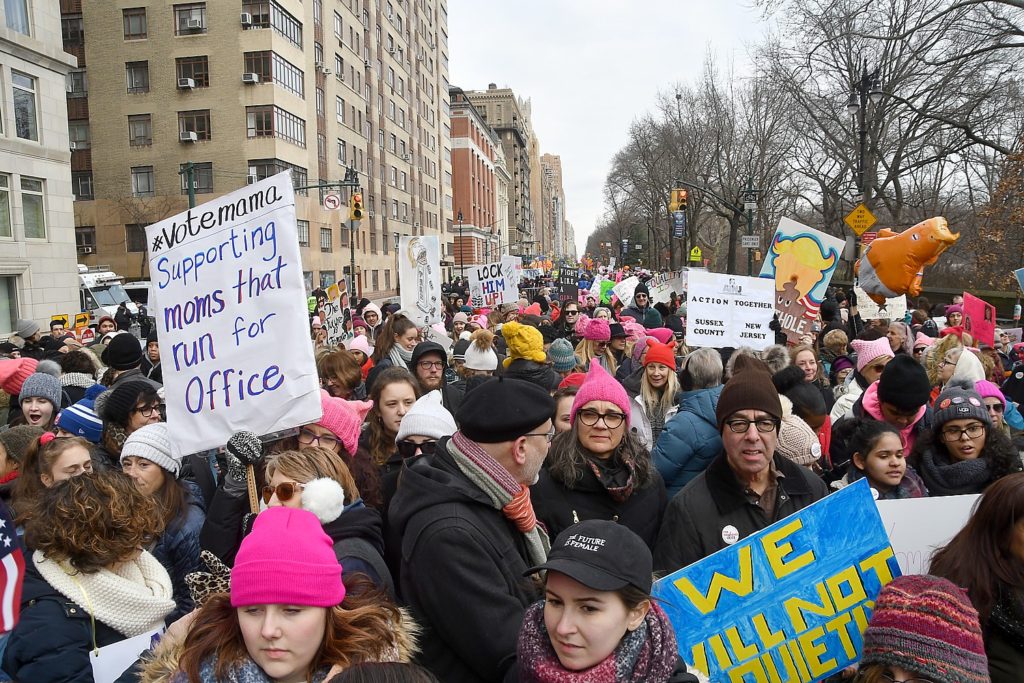
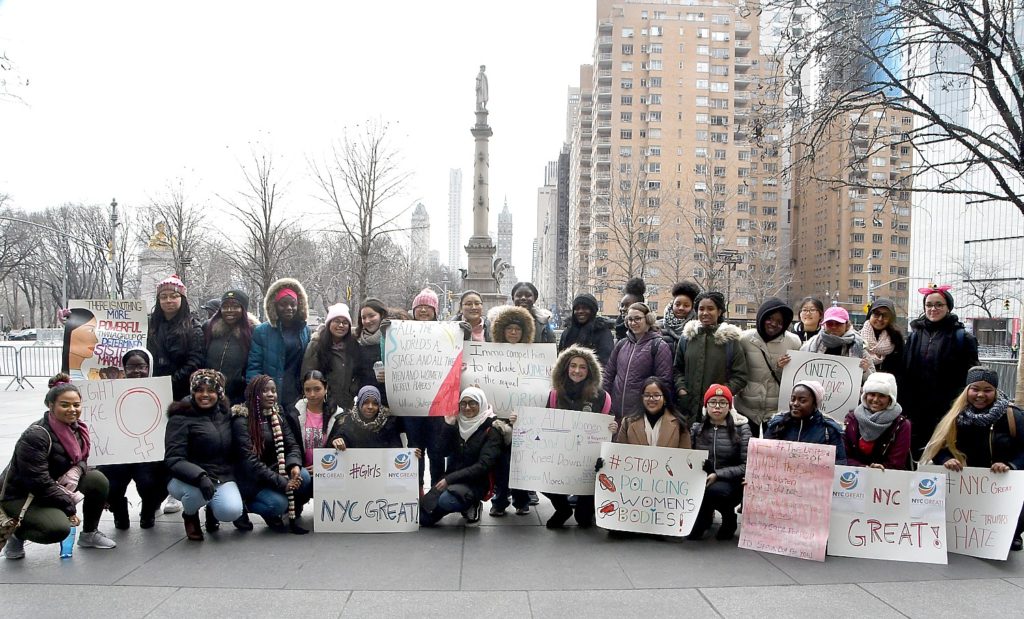
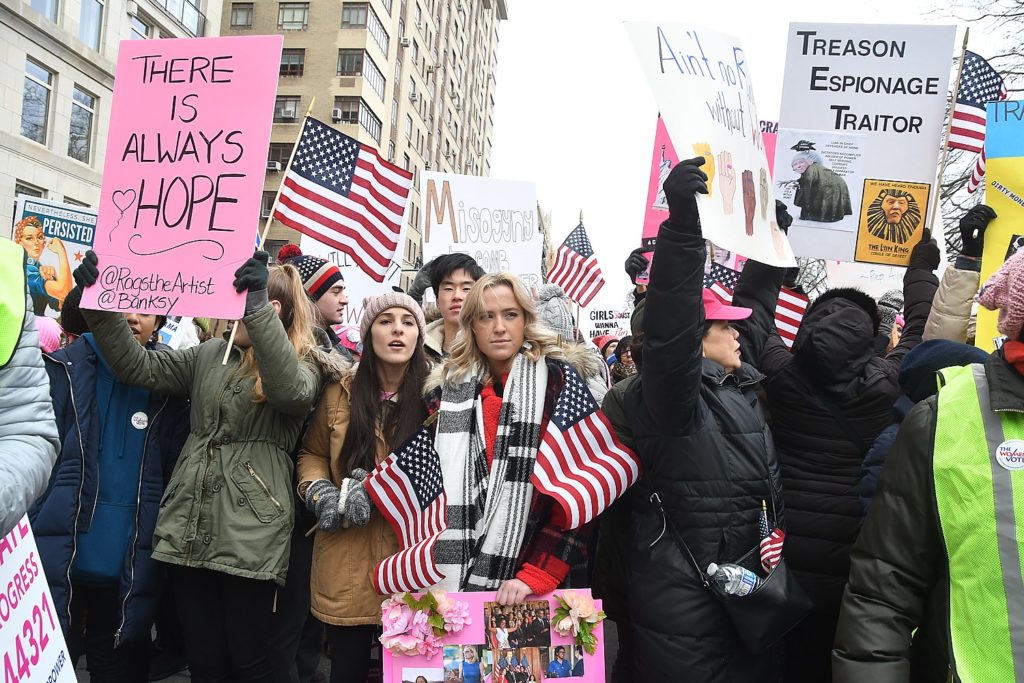
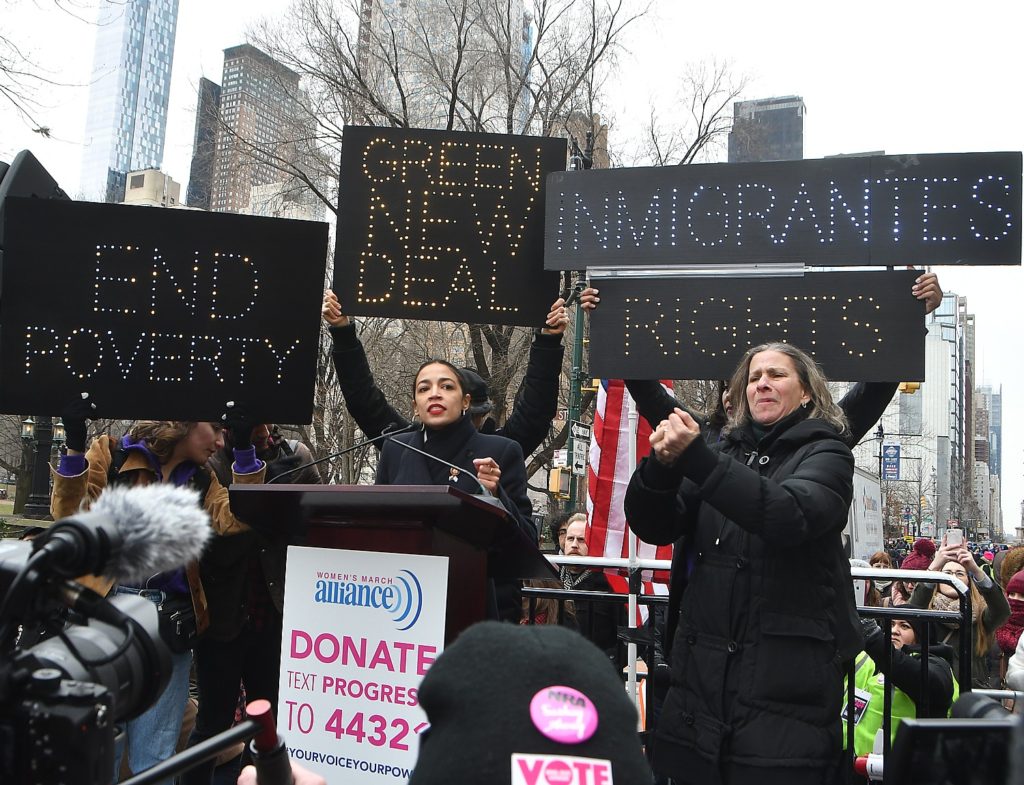
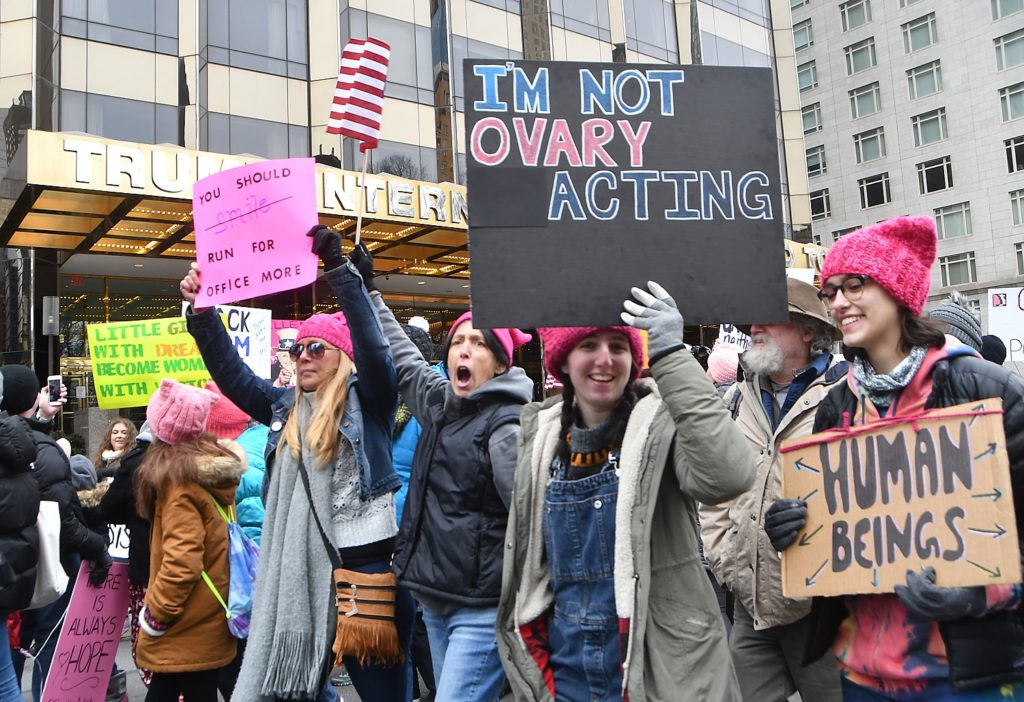
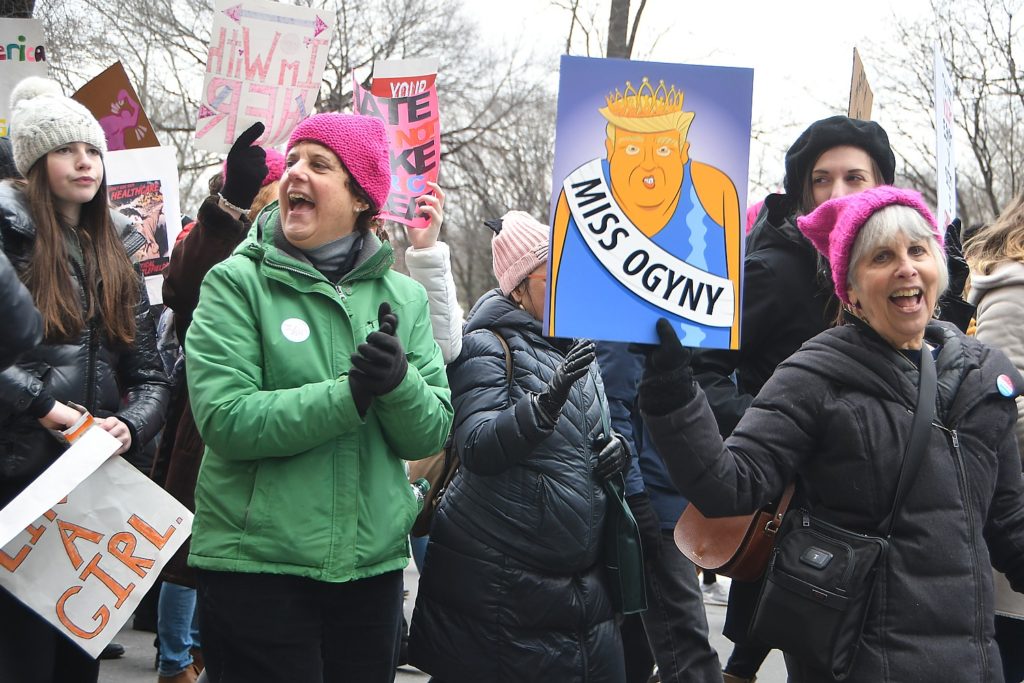
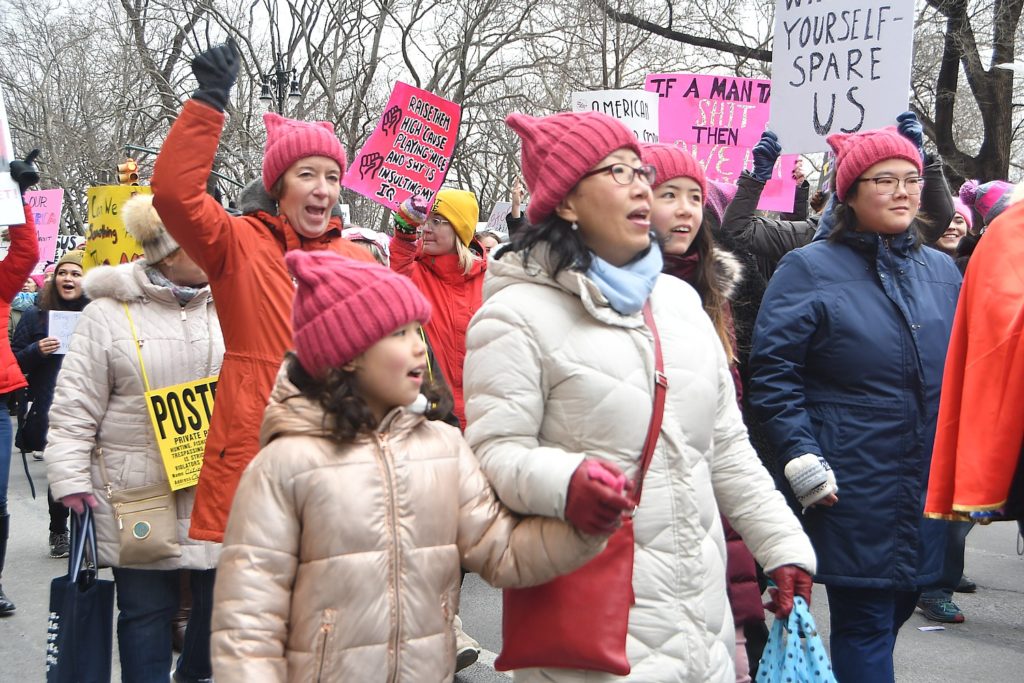
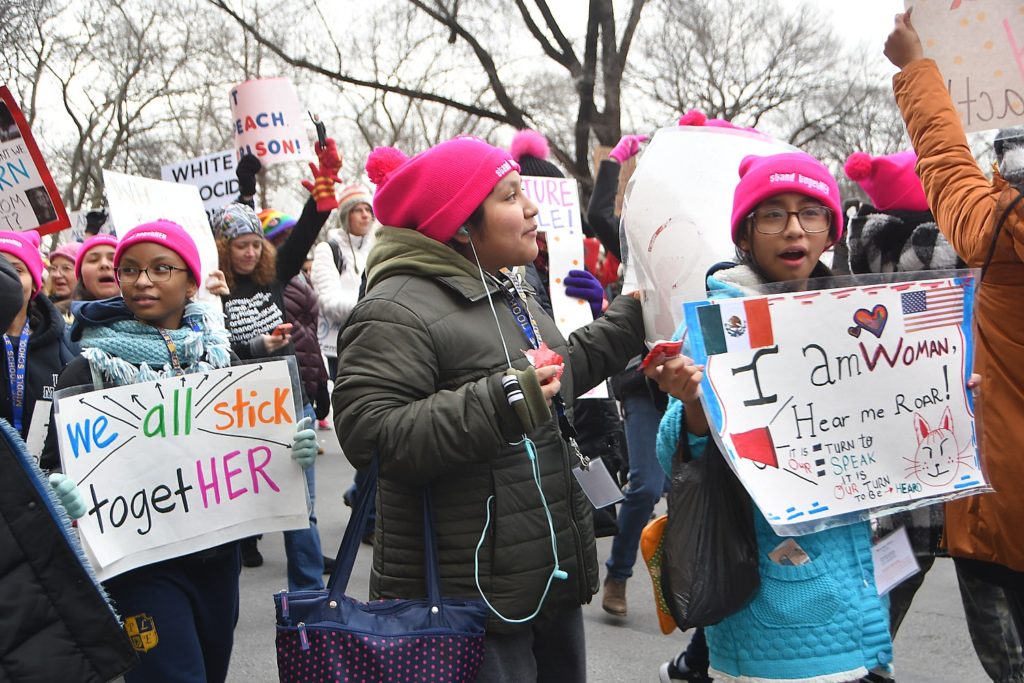
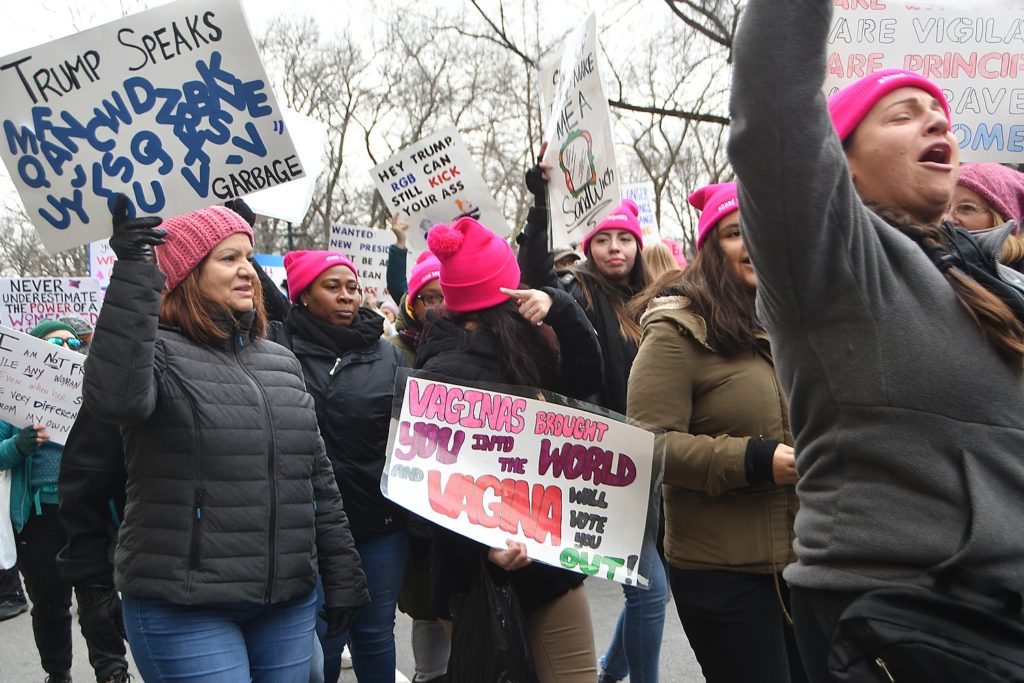
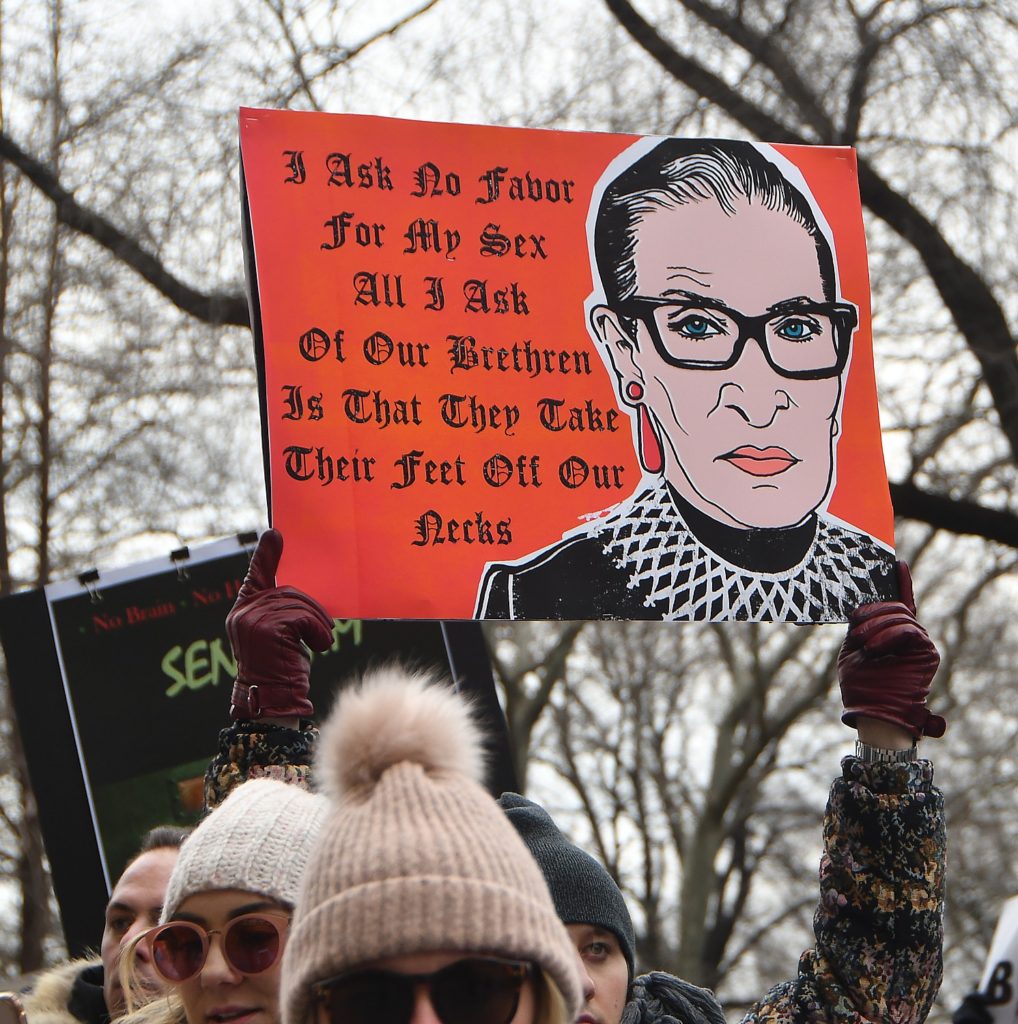
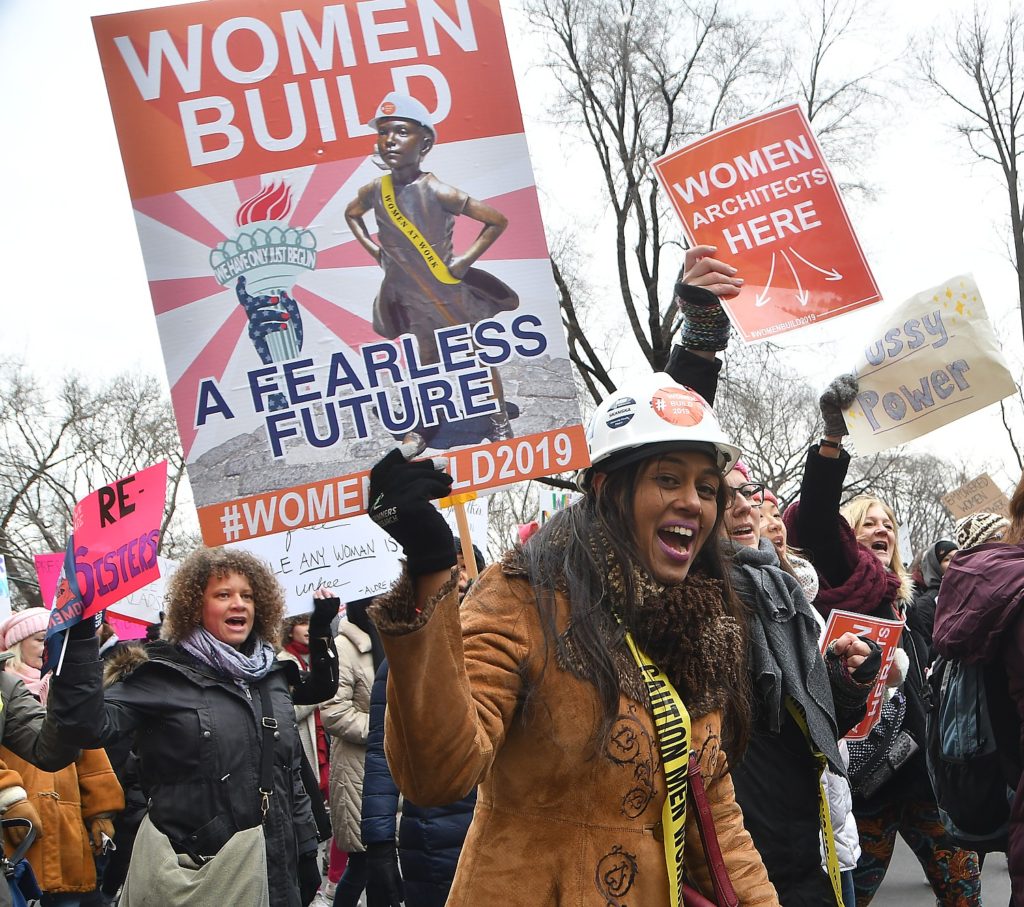
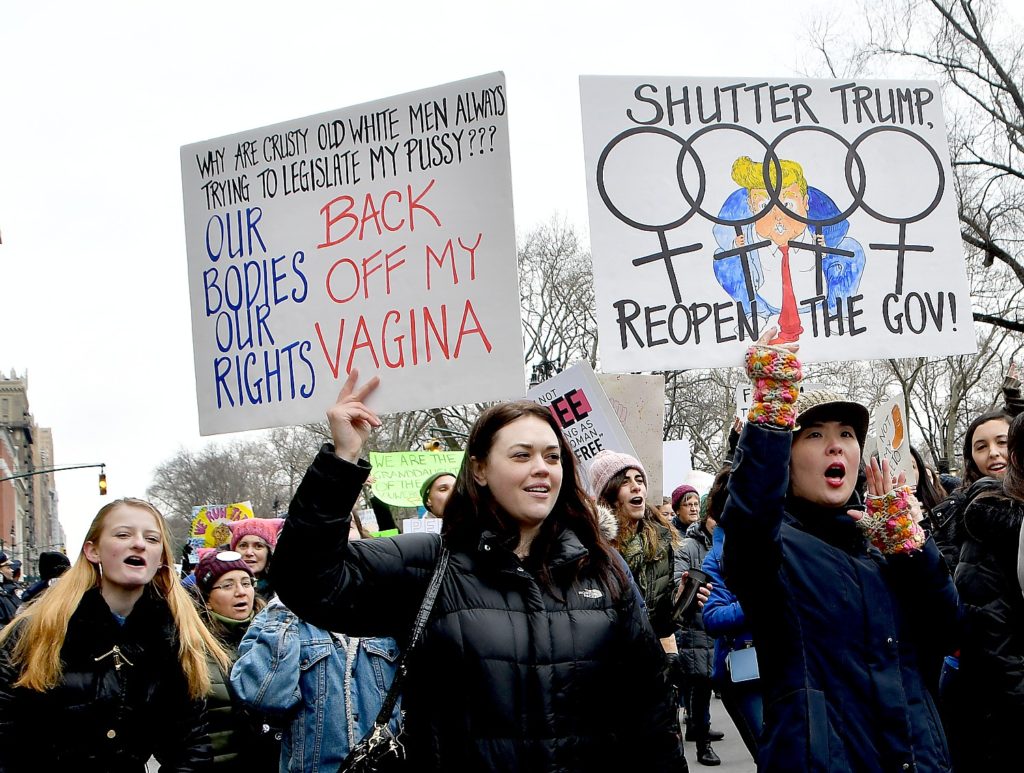
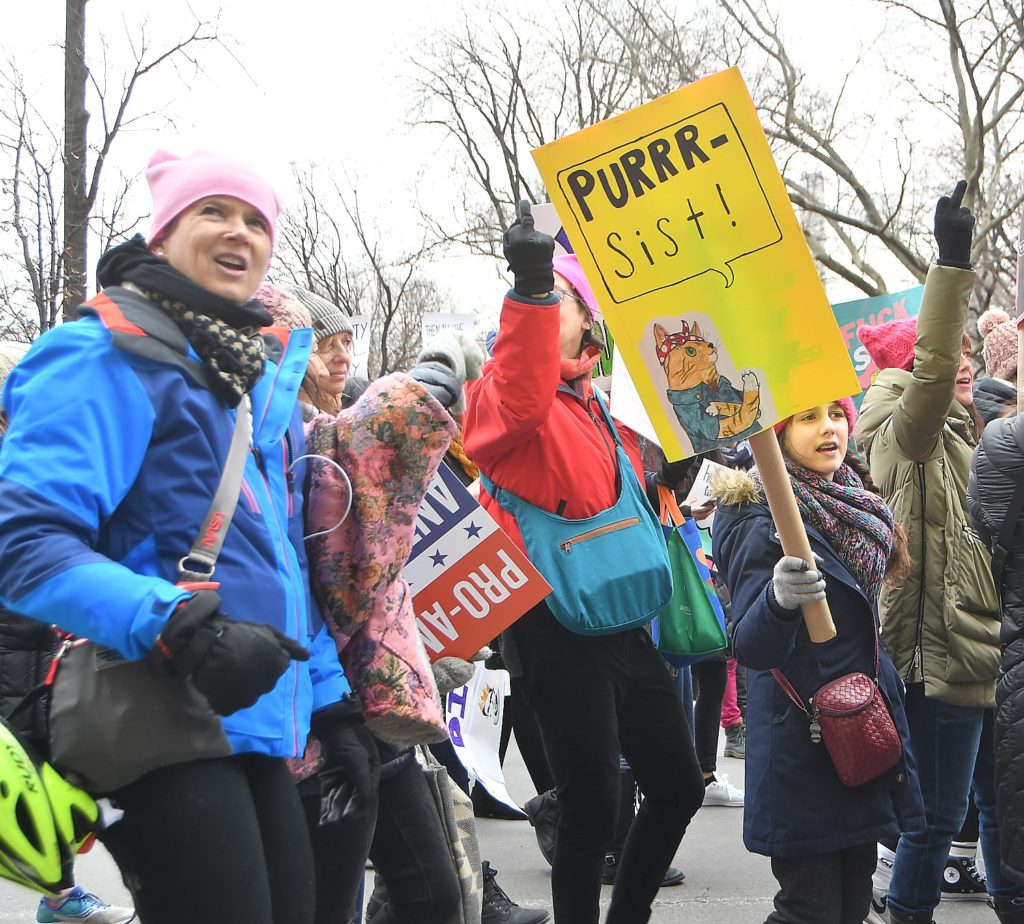
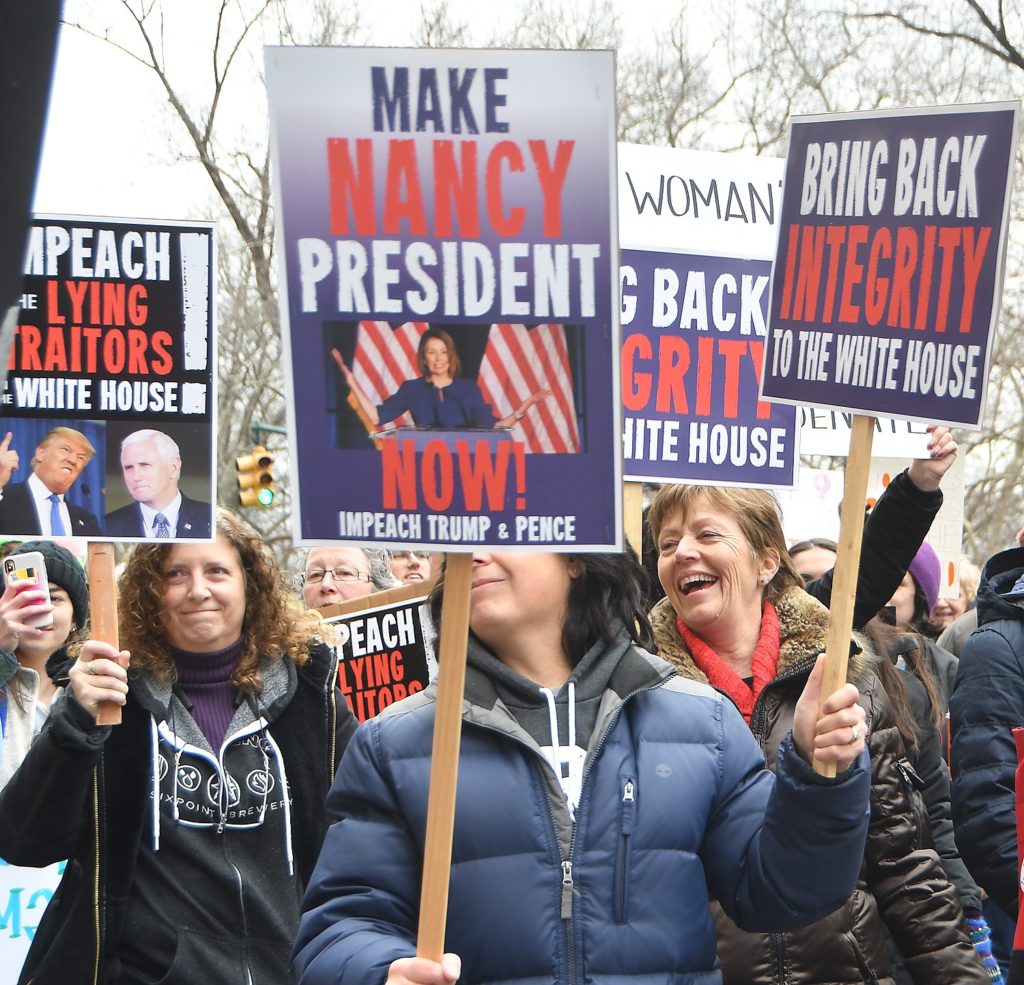
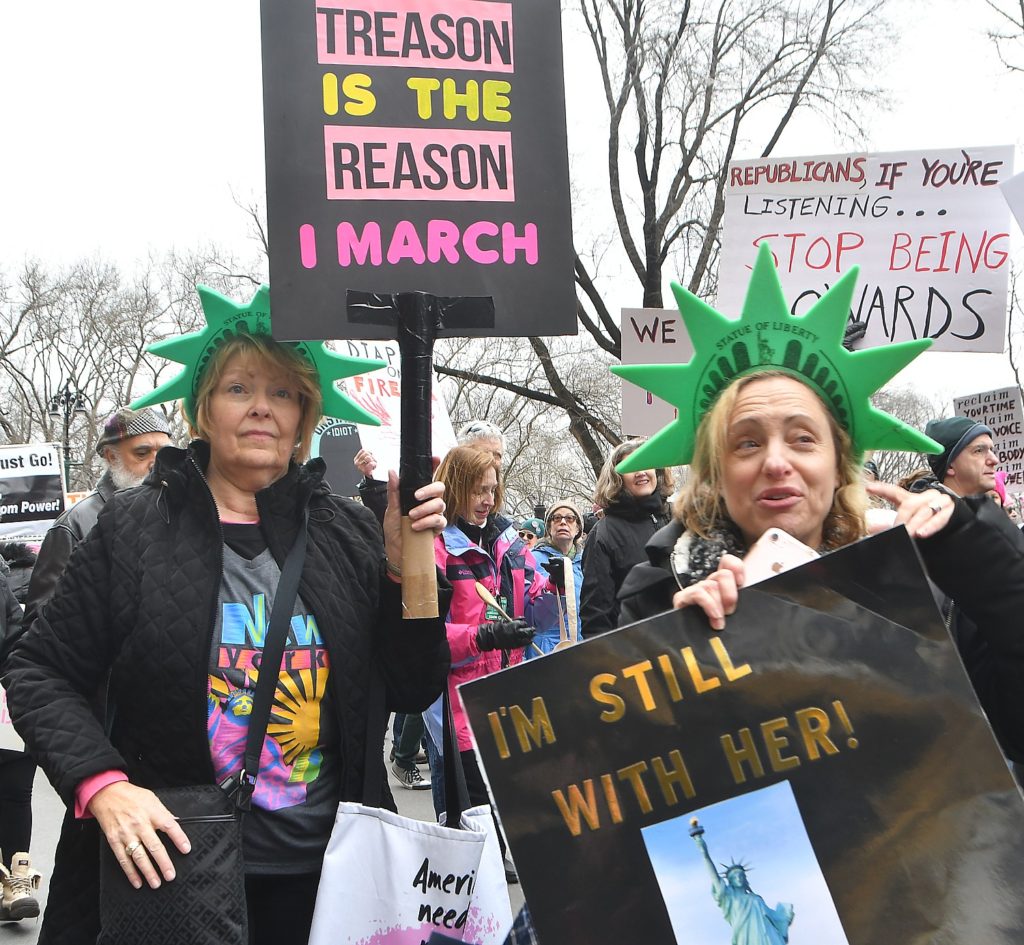
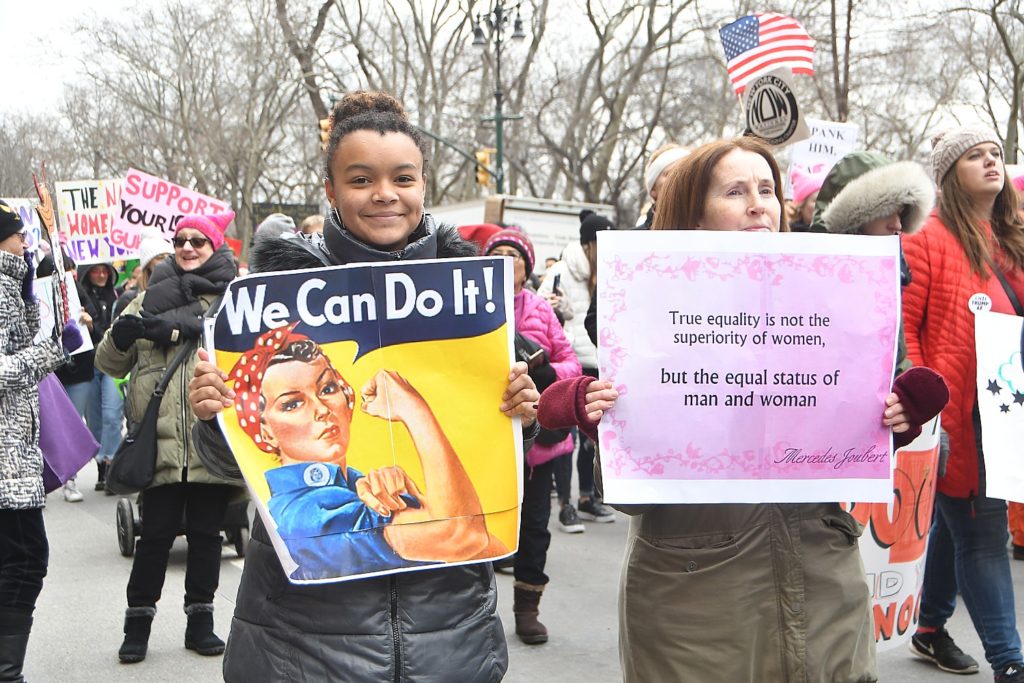
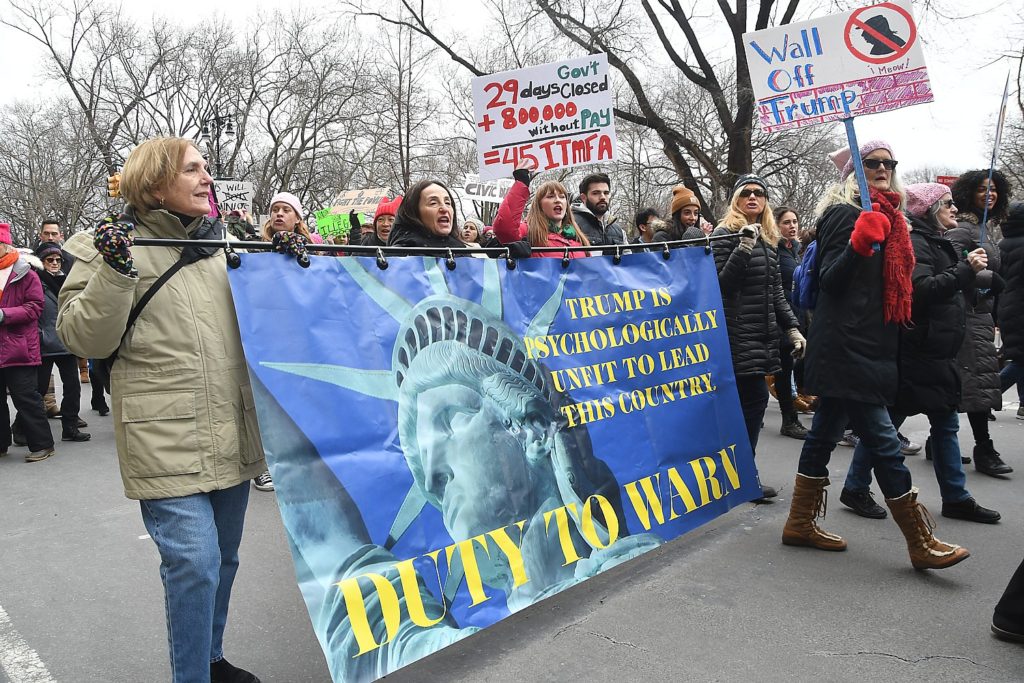
Women’s March on NYC organized by Womens March Alliance, Jan. 19, 2019
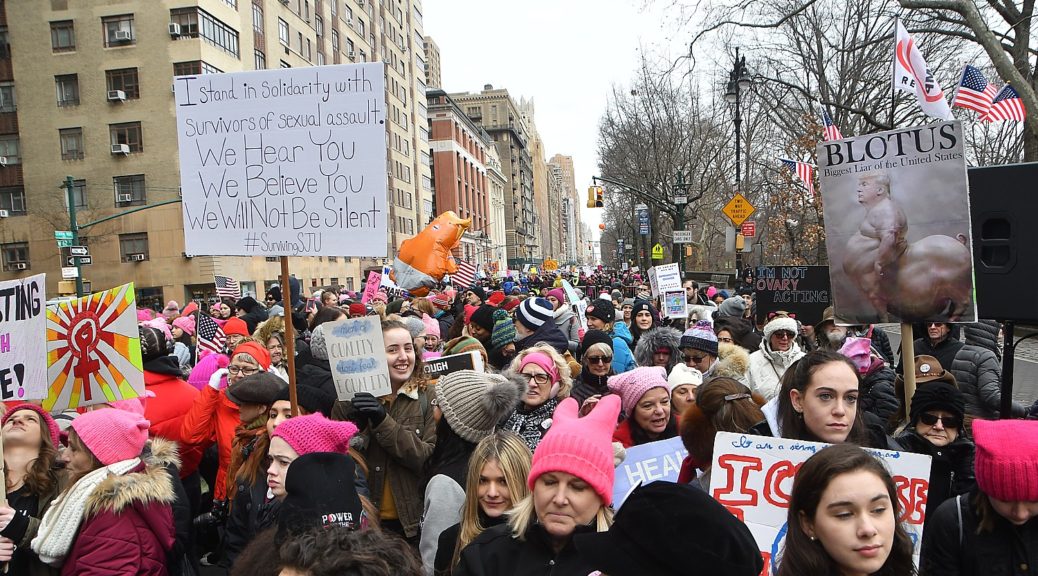
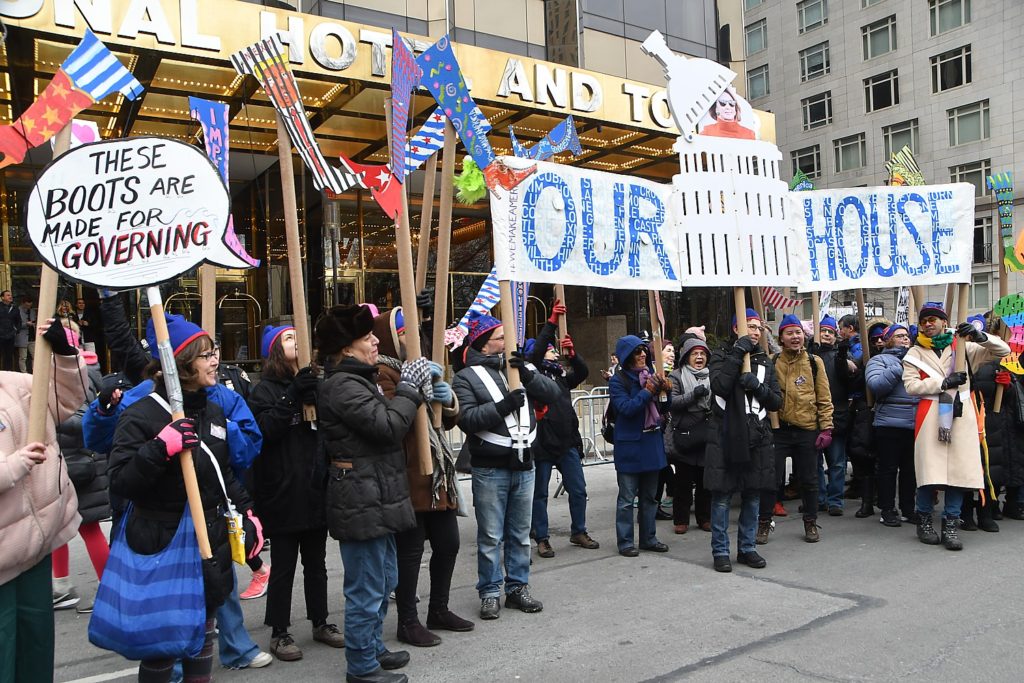
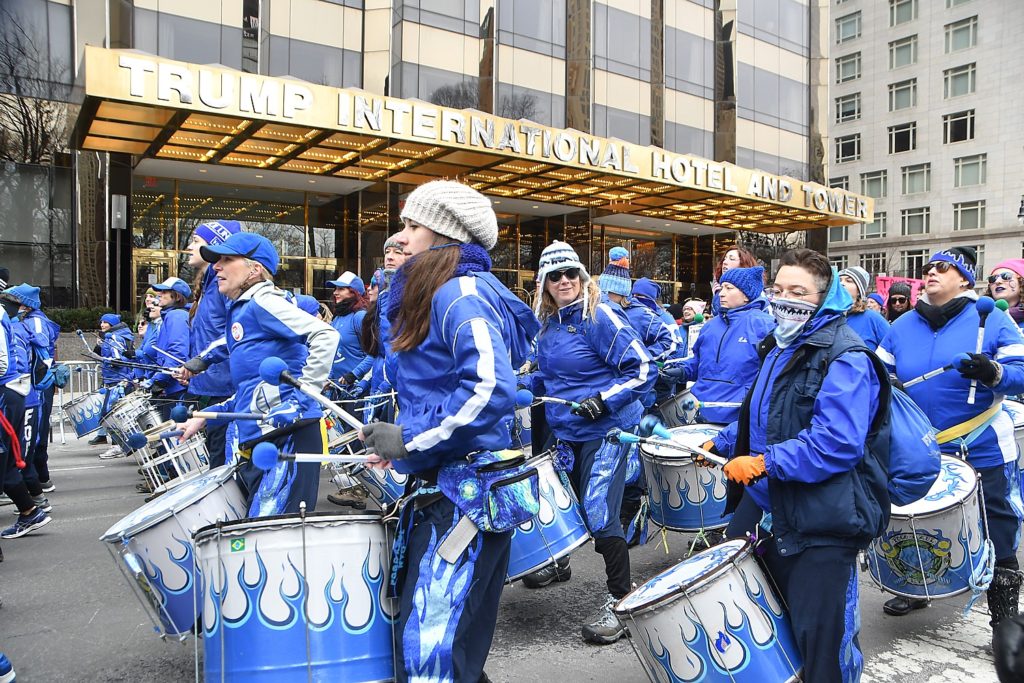
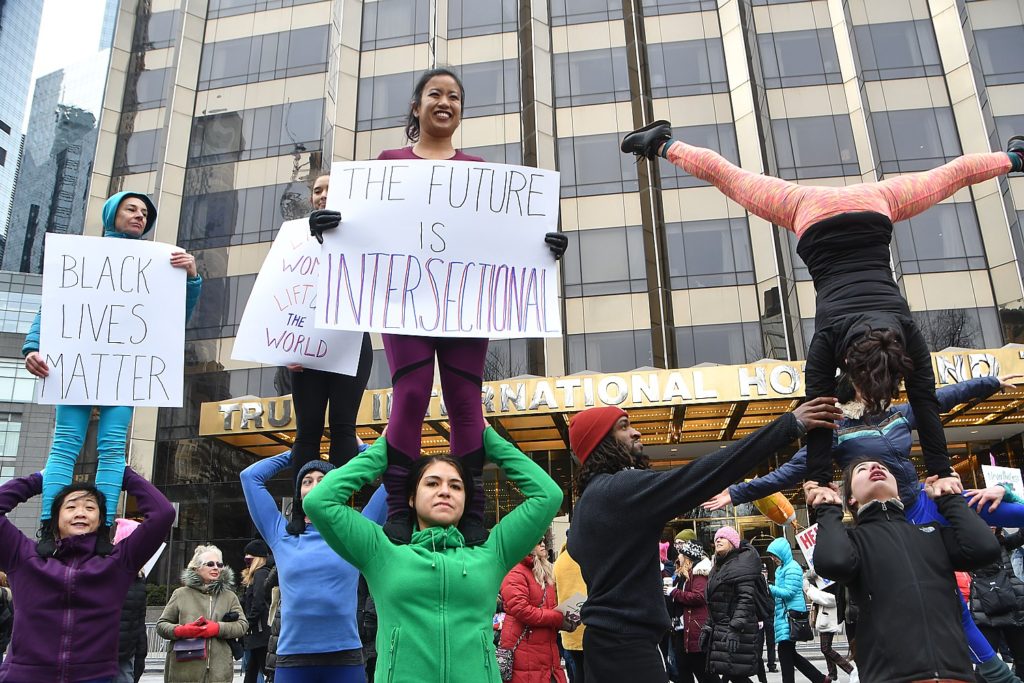
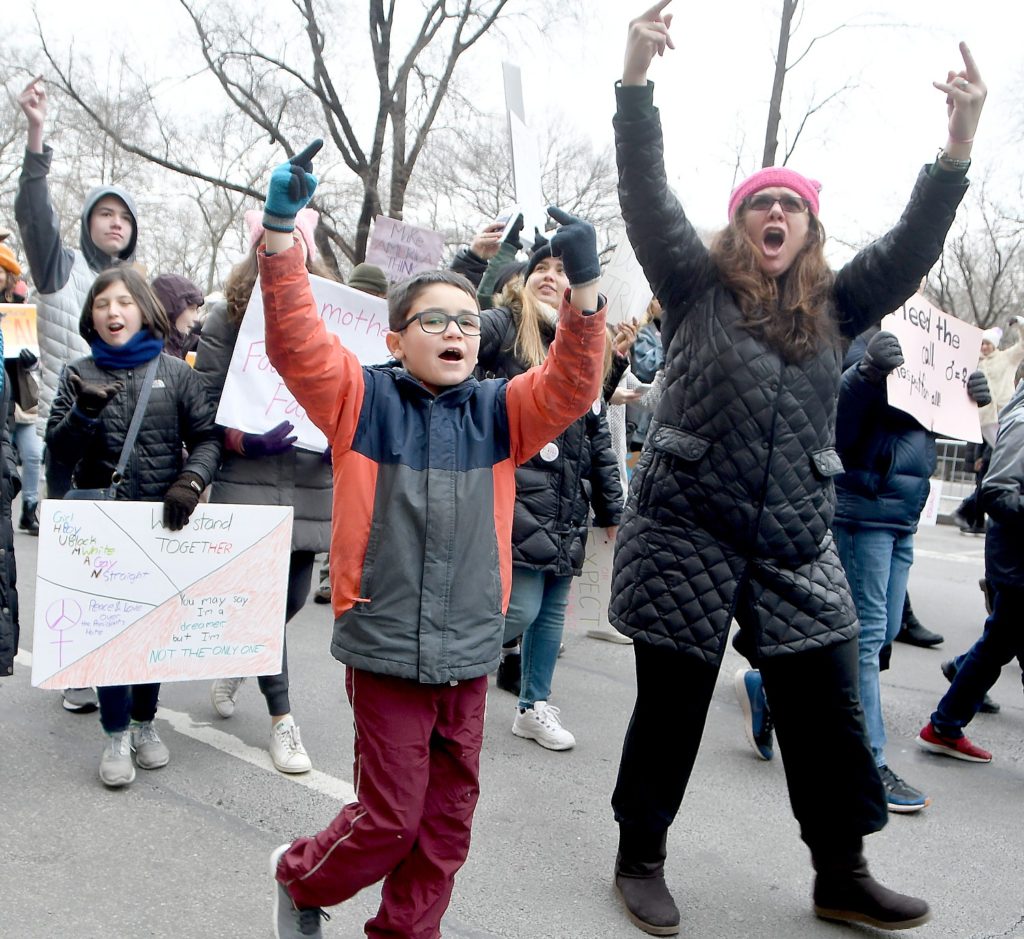
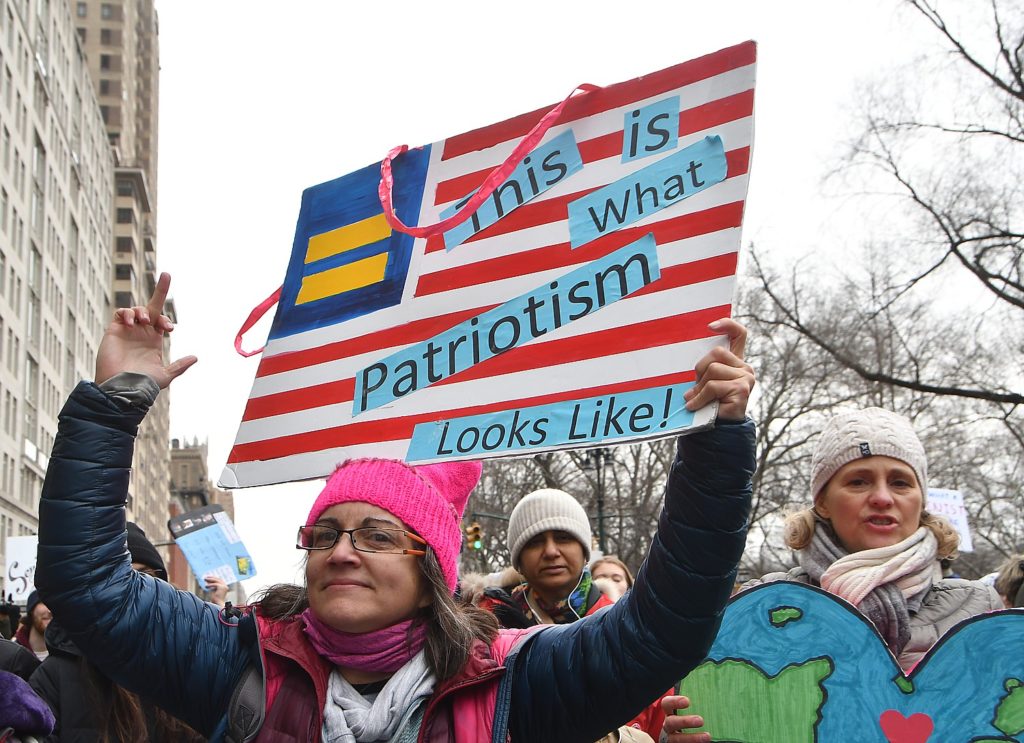
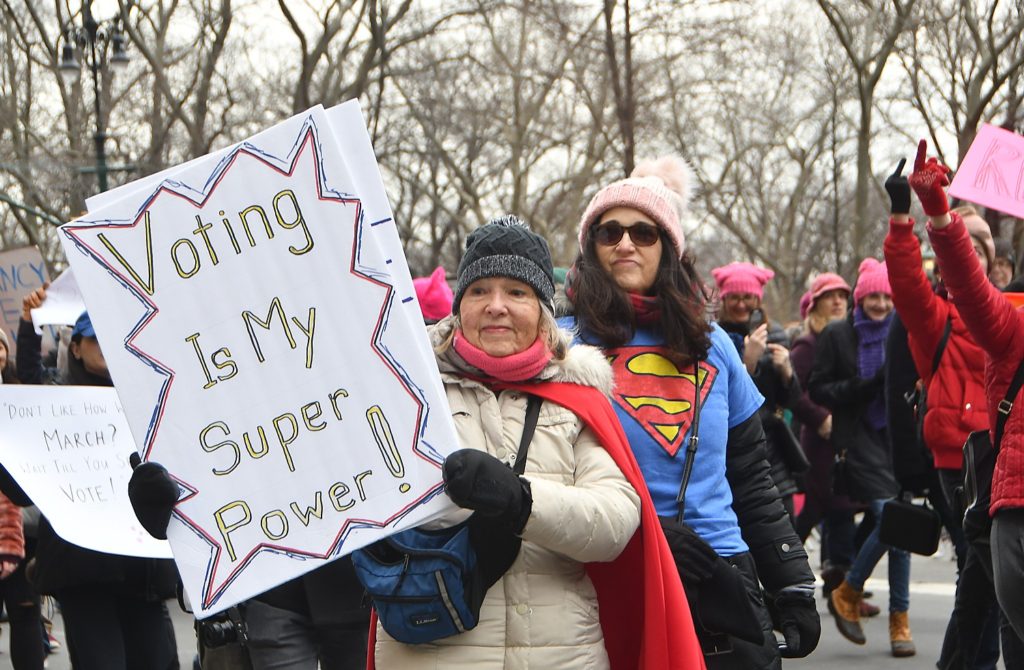
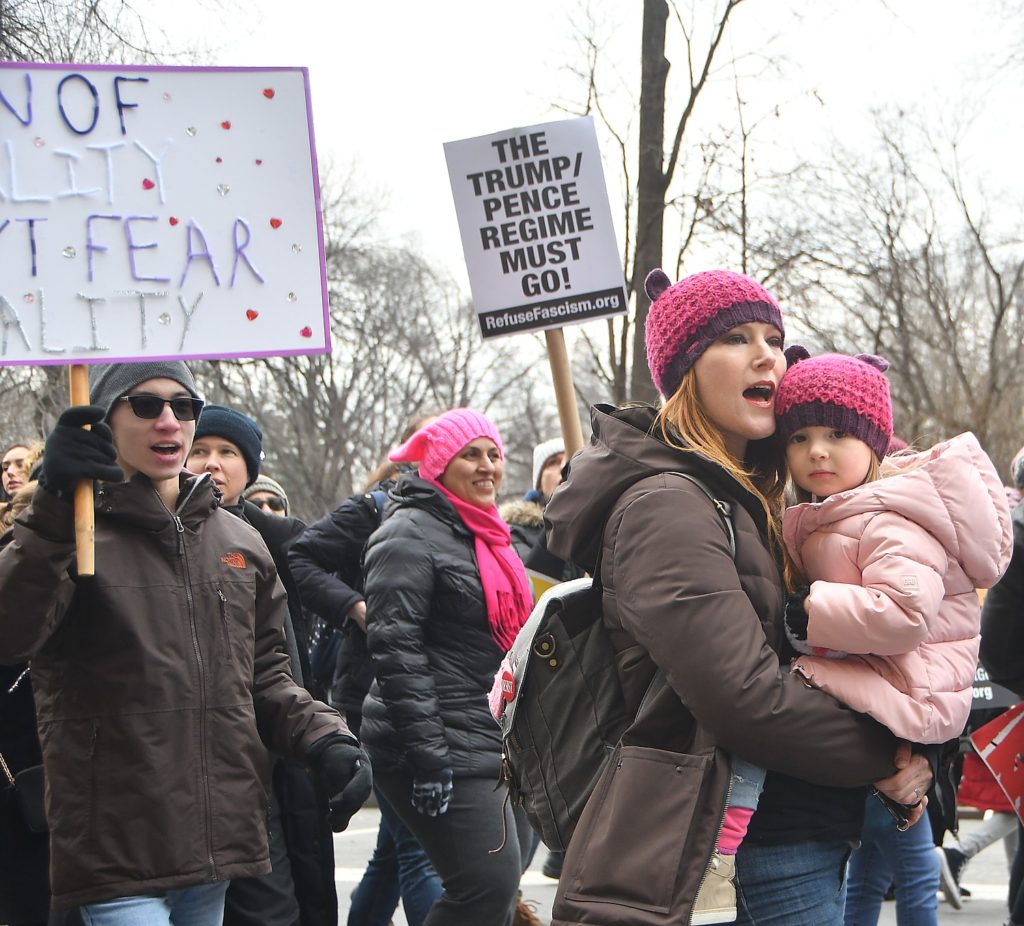
Tens of thousands took to the streets of New York City on Saturday, January 19, 2019 for the third annual Women’s March organized by the Women’s March Alliance, calling for action on a Woman’s Agenda that encompasses everything from pay parity, paid parental leave and reproductive freedom, to immigration reform, gun violence prevention, climate action, criminal justice reform – in other words, the gamut of social, political, environmental and economic justice. (See also With Cry of ‘Your Voice Your Power,’ Alliance Mounts 3rd Annual Women’s March on NYC Jan. 19)
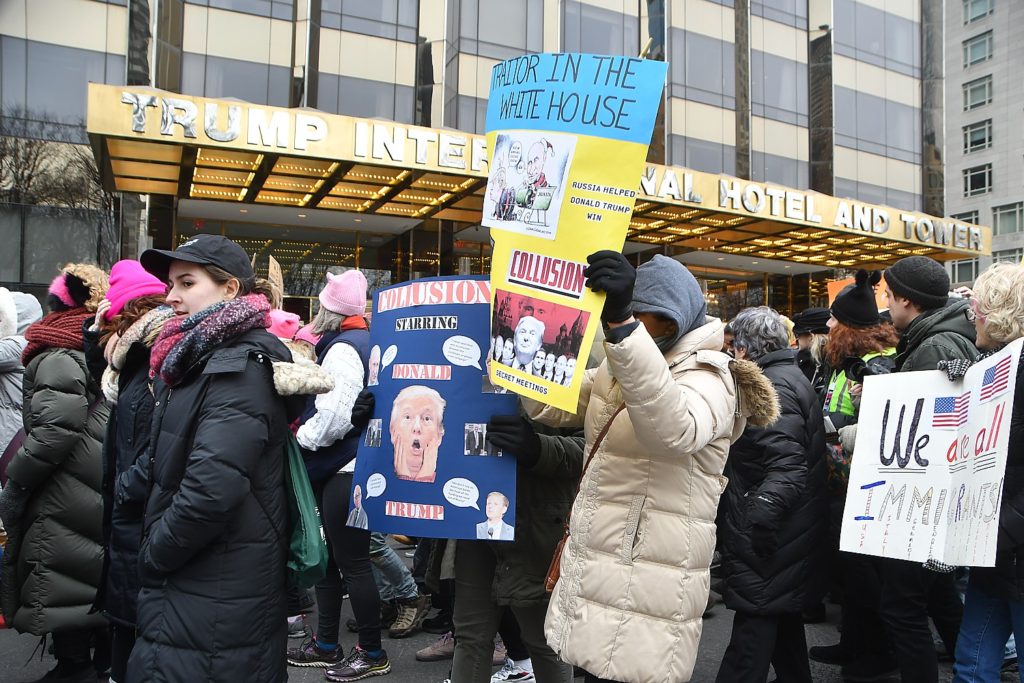
The marchers got particularly animated outside of
Trump Tower Hotel on Central Park West, chanting “Shame, Shame, Shame,”
extending a finger, and waving placards calling for “Indict, Impeach, Imprison.”
The protesters use their bodies as message boards. Here are highlights:
Women’s March Alliance, the official organizer of the March on NYC since 2017, will stage its third annual march on Saturday, January 19. Line up begins at 10 a.m. with the march kicking off at 11 a.m. on 61st Street and Central Park West (main entrance on 72nd and Columbus). The march, which is expected to draw 100,000 participants, will run along Central Park West south around Columbus Circle, east on 59th Street then south on 6th Avenue.
The theme for this year’s Woman’s March, taking place in New York City on Saturday Jan 19, could well be “I am woman. Hear me roar,” especially after the dramatic successes culminating in the 2018 elections that saw a record number of women running for office and elected – women now one-fourth of Congress, and there are four more women governors.
And in New York, the
successful takeover of the Senate gives new hope for a progressive agenda,
topped with the Women’s Reproductive Health Act.
But the Women’s March
Alliance organizers worry that sheer exhaustion and complacency might rightly
set in after all that happened to produce the success of 2018, but that there still so much work to be
done, not the least is: Now you have heard our roar, act.
“We want to make sure we don’t
stop fighting. We are half way there. We can’t stop now. We have to move
forward,” said Katherine Siemionko, founder and president of Women’s March
Alliance. “The theme for the march
is ‘Your Voice Your Power.’ We have seen what happened in 2018 Elections. New York cannot stand back. New
York leads nation in progress.” (The actual hashtag for the march is #YourVoiceYourPower)
Indeed, that there is still
so much work to be done is reflected in the cavalier attitude Trump and
Republicans have to shutting down government, with no clue and no care of the
ramifications on women and families that go beyond withholding pay to 800,000
federal workers as well as contractors,from food safety to food stamps, from
mortgages to small business loans, from housing vouchers to veterans benefits. They
even stood by while the Violence Against Women Act expired.
And then there is the
unbelievable cruelty being inflicted on millions of families across the nation
who may have an undocumented immigrant among them but American citizen spouse
or children, or the four million Dreamers whose lives are in limbo. Think of
the desperate migrants as the Trump Administration tries to overturn domestic
violence and gang violence as a basis for asylum; the forced separation of
families; the families of tens of thousands of migrants and refugees here for
decades under Temporary Protected Status who have been told they will be
deported. Think of the families ripped apart. That’s a woman’s issue, too.
Now Trump is threatening
to declare a national emergency in order to take funds allocated for rebuilding
communities devastated by climate disasters in Puerto Rico afflicted by Maria,
in California after the wildfires, in Florida and South Carolina after Michael.
And then there is the humanitarian crisis created by Trump’s anti-immigrant
policy that has led to two children dying while in US custody, and hundreds of
children rendered orphans, thousands more traumatized by their condition.
But this is New York
State, and thankfully, there is finally full control by Democrats. On January
22, the 46th anniversary of Roe v Wade, the State Legislature is
expected to pass the Reproductive Health Act, strengthening abortion access by
codifying the principles of Roe v. Wade in state law, after 12
years of trying but failing. But this action cannot be taken for granted. There
is still need to push the politicians to act –and not take such landmark for
granted..
This is no time to be
complacent – the regressive forces are not complacent, they are seizing the opportunity of a hard-religious right
majority on the Supreme Court, to push through personhood amendments that
essentially give more rights to a fetus than the mother carrying it. Women have
actually been prosecuted for miscarrying and such laws could be applied to
punish women for behaviors that are deemed harmful to a fetus. Essentially,
women would become slaves of the state, not considered entitled to the same
right of self-determination as a man. Big Brother doesn’t begin to describe
government’s intervention..
If Roberts’ Court rules that the fetus has “personhood” rights under the Constitution, all abortions would be illegal — even in states like New York that overwhelmingly support a woman’s right to choose. (See the full series of editorials in the New York Times, www.nytimes.com/interactive/2018/12/28/opinion/abortion-law-pro-life.html).
So this year’s march has
its own urgency: to cement and recommit, to make sure that the electeds carry
out what could be called a woman’s agenda but encompasses so much because women’s
issues are so broad.
Here’s a partial list:
gun violence prevention, universal health care, universal pre-K, affordable
college, climate action and environmental justice, immigration reform, pay
equity, parental leave, criminal justice reform… Way too many to fit into a
soundbite, a poster or a tweet.
But if you still need a
motivation, consider this: the 2020 presidential election is already underway,
and the way women candidates for office are once again being evaluated
according to a different standard (“likeability,” “shrill”).
The danger of
complacency needs to be recalled: that’s what happened in 2016, when too many believed
that Hillary Clinton becoming the first woman to head a major party ticket
meant that America had entered a post-feminist era, just as Obama’s election
was supposedly a post-racist era. Okay to stay home out of some manufactured
outrage, just because you could; okay to throw a vote away on an independent
candidate, because of course the most qualified candidate, who stood for gender
rights, civil rights, criminal justice, environmental justice, economic
justice, would win. We saw how that went.
The march, which will
include opportunities to register to vote (and local elections in 2019 are
important), is a call to action to get things done while we have the
“honeymoon” of the new electeds and the fear of God in the incumbents – because
they think they can do anything they want and ignore the voices of 2018 because
the electorate won’t remember in 2020.
It is important, as
well, to keep the networks and the alliances intact, for the affirmation and
validation that the marchers give to one another. And because 2020 is right
around the corner.
Indeed, the greatest
threat to the Women’s movement is complacency (and fatigue) after the hard-won
victories of 2018.
“We must be fearful that
people have become comfortable, because that’s what happened in 2016 – we were
the popular vote, we still are the popular vote, we don’t want to get
comfortable and let the crazy seem like the status quo & normal,” said
Freedom Shannon, a member of the board of WMA which describes itself as “a nonprofit alliance of human rights
supporters who seek to close the social, political and economic gender divide.”
“We are changing what it
means to be a woman in our society. We have marched to being one in five in Congress,
but we need to come out January 19 to honor those who have come before us, to
show those in countries that cannot assemble, what democracy looks like, and
pave the way for future generations,” Shannon said. “On January 19, we will unify our voices so we amplify enough to be
heard by the people in power and soften their hearts so they can act without
prejudice.”
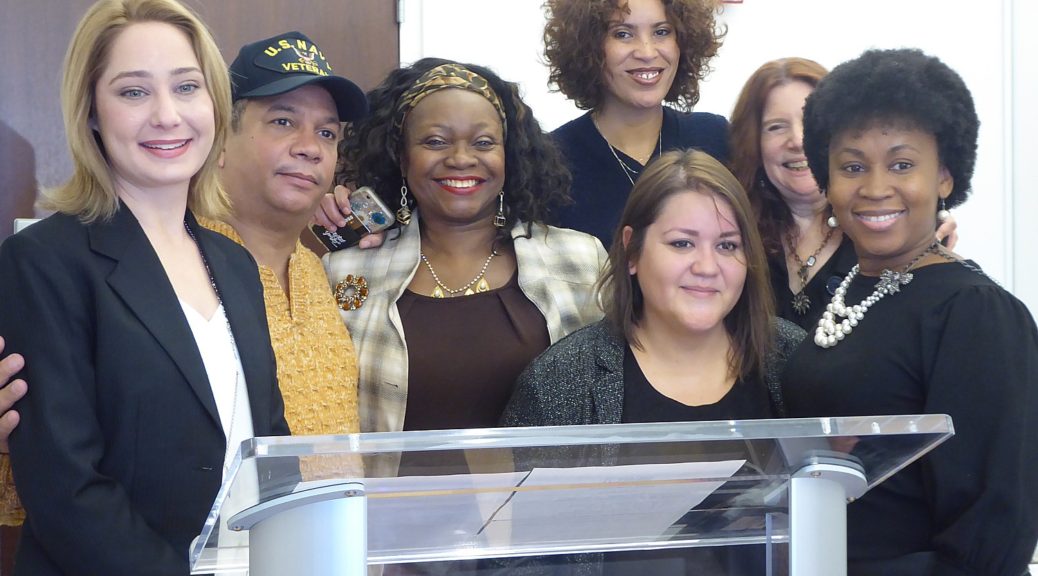
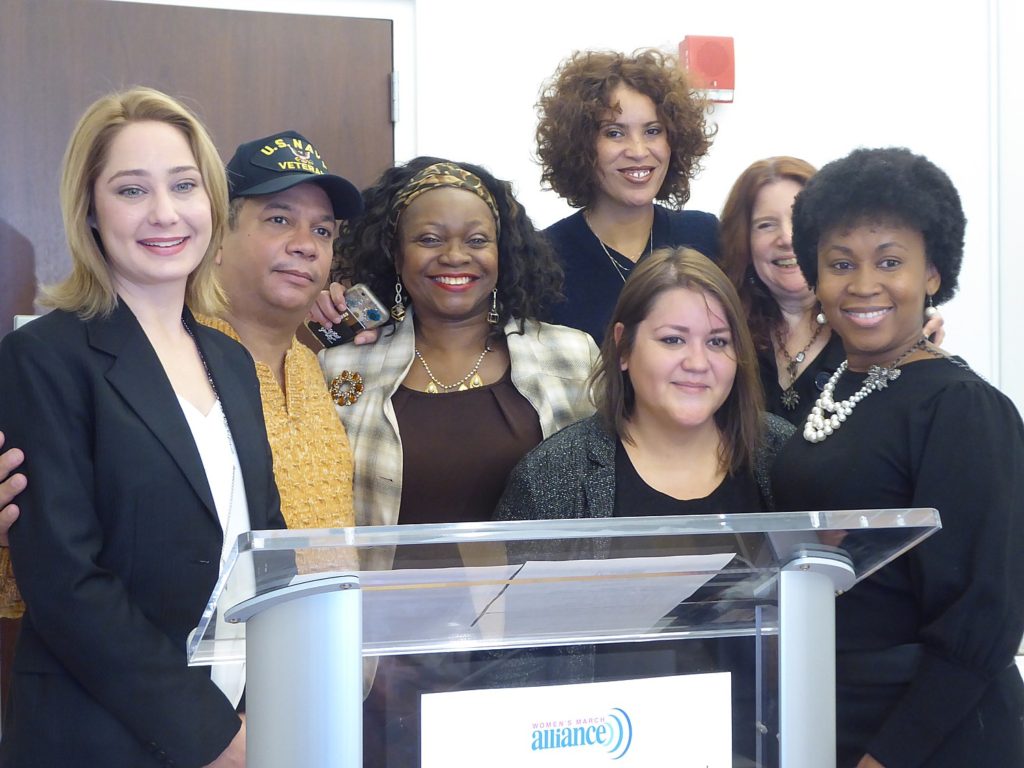
The organizers at a
press conference introducing the event stressed that WMA is completely separate
from Womens March Inc. which organized the Washington March in 2017 and is
holding a rally in New York City also on January 19. That organization raised
controversy of being anti-Semitic when leaders expressed support for Louis
Farrakhan.
Siemionko noted “We
are a local grassroots team of volunteers hosting this event for the third year
in a row, and we do not have nor have we ever had an association with Women’s
March, Inc. or its founders.”
She continued, “Our mission is to include and advance women regardless of
faith, sexual identity and preference, race, cultural and religious background
or political affiliation.”
Siemionko was firm on
insisting that WMA is inclusive, and that like all the other sister marches
that took place in 2017 and 2018 in cities across the nation, all grew
organically, as local grassroots organizations reflecting their communities.
She stressed how WMA
went out of its way to accommodate the Jewish community, including organizing
the march so it would start within walking distance of a large segment of the community
on the Upper West Side. “We wanted to honor those Jews who want to honor Sabbath without taking public
transportation, but can march to support women’s rights.” In addition,
Siemionko will be participating in a panel on January 17 at the Stephen Wise
Synagogue.
“The confusion happened
when Womens March Inc, the official march of DC, decided to break ground here
in NYC. Unfortunately that happened at time when irresponsible wording was used
to insult different communities.
“One of the reasons we
became part of WMA since its inception is that anti-Semitism, racial discrimination,
LGBT discrimination had no place here, especially in New York City, the most
diverse place in the nation, in the world,” said Debra Dixon Anderson, director
of operations of the New York City Hispanic Chamber of Commerce and a WMA board
member, “and we appreciate all different walks of life.”
WMA is the only
organization that has a permit from New York City for a march on January 19.
Enter at 72nd
Street to Central Park West, or enter from Central Park. There will be a
15-minute kickoff at 11 am (not a rally), then the march will get underway at
11:15, go south past Columbus Circle, east on 59, then south to 44 Street.
Check the site for details.
There will be a female Indian chief to bless the march, female drum bands, brass bands, acrobats, DJs, and activists.
In conjunction with
the event, people will have a chance to see “Eyes of the World,” a giant, collaborative mosaic, 5 ft tall and
18 feet wide, produced by thousands of contributors since the first Women’s
March on New York City in 2017. that is on view at the Newburger Gallery in the
lobby of SUNY Optometry (33 West 42nd Street), across from Bryant
Park, noon to 9 pm.
“’Eyes of the World’ is
a tangible and permanent reminder to the United States government that our eyes
are constantly watching to ensure all policies embody human rights, advance
civil rights, and promote the highest degree of equality,” write Joanne and
Bruce Hunter, artists and creators of public art.
The message of the 2019 Women’s March should be: We won. Now act.
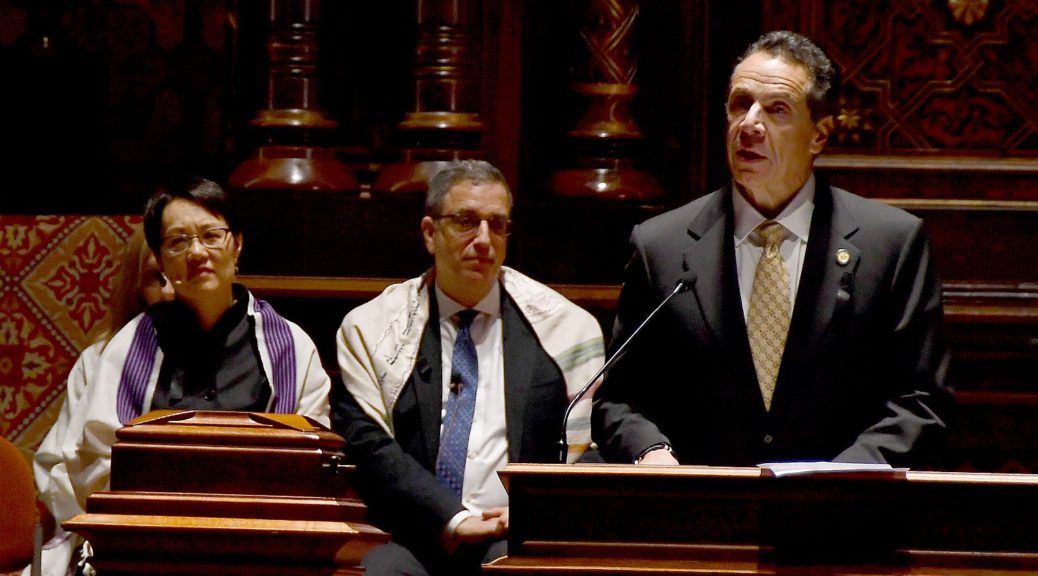
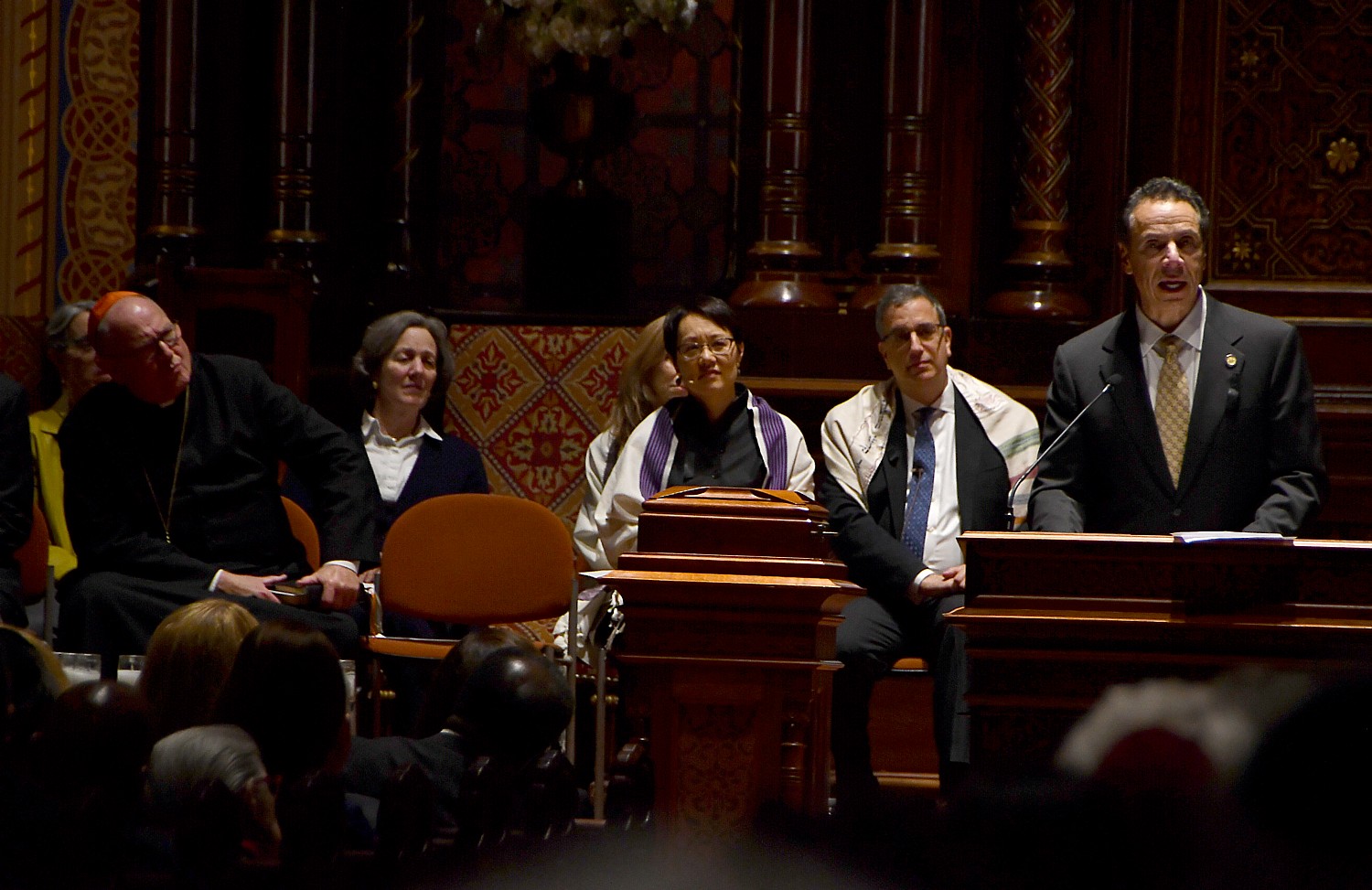
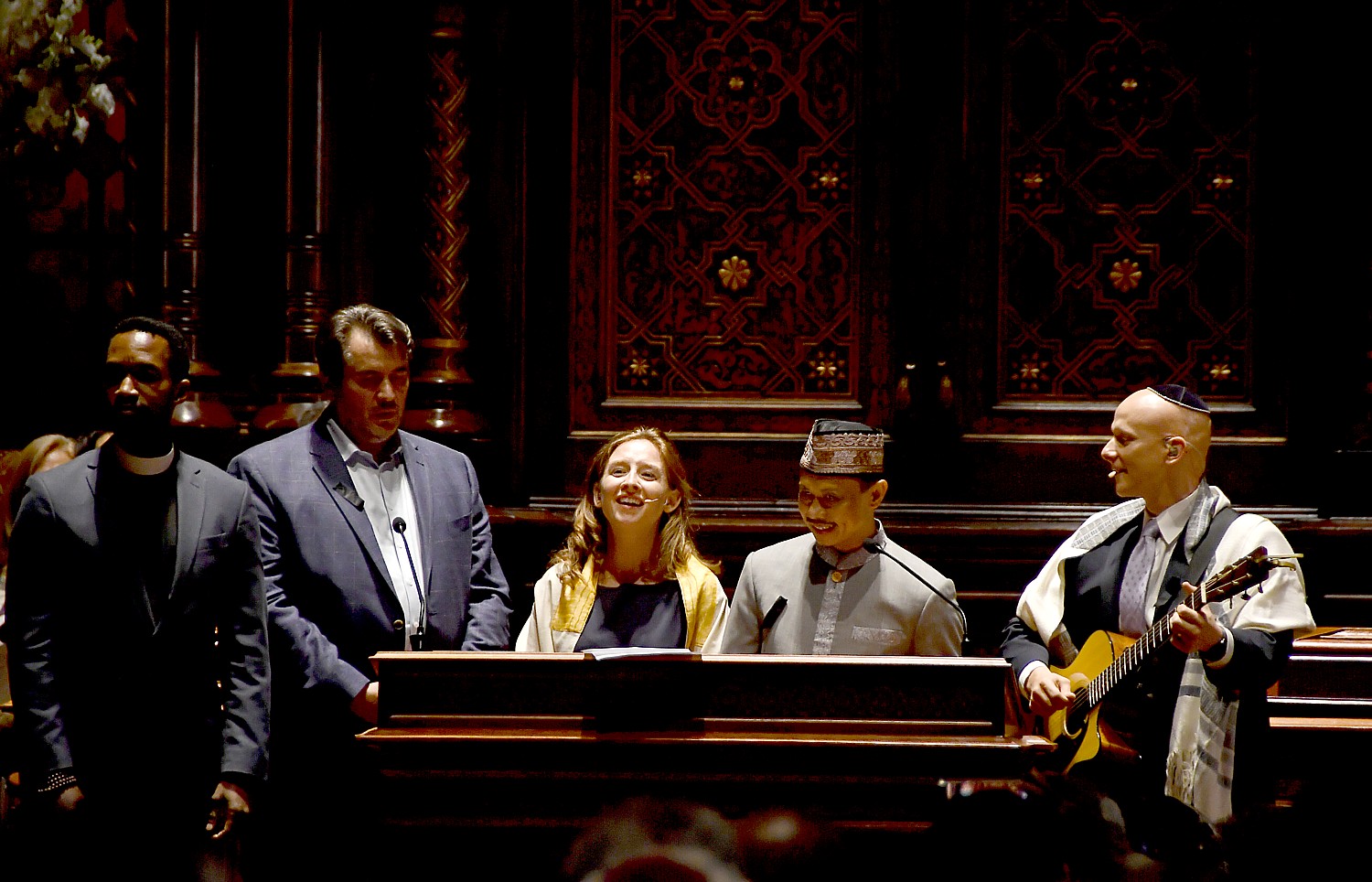
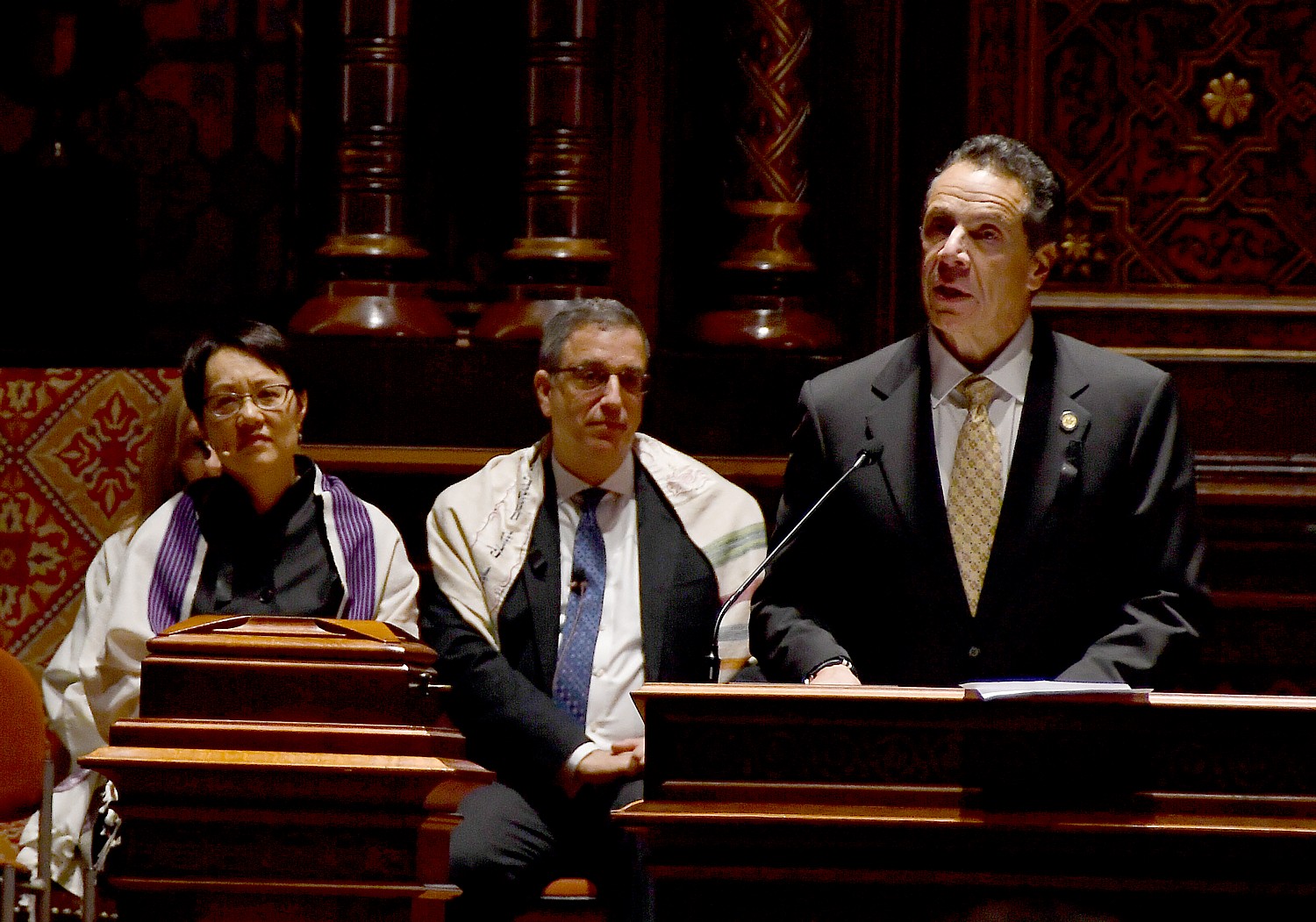
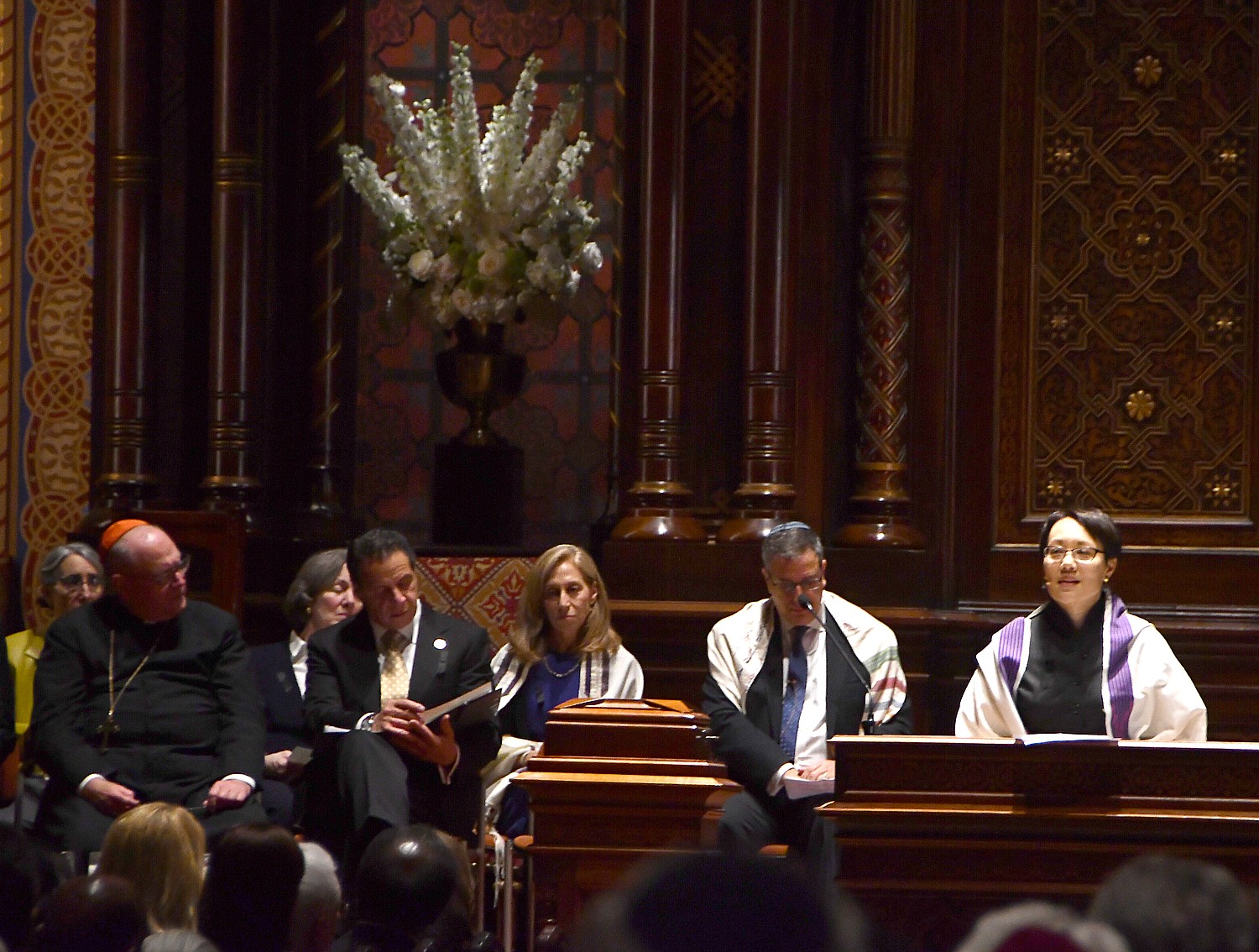
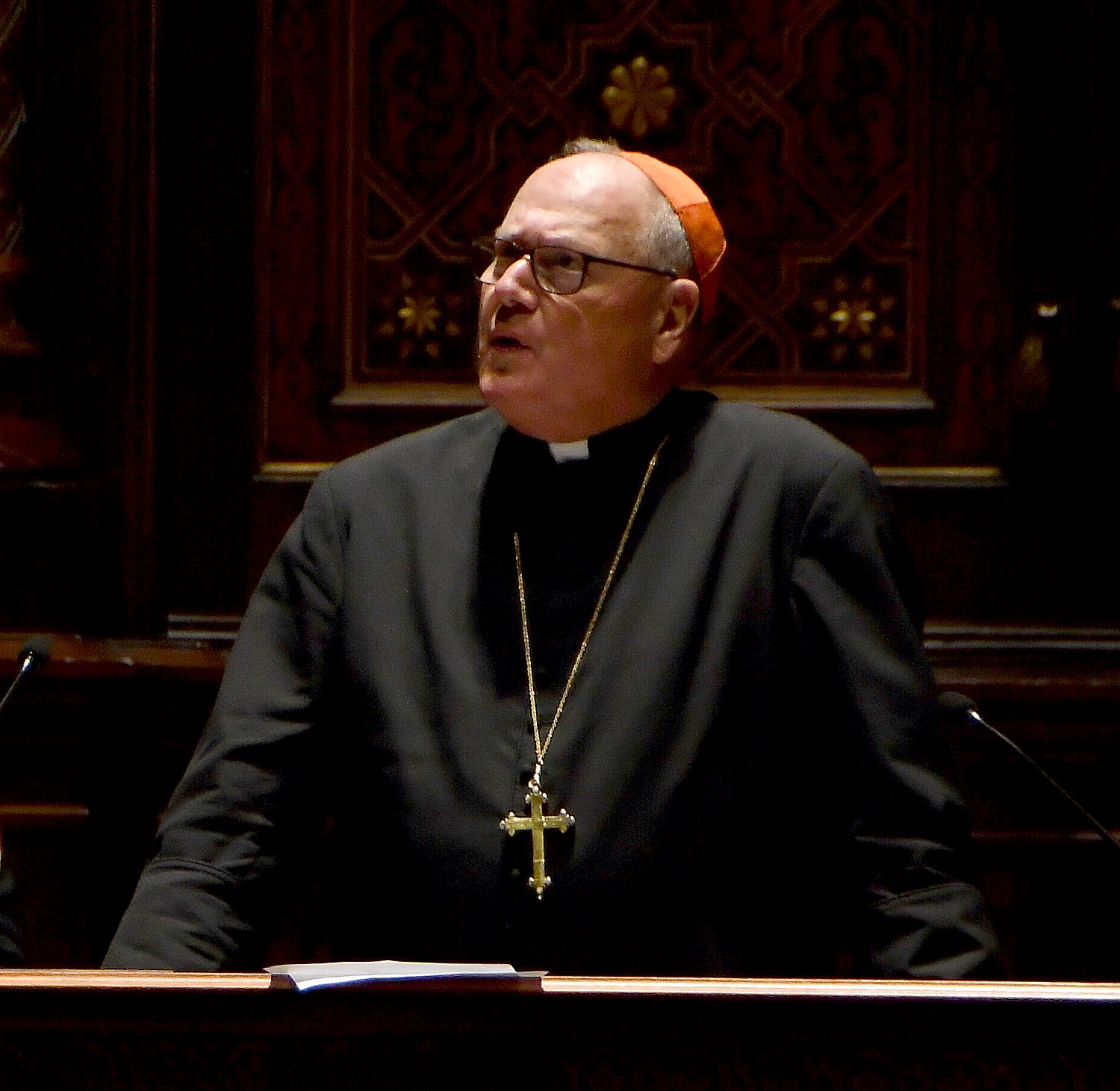
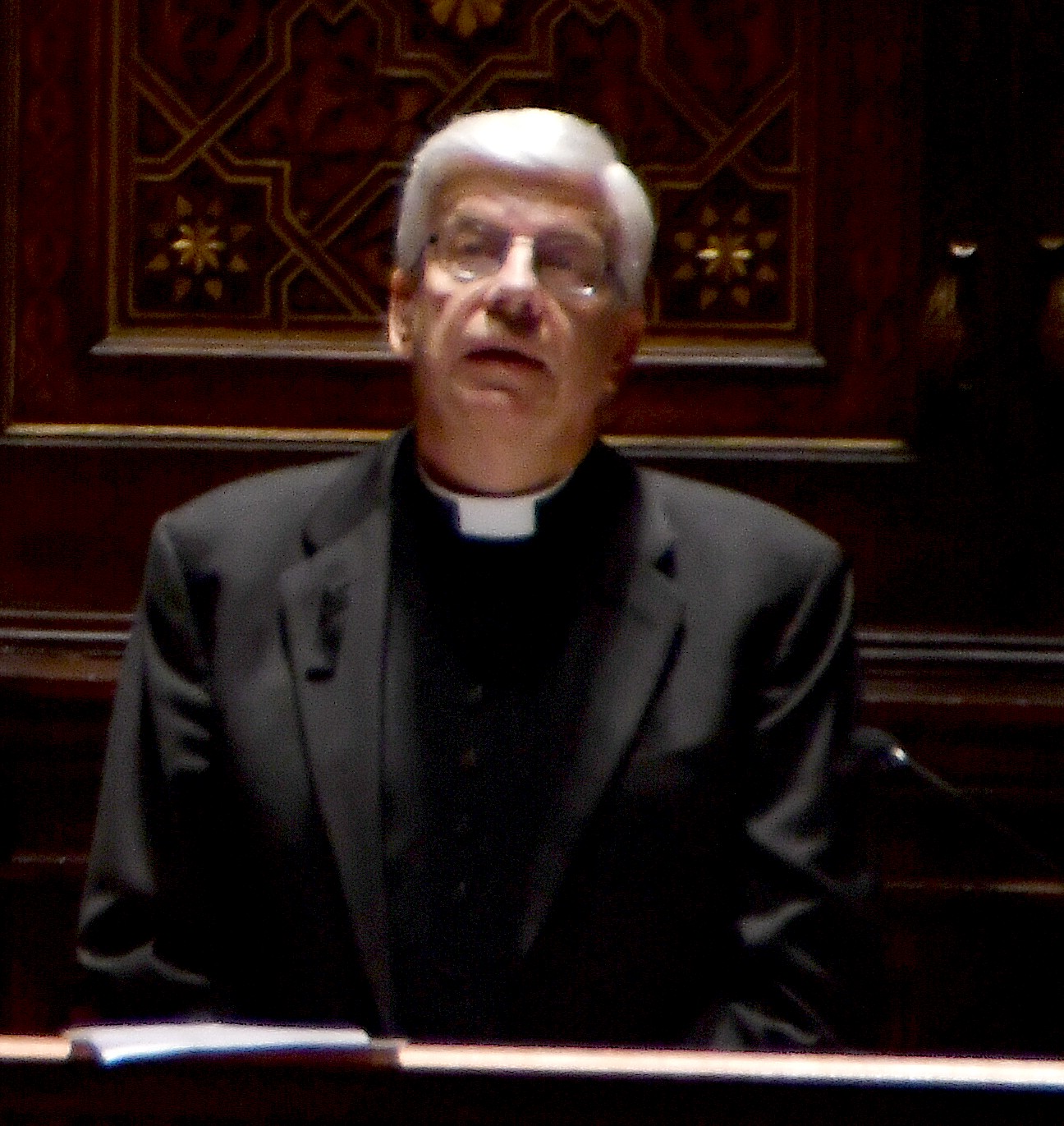
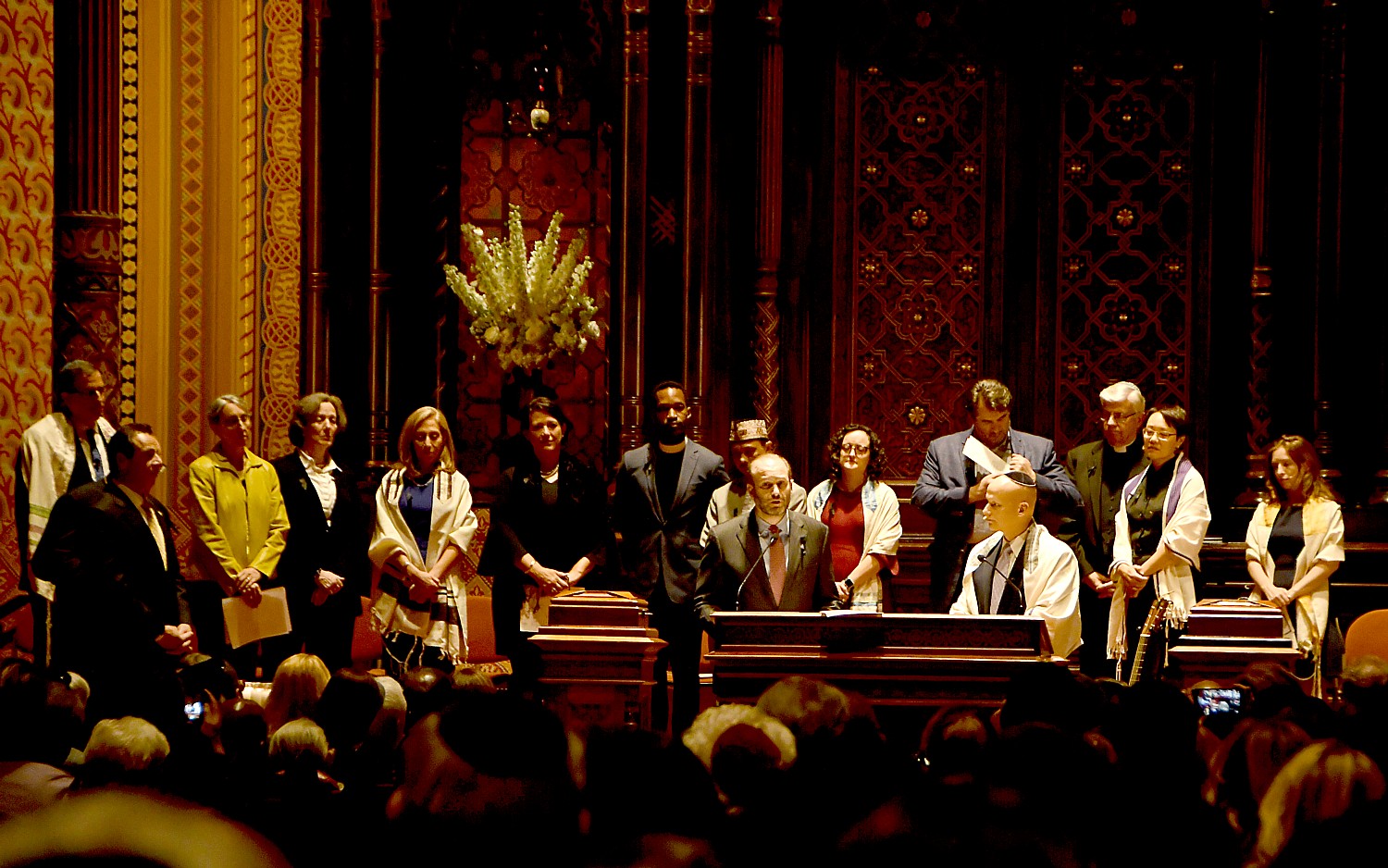
Following the deadliest assault on the Jewish Community in US History, Governor Andrew M. Cuomo delivered remarks at an Interfaith Prayer Vigil at Central Synagogue in New York City with Rabbi Angela Buchdahl and other interfaith leaders including Cardinal Timothy Dolan, Reverend Amy Butler, Pastor Amandus Derr and Rabbi Chaim Steinmetz.
Earlier in the day, Governor Cuomo announced that the $10 million grant program to help protect New York’s non-public schools and cultural centers, including religious-based institutions, against hate crimes is now accepting applications. Additionally, the Governor directed that flags on all state government buildings be flown at half-staff until sunset on Sunday, November 4 in honor of the victims of the shootings at the Tree of Life Synagogue in Pittsburgh and at a supermarket in Jeffersontown, Kentucky.
Cuomo began by evoking Rabbi Angela Buchdahl’s extraordinary background as exemplifying America and New York State:
“The Rabbi was born in South Korea, to a Japanese-born Korean Buddhist mother, and a father who was an American Ashkenazi Reform Jew. Her father’s ancestors emigrated from Romania to the United States. At the age of five, she moved to the United States with her family.
“She was raised Jewish, attending Temple Beth El in Tacoma, Washington, which her great-grandparents had assisted in founding a century before. Rabbi Buchdahl is the first Asian American to be ordained as a cantor and as a rabbi in the world. My friends, that says it all – God Bless America. Only in America. She is the first woman and the first Asian-American to be the Senior Rabbi of Central Synagogue in its 175-year history. God Bless the state of New York.
“But we gather tonight on a somber moment, because this is a dark and frightening time in our nation. Our better angels are being overpowered. The character of America is being perverted. And yes, the power of hate is overtaking the power of love. We mourn and we embrace the families of the 11 victims in Pittsburgh and grieve with them. We mourn and grieve for the African American community in Kentucky. And, we suffer with those who endured the anxiety and threats of mail bombs last week.
“But we would not be here tonight if these were isolated incidents. They are not. There is a frightening pattern developing on many levels of American society. Anti-Semitic incidents have increased 57 percent nationwide. Neo-Nazi groups have increased 22 percent in this country. Nativists and white supremacy groups are on the rise. At the demonstration in Charlottesville in August, 2017, members of the Ku Klux Klan felt so empowered they didn’t even need to wear hoods to hide their faces. The societal fabric of America is stressed and frayed. We gather this evening to pray and to marshal the voices of support and love as an antidote to the forces of division and hate.
“Elie Wiesel said, ‘there may be times when we are powerless to prevent injustice, but there must never be a time when we fail to protest.’ As Governor, I pray with you this evening. But as Governor, I also state in the strongest terms that we are a nation of laws and we are a state is a state of laws, and we have zero tolerance for discrimination or hate in the state of New York. Hate is not protected by our law, not in speech and not in action. Quite the opposite. And our state has the most aggressive hate crimes laws in the county and I announced today that we are doubling both our security efforts and our prevention efforts. You have my word as governor that we will stamp out the evil of discrimination wherever it rears its ugly head. The Jewish community is an important member of the family of New York and we will protect our family–all together, all united.
“But I am afraid that enforcing the law, while an essential important step is not the only step. Being prepared to fight the fire is necessary, but we must work to prevent the fires from starting in the first place. I feel as if we are standing in a field of dry grass with smoldering embers surrounding us. And a strong wind is shifting directions. We must stamp out the embers before they become flames and we must reduce the winds of hate that threaten the fields of peace.
“There are those who now will wrap themselves in the flag of America and then go out and do violence in the name of America. But they could not be more wrong or more misguided. They do not begin to understand the character of America, and they disgrace the very flag they carry. Our founding fathers would be repulsed by these ignorant acts of violence.
“In school, one of the first lessons we learn about America is when we are asked to raise our hands to the Pledge of Allegiance. I pledge allegiance to the flag of the United States of America, indivisible, with liberty and justice for all. Indivisible. With liberty and justice for all. Whatever your religion, whatever your race, whatever your creed, we are indivisible.
“Our founding fathers anticipated that there would be differences because we were born as a collection across the globe. But we would have, as Jefferson said, “a decent respect” for the opinions of others. One of our Founders’ first acts was to pass a law to make the motto on the seal of the United States, “E Pluribus Unum”—out of many, one. It set the tone of unity and commonality. The very same founders didn’t fear immigration, they embraced it. It was the British government’s bid to block migration to the colonies, that was among one of the reasons cited for the Revolution and the Declaration of Independence.
“The tremendous right to practice your religion of freedom was a powerful magnet drawing many to America. The Pilgrims were separatists from the Church of England, the Huguenots settled the Hudson Valley, French Protestants fleeing persecution in Roman Catholic France, English Catholics under George Calvert colonized Maryland, Quakers in Pennsylvania, Jewish people in Rhode Island, seeking the religious freedom established by Roger Williams.
“One year into his presidency, George Washington visited a synagogue in Newport, Rhode Island as the first amendment was being debated. To his Jewish hosts, Washington wrote a remarkable letter. He reasserted that the Government of the United States, quote, ‘gives no sanction to bigotry, no assistance to persecution, and requires only that the people who live under the protection of the government conduct themselves as good citizens.’
“Washington quoted the bible to remind them that, in effect, they had reached their Promised Land: ‘May the children of the stock of Abraham who dwell in this land continue to merit and enjoy the good will of the other inhabitants—while everyone shall sit in safety under his own vine and fig tree and there shall be none to make him afraid.’
“That was George Washington. There was no period that tested our unity more than the Civil War. And as the war closed, President Abraham Lincoln pointed the nation to the future in his Second Inaugural Address, saying: ‘With malice towards none; with charity for all; with firmness in the right, as God gives us to see the right, let us strive on to finish the work we are in; to bind up the nation’s wounds — to achieve and cherish a just, and lasting peace.’
“Lincoln’s invoking god is relevant and instructive. We are one nation under God. It is not just our government that instructs peace and tolerance, but our religious heritage as well. We are gathered in a house of worship today. Christianity teaches us tolerance. Matthew 25 instructs us Catholicism to do for the least of our brothers. Judaism speaks to the concept of Tikkun Olam, to reach out and heal the breach, and the concept of Tzedakah literally charity, but more broadly meaning the concept of social justice. Buddhism, Islam, virtually every religion speaks of tolerance, acceptance, and condemns violence.
“The victims in Pittsburgh were engaged in a sacred Jewish naming ceremony of a newborn—a bris—celebrating the joy of a new life, only to perish in the face of hate. We will not let them die in vain. We must once again, in Lincoln’s words, “bind up the nation’s wounds.” We must rise above our traditional political divisions. We must refrain from fanning the embers of hate before the flames are out of control. Our American values override our political, partisan differences. Intolerant voices of division must be condemned by all, and not episodically, but consistently. Not only for public consumption but genuinely with personal commitment. Political debate must honor Jefferson’s mandate of civil discourse. Our political leaders must heed this wisdom today.
“At this time of chaos, confusion, ignorance and fear, this nation needs a light to follow. And Let that light be the torch that is held by the great lady in our harbor. Let New York State once again serve this nation as an example to follow. That is the legacy of this great state: throughout history, a beacon of progressive values. We are home to 19 million people from every nation on the globe–New York State is the laboratory of the American experiment in democracy. We are not threatened by diversity, we celebrate diversity. Generations of immigrants stepped off ships and planes onto our shores. This state has thrived because we have no tolerance for discrimination. Not in our laws, and not in our spirit. We are a people of differences, but we have forged community through chords of commonality. This state exemplifies the best of the American spirit.
“The Rabbi asks us what we can do. Let us commit ourselves this evening to a constructive course of action. Let New Yorkers exemplify what it means to be a true American patriot. Let New York show this nation what the flag actually means. Let us lead forward in the way of darkness. Let us lead as a government, as a community and let us lead as individual citizens. Let us lead this nation at this time of confusion by the power of our example. There is no place for hate in our state and New York lives by the credo: that the most powerful four-letter word is still love.”
In her remarks, Rabbi Buchdahl noted that she expressed concern of the rise in anti-Semitism during Rosh Hashanah services. “I never expected, six weeks later, the worst attack on Jews in the United States ever. It is the Jewish community’s worst nightmare, impossible to believe here in America. Not just as Jews – Muslims, immigrants – day after pipe bombs against prominent Democrats, and two Blacks shot dead. Charlottesville. A gay nightclub in Florida. A Sikh Temple in Wisconsin. There is a systemic environment where hate can grow.
“Anti-Semitism is the oldest, most adaptive hatred in history. But where tolerance for anti-Semitism, there is tolerance for hate of all kinds. This is not an America we want to leave to our children.
Rising Anti-Semitism, demonization of immigrants and refugees, gun violence, fake news on social media and the dark web.
“But now, we call to our higher selves. We ask, how do we make sure love wins, solidarity and faith and goodness win. There are hundreds of vigils taking place all over the nation and the world.
“You may have needed courage to show up in a synagogue. You will need more courage to build alliances even with people with whom you don’t agree and to people who hate us, in order to build bridges and rise above cynicism.”
The bimah was lined with representatives of the spectrum of faith in New York.
Cardinal Timothy Dolan noted that the gospel on Sunday, the day after the massacre at Tree of Life Synagogue began, “It was the Sabbath and Jesus went to the synagogue to pray.” “The people in St. Patrick’s gasped at the profound nature of that: “it was the Sabbath and Jesus went to the synagogue to pray.” Jesus, he said, “the faithful Jew.”
Reverend Amy Butler pointed to the power of words. “The violence we saw did not begin at 9:54 on a Saturday morning. It was generations of hate, lies that has found refuge in the political climate where words are weaponized for political gain. Language that dehumanizes, foments suspicion and fear rather than love and compassion. That’s what resulted in a gunman walking into a synagogue. We reject discrimination and hatred.”
Pastor Amandus Deer noted that he has spoken from Central Synagogue’s bimah dozens of times to mark “Shoah,” which marks the beginning of the Holocaust, with a call to “Never Again.” “I am heart broken,” he said, leading a reading of the 23rd Psalm, “The Lord is my shepherd… Yea, though I walk through the valley of the shadow of death, I will fear no evil: for thou art with me; thy rod and thy staff they comfort me…”
Rabbi Buchdahl pointed to the ancient Jewish custom of tearing cloth to mourn a close relative. “We lost 13 innocent souls [11 in Pittsburgh and two African Americans gunned down in Kentucky] to acts of hate and violence. We are all mourners. They might want to t3ear our community apart; they can’t tear what binds us together as Americans. The ribbons remind us of the work we have to do.”
Each of the dignitaries then lit a candle for those who were taken and a special prayer of memory was recited. Noting the obligation to remember those who have died, Rabbi Steinmetz remarked that one of the murdered, Dr. Jerry Rabinowitz, would say kaddish for those who died but did not leave family to recite the prayer. “His reason was that they would not be forgotten. “
The synagogue, which dates from 1872 and is the oldest synagogue in continuous operation in New York City, packed some 1,250 people into every seat.
Participants included Governor Andrew Cuomo, Rabbi Angela Buchdahl, Cantor Dan Mutlu,Cantor Julia Cadrain, Rabbi Mo Salth, Cardinal timothy Dolan, Reverend Amy Butler, Pastor Amandus Derr, Iman Shansi Ali, Rabbi Chaim Steinmetz, Iman Tahir Kukaj, Reverend Bertram Johnson, Dianne Lob, Rabbi Deborah Joselow, Rabbi Lori Koffman, Rabbi Nicole Auerbach, and Dr.Simran Jeet Singh.
The interfaith service concluded with a prayerful singing of a song which begins, “It is a tree of life to those who hold fast to it.”
Some 22,000 New Yorkers joined a protest march and rally against the Trump Administration’s “Zero Tolerance” policy of separating children from parents and incarcerating families seeking asylum. The march that started at Foley Square in downtown Manhattan, continued across the Brooklyn Bridge, and finished with a rally in Cadman Plaza in Brooklyn.
Donna Lieberman, Executive Director, New York Civil Liberties Union: “It’s bad enough those who control government would turn their backs on those fleeing violence, turn out people living here for decades, but that the country I love so much could commit such atrocities against children, all in the service of a warped agenda. We won a court order to force the government to reunite families in 30 days. It was an important victory but we know this regime won’t comply unless we force them to…. Take back our country. Fight back in courts, on the streets and damn it, at the ballot box.”
Carola Bracco, Executive Director, Neighbors Link: “Today is not just about immigrant rights, it is about human rights. This is not who we are as a country. This is not a country I recognize. I can’t imagine anything more devastating than having a child forcibly taken, then having to search. From this chaos, strong leaders are emerging, committed to changing course. We are here to fight for liberty, to live with dignity. Together we will change the trajectory of this country.”
Jennifer Jones Austin, Federation of Protestant Welfare Agencies: “Freedom is about saying no to a lie, vetoeing an untruth. Say no to the lies of this administration; veto the untruth of saying separating children is for our own good.
Estela Vasquez, Executive Vice President, 1199 SEIU: “Mobilize, march, protest until we stop this stupid policy of zero tolerance. Scorch Agent Orange in the white House. We are not fooled by a phony executive order. Separating children, incarcerating children is no different from what the Nazis in Germany did in the 1930s, what we did to Japanese in World War II. Zero tolerance for poverty, for police brutality, for inhumanity.”
Hector Figuerola, SEIU: These migrants are running away from the conditions the US created in the first place. 66% of our union are foreign born. “The labor movement has to stand against these attacks on immigrant families. They are not ‘them’. They are us. Fight for children not to be jailed, but free. Stand for families everywhere. This doesn’t end today. For families who suffer loss of a child to police brutality or street violence. Fight for all families. Start with immigrants being dehumanized by this administration. Imagine what it will be if we were to connect the struggle of all the resistence against Trump – labor, women’s movement, those seeking freedom for everyone. Our fight is the fight of people. Let’s fight and let’s win.
Padma Lakshmi, Author and Television Host: I am an immigrant, a daughter of an immigrant single mother. This is an issue of common decency and humanity, defining who we want to be as a nation. This country was built on labor and sweat of immigrants. That’s what makes America great. Trump is sowing generations of hatred.”
Omolara Uwemedimo, Assistant Professor of Pediatrics and Occupational Medicine, Epidemiology and Prevention, Donald and Barbara Zucker School of Medicine at Hofstra/Northwell, a daughter of Nigerian immigrants and a mother of two, described the physical and mental toll that may last a lifetime on children being subjected to the trauma of being forcibly separated and incarcerated. There is also the toxic stress on those living in fear of a government taking undocumented parents away from a family. “Family detention is not a solution, it is child abuse and I am a mandated reporter. I am reporting the Trump Administration for abuse of black and brown children.”
Flor Reyes, DACA Recipient, with her brother, Elvis, described the constant terror of a family of “mixed status,” where parents could be deported while children are DACA recipients or American citizens must fend for themselves.
Perla Lopez, Youth member, Make the Road New York, recalled her flight with her mother, fleeing with five children and her detention. “It was almost 10 years ago but is still traumatic.”
Shannon Stagman, Leader, Empire State Indivisible: “Pick up the phone and call your representatives every day. Donating is good, but also knock on doors. Voting is good, but also help others vote.”
Murad Awawdeh, VP of Advocacy, New York Immigration Coalition, provided a list of action items: Fight. Stay informed (text NYIC 864237 for alerts); Call legislators. Support organizations (donate, volunteer). And “vote for those who share our values.”
Alison Hirsh, Vice President and Political Director, SEIU 32BJ
Ravi Ragbir, Leader, New Sanctuary Coalition
Rev. Al Sharpton, President of National Action Network
Kerry Washington, Actor, Producer and Activist
Imam Suhaib Webb, Resident Scholar, Islamic Center NYU
Among the electeds participating in the march: U.S. House Representatives Yvette Clarke, Carolyn Maloney, Nydia Velázquez, Jerrold Nadler, and Adriano Espaillat, as well as numerous state and local representatives.