Category Archives: Economic Development

Biden Presents Plan to Build a Modern, Sustainable Infrastructure and an Equitable Clean Energy Future

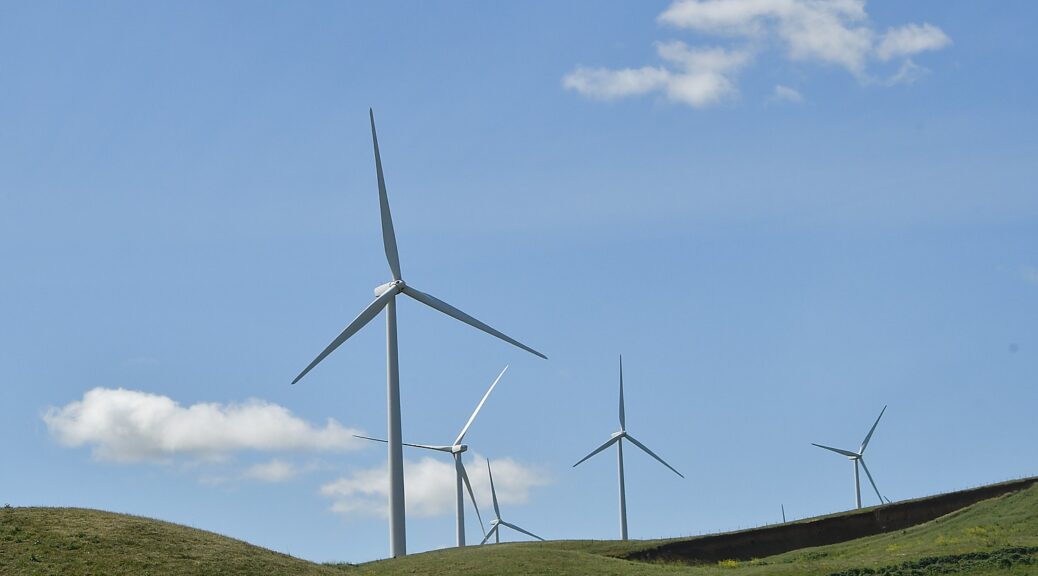
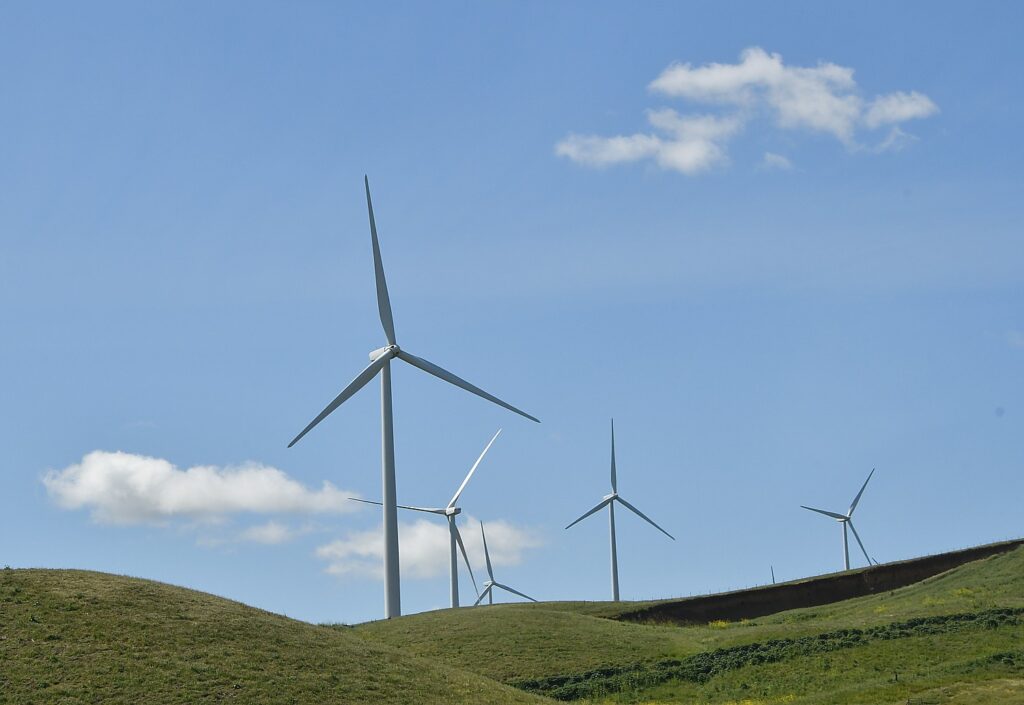
Wind turbines outside San Francisco, California. Vice President Joe Biden is proposing $2 trillion accelerated investment to “set us on an irreversible course to meet the ambitious climate progress that science demands.” (c) Karen Rubin/news-photos-features.com

In the latest of a series of defined programs under the “Build Back Better” banner, Biden has issued his “Plan to Build a Modern, Sustainable Infrastructure and an Equitable Clean Energy Future” in which he proposes a $2 trillion accelerated investment plan to “set us on an irreversible course to meet the ambitious climate progress that science demands.” Biden’s plan was immediately “answered” by Trump issuing new rules to obliterate environmental review, what he terms “right-size” federal environment, to greenlight development while cutting off localities’ ability to stop or mitigate the impacts. Compare and contrast.–Karen Rubin/news-photos-features.com

The Biden Plan to Build a Modern, Sustainable Infrastructure and an Equitable Clean Energy Future

At this moment of profound crisis, we have the opportunity to build a more resilient, sustainable economy – one that will put the United States on an irreversible path to achieve net-zero emissions, economy-wide, by no later than 2050. Joe Biden will seize that opportunity and, in the process, create millions of good-paying jobs that provide workers with the choice to join a union and bargain collectively with their employers.
 
President Trump has a devastating pattern of denying science and leaving our country unprepared and vulnerable. Amidst the COVID-19 pandemic, he ignored public health experts, praised the Chinese government, and failed to take the actions needed to protect the American people. And as the crisis accelerated, Trump rolled back environmental standards that protect public health — adding to the 100 similar environmental and public health protections he has rolled back since taking office — even though early data suggests a link between exposure to pollution and serious negative health impacts from the virus.
 
Just as with COVID-19, Donald Trump has denied science and failed to step up in the face of the climate crisis. He has called it a hoax. He has allowed our infrastructure to deteriorate and farmers’ fields to flood. He has held back American workers from leading the world on clean energy, giving China and other countries a free pass to outcompete us in key technologies and the jobs that come with them. And instead of supporting more tax credits that keep solar and wind workers employed here at home, Trump showered tax cuts on multinational companies that encourage offshoring. His actions have not only set us back in terms of progress on environmental justice and clean energy jobs, they have made us more vulnerable – weaker and less resilient – as a nation.
 
Joe Biden’s Build Back Better plan ensures that – coming out of this profound public health and economic crisis, and facing the persistent climate crisis – we are never caught flat-footed again. He will launch a national effort aimed at creating the jobs we need to build a modern, sustainable infrastructure now and deliver an equitable clean energy future.
 
The current coronavirus crisis destroyed millions of American jobs, including hundreds of thousands in clean energy. It has exacerbated historic environmental injustices. And all this comes at a moment when the science tells us there is no time for delay on climate change. Biden will immediately invest in engines of sustainable job creation – new industries and re-invigorated regional economies spurred by innovation from our national labs and universities; commercialized into new and better products that can be manufactured and built by American workers; and put together using feedstocks, materials, and parts supplied by small businesses, family farms, and job creators all across our country. 
 
We need millions of construction, skilled trades, and engineering workers to build a new American infrastructure and clean energy economy. These jobs will create pathways for young people and for older workers shifting to new professions, and for people from all backgrounds and all communities. Their work will improve air quality for our children, increase the comfort of our homes, and make our businesses more competitive. The investments will make sure the communities who have suffered the most from pollution are first to benefit — including low-income rural and urban communities, communities of color, and Native communities. And, Biden’s plan will empower workers to organize unions and bargain collectively with their employers as they rebuild the middle class and a more sustainable future. Biden will make a $2 trillion accelerated investment, with a plan to deploy those resources over his first term, setting us on an irreversible course to meet the ambitious climate progress that science demands.

Biden will make far-reaching investments in:

  • Infrastructure: Create millions of good, union jobs rebuilding America’s crumbling infrastructure – from roads and bridges to green spaces and water systems to electricity grids and universal broadband – to lay a new foundation for sustainable growth, compete in the global economy, withstand the impacts of climate change, and improve public health, including access to clean air and clean water.
  • Auto Industry: Create 1 million new jobs in the American auto industry, domestic auto supply chains, and auto infrastructure, from parts to materials to electric vehicle charging stations, positioning American auto workers and manufacturers to win the 21st century; and invest in U.S. auto workers to ensure their jobs are good jobs with a choice to join a union.
  • Transit: Provide every American city with 100,000 or more residents with high-quality, zero-emissions public transportation options through flexible federal investments with strong labor protections that create good, union jobs and meet the needs of these cities – ranging from light rail networks to improving existing transit and bus lines to installing infrastructure for pedestrians and bicyclists.
  • Power Sector: Move ambitiously to generate clean, American-made electricity to achieve a carbon pollution-free power sector by 2035. This will enable us to meet the existential threat of climate change while creating millions of jobs with a choice to join a union.
  • Buildings: Upgrade 4 million buildings and weatherize 2 million homes over 4 years, creating at least 1 million good-paying jobs with a choice to join a union; and also spur the building retrofit and efficient-appliance manufacturing supply chain by funding direct cash rebates and low-cost financing to upgrade and electrify home appliances and install more efficient windows, which will cut residential energy bills.
  • Housing: Spur the construction of 1.5 million sustainable homes and housing units.
  • Innovation: Drive dramatic cost reductions in critical clean energy technologies, including battery storage, negative emissions technologies, the next generation of building materials, renewable hydrogen, and advanced nuclear – and rapidly commercialize them, ensuring that those new technologies are made in America.
  • Agriculture and Conservation: Create jobs in climate-smart agriculture, resilience, and conservation, including 250,000 jobs plugging abandoned oil and natural gas wells and reclaiming abandoned coal, hardrock, and uranium mines – providing good work with a choice to join or continue membership in a union in hard hit communities, including rural communities, reducing leakage of toxics, and preventing local environmental damage. 
  • Environmental Justice: Ensure that environmental justice is a key consideration in where, how, and with whom we build – creating good, union, middle-class jobs in communities left behind, righting wrongs in communities that bear the brunt of pollution, and lifting up the best ideas from across our great nation – rural, urban, and tribal.

Biden will ensure these investments create good, union jobs that expand the middle class. American workers should build American infrastructure and manufacture the materials that go into it, and all of these workers must have the choice to join a union and collectively bargain. Biden will include in the economic recovery legislation he sends to Congress a series of policies to build worker power to raise wages and secure stronger benefits. This legislation will make it easier for workers to organize a union and collectively bargain with their employers by including the Protecting the Right to Organize (PRO) Act, card check, union and bargaining rights for public service workers, and a broad definition of “employee” and tough enforcement to end the misclassification of workers as independent contractors. His bill will also go further than the PRO Act by holding company executives personally liable when they interfere with organizing efforts. He will also ensure that all companies benefitting from his infrastructure and clean energy investments meet the labor protections in Senator Merkley’s Good Jobs for 21st Century Energy Act, applying and strictly enforcing Davis-Bacon prevailing wage guidelines, and that those benefiting from transportation investments meet transit labor protections so that new jobs are good-paying jobs with family sustaining benefits. And, as called for in his plan to strengthen worker organizing, collective bargaining, and unions, Biden will require that companies receiving procurement contracts are using taxpayer dollars to support good American jobs, including a commitment to pay at least $15 per hour, provide paid leave, maintain fair overtime and scheduling practices, and guarantee a choice to join a union and bargain collectively.

Biden will ensure these jobs are filled by diverse, local, well-trained workers – including women and people of color – by requiring federally funded projects to prioritize Project Labor and Community Workforce Agreements and employ workers trained in registered apprenticeship programs. Biden will make investments in pre-apprenticeship programs and in community-based and proven organizations that help women and people of color access high-quality training and job opportunities. Biden’s proposal will make sure national infrastructure and clean energy investments create millions of middle-class jobs that develop a diverse and local workforce and strengthen communities as we rebuild our physical infrastructure.
 
Biden also reaffirms his commitment to fulfill our obligation to the workers and communities who powered our industrial revolution and decades of economic growth, as outlined in his original climate planThis includes securing the benefits coal miners and their families have earned, making an unprecedented investment in coal and power plant communities, and establishing a Task Force on Coal and Power Plant Communities.
 
The key elements of the Biden Plan to Build a Modern, Sustainable Infrastructure and an Equitable Clean Energy Future include:

1. Build a Modern Infrastructure
2. Position the U.S. Auto Industry to Win the 21st Century with technology invented in America
3. Achieve a Carbon Pollution-Free Power Sector by 2035
4. Make Dramatic Investments in Energy Efficiency in Buildings, including Completing 4 Million Retrofits and Building 1.5 Million New Affordable Homes
5. Pursue a Historic Investment in Clean Energy Innovation
6. Advance Sustainable Agriculture and Conservation
7. Secure Environmental Justice and Equitable Economy Opportunity
 

1. BUILD A MODERN INFRASTRUCTURE

Biden will create millions of good, union jobs building and upgrading a cleaner, safer, stronger infrastructure – including smart roads, water systems, municipal transit networks, schools, airports, rail, ferries, ports, and universal broadband access – for all Americans, whether they live in rural or urban areas.
 
Americans deserve infrastructure they can trust: infrastructure that is resilient to floods, fires, and other climate threats, not fragile in the face of these increasing risks. We need infrastructure that supports healthy, safe communities, rather than locking in the cumulative impacts of polluted air and poisonous water. And we need infrastructure, like universal broadband, that unleashes innovation and shared economic progress and educational opportunity to every community, rather than slowing it down.
 
Biden will rely on American union labor and American-made materials and products to build this infrastructure. He will create jobs in planning and management, from architects to engineers to designers. And, he will invest in the pre-development, development, and construction of this new and necessary infrastructure, building it in places and with the advanced materials – like clean steel and cement – in a way that promotes the livability of our communities and the accessibility of opportunity. Biden will create good, union jobs that expand the middle class by:

  • Transforming our crumbling transportation infrastructure – including roads and bridges, rail, aviation, ports, and inland waterways – making the movement of goods and people faster, cheaper, cleaner, and manufactured in America while preserving and growing the union workforce. Biden will also transform the energy sources that power the transportation sector, making it easier for mobility to be powered by electricity and clean fuels, including commuter trains, school and transit buses, ferries, and passenger vehicles. The resulting reduction in air pollution will save thousands of lives and millions in medical costs burdening families.
  • Sparking the second great railroad revolution. Biden will make sure that America has the cleanest, safest, and fastest rail system in the world — for both passengers and freight. His rail revolution will reduce pollution, connect workers to good union jobs, slash commute times, and spur investment in communities that will now be better linked to major metropolitan areas. To speed that work, Biden will tap existing federal grant and loan programs at the U.S. Department of Transportation, and improve and streamline the loan process. In addition, Biden will work with Amtrak and private freight rail companies to further electrify the rail system, reducing diesel fuel emissions.
  • Revolutionizing municipal transit networks. Most Americans do not have access to high-quality and zero-emissions options for affordable, reliable public transportation; and where transit exists, it’s often in need of repair. As a result, workers and families rely on cars and trucks, which can be a big financial burden and clog roadways. Biden will aim to provide all Americans in municipalities of more than 100,000 people with quality public transportation by 2030. He will allocate flexible federal investments with strong labor protections to help cities and towns install light rail networks and improve existing transit and bus lines. He’ll also help them invest in infrastructure for pedestrians, cyclists, and riders of e-scooters and other micro-mobility vehicles and integrate technologies like machine-learning optimized traffic lights. And, Biden will work to make sure that new, fast-growing areas are designed and built with clean and resilient public transit in mind. Specifically, he will create a new program that gives rapidly expanding communities the resources to build in public transit options from the start.
  • Ensuring clean, safe drinking water is a right in all communities – rural to urban, rich and poor – investing in the repair of water pipelines and sewer systems, replacement of lead service pipes, upgrade of treatment plants, and integration of efficiency and water quality monitoring technologies. This includes protecting our watersheds and clean water infrastructure from man-made and natural disasters by conserving and restoring wetlands and developing green infrastructure and natural solutions.
  • Expanding broadband, or wireless broadband via 5G, to every American – recognizing that millions of households without access to broadband are locked out of an economy that is increasingly reliant on virtual collaboration. Communities without access cannot leverage the next generation of “smart” infrastructure. As the COVID-19 crisis has revealed, Americans everywhere need universal, reliable, affordable, and high-speed internet to do their jobs, participate equally in remote school learning and stay connected. This digital divide needs to be closed everywhere, from lower-income urban schools to rural America, to many older Americans as well as those living on tribal lands. Just like rural electrification several generations ago, universal broadband is long overdue and critical to broadly shared economic success.
  • Cleaning up and redeveloping abandoned and underused Brownfield properties, old power plants and industrial facilities, landfills, abandoned mines, and other idle community assets that will be transformed into new economic hubs for communities all across America.
  • Revitalizing communities in every corner of the country so that no one is left behind or cut off from economic opportunities. Biden’s plan will ensure that our infrastructure investments work to address disparities – often along lines of race and class – in access to clean air, clean water, reliable and sustainable transportation, connectivity to high-speed internet, and access to jobs and educational opportunities. This includes ensuring tribes receive the resources and support they need to invest in roads, clean water, wastewater, broadband, and other essential infrastructure needs. It also means funding investments in local and regional strategies to prevent a lack of transportation options in urban, rural, and high-poverty areas from cutting off after-school opportunities for young people and job opportunities for workers seeking better jobs and more economic security for their families.

2. POSITION THE AMERICAN AUTO INDUSTRY TO WIN THE 21ST CENTURY
 
Eleven years ago, Joe Biden helped save the auto industry. Today, the industry once again faces a crisis. Not only has Trump overseen a manufacturing recession on his watch, but through neglect and failed trade policies, he has allowed China to race ahead in the competition to lead the auto industry of the future. China is on track to command more than four times the global market share compared to the U.S. in electric vehicle production, even as the Chinese government’s approach threatens to slow down or set back the long-term prospects of clean vehicle innovation.
 
As called for in his Plan to Ensure the Future is Made in All of America by America’s Workers, Biden will use all the levers of the federal government, from purchasing power, R&D, tax, trade, and investment policies to reverse this trend and position America to be the global leader in the manufacture of electric vehicles and their input materials and parts. Biden will vigorously enforce trade rules in response to currency manipulation, overcapacity, and Chinese government abuses in this sector. Here at home, he will spur an expansion of factory floors and a re-tool of existing manufacturing capacity, and create 1 million new jobs in auto manufacturing, auto supply chains, and auto infrastructure. And he’ll ensure those workers have good-paying jobs with a choice to join a union. Between 1979 and 2018, American workers have increased their productivity by 70%, while their real wages have only grown by 12% — in large part due to the decline in union density. Biden will reverse this trend, by ensuring that auto workers have jobs with strong labor standards and working to pass the PRO Act to ensure auto workers can more easily choose to join a union and bargain collectively with their employers. Leveraging the remarkable talents of U.S. auto workers, he will position the auto industry to win the 21st century.

  • Use the power of federal procurement to increase demand for American-made, American-sourced clean vehicles. As part of his historic commitment to increasing procurement investments, Biden will make a major federal commitment to purchase clean vehicles for federal, state, tribal, postal, and local fleets, making sure that we retain the critical union jobs involved in running and maintaining these fleets. By providing an immediate, clear, and stable source of demand, this procurement commitment will help to dramatically accelerate American industrial capacity to produce clean vehicles and components, while accelerating the upgrade of the 3 million vehicles in these fleets. 
  • Encourage consumers and manufacturers to go clean. Senators Schumer, Stabenow, Brown, and Merkley, alongside organizations like the United Automobile, Aerospace and Agricultural Implement Workers of America and the International Brotherhood of Electrical Workers and leading environmental groups, crafted  a Clean Cars For America proposal. Biden will build on their leadership by providing consumers rebates to swap old, less-efficient vehicles for these newer American vehicles built from materials and parts sourced in the United States. These rebates will be accompanied by significant new targeted incentives for manufacturers to build or retool factories to assemble zero-emission vehicles, parts, and associated infrastructure here at home. 
  • Make major public investments in automobile infrastructure — including in 500,000 electric vehicle charging stations — to create good jobs in industries supporting vehicle electrification. These investments are a key part of Biden’s commitment to reinvent the American transportation system from the factory line to the electric vehicle charging station, while promoting strong labor, training, and installation standards. This includes ensuring the workforce is trained in high quality training programs like the Electric Vehicle Infrastructure Training Program (EVITP).
  • Accelerate research on battery technology and support the development of domestic production capabilities. The Chinese government, along with other countries, has used state subsidies and industrial strategies to advance its interests. America must accelerate its own R&D with a focus on developing the domestic supply chain for electric vehicles. A specific focus of Biden’s historic R&D and procurement commitments will be on battery technology – for use in electric vehicles and on our grid, as a complement to technologies like solar and wind – increasing durability, reducing waste, and lowering costs, all while advancing new chemistries and approaches. And Biden will ensure that these batteries are built in the United States by American workers in good, union jobs. 
  • Set a goal that all new American-built buses be zero-emissions by 2030, which will create significant demand for the manufacturing of new, clean American-built buses utilizing American-manufactured inputs – and accelerate the progress by converting all 500,000 school buses in our country — including diesel — to zero emissions. Biden will ensure that the existing — and future — workforce is trained and able to operate and maintain this 21st century infrastructure.
  • Establish ambitious fuel economy standards that save consumers money and cut air pollutionBiden will negotiate fuel economy standards with workers and their unions, environmentalists, industry, and states that achieve new ambition by integrating the most recent advances in technology. This will accelerate the adoption of zero-emissions light- and medium duty vehicles, provide long-term certainty for workers and the industry and save consumers money through avoided fuel costs. Paired with historic public investments and direct consumer rebates for American-made, American-sourced clean vehicles, these ambitious standards will position America to achieve a net-zero emissions future, and position American auto workers, manufacturers, and consumers to benefit from a clean energy revolution in transport.

3. CREATE MILLIONS OF JOBS PRODUCING CLEAN ELECTRIC POWER FOR AMERICAN FAMILIES AND BUSINESSES
 
Transforming the U.S. electricity sector – and electrifying an increasing share of the economy – represents the biggest job creation and economic opportunity engine of the 21st century. These jobs include every kind of worker from scientists to construction workers to electricity generation workers to welders to engineers. Existing iron casting and steel fabrication plants will have new customers in the solar and wind industries. Workers with experience welding and installing complex wiring will have new job opportunities. Properties idled in communities left behind, like brownfields, will once again become critical hubs for the growth of our economy. If we move ambitiously to generate clean, American-made electricity, while building the infrastructure to electrify major sectors of our economy, we will meet the existential threat of climate change, create millions of good union jobs; make economic growth more accessible in every state and across Indian Country, and lead the world in inventing, manufacturing, and exporting clean energy technologies. Biden will:

  • Marshal an historic investment in energy efficiency, clean energy, electrical systems and line infrastructure that makes it easier to electrify transportation, and new battery storage and transmission infrastructure that will address bottlenecks and unlock America’s full clean energy potential – built by American workers, using American-made materials. This revolution in the way we power our economy will leverage the breakthroughs we have already seen in distributed and large-scale renewables, onshore and offshore. And it will put welders, electricians, and other skilled labor to work in good union jobs installing the electrical systems and line infrastructure that helps the power sector – the electricity we generate at our power plants, on our roofs, and in our communities – reach a bigger market of customers and, at the same time, makes it easier for us to electrify in buildings, certain industrial processes, and transportation.
  • Reform and extend the tax incentives we know generate energy efficiency and clean energy jobs; develop innovative financing mechanisms that leverage private sector dollars to maximize investment in the clean energy revolution; and establish a technology-neutral Energy Efficiency and Clean Electricity Standard (EECES) for utilities and grid operators. Paired with his historic, front-loaded investments in the power sector, Biden’s EECES will cut electricity bills and cut electricity pollution, increase competition in the market and incentivize higher utilization of assets – and achieve carbon-pollution free energy in electricity generation by 2035. Biden will scale up best practices from state-level clean energy standards, which are being implemented in a way that provides renewable credits to developers that follow high labor standards, including through Project Labor and Community Labor Agreements and paying prevailing wages. Together, these steps will unleash a clean energy revolution in America, create good paying union jobs that cannot be outsourced, and spur the installation of millions of solar panels – including utility-scale, rooftop, and community solar systems – and tens of thousands of wind turbines – including thousands of turbines off our coasts – in Biden’s first term. It would also mean continuing to leverage the carbon-pollution free energy provided by existing sources like nuclear and hydropower, while ensuring those facilities meet robust and rigorous standards for worker, public, environmental safety and environmental justice.
  • Leverage existing infrastructure and assets. To build the next generation of electric grid transmission and distribution, Biden will prioritize re-powering of lines that already exist with new technology. He will take advantage of existing rights-of-way – along roads and railways – and cut red-tape to promote faster and easier permitting. And he will leverage the breakthroughs we have secured in energy storage over the last decade with historic procurement and investments to bring the future within reach for big utilities and rural cooperatives alike. In addition, and in line with recommendations by climate experts, including a study by the Intergovernmental Panel on Climate Change, Biden will double down on federal investments and tax incentives for technology that captures carbon and then permanently sequesters or utilizes that captured carbon, which includes lowering the cost of carbon capture retrofits for existing power plants — all while ensuring that overburdened communities are protected from increases in cumulative pollution. He’ll also ensure that the market can access green hydrogen at the same cost as conventional hydrogen within a decade – providing a new, clean fuel source for some existing power plants. 

4. UPGRADE THE BUILDING SECTOR: RETROFITTING BUILDINGS, UPGRADING SCHOOLS, AND BUILDING HOMES ACROSS AMERICA

  • Creating 1 million jobs upgrading 4 million buildings and weatherizing 2 million homes over 4 years. Biden will make an historic investment in energy upgrades of homes, offices, warehouses, and public buildings. This will be a win on multiple levels. It will create at least 1 million construction, engineering and manufacturing jobs, make the places we live, work, and learn healthier, and reduce electricity bills for families, businesses, and local governments. It will improve indoor air quality and indoor environmental health, thus making our buildings safer in the face of future pandemics. At this moment of crisis, when many offices and municipal buildings are shuttered and millions of skilled Americans are out of work, we have a unique, once in a generation opportunity to deliver cost-efficient retrofits in communities across the country.
    • Biden’s plan to upgrade 4 million commercial buildings will return almost a quarter of the savings from those retrofits to cash-strapped state and local governments. This includes mobilizing a trained and skilled American workforce to manufacture, install, service and maintain high-efficiency LED lighting, electric appliances, and advanced heating and cooling systems that run cleaner and less costly – all manufactured in the United States.
    • For families, Biden’s plan will include direct cash rebates and low-cost financing to upgrade and electrify home appliances, install more efficient windows, and cut residential energy bills. Biden will also significantly expand weatherization efforts, reaching over 2 million homes within 4 years, including slashing the disproportionately high energy burden for low-income rural households and rural communities of color.
    • Biden will also repair the building code process with the goal of establishing building performance standards for existing buildings nationwide and support this effort with new funding mechanisms for states, cities, and tribes to adopt strict building codes and labor standards to ensure quality and predictability.
    • Paired with legislation to set a new net-zero emissions standard for all new commercial buildings by 2030, these steps and critical investments in the Build Back Better Plan will accelerate progress to Joe Biden’s target of cutting the carbon footprint of our national building stock in half by 2035.
  • Launching a major, multi-year national effort to modernize our nation’s schools and early learning facilities. For most American children, their public school is like a second home. It should be a place that makes them feel safe and healthy. Yet, American public school facilities received a grade of D+ from the American Society of Civil Engineers. In fact, each year the U.S. underfunds school infrastructure by $46 billion, leaving school districts responsible for the majority of construction costs and pushing long-term debt into the billions nationwide. And by not investing in the infrastructure of our public schools, too many schools are outdated, unsafe, unfit, and – in some cases – making kids and educators sick. Biden’s Build Back Better commitment includes a national effort to upgrade America’s schools and early learning facilities. In line with the Rebuild America’s Schools Act, backed by the House Education and Labor Committee, Biden will make an historic investment to improve public school buildings, with resources weighted to those lower-income rural and urban schools — all too often in communities of color — where the poor quality of school buildings is an additional barrier to equal educational opportunity. Those funds will be deployed with a set of priorities in mind: healthy kids, climate resilience, and creating greater educational equity and job creation in underserved communities. First and foremost, those funds will be used to address health risks, such as improving indoor air quality and ventilation and ensuring access to clean water, so that going to school or working at one never makes anyone sick. Second, additional funding will be used to build cutting-edge, energy-efficient, innovative, climate resilient campuses, which not only have the schools with technology and labs to prepare our students for the jobs of the future, but also become themselves the places that provide communities with green space, clean air, and places to gather, especially during emergencies. He’ll also upgrade child care and early learning facilities around the country that are not safe or developmentally appropriate for young children, who are especially vulnerable to environmental contaminants like lead and mold, and to safety hazards like electrical outlets. Biden’s investments will catalyze thousands of good, union jobs, drawing those workers from the communities most in need of economic development. These investments mean work for local businesses and support for local school districts to reduce capital costs, allowing them to spend more on teaching, learning, and other essential needs to support educators and ensure students are prepared to succeed in tomorrow’s economy.
  • Spurring the construction of 1.5 million homes and public housing units to address the affordable housing crisis, increase energy efficiency, and reduce the racial wealth gap. Biden is building on his housing plan by further increasing the level of federal investment in new affordable, accessible housing construction — including homes for low-income Americans, minority communities, veterans, the elderly, and persons with disabilities. He will ensure these homes are energy efficient from the start – saving the families who live there up to $500 per year. Biden will also drive additional capital into low-income communities to spur the development of affordable housing and small business creation. And, he’ll incentivize smart regional planning that connects housing, transit, and jobs, improving quality of life by cutting commute times, reducing the distance between living and leisure areas, and mitigating climate change. 

5. PURSUE A HISTORIC INVESTMENT IN CLEAN ENERGY INNOVATION
 
A major focus of Biden’s commitment to increase federal procurement by $400 billion in his first term will be purchasing the key clean energy inputs like batteries and electric vehicles that will help position the U.S. as the world’s clean energy leader. And, as part of Biden’s historic commitment to accelerate R&D investment on a scale well beyond the Apollo-program, he will focus on strategic research areas like clean energy, clean transportation, clean industrial processes, and clean materials over the next four years. This funding will drive large-scale innovation in the industries of the future and create new partnerships to empower a generation of entrepreneurs, engineers, and skilled trade workers in all parts of the United States. Biden will invest these new dollars in a way that ensures sustained and sustainable job and small business growth in all parts of America – facilitating the formation of regional ecosystems of innovation, investing in the future of manufacturing communities, playing to each region’s strengths, and pulling in people from diverse backgrounds and skills. These investments will not only help us recover from the economic consequences of the Trump Administration’s dangerous decisions, they will help America build back better – an economy that is less vulnerable to shocks and better able to bounce back from future threats. As part of this effort, Biden will:

  • Create a new Advanced Research Projects Agency on Climate, a new, cross-agency ARPA-C to target affordable, game-changing technologies to help America achieve our 100% clean energy target, including:
    • grid-scale storage at one-tenth the cost of lithium-ion batteries;
    • advanced nuclear reactors, that are smaller, safer, and more efficient at half the construction cost of today’s reactors;
    • refrigeration and air conditioning using refrigerants with no global warming potential;
    • zero net energy buildings at zero net cost, including through breakthroughs in smart materials, appliances, and systems management;
    • using renewables to produce carbon-free hydrogen at a lower cost than hydrogen from shale gas through innovation in technologies like next generation electrolyzers;
    • decarbonizing industrial heat needed to make steel, concrete, and chemicals and reimagining carbon-neutral construction materials;
    • decarbonizing the food and agriculture sector, and leveraging research in soil management, plant biologies, and agricultural techniques to remove carbon dioxide from the air and store it in the ground; and
    • capturing carbon dioxide through direct air capture systems and retrofits to existing industrial and power plant exhausts, followed by permanently sequestering it deep underground or using it to make alternative products like cement.
  • Accelerate innovation in supply-chain resilience by investing in research to bolster and build critical clean energy supply chains in the United States, addressing issues like reliance on rare earth minerals.
  • Invest in our national laboratories, high-performance computing capabilities, and the design and construction of other critical infrastructure at and around those national laboratories and the regional innovation ecosystems and economies that they support.
  • Strengthen land-grant universities, Historically Black Colleges and Universities (HBCUs), and other minority serving institutions (MSIs), expanding facilities, targeting grants, and supporting the training of talent.

6. INVEST IN SUSTAINABLE AGRICULTURE AND CONSERVATION

  • Mobilizing the next generation of conservation and resilience workers through a Civilian Climate Corps. Biden will put a new, diverse generation of patriotic Americans to work conserving our public lands, bolstering community resilience, and addressing the changing climate, while putting good-paying union jobs within reach for more Americans, including women and people of color. This initiative will be complemented by a new generation of scientists and land managers committed to ecological integrity and natural climate solutions. These workers will use sound, science-based techniques to thin and sustainably manage our forests, making them more resilient to wildfire and enhancing their carbon intake and habitat integrity; restore wetlands to protect clean water supplies and leverage greater flood protection; repair dilapidated irrigation systems to conserve water; plant millions of trees to help reduce heat stress in urban neighborhoods; protect and restore coastal ecosystems, such as wetlands, seagrasses, oyster reefs, and mangrove and kelp forests, to protect vulnerable coastlines, sequester carbon, and support biodiversity and fisheries; enhance the carbon intake of natural and working lands, wetlands, reefs, and underwater mangrove and kelp forests; remove invasive species; improve wildlife corridors; build hiking and biking trails and access to other recreational amenities; and reinvigorate landscapes and seascapes, unlocking economic and climate resilience in places like the Great Lakes, the Everglades, our nation’s great river systems including the Colorado River, and the Gulf of Mexico.
  • Creating more than a quarter million jobs immediately to clean up local economies from the impacts of resource extraction. Biden will direct a front-loaded investment to immediately address the backlog of remediation, reclamation, and restoration needs left behind by the CEOs whose corporations failed to meet their responsibilities to the communities where they operated. Across the country, there are several million unplugged, orphaned, and abandoned oil and gas wells that pose ongoing climate, health, and safety risks in communities. The oil, methane and brine that leaks from these wells contaminates the air and water, and the problem is only getting worse. In addition to these wells, tens of thousands of former mining sites for extraction of coal, hardrock minerals, and uranium are causing ongoing environmental damage including to local surface and groundwater supplies. By making an immediate up-front investment, Biden will create more than 250,000 good jobs with a choice to join a union to plug these oil and gas wells and to restore and reclaim these abandoned coal, hardrock, and uranium mines. This program will create jobs for skilled technicians and operators in some of the hardest hit communities in the country, while reducing leakage of toxic chemicals, methane, and other wastes and preventing local environmental damage. Biden will also hold companies accountable for the environmental damage of their operations, including by clawing back golden parachutes and executive bonuses for companies that shift the environmental burdens of their actions onto taxpayers.
  • Standing up for our farms and ranches. Our family farmers and ranchers were already fighting an uphill battle because of Trump’s irresponsible trade policies and consistent siding with oil lobbyists over American growers, but COVID-19 has placed new pressures on that sector and the rural economies it sustains. Biden will bring back America’s advantage in agriculture, create jobs, and build a bright future for rural communities by investing in the next generation of agriculture and conservation; providing opportunities to new farmers and ranchers, including returning veterans and minorities, to enter the economy; and making it easier to pass farms and ranches onto the next generation, and:
    • Helping farmers leverage new technologies, techniques, and equipment to increase productivity and profit – including by providing low-cost finance for the transition to new equipment and methods, funding research and development in precision agriculture and new crops, and a establishing a new voluntary carbon farming market that rewards farmers for the carbon they sequester on their land and the greenhouse gas emission reductions, including from methane, that they secure. These efforts to partner with farmers will help them tap into develop new income streams as they tackle the challenge of sequestering carbon, reducing emissions, and continue their track record as global leaders in agricultural innovation. Instead of making things harder for farmers, Biden will stand with them as they fight against the threats of climate change, droughts, flooding and extreme weather, while partnering with them to make American agriculture the first in the world to achieve net-zero emissions.
    • Pursuing smarter pro-worker and pro-family-farmer trade policies – knowing the difference between strong and effective trade enforcement and the self-defeating strategy Donald Trump has pursued. Biden will help farmers compete instead of crushing them.
    • Bolstering the security and resilience of our food supply, including by leveraging precision agriculture through regional demonstration projects to minimize the impacts of drought.
    • Making sure small and medium-sized farms and producers have access to fair markets where they can compete and get fair prices for their products – and requiring large corporations play by the rules instead of writing them – by strengthening enforcement of the Sherman and Clayton Antitrust Acts and the Packers and Stockyards Act.
    • Investing in diverse farmers to make our agriculture sector stronger and more resilient. American agriculture is strong in part because of our incredible range of farm types and sizes — and we’ve got to make sure that anyone who wants to serve our country as a farmer can get assistance from USDA. As President, Biden will ensure the U.S. Department of Agriculture ends historical discrimination against Black farmers in federal farm programs and that all socially disadvantaged farmers and ranchers have access to programs that support their family farms.
    • Expanding protections for farm workers. Farm workers have always been essential to working our farms and feeding our country. As President, Biden will ensure farm workers are treated with the dignity and respect they deserve, regardless of immigration status. He will work with Congress to provide legal status based on prior agricultural work history and ensure labor and safety rules, including overtime, humane living conditions, and protection from pesticide and heat exposure, are enforced with respect to these particularly vulnerable working people.
    • Building on Biden’s rural plan, which includes proposals to re-invest in land grant universities’ agricultural research so the public, not private companies, owns patents to agricultural advances. 

7. SECURE ENVIRONMENTAL JUSTICE AND CREATE EQUITABLE ECONOMIC OPPORTUNITY
 
Throughout every aspect of Biden’s plan to rebuild a resilient infrastructure and sustainable, clean energy economy, he will prioritize addressing historic, environmental injustice. Biden has a comprehensive environmental justice plan, which includes:

  • Setting a goal that disadvantaged communities receive 40% of overall benefits of spending in the areas of clean energy and energy efficiency deployment; clean transit and transportation; affordable and sustainable housing; training and workforce development; remediation and reduction of legacy pollution; and development of critical clean water infrastructure. In addition, Biden will directly fund historic investments across federal agencies aimed at eliminating legacy pollution — especially in communities of color, rural and urban low-income communities, and tribal communities — and addressing common challenges faced by disadvantaged communities, such as funds for replacing and remediating lead service lines and lead paint in households, child care centers, and schools in order to ensure all communities have access to safe drinking water and wastewater infrastructure. These investments will create good-paying jobs in frontline and fenceline communities. 
  • Creating a data-driven Climate and Economic Justice Screening Tool to identify disadvantaged communities, from urban to rural to tribal communities – including those threatened by the cumulative stresses of climate change, economic distress, racial inequality, and multi-source environmental pollution. With the power of data – combined with enhanced monitoring of climate emissions, criteria pollutants, and toxics – Biden will enable agencies and the private sector to make investments in the rural, suburban, and urban communities that need them most. In addition, Biden will instruct his Cabinet to prioritize climate change strategies and technologies that reduce traditional air pollution in the disadvantaged communities identified by the Climate and Economic Justice Screening Tool.

Ensure that the Biden Administration prioritizes environmental justice issues and holds polluters accountable. Biden will overhaul and update existing programs at the White House, the Department of Justice, and the Environmental Protection Agency in order to comprehensively address the most pressing, intersectional environmental justice issues and hold polluters accountable. For example, Biden will ensure that frontline and fenceline communities are at the table when enforcement, remediation, and investment decisions affecting those communities are made. Biden will ensure working groups on these issues report directly into the White House, so that communities facing the dual threat of environmental and economic burdens have access to the highest levels of the Biden Administration. And, Biden will establish a new Environmental and Climate Justice Division within the Justice Department, as proposed by Governor Inslee, to complement the work of the Environment and Natural Resources Division and hold polluters accountable.

Trump Overturns Environmental Protections to Speed Development

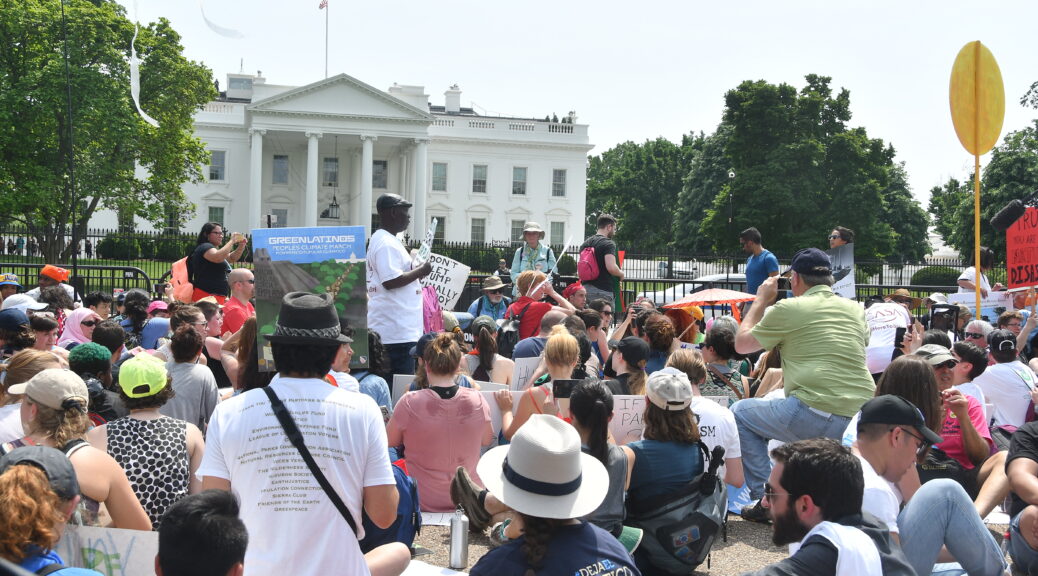
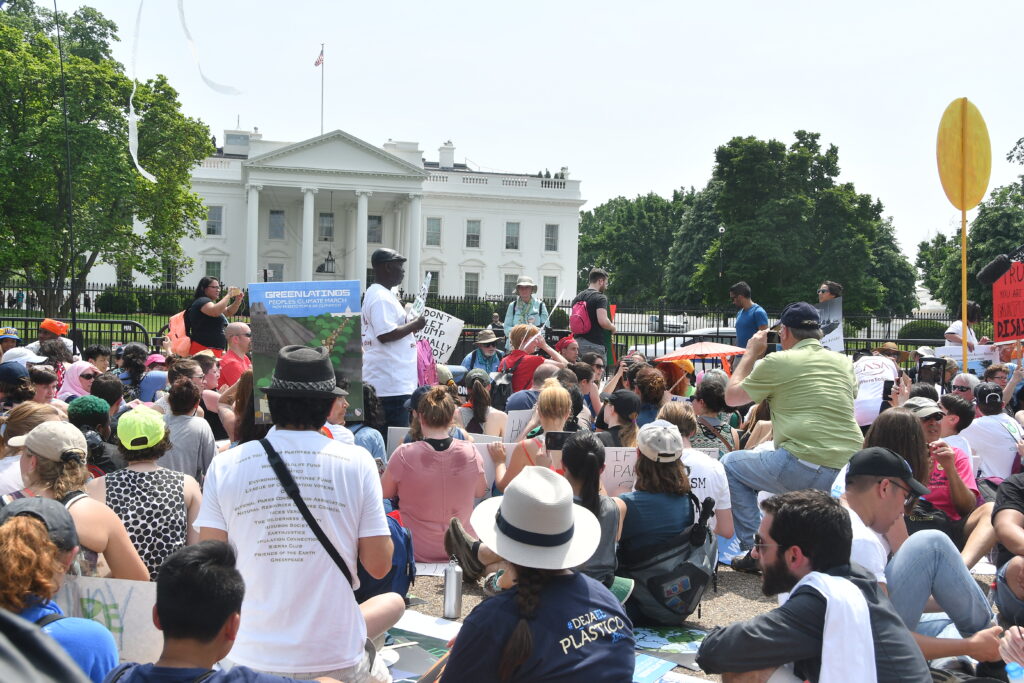
Climate March protesters try to send Trump a message in White House, April, 2017 © Karen Rubin/news-photos-features.com

In the Orwellian name of “modernizing” and throwing around terms like “right-size the Federal Government’s environmental review,” the Trump Administration is overturning and repealing regulations aimed at protecting the environment and mitigating or reversing climate change. At the same time, he is reducing local communities ability to stop or reduce the environmental impacts of development. “By streamlining infrastructure approvals, we’ll further expand America’s unprecedented economic boom,” Trump stated. On the other hand, he has obstructed approvals of vital infrastructure projects in New York and New Jersey, including the Gateway Tunnels under the Hudson River, and a rail-link from the new and improved LaGuardia Airport into Manhattan.

It is a stunning contrast to Biden’s ”Build Back Better”  Plan to Secure Environmental Justice and Equitable Economic Opportunity in a Clean Energy Future

This is a fact sheet from the White House –Karen Rubin/news-photos-features.com

MODERNIZING ENVIRONMENTAL REVIEWS: For the first time in 40 years, President Donald J. Trump is taking action to right-size the Federal Government’s environmental review process.

The Trump Administration is issuing a final rule that will modernize and accelerate environmental reviews under the National Environmental Policy Act (NEPA), so that infrastructure can be built in a timely, efficient, and affordable manner.

This marks the end of a multi-year review, which produced more than 1.1 million public comments and involved a broad range of stakeholders.

The final rule modernizes Federal NEPA regulations, including by codifying certain court decisions to clarify NEPA’s application and by expanding public involvement in NEPA reviews through the use of modern technology.

The rule also improves management by incorporating President Trump’s One Federal Decision policy, establishing time limits of two years for completion of environmental impact statements, when required, and one year for completion of environmental assessments.

Together, these common sense reforms will slash unnecessary government bureaucracy and accelerate important infrastructure projects all across the Nation.

STREAMLINING INFRASTRUCTURE APPROVALS: The Federal environmental review process has historically been far too complex, costly, and time consuming.

Since NEPA’s enactment, the environmental review process has been burdensome for both Federal agencies conducting reviews and Americans seeking permits or approvals.

Environmental impact statements average over 650 pages, and it takes Federal agencies on average four and a half years to conduct required reviews.

According to the Council on Environmental Quality, environmental impact statements for highway projects take more than seven years on average and often take a decade or more.

NEPA reviews are also frequently challenged in court, making it very challenging for businesses and communities to plan, finance, and build projects in the United States.

CUTTING RED TAPE: President Trump is reversing years of burdensome overregulation and administrative abuse, simultaneously ensuring meaningful environmental reviews and spurring economic growth.

President Trump is making good on his promise to conduct historic deregulation, removing job killing regulations that have stifled economic growth for far too long.

Already the President has reversed burdensome regulations like the Obama Administration’s Waters of the United States rule and Corporate Average Fuel Economy (CAFE) standards.

President Trump also did away with the Obama Administration’s expensive, heavy handed, and job-killing Clean Power Plan, replacing it with the much improved Affordable Clean Energy (ACE) Rule.

The President launched his Governors’ Initiative on Regulatory Innovation to cut outdated regulations, put people over paperwork, and align Federal and State regulations.

Under President Trump, the United States has remained a world leader in protecting the environment and reducing greenhouse gas emissions, while becoming the largest producer of oil and natural gas in the world.

Biden Presents Clean Energy Plan to Secure Environmental Justice and Equitable Economic Opportunity

A solar array on a farm in the Finger Lakes, New York State. Vice President Biden is proposing a bold plan to build a modern, sustainable infrastructure based on clean energy that in addition to addressing climate change, will create millions of well-paying jobs. “When Trump speaks of climate change, he thinks of one word, ‘hoax.’ When I think of climate change, the word I think of is ‘jobs.’ © Karen Rubin/news-photos-features.com

In the midst of economic, unemployment, and climate crises, Vice President Joe Biden, the presumptive Democratic candidate for president,  rolled out the second plank of his Build Back Better economic recovery plan for working families: building a modern, sustainable infrastructure and an equitable clean energy future. In a sharp contrast to Donald Trump’s disregard for working Americans and the consequential climate emergency at hand, Vice President Biden’s plan will create millions of good paying, union jobs for Americans while building sustainable infrastructure and creating an equitable clean energy future. 

Here’s what leaders from across the country are saying about Vice President Biden’s plans: 

“The plan put forward today by former Vice President Biden will create and sustain the kinds of good-paying, union jobs that provide a ladder to the middle class and make America a leader in manufacturing clean technology, put our nation on a path to doing our part to tackle the climate crisis, rebuild America’s crumbling infrastructure, and lift up all workers and communities by prioritizing investments in communities of color that have borne the brunt of environmental injustice,” Jason Walsh, the Executive Director BlueGreen Alliance, said in a statement

“As president of the IBEW, the largest union of electrical workers in the nation, I’m pleased that it will create so many jobs in nearly every sector of the workforce we represent, including construction, utility, telecommunications, manufacturing, and railroad. Joe Biden has made it clear that any new federal investments must support American jobs and American made products,” Lonnie R. Stephenson, president of the International Brotherhood of Electrical Workers (IBEW), said in a statement. “These are vital jobs that our nation needs more than ever… The men and women of the IBEW have been part of American’s clean-energy revolution for years now. We look forward to working with a Biden administration in building a clean and sustainable economy that can both save our planet and help rebuild the American middle class.”

“This ambitious plan is a win-win for American manufacturing, auto industry jobs, new technology and a cleaner environment. By focusing on investments in new technology, increasing demand for American-made and sourced clean vehicles; investing in our plants and our auto manufacturing facilities and creating 1 million new jobs, this all-American plan will ensure that the industry will thrive for decades to come with good paying union jobs,” the United Auto Workers (UAW) said in a statement. “This comprehensive plan will also increase investment in batteries and charging infrastructure and set fuel economy standards that involve all stakeholders. And this plan will save consumers money and cut air pollution. UAW members are looking to Washington, D.C. to invest in future jobs; new technologies; a world race to cleaner air; and to save consumers their hard-earned money. This plan checks all those boxes.”

“Joe Biden’s climate plan—by a long shot—is the most ambitious we have ever seen from any president in our nation’s history,” Gina McCarthy, president and CEO of the NRDC Action Fund, said in a statement. “It will get our economy humming again, and give our children a healthier, more just and more hopeful future. And he has committed to getting started on day one.”

“Vice President Joe Biden’s ambitious new commitments to a clean energy economy, environmental justice, and equitable climate solutions are more important than ever as our nation grapples with the realities of systemic racism, a global pandemic, and the ever growing climate crisis. Biden’s strong climate leadership stands in stark contrast with the Trump administration, which is continuing this week with its full scale assault on environmental and public health protections,” Tiernan Sittenfeld, Senior Vice President of Government Affairs of LCV Action Fund, wrote in a statement. “We applaud Vice President Biden for again making clear with these plans that combatting the climate crisis, fighting for environmental justice and creating millions of good-paying, high-quality jobs in a clean energy economy will be a very top priority on day one as president and every single day.”

“Vice President Biden is right ‘that environmental policy decisions of the past have failed communities of color,’ and his emphasis on addressing those injustices is a critical part of this plan. For too long Black, Latino, as well as low-income neighborhoods have suffered far more than their fair share of pollution and other environmental impacts, with devastating results on the health of the people living there,” said Elizabeth Gore, Senior Vice President, Political Affairs, EDF Action Fund in a statement. “The Biden Plan couldn’t be more of a stark contrast to four years of failure by the Trump administration. They have weakened limits on climate pollution, undermined scientists, and surrendered international leadership. America can’t afford another four years of a president who claims climate change is a hoax instead of providing leadership. We look forward to working with the Congress and a new administration to finally take real action on climate change.”

“While Donald Trump spreads lies about windmills, tries to block legislative efforts to advance electric vehicles, and ignores the millions of Americans working in clean energy, Joe Biden is presenting a vision to invest in and grow an equitable clean energy economy,” Sierra Club Political Director Ariel Hayes said in a statement. “The Sierra Club is encouraged by Biden’s proposal, which shows he is listening to the continued calls from activists and organizations across the country demanding a bold and ambitious plan that meets the size and scale of the crisis and completes the transition to a clean energy economy.”

“Today I heard from many in the environmental justice movement across the country who were overwhelmed by the Historic Ambitious speech addressing environmental, climate, social, and economic injustice by the Vice President,” said former South Carolina State Representative Harold Mitchell and Founder of The ReGenesis Project. “We thank you for listening, and announcing one of the boldest climate and environmental justice plans ever presented by a nominee for President.”

“Joe Biden shares DSCEJ’s commitment to build the power of Black communities, harmed by toxic pollution and vulnerable to the climate crisis, to shape the national agenda for achieving environmental justice and climate justice,” said Beverly L. Wright, Ph.D., Executive Director, Deep South Center for Environmental Justice.

“The Biden Environmental Justice Plan is the most targeted and comprehensive plan to address the legacy of environmental racism and the continuing ambivalence regarding environmental quality in communities of color that has been proposed by a potential presidential nominee,” said Peggy Shepard, co-founder and executive director of WE ACT for Environmental Justice based in Harlem, New York,” said Peggy M. Shepard, Executive Director, WE ACT for Environmental Justice. “When I was chair of the National Environmental Justice Advisory Council to the EPA I witnessed the total disregard of Title 6 administrative complaints by the EPA’s Civil Rights division, and the lack of accountability or reporting on environmental justice progress by the EJ Interagency Council which was mandated to develop plans to address environmental degradation in EJ communities. The Biden plans’ initiative to mandate a report card on progress to the White House is another important proposal to establish accountability which has been absent.”

“It’s encouraging to see former Vice President Biden release an environment, climate , economic and energy plan that places justice and health at the center,” said Dr. Robert. D. Bullard, Distinguished Professor of Urban Planning and Environmental Policy, Texas Southern University, widely regarded as the father of the environmental justice movement. “Given the converging and multiple threats faced by low-income, people of color, and vulnerable communities today, I like the fact the plan calls for an inclusive and All-of-Government approach in setting policy and legislative priorities and a framework for targeting resources to address underlying systemic conditions that create and perpetuate racial and economic inequality and unequal protection.”

“This is a truly historic moment in Presidential candidate history. Environmental Justice elders are being heard and together we can, and we will forge a new pathway for this country to live up to its ideals of justice for all!” said Dr. Cecilia Martinez, Executive Director, Center for Earth, Energy & Democracy; Inaugural Signer of the Equitable and Just National Climate Platform; and Co-Chair, Biden for President Climate Engagement Advisory Council.

“We strongly applaud the Biden campaign for taking an ambitious, comprehensive approach to climate change policy that recognizes the renewable energy industry’s ability to grow America’s economy towards a cleaner environment and a more prosperous and equitable future,” said Tom Kiernan, CEO of the American Wind Energy Association in a statement. “As our country strives to recover from the global pandemic, racial injustices, and economic recession, this is the right moment to grow the investments and good-paying American jobs associated with renewable energy development, including the significant economic benefits, lower cost electricity bills, and diverse community support that wind energy brings to rural parts of the country.”

“I think this plan out of Joe Biden is really visionary. It’s about investing in the technologies of the future and it certainly does deploy a lot of the work that the big three are already doing here in Detroit — and expands upon that and builds that out even further,” Michigan Governor Gretchen Whitmer said. “Autonomous vehicles, vehicles of the future, electric vehicles — these are the industries we’ve got to make investments in, that we’ve got to grow, and that will make our environment cleaner and be a much longer-term type of investment for the people of this country. I was excited to hear Joe Biden’s plan today.”

”This is exactly the bold vision for the future that we need in our country,” said Michigan Senator Debbie Stabenow. “What I love about what Joe Biden is proposing is that it’s about making it here, it’s about using it here, it’s about tackling the climate crisis in a way that creates new, clean energy jobs and does it in a way that provides opportunity for everyone and addresses parts of our communities that have been hardest hit by that pollution and the inequalities involved. “

“I’ve spent my time in public service fighting for environmental justice and for workers‘ rights so people who work hard can forge a better life for themselves. I know these two issues go hand in hand. So does my friend, Joe Biden. His clean energy jobs plan, with a strong environmental justice focus, proves it,” said Los Angeles County Supervisor and former U.S. Secretary of Labor Hilda Solis.

“VP Biden has chosen a bold path to get America to energy and environmental security and confront the existential challenge of climate change with bold and realistic solutions,” said former Senator and former U.S. Secretary of the Interior Ken Salazar.

Here is the plan:

The Biden Plan to Secure Environmental Justice and Equitable Economic Opportunity in a Clean Energy Future

The current COVID-19 pandemic reminds us how profoundly the energy and environmental policy decisions of the past have failed communities of color – allowing systemic shocks, persistent stressors, and pandemics to disproportionately impact communities of color and low-income communities.
 
Joe Biden is running for President to ensure that all Americans have a fair shot at getting ahead. That means rooting out the systemic racism in our laws, policies, institutions, and hearts. Any sound energy and environmental policy must advance public health and economic opportunity for all Americans, in rural, urban, and suburban communities, and recognize that communities of color and low-income communities have faced disproportionate harm from climate change and environmental contaminants for decades. It must also hold corporate polluters responsible for rampant pollution that creates the types of underlying conditions that are contributing to the disproportionate rates of illness, hospitalization, and death from COVID-19 among Black, Latino, and Native Americans. That means officials setting policy must be accountable to the people and communities they serve, not to polluters and corporations.
 
Addressing environmental and climate justice is a core tenet of Biden’s climate plan. Biden will:

Use an inclusive and empowering All-of-Government approach;

Make decisions that are driven by data and science;

Target resources in a way that is consistent with prioritization of environmental and climate justice; and

Assess and address risks to communities from the next public health emergency.


USE AN INCLUSIVE AND EMPOWERING, ALL-OF-GOVERNMENT APPROACH

Our nation’s environmental justice policy was developed more than twenty years ago and no longer addresses the needs of the present or future. In order to clean up our communities and provide new opportunities to those that have been disproportionately burdened by pollution and economic and racial inequality, Biden will revise and reinvigorate the 1994 Executive Order 12898 (EO 12898) on Federal Actions to Address Environmental Justice in Minority Populations and Low-Income Populations. Specifically, Biden will:

Establish an Environmental and Climate Justice Division within the U.S. Department of Justice. Under the Trump Administration, the U.S. Environmental Protection Agency (EPA) has referred the fewest number of criminal anti-pollution cases to the Justice Department (DOJ) in 30 years. Allowing corporations to continue to pollute – affecting the health and safety of both their workers and surrounding communities – without consequences, perpetuates an egregious abuse of power. Biden will direct his EPA and DOJ to pursue these cases to the fullest extent permitted by law and, when needed, seek additional legislation to hold corporate executives personally accountable – including jail time where merited. Going beyond the ambitious proposals that the Biden plan for a clean energy revolution already includes, the Biden Administration will establish a new Environmental and Climate Justice Division within the DOJ, as proposed by Governor Inslee, to complement the work of the Environment and Natural Resources Division. In line with the new Division’s mandate, Biden will instruct the Attorney General to: (i) implement, to the extent possible by executive action, Senator Booker’s Environmental Justice Act of 2019; (ii) increase enforcement, in line with the commitments already detailed in the Biden Plan; (iii) strategically support ongoing plaintiff-driven climate litigation against polluters; (iv) address legacy pollution that includes real remedies to make communities safe, healthy, and whole; and (v) work hand-in-hand with EPA’s Office of Civil Rights.

Elevate environmental justice in the federal government and modernize the all-of-government approach. Currently, the federal government has two key environmental justice groups. Biden will elevate and reestablish the groups as the White House Environmental Justice Advisory Council and White House Environmental Justice Interagency Council, both reporting directly to the Chair of the White House Council on Environmental Quality (CEQ), who reports directly to the President. To support this work, Biden’s CEQ will also have senior and dedicated environmental justice staff. These two councils will be charged with revising EO 12898 in order to address current and historic environmental injustice, in collaboration with local environmental justice leaders. And, they will be tasked with  developing clear performance metrics to ensure accountability in the implementation of the Executive Order. Once the revised EO is finalized, the White House Environmental Justice Advisory Council and White House Environmental Justice Interagency Council will publish an annual public performance score-card on its implementation.

Overhaul the EPA External Civil Rights Compliance Office. For too long, the EPA External Civil Rights Compliance Office has ignored its requirements under Title VI of the 1964 Civil Rights Act. That will end in the Biden Administration. Biden will overhaul that office and ensure that it brings justice to frontline communities that experience the worst impacts of climate change and fenceline communities that are located adjacent to pollution sources, beginning with the following actions: (i) revisit and rescind EPA’s decision in Select Steel and its Angelita C. settlement, which allowed state environmental agencies to issue dangerous permits, and to conduct its business in a way that harmed communities; (ii) conduct a rulemaking and open a public comment process to seek Americans’ input on agency guidance for investigating Title VI Administrative complaints; and (iii) work with Congress to empower communities to bring these cases themselves, by reinstituting a private right of action to sue Title VI, which was written out in the Supreme Court’s 2001 decision in Alexander v. Sandoval.


MAKE DECISIONS DRIVEN BY DATA AND SCIENCE
 
President Trump denies science and disempowers experts in the federal government. Biden will choose science over fiction, ensuring we make data-driven decisions when it comes to environmental justice.
 
Building on EPA’s EJSCREEN tool, developed in the Obama-Biden Administration, and lessons learned at the state level, Biden will charge the newly elevated White House Environmental Justice Interagency Council, in close consultation with the White House Environmental Justice Advisory Council, to create a data-driven Climate and Economic Justice Screening Tool to identify communities threatened by the cumulative impacts of the multiple stresses of climate change, economic and racial inequality, and multi-source environmental pollution. To ensure that information is accessible and transparent, the Screening Tool will be used to publish annual maps in multiple languages that identify disadvantaged communities; including disproportionately burdened tribal areas. In addition, since too often low-income and communities of color lack air quality monitors and are, as a result, unaware of unsafe pollution levels that threaten their health, Biden will:

Mandate new monitoring in frontline and fenceline communities. Biden will ensure that the federal government recommends that each state adequately monitors environmental pollution, including emissions, criteria pollutants, and toxics, in frontline and fenceline communities. This will include installing new monitors where they are lacking to provide accurate and publically-available real-time data. Biden will also create a new environmental public health corps that boosts communities’ capacity to use this data meaningfully. 

Require community notification. In line with Congresswoman Blunt Rochester’s Alerting Localities of Environmental Risks and Threats (ALERT) Act, Biden will direct the EPA to create a community notification program requiring “industries producing hazardous and toxic chemicals to engage directly with the community where they are located to ensure residents have real-time knowledge of any toxic release and ensure that communities are engaged in the subsequent remediation plan.”

Establish interagency teams to address targeted issues and partner directly with communities. Biden will also establish an Interagency Climate Equity Task Force to directly work to resolve the most challenging and persistent existing pockets of climate inequity in frontline vulnerable communities and tribal nations. This work includes addressing the challenge of lack of access to credit and capital for many local governments and small businesses owned by and located in environmental justice communities. Biden will rely on the leadership of these communities to identify what they need most. The Biden Administration will let community leaders lead by investing in community self-determination, marshalling federal resources to support local leaders and organizations, and directly funding capacity building — from critical tools to talent — to arm the creativity of local leaders and help them build back better.

Biden will also:

Tackle water pollution in a science-based manner. Biden will focus on improving water quality in a comprehensive way. For example, it is estimated that up to 110 million American’s drinking water could be contaminated with PFAS (per- and polyfluoroalkyl substances), a suite of chemicals that cause a host of health issues, including cancer, and are found in states from Michigan and Wisconsin to Colorado and New Hampshire. Instead of making empty promises with no follow-through, Biden will tackle PFAS pollution by designating PFAS as a hazardous substance, setting enforceable limits for PFAS in the Safe Drinking Water Act, prioritizing substitutes through procurement, and accelerating toxicity studies and research on PFAS. In addition, Biden will accelerate the process to test for and address the presence of lead in drinking water and housing, in line with the CDC’s determination and in partnership with labor, and state, local, and tribal governments. Biden will also help protect rural communities from water and air pollution and make water bills affordable for low-income communities, rural Americans, and tribes through targeted state revolving funds and Rural Utility Service funding for disadvantaged communities.

Prioritize strategies and technologies that reduce traditional air pollution in disadvantaged communities. Biden will direct his Cabinet to prioritize the climate strategies and technologies that most improve public health. He will also direct his Office of Science and Technology Policy to publish a report within 100 days identifying the climate strategies and technologies that will result in the most air and water quality improvements and update analytical tools to ensure that they accurately account for health risk and benefits. Finally, Biden will recommend that every state prioritize emission reductions within the disadvantaged communities identified by the Climate and Economic Justice Screening Tool in their state-level air quality plans.


TARGET RESOURCES CONSISTENT WITH THE PRIORITY THAT ENVIRONMENTAL AND CLIMATE JUSTICE REPRESENTS
 
The Biden plan already commits to providing low-income and communities of color preference in competitive grant programs. Today, Biden commits to go even further and target 40% of his historic investment in a clean energy revolution to disadvantaged communities. Building on the ambitious New York State climate law, Biden will:

Target relevant investments with the goal of delivering 40% of the overall benefits from those investments to disadvantaged communities, specifically:

Targeting investments made through programs related to clean energy and energy efficiency deployment; clean transit and transportation; affordable and sustainable  housing; training and workforce development; remediation and reduction of legacy pollution; and development of critical clean water infrastructure; and

Utilizing the results of the Climate and Economic Justice Screening Tool to help identify these disadvantaged communities, which are threatened by the cumulative impacts of the multiple stresses of climate change, economic and racial inequality, and multi-source environmental pollution.

In addition, Biden will directly fund historic investments across federal agencies aimed at eliminating legacy pollution – especially in communities of color, rural and urban low-income communities, and indigenous communities. Biden will also address common challenges faced by disadvantaged communities, such as funds for replacing and remediating lead service lines and lead paint in households, daycares, and schools in order to ensure all communities have access to safe drinking water and wastewater infrastructure. These investments will create good-paying union jobs and help to build infrastructure that is resilient to the impacts of climate change in frontline and fenceline communities.


ASSESS AND ADDRESS RISKS TO COMMUNITIES FROM THE NEXT PUBLIC HEALTH EMERGENCY

As a country, we must do a better job to prepare for and prevent public health emergencies, particularly in communities that have been disproportionately impacted by environmental stressors. The link between climate change and health security is well-documented – climate change creates a growing threat to Americans and hits low-income and communities of color the hardest. We must heed the warning signs from the current pandemic and prepare all communities. Building on The Biden Plan to Combat Coronavirus (COVID-19) and Prepare For Future Global Health Threats, Biden will take the following actions to minimize the impacts of climate change that cannot be avoided:

Create a National Crisis Strategy to address climate disasters that prioritizes equitable disaster risk reduction and response. The Trump Administration’s lack of preparedness and failed response to the COVID-19 pandemic has reinforced that the next President must develop a science-based, national climate crisis strategy to support states, tribes, and territories. The next President must ensure the efficient and equitable allocation of disaster risk reduction-related resources and that we build back better after climate-related disasters. Building on Senator Markey’s Climate Change Health Protection and Promotion Act, Biden will use a whole-of-government approach to develop a national climate crisis strategy for each type of climate disaster that the National Climate Assessment warns will put Americans at risk (e.g., heat waves, sea level rise, wildfire, air pollution, infectious disease, hurricane, and floods). And, in line with recommendations from the American Lung Association, Biden will provide additional CDC grants to every state and territory to work with their local health departments to develop climate disaster mitigation plans.

Establish a Task Force to Decrease Risk of Climate Change to Children, the Elderly, People with Disabilities, and the Vulnerable. The Biden Department of Health and Human Services will lead a Task Force to Decrease Risk of Climate Change to Children, the Elderly, People with Disabilities, and the Vulnerable including disadvantaged and frontline communities identified by the Climate and Economic Justice Screening Tool.  The Task Force will identify the health impacts of climate change that will pose the largest risk to the most vulnerable populations and work across the Department and with other agencies to use a whole-of-government approach to decrease those risks, including baseline health inequities. In addition, this Task Force will be charged with developing a ready-to-deploy recovery strategy that ensures adequate housing for individuals displaced by climate disasters.

Establish an Office of Climate Change and Health Equity at HHS and Launch an Infectious Disease Defense Initiative. In order to fully prepare for and minimize the impacts of climate change that cannot be avoided, Biden will establish an Office of Climate Change and Health Equity in the Office of the Secretary of HHS, modeled after the Office of AIDS Research that was created in 1983, and invest in surveillance, early-warning systems, and research to decrease climate change and health equity risks. This new HHS Office, in collaboration with the CDC, will partner with the Department of Defense to predict the infectious diseases with the highest probability of being exacerbated by climate change, evaluate their population risk, and work with additional federal agencies to accelerate the development of vaccines or other mitigation measures that reduce the risk to Americans.

Improve the resilience of the nation’s health care system and workers in the face of natural disasters. Building on guidelines published in the Obama-Biden Administration, Biden will establish a biennial Health Care System Readiness Task Force, a public-private task force to assess the current state of the nation’s health care system resilience to natural disasters and recommend strategies and investments to improve it, which will include participation from the Occupational Safety and Health Administration (OSHA). The evaluation will include an assessment of both physical health care infrastructure and the frontline health care workforce, including opportunities to provide workforce development opportunities in disadvantaged communities. In order to inform the Readiness Task Force, beginning in 2021, the Office of Science and Technology Policy, in coordination with the U.S. Global Change Research Program and the National Security Council will publish a declassified, annual report identifying the type, likelihood of occurrence, and locations at the highest risk, and potential impacts of natural disasters in the United States.

Biden Proposes ‘Made in All of America’ by All of America’s Workers Plan to Resuscitate Economy After COVID-19

Vice President Joe Biden, the presumptive Democratic nominee for president, has a plan for “Made in All of America,” to resuscitate the economy after the debilitating effects of the coronavirus pandemic, decrease America’s dependence on foreign supply chains, innovate, and restore America’s global leadership in the 21st century. The essence includes Buy American, Made in America, Innovate in America, Invest in America, Stand up for America and Supply America. © Karen Rubin/news-photos-features.com

Donald Trump may bandy around a “Make America Great” slogan, but Vice President Joe Biden, the presumptive Democratic nominee for president, has a plan for “Made in All of America,” to resuscitate the economy after the debilitating effects of the coronavirus pandemic, decrease America’s dependence on foreign supply chains, innovate, and restore America’s global leadership in the 21st century. The essence includes Buy American, Made in America, Innovate in America, Invest in America, Stand up for America and Supply America. And he has the experience of rescuing the economy from the brink of a Great Depression. This is from the Biden campaign –Karen Rubin, editor@news-photos-features.com

Vice President Joe Biden will mobilize the talent, grit, and innovation of the American people and the full power of the federal government to bolster American industrial and technological strength and ensure the future is “made in all of America” by all of America’s workers. Biden believes that American workers can out-compete anyone, but their government needs to fight for them.
 
Biden does not accept the defeatist view that the forces of automation and globalization render us helpless to retain well-paid union jobs and create more of them here in America. He does not buy for one second that the vitality of U.S. manufacturing is a thing of the past. U.S. manufacturing was the Arsenal of Democracy in World War II, and must be part of the Arsenal of American Prosperity today, helping fuel an economic recovery for working families.
 
The American story has always been deeply rooted in our ability to reinvent ourselves in the face of new challenges. At key moments in our history, the federal government, private sector, and above all American workers and working families have mobilized to unleash eras of innovation and shared prosperity. This partnership propelled us to the moon, to transformative treatments for HIV/AIDS and other diseases, to the creation of the internet, and more. But President Trump has denied science, under-funded research and development, and implemented policies that encourage more manufacturing to move overseas.  
 
If we make smart investments in manufacturing and technology, give our workers and companies the tools they need to compete, use taxpayer dollars to buy American and spark American innovation, stand up to the Chinese government’s abuses, insist on fair trade, and extend opportunity to all Americans, many of the products that are being made abroad could be made here today. And, if we do these things with an unwavering commitment to bolstering American industrial strength, which we will power using clean energy that we also harvest here at home, we will also lead in making the cutting-edge products and services of tomorrow. Biden will do more than bring back the jobs lost due to COVID-19 and Trump’s incompetence, he will create millions of new manufacturing and innovation jobs throughout all of America.
 
These will be high-quality, high-skill, safe jobs with the choice to join a union — jobs that will grow a stronger, more inclusive middle class. Biden will include in the economic recovery legislation he sends to Congress a series of policies to build worker power to raise wages and secure stronger benefits. This legislation will make it easier for workers to organize a union and bargain collectively with their employers by including the Protecting the Right to Organize (PRO) Act, card check,  union and bargaining rights for public service workers, and a broad definition of “employee” and tough enforcement to end the misclassification of workers as independent contractors. It will also go further than the PRO Act by holding company executives personally liable when they interfere with organizing efforts.
 
Donald Trump’s main manufacturing and innovation strategy is trickle-down economics that works for corporate executives and Wall Street investors, but not working families. He gave huge tax cuts to the largest multinationals with no requirement that they invest in the United States or favor U.S. jobs over offshoring. He pursued a trade strategy that prioritizes access for big multinational banks to China’s market but has done next to nothing to curb Chinese government trade abuses that hurt U.S. workers. The results have been predictable:

The Trump tax cut encouraged offshoring and investment overseas – not in the United States. Foreign investment was outpacing domestic investment.

In the first 18 months of Trump’s presidency, the rate of federal contractors offshoring jobs more than doubled.

In 2018, stock buybacks were at record highs and corporate tax payments were at record lows.

In 2019, U.S. manufacturing was in recession, and Trump’s much vaunted China trade strategy ended up contributing to a decline in American manufacturing exports.

Biden’s comprehensive manufacturing and innovation strategy will marshall the resources of the federal government in ways that we have not seen since World War II. Together, the following six lines of effort will remake American manufacturing and innovation so that the future is made in America by all of America’s workers:

1. BUY AMERICAN. Make “Buy American” Real and Make a $400 billion Procurement Investment that together with the Biden clean energy and infrastructure plan will power new demand for American products, materials, and services and ensure that they are shipped on U.S.-flagged cargo carriers.

2. MAKE IT IN AMERICA. Retool and Revitalize American Manufacturers, with a particular focus on smaller manufacturers and those owned by women and people of color, through specific incentives, additional resources, and new financing tools.

3. INNOVATE IN AMERICA. Make a New $300 Billion Investment in Research and Development (R&D) and Breakthrough Technologies — from electric vehicle technology to lightweight materials to 5G and artificial intelligence — to unleash high-quality job creation in high-value manufacturing and technology.

4. INVEST IN ALL OF AMERICA. Ensure Investments Reach All of America so we draw on the full talents and invest in the potential of all our communities and workers. America is not at full strength when investments, venture capital, educational opportunities and paths to good jobs are limited by race, zip code, gender, gender identity, sexual orientation, disability, religion or national origin. Biden will ensure that the major public investments in his plan — procurement, R&D, infrastructure, training, and education — reach all Americans across all states and regions, including urban and rural communities, with historic investments in communities of color and an emphasis on small businesses.

5. STAND UP FOR AMERICA. Pursue a Pro-American Worker Tax and Trade Strategy to fix the harmful policies of the Trump Administration and give our manufacturers and workers the fair shot they need to compete for jobs and market share.

6. SUPPLY AMERICA. Bring Back Critical Supply Chains to America so we aren’t dependent on China or any other country for the production of critical goods in a crisis.
 
In addition to bringing back the jobs lost this year, Joe Biden’s plan to ensure the future is made in all of America will help create at least 5 million new jobs in manufacturing and innovation.
 
BUY AMERICAN:  MAKE “BUY AMERICAN” REAL AND MAKE A HISTORIC PROCUREMENT INVESTMENT IN AMERICAN PRODUCTS, SERVICES,  SUPPLY CHAINS, AND TRANSPORTATION OF GOODS
 
Biden will use the government’s purchasing power to Buy American, boosting U.S. industries through a historic procurement investment he is announcing today and an ambitious extension of his infrastructure and clean energy plans that he will announce soon.
 
Make Buy American Real
 
Biden starts with a pretty basic idea – when we spend taxpayer money, we should buy American products and support American jobs. Almost 90 years ago, Congress passed the Buy American Act to advance this basic idea. But we have never fully lived up to it.
 
For decades, big corporations and special interests have fought for loopholes that redirect taxpayer dollars to foreign companies. The result: tens of billions of taxpayer dollars each year go to support foreign jobs and to bolster foreign industries. In 2018 alone, the Department of Defense (DOD) spent $3 billion on foreign construction contracts, leaving American steel and iron out in the cold, and nearly $300 million on foreign engines and vehicles instead of buying from American companies and putting Americans to work.
 
Trump likes to talk about Buy American – but his actions have made matters worse:

During the first 18 months of his presidency, the annual rate at which major federal contractors offshored jobs more than doubled.

On his watch, government contracts awarded directly to foreign companies are up 30%.

Our military has become more reliant on foreign suppliers, increasing DOD foreign contracts 12%.

His corporate tax cut is handing taxpayer money to big companies that are still offshoring their production.

 
Biden will make a national commitment to Buy American – and make this promise real, not just rhetoric. He will:

Tighten domestic content rules. Today, loopholes in the law allow products to be stamped “made in America” for purposes of federal procurement even if barely 51% of the materials used to produce them are domestically made. Biden will tighten these rules to require more legitimate American content — so when we deem something made in America, it reflects the work and output of American workers.

Crack down on waivers to Buy American requirements. Too often, Buy American operates like a suggestion, not a requirement. Procurement officers within federal Agencies can waive Buy American rules without explanation or scrutiny. Biden will close these waiver loopholes. First, he will establish a transparent process so that any time a federal contractor requests a waiver based on a claim that something can’t be made in America, it will be published on a website for all potential bidders and relevant stakeholders (like labor unions) to see. Second, he will use expanded Manufacturing Extension Partnerships together with new efforts to identify firms — particularly small businesses and those owned by women and people of color — that have the capability to fill these procurement needs, and provide direct support so that they can raise their hand and have a shot at stepping up to make it here. Biden successfully deployed this approach through the Transportation Department during the Recovery Act, and will extend it to all of government as President.

End false advertising. Biden will also crack down on companies that label products as Made in America even if they’re coming from China or elsewhere. For example, a company selling deployment bags to active-duty troops falsely claimed its products were Made in America, when in reality they came from China. And when an American competitor filed a complaint with the Federal Trade Commission, the Trump Administration imposed no penalties.

Extend Buy American to other forms of government assistance. For example, when the government is investing in research and development, it should be supporting manufacturing and sourcing in America. No more “invent it here, make it there.” Taxpayer-funded research investments in the 20th century laid the foundation for MRI technologies, yet some of the companies directly benefiting from these innovations are moving MRI production to China. If companies benefit from taxpayer-funded research that leads to new products and profits, those products should be made in the U.S. or the company should reimburse the government for its support. The days of taxpayer benefits going to companies that seek to outsource jobs or avoid paying their fair share of taxes are over.

Strengthen and enforce Buy America. Like Buy American, Buy America provisions – which require that all of the steel, iron, and manufactured products used in transportation projects are melted, mined, and manufactured in the U.S. – are critical for the U.S. manufacturing industry. As part of its historic investment in infrastructure, Biden will strengthen and enforce Buy America.

Update the trade rules for Buy American: Biden will work with allies to modernize international trade rules and associated domestic regulations regarding government procurement to make sure that the U.S. and allies can use their own taxpayer dollars to spur investment in their own countries.

Ship American. The U.S.-flag Merchant Marine fleet and the men and women who operate U.S.-flag ships are crucial to America’s national security, our international trade relationships, and economic development. For this reason, Biden has been a consistent and strong advocate for the Jones Act and its mandate that only U.S.-flag vessels carry cargo between U.S. ports. He will take steps to ensure American cargo is carried on U.S.-flag ships, leading to additional demand for American-made ships and U.S. merchant mariners.

 
Make A Historic Procurement Investment
 
Ensuring that our existing taxpayer dollars support American jobs is a crucial first step, but to truly rebuild our industrial base, we need to go further – targeting more federal purchases and more R&D investment to unleash American industry and innovation going forward.
 
In this time of crisis, Biden will invest $400 billion in his first term in additional federal purchases of products made by American workers, with transparent, targeted investments that unleash new demand for domestic goods and services and create American jobs. This will be the largest mobilization of public investments in procurement, infrastructure and R&D since WWII.
 
History has shown that when the government commits to make significant purchases in targeted, tradable sectors, it positions U.S. manufacturers to create good American jobs by supplying our own communities and selling more products to the rest of the world. But outside the context of war, we have not historically used our federal purchasing power to aggressively promote U.S. national interests.
 
These procurement commitments will provide a strong, stable source of demand for products made by American workers and supply chains composed of American small businesses. These commitments will grow new companies and ensure existing companies that employ Americans thrive in vital sectors from steel and cars to robotics and biotechnology. They will increase our industrial strength so we can win in growing global export markets. Specifically, Biden will:

Commit to purchasing tens of billions of dollars of clean vehicles and products to support the expansion of clean energy generation capacity, ensuring we are on the forefront of the clean energy export markets of the future. Other countries should be buying the next generation of battery technology and electric vehicles manufactured by American workers.

Commit to purchasing American steel, cement, concrete, building materials, and equipment, and in the process not only help rebuild our crumbling infrastructure and retrofit our buildings, but position our domestic companies to lead in resilient, sustainable production for the future.

Commit to forward purchases of critical medical supplies and pharmaceuticals, ensuring sufficient stockpiles to weather any crisis—and that Americans get the best possible care.

Commit to future purchases in advanced industries like cutting-edge telecommunications and artificial intelligence, not only creating new, lasting American jobs, but protecting our intellectual property and national security from threats from American adversaries that have gone unaddressed by Trump.

As called for in his plan to strengthen worker organizing, collective bargaining, and unions, Biden will require that companies receiving procurement contracts are using taxpayer dollars to support good American jobs, including a commitment to pay at least $15 per hour, provide paid leave, maintain fair overtime and scheduling practices, and guarantee a choice to join a union and bargain collectively.
 
Biden’s historic procurement effort will be designed to support small businesses and those owned by women and people of color. Just as he did during the Recovery Act—which substantially increased the share of federal contracts awarded to small businesses—Biden is committed to applying the Federal Government’s goal of ensuring that at least 23% of federal contracts get awarded to small businesses. He will implement a multi-pronged small business contracting strategy that includes formula-based awards, widespread outreach and counseling to small businesses owners, and transparent monitoring of contract awards. And he will build on the efforts of the Obama-Biden Administration by launching a new Federal Procurement Center — a first-of-its-kind program to help  minority-owned firms apply for and win federal government contracts. President Trump has proposed slashing the funding and even terminating the Minority Business Development Agency and its programs. Biden will do the opposite.
 

MAKE IT IN AMERICA:  RETOOL AND REVITALIZE THE BACKBONE OF AMERICAN MANUFACTURING TO WIN THE JOBS OF TODAY AND TOMORROW
 
The dramatic increase in demand from the largest combined infrastructure (already announced), procurement (see above), and R&D (see below) public investment since WWII will power economic recovery, accelerate job creation, and jumpstart the modernization and revitalization of American manufacturing. A McKinsey study supports the notion that the type of comprehensive strategy Biden is proposing could lead to 2 million more manufacturing jobs and $500 billion in additional annual GDP by 2025.
 
Biden will put a special focus on the backbone of American manufacturing — the thousands of small and medium-sized manufacturers throughout the country. He saw firsthand through the rescue of the American auto industry in 2009 that these small and medium-sized manufacturers are critical to jobs, innovation, and ensuring that the future is made in America.
 
While the Trump Administration has created huge new programs for any large multinational corporation to get cheap capital with no job commitments – it has no strategy to help smaller manufacturers invest and stay competitive. By contrast, Biden will:

Provide Capital for Small-Medium Manufacturers to Invest and Compete: Biden will establish a credit facility to supply capitalespecially to smaller manufacturers, so that our aging factories can modernize, compete, and reduce carbon. Low-cost financing for manufacturing investment — including for those struggling with the harms of the COVID-19 crisis – will ensure American manufacturers can invest in the new equipment they need to compete today while supporting a sustainable future.

Quadruple the Manufacturing Extension Partnership to help America’s small and medium-sized manufacturers compete for Buy American contracts and modernize: When large contractors claim they need “Buy American” waivers because they can’t find a U.S. manufacturer, these MEPs help small and medium-sized manufacturers compete for those contracts. Trump tried to eliminate this program; Biden will quadruple it.

Pass a Manufacturing Tax Credit to Retool and Revitalize: While Trump’s tax breaks provide giveaways even if companies offshore or move investment overseas, Biden will provide a special Manufacturing Communities Tax Credit that promotes revitalizing, renovating, and modernizing existing – or recently closed down – facilities. Projects receiving the credit will have to benefit local workers and communities by meeting strong labor standards, including paying workers a prevailing wage, employing workers trained in registered apprenticeship programs, and aiming to utilize Project Labor and Community Workforce Agreements. Because Biden understands that investing in clean energy jobs will drive the strength and competitiveness of our manufacturing sector – as part of the Clean Energy component of his jobs and recovery plan, Biden will expand and extend tax credits that will turbo-charge growth in American manufacturing

Expand Manufacturing Innovation Partnerships: Biden’s manufacturing and R&D strategy will build on the successful efforts of the Obama-Biden Administration and those of Senator Sherrod Brown and others to connect research universities — including HBCUs, Hispanic Serving Institutions, and other minority-serving institutions — community colleges, manufacturing institutes, and employers, unions, and state, local, and tribal governments. These historic investments will connect workers and manufacturers of all sizes to the know-how and technologies needed to compete and win.

Joe Biden’s plan will ensure the American Auto Industry Wins the 21st Century: During the Great Recession, Biden played a critical role in saving and reviving the American auto industry and saving more than a million American auto jobs. He has always understood that the auto industry is the heart of American manufacturing and must remain the global leader for generations to come. He recognizes that the auto industry not only supports a wide range of U.S. manufacturing capability, from steel and aluminum to electrical components and semiconductors, it is also critical to our clean energy future. Even before COVID-19 hit, auto and auto-part  manufacturing growth under Obama-Biden was about three times greater than under Trump, nine times greater in Ohio, while  states like Michigan actually lost auto manufacturing jobs jobs under Trump’s watch.
Every plank of the Biden manufacturing and innovation plan will strengthen both the auto jobs of today and tomorrow. Bold federal procurement and Buy American provisions will create near-term demand for U.S. auto manufacturing and bring back jobs. Investments in technology and innovation will spur U.S. production of new energy and safety technologies, thus increasing the domestic content in U.S. vehicles. Dedicated grants and funding to help manufacturers retool and build new factories will help ensure U.S. global leadership in electric vehicle manufacturing, including EV components and batteries. Biden will announce additional detail on his plan to support auto jobs in the weeks ahead.
 

INNOVATE IN AMERICA: A MAJOR INVESTMENT IN FEDERALLY FUNDED R&D ACROSS ALL 50 STATES
 
A successful plan to ensure a future made in America means the United States must have a strategy to win not just the jobs of today – but the jobs and industries of tomorrow. That requires fighting back against unfair trade practices and the theft of American intellectual property, as well as making a national commitment to get off the sidelines as competitors are making aggressive public investments in science and technology to take over global leadership in the most advanced technologies.
 
Joe Biden is proposing a dramatic, accelerated Research & Development investment of $300 billion over 4 years to create millions of good jobs today, and to secure our global leadership in the most critical and competitive new industries and technologies. Credible estimates indicate that this level of investment could help create 3 million jobs or more.
 
China is on track to surpass the US in R&D. China’s total R&D expenditures have increased nearly 30-fold from 1991 to 2016. By some estimates, China will overtake the US in R&D spending in 2020. And, as part of China’s “Made in China 2025” plan, China’s government has launched funds to increase manufacturing and technological innovation in key industries, including battery technology, artificial intelligence, and 5G. China’s government is actively investing in research and commercialization across these types of important technology areas, in an effort to overtake American technological primacy and dominate future industries.
 
Declines in Federal R&D spending have contributed to a hollowing out of the American middle class. The Trump White House and Republicans in Congress have forgotten that major investments in federal R&D not only drove U.S. industrial and technological leadership, but  created millions of good-paying middle class jobs. The fight for our future requires us to return to that winning commitment from our past. In 1964, public federal R&D support was 2% of GDP, compared to only 0.7% today. This difference amounts to nearly $250 billion less annually in federal R&D spending. MIT professors Simon Johnson and Jonathan Gruber have found that declining public investment has also led to slow productivity and wage growth.
 
The $300 billion in innovation funding will power home-grown industries that can lead the world and create jobs in advanced materials, health and medicine, biotechnology, clean energy, autos, aerospace, artificial intelligence, telecommunications, and more. Specifically, Biden will allocate  funding to:

Major increases in direct federal R&D spending, including new National Institutes of Health, National Science Foundation, Department of Energy, Biden’s new Advanced Research Projects Agency for Health (ARPA-H), Defense Advanced Research Projects Agency (DARPA), and other peer-reviewed science research grants to colleges and universities.

New breakthrough technology R&D programs to direct investments to key technologies in support of U.S. competitiveness – including 5G, artificial intelligence, advanced materials, biotechnology, and clean vehicles.

Competitive capital financing to encourage small businesses to commercialize cutting-edge technology, such as a scaled-up version of the Small Business Innovation Research (SBIR) program, “America’s seed fund,” which provides capital to small businesses pursuing R&D commercialization in concert with research institutions.

State-of-the-art workforce skill development, such as funds for the creation or expansion of technical training programs around digital, statistical, and technology skills, funded by the Labor Department. This will  increase pathways for those – including women and workers of color — who are too often under-represented in critical technology jobs.

Infrastructure for educational institutions and partners to expand research, such as building new research labs, buying modern manufacturing equipment, or creating new business parks.

As part of this historic R&D investment, Joe Biden will work to ensure that technological change benefits workers, creates jobs, and strengthens the middle class. He will:

Ensure that taxpayers benefit from the upside of federal research dollars that create profitable inventions. U.S. taxpayers should benefit from the upside of federal investments that result in profitable inventions underwritten by federal funds. Biden will strengthen existing federal rights to ensure that the U.S. government captures a share of the royalties of high-profitable products developed with federal R&D funding.

Ensure workers have a voice in innovation and are first in line to benefit. As president, Biden will ensure that employers receiving federal funds give all affected employees advance notice of technology changes and automation in the workplace, put their employees at the front of the line for new jobs, and offer paid skills training so that employees can succeed in new jobs. And, he will ensure employers discuss workplace technology changes with their employees and their unions and bargain over protections against employees being displaced.

 
INVEST IN ALL OF AMERICA: ENSURE WE DRAW ON THE FULL TALENTS AND INVEST IN THE POTENTIAL OF ALL OUR COMMUNITIES AND WORKERS
 
A strategy to ensure the future is made in America will not work unless we have a dramatic new commitment to ensure we are investing in – and drawing on the talents of – all of America. Today, we fall short in too many ways. We fail to provide meaningful investment in R&D and venture capital to all regions of our nation and we fail to give too many Americans – especially those of color or from lower-income urban and rural communities – the full opportunities they deserve to have pathways to good jobs and careers. America is not at full strength when investments, venture capital, educational opportunities, and paths to good jobs are limited by race, zip codes, gender, gender identity, sexual orientation, disability, religion, and national origin.
 
The Biden plan will ensure major research, public investment, and training and education for manufacturing and innovation jobs goes to all parts of America, both urban and rural communities, with historic investments in communities of color.
 
Joe Biden’s R&D Challenge for All of America
 
The economic opportunities from investment in innovation have not been shared throughout the U.S. Twenty five percent of venture capital investment is concentrated in the San Francisco area, and 75% flows to just three states: California, New York, and Massachusetts. Female entrepreneurs only receive 16% of all venture capital dollars. Only 3% go to start-ups with Black or Latino founders. As experts from MIT and Brookings have argued, there are a significant number of diverse communities across every region of the country that could become new centers of job-creating innovation and production.
 
We cannot lead the world if we leave too much of our talent sitting on the bench. Biden will diversify this bold new innovation investment so it supports jobs, small businesses, and entrepreneurs in every part of the United States. He will:

Direct new federal investments to more than 50 communities across our nation that have the capabilities but have too often been overlooked, in both rural and urban areas. He will invest in new technology hubs that bring together this research and development investment with workforce training and education and small and medium-sized businesses, resulting in new innovations from more places, which means stronger communities and job creation. These investments will build on successful programs like Detroit’s LIFT and Youngstown’s “America Makes,” each of which has helped start innovative new start-ups and commercialize cutting-edge technologies.

Guarantee that funding is equitably allocated so that women and communities of color receive their fair share of investment dollars. Biden will ensure that federal research and procurement dollars are awarded fairly and will apply the principles of Congressman Jim Clyburn’s 10-20-30 plan to ensure that help goes to high-poverty areas that have long suffered disinvestment. And, he’ll invest in the diverse talent at Historically Black College and Universities, Tribal Colleges and Universities, and Minority Serving Institutions to solve the country’s most pressing problems, including by (a) creating at least 200 new centers of excellence that serve as research incubators and connect students underrepresented in fields critical to our nation’s future, (b) dedicating additional and increased priority funding streams at federal agencies for grants and contracts for HBCUs and MSIs, and c) requiring any federal research grants to universities with an endowment of over $1 billion to form a meaningful partnership and enter into a 10% minimum subcontract with an HBCU, TCU, or MSI. Biden will also require that competitive grant programs give similar universities the opportunity to compete against each other, for example, ensuring that HBCUs only compete against HBCUs.

 
Joe Biden’s Job and Educational Opportunity Challenge for All of America
 
The need to draw on the talents of all of America is even more pronounced when it comes to building our innovation and manufacturing workforce. Yet today, opportunity is unevenly distributed. Too few women and people of color have been provided with the pathways to the high-skill, high wage, in-demand jobs that STEM careers offer, including in manufacturing and innovation. And too many skilled workers in manufacturing do not get the full chance to increasingly upgrade their skills and be first in line for new jobs in changing industries.
 
Biden’s plan to invest in career and technical education for high school students and his plan for free high-quality training programs and community colleges and free tuition for 4-year degrees for families earning less than $125,000 will go a long way toward building the workforce for a major expansion in manufacturing and innovation jobs.
 
He will go further, investing $50 billion in high-quality training programs that give workers a chance to earn an industry-recognized credential without debt. As part of this commitment, Biden will:

Create and expand community college-business-union partnerships to develop effective training programs. Building on successes in the Obama-Biden Administration, Biden will invest in partnerships between community colleges and their faculty, businesses, unions, state, local, and tribal governments, universities, and high schools and their instructors to identify in-demand knowledge and skills in a community and develop or modernize training programs. These programs – which could be as short as a few months or as long as two years – will lead to a relevant, high-demand industry-recognized credential.

Scale up work-based learning programs with a focus on building a diverse workforce, through opportunities like registered apprenticeships, pre-apprenticeship programs and other labor-management training programs. Biden will work with unions to bring forward a new generation of registered apprenticeships in fields ranging from technology to manufacturing to care work. These high-quality registered apprenticeships will allow workers who have lost their jobs as a result of this crisis or young people and others who are entering a weak job market to train to enter the jobs of the future while earning a decent income. Registered apprenticeship programs like the innovative Industrial Manufacturing Technician Apprenticeship train workers for specialized manufacturing jobs with 18 months of work-based learning and a few technical college classes. Biden also will invest in pre-apprenticeship programs that have a partnership with a registered apprenticeship program, with a focus on ensuring these programs provide a pathway to high-quality employment opportunities for a diverse workforce, including both racial and gender diversity.

Help develop pathways for diverse workers to access training and career opportunities. study of Labor Department-funded individual career services – which included assistance looking for a job, help developing career plans, and one-on-one career coaching –  found that earnings for workers who were provided these services increased 7 to 20%. Biden will ensure these services are universally available to all workers and people entering the workforce who need them. And, he will increase funding for community-based and proven organizations that help women and people of color access high-quality training and job opportunities.

Extend Unemployment Insurance benefits for the duration of training, up-skilling, and reskilling programs while unemployment rates are elevated, so that millions of people can get skills for new technology, innovation, trades, and other jobs, in all parts of America.

In order to ensure the United States is as competitive as possible, we need to tap into all of the talent across our country, including women and communities of color. That’s why Biden’s plan to invest over $70 billion in Historically Black Colleges and Universities, Tribal Colleges and Universities, and Minority-Serving Institutions is a key piece of his manufacturing and innovation workforce strategy. In addition to directing additional federal research dollars to these schools and requiring that setting aside competitive grant dollars that for HBCUs, TCUs, and MSIs that only similar universities compete over, Biden will invest $35 billion in HBCUs, TCUs, and MSIs to create research centers of excellence, build high-tech labs and other facilities, and strengthen graduate programs in fields including STEM. Biden will also tackle workplace discrimination and harassment that keeps so many women, especially women of color, from earning equal pay or fully realizing their professional goals.
 
A PRO-AMERICAN-WORKER TAX AND TRADE STRATEGY
 
American workers and businesses can out-compete anyone, hands-down. But their government needs to fight for them. Biden will fight for every American job in the tough competition for jobs and markets – especially against unfair foreign practices. The President needs to stand with American workers and communities, not with wealthy corporations or the foreign governments that are subsidizing and protecting their businesses.
 
That’s one of the problems with Trump. When push comes to shove, Trump sides with corporate interests against workers, their unions, and their communities. And he rewards corporations and their executives for abandoning American workers and moving jobs overseas — rather than holding them accountable to create, maintain, and bring back jobs to the U.S.
 
President Trump’s 2017 tax plan showered Wall Street and powerful multinational corporations with incentives to move jobs and production overseas. And Trump’s go-it-alone trade war and empty “phase one” deal with China has been an unmitigated disaster, inflicting maximum pain on American workers and farmers, while doing nothing to curb Beijing’s trade abuses. In negotiating with China’s government, Trump spent more energy fighting for big corporations than he did fighting for American workers. To this day, China’s government continues its trade abuses and is failing to live up to its commitments. 
 
The goal of every decision about trade must be to build the American middle class, create jobs, raise wages, and strengthen communities. To stand up for American workers, Biden’s tax and trade strategy will take a number of steps, including:

Take aggressive trade enforcement actions against China or any other country seeking to undercut American manufacturing through unfair practices, including currency manipulation, anti-competitive dumping, state-owned company abuses, or unfair subsidies.

Rally our allies in a coordinated effort to pressure the Chinese government and other trade abusers to follow the rules and hold them to account when they do not. Rather than picking fights with our allies and undermining respect for America, Biden will work with our closest allies, mobilizing more than half the world’s economy to better deliver for our workers. Biden will focus our allies on addressing overcapacity in industries, ranging from steel and aluminum to fiber optics to shipbuilding and other sectors, and focus on the key contributor to the problem – China’s government.

Confront foreign efforts to steal American intellectual property.  China’s government and other state-led actors have engaged in an assault on American creativity. From cyberattacks to forced technology transfer to talent acquisition, American ingenuity and taxpayer investments are too often fueling the advances in other nations. And when it comes to China, under Trump’s “phase one” deal all those practices continue. The piecemeal and ineffective approach of the Trump Administration will be replaced with a coordinated and effective strategy.

Address state-sponsored cyber espionage against American companies. Trump allowed a landmark 2015 agreement negotiated by the Obama-Biden administration to lapse, dramatically increasing China’s state-sponsored cyber espionage against U.S. companies. Biden will set forth clear demands and specific consequences if China’s government does not cease cyber espionage against U.S. businesses, and will develop new sanctions authorities against Chinese firms that steal U.S. technology that cut them off from accessing the U.S. market and financial system.

Establish a “claw-back” provision to force a company to return public investments and tax benefits when they close down jobs here and send them overseas.

Apply a carbon adjustment fee against countries that are failing to meet their Paris Climate commitments to make sure that they are forced to internalize the environmental costs they’re now imposing on the rest of the world. This adjustment stops polluting countries from undermining our workers and manufacturers, ensuring we can lead, compete, and win as we harness the opportunity of a clean energy economy achieving net zero emissions by 2050. 

Reverse tax policies that encourage outsourcing: Biden will end incentives in the Trump tax giveaway that allow multinationals to dramatically lower taxes on income earned overseas and allow the largest, most profitable companies to pay no tax at all. And, Biden will confront global tax secrecy and avoidance, taking on individuals and businesses that stash their profits in tax havens to avoid paying their fair share while tightening anti-inversion rules that Obama-Biden put in place and which Trump has sought to weaken.

Support strong and independent trade unions here in the United States and in every one of our trading partners. Unions are essential to democracy, unions are essential to economic stability, unions are essential for building markets for American products, and unions are the right thing to do — everywhere in the world. Biden will enforce existing labor provisions and aggressively push for strong and enforceable labor provisions in any trade deal his administration negotiates — and not sign a deal unless it has those provisions.

 
SUPPLY AMERICA: BRING BACK CRITICAL SUPPLY CHAINS TO AMERICA
 
On July 7, Biden laid out his plan to strengthen American resilience by bringing back critical supply chains to America.
 
The COVID-19 pandemic has brought home the imperative that we must never again face shortages of critical products such as medical equipment when confronting a national crisis. An American who is sick in a pandemic shouldn’t be dependent on drugs from China or ventilators that Trump bought from Russia. If there is a global supply shortage, the U.S. could end up at the back of the line — and our competitors could cut us off to gain a strategic advantage. 
 
As we build the American economy back better, Biden will put Americans to work making critical products, from medical equipment and supplies to semiconductors and communications technology, here in the United States.
 
Under Trump, our supply chains have actually gotten less secure. His 2017 tax legislation cut taxes for companies that move manufacturing and profits overseas, and we’ve seen pharmaceutical imports rise since the tax cuts were enacted. Trump ignored warnings from experts about U.S. medical supply chain vulnerabilities.
 
Biden will make sure we close critical U.S. supply chain gaps by immediately directing a comprehensive and ongoing process to evaluate and protect key U.S. supply chains, starting with a 100-day supply chain review at the beginning of a Biden Administration to determine vulnerabilities and needs in vital sectors. In addition, he will:

Leverage federal buying power and the full range of government authorities, including the Defense Production Act, BARDA, and federal procurement, to make sure that we make critical products in America.

Change the tax code to eliminate the incentives for pharmaceutical and other companies to move production overseas and establish new incentives for companies to make critical products in the U.S.

Rebuild critical stockpiles, ensure adequate surge manufacturing capacity in times of crisis, and regularly review supply chain vulnerabilities.

Work with allies to reduce their dependence on competitors like China while modernizing international trade rules to secure U.S. and allied supply chains,

Biden ‘Build Back Better’ Plan for Jobs & Economic Recovery for Working Families

Vice President Joe Biden, the presumptive Democratic nominee for president, offered his own plan to “Build back better” and revitalize jobs and the economy to benefit working families after the devastation wrought by the coronavirus pandemic.(c) Karen Rubin/news-photos-features.com

Vice President Joe Biden, the presumptive Democratic nominee for president, offered his own plan to “Build back better” and revitalize jobs and the economy to benefit working families after the devastation wrought by the coronavirus pandemic. This is from the Biden campaign:

Joe Biden believes to his core that there’s no greater economic engine in the world than the hard work and ingenuity of the American people. Nobody has more respect for the working women and men who get up every day to build and sustain this country, or more confidence that they can meet the challenges we face.
 
Make no mistake: America has been knocked down. The unemployment rate is higher than it was in the Great Recession. Millions have lost jobs, hours, pay, health care, or the small business they started, through no fault of their own.
 
The pandemic has also laid bare some unacceptable truths. Even before COVID-19, the Trump Administration was pursuing economic policies that rewarded wealth over work and corporations over working families. Too many families were struggling to make ends meet and too many parents were worried about the economic future for their children. And, Black and Latino Americans, Native Americans, immigrants, and women have never been welcomed as full participants in the economy.
 
Biden believes this is no time to just build back to the way things were before, with the old economy’s structural weaknesses and inequalities still in place. This is the moment to imagine and build a new American economy for our families and the next generation.
 
An economy where every American enjoys a fair return for their work and an equal chance to get ahead. An economy more vibrant and more powerful precisely because everybody will be cut in on the deal.
 
In this time of crisis, Joe Biden has a plan to create millions of good-paying jobs and to give America’s working families the tools, choices, and freedom they need to build back better.
 
That starts with a real strategy to deal with the pandemic. We can’t solve the jobs crisis until we solve the public health crisis. Trump may have forgotten about COVID, but COVID hasn’t forgotten about us. On March 12April 27, and June 11, Biden laid out a comprehensive strategy to get the pandemic under control and effectively reopen the economy — an approach that will both protect the health and safety of our people and boost economic activity. He will start implementing that plan on Day One.
 
Biden will also provide further immediate relief to working families, small businesses, and communities. Biden will:

  • Provide state, local, and tribal governments with the aid they need so educators, firefighters and other essential workers aren’t being laid off.
  • Extend COVID crisis unemployment insurance to help those who are out of work.
  • Provide a comeback package for Main Street businesses and entrepreneurs.

 And, Biden will immediately put people to work by enlisting them to help fight the pandemic, including through a Public Health Jobs Corps.

But that’s just the start. The Biden economic recovery plan for working families will build our economy back better. Whenever America has had its back against the wall, we have acted together to lay the foundation — through public investment and a strong social contract — for the American people to pull together and push forward.   
 
The Biden plan will mobilize the American people in service of four bold, national efforts to address four great national challenges. As President, Biden will:
 
1. Mobilize American manufacturing and innovation to ensure that the future is made in America, and in all of America. We’ve seen the importance of bringing home critical supply chains so that we aren’t dependent on other countries in future crises. But Biden believes we can’t stop there — he is releasing a plan today to build a strong industrial base and small-business-led supply chains to retain and create millions of good-paying union jobs in manufacturing and technology across the country.

2. Mobilize American ingenuity to build a modern infrastructure and an equitable, clean energy futureWe’ve seen the need for a more resilient economy for the long-term, and that means investing in a modern, sustainable infrastructure and sustainable engines of growth —  from roads and bridges, to energy grids and schools, to universal broadband. Biden will soon release updated proposals to meet the climate crisis, build a clean energy economy,  address environmental injustice, and create millions of good-paying union jobs.
 
3. Mobilize American talent and heart to build a 21st century caregiving and education workforce which will help ease the burden of care for working parents, especially women. We’ve seen in this pandemic the immense burdens working parents, and especially women, carry in juggling their jobs and their caregiving responsibilities. We’ve learned anew how hard this work is, and how underappreciated those who do it are. Joe Biden will soon announce a plan to make it far easier to afford child care and to ensure aging relatives and people with disabilities have better access to home and community-based care; to elevate the pay, benefits, and professional opportunities for caregivers and educators; to create millions of good-paying new jobs in these areas with a choice to join a union; and to free up millions of people to join the labor force and grow a stronger economy in return.
 
4. Mobilize across the board to advance racial equity in America. We’ve seen again this year the tragic costs of systemic racism. Biden believes that addressing those costs has to be core to every part of the economic agenda, and also a distinct priority in its own right. As President, he will pursue a dedicated agenda to close the racial wealth gap, to expand affordable housing, to invest in Black, Latino, and Native American entrepreneurs and communities, to advance policing and criminal justice reform, and to make real the promise of educational opportunity regardless of race or zip code.

Building back better means an updated social contract that treats American workers and working families as essential at all times, not just times of crisis –– with higher wages, stronger benefits, and fair and safe workplaces. We’ve seen millions of American workers put their lives and health on the line to keep our country going. As Biden has said, let’s not just praise them, let’s pay them — a decent wage, at least $15 per hour, and ending the tipped minimum wage and sub-minimum wage for people with disabilities, and strong benefits so they can live a middle class life and provide opportunity for their kids. This starts with passing the Protecting the Right to Organize (PRO) Act, providing public service and federal government workers with bargaining rights, and taking other steps to make it easier for workers to organize unions and collectively bargain. Biden will also address discrimination and harassment in the workplace, and pass the Paycheck Fairness Act as the next step in efforts to ensure women are paid equally for equal work. He will pass universal paid sick days and 12 weeks of paid family and medical leave. And he has a plan to ensure that every American has access to quality, affordable health care, by providing a public option and lowering costs for care and for prescription drugs.
 
Building back better means helping small businesses and entrepreneurs come out the other side of this crisis strong, while demanding more from corporate America. We’ve seen the second bailout in 12 years for big corporations and Wall Street. And we’ve seen the Trump Administration provide all the tools necessary to help big businesses and well-connected cronies, while small businesses had to jump through hoops and many couldn’t access the relief they needed. Biden will ensure that corporate America finally pays their fair share in taxes, puts their workers and communities first rather than their shareholders, and respects their workers’ power and voice in the workplace. And Biden will help small businesses manage through the pandemic and recover, so that millions of entrepreneurs can get back on their feet and carry this economy forward.
 
To see this agenda through, Joe Biden will make new, bold investments and speed up the timetable for many of the 10-year investments he has already announced.  He will pay for the ongoing costs of the plan by reversing some of Trump’s tax cuts for corporations and imposing common-sense tax reforms that finally make sure the wealthiest Americans pay their fair share.
 
Today’s elevated unemployment will mean lower demand, which will mean lower growth for our economy (which relies on consumption). A robust jobs agenda will increase demand. That is why many economists agree that if we fail to make far-reaching, productive investments, it will undermine not only our long-term growth potential, but also our long-term fiscal situation. Additionally, for communities of color that are experiencing disproportionate rates of unemployment, and for young people entering the workforce, getting to full employment as fast as possible is critical to their futures and all of America’s future. Those who argue we can’t afford these investments are the same people who doled out trillions in giveaways to the wealthy and corporations the past three years. Now they’re saying there’s no money left for working families? Joe Biden fundamentally rejects that notion.
 
Biden is releasing details on the first part of his agenda, with a separate factsheet on his strategy for manufacturing and innovation to ensure the future is made in America, in all of America, by American workers.

Cuomo Tells Trump to ‘Be Bold & Build’ to Spur Covid-Ravaged Economy, Blasts Washington’s Hyper-Partisanship

New York State Governor Andrew Cuomo at the National Press Club, Washington DC, after meeting Trump at the White House, calling for COVID-19 aid to states and localities, repeal of the SALT cap, and a bold infrastructure spending plan (c) Karen Rubin/news-photos-features.com

By Karen Rubin, News-Photos-Features.com

New York State Governor Andrew Cuomo, after a meeting with Donald Trump at the White House, chided Washington for politicizing the coronavirus pandemic, and not acting swiftly enough to provide crucial funding to states and localities, especially those – New York, New Jersey, Illinois, Massachusetts, California – where the outbreak of cases and the death toll has been the worst. “This hyper-partisan  Washington  environment is toxic for this country,” he stated in a press briefing shortly afterward at the National Press Club in Washington. He urged government to “do the right thing.”

Senate Republicans, led by Senate Majority Leader Mitch McConnell of Kentucky, have called such funding a “blue state bail out,” after having allocated billions to friendly industries and funneling millions to connected business interests. He stressed that New York and California, alone, represent one-third of the nation’s Gross Domestic Product, so you don’t have a reenergized economy without them. New York and California are also are the biggest donor states, sending billions of dollars more to taker-states like Kentucky than they get back in federal spending (New York sends $29 billion a year more than it gets back; Kentucky takes $29 billion more than it sends).If the states do not get federal aid, he stresseded, they will be forced to cut spending for hospitals, schools, police and fire – all the services most essential during a public health crisis – and excess thousands of workers, which won’t do the unemployment rate much good. Or, he said, the federal government can use this time as Franklin Roosevelt did during the Great Depression, to finally build the big, bold infrastructure projects that have been put on back-burners for 30 years.

Cuomo noted that the The House of Representatives has already passed its Heroes bill that includes $500 billion for states and $375 billion for locals; Medicaid funding for the most vulnerable; increased SNAP food assistance; 100 percent FEMA federal assistance; funding for testing; and repeals SALT cap to help states most affected by COVID-19, “the politically motivated first double tax in U.S. history” that was implemented by the federal tax law in 2017.

The Governor also renewed his call for Congress to pass the ‘Americans First Law’ to help prevent corporate bailouts following the COVID-19 pandemic. First proposed by the Governor on May 10th, the legislation states that a corporation cannot be eligible to receive government funding if it doesn’t maintain the same number of employees that the corporation had before the COVID-19 pandemic.

Cuomo also urged President Trump to support a real public infrastructure program and to advance infrastructure projects in New York — including the LaGuardia AirTrain, the Cross-Hudson Tunnels, and the Second Avenue Subway expansion — to help supercharge the economy.

He listed a series of projects in New York State that are ready to go – including the LaGuardia AirTrain, the Cross-Hudson Tunnels, and the Second Avenue Subway expansion – that are just awaiting federal approval “to help supercharge the economy.” Significantly, Trump earlier has told agencies to dispense with regulations that are obstacles to speedy development, and during the 2016 campaign, boasted he would be the builder, with a $1 trillion infrastructure spending plan.

Cuomo also renewed his call for ‘Americans First Law’ which would require any company that takes government funding to rehire the same number of employees it had before the COVID-19 pandemic, and not use the pandemic to “right-size” or “downsize” and cut costs to increase profits.

“Washington is now debating their next bill that would aid in the reopening and the recovery. Prior bills have helped businesses, large businesses, small businesses, hotels, airlines, all sorts of business interests,” Cuomo said. “That’s great but you also have states and local governments and state governments do things like fund schools and fund hospitals. Do you really want to cut schools now? Do you really want to cut hospitals now after what we have just gone through when we are talking about a possible second wave, when we are talking about a fall with possible more cases? Do you really think we should starve state governments and cut hospitals? Would that be smart? Do you really want to cut local governments right now? That is cutting police. That is cutting fire. Is now the time to savage essential services and don’t you realize that if do you this, if you cut state and local governments and you cause chaos on the state and local level, how does that help a nation striving to recover economically?

“The Covid states, the states that bore the brunt of the Covid virus are one third of the national GDP. How can you tell one third of the country to go to heck and then think you’re going to see an economic rebound? Also, state governments, state economies, local economies, that is what the national economy is made of. What is the national economy but for a function of the states? There is no nation without the states. They tend to forget that in this town. But it is the obvious fact and we have made this mistake before.

“Again, look at history. If you don’t learn from your mistakes you are going to repeat the mistakes. It is that simple and we have seen in the past what has happened when state and local governments were savaged and how it hurt the national recovery. Wall Street Journal, not exactly a liberal publication, makes the point that on the economy cuts to employment and spending likely to weigh on growth for years. So even if you believe the rhetoric we are about reopening, we are about getting the economy back, great. Then if that is what you believe you would provide funding to the state and local governments.

“The Federal Reserve Chairman Powell, very smart man respected on both sides of the aisle, said we have evidence the global financial crisis in the years afterward where state and local government layoffs and lack of hiring weighed on economic growth. We want to reopen the economy. We want to get this national economy better than ever. Fine. Then act accordingly and act appropriately.

“This hyper-partisan Washington environment is toxic for this country. You have people saying, well don’t want to pass a bill that we continue don’t want to pass a bill that helps Democratic states. It would be a blue state bailout is what some have said. Senator McConnell, stopping blue state bailouts. Senator Scott, we’re supposed to go bail them out? That’s not right. On Fox TV, Laffer, you want us to give our money to Cuomo and New York? Hello, not this week.

“First of all, this is really an ugly, ugly sentiment. It is an un-American response. We’re still the United States of America. Those words meant something. United States of America. First of all, Mr. federal legislator, you’re nothing without the states, and you represent the United States. Not only is it ugly, it is false. It is wholly untrue, what they are saying, 100 percent. And there are facts, if you want to pose the question, which is, I think, divisive at this period of time.

“But if you want to pose the question, what states give money and what states take money? Right? There is a financial equation that is the federal government. And if you want to ask, what states give money to other states and what states take money from other states, that’s a question that Senator McConnell and Senator Scott and Mr. Laffer don’t really want to ask, because the truth, the truth is totally the opposite of what they’re saying. You look at the states that give more money to the federal government than they get back. You know the top, what they call donor state, you know what one state pays in more to the pot than they take out to the federal pot than any other state than the United States? It’s the State of New York. New York pays more every year, $29 billion more, than they take back. You know the second state, New Jersey. Massachusetts, Connecticut, California, every year, they contribute more to the federal pot. You know who takes out more than they put in from that pot? You know whose hand goes in deeper and takes out than they put in? Virginia, Maryland, Kentucky, Alabama, Florida. Those are the facts, those are the numbers.

“The great irony is, the conservatives want to argue against redistribution of wealth. Why should you take money from the rich and give it to the poor? That’s exactly what you are doing. That is exactly what you have done every year. So it’s only redistribution unless you wind up getting more money. Then it’s fine, then it’s not redistribution. Take from the rich, give to the poor, that’s redistribution, yes, unless you’re the poor, Senator McConnell, Senator Scott because you were the ones who have your hand out. You were the ones who are taking more than others. Redistribution, you’re against it, except when the richer states give you more money every year. Then the great hypocrisy, they actually make the redistribution worse when they passed three years ago a provision ending what’s called state and local tax deductibility. That didn’t level the playing field. 

“What they did was they took the states that were already paying more money into the federal government, the quote, unquote richer states and they increased the money they were taking from the richer states. They took another $23 billion from California and another $14 billion from New York, New Jersey, Massachusetts, Illinois, Connecticut. The hypocrisy is so insulting because when you start to talk about numbers, there is still facts. People can still add and people can still subtract and they know what they put in and they know what they take out. 

“I know it’s Washington, D.C. but the truth actually still matters. Americans are smart and they find out the truth even in the fog and the blather of Washington, DC. My point to our friends in the Congress: Stop abusing New York. Stop abusing New Jersey. Stop abusing Massachusetts and Illinois and Michigan and Pennsylvania. Stop abusing the states who bore the brunt of the Covid virus through no fault of their own. Why did New York have so many cases. It’s nothing about New York. It’s because the virus came from Europe and no one in this nation told us.”

Cuomo hit back on suggestions that the state was at fault for having so many COVID-19 cases – indeed, more than almost any other nation, at 364,965, including 1129 cases added the day before, from 45 counties. Indeed, though Trump had intelligence briefings in January, he downplayed the threat and even later, only looked to China as a source, so the country’s attention was focused on cases in Washington and California. 

“We were told the virus is coming from China. It’s coming from China, look to the West. We were looking to the West it came from the East. The virus left China, went to Europe. Three million Europeans come to New York, land in our airports January, February, March and bring the virus. And nobody knew. It was not New York’s job. We don’t do international, global health. It didn’t come from China. It came from Europe and we bore the brunt of it. Now, you want to hold that against us because we bore the brunt of a national mistake? And because we had more people die? We lost more lives and you want to now double the insult and the injury by saying, ‘Well, why should we help those states? Those states had more Covid deaths.’ That’s why you’re supposed to help those states because they did have more Covid deaths and this is the United States and when one state has a problem, the other states help. 

“I was in the federal government for eight years. When Los Angeles had earthquakes, we helped. When the Midwest had the Red River floods, we helped. When Florida had Hurricane Andrew, we helped. When Texas had floods, we helped. When Louisiana had Hurricane Katrina, we helped. We didn’t say “well, that is Louisiana’s fault. They had the hurricane. Well, that is Texas’s fault, they had the floods.” It was nobody’s fault. And we were there to help because that is who we are and that is what we believe. What happened to that American spirit? What happened to that concept of mutuality?

“You know there still a simple premise that you can’t find in a book, and Washington hasn’t written regulations for, called doing the right thing. There is still a right thing in life. The right thing you feel inside you. The right thing is calibration of your principle and your belief and your soul and your heart and your spirit. And we do the right thing in this country, not because a law says do the right thing, but because we believe in doing the right thing. As individuals, as people, we believe in doing right by each other, by living your life by a code where you believe you are living it in an honorable way, acting on principle, and you are doing the right thing.

“Why can’t the government? Why can’t the Congress reflect the right thing principle that Americans live their life by? Pass a piece of legislation that is honorable and decent and does the right thing for all Americans. Why is that so hard? And if you want to talk about reopening the economy, then do it in a productive way. People think this economy is just going to bounce back. I don’t think it is going to bounce back. I think it will bounce back for some, and I think there will be collateral damage of others. We already know that tens of thousands of small businesses closed and probably won’t come back. We already know the large corporations are going to lay off thousands and thousands of workers, and they are going to use this pandemic as an excuse to get lean, to restructure, and they will boost their profits by reducing their payroll.

“We know it. We have been there before. We saw this in the 2008 Mortgage Crisis where the government bailed them out, the big banks that created the problem, and they used the money to pay themselves bonuses and they laid off their workers. They will do is same thing again that. That is why I propose the Americans First legislation that said a corporation can’t get a dime of government bailout unless they rehire the same number of workers they had pre-pandemic as post. Don’t take a gift from the taxpayer and then lay off Americans who are going to file for unemployment insurance paid for by the taxpayers. Don’t do that again.

“And if you want to be smart, we know that there is work to do in this nation. We have known it for years. You can fill a library with the number of books on the infrastructure and the decay of our infrastructure and how many roads and bridges have to be repaired, how this nation is grossly outpaced by nations across the world in terms of infrastructure, airports and development. Now is the time to stimulate the economy by doing that construction and doing that growth. You want to supercharge the reopening? That’s how do you it. This nation was smart enough to do it before. We did it in the midst of the great depression. We created 8 million jobs. We built an infrastructure that we’re still living on today. We’re still living on the infrastructure built by our grandparents, not even our parents. What are we going to leave our children? And now is the time to do it.

“We have major infrastructure projects in New York that are ready to go, that are desperately needed, that were desperately needed 30 years ago. Build them now. Supercharge the reopening. Grow the economy. That’s what we would do if we were smart. You’re not going to have a supercharged economy. You’re not going to see this nation get up and start running again, unless we do it together. That’s states working with other states. That’s a federal government that stands up and puts everything else aside.

“They were elected to provide good government. Nobody elected anyone to engage in partisan politics. There was a time when as a nation we were smart enough to say, “You want to play politics? That’s what a campaign is for.” Run your campaign against your opponent. Say all sorts of crazy things. That’s crazy campaign time. But when government starts, stop the politics, and do what’s right and smart. Don’t play your politics at the expense of the citizens you represent. There is no good government concept anymore. It’s politics 365 days a year. From the moment they’re elected to the moment they run again, it’s all politics. And that is poison. We have to get to a point, if only for a moment, if only for a moment, if only for a moment in response to a national crisis where we say it’s not red and blue. It’s red, white, and blue. It’s the United States and we’re going to act that way.

“In New York we say that by saying New York tough, but it’s America tough. Which is smart, and united, and disciplined, and loving, and loving.”

Cuomo said that the ninth of 10 regions, Long Island, began reopening today, joining Mid-Hudson Valley which opened yesterday, the Capital Region, Western New York, Central New York, North Country, Finger Lakes, Southern Tier and Mohawk Valley Regions, which all have met the seven metrics required for Phase One of a multi-phase process. Each of the regions has to have a monitoring commission in place to make sure reopening does not trigger new outbreaks, and that any upticks are addressed.

New York City still has more metrics to complete before it can begin its formal reopening, though the New York Stock Exchange did reopen yesterday.

Governor Cuomo: “States are responsible for the enforcement of all the procedures around reopening but at the same time the federal government has a role to play and the federal government has to do its part as we work our way through this crisis. There cannot be at national recovery if the state and local governments are not funded.”

See also: Politicizing a Pandemic

________________________

© 2020 News & Photo Features Syndicate, a division of Workstyles, Inc. All rights reserved. For editorial feature and photo information, go to www.news-photos-features.com, email editor@news-photos-features.com. Blogging at www.dailykos.com/blogs/NewsPhotosFeatures. ‘Like’ us on facebook.com/NewsPhotoFeatures, Tweet @KarenBRubin

Biden on Trump’s Disastrous Economic Numbers, Worst Since Great Depression: ‘It Didn’t Have to Be This Way’

After the April jobs report showed a loss of 20.5 million jobs and an unemployment rate of 14.7% – the worst since the Great Depression –former Vice President Joe Biden, the presumptive Democratic nominee for President, offered remarks on “Trump’s Disastrous Economy,” saying “it didn’t have to be this way.”

After the April jobs report showed a loss of 20.5 million jobs and an unemployment rate of 14.7% – the worst since the Great Depression –former Vice President Joe Biden, the presumptive Democratic nominee for President, offered these remarks on “Trump’s Disastrous Economy,” saying “it didn’t have to be this way.” Here are the remarks, as prepared for delivery, which provide an alternate to how things could have, should have been handled:

This morning, we received the worst jobs report in history. 20.5 million jobs lost last month, and an unemployment rate now 14.7 percent — the highest it’s been since the Great Depression.
 
It’s an economic disaster worse than any we have seen in decades — and it’s made all the worse, because it didn’t have to be this way.
 
Donald Trump utterly failed to prepare for this pandemic and delayed in taking the necessary steps to safeguard our nation against the near-worst-case-economic scenario we are now living. 
 
COVID-19 caused a massive economic challenge. But this crisis hit us harder, and will last longer, because Donald Trump spent the last three years undermining the core pillars of our economic strength.
 
Many small businesses have closed because of stay-at-home orders. But a lot of them won’t open again because they do not have a cushion due to three years of Trump’s policies that reward the biggest companies.
 
Yes, many have lost their jobs because of this crisis — but we are seeing so many proud families forced to endure epic lines for food boxes in football stadium parking lots because Donald Trump has spent three years tilting the playing field to the wealthy, and not the middle class.
 
Trump has loved to crow about the great economy he built. But when the crisis hit, it became clear who that economy has been built to serve. Not workers. Not the middle class. Not families.
 
Trump’s economic agenda has three unmistakable failings; failings that have been present since day one, but are coming into sharp relief in the current crisis:
 
First, Donald Trump’s main measure of economic progress is the state of the stock market.

It’s the only metric he values, so it’s the only lens through which he sees our economy.

For the past three years, even as Americans have had to work harder than ever to pay their bills, he’s said the economy was “great” because the stock market was up. 
 
He irresponsibly downplayed and delayed action on the virus to protect the Dow Jones Average, a choice that has so far cost tens of thousands of American lives and millions of American jobs.
 
Make no mistake: it doesn’t matter how much the market rebounds. As long as there are millions of unemployed people struggling to get by — we won’t be anywhere near bouncing back.
 
Second, his entire economic strategy is focused on helping the wealthy and big corporations.

Just imagine what we could be doing now with the $2 trillion in tax cuts that Trump delivered for his rich friends as his first priority.

Imagine how much better a position we’d be in right now if — instead of Donald Trump cheering on corporations that spent hundreds of billions buying back their stock — those corporations were using that money to keep workers on their payrolls. 
 
Imagine if, instead of providing incentives to shift jobs overseas – he had ensured we were investing in manufacturing at home.
 
Imagine how much more resilient our small businesses might be right now if – rather than repeatedly trying to slash the Small Business Administration’s budget – Trump had invested in making them stronger. 
 
Imagine if instead of fighting tooth and nail to take away people’s health insurance, he’d invested in expanding access, so that families didn’t worry that a visit to the hospital would put their finances at risk.
 
Third, Donald Trump claimed he would fight for the forgotten middle class – and as soon as he got into office, he forgot them. 
 
He’s been President for more than three years, but hasn’t yet followed through on his core economic campaign promises to middle class voters.
 
He promised to work with Congress to pass a bill to limit offshoring of jobs. He promised to create $1 trillion worth of new infrastructure jobs. He promised to expand child care support. 
 
He said it would all happen before May 2017. It’s now May 2020 and not one of these promises has materialized.
 
Instead, he’s run the same playbook that has hollowed out our economy time and again over the past four decades.
 
It always ends up the same way. The rich get richer, the powerful get more power, and everyone else gets told they just need to work harder.
 
We’ve heard it before — and we’re not buying it.

And if you need proof that Trump’s policies were a failure even before this virus hit, just compare the first 35 months of Trump’s presidency to the last 35 months of the Obama-Biden Administration, hiring was slower and real wages grew more slowly too.
 
Trump was already well into the process of hollowing out the good economy we left him long before the first case of coronavirus.

The numbers looked good, but underneath the numbers, things were eroding. 

But this pandemic has laid bare exactly how much damage Trump has done in just over three years.
 
Because Donald Trump has gotten the virus response wrong, the jobs and unemployment numbers are just the beginning. His mistakes will also mean it takes more time to recover from this.
 
We’re already seeing the tell-tale hallmarks of Trump-o-nomics in the way he is implementing the crisis response efforts: no strings, no oversight, no accountability.
 
I’ve started to think of it as the Corrupt Recovery.
 
First, Trump made sure we didn’t have an empowered Inspector General to oversee all of this. 

And now, we seeing reports that loan money went to Trump’s donors, political allies, and companies with Trump-connected lobbyists.

Here’s how it worked: Trump’s Treasury Department allowed corporations with connections to go right to the front of the line — they got concierge service. 

Meanwhile the mom and pop shops that needed help most got shut out.

More than 40 percent of the initial funding designed to support small businesses—didn’t go to real small businesses at all.
 
The single largest recipient of small-business money was a hotel executive and a major Trump donor.

The Trump Administration let him exploit the loophole to get $59 million in help, and he’s only giving it back now because the press found out.

And, who knows what else we’d find if the Trump Administration would stop hiding the full list of businesses who received help. 

This is your money they’re getting.
 
We’re reading press stories that the Trump Administration is allowing big corporations that take money to lay off their workers, while other big companies are laying off workers then pay-out millions to shareholders.
 
How hard is it for Trump to say that if you are a major corporation and you are going to receive taxpayer money, you must first use it to take care of your workers?

But it turns out corruption is a feature of the Trump economic agenda, not a bug.
 
He will pick his wealthy friends, his corporate cronies, over working families every time.

I say it’s time we pick a different way.

In the coming weeks, I’ll be laying out a detailed plan for the right kind of economic recovery. Today, let me outline just a few key principles.
 
It starts with rebuilding the backbone of this country: a stronger, more inclusive, more resilient middle class – a middle class that can withstand the next public health crisis or whatever else comes our way.
 
It’s time we make sure everyone gets a fair shot at success, not just the Mar-a-Lago crowd.

Since the very first days of my campaign, I’ve had a simple message:

Wall Street and CEOs didn’t build this country. The middle class built this country. Ordinary women and men who are capable of doing extraordinary things when given half a chance. They built the country. 
 
That’s who I believe in. That’s who I’m in this race to fight for.
 
Who is out there on the front lines of this crisis? Who are the workers that are literally carrying this nation on their backs?
 
The doctors and nurses and other health care workers. The EMTs and firefighters and police. The grocery store clerks and the meat packers and the farmers. The delivery drivers and the mass transit workers.
 
And these heroes are all too often the lowest-paid and the least appreciated members of our society.
 
But this crisis is showing us what is essential. And, I think it’s time we reward the people who actually make this country work.
 
I do believe that from this moment, from this crisis, we have the opportunity to not just rebuild our economy—but transform it.
 
To make our economy more resilient for whatever comes our way in the future. 

Making sure everyone has paid sick leave and child care support. 
 
Remaking our system of unemployment insurance into employment insurance, to help keep people in their jobs.

Putting millions and millions of people to work building the new, green economy that will position us to own the 21st century.

Making sure we’re producing here at home the machines and equipment we need to fight the pandemic and ensure public health. 
 
Guaranteeing an education that equips you to succeed,and access to high-quality, affordable health care. 
 
We can restore the basic bargain that used to exist in this country. The bargain was that if you contributed to the success of an enterprise, you shared in the rewards.
 
And the way we will do that is by empowering our workers. It means encouraging unionization and collective bargaining. It means more protections to ensure fair pay, over-time compensation, worker-safety, and a secure retirement.
 
We can insist that big corporations – which we’ve bailed out twice in 12 years – set up and take responsibility for their workers and communities. They have to step up to do that.
 
We can rip out the race-based inequities that infect every part of our society— from the pollution being pumped into the air and water in communities of color to the health care treatment they receive.
 
I’ll have more to say on all this in the weeks ahead, but here’s what it comes down to: we can choose who our economy, our government,
and our country works for.
 
Just the wealthy — or everyone else as well. All of us together. All of us together.
 
That’s the choice we must make – all of us together – this November. It could not be more stark what the choice is.
 
I’d like to end today by saying thank you to all of our front line workers who are working day in and day out to keep our nation afloat during this crisis. And who are risking their personal health and safety in the process.
 
And to everyone, to everyone who is struggling with this virus who I talk to or grieving a lost loved one or losing sleep worrying about how you are going to make ends meet for another week — I want to offer my heartfelt condolences.
 
But I know that we will get through this. We’ll get through it together. I know because I know the American spirit, and the American character. We’re seeing it on display every day.
 
The proof that there’s nothing, nothing we cannot accomplish when we stand together—one nation, united in purpose, taking care of our neighbors, committing to get the job done.
 
That’s what has seen us through every moment of crisis in our past — it will see us through again today. It will empower us to write the future we want for our country and our children. 

There’s no quit in America. None at all. We’re going to get through this. 
 
Thank you, and God bless you.

Sanders: Coronavirus Crisis Points to Urgent Need for Fundamental Changes to Economy, Healthcare System

Senator Bernie Sanders on the coronavirus pandemic: “In this moment of crisis, more and more people understand that we need fundamental changes to our economy, and we need fundamental changes to our healthcare system.” © Karen Rubin/news-photos-features.com

BURLINGTON, Vt. – Sen. Bernie Sanders gave remarks regarding the lessons we can learn from the growing coronavirus outbreak.  This is a rushed transcript provided by the Sanders campaign:

Good afternoon everyone, thank you for being here. In the midst of a major healthcare and economic crisis currently facing our country, I’d like to take a few minutes to talk about the lessons we can learn long-term about what we are experiencing today.  

As I discussed yesterday, our country is facing, as everybody knows, a medical and economic crisis, the likes of which we have not seen for generations. And we must prepare for this response in an unprecedented way, making certain that our government responds effectively, and protects the interests of all our people regardless of their income, or where they live. In other words, this is not just about giving tax breaks to large corporations, but about remembering the people today who don’t have much money, who are nervous about their economic futures and healthcare prospects. 

Needless to say we must massively increase the availability of test kits for the coronavirus and the speed at which the tests are processed. We need to anticipate significant increases in hospital admissions, which means that we will need more ICU units and ventilators, we will need more doctors, nurses, and medical personnel of all kinds – and we must make sure that these frontline personnel are well protected from the diseases they are treating. I have talked to nurses recently who worry very much about whether they are getting the kind of knowledge and equipment they need so that they do not get sick. 

We need to significantly improve our communications and collaboration with other countries to ensure that we are learning everything that we can about the successes and failures of other countries as they deal with this crisis. And furthermore, we must be honest with the American people and communicate as effectively and directly as we can with all of the scientific information that we can provide. 

Further, and most importantly, our response to this entire crisis must be guided by the decisions of doctors, scientists, and researchers, not politicians.  

But as we struggle with this crisis, it is also important that we learn the lessons of how we got to where we are today, and what we must do in the future so that we are better prepared for similar crises that may come.  

Poll after poll already shows us that the American people understand that we must do what every other major country on earth does, and that is to guarantee healthcare to all of our people as a human right, not a privilege. As we begin to see the failures and vulnerabilities of the current healthcare system, my guess is that those numbers and the demand for universal healthcare will only go up. 

The American people are asking: how is it possible that we spend twice as much per capita as the people of Canada and other major countries, while 87 million of us are uninsured or underinsured.  

And obviously, in this crisis, and unbelievably, it means that people who are sick today, people who woke up this morning with symptoms of the coronavirus, are saying, “you know I feel sick but I cannot afford  to go to a doctor.”  And when somebody is not treated for the virus – somebody who is unable to afford to go to that doctor – that means that that infection can spread to many others, putting us at risk.

So it’s not just a question that in normal times – tragically, unbelievably – that we lose 30,000 people a year because they don’t get to doctor on time, but now the lack of healthcare threatens other people as well. 

How could it be, that when we spend so much more than what other countries are spending, we have millions of people who may be dealing with the virus but they cannot go to the doctor because they can’t afford it? That is a question that must resonate in every American’s mind.   

If this isn’t a red flag for the current dysfunctional and wasteful healthcare system, frankly I don’t know what is. 

For the benefit of all of us, we must make sure that every person in this country who needs to seek medical treatment can go to a doctor free of charge regardless of their income. That is obviously what we must do now in the middle of a crisis, but it is what we must do as a nation in the near future. 

Here are just a few instances about how absurd and dysfunctional our current healthcare system is. 

It has been estimated that a full battery of tests for the coronavirus costs over $1,300.  First of all, take a look at that – $1,300 to get the test people need to have to know if they have the virus or not. 

In America today, 40% of our people don’t have $400 in the bank to pay for an emergency expense. We have half of our people living paycheck to paycheck. 

If their car breaks down they can’t afford to get it fixed, and if somebody tells them it costs $1,300 for the test to determine whether you have the coronavirus if they’re sick, what are they supposed to do? What happens to them?  

How can someone without insurance afford to pay $1,331 to get tested when they don’t even have $400 in the bank? What are they supposed to do? What happens to them?  Do they go to a payday lender where the average interest rate is over 390%? Do they borrow money from their family? Or do they go without the test? Which every doctor in the world will tell them is a test they should have.  

And while the Trump administration says it may cover co-pays to cover the cost of testing for those who have insurance, they will not cover the cost of treatment – which could cost tens of thousands of dollars.  

How cruel is that? How absurd is that? To say to people, “we’re sorry you have coronavirus, we covered the cost of the test, but now you’re on your own and it’s going to cost tens of thousands of dollars to get treated.” That is totally absurd. 

Clearly what we need to do is to make sure that if someone has the coronavirus that person gets the treatment that they need.  

In other words, our current system leaves people uninsured, but even if you have insurance you may not even have the ability to travel to a doctor near you. 

Because now we’re talking about a system in which many rural hospitals have closed down and they cannot find a doctor in their communities. 

The reality today, and this is an issue we must to deal with, is that we don’t have enough doctors, we don’t have enough hospitals, and we don’t have enough clinics in rural communities and inner cities.   

Further, we are in a situation when we desperately need affordable prescription drugs, yet we have a pharmaceutical industry that continues to make billions in profits by charging outrageous prices for prescription drugs, sometimes 10x more in this country than in other countries.   

In my view, the most cost effective way to reform our dysfunctional and cruel system is to move to a Medicare for All, single-payer healthcare system.

And I think in the midst of this crisis, more and more Americans understand the truth of that.  

It is nearly impossible to believe that anyone can still think it’s acceptable to continue with a healthcare system that leaves tens of millions of people uninsured. The cruelty and absurdity of that view is more obvious in the midst of this crisis than it has ever been.   

And let’s be clear. Lack of healthcare and affordable medicine does not only threaten the healthcare and well-being of the uninsured. It threatens everyone who comes in contact with them.

In fact, what this crisis is beginning to teach us is that we are only as safe as the least insured person in America. 

Further, we are the only major country on earth that does not mandate paid family and medical leave. And we’re seeing how that crisis is impacting where we are today.  

As we speak, there are millions of workers — right now — who are being told to go to work, yet they may be ill and should be staying home. 

But these very same families will face financial ruin if they don’t go to work. These are workers in the restaurant industry, transportation industry, tourism, retail — in other words the people who interact with the public every single day.  

Right now, at a time when half of our people live paycheck to paycheck, and at a time of massive wealth and income inequality, we must directly address the economic desperation facing a huge number of Americans. 

So we must finally pass a paid family leave program in the United States to keep this virus from spreading and to keep Americans healthy.  

We must do it right now. 

People should not be going to work when they are sick, it is unfair to them, it is unfair to the people they are in contact with. And yet, that reality exists, because we are the only major country on earth not to guarantee paid family leave and sick time.

Finally, from a national security perspective, it is incomprehensible that we are dependent on China and other countries for masks, for prescription drugs, for rubber gloves, and for key parts needed to make advanced medical equipment like ventilators.

As a result of globalization and our disastrous trade policies, we have been outsourcing millions of jobs and factories overseas that have gutted our economy. Now we are seeing another tragic and devastating result of those policies, as we find ourselves dependent on other countries to provide the most essential things we need to combat a pandemic and protect the lives of the people in our country.

Now trade is a good thing, but it has to be based on common sense principles. It has to be based on protecting American workers and protecting our national security, making sure we are producing what we need in this country in the event of a national crisis.

Now is the time to begin bringing back production and manufacturing to the United States and enact fair trade policies so that we are never in this position again. 

Now here is the bottom line. As we are dealing with this crisis, we need to listen to the scientists, to the researchers, and to the medical professionals, not politicians. 

We need to move quickly to prepare for the exponential increase of cases we will be seeing here in our country.

But as we do that, we must begin thinking about how, as a society, we can create a healthcare and economic system that is humane, that is compassionate, and that works for all people, not just the wealthiest.

Now that is an issue that people have had to think about for a long time, but I think in this moment of crisis more and more people understand that we need fundamental changes to our economy, and we need fundamental changes to our healthcare system.

Democratic Race for 2020: Pete Buttigieg Announces New Steps To Rebalance the Economy in Favor of American Families

Pete Buttigieg, stepping up his progressive bona fides, offered his plan to rebalance the economy in favor of American families, while ensuring the largest corporations and the wealthiest Americans pay their fair share.© Karen Rubin/news-photos-features.com

The vigorous contest of Democrats seeking the 2020 presidential nomination has produced excellent policy proposals to address major issues. Pete Buttigieg, stepping up his progressive bona fides, offered his plan to rebalance the economy in favor of American families, while ensuring the largest corporations and the wealthiest Americans pay their fair share. This is from the Buttigieg campaign:

Los Angeles, CA – Today, Pete Buttigieg announced a series of proposals to rebalance the economy in favor of American families while ensuring the largest corporations and the wealthiest Americans pay their fair share. 

Pete is announcing a series of proposals that will provide tax relief to the 98% of American households that aren’t in the richest 2%, including expanding the child tax credit to reduce child poverty by 2.5 million, expanding the Earned Income Tax Credit by an average of $1,000 per year for 35 million American families and rolling back the Trump administration’s cap on the State and Local Tax Deduction (SALT), which disproportionately hurts states like California in their efforts to enact more progressive tax policies. 

At the same time, Pete will hold Wall Street and corporations accountable for paying their fair share. As president, Pete will roll back the Trump and Reagan-era tax cuts on millionaires and billionaires, impose a Financial Transaction Tax and make big banks pay for financial crisis risk to ensure Wall Street no longer takes advantage of Main Street, and crack down on multinational corporations shipping profits and jobs overseas.  

“This president has done everything in his power to line the pockets of corporations and the wealthy, while too many working and middle class families are having to choose between child care and saving for college, and while homeownership remains out of reach for millions,” said Pete Buttigieg. “As president, I will rebalance our economy so it works for all Americans, hold Wall Street and corporations accountable, and bring fairness to our tax system so we can lift millions out of poverty and into greater opportunity.”

Pete’s plans to achieve tax fairness in America include:

  1. Expanding the Child Tax Credit to reduce child poverty by 2.5 million

Under the Trump administration, housing and health care costs have outstripped working-class wages. As President, Pete will rebalance the economy in favor of working and middle class Americans by making the current Child Tax Credit fully refundable, so every family earning under $400,000 receives $2,000 per child per year in refundable tax relief. He will also create an additional $1,000 refundable Young Child Tax Credit for children under 6. These policies will lift 2.5 million children out of poverty, including 1.5 million Black and Latino children.

  • Expanding the Earned Income Tax Credit. 

Pete will expand the Earned Income Tax Credit and grow workers’ incomes by an average of $1,000 per year for 35 million American households. This tax cut will help put more money in the hands of workers and middle class families by offsetting income taxes and other taxes that eat into workers’ take home pay. 

  • Removing Trump’s punitive cap on the State and Local Tax Deduction (SALT) for households earning less than $400,000.  

SALT avoids penalizing states and cities in high-cost areas and with robust social services, by allowing families to pay state and local taxes out of pre-federal-income-tax dollars and thereby avoid double taxation. In the 2017 Republican tax bill, while at the same time as providing tax breaks to corporations and millionaires, Trump placed a politically motivated cap on SALT. Trump’s economic adviser gloated that it would deliver “death to Democrats” by hurting families in Democratic-leaning states with high costs of living and more progressive tax policies and social services. Removing the SALT cap for families undoes Trump’s politically motivated tax increase and enables governors and mayors across the country to enact progressive tax policies. 

These efforts bring Pete’s total direct investments in the working and middle class families to $6 trillion and, in combination with his other policy proposals, will cut child poverty in half. He makes an additional $3 trillion of long-term investments in climate resilience, strengthening our infrastructure, and protecting Social Security for American workers and families. 

At the same time as providing tax relief to working and middle class Americans, Pete will hold Wall Street, corporations and the wealthy accountable to pay their fair share by:

  1. Rolling back the Trump and Reagan-era tax cuts for corporations and the wealthy. 

Pete will raise the total effective tax rate on millionaires from 31% to 49%, rolling back the Trump and Reagan-era tax cuts for the wealthiest Americans and the corporations they own. In rolling back these tax cuts – which lined the pockets of corporations, millionaires and billionaires – Pete will achieve historic tax fairness by raising $9 trillion from corporations, Wall Street, and the top 2% over the next ten years and will raise over $5 trillion from wealth and wealth income.

  • Holding Wall Street accountable through a Financial Transaction Tax and by making banks pay for financial risk. 

It’s time that Wall Street be held accountable for taking advantage of Main Street. As president, Pete will impose a .1% financial transaction tax on all stock and other securities trades to curb inequality and Wall Street gambling that causes “flash crashes”. Pete will also make big banks pay every year for the extra financial crisis risk they pose: the bigger and more threatening the bank, the more tax they have to pay. Together, these policies will raise $900 billion to pay for tax relief for working and middle class Americans and to invest in priorities like education, infrastructure and protecting Social Security. 

  • Cracking down on corporations shipping profits and jobs overseas. 

Foreign profits of U.S. multinational corporations are currently taxed at only 10.5% and on a weak “global basis” instead of a strong “per-country basis”. As president, Pete will increase the tax on corporate profits made abroad on a per-country basis at a 28-35% rate to ensure that multinational companies are held accountable when they ship profits and jobs overseas. This will raise over $700 billion to pay for tax relief for working and middle class Americans and to invest in priorities like education, infrastructure and long-term care for ailing seniors. 

Democratic Candidates for 2020: Warren’s Plans for Green New Deal Will Create 10.6 Million Green Jobs

Senator Elizabeth Warren, campaigning for President, released a new independent analysis estimating that her plans for a Green New Deal will create 10.6 million new green jobs © Karen Rubin/news-photos-features.com

The vigorous contest of Democrats seeking the 2020 presidential nomination has produced excellent policy proposals to address major issues. Senator Elizabeth Warren has released independent analysis supporting her plans for a Green New Deal creating 10.6 million new green jobs. This is from the Warren campaign:

Charlestown, MA – Senator Elizabeth Warren, campaigning for President, released a new independent analysis estimating that her plans for a Green New Deal will create 10.6 million new green jobs. 

“America has a long and proud history of rising to the challenges that have faced this country — and defeating the climate crisis is no exception. A Warren administration will ensure that as we fight climate change, each and every American benefits from the opportunities created by the clean economy — especially the 10.6 million workers who will power our transition to 100% clean energy.”
 
Elizabeth Warren’s plans for a Green New Deal will:

Develop the green workforce of the future by expanding job training, partnering with unions to rebuild the middle class, and ensuring the new clean economy is open to everyone

Rebuild and repower our energy grid to grow our economy, invest in offshore wind, and achieve 100% carbon-neutral power by 2030

Transform our transportation sector by expanding green public transportation programs and requiring all new light and medium-duty vehicles sold by 2030 to be zero-emission vehicles

Repair our water infrastructure by rebuilding America’s dams, levees, and inland waterways and ensuring safe drinking water for all

Rebuild our homes, buildings and schools to achieve safe and affordable housing and provide our children with healthy living and learning environments

Finance the green jobs program by creating a new Green Bank and issuing Green Victory Bonds, modeled after the programs FDR implemented during the New Deal

 
My Plan to Create 10.6 Million Green Jobs
 
Earlier this month, climate scientists published new research suggesting the planet is hurtling towards an ecological tipping point that would irreversibly damage the earth and threaten our livable climate — for good. This most recent study adds to the growing body of evidence that climate change is happening faster than scientists originally thought. And it further reinforces what we already know: we have roughly a decade left to avoid catastrophic impacts by ending our economic dependence on fossil fuels and substantially reducing global emissions.

But while climate change presents an urgent threat, it also presents the greatest opportunity of our time: the chance to rebuild our economy with 100% clean energy, to address the racial and economic inequality embedded in our fossil fuel economy, and to create millions of good, union jobs in the process.
This is not the first time our country has faced a threat of this magnitude.

When Franklin Delano Roosevelt said we would build a historic air force of 185,000 planes to defeat the Nazis, America had a nascent military aircraft industry. But FDR rallied the nation to the task: by the end of World War II, we had produced around 300,000 aircraft in less than 5 years.

When John F. Kennedy told the nation that we would send a man to the moon in under a decade, people said that would be impossible, too. But our top scientists and engineers came together and changed the world forever, delivering not just a lunar landing but also a torrent of new technology that helped working Americans here at home.

From World War II to the space race, American ingenuity has risen to meet seemingly impossible challenges — leading the world and unleashing economic benefits for Americans in the process.

Today we face a new challenge. Defeating the climate crisis will require the ingenuity of the moon landing and an economic and industrial mobilization unseen since our efforts in World War II. It will need to happen at the speed and scale of FDR’s New Deal, which launched over 50 federal programs and pulled millions of Americans out of unemployment. It will take workers of all kinds to rebuild and repower our energy grid and to upgrade our transportation, building, and water systems to guard against the worst effects of climate change and protect our most vulnerable communities. And it will take workers in every corner of America — from construction foremen in the Rust Belt to pipefitters in the Bayou — to transform our country’s infrastructure.

The Green New Deal is the answer to this national call.

After the 2008 crash, President Obama ushered through the historic American Reinvestment and Recovery Act to jumpstart our economy and bring an end to the Great Recession. Included in this total federal investment was $90 billion for clean energy, making it one of the largest investments in clean energy in U.S. history. The Council of Economic Advisors later reported that every $1 invested in clean energy leveraged an additional $1.60 in non-federal and private dollars.

Using this historical data and other estimates as a guide, my plans for a Green New Deal will result in an estimated total public and private investment of $10.7 trillion in our new clean energy economy. And independent experts that examined my ideas for a Green New Deal to analyze how they will drive job creation estimated that they will create 10.6 million new green jobs. This will help rebuild the middle class by providing family-supporting wages, career pathways, and worker protections in our new green economy.
This is the opportunity of the Green New Deal: a $10.7 trillion total investment in our clean economy that spurs 10.6 million green new jobs. And we’ll do it all together — with no community and no worker left behind.

I mean it when I say that defeating the climate crisis will be a top priority of my administration. That’s why today I’m releasing my plan to enact a climate change agenda that not only reduces our carbon emissions but also jumpstarts our economy.

Developing the Green Workforce of the Future

There are already clean energy job opportunities across the country. But with $10.7 trillion in federal and private investments, we can turn these opportunities into 10.6 million new, union jobs rebuilding our nation’s infrastructure and transitioning to the new clean energy economy. To support the millions of skilled and experienced contractors we will need to plan and execute large construction and engineering projects in the new clean economy and to support the first responders, healthcare workers, social workers, and other public and private employees who respond to climate-induced disasters, my administration will commit to investments in retraining, joint labor management apprenticeships, and creating strong career pipelines to ensure a continuous supply of skilled, available workers. And, we will look for every opportunity to partner with high schools and vocational schools to build pathways to the middle class for kids who opt not to go to college.

Expanding job training.

We currently invest $200 million annually in apprenticeship programs across the country. Successfully training and re-training millions of skilled laborers to rebuild our nation’s infrastructure, however, will require scaling up dramatically. That’s why my plan to Defend and Create American Jobs calls for a tenfold increase in investments in apprenticeships — a $20 billion commitment over the next ten years. I’ll follow Governor Inslee’s lead by re-establishing dedicated programs for green industrial and construction job training and placement under the Workforce Innovation & Opportunity Act (WIOA), too.

And investing in job training is only the first step. A Warren administration will link public investments in clean energy infrastructure to apprenticeship and pre-apprenticeship training, as well as graduation rates and local hires, to ensure that we are creating a full training-to-career pipeline. My plans also call for expanded technical and trade school opportunities to create pathways into good jobs in the new clean energy economy that will not require a college degree. And my administration will create regional sector-specific training partnerships to help better align training with the local job market, leverage the community college system, and ensure that workers gain transferable skills.

Partnering with unions to rebuild the middle class.

I am committed to ensuring that all of the 10.6 million new jobs in the clean economy pull working Americans back into the middle class — and to working hand-in-hand with unions to do so. That’s why I will fight for good wages and strong benefits for every worker that joins the new clean economy. A Warren administration will condition federal clean energy investments to state, local, and tribal governments on employers offering family-supporting wages and benefits — and will enforce this through Project Labor Agreements, prevailing wage laws, and Community Benefit Agreements. And I will work hand-in-hand with unions to return power to the working people powering the green economy. Unions built the middle class and unions will rebuild the middle class in the green economy of the future, too.

I’ve already committed to making sweeping reforms to our labor policy. These changes will extend labor rights to all workers — for example, narrowing the definition of “supervisor” under the National Labor Relations Act to end the exclusion of workers like the construction foremen that will lead the charge on building our clean energy grids. They will guarantee workers entering this new economy have a voice in actually shaping it by strengthening organizing and collective bargaining rights and increasing worker choice and control, including by requiring large companies to allow workers to elect no less than 40% of board members. And I will work with unions to design the training and apprenticeship programs that can create strong career pipelines for workers to enter this new green economy, helping to expand opportunities — and a continuous supply of skilled workers to power this transformation.

Ensuring the new clean economy is open to everyone.

In addition to employing millions of new workers in the clean economy, I am committed to leaving no worker behind as we transition to an economy powered on clean energy. That includes honoring our commitments to fossil fuel workers by holding fossil fuel companies accountable and defending worker pensions, benefits, and securing retirements. I will make sure the opportunities created are available to those who have traditionally been excluded — especially women and communities of color — by imposing new rules on companies that hope to receive federal contracts.

Rebuilding our nation’s infrastructure as part of the new clean energy economy will take all of us, including returning citizens — which is why my administration will partner with organizations that make renewable energy and associated job training available to underserved communities and formerly incarcerated individuals. And my plan to empower workers will expand worker safety protections for workers entering the green economy — like our transit workers who are increasingly subject to assault — and I will strengthen anti-discrimination protections for workers from all backgrounds.

Repowering our Energy Sector

In 2018, clean energy industries employed over 3.2 million Americans — more workers than in the petroleum, natural gas and coal industries combined. The clean energy industry is rapidly expanding — the two fastest-growing jobs in the nation are solar panel installer and wind turbine technician. But there is more to do, and the federal government can and should play a role in increasing the speed and scale of this transition. A Warren administration will focus on rebuilding and repowering our energy grid to grow our economy — and my plans will create 6.8 million good paying jobs in the energy sector, all while cutting carbon pollution.

100% Clean Energy Plan

While some states and utilities have been leading the way on cleaning up their electricity sources, far too many are falling behind. My plan calls for the federal government to set a bold standard for achieving 100% carbon-neutral power by 2030, including carbon-free baseload solutions, putting us on the path to a 100% emissions-free electricity supply by 2035.

These ambitious targets will require us to ramp up renewable energy generation and deployment dramatically. Cleaning up our energy system will create a diverse range of jobs — from construction worker to electrician to project manager. But these good paying jobs won’t just be in renewable energy. They will also come from making homes, offices, and industries more energy efficient. And through my Green Manufacturing plan, we’ll jumpstart American research and manufacturing in areas like battery storage, which will require a whole new set of skills and laborers. And wherever possible, we’ll invest in modernizing our grid with American-made materials, spurring still more jobs right here at home.

Offshore Wind Jobs

Right now, there is only one offshore wind project operating in this country — Rhode Island’s Block Island Wind Farm. It’s clear that today, we are failing to make use of the clean, powerful energy resource that lies just off our coasts. My Blue New Deal For Our Oceans plan will jumpstart the offshore wind industry. Bringing these offshore wind projects to life will generally require the help of workers from more than 70 different occupations — from machinists to engineers, sailors to ironworkers, electricians to longshoremen. By 2030, offshore wind energy development from Maryland to Maine could support more than 36,000 full time jobs. And even after they’re built, we will need workers to operate and service the turbines. My Blue New Deal also calls for electrifying and shoring up our ports, creating additional jobs throughout our coastal communities.

Restarting Our Transportation Sector

America’s transportation and trucking industry accounts for more than 10 million direct jobs, with over 3 million truck drivers alone. But right now, transportation also accounts for the largest portion of U.S. carbon pollution. Moreover, our public transportation infrastructure is crumbling: the American Society of Civil Engineers gave our roads a “D” grade on their most recent infrastructure report card, with one out of every five miles of highway pavement in poor condition.

For too long, our government has failed to invest in critical infrastructure — and unless we take action, poor conditions will continue to plague one of our most important industries. But this, too, is an opportunity: as we rebuild our crumbling transportation infrastructure, we can build in climate resiliency, and create a transportation system powered by electricity rather than fossil fuels. The massive project of investing in our transportation infrastructure will affect every state and county in the nation, creating about 2.6 million jobs in the public and private sector.

Build Green Program

Public transportation is a $71 billion industry that employs more than 430,000 people. And yet, 45% of Americans still do not have access to public transportation, leaving those without access reliant on car ownership to get to work, school and worship. We know that increasing public transportation rates and decreasing vehicle miles traveled is one of the best ways to reduce emissions. That’s why I’m proposing a new Build Green program, which would establish a new grant program to electrify public buses, school buses, rail, cars, and fleet vehicles that is modeled after the Department of Transportation’s BUILD grant program. This program will be paid for by closing corporate loopholes, and will open up new funding opportunities for states, cities, counties and tribal governments to expand and electrify public transportation options. A study conducted in the Twin Cities found Black, Asian-American, and Latinx commuters have longer commutes than white commuters. And people with disabilities face particular barriers in using and accessing public transportation. These investments will be crucial to ensuring equitable and accessible transportation for all.

100% Clean Vehicles.

Demand for passenger electric vehicles is growing at home and abroad — but even though more and more people want electric vehicles, they still only account for around 1% of vehicles on the road. To spur auto manufacturing in this space, I have put forward a bold and ambitious goal to require all new light -and medium-duty vehicles sold by 2030 to be zero emission vehicles. We’ll achieve this goal by investing in a nationwide network of electric vehicle charging infrastructure. By the end of the first term of a Warren administration, there will be a charging station at every rest stop in America. And this nation-wide network of charging infrastructure will begin to lay the groundwork for electrifying long-haul trucking, too.
But charging station infrastructure is only half the battle. Right now, consumers don’t have enough access to vehicles. In 2011, there were only two mass market electric vehicles available to consumers — and even now, the auto industry offers only fifteen models. While car manufacturers are already trying to meet growing demand, my investment in clean energy technology, including products designed for use in the electric vehicle supply chain, will further increase adoption of electric vehicles by making it easier for auto manufacturers to build the vehicles that consumers want.

We’ve let our failure to take action destroy our transportation infrastructure for too long and a Warren administration will make sure that the Department of Transportation acts with the speed and scale necessary to address the climate challenges ahead of us. I will take executive action to require the Department of Transportation set performance management rules that require federal transportation investments to be accompanied by life-cycle analysis and reduction strategies for climate and other transportation related pollution.

Renewing Our Water Infrastructure

America’s water infrastructure is crumbling. The government’s failure to invest is putting Americans in danger in two ways: first, our leveesdams and inland waterways infrastructure are all at risk — and will only become more stressed by climate change as sea-level rise, extreme flooding, and drought all become more frequent and severe. Second, our drinking water is increasingly at risk: as the infrastructure supporting it crumbles, an estimated 77 million Americans live with tap water that violates federal safe water standards — and this number does not even include the millions more served by very small water systems or private domestic wells. Meanwhile, more and more Americans struggle to afford their water bills as water bill costs have risen at more than double the rate of inflation over the last 20 years. Fixing our water infrastructure is an urgent priority — but we risk not having enough hands on deck, as the water sector’s aging workforce increasingly enters into retirement. Reinvesting in our nation’s water infrastructure isn’t just essential for the health and the safety of our communities, it’s also a chance to grow our workforce. In a Warren administration, we’ll not only protect Americans by rebuilding our nation’s water infrastructure — we’ll also create about 190,000 thousand good, union jobs in the process.

Rebuilding America’s dams, levees, and inland waterways.

Our nation’s dams, levees, and inland waterways provide necessary infrastructure for shipping and hydroelectric power — but they’ve been so underfunded that they are putting our communities at risk. When the Oroville Dam’s emergency spillway failed in 2017, nearly 200,000 people were evacuated from rural Northern California. And the failure of New Orleans’ levees during Hurricane Katrina made Katrina one of the most devastating U.S. hurricane on record, killing 1,800 people, damaging 70% of homes in New Orleans, and resulting in damages of $125 billion. This stops now. A Warren administration will triple the US Army Corps of Engineers’ annual budget so that they have the resources they need to upgrade our water infrastructure and defend our vulnerable communities from harm. We’ll pay for this with savings from my plan to transition the military away from its dependence on fossil fuels and other internal Department of Defense funding shifts. This dramatic expansion will create new opportunities for good, federal jobs as we update critical infrastructure across the nation — an investment that is more important than ever to defend vulnerable front-line communities from more frequent and more severe weather events.

Ensuring safe drinking water for all

Nearly a decade ago the UN General Assembly adopted a resolution recognizing access to water and sanitation as basic human rights. But today, the United States is in the middle of a dangerous drinking water crisis. Not only do an estimated 77 million Americans’ have tap water that violated federal standards, but at least 2 million Americans still don’t have access to running water. And because of a long legacy of unfair, racist, and deliberate policy choices, communities of color are disproportionately likely to lack access to safe, affordable drinking water. After decades of declining federal investments in safe water, it’s time to invest in safe, affordable water for our communities. That’s why I have committed to fully capitalizing federal programs that fund drinking water capital infrastructure, such as the Clean Water State Revolving Fund and the Drinking Water State Revolving Fund. And I will go further by supporting Rep. Joe Kennedy’s Affordable Safe Drinking Water Act, which would extend the horizon for states and localities to repay revolving loans and expand the funding to cover the installation of lead and per- and polyfluoroalkyl substances (PFAS) filtering systems and remediation measures. These important updates to the State Revolving Fund programs will not only guarantee much-needed upgrades to our drinking water infrastructure, but will also spur necessary investments to allow for expanded job opportunities. My administration will continue to invest in brownfield remediation, which is why I have proposed to reinstate and then triple the Superfund Tax to ensure that we protect our communities from the legacy of environmental harm and we put people to work in the process. And I will remain committed to standing with communities across the country that are impacted by lead.

Jobs in the water sector are wide ranging: there are more than 200 different occupations, including in skilled trades, administration, and finance. What’s more, because every community needs quality water, these jobs exist across the nation. I will work to create more inclusive career paths for water workers to meet the needs of our drinking water infrastructure by fighting for increases in the percent of local hires and minority/women-owned contracts that are awarded as part of water-related government contracting. And I will work with Congress to fully fund the EPA’s Brownfields Environmental Workforce Development and Job Training Grants Program and the Environmental Health Sciences Environmental Career Worker Training Program, which is helping to improve workforce development for water-related careers. Lastly and in order to confront America’s drinking water crisis head on, I will take executive action to develop a national inter-agency safe and affordable drinking water roadmap. And to inform this effort I will convene a Water Equity Advisory Council with representation from key environmental justice and community-based organizations that are on the frontlines of addressing our safe water crisis.
 
Rebuilding our Homes, Buildings and Schools

In his Second Inaugural Address, President Franklin D. Roosevelt declared that the “test of our progress is not whether we add more to the abundance of those who have much; it is whether we provide enough for those who have too little.” Later that term, FDR signed into law the Wagner-Steagall Housing Act, which put Americans to work building new, modern affordable housing units across the country. But today, whether it’s a leaky window, an old appliance, or mold in a home, it’s hard-working Americans that pay the price through increased utility bills and housing costs.

As I’ve outlined in my 100% Clean Energy Plan, I’ll work with states and local governments to develop and implement new and stronger building codes to reach zero-carbon emissions and building those new standards into federal grant requirements, tax credits, and mortgage products. And I’ll launch an initiative to improve the energy efficiency of existing buildings, with the goal of upgrading 4% of buildings a year until the job is done. All told, my plans will create over 970,000 thousand new jobs as demand grows across sectors from the manufacturing of American-made energy efficient materials to large and small-scale construction efforts.

Safe and affordable housing

We currently have a government that has paid lip service to the idea of providing all Americans in need with safe and affordable housing. The federal government hasn’t funded new public housing construction in decades and has turned a blind eye to the massive maintenance backlog needed to make sure the limited housing we do have is safe to live in. That stops now. My Affordable Housing Plan would invest $500 billion over 10 years to address this crisis and would create 3 million new housing units. As a co-sponsor of the Green New Deal for Public Housing Act, I recognize the right to safe, affordable housing for every American and the need for new, green jobs to realize FDR’s dream. My Green Public Housing program will build on the Green New Deal for Public Housing Act, by raising living standards and providing the financial assistance necessary to retrofit these homes. This will require training a new American workforce and would alone create 240,000 new jobs. We can address the climate crisis while we tackle the housing crisis, too.

Providing our children with healthy learning and living environments

As a former public school teacher, I know firsthand how our children’s learning can be affected by their environment. More than half of our public schools need repairs in order to be in “good” condition. Our poor school infrastructure has serious effects on the health and academic outcomes of students and on the well-being of teachers and staff. That’s why in my K-12 plan I’ve committed at least an additional $50 billion to improving our school infrastructure. This will require a workforce across the country to identify the schools most in need and carry out the necessary upgrades to provide our children with the learning environment they deserve. There’s nothing more important to me than investing in our kids because it means we’re investing in our future.

Green infrastructure means inclusive infrastructure. We have to recognize that our building infrastructure crisis is an environmental justice crisis. The disparities in our building infrastructure reflect the racial inequities that exist in America today. Historically, redlining denied entire groups of people—primarily communities of color—the chance to live in neighborhoods of their choice while also making them the victims of environmental racism. Studies have shown that low-income and minority children bear the brunt of poisoning from lead-based paint and failing lead pipes in older housing units. Our system has also failed Americans with disabilities who occupy 41% of our public housing units and yet only 3% of those units are ADA accessible. These same inequities exist in our public schools, too. In New York City, for example, 83% of elementary schools in New York City are not fully accessible to students with disabilities.

This ends in a Warren administration. It’s the job of our government to reverse these injustices, and I will put Americans to work to finish the job. That’s why I will use the full force of the federal government to invest in addressing these disparities — and creating millions of good, union jobs in the process.Together, these plans will curb homelessness in America, put Americans to work in quality jobs, protect the health of American families, and ease the burden on their pocketbooks.

Financing the Green Jobs Plan

Defeating the climate crisis and transitioning our economy to run on 100% clean energy will take big, structural change. That’s why my plans will result in $10.7 trillion in federal funding to fight for a Green New Deal — backed up by detailed plans laying out exactly how we will use those dollars — to address the size of this crisis.

The transition to clean energy is an opportunity to transform our economy, creating new industries, like in zero-emissions building construction, and greatly expanding others, like electric vehicle manufacturing, at a speed and scale not seen since World War II — and creating huge opportunities for state, local and non-federal investment in the process, too. My Administration will create new financing tools to unlock state, local, and private investment and direct it towards meaningful investments that tackle climate change, produce jobs, and reduce inequality. And my administration will put in place strong protections to ensure that this $10.7 trillion commitment flows to the right places, so that our climate investments benefit all Americans — not just the wealthy and well-connected.

A New Green Bank

A Green Bank is among the best ways to ensure a dedicated funding stream for an economy-wide climate transition to reconcile the scale of investment required with the speed of transition necessary to defeat the climate crisis. I’ll work with Congress to establish a bank modeled after and expanded upon the National Climate Bank Act, introduced earlier this year by my friend and colleague Senator Markey. We’ll put in place strong bipartisan oversight and governance to ensure that investments are equitable and benefit working Americans. And ultimately, this new Green Bank will mobilize $1 trillion in climate and green infrastructure investments across the country over 30 years.

The Green Bank will open up new markets for greater investment by working alongside existing federal authorities through direct spending, grants, and loans. It will provide security for investors looking for climate-friendly investments in mid- to large-scale infrastructure projects that serve the public interest but might not otherwise attract private capital due to risk-return thresholds, payback horizons, credit risk or other factors. It will increase the overall scale of clean energy investment and the pace of substitution of clean energy technologies for fossil-fuel based technologies, while also protecting consumers by keeping energy prices low and ensuring compliance with the Consumer Financial Protection Bureau’s regulations. And it will expand opportunities for communities and the private sector by directing funds toward communities on the front lines of the climate crisis that have traditionally been left out of investment opportunities.

Green Victory Bonds

Today many states have green bonds programs, using the proceeds to fund land use projects, river and habitat preservation, and energy and water infrastructure. Green bonds have also surged in popularity worldwide, with sales growing 46% last year to about a total of about $460 billion.

While the federal government has never issued a green bond, the World War II-era “Victory Bond” program was a major success, raising $185 billion — over $2 trillion in 2012 dollars — and four out of five American households bought Victory Bonds. I’ll propose a “Green Victory Bond,” backed by the full-faith and credit of the United States by the Treasury Department, to finance the transition to a green economy. These Green Victory Bonds will be sold at levels that allow Americans across the socioeconomic spectrum the opportunity to own a piece of the climate solution, and to benefit from the new green economy that we build together.

Read her plan here

Read independent analysis here