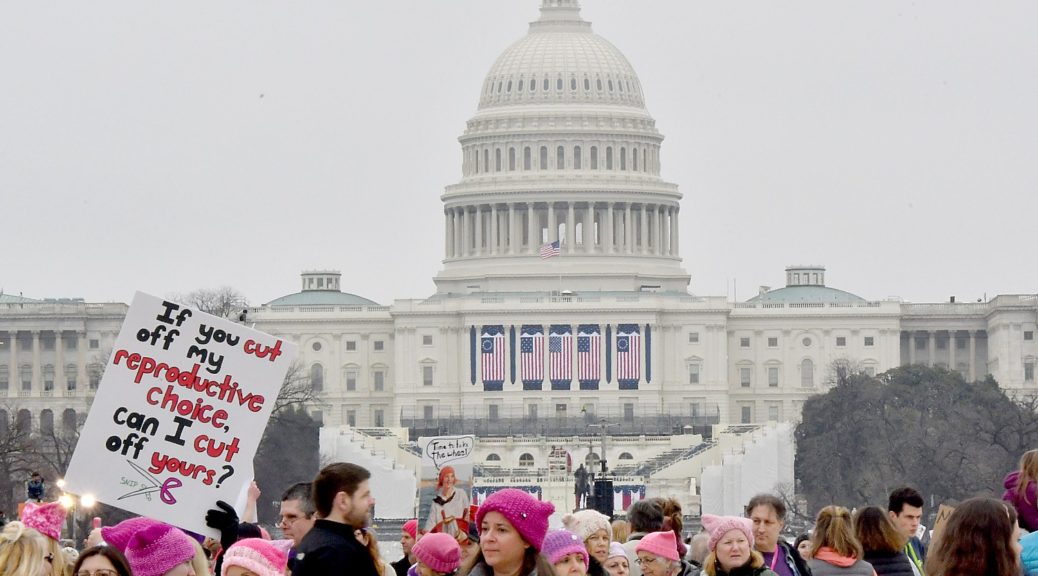
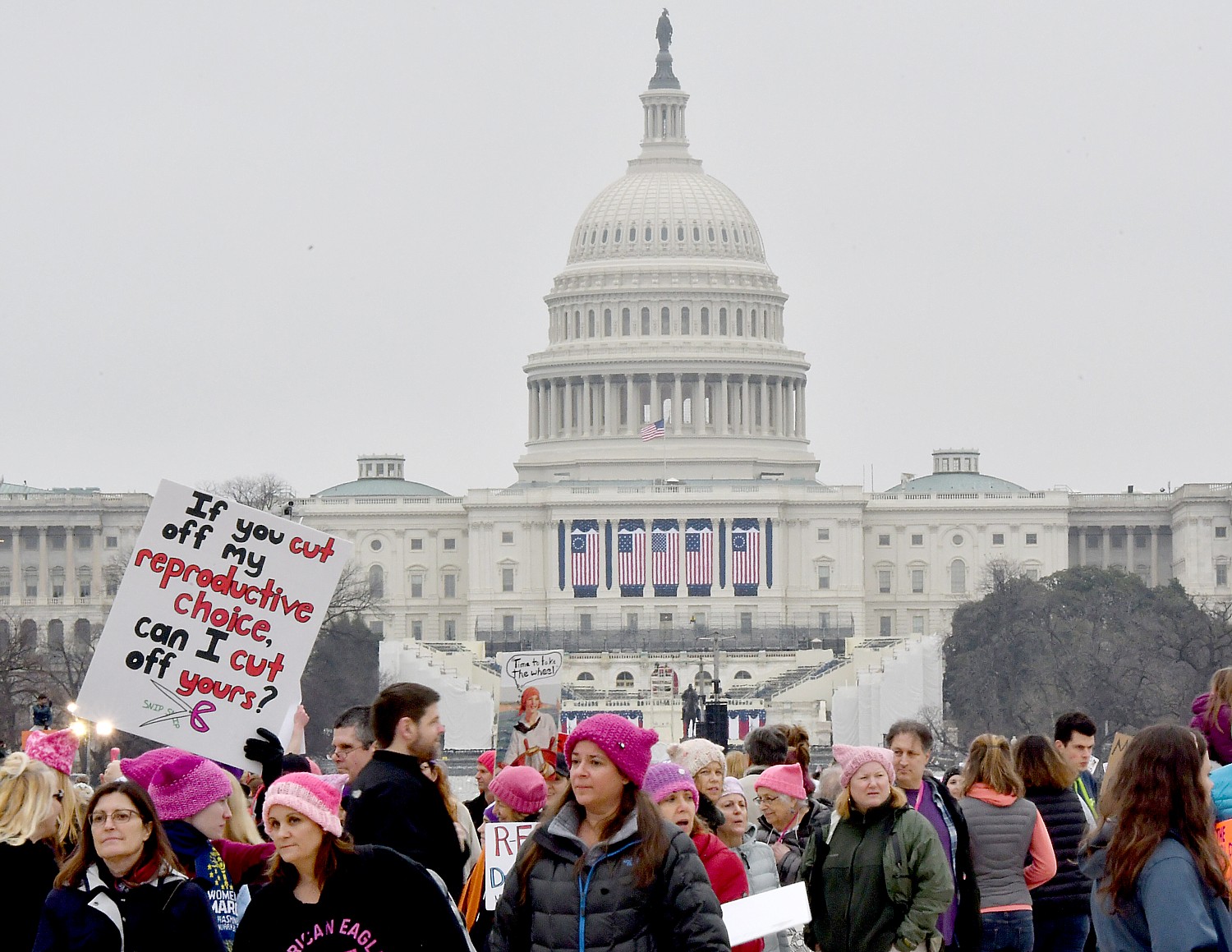
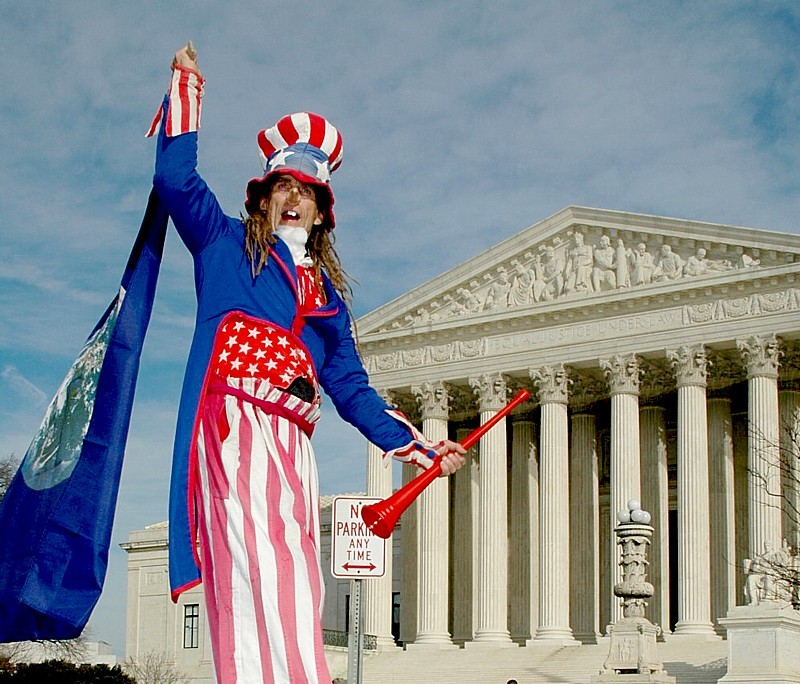
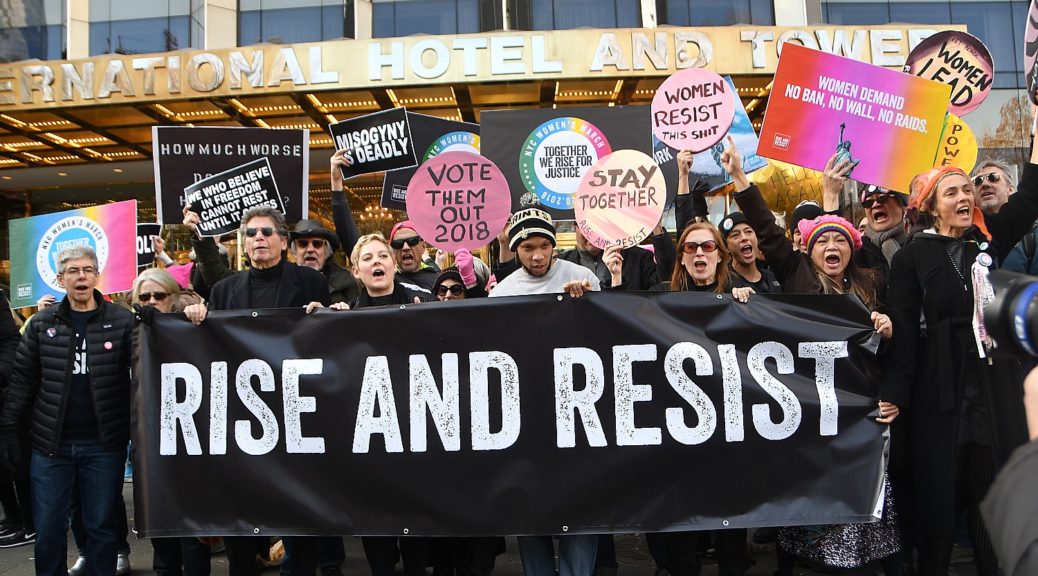
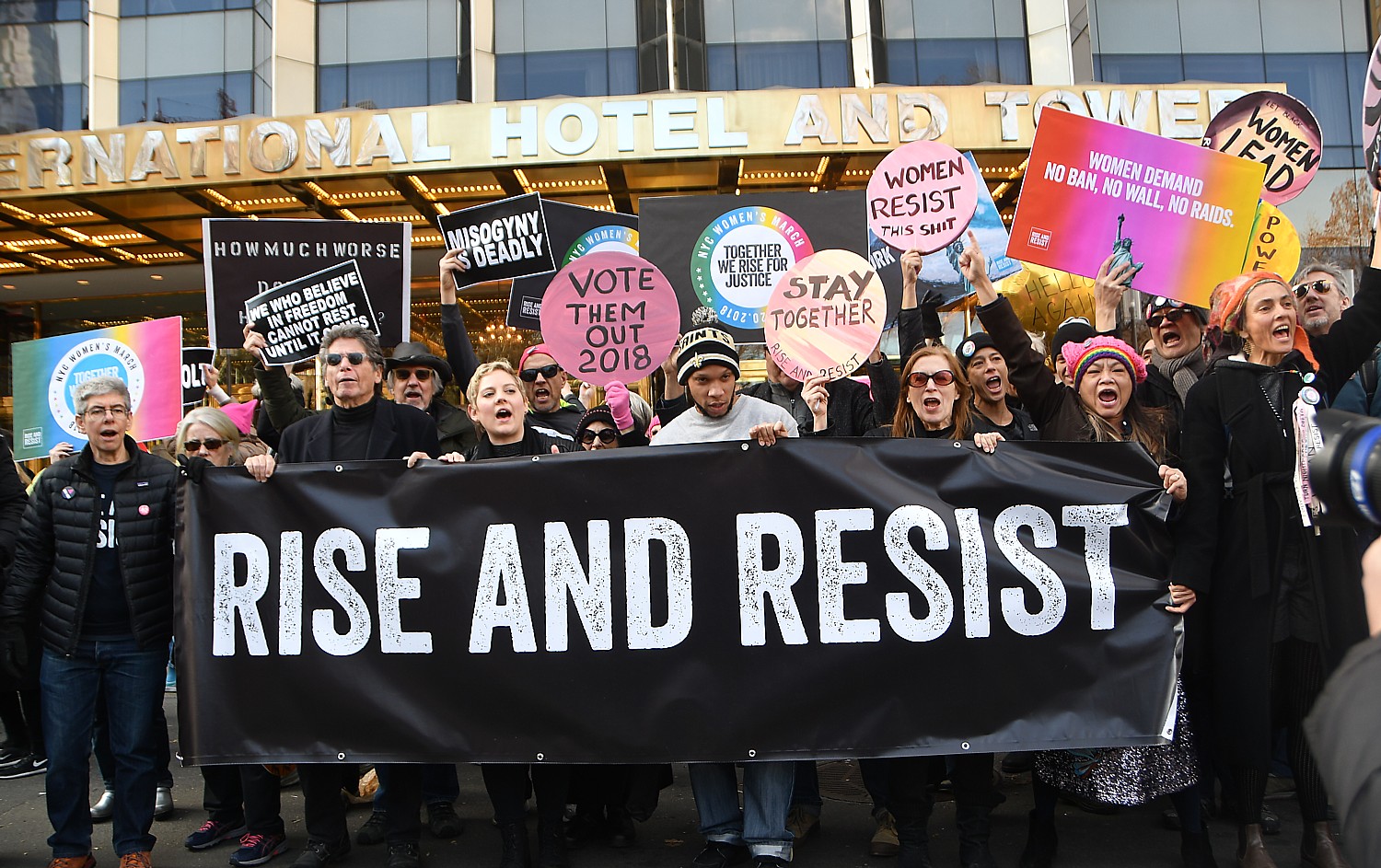
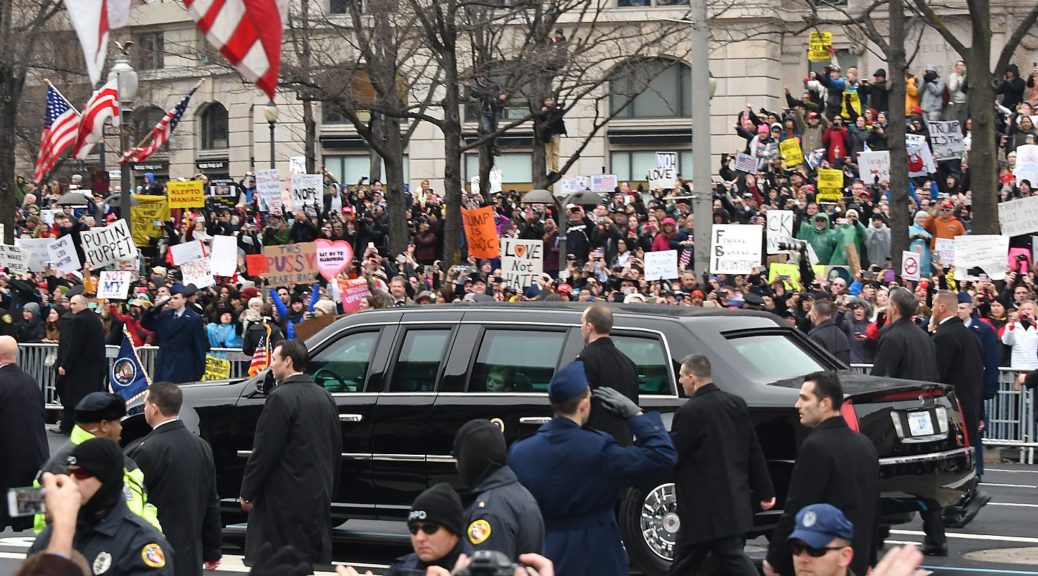
The Women’s March the day after Trump’s Inauguration in January 2017, in Washington and across America, was the largest day of protest in American history; subsequent protests throughout his tenure – for climate action, gun reform, immigrants – have also been massive.
The Women’s Movement has been rekindled with the Brett Kavanaugh confirmation to the Supreme Court.
Trump has signaled he has had enough of protest. He prefers what Putin and Kim Jong-un have: a way of suppressing all opposition, be it a free press or protest.
It filters down from Trump (or from Fox to Trump) to the Republican talking heads eerily mimicking the same phrases and charge: the protesters were paid by George Soros (versus the astroturf Tea Partyers literally paid by Koch Brothers). We can’t have “mob rule.” We must uphold the “Rule of Law” – a laughably ironic statement coming from this mobster-in-chief, whose kinship with Kavanaugh – credibly accused of sexual assault, and now vulnerable, as Trump is, to blackmail – is cemented by Kavanaugh’s promise to shield Trump from investigation or indictment, and his pronounced threat against the “conspiracy” of liberals, Democrats and Clinton supporters. “What goes around, comes around,” the pretender “umpire calling strikes and balls,” menaced.
It is yet another example of Trump (and Republicans) accusing opponents of the criminality they themselves commit – “Rigged election.” “Politicized FBI.” “Pay to Play” (Lock her up!). Voter Fraud (a red-herring to justify Voter Suppression). And the most laughable: accusing Democrats of “unprecedented” obstruction, as if being a Democrat means you are a persona non grata in Trump’s America.
Trump has used this technique to intimidate Democrats from questioning the 2016 Election, accused Democrats of obstructing his agenda and appointments (while also boasting he has gotten a record number of judges appointed), and basically ignoring the majority of Americans in this supposed democracy on everything from gun reform to environmental protection to health care.
He has used his words to raise suspicion and discredit the Mueller investigation, about the FBI and CIA intelligence, about the New York Times and Washington Post’s investigations into campaign finance activity and now the tax evasion (and fraud) that enabled him and his family to cheat the American people out of $500 million. Now he expects this technique to either shut down protest or discredit whatever investigations and reports emerge.
Trump has been playing the “victim” card that he attacks women for: Oh pity the poor, aggrieved white men who need to fear being held to account for wrong-doing. Can’t have that.
He has attacked Senate Democrats who were doing their due diligence in investigating Kavanaugh’s fitness (unfitness) for a lifetime appointment to the Supreme Court attacking them as “evil,” and accusing them of “con” (that’s really rich).
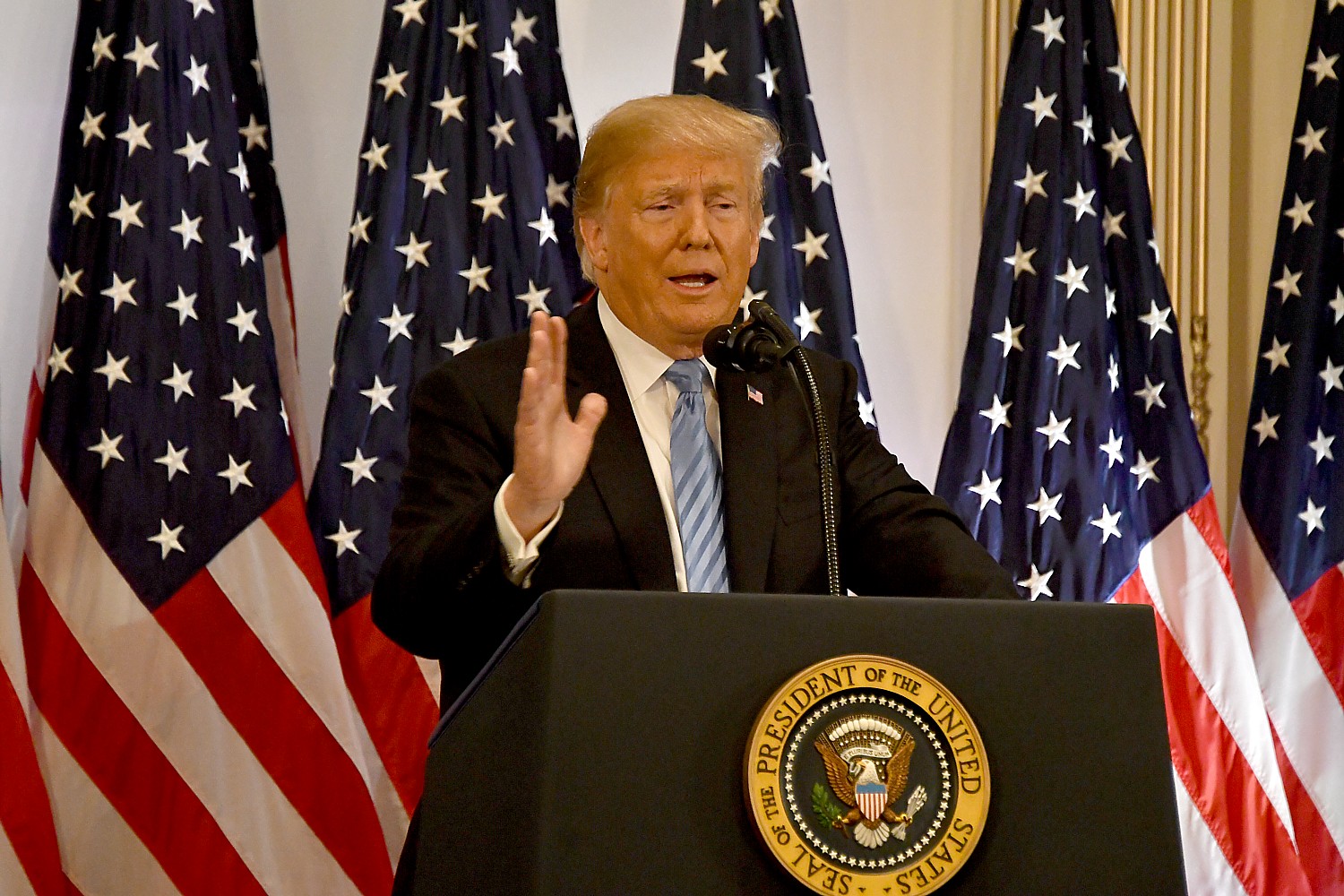
“Honestly, it’s a very dangerous period in our country,” Trump said at the New York City press conference, just ahead of the Kavanaugh vote. “And it’s being perpetrated by some very evil people. Some of them are Democrats, I must say. Because some of them know that this is just a game that they’re playing. It’s a con game. It’s at the highest level. We’re talking about the United States Supreme Court.”
He is desperate to use Kavanaugh to turn out his voters because he fears a Blue Wave will result in investigations, actual oversight and maybe even impeachment if Democrats get a majority in Congress. So he manufactures a message of aggrievement, of discrediting victims of sexual violence, which is a form of subjugation
More menacingly, he is signaling that he will summon the forces of the state to suppress opposition.
I watched as dozens of protesters on the Capitol steps arrested (300 on Thursday, 124 on Saturday) while Kavanaugh was ultimately confirmed with the smallest number of votes ever, a mere 50. Nearly 300 had been arrested on Thursday, after the sham FBI report was “released” using a level of secrecy that Trump did not see fit to use to protect the Russian investigation’s sources, methods and lives. You would think the arrests contradicted the Constitution’s protection of the right to assemble and petition our government.
How does exercising the Constitutional right to assemble and petition our government warrant arrest? But in Trump’s America, can’t have that.
Kavanaugh becomes one of four sitting Supreme Court Justices named by presidents (George W. Bush and Trump) who lost the popular vote; meanwhile, those 50 Senators who confirmed Kavanaugh represent about 40% of Americans but now, those Justices have the majority to control the lives of millions of people for generations to come.
So a minority is exerting its tyranny over the majority – taking over each and every one of its institutions, the White House, the Congress and now the Supreme Court (and all the other lesser courts).
So people are taking to the streets. And Trump can’t have that.
This faux “Law and Order” Putin-wannabe is signaling with his use of terms like “mob rule” and screams that protest somehow violates the “Rule of Law” (as opposed to his own evasion of accountability for sexual assault, tax evasion, campaign finance violations, conspiracy with a foreign adversary to steal the election) that he will call out enforcement to shut down protest. In his mind, even not applauding his State of the Union is tantamount to treason.
He will use all the tools and powers at his command, including whatever is possible to suppress the vote, under the guise of preventing voter fraud, or just impeding access to the polls.
Techniques the Republicans have used effectively include locating polling places so they are less accessible to certain voters, purging voter lists, challenging voter IDs if the name isn’t exact (an excellent technique to prevent women from voting); limiting hours, having employers refuse to give time off (or pay) to go vote, having too few voting machines, forcing people to stand on line for hours, then shutting the doors when time’s up, and even having thugs stand outside. Wouldn’t put it past them to set up road blocks.
This actually has happened where those entrusted with enforcing the law does the bidding of those wielding political power.
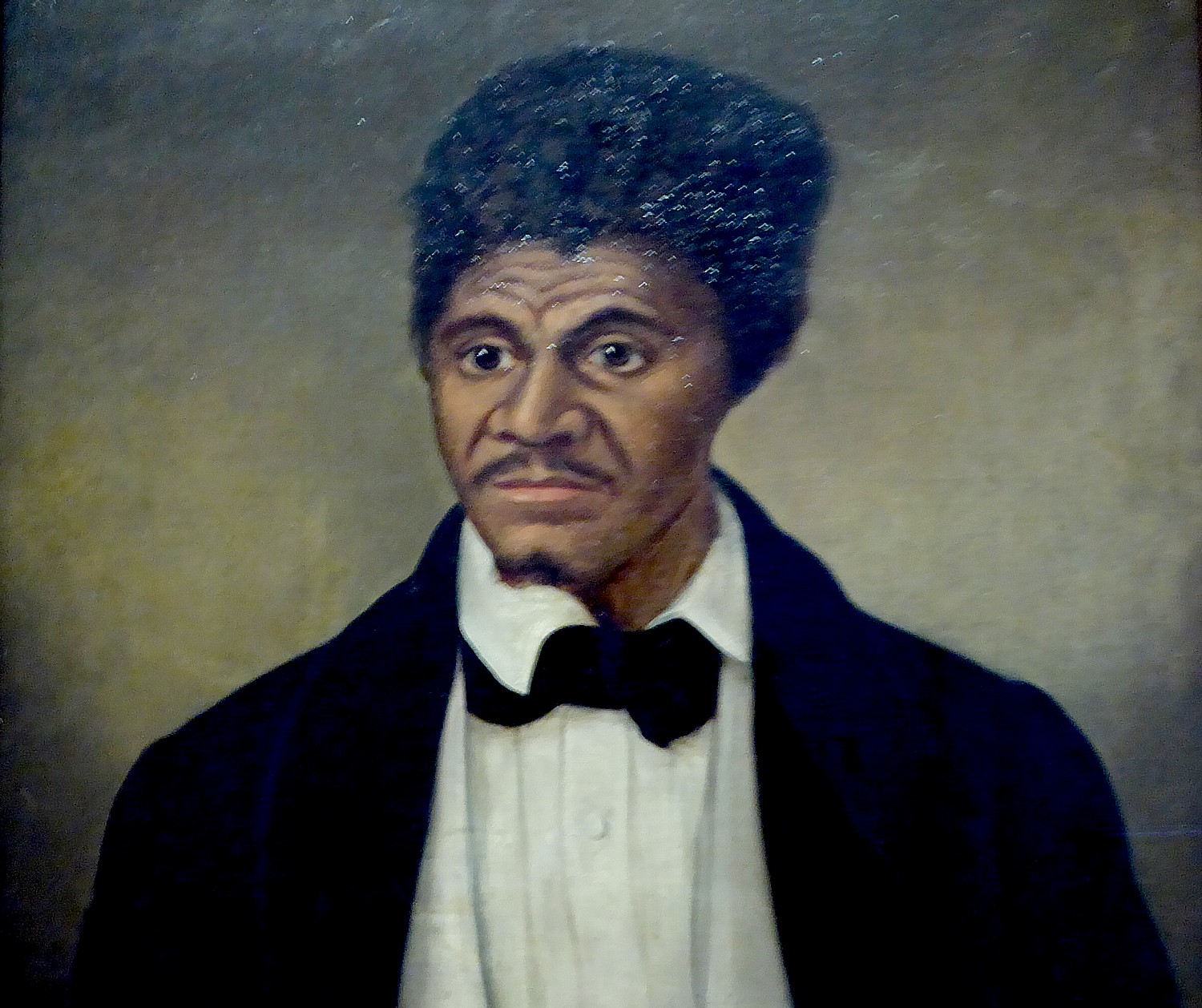
At the New-York Historical Society, there is a chilling exhibit, “Black Citizenship in the Age of Jim Crow,” a punch-to-the-gut examination of how the Emancipation Proclamation, Civil War, and most significantly, Abraham Lincoln’s assassination, led to an institutionalized system of terror and subjugation of African Americans. This included the complicity of the Supreme Court which issued decisions dating back to Dred Scott, that perpetuated subjugation.
The 1857 Dred Scott case ruled that though Scott was in territory that did not have slavery, Scott had no right to sue because he was not a US citizen, and no black person, free or slave, could be a US citizen. (This was overturned with the 14th Amendment’s Equal Protection clause that covered any person in the US, which is why undocumented immigrants also have rights under the Constitution). :“All persons born or naturalized in the United States…are citizens of the United States…No State shall…deny to any person within its jurisdiction the equal protection of the laws.”)
Nonetheless, the Supreme Court for a century was complicit in systemic subjugation of blacks, minorities, immigrants and women.
Despite the 15th Amendment guarantee of voting rights (“The right of citizens of the United States to vote shall not be denied or abridged by the United States or by any State on account of race, color or previous condition of servitude”) states which had allowed non-propertied white men to vote in 1828 (where is the Constitutional amendment for that?), now passed laws restricting voting only to white men, which the Supreme Court did not overturn.
After Congress, in 1875, passed a civil rights act banning discrimination in public places, the Supreme Court declared it unconstitutional in 1883.
In 1882, the federal government passed the Chinese Exclusion Act, restricting Chinese immigration and prohibiting the courts from naturalizing Chinese as citizens. (No doubt, Kavanaugh will raise this as “precedent” for backing a Muslim Travel Ban.)
In 1884, The Supreme Court ruled that the 14th and 15th amendments do not grant citizenship to Native Americans. (Today, new Voter ID laws could limit access to polls by Native Americans in North Dakota and Trump’s Justice Department is no longer prosecuting voting rights abuses.)
In 1890, as Mississippi and other southern states formalized disenfranchisement of African Americans, the Supreme Court upheld them because voting restrictions did not specifically mention “race.”
In 1896, the Supreme Court ruled in Plessy v Ferguson that it’s A-OK for segregated facilities to be “separate, but equal.”
Meanwhile, the Ku Klux Klan was rising, terrorizing Blacks, especially those who sought to run for political office. Blacks were lynched for nothing more than being accused of looking at a white woman (making Trump’s faux victimization of white men credibly accused of sexual assault even more absurd). More than 4,000 African Americans were publically lynched from 1877 to the 1950s, in a great many cases, aided and abetted by local police.
Interestingly, anti-lynching efforts were led by women’s organizations, and an anti-lynching bill was put forward in 1937, though none got passed the filibusters of the southern Dixiecrats.
Just as today, the Ku Klux Klan and White Supremacists used the guise of righteous “glory be to God” to subjugate, terrorize and retain power.
Republican Senate Majority Leader Mitch McConnell went nuclear in overturning the filibuster, even as the United States’ gap in populations of large and small states mushroomed from the time of the Founders’ compromise that gave each state, large and small, two senators each. Wyoming with a population of 579,000 has equal voting power to California with 40 million. A similar imbalance in the Electoral College shows the fraud of “one-person, one vote” (a Wyoming voter has 4 times the weight of a Californian), and the lie to the Republicans’ false flag of “voter fraud” to justify its voter suppression. The majority no longer rules, not in the White House, not in the House, where gerrymandering entrenches the minority Republican party, not in the Senate and not in the Supreme Court.
As for that ridiculous assertion by Senator Susan Collins of Maine that a PAC accumulating money to use against her reelection in 2020 was akin to bribery? What a joke, since the pro-Kavanaugh right-wing groups, led by the Judicial Crisis Center, spent $7 million on its campaign to get Kavanaugh confirmed. The imbalance in campaign spending, thanks to the Scalia Supreme Court’s Citizen United decision, has given special interests ownership of politicians and policy. Glad to hear Collins is upset about that, but I doubt she will do anything about it.
This Kavanaugh battle has illustrated a number of things: Might makes right. Power begets power. Women who have been assaulted or harassed will get no justice. There’s no such thing as “No man is above the law” which means that there is no actual “Rule of Law.”
Women’s rights activists. Gun Rights Activists. Climate Activists. Workers Rights activists, Immigrant Rights activists cannot be cowed. Yes, it is crucial to turn out and vote in these midterms – and it will take a Blue Wave of more than 60% just to get to 51% majority in Congress. But if the Republicans are able to keep control with all the levers and advantages of using power to keep power (gerrymandering, voter suppression, campaign spending, propaganda and outright election hacking), then those peaceful protests protected under the Constitution may in fact turn into an angry mob of unleashed frustration and victimization.
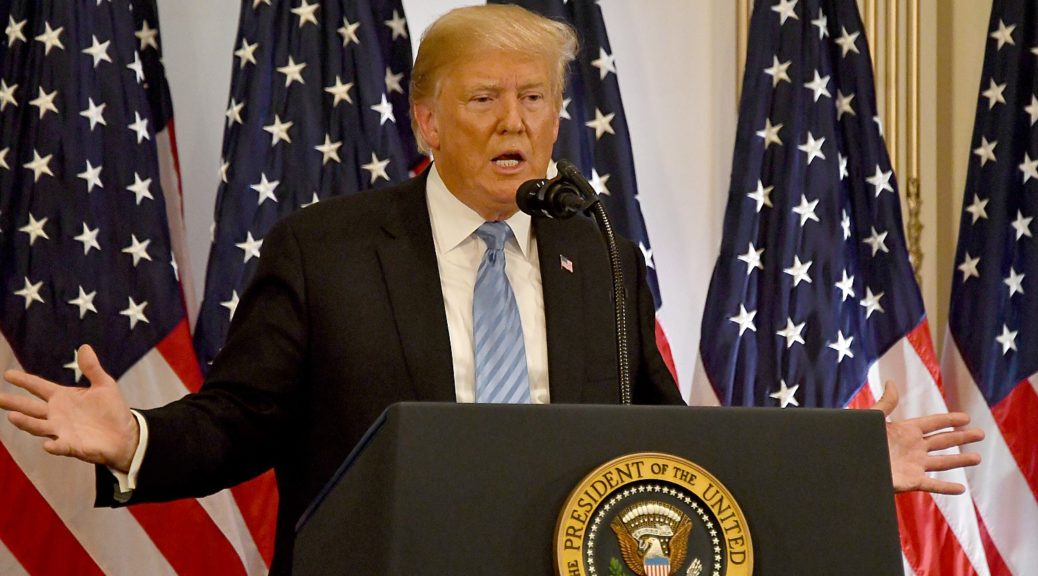
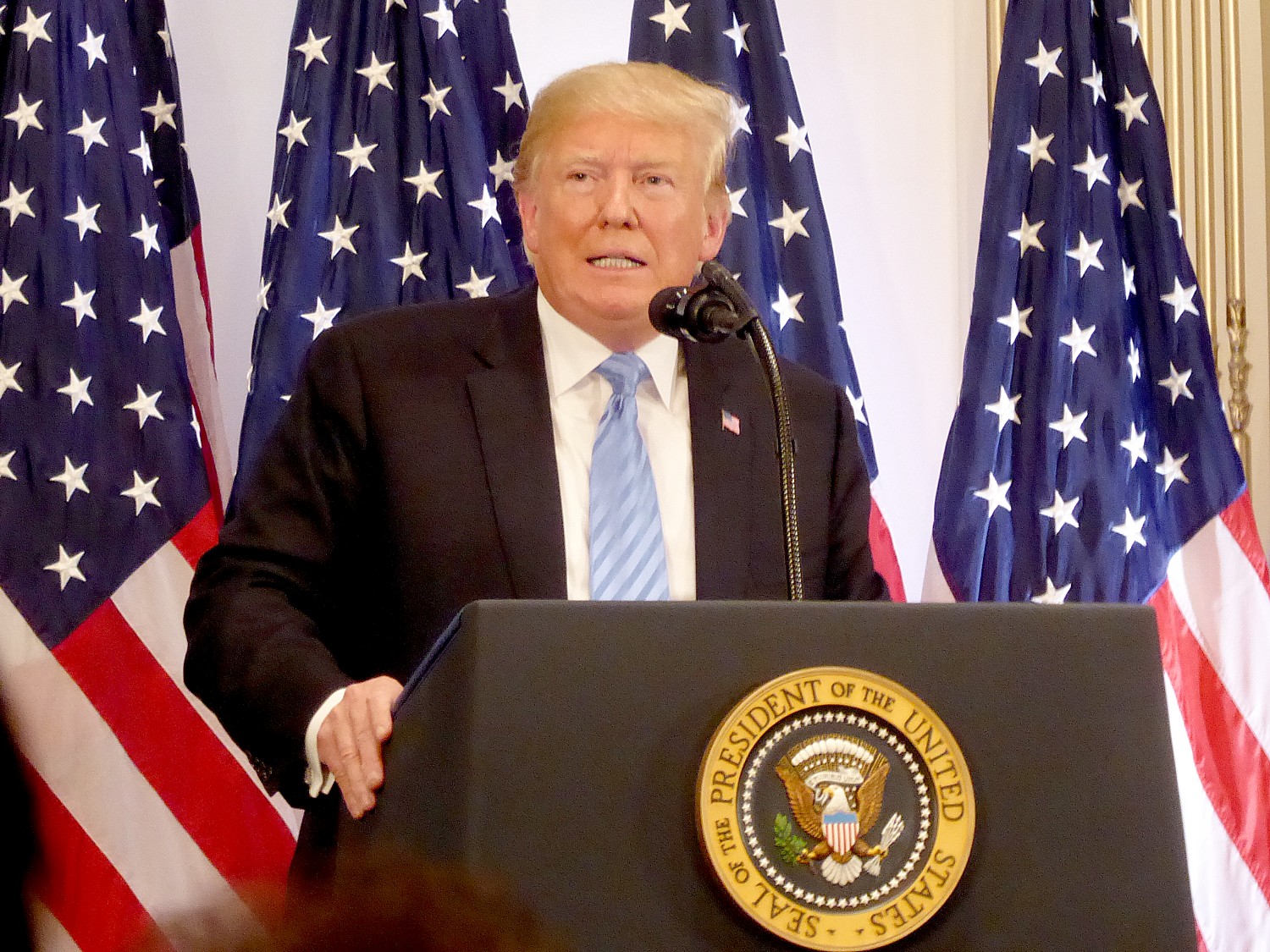
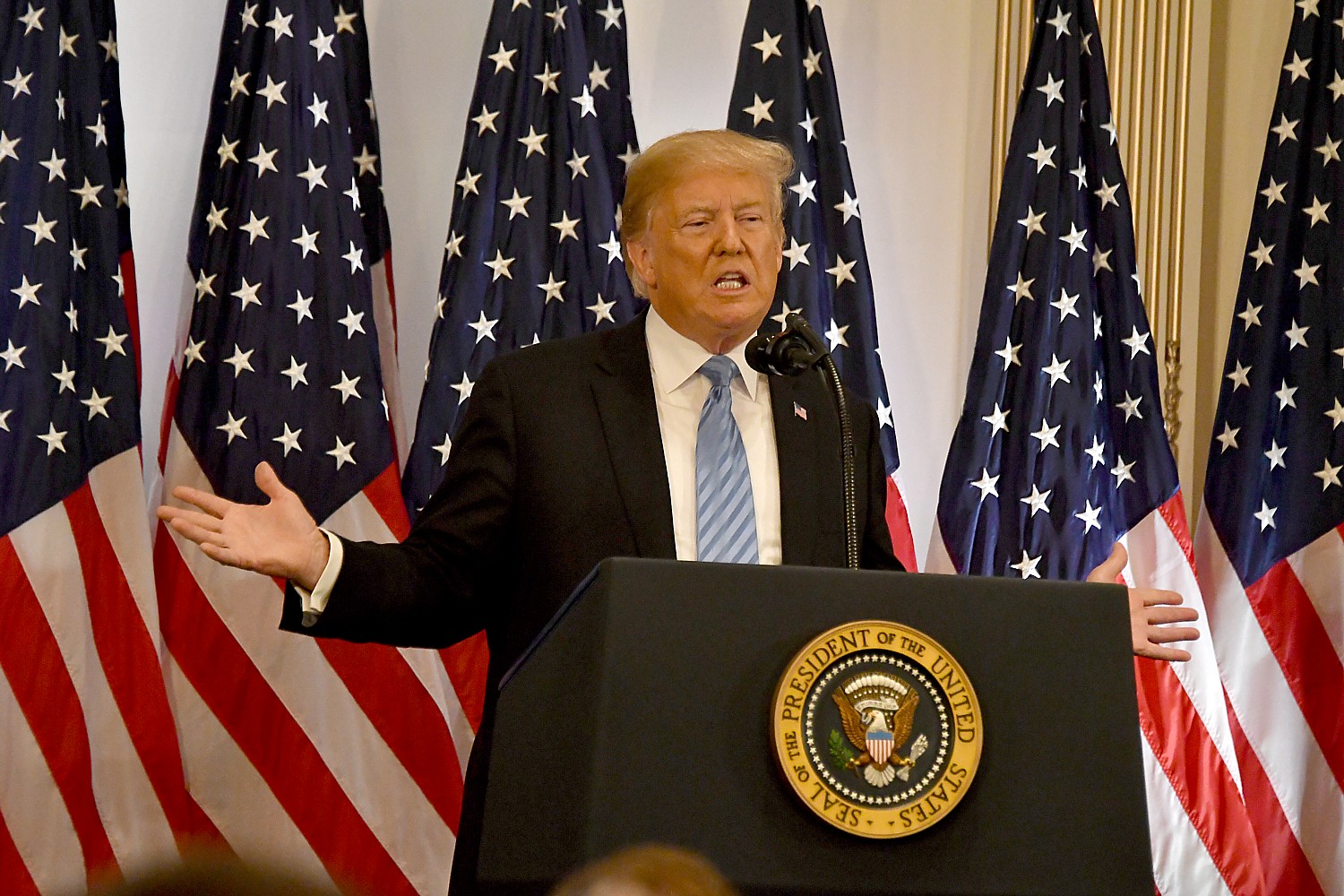
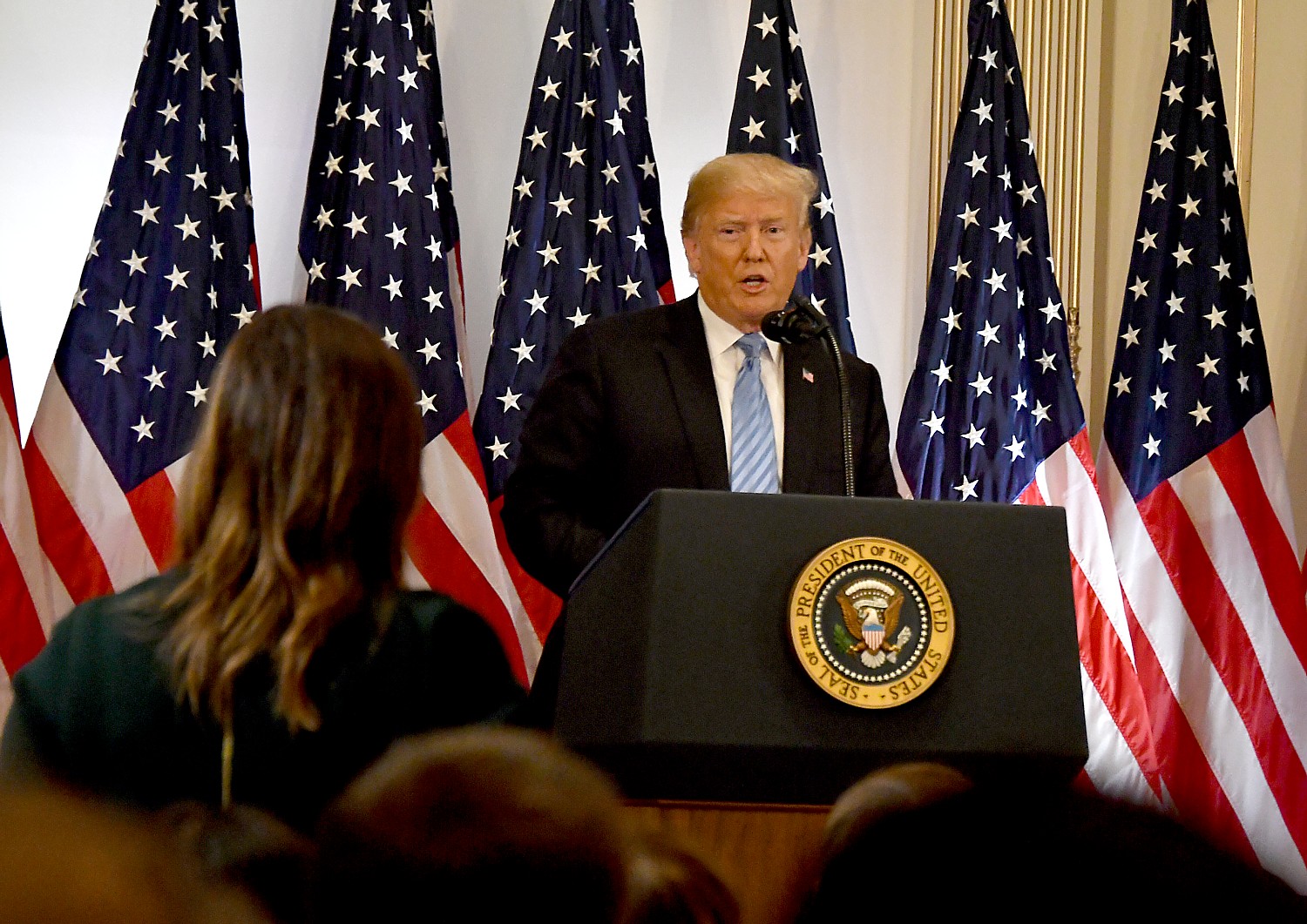
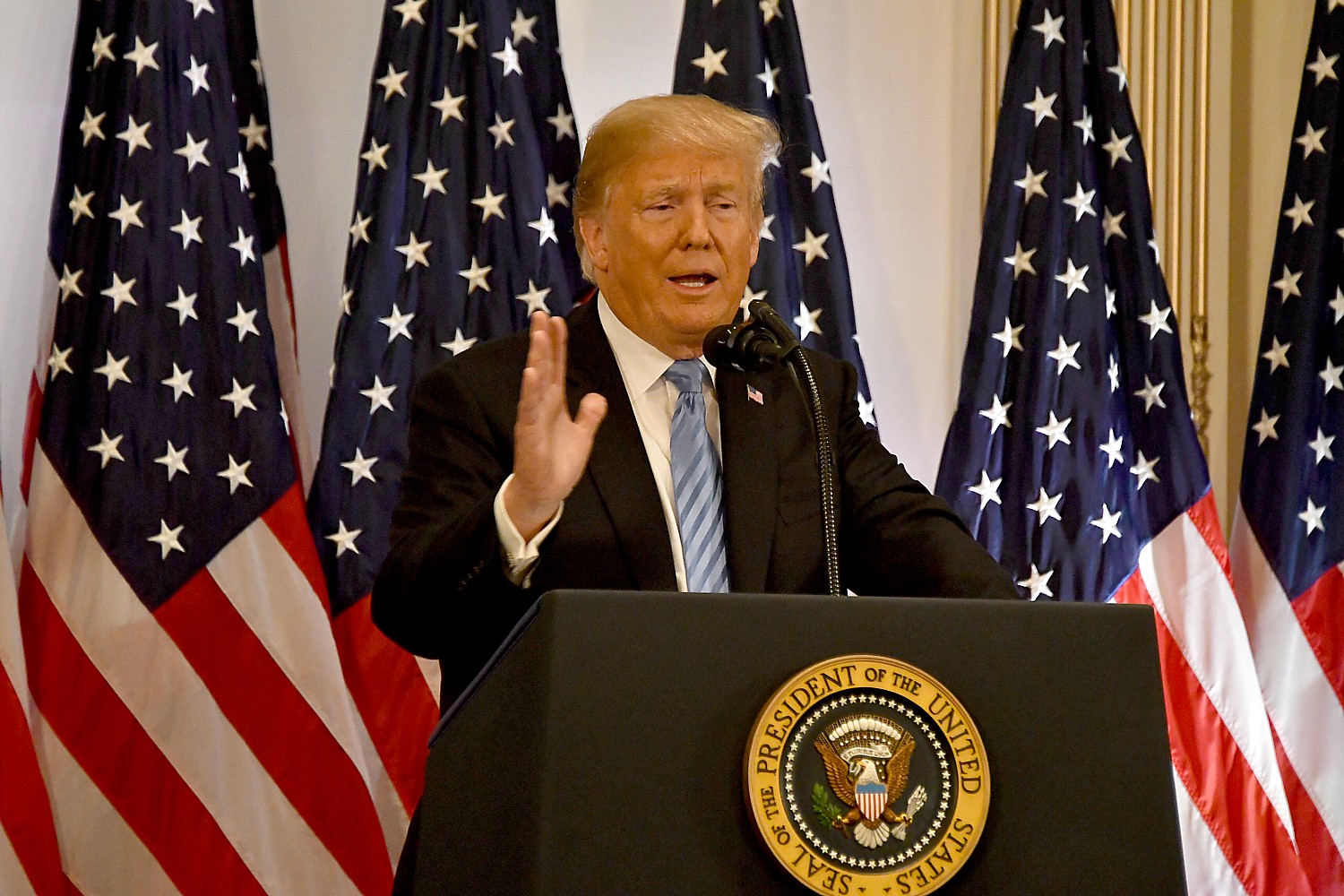
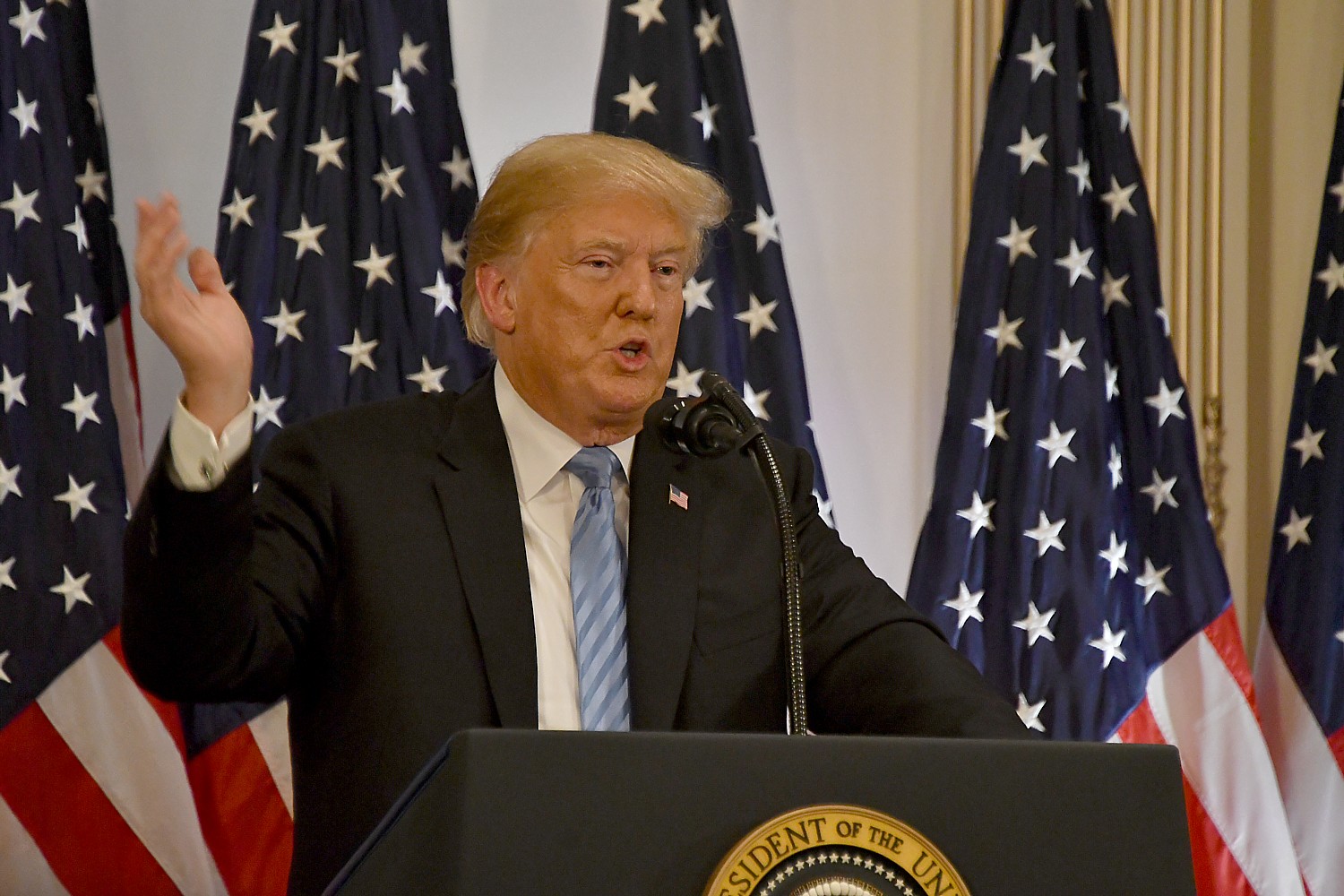
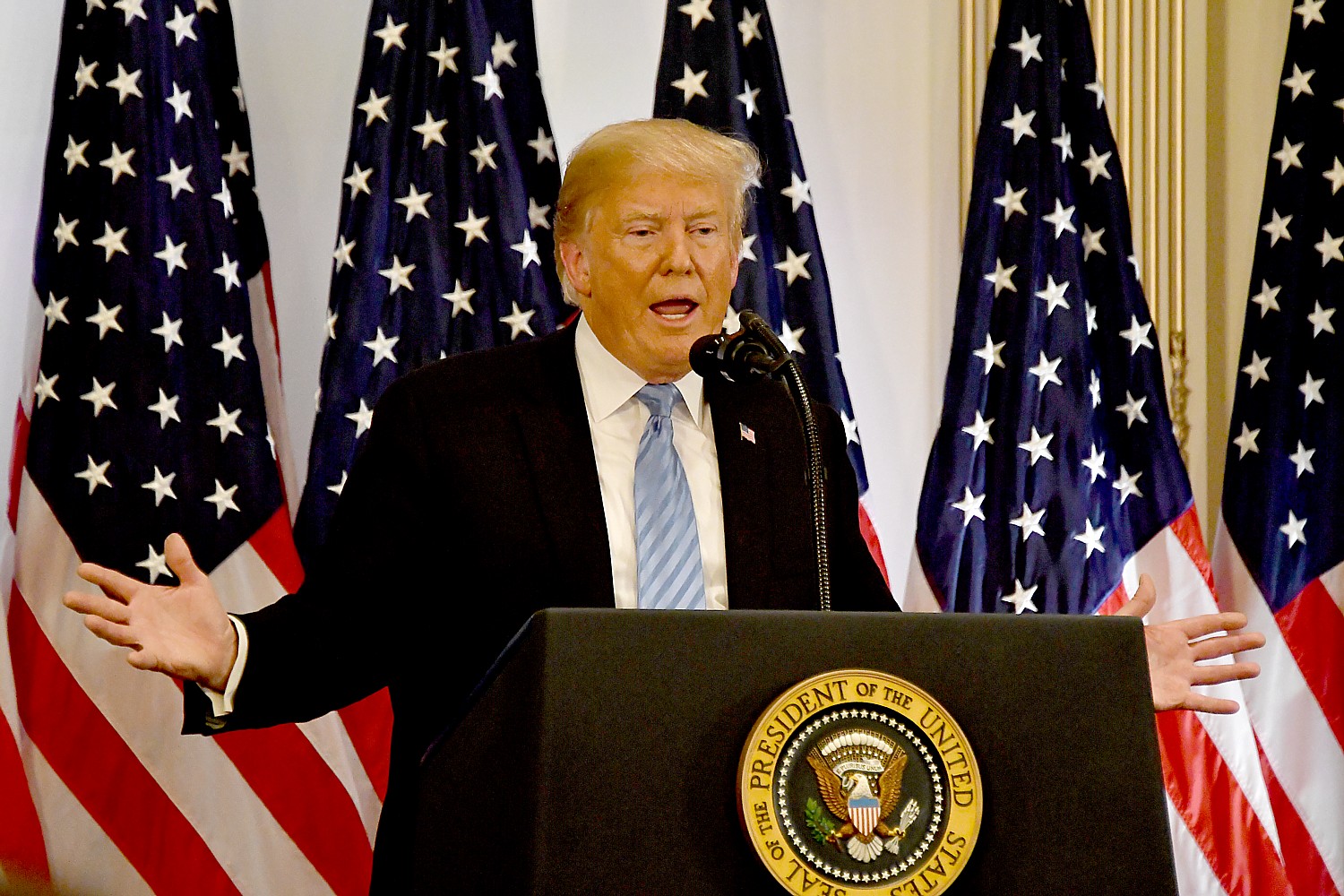
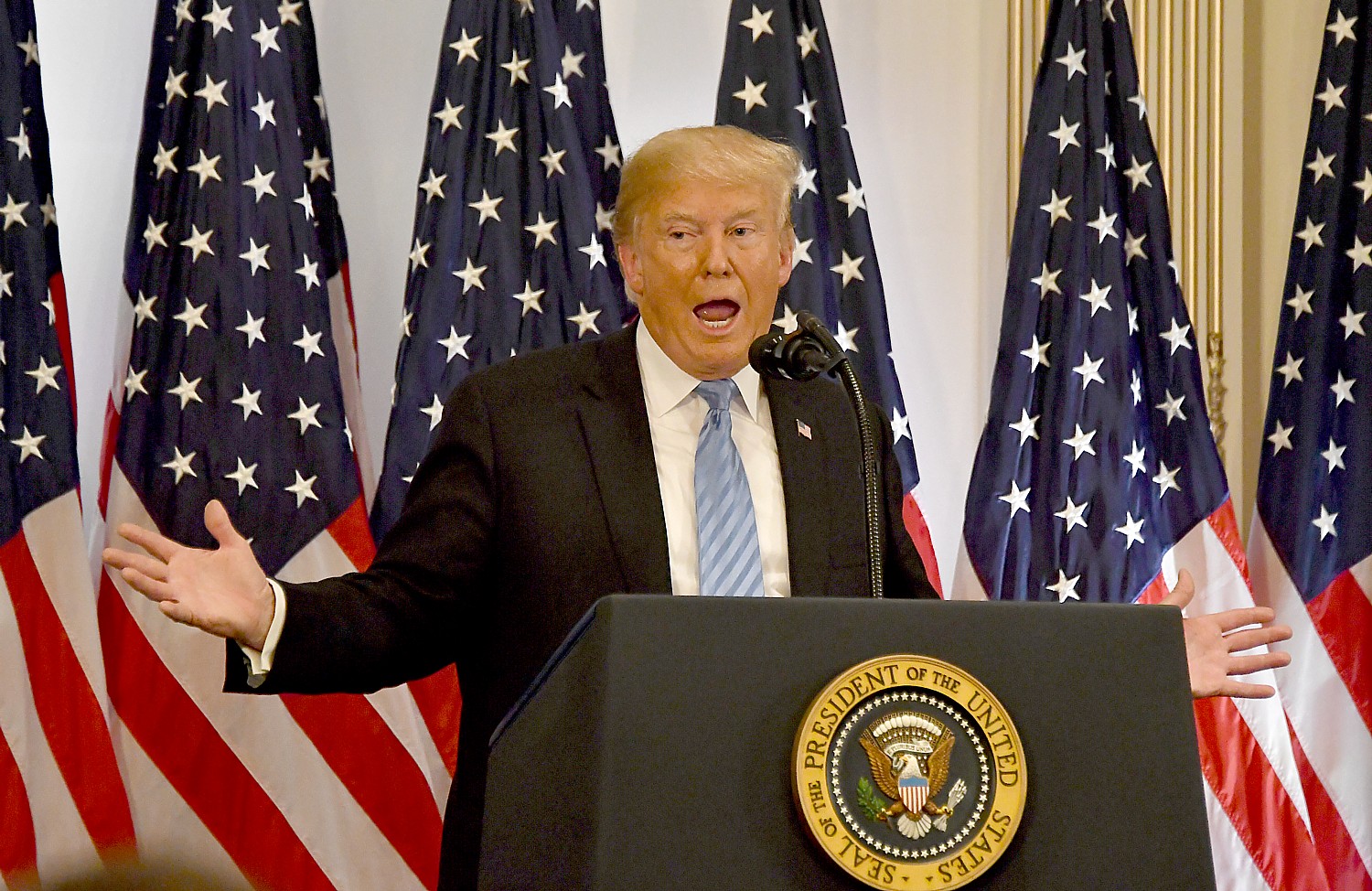
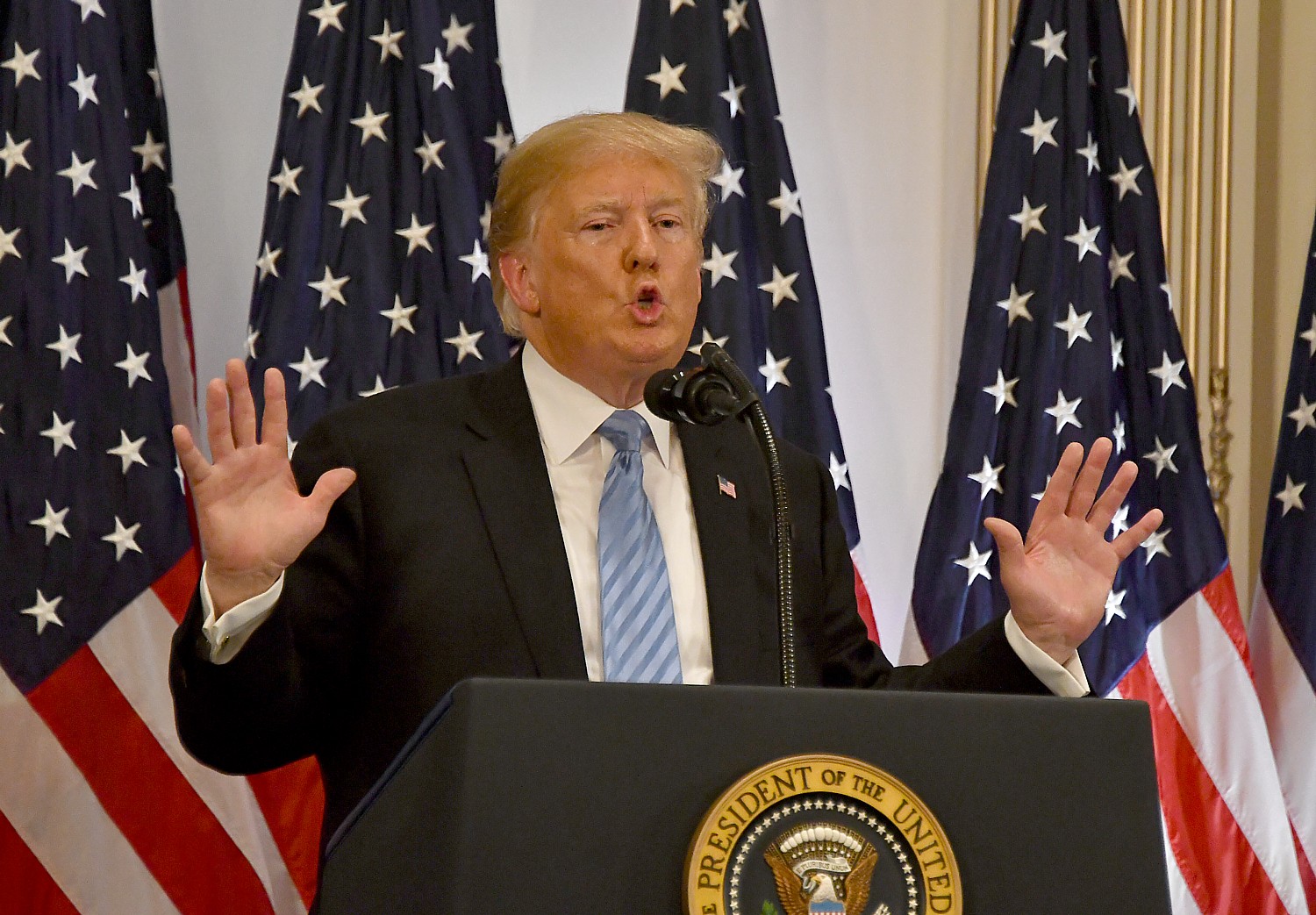
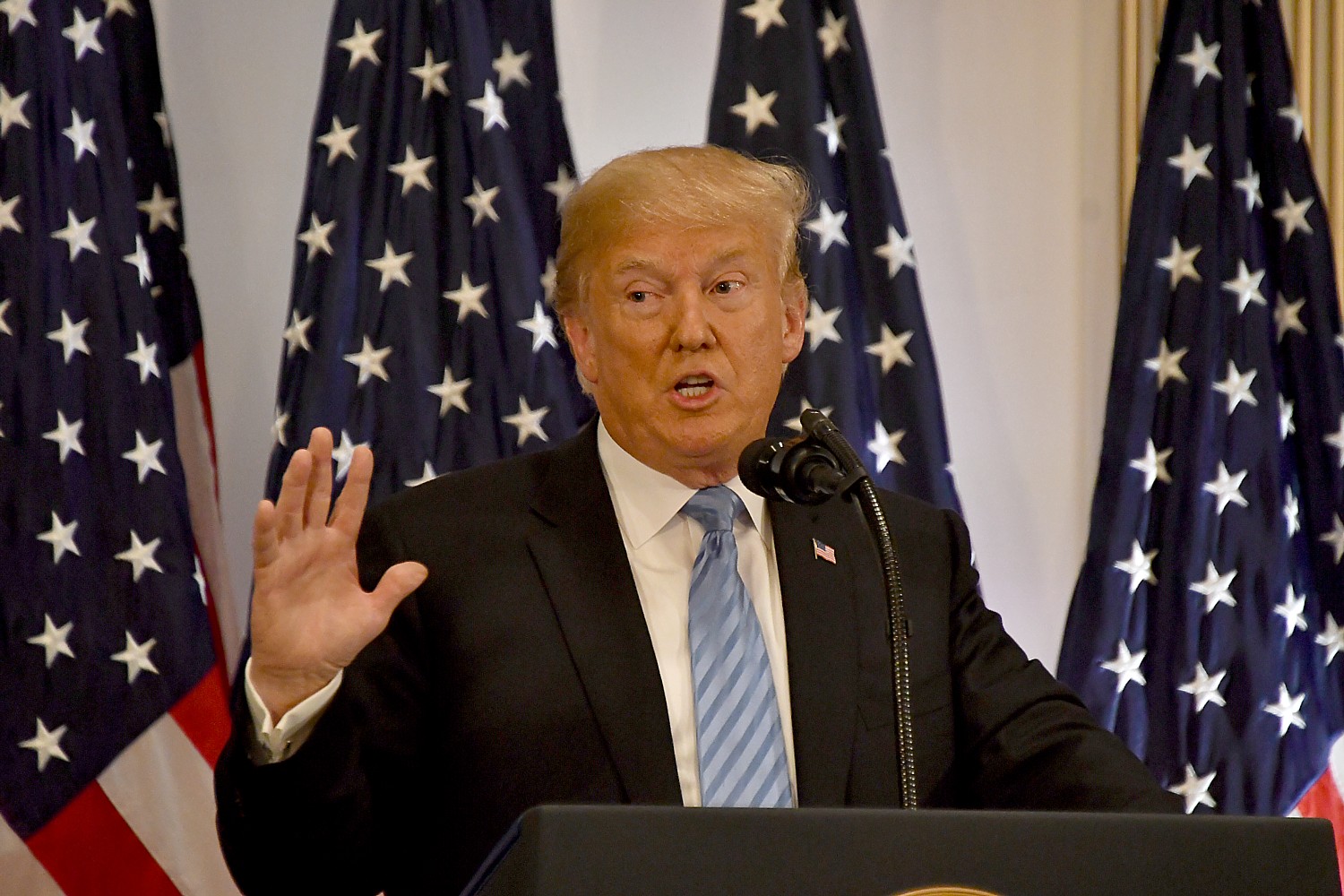
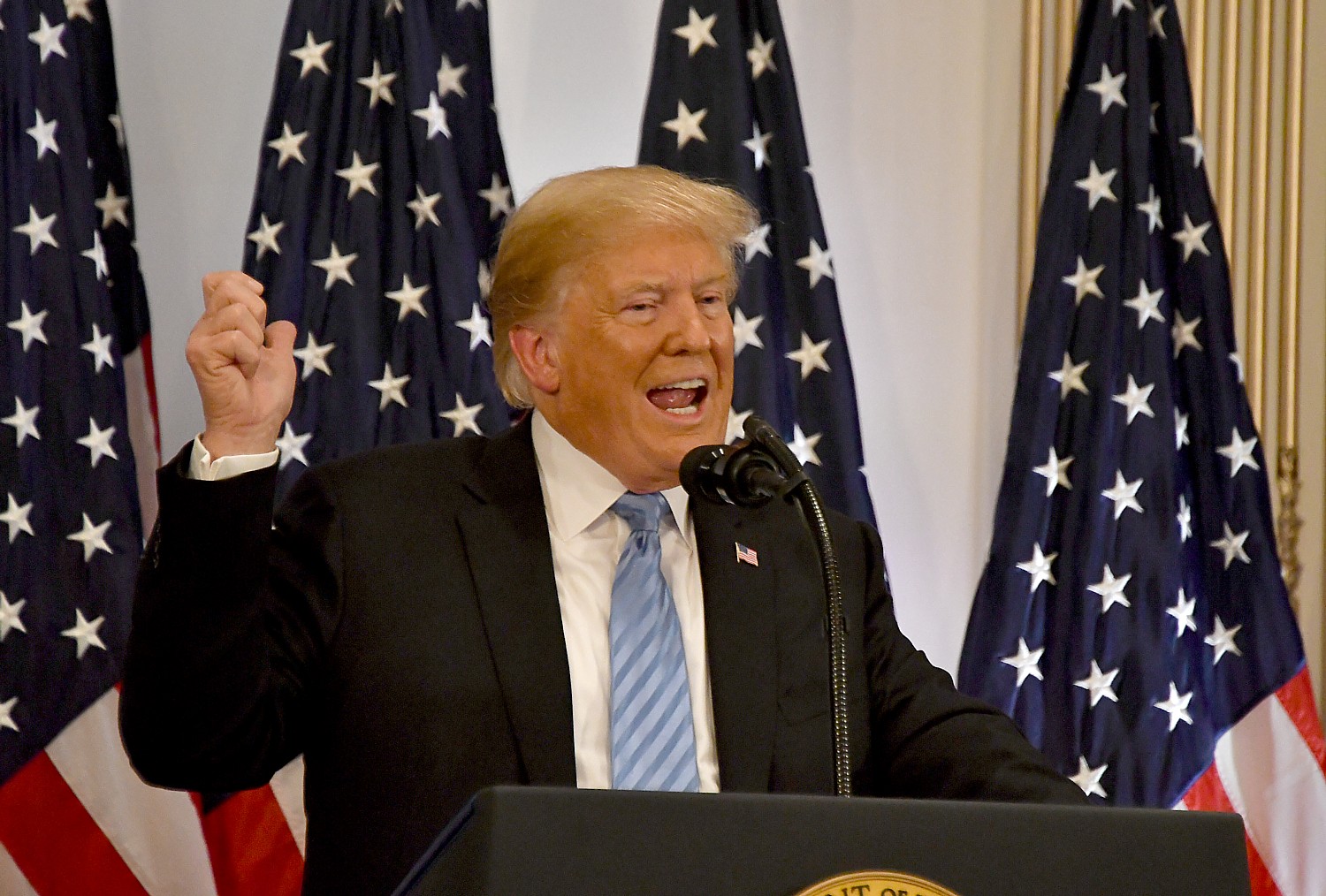
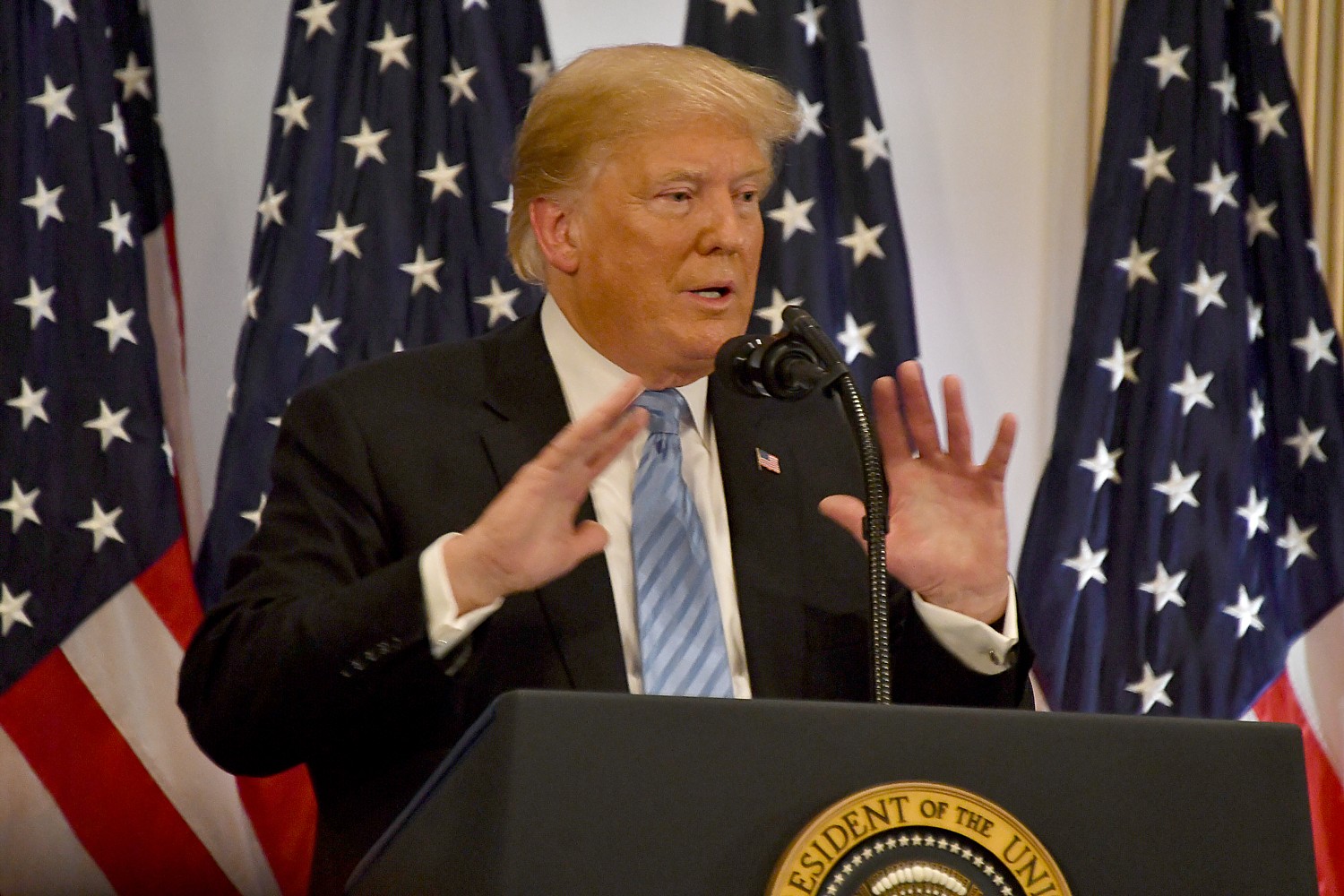
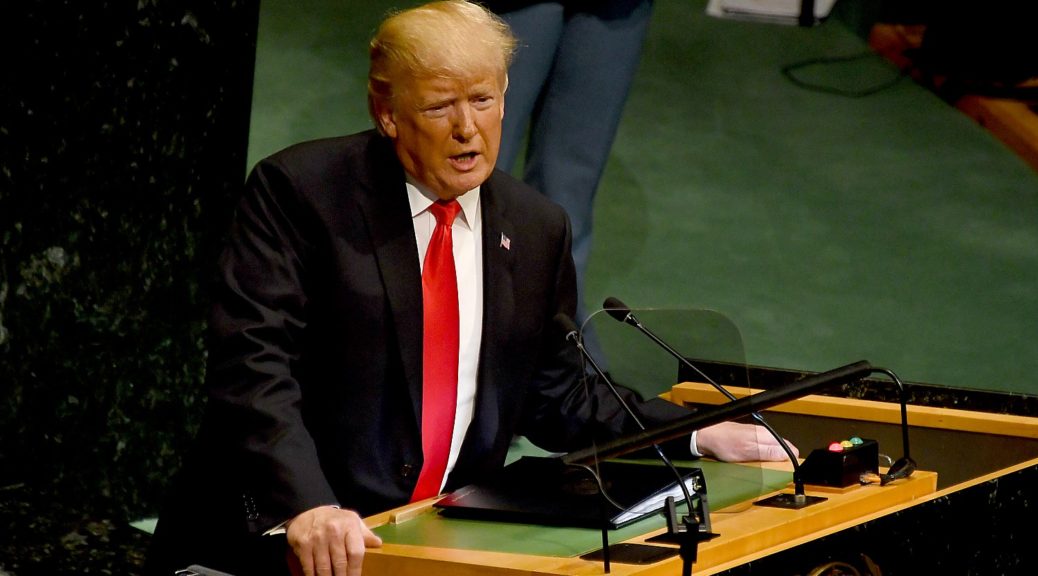
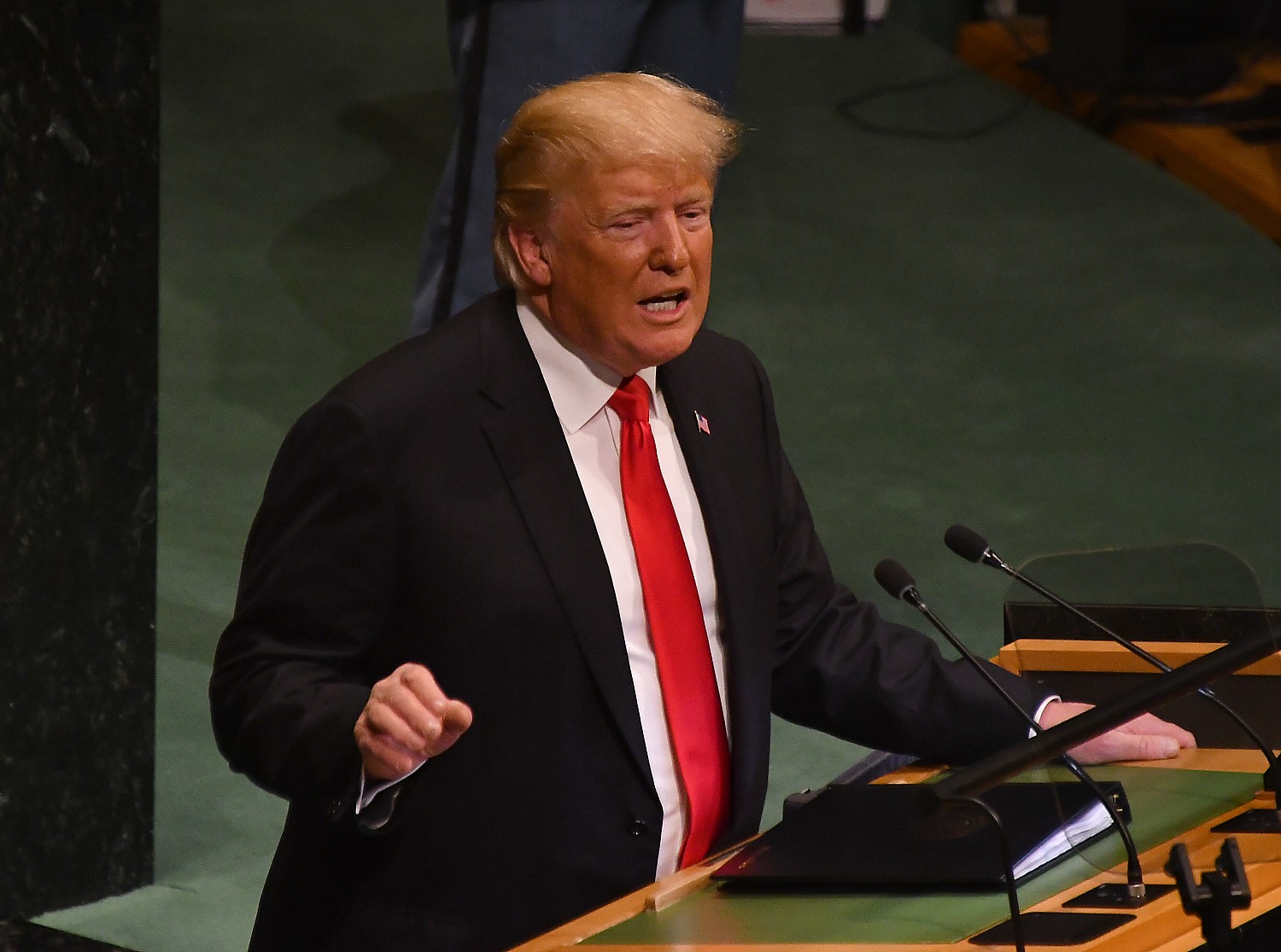
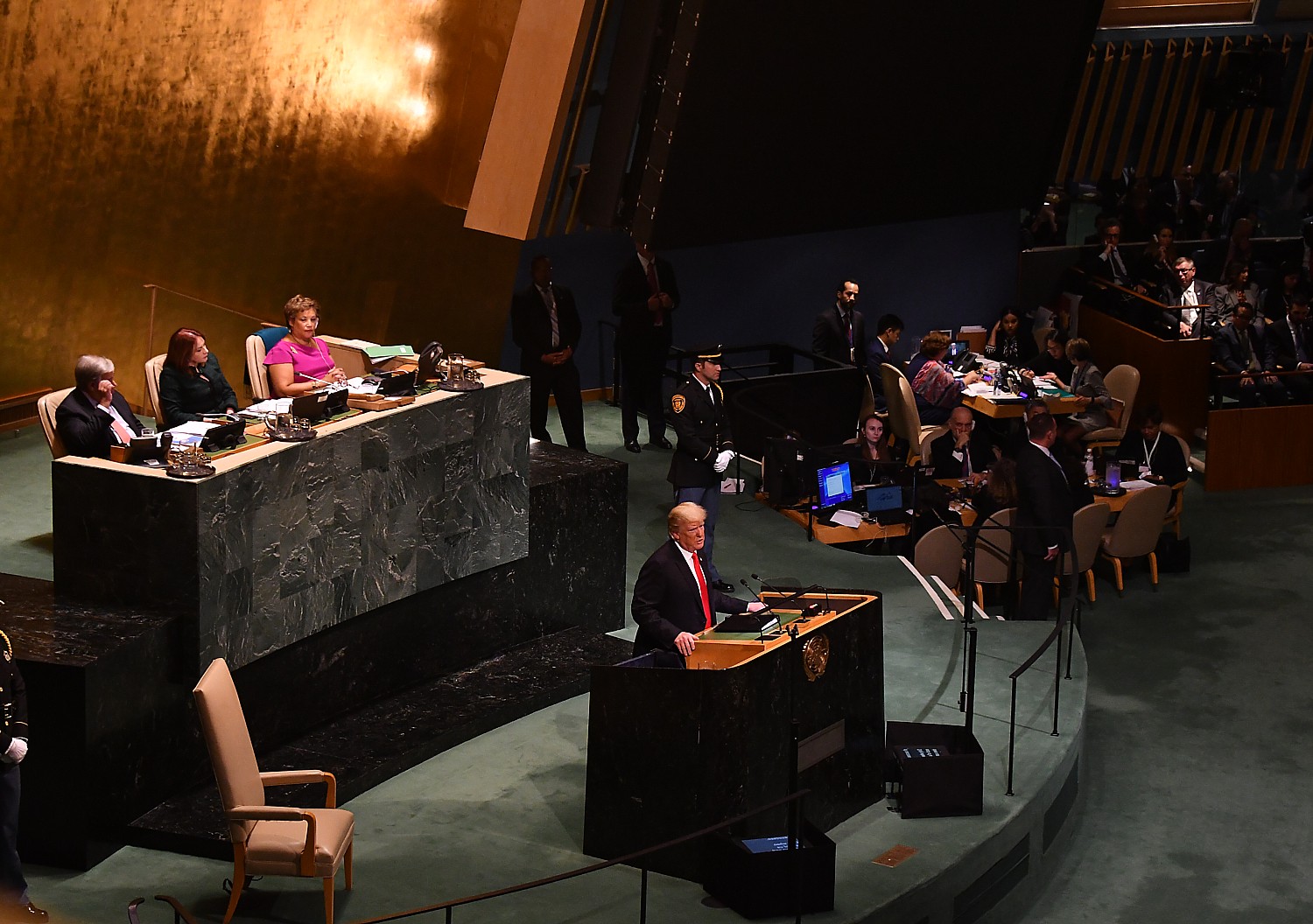
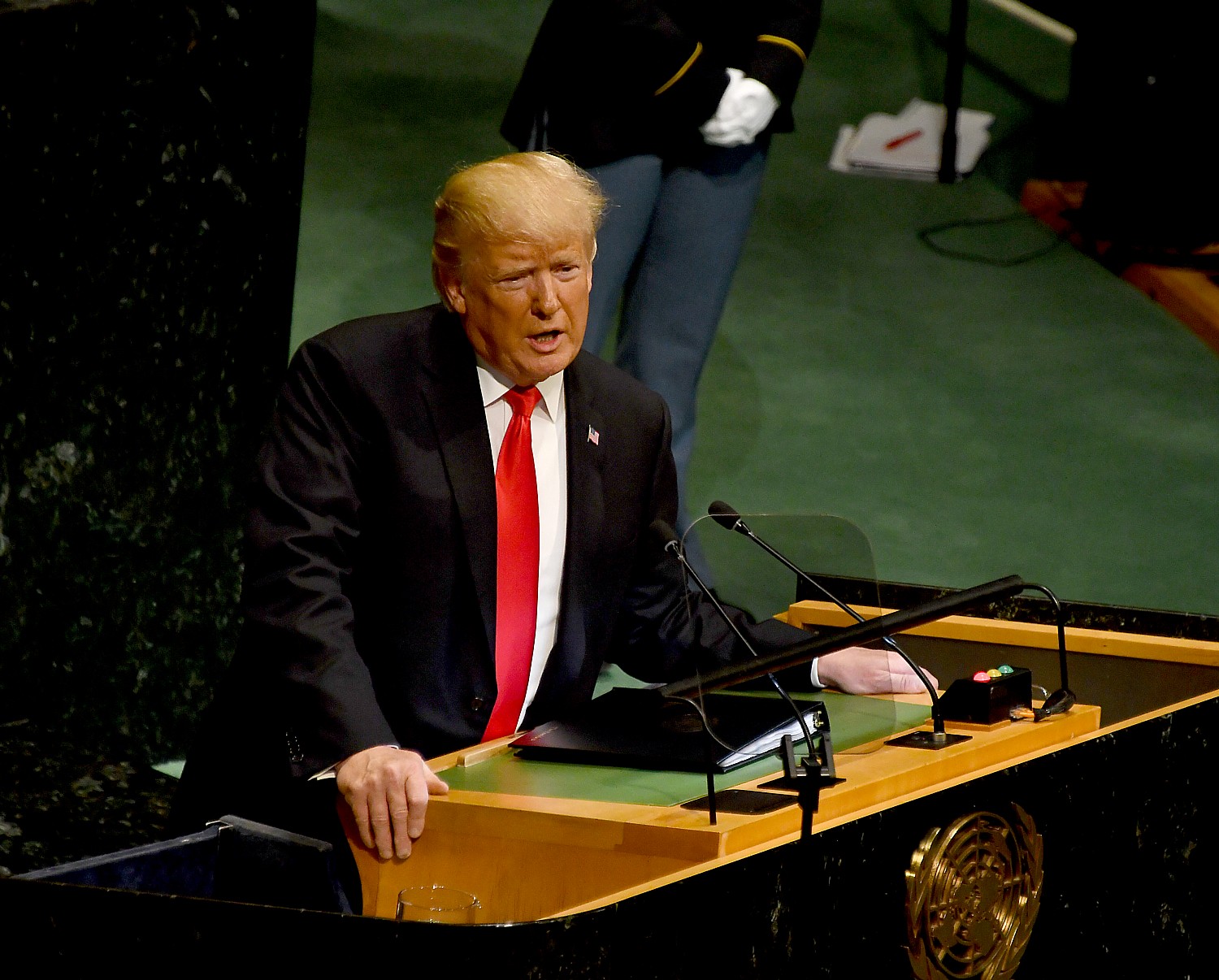
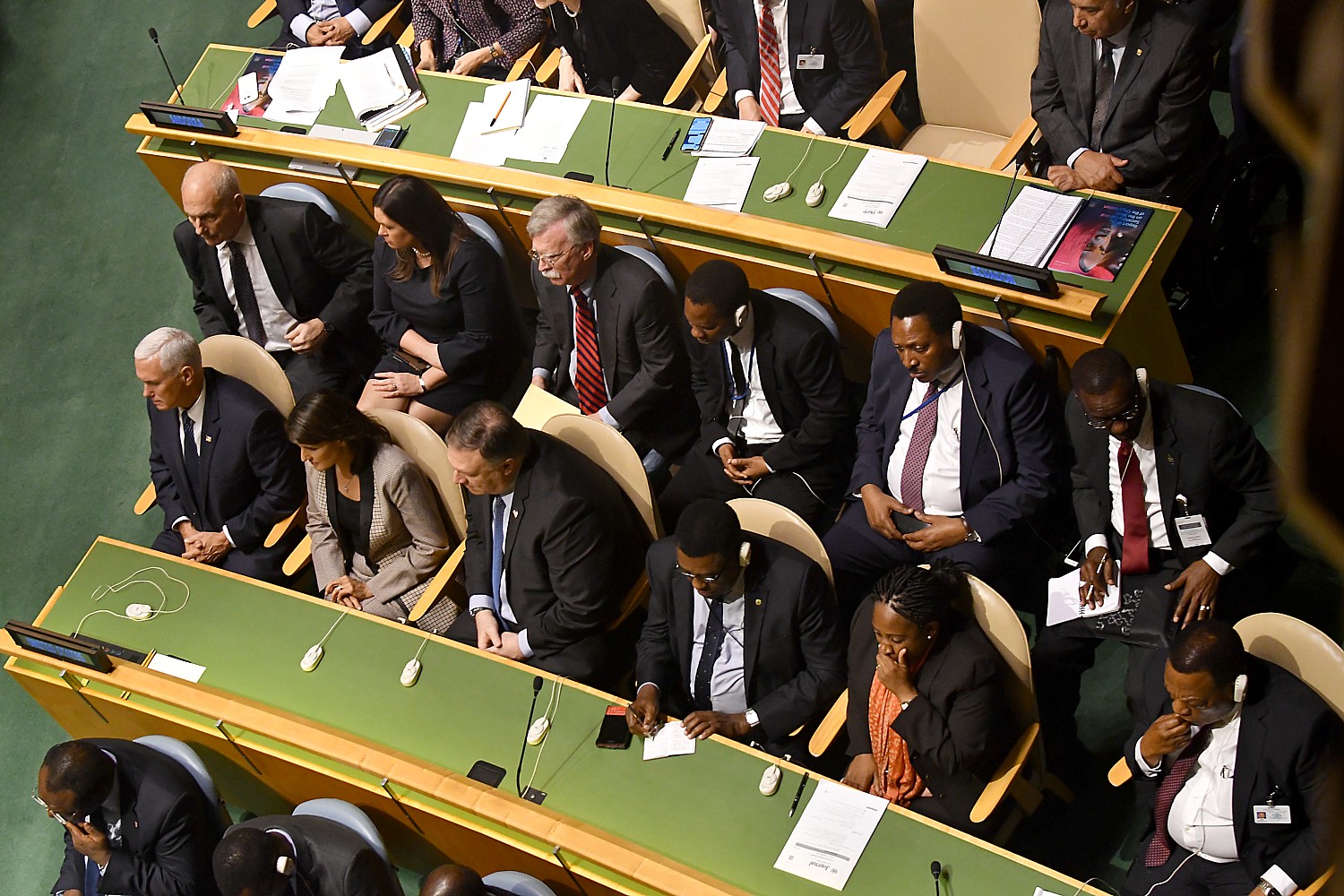
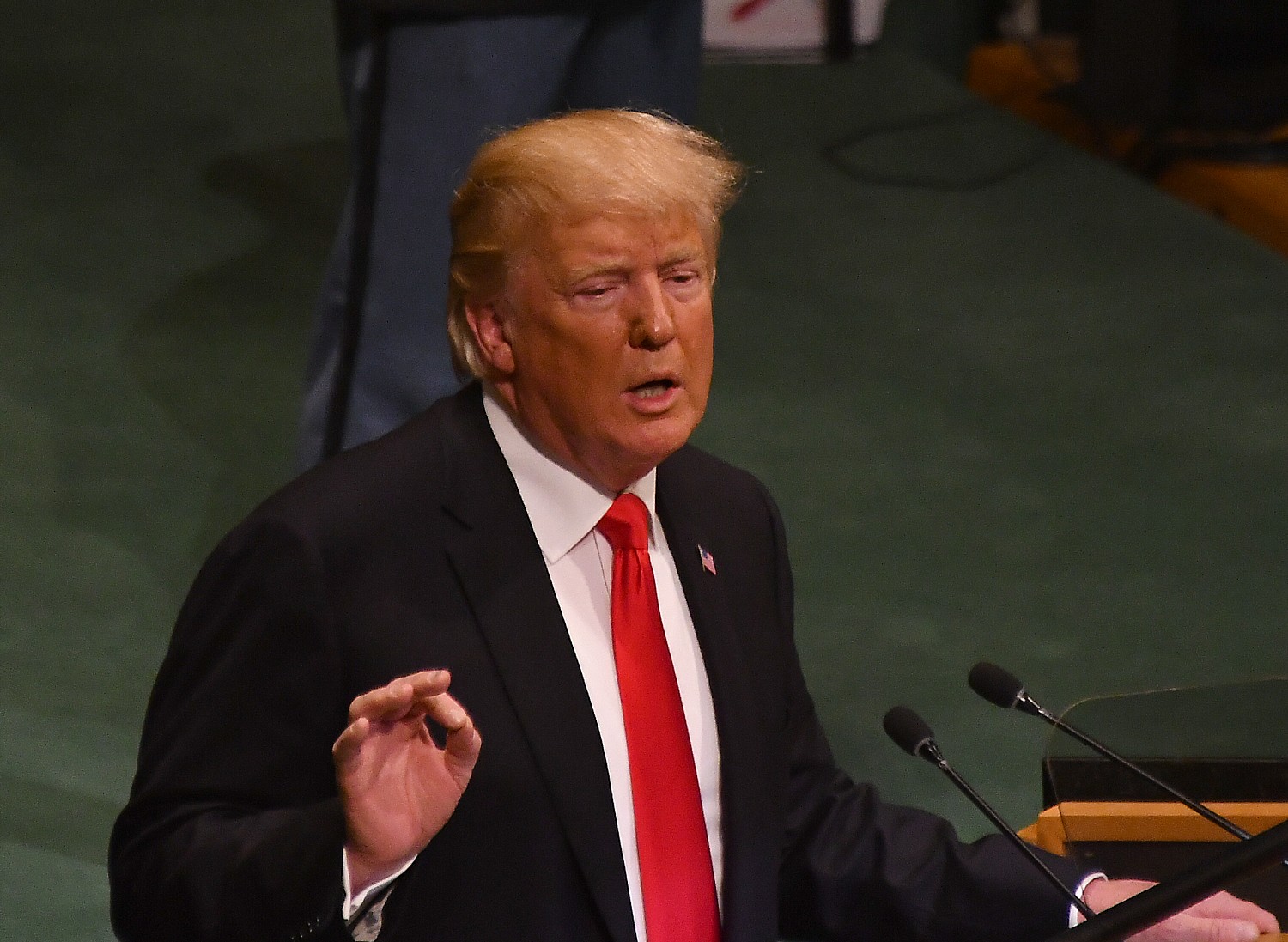
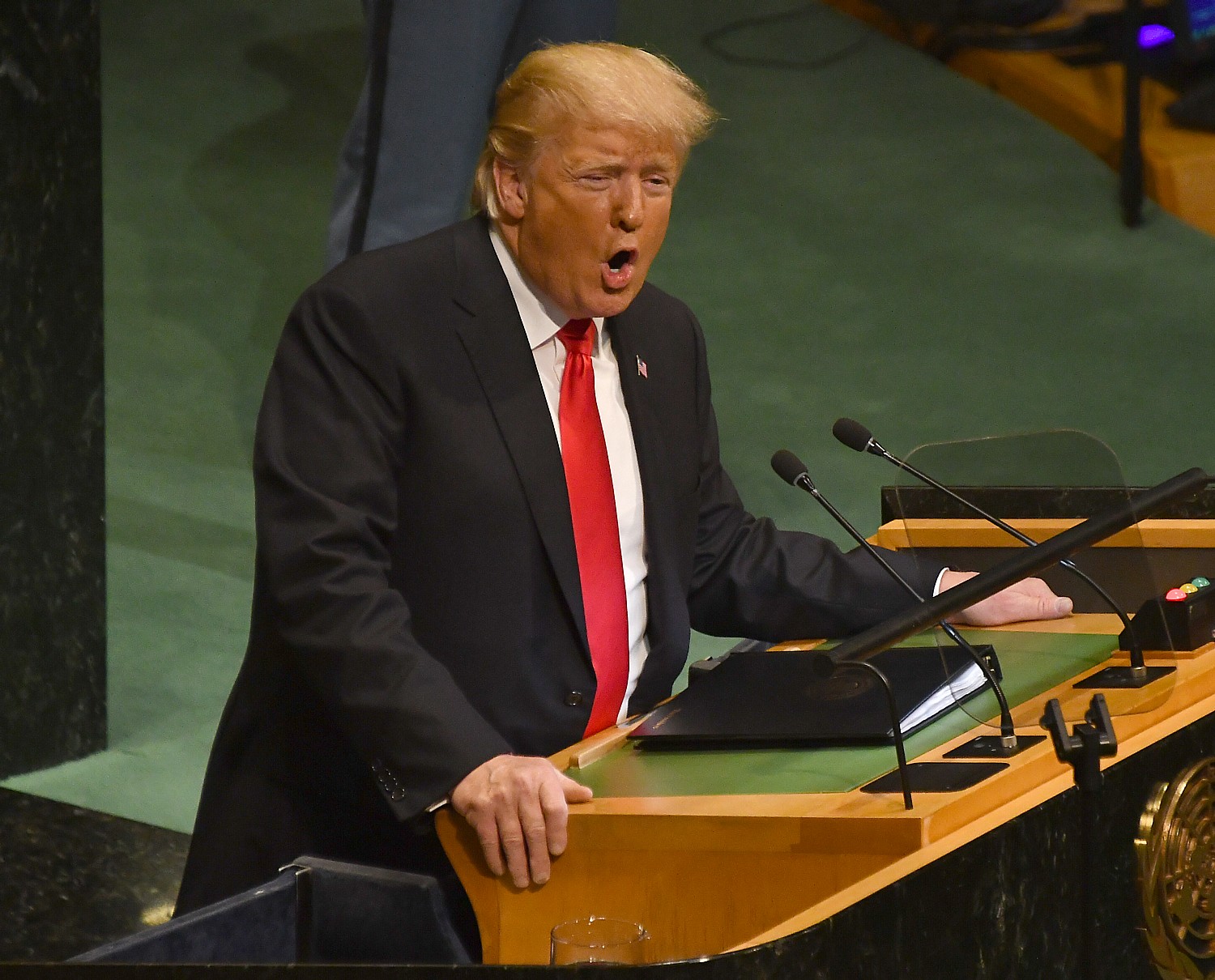
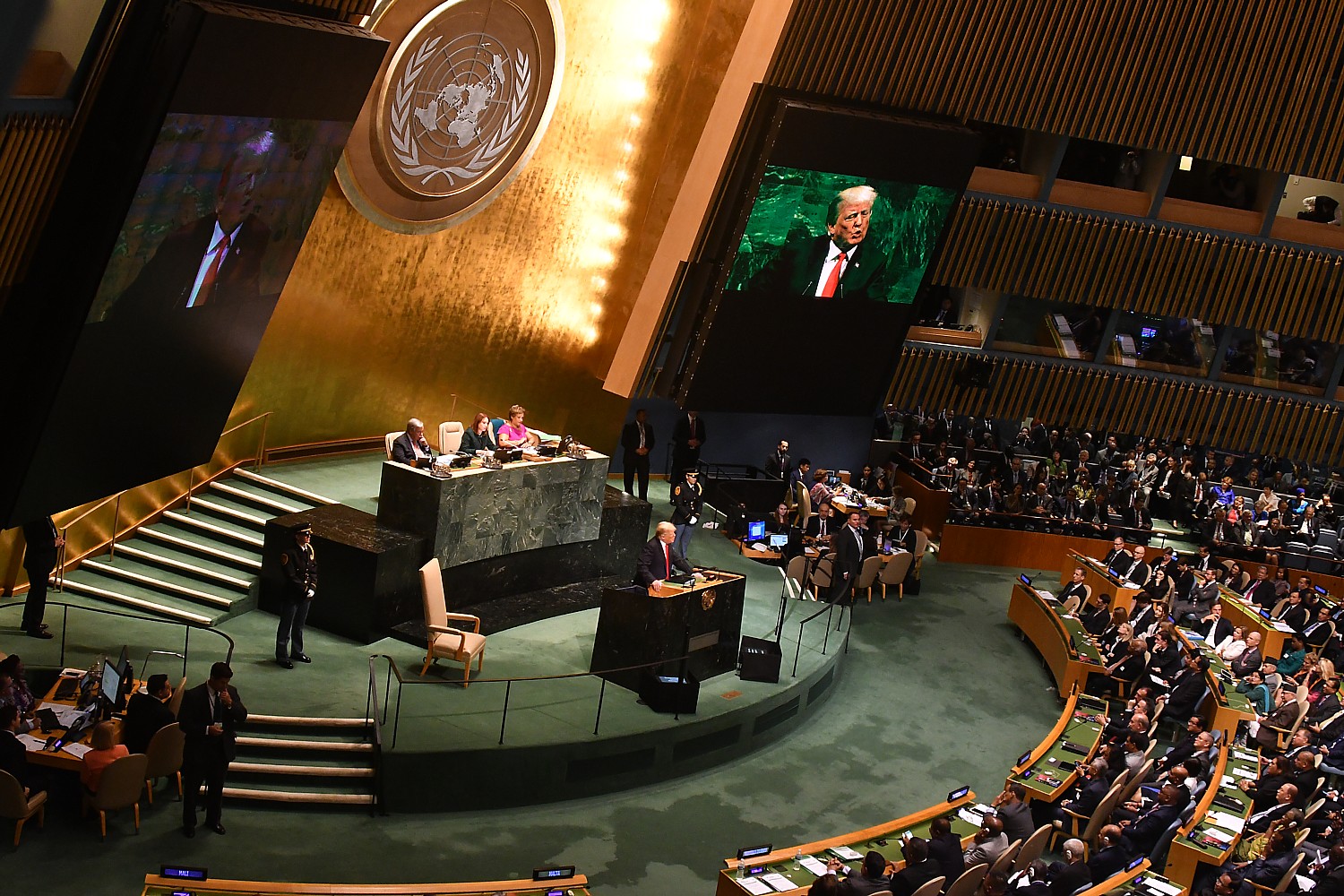
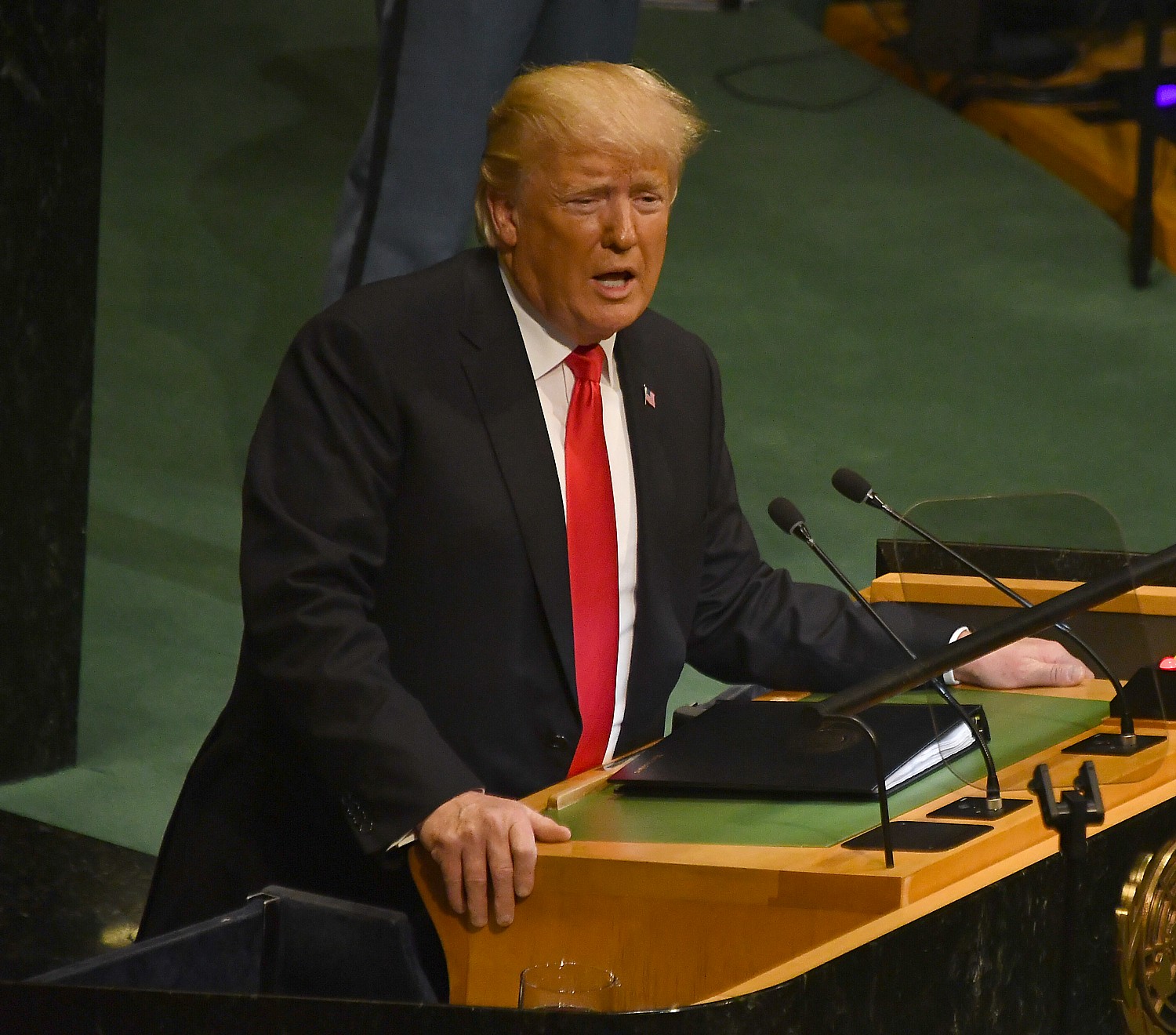
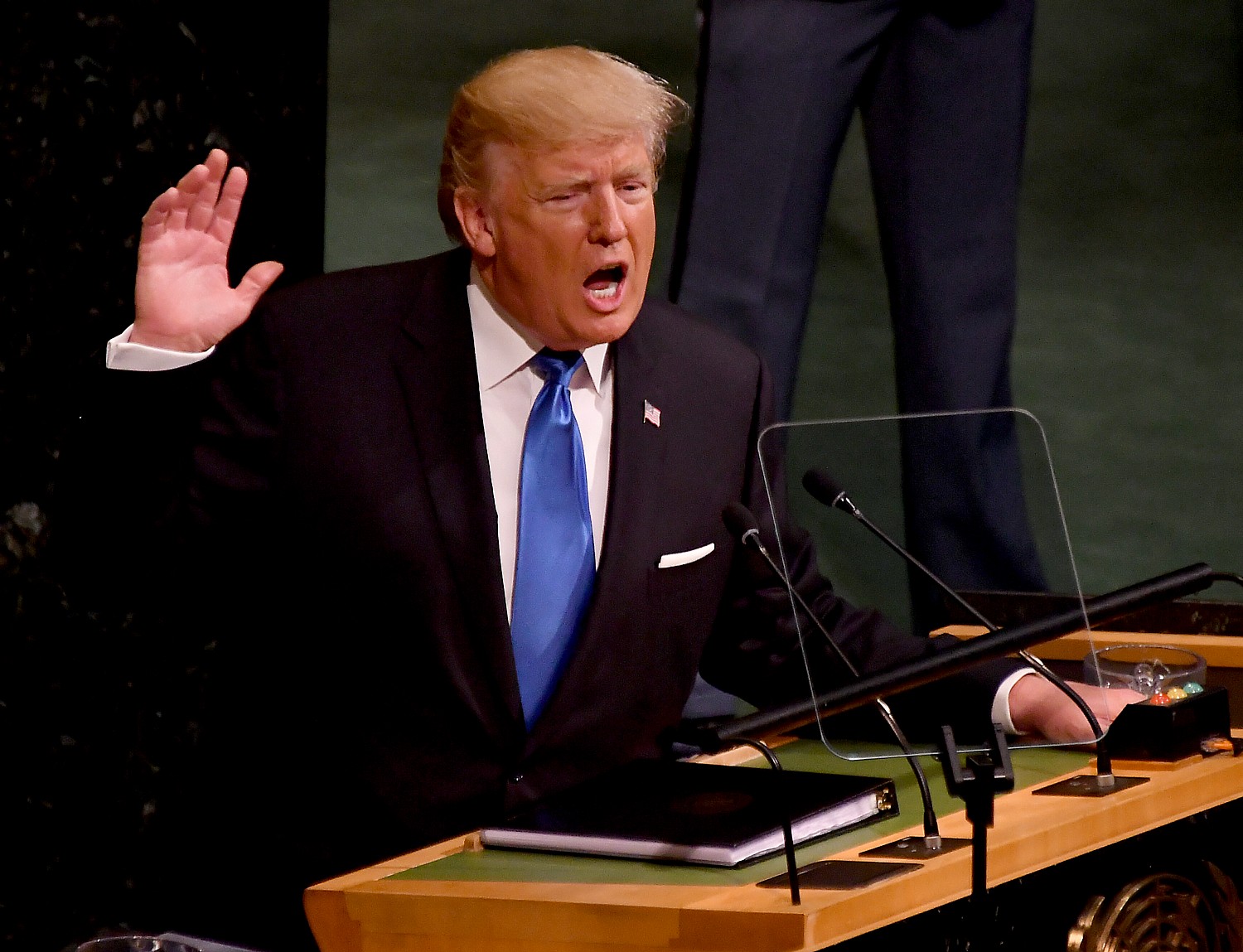
To really get a sense of who Donald Trump is as president, listen to his responses to a wide-ranging press conference, held on the day he chaired a Security Council meeting at the United Nations and the day after he delivered his address to the General Assembly, rejecting multilateralism in favor of America First sovereignty.
In his press conference, he addressed everything from the Brett Kavanaugh nomination to the Supreme Court and the Senate Judiciary Committee’s handling of sexual assault charges, to North Korea, Iran, trade agreements. He accused China of meddling in the 2018 election (by imposing retaliatory tariffs targeting farmers and Red States). He continued to boast about historic gains in the economy while attacking Democrats, Obama, and sniping at Hillary Clinton. (“If others got in, it would have been just the opposite because they were going to put restrictions on. They were going to put regulations on. They were going to choke the economy as it was already choking, but it would have been worse. And they were going to raise your taxes. That’s what they want to do now if they ever got control, which I don’t think they’ll have control for a long time.”)
He attacked Justin Trudeau of Canada while praising Kim Jong Un of North Korea, and anyone else who registered adoration.
He dismissed any suggestion that members in the General Assembly laughed at his boast of accomplishing more in his time in office than any US president in history.
“So the fake news said, ‘People laughed at President Trump.’ They didn’t laugh at me. People had a good time with me. We were doing it together. We had a good time. They respect what I’ve done. The United States is respected again. The United States was not respected. Everybody was taking advantage of us. From jobs, and taking our companies, and not paying the price — to so many other things, even military protection.”
And he managed to get a hit at “fake news” and the “failing” New York Times.
Here, then, is a minimally edited transcript of the press conference. — Karen Rubin, News & Photo Features
PRESS CONFERENCE
BY PRESIDENT TRUMP
Lotte New York Palace New York, New York
September 26, 2018
4:57 P.M. EDT
THE PRESIDENT: Thank you very much everybody. We’ve had a great three days at the United Nations in New York. And this is quite a gathering. Wow. It’s a lot of people. A lot of media. (Laughter.)
We’ve covered a great deal of territory. Just left, as you know, Prime Minister Abe of Japan. We’re starting trade talks with Japan. They were not willing, for years, to talk trade, and now they’re willing to talk trade. And I’m sure we’ll make a very good deal.
Just concluded, as you know — two days ago, signed a deal with South Korea — a trade deal. A tremendous deal with South Korea. It means a lot of business for our farmers. We’re opening up for farmers. We’re opening up for a lot of different groups.
We’re going to be able to sell much more than double the number of automobiles that we were allowed under a deal that was totally defective that was there before. And so we’re very happy with that. That deal is actually concluded.
We’re very well along the way with Mexico. The relationship is very good. And with Canada, we’ll see what happens. They’re charging us 300-percent tariffs on dairy products. We can’t have that. We can’t have that.
With China, as you know, we put out an announcement today. They would like to see me lose an election because they’ve never been challenged like this. But I want to open up China to our farmers and to our industrialists and our companies. And China is not open, but we’re open to them. They charge us 25, 35, 55 percent for things, and we charge them nothing in terms of coming into the country.
Cars, they’re at 25 percent. And we’re at 2 percent and 2.5 percent, and don’t even collect it. But we collect it now.
So we’re doing very well in our situation with China on trade. I have a great relationship with the President of China, President Xi. But it’s got to be a two-way street. It — for 25 years and longer, it was not. And trillions and trillions of dollars was taken out of the United States for the benefit of China. We just can’t have that. We have to make it fair.
So we’re at $250 billion now, at 25 percent interest. And a lot of money is coming into our coffers. And it’s had no impact on our — absolutely, by the way, no impact on our economy, which I said it wouldn’t.
In fact, steel is like the hottest industry there is. If you look at what happened with steel, we’re charging a 25 percent tariff for the dumpers. They dump massive amounts of steel. They want to put the steel companies out of business. And after they’re out of business, they’ll come in and charge five times more than you ever thought possible. And we need steel and we need aluminum. And those industries are doing well.
But steel is incredible. U.S. Steel is opening up a minimum of eight plants. Nucor is opening up plants. And these are big plants — $750 million and a billion dollar plants, in some cases.
So what’s happening with the steel industry is very exciting to me. It’s being rebuilt overnight. If you look at the miners in coal, if you look at energy, LNG — Japan just gave us some numbers that are incredible. They’re doubling the amount that they are going to be buying for Japan. They’re taking the LNG and they’re doubling it up.
I said, “You have to do me a favor. We don’t want these big deficits. You’re going to have to buy more.” They’re buying massive amounts of equipment and military equipment, and other countries are doing the same thing. Because we have trade imbalances with almost everybody. It’s a rare exception that we don’t.
So we are doing great as a country. Unfortunately, they just raised interest rates a little bit because we are doing so well. I’m not happy about that, because I know it’s going to be a question. I am not happy about that. I’d rather pay down debt or do other things, create more jobs. So I’m worried about the fact that they seem to like raising interest rates. We can do other things with the money. And — but they raised them. And they’re raising them because we’re doing so well. You know, we’re doing much better than I had projected in terms of — when I was campaigning, I said we were going to do this and we’re doing much better than anybody ever thought possible.
And, I will say, if others got in, it would have been just the opposite because they were going to put restrictions on. They were going to put regulations on. They were going to choke the economy as it was already choking, but it would have been worse. And they were going to raise your taxes. That’s what they want to do now if they ever got control, which I don’t think they’ll have control for a long time.
Q In 1991, when Joe Biden passed along to the Bush 41 White House the allegations that Anita Hill had raised against Clarence Thomas, the Bush White House asked the FBI to look into it as part of Judge Thomas’s background investigation — not a criminal investigation, but the background investigation. When these allegations were raised, why didn’t this White House do the same thing? And with all of the allegations that are coming out now about Judge Kavanaugh, was there an opportunity missed here to have investigators look into this and get some sort of clarity one way or the other?
THE PRESIDENT: Well, the FBI told us they’ve investigated Judge Kavanaugh six times, five times, many times over the years. They know him very well. But here, there was nothing to investigate from at least one standpoint. They didn’t know the location. They didn’t know the time. They didn’t know the year. They didn’t know anything. And it’s like, where do you go?
Also, it’s not for the FBI. If you look at what Joe Biden said, he said, “They don’t do this.” And he said it very clearly.
So I think when you really look at it all, it’s not going to change any of the Democrats’ minds. They’re obstructionists. They’re actually con artists because they know how quality this man is and they’ve destroyed a man’s reputation and they want to destroy it even more.
And I think people are going to see that in the midterms. What they’ve done to this family, what they’ve done to these children — these beautiful children of his — and what they’ve done to his wife. And they know it’s a big, fat con job.
And they go into a room and, I guarantee you, they laugh like hell at what they’ve pulled off on you and on the public. They laugh like hell. So, it wouldn’t have mattered if the FBI came back with the cleanest score. And you understand that very well, John. If they would have come back with the most perfect — “We found everything, and he’s perfectly innocent of everything.” It wouldn’t have made a difference. You wouldn’t have gotten one vote.
Now we will get votes from the Democrats if we win. You’ll have three, four, or five Democrats giving us votes, because they’re in states that I won by 30 and 40 points and they’re going to give us votes.
Q Mr. President, there are now three women accusing Judge Kavanaugh of sexual misconduct. Are you saying that all three of those women are liars? Is there anything that can be said at this point tomorrow that could cause you to withdraw the nomination? Anything at all that —
THE PRESIDENT: I won’t get into that game. I’ll only tell you this: This is one of the highest quality people that I’ve ever met, and everybody that knows him says the same thing. And these are all false — to me, these are false accusations in certain cases. And certain cases, even the media agrees with that.
I can only say that, what they’ve done to this man is incredible. You know, it’s very interesting — I pick a lot of judges. I have 145 judges I will be picking by the end of a fairly short period of time because President Obama wasn’t big on picking judges. When I got there, I said, “How is this possible?” I have 145 — including court of appeals — judges. And they just didn’t do it. You know why? They got tired. They got complacent. Something happened. I have 145 judges.
Everybody wants to be a federal judge. Not just a Supreme Court judge, I’m talking about court of appeals; I’m talking about district court. I don’t think they’re going to want to so much. I’ll be calling people, and we’ll have people calling people that do this. And people are going to be scared because we could say it about you, “Thirty-five years ago, you met some…” — and you might know — you might not know what’s going on.
What is going on? Why did they wait so long? Why did Senator Feinstein wait until the hearings were over and make this case? Why didn’t she bring it right at the beginning? When you ask about, as an example, the FBI — why didn’t they bring this right at the beginning, during the hearing? You would have had all the time in the world for the FBI. It would have been fine.
Now the FBI, as you know, did investigate this time, as they have five or six other times. And they did a very thorough investigation. But this is a big con job. And I would love to be in the room with the Democrats, close the door — you guys are all away, outside, waiting. And Schumer and his buddies are all in there laughing how they fooled you all. Let’s just stop them. A big fat con.
Q But, Mr. President, if I could follow up. You have daughters. Can you understand why a victim of sexual assault would not report it at the time? Don’t you understand —
THE PRESIDENT: People are going to have to make a decision. Thirty-six years, there’s no charge. All of a sudden, the hearings are over and the rumors start coming out.
And then you have this other con artist, Avenatti, come out with another beauty today. I only say that you have to look at the facts. The senators are very capable people. They’re very good people. I know many of them. They’re friends of mine. These are very talented, very good people. And they’re going to vote. They’re going to believe what they believe.I can — when I look at what’s happened to the reputation of a great gentleman — a great intellect; a brilliant man; somebody that has a chance to be one of our great Supreme Court Justices in history, intellectually — I think it’s a shame.
Q Mr. President, yesterday at the speech at the U.N., you spoke about how Venezuela’s problem was because of Cuba and the Castros — how they went in there and they brought socialism and communism to Venezuela, and now to Nicaragua as well. Mr. President, are you going to be more proactive now against Cuba as well?
THE PRESIDENT: I’ve been very proactive against Cuba. I don’t like what’s happening in Cuba. As you know, President Obama gave them a pass and I didn’t like it. Neither do Cuban people based in Miami and based in our country that came from Cuba and suffered in Cuba.
I don’t like what he did. I’ve ended much of it — most of it. I don’t like what’s happening in Cuba, and I certainly don’t like what’s happening in Venezuela.
Q You said also that you had a call-to-action to ask the leaders around the world to also end socialism. Would you like to be recognized as —
THE PRESIDENT: Well, I wouldn’t say that socialism has been working really well around the world, okay. You can take a look at Venezuela as your number one — your number one — I guess, the one that is most obvious. But you take a look around the world, socialism is not exactly riding high.
Q Why is it, Mr. President, that you always seem to side with the accused and not the accuser? You have three women here who are all making allegations, who are all asking that their stories be heard. And, you know, if you look at the case of Roy Moore, if you look at the case of one of your staffers, you seem to, time and again, side with the accused and not the accuser. Is that because of the many allegations that you’ve had made against you over the years?
THE PRESIDENT: Well, first of all, I wasn’t happy with Roy Moore. Let’s get that straight. But Roy Moore was a Republican candidate —
Q But you stood by him.
THE PRESIDENT: — and I would have rather had a Republican candidate win. I was very happy with Luther Strange, who was a terrific man from Alabama, but Luther Strange had a lot of things going against him.
As far as women, whether it’s a man or a woman, these are — you know, it can happen the other way. Allegations can go the other way also. You understand that. And whether it was a man or a woman, 30 years ago, 36 years ago — in fact, they don’t even know how many years ago because nobody knows what the time is. That’s a long time.
And I could pick, as an example — hopefully I won’t have to do it as a replacement because hopefully this is going to go very well on Thursday. It’s going to go very well on Monday, or Saturday, or Sunday, or whenever they vote. But I could pick a woman and she could have charges made from many years ago also.
Q First of all, do you think these women — all three of them are liars? Yes or no?
THE PRESIDENT: I can’t tell you. I have to watch tomorrow. I have to read. I just heard about one a little while ago. I can tell you her lawyer is a low life, okay? So I can’t tell you whether or not they’re liars until I hear them.
I don’t know what happened today because I’ve been very busy with Japan, with South Korea, with China, and about seven other countries, as you know — and I chaired the Security Council.
So I don’t know about today’s person that came forward. I do know about the lawyer. And you don’t get much worse — bad reputation, too. Take a look at his past.
So, as far as the other women are concerned, I’m going to see what happens tomorrow. I’m going to be watching — you know, believe it or not. I’m going to see what’s said. It’s possible that they will be convincing.
Now, with all of that being said, Judge Brett Kavanaugh has been, for many years, one of the most respected people in Washington. He’s been on — I guess you’d call it the second highest court. And every single person knows him; a lot of people know him well. And those people don’t believe what’s going on. I can always be convinced. I have to hear it.
Q It sounds like what you’re saying is, there is a situation, there is a scenario under which you would withdraw Brett Kavanaugh’s nomination. Is that correct? And have you talked about that with him?
THE PRESIDENT: If I thought he was — if I thought he was guilty of something like this, yeah sure.
THE PRESIDENT: I want to watch. I want to see. I hope I can watch. I’m meeting with a lot of countries tomorrow, but I will certainly, in some form, be able to watch. And I’ll also rely on some very fair and talented Republican senators who — look, if we brought George Washington here and we said, “We have George Washington,” the Democrats would vote against him, just so you understand.
And he may have had a bad past, who knows, you know. (Laughter.) He may have had some, I think, accusations made. Didn’t he have a couple of things in his past? George Washington would be voted against 100 percent by Schumer and the con artists. I mean 100 percent. One hundred percent.
So it really doesn’t matter from their standpoint. That’s why when John asked about the FBI — if the FBI did the most thorough investigation in the history of the FBI, and they found him to be 100-percent perfect, he would lose every single vote.
Now, if the Republicans win tomorrow, I think you’re going to get some votes from the Democrats. You know why? Because — we all know why — because it’s called politics. Then you’ll probably get some votes.
Q Has there ever been an instance when you’ve given the benefit of the doubt to a woman?
THE PRESIDENT: I’ve known them. Hallie, I’ve know them for a long time and — a lot of these people. A lot of people. And some I’ve been disappointed with. I have been disappointed with some. Others, like — you know, there are charges that are pretty weak.
But I’ve known people for a long time. I never saw them do anything wrong. I never saw them do anything wrong. And there are some that probably — I agree. I can tell you there are some that I — I’ve been watching for a long time. And in a couple of cases, they weren’t Republicans. In a lot of cases, they were not; they were exactly the opposite.
But I’ve been watching them for a long time. And I knew for a long time these were not good people. And they were never brought up.
Q How have your personal experiences being accused by more than a dozen women of sexual misconduct —
THE PRESIDENT: I’ve been accused. I’ve been accused. False accusations.
Q — right, how have those —
THE PRESIDENT: Excuse me. I’ve been accused. And I was accused by — I believe, it was — four women. You can check with Sean Hannity. You can check with Fox, because they covered it very strongly — who got paid.
Q And how has (inaudible) —
THE PRESIDENT: Excuse me. Excuse me. I was accused by four or five women who got paid a lot of money to make up stories about me. We caught them, and the mainstream media refused to put it on television. They refused to even write about it.
There were four women, and maybe more — I think the number is four or five. But one had a mortgage paid off her house, $52,000. Another one had other things happen. And the one that reported it, I believe, was offered $750,000 to say bad things about me — and she is the one that reported it. This woman is incredible. She reported it, instead of taking the money.
So I’ve had numerous accusations about me.
Q Right.
THE PRESIDENT: I mean, they made false statements about me, knowing they were false. I never met them. I never met these people. And, what did they do? What did they do?
They took money in order to say bad things. I’ve had stories written in the New York Times — front page — about four women. The whole top center front page of the New York Times. I think it was four big pictures.
I said, “Wow. That’s a big thing. What’s that?” These were women that were quoted saying bad things about me. Not the worst things about me, but bad things. And I said, “Gee, that’s too bad.” I knew them a long time ago — 15 years ago, 20 years ago. I said, “That’s too bad. I’m surprised at them.”
And then all of a sudden I see them on television — nothing to do with me. The next day or a day later, they were incensed. They said, “Donald Trump is a nice guy. We never said this. The New York Times did false reporting. They’re fake news.” And you know what? The New York Times would not report that their story was fake.
These women said great things. Not only did they not say the bad stuff, they said great things about me. Front page. And those women — they’re incredible women — they went on television — and they didn’t want to, and I didn’t ask them. And they said, “The New York Times made it up. They gave false quotes.” And they went on a lot of shows. They were really incensed and they couldn’t believe it.
That’s why people know that a lot of the news is fake. And a lot of the people sitting here are fake. But 20 percent of them are wonderful. Okay?
Q If I could just actually ask my question, Mr. Trump. I — you didn’t let me ask my question.
THE PRESIDENT: You’ve been asking a question for 10 minutes, all right?
Q No, you interrupted my question.
THE PRESIDENT: Please sit down. Please.
Q I’m asking you —
THE PRESIDENT: Go ahead. Go ahead.
Q — how did those impact your opinions on the allegations against Judge Kavanaugh?
THE PRESIDENT: Well, it does impact my opinion. You know why? Because I’ve had a lot of false charges made against me. I’m a very famous person, unfortunately. I’ve been a famous person for a long time. But I’ve had a lot of false charges made against me — really false charges.
I know friends that have had false charges. People want fame. They want money. They want whatever. So when I see it, I view it differently than somebody sitting home watching television, where they say, “Oh, Judge Kavanaugh…” this or that.
It’s happened to me many times. I’ve had many false charges; I had a woman sitting in an airplane and I attacked her while people were coming onto the plane. And I have a number-one bestseller out? I mean it was total phony story. There are many of them.
So when you say, does it affect me in terms of my thinking with respect to Judge Kavanaugh? Absolutely. Because I’ve had it many times.
And if the news would have reported these four people — I couldn’t believe it. When I heard that they caught these four people, I said, “Wow. That’s a big story.” And it was — for Fox. Okay.
Q Earlier today and just now, you made a significant allegation against the Chinese government. You suggested that the Chinese had meddled in or are meddling in the 2018 midterm elections.
THE PRESIDENT: That’s what I hear.
Q What evidence do you have of that, sir? Is there a national intelligence estimate, for example, that you’re prepared to put forward?
THE PRESIDENT: We have evidence. We have evidence. It’ll come out. Yeah, I can’t tell you now, but it came — it didn’t come out of nowhere, that I can tell you.
Now, if you — they’ve actually admitted that they’re going after farmers. I mean, I think most of you can cover that.
I like that you’re shaking your head, “yes.” I’m going to ask you the next question because of that. Okay? It’s probably going to be the killer of all questions. (Laughter.) But let me just explain —
Q But why make the charges now —
THE PRESIDENT: No, no, no. Let me —
Q — if you’re not prepared to come forward with the evidence, sir?
THE PRESIDENT: China, now, put on $250 billion, and they’re paying 25 percent on that. They’re paying billions and billions. This has never happened to China. And I like China. And I like President Xi a lot. I think he’s a friend of mine. He may not be a friend of mine anymore, but he — I think he probably respects —
From what I hear — if you look at Mr. Pillsbury, the leading authority on China — he was on a good show — I won’t mention the name of the show — recently. And he was saying that China has total respect for Donald Trump and for Donald Trump’s very, very large brain. He said, “Donald. Donald Trump. They don’t know what to do.” It never happened.
Well, one thing they are trying to do is they are trying to convince people to go against Donald Trump. Because a normal, regular, political person that has no concept of what the hell he’s doing would let China continue to take $500 billion a year out of our country and rebuild their country.
I mean, they were building 29 massive bridges like the George Washington Bridge. They’re building things that we don’t build anymore. But we’re starting to build them again.
And our economy now is hotter than it’s ever been. I don’t know you if you saw the confidence levels this morning that just came out. Fantastic.
And in all fairness to the Fed raising rates, they’re raising rates because we’ve never done like we’re doing now. And one of the things that is nice about the rates — the people that were hurt the worst by these zero interest rates and, you know —
When President Obama had an economy that was — it was the worst comeback since the Great Depression and all that — you’ve all heard that. But remember, he was playing with zero-interest money. He was playing with funny money. That’s easy. I’m playing with fairly expensive money.
So when he does that, the people that benefit are people that actually — in their whole life, they would save 10, 15, 20 percent of their salary and put it in the bank. Those people got killed because they put their money in the bank. They were going to live off the interest, and there was no interest.
Now, those people are starting to get interest. And those are the people, frankly, that deserve to — you know, they did a great job. The people that did it right, the people that did the best job got hurt the most.
So in one sense I like it, but basically I’m a low-interest-rate person. I hate to tell you.
THE PRESIDENT: I’m talking to him. We’ve had a good talk. He said he never said it. He said he doesn’t believe it. He said he has a lot of respect for me, and he was very nice and we’ll see. And he’s a member of the Trump administration, in that sense; it’s the Justice Department.
I would certainly prefer not doing that. There was no collusion. There was no obstruction — I mean, unless you call obstruction the fact that I fight back. I do fight back. I really fight back. I mean, if you call that obstruction, that’s fine.
But there’s no obstruction. There’s no collusion. I’m going to meet with him tomorrow. I may call Rod tonight or tomorrow and ask for a little bit of a delay to the meeting, because I don’t want to do anything that gets in the way of this very important Supreme Court pick. So I don’t want it competing and hurting the decision — one way or the other decision. Again, I want to hear what she has to say.
But I want to do — so I may delay that. I’m going to see. I don’t want to do anything that’s going to conflict with that. But my preference would be to keep him, and to let him finish up.
You know, I call it a “witch hunt.” And it is a witch hunt. If you look at the FBI statements with Strzok and his lover Lisa Page. If you look at all of the things that have gone on in the FBI. If you look at McCabe taking $700,000 from a Hillary Clinton-PAC essentially run by Terry McAuliffe, who’s her best friend in the world, and he gives them hundreds of thousands of dollars. And he’s in charge of her campaign, and his wife is getting all of this money to run — she lost — to run. I mean, what’s going on?
If you look at the horrible statements, like “Way to go, Page. Great story you put into a newspaper.” Essentially, now we’ll go and investigate that group. It’s terrible. We have caught people doing things that are terrible.
I would much prefer keeping Rod Rosenstein. Much prefer. Many people say I have the right to absolutely fire him. He said he did not say it. He said he does not believe that. And nobody in this room believes it.
By the way, I deal with the people in this room. I was with Mike Pompeo before, and we were dealing, at a very high level, with Japan. And I was saying things that nobody in the room even understood. And I said them a long time ago, and I was right. He said, “That’s not the 25th Amendment that I’m looking at.” I think I can say that from Mike.
Q So you don’t think anyone in your administration has ever discussed using the 25th Amendment against you?
THE PRESIDENT: I don’t think so. Well, yeah — enemies, sure. You use anything you can.
Q Was it in your administration or your Cabinet?
THE PRESIDENT: Hey, you use anything they can. They’re not in love with me. They’re not going to beat me in the election; they know that. They’re not going to beat me. The people that I’m looking at are total lightweights. I dream of running against those people.
Q But within your administration?
THE PRESIDENT: Maybe they’ll come up with somebody that’s not — they’re not going to beat me. I’m against what they want to do. I’m in favor of law enforcement. I’m in favor of safety and security, and low taxes. I want low taxes.
I want borders. We’re getting another $1.6 billion in borders. I want borders. We’ve spent $3.2 [billion] and we’re getting another $1.6 [billion]. And then eventually, we’re getting the whole thing and we’ll complete the wall.
They don’t want that. They don’t want that. They don’t want the things that I have.
Now, I must say, I know many of the Democrats. They’ll say things and then wink at me. And again, it’s the same old story. They’ll say things; they don’t mean it. Its politics. The reason they don’t want me is because they want to run the show. They want it. It’s power. It’s whatever you want to call it. But what they’ve done here is a disgrace. A total disgrace.
And what they do — I know, it’s sort of interesting — in one case, they say, “He’s a fascist. He’s taking over the government. He’s the most powerful President ever. He’s a horrible human being. He wants to take over the entire government, and he’s going to do it. We can’t stop him.” That didn’t work.
The next week, he said, “Uh, he’s incompetent.” I said, “Well, wait a minute.” In one case, I’m taking over the world. And in the other case, “He’s incompetent.” They tried that for a week. That didn’t work.
Look, these are very dishonest people. These are con artists. And the press knows it, but the press doesn’t write it.
Q You’re getting letters from Chairman Kim. Why do you need a second summit with the North Korean leader so soon? And what do you —
THE PRESIDENT: Because he’d like it.
Q What would it be for?
THE PRESIDENT: So I’ve received two letters from Chairman Kim. At some point, I’ll, you know, give these letters — they’re incredible letters. They’re letters that are magnificent in the sense of his feeling for wanting to get this done. I really believe he wants to get it done. I may be wrong.
I heard somebody on a certain network last night — I won’t mention which one — say, “Why has President Trump given so much to North Korea?” I said, “Wait a minute.” I asked Sarah Huckabee, “Please call this person.” I gave nothing — other than I met. What did I give them?
I didn’t do what Obama did: Give them $1.8 billion in cash to get back four hostages. I got back our hostages; I never paid them anything. I haven’t paid them 10 cents.
But he wants to make a deal and I’d like to make a deal. We actually have a very good relationship together — a lot different than the last time I was at the United Nations. That was a little bit rough.
Don’t forget, that time, they said, “Oh, Trump is saying these horrible things. He’s going to get us into a war.” You were going to have a war. If I wasn’t elected, you’d be in war. And President Obama essentially said the same thing. He was ready to go to war.
You would have had a war, and you would have lost millions, not thousands. You would have lost millions of people. Seoul has 30 million people — 40 miles and 30 miles from this very dangerous border. If I wasn’t elected, you would have had a war.
President Obama thought you had to go to war. You know how close he was to pressing the trigger for war? Millions of people. With me, nobody is talking about that. Nobody is talking about that.
We have a very good relationship. He likes me. I like him. We get along. He wrote me two of the most beautiful letters. When I showed one of the letters — just one — to Prime Minister Abe, he said, “This is actually a groundbreaking letter. This is an incredible — this is a historic letter.” And it is a historic letter. It’s a beautiful — it’s a beautiful piece of art. And I think we’re going to make a deal.
Will we make a deal, Steve? I don’t really know. But I think we’re going to.
In the meantime — and I’ve said it a thousand — I don’t want to bore you: no rockets, no missiles, no nuclear tests — you know, for over a year, where you haven’t seen.
Before I got here, everybody in this room thought you were going to war. And then what happened — it was funny — they said, “He was terrible. He was so rough with Chairman Kim — Kim Jong Un. He was so rough. It’s terrible. He’s going to cause…”
Well, I had a great meeting with President Putin. And on that one, they said, “He was too soft with President Putin.” I had a great meeting with the President. It lasted for two hours. We discussed everything: Ukraine, Syria, Israel and Israel’s protection. We had a great meeting. They wanted me to end up in a boxing match.
And you know what? If I was killer-tough with President Putin, they would have said, “He was too tough.” You can’t win with these people, but you just keep going. In the meantime, we’re doing well.
Q How long do you think it should take North Korea to denuclearize?
THE PRESIDENT: I don’t know. I don’t want to get into —
Q We’ve seen estimates of one year, two year —
THE PRESIDENT: Steve, I don’t want to get into the time game. You know why? I told Mike Pompeo, I said, “Mike, don’t get into the time game.” We stopped them. They’re taking down plants. They’re taking down a lot of different testing areas. They’re going to take down some more. You’ll be hearing about that very soon. I don’t want to go ahead of myself, but you’ll be hearing about it soon. They have no interest right now in testing nuclear.
You know, we had a case just about when I was coming into office — you all remember it — where there was a massive — they thought it was an earthquake. A mountain moved over an inch and a half. We’re talking about mountains. You know, North Korea is very mountainous. Beautiful land. Beautiful. This mountain actually shifted. It shifted. And somebody thought it was an earthquake. And then they found out, no, this was nuclear testing. Shifted a mountain. Now I’m talking about serious stuff. Serious size.
When I came in, and certainly before I came in — and even at the beginning of mine because when I was having rhetorical contests — you know, contests, really, I guess you could call it — with Chairman Kim, which we both smile at now and we laugh at. But everybody thought that was a horrible thing.
We’ve had — many Presidents were unable to do anything, anything at all with North Korea. We now have a good relationship. We have a good relationship. And most importantly, all of the things that you’ve been hearing about –the horror stories — in my opinion, they’re gone.
Now, could they start up again? Yes. I’m a deal guy. Could they start? Yeah. Could be that we don’t work it out.
I think — I have it right here — I think that what we’ve done behind the scenes, which nobody really knows about — and I don’t blame you for not knowing about, you know, personal letters, private letters. But saying they want to get it done. We know much more than the media for a change. Much more. But if you saw what’s going on behind the scenes, I think you’d very impressed.
We were a country going to war. I really believe that President Obama would admit that he said it’s by far his biggest problem. When I sat with him, prior to going to office — going into office, he said to me that’s by far the biggest problem. And he said to me that he was very close to going into war.
And millions of people — not — you know, I — they say, “Oh, thousands of people…” No, no, no, not thousands. Millions of people would have been killed. And that could have left — you’re right next to China. You’re right — that could have been a world war very easily.
Right now, we’re in a great position. I don’t want to play the time game. I told Mike Pompeo, “Don’t let them do that to you.” I haven’t given anything.
And all of a sudden — we got back, it was a few weeks ago. I think we were back like two and a half months from the summit, which was a great success. And people are screaming, “What’s taking so long?” I said, “Oh, I get it.” You got to understand the media. I’ve been dealing with the media all my life. Too much. Too much.
They’re screaming and I saw that. And our guys were — and not Mike — but our guys were being, “Oh well, we’re working as fast…” I said, “I got all the time in the world. I don’t have to rush it.” There’s no — you know, secession of sanctions. We got the sanctions on. I didn’t take any sanctions off.
I did see a reporter last night — a guy I like, personally, a lot. And he asked a question to President Moon of South Korea. He said, “Why did the President give so much?” I didn’t give anything. I gave nothing. What have I given, other than some time? Yes, I flew to Singapore. We had a meeting.
Now, giving would be if I took the sanctions off. I didn’t want to do — if you asked General Mattis, for a year and a half, I said, “Why don’t we stop these ridiculous,” in my opinion, “the military games?” I call them the “military games.” If I told you how much those games cost — and, frankly, I told South Korea, “You should be paying for these games.” We pay for them.
They say, “Well, we fly the planes in from a short distance away.” I said, “Where is that?” “Guam.” “Oh, huh. How long a trip is that?” “Seven hours.” “Oh, great.” We’re flying these massive bombers and everything. I’ve wanted to stop this for a long time. I consider that an asset.
But we’ve done — we’re saving, by the way — just for the taxpayer, we’re saving a fortune. And if we need them, we can start them up immediately. If I think we need them, I’ll start them before the generals will start them.
The fact is, this reporter said that. I said, “What have we done? I haven’t given anything.” And we’re really onto the cusp. I think we’re really going to do something that’s going to be very important.
But we’re not playing the time game. If it takes two years, three years, or five months, it doesn’t matter. There’s no nuclear testing and there’s no testing of rockets.
Q Are you at all concerned at the message that has been sending — being sent to the women who are watching this when you use language like “con job” in relation to allegations of sexual assault?
THE PRESIDENT: Oh, I’ve used much worse language in my life than “con job.” That’s like probably the nicest phrase I’ve ever used. I mean, con job — it is. It’s a con job. You know, confidence — it’s a confidence job. But they short — it’s a con job by the Democrats. They know it.
Q What about the message that’s being sent to women who are watching?
THE PRESIDENT: They did the same thing with the Russia investigation. They tried to convince people that I had something to do with Russia. There was no collusion.
Think of it. I’m in Wisconsin. I’m in Michigan. I say, “Gee, we’re not doing well.” I won both those states. “We’re not doing well. Uh, let me call the Russians to help.” Does anybody really believe that? It’s a con job.
And I watch these guys — Little Adam Schiff, and all of the guys. He takes a call from a Russian who turned out to be a faker. You know, he was a comedian or something. “This is so-and-so calling for…” — he took the call. Why is the taking a call from a Russian?
Senator Warner took a call from a Russian. He was a comedian or something, but he said, “We have pictures of President Trump.” “Oh, where can I get them?” If we ever did that, it would be like a big deal.
Yeah, it’s a con job. And it’s not a bad term. It’s not a bad term at all.
THE PRESIDENT: I’ll tell you one thing I can say: I’ve had a lot of people talking about this to me, with respect to what’s happening, because it’s a horrible precedent.
I’m going to have to get other judges and other Supreme Court judges, possibly. I could have a lot of the Supreme Court judges, more than two. And when I called up Brett Kavanaugh — spoke to him and his family — and told them that I chose them, they were so happy and so honored. It was as though — I mean, the biggest thing that’s ever happened. And I understand that — U.S. Supreme Court.
I don’t want to be in a position where people say, “No, thanks. No, thanks. I don’t want to.” You know, “I spoke to somebody 38 years ago, and it may not be good.” We have a country to run. We want the best talent in the world.
But I’ll tell you this: The people that have complained to me about it the most — about what’s happening — are women. Women are very angry.
You know, I got 52 percent with women. Everyone said, “This couldn’t happen — 52 percent.” Women are so angry. And I, frankly, think that — I think they like what the Republicans are doing, but I think they would have liked to have seen it go a lot faster. But give them their day in court. Let her have her day in court. Let somebody else have a day in court.
But the ones that I find — I mean, I have men that don’t like it, but I have women that are incensed at what’s going on. I’ve always said women are smarter than men. I’ve said that a lot and I mean it. But women are incensed at what’s going on.
Q Rudaw Media Network from Kurdistan region, north of Iraq. I’m a Kurd. Sir —
THE PRESIDENT: Good. Good. Great people. Are you a Kurd?
They’re great people. They’re great fighters. I like them a lot. Let’s go. I like this question so far.
Q Mr. President, you always say you support your allies. Kurds right now, after the defeat of ISIS, are under a lot of pressure in Syria and in Iraq by many adversaries.
THE PRESIDENT: It’s true.
Q What will you do to elevate their position to support them in order — after they help the United States to defeat ISIS? Thank you very much.
THE PRESIDENT: Well, we are helping them a lot and we’ve been very friendly with them. And, as you know, we’ve fought side-by-side. And we have defeated ISIS, essentially, a very short while ago, in the Middle East. And we did it with a lot of help from the Kurds. And they are — they’re great fighters.
You know, some people are great fighters and some people aren’t. The Kurds are great fighters. And they’re great, great people. And we’re going to be working — we’re discussing that situation exactly right now.
Q What will you do to support them, sir, (inaudible) Syria?
THE PRESIDENT: Well, I’m just telling you, we’re going to be discussing that situation. We have already started discussing that situation. But we have tremendous support from the Kurds in defeating ISIS. Okay?
Q And about Syria: Sir, in your speech you did not mention —
Q Did you reject a one-on-one meeting with the Canadian Prime Minister Justin Trudeau?
THE PRESIDENT: Yeah, I did.
Q Why?
THE PRESIDENT: Because his tariffs are too high, and he doesn’t seem to want to move, and I’ve told him, “Forget about it.” And frankly, we’re thinking about just taxing cars coming in from Canada. That’s the motherlode. That’s the big one. We’re very unhappy with the negotiations and the negotiating style of Canada.
We don’t like their representative very much. They’ve taken advantage — I love Canada, by the way. I have so many friends. I have everybody, and so many friends. But that has nothing to do with this; I’m representing the United States.
Mexico was totally — I mean, they were great. By the way, the new President has been great. The deal is done. Now, it has to go through Congress and, you know, a lot things have to happen. But we’ve done — Bob Lighthizer, who’s here someplace. Where’s Bob? Bob. Bob Lighthizer has done a great job of negotiating, as they have. But the deal is done. It’s up to Congress.
THE PRESIDENT: But Canada has treated us very badly. They’ve treated our farmers in Wisconsin, and New York state, and a lot of other states very badly.
Dairy products — 300 percent. Three hundred percent. How do you sell a dairy product at 300 percent? The answer is: You don’t. What it is, is a barrier. It’s — basically, they’re saying, “We don’t have any barriers. By the way, it’s 300 percent.” So you don’t send it in, because you can’t compete.
So Canada has a long way to go. I must be honest with you, we’re not getting along at all with their negotiators. We think their negotiators have taken advantage of our country for a long time. We had people that didn’t know what they were doing. And that’s why we had — over the last five or six years, if you average it out, we had $800 billion a year in trade losses. It’s ridiculous. It’s not going to happen.
Q What does that mean for NAFTA? Will you be pulling out of NAFTA?
THE PRESIDENT: I don’t like NAFTA. I never liked it. It’s been very bad for the United States. It’s been great for Canada. It’s been great for Mexico. Very bad for us.
THE PRESIDENT: I’m not going to use the name “NAFTA.” I refuse to use it. I’ve seen thousands of plants and factories close. I’ve seen millions of jobs lost to auto companies that moved. I mean, Mexico has 25 percent of our auto business now because of NAFTA.
Under our deal, it’s not going to happen anymore. I hate to tell you, it’s not. We’re going to keep companies. And I told the Mexicans, I said, “We have to keep companies.” But they’re getting a lot, also. They’re getting other things. They’re getting a lot of good things. Mexico made a very good deal.
But with Canada, it’s very tough. What we’re doing is if we made a deal with Canada — which is, you know, a good chance still. But I’m not making anything near what they want to do. We’re going to be fair.
Q But you’re — are you going to notify Congress of pulling out of NAFTA?
THE PRESIDENT: What we’re probably going to do is call it the “USMC.” Like the United States Marine Corps, which I love. General Kelly likes it even more. Where’s General Kelly? He likes that. “USMC” — which would be U.S., Mexico, Canada. But it’ll probably or possibly be just “USM.” It’ll be United States and Mexico.
Q Yes or no, are you going to —
THE PRESIDENT: Canada will come along. Now, if Canada doesn’t make a deal with us, we’re going to make a much better deal. We’re going to tax the cars that come in. We will put billions and billions of dollars into our Treasury. And frankly, we’ll be very happy because it’s actually more money than you can make, under any circumstance, with making a deal. Okay?
Q What will be the U.S.A. relations with the Kurds —
THE PRESIDENT: Oh, I thought I just answered that.
Q — post-ISIS. Post-ISIS.
THE PRESIDENT: Okay. We’re trying to get along very well. We do get along great with the Kurds. We’re trying to help them a lot. Don’t forget, that’s their territory.
THE PRESIDENT: We have to help them. I want to help them.
Go ahead, what’s next?
Q Then, what —
THE PRESIDENT: They fought with us. They fought with us. They died with us. They died. We lost — tens of thousands of Kurds died fighting ISIS. They died for us and with us. And for themselves. They died for themselves. But they’re great people. And we have not forget — we don’t forget — I don’t forget. What happens someday later — but I can tell you that I don’t forget. These are great people.
Q About Iran, Mr. President. About Iran, one question: What is your clear plan to stop Iranian influence in Iraq, in Syria, and especially in Iraqi Kurdistan?
THE PRESIDENT: I think there’s been no greater change — other than maybe China, because China — unfortunately, their markets have dropped — would you say, 30 percent in the last four months, right? I think I watched you recently when you said that. I said, “I think she’s wrong. I think it’s actually 32. But that’s okay.” But a lot.
There’s been no — other than maybe that, but even that. Because China is a very special place. And Iran is a very special place. But I think there’s been no country that’s changed so much as Iran.
In the last six months, since I took off the horrible, horrible Iran nuclear deal, as they called it — one of the dumbest deals ever made. As an example, why didn’t they take care of Yemen in the deal? Why didn’t they take care of Syria in the deal? You know what Kerry said — the reason? “It was too complicated.”
We’re giving $150 billion, we paid $1.8 billion in cash — cash. This whole room would be filled up with hundred-dollar bills. And you’d need probably five rooms like this. But you have $1.8 billion in cash. Why didn’t we take care of Yemen? Why didn’t we take care of Syria and other? And he said, “Because it was too complicated.” Well, you just gave all your cards. You gave them $150 billion. And now Yemen’s a mess, but it’s getting better.
And Syria’s a mess. And I was responsible — and I hope it stays that way — when I put out on social media, a few weeks ago, about Idlib Province. I said, “Don’t do it.” And I’ll tell you, it happened — where I was at a meeting with a lot of supporters, and a woman stood up and she said, “There’s a province in Syria with 3 million people. Right now, the Iranians, the Russians, and the Syrians are surrounding their province. And they’re going to kill my sister. And they’re going to kill millions of people in order to get rid of 25,000 or 35,000 terrorists or enemies of theirs.” But I think we can call them terrorists.
And I said, “That’s not going to happen.” I didn’t hear of Idlib Province. And I came back to New York, and I picked up the failing New York Times — I hate to admit it was the New York Times, but it was the failing New York Times. And I opened it up — not on the front page, but there was a very big story. I said, “Wow, that’s the same story that the woman told me that I found hard to believe.” Because why would — how would anyone do that with 3 million people? And it said that they were being surrounded, and they were going in and starting — literally, the next day, they were going to drop bombs all over the place and perhaps kill millions of people in order to get 35,000 terrorists.
And I put out on social media and elsewhere — I gave Mike Pompeo, John Bolton, everybody these orders: “Don’t let it happen.” I said, “Don’t let it happen.” That doesn’t mean they can’t be selective. They can’t be — you know, go in and they’ve got to do what they’ve got to do with terrorists. I assume they’re terrorists. But don’t kill millions of people.
And it stopped. You saw that. Nobody’s going to give me credit, but that’s okay. That’s okay. Because the people the people know.
I have had more Syrians thank me for that. This was about four weeks ago, I put that out. I said, “They’re surrounding a city of 3 million people. They’re going to start bombing the city. Don’t let it happen.” And I meant it, too. I meant it. And millions of people have been saved.
And I gave, today, great credit to Iran. I don’t know if you heard that. I gave great credit to Iran, to Russia, and to Syria for not doing it.
Now I hope it’s going to be surgical — meaning go in and do — it’s lengthy and everything else. And they possibly have to do it. But I think millions of people would have been killed. And that would have been a shame.
And hopefully — and I have to tell you, Turkey has been a big help. Turkey has been great. Turkey has helped us very much with that whole situation.
Q Touching back on Iran: Of course, this week, you put out a call to action to other countries to rally with America, to put pressure on Iran. Rouhani is still calling for the U.S. to come back into the old deal. But after meeting with world leaders this week, did you make any progress towards a potential new deal?
THE PRESIDENT: Doesn’t matter what world leaders think on Iran. Iran’s going to come back to me and they’re going to make a good deal, I think. Maybe not. Deals — you never know.
But they’re suffering greatly. They’re having riots in every city, far greater than they were during the green period with President Obama. Far greater. When President Obama stuck up for government, not the people. You probably would have had a much different Iran had he not done that. But I’m sticking up for the people. I am with the people of Iran.
But here’s the thing: They have rampant inflation. Their money is worthless. Everything is going wrong. They have riots in the street. You can’t buy bread. You can’t do anything. It’s a disaster. At some point, I think they’re going to want to come back, and they’re going to say, “Hey, can we do something?”
And I’m very simple; I just don’t want them to have nuclear weapons. That’s all. Is that too much to ask? I don’t want them to have nuclear weapons.
I want them to have a great economy. I want them to sell so much oil so that the oil prices — I’m not happy with OPEC. I told them, “I’m not happy with OPEC.” We take care of all these people, we defend them. They wouldn’t be there for two weeks if it wasn’t for me, and the United States, and a much stronger armed forces than it was. Because our armed forces was depleted. We had old equipment.
Now, we have — hey, you know better than anybody — $700 billion and $716 billion. We have the most incredible new jets and everything. We need it. Not that I want to spend it, although it is jobs. It’s all made in the United States.
But Iran has to come back, and they have to talk. And I’m not doing this from strength or weakness. I’m just saying, at some point, I think they’re going to have to come back.
If you look at what’s going on, companies are leaving left and right. Mercedes Benz just left. They’re all leaving. They don’t want to be in Iran. Because they have a choice: Do they want to be with Iran, or do they want to be with us?
And we have, by — we picked up $10 trillion since my election. We were being caught by China. Now it’s going the other way. People can’t believe it. People have never seen this situation with China. Everything’s always been — for 20 years, “Oh, China is so great. China is so great.” You don’t hear that so much anymore. I love China; I think they’re great. But you don’t hear that so much anymore. You know who’s great now? We’re great now.
Okay, how about just a couple more. Now, I could be doing — I could be doing this all day long. I could be doing this all day long. Should we continue for a little while? It doesn’t matter to me. A couple of more. I don’t care.
New York Times, come on. New York Times. The failing New York Times. Stand up. Go ahead.
Q You’re talking about me, but (inaudible).
THE PRESIDENT: No, I’m talking about the Times is failing. You are far from failing. Go ahead.
Q Okay, but you’re not — you were pointing to me, so you meant me. But I —
THE PRESIDENT: The Times are very interesting, though. The Times, I think they’re going to endorse me. (Laughter.) I think that ABC — I think — well, Fox — I like Fox. I really do.
Q Just to be sure —
THE PRESIDENT: But I think ABC, CBS, NBC, the Times, the — they’re all going to endorse me, because if they don’t, they’re going out of business. Can you imagine if you didn’t have me?
Q Yesterday, you were talking about your administration’s accomplishments at the United Nations, and a lot of the leaders laughed. Why do you think they were laughing?
THE PRESIDENT: Well, that’s fake news.
Q And what was that experience like for you?
THE PRESIDENT: Yeah. It was fake news. And it was covered that way. Okay. So, I said that, since my election, our economy has become the hottest in the world. Tax reductions, regulations, confidence levels are the highest in 18 years — really, soon to be historic. Unemployment is the lowest in the history of our country. You look at Black unemployment. You look at Asian unemployment. You look at women — 65 years. The unemployment numbers are among the best we’ve ever had ever. The numbers of new companies pouring into our country, which nobody thought was possible.
And I said this. And I was in front of a large group of highly professional people, most of whom are from either other countries or the United Nations — people that aren’t big into clapping, applauding, smiling. And I heard a little rustle, as I said our country is now stronger than ever before. It’s true. I mean, it is true. And I heard a little rustle. And I said, “It’s true.” And I heard smiles. And I said, “Oh, I didn’t know there there’d be that kind…” They weren’t laughing at me. They were laughing with me. We had fun. That was not laughing at me.
So the fake news said, “People laughed at President Trump.” They didn’t laugh at me. People had a good time with me. We were doing it together. We had a good time. They respect what I’ve done.
The United States is respected again. The United States was not respected. Everybody was taking advantage of us. From jobs, and taking our companies, and not paying the price — to so many other things, even military protection.
I told a number of countries over the last few days, I said, “Listen, you’re a very rich country. We protect you. Without our protection, you would have real problems. You would have real problems.”
THE PRESIDENT: I said, “You should reimburse us for this protection. Why are we protecting you?” And do you want to know what they said after about two minutes of talking? They agreed with me. And you can ask this group of very talented people — they agreed with me.
But they said — one of them said, “But Mr. President, nobody ever asked us for that. They never asked us for that.” Nobody has ever said, “You should pay.” These are really wealthy countries.
I mean, I’ll be honest, I just asked Japan. I said, “We’re defending you. You’re a very wealthy country. You’re sending us millions of cars. You’re making a fortune. We have a tremendous trade deficit with you. And we’re defending you, and we’re subsidizing your military with a massive amount of money.”
I said it to South Korea. We have 32,000 soldiers in South Korea. They’re a very wealthy — these are great countries. These are very wealthy countries. I said, “Why aren’t you reimbursing us for our costs?”
And you know what? They look at me, and they can’t even answer it, because there’s no answer. If they’re a poor country and they needed protection, and people were going to die, I’m all for protecting them; I don’t want 10 cents. But when wealthy countries that have massive trade surpluses with us — massive — and then on top of that, we’re paying for their military? Or we’re paying for a lot of their military? That doesn’t work.
Kinship with Kavanaugh?
Q Mr. President, you said you feel a kinship — you said you feel a kinship with Brett Kavanaugh and you — Mr. President, really quickly, you said you felt a kinship with Brett Kavanaugh. You said that you also — your false allegations that you feel like were made against you make you feel like you don’t want to believe these women. What message do you think that –
THE PRESIDENT: No, I didn’t say that. Why do you say that?
Q So, please explain —
THE PRESIDENT: Fake news.
Q Please explain —
THE PRESIDENT: Why — did I say that?
Q Well, can you please explain then what you’re talking about in your own false allegations?
THE PRESIDENT: I said, exactly, “I look forward to watching her.” I do want to hear what she says. And maybe she’ll say — I could be convinced of anything. Maybe, if she’ll say something — but in the meantime, I have to tell you, he’s one of the highest quality human beings.
He’s a tremendous man. He’s a tremendous genius. He’s a great intellect. He was, I believe, number one at Yale. Is that a correct statement? Number one in his class at Yale.
Q So you don’t feel a kinship with him?
THE PRESIDENT: He was a great student in law. He was — you know, I’ve heard his name. I didn’t know him. Didn’t know him. Until this whole thing, I didn’t know him. But I heard his name for 10 years.
And you know how I heard his name? Everybody was saying he should be on the Supreme Court. I said, “Who is he?” “His name is Brett Kavanaugh. And he should be — he’s the most brilliant person. He’s the most brilliant lawyer.” They were talking about him on the Supreme Court 10 years ago. With all of that, I want to hear what she has to say. Okay?
Q But you said that you don’t feel — but you said that you feel like there have been numerous false allegations against you, and that because of that–
THE PRESIDENT: Oh, I’ve had many false —
Q — you feel that you understand what he might be going through.
THE PRESIDENT: I’ve had many false statements against me. And if the press would have reported it, I would have been very happy. I think John Roberts would tell you that — you covered the story where the women were paid to say bad things about me. Sean Hannity covered it.
I will tell you, when I saw that on Sean Hannity, I actually called him. Believe it or not, I don’t speak to him very much, but I respect him. I called him. I said, “This is the biggest story. This is a big, big story.” He agreed with me. The next day, I picked up the papers. There wasn’t one word about it. The next day, I watched ABC news. John, I watched NBC. I watched CBS. I didn’t watch CNN, but, next time, I’m going to. (Laughter.)
THE PRESIDENT: I watched everything. There wasn’t one story other than Fox. And it’s a big story. It’s a shame. Okay. Enough. Thank you, though.
Israel & Two-State Solution: US Embassy in Jerusalem a Bargain
Q Today, you met with Bibi Netanyahu, from Israel. And you brought up, actually, that you support a two-state solution for the Palestinian-Israeli crisis there.
THE PRESIDENT: I do.
Q Can you give us any more preview of what this great deal, the peace deal (inaudible) —
THE PRESIDENT: Well, I’d love to be able to make a deal with the Israelis and the Palestinians. You know, my whole life, I was told that’s the toughest deal. And I disagree. I think healthcare is probably tougher, okay? You want to know the truth. But it is tough. But we’re going to take care of that, too. And that’s going to get taken care of. We’ve already taken care of a lot of it.
But the whole — my life, I’ve always heard the deal between, as you know, Israel and the Palestinians, that’s like the toughest deal. Every possible thing is tough about that. I think we’re going to make a deal. I think we’re going to make a deal.
So, at one of our many meetings today, I was with Bibi Netanyahu, a man who I have a lot of respect for. A man who has been extremely nice to me — very happy that I did the whole thing with Jerusalem and the embassy, which, by the way, we’re going to open in four months for less than $500,000. And the budget was over $1 billion, right?
Q Yes. That’s correct.
THE PRESIDENT: So we saved, let’s say, a billion dollars. That’s not so bad. And it’s open. And it’s beautiful, by the way. Jerusalem stone, one of my favorite stones.
I will tell you, the question — somebody said today, “Well, this is the first news conference in a long time.” I said, “What do you mean? I did like, five today.” Every time I sit, I take a lot of questions from people that are screaming like maniacs in the back of the room — meaning, reporters.
And one of the reporters — I won’t say that it was John Roberts that said that, I refuse. But one of the — it was, but that’s okay. Don’t feel guilty, John. But of the reporters that was screaming asked about the one-state, two-state. And I said, “I think the two-state will happen. I think it’s, in one way, more difficult because it’s a real estate deal — because you need metes and bounds, and you need lots of carve-outs and lots of everything. It’s actually a little tougher deal. But in another way, it works better because you have people governing themselves.
So, they asked be about that. I said, “Well, I think the two-state will happen. I think we’re going to go down the two-state road.” And I’m glad I got it out. And Jared, who is so involved — he loves Israel. He loves Israel. But he’s also going to be very fair with the Palestinians. He understands it takes two people to be happy — two groups of people to be happy. Everybody has got to be happy. And that’s why it’s so tough, because there’s been so much hatred and anger for so many years. That’s what, probably, the number-one ingredient of toughness is. But they asked me — I said I think it’s going to be a two-state.
And you know what I did today? By saying that, I put it out there. And if you ask most of the people in Israel, they agree with that. But nobody wanted to say it. It’s a big thing to put it out. It’s a very big thing to put it out.
Now, the bottom line: If the Israelis and the Palestinians want one state, that’s okay with me. If they want two states, that’s okay with me. I’m happy if they’re happy. I’m a facilitator. I want to see if I can get a deal done so that people don’t get killed anymore.
When we had — in Saudi Arabia, we had one of the great conferences in history. Many of you were there; probably all of you were there. It was one of the most beautiful two days. That, and China — two of the most incredible events I’ve ever seen. I’ve never seen anything like it.
And we had, I believe, 58 Muslim countries — the leaders. The kings, the emirs, the absolute leaders from every — there was nobody in second place. They were the leaders of the whole thing.
And unbeknownst to anybody else, people would come up to me, individually — it wasn’t a setup. They’d come up to me and say, “Sir, you can’t have peace in the Middle East without peace between the Israelis and the Palestinians.” I said, “Why? What difference? Why does that matter so much?” They said, “It just is impossible to make peace in the Middle East unless you have between the Israelis…”
So, I heard that from one — the King of Saudi Arabia, who is a great guy — King Salman. And then, somebody else came up. And he wasn’t told, “Oh, go up and say it.” I know where they’re coming from. And I must have had 12 leaders say it. And they just said it.
And I started to realize that peace between Israel and the Palestinians, for the Middle East, is a very important thing. And we’re trying very hard to get it. I think, probably, two-state is more likely. But you know what? If they do a single, if they do a double, I’m okay with it if they’re both happy. If they’re both happy, I’m okay with either. I think the two-state is more likely.
THE PRESIDENT: I would have gotten bad story in the New York Times. But I will anyways, so I guess it doesn’t matter.
Q We’re — we’re kind of, uh —
THE PRESIDENT: Okay, we’ll do you after that.
Q We’re kind of, uh —
THE PRESIDENT: And then we’ll call it quits.
Q We’re kind of thriving, not failing these days.
THE PRESIDENT: You’re doing very well.
Q Yeah.
THE PRESIDENT: Say, “Thank you, Mr. Trump.” (Laughter.)
Q (Laughs). I think I’ll stop short of that. (Laughter.)
THE PRESIDENT: I wonder how you do — you know, all my life, I’ve had very few stories — but I’ve had some on the front page of the New York Times. Now, I think I think I average about three or four a day, right?
THE PRESIDENT: And, of the three or four, they’re all negative. No matter what I do, they’re negative. But you know what? That’s okay. I still love the paper.
Q I wanted to come back to China, because I think what you announced today was really important.
THE PRESIDENT: I agree.
Q You talk about this friendship you have with Xi Jinping, and yet, essentially, what you did today is accused his government —
THE PRESIDENT: That’s right.
Q — of interfering in our internal affairs —
THE PRESIDENT: That’s right.
Q — subverting our Democratic process, and doing it to hurt you, the Republican Party —
THE PRESIDENT: Doing it to help them.
Q — and your backers.
THE PRESIDENT: You know what? Yeah. Doing it to help them.
Q So how can a guy who does that be your friend?
THE PRESIDENT: I think that we are able to — and maybe he’s not anymore. I’ll be honest with you, I think we had a very good friendship. I think we had a very good relationship; we understand each other. They are doing studies on Donald Trump. They’re trying to figure it all out because this has never happened to them before. It’s never happened.
Think of it, you’ve never seen — you’ve covered very well — you’ve never seen this happen. They’re having big problems. I don’t want them to have problems, but they got to make a fair deal. Just like Canada has got to make a fair deal.
I believe that he and I have a very good chemistry together. And I can tell you that about many leaders. I can also tell you a few where I don’t feel I’ll ever have a chemistry with them. I don’t want to have a chemistry with them. And for those people, I’ll have Pompeo, Nikki, Bolton, Jared. I can go — our general; I’ll have our general. Or if they can’t do it, I’ll have Sarah Huckabee do it. Right?
But for the most part, I have very good — very good with Prime Minister Abe. Very good with President Moon.
By the way, what President Moon said last night — I know you won’t report it — but Bret Baier interviewed him last night and he asked him about me. I can’t say — because you would say I’m too braggadocios — but what he said about me last night was an unbelievable thing. “Couldn’t have happened without President Trump, and it never would happen without President Trump. And nobody else could do it.” You know, I mean, you’ll take a look.
But I will tell you, China is very special. Very special. They’re incredible people. It’s an incredible country. What they’ve done is unbelievable.
Q How would —
THE PRESIDENT: And it all started with the WTO. It was a defective deal. And it all started — without the WTO, China is not China as we know it today.
And then it started also by — our people that are standing right in this position, that are in the Oval Office — another way of saying it — allowed them to get away with murder. Allowed a lot of countries to get away with murder.
I think we still probably have a very good relationship. But you know what? In honor of you, I will, tomorrow, make a call to him. Say, “Hey, how you doing?” Okay?
Q Can I — can I just ask —
THE PRESIDENT: “You don’t mind paying billions of dollars a month in tariffs.”
Q I just had two small follow-ups. One is, how would you compare the level of interference you see today from the Chinese to what Russia did in 2016?
THE PRESIDENT: Well, I think it’s different. If you look at the Des Moines Register, I mean, they have ads that are made to look like editorials. Saying about, “Oh, you got to stop Trump. You got to stop him. You got to vote against him.” My farmers are so incredible. These are patriots.
You know, on a network that doesn’t like me very much — which is most of them — but a network that didn’t — doesn’t really treat me very good, they interviewed farmers. And they got hurt because, you know, all of a sudden China stops buying.
By the way, they’ve started buying again. I don’t know if you’ve noticed. And soybeans are going up, and things are going up. And we’ve had very little hurt from what I’ve done. In fact, the markets have gone up. And the farmers are going to do great.
But, ultimately — but they had farmers, and these guys are amazing; I love them. And they voted for me and they love me. And they said, “We don’t care if we get hurt. He’s doing the right thing.” And, you know, a lot of people — it’s a complex game. A lot of people don’t know exactly what it is. They don’t know how to define “tariff.” They don’t know it is really different than a tax, although it’s getting close.
But they know that for the first time in many, many years, they have a President that’s fighting for them; that’s not letting their jobs be taken to other countries; that’s not allowing the kind of abuse that we — I mean, when you look at what happened, as an example, with NAFTA. And for years — because it was never changed — NAFTA was defective deal the day it was signed.
You know why? Because they had a VAT tax of 17 percent and nobody from this country knew that. And by the time they found out, which was about a week later, nobody went and changed it. So you went many years and they never changed it. There was a VAT tax that Mexico got. So we were 17 or 16 points behind, before we even started. NAFTA was a horrible thing.
So the farmers and — by the way, the steel workers — you know, I stopped the dumping. The dumping was horrible. And now if they want to dump, that’s okay, but they’ve got to pay the United States of America 25 percent on everything they dump. That’s okay. But as I told you before, steel is doing phenomenally well.
But the farmers say, “This man is fighting for us. No President has ever fought for us before.” And you really have to study what’s happened over the 15 years with the farm. The farmers have been decimated over a 15-year period. They’ve been decimated. The farmers are going to come out great. These are great people. They’re great, great patriots.
What Message Kavanaugh Hearings Sending Young Men?
Q You were asked earlier in the news conference by my friend from Sky News about the message that you are sending to the women of the country. What about the message that you may be sending to young men? You’re a father. What does this moment that we’re in — the cultural moment —
THE PRESIDENT: It’s a very big cultural moment.
Q Right. So what messages do you for young men of America?
THE PRESIDENT: It’s a very big — it’s also — you’re right. I think it’s a great question.
This is a very big moment for our country because you have a man who is very outstanding, but he’s got very strong charges against him — probably charges that nobody is going to be able be — to prove.
So I could have you chosen for a position. I could have you, or you, or you — anybody. And somebody could say things. And it’s happened to me many times, where false statements are made. And honestly, nobody knows who to believe.
I could pick another Supreme Court judge — Justice. I could pick another one. Another one. Another one. This could go on forever. Somebody could come and say, “Thirty years ago, twenty-five years ago, ten years ago, five years ago, he did a horrible thing to me. He did this. He did that. He did that.”
And honestly, it’s a very dangerous period in our country. And it’s being perpetrated by some very evil people. Some of them are Democrats, I must say. Because some of them know that this is just a game that they’re playing. It’s a con game. It’s at the highest level. We’re talking about the United States Supreme Court.
This can go on forever. I can pick five other people. At a certain point, the people are going to say, “No, thank you.” This is the most coveted job, probably, in the world.
And you know what? I would honestly say — because I interviewed great people for this job. He’s great, but I interviewed other great people for this job. I could conceivably imagine going to one of them and saying, “It’s too bad what happened to this wonderful man, but I’m going to choose you, number two. I want you to go.” And I could conceivably be turned down by somebody that desperately wanted this job two months ago.
THE PRESIDENT: So this is — this is — and this is beyond Supreme Court.
THE PRESIDENT: There’s nothing beyond Supreme Court; this is beyond Supreme Court. This has everything to do with our country.
When you are guilty until proven innocent, it’s just not supposed to be that way. Always I heard, “You’re innocent until proven guilty.” I’ve heard this for so long, and it’s such a beautiful phrase. In this case, you’re guilty until proven innocent. I think that is a very, very dangerous standard for our country.
With that being said, I look forward to what she has to say. I also look very forward to what Judge Kavanaugh has to say. I think it’s going to be a very, very important day in the history of our country.
(New York, NY, Sept. 25, 2018) Speaking in modulated tones and clinging to the words in the teleprompter, Donald Trump gave a big F-U to the UN, in his second address to the United Nations General Assembly, rejecting multilateralism in favor of sovereignty.
But just a few sentences into the speech, his statement, “In less than two years, my administration has accomplished more than almost any administration in the history of our country.” drew snickers. He continued, “America’s –so true,” as the snickers grew into laughter. “Didn’t expect that reaction, but that’s okay,” he said with a nervous grin, to laughter and applause.
His speech recycled favorite throw-out lines that have worked well on his campaign-style rallies to friendly crowds, reviewing what he claimed for himself as successes. And after reviewing – gloating – over the economic boom in the US (he claimed to have added $10 trillion in wealth, the stock market at record highs, lowest unemployment, added 4 million jobs, tax cuts, “record funding” of $700 billion for the military), he suggested that America’s bounty somehow benefited others.
But whereas others – notably French President Macron and UN Secretary-General Antonio Guterres – spoke of the need to address horrific inequality, gender discrimination, climate disasters that disproportionately affect certain segments of the world’s population, to invest in “sustainable” development – Trump’s message to the world: “I’ve got mine. Screw you.”
“America will always choose independence and cooperation over global governance, control, and domination,” he said, in rejecting the Human Rights Council, the International Criminal Court, the Global Compact on Migration, the Paris Climate Accord, and the Iran Nuclear Agreement, while calling for the nations to sanction Iran. “We reject the ideology of globalism, and we embrace the doctrine of patriotism.
Later, French President Emmanuel Macron offered a contrary message, embracing multilateralism, and standing up for new coalitions to fight inequality and climate change.
Here is a highlighted transcript of Trump’s remarks (notably, too, Trump arrived late):
–Karen Rubin, News & Photo Features
10:38 A.M. EDT
THE PRESIDENT: Madam President, Mr. Secretary-General, world leaders, ambassadors, and distinguished delegates:
One year ago, I stood before you for the first time in this grand hall. I addressed the threats facing our world, and I presented a vision to achieve a brighter future for all of humanity.
Today, I stand before the United Nations General Assembly to share the extraordinary progress we’ve made.
In less than two years, my administration has accomplished more than almost any administration in the history of our country.
America’s — so true. (Laughter.) Didn’t expect that reaction, but that’s okay. (Laughter and applause.)
America’s economy is booming like never before. Since my election, we’ve added $10 trillion in wealth. The stock market is at an all-time high in history, and jobless claims are at a 50-year low. African American, Hispanic American, and Asian American unemployment have all achieved their lowest levels ever recorded. We’ve added more than 4 million new jobs, including half a million manufacturing jobs.
We have passed the biggest tax cuts and reforms in American history. We’ve started the construction of a major border wall, and we have greatly strengthened border security.
We have secured record funding for our military — $700 billion this year, and $716 billion next year. Our military will soon be more powerful than it has ever been before.
In other words, the United States is stronger, safer, and a richer country than it was when I assumed office less than two years ago.
We are standing up for America and for the American people. And we are also standing up for the world.
This is great news for our citizens and for peace-loving people everywhere. We believe that when nations respect the rights of their neighbors, and defend the interests of their people, they can better work together to secure the blessings of safety, prosperity, and peace….
Each of us here today is the emissary of a distinct culture, a rich history, and a people bound together by ties of memory, tradition, and the values that make our homelands like nowhere else on Earth.
That is why America will always choose independence and cooperation over global governance, control, and domination.
I honor the right of every nation in this room to pursue its own customs, beliefs, and traditions. The United States will not tell you how to live or work or worship. We only ask that you honor our sovereignty in return.
From Warsaw to Brussels, to Tokyo to Singapore, it has been my highest honor to represent the United States abroad. I have forged close relationships and friendships and strong partnerships with the leaders of many nations in this room, and our approach has already yielded incredible change.
North Korea
With support from many countries here today, we have engaged with North Korea to replace the specter of conflict with a bold and new push for peace.
In June, I traveled to Singapore to meet face to face with North Korea’s leader, Chairman Kim Jong Un. We had highly productive conversations and meetings, and we agreed that it was in both countries’ interest to pursue the denuclearization of the Korean Peninsula. Since that meeting, we have already seen a number of encouraging measures that few could have imagined only a short time ago.
The missiles and rockets are no longer flying in every direction. Nuclear testing has stopped. Some military facilities are already being dismantled. Our hostages have been released. And as promised, the remains of our fallen heroes are being returned home to lay at rest in American soil.
I would like to thank Chairman Kim for his courage and for the steps he has taken, though much work remains to be done. The sanctions will stay in place until denuclearization occurs.
I also want to thank the many member states who helped us reach this moment — a moment that is actually far greater than people would understand; far greater — but for also their support and the critical support that we will all need going forward.
A special thanks to President Moon of South Korea, Prime Minister Abe of Japan, and President Xi of China.
In the Middle East, our new approach is also yielding great strides and very historic change.
Following my trip to Saudi Arabia last year, the Gulf countries opened a new center to target terrorist financing. They are enforcing new sanctions, working with us to identify and track terrorist networks, and taking more responsibility for fighting terrorism and extremism in their own region.
The UAE, Saudi Arabia, and Qatar have pledged billions of dollars to aid the people of Syria and Yemen. And they are pursuing multiple avenues to ending Yemen’s horrible, horrific civil war.
Ultimately, it is up to the nations of the region to decide what kind of future they want for themselves and their children.
For that reason, the United States is working with the Gulf Cooperation Council, Jordan, and Egypt to establish a regional strategic alliance so that Middle Eastern nations can advance prosperity, stability, and security across their home region.
Thanks to the United States military and our partnership with many of your nations, I am pleased to report that the bloodthirsty killers known as ISIS have been driven out from the territory they once held in Iraq and Syria. We will continue to work with friends and allies to deny radical Islamic terrorists any funding, territory or support, or any means of infiltrating our borders.
The ongoing tragedy in Syria is heartbreaking. Our shared goals must be the de-escalation of military conflict, along with a political solution that honors the will of the Syrian people. In this vein, we urge the United Nations-led peace process be reinvigorated. But, rest assured, the United States will respond if chemical weapons are deployed by the Assad regime.
I commend the people of Jordan and other neighboring countries for hosting refugees from this very brutal civil war.
As we see in Jordan, the most compassionate policy is to place refugees as close to their homes as possible to ease their eventual return to be part of the rebuilding process. This approach also stretches finite resources to help far more people, increasing the impact of every dollar spent.
Iran
Every solution to the humanitarian crisis in Syria must also include a strategy to address the brutal regime that has fueled and financed it: the corrupt dictatorship in Iran.
Iran’s leaders sow chaos, death, and destruction. They do not respect their neighbors or borders, or the sovereign rights of nations. Instead, Iran’s leaders plunder the nation’s resources to enrich themselves and to spread mayhem across the Middle East and far beyond.
The Iranian people are rightly outraged that their leaders have embezzled billions of dollars from Iran’s treasury, seized valuable portions of the economy, and looted the people’s religious endowments, all to line their own pockets and send their proxies to wage war. Not good.
Iran’s neighbors have paid a heavy toll for the region’s [regime’s] agenda of aggression and expansion. That is why so many countries in the Middle East strongly supported my decision to withdraw the United States from the horrible 2015 Iran Nuclear Deal and re-impose nuclear sanctions.
The Iran deal was a windfall for Iran’s leaders. In the years since the deal was reached, Iran’s military budget grew nearly 40 percent. The dictatorship used the funds to build nuclear-capable missiles, increase internal repression, finance terrorism, and fund havoc and slaughter in Syria and Yemen.
The United States has launched a campaign of economic pressure to deny the regime the funds it needs to advance its bloody agenda. Last month, we began re-imposing hard-hitting nuclear sanctions that had been lifted under the Iran deal. Additional sanctions will resume November 5th, and more will follow. And we’re working with countries that import Iranian crude oil to cut their purchases substantially.
We cannot allow the world’s leading sponsor of terrorism to possess the planet’s most dangerous weapons. We cannot allow a regime that chants “Death to America,” and that threatens Israel with annihilation, to possess the means to deliver a nuclear warhead to any city on Earth. Just can’t do it.
We ask all nations to isolate Iran’s regime as long as its aggression continues. And we ask all nations to support Iran’s people as they struggle to reclaim their religious and righteous destiny.
This year, we also took another significant step forward in the Middle East. In recognition of every sovereign state to determine its own capital, I moved the U.S. Embassy in Israel to Jerusalem.
The United States is committed to a future of peace and stability in the region, including peace between the Israelis and the Palestinians. That aim is advanced, not harmed, by acknowledging the obvious facts.
America’s policy of principled realism means we will not be held hostage to old dogmas, discredited ideologies, and so-called experts who have been proven wrong over the years, time and time again. This is true not only in matters of peace, but in matters of prosperity.
Trade
We believe that trade must be fair and reciprocal. The United States will not be taken advantage of any longer.
For decades, the United States opened its economy — the largest, by far, on Earth — with few conditions. We allowed foreign goods from all over the world to flow freely across our borders.
Yet, other countries did not grant us fair and reciprocal access to their markets in return. Even worse, some countries abused their openness to dump their products, subsidize their goods, target our industries, and manipulate their currencies to gain unfair advantage over our country. As a result, our trade deficit ballooned to nearly $800 billion a year.
For this reason, we are systematically renegotiating broken and bad trade deals.
Last month, we announced a groundbreaking U.S.-Mexico trade agreement. And just yesterday, I stood with President Moon to announce the successful completion of the brand new U.S.-Korea trade deal. And this is just the beginning.
Many nations in this hall will agree that the world trading system is in dire need of change. For example, countries were admitted to the World Trade Organization that violate every single principle on which the organization is based. While the United States and many other nations play by the rules, these countries use government-run industrial planning and state-owned enterprises to rig the system in their favor. They engage in relentless product dumping, forced technology transfer, and the theft of intellectual property.
The United States lost over 3 million manufacturing jobs, nearly a quarter of all steel jobs, and 60,000 factories after China joined the WTO. And we have racked up $13 trillion in trade deficits over the last two decades.
But those days are over. We will no longer tolerate such abuse. We will not allow our workers to be victimized, our companies to be cheated, and our wealth to be plundered and transferred. America will never apologize for protecting its citizens.
The United States has just announced tariffs on another $200 billion in Chinese-made goods for a total, so far, of $250 billion. I have great respect and affection for my friend, President Xi, but I have made clear our trade imbalance is just not acceptable. China’s market distortions and the way they deal cannot be tolerated.
As my administration has demonstrated, America will always act in our national interest.
Reject Globalism, Embrace Doctrine of Patriotism
I spoke before this body last year and warned that the U.N. Human Rights Council had become a grave embarrassment to this institution, shielding egregious human rights abusers while bashing America and its many friends.
Our Ambassador to the United Nations, Nikki Haley, laid out a clear agenda for reform, but despite reported and repeated warnings, no action at all was taken. So the United States took the only responsible course: We withdrew from the Human Rights Council, and we will not return until real reform is enacted.
For similar reasons, the United States will provide no support in recognition to the International Criminal Court.As far as America is concerned, the ICC has no jurisdiction, no legitimacy, and no authority. The ICC claims near-universal jurisdiction over the citizens of every country, violating all principles of justice, fairness, and due process. We will never surrender America’s sovereignty to an unelected, unaccountable, global bureaucracy.
America is governed by Americans. We reject the ideology of globalism, and we embrace the doctrine of patriotism.
OPEC
Around the world, responsible nations must defend against threats to sovereignty not just from global governance, but also from other, new forms of coercion and domination.
In America, we believe strongly in energy security for ourselves and for our allies. We have become the largest energy producer anywhere on the face of the Earth. The United States stands ready to export our abundant, affordable supply of oil, clean coal, and natural gas.
OPEC and OPEC nations, are, as usual, ripping off the rest of the world, and I don’t like it. Nobody should like it. We defend many of these nations for nothing, and then they take advantage of us by giving us high oil prices. Not good.
We want them to stop raising prices, we want them to start lowering prices, and they must contribute substantially to military protection from now on. We are not going to put up with it — these horrible prices — much longer.
Reliance on a single foreign supplier can leave a nation vulnerable to extortion and intimidation. That is why we congratulate European states, such as Poland, for leading the construction of a Baltic pipeline so that nations are not dependent on Russia to meet their energy needs. Germany will become totally dependent on Russian energy if it does not immediately change course.
Here in the Western Hemisphere, we are committed to maintaining our independence from the encroachment of expansionist foreign powers.
It has been the formal policy of our country since President Monroe that we reject the interference of foreign nations in this hemisphere and in our own affairs. The United States has recently strengthened our laws to better screen foreign investments in our country for national security threats, and we welcome cooperation with countries in this region and around the world that wish to do the same. You need to do it for your own protection.
No to Global Compact on Migration
The United States is also working with partners in Latin America to confront threats to sovereignty from uncontrolled migration.Tolerance for human struggling and human smuggling and trafficking is not humane. It’s a horrible thing that’s going on, at levels that nobody has ever seen before. It’s very, very cruel.
Illegal immigration funds criminal networks, ruthless gangs, and the flow of deadly drugs. Illegal immigration exploits vulnerable populations, hurts hardworking citizens, and has produced a vicious cycle of crime, violence, and poverty. Only by upholding national borders, destroying criminal gangs, can we break this cycle and establish a real foundation for prosperity.
We recognize the right of every nation in this room to set its own immigration policy in accordance with its national interests, just as we ask other countries to respect our own right to do the same — which we are doing. That is one reason the United States will not participate in the new Global Compact on Migration. Migration should not be governed by an international body unaccountable to our own citizens.
Ultimately, the only long-term solution to the migration crisis is to help people build more hopeful futures in their home countries. Make their countries great again.
Venezuela: A Lesson in Evils of Socialism
Currently, we are witnessing a human tragedy, as an example, in Venezuela. More than 2 million people have fled the anguish inflicted by the socialist Maduro regime and its Cuban sponsors.
Not long ago, Venezuela was one of the richest countries on Earth. Today, socialism has bankrupted the oil-rich nation and driven its people into abject poverty.
Virtually everywhere socialism or communism has been tried, it has produced suffering, corruption, and decay. Socialism’s thirst for power leads to expansion, incursion, and oppression. All nations of the world should resist socialism and the misery that it brings to everyone.
In that spirit, we ask the nations gathered here to join us in calling for the restoration of democracy in Venezuela. Today, we are announcing additional sanctions against the repressive regime, targeting Maduro’s inner circle and close advisors.
We are grateful for all the work the United Nations does around the world to help people build better lives for themselves and their families.
US Foreign Aid Only to Those Who Like Us
The United States is the world’s largest giver in the world, by far, of foreign aid. But few give anything to us. That is why we are taking a hard look at U.S. foreign assistance. That will be headed up by Secretary of State Mike Pompeo. We will examine what is working, what is not working, and whether the countries who receive our dollars and our protection also have our interests at heart.
Moving forward, we are only going to give foreign aid to those who respect us and, frankly, are our friends. And we expect other countries to pay their fair share for the cost of their defense.
Pay Up for Peacekeeping
The United States is committed to making the United Nations more effective and accountable. I have said many times that the United Nations has unlimited potential. As part of our reform effort, I have told our negotiators that the United States will not pay more than 25 percent of the U.N. peacekeeping budget. This will encourage other countries to step up, get involved, and also share in this very large burden.
And we are working to shift more of our funding from assessed contributions to voluntary so that we can target American resources to the programs with the best record of success.
Only when each of us does our part and contributes our share can we realize the U.N.’s highest aspirations. We must pursue peace without fear, hope without despair, and security without apology.
Looking around this hall where so much history has transpired, we think of the many before us who have come here to address the challenges of their nations and of their times. And our thoughts turn to the same question that ran through all their speeches and resolutions, through every word and every hope. It is the question of what kind of world will we leave for our children and what kind of nations they will inherit.
The dreams that fill this hall today are as diverse as the people who have stood at this podium, and as varied as the countries represented right here in this body are. It really is something. It really is great, great history.
There is India, a free society over a billion people, successfully lifting countless millions out of poverty and into the middle class.
There is Saudi Arabia, where King Salman and the Crown Prince are pursuing bold new reforms.
There is Israel, proudly celebrating its 70th anniversary as a thriving democracy in the Holy Land.
In Poland, a great people are standing up for their independence, their security, and their sovereignty.
Many countries are pursuing their own unique visions, building their own hopeful futures, and chasing their own wonderful dreams of destiny, of legacy, and of a home.
The whole world is richer, humanity is better, because of this beautiful constellation of nations, each very special, each very unique, and each shining brightly in its part of the world.
In each one, we see awesome promise of a people bound together by a shared past and working toward a common future.
As for Americans, we know what kind of future we want for ourselves. We know what kind of a nation America must always be.
In America, we believe in the majesty of freedom and the dignity of the individual. We believe in self-government and the rule of law. And we prize the culture that sustains our liberty -– a culture built on strong families, deep faith, and fierce independence. We celebrate our heroes, we treasure our traditions, and above all, we love our country.
Inside everyone in this great chamber today, and everyone listening all around the globe, there is the heart of a patriot that feels the same powerful love for your nation, the same intense loyalty to your homeland.
The passion that burns in the hearts of patriots and the souls of nations has inspired reform and revolution, sacrifice and selflessness, scientific breakthroughs, and magnificent works of art.
Our task is not to erase it, but to embrace it. To build with it. To draw on its ancient wisdom. And to find within it the will to make our nations greater, our regions safer, and the world better.
To unleash this incredible potential in our people, we must defend the foundations that make it all possible. Sovereign and independent nations are the only vehicle where freedom has ever survived, democracy has ever endured, or peace has ever prospered. And so we must protect our sovereignty and our cherished independence above all.
When we do, we will find new avenues for cooperation unfolding before us. We will find new passion for peacemaking rising within us. We will find new purpose, new resolve, and new spirit flourishing all around us, and making this a more beautiful world in which to live.
So together, let us choose a future of patriotism, prosperity, and pride. Let us choose peace and freedom over domination and defeat. And let us come here to this place to stand for our people and their nations, forever strong, forever sovereign, forever just, and forever thankful for the grace and the goodness and the glory of God.
Thank you. God bless you. And God bless the nations of the world.
To hear Nikki Haley, the US Ambassador to the United Nations, preview US priorities for the 73rd UN General Assembly High-Level Week which gets underway Monday September 24, the United Nations is merely a stage and the rest of the world’s ministers mere players for American interests, otherwise the US doesn’t want to take part, asserting its “sovereignty.” While the UN Secretary-General António Guterres has made strengthening “multilateralism” a key objective this year (which includes addressing climate change, refugees, nuclear nonproliferation, and financing and mobilizing private investment for sustainable developing economies “without which, sustainable goals are not feasible”), in the US definition, “multilateralism” is getting other countries to do America’s bidding – whether sanctioning North Korea or Iran – but nothing that “mandates” the United States to do what it doesn’t want to do.
“We’ve said from very beginning almost two years ago when we came in that we were going to try and see what we make out of the United Nations,” Haley said at a press “stakeout” on Thursday, September 20. Issues like the Global Migration Compact, the Paris Climate Accord, “all these things that we felt were mandating things on the US, those aren’t things we want to be involved in…We really value sovereignty. We think every country should. That’s the conversation we want.
“We’re not saying that multilateralism can’t work but sovereignty is above all of that.”
Add to that list the Treaty on the Prohibition of Nuclear Weapons, adopted at the United Nations on July 7, 2017, with 122 states voting in favor (but with none of the nine nuclear powers, including the United States, as signatories) and opened for signature by the Secretary-General of the United Nations exactly a year ago. The nuclear weapons prohibition would become international law once 50 nations ratify the treaty. (Commemoration and promotion of the International Day for the Total Elimination of Nuclear Weapons will take place on Wednesday, September 26, the same day as Trump chairs the Security Council meeting.)
The focus next week, when some 84 heads of state will be in New York, she said, “will be very much on the United States, what our role is in the world, the relationships we want to continue to build and what we can do about that. I think the goal we all have in this administration: how to make the American people proud and what actions we can show that make us proud.” (Sounds like a campaign rally for the midterms, more than taking advantage of face-to-face meetings with the heads of state to address issues of war and peace, life and death.)
“The US presidency has been one that has been full of substance, full of issues,” she said. “We are very proud of what we have done. We raised alarm bells on Venezuela, Nicaragua, how the international community must pay more attention. We held the first-ever discussion in front of the Security Council on corruption and how corruption relates to conflict. [We focused on] accountability – a good next step forward on what we’re trying to do on peacekeeping.
“We held multiple meetings on applying pressure on the crisis we hope doesn’t happen in Idlib and the humanitarian situation that can happen. And we are meeting to intensify the need for enforcement of sanctions on North Korea – reminding Security Council members we are all responsible making sure those are enforced properly.”
Last year, Trump’s big initiative in the United Nations General Assembly was about “reform” – as in getting other nations to pay what he considers their fair share, as he did at NATO. This year, the US big initiative is “a global call to action on the global drug problem. We already have 124 countries signed up and the number is growing. It shows that the world drug problem affects so many countries. The focus is on reducing use of illicit drugs, on cutting supply off, expanding treatment, and more than that, international cooperation… I look forward to more signatories.” Apparently, the US is okay with “multilaternalism” when it comes to curbing the drug problem.
There was no mention of the United States withdrawing from the Human Rights Council (ostensibly over perceived bias over Israel but likely also in protest over a report that pointed to 40% of Americans living in poverty, and perhaps to avoid condemnation over its inhumane, even criminal treatment of separating children as young as infants from their parents at the southern border), or its defiance of the International Criminal Court (to which the US has never joined). Instead of mobilizing private investment for sustainable development, the United States is focused on scoring foreign policy successes through tightening screws with sanctions and slashing foreign aid.
Haley said that Donald Trump’s speech to the General Assembly on Tuesday, will focus on “the foreign policy successes the US has had over the past year – protecting US sovereignty – and continue to build relationships with those that share those values.”
The America First policy – really a way of reducing issues to dollars and cents – extends to foreign aid: Haley said the United States’ “generosity” will be confined to those who do what the US wants.
“We will lay down a marker that while the US is generous, we are generous to those who share our values, who want to work with us, and not those who want to stop the US or say ‘death to America’.”
That has already been made clear in the US action to shut down aid to Palestinians– nearly $200 million – prompting members of the Security Council to raise alarms over a looming humanitarian crisis there. The action coincided with the administration shutting the Palestine Liberation Office in Washington DC.
With the US chairing the Security Council this year, Trump will chair the Security Council meeting on Wednesday. “That will be the most watched Security council meeting ever,” Haley quipped.
Secretary of State Mike Pompeo will take over the chair to lead a Security Council meeting on North Korea.
“The importance is the fact that every single foreign minister will be attending this Security Council meeting. It is a conversation we think needs to be had, chance for us to look at what we’ve achieved, in progress in North Korea – progress – chance to look at commitment to peace, but also to have conversation that if we don’t enforce sanctions, all this can go away.”
The US will also be focusing international attention on Iran – both from the point of nonproliferation, and as a destabilizing force in the Middle East – as Haley did during a Security Council meeting that was 99% devoted to bashing Israel over settlements and “disproportionate” reaction to Palestinian protests and rocket attacks on Israel, and its plans to demolish a Bedouin village. She, instead, devoted her comments to Iran, and not on salvaging the nuclear agreement, but in trying to amass international support for renewed sanctions.
“Iran continues to be a problem – every dangerous spot, Iran seems to have their fingerprints in it. … their proxies, what they doing to destabilize the Middle East.” But she was vague in terms of whether Trump would agree to meet with Iran President Hassan Rouhani, who reportedly requested a meeting.
“Certainly if Rouhani requested a meeting, that would be for the president to decide.”
She said that Trump has scheduled bilats with South Korea, Egypt, France, Israel, Japan, and the United Kingdom but “others could come up.” She held out the possibility he might agree to meet with Turkey’s Prime Minister Recep Tayyip Erdogan.
“If Erdogan requests a meeting… next week not set in stone. Certainly a head of state could request a meeting and the president would have prerogative” to accept.
The plight of the Myanmar Rohingya is also of concern, she said. “That is a hot topic now. We have to figure out how we going to bring Rohingyans back to Burma in a way it’s safe. I have expressed my view that I don’t think the government has done enough, I don’t think the military has accepted responsibility, Myanmar leader] Aung San Suu Kyi basically acknowledged the fact the reporters were right to be detained and imprisoned, is a real problem. What they’re saying, we’re not understanding and what we’re saying they are not hearing..and at some point the international community ahs to speak with one voice. It’s not okay with them just being in Bangladesh.”
Among the administration officials who will be coming to the United Nations and participating in meetings: Vice President Mike Pence, Secretary Pompeo, Health & Human Services Secretary Alex Azar, Treasury Secretary Steven Mnuchin, US Trade Representative Robert Emmet Lighthizer, USAID Administrator Mark Green, and special adviser Ivanka Trump.
“This is week we all wait for, where we can really put American interests in the spotlight, make it a really prominent thing –with all the administration coming in, they will come in and do their thing. All try to get some good peace and security.”
Interestingly, there was no mention of taking up the issue of one nation’s (Russia) interference in the elections of another (United States), which is a direct attack on sovereignty.
Haley’s remarks, which preceded a Security council meeting devoted to the Middle East, were followed by representatives of France, Netherlands, Poland, Sweden, and the United Kingdom (EU member countries with a seat on the Council); Belgium and Germany (incoming Council members in 2019) and Italy (a Council member until last year) who issued a joint statement urging Israeli authorities to reconsider its decision to demolish Khan al-Ahmar, a Palestinian village in the West Bank, which, they said not only created a humanitarian crisis but exacerbated the conflict and further eroded the possibility of a two-state solution.
They were followed by Arab State representatives, including the representative from Palestine, who expressed gratitude to the Europeans, but said that the proposed resolution censuring Israel would likely be blocked by the United States.
In contrast to Haley’s declaration of “sovereignty”, Secretary-General António Guterres, in his press conference earlier that day, said, “I will use my meetings and other opportunities next week to press for renewed commitment to a rules-based global order and to the United Nations. The United Nations is the world’s indispensable forum for international cooperation. The presence of 84 Heads of State and 44 Heads of Government is eloquent proof of the confidence of the international community in the United Nations.”
Asked whether the Secretary General considers Trump “a threat to multilateralism,” he replied, “First, I don’t like to personalize things. I think we are facing a situation in which, in different areas and for different reasons, the trust of people in their political establishments, the trust of states among each other, the trust of many people in international organizations has been eroded and that multilateralism has been in the fire. And so, this is a concern, and that is the reason I said today and I will say it again in the General Assembly, that it’s essential to preserve multilateralism.”
The question that wasn’t asked of Ambassador Haley or Secretary General António Guterres was this: if the US were not (temporarily at least) the largest economy in the world and the UN’s biggest donor (temporarily at least), would the various UN councils and committees prosecute or seek sanctions for: unleashing climate catastrophes by reversing course of spewing heat-trapping gas emissions at five times the proportion of population (the US has 5% of the world’s population but accounts for 25% of carbon emissions)? For unleashing economy-crippling tariffs on countries in defiance of existing treaties in the absence of a true “national security” issue, while bestowing $12 billion in subsidies to farmers, in violation of World Trade Organization rules? For violating the Global Compact on Migration by shutting down virtually all access to refugees and asylum seekers? For violating human rights of asylum seekers fleeing violence in Central America by taking away children as young as infants and incarcerating parents and children for an indeterminate time without hearing, and deporting parents leaving children orphans in custody in the US?
Governor Andrew M. Cuomo issued the following statement in honor of Donald Trump’s visit to New York State:
“Mr. President, welcome back to New York, the progressive capital of the nation.
“Despite being a native New Yorker, since you took office, you have attacked our healthcare, passed a tax law that punished New York in order to fund corporate tax cuts, ripped immigrant New Yorkers from their families, launched an assault on our environment, and undermined the basic values on which this state and this nation were built.
“You say you want to make this country great again, but you have clearly forgotten what made this country great in the first place. Perhaps you can use this trip to New York to help you remember what truly makes this state and this nation great.
“While in Utica, I urge you to meet with the immigrants and refugees who are breathing new life into the city, which has a higher proportion of immigrants than any other city in upstate New York.
“I urge you to visit Seneca Falls, where women first fought for equal rights—a legacy New York is fighting to uphold against your administration’s ongoing attacks on women.
“I urge you to visit Westchester, where jobs are on the rise and the economy is booming despite your partisan and punitive tax policies that are directly responsible for home sales dropping 18 percent.
“I urge you to visit the new Buffalo, where an economic renaissance is transforming the city without resorting to harmful tariffs or trying to revive the industries of yesterday.
“I urge you to visit the beautiful Long Island beaches and thriving marine economy that are threatened by your administration’s reckless proposal to drill off our shores. In New York, we are advancing the strongest environmental program in the nation, and we say no way, no how to your continued assault on our planet.
“I urge you to meet with Mr. Pablo Villavicencio, a father, husband and aspiring American citizen who was torn away from his family and locked away for 53 days because of your anti-immigrant agenda. I was proud to fight for his freedom and will always stand with our immigrant communities against your un-American policies.
“I urge you to visit the new Governor Mario M. Cuomo Bridge, a symbol of New York’s proud building spirit, constructed by the men and women of organized labor, that today is setting the example for your administration that pledged but failed to follow through on your own rebuilding efforts.
“And I urge you to visit the Leadership and Public Service High School in New York City, where I joined students there who, along with others across our state and nation, are calling for action on gun safety. While your administration remains beholden to the NRA and ignores the young people crying out for change, New York is proud to be taking on the NRA and moving to strengthen our nation-leading gun safety laws to keep our communities safe.
“Mr. President, I urge you to visit the Statue of Liberty in our harbor to remember the American promise made to your grandfather when he first came to this country as an immigrant—the promise of equality, hope and opportunity for all.
“Perhaps then you will remember what made this country great.”
A dialogue between Malcolm Nance, a renowned counter terrorism and intelligence consultant for the US government’s Special Operations, Homeland Security and Intelligence Operations, and 4-star Admiral James Stavridis who was the 16th Supreme Allied Commander at NATO, senior military assistant to the Secretary of the Navy and Secretary of Defense, moderated by Errol Louis, a political anchor at NY1 News, took place at Temple Emanuel of Great Neck, Long Island on March 18, 2018. It proved to be a seminar on foreign policy, with some tough words for the need to defend democracy against a tide of anti-democratic, authoritarian forces both domestic and foreign. “We have to solve this –at the ballot box.”
Here are highlights from the provocative discussion:
Errol Louis: Moderator: Both of you were at the Pentagon on 9/11; Nance was even an eyewitness. With the rise of terrorism, how safe are we?
Malcolm Nance: Since 9/11, we went for a short while in the correct direction in counterterrorism, bringing the world together to confront global threat. Unfortunately the invasion of Iraq in 2003 broke the mechanisms in Mideast that were functioning – poorly, but indigenous – strongman dictators. Once we invaded, we unleashed demons we could not foresee. The ebb and flow of regional solutions all went out the window.
Before, the hardest problem was people trying to solve Palestinian problem. That’s nothing compared to radical Islam. You can negotiate with Palestinians, even Hamas, groups in Iran.
We have a bigger problem: just keeping the democratic norms in the world, not just US. Democracy as an ideology is now under attack, every day.
Admiral James Stavridis: I agree. Go back 100 years – 1918. The world is coming out of World War I, Spanish influenza pandemic sweeping, 40% of world’s population were infected, 20% of those will die. US walking away from Europe, isolating ourselves, rejects the League of Nations, erects enormous tariff barriers – cracked the global economy. You can drop a line from that to the rise of fascism and World War II. That is a dark global picture.
We have mechanisms to deal with many of the challenges but agree [with Nance] that the whole ideology of democracy is wrapped up in great power politics, the rise of two authoritarian figures- Putin [just “re-elected” to a fourth term]. President Xi Jinping isn’t even putting on faux election, he declared himself the new emperor. These authoritarian systems are a challenge to democracies in ways we haven’t dealt with in 100 years.
We have two other concerns: a new pandemic – don’t spend much time thinking – but every 100-200 years of human history, a pandemic rises, despite fact of enormous advances in medicine. We are due for one – ability to manipulate genome can allow dark dark work. [Consider how Trump has cut funding to the CDC, and would likely not step in to stop a new outbreak of Ebola or Zika outside the US.]
Our vulnerability is in cyber. We are utterly dependent on massive cyber systems. We are at great risk – that’s where the two strains – cyber vulnerability and way authoritarian regimes will come after us – those streams are crossing – we have work to do, tools,
So, how safe are we? We have challenges, but I am cautiously optimistic. The question is whether our democracy will put in the right people.
Louis:Pointing to [Trump’s] new direction in foreign policy [and the fact that the State Department is considering removing ‘human rights’ from its mission statement], why is it to our advantage to fight for democracy and human rights and why is this not a form of international charity?
Nance: NATO, after World War II [was devised] to stop wars by creating a grand alliance – to spread that ideology around the world., not just American democracy, but allow others to develop their own form of republic, democratic governorship, whether a constitutional monarchy or a republic like France. That is under attack. Democracy is in retreat. ‘Democracy’ has been removed from mission statement of the State Department.
When we were struck on 9/11, it hurt me deeply – I spent my life in worst parts of world getting back. Now, that threat is from within – people in our country do not believe in democracy; autocracy, as being pushed by [Putin] former director of KGB, is better alternative to liberal democracy and European parliamentary democracy-Iit’s all under attack.
It is not a charity – America doesn’t do this as charity. We invented globalism – in WWII –we literally dropped it out of airplanes; people wanted our products at the end of war. Now people believe our system of economy is fundamentally wrong, NATO should be disbanded, the European Union should go away and every country in Europe should be its own autocracy with Moscow as polar center. There are people in US government who believe that.
What do we do about it? What’s our move? A couple of different things can do – continue to rely on a system of alliances – that’s why we should worry about tariff barriers, and walking away from NATO, that take global structures apart. We need to rely on those. We need to get vastly better at strategic communications, explaining our ideas. War of ideas? It’s a marketplace of ideas. We have to compete – democracy, liberty, freedom of speech, education, assembly, racial and gender equality – we execute them imperfectly but they are the right ideas. We have to communicate that in ways that get beyond ‘We have the right answer.’ Lay it out pragmatically: why it works. Because there are forces pushing against it.
Louis: Trump’s statements about NATO alarmed people, [yet] US deployed troops to Poland as part of NATO task force exercises. Is his rhetoric worse than reality?
Stavridis: Candidate Trump said NATO was obsolete and he would consider pulling out altogether. Fortunately, on this subject, he [appears to have] listened to General Mattis, the Defense Secretary; General McMaster, National Security Adviser [so far], Secretary of State Rex Tillerson (oops). But on NATO, I am cautiously optimist he has gotten the message that NATO really works.
Nance: NATO is 28 nations, 52% of world’s GDP, 3 million troops under arms, 24,000 combat aircraft, 800 warships, 50 early warning aircraft – it is the richest, most powerful alliance in human history. US spends $600 billion/year on defense, the Europeans $300 billion. To put that into perspective, Russians spend $80 billion, Chinese $150 billion. We outspend in part because of our European allies – they should spend 2%, and are on track to do so in next 3-5 years. The alliance remains fundamental to US – it is pragmatic value for US to be in alliance.
Where did this idea come into Trump’s head that NATO wasn’t a good value, that US was connected to countries not paying their fair share? In November 2013, Trump went to Russia for the Miss Universe pageant and while he was there, he was brought to a private 2 hour meeting arranged by Aras Agalarov, [a billionaire Russian real estate mogul with ties to Putin] who funded the pageant, in a restaurant owned by Galaroff. [Trump] came out of that meeting spouting the Kremlin party line – anti-NATO, anti-globalization, anti European Union, anti treaties and alliances, believing that Russia is the premiere superpower. The only thing we don’t know is whether he believed it or whether some inducement got him to believe – he said it during campaign. Now he seems to have some change of view. NATO [which Admiral Stavridis once commanded] unilaterally evoked Article 5 after [the US was attacked on] 9/11 – for 10 years they gave their blood and treasure to defense of this nation. This is the single greatest force for good since world War II. Russia wants to do away with NATO – they call us Atlanticist, globalist – their philosopher Aleksandr Gelyevich Dugin [who holds fascist views] convinced Steve Bannon, almost the Goebels of the anti-democratic movement, goes around the world, trains, help foster other countries to believe the Atlantic alliance is the problem in the eastern and western hemisphere.
Stavridis: Why NATO matters: 1) The values we share. We will never see another pool of partners who have these values. It is no coincidence because [the Founding Fathers] got them from Europe, from the Enlightenment. 2) The geographic position of Europe matters – why we need those Cold War bases in Europe – those are forward operating stations in the global war on terror 3) It’s the economy and trade between US and the NATO countries.
Also, when I commanded 150,000 NATO troops in Afghanistan, the nation that lost the most on a per capita basis was Estonia. Number 2 was the Netherlands. The US was number 3. They were with us in that fight because we had been attacked on 9/11. This is an alliance that stands and delivers for us. (applause)
Louis: What does [Trump’s] firing of [Secretary of State Rex] Tillerson mean in the broader sense. Is it deliberate, a competence question, a larger crisis, an administration not executing?
Stavridis: When Secretary Tillerson got the job, I thought it was a good choice –a global businessman, contacts all over the world, quiet, laconic, very serious Texan, tough minded. I thought it an interesting choice, it might turn out well. But Tillerson simply was not a very effective Secretary of State. He couldn’t gain real connectivity in the White House – in a state of constant chaos. How can you be Secretary of State for a president who one minute, says, ‘We will solve Korea with fire and fury like never seen – a preemptive declaration of war –and three months later, be ready to go and cut ‘the deal of the century’ – a defensible policy choices but not for same person. So to be Secretary of State trying to articulating that –the work of Sisyphus, boulder rolling down. As a result, morale in the State Department cratered, applications for foreign service are down 50% in the last 2 years. You don’t get that back –you lose a generation if you can’t fill those slots, let alone, not filling crucial ambassadorships [including South Korea]. This is as bleak a moment for American diplomacy. A chaotic inexperienced White House that sadly doesn’t seem to be getting better in 14 months (feels like 14 yrs).
Malcolm Nance: “Trump thinks diplomacy is a big stick. His way of negotiating is threatening..A generation [of diplomats] is gone. Ben Franklin, Thomas Jefferson, John Adams –our first 3 ambassadors – must be spinning in their graves.”Nance: It appears diplomacy has shifted over to war fighters. Trump thinks diplomacy is not speaking, thinks diplomacy is a big stick, and if everyone sees us as a big stick nation, there will be no communications. The acting Secretary of State is technically Ivanka Trump –Trump is using Ivanka and Jared as an alternate State Department because Trump doesn’t know what the state department is, what diplomacy is. His way of negotiating is threatening –he sees no value in the institution or maintaining. [He is defunding the State Department, institutes]. But the institutes (nongovernmental) are there to help foster democracy and republicanism within countries. They brought about change in countries that would otherwise become a dictatorship – gone. A generation [of diplomats] is gone. Ben Franklin, Thomas Jefferson, John Adams –our first 3 ambassadors – must be spinning in their graves.
Louis:Will the opening of US embassy in Jerusalem bring about a cataclysm?
Nance: It could happen. What’s happening in Mideast – so much change, dynamics. You can even see in how the Israeli-Palestinian problem is pushed off – rise of Iran, Syria, Turks invading northern Syria and setting up against the entirety of Kurds (who we fund), Yemen. Palestine-Israel conflict is the ‘good ol days.’. When the deed is done, and US embassy is moved, Saudis may give head tilt to that. I don’t know if there will be another intifada – the strings were cut after the Iraq invasion.
Stavridis: These kinds of conflicts – religious with a geopolitical overlay – are very dug in, and go on and on. The really bad news is that in middle is our greatest friend and ally in the region, Israel.
What should we do? Four things: stand with Israel – (applause)- the reasons are pragmatic, values, all the same things that make us want to be in NATO, should energize our alliance with Israel – 2) Need to work closely with Sunnis (Saudi Arabia, Gulf States, Egypt, Jordan). The Saudis are giving head nod on the peace plan, drawing closer to Israel, willing to exchange information, intelligence, missile defense, early warning. Why? because both are concerned about Iran (which is Shi’a). We ought to understand the Iranian self-view: we think of them as mid-size power, they think of themselves as inheritors of the Persian Empire which 2000 years ago, dominated the region. That’s what they want to reconstruct. Working with Israel, alliances, better in cyber, insuring missile defense strong, stand with Israel.
Louis:How to address the humanitarian disaster in Syria, knowing Russia is smack in the middle?
Nance: We had the opportunity to crack this nut in 2012 after Assad’s chemical attack. I advocated then to destroy the Syrian air force utterly – that’s the strategic advantage Syria has over the allies. Then you have put Israel in powerful position; limits Iranian involvement (because they won’t have a runway to land), and gives opportunity to show Arab States here is a chance to use ground forces to do humanitarian intervention. Arab League, Egyptians, Jordanians, Saudis have enough forces to be in Damascus in 72 hours out of northern Jordan. But so long as Russia backed and Syria can resist, won’t do it.
Stavridis: We last saw a problem like Syria in the Balkans, 20 years ago: Yugoslavia blew up – forced migrations, 100,000s killed – like Mideast – Catholic Croatians, Orthodox Serbians and Muslim Bosnians – a religious war with geopolitical overtones that was ultimately solved by partition. Yugoslavia was broken apart and created sub-states. That was imperfect but at the end of the day, that is what will happen in Syria – it is broken now, and won’t go back- that’s 3-5 years away.
Why is Iran in Syria? Iran wants a land bridge so it can move missiles and fighters from Tehran to Lebanon because that endangers Israel. That’s why we need to move to international solution that somewhat marginalizes Iranian influence – can do with leverage over Russia – the White House needs to get tough on Russia.
Louis:China. The notion they now have a president for life there, with no mechanism to change leadership – if there are internal problems, if there is a falling out within society or economy or ideology in a bad place, what happens?
Stavridis: The good news is that China will continue to grow at 5%. If they do, the population will stay relatively quiescent. But China’s road gets rough in out years- demographics – an aging population, the imbalance between men and women created by the One-Child policy which led to killing baby girls. We’ve never seen a society as ill balanced. Plus, China’s environment is disaster, requiring billions if not trillions to remediate. The housing market is overheated (reminiscent of 2008 in US). With no democracy, there is no way to relieve the pressure. Xi will have smooth run for awhile, but it gets rough in 5-10 years. That’s when we should worry about Chinese foreign policy that is nationalistic, seeks to find a scapegoat outside, and look for conflict in South China Sea. (See the movie, “The Last Emperor,” about Puyi and read Robert Kaplan’s, Asia’s Cauldron”.)
Nance: Putin has imperial goals – Atlantic Alliance between Washington and European states has since WWII brought economic, cultural influences Russia cannot stand – They believe it has marginalized Russia’s limited economic power. All the good that has come from NATO, the EU single market, the US flow of traffic across Atlantic does no benefit to Moscow. Putin realizes that 75% of Russians live in the European part (75% of land in Asia). He believes Russia should be the pole in which Europe should do trade – EurAsianism. He is ruling more like Czar Nicolas I – religious orthodoxy, nationalism, autocracy (while France was creating fraternity, liberty, equality). Russia is buying every conservative, neoNazi group in Europe – owned, lock stock and barrel by Moscow.
Last march, for the second time in American history, France saved democracy – had Marine Le Pen won, France would have withdrawn from NATO,broken up the European Union and aligned France with Moscow, bringing along everyone to Moscow.
Stavridis: Putin’s end game: H will be the dominant force in Russia until the day he dies, and Russians accept it. This is Russian custom, history, culture. Read literature- Dostevsky, Pushkin – how Russians look at powerful male leaders. Sometimes they get a Peter the Great, the next time Ivan the Terrible; sometimes get Stalin, but then get a Gorbachev – they are willing to roll the dice. But the dice have landed on Putin, he will not give up power. We have to deal with this operative. I met Putin a couple of times. Bush Jr. met Putin and was completely taken –he said, ‘I looked into his eyes and saw his soul. We can work with Putin.’ McCain, a true war hero, met with Putin and said, ‘I saw 3 letters: K-G-B.’ I think McCain got that one right – and that’s what we will deal with.”
Q&A
Is climate change a national security issue?
Stavridis: Climate change is a significant national security threat. Because of global warming, ice is melting in the Arctic, opening up shipping lanes and hydrocarbons, creating a great power competition – on one side is Russia, on the other side US, Canada, Iceland, Norway – they are all NATO; 2) Rising sea levels gradually affect our ports, our ability to operate in major naval bases and ports 3) Global warming will impact our ability to operate globally because of cost – we will have to mediate against environmental concerns, which will put downward pressure on defense budgets 4) What should worry us most is that as oceans heat up, photosynthesis is diminished affecting oxygen in the atmosphere. Vice President Gore called the Amazon the lungs of the earth; Nope, 70% of oxygen comes from photosynthesis in oceans, and we are abusing them. These are major national security concerns.
What if in the next few months Trump abrogates the Iran Nuclear Treaty?
Stavridis: I expect Trump to abrogate the Iran Nuclear Treaty. 1) That will have chilling effect on negotiations with North Korea – they are unlikely to enter into grand bargain having just witnessed the abrogation of the Iran treaty. 2) Iranians will almost immediately restart their nuclear program – they are probably in primed position to do so. 3) The treaty is not perfect but ending it will put Israel at greater risk because of re-energization of the Iranian nuclear program 4) Allies will be furious, it will put enormous strains on the NATO alliance, and probably not lead to European allies walking away, so US will become even more of an outlier. I wasn’t a fan initially – it isn’t a good/bad deal, it is a done deal, the best we could have at this point.
Nance: I spoke with a senior briefer at CIA who briefed Obama on the details that convinced Obama to sign the Iran Nuclear Treaty: The way the agency assessed, Iran was 6-12 months away from developing an atomic bomb, but with the treaty, Iran gave up all components, 90% of its enriched nuclear material and was pushed back 15 years We do not want a war with Iran. Why would we put ourselves in a position to give Iran the ability to have a nuclear weapon? There is no limit to the mischief that would create. And if [unleashed], Iran would go straight to North Korea with $ millions to buy a nuclear weapon.
How to solve the humanitarian disaster that is Syria?
Stavridis: A combination of defense, diplomacy, development – hard and soft power. [This was shown to work in Colombia, after a 60-year insurgency that destroyed the fabric of the country; and the Balkans.] You don’t have to choose hard or soft power. So often, the long game is combination of all those tools – development, diplomacy and defense when need it – to get balance right, requires leadership. We are very good at launching missiles. We need to get better at launching ideas. We can do both. (Applause)
Nance: That’s smart power. We are a global force for good but have to be global force for diplomacy.
Considering the hollowing out of our diplomatic forces to the benefit of Putin, [possible collusion] in cyberwarfare, why is there reluctance to use the word ‘treason’ in regard to Trump?
Nance: There is a legal definition – Article 3 – to ‘treason.’ You literally have to be at declared war with an enemy and give aid and comfort to enemy. That is rarely invoked – we have sent people to prison for espionage, divulging secrets but the last time anyone was tried for treason was the Rosenbergs. I don’t think that word applies legally – from what we’ve seen. Where the president violated his oath of office, you can use ‘treason’ rhetorically if you feel betrayed, or ‘treachery’. I don’t think will be able to use ‘treason’ in legal sense . this investigation started as national counter intel – a spy hunt – still a hunt for citizens in direct communications with foreign intel officers.
What check is there on this president who many think is a madman, is the military prepared to step in and save democracy?
Stavridis: ‘I solemnly swear to support and defend the Constitution against all enemies foreign and domestic – no expiration. The military isn’t going to step in and solve this. We have to solve this –at the ballot box. In 1840, Alexis de Toqueville wrote about this strange new phenomenon of democracy. He was largely laudatory, but the punch line: ‘the tragedy of democracy is that in the end you elect the government you deserve.’ We need to own this problem. No one will solve it for us. We need to get out in November, and again two years later, and we can solve this problem.
Nance: We have entered the greatest period of political activism – I believe it will even eclipse the Vietnam era – 1968. But since World War II, we have gotten fat and lazy and enjoy fruits of democracy.
We have guardrails – you have 246 days to solve part of this problem – but to do that you have to bring yourself and everyone who has not voted in last election.
The military is not designed for coup d’etat. We would really be a third world banana republic. But we can stop stupid – unlawful orders.
Emperor Xi. China building pipelines through Africa into the Stans, helping China, become #1 in world, developing 5G. How will that affect us?
Stavridis: China historically has not had global ambition, but 16 months ago, President Xi gave a “coming out speech” at Davos for China in the 21st century: One belt, one road philosophy – using economic power to further the interests of China. China just built its first overseas military base, at the Horn of Africa. China is on the move. When historians 300 years from how write about the 21st century, how that story comes out will be US and China and the rise of India. We need to be mindful of China, align with India, hold close our global allies, help develop this hemisphere to the south of US. That ought to be our strategy. And China should be top of the list to watch.
Nance: If this administration would understand strategy: China is brilliant. Go to sub-Saharan Africa –that used to be the land of the Land Rover, then Toyota, now you see Chinese Long March and Running Deer pick ups – they are $2000-$5000 but are everywhere. China is colonizing the sub-Sahara economically– buying whole sub-sections of countries to ship food to China. If China develops 5G cell telephone networks before the US gets it into Manhattan, China can export worldwide and own global communications. China is building wind plants, is now the world’s largest producer of solar panels (an industry we used to own). Without a strategy, where you think about where we are, where we will go and put together government resources to get there, we are dead in water. And that requires diplomats.
To what do you attribute Iran’s vitriolic hatred for Israel?
Nance: Iranians love America –they are held down by an authoritarian regime using Islamic fundamentalism which the bottom 20% believe, not the people who used to run the country or could be, not the youth who all want what all in the Mideast want – a 2018 Toyota Corolla – they want trade, to be involved with world. Hatred for Israel is a schtick. They don’t really care – they care about religion, family and to be left alone to do what they want. If they see a threat to Al Aksa mosque, they will respond. Palestinians smartest arabs in mide, most educated – everywhere but Palestine – if I were them, would work out public-private partnership to rebuild Palestine as moderate state, so don’t get Islamic cultism of ISIS. If that happens, will be zombie scene, walk into guns. Hopefully Saudi Arabia will focus away from ‘Death to Israel.’
What is impact of Erdogan of Turkey turning his back on western values toward Islamic fundamentalism?
Stavridis: President Erdogan, an authoritarian, is consolidating power rapidly, the most accelerated of all the authoritarian leaders in having taken his nation from functioning secular democracy to one man rule in 5 years. Extraordinary. The bad news is that Turkey is vital to Europe, to US. We need a stable western-looking Turkey – now drifting out of our orbit. We should pay attention, show respect, send high level missions, but behind closed doors, convince Erdogan the trajectory he is on will isolate his nation,. He will never have cozy relationship with Russia or Iran – that won’t work for Turkey. Turkey understands that at a fundamental level. We need to work with Europeans to exert pull on Turkey also. Turkey is more than a bridge (between Asia and Europe), it is a center of power – its population will exceed Russia’s. Turkey is on the move. We need to keep them in our orbit.
The intel community wanted the $120 million appropriated by Congress to fend off cyberattacks on our electoral system. Homeland security issued an alert that Russians already in our computers that run powerplants, and now could turn off electricity. What do we do about that?
Stavridis: We need to reveal more about what we know, to underpin the argument for retaliation –so we can be more aggressive in how we retaliate. We need better private-public cooperation. Government can’t solve this by itself – all our electric grids are intertwined. We have got to get government agencies working together on cyber – agriculture, interior – nobody is focused on cybersecurity.
Considering the rise of authoritarians, what happens If in the next 3 months, Trump fires Deputy Attorney General Rosenstein, and a new one fires Mueller. Will Trump be impeached?
Nance: Trump won’t be impeached before November. But we have guardrails. John Dean said that the day after Nixon fired Watergate investigators, the rest were still at work, he just fired the leadership. If Trump fires [Deputy Attorney General Rosenstein] (and [Special Counsel Robert] Muller), he would have sealed his doom about obstruction of justice and the investigation will continue
Stavridis: I believe Congress, including enough Republicans, would respond – not impeach, but there would be a [Constitutional] crisis and the guardrails would kick in.
In the present nuclear environment, is the doctrine of mutually assured destruction still relevant?
New York State Governor Andrew M. Cuomo issued an open letter to President Trump.
Dear Mr. President,
The old adage is right: “go with your first instinct.” Your White House meeting with bipartisan federal legislators right after the Florida massacre appeared and was unscripted and productive. You essentially had one question that summed up what every American was feeling: “why?” Why sell guns to young people who can’t yet buy a beer? Why sell assault weapons that are designed to kill so many people so quickly? Why not take guns from the mentally ill before they hurt someone or themselves? Why not make sure every gun purchaser goes through a background check?
There was no answer from the electeds assembled, because there is no answer – except the one you suggested – they are afraid of the NRA.
Major political change comes when a window of opportunity opens and a leader seizes the moment. There are brief moments in history where attention, passion and drive combine to unite the American people and overwhelm the forces preserving the status quo and create change.
The American gun crisis has long been a plague and scourge on our country. You can do something about it and the American people would support it. This is the moment. The Republicans will follow your lead. Yes, they fear the NRA, but they fear the enraged citizen majority more.
In New York, after the Sandy Hook massacre, the nation had a similar moment. It was a moment of grief and pain and anger. Sandy Hook touched the hearts and minds of every day Americans. It was anyone’s child – it was everyone’s child. In the immediate aftermath of Sandy Hook we passed the New York Safe Act – common sense gun safety. It has made a dramatic difference, it didn’t negatively affect any legal gun owners, and I believe it has saved lives.
Mentally ill and dangerous people shouldn’t have guns so we need universal background checks. When a person shows signs of mental distress or violence, there should be a provision for police to investigate and determine the facts – a “red flag bill.” Domestic violence offenders should not have guns. Assault weapons are too dangerous in the wrong hands and not worth the risk. In 1938 we outlawed machine guns in this Country precisely for the same reason: they were too dangerous if obtained by the wrong person. Does anyone miss not owning machine guns?
For those of us who serve in government, if we are lucky, we may have a few moments that present a real opportunity to make a lasting difference. There are brief openings where transformational progress is possible and you have that opportunity now. The moments are rare and fleeting. They are leadership moments: don’t squander it.
The political advisers are wrong. NRA members will be nervous about any government change and intervention but they will ultimately realize a functioning system vindicates legitimate gun owners rather than demonizing all. If you lose this moment, I am sad to say there will probably be another shooting and the Country will be in the same place, and it will once again pose the question that you posed – “why?” “Why didn’t we do anything about this after Florida?” You have the responsibility to stop that from happening.
Judging by the Women’s Marches – 280 of them around the country that drew 2 million activists on behalf of women’s reproductive freedom, health care, workers rights, DACA, climate, gun control – the Democrats were headed for a rout in 2018.
Now, pundits are questioning whether the government shutdown – and then the capitulation by Democrats – will jeopardize the Democrats’ chances of taking back the Senate and even the House.
And sure enough, the Republicans have proved yet again they are so much better at message manipulation – the signature talent of every autocracy.
It is a curious thing because the 2013 government shutdown, forced by Republicans who held Obamacare hostage and the many instances of Republicans coming to the brink of endangering the full faith and credit of the United States by threatening the debt ceiling, nonetheless won victories in the 2014 midterms, even taking over the Senate.
But it is different for Republicans who want to tear down government, and Democrats, who actually believe that government can be and should be a force for good.
But what did the Republicans actually win besides the message game? A few days reprieve? When instead the government shutdown over a failure to follow through on the deal to reauthorize DACA so clearly demonstrated the dysfunction, dishonesty, bad faith and sheer cruelty of Republican domination?
And is it wise for Trump to crow that Schumer “caved,” for Pence to go to the Middle East and lambast the Democrats as enemies of our soldiers, for the OMB Director Mike Mulvaney to mimic the phrase being hyped by Russian bots, #SchumerShutdown, and the Republican Congressional Campaign Committee to show glee that Schumer is “feeling the heat from the left, with #SchumerSellout trending on social media and Democrats who supported reopening the government are being branded as traitors”?
And how cynical is it for Trump to issue a reelection campaign ad blaming Democrats in advance if anyone is murdered by an illegal immigrant, yet taking no responsibility at all for 33,000 gun deaths a year (a woman is shot and killed by a current or former partner every 16 hours. 10 kids and teens are killed each month in unintentional shootings) and the ease with which terrorists can buy guns because of Republicans’ refusal to adopt reasonable gun control measures?
After all, this is yet another temporary spending measure, which Democrats and some Republicans have decried as no way to run a $4 trillion government since the military, municipalities and agencies can’t do long-range planning or contracts, and we will be right back here on Feb. 8. Fool me once….
Schumer and the Democrats really had no choice but to withhold the votes needed for cloture (the filibuster) which triggered the shutdown, and no choice in coming to this temporary arrangement to reopen government.
Let’s be reminded though: it’s not Democrats who caused the shutdown – five Republicans voted against the CR while five Democrats voted with the Republicans (by modern standards, that’s called “bipartisan”).
Indeed, Trump was rooting for a government shutdown. “The country needs a good shutdown” he said months ago, and referred to this shutdown as “a nice present” –because he believed Democrats would be blamed and weakened and (cherry on the cake) hoped it would get Senate Majority Leader Mitch McConnell to trigger the “nuclear option” and end the 60-vote threshold for cloture (the filibuster) so that Republicans could rule without any Democratic input whatsoever.
But for the entire first year of the Trump nightmare when Republicans were in full control of all the levers of government, they chose to rule as if a monarchy, shutting out Democrats entirely, and manipulating votes so that they only needed 50 instead of 60 – on several occasions, needing the Vice President’s vote to get to 51 to pass legislation opposed by large majorities of Americans. The only mechanism for Democrats to have any say whatsoever, and get CHIP and DACA reauthorized was to withhold their votes on the short-term spending bill.
For decades, now (when Democrats are in the White House), “populists” have been decrying the dysfunction in Washington, looking to demagogic characters from outside Washington (they are only “outside” until they are “inside”) to break the logjam and get things done. That’s what many Trump voters said they liked about Trump. They fell for his con: he isn’t disruptive, he’s destructively dysfunctional.
But look to the source of the dysfunction: it goes back to Newt Gingrich and the “Contract for America” ( “Contract on America” is more apt) – 1994 was the first time the Republicans used a shutdown as extortion. And it goes back to the Hastert Rule, named for the pedophile who was the longest-serving Speaker of the House, that bars the Republicans from passing any legislation that is not supported by the majority of Republicans, rather than the majority of the House or the American people, a tough thing to do with the Tea Party fringe and now the Trumpers.
It is because of the Hastert Rule that we do not have affordable health care, sensible gun violence prevention, immigration reform, campaign finance reform, environmental protection – all supported by huge majorities of Americans – and a tax code and federal budget that help uplift people rather than steer this country to unsustainable income inequality that is so dangerous for a democracy.
Add to that the end of earmarks – championed by none other than Senator John McCain who felt they were the source of corruption in Congress – and you have no bargaining chips whatsoever to forge a compromise. (Trump wants to bring back earmarks, so he can turn a $1 trillion infrastructure plan into a political slush fund.)
But Democrats – or rather the extreme left wing championed by Bernie Sanders – seem determined to shoot themselves in the foot, and instead of cheering Schumer for getting 12 Republican Senators to pledge to take up legislation to protect DACA recipients before Feb. 8, they blasted him for capitulating.
Really, what was Schumer supposed to do? Republicans were weaponizing the government shutdown, rather than being embarrassed that Trump, The Greatest Dealmaker in the History of the World, was shown to be an emperor with no clothes (he fidgeted while the capital burned) with no actual grasp of policy or long-term impacts so that he could be swayed and steered by the most virulent, anti-immigrant advisers (Steven Miller and John Kelly), and the Republicans being shown as being incapable of governing on behalf of the people instead of just their donors (the 1%).
Now it is likely that no matter how the Senate is reminded they are supposed to be an institution based on compromise and rational deliberation – and that Congress should realize it doesn’t have to wait for Trump at all, but pass reasonable legislation on its own – my prediction is that Speaker Paul Ryan in the House will kill any DACA legislation or any immigration legislation as he did in 2013, tabling Comprehensive Immigration Reform that passed the Senate by a significant majority.
Or that Steve King, Tom Cotton, Steve Miller and John Kelly will come up with something so draconian – legalizing the Gestapo-like roundup and deportations of 11 million undocumented immigrants, throwing out green card holders, shutting borders to refugees and severely curtailing legal immigration for anyone but white people with money to invest in Trump properties – that Democrats won’t be able to vote for it. Ha ha, the irony.
But my money is on the Women’s Movement – no longer a march, but ongoing activism that will result in a major voter registration drive, record number of women running for elected office (390 for House, 49 for Senate, as many as 16,000 for state and local offices), and to get out the vote in the 2018 midterms. #PowertothePolls.
[Note: In an unprecedented action, the White House originally sent out a transcript in which Donald Trump’s statement, in which he seemed to agree with Senator Feinstein on passing a “clean DACA” was modified. When the change was discovered, the White House sent out a corrected transcript.]
Donald Trump may think that his bipartisan meeting on resolving the DACA issue went swimmingly, but it is not at all clear that the Republicans and Democrats can come together on a clean DACA fix, with or without the “security” elements (which Trump understands to mean a wall but Congress seems to acknowledge means a range of solutions) by March 5th, the date that Trump himself set as the expiration of protections for Dreamers, much less by January 19th, the date when government could shut down if the budget resolution is not adopted.
[Adding to the drama, a federal judge in California issued a nationwide injunction late Tuesday ordering the Trump administration to restart the DACA program because the way it was ended “arbitrarily: and “capriciously” and questioned the contention that Obama did not have the authority to implement it to begin with.]
Still, the to-and-fro was eerily civil – probably because the worst hard-liners were left off the guest-list and the Congressmembers in the room were for the most part were veterans of years of negotiating immigration reform.
There was no discussion of making legal immigration actually work – having enough immigration judges to hear applications, giving parents of legal American children a means toward a legal status.
But in the end, Trump said he would sign whatever Congress came up with – a clear display that he does not actually care or have a grasp of policy. He contradicted himself numerous times, and went back-and-forth seeming to agree with whoever was speaking. He even seemed to moderate his concept of what a “wall” – “a great, beautiful wall” – would be, appearing to agree with Democrats that “wall” was a metaphor for border security, not one contiguous structure like the Great Wall of China, but fencing, mountains, rivers. But he insisted he could build it for less money and ahead of schedule than what is being proposed ($18 Billion is requested; estimates go as high as $45 billion), like Wolman ice rink in Central Park. No different than that. Indeed, throughout, Trump kept suggesting that it was a “simple” matter to solve immigration.
It should be – 86 percent of Americans favor a fix for DACA, and the vast majority support immigration reform. Yet just a few days after Trump appeared to come to agreement with Senate Minority Leader Charles Schumer and House Minority Leader Nancy Pelosi on DACA, for which Trump received rare praise, he hardened his line because of the reaction of the hardliners who are his base. There was universal wonder whether that would happen again.
And it is really interesting that the very day this civilized discussion of a “bill of love”, as Trump termed a DACA fix, was taking place, the Trump Administration announced it was kicking out some 200,000 Salvadorans, along with hundreds of thousands of Haitians and Nicaraguans, who had come here after some disaster as much as 20 years ago, who have children who are American citizens.
In Tuesday’s meeting, Trump’s tone was calm, even conciliatory – politely calling on the Senators and Representatives, not insulting Democrats and especially Democratic women – even urging the sides to come together, go out to dinner, bury the hatchets – a clear effort to counter the image that emerges from Michael Wolff’s inflammatory “Fire and Fury”. Trump only veered off topic a few times – notably, in extolling the virtues of bringing back earmarks as the best tool for forging (buying) compromise (whereas now, there is no incentive), and the need to build up the military.
The exchanges are rather extraordinary – most notably because the press was not thrown out after the photo op, but were allowed to listen in for 55 minutes.
Most astonishing was the comment by Senator Charles Grassley that he would support a pathway to citizenship as part of comprehensive immigration reform. (A bill that had all the elements currently being discussed was passed 68-32 in the Senate in 2013, only to be tabled and effectively killed in the Republican-controlled House, leading President Obama to adopt DACA provision rather than have no action at all. That sparked the controversy that Obama trespassed into territory that belonged to Congress, even though Congress had abdicated its role. But there is no such criticism of Trump who through executive orders and administrative policy is defying the Affordable Care Act in an effort to sabotage Obamacare into oblivion.)
The climax to the bipartisan meeting – considered extraordinary for being bipartisan after an entire year of Republicans acting on their own, deliberately excluding Democrats on significant issues including health care and tax reform – was Trump’s reply to what sounded like a plea from Senator Lindsey Graham, who has been working on immigration for a decade, “If you want to take it that further step, I’ll take the heat,” POTUS said. “You are not that far away from comprehensive immigration reform.”
Here is a highlighted (and corrected) transcript — Karen Rubin, News & Photo Features
REMARKS BY PRESIDENT TRUMP
IN MEETING WITH BIPARTISAN MEMBERS
OF CONGRESS ON IMMIGRATION
Cabinet Room
11:39 A.M. EST
THE PRESIDENT: Well, thank you very much, everyone, for being here. I’m thrilled to be with a distinguished group of Republican and Democratic lawmakers from both the House and the Senate. We have something in common, we’d like to see this get done, and you know what this means.
We are here today to advance bipartisan immigration reform that serves the needs of the American families, workers, and taxpayers. It’s DACA. We’ve been talking about DACA for a long time. I’ve been hearing about it for years, long before I decided to go into this particular line of work. And maybe we can do something.
We have a lot of good people in this room. A lot of people that have a great spirit for taking care of the people we represent — we all represent. For that reason, any legislation on DACA, we feel — at least a strong part of this group feels — has to accomplish three vital goals.
And Chairman Goodlatte will be submitting a bill over the next two to three days that will cover many of the things. And, obviously, that will — if it gets passed, it will go to the Senate and we can negotiate and we’ll see how it turns out. But I feel having the Democrats in with us is absolutely vital because it should be a bipartisan bill. It should be a bill of love. Truly, it should bea bill of love, and we can do that.
But it also has to be a bill where we’re able to secure our border. Drugs are pouring into our country at a record pace and a lot of people are coming in that we can’t have. We’ve greatly stiffened, as you know, and fewer people are trying to come in.
But we have tremendous numbers of people and drugs pouring into our country.
So, in order to secure it, we need a wall. We need closing enforcement — we have to close enforcement loopholes. Give immigration officers — and these are tremendous people, the border security agents, the ICE agents — we have to give them the equipment they need, we have to close loopholes, and this really does include a very strong amount of different things for border security.
I think everybody in the room would agree to that. I think that we — it’s a question of the amounts. But I think everyone agrees we have to have border security. I don’t think there would be anybody that says “no.”
Second, it has to be a bill to end chain migration. Chain migration is bringing in many, many people with one, and often it doesn’t work out very well. Those many people are not doing us right. And I think a lot of people in the room — and I’m not sure I can speak for everybody, but a lot of the people in this room want to see chain migration ended.
And we have a recent case along the West Side Highway, having to do with chain migration, where a man ran over — killed eight people and many people injured badly. Loss of arms, loss of legs. Horrible thing happened, and then you look at the chain and all of the people that came in because of him. Terrible situation.
[False: Had nothing to do with chain migration]
And the other is — cancel the lottery program. They call it “visa lottery,” I just call it “lottery.” But countries come in and they put names in a hopper. They’re not giving you their best names; common sense means they’re not giving you their best names. They’re giving you people that they don’t want. And then we take them out of the lottery. And when they do it by hand — where they put the hand in a bowl — they’re probably — what’s in their hand are the worst of the worst.
[False. Not how visa lottery works. People in visa lottery are vetted.]
But they put people that they don’t want into a lottery and the United States takes those people. And again, they’re going back to that same person who came in through the lottery program. They went — they visited his neighborhood and the people in the neighborhood said, “oh my God, we suffered with this man — the rudeness, the horrible way he treated us right from the beginning.” So we don’t want the lottery system or the visa lottery system. We want it ended.
So those three things are paramount. These are measures that will make our community safer and more prosperous. These reforms are supported by the overwhelming majority of Americans. They’re from every standpoint, from every poll, and they’re being requested by law enforcement officers.
I had the big meeting with ICE last week; I had a big meeting with the Border Patrol agents last week. Nobody knows it better than them. As an example, on the wall, they say, “sir, we desperately need the wall.”
And we don’t need a 2,000-mile wall. We don’t need a wall where you have rivers and mountains and everything else protecting it. But we do need a wall for a fairly good portion. We also — as you know, it was passed in 2006 — a essentially similar thing, which — a fence, a very substantial fence was passed. But, unfortunately, I don’t know, they never got it done. But they need it.
So I’m appealing to everyone in the room to put the country before party, and to sit down and negotiate and to compromise, and let’s see if we can get something done. I really think that we have a chance to do it. I think it’s very important. You’re talking about 800,000 people — and we’re talking about lots of other people are also affected, including people that live in our country. That’s from the security standpoint.
So maybe the press can stay for a little while and a couple of folks can make statements and I don’t mind the statements. We want to have this as a very open forum. I will say, though, that I really do believe Democratic and Republican — the people sitting around this table — want to get something done in good faith. And I think we’re on our way to do it.
This was an idea I had last week. I was sitting with some of our great Republican senators and we all agreed on everything. It was a great meeting. Right? David, right? We had a great meeting — Tom. It was perfect.
Then I said, “yeah, but we’d like to get some Democrats. Well, what do they say?” And I say, “let’s have the same meeting, but let’s add the Democrats.” And that’s what we’ve done. And I think we’re going to come up with an answer. I hope we’re going to come up with an answer for DACA, and then we go further than that later on down the road.
Dick, perhaps you’d like to say a few words?
SENATOR DURBIN: Thanks, Mr. President, for inviting us. We’re all honored to be a part of this conversation.
September the 5th, you challenged us. You challenged Congress. You said we’re going to end DACA, not replace it. As of today, we have not done that. We face a deadline of March 5th, which you created with your elimination of DACA, and we know that, in the meantime, there have been efforts underway by Senator Graham and I.
We sat down with a bipartisan group of senators. We have worked long and hard, many hours have been put into it. And we feel that we can put together a combination for the future of DACA as well as border security, and that there are elements you’re going to find Democrats support when it comes to border security. We want a safe border in America, period, both when it comes to the issues of illegal migration, but also when it comes to drugs and all these other areas.
Now, I will say that there is a sense of urgency that’s felt by many of us when it comes to this issue. There are many of these young people who are losing the protection of DACA on a daily basis. As of March 5th, a thousand a day will lose DACA protection. Nine hundred of them are members of the U.S. military. Twenty thousand of them are schoolteachers. In my state of Illinois and the city of Chicago, there are 25 of them in medical school who can’t apply for a residency if they lose their DACA status.
So lives are hanging in the balance of our getting the job done. We’ve got the time to do it. In a matter of days — literally of days — we can come together and reach an agreement. And when that happens, I think good things will happen in other places. And we’ll see some progress in Washington.
THE PRESIDENT: I agree with that, Dick. I very much agree with that. Tom, would you like to say something? Tom Cotton.
SENATOR COTTON: Thank you for inviting us all here and I’m glad to be here with Democrats and with House members as well. You know, I think, on this issue, there’s a lack of trust and has been, for many years, a lack of trust between Republicans and Democrats; a lack of trust among Republicans; most fundamentally, a lack of trust between the American people and our elected leaders on not delivering a solution for many, many years about some of these problems.
And I hope that this meeting can be the beginning of building trust between our parties, between the chambers, because I know, for fact, all the Republicans around the table are committed to finding a solution, and I believe all the Democrats are as well.
So I think this is a good first step in building the trust we need for a good bill, Mr. President, that will achieve the objectives that you stated: providing legal protection for the DACA population, while also securing our border and ending chain migration and the diversity lottery.
Thank you for the invitation.
REPRESENTATIVE HOYER: Mr. President, thank you very much for having us down here. I agree with Tom Cotton that the American public are very frustrated with us. One of the reasons they’re frustrated with us is because we continue to couple things on which we have large agreement with things in which we do not agree. This is a perfect example of that.
Eighty-six percent of the American people in the most recent poll are for ensuring, as you have said, not providing for DACA-protected kids to go to a place that they don’t know, they didn’t grow up in, and it’s not their home. They’re Americans. They don’t have a piece of paper that says they’re Americans, but they’re Americans.
And it seems to me, Mr. President, if we’re going to move ahead in a constructive way, that we take that on which we agree — pass it. The American public will be pleased with all of us if we do that. Just as, in September, you recall, we did the extension of the CR. No drama. We were all for it. You and the four leaders met, we came to an agreement, and we passed that CR.
In my view, we can pass the protection in the — well, I understand your position is procedurally it was not done correctly. You then, as Dick has said, challenged us — pass it correctly.
If it’s put on the floor, Mr. President, I believe we will have the overwhelming majority in both the House — and Senator Graham thinks that we’ll have a substantial majority in the United States Senate as well. That, I think, is the first step, Tom, to creating some degree of confidence.
Democrats are for security at the borders; I want to state that emphatically. There is not a Democrat that is not for having secure borders.
There are obviously differences however, Mr. President, on how you effect that. You just indicated that yourself. And you indicated this would be a first step, and then we continue to talk as we’re talking today about how we best secure the border. There are differences of opinion within your party and within in our party.
So I would urge that we move forward on protecting the DACA-protected individuals — young people, young adults, as you pointed out in one of your statements — who are productive parts of our community — that we protect them and get that done. And then, because I think everybody around the table, as you pointed out, is for security — and then the issue is going to be how do we best effect that border security.
So I would urge us to move, as Senator Durbin has urged us to move, on the DACA students. As a matter of fact, the Speaker, I think today, but maybe yesterday, said, we need to solve the DACA issue, and we need to solve it in a way that is permanent, not temporary. And I agree with him on that issue.
THE PRESIDENT: And, interestingly, when you say that, President Obama, when he signed the executive order, actually said he doesn’t have the right to do this. And so you do have to go through Congress, and you do have to make it permanent, whether he does, whether he doesn’t — let’s assume he doesn’t, he said it — and that was a temporary stopgap, I don’t think we want that. I think we want to have a permanent solution to this. And I think everybody in this room feels that way very strongly.
REPRESENTATIVE HOYER: What happened, Mr. President, I think, is that the Senate passed a comprehensive immigration bill, as you know. We did not consider it in the House, so we didn’t reach those issues.
Very frankly, on border security, Mr. McCaul, the Chairman of the committee, reported out a unanimous security solution, which we then included in the bill that we filed on comprehensive immigration reform. So I think we can reach agreement.
THE PRESIDENT: Well, I also think that, after we do DACA — and I really believe we should be able to be successful — I really think we should look in terms of your permanent solution and to the whole situation with immigration. I think a lot of people in this room would agree to that also, but we’ll do it in steps. And most people agree with that, I think, that we’ll do the steps. Even you say, ‘let’s do this, and then we go phase two.’
Kevin, what would you like to say?
REPRESENTATIVE MCCARTHY: Well, first, I want to thank you for bringing everybody together. You got the Senate, you got the House, you got both parties. And I like the exchange of ideas, and I think everybody has a point here.
The one thing I don’t want to have happen here is what I saw in the past. There were four bills that were passed on border security years ago that never got finished. There were immigration bills passed that — we’re right back at the table with the same problem. Let’s make a commitment to each one, and, most importantly, to the American people, that, when we get done and come to an agreement, that we’re not back at this problem three, four years from now.
That’s why — yes, we’ve got to do DACA, and I agree with you 100 percent — but if we do not do something with the security, if we do not do something with the chain migration, we are fooling each other that we solved the problem. You know how difficult this issue is. So let’s collectively — we’re here at the table together. I’ll be the first one to tell you, we’re all going to have to give a little, and I’ll be the first one willing to.
But let’s solve the problem — but let’s not tell the American public at the end that it’s solved when it’s not.
THE PRESIDENT: Well, I think a good starting point would be Bob Goodlatte, who has done a bill, and I understand you’re ready to submit it. And you’re going to take that and you’ll submit it and they’ll negotiate it in Congress or the House. And then it goes to the Senate, and they’ll negotiate — both Republican and Democrat. But it could be a good way of starting.
Now, if anyone has an idea different from that — but, I think, starting in the House. Starting in the House — Mike, you good? You’re ready. I think you’re ready to go.
REPRESENTATIVE MCCAUL: We are, Mr. President.
THE PRESIDENT: I would like to add the words “merit” into any bill that’s submitted because I think we should have merit-based immigration like they have in Canada, like they have in Australia.So we have people coming in that have a great track record, as opposed to what we’re doing now, to be honest with you.
But I think merit-based should be absolutely added to any bill, even if it has to do with DACA.That would be added to the things I said. I think it would be popular. I can tell you, the American public very much wants that.
But, Bob, where are you with the bill?
REPRESENTATIVE GOODLATTE: So, tomorrow, Chairman McCaul and Congresswoman McSally and Congressman Labrador — we’re the chairmen of the two committees and the chairmen of the two subcommittees — are going to introduce a bill that addresses the DACA concerns.
And let me thank you, Mr. President, both — I was an immigration lawyer before I was elected to Congress. I want to thank you both for campaigning on securing our borders and the interior of our country, but also on addressing DACA in a way that makes sense. Don’t do it ad hoc; do it through the congressional process. So you’ve challenged us, and we should step up to that challenge. And we’re going to do it in a bipartisan fashion, but we have to put our best foot forward.
And we’re going to do that with this legislation. It’s going to address DACA in a permanent way, not a temporary short-term thing. We’re going to address the border enforcement and security and the wall. We’re going to address — in Mr. McCaul’s bill, we’re going to address interior enforcement, but not everything that the administration had on its list.
We’re going to address chain migration. We’re going to end the visa lottery program. We’re going to address sanctuary cities and Kate’s Law.
We think it is a good bill that will both address the two things our Speaker told us right after you made your decision, which is, we have to address the problem we have with the DACA kids being in limbo, as Dick Dubin described it, and I agree with that. But we also have to make sure this does not happen again.
THE PRESIDENT: And, Dick, you and the Democrats are going to have a lot of things that they’re not going to agree — you’re going to talk to us about it. I just felt that this is something that was long overdue. You’d have a meeting and you’d say, this is what we want. We’d have a meeting — and this has been going on for years. And I just — you know, at a certain point, maybe I’ll just lock the doors and I won’t let anybody out — (laughter) — until they come and agree.
Michael, do you have something to say about the bill?
REPRESENTATIVE MCCAUL: Yes, I’ve been in Congress for seven terms. I’ve been trying to get this border secure for seven terms in Congress. I think this is a bipartisan issue. I think DACA is a bipartisan issue.
We have an opportunity, I think, before us to get this done for the American people. When it comes to chain migration and the lottery system, we saw two recent terror attacks in New York that were the result of this, I think, failed immigration policy. We’d like to see that fixed for the American people and along with, as Bob talked about, sanctuary cities.
Now, you and I talked about this extensively. So we think our bill, our House bill would be a good starting ground for this negotiation. And I, too, want to commend you for bringing everybody together.
I think what we don’t want to see happen is for the conditions for DACA to occur again. We want to get security done so we don’t have to deal with this problem five more years down the road.
So thank you, sir.
THE PRESIDENT: Well, there are so many points of agreement, and a lot of it is common sense. And I really think we’re going to come out very well.
David Perdue, do you have something to say?
REPRESENTATIVE PERDUE: Well, yeah, my observation is that three times in the last eleven years, well-intentioned people, some of whom are in this room, attempted to do what we’re starting to try to do today, and we failed. And I think the difference is, is their mission creep ended up in an effort that became too comprehensive.
And so, today, my encouragement for all of us is to do what Dick has been trying to do and talks about repeatedly, and that is to limit the scope of this. And I like the idea that both sides have pressure to solve the DACA issue. But I think the bigger issue here is not just the DACA issue, but what we can do to start the path to the steps that solve this immigration problem. For several reasons — there are social issues; there are political issues; there are economic issues about our workforce that have to be addressed.
But limiting this to the legal immigration side and combining the balance between various solutions on DACA; DREAMers, if it gets in the conversation; as well border security and chain migration, I think therein lies the balance of a good deal that can be done.
And I don’t think — I agree with Dick. I don’t think it’s going to take long to get it done if we just lock ourselves in a room and make it happen.
THE PRESIDENT: I think you’re right. I think it could be done very quickly.
Would anybody have anything to say prior to the press leaving?
REPRESENTATIVE MCSALLY: Mr. President, I just have one comment.
THE PRESIDENT: Yes.
REPRESENTATIVE MCSALLY: Senator Durbin mentioned that lives are hanging in the balance. As we come up on the January 19th deadline, the lives that are hanging in the balance are those of our military that are needing the equipment and the funding and everything they need in order to keep us safe, and we should not playing politics on this issue to stop our military from getting the funding that they need.
I think we have the right people in the room to solve this issue. The deadline is March 5th. Let’s roll up our sleeves and work together on this. But those who need us right now before the January 19 deadline is our military. And let’s not play politics with that. Let’s give them what they need to keep us safe.
THE PRESIDENT: Okay, good. And I think a lot of people would agree with that. We need our military — I can’t say more than ever before. We had wars. Right, Lindsey? We had a lot of other areas and times. But we need our military desperately. Our military has been very depleted. We’re rebuilding, and we’re building it up quickly, and we’re negotiating much better deals with your purveyors and with your manufacturers and with your equipment-makers — much better than it was before.
I looked at boats that started off at $1.5 billion, and they’re up to $18 billion, and they’re still not finished. In this case, a particular aircraft carrier. I think it’s outrageous. So we’re very much agreeing with you on that one.
Would anybody like to say? Yes, Steny, go ahead.
REPRESENTATIVE HOYER: I want to follow up on that. There are no Democrats that don’t want to make sure that the military is funded properly. And over the last four years, we had an agreement between Mr. Ryan and Senator Murray — Speaker Ryan and — that we understand that our military is critically important. But we also understand that our domestic issues, whether it’s education, whether it’s healthcare, whether it’s environment, whether it’s transportation and infrastructure, they’re important, as well.
And both the defense and non-defense sides of the budget are hurt when you have a CR, because they cannot blink and they cannot get contracts if they don’t have any money to do so. So that, very frankly, I think Ms. McSally is correct. But what we ought to have done over the last six months — particularly when we did the September and we gave 90 days — is to reach some agreement on what the caps are going to be. The Murray-Ryan agreements were parity. We believe that’s very important.
So we can get to where we should get and want to get there, but we ought to have an agreement based upon what the last —
THE PRESIDENT: But, Steny, we do have to take politics out of the military. We need that military. All the other things we talk about, we’re not going to be here if we don’t have the right military. And we need our military, and we need it stronger than ever before, and we’re ready to do it. But we have to take politics out of the military.
One thing that I think we can really get along with on a bipartisan basis — and maybe I’m stronger on this than a lot of the people on the Republican side, but I will tell you, we have great support from the Republicans — is infrastructure. I think we can do a great infrastructure bill. I think we’re going to have a lot of support from both sides, and I’d like to get it done as quickly as possible.
[Trump doesn’t seem to get it: social spending – health care, education – are equally important to military spending.]
Yes, John.
SENATOR CORNYN: Mr. President, I, too, want to thank you for getting us together. You made the point last week when Republicans were meeting with you that, why are we continuing to have these meetings just among ourselves when what we need to do to get to a solution is to meet, as we are today, as you insisted, on bipartisan basis.
[The only reason there is any interest at all in “bipartisan” solution – to DACA, immigration, infrastructure, the budget – is because they need 60 votes, not 51, to get measures through the Senate, unless McConnell does what Trump wants and gets rid of the filibuster.]
But part of my job is to count votes in the Senate. And as you know when you hosted us, the leadership, at Camp David this weekend, I believe both the Speaker and Majority Leader McConnell made crystal clear that they would not proceed with a bill on the floor of the Senate or the House unless it had your support, unless you would sign it.
So that’s, I think, the picture we need to be looking through — the lens we need to be looking through is not only what could we agree to among ourselves on a bipartisan basis, but what will you sign into law. Because we all want to get to a solution here, and we realize the clock is ticking.
But I think that for me frames the issue about as well as I can.
THE PRESIDENT: Thank you. Very well said. One of the reasons I’m here, Chuck, so importantly, is exactly that. I mean, normally you wouldn’t have a President coming to this meeting. Normally, frankly, you’d have Democrats, Republicans, and maybe nothing would get done.
Our system lends itself to not getting things done, and I hear so much about earmarks — the old earmark system — how there was a great friendliness when you had earmarks. But of course, they had other problems with earmarks. But maybe all of you should start thinking about going back to a form of earmarks. Because this system — (laughter) —
PARTICIPANT: Yes, yes, yes. (Laughter.)
THE PRESIDENT: This system — (laughter) — but you should do it, and I’m there with you, because this system really lends itself to not getting along. It lends itself to hostility and anger, and they hate the Republicans. And they hate the Democrats. And in the old days of earmarks, you can say what you want about certain Presidents and others, where they all talk about they went out to dinner at night and they all got along, and they passed bills. That was an earmark system, and maybe we should think about it.
[This is true: earmarks allow for horse-trading, for a President like Johnson, but not Obama who did not have the benefit of earmarks, to make deals. Without it, politicians have no incentive to “compromise” and every incentive to revert to partisan fringes because all they have to fear is being primaried. Trump wants to return to using earmarks, so he can quite literally buy votes with taxpayer money. That is what is behind the infrastructure plan – it turn the US Treasury into a political slush fund to benefit Trump and the Republicans.]
And we have to put better controls because it got a little bit out of hand, but maybe that brings people together. Because our system right now, the way it’s set up, will never bring people together.
Now, I think we’re going to get this done — DACA. I think we’re going to get — I hope we’re going to get infrastructure done in the same way.
But I think you should look at a form of earmarks. I see Lindsey nodding very hard “yes.”
SENATOR GRAHAM:Starting with the Port of Charleston. Absolutely. (Laughter.)
THE PRESIDENT:A lot of the pros are saying that if you want to get along and if you want to get this country really rolling again, you have to look at a different form, because this is obviously out of control.
The levels of hatred — and I’m not talking about Trump. I’m talking you go back throughout the eight years of Obama and you go before that, the animosity and the hatred between Republicans and Democrats.
I remember when I used to go out in Washington, and I’d see Democrats having dinner with Republicans. And they were best friends, and everybody got along. You don’t see that too much anymore. In all due respect, you really don’t see that. When was the last time you took a Republican out? Why don’t you guys go and have dinner together? (Laughter.)
But you don’t see it. So maybe, and very importantly, totally different from this meeting, because we’re going to get DACA done — I hope we’re going to get DACA done, and we’re going to all try very hard — but maybe you should start bringing back a concept of earmarks. It’s going to bring you together. You’re going to do it honestly. You’re going to get rid of the problems that the other system had — and it did have some problems. But one thing it did is it brought everyone together. And this country has to be brought together. Okay? Thank you.
Yes, Lindsey?
SENATOR GRAHAM: Well, at 6:40 p.m., I’m going to go to Menendez’s office, and he’s taking me to dinner. (Laughter.)
And he’s buying.
THE PRESIDENT: Sounds like fun.
SENATOR GRAHAM: He didn’t know that, but he’s buying. We’re going to Morton’s. You’re all welcome to come. (Laughter.)
REPRESENTATIVE HOYER: We can usually get bipartisan agreement when the other guy buys. (Laughter.)
THE PRESIDENT: I think it’s a very important thing, because our system is designed, right now, that everybody should hate each other. And we can’t have that. You know, we have a great country. We have a country that’s doing very well in many respects. We’re just hitting a new high on the stock market again, and that means jobs. I don’t look at the stocks, I look at the jobs. I look at the 401(k)s, I look at what’s happening, where police come up to me and they say, “Thank you. You’re making me look like a financial genius” — literally — meaning about them. And their wives never thought that was possible, right?
No, the country is doing well in so many ways, but there’s such divisiveness, such division. And I really believe we can solve that. I think this system is a very bad system in terms of getting together. And I’m going to leave it up to you, but I really believe you can do something to bring it together.
SENATOR GRAHAM: Other than going to dinner with Bob — I’ve been doing this for 10 years — I don’t think I’ve seen a better chance to get it done than I do right now, because of you. John’s right — I’m not going to support a deal if you don’t support it. I’ve had my head beat out a bunch; I’m still standing. I’m “Lindsey Grahamnesty,” “Lindsey Gomez” — you name every name you want to give to me, it’s been assigned to me. And I’m still standing.
The people of South Carolina want a result. How can I get a letter? I’ve been for a pathway to citizenship for 11 million people because I have no animosity toward them. I don’t want crooks, I don’t want “bad hombres.” I want to get a merit-based immigration system to make sure we can succeed in the 21st century, and I’m willing to be more than fair to the 11 million. I just don’t want to do this every 20 years.
Now, we made a decision, Mr. President, not to do it comprehensively. I think that’s a smart decision but a hard decision. We’ve passed three comprehensive bills out of the Senate with over 55 votes. They go to the House and die, and I’m not being disparaging to my House colleagues, this is tough politics if you’re a Republican House member turning on the radio.
To my Democratic friends, thanks for coming. The Resist Movement hates this guy. They don’t want him to be successful at all. You turn on Fox News, and I can hear the drumbeat coming. Right-wing radio and TV talk show hosts are going to beat the crap out of us because it’s going to be amnesty all over again. I don’t know if the Republican and Democratic Party can define love, but I think what we can do is do what the American people want us to do.
Sixty-two percent of the Trump voters support a pathway to citizenship for the DACA kids if you have strong borders. You have created an opportunity in here, Mr. President, and you need to close the deal.
THE PRESIDENT: Thank you, Lindsey. You know, it’s very interesting because I do have people that are — just to use a very common term — very far right and very far left. They’re very unhappy about what we’re doing, but I really don’t believe they have to be, because I really think this sells itself. And, you know, when you talk about comprehensive immigration reform, which is where I would like to get to eventually — if we do the right bill here, we are not very far way. You know, we’ve done most of it. You want to know the truth, Dick? If we do this properly, DACA, you’re not so far away from comprehensive immigration reform.
And if you want to take it that further step, I’ll take the heat, I don’t care. I don’t care — I’ll take all the heat you want to give me, and I’ll take the heat off both the Democrats and the Republicans. My whole life has been heat. (Laughter.) I like heat, in a certain way. But I will.
I mean, you are somewhat more traditional politicians. Two and a half years ago, I was never thinking in terms of politics. Now I’m a politician. You people have been doing it, many of you, all your lives. I’ll take all the heat you want. But you are not that far away from comprehensive immigration reform. And if you wanted to go that final step, I think you should do it. And if you want to study earmarks to bring us all together, so we all get together and do something, I think you should study it.
Chuck, did you have something to say?
SENATOR GRASSLEY: I’d like to talk about the reality of the whole situation and take off from what Cornyn and Graham have said of the necessity of you working with us. And you are doing that by having this meeting and other meetings as well. But we’ve always talked in the United States Senate about the necessity of getting 60 votes. And that’s pretty darn tough.
But if we would write a bill that you don’t like and you veto it, we’re talking about a 67-vote threshold — two-thirds in the United States Senate. So that’s the reality of negotiating in good faith and getting something you can sign.
The second reality is the March 5th date that’s coming up. Because if we don’t do some good-faith negotiation and make progress, and get a bill on the floor of the United States Senate, our leader is going to have to bring up either the House bill or the bill that some of us have introduced in the United States Senate, and we’re going to have a vote on it. And those people that don’t want to vote to legalize DACA kids are going to have to explain why they haven’t wanted to protect the vulnerable people that we’re all here talking about. We’re talking about everything except doing something for the DACA kids.
You know, I would vote for a path to citizenship, which isn’t very easy for me, but I would do it just as an effort. But there are certain things that we got to guarantee that we’re going to do.
THE PRESIDENT: Chuck, that’s going to be brought up. I really believe that will be brought up as part of what we’re talking about, at some point. It’s an incentive for people to do a good job, if you want to know the truth. That whole path is an incentive for people — and they’re not all kids. I mean, we’re used to talking about kids. They’re not really kids. You have them 39, 40 years old, in some cases. But it would be an incentive for people to work hard and do a good job. So that could very well be brought up.
SENATOR GRASSLEY: We’re talking about legalizing people here that didn’t break the law because their parents, who broke the law, brought them here. And we ought to be talking about what we can do for the people that had no fault of their own, and get the job done, and not worry about a lot of other things that we’re involved in. And that means that we got to make sure that we tell the American people, when we’re taking this step, that we’re doing something that all the people agree to.
REPRESENTATIVE HOYER: Mr. President, let me just say, I think Dick and I agree with what Chuck Grassley just said.
THE PRESIDENT: That’s hard to believe. When was the last time that happened? (Laughter.)
REPRESENTATIVE HOYER: We need to take care of these DACA kids, and we all agree on that. Eighty-six percent of the American public agrees on that.
With all due respect, Bob, and Mike, and Lindsey, there are some things that you’re proposing that are going to be very controversial and will be an impediment to agreement.
THE PRESIDENT: But you’re going to negotiate those things. You’re going to sit down and you’re going to say, listen, we can’t agree here, we’ll give you half of that, we’re going to — you’re going to negotiate those things.
REPRESENTATIVE HOYER: Mr. President, comprehensive means comprehensive.
THE PRESIDENT: No, we’re not talking about comprehensive. Now we’re talking about —
REPRESENTATIVE HOYER: No, we are. We are talking about comprehensive.
THE PRESIDENT: If you want to go there, it’s okay because you’re not that far away.
SENATOR HOYER: Mr. President, many of the things that are mentioned ought be a part of the negotiations regarding comprehensive immigration reform.
THE PRESIDENT: I think if you want to take it a step further, you may — I’m going to have to rely on you, Dick — but you may complicate it and you may delay DACA somewhat.
SENATOR DURBIN: I don’t want to do that.
SENATOR HOYER: You can’t do that.
SENATOR DURBIN: You said at the outset that we need to phase this. I think the first phase is what Chuck and Steny and I have mentioned, and others as well: We have a deadline looming and a lot of lives hanging. We can agree on some very fundamental and important things together on border security, on chain, on the future of diversity visas. Comprehensive, though, I worked on it for six months with Michael Bennet, and a number of — Bob Menendez, and Schumer, and McCain, and Jeff Flake — and it took us six months to put it together. We don’t have six months for the DACA bill.
PARTICIPANT: We’re not talking about comprehensive immigration.
PARTICIPANT: Take a look at our bill and let’s talk some.
PARTICIPANT: I hear you.
SENATOR DURBIN: You’ve mentioned a number of factors that are going to be controversial, as Steny has mentioned.
THE PRESIDENT: But you’re going to negotiate. Dick, you’re going to negotiate. Maybe we will agree and maybe we won’t. I mean, it’s possible we’re not going to agree with you and it’s possible we will, but there should be no reason for us not to get this done.
And, Chuck, I will say, when this group comes back — hopefully with an agreement — this group and others from the Senate, from the House, comes back with an agreement, I’m signing it. I mean, I will be signing it. I’m not going to say, “Oh, gee, I want this or I want that.” I’ll be signing it, because I have a lot of confidence in the people in this room that they’re going to come up with something really good.
Senator, would you like to say something?
SENATOR FEINSTEIN: I would. As you know, we tried for comprehensive immigration reform in the Senate. It was on the floor, there were a number of amendments, it got a lot of attention in the judiciary committee, and then the House didn’t take it up.
I think there needs to be a willingness on both sides. And I think — and I don’t know how you would feel about this, but I’d like to ask the question: What about a clean DACA bill now, with a commitment that we go into a comprehensive immigration reform procedure? Like we did back — oh, I remember when Kennedy was here and it was really a major, major effort, and it was a great disappointment that it went nowhere.
THE PRESIDENT: I remember that. I have no problem. I think that’s basically what Dick is saying. We’re going to come up with DACA. We’re going to do DACA, and then we can start immediately on the phase two, which would be comprehensive.
SENATOR FEINSTEIN: Would you be agreeable to that?
THE PRESIDENT: Yeah, I would like — I would like to do that.* Go ahead. I think a lot of people would like to see that, but I think we have to do DACA first.
[The original transcript, which was modified by the White House to change what Trump actually said, read: THE PRESIDENT: I think a lot of people would like to see that, but I think we have to do DACA first.]
REPRESENTATIVE MCCARTHY: Mr. President, you need to be clear though. I think what Senator Feinstein is asking here: When we talk about just DACA, we don’t want to be back here two years later. We have to have security, as the Secretary would tell you.
REPRESENTATIVE MCCARTHY: But I think that’s what she’s saying.
SENATOR FEINSTEIN: What do you think I’m saying?
REPRESENTATIVE MCCARTHY: I’m thinking you’re saying DACA is not secure. Are you talking about security as well?
SENATOR FEINSTEIN: Well, I think if we have some meaningful comprehensive immigration reform, that’s really where the security goes. And if we can get the DACA bill, because March is coming and people are losing their status every day —
REPRESENTATIVE MCCARTHY: But, let’s be honest. Security was voted on just a few years ago, and, no disrespect, there’s people in the room on the other side of the aisle who voted for it. If I recall, Senator Clinton voted for it. So I don’t think that’s comprehensive; I think that’s dealing with DACA at the same time. I think that’s really what the President is making.
It’s kind of like three pillars: DACA, because we’re all in the room want to do it; border security, so we’re not back out here; and chain migration. It’s just three items, and then everything else that’s comprehensive is kind of moved to the side.
So I believe when the (inaudible) —
THE PRESIDENT: And the lottery.
REPRESENTATIVE MCCARTHY: And the lottery.
THE PRESIDENT: And I think you should add merit. I mean, if you can, add merit-based. (Laughter.) I don’t think — I don’t know who is going to argue with merit-based? Who can argue with merit-based?
Dianne, go ahead.
SENATOR FEINSTEIN: Can I ask a question? Do you really think that there can be agreement on all of that, quickly, to get DACA passed in time? I wanted to ask Mr. McCarthy a question. Do you really think there can be agreement on those three difficult subjects you raised in time to get DACA passed and effective?
REPRESENTATIVE MCCARTHY: Yes, because you have heard from Leader McConnell and Speaker Ryan, who said they will put the bill onto the floor if the President agrees to it. And us getting to the room, I haven’t seen us be this close and having this discussion in quite a few years — or the whole last four years.
So I think, yes, we can make this happen. We all know it. We’ve done it before. You and I spent a long time — we did probably one of the most difficult things to do in California — water. And I believe we can get there and we can just keep working each day on this.
THE PRESIDENT: I think what we’re all saying is we’ll do DACA and we can certainly start comprehensive immigration reform the following afternoon. Okay? We’ll take an hour off and then we’ll start.
SENATOR FEINSTEIN: Okay.
THE PRESIDENT: I do believe that. Because once we get DACA done — if it’s done properly — with, you know, security, and everything else —
SENATOR FEINSTEIN: That’s the point.
THE PRESIDENT: If it’s done properly, we have taken a big chunk of comprehensive out of the negotiation, and I don’t think it’s going to be that complicated.
SENATOR PERDUE: Mr. President, we have —
THE PRESIDENT: Yes.
SENATOR PERDUE: We have to be very clear though.
THE PRESIDENT: Go ahead.
SENATOR PERDUE: In my opinion, we’ll be right back here either five years, thirty years, whatever. But this, the chain migration, is so insidious; it is the fundamental flaw in the immigration policy of the United States. If any conversation about DACA is being held without that consideration — I agree with border security as well — but any conversation about that is not going to go anywhere in the United States Senate. And if we think we’re going to divide one side versus the other, that’s just not going to happen on this issue.
THE PRESIDENT: David, I think chain migration has taken a very big hit over the last six months. People are seeing what’s happening.
People — for instance, the man on the Westside Highway that killed the people and so badly wounded. You know, it’s incredible when they talk about wounded, they don’t say that arms are off, and legs are off, one person lost two legs. You know, nobody talks about it. They said eight died, but they don’t talk about the twelve people that have no legs, no arms, and all of the things. So I’m talking about everybody.
I really believe that when you talk about the subject that we’re all mentioning right now, I think they had — how many people came in? Twenty-two to twenty-four people came in through him. He’s a killer. He’s a guy who ran over eight — many people — eight died; ten to twelve are really badly injured. So I really think that a lot of people are going to agree with us now on that subject. I really don’t see there’s a big —
SENATOR PERDUE: Seventy percent of Americans want the immigration policy to be, the family — the nuclear family and the workers. Seventy percent.
THE PRESIDENT: David, the chain immigration, though, has taken a very big hit in the last year with what’s happening. I mean, you’re looking at these killers — whether you like or not — we’re looking at these killers and then you see, 18 people came in, 22 people came in, 30 people came in, with this one person that just killed a lot of people. I really don’t believe there are a lot of Democrats saying, “We will be supporting chain migration,” anymore.
PARTICIPANT: Mr. President, should we get the Homeland Security Secretary —
SECRETARY NIELSEN: Yeah, if you don’t mind. Just on a couple of things on border security. I just want to try to make sure we’re all linking.
The reason that border security is so important to have as part of this discussion is that it doesn’t solve the problem if we can apprehend people but we can’t remove them. So we need the wall system, which is some physical infrastructure as the President described — personnel and technology — but we have to close those legal loopholes, because the effect is that is this incredible pull up from Central America that just continues to exacerbate the problem. So border security has to be part of this or we will be here again in three, four, five years again — maybe, unfortunately, sooner.
The other point I would just make is, the President asked DHS — he asked the men and women of DHS, what do you need to do your job? Congress and the American people have entrusted to you, the security of our country. What is it that you need? The list that we have provided is what we need to do our mission that you asked us to do. It’s not less than, it’s not more than; it is what we need to close those loopholes to be able to protect our country.
So I would just encourage — everyone, much more eloquently than I can, described all the reasons why we all, I think, are committed to helping the DACA population. But to truly solve the problem, it’s got to be in conjunction with border security.
THE PRESIDENT: Jeff.
SENATOR FLAKE: I would just echo what has been said by some here. Those of us who have been through comprehension reform, that was six, seven months of every night negotiating, staff on weekends. And a lot of things we’re talking about on border security and some of the interior things have trade-offs, and we made those during that process. I don’t see how we get there before March 5th.
THE PRESIDENT: That’s okay. So I think that’s why we make it a phase two. We do a phase one, which is DACA and security,and we do phase two, which is comprehensive immigration. And I think we should go right to it, I really do. We do one and we then do the other. But we go right to it.
Yes.
REPRESENTATIVE DIAZ-BALART: Mr. President, I think it’s important to thank you for your flexibility and your leadership. And so I think what all of us have to do is have the same willingness to have a little bit of flexibility to get this issue done. And, obviously, I want to do a lot more than DACA. But the urgent thing now, for obvious reasons, are these young men and women who we have to deal with, first and foremost.
THE PRESIDENT: I agree.
REPRESENTATIVE DIAZ-BALART: And to Steny’s point, there are two issues which we keep hearing that everybody agrees to, and that is dealing with these individuals on a permanent and real solution, and border security.
So I don’t see why we shouldn’t be able to do that, and I’m hoping that that will then lead us — to Senator Collins’ point, there’s a lot of lack of trust. If we can get real border security and deal with these individuals, if we can get that done, then I think, my gosh, it all opens up to do a lot more things in the future for the Americans.
REPRESENTATIVE GOODLATTE: I just want to reemphasize what Secretary Nielsen said. It is so important they understand when you talk about border security, if you apprehend somebody at the border, but then you cannot send them back outside the United States, even though they’re unlawfully present in the United States, you have not solved this problem, because they’re then released into the interior of the country and the problem persists. And that sends a message back to wherever they come from.
THE PRESIDENT: I agree, Bob. And you know what? We’re going to negotiate that. I agree, and I think a lot of people agree on both sides.
Henry?
REPRESENTATIVE CUELLAR: Thank you, Mr. President. And I agree with my good friend, Mario, in the sense that if we focus on DACA and border security, I think we can address this. Issues of chain migration or the other issues, I think that should be looked at in the second phase.
But again, I say this with all due respect to both Democrats, Republicans — but being from the border, I always get a kick out of people that go down, spend a few hours, and they think they know the border better than Cornyn — or some of us there, because we’ve lived there all our life.
Let me explain this. For example, if you look at the latest DEA — you’re worried about drugs, look at the latest DEA report — more drugs come through the ports of entry than in between ports. But we’re not even talking about ports of entry, number one.
REPRESENTATIVE MCSALLY: Our bill does.
REPRESENTATIVE CUELLAR: No, I know — I’m just saying. I’m saying. (Laughter.) I’m just saying ports — let’s finish this. And some of us have been working this longer than some other folks.
Number one, if you look at the 11 or 12 million undocumented aliens, which is the second phase, 40 percent of them came through visa overstays. So you can put the most beautiful wall out there, it’s not going to stop them there because they’ll either come by plane, boat, or vehicle itself.
REPRESENTATIVE MCSALLY: That’s in our bill, too.
REPRESENTATIVE CUELLAR: Yeah, and I know. So the other thing is, the other thing that we had looked at — the wall itself, Mr. President — if you talk to your Border Patrol chief or the former Border Patrol chiefs, I’ve asked them, how much time does a wall buy you? They’ll say a couple minutes or a few seconds. And this is our own Border Patrol chiefs that have said that.
SECRETARY NIELSEN: It’s not mine. Mine has made clear the wall works.
THE PRESIDENT: Not the ones I spoke to.
SECRETARY NIELSEN: They have not. The wall works.
THE PRESIDENT: Not the ones I spoke to. They say, without the wall, we cannot have border security.
REPRESENTATIVE CUELLAR: All right. Okay. Let me show you.
THE PRESIDENT: All you have to do is ask Israel. Look what happened with them.
SECRETARY NIELSEN: No, ask Yuma. Ask San Diego. The wall works.
THE PRESIDENT: Henry, without the wall, you can’t have it.
REPRESENTATIVE CUELLAR: All right. Homeland Appropriations, your chief that was there, and the former chiefs have all said that.
Now, the other thing is —
THE PRESIDENT: Well, they didn’t do a very good job.
REPRESENTATIVE CUELLAR: Well, if you look at — this is where the wall — Mr. President, if you look at where the walls are at right now, this is where the activity is where the walls are at right now.
THE PRESIDENT: We have massive miles of area where people are pouring through. Now, one of the good things, because of our rhetoric or because of the perceived — you know, my perceived attitude — fewer people are trying to come through. That’s a great thing.
REPRESENTATIVE CUELLAR: Right.
THE PRESIDENT: And therefore — I mean, our numbers have been fantastic, maybe for all the right reasons.
REPRESENTATIVE CUELLAR: But let me just finish my thought. I want to ask you that — we’re playing — you saw the game last night. It was a good game last night.
THE PRESIDENT: I did. Very good game.
REPRESENTATIVE CUELLAR: We’re playing defense on the one-yard line called the U.S. border. We spend over $18 billion a year on the border.
If we think about playing defense on the 20-yard line — if you look at what Mexico has done, they stop thousands of people on the southern border with Guatemala. We ought to be looking at working with them.
THE PRESIDENT: Henry, we stopped them. We stopped them. You know why? Mexico told me, the President told me, everybody tells me — not as many people are coming through their southern border because they don’t think they can get through our southern border and therefore they don’t come. That’s what happened with Mexico. We did Mexico a tremendous favor.
REPRESENTATIVE CUELLAR: We actually put appropriations to help them with the southern border.
THE PRESIDENT: The point is — I know, we always give everybody — every other nation gets money except ours.
REPRESENTATIVE CUELLAR: But finally —
THE PRESIDENT: We’re always looking for money. We give the money to other nations. That we have to stop.
REPRESENTATIVE CUELLAR: But finally, the last point, Mr. President, is instead of playing defense on the one-yard line, if you look — this is your material — we know where the stash houses are at, we know where the hotels are at, we know where they cross the river —
THE PRESIDENT: Right. And we’re going after those.
REPRESENTATIVE CUELLAR: Why stop — why play defense on the one-yard line called the U.S. —
THE PRESIDENT: Henry, we’re going after them like never before. We’re going after the stash houses —
REPRESENTATIVE CUELLAR: All I’m saying is, if we focus on DACA, we can work on the other things separately — on sensible border security, listen to the folks that are from the border, and we can work with the —
THE PRESIDENT: And you folks are going to have to — you’re one voice — you folks are going to have to come up with a solution.
REPRESENTATIVE CUELLAR: Yes, sir.
THE PRESIDENT: And if you do, I’m going to sign that solution.
REPRESENTATIVE CUELLAR: Yes, sir.
THE PRESIDENT: We have a lot of smart people in this room. Really smart people. We have a lot of people that are good people, big hearts. They want to get it done.
I think almost everybody — I can think of one or two I don’t particularly like, but that’s okay. (Laughter.)
REPRESENTATIVE MCSALLY: Where is he looking?
REPRESENTATIVE CUELLAR: Who is he looking at? (Laughter.)
THE PRESIDENT: I’m trying to figure that out. Everybody wants a solution. You want it, Henry.
REPRESENTATIVE CUELLAR: Yes, sir. I want to work with you on this.
THE PRESIDENT: I think we have a great group of people to sit down and get this done. In fact, when the media leaves, which I think should be probably pretty soon. (Laughter.) But I like — but I will tell you, I like opening it up to the media because I think they’re seeing, more than anything else, that we’re all very much on a similar page. We’re on the same page.
REPRESENTATIVE CUELLAR: We are. We are.
THE PRESIDENT: And, Henry, I think we can really get something done.
REPRESENTATIVE CUELLAR: Yes, sir.
THE PRESIDENT: So why don’t we ask the media to leave. We appreciate you being here.
Q Is there any agreement without the wall?
THE PRESIDENT: No, there wouldn’t be. You need it. John, you need the wall. I mean, it’s wonderful — I’d love not to build the wall, but you need the wall.
And I will tell you this, the ICE officers and the Border Patrol agents — I had them just recently on — they say, if you don’t have the wall — you know, in certain areas, obviously, that aren’t protected by nature — if you don’t have the wall, you cannot have security. You just can’t have it. It doesn’t work.
And part of the problem we have is walls and fences that we currently have are in very bad shape. They’re broken. We have to get them fixed or rebuilt.
But, you know, you speak to the agents, and I spoke to all of them. I spoke — I lived with them. They endorsed me for President, which they’ve never done before — the Border Patrol agents and ICE. They both endorsed Trump.And they never did that before. And I have a great relationship with them. They say, sir, without the wall, security doesn’t work; we’re all wasting time.
Now, that doesn’t mean 2,000 miles of wall because you just don’t need that because of nature, because of mountains and rivers and lots of other things. But we need a certain portion of that border to have the wall. If we don’t have it, you can never have security. You could never stop that portion of drugs that comes through that area.
Yes, it comes through planes and lots of other ways and ships. But a lot of it comes through the southern border. You can never fix the situation without additional wall. And we have to fix existing wall that we already have.
Q So you would not be for what Senator Feinstein asked you, which would be a clean DACA bill that doesn’t —
THE PRESIDENT: No, I think a clean DACA bill, to me, is a DACA bill where we take care of the 800,000 people. They are actually not necessarily young people; everyone talks about young — you know, they could be 40 years old, 41 years old, but they’re also 16 years old.
But I think, to me, a clean bill is a bill of DACA. We take care of them and we also take care of security. That’s very important.
And I think the Democrats want security too. I mean, we started off with Steny saying, we want security also. Everybody wants security. And then we can go to comprehensive later on, and maybe that is a longer subject and a bigger subject, and I think we can get that done too.
But we’ll get it done at a later date.
Yes, ma’am. Go ahead.
SENATOR HIRONO: Mr. President, I’m Senator Hirono from Hawaii.
THE PRESIDENT: Yes, I know.
SENATOR HIRONO: And as the only immigrant serving in the United States Senate right now, I would like nothing better than for us to get to comprehensive immigration reform. But what I’m hearing around the table right now is a commitment to resolving the DACA situation because there is a sense of urgency.
You have put it out there that you want $18 billion for a wall or else there will be no DACA. Is that still your position?
THE PRESIDENT: Yeah. I can build it for less, by the way.
SENATOR HIRONO: But you want that wall?
THE PRESIDENT: I must tell you, I’m looking at these prices. Somebody said $42 billion. This is like the aircraft carrier. It started off at a billion and a half, and it’s now at $18 billion.
No, we can do it for less. We can do a great job. We can do a great wall. But you need the wall. And I’m now getting involved. I like to build under budget, okay? I like to go under-budget, ahead of schedule.
There’s no reason for seven years, also. I heard the other day — please, don’t do that to me. (Laughter.) Seven years to build the wall. We can build the wall in one year, and we can build it for much less money than what they’re talking about. And any excess funds — and we’ll have a lot of — whether it’s a Wollman Rink or whether it’s any — I build under budget and I build ahead of schedule. There is no reason to ever mention seven years again, please. I heard that and I said — I wanted to come out with a major news conference, Tom, yesterday.
No. It can go up quickly, it can go up effectively, and we can fix a lot of the areas right now that are really satisfactory if we renovate those walls.
SENATOR HIRONO: And can you tell us how many miles of wall you’re contemplating? Whether it’s $17 million or $13 million or whatever is — can you tell us?
THE PRESIDENT: Yeah, we’re doing a study on that right now. But there are large areas where you don’t need a wall because you have a mountain and you have a river — you have a violent river — and you don’t need it. Okay?
SECRETARY NIELSEN: Senator, I’m happy to come visit you this week to walk you through the numbers.
Q I’m not the most politically astute person in the world, but it seems to me not much has actually changed here in terms of your position at this particular meeting.
THE PRESIDENT: No, I think it’s changed. I think my positions are going to be what the people in this room come up with. I am very much reliant on the people in this room. I know most of the people on both sides. I have a lot of respect for the people on both sides. And my — what I approve is going to be very much reliant on what the people in this room come to me with. I have great confidence in the people. If they come to me with things that I’m not in love with, I’m going to do it because I respect them.
Thank you all very much.
Q Think you could beat Oprah, by the way?
THE PRESIDENT: Yeah, I’ll beat Oprah. Oprah would be a lot of fun. I know her very well. You know I did one of her last shows. She had Donald Trump — this is before politics — her last week. And she had Donald Trump and my family. It was very nice. No, I like Oprah. I don’t think she’s going to run. I don’t think she’s going to run. I know her very well.
Q (Inaudible.)
THE PRESIDENT: Yeah, it’s phase two. I think comprehensive will be phase two. I think — I really agree with Dick. I think we get the one thing done and then we go into comprehensive the following day. I think it’ll happen.
Thank you all very much. I hope we’ve given you enough material. That should cover you for about two weeks. (Laughter.)
Donald Trump issued this statement concerning Steve Bannon:
Steve Bannon has nothing to do with me or my Presidency. When he was fired, he not only lost his job, he lost his mind. Steve was a staffer who worked for me after I had already won the nomination by defeating seventeen candidates, often described as the most talented field ever assembled in the Republican party.
Now that he is on his own, Steve is learning that winning isn’t as easy as I make it look. Steve had very little to do with our historic victory, which was delivered by the forgotten men and women of this country. Yet Steve had everything to do with the loss of a Senate seat in Alabama held for more than thirty years by Republicans. Steve doesn’t represent my base—he’s only in it for himself.
Steve pretends to be at war with the media, which he calls the opposition party, yet he spent his time at the White House leaking false information to the media to make himself seem far more important than he was. It is the only thing he does well. Steve was rarely in a one-on-one meeting with me and only pretends to have had influence to fool a few people with no access and no clue, whom he helped write phony books.
We have many great Republican members of Congress and candidates who are very supportive of the Make America Great Again agenda. Like me, they love the United States of America and are helping to finally take our country back and build it up, rather than simply seeking to burn it all down.